
Spring 2026 | Volume 45 | Number 4 THE MAGAZINE of the TEXAS CLASSROOM TEACHERS ASSOCIATION
Changing Course
STATE BOARD OF EDUCATION NEARS FINAL PASSAGE ON K-12 LITERARY LIST AND SOCIAL STUDIES TEKS

ALSO INSIDE: Make the most of your summer break | Checking your TRS service record A backlog of state-mandated reports creates new risks for your job, certification


A solid foundation
I’ve
never considered myself resistant to change, but I must admit it’s not something I seek out. I’ve worked for the same employer and lived in the same house for 35 years, and I have been married to the same man for a year longer than that. But I do enjoy switching up my hobbies, updating home décor, traveling to new places and learning new things.
So, maybe I embrace change when it gives me energy or keeps me current with shifting times, knowing I have a rock-solid foundation to safely absorb what comes next.
My professional life has always been centered in education policy and politics, and it’s hard to describe the feeling of dread when “education reform” becomes the focus of state leaders (which is pretty much every campaign season and legislative session). It sounds like a good thing, right? But far too often, the education reforms we see in Texas have that “throw it against the wall to see what sticks” feeling about them, change for the sake of change, with inadequate or even nonexistent input from actual educators.
None of us would say that our current system is perfect, and there’s no doubt that change is desperately needed at this point. While there have even been positive changes over the years, the implementation of reforms recently has taken us in so many different directions it has become almost literally dizzying.
A major change in classrooms will begin in the fall of 2027, when Texas moves to a through-year testing strategy, with beginning-, middle- and end-of-year tests. If done correctly, the new program could be an improvement. The idea of shorter, less stressful tests used for diagnostic purposes is not a bad one. But how much faith do we have that the new system will be implemented in a way that actually benefits students and dials down the stress levels for all involved? History is not on our side here.
The numbers are intimidating. Currently in grades 3-8, STAAR testing comprises 15 total required tests (including writing tests) per year. When the new system goes into effect for the 2027-28 school year, that number jumps to 51 tests per year. Eighth-grade students will be taking 13 state tests during the year. (We will be monitoring new rules developed by TEA regarding the length of the new tests to ensure that the overall time devoted to testing is appropriate.)
In this edition of our magazine, we are addressing some other recent changes affecting teachers, including strict reporting requirements regarding behavior with students (see page 16) and revisions to TEKS and required reading lists (page 12).
The fundamentals of our education system aren’t strong enough these days to support relentless change. School funding is inadequate. The teaching profession has been challenged by a lack of support and resources along with devaluation of teacher certification. And too often the underlying societal structure is failing to support our kids, either physically or emotionally. The fact that teachers are still largely able to guide their students to success is testament to your abilities and your perseverance, but in the long run, is it sustainable? The education community, parents and policymakers need to work together to strengthen the foundation instead of continuing to build on shaky ground.
To be fair, every session there are positive changes, and sometimes movement on issues like school funding, as well. While we might disagree with the details, the Legislature did approve additional funding for teacher salaries last session, and it took steps to address the excessive number of uncertified teachers in the classroom. Teachers seem to appreciate the cellphone ban (though enforcement and logistics
Continued on page 23
Texas Classroom Teachers Association
PO Box 1489, Austin, TX 78767-1489
Office hours: 8 a.m. to 6 p.m., weekdays
Phone: 888-879-8282
Fax: 512-469-9527
Website: tcta.org
2025-26
Board of Directors
President
Vivian Burleson, Northside
President-Elect
Cristal Isaacks, Levelland
Immediate Past
President
Melody Young, Sherman
Budget
Thomas Evans, Abilene
Curriculum & Instruction
Vacant
Governance
Sharron Wood, Deweyville
Legislation
Brec Espinoza, Brownwood
Membership
Velma Sanchez, Pharr-San Juan-Alamo
Professional Rights & Responsibilities
Erick Hurtado, Edcouch-Elsa
Teacher Personal Services
Melanie Hoyt, Pottsboro
Staff Contacts
Executive Director
Ann Fickel
Attorneys
Michael Currie
Julie Leahy
Paige Williams
Kaylan Dixon Smith
Derrell Coleman
Communications
M. Clare Haefner
Legislation
Paige Williams
Pamela McPeters
Quinn McCall
Kaylan Dixon Smith
Ann Fickel
Membership
Persie Tynes
Services Corporation
Jan Lanfear
Contract Attorney
Lindsay Gustafson
Senior Policy Consultant
Holly Eaton
About TCTA
The Texas Classroom Teachers Association is an independent association for Texas teaching professionals that was founded in 1927. TCTA is based in Austin and is the only statewide teachers association that limits active-level membership to those directly involved in classroom teaching or teaching support.
Changing Course

12 | On the Cover Curriculum in the Spotlight
There is comfort in mastering the curriculum for your subject and grade level: lessons flow more easily, planning takes care of itself, and you can focus on refining your teaching practice. Iterating on how to deliver the same curriculum year after year allows you to bring your best to the classroom and benefits students, too. But changes to the TEKS often cause a curriculum upheaval and force you to make significant edits to your tried-and-true lesson plans. And change is coming as the State Board of Education nears final approval of a K-12 literary list and social studies curriculum revisions.
FEATURES
Six TCTA members were honored as 2026 Regional Teachers of the Year. Meet two in this issue and learn what motivates and inspires them. The other four were featured in the winter issue of The Classroom Teacher.
Report first, ask questions later
Thousands of educators in Texas remain stuck in limbo with the state’s licensing agency due to new state-mandated reporting requirements that provide little time for local verification of complaints before they’re elevated.
TCTA 2026 Convention recap
Summer offers educators an opportunity to reset and get ahead financially, professionally, or mentally.
Delegates elected new statewide leaders as President Vivian Burleson presided over the Representative Assembly.
CLASSROOM TEACHER (ISSN-0279-2494) is the official publication of the Texas Classroom Teachers Association (TCTA), providing news and opinions in the interest of
All contents are copyrighted and may not be reproduced without the publisher’s permission. The views and opinions contained in this publication are not necessarily those of the publisher. Copyright © 2026. Publication schedule is quarterly. Annual membership dues for TCTA are $175, $5 of which is allocated to a one-year subscription to THE CLASSROOM TEACHER. Subscriptions for nonmembers are available for $10 per year. POSTMASTER: Please send changes of address, articles and/or photographs to: Editor, THE CLASSROOM TEACHER, PO Box 1489, Austin, Texas 78767-1489. TCTA is located at 700 Guadalupe, Austin, Texas 78701. PERIODICALS POSTAGE PAID AT AUSTIN, TEXAS.
On the cover: iSTOCK illustration | Anna Garifulina
Court: Texas can force schools to post Ten Commandments
Texas can enforce a state law requiring public schools to display posters of the Ten Commandments in classrooms, a federal appeals court ruled April 21.
A 9-8 majority of the 5th U.S. Circuit Court of Appeals ruled in Texas officials’ favor, concluding that the law does not establish an official state religion.
“It does not tell churches or synagogues or mosques what to believe or how to worship or whom to employ as priests, rabbis, or imams,” according to the ruling. “It punishes no one who rejects the Ten Commandments, no matter the reason.”
The court heard arguments in January after families from 11 school districts sued over the law, alleging that it amounted to state leaders promoting their interpretation of Christianity over other faiths. The civil rights organizations representing the families expressed disappointment said they plan to ask the U.S. Supreme Court to reverse the decision.
The arguments for the case did not include two other prominent Texas lawsuits challenging the Ten Commandments law. One resulted in a federal judge blocking 14 more school districts from complying with the law. The other asks a federal judge to block all Texas schools from following the law and is pending, the Texas Tribune reported.
SBEC discusses certification
The State Board for Educator Certification met Feb. 13 to discuss a number of items, including ongoing changes to rules around teacher certification and preparation.
Mentor teachers: The last few SBEC meetings have included a focus on implementation of the Preparing and Retaining Educators through Partnership (PREP) allotment. HB 2 from the 2025 session included significant changes to the educator preparation landscape aimed at reducing the number of uncertified teachers in the state and supporting new teachers in their first few years on the job. Early drafts of rules for a restructured mentoring program allowed campus administrators to choose veteran teachers as mentors but did not give the veteran teacher the choice of whether to agree to serve as a mentor. TCTA succeeded in convincing SBEC to include language to that effect.
Teacher certification: TEA is also working on revamping certification exams for teachers. The new assessment, called T-TEP, is still in development, but TEA staff give SBEC regular updates on the development process. TEA said that it intends to differentiate between teachers seeking certification in subjects for which high-quality instructional materials, or HQIM, are available and those in subjects without HQIM, requiring a demonstration of lesson
internalization and delivery for the former and lesson design for the latter.
Educators’ Code of Ethics: TEA has proposed a new standard in the Educators’ Code of Ethics that states “the educator shall not promote, advocate, or encourage, in a manner that is reasonably accessible or visible to students, illegal conduct directly related to student behavior or school property.” TCTA has continued to voice First Amendment concerns over restrictions on the content of speech and suggested that SBEC include a condition more aligned with the case law regarding First Amendment rights that any such speech actually cause significant disruption to the learning environment before it is considered a violation of the Educators’ Code of Ethics.
Learn what happened during SBEC’s April meeting at tcta.org/latest-education-news
eUpdate wins best of category at TSPRA Star Awards
TCTA’s eUpdate emailed newsletter won a Gold Star for the fourth year in a row and was named Best of Category at the 2025 Texas School Public Relations Association Star Awards, which were presented Feb. 18 at TSPRA’s convention in Galveston.
eUpdate stands out for its “clean, inviting masthead” and “very attractive” design that’s “easy to read.”
The category judge also said eUpdate’s “interactivity keeps readers interested so they continue reading. Briefly summarizing stories, then leading readers to links to further information, really helps readers learn more overall, but offers deeper digs if they desire.”
The Classroom Teacher magazine also won a Gold Star and our 2024 Christmas card won a Bronze Star during the awards. The magazine stood out for its “well thought out covers both photographically and typographically,” the category judge said. “The design has a strong structure that’s clean, easy to read and fun.”
New TEA training focus on disabilities in behavioral threat assessments
TEA’s Offices of School Safety/Security and Special Populations/Student Supports are offering a new statewide training focused on how disabilities, particularly special education services, intersect with Behavioral Threat Assessment. This free, interactive session covers key legal considerations, practical decision-making factors and scenario-based exercises.
Contact your regional Education Service Center to express interest or for possible dates and registration details. Other questions can be emailed to SafeSchools@tea.texas.gov.
Texas House, Senate release interim charges
Between legislative sessions, Texas lawmakers don’t just “take a break.” Instead, the lieutenant governor and speaker of the House assign interim charges — specific topics that legislative committees are asked to study.
Interim charges act as a roadmap for upcoming legislation. Paying attention to them can give teachers an early look at potential changes — and a chance to have a voice in shaping them. The TCTA lobby team is busy participating in the legislative interim process, bringing your experiences and priorities to the forefront and helping shape policy.
House interim charges
Many of the members of the House Committee on Public Education are expected to return, but Democrats will lose two powerful voices when the next legislative session begins in January: Rep. Gina Hinojosa (D-Austin) and Rep. James Talarico (D-Austin). Hinojosa is running for governor and Talarico is running for the U.S. Senate.
On March 26, Speaker Dustin Burrows (R-Lubbock) released House interim charges that could lead to potential changes in retirement benefits, compensation and working conditions, classroom policies and expectations, and student supports and resources.
The House Committee on Pensions, Investments and Financial Services will review the long-term stability of TRS, including contribution rates and changes in benefits. This could affect future retirement benefits and contributions.
The House Committee on Public Education will monitor how recent laws are working in areas like school funding, discipline, accountability/testing, cellphone policies, and private school vouchers. This will provide an opportunity for adjustments based on what schools are experiencing now.
Importantly, the committee will examine whether recent pay increases and policy changes are helping schools hire and retain teachers, which could lead to changes in compensation or support initiatives.
The committee will also broadly review student outcomes, enrollment trends, school safety, and the role of technology and artificial intelligence.
There will be a more focused look by the committee at preventing educator misconduct and improving reporting systems, strengthening middle school outcomes, and increasing support and resources in special education.
Senate committee change
Donna Campbell (R-New Braunfels) has been appointed chair of the Senate Committee on Education, while Paul Bettencourt (R-Houston) will serve as the vice-chair of that committee and the chair of the Senate Committee on Higher Education. The Education Committee oversees K–12 public education, including the Texas Education Agency, as well as teacher certification, standards, school funding, curriculum and accountability systems. It also reviews policies related to student performance, special education services and district evaluations—all areas that directly affect your day-to-day work. (Read about more about Senate committee changes at https://tinyurl.com/bdz45j2r.)
Senate interim charges
On March 27, Lt. Gov. Dan Patrick released Senate interim charges that offer an early look at what may be addressed next legislative session — especially around staffing, schedules, pay, curriculum and school choice.
The Senate Education Committee will study how to strengthen school leadership and support struggling campuses, as well as how districts can respond to declining enrollment through staffing, budgeting, and program adjustments.
The committee will also review the impact of 4-day school weeks and other alternative schedules on student outcomes.
In addition, they will evaluate recent teacher pay increases and how they are being implemented, including efforts to address rural pay gaps. They will continue monitoring the rollout and potential expansion of school choice programs, which could affect public school funding and enrollment.
The committee will also examine school partnerships and instructional materials to ensure alignment with state priorities, including a focus on American and Texas history. Finally, they will track the implementation of recent laws related to parental rights, library materials, educator misconduct, and school funding, discipline, and mental health supports.





Encouraging Connections
MEGAN RODRIGUEZ SUPPORTS STUDENT SUCCESS
Megan Rodriguez has a passion for reaching young minds and helping children learn.
“I care deeply about making a difference in their lives and value the relationships and connections I build,” says the 2026 Region 3 Elementary Teacher of the Year. “I want to be someone who supports, encourages and truly sees each student. Whether it’s helping them understand something new, building their confidence or simply being a consistent, caring presence, it all matters to me. I hope to inspire, motivate and have a positive effect on every child that walks into my classroom.”
Rodriguez has spent 16 years in the classroom building connections and relationships with her students.
“Every day, I have the opportunity to really get to know them. I get to learn their likes, dislikes, goals, what they’re passionate about and with that knowledge I get to create a space where they feel seen, heard and supported. Those connections are what make learning meaningful,” she says. “When students trust you and know you care, they’re more willing to take risks, ask questions and grow. Watching that confidence develop over time, and knowing you played a small part in it, is incredibly rewarding. It’s not just about teaching content, it’s about building relationships that can have a lasting impact far beyond the classroom.”
Making an impact is what keeps Rodriguez motivated during challenging times. “My students remind me why I show up every day with patience, care, and determination,” she says. “I also stay motivated by knowing that even the smallest moments matter. Those small differences add up over time, and that keeps me going even on the hardest days.”
Rodriguez encourages other educators to stay grounded in their own reasons for choosing the profession. “There will be tough days, but remembering the impact you have, academically and emotionally, can help you push through,” she says. “Build strong relationships with your students, stay flexible, and don’t be afraid to try new approaches to reach them.”
She also reminds other teachers to give themselves grace. “No teacher is perfect, and growth comes with time and experience,” she says. “Teaching is challenging, yet rewarding in so many ways. It’s not about summers off or holiday breaks. It’s about the connections, knowledge and growth your students make. It’s about finding ways and doing everything you can to reach every student, even when it’s not easy.”

MEGAN RODRIGUEZ
“Our region is filled with hardworking, dedicated and truly deserving teachers, which makes this recognition even more meaningful. Knowing that my daily efforts to reach and support my students have not gone unnoticed is incredibly encouraging. I am grateful to be in a profession that offers so many rewards each day and allows me to make a difference in the lives of my students.”
2026 Region 3 Elementary Teacher of the Year
Current job: Fifth grade science and social studies teacher, Jackson Roosevelt Elementary in Calhoun County ISD
TCTA member since 2011
Education: Bachelor of Science in Interdisciplinary Studies, University of Houston-Victoria
Certifications held: Generalist EC-6, ESL
TCTA congratulates our six 2026 Regional Teachers of the Year
Six TCTA members were among the 40 Regional Teachers of the Year for 2026 honored in October through the annual program administered by the Texas Association of School Administrators. Featured in this issue are Megan Rodriguez and Shana Green. Karen Caballero, Billy Cooper, Sherri Land and Jennifer Webb were featured in the Winter 2025-26 issue of The Classroom Teacher. You can read more about them now at tcta.org/magazine
Courtesy of TASA
IN THE CLASSROOM
Nurturing Students’ Potential
SHANA GREEN FOCUSES ON WELLNESS INITIATIVES
Shana Green’s journey into teaching was influenced by the educators who shaped her life and instilled a desire to make a difference, nurture the potential in every child and create a safe haven where students can thrive.
“Mrs. Carter, my eighth grade math teacher, truly inspired me. Her unwavering belief in her students, including myself, instilled a sense of hope and resilience during one of the most challenging periods of my life,” Green says. “Mrs. Carter’s influence was a guiding light, and she taught me to believe in myself, which ultimately led me to pursue a career where I could be that guiding light for others.”
It’s clear the 2026 Region 5 Elementary Teacher of the Year’s calling is to inspire, lead and ensure every student succeeds.
“As an elementary physical education teacher, I now have the opportunity to create an inclusive and supportive environment for all students. I strive daily to be a Mrs. Carter in my students’ lives, fostering resilience and confidence while celebrating their unique abilities.”
Currently the PE teacher at Highland Park Elementary in Nederland ISD, Green has been an educator for 15 years.
“My journey began at Del Valle Middle School, where I had the privilege of leading health initiatives that significantly improved student health, attendance, and behavior,” she says. “Witnessing these positive changes firsthand was incredibly rewarding and fueled my passion for education.”
At Del Valle High School, she coached an award-winning 6A varsity cheerleading team and founded the DVHS Sparkle Team, an inclusive cheer squad that brought together students of all abilities. “I love the incredible opportunity to make a tangible difference in the lives of my students and the broader school community,” she says.
After leaving Del Valle ISD, she took a break from teaching to work for CATCH Global Foundation, a nonprofit organization that works to increase whole child wellness initiatives. During a four-year stint, Green supported educators across the U.S. and in Bogotá, Colombia.
“I saw the ripple effect of empowering teachers to create inclusive and supportive environments for their students,” she said. “Collaborating on projects with organizations like the Special Olympics and the YMCA reinforced my belief in the power of education to transcend barriers and transform lives.”
In Nederland ISD, Green has organized and implemented events that celebrate diversity and foster an inclusive school culture, such as the B.A.R.K. (Be A Remarkable Kid) rally.
“What I love most is the chance to be a guiding light, much like Mrs. Carter was for me,” she says. “Each day, I am reminded that my presence and dedication can be a catalyst for change, shaping futures and instilling hope. This profound impact is what makes teaching not just a career, but a calling I am deeply passionate about.”
While Green views teaching as the best job in the world, she

SHANA GREEN
“Sharing a platform with so many remarkable educators throughout the state has motivated and inspired me. It has given me the opportunity to reflect on the incredible teachers within my own district, many of whom deserve this recognition just as much as I do. This honor has inspired me to represent them to the best of my abilities, acknowledging their dedication and passion.”
2026 Region 5 Elementary Teacher of the Year
Current job: Physical Education teacher, Highland Park Elementary in Nederland ISD
TCTA member since 2025
Education: Bachelor of Science in Kinesiology, Lamar University
Certification held: Physical Education EC-12, Generalist K-4
encourages others to be thoughtful about the grade level and subject they teach.
“Students thrive when educators are enthusiastic and passionate about their field. Teaching a subject you love will not only enhance your experience but also make learning more engaging for your students,” she says. “This career demands dedication and a willingness to give your all to your students. Remember, teaching extends beyond delivering content — it’s about inspiring and instilling a lifelong love of learning.”
Courtesy of TASA
Earn cash by encouraging your colleagues to join TCTA
Afew changes are planned for your TCTA membership in the 2026-27 school year.
New and improved Take 2 program
We’re expanding eligibility to include lapsed Active and Associate members so you can earn more money when you ask your colleagues to join TCTA.
When you recruit two new Active-level members (or past members who have been lapsed for at least one year), you’ll receive $25! And for every two new or lapsed Associate members you encourage to join TCTA, you’ll earn $10!
There’s no limit to how much you can earn. Over the years, top earners received checks for as much as $425.
Ashley Nelson of Port Neches Groves ISD has been a consistent participant in Take 2.
“We have an amazing admin support staff that emphasizes the importance of having coverage from associations like TCTA,” she says. “We are allowed a time slot at our New Teacher Orientation where we bring a treat or snack, and support staff also fills the new teacher bags with an application and a pen so they already have it by the time we’re there to talk about TCTA. My co-worker and I split the Take 2 earnings from our NTO as a little reward for all the things we do throughout the year.”
Participating in Take 2 is a fast, easy way to protect the people you care about while earning extra money for yourself.
“I want to make sure my colleagues are protected and informed,” says Kristen Murray of Sherman ISD. “Knowing TCTA has your back in the event of an unfortunate situation, misunderstanding, act of discrimination, or unfair treatment brings peace and the assurance that you will not go it alone. I took my Take 2 earnings and set them aside for my summer vacation. It’s my treat to myself for a job well done.”
To start earning Take 2 money, all you have to do is make sure your recruits include your TCTA member number or name in the box marked TAKE 2 on their membership application. If you’d like to get extra materials to share with colleagues,

consider becoming a campus faculty representative. You can learn more and sign up at tcta.org/membership/getinvolved and consider joining us at one of our summer training workshops in July. (See the dates and locations on the back cover and go to tcta.org/workshops for more information. Workshop registration opens June 1.)
The Take 2 program ends Nov. 30, and you’ll get paid by midDecember. Find all the details at tcta.org/take2
Digital membership cards
Your membership card will be emailed so you can add it to your Apple or Google wallet on your cellphone.
By going paper free, you’ll have faster access to your card, receiving the link to it by Aug. 1 when the new membership year begins, or within 7 days of renewing your membership, whichever is later.
You’ll also get the convenience of knowing your card is always with you, and you’ll have another way to quickly access all your benefits, with links on the card to our cost-saving programs, latest news and more.
Read The Classroom Teacher online
Your subscription to The Classroom Teacher will be ONLINE ONLY starting this summer unless you select a printed option in the magazine subscription section when you renew your TCTA membership for 2026-27. The switch means we can update articles after publication to ensure our legal and legislative information remains current.
Digital subscribers will receive an email when each new issue is published online. If you prefer a printed copy, you can choose to have all four issues mailed or just the fall Survival Guide
These changes are part of our ongoing commitment to enhance your membership benefits while being good stewards of the funds generated by your annual membership dues.
You will continue to have access to our staff attorneys for job-related questions or concerns and the best professional liability insurance coverage available to Texas educators — all for the same annual rate that’s been unchanged since 2018.
Share your success with us!
Were you chosen as your campus teacher of the year? Did you win an award or receive grant funding? Email communications@ tcta.org and tell us about your recognition so we can share it in The Classroom Teacher. You may be one of the next members we feature in the magazine.

Base line compensation — what is that?
Many of us have a ticking clock inside our heads counting down to our retirement date. Retirement eligibility may start in the distant future as a date we cannot fathom reaching, and then before we know it, we’re nearly there. Before dreams of a destination retirement come to fruition, you need to understand the realities of your TRS benefits — especially if you have significant compensation growth in your last few years before retiring
Did you know that you might not get full credit for your highest salary years when your retirement benefits are calculated? The rules on compensation can be a huge surprise to educators nearing retirement. A provision in TRS rules puts a hard cap on the amount of salary growth that you can be credited for in the years leading up to your retirement, and it’s based on a definition of base line compensation.
Two categories of school employees are affected differently by this rule. First is a shrinking group of “members who on or before Aug. 31, 2005, had attained the age of 50, had at least 25 years of service credit, or whose combined age and service credit equals 70 or greater.” Retirement benefits for these employees are based on the average of their three highest years of salary. The second group is everyone else. If you are not in the first group, your annuity is calculated based on the average of your five highest years of salary.
When determining the amount of salary to be used in your benefit formula, TRS will establish a base line compensation from which the amount of creditable salary for annuity purposes may be restricted.
The practical application of the rule is the same for either category — if you experience significant salary growth as you approach retirement, it may restrict the amount of your salary that counts for TRS annuity purposes. It is the look-back
CHECK YOUR TRS RECORDS
All employees should check their TRS records — every single year. TRS rules mandate that all errors on an educator’s service record must be corrected within five years of when the service was performed. This notification restriction applies to any service that does not properly show on your service record. It does not matter if it was an error by the employer or TRS. If it does not show on your record/annual statement, then you will not receive credit for it.
You have a hard deadline of five years to verify the service and bring it to the attention of TRS. If you do not, you will lose the opportunity to have that time included in your record.
You can contact TRS at 800-223-8778.
period that changes depending on the category one falls into. If you fall into the first category, TRS will look at the fourth year and the fifth year preceding your retirement. The highest salary you receive in those two school years will establish your base line compensation. Starting with that base line number, you will not be credited for salary growth of more than 10% or $10,000, whichever is greater, in each of the three years that count in your annuity calculation. (Note that if you do not have service credit in at least three school years of the five
Continued on page 22
iSTOCK | sasirin pamai

Trump budget request cuts education funding
President Donald Trump released his fiscal year 2027 budget request in early April. The structure resembles his FY 2026 budget that called for numerous cuts in federal spending across all agencies.
The FY 2027 request includes $75.7 billion in discretionary budget authority for the U.S. Department of Education, a $3.2 billion, or 4.1%, reduction from FY 2026.
Similar to 2026, the request consolidates many K-12 and higher education programs into formulafunded state grants. These proposals will require Congress’ support in the Labor-Health and Human ServicesEducation appropriations bills.
Elementary and Secondary Education budget highlights
Title I: $18.4 billion, level funding from FY 2026
ONLINE EXTRA: For more on current federal K-12 legislation in Congress, read this story at tcta.org/magazine.
Make Education Great Again (MEGA) grants: $2 billion for a new state formula program that consolidates existing grant programs. The MEGA grant funds would flow to every state for distribution to local school districts that address the underlying programs. MEGA grants consolidate these grants and programs:
• Student support and academic enrichment grants
• Comprehensive literacy state development grants
• Innovative approaches to literacy
• Supporting effective instruction state grants
• 21st century community learning centers
• State assessment
• Rural education achievement program
• Alaska Native education
• Education for homeless children and youth
• American history and civics education
• Magnet schools assistance
• Arts in education
• Javits gifted and talented education program
• Statewide family engagement centers
• School safety national activities
• Promise neighborhoods
Impact Aid program: $1.6 billion, level funding
Special education: $15.4 million for IDEA State Grants program, which also consolidates the preschool grant program and special education national activities programs
IDEA grants for infants and families program: $590 million, a $50 million increase
Special Olympics program: $38 million
Rehabilitation services: $4.7 billion in mandatory and discretionary funds
Charter schools: $500 million to expand the number of charter schools K-12 programs targeted for elimination: Twelve programs, totaling $2.1 billion, are targeted for elimination. These programs have been subject to prior scrutiny as they incorporate practices not in alignment with the
Continued on page 19
Make the most of summer
HAVING A STRATEGY CAN HELP YOU GET AHEAD FINANCIALLY, PROFESSIONALLY OR MENTALLY
By late spring, most Texas teachers are running on fumes. You’re counting down the days, thinking about getting good sleep, maybe a trip, and some breathing room. There is also the unique opportunity to reset and get ahead in the summer financially, professionally, or mentally. The good news is there’s no one right way to do summer. The best plans are usually a mix of a few things that fit your life.
Earn extra income
One of the most obvious summer opportunities is to make extra money. Working in education-related positions may be the easiest option for a lot of teachers. Many of our members teach summer school. You already know the system, the curriculum is familiar, and you don’t have to learn a whole new job. Teachers often say they like summer school because of the change of pace: smaller groups, less pressure and more targeted teaching (and actually seeing growth in a few weeks). If you’re the type who likes structure, this is probably your smoothest transition out of the school year.
If you haven’t tried tutoring yet, this is where a lot of teachers are quietly making good money. Real examples from Texas teachers:
• A third grade teacher charging $40–$60/hour for reading intervention
• A high school math teacher running small SAT prep groups at $25/student (5 kids = $125/ hour)
• A dyslexia-trained teacher fully booked through the summer with parent referrals alone
Tutoring can be flexible. You can work mornings only, stack sessions a few days a week, or continue into the school year if you want. It’s one of the few options where you control your time and your rate.
But don’t overlook the “fun” jobs. They can provide extra income along
One of the most obvious summer opportunities is to make extra money.
with other benefits. Teachers are getting creative.
From real educator experiences, here are some less traditional ideas:
• Working at a local plant nursery (low stress, outdoors, surprisingly popular)
• Running a summer dog-walking or pet-sitting business
• Teaching swimming lessons or helping at a neighborhood pool
• Working part-time at places like bookstores, coffee shops,
Curriculum in the Spotlight
STATE BOARD OF EDUCATION NEARS FINAL VOTE ON LITERARY LIST, SOCIAL STUDIES TEKS REVISIONS
There is comfort in mastering the curriculum for your subject and grade level: lessons flow more easily, planning takes care of itself, and you can focus on refining your teaching practice. Iterating on how to deliver the same curriculum year after year allows you to bring your best to the classroom and benefits students, too. But changes to the TEKS (Texas Essential Knowledge and Skills) often cause a curriculum upheaval and force you to make significant edits to your tried-and-true lesson plans.
The State Board of Education periodically reviews TEKS in every subject to address concerns from teachers, parents and the public, or to make any adjustments it sees fit. At times, new state laws require the SBOE to implement specific changes to the TEKS. Recently, the Texas Legislature has been active in shaping content standards and access to the instructional materials used to teach them.
Bluebonnet Learning
In 2023, House Bill 1605 set in motion a seismic shift in how school districts approach acquiring instructional materials. Intended to reduce the amount of time teachers spend planning lessons by providing a list of state-approved high-quality instructional materials (HQIM), the bill resulted in implementation of the state-created Bluebonnet Learning materials in hundreds of school districts in Texas, with more likely to adopt the materials in the coming years. Purported to align with state standards, the materials have been criticized for the quality of lesson plans they include and for numerous factual inaccuracies. Earlier this year, the SBOE approved over 4,000 edits to Bluebonnet Learning materials requested by the Texas Education Agency to fix errors.
Included in many of the K-5 English Language Arts and Reading materials are stories from the Christian Bible. When the SBOE met to debate what materials would make the cut for the first crop of HQIM in November 2024, hundreds of

iSTOCK illustrations | Anna Garifulina

people appeared at the meeting to testify both for and against including biblical passages, with most speaking against. Board members who supported including the passages spoke of their desire for a common cultural understanding for all students, while those not supporting it said that it could open the door to proselytization in public schools. Those concerns were mostly dismissed because school districts still have the choice of whether to use Bluebonnet Learning or not, although there is a monetary incentive for schools to do so. After hours of debate, the Board narrowly approved the materials.
Required literary works
One provision of HB 1605 received much less fanfare than HQIM: a requirement for the SBOE to create a list of at least one required literary work for each grade level, as well as a list of required vocabulary. In 2026, after creating the process through which HQIM are approved, the SBOE began working on developing the list of literary works.
TEA conducted a survey of Texas teachers to get an idea of what should be required for students to read, then presented an initial draft of almost 300 literary works to the SBOE. This draft would have required between 17 and 34 literary works per grade level and, much like Bluebonnet Learning, included Bible stories and passages throughout. The length of the proposed list, the inclusion of Bible passages, and the difficulty of specific works on the list drew significant public interest when the list was first debated before the Board in January.
on state assessments.
TCTA testified before the SBOE, asking it to significantly reduce the number of literary works on the list to allow teachers adequate planning time to teach those works and allow local flexibility in selecting materials for students. TCTA also requested that certain particularly lengthy works have excerpts specified instead of simply listing the work in its entirety. In response to the latter concern, the Board specified excerpts of a handful of literary works to make them more manageable and stated that only the listed excerpts would potentially appear on state assessments.

TCTA testified before the SBOE, asking it to significantly reduce the number of literary works on the list to allow teachers adequate planning time to teach those works and allow local flexibility in selecting materials for students.
Those who spoke on the length of the list warned that requiring so many literary works would leave little time for teachers to assign much else in class and would prevent students from selecting materials relevant to their interests. Several of the works on the high school list, such as The Odyssey and Divine Comedy, are exceptionally long and would take months to properly teach. One person who testified also mentioned that the lists will be adopted as part of the TEKS, opening the door to the contents of those works appearing
Bible passages
The most controversial aspect of the list of required literary works is the inclusion of Bible passages in almost every grade level. While similar concerns about Bluebonnet Learning were dismissed because the materials would not be required of every school district, the included passages would be required for every student in Texas to learn.
Over 100 people appeared at an April meeting to testify, with many echoing the same concerns as those voiced when Bluebonnet was approved. Some parents asked that they be allowed to opt their children out of receiving instruction on the Bible in the classroom, preferring that they or their church communities be the sole providers of religious instruction. Others wanted no instruction on religious texts in public schools at all, citing the Establishment Clause of the First Amendment. Those who supported including Bible passages expressed a desire for a shared cultural experience among public school students and wanted the curriculum to underscore what they see as the Christian foundation of the United States. State Rep. Mark Dorazio (R-San Antonio) attended the meeting to testify in support of including Bible passages.
Continued on page 14
What TCTA members say
We surveyed members in March to get your thoughts on the state’s revisions to the social studies TEKS and the proposed list of required literary works. The following feedback helped inform our testimony during the State Board of Education’s April meeting.
Generally speaking, does the current number of standards in your primary subject area(s) and grade level(s) feel like too much?
50% = Yes, I can’t cover all the required TEKS in a single school year.
36% = Sometimes, it depends on the abilities of my students each year.
10% = No, the requirements are just right.
4% provided other answers.
Do you feel like you have an appropriate amount of autonomy in deciding what materials are best suited to teach your students the TEKS?
49% = Yes
45% = No
6% provided other answers.
Would you feel comfortable being required to teach passages of the Bible to students?
56% = No
31% = Yes
12% provided other answers, including that it depends on the context.
One respondent said: “One does not have to be a professing Christian to realize the tremendous influence of Christian scripture upon history in general, and U.S. history in particular.”
Another said: “If you want passages of the Bible, that is fine, but there needs to be an equal representation of other religions. Are you going to have passages from the Book of Mormon, the Quran, etc.?”
Do you think that the amount of focus on Texas, U.S. and world history is appropriate in the current social studies TEKS?
35% = Yes, the balance is just right.
22% = No, the TEKS need more emphasis on world history.
13% = No, the TEKS need more emphasis on U.S. and Texas history.
22% were not familiar enough with the current social studies TEKS to weigh in.
8% provided other answers, including that the TEKS need more emphasis on civics, while others said younger grades should have a broader world view, including geography, saving U.S. and Texas history for older students.
Continued from page 13
Moving targets
In a preliminary hearing on the list of required literary works, Board Member Will Hickman (R-Houston) offered his own version of the list, which contained around half as many works as TEA’s and specified excerpts of particularly lengthy literary works instead of requiring the entire thing. While his list still included Bible passages, the drastically reduced number of works put some fears to rest.
At the most recent meeting on the matter in April, Board Member Keven Ellis (R-Lufkin) offered yet another version of the reading list, his slightly shorter than Hickman’s, but with Bible passages still included. (At the time of publication, Ellis’s version of the reading list was not publicly available, but TCTA will share it online once we receive it.)
The Ellis list received preliminary approval in a party-line vote and is set for a final vote in June. If adopted, the reading list will take effect in the 2030-31 school year.
Social studies curriculum changes
In 2022, the SBOE narrowly voted to delay adopting major changes to the social studies curriculum, punting the issue to 2025 to allow time for more feedback from the public. According to detractors of those proposed changes, the proposal drafted by work groups of teachers, academics and other stakeholders shifted the focus of the curriculum too far away from American and Texas history. Supporters lauded the inclusion of Asian and Native American studies courses for making the social studies curriculum more inclusive of the cultural groups that live in the United States.
Changes to the process
Last year, the SBOE began the process of assembling new work groups to advise it on updating the social studies curriculum, but with one major change: content advisors — individuals selected by SBOE members for their content expertise — were given significantly more influence in the process than in previous iterations. Of the content advisors selected, only one has experience as a K-12 classroom teacher. Several of the content advisors are outspoken conservative academics, drawing criticism from teachers that the advisors’ content knowledge has taken a backseat to their desire to rewrite the social studies curriculum based on political influences. In one case, Democrats on the SBOE questioned the propriety of a $70,000 contribution from the Texas Public Policy Foundation, a conservative think tank, to The Texas Center at Schriener University, headed by one of the content advisors, Dr. Donald Frazier. These concerns were dismissed by SBOE Chairman Aaron Kinsey (R-Midland), but Democrats vowed to press the issue in the future.
The content advisors moderated the work groups’ meetings and distilled their conversations into reports for the SBOE. Some members of the work groups complained that very few of their suggestions made it into the final reports, seeing those reports as a vehicle for the advisors’ ideological goals rather than a genuine reflection of the work groups’


suggestions. The reports were the starting point for the SBOE’s discussion.
During each occasion the SBOE met to discuss the social studies curriculum, several of the content advisors were available to answer any historical questions that SBOE members had about the existing TEKS or the proposed changes. They were typically only invited to comment when SBOE members disagreed about whether a proposed change
was factual or not. When given the opportunity, some of the content advisors would opine about how they thought the standards should read and make direct suggestions.
Long days, long nights
On the same day the reading lists were debated in April, the SBOE also heard testimony on the proposed changes to the social studies curriculum. Much like before, over 100 people testified, with a slight majority against the proposal. Opponents spoke about the disproportionate focus on Texas history over United States and world history, as well as the cursory treatment given to most topics, describing the proposed curriculum as “a mile wide and an inch deep.” State Sen. Bob Hall (R-Rockwall) accused certain interest groups of trying to normalize Sharia law, a body of religious law based on the Quran, in the social studies curriculum for the purpose of its wider adoption in Texas. His comments drew criticism from a handful of SBOE members.
Members of the Council on American-Islamic Relations testified against the proposed standards’ predominantly negative portrayal of Islam. SBOE Member Brandon Hall (R-Aledo) petitioned Kinsey to disallow CAIR from testifying because Gov. Greg Abbott declared the group a foreign terrorist organization in November, a designation against which the group is pushing back in court. When CAIR was allowed to testify, Hall left the room in protest.
TCTA testified on the proposed social studies changes, asking that the standards be made more concise to allow teachers enough instructional time to give each topic appropriate attention in their scope and sequence.
After public testimony concluded, SBOE members began deliberations on the individual standards in each grade level, line by line. Starting with kindergarten, they worked late into the night on three separate days, even going as late as 3:30 a.m. to finish their work in advance of the final vote on April 10. In some cases, SBOE members debated the inclusion of a single word in the standards for more than half an hour.
SBOE members passed a handful of last-minute changes to the proposal at the final meeting of the week and, despite challenges from Democrats about the process through which the content advisors were selected and concerns about their financial ties, the social studies curriculum changes were approved and will advance to a final adoption hearing in June. If adopted, these standards will take effect beginning in the 2030-31 school year.
On the horizon
With so many curriculum edits in the pipeline, it is natural to experience anxiety about how your instructional practice will change. It can feel like those who decide what students will learn rarely listen to the professionals who teach them.
Typically, the SBOE’s meetings are during the week, making it difficult for educators to participate without taking time off work and traveling to Austin. The next SBOE meeting is scheduled for June 22-26. Make plans to appear before the SBOE to have your voice heard and shape the standards that you will teach in the classroom.
Report First, Ask Questions Later
GROWING BACKLOG OF STATE-MANDATED REPORTS AGAINST EDUCATORS CREATES NEW RISKS FOR YOUR JOB, CERTIFICATION
Thousands of educators in Texas remain stuck in limbo with the state’s licensing agency due to new state-mandated reporting requirements that provide little time for local verification of complaints before they’re elevated.
Reports to the State Board for Educator Certification nearly tripled in the first five months the new law was in effect when compared to the monthly average of misconduct reports the previous year. More than 7,100 reports had been received by SBEC as of January, according to the most recent publicly available data.
At that rate, SBEC would be projected to receive more than 17,000 reports by the end of the current fiscal year, far more than the 5,700 reports from the previous year. With the increased volume of reports, investigations lower on the priority list may languish for a significant amount of time, an existing problem that only stands to grow worse.
The new reporting requirements stem from the 2025 passage of Senate Bill 571, which aimed to tighten the handling of allegations involving child abuse and neglect by establishing two new reporting deadlines:
• Educators must report reasonable suspicions of abuse or neglect to the Department of Family and Protective Services within 24 hours, down from 48 hours previously; and
• School districts must report to SBEC within 48 hours of receiving an allegation of educator misconduct. Among the types of allegations subject to reporting are complaints of inappropriate communications with a student or minor; failing to maintain appropriate boundaries with a student or minor; and solicitation of a romantic relationship (previously only required if the employee was involved in such a relationship).
The intent of the legislation was to quickly escalate complaints regarding certain types of conduct as well as limit the ability of districts to minimize or conceal those complaints. But with the mandate and the short timeline, the reality is that districts are now required to report educators before an investigation is conducted and sometimes even
APPLYING FOR EMPLOYMENT WITH ANOTHER DISTRICT
If you are applying for a position with another school district, you will be required to complete an Educator Affidavit regarding prior misconduct and investigations. This affidavit is required by the Texas Education Agency and can be found at https://tinyurl.com/4xth9z2d
This document typically requires you to disclose information regarding:
• Prior or pending SBEC reports
• Investigations
• Resignations or employment actions related to alleged misconduct
Important:
• You are required to answer truthfully.
• The manner in which information is disclosed can have significant implications for your employment.
• Providing incomplete, inaccurate, or poorly worded responses can negatively impact employment and result in criminal penalties.
Current TCTA members who have questions about how to complete or respond to questions on the affidavit or related inquiries should contact the TCTA Legal Department at 888-879-8282. A staff attorney will work with you to ensure that your responses are accurate, legally appropriate and do not create unnecessary risk.
when there is evidence to indicate that the complaint is not true.
Melissa Kates, general counsel for Grand Prairie ISD, said the tight, 48-hour deadline means a school district has limited

Learn ways to protect yourself and your certification in our FREE Tuesdays with TCTA webinar on May 12 at 6 p.m. Central. Our attorneys will break down what meaningful protection looks like — and how to ensure you have it. Register now using the link at tcta.org/twt. Can’t join us live? The recording will be available online starting May 13.
ability to determine the veracity of a complaint before it must report the complaint to SBEC.
For example, a complaint received Friday afternoon would need to be reported to the state on Sunday, leaving little time for the district to review video, collect statements and interview those involved.
Previously, the local investigation by the school district, law enforcement or Child Protective Services would happen before reports were submitted to SBEC, and those findings would serve as the basis of the state investigation. Although those investigations still occur, an independent and concurrent investigation must also be performed by the Texas Education Agency’s investigation division, which is experiencing staffing difficulties.
The result of the new requirements has been a huge backlog of investigations that can put a teacher’s job and certification at risk, particularly if they need to renew or are applying for a job in a different district.
“It has fundamentally changed the volume of (SBEC) cases and the way that they work,” said Julie Leahy, TCTA’s director of legal services. “The problem is that the state agency charged with asking the questions is not set up to conduct frontline investigations.”
Trying to navigate this landscape alone would be
treacherous and time-consuming for an educator, Leahy added.
For educators, these changes mean that they’re more likely to have a complaint filed against them and more likely to have that complaint forwarded to SBEC. Resolving those complaints at the state level also will be more difficult than in the past, even when there is clear evidence refuting the allegation and the district has closed the case, Leahy said.
Kates said her colleagues do all they can to investigate complaints within the 48-hour window to avoid unnecessary classroom disruption.
“Research is clear — the classroom teacher matters most within the school,” Kates said. “Given the legal challenges educators face, I always encourage my friends and family in education to join a professional organization that provides protection and support.”
Risk to jobs, certification
As TCTA has testified, the lengthy investigations harm teachers who have not been found to have engaged in misconduct but are nevertheless labeled as “under investigation” while the case review drags on.
The long investigation times may create problems for
Continued on page 18
WHAT TO DO IF YOU’VE BEEN REPORTED TO SBEC
IMMEDIATE ACTION ITEMS
• Log into your TEA Educator Account (TEAL account) on the TEA website and confirm that your email address and mailing address are current.
• Preserve and gather any documents, emails or communications related to the situation.
• Members should call TCTA’s Legal Department to discuss the situation.
INFORMATION GATHERING AND INITIAL STEPS
At this stage, the primary focus is obtaining and reviewing what has been reported and what information has been provided. TCTA’s lawyers work to obtain available information, which may include submitting a request under the Texas Public Information Act for:
• Any report submitted by the district to TEA
• Supporting documentation and attachments
• Any related investigative materials
It is important to consult with a licensed attorney before taking any substantive action in response to a complaint filed with TEA.
WHAT TO EXPECT
In many cases, there is a period of no communication after a report is made. This is expected and normal and may last for months.
You will typically become aware that a matter is moving forward when:
• You receive communication from TEA or SBEC; and/or
• A warning is placed on your educator certificate, which is available online and publicly viewable.
If a warning is placed on your certificate:
• It is temporary.
• It may remain in place for up to 240 days, or longer if
Continued from page 17
educators seeking employment in a new district or renewing their certificates.
In some circumstances, educators might not even know a complaint has been filed and that they are “under investigation.” Others might expect that a case has been closed when a local investigation finds no merit to a complaint, when in fact it remains open with the state due to the backlog.
When seeking a job in public education in Texas, all applicants are required to submit a signed pre-employment affidavit that includes questions about SBEC reports, investigations, and resignations or employment actions related to alleged misconduct. Failing to answer the affidavit questions accurately could carry sanctions or criminal penalties and could result in loss of employment.
there is also a pending criminal investigation.
• If the investigation is not resolved within the timeframe set by TEA’s rules, your attorney can request that the warning be removed.
The presence of a warning does not indicate that misconduct has been found. You may continue to work during this time.
IF SBEC OPENS AN INVESTIGATION
If SBEC initiates an investigation, you may receive a request for a response. TCTA’s lawyers can work with you to determine if a response is appropriate and help you prepare.
The response to SBEC may consist of:
• Submitting a written response; or
• Participating in an informal conference, which is a conference call with an investigator who will ask about your professional background, your current position and the incident at issue.
Following the informal conference, the investigator will present the case for review and may give you an offer to resolve the complaint.
Possible outcomes include:
• Closure of the case
• No sanctions
• Removal of any warning
• Proposed sanctions, including:
• Written reprimand (remains on your certificate indefinitely)
• Suspension for a specified period
• Revocation of your certificate
If a sanction is proposed, TCTA’s attorneys will work with you to evaluate whether to accept the proposed resolution or proceed to a hearing before the State Office of Administrative Hearings, which is a more formal process.
One of the affidavit questions is whether the educator is currently under investigation by a licensing authority, yet there is no official mechanism to check the status of a complaint made to SBEC. The backlog means that a state investigation could be lingering long after the local investigation has cleared the educator.
The stakes are also high for educators needing to renew their certification, which is required every five years. In the past, the renewal process was rather perfunctory for most people. But now, SBEC may decline to renew the certification if there is a pending investigation, even when the underlying complaint has been resolved.
Leahy noted that TCTA’s legal representation has been essential for members facing renewal obstacles due to the backlog. Without representation from TCTA lawyers who know the process and the people, “they probably would have been sunk.”
Continued from page 10
Trump administration’s policy objectives. They are:
• Teacher quality partnership
• Training and advisory services — equity assistance centers
• Comprehensive literacy state development grants
• Innovative approaches to literacy
• Migrant education and special programs for migrant students
• English language acquisition
• Native Hawaiian education
• Education innovation and research
• Teacher and school leader incentive grants
• Supporting effective educator development
• Ready to learn programming
• Full-service community schools Department of Labor/ETA Office of Career, Technical and Adult Education (OCTAE): a decrease of $1.5 billion
CTE state grants: Funded at $1.44 billion
CTE national programs: Funded at $10.1 million
Make America Skilled Again (MASA) grant: The budget request consolidates the following workforce development programs into a new single MASA grant: Adult employment and training activities; youth activities; dislocated worker employment and training activities; dislocated worker national reserve; Indian and Native American programs; national farmworker jobs program; reentry employment opportunities; apprenticeship; workforce data quality initiative; YouthBuild; and community projects.
MASA is funded at $3.425 billion to be disbursed directly to states and localities offering them flexibility to respond to their workforce needs.
CTE program eliminations:
• Job corps
• Community service employment for older Americans
Federal Pell grants: Maintains maximum award of $6,335 and provides an additional $10.5 billion to cover the Pell shortfall.
Federal work study: Level funded but proposes to reform the formula to ensure that funding goes to institutions that serve the most low-income students and that employers pay 90% of a student’s hourly wages, reducing the federal contribution to 10%.
Program eliminations ($2.7 billion): These programs include the Teacher Quality Partnership program, and the Augustus F. Hawkins Centers of Excellence program.
Institute of Education Sciences:
$261.3 million, $528 million less than FY 2026
Dismantling Education Department
Soon after President Jimmy Carter established the Department of Education in 1979, Ronald Reagan campaigned on abolishing it, arguing education is a local, not federal, responsibility. This movement has been a long-standing priority of the conservative platform, arguing for states’ rights in opposition to heavy federal oversight.
Under the second Trump administration, a combination of executive actions and agency tactics have successfully reduced department staffing, moved programs to other agencies, and most recently, the Education Department vacated its longstanding Washington, D.C., headquarters.
Since May 2025, the Department of Education has announced 10 interagency agreements that transfer day-to-day management of more than $33 billion of its grant programs to five other federal agencies to administer. Many of the programs under the Office of Elementary and Secondary Education have been shifted over to the Labor Department, with a few others being moved to the Department of Health and Human Services. The agencies receiving the programs have responsibility to process and manage the grant awards, while policy decisions are to remain at the Department of Education.
Some employees were transferred to the Labor Department, but many program management functions are understaffed, and thus federal funding has slowed down as new grant
management systems are put into place. While interagency agreements can be undone by a future administration, they are designed to be difficult to reverse. As these changes are fully integrated into other agencies over the next two years, undoing them could cause further disruption and can be seen as a lasting shift in federal governance. It is important to note that these interagency agreements impact more than 40% of all the discretionary appropriations Congress provided for education programs in FY 2026.
Artificial intelligence
The House Education and Workforce Committee has held seven hearings on policies around artificial intelligence. The initial hearing discussed what is entailed in preparing students and employees to incorporate AI, from helping teachers personalize instruction to boosting productivity on the job. Witnesses and members raised concerns about over-reliance, accuracy and how this technology might reshape learning and entry-level work.
In K-12 environments, the focus is less on disruption and more on adaptation. Lawmakers are considering how teaching methods, curriculum and teacher training need to evolve so students know how AI tools work and when to question them. There has been a strong emphasis on providing schools with technical assistance to keep up with the new technology, while also making sure students still develop core skills like critical thinking.
Congress is currently deliberating policies that encourage responsible and ethical AI development, address how to construct necessary safeguards, and ensure parents and educators participate in age-appropriate deployment.
The hearings have been exploratory in nature thus far, but there is an increasingly urgent need to enact legislation that maximizes safety and security.
This article is provided by Van Scoyoc Associates, TCTA’s retained lobby firm in Washington, D.C.
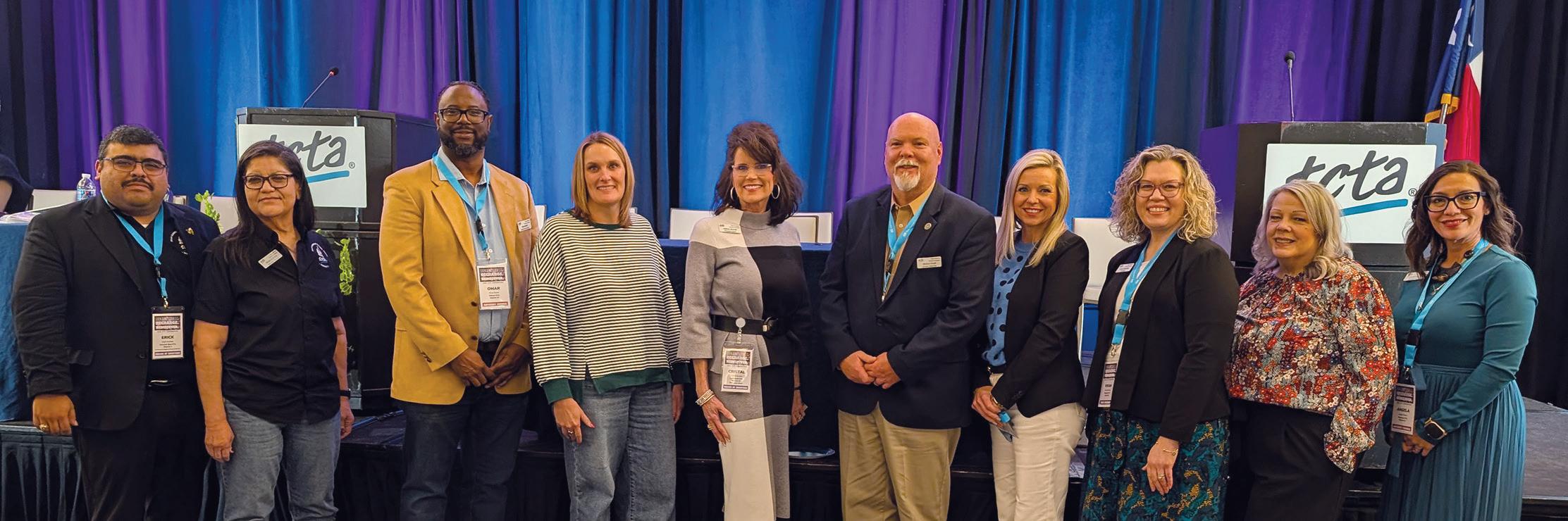
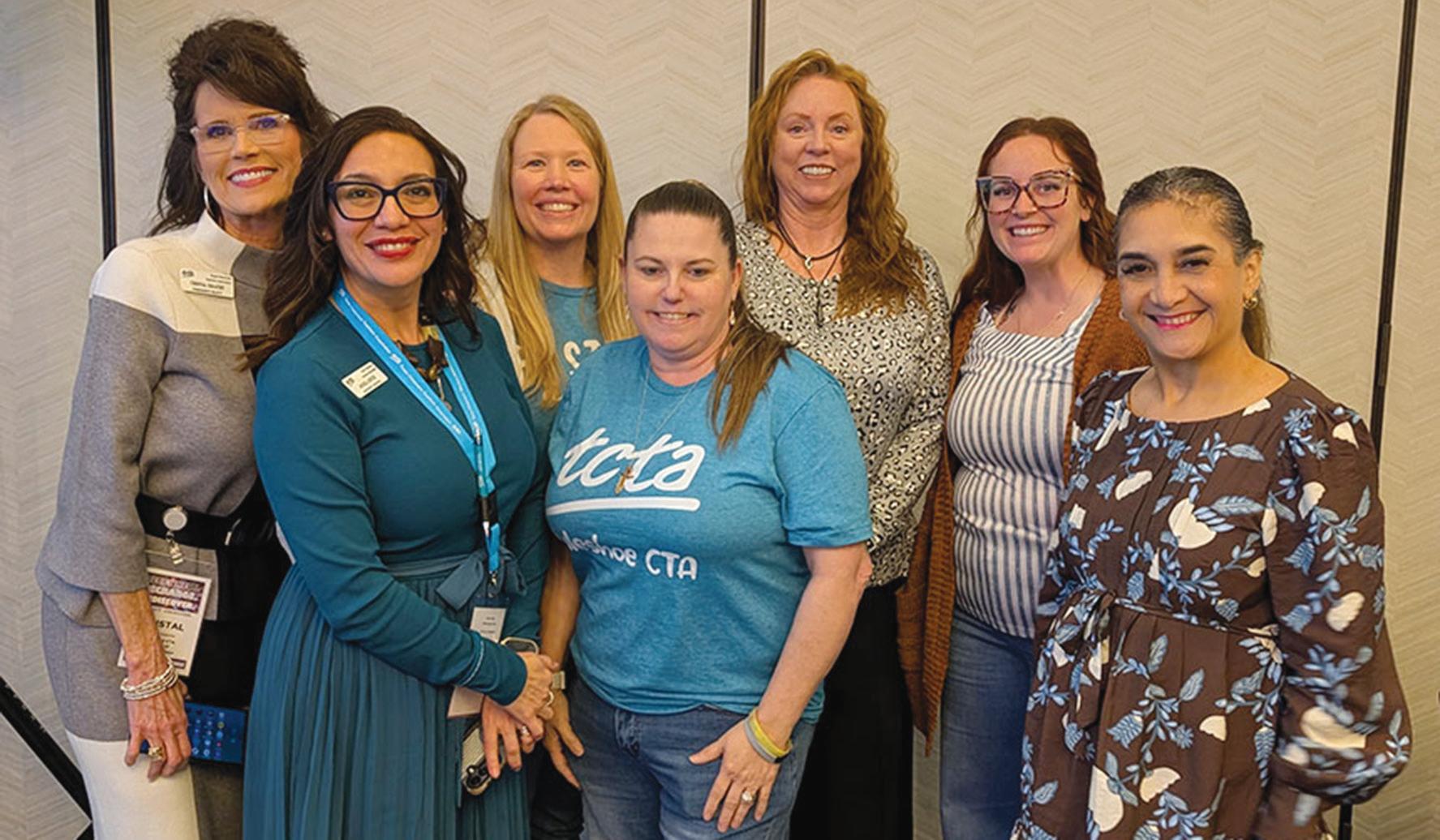
Meet TCTA’s 2026-27 Board of Directors, from left, Erick Hurtado of Edcouch-Elsa, Velma Sanchez of PSJA, Omar Esson of Killeen, Brec Espinoza of Brownwood, Cristal Isaacks of Levelland, Thomas Evans of Abilene, Melanie Hoyt of Pottsboro, Vivian Burleson of Northside, Sharron Wood of Deweyville and Angela Reyes of Muleshoe.
Delegates elect new state leaders during convention
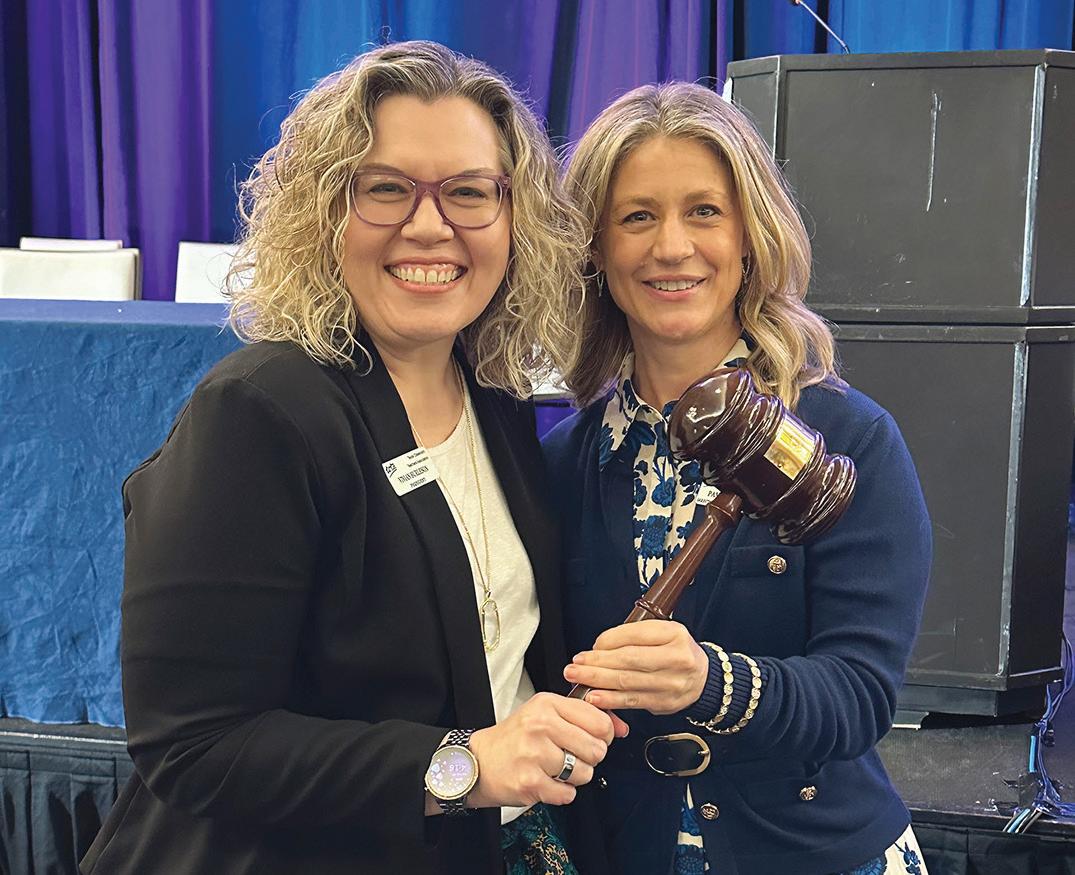
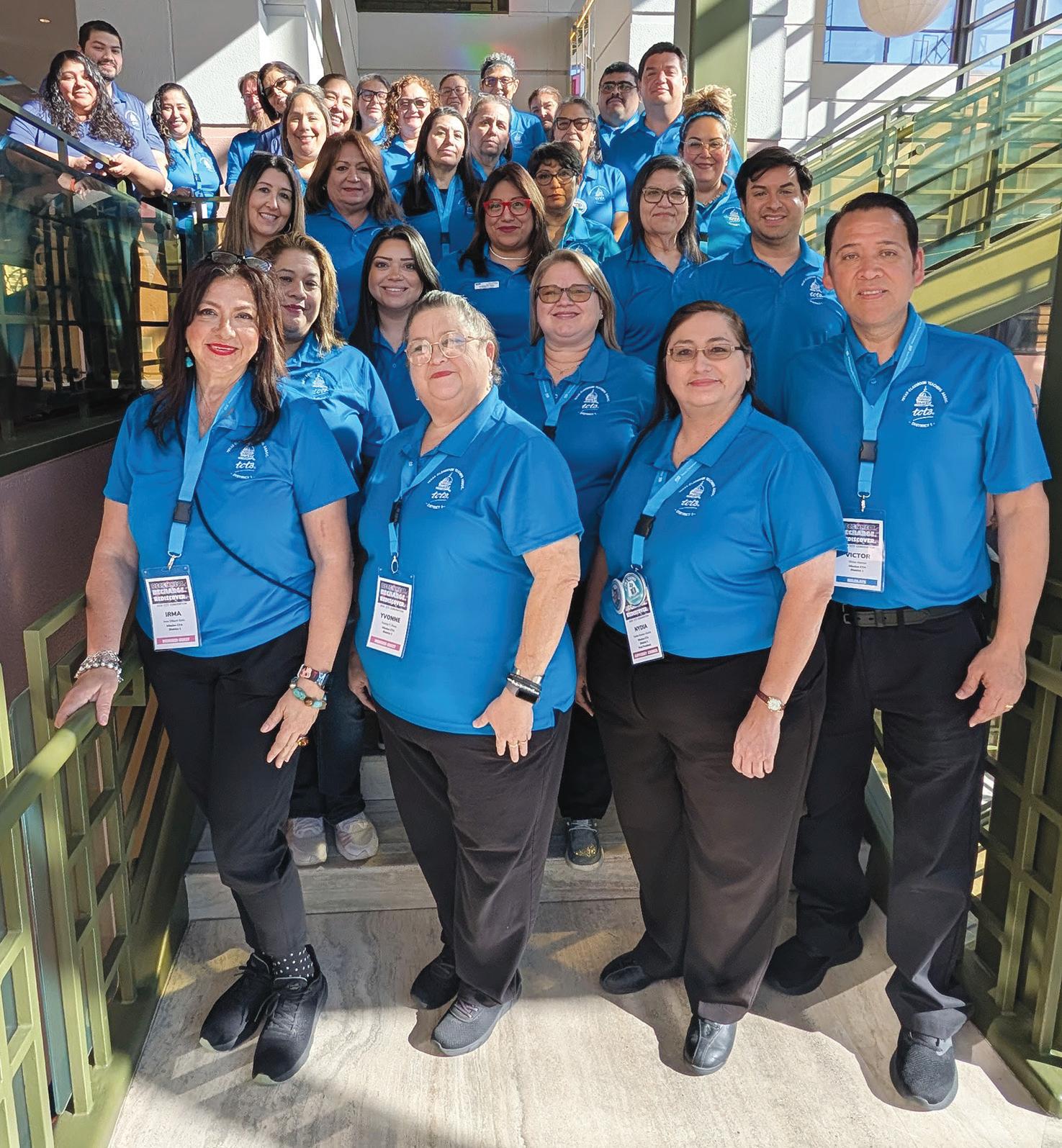
Delegates to TCTA’s 2026 Convention in Austin elected new statewide leaders Feb. 7 as President Vivian Burleson of Northside CTA presided over the Representative Assembly meetings.
Elected to the TCTA Board of Directors for terms beginning June 1 are:
• President-elect: Thomas Evans of Abilene
• Budget Director: Angela Reyes of Muleshoe
• Curriculum & Instruction Director: Melanie Hoyt of Pottsboro
• Teacher Personal Services Director; Omar Esson of Killeen
On June 1, Cristal Isaacks of Levelland becomes TCTA’s state president, and Vivian Burleson becomes immediate past president.
Elected or reelected to TCTA’s Advisory Council for terms starting June 1 are:
• District 4 Councilmember: Tammy Miller-Keckler of Lamar
• District 8 Councilmember: Beth Worthey of Paris
• District 10 Councilmember: Stephanie Daniel of Denison
• District 12 Councilmember: Sherry Miller of Killeen
• District 15 Councilmember: Leslie Boothe of Brownwood
• District 16 Councilmember: Myra Borchers of Amarillo
• District 17 Councilmember: Maria Lara of Lubbock
• District 20 Councilmember: Elizabeth Ruiz of North East
• Councilmember-at-Large: Samuel Sepulveda of Edinburg

RECONNECT. Recharge. Rediscover.
• Councilmember-at-Large: Rebekah Gonzalez of PSJA
Six new CPE sessions available now
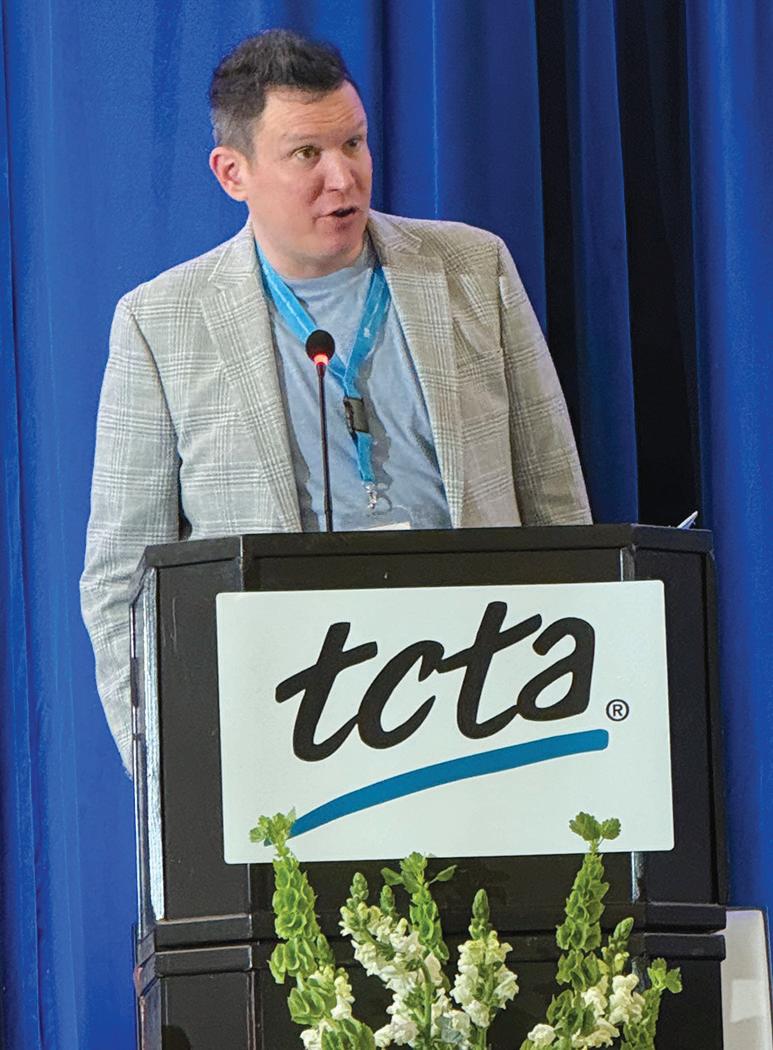
Delegates and guests at TCTA’s 2026 Convention also earned continuing professional education credits during five sessions and a keynote address by Texas 2026 Secondary Teacher of the Year Tim Fails of Lewisville ISD.
Fails, a social studies teacher at Flower Mound 9th Grade Campus, shared his thoughts on teaching. Rather than focusing on why you teach, Fails said, what matters more is “whether the student in front of you feels seen.”
“Show up fully present, fully you and that is more than enough,” he said.
Links to the recordings of the CPE sessions are available at tcta.org/convention along with presentation slides.
View more photos from the 2026 Convention at https://pixies.et/Fa04B9Vc. (To download photos, use PIN 4231.)
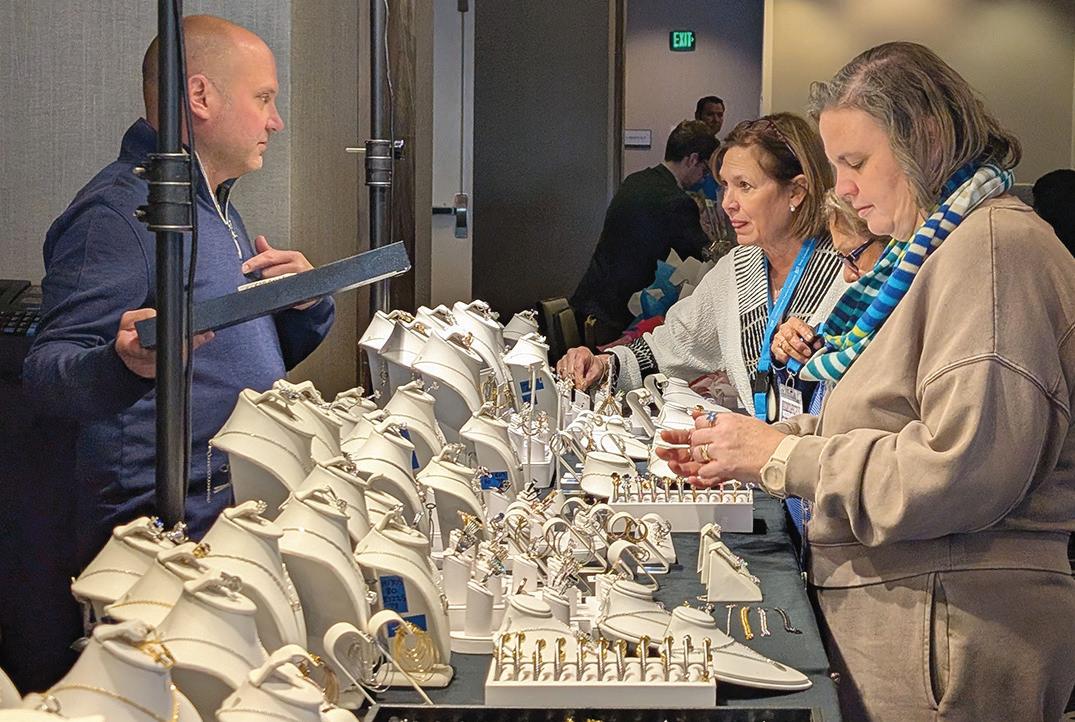
Help us celebrate 100 years of TCTA! Save the date and join us Feb. 5-6, 2027, in Austin for our 2027 Convention & Capitol Visit. More details will be shared soon at tcta.org/convention. We’ll open registration this fall.
Continued from page 9 before retirement, the restrictions do not apply.)
For most current educators, whose annuity is based on their highest five salaries, TRS will look at your sixth year and seventh year preceding your proposed retirement date. The highest salary you receive in those two school years will establish your base line compensation. Starting with that base line number, salary growth of more than 10% or $10,000, whichever is greater, for each of the five years counting for the annuity calculation will not be creditable. (If you do not have service credit in at least five school years of the seven before retirement, the restrictions do not apply.)
The TIA designations of master or exemplary can have allotment payments of up to $32,000. This massive increase in salary will inch teachers closer to what they should be paid, but it may not all be compensable for TRS annuity purposes
if you get that boost right before retirement.
For example, if a member earned between $60,000 and $62,000 in the seven years before retirement, and then receives a $32,000 TIA bump in their final year, all that money will not be creditable salary for TRS annuity purposes because it exceeds the 10% or $10,000 limit. In this case, the creditable salary for that final year would be limited to $10,000 more than the teacher made in the previous year.
Your full salary may be shown in your TRS member portal, but it is not necessarily creditable salary that will be used for annuity purposes. TRS member statements stipulate that this reported salary may not have been audited or adjusted by TRS to ensure that the compensation is within the limit allowed for in the final years before retirement.
In addition to TIA stipends, the other common situation affected by the rule is when an employee switches from a 187-day contract to a year-round
Make the most of your membership!
Take advantage of TCTA’s cost-saving programs as you plan your next adventure.
Log in at tcta.org/discounts to find deals on Schlitterbahn, Six Flags and other amusement parks, movie tickets, professional sports tickets, zoos, museums, concerts, Broadway shows, flights and more.
Save on car rentals with Alamo, Avis and Budget. Reserve hotel rooms with participating Choice Hotels or Wyndham Hotels & Resorts, which include La Quinta properties.
TicketsatWork offers packages with Carnival cruises along with thousands of shopping deals.
You can have fun and save money this summer!
contract, sometimes by moving into an administrative position, creating higher than usual salary growth.
If you retire and your actual salary is higher than the amount allowed under this rule TRS will adjust the compensation for annuity purposes and refund the excessive member contributions. The refund will be made after the date TRS makes your first annuity payment.
The rule is somewhat complicated, so scheduling an appointment with a TRS counselor should provide you with accurate and adjusted amounts and help you properly plan for retirement.
Bottom line? Stay on top of your TRS annuity statement, keep informed about the laws and rules related to your benefits, and start your retirement planning by talking to TRS.
This article is not a substitute for legal advice. TCTA members with questions should call 888-879-8282 to speak with a staff attorney.

EXECUTIVE DIRECTOR’S MESSAGE
Continued from page 2
issues can vary among districts), and TCTA has been working successfully with lawmakers over the years to strengthen discipline policies so that educators have more — and more effective — tools to address behavior in the classroom.
TCTA is in its 99th year of supporting educators, and with a big anniversary just around the corner, we remain committed to our mission — supporting our members. That means not only advocating for you on policy issues, but also
PLANNING AHEAD
Continued from page 11
clothing stores or fitness studios
• One teacher even mentioned working airport lounge customer service for flight perks.
These aren’t generally long-term career moves, but they can be refreshing, social and a mental break from the classroom. Sometimes that’s just as valuable. And many businesses love hiring teachers, who tend to be organized and responsible.
Often overlooked is the advantage of taking a summer job that pays into Social Security. You may be able to earn quarters (credits) toward eligibility and increase your future benefit amount.
This can matter more than people realize, especially for Texas educators who may not consistently pay into Social Security during the school year (depending on their district). Only about 2% of Texas school districts participate in Social Security, leaving employees of other districts only personal savings and TRS pensions as their primary retirement income. Even a part-time or short-term summer job can help you get closer to the 40 credits needed and boost your long-term retirement picture. It’s not the only reason to work, but it’s a smart added benefit.
Professional growth
Summer is also an opportunity for professional growth. Let’s be honest, no one wants to spend their whole summer in training. But some opportunities are worth it, especially if they pay a
ensuring that your TCTA membership is maximized. You’ll see on page 8 some changes we’re making within TCTA that we believe will enhance your membership experience.
We may be nearly a century old, but we’re also a century experienced.
Our organization has a solid foundation and a talented staff that ensures that we can adapt to the times without changing the fundamental nature of our services and our approach. Supporting you is what we do, and that will never change.
It’s easy to feel like you need to “optimize” every second of summer. You don’t. The teachers who come back strongest in the fall usually aren’t the ones who worked nonstop.
stipend, get you out of the classroom environment, and give you something useful to bring back. You may want to look for internships with local businesses or industries, Regional Education Service Center programs, or other workforcerelated experiences (especially CTEaligned). Teachers who do these often say the biggest benefit is perspective. You get a clearer picture of what skills students actually need after graduation.
In pursuing CPE hours, make sure they’re useful (and free when possible). You already know classroom teachers must complete 150 CPE hours over a five-year renewal period, but how you get them matters. Many hours, especially those related to specific required topics, are fulfilled through district-provided professional development or specialized workshops at regional education service centers. And while some of your hours must tick certain boxes, you also have flexibility in choosing topics to meet the 150 total hours.
Think about what would make your job easier next year and what you wish you were better at in your classroom. There are plenty of options out there, but it’s worth noting that TCTA offers free and convenient CPE opportunities, providing access to over 70 hours of
approved CPE video training, and we add new and updated sessions throughout the year.
Take time for yourself
Don’t forget that you still need breathing space. It’s easy to feel like you need to “optimize” every second of summer. You don’t. The teachers who come back strongest in the fall usually aren’t the ones who worked nonstop. They’re the ones who took real breaks, stepped away mentally, did something completely unrelated to school.
Even a slower morning routine or a few unscheduled days a week can make a big difference.
If you are looking into vacations or other adventures you will want to check out some of TCTA’s membership perks at tcta.org/discounts that include savings on hotels, cruises, flights, theme parks, sports, zoos, museums, concerts and more.
Simply put, summer doesn’t have to be all one thing. Consider a balanced approach that addresses all of your needs — not just the need to bring in more income or address professional responsibilities, but the need to take time for yourself. Ultimately, that benefits everyone.
Texas Classroom Teachers Association
PO Box 1489
Austin, TX 78767-1489
888-879-8282 | tcta.org
Return Service Requested
Save the date and join us!
Faculty representatives and local, regional and state officers are invited to join TCTA staff for summer training workshops to prepare for the 2026-27 membership recruitment campaign as school starts. You’ll hear tips on how to encourage your colleagues to join TCTA and strengthen your local chapter. You can ask questions, share ideas and brainstorm with other members. We’ll have door-prize drawings, and (for the in-person sessions) lunch is on us!
We’re planning stops in 16 cities across Texas, plus a virtual session on July 21.
We hope to see you soon!