
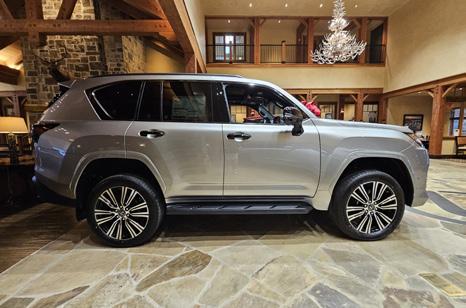
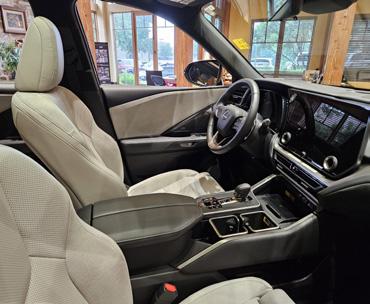
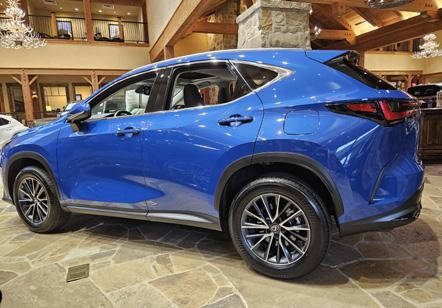
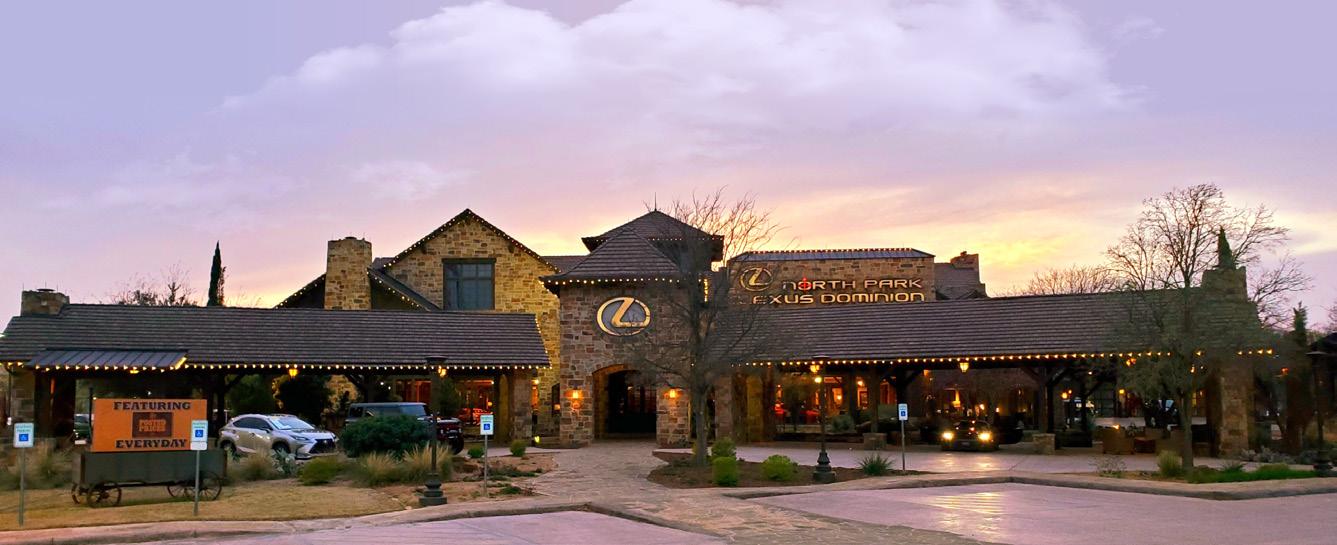
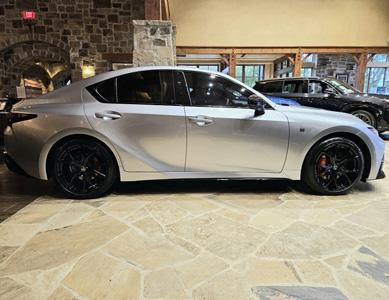



• 2 year unlimited miles full comprehensive warranty
• Next 4 services are complimentary
• 161 point inspection by a certified Lexus technician
• Roadside assistance included
• Voted “Best Certified Program” many consecutive years





• 2 year unlimited miles full comprehensive warranty
• Next 4 services are complimentary
• 161 point inspection by a certified Lexus technician
• Roadside assistance included
• Voted “Best Certified Program” many consecutive years
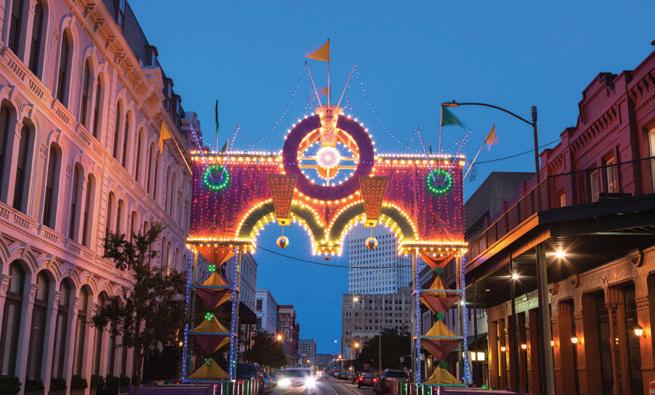
Texas travel has evolved from 16th century Indigenous footpaths and Spanish exploration trails to a massive 199.5 billion dollar tourism industry.
Nancy Foster
What exactly is late disgorgement and why has the trend seized the Champagne industry?
Jim Peterson
You don’t have to be an A-Lister to enjoy Beverly Hills! Check out the Warner Bros. tour in Los Angeles that will bring you behind the scenes of your favorite TV shows and movie sets.
Denise Payne

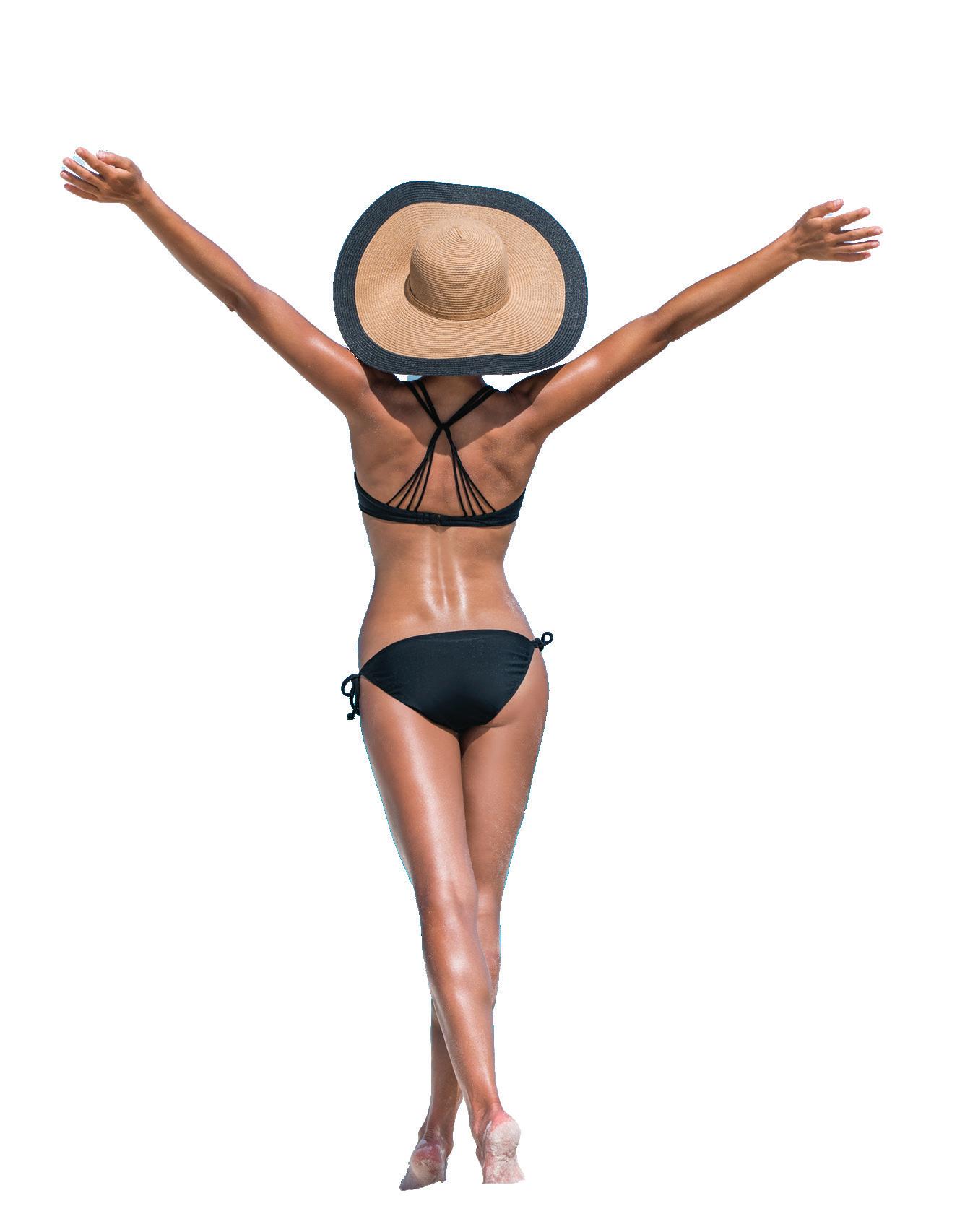
Bright, saturated swimsuits are dominating the 2026 fashion landscape, focusing on energetic colors, sunset gradients, and Y2K-inspired nostalgia. Lisa Dante FASHION 67

How to keep those blooms coming all summer long!
Calvin Finch GARDENING
Looking for easy summer recipes? The focus is on fresh, seasonal ingredients requiring minimal cooking. CULINARY
Wanting comfort food is human nature! Here’s a productive approach to addressing stress and emotional eating.
Abby Kurth
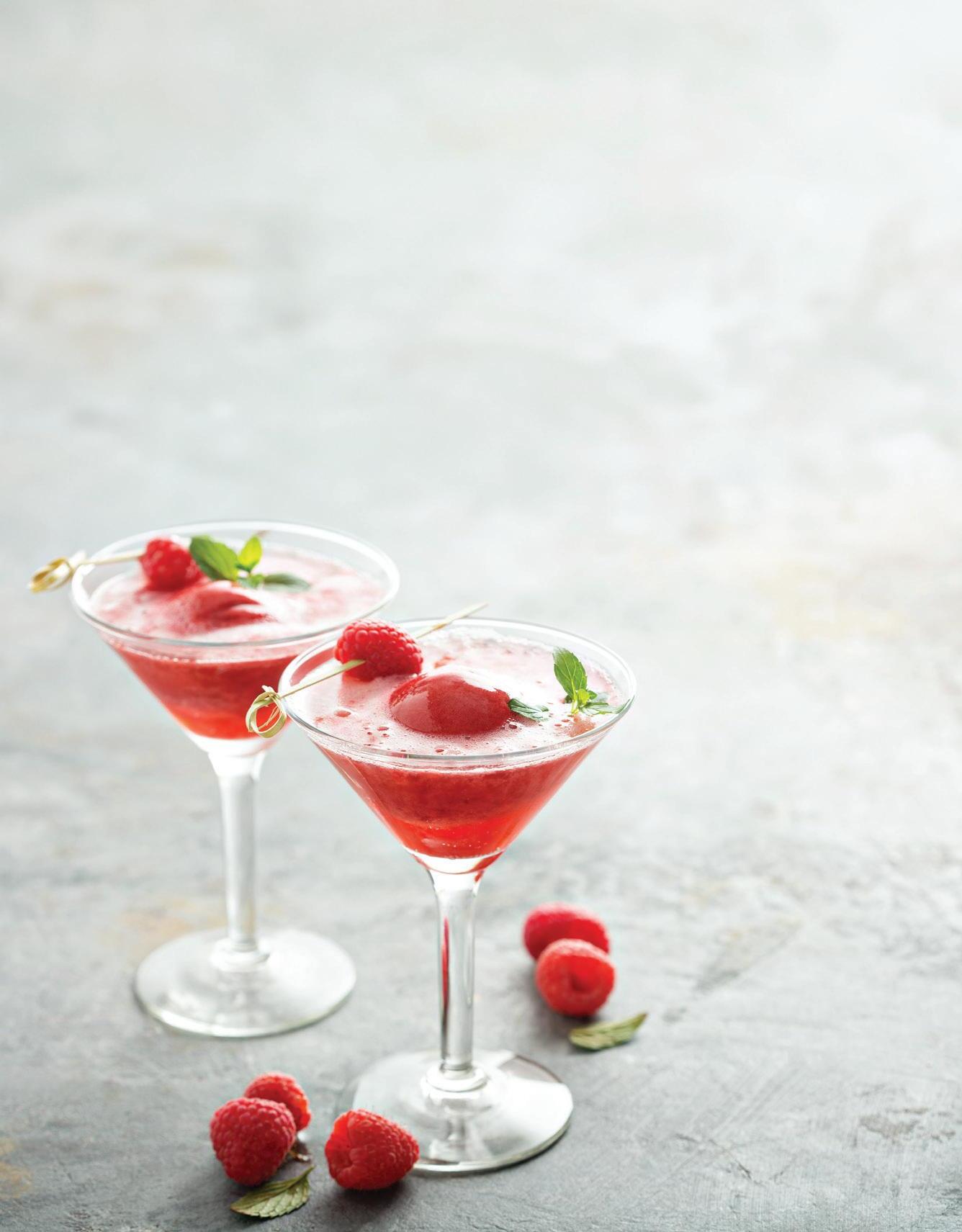
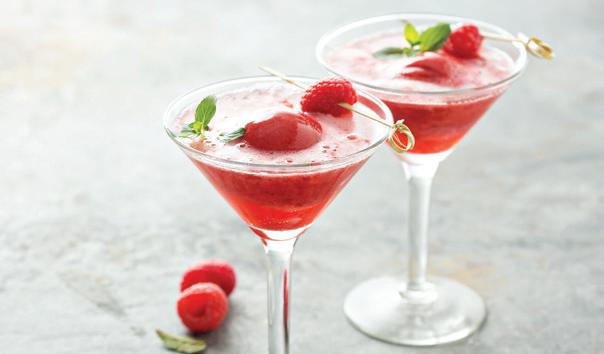
This simple and refreshing Champagne cocktail requires only two ingredients. Let the summer fun begin!



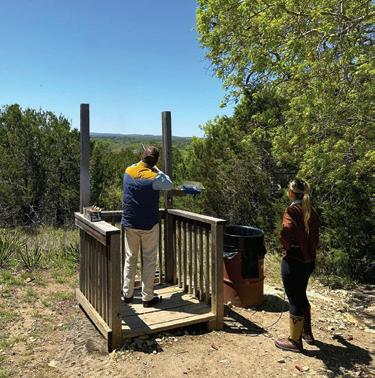
“Every single time we are impressed by the amenities including the lodging, food, pool, cantina, sporting clays courses, and probably most importantly, the staff. After all, people make the difference between wow and ho-hum. We always feel like family. It’s never strained. It’s never pretentious. We always feel welcome and valued. The staff, the grounds, the experiences, and the amenities are all truly setting a very
EDITOR-IN-CHIEF
CREATIVE DIRECTOR
PHOTOGRAPHERS
CONTRIBUTORS
LISA DANTE
KEITH CHESTER
JOSH HUSKIN
LISA DANTE
MARC HESS
DR. JUSTIN PHILLIPS, L.Ac
LISA DANTE
DR. RICHARD BRUCE WINDERS
ALBERT FLORES
NANCY FOSTER
SHERIFF JAVIER SALAZAR
JIM PETERSON
BILL DANTE
DENISE PAYNE
ABBY KURTH, MPH, MS
CALVIN FINCH, PH.D.
ILLUSTRATOR
JEREMIAH TEUTSCH
CONTRIBUTING PRODUCTION STAFF
JOSH LOPEZ, SAMANTHA MUSCAT-SCHERR, GABRIELA ALTAMIRANO
Our swimsuit issue is always very popular! I doubt it has anything to do with the approaching scorching Texas summer. But why not look stylish, comfortable and confident when you’re trying to cool down? Remember, you are always swimwear ready…..because it’s a state of mind.
The months of May and June frequently seem to bring a sense of anticipation with many milestone events. There are school graduations and June weddings to name a few, with summer almost here.
Our wine writer gives us sparkling guidelines as to why you might want to splurge and celebrate these special life events with vintage bubbly.
We also spotlight the rich history of our state through historic places and landmarks that helped shape the great state of Texas and the tourism industry. Are you planning a vacation this summer? Sit back and arm chair travel to the land of sunshine, Los Angeles and Beverly Hills. Get a behind the scenes movie and television show studio tour.
As the weather warms up most of us tend to eat lighter meals. Check out some easy recipes that are truly simple and delicious with very little effort. Speaking of food, our health coach offers a few ways to tame stress eating. Comfort food is after all, human nature!
I hope this issue helps you kick off summer with inspiration, excitement and lasting memories. As always, thank you for reading and supporting the people and places that make our community so special!
Happy Summer!
Lisa Dante Editor-In-Chief

by NANCY FOSTER
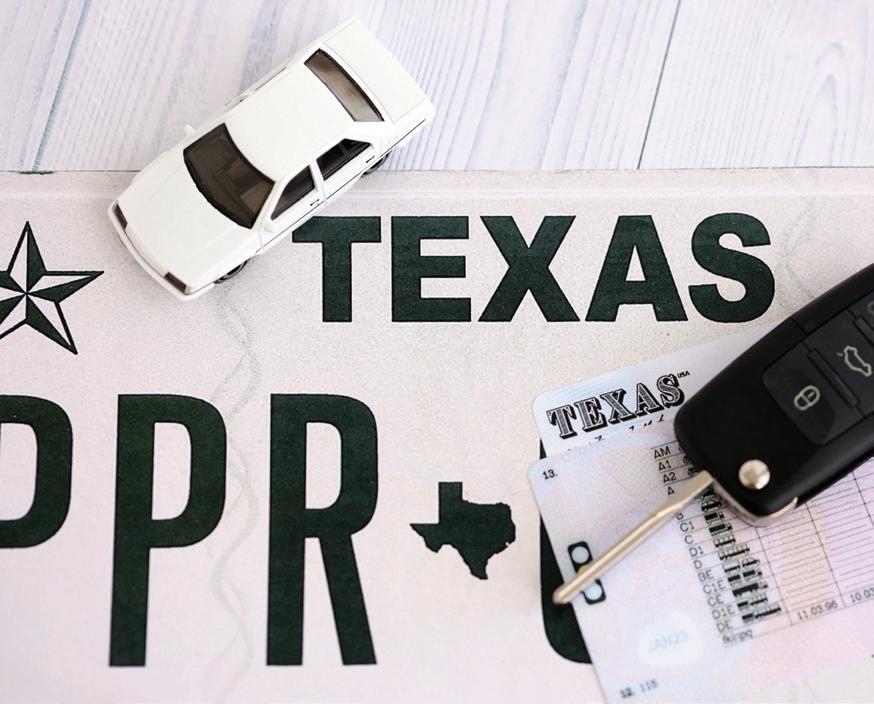
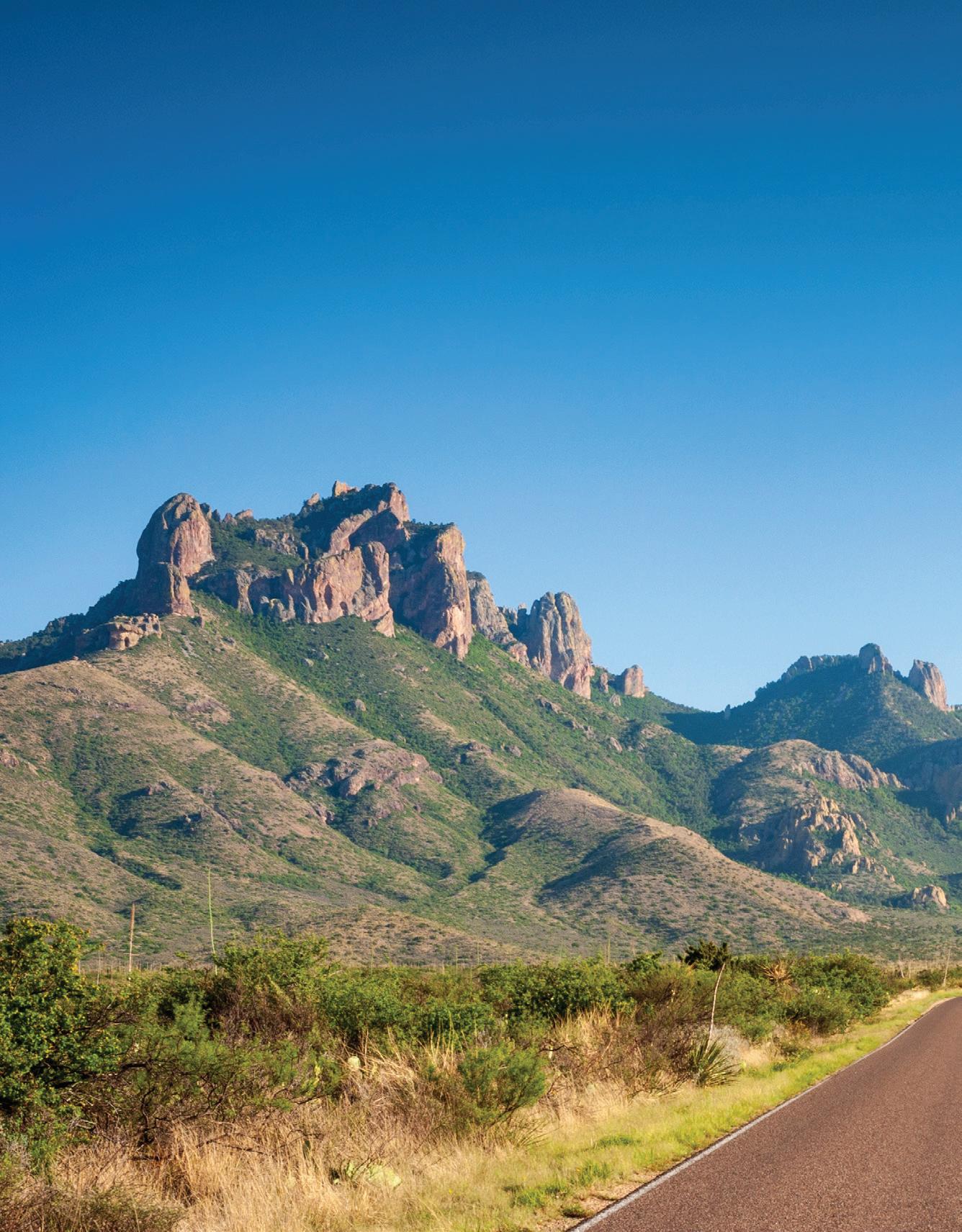
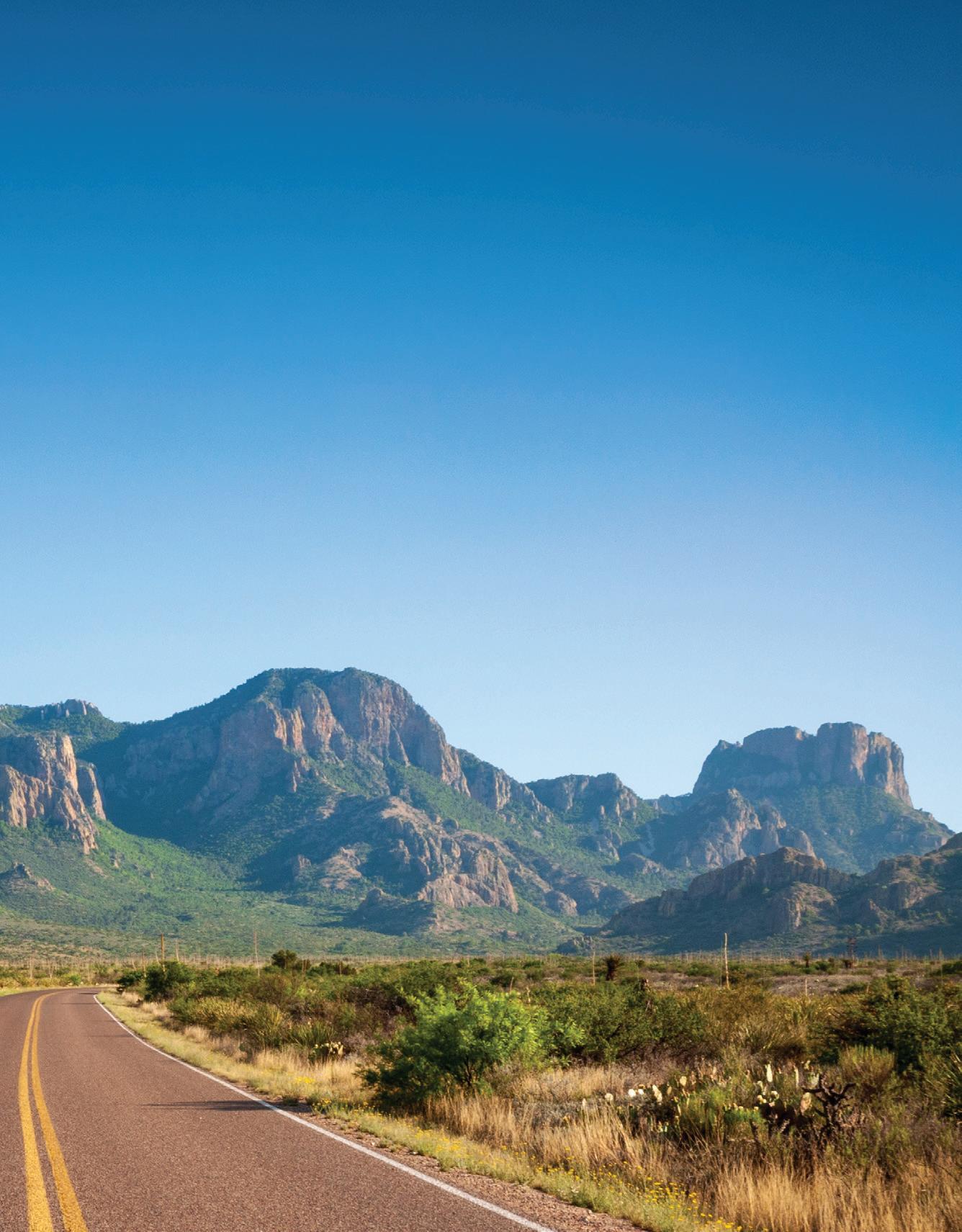
We live in a pretty impressive state, one that is known to have the biggest and best in every possible category. A few amazing superlatives may surprise you when it comes to Texas history. Did you know Texas has over 17,000 Official Texas Historical Markers, more than any other state? Or that it also has the largest number of historic county courthouses—perhaps because it has the largest number of counties…254 to be precise. Texas also has more than two dozen Spanish missions, more than any other state. Yes, the Lone Star State claims lots of bragging rights, and thankfully, its preservation is due to many who recognized the need to
protect these historic places for generations to come.
Now that we are celebrating our nation’s 250th anniversary year, we want to invite readers to see, do, and explore some of the places that tie to our past, specifically in Central Texas. Statistics reveal that many Texans tend to crisscross the state in their travels. Of course we do—we have it all right here…beaches, hills and mountains, lakes and rivers, parks and scenic drives, so why ever would we leave? Many of you who travel tend to look for remnants of our colorful history, so in these next few pages, we’ll entice you to envision the paths that led settlers to come here and the homesteads they estab-
lished. Maybe those early settlers were your grandparents and great-grandparents. Why did they come here? After all, there was a lot of rough territory to conquer. But conquer it they did, and today you can walk in the paths they took, the places they discovered and the lodgings where they stayed. We’ll gain insights into what began as travel for survival and health and has slowly evolved into recreation, heritage exploration and eventually a robust tourism industry that today lures visitors from around the globe. The best part? Most places mentioned here are less than three hours’ drive from San Antonio and a quick Google search will give you specifics on each. One website we heartily recommend bookmarking https:// atlas.thc.texas.gov, the Texas Historical Commission’s Historic Sites Atlas, a comprehensive database of over 300,000 historic sites across the entire state. You’ll be amazed!
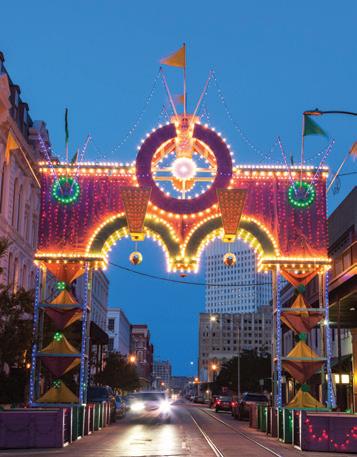
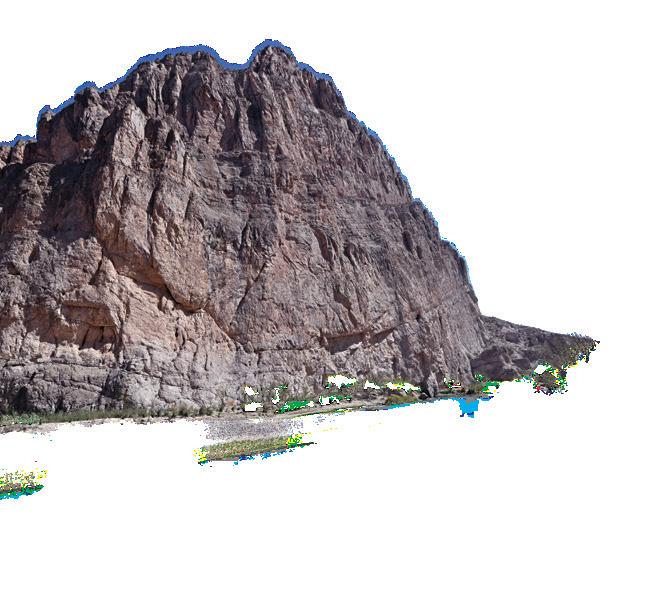
We’ll begin our quest for fascinating historic sites with places associated with early health tourism. In the late 1800s, as more people began to have disposable income, many traveled to Texas seeking relief from illnesses such as tuberculosis. Doctors frequently recommended dry air, higher elevations, sunshine and mild winters—conditions that still draw people to this region today.
Mineral springs also attracted visitors, sometimes discovered—or rediscovered — by early settlers. San Pedro Springs Park in Bexar County had been used by Indigenous people for thousands of years before Spanish settlers recorded the site in 1718. The springs supplied water for the original settlement of San Antonio, and the area was later established as an official public park in 1852. Today it is considered among the oldest continuously used public parks in the United States.
San Marcos Springs in Hays County also drew visitors, with spring-fed waters forming the headwaters of the San Marcos River. Another county, Lampasas, was home to Hancock Springs, which was discovered in the 1850s and transformed within twenty years into a very popular resort destination best known for its healing and restorative mineral waters. Comal Springs and Landa Park near New Braunfels, used by indigenous people for thousands of years, were where early German settlers visited in the mid 1800s. Famed as the headwaters of the Comal River, it is now part of the Landa Park Aquatic Complex.
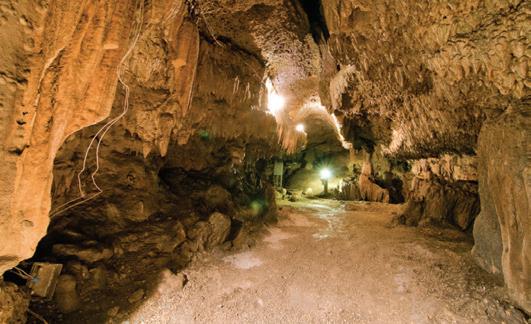
Beneath the limestone hills of Central Texas lies another natural wonder that has fascinated explorers and travelers for generations: caves. The cool underground chambers and striking mineral formations were not only extraordinary natural phenomena to early travelers, but archaeological evidence indicates that several were used by Indigenous peoples for shelter thousands of years ago. Visitors today can
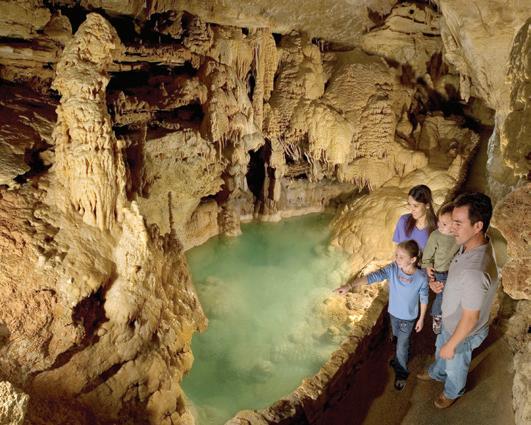
explore the jaw-dropping stalagmites, stalactites and deep wonders of Cascade Caverns and Cave Without a Name near Boerne, as well as Natural Bridge Caverns near San Antonio. Also consider Longhorn Cavern State Park in Burnet, opened to the public in 1938 and among the earliest state parks in Texas. Here’s a tip–in summertime, those deep, cool caverns are an ideal way to cool off!
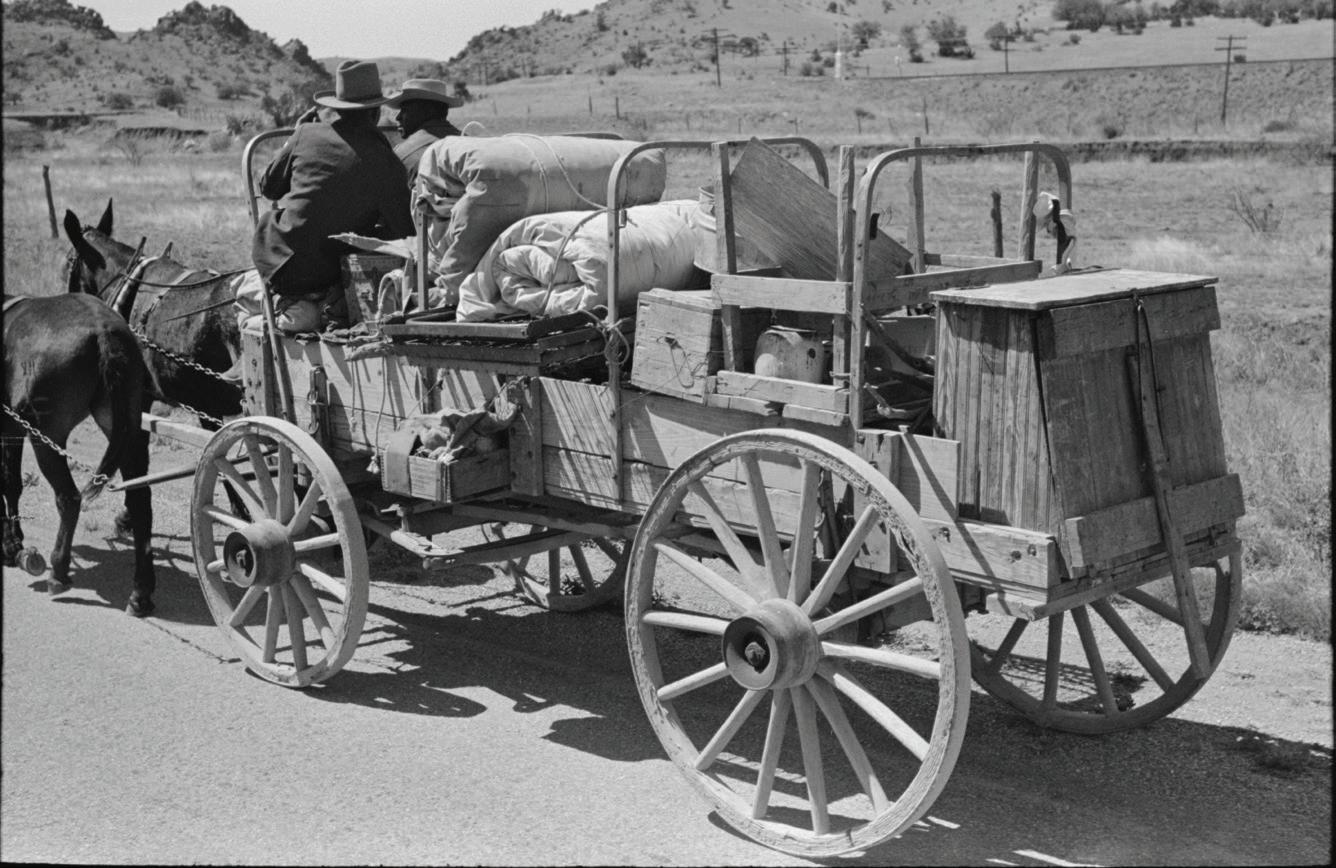
By the early 1890s, as travel increased, interest in the Wild West continued and people flocked to see what ranch life, cowboys and cattle trails were really like. High on the list of places to visit were Spanish missions, battle sites and early settlements that saw an increase in domestic as well as international travelers.

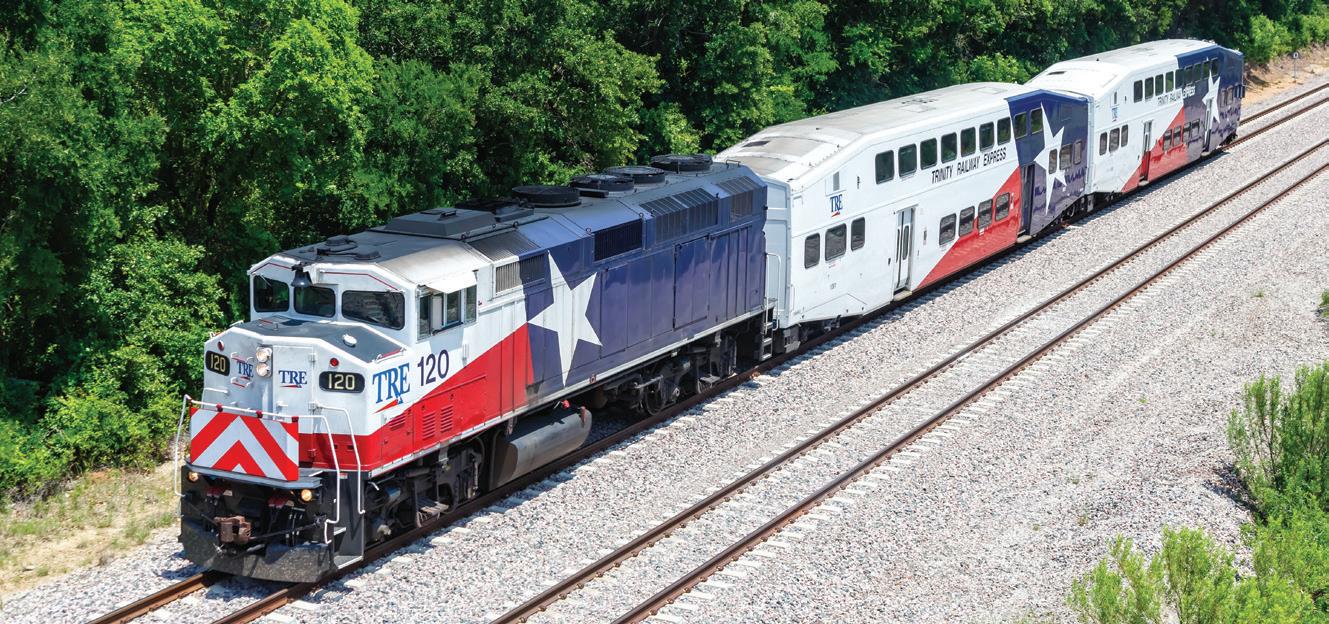
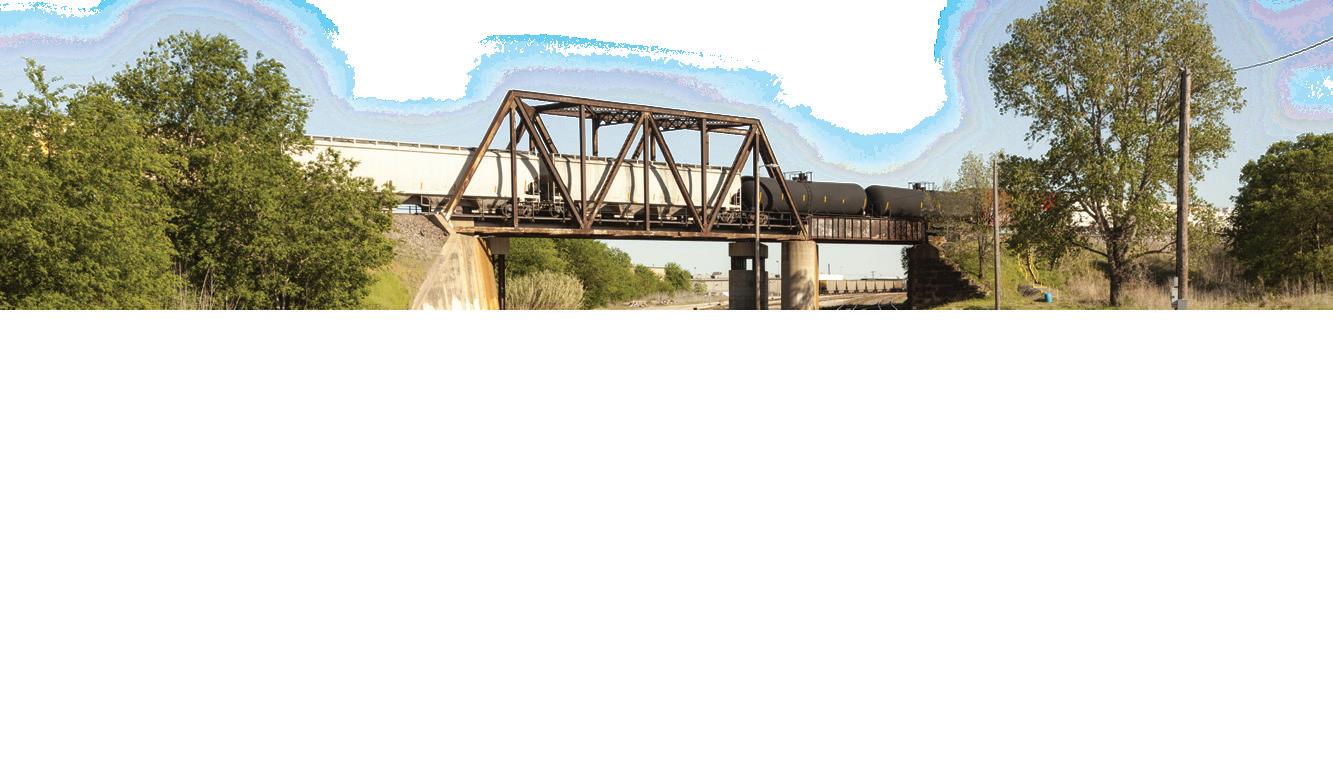
As the appeal for the Old West grew, reaching them became easier with the advancement of railways. When the first 20-mile railroad opened in Texas in 1853, few could have predicted the transformation that would follow. By 1900, more than 10,000 miles of track crisscrossed the state - reshaping trade,
settlement patterns and entire communities. When rail lines began pushing into Central Texas in the 1870s, they did more than lay track - they redrew the map. The arrival of the Houston and Texas Central Railway in Austin and the spread of the International and Great Northern Railroad toward San Antonio stitched the Hill Country and Blackland Prairie into an accessible and rapidly growing region. Towns such as Temple and Taylor rose as rail junctions, cotton and cattle moved to distant markets with new efficiency, and communities that once relied on wagons and river routes suddenly found themselves connected to Houston’s port and beyond.
By the late 1800s, railroads had sprung up across Texas, making travel attainable for both the curious public and those seeking business opportunities. One example is Kerrville. In 1887, the railroad reached Kerrville via the San Antonio & Aransas Pass line, transforming it from a frontier settlement into a shipping point for wool and agricultural goods—and eventually opening the Hill Country to visitors drawn by its climate and scenery. Depots became gathering places— part telegraph office, part freight house, and part gateway to opportunity. In many cases, the rhythm of the trains determined whether a town would flourish or fade.
As rail travel increased, hotels, resort towns and depots began to spring up along the routes, welcoming travelers who could now reach Central Texas more easily than ever before. By the late 1800s, a night at a respectable hotel might cost $1 to $1.50 and often included meals. Compared to the average wage—a laborer might earn $1 to $2 a day and a skilled worker $2 to $3—a hotel stay was still considered a luxury. By the 1890s, a room costing $2 a night represented roughly a day’s wages for many Texans, indicating that leisure travel had become both a privilege and a livelihood.
Although many of the old railroad depots have faded away, there are numerous ones you can visit today, although most have been repurposed. Among them are the Llano Railroad Depot built in early 1900s, now a railway museum, the Kerrville train depot is now Rails, A Café at the Depot, and the New Braunfels depot circa 1900 is a museum and visitor space. A fun experience awaits you at the Burnet Depot, circa 1900 and still in rail use through the Austin Steam Train Association’s which operates a1916 steam locomotive that travels through the Hill Country.
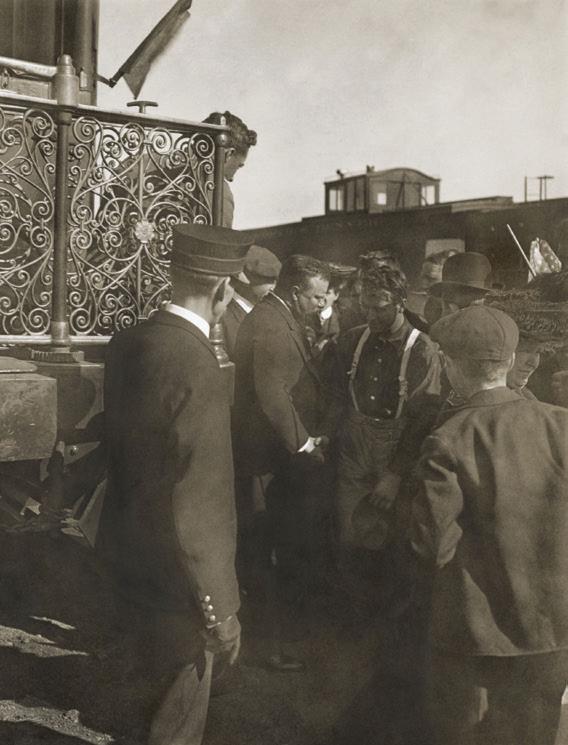
Hotels cost quite a bit more today, but historic hotels and B&Bs can still be found throughout Central Texas, among them San Antonio’s legendary Menger Hotel, opened in 1859, and The Driskill in Austin, which began welcoming visitors in 1886. In Salado, the Stagecoach Inn, established in 1861 as a stop along the Chisholm Trail, is now a boutique hotel and restaurant. The Kendall in Boerne’s historic district traces its roots to 1859, when owners Erastus and Sarah Reed offered spare rooms to stagecoach riders and horsemen.
In New Braunfels’ historic Gruene district, the stately Gruene Mansion Inn, built in 1872, overlooks the Guadalupe River, while the historic Y.O. Ranch Headquarters, established in the 1880s near the tiny Mountain Home in Kerr County, welcomes guests seeking an authentic Texas ranch experience.
As towns emerged and travel increased, eateries popped up to feed hungry travelers, and many of these historic restaurants are still
open today. Scholz Garten in Austin dates to 1866 and claims fame as the oldest beer garden in America—and the oldest operating business in Texas. Stop in for authentic
German cuisine made from time-proven recipes and, of course, a frosty cold beer.
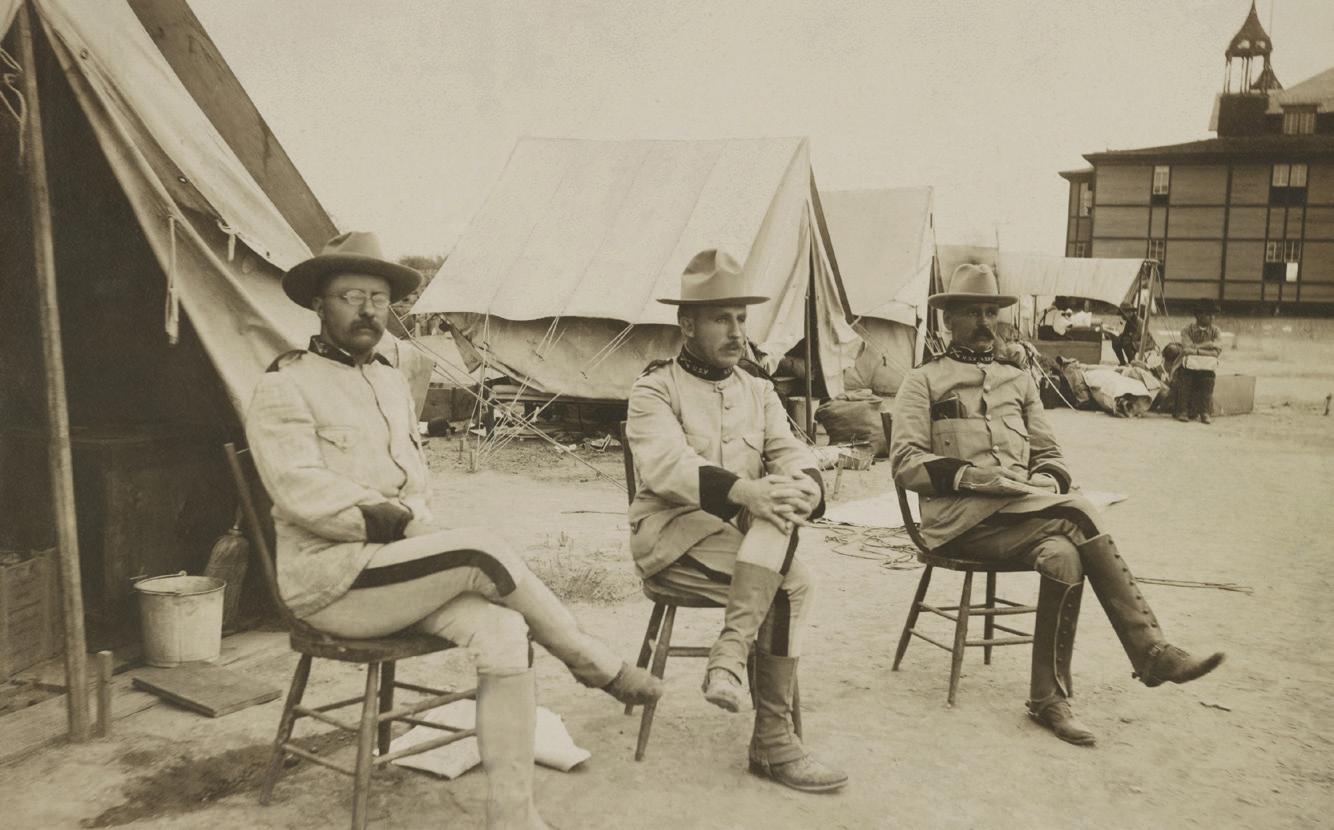
The Buckhorn Saloon & Bar, opened in 1881 in San Antonio, is where Teddy Roosevelt once recruited Rough Riders and is now a popular tourist draw in all its glory, bedecked with many original furnishings and known for its hearty cuisine and crafted cocktails. Also in downtown San Antonio is Schilo’s, opened in 1917, where hungry patrons continue to enjoy hearty German meals made from family recipes. Don’t forget the house-made root beer!
Sweets have been popular through the ages, and if your sweet tooth makes you pause at every bakery, you’ll find numerous places around Central Texas to satisfy that craving, including Naegelin’s
Bakery, the oldest continually operating bakery in Texas, opened in 1868 in New Braunfels and still renowned today for its scrumptious kolaches, strudels, cakes and sweet rolls, Here’s a tip: move this up a notch on your “gotta go” list.
Once the basic creature comforts of lodging and
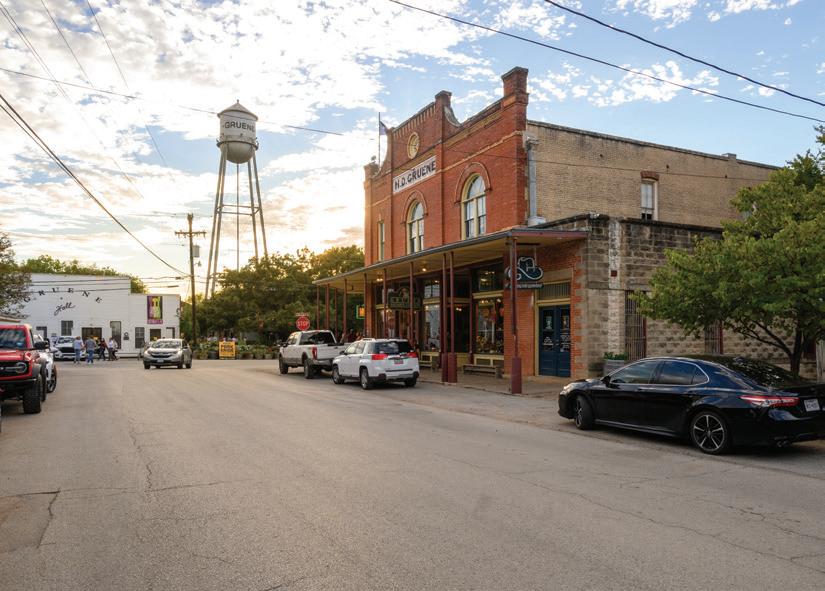
dining were established, entrepreneurs saw the need for gathering places where both travelers and residents could socialize. One pastime took hold fast: the dance hall, where the iconic two-step took caught on and never let go. Today you can still experience where generations of music lovers danced the night away. Gruene Hall in Gruene, built in 1878, is the oldest continually operating dance hall in Texas and remains charmingly authentic. Twin Sisters Dance Hall in Blanco County, constructed by German settlers in 1879, continues to host periodic dance nights and community gatherings, as does the Albert Dance Hall in miniscule (13 acres!) Albert, Texas (midway between Fredericksburg and Johnson City), which was founded in 1892. Regional bands still rouse patrons with great toe-tappin’ music–and a really great time.
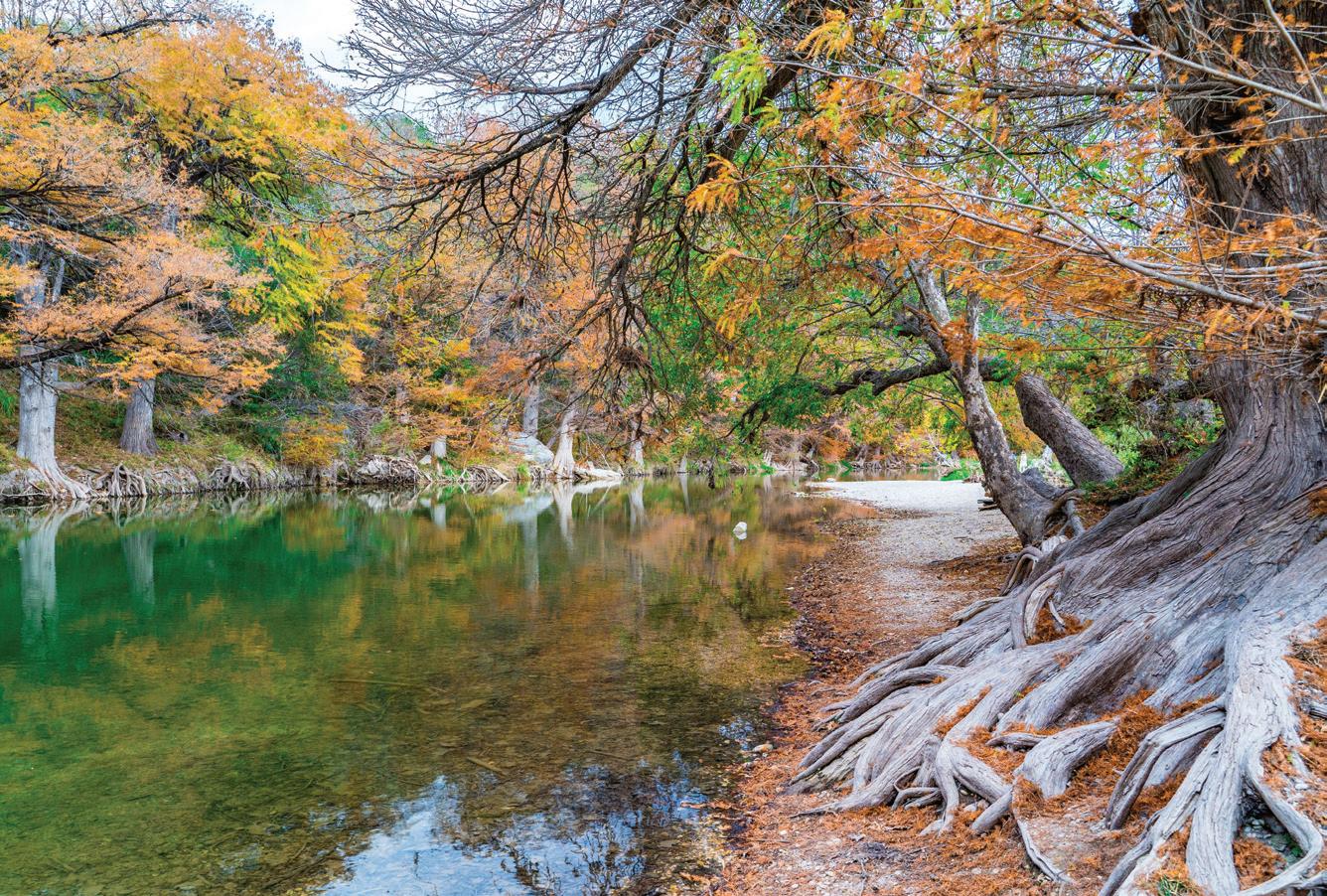
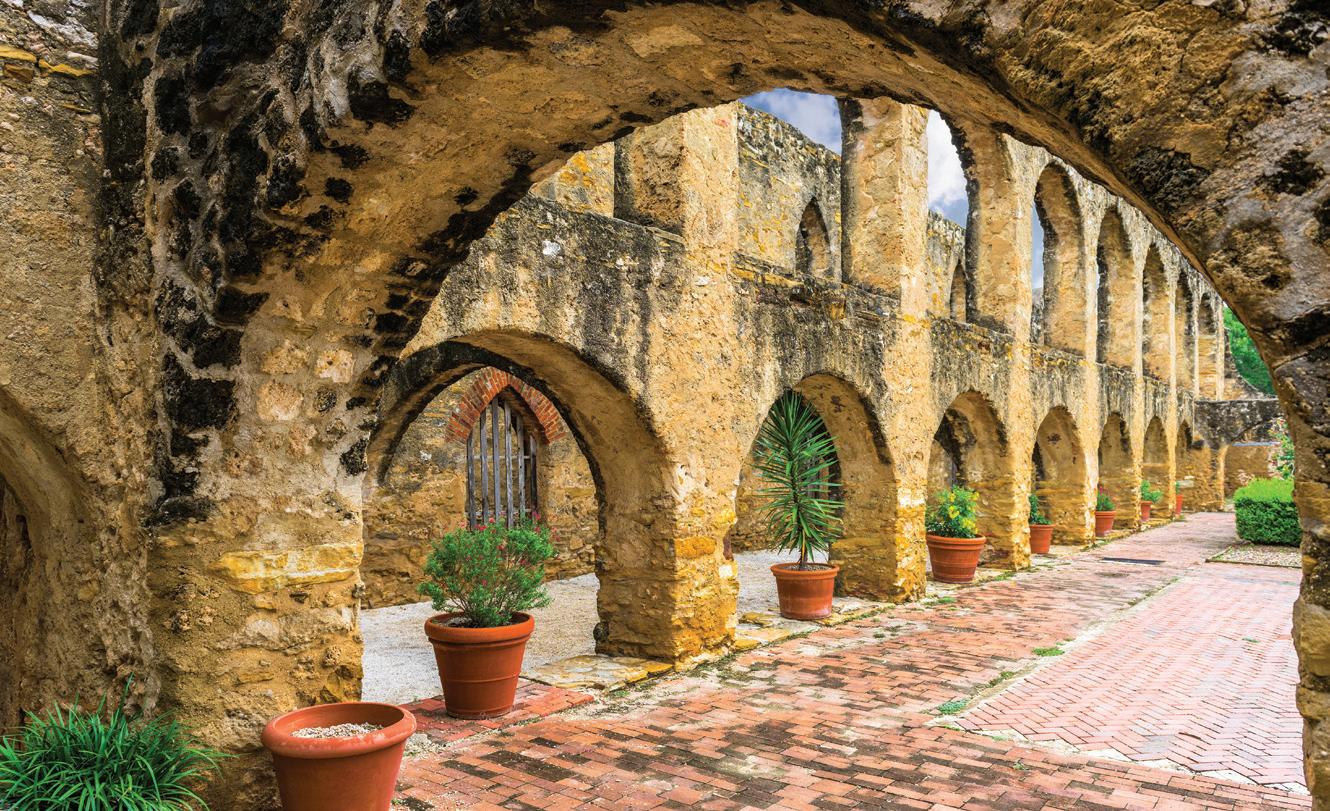
The desire to explore the wide open spaces and scenic areas led to the creation of state parks, including Bastrop State Park in 1938, Garner State Park in 1941 and Inks Lake State Park in 1950, giving travelers an opportunity to explore acres of natural flora and fauna. Spanish missions also ranked high on the list of tourist attractions as rail and highway travel increased. Popular sites today include Mission Concepción (1716), Mission San José (1720), Mission San Juan (1731) and Mission Espada (1731), all part of the San Antonio Missions National Historical Park. Of course, the iconic and revered Alamo—completed in its present form around 1755—is considered the No. 1 most visited historic site in Texas. It’s a must-see.
Historic routes are also popular with
travelers seeking to follow the paths of earlier generations, including El Camino Real de los Tejas, the Spanish colonial road linking Mexico with early Texas missions; the Chisholm Trail, which carried cattle from South and Central Texas north to Kansas railheads; and the Old Spanish Trail, an early automobile highway that stretched from Florida to California through San Antonio and the Texas Hill Country.

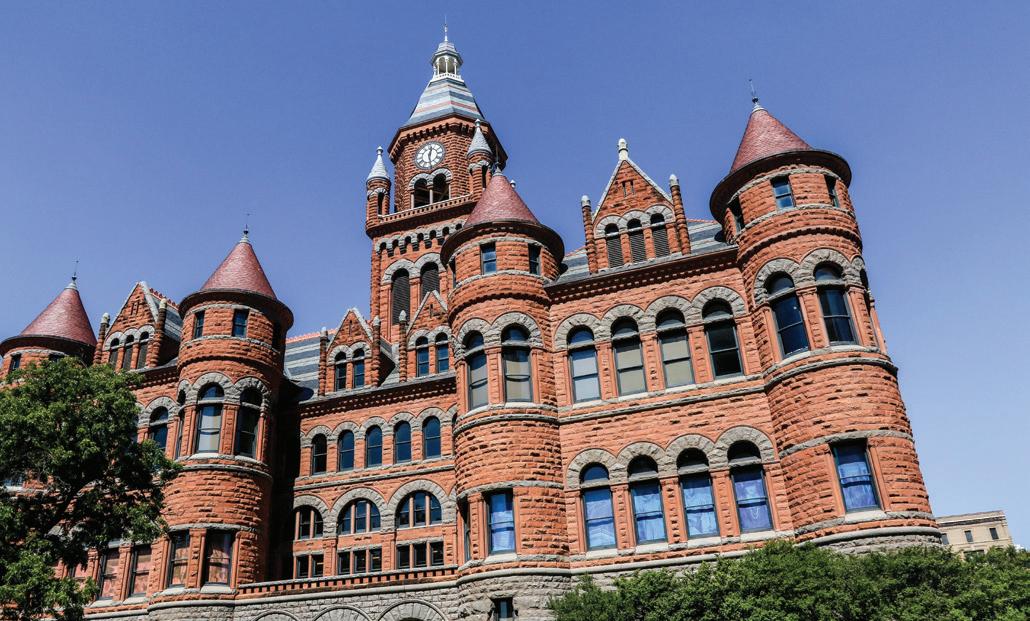
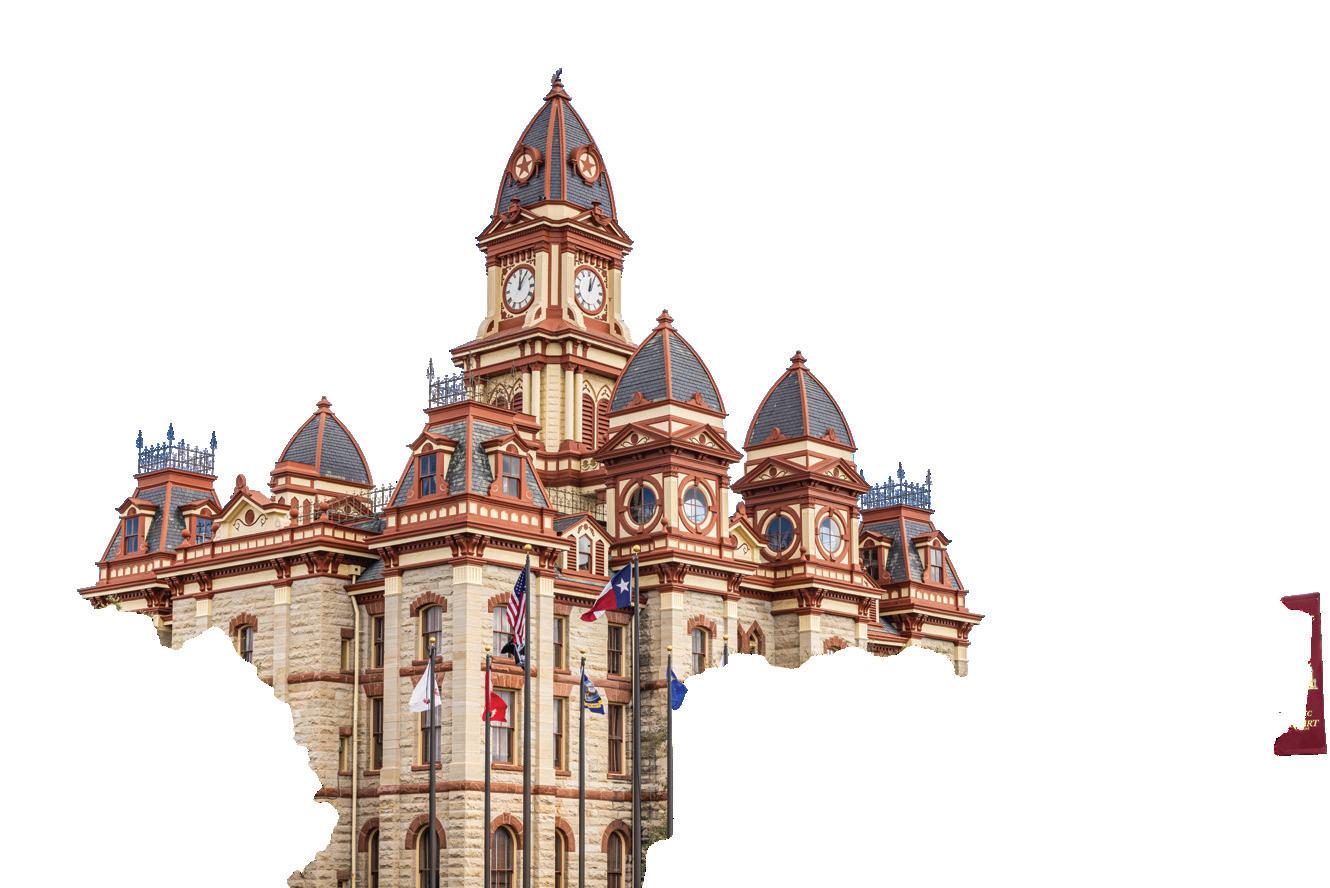
Caldwell County Courthouse in Lockhart, TX
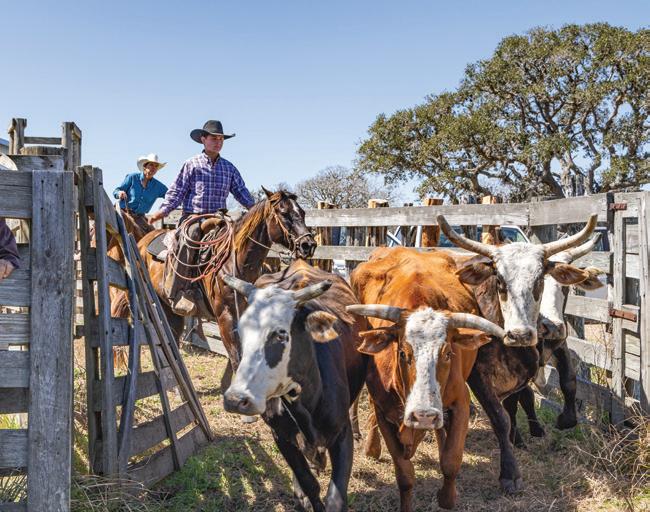
It was the Old West that expanded the interest in cowboy culture. Western comic books, TV shows and movies painted a colorful picture of life on the range. Merchandising of cowboy hats, cap pistols, lunchboxes, figurines and other memorabilia became coveted possessions of youngsters, and by the mid-1950s, visitors wanted to experience what this rough and seemingly glamorous life was all about. Cowboy culture led to dude ranches and provided people with a way to stay on a ranch, ride horses and soak up the atmosphere. In Bandera, dubbed the Cowboy Capital of the World, you can get your cowboy thrills at four historic dude ranches offering a true Texas experience with horseback riding and ranch living. The family-owned Dixie Dude Ranch has been hosting dudes since the 1930s, Twin Elm Guest Ranch since 1939, Flying L Ranch since the mid-1900s and Mayan Dude Ranch since 1951.
From the 1920s to the 1950s, cars became more affordable and transformed the appeal of being on the road. Motels, diners and roadside attractions became a lucrative way to make a living and a way for visitors to travel in a more comfortable manner. Tourism became more sophisticated and visitor bureaus sprang up, creating jobs for marketers, ad agencies and suppliers. Big theme parks entered the lucrative travel market. SeaWorld opened in 1988, followed by Six Flags Fiesta Texas in 1992, which was themed around Spanish/ Latin heritage, German influences, Tex-Mex culture, 19th-century frontier motifs and the advent of the oil era.
Today, Texas is one of the leading tourist destinations in the country. Visitors from around the globe come here for nature travel, heritage trails, cultural tourism, Texas cuisine, Texas wineries, hunting, fishing, birdwatching and more. Statistics for 2024 indicate that 62 million leisure visitors visited Texas in 2024, generating an economic impact of roughly $199.5 billion.



by JIM PETERSON, WINE ENTHUSIAST & INSTAGRAM WINE INFLUENCER
As graduation ceremonies and weddings fill the summer calendar, I want to introduce you to a type of champagne that can encompass luxury, history, and meaning in a single bottle. I’m talking about the rare genre of “late-disgorged” champagne. If you are not familiar with that term, you are not alone. It may need some explanation, but once you “get it” you quickly understand these wines are far from ordinary champagnes. They deliver a sophisticated sip of history that can mark milestone events in a way no other bottles can.
To answer that question, let’s briefly recap how champagne is made. Champagne starts as a still wine, but it goes through a second fermentation in the bottle where the Carbon Dioxide (or CO2) is trapped and dissolves into the wine, and this creates the bubbles. Along the way, dead yeast cell deposits from the second fermentation settle in the bottle.
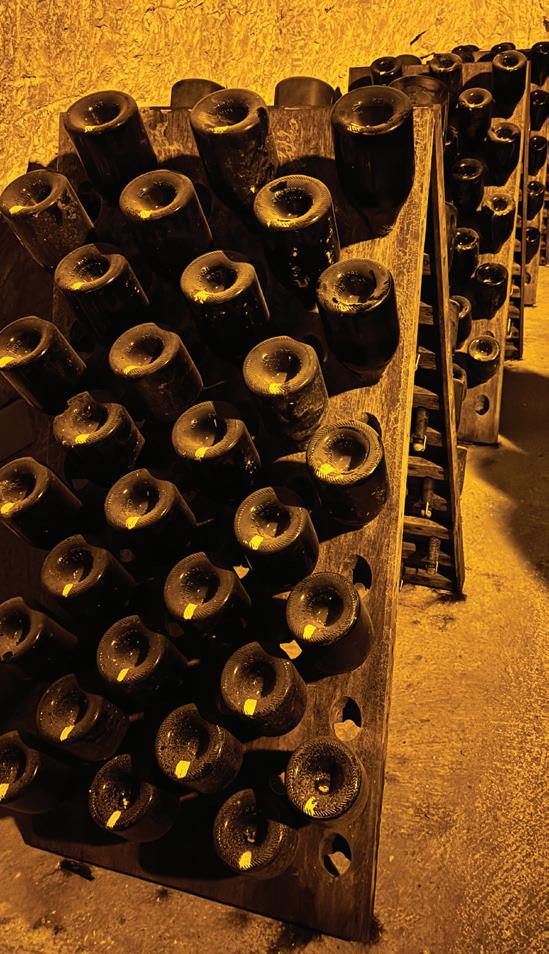
These are called “lees” and while they are still there the champagne is “resting on the lees.” Eventually, producers move these lees into the neck of the bottle through a process called “riddling” that turns the bottles downward. The riddling creates sediment “plugs” in the neck of the bottle. These are usually quick-frozen and removed in a step called disgorgement where the pressure simply blows out the sediment. This is usually done mechanically, but it is fun to witness manual disgorgement. I have seen this a few times during Champagne tours, and sipping a glass of bubbles from that same bottle leaves an indelible memory. All champagnes require disgorgement before the cork and cage are placed to get them ready for you to enjoy.
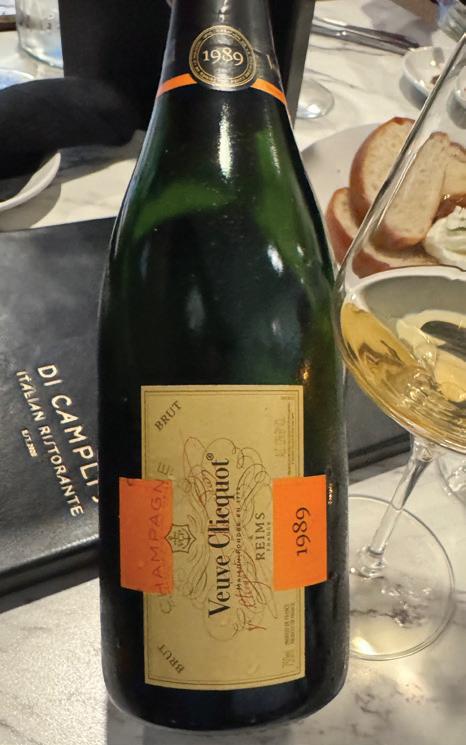

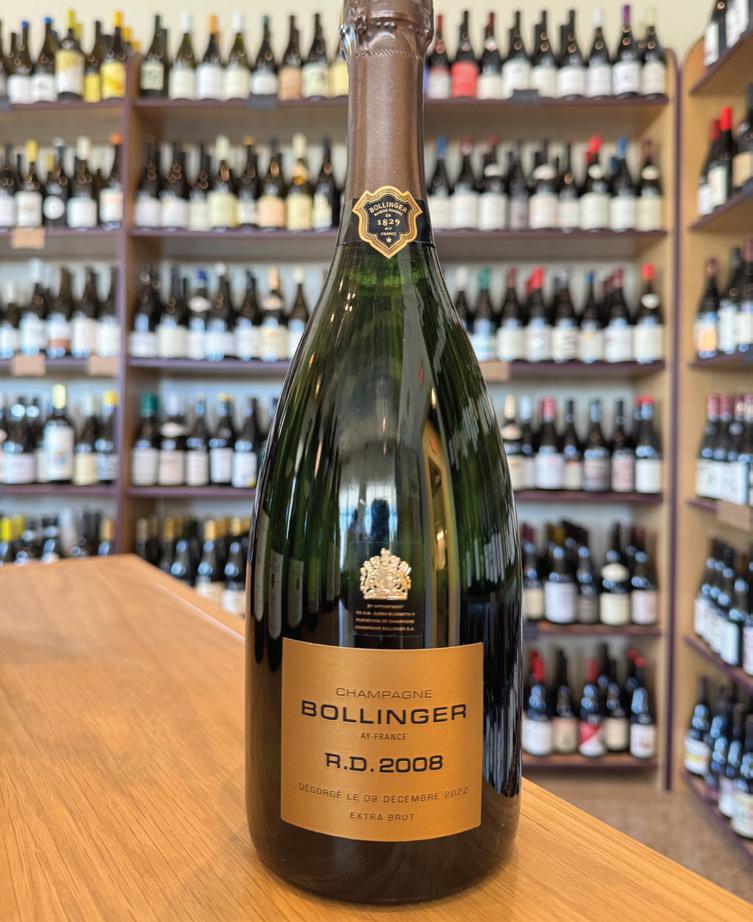
For vintage champagne, the minimum requirement to age on the lees is three years. Many producers extend that to eight or more years before they disgorge the wines and release their vintage wines to the market. However, some producers hold back a small portion of the overall production for extended aging on the lees. That is, they delay the disgorgement to create a unique version of the same wine. The length of extra aging can vary greatly. The longest aged late-disgorged champagne I have tasted was the 1971 Piper-Heidsieck Hors-Série, not disgorged until 2021 – an incredible 50 years after the vintage! It was fresh and delicious.
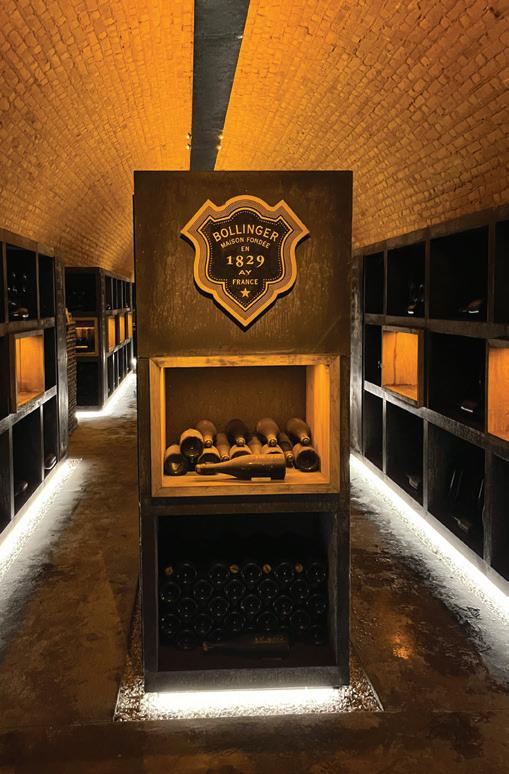
Madame Lily Bollinger is credited with popularizing these types of champagne. In 1967 Bollinger released their R.D. 1952 vintage. The “R.D.” stands for Récemment Dégorgé, or “recently disgorged” and represented a signature style no other house was promoting. Champagne Specialist Gina Lyons, owner of Sarasota Wine Co. and A Vine Affair, describes the style this way, “Late-disgorged champagne is so compelling because it captures something genuinely rare: the layered complexity of extended aging alongside the freshness, tension, and lift that comes from later disgorgement. That interplay is what makes these wines feel both luxurious and intellectually exciting.”

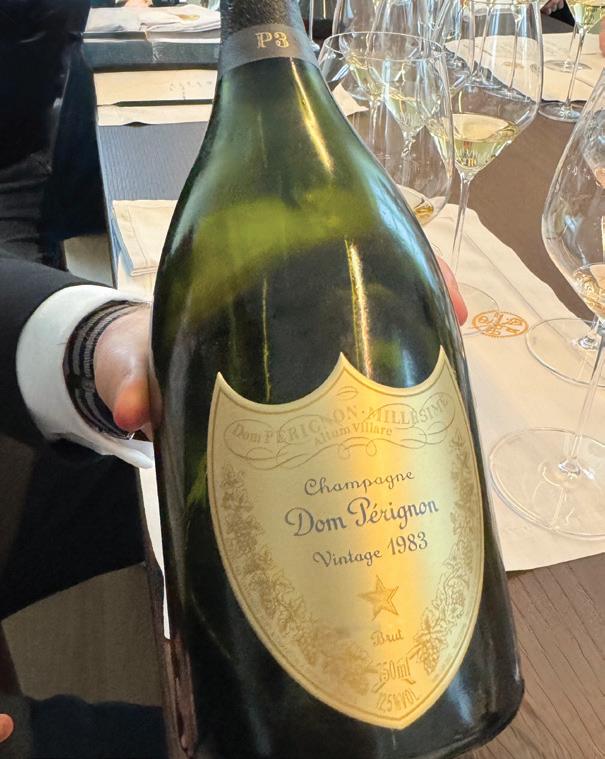
When the building interest for the Bollinger R.D. wines became apparent, other Champagne Houses began their own experimentation. While I have tasted a few vintages of Bollinger R.D., most of my experience is with the Dom Perígnon Plénitude wines. Most people are familiar with the readily accessible Dom Perígnon vintage wines with the iconic green label. Less known are the Plénitude 2 and Plénitude 3 releases (more commonly known as P2 and P3), with black and gold labels respectively. These represent a fraction of the overall vintage production, and they have two separate latedisgorged dates. The P2 can be disgorged 15-20 years after the vintage, while the P3 can take up to 30 years before it is released.
I recently attended a six-vintage vertical tasting of P2 to celebrate the newly released, and highly anticipated 2008 P2. To compare, we also tasted the 2006, 2005, 2004, 2002, and 2000 P2 vintages. The Dom Perígnon chef de caves (cellar master), Vincent Chaperon, led us through this Masterclass. He noted that champagne aging on the lees yields deeper complexity, more vibrancy, and it tends to be fresher than an original release when tasted side-by-side because aging on the lees slows the oxidation. My favorite wine that night was the stellar 2008 P2, which is not surprising given that 2008 was a spectacular vintage for Champagne. What did surprise me was how different the 2008 tasted from when I had first tasted it four months earlier while visiting Champagne. Sometimes champagne needs a little time after disgorgement to settle down. Once disgorged, champagne begins to age a bit more quickly. Just like red or white wine, champagne will evolve and change over the years. I almost always look to see if I can find the disgorgement date on the back of a bottle. It can be a good indicator for how the wine should taste.

What is a typical late-disgorgement date?
Let’s take a closer look at the 2008 Dom Perígnon. The initial release spent about nine years on the lees before disgorgement. Meanwhile, the 2008 P2 had about 16 years on the lees, or an extra seven years to further develop. Meanwhile, the extremely rare 1995 Dom Perígnon P3 was disgorged and released in 2025, after almost 30 years of aging on the lees. This is why these bottles are so special and rare. This is also why collectors are willing to pay extra to acquire them. How much extra? It depends on the producer, of course, but the new vintage of 2017 Dom Perígnon might be about $250. The retail price for 2004 P2 or 2006 P2 is about $550. The 1995 P3 is so rare that you are likely to pay $4,000
or more (assuming you can even find it).
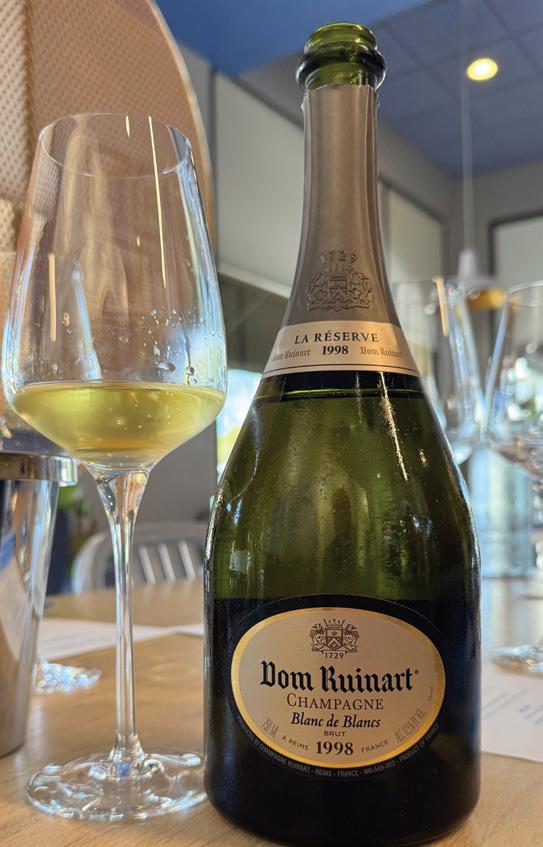
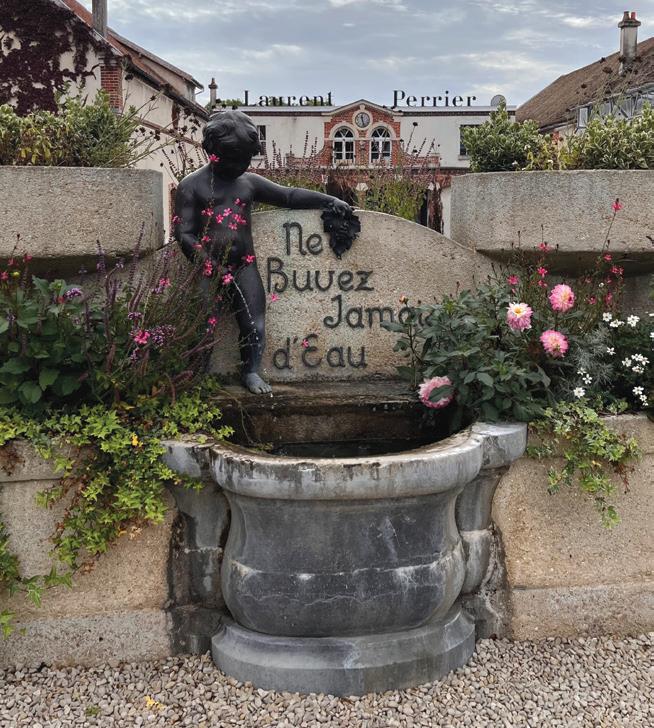
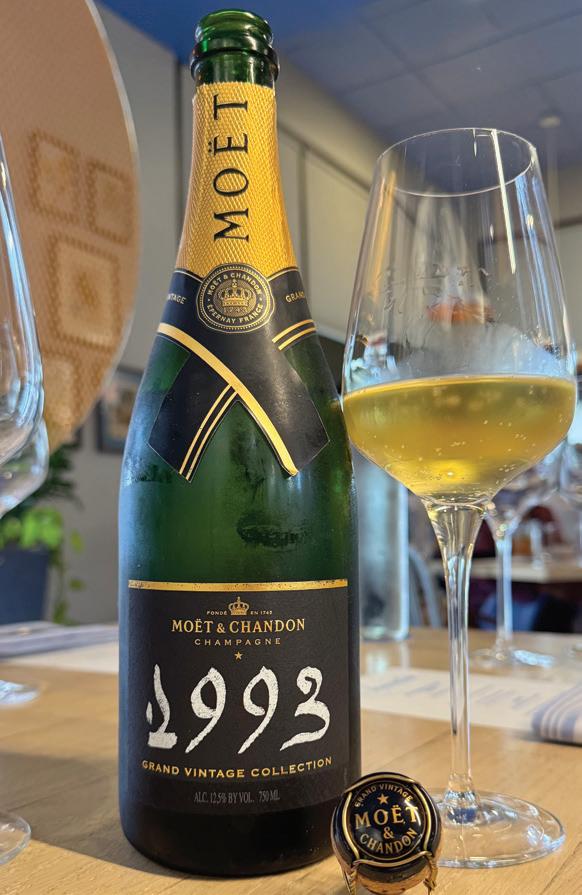
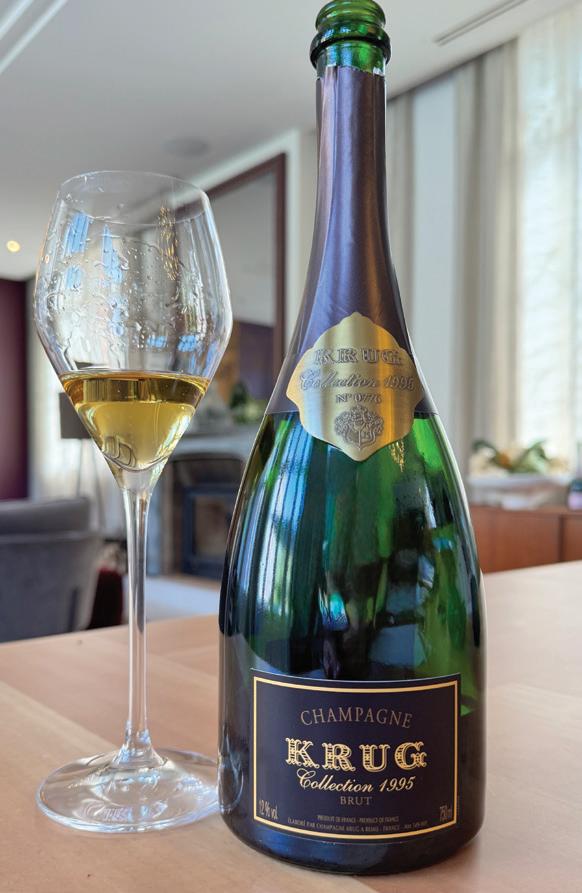
Some other well-known late-disgorged vintage champagne options include the Roederer Cristal Vinothèque, Krug Collection, Moët & Chandon Grand Vintage Collection, Dom Ruinart La Réserve, and the Veuve Clicquot Cave Privée. Meanwhile some producers have begun experimenting with late-disgorged non-vintage champagne. A few examples include Laurent-Perrier Grand Siècle Les Réserves, Jacquesson dégorgement tardif, and Gosset 21 ans de cave a minima. Most wine lovers know these wines were delicious when they were originally released, so it’s fair to ask: Why should I pay a premium for a late-disgorged version of a wine that was great already? It’s a great question!
Before we dive into that question, it’s worth noting why these wines are so rare. I mean, if they are so good, why isn’t everyone doing it? That has to do with the reality of economics and storage space. It takes a big investment from Champagne Houses to hold back these wines, and not all of them can easily afford to give up that early revenue. When you can find them, though, there are some outstanding reasons to give them a try. As Gina says, “For me, late-disgorged champagne represents the most convincing kind of luxury: real rarity, real pedigree, and a wine that delivers both emotional significance and extraordinary complexity in the glass. Clients are often amazed by how a wine with so much age can remain so precise and energetic.”
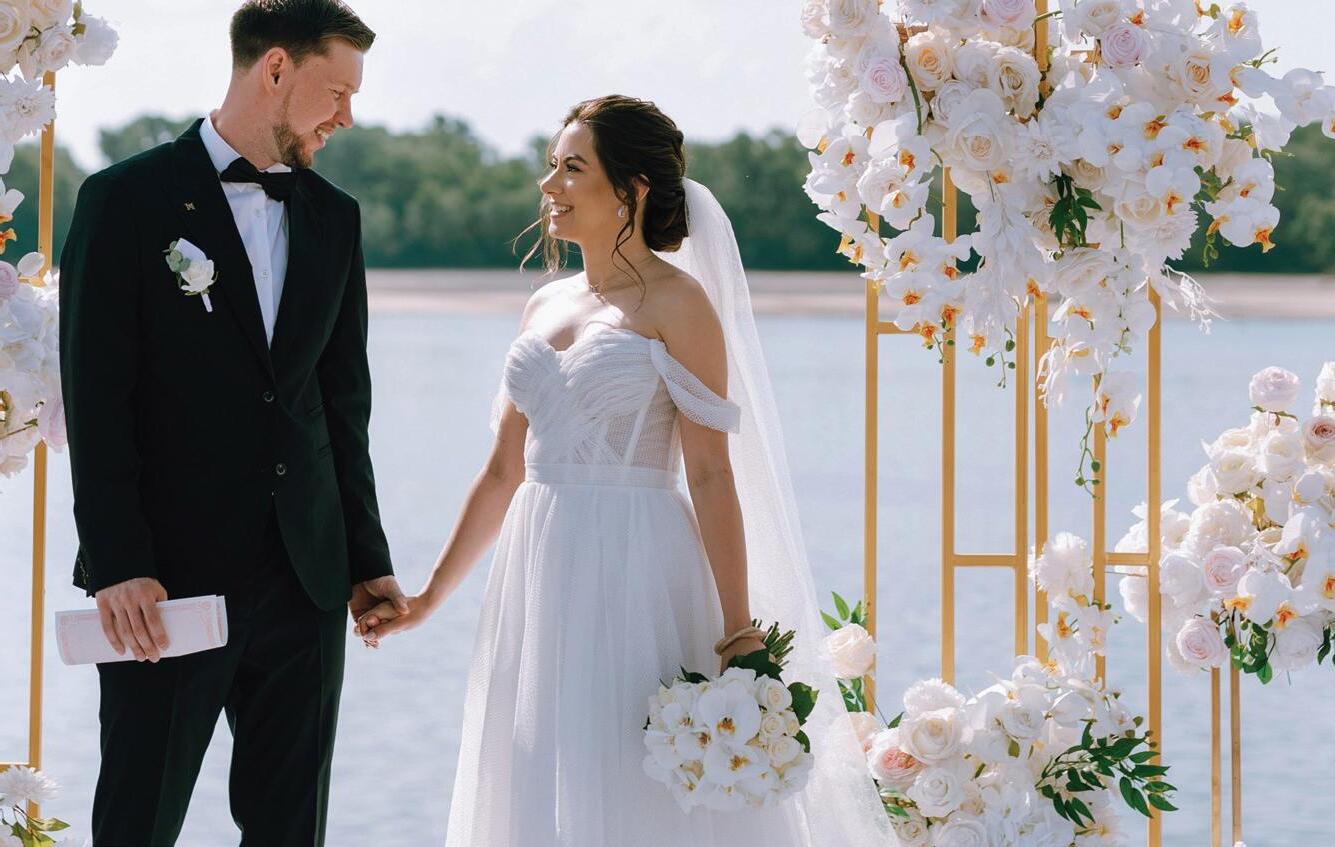
In my opening I mentioned how these wines can set the mood for celebrating milestone events. This is especially true if your loved one was lucky enough to be born in a vintage year for Champagne. As a collector of birth year wines for my two sons, I know this firsthand. My older son was born in 2001 where no vintage champagne was made. Meanwhile, my younger son has all the advantages of the fantastic 2004 vintage. What are your chances? In my personal collection I have late-disgorged champagnes from 1989, 1993, 1995, 1998, 1999, 2000, 2002, 2004, 2005, 2006, and 2008. That’s not to brag about it. It’s just to show that with a little luck, planning, and the willingness to spend, the possibilities are there. We are entering the season of graduations and summer weddings. Sharing a birth year wine is an amazing way to celebrate with your loved one. Gina says it beautifully, “I love them for gifting and cellar additions because they can be deeply personal, unique birth-year, or milestone bottles that still feel vibrant, elegant, and celebratory.” If you are older like me, that same approach can be used for benchmark years like graduations, first-dates, or weddings. It’s the perfect way to highlight a momentous occasion.
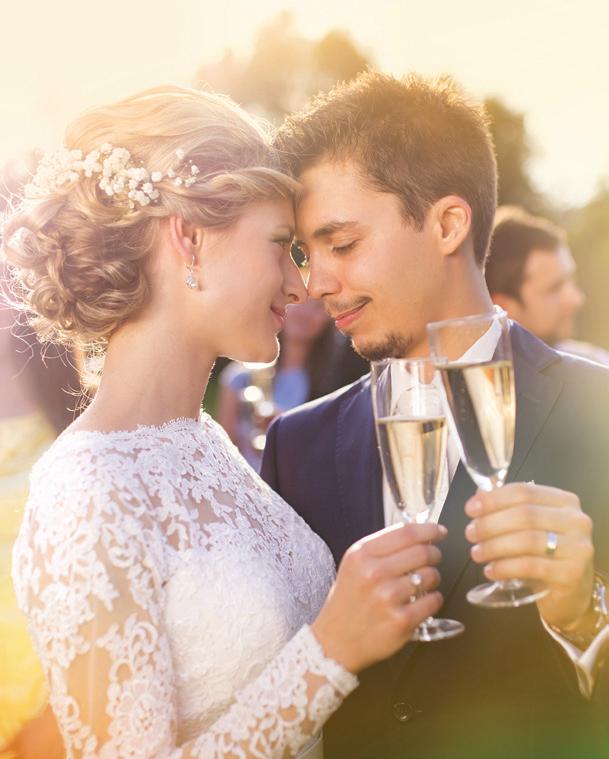

I will never get over the fact that late-disgorged champagne does more than transcend celebrations. It transforms them. With the unparalleled fusion of profound depth, youthful vitality, and decades of patient evolution, these wines offer something truly singular: They are a living connection to a specific moment in time, worthy of being opened on life’s most meaningful occasions. Whether it’s a wedding, a graduation, or a milestone anniversary, a late-disgorged champagne doesn’t just honor the moment – it elevates it. You’re tasting a glass of history, luxury, and joy that feels as fresh and alive as the future it toasts. For those seeking to create unforgettable memories, there are few bottles more worthy of life’s greatest moments.
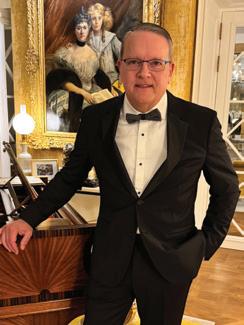
Follow Jim on Instagram, @tx_wine_pilot, for more wine tips and reviews.
Jim Peterson is a retired U.S. Air Force officer who mainly flew the A-10 fighter jet. He has ties to the wine business going back over 25 years, has visited many wine regions, tasted the world’s top wines, and is an avid wine collector. His business, The Texas Wine Pilot, offers customized in-home wine tastings, corporate wine tastings, executive wine training, a wine concierge service, and wine collecting consultations. Visit txwinepilot.com or email him at jim@txwinepilot.com for more information.

by DENISE PAYNE
I’ve travelled to many far away places and I love seeking new cultures and adventures!
While it is true that Los Angeles is one of the most famous cities in the United States and offers a sprawling, sunny blend of Hollywood glamour, coastal and cultural experiences, I have to admit that it was never really on my list of places to visit.
But when my youngest daughter Jaimie said she bought us tickets to see the “Gilmore Girls 25th Anniversary Event” in Los Angeles, at Warner Bros. Studios, I said ....sure!
The “Gilmore Girls” was an iconic, popular 2000s comedy-drama series focusing on themes of family, romance and navigating life milestones.
When Jaimie was younger, she was sick for a while and we watched all the episodes of “Gilmore Girls” and became fans. We even went on a backpacking trip to eastern Europe, in between her high school and college time, inspired by a trip the mother and daughter did on the show. It was a great mother daughter bonding trip which included a ton of adventures.

Nineteen years later finds us flying to Los Angeles for yet another mom daughter adventure.
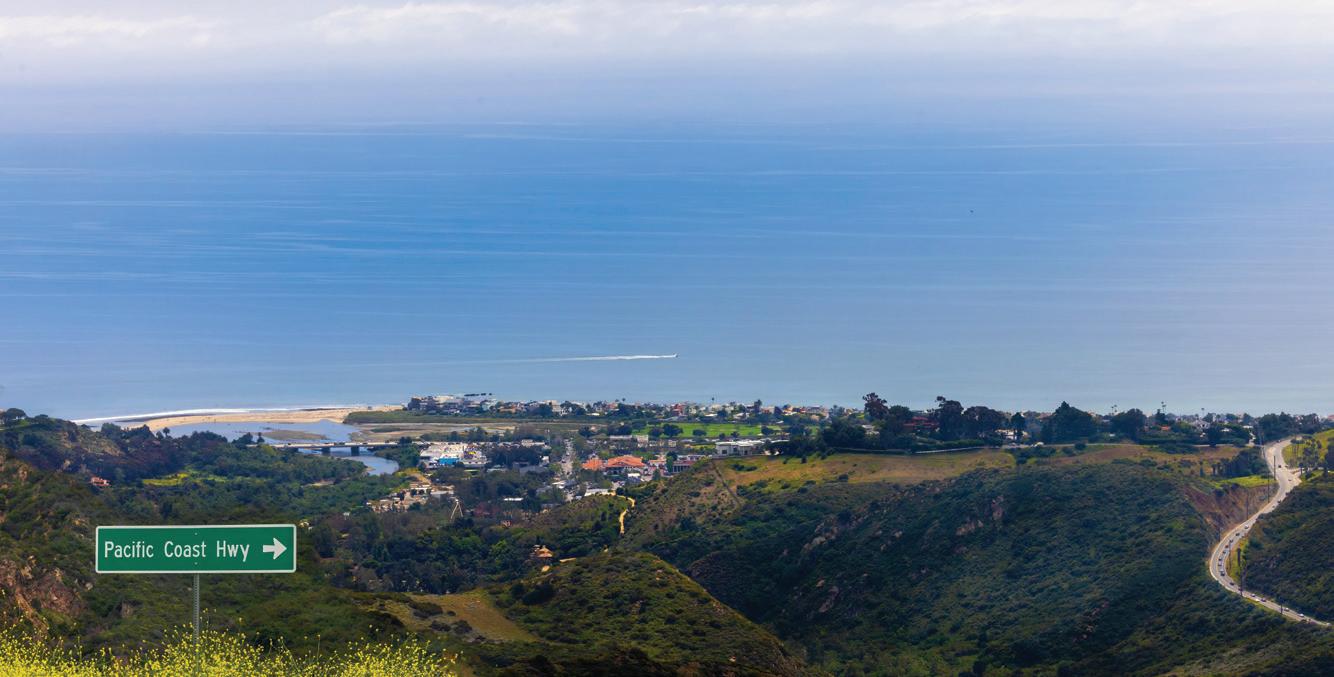
My daughter rented a red convertible, because that’s exactly what you need when you are driving up the Pacific Coast highway. Hugging the coast, it was a beautiful, warm sunny day and the scarf around my neck started waving in the breeze as we drove off.
Malibu was our first stop for lunch. Just ahead of us were orange traffic cones on the road alerting us to the fact that just a couple of minutes before we passed, large boulders fell from the craggy cliffs above. Talk about good timing on our part.
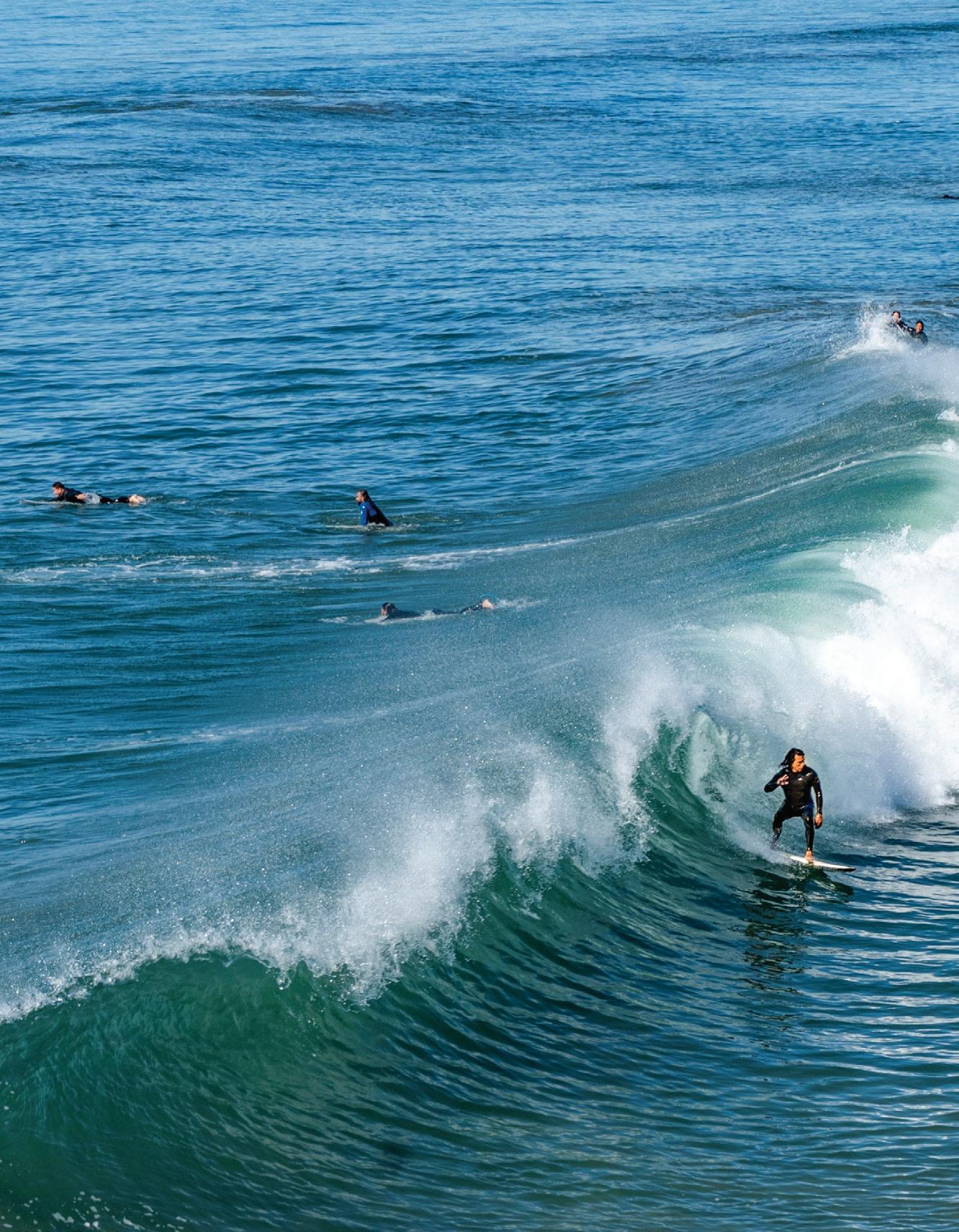
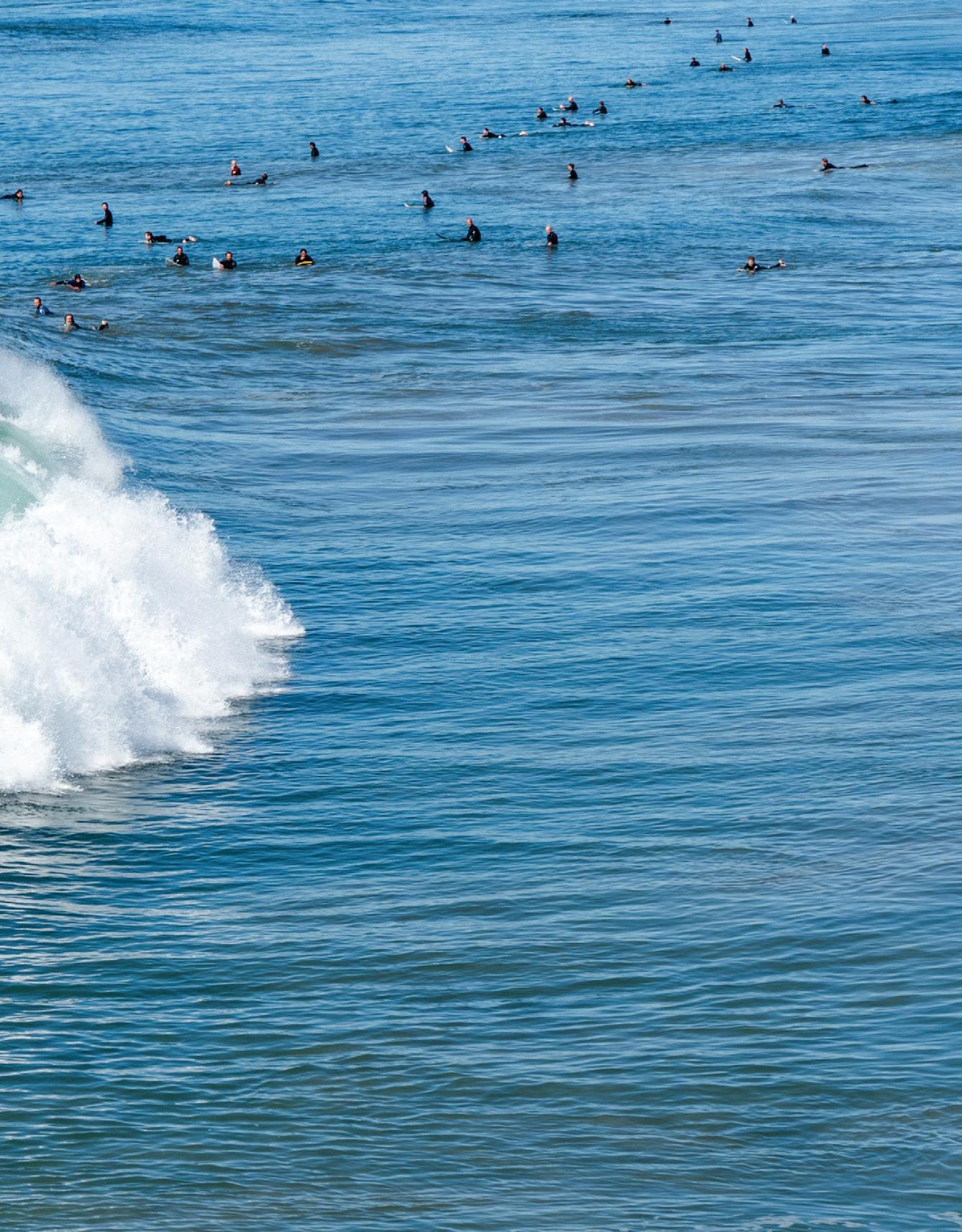
On our left as we drove up Highway 1, majestic waves crashed upon the jagged rocks along the beach creating white spray and foam. A few brave surfers rode white swells into the foaming bubbles along the seashore. Pulling into a parking lot in Malibu, I received my first lesson on how expensive California is, when ordering a sandwich in Malibu Kitchen and Country Market.
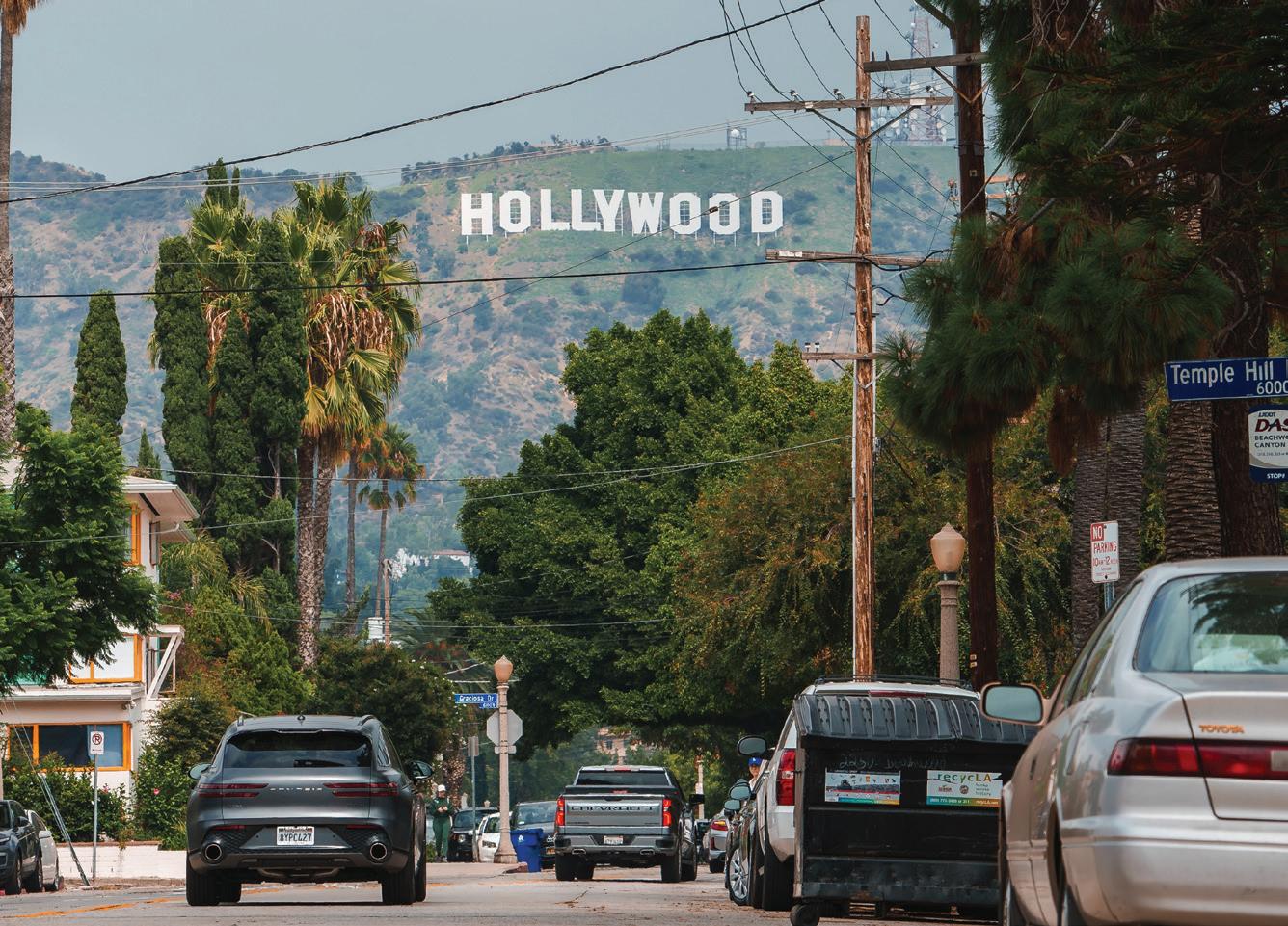
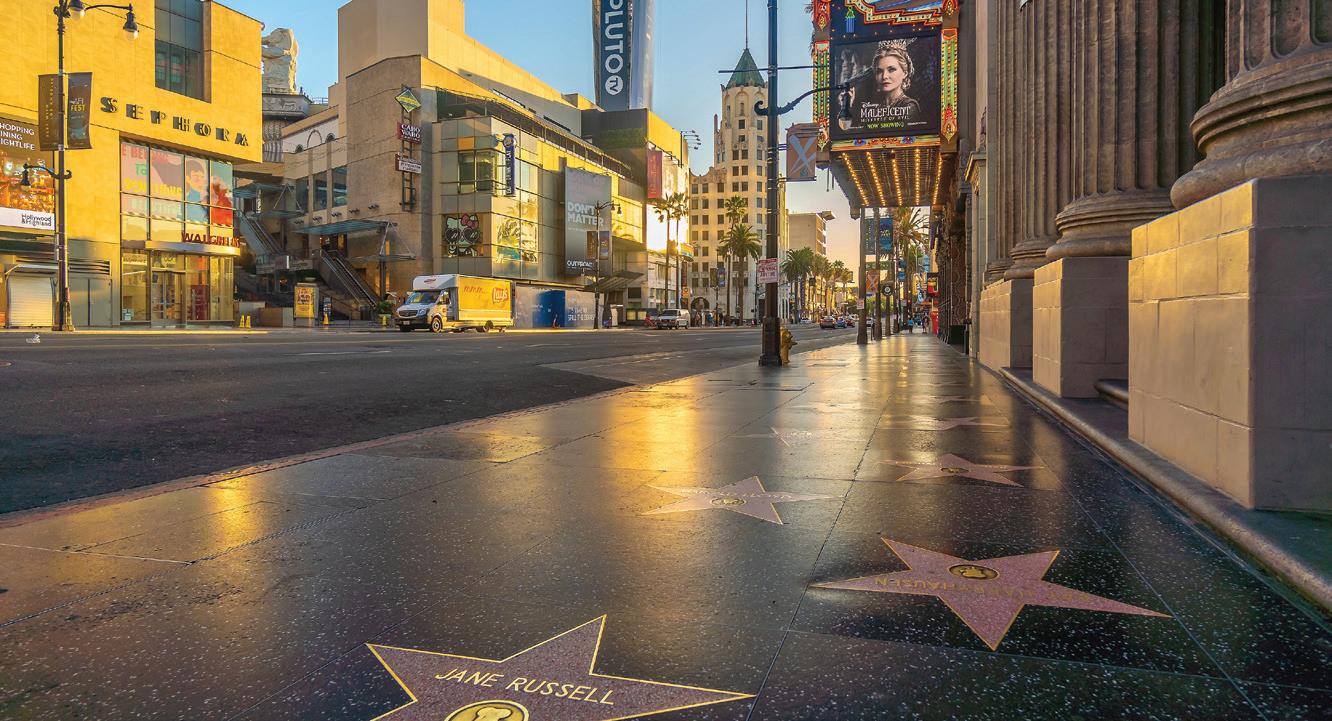
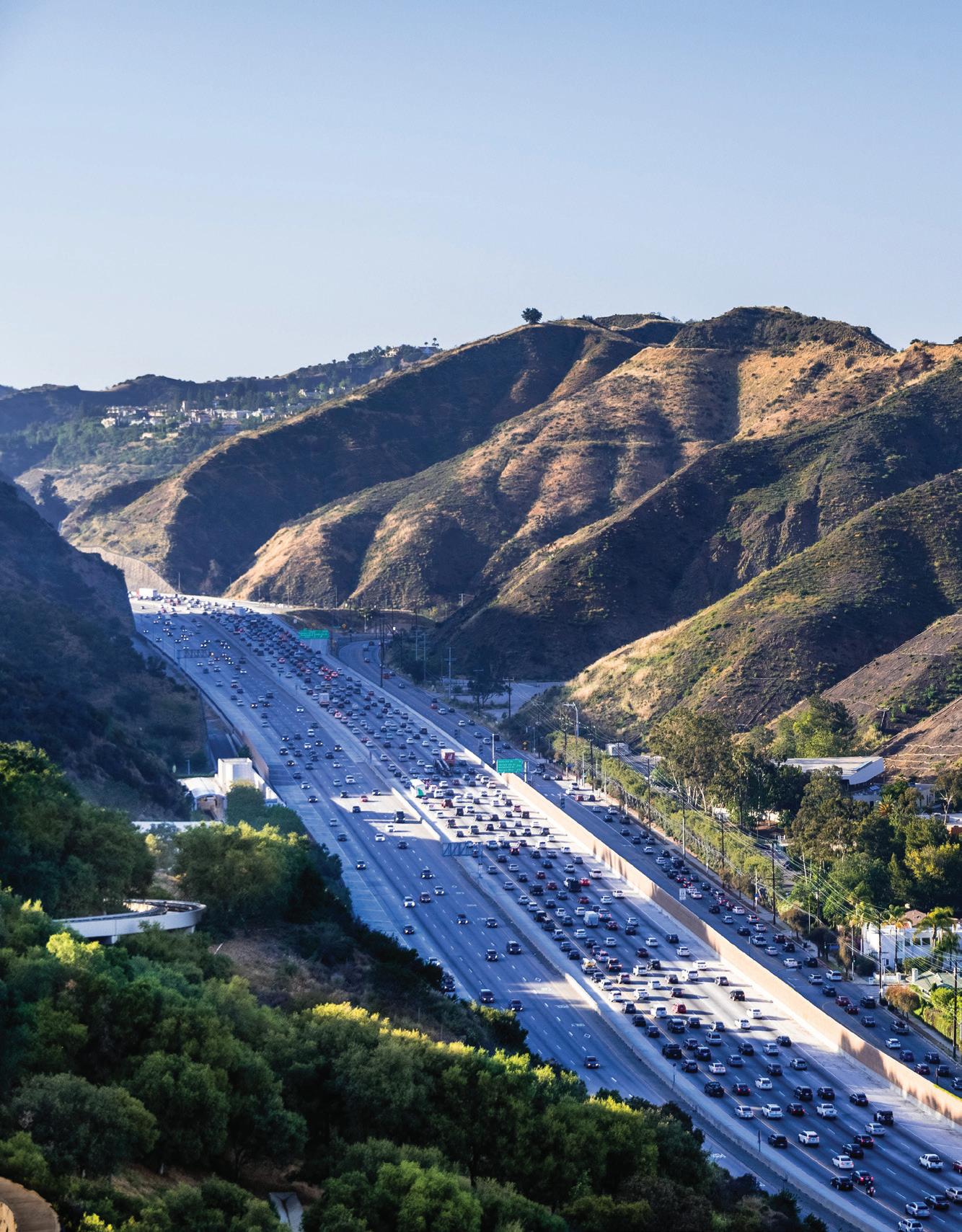
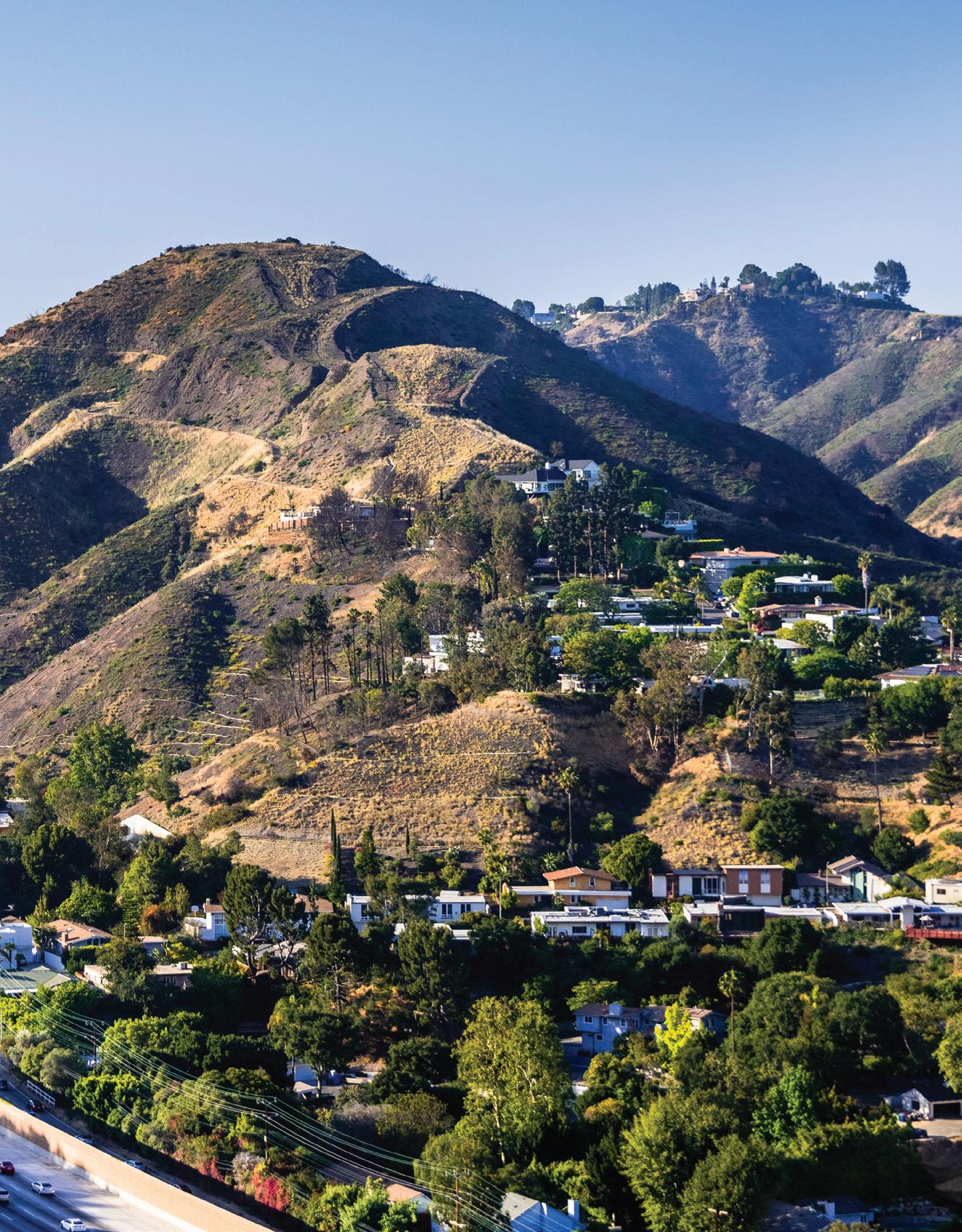
After a quick bite we drove back down the Pacific Coast Highway to Bel-Air. We drove our little red convertible along curvy roads through well-manicured posh neighborhoods such as Hollywood and past the Beverly Hills Hotel. Tall, immaculately trimmed palm trees, cactus and gorgeous brightly colored flowers dotted driveways as we explored these super rich neighborhoods. My daughter pulled over and proudly standing up in the hills was the famous “Hollywood” sign. Of course, I jumped out and took a few pictures of the iconic sight. Aimlessly driving around, we saw tall, elaborate locked gates protecting gorgeous homes and we wondered who lived in these secured areas. We decided we would check into our hotel which was right on Hollywood Boulevard. Hotel Ziggy had
eclectic art hanging about as you entered the lobby. To our right we passed a metal sculpture of a musician playing a guitar on his knees. It was made from nuts and bolts and various pieces of metal. Colorful guitars hanging on the walls caught my attention as we walked to our room. Throwing our suitcases on our beds we still had energy to explore the Hollywood Walk of Fame which was just a few blocks away. It was exciting looking for our favorite actors and musicians’ stars on the sidewalk. Soon we started crashing and headed to the hotel. We ordered pizza and had dinner in bed. Watching some TV, we caught up on a few Gilmore Girls shows in anticipation of the next day’s festivities.
We had to leave early since our timed tickets were early. Thinking we would be the first in line, this was not the case, though we did get ahead of the mass of crowds. Checking in, we were assigned to a golf cart and driver that drove us around the sets of two of our favorite shows, “The Big Bang Theory” and “Friends.”
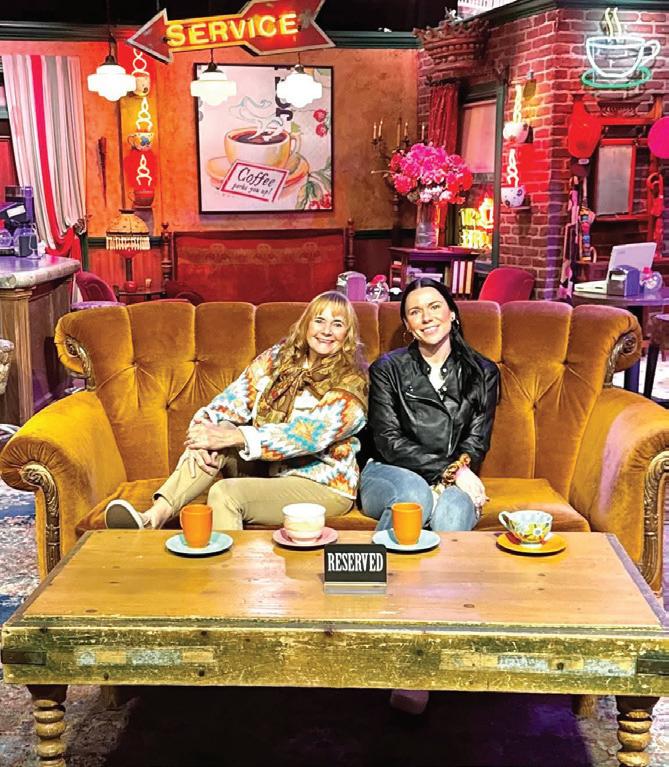
After the drive through we went inside to walk around the old sets and were able to take pictures of famous areas such as the couch in the coffee shop in “Friends,” the broken elevator in “The Big Bang Theory” and of course their couch as well.
A special treat was walking around props from the Harry Potter series of movies, checking out the wands, potions and book of spells. Of course, the closet under the stairs where Harry Potter’s bedroom was, thrilled me. Photo opportunities were all over the place and it was great that the studio had people available to take pictures of you on your phone.
As special as that all was, we were here to roam the village of Stars Hollow, the imaginary town in “Gilmore Girls” where Lorelai and Rory Gilmore lived. We also heard that sometimes some of the actors from the show make appearances. Fingers crossed.
It was so strange walking into the actual town of Stars Hollow. Walking over to the center of town we grabbed some pictures of the famous gazebo where many romantic moments happened. Both my daughter and I were overwhelmed and didn’t know where to go first. The decision was made when we saw the Dragon Fly Inn, where the main character, Lorelai, owned and worked. We took advantage of getting some pictures on the idyllic front porch of the inn before it started getting overrun with people. We knew we were coming back later for a luncheon tea which my daughter reserved. Doose’s Market shopping bags were good souvenir purchases and practical as well. Next up was our reservation for tea and coffee at Lukes Place. The famous diner where “Luke,” Lorelai’s friend, who they finally later on got together and started a relationship, owned. Staring through the window while we waited in line, we kept hoping we would see “Luke” played by Scott Patterson. Unfortunately, he did not appear, but our turn came and we had our tea and coffee at the table Luke and Lorelai sat at
hundreds of times. This was thrilling for us. My daughter posed against the counter where Luke must have poured thousands of cups of coffee. After we realized we had to continue, Taylors Old Fashioned Soda Shoppe was right next door and we found a table where we could sit and finish our tea. You could see the town was getting crowded as the morning continued. Starting out cool, the day was getting warmer and we stopped to enjoy a margarita in an anniversary Gilmore cup. We strolled around town a bit more, stopping at Lorelai’s mother and father’s place, though it was not what I envisioned it would be. Basically, a room with some of the furniture from their house for picture taking and that was fine too. My daughter Jaimie sat on the steps of Stars Hollow High School for a photo op, and across the street was the Dragon Fly Inn where we stopped before, but now we were having our luncheon tea. Walking into the lobby of the Inn was like walking onto the set.
We checked in and were escorted through “Sookies” kitchen, she was Lorelai’s best friend, chef and co-partner in the Inn.
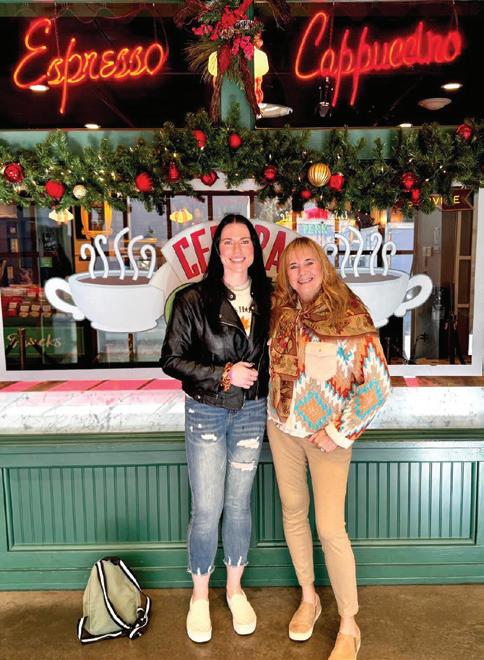
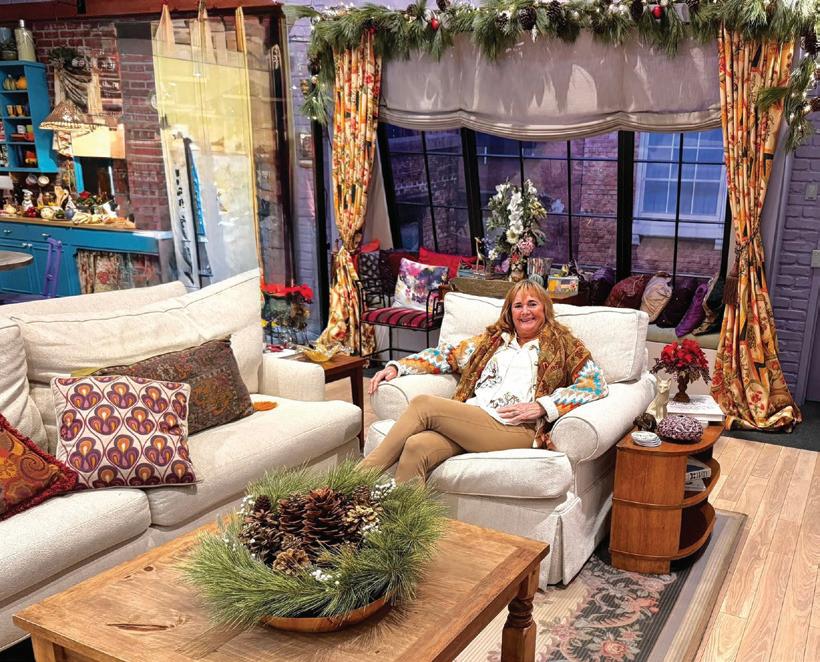

Seriously, you couldn’t take it all in as you entered the dining area. It was all decorated as it was on the show. Our table had a nice view of the fireplace and the whole room. Our server brought out finger sandwiches of chicken salad, turkey, etc. on a three-tiered serving platter. The top two tiers of the platter revealed desserts where chocolate trickled out of vanilla biscuits, eclairs with sweet creamy fillings and some powered sugar sweets. Our tea was served in a porcelain tea pot with an old-fashioned floral design, this same design encircled our tea cups which were inscribed with the Gilmore Girl logo. And yes, you could buy these tea sets in the gift shop, though we did not. Everything was so perfect, what a wonderful bonding time for us. Jaimie gasped and I looked to see what startled her. Miss Kim, who owned Stars Hollow Antique Shop and was played by Emily Kuroda entered the dining room. She was so cordial walking around the room greeting people and taking pictures. Before I knew it, she was walking over to us. I usually do not get star struck, growing up in New York and having seen actors from time to time, TV shows and movies filmed not far from my house. But here in front of me was Miss Kim. Wrapping her arms around me and giving me a hug was unbelievable. She was so friendly. I believe I had misty eyes, even in the picture she took with me. Gathering my wits, I was able to snap a picture of my daughter with her. Time was fleeting and we had more to see. Our next stop
was Lorelai and Rory’s house. Rorys room was open for us to snoop around in, and of course we sat on their couch, their front porch and in the driveway was Lorelai’s jeep. Jeep pictures were a must. Exploring down a pathway I found the fountain where the opening scene from “Friends” was filmed. In the opening scene a couch where the cast of “Friends” sat was placed in front of which later became an iconic fountain. This fountain is also where the actors danced around in the water. The couch was there and so was a long line of people wanting their picture on the couch. We were next in line when all a sudden we heard people yelling, we figured one of the cast members was walking about. I said, “Let’s just wait, we are almost there.” So, after a few pictures on the couch by the “Friends” fountain, we were off and running to see what all the commotion was about. It turns out it was Scott Patterson who played Luke in the show. He was in his coffee shop, and we got some pictures of him just as the lights in the town’s old fashioned lamp posts started flickering on. “Snow” started falling and it was like a magical Charles Dickens Christmas card. Upon closer inspection the “snow” was little pieces of paper they were blowing out of rooftop chutes to give the illusion of snow. But it looked beautiful against the white wooden gazebo surrounded by old-fashioned town lamp posts. It was a perfect ending to a picture-perfect day.
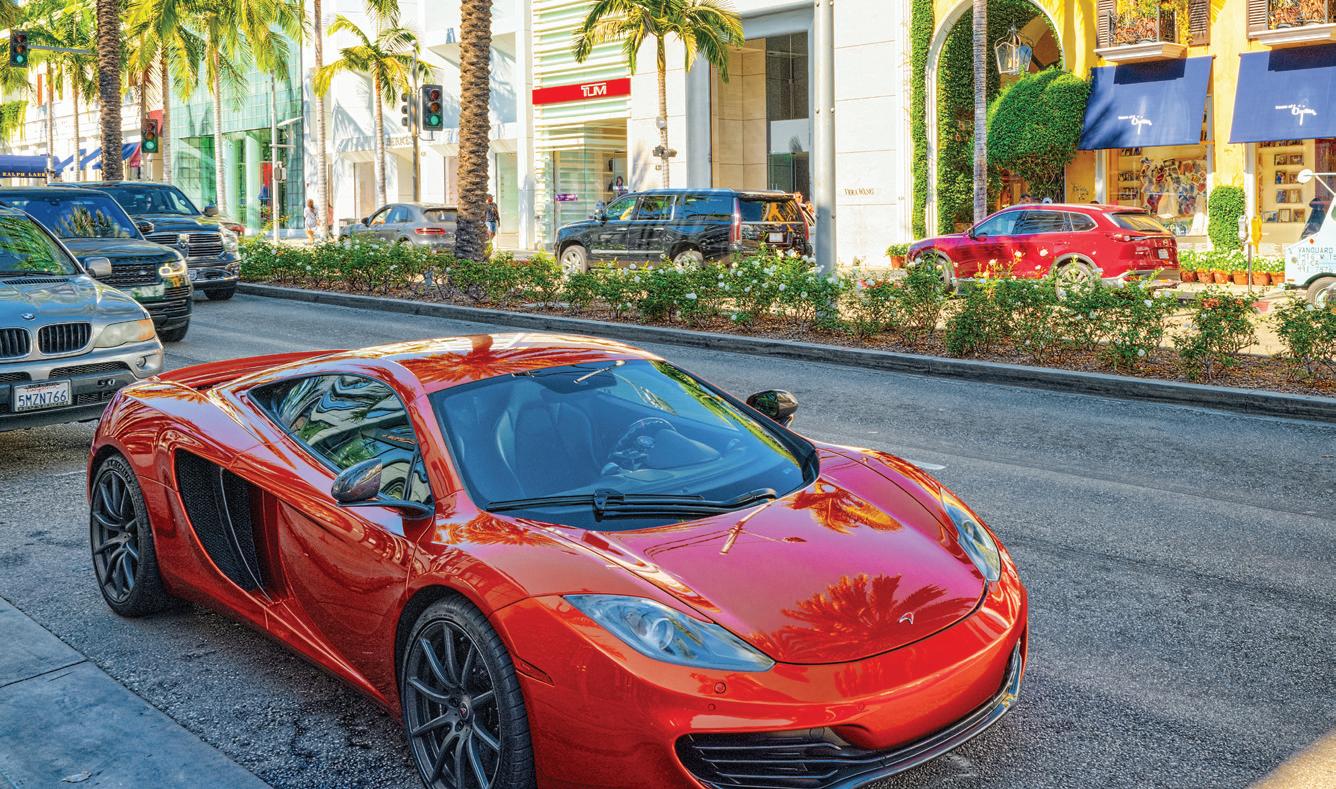
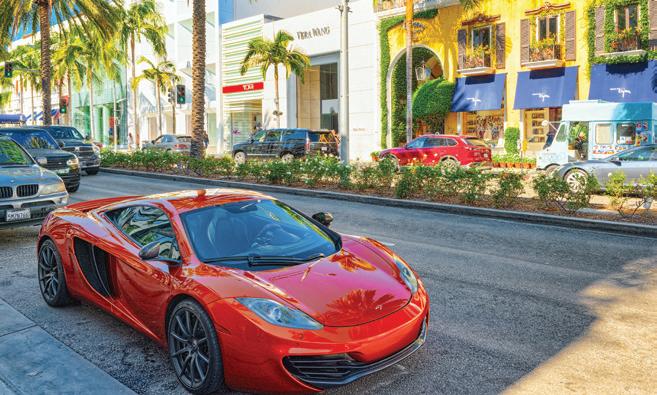
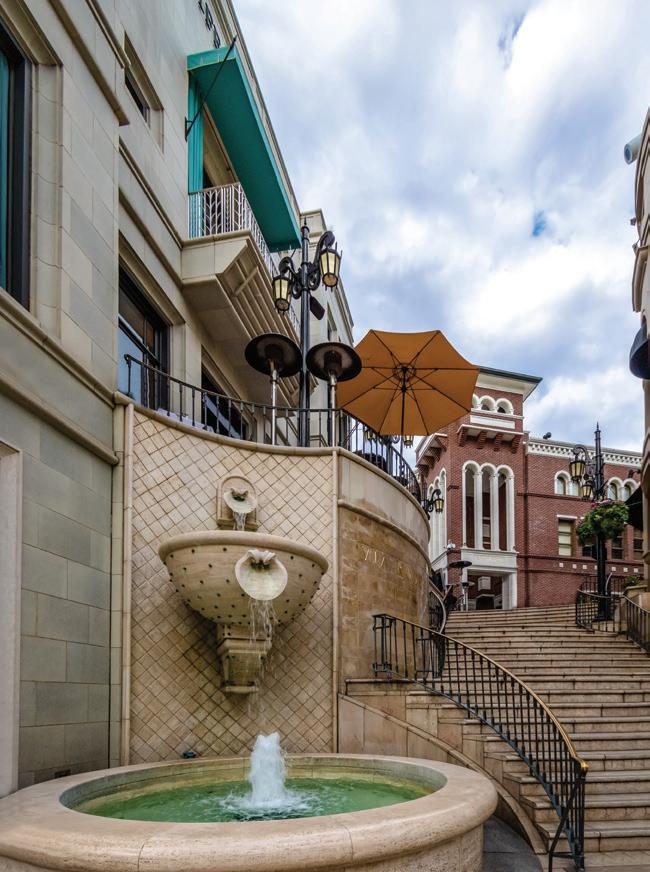
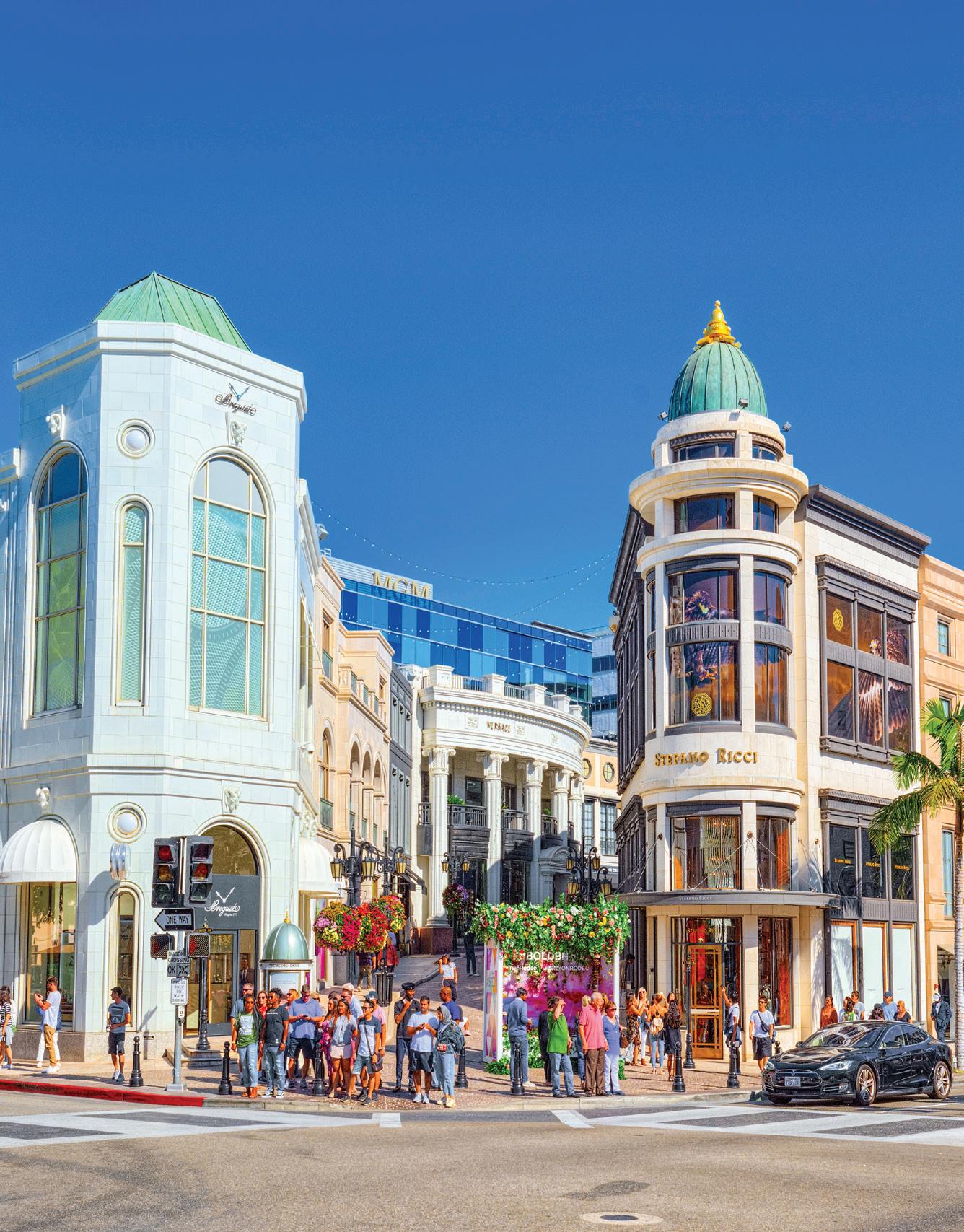
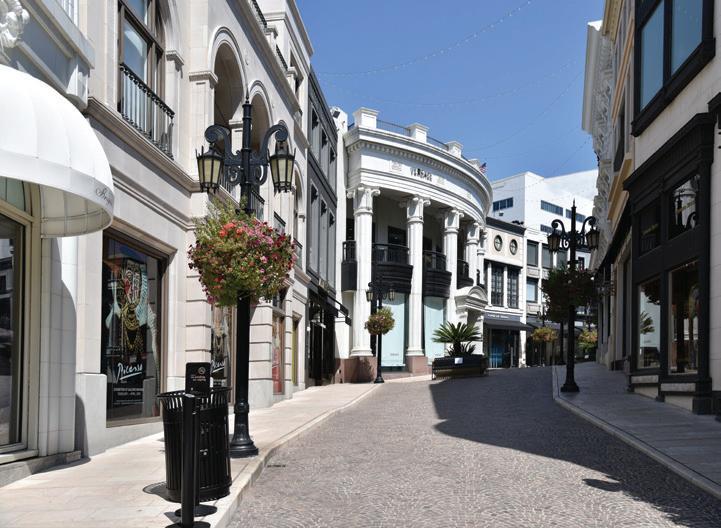
Morning rolled around and we decided we had enough time before heading to the airport to stop by Rodeo Drive to window shop. I’ve never been there and wasn’t sure what to expect. Lavish decorations dotted the street. Memories of a European cobbled stone road flashed before me as we found this posh and quaint area. Of course, high end shops flanked both sides of the street but somehow we found a decent priced place to eat. Fashion first seemed to be the rule of the day with everyone seated around us. We treated ourselves to a mimosa and shared a charcuterie plate. Satisfied with our Rodeo Drive dining experience we started walking back to the car, window shopping along the way. Snapping a few pictures, we found a store my daughter wanted to stop in and look around. The guard at the door asked if we had reservations, which we did not. We said we only wanted to look around but alas we were not allowed to even do that. Back in our car we started driving to the airport already laughing and reminiscing about the fun memories we had just created. We said goodbye at the airport since we were on different airlines. Time flew by as we waited for our flights by texting ideas to each other about our next adventure.
They called my flight and I settled into my seat; thankful I had the opportunity to have this time with my daughter.
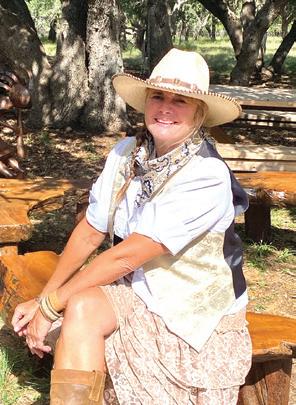
Denise Payne was born and raised in New York, but as the saying goes, she got to Texas as fast as she could. In 2022, she married the love of her life, Steve who was born and raised in Texas. She enjoys traveling the world, writing, photography, hiking and working on their property in the Texas Hill Country. Currently, she is working with Garrett Sullivan, owner of The Longhorn at Way Back Texas Dancehall and Amphitheater in Bandera, Texas. The Longhorn is a piece of Bandera’s history as a lively place for dancing and socializing. Her role as Event/ Band Coordinator enriches her love of Texas.

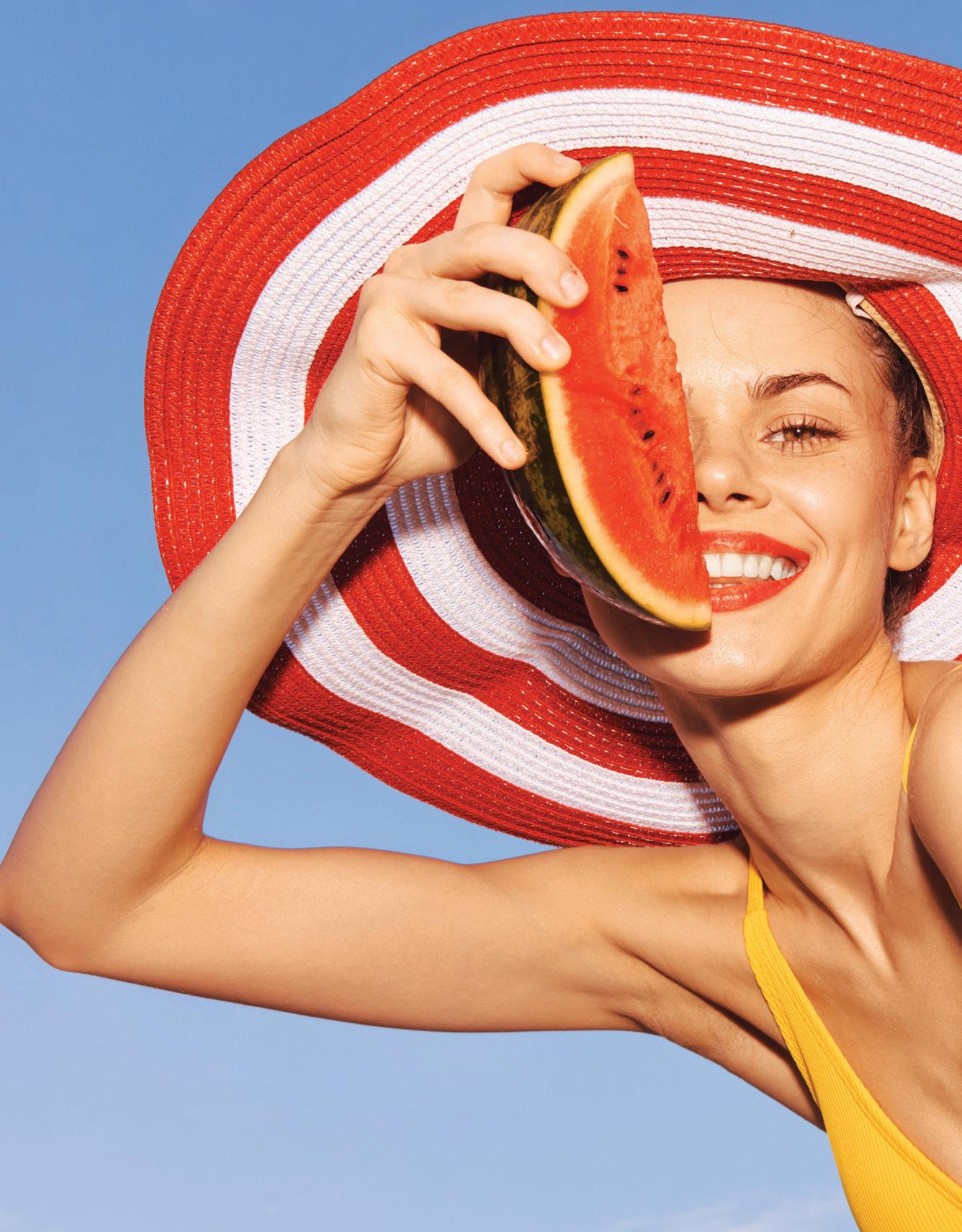

by LISA DANTE
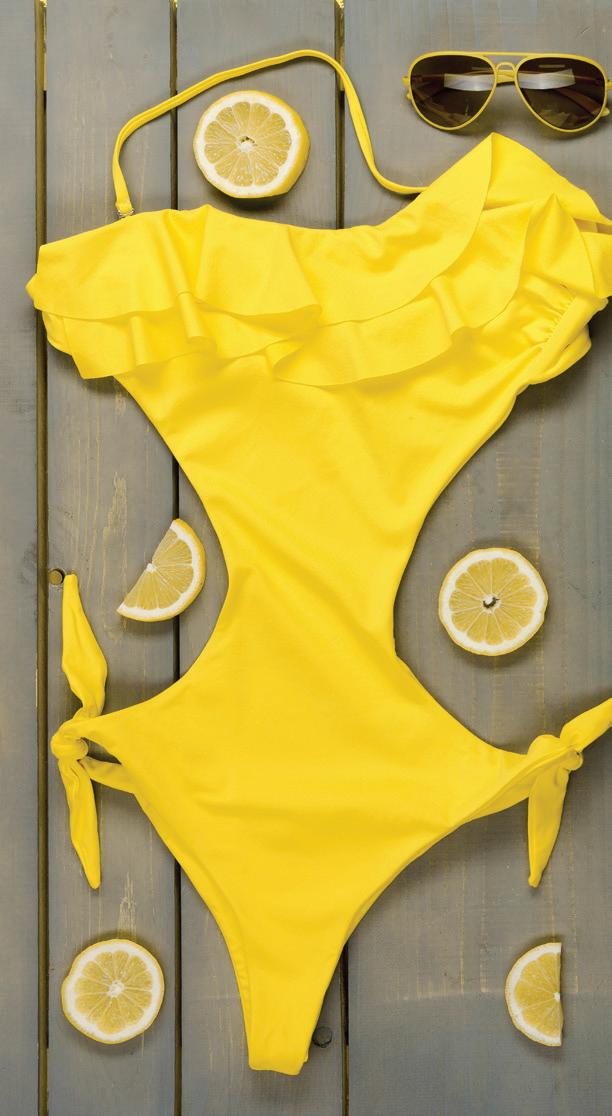
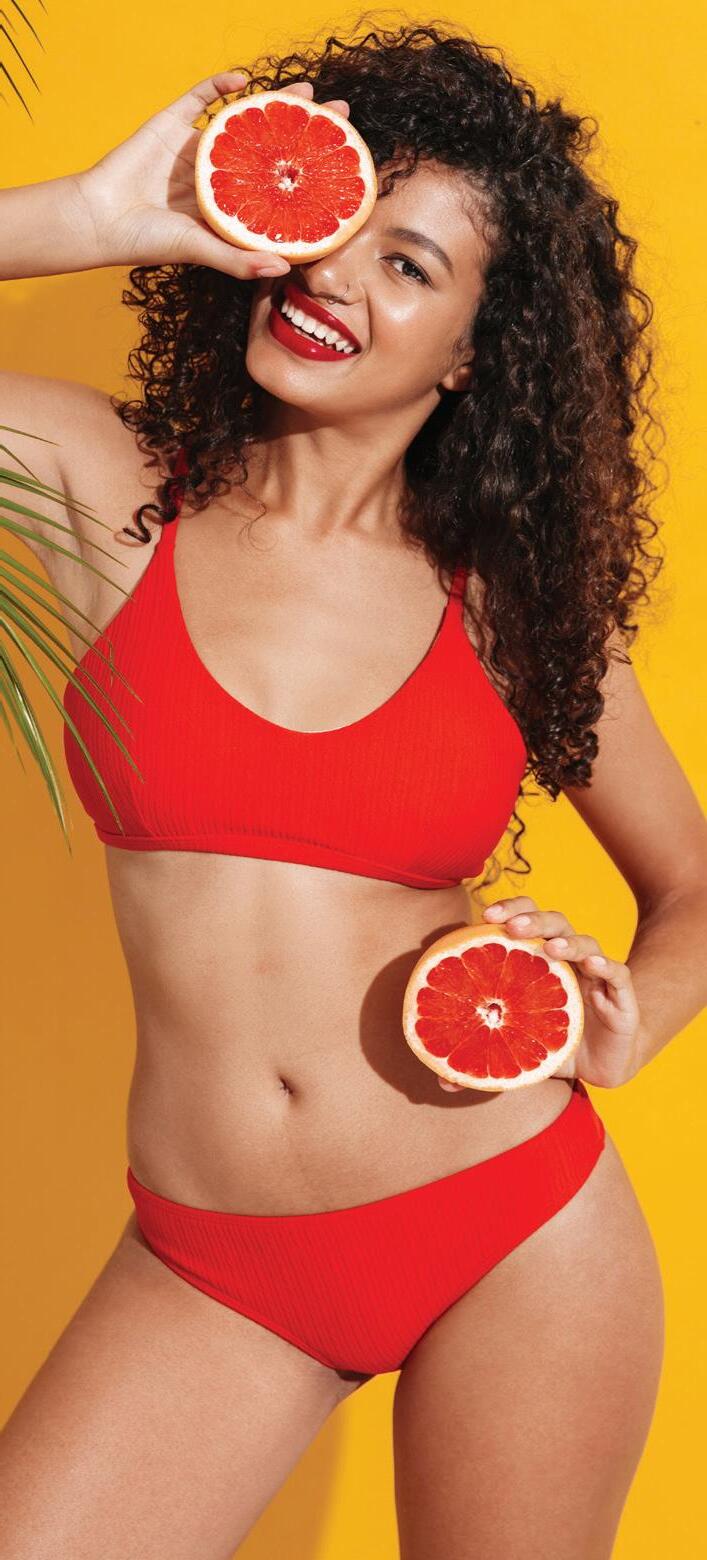
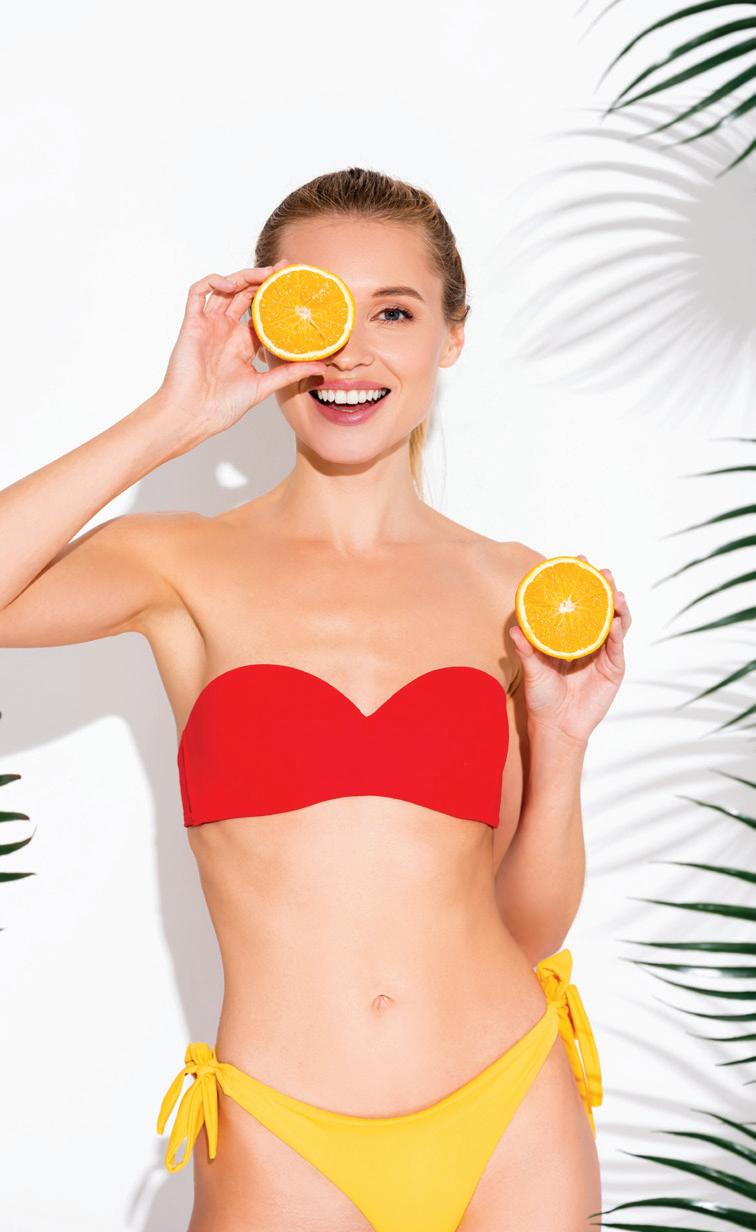
Sorry black. I’m breaking up with you. Zesty shades of citrus and Aperol and Campari inspired hues are the undisputed breakout colors of summer 2026. Lemon yellow, cherry red, popsicle orange, lime green and cobalt blue are taking the place of pastels that have outstayed their welcome. This summer is all but confirmed to be set ablaze with summery bright color trends. Vibrant shades elevate mood, enhance vacation photos and offer a stylish, energetic look. Simple silhouettes are preferred to make the color the primary focus.
Mixing different color bikini tops and bottoms is a stylish, versatile way to create unique looks, maximize wardrobe options, and highlight your favorite features. Try color blocking by pairing a solid, vibrant, or contrasting color, such as red and pink or light blue and navy. Mix textures and cuts, such as high-waisted bottoms with a smaller, sporty top. Use lighter colors or patterns on areas you want to highlight, and dark solids to minimize.

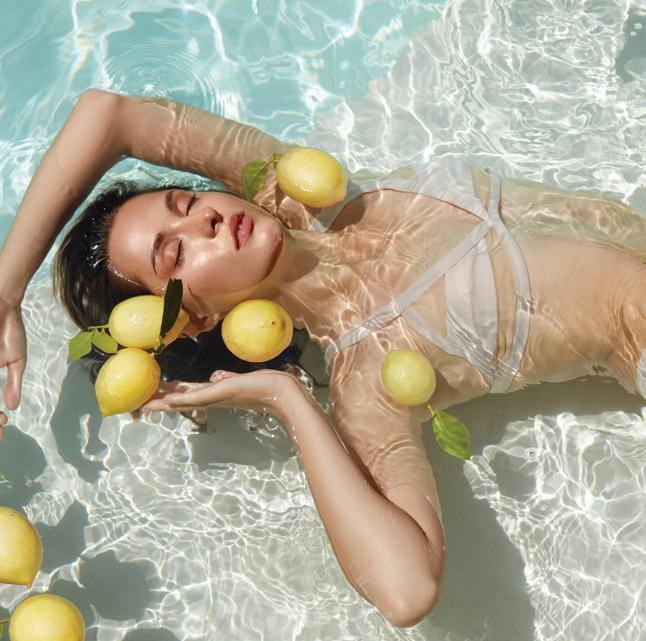


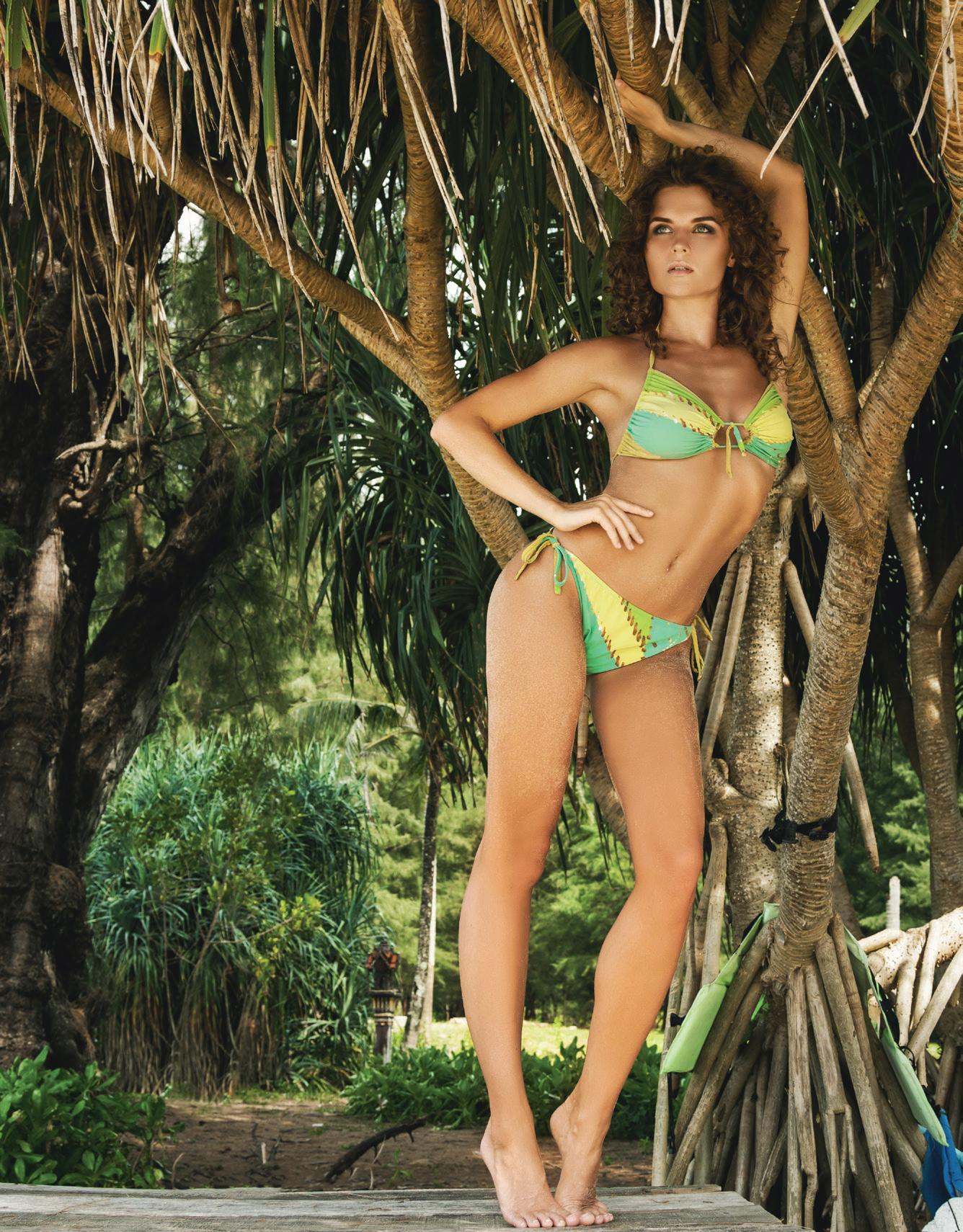

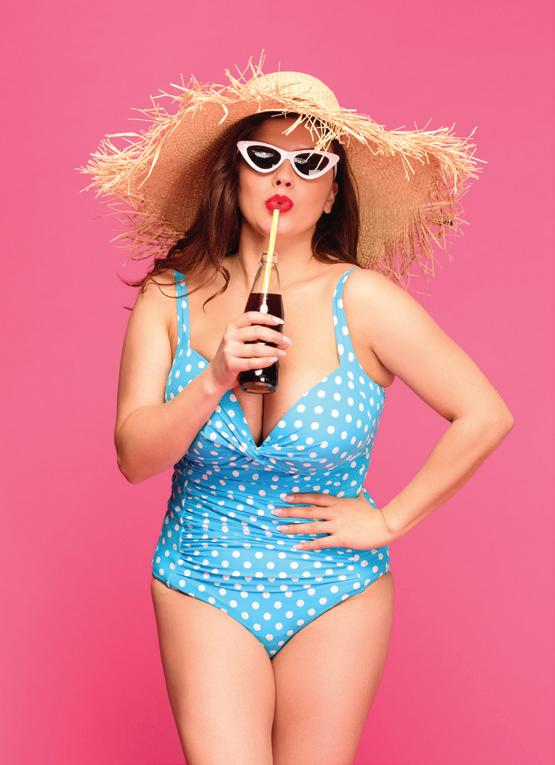



• Wear bright, even neon, contrasting colors, particularly for children, as this improves visibility in the water.
• High-tech materials ensure colors stay vibrant and fade-resistant.
• (Rinse swimwear immediately after every use with cold, fresh water to remove chlorine, salt, sand and body oils that degrade elastic fibers. Hand wash with mild detergent, avoid wringing and lay flat to dry in the shade to prevent fading and stretching. Never use hot water or a machine dryer.)
• Mix and match prints, such as stripes with florals, for a confident, bold statement.
• Don’t try to match different shades of the same color, as it can look like an accidental mismatch.


Remember, the best mix and match looks are personal to your style.
To complete the look, mix and match swimwear can be styled with accessories like hats, sunglasses, and cover-ups for a complete beach look.


Matching your sunglasses to your swimwear color palette is the perfect way to tie together your aesthetic.
Tinted sunnies bring brightness to your overall demeanor without even trying.
But one important thing. The color of your sunglasses lenses is not an indicator of how much UV-blocking protection your sunglasses will provide. That’s because lenses that provide adequate protection are treated with a COLORLESS UVabsorbing coating.
In other words, it’s not the color that matters when it comes to shielding your eyes from harmful ultraviolet rays; it’s what’s on the UV label that counts. And the label on any quality pair of sunglasses should read 100% UV protection, whatever color the lenses.
The color of your lenses does matter, however, when you are looking to filter high energy visible light, or blue-violet light.



Bold Ruffles bring drama and highend styling to swimwear. Sleek, high cut one pieces with deep daring necklines offer a sexy yet sophisticated silhouette, often styled with sarongs and oversized sunglasses.
Never underestimate the power of a vertical stripe. It’s really flattering on everyone.



The bottom line is, wear whatever suits your personal style and whatever makes you feel the most comfortable and confident! There really are no rules. You are unique and that’s what makes you special! You got this!


by CALVIN FINCH, PH.D. HORTICULTURIST
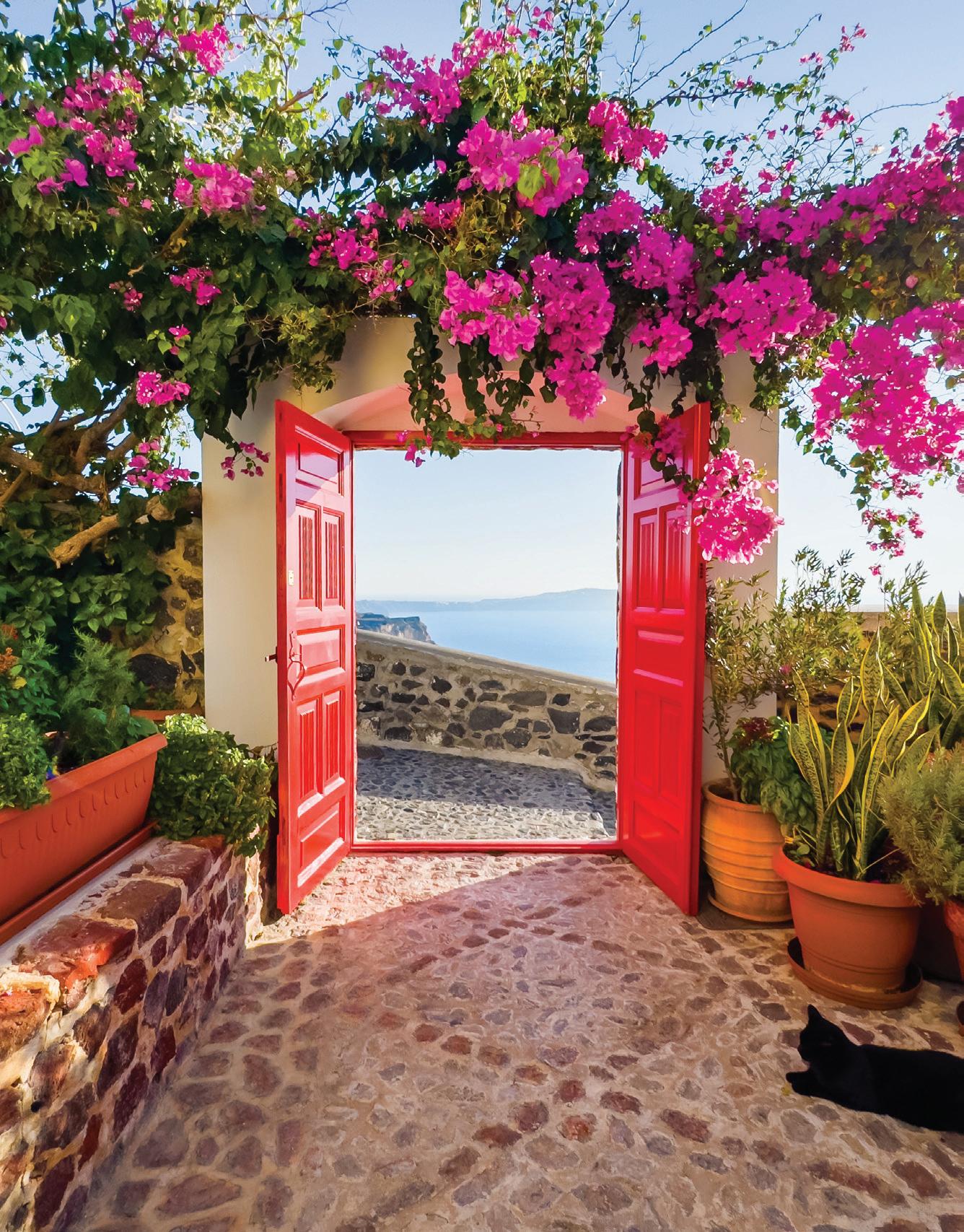
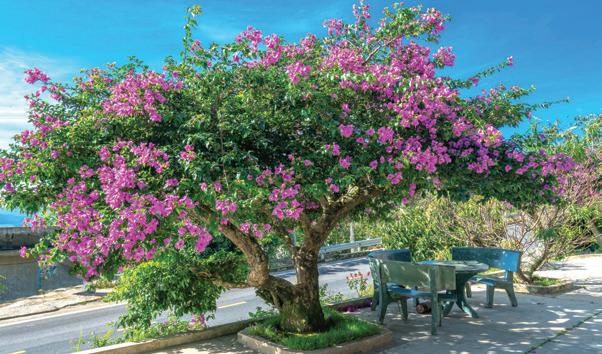
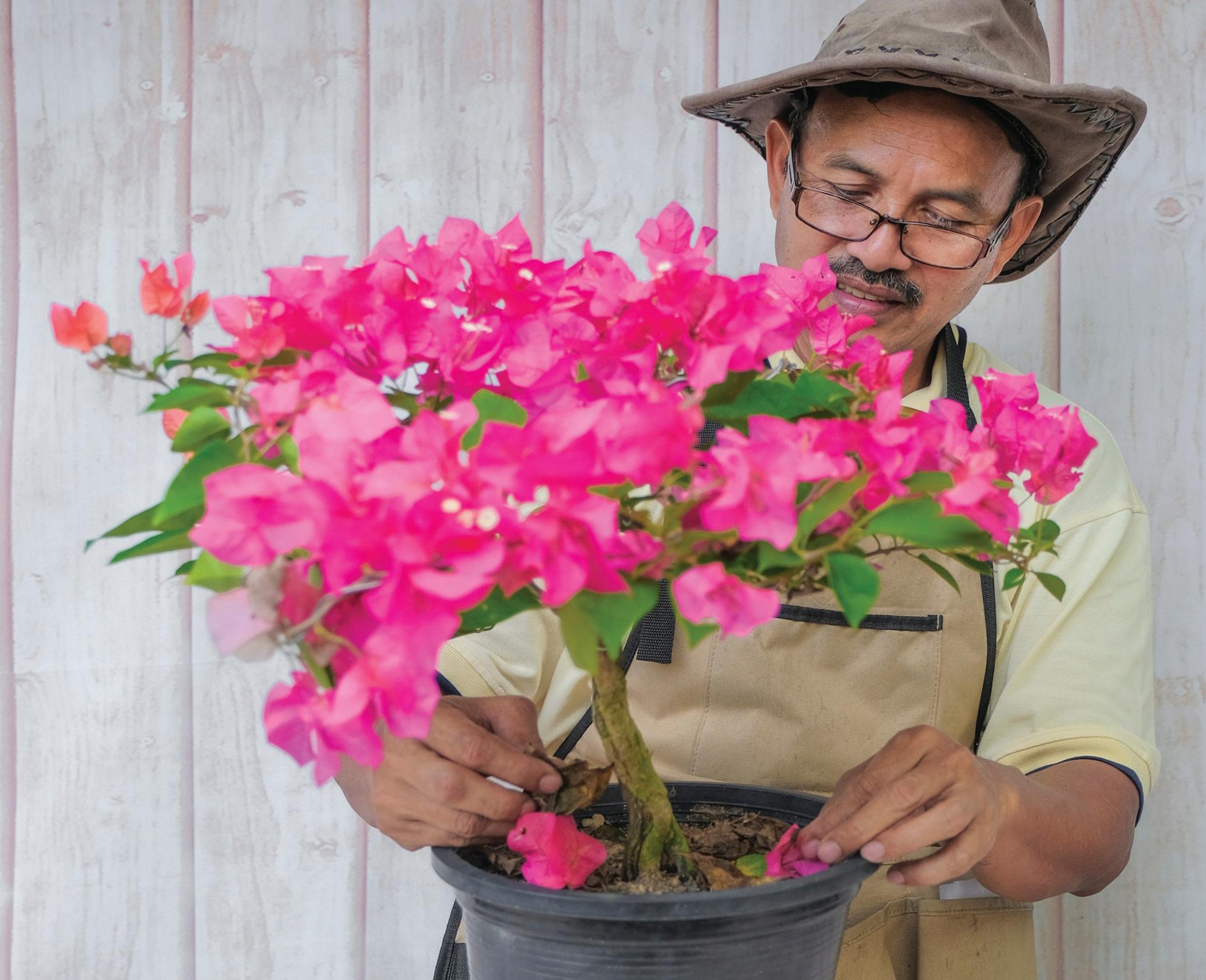
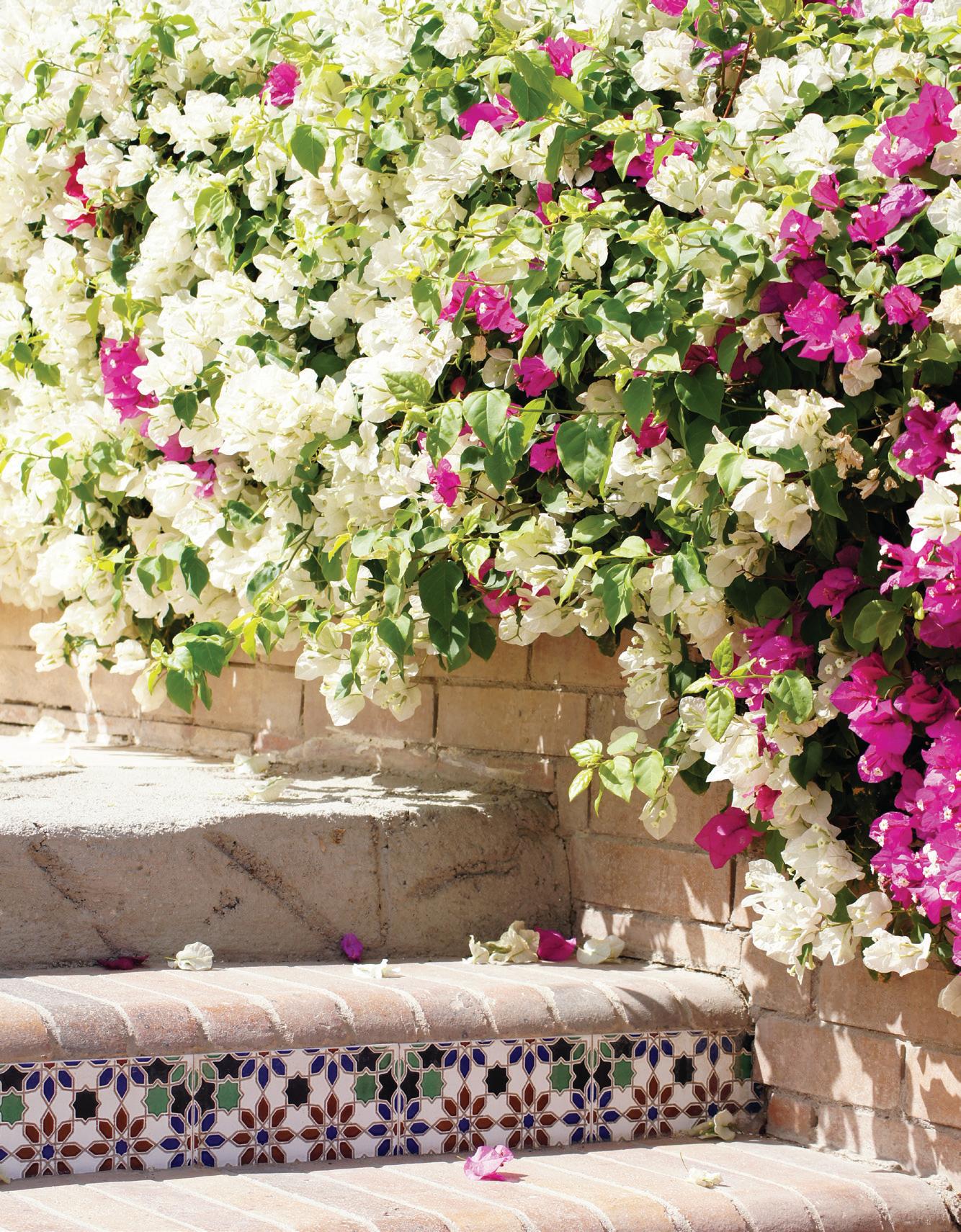
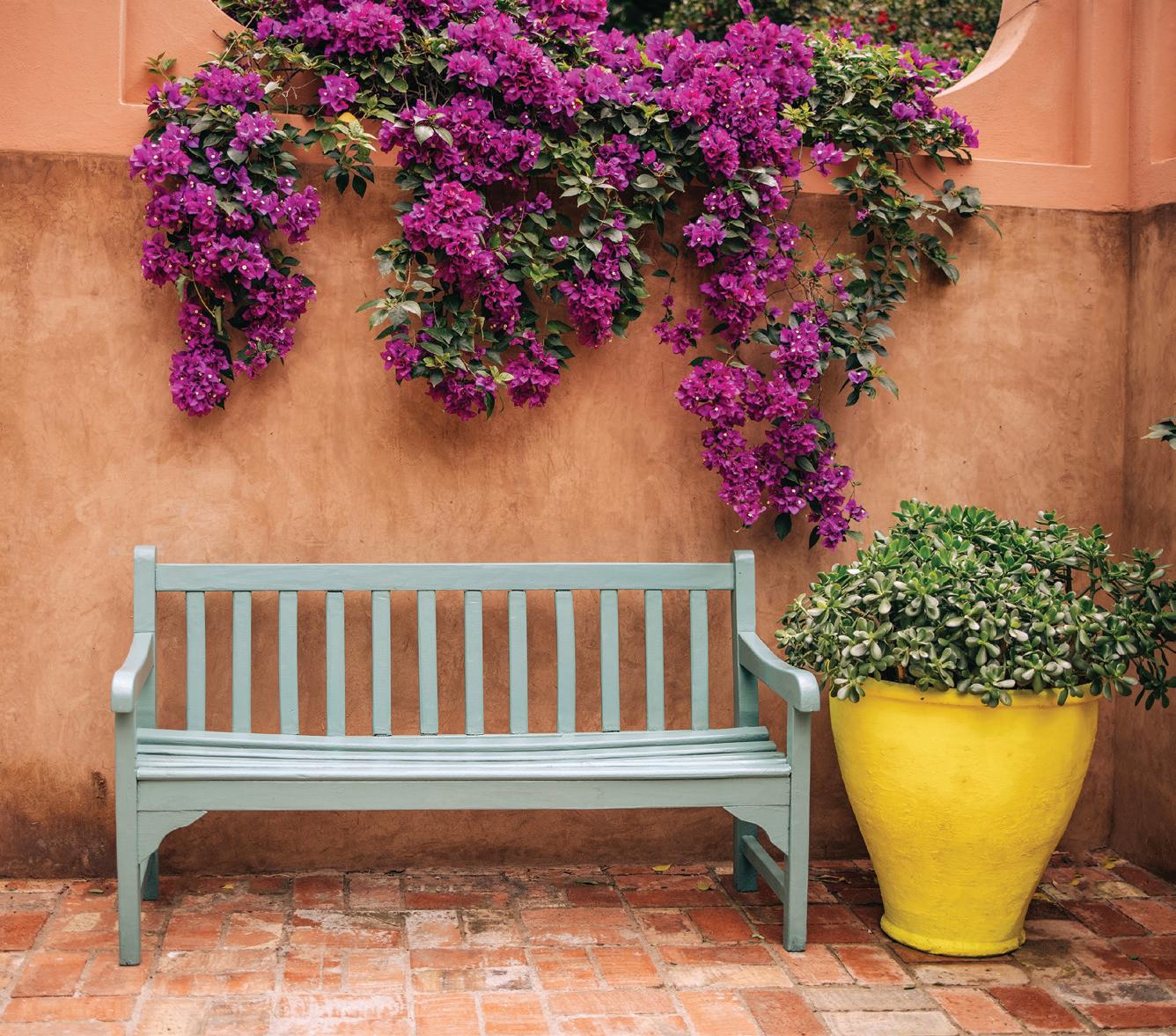
Bouganvillea is the premiere patio plant for full sun in South Texas. It is very colorful, relatively easy to grow and very heat tolerant. Grow bouganvillea in full sun at the hottest location in your landscape.
Bouganvillea is one of the few plants that is actually easier to grow in a container than in the ground. It is hard to believe, but our soil has too many nutrients for good bougainvillea. I should rephrase that, the plants grow great, but they do not bloom!
You may have experienced the phenomenon when your bougainvillea entered the soil through the drain hole or through a crack in the pot. The leaves grow to three or four
inches and the vine adds six-eight inches of growth each day, but without the benefit of the colorful bracts we call flowers.
The keys to good bougainvillea bloom are a contained root system, a soil that dries between waterings, reasonable fertilization, some pruning and full sun. It is true, bougainvilleas bloom best when the roots are restricted. Plants in containers only begin their bloom period after the roots have filled the container.
Repotting bouganvillea is less of an issue than it is for other plants, they will perform well for years without repotting.
Bouganvillea seem to bloom best when
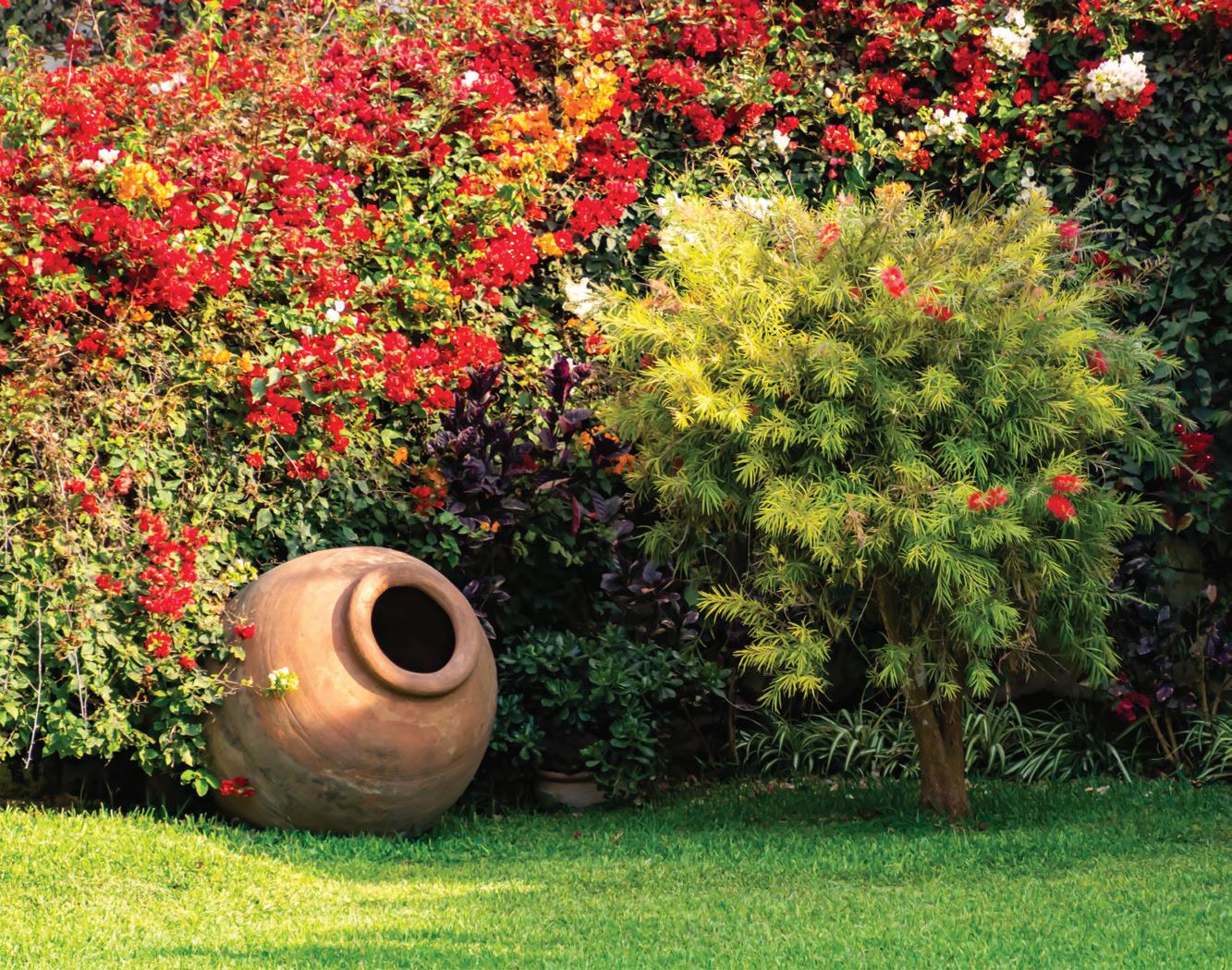
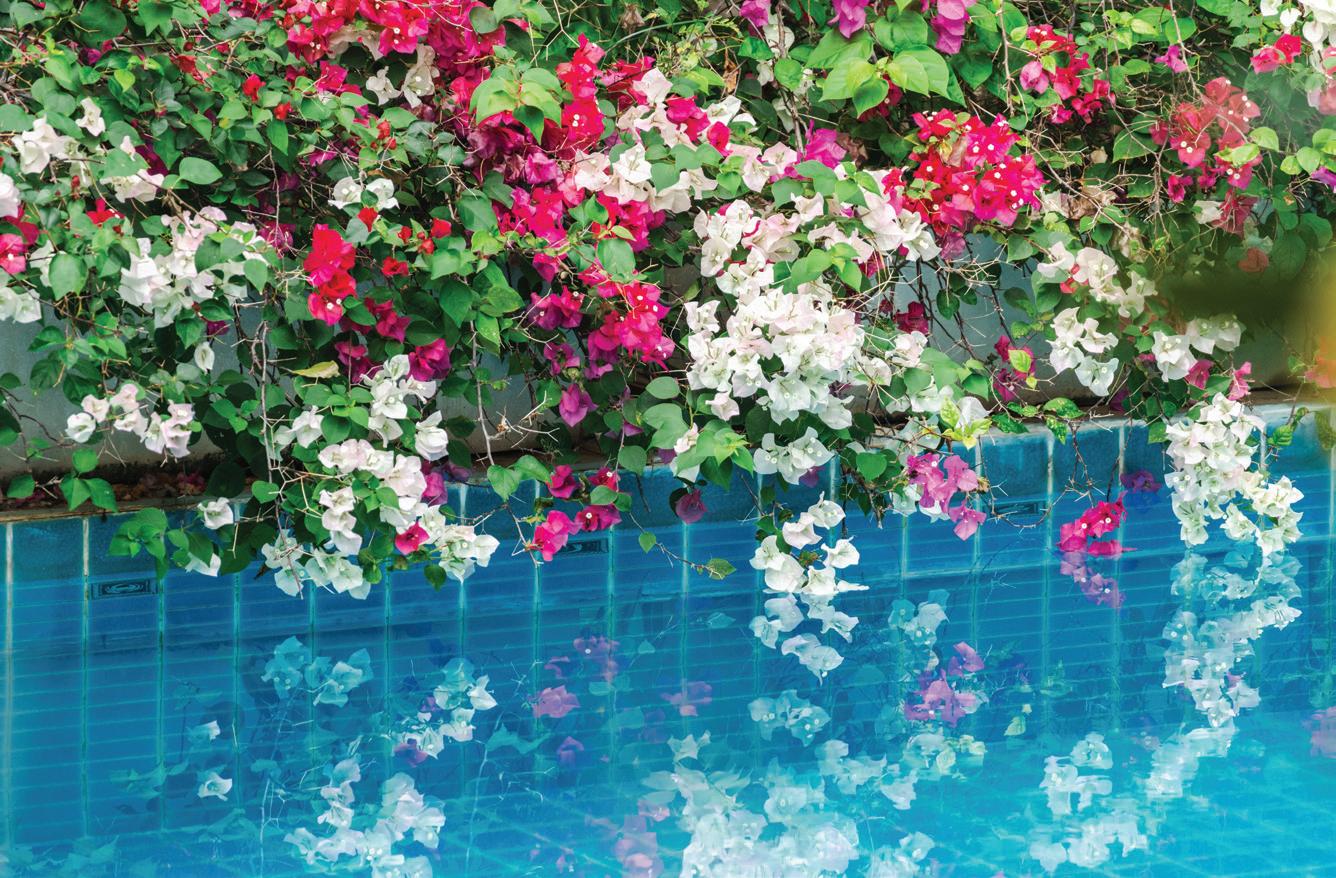
the top is about 1.5 times as large as the roots. A twelve inch pot supports a top of about 18 inches around and high. Prune off the tips of the shoots to maintain that size. The tip pruning technique also results in side branching so there are more blooms. The blooms occur at the end of the branches. Tip pruning means pulling of one inch or less of branch every
two weeks.
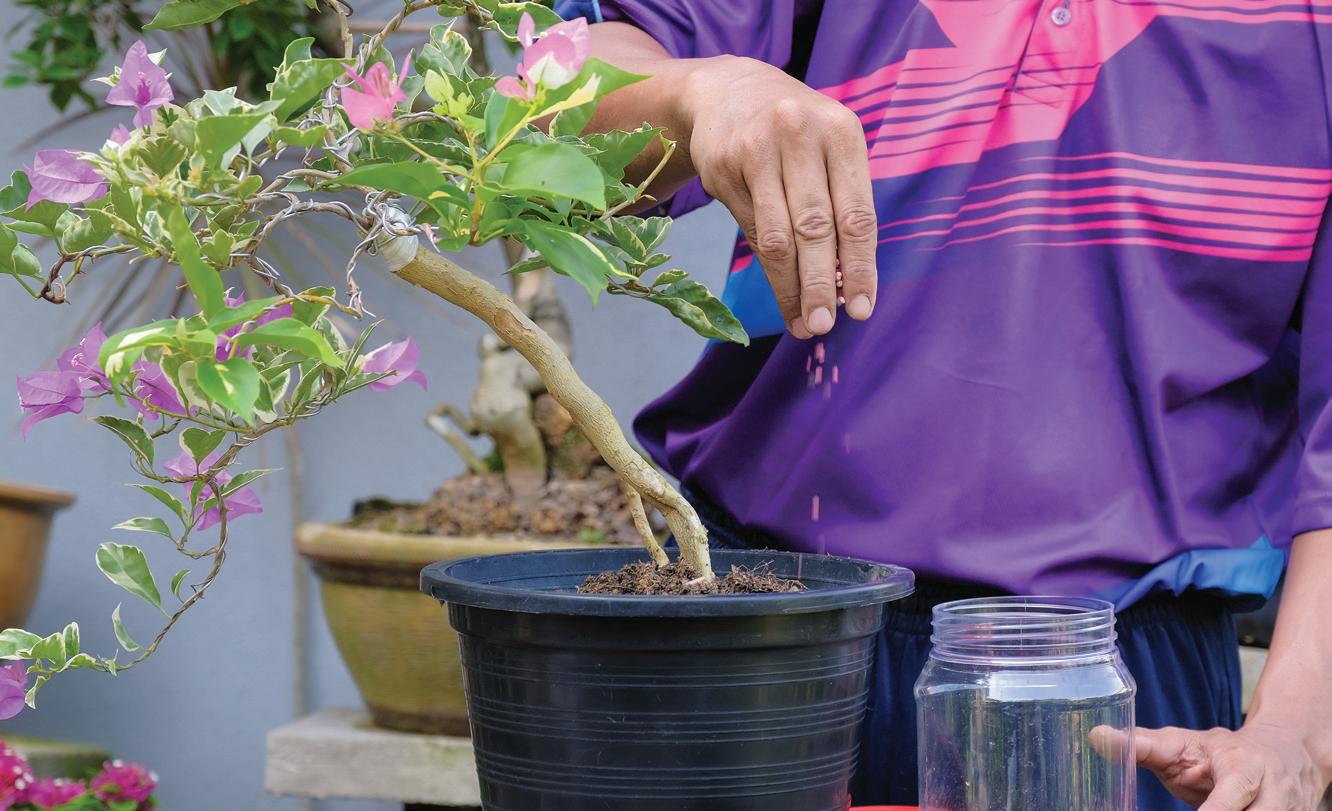
Irrigate bougainvillea ONLY when the soil has dried to two inches. Many gardeners wait until the plant wilts before they water. Water enough to have moisture emerge from the drain hole. Fertilize bougainvillea with a soluble fertilizer such as Miracle Gro, Peters, or Rapid Gro every other time you water. The other option is to
use granular hibiscus food. It seems to work very well and is easier to use than mixing up the soluble fertilizer.
Bouganvillea are not usually bothered by insects or diseases. Control the occasional caterpillar attack with Bt or Spinosad. The plants are cyclical bloomers. Expect six weeks of color followed by an equal period of green.
They are very sensitive to cold. Blooming stops when temperatures fall into the low 50’s and freeze damage can occur in the high 30’s. The good news is that bougainvillea are easy to store for the winter. They do not need light so you can prune them back and stack them up in the garage or spare room from November until April.
There are a number of bougainvillea selections. The most popular selection is Barba-
ra Karst. It has a red (dark pink) bloom and is a heavy bloomer. The lavenders, darker reds, off whites and yellows have appeal, but do not bloom as heavy. There are also doubles and variegated selections. The doubles are very attractive, but hold on to spent blooms. They look best if they are groomed every few days. The single bloomers like Barbara Karst drop spent flowers without removing them.

It’s the season when everything starts to slow down. The longer days and warmer temps make it easier to say yes to socializing with friends with food to share.
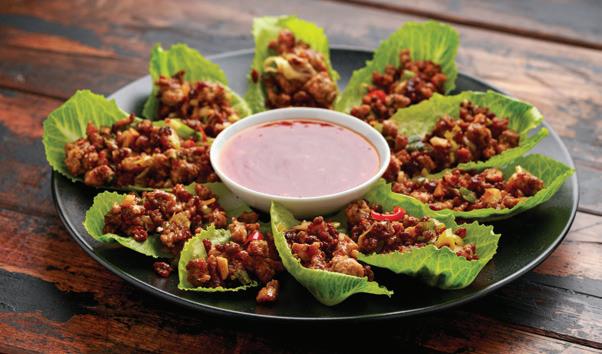
Lighten up lettuce wraps by blending half the beef with meaty-tasting mushrooms. The filling doesn’t need to be piping hot to serve, so this can be a fun dish to cook and then take outside where everyone can wrap their own.
MAKES 4 SERVINGS
PREP 15 MINUTES
COOK 15 MINUTES
8 ounces fresh mushrooms
1 onion, chopped
4 cloves garlic
1 tablespoon minced ginger
½ pound lean ground beef
1 tablespoon canola oil
½ teaspoon dried thyme
½ teaspoon dried oregano
½ teaspoon ground mustard teaspoon
½ dried minced garlic
¼ teaspoon dried minced onion
1 red bell pepper, finely chopped
2 tablespoons hoisin sauce
1 tablespoon soy sauce
1 tablespoon rice wine vinegar
1 head Boston lettuce
½ cup shredded carrot
¼ cup chopped cashews, optional
Place the mushrooms, onion, garlic and ginger in a food processor fitted with a metal blade. Pulse until finely chopped. Add the ground beef; pulse until well combined. Heat the oil in a large, nonstick skillet set over medium-high heat. Add the mushroom mixture and dried seasonings. Cook, stirring often, for about 10 minutes until browned.
Stir in red pepper, hoisin sauce, soy sauce and vinegar. Simmer for 5 minutes; remove from heat.
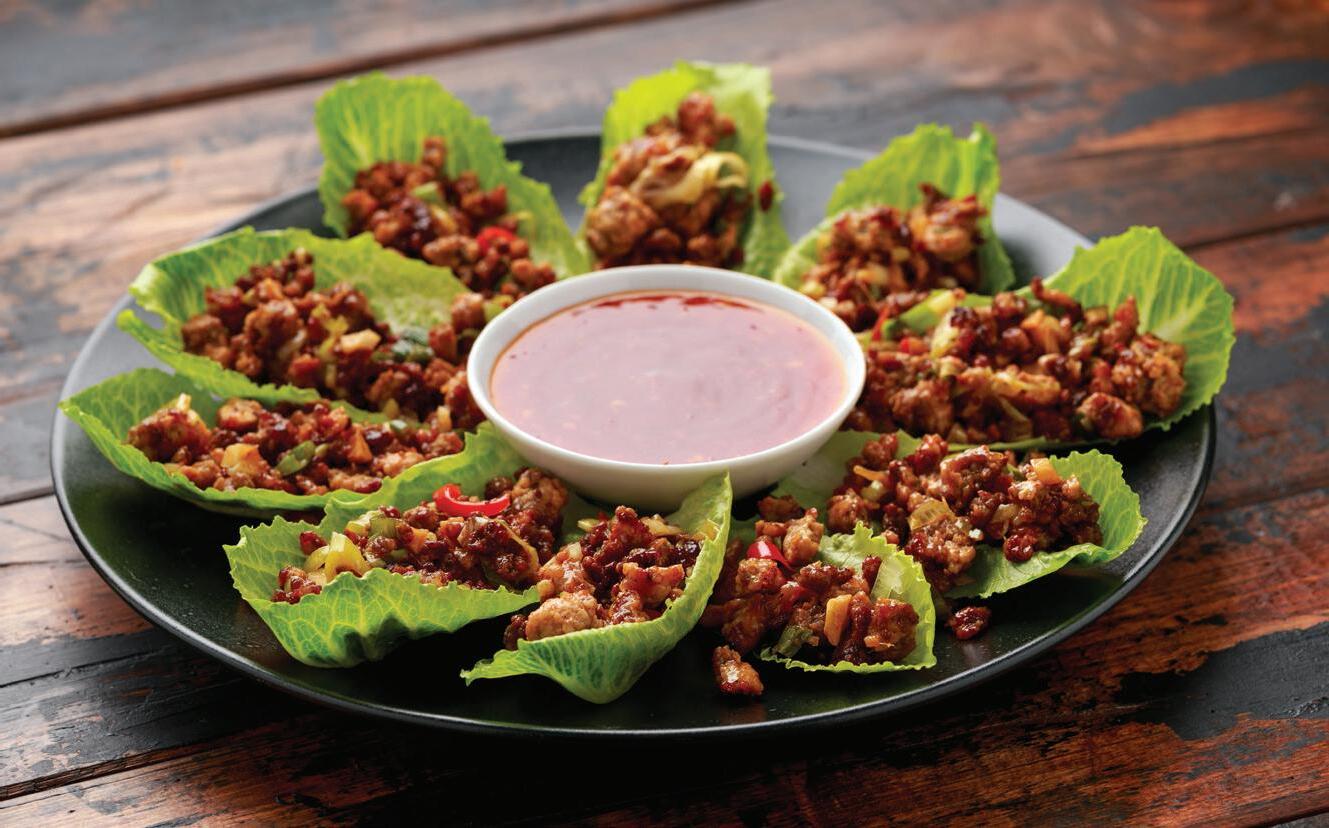
Serve in Boston lettuce leaves; garnish with shredded carrot and chopped cashews.
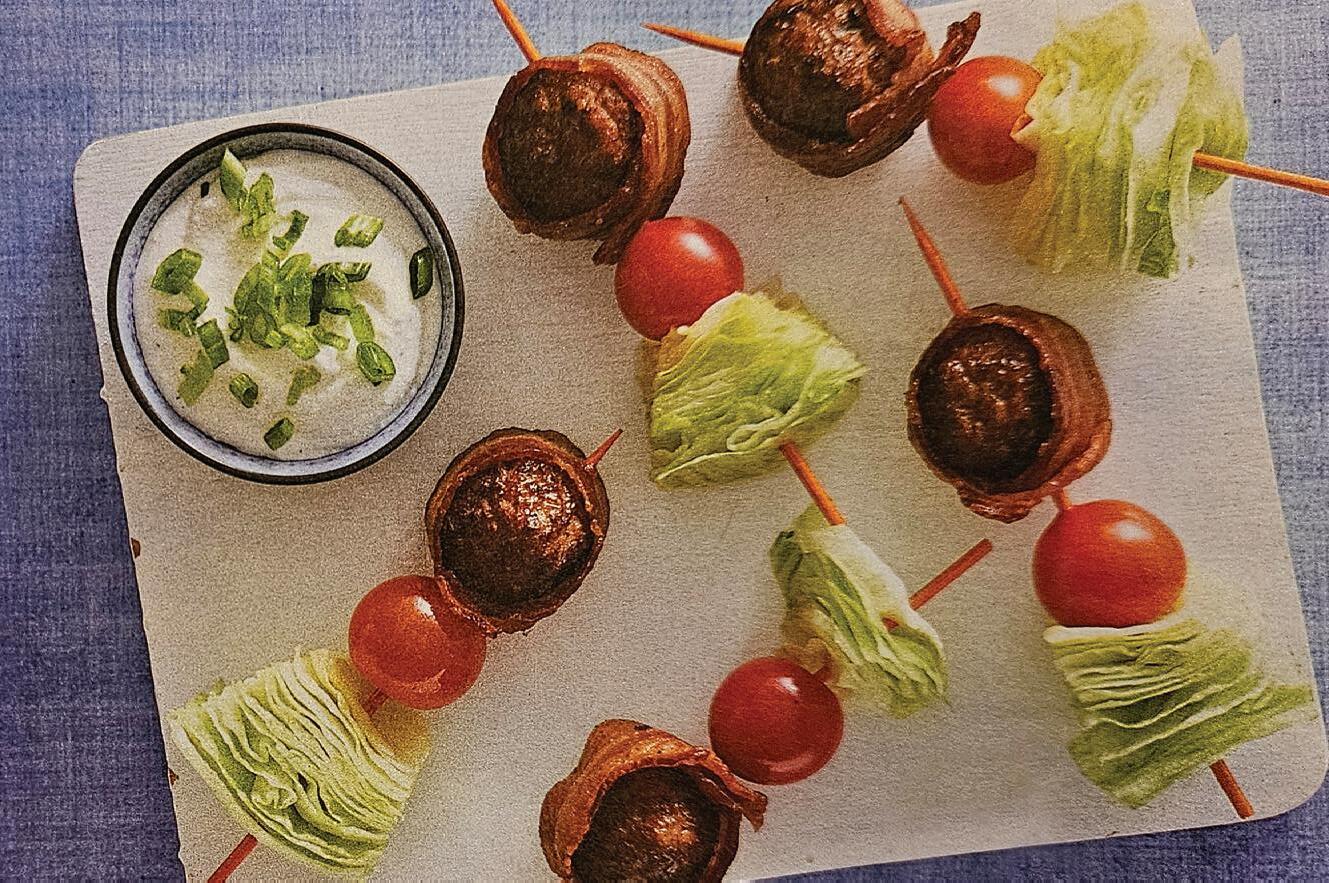
These bite-sized BLT skewers (OK, they’re really just toothpicks) are absolutely delicious served as a snack or as a fun appetizer. Plus, the French onion dip is the perfect complement to the yummy bacon and meatballs.
MAKES 12 SERVINGS
PREP 20 MINUTES
COOK 15 MINUTES
4 (1-ounce) mini frozen meatballs 12 slices uncooked bacon, cut in half
24 cherry tomatoes
24 chunks of iceberg lettuce
French onion dip (like Frito-Lay)
Preheat oven to 400°F.
Wrap mini frozen meatballs with ½ slice each of uncooked bacon. Place seam-side down on a baking sheet lined with aluminum foil; bake until bacon is crispy, about 15 minutes.
Thread a short skewer or cocktail toothpick with one cherry tomato and one chunk of iceberg lettuce. Add bacon-wrapped meatball. Serve with French onion dip.
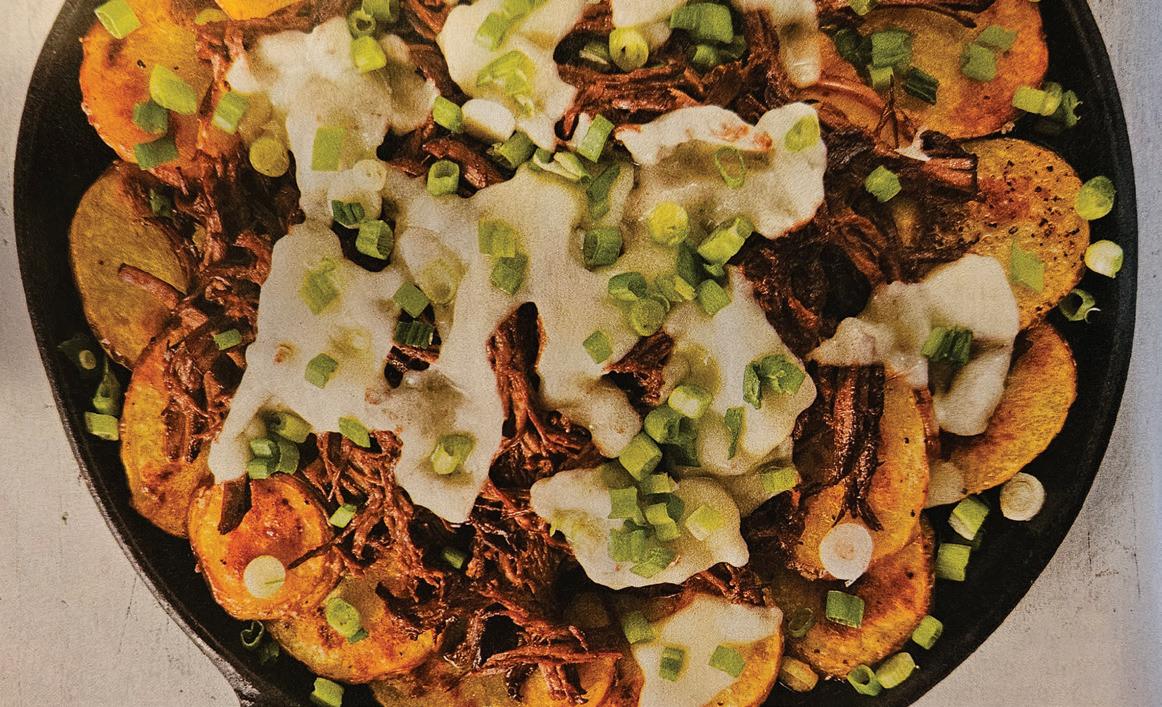
Roasted potato slices substitute for chips in this take on the saucy sandwich. This recipe makes use of a slow cooker, but it’s superspeedy if you have leftover pot roast.
MAKES 6 SERVINGS
PREP 8 HOURS, TO COOK BEEF COOK 25-30 MINUTES
1 ½ pound beef roast
1 teaspoon salt plus more for sprinkling Pepper
5 cloves garlic
2 cups low-sodium beef broth
¼ cup Worcestershire sauce
1 teaspoon onion powder
2½ pounds potatoes, peeled and sliced into ¼-inch thick rounds
1 tablespoon olive oil
3 slices provolone cheese, cut into strips
1 sliced green onion
Rub beef roast with I tsp salt and pepper. Place in a slow cooker with garlic, low-sodium beef broth, Worcestershire sauce and onion powder. Cook on Low 7 to 8 hours until meat shreds easily with a fork.’ (Or, use leftover roast.)
Preheat oven to 450°F.
Arrange potatoes in skillet. Brush with olive oil and sprinkle with salt. Roast 25 to 30 minutes, until browned. Top with shredded beef and provolone cheese. Return to oven and bake until cheese melts, about 5 minutes. Top with green onion.
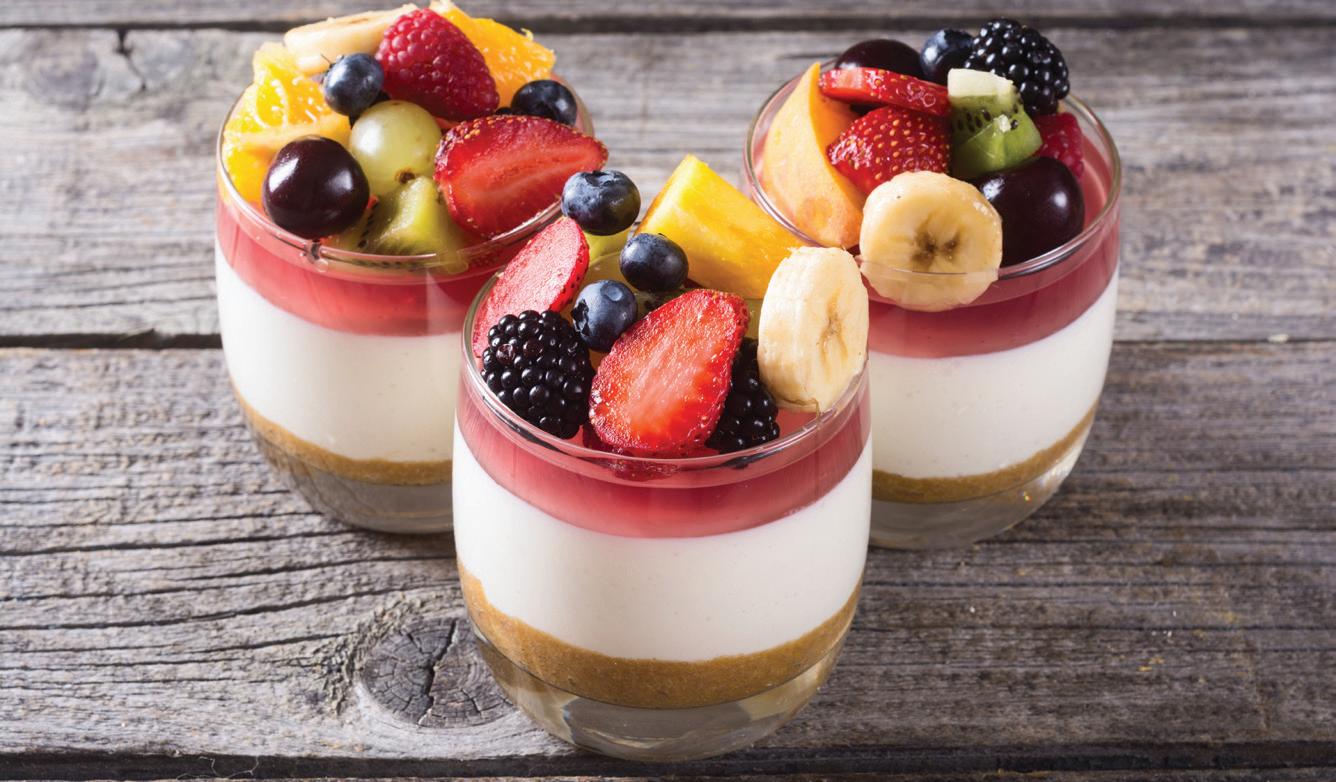
These no-bake cheesecake jars feature a simple graham cracker crust, a creamy cream cheese filling, and fresh fruit topping, perfect for quick desserts. Prepare in 20 minutes by mixing 16 oz softened cream cheese, 1 cup powdered sugar, 1 tsp vanilla, 1.25 cups whipped cream, and top with berries.
PREP 20 MINUTES
CHILL 2 HOURS - 3 DAYS
16 oz softened cream cheese
1 cup powdered sugar
1 tsp vanilla
1.25 cups whipped cream
½ cups graham cracker crumbs
2 tbsp sugar
¼ cup melted butter
Fresh berries (strawberries, blueberries, raspberries) or homemade compote
Crust: Mix ½ cup graham cracker crumbs, 2 tosp sugar, and ¼ cup melted butter. Press firmly into the bottom of mason jars.
Filling: Beat 16 oz softened cream cheese with 1 cup powdered sugar and 1 tsp vanilla until smooth. In a separate bowl, whip 1 ¼ cups heavy cream until stiff peaks form, then gently fold into the cream cheese mixture.
Assembly: Spoon or pipe filling over the crust, leaving room for fruit.
Topping & Chill: Top with fresh berries (strawberries, blueberries, raspberries) or a homemade compote. Chill for at least 2 hours, or up to 3 days.

Experience




by ABBY KURTH, MPH, MS CLINICAL NUTRITIONIST & WELLNESS COACH
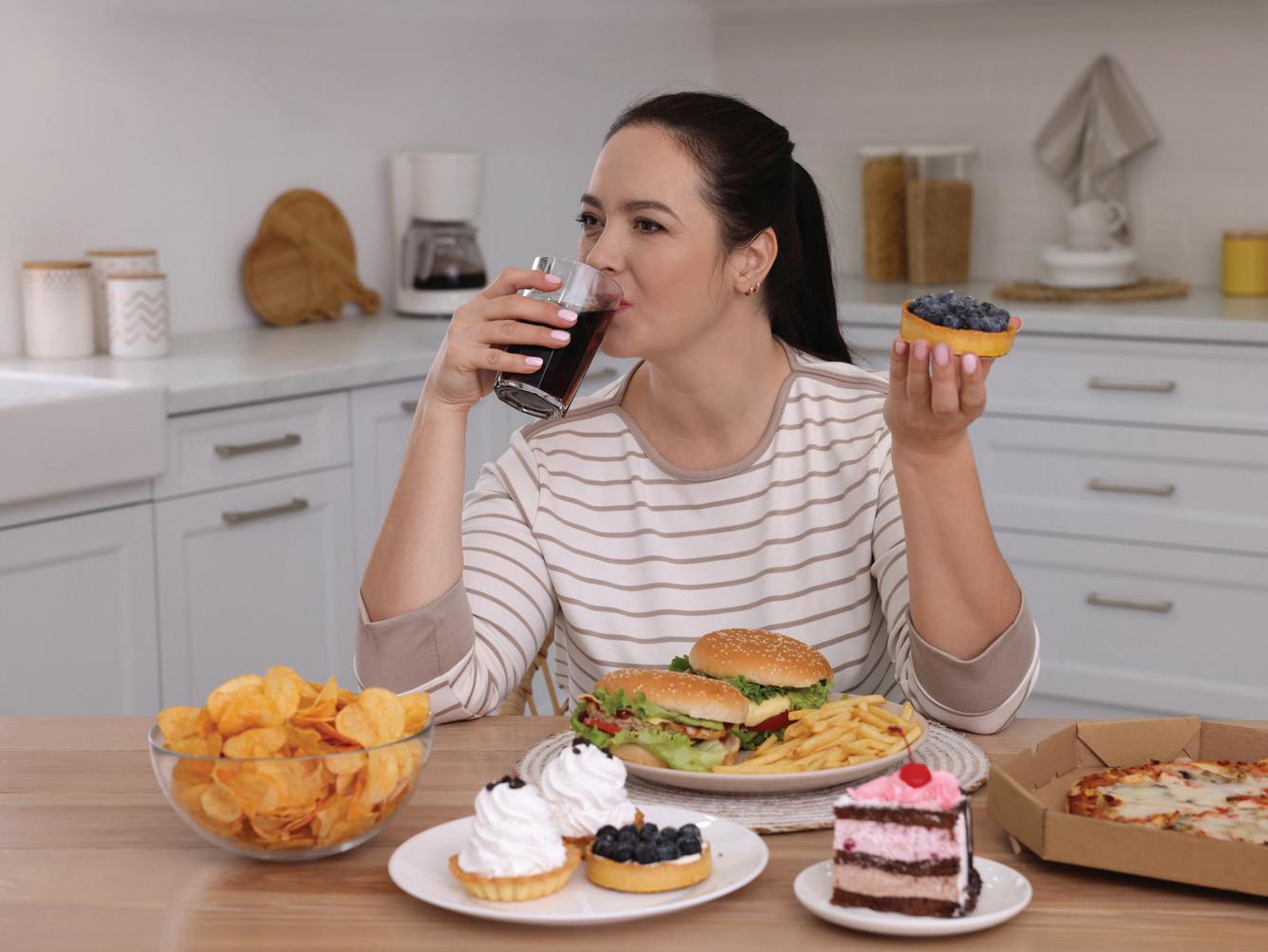
What is it about stress that makes you abandon your healthy eating goals faster than you can say “extra whipped cream”? Why does one bad day at work send you sprinting toward hot fudge sundaes and potato chips while the carrot sticks sit in the fridge, wondering what they did wrong?.
The answer, as it turns out, is not a lack of willpower. It’s biology. Sneaky, persuasive biology.
Your rational brain goes quiet, and your primitive brain takes control. Yikes!

When you’re under stress, your body releases cortisol—also known as the “fight or flight” hormone, or as I like to call it, the “fight, flight, or find the nearest cheese dip” hormone. Elevated cortisol increases cravings for salty and sweet foods. Translation: your brain is not asking for kale. It is requesting nachos.
Cortisol also reduces the effectiveness of leptin, the hormone that tells you that you are full. So even if you’ve eaten enough, your body may not get the memo. On top of that, cortisol increases insulin, which encourages fat storage—especially around the
belly. Yes, stress doesn’t just make you want cookies. It helps you store them.
And then there’s the fluid imbalance. Stress can deplete potassium, leading to water retention and increased blood pressure. Eventually, sodium levels can dip, and suddenly you’re craving salt and sharp cheese like it’s your part-time job. One source famously claimed that “cheese balls are about as addictive as crack” to the stressed individual. That may be dramatic, but if you’ve ever eaten half a tub without remembering doing so, you understand the sentiment.
But stress eating isn’t just physical. It’s psychological.
When you’re overwhelmed, your negative beliefs get loud. “I’ve had a terrible day. I deserve this.” “Nothing else is under control, so why bother?” Sometimes eating becomes a way to numb out. If we’re chewing, we’re not feeling. If we’re focused on chocolate, we’re not focused on the difficult conversation, looming deadline, or family tension waiting for us.
Keep your appetite stable even when nothing else feels stable. Eating five small meals a day that include protein and high-fiber foods helps maintain balanced blood sugar. When blood sugar crashes, the adrenal glands pump out more cortisol to compensate. Suddenly, your “snack” becomes a drivethru experience.
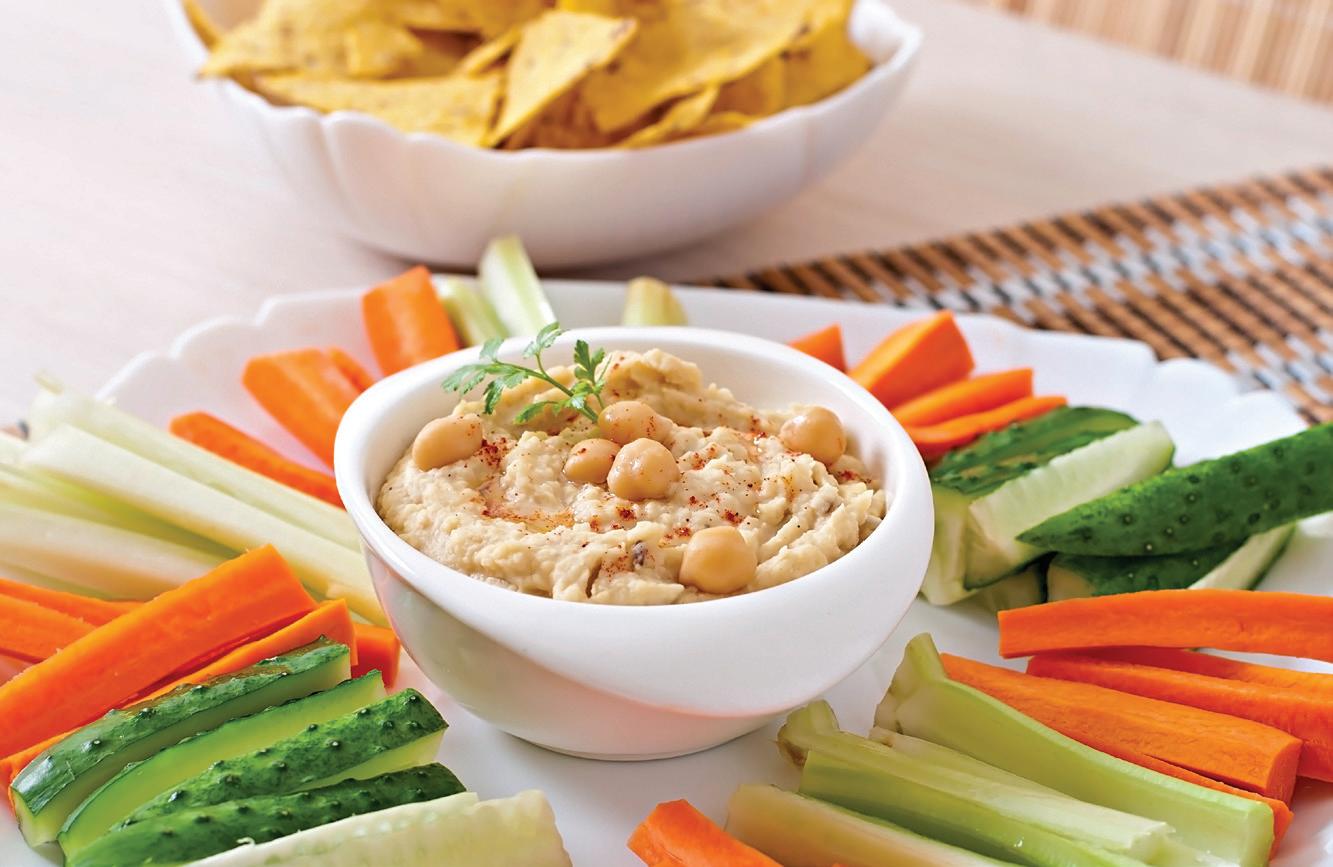
Think steady fuel: eggs and whole-grain toast, Greek yogurt with nuts, hummus and vegetables, chicken and brown rice. Balanced blood sugar means fewer biological ambushes.


Food can actually support a calmer brain. Serotonin, one of our “feel-good” brain chemicals, relies on certain nutrients.
• B-vitamins: brown rice, chicken, eggs, leafy greens, legumes, nuts, sunflower seeds, nutritional yeast.
• Calcium: almonds, leafy greens, cruciferous vegetables, fish with bones, sesame seeds, tofu.
• Magnesium: leafy greens, brown rice, sesame seeds, salmon, shrimp.
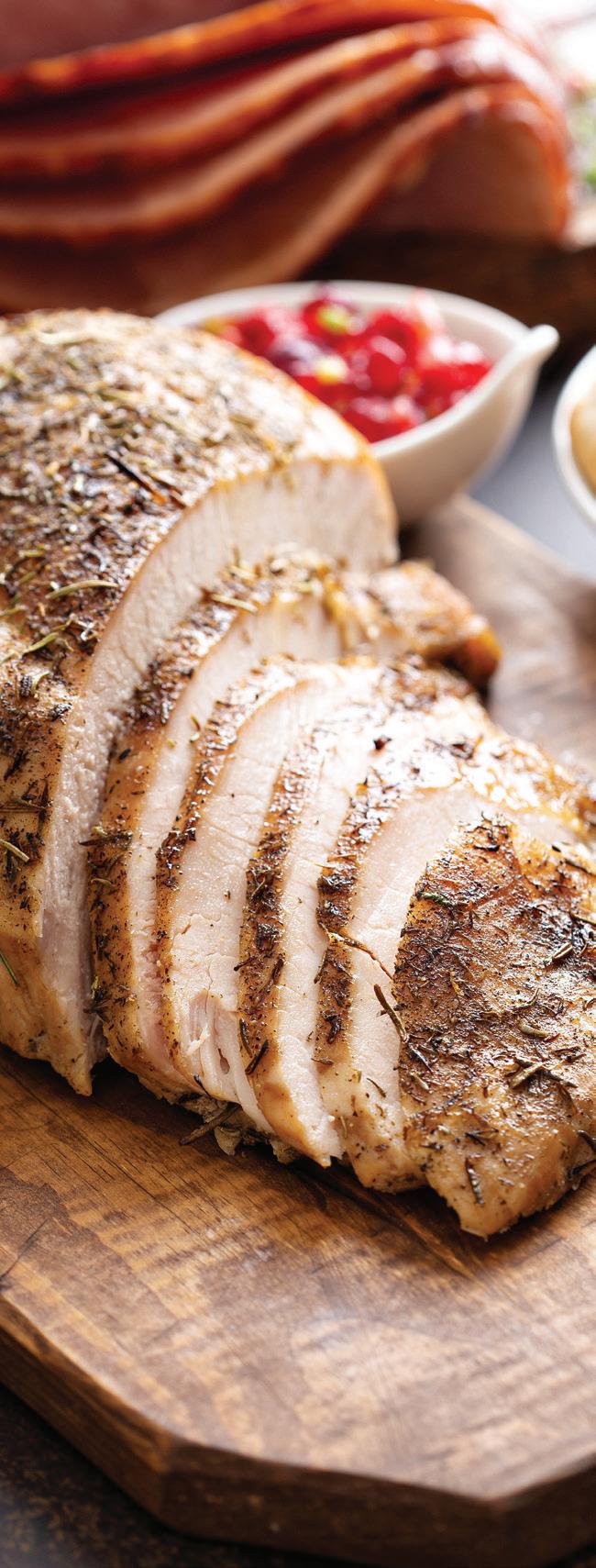
• Tryptophan: turkey, soy foods, peanuts, almonds.
• Essential fatty acids: salmon, sardines, tuna, flax oil, walnut oil, eggs.
Notice something? These foods don’t come in crinkly bags. They come from the earth, the sea, or something that once had feathers.
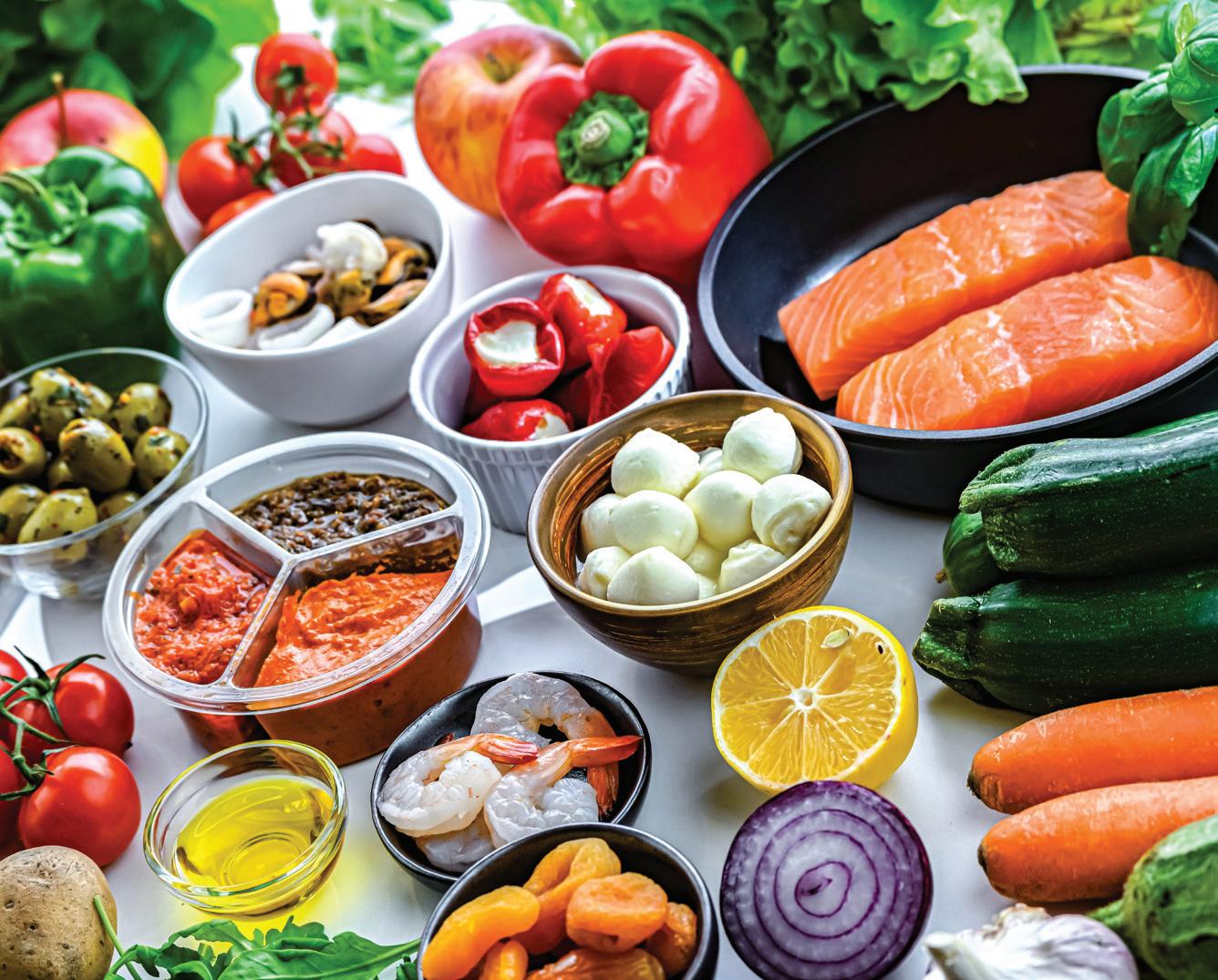
Stress cravings hit fast. You don’t rise to the occasion—you fall to your level of preparation. Keep healthy snacks visible and accessible. Hide the junk. Better yet, don’t bring it home.
Small packets of unsalted nuts, apples, bananas, or trail mix without added sugar can help you sidestep the vending machine. Pair protein with complex carbohydrates—like cheese and whole-grain bread— to create staying power.
And yes, a small piece of dark chocolate (around 72% cocoa) can absolutely fit. The key word is small. You’re savoring it, not reenacting a survival scenario.
Keep your appetite stable even when nothing elsWhen the urge to eat hits, pause. Rate your hunger on a scale from 1 to 10. When did you last eat? Is your stomach actually growling, or did your boss just send an email marked “urgent”?
Negative emotions often trigger what feels like hunger but is really just a habitual response. Awareness interrupts autopilot. Sometimes simply naming the feeling—“I’m anxious” or “I’m frustrated”—takes the edge off the craving.
Mindful eating isn’t about chewing 47 times per bite while meditating over a raisin. It’s about paying attention. Use your senses. Notice taste, texture, and satisfaction. Listen for fullness cues.
When you slow down, you often discover that three bites of something delicious are far more satisfying than twenty distracted ones eaten standing over the sink.
Stress doesn’t send a calendar invite. Be ready. Out of sight truly does help. Plan B is to BLOCK cookies behind larger items. Hide ice cream with frozen vegetables. Change your driving route if it passes your favorite bakery. You are not weak for avoiding temptation—you are wise.
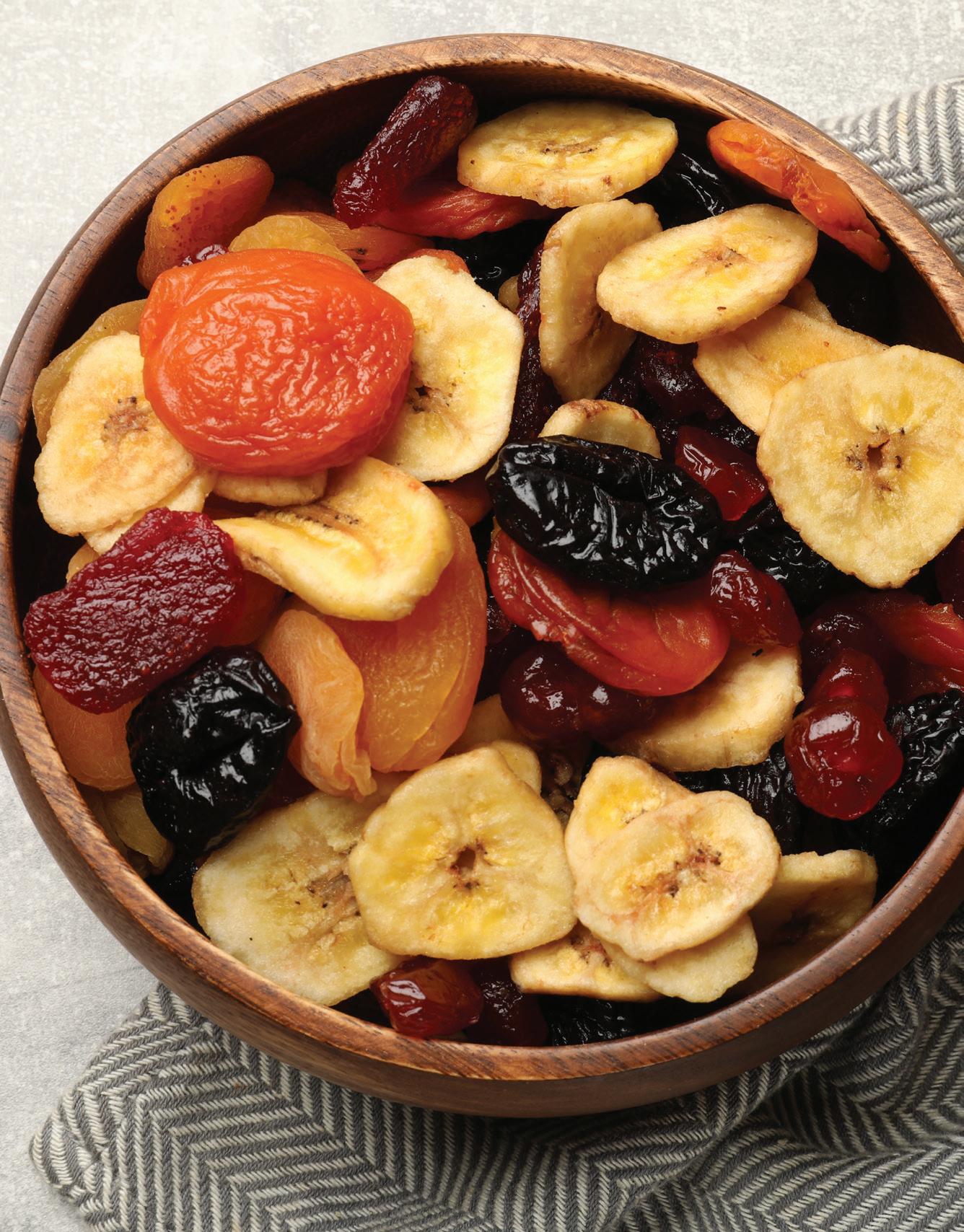
Craving crunch? Plan C is to keep cut carrots, celery, or even roasted chickpeas on hand. Dried apples, or oven-baked chips are a better option than most fried snacks. Want something sweet? Fruit provides natural sugars, plus fiber and nutrients.
If stress eating is automatic, it needs a replacement behavior. Choose a healthy stress-buster:
• Go for a brisk walk.
• Listen to music.
• Call a friend.
• Brush your dog or cat.
• Sit quietly and breathe for five minutes.
Movement lowers cortisol. Connection calms the nervous system. Even brief pauses can shift your state.


Ultimately, managing stress eating means addressing stress itself. Are you overcommitted? Underslept? Avoiding a hard conversation? Food can distract, but it cannot solve.
As researcher Suzanne Thayer points out, eventually you have to figure out what’s causing the stress and work to alleviate it. When you reduce the stressor, you reduce the trigger.
Stress eating is not a character flaw. It is a very human response to very human pressures. Your body
is trying to protect you, fuel you, and soothe you—all at once. The trick is to work with your biology instead of against it.
So the next time a rough day tempts you toward the cheese balls, pause. Breathe. Ask what you really need. Maybe it’s food. Maybe it’s rest. Maybe it’s a walk around the block.
Carrot sticks may never win against nachos in a fair fight. But with preparation, awareness, and a little self-compassion, you can stack the odds in your favor—and enjoy your food without letting stress call the menu.

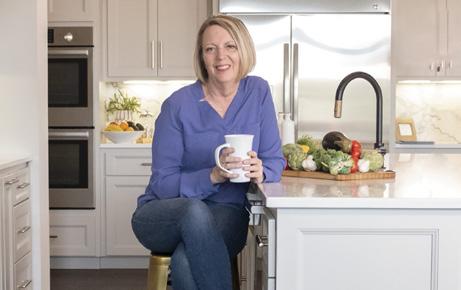
Abby Kurth, MPH, MS, is a Clinical Nutritionist + Wellness Coach.
Her book, Wellness is More Than Weight: Easy Steps to Change Your Health Habits and Your Life, addresses ways to manage stress and ideas for making healthy habits successful. A quiz to find what is needed to make your own healthy habits and other information is available free at abbykurthnutrition.coach.
This simple and refreshing champagne cocktail requires only two ingredients!
INGREDIENTS (Makes 2):
• Fruit Sorbet
• Champagne, Prosecco or Cava
• Fresh berries, mint leaves or lemon zest (optional) for garnish
Add one or two scoops of fruit sorbet (such as raspberry, lemon, mango or any flavor you like) to a champagne coupe or flute and top it with 3 to 4 ounces of champagne, Prosecco or Cava.
Serve immediately with a spoon, allowing the sorbet to melt into a creamy, bubbly, frozen treat.
Optional Garnish: Fresh berries, mint leaves or lemon zest.
• Raspberry or strawberry sorbet pairs well with dry champagne, while lemon sorbet works best with sweeter Prosecco or Cava.
• Pre-chill the champagne glasses in the freezer for 15 minutes before serving to prevent the sorbet from instantly melting.
• For a non-alcoholic drink, substitute champagne with sparkling water, sparkling juice or ginger ale.
• To kick it up a notch, add 0.5oz of vodka, limoncello or Chambord.