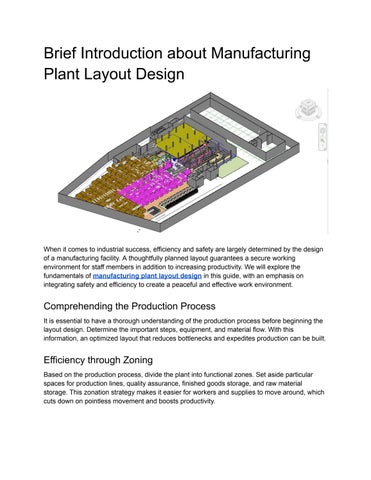
Brief Introduction about Manufacturing Plant Layout Design
When it comes to industrial success, efficiency and safety are largely determined by the design of a manufacturing facility. A thoughtfully planned layout guarantees a secure working environment for staff members in addition to increasing productivity. We will explore the fundamentals of manufacturing plant layout design in this guide, with an emphasis on integrating safety and efficiency to create a peaceful and effective work environment.
Comprehending the Production Process It is essential to have a thorough understanding of the production process before beginning the layout design. Determine the important steps, equipment, and material flow. With this information, an optimized layout that reduces bottlenecks and expedites production can be built.
Efficiency through Zoning Based on the production process, divide the plant into functional zones. Set aside particular spaces for production lines, quality assurance, finished goods storage, and raw material storage. This zonation strategy makes it easier for workers and supplies to move around, which cuts down on pointless movement and boosts productivity.
Design of Flow An effective material flow is the foundation of a well-planned layout. To reduce handling and transportation time, arrange equipment and workstations logically. In order to ensure a smooth manufacturing excellence, take into account the unidirectional flow of materials from raw goods to the finished product.
Adaptability and Expandability Foresee future shifts in technology and production needs. Consider scalability and flexibility when designing the layout to facilitate simple expansion or reconfiguration. This flexible strategy guarantees that the plant can change to meet the needs of the market and industry.
Prioritizing safety Safety in a manufacturing setting is non-negotiable. Include safety elements in the design, like clearly marked emergency exits, first aid stations, and signage. Make sure that equipment is positioned correctly to prevent mishaps, and designate specific paths to keep people away from moving machinery and pedestrians.
Comfortable Workstations Make workstation ergonomics a top priority to improve worker health and output. Think about things like cozy chairs, adequate lighting, and convenient tool access. An ergonomic workplace helps to create a more productive and healthy workforce by lowering the risk of work-related injuries.
Make Use of Vertical Space Utilize available space both vertically and horizontally. Without increasing the plant's footprint, multi-level structures and vertical storage solutions can greatly increase storage capacity. This reduces the need for excessive material handling and maximizes the amount of space that can be used for production.
Integration of Technology Use state-of-the-art technology to increase productivity even more. Numerous processes can be optimized by robotics, real-time monitoring, and automated material handling systems. Utilize Industry 4.0 concepts to develop a real-time, data-driven, intelligent manufacturing environment.
Considerations for Maintenance Make sure that machinery and equipment are conveniently accessible for regular maintenance and repairs in order to facilitate ease of maintenance. A well-thought-out layout should reduce downtime so that maintenance can be completed quickly and effectively without interfering with the flow of production.
Constant Enhancement The first layout design is just the beginning of the journey. Establish a culture of continuous improvement by requesting employee feedback and conducting routine process reviews. Evaluate the layout's efficacy on a regular basis and make necessary modifications to address new opportunities and challenges.
In summary A plant's layout acts as the choreographer in the complex dance of manufacturing, coordinating the movements for optimal productivity and security. To succeed in the cutthroat industrial environment, a manufacturing plant layout design that takes the production process, safety procedures, and future scalability into account is essential. By adhering to these guidelines, producers can establish a work environment that puts employee welfare first in addition to producing goods of the highest caliber.