Voice the
A publication of Trinity Episcopal School

is a publication produced by the Advancement Office of Trinity Episcopal School in Charlotte, North Carolina
Volume 12
Chief Advancement Officer
Katie Keels kkeels@tescharlotte.org
Marketing & Communications Director
Chris Miller cmiller@tescharlotte.org
Visual Communications Coordinator
Alexa Adams aadams@tescharlotte.org
Development Director
Ron Laffitte rlaffitte@tescharlotte.org
Advancement Coordinator
Joan Palumbo jpalumbo@tescharlotte.org
Board of Trustees ’25 - ’26
Eugene Brown, Chair
Omid Ahdieh
The Rev. Joshua Case
Ann Clark
Marisella Cuervo
Elizabeth Dalrymple Eblen TES ’07
Sommers Errington, Vice Chair
Tere Ey
Lois Johnson
David Keesler, Senior Trustee
Jamie Kiser
John Laughlin, Treasurer
Sharai Lavoie, Secretary
Dr. Preeti Matkins
Dan McCready
Valecia McDowell
Raj Natarajan
Meredith Nelson Rhyne TES ’10
Megan White
Maryam Zeledon
Ex Officio
Imana Sherrill, Head of School
Crystal Rountree, PA President
Donnie Simmons, Ex-Officio
Imana
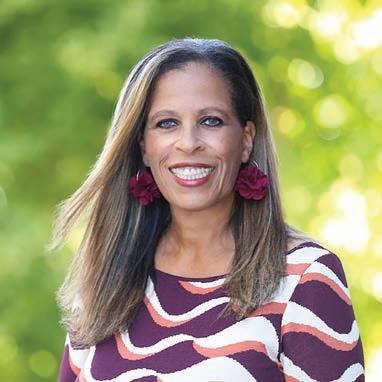
At Trinity, we often return to our formation questions: Who am I? Who are you? Who are we together? And what are we called to do?
That last question feels especially urgent now, and this issue of The Voice answers it beautifully.
We are called to prepare the future. You will read about the meaningful work around artificial intelligence, and how we continue to deepen students’ curiosity, strengthen their learning, and prepare them for the world they will inherit.
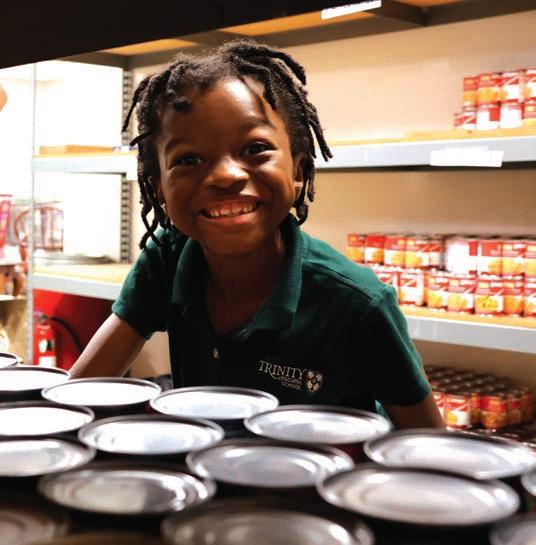
We are called to love our neighbors – and to act on it. When the federal government created fear and uncertainty for families, we asked how we could help. Within an hour, more than 100 families offered to bring food, drive children to school, and provide Thanksgiving meals. That was not performative. It was deeply rooted in who we are.
And we are called to invest in our people. That is precisely what our True North campaign is about. True North has an ambitious focus on attracting and retaining exceptional faculty and staff through stronger compensation and benefits; expanding financial support so a Trinity education remains accessible to families from all walks of life; and upgrading our facilities to match the quality of learning that happens within them every day. When we invest in our people, our access, and our spaces, we invest in every child who walks through our doors now and for generations to come.
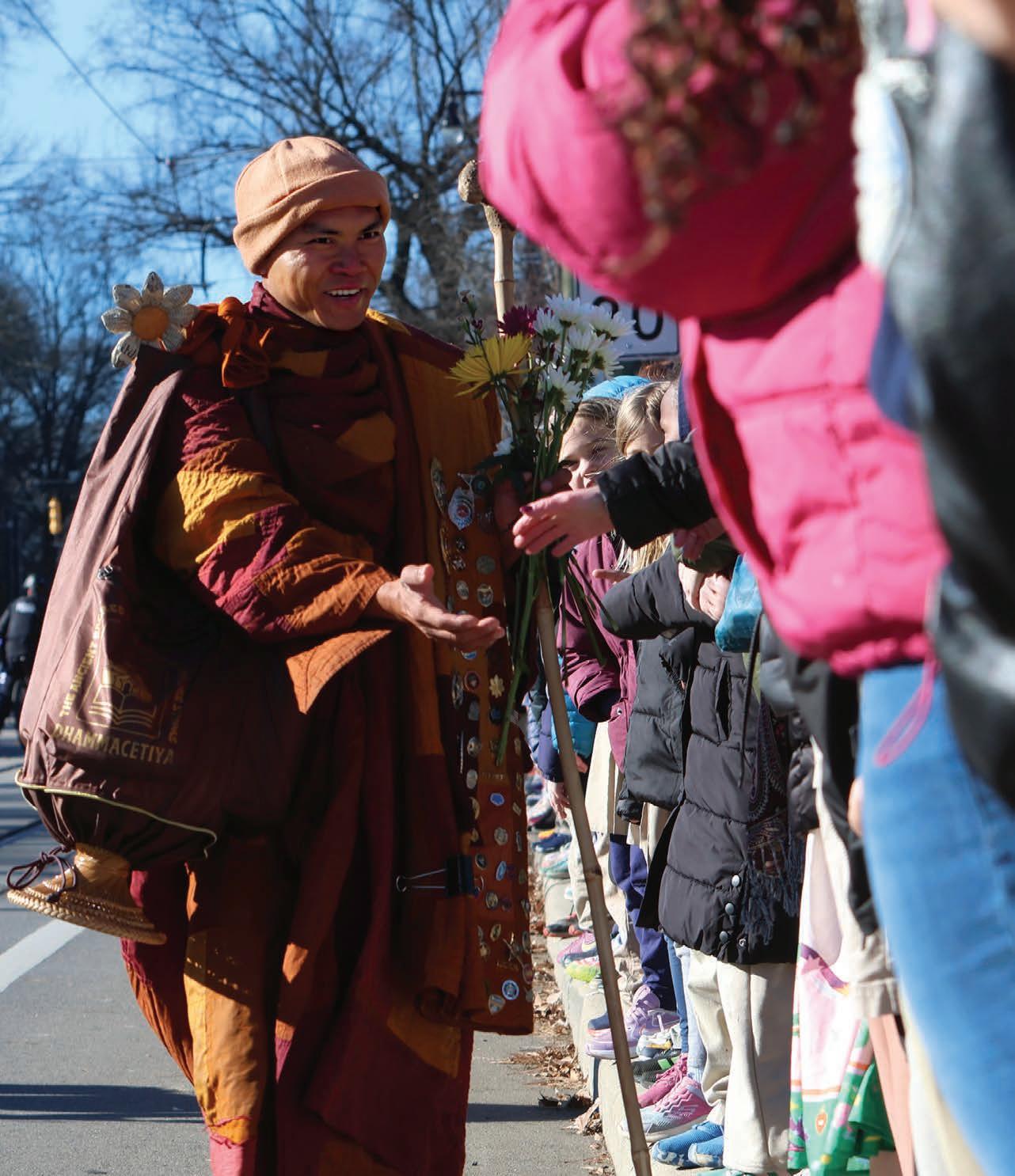
And sometimes we are simply called to pause. This year, we were reminded of that when monks walked quietly by our campus, a holy interruption in the middle of a busy school day. It was a reminder that not every act of faith is loud. Some are found in stillness, in noticing, in making room for wonder.
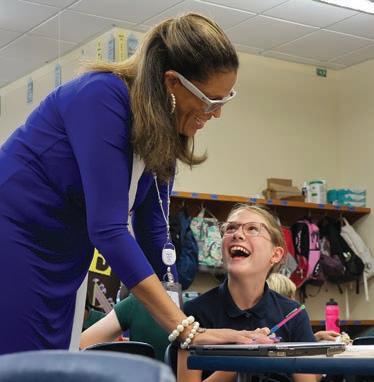
So we ask again: Who are we together? And what are we called to do?
We are called to learn boldly, love deeply, and serve faithfully. I am personally and deeply grateful to lead a school that doesn't just talk about mission but lives it every single day. In that calling, we find purpose, belonging, and hope.
We are still becoming.
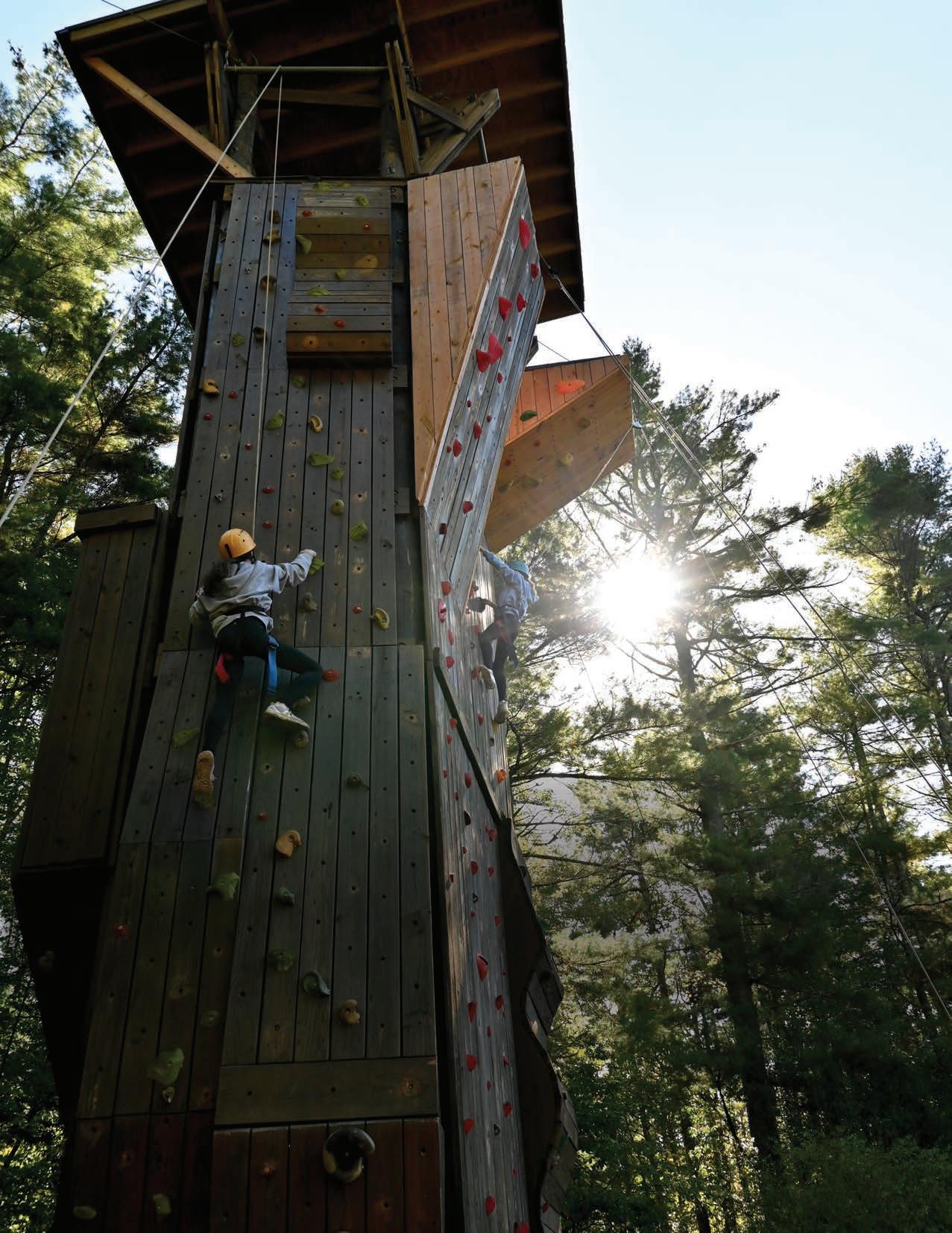
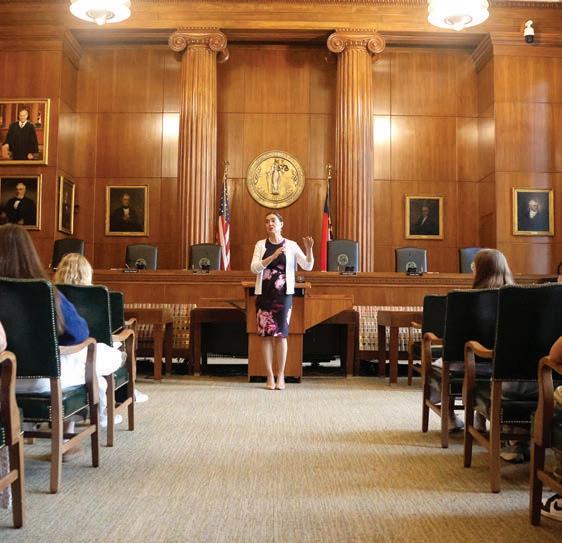
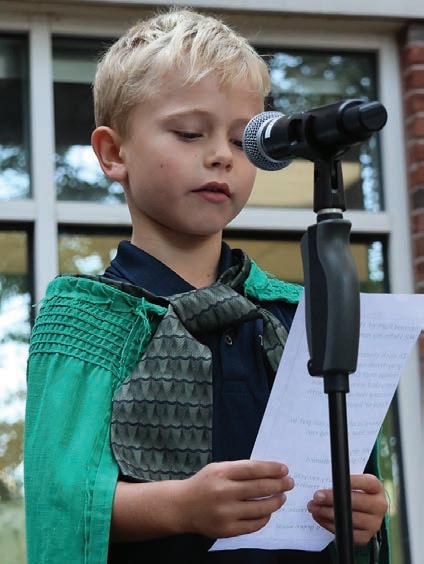
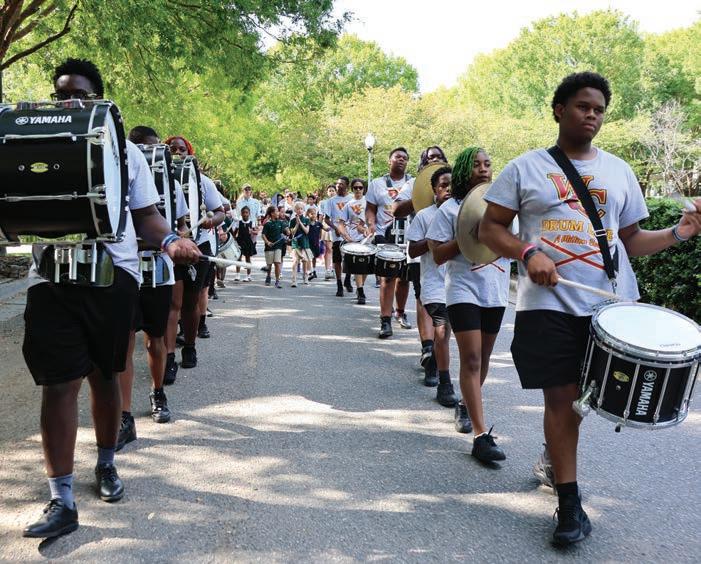
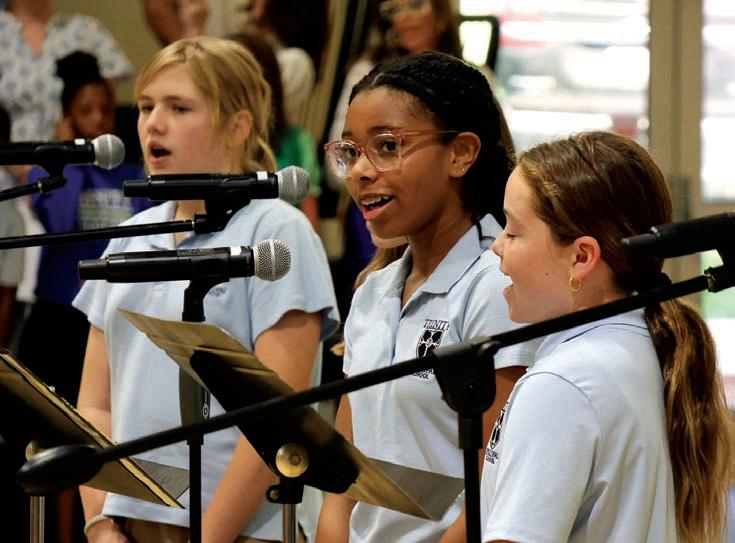
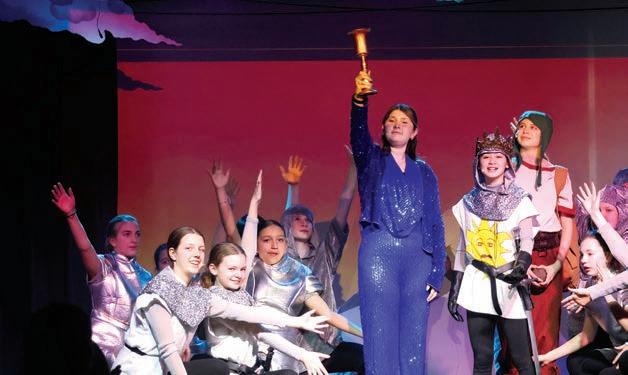
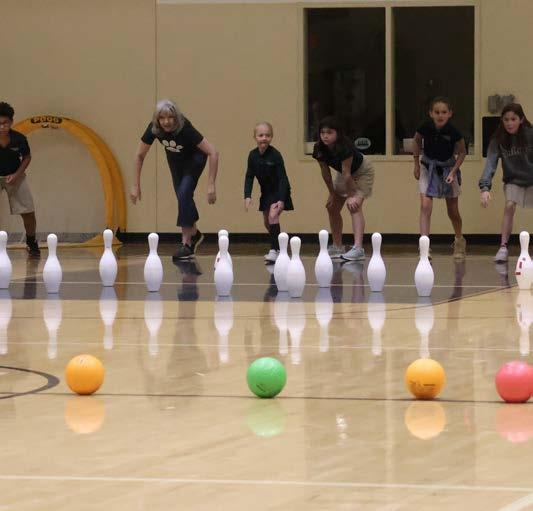
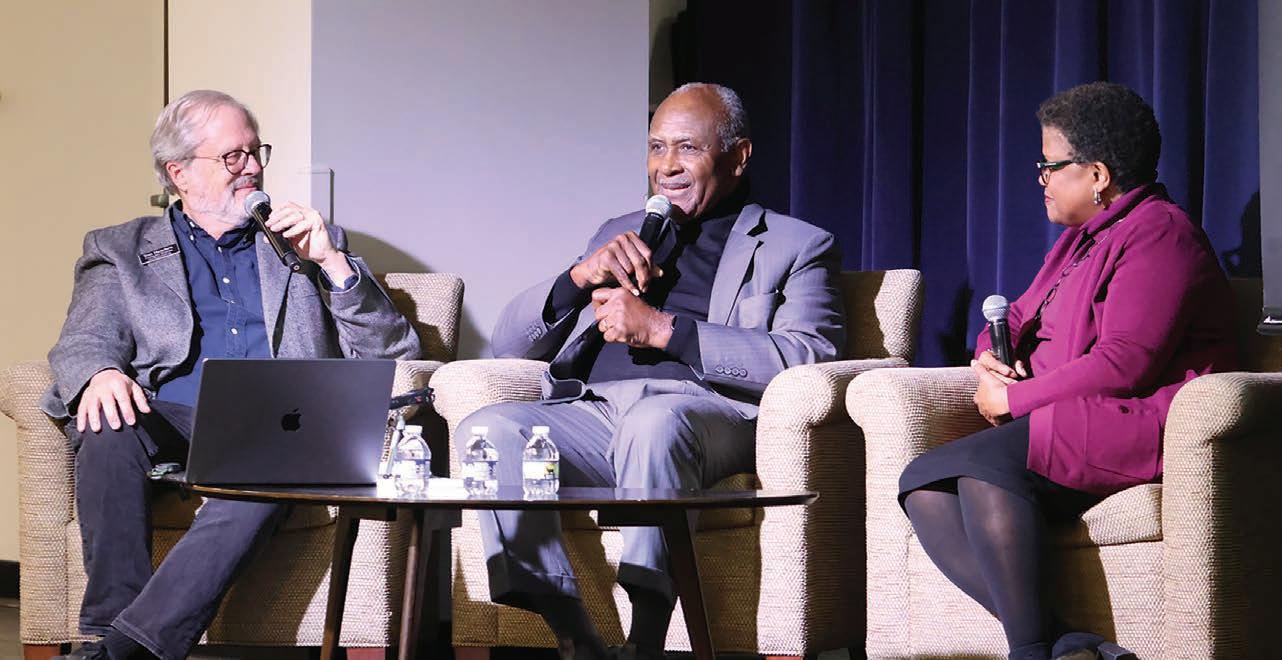
There are countless moments, large and small, throughout the school year that make the Trinity Episcopal School experience unique and special for students and their families. Some are as simple as a walk around the corner to notice our natural surroundings and find inspiration for a writing exercise. Some require going a little farther. 8th Grade spent a day in Raleigh as part of their learning about community advocacy. Their time included a visit with North Carolina Supreme Court Justice Anita Earls (pictured below).




What is your favorite way to start the day?
A quiet cup of coffee, a little news or reading, a dog walk with my husband, and a workout.
What did you want to be when you grow up?
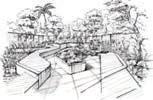
A landscape architect
Who Inspires you?
My parents. They are models for doing work you care about, and it has stuck with me.
Favorite spot on Trinity's campus?
The fitness room. I loved helping both Coach Martins set up for PE.

Who was your favorite teacher or subject as a student?
My 6th Grade Language Arts teacher Jessie Palmore. She pushed us and treated us like we could do hard things, like memorize the opening of “The Canterbury Tales.” I can still recite most of it.
What's your cure for the hiccups?
Hold your breath, count to 30, and swallow three times in a row without breathing.
Being a super recognizer. I can spot someone I haven’t seen since 2nd Grade and know exactly who they are. 1 17 18 19 20 12 10 13 11 14 16 15 2 3 4 5 7 6 8 TES CLASS OF '08
Favorite Trinity moment or memory?
A reality TV-themed WOW Week with Chris Weiss, who took it hilariously seriously.
If your life were a film, who would play you?
Brie Larson. I get that comparison a lot, looks-wise.


What's your favorite Charlotte-area restaurant?
The Roasting Company on Montford Drive.
If you could only eat one food for the rest of your life, what would it be?
Easy answer: pizza. Neapolitan, St. Louis style, Detroit style – I love them all.
What's your secret talent?

What is your favorite movie?
Best in Show. My family watches it together at Thanksgiving.
If you could have a superpower, what would it be?
Being a polyglot, speaking in whatever language I wanted.
What was the last gift you gave someone?
A copy of “U is for Unicorn” to a former colleague who is having a baby.

Is cereal a soup?
If it has milk in it, yes. Otherwise, no.
What foreign language would you like to be fluent in?
French. My mom speaks it, and I’d love to share that with her.
If you were a dessert, what would you be?
A slice of almond pound cake with frosting from Edible Art on Selwyn Avenue.
What historical figure(s) would you invite to dinner?
Suffragettes so I could hear what it was like to fight for rights that feel so basic today. I’d also love a multigenerational dinner with ancestors from my Turkish/ Middle Eastern side and from my very dramatic side.
Are you a dog person or a cat person?
100% a dog person. My two rescue dogs, Raleigh and Sadie, are our pride and joy.
What’s your favorite song?
“Return of the Mack” and an EDM version of “Closing Time.”

What is your favorite way to start the day?
Get grounded, say a quick prayer, and get clear about how I can show up as my best self.
What did you want to be when you grow up?
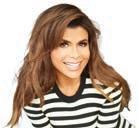
A news broadcaster or choreographer, specifically Paula Abdul.
Who Inspires you?
My mother, Kathryn Randolph. She is incredibly resilient, thoughtful, creative, and wise.
Favorite spot on Trinity's campus?
The gym. It’s the heart of the school.
Who was your favorite teacher or subject as a student?
Ms. Stevens, my Kindergarten teacher, and later my 4th Grade teacher. She told me I was a leader, and I carried that with me.
What's your cure for the hiccups?
A glass of water, slow sips, and a little patience.
Favorite Trinity moment or memory?
If your life were a film, who would play you?
Obama. Grounded, purposeful, and leads with both strength and heart.

What's your favorite Charlotte-area restaurant?
Supperland. Both the food and the ambiance are exceptional.
If you could only eat one food for the rest of your life, what would it be?
Bringing clarity to chaos. I can also recite the theme songs to almost every 90s-era sitcom. 1 17 18 19 20 12 10 13 11 14 16 15 2 3 4 5 7 6 8
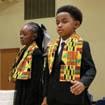
Watching my son, Kingston, powerfully deliver the closing of MLK’s “I Have A Dream” speech at Sankofa Chapel last year.
Is cereal a soup?
No, but it can definitely be dessert.
What foreign language would you like to be fluent in?
Spanish. I know enough to get by, but I’d love to be truly fluent.
If you were a dessert, what would you be?
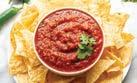
Chocolate chip cookies. Warm, reliable, a little sweet, and brings people together. Chips and salsa. If I’m committing for life, it has to bring me joy.
What historical figure(s) would you invite to dinner?
What's your secret talent?
What is your favorite movie?
If you could have a superpower, what would it be?
The ability to be in two places at once… or to slow down time so I don’t feel like I have to be.
What was the last gift you gave someone?
A FIFA 2026 World Cup soccer ball. Very on brand for our household.
Maya Angelou. I’d want to listen more than I talk.
Are you a dog person or a cat person?
Dogs all day! Plus, I’m allergic to cats.
What’s your favorite song?

“Summertime” by DJ Jazzy Jeff & The Fresh Prince. Pure nostalgia.
What is your favorite way to start the day?
On a school day, in my office or a coffee shop with a hot cup of coffee and time to prepare for the day. On a weekend, a hot cup of coffee on my back porch, listening to birds.
8 If your life were a film, who would play you? WITH
What did you want to be when you grow up?
In Middle School, it was either starting pitcher for the Red Sox or shooting guard for the Celtics.

Who Inspires you?
Students and colleagues. My wife and daughters. My oldest brother, who worked with pediatric oncology patients and families. My friend Chris Hinson, who battles an excruciating illness, schwannomatosis, with grace and strength.
Favorite spot on Trinity's campus?
Currently it is my office and Koinonia space on the third floor.
Who was your favorite teacher or subject as a student?
Mr. Fleming who taught me 7th and 8th Grade social studies at Dedham Junior High. He was a prankster, and I was his favorite target.
What's your cure for the hiccups?
Drink water upside down and backwards.
Favorite Trinity moment or memory?
Any word jumble game - NYT Spelling Bee or the game Boggle 1 17 18 19 20 12 10 13 11 14 16 15 2 3 4 5 7 6
Harvesting sweet potatoes in the garden. Rube Goldberg team meetings. All-Trinity Builds. Science Buddies. Koinonia retreat. Student vs. Staculty games. The list goes on.

9
Maybe Dennis Quaid?
What's your favorite Charlotte-area restaurant?
Thai Taste
If you could only eat one food for the rest of your life, what would it be?

Curry Chicken, spice level 5
What's your secret talent?
What is your favorite movie?
Good Will Hunting

If you could have a superpower, what would it be?
What was the last gift you gave someone?
Is cereal a soup?
Absolutely not. That is ludicrous.
What foreign language would you like to be fluent in?
Spanish
If you were a dessert, what would you be?

What historical figure(s) would you invite to dinner?
Are you a dog person or a cat person?
Both
Depends on my mood. “Worry No More” by Amos Lee, “Black Sheep” by Martin Sexton The ability to fly
Necklace and earrings for my daughters on Easter
What’s your favorite song?

What is your favorite way to start the day?
BOARD OF TRUSTEES MEMBER & PARENT
If your life were a film, who would play you?
What did you want to be when you grow up?

Who Inspires you?
daughter,
Favorite spot on Trinity's campus?
Who was your favorite teacher or subject as a student?
What's your cure for the hiccups?
The Fig Tree 9

Is cereal a soup?
Kerry Washington No way!
What foreign language would you like to be fluent in?
What's your favorite Charlotte-area restaurant?
If you could only eat one food for the rest of your life, what would it be?
What's your secret talent?

II All of the cozy reading nooks.
What is your favorite movie?
would time travel. I have an amazing green thumb and can bake wonderful bread. And I’m also pretty good at math. 1
If you could have a superpower, what would it be?
Favorite Trinity moment or memory?
What was the last gift you gave someone?
A favorite baby book for friend who is expecting. (A future Wildcat, perhaps…?)
German because my mother-in-law and all of her family are German!
If you were a dessert, what would you be?

What historical figure(s) would you invite to dinner?
Are you a dog person or a cat person?
really.
What’s your favorite song?
Holy Night"






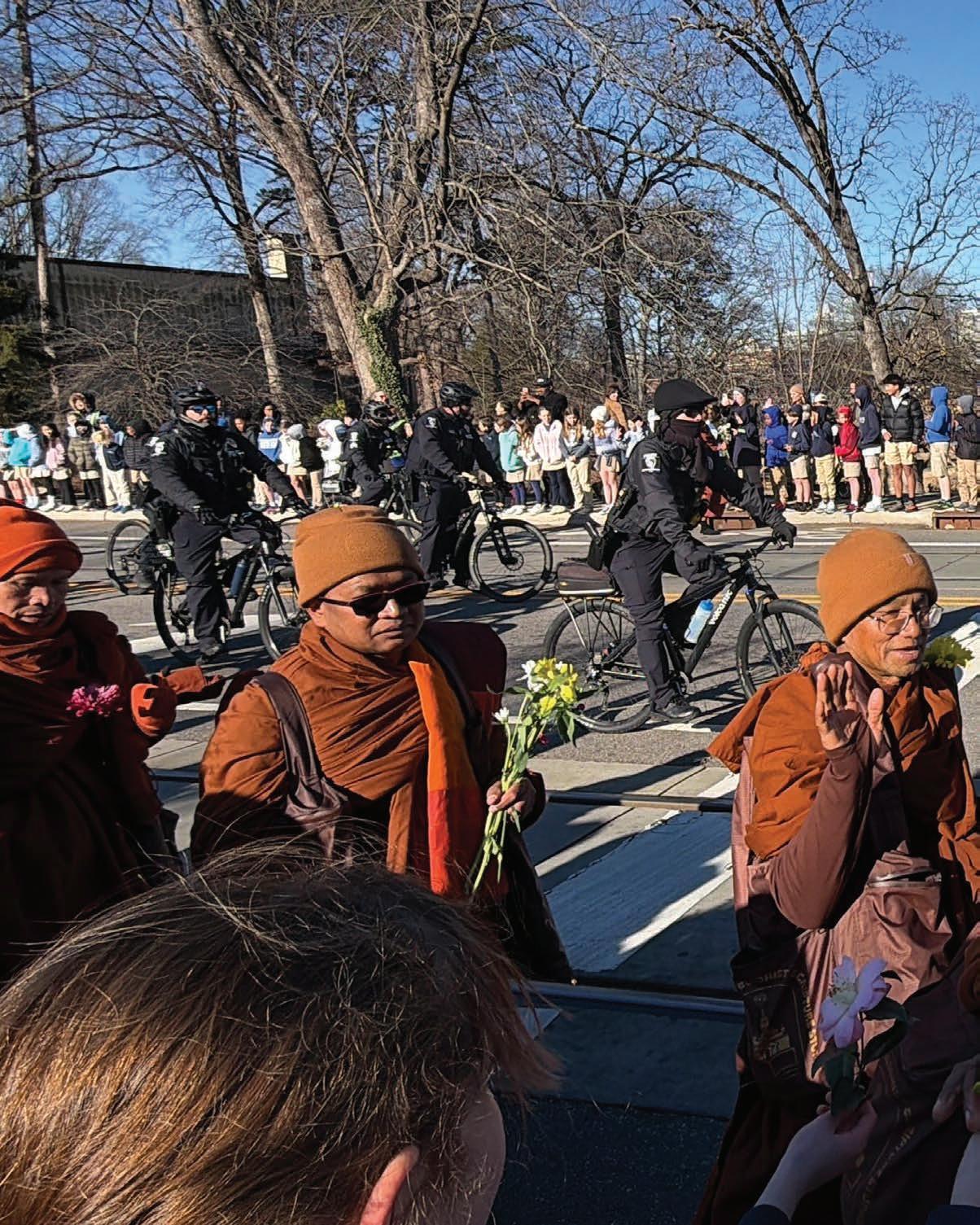
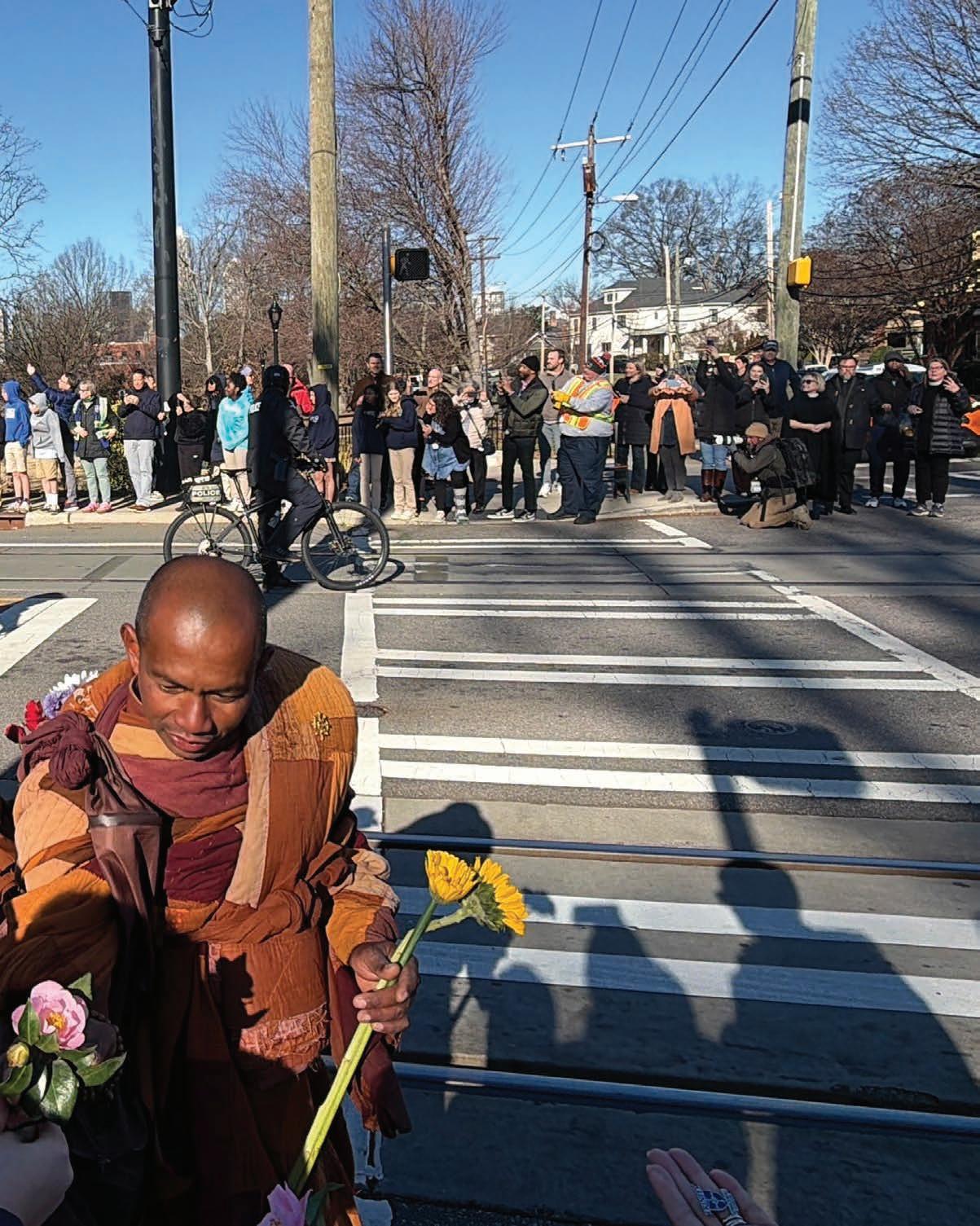
When a pilgrimage that has captured America’s attention comes within a mile of school, you drop everything to experience it. That was the case for Trinity students in grades 2-8 on Jan. 15, when the Walk for Peace route through Charlotte brought the group of Buddhist venerable monks in walking distance of Trinity.
Students waited with excitement on the sidewalks flanking Hawthorne Lane near Independence Park, their anticipation turning into silence as the monks came down the hill.
One venerable monk, noticing a group of Trinity students, broke away from his group to bless the students as he moved along the route. Other monks offered flowers to students or reached out to touch their hands.
One student was heard saying,
lucky are we? “
Just as students won’t soon forget the experience, Head of School Imana Sherrill wanted to ensure the monks had a lasting memory of Trinity, placing a school pin in the hands of a monk.
Moments like these remind us that the world is our classroom. We are grateful for these unexpected opportunities to witness peace in motion and to share our own Trinity spirit in return.
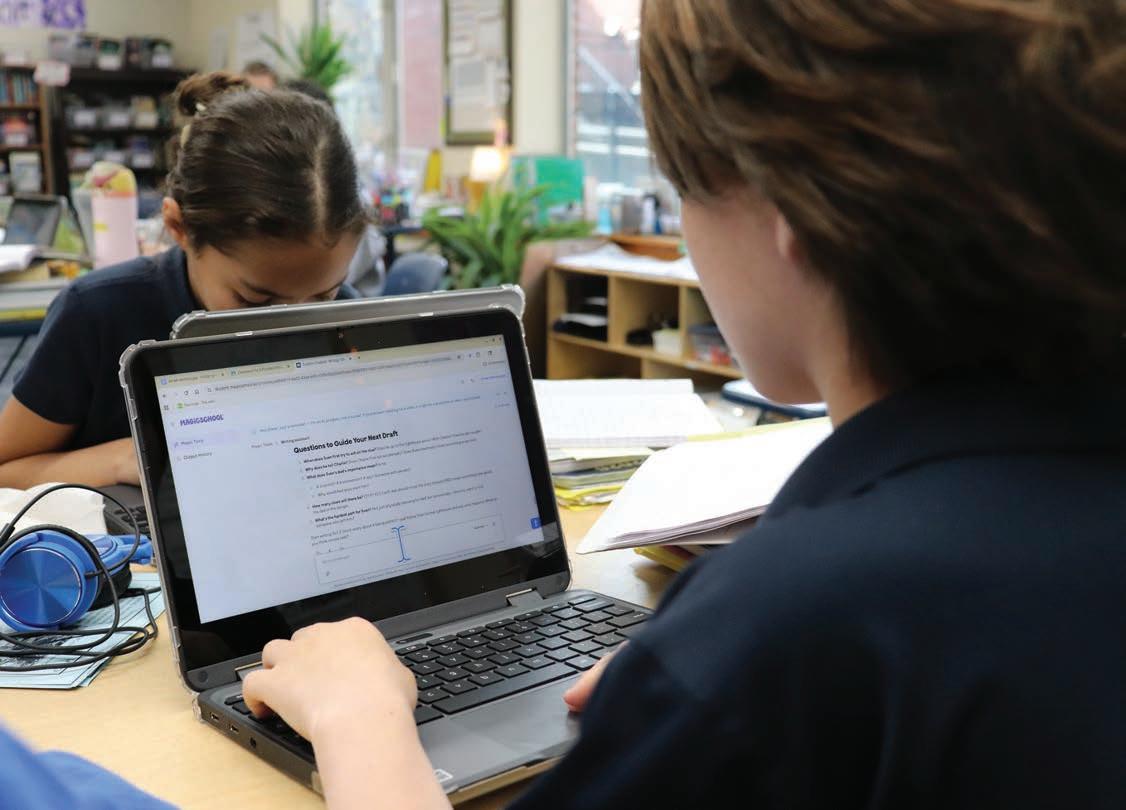
Two letters of the alphabet carry a heavy load of curiosity, worry, optimism, and caution: A and I.
Artificial intelligence remains a dominant topic in education and broader society, and the range of perspectives is reflected in the makeup of Trinity’s AI task force.
Comprising academic leadership, digital learning catalysts, classroom teachers and others who are curious about artificial intelligence, the task force is collaboratively shaping AI use at Trinity.
On one end is Nikki Dunn, Middle School Digital Learning Catalyst and a selfdescribed “very fond user of AI.”
“I find it very beneficial to teachers,” she says, “because we’re able to create tools that make our jobs more efficient.”
On the more skeptical side is Middle School and Musical Chaplain Matt Moorman.
“I’m less willing to place my trust in something that can think for itself (but) you can’t see where it keeps its brains,” Moorman says, quoting Arthur Weasley in the “Harry Potter” series.
Mer Leeson, Dunn’s digital learning catalyst colleague in Lower School, sits somewhere between the two.
“You don’t have to be one or the other,” Leeson says. “I think they’re all healthy.”
Launched in January 2025, the group of 13 staculty members set out to build a framework for students’ AI use, train and build up teachers’ AI fluency, and choose the platform where students will utilize AI.
The task force gathered input this school year at staculty workshops, led professional development for staculty on a variety of AI-related subjects, and fielded parents’ AI questions.
As the AI policy discussions continue, the task force checked off one task in the summer of 2025 by selecting MagicSchool as Trinity’s AI platform and running a pilot program allowing teachers in all grades to use it as they see fit.
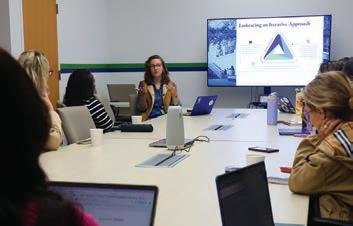
Stephanie Griffin, Assistant Head of School for Academics and leader of the task force, says the group is moving at a different pace than other schools, some that swiftly took a hard stance against AI and some that implemented AI before figuring out a policy.
“Our work is on par – or even ahead of –some of our peers,” Griffin said. “Our pace allows us to make sure AI is aligned with our mission, and allows us to be nimble and follow the emerging research.”
The speed of AI's evolution — and how quickly it is becoming a required skill — presents a unique challenge for Trinity as it balances integrating technology in students' lives with preserving their childhood in its K-8 environment.
In a parent coffee discussion on AI, Griffin pointed to a World Economic Forum forecast of 92 million jobs being displaced by AI, and 170 million new jobs being created due to AI. The agency also said teacher preparedness was the most crucial element in students’ AI literacy.
“All signs are pointing to students needing to understand how AI works and understanding how it might be incorporated, setting them up to succeed in
I find it very beneficial to teachers, and we would be putting students at a disadvantage if we didn't get ahead of it and help them understand how to use AI for good. “
NIKKI DUNN
high school, in college, and beyond,” Griffin said. “This is work that we are really hungry about.”
Feeding that need for teacher knowledge has been the task force’s focus this school year as it led group sessions and one-on-one coaching on using tools in MagicSchool and Google’s Gemini. Students in select grades have utilized MagicSchool on a limited basis this school year as part of a pilot program, with the intention of implementing an AI framework in the 2026-27 school year.
Developed in 2023 by a former school principal, MagicSchool is used by more than 10,000 schools across the country and offers educators a range of classroom tools, such as designing lessons that can be adjusted to meet an individual students’ learning needs.
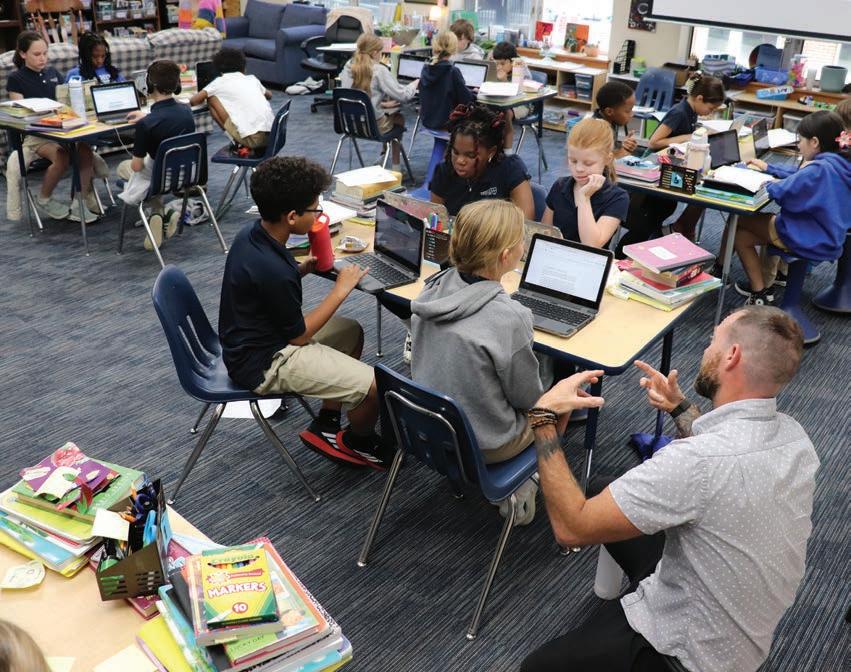
Task force member and 5th Grade teacher Matt Piscitelli said it’s a misconception of AI that it’s a way for students to bypass critical thinking and learning.
“It isn’t about doing less,” he said, “it’s about enriching the experience of being a student and a teacher."
One MagicSchool tool that Piscitelli finds to be invaluable is the ability to create a chat bot that can answer students’ questions, allowing him to digitally assist multiple students at once with information and responses he built into the program.
While the interaction is digital, Piscitelli said that because he is the creator and curator of the bot’s content, the chatbot experience for students mirrors how he would engage with students in person.
“It doesn’t just give answers,” he said, “it asks the right questions, pushing students to think harder.”
After their chatbot interaction, students in Piscitelli’s class get up from their desks and connect with a partner to share what they learned. Rather than turning students into reciters of facts, Piscitelli
said the chatbot experience sets them up to better articulate ideas because of the back-andforth engagement.
“Swimming Against the Current”
Being a skeptic of AI doesn’t mean you can’t find a use for it.
For instance, Matt Moorman has used MagicSchool to adjust a reading for a particular grade level.
“It actually doesn’t save time because I do have to look over the changes it makes to be sure the theology and religious meanings are accurate, so it creates more work for me – but it is a helpful tool,” he said.
But for Moorman, AI’s efficiencies don’t outweigh his concerns of it disrupting human-to-human connections God created.
As a chaplain, Moorman feels a responsibility to bring that theological grounding to the task force discussions, even if he concedes that he “may be swimming against the current.”
Whatever form the AI policy takes, Moorman said it should center the human over the computer.
“Being human is not easy, and AI will never understand how to live in a world of complexity,” he said. “We are humans, so
how can we use these tools in a way that can help us remember that?”
Griffin said bringing all perspectives into the discussions sharpens Trinity’s readiness for AI by forcing the task force to think through the many ethical and philosophical considerations about its use in schools. The group, she said, has leaned into the mantra that wisdom comes from collective navigation.
While the approach remains a work in progress, the initial pilot programs will help reveal areas for improvement as MagicSchool continues to be used next school year. A 6th Grade technology class will be added to Middle School as digital learning catalysts teach students how to use AI to create code and build, not just how to input questions and prompts.
The task force, meanwhile, has drawn up non-negotiables for the school’s AI policy, including student safety – protecting identity and data while using approved AI platforms – and aligning AI use with Trinity’s educational philosophy of critical and creative thinking, its approach to teaching, and the Honor Code.
“If we continue to invest our energy into helping students take what they know and connect it to the world around them,” Griffin said, “that will help our students, and it will help our institution thrive in this quickly changing landscape.”
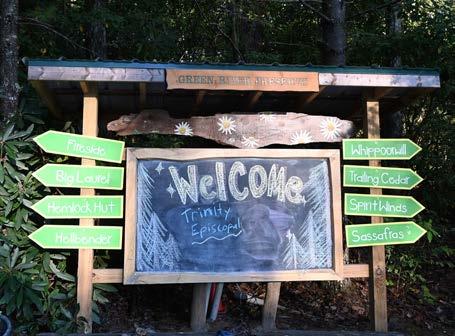
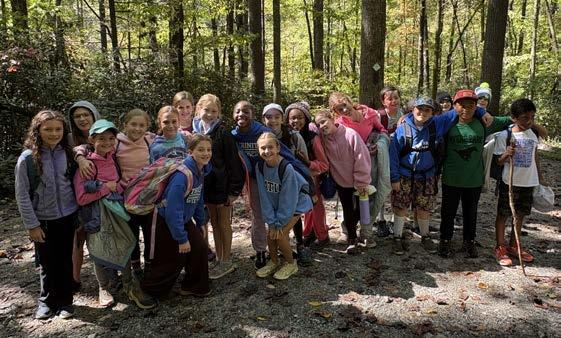
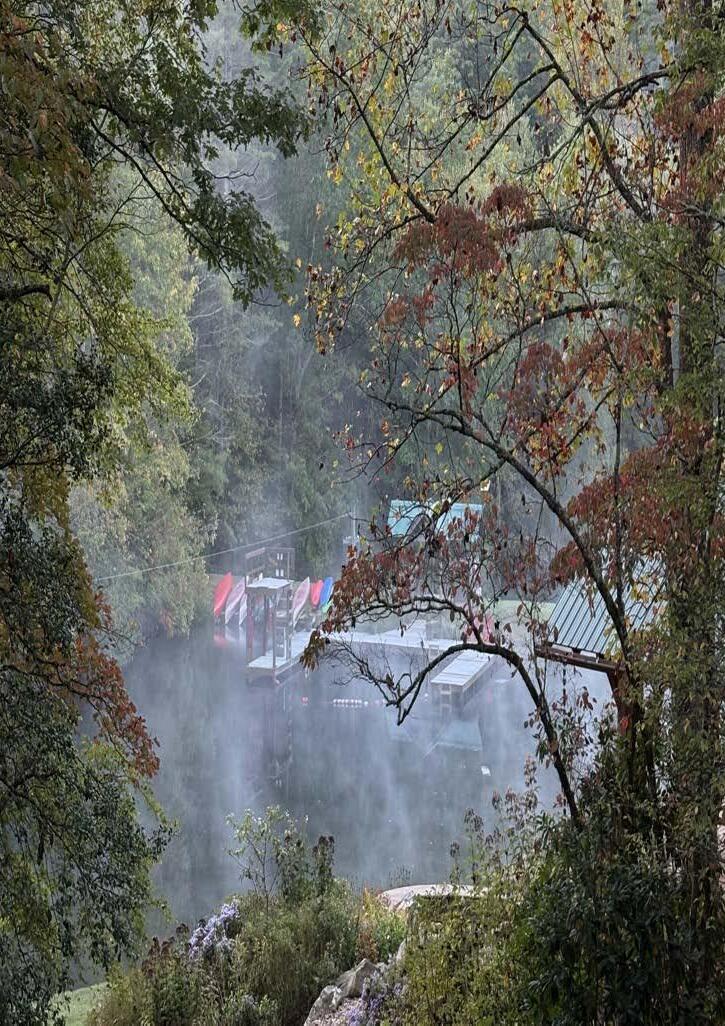
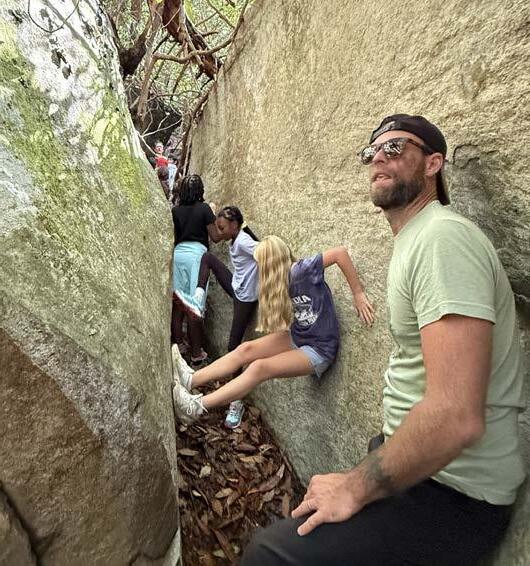
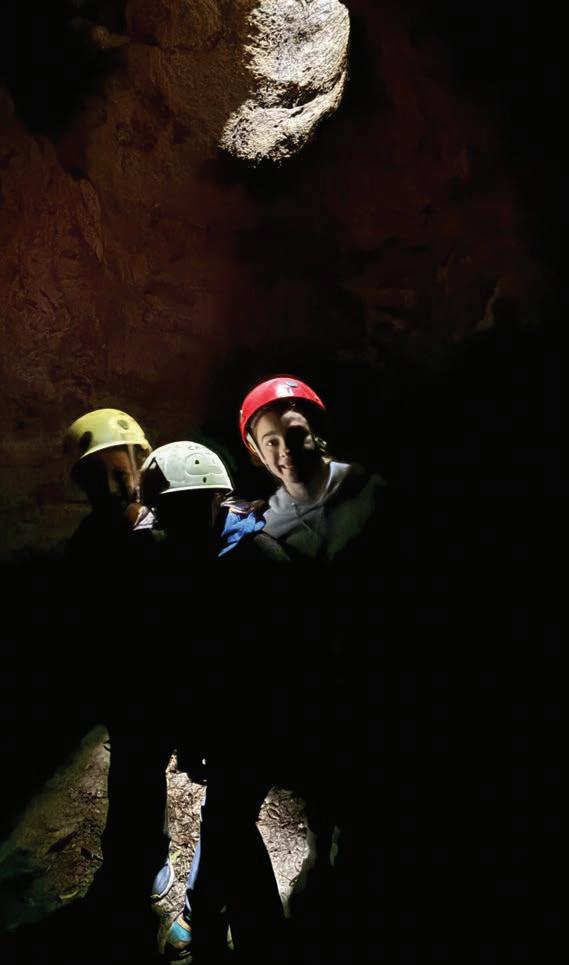
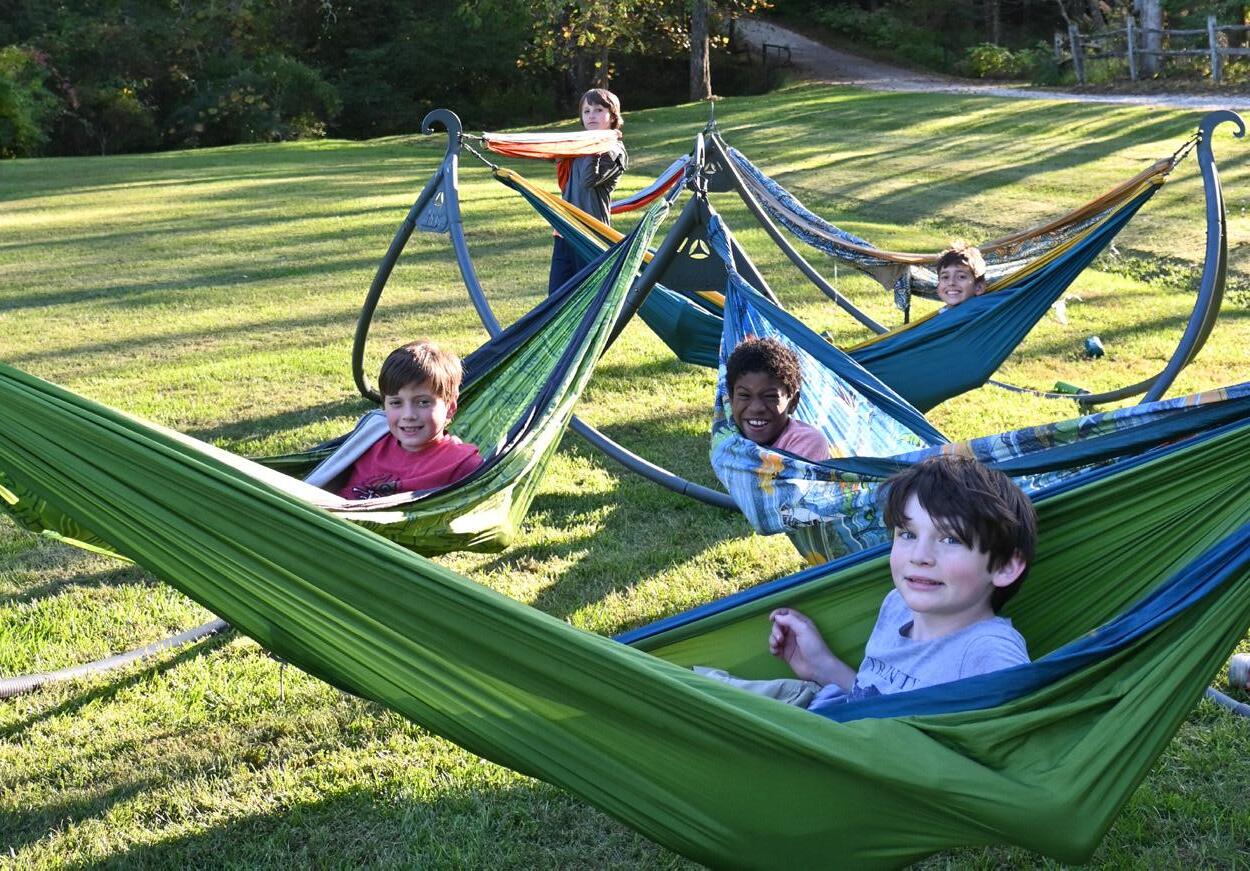
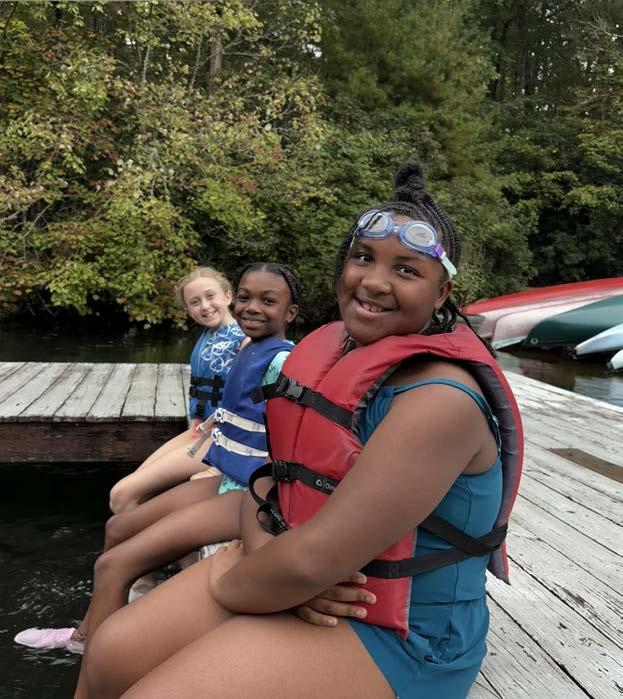
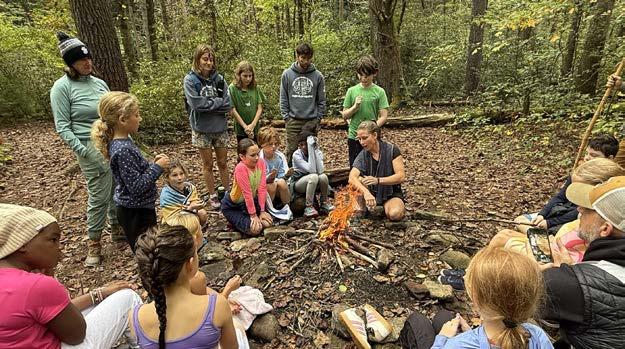
5th Grade stood a little taller and braver after a stay at Green River Preserve in October.
This staple of Trinity’s 5th Grade was the first visit back to GRP since Hurricane Helene forced the cancellation of the 2024 trip.
During the week at GRP, students were challenged to step out of their comfort zones as they explored caves, plunged into waterfalls, hiked mountaintops, studied nature, and showed off their talents to classmates.
Students who might have been tentative stepping off the bus at the beginning of the trip were boldly charging into activities or showing off their knowledge of nature.
The GRP experience is one of the ways Trinity helps students become their confident selves who can handle challenges in the classroom and beyond.


Darting out of their English class, 8th Grade students were eager to read a book to the smallest members of the Trinity community.
But these weren’t their Kindergarten Science Buddies. Instead, it was a tank of tilapia fish occupying an aquaponics system in the corner of the Dickson Upper Commons.
“The fish came to the front (of the tank) because they thought they were getting food,” said Middle School Science Teacher Aprillé Morris-Butler.
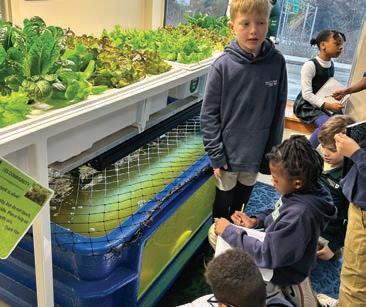
The 15 tilapia and the tank they’ve inhabited since October have provided hands-on lessons for 7th and 8th Grade science units. Students are responsible for monitoring the tank’s water quality and feeding the fish, while seeing the oxygen, nitrogen, and water cycles in action.
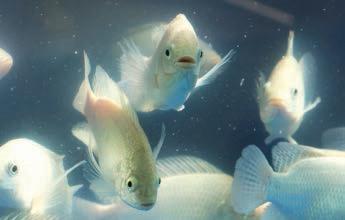
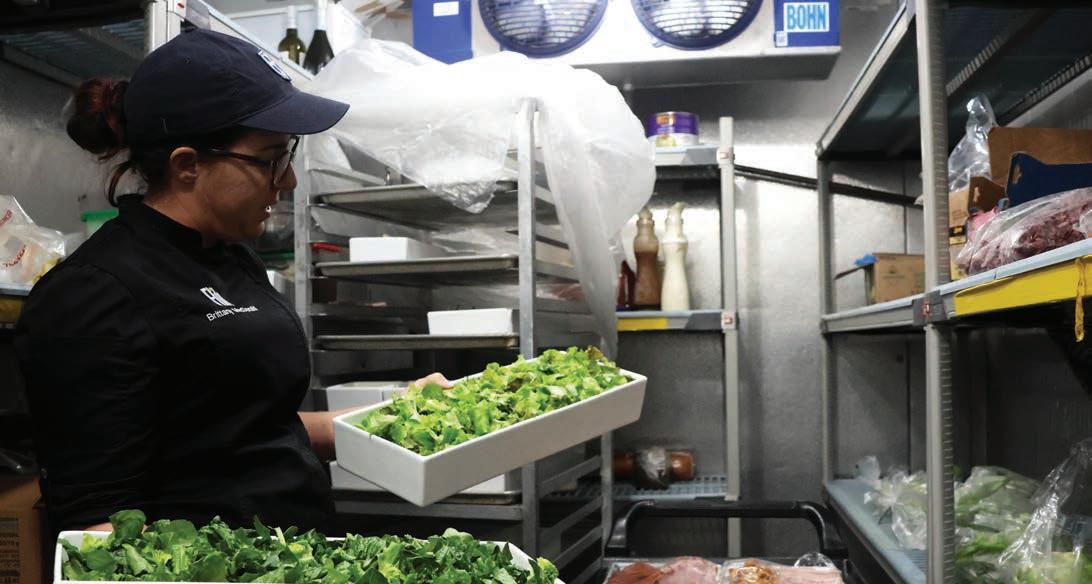
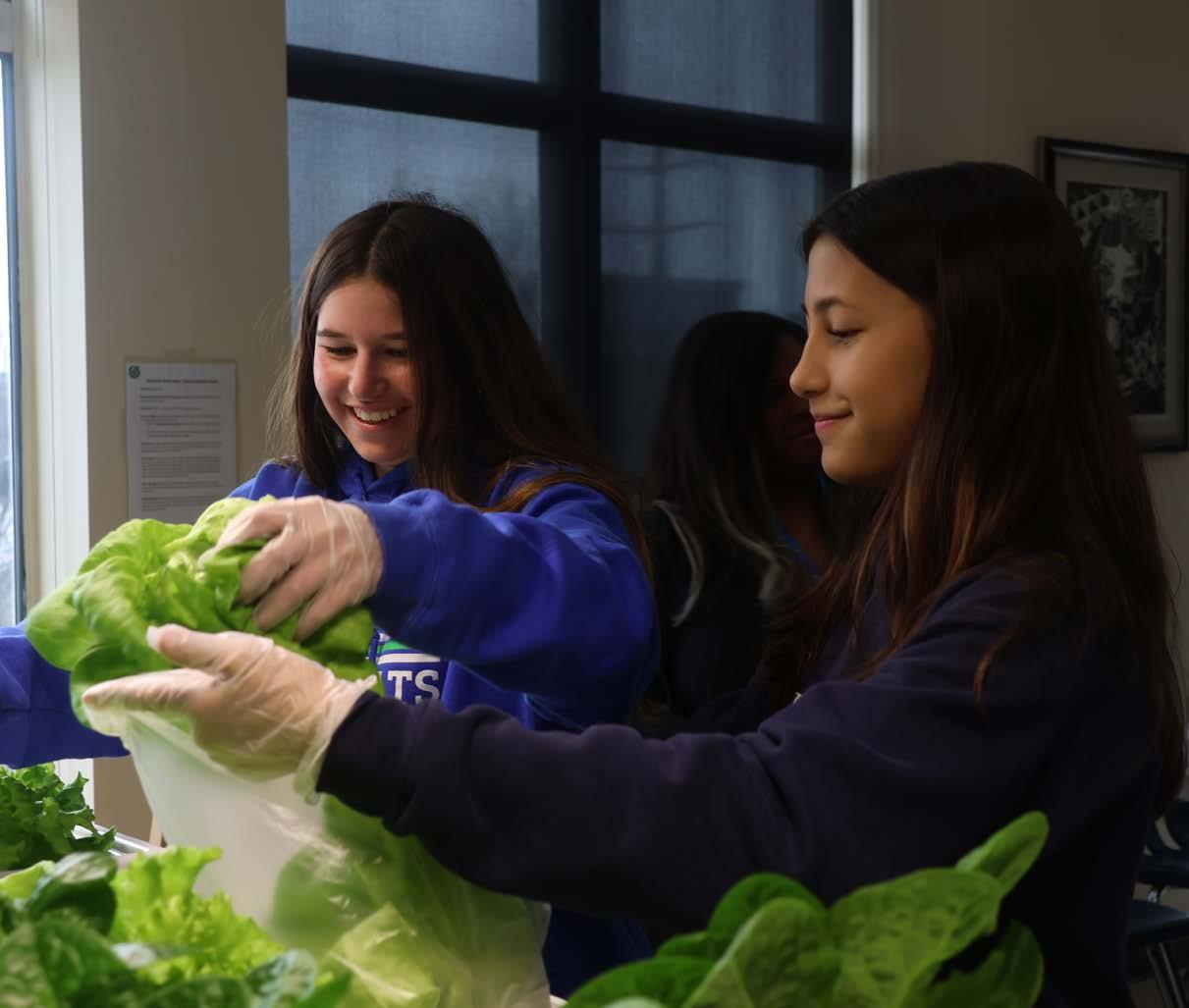
The waste from the fish goes through a filter and then to the plant bed. It converts into ammonia and nitrates that help grow heads of lettuce that are harvested and delivered to the Dickson Dining Hall. The plant bed, meanwhile, filters the water and returns it to the tank for the process to begin all over.
The first lettuce seeds were planted a few weeks after the tilapia arrived. By early
MIDDLE SCHOOL AQUAPONICS SYSTEM NOURISHES MINDS AND BODIES
December, the first batch of romaine and mixed greens was served in the dining hall salad bar. As of April, approximately 280 heads of lettuce had been harvested.
“I like how involved we get to be,” said 8th Grade student Brooklyn Stanczak, from maintaining the water quality to cutting and packaging the lettuce.
The tilapia will be harvested before the end of the school year and used in a special meal for Middle School. A new delivery of fish will stock the aquaponics tank next school year.
Beyond the science lessons, the system also teaches food sustainability, said Brittany MacDonald, chef manager with Trinity’s dining hall provider FLIK Independent School Dining (FISD).
Growing lettuce on campus reduces overall food costs and cuts the school’s weekly lettuce delivery by 50 percent. Recirculating the system’s water reduces the need for new water, and farming fish on land lessens the strain on the food supply from the ocean.
“The most exciting thing is that students get to learn where their food comes from and the work involved in producing it, which they don’t really think about at their age,” MacDonald said.
Watching the process, from seedling to salad bar, “is a tangible result that they take pride in,” she said.
FISD’s parent company Compass Group North America provided a two-year, $23,000 grant for the aquaponics system in partnership with Charlotte-based 100 Gardens. It was FISD’s first school aquaponics partnership in the region.
Trinity’s aquaponics system was the 34th garden to be installed by 100 Gardens, which was co-founded in 2012 by Ron Morgan, the grandparent of former Trinity students Phoebe, Wes TES ‘16, and Sophie TES ‘18 Bolyard.
100 Gardens co-founder Sam Fleming said Trinity’s aquaponics project had been 10 years in the making, but lacked the funding to move forward. “We’ve been wanting to do this project with (Trinity) for a long time,” he said.
As it happens, Compass operates food service at the Innovation Barn, where 100 Gardens is headquartered.
“They (Compass) heard about us trying to partner with Trinity and stepped in,” Fleming said. All three partners - Trinity, Compass, and 100 Gardens - share the same mission of “creating smarter, healthier, and more compassionate students,” he said.
The student-managed nature of the system also aligns with Trinity’s and 100 Gardens’ philosophies of hands-on learning. “We want students running this,” Fleming said.
Compass also partners with Trinity in composting food waste from the dining hall as part of an initiative to cut food waste across Compass programs by 50% by the year 2030. MacDonald said Trinity composts 150-200 pounds of food waste per week.
Philip Nash, vice president of operations at FLIK, hopes the sustainability programs create life-long habits for students. “It empowers them to think more critically about their role in building a more sustainable future,” he said.
When
and what your role is. “
you learn how to run an aquaponic system, it helps you understand your place, your own planet Earth a little better,
There are elements of the aquaponics system that students can use beyond science class, Fleming said. “I’m convinced that we could teach any subject to aquaponics in some way or another,” he said. “It really is a holistic tool for education.”
Take history, for example. While it is new to Trinity, aquaponics has been in use for thousands of years. The Aztecs and ancient Chinese are credited with pioneering the type of symbiotic farming used in aquaponics.
The breeding of tilapia dates back even further – more than 4,000 years ago – to ancient Egypt, where the fish was seen as a symbol of regeneration and fertility. Over time, tilapia evolved to adapt to a range of water conditions, while their waste contains an ideal amount of ammonia for growing plants.
“They’re very hard to kill (and) they multiply very easily,” Morris-Butler said.
Next school year, Morris-Butler hopes to expand the aquaponics system to other curricula, such as social studies.
“I hope that it teaches our students that there are people in the world who don’t have access to clean water (or) soil to grow things,” she said. “I hope that it teaches them to be more compassionate and aware of things outside of their bubble.”
Not only has the system been a learning tool, it has become a meeting spot for students and staculty members. Like their 8th Grade counterparts, Lower School students often park in front of the tank’s window to read to the tilapia or to write in their noticing journals. Teachers work nearby with the trickling water as a peaceful soundtrack.
“I think it’s been beneficial across the whole school,” Morris-Butler said.
Adds Fleming: “My hope is that at the end of the two years, it’s so valuable that there’s no choice but to keep it going.”
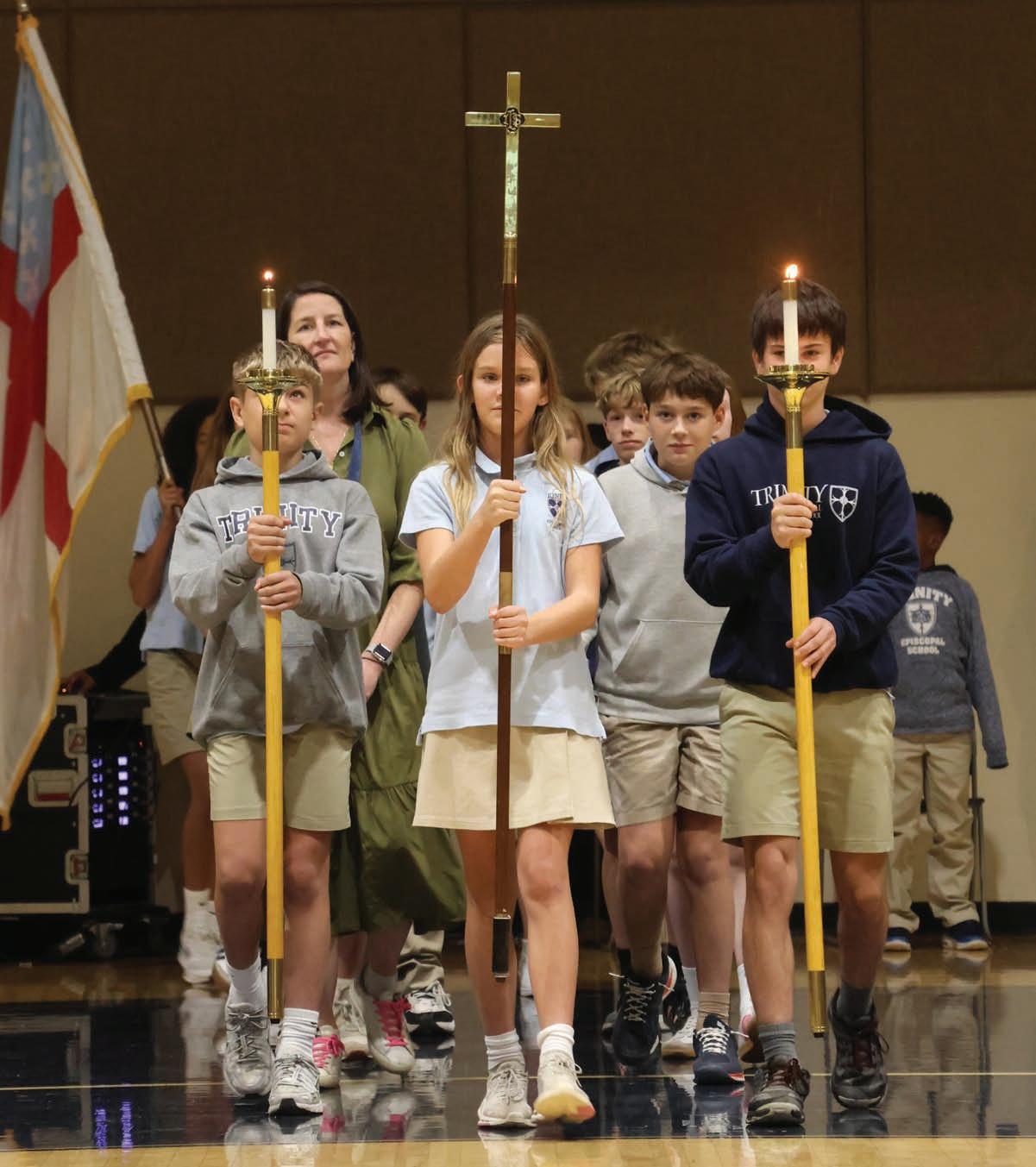
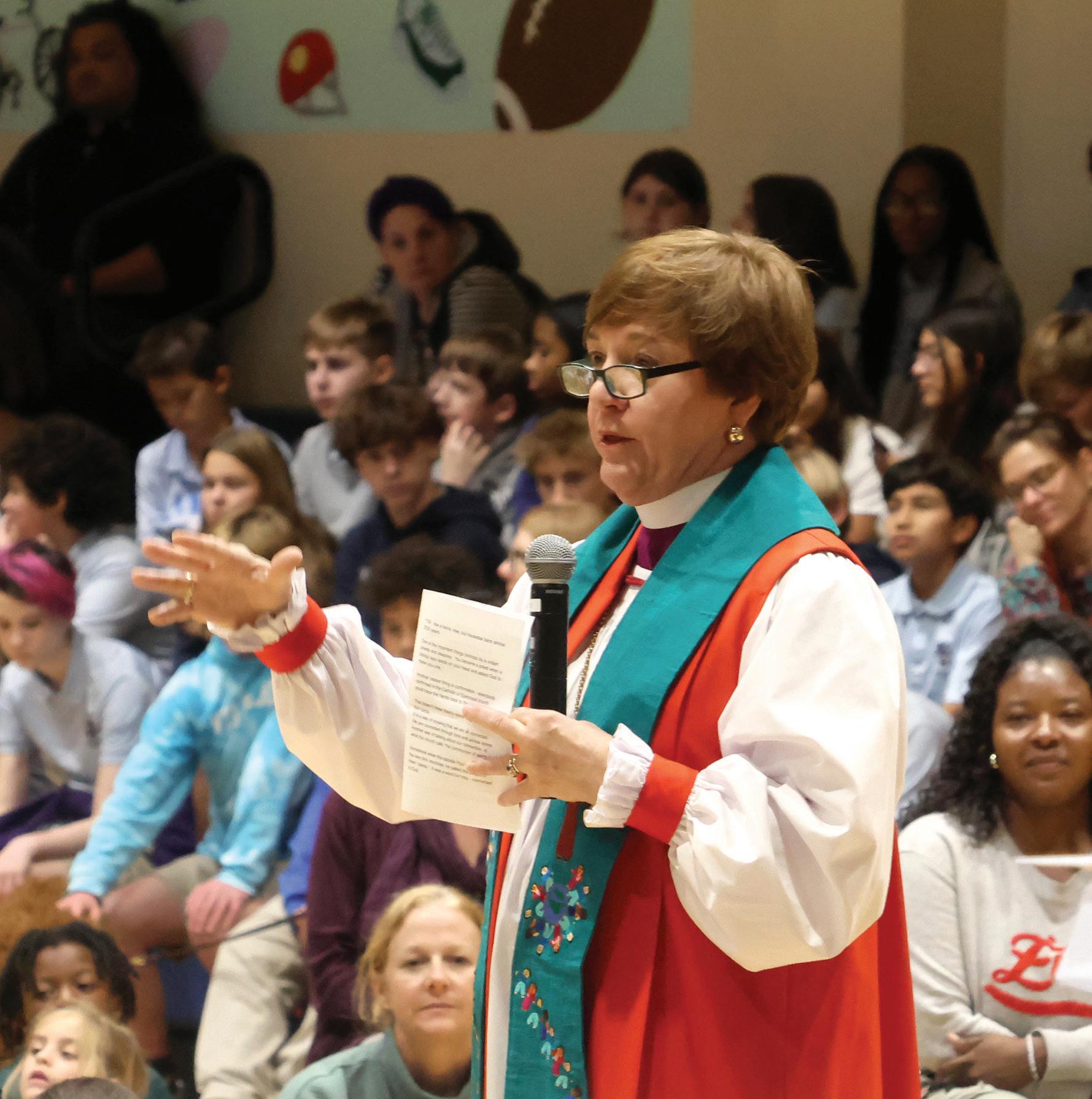
Trinity is one of more than 800 Episcopal schools across the United States, all of them connected by an Episcopal identity that emphasizes school worship, community life, religious formation and study, and social justice.
Trinity’s own Episcopal identity statement, revised in 2020, calls for the school to support every child’s spiritual journey, foster a sense of belonging in an inclusive school community, and strive for equity, justice, and love of neighbor.
This school year, Trinity’s staculty has been engaged in conversation about what it means to be an Episcopal school, guided by the National Association of Episcopal Schools’ “Reasons for Being: The Culture and Character of Episcopal Schools.”
Our Episcopal roots can be seen in Chapel services with visiting Episcopal clergy, including the Rt. Rev. Jennifer BrookeDavidson from the Episcopal Diocese of North Carolina, who helped lead this year’s All Saints Day Chapel.
REFLECTIONS ON ONE WEEK IN THE LIFE OF TRINITY
In November 2025, the Charlotte area became the focus of a federal immigration operation that created fear in the Latino community. The sense of insecurity was felt deeply by some Trinity families. It was in that moment that Trinity answered one of its own formation questions: what are we called to do?
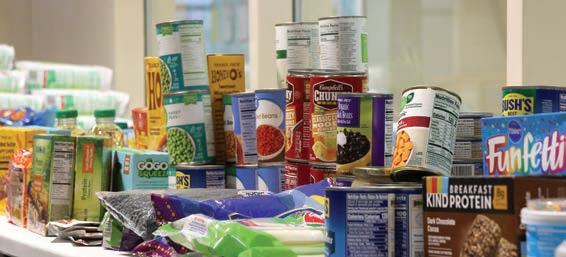
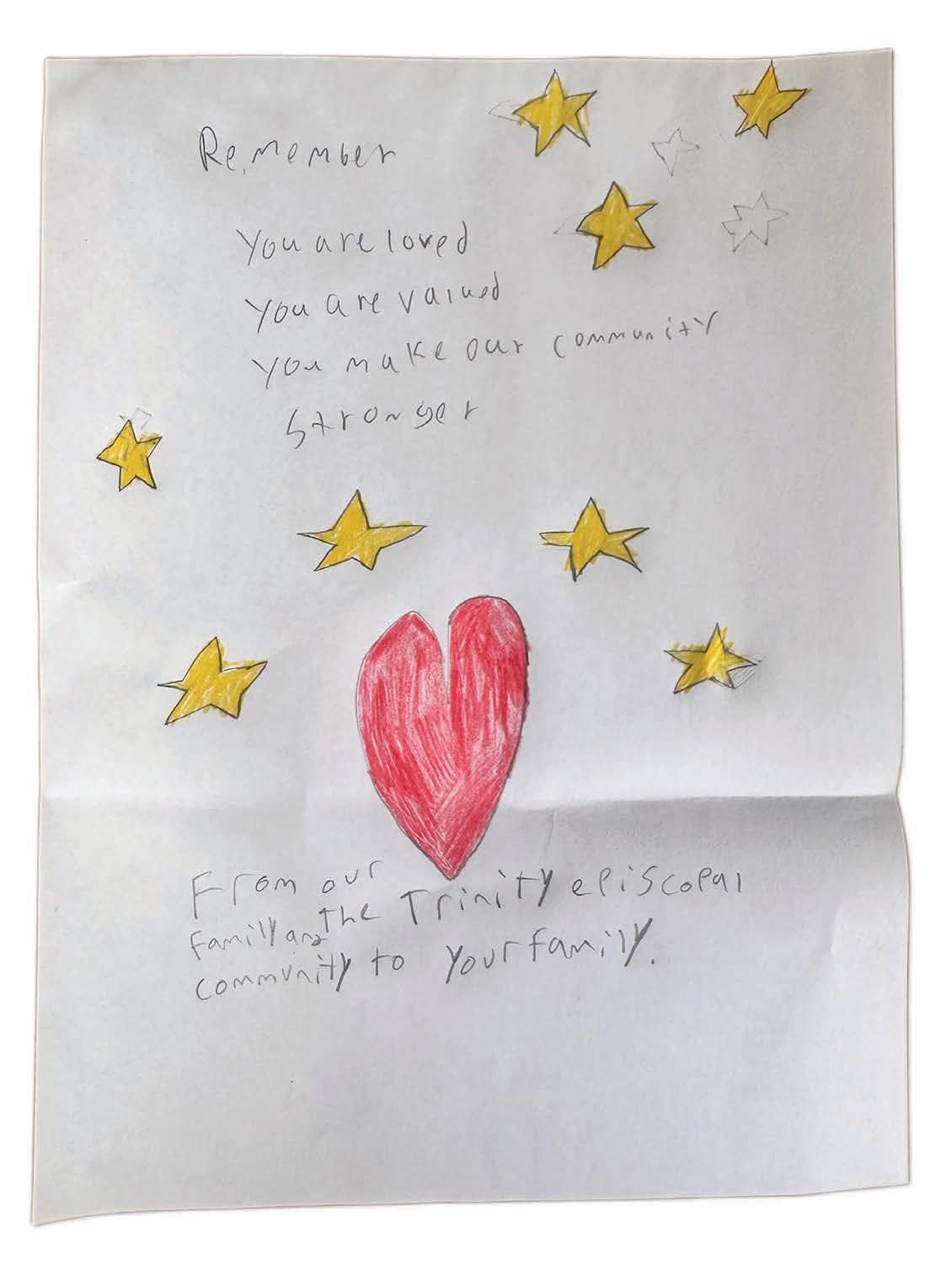
Families and Staculty offered to carpool students to school and to do the grocery shopping for those who were afraid to leave home. Partners such as FLIK - Trinity’s dining hall provider - Christ Church, and Union Church North Meck donated meals. Handwritten notes and student-drawn cards were sent to impacted families.
“It was by far the most meaningful experience that I had the honor and privilege to be a part of,” said Ayeola Elias, Trinity’s Director of Diversity, Equity, and Belonging, who sat down with The Voice for a conversation about that week in the life of Trinity.
As word of the immigration operation started to spread, what were your initial thoughts?
I wasn't sure how it would impact our families and students, but by day two, I was hearing from families that this basic human need to feel safe was being pulled out from under them. This was about people being judged and feeling unsafe because of who they are and how God made them. Schools are safe places, right? It's our responsibility to make sure everyone feels this safety and sense of belonging, especially when the world is not creating this reality for every human.
So, very quickly, concerns about how they would get to school came up. And I knew that we have people here at school who would want to help. So an email went out, and within an hour our inbox was full. We had about 90 people who said they were willing to help get children to and from school.
There was this overwhelming desire from families to do whatever was in their power to help. “
AYEOLA ELIAS
That same email included a statement that Head of School Imana Sherrill read at Greet the Week, which you translated in Spanish. What was on your heart then?
I remember waking up Monday morning with this tremendous weight, feeling like there was this elephant in the room that needed to be named. It was important to say something because not saying something says something too, right? I felt this overwhelming need to say, “We love you, despite how you are feeling right now, and we are here for you, despite how alone you may be feeling right now.”
And I know our community - families, Staculty, everyone - was holding a lot of sadness and frustration and anger around the things we saw happening in Charlotte.
So we put energy and love behind all of the words and statements. We’re a school, and, of course academics are a priority, and we also realize that when it comes to growing good human beings, we have to BE good human beings. And that is what I got to see here at Trinity.
What were you hearing from families who were impacted by the federal operation as the Trinity community responded?
There were phone calls with tears - tears of joy - with an overwhelming sense of gratitude and appreciation for our community.
I'll also mention there were some members of the Latino community at Trinity that did a lot of the heavy lift. One family carpooled three other Latino families to school.
What were conversations like in the classroom and around school as this was happening?
I remember a lot of teachers shared they
had students who weren’t talking quite as much, and that students were concerned about their classmates and had a real fear around families being permanently separated.
There were some moments when academics were put on the backburner because there was a need to care for a child and make sure that they felt seen and had the space to share what they were feeling.
Six months later, are you seeing any remaining effects of that week?
The need to feel safe is something that students aren’t taking for granted anymore, and I think they are seeking an extra layer of safe space in affinity groups. I know our Young People of Color affinity group in Middle School has seen more students who identify as Latino. The number attending the meetings has more than doubled since this, and I'm grateful they have found this place to be just one place at Trinity that tells them they belong.
As someone who identifies as Black, I know what it feels like to feel unsafe at times. This recent experience was a reminder that safety is something we should never take for granted.
What did this time in Trinity’s history say about our school?
That the sense of belonging is real. We belong to each other. We're here to support one another. When one person's hurting, everybody's hurting. I'm so grateful to be in a space where we have a mission, core values, and an Honor Code that constantly remind us we are supposed to show up for each other.
I don't know what the future brings and I don't know what obstacles we'll come up against as a community, but one thing I do know for sure is that we will be here for one another.

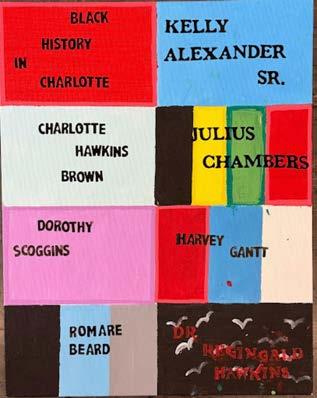
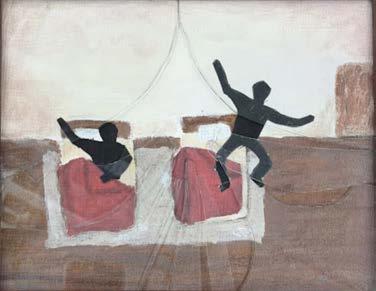
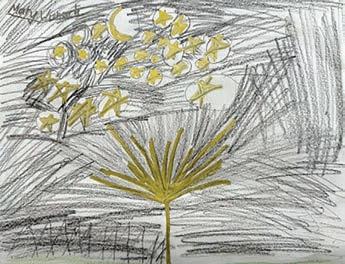
Uptown isn’t just our classroom. It’s also our art gallery. Wildcat artwork was chosen to be on display for Black History Month at the VAPA Center (Middle School) and for Youth Art Month at the Carolina Theatre (Lower School).
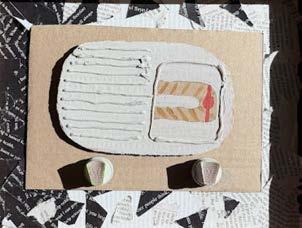
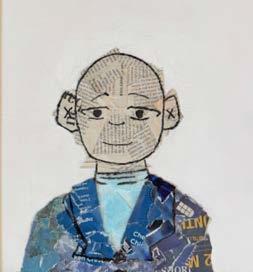

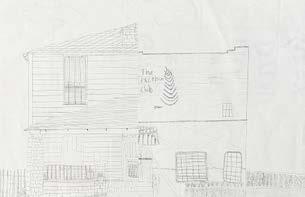
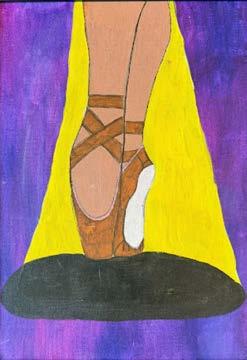
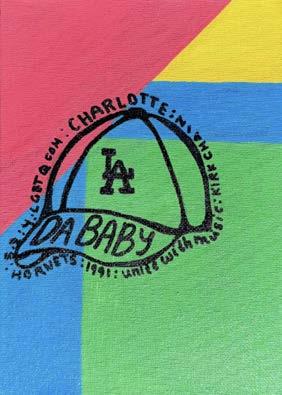
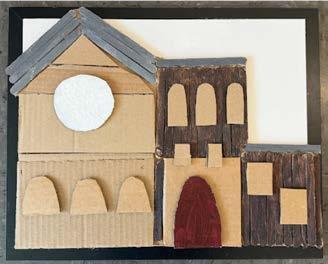
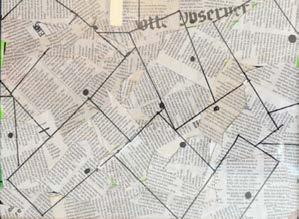
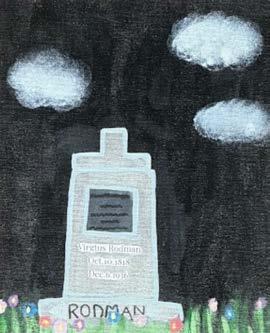


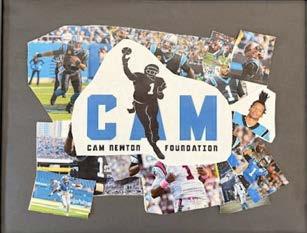
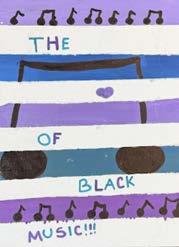
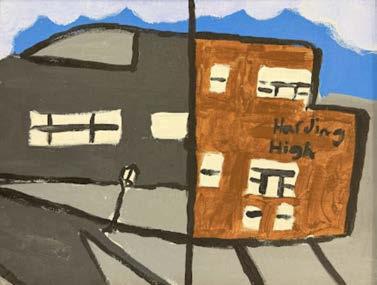
1. “Doorways in History,” Greta Huber, 2. “Roots to Skyscrapers,” Lila Hobbs, 3. “The First,” Miles Mixon, 4. “Music is the Best Drug,” Gizzelle Brown, 5. “Remembering and Restoring,” Margaret Lowry, 6. “The Newton Foundation,” Charlie Knight, 7. “Before and After,” Cooper Obleada
1. “Starry Night with Hot Glue,” Hera North, 2. “Dragon Ball Z,” Eli Dalton, 3. “Value Mountains,” Henry Pelletier, 4. “Nature,” Julia Harnett, 5. “Cardinal,” Zion Young, 6. “Gold Tree,” Mary Wishart
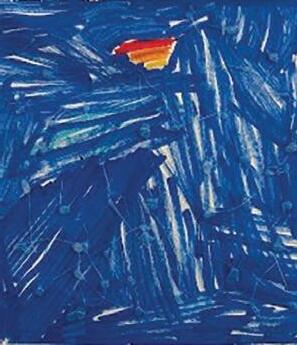
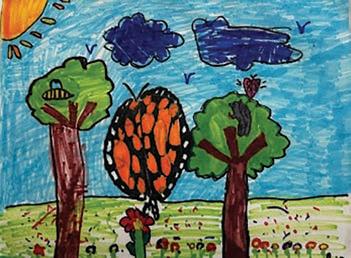
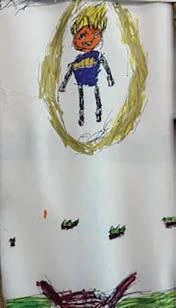
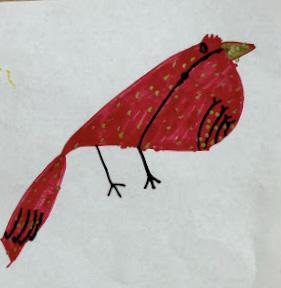

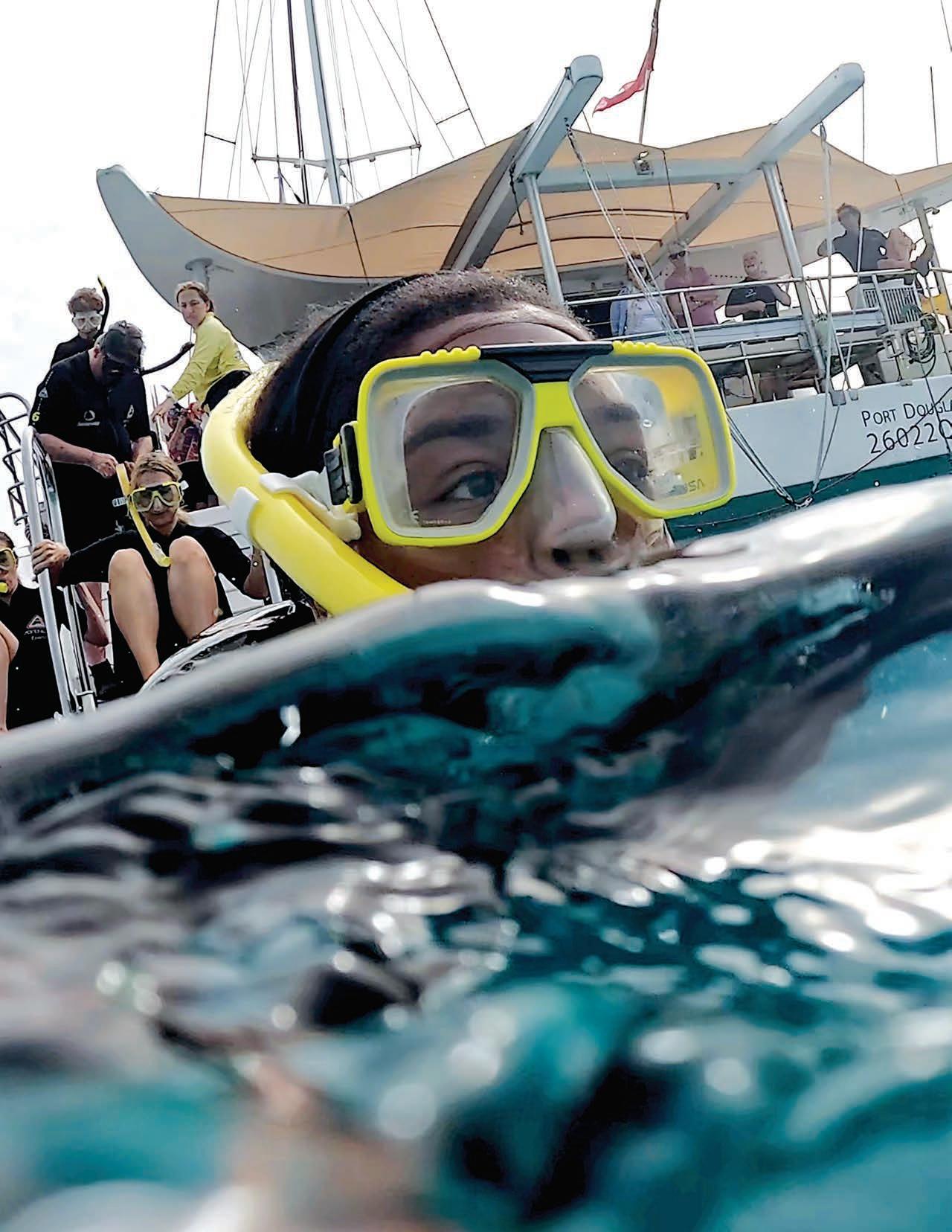
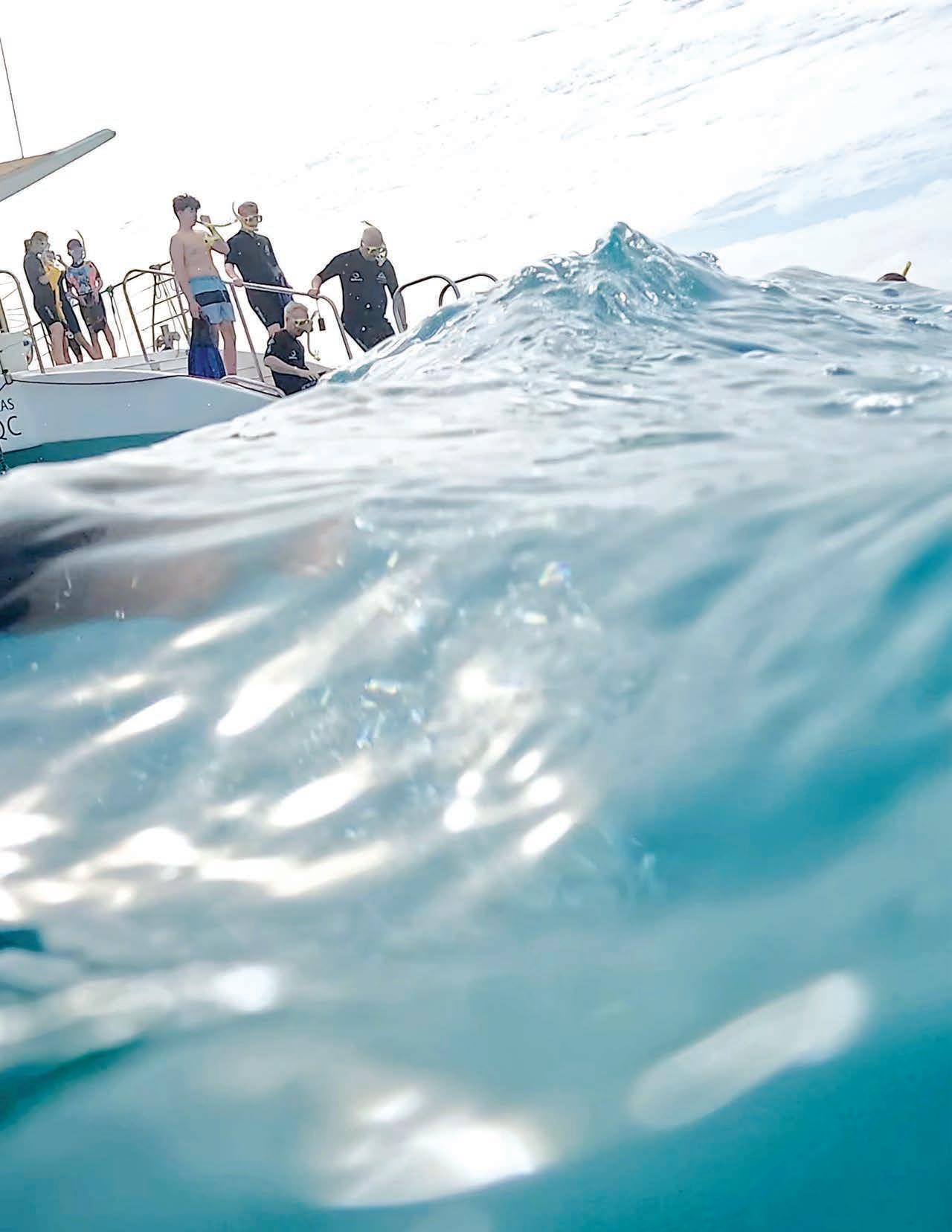
The Trinity core value of creating scholars doesn’t just apply to students. Staculty members engage in professional development throughout the year to hone their skills as educators. A special opportunity for Staculty is the Light the Fire grant. Made possible by the community’s generosity to the Trinity Fund, Light the Fire creates opportunities for Staculty to grow professionally and personally, whether it’s close to home or in the waters on the other side of the world.
CONTINUED ON THE NEXT PAGE
“Would you like a Biscoff?”
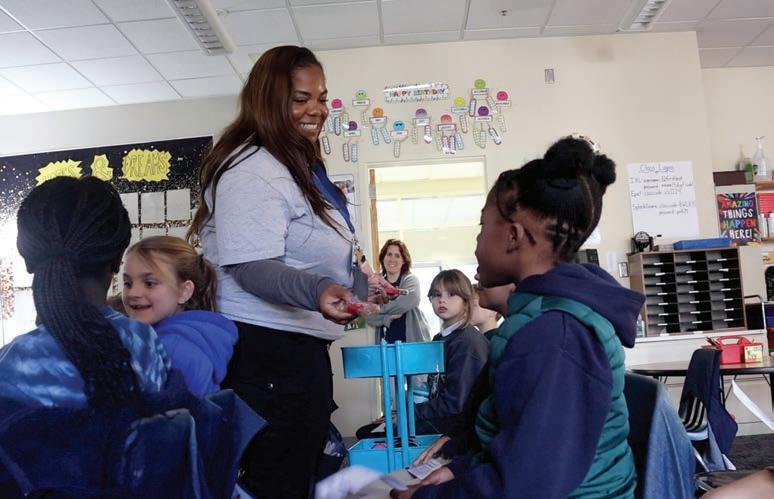
Flight 228 had just taken off when Tatyana Corley rolled her snack cart down the aisle of her 2nd Grade classroom, cruising at an altitude of two stories.
Before boarding, students had their passes checked at the classroom door. Once they were buckled in and watched the preflight safety instructions, it was off to Cairns in Queensland, Australia, to begin their study of coral reefs.
The class watched the world pass by on the overhead screen – footage Corley filmed as she journeyed from Charlotte to Australia for her own study of the Great Barrier Reef through the Light the Fire program.
In less than six minutes, the plane was on the ground in Australia, a condensed version of the 25 hours of flight time Corley experienced.
“I tell people I time traveled because I went 15 hours into the future,” she said.
“
Landing in Australia was a milestone for Corley, who never thought she would have the opportunity to visit the continent.
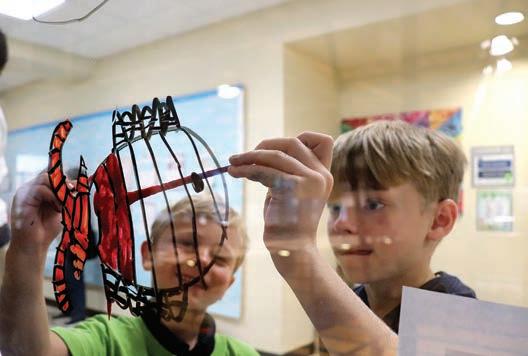
On top of being a meaningful personal destination, the Great Barrier Reef and the coral reef unit are memorable academic moments for 2nd Grade students, highlighted by their painting an underwater ecosystem on the windows outside their classrooms. Along the way, students study how coral reefs are formed, the animals that live in them, partner with a student from the other 2nd Grade class for research, and present what they’ve learned to parents.
Seeing the Great Barrier Reef herself would be a unique way to enrich her own life, but also be an invaluable opportunity for the entire 2nd Grade.
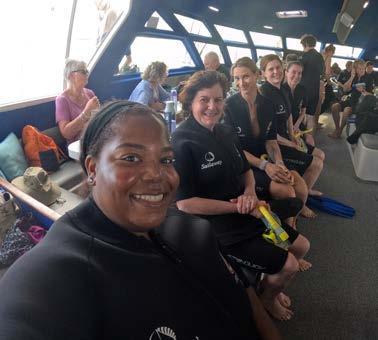
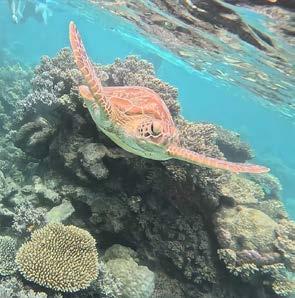
During her seven days in Australia, Corley went snorkeling at two sites in the Great
The students always remember which animal they were assigned (and) remember painting the windows,” Corley said. “They take such great ownership of this (curriculum).
TATYANA CORLEY
Barrier Reef and documented the dives on a GoPro camera. She also talked with a marine biologist, absorbing information she could take back to Trinity.
When Corley told her tour guide that the purpose of her Light the Fire trip was to pursue an opportunity that brings joy and benefits students – and was made possible by the Trinity community’s generosity to the Trinity Fund – the guide couldn’t believe such a program existed.
“That reminded me that this doesn’t happen everywhere,” Corley said. “It makes me remember why I call this place home.”

The mini goldendoodle in the corner was not the dog that Kimberly Monteleone was thinking of taking home.
When she drove to the puppy rescue in South Carolina, it was to look at a cockapoo. But when Monteleone met the dog, she realized it was too rambunctious for her family.
The topic of getting a dog had come up for years. One of Monteleone’s children wrote about it in their end-of-year Kindergarten poem. But the family just wasn’t ready.
The conversation shifted as that child, now in 5th Grade, navigated anxiety and neurodiversity.
“We wanted to do something that we knew would be beneficial for them and our entire family,” Monteleone said.
A dog – especially the one in the corner – might be what they needed. Just as long as it was a redhead like the rest of the Monteleones.
Since the rambunctious cockapoo wouldn’t be the right one, Monteleone made her way over to the goldendoodle who, without hesitation, crawled into her lap. “I just knew that he was our dog,” she said.
It didn’t take long for the dog, whom they renamed from Nelson to Teddy, to be a part of the family. If one of the children was upset or sad, Teddy would lay next to them and be a settling presence. That caught the attention of Teddy’s obedience trainer, who remarked that they had never seen a goldendoodle with such a calm personality.
“She said, ‘he would be a great therapy dog,’” Monteleone said.
That comment, along with their experience with Teddy at home and the
retirement of Trinity’s fourth school dog, Gus, inspired Monteleone to apply for a Light the Fire grant to train Teddy as a therapy dog for Trinity.
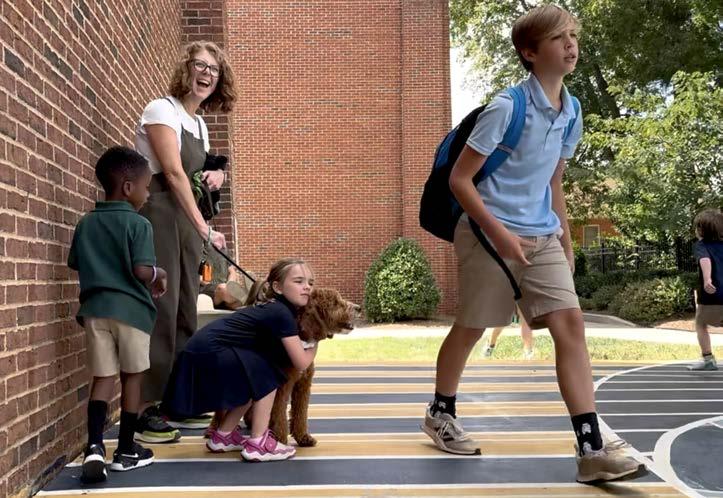
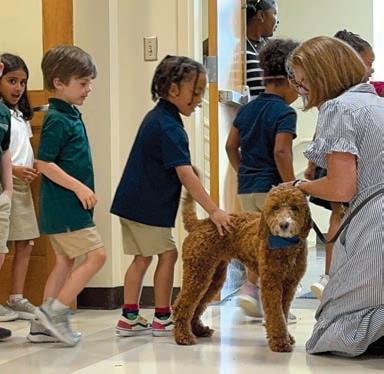
After being awarded the Light the Fire in March 2025, Teddy began four weeks of training that summer and reported for his new job in September. He quickly bonded with his Wildcat family.
“It seems like he’s been part of the community for longer than just a couple of months,” Monteleone said. “We just walked through the field and heard lots of kids shouting, ‘Teddy!’”
“
I’m glad that I get to be a part of the (school dog) tradition at Trinity. There are so many things that make Trinity special and unique and like a family, and this is one of those things.
Being the learning catalyst in Kindergarten, 1st and 2nd Grades provides plenty of opportunities for Teddy to support the youngest students, coming with Monteleone to small groups in the hallway or helping a struggling student feel more confident about their reading.
One of the most rewarding moments for Monteleone has been Teddy’s relationship with a Kindergarten student who was nervous about Teddy at the beginning of the school year. After seeing more of Teddy, she would still need some time to warm up, but would break into a smile and pet him. “That’s a big win,” Monteleone said.
Teddy also works with Middle School Counselor Ashtyn Giller, who will take Teddy on walks with Middle School students or bring him to the third floor to sit next to a student who could use his calming effect. Monteleone hopes to expand Teddy’s work to include Grades 3-5 with Lower School Counselor Claire Walter in the 2026-27 school year.
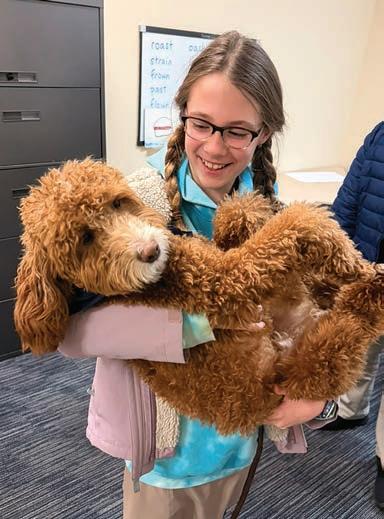
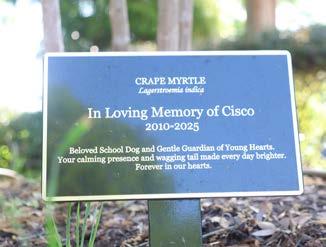
For nearly a decade, Cisco, Trinity's school dog, provided comfort and friendship to students and others. His death in May 2025 was felt deeply in the Wildcat community.
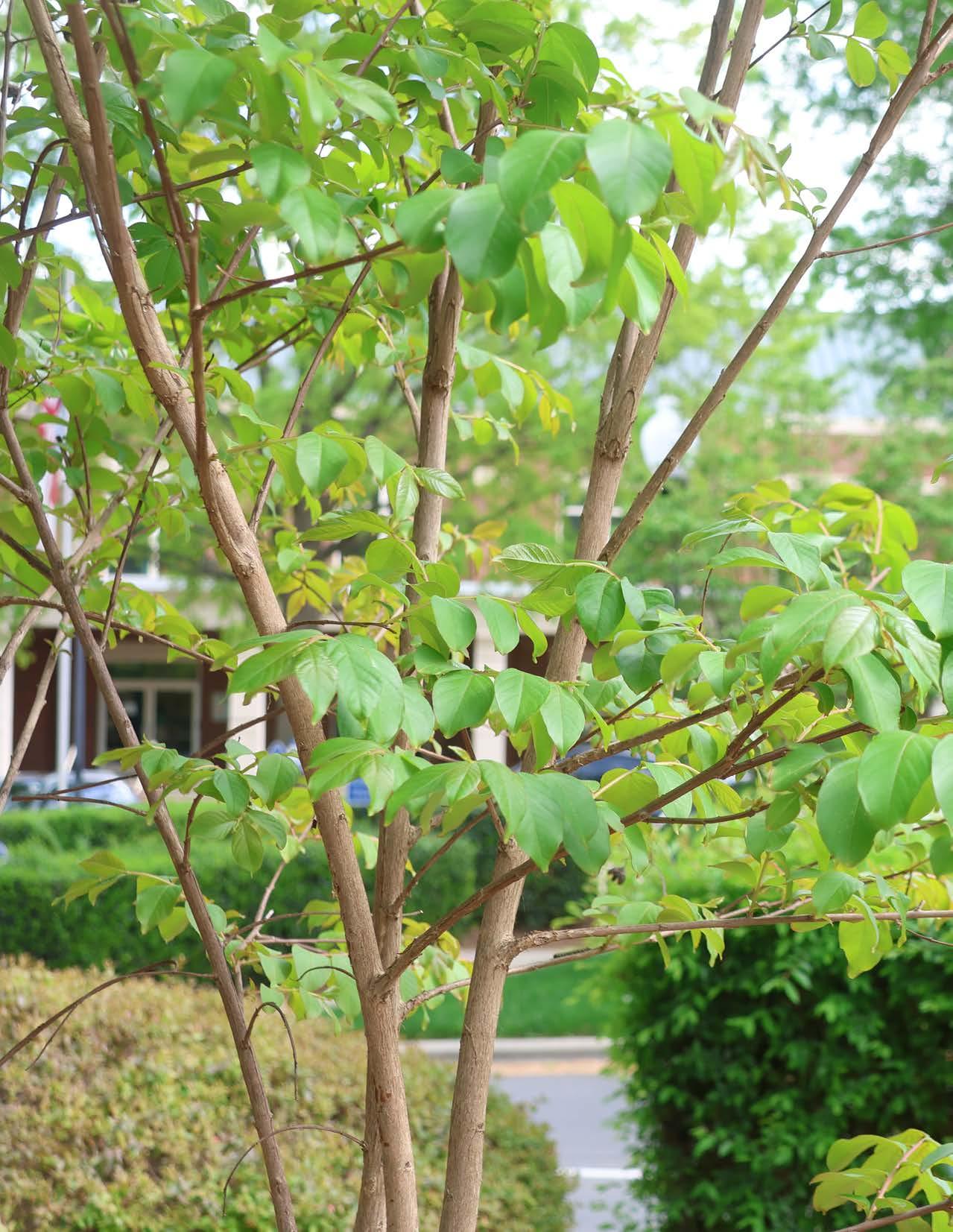
To help carry on Cisco's memory, a tree was planted near Trinity's Butterfly Garden and was blessed during a special service on Jan. 30.
“It means the world to me,” said Jen Rankey-Zona, Trinity's Visual Arts Director and Cisco's owner. “This symbolizes that our time on this planet is finite, but we leave something for the next group of people. This tree leaves just a little bit of Cisco so that (his) love, compassion, safety, and consistency that he gave to the students… stays here.”
The memorial tree – a crape myrtle (pictured below) –was the idea of 8th Grade student Cate Wright and former classmate Sally Zolak, who remembered the comforting and playful side of Cisco, including when he would eat crayons during their 4th Grade art classes.
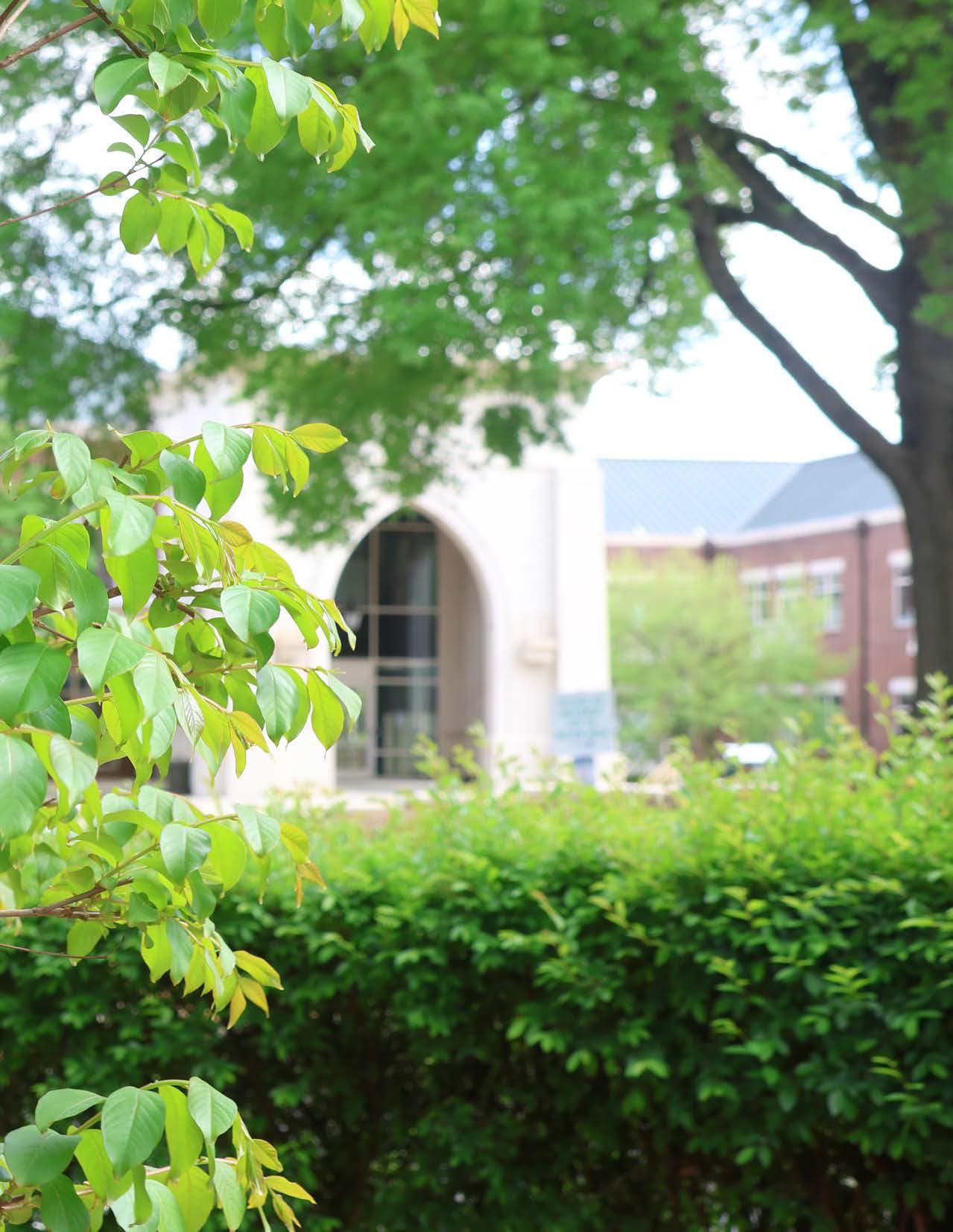
“He
was always there for kids,” Cate said. Planting a tree, she said, not only “helps you remember what you lost, but also think about creating something new.”
Rankey-Zona said the student-led nature of the memorial tree project is quintessential to Trinity. “They used that voice that we're always telling them to use, and they advocated for this.”
The Butterfly Garden, near the main entrance to campus, was the ideal location for the tree, Cate said, because it provides “a quiet place for reflection.”
If a student is having a bad day and needs a comforting place, Rankey-Zona said, “You can come sit here and think about this beautiful dog… that helped us navigate this sometimes really hard world.”
She added: “Cisco's legacy is really awesome, and I hope mine is somewhere close to his.”
What memories will your Wildcat create this summer?
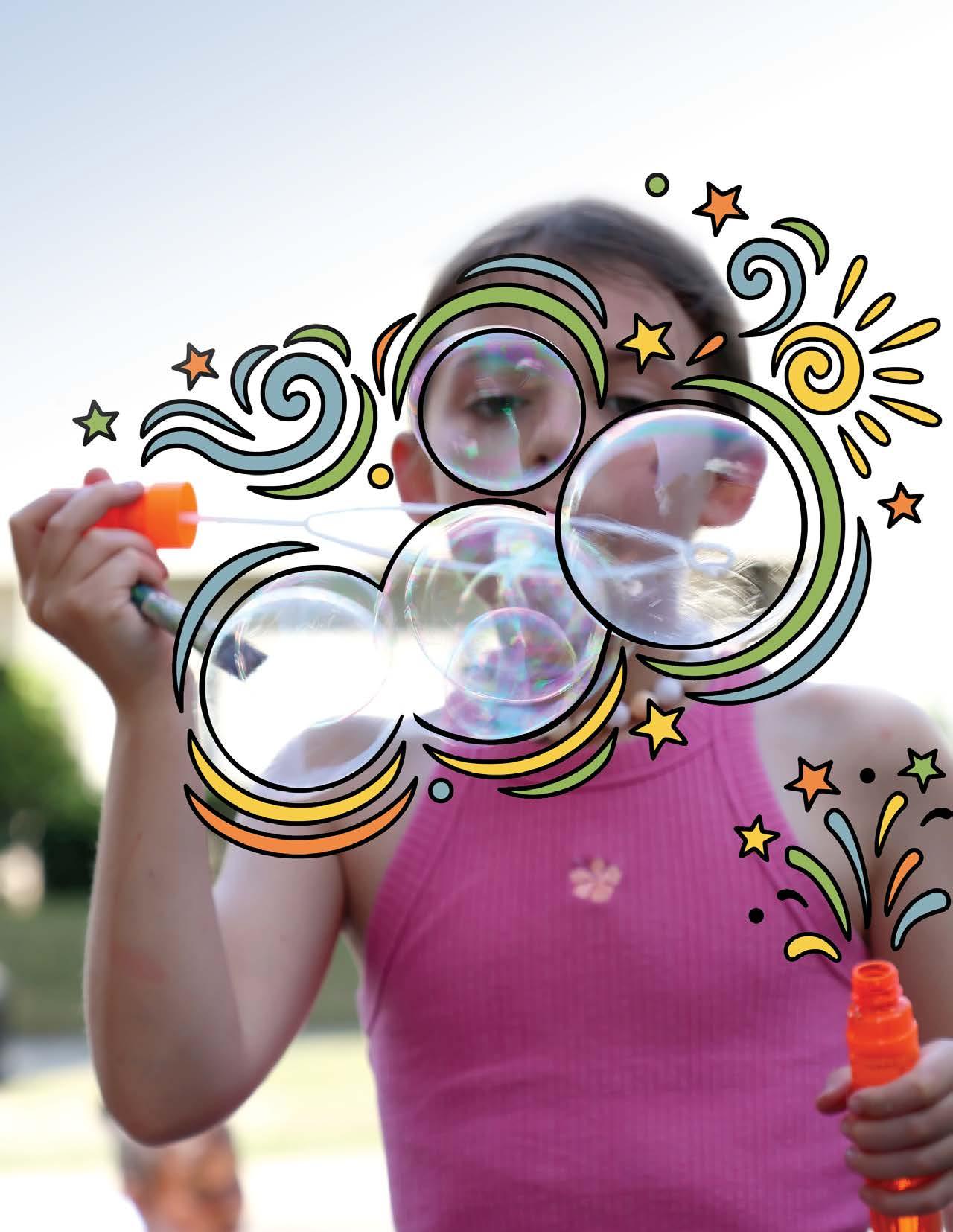
The fun begins the week of June 15!
Wildcat Summer Camp at Trinity offers more than 80 fulland half-day camps for any rising K-8 student.
Scan the QR code below to see the range of camps, from soccer and urban exploring to coding and theater.


The next issue of The Voice will hit mailboxes this summer and will include:
News and notes from our Trinity alumni · How Trinity helps 8th Graders on the path to high school Reflections from the Trinity Class of 2026 · The impact of your generosity to the Trinity Fund
Have alumni news to share in the summer issue? Email alumni@tescharlotte.org.
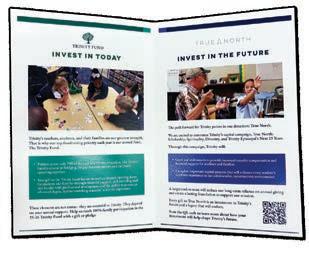
The stories you read in this issue of The Voice were brought to life, in part, by your generosity. Learn more about the work of the Trinity Fund and the True North campaign — two interwoven opportunities to invest in the mission that makes Trinity extraordinary. Scan the code to give or visit tescharlotte.org/give.