
OUR VALUES:
Kindness We act with kindness, always. It is at the heart of everything we do. We show children the power of kindness, encouraging them to act with empathy for each other, their community and our planet.
Confidence As we take our children on a journey of discovery, we make learning fun and light a spark in hearts and minds. We show how with every small step, we learn and build confidence in our own unique abilities.
Courage It takes courage to do the right thing. We act with integrity, showing the value of honesty and good character. We show how with courage, we can take calculated risks and are willing to have a go without fear of failure.
As the world evolves, so do we. By expanding our minds, life experiences and skills, we build our confidence, bring about change and stay a step ahead of the future. Growth

A very warm welcome to Upper Prep at Terrington Hall. Covering Years 6 to 8, Upper Prep marks the exciting beginning of your child’s Common Entrance journey.
These years provide an important bridge between Lower Prep and senior school. As children move into Upper Prep, they benefit from being taught by subject specialists and begin to enjoy greater independence as they move around the school. At the same time, we understand that they are still very much children, and our caring, supportive approach remains at the heart of all we do. Developing personal responsibility is an important part of this stage, and we gently encourage pupils to take increasing ownership of their belongings, choices, and actions, always supported by their form tutor and the wider staff team.
This handbook is designed to be a helpful guide to life in Upper Prep and offers key information about the many aspects of school life. Alongside information from the school website, SOCS calendar, and your child’s form tutor, we hope it will serve as a useful first point of reference.
Of course, if you ever have any questions, please do not hesitate to contact your child’s tutor, who will always be happy to help.
We truly believe that the Upper Prep years at Terrington Hall can be some of the most rewarding and memorable in your child’s education. We are passionate about providing a traditional prep school experience that is both rigorous and supportive. Common Entrance offers challenge in an accessible way, while our co-curricular programme enriches every child’s experience through opportunities to collaborate, grow in confidence, and develop as leaders.
We are very much looking forward to welcoming you and your family to the many events and opportunities throughout the year at Terrington Hall.
Rachel I'Anson Deputy Head Pastoral
Start of Term: Monday 7th September
Exeat: Saturday 26th September
Half Term: Friday 16th October (3:15pm) – Sunday 1st November
Exeat: Saturday 21st November
End of Term: Friday 11th December (3:15pm)
Start of Term: Tuesday 5th January
Exeat: Saturday 23rd January
Half Term: Friday 5th February (3:15pm) – Sunday 14th February
Exeat: Saturday 27th February
End of Term: Friday 19th March (3:15pm)
Start of Term: Tuesday 13th April
May Day Exeat: Saturday 1st to Monday 3rd May
Half Term: Friday 28th May (3:15pm) – Sunday 6th June
Exeat: Saturday 26th June
End of Term: Wednesday 7th July (noon, after speech day)
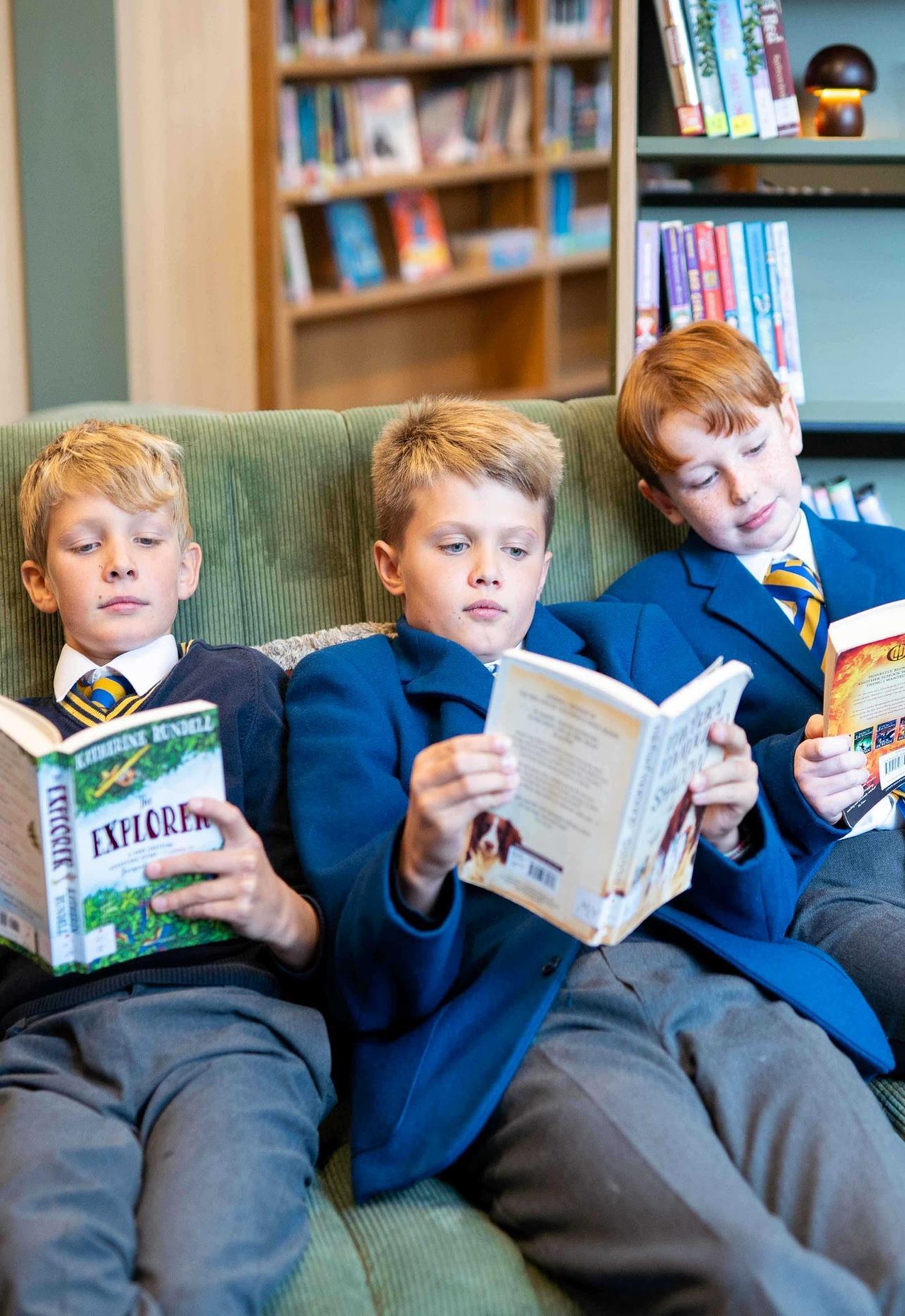
Whilst children in Upper Prep have specialist teachers for all of their lessons, they still have a tutor who is the main teacher who looks after their day-to-day well being, organisation and academic progress.
Year 6
Mr Ryan Waterfall-Smith rwaterfallsmith@terringtonhall.com
Year 7
Mr Jack Neill
Miss Hattie Durée
jneill@terringtonhall.com
hduree@terringtonhall.com
Year 8
Mr Nick Witteveen
nwitteveen@terringtonhall.com
We have a genuine Open Door policy at Terrington Hall School and parents are welcome to talk informally to their teacher as and when needed. If a more formal discussion is required with the form tutor, or another member of staff, a convenient appointment time may be made directly, via email. We do our best to accommodate any requests as soon as possible. To strengthen communication between school and home, a weekly bulletin is emailed to parents via the office every Friday, giving news of the past week and reminders for the following week.
In the event that a parent has a concern or complaint, the first line of contact is the child’s form tutor. If the form tutor cannot resolve the matter, the Deputy Head Pastoral or Teaching and Learning may be consulted.
Form Tutor – In the first instance this should be a parent’s first port of call for all academic and pastoral concerns.
Deputy Head Teaching and Learning – Miss Hardy should be contacted for all academic matters unresolved by the form tutor. For Senior School entry queries please contact Mr Knock
Deputy Head Pastoral – Miss I’Anson should be contacted for all pastoral or safeguarding matters that cannot be resolved by the form tutor.
Deputy Head Co-Curricular and Operations- Mr Knock should be contacted for all co-curricular matters including music and sport that cannot be resolved by the Form Tutor or Head of Department.
The iSAMS Parent Portal and App provide you with convenient access to secure, real-time information about your child held by Terrington Hall School. It allows you to view your child’s up-to-date information on reports, rewards and achievements, and update your data records. Compatible with tablets and smartphones, you can access information anytime, anywhere.
All parents will receive a Parent Portal activation letter by email containing information on how to log in for the first time, including their Registration Number and Registration Code. When you log in for the first time, you must register for the service using the Registration Number and Code contained in your activation letter. Once you’ve registered, you will be able to log in using your username (your email address) and password which you create upon registration.
Once you have registered for access to the Parent Portal , you will also have access to the iSAMS Parent App using the same login credentials. You can download the for iPhone on the App Store and for Android on the Google Play Store. Once installed on your phone, you will be asked to enter a school code. The school code for Terrington Hall School is THPS You will then be asked to log in. The username (email address) and password are the same as for the Parent Portal.
We politely request that all parents allow push notifications so that alerts and updates can be received

We work with a company called SOCS to provide a school calendar, a sports portal containing information about team selection and fixtures and our enrichment programme.
You can access all of these pages through the Parent Portal. https://www.terringtonhall.com/about-terrington/parent-portal/
The Parent Portal is the 'Go To' place for key school information. Password (confidential within the TH community) Terrington1921
Through Parent Portal, parents can access key school information including, the Sports Fixture Portal, SOCS School Calendar Parent Handbooks, Key Information, including uniform lists, the Enrichment programme and copies of Letters Home.
The school calendar can be located here, giving you a full overview of events in school https://calendar.terringtonhall.com/week.aspx?ID=1162
The Sports Fixture Portal can be located here https://sport.terringtonhall.com/ This link gives you access to fixture information, including team selection, venue and timings.
How to guides
https://www.terringtonhall.com/wp-content/uploads/2024/12/Parent-Portal-SOCSCalendar-Sports.pdf
https://www.terringtonhall.com/wp-content/uploads/2025/01/Guide-to-SOCSsports-portal.pdf
Mr Huw Thomas hthomas@terringtonhall.com Headmaster
Miss Rachel I’Anson rianson@terringtonhall.com Deputy Head Pastoral and Designated Safeguarding Lead
Miss Katie Hardy khardy@terringtonhall.com Deputy Head Teaching and Learning (SENCO)
Mr David Knock dknock@terringtonhall.com Deputy Head Co-Curricular and Operations, Teacher of Classics and Games
Mr Nick Hyde nhyde@terringtonhall.com Head of Sport
Mrs Niki Dance ndance@terringtonhall.com Head of Performing Arts
Mrs Rebecca Thomas rthomas@terringtonhall.com Head of English
Mr Ryan Waterfall-Smith rwaterfall-smith@terringtonhall.com Head of Maths and ICT
Mr Oliver Sigsworth boarding@terringtonhall.com Head of Boarding
Miss Claire Wainwright office@terringtonhall.com Headmaster’s PA and School Office
Mr Ben Close Ben.close@sedberghschool.org Accounts and Billing
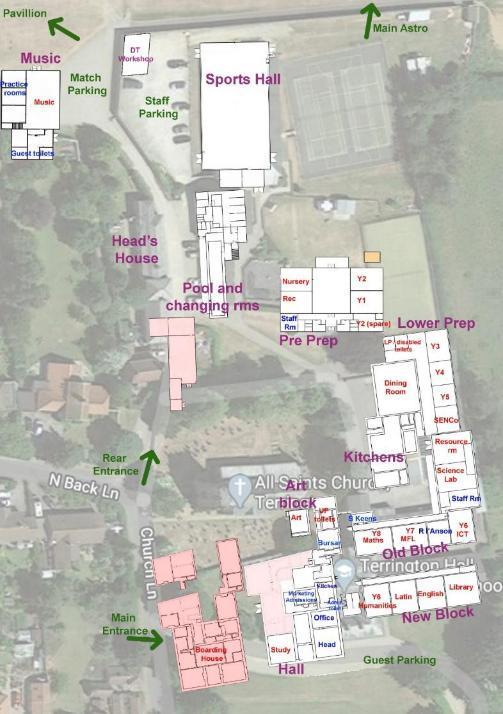
Children may arrive in the Upper Prep between 8.15am 8.30am. If arriving earlier, children should join the boarders in the dining room. Parents are reminded to park at the front of the school when dropping off and collecting children.
Games (main fixture) afternoons: U11 (Year 5-6) Friday U13 (Year 7-8) Wednesday & Saturday Fixtures do occasionally take place on other days.
Parents wishing to take their child home immediately following a fixture should speak with the form tutor or team coach (this is usually not a problem)
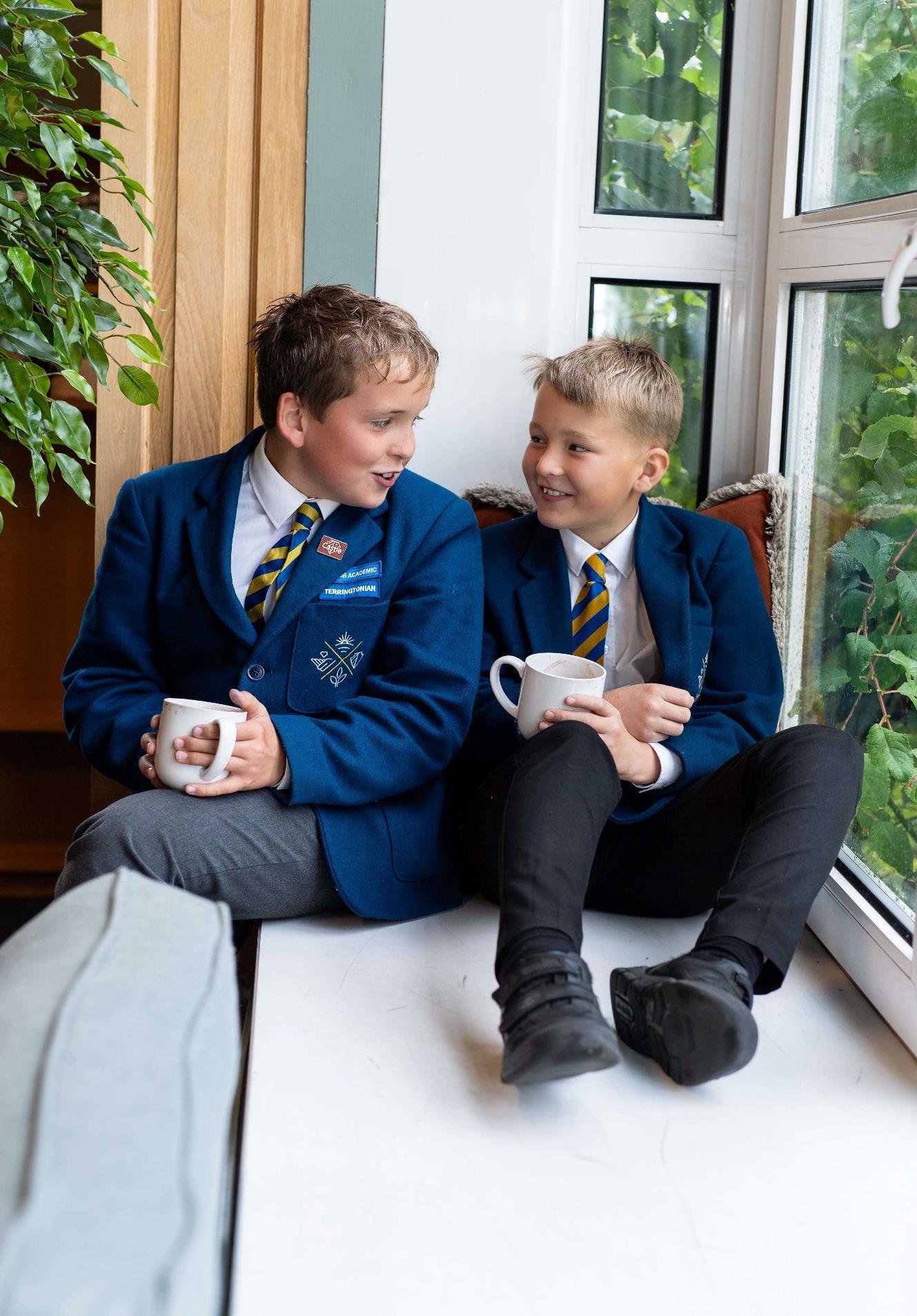
Children will advise their form tutor of their sign out time at morning registration. If there is a need for this to change, for instance parent plans change within the day, please contact the office, 01653 648227 or office@terringtonhall.com.
Parents are advised to inform the school if someone other than the parent is to collect their child. The child must know the person collecting. The same applies if an agreement is made with another parent. If dropping or collecting your child early/late please report to the main office where we will bring your child or return them to class.
Parents of pupils in Years 3 8 are kindly requested to park on the front drive at drop off or collection times. Please ensure that the disabled bays next to the swimming pool are strictly reserved for Blue Badge holders only.
It is very important that all children sign out when they are collected or leave for the bus in the evening. The Upper Prep signing out register is done by a member of staff from the square.
Please note an EXEAT is when the school day finishes at 5.30pm on a Friday and remains closed until the Monday morning. The May EXEAT also includes the Bank Holiday Monday.
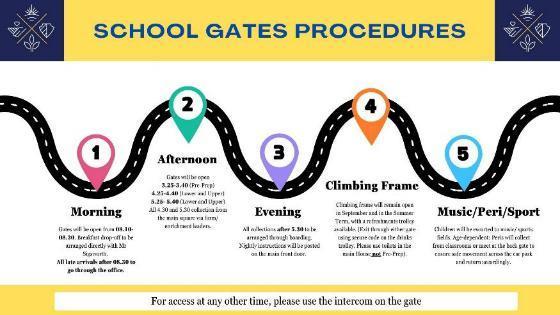
The School gates will be open from 8.10 am until 8.30 am
If you require access to the site beforehand for Breakfast, please liaise directly with Mr Sigsworth
If you require access to the site beforehand for any other reason, please liaise directly with the relevant member of staff or the school office.
SLT to staff both gates on a rota
Afternoon collection times:
The school gates will be open from 15.25 – 15.40 for Pre-Prep collection. Pre-Prep staff to oversee
The school gates will be open from 16.25-16.40 for Pre-Prep and Lower Prep collection. Lower Prep and Upper Prep handover from form teachers in person from September 2025. Please be aware that some form teachers will be leaving promptly to run enrichment sessions at this point in time.
The school gates will be open from 17.25-17.40 for end of school collections.
All 17.30 collections to take place in the square. Handover in person from the relevant member of staff who has led the enrichment session.
Parents will be able to access the site during the highlighted times above.
Families are welcome to stay and play on the climbing frame during September and the Summer term between 15.30 and 17.30.
Refreshments and a first aid bag will be available.
To leave the site during periods when the gates are locked, families will be able to exit using the code found on the drinks trolley
Toilets in the main house will be accessible via the school office.
*Access to the site at all other times will need to come through the Main School entrance, via the School Office.
All children have a cooked meal at lunchtime, served as a family style dining experience. If your child has dietary requirements, please discuss these with your child's form tutor who will liaise with the Catering Manager.
For those occasions where we are out of school for lunch such as trips and occasional matches, the school will provide your child with a packed lunch. The children are provided with a snack at morning break and also in the afternoon.
Breakfast is available to all children. Your child may arrive from 07:30 and will have breakfast before the start of the school day. For catering purposes, breakfast should be booked in with office@terringtonhall.com with 24 hours notice. Breakfast is charged at £6.90 Inc VAT
Parents requiring childcare beyond the school day can make use of the tea service where pupils are welcome to have a freshly prepared tea at 17:30 to 18:00. For catering purposes, tea should be booked in with office@terringtonhall.com with 24 hours notice. Tea is charged at £6.90 inc
Although we recognise that this cannot be guaranteed, Terrington Hall aims to be a Nut-Free school. Measures in place are to reduce the risk to those children and adults who may suffer an anaphylactic reaction if exposed to nuts to which they are sensitive. The school aims to protect children who have allergies to nuts yet also help them, as they grow up, to take responsibility as to what foods they can eat and to be aware of where they may be put at risk. We do not allow nuts or nut products in school.
If you wish to provide cake to celebrate your child’s birthday, please pass on details to the form tutor to be checked for allergens. For pupils who do have an allergy, we will provide them with an alternative option when a celebration cake is brought in.
We are a nut free school and do not allow nuts or nut products in school.
The school minibus service is a popular option for busy families. All of the transport routes use the school’s own minibus fleet and drivers, who are fully DBS checked and employed by the school.
Pupils using the buses are dropped off in front of the main school building on arrival and are signed out by staff to the relevant driver before being escorted to their bus at the end of the day.
Buses arrive in school at approximately 08:15 and depart at 17:30 Monday to Friday, plus Saturday morning.
Transport is charged on a per trip basis.
Full details of the bus service, times and costs are available on request from the school office. Office@terringtonhall.com
We appreciate there will be special occasions and personal events during the year which clash with school dates. Therefore, we ask you to write to the Headmaster to gain permission for the absence, copying in the form tutor. Emails should be sent to office@terringtonhall.com.
Please note that absences will be marked as unauthorised unless approved by the Headmaster in line with DfE descriptors
If your child is unwell and unable to attend school, we ask that you contact the school office and copy in the Form Tutor before 8.30am. Should your child be taken ill at school, he/she will be cared for and we will make every effort to contact you.
Should your child suffer from sickness or diarrhoea, it is school policy that they do not return to school for at least 48 hours after the last incident.
It is very important for you to let us know if you have given your child Calpol or any other medication before coming into school.
If your child bumps their head, they will be checked over by a first aider and you will be notified by ISAMS email, regardless of severity. Where there is a cause for concern, parents will be contacted by phone call and a follow up ISAMS email.
Accidents can happen. Small cuts and bruises will be dealt with directly at school by staff who all hold a current paediatric first aid qualification. In the event of a more serious accident which is likely to require advanced medical care, we shall endeavour to contact parents at work or home. If a parent or family friend (named contact) cannot be contacted, we shall arrange to have your child taken to a local doctor or hospital. In such cases, the child will be accompanied by a member of staff. In an emergency, an ambulance will be called.
Medicines should be administered at home unless there is a special reason why your child may need to take it through the school day. If this is the case, the medicine must be given into the office where Miss Wainwright will administer it as required. Prescription medicine should be in the original packaging with the dispensary label attached and the relevant paperwork completed by the parent.
During the summer months, we ask that all children have a bottle of sun cream to be kept in school, that it is a suitable SPF, clearly labelled and in-date.
There is statutory duty on schools to provide certain information to parents of current and prospective pupils. Terrington Hall does so willingly and encourages any parent to contact the school with requests for information or guidance. School documentation, including policies and guidance are a valuable source of information and we are pleased to make them available, either through the School office or on the School’s website https://www.terringtonhall.com/about-terrington/policies-reports/
During periods of extreme winter weather, such as snow and ice, the school will endeavor to remain open with any changes to the school day being communicated to parents via email or text message.
All clothing & stationery should be clearly labelled. Children are taught to take care and responsibility for their items in school and we ask that they are all clearly named. Unfortunately, they can go astray as children move around the school. Therefore, we ask if any items are lost, a note or email is sent to your child’s form tutor who will help to locate the item, looking in the lost property bins in the changing rooms and retracing their footsteps if it is an item of stationery.
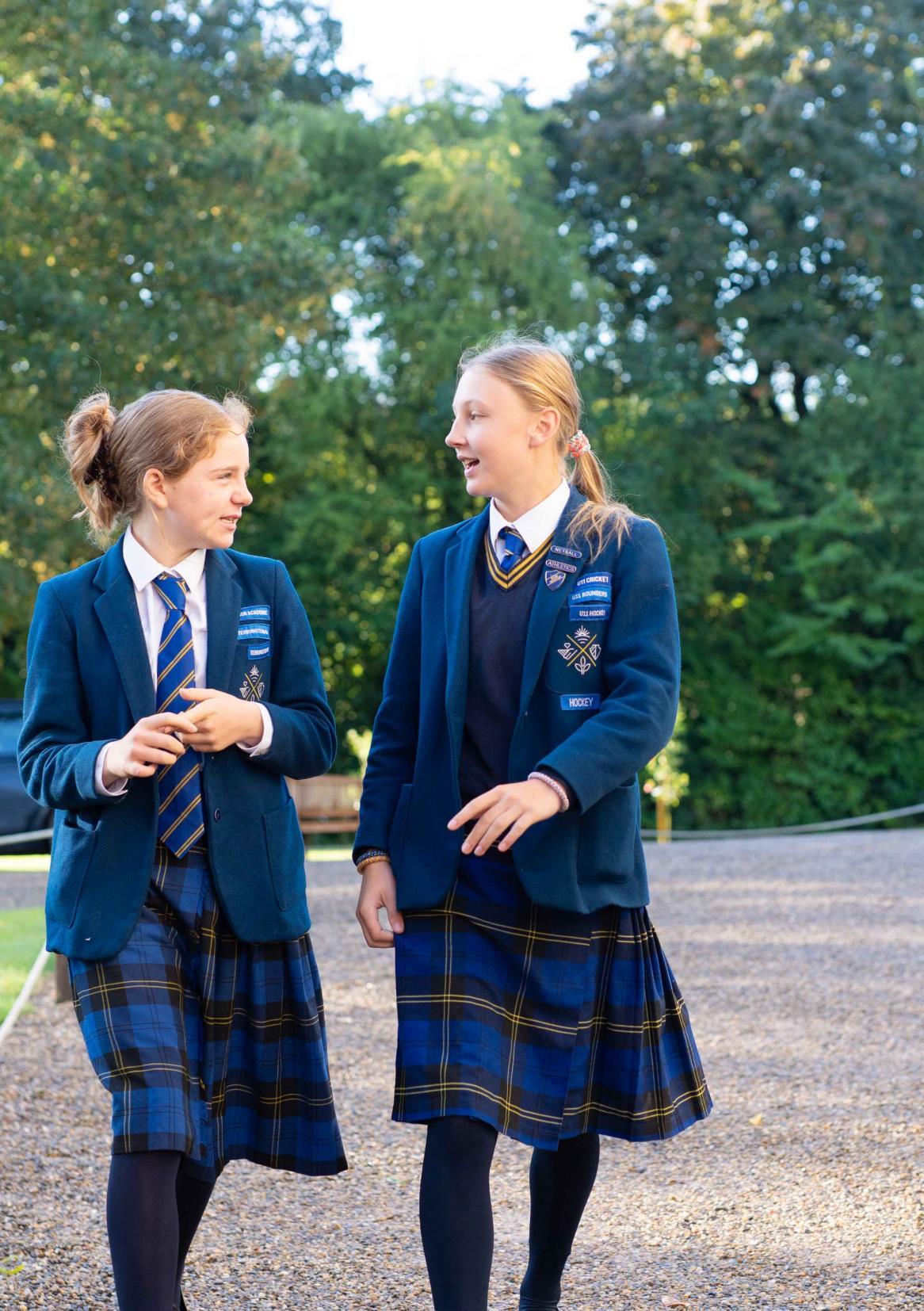
Uniform is an important part of a school’s identity. It reinforces who we are as a community and helps allow students to feel pride in their school. It also helps prepare students for life after school where many will have to dress smartly for work. All pupils are expected to take a pride in their appearance. They should be always wearing correct uniform. Our expectations for school uniform are nongender specific. Our pupils have the choice of what uniform they want to wear from the list provided and all uniform is available to people of all genders.
To help support our parents/carers, most of our school uniform can now be purchased from www.hardgear.co.uk/terringtonhall
We are keen to minimise expenses and have reviewed our uniform lists. These can be located -https://www.terringtonhall.com/about-terrington/parent-portal/
ALL items of uniform must be clearly named. Details for labelling can be found on the uniform lists. We always endeavor to get the missing kit back to its owner however this is very difficult with unmarked clothing.
Hair, make-up and piercings
• Make up, including nail polish, should not be worn.
• Pupils who have pierced ears may wear a discreet stud in one or both ears. These must be removed during PE lessons for safety reasons.
• Jewellery is not part of our school uniform and therefore should not be worn. Pupils will be asked to remove any items of jewellery and these will be kept safe and sent home at the end of the day.
• Extremes in hairstyle are to be avoided. Hair should not be dyed any non-natural colour, i.e. pink, blue, green etc.
Hair longer than shoulder length must be tied up and fringes should be put of faces.
Footwear- This is an important aspect of our school uniform. Our school allows:
• All black, plain, leather, polishable shoes.
• Plain, black ankle boots (in the Winter).
We do NOT allow:
• Trainers
• Canvas pumps
• Colored or embroidered fashion shoes.
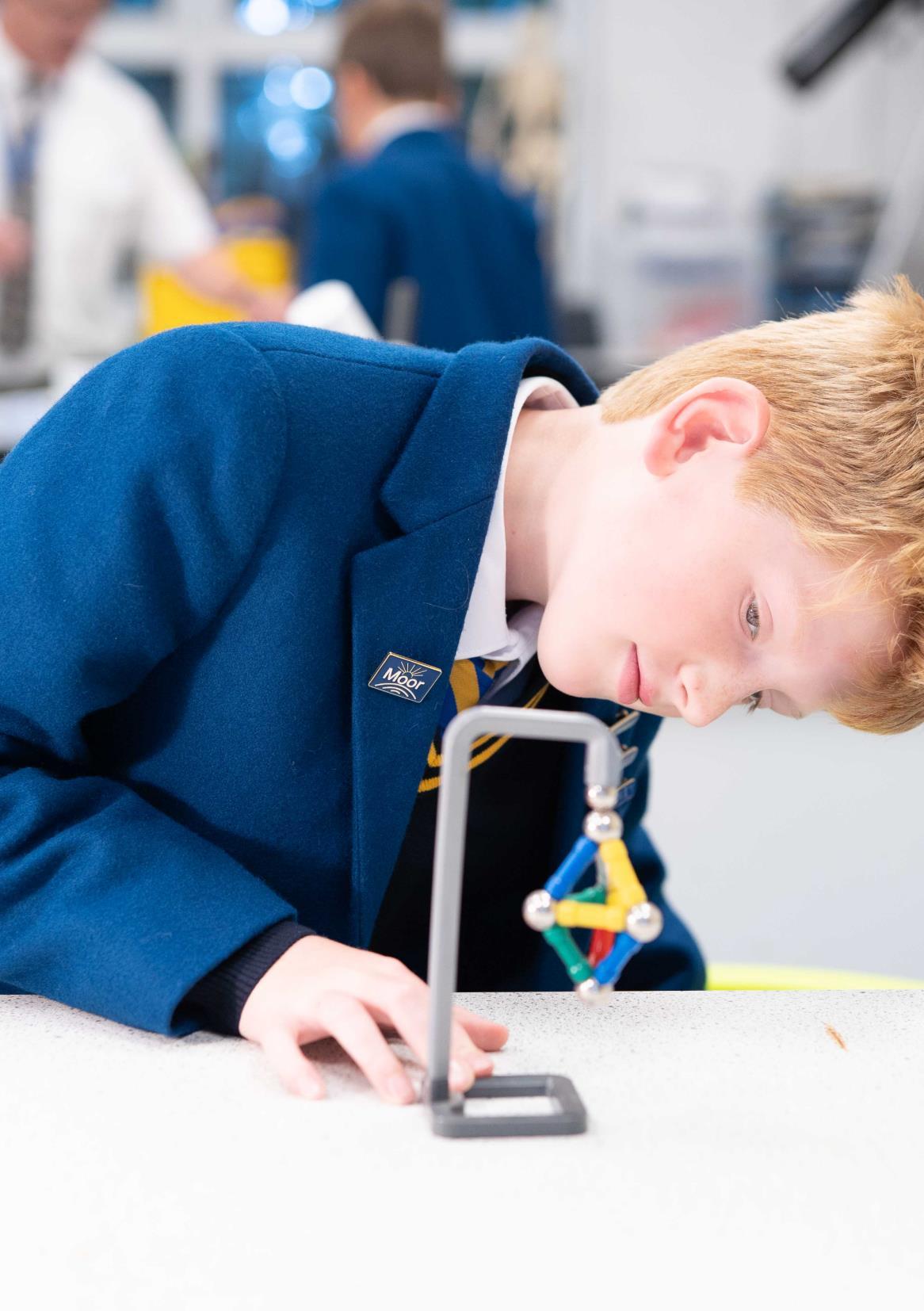
At Terrington Hall School, we place positive mental health and wellbeing at the centre of school life. Our values, Kindness, Confidence and Courage, highlight the importance we place on supporting on every child’s wellbeing. We show the power of kindness in everything that we do, build confidence on our unique abilities and show how with courage, we can have a go without the fear of failure.
We aim to ensure positive mental health and well-being for every pupil, parent/carer and staff member. Our positive ethos is based on the understanding that all children need the foundations of positive mental health. As a result of this, we hope children will fulfil their potential academically, socially, emotionally and healthy, helping them to grow in confidence and participate in everything that goes on in the wider community.
Our buddy system helps to promote friendships, better support of learning, behavioural and social needs, and can foster a greater sense of belonging and a more inclusive school community.
The Terrington Hall ambition is to equip young people so they can better deal with difficult circumstances in their lives, preventing them experiencing common emotional and mental health problems.
Wellbeing days are a good opportunity to bring awareness of the importance of mental wellbeing into schools. Classes are encouraged to plan wellbeing days, termly. The Assistant Head of Mental Health and Wellbeing oversees this.
Our peer mentoring has been evidenced as having a positive impact on the emotional health and well-being of children and young people. Peer mentoring can support children and young people by:
•enhancing social competence
•building security within the setting and the wider community by realising their worth as social beings
•improving attendance and educational attainment whilst developing friendship skills in a positive environment
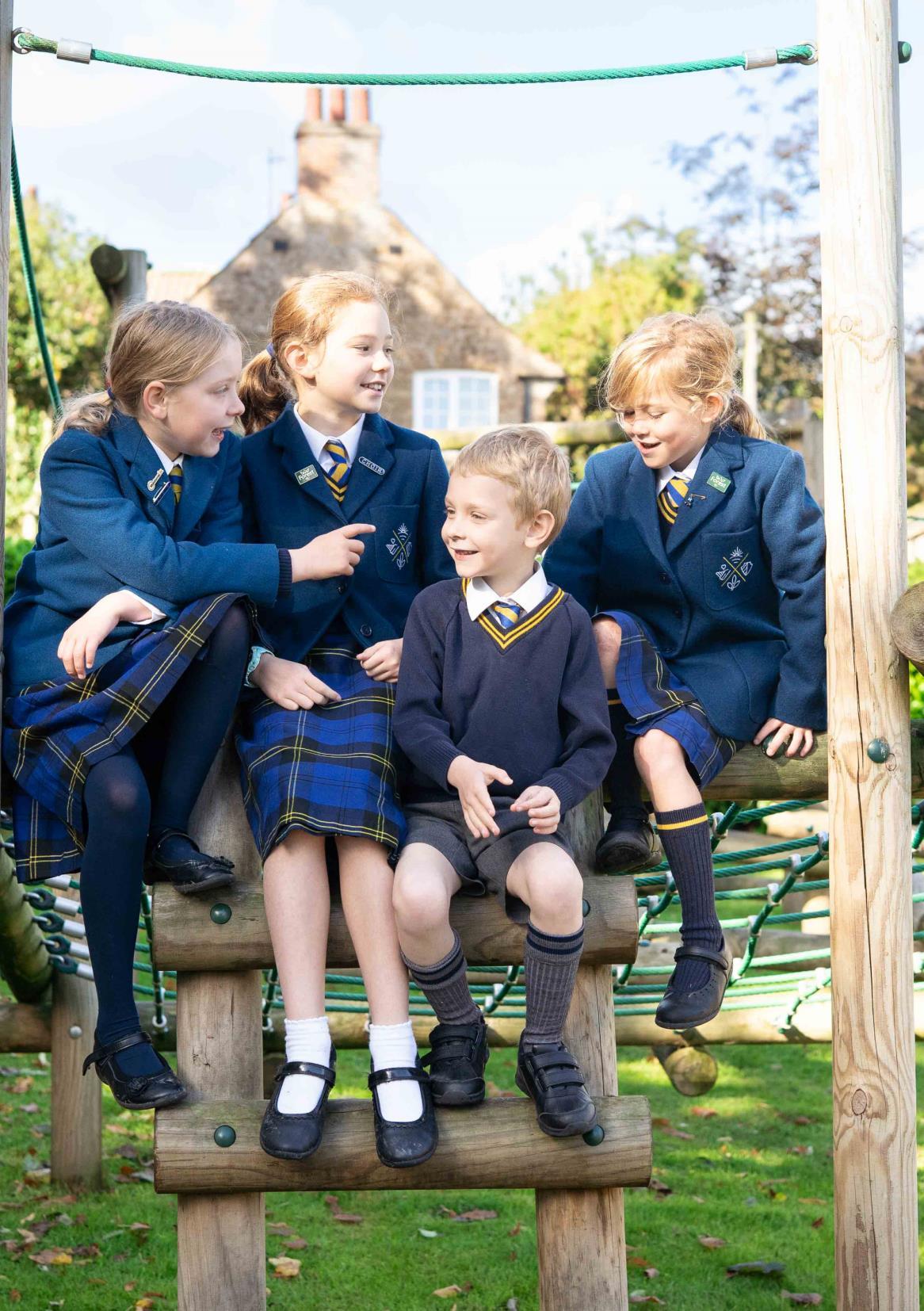
As staff and parents, we are all becoming increasingly aware of the societal challenges posed by mobile devices and in particular the influences that children are accessing as a result of social media.
As such, we are a device – free school. We feel that this decision is very much in line with our ethos and values and of course with the changing approach of schools to this challenge.
National guidance is changing, and our amended policy very much considers the following concerns:
• Unnecessary distraction, disruption and diversion
• Online bullying
• Peer pressure and stigma associated with the ownership of expensive devices
• Access to inappropriate internet content.
There are of course significant benefits which includes encouraging the pupils to focus on the trips, activities and events that they are participating in – whether that be during boarding evenings or on residential trips. It will improve the interactions with their peers, and develop valuable, skills like problem-solving, teamwork and importantly independence.
As such, we would be very grateful for your support in ensuring that the pupils do not bring any phone, gaming device, or internet-enabled device including watches with them to school, on school buses, trips or to the boarding house. It makes a huge difference to the quality of their experience and will support our ethos of pupils throwing themselves wholeheartedly into the activity on offer.
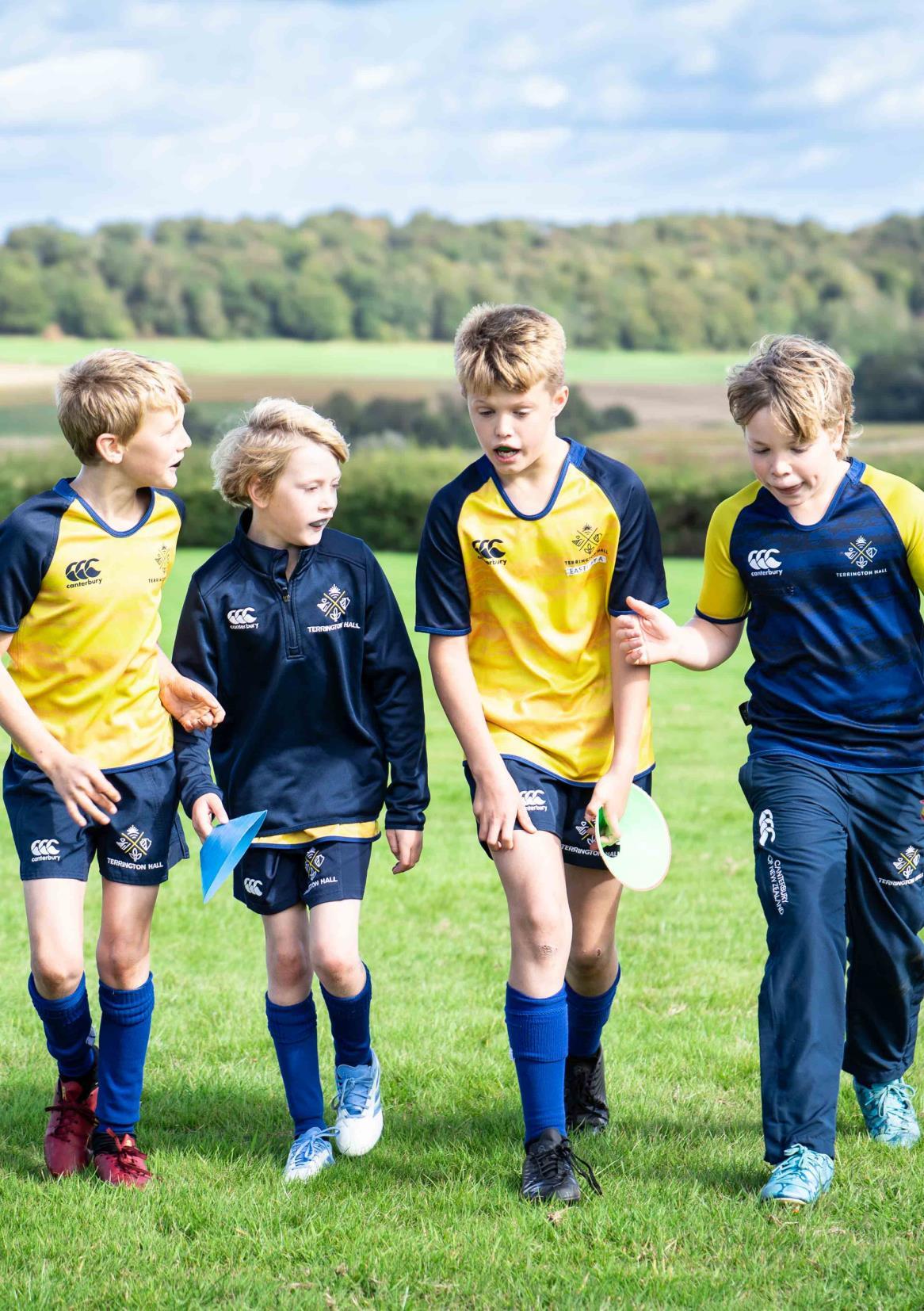
Resident Boarding Staff:
Mr Oliver Sigsworth
Mrs Fiona Hyde Houseparent
Assistant Housemistress
Boarding is often the part of the school that children look forward to the most.
We offer an exciting and varied evening activity programme and offer blocks of activities across each half term that encourages your child to progress and strengthen their skills in their chosen activity. We also offer special year group boarding nights once a term and occasional special boarding Weekends, which give children the opportunity to take part in numerous activities and trips over both the Saturday and Sunday.
Boarding for the first time can be a little daunting so tours of the boarding house, along with the boarding handbook, are available from the school office.
Our boarding provision is flexible, and children may board for any number of nights during the term.
We offer -
• Full weekly boarding (Monday Friday).
• Recurring boarding; one or more regular nights every week.
• Flexi-boarding; one-off nights across the term.
If you are intending for your child to board then they must be booked into the Boarding House via the following email; boarding@terringtonhall.com
We know your child’s education and progress is important and over the year you will receive reports indicating their attainment, effort and progress.
There will also be two opportunities to meet with your child’s teacher to review how they are doing.
CAT4 assessments are taken in the first half term, reading and spelling assessments are taken in the autumn and summer terms, and English and maths assessments also taken in the summer, giving a detailed picture of attainment and progress. Form Tutors may feed back to parents with relevant information.
Year 8 mock exams take place early in the Lent term. These exams are conducted under full examination conditions and pupils are fully informed of the expectations regarding conduct and behaviour. For example, we expect children to bring a clear pencil case and not to communicate in any way with others.
End of year assessment week for Years 6-8 is in the Summer Term. These culminate in the Common Entrance exams for Year 8. Year 8 also have MFL speaking and listening exams in mid May.
Pupils are examined as follows:
Year 8: Common Entrance Exams run from Monday to Friday and are in all academic subject areas. These are formal, externally marked exams and are taken in the Sports Hall. Year 8 results are usually received in the weeks following the exams. They are shared with the pupils by the Headmaster, and parents receive the results on the same day.
Year 7: Exams run concurrently with the Year 8 exams but using different papers. These are internally marked. Exams are taken in the Sports Hall. Year 7 results are shared with pupils by individual teachers when they have finished all their exams.
Year 6: Pupils sit formal exams in English, Maths, Science, History, Geography, Latin, Spanish and French. These exams are set by the subject teachers and are marked internally. They are taken during class time. Year 6 results are shared with pupils by individual teachers.
Access arrangements for those children with diagnosed needs are coordinated by the SENCO.
Our assessments calendar is strategically placed to monitor pupil progress and outcomes and support the programmes of study that are in place.
The reporting cycle is then in sync with this assessment calendar, in order to keep parents informed and up to date of the progress of their child. This is connected to both academic progress and pastoral welfare. The slight changes to our assessment and reporting cycles will also ensure a more streamlined approach to periods of teaching, assessment and then, in turn, reporting.
We are aiming to provide focussed and target-based feedback to the pupils, via the reporting system, in order to aid understanding and progress. For additional clarity, we do not specifically report on internal end of unit assessments or standardised assessments, but teachers may discuss these through reports or at parents’ meetings. Exact dates of the parents’ meetings will be shown in the termly calendar and the weekly bulletin. We encourage regular, ongoing and open dialogue between parents and form teachers regarding academic progress and the pastoral, well-being of the children.
Form tutors are always available to meet with parents to discuss children's progress. Please do not hesitate to contact.
A timeline of key dates is given below, for your information:
Upper Prep:
October: Progress report, including grades for the academic subjects that are measurable at this stage, and a tutor comment.
December: Report, including grades, Form tutor academic and pastoral comments, and pupil targets
Note that Y8 pupils will receive a subject specific comment and target at this point in the year to aid preparation for upcoming assessments
February: Progress Report, including grades, Form tutor pastoral comment and pupil reflection of targets
March: Parents evenings by arrangement. For Year 8, revision packs will also be sent home
April: Year 8 Exam Readiness Progress Report
May: Y6/7 Progress Report, including grades, Form tutor comment, and pupil targets. For Year 7, revision packs will be sent out.
July: End of year full reports, including grades, subject comments, peripatetic comments (where relevant) This set of reports will also include comments from the pupils, Form tutor and the Headmaster
For additional information:
Tutors will be proactive in their approach to raising any concerns and recognising successes with parents
Year 8 will have mock exams in late January, covering the written assessments as per Common Entrance. They will then take their Common Entrance exams in June
As your child moves up through the school, the focus will change from being based on the National Curriculum to Common Entrance at 13+. Pupils of exceptional academic ability may also be given scholarship tasks. If your child is attempting a scholarship for a particular first choice school, individual guidance will be provided.
We strongly recommend that you start thinking about your choice of senior school during Year 6 and that you visit as many schools as possible to ensure that you find the correct establishment for your individual child. The Headmaster and Deputy Heads are always happy to discuss this and share their extensive knowledge of schools around the UK.
One of the true strengths of Terrington Hall is its Independence and ability to help guide and support transition to the Senior School of choice. As you will be aware, pupils from Terrington Hall move on to a wide range of local and national senior schools. The options available are impressive and significant in number. With that in mind, we are keen to help you navigate this process with a view to helping secure a place at the right school for your child. One of the key aspects to this decision-making process is understanding the entry processes and connected application timelines. As such, if you would like to discuss Senior School options, please do book in a meeting with the Headmaster.
See below a useful list of the timelines associated with some of the popular destination schools. The list below is by no means exhaustive but it should be a good starting point to aid discussion. Both Mr Thomas and Mr Knock have strong working relations with many of these schools and are well placed to be able to support and guide your decision-making process should you wish.
If you are thinking of applying to a School on the list below, we would suggest an initial conversation at the start of Year 5:
Shrewsbury
Oundle
Uppingham
Eton
If you are thinking of applying to a School on the list below, we would suggest an initial conversation at the start of Year 6:
Repton
Ampleforth
Sedbergh
Giggleswick
If you are thinking of applying to a School on the list below, we would suggest an initial conversation at the start of Year 7:
St Peter’s York
Fettes
Bootham
Scarborough
Pocklington
Queen Ethelburga’s Barnard
.
Ready, Respectful and Safe are the three rules that underpin the behaviour we expect to see in school from all staff and children.
We ask our students to embrace our school rules, Ready, Respectful & Safe, at all times.
• Be kind, polite and respectful
• Be responsible, organised and make good decisions. Work hard and try your best
• Make the most of opportunities on offer at school. Encourage others and be helpful
• Have fun!
We encourage our parent body to:
• Reinforce and support their child in adhering to the principles of Ready, Respectful, Safe
• Inform the school of any changes in circumstances that may affect their child’s behaviour
• Discuss any behavioural concerns with the class teacher promptly Ensure that their child has good attendance and punctuality
• Inform staff of any medical or other needs that may hinder their child’s behaviour
• Ensure that their child attends school in full uniform
• Good behaviour requires close collaboration between parents, teachers and children. Parents should discuss the school rules with their child, emphasising that they support the rules. Attending parents’ evenings, parent workshops and developing positive relationships with school, helps to reinforce good behaviour. Teaching and learning cannot take place without sound discipline and parents should recognise that staff will deal with behaviour problems patiently and positively.
At Terrington, we use a system called ISAMS ‘Rewards and Conduct’ to award your child with good marks and praise. Parents will be able to access their child’s full record via the Parent Portal.
Engagement with learning is always our primary aim at Terrington Hall School. For the vast majority of our learners a gentle reminder is all that is needed. Staff will deal with behaviour without delegating. Staff will use the steps in behaviour for dealing with poor conduct following the Positive Behaviour Policy.
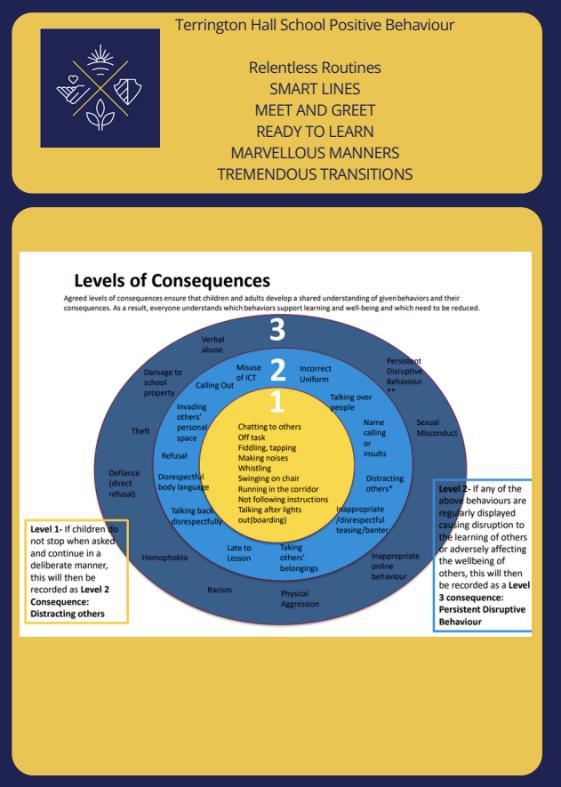
As your child begins their journey in the Upper Prep at Terrington Hall they will be expected to develop their organisational skills as part of the transition.
To help with self-organisation, the children each have a tray or locker in their form room to store all their personal items and avoid having to take them home each day. It is important that the children are able to store the majority of their belongings in this tray or drawer so we ask they have no more than two ‘ordinary sized’ pencil cases.
It is essential that children are aware of the items they have in school and that they are clearly labelled so they can be returned if lost or misplaced.
If items are lost, please send an email to your child’s form tutor who will help them to retrace their steps and hopefully find the missing items.
Stationery Required
3 x pencils
3 x blue handwriting pens eg. ballpoint/ rollerball/specialist pen (not Biro)
1x set of coloured pencils
1 x transparent stiff ruler (ideally 30cm)
1x protractor
1 x rubber
1 x sharpener (ideally with holder for sharpenings)
1 x glue stick
1 x folders to organise spellings & prep
1 x green, orange and red pencil for self-assessment
We kindly ask that the children do not bring Tip-ex or permanent markers such as Sharpies into school.
Our school day is busy and exciting and prep is set to reinforce and extend what has already been learnt in the classroom. We believe small amounts of prep instil good practice for later life.
The work may include learning vocabulary for a language or a written task. The work may not necessarily be required for the very next lesson; indeed, the teacher may give a week for completion of a given task.
Prep sessions take place within the school timetabled day. There are also ‘supported’ preps offered in Upper Prep.
Year 8 pupils will have priority for supported prep in the lead up to their CE exams These are for children who need extra support with prep and are on our school Learning Support Register. They are run daily and are based in The Hub and are accessed through discussion with form teachers and Miss Hardy.
The following Key Skills are embedded within all aspects of our Upper Prep curriculum:
Communication
Teamwork
Negotiation and persuasion
Problem Solving
Leadership
Organisation
Perseverance and self-motivation
Ability to work under pressure
Confidence
Resilience
The following pages have been written by our Upper Prep subject specialist teachers, outlining what you can expect to experience within our curriculum. Every subject teacher has taken the time to consider how the above skills can be embedded within their area to enable the best possible preparation for every single pupil as they move towards senior school.
English underpins the entire curriculum and as such, has a key role in ensuring each pupil is able to access reading material in every lesson and write in appropriate styles when prompted to. English offers the opportunity to explore other worlds and times, experience the ideas, thoughts and feelings of others and to express ideas and opinions through the written word or spoken language.
Key Skills:
* Ability to read fluently, with understanding and insight.
* Analytical, independent, critical reading and thinking skills.
* Ability to write accurately in terms of spelling and grammar.
* Ability to communicate clearly, subtly and with the audience in mind both in written and verbal work.
* Ability to take on different roles in group work.
* Presentation skills.
In Years 6 to 8, we focus on a range of skills through literature-based study. Our aim is to give our pupils the opportunity to be able to write in a variety of styles, articulate their ideas and opinions in different formats and be able to read, understand and formulate opinions about a range of different texts, from fiction and poetry and non-fiction.
The Accelerated Reader programme is a key focus for the department, as we aim to produce widely-read and passionate readers. The programme allows us to track the frequency of each pupil’s reading, their breadth of vocabulary and their understanding of what they have read.
Teaching focuses on easily identifiable objectives, modelling successful examples of writing, shared reading of texts and approaches to answering questions. There are lots of opportunities for collaborative learning and discussion, as well as independent thought. Lessons are not tests, but opportunities for assessment are built into the curriculum. As the pupils develop their skills, they are expected to display these with an increasing level of independence to prepare them thoroughly for the next stage of their education.
Texts studied range from the character-based, empowering novels in Year 6, to Dystopian Fiction in Year 7 and in Year 8 we study multilayered books that encourage discussion and debate. Poetry comes from a wide range of poets, cultures and traditions.
We believe that mathematics is an essential part of the curriculum. It provides a set of vital, transferrable skills for life. Mathematics helps children to make sense of the world, and to be responsible in the places they live and work. We believe that students should develop the mathematical skills necessary for the real world, and be able to critically examine and justify the methods they choose to tackle problems. Numeracy should become just another ‘sense’, that is, instant and automatic.
At Terrington Hall, we see the nature of mathematics as a subject that is exciting and enjoyable, full of enrichment, fostering qualities of perseverance, imagination, self-management and working skills and, perhaps above all, a confident attitude to life’s many challenges.
Our syllabus follows the National Curriculum to Year 5 although more opportunities to develop sharper mental skills are given. From Year 6, our syllabus is based on the 11+ and 13+ Common Entrance and CASE (scholarship) skill set, which is more rigorous than the KS3 National Curriculum.
Algebraic skills are developed more deeply, as is learning around fractions. Mathematical application is considered essential, thus many opportunities are given to tackle maths related problems. As students work in the final months before the Common Entrance exams, any gaps in understanding are closed, increasing personal confidence levels noticeably. They also become much more focused and self-directed learners just in time for senior school. Throughout their time in school, we aim:
• To help students develop number skills, underpinned by an understanding and appreciation of why mathematics works in particular ways.
• To help each pupil, so far as is possible, to develop his or her abilities to apply maths to real life and abstract situations.
• To enable children to reach or surpass their perceived numerical abilities.
• Above all, to develop the pupils’ awareness that maths provides him or her with a powerful means of communication.
Specifically in Upper Prep, we go further. Here, we aim to give students the opportunity to:
• Do their best, irrespective of their level of skill set.
• Become independent and critical learners, able to justify their decisions with brevity.
• Understand and appreciate the mathematics likely to be encountered in daily life.
• Reason clearly and logically, and set out a rational argument.
• Identify patterns encountered in diverse situations and to extrapolate from these.
• Approach problems systematically, choosing appropriate techniques for their solution.
• Follow logical instructions clearly expressed.
• To reach or surpass their expectations in senior school
Science stimulates and excites pupils’ curiosity about phenomena and events in the world around them. It also satisfies this curiosity with knowledge. Because science links direct practical experience with ideas, it can engage learners at many levels. Scientific method is about developing and evaluating explanations through experimental evidence and modelling. This is to spur critical and creative thought and for pupils to learn to question and discuss science-based issues that may affect their own lives and the society in which they live in.
Key Skills:
Make observations and discuss what they have found out; Ask questions and decide how to answer them eg. through investigation and research; Problem solving; Apply knowledge from other subjects, especially Mathematics, English and Geography;
Report findings and carry out research in a variety of ways, including the use of ICT;
Use scientific language with accuracy; Develop a respect for the environment and all living things; Work with regard to their own and others safety; Work as part of a team, share ideas, listen to others and make informed decisions.
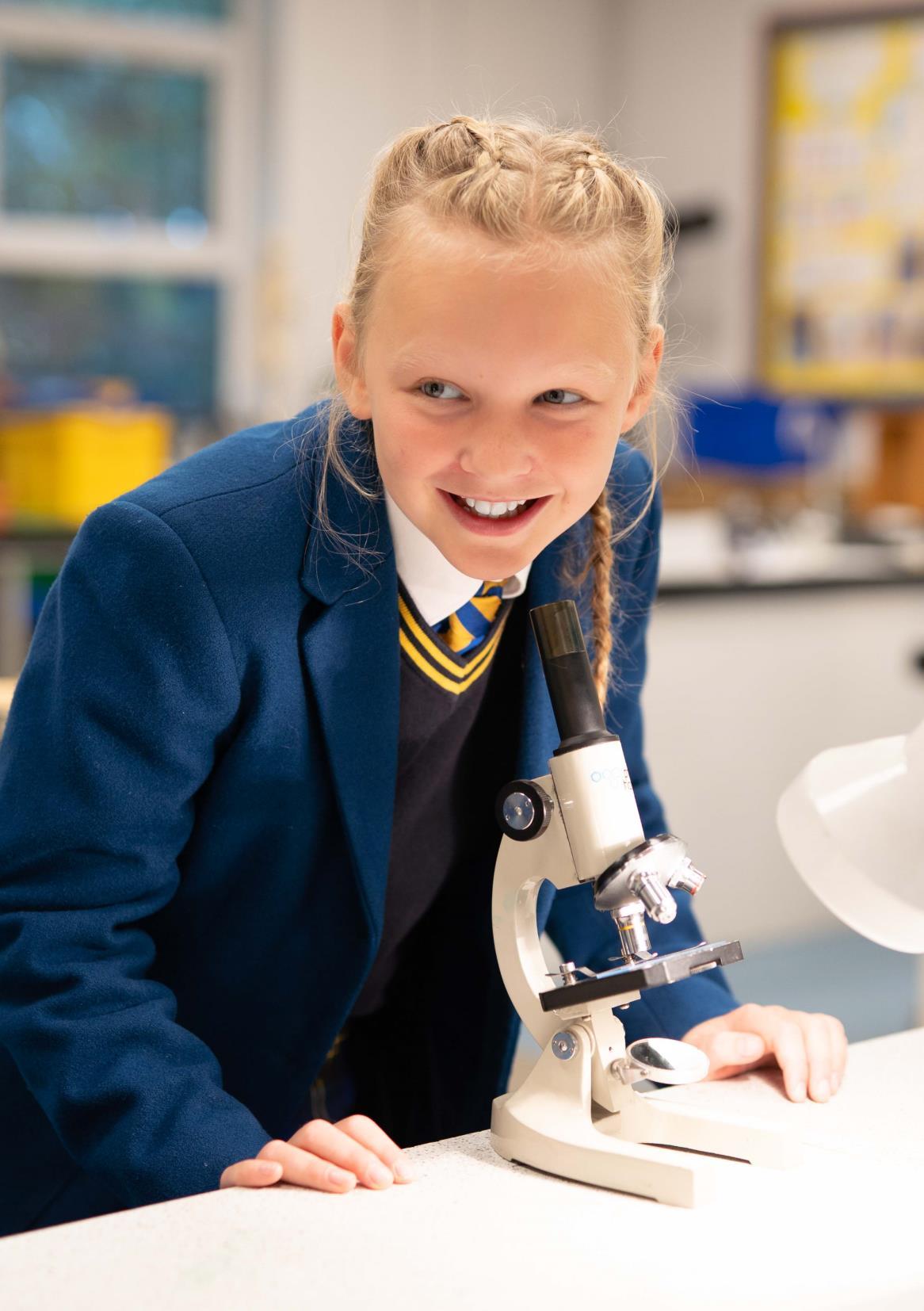
In the Upper Prep, pupils continue to learn and improve the skills they have been developing in previous years. Science lessons take place in a dedicated Science Lab under the guidance of a specialist science teacher. Science teaching at Terrington Hall School aims to develop children’s natural curiosity about the world around them through the study of Science and provide a sound foundation of scientific ideas and skills upon which future progress in Science can be achieved.
Science in the Upper Prep is taught by the topic, with pupils being made aware into which strand of science a topic fits:
Biology: The organisation of living organisms, comparing plant and animal cells, food nutrients, a healthy diet, breathing in humans, reproduction in humans, photosynrthesis, respiration, reproduction in flowering plants, recreational drugs and human health, the interdependenceoforganismsinanecosystem,classificationoflivingorganisms, variationinliving organisms
Chemistry: States of matter – the particle model, atoms and elements, compounds and molecules, pure substances, mixtures including solutions, separating mixtures, combustion – chemical reactions, fuels and production of carbon dioxide, oxidation of metals, thermal decomposition reactions, acids and alkalis, neutralisation reactions
Physics: Energy resources, Energy transfers and conservation of energy, speed and movement, measuringforce,effectsofforces,pressure,density,sound,light, circuits,currents, magnetic fields and electro-magnets, space. Each week, a topic-related prep is set to reinforce learning that has taken place. Each topic usually finishes with a short end of topic test to assess learning, understanding and progress.
Latin is taught to all pupils from Year 5-8, whilst Classical Greek is an option for those wanting to try something new and exciting in Years 7 and 8.
Key Skills:
• To develop enjoyment & progress in reading, writing and understanding Latin and Classical Greek.
•
•
•
To encourage an interest in the legacy of Roman culture and the heritage that the language of the Roman Empire has given to English.
To recognise and understand the similarities between the vocabulary and grammar of Latin, English and other modern languages.
To use the language as a means of developing intellectual rigour, accuracy and interpretative skills.
• There are many good reasons to study Latin; just a few are listed below:
To strive to achieve the very best outcomes for pupils taking the Common Entrance and Scholarship examinations.
Learning Languages: All Romance languages (French, Spanish, Italian, Portuguese, Romanian) are derived from Latin so learning Latin gives you many languages for the price of one!
English Vocabulary and Grammar: Studying Latin helps students to master English. This is no surprise since 60 percent of English is derived from Latinwith over 80 percent of our polysyllabic words derived from Latin. The regular grammar of Latin is also perfect for helping us understand the way all languages, including English, work.
Future Careers: Latin prepares students for several important professions that are steeped in Latin or English words derived from Latin. These include law, medicine, science, music, theology, philosophy, art and literature.
Writing and Reading: An increased vocabulary and understanding of grammar enable students to write and read with greater ease and clarity.
History: Latin enables students to more fully understand and appreciate the Roman Empire, which has had profound and continuing effects on Western civilization. In addition, the history of art and architecture is filled with Latin, while monuments and art all over the world are frequently graced with Latin.
Great Literature: Latin enables students to enjoy some of the most influential literature the world - in the original language. Learning Latin well enough to read original Latin works is an attainable skill and imparts great satisfaction and enjoyment.
Educational Value: The study of Latin is an ongoing practice in linguistic puzzle solving that helps students to become close and careful readers and writers. Many believe it also generally hones the mental faculties, cultivating careful analysis and attention.
Pleasure: Deciphering the “secret code” of Latin, seeing the words behind words, learning to puzzle-solve, and reading great authors in their own tongue are all pleasures that will last students a lifetime.
Cross Curricular Learning: For all of the reasons aforementioned, studying Latin is a way of combining advanced study skills in several subject areas simultaneously. It is therefore an extremely useful learning tool - it helps one with other skills and other subjects.
And most of all... it is great fun!
The new TPR curriculum is intended to inspire and provoke depth of thought and understanding of the world around us. The curriculum ‘spirals’ up from Year 6, with each skill and piece of knowledge building upon the last.
Key Skills & Opportunities:
•
• study the foundational biblical texts of the Judeo-Christian tradition; develop philosophical skills to reason, argue and evaluate claims made by religious and non-religious belief systems; acquire knowledge and develop understanding of the beliefs, values and traditions of a number of world religions, considering the influence of the beliefs, values and traditions associated these religions; consider the theological, philosophical and religious responses to moral issues; identify, investigate and respond to fundamental questions of life raised by religion, philosophy and human experience, including questions about the meaning and purpose of life. •
Further, the skills of debate, public speaking and presentation, constructing both discursive and explanatory essays and responding to the opinions of others will also be taught and practiced. Prep is set weekly, with a week to complete tasks. However, in the Spring term, each year group will complete an extended presentation project, which will take four weeks to prepare and present.
The syllabus comprises three elements: the study of theology through key biblical texts; philosophy through some significant philosophers and basic human questions about value and meaning; the study of religion in one or more world religion(s). It reflects the fact that the religious traditions of the United Kingdom are, in the main, Christian, while taking into account other
Pupils in Upper Prep are introduced to the Common Entrance geography curriculum. The geography curriculum gives the children the opportunity to develop an understanding of the world we live in.
Key Skills:
• To use geographical enquiry skills when developing knowledge and understanding of places, people, patterns and processes, environmental awareness and sustainable development.
To ask geographical questions and undertake enquiries inside and outside the classroom about places, people and environments.
To analyse evidence, make decisions and evaluate information, ideas and opinions.
To use skills specific to geography, including those of fieldwork, map reading and introductory Geographic Information Systems (GIS).
To draw on many different sources and resources, such as maps, atlases, photographs graphs. •
Year 6:
What is geography and why we study it?, Introduction to map reading and Ordnance Survey Maps, Plate Tectonics, and Locational Knowledge (explicit and via case study)
Year 7:
Meteorology, Geomorphology, Demography, Introduction to Fieldwork and Locational Knowledge (mainly via case study)
Year 8:
Economy and Trade, Environmental Studies, Fieldwork Investigation (during the first term and comprises 20% of the final CE grade) and Locational Knowledge (mainly via case study)
In Year 6 pupils embark on the Common Entrance History Course and children begin to develop their skills of working with sources and exploring the past through their use. They develop skills of empathy and writing extended answers as well as bringing history to life through drama and ICT based activities. Research skills are also developed using various means.
Key Skills:
Analytical and independent thought
Collaboration and teamwork
Independent research
Reading comprehension
Essay construction
Ability to meet deadlines and write under timed conditions
Presentation skills
Consideration of the motivation of a speaker/writer/artist and the limitations of sources
The range of topics studied each year, but we focus on British history between 1066 and 1914 and aim to get a breadth of study across Wars and Rebellions, Leadership and Life and Change. Common topics studied under ‘Medieval Realms’ include, the Norman Conquest, the Development of Castles, Thomas Becket and King John and the Magna Carta. Typical topics under ‘The Making of the United Kingdom’ include Henry VIII, Plague and Great Fire of London, Elizabeth I and the Spanish Armada. Finally, under ‘Britain and Empire’ pupils have learnt about the Suffragettes and the Anti-Slave Trade Movement.
By following the history course, the children develop their skills of analysis, considering the motivation of a writer and questioning why they may be trying to influence our opinions. Comprehension skills are also developed and honed as is the ability to write extended answers, either discursively or in an explanatory style. Independent research around the topics covered is promoted and encouraged.
Personal, Social, Health and Economic PSHE education helps pupils to develop the knowledge, skills and attributes they need to manage many of the critical opportunities, challenges and responsibilities they will face as they grow older. By teaching pupils to stay safe and healthy, and by building self-esteem, resilience and empathy, an effective PSHE programme can tackle barriers to learning, raise aspirations, and improve the life chances of pupils. PSHE education helps pupils to develop the knowledge, skills and attributes they need to thrive as individuals, family members and members of society. From making responsible decisions about healthy eating to online safety, PSHE education helps pupils to manage many of the most critical opportunities, challenges and responsibilities they will face growing up.
Our programme of study for PSHE (KS 1-3) aims to develop skills and attributes such as resilience, self-esteem, risk-management, team-working and critical thinking in the context of learning grouped into three core themes: health and wellbeing, relationships and living in the wider world (including economic wellbeing and aspects of careers education).
Safeguarding our children is of paramount importance to us at Terrington Hall. We also believe it is essential that children are provided with accurate age-appropriate information to assist them in making sensible choices and developing respect for themselves and others as they progress through the school.
Relationships and Sex Education, RSE, is learning about the emotional, social and physical aspects of growing up, relationships, sex, human sexuality and sexual health. Some aspects are taught through science and others are taught as part of Personal, Social, Health and Economic education (PSHE).
A comprehensive programme of RSE provides accurate information about the body, reproduction, sex and sexual health. It also gives children and young people essential skills for building positive, enjoyable, respectful and non-exploitative relationships and staying safe both on and offline.
In this ever-changing world, competency in other languages is an essential skill that gives the pupils the opportunity to engage with the world in a more immediate and meaningful way. In Upper Prep pupils will study French and Spanish and will complete Common Entrance exams in both languages at the end of Year 8.
The pupils are taught to develop skills which enable them to understand written and spoken language and use language effectively for purposes of practical communication. The skills of listening, reading and writing are developed through authentic materials so that pupils learn everyday language and can successfully navigate a trip to Spain or France with confidence.
These key skills learnt in MFL are transferable across all subjects and support pupils in increasing their confidence and presentation skills. More able pupils are encouraged to sit higher level papers in Year 8 which stretch them to work with and produce more complicated language. The course provides a basis for further study of languages at senior school and encourage independent learning, including the use of dictionaries, glossaries and ICT. The topics covered in Common Entrance are in accordance with the requirements of the National Curriculum (Levels 1-6). The topics covered include house and home, life at school, families, food, friends, pets, free time activities, holidays, weather, shopping and the environment. The cognitive benefits of learning languages are indisputable. People who speak more than one language have improved memory, problem-solving and critical-thinking skills, enhanced concentration, the ability to multitask and enhanced listening skills. Through the learning of MFL, the pupils are required to stick to deadlines and to write and learn their orals (in their final term). These key skills benefit the pupils not only in Years 6, 7 and 8 study, but also during their GCSE years and beyond.
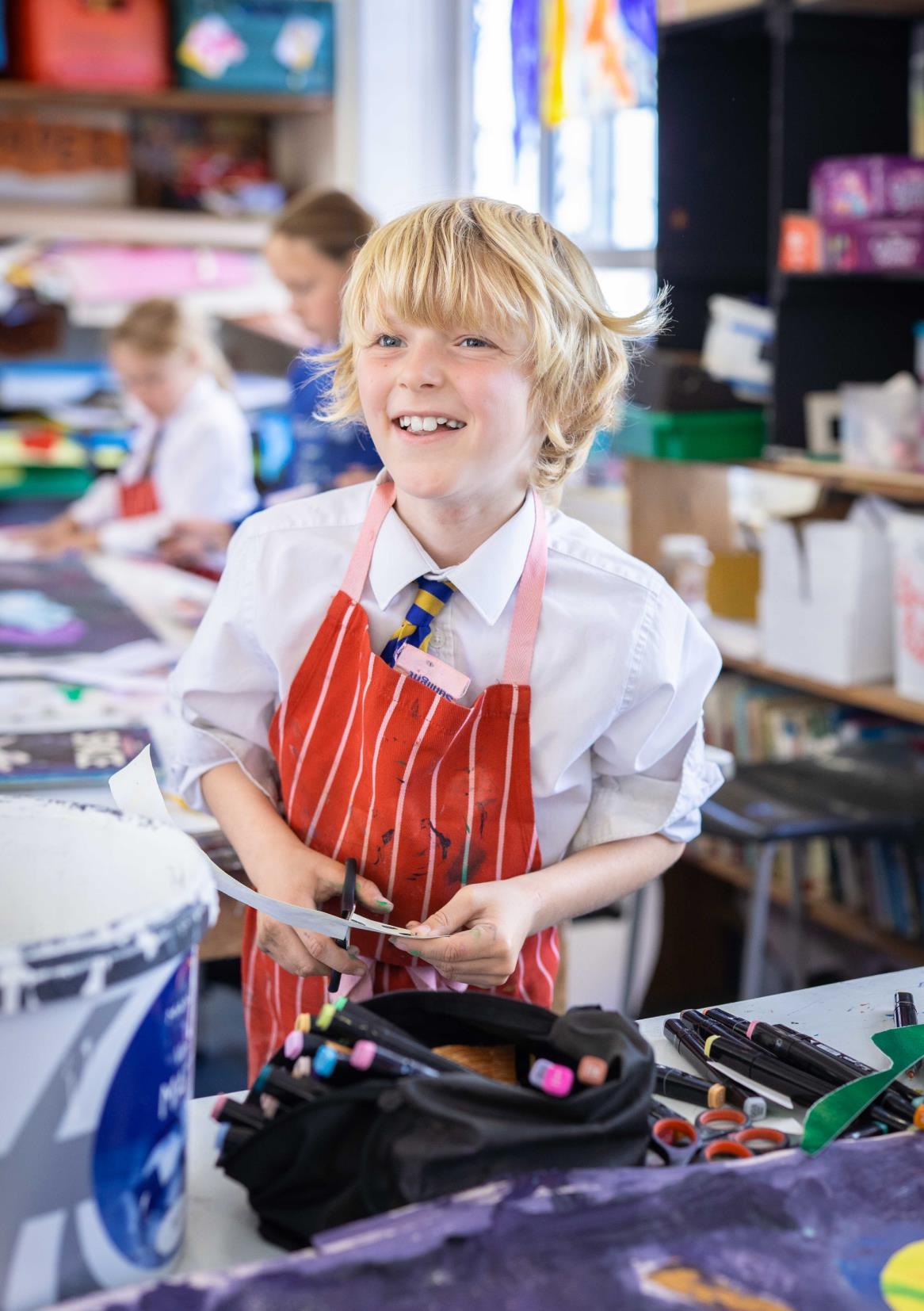
Art is taught as a specific subject in the Art Room, for a double period each fortnight to children from Year 6 to Year 8.
Pupils are encouraged to study a broad range of contemporary and twentieth century art movements and disciplines during lessons.
Pupils should be aware of art’s role in the representation of history and culture, while progressing their critical thinking skills.
We aim to teach children to observe, understand and to develop aesthetically. Pupils learn how to express themselves, objectify their feelings and begin to be able to relate to the expressions of others.
Physically, fine motor skills are employed and developed during artistic pursuits by way of utilising a variety of tools and mediums.
How art at Terrington Hall is taught:
Pupils explore their ideas through practical work in sketchbooks. This helps to build on their technical skills and familiarise process.
The emphasis at Terrington Hall is on experimentation, enjoyment, collaboration, and fostering a sense of children’s individual creativity and self expression. By the end of Year 8 they should have experienced a range of artistic processes and exposure to artists, giving them a flavour of what is to come at senior school.
The art room has wonderful light and is designed to be colourful and inspiring with a range of books and imagery that children can refer to in lessons, breaks and lunchtimes, and during the two enrichment sessions a week (Wednesday and Friday) the art room is open and staffed. There is an extensive range of materials the children can use under supervision.
While it is hoped that children improve their skills to as high a level as possible, not only in technique but also imaginatively, there is no particular level they must reach or examination to pass.
Artists of the Week prizes are awarded throughout the year and successful entries displayed in the dining room. This is a lovely way to celebrate and reward all ages and interests.
As in other curriculum areas, pupils are graded on their attainment in art, being judged on their technical skill and creative thinking, and on the effort they have made.
There is ongoing discussion, one-to-one as well as whole class peer critique on progress being made by individuals during each project.
The syllabus is delivered with the intention of expanding children’s aesthetic values, improving and learning new skills, developing practical strategies through considered planning, and most of all, inspiring the children to rise to challenges through informal and enjoyable lessons.
All pupils at Terrington Hall are taught a wide-ranging curriculum within smaller than average, mainstream classes. Staff deliver high quality teaching with classwork and prep appropriately differentiated. Children are regularly monitored to ensure they are making progress to the best of their ability, and challenged according to their own level to ensure success is within reach.
It is sometimes appropriate for children to receive additional support to achieve their full potential. Our learning support resources are centred around “The Hub” . As a base for Learning Support and Wellbeing, The Hub is a bright, warm and welcoming classroom resourced with access to online intervention programmes, classroom support, and small group work. The SENCO and a part-time assistant work together across the academic departments to provide and plan support for all children. Individual Lessons are by arrangement and in agreement with parents, SENCO.
Learning support is integrated through the school from Nursery to Year 8 with a focus on the child as an individual. We believe in inclusion and seek to provide a broad, balanced and differentiated curriculum that provides equal opportunities for all.
For those children who receive learning support, close communication between school and home is encouraged and parents are invited to meet with the SENCO regularly.
Head of Sport : Mr N Hyde— nhyde@terringtonhall.com
For children in the Upper Prep, sport continues to be an important part of their week. In Games lessons, the children play traditional or modified versions of team sports. PE is multi disciplinary, aspects of GCSE and BTEC PE will be introduced. Likewise key life skills are developed using sport, physical activity and health as the context. Finally, the children will explore their own physical performance and will begin to apply concepts including Long Term Athlete Development and the development of physical and mental robustness. It must be stressed that that the child comes first, to that end all PE and games at Terrington Hall is child-centred, development driven and competition supported.
All pupils are given the opportunity to represent the school in matches every term, and they also participate in strongly contested House Competitions at the end of every term.
School teams at Under 11 and Under 13 are selected on merit.
PE & Swimming sessions are either taught in class groups or in single sex groups (depending on the timetable). Games sessions are taught in multiyear groups, usually single sex.
The Upper Prep PE and Games programme:
Physical Education
Understanding Games
Performance & Health Related Fitness
Aquatics, including lifesaving
Athletics (cross country, track & field)
Coaching and officiating
The school’s enrichment programme also gives the children an opportunity to take part in a wide range of sports and physical activities. These sessions are opt in, usually on a termly or half termly basis.
Physical activity, sport, health and wellbeing are critical to the development of young people. Terrington Hall encourage all children to lead healthy and active lifestyles. The true success of Terrington Hall PE and Games teaching is very much in the future. We hope that Terringtonians are active and still enjoying sport in one shape or another well into adulthood.
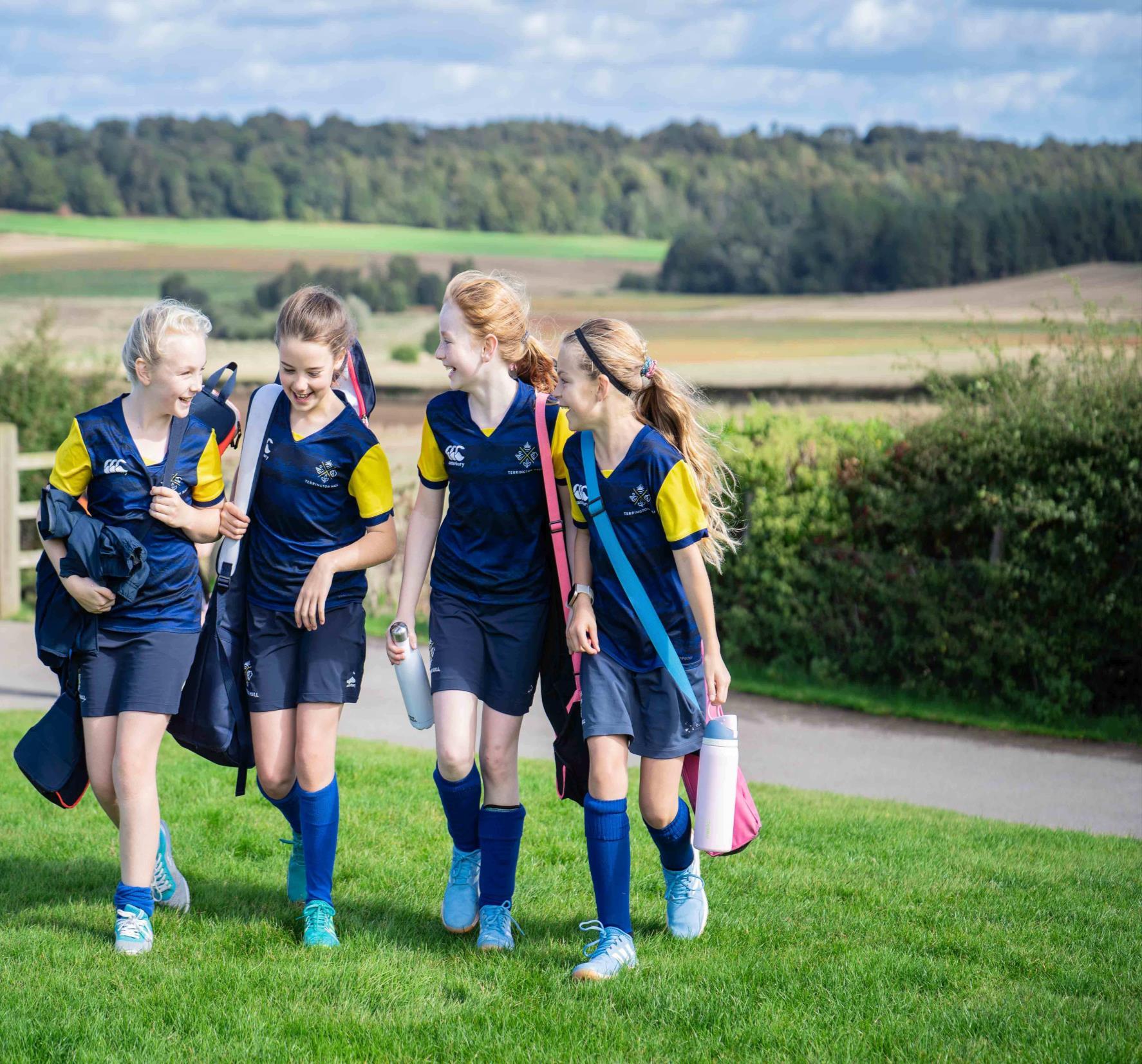
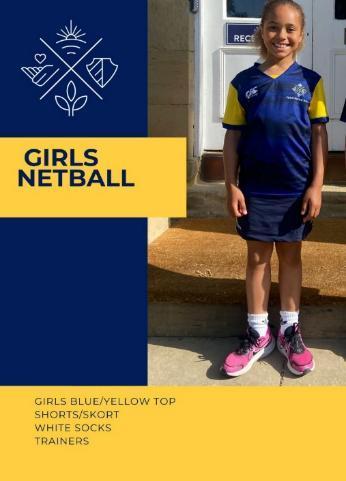
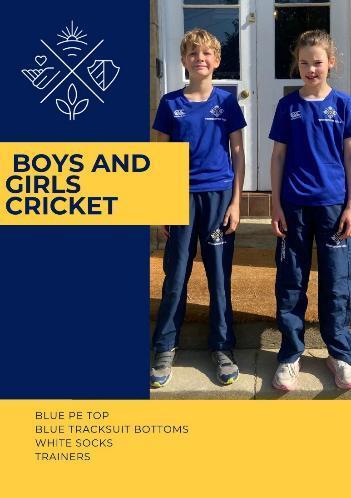
The school has a designated PE and Games kit, which is high quality and fit for purpose, likewise it is smart and helps promote values of belonging and teamship. To that end all children are expected to wear the correct kit for each lesson.
School tracksuit bottoms, 1/4 zips, rain jackets can be worn at any time, weather depending. Should children be wearing sports kit in school head of fixtures and events, they should wear full tracksuit.
All kit is available from Home - Terrington Hall (hardgear.co.uk) These can be located -https://www.terringtonhall.com/aboutterrington/parent-portal/
Please refer to the images below to ensure your child wears the correct sports kit for each activity.




Music and Drama plays an important role in education at Terrington Hall. Music is taught right from Pre-School up to Year 8 and the children are encouraged to view it as a language which can be accessed not just aurally but also decoded visually.
Important areas are the development of rhythmic and pitch skills through movement, percussion-work and singing. Pupils are also taught to read and play from musical notation which helps to unlock a whole new world available to only a small proportion of society.
Many of the children go on to learn to play a variety of instruments and develop their musicianship via our pool of peripatetic instrumental teachers. There are termly recitals and concerts at which pupils get used to performing for an audience and external music exams are held throughout the school year.
Children at Terrington Hall also take part in numerous plays and musicals. Throughout the year, all the children will take part in a largescale musical production with two performances. These plays are always a highlight of the year, with lots of opportunities for main parts, medium parts, chorus parts and also backstage roles. Year 8 pupils also put on a play after Common Entrance which is traditionally performed on the front lawn to parents and staff.
Children in Years 6, 7 and 8 also have the opportunity to sing in Senior Choir. This is a weekly activity leading to performances at the end of the Michaelmas Term at the Carol Service and the Geoffrey Marshall Concert in the Lent Term. There are also opportunities for pupils to perform in ensembles and chamber music. Weekly chapel services provide a regular opportunity for children to perform.
At Terrington Hall we pride ourselves with the range of musical instruments on offer for our children to learn, and as a result we are unable to give your child a regular, specific time for their lesson. Therefore, lessons are put on a rotating timetable to ensure children do not miss the same academic lessons each week.
Individual instruments on offer currently include: Piano, Voice, Flute, Recorder, Clarinet, Saxophone, Oboe, Violin, 'Cello, Guitar, Trumpet, Tenor Horn, Trombone, Drum kit.
Children can enjoy playing for pleasure but also have the opportunity to work towards public performances in recitals and also taking graded exams. We have termly exam sessions for ABRSM which are very popular and help give children a target to work towards.
We also have individual and paired drama lessons available where children learn a variety of skills and can work towards Trinity Exams, Harrogate Festival and recitals should they wish.
We support all children who learn an instrument outside of school and they have equal opportunities to perform in recitals or take exams through school.
Many of the “soft skills” which are acquired from the array of musical and dramatic performances here at school are an essential part of success in later life. They help to increase self-confidence and creativity and make public-speaking much less daunting.
Music and drama fosters imagination and empathy, and regular live performances focus the ability to concentrate, communicate and work as part of a team.
Most importantly, here at Terrington, we aim to provide the building blocks for a lifelong enjoyment of the Arts.
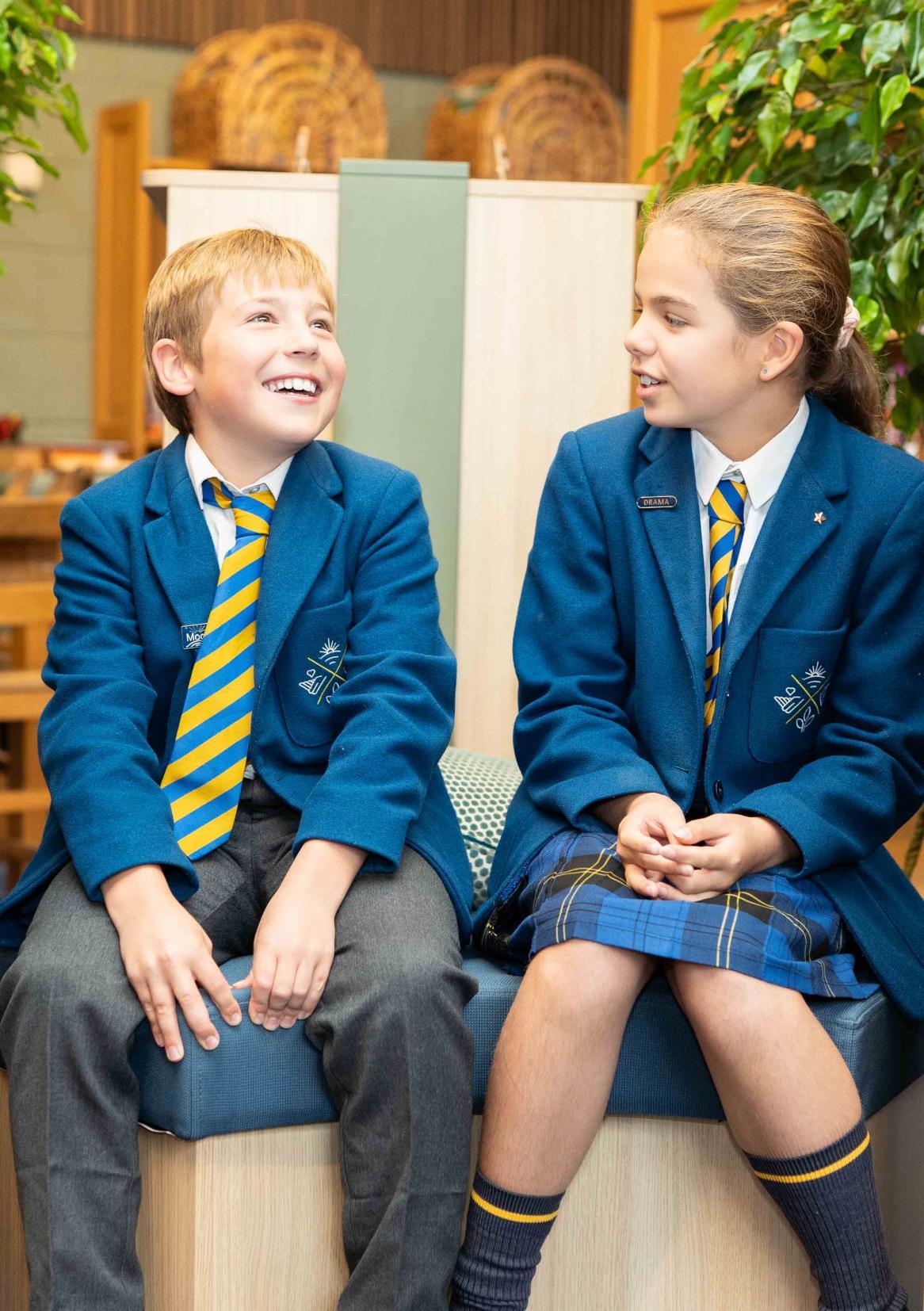
All pupils from Reception to Year 8 are welcomed into one of our three HousesCastle, Forest and Moor. Siblings are always in the same House as each other. The names and crests were chosen to encapsulate our enviable geographical position but also our values of courage, kindness, confidence and consequently, growth. We elect three Heads of School, each year, one from each House.
Castle represents the historical significance of the area, with beautiful monuments such as Castle Howard, Sheriff Hutton Castle and York Minster. It also signifies the courageous spirit and resilience which we foster in our pupils.

Forest represents the natural beauty of the area, with lush expansive forests such as Dalby Forest, and of course our hugely popular forest school. It also signifies the nurture and growth of the pupils while they are in our care at Terrington Hall.

Moor represents the breath-taking landscapes, first and foremost from our very own playing fields, but also those of the North Yorkshire Moors. It also signifies expanding of horizons, a mantra firmly at the heart of everything we do, which helps to build our pupils’ confidence.
The House system is a way for us to unite children in different year groups, helping them to have positive relationships with pupils across the school. It is also allows us to encourage friendly competition for all range of events, everything from House sports, bake off, quizzes, debating, essay writing and much more. The House system is celebrated at the start of each academic year with our House Festival and again at the end with Sports Day. House assemblies are held every Friday morning, and celebrate achievement across all areas of school life
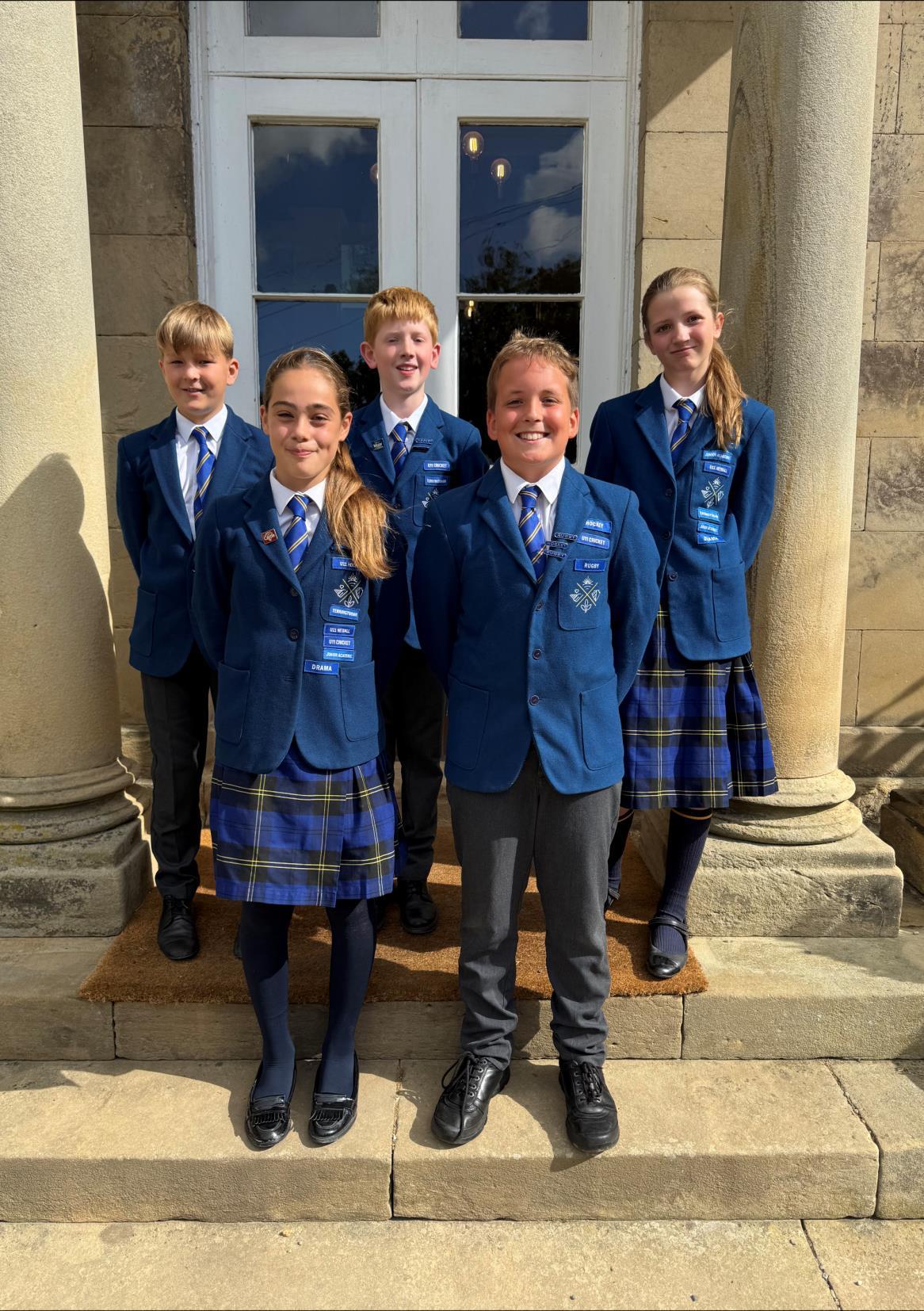
Heads of School and Houses 2026/27
Activities to stretch, challenge and entertain. Our enrichment programme encompasses all our clubs and enables the children to make the most of and benefit from the TALL (Teamwork, Adventure, Leadership and Learning) and Ad Astra (Academic Stretch) schemes at Terrington Hall, developing their skills in these areas whilst enjoying a fun activity.
A rolling programme of Enrichment sessions take place at the end of every school day for children in Years 3 to 8. The sessions, similar to out-of-school clubs, are designed to help children explore their enthusiasms and develop new strengths alongside their peers. They take advantage of our fantastic facilities and allow children to try out new things in a relaxed atmosphere, with an emphasis on fun!
Children choose their preferred enrichment activity from a programme which changes each term and varies according to the expertise and interests of the supervising teachers and the changing seasons.
Children have suggested many of the sessions themselves, and new clubs are often introduced. Pupils can also attend Study and Stay sessions during enrichment time. They use the session to complete prep or other work under supervision and guidance. Other pupils use the time to practice for drama festivals, musical performances and various productions during the school year.
Alongside these activities there is the opportunity to pay for wraparound care by staying for tea, coming in early for breakfast and of course pupils are very welcome to make use of the boarding house overnight too.
Thanks to the SOCS Co-Curricular package, we are able to use a parental sign up process.
Parents can discuss the options with their children at home and then there will be a window for signing up before the start of term. This will be on a first come first serve basis and once an Enrichment is booked up, it will no longer be available online.
There are a limited number of spaces for some Enrichments in order to make them worthwhile and so early booking is encouraged when the window opens.
Below is a link to a step by step guide from SOCS on how to sign your children up for their chosen Enrichments (which can also be found following this link to the SOCS website): Enrichment Sign Up
For a taste of the many activities going on across our school every day, please follow us on these social media channels:
Please also follow us on LinkedIn
Experiencing different places develops life skills, confidence and understanding beyond the classroom. Terrington Hall pupils enjoy both day and residential trips throughout their journey at school here.
Every child from Nursery onwards enjoys regular school outings. These carefully planned outdoor education experiences complement classroom learning.
From Year 3 onwards, we gradually introduce our pupils to residential trips –starting with overnight residentials and the annual Terrington Hall campouts. Every child is encouraged to take part. Trips combine adventure and fun, and give children the freedom to discover, learn and explore.
Lower Prep Children join several curriculum-linked trips each year. They also join a residential trip which encompasses a variety of outdoor adventures at expert-led activity centres. Teambuilding and having fun is the main focus. These early residential experiences build life skills, self-esteem and confidence. They encourage children to challenge themselves within a safe and controlled environment. Children become more resilient and receptive towards their next challenge.
In the Upper Prep, children enjoy longer residential trips which introduce them to new challenges, the chance to push themselves, and also to spread their wings further afield. The final two years have more recently spent their residentials abroad.
Whether it’s a day trip or a residential adventure, children return walking slightly taller – and feeling more confident that life’s opportunities are there for the taking.
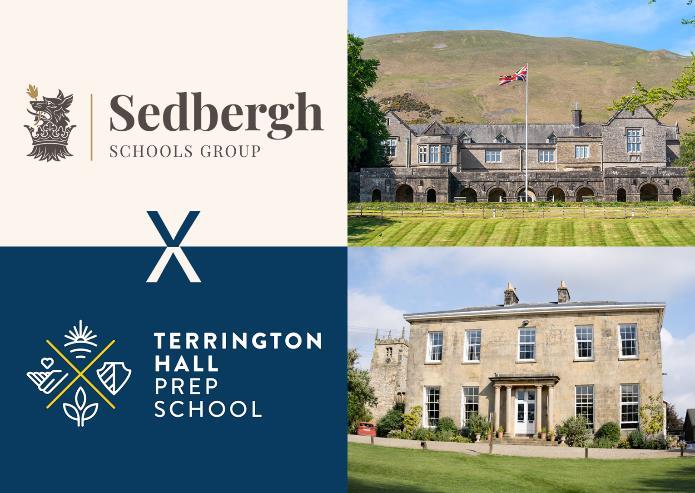
At the heart of the Sedbergh Schools Group are a set of shared values that shape not only what we teach, but how we live and learn together as a community.
Humility, Ambition, Resilience and Kindness (HARK) have long guided life at Sedbergh and now sit at the centre of the wider Group’s philosophy. They help develop young people who are not only successful academically, but grounded, confident and thoughtful in the way they approach the world around them. Importantly, this partnership is built on strong alignment rather than change.
Terrington Hall’s own values will remain at the heart of the school, continuing to shape its culture, community and daily life exactly as they always have. One of the reasons this partnership felt so natural is the clear resonance between Terrington’s ethos and the HARK values, a shared belief in nurturing character, encouraging ambition, building resilience and fostering a deeply supportive community.
This partnership is about expanding horizons for pupils and staff alike, opening new opportunities while holding firmly to a belief in keeping children younger for longer, giving them the time, space and confidence to grow, explore and enjoy their childhood.