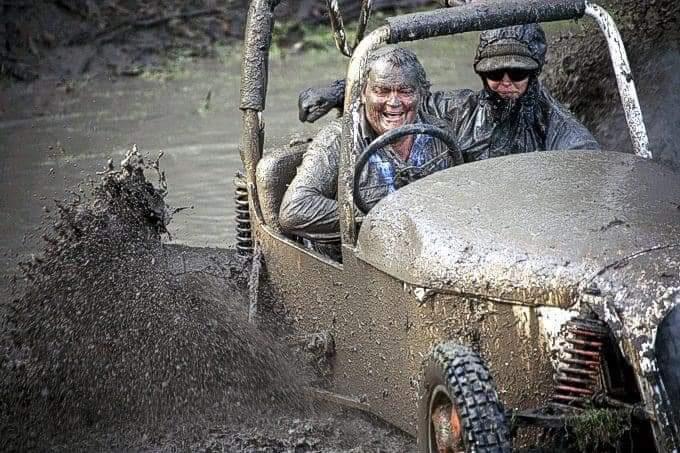
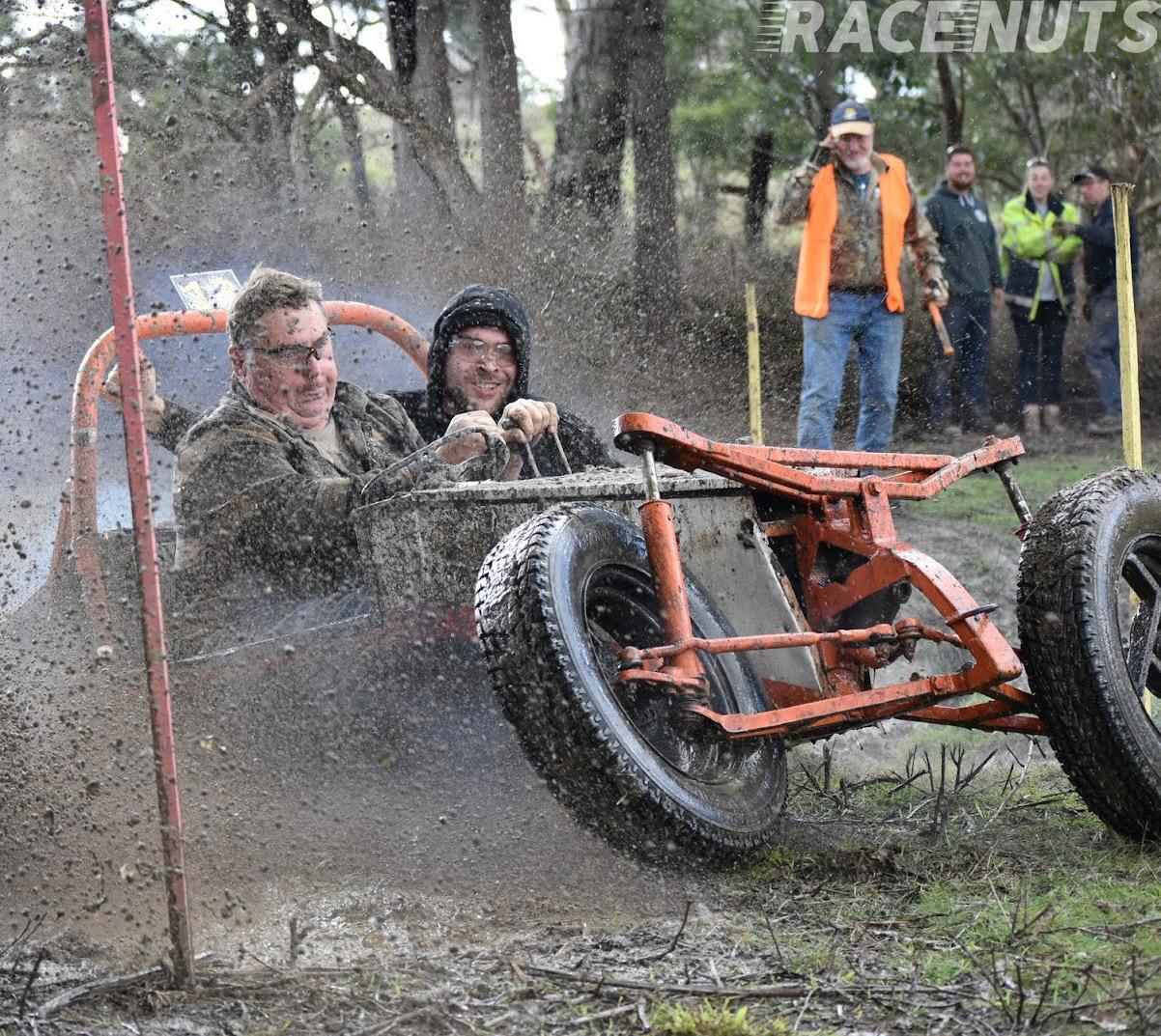
Schweiger & Lucas O'Sullivan
Hansen & Lori Filsell
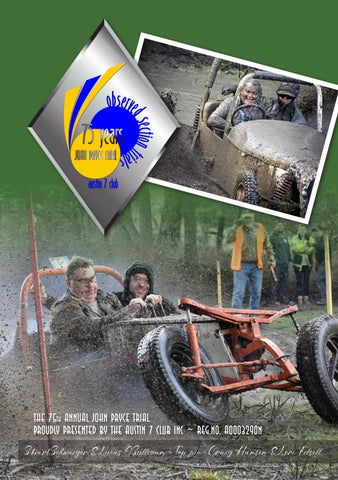
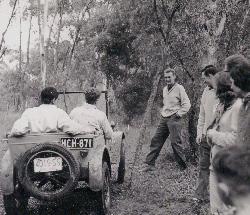
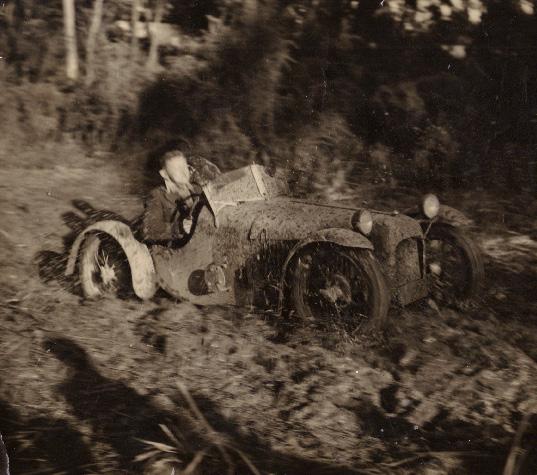
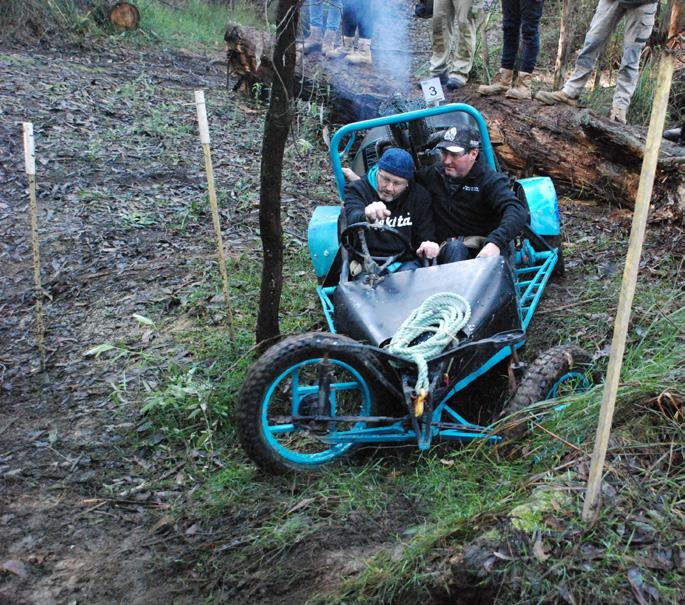
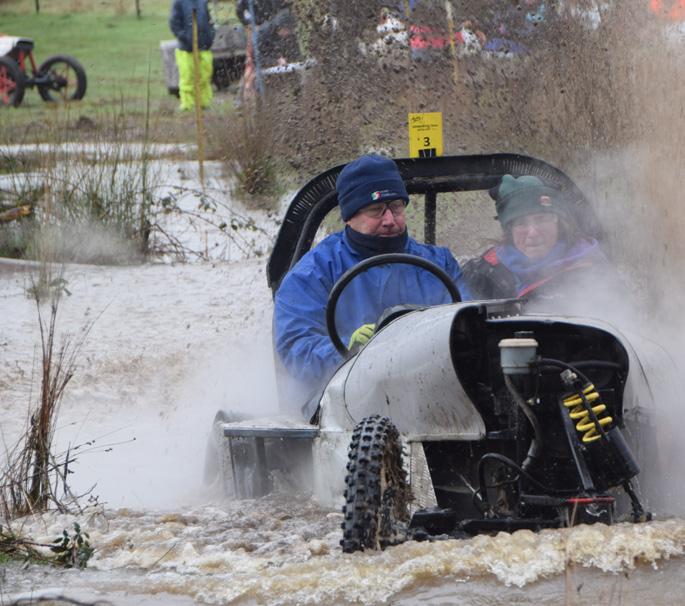
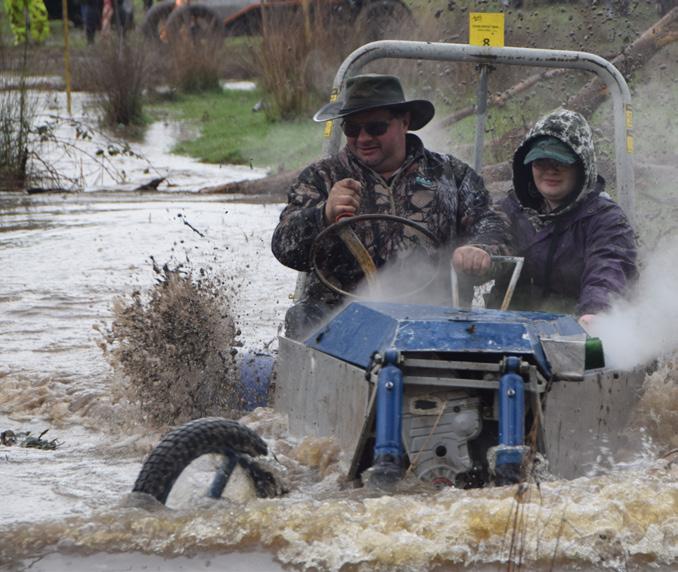
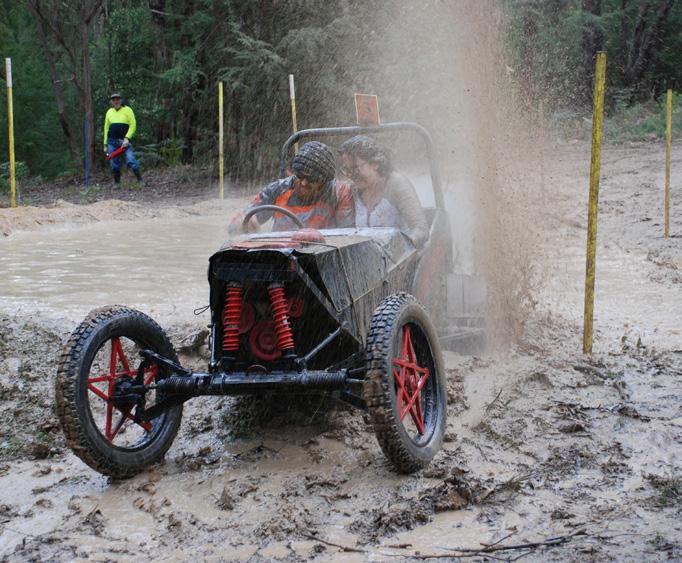
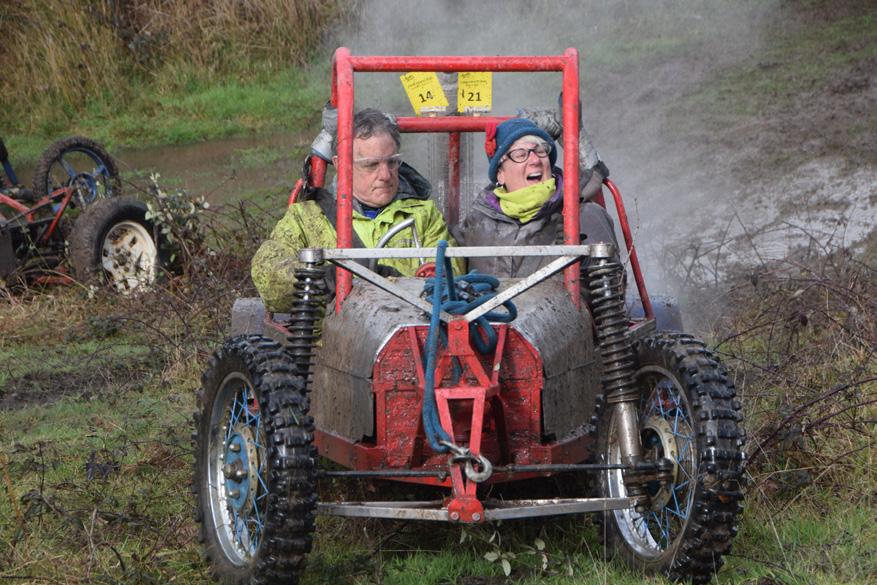
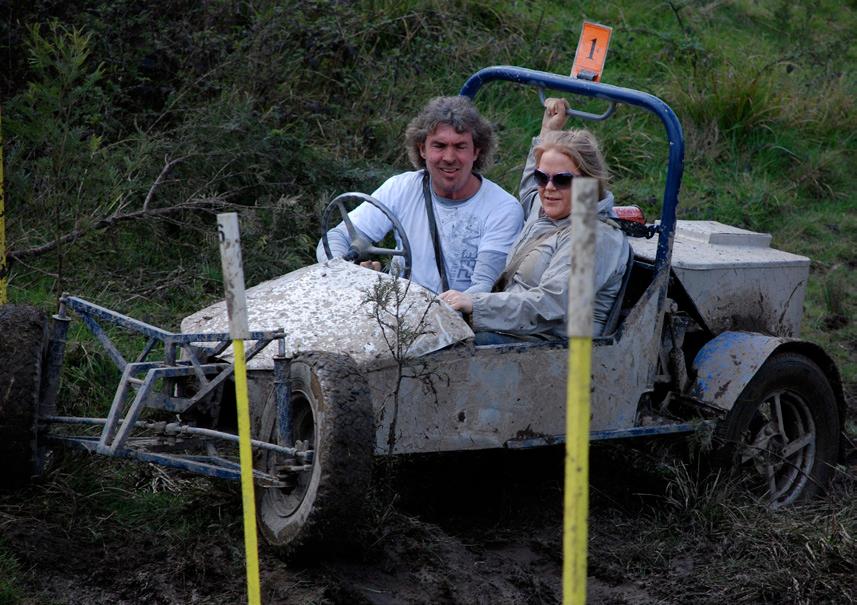
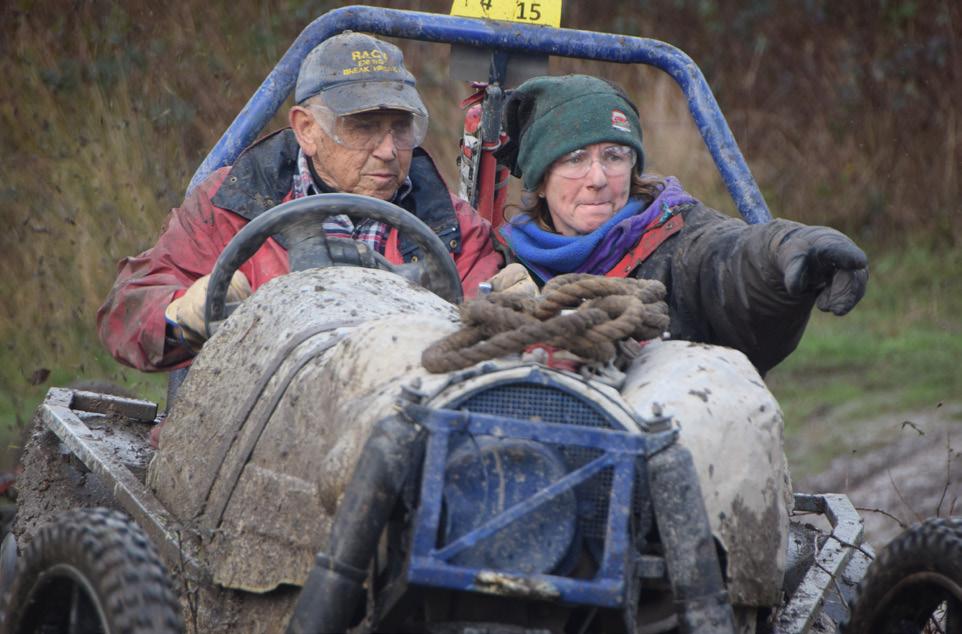
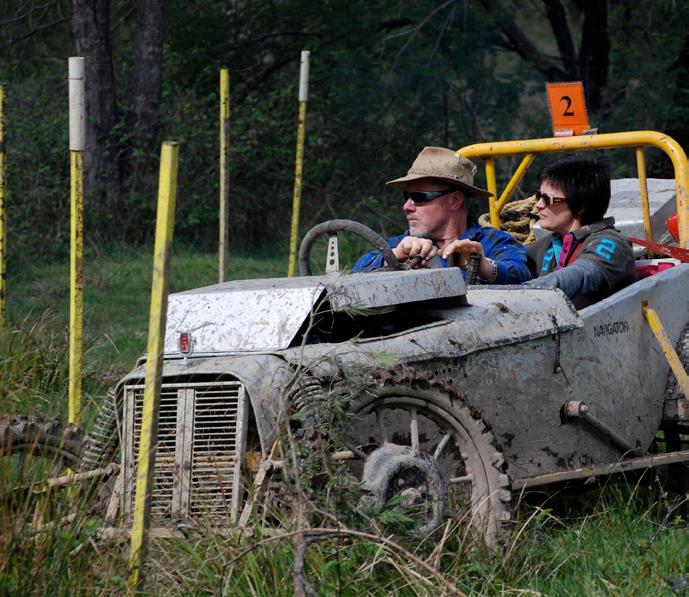
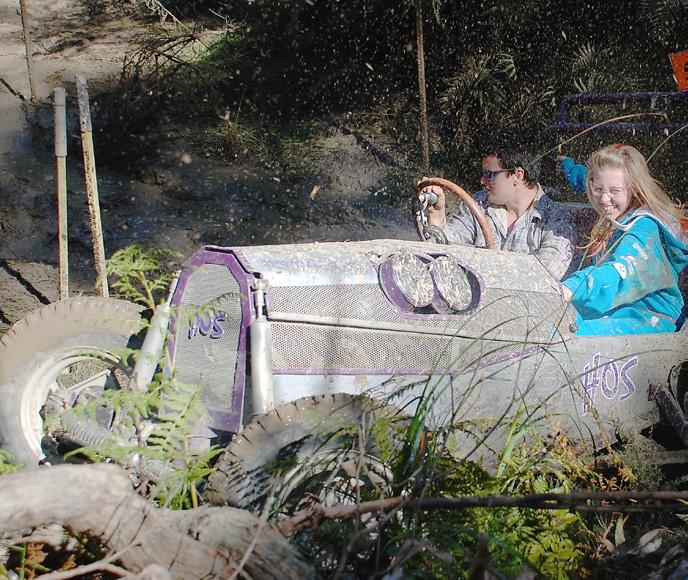
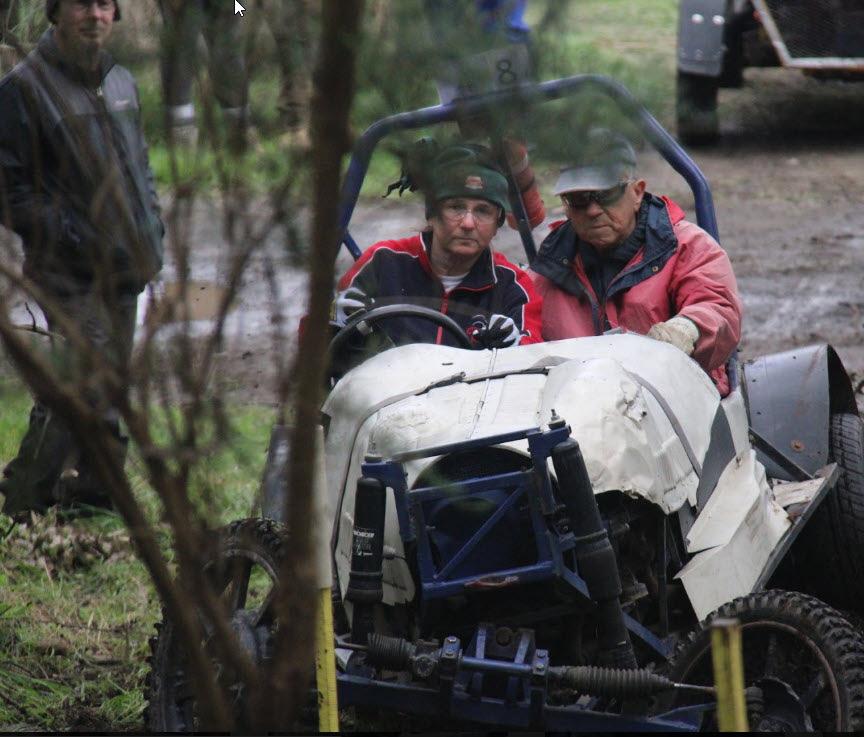
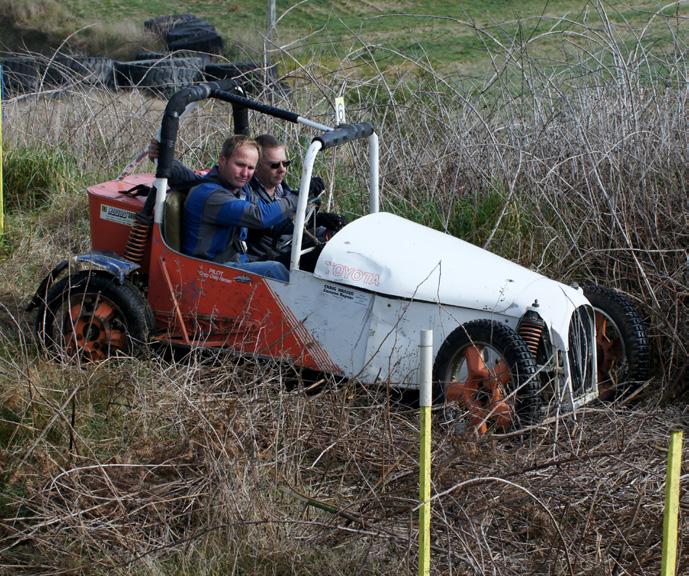
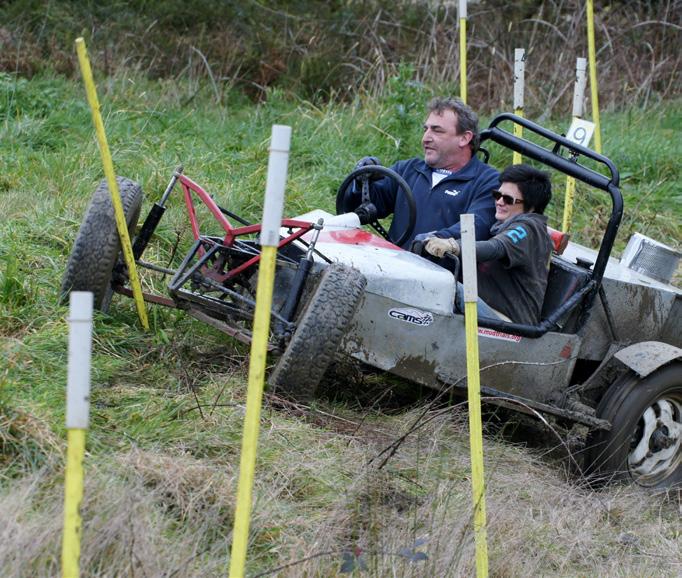
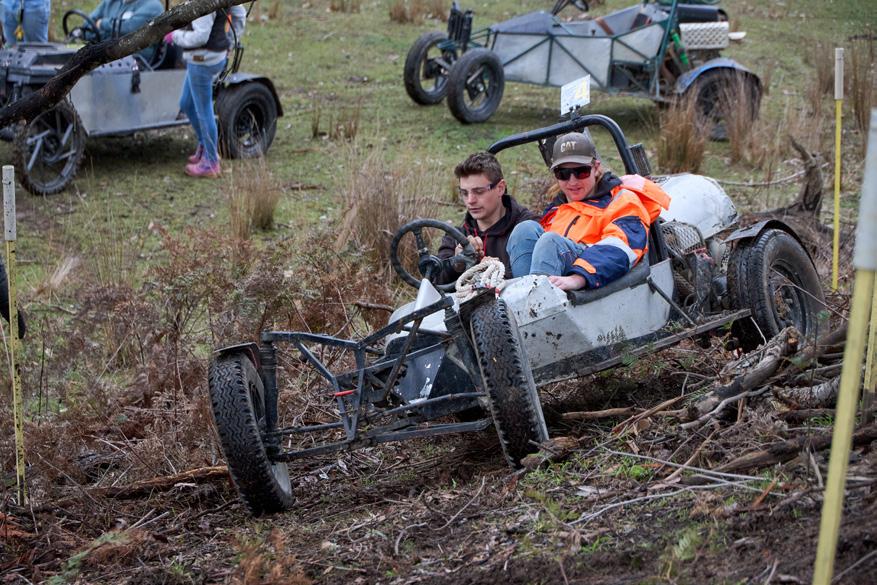
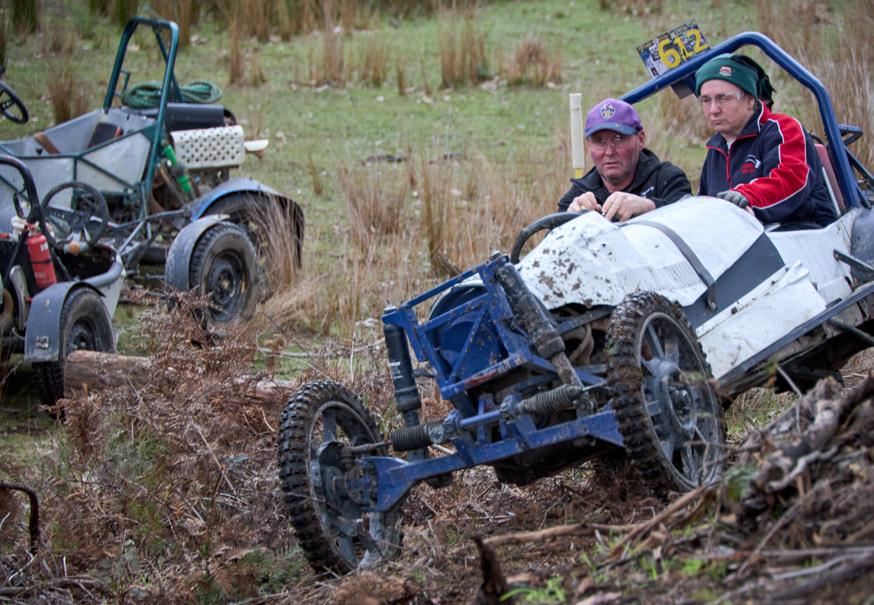
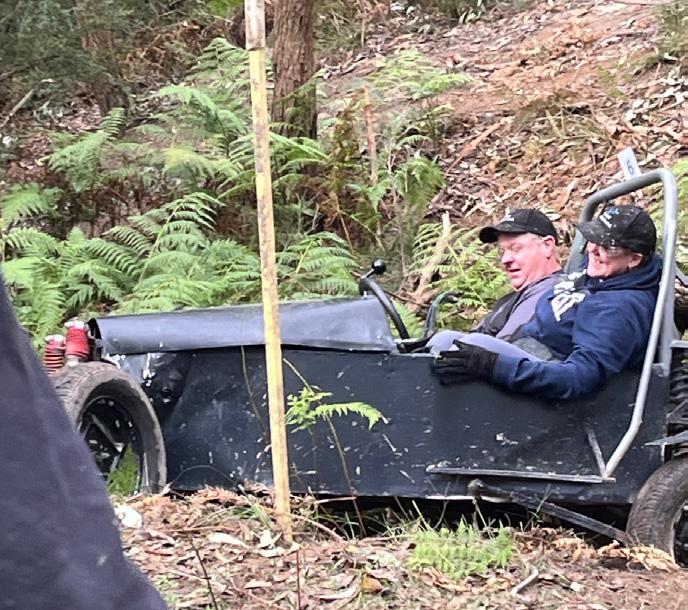
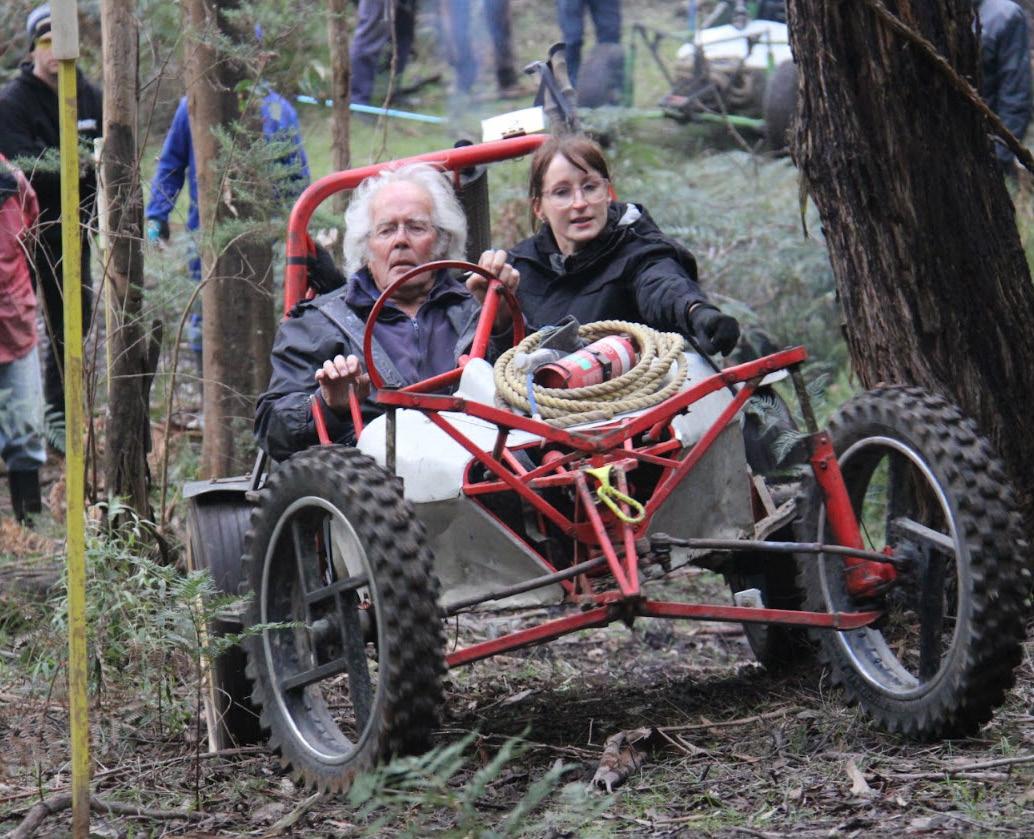
Observed Section Trials, Mud Trials, or Sporting Trials, as they are known overseas were introduced to Australia in 1950, shortly after the formation of the Austin 7 Club on 19 January 1950.
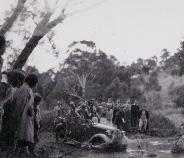
At first all the trials were held in the ‘wilds’ of Vermont, and later Blackburn, and finally at the Park Orchards Chalet. The first fifteen or sixteen annual events required the cars to be registered and to be driven from section to section along public roads in the area. The first 9 or so ‘Park Orchards’ trials were preceded by a ‘Mudlark’ which was a non-scoring ‘practice’ trial.
The sections themselves were usually signposted streets and roads - except that’s where the description ended. Sections were given names such as “Deep Creek” “One Old Road”, “Rabbit Hole”, Goulash”, “Ned Kelly” etc.
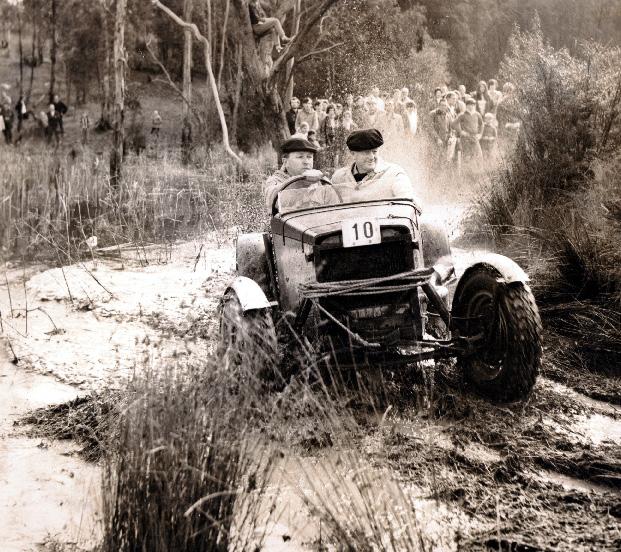
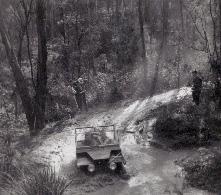
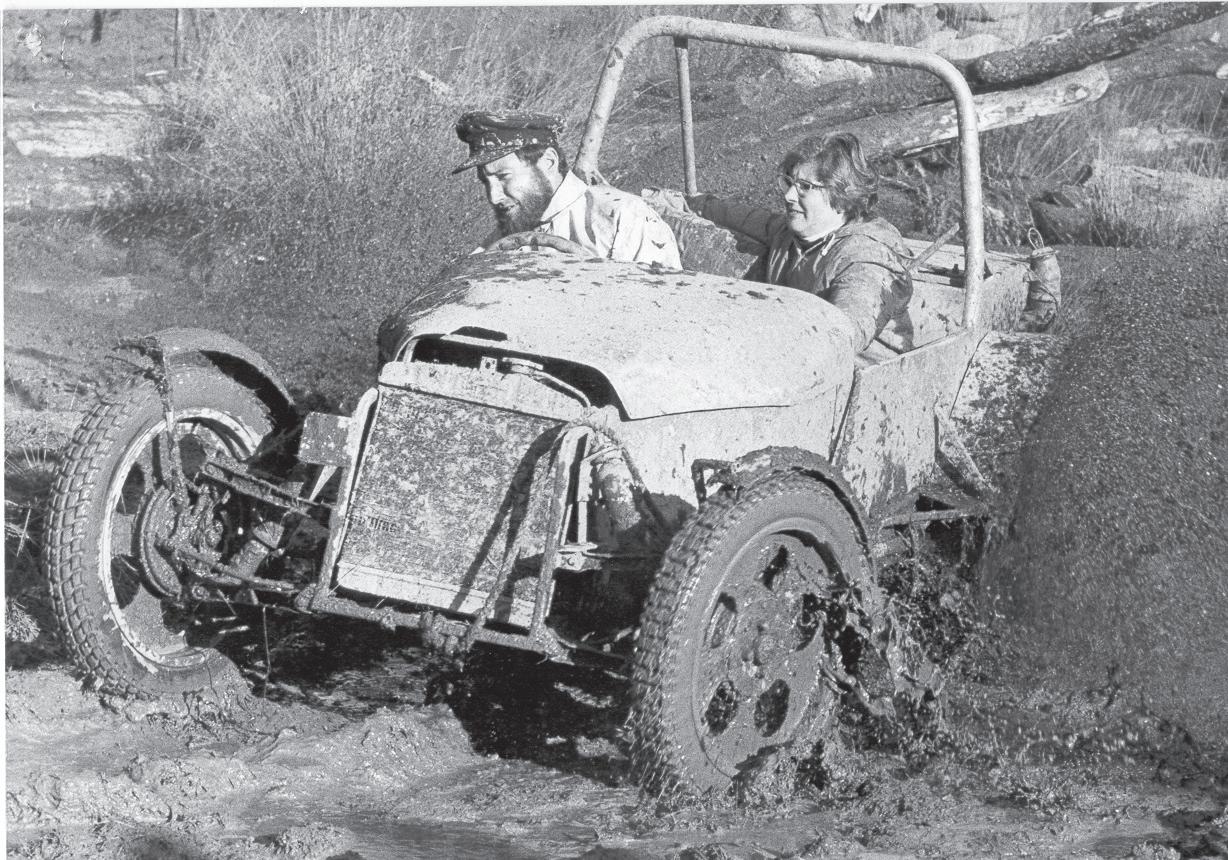
One such section, signposted at each end as Harris Gully Road was not then really a road but a swiftly running, sometimes deep creek. When droughts or other dry years occurred, the directors often would hire water tankers to ensure the area was as slippery as possible. The 100 acres, now Domeny Reserve in Park Orchards eventually became a regular Trials venue until the 25th Annual event after which pressure from local groups made alternative venues necessary.
From about 1957, for the next 10 years, the Mudlark morphed from a working bee, to almost entirely a non-scored trial. Then in 1969 became a scored OST.
From 1963, for many years during the 1960s the AMSC (Australian Motor Sport Club) also
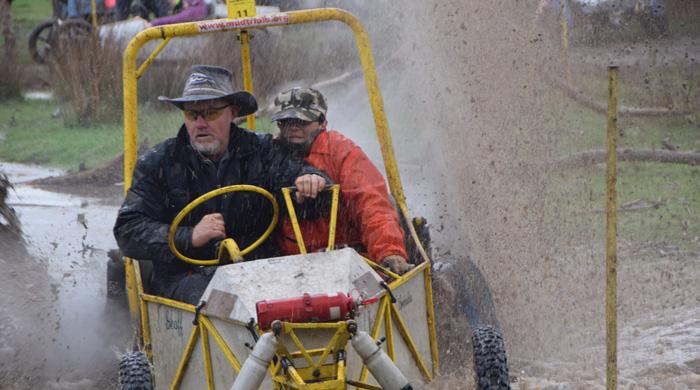
conducted an OST, the Bogaduck, mostly against Land Rovers, in which our members competed, usually in early July before the A7C Mudlark.
1964 saw the initial introduction of Lakelands as a venue, with four Lakelands Mudlarks (working bees), followed by a Lakelands Closed OST, in August, then the 1st Lakelands Open OST in September.
‘Newsreels’ shown in picture theatres often featured the ‘glamour’ and ‘drama’ of trials, especially the almost mandatory ‘Dam Crossings’.
In around 1960 the first extra trial was run at Lakelands in the precinct of the then Lakelands Hillclimb. Gradually more trials were added as venues were found and the events became popular.
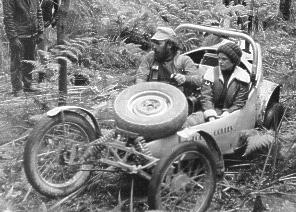
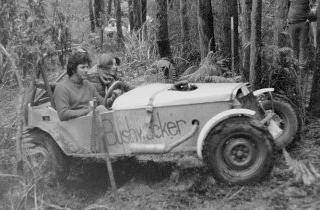
Although the ‘formula’ was always in place, a ‘production’ car class was run in the 50’s & 60’s which saw cars such as Bug-Eye Sprites and MG’s. ‘Specials’ ranging from merely removing the bodies of Austin 7s and Ford 10s to proper space framed devices were always popular and in around 1969, a downturn in interest prompted an addition to the Formula to include rear engined cars. Specifically VWs. Some angst followed the building of successful cars a few years later, but tweaking of the Formula eventually saw reasonable compatibility among the classes. OST Formula introduced in 1965.
Currently 12 trials, at many different venues are run, and the sport is considered a buoyant and still enjoyable amateur pursuit.
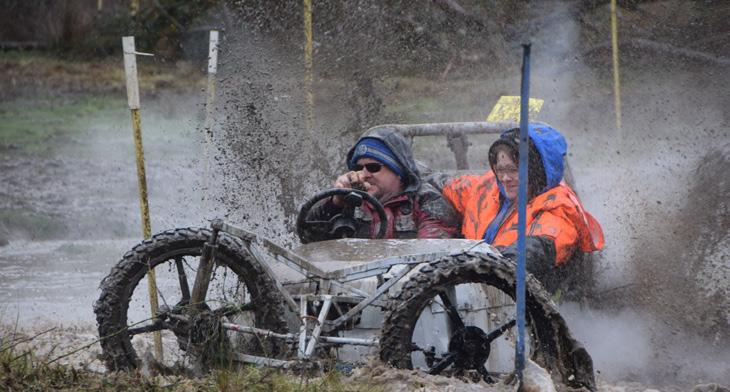
It is hard to believe that the sport of Observed Section Trialing is celebrating 75 years of activity in 2026.
Introduced by the late John Pryce when he arrived here from the UK it has grown from Austin 7 standard cars, thoroughly modified Austin 7s with ‘simple’ rules to specifically constructed Trials Cars with at least 20/25 competitors for the program of events that are held annually. The first trial was at Park Orchards, in what is now suburban Melbourne, with plenty of mud and water especially at Deep Creek Road.
Many notable Motor Sport competitors have been involved from the retired Secretary of the Confederation of Australian Motor Sport (“CAMS”), now Motorsport Australia, Donald K Thompson, the founding President of CAMS Maurie Monk, that doyen of racing team mangers Harry Firth to motor sport notables like Graham Hoinville and Bob Watson. Many past Presidents have also been keen competitors, such as Doug Veel, Graeme
Logan, Glynis Gibbons and Ian Wells as well Club Officals like Robert Humphreys, Dale Shaw, Geoff Taylor, Grant Campbell, Frank Walter, John Cox & Fred Undy, along with many of the Club’s other Life Members who have served the Austin 7 Club auspiciously.
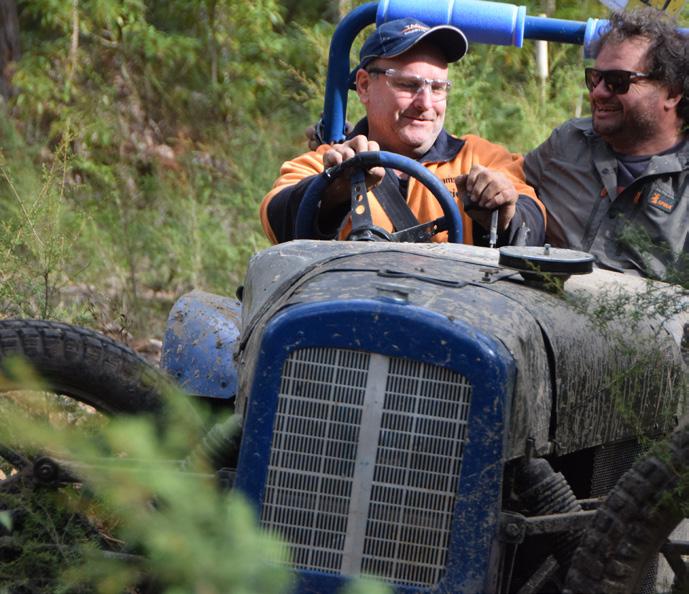
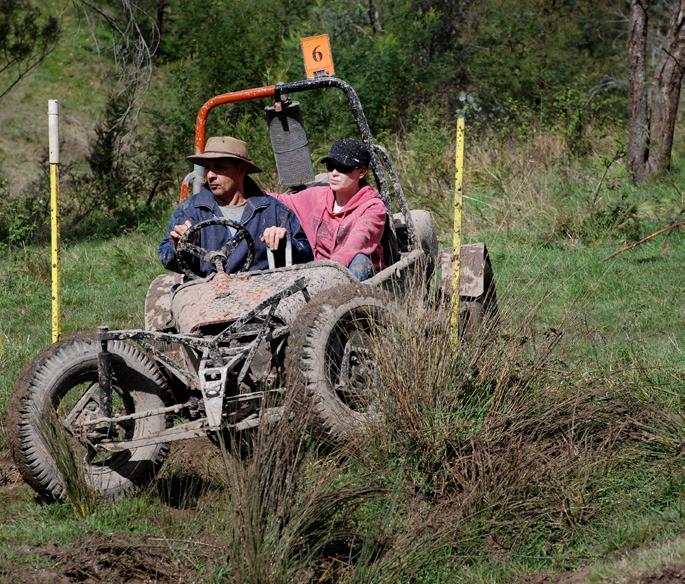
This aspect of motor sport would have to be one of the longest continuous activities that never seems to have lost the interest of competitors and car constructors. It is a family activity as the entry lists reveal the children of the early competitors actively involved. The constructors of the ‘Trials Special’ deserve special mention because they have continued the engineering prowess and innovation of which the Club is justifiably renowned and proud.
On behalf of the Club and its members I hope that all who attend the Dale Shaw and John Pryce Trials have an enjoyable time and many friendships are renewed as the older generation of ‘Muddies’ participate in these celebrations. It is a milestone that the Club is proud to celebrate.
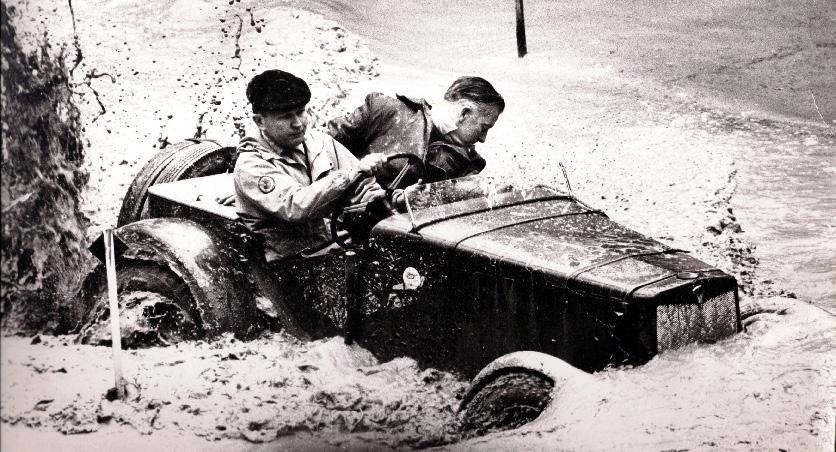
John was extremely active in all sections of the Club, but in particular with Observed Section Trials, which he introduced into the Club shortly after joining in 1950. John had competed in O.S.T.s in England, and continued to compete in Australia with participation from all members of his family. He served on committee from 1950 to 1958 and on the CAMS Track Safety Committee for a number of years.
Having been President of the CAMS Victoria State Council for some years, John was recognised with the CAMS Award of Merit. Oh yes, and he still had time to be the Competitions Manager of BP Australia. A notably affable and enthusiastic member, his passing was commemorated by renaming the Park Orchards Trial in his honour.
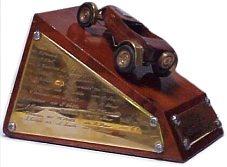
This trophy, was made and donated by Dale Shaw in 1977, as a perpetual trophy for the winner or winners of the annual Park Orchards Trial, the feature event in the trials calendar. This event was renamed the John Pryce Trial, in honour of its progenitor, on his passing.
1951 L.Francis 1970 Dale Shaw 1988 John Cox = 2006 Andrew Stritch
1952 Doug Veel 1971 Dale Shaw 1989 Terry Stritch 2007 Grant Campbell
1953 Alan Grosvenor 1972 Graeme Hoinville 1990 Greg Cox = 2008 Grant Campbell
1954 Doug Veel 1973 Dale Shaw 1990 Nick Wills = 2009 Grant Campbell
1955 Mick Bellair 1974 Dale Shaw 1991 Grant Campbell 2010 Grant Campbell
1956 Fred Thorne 1975 Dale Shaw 1991 John Martinali 2011 Grant Campbell
1957 Giff Dorman 1976 Dale Shaw 1992 Andrew Cox 2012 Grant Campbell
1958 Frank Walter 1977 Grant Campbell 1993 Andrew Stritch 2013 Ryan Blanche =
1959 Giff Dorman 1978 Don Hunt 1994 Andrew Cox 2013 Andrew Stritch =
1959 John Stevens 1979 Grant Campbell 1995 Grant Campbell 2014 Grant Campbell
1959 Stan Rodda 1980 Grant Campbell 1996 Grant Campbell 2015 Jesse Stritch
1960 Gavin Stringer 1980 John Cox 1997 Geoff Taylor 2016 Grant Campbell
1961 Neil Johannesen 1981 John Cox 1998 Nigel Newman 2017 Dean Hunt
1962 Neil Johannesen 1982 Grant Campbell 1999 Grant Campbell 2018 Ryan Blanche
1963 Stan Rodda 1983 John Cox 2000 Craig Hansen 2019 Geoff Taylor
1964 Nigel Tait 1984 Grant Campbell 2001 Grant Campbell= 2020 NA - Covid
1965 Ian Wells 1984 Peter Sortwell 2001 Sid Hirst (NZ)= 2021 NA - Covid
1966 Stan Rodda 1985 Adrian Dekker 2002 Grant Campbell 2022 Ryan Blanche
1967 Harry Firth 1986 Peter Hill 2003 Grant Campbell 2023 Stuart Schweiger
1968 Alan Smith 1987 Grant Campbell 2004 Grant Campbell 2024 Cooper Schweiger
1969 Graeme Hoinville 1988 Andrew Stritch = 2005 Grant Campbell 2025 Grant Campbell
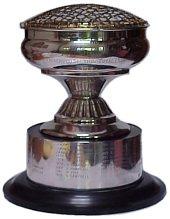
This trophy, donated by Geoff Taylor, is awarded to the winner of the O.S.T. Drivers’ Aggregate Competition. First presented in 1965, it is regarded as the Championship Trophy for Observed Section Trials
1965 W. McB Williams 1980 Grant Campbell 1995 Grant Campbell 2010 Grant Campbell
1966 Ian Wells 1981 John Cox 1996 Grant Campbell 2011 Grant Campbell
1967 Ian Wells 1982 Grant Campbell 1997 Grant Campbell 2012 Ryan Blanche
1968 Ian Wells 1983 John Cox 1998 Grant Campbell 2013 Grant Campbell
1969 Dale Shaw 1984 Grant Campbell 1999 Grant Campbell 2014 Andrew Stritch
1970 Dale Shaw 1985 Grant Campbell 2000 Grant Campbell 2015 Dean Hunt
1971 Dale Shaw 1986 Grant Campbell 2001 Grant Campbell 2016 Grant Campbell
1972 Graeme Hoinville 1987 Grant Campbell 2002 Grant Campbell 2017 Grant Campbell
1973 Bill Morling 1988 Grant Campbell 2003 Grant Campbell 2018 Grant Campbell
1974 Dale Shaw 1989 Grant Campbell 2004 Grant Campbell 2019 Grant Campbell
1975 Grant Campbell 1990 Terry Stritch 2005 Grant Campbell 2020 NA - Covid
1976 Ivan Bartlett 1991 Grant Campbell 2006 Grant Campbell 2021/2 Grant Campbell
1977 Grant Campbell 1992 Grant Campbell 2007 Grant Campbell 2023 Jesse Stritch
1978 Grant Campbell 1993 Andrew Stritch 2008 Grant Campbell 2024 Grant Campbell
1979 Grant Campbell 1994 Grant Campbell 2009 Grant Campbell 2025 Greg Cox
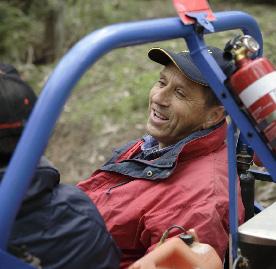
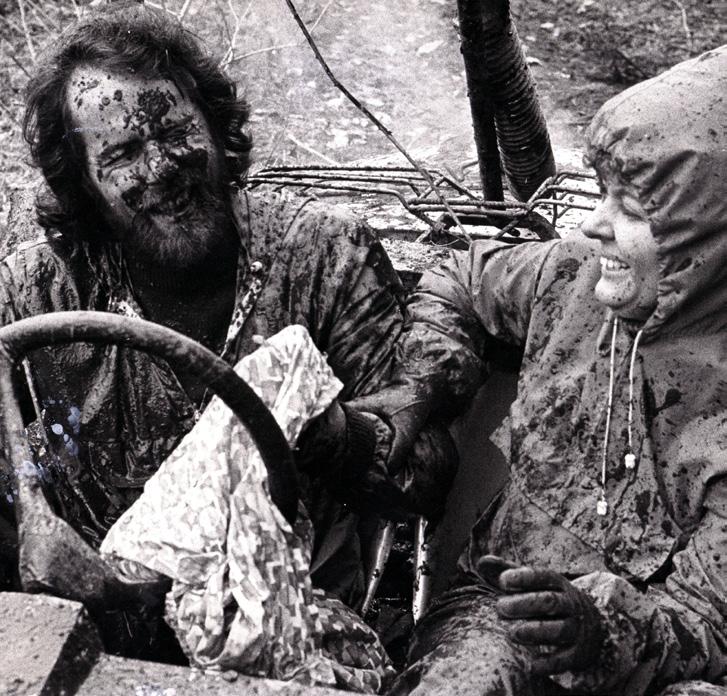
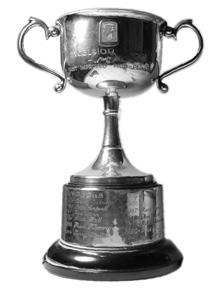
The late Donald K. Thomson donated this trophy in 1978. Don was a founder of CAMS, its Secretary General until his retirement, and an avid follower of OSTs and in his latter years a competitor in OSTs. The trophy is awarded to the most improved OST driver.
1978 Bob Booth 1990 Nick Wills 2002 Graham Moyle 2014 Dean Hunt
1979 Barry Osborne 1991 Eric Daffy 2003 Craig Hansen 2015 Stephen Della Bosca
1980 Peter Sortwell 1992 Eric Daffy 2004 Mark Filsell 2016 Grant Della
1981 Ken Venn 1993 Andrew Stritch 2005 Dean Hunt 2017 Stephen Della Bosca
1982 Alan Hall 1994 Geoff Taylor 2006 Grant Campbell 2018 Geoff Taylor
1983 Frank Klemencic 1995 Andrew Cox 2007 Paul Kane 2019 Stuart Schweiger
1984 Terry Stritch 1996 Geoff Taylor 2008 Ryan Blanche 2020 Not awarded (COVID)
1985 Peter Hill 1997 Not Awarded 2009 Eric Daffy 2021 Not awarded (COVID)
1986 George Peters 1998 Not Awarded 2010 Andrew Stritch 2022 Grant Della
1987 Kate Bartlett 1999 Tim Jackson 2011 Geoff Taylor 2023 Geoff Taylor
1988 Don Hunt 2000 Craig Hansen 2012 Tom Howard 2024 Declan Caldercoat
1989 Rinie Wiersema 2001 Not Awarded 2013 Grant Campbell 2025 Jake Filsell
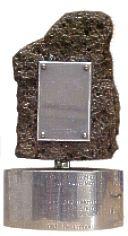
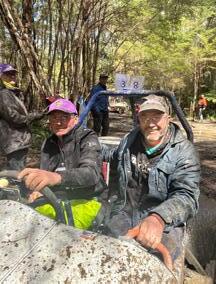
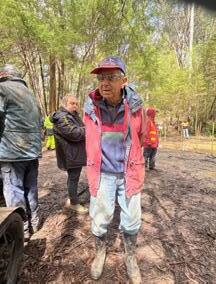
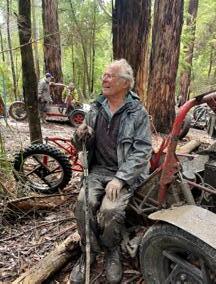
This trophy, otherwise known as The Rock, was donated by Grant Campbell as an encouragement award. It is scored as for the Drivers’ Aggregate, except that any previous trial winner is excluded, and any win achieved (or is that incurred?) during the season in question also renders the winner ineligible.
1983 Craig Moyle 1994 Keith Williamson 2005 Dean Hunt 2016 Stephen Della Bosca
1984 Craig Moyle 1995 Alan Peterson 2006 Greg Cox 2017 Grant Della
1985 Steve Mason 1996 Chris Muir 2007 Paul Kane 2018 Mark Filsell
1986 John Martinelli 1997 Chris Muir 2008 Ryan Blanche 2019 Cooper Schweiger
1987 Craig Moyle 1998 Dale Stevens 2009 Ryan Blanche 2020 Not Awarded (COVID)
1988 Brad Stritch 1999 Tim Jackson 2010 Gary Hawkins 2021 Mark Filsell
1989 Rinie Wiersema 2000 Kevin Hossack 2011 Tom Howard 2022
1990 Greg Cox 2001 Graham Moyle 2012 Tom Howard 2023 Geoff Taylor
1991 Phil Fitton 2002 Keith Mitchell 2013 Tom Howard 2024 Declan Caldecoat
1992 Andrew Cox 2003 Graham Moyle 2014 Tom Howard 2025 Nathan Hunt
1993 Phil Fitton 2004 Mark Filsell 2015 Michael Wiersema
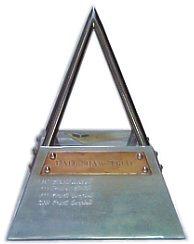
To mark the loss of one of the sport’s most influential and keenest constructors and drivers, this award was initiated in 1997. It was made & donated by his son-in-law, Andrew Stritch & his daughter Joanne.
1997 Grant Campbell 2005 Keith Mitchell 2013 Ryan Blanche 2021 NA - Covid
1998 Andrew Stritch 2006 Andrew Stritch 2014 Dean Hunt 2022 Ryan Blanche
1999 Grant Campbell 2007 Andrew Stritch 2015 Andrew Stritch 2023 Jesse Stritch
2000 Grant Campbell 2008 Andrew Stritch 2016 Grant Campbell 2024 Cooper Schweiger
2001 Grant Campbell 2009 Andrew Stritch 2017 Grant Campbell 2024 Stuart Schweiger
2002 Grant Campbell 2010 Ryan Blanche 2018 Andrew Stritch 2025 Greg Cox
2003 Grant Campbell 2011 Ryan Blanche 2019 Andrew Stritch
2004 Grant Campbell 2012 Grant Campbell 2020 NA - Covid
Every now and then a competitor may achieve a score on a section that no-one else can manage. To acknowledge that outstanding achievement, 'Section Winner' certificates are presented at the annual 'Presentation Night'. No record is kept.
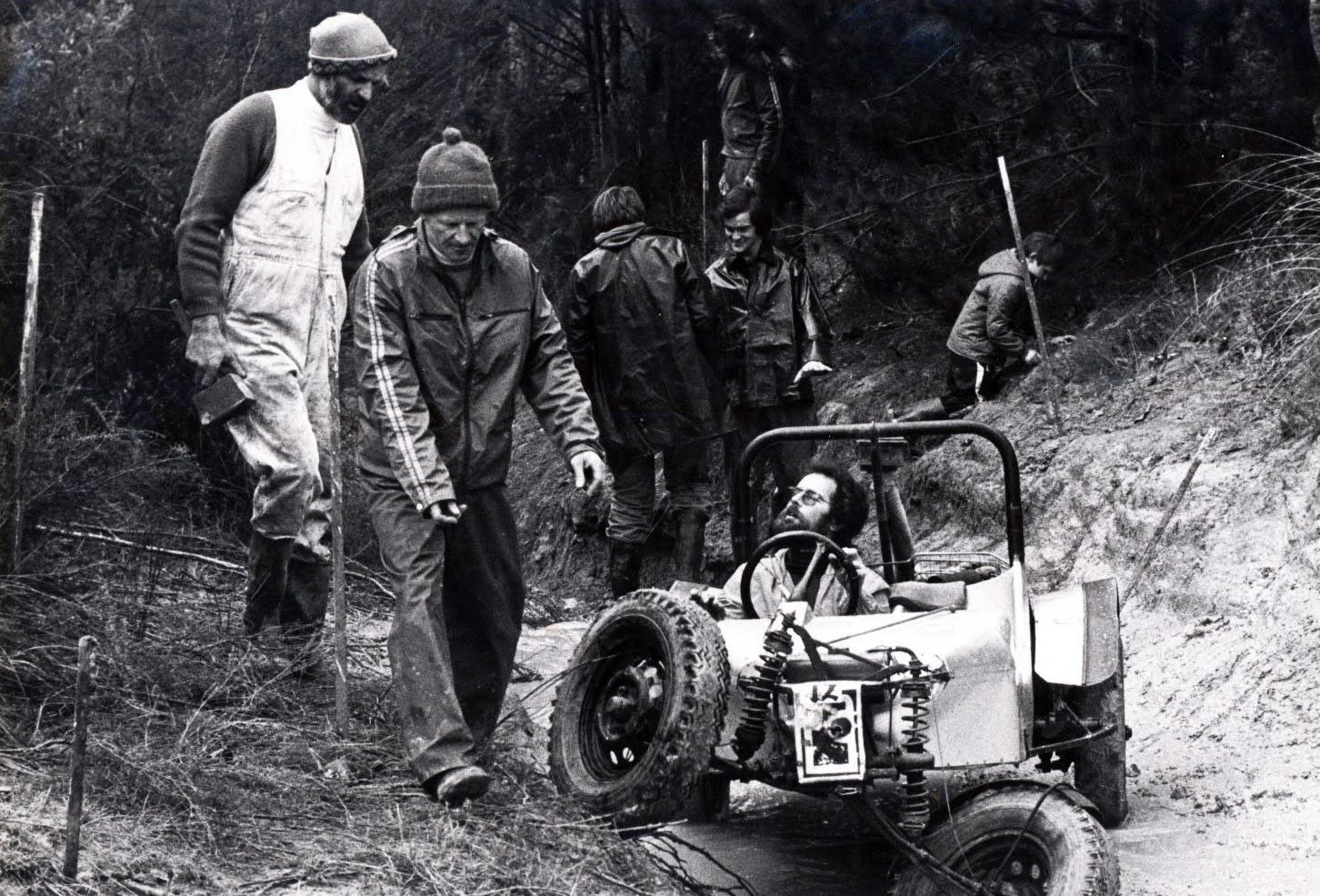
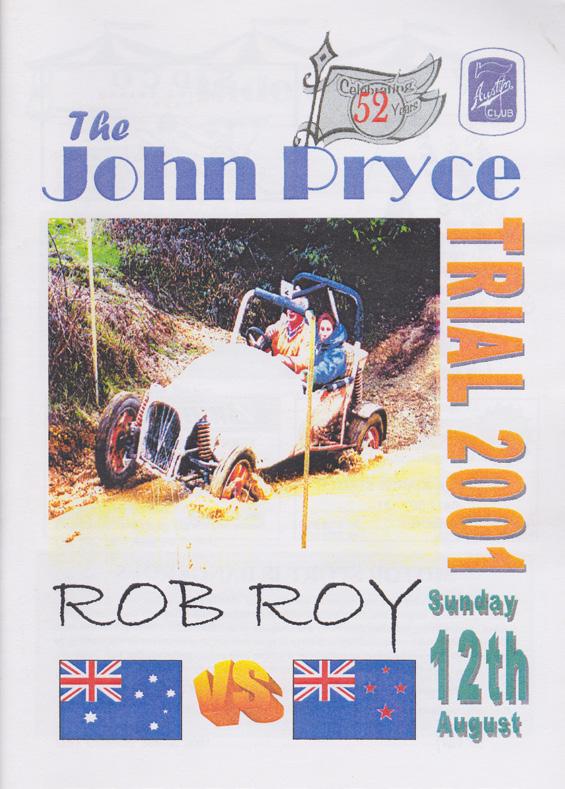
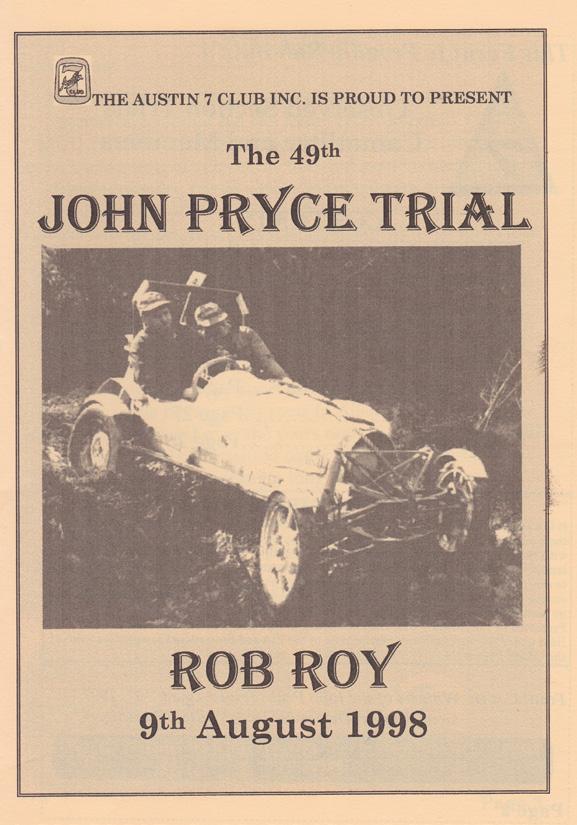
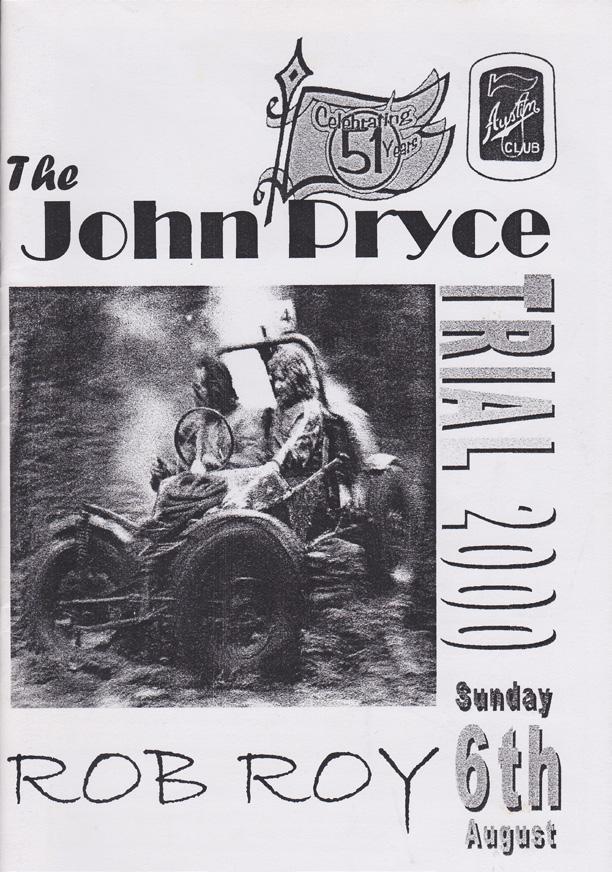
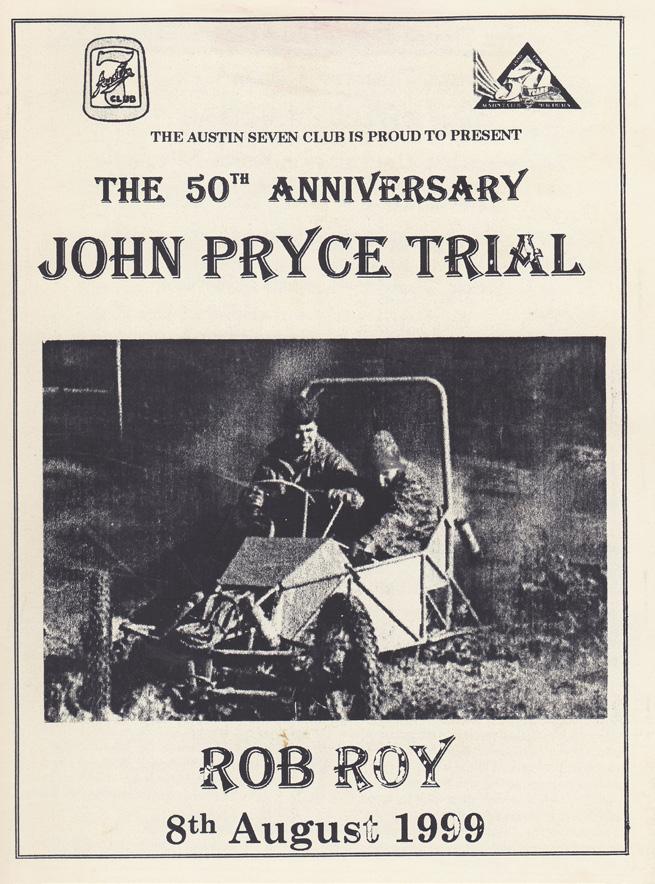
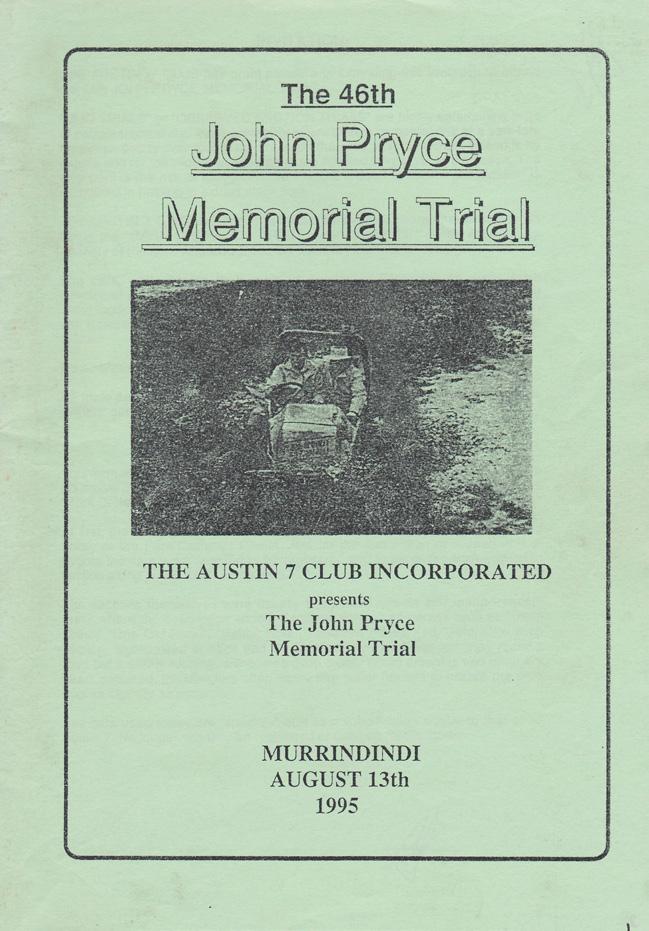
The Park Orchards Trial was named after the suburb in which it was held. The event was run on the second Sunday in August by the Austin 7 Club. It was a CAMS-permitted event, with up to six other car clubs invited to compete.
The Park Orchards Trials were renamed in honoor of John Pryce, who introduced the sport to Australia from England.
The trial was open to road-registered vehicles and was conducted on both public roads and off-road sections. The day usually began at the Park Orchards Chalet, where entries were taken, vehicles were checked for eligibility, and tyre pressures were set to 12 psi.
Competitors formed teams of three and travelled together throughout the trial. Spectators were provided with a map showing the locations of the observed sections so they could watch the action. At regular intervals, competitors were flagged away to drive to each section and inspect the course using their trial maps.
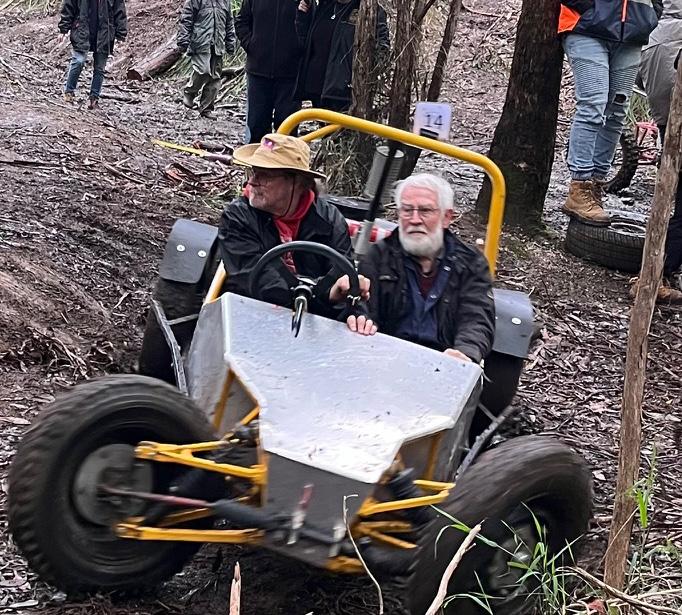
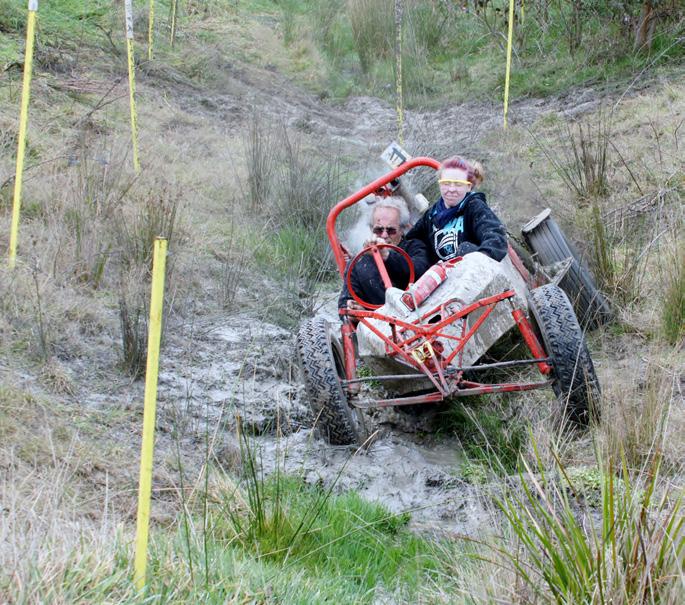
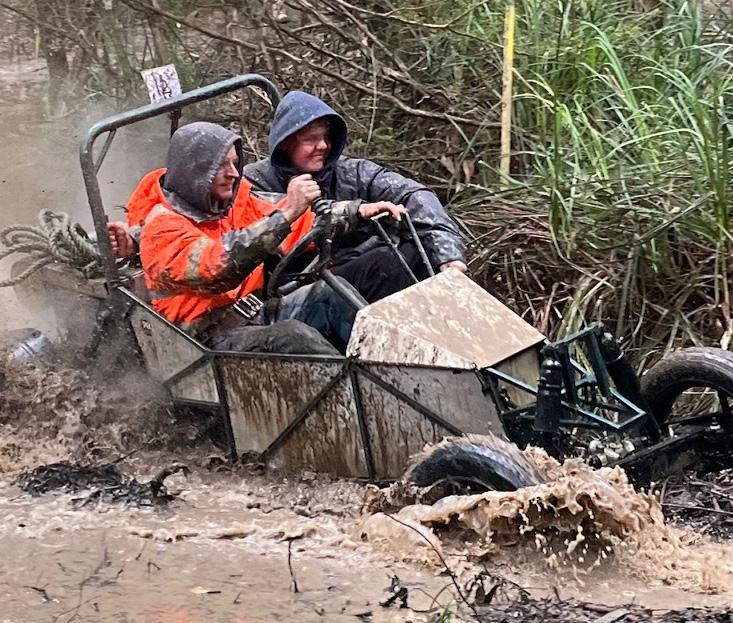
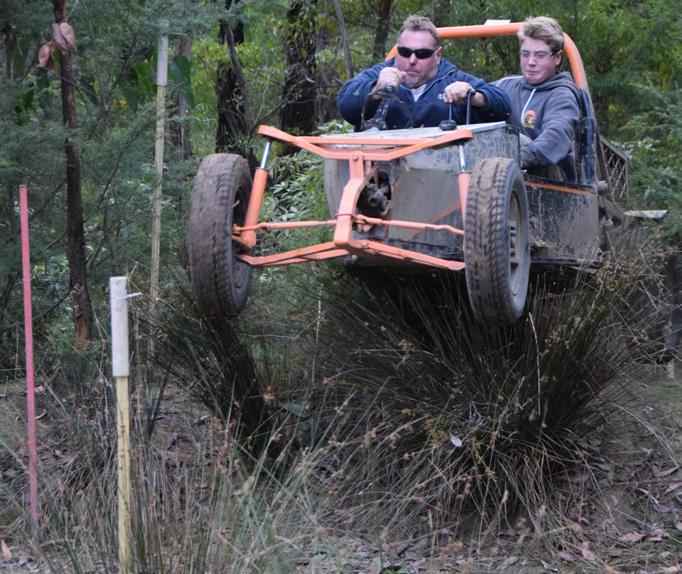
Once at the sections, the format was much the same as it is today. The sections consisted mainly of mud, water crossings and steep hills, with no sharp turns or obstacles requiring competitors to drive over trees.
After completing a section, the official recorded each competitor's score. Teams would then re-
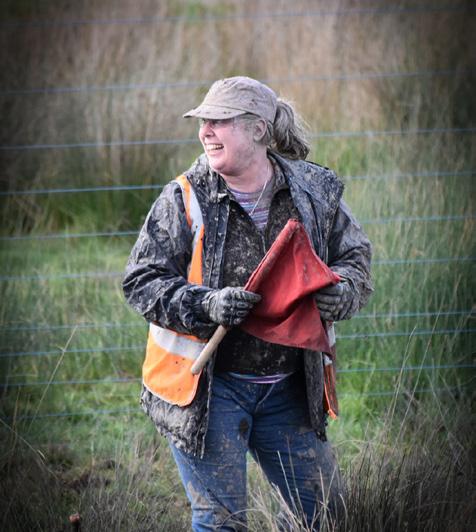
group before driving together to the next section. Each section had its own name, usually taken from the road on which it was located. Some of the better-known sections included Oban Road, Deep Creek Road, Tindals Road, Harris Gully Road, Beauty Gully Road, Tacoma Road and McIntyres Road.
The club's two-way radios were used by officials to communicate between sections, which was quite advanced for the time.
One particular section was often filmed by Channel 2 television crews for the Sunday night news. Lunch was traditionally taken at the top end of this section.
The Park Orchards Trial was the only Observed Section Trial conducted by the Austin 7 Club during the late 1950s. Many competitors favoured Goodyear Grasshopper tyres, which were well suited to the muddy conditions.
The observed sections were marked out with numbered gates, much like they are today.
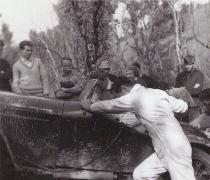
When called forward to compete, drivers would "bounce" their cars through the section while the observing official followed on foot. Bouncing the vehicle was an accepted technique, allowing the passenger to shift their weight to improve traction and help the car negotiate difficult obstacles. Seat belts were not in use at the time, making this much easier than it would be today.
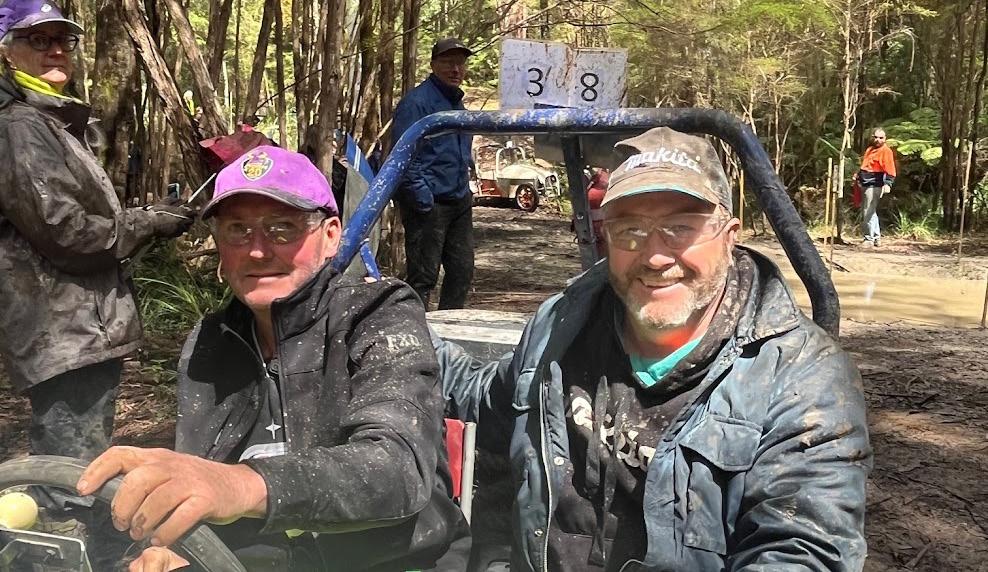
Observed Section Trials 75th Anniversary Not
I first wrote this for the Austin 7 Club History - 'Going Strong' and it tells a lot of the history of trials since I began in 1973, with a couple of updates since...
Introductions to Trialling invariably brings up the story of when Harry Firth turned up with a VW based machine - floorpan 'special' and in fact did quite well in it. Before my time though, and in fact more than fifty years ago.
However, as a direct result of Harry's involvement, and with a purely coincidental set of circumstances, I was able to get a good start in my trials career. As I understand it the trials scene had become a bit quiet so new competitors were being encouraged. Harry, in his usual style wanted to run his VW special, which, under the rules, as a rear engined car, wasn't allowed, so, simple, have the rules changed.
Brenda and I started trialling a bit over 53 years ago. My interest at the time was drag racing, bit expensive though, and we'd just more or less finished renovating our house, so when I saw
the article in The Age promoting what was then the Park Orchards Trial we went along for a look. Just what I wanted, having not quite convinced Brenda that drag racing was safe when we saw Graeme Withers total his AA Fueller at Calder a few weeks before.
A few chats with some of the guys at that Park Orchards trial saw me build a car from a stripped down Kombi, given to me as so much rubbish not very long before. All I did was remove the body, shorten what was left to the required length, fit a new body and that was it! Well, I added fiddle brakes by separating the handbrake cables and drilled another hole in the idler arm to speed up the steering. Pretty much the same as the A7 brigade. Took about 3 months and the next trial I saw was the first one I competed in. Came 10th as I recall. A couple of trials later, Park Orchards again, and we achieved a third place.
Only about 7 trials were held that year but I was encouraged enough to build another car. This time I knew better and built a proper
Campbell & Lori Filsell
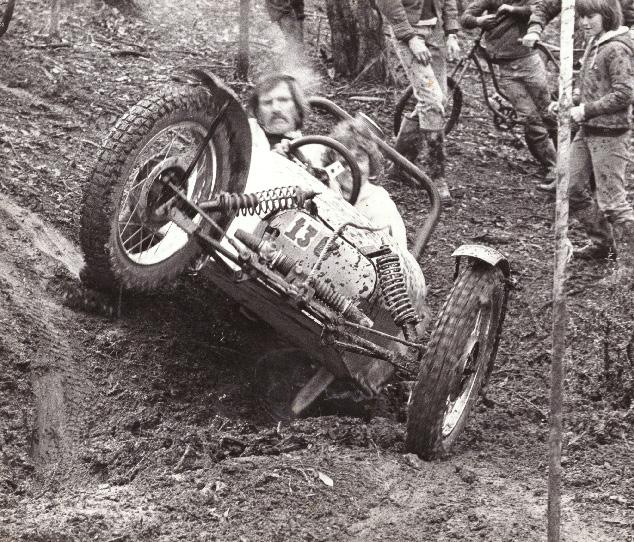
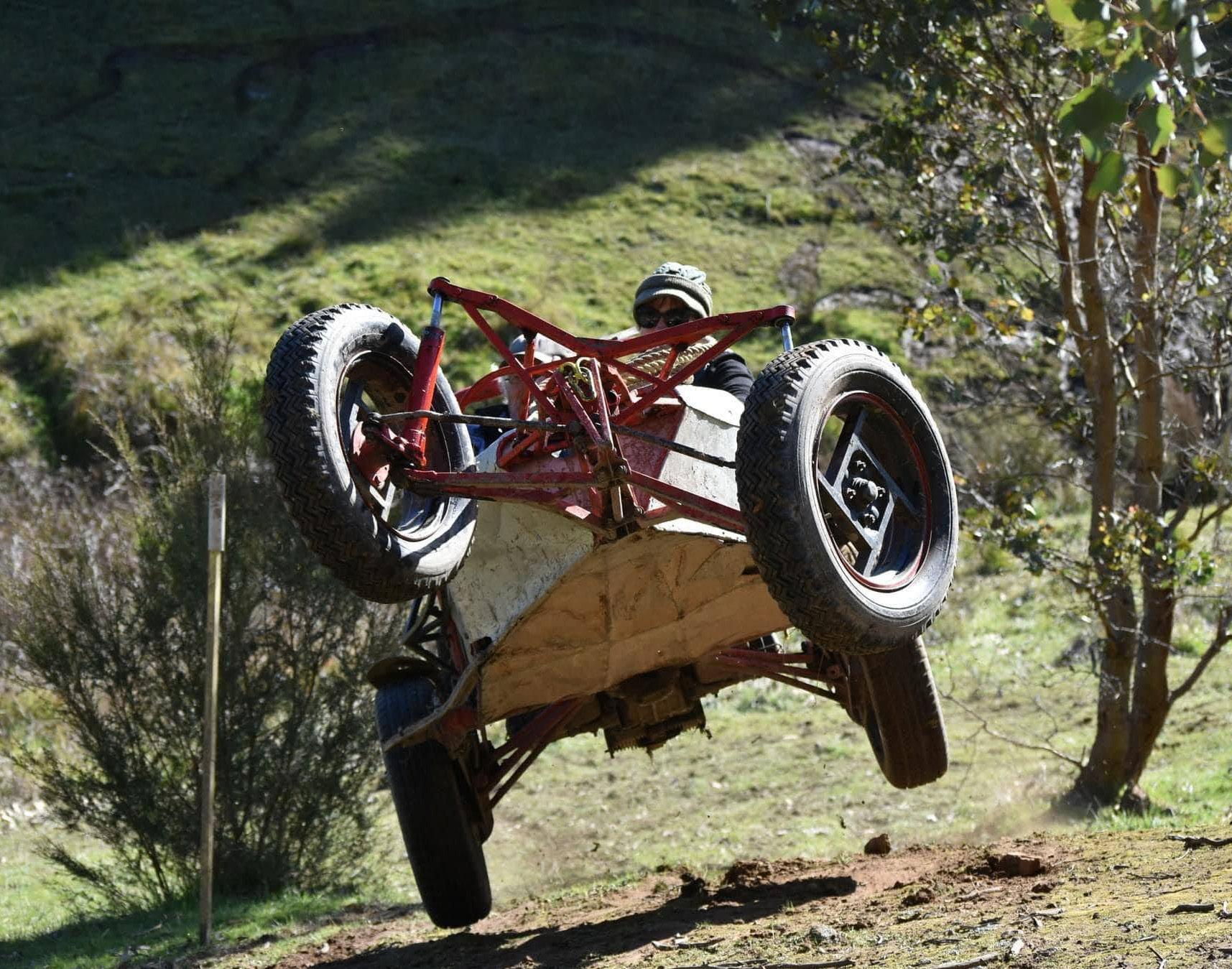
space frame, as much lock as possible, no roll resistance at all in the front, still with the Kombi rear end, bigger engine, better ground clearance etc. Aficionados were convinced the car was too light at the front to steer. Wrong! This car proved a real winner, winning 4 trials and coming second in 4, and fourth in the remaining trial. The winning streak continued for another 5 years in this car and although this got up the noses of some, it inspired many others to build similar cars. Resulting in about 17 new cars, some good, some not so good.
Notable special builders at that time were certainly Dale Shaw, famous for the 4 week Flyer (built in 4 weeks) and the 4X4 week flyer (built by 4 people in 4 weeks). Dale was the man to beat when we arrived and was an enthusiastic special builder, encouraging all who came near him. Later on he built 'The 'Lastic' Flyer, a front engined car using Bungy Cord as the suspension medium, worked through extra long, cantilevered trailing arms at the rear.
Barry Hudson, another clever guy who could weld aluminium cigarette tins, but rather less prolific builder. Took Barry 9 years to build what was essentially a Trials car, but more accurately a Road Tourer. Beautifully built, but not really a success as a trials car. Too nice to bash through the bush I thought. Barry though, often ran courses on welding aluminium and had a real handle on suspension geometry, as of course did Dale.
Other notables at the time were Graeme Hoinville and Maurie Monk. Graeme had at least three trials cars to his credit and Maurie maybe 4. Graeme's cars started as Ford 10 based specials while Maurie's cars were generally Datsun 1000/1200 based. I reckon these were probably more suited to Motorkhanas but served OK as dual purpose cars. Maurie's sons David and Paul very recently built a BMW motorcycle engined car, with all aluminium space frame. Very light but a bit delicate to date. They seem to have disappeared from the scene and I’m not sure what became of the car. Came across Paul at Historic Winton who tells me he still has the car. Hopefully he’ll get it going again soon. Then there was Bob Atkins who built a VW machine with a DeDion rear end, and standard VW front end, later converted to double wishbone front end by Don Smith. Bob, now 85 sought me out to see if I knew where his old car was, which I did as it happened, so he bought
it back in a fairly parlous state. Rebuilt it totally to a magnificent standard and now competes regularly.
Top of the tree as far a prolificacy though was Fred Undy. A real enthusiast and prepared to give his all for the trials, Fred would build a car at the drop of a hat. I'm not sure how many Fred had to his credit, maybe 8, maybe 10. Mostly rear engined. Built John Cox's 'Ferret Box', quite successful, a couple for his nephews/son in laws etc, one on contract - still around today. And of course Greg Cox's Subaru machine. His most ambitious was a 600cc motorcycle engined car. Very light, but keeping the thing on the rev band around 6000, when most of us were idling around at 2000rpm, was a beast to drive at any time.
Ivan Bartlett, a sometime colleague of both Bob Atkins & Barry Hudson, and a really clever engineer built one with a 36 inch track at the rear, no suspension at all, a rear Mazda engine, facing backwards, driving down to a normal facing diff via a triplex chain. Quite high at the back and topping this all off with a 'Butterfly' steering wheel, one turn lock to lock and the fiddle brakes operating off the Butterfly. Very tricky to drive and quite dangerous, but highly effective. No suspension, high CoG, narrow track etc, meant it would roll very easily which while just a bit nerve wracking for the competitors in the car, close proximity of spectators was a bit too iffy if they were rolled on! Ivan did win the Championship in it though. The rules were changed the following year to include a minimum track and I'm not sure what happened to the car after that. That said, Ivan’s first effort was the car that Greg Cox now owns but was made successful by Geoff Taylor with the aforementioned ‘droppers’ (reduction gears) These are fabricated units with a 3:1 reduction and chain driven.
The success of my own cars was put down to the Kombi reduction gears which gave the car considerable lift when the throttle was floored, much like the torque reaction achieved with the 'ideal length' torque tube/diff extension on an Austin 7. So followed a number of attempts to duplicate this effect by fitting 'droppers' to some cars, including front engined ones with varying levels of success. There's even some aluminium droppers around now. Effectively the droppers really only work at the instant the throttle is applied, so the technique is to know exactly
when to use this to gain maximum effect. Mostly, it resulted in the cars tipping over more easily, mine included!
The success of my car lead me to build several more for other competitors, a total of 4 complete cars and another 4 frame/front end combinations. Along the way a few clones were built, one of them by John Stevens who used to call by my house on the way home from work every day and take a few measurements. All good, except that when he went to sit in the car realised he was about 4 inches taller than me and couldn't actually fit! Whoops!
One interesting car was built by Ken Venn. He used a Morris 1100 turned round 180° so it would effectively drive backwards, but then added some home built droppers, inboard, thus reversing the drive so it drove normally. The engine was behind the rear axle, before the time 'mid engined' cars were allowed. Not sure what gears he used in them but the housings were carved from solid blocks of aluminium and they were less than half the size, and probably quarter the weight of normal VW units. Unfortunately various parts broke regularly and we never saw the car again.
Then there was Greg Caldwell who built a car that swivelled around an axis in the centre, all in the interest of keeping all four wheels on the ground. I think he only came to one or two trials in that.
Anyway, after winning the Championship (Geoff Taylor Trophy) six times in this car I decided to improve on things by building one with a full independent front end, as against a swing axle, and ditto the rear end. This car was a bit narrower than the other, somewhat lighter, better fiddle brakes (inboard discs) which also meant the car would still drive if I broke an axle or CV. Better engine and anything else I could think of. I won the first trial I entered by a margin of 40 points. Unheard of at the time.
The front end was based on Toyota Corolla struts, cut down by about 9 inches, with the whole lot pivoting in the middle via a beam, the back end full independent VW with inboard discs sandwiched between the CVs and using, at first, Honda motorcycle calipers, then Corolla calipers. I used cable operated drums on the other car/s so the discs were a huge advantage. No problems with water and mud in the drums, much less effort required, not to mention the weight saving! Those Kombi drums are seriously
heavy.
However, all this success really upset some and there was soon a move to ban rear engined cars. Of course I was in the thick of this, especially as the 'ban' wasn't really addressing rear engined cars, it was addressing me. No one else was having similar success.
Brenda lead the charge here by making some stickers... "If you can't beat them, ban them" and we ran a campaign over the ensuing few months with all the rear engined supporters writing articles in the Lightshaft promoting the virtues of RE cars. This culminated in a General Meeting to vote on what was to be our future. The gist of the meeting was, as is the case now, the lack of Special Builders and the meeting voted 5-41 in favour of rear engined cars being allowed to stay in the formula. Central to the argument on the night was John Bowring's support, to me personally, and to the trials as a whole, to the effect that at that time ideas were thin on the ground and up to the advent of successful rear engined cars, few specials were being built. So, anything that came up, albeit sometimes to the disadvantage of 'the establishment' should be wholeheartedly encouraged. Until then I only knew John by reputation, but I never forgot that! So, we pressed on and I'm not sure how long after that meeting, but it was deemed necessary to allow front engined cars to run flat tyres which gave them a massive advantage in traction, and which, in retrospect wasn't quite the right thing to do. Overseas trials have 'x' pressure days so that it is an executive decision what pressure will be used at any particular trial.
As in any form of motorsport, F1 downwards, tyres are the absolute key to performance. Trials are no different and flat tyres add at least 50% surface area to the ground and clear mud much better due the flexing. However they also break up easier, make life difficult on sideways slopes and don't turn all that well. I know people who spend $3000.00 a meeting on their Porsche tyres but we don't want to head down that track. I expect a set of tyres to last at least two, maybe three seasons, not one trial!
Along the way there's been a couple of attempts to circumvent the rules with the tyre situation, worth mentioning just for the innovation, if not for the cheating aspect. One guy (and I won't mention their names) tried a piece of ¾ copper tube inside the tyre, carrying the required 12psi, so looked OK when tested by the scrutineers,
but in reality would only work once. Then there was the guy who would wrap the tubes in canvas so it really did hold 12psi but effectively the actual tyre had zero pressure. The rules say the tyres can contain air only (ie, not more tyres!). Front engined cars are allowed to use tyres within tyres ala dragsters, but cannot have 'traction aids' within them, ie knobby tyres, cleats etc. That's a whole new exercise, working out ways to hold the tyres on the rims.
Another few really nice specials have been built by Jeff Newman. The first, a front engined car utilising a Honda S600 Sports car back end which uses 18inch long chain drives from the diff to the back axles, more or less giving that elusive 'lift' and thus traction. This car was quite successful but again, suffered from a small engine - Jeff used one with less than 850cc to take advantage of the shorter wheelbase allowed. Undaunted Jeff then built a Toyota 4AG engined machine, massive power for a trials car, and mid engined into the bargain. Works well, but occasionally suffers from some torque steer, a consequence of one really long and one really short back axle. Current driver Nathan Hunt now campaigns that car.
Jeff's last car is a real winner, based on the current UK, NZ design, the car uses a late model East - West Honda engine, mounted in the front but transposed North-South, diff locked up and driving through one side of the diff to the rear. Takes advantage of flat tyres and can use 60:1 first gear and upwards. Very light and hugely competitive in Andrew & Jesse Stritch's hands.
Interesting story here: Terry Stritch, Andrew's father, had me build him a frame and front end some time ago in an effort to beat me. Same design except Terry used an Alfa Sud motor. Nice revvy motor but probably a bit heavy. That aside, Terry did find himself in a position to beat me for the Geoff Taylor (Championship) Trophy but unfortunately in the middle of the season found he needed a heart by-pass operation. So, undaunted by this Terry arranged to have his operation immediately after one trial, miss only the next, then return to competition about a month later. Real dedication! Terry went on to win the Trophy that year. If you're going to be beaten, who can argue with that.
Likewise Ryan Blanche, who won the Geoff Taylor Trophy in 2012 virtually pioneered the same East-West, North-South design in
Australian trials, but always drove in a calm, thoughtful manner. Didn't run particularly flat tyres, didn't have anywhere near the power of Andrew's car, just 'had it' as far as technique went. I reckon he may have won a lot more with just a tad more reliability in the car. Mentioned above, Geoff Taylor first presented a trophy in his name to 'The Winner of the OST Drivers Aggregate Competition' in other words, Championship. Geoff continued to trial successfully in that car built originally by Ivan Bartlett - the 'Buggerati' named because of it's close resemblance to a Type 35 Bugatti, now heavily modified to include 3:1 chain drive droppers, giving it similar gearing and climbing abilities to those EW NS cars. Greg Cox has since acquired that car and is now the man to beat. The very latest car, only seen about twice so far, is a full auto machine built by Stuart Schweiger, we hope to see it in full action soon! In closing I reckon any form of motorsport where one, me, can keep winning in the same car for more than thirty years has to be good. Moreover the camaraderie that exists in the trials now is second to none. I love the fact that I am competing against a third generation of guys who I competed against 50+ years ago. Long may it continue!
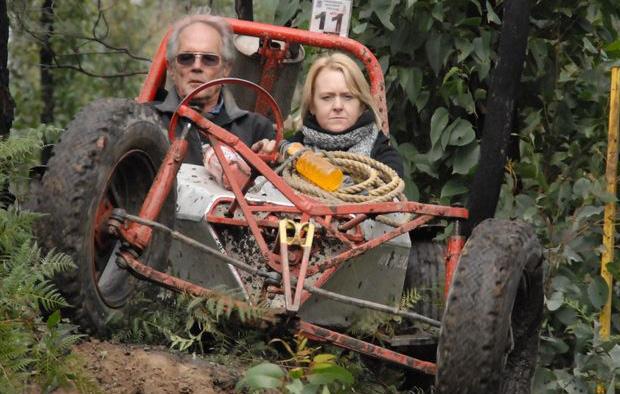
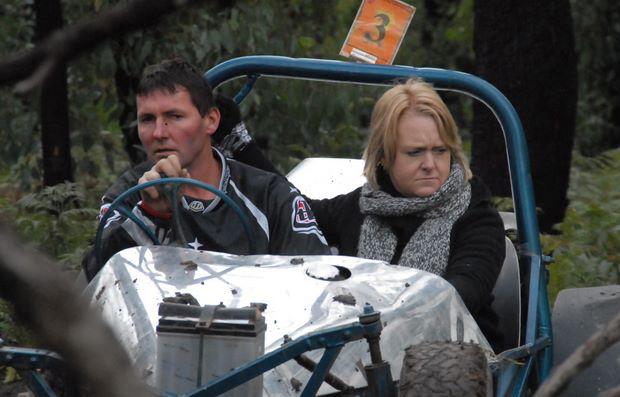
Grant & Steph & Greg & Steph
Observed Section Trials 75th Anniversary
Observed Section Trials 75th Anniversary
75 years 75 years
60 years