When the Soil Is Disrupted: Persistent Pruritus, Inflammation, and Layered Scalp Stress in an Active Adult With Frontal Alopecia
A Barber Trichology Informed Case Study on Interpreting Scalp Instability Through Environmental, Physiological, Mechanical, and Inflammatory Signals
Website www.terkquois.love
Case Study Library issuu.com/terKQuois
Thought Leadership medium.com/@terKQuois
By terKQuois loVe, Barber Trichologist
Board Certified Holistic Health Practitioner
When the Soil Is Disrupted: Persistent Pruritus, Inflammation, and Layered Scalp Stress in an Active Adult With Frontal Alopecia
A Barber Trichology Informed Case Study on Interpreting Scalp Instability Through Environmental, Physiological, Mechanical, and Inflammatory Signals
Case Overview
By the time you notice the hair, the scalp has already been talking.
This case examines scalp disruption in an active adult where persistent pruritus, dryness, tightness, flaking, inflammation, shedding concerns, and frontal alopecia occurred within a layered context of environmental exposure, systemic inflammation, metabolic factors, grooming behaviors, and ongoing dermatologic care.
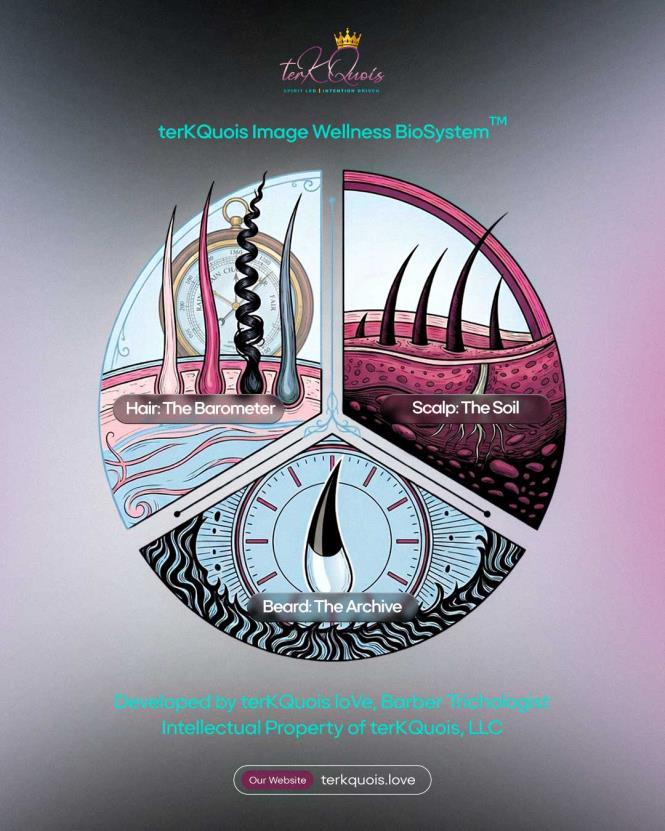
Within the terKQuois Image Wellness BioSystem™:
Hair is the barometer of health
The scalp is the soil
The beard is the archive
Core Principle
The scalp environment often reveals disruption before significant hair change becomes obvious.
This case study is presented as part of Rooted Part 2: A Scalp Wellness Series within the Image Wellness Case Study Series.
Client Profile
Female
Age 60
Professional Career
Active lifestyle
Moderate exercise routine including weights, cardio, and brisk walking
Post-menopausal
Previously diagnosed frontal alopecia, type unspecified
Dermatologic care established
Active inflammatory management, including prior scalp injections
Diabetes is managed with insulin and Mounjaro
Autoimmune history including Crohn’s disease with Stelara use
Cardiovascular medication support noted
Family history positive for hair loss
Current use of minoxidil 5%
Hair and Grooming History
• Natural hair
• Minimal residual color grown out
• Protective styling
• Low manipulation routine
• Frequent brushing
• Combing every few days
• Dry detangling practices reported
• Rootly shampoo and conditioner use
• No routine deep conditioner reported
• No routine leave-in conditioner reported
• Use of VO5 and Rootly hair taffy
• Daily infrared treatments reported prior to care plan
Scalp Observations
• Persistent itching/pruritus
• Tight scalp sensation
• Flaking
• Dry scalp presentation
• Frontal thinning
• Surface scaling and buildup
• Red or inflamed scalp symptoms reported
• Shedding concerns
Additional Observations
• Eyebrow thinning concerns
• Client provided hair sample for observational review
• Dermatologic management ongoing
Presenting Concerns
Client presented with:
• Persistent itching/pruritus
• Frontal thinning
• Dry scalp presentation
• Tightness and flaking
• Increased shedding concerns
• Mechanical breakage concerns
• Eyebrow thinning concerns
Multiple scalp stressors were identified. Hair loss was not the only signal present.
The scalp environment changed first.
This case reinforces that scalp discomfort itself may become a driver of behavior change, influencing manipulation frequency, cleansing habits, product use, and mechanical stress exposure.
Observational Findings
Visual, trichoscopic, and manual assessment revealed:
• Frontal and temporal density reduction observed
• Diffuse density reduction across the frontal scalp
• Visible surface scaling and buildup
• Dry, reactive scalp environment
• Localized erythematous region observed
• Follicular openings visible in multiple areas
• Miniaturized hairs observed
• Mixed shaft diameter presentation
• Mechanical stress from dry manipulation practices
• Protective style present
• Frequent brushing behavior noted
• Mixed curl patterns present
• Inflammatory symptoms ongoing
No visible scarring was noted during observation. The pattern suggested scalp instability rather than isolated hair change.
A visible volume increase was noted after the first trichology session, with continued monitoring recommended. This observation is documented as an early response pattern and not as a guaranteed treatment outcome.
Hair Sample Assessment
The client provided hair samples for observational assessment. The sample demonstrated variable strand lengths, mixed diameter presentation, and features suggesting combined shedding and mechanical breakage contributions rather than uniform shedding alone.
When the Soil Is Disrupted: Persistent Pruritus, Inflammation, and Layered Scalp Stress in an Active Adult With Frontal Alopecia A Barber Trichology Informed Case Study on Interpreting Scalp Instability Through Environmental, Physiological, Mechanical, and Inflammatory Signals
Hair behavior appeared influenced by dry manipulation, frequent brushing, existing scalp instability, and an inflammatory environment. This distinction is important because perceived shedding may increase when broken fragments and naturally shed hairs are observed together.
Relevant History
Multiple contributing factors were identified:
Physiological and Medical Factors
• Diabetes with glucose-regulating medications
• Crohn’s disease history
• Medication exposure, including insulin, Mounjaro, Stelara, atorvastatin, and other reported medications
• Post-menopausal status
• Longstanding intermittent alopecia
• Family hair loss history
• History of inflammation patterns
Environmental Factors
• Exercise participation
• Repeated sweat exposure
• Indoor employment environment
• Frequent walking and strength training
• Daily infrared use reported prior to care plan
Mechanical Factors
• Dry detangling practices
• Frequent brushing
• Combing every few days
• Manipulation while hair is insufficiently hydrated
• Protective styling
Routine and Product Factors
• Rootly shampoo and conditioner use
• VO5 and Rootly hair taffy use
• No reported deep conditioner use
• No reported leave-in conditioner use
• Current topical minoxidil use
• Product layering and buildup considerations
These layered influences were considered during assessment.
When the Soil Is Disrupted: Persistent Pruritus, Inflammation, and Layered Scalp Stress in an Active Adult With Frontal Alopecia
A Barber Trichology Informed Case Study on Interpreting Scalp Instability Through Environmental, Physiological, Mechanical, and Inflammatory Signals
Visual Assessment Summary
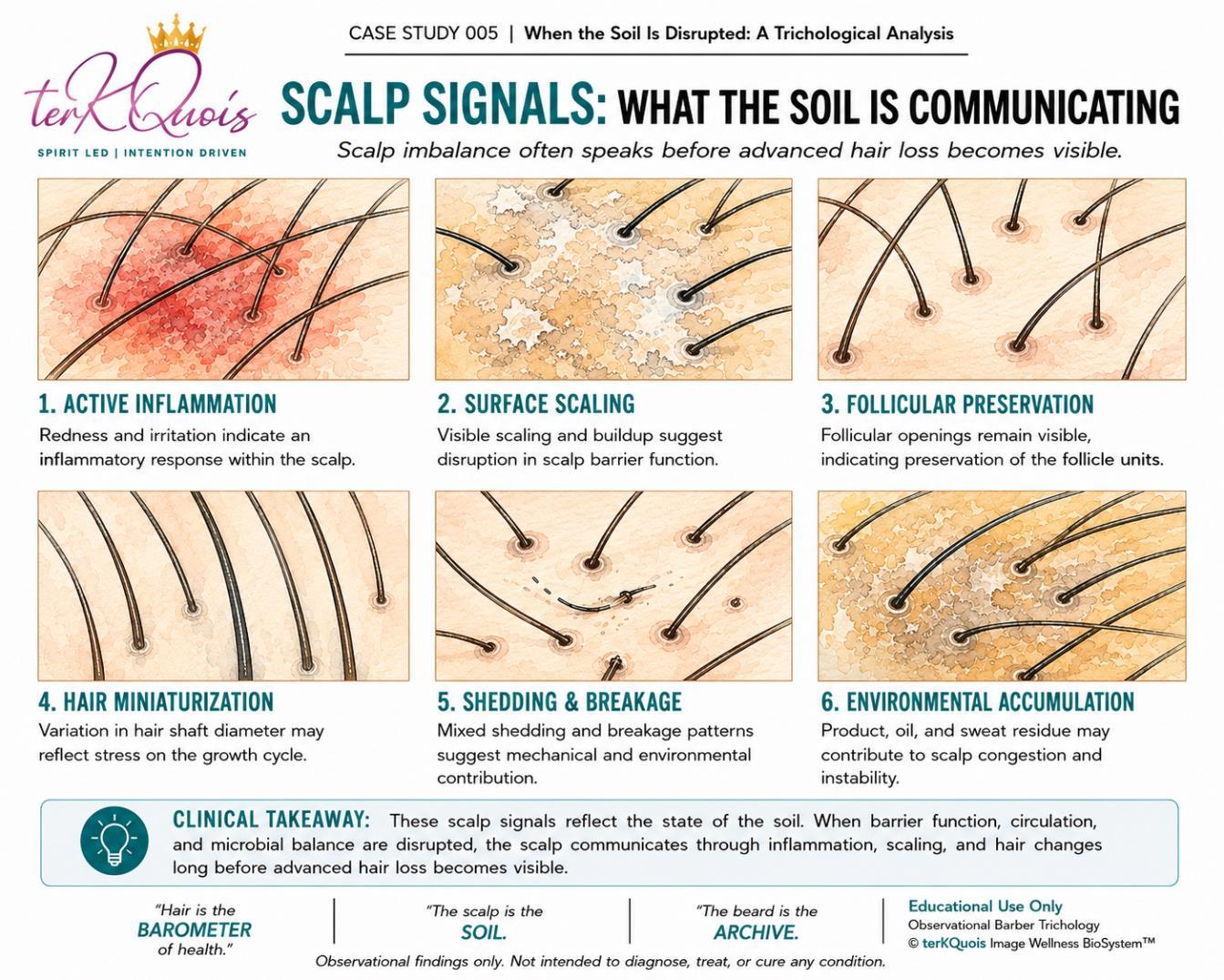
During observational assessment, several scalp signals were identified that supported the client's reported symptoms of itching, flaking, shedding, and frontal thinning. The following visual illustrates key scalp findings and reinforces the principle that scalp disruption frequently becomes visible before advanced hair loss develops.
Layered Stressors Identified
Multiple variables were present. This table shows how each category influenced the scalp environment and created layered disruption. Category
Environmental
Moderate exercise: weights, cardio, brisk walking; sweat exposure
Physiological Post-menopause, diabetes + insulin + Mounjaro, Crohn’s + Stelara, cardiovascular meds, active inflammatory management
Sweat retention and limited removal may compromise barrier function, increasing irritation and microbial load during repeated exposure cycles
Systemic inflammation and metabolic shifts alter sebaceous activity and wound healing, lowering scalp resilience to mechanical/environmental stress
Mechanical Dry detangling, frequent brushing, daily infrared treatments, combing every few days
Routine/Product Protective styling, no routine deep/leave-in conditioner, VO5, Rootly hair taffy, limited moisture during manipulation
Manipulation during dry, inflamed states compounds microtrauma; thermal exposure may further dehydrate the outermost scalp skin, increasing fragility
Product buildup + inadequate hydration disrupts moisture-oil balance, reinforcing the itch-scratch cycle and surface scaling
Dominant Signals
Not all variables carry equal weight. For teaching clarity, these were the primary drivers of immediate scalp discomfort in this case:
Primary Drivers
1. Inflammatory load: Crohn’s, Stelara, diabetes, prior scalp injections, and active dermatologic inflammation created a sensitized baseline. The scalp was already reactive before external stressors were applied.
2. Mechanical stress during dry states: Dry detangling + frequent brushing + daily infrared on an inflamed, poorly moisturized scalp produced the most acute pruritus and tightness reports.
Contributing Factors
Exercise/sweat exposure, protective styling, hormonal changes, product selection, and minoxidil use. These amplified or maintained the disruption but were not the initiating cause of daily discomfort.
Addressing primary drivers first creates space for contributing factors to be managed without overwhelming the scalp.
Signals Interpretation
This case reflects early scalp signals that developed alongside existing frontal alopecia. The client reported persistent itching, dryness, tightness, flaking, and shedding concerns before significant changes in density became the primary focus.
These early signals included:
• Persistent pruritus
• Dry scalp presentation
• Tightness
• Flaking and scaling
• Inflammatory symptoms
• Shedding and breakage concerns
• Eyebrow thinning concerns
These findings reinforce the concept that scalp disruption may precede or accompany more advanced hair changes.
Within the terKQuois Image Wellness BioSystem™ , these signals represent disruption within the soil before the barometer fully reflects advanced change.
Assessment Considerations
Multiple layered influences were considered:
• Inflammatory history
• Metabolic influences, including diabetes
• Autoimmune history including Crohn’s disease
• Age-related hormonal changes
• Sweat exposure and activity level
• Dry manipulation and brushing behaviors
• Product layering and buildup
• Existing dermatologic diagnosis and treatment history
• Client-reported scalp itching, flaking, and inflammation
These factors suggested scalp disruption influenced by layered stressors rather than one isolated cause.
Diabetes may influence inflammatory signaling, wound healing processes, skin barrier integrity, and overall skin behavior, reinforcing the importance of evaluating scalp symptoms within broader physiological context. This is noted as an assessment consideration, not as a diagnosis or causal conclusion.
Key Insight
An unstable scalp environment often changes hair behavior before it changes hair quantity. Persistent pruritus, flaking, tightness, inflammation, and shedding concerns may reflect:
• Inflammatory activity
• Metabolic influences
• Mechanical stress
• Environmental exposure
• Routine-based disruption
• Scalp barrier instability
This case reinforces:
The scalp is the soil.
Focus: Calm the scalp before aggressive stimulation.
Professional Interpretation
Scalp disruption in this case appeared consistent with layered influences, including inflammatory activity, metabolic considerations, sweat exposure, manipulation practices, product buildup, and existing frontal alopecia.
Inflammation appears particularly relevant within this presentation. Inflammatory processes may alter scalp comfort, influence grooming behaviors, increase manipulation frequency, disrupt barrier function, and contribute to follicular stress over time.
Hair breakage associated with follicular inflammation may contribute to patchy or diffuse loss presentations, particularly when combined with repetitive manipulation practices and existing scalp instability.
Pruritus may represent more than discomfort alone. Persistent itching may function as a scalp signal influenced by inflammation, sebum imbalance, environmental exposure, barrier dysfunction, metabolic influences, dermatitis, or overall scalp instability.
Repeated scratching and dry manipulation may further increase mechanical stress and contribute additional follicular burden.
When the Soil Is Disrupted: Persistent Pruritus, Inflammation, and Layered Scalp Stress in an Active Adult With Frontal Alopecia
A Barber Trichology Informed Case Study on Interpreting Scalp Instability Through Environmental, Physiological, Mechanical, and Inflammatory Signals
Dryness complaints do not always reflect moisture deficiency. Sebum imbalance, inflammatory activity, repeated sweating, environmental exposure, barrier disruption, metabolic influences, and persistent scratching behaviors may create presentations that feel dry while reflecting broader instability within the scalp ecosystem.
These layered factors support a multi-factorial interpretation rather than a single cause.
Scalp, Lifestyle, and Environmental Response
Exercise participation, sweating, protective styling, manipulation frequency, and product use may influence how scalp symptoms present and persist.
Sweat itself is not necessarily problematic. Retention, limited removal, irritation, and repeated environmental exposure may influence scalp comfort and stability.
Repeated disruption without restoration may contribute to ongoing discomfort patterns.
For active clients with textured hair or mixed curl patterns, the goal is not simply to wash more or wash less. The goal is to create a rhythm that respects sweat exposure, scalp comfort, moisture support, and mechanical protection.
Supportive Interventions Implemented
The client received two barber trichology sessions before publication.
Supportive interventions included:
• Violet light therapy
• Red light therapy
• Chamomile and witch hazel targeted scalp cleanse
• Cool steam therapy
• High-frequency wand therapy
• Targeted scalp hydration and oil support
• Structured grooming education
At-home support included:
• 5% topical minoxidil applied to affected areas
• Intensified oil blend applied to affected regions
• Reduced dry manipulation practices
• Education on manipulating hair during hydrated states
These interventions were implemented as supportive observational care rather than medical treatment. Early volume improvement was observed after initial sessions; however, individual responses vary, and growth is not promised.
When the Soil Is Disrupted: Persistent Pruritus, Inflammation, and Layered Scalp Stress in an Active Adult With Frontal Alopecia A Barber Trichology Informed Case Study on Interpreting Scalp Instability Through Environmental, Physiological, Mechanical, and Inflammatory Signals
terKQuois Image Wellness BioSystem™ Interpretation
This case reflects principles of the terKQuois Image Wellness BioSystem™, which recognizes that beard, hair and scalp changes may reflect broader physiological and environmental influences.
Hair is the Barometer of health
Hair reflected changes in manipulation practices, moisture balance, scalp discomfort, inflammatory activity, and mechanical stress rather than functioning as an isolated observation.
The Scalp is the Soil
Persistent itching, tightness, flaking, inflammatory activity, sweat exposure, metabolic influences, and environmental stressors suggested disruption within the scalp ecosystem influencing both comfort and hair behavior.
The scalp environment demonstrated multiple simultaneous signals rather than one isolated presentation.
The Beard is the Archive Framework maintained for Image Wellness consistency.
This case reinforces that scalp disruption may signal underlying imbalance prior to advanced density decline.
Scope Aligned Guidance
Supportive recommendations included:
• Encourage manipulation during hydrated states
• Reduce dry detangling practices
• Support moisture-balanced routines
• Improve scalp observation practices
• Continue dermatologic collaboration
• Reduce unnecessary mechanical stress
• Encourage structured scalp maintenance
• Monitor inflammatory changes
• Maintain product and routine consistency
When the Soil Is Disrupted: Persistent Pruritus, Inflammation, and Layered Scalp Stress in an Active Adult With Frontal Alopecia
A Barber Trichology Informed Case Study on Interpreting Scalp Instability Through Environmental, Physiological, Mechanical, and Inflammatory Signals
Aggressive stimulation is not recommended initially when the scalp remains reactive. Focus is placed on stabilization and monitoring.
Referral Awareness
Dermatologic management is ongoing.
Follow-up recommended if:
• Inflammation increases
• Thinning progresses
• Symptoms persist
• Affected areas expand
• Scalp discomfort worsens
• Shedding or breakage patterns increase
Collaborative care encouraged.
Limitations of the Case
• Existing alopecia diagnosis already established
• Alopecia type remains unspecified
• No biopsy review available
• Ongoing inflammatory treatment
• Multiple overlapping variables present
• Client is using minoxidil while receiving supportive trichology care
• Mechanical behaviors actively changing
• Early response observations cannot be attributed to one intervention
Monitoring recommended.
Educational Significance
This case highlights how scalp disruption may reflect:
• Inflammatory activity
• Metabolic influences
• Autoimmune history
• Environmental exposure
• Mechanical habits
• Grooming behaviors
• Hair handling practices
• Scalp barrier instability
When the Soil Is Disrupted: Persistent Pruritus, Inflammation, and Layered Scalp Stress in an Active Adult With Frontal Alopecia
A Barber Trichology Informed Case Study on Interpreting Scalp Instability Through Environmental, Physiological, Mechanical, and Inflammatory Signals
This case also demonstrates the importance of distinguishing true increased shedding from mechanical loss patterns when multiple stressors exist simultaneously.
The scalp frequently communicates before significant hair change occurs.
Sometimes the scalp does not whisper through hair loss first. Sometimes it speaks through discomfort.
Image Wellness Case Study Series
30 Minute Webinar: Saturday, June 13, 2026, at 12:30 pm
Rooted Part 2: What Scalp Disruption Reveals About the Body
Hair is a barometer of health
The scalp is the soil
The beard is the archive
Disclaimer
Educational use only
Not diagnostic or medical treatment
Observational barber trichology assessment
When the Soil Is Disrupted: Persistent Pruritus, Inflammation, and Layered Scalp Stress in an Active Adult With Frontal Alopecia A Barber Trichology Informed Case Study on Interpreting Scalp Instability Through Environmental, Physiological, Mechanical, and Inflammatory Signals
References
Callender, V. D. (2000). Common hair and scalp disorders in Black women. In B. Fletcher (Ed.), Why are Black women losing their hair? Unity Publishing.
Chandrashekar, B. S. (Ed.). (2023). IADVL textbook of trichology (2nd ed.). Jaypee Brothers Medical Publishers.
Davis-Sivasothy, A. (2011). The science of Black hair: A comprehensive guide to textured hair care. Saja Publishing Company.
Fletcher, B. (2000). Why are Black women losing their hair? Unity Publishing.
Gray, J., & Dawber, R. P. R. (1999). A pocketbook of hair and scalp disorders: An illustrated guide. Blackwell Science.
Johnson, A., Moy, R. L., & White, G. M. (2001). Ethnic skin: Medical and surgical. Mosby.
LoVe, T. (2026). Image Wellness Case Study Series. terKQuois. https://issuu.com/terkquois
LoVe, T. (2026). terKQuois Image Wellness BioSystem™: A framework for interpreting beard, hair, and scalp signals. terKQuois, LLC. https://www.terkquois.love
LoVe, T. (2026). terKQuois Image Wellness BioSystem™: Hair as the barometer, scalp as the soil, beard as the archive. Medium. https://medium.com/@terkquois
Madyun, T. (2000). What is trichology? In B. Fletcher (Ed.), Why are Black women losing their hair? International Institute of Trichology.
Michalun, N., & Michalun, M. V. (2010). Milady’s skin care and cosmetic ingredients dictionary (3rd ed.). Milady. Milady. (2019). Milady Standard Barbering. Milady.
Sinclair, R. D., Banfield, C. C., & Dawber, R. P. R. (2003). Handbook of diseases of the hair and scalp. Blackwell Publishing.
Williams, K. (2025, October 8). Hair as a barometer of health [Lecture]. Trichology Certification Program and Live Instruction, Mahogany Revolution.