Case Overview
Client Profile
Adult female in early forties
Teacher
Workout enthusiast with frequent perspiration during daily activity
Master Barber
Board Certified Holistic Health Practitioner
Business owner with extended work hours and occupational stress exposure
Relevant health history includes a neurological disorder that has required multiple medical procedures over time. The client has experienced periods of medical misdiagnosis and associated medication exposure. The client also reports a history of anesthesia related procedures connected to prior medical care.
Extended periods of physiological and emotional stress were present during portions of this timeline.
From a grooming and chemical history perspective, the client previously used chemical relaxers and wave nouveau systems earlier in life and reports frequent scalp irritation and burning during relaxer applications. For approximately the past twenty years the client has worn natural hair while periodically using high volume peroxide to achieve blonde coloration.
The client previously wore SisterLocs for over ten years and plans to transition back to microlocs within the next year.
From a mechanical perspective, the client has cut hair in the affected frontal region for approximately seventeen to eighteen years as part of professional barbering practice.
Additional environmental considerations include repeated cutting and shaping in the frontal region, high perspiration levels associated with physical activity and work conditions, localized trauma from a prior motor vehicle accident affecting the same region, and prolonged occupational stress.
These layered mechanical, chemical, environmental, and medical factors were considered when evaluating the localized follicular reduction and inflammatory scalp presentation.
Localized Frontal Edge Inflammation With Environmental Buildup and Repetitive Mechanical Stress A Barber Trichology Informed Case Study on Restoring Scalp Balance Before Density Decline
Presenting Concern
The client reported tenderness, visible redness, and sensitivity concentrated at the front left edge region. There was concern regarding potential density reduction if the scalp environment remained compromised.
The client also noted persistent sweat accumulation in the area throughout the day due to physical activity, hormonal influences, and occupational demands.
Observational Findings
Assessment revealed:
• localized erythema at the front left edge region
• sensitivity to light palpation
• signs of perspiration related environmental buildup
• early density reduction within the inflamed region
• no visible scarring
• no evidence of follicular destruction
Hair and scalp patterns outside the affected region appeared strong and stable.
The presentation suggested inflammatory scalp imbalance rather than patterned hair loss or scarring alopecia.
Key Insight
Inflammation is often the earliest signal that the scalp environment has been disturbed. When the soil becomes inflamed, hair growth may slow before visible shedding occurs. Stabilizing the scalp environment must come before setting hair growth expectations. Early recognition and environmental correction help support follicular activity and may prevent long term density changes.
Assessment Considerations
Based on history and observational findings, several layered factors were considered when evaluating the localized inflammatory presentation.
Mechanical Stress History
The client has performed repeated cutting and shaping in the frontal region for approximately seventeen to eighteen years as part of professional barbering practice. Long term manipulation of
Localized Frontal Edge Inflammation With Environmental Buildup and Repetitive Mechanical Stress A Barber Trichology Informed Case Study on Restoring Scalp Balance Before Density Decline
a single region may contribute to localized scalp sensitivity and cumulative follicular stress over time. The client also previously wore locs for over ten years, which may have introduced prolonged tension patterns at the frontal hairline.
Environmental and Perspiration Factors
Frequent perspiration associated with physical activity and work conditions may contribute to environmental buildup on the scalp surface. When sweat accumulates without adequate environmental balance, irritation and inflammatory responses may occur.
Chemical and Scalp Sensitivity History
The client reports prior relaxer use and scalp burning during chemical applications earlier in life. While these services occurred years earlier, repeated irritation history was considered as part of the overall scalp sensitivity profile. In more recent years the client has maintained natural hair while periodically using high volume peroxide to achieve blonde coloration.
Medical and Physiological Factors
The client reports a neurological condition involving multiple medical procedures, anesthesia exposure, and medication adjustments over time. Hormonal influences, systemic stress, and physiological strain may influence inflammatory responses and were considered in the broader assessment.
Trauma History
The client experienced a motor vehicle accident involving impact to the same frontal scalp region now presenting with inflammation. While a direct causal relationship cannot be established, localized trauma history was considered as a potential contributor to long term tissue sensitivity.
Metabolic and Lifestyle Considerations
Additional factors included a prior history of heavy alcohol consumption and long-term adherence to a ketogenic diet. Nutritional patterns and metabolic stressors may influence scalp health and were therefore included in the overall assessment context.
Professional Interpretation
Taken together, these findings suggest a multifactorial inflammatory scalp environment rather than a single isolated cause.
Localized Frontal Edge Inflammation With Environmental Buildup and Repetitive Mechanical Stress
A Barber Trichology Informed Case Study on Restoring Scalp Balance Before Density Decline
The presentation appeared consistent with localized scalp irritation influenced by cumulative mechanical stress, perspiration related buildup, and physiological stress factors.
Importantly, no visible scarring or follicular destruction was observed during assessment, indicating that the inflammatory environment had not progressed to irreversible follicular damage at the time of evaluation.
This observation supported a conservative approach focused on stabilizing the scalp environment before setting hair growth expectations.
Supportive Interventions
Intervention focused on stabilizing the scalp environment rather than attempting to force hair growth. The goal was to reduce localized inflammation, restore scalp balance, and allow follicular activity to recover naturally if conditions permitted.
Supportive measures included:
• gentle cleansing to reduce perspiration related buildup
• daily application of orange blossom water to support hydration and soothe the scalp
• three sessions of blue light therapy to assist in calming the localized inflammatory environment
• minimizing mechanical manipulation of the affected region during the stabilization period
These measures were implemented conservatively and monitored for scalp response.
Observed Response
Within several weeks of implementing these supportive measures, the client reported:
• resolution of scalp tenderness
• reduction of visible redness
• improved scalp comfort
• gradual return of hair growth in the previously inflamed region
Hair growth resumed in the affected area, suggesting that follicular function remained viable and that restoring scalp balance allowed the hair growth cycle to resume.
It is important to emphasize that responses vary between individuals.
Growth is an outcome of restored balance, not a promise of intervention.
Barber Trichology Insight
Localized Frontal Edge Inflammation With Environmental Buildup and Repetitive Mechanical Stress
Edge regions often carry layered stress. In this case the front left region had experienced:
• long term tension from loc wear
• repeated cutting and shaping
• sweat accumulation
• prior trauma
Barber trichology recognizes that repeated low-grade stress to a single region may sensitize the scalp environment over time.
The scalp must be treated as living tissue with memory.
Referral Awareness
A trichology assessment is appropriate when localized inflammation appears without clear cosmetic cause.
When inflammation persists, spreads, produces scarring indicators, or fails to respond to conservative measures, referral to a licensed dermatologist may be appropriate for diagnostic clarification and medical management.
Introducing the terKQuois Image Wellness
BioSystem
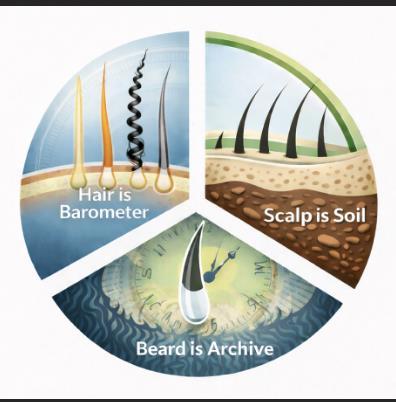
This case illustrates the foundation of the terKQuois Image Wellness BioSystem, a framework used to interpret beard, hair and scalp signals.
Hair is a barometer of health. The scalp is the soil. The beard is the archive.
A Barber Trichology Informed Case Study on Restoring Scalp Balance Before Density Decline © terKQuois | Image Wellness Case Studies Series
Hair is a barometer of health. The scalp is the soil. The beard is the archive.
Localized Frontal Edge Inflammation With Environmental Buildup and Repetitive Mechanical Stress A Barber Trichology Informed Case Study on Restoring Scalp Balance Before Density Decline
Understanding these relationships encourages individuals to move beyond cosmetic assumptions and toward biological awareness when interpreting beard, hair and scalp changes.
Introducing the Image Wellness Curriculum
The Image Wellness Curriculum translates the BioSystem into structured education designed to build practical health literacy.
The curriculum is organized into three primary learning pathways:
Rooted The Scalp Is the Soil
Understanding inflammation, buildup, and the scalp environment.
Signals Hair as a Barometer of Health
Recognizing density changes, shedding patterns, and systemic influences.
Archive The Beard as History and Pattern
Interpreting beard changes and localized follicular disruption.
Each series builds health literacy through observation, interpretation, and responsible care decisions.
Practitioner Reflection
Tenderness and redness are often dismissed as minor irritation. In reality, they may represent the first signal that the scalp environment requires attention.
Addressing these signals early stabilized the soil before the barometer reflected more serious change.
Developed by terKQuois loVe Intellectual Property of terKQuois, LLC
Localized Frontal Edge Inflammation With Environmental Buildup and Repetitive Mechanical Stress A Barber Trichology Informed Case Study on Restoring Scalp Balance Before Density Decline