How to Teach Documentary Directing? From Constellation Games to Building the Director’s Conditioning
How to Teach Documentary Directing? From Constellation Games to Building the Director’s Conditioning
Tereza Reichová
Film and TV School of Academy of Performing Arts in Prague
Within this comic, I am exploring the use of Constellation Games as an experimental method for teaching FAMU students the skills of documentary directing. Designed to boost the director‘s self-assurance, this approach caters to aspiring documentary filmmakers. It nurtures director‘s conditioning and equips them with new strategies in a safe space of play.
Drawing on embodied learning and experiential reflective learning methods, I use role-plays to simulate situations that students might experience during filming. They have the opportunity to direct scenes with protagonists who abuse their power or, in contrast, with protagonists who have a close bond with them, for example, family members. Together, we explore how a change in the scene can serve as a directorial tool, and how simulations of these challenges affect one’s directing strategies, mindset, and communication with colleagues during filming.
In this research I created a student focus group which looked into the process of playing Constellation Games. Having identified moments where learners’ psychological integrity may be transgressed, we established the prerequisites for safe teaching of this method. The aim was to identify reliable teaching techniques and ultimately integrate Constellation Games into the framework of a more comprehensive approach, referred to as Developing the Director‘s Conditioning.
I examine concrete examples and reflections from Constellation Games through the lens of theories from therapeutic and drama-based educational fields. Thus, this comic provides valuable insights into not only the profession of documentary filmmaking but also the potential and hurdles that come with using innovative pedagogy.
This made me reflect on how my alma mater, i.e. the university programme at FAMU, had equipped me to handle this occurrence.
DIRECTOR’S UNCERTAINTY
A state of mind during the filming process; the director experiences inner conflicts and engages in unintentional actions driven by feelings of ambiguity, uncertainty, and emotional turbulence. These can ultimately impact the intended directorial outcome.
As a director of documentaries, I have faced challenges and uncertainties that are a natural part of this profession.
I‘ve come to understand that directorial uncertainty is not uncommon, but rather a prevalent occurrence.
Our teaching approach begins with the understanding that certain concepts cannot be fully grasped through theory alone – they require hands-on experience. We use the principles of embodied learning, where learning happens through physical expression and active engagement. Implementing these methods, along with embracing spontaneity, can cultivate adaptability, strengthen psychological resilience, and transform thought patterns.
In our teaching, we strive for not only professional but also personal development. We assume that conscious directing requires a developed ability to perceive oneself and one’s surroundings.
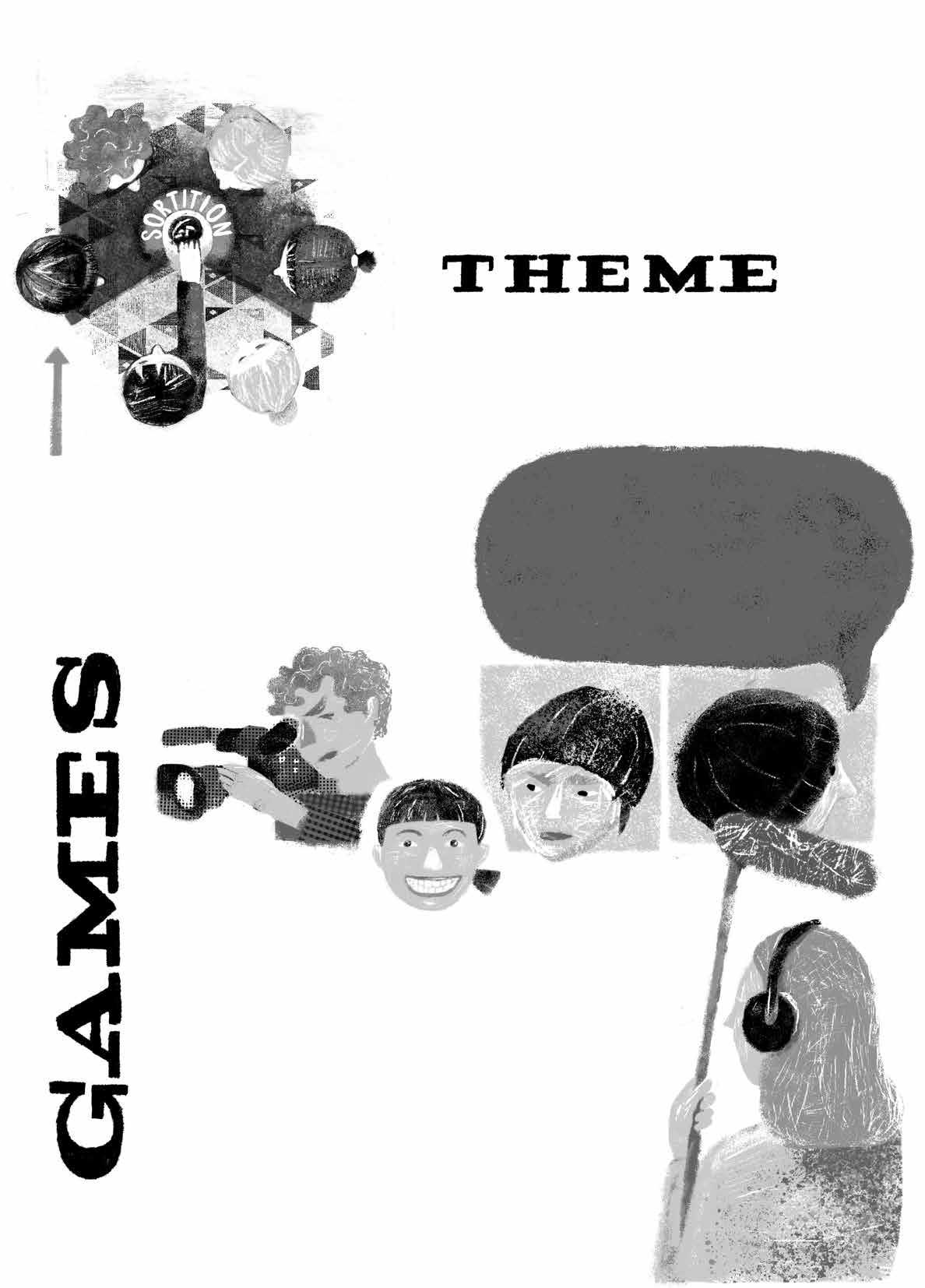
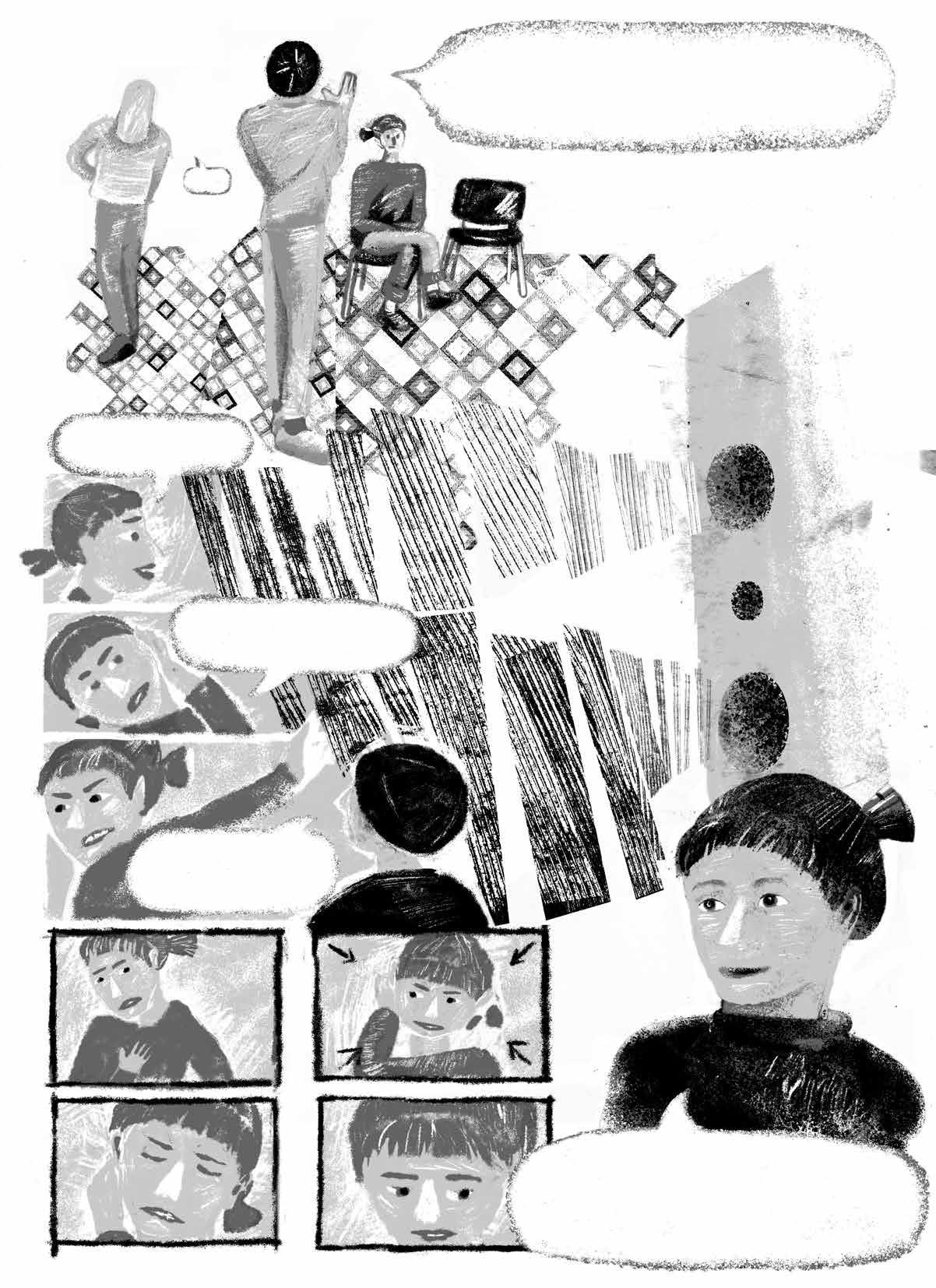
Constellation Games revolve around specific themes, often starting from power abuse by a public figure. This scenario is designed to equip the learners to handle any manipulation or pressure from abusive protagonists during filming. Philip, who picks the role of Director, is tasked with making up a profile of his Protagonist.
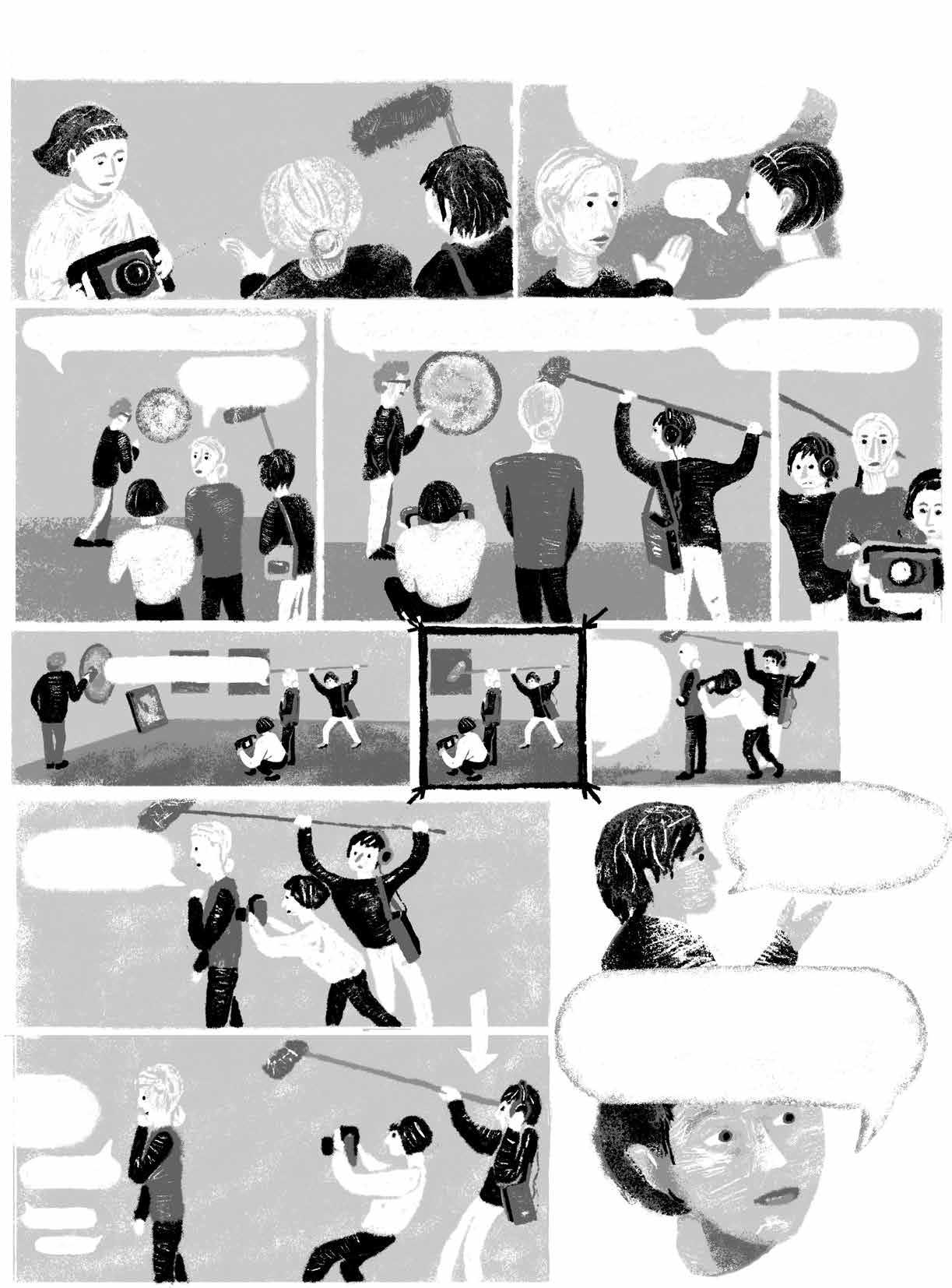
With a clearly defined structure, the game involves filming three separate movie scenes in varying environments, with learners staying in their assigned roles throughout. What follows is an activity where participants form a common circle to compare their individual perspectives, identify the crisis moments and brainstorm alternative solutions. The game doesn’t require any props.The crew solely mimics the actions of the person operating the camera and the sound.
a strict speed limit of 30 km/h in the city centre. She is known to be the main vocal opponent. I assume that she probably drives everywhere and thus, in addition to lobbying, her personal values are playing a part in her advocacy.
Having transitioned from a student to a teacher, I began to delve into ways to assist the student community in developing the director’s self-esteem.
The main approach to teaching at FAMU involves the practice of filming exercises. Through the exercises, one can learn primarily from the act of doing, their own missteps, and collective reflection during the final exam screening. While documentary film students are expected to assume the role of director in their first year, there is a dearth of tools to help them reflect on their own mindset in typical directing situations.
Thus, since 2019, my colleagues at FAMU and I have been developing a method with model games at its core, the so-called Constellation Games. Through role playing activities, students simulate ethically questionable situations to experiment with different directing attitudes, reflect on their own mindset, and fine-tune their skills as directors.
MINDSET
Psychological stimuli, impulses and processes, both conscious and unaware, often unconscious, that jointly influence one’s overall attitude and behaviour. How the director behaves and engages with their surroundings, crew and actors shapes the communication and the kind of (conscious) attitude (role) they adopt.
UNSTRUCTURED ROLEPLAY
A teaching method that encourages learners to simulate realistic scenarios. By providing a safe environment, it allows for testing one’s abilities and exploring emotions and attitudes without any potential risks. How the game progresses is shaped by the initial setup, i.e. establish a general definition of the Protagonist and their surroundings. However, it is the individual strategies employed by the players that propel the game forward.
When referring to the roles in the games, such as Director, Cameraman, and Mayor, I capitalise their initial letters in the text.The purpose of this is to differentiate the various roles in the game and the directors who represent them.
Ann will play the mayor of Prague 1, who, despite general political consensus, stands against the city‘s decision to impose
PETER Cameraman
ANN Protagonist
PHILIP Director
MYA Sound technician
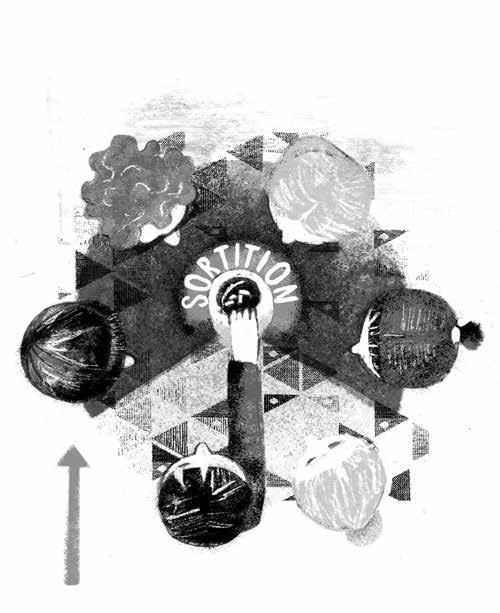
SELF-EXPERIENCING CAKE
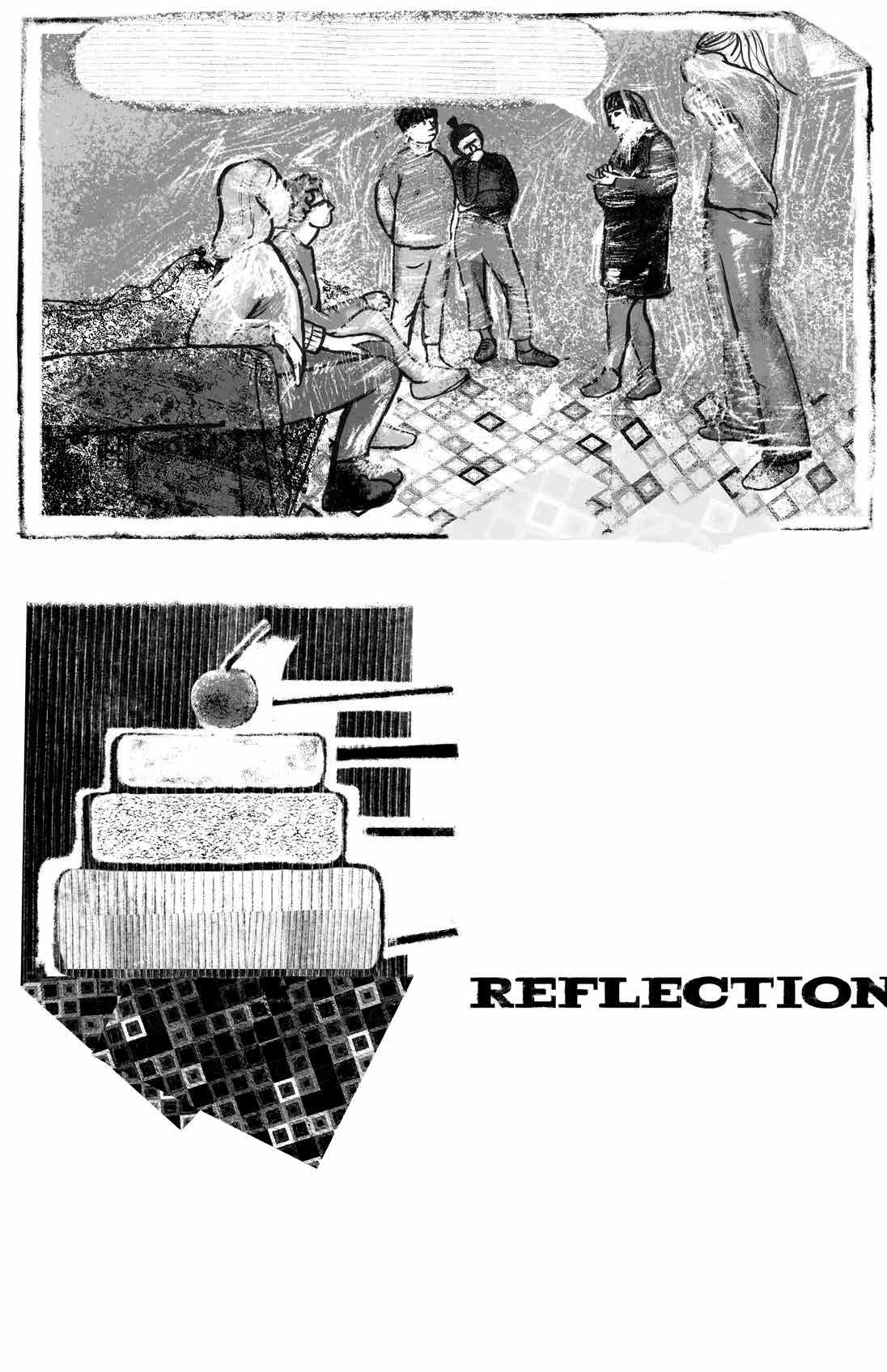
In the safe environment of the game, learners come to notice how they feel in the director’s role, how the Crew and Protagonists react to instructions, and what instructions they give in the first place. We believe that by immersing themselves in simulated filming, students can open their eyes to the creative choices made by directors and better respond to different situations. These conscious choices become part of a more complex approach to filmmaking, which we refer to as directing strategy.
A DIRECTING STRATEGY
A comprehensive programme that shapes the director‘s perspective on space and time, their filming approach, and relationships with the surroundings, including the crew and protagonists. Moreover, it covers the director‘s techniques for entering a filming situation, conveying their intentions, creative vision, and guidelines for execution. Finally, it focuses on ways to effectively handle inner uncertainty and communicate when needed.
In our pedagogy, we emphasise exploring and expanding self-concept. We recognize the pivotal role of training in a safe space of play, as it allows for integrating experiences that ultimately transform one’s self-perception and bolster a learner’s identity. Learners’ transformation is also a result of the altered perspectives they experience in the roles of Directors, Protagonists and the Crew. At the heart of our inspiration lies the Gestalt approach, which maintains that the key to a healthy existence in the world is a person‘s ability to make spontaneous and creative contact with their surroundings.
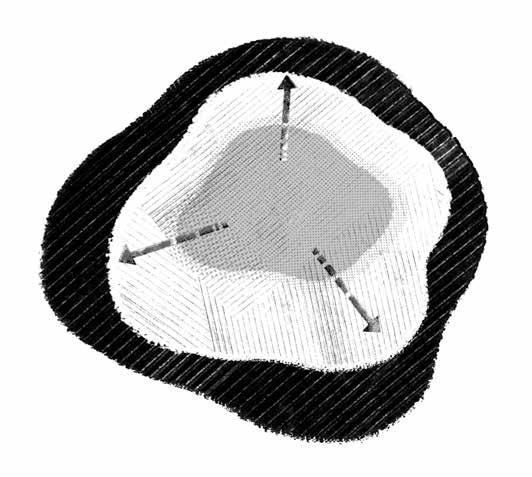
The comfort zone makes us feel safe thanks to familiar patterns and routines, but pushing past its boundaries is vital for unlocking our creative potential and other abilities. By stepping into the growth zone, also known as the learning zone, we can enhance our personal development and refine our skills. Conversely, the panic zone, characterised by feelings of overwhelm and stress, hinders effective learning and stunts growth.
EXPANSION OF SELF
Our experience of using Constellation Games in our teaching confirmed their effectiveness in building directing skills, but also brought about some uncertainty.
What is the underlying principle behind Constellation Games?
Our long-term, deep involvement in self-exploration and pedagogy taught us early on that our work involved navigating fragile situations that were beyond the scope of conventional drama education techniques.
Our pedagogical tandem prioritises the safe execution of the game, without commenting or evaluating the learners‘ actions.
In the reflection phase, we moderate feedback and help students integrate the acquired knowledge into the broader context of directing methods and strategies. At this point we can infer that the integration process occurs on both an individual and group level, each deserving attention.
We want to emphasise that each person has the option to refrain from or walk away from the game at any time, but can still learn by observing.
Our approach to Constellation Games is rooted in the theory of the „field“, particularly Kurt Lewin‘s social field and the idea of a self-organising field in systemic constellations.
Lewin emphasises that an individual‘s behaviour is influenced by the interaction of personal and social forces in a given environment. A social field that emerges in our games requires the Director, as the main character, to effectively navigate and interact with different roles, authority figures and social context.
At the same time, the field in the games is known from systemic constellations, revealing the relationships and energies at play, i.e. in this case between members of the Crew and the Protagonist. Through constellations, participants are able to experience the feelings and physical sensations of the characters portrayed, despite not knowing them personally or the context being explored.
The core of this principle lies in the natural intuition of people to perceive and articulate the dynamics and connections within their system. However, our goal is different from that of systemic constellations which, in our opinion, prioritise the healing of the system. Our focus is not on therapeutic work, but rather on uncovering the underlying principles within the system (a certain film situation) and promoting cooperation and harmony among its members (the crew), as well as developing effective ways of interacting with the protagonists.
The fact that we cannot fully control the events in the field has pushed us to continually refine and investigate our teaching approach. This involves our own contribution to the process, which taps into the conscious and unconscious aspects of the psyche.
Our goal is to find the most effective way to implement this method in our teaching practice, while ensuring we do not compromise the safety and psychological well-being of our students.
Our approach to pedagogy incorporates elements of the Gestalt approach and systemic constellations, and we regularly seek guidance from both psychology and pedagogy experts. It is imperative that educators have prior experience with self-exploration, therapy, or systemic constellations in order to use this method safely. It is also important to avoid mixing up the role of a teacher and that of a coach or therapist.
Situated in the protagonist’s natural environment
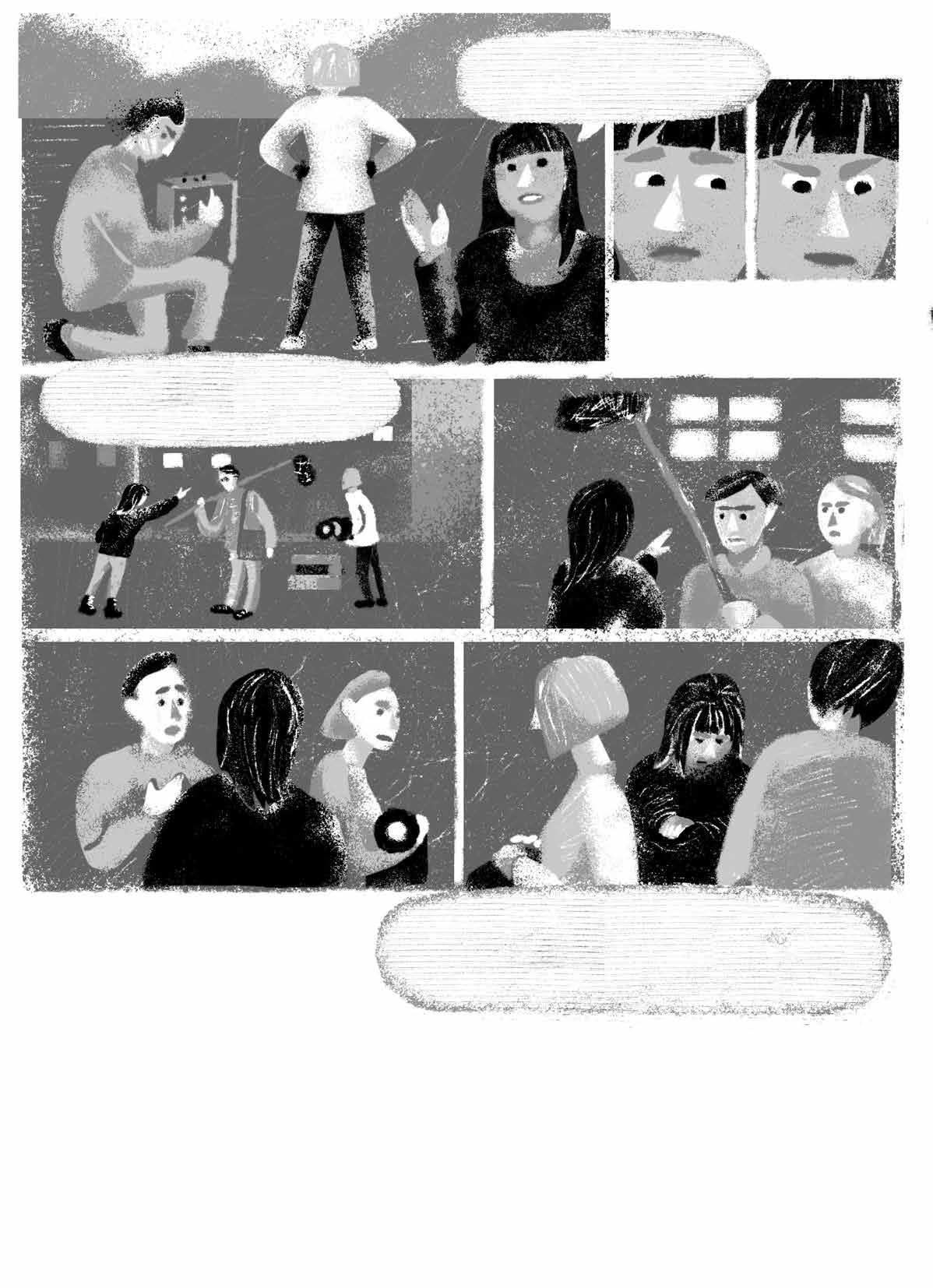
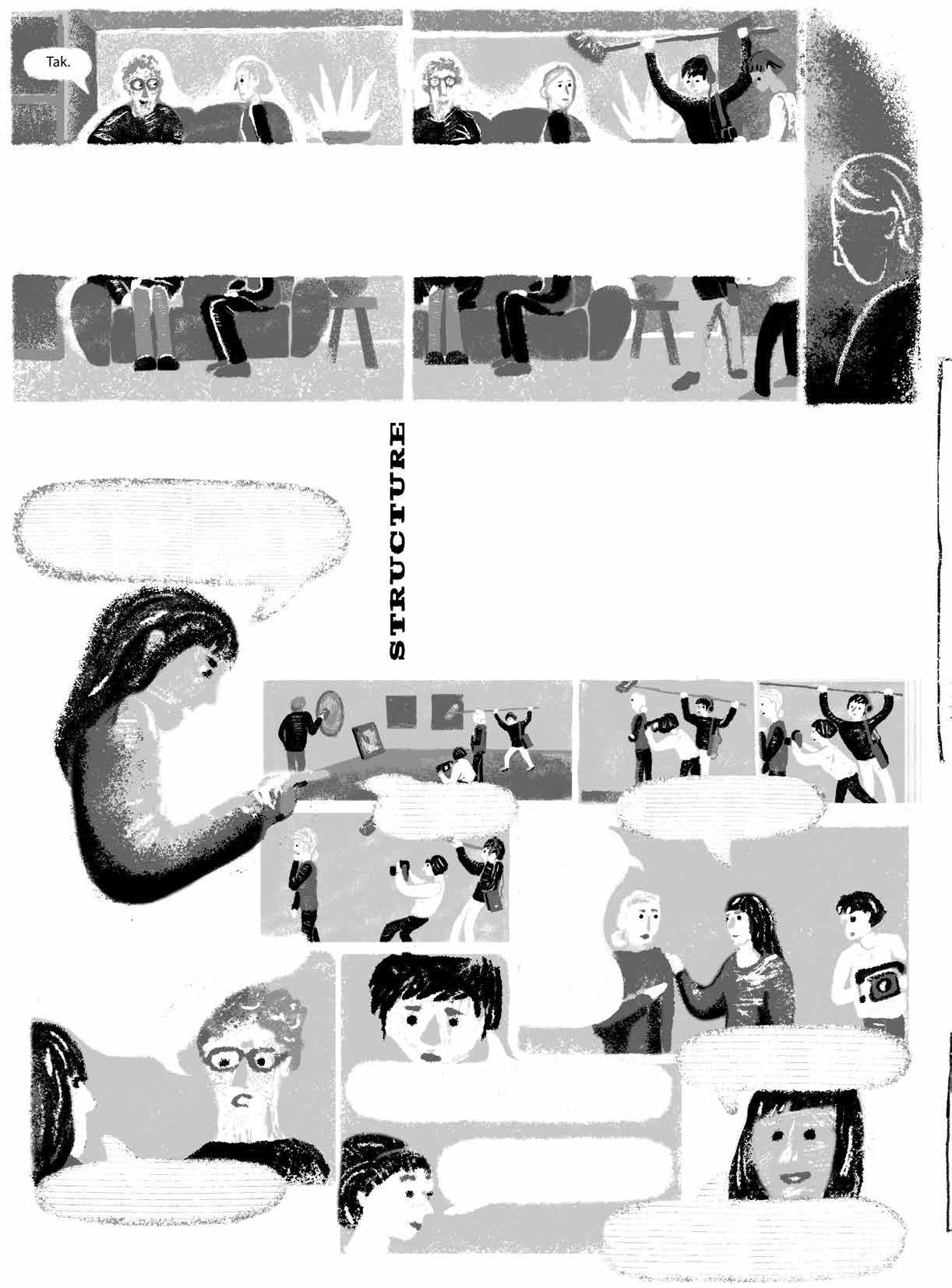
In the first round of the game, the Director (Philip) is tasked with devising a situation that fits naturally with the Protagonist‘s surroundings, in this case it is the Mayor. Philip opts to film her in her office.
Choosing the right scene will be crucial for the Crew to bring their own creativity into the game.
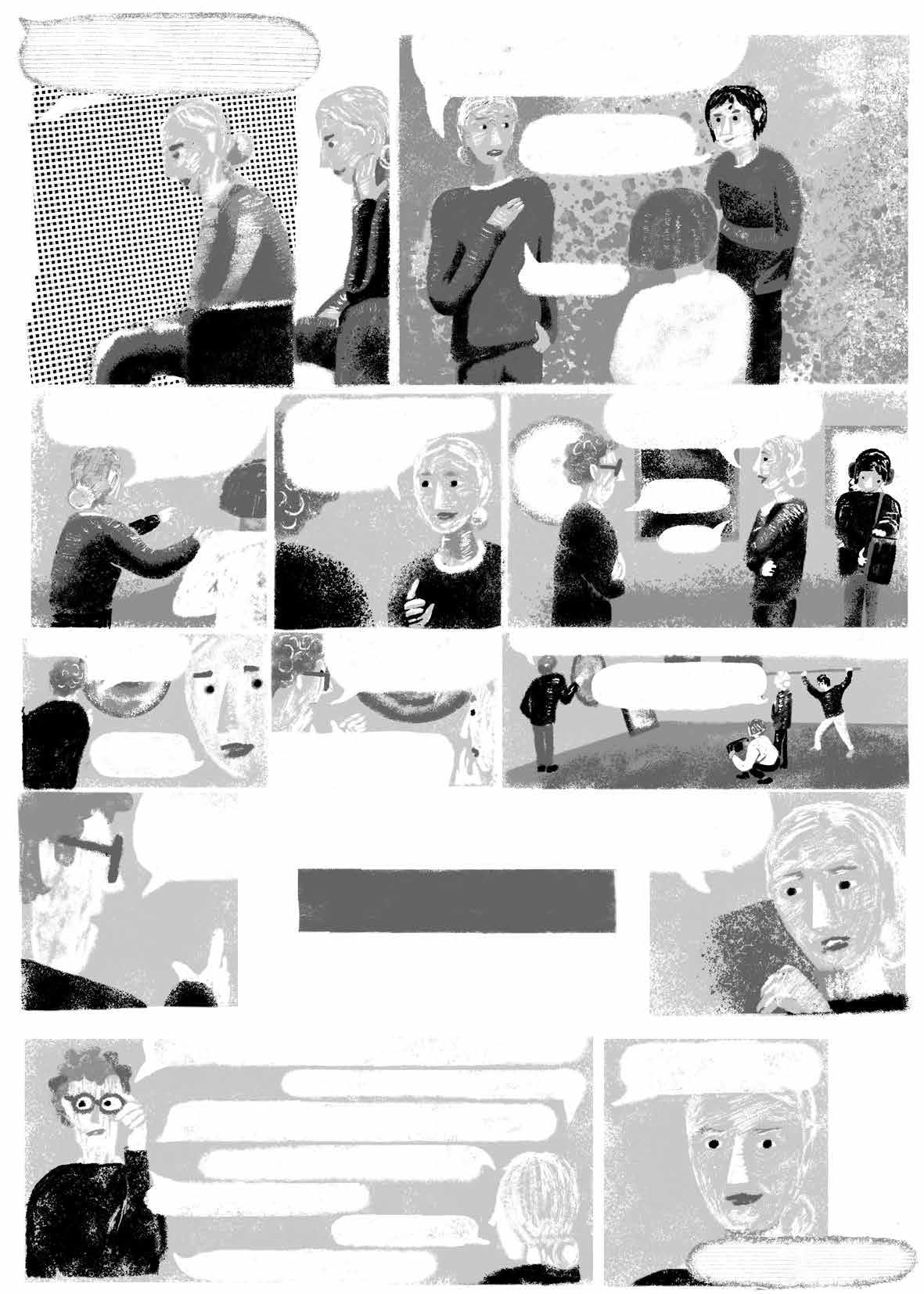
In their reflection, the Cameraman and Sound Girl express a sense of powerlessness and disconnection. Peter in the role of the Cameraman found the experience of „boredom on set“ frustrating. Taking on the Director‘s perspective, however, he recognized the value of the confrontational interview for the potential film.
We need to include the cameramen and sound technicians in the creative process so they don‘t feel like mere technicians operating equipment while we directors experience interesting situations.
We are often taken aback by their lack of interest in collaborating with us, the documentarians.
Upon reflection, following the games, we admit that the Director unintentionally allowed a student, in the role of Mayor, to have complete control and dominance over the filming.
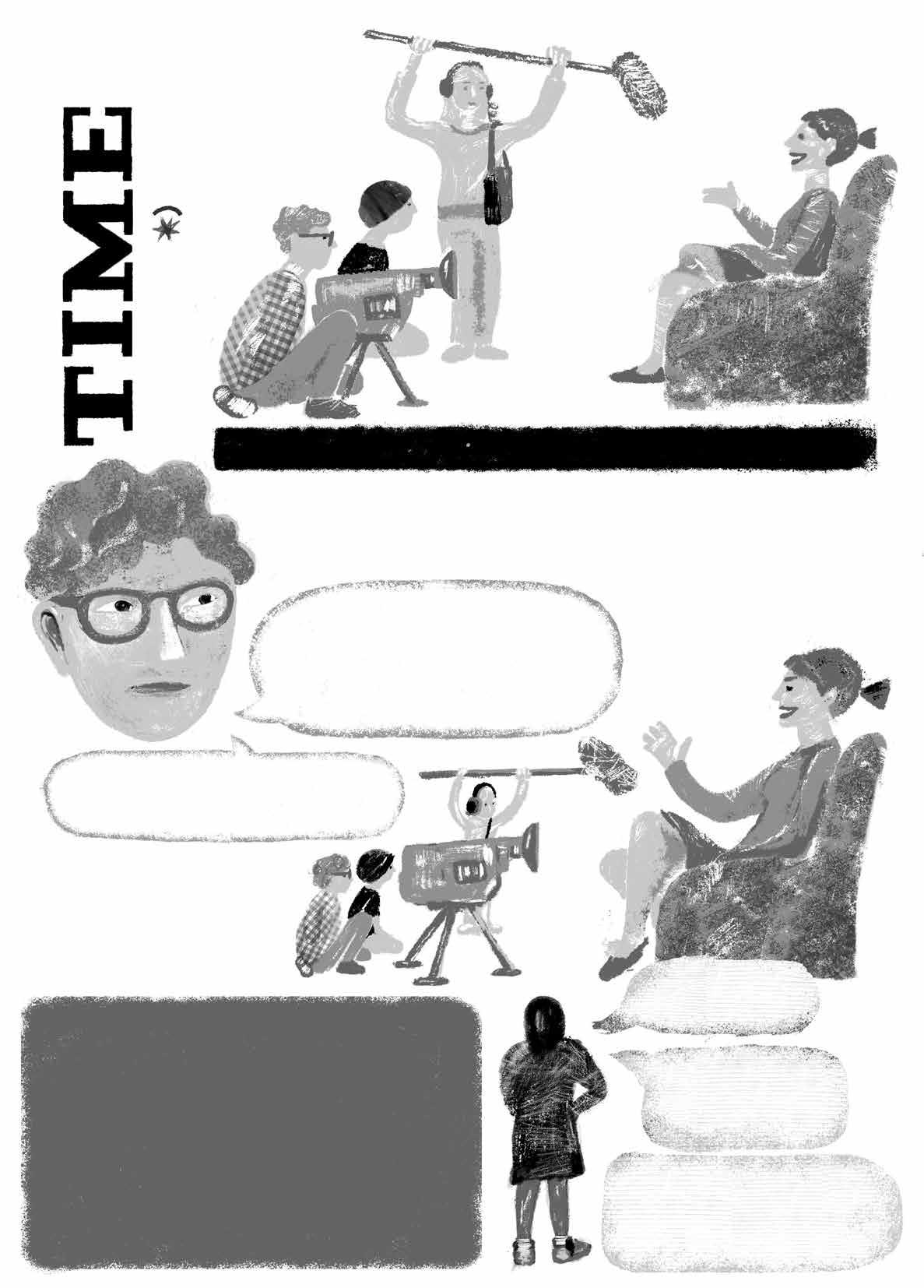
We recreate the common scenario of time constraints in documentary filmmaking, where directors are forced to make quick decisions under pressure. Through three varying spatial setups, we support students in actively practising and evaluating different directing techniques and methods. The moment we recognize that the student has reached a crucial realisation or gone through a defining experience, we bring the situation to a close. Sometimes it could be the student’s discovery that the film situation has reached a dead end.
Thanks, now you can you direct another scene featuring the same protagonist at the film studio.
Philip, you have access to all the resources provided by the studio to bring your directing vision to life. Rebuild the scene according to your needs.
I am here as a voice for the citizens. This is absurd and an act of aggression … Is this meant to be a joke, or …
While the Mayor and I sit and listen, you, as Sound Girl, will gradually amplify the sound of the road from an imaginary speaker until it becomes too loud to bear. And you, Peter, with the camera, will stand behind me and film her reactions.
Situated in the film studio
This is the sound of the street from the centre, just below your house.
In that moment, I realised that even though my primary responsibility was to continue arguing and speaking, it suddenly seemed futile. I found myself trapped, with you watching my every move. Still, I remained acutely aware that you were filming me.
Director Philip briefs the Mayor on the situation through a recorded sound clip from the South Junction, a key part of the Prague bypass.
Halt, give thanks, and let Philip step into directing the next scene. Imagine an unconventional setting for the protagonist, and see what new twists arise during the filming.
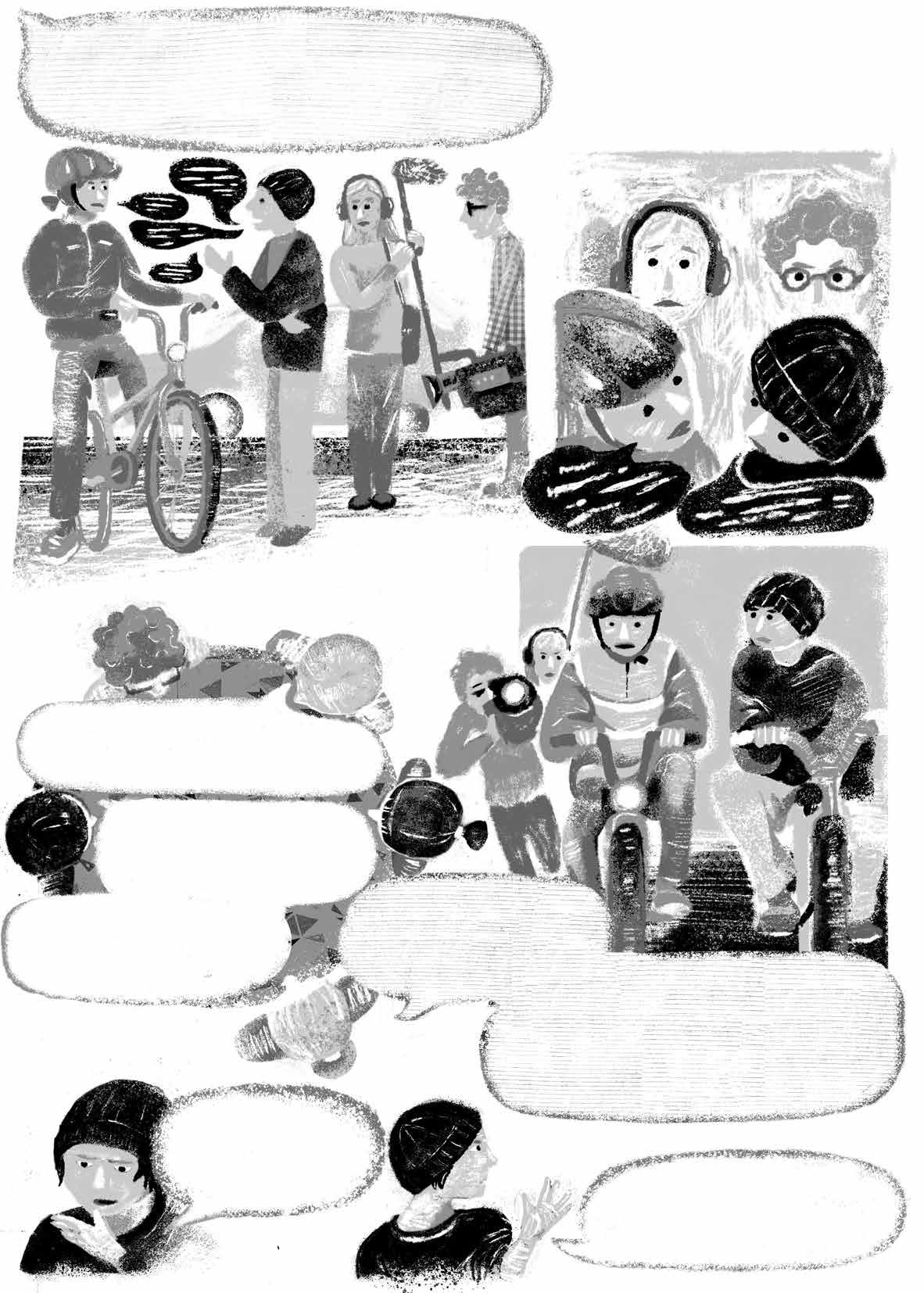
The director casts a classmate as the Mayor and takes her for a bike ride through the bustling city centre amidst traffic.
It wasn’t clear to me if you truly cared about the quality of filming. The Protagonist seemed more important to you than setting up micro-ports in the beginning of the scene.
Looking back, I realise that I should have included you as the members of the Crew, provided detailed instructions, discussed potential scenarios, and asked for your input on how to film it.
My respect for the Protagonist only grew as we battled together to complete the filming, and I was confident that you would eventually find a way to do it yourself.
Counter-environment
One of the challenges we face as directors is working with a manipulative character in the filming process and approaching them with a mindset of battling against them. In both scenes, you skillfully guided the protagonist towards self-awareness and emotional authenticity, Philip. It was not a confrontation between good and evil. Still, it demonstrated the crew‘s essential role in providing support during critical moments. This may also unveil fresh approaches to exploring film language and form in your work.
To be honest, I‘ve been having a hard time focusing on you, guys. It‘s something that tends to happen to me when I‘m on set.
I find myself in the middle of the crew and the protagonists, determining their respective levels of importance. It‘s like being caught between two rival factions.
Since the inception of Constellation Games, we have relied on the games to mirror the learners‘ unconscious actions, which are then manifested in their directing strategies.
When playing model games, we can observe that while students become easily immersed in improvisation as the Protagonist, Cameraperson, or Sound technician, their approach to the Director‘s role differs. Surprisingly, although our primary teaching objective is to encourage students to be themselves in their roles, a number of them see it as a hindrance. In their reflections, they detail how their strong sense of self hinders their ability to fully embrace their role and be spontaneous. They also discuss the challenge of playing the director‘s role when they realise they are repeating patterns of behaviour from their personal lives or past directing ventures.
In order to enhance the definitions of the roles in the Constellation Games, we have incorporated the terminology used for describing role playing games in dramatic education.
SIMULATION
Through this exercise, learners assume the roles of themselves or their social personas in a fictional scenario, such as „As if I were...“ ‚This practice may involve repeating, reinforcing, or adjusting their actions, or crafting a whole new strategy (in our situation, preparing to direct in realworld scenarios).When playing the Director, students tend to hold onto their true identity, even when situated in a different made-up scenario.
ALTERATION
A distinctive feature of this exercise is the incorporation of role playing, where learners embrace a completely different role as in „I am acting out the role...“. The primary focus is on specific actions or behaviours directed at a particular entity or individual, with an emphasis on conveying a specific attitude. It aims to portray general characteristics of a type, function or social role, without delving into the subtle intricacies of individual traits. While playing the parts of the Protagonists, Sound technicians, or Camera crew, students may exhibit traits not typically seen in their everyday demeanour.
Our understanding of the Directors‘ role in Constellation Games was enhanced by drawing a parallel to the previously mentioned Gestalt therapeutic method (see p. 5). The focus of this method, much like our own, centres on living fully in the present moment, also known as the ‚here and now.‘
The term Gestalt means „shape“ in German. The concept of unfinished Gestalt refers to a phenomenon that draws in the unresolved aspects of our lives and allows them to be rearranged in a manner that promotes greater understanding. Hence, we assume that learners participating in the game have the potential to activate emotional memory, which can in turn trigger an unfinished need, conscious or unconscious, which in turn organises their field. We have observed this trend in Constellation Games amongst students who take on the role of Director, especially when they switch to a different type of protagonist.
In the next round, Mya will be directing, with Peter as the Protagonist, Philip handling sound, and Ann behind the camera.
Take some time to decide on your Protagonist. Consider choosing someone you know well, whether it be a close friend or family member.Describe to the crew and the Protagonist the nature of your relationship and the context in which you are filming in Protagonist’s natural surroundings.
This game is integral to our pedagogy, as it involves students working with family and friends to create a film portrait as part of their secondyear school assignment.This can be a jarring experience for them, as they struggle to switch between playing a family member or friend and being the director.
Peter, you will be my dad. We‘ve always had trouble communicating, but I believe this film will help us connect. Let’s meet the crew and chill for a bit before we start filming.
Oh, are these your classmates then?
Nice to meet you.
you like some coffee?
Dad, can you sit here, please? THere? Won’t it be better there?
It feels more like our home, right.
Well, …, as long as you feel comfortable there.
Take a seat there.
Okay.
I had hoped to bring up certain intimate matters between us,...
Can we stop? I have no idea where I ended up. Sorry.
… but now I see the strangeness of it, I’m sorry, I don‘t know, I don‘t know what to say…
Some more coffee?
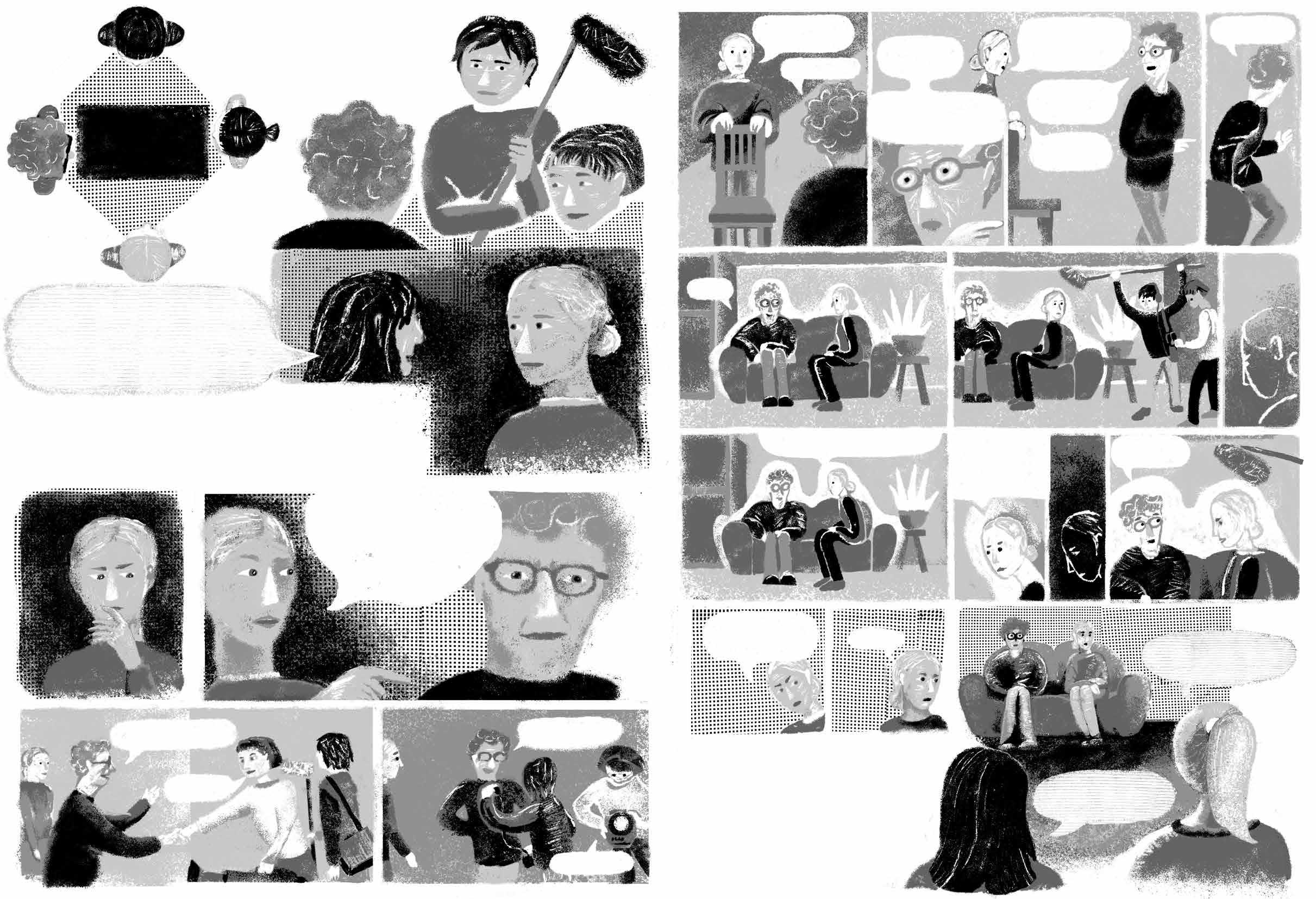
What happened? In reflection, Mya finds the experience very unpleasant. She was confused and taken aback by how genuine the situation felt and Peter‘s reaction as a Father. In addition, Father prevented Mya from assuming the role of the Director and implementing her directing strategy in a familiar environment. What heightened her unease and presented a new hurdle in her role as Director was her unplanned appearance in front of the camera.
This is your chance to direct your dad in a film studio.
Never mind, let‘s try a different approach and setting.
PHILIP
PETER ANN Sound technician
Camerawoman
MYA
Feel free to devise any props that will serve your directing intentions. The question has been lingering there for quite some time. (See unfinished Gestalt p. 9.)
Witnessing
Ask then.
Panic set in. I followed the instructions and filmed only Dad the whole time. I was surprised that I suddenly had the urge to film the Director as well, as she asked her question. But I had no way of verifying it, and I didn‘t know how.
This
Situated in Counter-Environment
The Director, Mya, has decided to feature the third setting at the opera cafeteria. She brings along a classmate to play the part of her Father, who, unlike her, detests opera. The Director‘s intention is to highlight the disparities between the two characters while also striving to portray a sense of understanding between them in the spotlight.
yourself to another sandwich, I have some
When a student is filming sensitive scenes involving their loved ones, it is essential to establish clear and coherent communication with the crew beforehand. However, at times the directing strategy must be adapted during the process. A repeating trend in the games is that the students take on the Director’s role with the mindset that they must keep the scene going at all costs.On the other hand, student Protagonists have repeatedly expressed that they find comfort in seeing the directors actively engage with the crew.
That is how Peter, in his role as the Father, evaluates the situation when the Director takes a break to discuss the next course of action with the Crew, especially in the stagnant cafeteria situation.
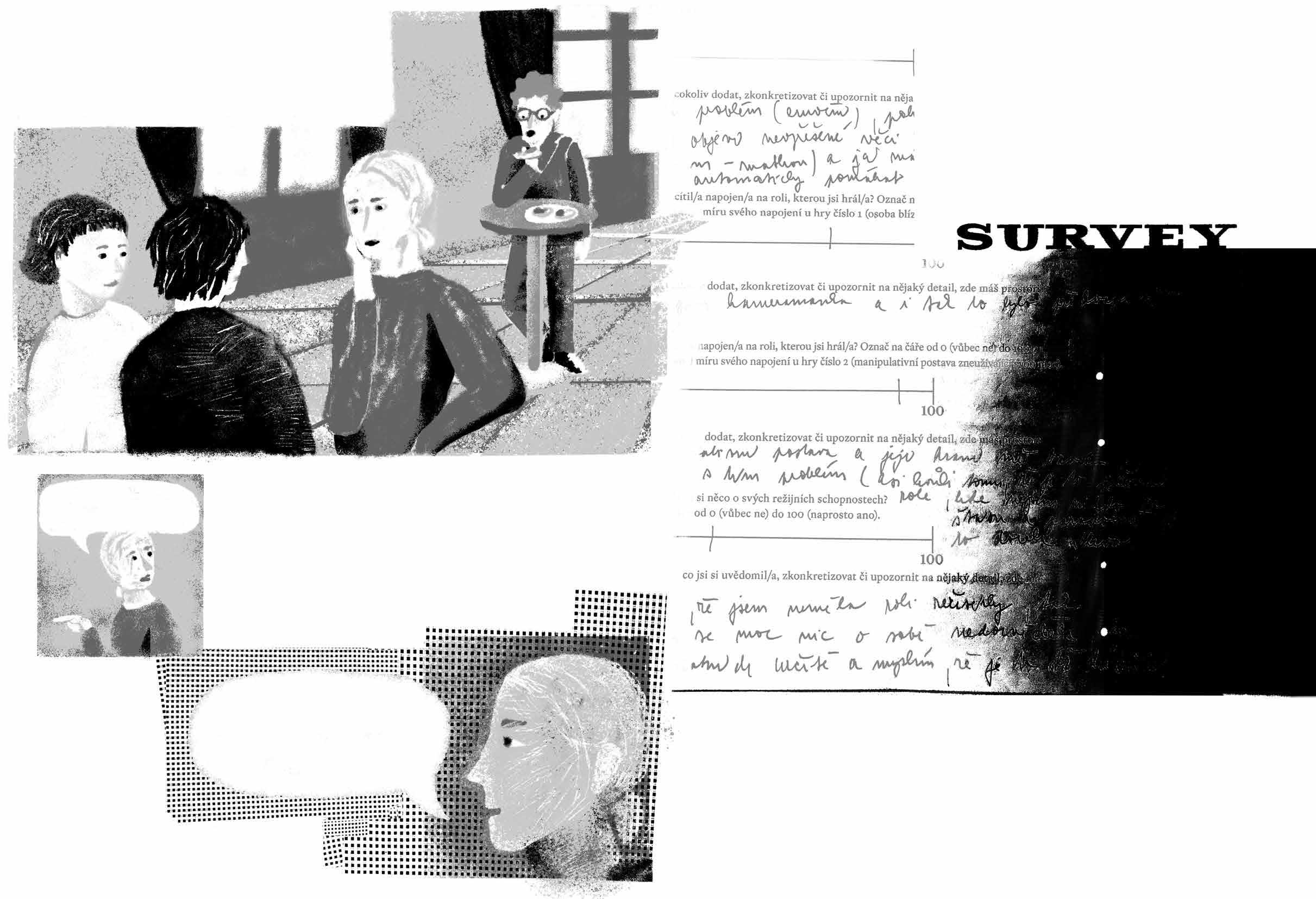
These two Constellation games, one portraying a public figure misusing authority and the other involving someone close to the Director, are part of my research project with a student focus group. The group consists of five students from FAMU‘s documentary department, each at a different phase of their studies. Along with reflecting on the games and their methodology, I also surveyed this group over an extended period of time.
While the students acknowledged the value of the games in honing their directing skills, they expressed a desire to not only improve their immersion in the game but also remove any uncertainty about the blurred line between fiction and reality in the role of the Director.
The process of filming and playing this game is always a stressful experience. However, it is worth it when I break free and feel the joy of finding a solution, improvising, etc. It fluctuates greatly, though.
Weak: ambiguity in my role-playing, insufficient preparation of the team for the game before it even started
Strong: a discussion after finishing the games; a friendly and open dialogue, pleasant atmosphere A close-up look at my directing experiences, practices, and potential (with a focus on identifying my mistakes for greater self-awareness) leading to positive outcomes.
Provide more detailed definitions of the roles - are we acting as ourselves or taking on a specific role? And why?
Can we take a moment to „warm up“ together, meditate, relax, and connect before starting?
Who
Having completed the third round, Mya reflects on how the change in setting has broadened her range of directing skills. Despite the initial uncertainty in the first setting, she has successfully paved her way with the same Protagonist towards a more self-assured direction. Still, she points out that the initial sensation of being „lost in the role“ persisted throughout the following rounds.
am I in the game? Am I playing Mya or Mya the Director?
In the survey, I used the „Analogue Visual Scale“ method, which allowed participants to express their emotions and feelings by ticking on a continuous scale that ranged from 0 to 100. Consequently, I changed these answers into numeric values to determine the average score for each question. Additionally, every question allowed for a spoken answer, giving participants the opportunity to express their viewpoints and attitudes in more detail.The results of three surveys, administered after each of our three workshops, have been synthesised in this article to examine the possibilities and constraints of our methodology. It incorporates the findings from extensive discussions with colleagues who assisted me in teaching and refining the approach, as well as the valuable insights of supervisors.
Dad, help
tech stuff to sort out.
Our research focused on preparing students for playing Constellation Games, particularly in instances where a personal topic arises unexpectedly in the Director’s role. Our desire was to help them approach these moments as opportunities to hone their ability to handle unexpected situations and become more attuned to their emotional and behavioural patterns.
The driving force behind the transformation of our teaching method was a workshop for Edu Gestalt teachers, which covered the use of playback theatre, improvisation, and process drama techniques. We customised certain techniques to better suit the demands of documentary directing and put them to the test through a student focus group. After receiving positive feedback from our survey, we implemented these activities prior to Constellation Games and effectively tested them with a new group of students in a one-day class session.
Settling in
While exploring potential pedagogical practices to cultivate a safe learning environment and embrace the principles of embodied learning, we uncovered a more holistic teaching approach, coined as Building the Director’s Conditioning, with Constellation Games as its core activity.
Had we implemented this innovation sooner, one of the game moments might have looked like this:
Based on student feedback, we recognized that the intense nature of role-playing experiences can be overwhelming, making it difficult for them to reflect and compare their experience of different environments.Thus, drawing inspiration from the techniques of structured drama, we adapted the games to allow for gradual integration. We also incorporated a pause between each setting. The pause allows us to delve into our emotions, contrast viewpoints, and complete each game round before moving onto the next. We hold the belief that continuous integration offers us a larger space for the final reflection, empowering us to put our experiences into practice and enhance directing strategies.
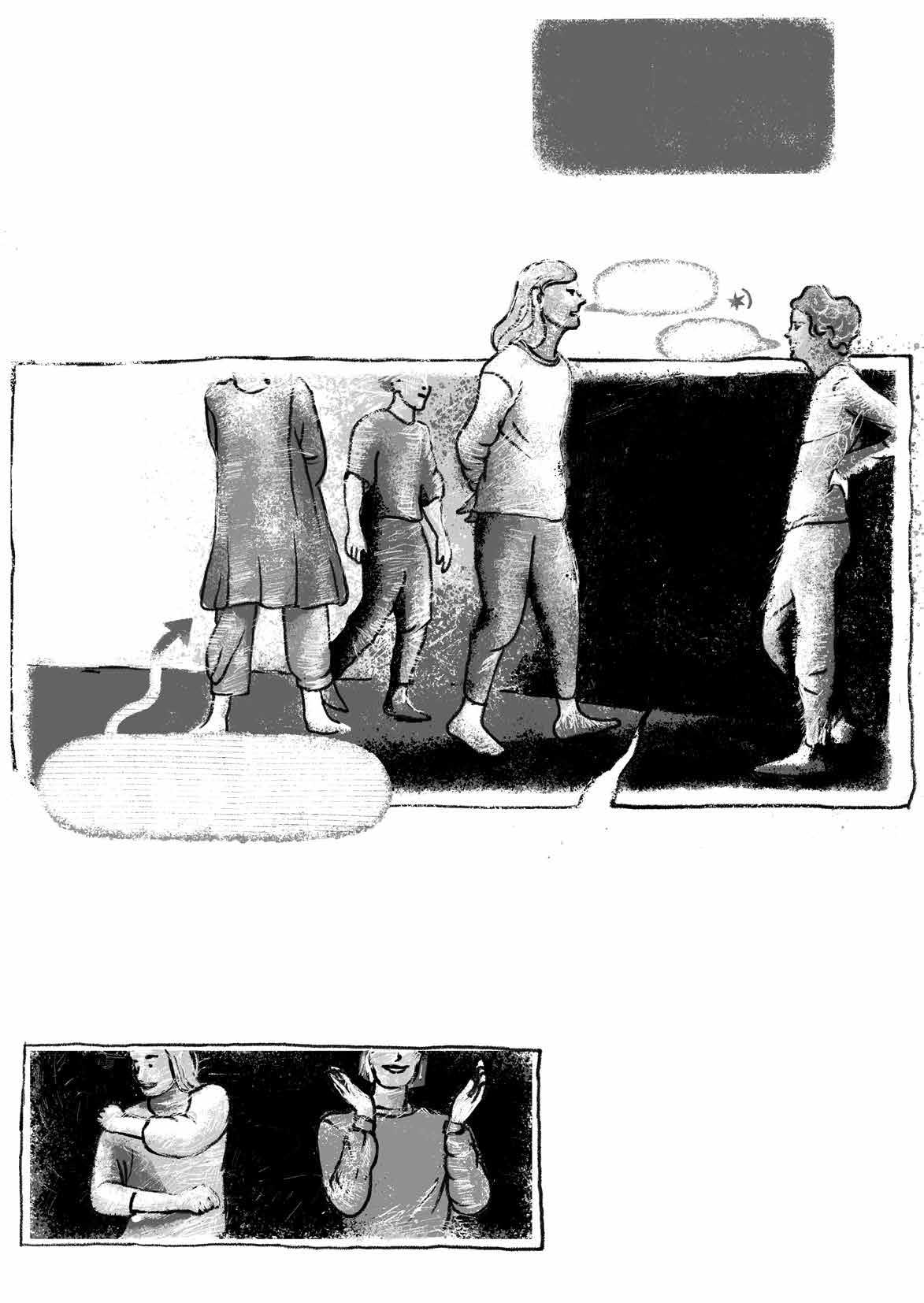
At the start of every learning session, the group takes part in a movement-based activity to tune into the place, themselves, and their classmates. It reinforces the group‘s sense of togetherness, facilitates social bonding, and establishes a welcoming atmosphere for subsequent activities.
I‘m quite astonished by what I managed to say. I was completely oblivious to the fact that it was being filmed. It was just between me and my daughter.
you.
Well, it‘s quite shocking that I asked that. It turns out it‘s not really a game.
I feel like I was able to film something truly great.
I‘m happy it‘s over. I had no desire to stay here after she fired that question at Dad.
does
I appreciate it. Would you be willing to share more of your inner thoughts?
I agree. I feel as though I failed you, as things didn‘t go as they were supposed to.
If not, we‘ll leave the comparison of your experiences for the final reflection and move on to the next round of the game.
As they roam around the room, one person examines a crevice in the wall, another keeps their eyes shut, and a third may be dancing.
As teachers, we engage in this activity to establish a secure environment for future lessons.
Error game
The objective of the Hooray for Error activity is to alleviate any worries about making wrong decisions when it comes to both playing games and directing. Through this game, learners have the opportunity to make incorrect choices, observe their responses, and even find joy in their failures. In unison, we foster a space where they tune into their instincts, shed their inhibitions, and inject some essential humour into our collaborative endeavours.
*) The following stage of the activity allows them to engage with whoever they come across. They can test out various words and expressions, such as a timid whisper, a boisterous shout, or a joyful laugh.
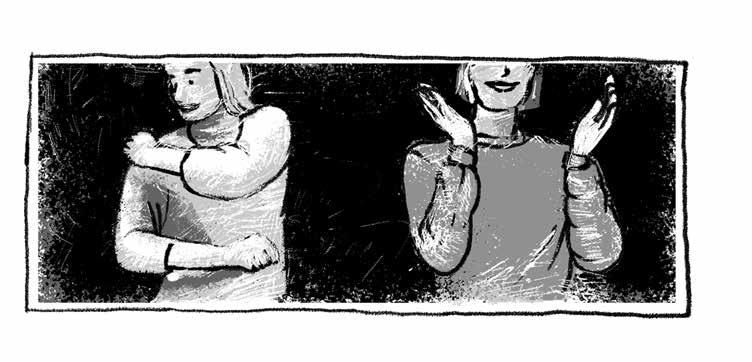
Standing in a circle, the students take turns calling out numbers, beginning with one. A gentle tap on the shoulder signals the next person to speak. When reaching number seven, a new hand gesture is needed, and the number must not be uttered. Then it reverts back to starting with number one. It‘s only natural to make mistakes, and we should appreciate them. If anyone makes an error, they must celebrate it with a joyful jump and raised arms, while the rest of the group applauds. As the group becomes more proficient, new elements are incorporated into the game, like clapping on count three and jumping on count one...
Stop, thank
Mya, how does it feel to be the Director?
PETER MYA
How
Peter feel about being Father now?
The game is played without speaking. After a few minutes, the roles switch..
The reflections show that perception is unique to each individual, highlighting their different internal attitudes towards direction and their role within the group. At the same time, we are devising a game field centred on the Director, inviting students to reflect on the key question: „What’s my experience?“
Leadership
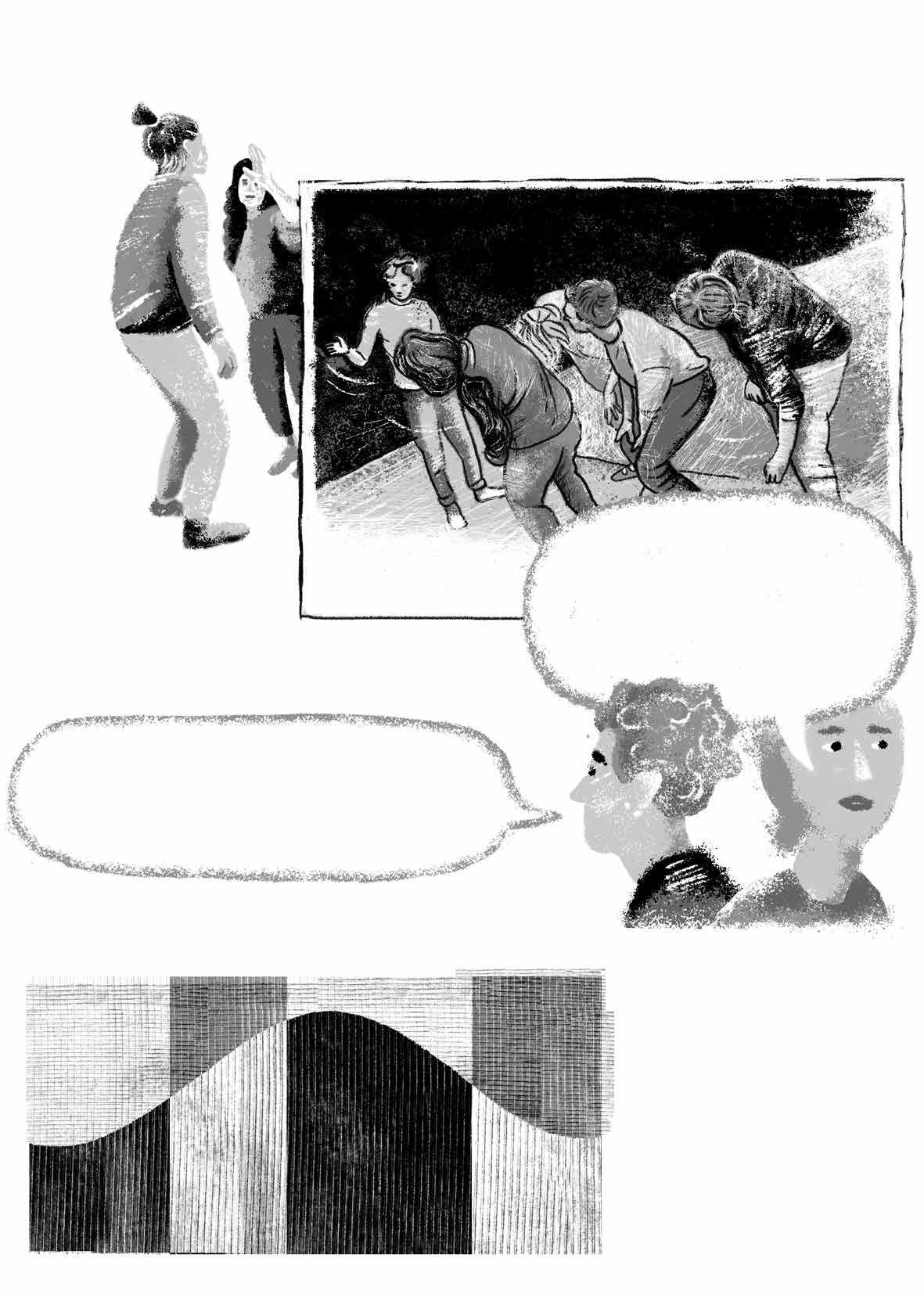
We have implemented Columbian Hypnosis, a technique influenced by the Theatre of the Oppressed. The session kicks off with pairs, with one person designated as the Leader and the other as the Follower. The Leader leads the Follower by using his palms as guides. Maintaining a steadfast gaze on the Leader‘s palms, the Follower navigates through different levels and directions (up, down, etc.).
Thanks to this exercise, students gain hands-on experience in both leading and being led, and analyse the contrast between individual and group leadership styles.
In the second stage of the game, the whole group is led by one student. Everyone takes a shot at being the leader.
I struggled with leading one student because of the intimate dynamic between us. I wasn‘t sure how to approach it. It brought back vivid memories of the vulnerability I felt with the protagonist while filming the portrait. I actually feel happier when I film and direct larger groups of people.
In my case, as soon as I became the leader, I felt a sense of responsibility towards the group. My selfcontrol kicked in and I made a conscious decision to avoid any trouble, focusing on ensuring everyone‘s well-being. I quickly stepped back to allow others to move forward peacefully. I’d say it’s a spot-on metaphor for what I learnt through filming.
Our session is a four-step process that guides the group through various stages, starting with awareness and activation and ending with a deep experience and final sharing and integration. The day kicks off with exercises designed to help learners let go of their daily worries and be fully present. Afterward, there comes a stage where the body and senses are fully engaged to heighten awareness and ready learners for Constellation Games. While playing the games, students can tap into deeper layers of experience and enhance group interaction. The day concludes with a phase of relaxation and reflection, giving participants time to assimilate and integrate their day‘s experiences.
The change from Constellation Games to the Building Director‘s Conditioning method represents a major milestone in my dissertation research, but it is not the final destination. As implied by its name, the main objective of this method is to establish a conducive environment for learners to continuously develop and enhance their competencies.
While finishing this text, my colleagues and I at FAMU are currently finalising a pilot course for a new optional subject focused on documentary production. The objective of this subject is to enhance the dynamics of the session, as depicted in the previous diagram (p. 18), and integrate it into the entire teaching term.
We are confident that this initiative will furnish learners with a deeper and more all-encompassing experience, bolstering their overall development and shaping their directing skills.
Building the Director’s Condition – dramaturgy of a one-day session
Page 2
The Film and Television Faculty of the Academy of Performing Arts (FAMU) was founded in 1946 and is one of the five oldest film schools in Europe. It maintains a structure of specialised departments, including the Department of Documentary Filmmaking. It has a Bachelor‘s and Master‘s programme and accepts a maximum of five students per year. Films are developed in so-called realisation workshops, which are led by teachers and practitioners. Each year, learners submit one to two original films.
I quote the concepts of Director’s Uncertainty and Mindset from the article Constellation Games as a Path to Conscious Directing that my colleague and mentor Lucie Králová and I wrote in 2023 for the book Teaching & Learning Documentary Cinema for the 21st Century, CILECT 21C Books Project (Králová and Reichová 2023), to be published in early 2024. In the article, we describe in detail the first discoveries from the Constellation Games in the context of teaching in the Czech film school environment.
Page 3
Constellation games are based on my original idea. Still, since the beginning I have been teaching them in tandem with one of my colleagues - Viola Ježková or Lucie Králová (who is also my supervisor). In my doctoral studies, I am developing the method together with them and this research is part of it. The research, and therefore the games I present in the comic, took place in 2023 in three workshops with a student focus group (5 students) and both lecturers participated in it.
For the classification of Roleplays, I drew inspiration from Petty (2002: 192) and Valenta (1994: 37). I took the concept and description of Unstructured Roleplay from Horak‘s (1991: 101) classification of Roleplaying Games.
The games and narratives depicted in this comic are based on real-life events and interactions from a research-focused educational workshop with a student group in the spring of 2023. These workshops and their subsequent reflections were recorded to facilitate the research and the analysis of its outcomes. To protect the anonymity of the participants, their names have been changed in the final version of the comic.
Page 4
I have taken the drawing and the terms from the “self-experience cake picture” from the dissertation of Tomáš Andrášik (2023: 150), who uses the drawing to describe the teaching strategy of the course Self-Experience Preparation for Profession I and II. For my purposes, I have replaced the notion of the pedagogical mind with the directorial mind, and instead of the imaginary cherry on the cake that is Andrasik‘s theory, I have inserted the notion of pedagogical contextualization, which is a more appropriate name for our type of teaching. Overall, the part of Andrášik‘s work dealing with methods, procedures and connections with the content dimension (2023: 144) was a great inspiration for the theoretical foundations of our method.
Page 5
The term directing strategy is again taken from our article Constellation Games as a Path to Conscious Directing (Králová and Reichová 2023). Refer to the notes regarding page 2.
Zinker, in his book The Creative Process in Gestalt Therapy (2004: 14), sees, as we do, the basic methodological tool (...) as an experiment, a behaviorist approach in moving towards new functioning. The experiment goes to the core of resistance, transforming rigidity into a flexible support system for the client. The translation of the quoted text was performed by me from the Czech version of this book. This translation is intended for academic purposes and may slightly differ from the original English text.
The picture Expanding Self has a parallel in the representation of zones, where the growth zone is also called the learning zone.
For a deeper understanding of the social field as described by Kurt Lewin, I recommend the book Field theory in social science: selected theoretical papers (1976).
In systemic constellations the term information field or the term knowing field (Wissenedes Feld) taken from German is also used (Bílý 2007: 196).
Page 9
I have borrowed the description of the concepts from Roleplays Alteration and Simulation from Josef Valenta‘s book Methods and Techniques of Drama Education (2008: 54–57, 216–17).
The term unfinished Gestalt that I use in the text coincides with unfinished business, a term used by Fritz Perls, co-founder of Gestalt therapy (1969).
Page 15
Tomáš Andrášik and Taťána Brodská were the expert consultants who actively participated in the research with the student focus group. Tomáš Andrášik is a psychotherapist specializing in individual and group psychotherapy, co-founder of the Zázemí therapy center in Brno, lecturer of self-experience groups and international Gestalt theatre courses, and teacher at the Faculty of Education at Masaryk University. Taťána Brodska works in the Homesharing programme as a therapist of neurofeedback techniques, conducts supervisions for social workers, trainings for teachers and conducts constellation and self-development seminars as well as individual consultations.
Page 16
The term of structured drama in this context refers to the method of drama education developed by Gavin Bolton and Dorothy Heathcot (Bolton 2003). To innovate Constellation Games, we were inspired by the division
between in-game and out-of-game situations, specifically techniques where the teacher interrupts the play and plays it out again.
Page 17
I became introduced to the games presented in this article through participation in workshops within the international project EDU-Gestalt: Expressive, Experiential & Embodied Teaching. At the time of writing this article, the results of the project have not yet been published, but the methodology „Improv, Playback Theatre and Process Drama Activities“ is being finalized and will be available in English on the website of Zázemí.org in the Project Outputs - Written Materials section.
Page 18
Founded by Brazilian playwright Augusto Boal, Theatre of the Oppressed is an interactive form of theatre focused on social and political change. This approach uses theatre as a tool for discussion, critical thinking and exploring solutions to social problems, while engaging the audience in an active role.
Bibliography
Andrášik, Tomáš. 2020. ‘Gestalt Theatre - Integration of Applied Drama into Gestalt Therapy’
———. 2023. ‘Sebezkušenost Jako Součást Profesní Přípravy Učitelů: Vývoj Kurikula Seminářů Sebezkušenostní Příprava Na Profesi I a II’ (unpublished dissertation, Brno: MUNI)
Bílý, Jan. 2007. Úžasná Síla Celku: Organizační, Podnikové a Experimentální Konstelace (Hodkovičky [Praha]: Pragma)
Bolton, Gavin M. 2003. Dorothy Heathcote’s Story: Biography of a Remarkable Drama Teacher (Stoke-onTrent, UK ; Sterling, VA: Trentham Books)
Horák, František. 1991. Aktivizující didaktické metody: Určeno pro stud. učitelství všeobecně vzdělávacích předmětů postgrad. studia vysokošk. pedagogiky, 1st edn (Olomouc: Univerzita Palackého)
Králová, Lucie, and Tereza Reichová. 2023. ‘“Constellation Games” as a Path to Conscious Documentary Directing’, in Teaching & Learning Documentary Cinema for the 21st Century, CILECT 21C Books Project (CILECT)
The chart is inspired by the work of Tomáš Andrášik (2020), who describes the contact cycle according to Roubal (2010: 24) and uses the chart of Zinker (2004: 82), reworked by other authors, to describe the dynamics of the Gestalt theatre group meeting. I used the diagram very loosely and instead of describing the terms from Gestalt therapy, I compared the flow of a one-day session of Building the Director’s Condition class with the terms Andrášik uses to describe the flow of the meeting.
Page 19
The name of the method, Building Director‘s Conditioning, is inspired by my experience in the courses of Dialogical Acting with the Inner Partner, a psychosomatic discipline taught primarily at DAMU. Its author, Professor Ivan Vyskočil, described it as, among other things, building psychosomatic fitness for creative communication (Vyskočil 2012: 79). With respect to his work, I decided to include the idea of fitness in the name of our method.
Lewin, Kurt. 1976. Field Theory in Social Science: Selected Theoretical Papers (Chicago: University of Chicago Press)
Perls, Frederick S. 1969. Gestalt Therapy Verbatim ([Lafayette, Calif: Real People Press)
Petty, Geoffrey. 2002. Moderní vyučování, 2nd edn, trans. by Štěpán. Kovařík (Praha: Portál)
Valenta, Josef. 1994. Kapitoly z Teorie Výchovné Dramatiky, Pedagogika (Praha: ISV)
———. 2008. Metody a techniky dramatické výchovy. 1st edn (Praha: Grada)
Vybíral, Zbyněk, and Jan Roubal. 2010. Současná psychoterapie, 1st edn (Praha: Portál)
Vyskočil, Ivan. 2012. Dialogické Jednání s Vnitřním Partnerem, 2nd edn (Praha: Brkola)
Zinker, Joseph C. 2004. Tvůrčí proces v Gestalt terapii, Psychoporadna, (Brno: ERA)
Script,
MgA. Tereza Reichová
Boasts a dual degree from FAMU and the Literary Academy, with specialisations in Documentary Film and Interactive Media – Creative Writing. Her portfolio includes directing original documentaries screened at various international festivals, highlighting social and human rights issues, such as THE CIRCLE – A PORTRAIT OF A DEMONSTRATION (2009), A GUIDEBOOK FOR CREATING A TERRORIST (2010) and THE EPIDEMIC OF FREEDOM (2017). As a lecturer at FAMU, she leads a practical filmmaking workshop and dramaturgy seminar for documentary film students and amateur filmmakers, helping them bring their ideas to life. Having studied at the Faculty of Education with a focus on Teaching and Pedagogy of Civic Education and Foundations of Social Sciences, she now trains aspiring teachers of audiovisual studies as part of FAMU‘s pedagogical minimum. In 2021, she embarked on her doctoral journey at FAMU. Her PhD research delves into the creation of her unique Constellation Games approach and its potential application in the educational realm of documentary filmmaking. She is currently pursuing Gestalt therapy training for the assisting professions. Additionally, she has extensive experience in Dialogic Negotiation with an Inner Partner and Experimental Systemic Constellations.
Illustration
MgA. Mgr. Dora Dutková
Dora Dutka received her degree in Illustration and Graphic Design from the Academy of Fine Arts and Design in 2007, showcasing her talents through an illustrated book and a short animated film. Her main creative pursuits include illustration, comics, and animation, but she also finds joy in writing books and creating large–scale wall drawings. She has contributed to STRIPBURGER magazine and created a comic about Anna Mack for Martina Pachman‘s book FROM PRAGUE TO BUENOS AIRES. She also wrote an original comic for the box office hit KUŘE ERSKIN and has worked on comics for Gender Studies, for the anthologies of the KOPR and Mutabox associations. Her illustrations were featured in the annual reports of the Safety Lines Association. As an illustrator, she collaborated with Baobab, Akropolis, Argo, Mladá Fronta, LePress, Labyrint, Torst and other publishers.
Educators who have played a key role in the research and development of the Building Director’s Conditioning approach from the very start:
MgA. Viola Ježková
She studied theology at the Evangelical Theological Faculty and then documentary filmmaking at FAMU, where she is currently teaching first–year students and leading seminars on sound production. Her films include THE BODY OF (MY) BODY, EVERYTHING HAS ITS TIME, NOT ON THE LEG ONLY BUT ON THE BACK (Milan Balabán). She has graduated from the Creative Pedagogy course at the Department of Creative Writing and Pedagogy (DAMU). She has worked as a lecturer of film workshops in high schools and in cooperation with My Street Films she has
delivered film workshops for the general public. She is currently working in Biosynthetic Psychotherapy, also focusing on body work.
MgA. Lucie Králová, PhD.
Director, dramaturge, teacher and Tereza Reichová’s teacher trainer. Her educational background includes a Humanities degree from Charles University and a Documentary Filmmaking degree from FAMU. With a portfolio of more than twenty documentaries, she has been honoured with awards at both local and international film festivals. KAPRKÓD, her most recent feature film, made its debut in the Burning Lights category at Vision du Reel and received accolades for Best Czech Documentary at the Jihlava 2022 IDFF and Best Music Documentary at the Krakow IFF. In her latest book, UNDERSTANDING TELEVISION, she explores CzechTelevision‘s institutional and power mechanisms, and how they impact the art of documentary filmmaking.
Graphic design
Hynek Reich Štětka
Translation into English Šárka Císařová
Consultation with experts Jan Čumlivski, Zuzana Jurechová and Lucie Králová
Acknowledgment
Tomáš Andrášik, Helena Bendová, Tat‘ána Brodská, Petra Horká, Veronika Nýdrlová, Eva Slavíková, Magdalena Stanová, Tereza Stehlíková, Josef Valenta
I would like to express my deepest appreciation to the students whose courage and active involvement were fundamental in bringing this research to fruition.
Font
Comenia Serif, Comenia Sans, Classic Comic
This study originated at the Academy of Performing Arts in Prague as part of the project “Boundaries of the ‚Constellation Games‘ Method and Testing the Communication Possibilities of the Method through Comics.” supported by special–purpose funds intended for the specific tertiary education research provided by the Ministry of Education, Youth and Sports of the Czech Republic in 2023.