
Aotearoa in audio
EXPANDING ACCESS TO NEW ZEALAND STORIES

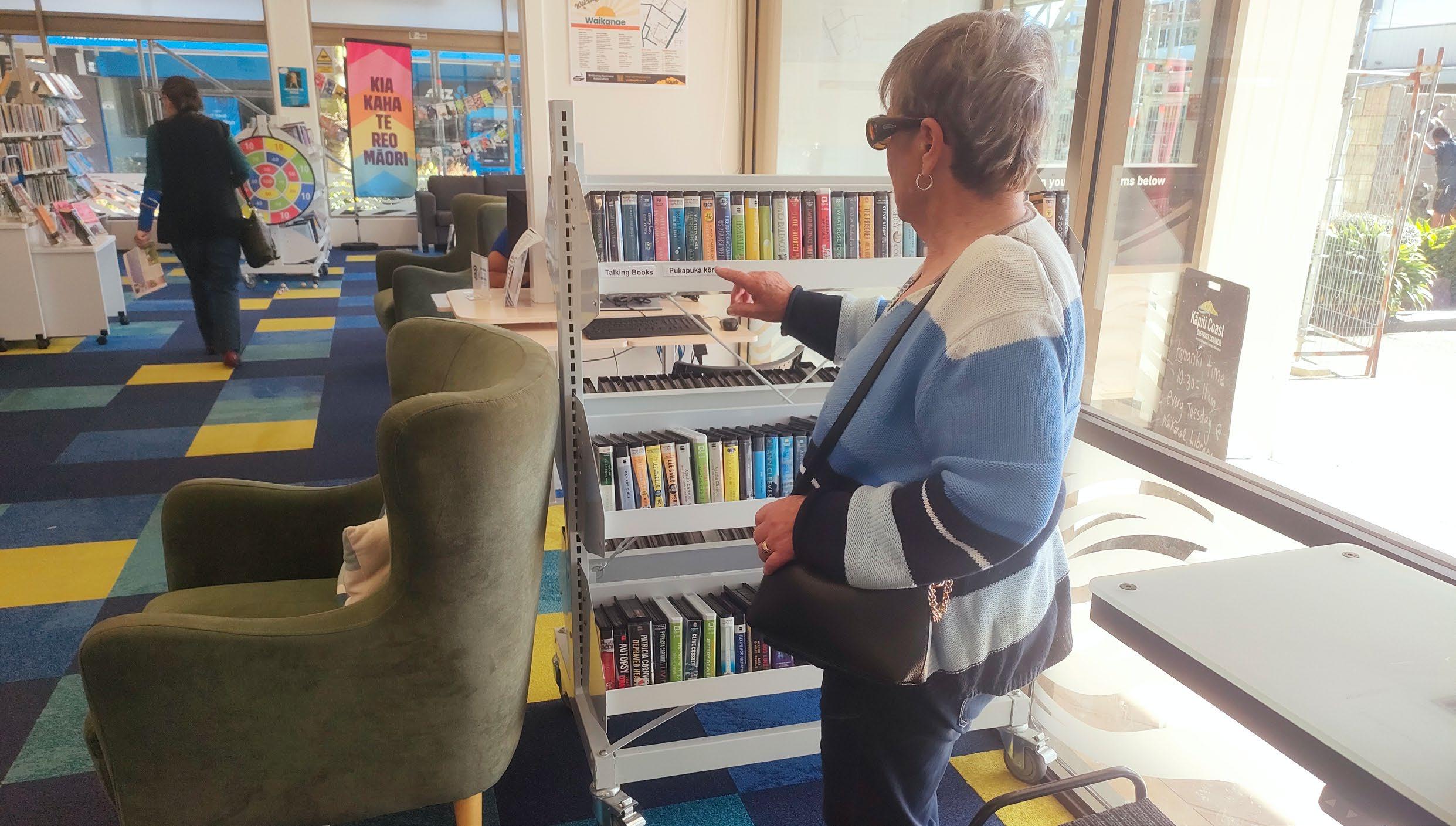
Within the walls of the National Library of New Zealand Te Puna Mātauranga o Aotearoa, our nation’s stories are collected, preserved, and protected. Books, magazines, photographs, maps, works of art, music, oral histories and digital resources are just some of the formats held. As kaitiaki, or guardians, library staff care for these taonga while ensuring they remain accessible. As the Print Disabilities Service Librarian, I want to share a story from our little-known but heavily used Print Disabilities Service.
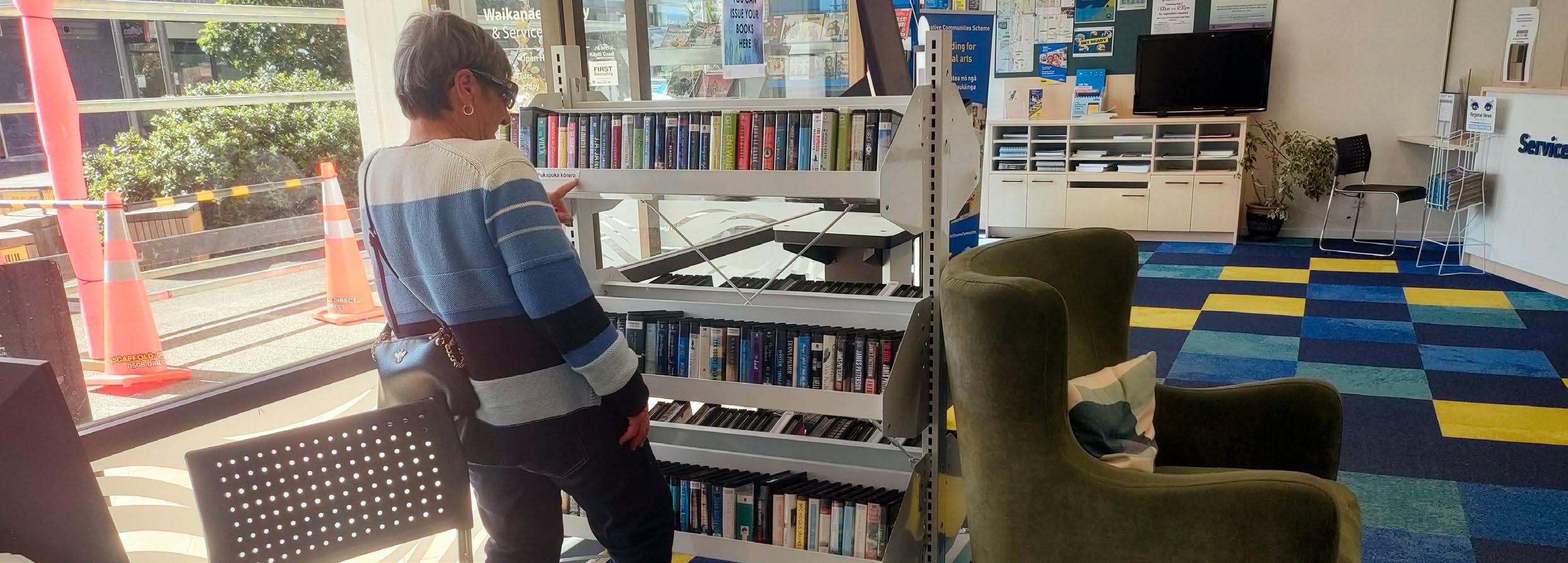
The Print Disabilities Service supports libraries across Aotearoa with a wide range of accessible formats – physical CDs and MP3 CDs, audio enabled picture books (VOX/Wonderbooks), and Wheelers ePlatform for school students. Soon, we’ll also be offering uLibrary by Ulverscroft for adult borrowers.
Since 1980, we have supplied audiobooks to public, school, and prison libraries nationwide for
borrowers who struggle to read standard print. We supplement library collections and support many housebound services. Described by users as ‘a lifeline’, the Print Disabilities Collection focuses on popular literature for recreational reading, spanning fiction and non-fiction across many genres.
Most titles in our collection are international, as very little New Zealand literature is available in audio format. While text-to-speech technology increases accessibility, synthetic voices cannot match the richness of human narration – especially in New Zealand literature, where te reo Māori is often woven throughout the text.
A few years ago, we were humbled by a generous bequest from a former service user. Her donation allowed us to address the lack of New Zealand literature in audio form. With support from the National Library’s philanthropic foundation, Te Puna Foundation, we launched a project to create some New Zealand audiobooks.
The process proved complex. Selecting titles was the first challenge, given the wealth of New Zealand authors. We chose two winners from the NZ Book Awards for Children and Young Adults: Dawn Raid by Pauline (Vaeluaga) Smith and How to Bee by Bren MacDibble. We engaged Theo Gibson, CEO of Audiobooks NZ, to manage production. Rights were negotiated, narrators appointed, and two professionally recorded audiobooks were produced.
Encouraged by this success, we expanded the project to four more titles, focusing on New Zealand’s history to support the school curriculum. Again, partnering with Audiobooks NZ yielded outstanding results.
The six audiobooks are:
• Dawn Raid by Pauline (Vaeluaga) Smith, narrated by Irasa Siave
• H ow to Bee by Bren MacDibble, narrated by Romy Hooper
• Mission Girl by Fleur Beale, narrated by Waimirirangi Lee-Reiri
• G old! by Pauline Cartwright, narrated by Vida Gibson
• C astaway by Bill O’Brien, narrated by Jesse Park
• S top the Tour! by Bill Nagelkerke, narrated by Arlo Gibson
Libraries can add these titles to their e-collections via their preferred provider, such as BorrowBox or ePlatform.
The project aimed to publish New Zealand stories in accessible formats, promote local literature, support authors, publishers, and narrators, and raise awareness of the importance of multiple formats.
Participating authors have been supportive of the project, with author Pauline Smith expressing her delight that her book was made accessible to all. Theo Gibson shared his pride in collaborating, noting the personal significance of the experience given his own experience with dyslexia.
This collaborative project celebrates the importance of accessibility. Our stories matter, and they should be available to everyone. To make use of our service, simply visit our website or get in touch at audiobook.request@dia.govt.nz.
Felicity Benjes is the Print Disabilities Service Librarian at the National Library Te Puna Mātauranga o Aotearoa.

From tertiary to public
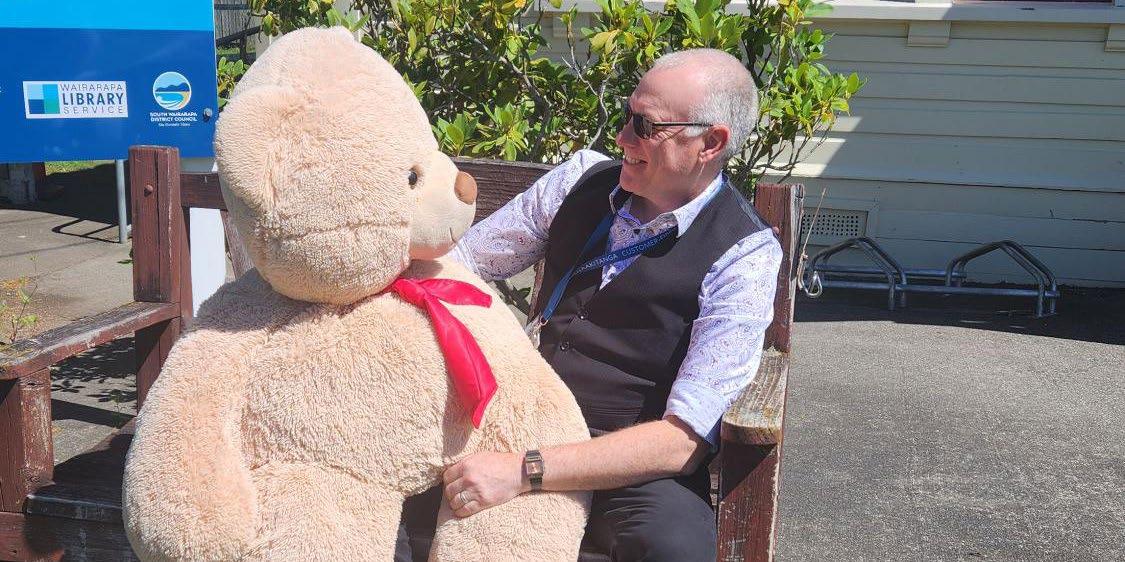
Recently, Marcus Harvey moved from Te Herenga Waka—Victoria University of Wellington to the South Wairarapa public library. Marcus tells us about his move from tertiary to public libraries.
I recently started in the position of Library Manager at the South Wairarapa Libraries, based across the three libraries in Featherston, Greytown and Martinborough. I've arrived at a time of transition for the team as the shared Wairarapa Library Service with Carterton Library ended in 2025. This resulted in a period of significant change for staff after a 24-year relationship between the councils, and necessitating the reforging of an independent identity.
Reporting to the Group Manager Corporate Services at the South Wairarapa District Council, I lead the library team and all that entails in a small library service. This includes strategic and operational planning, contributing to Council requirements, managing core functions, recruitment, workflow management, health and safety, and building trusted relationships with the community to name a few.
In providing the vision and guidance necessary during a cultural shift in thinking and working, the
team has worked hard to establish a new identity across our many shared accounts, systems and resources. A steady exercise in perseverance and persistence while we worked through the required changes.
While our libraries are relatively small, they hold a crucial, connective, and valued role with our library users, also providing council service points and contributing to our emergency management resiliency and response.
The main Council building was undergoing renovation during this transition period, with the Greytown and Martinborough Libraries providing additional space for the wider council staff. It was a pertinent reminder of the crucial importance of building face-to-face relationships as it brought the library and Council staff closer together, facilitating many beneficial interactions over that time and building a stronger understanding of our shared community responsibilities and impact.
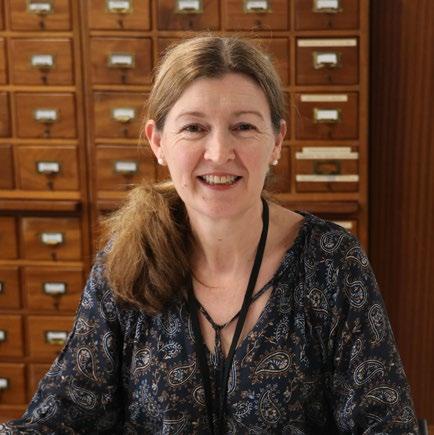
Image supplied. Marcus Harvey in his new role as Library Manager at South Wairarapa Libraries.
A LIBRARY CAREER SPANNING 35 YEARS
Across 35 years, I've worked in almost every type of library or research service you can think of, and they're more alike than different. What is different between this role and my previous role of Manager Academic Engagement at Te Herenga Waka—Victoria University of Wellington? As the Library Manager it's having the responsibility for the entirety of a library service and the leadership and nuances required in that difference, especially during a transitional change.
I've been truly impressed by the people, scale and benefits across the SMART Library network. Having for a long time supported academics and students in their research, teaching and learning aspirations, seeing the difference our local libraries make on those who live, work and play in the South Wairarapa has been both revelatory and personally satisfying.
I'm much closer to the "coalface" in a small library. I'm building deeper connections to the place I call home. While resourcing is a constraint in any library, the SMART Library consortium has
leveraged our collective wealth of resources to support the vitality and health of the region.
Saving 20 hours per week travel time into Wellington has also been a huge difference! I didn't appreciate what was available on my own doorstep or what was available online. I was not a model local library customer. Reflecting on life as a former commuter, I'm incredibly excited to tap into the stories and demographic pockets of our community who might otherwise face barriers in using a library service or may not know what we offer.
Do I hope to make a difference or influence some profound change? I have mixed feelings on what that means. Percy Shelley expressed what it is to leave grand monuments better than I could. I hope to support the team to do the best they possibly can, to give them the tools and environment to excel, to grow in their roles and continue to be excited by what they are tasked with. To be proud to work alongside their colleagues in the profession and stretch beyond what is currently deemed possible, to be prepared for the future.
I know when we create positive, real interactions and experiences we all make a difference to that person or family today, and hopefully that also resonates across time in a love of reading, in the desire to be curious, in the need to know and seek enjoyment. By creating these connective moments we're a stronger community for that.
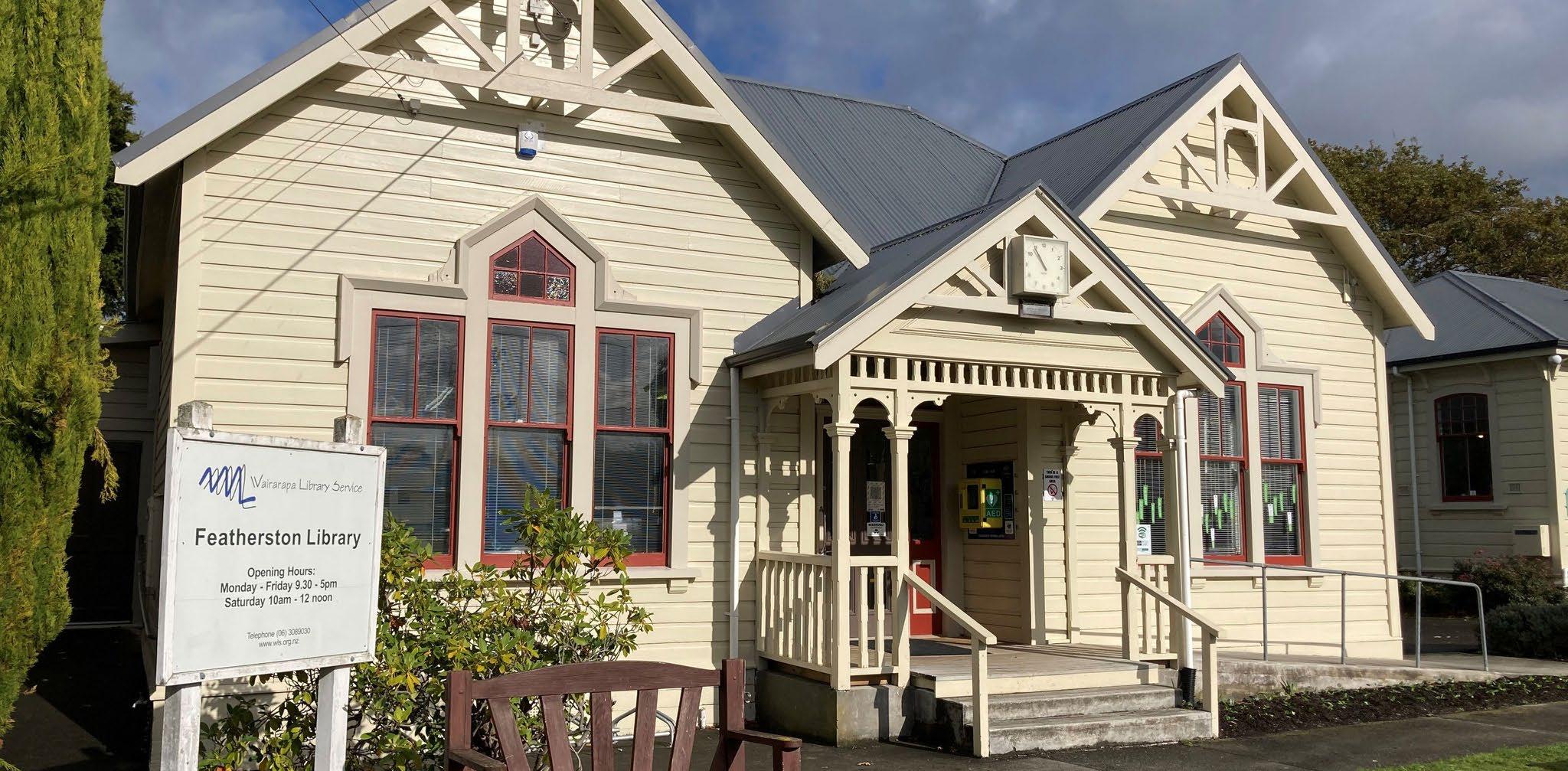
Wairarapa’s Featherston Library. Image retrieved from
Wairarapa Facebook page.
I can’t help myself – I love reading
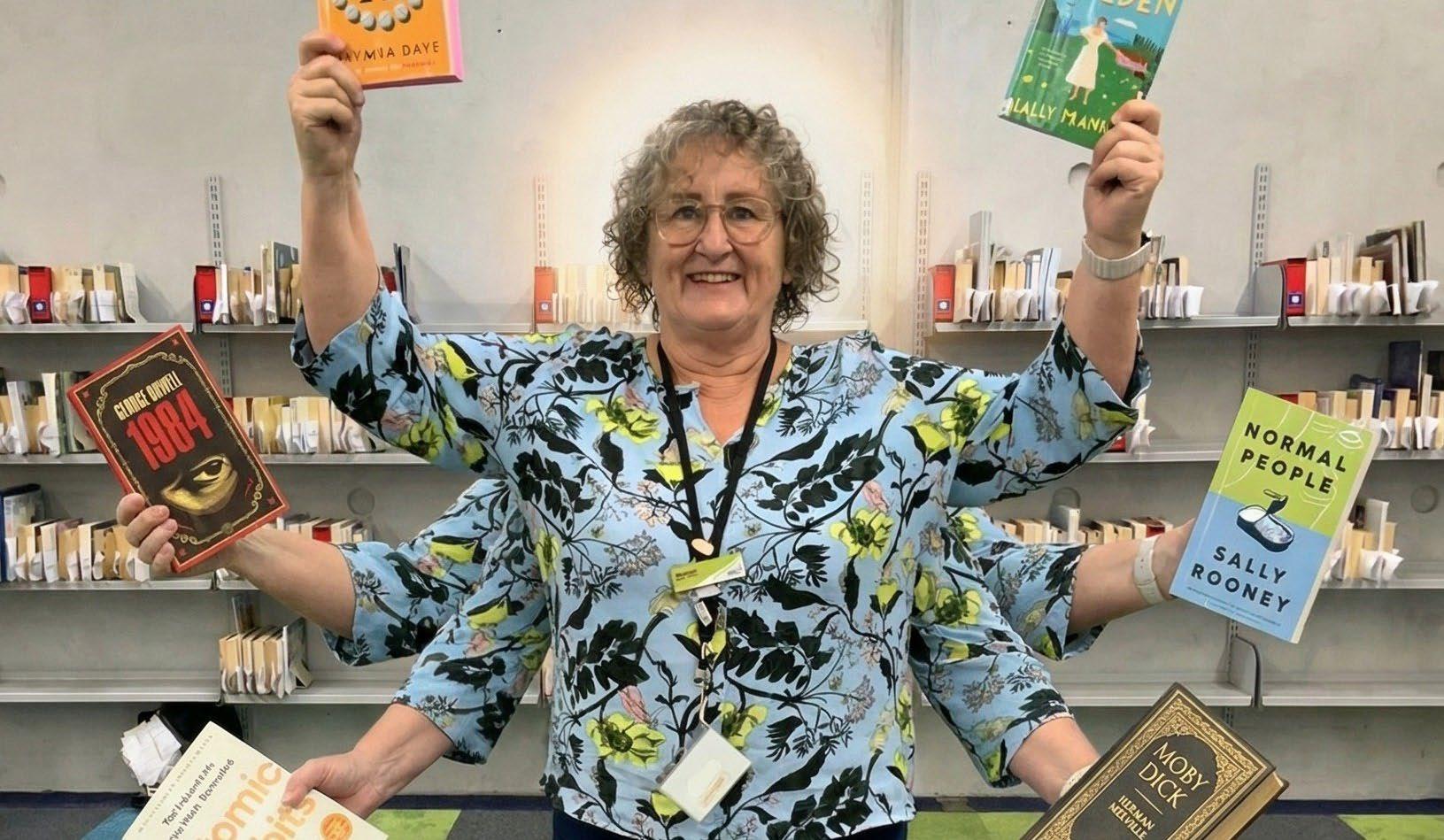
Kāpiti District Libraries’ Jemma Joines focused on Reader Advisory as part of her Te Tōtara workforce development goal. Jemma talks about starting book conversations and what readers' advisory is in this article.
I love reading. I will have a go with most books, fiction and nonfiction, but I’m not so hot on fantasy or sci-fi. This type of book usually has to come highly recommended by someone I trust, so, sorry, Terry Pratchett, I have really tried. I also will never knowingly read a horror. But even Stephen King has written an odd one or two that’s not horror.
A close second to reading is talking about books, mainly with anyone who will listen. Fortunately, I work in a public library on the Kāpiti Coast where I get paid to do this in my job - the talking part, not the reading bit. This is called ‘Reader Advisory’!
I was initially employed at Paraparaumu library in 2013 due to my customer service experience. And that’s what I believe Reader Advisory is all about. Customer service!
Forget the small talk about the weather, use library small talk and talk about books instead. You will often hear me say things like, “That’s a really popular author, now go home, make a cup of tea, put your feet up and read your book”. Or I might say, “Will one book be enough?”
Lending books, whether physical, audiobooks, or eBooks, is a core part of our business, and we should be talking about them.
WHERE DO YOU START?
Where do you start? Start at the circulation desk.
I take most of my cues from what people are borrowing when they come up to the issues counter, even just comments on the great cover graphics.
I can't help myself from speaking up, whether it’s a genre that I’m familiar with or not. In my head, I'm thinking that if they like that author, they may enjoy
Jemma Joines at Paraparaumu Library. Image supplied.
another author who writes in a similar style or on a related topic.
It's even better if I get a bookish response, then we're away discussing whether Jack Reacher books are the same now that his younger brother Andrew is co-writing, or how Tim Sullivan is writing some of the best detective crime fiction out there. British, with great characters! Often, the conversation turns into a mutual sharing of ideas and suggestions.
Here are some good conversation starters:
• That book is popular at the moment.
• I ’ve read that and thought it was good.
• You have a good cross-section of books here.
• I really like that author too.
Results are a bonus, with extra books taken home or placed on reserve. There's that exciting feeling when you hit that sweet spot, like being in a fan club or having a joint book crush.
Sometimes it doesn’t click. They might say they have enough to read at the moment. Then I may offer to reserve it and suspend it for a couple of weeks. Depending on the vibe, I will just let it drop, but with an invitation to ask for help anytime they would like.
IT’S JUST GOOD CUSTOMER SERVICE
Whatever you do, don’t lie. If you don’t like a book, don’t say you do – that’s customer service 101. Be authentic.
Use words like, “I don’t read much fantasy, but I hear Nalini Singh is popular.”
Avoid being a book snob – avoid should-reads and only recommending Booker Prize winners or the Ockham award winners. Never apologise for your reading choices.
Remember, for many people, this is the only person they will see today, so make it an awesome one.
A good question when stuck is to gauge where a library user is at – ask them, “What do you feel like reading?” to help find clues for reading choices.
If you can, link book borrowing to other library services. For instance, if someone is borrowing
woodworking books, I show the user the laser cutter in the Makerspace. Or if they are getting out craft books, I let them know about our Craft Café sessions in the Makerspace as well. Use what clues you can. This is a marketing tactic called crossselling.
If the library user says they have enough books at the moment, you can always offer to suspend the reservation, so it arrives next month.
Some borrowers will never engage; they will use the self-check-outs, and that’s ok. But you’d be surprised how many will engage.
OTHER USEFUL TOOLS
I created a series of bookmarks with book suggestions that have been an aid to discussions and have been very popular. Knowing what’s popular and what’s trending in reading choices will help you with advice.
Other tools include the favourites bar on our website and the literature map. This is visual, easy to use and shows what else readers of an author might like. Check out the latest books and book displays to increase your knowledge. Read the reviews and updates on Kete Books
The Fantastic Fiction site helps determine the order of an author's books. Christchurch Libraries' reading lists are also very helpful. And if your library subscribes to Good Reading Magazine, it is a great publication for finding out what people are reading.
Use what you know and what your team know. With my team, we created a hobbies and skills chart that not only helps build connections within the team but also allows us to call on each other for knowledge about various subjects. This will increase our ability to provide effective reader advisory services.
The benefits of readers' advisory to our library users are huge. By connecting people to our collections and sharing our knowledge, we widen their reading and build relationships with our community.
Wikimedia goes to university
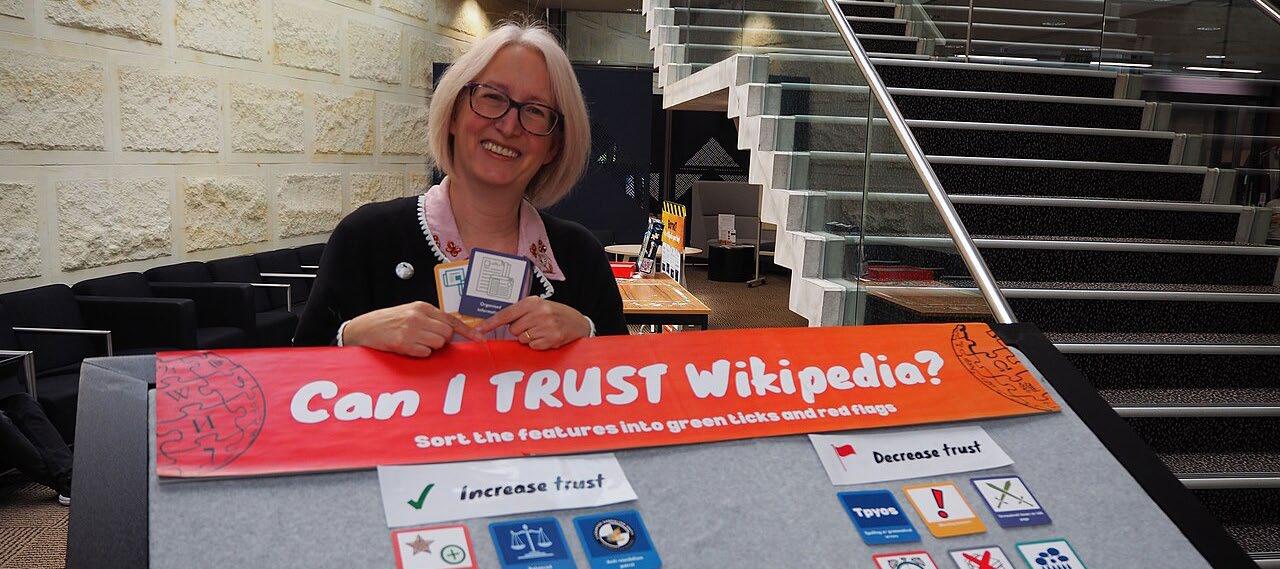
Tamsin Braisher has been editing Wikipedia since 2018, as a volunteer, but last year she started a role as Wikimedian in Residence at the University of Otago in Dunedin. Tamsin is funded by a grant from Wikimedia Aotearoa New Zealand, and is based at Otago until the end of 2026. Here she describes what she’s been up to, and why she calls herself a Wikimedian.
One of the first questions I am asked when I introduce myself around the university is, why Wikimedian and not Wikipedian in Residence? It’s a great opportunity to explain to people that there are lots of different ‘Wiki’ projects. I work on the massive linked database Wikidata, the image library Wikimedia Commons, the transcription site WikiSource, and of course the world’s biggest encyclopedia that we all know and love, Wikipedia. But there are many more Wiki projects besides those!
While people often think I spend all my time editing Wikipedia, my role is actually about helping other people engage with Wiki projects, and I’ve found myself doing a lot of different activities, from developing Wikipedia-based colouring pages for students to discussing institutional policy on image copyrights.
I’m hosted by the library engagement team, and I have a desk out on the library floor in the
University’s Central Library, in what I call the Wiki Corner. I run editing events for students and staff in the library, and hold weekly meetups for local editors, with lots of biscuits to power the work.
A lot of my work aims to improve the understanding of how Wikipedia is put together and how to use it properly. Polling students on what teachers had told them about using Wikipedia revealed that many still believe that because anyone can edit Wikipedia, you can’t trust it. I thought that by Wikipedia’s 25th birthday we might have moved on from that! To help improve understanding, I made an activity where you have to sort Wikipedia features like neutral point of view or warning banners into whether those features increase trust or not. I paired that with a handout I wrote on how to read a Wikipedia page properly. Elements like the talk page, where editors discuss the article, and the history tab, where you can see all the different versions of an article since it was begun, and who made what changes when, are really important in judging an article’s quality, but it’s really easy for readers to miss that those exist.
Lots of students know about Wiki racing, the game where you have to get from one Wikipedia article to a target article in as few clicks or as fast as possible, but there are actually lots of different games based on Wikipedia and Wikidata. Just for fun, I developed a display board of games, and I
run a different game each day on a big touchscreen table near my desk. The library engagement team have been very tolerant of me expanding my presence beyond the Wiki Corner! I’ve developed posters to support library book displays, for instance I did one recently about neurodiversity on Wikipedia to go alongside a neurodiversity expo, and a poster about New Zealand law on Wikipedia to display at the Law Library.
Although I’m based in the library, I work with groups across the university. Last year I worked with a lecturer in the Anatomy Department to develop a new assignment for students. Previously the students had critiqued an AI-generated article created by the lecturer. We redesigned the assignment so students worked in groups to assess a Wikipedia article and suggest improvements to it. We’re running it again this year, and hope to improve three anatomy articles as a result.
I’ve also worked with groups outside the university. Early this year I taught a workshop at an academy for high school science teachers, where I showed them some of the lesson plans that have been developed for using Wikipedia in the classroom. What they enjoyed the most though was playing a cooperative board game developed by Wikipedians in France, called Wikeys, which teaches kids the basic features of Wikipedia, such as neutral point of view, reliable sources and how to judge the quality of an article, all without touching a keyboard!
With university staff, I often find myself talking about how Wikipedia articles are created. A common misconception is that biographies on Wikipedia are written by the subjects themselves. As well as not being true, it would be against Wikipedia policy to write about yourself! I talk with staff and students about the conflict of interest guidelines – Wikipedia has strict policies about editing the pages of people you know, your employer, and so on. Some editors simply recommend not touching those kind pages, but I don’t find this sort of ‘abstinence’ advice helpful when talking to academics who have pages written about them on Wikipedia. They care about information on Wikipedia being accurate, and want to get errors corrected or old information updated, and they need to know how to do it without breaking Wikipedia’s rules.
Some of my work does involve editing Wikipedia. A staff member from the Faculty of Dentistry approached me about improving the Wikipedia article about the school – when I looked, I saw it had outdated and incorrect content, and had a “this page has multiple issues” warning on it since
2012, so it was overdue for some love and attention! It also didn’t have any images, despite the school having two heritage-registered buildings in its history, and a whole new Clinical Services Building opened in 2021. I worked with staff from the school to rewrite the page, identifying good sources, and adding lots of dentistry-related publications, organisations, awards and researchers to Wikidata. One of the university photographers donated his photographs of the new building to the page, and we supported it with some accompanying pages on notable faculty members, Sir John Walsh, who invented the high-speed dental drill, and Angela Pack, who was instrumental in getting dental hygienists accepted in New Zealand. There’s always more that could be done, but I’m happy that we made a big improvement to what was already there.
Another fun project was working with an academic from the English Department, Thomas McLean, to create an ebook of a collection of Irish fairy tales. The book, Granny’s Wonderful Chair, is long out of copyright, and although few people have heard of it these days, it has had many editions illustrated by some notable artists. We were able to transcribe the first edition with volunteers using WikiSource, and then create a Wikipedia page about the book with lots of images from the different editions. At the same time, Thomas was attending an annual festival in Ireland devoted to the book’s author, Frances Brown. While there, he assembled the committee members for the festival and we ran a remote Ireland–New Zealand Wikipedia workshop to help them write the chapter summaries for the page.
This year I’ll be working with the Archaeology Department, and I’m giving a lecture in a Media Studies course. I’ll also be trying to improve content around the Dunedin College of Education, which is celebrating its 150th anniversary this year. Wikipedia has a twice-yearly campaign to encourage librarians to add citations to Wikipedia, called #1Lib1Ref, which I’ll be running workshops on. It’s a really easy way to improve Wikipedia, and draws on librarians’ skills in finding reliable sources, so it’s a win–win! I hope to focus some of the sessions on Māori literature, which is hugely underrepresented on Wikipedia. I also have a project called the New Zealand Thesis Project, uploading metadata for New Zealand theses and dissertations to Wikidata to develop a virtual national repository. We started the project several years ago and we are about to do our first big update to the data, which will be really interesting. It’s looking like a busy year!

Te Kahu - The heritage campus opens

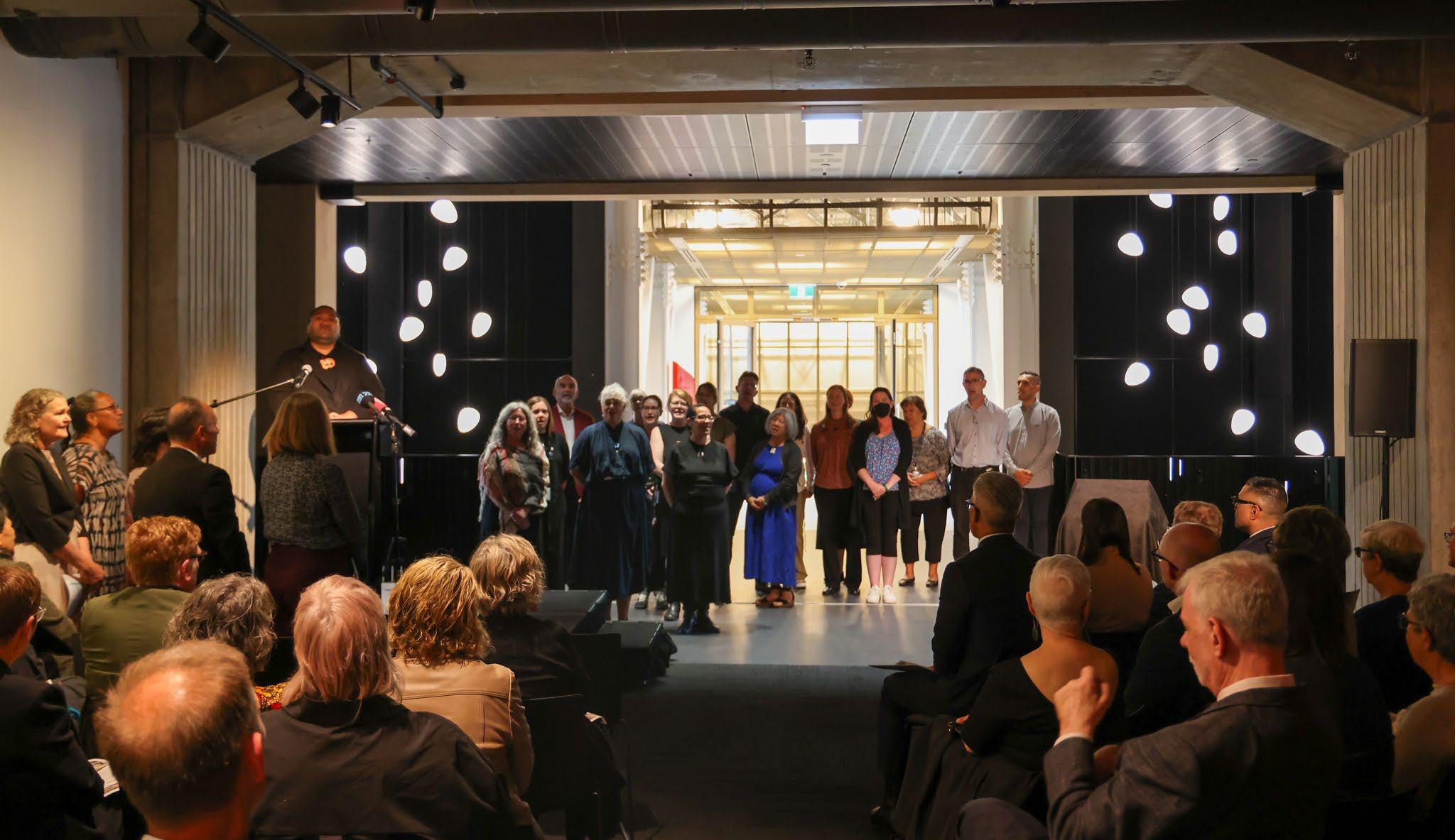
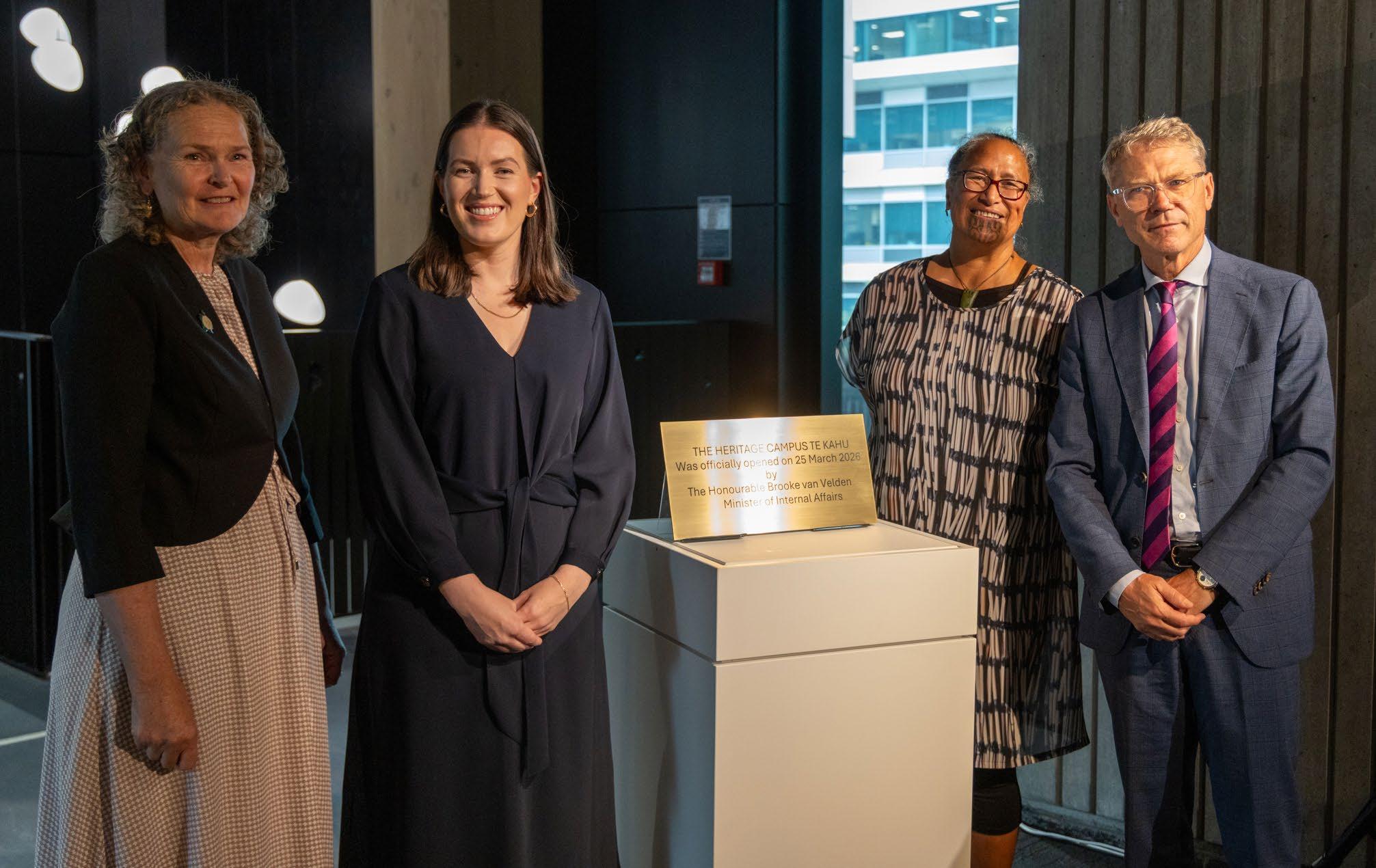
The Minister of Internal Affairs, Brooke van Velden, formally opened the new heritage campus, home to Archives New Zealand and the National Library, in the Government precinct, Wellington, on 25 March.
The heritage campus has been named Te Kahu, which means ‘cloak’ or ‘piece of clothing’. In this context, Te Kahu refers to the protection of taonga, history, and the memories of Aotearoa New Zealand. It is a place that weaves together the story of a nation.
It brings our documentary heritage into one modern,
purpose-built, and future focused heritage campus.
Te Kahu represents a new era in the stewardship of our collections, strengthening access, preservation, and collaboration for generations to come.
Te Kahu is the name for the wider heritage campus. It brings together Te Rua, the new Archives New Zealand Te Rua Mahara o te Kāwanatanga oAotearoa building, with Te Puna, the National Library Te Puna Mātauranga o Aotearoa.
Te Hono is the gifted name for the link bridge, connecting Te Rua and Te Puna, and Te Wai is the gifted name for the general reading room at Te
Puna. These names all have significance and context, which you can read about here. Also part of the heritage campus is Ngā Taonga Sound & Vision and the Alexander Turnbull Library.
With 19,000sqm of floor space and 90km of storage under tightly controlled environmental conditions, the facility will ultimately be home to millions of photographs, films and records, documenting the nation's political, cultural and social history.
Minister Brooke Van Velden stated that the new campus
Opening of Te Kahu heritage campus. Image credit Max Olijnyk.
will serve New Zealanders well into the future. Shared technical workspaces and a collaborative structure make it easier for all components to work together, providing a seamless, connected experience for users.
“Te Kahu marks a new era chapter in how we care for our collections — improving access, preservation and collaboration for generations to come.”
National Librarian Te Pouhuaki Rachel Esson thanked the staff who had achieved all they had while the building work was underway, and implemented a new organisational structure while this was happening.
The archival facility, Te Rua, on Aitken Street is an example of a private partnership with government, with the $290 million building owned by commercial property company Dexus. While the taonga within the building and its fit-out are publicly owned, the building base and land belong to Canadian Mutual Fund, PSPIB/CPPIB Waiheke Inc and are managed by Australasian real estate assets manager Dexus, which was also the developer.
Te Rua features a building on 36 base isolators that could drift up to 1.3m horizontally and up to 300mm vertically during an earthquake. To meet UNESCO standards, climate
control within the building must remain within ±1°C for at least 48 hours in the event of a power failure.
"In layman's terms, we have built the most beautiful chillybin on base isolators," Dexus portfolio manager for New Zealand Phill Stanley told RNZ.
At the launch of Te Kahu from left: Minister of Internal Affairs Brooke Van Velden, Te Pouhuaki Rachel Esson, Chief Archivist Anahera Morehu and Minister of Culture and Heritage Paul Goldsmith. Image credit Max Olijnyk.
East Coast Bays Library quiz night

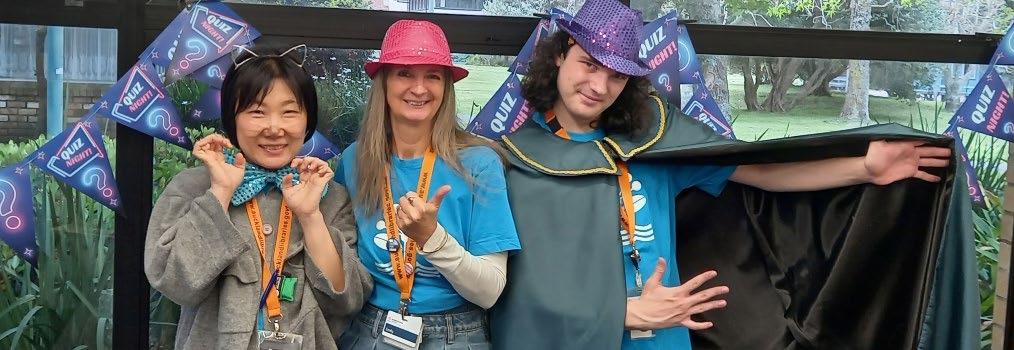
Our library opens seven days a week, with a late night until 7pm on Thursdays. We cover a large area on the North Shore and are one of the busiest libraries in the whole region.
My team and I have been thinking about how we can attract more locals to come into the library on Thursday night. I thought, " Why can’t we have a quiz night in the library?” The team got excited about this new idea, and a few staff members formed a library crew to plan this. It took us three months to prepare the quiz, find local business sponsors, and finalise the branding and posters.
Then, we had our very first ‘Library Quiz Night’ in October
last year. It was a resounding success and a good time! The best time ever, and the library was buzzing! Nearly 30 people came, and six teams were formed. It was a great event for family and friends, for fun quizzing, laughter, and a little friendly competition.
The following month and December’s quiz night continued to be popular and became a branding image for our library. When we restarted in February this year, we had new quizzers joining and sharing their wit, knowledge, and laughter with the beautiful community. We received nice feedback, which is so encouraging.
“Congratulations to you and the team for a very successful quiz last night. I think we all enjoyed it very much. Questions were interesting, and there was a good pace - I don’t like slow quizzes. I’m sure we’re all looking forward to the next one.”
We believe this event gives our community time to enjoy a lively night at the library. It also allows some staff members to lead this event, which makes them feel accomplished. Special thanks to the staff members who made enormous contributions to this event - Sage Deen, Emily Flaws, Sueyon Kim, Sian Milligan-Smith, and Andrew Crymble.
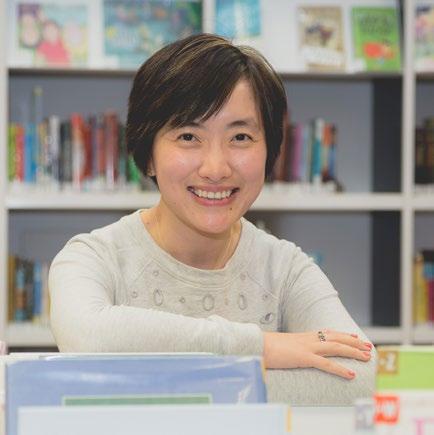
Hao Zhang has worked in libraries for 12 years, in both public and academic sectors. She is currently the manager of the East Coast Bays Library, Auckland Libraries.
From left, library kaimahi: Sueyon Kim, Emily Flaws, and Sage Deen. Image supplied.

Bridging gaps in Aotearoa publishing
All communities in Aotearoa New Zealand should be able to see themselves reflected in the stories that they read. With this in mind, Literacy Waitākere has worked with its learners to develop a series of learner-led stories that capture the unique lived experiences of Literacy Waitākere ākonga.
A trusted West Auckland not-for-profit organisation, Literacy Waitākere has helped communities in Tāmaki Makaurau gain literacy for over 40 years. From young locals improving their literacy and numeracy skills before pursuing higher education, to foreign-language speakers gaining foundational English for the first time, Literacy Waitākere welcomes learners from all walks of life — all of whom have stories worth telling.
In 2020, Auckland Council Libraries made moves to bridge cultural gaps in library collections through the Auckland Council Libraries’ publishing programme. This incentive uplifts the stories

of everyday Kiwis, with a particular focus on Māori and Pasifika literacy.
Seeing an opportunity to turn learners into published authors, in 2021 Literacy Waitākere began working with their learners to develop Stories of our Lives: Tō Mātou Ao, A Mātou Pūrākau, a learner-led collection that captures the unique lived experiences and stories of our Literacy Waitākere ākonga, and our very first series!
Each text is mapped to the Tertiary Education Commission (TEC) reading progressions and serves as both a teaching and learning resource and an accessible recreational read.
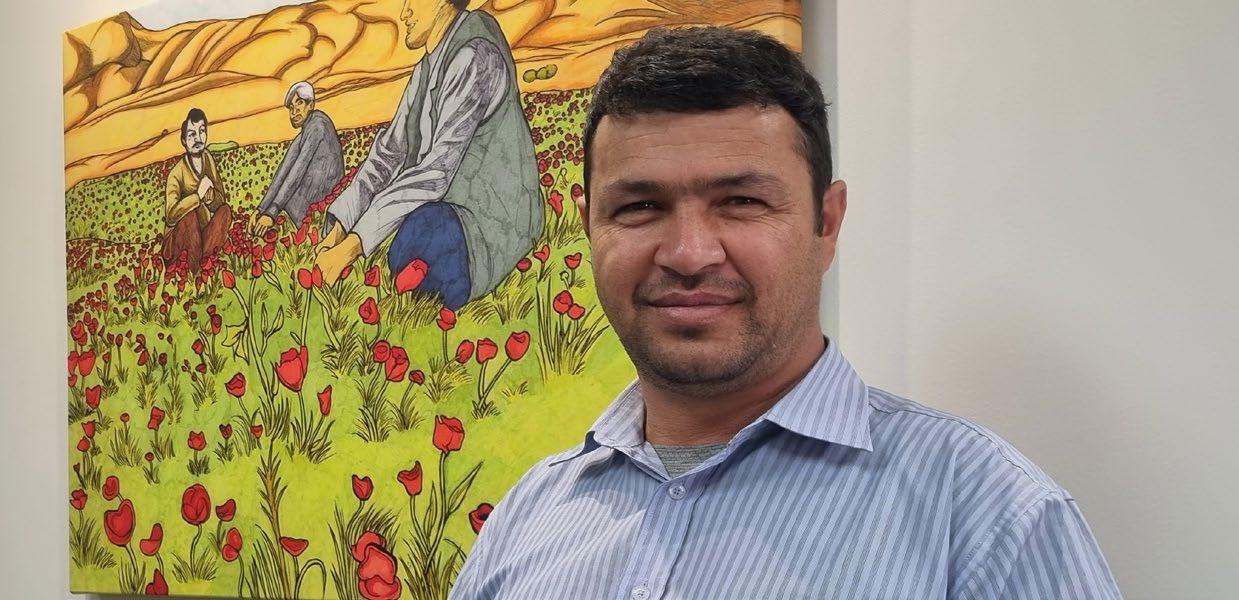
The series includes the stories of past learners, like MJ, who recalls growing up in Ngāruawāhia in The River, as well as current literacy ākonga, including H. Dawlatyar, who shares his 2021 journey of leaving Afghanistan for New Zealand in From Bamyan to Auckland.
Hinging on our kaupapa of reciprocity, each title combines the efforts of the kaiako and ākonga who work together to pen a concise, engaging story without losing the student’s literary voice. The story is then lovingly handillustrated by kaiako and inhouse illustrator Nina Mercep before being sent off for publishing. And, just like that, our learners go from struggling with language to having their stories published and made available across the motu.
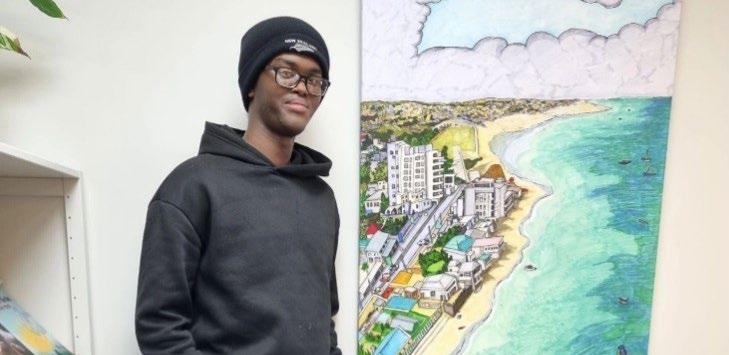
Recently, Literacy Waitākere received funding from the Ministry for Ethnic Communities to produce two larger-format books, My Exciting Experiences by Somalian student Bassam Omar, and A Beekeeper from Bamyan by Afghan student H.Dawlatyar, both comingof-age stories of triumph over adversity.
These new titles were introduced at a book launch on March 26. If you are interested in purchasing some learner-led books you can find them here.
Left, H. Dawlatyar author of A Beekeeper from Bamyan. Image credit Literacy Waitākere. Right, Bassam Omar author of My Exciting Experiences. Image credit Literacy Waitākere.

Postgraduate Library and Information Science (LIS) education enters 80th year
On 18 February, we marked the 80th anniversary of postgraduate library education in New Zealand, tracing its beginnings to the establishment of the New Zealand Library School.
In her report to the Appendices to the Journals of the House of Representatives (AJHR 1946 H32a), the School’s Director, Miss Mary Parsons, recorded that 29 students commenced their studies in rented space at the rear of the Wellington Public Libraries building, before moving three weeks later into rooms adapted for use in a house adjoining the National Library Service. These students were enrolled full-time, received a stipend equivalent to that paid during teacher training, and were expected to be bonded for three years of service on completion of their studies.
The New Zealand Library School remained the provider of
undergraduate and postgraduate library education until 1979. From 1980, postgraduate qualifications shifted to Te Herenga Waka Victoria University of Wellington, with the first intake of students into the university-based programme beginning that year.
Te Herenga Waka recently learned that its Library and Information Studies programme has been ranked 43rd in the world in the 2026 QS Subject Rankings for Library and Information Management, making it the highest-ranked provider of Library and Information Science education in Australasia.
Te Herenga Waka will host the iConference in April 2027, an annual event that brings together around 130 universities worldwide with a shared interest in research and teaching on information. This is the first time the iConference has been held in the Southern Hemisphere.
Another conference Te Herenga Waka staff and students regularly engage with is RAILS (Research Applications in Information and Library Studies), which will be held in Adelaide from 1–3 December 2026. RAILS provides an important meeting place for researchers, practitioners, and educators across librarianship, archival science, and related information fields. The conference theme is New Ideas, New Beginnings, and there is an opportunity for presenters to develop their conference papers into journal articles, making RAILS a particularly valuable forum for sharing work across the research–practice spectrum.
For more information on the Information Studies programme at Te Herenga Waka, contact Associate Professor Spencer Lilley, the current Information Studies Programme Director: spencer.lilley@vuw.ac.nz.

Library Mahi
RECOGNISING SOVEREIGN CITIZEN SIGNALS IN EVERYDAY INFORMATION WORK
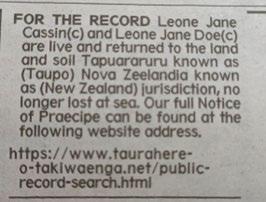
On Monday, 23 February this year, a brief notice appeared in the NZ Herald Classifieds under ‘For the Record’. It declared two individuals "no longer lost at sea" and "returned to the land and soil of Tapuaranuru (Taupo), Nova Zeelandia”.
To most readers, the hint of pirate-speak would be quirky enough to make them pause. To those of us working in information literacy or interested in identifying emerging misinformation patterns, it is something else. It is a visible marker of sovereign citizen ideology, pointing to an active international network.
Libraries, council-integrated services, and frontline information environments are often among the first places where people influenced by sovereign citizen ideas seek help, test their arguments, or attempt to validate the materials they have encountered online. Recognising the pattern early supports staff safety, professional clarity, and community care.
This article does not examine sovereign citizen ideology as
a political movement or legal theory. Instead, it treats it as an information phenomenon: a set of recognisable signals, vocabularies, and documents that increasingly surface in frontline information work. For libraries, this places the issue squarely within the domains of information literacy, civic literacy, staff safety, and trauma-informed public service practice.
WHAT SOVEREIGN CITIZEN SIGNALS LOOK LIKE
The Classifieds notice listed two names, ‘Leone Jane Cassin(c)’ and ‘Leone Jane Doe(c)’, which almost certainly refer to the same person. The duplication reflects the sovereign citizen movement's ‘strawman’ doctrine: the belief that the state creates a fictitious legal identity at birth, separate from the living person. By publicly declaring both names, the individual is symbolically rejecting the legal identity they believe was imposed on them. The (c)notation is an attempt to copyright their own name, a common motif within the ideology.
The language itself is highly diagnostic. Phrases like "returned to the land and soil," "no longer lost at sea," and "Notice of Praecipe" are standard sovereign citizen vocabulary. The maritime and admiralty law framing is central to the belief system: the idea that when the
state creates a legal identity, birth certificate, government records, the individual becomes a fictional legal ‘vessel’ operating under maritime and commercial law rather than common law. Publicly declaring oneself "returned to the land" is the ritual act of withdrawal from that jurisdiction.
None of this has any legal standing. Sovereign citizens use such manoeuvres to try to avoid rates, fines, taxes, debts, and compliance with regulations, including car and dog registration. They come to view governments and institutions as illegitimate, believing they can withdraw consent to the Crown's laws by declaration alone.
WHO IS LIKELY TO BE SITTING ACROSS THE DESK FROM YOU
The person asking about ‘common law rights’ at your reference desk is more likely to be someone who lost a court case, can't pay their rates, or has been ground down by a system that never seemed to work for them than someone who woke up one day and decided to reject the Crown. Sovereign citizen ideology tends to find people at their most vulnerable: after a debt spiral, a health crisis, or a bureaucratic process that felt rigged.
Library staff are already seeing the conditions that make people susceptible. One in three New

Zealand households experienced food insecurity in the past year, and — significantly — most of them are facing it for the first time (Ipsos Public Affairs 2026). This is not a story about a chronic underclass. It is a story about ordinary people whose circumstances changed faster than the systems around them could respond. The rough sleepers, the working families choosing between rent and groceries, the pensioners quietly accessing food banks for the first time: these are not separate phenomena from what this article is describing.
Sovereign citizen ideology offers what feels like a map to people who are lost. Understanding that doesn't require you to engage with the belief system. It just means the person in front of you deserves curiosity before caution.
Curiosity does not mean endorsement, and compassion does not require us to ignore risk. Libraries are not asked to resolve injustice or repair failing systems at the reference desk. Our responsibility is more modest and more professional than that: to respond to the person in front of us without amplifying claims that are likely to cause them further harm.
The movement is also adept at anchoring its ideology to legitimate concerns. Opposition to the Gene Technology Bill, frustration with housing policy, distrust of the health system following the pandemic — these are real and reasonable grievances that the movement uses as entry points for ordinary
New Zealanders across all communities and backgrounds. The ideology arrives wrapped in something familiar or plausible before the pseudo-legal framework emerges.
In Aotearoa, some sovereign citizen rhetoric has reframed the ideology in terms of indigenous sovereignty or Treaty grievance. This is an opportunistic conflation, blending legitimate historical and political issues with a belief system that has no grounding in te Tiriti, tikanga, or recognised legal frameworks. Awareness helps us distinguish between the two.
In 2024, NZ Police identified 1,400 New Zealanders influenced by sovereign citizen ideology ( Townshend & Bowman, 2024). The movement recruits across social and educational backgrounds, and its growth accelerated significantly during the COVID-19 pandemic and its aftermath.
platform often associated with alternative media communities), a blog operated by von Reitz's primary publisher, Australian and New Zealand equivalents of her "assembly" network, repositories of pseudo-legal document templates encouraging followers to renounce their legal identity, and free Zoom training sessions held fortnightly.
The introductory content is free. This is deliberate and typical: the network draws people in through ideology and community before other costs emerge, including document packages, assembly memberships, and donation requests. The same website also carries material opposing the Gene Technology Bill, a legitimate policy debate. Anchoring fringe ideology to mainstream concerns is a well-documented recruitment technique — it makes the broader ideology harder to identify as fringe.
DOCUMENTED CONSEQUENCES IN AOTEAROA
A SIMPLE NOTICE CAN LEAD TO A COMPLEX ECOSYSTEM
The classified notice directs readers to a website. It is a local syndicate of an international network affiliated with the movement led by Anna Maria Riezinger, also known as Anna von Reitz, a self-proclaimed judge based in Alaska and one of the most influential figures in the sovereign citizen movement globally (Sarteschi, 2025).
The site links to coordinator training videos hosted on Rumble (a video-sharing
The consequences of sovereign citizen beliefs are not theoretical. Courts around the country have already dealt with cases where these ideas have shaped people's decisions, actions, or distress.
Raglan, 2025: A couple was fined $20,000 after relying on sovereign-citizen pseudo-legal arguments in a building consent dispute (NZ Herald, 3 February 2025).
Nelson, 2024: Megan Gordon drove through a police checkpoint, refused to provide her name, and told officers she "did not consent or recognise New Zealand police authority." She was fined $1,500,
disqualified from driving for six months, and subsequently imprisoned for 21 days after accusing the presiding judge of dishonesty (RNZ, 8 April 2024).
Most adherents are not violent. But their antiinstitutional rhetoric can escalate under stress, financial hardship, or mental health instability. For frontline library staff accustomed to complex and sometimes emotionally charged interactions, recognising the pattern matters.

WHY THIS MATTERS FOR LIBRARIES AND INFORMATION SERVICES
For libraries, this is not a mental health diagnosis, a political classification, or a legal assessment. It is a matter of recognising recurring information patterns that reliably shape the unfolding of an interaction. Libraries
occupy an unusual intersection: public information access, civic engagement, community trust, and frontline service delivery. This places us among the services most likely to encounter people influenced by sovereign citizen ideas, often before any other agency does.
What matters for libraries is not diagnosing belief or pathology, but recognising patterns — repeating language, document forms, jurisdictional claims — that reliably predict interactions and risk.
Encounters may present as reference enquiries about ’legal status correction’, land and soil jurisdictions, or ‘common law rights’. You may also see requests for assistance with finding or filing pseudo-legal documents, or demands for exemption from council rates, dog registrations, or ID requirements. It may mean tense interactions about institutional legitimacy or government authority, or community members in visible distress around financial or legal situations, seeking information
that may reinforce rather than resolve their difficulties.
Recognising these signals is not about labelling or judging people. It is about situational awareness, staff safety, and being equipped to respond in ways that neither escalate the interaction nor inadvertently validate pseudo-legal claims. What matters here is not what people believe, but how they seek information, interpret authority, and treat documents as talismans rather than evidence.
Libraries do not need to resolve sovereign citizen ideology. Our role is to recognise harmful information patterns early, maintain professional boundaries, and redirect people toward supports that deal with their actual circumstances.
PRACTICAL STEPS FOR LIBRARY PROFESSIONALS
These approaches are not exhaustive, but they reflect recurring patterns across public
Takapuna
libraries, council services, and community-facing information work.
Build baseline awareness
Familiarise yourself with common phrases, document formats, and conversational cues. Staff who recognise the pattern early can respond calmly and consistently, thereby preventing escalation. Short team briefings or scenario-based training are more effective than written policy alone.
Maintain professional boundaries without debate
You are not required to validate pseudo-legal claims, and engaging in argument is rarely productive. Standard reference practice applies; help the person find information, but do not assist with actions that fall outside your professional role, such as witnessing or endorsing pseudo-legal declarations.
Neutral, consistent responses work best: "Let me see what I can find on that", or "For anything you'd want to act on, Citizens Advice Bureau would be better placed — they can look at your specific situation properly”.
Record the interaction
After any encounter you recognise as sovereign citizen-related, log it in your organisation's health, safety and wellbeing platform. This is not about monitoring individual library users. It is about ensuring that isolated incidents don’t remain isolated in organisational awareness. A single encounter may be unremarkable. Repeated encounters form patterns that help organisations respond appropriately.
Debrief with your manager
Talking through what happened serves two purposes. First, it
supports your own wellbeing; these interactions can be more draining than they appear in the moment, particularly when someone is visibly distressed or the exchange was tense. Second, it gives your manager the information they need to respond appropriately. If a manager notices an increase in these interactions, they may need to inform others.
Connect with local networks
A relationship with your community constable, established before any incident, is more useful than one formed during one. Police community liaison teams and council compliance staff often hold current local intelligence about sovereign citizen activity in your area. When managers identify patterns across incidents, having an existing channel to share that information with the police makes the response faster and more effective.
Use information literacy approaches with care
The reference interview is itself a tool here. Questions oriented toward the person's actual situation: "What's the situation you're trying to resolve?" or "What have you already tried?” are more useful than questions that engage with the ideology directly. Curious, non-judgmental questioning can create space for someone to articulate what they actually need, without requiring you to either challenge or validate their beliefs.
This is the work: standard reference practice, professional calm, and the organisational habit of recording and debriefing. The response to sovereign citizen ideology in a library setting does not require special training so much as it requires the profession's existing skills, applied with awareness.
WHY NAMING THIS MATTERS
This classified notice is not alarming on its own. But understanding what it represents and how quickly the thread can lead from a newspaper column to a fortnightly Zoom session to an international network is increasingly relevant to frontline information work.
The allure of the sovereign citizen movement is not difficult to understand. It offers certainty to people living with uncertainty, community to
people who feel isolated, and the seductive sense of possessing knowledge that others lack. For already vulnerable people, the consequences of following that path can be devastating financially, legally, and in some cases psychologically.
Information professionals who work at the intersection of community trust and civic literacy are not neutral bystanders in that landscape. When misinformation causes demonstrable harm to the people we serve — and sovereign citizen ideology demonstrably does — naming it clearly is not a departure from our professional values. It is an expression of them.
In practice, navigating this tension requires drawing on the skills information professionals already have. The reference interview, that disciplined, manaenhancing practice of curious, non-judgmental questioning, is itself a tool for helping people examine what they actually need, without requiring us to challenge their beliefs directly.
There is a distinction worth holding onto: the difference between validating a belief and serving a person. We can decline to assist with filing a pseudolegal document while still treating someone with dignity, genuine curiosity about
their situation, and connection to resources that might actually help them. That is not neutrality abandoned. That is care, exercised with clarity.
Libraries have long understood that access to information is foundational to civic participation and democratic life. A civically literate community that can evaluate sources, recognise manipulation, and engage institutions critically is more resilient to exploitation. Civic literacy programmes, information literacy frameworks, and community-facing reference work are all part of that protective infrastructure. We do not need to mention sovereign citizens by name to do this work. Awareness is not about judgment. It is about preparedness, professional clarity, and the kind of care that does not look away. We already have the skills for this.
Turner, Manager Community Place – Library, Auckland Council Libraries
Arlee

Library of the Issue
ALEXANDER TURNBULL LIBRARY MUSIC ARCHIVES

The world's largest publicly accessible archive of unpublished material relating to New Zealand Music and musicians, the Archive of New Zealand music, is held in the Alexander Turnbull Library, part of the National Library of New Zealand.
The Archive of New Zealand Music contains hundreds of unique collections that document the variety of New Zealand’s musical life. It includes the work of composers, singers, musicians, ensembles, record labels and other music organisations and professionals.
The Archive was established at the Alexander Turnbull Library in 1974, at the suggestion of composer Douglas Lilburn. Among the archival formats included are:
• music scores and lyric sheets
• unpublished sound and video recordings
• c orrespondence, manuscripts, and diaries
• scrapbooks and clippings
• organisational and company records
• photographs
• p osters, programmes, and other ephemera
• oral histories
• musicological research papers.
This archival material sits alongside the Turnbull Library’s collection of published music recordings and scores, held in the New Zealand Music, Sound, Audiovisual collection.
The personal collections of New Zealand composers were one of the first areas to be extensively developed. Among the well-known composers now represented are Douglas Lilburn, David Farquhar, Gillian Whitehead, Jenny McLeod, John Cousins and John Psathas.
Musical organisations have also donated their records, including the Brass Band Association, Chamber Music NZ, the NZ Symphony Orchestra, and the NZ Opera Company.
There are also many collections relating to New Zealand popular music, including singers and musicians such as Johnny Cooper, Dinah Lee, The Fourmyula, Ian Morris (Th’ Dudes), and Chris Knox. There are substantial collections of recordings from Flying Nun Records, Viking Sevenseas, Radio Active 89FM, Writhe Recording Studio, NZ On Air, and many others.
An important component relates to Māori music, with collections from Ngāti Pōneke Young Māori Club, Richard Nunns, Radio New Zealand, and others, supported by other Turnbull collections such as the sound recordings of Te Reo Irirangi o Te Upoko o Te Ika (radio station). Pacific Island music collections include field
recordings, research papers, and song texts.
Collections on jazz and folk music, sonic arts and experimental music, music education, musicologists, recordings, oral history, librarians and collectors – it’s all in there.
THE IMPORTANCE OF A MUSIC ARCHIVE
Music features throughout the history of Aotearoa New Zealand. It’s a means of personal and cultural expression, of social connection, and has considerable economic significance.
Alongside published music materials, the Archive helps researchers better understand and appreciate this element of our national experience, whether in relation to Māori waiata and taonga puoro, classical art music, popular groups, community music such as brass bands and choirs, and many other examples.
Users include those researching books, articles, dissertations, and documentaries about New Zealand music. Families regularly seek out recordings made by relatives, albums of Pasifika music being especially popular. Sheet music publishers regularly consult manuscript scores of composers such as Douglas Lilburn and Jenny McLeod to produce new editions of their works.
In recent years, record labels have been digitally reissuing material from the numerous master tapes digitised by the library. Over 230 albums from the 1950s -1970s label Viking Records are now available again due to this work, and many have since been made available for
passengers to listen to on Air New Zealand flights. Numerous reissues have also been based on master tapes from the Flying Nun Records and Chris Knox collections.
OTHER HIGHLIGHTS OF THE COLLECTION
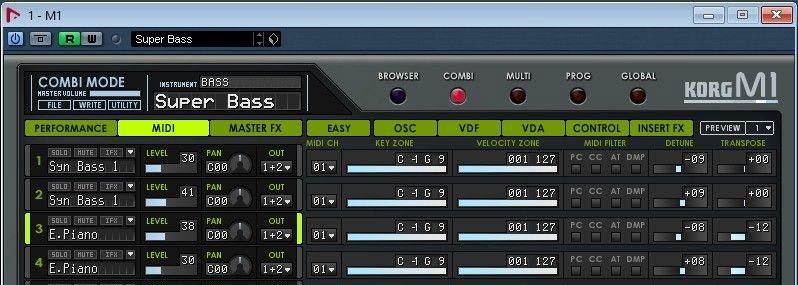
Recently, the Archive has been testing ways of documenting contemporary music production that uses computer software. This R&D work is important because most music is now created in one way or another with computers, yet the technology is highly prone to obsolescence.
In 2020-2021, the Archive collaborated with the synthpop artist Disasteradio, who created a digital collection that anyone can download from the website for research and remixing. There have been over 20,000 downloads from the collection since it was created.
In February, a new collection in the same vein was launched, created by electronica artist, Amelia. This archive of Amelia Berry’s acclaimed 2022 electronica album, Bananamelia, includes individual components of Ammamelia’s work that are digitally available to download and remix.
Preserving such collections are not without challenges, but they are important to preserve given the digital transformation of the last 20 years' effect on how music is now made, distributed, and consumed. Documenting how music is created with software such as Ableton Live is challenging, and it’s worth a look online to learn about the process used.
Thank you to Music Curator Michael Brown for input into this article.
• You can find and order collection items in the Archive using the Alexander Turnbull Catalogue (Tiaki).
• You can access items from the Archive through the Katherine Mansfield Reading Room at the National Library building in Wellington. Some digitised items are available to view online.
• The National Library also holds the largest collection of musical performance material in New Zealand, where orchestral or choral scores can be hired.

Tertiary Profile
OPEN POLYTECHNIC GRADUATE’S LIBRARY QUALIFICATION SHINES THROUGH A DECADE ON

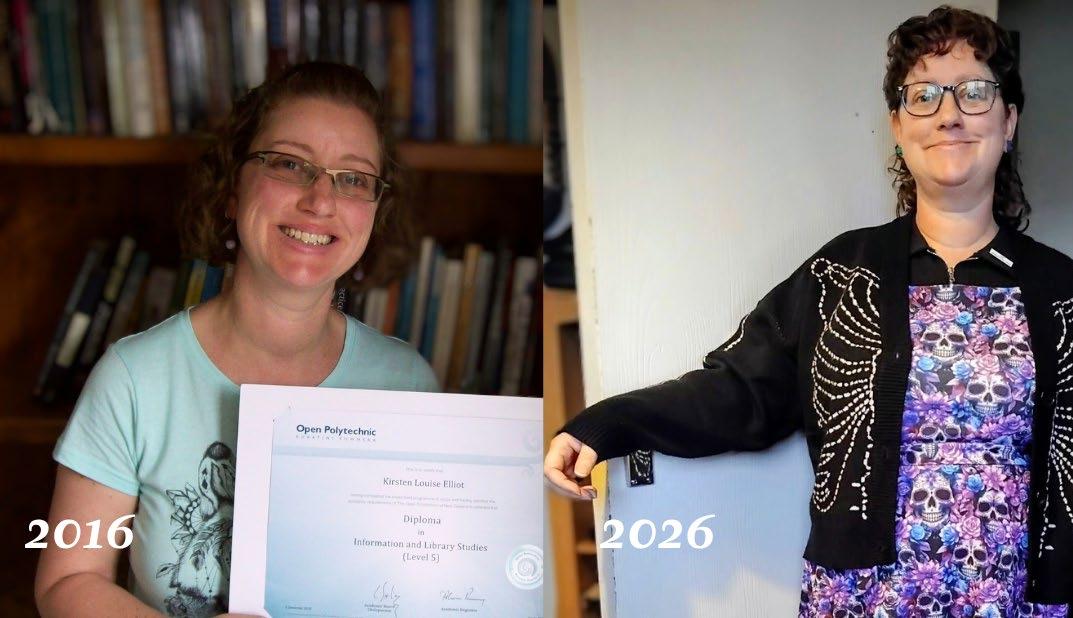
We caught up with Open Polytechnic graduate Kirsten Elliot recently, who started studying with Open Polytechnic in 2016, and now, in 2026, is working in the library sector in the UK.
In 2016, Kirsten had never worked in a library, but she knew it's what she wanted to be doing. So, Kirsten studied full-time, completing a Level 5 Diploma in Information and Library Studies at Open Polytechnic.
She enjoyed it so much that she went on to complete a library degree with Open Polytechnic in the following years.
“As a voracious reader and creative writer, I'd always been a keen library user,” Kirsten said.
“But it wasn't until I became a second-hand bookseller that I realised how much I enjoyed helping people find the information they need, and that's when librarianship as a career option opened up to me.”
Open Polytechnic’s flexible, online learning suited Kirsten best. The qualifications fitted with her career aspirations, and she trusted Open Polytechnic as an education provider, having studied with them previously.
She also had the option to study full-time initially and then parttime once she started working at a library. This allowed her to manage the workload around her disability and chronic illness.
“As someone completely new to the library sector, I appreciated that the course began with a broad foundation,” Kirsten says.
“When I started working in the sector, first in a volunteer role before finding part-time employment, I was able to relate concepts directly from my learning to what I was seeing in the library environment.”
Image supplied: Kirsten in 2016 and 2026.
During her time studying at Open Polytechnic, Kirsten was a recipient of support for disabled ākonga (learners).
“I'm grateful for the support this provided me to continue my studies at that time,” Kirsten says.
“I also want to acknowledge the 2019 Study Grant I received from SLANZA, the School Library Association of New Zealand Aotearoa, which helped me to complete my degree.”
Dr Eric Boamah, Open Polytechnic’s Principal Academic staff member for the Bachelor of Library and Information Studies programme says, “Kirsten was a fantastic student and did great with her practicum. It’s great to learn that she is still enjoying working in the sector in the UK.”
Since graduating, Kirsten has worked in public libraries, primary and secondary schools, and tertiary libraries, along with digital archives across New Zealand and the UK.
Kirsten’s Open Polytechnic qualification helped her become LIANZA professionally registered and then a chartered information professional with UK-based library and information association CILIP, receiving a CILIP125 award in 2023.
In 2026, Kirsten started a new job as Library and Learning Officer at Gateshead College in Sunderland and loves it.
“I'm getting to play to my strengths in a diverse and inclusive environment and couldn't be happier,” Kirsten says.
Open Polytechnic is celebrating its 80th anniversary in 2026. Are you an Open Polytechnic graduate who wants to share how your studies have helped in your career?
We would love to hear from you, please email us: socialmedia@ openpolytechnic.ac.nz
For further details about studying, go to the Open Polytechnic website.




History Corner
The opening of a new library building is cause for a celebration.
With the recent opening celebrations of new, newly strengthened, and modernised library buildings in Flatbush and Te Whanganui-a-Tara in the news, I thought it timely to look through Paperspast and LIANZA Recollect to see how past library building openings were celebrated.
1887 – AUCKLAND CENTRAL
Just over 139 years ago, on Saturday, 27 March 1887, Auckland’s Free Public Library

and Art Gallery building was officially opened.
The Herald reported that the opening ceremony was successful despite the intense heat. Whereas a journalist in the Observer decided upon “leaving the more serious descriptive proceedings to abler pens, I will describe the most noticeable dresses worn by the ladies present…”
An extensive column titled ‘Ladies’ dresses at the opening of the Free Library’ follows with highlights such as: “Mrs Haines had on a handsome combination of fawn silk and brown plush while Miss Bruce wore a pink
and brown costume with a brown bonnet (very stylish).”
1940 – WELLINGTON CENTRAL
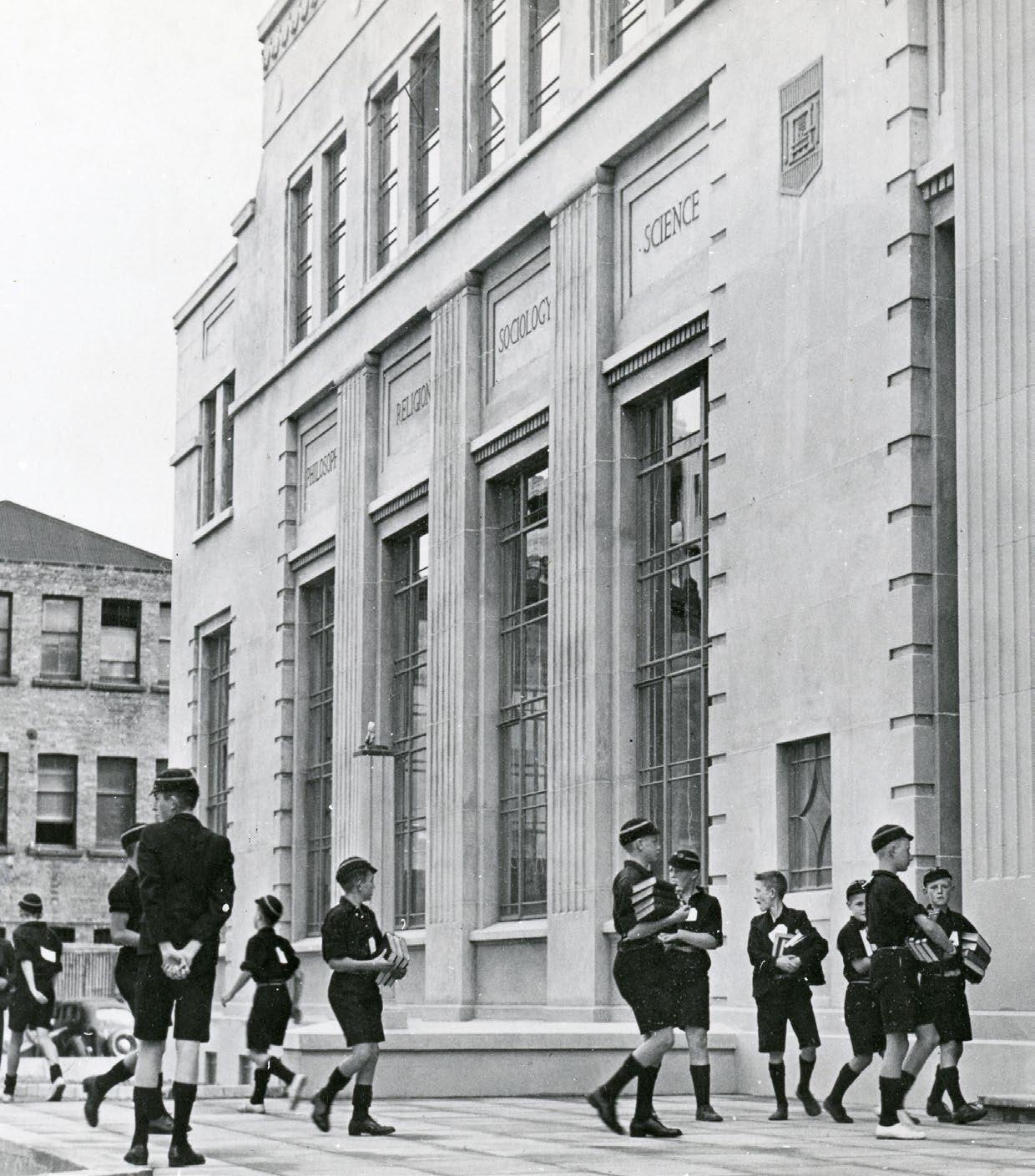
When the Central Library in Wellington moved from Wakefield Street to Mercer Street in 1940, the ‘change-over’ was reported in the Dominion:
“The big job of transferring the books has been carefully organised. The librarian will have the assistance of 500 boys from Rongotai College, who will work in a continuous chain, each carrying seven or eight books at a time. Some of the library staff,
augmented for the occasion will serve the boys with their loads, while others will be in the new library to receive and distribute them. The boys will be given a definite route… By this means, there should be economy of effort and no confusion. It is expected that if the weather is favourable the greater part of the shift will be done by 1 p.m.”
In a lovely nod to the past, this was recreated for the reopening of Te Matapihi ki te Ao Nui.
1953 - KHANDALLAH
The Khandallah Branch Library opened on the afternoon of 27th August 1953, after more than three decades of lobbying by local residents. A short film
was made on the occasion of the opening ceremony. This film briefly captures a slice of mid-century life in suburban Wellington with both old and young turning out in their best clothes for the grand occasion.
1995 - CLENDON
It was reported in Library Life (issue 195, September 1995) that on a ‘chilly winter morning’ in June 1995, staff gathered to bless the new library. Prior to this, the community was served by the mobile library, which visited once a week for three hours, and at other times residents had to travel to the nearest branch library in Manurewa, 3km away.
In the first nine days of opening Clendon Library staff issued
2,549 picture books and a total of 4,765 children’s books.
From the 1880s to the 1990s to now, from chilly mornings to afternoons of intense heat, wearing our best clothes and fine sartorial style in Aotearoa, we’ve enjoyed marking the opening of library buildings with a celebration. Long may it continue!
REFERENCES
• L ibrary Life 195 Sept. 1995, p.9
• Ngā whitiāhua tuku ihoHeritage Films
• Paperspast
Andrew Henry (RLIANZA) is the Curator of Auckland Collections based at the Central City Library in Tāmaki Makarau.
LIANZA MEMBERS
Welcome to all our new LIANZA members!
Huijin Foster
Ishbel Guilliard
Brit Rollo
Megan Scott
Alexandra Walton
Lucy Jerram
Selina Foote
Ally McCrow-Young
Adrian Fry
Kate Warwood
Aakash Dhandapani
Annie Nyok Moi Chong
Rachel Evans
Li Chen
Nicola Petersen
Xandre Stephens
Jemma Philpott
Helen Ho
Grace Hinton
Nicola Taylor
Hannah Goile-McEvoy
Penelope Cave
Cate Hennessy
Zoe Corboy
Annacel Delima
Olivia Harrison
Angela Moore
Samuel Bucheli
Kerry Clearwater
Sarina Barron
RLIANZA MEMBERS NEW
Congratulations to all LIANZA members who have recently gained or revalidated their LIANZA Professional Registration
AORAKI
Glenn Webster
Ky McWilliam
Brendon Moir
Don George
Amy Chiles
HIKUWAI
Adrian Jenkins
Neda Zdravkovic
Rachel Evans
Chloe Burcell
Sally Burgess
Kirstin Kane
Helen Kerrigan
Priya Khanna
Alison Fitzpatrick
Penelope Dugmore
Dipti Vora
Sally Johnstone
Sueyon Kim
Renée Lorigan
Tom Avery
Paula Guy Stuve
OVERSEAS
Smita Biswas
TE UPOKO O TE IKA A MĀUI
Beth Vincent
Jillian Speirs
Brenda Norton
TE WHAKAKITENGA AA KAIMAI
Hannah Shoebridge
Wondering what’s the best way forward for your continued learning and development?
Take a look at Te Tōtara Capability Framework, developed by the sector - for the sector. Take your own journey, a team leader journey or a strategic journey.



Rachel Fisher (Matamata Piako Libraries) says “Te Tōtara gave me a framework to work off rather than my own self-created framework. And if everyone has the same framework, then expectations are clear. People have a clear pathway to grow.”

Copy-Riot
COPYRIGHT IN SCHOOL LIBRARIES
While school librarians won’t encounter the same volume and variation of copyright issues that public and other libraries tend to, keeping up to date with copyright rules and passing on the importance of copyright is still a very important aspect of a school librarian’s job.
Introducing the concept of copyright, even at a very basic level, at a primary school matters because it instils in students early on a habit of respecting other people’s work and responsible use of content throughout their lives. At secondary school level, school librarians take the lead in teaching academic integrity, plagiarism and referencing –copyright is just another aspect of this. Reminding students exceeding the limits when copying portions of books, articles, and other materials for study, or passing off someone else's work as their own, can constitute plagiarism or infringement.
Beyond the legal consequences, respecting copyright encourages originality. When students properly acknowledge sources, copy within allowed limits, and put ideas into their own words, they develop stronger research and critical-thinking skills. Normalising and familiarising the concept of copyright is very important for developing ethical users of information and gives them the confidence and knowledge to advocate for the protection of their own creative work in the future.
There is a range of licences available to schools extending the basic allowance provided under the Copyright Act. Many schools will subscribe to the most basic of these: the Primary and Secondary Schools Copyright Licence, which provides more allowance and flexibility with printed materials for lesson planning and resource creation. It is the job of school librarians to know what their school subscribes to, who is responsible for the administration of copyright coverage within their school and to circulate that information. Often, it will be teachers, rather than the students, who need friendly reminders about the limits of what they can copy and what forms dissemination of that material can take!
Just like in public and other libraries, school librarians are gatekeepers of information and models of ethical information use. Behaviour such as keeping track of the school’s appropriate copyright licensing, seeking permission when required, showing students that the creator deserves recognition and, where applicable, compensation for their work, is vital in installing responsible information use in students from a young age. It may help shape a generation of ethical information seekers and users, hopefully counteracting the current trend!
Updated information posters are now available for school library environments. Three separate posters have been developed for different school copyright information needs -
a basic overview of copyright information for display to students and teachers, a reminder about copyright allowance and licences for school librarians, which would suit a workroom or office space and specific information around the Primary and Secondary Schools Copyright Licence to be displayed in the main library of schools that subscribe. These can be downloaded from the copyright page on the LIANZA website.
If you have any copyright queries, please look on the LIANZA Copyright web page or contact us on lianzacopyright@ gmail.com.

Freedom of Information
ONE BATTLE AFTER ANOTHER: EVERYDAY CHALLENGES, MICROAGGRESSIONS, AND THE PROBLEM OF PROBLEMATIC FAVES
Challenges to our programmes, events, and collections aren’t always high-profile or newsworthy; often, they are small, delivered casually, and it’s not your imagination if it feels like they are constant.
New data released by the American Library Association’s Office for Intellectual Freedom, which tracks challenges to books, identified that 4,235 unique titles were challenged in 2025, the second-highest number since a peak in 2023. Of those challenges, 39% targeted titles that represent the lived experience of LGBTQIA+ and people of colour. 92% of challenges were initiated by pressure groups, government officials, and decision-makers (ALA, n.d.). Similarly, our local data in the LIANZA Challenges Register shows 53% of challenges are regarding LGBTQI+ material or racism towards Māori or people of colour.
Over a period of three weeks, my library received hateful comments on a social media Pride post, an email reply to our digital pānui expressing disgust at the incorporation of Māori kupu, loud, public vocalisation of disgust towards an event poster, and objection to our decision not to purchase a customer request for a conservative, gendered title which reinforced harmful sexist stereotypes.
It’s the things that are said and done with absolute conviction that might be subtle, but pervasive, they can hit hard
and invisibly, feel personal, and difficult to shake off. They can feel incessant, wearying, and worrying; a challenge to our personal resilience.
Much of the advocacy work of library managers might be centred on maintaining service levels, staff employment, budget lines, and the never-ending battle to justify our existence at all. They are all important and worthy battles, but each and every one of us has a role to play in protecting the freedom to read. We can do this in our everyday interactions with what we tolerate and what we won’t.
It can also feel like we’re on the wrong side of right when we must apply the same standards to works whose creators are later revealed to be deeply flawed. The past few years have delivered a succession of revelations of illegal, immoral or problematic behaviour, political views, and choices made by authors whose works we hold and our customers have loved. Craig Silvey is the most recent example and one that creates an extra layer of discomfort given the charges he is facing and the audience his works are aimed at (Australian Associated Press, 2026). Some Australian libraries have responded by withdrawing Silvey’s books from their collections or shadow censoring them by restricting access or moving them to stacks and Silvey’s publishers have stopped promoting his work. However, our policies are the swords by which our collections live and die, and problematic authors
do not meet the thresholds we should have for removal if our criteria are based on prohibited content, not harmful creators.
The Epstein files have also been a flashpoint and in February the LIANZA Challenges Register received reports from three different council libraries across the motu about challenges to remove content by anyone referred to in them. This suggests a coordinated and organised strike on libraries, comparable to the organised protests at libraries by Destiny Church in 2025. Our committee has created a template response to any challenges regarding the Epstein files, reach out to us if you’d like to receive it.
Personal morals and bias are something we constantly navigate as librarians and collection decisions can be a difficult tension. When we provide opposing perspectives, we inevitably offend someone and, as some argue, cause harm. When positions are entrenched, tolerance is low, and political leaders set policies and tones that run counter to inclusivity and acceptance, it gives power to the challengers. Vocational awe may influence our decisionmaking, along with burnout, and a desire to avoid conflict and controversy to protect the positive perception of our libraries with customers and elected officials.
It can be even more difficult if you identify with the culture or subject matter that is being challenged. But none of us
are alone in facing this. Let your colleagues, peers, or managers know if you are feeling overwhelmed, triggered, or unsafe. Seek support from your organisation, LIANZA, Te Rōpū Whakahau, or our Rainbow collective.
Having solid processes for managing challenges, and robust policies to support decision-making is your library’s and library staff’s best protection. You can find resources and examples to help you prepare and respond to challenges in the Freedom to Read toolkit.
The Freedom of Information Committee can also help support you. Please let us know if you need support you can’t find in the toolkit, or share what you have found helpful when responding to challenges. And please keep reporting all the big and small ones at the Challenges Register so we can accurately track and report on the challenge landscape in Aotearoa New Zealand.
He moana pukepuke e ekengia e te waka.
Your policies are the waka that will help you navigate these choppy seas.
REFERENCES
• American Library Association. (n.d.). Censorship by the Numbers: Banned Books Data. https://
www.ala.org/bbooks/bookban-data
• Australian Associated Press, (2026, March 16). Author Craig Silvey facing more charges after being accused of producing child exploitation material. The Guardian. https:// www.theguardian.com/ australia-news/2026/ mar/16/author-craigsilvey-additional-chargeschild-exploitation-materialntwnfb
• Italie , H, (2026, April 21). Book bans and attempted bans remain at record highs, with ‘Sold’ topping the list. APNews.com. https://apnews.com/ article/bans-challengedbooks-american-libraryassociation-5403280786cf 95111d4c9eb4b587c4be
• L et books be books, (n.d.). https://www.lettoysbetoys. org.uk/about/ letbooksbebooks/
• Poveda, O. (2026, April). Library board members refused to ban a book about a trans boy. The county fired them all. LGBTQ Nation. https://www. lgbtqnation.com/2026/04/ library-board-membersrefused-to-ban-a-bookabout-a-trans-boy-thecounty-fired-them-all/
• Yaffa, C., & Doran, W. (2026, April 24). ‘Parents not being able to parent’: NC lawmakers propose LGBTQ book ban, grill school officials.
WRAL News.https:// www.wral.com/news/ nccapitol/chapel-hillcarrboro-school-leadersexpected-to-get-grilledby-lawmakers-thursdayapril-2026/
Raschel Eesa-Danes is the Access, Content & Heritage Team leader at Upper Hutt Libraries.

Climate Action
INTRODUCING OUR SHARED INDIGENOUS VALUES: MAAORI AND PACIFIC
Both Kākahu and Sana have developed a shared document, ahead of Matariki, that centres Māori and Pacific indigenous values to guide our climate action mahi. This is a collective piece of mahi that represents our committee’s actions going forward.
ENABLING
At a time when many of us are involved in planning library programs for the end of the year, our national election is also looming in an environment of increasing division and mistrust. Librarians are perceived as more trustworthy than many professionals, and we reach a wide range of people, so we are well placed to play a role in addressing the increasing calls for much-improved civics education for all New Zealanders (not just prospective citizens). Similarly, for fostering the development of critical thinking skills – especially around better detection of dis- and misinformation in our online environment.
Climate communicator and founder of the longstanding Skeptical Science website, Dr John Cook (University of Melbourne) was dismayed to find that rebutting climate misinformation with facts didn’t work that well, and indeed sometimes backfired. So he researched, developed and tested a pre-bunking approach delivered via a digital game
We have developed a tikanga informed resource to help deepen our climate action practice within the library sector.
This will help us uphold Mātauranga Māori and Indigenous values in our climate action mahi, and
hopefully inspire other LIANZA committees to adapt to the kaupapa of indigenous voices at the table.
Find out more about our shared indigenous values for LIANZA Standing Committee on Climate Action.
INFORMED CIVIC ENGAGEMENT
called Cranky Uncle. It turned out the game didn’t just work for climate issues, but could be applied across misinformation topics more generally.
He uncovered that our tribal identities matter even more than our political beliefs in determining what science we accept – but our aversion to being tricked is universal. The latter is key to the game, which empowers gamers to detect techniques used to make disinformation seem convincing. Interestingly, the game format was especially effective with an older demographic.
Andrew Lensen (Victoria University of Wellington) and Andrew Geddis (University of Otago) have cautioned that “AI is already creeping into election campaigns. NZ’s rules aren’t ready.” They argue that AI risks deepening political disengagement, and caution that “AI enables far more personalised campaigning: by profiling voters, a candidate can automatically generate messages tailored to their
biggest concerns.”
A successful free online course on critical thinking, specifically in relation to AI, was developed by Prof Carl Bergstrom and Prof Jevin D West (both at the University of Washington), which they continue to update as the tech evolves. They share concerns about the role of AI in a democracy. The course title, Modern-Day Oracles or Bullshit Machines?, was chosen by undergraduates to appeal to undergraduates.
Nonetheless, both Cranky Uncle and The Bullshit Machine are used by individuals, schools, groups and libraries as well as tertiary institutions. Their websites offer instructor/ educator guides that can be adapted to a library context.
Recently, OCLC recorded a webinar for librarians to upskill around navigating misinformation in one-on-one patron interactions. They also provide links to related resources and programming ideas.
In Aotearoa, libraries have enabled public engagement with government in various ways, including hosting enrolment information events staffed by Vote NZ representatives. Given the contemporary context, the opportunity to offer more is vital –even if only by mentioning Cranky Uncle and The Bullshit Machine in newsletters, posters, or social media posts.
Additionally, there are changes to the electoral voting registration processes that lead up to this year’s election
on 7 November: the first key deadline falls on 6 August. This year, voters must be correctly enrolled at least 13 days prior to the election, so the last day for enrolment is Sunday, 25 October. This happens to fall on Labour weekend, so there will be plenty of other distractions going on in people’s lives the week before the deadline. It would be wise to publicise this and other key dates well in advance. There are already resources available in various formats and languages via the Electoral Commission website that we can use.
Timely critical thinking and civics education for everyone, not just kids and migrants, helps to create a better-informed voting public.
Kathryn Mercer is a librarian at Puke Ariki Museum and Library, New Plymouth..
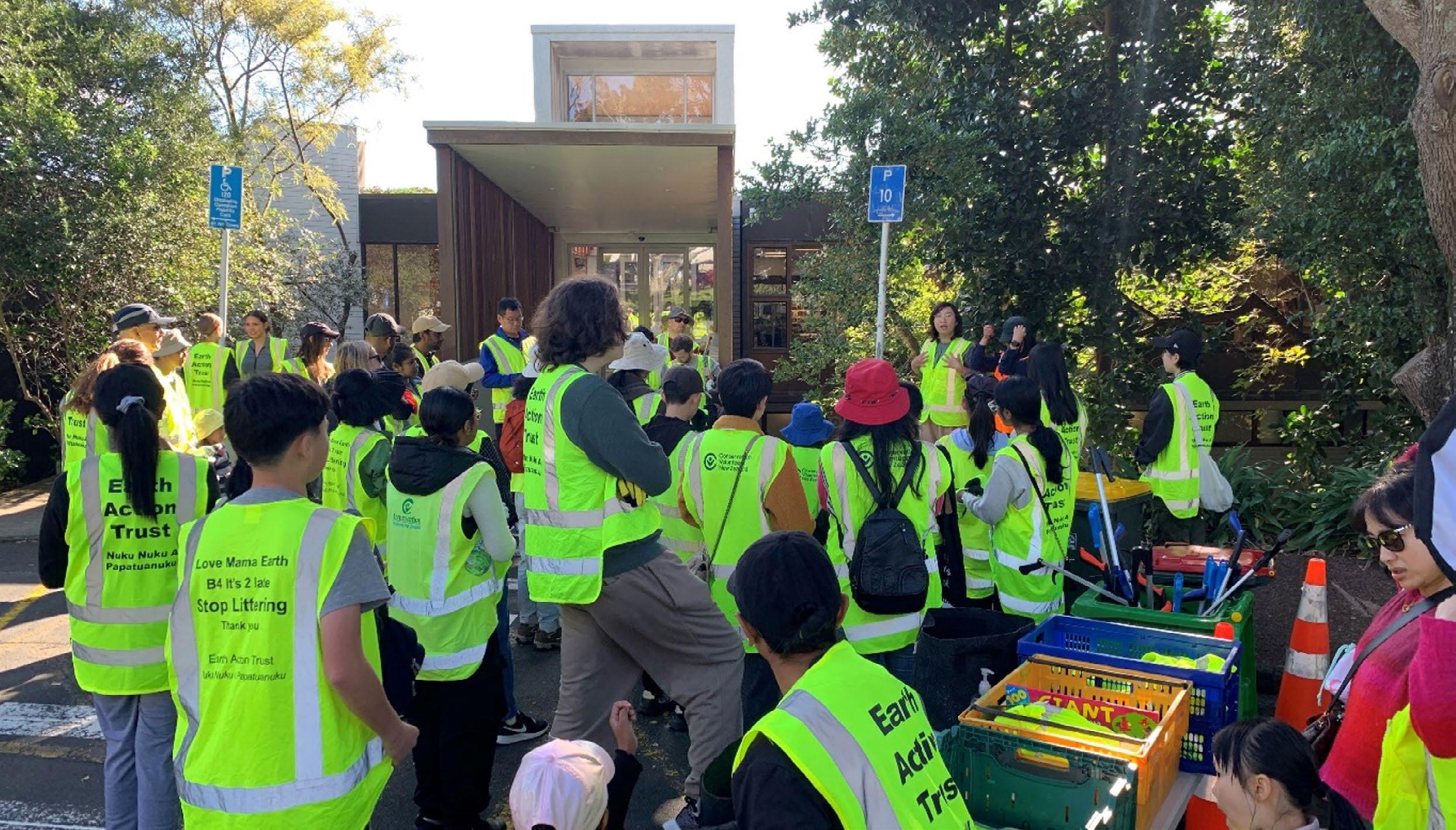
Sindy Xian from Earth Action Trust speaking to street cleaning volunteers outside Mt Roskill Library (2024). Image credit Mt Roskill Library.
Artificial Intelligence
HOW TO SIFT THROUGH THE CRAP: BECOMING YOUR OWN FILTER IN THE AGE OF GENERATIVE AI
In the current information environment, learning how to evaluate information is no longer optional. A tool that can help us all with the challenges of generative AI (GenAI) is also no longer optional.
As Laurence Krauss, from Werner Herzog’s documentary, Lo and Behold Reveries of the Connected World, succinctly put it:
“Becoming your own filter will be the challenge of the future because the filter isn’t provided for you. There are no controls on the Internet, no matter what governments do; no matter what industries do. The Internet is going to propagate out of control and people will have to be their own controls.”
This was back in 2016. GenAI was still largely experimental. It certainly wasn’t public-facing, and it was not trusted to generate ‘factual’ text. At that point, GenAI was interesting to technologists, but not yet disruptive to everyday information practices.
Misinformation concerns focused on fake news websites, manipulated headlines, clickbait and social media virality. Evaluation centred on human authors, publishers, and intent.
There was no need yet to teach: that GenAI is not a source; probabilistic text generation; synthetic citations; and confident but incorrect machine answers. Those challenges simply hadn’t arrived.
EFFECTIVE TOOLS DEVELOPED SINCE
One of the most effective tools developed in the last ten years to help people become their own filter was the SIFT method: Stop, Investigate, Find, Trace, developed by digital information literacy expert Mike Caulfield. When combined with the CRAP test (Currency, Reliability Authority, Purpose) – a long standing framework for evaluating sources – SIFT and CRAP provided a practical, human centred approach to navigating the information landscape. At Waitaki District Libraries, it benefited our public library customers during the Covid pandemic when misinformation, disinformation and fake news were rife.
Rather than reacting after misinformation spreads, we wanted to stop it in its tracks. We wanted to help our customers recognise misleading techniques before they were influenced by them.
It was our hope that when people knew how they might be misled and had the tools to spot those tactics, they could build resilience against false or misleading information.
These tools don’t tell you what to think. They are frameworks that support or guide critical thinking. I thought it was time to test these methods against GenAI using the original trifold brochure in the image below that I created back in 2021. I also asked GenAI - in this instance, Co-Pilot, to test the tools against itself and highlight any gaps in the combined methodologies when considering the evaluation options. I did this by uploading my brochure and using prompts to tease out these issues. As a result, I was able to tweak the methodology into a truly hybridised tool.
THE FINDINGS: SIFT STEP 1: STOP
The first step is the most important: Stop.
Take a deep breath and notice what you are looking at – and how it makes you feel. Is the information triggering anger, fear, or excitement? Strong emotional reactions are often a sign that content is attempting to persuade rather than inform.
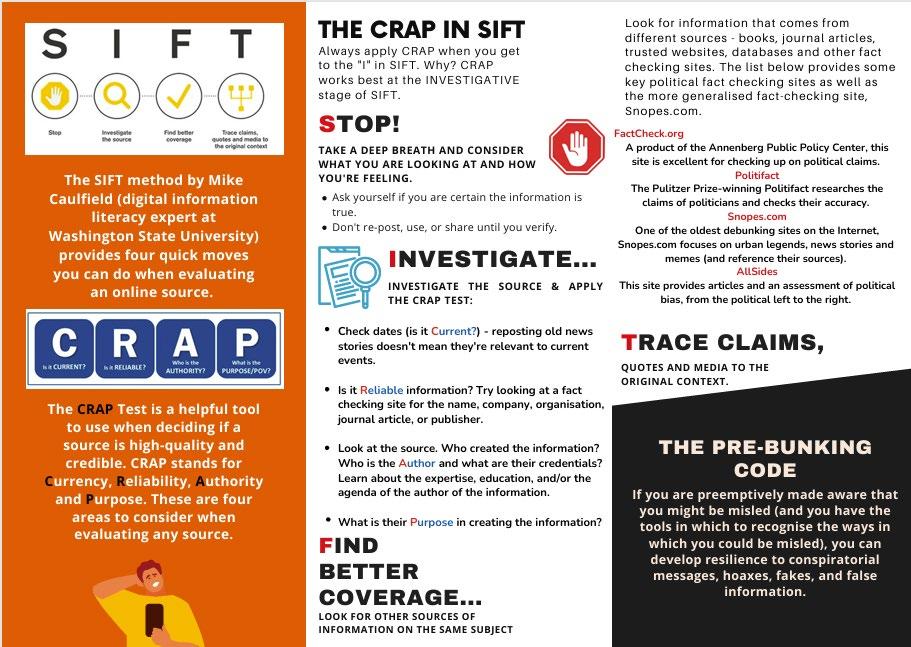
This pause matters more than ever with AI generated information. GenAI answers are written confidently and politely, which can make them feel trustworthy. But confident wording is not evidence of accuracy. Stopping creates space between reaction and response, giving you time to apply critical thinking.
STEP 2: INVESTIGATE THE SOURCE (and apply CRAP)
Investigation is where many people go wrong - by staying on the page they’re already on. When using gen AI tools, it’s important to understand one key point: GenAI is not
a source. GenAI generates responses. It does not create or verify original evidence. That means CRAP should be applied to the external sources you use to check GenAI output, not to the response itself.
STEP 3: FIND BETTER COVERAGE
If a claim matters, don’t stop at one source. This rule doesn’t change in the world of GenAI. Look for other coverage on the same topic, especially from trusted, independent sources. High quality information often appears across multiple platforms: books, reputable
websites, academic journals, databases, and neutral media outlets (those removed from direct commercial ownership or political meddling).
Ask yourself:
• Do multiple credible sources agree?
• Is this information presented in context?
• Does evidence support the claim?
If you’re uncertain, don’t repost, share, or rely on the information until you’ve verified it. Libraries and librarians are excellent starting
Trifold brochure created by Debbie Ewen for Waitaki District Library customers, 2021.

points for finding better coverage and learning how to search effectively.
STEP 4: TRACE CLAIMS, QUOTES, AND MEDIA
Finally, trace information back to its original context.
Headlines can oversimplify. Quotes can be taken out of context. Images and videos may be edited or reused in misleading ways. With GenAI, this step is especially important because it may paraphrase ideas, merge multiple sources, or present information without clear attribution.
Ask:
• Can this claim be found outside this context?
• Does an original source say this?
• Has the meaning changed as it’s been repeated?
A simple rule helps here: if you can’t trace a claim to a reliable source outside the platform you encountered it on, treat it as unverified.
WHY THIS MATTERS MORE THAN EVER
GenAI can be incredibly useful. It can help people get started on a topic, generate ideas, or summarise information they already know. But they are not replacements for evaluation, judgment, or verification.
SIFT and CRAP don’t ask you to distrust everything. They ask you to slow down, look closer, and check wisely.
In a time when information moves faster than ever, becoming your own filter is
an essential life skill. With the right tools, everyone can navigate the digital world more confidently.
Library professionals need tools that work for our customers, and these tools need to adapt as quickly as the information field evolves. WARNING – fast-changing times ahead! It would be easy to just throw up your hands and give up. Please don’t. Information literacy is as relevant now as it ever was. Yes, there is the additional need to learn how to prompt GenAI effectively, and we certainly can’t ask it to list reliable sources in its current state. But perhaps this revised SIFTing the CRAP methodology could make its place in the information literacy tool kit?
Debbie Ewen is a librarian at Waitaki District Libraries.
Artificial Intelligence
AI IN PRACTICE: EVERYDAY USEFULNESS
What’s generally useful in day-to-day work, and where are the boundaries?
The first AI in Practice session in March brought LIANZA members together to share how they are using AI in their day-to-day work and where they draw the line.
This session featured practical insights from Lynda Drumm (PwC) and Debbie Ewen (Waitaki District Libraries), and was facilitated by Erin Cairney, Chair of the LIANZA AI Committee.
This wasn’t a traditional webinar. It was a practical, member-led conversation focused on real examples, what’s working, and what isn’t.
WHAT AI IS BEING USED FOR
Across public, academic, and special libraries, AI is already being used in meaningful
ways. The strongest theme was using AI to get started, save time, and generate ideas, rather than relying on it for final outputs.
Some of the practical use cases shared included:
• Drafting emails, reports, and training materials
• Summarising newsletters and multiple sources into quick briefings
• Fixing Excel formulas and troubleshooting code
• Generating SQL queries and improving reporting workflows
• Supporting customers as a digital learning tool
• A ssisting with cataloguing decisions (as a starting point)
• Creating marketing content and event materials
• Analysing large datasets to identify trends and insights
• Using project-style
workflows to organise documents and notes
These are all areas where members are finding immediate, practical value.
WHERE AI IS NOT WORKING (YET)
Members were also clear about current limitations.
AI can produce results that look convincing but are incorrect or incomplete, particularly in research contexts. Some tools still struggle with complex or domain-specific tasks, and outputs often need to be checked against trusted library resources.
This reinforces a key point from the session: AI can support the work, but it does not replace professional judgement.
WHERE ARE BOUNDARIES
BEING DRAWN?
There was strong alignment across the group on when not to use AI:
• When working with sensitive or confidential information
• When accuracy is critical
• When human or professional judgement is essential
• When there are concerns about how data is being used
Members also raised important considerations around:
• Māori data sovereignty
• Bias and fairness
• Data provenance and trust
PRACTICAL TIPS TO TRY
A few simple approaches stood out:
• Star t with low-risk tasks and build confidence
• Treat outputs as a draft to refine, not a final answer
• A sk follow-up questions and challenge the response
• Cross-check against trusted sources
• Try different tools for different tasks
WHAT’S NEXT?
At the end of the session:
• 60% said they want to try something new
• 34% plan to talk to others in their team
• 33% want to refine how they are already using AI
This reflects a sector that is actively exploring but doing so thoughtfully.
LOOKING AHEAD
The prompts used in this session are available here, so you can try these approaches yourself.
The next session in the AI in Practice series will explore LIANZA’s professional values in an AI-shaped information environment, building on the themes raised in this discussion.
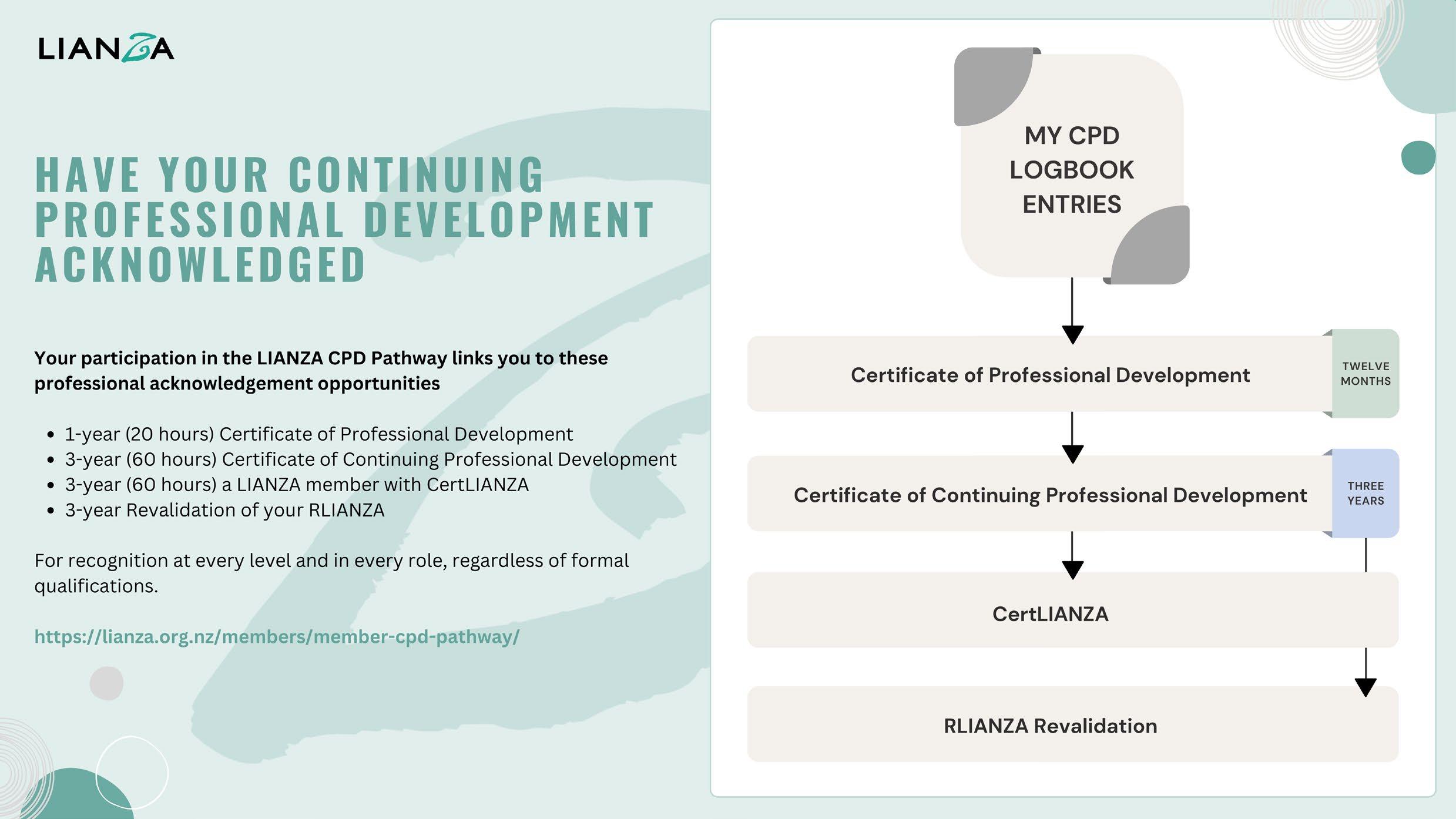
Te Rau Herenga O Aotearoa A thriving library and information sector
http://lianza.org.nz