TECHx Review – June 2026 Edition - Arabic & English
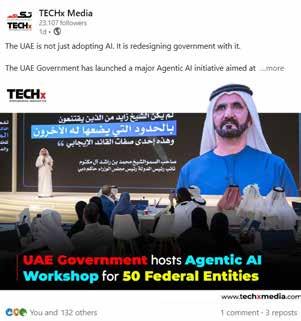
AGENTIC AI: From Automation to Autonomy
How the UAE Is Building the World's First Agentic AI Nation June
80,000 Government Employees to Be AI-Trained
AI-POWERED HEALTHCARE: Building a Smarter Healthier Nation Dubai leads the private sector AI shift
GOVERNMENT 4.0 The Next Leap in Public Service Innovation
THE GOVERNMENT THAT THINKS AHEAD
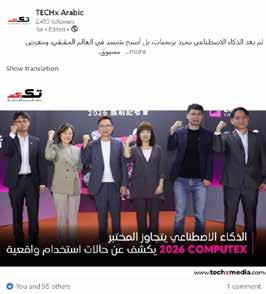
HOW COMPUTEX 2026 TURNED TAIPEI INTO THE GLOBAL CAPITAL OF ARTIFICIAL INTELLIGENCE
ACER AT 50: INSIDE FIVE DECADES OF REINVENTION, RESILIENCE AND INNOVATION HOW SPARKOLOGY IS REWIRING THE GCC TECHNOLOGY ECOSYSTEM THE ENTERPRISE AI RECKONING IN MIDDLE EAST AND AFRICA 08 14 34 36 40
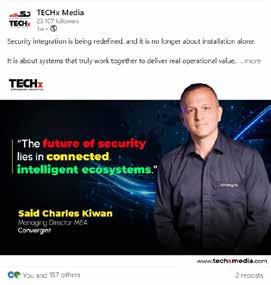
WHY TRUE INTEGRATION HAS NEVER BEEN ABOUT THE HARDWARE 18
GROWTH COMES FROM TRUST, NOT SHORTTERM RESULTS
A CAMERA THAT SEES BEYOND THE OBVIOUS THE RISE OF SELF MANAGING NETWORKS GULF TRADE UNDER PRESSURE AS SUPPLY ROUTES BREAK DOWN
THE GOVERNMENT THAT THINKS AHEAD
How the UAE Is Building the World’s First Agentic AI Nation
For decades, governments around the world have pursued the same goal: making public services faster, more efficient, and more accessible. The digital era transformed paper-based bureaucracy into online portals, mobile applications, and interconnected systems. Citizens could renew licences online, businesses could submit applications digitally, and governments could process information at unprecedented speeds.
But what if the next stage of government is not about digitising services at all?
What if government systems could think, plan, act, and deliver outcomes autonomously?
This is the future the UAE has set its sights on.
In a landmark move that could redefine public administration globally, the UAE has unveiled one of the most ambitious artificial intelligence initiatives ever undertaken by a nation. Under the leadership of His Highness Sheikh Mohammed bin Rashid Al Maktoum, Vice President, Prime Minister of the UAE and Ruler of Dubai, the country is preparing to deploy Agentic AI across 50 percent of government services and operations within the next two years. At the same time, Dubai has launched a parallel initiative to accelerate Agentic AI adoption across the private sector, creating a nationwide ecosystem designed to embed autonomous intelligence into every layer of economic and public life.
The announcements are not simply another chapter in the UAE’s digital transformation story. They signal the beginning of a profound shift in how governments operate, how businesses compete, and how societies interact with technology. While many nations are still exploring the possibilities of artificial intelligence, the UAE is moving decisively toward implementation, seeking to position itself at the forefront of what could become the defining technological transformation of the next decade.
The Evolution from Digital to Agentic
Artificial intelligence has dominated boardroom discussions, government strategies, and technology headlines for the better part of the last three years. Much of this attention has centred
on generative AI, systems capable of creating content, generating code, answering questions, and assisting users in performing tasks. These technologies have demonstrated enormous potential, but they remain largely reactive. They respond when prompted, execute commands, and wait for the next instruction.
Agentic
AI represents a fundamentally different paradigm
Rather than simply responding to requests, agentic systems are designed to pursue objectives. They can plan actions, coordinate multiple tasks, make decisions within defined parameters, monitor outcomes, and adapt their behaviour to achieve desired goals. In essence, they function less like tools and more like intelligent digital colleagues capable of managing complex workflows with minimal human intervention.
For governments, this distinction is transformative. Traditional digital services require citizens to initiate interactions, submit information, and navigate procedures. Agentic systems could proactively manage entire processes, connecting departments, analysing requirements, securing approvals, and delivering services without requiring individuals to understand the complexity of the bureaucracy behind them.
This shift from service delivery to outcome delivery lies at the heart of the UAE’s vision.
Reimagining Government for the AI Era
During the UAE Cabinet meeting held at Qasr Al Watan in Abu Dhabi, Sheikh Mohammed bin Rashid outlined a national transformation strategy directed by the President of the United Arab Emirates, His Highness Sheikh Mohamed bin Zayed Al Nahyan, which aims to make the UAE the first government in the world to deploy Agentic AI across half of its services and operations.
The significance of this objective becomes apparent when considering the scale and complexity of modern government. Federal entities oversee everything from healthcare and education to trade, transportation, security, and economic development. Integrating intelligent autonomous systems across such a vast landscape requires more than technology investments; it demands organisational transformation.
Recognising this, the Cabinet approved a comprehensive governance framework defining the responsibilities of ministries and federal entities involved in the initiative. Dedicated teams will be established across government organisations, led by ministers and senior officials responsible for services, operations, digital transformation, and artificial intelligence. These teams will oversee implementation, establish performance indicators, and ensure that transformation targets are met.
This structured approach highlights an important reality. The UAE
does not view Agentic AI as a technology project. It views it as a government transformation project.
Rather than introducing isolated AI solutions, the country is redesigning the way institutions function. The objective is to create a new operating model where intelligent systems become embedded into everyday government processes, improving efficiency, responsiveness, and productivity across the public sector.
Building the Human Foundation Technology may drive transformation, but people determine whether it succeeds.
One of the most remarkable aspects of the UAE’s strategy is its emphasis on human capital development. While many discussions about AI focus on automation and efficiency gains, the UAE is investing heavily in workforce readiness.
The Cabinet approved what Sheikh Mohammed described as the largest training programme in the history of the UAE Government. Over the next two years, 80,000 federal employees will receive training in Agentic AI tools and technologies.
The initiative spans five occupational categories, including leadership, technical professionals, specialists, the general workforce, and train-the-trainers programmes. Developed in partnership with leading universities and global technology companies, the programme is designed to ensure that AI literacy extends far beyond technical departments.
This approach reflects a sophisticated understanding of the future workplace. AI transformation is not solely about introducing new technologies; it is about equipping employees with the skills required to work alongside intelligent systems. Government officials of the future will increasingly focus on strategy, oversight, governance, and citizen outcomes while AI agents handle repetitive and operational tasks.
To support continuous learning, the government will develop a dedicated digital platform powered by Agentic AI tools. The platform will provide personalised learning pathways tailored to individual roles and competency levels, ensuring employees remain up to date as technologies evolve.
By investing in both systems and skills, the UAE is attempting to create a workforce capable of thriving in an AI-first environment.
The Arrival of Government 4.0
Among the many announcements made during the Cabinet meeting, one phrase captured the broader significance of the initiative: “The journey to UAE Government 4.0 has begun.”
The statement reflects an evolution in how governance itself is conceived.
Government 1.0 was characterised by physical administration and paper-based processes. Government 2.0 introduced digital access and online services. Government 3.0 focused on integration, creating interconnected platforms capable of sharing information across agencies.
Government 4.0 introduces intelligence
In this model, systems become predictive rather than reactive. Services become personalised rather than standardised. Decisionmaking becomes data-driven rather than process-driven. Citizens engage with outcomes rather than navigating administrative procedures.
The vision is ambitious but increasingly achievable. Advances in AI, cloud computing, data analytics, and digital infrastructure have created the technological foundation necessary for governments to operate in fundamentally new ways.
The UAE’s strategy suggests that future governments may no longer be measured solely by the quality of their services but by their ability to anticipate needs before citizens even make requests.
Healthcare Takes Centre Stage
While government services are a major focus of the Agentic AI initiative, healthcare may prove to be one of its most transformative applications.
The Cabinet approved the National Policy for Advancing Digital Healthcare Services and Artificial Intelligence in the Health Sector, establishing a framework designed to build an integrated national health system supported by advanced AI technologies.
The policy rests on three pillars: developing a national AI-driven medical system, building advanced digital health infrastructure, and equipping healthcare professionals with AI capabilities.
Healthcare systems worldwide face mounting pressures, including rising costs, workforce shortages, ageing populations, and increasing demand for personalised care. AI offers significant opportunities to address these challenges by improving diagnostics, enhancing preventive care, optimising treatment pathways, and streamlining administrative operations.
However, the UAE’s healthcare strategy extends beyond technological innovation. Recognising the importance of governance, the Cabinet also approved the drafting of a federal law regulating smart health applications and AI-powered healthcare systems.
The proposed legislation will establish standards covering licensing, accreditation, safety, quality, legal liability, patient rights, and data governance. This balanced approach reflects an understanding that trust and accountability will be essential for widespread adoption of AI-driven healthcare solutions.
As nations around the world grapple with questions surrounding
"TECHNOLOGY MAY DRIVE TRANSFORMATION, BUT PEOPLE DETERMINE WHETHER IT SUCCEEDS."
AI regulation, the UAE is seeking to build a framework that enables innovation while protecting public interests.
Dubai’s Private Sector Transformation
While federal initiatives focus on government services, Dubai is simultaneously positioning the private sector at the centre of the Agentic AI revolution.
Under the directives of Sheikh Mohammed bin Rashid, Sheikh Hamdan bin Mohammed bin Rashid Al Maktoum launched a comprehensive programme aimed at accelerating Agentic AI adoption across businesses operating in Dubai.
The initiative is designed to help organisations transition
toward self-executing and self-leading AI systems capable of enhancing productivity, reducing costs, and creating new business opportunities.
Importantly, the programme extends beyond awareness campaigns or technology demonstrations. Through Dubai Chambers, specialised training programmes will be delivered to business councils representing multiple industries. These efforts are intended to build practical capabilities and accelerate adoption across the private sector.
The initiative also includes plans to establish incubators dedicated to Agentic AI companies, create specialised funding mechanisms, and support startups developing innovative AI-driven solutions.
This ecosystem approach reflects Dubai’s long-standing strategy of combining policy support, investment, infrastructure, and entrepreneurship to accelerate emerging industries.
Building an Agentic Economy
The UAE’s ambitions extend far beyond operational efficiency.
At its core, the Agentic AI strategy is an economic development initiative.
Throughout history, technological revolutions have created new industries, transformed labour markets, and shifted global economic power. Nations that successfully positioned themselves at the forefront of these transitions often emerged as leaders in the resulting economic landscape.
The UAE appears determined to play that role in the age of Agentic AI.
By supporting startups, investing in talent development, fostering research partnerships, and encouraging widespread adoption across government and business, the country is creating the foundations of what could become a thriving AI-driven economy.
For entrepreneurs, the opportunities are significant. Agentic AI opens the door to entirely new categories of products and services, from autonomous business operations and intelligent customer engagement systems to advanced healthcare applications and next-generation government technologies.
For investors, the emergence of a supportive regulatory environment and government-backed initiatives creates attractive conditions for innovation and growth.
For young professionals, the strategy creates pathways into careers that may not have existed just a few years ago.
Setting a Global Benchmark
The UAE’s approach arrives at a pivotal moment in global AI development.
Around the world, governments are exploring how artificial intelligence can improve public services, strengthen economic competitiveness, and enhance national productivity. Yet most remain focused on pilot projects, experimentation, or regulatory frameworks.
The UAE has chosen a different path. By committing to transform 50 percent of government services and operations within two years while simultaneously driving adoption across the private sector, the country is establishing one of the clearest and most ambitious implementation roadmaps seen anywhere in the world.
Whether measured by scale, speed, or scope, the initiative represents a bold statement of intent.
Success would position the UAE as a global reference point for AI-enabled governance and economic transformation. It would demonstrate how intelligent systems can be integrated into the fabric of a nation, reshaping interactions between governments, businesses, and citizens.
The Beginning of a New Era
The UAE has spent decades building a reputation as a nation willing to embrace the future before others see it coming. From smart cities and digital government services to space exploration and advanced technology investments, it has consistently sought to position itself ahead of emerging trends.
The Agentic AI strategy may prove to be its most consequential bet yet.
What is unfolding is not merely the adoption of another technology. It is the creation of a new operating model for society, one where intelligent systems become embedded across public institutions, industries, and everyday life.
The transition will undoubtedly present challenges. Questions surrounding governance, ethics, accountability, cybersecurity, and workforce adaptation will require continuous attention. Yet the UAE’s comprehensive approach suggests an awareness that successful transformation requires more than innovation alone.
It requires leadership, regulation, skills development, investment, and vision.
By bringing all these elements together, the UAE is attempting something few nations have dared to pursue: the creation of the world’s first truly agentic nation.
If digital transformation defined the past decade, Agentic AI may define the next. And as the world debates what the future of governance, business, and society should look like, the UAE has already begun building it.
JAMES C. F. HUANG
HOW COMPUTEX 2026 TURNED TAIPEI INTO THE GLOBAL CAPITAL OF ARTIFICIAL INTELLIGENCE
As artificial intelligence reshapes industries, economies, and societies at an unprecedented pace, COMPUTEX 2026 arrives at a defining moment for the technology industry. More than just a trade show, this year's edition has transformed Taipei into the epicenter of global AI conversations, bringing together technology innovators, industry giants, investors, and policymakers from across the world.
In an exclusive conversation with TECHx Media during COMPUTEX 2026, James C. F. Huang, Chairman of the Taiwan External Trade Development Council (TAITRA), shared why this year's event is the most significant in the exhibition's 45-year history, how Taiwan is positioning itself at the heart of the global AI ecosystem, and why collaboration not competition, will define the future of artificial intelligence.
The Biggest COMPUTEX in 45 Years
For Huang, there is only one way to describe the current state of the technology industry: an AI Big Bang.
"This year's COMPUTEX is really exceptional," he says. "It is the largest ever in the 45-year history of COMPUTEX."
The numbers tell the story. More than 1,500 technology companies are participating in the exhibition, spread across multiple venues including Nangang Exhibition Center Halls 1 and 2, Taipei World Trade Center facilities, and the Taipei International Convention Center.
Adding to the excitement is the simultaneous hosting of NVIDIA's GTC Taipei, creating a concentration of AI-focused activities unlike anything the city has witnessed before.
"You can imagine that at the same time there are so many activities regarding AI industries happening in Taipei," Huang explains. "We have literally turned Taipei into the global hub of the AI industry."
The result is a city buzzing with innovation, where executives, developers, researchers, investors, and entrepreneurs are collectively shaping the future of technology.
Building the Human Body of AI
While AI dominates industry conversations, Huang believes the true strength of COMPUTEX 2026 lies in how it presents the complete AI ecosystem.
This year's exhibition revolves around three interconnected themes.
The first is Artificial Intelligence and Computing, which Huang compares to the human brain.
"It has everything to do with our core existence," he says. "It is the command center."
The second theme is Robotics and Mobility, representing the physical body.
"What you think in your brain or what you try to achieve has to be executed by your physical body," he explains.
The third pillar is Next-Generation Technology, encompassing developments in 6G and satellite communications. Huang likens this to the nervous system of the human body.
"It requires the command center giving orders and the nerve system passing those orders to the physical body to fulfill all the functions you want to achieve."
Together, these three pillars create what Huang describes as a complete AI ecosystem, one where computing power, intelligent machines, and advanced connectivity work seamlessly together.
"We are building the entire AI industry ecosystem through COMPUTEX 2026."
One Message, One Vision: AI Together
When asked to define the essence of COMPUTEX 2026 in a single sentence, Huang does not hesitate.
"AI Together."
The phrase serves as the official slogan of the exhibition, but for Huang, it represents something much larger than a marketing message.
"We have actually created a new intelligence," he says. "Artificial intelligence is a new intelligence."
As AI becomes integrated into everyday life, Huang believes humanity is entering a new chapter of civilization, one that will be built through collaboration between humans and machines.
"In the future, we are going to build a new society and a new civilization with humans and AI working together."
It is a philosophy he applies personally.
"I work with AI every day."
But collaboration extends beyond humans and machines. Huang believes future progress will require cooperation between nations, industries, and technology ecosystems.
"Taiwan and the whole world need to work together to achieve our goals."
As a global center for AI supply chains, Taiwan sees itself as an enabler of that collaboration.
"We will be more than happy to work with all our international partners from every corner of the world, including the Middle East."
The message behind AI Together is simple but powerful: the future cannot be built in isolation.
"Our future civilization cannot be built by any single country, single company, or single AI model. It has to be built by all of us together."
Beyond Technology: Bringing a Human Touch to COMPUTEX
While COMPUTEX is globally recognized as one of the most influential technology exhibitions in the world, TAITRA has been intentionally expanding the experience beyond product launches and technical discussions.
In recent years, the organization has focused on making the event more immersive, engaging, and enjoyable for international visitors.
"COMPUTEX is already the top exhibition in terms of global ICT and artificial intelligence industries," Huang says. "But we are trying to make COMPUTEX more attractive and more enjoyable."
The objective is to ensure visitors experience more than technology.
When global technology professionals arrive in Taipei, Huang wants them to witness Taiwan's culture, hospitality, and lifestyle alongside its innovation ecosystem.
"They can see firsthand the latest technologies and announcements, but they can also appreciate the natural beauty of Taiwan."
Food also plays an important role.
"We offer very good food for people."
The effort extends beyond cultural experiences. Last year, COMPUTEX collaborated with Taiwan's stock exchange and capital market ecosystem, creating opportunities for technology companies and investors to connect and explore partnerships.
The goal is to build stronger bridges between innovation and investment.
Hospitality Reimagined
One of the most visible examples of this softer approach is the introduction of premium hospitality lounges throughout the exhibition.
During the interview, Huang personally guided TECHx through some of the featured spaces.
One highlight was the GQ Hospitality Lounge, designed in collaboration with the internationally renowned lifestyle publication.
The lounge offered an upscale environment where visitors could relax between meetings, featuring specialty coffee, premium beverages, cocktails, whisky selections, and private networking spaces.
For international attendees navigating packed schedules and countless business meetings, such spaces provide an opportunity to unwind while continuing valuable conversations.
"The international community can drop by anytime," Huang says. "Relax and have some cocktails."
Comfortable seating, private meeting areas, and carefully curated experiences transform these lounges into informal business hubs that complement the intensity of the exhibition floor.
Taking Flight at COMPUTEX
Another memorable stop during the tour was China Airlines' hospitality lounge, where attendees were given a preview of the airline's upcoming premium economy cabin experience.
The installation showcased the carrier's next-generation premium economy seating that will be introduced on its future Boeing 787 aircraft.
The experience left an immediate impression.
"It's almost business class," remarked the TECHx team after trying the seat.
The demonstration perfectly reflected COMPUTEX's evolving identity, where technology, travel, lifestyle, and innovation intersect in unexpected ways.
Strengthening Ties with the Middle East
For TECHx's audience across the Middle East, one of the most significant discussions centered on Taiwan's growing engagement with the region.
Huang reaffirmed TAITRA's strong commitment to strengthening partnerships with Middle Eastern countries, particularly in the field of artificial intelligence.
"We attach great importance to the Middle East, particularly in terms of AI industries."
The reason is clear.
Over the past few years, countries across the region have announced major investments in sovereign AI initiatives and AI infrastructure development.
"What we have observed is that almost every major nation in the Middle East has pledged to invest significantly in sovereign AI and AI infrastructure."
He specifically highlighted the UAE, Saudi Arabia, and Qatar as markets demonstrating strong momentum.
Huang had originally planned to visit Dubai earlier this year, but
unforeseen circumstances forced the trip to be postponed.
Despite the delay, the objective remains unchanged.
"The goal of building more partnerships between Taiwan's ICT industries and Middle Eastern nations remains the same."
Looking ahead, Huang confirmed his intention to personally lead a delegation to the region as soon as conditions allow.
"I personally will lead the delegation to the UAE and Dubai as long as the situation permits."
The relationship between COMPUTEX and the Middle East is already well established. For decades, industry professionals from the region have attended the exhibition, often reconnecting with partners, suppliers, and peers from across the global technology ecosystem.
For many Middle Eastern technology leaders, COMPUTEX has long served as a key annual meeting point for industry collaboration.
Taiwan's Message to the Middle East
As the conversation concluded, Huang shared a direct message for TECHx readers and technology professionals across the Middle East.
"Artificial intelligence is the future. It is going to define our new civilization."
He believes the region is uniquely positioned to play a significant role in the AI era, thanks to its ambition, investment capacity, and long-term vision.
"Countries in the Middle East have every advantage to pursue this new AI era."
And as those ambitions continue to accelerate, Taiwan is ready to support the journey.
"Taiwan will be the most trusted partner and the most mature supply chain supporter for our friends in the Middle East."
It is a message rooted in partnership rather than competition, an approach that mirrors the central philosophy behind COMPUTEX 2026 itself.
In an age increasingly defined by artificial intelligence, collaboration may ultimately become the most important technology of all.
And if Huang's vision becomes reality, the future will not be built by one nation, one company, or one AI model, it will be built together.
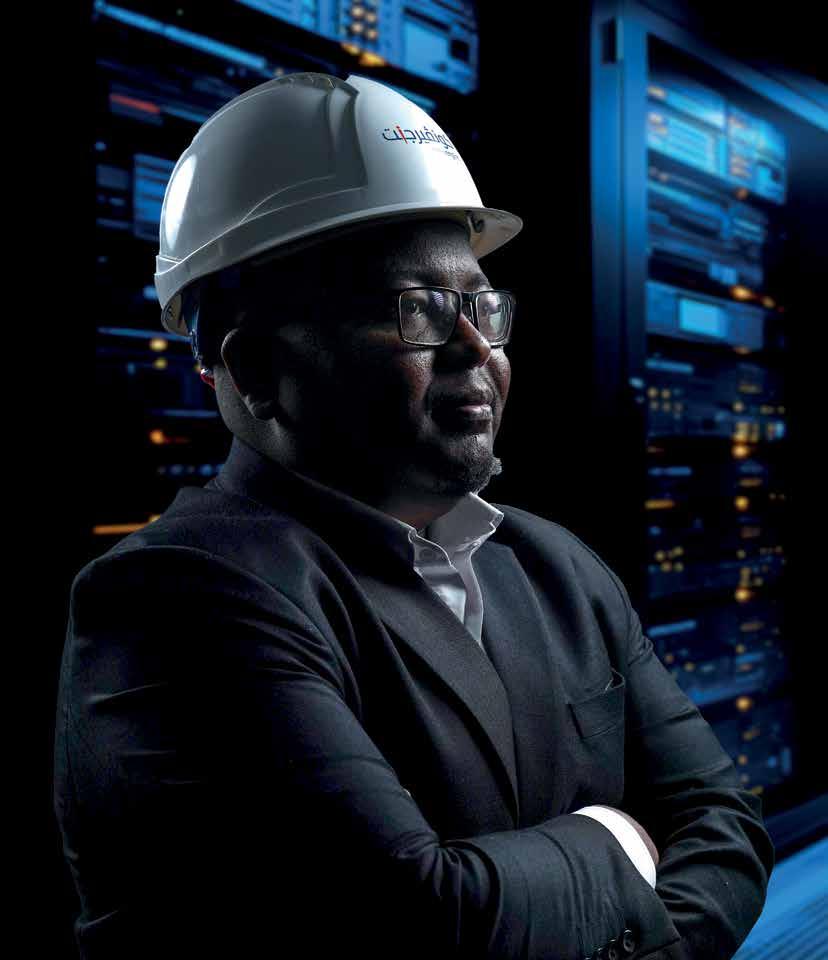
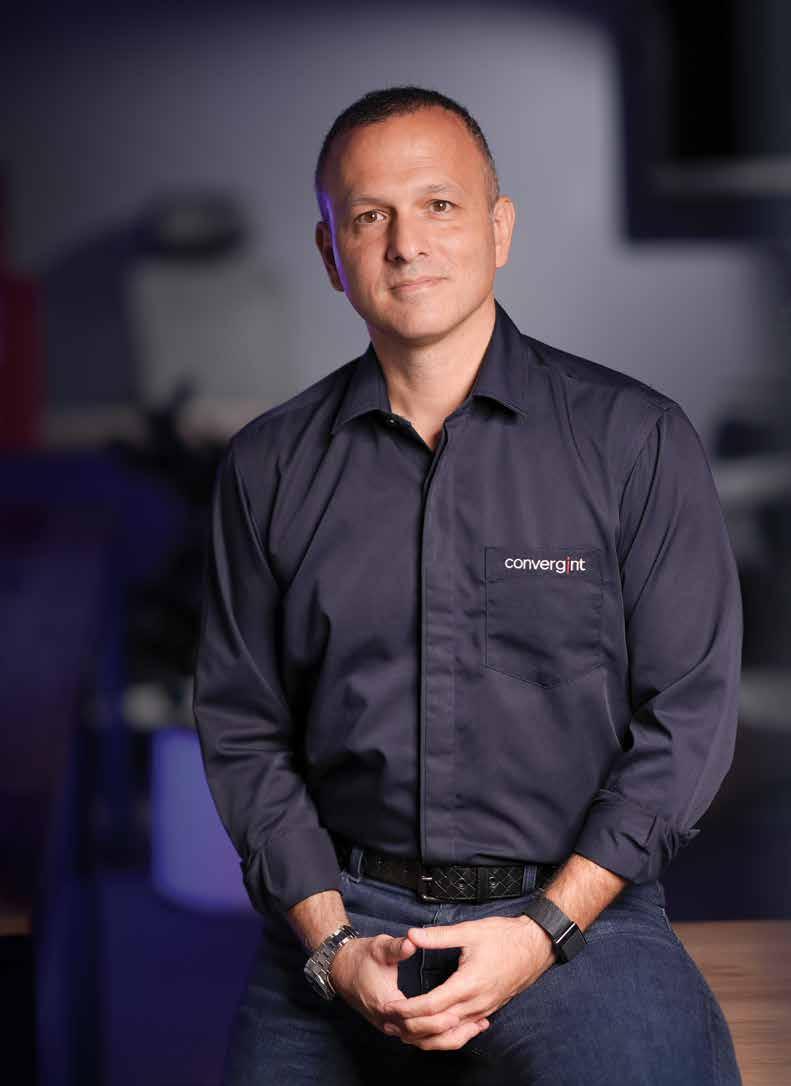
WHY TRUE INTEGRATION HAS NEVER BEEN ABOUT THE HARDWARE
“Installing equipment is not systems integration.”
This sharp distinction from Said Charles Kiwan, Managing Director MEA at Convergint, gets straight to the heart of a career built on doing things differently.
When Kiwan first arrived in the UAE in the early 2000s, he didn’t just see a region undergoing a massive infrastructure boom, he recognized a profound gap for technical sophistication in an analog-dominated market.
Speaking with TECHx Media, the visionary leader tracks the journey from founding MVP Tech to expanding across the region under the global Convergint banner. It is a masterclass in timing the market, leveraging metadata, and building a leadership pipeline anchored in self-awareness.
The Early 2000s Shift
The UAE of the early 2000s was a living blueprint of rapid change. Witnessing an era of expanding cities and accelerating infrastructure made one thing clear to Kiwan: technology was about to completely rewrite the rules of security and enterprise growth across the region.
At the same time, global security priorities were shifting significantly in the post-9/11 era, creating entirely new demands for advanced, reliable, and scalable security systems. For Kiwan, the opportunity was clear early on.
“One of the foundations of a successful economy and a growing region is security,” he explains. “I saw a gap in the market and an opportunity to do things differently.”
The MVP Tech Genesis
That vision led to the creation of MVP Tech, a company focused on delivering advanced security integration capabilities built around deep technical expertise. The strategic foresight of the business eventually caught global attention, leading to its acquisition by Convergint in 2022.
Today, the organization continues to expand across the Middle East and Africa, operating at the sharp intersection of global scale and local execution. But for Kiwan, the journey has never been about the technology alone. It has always been about people, capability, and culture.
Betting Early on Engineering Capability
In the early stages of the security integration industry, analog systems dominated the landscape. Most companies focused heavily on sales-led growth models before building technical depth.
Kiwan chose a different approach.
“We invested in engineering capability first,” he says. “That was not the common path at the time.”
This decision came with challenges. Building deep technical teams before scaling commercial operations meant longer lead times in gaining market traction.
At the same time, Kiwan was pushing the industry toward a transition from analog systems to IP-based technologies, a shift that many were not yet ready to adopt.
“Sometimes you are too early and the market is not ready. Sometimes you are too late. We managed to find the right timing during the transition.”
That timing proved critical. As the industry gradually moved toward
IP-based systems, the organization was already positioned with the technical depth required to lead that shift.
Over time, this engineering-first philosophy became one of the company’s strongest differentiators.
Today, technical capability remains at the core of its operations, with a large proportion of teams dedicated to design, engineering, and solution delivery.
The Anti-Stagnation Rule
Throughout his career, Kiwan has consistently emphasized one principle above all others: people determine long-term success.
For him, leadership begins with self-awareness, understanding strengths, acknowledging weaknesses, and building teams that complement those gaps.
“One of the biggest mistakes leaders make is trying to do everything themselves,” he explains.
Instead, he believes in surrounding yourself with people who are stronger in areas where you are not.
In his view, this is not just a leadership strategy, but a business survival requirement, particularly in complex technical industries.
He also strongly believes in continuous development and learning.
“If people stagnate, the company stagnates.”
This philosophy has influenced how teams are built, how talent is nurtured, and how leadership pipelines are developed across the organization.
In an industry where talent retention is increasingly challenging, the focus on long-term employee development has contributed to strong continuity within teams.
Kiwan notes that leadership stability is not accidental, it is built through consistent investment in people.
Solving Puzzles, Not Hanging Hardware
While “systems integration” is often used as a technical term, Kiwan believes the industry frequently misunderstands its true meaning.
“Installing equipment is not systems integration,” he says.
For him, integration is fundamentally about solving problems, not deploying hardware.
He describes it as solving puzzles, where different technologies, systems, and processes must be connected to create a unified operational outcome.
Real integration, he explains, goes beyond installation. It enables automation, improves efficiency, and creates actionable intelligence for end users.
This approach has shaped how the organization engages with customers, focusing not just on delivery but on long-term operational performance.
It also extends into lifecycle management, ensuring that systems remain optimized, updated, and aligned with evolving operational and regulatory requirements.
“It is not about selling systems,” Kiwan notes. “It is about solving customer problems.”
What Comes After Day One?
In modern security environments, Kiwan emphasizes that deployment is only the beginning of the journey.
The lifecycle approach begins with understanding the customer’s problem, moves through design and implementation, and continues into long-term maintenance and optimization.
This model ensures systems remain effective long after initial deployment.
Given the rapid pace of technological change, maintenance and upgrades have become essential rather than optional.
“THE REAL QUESTION IS NOT ABOUT COLLECTING DATA, IT IS ABOUT WHAT YOU DO WITH IT.”
Systems must evolve continuously to maintain performance, compliance, and operational reliability.
Kiwan highlights that in many environments, systems are expected to deliver near-continuous uptime, making maintenance a critical component of operational success.
AI, Data, and the Future of Security
Looking ahead, Kiwan believes artificial intelligence and datadriven systems will play an increasingly important role in shaping the future of the industry.
While AI is often seen as a new development, he points out that elements of it have existed in security systems for years,
particularly in areas such as video analytics and automated detection.
However, the next phase of transformation will be defined by how effectively organizations use metadata and information generated by connected systems.
“The real question is not about collecting data,” he explains. “It is about what you do with it.”
This shift toward predictive intelligence and operational insight will redefine how organizations approach security, moving from reactive systems to proactive and intelligent ecosystems.
Systems First, Culture Follows
As part of Convergint, the organization operates across multiple continents, supported by hundreds of offices and thousands of employees worldwide.
Despite this global footprint, Kiwan emphasizes the importance of maintaining consistency while enabling local flexibility.
The “One Convergint” philosophy is designed to ensure alignment across systems, processes, and culture, while empowering regional teams to make decisions that best serve local customers.
“It starts with systems and processes,” he explains. “Then culture follows.”
This balance between global structure and local empowerment is central to sustaining both scale and agility.
For Kiwan, empowerment is not optional, it is essential.
Two Decades on the Ledger
Reflecting on more than two decades in the industry, Kiwan describes his journey not in terms of milestones, but experiences, challenges, and relationships.
The evolution of the security industry, the rise of new technologies, and the transformation of customer expectations have all shaped his perspective.
However, what stands out most is the human element.
“It is the journey that matters,” he reflects. “The people you meet, the challenges you face, and the growth you experience along the way.”
Today, as the organization continues to expand across the Middle East and Africa, Kiwan remains focused on strengthening technical capability, developing talent, and supporting large-scale infrastructure projects that define the region’s future.
Because while technology continues to evolve rapidly, he believes sustainable success will always depend on the strength of people behind it.
LEADERS ON THE
SUSTAINABLE GROWTH COMES FROM TRUST, NOT SHORT-TERM RESULTS
Decisions in the META region’s commercial tech sector are increasingly being driven by a simple question: What value does this bring tomorrow?
Nobody understands this shift better than Tolga Özdil. Having guided ASUS’s commercial presence in the region through distinct phases of growth, Özdil has witnessed firsthand the transition from upfront pricing models to a strict focus on lifecycle management and operational agility.
In this exclusive interview, he cuts through the noise surrounding emerging tech trends, offering a pragmatic blueprint for true organizational AI readiness, exploring the unique modernization patterns shaping African markets, and explaining why local relationships remain the ultimate differentiator in a highly competitive market.
You’ve worked across multiple markets in META over the past decade. How have customer expectations around commercial technology shifted, especially in terms of value, performance, and long-term strategy?
There has been a big change in consumer expectations for commercial technology. Businesses right now see technology as a long-term strategic investment that can have an effect on how the business continues, how productive it is, and its overall growth.
When a habitat is hybrid and more data-based, then there is a need for greater security, dependability, managing of lifecycle and solid after-sales support. Performance needs are also going up as companies prefer devices capable enough to bear heavy workloads, AI apps and flexible working processes without giving up efficiency.
Also, enterprises now look at the total cost of ownership rather than upfront pricing. Customers want solutions that can adapt according to changing business priorities. It should expand with their processes and be sustainable. This is especially important in
the META region, where decisions are taken depending on long-term value and adaptability.
ASUS operates across enterprise, SMB, education, and public sector segments. How do you maintain clarity and consistency in strategy while addressing such diverse needs across the region?
Even though we function across a lot of sectors, our main strategy stays the same. It begins with knowing customer challenges and providing practical technology solutions that give measurable long-term results.
We always focus on building a strong commercial ecosystem. This can be done with the help of reliable products, trusted channel partnerships, and strong regional support. While each segment has
TOLGA ÖZDIL
different processes, their security, performance, durability, and reliability expectations remain broadly the same.
For example, education institutes need access, teamwork, and digital learning spaces, while enterprises need security, portability, and productivity in hybrid workspaces. SMBs want flexibility and scalability that can support growth without getting complicated. Keeping close relationships with local partners is also important as it helps ASUS apply global strategies locally in terms of customer expectations and digital transformation initiatives, while making sure that there is a smoother customer-focused approach across the META region.
AI is now a central theme across the industry. What do you see as the real indicators of “AI readiness” in organizations, beyond just adopting new tools or devices?
AI readiness is more than just using new tools or devices. It is more about having a clear business objective for using AI and a long-term plan that gives proper results. Strong data infrastructure and effective governance frameworks are also important. Without well-managed, accessible and correct data, AI cannot give the right
"WITHOUT WELLMANAGED, ACCESSIBLE AND CORRECT DATA, AI CANNOT GIVE THE RIGHT INSIGHT OR VALUE."
insight or value. Also, workforce readiness is needed as employees need to know the ways AI can be included in everyday workflows practically and responsibly.
Cybersecurity and responsible AI policies are also becoming essential, especially as companies handle a lot of sensitive data and automated processes. Aligning leadership across IT and processes is another factor, as successful adoption of AI needs overall coordination.
Lastly, AI workloads need scalable infrastructure that can do high-performance computing and includes modern devices. Most AI-ready companies ultimately focus on automation, operational efficiency, improved customer experiences, and faster decision-making.
Across emerging markets, especially in Africa, what patterns or shifts in technology adoption are most interesting to you right now, particularly in how organizations are modernizing?
At present, many organizations are expanding directly through
mobile-first and cloud-first strategies. Investments in digital education, smart government initiatives and SME digitalization have increased. Businesses are prioritizing connectivity, cybersecurity and workforce mobility solutions. Also, the hybrid work adoption continues to influence more demand for secure and flexible commercial devices. Meanwhile, the infrastructure challenges are encouraging innovative approaches to deployment and operational efficiency. Furthermore, AI adoption is gaining momentum, particularly in sectors such as education, finance, healthcare and customer service.
As businesses balance cost efficiency with digital transformation goals, where do you see the biggest tension today, and how is ASUS positioning itself in that equation?
Currently, many organizations are aiming towards modernizing swiftly while justifying each investment with measurable business outcomes. Nowadays, businesses are focusing on solutions that limit complexity while maintaining strong performance and robust security standards. ASUS Business is positioned here by offering a broad commercial portfolio that supports different operational and budget requirements. The reliability and lifecycle value are the key priorities here, especially for organizations managing large-scale deployments. ASUS Business’s strong channel collaboration and regional support help customers maximize efficiency throughout the deployment lifecycle.
In a competitive commercial technology landscape, what are the key factors that actually influence enterprise and institutional buying decisions today, beyond product specifications?
The key factors influencing enterprise and institutional buying decisions were the trust and long-term partnership leveraged as major decision-making factors. Assess vendor responsiveness, efficiency in technical support and service consistency. Also, prioritize security, manageability and compliance readiness more than raw hardware specifications. The buyers also value the ecosystem compatibility and ease of integration with existing infrastructure. Lastly, the local market presence and reliable channel support play a crucial role in building enterprise confidence.
Having built ASUS’s regional commercial presence from the ground up, what leadership principles have stayed constant for you, regardless of market or phase of growth?
The main focuses have been consistency, adaptability and a customer-centric approach throughout each stage of growth in ASUS Business. Maintaining strong relationships internally and externally is indispensable for long-term success across sectors. Listening to partners and customers becomes critical to understand the constantly progressing market realities. Sustainable growth comes from building trust rather than focusing only on short-term results. Empowering our team members and encouraging accountability builds stronger regional execution. The key factors here are resilience and agility, especially in the rapidly changing market across META. The long-term leadership success depends on maintaining clarity of vision while remaining flexible in execution.
For years, the technology industry has celebrated breakthroughs in processors, graphics cards, and artificial intelligence. Faster chips, more powerful GPUs, and increasingly sophisticated software have dominated conversations about performance. Yet behind every gaming experience, creative workflow, and AI-driven application lies another technology that is becoming equally critical: storage.
As modern devices become more powerful and portable, the demands placed on storage have changed dramatically. Today's users are no longer simply saving documents and photos. Gamers are downloading massive titles that can occupy tens or even hundreds of gigabytes. Content creators are working with high-resolution video files that require rapid access and seamless transfers. Professionals handling AI-driven workloads are managing growing volumes of data that need to move quickly between devices.
The challenge facing the industry is no longer just about capacity. It is about delivering speed, responsiveness, reliability, and mobility in increasingly compact formats.
This shift is particularly evident in the world of handheld gaming, where portable devices are becoming more capable than ever before. As gaming libraries grow and users expect console-quality experiences on the move, storage is emerging as one of the most important components determining overall performance.
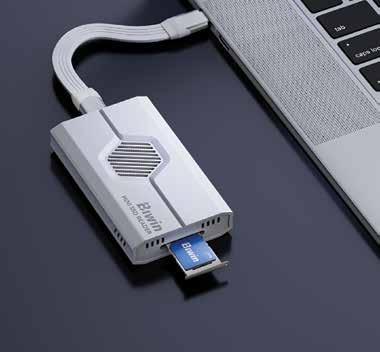
Recognizing this evolution, Biwin is investing heavily in nextgeneration portable storage technologies, with a particular focus on microSD Express. Through solutions such as the Amber ME300 microSD Express Card and the Amber RE310 Card Reader, the company is helping redefine what users can expect from expandable storage in the era of mobile gaming and connected digital lifestyles.
The Handheld Gaming Revolution
Handheld gaming is undergoing a remarkable transformation.
What was once considered a secondary gaming category has evolved into one of the industry's most exciting segments. Modern handheld devices are capable of running sophisticated games, delivering impressive graphics, and supporting expansive digital libraries that rival traditional consoles.
The growing popularity of portable gaming reflects a broader shift in consumer behavior. Users increasingly expect to access their entertainment wherever they are, whether during travel, commuting, or simply moving between rooms at home. Convenience has become just as important as performance.
At the same time, game sizes continue to grow.
Modern titles often require substantial storage capacity, while downloadable content, updates, and additional content packs further increase storage requirements. For gamers, managing available space has become a constant challenge.
This reality is creating demand for a new generation of storage solutions capable of delivering both speed and capacity without compromising portability.
MicroSD Express technology is emerging as one of the most promising answers to this challenge.
Why microSD Express Matters
Traditional microSD cards have played a vital role in portable storage for years. However, as gaming experiences become more sophisticated, storage performance has increasingly become a limiting factor.
MicroSD Express changes the equation.
Built on PCIe NVMe technology, the same foundational architecture used by modern SSDs, microSD Express dramatically increases data transfer speeds while maintaining the familiar microSD form factor that consumers already know and trust.
The result is a storage solution capable of bridging the gap between traditional memory cards and SSD-class performance.
For gamers, the benefits are immediate and tangible.
Faster storage means shorter loading times, quicker installations, improved responsiveness, and smoother access to large game files. Instead of waiting for content to load, users can spend more time playing.
As next-generation handheld gaming devices continue to evolve, these performance gains are becoming increasingly important.
The growing adoption of microSD Express by major gaming platforms is also helping establish the technology as a significant step forward for portable storage. Rather than serving a niche audience, microSD Express is positioned to address the needs of millions of users seeking faster and more capable expandable storage.
Meet the Amber ME300
At the center of Biwin's strategy is the Amber ME300 microSD Express Card.
Designed specifically for modern gaming and mobile workflows, the ME300 leverages the SD 7.1 specification and PCIe NVMe architecture to deliver performance levels previously associated with SSDs rather than memory cards.
The card achieves sequential read speeds of up to 900 MB/s and write speeds of up to 800 MB/s, enabling dramatically faster access to data compared with conventional microSD solutions.
For gamers, these performance improvements translate into practical advantages.
Large games launch faster. Downloads and updates complete more quickly. Digital libraries become easier to manage. System responsiveness improves across a range of tasks.
The impact becomes particularly noticeable as users build increasingly extensive game collections. Rather than constantly uninstalling and reinstalling titles to free up space, players can maintain larger libraries that remain instantly accessible.
The Amber ME300 is available in capacities of up to 1 TB, providing substantial room for games, media content, creative projects, and personal files.
In many ways, the card transforms a handheld device into a complete portable entertainment hub.
Built for Real-World Mobility
Performance is only one part of the equation.
Portable storage devices accompany users everywhere. They travel in backpacks, pockets, and carry-on luggage. They encounter varying temperatures, environmental conditions, and the occasional accidental drop.
For this reason, durability remains a critical consideration.
Biwin has engineered the Amber ME300 with comprehensive protection against many of the challenges associated with everyday mobility. The card is designed to resist water, dust, shocks, impacts, and X-ray exposure, helping ensure that valuable data remains protected in a wide range of environments.
Rigorous testing further supports long-term reliability, giving users confidence that their storage solution can keep pace with active lifestyles.
For gamers carrying extensive libraries, creators managing important projects, or professionals storing valuable work files, reliability is every bit as important as raw performance.
The Amber ME300 aims to deliver both.
Unlocking Performance with the Amber RE310
As storage technology advances, another challenge emerges.
Even the fastest storage device can only perform as well as the connection used to access it.
To address this, Biwin developed the Amber RE310 microSD Express
Card Reader, designed specifically to maximize the capabilities of next-generation microSD Express cards.
Featuring a USB 3.2 Gen 2x2 interface capable of delivering up to 20 Gbps bandwidth, the RE310 enables users to fully leverage the performance potential of the Amber ME300.
When paired together, the combination can achieve transfer speeds approaching 900 MB/s.
For users regularly moving large files between devices, these improvements can save considerable time.
Photographers transferring image libraries, video editors managing project files, gamers migrating installations, and professionals handling data-intensive workloads all benefit from faster access and shorter transfer times.
The RE310 transforms microSD Express from a promising technology into a complete high-performance storage ecosystem.
Sustained Speed Through Smart Thermal Design
As transfer speeds increase, thermal management becomes increasingly important.
Extended high-speed operations generate heat, which can affect performance if not properly managed.
Recognizing this reality, Biwin incorporated active cooling technology into the Amber RE310.
The reader features an integrated cooling fan that assists with heat dissipation during intensive workloads. This design helps maintain stable operating temperatures and supports more consistent performance during prolonged transfers.
Whether users are moving large gaming libraries, backing up media projects, or handling significant amounts of data, the focus on thermal management contributes to a smoother overall experience.
It also reflects a broader trend within storage technology, where engineering for sustained performance has become just as important as achieving impressive peak speeds.
Designed for Every Device
One of the key strengths of the microSD ecosystem has always been flexibility.
Consumers rarely operate within a single device category. Instead, they move between laptops, smartphones, tablets, gaming systems, and desktop computers throughout the day.
The Amber RE310 is designed with this reality in mind.
The reader supports both microSD Express and traditional microSD UHS-I cards, enabling users to continue working with existing storage media while transitioning to newer technologies.
Connectivity options include USB-C support and a bundled USB-A adapter, allowing compatibility across a broad range of hardware.
Support for Windows, macOS, Android, iOS, and Linux platforms further enhances versatility, ensuring users can integrate the solution into existing workflows without complexity.
The result is a storage ecosystem that prioritizes accessibility and convenience alongside performance.
Looking Beyond Today: The Mini SSD Vision
While microSD Express represents Biwin's most immediate opportunity within portable gaming and mainstream mobile storage, the company is also exploring future possibilities in ultracompact storage design.
One example is the CL100 Mini SSD.
Measuring just 15.0 mm × 17.0 mm × 1.4 mm, the device demonstrates how SSD-class performance can be delivered within an exceptionally small footprint.
Powered by PCIe 4.0 and NVMe technologies, the CL100 achieves impressive transfer speeds while offering capacities of up to 2 TB.
Its compact dimensions make it particularly suitable for emerging device categories where space efficiency is critical.
However, Mini SSD remains an emerging format. Industry adoption is still developing, and broader ecosystem support will take time to mature.
For Biwin, the CL100 serves less as a mainstream storage solution today and more as a demonstration of how portable storage may continue to evolve in the future.
The technology's recognition through international innovation awards highlights its potential, while ongoing industry discussions may determine how widely the format is adopted in years to come.
A Broader Commitment to the Gaming Community
Biwin's involvement in gaming extends beyond storage products.
The company continues to strengthen its presence within gaming communities through event sponsorships, hardware collaborations, and enthusiast engagement initiatives.
One example was its participation at PAX East, where attendees had the opportunity to engage with premium gaming hardware and experience the performance benefits of high-speed memory and storage solutions.
By supporting community-driven events such as LANFest, Biwin is helping foster environments where gamers, builders, and technology enthusiasts can connect, learn, and share experiences.
This engagement reflects an understanding that gaming is no longer simply a hardware market. It is a culture built around communities, creativity, and shared experiences.
The Future of Portable Storage
As gaming, content creation, artificial intelligence, and mobile computing continue to evolve, storage will play an increasingly central role in shaping user experiences.
The industry's next breakthroughs may not come solely from faster processors or more powerful graphics. They may also come from technologies that enable users to access, move, and manage data more efficiently than ever before.
Biwin's Amber ME300 microSD Express Card and Amber RE310 Card Reader demonstrate how expandable storage is evolving to meet the needs of modern users. Together, they deliver a compelling combination of speed, capacity, durability, and flexibility designed for a world where performance must travel everywhere.
While emerging innovations such as Mini SSD technology point toward future possibilities, today's strongest momentum lies in microSD Express and its ability to bring SSD-inspired performance to millions of gamers and mobile users.
In a world where mobility increasingly defines how people work, create, and play, the future of storage may indeed fit in your pocket.
“WE ARE NOW OPERATING IN AN ENVIRONMENT WHERE DIGITAL INFRASTRUCTURE IS NATIONAL INFRASTRUCTURE.”
CYBER SECURITY AS A NATIONAL GROWTH ENABLER
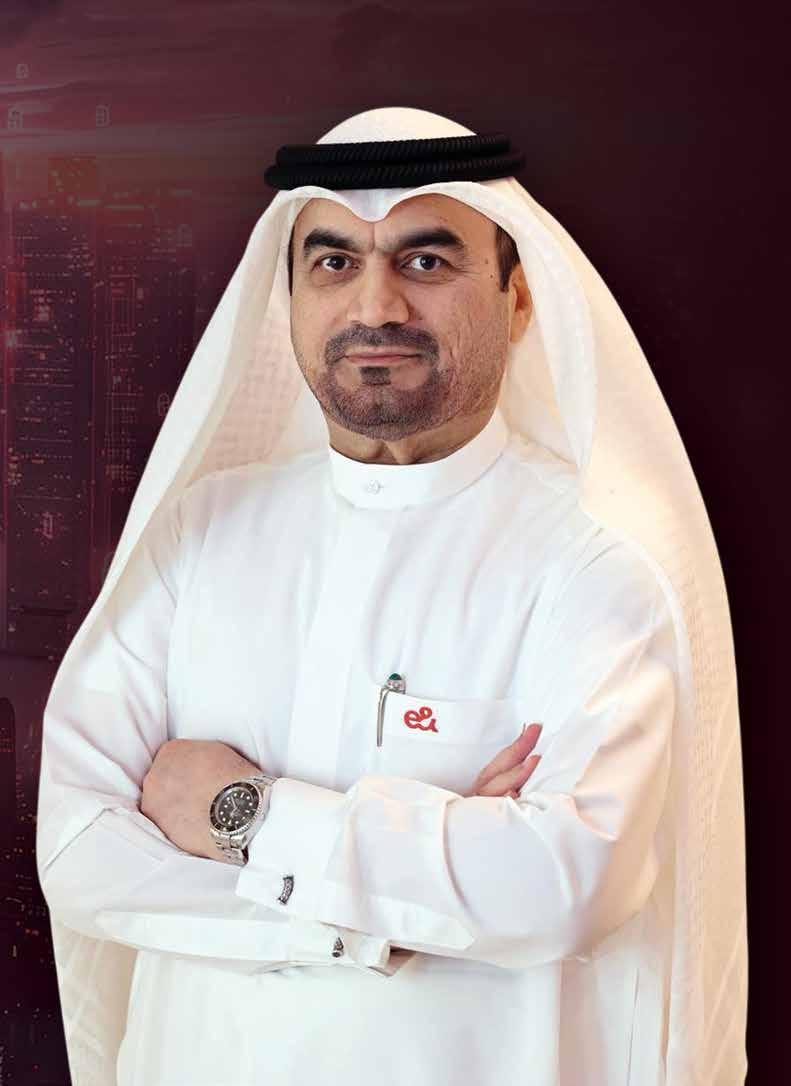
As governments across the GCC accelerate digital transformation agendas, cybersecurity is increasingly being viewed not only as a technology function, but as a strategic enabler of economic resilience, investor confidence, and national competitiveness. In this interview, Abdulla Ebrahim Al Ahmed, Chief Government & VVIP Relations Officer, e&, discusses how the region is redefining cyber resilience in the age of AI, sovereign infrastructure, and machine-speed threats and why cybersecurity must now be embedded into national growth strategies from the outset.
ABDULLA EBRAHIM
Cybersecurity has traditionally been viewed as a technical issue. Why is it now becoming a national economic priority?
Cybersecurity today is fundamentally linked to economic continuity, investor confidence, and national competitiveness. As countries across the GCC continue to digitise critical sectors such as finance, healthcare, energy, logistics, education, and government services, the resilience of those digital systems becomes directly connected to economic growth and societal stability.
We are now operating in an environment where digital infrastructure is national infrastructure. Any disruption to that infrastructure can have broad operational, financial, and reputational consequences. That is why cybersecurity can no longer sit only within IT departments. It has become a boardroom issue, a policy issue, and increasingly, a national development issue and growth enabler.
What is particularly important in our region is the pace of digital ambition. The UAE and Saudi Arabia are building some of the world’s most advanced digital economies, driven by AI adoption, smart city development, sovereign cloud infrastructure, and connected public services. Cyber resilience is therefore critical to sustaining that progress.
The conversation has shifted from “How do we protect systems?” to “How do we sustain national digital growth securely over the long term?”
What changes in the cybersecurity landscape are you paying close attention to right now?
One of the clearest changes is that cyber threats are no longer isolated or occasional events. They are becoming continuous, adaptive, and increasingly tied to broader geopolitical and economic developments.
The latest State of the Market Report from Help AG, e&’s cybersecurity arm, highlights that distributed denial-of-service activity has increased by more than 857% between 2019 and 2025, with over 371,000 attacks recorded in 2025 alone. But beyond the numbers, what is most significant is the change in attack behaviour itself.
We are seeing attacks executed faster, with greater automation, and with much higher levels of persistence. Some attacks are now reaching operational impact in under 30 hours. That fundamentally changes the operational expectations for organisations.
Traditional security models were designed around humanspeed response times. Today, organisations need resilience
models capable of operating at machine speed. This is where AI, automation, and integrated security operations become essential.
Another important observation from the report is the increasing overlap between cyber activity and geopolitical tensions. Amid shifting regional dynamics this year, cyberattack attempts targeting the UAE reportedly rose from around 200,000 per day to between 500,000 and 700,000 daily, according to the UAE Cybersecurity Council. This reinforces the reality that cybersecurity is now deeply connected to national resilience.
Artificial intelligence is clearly transforming the cybersecurity landscape. How do you see AI changing both the threat environment and defence strategies?
AI is accelerating both sides of the cybersecurity equation simultaneously.
On the threat side, attackers are using AI to automate reconnaissance, personalise phishing attempts, accelerate exploitation chains, and increase the scale and sophistication of attacks. In many ways, AI lowers the barrier to entry for cybercriminal activity while increasing operational efficiency for threat actors.
At the same time, AI is becoming one of the most important tools for defenders. Modern security operations centres are increasingly relying on AI-driven automation to prioritise alerts, accelerate investigations, identify anomalies, and respond to threats in real time.
Help AG’s SOC environments now operate more than 145 automated security scenarios, reducing response times by over 50%. That level of operational efficiency is becoming critical as attack volumes continue to rise.
What is particularly interesting is the emergence of what we call “defensive learning,” which is the ability for organisations to continuously transform incident intelligence into improved future performance.
This is important because cybersecurity can no longer depend purely on scaling human resources. There is a global cybersecurity talent shortage, and organisations need systems that can continuously learn, adapt, and improve operational resilience over time.
The concept of sovereignty is becoming increasingly prominent across the GCC. Why is sovereign infrastructure now such an important cybersecurity consideration? Sovereignty has evolved far beyond a compliance discussion.
Historically, organisations primarily viewed sovereignty through the lens of data residency requirements. Today, sovereign infrastructure is becoming a strategic design principle shaping how digital ecosystems are built, governed, and secured.
Across the GCC, governments are investing heavily in national cloud infrastructure, AI ecosystems, digital identity frameworks, and locally governed critical systems. That creates new operational expectations around control, resilience, accountability, and trust.
In practice, this means cybersecurity architectures must now align closely with national priorities, local regulations, and regionspecific resilience requirements. Organisations increasingly need visibility, governance, and operational control within the jurisdictions where they operate.
This is especially relevant as AI adoption accelerates. Questions around where models are hosted, how data is governed, how critical infrastructure is protected, and who retains operational oversight are no less important.
The UAE has positioned itself as a global leader in digital innovation, but sustainable innovation requires trusted infrastructure and sovereign cybersecurity capabilities are becoming a key part of that foundation.
How do you see cybersecurity contributing to long-term economic growth and investment attractiveness in the region? For fast-growing digital economies, cybersecurity is increasingly influencing how investors assess stability, readiness, and long-term potential.
Global investors, multinational organisations, and technology partners all look at the maturity of a country’s digital infrastructure and resilience capabilities when making long-term investment decisions. Strong cybersecurity frameworks create trust, stability, and operational confidence.
The GCC has a significant opportunity here, as governments across the region are proactively making cybersecurity a core part of their national transformation agendas from the outset.
In the UAE specifically, we have seen a very deliberate approach to digital governance, AI strategy, smart infrastructure, and publicprivate collaboration. Initiatives like the UAE National Strategy for Artificial Intelligence 2031 have helped create a highly attractive environment for innovation and investment.
Cybersecurity also plays a critical role in enabling emerging sectors such as fintech, autonomous mobility, smart manufacturing, and AI-driven public services. None of these sectors can scale sustainably without trusted digital environments.
In many ways, cybersecurity has become an invisible growth engine. When resilience is strong, innovation can accelerate with confidence.
One of the themes emerging globally is “sustainable cybersecurity.” What does that mean in practical terms? Sustainable cybersecurity is about building resilience models that
can operate continuously under pressure, adapt dynamically, and remain effective as technology environments evolve.
For many years, cybersecurity strategies focused heavily on deploying individual tools and responding reactively to threats. That model is becoming increasingly difficult to sustain given the speed, complexity, and persistence of modern attacks.
The future requires integrated resilience architectures that combine AI-driven operations, automation, continuous monitoring, institutional learning, and governance alignment.
The State of the Market Report 2026 identifies five major shifts shaping this transition, including the move from fragmented tools to integrated resilience architectures, from reactive defence to adaptive operations, and from talent-centric models to automation and institutional learning.
This shows that the broader industry no longer measures resilience simply by prevention, but by an organisation’s ability to sustain operations, adapt rapidly, and recover effectively under continuous pressure.
That mindset is becoming especially important for critical national infrastructure and large-scale digital ecosystems.
Looking ahead, what should organisations and governments across the GCC prioritise over the next few years?
The priority is operational readiness. Cybersecurity can no longer rely solely on static frameworks or annual compliance exercises. Organisations need dynamic capabilities that can evolve alongside emerging threats.
Second, AI governance is increasingly important. As AI adoption expands across sectors, organisations need stronger operational oversight, visibility, and governance frameworks to manage risk responsibly.
Third, we will see greater emphasis on regional collaboration. Cyber threats do not respect borders, and resilience increasingly depends on intelligence sharing, coordinated defence models, and ecosystem-wide cooperation across the GCC.
Finally, organisations need to think long term. For example, postquantum security is an emerging strategic priority. While quantum disruption may still seem distant, infrastructure decisions being made today could remain operational for decades.
The organisations and nations that will lead the next phase of digital growth are those investing now in trusted, adaptive, and future-ready resilience models.
Ultimately, cybersecurity is no longer simply about protection. It plays a much bigger role in enabling national ambition, innovation, economic growth, and building the trust needed for a truly digital future.
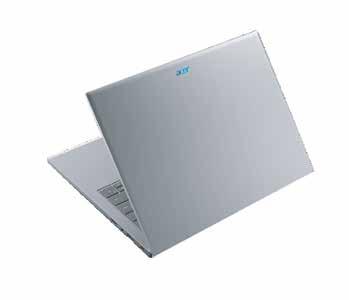
ACER AT 50:
INSIDE FIVE DECADES OF REINVENTION, RESILIENCE AND INNOVATION
From personal computing pioneer to AI-powered future enabler, Acer’s five-decade journey reflects one of the technology industry’s most remarkable reinventions
In technology, survival is rare. Reinvention is even rarer.
Over the past 50 years, the global technology industry has seen entire categories rise and disappear. Companies once considered untouchable have faded into irrelevance as consumer behaviour, computing habits and digital infrastructure transformed at extraordinary speed.
Yet through every major technology shift, from the early days of personal computing to the rise of gaming, mobility, cloud infrastructure and now artificial intelligence, Acer has continued to evolve.
This year, Acer marks 50 years globally and 34 years in the Middle East, celebrating a journey defined not simply by longevity, but by
adaptability and reinvention. It is a milestone that reflects how the company repeatedly repositioned itself alongside changing technologies, new generations of users and entirely new digital ecosystems.
The pioneer years
Founded in 1976, Acer emerged during one of the most transformative periods in modern technology history. The birth of personal computing.
The company began with a belief that technology should become more accessible to people and businesses, helping democratise computing at a time when technology remained limited to large institutions and specialist users.
Breaking barriers between people and technology has become part of Acer’s identity and will be for decades to come.
Throughout the 1980s and early 1990s, Acer established itself as a growing global computing company, expanding rapidly across international markets while helping bring PCs into homes, schools and offices worldwide.
According to Acer’s internal 50-year timeline, these early decades represented the company’s “Pioneer” and “Builder” eras both foundational periods focused on scaling computing access globally and building the infrastructure required for long-term growth.
Building a Middle East presence before the digital boom
Long before the Middle East became one of the world’s fastest-growing digital economies, Acer had already established a presence in the region.
For more than three decades, the company has operated across Middle Eastern markets, building relationships with governments, distributors, retailers, enterprises and education institutions during periods of rapid regional transformation.
That timing matters.
Acer entered the region before large-scale digital transformation became a national priority, allowing the company to evolve alongside the region’s own technological growth journey.
Today, the Middle East is investing heavily in AI infrastructure, smart cities, digital government services and advanced technologies through initiatives such as the UAE National Strategy for Artificial Intelligence 2031 and Saudi Vision 2030. Acer increasingly sees itself aligned with that next phase of regional transformation.
“This marks a significant milestone for Acer,” said Michele Montecchio, General Manager of Acer Middle East. “It reflects not only our legacy of innovation, but also the strength of our partnerships across
the Middle East region. As countries like the UAE and Saudi Arabia accelerate their investments in artificial intelligence and digital infrastructure, we see a clear opportunity to support this next phase of growth through technology that is both accessible and impactful.”
The master of reinvention
One reason Acer has remained relevant across five decades is its willingness to evolve beyond traditional PC manufacturing.
As consumer behaviour shifted, Acer expanded into new categories including gaming, creator devices, education technology, connectivity, accessories and enterprise solutions.
The launch of Predator, Acer’s gamingfocused brand, marked one of the company’s most significant strategic pivots, helping establish Acer as a major player in the rapidly growing gaming market.
Later, the company expanded further into areas such as AI-powered computing, sustainable technologies, networking devices and e-mobility solutions, reflecting a broader shift from hardware manufacturing toward connected technology ecosystems.
Internally, Acer’s timeline describes this progression through multiple transformation eras, from “The Strategist” to “The Conqueror,” “The Explorer” and most recently “The Specialist.”
Each phase reflects a company continuously adapting its identity around changing market realities rather than remaining tied to a single category or business model.
AI represents Acer’s next transformation
Now, Acer is entering another major transition period. The AI era.
Artificial intelligence is rapidly reshaping how consumers interact with devices, how businesses operate and how computing power is deployed.
Rather than viewing AI simply as a software layer, Acer is increasingly positioning itself around intelligent devices and AI-enhanced experiences designed to improve productivity, creativity and performance.
This includes investments in AI-powered laptops, smarter enterprise solutions and hardware designed to support increasingly complex AI workloads.
Importantly, Acer’s AI strategy also aligns closely with broader regional ambitions.
Countries across the GCC are aggressively investing in digital infrastructure and artificial intelligence as part of wider economic diversification plans. As governments accelerate these initiatives, technology providers capable of supporting AI adoption at scale are expected to play a growing role in the region’s future economy.
Why Acer’s story is bigger than PCs
What becomes clear when looking at Acer’s 50-year journey is that the company’s evolution has never really been about devices alone.
Instead, it reflects a broader ability to adapt to how people work, create, communicate and consume technology across entirely different eras of computing.
Few companies survive five decades in technology without fundamentally reinventing themselves multiple times. Fewer still manage to remain globally relevant while doing so.
Today, Acer operates in more than 160 countries worldwide and continues expanding into new categories and emerging technologies.
As the industry enters another period of rapid disruption driven by AI, automation and intelligent computing, Acer appears to be approaching the next chapter much like it approached the last 50 years - by continuing to evolve alongside the future it is helping build.
POWER OF DISTRIBUTION HOW SPARKOLOGY IS REWIRING THE GCC TECHNOLOGY ECOSYSTEM
Technology distribution is no longer about moving boxes. It is about moving businesses forward.
Across the Gulf, digital transformation is accelerating at a pace few could have predicted just a decade ago. Enterprises are modernizing networks, governments are digitizing services, and organizations across every industry are rethinking how technology supports growth. Yet behind every successful deployment lies a less visible but increasingly critical force: the ecosystem that ensures technology reaches the market with the expertise, support, and execution needed to make it work.
That is where Sparkology Distribution has carved out its identity.
From its inception, Sparkology was never intended to be another technology distributor competing solely on inventory or pricing. The company entered the UAE and GCC market with a different vision, to become a trusted value-added partner that bridges the gap between global enterprise technology vendors and the practical realities of regional businesses.
The distinction may seem subtle, but it has shaped every aspect of the company’s growth.
Rather than focusing solely on products, Sparkology built its business around complete solutions. Networking, unified communications, enterprise infrastructure, and connectivity ecosystems became the foundation of its portfolio. More importantly, these solutions were supported by technical expertise, operational efficiency, and strategic partnerships designed to help organizations navigate increasingly complex digital environments.
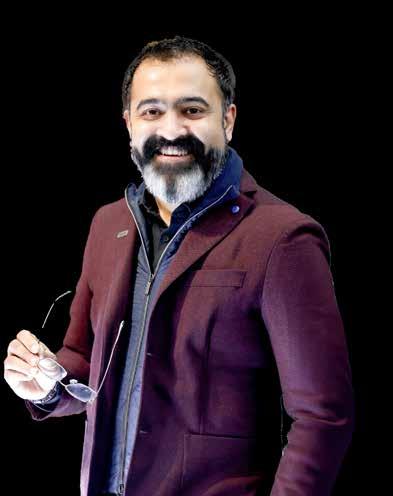
At the center of this journey is Bharti Dhamija, Director – Sales and Operations, whose leadership philosophy has helped define Sparkology’s approach to the market.
For Bharti, distribution has never been about simply transferring technology from one location to another. It is about ensuring that technology delivers value once it reaches the customer.
That perspective has become particularly relevant in a region where organizations expect technology investments to deliver measurable business outcomes. Products alone are no longer enough. Customers demand reliability, scalability, seamless deployment, and ongoing support. Meeting those expectations requires a distributor capable of operating as an extension of both vendors and channel partners.
As Bharti often emphasizes, true value in distribution is created long before a product is installed and long after it has been delivered.
Building an Ecosystem, Not a Supply Chain
The GCC technology market is among the most dynamic in the world. Organizations across sectors are embracing cloud technologies, modern networking architectures, cybersecurity frameworks, and AI-driven solutions to support ambitious growth strategies.
For distributors, this evolution presents both opportunity and responsibility.
Sparkology recognized early that succeeding in such an environment would require more than a traditional supply-chain model. Instead, the company focused on creating an ecosystem approach, one where vendors, system integrators, resellers, and end customers operate within a framework built on collaboration and shared success.
This philosophy has enabled Sparkology to establish a strong presence across a broad range of industries, including corporate enterprises, hospitality, education, healthcare, retail, government, real estate, logistics, and the SMB sector.
Each vertical presents unique operational requirements. A healthcare deployment differs significantly from a hospitality
network. A government infrastructure project requires a different level of compliance and scalability than a retail rollout.
Understanding those nuances has become one of Sparkology’s competitive strengths.
Rather than applying a one-size-fits-all approach, the company works closely with partners to understand industry-specific challenges and align solutions accordingly. This consultative mindset allows deployments to be designed around business outcomes rather than technical specifications alone.
The Vendor Selection Philosophy
One of the defining characteristics of Sparkology’s growth strategy is its approach to vendor partnerships.
In an industry often driven by product features and market hype, the company evaluates technology brands through a more practical lens.
Product capability matters, but it is only one part of the equation.
Equally important are factors such as deployment simplicity, interoperability, after-sales support, long-term scalability, and overall customer experience. Sparkology seeks vendors whose technologies can perform consistently in realworld environments and whose commitment to customer satisfaction aligns with the expectations of the regional market.
This selective approach ensures that every solution introduced into the ecosystem contributes to long-term value creation rather than short-term sales opportunities.
The result is a portfolio designed not simply to meet current requirements but to support sustainable growth as customer needs evolve.
Where Distribution Creates Real Value
Technology deployments today are significantly more complex than they were a few years ago.
Modern enterprise projects often involve multiple vendors, diverse infrastructure environments, cloud integrations, cybersecurity requirements, and stringent performance expectations. In such scenarios, successful implementation depends as
BHARTI DHAMIJA
Director – Sales and Operations
Sparkology Distribution
much on planning and coordination as on the technology itself.
This is where Sparkology has focused much of its investment.
The company provides extensive pre-sales consultancy, solution design assistance, product staging, technical training, configuration services, and logistics coordination. Rather than treating these capabilities as supplementary offerings, Sparkology considers them core components of the value it delivers.
For channel partners, the benefits are substantial.
By reducing deployment complexity and minimizing operational risks, these services allow system integrators and resellers to focus more on customer relationships and business growth. Troubleshooting is reduced, project timelines become more predictable, and implementation quality improves.
This approach has transformed Sparkology from a conventional distributor into a strategic support system for partners operating in increasingly demanding enterprise environments.
Engineering Success Before Deployment Begins
Within the technology industry, there is a common misconception that project success is determined during implementation.
Sparkology sees it differently.
According to Bharti Dhamija, the success of a deployment is often decided long before installation starts. Planning, architecture design, requirement analysis, and ecosystem alignment are the stages where projects either succeed or fail.
To address this reality, Sparkology engages with partners at the earliest stages of customer engagement.
The company’s certified engineering team works closely with system integrators and resellers to understand infrastructure challenges, scalability requirements, and business objectives. From there, solutions are designed to ensure interoperability across multiple technology platforms while maintaining performance and reliability.
The objective is not simply compatibility.
It is seamless execution.
This engineering-led approach helps organizations build technology environments that are structured, scalable, and future-ready while reducing the risks associated with complex multi-vendor deployments.
Sparkology Partner Connect 2026: Collaboration in Action
The company’s ecosystem philosophy was perhaps most visible
during Sparkology Partner Connect 2026, a landmark gathering that brought together global technology vendors, channel partners, and members of the regional enterprise IT community.
More than a traditional industry event, the platform served as a forum for collaboration and knowledge exchange.
Partners explored emerging technologies, discussed changing market dynamics, and examined how customer expectations across the UAE and GCC continue to evolve.
The significance of the event extended beyond product showcases.
It demonstrated the power of structured collaboration in accelerating ecosystem maturity. By creating opportunities for meaningful dialogue among stakeholders, Sparkology reinforced its role as a connector within the regional technology landscape.
The event also highlighted a broader truth about digital transformation: success is rarely achieved in isolation. It requires cooperation between vendors, distributors, integrators, and customers working toward common objectives.
Aligning Strategy with Global Innovation
While operational excellence drives execution, strategic alignment remains equally important.
This responsibility is led by Amrendra Trivedi, Director – Strategic Alliances, whose role focuses on strengthening relationships with technology vendors and aligning Sparkology with emerging global trends.
As innovation cycles continue to accelerate, maintaining close connections with international technology ecosystems has become increasingly important. New developments in networking, cybersecurity, cloud management, AI, and collaboration technologies are reshaping enterprise priorities at an unprecedented pace.
Through strategic partnerships and vendor engagement, Amrendra helps ensure Sparkology remains positioned at the forefront of these changes while continuing to deliver relevant solutions to regional markets.
This balance between strategic foresight and operational discipline has become one of the company’s defining characteristics.
Preparing for the Next Phase of Digital Transformation
The future of enterprise technology in the GCC will be shaped by a new generation of infrastructure requirements.
Organizations are investing heavily in enterprise networking, cloudmanaged environments, cybersecurity frameworks, AI-enabled connectivity, and smart collaboration technologies. These
capabilities are rapidly becoming business necessities rather than optional enhancements.
Recognizing this shift, Sparkology is expanding its focus across these growth areas while deepening engagement with system integrators, resellers, telecom providers, and enterprise customers throughout the region.
The objective is not expansion for its own sake. It is relevance.
As technology ecosystems become more sophisticated, distributors must evolve from logistics providers into strategic enablers capable of supporting increasingly complex customer journeys.
Sparkology appears determined to embrace that evolution.
Distribution Intelligence for a New Era
The GCC’s digital economy is entering a new chapter, one defined by interconnected infrastructure, intelligent networks, and rapidly changing business expectations.
In such an environment, success depends not only on access to technology but on the ability to deploy, integrate, and manage it effectively.
Sparkology’s journey reflects this reality.
Through partner-centric execution, engineering expertise, strategic vendor alignment, and a relentless focus on realworld outcomes, the company has built a model that goes beyond traditional distribution.
Under the operational leadership of Bharti Dhamija and the strategic alliance direction of Amrendra Trivedi, Sparkology has created a framework where technology, partnerships, and execution converge to deliver meaningful business value.
Together, they represent a balance of precision and vision, one focused on helping the region navigate an increasingly complex digital future.
In a market where infrastructure demands continue to rise and transformation agendas grow more ambitious, Sparkology is proving that the future of distribution is not measured by volume alone.
It is measured by intelligence, trust, collaboration, and the ability to turn technology into tangible outcomes.
And that is precisely how Sparkology is helping rewire the technology ecosystem across the UAE and the wider GCC.
AMRENDRA TRIVEDI
THE ENTERPRISE AI RECKONING IN
MIDDLE EAST AND AFRICA
Why Helpful Isn’t Enough Anymore
Most enterprise AI deployments have followed the same script: find a cumbersome process, drop in a chatbot or copilot, measure the time saved, and declare progress. It is a reasonable starting point, but it is not transformation.
Two years into the enterprise AI boom, a hard truth is emerging. Productivity tools have made individual moments more efficient. They have not touched the deeper architecture of how work actually gets done.
The question enterprise leaders need to be asking is not how to add more AI. It is what genuinely AI-native operations look like, and whether they are building toward that or just adding layers on top of a model that has already reached its ceiling.
LEOPOLDO BOADO LAMA
The Piecemeal Problem
Under pressure to show AI progress, many organisations across Middle East and Africa have moved quickly, deploying point solutions across departments without a coherent architecture underneath. The result is a patchwork of tools that do not share context, do not reinforce each other, and ultimately do not compound into lasting value.
The issue is rarely the technology itself. It is the foundation the technology sits on. AI grafted onto legacy systems, disconnected from a company’s actual policies, approval hierarchies, transactional history and business logic, produces recommendations that look smart in a demo and fall apart in production. Without unified operational context, AI cannot reason about your business. It can only reason about data that resembles it.
“WHAT DOES AI-NATIVE OPERATIONS TRULY LOOK LIKE, BEYOND ADDING ANOTHER LAYER
OF AI?.”
From Systems of Record to Systems of Outcomes
The dominant enterprise software paradigm, software as a system of record, has served organisations well for decades. But it was built for a different era, one where the primary job of technology was to capture, store and retrieve information. Today that ceiling is plainly visible.
The next paradigm is software as a system of outcomes. Rather than passively housing data until a human retrieves it, enterprise applications should actively drive work forward: coordinating across functions, identifying problems before
they surface, simulating trade-offs in real time, and advancing processes continuously, even when no one is logged in.
This is not a chatbot with better memory. It is a fundamentally different architecture: teams of specialised AI agents, each with a defined role, all aligned to a shared business objective. In a supplier negotiation, one agent builds requests for quotes, another benchmark bid performance, another recommends award decisions. Every one of them operates with a target outcome in view, whether that is reducing supplier spend by 15 percent or shortening lead times. The agents do not simply execute tasks. They reason toward a goal.
Rethinking the Role of Human Oversight
One of the most consequential questions in agentic AI is not technical at all. It is organisational: how much autonomy should AI have in your organization, and over what kinds of decisions?
The answer can be a spectrum. Some workflows benefit from human approval at every step, particularly where risk appetite is low, or relationship sensitivity is high. Others can run largely on their own within defined guardrails, surfacing only the exceptions that set parameters flag for human judgement. As organisations build confidence in how their AI systems behave, they can move along that spectrum deliberately, expanding autonomy where it has been earned.
What changes, in practice, is the nature of an employee’s working day. A head nurse managing hundreds of staff no longer spends cognitive energy juggling schedules, absence requests, accreditations and compliance obligations. An AI system can be designed to reason across all of that simultaneously, model the downstream impact of competing decisions, and surface a recommended course of action for the nurse to approve. The expertise is not replaced. The cognitive load is.
The Real Competitive Moat
In the race to adopt AI, it is tempting to treat speed as the primary measure of ambition. But the organisations that will lead in this next phase are not necessarily the fastest movers. They are the ones building on the right foundation.
Durable AI advantage in the enterprise comes from depth of context: AI that understands not just general patterns but your specific policies, approval workflows, risk thresholds and business logic. That context is what turns a generic recommendation into an actionable, trusted one. It is also what separates organisations that have deployed AI from those that have genuinely changed how they operate.
Every enterprise will eventually move in this direction. The only real variable is timing, and how much ground is conceded to organisations that started building the right foundations sooner.
A CAMERA THAT SEES BEYOND THE OBVIOUS
Reolink RP-PCB12M is not simply a device that records footage, it reshapes how modern surveillance systems interpret, respond, and deliver real time value. Designed for a market that prioritizes precision over unnecessary noise, this 12MP AI Smart PoE camera merges ultra high definition imaging with practical intelligence to reduce false alerts, speed up investigations, and elevate everyday security performance. Built by Reolink, the RP-PCB12M shifts surveillance from passive monitoring to a more responsive and intelligent system for both residential and commercial environments.
PRODUCT ZONE
Seeing More Than Surveillance
The RP-PCB12M stands out immediately with its 12MP Ultra HD resolution at 25fps. This capability goes far beyond sharper visuals, it ensures that every frame captures meaningful real world detail. From identifying faces at distance to tracking subtle movement across wide scenes, every image is designed to carry actionable information.
Performance is further strengthened by AI ISP technology combined with an F1.6 large aperture lens. Together, they significantly improve low light performance, ensuring consistent results during both day and night operations. In low light environments, infrared LEDs activate automatically to deliver clear black and white footage. When enhanced visibility is required, built in spotlights switch on to provide full color night vision, adding an essential layer of clarity.
AI Video Search, From Hours of Footage to Seconds
One of the most transformative capabilities of the RP-PCB12M is its AI Video Search. Traditional surveillance systems often require significant time to locate specific footage, but this system changes that experience entirely.
Through natural language processing, users can search recordings using simple descriptions such as “a woman wearing a yellow t shirt” or “vehicles.” The system intelligently scans recorded data and retrieves relevant clips almost instantly. When integrated with the Reolink Professional Series NVR, the experience becomes even more advanced, offering enhanced search tools, quick access shortcuts, and a search history feature that simplifies repeated queries.
This effectively transforms surveillance archives into an active, intelligent, and searchable system.
False alerts remain one of the biggest challenges in modern security systems, and the RP-PCB12M directly addresses this through its AI Smart Detection engine. It accurately identifies people, vehicles, and animals, ensuring notifications are relevant and meaningful.
Beyond basic classification, the system can also detect abnormal events such as object removal or forgotten items, situations that often signal suspicious activity. This additional layer of intelligence strengthens situational awareness and enables faster response times.
Proactive Protection Through AI Perimeter Features
Modern security works best when it is proactive rather than
reactive. The RP-PCB12M incorporates AI Perimeter Protection features built around this principle, giving users greater control over monitored environments.
The system includes:
Line Crossing Alerts, which detect movement across defined virtual boundaries
Zone Intrusion Alerts, which identify unauthorized entry into preset areas
Zone Loitering Alerts, which flag prolonged presence in sensitive zones
Together, these features create a dynamic and responsive security perimeter that helps identify threats early and supports faster intervention.
Flexible Lighting and Built In Deterrence
Lighting plays both a functional and psychological role in surveillance systems. The RP-PCB12M integrates infrared LEDs and spotlights to enhance visibility while also acting as a deterrent.
It offers three spotlight modes:
Always On for continuous illumination
Alarm Triggered for automatic activation during detected events
Manually Off for discreet monitoring
This flexibility allows the system to adapt easily to different environments, from quiet residential settings to high traffic commercial spaces.
Storage Designed for High Resolution Demands
High resolution surveillance requires dependable storage capacity, and the RP-PCB12M addresses this with support for microSD cards up to 512GB. This enables extended local recording without requiring additional infrastructure, making it suitable for both small and large scale deployments.
Storage estimates include:
Approximately 32.3 hours of footage on a 128GB card
Around 64.7 hours on a 256GB card
Up to 129.4 hours on a 512GB card
In addition to local storage, the system supports high capacity NVR integration and encrypted FTP backups, providing multiple layers of data protection and accessibility.
Management System designed to maintain constant user connectivity. Remote live viewing enables real time monitoring from any location, whether in the office or on the move.
The system also includes:
Alarm management for efficient alert handling
Device management for multi camera control
Account management for streamlined access control
This centralized structure simplifies operations while keeping system management intuitive and efficient.
Built for Real World Conditions
Durability is essential for outdoor surveillance, and the RP-PCB12M is engineered to perform reliably in demanding environments. Its all metal housing and IP67 waterproof rating ensure consistent operation in harsh weather conditions.
The camera operates within a temperature range of -30°C to 55°C (-22°F to 131°F), making it suitable for diverse climatic conditions across residential and commercial deployments.
Designed for Versatility and Coverage
With a 100° viewing angle and 30 meter night vision range, the RP-PCB12M is designed to monitor wide areas while minimizing blind spots. Power over Ethernet further simplifies installation by transmitting both power and data through a single cable, reducing complexity and speeding up deployment.
Built for Homes and Businesses Alike
The RP-PCB12M is designed to serve multiple use cases, from home security systems to enterprise level surveillance networks. Its combination of ultra high resolution imaging, intelligent detection, flexible lighting, and robust storage makes it adaptable without compromise.
The Bigger Picture
What distinguishes the RP-PCB12M is not just its individual features, but how those features work together to solve real operational challenges. It reduces time spent searching footage, minimizes false alerts, improves detection accuracy, and maintains performance in demanding conditions.
Backed by a two year warranty at no additional cost, Reolink reinforces its commitment to long term value in a competitive surveillance market.
The RP-PCB12M is more than a security camera, it represents a smarter approach to surveillance built on clarity, intelligence, and control.
Seamless Connectivity Through a Unified VMS System
The RP-PCB12M integrates with a comprehensive Video
ON THE
“WHAT REALLY SETS US APART IS HOW WE BALANCE INNOVATION WITH PRACTICALITY.”
THE RISE OF SELF MANAGING NETWORKS
Networks today are no longer just infrastructure. They are the backbone of digital economies. In the Middle East and Africa, this shift is accelerating fast, and Ruijie Networks is positioning itself right at the center of it.
In an exclusive conversation, Uzheer Yousuf, Regional Sales & Distribution Manager at Ruijie Networks, shared insights into the company’s regional growth journey, evolving networking demands, and its focus on cloud and AI driven infrastructure shaping the future of connectivity.
How has Ruijie Networks’ journey in the Middle East evolved, and what have been the key growth drivers?
Our journey in the Middle East has been quite exciting and rewarding. Over the past few years, we have steadily built our presence across key markets in the Middle East and Africa.
A big part of our growth comes down to strong relationships, both with our partners and our customers. We have focused on understanding what the region really needs and adapting our approach accordingly. At the same time, offering reliable, highperformance solutions at the right value has helped us earn trust across sectors such as hospitality, education, and enterprise.
How do you see the evolution of networking in the region, and where does Ruijie position itself?
The region is moving fast when it comes to digital transformation. Whether it is smart cities, cloud adoption, or AI-driven applications, the demand for smarter and more agile networks is growing rapidly.
At Ruijie Networks, we see ourselves as enablers of this shift. Our focus is on making networks simpler to manage while ensuring
“OUR PARTNERS ARE ABSOLUTELY CENTRAL TO EVERYTHING WE DO IN THIS REGION.”
they are powerful, secure, and ready for what is next. This is where our cloud-managed and AI-driven solutions really come into play.
What are Ruijie Networks’ key differentiators in a competitive market?
What really sets us apart is how we balance innovation with practicality. We bring strong R&D-driven technology, but we also make sure it is easy to deploy, manage, and scale.
Customers appreciate that they do not have to compromise between performance and cost. On top of that, our cloud
platforms simplify operations, and our industry-focused solutions help address very specific business needs.
And of course, strong local support through our partners makes a big difference.
How does your product and solutions portfolio align with current market needs?We have built our portfolio to match how businesses are evolving today. From switches and wireless solutions to cloud networking and data center technologies, everything is designed with flexibility in mind.
With hybrid work, cloud environments, and increasing connectivity demands, organizations need solutions that can scale easily and be managed centrally. That is exactly what we are focusing on.
We are also continuously enhancing our offerings to support newer technologies such as AI and IoT.
What are the key customer challenges today, and how does Ruijie address them?
Many organizations today are dealing with growing network complexity, tighter budgets, and increasing security concerns. At the same time, they want solutions that are future-ready.
Our approach is to simplify things. Through cloud management, AI-driven insights, and reliable performance, we help customers reduce operational effort while improving efficiency. It is really about making networks easier to handle without compromising on capability.
How important is the channel and partner ecosystem for Ruijie in the region?
Our partners are absolutely central to everything we do in this region.
We work closely with distributors, system integrators, and resellers to ensure we are reaching customers effectively and delivering the right solutions. We also invest heavily in partner training, certifications, and joint initiatives to make sure everyone grows together.
How is Ruijie structured regionally to ensure execution and market responsiveness?
Having a strong local team has been key to our success.
We have dedicated teams across sales, pre-sales, GTM, product management, and technical support who understand the market and can respond quickly. Our GTM teams play an important role in aligning our strategies with regional opportunities, while our product managers ensure that our offerings remain closely aligned with customer needs and evolving market trends.
This structure helps us stay close to both partners and customers, and ensures smooth execution on the ground.
What are your expansion priorities and future focus areas?
Looking ahead, we see a lot of opportunity in sectors such as hospitality, education, government projects, and the broader enterprise space.
We are also continuing to invest in cloud and AI-driven networking, as we believe that is where the future is heading. At the same time, expanding and strengthening our partner ecosystem remains a top priority.
Overall, our goal is simple, to play a meaningful role in supporting the region’s digital growth with smart, reliable, and easy-to-manage networking solutions.
The Road Ahead
As the Middle East and Africa accelerate toward a fully connected digital future, Ruijie Networks is quietly but confidently powering the shift from the core. Through the insights of Uzheer Yousuf, Regional Sales & Distribution Manager, the company’s strategy comes into sharper focus, built on cloud, AI-driven networking, and a strong partner ecosystem. Ruijie is not just keeping pace with transformation, it is actively shaping what the next generation of intelligent networks will look like.
GULF TRADE UNDER PRESSURE AS SUPPLY ROUTES BREAK DOWN
Distribution revenues across the Gulf have entered a period of contraction as geopolitical instability restricts primary trade corridors. Recent analysis from the CONTEXT META report indicates that the UAE and Saudi Arabia are currently underperforming relative to regional indices, a trajectory that stands in contrast to the sustained growth observed in Türkiye and South Africa.
The deviations within the region come from the closure of the Strait of Hormuz and subsequent cargo limitations which have inhibited the movement of physical inventory. As an import-based market, the UAE's previous focus on expansion has been overtaken by an urgent need for operational adaptability.
Revenue Impact and Value-Volume Divergence
Distribution sales data from CONTEXT indicates a sharp revenue decline to an index of 79 in March 2026, representing the first full month of disrupted logistics. Following a pre-war dip to 89 in February, this contraction correlates directly with the blockade, rather than a collapse in market demand, and is further supported by a significant discrepancy between the value and volume markets.
While the volume plummeted to 29 points below the 2025 baseline, value remained more resilient at only 10 points below. High-margin infrastructure equipment often found emergency routing, whereas bulk commercial goods, such as laptops, were entirely obstructed. Following the AWS outage on 28 February and a claimed strike on a Dubai-based Oracle data centre on 2 April, corporate focus has now turned toward the immediate need for sovereignty and continuity.
Sector Performance and Infrastructure Prioritisation
Market performance now depends heavily on what is already in the country. Server infrastructure, storage, and security have remained steady, as these projects rely on inventory that was already local or was prioritised for urgent backup and continuity needs.
On the other hand, desktop computing has seen a sharp decline because it depends on high-volume shipping that is currently stalled. As high-value projects continue to move, volume-driven categories are delayed until logistics improve.
Strategic Outlook and Recovery Timeline
While an uneasy ceasefire has broadly held through May, sporadic security incidents and continued military patrol activity around the Strait of Hormuz are still constraining normal shipping operations. Even with a gradual normalisation of transit through the Strait of Hormuz, a return to baseline volumes is unlikely before late Q2, given the logistical backlog of containers and displaced crews.
The market mix is expected to favour infrastructure through the second quarter while projects for servers and resilience-related categories exhaust remaining in-country stock and claim priority transit. Still, the UAE’s underlying economic drivers remain. The current volatility is a shipping-led supply constraint, distinct from a structural loss of regional demand.