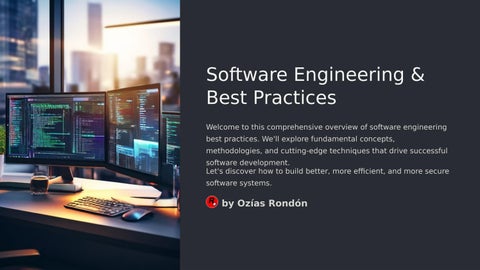

Software Engineering & Best Practices
Welcome to this comprehensive overview of software engineering best practices. We'll explore fundamental concepts, methodologies, and cutting-edge techniques that drive successful software development. Let's discover how to build better, more efficient, and more secure software systems.

by Ozías Rondón
What is Software Engineering?
Definition
Software engineering is the systematic application of engineering principles to software development. It transforms programming from an art into a precise science.
Core Principles
Modularity, abstraction, and encapsulation form the foundation. These principles enable complex systems to be built from manageable components.
Modern Significance
Today, software powers everything from smartphones to spacecraft. Quality engineering practices are critical to our technologydependent world.
Evolution of Software Engineering
1 1950s-1960s
Early programming focused on hardware constraints. Assembly language and early compilers emerged. Software was a secondary concern.
2 1970s-1980s
Structured programming and OOP revolution began. The "software crisis" led to formal methodologies like waterfall.
3 1990s-2000s
Internet explosion and agile methodologies emerged. Open source movement gained significant momentum.
4 2010s-Present
Cloud computing, DevOps, and AI integration transformed the landscape. Continuous delivery became standard practice.

Software Development Life Cycle (SDLC)
Requirements
Gathering and documenting user needs
Deployment
Releasing to production 5

Design
Creating software architecture
Implementation
Writing and testing code
Testing
Systematic quality verification
A structured SDLC provides a roadmap for projects. It ensures comprehensive coverage of all necessary steps. Each phase builds upon the previous one. Quality gates between phases prevent defects from propagating.

Agile Methodology
Individuals and Interactions
Prioritizing people over processes and tools. Collaborative teamwork is the foundation of successful agile implementation.
Customer Collaboration
Engaging with users throughout development. Continuous feedback shapes the evolving product.
Working Software
Focusing on functional deliverables over comprehensive documentation. Value is measured in working features.
Responding to Change
Embracing flexibility over rigid planning. Adaptation is a competitive advantage, not a burden.

DevOps: Bridging Development and Operations




Continuous Integration
Regularly merging code changes into a shared repository.
Automated testing validates each integration.
Continuous Delivery
Automating the release process. Software can be deployed at any time with minimal human intervention.
Infrastructure as Code
Managing infrastructure through code and automation. Environment consistency eliminates "works on my machine" issues.
Monitoring and Feedback
Gathering operational metrics and user feedback. Data drives ongoing improvements to both code and processes.
Version Control Best Practices
Commit Small, Focused Changes
Each commit should represent a single logical change. This makes reviewing, testing, and reverting much easier.
Write Meaningful Commit Messages
Clear descriptions help team members understand changes. Include both what changed and why it changed.
Use Feature Branching
Isolate work in progress from the main codebase. This enables parallel development without conflicts.
Implement Pull Request Reviews
Peer review all changes before merging. This catches issues early and spreads knowledge throughout the team.

Code Quality and Standards

Readability
Clear code is maintained more easily. Use descriptive names, consistent formatting, and logical organization.

Maintainability
Sustainable code evolves with changing requirements. Follow DRY principles and clear architectural patterns.

Reliability
Robust code functions correctly under various conditions. Handle errors gracefully and validate inputs thoroughly.

Efficiency
Well-optimized code conserves resources. Balance readability with performance for the specific use case.

Test-Driven Development (TDD)
Write a Failing Test
Begin by creating a test that defines a desired function. The test will initially fail because the function doesn't exist yet.
Write Minimal Code
Implement just enough code to pass the test. Don't worry about elegance or completeness at this stage.
Refactor Code
Improve the implementation while keeping tests passing. Remove duplication and enhance clarity without changing behavior.
Repeat
Continue the cycle with additional tests. Each iteration adds new functionality while maintaining existing features.

Continuous Integration and Continuous Deployment (CI/CD)
1 Code Commit
Developer pushes changes to repository
2 Automated Build
System compiles code and creates artifacts
3 Automated Tests Suite runs unit, integration, and UI tests
4 Deployment Passing code automatically releases to environment CI/CD pipelines automate the software release process. They catch issues early when they're less expensive to fix.
Popular tools include Jenkins, GitHub Actions, and GitLab CI/CD.
Code Reviews and Pair Programming



Pair Programming Benefits
Two developers working together catch issues immediately. Knowledge transfers naturally through continuous collaboration.
Code Review Practices
Reviews should focus on code, not the coder. Constructive feedback improves both the product and the team.
Review Tools
Platforms like GitHub and GitLab streamline reviews. Automated tools can catch common issues before human review begins.
Performance Optimization
Optimize Algorithms
Identify Bottlenecks
Use profiling tools to locate performance problems. Measure before optimizing to focus efforts where they matter most.
Improve time and space complexity. Small algorithmic improvements often yield greater results than code-level tweaks.
Database Optimization
Tune queries and schema design. Proper indexing and query structure dramatically impact application performance. Caching Strategies
Implement appropriate caching layers. Reduce expensive operations by storing frequently accessed data.

Load Testing
Verify optimizations under real-world conditions. Performance must hold up under expected user loads.

Documentation and Knowledge Sharing
Documentation Type
Purpose
API Documentation Describes interfaces for integration
Code Comments Explains complex logic and intent
Architecture Docs Explains system design decisions
Best Practices
Runbooks Provides operational procedures
Use OpenAPI/Swagger, examples, versioning
Focus on why, not what; keep updated
Use diagrams, explain tradeoffs, update regularly
Step-by-step instructions, troubleshooting guides
Emerging Trends in Software Engineering
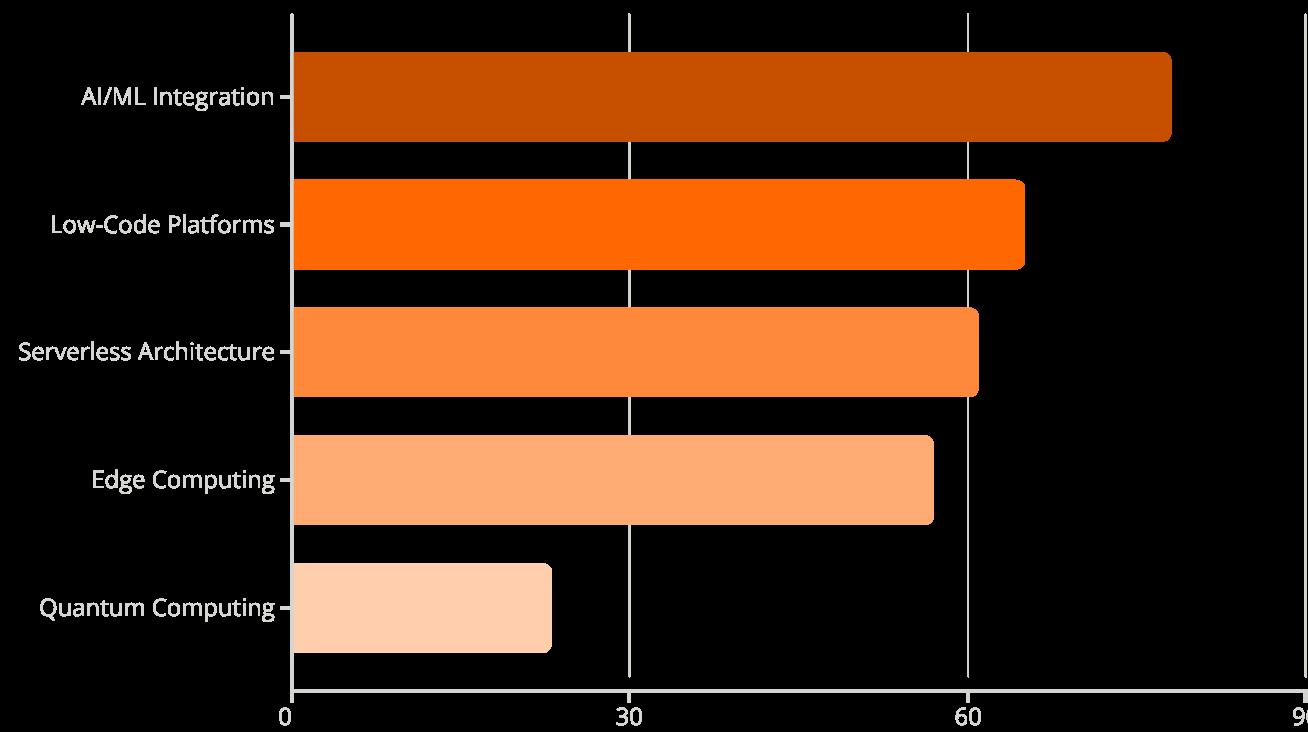
AI and ML are revolutionizing development workflows. Tools now generate code, detect bugs, and optimize performance automatically.
Low-code platforms democratize development. They enable faster delivery and broader participation in software creation.

Challenges in Modern Software Engineering
1 Managing System Complexity
As systems grow, complexity increases exponentially. Modern applications integrate numerous technologies, APIs, and services.
2 Keeping Pace with Technology
The rapid evolution of tools and frameworks creates constant learning pressure. Balancing innovation with stability is increasingly difficult.
3 Cybersecurity Threats
Attack surfaces expand as systems become more connected. Security must evolve alongside increasingly sophisticated threats.
4 Talent Shortage
Demand for skilled developers outpaces supply. Organizations struggle to attract and retain engineering talent.
Implementing Best Practices: Case Studies


Spotify's Squad Model
Spotify pioneered autonomous cross-functional teams. Their approach balanced independence with alignment across multiple squads and tribes.
Netflix's Chaos Engineering
Netflix intentionally introduces failures in production. This "chaos monkey" approach ensures systems remain resilient during real outages.
Amazon's Two-Pizza Teams
Amazon structures teams small enough to be fed with two pizzas. This approach reduces communication overhead and increases ownership.

Elevate Your Software Engineering with Agent X

Accelerate Development
Agent X automates repetitive coding tasks. Teams deliver features faster with built-in best practices.

Enhance Quality
Integrated testing and security scanning improve code quality. Catch issues before they reach production.

Optimize Performance
Advanced monitoring and optimization suggestions boost application speed. Real-time analytics drive continuous improvement.
Take your software engineering to the next level with Agent X | Software. Start your journey today!
Visit https://getagentx.com/order#aff=oziasrondon2 to get started.