is a quarterly journal published by the Australian Science Teachers Association. This journal aims to promote the teaching of science in all Australian schools, with a focus on classroom practice. It acts as a means of communication between teachers, consultants and other science educators across Australia. Opinions expressed in this publication are those of the various authors and do not necessarily represent those of the Australian Science Teachers Association or the editorial advisory committee.
Academic contributions to Teaching Science are peer reviewed.
Contents indexed in Australian Education Index (ACER) and Current Index to Journals in Education (ERIC).
Unattributed images supplied by ASTA or from Adobe Stock.
Editor
John Glistak
Editorial Advisory Committee
As/Prof. Christine Preston, The University of Sydney, NSW
Dr. Joe Ferguson, School of Education, Deakin University, VIC
Prof. Ange Fitzgerald, RMIT University, VIC
Sonia Hueppauff, Just Think Cognition, WA
As/Prof. Rekha Koul, Curtin University, WA
As/Prof. Kieran Lim, Deakin University, VIC
As/Prof. Reece Mills, QUT, QLD
Geoff Quinton, Pearson Australia
Richard Rennie, Fremantle Light and Sound Discovery Centre, WA
Dr. Emily Rochette, The University of Melbourne, VIC
Julie-Anne Smith, Eye for Detail, WA
Dr. Emma Stevenson, The University of Melbourne, VIC
Dr. Fiona Trapani, St Columba’s College, VIC
Prof. Russell Tytler, School of Education, Deakin University, VIC
As/Prof. Dr Peta White, School of Education, Deakin University, VIC
8 Strengthening Australia's soveriegn science capabiliy through genuine education reform – ASTA position paper
21
42
Science in their hands: What do students’ artefacts tell us about their values and science identity in the Anthropocene?
Dr Katrina Elliott and Adjunct Associate Professor Kathryn Paige
Science Assist Q&A: Microbiology and immunocompromised students
Fostering Experimental Skills: Intense Hands-On Microbiology activities through Peer Collaboration for High School Students
Shruthi Srinath Chakravarthy and Venkata Krishna Bayineni
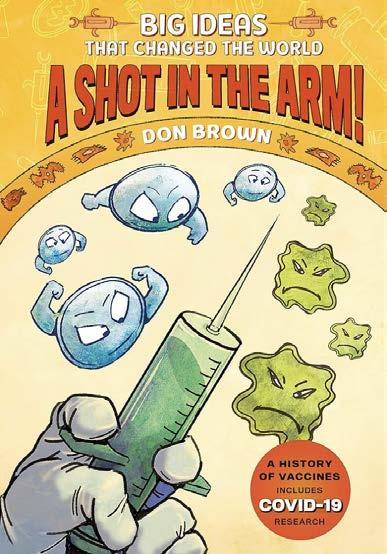
57 Big ideas that changed the world: a shot in the arm – by Don Brown Book review by Dr W. P. Palmer
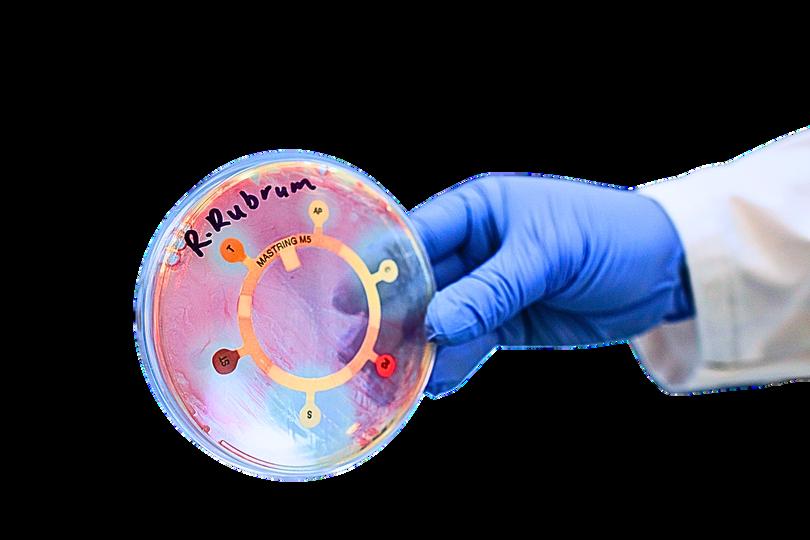
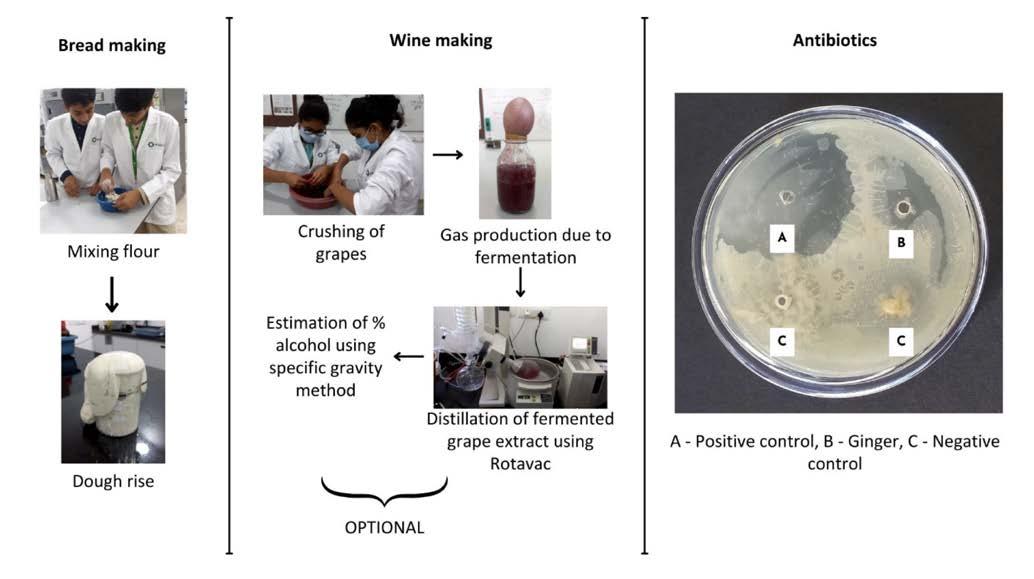
Measuring Antibiotic Susceptibility of Microorganisms
Preparation
1 Take 3 drops of bacterial culture and transfer them to an agar plate
2 Use an L-shaped spreader to spread your sample all around the sur face of the plate.
3 Take a Mastring from STEM Reactor usin forceps and place it face down on the sur face of the plate, gently pressing down each point. Replace the lid.
4. Incubate 48 hours at room temperature
Resul ts
Measure the zone of inhibition around each antibiotic disc to determine the antibiotic resistance of each organism
From the President
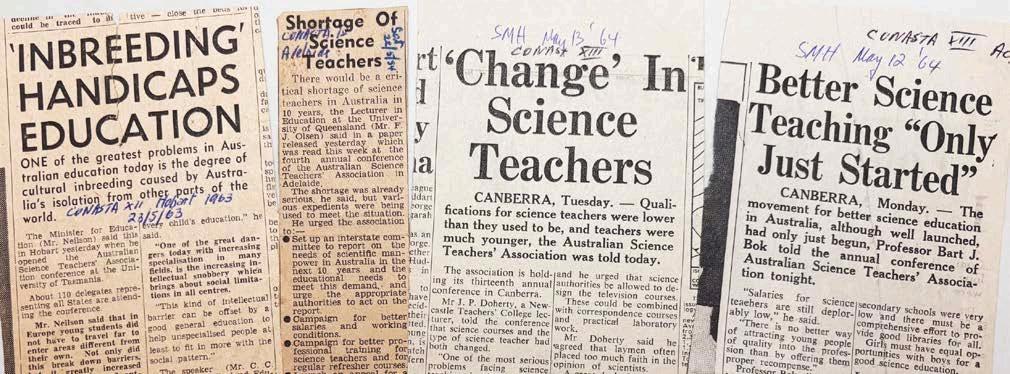
In this edition of Teaching Science Journal, we celebrate ASTA’s 75 year history of advocacy for science teachers.
When ASTA came together as a federation in 1951, issues in science education were already beginning to emerge, no different to the ones that we are experiencing today. Each ConASTA was an opportunity to raise awareness among the delegates and to alert the media to the prominent issues of the day. At ConASTA 3, it was apparent that there was concern about the lowering of standards of science teaching, with claims that teachers had less subject knowledge than in previous years. Over the years, issues of funding for science labs, increasing women in science, and forecasting widespread science teacher shortages began to occupy the association in its first 10 years.
ASTA proudly maintains its status as a respected peak body for science teachers. We continue to meet broadly with stakeholders to advance science education, to strengthen the teaching profession, and to build a strong STEM pipeline. In recent times, Australia has supercharged its ambition to be a leading sovereign science nation, signing several bilateral agreements that will rely on a very capable STEM workforce. But at the same time, reports have been released to forecast critical shortages in several science sectors.
Paula Taylor
ASTA has proudly been involved in these round table discussions to advocate for science teachers in the midst of Australia’s ambitions.
What is very clear in this juncture of time, is that as a profession, it might be time for us to adopt different attitudes towards science education and who is ‘worthy’ of this subject. Any long held views that science is an elite subject, only reserved for the brightest minds, is no longer relevant today. Our prosperity will rely on as many students as possible to select maths and science, while not being overshadowed by assessment results. If we don’t make drastic reforms now, Australia will lose site of its strong science ambitions while continuing to experience another 75 years of science teacher shortages.
I urge you to read ASTA’s latest position paper, Strengthening Australia’s Sovereign Capability through Education Reform. It’s recommendations are bold, but unlike in the past, we are out of time.
Paula Taylor President, Australian Science Teachers Association (ASTA)
Seeds of science: Nurturing knowledge for all
National Science Week 2026 will run from Saturday 15 to Sunday 23 August, with the schools theme Seeds of science: Nurturing knowledge for all.
This theme invites students across Australia to explore the power of curiosity, inquiry and shared learning in growing scientific understanding. Just as seeds need the right conditions to grow, knowledge flourishes when it is nurtured, shared and applied to real-world and authentic challenges across all the scientific disciplines.
The theme encourages schools to explore how ideas take root, develop and spread – from the first spark of a question to the sharing of discoveries that benefit the wider community. It’s a celebration of how knowledge grows when tended with care, creativity and collaboration.
‘Seeds of Science is about inspiring the next generation to plant ideas, ask questions and grow innovative and creative solutions,’ said Margaret Shepherd, ASTA Vice President. ‘It’s an invitation for students to see science as a living, evolving process that they can shape and share. There are many scientific concepts that can be investigated through this theme such as biotechnology, agriculture, aquaculture, quantum sensing and nanotechnology.’
Resource book for teachers
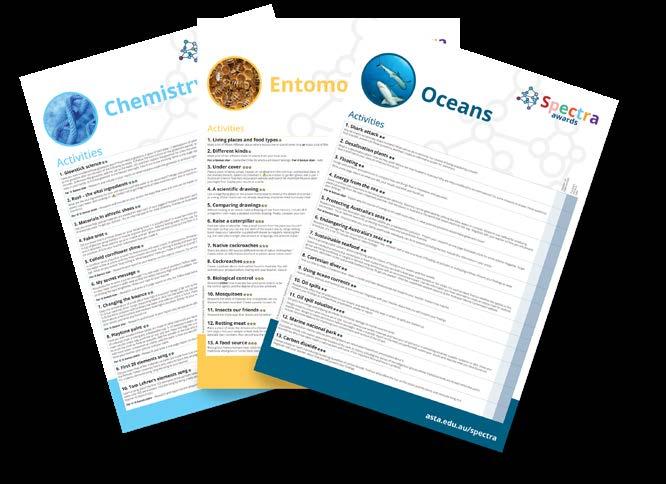
To support teachers in delivering engaging and educational experiences, ASTA has produced its annual teacher resource book, packed with information, classroom activities, experiments, diagrams, photographs and website links. The resource book, centred on the 2026 theme, is an invaluable tool for both primary and secondary science teachers, providing them with the resources needed to explore complex concepts in an accessible and interactive way. Download your FREE copy here.
National Science Week partners
National Science Week is a program of Inspiring Australia, a national strategy dedicated to engaging Australians with the sciences. In 2025 there were more than 2,550 events registered on the National Science Week website across every state and territory. Key partners include the Commonwealth Scientific and Industrial Research Organisation (CSIRO), the Australian Broadcasting Corporation (ABC) and the Australian Science Teachers Association (ASTA), all working collaboratively to make this week a memorable and impactful experience for students and educators alike.
Why should your school participate?
First ever global Space-education Mission with 12,000 girls from 108 countries
100% FREE access to a 120-hour satellite-building curriculum
Self-paced online learning portal students learn anytime, anywhere from ZOHO Platform
Curriculum co-created by 20 world-renowned scientists and space technologists from Alabama University, Argentina Space Agency, ISRO, Airbus, and endorsed by InSpace India
Designed by Space Kidz India the only organisation in the world to launch 27 student-led satellites
Ignites curiosity in Space, AI, Robotics, and STEM perfect for future-focused schools
This is a chance for girls in Australia to be part of this Historic All female led Lunar Space Mission.
This is a call for action to express your interest!
Open to ONLY girls in year 8/9 /10/11 with an interest in space, science, and technology. To enrol fill your expression of interesthttps://forms gle/stqBtyb1SKjXCdr5A
For any queries, visit our website : https://www shakthisat org/ Or reach out to Suk Narayanan at +61 434911834 ; sukruti narayanan@aimersfoundation org
Opens pathways to global internships, competitions, hackathons, and Space Innovation Festivals of AIMERS Foundation
Participating schools gain national and international recognition and become part of a global education movement. One student representing Australia will fly to India in August 2026 to co-build the physical satellite
No fees No cost at any stage No barriers
If your school is not active in STEM / Space tech initiatives, this is your chance to join NOW!
From the Editor John Glistak
Welcome to Issue 72.2 of Teaching Science.
The Australian Science Teachers Association has recently prepared a position paper entitled, Strengthening Australia’s Sovereign Science Capability Through Genuine Education Reform.
ASTA’s position paper argues that sovereign science capability is built upstream–in schools–through coherent, equitable, and fit-for-purpose education systems. Evidence shows that Australia’s competitive, ranking driven senior secondary model, centred on high stakes assessment and the Australian Tertiary Admission Rank (ATAR), structurally discourages student participation in mathematics and science, amplifies inequity, and undermines teacher professionalism. These dynamics have contributed to declining enrolments in critical disciplines (Australian Academy of Science 2025), widespread out of field teaching, and weakened confidence and interest among students, despite sustained STEM initiatives and policies.
To rebuild Australia’s sovereign science capability, ASTA’s paper calls for genuine education reform that re-centres education on learning rather than ranking and sorting. Recommendations include making Year 11 mathematics and science compulsory, removing bell curve driven assessment incentives such as the ATAR, and adopting competency-based assessment models that support all students to reach agreed standards. These reforms are presented not as isolated education initiatives, but as essential national capability-building infrastructure required to meet Australia’s strategic, economic, and societal challenges in the coming decades.
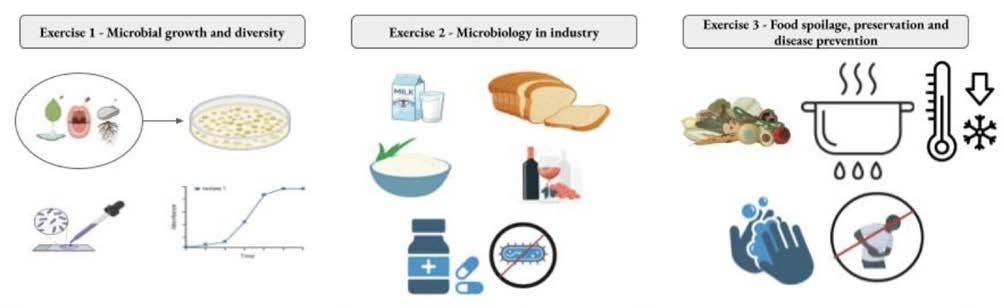
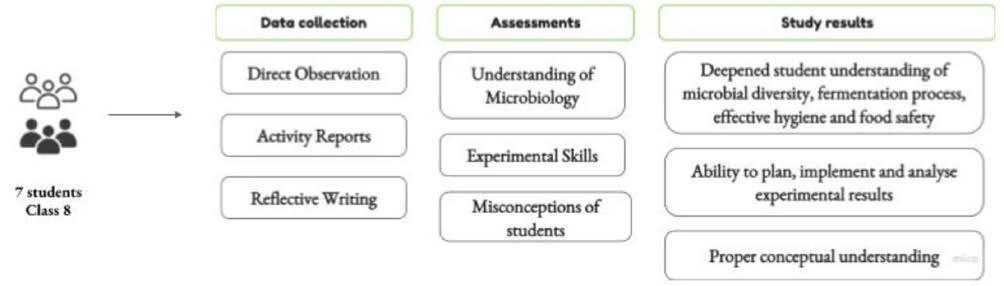
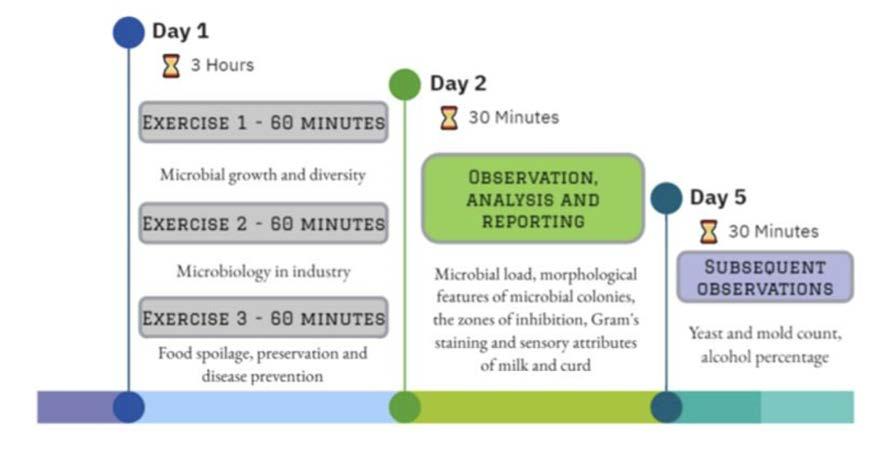
Microorganisms play essential roles in healthcare, food production, and environmental management, making their study crucial for understanding impacts on food safety, spoilage, and disease prevention. Shruthi Chakravarthy and Venkata Bayineni, in the second part of their paper, introduce further handson activities designed for high school students (aged 14-15) to explore microbial growth and diversity. Aimed at fostering awareness and critical thinking in microbiology, the activities engaged students in investigating microorganisms from various indoor and outdoor samples, observing colony morphology and studying their roles in fermentation, spoilage, and foodborne disease prevention.
In an era marked by misinformation and global challenges, understanding what influences students to value science is critical for fostering curiosity, critical thinking, and informed citizenship.
In their paper Katrina Elliott and Kathryn Paige present an artefact-based research method that can be readily adapted across school contexts to explore how students identify with and value science. Year 8 students identified by their science teachers as valuing science were invited to select and discuss personal artefacts representing why science matters in their lives. The artefacts served as prompts for dialogic discussions that revealed students’ connections to science as deeply personal and shaped by experiences, emotions, and social influences.
Their findings demonstrate that an artefact-based method offers a powerful lens for uncovering who and what influences students to value science and reflect their own science identity. It provides educators with insights into students’ cognitive, emotional, and behavioural engagement with science, especially among those with limited science capital.
In closing, have you considered submitting a paper to Teaching Science? If not, your potential contribution will be most welcome.
John
Inquiry Innovation Ingenuity
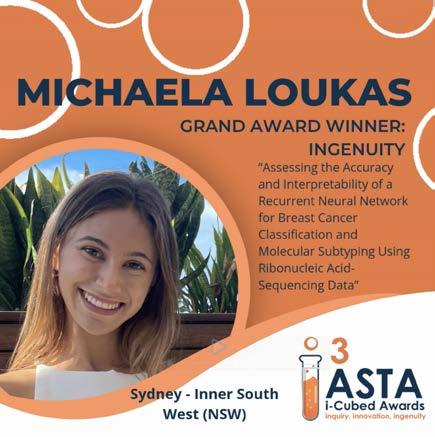
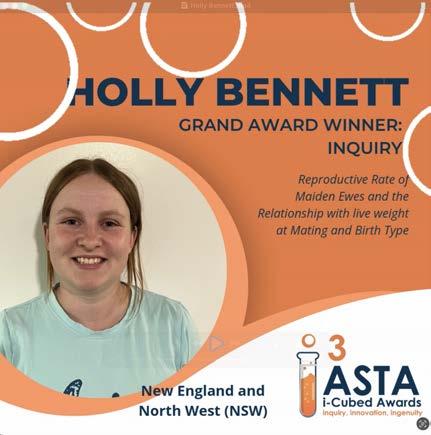
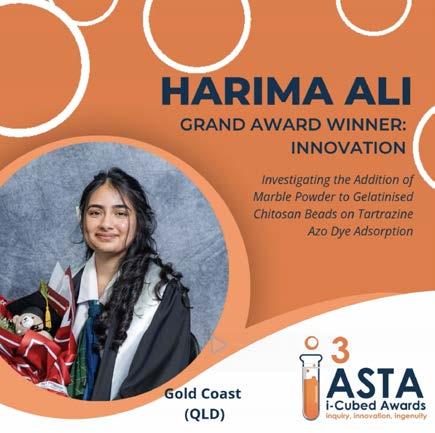
Meet the 2025/26 Grand Winners
Each year, over 12,000 of our youngest emerging scientists across the nation develop and carry out their own scientific investigations and engineering projects. These are entered and judged by their respective state and territory run science teacher association student competitions.
ASTA was proud to further judge 100 national finalists in our prestigious ASTA iCubed Australian Science and Engineering Fair. The students at this level are simply remarkable and performed very well when judged by a panel of STEM professional.
Congralutations to:
Michaela - Ingenuity Grand Winner
Holly - Inquiry Grand Winner
Harima - Innovation Grand Winner
The first step is to find out more about your local science competition: asta.edu.au/student-science-competitions
Science Safety Matters and we're here to help SCIENCE ASSIST
We care about the safety of school science educators, technicians and students. Science Assist provides comprehensive support for science educators, offering expert advice, best-practice guidelines, and hands-on resources on lab safety, management and design. As Australia’s go-to service, we’re here to help you create a safe and effective learning environment. Subscribe for exclusive access to up-to-date resources and personalised support.
Visit asta.edu.au/scienceassist to sign up for a rolling 12–month subscription or contact us on (02) 9346 9600 or email scienceassist@asta.edu.au.
Register your school or create an individual account today for only $150 (ex GST).
'The support and knowledge provided by Science Assist is a godsend to all of us in labland overwhelmed with safety issues.'
Science Assist subscriber
Expert advice: Get access to high-quality teaching and learning resources curated by experts. Get personalised support by asking our panel of experts a question.
Curriculum support: Assistance with implementing the Australian Curriculum: Science.
Lab safety: Reliable guidance on all aspects of laboratory safety, management and design.
Hands-on activities: A vast range of safe, practical activities for an inquiry-based approach to science education.
AUSTRALIAN SCIENCE TEACHERS ASSOCIATION (ASTA)
Strengthening Australia’s Sovereign Science Capability Through Genuine Education Reform
How did we get here in the first place? A position paper to address shortages in skilled science teachers and skilled STEM graduates using upstream solutions.
EXECUTIVE
Australia’s capacity to act as a sovereign, innovative nation requires a strong domestic science capability. This capability is foundational to national security, economic resilience, and long�term prosperity across priority areas including critical minerals, energy transition, health, defence, agriculture, and advanced manufacturing. While recent national strategies have emphasised STEM (science, technology, engineering, and maths) skills and research investment, persistent declines in senior secondary participation in fundamental sciences, coupled with acute teacher shortages, signal that current education settings are insufficient to meet Australia’s future needs.
This position paper argues that sovereign science capability is built upstream—in schools—through coherent, equitable, and fit-for-purpose education systems. Evidence shows that Australia’s competitive, ranking driven senior secondary model, centred on high stakes assessment and the Australian Tertiary Admission Rank (ATAR), structurally discourages student participation in mathematics and science, amplifies inequity, and undermines teacher professionalism. These dynamics have contributed to declining enrolments in critical disciplines (Australian Academy of Science 2025), widespread out of field teaching, and weakened confidence and interest among students, despite sustained STEM initiatives and policies.
International evidence from high�performing jurisdictions demonstrates that alternative system designs are possible. Systems that mandate
equity outcomes, and more reliable pipelines into scientific and technical fields—without sacrificing academic rigour.
To rebuild Australia’s sovereign science capability, this paper calls for genuine education reform that re-centres education on learning rather than ranking and sorting. Recommendations include making Year 11 mathematics and science compulsory, removing bell curve driven assessment incentives such as the ATAR, and adopting competency based assessment models that support all students to reach agreed standards. These reforms are presented not as isolated education initiatives, but as essential national capability -building infrastructure required to meet Australia’s strategic, economic, and societal challenges in the coming decades.
'Students are required to fail for the ATAR system to work'.
CONTEXT: WHY THIS MATTERS NOW
Sovereign science is fundamental to Australia’s capacity to make independent, informed decisions in a rapidly changing global environment. It underpins the seven priority areas of the Australian economy, which is supported by the National Reconstruction Fund. Without a strong domestic science capability, Australia risks diminished control over its future prosperity and reduced capacity to respond to emerging challenges and advances across health, energy, environment, agriculture, defence, and emerging technologies.
Sovereign science capability depends not only on research and innovation systems, but also on a strong pipeline of scientific knowledge and skills developed through education. Strengthening this pipeline is, therefore, a long‑term national interest that depends on the courses that students undertake and a robust teacher workforce that can support this.
In 2008, Education ministers endorsed the Melbourne Declaration on Educational Goals for Young Australians
(Ministerial Council on Education, Employment, Training and Youth Affairs 2008) affirming literacy, numeracy, and deep disciplinary knowledge as foundational to schooling. The declaration emphasised the development of 21st‑century skills required for active participation in a complex, knowledge‑based economy. It acknowledged that schooling must do more than transmit knowledge; it must also lay the groundwork for future scientific capability by supporting student engagement and achievement in STEM.
The national focus on STEM education intensified following the release of Science, Technology, Engineering and Mathematics: Australia’s Future (Office of the Chief Scientist 2014). The report highlighted persistent systemic challenges, including stalled or declining student performance against international benchmarks and falling participation in senior secondary science and advanced mathematics.
Delivering on Critical Minerals: Australia's Sputnik Moment
Sputnik will always be associated with being the original catalyst for transforming science education into a strategic national priority and for shaping modern STEM policy. It’s moments like Sputnik that expose perceived strategic and intellectual gaps in our STEM capabilities where science education is no longer about academic enrichment or achievement - but a matter of national survival.
Australia’s recent critical minerals agreements with Canada and Japan to secure and industrialise critical�mineral supply chains—from mine to market to support clean energy, infrastructure and construction, and advanced manufacturing—is Australia’s Sputnik moment. Already the Australian resources sector contributes more than 13% of the nation’s GDP and two-thirds of national exports, a system already under strain with skilled geoscientists narrowing. With this sector already in crisis, it is projected to need a six-fold increase of geoscientists by 2040 if Australia is to deliver on these bi-lateral agreements.
These agreements explicitly aim to expand end�to�end critical�minerals value chains from extraction to processing, refining and recycling, and not just mining. This requires far more domestic technical capability than Australia currently produces, particularly in applied science, engineering, and advanced manufacturing. The current implications is that STEM education (especially mathematics, chemistry, physics, materials science, and systems engineering) needs to shift from a 'skills agenda' to sovereign capability infrastructure that requires the same ‘Sputnik shock' that led to educational reforms. Current weak mathematics and science participation at senior secondary level represents a supply chain risk, not just an education concern.
In response, Australian Education ministers agreed in 2015 to the National STEM School Education Strategy 2016–2026 (Education Council 2015). The strategy states that reversing declining trends in STEM engagement and achievement would require sustained and coordinated effort across jurisdictions and over an extended timeframe. The strategy's focus was to improve student outcomes, strengthen teacher capability, and promote participation in STEM pathways.
While improvements in STEM education were necessary, recent evidence indicates that broader science capability challenges remain. The Australian Science, Australia’s Future (Australian Academy of Science 2025) report, identifies eight science disciplines in critical decline and calls for immediate action to safeguard Australia’s long‑term prosperity.
The report warns that, without intervention by 2035, Australia will be ill‑prepared to meet the economic, technological, and societal challenges anticipated by 2060. At the core of this risk are the fundamental sciences of physics, chemistry, mathematics, and the biological sciences that, since 2006, have experienced declining high school enrolments and performance as recorded by Programme for International Student Assessment scores, despite STEM education initiatives. Further exacerbating the forecasted skills shortages, Australia's Intergenerational Report (Australia Government 2023, p. 182) states that there is a continuous decline in the apparent school retention rate from Year 10 to Year 12, from 83% in 2017 down to 79% in 2022.
Recurring teacher shortages are now at crisis-level, which has led to out-of-field teaching with over a third of mathematics teachers and almost a quarter of science teachers teaching without any subject-specific training or qualifications in 2023.
Further, in 2023, only 25% of students with a Year 12 qualification studied mathematics to at least intermediate level, compared to 30% in 2019 and 35% in 2008. Some science sectors, such as geosciences and engineering, consider these critical declines in secondary enrolment as a crisis that is raising serious concerns about the long-term supply of qualified graduates. In the report on engineering skills by Engineers Australia (2022), Australia faces a shortfall of about 200,000 engineers by 2040, with over 50,000 engineering positions needing to be filled in the coming few years. Engineers Australia are calling for major changes to education and migration policy to meet the demand.
The 2023 Youth in STEM (Department of Industry, Science and Resources 2023) report, , details a survey of over 2,000 Years 11 and 12 students. Survey findings identified that student intention to study STEM in the future was relatively weak, with 3% of respondents indicating they would pursue Physics, 2% Earth and Environmental Sciences and 2% Agriculture. Of those surveyed, 19% cited that ATAR scores were a decisive factor influencing their subject selections (ranked 5th among top 10 factors), behind personal interests, skill level and influence by teachers. The survey found that respondents did not feel confident in attaining strong
results in mathematics citing reasons such as ‘I’m not good at it’ (49%), ‘it is too hard’ (45%), ‘I don’t understand it’ (36%) and ‘I have failed this subject before’ (28%). A majority (70%) cited that the greatest barrier to studying STEM was a lack of interest in the subjects despite 73% of respondents agreeing with the importance of STEM knowledge for jobs.
The Ambitious Australia Strategic Examination of Research and Development final report (Department of Industry, Science and Resources 2026) is as a once-in-a-multigenerational opportunity to address and supercharge Australia’s STEM research, development and innovation ecosystem. Although the report does not directly address STEM pipeline issues, it cites that education plays a critical role in achieving the report's ambitious goals within 10 years. It recognises that Australia’s education systems are not peripheral to this agenda. They are foundational to Australia’s capacity to independently develop, adapt, and deploy science and technology across priority sectors, including critical minerals, energy, health, defence, and advanced manufacturing.
The Heads of Agreement for the Better and Fairer Schools Agreement (Department of Education (2025) provides a funding agreement calling for closing the gap for students and to increase the number of students completing schooling. While we support its priorities and its call for fairness, the agreement's focus on developing the same fundamental skills using the same measures within the same school structures remain largely unchanged since the 2008 Melbourne Declaration (Ministerial Council on Education, Employment, Training and Youth Affairs 2008). Sahlberg (2004) also argued that Australia’s adoption of standardisation and competition-based education has been increasingly counter-productive in preparing students for meaningful lives for and beyond a knowledge economy.
If shortages of skilled and knowledgeable STEM teachers are to be reversed while raising the profile and uptake of STEM subjects by students to meet the range of sovereign science demands, Australia must undertake genuine school reform. This includes:
• systemic approaches to schooling to remove barriers to achieving competency
• changing perceptions and attitudes towards the existing competitive model of senior secondary studies that inherently discourages and dissuades students from taking a range of subjects
• building system-wide improvements in schooling that build citizenry and university readiness.
EVIDENCE BASED POSITION STATEMENTS
Fundamental Senior-level Sciences are Non‑Negotiable
Strong capability in mathematics, physics, chemistry, and the biological sciences is the bedrock of all applied STEM fields. Reversing long‑term declines in participation and achievement in these disciplines is a national imperative. Nations that require senior-level Maths and Science can be categorised on a four-tier scale, from demanding the highest levels of attainment in Year 12 (tier-one) to not requiring these subjects beyond Year 10 (tier-four). Despite the Sputnik movement of 1959 and the more recent adoption of the National STEM School Education Strategy (Education Council 2015), Australia's school systems have remained at the bottom tier alongside the US and UK that allow students to drop STEM subjects in Year 10, relying instead on post-secondary entry requirements to enforce them. Australia cannot depend on student interest to select STEM subjects as findings in the 2023 Youth in STEM (Department of Industry, Science and Resources 2023) report suggests that it is largely non-existent. Instead, Australia needs to implement the interventions that have worked for higher performing systems abroad.
Western nations that are often associated with being a high-performing system by international standards stand out for explicitly requiring both Mathematics and Science in the final years of secondary education as a standard requirement for graduation. For example, tier-two nations, such as Canada and Finland, require mathematics (non-calculus) and science subjects to Year 11 without compromising on student choice. British Columbia, a province of Canada, required Mathmatics and Science 11 first in 1996. British Columbia is currently ranked first globally in its mathematics performance among Anglophone education systems with over 50% of students electing to take Mathmatics 12. This system normalises mathematics and science for secondary students by providing a range of tiered levels of difficulty options for students to select in Year 11.
With mandated Year 11-level STEM subjects, it normalises Year 12-level subjects and female participation as a civic duty and for civic literacy, not just a STEM prerequisite for further studies. Canada’s continued high standing in literacy and numeracy shows that it is a system serious about equitable university and citizenry readiness. This directly benefits individuals, regardless of chosen major or area of interest, to have a higher standard of baseline knowledge in mathematics and science.
Models demonstrate that by requiring Math 11 and Science 11, it would likely produce a moderate but system‑wide improvement in university readiness at manageable costs, without sacrificing student subject choice.
The OECD Teacher Knowledge Survey (2026) demonstrates that students’ maths achievement is higher in countries with more knowledgeable teachers. A robust, well‑qualified, and sustainably supported STEM teacher workforce is central to building Australia’s science pipeline and needs to begin in secondary schools. Mandating Mathematics and Science at a secondary level will, over time, eliminate out‑of‑field teaching, strengthen disciplinary depth and competency, and repair the relationship with these subjects so that they are normalised prerequisites for improving student
Education Reform Must Remove the ATAR Disincentive
Australia’s secondary education system is being structurally undermined by an implicit but powerful mandate: high schools are expected to serve as filters for university admissions rather than student learning. This concept has shifted the core purpose of schooling from education to ranking, placing teachers in the role of 'sorting' students by ATAR rather than enabling all students to achieve meaningful success in a broad range of subjects that are not marred by high-stakes exams.
The ATAR provides each graduate with a rank based on an aggregate score from a small sample of student-selected courses. It is heavily criticised for causing extreme student stress, leading students to select less challenging courses and distorting systemic inequity where better access to resources and coaching results in higher ATARs compared to disadvantaged and regional areas. Australia is the only country that puts students under pressure for one number using a between-student competition (Sahlberg 2004).
At the centre of this problem is the bell-curve mentality that is not universally used by high-performing nations. In many senior secondary classrooms, assessments are designed to be difficult and complex to limit high achievement and to ensure a spread of results; a contradiction of a ‘close the gap’ mindset. The system requires under-performance and for students to fail to differentiate candidates. The premise behind ATAR results is that not all students are expected—or permitted—to succeed, and under-achievement is normalised as students are actively discouraged from enrolling in rigorous subjects to manage cohort scaling. The predictable outcomes are heightened by student anxiety, unsustainable pressure on teachers, and declining enrolments in critical learning areas.
for schools to make senior-level subjects far more difficult to maintain a spread of marks. This will put additional pressure on teachers who are already experiencing situations where the content in the courses is outpacing their current skills and knowledge. This will
A Teacher's Tale: Suppression of High Performance
Attitudes towards the bell curve is a systemic issue: when a 'low level' Year 10 class, through differentiated, targeted support and coaching, surpassed the highest-ranked class, the surprising results were met with concern, not celebration. Teachers are being told to cease providing additional support and resources, and effectively told to stop being a 'high performing teacher' to avoid disrupting the 'predicted scores' and the narrowing bell curve. As a result of this ‘anomaly’, proceeding assessments were designed to be far more challenging, where a 50% failure rate was the desired target to normalise the bell curve. Teachers are openly discouraging students to enrol in certain courses that ‘don’t score well’ suggesting that exams and ATAR ranks are being prioritised over national interests. This clearly shows that the system has abandoned its ultimate purpose.
exacerbate the current teacher shortage crisis. An education system that depends on failure to differentiate students is neither equitable nor defensible. Schools exist to educate children, not to generate rankings for universities. Current data suggests that approximately 25–35% of school leavers admitted to a Bachelor of Science do so without using an ATAR score. In 2026,
Across Australia, many jurisdictions rely on high-stakes standardised state-wide subject exams and assessment tasks to develop a student's rank. In comparison, high-performing systems such as in British Columbia, underwent assessment and graduation reforms in 2009. A government‑commissioned review (British Columbia Ministry of Education, 2013: 32–140) and academic research concluded that these high‑stakes exams were dictating pedagogy, encouraging memorisation and coverage at the expense of deeper learning and skills development. Further, these over-weighted single assessment events disproportionately consumed large amounts of classroom time for test preparation.
The report emphasised that test performance is not the same as learning and that high-stakes assessments to produce a single score exacerbated anxiety without reliably measuring broader learning. Universities in British Columbia began de‑emphasising or removing provincial exam results from admissions decisions as early as 2008. Internal admissions analysis showed that individual course grades alone predicted first‑year university success almost as well with the provincial exam scores.
British Columbia began to eliminate most subject‑based high‑stakes exams (worth 40% of the final grade) between 2011 and 2016 as part of a deliberate shift in how student learning is assessed. The decision was driven by pedagogical, equity, and system‑design reasons, not by a claim that assessment was unnecessary. Instead, British Columbia replaced subject exams with literacy and numeracy graduation assessments aligned to a redesigned curriculum. In 2025, the graduation rate in British Columbia was at its highest level, with 89% of students completing Year 12 within six years. All students were, at a minimum, at standard (not simply ranked where failure is acceptable) and had completed a Year 11 Maths and Science. In comparison, around 76% of students in NSW completed Year 12 with no guarantee that they were at standard and had taken a STEM-related subject beyond Year 10.
Until we confront the misalignment of attitudes towards high-stakes assessments combined with bell curve grading and shift focus to student learning and closing the gap, reform efforts will continue to treat symptoms while the core structural issue remains unresolved.
Adopt Assessment Practices, Attitudes and School Structures that Close the Gap
While Australia has remained focused on standardisation and competition-based education since the mid-90s, other nations, namely Canada and Finland, engaged in a model of schooling driven by formative assessment that focused on building trust, teacher agency, and active continuous learning and improvement. They now have the highest levels of literacy and numeracy, high Year 12 graduation rates, low levels of teacher attrition, and a robust STEM pipeline with the highest number of university graduates per capita.
Each nation, adopting a ‘growth mindset’ model of education (Dweck 2004) moved away from the reliance on high-stakes subject-specific summative and standardised assessments to adopting ongoing formative assessment practices that focused on every student reaching a standard. Formative assessment drives a risk-free competency-based education that ensures all students receive a strong educational foundation, with individual strengths and weaknesses monitored and targeted support is provided, as necessary, to close achievement gaps.
Teachers guide and coach students to achieve the prescribed learning outcomes from the curriculum without anxiety, pressure, high-stakes exams, or sorting of students using a ranking system. The expectation is that all students will reach a basic level of competency. Evaluation of students is done to provide continuous feedback with strong trust in teachers’ professional judgements and eliminates ‘teaching to the test’. The system prioritises closing the gap for all students who are given every opportunity to achieve.
Difficult student behaviours are virtually non-existent in school systems that allow students to thrive in a non-competitive environment (Masters 2026).
Another fundamental principle is the focus on individual development rather than
A case study of school reform in District #36
British Columbia, Canada
comparison between students, as is the case with ATAR rankings. This reduces the competitive pressure and encourages students to focus on personal improvement and, in the case, of Canada, to introduce ‘IP’ grades where students are still ‘In Progress’. This gives the student the opportunity to strengthen their knowledge and to make up any persistent gaps. Because the focus is on reaching standards, student grades should, in theory not vary when gaps are closed. This change in attitude where learning takes priority over final grades will shift Australia’s education system toward developing citizenry and developing university preparedness for agility across disciplines.
The paradigm shift around the purpose of assessment and grading came about in 2004 with the release of two critical papers from Black & Wiliam and Dweck. Their research guided district-wide school reform that was implemented almost immediately, while letting go of norms, to reflect best-practices in assessment. With learning outcomes and grades now being made transparent, with students knowing exactly what they had to achieve to reach the highest level of competency, students became the drivers of the learning, highly motivated to keep improving. Teachers and students co-constructed multiple opportunities to demonstrate how their learning was improving and progressing. Provincial exams were dropped and regular formative assessments were adopted.
While retaking tests and repeating courses several times became the norm, the system developed multiple modes for students to undertake courses. Secondary schools introduced the semester system, where a course could be repeated up to 4 times in the final two-years; publicly funded night school and summer school provided alternative options for additional schooling as well as the introduction of virtual schooling in 2007. In 2010, the Surrey School District (#36) a very multicultural and diverse district, with a school system comparable in size to Canberra, reported that 3,000 of their 60,000 students self-selected to retake a Year 8-12 subject through Surrey Connect, with mathematics being reported as their most popular virtual subject. Despite Maths and Science 11 being compulsory subjects, the district reported a 97% graduation rate in 2011 and that over 70% of Year 11 students in several of the largest schools elected to take 3 or more science electives in a risk-free environment where closing the gap was truly occurring. The core lesson at the time was that it is the education system ethos that matters most.
New models and modes of learning must be built from an understanding that every student is on a long-term path of progress, that students of the same age and grade can be at very different points on this path, and that every student is capable of excellent further progress with well-targeted teaching and learning opportunities. In The Children We Leave Behind, (Masters 2026), the paradigm and structural shifts to schooling that must accompany assessment reforms and the sole reliance on differentiated lessons are explored. The author draws attention to ways in which the present machinery of schooling exacerbates inequality to highlight the mismatch between assumptions of schooling and the realities of student learning, and to propose an alternative way of thinking about learning at school. The ultimate objective is to reduce the number of students being left behind and labelled as poor learners.
There were two gradual but necessary changes implemented in British Columbia as early as 2002 that supported closing the gap mandates:
1. Introducing semester schooling that supported students to focus on half of their subjects at one time, which enabled mastery across a narrow range of subjects but also allowing for students to repeat the subject in a supported environment within the same calendar year if remediation was required. Generally, high school students complete eight subjects each year, but only four at one time. This relies on a reduced number of specialist teachers, specialised resources, equipment and spaces at one time. As subjects were only five months in length, students and teachers were less fatigued and anxious about the number of assessments, and formed positive relationships that focused on student wellbeing and achievement.
2. Providing alternative tax-funded modes of completing or retaking individual subjects that are flexible and student-centred such as summer school, night school, and learning online. With a full spectrum of options available to students, it created a culture of learning and high expectations that has had intergenerational societal benefits that has been spared shortages of skilled graduates.
Recommendations and Calls to Action
1 2 3
RECOMMENDATION 1:
Make Year 11 Maths and Year 11 Science compulsory subjects; a move that would align Australia with other Western nations.
RECOMMENDATION 2:
Remove the ATAR rank or any bell-curve driven assessment that promotes a competitive and exclusionary education system that dissuades students from selecting a broad range of subjects.
RECOMMENDATION 3:
Adopt a competency approach to education that focuses on standards using formative assessment practices, semester timetables, and other modes of schooling that are designed to close the achievement gap for all students.
Comparative Summary of Implications
Table 1 is a comparative summary of the implications of Australia's current system and how it compares to what was achieved in British Columbia, Canada's highest performing province across many measures.
Table 1: Comparative summary between Australia's system compared to British Columbia.
AUSTRALIA
BRITISH COLUMBIA
THE ROLE OF TEACHERS
◦ Task difficulty and marking rigour are shaped by scaling, moderation, and cohort distribution concerns.
◦ Teachers are placed (often silently) in the role o ranking agents
◦ Even well‑intentioned teachers are pushed into bell curve compliance.
Effect:
◦ Pressure to discourage enrolment to protect distributions.
◦ Pedagogical distortion ('harder than necessary').
◦ Moral injury as teachers balance care for students with system demands .
◦ Assessment supports learning and evidence‑gathering over time.
◦ Teachers act primarily as educators and professional assessors
◦ No expectation that teachers 'engineer' the spread of results.
Effect:
◦ Greater professional trust.
◦ More curriculum flexibility.
◦ Less incentive to make tasks artificially difficult.
THE IMPACT ON STUDENTS
◦ Even high‑achieving students experience anxiety due to relative positioning.
◦ The system requires underperformance to differentiate candidates
◦ Students rationally avoid difficult subjects that threaten aggregate scores.
◦ Declining enrolments in Maths, Science, and languages are structural outcomes, not motivational failures
◦ Success is non zero sum: many students can meet standards simultaneously as individual performance is independent of one another
◦ Students are not required to fail for the system to work.
◦ Lower systemic anxiety tied to assessment outcomes.
◦ Participation in challenging subjects is not penalised by ranking mechanics
THE IMPACT ON UNIVERSITIES
◦ Universities outsource large parts of selection to the school system.
◦ ATAR acts as a single, portable sorting mechanism.
◦ Schools carry the political and emotional burden of ranking children.
Universities accept:
• subject grades
• subject specific prerequisites
• sometimes additional institution‑specific criteria
◦ No single number determines a student’s worth.
◦ Responsibility for selection lies with universities, not schools.
AUSTRALIA
BRITISH COLUMBIA
EQUITY IMPLICATIONS
ATAR magnifies advantage through:
• school scaling
• cohort effects
• subject availability.
◦ Students without strategic guidance are structurally disadvantaged.
◦ Equity policy tries to compensate for a problem the system itself creates.
What Australia gains:
Emphasis on minimum guaranteed competence or achieving standards
◦ Less reliance on:
• school advantage
• subject gaming
• parental system knowledge.
◦ Equity issues still exis, but are less amplified by assessment structure.
SYSTEM LEVEL TRADE OFFS
◦ Highly efficient, centralised university admissions
◦ Clear differentiation among large cohorts
What Australia gives up:
◦ Broad student engagement.
◦ Trust in assessment.
◦ Teacher morale.
◦ Participation in academically demanding subjects.
◦ Struggle to mandate senior secondary subjects such as Maths or Science.
◦ Alignment between national skill needs and schooling incentives.
What British Columbia gains:
◦ Educational coherence.
◦ Reduced anxiety.
◦ Stronger alignment between curriculum and assessment.
◦ Schools focused on learning, not sorting.
◦ British Columbia can mandate Math 11 without widespread backlash.
What British Columbia gives up:
◦ A single, simple ranking number that it has decided is not its core function.
◦ Some administrative efficiency for universities.
Australian Academy of Science. (2024). Australian Science: Australia’s Future – Science 2035. https://science.org.au/sites/default/files/Publication/document/australian-science-australias-future-science-2035.pdf
Australian Government (2023) Intergenerational Report 2023: Australia’s future to 2063 https://treasury.gov.au/sites/default/files/2023-08/p2023-435150.pdf
British Columbia, Ministry of Education (2013). Transforming BC’s Graduation Requirements: Reports from Fall 2012 Consultation Sessions. Government of British Columbia: 32-140. https://www2.gov.bc.ca/assets/gov/education/kindergarten-to-grade-12/support/graduation_reports.pdf
Department of Education. (n.d.). Heads of Agreement (Better and Fairer Schools Agreement: Full and Fair Funding 2025–2034). https://www.education.gov.au/recurrent-funding-schools/resources/heads-agreement-better-and-fairer-schools-agreement-full-andfair-funding-20252034
Department of Education. (n.d.). National STEM School Education Strategy https://www.education.gov.au/australian-curriculum/resources/national-stem-school-education-strategy
Department of Education. (2022). Next Steps: Report of the Quality Initial Teacher Education Review. https://www.education.gov.au/download/13191/next-steps-report-quality-initial-teacher-education-review/26524/next-steps-report-q uality-initial-teacher-education-review/pdf
Department of Industry, Science and Resources. (n.d.). STEM equity monitor: Primary and secondary school data. https://www.industry.gov.au/publications/stem-equity-monitor/primary-and-secondary-school-data
Department of Industry, Science and Resources. (n.d.). Ambitious Australia: Strategic Examination of Research and Development final report.
Department of Industry, Science and Resources. (2023). 2023 Youth in STEM Report. https://www.industry.gov.au/sites/default/files/2024-07/youth_in_stem_2023_report_final.pdf
Department of Industry, Science and Resources. (2025). STEM Influencer Report: Teacher & Career Advisors. https://www.industry.gov.au/sites/default/files/2025-08/stem-influencer-report-teacher-and-career-advisor-survey-2024-25.pdf
Dweck, C. S. (2006). Mindset: The new psychology of success. Random House.
Education Council. (2015). National STEM School Education Strategy 2016–2026. https://www.education.gov.au/australian-curriculum/support-science-technology-engineering-and-mathematics-stem/national-stemschool-education-strategy-2016-2026
Engineers Australia. (2022). Engineering skills – supply and demand. Discussion paper (March 2022). https://www.engineersaustralia.org.au/sites/default/files/2022-07/engineers-australia-skills-discussion-paper-march-2022.pdf
Masters, G. (2026). The children we leave behind: How school could be done differently. Routledge. https://doi.org/10.4324/9781003757122
Ministerial Council on Education, Employment, Training and Youth Affairs. (2008). Melbourne Declaration on Educational Goals for Young Australians. http://www.mceetya.edu.au/verve/_resources/National_Declaration_on_the_Educational_Goals_for_Young_Australians.pdf
OECD (2026), Results from the Teacher Knowledge Survey: What Teachers Know About General Pedagogy, TALIS, OECD. https://www.oecd.org/content/dam/oecd/en/publications/reports/2026/04/results-from-the-teacher-knowledge-survey_eebdcc11/55 42e88a-en.pdf
Office of the Chief Scientist. (2014). Science, Technology, Engineering and Mathematics: Australia’s Future. Australian Government.
Organisation for Economic Co-operation and Development. (2019). Results from the teacher knowledge survey https://www.oecd.org/en/publications/results-from-the-teacher-knowledge-survey_5542e88a-en.html
Sahlberg, P. (2004). Teaching and Globalization. Managing Global Transitions, 2(1):65–83. https://ideas.repec.org/a/mgt/youmgt/v2y2004i1p65-83.html
Science in their hands: What do students’ artefacts tell us about their values and science identity in the Anthropocene?
Katrina Elliott and Kathryn Paige
Abstract
In an era marked by misinformation and global challenges, understanding what influences students to value science is critical for fostering curiosity, critical thinking, and informed citizenship.
This paper presents an artefact-based research method that can be readily adapted across school contexts to explore how students identify with and value science. Year 8 students identified by their science teachers as valuing science were invited to select and discuss personal artefacts representing why science matters in their lives. The artefacts served as prompts for dialogic discussions that revealed students’ connections to science as deeply personal and shaped by experiences, emotions, and social influences.
The findings demonstrate that an artefact-based method offers a powerful lens for uncovering who and what influences students to value science and reflect their own science identity. It provides educators with insights into students’ cognitive, emotional, and behavioural engagement with science, especially among those with limited science capital.
Introduction
In the 2019 Trends in International Mathematics and Science Study (TIMSS) report (Mullis et al., 2020), only 28% of Australian Year 8 students strongly valued science, compared with 42% in Singapore and 36% internationally. These differences matter, students who value science achieve significantly higher results in science assessments (Berger et al., 2020). Yet many Australian students, particularly girls and those from disadvantaged backgrounds, report lower confidence, interest, and achievement in science (Youth Insight STEM Equity Monitor, 2023–24). Such disparities highlight the persistent challenges of engagement, identity, and equity in science education.
Understanding why some students’ value science while others disengage is crucial for improving participation and achievement. While much research explores why students lose interest in science, this study reverses the lens and focuses instead on students who do value science and examines who and what influences their attitudes, as well as insights into their science identity. By identifying the factors that sustain positive engagement, educators can design strategies that build on curiosity, confidence, and relevance across diverse contexts.
An artefact-based method was used to capture qualitative evidence on how students identify with and perceive science as meaningful in their lives. Students selected personal items representing their relationship with science and discussed their significance in semi-structured interviews. This approach offered insights into how identity, gender, and social context shape students’ valuing of science.
This paper focuses on the artefact-based method as an approach for uncovering how students construct meaning around science. It highlights how valuing science is both a personal and sociocultural process, shaped by identity, opportunity, and educational context.
Links to literature
Understanding why students value science and how these values develop is central to improving engagement and achievement. Eccles and Wigfield’s (2020) expectancy-value framework provides a foundational lens for examining students’ motivation and the importance they attach to learning science. This framework, which underpins the TIMSS 2019 assessment (Mullis et al., 2020), identifies four interrelated dimensions of value: intrinsic, attainment, utility, and cost. It has been widely applied to analyse student attitudes towards science learning. Research shows that these dimensions interact with students’ selfconcept, confidence, and social influences (DeWitt & Archer, 2015; Mujtaba et al.,2018; Sheldrake, 2016).
Middle school represents a pivotal period when many students form enduring attitudes toward science. Those who do not identify as “science people' rarely pursue science beyond the compulsory years (Archer, 2020; Mujtaba & Reiss, 2014). Science learning thus extends beyond content mastery to identity construction, deciding who one is and might become through engagement with science (Wenger, 2000).
Australian and international studies indicate that students’ enjoyment and interest in science decline across the transition to secondary school (Lyons & Quinn, 2014; Mullis et al., 2020). To counter this, learning experiences must connect science with students’ identities, values, and everyday lives (Archer et al., 2020; Paige et al., 2019b).
Within the Australian Curriculum, the Science as a Human Endeavour (SHE) strand provides a conceptual bridge between epistemic values (truthseeking, evidence, curiosity) and non-epistemic values (ethical, social, and cultural dimensions of science) (Corrigan & Smith, 2015). Many teachers, however, continue to treat science as valueneutral and focus primarily on content and inquiry skills (Elliott & Paige, 2010; Paige & Hardy, 2019). Constructivist pedagogies that connect learning to students lived experiences more effectively foster an appreciation of science as both a human and intellectual pursuit.
The artefact-based method used in this study builds on this premise. By inviting students to discuss objects that represent their relationship with science, educators can access both epistemic and non-epistemic dimensions of valuing. This approach captures how students’ beliefs, emotions, and social contexts shape their engagement with science (Pahl & Rowsell, 2010; Paige et al., 2019b).
The Anthropocene is characterised by misinformation, contested values, and divergent worldviews. Students with stronger science identities, and who value evidence are more prepared to critically evaluate diverse knowledge systems, assess credibility, and navigate tensions between cultural, economic, and ecological perspectives. This critical capacity is central to taking informed, responsible action. (White et al., 2023)
Students who value science are essential for fostering scientific literacy and citizenship in the Anthropocene, an era defined by the significant impact humans have had on Earth's systems. It suggests that human activity has become a dominant force shaping the planet's geology, ecosystems, and climate, on a scale comparable to natural processes (Steffen et al., 2011).
Adolescents must not only understand scientific concepts but also apply them critically and ethically to global challenges. Science education needs to support students to have a scientific identity and value science; that is to have the attitudes and dispositions towards science that will sustain their engagement, interest and motivation to take action. Science education should therefore cultivate curiosity, scepticism, and evidencebased reasoning (Moore et al., 2020; Osborne et al., 2003). By positioning science as a meaningful human endeavour, educators can help students connect knowledge with agency, empowering them to shape a sustainable and equitable future.
Student identity and values toward science are crucial because they shape whether young people see themselves as capable of engaging with the complex socioecological challenges of
the Anthropocene. These elements form the motivational and epistemic basis of student agency, which the OECD considers essential for navigating this era. (Paige et al. 2019; White et al., 2023)
According to the OECD Agency in the Anthropocene framework, agency depends on selfefficacy, collective efficacy, outcome expectancy, and hope. These dispositions do not stem from scientific knowledge alone; they develop when young people view themselves as individuals who can act, both independently and with others. Without a connection to science or scientific reasoning, students are less likely to believe their actions matter or that evidence-based solutions are achievable. (White et al., 2023)
Overall, the OECD argues that knowledge is necessary but insufficient. Young people must see themselves as capable, motivated, and responsible actors. Identity (who I am) and values (what I prioritise) are what transform scientific understanding into meaningful agency. (White et al., 2023)
Methodology
This investigation employed a qualitative research design informed by an interpretivist epistemological stance. Interpretivism was selected as the overarching methodological orientation because it aligned closely with the study’s aim: to deepen understanding of how adolescents navigate and construct meanings around identity and valuing science within the context of the Anthropocene. As calls for richer, contextually grounded qualitative inquiry in educational settings continue to grow (Creswell, 2013), an interpretivist approach offered the most appropriate means to explore the socially situated processes that shape Year 8 students’ perceptions of science.
Qualitative methodology provides opportunities to investigate phenomena within their natural settings, privileging depth over breadth and emphasising the unfolding of participants lived experiences. Fraenkel and Wallen (2000) describe qualitative inquiry as a form of naturalistic
research in which researchers enter the realworld environments of participants to observe and interpret events as they occur naturally.
Free Teacher Portal includes:
Free Teacher Portal includes:
• Getting started materials
• Getting started materials
• Lesson library
• Lesson library
• Teacher support
• Teacher support
As Esterberg (2002) argues, qualitative inquiry is particularly powerful for uncovering the complexities of social behaviour and the interpretive frameworks individuals bring to their interactions. This study therefore sought to privilege participants’ subjective experiences and interpretations as legitimate sources of knowledge about the case under investigation.
Lesson Library includes:
Lesson Library includes:
• Student-facing lesson presentations
• Student-facing lesson presentations
• Teacher facilitation notes
• Teacher facilitation notes
• Australian curriculum alignment, st21 century skills, and pre-requisite knowledge info.
• Australian curriculum alignment, st21 century skills, and pre-requisite knowledge info.
Education Science
Each interview began with students discussing their chosen artefact and its significance. Students then responded to a series of open-ended questions to deepen the discussion and designed to explore their perspectives on science.
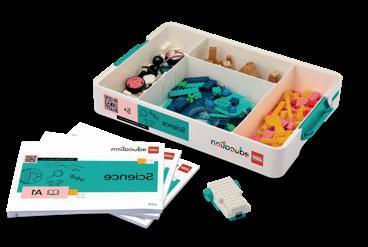
Age 5+
Age 5+
• 40 curriculum-aligned lessons with building instructions
• 40 curriculum-aligned lessons with building instructions
• Sturdy stackable box (1 kit: 4 students)
• Sturdy stackable box (1 kit: 4 students)
• 278 ®LEGO bricks + 1 double motor per kit
• 278 ®LEGO bricks + 1 double motor per kit
The questions included:
1) What is your artefact?
• 1 USB charging cable
• 1 USB charging cable
2) How does this artefact connect with you to value science?
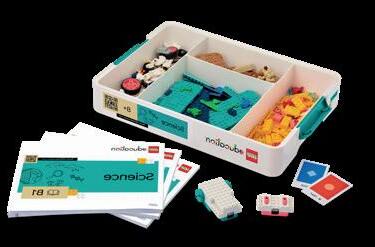
Age 8+
Age 8+
Accordingly, data was gathered from purposefully selected individuals and contexts relevant to the study. The aim was to capture and interpret the personally constructed meanings of participants as these emerged in authentic settings. Through iterative, interpretive engagement with the data, the study sought to construct a rich, situated understanding of how valuing science is shaped, supported, or constrained within the complex social ecology of schooling in the Anthropocene.
Method
Participants
Professional learning & implementation support upon request
Professional learning & implementation support upon request
3) Why did you choose this artefact?
• 40 curriculum-aligned lessons with building instructions
• 40 curriculum-aligned lessons with building instructions
4) What would you want this artefact to say to me if it could speak?
• Sturdy stackable box (1 kit: 4 students)
• Sturdy stackable box (1 kit: 4 students)
• 336 ®LEGO bricks + 1 double motor + 1 controller + 2 connection cards per kit
• 336 ®LEGO bricks + 1 double motor + 1 controller + 2 connection cards per kit
These questions were designed to elicit both cognitive and affective dimensions of students' attitudes, beliefs and values towards science. These questions formed the basis for reporting and exploring the personal meanings embedded in their artefact choices. All interviews were audiorecorded (with permission), transcribed, and accompanied by photographs of the artefacts for further analysis.
• 1 USB charging cable
• 1 USB charging cable
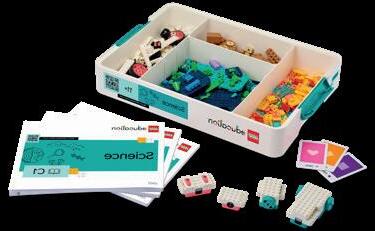
Age 11+
Age 11+
• 40 curriculum-aligned lessons with building instructions
• 40 curriculum-aligned lessons with building instructions
• Sturdy stackable box (1 kit: 4 students)
• Sturdy stackable box (1 kit: 4 students)
• 424 ®LEGO bricks + 1 double motor + 1 controller + 1 single motor + 1 colour sensor + 3 connection cards per kit
Data Analysis
• 424 ®LEGO bricks + 1 double motor + 1 controller + 1 single motor + 1 colour sensor + 3 connection cards per kit
• 1 USB charging cable
• 1 USB charging cable
Analysis of the data involved three sequential themes aligned with the study’s research questions.
As a future-focused team of teachers and innovators, at ®LEGO Education, we’ve built engaging learning experiences for 45 years. But what we bring to formal education is more than just fun – we’re serious about curriculum-aligned learning outcomes.
This study was conducted across three high SES secondary schools in South Australia. Six highly proficient Year 8 science teachers participated, with two teachers selected from each school. Each teacher nominated three students who they believed highly valued science, resulting in a total of 18 students aged 13 years (six per school). The group included eight female and ten male students.
As a future-focused team of teachers and innovators, at ®LEGO Education, we’ve built engaging learning experiences for 45 years. But what we bring to formal education is more than just fun – we’re serious about curriculum-aligned learning outcomes.
Research design - Data Collection
We work alongside teachers across the globe to integrate curriculum-aligned science and STEAM programmes for primary through to secondary school.
We work alongside teachers across the globe to integrate curriculum-aligned science and STEAM programmes for primary through to secondary school.
1. Artefacts as a window into students’ value of science: The 18 artefacts were first grouped into two main categories based on type which enabled identification of patterns in how students chose to represent their valuing of science.
Each student volunteered to participate in the study, and parental consent was obtained prior to their involvement. Students individually took part in a semi-structured interview lasting approximately 30 to 45 minutes. After each science teacher identified three students who were willing to volunteer, the teachers were briefed on how to guide their students in selecting an artefact to bring to the interview they believed represented why they value science.
We want to help create a world in which all students have access to engaging hands-on experiences during their classes at school each day.
We want to help create a world in which all students have access to engaging hands-on experiences during their classes at school each day.
Read about our solution at LEGOeducation.com
Read about our solution at LEGOeducation.com
2. Thematic analysis of student conversations: An inductive thematic approach (Strauss & Corbin, 1998) was applied to the interview transcripts to identify key themes in students’ explanations of their artefacts.
3. Gender Analysis and divergent coding: A divergent coding method (Kruger et al., 2005) was used to uncover additional categories, including patterns linked to gender differences in artefact selection.
Findings
The findings are structured around the illustrative examples of student responses to the 4 questions asked in the student interviews:
Question 1: What is your artefact?
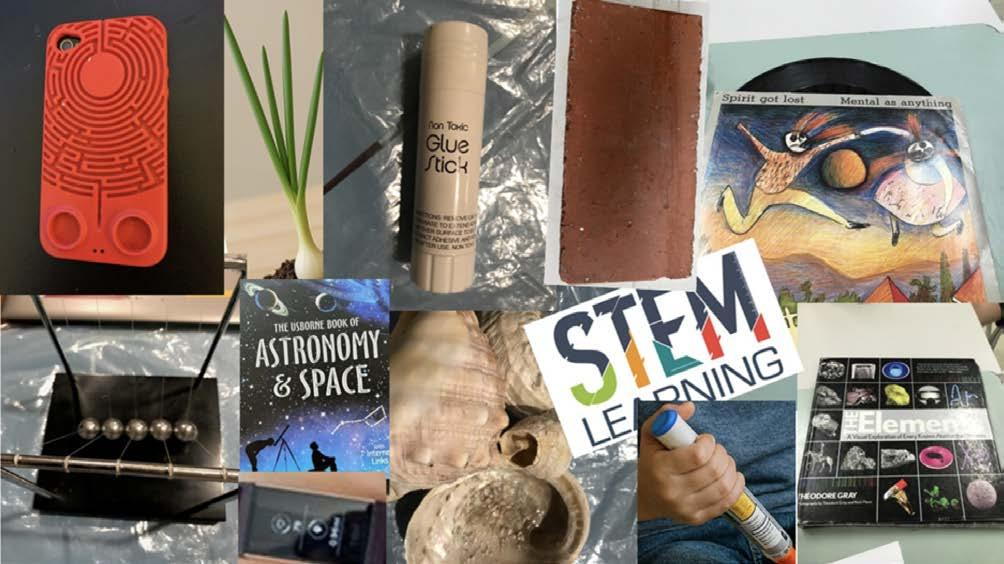
Students brought a vriety of artefacts (see photo), highlighting their diverse personal connections to value science.
Two overarching artefact categories emerged:
1. Artefacts connected to nature (e.g., rocks, shells, plants)
2. Artefacts that were material with practical applications (e.g. books, certificate, physical objects like Newton’s cradle, glue stick, vinyl record, brick)
Table 1 below categorises the artefacts into two main categories, highlighting notable gender differences. Female students are represented in green and male students are represented in blue.
Artefacts connected to nature
Sapling onion
A rock and seashells
Wooden bookshelf
Seashells
Iron oxide
Female Male
When categorised in this way an interesting insight arose in that, only female students brought in artefacts connected to nature.
Material artefacts with practical applications
Certificate from STEM summit A glue stick
365 things to know about science
Epi-pen
Vinyl record
Brick
iPhone
Iron oxide
Astronomy book
Book on elements.
Fitbit
Question 2: How does this artefact connect with your value of science?
The second question delved into students’ personal interpretations of their artefact choices. Students expressed that science is personally meaningful to them. They demonstrated an emotional and cognitive appreciation for science, showing about how things work, what they are made of, and why they behave the way they do.
Illustrative student responses include.
Male student: brought in a vinyl record as his artefact. He explained, science is behind where the music comes from. For example, the grooves in the vinyl. The old record players have a needle called a stylus that is placed gently on the vinyl record resting at the beginning of one of the grooves. As the vinyl record rotates the stylus moves through the wavy three-dimensional grooves. As the stylus vibrates in the groove, its microscopic bounces are transmitted down the bar. The stylus fits onto the end of an electromagnetic device that presses against a metal bar each time it moves, making an electrical signal. These signals are fed out to the amplifier to make the sounds you hear through your speakers or headphones.
Female student: brought in shells as her artefact. She said, 'I have collected shells from all over the world. I have moved 20 times. I want to know how they are formed and why they have the patterns they do.'
Male student: brought in a brick as his artefact. He explained how everything uses science, 'Bricks are used to build buildings and the fence going around our school.' He said 'Science is prominent in my beliefs, and how I think about things, but it doesn’t influence big decisions that occur at home, like celebrating birthdays, etc. Learning science helps you to understand, it is ok to be constantly changing your opinion and keeping ideas open and fluid.' He also said, 'I do not think Australia is putting enough money into space exploration compared to NASA in the US. I don’t think the politicians are doing
enough to stop climate change and people in society are not doing anything either.' He likes to watch videos like YouTube science channels, e.g. VSauce because he makes his own production. He said, 'To find out about the science I am interested in I read science books, I listen to one podcast each week with my dad, for example, Dr. Karl. I learn a lot of science from my parents; my dad is really passionate about science.'
In conversation, students conveyed different reasons for the artefact they selected to demonstrate why they value science. For example: personal reasons such as listening to music and why it is possible, cognitive reasons such as being curious why shells have different patterns, and ethical and social reasons such as being concerned about societies response to climate change.
Question 3: Why did you choose this artefact?
This question demonstrated students scientific thinking through their conversations.
Illustrative student responses include.
Male student: Brought in an EpiPen as his artefact. He said, 'Science is important for my life because it allows us to develop further as a civilisation and how to solve allergies'. He chose an epi-pen as his artefact because it is relevant and necessary for his life. He understands how science has advanced medicine which means he can participate and experience many things in life without worrying about having a reaction to an allergy.
Female student: Brought in iron oxide in a plastic tube from a chemistry set as her artefact. 'The reason I have brought in these chemicals is because chemistry is a big part of my life. My dad bought me my first chemistry set when I was about 9 years old'. She pointed out that everything in the world is made of chemicals, including us. She said: 'I like to learn what everything is made of and what happens when you mix chemicals together. I am interested in new ideas about chemicals
and technology, like what goes into our bodies and how we can help save lives by knowing this information.'
Male student: Brought in a glue stick as his artefact because he is curious and wants to know how they make the glue, prevent it from drying out while being sticky in the bottle. He said, 'I find science interesting and value it, just like glue there are many different substances. Everything I see I am trying to think of what is it made of? How does it work? I am curious of what makes it, etc.'
In answering this question students expressed how they think and act scientifically. They showed how they were curious, have questions to explore and are seeking evidence to make claims about how or what things are made of.
Question 4: What would you want this artefact to say to me if it could speak?
While most students repeated their initial explanations, some students made explicit value statements about science and society.
Illustrative student responses include.
Female student: Brought in an onion sapling because she cares about sustainability and being able to feed the world. She said, 'I would like to be a farmer in the future and need to know science for the environmental side of farming.' She said, 'Science is important to me because I want to keep my pet disease free'. She thought that if the onion sapling could speak, it would say 'care for the environment, the plants and the animals'.
Female student: Brought in her Certificate from the STEM summit held at the Adelaide Convention Centre where she was a speaker as her artefact. She was very proud and said her experience and Certificate say, 'age doesn’t matter when it comes to learning science'. To boost her knowledge and learn science that she is interested in, she listens to podcasts and documentaries that her dad plays in the car, such as Brian Cox.
Some students see science as a tool for addressing real-world issues, reinforcing the importance of science education in fostering social responsibility.
Discussion
The findings demonstrate that artefacts provided a window for students to articulate their thinking and reasons to value science. The use of artefacts as a dialogic pedagogical tool revealed both broad, rich and nuanced themes into how students value science. As students selected artefacts to represent their reasons for valuing science, their choices and accompanying narratives offered both symbolic and literal representations of their scientific identity, interests, and motivations.
The discussion is structured around three central themes: (1) artefacts as a window into students’ value of science, (2) thematic analysis of student conversations, and (3) gender analysis and divergent coding. Each theme is presented in two parts: first, a narrative that analyses the data in relation to the research questions; and second, practical applications for science teachers.
Theme 1: Artefacts as a window into students’ value of science
Students infused their selected artefacts with personal meaning, drawing connections to their daily lives, experiences, and scientific knowledge. The findings also revealed that students perceived the importance of valuing science for a range of reasons, including personal health, societal advancement, environmental sustainability, global challenges, and practical applications.
Consistent with Paay et al. (2009), artefacts fostered meaningful dialogue, enabling students to express their scientific thinking. Through conversations about their artefacts, students exhibited a genuine appreciation for science, demonstrating key behaviours such as:
• Noticing patterns
• Asking questions rather than make assumptions.
• Making observations and predictions
• Understanding the importance of evidence in drawing conclusions.
Ultimately, this study provides valuable insights into how students conceptualise science, reinforcing the importance of providing opportunities for students to learn and internalise the values of science.
Practical applications for science teachers
Incorporating artefact-based discussions in the classroom can offer meaningful opportunities for students to express how they see science as relevant. A simple yet effective activity might involve students bringing an object that represents something they have learned in science and explaining its personal or societal significance. This strategy may be particularly valuable for students from underrepresented groups, helping them forge a deeper personal connection with the subject.
There is much research which has found that between the ages of 10 and 14 years the way science is taught (along with parental factors) has a big influence in shaping an individual’s positive science identity (DeWitt & Archer, 2015, pp.4¬5).
Into the classroom
In 2024, I applied the artefact-based method with one Year 7 science class in a complex low-SES school context at the beginning of the year. The students were aged between 12 and 14 years of age. Examples of the artefacts students used to demonstrate their value of science mainly consisted of personal health items: back brace for a student with a spinal injury, asthma puffers, EpiPen, and medicine. The student artefacts showed that many learners valued science mainly for its health-related and practical uses, indicating limited science capital but strong personal orientations toward wellbeing and everyday life. Science capital refers to the science-related
knowledge, attitudes, interests, participation, and social networks that shape whether young people experience science as “for me' (Archer, 2020).
The students asked little questions, they did not show an initiative in coming up with new ideas. Through designing learning to spark and maintain curiosity and providing opportunities for them to be creative, they developed their capabilities and dispositions for being open minded and curious. By term 3 students were asking interesting scientific questions and developed a deeper understanding of the nature of science.
These insights enabled me to employ more inclusive and equitable teaching practices that built on students lived experiences and prior knowledge. By intentionally embedding Science as a Human Endeavour (SHE) into classroom design, I supported the development of both epistemic and non-epistemic values, strengthening students’ science identity and connections to science over the year.
Theme 2: Thematic Analysis of Student Conversations
Analysis of the artefacts in conjunction with student conversations revealed three subthemes on why students value science. They were cognitive, personal, ethical and social values.
1. Cognitive Values: Scientific Curiosity, Knowledge, and Inquiry
Students who prioritised cognitive values in science frequently displayed traits such as curiosity, a desire for knowledge, and a propensity for inquiry. These students were actively engaged in scientific learning, demonstrated enthusiasm for understanding concepts, and enjoyed exploring science through hands-on experiences and investigations (Khurma et al., 2025).
A student example of cognitive values: Vinyl Record. Rather than focusing on the musical or aesthetic qualities of the record, he was interested in the scientific principles that make sound reproduction possible. His detailed explanation of how the grooves, stylus vibrations,
and electromagnetic processes work to generate an electrical signal reveals a clear curiosity about the mechanisms behind everyday technologies. By articulating these concepts accurately, he also shows that he values scientific knowledge as a means of understanding real-world phenomena. Furthermore, his attention to the step-by-step process through which sound is produced reflects an inquiry-oriented mindset, one that aligns with scientific reasoning and the desire to understand cause-and-effect relationships in technological systems.
2. Personal Engagement with Science: Identity, Connection, and Everyday Applications
This theme reflects the ways in which students connected science to their identities, interests, and daily experiences.
A student example of personal values: EpiPen. By highlighting that science enables society to “develop further' and “solve allergies,' he positions scientific advancement as integral to his own life, demonstrating a sense of science identity grounded in personal relevance. His recognition that medical science allows him to safely participate in everyday activities without fear of an allergic reaction shows a meaningful connection to science, he sees it not as an abstract discipline but as something that tangibly shapes and enhances his life.
3. Ethical and Social Values: Science in Society, Responsibility, and Ethics
Students demonstrating ethical and social values in science showed awareness of science’s societal impacts, ethical responsibilities, and broader implications. They used scientific information to evaluate claims and make informed decisions about personal, environmental, and social issues (Pritchard & Goldfarb, 2021).
A student example of ethical and social values: Onion sapling–Her aspiration to be a farmer and her acknowledgement that she will need scientific knowledge “for the environmental side of farming' demonstrate an awareness of the responsibility
farmers hold in caring for land and producing food sustainably. Her concern for “being able to feed the world' highlights an understanding of science as essential to addressing global social challenges such as food security. Additionally, her desire to keep her pet “disease free' shows an ethical commitment to the wellbeing of animals and recognition of science’s role in responsible care for living things. By imagining the onion sapling urging people to “care for the environment, the plants and the animals,' she expresses a moral stance that aligns with environmental stewardship and ethical scientific practice.
These subthemes underscore the need to encourage students to reflect on their relationship with science which can deepen their appreciation of its role in their lives and the world around them.
Students also expressed interest in improving their learning experiences through opportunities such as independent research, open discussion, deeper understanding of scientific principles, better access to resources, and participation in extracurricular science activities.
Practical applications for science teachers
Using the artefacts to nurture scientific curiosity and critical thinking in students, science education should:
• Emphasise the evolving nature of scientific knowledge, that it is refined and revised rather than fixed.
• Teach students to distinguish between expertise and opinion, particularly in relation to issues such as climate change, vaccines, and artificial intelligence.
A practical classroom strategy might involve students analysing various sources of information about a controversial scientific topic (e.g., climate change, genetic modification, or artificial intelligence) and addressing questions such as:
• What evidence supports each claim?
• How reliable are the sources?
• How do scientists test and refine knowledge in this field?
By engaging students in discussions that highlight scientific uncertainty and the process of inquiry, educators can counter misinformation and cultivate a lifelong respect for evidence-based reasoning.
Theme 3: Gender analysis and divergent coding
A key finding from this study was the gender disparity in the types of artefacts students brought to the interview. Notably, only female students brought in something natural like shells, rocks, or plants. Males, on the other hand, predominantly brought in artefacts that were more connected to the physical sciences or an object that moved or had been processed, such as Newton’s cradle, glue stick, vinyl record, bricks and books on astronomy and chemical elements.
These findings align with longstanding research showing consistent gender differences in science interests, with males tending toward the physical sciences and females more often drawn to biological and environmental sciences. Students’ artefact choices in this study reflected these same patterns, echoing trends reported across multiple studies. (Makarova, et al., 2019; McDonald, 2020; Smail & Kelly, 1984; Stadler, Duit & Benke, 2000)
This division underscores a deeper, systemic issue in how gendered perceptions of science manifest in early educational experiences. The findings align with Venville et al. (2013), who reported that females often cite altruistic and relational reasons for engaging in science, such as improving the environment, helping others, or contributing to societal wellbeing, while males are more likely to cite extrinsic influences like media portrayals, science fiction, or the allure of specific scientific content areas. Similarly, in this study, the natural artefacts chosen by female students strongly reflected sustainability themes, echoing findings from the TIMSS 2019 report (Mullis et al., 2020), which showed that Australian female students scored higher on science items relating to climate change and bioplastics.
This reinforces the importance of creating inclusive and diverse representations of scientists and science content. Pedagogical strategies such as Scientist Spotlights (Schinske et al., 2016) have shown promise in expanding students’ views of who can be a scientist, particularly when counter stereotypical examples are featured. Encouragingly, the artefact discussions in this study opened up such possibilities, allowing students to position themselves in science through meaningful dialogue and personal storytelling.
While these preferences are not inherently problematic, they raise important questions about:
• How early experiences shape students’ interests in science?
• Whether these interests are reinforced by societal expectations and stereotypes?
• How can schools provide more equitable exposure to all areas of science?
Practical applications for science teachers:
• Use this technique of students bringing in artefacts to show how they value science, and the insight gained could be used by teachers to recognise the importance of finding out what students bring to their learning. Teachers can build on students’ interests in science and also consider unique ways to be gender inclusive when teaching physical sciences.
• Incorporate artefact-based discussions to allow students to express their unique perspectives on science. This approach not only fosters personal connection but also challenges traditional gender stereotypes in science.
For example, rather than assuming girls prefer biology and boys prefer engineering, schools can design activities that blend disciplines, such as using biomechanics to link biology and physics or studying the chemistry of environmental sustainability.
Conclusion
This study demonstrates that students personally connect to science through meaningful artefacts that represent their thinking and valuing of science. Students see science as relevant, important, and intertwined with their daily lives. The use of artefact-based discussions provides a powerful method for engaging students in meaningful conversations about their relationship with science.
Key takeaways include:
• Students value science emotionally, cognitively, and behaviourally. They are curious about how things work, what they are made of, and why they behave the way they do.
• The gender disparity in artefact selection provides insights into how students perceive and value science. While both genders demonstrated high intrinsic value for science, the nature of their engagement diverged along gendered lines, likely shaped by cultural narratives, educational experiences, and systemic biases. To counter these effects, science educators and curriculum designers must continue to challenge stereotypes, broaden representation, and foster identitysafe spaces where all students can see themselves in science, across all disciplines. Addressing these disparities at the intersection of identity, interest, and opportunity is essential for fostering a more equitable and inclusive science education landscape.
• Teaching the values of science is crucial for developing curiosity, open mindedness, scepticism and evidence-based reasoning. To value science is the ability to recognise the limits of your own knowledge and be open to new ideas, evidence, and perspectives. It involves understanding that you can be wrong and that your knowledge is always incomplete; valuing and being willing to revise your beliefs when presented with better evidence; not taking disagreement personally and being open to constructive criticism and recognising the value of perspectives different
from your own. Helping students recognise the uncertainty of scientific knowledge can counteract overconfidence in misinformation, contested values, and divergent worldviews characterised by the Anthropocene.
As educators, we must create inclusive and engaging science experiences that encourage all students, regardless of gender or background, to view science as a way of thinking, questioning, and solving real-world problems. By intentionally incorporating the Science as a Human Endeavour strand (Australian Curriculum v9.0) into learning design can help influence students to value science. In doing so, we empower the next generation to be scientifically literate citizens who value evidence, inquiry, and lifelong learning.
Using an artefact-based method was successfully applied across diverse contexts. They were “useful tools for learners and educators as they create opportunities for interaction and discussion which, can offer insights, and provide understanding' (Pahl & Rowsell, 2010, p.10; Paige et al., 2019b). Analysing student selected artefacts and accompanying student narratives around them provided a snapshot of students epistemic and non-epistemic values of science. This approach showed how students perceive science as relevant, personal and valuable in their daily lives to make evidence informed decisions.
Will you give this artefact-based method a go? What artefacts do you think your students will bring to represent their science identity and value of science?
About the authors
Dr Katrina Elliott is a senior education leader and researcher, specialising in curriculum design, STEM innovation, learning and teaching pedagogies and assessment to enhance student engagement, progress growth and equity.
Kathryn Paige is an Adjunct Associate Professor in Educating for Sustainability in the School of Education, Adelaide University. Kathryn’s research interests include transdisciplinary STEM, eco justice and culturally responsive pedagogy.
References
Archer, L. (2020). Science identity and participation: An overview of research. Routledge.
Archer, L., Dawson, E., DeWitt, J., Seakins, A., & Wong, B. (2020). 'Science capital': A conceptual, methodological, and empirical argument for extending Bourdieusian notions of capital beyond the arts. Journal of Research in Science Teaching, 57(1), 1–28.
Berger, N., Mackenzie, E., & Holmes, K. (2020). TIMSS 2019: Science achievement and student attitudes. Australian Council for Educational Research.
Corrigan, D., & Smith, K. (2015). The role of values in science education. Science Education International, 26(2), 143–158.
Creswell, J. W. (2013). Qualitative inquiry and research design (3rd ed.). Sage.
DeWitt, J., & Archer, L. (2015). Who aspires to a science career? The role of gender, 'science capital,' and educational science experiences. International Journal of Science Education, 37(13), 2170–2192.
Eccles, J. S., & Wigfield, A. (2020). From expectancyvalue theory to situated expectancy-value theory: A developmental, social cognitive, and sociocultural perspective on motivation. Contemporary Educational Psychology, 61, 1-13.
Elliott, K., & Paige, K. (2010) Middle years’ students talk: Science sux or science rocks, Teaching Science volume 56, no 1, p 13-17.
Esterberg, K. G. (2002). Qualitative methods in social research. McGraw Hill.
Finkel, A. (2017). STEM strategy for Australia: Policy perspectives. Australian Government.
Fraenkel, J. R., & Wallen, N. E. (2000). How to design and evaluate research in education. McGraw Hill.
Khurma, O. A., Jarrah, A., & Ali, N. (2025). PISA 2022 insights on intellectual curiosity, perspective-taking, and science achievement: Examining the mediating
pathways. International Journal of Educational Research Open, 8, 100414.
Kruger, J., Wirtz, D., Van Boven, L., & Altermatt, T. W. (2005). The effort heuristic. Journal of Experimental Social Psychology, 40(1), 91–98.
Lyons, T., & Quinn, F. (2014). Choosing science: Understanding the declines in senior high school science enrolments. National Centre of Science, ICT and Mathematics Education for Rural and Regional Australia.
Makarova, E., Aeschlimann, B., & Herzog, W. (2019, July). The gender gap in STEM fields: The impact of the gender stereotype of math and science on secondary students' career aspirations. In Frontiers in Education (Vol. 4, p. 60). Frontiers Media SA.
McDonald, T.L. (2020). The Relevance of Science Education (ROSE): Middle Adolescent Students’ Interests, Experiences and Attitudes Towards Science in The Bahamas. (Doctoral dissertation, Texas Tech University).
Moote, J., Williams, J., & Sproule, J. (2020). Fostering scientific literacy through curiosity and agency. Science Education, 104(2), 256–279.
Mujtaba, T., & Reiss, M. (2014). Gender differences in motivation to learn science: A cross-national analysis. International Journal of Science Education, 36(9), 1469–1488.
Mujtaba, T., Sheldrake, R., Reiss, M. J., & Simon, S. (2018). Students’ science attitudes, beliefs, and context: Associations with science and chemistry aspirations. International Journal of Science Education, 40(6), 644–667.
Mullis, I. V. S., Martin, M. O., Foy, P., Kelly, D. L., & Fishbein, B. (2020). TIMSS 2019 International Results in Mathematics and Science. Boston College, TIMSS & PIRLS International Study Center.
Osborne, J., Simon, S., & Collins, S. (2003). Attitudes toward science: A review of the literature and its implications. International Journal of Science Education, 25(9), 1049–1079.
Paay, J., Sterling, L., Vetere, F., Howard, S., & Boettcher, A. (2009). Engineering the social: The role of shared artifacts. International Journal of Human-Computer Studies, 67(5), 437-454.
Pahl, K., & Rowsell, J. (2010). Artifactual literacies: Every object tells a story. New York: Teachers College Press.
Paige, K., & Hardy, G (2019) Science as Human Endeavour, Critical Pedagogy and Practitioner Inquiry: Three Early Career Cases International Journal of Science and Mathematics Education, 17 (6) p.679-699 doi.org/10.1007/s10763-018-9887
Paige, K., Lloyd, D., & Smith, R. (2019). Intergenerational Education for Adolescents towards Liveable Futures Cambridge scholars. Newcastleupon-Tyne ISBN: ISBN: 1-5275-3380-8 ISBN13: 978-1-5275-3380-6
Paige, K., O’Keeffe, L., Geer, R., MacGregor, D., & Panizzon, D. (2019b). Using artefacts to articulate teachers’ perceptions of STEM. Teaching Science, 65(1), 48-54.
Pritchard, M., & Goldfarb, T. (2021). Chapter 1: How ethics and values intersect in science. Online Ethics Center. https://doi.org/10.18130/ycba-c891 : accessed 2025.
Schinske, J. N., Perkins, H., Snyder, A., & Wyer, M. (2016). Scientist spotlight homework assignments shift students’ stereotypes of scientists and enhance science identity in a diverse introductory science class. CBE—Life Sciences Education, 15(3), ar47.
Sheldrake, R. (2016). Students’ intentions towards studying science at upper-secondary school: The relationship between interest and ability selfconcepts. British Educational Research Journal, 42(3), 498–519.
Smail, B., & Kelly, A. (1984). Sex Differences in Science and Technology Among 11-Year-Old Schoolchildren: II—Affective. Research in Science & Technological Education, 2(2), 87-106.
Stadler, H., Duit, R., & Benke, G. (2000). Do boys and girls understand physics differently? Physics Education, 35(6), 417.
Steffen, W., Crutzen, P. J., & McNeill, J. R. (2011). The Anthropocene: Are humans now overwhelming the great forces of nature? Ambio, 36(8), 614–621.
Strauss, A., & Corbin, J. (1998). Basics of qualitative research: Techniques and procedures for developing grounded theory (2nd ed.). Sage Publications.
Wenger, E. (2000). Communities of practice: Learning, meaning, and identity. Cambridge University Press.
White, P. J., Ardoin, N. M., Eames, C., & Monroe, M. C. (2023). Agency in the Anthropocene: Supporting document to the PISA 2025 Science Framework. OECD Education Working Papers, (297), 0_1-43.
Venville, G., Rennie, L., Hanbury, C., & Longnecker, N. (2013). Scientists reflect on why they chose to study science. Research in Science Education, 43(6), 2207-2233.
Youth Insight. (2023–24). STEM equity monitor. Australian Government Department of Industry, Science and Resources.
from our State and Territory Associations
Early Career Teachers Conference 2026
Shaping the Future: Building Strong Foundations for Early Career Science Teachers
Friday 9 October 2026
The Science Teachers Association of South Australia (SASTA) invites educators from across the science education community to contribute to its Early Career Teachers Conference.
This one-day event supports graduates and teachers in the first few years of their careers by creating space to connect, share experiences and learn from one another. It brings together early career teachers, experienced educators and STEM professionals to strengthen classroom practice, support wellbeing, and build a strong sense of professional community.
SASTA is seeking presenters who can share practical, classroom-ready strategies and insights from their own teaching. Sessions may explore areas such as unpacking the science curriculum, teaching science understanding and STEM, inquiry-based learning, assessment, classroom practice and relationships, inclusive teaching, digital tools including AI, teacher wellbeing, and learning beyond the classroom.
Workshop submissions close Sunday 5 July
For further information and to submit a proposal: www.sasta.asn.au/professional_learning/early_career_teachers_conference PROGRAM AND REGISTRATION AVAILABLE
News from our State and Territory Associations
STANSW Conference: The Future of Science Education 12-13
June 2026
With two jam-packed days of professional learning on offer, the event is designed to support secondary science teachers in navigating new curriculum changes and developing future-focussed skills. Workshops include:
– Investigating Science from a First Nations perspective – Josh Nichols & Jessica Menendez, Sydney Zoo.
– Taming the AI Dragon: Demystifying the Science of Generative AI – Roger Kennett, International Grammar School
– Examples of how specific outcomes can be authentically applied to K – 12 contexts.
– Navigating the new Stage 6 science syllabuses: Key changes, core ideas and implementation support –Hannah Frater & Ben Surwald, DoE NSW
– Bringing Biodiversity to Life with Online Science Resources – Dr Jessica Boomer, Macquarie University
– Not All AI Is Created Equal: Designing a Biology GPT Students Can Trust – Marie Serratore, Rosebank College
– Strengthening disciplinary pathways: Aligning Years 7–10 Science with senior secondary success –Hannah Frater, DoE NSW
– Using real data and statistics to investigate ozone – Bridget Murphy & Julie Mulholland, ANSTO
– Astronomy, a Gateway Science into STEM using Real Data – Robert Hollow, CSIRO
registrations will open at staq qld edu au/pd-events/professional-development Members $99 Non-Members $150
Empower your teaching at the QUT–STAQ PD Day: Strengthening Secondary Science Teaching: Practice, Evidence and Innovation
This event connects evidence-based research with practical classroom innovation for Years 7–12
Attendees will dive into sessions on effective pedagogy, learning evidence, and digital integration, led by practising teachers, QCAA representatives, and university researchers
Don’t miss this opportunity to engage in professional dialogue and build lasting connections within the Queensland science education community
News from our State and Territory Associations
ConASTA is the annual science education conference of the Australian Science Teachers Association.
As the major science education event in Australia, ConASTA has a strong reputation for offering high quality and stimulating professional learning experiences for science teachers, school laboratory science technicians/managers and others with an interest in science education.
Delegates include representatives from overseas as well as all Australian states and territories, government and non-government schools, all years of schooling and from metropolitan, rural and remote locations.
This year ConASTA73 is held in Queensland’s River City at the International Brisbane Convention and Exhibition Centre.
Registration closes 5 July.
https://www.staq.qld.edu.au/conasta-73/
SCIENCE ASSIST
Q&A: Microbiology and immunocompromised students
Question
Our year 12 Bio class are about to do a Prac titled 'The effect of an antimicrobial on the growth of a microbial agent'.
This involves Seeding Agar plates with E.Coli and Staphylococcus epidermidis. Broths which have been purchased. These strains are generally considered 'safe’ to use in a classroom environment. The seeded plates will have antibiotic discs placed on them and then be incubated.
However one of our students has recently had an organ transplant and is on Immunosuppressant Drugs. We are concerned that they may be at risk.
We are reaching out to you for suggestions on whether there is any risk to the student and if so what suggestions to mitigate these risks?
Answer
Schools have a general duty of care to ensure a safe environment for all staff, students, and visitors. All employees are legally obligated to fulfil this responsibility. To support this, schools implement comprehensive policies that apply to all activities within the educational setting, addressing potential risks and areas where harm or injury may occur. In particular, science departments must adhere to specific policies and guidelines set by their individual school or governing authority.1
Risk Assessment and Microbiology
Conducting a risk assessment is a legal requirement in all workplaces to manage hazards and ensure safety as far as is reasonably practicable. In the context of school microbiology activities, a thorough biological risk assessment is essential to avoid underestimating potential risks. Improper handling of microorganisms can result in laboratory-acquired infections, making careful evaluation and control of risks critical.1
Students and their guardians have the right to be informed of any potential or inherent risks associated with working with microorganisms. It is particularly important that they understand these risks may be increased if they, or members of their household, are immunocompromised.2
The AS/NZS 2243.3:2022 Safety in Laboratories – Microbiological safety and containment states:
‘2.6.5 At-risk persons ‘Persons who are immunosuppressed, immunocompromised, or otherwise unduly vulnerable to infection, such as persons who are diabetic, should inform their supervisor or person responsible for microbiological safety of their condition so that appropriate action may be taken. Some microorganisms that are regarded as part of the normal flora of humans or animals may be pathogenic for immunocompromised persons.’3
Science Assist Q&A: Microbiology and immunocompromised students
Immunocompromised Organ Transplant Recipients
The term immunocompromised (or immunosuppressed) refers to people who have an ‘immunodeficiency’ or weakened immune system, meaning their ability to fight infections and diseases is reduced. They are more frequently and severely affected by infections.4
Put simply, our bodies rely on white blood cells to defend against infections. They act like soldiers, identifying and attacking harmful invaders. However, following an organ transplant, these cells may mistakenly recognise the new organ as a threat and attempt to destroy it. This immune response is known as rejection.5
To prevent organ rejection, transplant recipients are given immunosuppressive medications that stop the white blood cells attacking the transplanted organ, essentially putting the cells into a 'resting' state. This suppresses the immune response, which is why transplant recipients are considered immunocompromised.5
Unfortunately, this weakened immune system makes them more vulnerable to infections. These infections can also be more dangerous because the body may not respond in typical ways. Common symptoms like fever, chills, or pain may be milder, delayed, or even absent, which can lead to delays in diagnosis and treatment. This, in turn, may impact both the recipient’s overall health and the success of the transplanted organ.5
Organ Transplant Recipients and Infection
One of the most significant challenges faced by organ transplant recipients is managing the ongoing risk of infection. This risk persists well beyond the immediate post-transplant period and is influenced by several factors, including the recipient’s overall level of immunosuppression, exposure to infectious agents in their environment, and the effects of any invasive medical procedures they have undergone.6
Infections can be transmitted through various routes, including direct contact, respiratory droplets, water or food, and contact with animals.6
Working with E. coli and Staphylococcus epidermidis
Although these strains can be considered non-pathogenic, are readily available, and are commonly used in schools, they are still live microorganisms and do carry some level of risk, particularly for immunocompromised individuals. Even with the use of strict aseptic techniques and personal protective equipment (PPE), accidental exposure can still occur, and the risk cannot be entirely eliminated. For those with weakened immune systems, the likelihood of infection remains significantly higher.
Recommendations
Given the risk of infection and the potentially serious consequences for an immunocompromised person associated with this type of activity, it is strongly recommended that the student does not participate, nor be present in the laboratory while the activity is being conducted by others. Alternative learning options could include viewing a recorded demonstration of the practical, analysing images of culture plates postincubation, engaging with virtual simulations, or conducting research into antimicrobial growth and related topics.
Further information and guidelines can be found at Science ASSIST Guidelines for Best Practice for Microbiology in Australian Schools 7
Science Assist Q&A: Microbiology and immunocompromised students
References
Science ASSIST, (2023, March), ‘Science ASSIST Information Sheet: Risk Assessment’, retrieved from the Science ASSIST website: https://asta.edu.au/resource/science-assist-information-sheet-riskassessment (subscription required)
American Society for Microbiology, (2020, April 30), ‘ASM Guidelines for Biosafety in Teaching Laboratories’, retrieved from the American Society for Microbiology website: https://asm.org/guideline/asmguidelines-for-biosafety-in-teaching-laborator
Standards Australia. (2022). AS/NZS 2243:3 2022, Safety in Laboratories, Part 3: Microbiological safety and containment. Sydney Australia. This excerpt has been reproduced by ASTA with the permission of Standards Australia Limited under licence CLF1222asta. Copyright in AS/NZS 2243:3 2022, Safety in Laboratories, Microbiological safety and containment vests in Standards Australia [and Standards New Zealand]. Users must not copy or reuse this work without the permission of Standards Australia or the copyright owner.
Ausmed Website, (updated 2025, March 18), ‘Being Immunocompromised: What does it mean?’, https:// www.ausmed.com.au/learn/articles/being-immunocompromised
Frontiers, Pascale, R., Giannella, M., Manuel, O., (2025, March 28), ‘Why Do People Get Infections After Organ Transplantation?’, https://kids.frontiersin.org/articles/10.3389/frym.2025.1488694#:~:text=Up%20to%20 about%201%20month,people%20interact%20with%20one%20another.
American Journal of Transplantation, Avery, R.K., Michaels, M.G., the AST Infectious Diseases Community of Practice, (2009, December), ‘Strategies for Safe Living Following Solid Organ Transplantation’, retrieved from the ScienceDirect website: https://www.sciencedirect.com/science/article/pii/S1600613522019657
Science ASSIST, (2023, December), ‘2023 Guidelines for Best Practice for Microbiology in Australian Schools Edition 2’, retrieved from the Science ASSIST website: https://asta.edu.au/resource/2023-guidelines-forbest-practice-for-microbiology-in-australian-schools-edition-2-2/ (subscription required)
Science Safety Matters and we're here to help SCIENCE ASSIST
We care about the safety of school science educators, technicians and students. Science Assist provides comprehensive support for science educators, offering expert advice, best-practice guidelines, and hands-on resources on lab safety, management and design. As Australia’s go-to service, we’re here to help you create a safe and effective learning environment.
Subscribe for exclusive access to up-to-date resources and personalised support.
Visit asta.edu.au/scienceassist to sign up for a rolling 12–month subscription or contact us on (02) 9346 9600 or email scienceassist@asta.edu.au.
Register your school or create an individual account today for only $150 (ex GST).
Fostering Experimental Skills: Intense Hands-On Microbiology activities through Peer Collaboration for High School Students
Shruthi Srinath Chakravarthy and Venkata Krishna Bayineni
Microorganisms play essential roles in healthcare, food production, and environmental management, making their study crucial for understanding impacts on food safety, spoilage, and disease prevention. This research introduces hands-on activities designed for high school students (aged 14-15) to explore microbial growth and diversity.
This workshop was conducted with seven Grade 8 students as part of an outreach program by the Prayoga Institute of Education Research, Bangalore, India. It was facilitated by experts in microbiology. Aimed at fostering awareness and critical thinking in microbiology, the workshop engaged students in investigating microorganisms from various indoor and outdoor samples, observing colony morphology and studying their roles in fermentation, spoilage, and foodborne disease prevention.
Peer collaboration was encouraged to enhance learning, reflecting the benefits of student-led interactions. The data was collected through direct observation, activity reports, and reflective writing to assess experimental skills and concept understanding. A five-level rubric, adapted from Yoshihiro et al. (2017) was used to evaluate students’ progress.
Results indicated significant improvement in their ability to plan, conduct, and analyse experiments, deepening their knowledge of microbial diversity, fermentation processes, hygiene, and food safety. Reflective writing provided insights into misconceptions, allowing instructors to refine instruction.
Students reported enjoyment and improved lab skills, suggesting that early exposure to active microbiology learning can effectively build scientific literacy and interest in related academic and career paths.
Introduction
High school students frequently look up to scientists with great admiration, but their enthusiasm often diminishes when it comes to actually studying science (Swarat et al., 2012). This disconnect may be due to the complexity of subjects like biology, which requires substantial memorization and understanding of intricate concepts (Crispim et al., 2020). In most countries around the world, the primary method for studying biology is through reading textbooks (Sithole et al., 2017). However, biology presents a unique challenge as it requires a significant amount of memorization and understanding of intricate concepts, which can make the subject seem daunting and less appealing to students. This complexity can hinder their interest and engagement, making it harder for them to fully appreciate the subject's value and relevance (Crispim et al., 2020).
Microorganisms are ubiquitous, inhabiting diverse environments like soil, water, and the human body. They surpass plants and animals in species diversity and biomass, playing vital roles in Earth's biogeochemical cycles (Pedrinaci et al., 2013). Additionally, microbes are essential in industries such as food, medicine, sewage treatment, and biofuels, underscoring their importance in both ecosystems and human applications (Waites et al., 2001). Despite their ubiquity, high school students often view microorganisms as little more than invisible agents of disease or food spoilage, without grasping their omnipresence and essential roles in ecosystems and human life (Crispim et al., 2020; Lago et al., 2022). This limited perspective may stem from a lack of understanding, causing some students to overlook the broader importance of microorganisms. The post-COVID-19 era presents a critical opportunity to reshape this view, as negative perceptions may have become more ingrained. A key educational challenge lies in preventing the crystallization of this mindset in young people. To counteract this, teaching should
Figure 1. Study design
provide a balanced, comprehensive understanding of microorganisms, helping students appreciate their crucial role in everyday life and on Earth (Raichvarg, 1995). Therefore, the examination and description of the microbes found in different environments are crucial to understanding the major biological processes in our biosphere. By introducing active learning experiences during formative years, we can address misconceptions and foster a more accurate and informed perspective on microbiology, preparing students for future academic and career opportunities (Jones & Rua, 2006; Handelsman et al., 2004).
Microbiology education across the globe varies significantly in terms of teaching methodologies. In many cases, the focus has traditionally been on rote learning and factual instruction (Struwig et al., 2016). Even at the undergraduate level, students frequently encounter the subject through textbooks, illustrations, and basic laboratory experiments, which may not foster deep engagement or critical thinking (Duncan et al., 2011). When students can relate microbiological concepts to their daily lives, they are more likely to find the material engaging and relevant. This approach not only enhances microbiology education but can also enrich broader scientific learning (Lloyd & Berry, 2022). In addition to traditional teaching methods, educators and researchers have explored various alternative strategies. Digital games, for example, have gained traction as an educational tool. These games often include engaging narratives that immerse students in the subject matter, making learning more enjoyable and potentially leading to better retention of knowledge (Bowling et al., 2013; Miller et al., 2004). Such interactive methods, when integrated into the curriculum, create a dynamic and effective learning environment that fosters exploration and critical thinking (Rowe et al., 2011).
Hands-on laboratory work plays a crucial role in developing students’ experimental skills and scientific understanding, especially during their formative years in education. Research shows that peer interaction significantly enhances learning (Topping, 2017). The concrete operational stage of
cognitive development, typically between the ages of 10-12, is when students begin to grasp scientific concepts more effectively through observation and experimentation. Laboratory activities not only reinforce theoretical knowledge but also enhance critical skills such as planning, equipment handling, and result analysis (Piaget, 1976).
Several studies have emphasized the importance of structured evaluation methods to track and improve students’ experimental abilities. For instance, rubrics have been increasingly used to provide standardized assessment criteria, ensuring a consistent measurement of skills across various experimental domains. This study employs a fivelevel rubric developed by Yoshihiro et al. (2017) to evaluate the progression of students’ experimental competencies through a series of laboratory exercises.
Activity-based learning has become a cornerstone of modern science education. Educators around the globe are employing a variety of strategies, ranging from small-scale experimental activities to comprehensive project-based learning (Kokotsaki et al., 2016; Lux, 2002). These hands-on approaches to teaching science not only enhance students' understanding of complex concepts but also help them develop essential soft skills such as problem-solving, teamwork, and communication (Bourner et al., 2001). In addition to hands-on and practical learning experiences, incorporating reflective writing encourages learners to recall and evaluate their learning processes. This not only enhances critical thinking but also fosters metacognitive awareness, enabling students to recognize and develop their own learning strategies (Al-Rawahi & Al-Balushi, 2015). Reflective activities support the internalization of scientific concepts and allow learners to connect theory with real-world applications. Research also shows that experiential learning environments can significantly increase students' interest and engagement in science, science inquiry skills, ultimately fostering a deeper appreciation for the subject (Ash et al., 2005).
Building on this foundation, involving high school students in hands-on activities and projectbased learning can deepen their understanding of microbial growth, its significance, and its many applications. By engaging directly with the subject matter, students can gain insights into the roles of microorganisms in areas such as body flora, food fermentation, disease prevention, and food preservation (Petersen & Chan, 2020). This research article introduces three specific activities designed to allow students to explore microbial growth in various real-world contexts, helping them appreciate the broader implications of microbiology in both scientific and everyday settings. This workshop adheres with microbiology teaching best practices outlined in the Science ASSIST guidelines, produced by the Australian Science Teachers Association (ASTA). These guidelines emphasize safe, inquiry-based, hands-on activities, and our workshop fully complies with them.
Learning objectives
1 Recognize the ubiquity of microorganisms and understand their colony morphology and types.
2 Comprehend the applications of microorganisms in food production and fermentation.
3. Explain the significance of hygiene and proper food handling to prevent spoilage and disease spread.
Learning Time Overview
The entire activity spans 4 hours, with sampling kits and an introduction to the experiments distributed the day before. It is divided into three sections (Figure 2):
Figure 2. Learning time overview
Day 1
1.Microbial Diversity (Exercise 1): A 1-hour session where students collect swabs, plant, water, soil, and plate exposure samples and transfer them to agar plates.
2.Microbiology in Industry (Exercise 2): A 1-hour session where students test milk, grapes, and bread fermentation and study the effect of antibiotics on common bacteria like E. coli through inoculation and incubation.
3.Food spoilage, preservation and disease prevention (Exercise 3): A 1-hour activity analysing microbial content in fresh and spoiled bananas, tomatoes, preserved and raw milk, and washed/unwashed hands.
Day 2
The second phase focuses on result observation, analysis, and reporting. On Day 2 (30 min), students will analyse bacterial load, morphological features of bacterial colonies, the zone of inhibition, and sensory attributes of milk and curd.
Students particularly interested in bacterial growth can be asked to select and inoculate one bacterial isolate on Day 2 to study growth patterns and calculate generation time (1 day, approx. 8–10 hours). Students will need to read absorbance every hour until they get two consecutive stable readings. The total time required for this will depend on the selected bacterial isolate.
Day 5
On Day 5 (30 min), yeast/mould count and alcohol percentage in fermented wine will be evaluated.
Reflective writing exercise
After completion of each exercise, students were asked to fill out their reflection questionnaire. The reflective questions for each exercise were thoughtfully designed to assess and enhance students' critical thinking
skills and understanding of microbiological concepts using keywords from Bloom’s revised taxonomy.
Intended Audience
This laboratory activity was designed for a year 8 and 9 biology class and is ideal for students with no prior experience in microbiological laboratory work. It is well-suited for classes of up to 35 students in 5 batches.
Interactive lectures to orient the students
A day before the activity, two preparatory sessions are conducted to introduce students to key microbiology concepts and basic laboratory techniques. The first session covers the classification and diversity of microorganisms—bacteria, archaea, fungi, and viruses—highlighting their interactions with humans and the environment. Students learn about the beneficial applications of microbes in food production (fermentation, probiotics), healthcare (antibiotics, vaccines), agriculture (soil fertility, pest control), biofuel production, bioremediation, and water treatment. The session also addresses the negative impacts of microbes, including food contamination, spoilage, and disease, emphasizing strategies for preventing foodborne illnesses and infections through hygiene and safe food handling practices. This provides students with a balanced view of the roles microbes play in human health and industry.
The second session focuses on essential laboratory techniques, such as aseptic methods to prevent contamination, and common microbial culturing techniques like the spread plate method. Students are introduced to various culture media, including Violet Red Bile Agar (VRBA) for coliform detection, Nutrient Agar (NA) for bacterial growth, and Yeast Glucose Chloramphenicol Agar (YEGCA) for yeast and mould counts. Additionally, they practice simple and Gram staining methods to differentiate bacteria by cell wall structure
and are introduced to bacterial growth curves, turbidimetric measurements, fermentation tests, and alcohol concentration analysis, offering a comprehensive blend of theoretical and practical microbiology skills.
Instructions for Teachers
Teachers conducting these exercises should have a solid grasp of basic microbiology techniques and be well-versed in aseptic laboratory practices. This includes proficiency in microbial culturing, staining, and identification, along with the ability to handle microorganisms without introducing contamination. Mastery of aseptic techniques is critical, especially for procedures like inoculation and maintaining sterile environments during experiments. In addition to technical expertise, instructors should be adept at troubleshooting common laboratory issues, ensuring correct equipment use, and effectively teaching students how to follow safety protocols and aseptic procedures. Teachers should also guide students through experiments, help interpret microbial growth results, and emphasize the significance of sterility and precision in microbiological research. Maintaining sterile conditions throughout these exercises is essential for the successful execution of microbial experiments. Teachers must take standard precautions when preparing materials. Data collection worksheets should be distributed before the start of the activities to guide students in recording their observations.
The materials and equipment needed for one batch of students for various activities, along with a brief overview of protocols, are outlined in tables 1, 2, 4 and 7. The detailed protocols for conducting the experiments are introduced to students during interactive lectures. These detailed instructions, along with worksheets, are also distributed to the students.
Exercise II: Applications of microbiology
This exercise aims to introduce students to the practical applications of microbiology in everyday products, such as milk, curd, bread, grapes, and antibiotics. Through hands-on exploration, students can observe microbial processes like fermentation, which is central to the production of curd and bread, and learn about microbial roles in antibiotic production. Additionally, they can investigate microbial activity in winemaking using grapes. These real-world applications of microbiology help students understand the significance of microorganisms in both industrial and domestic settings, fostering deeper engagement with the subject (Waites et al., 2001).
Preparation for the exercise
Prepare sterile McConkey Agar plates (MCA) and McConkey broth (MCB) along with Durham’s tube in them for acid production determination. A non-pathogenic strain of E. coli culture broth and NA plates with wells should be ready for zone of inhibition experiments. Keep grapes, sugar, wheat flour, and yeast powder ready for wine and bread making.
Methodology
Part I: Analysis of Microbial Products
Students can study products made with microorganisms, such as fermented milk, bread, and wine, by analysing fermentation and bacterial load in milk and curd (Table 3). They can use McConkey broth containing Durham’s tube experiments and sensory evaluate (smell) the alcohol content in grape fermented extract.
Part II: Use of antibiotics
Students test the antibiotic activity of ginger using the zone of inhibition test, with Gentamycin as a positive control and water as a negative control (Table 4). They measure the inhibition zones and record the data on standardized worksheets.
Samples
Milk
Part I: Analysis of Microbial Products Material required
Protocol
Mix 10 mL of curdinoculated milk with 10 mL of MCB tube containing a Durham tube. Incubate this for 24 hours at 35°C
Curd
Bread
Grapes
Test samples: Extract of ginger, garlic or onion
Positive control: Gentamycin
Inoculate 0.1 mL of curd on a pre-prepared MCA plate using the spread plate method and incubate for 24 hours at 35°C.
Dissolve 15 g of baker's yeast in 100 mL of water and set aside to activate. In a separate bowl, mix 100 g of all-purpose flour with the activated yeast mixture and keep at 35 °C.
Collect fresh black or white grapes, discarding any overripened ones. Blanch the grapes, wash the bottles in hot water, then crush the grapes into a paste. Transfer the paste to bottles, add a concentrated sugar solution, seal with a balloon, and store in the dark for fermentation.
Observations
Observe for changes in the colour of MCB from blue to yellow and bubbles in the Durham tube for acid production and gas production, respectively.
Observe for changes in the colour of McConkey Agar for acid production and note the colony morphology.
Mark the dough height in the bowl and let it rest. After 2-3 hours, check the dough's height and pores in the dough
1 test tube with a cap
10 mL of Milk
1 mL of curd
10 mL of MCB
1 Durham’s tube
0.1 mL of curd
1 MCA plate
100µL Micropipette and tip
All-purpose flour Baker’s yeast Bowl
Observe for CO2 accumulation in the balloon from day 2. On day 5, feel the smell of alcohol.
Part II: Use of antibiotics
Inoculate an E. coli culture and use an L-rod to evenly spread it across NA plates with wells. Label the plates. Carefully add 50µL of each test sample into the well, avoiding overfilling. Include both negative and positive controls to compare the results. Incubate the plates at 37°C for 18–24 hours.
Observe the zones of inhibition and measure them with a ruler.
Grapes Sugar Ballon
E. coli or any other available bacterial culture
1 NA plate with preprepared 6mm wells (4 wells per plate)
1 sterile L rod
1 micropipette (100µL) with sterile tips
Experimental results:
Part I: Analysis of Microbial Products
Students conducted various biological and biochemical tests on samples such as milk, curd, bread, and grapes to assess their fermentation capabilities, bacterial load, and other fermentation-related parameters. These experiments were designed to explore the potential of these samples for industrial applications, including the production of fermented foods, baked goods, and alcoholic beverages. Fermentation is a crucial metabolic process where microorganisms like bacteria and yeast convert sugars into acids, gases, or alcohol, which plays a significant role in food and beverage industries (Fan & Hansen, 2012). The students measured key fermentation indicators, such as lactic acid production in milk and curd, yeast activity in bread fermentation, and alcohol formation in grapes (Table 5). By conducting these hands-on tests, students gained practical insights into microbial processes critical for food science and biotechnology (Santos et al., 2017).
5. Student Findings on the Role of Microorganisms in Food Industry Applications
Sample
Milk Fermentation
(Industrial application)
Milk fermented products
Parameters Results
Acid production
Gas production
Yes, the change of colour from blue to yellow
Yes, gas bubbles in the Durham tube
Curd Bacterial load Paneer and Tofu Colony morphology Colour change from blue to yellow
Bread Fermentation
Baked products
Dough rise and pores in the dough (CO2)
Grapes Fermentation Wine and other beverages Ethanol production
Gas production
Yes. Dough rise and pores in the dough observed
Alcohol aroma was noticed
Yes (increase in balloon size)
Table
Milk fermentation was assessed using McConkey broth, where a colour changes from blue to yellow, along with gas bubbles in the Durham tube, indicated successful acid production and microbial activity. These findings suggest the efficiency of fermentation in producing dairy products like yogurt and cheese, where lactic acid bacteria play a pivotal role in enhancing flavour and stability (Patel, 2017). Similarly, in curd, bacterial load and fermentation were measured by colony morphology and colour changes in McConkey agar. The shift from blue to yellow highlighted significant bacterial fermentation, crucial for products like paneer and tofu, where acid production is key to coagulation and texture development (Santos et al., 2017).
For bread, yeast fermentation was evaluated by measuring dough rise, an indicator of active fermentation. The increase in dough volume reflects the carbon dioxide production by yeast, essential for achieving the desired texture and leavening in baked goods. This aligns with previous research on the role of yeast in breadmaking, where fermentation impacts both the structural integrity and sensory qualities of the final product (Fan et al., 2012).
Finally, the fermentation of grapes was assessed by determining the alcohol content using olfactory observation. When smelling the samples, students noted a strong fermentation odour, confirming the fermentation process was successful. Gas production during fermentation indicated active yeast metabolism, where ethanol and carbon dioxide are produced, underscoring the process' importance in alcoholic beverage production, particularly wine (Pereira et al., 2021). These findings collectively demonstrate the role of fermentation in transforming raw materials into industrially valuable products, highlighting its significance in food and beverage manufacturing.
Part II: Use of antibiotics
The antimicrobial properties of natural substances and antibiotics were evaluated using an antimicrobial activity test against Escherichia coli. The test compared different samples, such as ginger, alongside controls, to assess their effectiveness in inhibiting bacterial growth. Ginger exhibited a 2 mm zone of inhibition, demonstrating notable antimicrobial activity, nearly approaching the effect of Gentamycin, a well-known antibiotic used as a positive control, which displayed a 3 mm inhibition zone (Table 6). These results support the notion that certain food items possess natural antibacterial properties, particularly in substances like ginger, onion and garlic which have been traditionally recognized for their health benefits (Stan et al., 2021).
The role of controls in this experiment was crucial. Gentamycin, effectively inhibited E. coli, confirming its well-documented efficacy as an antibiotic (Li & Webster, 2018). These findings emphasize the potential of natural products in developing alternative antibacterial treatments, especially as resistance to conventional antibiotics continues to rise. The students' observations align with previous research, which highlights the antimicrobial activity of various plant extracts and the growing interest in using natural products as complementary antimicrobial agents (Salehi et al., 2018) (Figure 6).
Figure 6. Analysis of Microbial Products: Fermentation in Dough and Wine, and Antibiotic Efficacy
Table 6. Observations on Antimicrobial Properties of Common Foods, as Reported by Students
Responses to reflective writing exercise
For each reflective question (Q1–Q6), one student response has been highlighted as an example. A summary of all student responses follows these individual examples.
Q1. Analyse the potential ecological consequences of excessive antibiotic use in human medicine on microbial communities in the environment.
Response by Akshobhya – 'The excess amount of antibiotics will kill the bacteria in the environment as well. The strains will grow a resistance to the antibiotics.'
Q2. Identify and explain the possible reasons behind the variation in zones of inhibition across different sample types. How do these observations align with or differ from your expectations?
Response by Mukunda – 'The zone of inhibition varies across different sample types because different bacteria respond differently to the same antibiotic. Some are more resistant, while others are more sensitive.'
Q3. List and describe other commonly used microbial products or applications you are familiar with
Response by Bhargava – 'Microbes are used in baking and fermentation of rice and curd. It is also used in vaccines and agriculture.'
Q4. Explain the rationale for selecting Gentamycin as a positive control and water as a negative control in the antibacterial susceptibility test. How do these controls strengthen the validity of the experiment?
Response by Shrirama – 'Gentamycin is a known anti-bacterial which kills bacteria. Hence, it is considered a positive control. Whereas DMSO doesn’t inhibit growth of bacteria.'
Q5. Predict the potential changes in the final fermented product if anaerobic conditions were not properly maintained during grape fermentation.
Response by Mukunda – 'Given proper anaerobic conditions, the sugar is broken down into carbon dioxide and ethanol. If proper aerobic conditions were given, then the sugar would not have broken down into carbon dioxide and ethanol. In other words, fermentation would not take place at all.'
Q6. Explain the reasons behind variations in fermentation time between different products. What factors influence these differences?
Response by Harshitha – 'A lot of factors depend on the metabolic process of fermentation. The temperature and nutrient availability. If the temperature becomes too low for a product, the metabolic process will also slow down. pH control is also very critical during fermentation.'
Through this exercise, students explored the multifaceted impact of antibiotics on microbial communities and industrial microbiology. They recognized the environmental consequences of excessive antibiotic use, particularly how it can lead to the indiscriminate killing of beneficial bacteria, disruption of ecosystem functions, and the emergence of antibiotic-resistant strains.
This misuse can also impair decomposition processes by reducing microbial activity, a concern supported by current literature on the environmental risks posed by antibiotics (Martinez, 2009).
Students also discussed the broad applications of microbes in various industries, including antibiotics, food and beverage production, biofuels, healthcare, agriculture, and water treatment. The importance of using positive and negative controls in experiments was emphasized, with Gentamycin serving as a reliable antibacterial control, consistent with findings from the literature (Ventola, 2015).
In the context of fermentation, students examined the impact of maintaining anaerobic conditions, particularly for grape fermentation, to prevent contamination. They noted that fermentation times vary depending on product-specific requirements and environmental factors such as temperature, nutrient availability, pH, aeration, and pressure. Observing pH shifts and gas production through McConkey Broth and Durham tubes in milk samples helped students better understand microbial metabolism and its industrial significance. Overall, the exercise highlighted critical concepts in microbiology, including antibiotic-microbe interactions and fermentation processes, giving students practical insights into their application in food, pharmaceuticals, and environmental management.
About the Authors
Dr. Krishna Bayineni, Senior Researcher at Prayoga, specializes in microbiology, biotechnology, and science education, mentoring high school students in innovative, publishable research projects. krishna.bayineni@prayoga.org.in
Ms. Shruthi Srinath Chakravarthy, Research Associate at Prayoga, specializes in biotechnology, therapeutics, and exosome research, holding advanced degrees from Monash University and Dayananda Sagar University. shruthi.c@prayoga.org.in
Funding and Acknowledgments
The authors gratefully acknowledge the financial support and laboratory facilities provided by the Prayoga Institute of Education Research Trust, which were essential for the success of this work. They also extend their gratitude to Mr. Vallish Herur (Samvida School Management) for encouraging the students to participate, fostering a valuable learning experience.
References
Fan, L., & Hansen, L. T. (2012). Fermentation and Biopreservation of Plant- Based Foods with Lactic Acid Bacteria. In Handbook of Plant-Based Fermented Food and Beverage Technology (2nd ed.). CRC Press.
Li, B., & Webster, T. J. (2018). Bacteria antibiotic resistance: New challenges and opportunities for implant-associated orthopaedic infections. Journal of Orthopaedic Research, 36(1), 22–32.
https://doi.org/10.1002/jor.23656
Martinez, J. L. (2009). Environmental pollution by antibiotics and by antibiotic resistance determinants. Environmental Pollution, 157(11), 2893–2902.
https://doi.org/10.1016/j.envpol.2009.05.051
Patel, A. R. (2017). Probiotic fruit and vegetable juices-recent advances and future perspective. International Food Research Journal, 24(5).
Pereira, C., Mendes, D., Dias, T., Garcia, R., da Silva, M. G., & Cabrita, M. J. (2021). Revealing the yeast modulation potential on amino acid composition and volatile profile of Arinto white wines by a combined chromatographic-based approach. Journal of Chromatography A, 1641, 461991.
Salehi, B., Mishra, A. P., Shukla, I., Sharifi-Rad, M., Contreras, M. D. M., Segura-Carretero, A., Fathi, H., Nasrabadi, N. N., Kobarfard, F., & Sharifi-Rad, J. (2018). Thymol, thyme, and other plant sources: Health and potential uses. Phytotherapy Research: PTR, 32(9), 1688–1706. https://doi.org/10.1002/ptr.6109
Stan, D., Enciu, A.-M., Mateescu, A. L., Ion, A. C., Brezeanu, A. C., Stan, D., & Tanase, C. (2021). Natural Compounds With Antimicrobial and Antiviral Effect and Nanocarriers Used for Their Transportation. Frontiers in Pharmacology, 12, 723233.
https://doi.org/10.3389/fphar.2021.723233
Santos, K. M. O. dos, & Egito, M. do S. R. B. andAntônio S. do. (2017). Brazilian Artisanal Coalho Cheese: Tradition, Science and Technology: Abstract. In Fermented Foods of Latin America. CRC Press.
Ventola, V.L., (2015). The antibiotic resistance crisis: Part 1: causes and threats. P & T: A PeerReviewed Journal for Formulary Management, 40(4).
https://pubmed.ncbi.nlm.nih.gov/25859123/
Waites, M. J., Morgan, N. L., Rockey, J. S., & Higton, G. (2001). Industrial Microbiology: An Introduction.
References
Book review Big ideas that changed the world: a shot in the arm
Review by Dr W. P. Palmer
Citation: Brown, D. (2021). ‘Big ideas that changed the world: a shot in the arm’. New York: Amulet Books
This book is written using a cartoon format perhaps for older primary school students or perhaps for secondary school students with literacy challenges. The award-winning author, and illustrator, Don Brown has cleverly used recent research into the history of science on the little-known personage, Lady Mary Wortley Montagu to navigate the reader away from an anti-vaccination viewpoint to a more balanced view. This is a real gift to good decision making in the general public’s view of vaccination. It targets a group of students who might well become future anti-vaxxers at an early age.
Dan Brown cleverly integrates the stories of the historical characters who made discoveries in the fight against smallpox culminating with the last naturally occurring case of smallpox being cured in Somalia in 1977. In the last few pages, the book provides brief stories concerning vaccination, finishing with the story of COVID19. There are other useful appendices that include a timeline of the history of vaccination and information about the life of Lady Mary Wortley Montagu.
Engage your students with hands-on science!
Looking for a fun and engaging way to spark a love of science in students? Spectra is a hands-on, nationally recognised program designed to inspire curiosity and encourage scientific exploration in students from Years 1 to 10. Whether used in the classroom, with extension students, in science clubs or by homeschooling groups, Spectra provides a structured yet flexible approach to learning through experiments, research, and hands-on investigations.
With vibrant, full-color activity cards – featuring Spike the Echidna in Junior Spectra (Yrs 1–4) – students can explore a wide range of science topics at their own pace. Plus, they’ll be awarded a certificate upon completion!
Available as digital downloads, Spectra cards are continuously updated to align with the Australian Curriculum: Science, ensuring fresh and relevant content. Explore the full range of topics and order today at asta.edu.au/spectra For more information call 02 9346 9600 or email asta@asta.edu.au
Spectra Card Topics
Active Earth ^
Aeronautics ^
Animals *^
Astronomy ^
Biodiversity ^
By the sea *
Carbon ^
Chemistry * ^
Clean and green *
Electricity ^ Energy ^
Entomology ^
Finding out about ourselves *
Heat *
Horticulture and agriculture ^
Indigenous science *^
Inventing and designing *
Looking into liquids *
Moving with air *
Nuclear power ^
Oceans ^
Outdoor science *
Pets and gardens *
Plants *^
Polar science ^
Predators and prey *
Rocks *^
Science and the environment ^
Science on the move *
Seasons *
Sight, light and colour ^
Sound science *^
Space science ^ Technology, designing and engineering ^
The human body ^
Tools, toys and machines ^
Water *^ What is it made of? *
Spectra Junior cards Yrs 1–4 *
asta.edu.au/spectra
Spectra cards Yrs 5–10 ^
Advertising space is available in Teaching Science, on our website asta.edu.au and social media platforms. Get in touch for advertising rates, email communications@asta.edu.au
AUSTRALIAN SCIENCE
TEACHERS ASSOCIATION
ASTA Executive Committee
President Paula Taylor Department of Education ACT
Executive Officer
Margaret Shepherd Science Education Consultant NSW
Member Associations
Science Teachers Association of Northern Territory (STANT)
President: Justine Small PO Box 1168, Nightcliff NT 0814