BC Teacher s’ Federation
Teacher
May/June 2026
IN THIS ISSUE
Plan for the National Day for Truth and Reconciliation pages 14–16
Get involved in school board elections this October pages 6–7
Read selections from Teacher magazine’s first Student Writing Contest pages 18–26
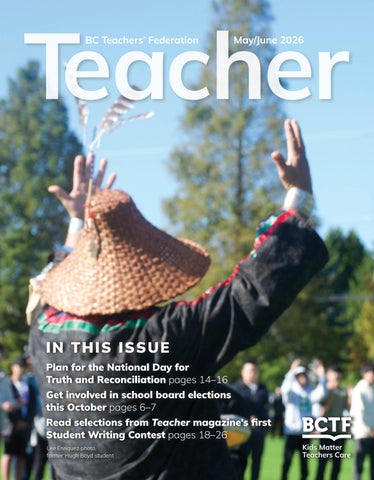
Lee Enriquez photo, former Hugh Boyd student
School board elections: Why they matter and how you can get involved
Set the books free: Embracing summer lending as a stand for equity
Incidental lessons: The Lena Shawp
Bridging generations in Surrey: Cultural artifact exploration project strengthens cultural learning in language classrooms
28 Navigating between cultures: A teacher’s reflection on immigration, identity, and intercultural understanding 30 Understanding the BC Human Rights Tribunal decision 31 A look inside the CTA office and the BC Human Rights Tribunal case
32 Teachers can’t pour from an empty cup: But what keeps emptying it? 34 Summer reading: Recommendations from BCTF provincial specialist associations
Student writing contest: Congratulations to all participants!
The Franco-Columbian Pride flag: A new teaching tool for building solidarity in Frenchlanguage classrooms
Articles reflect the views of the authors and do not necessarily express official policy of the BCTF. The BCTF does not endorse or promote any products or services advertised in the magazine. Advertisements reviewed and approved by the BCTF must reflect BCTF policy and be politically, environmentally, and professionally appropriate.
THIS IS YOUR MAGAZINE
Contact us
BC Teachers’ Federation
Toll free 1-800-663-9163
Email teachermag@bctf.ca Web teachermag.ca
Editor Sunjum Jhaj, sjhaj@bctf.ca
Assistant Editor/Designer
Sarah Young, syoung@bctf.ca
Advertising teachermag@bctf.ca ISSN 0841-9574


Do you enjoy writing? Have a story to tell? Know of a project at your school or in your local you want to share with colleagues? Then consider writing for Teacher, the flagship publication of the BCTF! Submission guidelines are available at teachermag.ca
We also welcome letters to the editor. Send your letter to teachermag@bctf.ca
Teacher reserves the right to edit or condense any contribution considered for publication. We are unable to publish all submissions we receive.
Deadlines
Sept/Oct 2026 issue July 31, 2026
Nov/Dec 2026 issue September 2026
Jan/Feb 2027 issue October 2026
March 2027 issue January 2027
May/June 2027 issue March 2027
BCTF Executive Committee
Jelana Bighorn
Shannon Bowsfield
Brenda Celesta
Adrienne Demers
Carole Gordon
Mary Lawrence
Frano Marsic
Hallan Mtatiro
Chris Perrier-Evely
David Peterson
Trevana Spilchen
Robin Tosczak
Winona Waldron
Teacher Magazine Advisory Board
Nandini Aggarwal
Alexa Bennett Fox
Robyn Ladner
Tamiko Nicholson
Kristin Singbeil
PR E SIDE NT’S ME SSAGE
AS THE SCHOOL YEAR winds down, it’s a natural time to reflect on the work we’ve accomplished together and to look ahead to what’s next for our profession and our communities. One important upcoming date is the school board trustee elections on October 17, 2026. School board trustees play a vital role in setting priorities and shaping public education in every school district. This edition features an article that shares some information on the role and impact of school board trustees, and why it’s important to stay informed and engaged (pages 6–7). I encourage you to start conversations with your friends and family about school board elections and get out to vote when the time comes.
Also coming up in the fall is the National Day for Truth and Reconciliation on September 30. This edition’s cover story highlights the incredible work of teachers in planning meaningful ways for schools to commemorate this important day (pages 14–16). I hope the ideas shared by Brandy and Michael help inspire planning for ways to mark this important day in your school and
“As we move toward the close of the year and prepare for what lies ahead, I hope you take pride in the meaningful impact you continue to make in the lives of your students.”
classroom. This spring, the BCTF is also bringing a motion to the Canadian Labour Congress to affirm and support truth and reconciliation in education and oppose residential school denialism in all its forms. Our member delegates will be speaking about the good work of teachers in ensuring the day is meaningful. This motion is a way for the broader labour movement to uplift and celebrate the work teachers do.
Over the past few months, Robin Tosczak, First Vice-President, Winona Waldron, Second Vice-President, and I have been attending meetings with Ministry of Education and Child Care staff to support recruitment and retention of school counsellors in BC. In mid-April, we were joined by three school counsellors from the BC School Counsellors’ Association (BCSCA) to speak with Ministry staff about the new collective agreement language, the mental health needs of kids, and how best to support them. These meetings and advocacy for more counsellors in schools will continue in the months ahead.
I also want to take a moment to recognize the incredible efforts of teachers in supporting their students’ participation in this year’s student writing contest (pages 18–26). We were thrilled to receive so many submissions from across the province. The quality of the submissions was outstanding. Students wrote thoughtful, creative, and honest reflections about what home means to them. This level of achievement doesn’t happen by accident: it is a direct result of your guidance, encouragement, and commitment to nurturing student expression.
Thank you for the care, professionalism, and dedication you bring to your work every day. As we move toward the close of the year and prepare for what lies ahead, I hope you take pride in the meaningful impact you continue to make in the lives of your students.
In solidarity,
Carole Gordon BCTF President
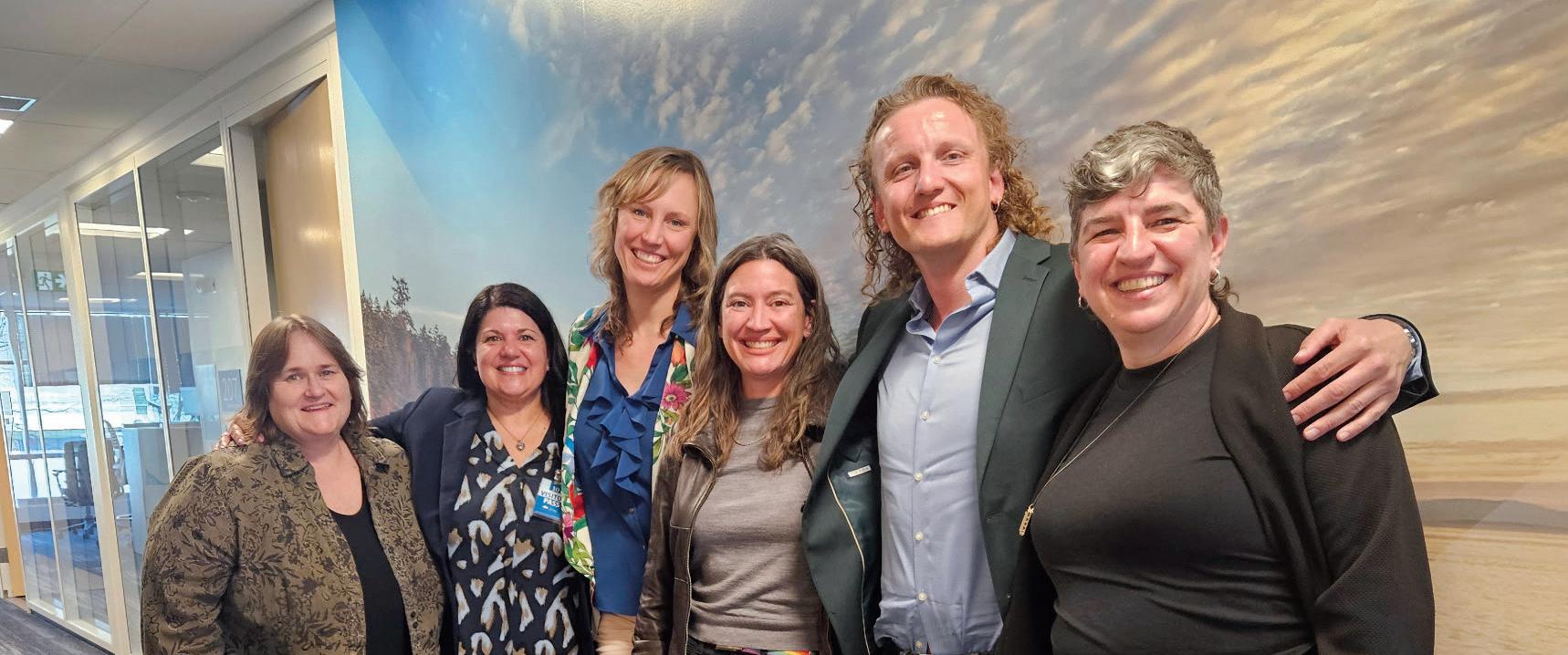
Left: (L to R) Carole Gordon, BCTF President; Norberta Heinrichs, BCSCA President; Katie DeReus, BCSCA Vice-President; Winona Waldron, BCTF Second Vice-President; William Nicholls-Allison, BCSCA VicePresident; and Robin Tosczak, BCTF First Vice-President met with staff at the Ministry of Education and Child Care to advocate for more counsellors in schools. Anna Chudnovsky photo.
MESSAGE DE LA PRÉSIDENCE
À L’APPROCHE DE LA FIN de l’année scolaire, il est normal de réfléchir au travail que nous avons accompli ensemble et d’envisager l’avenir de notre profession et de nos communautés. Une date importante à venir est l’élection des conseillers scolaires le 17 octobre 2026. Ces personnes jouent un rôle essentiel dans l’établissement des priorités et la formation de l’éducation publique dans chaque district scolaire. Cette édition contient un article qui partage des renseignements sur le rôle et l’impact des conseillers scolaires, ainsi que les raisons pour lesquelles il est important de rester informés et engagés (pages 6 et 7). Je vous encourage à entamer des conversations avec vos amis et votre famille au sujet des élections scolaires et à aller voter le moment venu.
La Journée nationale de la vérité et de la réconciliation aura également lieu à l’automne, le 30 septembre. L’article-couverture de cette édition met en lumière le travail incroyable des enseignants pour planifier des moyens concrets afin que les écoles commémorent cette journée importante (pages 14 à 16). J’espère que les idées partagées par Brandy et Michael inspireront la planification de façon à marquer cette journée importante dans votre école et votre classe. Ce printemps, la FECB présente également une motion au Congrès du travail du Canada pour affirmer et soutenir la vérité et la réconciliation dans l’éducation et s’opposer au dénialisme des pensionnats sous toutes ses formes. Nos délégués membres parleront du bon travail des enseignants pour s’assurer que la journée est significative. Cette motion est un moyen pour le mouvement syndical en général d’améliorer et de célébrer le travail des enseignants.
Au cours des derniers mois, Robin Tosczak, première vice-présidente, Winona Waldron, deuxième viceprésidente, et moi avons participé à des réunions avec le personnel du Ministry of Education and Child Care (ministère de l’Éducation et de la Garde d’enfants) pour soutenir le recrutement et le maintien
en poste des conseillers scolaires en ColombieBritannique. À la mi-avril, nous avons été rejointes par trois conseillers scolaires de la BC School Counsellors’ Association (l’Association des conseillers scolaires de la Colombie-Britannique) pour discuter avec le personnel du ministère du libellé de la nouvelle convention collective, des besoins en santé mentale des enfants et de la meilleure façon de les soutenir. Ces réunions et le plaidoyer en faveur d’un plus grand nombre de conseillers dans les écoles se poursuivront au cours des mois à venir.
Je tiens également à prendre un moment pour reconnaître les efforts incroyables des enseignants pour soutenir la participation de leurs élèves au concours d’écriture de cette année (pages 18 à 26). Nous avons été ravies de recevoir autant de participations de partout dans la province. La qualité des participations était exceptionnelle. Les étudiants ont écrit des réflexions profondes, créatives et honnêtes sur ce qu’un chez-soi signifie pour eux. Ce niveau de réussite ne se produit pas par hasard : il est le résultat direct de vos conseils, de vos encouragements et de votre engagement à encourager l’expression des élèves.
Merci pour le soin, le professionnalisme et le dévouement que vous apportez à votre travail chaque jour. Alors que nous approchons de la fin de l’année et que nous nous préparons à ce qui nous attend, j’espère que vous serez fiers de l’impact significatif que vous continuez à avoir sur la vie de vos élèves.
En toute solidarité,
Carole Gordon Présidence de la FECB
SCHOOL BOARD ELECTIONS
Why they matter and how you can get involved

School board elections take place on OCTOBER 17, 2026. Be sure to cast your vote!
MUNICIPAL ELECTIONS rarely dominate headlines, yet this is the level of government with arguably the largest impact on voters’ day-to-day lives. One of the positions you’ll see on the ballot at this October’s municipal elections is school board trustee. School boards are responsible for making key decisions that can have big impacts on teachers, students, and parents. Despite the weight these decisions carry, voter turnout tends to be very low compared to provincial or federal elections.1 This means a small number of voters can decide who runs the education system in their community.
Understanding what school boards actually do is the first step to making sure they stay focused on supporting students and schools. So, what is a school board actually responsible for?
Locally elected school boards oversee millions of dollars of public funds designated for education in the community. They are responsible for approving and overseeing the budget to ensure the district is equipped to support all students. Decisions contemplated and made by boards are varied and include things like opening or closing schools within the district, the sale of district-owned land, and investments in school facilities, such as upgrades to buildings and infrastructure or purchasing equipment and supplies for schools. School boards also set the strategic direction for the district, make decisions about school programs, represent the community’s voice in education, and
create policies to guide schools in improving student learning and ensuring schools meet the needs of the community.
This means schools boards influence everything from district spending and educational programs to district priorities and access to learning resources.
Trustees represent the constituencies they serve. They are democratically elected and accountable to their communities. That said, we have seen an influx of ideological campaigns that focus on censorship, limiting of resources, narrowing of curriculum, and devaluing teacher professionalism. Many of these far-right groups are working in a co-ordinated manner to bring their agenda into public school decision-making processes—they are networked and connected to one another. As such, we have seen school board meetings overtaken by debate on human rights and book bans rather than practical support for students.
“When school boards spend years fighting symbolic or divisive issues, it serves as a distraction from addressing the real challenges teachers and students are facing in schools,” said Carole Gordon, BCTF President. “Schools need to be safe, kind, caring places where everyone can learn, and we need school boards that focus on supporting students and teachers.”
1 Find data about municipal voter turnout in your community at civicinfo.bc.ca/elections

WHAT DO SCHOOL BOARDS DO?
• Allocate district spending.
• Make decisions about school programs.
• Set district priorities.
• Create policies to guide schools.
• Represent the community’s voice in education.
• As the employer, oversee local bargaining with unions and ratify collective agreements.
HOW CAN YOU GET INVOLVED?
• Vote!
• Talk to your friends and family about school board elections and encourage them to vote.
• Recruit and support candidates who want to make a difference.
• Reach out to your local union office or labour council to ask what you can do.
WHY GET INVOLVED?
• Have your community’s values represented at decisionmaking tables.
• Ensure school boards focus on what really matters: supporting students and strengthening schools.
• Keep ideological campaigns and divisive issues that are steeped in misinformation out of the conversation.
“When school boards spend years fighting symbolic or divisive issues, it serves as a distraction from addressing the real challenges teachers and students are facing in schools.”
– Carole Gordon, BCTF President
Because turnout is low for school board elections, the impact of each vote is tremendous. Taking the opportunity to cast your ballot means ensuring the people who make decisions about schools are focused on supporting students and strengthening schools, not spreading misinformation or sowing division.
Many school board trustee positions are acclaimed, meaning the person elected to the position had no opposition to run against.
“When we have acclimations, there is no mechanism of accountability,” said Cody Lind, Bulkley Valley Local President. “When someone runs against you, you have to justify why you should get the vote and stand behind your track record and your stance.”
In Cody’s local, four out of the seven trustee positions were acclaimed during the last election. To support more democratic processes and engagement, the local union is actively trying to recruit good candidates who understand what our education system needs. Retired teachers, parent advocates, and people
who want to make a difference in their community can have a transformative impact by adding their voice to decisions made at school board meetings. Candidates don’t need a background in education. The most important qualities for candidates are a willingness to listen and learn from students and teachers and a commitment to doing the best they can to support public education.
When a promising candidate chooses to run for school board trustee, local unions need to support them. Volunteer for their campaign and talk to your friends and family to encourage them to vote. In many cases, it only takes a small number of voters to win a seat on the school board because voter turnout is low.
School board trustees are elected for four-year terms, so the outcomes of this fall’s elections will determine outcomes in school districts until 2030. Now is the time to start preparing by having conversations with your colleagues, friends, and families to encourage them to get involved in their local school board trustee elections. •
SET THE BOOKS FREE
Embracing summer lending as a stand for equity
By Kelly Johnson (she/her), co-ordinator for libraries
THE FINAL BELL RINGS and the sound of excited, happy voices echo down the hallways marking the beginning of the long-awaited summer break. The anticipation of freedom from routine spills out the front doors as students head out for their extended break. For many students, summer joy spells enriching opportunities: adventure, travel, summer camps, and possibilities to engage and continue to learn in myriad ways. Yet, for a great many students, summer break equates to long days of unstructured time with little or no access to stimulating and educational experiences. During the summer months, many children, and specifically children from lower-income families, can experience loss of knowledge and skill. Coined “summer slide” or “summer learning loss,” this phenomenon widens literacy gaps and deepens educational inequities over time.
LIBRARIES AS AN EQUITY TOOL
Across Canada, public libraries have sought to bridge the summer literacy gap by offering enticing free reading programs, which often include fun incentives and rewards. Yet, for many families, a trip to the local public library presents a series of barriers, such as distance, cost, language, and limited hours, that prevent many students from participating in reading programs. Rural families and children in urban “book deserts” may have few, if any, opportunities to access books.
and information services,
Richmond
School libraries can help close this gap. In his book, How to Be an Antiracist, Ibram X. Kendi poses the question, “What if we realized that the best way to ensure an effective educational system is … by standardizing the opportunities that are available to all students?”1 By opening collections over the summer, schools can ensure all students have access to high-quality, culturally responsive books—not just those students whose families can navigate barriers or afford books themselves. Teacher-librarians curate collections that reflect the identities, experiences, and interests of their students, creating libraries that are mirrors, windows, and sliding glass doors.2 Summer lending makes these resources available to everyone, helping to level the playing field. And kids feel comfortable in their own school library, where they have the skills and understanding of how the library is organized and where they can locate the books they love. “I love summer reading because the books here I am more familiar with. At the public library I just can’t find the books I want,” said one student after participating in summer lending at their school.
1 Ibram X. Kendi, How to Be an Antiracist, One World, 2019
2 Rudine Sims Bishop, “Mirrors, Windows, and Sliding Glass Doors,” Perspectives: Choosing and Using Books from the Classroom, 6, No. 3, Summer 1990: scenicregional.org/wp-content/ uploads/2017/08/Mirrors-Windows-and-Sliding-Glass-Doors.pdf
3 Foundations for School Library Learning Commons in Canada: A Framework for Success Canadian School Libraries, 2023: canadianschoollibraries.ca/foundations-frameworks

HOW SUMMER LENDING WORKS
The approach is straightforward: students borrow books in June and return them in September. It removes socioeconomic and geographic barriers, supports literacy, and encourages a love of reading. Concerns about lost books are often overestimated; evidence shows minimal loss while engagement soars.
BC SCHOOLS LEADING THE WAY
In 2023, three BC schools piloted or revived summer lending:
• Garden City Elementary, Richmond: 585 books borrowed, 5 lost (.8%)
• Sardis Elementary, Chilliwack: 800 books borrowed, 1 lost (.1%)
• KVR Middle School, Penticton: 110 books borrowed, 1 lost (.9%).
By 2024, participation increased, and losses were negligible. Students loved having books over the summer, and teacher-librarians reported stronger library connections and heightened enthusiasm for reading.
PRACTICAL S TEPS FOR EQUITY-DRIVEN SUMMER LENDING
Next to concerns about book losses, teacher-librarians cited concerns about how to get started, how to develop efficient summer lending systems, how to garner support from teachers and administrators, and how to engage family and student buy-in. Here are some suggestions for success.
1. Build support: Share the benefits of summer lending with administration, colleagues, and families. Highlight how equitable access to books combats learning loss.
2. Engage students: Introduce the program in classes and library blocks. Survey students to involve them in shaping the program—number of books, genres, and ideas.
3. Family agreements: Send home simple contracts outlining responsibilities for caring for books. Record loans to track participation.
4. Set clear dates: Schedule open library lending just before summer break. Communicate widely to ensure all students know how to participate.
5. Document and share impact: Track loans, collect student feedback, and highlight outcomes with staff, families, and the community to reinforce the equity impact.
STUDENT VOICES
Students consistently report enjoying summer lending, reading more, and wanting it to continue. Teacher-librarians observe increased engagement and stronger connections to the library—evidence that equitable access to books transforms learning opportunities.
CONCLUSION
Summer lending is a low-cost, high-impact strategy to advance equity in education. It ensures all students—especially those most at risk of summer learning loss—have access to books and the joy of reading. As Foundations for School Library Learning Commons in Canada notes, “… the library program must make a difference to the lives of students in terms of learning, cultural understanding and well-being.”3 Summer lending puts this principle into action.
For educators, the takeaway is clear: opening school libraries over the summer is a practical, socially just way to put opportunity in every student’s hands. The process is simple, the risks are low, and the benefits—particularly for marginalized students— are enormous. •

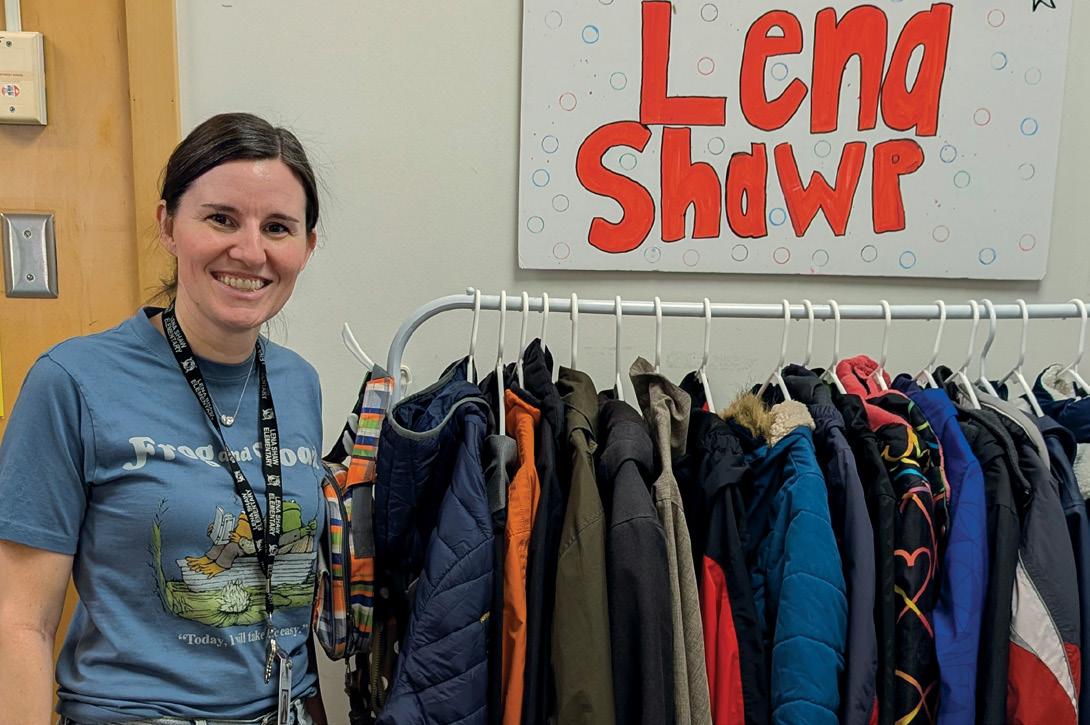
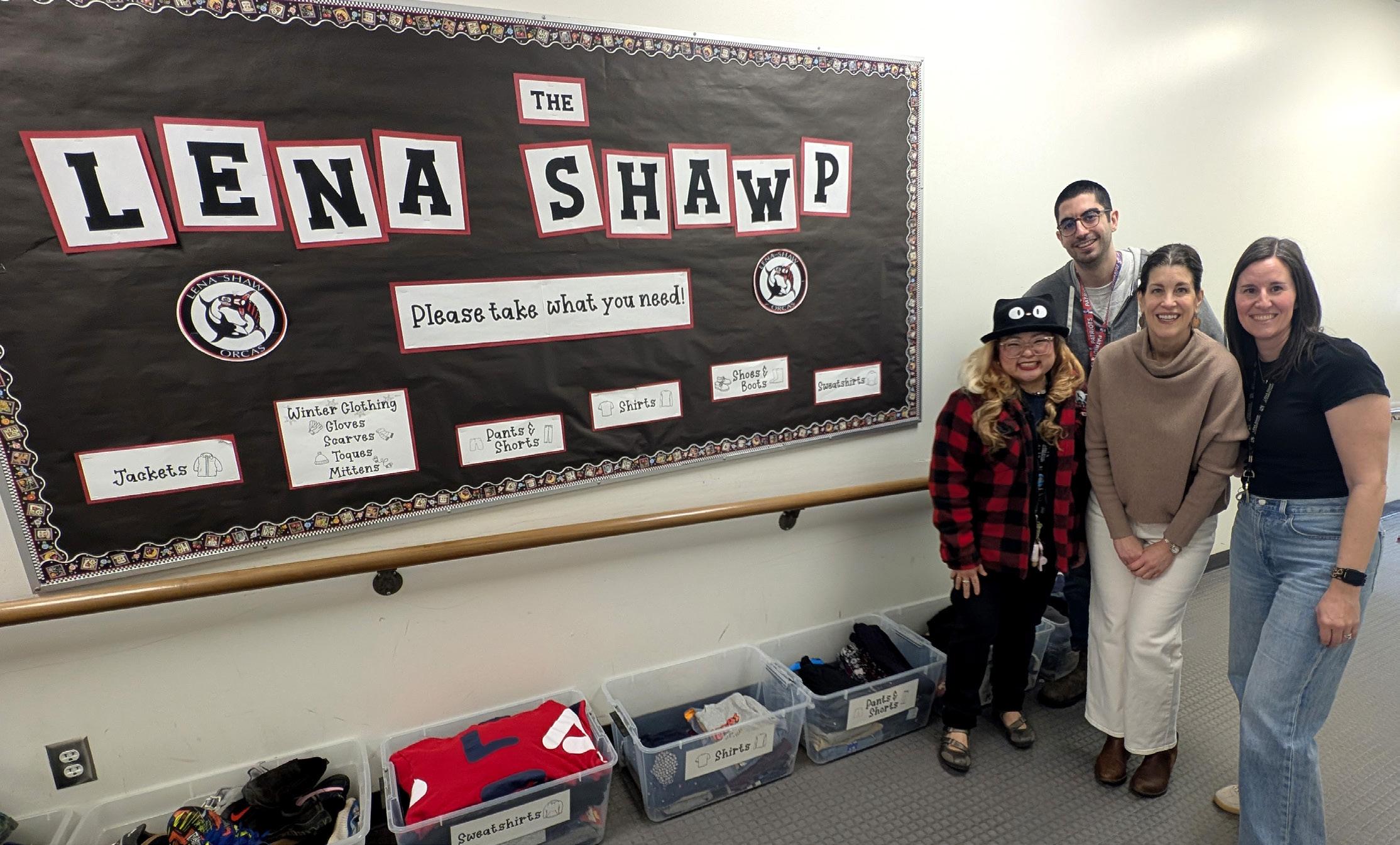
L to R: Regie Marie D. Plana-Alcuaz, Benoit Ouimet, Stacy Zaboysky, and Rena Wells by The Lena Shawp. Greg Pugh photo.
Incidental lessons THE LENA SHAWP
By Regie Marie D. Plana-Alcuaz
(siya/they/she), BCTF Committee for Action on Social Justice member and integration support teacher, Surrey
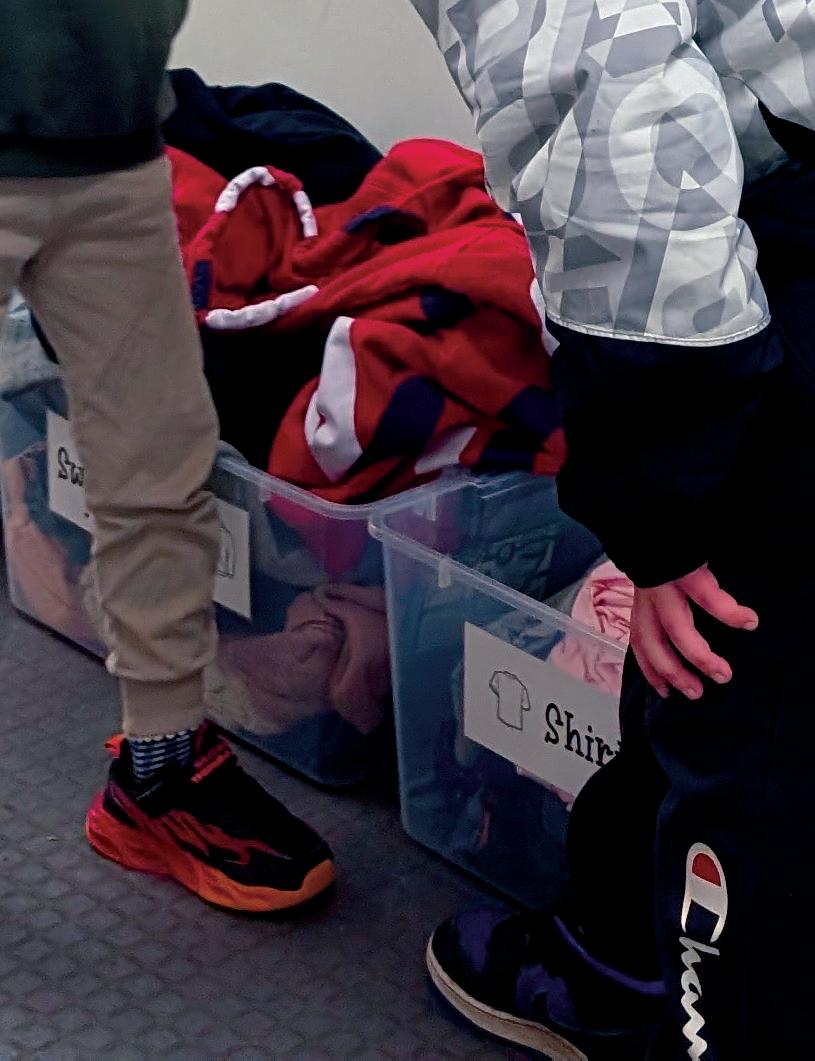
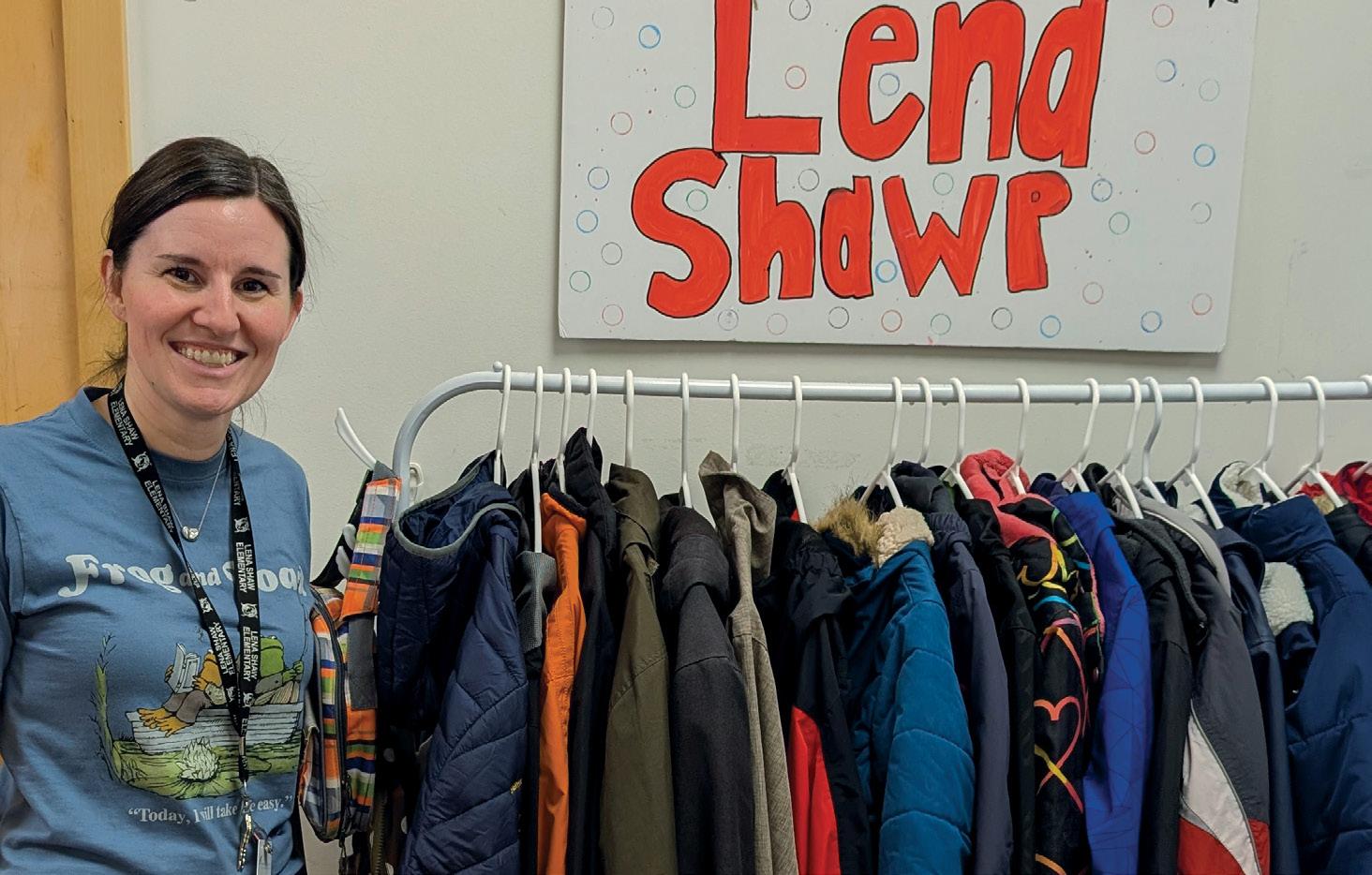
A WONDROUS SIGHT greets visitors to Lena Shaw Elementary School, one of the largest elementary schools in Surrey. In the north hallway, under a sign reading, “The Lena Shawp,” there is a rack of clean coats, lunch bags, and backpacks and seven bins filled with shoes and neatly folded clothing. During the day, students will pass by and check out what’s available. It’s a way for students to simply take what they need—no questions asked.
Free clothing initiatives blur the line between public space and mutual aid. They are especially useful in cold climates, where seasonal attire is necessary. They signify that there is a community that cares for anyone who finds themselves in need. This kind of undertaking carries a positive psychological impact not only for the receivers but also for the givers. It enables people to practise sustainability and provide access.
The Lena Shawp is the initiative of Rena Wells, a learning support teacher (LST) who has worked in education for 20 years, with the last 9 being at Lena Shaw. She began as an inclusive education support worker (IESW) and has been teaching for 14 years, almost entirely at less-advantaged schools. Lena Shaw has around 740 students and is in a densely populated urban neighbourhood. There is a breakfast and lunch program, among other wraparound services typically associated with a high-needs community.
When asked about the inception of The Lena Shawp, Rena shared, “A teacher at my children’s school asked me if we could use their lost and found items that would otherwise be thrifted. We had a little makeshift clothing area at that time, but this gave me the push to turn it into something more. There was such a great response to the Shawp that I quickly started gathering clothes from my family and friends—and they all now know to
call me before they thrift anything. Our staff contributes and even some of our school families.”
The name started out as The Lena Shaw Shop then another colleague, Ben Ouimet, came up with The Lena Shawp.
Rena collects donations as often as she can. Last year, she opened up the Shawp at two large community events: the Winter Market, which was open to the public, and the Art Crawl, where families were invited into the school to see a large display of student art. Rena set up several tables of clothing for families to help themselves from. That allowed her to make room for new stuff. If she notices that something has been there for a long time, it will be donated. The Shawp also puts out special bins for things like Halloween costumes in October and warm pajamas in the winter. When kids are looking for specific items, Rena takes note so she can let them know if that item becomes available.
“Giving a child a warm winter jacket and gloves, or new boots that fit … it’s the best.”
– Rena Wells
All items in the shop come by donation from staff, families, friends, and friends of friends. For example, Kelsey Blaby, who teaches at Katzie Elementary, washes and bags all of Katzie’s unclaimed lost and found items for the Shawp.
“Many students excitedly try on different things—jackets, gloves, and toques—searching for one that fits just right and proudly showing their friends when they find the perfect item,” said Navi Jhutti, a child/youth care worker. “It is especially meaningful to see students helping one another look for sizes or suggesting items, creating a sense of kindness and community. It’s a welcoming, supportive space.”
Stacy Zaboysky, a fellow LST at Lena Shaw, shares that Rena also organizes the school’s Christmas hampers off the side of her desk. Stacy described how Rena “collects a lot of the donations, shops for all the items, solicits money from businesses and the community, mostly by herself. She also knows which families need support and help, making sure that even little ones who aren’t of school age yet have the clothes they need. She is super organized when collecting for the hampers at Christmas;
each family has a code that indicates who they are, how many in the family, and their dietary needs.”
This system of community care provides hope and comfort to recipients without compromising their self-esteem. When this kind of attitude is cultivated and normalized, it becomes more natural for folks to practise mindful living. This is peripheral mental and emotional learning alongside the academic lessons that schools are expected to provide. According to Lena Shaw’s principal, Natalie Roberts, “What stands out most about The Lena Shawp is the genuine sense of belonging it brings to our school community. When students know that they can quietly access what they need, they feel not only supported, but truly cared for. There is something incredibly powerful about that.”
It has been a labour of love for Rena. “We have tons of repeat ‘customers’ who love checking in every few days to see if there’s anything new. Students who frequent the Shawp will stop by with their friends when they need something. Parents will pop in before or after school to have a look. I hope that it has brought some comfort and relief to families.
Giving a child a warm winter jacket and gloves, or new boots that fit, or some nearly new hoodies or pants that might be an extra their families can’t always afford—it’s the best. It might be my favourite part of my job,” said Rena.
Vice-principal Jessy Sandhu finds it very inspiring to see a parent and child looking through the Shawp and adds that Rena “doesn’t always see all the folks she’s helping.”
The Lena Shawp has also been a boon for teachers, IESWs, and early childhood educators—especially in instances when dry pants and socks are needed for students who have had accidents or decide to go down the slide after a heavy rain. No additional callouts for assistance are necessary; everyone knows that they can just shop at the Shawp. If people no longer want these items, they can just come back and return them. This circular model demonstrates sustainability, allowing teachers to model what they teach. Natalie considers Rena’s leadership as integral to the Shawp being more than just a clothing initiative. “The Shawp is a beautiful expression of compassion, generosity, and love in action at Lena Shaw.” •
Above: Students peruse the Shawp.
Right: Rena Wells with a rack of coats. Photos provided by author.
BRIDGING GENERATIONS IN SURREY
Cultural artifact exploration project strengthens cultural learning in language classrooms
ACKNOWLEDGMENT
A heartfelt thank you to GenConnect for their dedication to building intergenerational relationships and supporting cultural learning in our schools. I am especially proud of the former students who founded this organization and continue to inspire others through their leadership and commitment to community service.
I also want to acknowledge the support of fellow teachers, school administrators, families, and elders who shared their time, stories, and knowledge. Together, we are helping students experience education that is authentic, inclusive, and deeply connected to their cultural identities.
By Amandeep Chhina (she/her), Punjabi teacher, Surrey
TEACHING PUNJABI at Princess Margaret Secondary School has been more than a profession for me: it has been a passion and a commitment to preserving language, culture, and identity for the next generation. As a proud Punjabi educator, I have always believed that language learning is deeply connected to cultural understanding, family stories, and community relationships. One of the most meaningful ways this belief has come to life in our classrooms is through a partnership with GenConnect, a youth-led Surrey organization dedicated to building meaningful relationships between seniors and young people.
After a successful pilot project at Princess Margaret Secondary the previous year, the initiative expanded in 2025 to include Queen Elizabeth, Frank Hurt, and L.A. Matheson secondary schools. The project was integrated into Punjabi language classes through the ਸੱਿਭਆਚਾਰਕ
Artifact Exploration assignment, which aligns with the BC Grades 8–12 curriculum and supports meaningful cultural learning through inquiry, storytelling, and collaboration.
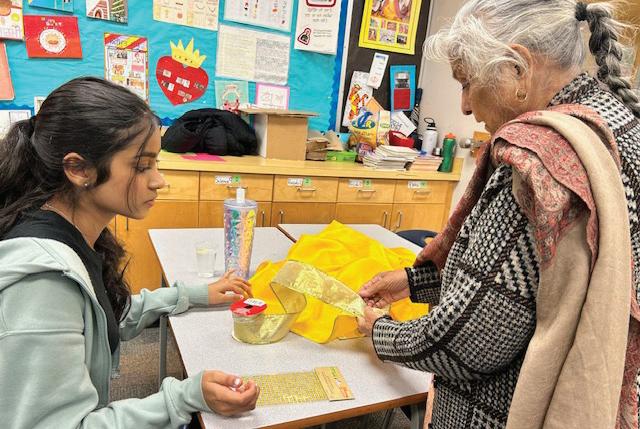
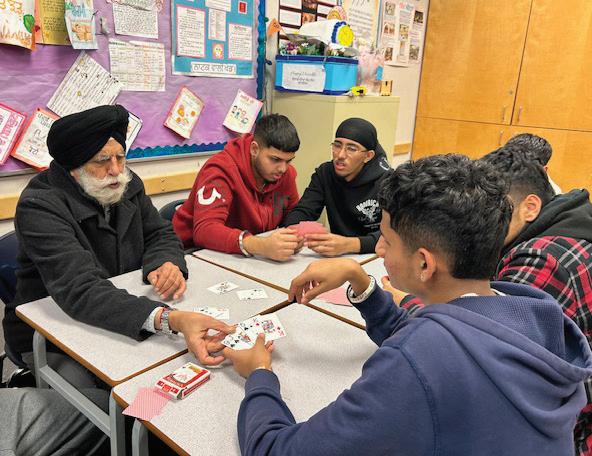
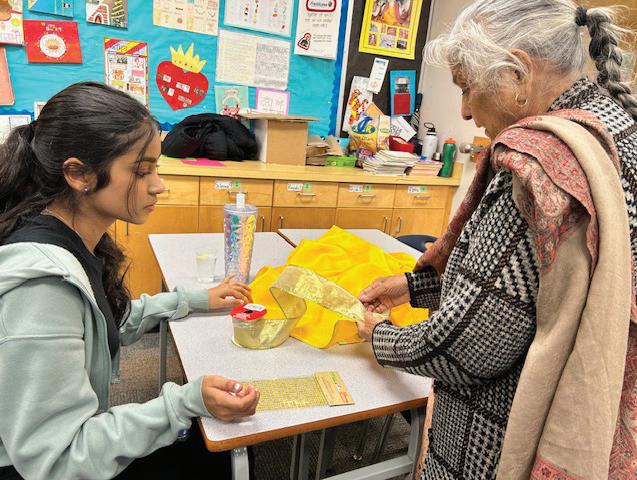
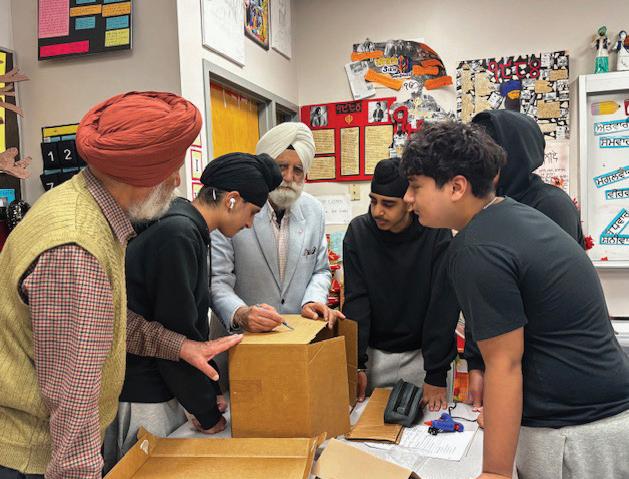
As part of the Cultural Artifact Exploration project, students in Grades 9–12 worked closely with their grandparents and elders to research and document a Punjabi cultural artifact. Using the Five Ws framework—who, what, when, where, and why—students explored the origins, purpose, and cultural significance of objects connected to Punjabi heritage.
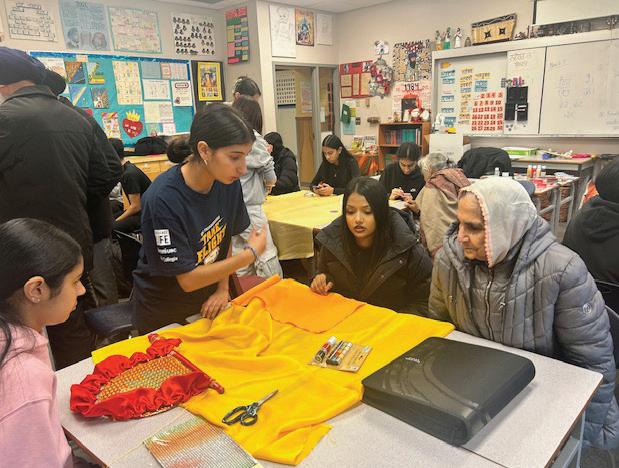
Students then examined or re-created artifacts while documenting the materials used and the steps involved in making them. Many of these artifacts represented everyday items traditionally created in Punjabi villages out of necessity—household tools, cooking utensils, farming implements, textiles, and decorative crafts.
Elders shared stories about how these objects were originally made using locally available materials, such as wood, clay, metal, or fibres. They also explained how these items evolved over time as communities adapted to technological changes, migration, and modern lifestyles. Through these conversations, students began to understand that cultural artifacts are not simply objects, they are reflections of history, innovation, and community knowledge passed down through generations.
In the classroom, I witnessed students becoming deeply engaged as they listened to their elders’ stories, asked thoughtful questions, and documented their discoveries. The project naturally supported the development of BC’s core competencies, particularly communication, creative and critical thinking, personal identity development, and social responsibility.
After completing their research, students chose one of three creative options to share their learning:
• Write a poem about the artifact and its cultural meaning.
• Perform a short skit showing how the artifact was traditionally made or used.
• Write a short story imagining the artifact’s journey through generations.
Students incorporated both Punjabi and English in their presentations, using simple Punjabi phrases and vocabulary learned in class. This bilingual approach strengthened their language skills while allowing them to connect more deeply with cultural concepts.
“Teaching Punjabi is not only about grammar or vocabulary: it is about helping students understand their roots, appreciate their heritage, and develop pride in who they are.”
Many students shared that this project helped them learn new things about their own families and sparked meaningful conversations at home. For some, it was the first time they had asked their grandparents about village life, traditional tools, or cultural practices.
The project culminated in the GenConnect Cultural Showcase, held on Thursday, December 4, at the Grand Taj Banquet Hall. Students from all four participating schools came together to present their artifacts, research, and creative projects.
The event featured artifact displays, storytelling, poetry, and skits. Students proudly shared the history and cultural significance of their artifacts while explaining how they were made and why they mattered in Punjabi life and tradition.
The showcase celebrated Surrey’s rich cultural diversity and demonstrated how intergenerational learning can strengthen both language education and community connections. Students practised purposeful communication in Punjabi and English, explored questions of identity and heritage, and developed empathy and respect through their interactions with elders. By centring family
knowledge and lived experience, the project created an inclusive learning environment where students’ cultures and stories were recognized as valuable sources of knowledge.
One of the most inspiring aspects of this collaboration is that GenConnect was founded by former students of Princess Margaret Secondary. As their teacher, it fills me with immense pride to see these young leaders applying the skills they developed in school— leadership, communication, and community engagement—to create an organization that brings generations together.
As a Punjabi teacher for almost two decades, I have seen first-hand how language classes can become powerful spaces for cultural connection and community building. Teaching Punjabi is not only about grammar or vocabulary: it is about helping students understand their roots, appreciate their heritage, and develop pride in who they are.
Projects like this remind me why I chose to become an educator. When students connect classroom learning with their families, their stories, and their culture, education becomes meaningful and transformative. •
Photos: Cultural Artifact Exploration student and elder participants. Photos provided by author.
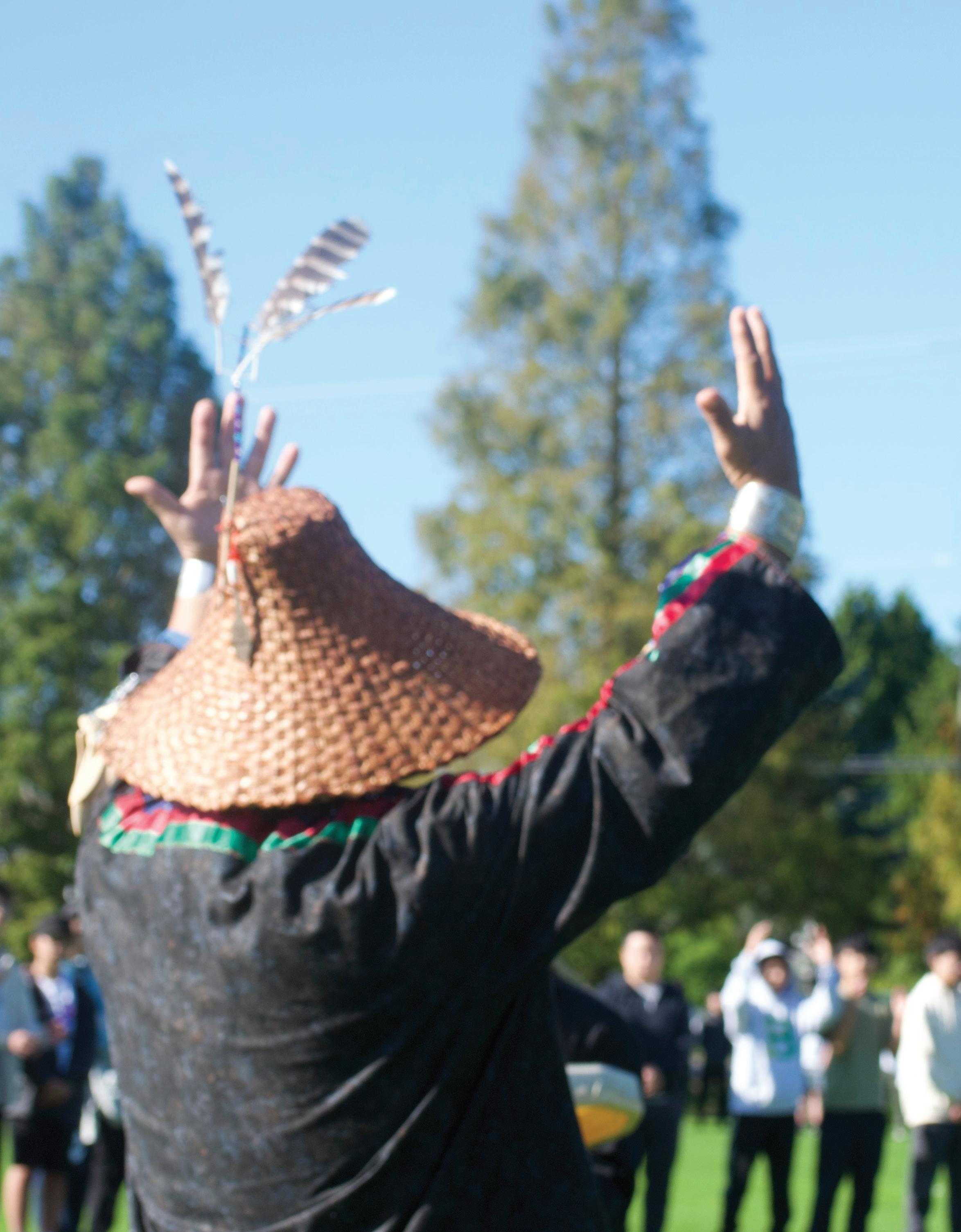
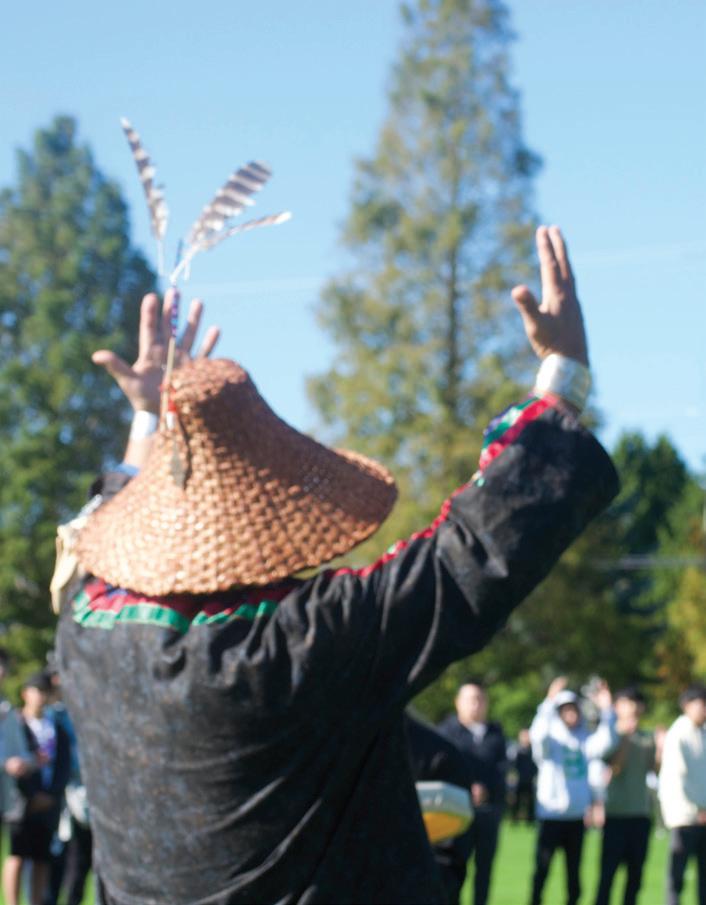
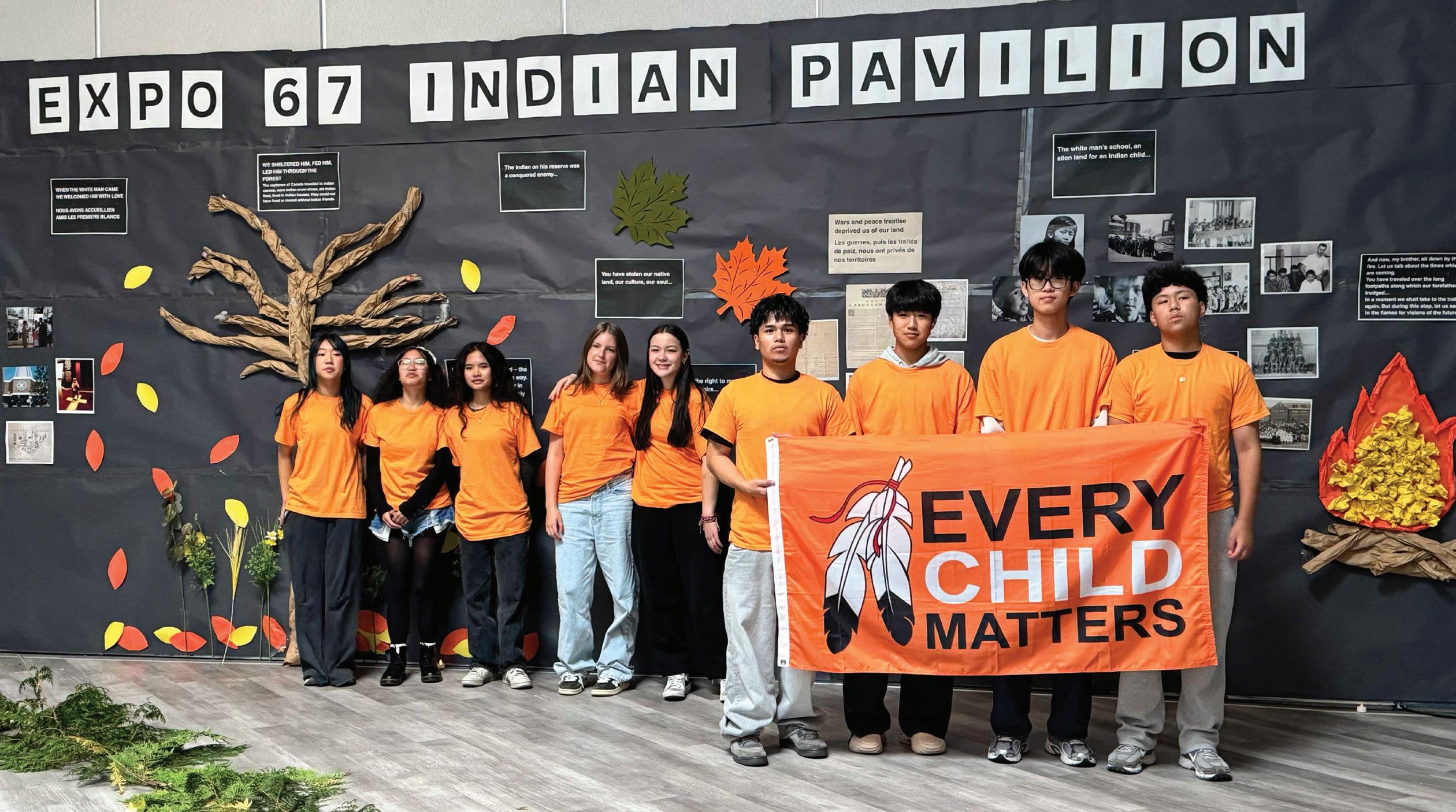
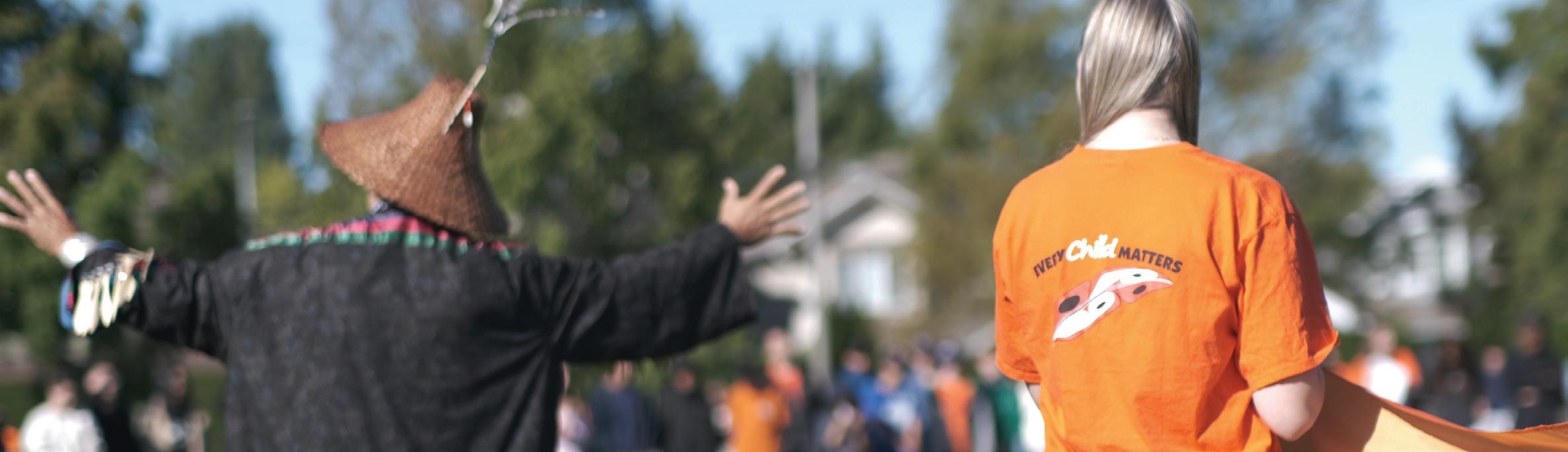
Led by an Elder, the Hugh Boyd school community gathered in a circle for a moment of silence in 2024. Below: Students with an exhibit they made in 2025 about the Expo ’67 Indians of Canada Pavilion.

Full-day, school-wide learning about T R UTH AND REC ON CILIATION
Brandy Lekakis and Michael Taylor, teachers at Hugh Boyd Secondary in Richmond, share how they work with students for collective learning on the National Day for Truth and Reconciliation.
Michael Taylor photo
“This work is about pushing past the fear of doing the wrong thing. … we must be comfortable being uncomfortable sometimes.”
– Brandy Lekakis
WHEN BRANDY LEKAKIS moved to Hugh Boyd Secondary School in Richmond, she brought a wealth of experience facilitating student engagement with truth and reconciliation. Michael Taylor, who teaches Social Justice 12 at Hugh Boyd, was eager to expand the school’s existing one-period lesson and exhibit framework for the National Day for Truth and Reconciliation to create more opportunities for collective learning.
The two teachers started out by planning two blocks of collective learning for all students and staff to commemorate September 30 in 2024. Last fall they expanded the program to a full day of listening, learning, and reflecting on Canada’s history and our shared responsibility to work toward reconciliation.
“Providing multiple, collective activities on the National Day for Truth and Reconciliation sends a clear, unmistakable signal to students that this issue matters to our school community,” said Michael.
The activities students and staff participated in, outlined in more detail on the next page, included oral storytelling; a keynote speaker; learning about the Expo ’67 Indians of Canada Pavilion, where Indigenous Peoples from across Canada shared Indigenous art and activism; and an outdoor circle where the school gathered for a moment of silence.
“We wanted to highlight Indigenous resistance and resilience,” said Brandy. With that in mind, all the activities were designed to centre the strength and legacy of Indigenous Peoples across Canada.
After each activity, students and teachers returned to their classrooms to participate in a reflection process. Brandy and Michael created reflection prompts to help classes make meaning of each school-wide activity. The reflection is a key part of the learning because it is an opportunity to contextualize what they experienced and consider how it deepens
their understanding of Canadian history and Indigenous experiences.
Brandy and Michael wanted teachers to be able to participate alongside students, so the experience is one of collective learning. Providing teachers with the reflection prompts allowed them to also take part in the activities as learners, take risks for learning, and model participation in reconciliation. “This work is about pushing past the fear of doing the wrong thing,” said Brandy. “This is a process where we must be comfortable being uncomfortable sometimes.”
Student responses to the reflection prompts have surprised both Michael and Brandy. Students showed empathy, thoughtfulness, and deep reflection in writing their responses.
Students have also demonstrated strong leadership in the school community by helping plan the full day of learning activities. Michael’s Social Justice 12 students helped assemble hallway displays, organized the day, and facilitated smooth transitions between activities. The school-wide commemoration of the National Day for Truth and Reconciliation has become an opportunity for students to share their learning and art while leading community learning in the school.
Next September’s plans are already underway at Hugh Boyd. Brandy’s students in English First Peoples are currently reading Five Little Indians by Michelle Good. Their task this semester is to write and direct a screenplay adaptation of the book. Drama and art classes have joined the project to help with costumes, set design, acting, and production.
For Michael and Brandy, taking on this work is an important part of their personal commitments to reconciliation. “We have a deep responsibility as non-Indigenous educators to commit to this work,” said Michael. “It’s an opportunity for us to model what reconciliation can be.”
“We have a deep responsibility as non-Indigenous educators to commit to this work.… to model what reconciliation can be.”
– Michael Taylor
Ideas from Michael and Brandy for the NATIONAL DAY FOR TRUTH AND RECONCILIATION
COLLECTIVELY EXPERIENCE
ORAL STORYTELLING
Have students and staff read aloud a story by an Indigenous author while everyone else participates in active listening. Birdman by Richard Wagamese was the story used at Hugh Boyd last fall. Follow up with reflection prompts for students.
Reflection examples
Listening collectively to a story builds connection with our learning community because…
Grade 9 student: It shows us no matter our differences as people, we can all collectively listen and share ideas with one another and feel empathetic through each other.
Grade 11 student: It strengthens our sense of belonging and shared purpose to move us closer to true reconciliation.
Hearing a story as a greater community makes me think about…
Grade 8 student: Being a better person and it can really encourage the greater community to be the shelter for struggling people…. It made me think about the old me two years ago when I struggled a lot, then people “sheltered” me.
HOST A KEYNOTE SPEAKER
Invite a community member or Elder to speak at a school assembly. Connect with them in advance so you have an idea of what they will speak about and can prepare reflection questions accordingly.
Reflection examples
Listening to survivors tell their stories is important to the work of truth and reconciliation because
Grade 9 student: It deepens our understanding about the history of the kids that had to experience that tragedy.… Everyone deserves the chance to speak publicly about what happened.
Listening to survivors tell their stories made me feel…
Grade 9 student: Grateful that Canadians matured from trying to change everyone’s differences.
CREATE DISPLAYS ABOUT INDIGENOUS RESISTANCE AND RESILIENCE
Hugh Boyd students created a display that showcased the curation and impact of the Indians of Canada Pavilion at Expo ’67, where First Nations from across Canada shared messages of decolonization and sovereignty through curated art, artifacts, architecture, and messages. Classes were invited to engage with the display like an exhibit, with follow-up reflection questions for when they return to their classroom.
Reflection examples
Why are stories of Indigenous resistance and resilience important in the work of truth and reconciliation?
Grade 11 student: Indigenous stories of resistance and resilience build bridges for reconciliation, fostering empathy, and inspiring non-Indigenous people to participate in repairing relationships.… They also foster pride in Indigenous culture, making them key to a more just and inclusive Canadian society.
SCHOOL-WIDE CULMINATING ACTIVITY
Invite the whole school to participate in an activity that allows for a visual representation of the school community’s collective commitment to reconciliation. At Hugh Boyd, 700 students and staff stood together outdoors in a circle for a moment of silence to end their day of learning.
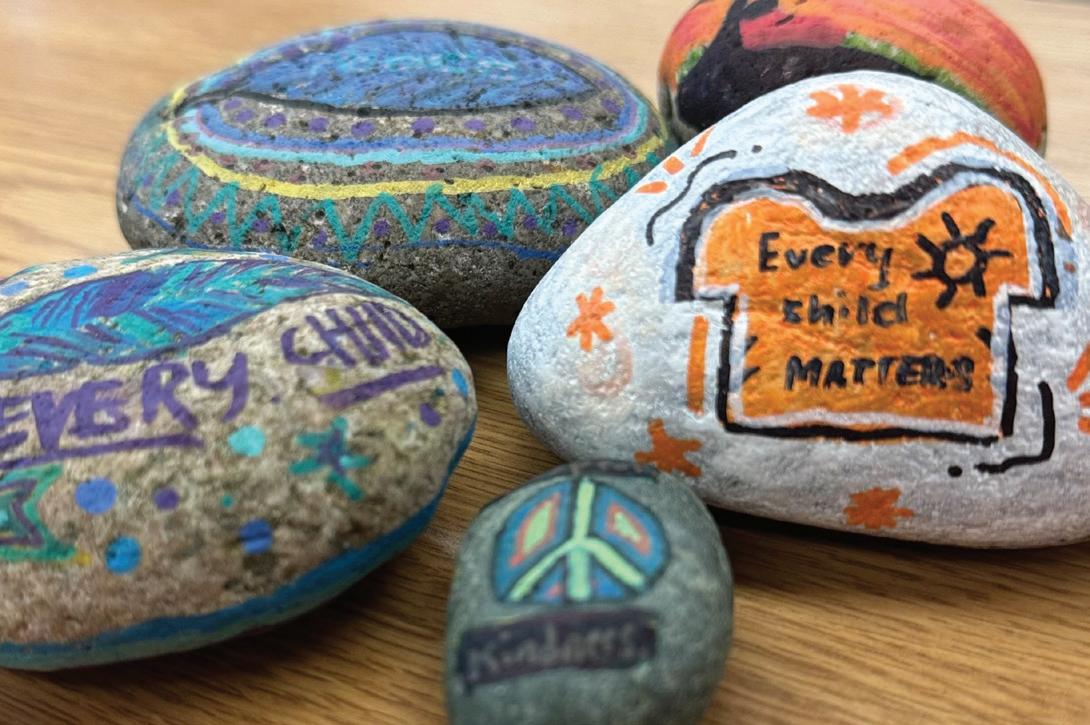
Students are invited to write down a personal act of reconciliation and add it to a larger display as they exit the school to join the school-wide circle. Last fall, students wrote a message of truth and reconciliation on a rock and placed the rocks along a cedar path in the school’s entryway. The year before, students wrote a personal act of reconciliation on a paper feather that was added to a large hawk display in the hallway. This creates a visual reminder for students of the learning that took place for the National Day for Truth and Reconciliation. •
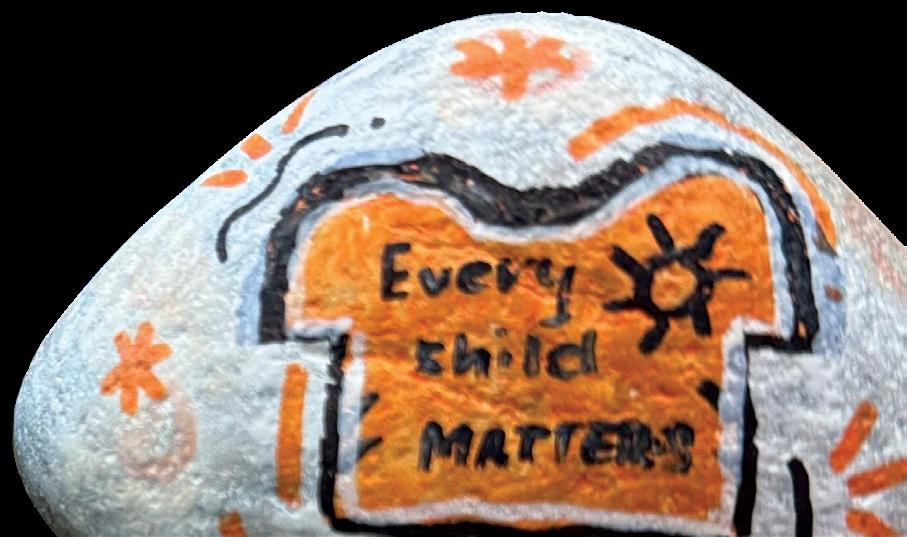
Lee Enriquez photo, former Hugh Boyd student
30 CIRCLES CHALLENGE
By the BCTF Teachers Teaching on Call Advisory Committee
30 MINUTES LEFT in class and not sure what to do? Need a short activity?
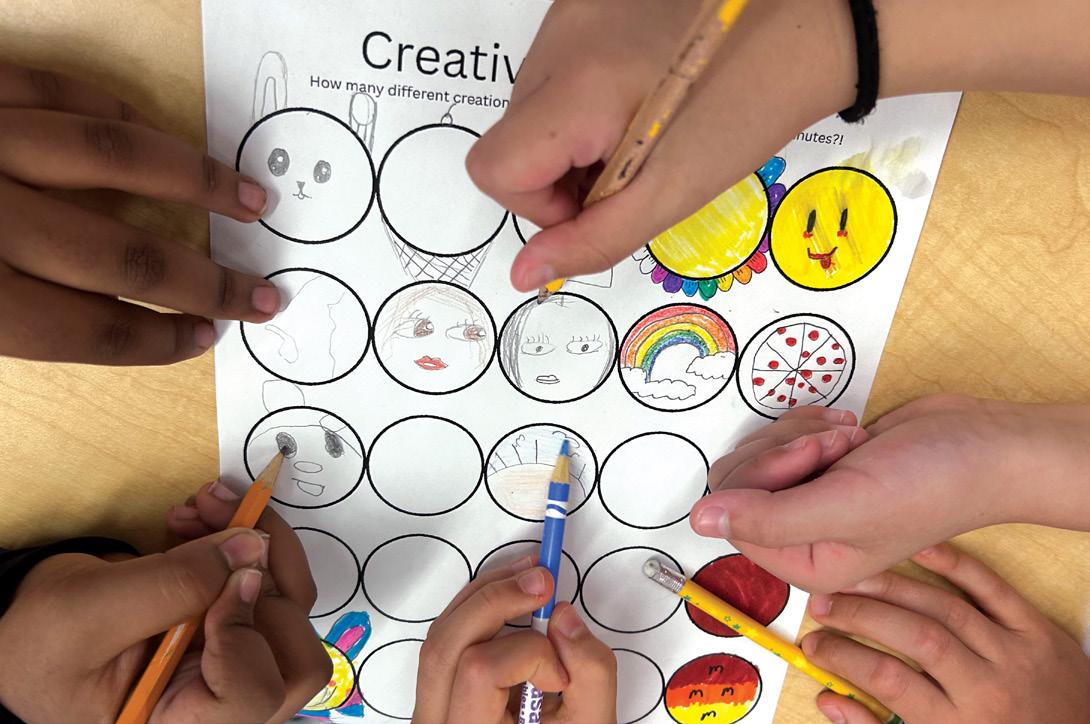
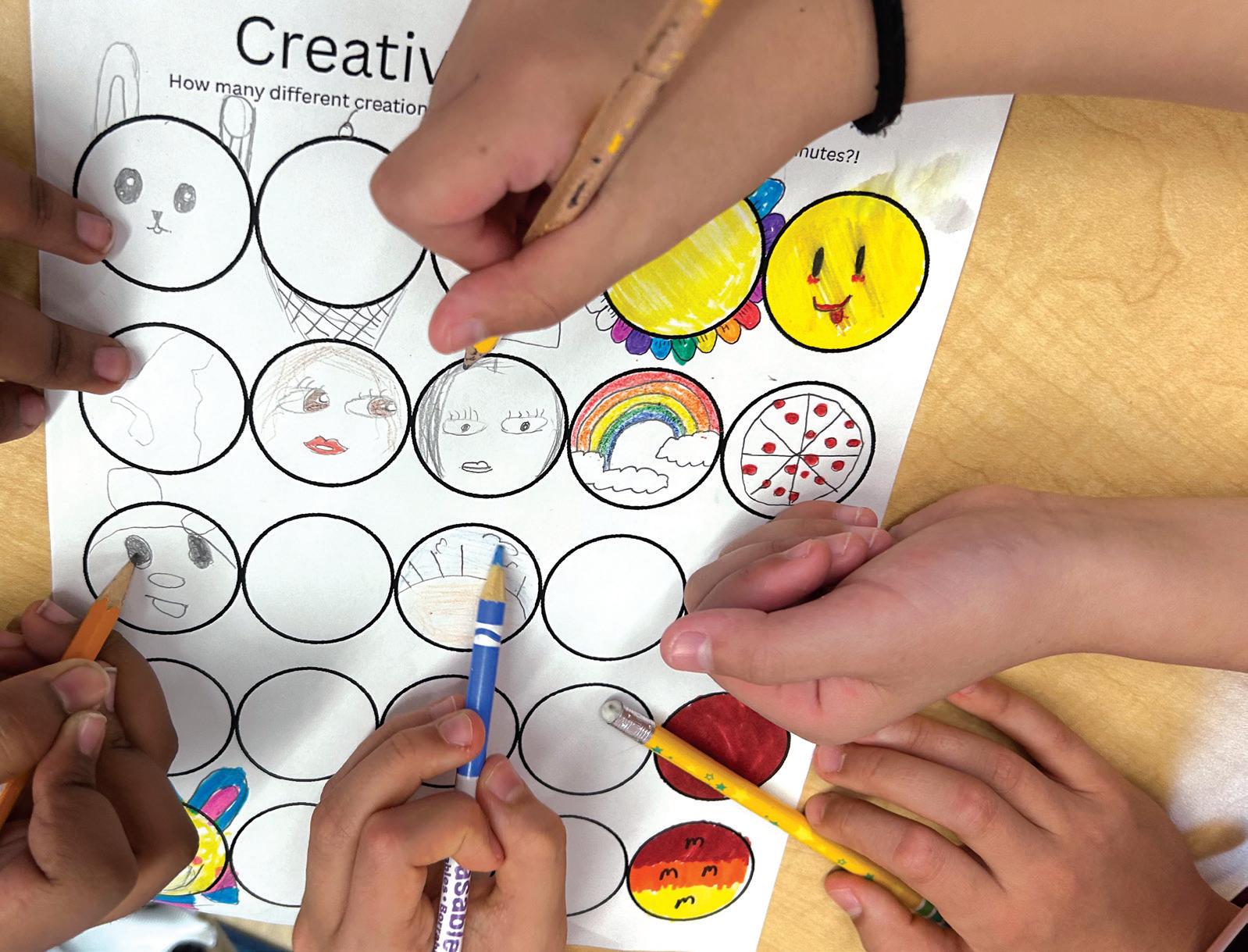
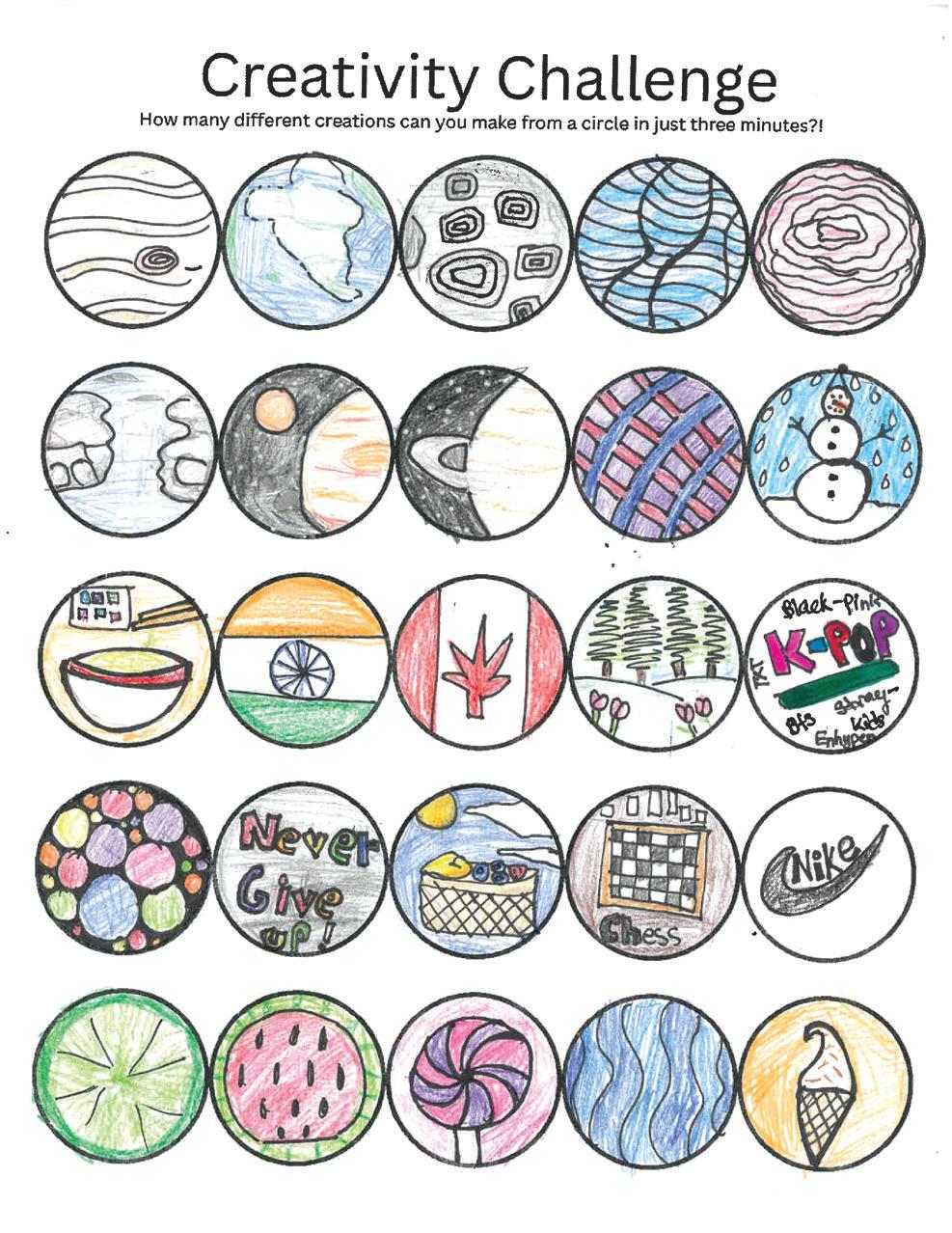
Give your students the opportunity to flex their creative muscles! This low-prep worksheet gives students 30 blank circles and challenges them to turn each one into a completely different object or concept. One circle might become a baseball, the next a pizza, then a tire. No repeats allowed!
This quick activity encourages creativity, flexible thinking, and focus. Finished early? Have students share and compare their designs to see how differently everyone interpreted the same simple shape.
If your class needs a little creative spark, this 30 Circles Challenge always delivers. Here’s how it works:
• Set a timer for 3–5 minutes and give each student a prepared sheet with 30 blank circles.
• Students transform each circle into something unique: smiley faces, clocks, suns, etc.
It’s quick and low-pressure, and it gets their brains firing fast. Perfect for warm-ups, brain breaks, or those in-between moments when focus starts to fade.
Find this story online at teachermag.ca to download the worksheet. •
EMPLOYMENT INSURANCE FOR TTOC s
Did you know teachers teaching on call (TTOCs) may be eligible to apply for Employment Insurance to cover the weeks/months throughout the year when there is no work available, like during summer?
The BCTF has a workshop to provide guidance on how to make effective Employment Insurance applications. The workshop can be booked in-person by locals or is available as a video online. Scan the QR code to watch the video.

Students working on the 30 Circles Challenge in Alexa Bennett Fox’s Burnaby classroom (above) and a completed challenge by a student in Nandini Aggarwal’s Surrey classroom (right).
STUDENT WRITING CONTEST
People, places, and practices that feel like home
CONGRATULATIONS TO ALL PARTICIPANTS!
The following students were awarded for their work:
KINDERGARTEN–GRADE 3
William Kole, Prose, Excellence
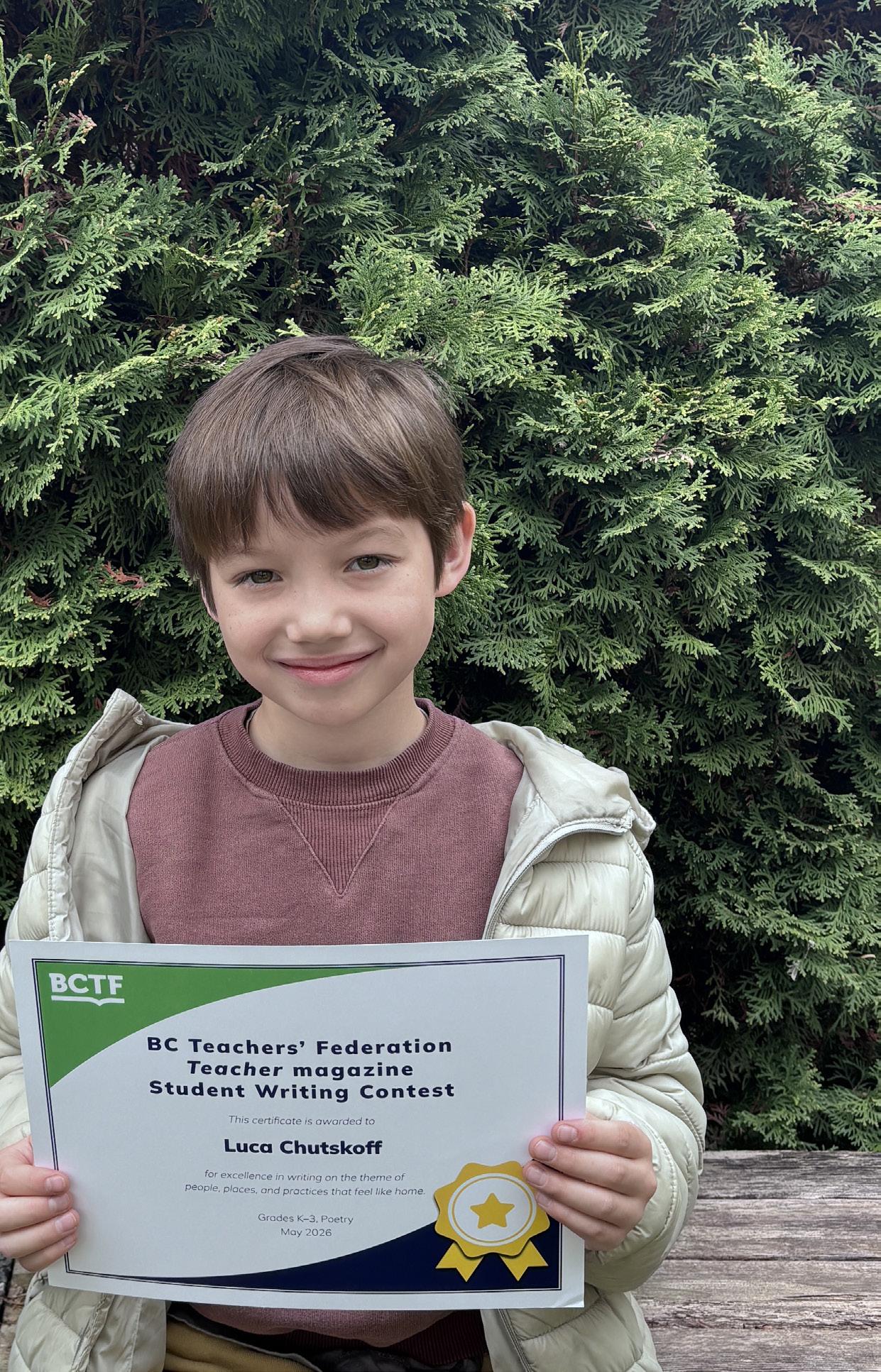
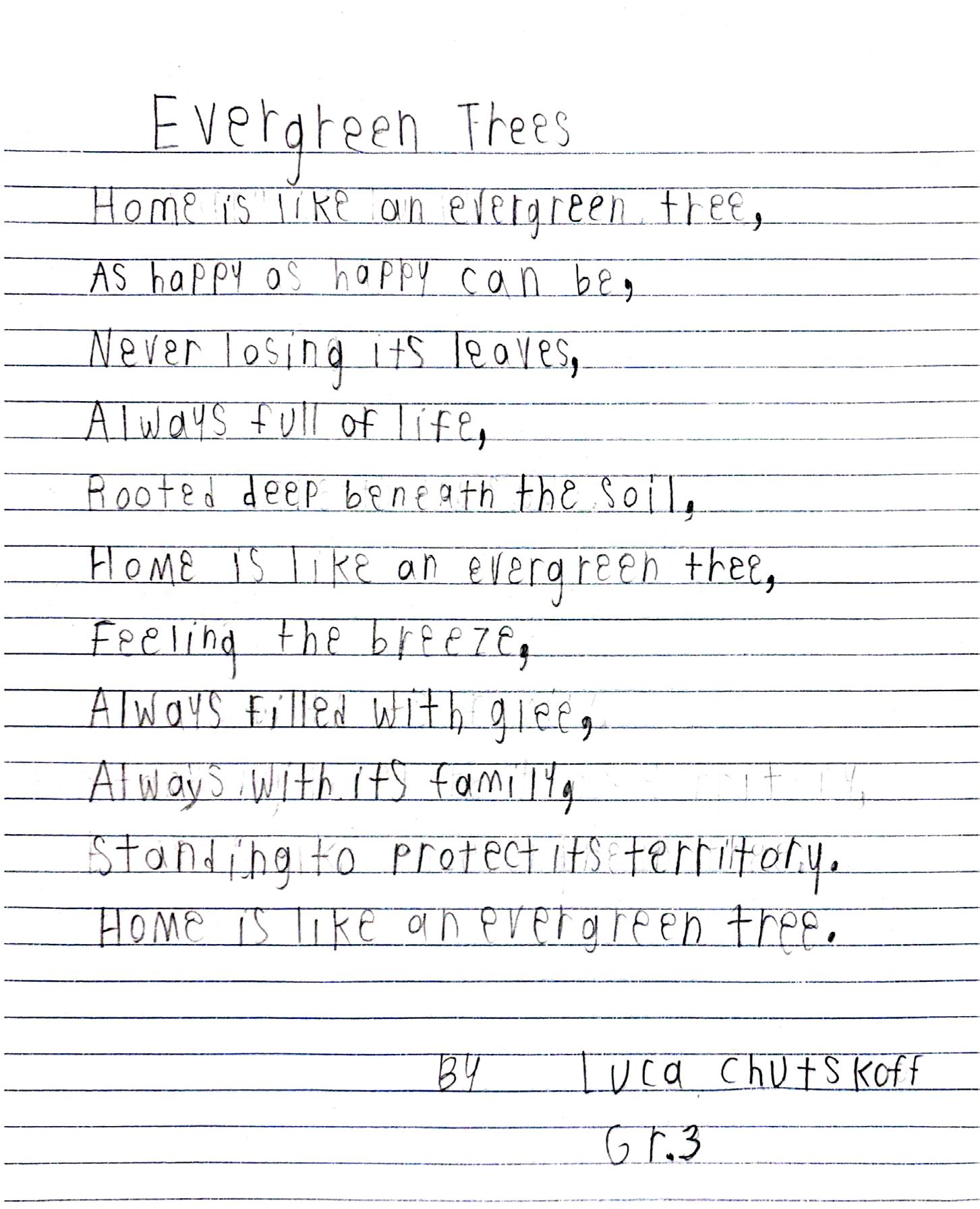
Luca Chutskoff, Poetry, Excellence
Ellie Coan, Prose, Honourable Mention
Ayden Ma, Prose, Honourable Mention
Alisa Ostrovska, Poetry, Honourable Mention
Ricco Shi, Poetry, Honourable Mention
GRADES 4–6
Evariste Ankomah, Prose, Excellence
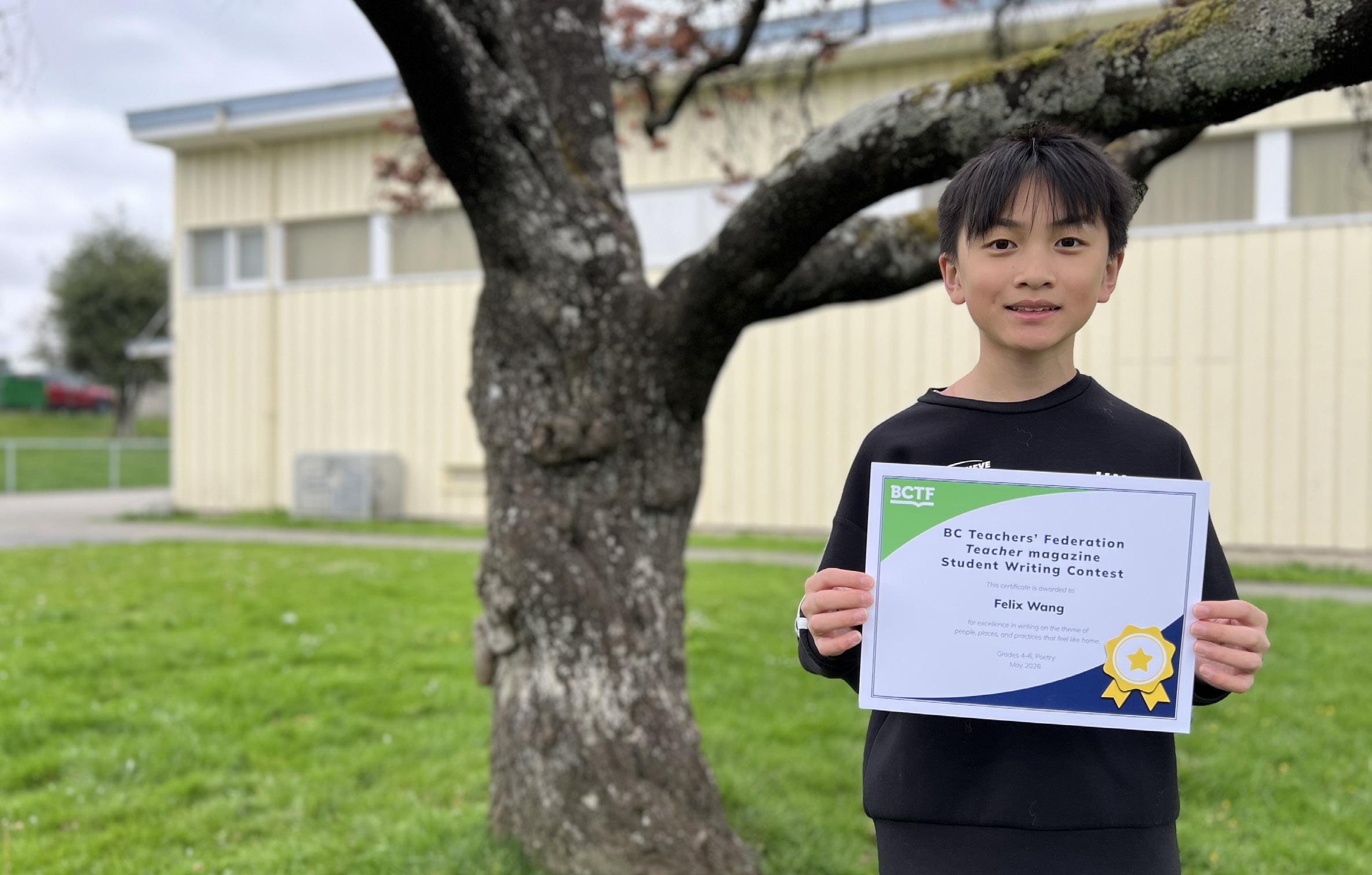
Felix Wang, Poetry, Excellence
Arjen Kundu, Poetry, Honourable Mention
Nimrit Samra, Prose, Honourable Mention
Jaden Solis, Poetry, Honourable Mention
Layla Stanway, Prose, Honourable Mention
Grades 7–9
Chloe Tseng, Prose, Excellence
Shiloh Pandeagua, Poetry, Excellence
Lily Cross, Prose, Honourable Mention
Daley De Wynter, Poetry, Honourable Mention
Quinn Delmaire, Prose, Honourable Mention
Swastik Khare, Poetry, Honourable Mention
Harshikha Harihara Subramanian, Prose, Honourable Mention
GRADES 10–12
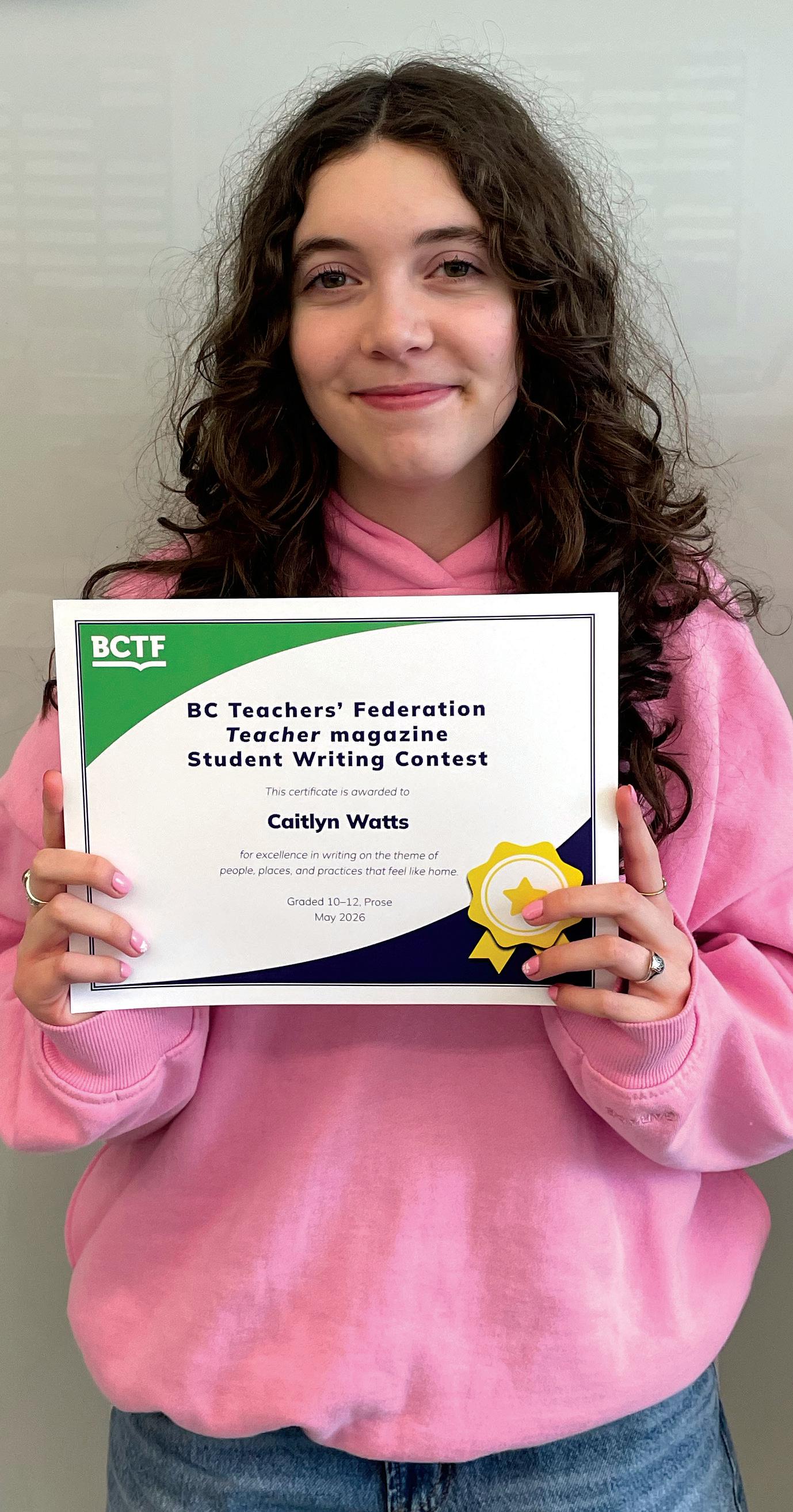
Caitlyn Watts, Prose, Excellence
Inès Lavaud, Poetry, Excellence
Iva Masiala, Poetry, Honourable Mention
Isla Watson, Poetry, Honourable Mention
THE STUDENT WRITING CONTEST was a first for Teacher magazine, and we are truly impressed by the submissions we received from across the province. The breadth and volume of submissions far exceeded our expectations, and we would like to thank all the teachers and students who participated.
Students’ submissions were thoughtful and honest reflections of what home can look like. Many submissions explored connections to community, culture, family, friends, and hobbies. It was clear how much care and heart was put into creating these pieces, and we feel privileged to read these stories.
The student work reflects the time and effort teachers put in to guide and encourage students on their writing journeys. Creating space for students to write, reflect, and share their work resulted in a vibrant and impactful experience.
On the following pages, you’ll find a selection of winning pieces from each grade category of the contest. It was incredibly difficult to choose these pieces with so many beautifully written submissions.
We’re proud to share this work as a reflection of students’ talent and teachers’ mentorship. While only a few pieces could be selected, we want to acknowledge that every entry contributed to the richness and success of this year’s contest.
We’re grateful to everyone who participated and look forward to celebrating more of your writing in the future.
With gratitude,
Nandini Aggarwal, Alexa Bennett Fox, Robyn Ladner, Tamiko Nicholson, and Kristin Singbeil
Teacher Magazine Advisory Board
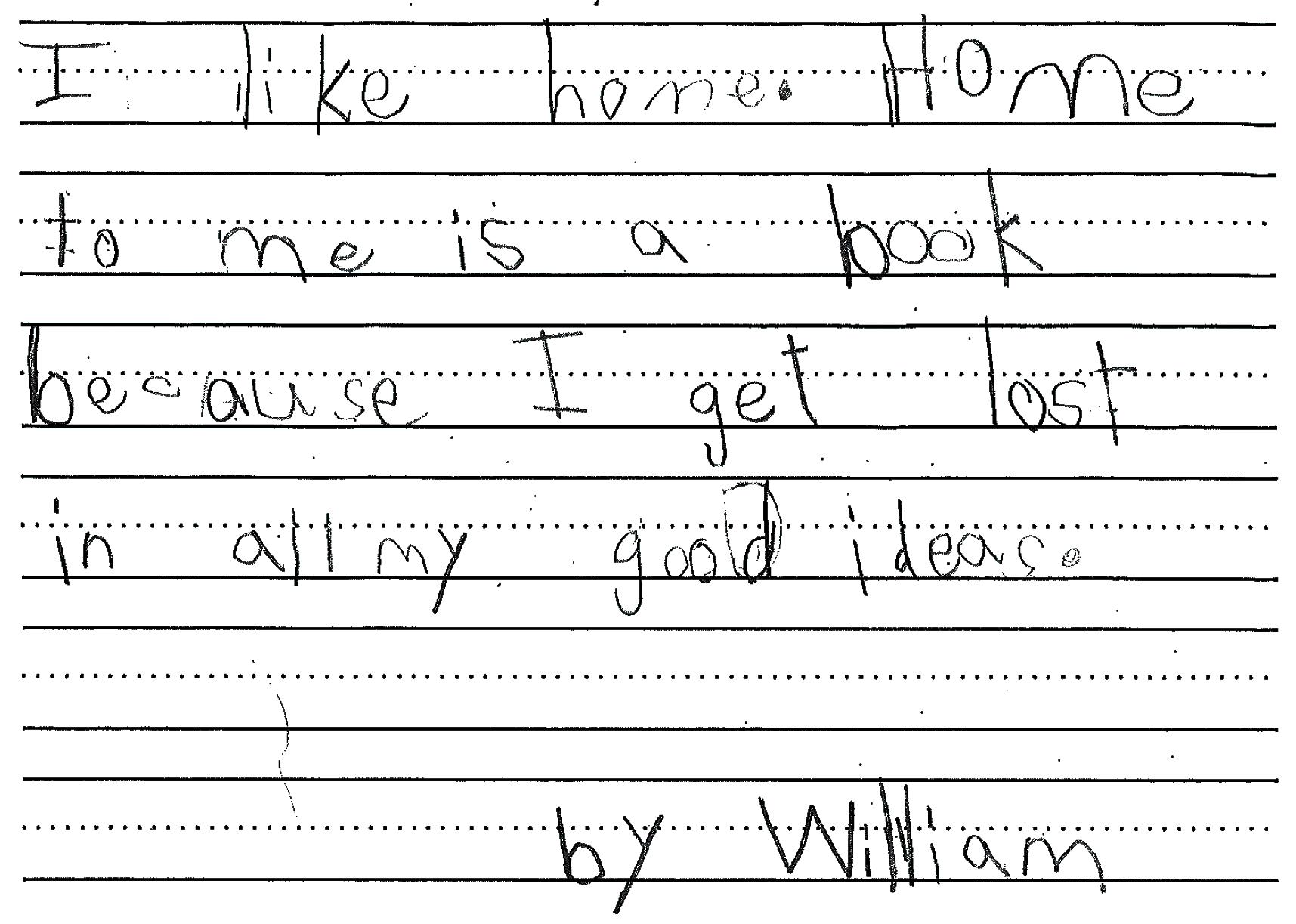
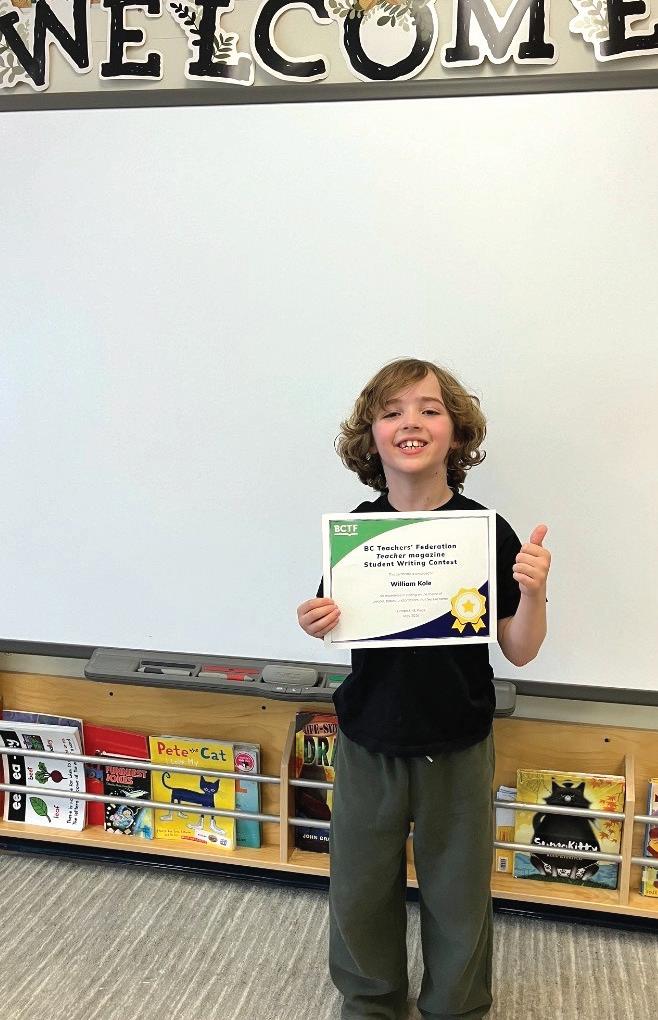
William Kole, K–3, Prose
Luca Chutskoff, K–3, Poetry
CONTEST
GRADES 4–6
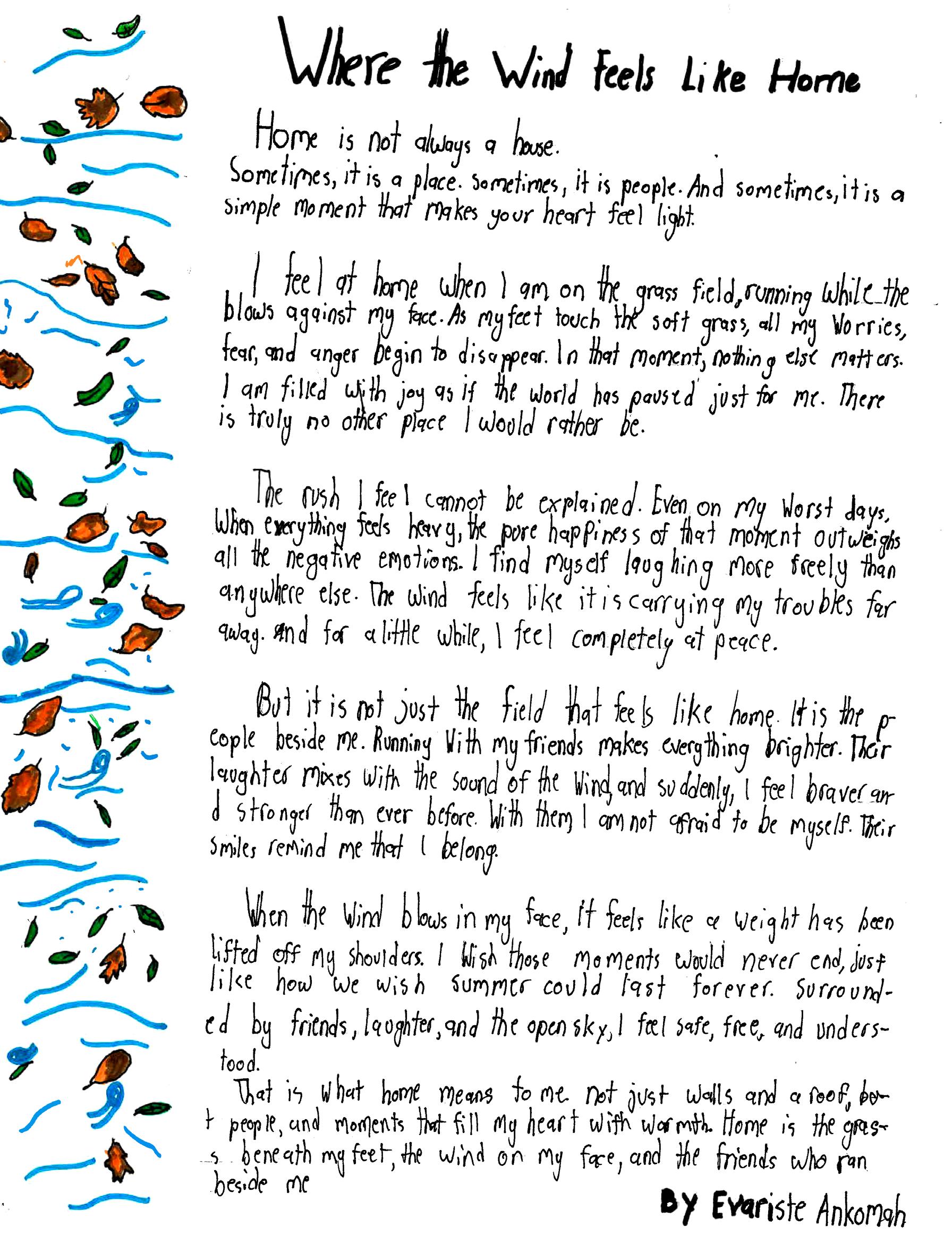
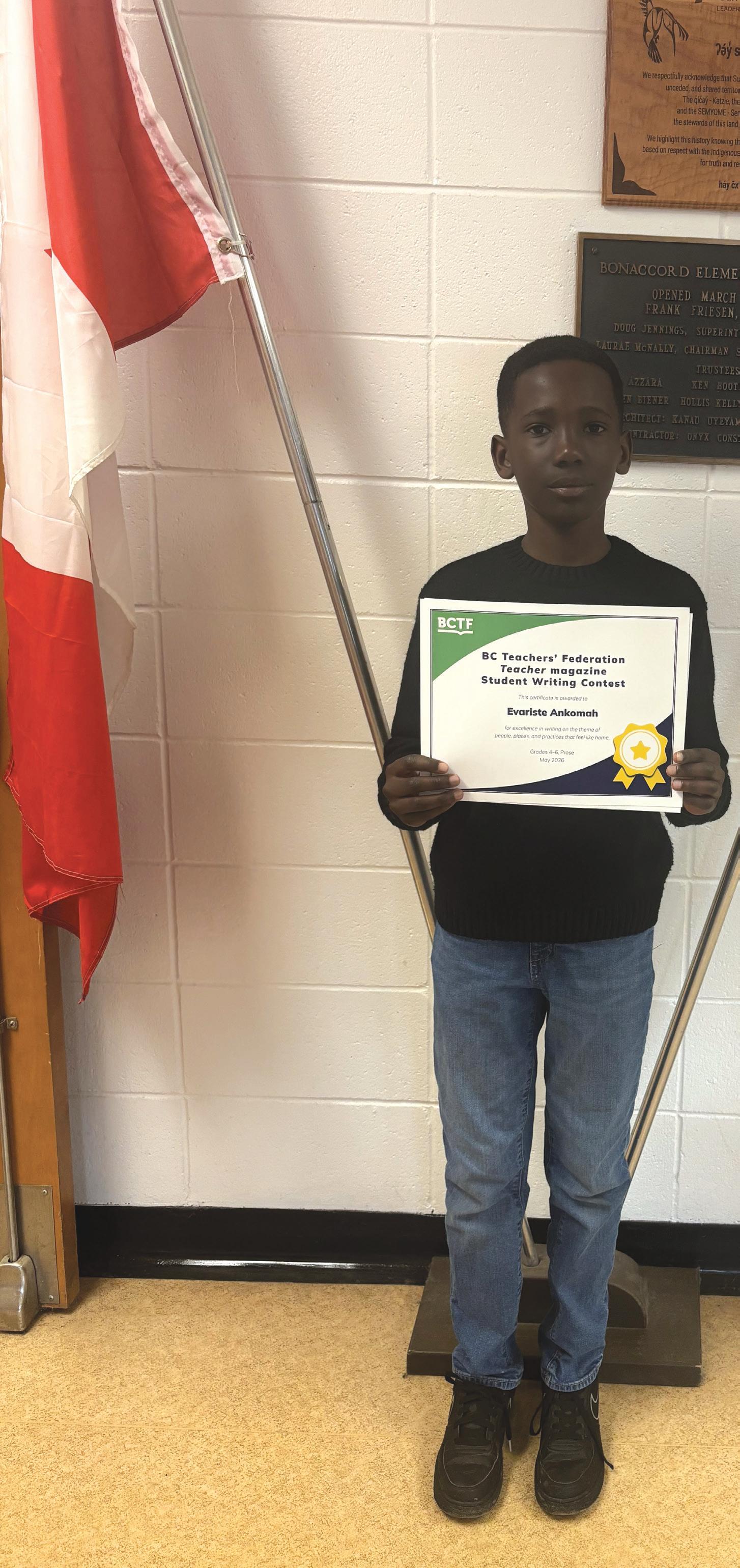
Evariste Ankomah, Grades 4–6, Prose
Heart of My Home
By Felix Wang
Who makes me feel like I am at home? When it’s dark and I’m alone, When doubts begin to cloud my head, Who tucks me in my own bed.
It’s her, whose smile can light up the day, And chase my restless thoughts away. No matter where my feet may roam, Her light will always guide me home.
The kitchen glows with warm coloured lights, As her laughter warms the cold, chilly nights. In simple meals and stories told, Her love is far more valuable than gold.
The one who saves a seat, With gentle glances and words so sweet. The world may keep on changing, may be busy, loud, and fast, But with her love around me, makes me feel safe at last.
Her love is like a fireplace glowing soft and bright, Warming up my weary heart every single night. She asks me how my day went and she truly wants to know, And when I talk about it, she listens to me like watching a show.
Her hugs are shields on stormy days, Her words are calm each and every day. Though twists and turns are shifting ways, Her love is as warm as a fire that always stays.
If I fail or lose my way, She does not turn her love away. She helps me stand, she helps me stay, And face another brand-new day.
She lights each and every room, The quiet strength that makes me bloom. She clears my clouds of gloom, And chases monsters from my room.
So, who makes me feel like I belong, When nights are short and days are long?
My Mom, but a home is not made of windows, bricks, or domes, It’s found within love and kindness, that’s why with her, I feel like I am home. •
Felix Wang, Grades 4–6, Poetry
STUDENT WRITING CONTEST GRADES 7–9

People, Places, or Practices
By Shiloh Pandeagua
Home isn’t always a house with a door and a key. Sometimes a home is simply people— like Cheska, Feona, and me.
Shiloh Pandeagua, Grades 7–9, Poetry
Three voices tangled like bracelets of thread, laughing too loud at the things we said.
Home is the colour of soft pink skies, the warmth of the sun as it starts to rise.
It’s brown café tables, notebooks spread wide, and whispered secrets with nowhere to hide.
Home sounds like giggles echoing through halls, like “Tell me everything!” during long calls.
When my thoughts spill out messy, tangled, and loud, they sit there beside me, patient and proud.
Cheska’s the sunshine that brightens the day, gold in her laughter that chases clouds away.
Feona’s the calm shade of a tree, soft summer breezes that settle in me.
And I’m in the middle, the thread pulling tight, three tiny sparks in the warm evening light.
Different like petals in the shades of rose pink, but blooming together
much more than we think.
Home is the inside jokes that we share, the comfortable silence when no words are there.
It’s spring in the air when our laughter takes flight, like fireflies glowing in the soft summer night.
Even when distance stretched roads far and wide, even when new schools pulled me to another side, our voices still crossed every mile in between— through texts and through calls and the memories we’ve seen.
Because real friendships don’t quietly fade, they grow like tall trees giving cool summer shade.
Their roots twist together in warm brown earth deep, holding the promises we always keep.
Sometimes I think of the days we once knew— pink sunset skies and the bright morning dew.
Time keeps on moving like rivers that roam, but somehow our trio still feels just like home.
So if someone asks where my home might be, I won’t point to buildings or streets I can see.
I’ll point to two names that mean more than the rest— Cheska and Feona, the place I’m most blessed.
Because home is a trio That time cannot bend, Two hearts beside mine That will always be friends.
Through spring-coloured days And warm summer foam, With Cheska and Feona— I’ll always have home. •
The Thing in Between
By Chloe Tseng
The thing in between. That was what mattered. That’s what he told me. He turned to face me, and pointed his finger at the middle of my chest. My arms were spread open, inviting him. He didn’t move. He simply looked at me and said, “The hug itself feels safe. But that’s not what matters. Your heart, the thing in between, is what makes me feel like I belong.” I stared at the boy sitting in front of me. He had changed so much since I first talked to him. Then, he was this quiet, closed-off kid that had pretty good taste in music. Now, he was my emotional crutch. Someone who knew exactly what to say. I knew I belonged with him.
I grinned and smacked his hand away from my chest. “My heart is on the left, not the middle, stupid. I thought you were good at science,” I said. He smirked back at me. We were sitting in a dimly lit hallway, our backs leaning against the felt soundproof wall. The faint booming of party music echoed through the double doors next to us. I sighed. The party outside was fun. It was full of head-pounding noise, the inside of my mouth sweet and sticky. But I decided I liked it better out in this hallway with the person I trusted with my life. I leaned my head on his shoulder.
“You realize this is not helping the dating allegations right?” he said, focused on the video game he had pulled out on his phone. I snorted and shoved him away. He ducked as I tried to slap his head.
“Way to ruin the mood,” I joked. He chuckled and focused back on his video game. It didn’t matter to me that everyone thought we were dating. He was my best friend. He helped me feel something I’ve never felt before, like all the pieces in my brain fit when we were together. My friends often joked around, asking how I didn’t gain any romantic feelings for a guy I spend so much time with. But they don’t know what a best friend feels like. A best friend was something beyond any high school relationship. I knew that the person beside me would be with me forever, even if we went our separate ways.
“You know, I’ve been to so many places over the years. Everywhere I went, I always felt like something was missing,” I said. He paused his game.
“I kind of feel that too. Like, whenever I was having fun, there would be a voice in the back of my mind, telling me that I could be having even more fun right then,” he replied. I snorted.
“Does that mean you think you could be having more fun right now?” I teased. He grinned. “No. You didn’t let me finish. With you, I guess I feel like I found what was missing. I think there are two different kinds of soulmates. The one you grow old with, and the one you grow up with. I think you’re my growing up soulmate,” I stared at the side of his face. I couldn’t believe that such deep words would ever come out of a 15-year-old boy’s mouth.
“I’m going to miss you a lot when I move away,” I whispered. He nodded.
“I know. But I’ll always be here,” he said. I believed him. I trusted him. Just like I always will.
Now I’m thousands of miles away. But whenever I feel that missing piece in my chest, I think about how it was filled. I will always value the thing in between. •
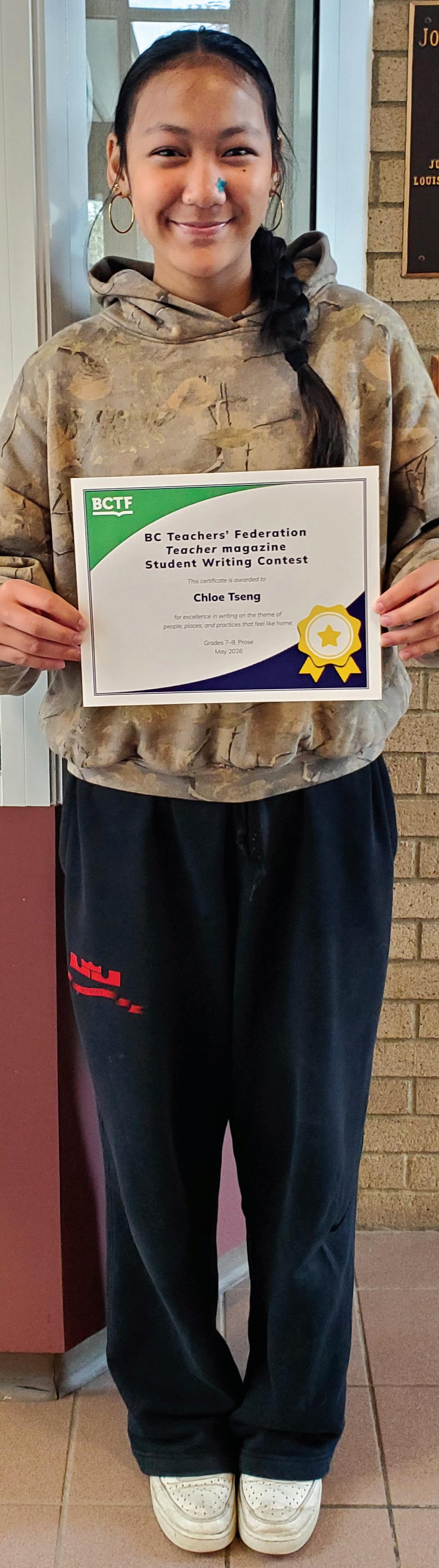
Chloe Tseng, Grades 7–9, Prose
Caitlyn Watts
Grades 10–12, Prose
STUDENT WRITING CONTEST GRADES 10–12
Flower Trim
By Caitlyn Watts
When I was younger, I would go to my grandparents’ house every day in the summer. My dad would drop me off, and I would see my gram gram and grandpa waiting in front of the large house by the entrance to the white door with a frosted window.
My mom told me that gram gram was the name my grandma chose when she became a grandmother. A more playful name, which suited her. I remember the feeling of comfort as soon as they wrapped their arms around me. I would say goodbye to my dad in his 1992 Toyota pick-up and listen to the sound of it drive away as I walked in the front door. Every detail of the house had my gram gram written all over it. Every pillow, coaster, picture frame, and little animal decoration intentional. The flower trim on the ceiling and the matching bench cushion in the foyer that sat next to a swan statue. The smell of the house so distinct I could remember it right now. It’s a inviting smell but also like walking into an antique store. It’s a laundry smell mixed with vanilla.
When I walked inside there was a big, curved stairway going upstairs and to the left a hallway to the kitchen and to the right a second living room themed with blue and white flowers. I remember the standing globe in the corner of the room next to old photographs of weddings and family. My gram gram used to teach me about which country was which, but I never paid attention. I was always too focused on the way it spun around so fast that it looked completely blank. I loved the way the colours blending and the shapes disappeared.
She used to be a secretary for a lawyer. She was so organized and good with people, but I always felt that she would be a great teacher. She taught me how to colour with crayons inside the lines. She would colour Cinderella and I would colour Belle, my favourite princess. She was so good that it made me feel insecure. She always assured me that practice makes perfect. Even though I hated my drawings, she always would hang them on the fridge. She was always so proud of me.
Down the hallway was the kitchen and a sunken living room. Further ahead and in between the two was a dining table. The light from the windows at the end of the table lit up the room. The windows faced a large backyard with a fishpond in the back corner with all different sorts of fish. They were orange, yellow, and white and on some occasions, I could see the black fish who hid under the rocks.
I would always get excited when they let me feed them. My gram gram would come outside with me and bring a large container that smelt like fish and dog food, and I would sprinkle a handful over the cloudy and dark water. She had two boys and never experienced having a daughter. Both my cousins, who are older, were boys as well. I am also an only child just like her. She understood being shy and wishing I had someone to play with growing up. I was never shy with her. I would put on performances for my grandparents and sing very loudly. I remember driving in my grandpa’s beige minivan to Olive Garden for their anniversary to meet my parents. My gram gram would sit in the back seat with me to watch Scooby Doo on the DVD player and talk about everything. Even when I would sleep over and me and my gram gram kicked my grandpa out to the guest bedroom and I couldn’t sleep, she would talk with me until I feel asleep, since I was always nervous to be away from home. In the morning, she would give me a bowl of Honey Nut Cheerios with almond milk. My grandparents loved eating very healthy. While I ate with my grandma at the table, my grandpa would eat in the living room on his black leather chair and watch the news. My gram gram always
made sure I had everything I needed. Sharpies (I loved drawing with sharpies), a blanket and pillow for the couch when I was cold, a blueberry bearpaw (her favourite) and ice water from the cool cups. She always kept the menus I’d draw on at restaurants or the crafts I would make her.
The best memories were in the game room where I had all my toys. She would play with me until I got bored or hungry. I would always run up there after breakfast and I would hear her come up the stairs singing in her distinct voice, “Here I come to save the day!” I think that’s from a cartoon show, but to me, that was my gram gram. A hero— someone who showed up for me no matter what.
Even when she was diagnosed with Alzheimer’s, she just wanted to be gram gram. When I would come upstairs, she wouldn’t sing. She wouldn’t play either. She would just watch me and then get distracted and start obsessively cleaning. She was always very neat but then every crumb would bother her. I didn’t really understand, I was eight after all. It wasn’t until I started cleaning up one day and she came in the game room upset, saying, “Don’t get rid of the toys sweetie; children are going to come and use them.” She said those words like she didn’t even know me. I wasn’t her granddaughter—I was a random child in her house, a stranger. My grandparents stopped showing up for special occasions because it was hard for her to process. She always seemed happy though. She would still talk to me but would get confused. A couple years ago my grandpa finally agreed to let her stay in a facility that would work best for her needs. It’s hard though. You spend all those years of your life with someone just for those years to disappear. A home I considered my second home was bare, stripped away of its glitter.
After my grandma moved, it felt weird in their house. The picture still hung on the fridge, the wall trim still full of her. It’s like even though she’s gone, she’s alive in this house. The years following COVID, I started talking to my grandpa more than I ever did before. I felt sad at first, since
I didn’t know what to talk about, but the more my parents and I would visit him, the closer we got. There would be times where my dad would be working on something in the backyard and I would sit in the living room and talk to my grandpa about school and guitar, since he used to play. The more we talked, the more he would open up to me about his childhood and when my dad was little, which we had never really talked about. We would also talk about grandma and he would tell me funny stories. I then realized, it’s not that he didn’t want to tell me, it’s because I never asked. My grandpa became a huge part of my life since most of my family in Canada either moved or passed away. Me, my parents, and my grandpa now spend holidays together and he started just dropping by to see us.
Even though I gained such a great relationship with my grandpa, it stills feels so empty going back to their house. Her office left exactly how she left it with her nail polish on the desk shelf completely dried up, drawers full of menus and birthday cards, books neatly placed on the shelf, and a star sticky note that I wrote the letter W on with glitter glue taped to her shelf. The big dog stuffie she would dress up when I’d come over with a hat and sunglasses sits on her chair in the game room. I noticed about a month ago, her purse sitting behind a couch chair in the blue living room. Everything looked untouched and dusty. My grandpa would never admit it, but it must have been too hard to look inside knowing she would never carry it around again. I still visit her, in her new facility. She doesn’t talk or move, but she eats, so I come and help feed her lunch once a week with my dad. My dad goes every day to feed her. My grandpa does dinner.
I like to imagine she isn’t in there suffering. That she’s still in that house. Making sure it’s clean and watching over my grandpa. I’d like to think she feeds the fish and waters the flowers. I’d like to think she’s in the flowers on the wall trim, surrounding the house and reminding us that she’ll always be with us even when the trim fades. •
GRADES 10–12
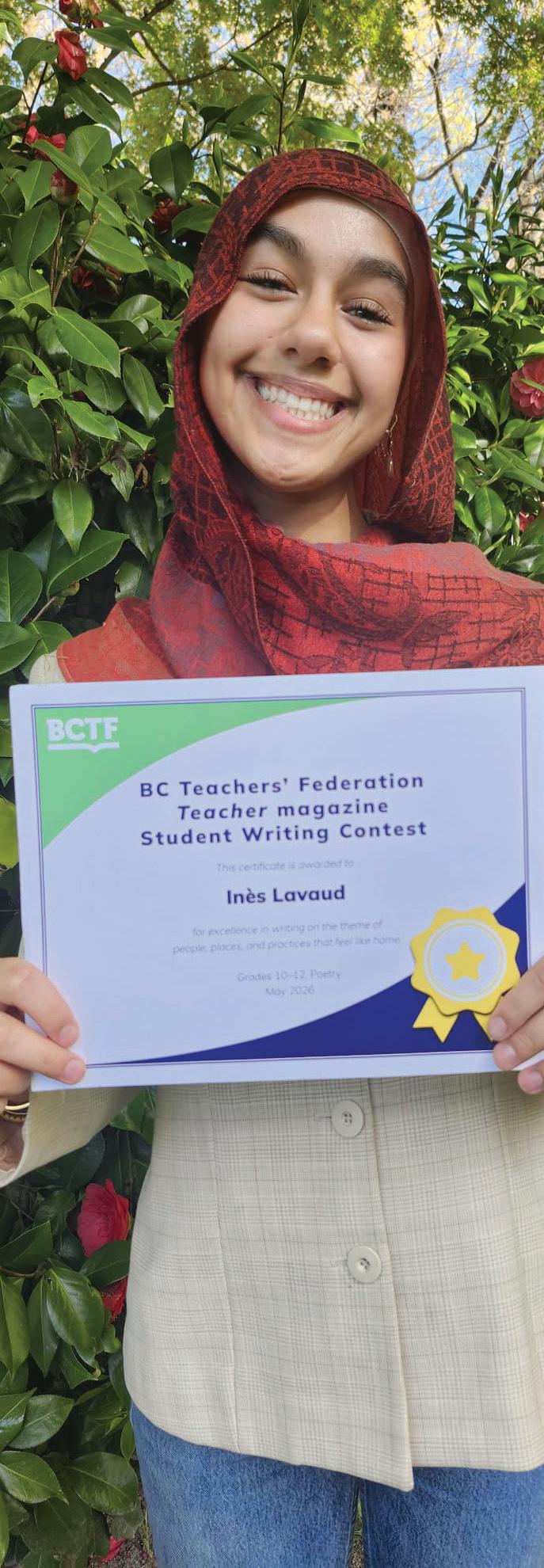
Inès Lavaud Grades 10–12, Poetry
Untitled
By Inès Lavaud
What is home?
Where is home?
Who is home?
If you asked me these questions, I would say home isn’t
A thing
A place
A soul.
Home is All things All places
All souls
That give you a sense of safety.
Something that comforts you.
Somewhere your heart can rest.
Someone that brings you warmth.
To me, home is
Praying in beautiful Moroccan mosques
With colourful mosaics tiles And smoothly carved wooden pillars. With worn-out handmade carpets And tasseled pillows.
With the warm air of the Medina
And the sweet scent of mint tea.
With the quiet breaths of prayers
And the vibrant songs of birds.
To share a silent understanding with the ones around me that are also in their prayers.
To feel the Divinely love with strangers
And without it feeling strange.
To gather once we are called to prayer.
To greet each other with salaams.
Home is personal.
Home is universal.
Home is the reminder of where we came from and where we belong. It’s the source of our nature.
No matter the nature, home is made of love.
Ask me again:
What is home?
Where is home?
Who is home?
Home is an expression of love. •



Scan the QR code to download the unit plan.
Scan the QR code to download the flag.
THE FRANCO-COLUMBIAN PRIDE FLAG
A new teaching tool for building solidarity in French-language classrooms in BC
By EJ Rush
(they/them, iel/el, accords au féminin), teacher and SEPF member, Esquimalt
LOOKING for a classroom resource that supports inclusion, social justice, and powerful conversations in French? The Franco-Columbian Pride flag is a new teaching tool designed for educators working in French as a first or working language in BC.
Created by students in the Conseil scolaire francophone de la ColombieBritannique (CSFCB) in 2023, the flag is an intersectional identity construction project. It highlights solidarity within the French-speaking community in BC and affirms two simple ideas: all people who speak French belong to the community, and all members of the community have responsibilities toward one another. The design centres linguistic security and fosters a sense of celebration and belonging.
The Franco-Columbian Pride flag is the first Francophone flag in Canada to represent commitments to reconciliation and anti-racism alongside the celebration of 2SLGBTQIA+ people. Its development involved consultation with Indigenous community partners, including members of the Songhees and Tsawout First Nations, Métis Nation BC, 2 Spirits of BC, and the Department of Reconciliation and Indigenous Education at the CSFCB.
The Franco-Columbian Pride flag invites students to see French as a shared, living language— one that supports belonging, justice, and responsibility in their own community.
In the classroom, the flag supports rich and age-appropriate discussions. It invites students to explore personal and social responsibility while learning French on Indigenous territories. It also provides a concrete entry point for conversations about equitable representation and inclusive language in French.
The flag can be meaningfully integrated into school-wide events or projects organized in connection with La Francophonie month in March; International Day against Homophobia, Biphobia, Intersexism, and Transphobia on May 17; National Indigenous Peoples Day on June 21; Trans Day of Remembrance on November 20; or Human Rights Day on December 10, to name just a few.
A complete French language unit plan is available on TeachBC (bctf.ca/ classroomresources). It includes visual and audio media leading to authentic, own-voice French texts by students
and community members in BC; inquiry and assessment supports; and creative project ideas, reflection questions, and formative assessments. The goal is not to reproduce the flag but to invite students to imagine and design their own collective identity-building projects in French, grounded in the land, histories, and values of their community.
Like the Progress Pride flag or the Every Child Matters flag, the Franco-Columbian Pride flag is not a territorial flag. Instead, it centres community care and solidarity. Schools are encouraged to invite and honour local First Nations if the flag is raised. Whether displayed, discussed, or used as a starting point for inquiry, the Franco-Columbian Pride flag invites teachers and students alike to ask an essential question: What does it mean to belong, here, together, in French? •
NAVIGATING BETWEEN CULTURES
A teacher’s reflection on immigration, identity, and intercultural understanding
By Yin Tsia, teacher, Pitt Meadows
WHEN I IMMIGRATED to Canada, the transition was far from easy. I arrived with hope, of course, but also with the weight of uncertainty, cultural complexity, and the quiet struggle of learning to belong. Immigration isn’t a single moment of crossing a border. It is an ongoing process of negotiating identity, adjusting to unfamiliar norms, and reconciling who you were with who you are becoming.
My understanding of these complexities has deepened recently—not only through my own professional learning on intercultural understanding but also through my personal experiences caring for my mother, navigating health-care settings, and then ultimately arranging her funeral. Those moments forced me to confront cultural conflict in a very real way. At every step, I found myself asking the same questions: Do I honour my Burmese traditions? My Chinese roots? Or follow Canadian customs?
If I, as an adult, felt that much confusion in balancing cultural expectations, imagine the emotional load carried by the English language learners (ELLs) in our classrooms.
Educators often talk about “knowing about culture,” promoting multiculturalism, or building cultural understanding. While these are valuable, I believe they are only the beginning. What we truly need is a deeper intercultural understanding: the ability to navigate between cultures, recognize the tensions students experience, and respond with empathy and authenticity.
When I talk about intercultural understanding, I mean more than learning about cultural traditions or differences. It is the ability to reflect on our own cultural assumptions, recognize different cultural norms, and intentionally create space for multiple ways of being, communicating, and learning. Rather than expecting students to fit into a single cultural framework, intercultural understanding asks educators to navigate the space between cultures with empathy and care.
For many English language learners, immigration brings layers of challenges that are often invisible. Here are the top three challenges that come to mind:
1. IDENTITY CONFLICTS
Identity shapes how students see themselves and how they show up at school. For ELLs, cultural identity is closely tied to belonging and success. Many quietly wrestle with questions like these:
• Who am I in this new country?
• How much of my culture should I keep? How much should I change?
• Am I too much of one culture and not enough of another?
These internal conflicts often remain invisible, yet they shape how students see themselves and how they participate in school.
2. ADAPTING TO NEW CULTURAL NORMS
Classroom expectations in Canada (from communication styles to classroom routines) may look very different from what students are used to. ELLs are learning how to read new social cues (eye contact, body language, gestures, etc.), adjust to unfamiliar routines, and navigate shifting family roles. Often they are caught between different and sometimes conflicting expectations at home and at school.
3. NAVIGATING SOCIAL-EMOTIONAL NEEDS
Alongside academic learning, ELLs carry a heavy emotional load. Many experience grief for the people and places they’ve left behind, stress related to immigration, and pressure to adapt quickly. Some take on the emotional work of translating for their families—not just language, but the new culture as well. For some ELLs, their journey may also include experiences of trauma.
And on top of all this
ELLs are learning a new language and expected to keep up with the academic demands of the curriculum. They are building vocabulary, decoding new language structures, and making sense of content, while navigating identity, cultural shifts, and emotional changes. The cognitive load is immense, and it requires educators to approach their learning with compassion and intentionality.
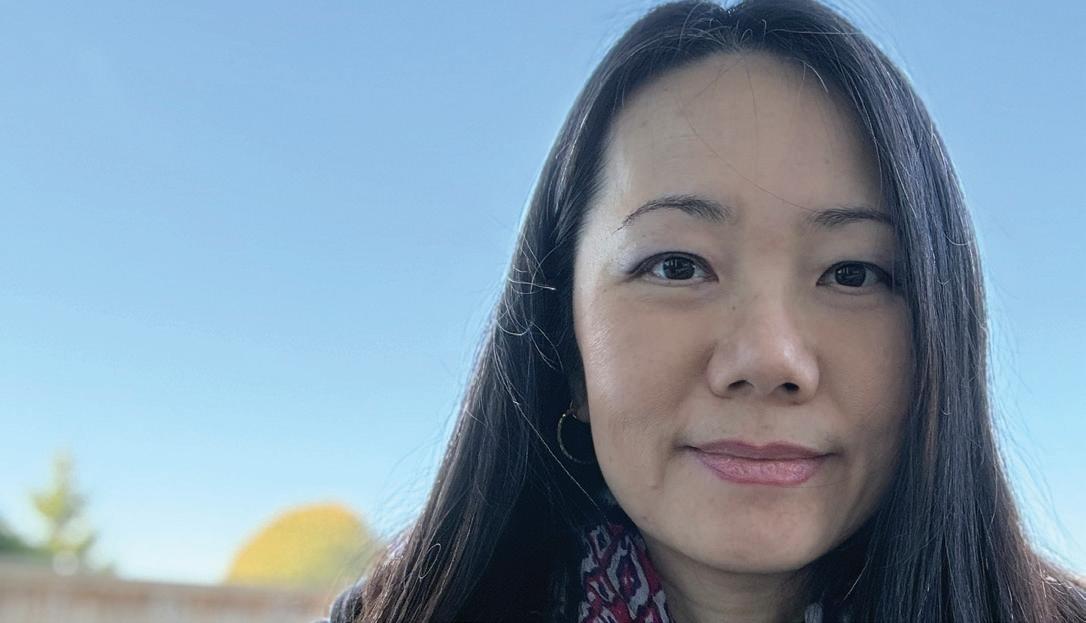
Left: Yin Tsia
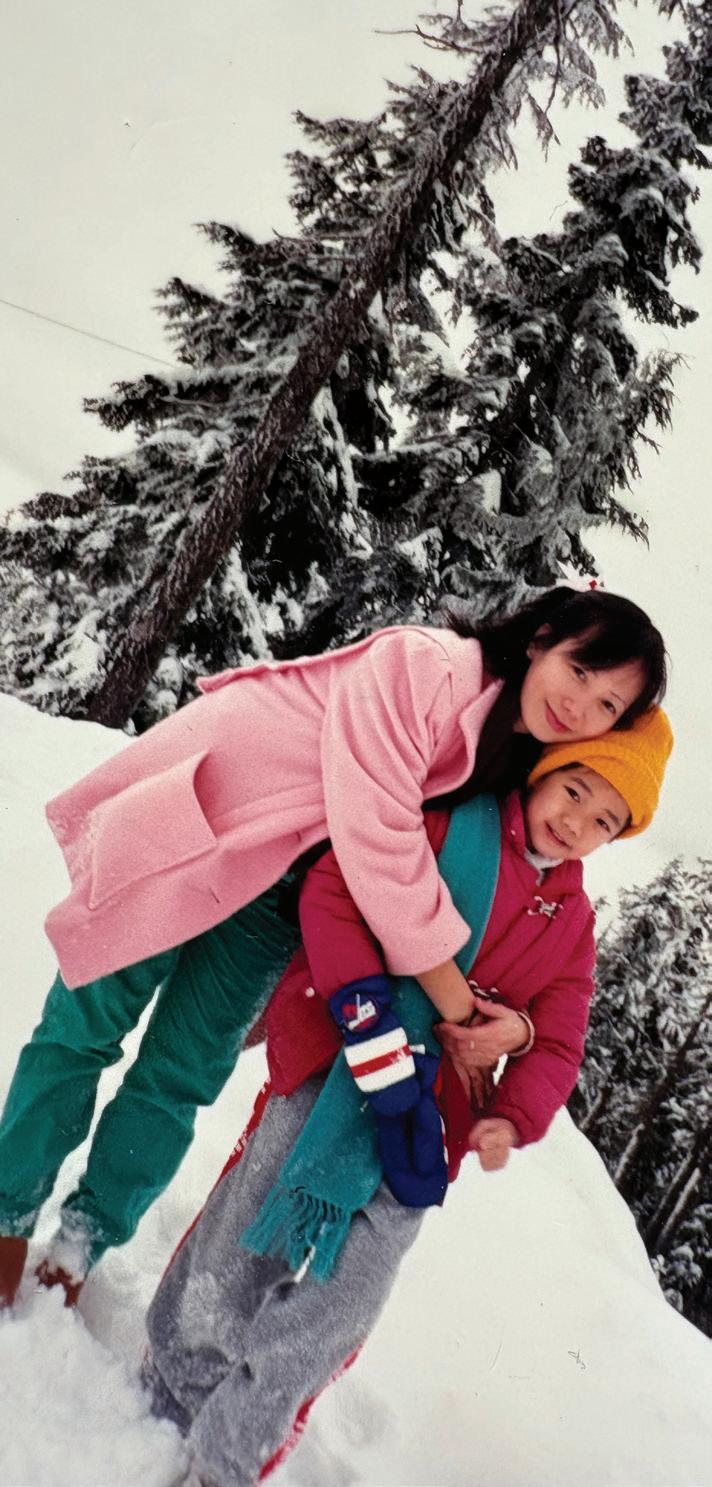
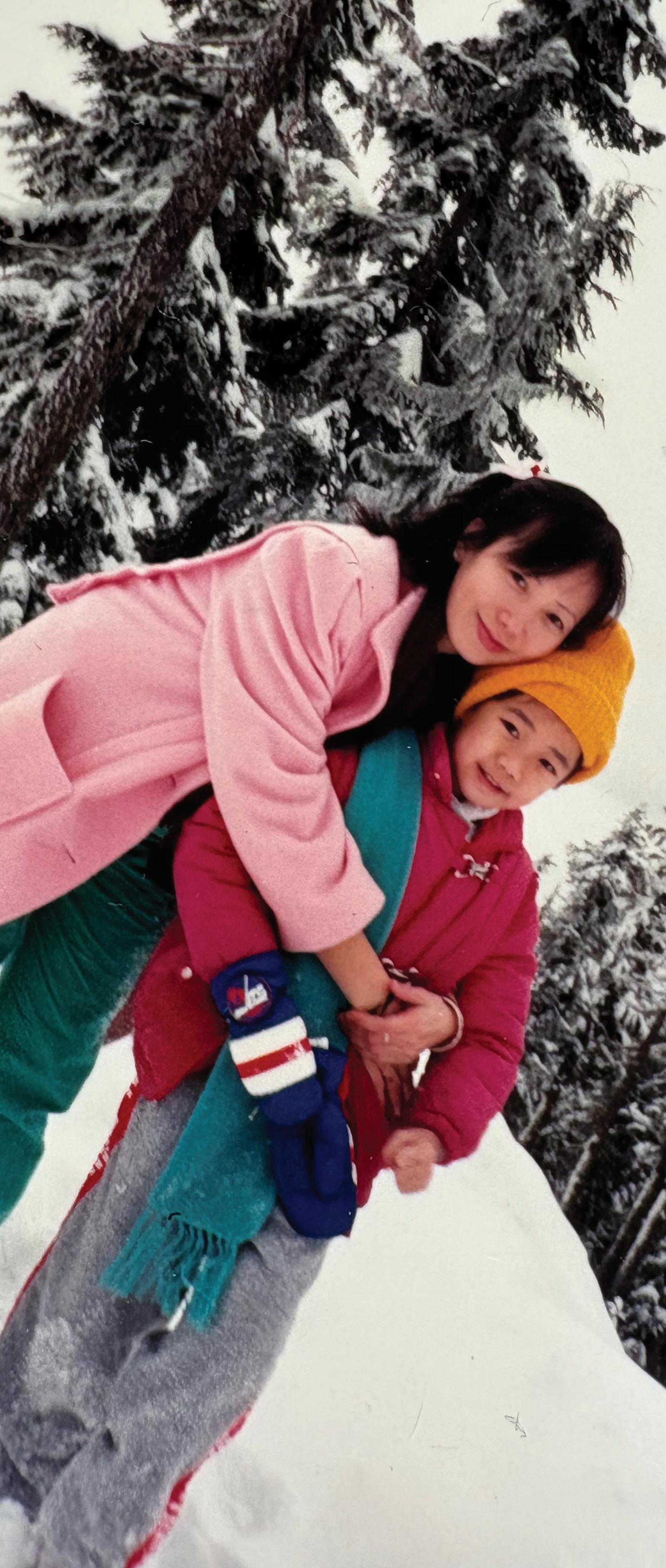
Opposite: Yin and her mother seeing snow for the first time—an experience that informs how Yin understands her students’ “firsts.”
Photos provided by author.
WHAT EDUCATORS CAN DO
To truly support newcomer and multilingual learners, educators must go beyond teaching strategies and focus on building relationships, trust, and a sense of belonging:
Get to know your students—deeply. Their cultural identities, linguistic backgrounds, immigration journeys, and lived experiences shape their learning far more than we sometimes realize. Educators can use student surveys, identity maps, or informal conversations to learn about students’ languages, cultures, experiences, and interests.
Validate all parts of their identity. Create space for students to bring their whole selves. Educators can invite students to share their home languages, traditions, cultural knowledge, and personal experiences in class discussions and assignments so every part of who they are is welcomed and valued.
Recognize the emotional load of immigration. Safety, trust, and belonging are prerequisites for learning. Educators can create predictable routines, check in with newcomer students, and provide opportunities for peer connections so students feel safe and included.
Engage in intercultural reflection. Examine your own cultural lens and how it shapes your expectations, assumptions, and interactions in the classroom. Educators can reflect on how their own experiences and cultural perspectives influence how they interpret student behaviour, participation, and communication. We can ask ourselves: What can we learn from our students’ cultural and linguistic knowledge? When a student behaves in a way that surprises us, could there be a cultural explanation we have not yet considered?
Create culturally responsive environments. Representation, language support, and inclusive classroom practices help students see themselves as capable and valued. Educators can include diverse texts, multilingual visuals, and culturally relevant examples so students see their identities reflected in the learning environment.
Ultimately, supporting ELLs begins with understanding that their stories are rich, complex, and unique. Before we teach language or content, we must first show students that we see them.
Because when we truly know students, we not only strengthen their learning—we honour their identities, their journeys, and the cultures they carry with them. •
Understanding the BC HUMAN RIGHTS TRIBUNAL DECISION

By Stefanie Quelch (she/her) and Alanna Tom (she/her), BCTF Legal Department
ON FEBRUARY 18, 2026, the BC Human Rights Tribunal issued a very important decision on a case filed by the BCTF and the Chilliwack Teachers’ Association (CTA) against former school board trustee Barry Neufeld. This decision affirms the right of 2SLGBTQIA+ teachers and individuals to be free from discrimination, including hateful comments made online. This case also made important findings about the role of elected school board trustees and their responsibility to the school community.
By way of background, in 2016, the BC government amended the BC Human Rights Code (the “Code”) to include explicit protection for both gender identity and expression. This led to the Ministry of Education and Child Care directing all school districts and independent school authorities to ensure their codes of conduct and anti-bullying policies referenced sexual orientation and gender identity (SOGI). Not long afterward, the Ministry created SOGI 123 in collaboration with other organizations.
SOGI 123 is not curriculum and is not mandatory. Rather, it is a set of tools and resources that can be used by teachers to support an inclusive learning environment for all students.
In 2017, while Mr. Neufeld was an elected trustee with School District No. 33 (Chilliwack), he attended an information session about SOGI 123. Mr. Neufeld subsequently posted a public statement on his Facebook account, alleging that SOGI 123 was propaganda, an “absurd theory” and “allowing” children to “change gender” was child abuse. In response to concerns raised about his statements, Mr. Neufeld initially
“While Mr. Neufeld is free to hold his views, his role as trustee brought those views into the workplace. There was a direct connection between Mr. Neufeld’s harmful rhetoric
and a climate permissive of anti-2SLGBTQIA+ sentiment within the District.”
posted an apology. Despite doing so, over the next few years he continued to post many public statements denouncing SOGI 123, opposing gender-affirming care for trans youth, dismissing transgender and gender-diverse people as a “theory” or an “ideology” and asserting that teaching about SOGI in school primes students for abuse.
In response to Mr. Neufeld’s posts, the BCTF and the CTA filed a human rights complaint against Mr. Neufeld, as a class complaint on behalf of all teachers employed in the District, which was subsequently narrowed by the Tribunal to be teachers who identify as 2SLGBTQIA+. The complaint alleged that Mr. Neufeld’s public statements violated three sections of the Code: discrimination in employment (s. 13), discriminatory publications (s. 7(1)(a)), and hate speech (s. 7(1)(b)). The Tribunal upheld the complaint on all three grounds.
With respect to the claim about discrimination in employment, the Tribunal found that trustees are in a position of power and play an integral role to the employment of teachers and teachers’ work environment. While Mr. Neufeld is free to hold his views, his role as trustee brought those views into the workplace. There was a direct connection between Mr. Neufeld’s harmful rhetoric and a climate permissive of anti-2SLGBTQIA+ sentiment within the District. Evidence of the significant and direct impact of this on teachers was provided by teachers who bravely testified in the hearing.
Regarding the claim over discriminatory publications and hate speech, the Tribunal concluded the following:
“For five years, Mr. Neufeld inundated public discourse in Chilliwack with speech that degraded and denied trans people, sought to eliminate public policies for their inclusion, and sounded alarms about an imaginary threat posed by their social acceptance. He spread misinformation and inflamed antiLGBTQ animus in the District.” (para 164).
This case provided much needed clarity on the application of section 7 of the Code to online publications. Code restrictions on discriminatory publications were drafted before the era of online publications and social media. In a preliminary decision, the Tribunal confirmed that individuals who publish discriminatory materials through online posts can be subject to sanctions under the Code
To remedy the harm caused by the violations of the Code the Tribunal ordered Mr. Neufeld to cease the contravention, refrain from engaging in similar conduct, and awarded damages of $750,000.
Mr. Neufeld and his legal counsel have publicly commented that they will be filing for a judicial review of the final decision in the BC Supreme Court, so this lengthy legal battle may not be over. •
A look inside the CTA office and the BC HUMAN RIGHTS TRIBUNAL CASE

ED KLETTKE remembers October 23, 2017, vividly. That was the day Barry Neufeld made the first of many online posts that caused harm to teachers, students, and families in Chilliwack—especially those belonging to the 2SLGBTQIA+ community. Ed was first vice-president of the Chilliwack Teachers’ Association (CTA) at the time and recalls a slew of texts, phone calls, and messages from members to alert the office of what had just been posted online by a school board trustee.
“Teachers were upset and the local office was inundated,” said Ed.
Reid Clark, the current CTA President, was teaching Grades 3 and 4 at the time and remembers a lot of discussion about the online posts in the staffroom at the school where he worked. Teachers were surprised and shocked that a school board trustee would make comments that can cause significant harm to the community they were elected to represent.
The days and weeks following those first online posts were a busy time for the CTA. Among other actions, the CTA Executive Committee brought forth a motion to a general meeting calling for Mr. Neufeld’s resignation, considering his online posts and attendance at events that spread anti-trans rhetoric.
“This is how we make decisions in a democratic union,” said Lee-Anne Clarke, who was CTA president in 2017. “The membership votes on what the local will do and the membership voted to call for Mr. Neufeld’s resignation and use our voice to defend trans rights.”
CTA members also showed up to protests along with CUPE colleagues, the district parent advisory council, and community members. Protesters
“Everyone has a right to feel safe, to belong, and the Human Rights Tribunal decision sends a message that a trustee has a responsibility to be inclusive and to promote a discrimination-free environment.”
– Lee-Anne Clarke, former CTA president
showed up with rainbow flags and did their best to make sure members of the 2SLGBTQIA+ community knew their colleagues and community would stand up for their right to feel safe and included in schools.
“In a way, it galvanized our community,” said Reid. “There was a real show of solidarity and pride, and it helped us as teachers and as a union to come together and stand up for the 2SLGBTQIA+ community.”
Despite the push back from teachers, Mr. Neufeld continued to post harmful comments online, speak at anti-trans events, and derail the work of school board meetings. Heartbreakingly, Mr. Neufeld was re-elected to the school board in the following election. However, he was not re-elected in 2022.
“As a trustee, he was in a position of power, and I witnessed his comments and actions harm teachers over the span of several years,” said Ed.
As part of the CTA and BCTF’s human rights complaint against Mr. Neufeld, 2SLGBTQIA+ teachers were asked to share their personal stories of the impact Mr. Neufeld’s actions had.
“The courage and strength of all those who came forward was inspiring,” said Reid, who observed the 13-day hearing.
“Their stories of what it was like to be a 2SLGBTQIA+ teacher in Chilliwack while all this was going on were very personal and impactful.”
When the decision was released, LeeAnne, Reid, and Ed all recall feeling elated, relieved, and emotional. The process took a toll on so many people, but the years-long journey ended with a significant achievement: a decision that holds a school board trustee responsible for the harm he caused.
“Everyone has a right to feel safe, to belong, and the Human Rights Tribunal decision sends a message that a trustee has a responsibility to be inclusive and to promote a discrimination-free environment,” said Lee-Anne. “It was a good day when we got the decision.” •
BCTF WORKSHOPS
Creating a Gender Inclusive School Culture and Supporting 2SLGBTQIA+ Students and Staff and are two BCTF workshops that can be booked by your local union office to help build understanding of and support for 2SLGBTQIA+ folks in your community. Scan the QR code to find out more.

TEACHERS CAN’T POUR FROM AN EMPTY CUP But what keeps emptying it?

By Afrah N. Khan, M.Ed. in Human Development, Learning, and
WE OFTEN TALK about student well-being in schools. But far less attention is given to the wellbeing of the people responsible for supporting students: teachers. This gap reflects a deeper problem. Teacher well-being is still treated as an individual responsibility, when in reality it is shaped by the systems teachers work within. If we are serious about supporting students, teacher well-being must become a systemic priority, not a personal burden for teachers to manage alone.
Much of the current conversation assumes that supporting teachers means helping them cope better: through programs such as EASE (Everyday Anxiety Strategies for Educators) and MindUP for Educators, and mindfulness-based stress reduction, as well as broader mindfulness training, resilience workshops, and stress management strategies. These approaches are not unhelpful, but they are incomplete. They focus on how teachers respond to stress, rather than why that stress exists in the first place.1
A growing body of research shows that teacher wellbeing is closely tied to structural working conditions. For example, high workload, long working hours, and increasing job demands are consistently linked to stress, burnout, and reduced job satisfaction.2,3
In education, burnout, stress, and emotional exhaustion are often treated as the problems. But they are better understood as outcomes of deeper structural conditions: workload expectations, staffing shortages, limited time, and expanding responsibilities.4,5 Programs targeting teacher wellness are often addressing symptoms, rather than causes.
This mismatch became especially visible during the COVID-19 pandemic. In my own experience as a teacher, much of our time and energy was directed toward supporting students, checking in on their well-being, adapting lessons, and creating a sense of stability in a period of uncertainty. At the same time, there was little structured space to acknowledge how teachers themselves were coping with the same disruptions. Research from multiple countries reflects a similar pattern: teachers reported significantly increased workloads, emotional strain, and blurred work–life boundaries during the pandemic, often without corresponding institutional support.6,7
“Teacher burnout will not be solved by asking individuals to cope better. It will be reduced when policy, school structures, and working conditions make the profession sustainable.”
My experience was not unique; it was part of a broader pattern in which systems relied heavily on teachers’ emotional labour without adequately supporting it.
In response to rising concerns about burnout, many education systems have introduced well-being initiatives for teachers. While these initiatives can provide short-term relief, they largely operate at the level of the individual.
The consequences of this approach are becoming increasingly visible. Teacher burnout is not only a personal health issue but also a system-level risk. When burnout rises, schools lose stability, continuity, and experienced staff. In BC, the warning signs are already clear: in 2025, one in seven teachers reported that their mental health was poor or very poor, while 14% said they were unlikely to remain in teaching over the next two years.8 This matters because turnover deepens staffing shortages, disrupts student continuity, and increases pressure on the teachers who remain. The burnout can weaken remaining teachers’ ability to build relationships, respond to student needs, and sustain their commitment to the profession over time.9 Teacher well-being, then, is not separate from school improvement or student success. It is one of the conditions that makes both possible, which is why solutions must target the systems producing the strain, not just the individuals carrying it.
A systemic approach would focus on reducing workload pressures, improving staffing levels, and treating teacher well-being as essential to the functioning of schools. BC has already taken steps through its K–12 Workforce Plan and new mentorship initiatives.10 But progress will depend on whether these commitments translate into better daily working conditions for teachers. England’s Teacher Recruitment and Retention Strategy11 offers one example of how governments can approach teacher well-being as a structural responsibility. Inspired by that approach, the following priorities could help strengthen teacher well-being in BC:
• Clear limits on administrative overload, reporting demands, and implementation pressures. New funding tied to workload is promising, but there is still no consistent province-wide framework protecting teacher time.
• Eliminating unnecessary paperwork, duplicated reporting, and avoidable meetings so teachers can spend more time teaching and less time managing administrative tasks.
• At the early-career level, mentorship programs are a strong start, but every new teacher should have access to mentoring, release time, and practical support, not just those in certain districts.
• For professional growth, specialist career pathways would allow teachers to grow, lead, and be recognized without having to leave the classroom.
Teacher burnout will not be solved by asking individuals to cope better. It will be reduced when policy, school structures, and working conditions make the profession sustainable. That is the shift BC can lead now. Because teachers cannot be expected to pour from an empty cup, and no amount of individual training can compensate for a system that continues to drain them. •
1 Kimberly A. Schonert-Reichl, “Social and Emotional Learning and Teachers,” The Future of Children, 27, No. 1, 2017, 137–55: https://files.eric.ed.gov/fulltext/EJ1145076.pdf
2 Einar M. Skaalvik and Sidsel Skaalvik, “Motivated for Teaching? Associations with School Goal Structure, Teacher Self-Efficacy, Job Satisfaction, and Emotional Exhaustion,” Teaching and Teacher Education, 67, 2017, 152–60: www.sciencedirect.com/science/article/abs/pii/S0742051X16307855
3 OECD, TALIS 2018 Results (Volume II): Teachers and School Leaders as Valued Professionals, Paris, OECD, 2020: www.oecd.org/education/talis-2018-results-volume-ii-19cf08df-en.htm
4 Clare Bambra, Debbie Fox, and Alex Scott-Samuel, “Towards a Politics of Health,” Health Promotion International, 20, No. 2, 2005, 187–93: doi.org/10.1093/heapro/dah608
5 OECD, TALIS 2018 Results, Volume II
6 Lisa E. Kim and Kathryn Asbury, “Like a Rug Had Been Pulled from Under You: The Impact of COVID-19 on Teachers in England during the First Six Weeks of the UK Lockdown,” British Journal of Educational Psychology, 90, No. 4, 2020, 1062–1083: doi.org/10.1111/bjep.12381
7 UNESCO, Education in a Post-COVID World: Nine Ideas for Public Action, 2020: unesdoc.unesco.org/ark:/48223/pf0000373717
8 BCTF, “2024–25 BCTF Membership Survey,” May 2025: bctf.ca/docs/default-source/for-news-and-stories/research-reports/2024-25membershipsurvey_final.pdf
9 Daniel J. Madigan and Lisa E. Kim, “Does Teacher Burnout Affect Students? A Systematic Review of Its Association with Academic Achievement and StudentReported Outcomes,” International Journal of Educational Research, 105, 2021: Article 101714, doi.org/10.1016/j.ijer.2020.101714
10 Province of British Columbia, “Strengthening and Supporting B.C.’s K–12 Workforce,” Ministry of Education and Child Care, last modified January 28, 2026: www2.gov.bc.ca/gov/content/education-training/k-12/administration/program-management/k-12-workforce-development/k-12-workforce-plan
11 Department for Education, Teacher Recruitment and Retention Strategy, London, UK Government, 2019: www.gov.uk/government/publications/teacher-recruitment-and-retention-strategy

SUMMER READING
Recommendations from BCTF provincial specialist associations
ANTI-OPPRESSION
EDUCATORS’ COLLECTIVE
Disability Visibility: First-Person Stories from the Twenty-First Century edited by Alice Wong
It is important for educators to explore the realm of disability justice to understand how we all produce and perpetuate ableism in our classrooms and communities. In this anthology, Alice Wong invites us to learn from disabled artists and activists so we can manifest love and justice in all spaces, because inclusion is solidarity.
BC BUSINESS EDUCATION ASSOCIATION
The Serviceberry: Abundance and Reciprocity in the Natural World by Robin Wall Kimmerer
This book offers a compelling perspective on alternative economic systems, using lessons from nature and Indigenous knowledge to help educators explore ideas of reciprocity, sustainability, and community within discussions about the economy and beyond.
BC DANCE EDUCATORS’ ASSOCIATION
Brain-Compatible Dance Education by Anne Green Gilbert
This book is in three parts: Part 1 covers the brain science research that informs the theory of the 10 brain compatible dance principles. Part 2 describes lesson structure for dance that follows brain-compatible principles. Part 3 gives holistic lesson plans for ages 0 through 4, 5 through 8, 9 through 18, and adults. A great resource for any educator no matter the level of dance experience.
JOIN A PSA!
The professional development opportunities provided by BCTF provincial specialist associations (PSAs) go far beyond book recommendations. Scan the QR code to find out about all 32 PSAs and consider joining one to start next school year with renewed excitement.
BC EARLY CAREER TEACHERS’ ASSOCIATION
The Book of Boundaries: Set the Limits that Will Set You Free by Melissa Urban
Urban’s book gives a green/yellow/red traffic light analogy with tangible examples of what boundary-setting with a warm, brief, and firm tone can sound like in different contexts. Urban’s framework for boundary-setting language helps you stay calm and consistent even when you feel intimidated. This book gives example scripts that are short, neutral, and repeatable. Ultimately, the book’s “traffic light” framework is built to equip new teachers with clear, respectful communication that protects personal time, energy, and professional identity without damaging relationships or compromising self-esteem.
Kids These Days: A Game Plan for (Re)Connecting with Those We Teach, Lead, and Love by Dr. Jody Carrington
Dr. Jody is an Alberta psychologist who reminds us that kids— at their core—need to feel seen, encouraged, and supported. If the kids are looking forward to seeing you as their teacher, and they’re learning with you, you are enough. This book helps us laugh, take deep breaths, and reassure ourselves that we are fulfilling our students’ core needs. Dr. Jody also reminds us, with wit and genuine insight, that the kids can only be okay if we ourselves are okay. This book gives us permission to engage in the necessary work of self-care and to create joy so we can fully show up for students day-to-day. If you have a kid, work with a kid, or love a kid, you will find something inspiring here.
BC MONTESSORI TEACHERS PROVINCIAL SPECIALIST ASSOCIATION
The Deep Well of Time: The Transformative Power of Storytelling in the Classroom by Michael Dorer
Storytelling is an important aspect of education that helps engage learners in making deeper connections to all aspects of the curriculum. The Deep Well of Time is a reminder of how to bring captivating storytelling into any classroom. Dorer utilizes stories to answer critical questions about who we are, why we are here, and our origins in a scientific manner. It is a must-read for educators who are interested in becoming better storytellers and incorporating this concept into daily practice.
BC SCHOOL COUNSELLORS’ ASSOCIATION
School Counselling in Canada: A Comprehensive Guide by Kristina Berynets, Lisa Porter, Deanna C. C. Peluso, and Maria Stella
A resource for new school counsellors, with contributions from one of our own PSA executive members, Dr. Shirley Giroux.
This Too Shall Pass: Stories of Change, Crisis and Hopeful Beginnings by Julia Samuel
Powerful, unforgettable, and deeply intimate stories about everyday people help us connect to our own unique responses to change and the way we approach challenges wherever we are in life.
A Boxful of Poetry: Three Contemporary Anthologies with Four Illustrated Poem Cards; How to Love the World, The Path to Kindness, and The Wonder of Small Things by James Crews
Whether you are super into poetry or not, this anthology offers you the opportunity to take a moment to reflect, and to connect to gratefulness, kindness, and awe. A reminder that life is good, and “brutiful.”
The Anxious Generation: How the Great Rewiring of Childhood Is Causing an Epidemic of Mental Illness by Jonathan Haidt
A thought-provoking read about the contributions of tech and phones to deteriorating the mental health of Gen Z.
EDUCATIONAL ASSESSMENT, SUPPORT, AND INTERVENTION ASSOCIATION
Next STEPS in Literacy Instruction: Connecting Assessments to Effective Interventions by Susan Smartt and Deborah Glaser
A practical guide to informing instruction that is cumulative, explicit, and systematic. Information is broken down into the five areas of reading: phonemic awareness, phonics, fluency, vocabulary, and comprehension.
The Writing Revolution 2.0: A Guide to Advancing Thinking Through Writing in All Subjects and Grades by Judith C. Hochman, Natalie Wexler, and Kathleen Maloney
A good look at systematic instruction in writing.
Bringing Words to Life: Robust Vocabulary Instruction by Isabel L. Beck, Margaret G. McKeown, and Linda Kucan
One of the more comprehensive examinations of what vocabulary is, why is it important, and what evidence-based principles we can employ to teach it in the most effective way.
ENVIRONMENTAL EDUCATORS’ PROVINCIAL SPECIALIST ASSOCIATION
Embracing Risky Play at School: Getting Kids Outdoors to Explore, Learn, and Grow by Megan Zeni (EEPSA member) and Mariana Brussoni
For any Kindergarten–Grade 8 teachers wanting to learn how to support their students with risky play in outdoor learning, the authors, who are experts in the field, provide rationale, research, and resources to effectively implement risky play in beneficial ways for students.
Learning with the Land: A Nature Playbook by Lauren MacLean (EEPSA member) and April Pikkarainen
Recently released, this book has practical resources and learning stories for teachers of all grade levels who want to embrace land-based learning with their students.
The Everyday School Garden: A Simple Guide to Help You Start Your Teaching Journey in the Garden by Marie-Pascale Brown and Karine Céré (EEPSA members)
This is the go-to resource for Kindergarten–Grade 6 teachers creating school gardens. There are 26 cross-curricular lessons that help plant the seeds of outdoor learning. Also available en français: Jardiner À L’École
LEARNING ASSISTANCE TEACHERS’ ASSOCIATION
BC
Reading Assessment Done Right: Tools and Techniques for Data-Driven Instruction by Stephanie Stollar and Kate Winn
This handbook on reading screening is easy to read and understand. It demystifies the assessment measures that help teachers improve reading outcomes for all students.
Beneath the Surface of Words: What English Spelling Reveals and Why it Matters by Sue Scibetta Hegland
An excellent book for building educator knowledge and understanding of how English spelling works. The logical patterns behind morphology, etymology, and word structure are revealed. This knowledge empowers educators to teach spelling and vocabulary more confidently and accurately, giving their students important skills and strategies to make sense of words.
Shifting the Balance: 6 Ways to Bring the Science of Reading into the Upper Elementary Classroom (Grades 3–5) by Katie Egan Cunningham, Jan Burkins, and Kari Yates
What does structured literacy look like after Grade 2? This book offers practical, easy-to-implement routines that help teachers bridge the gap between reading science and everyday instruction while keeping students at the centre. It provides clear, research-aligned guidance for improving reading instruction specifically in upper elementary classrooms. •


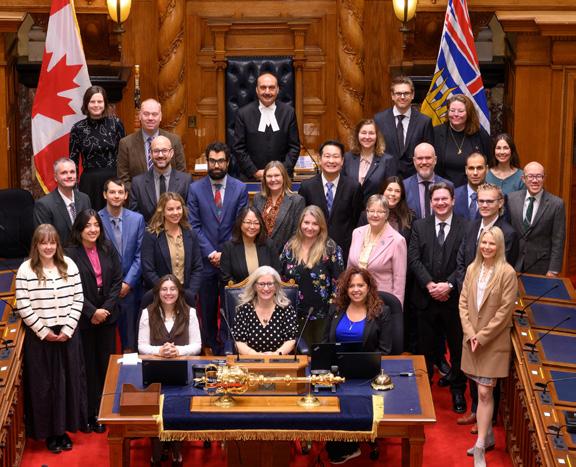















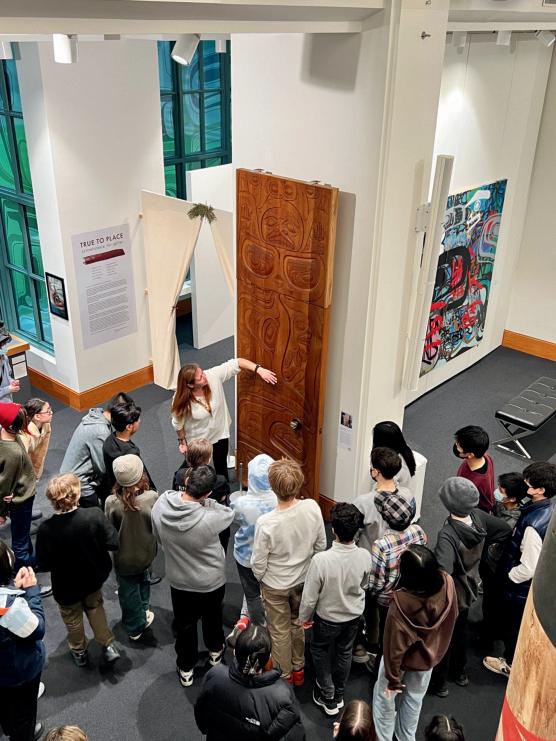




Bring your class to the Bill Reid Gallery and engage with the rich cultures, histories, and living traditions of Northwest Coast art.
Through storytelling and inquiry-based learning, your students will discover how ancient knowledge continues to shape our lives today.
They ll e plore how cultural treasures and ndigenous ways of knowing reveal the deep interconnectedness of community, land, and society.







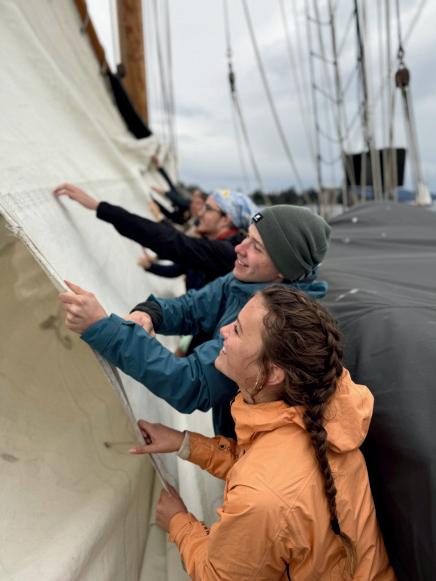

Field Trip on a Tall Ship!


Weekly 4-5 day trips in the Spring and Fall for 18-30 participants in Grade 8 and up
Sail from Victoria’s Upper Harbour and explore the beautiful Gulf Islands
Experiential learning in biology, physics, math, & BC curriculum’s core competencies
250-383-6811 | www.salts.ca | info@salts.ca

IN T E R NAL M ED I A T ION S E R V IC E
The Internal Mediation Service (IMS) can help manage unresolved conflicts with colleagues and improve professional relationships. IMS mediates member-to-member and small group conflicts and works with support staff and administrators as appropriate.
Mediators use a trauma informed practice and the BCTF Aboriginal Lens guides our support to members: respect, relationship, relevance, responsibility, reciprocity, reconciliation, and resilience.
The service is confidential, voluntary, and the outcome of mediations are not reported to local unions or school districts. Release time is provided at no cost to members. You may request to work with a mediator who has a similar background and life experience to yours, and mediations can be conducted in French and online upon request.
For more information and to access IMS, contact Sherry Payne, Nadia Bove, or your local union.
Sherry Payne, Assistant Director Internal Relations, Professional and Social Issues
604-871-1803 | 1-800-663-9163
spayne@bctf.ca
Nadia Bove, Administrative Assistant Internal Relations, Professional and Social Issues
604-871-1823 | 1-800-663-9163
nbove@bctf.ca
iStock


Where My Heart Arrives First
By Nandini Aggarwal, teacher, Surrey
Sometimes I am sure home is not where I usually sleep. Sometimes my classroom is my home with scraped chairs, torn posters, and the whispers of bodies learning how to belong. Small feet hesitate at the doorway, and I know this is the most crucial moment of the day. We both know it.
This home holds twenty-six different stories, backpacks heavier than the books inside them, filled with memories, worries in many languages, and hopes carried quietly.
This home is twenty-six different stories: the child who tells a breaking story too fast, the one who avoids eye contact so they won’t be asked for help, yet stands the closest anyway, and the one who laughs the loudest because it is easier than explaining.
Home is reading their silences knowing who didn’t sleep, who forgot a snack, who needs a bandage, another chance, or simply, “I’m glad you’re here.”
Home is teaching them to tie their shoelaces, and sometimes tying them anyway. Wiping tears before they fall. Applauding the smallest victories as if they are grand. Inside these four walls,
I am not only teaching lessons, I am holding space, trying to keep this loud world gentle for six hours.
I am building a home where mistakes are safe and all twenty-six matter. They leave pieces of themselves behind a giggle, a crayon mark in the air and somehow take pieces of me too. This home is messy, exhausting, loud. But it is where my heart feels fullest. Because home is the place where we take care of each other. And each morning, my heart arrives before I do.