Foundation Raises More Than $100,000 in Support of the Next Generation of Nurses
In less than a year, the Tri-County Technical College Foundation surpassed its goal of raising $100,000 to support the next generation of nurses.
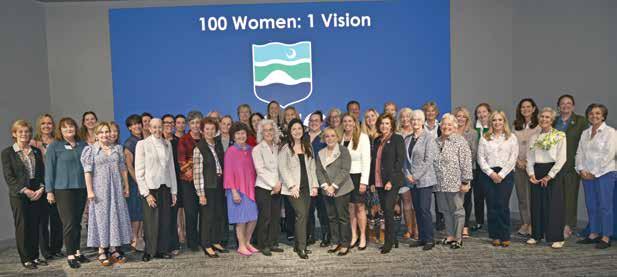
The TCTC Foundation kicked off its “100 Women, One Vision” initiative on July 1, 2025. The initiative was created to bring 100 women together to contribute $1,000 each to support nursing students at TCTC.
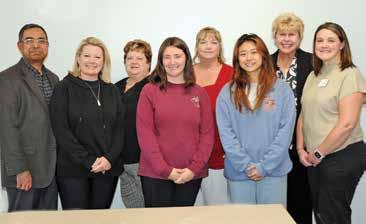
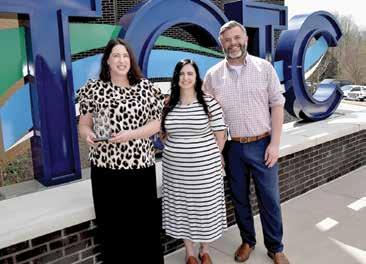
To date, the TCTC Foundation has raised $101,735 in pledges and gifts for a scholarship endowment to support nursing students. A pinning ceremony was held March 12 to celebrate and thank these generous donors.
“Tonight is really about celebrating you,” said Emily Holland, owner of H3 Marketing and vice president of the TCTC Foundation Board.
“Over the past year, many of you have been part of something truly special. As Tri-County Technical College prepares to double the size of its nursing program over the next three years, we know that expanding seats alone is not enough. We must also ensure that students who feel called to serve as nurses can afford to begin that journey. That is why this group came together,” said Holland.
“Through ‘100 Women, One Vision,’ you helped create a scholarship endowment that will support future nursing students with the essentials that often stand between them and their dream of becoming a nurse,” said Holland. “That generosity will open doors for students who are called to care for others and will strengthen health care throughout our entire region.”
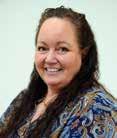
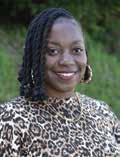
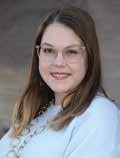
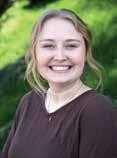
Holland offered special thanks to several women who “helped bring this vision to life in extraordinary ways — Veta New, Beth Brown, Ashley Durham, and KD Mohsseni — who opened their homes for events, inviting others into this effort, and helping this initiative grow. But tonight, we celebrate what you have accomplished together, and the future nurses whose lives will be changed because of your generosity.”
Following remarks from Associate Degree Nursing Department Head Lori Burkett, donors were recognized through a traditional pinning ceremony.
(continued on page 11)
Connection
is published six times each year by the Office of the President and the Public Relations Department.
Mailing Address (All Campuses)
P. O. Box 587
Pendleton, SC 29670
Pendleton Campus 7900 Highway 76 Pendleton, SC
Anderson Campus 511 Michelin Blvd. Anderson, SC
Easley Campus 1774 Powdersville Rd. Easley, SC
Oconee Campus 552 Education Way Westminster, SC
Main Number (864) 646-TCTC (8282)
Toll-free 1-866-269-5677
tctc.edu
Tri-County Technical College is accredited by the Southern Association of Colleges and Schools Commission on Colleges (SACSCOC) to award associate degrees. Tri-County Technical College also may offer credentials such as certificates and diplomas at approved degree levels. Questions about the accreditation of Tri-County Technical College may be directed in writing to the Southern Association of Colleges and Schools Commission on Colleges at 1866 Southern Lane, Decatur, GA 30033-4097, by calling (404) 679-4500, or by using information available on SACSCOC’s website (www.sacscoc.org).
Tri-County Technical College does not discriminate on the basis of race, color, national origin, sex, disability, or age in its admissions policies, programs, activities, or employment practices. TCTC will take steps to assure that the lack of English language skills will not be a barrier to admission and participation in vocational education programs.
Tri-County Technical College’s nondiscrimination policy and grievance procedures can be located at tctc. edu/TitleIX. To report information about conduct that may constitute sex discrimination or make a complaint of sex discrimination under Title IX, please refer to tctc.edu/TitleIX.
Connecting
Affordability in Action
Our mission is to provide students an exceptional and affordable learning experience that improves their quality of life. This spring, I’m proud to highlight several ways that promise is being fulfilled through the generosity of our supporters and the strength of our partnerships.
In less than a year, the Foundation’s “100 Women, One Vision” campaign surpassed its goal, raising more than $100,000 to establish a scholarship endowment for nursing students. What began as a bold idea quickly became a powerful movement focused on removing financial barriers that often prevent students from answering the call to serve. As we expand our nursing program to meet workforce needs, these funds help ensure students can focus on learning and clinical training, not the cost of tuition, books, or essential supplies. The impact of this endowment will be felt for years to come, strengthening health care across our region.
That same spirit of opportunity was evident at the Pathways Gala: An Evening of Opportunity, which brought together nearly 150 community members in support of the TCTC Dual Enrollment Academy-Clemson Connect. With $295,500 raised to date, this first-of-its-kind initiative provides qualified high school students a clear, affordable path to a Clemson degree. By offering early college access at little to no cost, the program is changing what is possible for first-generation college students and their families across Anderson, Oconee, and Pickens counties.
In addition to philanthropic support, strategic partnerships play a vital role in making college affordable. The STEPS2Clemson program, funded by a $5 million National Science Foundation grant, provides scholarships, academic support, mentoring, and technology for engineering students with demonstrated financial need, helping them pursue high-demand careers with little to no debt. We are also proud to be part of a $3.75 million rural nursing grant that expands scholarship support and specialized training for students serving rural and Appalachian communities.
Together, these efforts show what is possible when community support, partnerships, and purpose align. To our donors, partners, and employees, thank you for making affordability a reality and for helping us to transform lives and build strong communities.
In your service,
Galen DeHay, Ph.D. President
Dr. Galen DeHay President
STEPS2Clemson Creates Pathway for Aspiring Engineers
Aspiring engineers at Tri-County Technical College will have a new pathway into Clemson University through STEPS2Clemson, a program that provides significant scholarships and academic support for students with demonstrated financial need.
The program offers up to $10,000 in scholarship support during students’ first year at Tri-County. After transferring to Clemson, students are eligible for up to $15,000 per year for up to three years, contingent on maintaining academic progress.
Students accepted into the program will receive a laptop that meets Clemson’s engineering software requirements. STEPS2Clemson also includes mentoring, advising, academic support and professional development.
STEPS2Clemson is designed to expand South Carolina’s pipeline of engineering talent and increase access to engineering education for students across the state and beyond. It also strengthens the long-standing partnership between Tri-County and Clemson, adding another layer of support for transfer students.
Funding for STEPS2Clemson, totaling $5 million, comes from the National Science Foundation’s S-STEM (Scholarships in Science, Technology, Engineering and Mathematics) program.
Mary Beth Kurz, principal investigator of STEPS2Clemson and associate professor of industrial engineering at Clemson University, said the program could help students graduate with little to no debt while putting them on the path to an engineering job or graduate school.
Paul Phelps, dean of the Engineering and Industrial Technology Division at TCTC, said, “The STEPS2Clemson program can make all the difference for Tri-County students who have financial barriers that prohibit them from earning a four-year degree. By reducing the financial barriers for our engineering students’ path to Clemson, we hope to attract students who hadn’t considered this as an educational option before. This program, along with other scholarship opportunities, could lead to a substantially reduced financial burden or cost.”
Commission Elects Officers
The Tri-County Technical College (TCTC) Commission elected new officers at its April 6 meeting.
Jim Wanner of Salem was elected to serve his first term as chairman of the College’s nine-member governing board. He represents Oconee County.
Jim Kaplan of Pickens was elected vice chair. He represents Pickens County.
Melanie McLane of Central was elected secretary. She represents Pickens County.
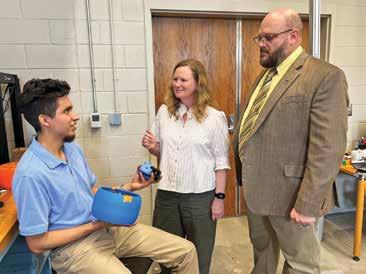
Pictured from left are Bryan Olvera, a senior majoring in mechanical engineering; Mary Beth Kurz, principal investigator of STEPS2Clemson and associate professor of industrial engineering at Clemson University; and Paul Phelps, dean of TCTC’s Engineering and Industrial Technology Division.
To be eligible, students must be U.S. citizens or permanent residents who are ready to begin calculus coursework and plan to pursue an engineering degree at Clemson. The program is capped at 48 students over three years.
Participants are selected based on academic potential and demonstrated financial need. They are expected to engage in program activities both before and after transfer, including mentoring, academic support and professional development sessions.
STEPS2Clemson is a separate program from Bridge to Clemson, another pathway from Tri-County to Clemson. STEPS2Clemson is open to students in the Bridge program as well as those who start as traditional Tri-County students.
Foster Sims, department head of Engineering Technology at TCTC, emphasized the importance of sustained support throughout the transfer process: “Supporting students through the transfer process is just as important as what happens in the classroom. This program allows us to stay engaged with students over time, help them navigate key academic decisions and build confidence as they move into demanding engineering programs.”
The first cohort is on track to begin in fall 2026 as first-year students at TCTC.
Jim Wanner
Jim Kaplan
Melanie McLane
Grant Funds Collaborative Project to Address Rural Health Care
The Clemson University School of Nursing received a $3.75 million grant from the Health Resources and Services Administration (HRSA) to deliver specialized training in rural health care and address the nursing workforce shortage in Upstate South Carolina.
The collaborative project includes Clemson University, TCTC and Prisma Health.
Expanding scholarship opportunities is a way to build a stronger health care workforce while closing the gaps in access to health care. The grant will provide financial support for 30 nursing students – 15 Clemson students and 15 TCTC students – over a four-year period.
Three TCTC students, Jenna Tilson of Salem, Kelly Morrison of Anderson, and Alexis Le of Seneca, were selected for the program and attended an orientation session.
Participants will attend nursing classes at their respective institutions and clinical training at Prisma Health Oconee Memorial Hospital during the fall and spring semesters and receive specialized training in Appalachian health care during a six-week summer session. The specialized courses will be delivered by six Clemson School of Nursing faculty on Clemson’s campus. The courses will cover acute and long-term care topics such as rural genetics and genomics, patient education, health promotion, health care leadership, geriatric frailty, palliative care and mental health.
“A stronger health care workforce will aid in a healthier community,” said Dr. Ahmad Chaudry, dean of TCTC’s Health Education Division, who collaborated on the grant with Dr. Lucia Gonzales, associate director of research and associate professor for the School of Nursing at Clemson and the grant’s project director.
According to Gonzales, seven Upstate South Carolina counties are designated Appalachian by the Appalachian Regional Commission with Oconee County classified as entirely rural, Appalachian, and medically underserved.
“This transformative grant and the unique partnership between institutions allows us to elevate nurse education across Clemson
Pictured from left are Dr. Ahmad Chaudhry, dean of TCTC’s Health Education Division; Kelly Morrison, TCTC scholarship recipient; Mary Anne Vaughn, TCTC nursing instructor; Jenna Tilson, TCTC scholarship recipient; Lori Burkett, TCTC Associate Degree Nursing department head; Alexis Le, TCTC scholarship recipient; Dr. Lucia Gonzales, associate director of research and associate professor for the School of Nursing at Clemson and the grant’s project director; and Terri Teramano, DNP, senior lecturer, School of Nursing, Clemson University.
University and TCTC by delivering innovative experiential and clinical learning opportunities and specialized training in rural health care,” said Gonzales. “The Appalachian nursing initiative ensures that, in addition to clinical expertise, graduates possess a communitycentered perspective necessary to deliver quality care to individuals in rural communities across the state.”
In addition to classroom learning, students will complete 80 clinical and simulation hours at Prisma Health Oconee Memorial Hospital, a general acute care hospital within a 17-hospital health system; Lila Doyle Post Acute, a 120-bed long-term care and rehabilitative center in Oconee County; and Clemson University Nursing Simulation Center, a state-of-the-art facility with standardized patients, wearables and virtual reality capabilities.
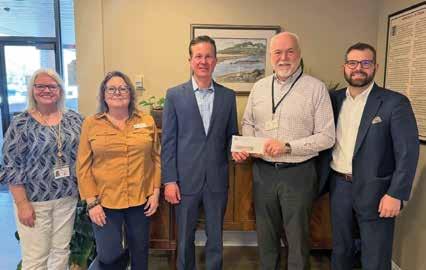
Clemson Downs made a donation to the TCTC Foundation to continue its support of the College’s nursing program. This donation will support a scholarship for a Certified Nurse Aide (CNA) student. This scholarship will cover the course, books, and testing for the CNA student.
Pictured from left are Shelia Owens, Clemson Downs office manager, TCTC alumna and TCTC Board of Visitors member; Carolyn Stewart, department head for Corporate and Continuing Education health care; President Galen DeHay; James Hill, executive director of Clemson Downs; and Jonathan Cauthen, director of development for the TCTC Foundation.
TCTC Foundation Hosts Gala
The Tri-County Technical College Foundation hosted the Pathways Gala – An Evening of Opportunity on February 28 to support the TCTC Dual Enrollment Academy-Clemson Connect. The event was part of the Foundation’s ongoing work to expand access to higher education and support student success. To date, the Foundation has raised $295,500.
The theme was “An Evening of Opportunity: Opening Doors, Changing Lives.” Around 150 community members attended the Pathways Gala to enjoy an evening of fundraising and fellowship while learning about the Dual Enrollment Academy and ways to support it.
In April, TCTC and Clemson University officials announced a first-of-its-kind dual enrollment academy that provides qualified high school students a guaranteed path to earn their Clemson degree. The TCTC Dual Enrollment Academy is targeted to high school students in the Anderson, Oconee and Pickens school districts whose parents
did not earn a bachelor’s degree. Students will be recruited in their sophomore year of high school and those admitted to the academy will take dual enrollment courses through TCTC at little to no cost.
Celebrating South Carolina Technical College System Day
South Carolina Technical College System Day was recognized on February 25.
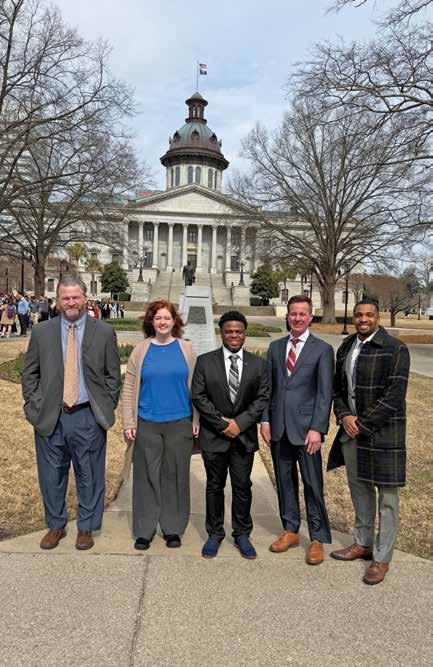
Members of the South Carolina General Assembly joined Governor Henry McMaster in signing a resolution that recognizes and expresses deep appreciation to the South Carolina Technical College System for its outstanding contributions in educating and training South Carolina’s workforce for high-demand, skilled jobs.
A group from TCTC attended a legislative luncheon at the State House to celebrate South Carolina Technical College System Day. Pictured from left are instructors Jeremy McCracken and Lara Wrightson; Criminal Justice student A.J. Willoughby; President Galen DeHay; and Vice President of Student Affairs Dr. Darren Lipscomb. Not pictured is Executive Director of External Affairs Dan Cooper. Last year McCracken, Wrightson and Luke VanWingerden (who was unable to attend) were winners in a TCTC Foundation fundraiser drawing enabling them to learn what it’s like to be a lobbyist for a day.
“Attending South Carolina Technical College System Day at the State House was an incredible experience. It gave me the opportunity to see firsthand how decisions are made that directly impact students like me. Being able to represent my college and connect with state leaders reinforced my passion for criminal justice and my commitment to making a positive impact in my community,” said Willoughby.
Our College Family excellence through service
I-BEST Receives Program of Promise Award
The I-BEST team took home a Program of Promise award at the 50th annual National Organization for Student Success (NOSS) conference on February 25. These awards recognize programs implementing effective, innovative, or promising practices that enhance student success. I-BEST (Integrated Basic Education and Skills Training) is a nationally recognized program designed to meet students where they are and help them achieve their educational and workforce goals.
Raeneeva Davis Presents at National ACTP Conference
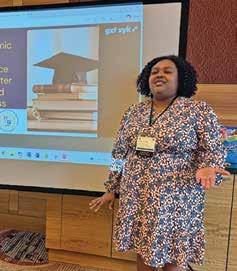
Raeneeva Davis, learning strategist in the Learning Commons and certified coach, delivered a presentation at the Association for the Coaching and Tutoring Profession (ACTP) conference in March.
Her session, “Elevating Academic Coaching: Cognitive Science Strategies to Foster Persistence and Student Success,” showcased the evidence-based strategies she regularly shares with students through academic coaching and the Learning Commons Skillshop series.
“The ripple effect of Raeneeva’s session is a testament to our culture of integrating learning sciences
and andragogy into all that we do, as well as our commitment to holistic support that teaches the transferable skills and habits of mind necessary for academic and personal progress. Raeneeva’s extensive experience as an educator is evident in her academic coaching principles—an asset that is clearly admirable in the profession,” said Erin McAleer, director of the Learning Commons.
Daniel Adams Honored by Easley Chamber with Young Professional of the Year Award
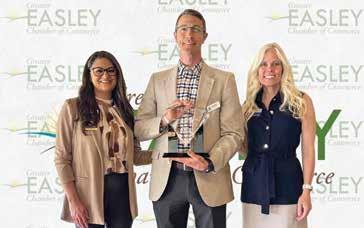
Daniel Adams, director of the Easley Campus, was honored by The Greater Easley Chamber of Commerce with a 2026 Young Professional of the Year award. The award honors an emerging leader who strives to meet the highest levels of personal and professional accomplishment, who devotes time and energy to their community, and who serves as a role model for other young leaders and professionals.
An active member of the Young Professionals group, Adams is an Army veteran and a graduate of the Leadership Pickens County program. He serves on the Leadership Pickens County Board of Regents and is currently the chair-elect of that committee.
Adams was recently selected to participate in the 2026-2027 Leadership South Carolina class. He also serves as a member of the Easley Chamber of Commerce Board of Directors.
Tiffany Blackwell Appointed Parliamentarian for National Organization
Tiffany Blackwell, dean of Enrollment Pathways, was recently appointed to a three-year term as parliamentarian for the American Association of Collegiate Registrars and Admissions Officers (AACRAO). The association provides professional development, guidelines, and advocacy for records management, admissions, and enrollment services.
Pictured from left are Catherine DuRant, I-BEST program director; Briana Allen, I-BEST learning support coordinator; and Ross Hughes, I-BEST academic program director. Not pictured is Paige Warren, instructor.
Daniel Adams, center, is pictured with Stella Freeman (left) and Julie Selof Union (right).
in transition
Maria Bowers is a success coach in the Advising and Student Coaching office. In her role, she will assist students with first semester advising, provide early alert response and support, facilitate campus connections, and help students build foundational skills such as a growth mindset and self-advocacy. Bowers has more than 20 years of experience in student ministries and missions. She has a bachelor’s degree in government administration and a Master of Divinity (MDiv).
Brooke Young joined the Human Resources team as a recruiter. Young graduated from Clemson University and has more than five years of experience in human resources. She is responsible for the recruitment, onboarding, and outreach efforts of the College.
Barbara Peck joined the Human Resources team as the benefits manager. With more than 20 years of experience in HR, Peck will be responsible for benefits, retirement, and leave related items. Peck has a bachelor’s degree in human resources from Barry University.
Lakesha Quarles joined the Health Education Division as the Medical Assisting program director. Quarles oversees the program development, student progression, faculty support, and clinical partnerships within the Medical Assisting program.
Quarles has both clinical practice and higher education experience. She has a bachelor’s degree in health administration and a master’s degree in health care administration and is currently pursuing a doctorate in health care administration. She is nationally certified as a Certified Medical Assistant through the American Association of Medical Assistants (AAMA) and a Registered Medical Assistant through American Medical Technologies (AMT).
Dr. Alan Tomkins-Raney joined the College as the veterinarian for the Veterinary Technology program. His duties include clinical instruction involving lectures, labs and surgeries; dental procedures; and overseeing animal care.
Emma James joined the Fiscal Affairs team as an accounting manager. In this role, James assists with month-end and year-end processing and reporting, budget development, grant accounting and reporting, and updates to the Banner Finance module. James previously served as an accountant at Truett McConnell University and as an enrollment data manager and bookkeeper for the School District of Oconee County. She holds an associate degree in business administration, a bachelor’s degree in accounting, and a master’s degree in accounting.
Rachel DuRant joined the Academic and Career Foundations Division as a learning support coordinator. In this role, DuRant engages with students to help them overcome barriers to academic success. DuRant comes to Tri-County after seven years in the secondary education system where she served as both teacher and administrator. She holds a master’s degree in agriculture education and a bachelor’s degree in food science, both from Clemson University.
Dr. Tomkins-Raney earned his Doctor of Veterinary Medicine from Washington State University in 1992. He practiced veterinary medicine in Vancouver, WA, for 15 years before moving to San Francisco, CA, in 2007. He relocated to Upstate South Carolina in 2024. His areas of practice have included companion animal general practice with a focus on internal medicine, soft tissue surgery, dentistry; shelter medicine; and high-quality, high volume spay and neuter services. He also holds a teaching certificate from San Francisco State University and taught general science, biology, and biotechnology in Bay Area high schools.
Miranda Gentry joined the Health Education Division as the administrative specialist, providing administrative and operational support to faculty, staff, and leadership. Gentry holds a bachelor’s degree in business administration (health care management) from Anderson University. Gentry has more than a decade of experience in health care and senior care administration. She previously worked as a business office director and regional business office director within assisted living and skilled nursing environments.
James (Jim) Harris joined TCTC as IT Service Desk supervisor where he will work closely with the IT team to coordinate solutions to issues. Harris brings many years of IT and leadership experience. He has worked in various fields, including education, military, ministry, and software development.
Celebrating Community College Month
April is Community College Month, a month-long celebration designed to honor the vital role community colleges play in higher education, workforce development, and local economies. The 2026 theme was “The Smartest First Step, the Strongest Next Step.”
According to the American Association of Community Colleges, there are more than 10 million students enrolled at community colleges across the country, which includes 6.4 million in credit courses and 4.1 million in noncredit courses. These institutions serve an incredibly diverse student population and put millions of people’s educational and career goals within reach.
In turn, these institutions are supported by faculty, staff, and administrators who are truly a testament to what it means to commit deeply to student success.
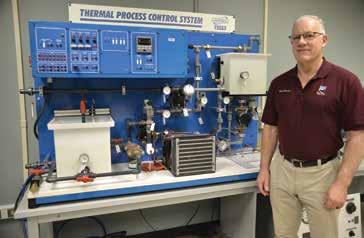
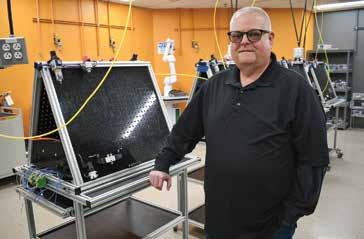
Mark Legare and Kirk Cromer are Tri-County graduates, whose lives were impacted by their instructors, and they have returned to the classroom, this time as faculty members, making a difference by inspiring their students and serving as mentors.
Alumnus Mark Legare Retires from Industry; Begins New Career as Volunteer Nurse and Adjunct Instructor
Before his retirement in 2023, Mark Legare spent his final year as an engineer at Robert Bosch taking prerequisite nursing classes at TCTC, with the goal of starting a second career at age 63.
Two weeks after his last workday at the Anderson plant, Legare, who was 61 and held a bachelor’s degree in automated manufacturing technology and a master’s degree in education, began his first year in TCTC’s Associate Degree Nursing program.
Legare said he didn’t retire, he just reset.
Pursuing a nursing career wasn’t as far a stretch as many of his friends and coworkers thought when hearing about his plans. Eleven years before he retired, he served on the medical team for Bosch as a first responder.
“I liked helping in that way. I planned to retire and change careers,” said the Anderson resident.
He chose TCTC to begin his next chapter because of its great reputation among doctors and nurses in the area. “They gave me good feedback and listed TCTC nursing graduates as among the first they hire,” he said.
After graduating in 2025, he initially worked at a hospital, but following a friend’s suggestion, decided to change direction and volunteer at a free clinic. There, he spends two days a week providing patients with one-on-one education on managing their chronic illnesses. “I really enjoy teaching,” he said, drawing on his experience teaching while stationed in Germany during his Army service and later at a two-year college.
In addition to volunteering as an RN at a Pickens County free clinic, he is an adjunct Mechatronics instructor at TCTC, which allows him to combine his loves of teaching and nursing with his manufacturing/ engineering expertise.
“I’m doing retirement the right way. I’m contributing to things I really love. I want to pass my knowledge on to others,” he said.
When Legare isn’t in the classroom or volunteering at the free clinic, he works around 20 hours a month as an advanced state constable. He began his part-time law enforcement career in late 2018 as a reserve deputy.
School wasn’t always easy for Legare, who said he struggled academically from an early age due to undiagnosed dyslexia. “I really disliked school. It was difficult because for years people told me I couldn’t, so I never considered college. I thought I just didn’t have the ability,” said Legare. After high school, he enlisted in the Army, serving six years on active duty as a combat engineer, followed by a year in the Army Reserves and nine years in the Air National Guard. “Working with my hands as a combat engineer helped me realize I could learn,” he said. While stationed in Germany, he decided to enroll in college, taking classes at night and earning 30 credits in just under three years.
“I was always good at math and science and struggled with history and English. Dyslexia wasn’t understood back then,” he said. It was at age 20 he discovered he was reading at a fourth-grade level. “I dug in and it just took me longer to apply myself. I learned strategies to be successful,” said Legare, a first-generation college student.
When he exited the Army, he entered California Community College. “I was diagnosed with dyslexia my last semester in college,” he said. By that time, he had mastered reading comprehension skills and was an A/B student. He earned an Associate in Science degree.
It took determination, but at age 26, he was teaching Electronics Engineering Technology classes at ITT Technical Institute in San Bernardino, CA. His military experience coupled with his military and civilian technical college education, and his degree, qualified him to teach. He taught for three years at ITT Technical Institute and started the bachelor’s degree program in Automated Manufacturing Technology. He was hired as a technical trainer for Johnson Controls
where he stayed for 10 years. He earned his master’s degree in education through the company’s tuition reimbursement program.
After leaving Johnson Controls, he took a position as a controls specialist for Bosch in Stuttgart, Germany. About a year later, after transferring to Bosch’s Charleston plant, he was promoted to controls engineer. Following three years in Charleston, he relocated to the company’s Anderson plant where he finished his career as a senior controls engineer.
He began teaching part time in TCTC’s Mechatronics program during a summer break while in the nursing program.
He advises all of his students, regardless of their age, to keep learning. “Combining their Mechatronics degree with a bachelor’s degree in manufacturing management, for example, makes them very marketable,” he said. “I also encourage my students to apply for apprenticeships like Bosch’s Tech Scholars program,” he said.
“I graduated debt free. Both my bachelor’s and master’s degrees were paid for by my employers through a tuition reimbursement program,” he said.
“This is my happy place. I relate to TCTC students. I see myself in many of them.”
Kirk Cromer’s Degree Offered Great Opportunities During 30-plus
Year Career in Industry
Kirk Cromer’s Electronics Engineering Technology (EET) degree from TCTC offered him great opportunities during his 30-plus year career in industry.
Cromer spent 32 years at General Electric (GE) in a variety of roles in the Greenville Gas Turbine test center, including lead operator, operations leader, quality leader and manufacturing engineer.
“GE offered a great quality of life for my family,” said Cromer.
When he retired in 2020, he and his wife spent two years traveling across the United States in their RV. But Cromer, a self-described lifelong learner, returned from traveling and began to look for something new to tackle. He saw a TSS project developer job opening at TCTC and applied. The job appealed to him on many different levels, but specifically because he would assist in developing training materials and the curriculum for local industries and apprentices, one of which is BASF’s North American Apprenticeship Development
Program in Seneca. The program is in partnership with Apprenticeship Carolina and TCTC and enables BASF ECMS to hire talented individuals who might not have been considered otherwise due to their lack of manufacturing experience.
He also helped to develop curricula for TCTC’s Plastic Injection Molding (PIM) initiative, an industry-driven workforce development program designed to support the career and technical advancement of plastics workers throughout Anderson, Oconee, and Pickens counties.
Since joining TCTC, Cromer expanded his role and began teaching OSHA classes for the College’s I-BEST program and the BASF apprentices.
In 2025, he joined the Mechatronics program as an adjunct instructor for TCTC Mechatronics majors.
“I discovered that I really enjoy teaching. I remember being a student at TCTC in the 1980s. It was a good experience because my instructors invested in me,” said Cromer, an Anderson County resident.
“I enjoy showing students the internship and apprentice opportunities available to them today through GE and other companies all over the Upstate,” he said, adding that today’s technical opportunities are far broader than when he was a student at TCTC.
Cromer enrolled at TCTC after graduating from T.L. Hanna High School. His father, Sidney Cromer, earned an Industrial Electronics Technology degree in the 1970s. He chose TCTC for the same reason as his father – it was close to home, and it was affordable. He enrolled in the Associate in Science program in 1982.
Cromer graduated with little debt. “I worked at a restaurant while a student and paid my own way,” he said.
“When I graduated in 1984, I thought about transferring to a four-year college, but instead I chose EET. It was challenging and could quickly lead to a career in a technical field. I loved working with discrete components and computer electronics,” he said.
His first job was at Goodman Conveyor in the lab making repairs and design changes to belt scales for the mining industry. He stayed a couple of years before moving to GE.
While working at GE, he earned a business degree in computer information technology in 2000 from Anderson University, which GE paid for through its tuition reimbursement program. “I always urge students to take advantage of this if their company offers it.”
Cromer said his bachelor’s degree increased his opportunities to grow and opened up even more avenues, like teaching in retirement.
“The students are a great bunch, ranging from dual enrollment to college. They are engaged and come in prepared. I want to be a positive influence. Mechatronics is a great program, and I will do what I can to make it even better.”
“Kirk has been an absolute delight to have as part of the Mechatronics team,” said Michael Oates, TCTC Mechatronics program director. “Kirk’s ability to engage the students is top notch as he brings in so many great life and professional experiences. We are honored to have Kirk on the Mechatronics team.”
Engineering Students Collaborate on Design Project
During the spring 2026 semester, students in engineering courses EET 235 and EGR 184 collaborated on a project that will have a lasting impact on how automation and control systems are taught within the Engineering Department. What began as a need to improve existing PLC trainers evolved into a comprehensive design and build initiative that better aligns the department’s instructional equipment with modern industry standards.
The previous trainers provided a foundation for instruction, but they did not reflect the level of professionalism or realism that students should experience as they prepare to enter the workforce. When exploring commercially available alternatives, department leaders identified several high-quality options that met instructional goals, particularly in terms of portability and industrial design. However, with costs approaching $10,000 per unit and a need for 12 trainers, the total investment would have exceeded $120,000. Given that these trainers are used most heavily during a single semester each year, that cost was not justifiable.
“As a result, we looked at a way to build our own to suit our needs,” said Department Head Foster Sims. “By reusing the PLC hardware from our existing trainers and strategically sourcing the remaining components, we were able to produce each unit for approximately $1,700. This approach significantly reduced costs while allowing us to create a more advanced and versatile training system,” he said.
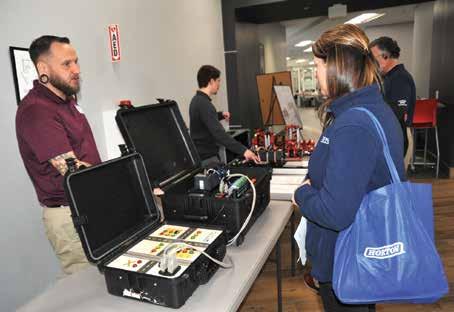
Each trainer is housed in a rugged, portable case designed to support both classroom use and external demonstrations. The system includes a BRX PLC, an industrial human machine interface, and a variety of inputs and outputs. All components are mounted to a custom acrylic panel that was designed internally and laser cut in house.
The construction process itself served as a core learning component. At the beginning of the semester, each student received a case containing the necessary components but no completed wiring. Using a fully functional prototype as a reference, students were responsible for assembling and wiring their trainers to match exact specifications. “This process mirrors real-world practices in industrial settings, where accuracy, consistency, and adherence to established designs are essential. By the end of the semester, the program will have 12 fully operational PLC trainers ready for implementation in future courses and outreach activities,” said Sims.
The project was further enhanced through the EGR 184 capstone course. A key objective was to develop a system that could be expandable. Inspired by the premade systems, faculty envisioned companion units that could connect to the primary trainer and simulate a variety of industrial processes.
This concept was realized through the work of the capstone team. Nathan Vogt, an Engineering Systems Technology student and the program’s Student of the Year award winner, led the development of the first companion trainer. This unit is a traffic light simulator housed in its own portable case, featuring a graphical intersection layout with integrated lighting to represent traffic signals. The system connects directly to the primary PLC trainer, allowing for quick setup and testing. Vogt was supported by Cameron Horne and Kryste Smith, and his leadership was instrumental in bringing the project to completion.
“The development of this companion trainer establishes a foundation for continued expansion. Rather than limiting future students to using prebuilt equipment, this approach creates ongoing opportunities for capstone projects that extend the system’s capabilities. This ensures that students across multiple cohorts will continue to engage in meaningful, hands-on design and build experiences,” said Sims.
“What began as a cost-conscious decision ultimately resulted in a scalable and sustainable training platform that enhances both instruction and student engagement,” said Sims. “The project reflects a commitment to providing students with relevant, industryaligned experiences while maximizing available resources.”
Sims extended a special thanks to faculty member Chad Howell for his design expertise and guidance throughout the project, the students in EET 235 for building all 12 PLC trainers, and Vogt and his group for leading the development of the first companion trainer.
Engineering Systems Technology major Nathan Vogt talks with Kellie Boone, recruiting manager for Horton.
TCTC Hosts
Collaborative
Forestry Workforce Visit
TCTC hosted partners from the USDA Forest Service and Apprenticeship Carolina for a two-day visit focused on strengthening workforce development efforts in the forestry sector.
The visit began at the Oconee Campus, where teams from across the College—led by Integrated Workforce Solutions (IWS) and supported by the Oconee Campus—engaged in collaborative discussions with partners from local, regional, and national levels. Conversations centered on identifying workforce needs, aligning training opportunities, and exploring how apprenticeship models can support both industry and student success.
On the second day, the group traveled to the Stumphouse Ranger Station and into the Sumter National Forest for a field-based experience. This provided valuable insight into forestry operations and reinforced the importance of connecting classroom learning with realworld application.
The visit highlighted the strength of partnership across TCTC, the USDA Forest Service, and Apprenticeship Carolina. By bringing together expertise from multiple levels and organizations, the group continues to build momentum toward innovative, responsive workforce solutions.
American Heart Association Center Recognized
TCTC is among the first group of American Heart Association (AHA) training centers to earn the prestigious AHA All-Star Recognition.
TCTC’s training center demonstrated exceptional dedication to the AHA’s mission by consistently delivering high-quality CPR education, following Emergency Cardiovascular Care (ECC) guidelines, and elevating the standard of lifesaving training in the communities it serves.
“Our team was recognized for exceeding all program criteria, including outstanding eCard performance metrics, adherence to training quality measures, and maintaining top-tier program compliance,” said Carolyn Stewart, department head for Corporate and Community Education (CCE) health care. “I am proud of all their hard work and dedication to ensuring that we are providing outstanding education for our community.”
In 2015, TCTC earned authorization to be an AHA training center to provide emergency life support classes in Anderson, Oconee, and Pickens counties.
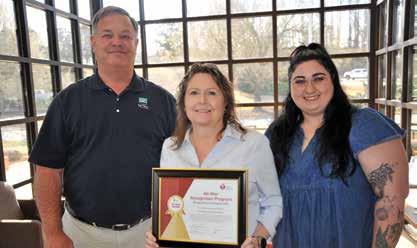
Pictured from left are Les Murrrell, instructor; Carolyn Stewart, department head for CCE health care; and Lillian Barfield, training coordinator for CCE health care.
Foundation Supports the Next Generation of Nurses
(continued from page 1)
“Instead of recognizing nurses entering the profession, we are recognizing you, the women whose generosity is helping future nurses begin their journey,” said Courtney White, executive director of the TCTC Foundation.
“While the ‘100 Women, One Vision’ endowment continues to grow, we also wanted to begin making an impact right away,” said White. White announced that the first scholarship will be awarded soon while the remaining funds continue to build in the endowment.
“We will continue awarding one scholarship each year, and by year three, depending on the market and the continued growth of the fund, we expect to be able to award multiple scholarships annually,” said White.
White announced plans for a joint kickoff for “100 Women in 2026” as even more women will be invited into this effort.
“We are incredibly grateful for each of you,” said White.
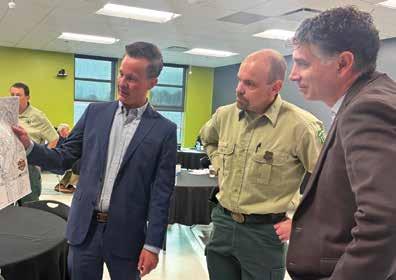
President Galen DeHay discusses Oconee County forestry projects with Robbie Sitzlar, district ranger, and Daniel McInnis, forestry supervisor.
P.O.
Fifth Cohort Completes Manufacturing Works Program
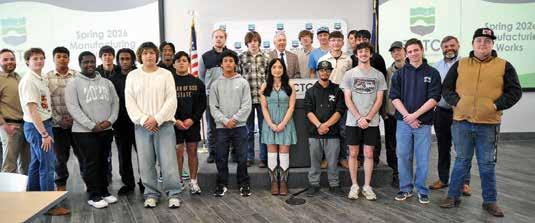
College officials and business and industry partners gathered March 20 to celebrate the fifth cohort to successfully complete the Manufacturing Works program. Twenty-four Anderson County high school seniors completed Manufacturing Works, a workforce development program which allows participants to gain technical skills while exploring career opportunities in manufacturing. They are well-positioned to enter an apprenticeship program, begin a career in manufacturing, and/or continue their education at TCTC.
By demonstrating these employability skills in a simulated workplace environment, students earn a stipend of up to $600 made possible by funding provided by the Development Corporation of Anderson County.
In 2022, TCTC established Manufacturing Works for high school seniors in Anderson County who don’t have an identified path after graduation. Through the program, they gain technical skills while exploring careers in manufacturing. It is custom designed to align with
skills sought by local employers and high-quality apprenticeship programs in the region.
Students enrolled in Manufacturing Works attend weekly classes at Tri-County’s Anderson Campus. Each student earned an OSHA 10 card and a yellow belt in lean six sigma, learned technical skills that are useful in today’s manufacturing environment and were introduced to the fundamentals of lean manufacturing. They completed a resume and cover letter and participated in mock interviews with TCTC’s Career and Employability Resources team. They also practiced their employability skills in interviews with TCTC employer partners, First Quality and Arthrex.