THE Catholic Record Society was founded 10 June 1904,for printing Registers and other old Records of the Faith, chiefly personal and genealogical , since the Reformation in England and Wales
Father Philip Thomas Howard , OP later created a Cardinal From theoriginalatthe Dominican PrioryatHinckley
Cath . Rer . Soc . XXV
Frontispiece
CATHOLIC RECORD SOCIETY
CARDINAL HOWARD'S LETTERS, ENGLISH DOMINICAN FRIARS, NUNS, STUDENTS, PAPERS AND MISSION REGISTERS .
No. I
LETTERSOF PHILIP HOWARD , FR THOMAS , O.P. IN RELIGION , LATER CARDINAL NORFOLK , 1645-1694 Contributed by the Very Rev. Bede Jarrett, O.P. Translations from the Italian by Mrs. Yates; and (at the end ofthe Volume) from theLatin and French by the Rev. Peter Reader, O.P.
Introduction
1. Cardinal Pamphilio to the Bishop of Cremona, 17 July 1645
2. Cardinal Antonio Barberini to Thomas Turco , General O.P., 18 July 1645
3. Cardinal Francesco Barberini to the Earl of Arundel, 19 July 1645
4. The Countess of Arundel to the Earl, 29 July 1645
5. Prospero Meocci to the Earl of Arundel, 2 Aug. 1645
6. Cardinal Monti to Cardinal Pamphilio, 2 Aug. 1645
7. Henry Howard to the Earl of Arundel, 9 Aug. 1645
8. The Earl of Arundel to Cardinal F. Barberini , 12 Aug. 1645
10. Sir Kenelm Digby to Cardinal F. Barberini , 10 Sept. 1645 -
II. Protest of Philip Thomas Howard, 18 Sept. 1645
12. Congregation of Propaganda to Abbot of St. Anastasia ,
13. Sir Kenelm Digby to the Earl of Arundel, 7 Oct. 1645
14. The Nuncio at Brussels to the Countess of Arundel,
15. Petition of Henry Howard to the Holy See [Oct. 1645 ?]
Translation
16. Henry Howard to the Earl of Arundel , 7 Nov. 1645
17. Philip Thomas Howard to the Earl of Arundel, 22 Jan. 1646
18. PetitionofPhilip Thomas Howard to Dominican General Chapter regarding English, Scotchand Irishsubjects [1650] Translation
19. Presentation of Philip Thomas Howard for priesthood, 22 Aug. 1652 Translation
20. Deed relating to Philip Thomas Howard's estate at Folkingham, Lincolnshire, 31 Oct.1655
21. J. B. de Marinis, GeneralO.P., to PhilipThomasHoward, 30 June 1657
Translation
22. Philip Thomas Howard, appointment as Prior of Bornhem, 15 Dec. 1657
Translation
23. The same to Dean D'Haens, 25 Dec. 1658
Translation
24. Permission from the General to dispose of his personal property, 28 June 1659
Translation
25. Appointment as a Vicar General of the Order, 24 July 1661
Translation
26. Philip Howard to Cardinal Rospigliosi, 26 June 1662
Translation
27. His approval of Visitation of the English Franciscans, 17 July 1662
Translation
28. His report to Cardinal F. Barberini on an English Bishop being appointed, 18 Nov. 1667
, 26 June 1668
, 22 Aug. 1670
38. Same to Same, 18 Nov. 1670
39. Same to Same, 13 Feb. 1671
40. Same to Cardinal Altieri, 23 June 1671
41. Same to Cardinal F. Barberini , 23 June 1671
42.
43.
44.
to Same, I Sept. 1671
, 23 Feb. 1672
to Cardinal Altieri , 13 July 1672
1673
TABLE OF CONTENTS
46. Same to Cardinal F. Barberini, 1 Jan. 1675
47. Same to Same , 12 Jan. 1675
48. Same to Same, 13 April 1675
49. Same, as Cardinal, gives receipt for money sent by Cardinal Paluzzo Altieri, 14 June 1675
50. His letter of thanks to Cardinal Altieri, 15 June 1675
51. Cardinal Howard to Cardinal F. Barberini , 5 July 1675
52. Same to Same, 15 June, 1675
53. Same to William Leslie, 28 July 1675
54. Queen Catharine to Pope Clement X, 13 Aug. 1675
55. Grant from Pope Clement X to Cardinal Howard , 4 Sept. 1675
56. Cardinal Howard's gift of goods to Dominican Nuns at Brussels , 5 Oct. 1675
57. Same to the Earl of Norwich , 23 Oct. 1677 -
58. Same to HenryDuke of Norfolk, 30 Aug. 1681
59. Same to Athanasius Chambers, O.S.B. , 16 Jan. 1683
60. Same to Charles Whytford, 3 Feb. 1683
61. Same to Mr. Winster, 20 Jan. 1684
62. Inventory of goods left by the Cardinal to Dominican Nuns at Brussels, 5 July 1683
63. Cardinal Howard to Jane Duchess Dowager of Norfolk, II March 1684
64. Same to Lady Catharine Howard, 22 April 1684
65. Same to Jane Duchess of Norfolk, [31 ] April 1684-
66. Same to Same, 16 Sept. 1684
67. Same to Dean Perrott vere John Barnesley, 13 Jan. 1685
68. Same to Athanasius Chalmers or Chambers , O.S.B. , 30 June 1685
70. Same to Mother Barbara Boyle, O.S.D. , 20 Dec. 1687
71. Same to Queen Mary, Dec. 1688
69. Same to Same, 15 Jan. 1687 -
72. Same to Mgr L. Innes, 30 Aug. 1688
73. Same to Same, 18 Jan. 1689
74. Same to Same, 27 Nov. 1690
75. Same to Same ,
76. Same to Same, 25
77. Same to Same, 24
78. Same to July 1692 Nov. 1692 Feb. 1693
II May 1694
79. Cardinal Howard's Will, 9 June 1694
80. Same to Pope Innocent XII, II July 1694
ADDENDA .
Contributedby R. Cecil Wilton, by permission of the Duchess of Norfolk.
I. Philip Thomas Howard-" Pippitt " to the Hon Charles Howard, 23 May 16622. Same to Same, 24 Nov. 1665 93 94
TABLE OF CONTENTS
No. II
ENGLISH DOMINICAN PAPERS . Contributed by the Very Rev. Robert Bracey, O.P.
Introduction
A. Authentication of Miraculous Appearance of Cross at Death of Thomas Worthington, - Oct. 1619
B. Worthington pedigree
C. Historical Note on Bornhem.Licence by King Philip of Spain to establish the Community at Bornhem, 9 March 1658
D. Pardon by King James II of Lionel Anderson alias Thomas Monson, O.P., for returning into England, 8 April 1686
E. The Duke of Marlborough grants Fr. Grymes vere Graham protection for Bornhem, 18 May 1706
F. Miraculous Cureof the Son of King James II, from convulsions, circa 1706
G. Visitation by the Provincial , Fr. Thomas Worthington, oftheEnglish Province, 28 Aug. 1708 to Sept. 1710
H. Visitation and Confirmations in the North of England by Dr.Thomas DominicWilliams, O.P., V.A.-N.D., 1728, 1729. Enlarged and annotated by Joseph S. Hansom
I. Thomas Bruce, Earl of Ailesbury , to the Prior ofBornhem, proposing to found AnniversaryMassesfor himself and the Countess , 7 Aug. 1734
J. Fr. Antoninus Hatton to Fr. Benedict Short about Regulars and Retreats, 27 May 1771
K. Account of Bequest by Edward Jesup, 11 June 1771
L. Dominicans of Bornhem and Louvain invited to take possession of the two English Colleges at Bruges, on the suppression of the Jesuits, 30 Sept. 1773
Edict of Empress MariaTheresaon same, 8 Oct. 1773
M. Prior of Bornhem to Fiscal of Flanders on a profession, I Dec. 1774 -
N. French Officer to Prior of Bornhem regrettingconduct of his soldiers, 26 March 1793 -
O. Duke of Wellington to Fr. Woods on disabilities ofreligious, 20 March 1829
P. Obituary of English Dominicans, 1661-1827
TABLE OF CONTENTS
Accounts, Appointments and Admissions to Order, 1667-1748
B. Same, 1748-1793
C. Students' Book, 1763-1810
D. Pope Urban VIII to Dominic de la Fuente, O.P., on his coming to England, 13 April 1624
Gregorio Panzani's note on numbers of Seculars and Regulars in England, 1635
Russell Pedigree
Same displayed -facing 172
Clothing and profession of Reginald Michaelis, 1626-27 173
Profession of Martin Russel, 1657 173
Fr. Edward Bing to the General, O.P. , 2 Jan. 1698 , re Friars in England 175
Fr. Vincent Torre to King James II, 20 Jan. 1687 175
No. IV
RECORDS OF DOMINICAN NUNS OF THE SECOND ORDER Contributed by the Prioress and Community of Carisbrooke
Introduction, by V. Rev. Robert Bracey, O.P.
The Foundation at Vilvorde and Brussels , and the first Nuns, from 1661
Divine Favours to Sister Frances Peck, 1680
Memorandumof Sacrilegioustheft oftheMonstrancein 1709 , by Sister Anne Busby
Particulars of more Nuns
The Method of daily occupations
Elections of Superiors, 1661-1755
Obligations of prayers for benefactors
Full particulars of Nuns , 1661
Father John Baptist Verjyce appointed Superior at Vilvorde 216
Cardinal Howard's bequests to the Convent
Rhyme commemorating the Jubilee of Mother Anne Busby's career, 5 June 1715
The Profession Book, 1661-1797
The Council Book , 1730-1794
Particular eventsrelatingto the Nuns leaving Brusselsowing to the French Revolution, 1792
No. V
FRIAR WILLIAM IDENTIFIED AS THE REV. WILLIAM LISTER , O.P., FROM A LETTER OF THE REV . ROBERT FISHER TO THE REV . CHRISTOPHER BAGSHAWE , D.D. , 1597-8. Contributedby the Very Rev. Bede Jarrett, O.P. -
No. VI
REGISTERS IN FLEMISH BY THE REV JAMES DOMINIC DARBYSHIRE, O.P., AT STANDISH AND BORWICK HALL, LANCASHIRE , 1728; GIFFORD HALL, SUFFOLK, 1728 ; AND UGBROOKE HALL , DEVON , 1736-55. Contributed by the Very Rev. Bede Jarrett, O.P.
No. VII
REGISTERS OF THE DOMINICAN CHAPLAINCY AND MISSION AT THE TURVILLE SEAT, ASTON -FLAMVILLE, LEICESTERSHIRE , 1759-1767 . Contributedby the Very Rev. Edwin Henson.
Notes on the Mission Contributed by the Rev. Walter Gumbley, O.P. The Registers
No. VIII
REGISTERSOFTHREEBAPTISMS BY FR JOHN AMBROSE WOODS , O.P., 1798-9, AT CARSHALTON , SURREY . ContributedbyJoseph S. Hansom
No. IX APPENDIX TO No. I
Translations of Latin and French Letters included in No. I. Contributedby the Rev. Peter Reader, O.P.; but not entrusted to him in time to appear after the originals INDEX. Compiled by Mrs T. E. Martin 258 280-299
ILLUSTRATION
PORTRAITOF FATHER PHILIP THOMAS HOWARD, O.P. , LATER CREATED A CARDINAL From the original at the Dominican Priory at Hinckley Frontispiece
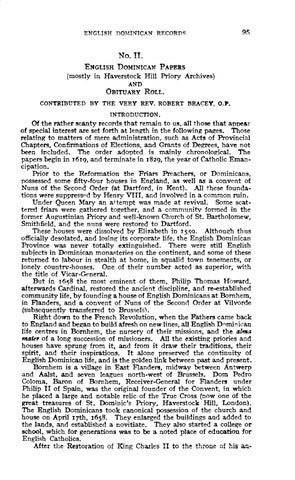
ENGLISH DOMINICAN RECORDS .
No.
I.
LETTERS OF PHILIP, CARDINAL HOWARD, 1645-1694.
CONTRIBUTED BY THE VERY REV. BEDE JARRETTO.P.
INTRODUCTION .
The letters of Philip Thomas Cardinal Howard O.P. here collected can be grouped chiefly underfive headings : the first one concerned with his vocation to the Dominican Orderand the huge mass of difficulties which beset his following of it; the second refers principally to his work in establishingthe English Province, which had never wholly lapsed, ona foundation which should secure its regular continuance; the third to his repeated petition, in accordance with the marriage settlement of Queen Catharineof Braganza , to be raised to the episcopal dignity; the fourth to his answers to correspondents who consulted him in his official position as Cardinal Protector of England and Scotland ; the fifth to the family affairs of the Howards.
A full account of the Cardinal will be found in The Life of Philip ThomasHoward O.P., CardinalofNorfolk by the Rev. Fr.C.F. Raymund Palmer O.P. published in London by Thomas Richardson & Son , 1867. It is now out of print but copies are not infrequently to bemet with in secondhand catalogues Philip was born on Sept. 21st , 1629at Arundel House during the time that Rubens was living there, painting the portrait of the Earl, Philip's grandfather (cf. Rubens, by Max Roose , French translation pp 307, 310 etc.). He was the third son of Henry FrederickHowardwho was the sole surviving son of Thomas Howard, Earl of Arundel and of Alathea daughter and sole heiress to Gilbert Talbot, Earl ofShrewsbury , and whomarriedElizabeth Stuart, daughter of Esmé, Duke of Lennox At the age of eleven his name was entered as a Fellow Commoner at S. John's College, Cambridge , but there is nothing to show that he ever resided there In 1642 the Earl went abroad into Holland with Queen Henrietta Maria to escort Princess Mary to her husband Williamof Orange As soon after, the Civil War broke out, the Earl was joined onthe continent by his Countess andthe grandchildren. After some time at Antwerp, the Earl with some of the childrenwent on to Italy, where at Milan Philipbecame acquainted with Fr. John Baptist Hackett, an Irish Dominican teaching theology in the Priory of S. Eustorgio. Here the boy asked to be allowed to become a Preaching Friar, but it was not till the family had movedto Piacenza that he got leave from his grandfather to return to Milan , without howeverdeclaringthe real purpose of hisjourney FromMilan Philip and the Irish Friar went to Cremona where in the Dominican Convent he received the habit The following extracts from the Registers (De Rebus Conventus Cremonensis, edited by Domaschino O.P. Cremona 1767) are the official account: 1645. June 18-28
Die 28 Julii [Junii] 1645 , F. Thomas Horvardus, Anglus, qui in sæculo vocabatur Princeps Philippus recepit habitum clericalem in hoc Conventu S. Dominici Cremone, nomine Provincie Angliae, et ...
ENGLISH DOMINICAN RECORDS
Conventus Londinensis, hora 14 praefate diei Ita est. Ego Fr. Vincentius Gallentius a Piceleone Mag et Prior.
1645-6 Feb. 17-27
PredictusFr. Thomas Howardusacceptus fuit in ConsilioPatrum et Capitulo Fratrum unanimiter ad affiliationem hujus Conventus S. Dominici de Cremona die 27 Februarii, 1646. Ita est. Ego Fr. Gallentius a Piceleone, Prior. 1646. Oct. 9-19
F. Thomas Horvardus, de quo p 16, emisit suam solemnem Professionem nomine Conventus S. Dominici de Cremona in Conventu S. Clementis Ord nostri in Urbe, die 19 Octobris, 1646
But between these dates must be read all the lettersnumbered 1-17. They describe the attempts on behalfof the Howard familyto prevent the step which was looked on as derogatoryto the dignity of the name Philipbore and likely to induce Parliament to confiscate the landsand goods of the House of Arundel
Once a Dominican he endeavoured to interest his Orderin the English Province and then to get the Province itself on a more regularfooting His ordination took place in 1652 at Rennes; in 1654 he went to Paris and in 1655 to Flanders , to establish if possible in the Low Countries a house of observance where the English friars might be trained for the home mission That year he came to England to consult the English Dominicans, especially their head or Vicar-General, Fr. Thomas Catchmay O.P. Most of the time was spent in London In October 1656 Sir John Reresby (Memoirs edited by J. J. Cartwright, p 35) found him in Brussels, so that he must that year have returned to Flanders and on December 15th, 1657 he was instituted first Prior of his new foundation at Bornhem After the death of Cromwell Fr. Thomas came to Englandin 1659 on secret business forthe restorationof Charles II; but his fellow-agent Richard Rookwood , first Jesuit, then Carthusian, betrayed the venture; the Cheshire insurrection was discovered and suppressed; and Fr. Howard had to escape disguised among the retinue of the Polish ambassador When the Restoration occurred Fr. Howardfollowed Charles to London, and eventually became firstChaplain to the household of Queen Catharine of Braganza Meanwhile earlier in 1660 he had founded a convent of Dominican Nuns first at Vilvorde and later at the old Pin House (Spellekens) near Brussels On the deathof Lord Aubigny (his mother's brother), Fr. Howard succeeded him as Grand Almoner In this position, according to the marriagetreaty between Charles and his Queen (cf. letter No. 28), he should have been consecrated Bishop ; but the matter was delayed as the correspondence here printed shows In 1667 he was in Holland with the royal embassy to establish peace between the two countries and thence went to Bornhem He returned to Londonthat sameyear, and there remained till in 1669 he went abroad again to Flanders on the Queen's affairs May however found him back again in London till the Declaration of Indulgenceraised such a stir (in which he was personallyinvolved becausehe hadprinted some Pontifical bulls on Rosary indulgences in English books of piety) that in September 1674 he fled to Bornhem . Apparently Charles II had had some hand in the delay of Fr. Howard's consecration as Bishop, thinking England not to be ripe for such a step; but this objection was only operative so long as Fr. Howard remained in the kingdom. Overseas there was nothing to be feared . Hence on May27th, 1675 he was created CardinalPriest, partly it is said by the influence of Fr. John Baptist Hackett, actual
Confessor to Pope Clement X. A letterfrom his brother, Henry, Earl of Norwich, addressed to him soon after his arrival in Rome is printed in Tierney'sHistory of the Castle and Town of Arundel (Vol II, p 530) This letter gives the names of Mr. Hay and Mr. Thomas Grane under which disguise the brothers continued to correspond But the Cardinal's chief interest apart from his family affairs was the position of Catholics in England and Scotland , whose Protector he was from 1680 to 1688 (cf. Les Derniers Stuarts, the Caryll papers, editedby Campana di Cavelli , Vol II, p 158 andp 505). Accordingto Burnet whoin 1685 visited him in Rome (History of his own Times, p 423, London 1883) CardinalHoward " told me that all the advices writ over from thence to England were for slow, calm, and moderate courses ... But he saw violent courses were more acceptable and would probably be followed" and added that the Cardinaltold him the missionaries were not well enough equipped in " true English. They came over young and retained all the English that they brought over with them , which was only the language of boys: Buttheireducationbeing among strangers they had formed themselves so upon that model that really they preached as Frenchmen or Italians in English words. " There are also two letters addressed to the English secular clergy on March 15th, 1680 and April 7th , 1684 which are printed in Dodd'sChurch History, Vol. III. For an accusation of Jansenism against him by Prior Hitchcock O.S.B. see ibidem (p. 392). Finallyeight letterswill also be foundonpp. 78-91 ofthat scarce volume: A collection of Letters and writings relating to the horridPopish plottprintedfrom the originalsin the hands of George Treby, published by orderof the House of Commons, London 1681 Cardinal Howardassisted in the conclaves of Sept. 1676; Oct. 1689; July 1691. On June 9th, 1694 he wrote his last will and died in Rome June 18th of that same year (14 kal Julii as his tombstone records). There are several engravings and portraits of the Cardinal, including two paintings at Arundel Castle, one at Wardour Castle, and one formerly at Bornhemand nowat S.Peter's Priory, Hinckley. There is also a miniature in the National Portrait Gallery in London A medal in his honour is noted in Mudie's English Medals. He was buried in the DominicanChurch of S. Maria Sopra Minerva.
The editor acknowledges with gratitude the help which he has received in preparing these letters for publication, especially from the Rev. John Hungerford Pollen S.J. and the Very Rev. Robert Bracey O.P. Permission to print letters 67 and 80 (to which he was directed byCanon Raymund Stanfield ) has been graciouslygranted by the Cardinal ArchbishopofWestminster; and bythe Duchess of Norfolk for letters 57, 58 , 63-66, and Addenda; and by the Rt Rev. Rector of Blairs College, Aberdeen , for letters 53, 59, 60, 61, 68 , 69, 72-8 These last were kindly copied for the editor by Canon Peter Butti for whose carefulwork therefore he is deeplygrateful Finally, to Mrs Gateshe owes the translation of the letters from the Italian. B.J.
I. CARDINAL PAMPHILIO TO THE BISHOP OF CREMONA Rome, 17 July 1645 .
Bundle of Contemporary Copies, S. Dominic's, London .
Copia di lettera del Carde Pamphilio (nipote de Sua Santita) al Vescovodi Cremona . Mto Illmoet Rmo Sigrecome fratllo E stato representato alla Santita di Nro Sigre ch'un nipotedel Sre Conte d' Arundelia gran Maresciallo del Regno d' Inghilterra
ENGLISH DOMINICAN RECORDS
sia stato persuaso , per non dir sedotto da un Padre Dominicano Hibernesse a vestir l' habito della da Religione senza che per se stesso il giovane sude habbia mostrato di havere a cio alcuno propensione. Onde hanno supplicato la Santita sua a degnarsi, che si vegga se veramente egli sia mosso per vero spirito di devotione (al quale non si pretende ripugnare) o pure in vigore di quelle persuasioni che tostosuavisconoal prejudiciobene spesso della riputatione di chi diede luogo alla persuasione Pertanto ordina Sua Beatitudine che V. S. si contenti di far condurre in sua casa il detto Cavaliero e trattenandolo in essasenza nessuno de' Padri del dettoordine o altri a nome loro li possa parlare,vada osservandoe splorendo con la solita sua prudenza e destrezza , s'egli si sia mosso da vero spirito, conavisorea me quello che in esso conoscera, senza lasciarlo scortare da lei sin tanto che io non le dia parte della resoluzioneche pigliera Sua Beatitudine doppo aviso che da lei haura E se a casoli Padri del Convento, dove si trova il dettonovitio, facessero resistenzadi consegnarto liberamente a V.S. Vuole Sua Beatitudine che ella si vaglia delle censure e d'ogni altro remedio che stimera piu opportuno et efficace , etiam con invocare l'ajuto del braccio secolare, dandosi a V.S. per tale effetto ogni piu ampla facolta, non obstante qualsivoglia Consuetudine, privilegio (etiam apostolico) o altra simile constitutione , che potesse fare il contrario Cosi dunque ella la seguira con ogni prestezza et io per fine da vivochore la saluto Roma 17 di Luglio 1645 .
Di V.S.
I.
Come frello Affmo Translation CardePamphilio .
Most Illustrious and Most Reverend Lord, with fraternalgreeting. It has been representedto His Holiness the Pope, thata nephew ofthe Earl of Arundel , Grand Marshal of the Kingdomof England, has been persuaded, not to sayforced byan Irish Dominican Father, to don the habit of the said Order, without the said young man having shewn himself to have any inclination thereto. For this reason His Holiness has been petitioned to allowhim to be watched to see if he be really moved by the true spirit of devotion (to which we do not pretend he is insensible), or rather by the vigorous persuasion that often influences, to the prejudice of the reputation of him who gives the advice: Therefore His Holiness desires thatyour Lordshipwould be pleased to have the said Gentleman broughtto your house , and keep him there, without any of the Fathers ofthe said order, or others in their name being permitted to speak with him, continue observing and sounding himwithyourusual prudence and sagacity to see if he be moved with a truespirit, while advising me ofthatwhichyou willlearn about him, this without allowing him to perceiveituntil the time arrives for the decisionwhichHisHoliness will take, after receiving theinformation he will have obtained from you. In the event of the Fathers of the Convent wherethe said novice is at present, openly resisting his removal to your Lordship, His Holiness desires that you make use of Censures, and ofeveryother
CARDINAL HOWARD'S LETTERS 5
method which you consider most suitable and efficacious even to callinginthe aid ofthe seculararmto this end; givingyourLordship the most ample power to carrythis into effect, notwithstandingany sort of Customs, Privilege (etiam apostolico) or other similar Constitutions which could make for the contrary. So, then will you kindly act withall despatch; and in ending, I salute youwithallmy heart. Rome 17th of July, 1645 .
Di. V.S.
Your Most Affecate Brother Cardal Pamphilio
2. CARD . ANTONIO BARBERINI TO THOMASO TURCO, MASTER
GENERAL OF DOMINICAN ORDER Rome, 18 July 1645 .
Bundle of Contemporary Copies, S. Dominic's, London.
Copia di lettera del Cardinale Antonio Barberino (Protettoredel Ordine de Predicatori ) al Revmo Pre Thomaso Turco Generale de l'ordine de Predicatori . Revmo Pre.
Rendava a Vra Patirta la presenta il Sigre Prospero Meocci Gentilhuomo del Sigre Cardinle Barberino che sua Eccza spedisce in Lombardia per ilu buon successo del affare ch'ella intendona dalla lettera dell' Emin za sua istissa; poi che so bene io so che non doverei via Patirnita, tuttavia perche ella riconossa la premura mia ancora in queste sodisfattioni dell' Emza S. in negotio che riguardaancora il servitio de Cattolici del Regno d'Inghilterra di cui Sua Emza e Protettore io la pregoad operarecon la piudestraet efficace maniera che potra e stimera necessaria perche ifnegotio succeda con le promezza, quiete e taciturnita che sona possibile, tanto piu che in questa conformita si interviene l'autorita di Não Sigre come Vřa Patta intendera a bocca dal Sigre Meocci medessimo e qui resto pregandola dal Sigre Iddio ogni prosperita quale non dubito che non lassira di incontrare al possibile la sodisfattione del Sigre Cardle miofratellodi che restiro tenutomoltoa Vřa Patirta Revna Di Roma li 18 luglio 1645 . Come frãlo Affmo Pre Genle de Domenicani.
2 . Translation .
Cardle Anto Barberini.
Copy of the letter of the Cardinal Antonio Barberini (Protectorof the Order of Preachers ) to the Most Rev. Father Thomas Turco , General of the Order of Preachers . Most Revd Father.
In Replyto Your Paternity, I present to you Signor Prospero Meocci , Gentleman to the Cardinal Barberini , who was sent by His Excellency into Lombardy for the successful issue of the affair, about which you have understood from His Eminence's own letter; further, though I know well that I should nottroubleyourPaternity, yet, because you recognise my great eagerness to satisfy His Eminence in a matter which has reference to the helping of the Catholics in the Kingdom of England, of whom His Eminence is the Protector, I prayyou to workinthe most tactful and efficacious manner that you are able to, and whichyou consider necessary , so
ENGLISH DOMINICAN RECORDS
that the affair may fall out according to promise, and as peacably and secretly as is possible, all the more so because in this disposition the authority of His Holinessintervenes, as your Paternitywill hear from the mouth of this same Sig: Meocci ; and here I conclude, prayingfor you to God , that you may have all prosperity , while in the meantime I do not doubt that you will not cease from meeting in every possible way the desires of the Cardinal, My Brother, for which I shall be much beholden to Your Paternity From Rome the 18th July 1645
To the Father General of the Dominicans
Yr Most affecate Brother
The Cardinal Anto Barberini.
3. CARDINAL FRANCIS BARBERINI TO THE EARL OF ARUNDEL
Rome, 19 July 1645 .
In Bundle of Contemporary Copies, S. Dominic's, London. Copia di lettera del Cardinal francesco Barberini (Protettore d' Inghilterra) al Sigre Conte d' Arundell Illmo et Eccmo Sre .
Non poteva da me adirsi piu inaspettato accidente di quello e successo al Sr filippo Nipotedi V.E. pero come e provenuto da una singolar pièta di qto Sre quale spero che con l'ajutodivino et con la particolar considerazione discovvera qual sia miglior servitio della Religione Cattolica , dara a V.E. occasione di condonare all' eta tenera, et insieme di compatire all' imprudenza d'altri usandodell' innata sua generosita Al molto operodel SrCavalier Digbi non ho traliasciatodi concorrere con il mio puoco sapere et puoco valore . Invio il Sr Prospero Meocci mio gentilhuomo accio assista e serve in tutto occorenza Mi rallegro ancora che il Sr suo Nipote che qui dimorava si sia ben presto ricuperato dal male qualel'ha quitravogliato dolendomi in si buona occasione della di lui qui stanza io non l'abbia servito come per la sua nobilita et per le personali rarissimi qualita merita da tutti . Baccio a V.E. le mani . Roma 19 luglio 1645 .
D.V.E. Sre Conte d'Arundell. 3 Translation Servre fras di Barberini
Copyof the Letter of the Cardinal Francis Barberini (Protectorof England) to the Earl of Arundel. Most Illustrious and Most Excellent Lord I could not admit to myself a more unexpected accident than that whichhas occurred to Sig Philip, nephew to Your Excellency ; however, from the singular piety of this gentleman, who I hope with the Divine Aid, and with further consideration, will discover how best he can serve the Catholic Religion, it will give to Your Excellency opportunityto pardon his tender years, and, atthesame timeshow indulgence to the imprudence of others, who have worked upon hisinnate generosity. Withall the workdonebytheCavaliere DigbyI havenotomittedto helpwiththe slight knowledgeand power that I possess .
CARDINAL HOWARD'S LETTERS
Above all, Sig: Prospero Meocci , my gentleman, will assist, and remainsnearin case ofneed Irejoice stillfurtherthatyournephew, who lived here , has recoveredso quickly from the illness that upset him, but regret much that with such a good opportunity as that of his staying here with me I should not have been able to serve himin the manner in which, withhis nobility, and the rare and wise quali- ties ofhis personality he deserves to be treated by everyone. Ikiss your Excellency's hands Rome 19th July 1645 . Your servant
D.V.E.
The Earl of Arundel Fras. de Barberini
4. THE COUNTESS OF ARUNDEL TO THE EARL OF ARUNDEL. Antwerp, 29 July 1645 .
Bundle of Contemporary Copies, S. Dominic's, London.
A coppey of ye Countesse of Arundels letter to my Lord her husband
Mydeerest harte, I receaved yesterday your letter of the 29th of June withthe sadest newes (as with all reason you expresseit to beunto you andis no lesse to me) of Philip thoughso much comfort we have that there cannot be lesse then one whole yeares time to worke with effect his returne, for which a letter to the Marques of VeladawillI hope be sufficient for he being informed ofthe case ,it cannot but be estemeda thing due in al justice, to have him taken away from thosewho haveinsuchmanerreceavedhim: the Marques cannotbutinhonor andjustice effectually orderand use hisauthority in it; and if he finde it needeful that of ye Nuntio's theare, but if nothing else shall serve I am resolved (if I can get moneys to free my selfe from this place) to goe myself in person (to free you from such an affliction) and to effecte it, and even follow the Pope's letterfor that purpos, ratherthen it should not bedone: forGodhis sake, myharte, lett us not afflict our selves, wee shall assuredlyhave redresse as I find to be the judgment of the most pious and prudent men ofall sortes who all condemneutterly suchproceedingsoftheyrs towch my prayers to our Lord Jesus forall happinesto us&allours , I rest
Antwerpe 29 July 1645
yr most faytfull loving wife A.Arundell & Surrey.
5. SIGNOR PROSPERO MEOCCI TO THE EARL OF ARUNDEL. Milan, 2 August 1645.
Bundle of Contemporary Copies, S. Dominic's, London.
Copia di lettera del Sigr Prospero Meocci al Eccmo Sigr Conte d'Arundell
Illrmo et Eccmo Sigre Proñ Colmo .
Ho stimatomiodebito dar conto a V. Eccllza come d'ordinedel Sigr Cardle Barberino mio Sigresono stato con diligenza spedito a Milano al Sigre Cardinale Monti accio sua Emin22 con ogni prestezza operasse che il Sigre filippo Arondel fosse levato dal Conventodi Cre-
ENGLISH DOMINICAN RECORDS
mona e condotto oppresso Sua Emza con dimorare ivi sin tanto che sua Santitacommandi quello si debba operare e gia otto giornisono che sua Sigria Illma si ritrova appresso detto Sigr Cardinale il quale con ogni diligenza lo fa servire e custodire in uno appartamento contiguoal suo per potere invigilare che persona alcuna senza suo ordine gli parli et ha di gia l'Emza sua piu volteinvestigata la voluntà del detto Sigr filippo ma l'ha trovata molto constante nella di lui detirminazione et per non haver altro che soggiongere all Ece. Vostra mele dedico humill80 servitore con farle profondissima riverenza Milano li 2 Agosto 1645 .
D.V.S. Illaet Eccma .
5.
Devotissimo et obbmoSerre Prospero Meocci.
Translation .
Copy oftheLetter ofthe Sigr Prospero Meocci to His Excellency the Earl of Arundel .
Most Illustrious, most Excellent and most worshipful Lord Ihave consideredit my dutyto give an account to Your Excellencyof, how, withthe orders ofthe Cardinal Barberini , my master, I was sent with diligence to Milan, to the Lord Cardinal Monti to the end that His Eminence might act withall possiblehaste inthe removal of Sig. Philip Arundel from the Convent ofCremona, andin taking him to live with him until His Holiness commands whatis to be done . The noble gentleman has been eight days alreadyat the said Cardinal's,who has had him attended to and guarded with the greatest care, in an appartment next his own, so as tobeableto watchcarefully that no one speaks to him without his orders , and His Eminence has already examined him several times , trying to discover thewill ofthe said Sig: Philip, but has found him to bevery constant in hisdecision; and not havinganythingfurther to add to Your Excellency I dedicate myself to you with the most profound respect. Milan the 2 August 1645 .
Your most devoted and most obedient Servant Prospero Meocci .
6. CARDINAL MONTI TO CARDINAL PAMPHILIO Rome, 2 Aug. 1645 .
In Bundle of Contemporary Copies, S. Dominic's, London
Copia di lettera del Cardinal Monti Archivescovo de Milano al Emmo Cardinal Pamphilio nipote del Papa Innocenzio Xo. Emmo e Revmo Sigr mio Ossmo
Il Pre Prior di Cremonagiovedi matino mi consigno con la lettera del Pre Geñle il nipote del Sre Conte Arundelche ha preso l'habito di S.Domenico et io lo tengo qui meco havendoli assignato un gentilhuomo che gl' assista di continuo con altra servitu oppertano in modo che non tratta con lui alcuno fuori di casa , tri meno si da adito a Pre di S. Domenico, ne meno d'altra Religione. Questo Giovenetto finisce 16 anni a settembre, mostra buona indole et inclinatione, e non mancadi buon giuditie. In diverse conferenze nelle qualiglihoparlattodello Stato suo, gli sono andato suggerendo
che la piu importantedeliberazione che l'huomo faccia è quella di pigliar stato che pero doveva esser la piu maturata dal tempo, dalla considerazione e dal cons° de piu sensati , massime in un giovenetto, nel quale l'esperienza tanto necessa non concorre quando ben concoressero l'ingegno e la Perspicacitá. Che se ogni deliberazione intorno allo Stato proprio richiedeva tanto di considerazne quanto piu quello dello stato Religioso Peri legami stretticheseco porta e per la forza che fa alla propria volunta et inclinate e cio per tutto il tempo della vita Che desideranosaperse a questa sua gran risolutne havesse proceduto un longo spatio de tempo et se la communicaznedel suo Pre Confessore per essaminarlo Spirito e per provarlo con quei mezi et esercitii che i Prudenti Confessorivogliono premettare a si gravi deliberazi. Egli m'e andato rispondo che sono poco meno di tre anni, che la lavor de farsi Religioso che li haverebbeeseguita mentre era in Fiandra a non haverlo perall' hora ritenuto il respetto di Parenti. Che col suo Confessore in Anversa comunico il Pensiero che inclinava ad esser Carmelitano, ma per che de Carmelitani del osservanza d: fiandra non ve ne sono qui che enuto in Domenicani animatianche a cio del Pre Regentedi S. Eustorgio Ibernese, che fu quello che lo condusse da Milano al Novitiato di Cremona, dove e stato un mese. Che il suo fine e desiderio era di habilitarsi nella Religione a poter poi ajutarela conversione de suoi Parenti e Paesani Io gli sono andato replicando che la mutazne de Carmelitani in domenicani poteva dar motivo per dubitardi altra variaznecoltempo e provate le svettezzedella Relige massime nella tenerezza della sua eta Che in ogni stato poteva promover la sua salvazione et in quello di secolare giovar anche molto in Inghilterra a Cattel e alla conversione d'Heretici col suo esempio e colsuobuon Zelo, e che l'insinuarsia ciogliriuscirebbeforse meglio con la spada al fianco, che col Capuccio in testa. Gli hoanche dettoch'agliAlunni del Colegio Helvetico non suol concedere licenza di farsi Religioso per esser piu utili fuor di Religione nel lor Paese Che da questa sua risolutione mal rappresentata e mal intesa potriano forse i Catholici d'Inghilterra ricever qualchedanno; che se egli maturasce un par d'anni qta elettione assicurarebbepiu, e se gli altri,di che fusse buona soda e stabile Con questi e simili concetti io son ito in diversa occasne esplorando la qualita del suo spirito, e la sodezza della sua vocazioneet egli con poche parole mè andato rispondendo che nello stato di Religioso potrebbe far molto piu in servitiodelle anime. Che se aspettasse altro tempo per entrar in Religione, non era sicuro di poter lo poi fare, onde non voleva aspettar piu. Io gli ho poi detto che potendosi per le ragioni significategli dubitare dello spirito che l'haveva mosso alla deliberazione conveniva che egli facesse buona consideraze sopra il mio discorso , e non gli darse pensierol'haver quell' habito intorno, poiche oltre all esser in Novitiato luogo e tempo di prove e nel principiodi esso , egli di gia si ritrovava fuori delConventoin mia Casa di Pienoliberta e non havena che riparareche la Santita di Nro Sigr glifarebbe ... [mutilated] Padre in questa occasione . Per ultimo non ne ritrahendo altro gli disse, che si metesse avanti a Dio con indifferenza e
ENGLISH
DOMINICAN RECORDS
facesse conto di dover far hoggi ex integro la resoluzione, dello stato suo e Pregasse Dio, che lo illuminasse per elleger, che piu gli convenisse, Rispose che lo farebbe Havendolo poi io intirpellandose havesse ben pensato a motivi che io gl' havevo anteposto Risposi de si ma che tutta via stasa in voler continuar nella Religione e replicando io che questa era resoluze che ricercaria molta considerazione. Soggiunse che per consideraregli restavano Undeci mesi di Novitiato Questo e quanto in varie congiunture e nello spatio di sette giorni che é appresso di me Io non ho potuto ritrarre, ma veder se con piu liberta trattando an altri havesse dati piu chiari inditii de suo spirito, Io ho mandato tre volte a parlargli un Oblato Prefetto de gli Essercitii Spirituali huomo di virtù, che si solevadall' orde e che per esplorar lo Spirito di chi tratta di prender Stato Ecclescohaqualchetalente élume Questo mi harefertoditrovarglo assai Constante nel suo Proposito e che quando parla di potersi render instrumento habile alla conversione de Parenti e Paesani, sempredi giubilo e d'allegrezze, che questa è il suo maggre desiderio et il fine che doppo la salute propria ha havuto in farsi Religioso et ancorche questo buon sacerdotte haurebbe desiderato con piu longe preparationimaturita questa elettne ad ogni modo egli la guidica buona soda et da esser favorita etc. Ho doppo anche stimatobene di fargli parlare dal Penitentiero Magredi questa Metropache fu gia Preposto da gli Oblati , huomo di Spirito e di buon ginditio, questo gli ha anteposti varii motivi e difficolta tentando lospirito di lui, alli quali mi dice che hà risposto con poche parole, maconsodezza che quantunque nel Secolo potesse far del bene , era piu sicuro di farne nella Religione: Che l'osservanzadelli Cenobii non e difficile a chi ha stabilito conDio il negotio dell' anima sua ; e che gli incontri di Persecutionee disgusti sono nel secolo che nella Relige e diceche li concluse d'haver stabilito di perseverar nella risolutione fatta accoracià che si voglia onde afferma anche egli di creder, che la Vocatione siada Dio Il mioGentilhuomo che gl' assiste mi referisce di scoprir in lui ottima inclinatione, amor al habito , e desiderio di ritornare al Novitiato Si continuava cosi sino alla risposta et ordini di Não Sigr Ma io, tutto considerato, tenga poca speranzadi che se nesia percambiar almo Riverisco vg Di Milano a 2 Agosto 1645 .
D. V. Eminza Reveza Sre Card' Pamphilio. 6.
Humilloet obbmo Serve Ceste Cardinal Monti. Translation.
Copy ofthe letter of Cardinal Monti, Archbishop of Milan, to the Most Eminent Cardinal Pamphilio , nephew to Pope InnocentX. MyMost Eminent, Most Reverend and Most Honoured Lord. On Thursdaymorningthe Father Prior of Cremonabroughtthe nephewoftheEarlofArundel,who has taken thehabitofS.Dominic , to me,witha letter from the FatherGeneral, and I am keeping him here with me, having assigned to him a gentleman who will assist, withthe otherservants, to work in sucha way that no one outside the house has any dealings with him, not even giving access to the Fathers of S. Dominic or to other religious bodies.
CARDINAL HOWARD'S LETTERS
This youth, who finisheshis 16thyear in September,showsa good nature and disposition , andis not wantingin good sense Inseveral discussions which I have had with him in which I have spoken to himofhis own condition Isuggested to himthat the most important judgement thata man makesis that of the position he shall take up, a judgement, however, that must be matured by time, by thought, and bythe counsel of the wisest, especiallyin the case ofa youthin whom the necessary experience cannot be present, however well he be equipped with genius and clear thinking. If every question regarding one'sown state required so much consideration how much more did that of the religious state ? Onaccount ofthestrict bonds which it entails, and the violence that it does to one's own will and inclination, and that too for the whole length of one's life. I wished to know if this great resolve of his had been maturing for any length of time, and if he had spokenwith his FatherConfessor to examine his soul and to prove it with those aids and exercises which prudent Confessors would insist on in the face of so grave a resolution. He replied that for a little under three years he had felt the desire to make himself a Religious, he would have carried it out when he was in Flanders but for the regard he boreto his parents That only to his Confessor in Antwerp did he communicatethe idea that he wishedto be a Carmelite but because there were no Carmeliteswho held the Flemish observance here, he entered the Dominican Order, encouragedthereto by the Father Regent of S. Eustorgio, an Irishman, who had conducted him from Milan to the Novitiate at Cremona , where he remained for a month. That his chief object and desire was to qualify himselfin Religion so as later tohelpinthe Conversion of his parents and fellowcountrymen. Iansweringhim told him that his havingalready changedfromthe Carmelitesto the Dominicans gave reason to doubt thattheremight be other changes with time, proving the vacillations in religionso usual at his tender age. That in eitherstate he could promote his ownsalvation, and as a secularhelp a great deal withthe Catholics in England and in convertingheretics with his great zeal, andthat the appeal to them might perhaps be greater withthe sword at his side, than withthe cowl on his head. I have also told him thatthe license to make themselvesmonks was refused to the Pupils of the Swiss College as they would be more useful in their owncountryout of religious orders That if his decision were badly represented, or not rightlyunderstood, perhapsharmmight be doneto the Catholics of England, that if he waited fora couple of years this choicewould assure himself and especially others, that it was good, wise , and steadfast With these and similar ideas I was there on several occasions testing the quality of his mind and the firmness of his vocation, and he, in few words replied that he could do farmore in the service of souls in the garb of a religious That, if he were to wait for another time to enter the cloister he was not sure of being able to do so , wherefore he did not wish to wait any more. I then told him that,it being possible, for the reasons given, he might feel doubtful of the spirit which had moved him to the resolve , it was
ENGLISH DOMINICAN RECORDS
fitting that he should give good consideration to mydiscourse and hewas not toworry himself because he was wearing the habit, since, it was the Novitiate itself that was the place and time for proving himself, and the real meaning of it; more than that he was already outside the convent in my house, in full liberty, and would only have to go to His Holinesswho would .... [mutilated] Father on this occasion . At last, without withdrawing anything, I told him that he should put himself before God with an open mind , and should try to-day to make, ex integro , the decision as to his position and that he should pray God that He give him light to choose and to show him what was right for him to do He replied that he would do so. Having then enquired of him if he hadwell considered the reasons which I had placed before him, he replied, yes, but that all the same, it remained his desire to continue in the religious life and I answered him that this was a resolution thatrequiredmuch consideration He added that there remained another eleven months of his Novitiate to consider it. This is as much as in several meetingsand in the space of the seven days whichhe has spent with me, I have been able drawfrom him, but it is to be seen if with more liberty, discussing with others, he may give a clearer indication of his mind. I have sent him an Oblate, Prefect of Spiritual exercises , three times, to conversewithhim, he is a man of intellect, raised above the ordinaryand for examining the mind of one who thinks of entering the Ecclesiastical state has both talent and light. He reports that he finds him sufficientlyfirm in hisintention and that when he speaks of being an instrumentcapable of converting his parents and people , he is always moved with joy and happiness and this is his greatest and final desire , after his own salvation , that he has in entering Religion ; above all this good priest wished that he could have had a longer preparation in order to perfect his choice but in any case he considers him to be good, steadfast, and to be much favoured . I have also thoughtit well, to have him addressed by the MajorPenitentiaryofthis Metropolis, who is besides the Rector of the Oblates, a man of spirit and good judgement, he has also placed before him various reasons and difficulties, probing his mind, which he tells me he has responded to with few words, saying with firmness that however much good one might doin the secular life, one was more certain of doingitin the religious. That the monastic observanceis not difficult to one who has established the affairs of his own soul with God, and that persecutionand disillusion are to be met within the secular as wellasin the religious life, he declares he has come to the conclusion toremain firm in persevering with the resolution alreadyarrived at, in short that he wished to affirm that he believed also himselfthat his vocation was of God.
My gentleman in waiting, who was attending on him reports that he finds in him the greatest inclination, love of the habit, and desire to return to the Novitiate We continue thus, until we receive the answer and the orders from His Holiness, but, everything considered, I hold out little hope that there will be any change of
From Milan on the 2ndof soul. Saluting you till I see you again. August 1645 . To Your Most Eminent Reverence the Lord Cardinal Pamphilio
Your most humble and obedient Servant Cesre , Cardinal Monti.
7. HENRY HOWARD TO THE EARL OF ARUNDEL. Milan, 9 August 1645 .
Bundle of Contemporary Copies, S. Dominic's, London
A coppey of Mr Henry Howards letter unto his Grandfather ye Earle of Arundell . Deare Grandfather,
I have bene this morning with his Eminence, who indeed hath used mee with all ye courtesey and civility possible, pressing me much to be his guest, telling mee I should be very ille accomodated in my Inne: this afternoone hee sent mee a present of confettures in a greate boxe wch hearewith I have sent unto your Exce I was alsopresentedwith eight bottles of wines, wch if I could have had any convenience of sending, I would have also sent: But to returne to our former businesse ; my brother Philippeis kept byye Cardinall heare in a very hy esteeme, havinga very noble appartament in the Cardinal's owne Pallace; he dines by him selfe, yett the Cardinall is withhim some howersevery day: his Emincetould me hehad used and would use all ye diligence possiblefully to explore his mind, putting all the difficulties possible before him, and yett couldnotmovehimin ye least manner: no body is sufferedto speake with him without the Cardinales knoledge, who is verystrict in letting anyDominicane or anysuspected personfromthemcome neare him. I had also two or three howres falke with him in the Garden alone, & Ithinktouldhimas much and as manyand as strong reasons & persuasions as I could possibly thinke of; & could not move him in any thing, onely when I chiddhim for his disobedience, and tould himhow unkindly your Exce tooke it at his hands, hee seemed to be somewhat mooved to heare how much your Exce greeved for his losse, yett not with the least intent ever of quitting his habite, telling me how fully he was resolved to continue his firme purpose during life; I shall not fayle to take with him and doe the best I can to persuade him to reason, to the which now I find him very averse and obstinate, and in the meane timemost humblycraveyour Exceles blessing, and ever remaine, yr Excellees most dutifull grandchild Henry Howard Millane, this 9 of August, 1645 .
8. EARL OF ARUNDEL TO CARDINAL BARBERINI August 1645 . Antwerp, 12
Vatican Library, Barberini Collection, cod Lat 6795, fol 23 Em Sig. La fanciullesca fantasia del mio nipote Filippo Howardastuta-
ENGLISH DOMINICAN RECORDS
mente fomentata dalle pratiche & secrete corrispondenzedel Frate Gio: Bap. Haquett Irlandese havendo prodottain lui una risolutione di pigliare l'habito di Domenicani senza saputa di suo Avo, sotto la cura di cui da fanciullofu sempre allevato ; non trovando io altro rimedio che ricorrere all'Autorita Suprema sopa [sic] di Loro ho voluto dirizzarmi alla medesima Autorita per la persona di Vostra Eminenza et protestar' avant'ella che le leggi divine& naturali sotto velo divocatione santad'unfanciulloa me paiono dilute & perquesto ch'iosperi che non permettera che l'astutia svergogniata d'unfrate, sotto consiglio dato al mio nipote & acquisto novo fatto al suo Ordine (come nella copia qui adiuntta si vide)* & indiscreto zelo d'un fanciullorischino la vita di suo Avodi lui sempretenerissimoet la ruina d'una famiglia Questo prego vostra Eminenza di vedere ben bilanzata & procurar almeno ch'il mio nipote sia quanto prima cavato fora del monasterio & messo nei mani di qualche Signore Principale nel stato di Milanocom'il Eccelentissimo Signor Governatore Marchese Velada persona per la Ambasciata in Inghilterra cognosciutissima & contra la quale excetion essere non potra Horaltri non suggerisco a Vostra Eminenza se non che il titolo Vostro di Protettore mi procurerà la giustitia & sarra sollecita del bene di lei che semprese professerà
Anversa 12 Agosto
8. 1645
Your Eminence.
Emmo Sigr per servirlo
A. Arundell & Howard
Translation .
The childish whim of my nephew Philip Howard, cleverly fomented bythe intercourse and secretcorrespondenceofthe Irishman , Father John Baptist Haquett, havingproduced in him a resolution to take the habit of the Dominicans without the knowledge of his grandfather under whose care he has been brought up, not being able to findanyother remedyexcept that of applyingto the Supreme Authorityoveryouall, IwishtodirectmyselftothatsameAuthority by means of Your Eminence, and protest before It that both the Divine and natural Law appear to me to have been transgressed under the pretext of the holy vocation of a child; and for these reasons , I hope that the shameful cunning ofa friarwho under the cover of counselgiven to my nephew,acquires fresh propertyforhis Order (asisto beseen fromthecopyadjoined),and theindiscreet zeal of a child risking the life of his Grandfather who has always been very fond of him, and the ruin of a family, will not be permitted. This, I prayofYour Eminenceto see putrightand tosecure that, at least, my nephew shall be extracted from the monastery, and placed in the hands ofsome distinguished gentleman inthe stateof Milan , such as His Excellency the Governor, the MarcheseVelada , who is very well known to the English Ambassador, and against whom no exception can be made. I will not now add anything further to Your Eminence except to saythat your title of Protector
* The enclosure alluded to is not joined to the letter now ,
will procure me justice ; and that, of your goodness,ofwhichall men speak, you will urge on this matter
Antwerp12thAugust 1645.
Most Eminent Lord at your serice
A. Arundell & Howard
9. CARDINAL F. BARBERINI TO THE EARL OF ARUNDEL . Rome , 12 August 1645 .
Bundle of Contemporary Copies, S. Dominic's, London.
Copia d'una altra lettera del Card¹ Barberino al Sigr Conte d'Arundell .
Illmo et Eccmo Sigre.
Tengo due lettere di V. Ecca de 24 et 31 del passato tutte ripiene del suo singolare affetto verso di me, che se in qualche cosa mi e succeduto di servirla e stato molto poco, rispetto all'infinito desiderioche ne tengoet almerito suo ; Gradisco e le rendopero vive gratie delle cortesi espressioniche Ella in occasione d'haver inviato cosa in Lombardiail Sr Meocci mio Gentilhuomo prende à farmi; e se gli effetti corrisponduanno alla volonta che si ha di servirlaio ne rimano pienamante appagato, mentre offerendomele per ogni altra sua occorrenzasempreprontissimo ; resto et a V. Eccza baccio per fine le mani Roma 12 Agosto 1645 .
D. V. Eccza .
9 Translation
Serre F. Card Barberino
Copy ofanother letter of the Card! Barberinito the Earl ofArundel. Most Illustrious and Most Excellent Lord I have received two letters from Your Excellency, of the 24th and ofthe 31st, of the past month, expressinggreat affection towards me. IfI have succeeded inserving you, it has been verylittleincomparison with the great love I bear you, and your own merits Accept mygreetings and the deepthanks I offer you forthe courteous expressions which, when youinvited my Gentleman in waiting, Sig Meocci to Lombardy, you took the opportunity of sending me , and ifthe results correspond to the good will I have to serve you I shall be content In the meanwhile I hold myself ever ready to serve you on any further occasion: ending, I kiss the hands of Your Excellence and remain Rome 12thAugust 1645 . Your Servant F. Card. Barberini.
10. SIR KENELM DIGBYTO CARD F. BARBERINI Rome , 10 Sept: 1645
R.T. Bundle 127, p. 78: Vatican, Barberini Collec CVII, 3. Original. Al Card: Fr: Barberini. Stavo tutto il giorno hieri aspettando l'ordine del Sigr Cardinal Pamfilio (secondo la promessa di S. Emzala mattina) per ilmodo di trasportare quailSigt Filippo Howard, a fin di darne conto à V. Em:
ENGLISH
DOMINICAN RECORDS
interne con la resulta della una audienza con S. Sta et con S. Em. intorno à cio Ma pare che se ne sia scordato Et tanto io stetti indugiandoper qta cagione , il dar parte a V. Emza della loro resolutione (la quale era ancora imperfetta) che prima che io fossi fuoro di operanzad'haverne nuova, era divenutotroppotarde per lo scrivere di lei al suo gento in Milano per qto ordinario. V. Em: dunque si compiaccià d'intendere hora per questa che S. Sta lo truova perbene che si faccia venire quàil Sigr Filippo: Ed il CardlePamfiliomi disse che gli pareva piu al proposito che arriuato quà quel Sigre di V. Em (per esser lei Protestore de nĩa nazione) se pure lei ne gustava: che altrimenti starebbein palazzo suo, infino che si vedesse chiaro quale sarebbe , la risolutione sua intorno al'farsi Religioso Credo bene che S. Em havràmandato a Milano l'ordine di farlo venire à Roma: et forse che tralasciò di farmene parte, per essere ch'io gli dissi che secondo la resolutione del modo del suo venire che pigliarebbe sua Emza io scriverei al Conte d'Arondel di mandare gente per seruirlo et farle spese: Et pareua che non voleva che si desse quo fastidio a Sua Eccza ma che sua Emza pigliarebbe sopro di se la cura di questo Del negotio della sua Mata mi pare veramente che s'incamini bene : et S. Sta promesse di dar speditamente la sua ultima risolutione intorno al denaro che vuol assegnare per l'esercito degli Hibernesi che ha d'andare in Inghilterra Mostrando che ha piu inclinazione che il pagamento si faccia mesalmente, che non disborsando una maggiore somma tutt'a una volta. Dimando perdono a V. E. del mio darle qto fastidio, ma credeno che qto scarta fascio le sarebbe manco importuna che lo andare in persona a Nicenila : il che fo per qta con ogni dovuta humiltà a di 10 di: Settembre, 1645
Di V. E. Pma
Devoto et obbligatmoservre il cavaliere Digby.
IO.
Translation .
To Card: Fr: Barberini.
I remained the whole day yesterday waiting for the orders of the Lord Cardinal Pamfilio (according to the promise given me this morning by His Eminence) as to the means by which Mr. Philip Howard was to be conveyed here, so that I might be able to give Yr. Eminence an account of what took place at the audience between His Holiness and His Eminence on the subject But it appears that he has forgotten about it. I delayed for sometime in giving Yr Emce the result of their decision (which was even then not completed) for these reasons, because, first of all I, myself was out of reach of obtainingnews, and also because it had becometoo late to write to you, throughyour Gentleman at Milan in the usual way. Your Eminence will be pleased, then, to understand, by this, that His Holinessthinksit well that Mr. Philip should come here ,and Cardinal Pamfilio told me it seemed to him more suitable for the gentleman to be with Your Eminence (you, being the Protector of our nation) ifit was not displeasingto you, but otherwise he could
remain in his own palace , until it is clearlyseen what is his decision with regard to entering religious orders. I believe His Eminence has already sent the order to Milanfor him to be sent to Rome; and doubtlesshewill not omit to inform me , so that I may beable to tell him of the arrangements decided on by His Emce for his journey, and write accordingly to the Earl of Arundel to send him people to attend on him and arrange for his expenditure .
Itappearsthey do not wish to trouble His Emcewith all this , but that Your Emcewill undertake to see that he is cared forina mannerbecoming to his position.
Withregard tothenegotiations with His Majestytheyseem to me trulyto go well, and His Holiness promises very soonto giveushis ultimate decision as to the sum of money he desires to assign tothe Irish army which is to go to England. He shows that he prefers that the payment be made monthly so that they maynot have to disburse a large sum all at one time. Begging pardon of Your Emce for mygiving you this trouble, but believing thatthis small packetwill be of less disturbance to you than ifI were to go myself to NicenilaWith all submission and humiltyon the 10th dayof September1645 .
From Your Most Estimable Excellency's Most devoted and dutiful Il Cavaliere Digby.
IIFORMAL PROTEST OF PHILIP THOMAS HOWARD AGAINST HIS REMOVAL FROM THE DOMINICAN ORDER . Milan, 18 Sept. 1645
.
Original draft Archives, S. Dominic's, London, endorsed: Protestato Fratris Thomæ, qua declarat se velle in ordine permanere 1645 .
Ego frater Thomas Houardus, Novitius Ordinis Prædicatorum , harum serie fidem facio me maturo consilio apud me deliberasse, iam a biennio et ultra, habitumreligiosum suscipere: unde respuens tarda molimina, ne spiritui Sancto diutius resistere viderer, die 28 Junii hujus anni 1645 Cremonæ suscepi habitum fratrum prædicatorum in Conventu S.P.N. Dominiciad quod nullo humano motivo, seductione, suggestione , fraudulentia , vi, metu, levitate animi aut puerili vel juvenili affectu motus fui; sed peculiari devotione , voto etinstinctudivinispiritus (qui cunctorum cordaregitet gressus dirigit) saluti animæ meæ maxime consulens , ad evitandos mundi tumultus, et foetentem hæresum luem qua mea patria Anglia (proh dolor) miserescatet: Et cum hoc plena animi liberta effecerim , mei compos, et sexdecim pene annorum; si mihi iterum (quod Deus avertat) ordine apostolico aut quovis aliosub quocumqueprætextu, intuitu puta probationis , vocationis aut mentis explorandæ extra meum ordinem sequestrari contingat : hisce meis (post beatorum pedum oscula) humiliter supplico et postulo a sua Beatitudineut me liberari imperet et meæ religioni secundo restitui; protestans, vovens , firmiter et fideliter Deo meo spondens, me omnino velle in præfato nostro Prædicatorum ordine permanereet perseverareusque B
ad mortem . In quorum fidem his manu propria subscripsi, Mediolani, apud Conventum Sae Mariæ Gratiarum, die 18 Septembris, 1645.
12. THE CONGREGATION OF PROPAGANDA TO THE ABBOT OF S. ANASTASIA . Rome, 23 Sept : 1645
MS Bundle of Contemporary Copies, S. Dominic's, London. Copia di lettera della sacra Congregatione de Propaganda fede al Sre Abbate di Santa Anastasia
In questa sacra Congregatione de Propãg: fede tenuta ultimanente d'avanti a Nro Sresè rappresentata alla Santita sua con le lettere di V.S. delli 5 Agosto l'instanza che fa la Sra Contessa d' Arendell in proposito del Sr filippo suo nipote, che si suppone esser stato ammesso ultimanente al habitodei Při Domenicani in Cremona a persuasioned'un Pře Hibirnese della religione medesima, e se bene si erano gia fatte diverse diligence in Milano peresplorarela volunta del detto figliolo, connetto per maggiormte sodisfare al desiderio della Sigra Contessa e piaciuto a sua Beatitudine ordinare che detto Sre filippo sia condotto a Roma a fine di tanto piu rigorosamte essaminare la vocatione di lui Devra V.S. rendere conta la Signa Contessa della pronta disposizione che si ha giu di compiacerla nelle sue giuste domande, et e per fine me le offero di Roma li 23, 7bre 1645.
12. Translation
Copy ofthe letter ofthe Sacred Congregation of the Propag: ofthe Faith to the Abbot of Saint Anastasia
At the last Meeting of this Sacred Congregation of the Propag: ofthe Faithwhichwas held before Our Most Holy Lord, yourletter of the 5thofAugust was presentedto His Holiness, with the request made by the Countess of Arundel, with regard to her nephew, Mr. Philip, who is supposed to have been admitted, lately, into the Order ofthe Dominican Fathers at Cremona, through the persuasion of an Irish Father ofthat same Order, and although severalattempts have been madeat Milanto discover the will ofthis young man with regard to further satisfying the Countess's wishes , it has pleased His Holiness to command that the said Mr. Philip be brought to Rome,so that a more thorough examination may be made as to his vocation. Will you, Sir, let the Countess know ofthe ready desire which weall feel here, to comply with her most just demands, and finally, that we place ourselvesat her service From Rome the 23 Sept. 1645
13 SIR KENELM DIGBY TO THOMAS EARL OF ARUNDEL Rome, 7 Oct : 1645.
MS Bundle of letters, contemporarycopies, endorsed: Litteræ Fratris Tho. Howardad amicos etc. , nowat S. Dominic's Priory, London
My Lord. (A Coppey of Sir Kenelme Digbys letter unto yo Earle of Arundell)
Be pleased to receave by this my dutifull acknowledgement of two ofyour Lops one of the 18, the other of the 25, September: In
both ofwhyr Lordship doth me much more honor than I can deserve: But certainely(my Lord) no man living desireth more than I to do yr Lo: & yr noble famely service. I have this morning spoken both withCardinall Pamfilio & Cardinall Panzirola, to under stand when they expect Mr Phillip here, & they both told me that Cardinall Monti his last letters assuredthemthere should be notime lost in his sending hither, but that he should infalliblycome by the first fitting & secure conveniency And in truth, they expressed themselves exceeding sensibleof Mr Phillip's forgettinghimselfe to yr Lo: & to his parents, & of the fryars impudency & other misse beseeming proceedings , & bad me assure yr Lo that as soone as he shall be herethey will do their utmost to serve youin this businesse , as being exceeding sensible of yr case. Father Rector will do yr Lo. much service herein both wth his advice & sollicitation; so doubtlesselywill Cardinall Barbarin (in whose house I conceavey grandchild is to remaine) & as farre as my small talent reacheth , yr Lo: is sure of my dutifullservice as long as I stay here . Yet for the credit of the businesse (besides the efficacious helpe) it will be requisite somebody should be here wth imediate procure from yr Lo: wchifyou did thinkfitt to haveyr grandchild Mr Harry to be the person & that no other considerations checke att it I am veryconfident the businesse would thrive in his hands: for his great desiseion & the much esteeme he hath with all persons here will render him successfull in anything hee shall undertake, especially when he shall be accompanied wth so much reasen & justice. I will not longer trouble your Lo: but beseching God to send you perfect health& happinesse, I rest
Rome 7 of 8ber 1645 .
YrLo: most humble & most obedient servant Kenelme Digby.
14. THE NUNCIO TO THE COUNTESS OF ARUNDEL Brussels, 20 Oct: 1645
MS Bundle of Contemporary Copies, S. Dominic's, London. Copia di lettera del Illuo Nuntio a Madama d'Arundel.
Mi e giunta questamattinala lettera della S.CongregationedePropaganda fede della mando copia a V. Ecczaet perche della medesima restara servita di veder quanto la Santita di Nro Sre cerca di compiacere alle giuste domande di V. Eccza mi rimetto a quella, assicurandola che le dimostrationiet diligenze che far usare la Santita di Nro Sre per sodisfare alli suoi desiderii non sono ordinariecome anco non sono ordinari li meriti di V. Eccza Alla quale dando aviso d'havere incaminata la lettera che si compiaque inviarmi le settimane addietroper Eminmo Pamphilio et Scritto in quella conformita Le rassegno la mia humma Servetu et le so humma reverenza di V. Eccza . Illma Hummoet devmo Ser
Copy ofthe letter ofthe Illustrious Nuncioto Madame Arundel.
Ireceivedtheletter, this morning , from the S.Congregationofthe
PropagandaoftheFaith, ofwhichI send a copy to Your Excellency, and Itrust that this letter will help youto see howHis HolinessOur Master, seeks to complywith Your Excellency's just demands, and I assure you that the proofs and diligence which His Holiness is using to satisfy your desires are most exceptional as are also the merits of Your Excellency whom I wishto advise that I have hastened on theletter whichit pleasedyou to send me last week, tothe Most EminentCardinal Pamphilioand I myself wroteinconformity with it
I submit my most humble Service and reverence to YourMost Illustrious Excellency .
Brussels the 20 8ber 1645
Your most humble and most devoted Serv . N.W.
15. PETITION OF HENRY HOWARD TO THE HOLY SEE , TO EXCLUDE PHILIPTHOMAS HOWARD FROM THE DOMINICAN AND EVERY OTHER ORDER .
This is transcribed from a contemporary_copyin the Archives at S. Dominic's, London, and is endorsed: Emmo et Rmo Cardli Capponio qua conqueritur de restitutione sui fratris Tho : Howard, pro Henrico Howardo Nobili Anglo Emme et Rme Dñe , Henricus Howardus Thomæ Howardi , Primi totius Angliæ Comitis Nepos, humillimeexponit Em V.D. Comitem Avum suum conduxisse secum in Italiam Philippum Howardum quindecim annorum juvenem nepotem etiam suum et fratrem carnalem Oratoris ad linguam Italicam et alios mores nobilitate sua dignos perdiscendos Substitit Comes Mediolani per aliquotspatium temporis ubi Philippus ex hac occasione contraxit familiaritatem cum Prẽ fr: Joanne Bapta Hacqueto Hiberno Ordinis St Dominici Religioso qui tenera Philippi cetate et propensionead pietatem abususrationibus humanis illexit illumnon solum ut habitum S. Dominicitemere assumeretsed etiamut id insciis et insalutatis Parentibus repentino et juvenili impetu faceret, perperam adducto S. Thomæ Aquinatis exemplo. Quare cum Ds Comes Mediolano Placentiam se transtulisset, Philippus impetrata facultate redeundi Mediolanum , ob nescioquem prætextum , suasu et opera ejusdem P. Hacquetiabivit inde Cremonam, habitum S. Dominici, nemine amicorum aut Parentum conscio assumpsit Re autem postmodum cognita per ipsius Philippi et Hacqueti litteras, Comes graviter commotus est non solum propter incommoda et scandala quæ ex præpropera et temeraria status religiosi susceptione , cum nobilissimarum famuliarum dedecore , aliquando oriuntur, sed etiam proptergravissima pericula quæ ex hoc Philippi consilio toti Howardorum familia imminent, ut omittam damna et calamitates quibus alii etiamplurimi involvi possunt Quapropter Comes omnem lapidum movit, ut Nepotem suum antequam res vulgareturab hac deliberatione revocaret . Verum juvenis, P. Hacqueti continuis litterisetaliorum suasionibus obfirmatus , Avi sui monita repudiavit Visum ergo est
CARDINAL HOWARD'S LETTERS
necessarium Romam confugere et opem Sedis Ap imploraread imminentia mala avertenda, cum certum sit hoc Philippi factum deferendum ad Parlamentum Angliæ, Parlamentumque gravissime commovendumcontra Comitem et usque ad bonorum omniumproscriptionem et alias poenas corporales, si unquam Comes in Angliam redeat . His incommodis consideratis, Summus Pontifex Emmo Card de Monte Archiepo Mediolanensi mandavit ut Philippum ex Monasterio Cremonensi ad se avocaret, deteneretque, interdicto omni cum Patribus Dominicanis commercio Sed cum hoc remedium parum feliciter succederet , Romam ergo visumest illum mittere ubi vicinioreSummi Pontificis auctoritatecommotus et accuratius simul instructus illas vocationes non esse estimandasdivinassed humanas potius et illusarias quæ filios ad ReligiososOrdinestrahant cum gravissimo Parentum et familiæ damno et ruina, cum ad præcavenda vel depellenda hujusmodi mala secundem sacros Canones etiam teneantur e Religione egredi Verum nunquam hactenus adduci potuit ut habitu sponte deposito Parentum suorum incolumitati consuleret, vivorum summa auctoritate et prudentia pollentium qui cum illo egerunt consiliis penitus rejectis Cum ergo vixulla spes supersiteuma proposito revocandi, dum habitumordinis gerit et in Noviciatu progredituret Pres Dominicanos tanquam Superiores suos agnoscit, aliunde vere necessit ad pta mala et alia præcavenda ut Comes possit authentice probare et ostendere se authorem deliberationis Philippi minime fuisse sed egerrime tulisse modisqueomnibus conatum esse eum a suo proposito dimovere Supernominatus Henricus humillime supplicat Emince V. nomine totius familiæ ut qua ipsi speciali delegatione a summo Pontifice commissumest hoc negocium benigne velit opportunum remedium adhiberesive per decretum authenticum sive alio meliore modo quo constarepossit etiamin foro externo quando Parlamentum contra Comitem vellit procedere ipsum plane omnesque suæ familiæ a Philippi deliberatione immunes esse , ac contra ipsorum penitus voluntate. Supp ergo ut sequentia puncta decreto authentico Eme V. pro sua aucte: qua specialiter gaudet firmarevelit.
1° Vt graviter precipiatur Superioribus omnibus Ordinis S. Dominici ne Philippum ulterius in Noviciatu progredi sinant, nec eum ullo unquam tempore ad professionem vel sacros ordines admittant sub pena nullitatis in professe, nisi habita licentia a Sede Apostolica et Parentibus satisfactis
2º Vt idem Decretum ad alios etiam Ordines religiosos extendatur, quia eadem incommoda sequuntur cujuscumque ordinis habitum suscepit
3º Vt si suum propositum profitendiin Ordine S' Dominicivoto firmaverit, declaretur illud Apostolica auctoritate ablatum esse , obligationemque omnem vel nullam ab initio fuisse vel deinceps tanquam temere contractam eadem auctoritate Apostolica penitus cessare .
Quae omnia cum omini humilitate subjiciuntursummæ prudentiæ et benignitate Em V. Quam Deus etc.
16. HENRY HOWARD TO THE EARL OF ARUNDEL . Rome, 7 Novem ber 1645
Bundle of Contemporary Copies, S. Dominic's, London. A Coppey of Mr Henry Howard's letter to his Grandfather ye Earl of Arundel Deare Grandfather,
Since my last letter unto your Excellee, I have solicited the businesse veryhard and find by Cardinall Pamphilio that wecannot possibly have any command from ye Pope to comand my brother absolutely to bee excluded the Order; for Cardinall Pamphilio himselfe sayes it would bee an exteame scandale to the world that by mayne force hee should bee hindredfrom it if it be a trew vocation from God; Thearefore that, whch I cheefely reach at, is that only ye Pope will for the present be pleased to command his habite to be taken offe, and that he may only be excluded the Order at present untill his holinesseshall againe by expresse order give way unto it, I wishing that in the meane time he may bee sent unto Perugia or some other convenient place, wheare, for a few yeares hee may studey; and ifit be a trew vocation from God (as hee sayes it is) then it will continue for ever Althoughhee bee for ye presentsevered from ye order, and thus much, I have very good hopes to obtaine, yett I feare that I can scarce hinder that, after some yeare's time whchhe must employ in studey, if his resolution and obstinacy continue, butthat he will be then permittedbythe Pope to enter againe; yett I thinke that if for ye present I can gett off his habite and take him out of ye Dominicans clawes, I shall doe very well; & I doe really assure your Excce that this businesse is extreamely much more difficult then I could possibly imagine it ere I was a personall & eye witnesse of it. This is all that I can say of it at this present, wherefore I shall only most humbly crave your Excces blessing & expect your commands , who am and ever shall bee y Excesmost dutifull grandchild , Rome , 9ber the 7, 1645 Henry Howard
17. PHILIP THOMAS HOWARD TO THE EARL OF ARUNDEL Rome, 22 Jan. 1646.
Bundle of Contemporary Copies, S. Dominic's, London
A Coppey of Fr. Thomas his owne letter to his Grandfather ye Earle of Arundell
Deare Grandfather,
With this occasion of my deare brother Henry his returning backe unto your Excellence, I could not doe lesse then write these few lines unto your Excellence, to lett you understand howsorry I amthat your Excellence takethit so ille that I have made my selfe a frier, for God Almighty knoweth verywellthat I would never have doneanysuchthing, if hee had not inspired and caled mee untosuch a holy Religion, Imake no doubpt that hee will give meperseverance thearein, and your Excellencemay bee assured that I doe not failein praying daly both for you and all my parents ; therefore humbly
craving your pardon both for this and all the rest of my offences & humbly desiring your blessing , I remaine alwaise. From our Convent of S. Sixto in Rome, this 22 of January, 1646 your Excellence's most dutifull & obedient grandchild freyer Thomas Howard of the Order of the Preachers
18. PETITION TO DOMINICAN GENERAL CHAPTER , ROME, 1650 BY PHILIP THOMAS HOWARD FOR FACILITIES TO RECEIVE ENGLISH, SCOTCH AND IRISH YOUTHS FOR THE ENGLISH PROVINCE .
This extract is a copy in the handwriting of Fr. Thomas Howard, though undated, preserved in Archives, S. Dominic's, London.
Reymi Patres, FrThomas Howardus de Arundell Anglus humillime exponit quod cum paucissimi sint Ordinis missionarii in Regno Angliæ pro confirmandis Catholicis et hereticis ad fidem convertendis et paucioresextentextra Regnumad missionem transmittendineque ullum sit Seminarium in toto Ordine pro aliis ad habitum recipiendis,ideo obnixe supplicat Revmos Paternitates vestros ut vel Conventum aliquem ipsis pro Seminario concedere velint vel ad minus serio injungant A.R.P.P. Provincialibus diversarum Provinciarum et Prioribus Conventuum ut faciles se præbeant ad recipiendosjuvenes Anglos qui se se offerent nostro habitu induendos: et orator non cessabitetc.
Unde in Capitulo Generali Romano, 1650, sic habetur : Admonitioix: Admonemus P.P. Provinciales et Congregationum Vicarios ne difficiles sint in suscipiendis ad Ordinem juvenibus nationis Anglicæ, Scoticæet Hibernicæ quandoidonei se obtulerint, quin potius, servatis ex more servandis, tales benigne in Novitiatibus suarum Provinciarum sive Congregationum admittant ac pro suis Provinciis recipiant : qui post quam in regulari observantia ac studiis scholasticis competenter profecerint suis Provinciis ad fidem propagandam remittentur.
19. PRESENTATION OF PHILIP THOMAS HOWARD FOR PRIESTHOOD BY THE PRIOR O.P. OF RENNES , Aug. 22 1652
Original document in Archives of S. Dominic's, London, docketed Presentatio Fratris Tho: Howard ad Sacerdotium 1652 .
Illustrissimo ac Reverendissimo Ecclesiæ Principi, Fr Petrus Martin sacræ theologiæ professor, Conventus Boni Nuntii Rhedonensis Ordinis Patrum Prædicatorum humilis Prior S.P.D. Quia muneris nostri est Ecclesiæ bonum et fidei augmenturn (quantum nostræ fragilitati conceditur) promovere; speramus christianæ Religioni nos incrementum non îmediocre affuturum si Religiossimus Princeps frater Thomas houard ordinis præfati professus in præsbyterium ordinatus Ideo de vestra in Christi gregis solita et sollicita charitate necnon singulari erga ordinem nostrum benevolentia certi non dubitamus dictum principem Fratrem
ENGLISH DOMINICAN RECORDS
Thomam houard Diaconum mittere ad Reverendissan Vrám Paternitatem ut consideratis a summo Pontifice concessis eidem dispensationibus ipsius ad sacrum presbyteratus ordinem promovere dignetur et fidem facimus eum virum religiossimum esse sanctæ obedientiæ filium nulliusque censuræ vinculo irretitum. In quorum fidem his officii nostri sigillo munitis manu propria subscripsimus in dicto conventu Rhedonensi hic die 22 Augusti an: Dñi 1652 .
20. Loc. Sig.
DEED
[Signed] Frater Petrus Martin qui supra Fr. Richardus Guillouzon Secretarius.
WHEREBY SIR FRANCIS STYDOLFE , KNT AS TRUSTEE OF F.THOMASHOWARD,EMPOWERS CERTAIN PARTIES TO RECEIVE AND RECOVER THE ANNUAL RENT CHARGE OF £97 : 10° : 10 WITH ARREARS ISSUING OUT OF THE HONOR, CASTLE , AND MANOR OF FOLKINGHAM, IN LINCOLNSHIRE 31 Oct. 1655.
The original deed is in Archives at S. Dominic's, London
To all trew Christian people to whom these presentsshall come Sr Francis Stydolfe of Mickleham in the county of Surrey, Knight sendeth Greetinge in our Lord God Everlasting Whereas the said Sr Francis Stydolfe standeth seised of one Annuitie or certaine Rent charge of Ninety seauen pounds tenn shillings tennpencehalfpenny by the yeare Issueinge and Payable out of the Honnor Castle & Mannor of Folkingham in the County of Lincolne, In trust neverthelesse & for the benefitt of the Honble Phillipp Howard Esq third Sonne of the Right Honoble Henry late Earle of Arundell & Surrey deceased & the heires of his body And whereas the said Honor Castle& Mannor of Folkingham is & hathe beene fordiversyears by past in the tenure & occupation of Earle of Lincolne or his Assignes And whereas there is an Arreare of the said Rent which should yearlly have beene paid by the said Earle of Lincolne or his Assignes or other tennants or occupiers of the said Hono' Castle& Mannor of Folkingham And hath not bene paid to the said Sr Francis Stydolfe or his lawfull Attorney for these Seauen yearesby past Now these p'sents witness that the said St Francis Stydolfe in pursuance of the trust reposed on him & at the expressrequeste & desireof the said Phillipp Howard &forthe vse of thesaid Phillipp Howard Doth Graunt Assigne and sett over to Senior Bowman of Sarum in the County of Wilts & Roger Williams of Grays Inne in the countyof Middlesex Gent All the said Arreareages of Rent & all Sumsof money part & parcell thereof together wth all such benifitte & commodityas the said Sr Francis Stydolfe his Executors or Administrators can or may take or recover by reason of the non-payment thereof. And Further the said Sr Framcis Stydolfe Doth by these presentsConstite appoint and in his place put the said Senior Bowman & Roger Williams & either of them to be his laufull Attorneys irrecovorable for him & in his name to aske leauie recouertake
& have of the sd Earle of Lincolne orhis Assigens oranyother person tenanteoroccupierofthe said Honor Castle &Mannor of Folkingham to the proper use & behoofe of him the said Phillipp Howard his Executors Administrators& Assignes & every of them. All the said arreareages of the said Annuitie or yearly Rent Charge of Ninety seaven pounds ten shillings & tenn pence halfe penny & every part & pcell thereof. And in defaulte of payment ofall oranypart ofthe said Arreareages to Arrest Sue or implead the said Earle or other Tennant or occupier of the said Hon Castle & Mannor, his heirs Executors Administratorsor either of them in any laufull Action Sute or plainte in any Courte or Courtes of the Commonwelthe of England ffor & in the name of the said Sr Francis Stydolfe his Executors or Administrators& Judgement & Execution thereuppon to take & have . And Attorney or Attorneyes for in & concerningethe saide premisses or any part thereof for and in the name ofthe said Sr Framcis Stydolfe his Executors or Administrators to make & appointe Andif need be to revoke & chainge & furtherto make doe & executein the name of the said St Francis Stydolfe his Executors & Administrators all & every matter & thing whatsoever meete necessary & expedient for the Recovery Levyinge & taking of the said Arrearagesof Rent or any part thereof And the said SrFrauncis Stydolfe doth hereby give full power & Authorety to the said Senior Bowman & RogerWilliams & either of them to acquitt & discharge the said Earle of Lincolne or any other person or persons who shall be in Arreare forthe saidAnnuitieoryearlyRent Charge or any part thereof for all the said Arreareages of Rent or any part thereof which theyshall pay unto the said SeniorBowman & RogerWilliams oreitherof them . And finally the said Sr Framcis Stydolfe doth by these presents for him his heires Executors & AdministratorsCovenaunt & graunt to & with the said SeniorBowman & Roger Williams that neither he the said Sr Francis Stydolfe his Executors & Administrators noreither or any of them shall or will at any time or times after the date of these presents Revoke Añul or avoid or any way frustratethis present Letter of Attorney orany power orAuthorety therein conteined without the leaue & at the request of the said Phillipp Howard but shall & will from time to time justifyavowe & maintaine the same & every matter & thing therein conteined, And all & every Sute , Act, and Acts thing & things as the said Senior Bowman & Roger Williams or either of them shall& will at theyr Costs & Charges or at the Costs & Charges of the said Phillipp Howard makedoeprosecuteSue or followor cause to be made done prosecuted Sued or followed in about or concerneingethe premises Witness whereof the said Sr Framcis Stydolfe hathhereunto put his hand & Seale the last day of October , 1655 . Fr: Stydolfe
L.S. In Sealed and delivered in the presence of us Jo Griffith Walter Stevens George Daggitt
ENGLISH
21. MASTER GENERAL DE MARINIS TO PHILIP THOMAS HOWARD. A LETTER OF APPROVAL . Rome , 30 June 1657 .
Contemporary Copy in Archives at S. Dominic's, London
Epistola De Marinis ad Revd Patrem Tho : Howard. Rde Pater Salutem Pergratæ nobis fuerunt postremæ suæ 2 hujus ad nos datæ quibus suum nobis significat incolumen ex Anglia appulsum in Belgium ; nec minus jucunda ac gratanobis erit sua quam in iisdem promittit, hic cum binis sociis præsentia Quo fine iterum hisce obviam Ra Vamittimus Paternam Benedictionem nřam ad prosperum iter, quod pro sua commoditate auspicabitur semper his repertura patulumamplexum nfum etaffectum quem tali suæ indoli debemus.
Quanta cum efficacitate Při Mão Provinciali InferiorisGermaniæ commendaverimus negotium nostrum, quod loco opportuno in Belgio moliri intenditis R.Va commodius ab ipsomet P. Provinciali intelliget eodemque tenore inclusas Istas ad P. Fr. Ambrosium Drüwéscribimus securi quod et iste hortatunãoAnimabus piooperi pro Viribus collaborabit Interim bene valeat, nñique et Sociorum quotidie meminerit ad Aram Romæ30 Junii 1657. RæVa Cons in Dño subsignatum fr. Jo Bta de Marinis. MagrOrdinis.
22. LETTERS PATENT OF PHILIP THOMAS HOWARD AS PRIOR OF BORNHEM , 15 December, 1657 .
Original document in Archives of S. Dominic's, London, docketed Patentes Rudi Patris Tho: Howard pro prioratu 1657
F. Joannes Baptista de Marinis Sa Theol Professor Ordinis Prædicatorum humilis magister Generaliset servus in Dei Filiosibi dilecto R.P.F. Thomæ Howardo ejusdem Ordinis salutem et optimorum pro S. Religione conatuum fæcundam prosperitatem.
Post orthodoxam Fidem e majori Brittania a seculoet amplius foede proscriptam sicut complura millia sibi in ea natione servavit Deus, quorum genua curvata non fuerint ante Baal, ita religiosam Ordinis Prædicatorii stirpem radicitusillic exarescere non permisit, excitatis semper e vernacula ibidem juventute idoneis suæ arcana providentiæ administris quorum ingenuus ardor, zelus , industria Dominicanam in Angliapropaginem tot licet persecutionemcladibus obrutam atque extritam non sineret interire. Internos neminem scimus qui Te felicius ætate nữa laborarit, quandoquidem tuo indefesso connisu viriumque et facultatum alacri impendio libere ac palam ex præscripto S.S. Constitutionum vivere ; Divino cultui, literarum studiis, ceterisque Professionis suæ functionibus vacare, Novitios (perenne Missionis Seminarium) educare ac Provinciæ nfæ Angliæ quondam florentissimæ charas reliquias in spem meliorum temporum valeat conservare . Paro huic novo Bornheemensi Canobio (quod harum serie acceptamus inque Prioratum ex nunc suppositis supponendis erigimus) tempestive de idoneo Capite ac Pastore provisum cupientes, in Te supernominatum absquelongiori deliberatione oculos conjecimus qui quamvis requisitos adPrioratum
annosin Ordine nondum attigerisvirtute tamen ac judicii maturitate deprehenderis ætatem longo intervallo prætergressus Proinde absolventes te absolutum fore censentes ab omni vinculoexcommunicationis et alio quocumqueEcclesiasticoimpedimento si quo forsitan obstrictus tenearis (ad præsentiumdumtaxateffectumconsequendum) necnon dispensantes tecum in prædicto sufficientium annorum defectu, tenorepræsentiumnostriauctoritate officii Te, R.P.F. Thomam Howardum instituimuset canonice institutum declaramus primum Priorem Coñtus nři Bornheemensis , cum omni ea in Spiritualibus ac temporalibus facultate , jurisdictione, et auctoritatequa ceteri in ordine não Priores Conventuales rite potiri consueverunt, tibique in virtute Spiritus Sti et sub S. Obedientiæformali præceptomandamus, quatenus hoc officium et onusincunctanter suscipiasdebitaque integritate, zelo, et vigilantia satagas administrare . Sub eadem fralis præcepti districtioneinjungimus universis ac singulis Fřibus nřis in eodem Conventu sub quovis titulo sive jam constitutissive in posterum constituendis ut te tanquam suum legitimum Priorem agnoscant , ac tibi in omnibus religiose obediant in nomine Přis et Filii et Spiritus S. Amen Non obstantibus in contrarium quibuscumque. In fidem his sigillo não munitis propria manu subscripsimus Romæ 15 Decembris 1657 .
Hanc institutionem et supradictus Pater acceptavit 8 Aprilis manecircaseptimas 1658 .
Testis: fr Joam Bapta Vreings
Fr. Jo. Bta Marinis. Rtapag. 220
Loco Sig: f. Leonardus Hansen , Mr Provincialis Angliæ *
Commissarius et Vicarius Gen. ejusdem conventus.
23. PHILIP THOMAS HOWARD TO DEAN D'HAENS. PRIVILEGES OF THE ORDER , AND PAROCHIAL RIGHTS Bornhem, 25 December 1658 .
Extracted from Annales (p 78) of Fr. Worthington , MS in Archives at S. Dominic's, London Rde Adm Dñe.
Vestras 23 hujus recepi, hesterna die, trium vero quas facis RR. AA. DD. Vicarios Gîles destinasse vidi nullam Propositiones quidem eorundem ad me nonnullas septimanis abhinc aliquot mihi exhibuit noster R. D. Pastor, ut subscriberem eis verum eidem properato respondi, propositiones nimirum illas esse tales, quibus ut subsignarem non esse penes me sed neque etsi subsignarentur obligatorias esse uti mortalium cuipiam esse perpendere lubenti manifeste appareret. Unde ut ingenue fateor haud sat possum admiraii, quorsum RR. Adm DD. Vicarii Gñales minas nobis intendant, ni ex templo velimus cedere cunctis privilegiis, immunitatibus, exemptionibus , licentiis , facultatibus , indultis, gratiis que Ordini nostro ac nobis unquam a Sede Apła concessis :
* It should be remembered that the office of Provincial of England was heldas a titular office then by a member of the General's Council
necnon hic et nunc omni munimento ac favori exinde renunciare in perpetuum. Quod quidem præstando (erubesco dicere) ne habitu quem gestamus solum sed et omni obsequio ad quod Catholici S. Matris Ecclesiæ tenentur, nos indignos redderemus , presertim qui per Dei Gratiam aptos nos fieri pro Apostolica missione in Patria anhelamus studemusque quod et motivum unicum est, cur (citra cujuspiam detrimentum ) a quotidianis heterodoxorum atrocitatibus vinculisque, quibus ceteri confratrum nostrorumexaminanturin hunc Asili locum nos subtraxerimus ; quin et incitamentum potius favoresqueabviris prestolabamur Ecclesiasticisqualiteralii aliorum Ordinum religiosi religiosæque nostræ deplorandæ Nationis ab Ordinariis, GeneralibusqueVicariis in suis respective locis, per Belgium, experti sunt. Sed et his addo quod sua Catholica Majestas suos conjicere oculos dignata sit in nos ordinemque nostrum Speciali modo, litteris namque repetitis Madrito: tandemque per suum concilium privatum, locum hunc in nos mandavit conferri, non ignorantibus etiam DD Vicariis quippe quorum vota judiciaque (utimet fatentur) previe requirebantur . Sed neque ab ullo dici potest, nos hactenus fecisse quidpiam hic unde quispiam merito offendi queat, quin potius vestigia insecutos Prædecessorum nostrorum qui plurimis ante nos annis sine controversia ullo atque exconcessionibus tum fel record Urbani VIII, tum Reymi piæ mem D. Triest , sicuti nos facimus, fecerunt Ceterum ad evitandam prolixitatem, D.V.A.R. rem mihi erit factura gratissimam, harumad RR.A. DD. Vic . Grāles contenta, si transcripserit , quibus addereplacebit, quod usque dumRoma a Nro Rmo Generali habuero responsum, alium quanquem dedi transmittere nequeo, rogans ut interea temporis patientiam nobiscum dignentur habere, vicque
D.A.R.fausta apprecansfesta, et bonamsospitatem in multos annos Maneo, A.R. Dne, Vræ D.A.R. servus per omnia ,
F. Philippus Tho. Howard, Prior.
Bornhemii, 25 10bris , 1658 .
24. PATENT OF PERMISSION FROM THE MASTER GENERAL FOR PHILIP THOMAS HOWARD TO DISPOSE OF HIS PERSONAL PROPERTIES
28 June 1659 .
Contemporary Copy from Archives of S. Dominic's, London Copia facultatis Mri Generalis patri priori disponendi bonis propriis.
Fr. Joannes Baptista de Marinis S. Theol Professor, Ordinis Prædicatorum humilis Magr Grālis et servus, in dei filio sibi dilecto R. Pri. Fr. Thomæ Howard nři Coñtus S. Crucis Bornhemii priori salutem.
Confisi ingenuo tuo zelo quo desolatæProvinciæ nřæAnglicanæ rebussensim instaurandis te superimpendere quotidiepergis, necnon teneritudini conscientiæ tuæ, qua nunquam ea quæ religiosæpaupertatis solemni voto adversantur quæres, vel admittes condescendum duximus supplici petitioni tuæ harumque serie et officii nři authoritate tibi Paterne indulgemus atque concedimus potestatem et licentiam disponendi de bonis paternis ac maternis deque aliis
quæ tibi legati, donationis, industriosaacquisitionis aut quocumque legitimo nomine aut hactenus obvenerunt aut deinceps obvenient, ita ut de his libere sub sola benedictione nĩa (quam ex nunc tenore præsentium damus ) servatis dumtaxat aliis dejure observandis succurrere possis tum publicis necessitatibus prænominate tuæ Provinciæ et Conventus Bornhemiensis, tum aliis piis usibus, modo formaque quæ statui Paupertatis neutiquam aliunde repugnet Et in fidem his sigillo não munitis propria manu subscripsimus Neapoli in Conventu nfo S.P. Dominicidie 28 Junii 1659
LocoSigilli fr Jo Bta de Marinis Rta pag 283 f. Leonardus Hanser Mr Proalis Angliæ.
25. PATENT OF PHILIP THOMAS HOWARD AS VICAR GENERAL OF THE ENGLISH DOMINICANS Rome, 24 July 1661
Original document in Archives of S. Dominic's, London, docketed Patentes Adm R. P. Vicarii Generalis Angliæ. F. Joannes Baptista de Marinis sacræ theol. Professor , ordinis Prædicatorum humilisMagister Generaliset Servus , in Dei Filio sibi dilecto, Rdo Ad Patri F. Thomæ Howard, ejusdem Ordinis et conventus nři Bornheimensis Priori, Salutem
Senescentis agricolæ laudibus ac felicitati admunerat S. Ambrosius lib de Vid. quando is juvenili demum lapsus opere jamque maturiorstivam aliis torquendam committere sinitur Jam pridem hanc sibi felicitatem (ut nobis fide digno conatu constat) sibi exoptavit R. Adm P. Mr F. Georgius a S. Thoma [Catchmay], noster in Anglia ferme a sexennio Vicarius Generalis, cui tanquam emerito ac sub istius officii molestissimasarcina jam sat diu gementi, cupitæ exonerationis solatium denegare non possumus , maxime dum Te ad manum habemus, cujus juvenile robur senili factum prudentia aliisque naturæ et industriædotibus instructum , his sane temporibus visum est nobis apprime idoneum, cui laboriosa ac sudorifera dicti Officii stiva committatur, ut pote quæ deinceps non intra solam Angliam sed et in Belgio,ubi nfs Religiosis Anglis nova locaacquisisti et acquiris, cultura sulcisque periteducendis debebit incumbere, ac labores duplicare. Itaque præsentium tenore supra nominatum P. Magim F. Gregorium [Georgium] á S. Thoma tanquam illo sexemni labore bene ac sine querela perfunctum minimeque invitum a prætacto Vicarii nři generalis officio (quod ei Idibus Novembris 1655 imposuimus) nunc tandem liberamus liberumque et absolutum declaramus Exindevero Te Priorem nři ConventusBornhemensis, tametsi hoc tuæ modestiæ ac religiosæ humilitati grave molestissimum forenonignoremus, ceududumnão aliorumque tacitovotoadhos agones destinatum , solo intuitu Religionis et communis Boni felicius promovendi isthoc officio duximus onerandum Signe harum serie et officii nři auctoritate, ad præsentium effectum rite consequendum, absolventes te absolutumque fore decernentes ab omni vinculo excommunicationis et alio quocumqueEcclesiasticoimpedimento, si quo fortasse obstrictus tenearis, instituimus, damus, præficimus Te R. ad P. Priorem BornhemensemF. Thomam Howard , institutumque, datum et præfectum declaramus nostrum Vicarium
Generalemsuper omnes nři Ordinis religiosas domus, Communitatis et personas utriusque sexus Anglicanæ nationis tamin Belgio quam intra Magnam Britanniam quoque modo constitutas cum omni ea jurisdictione et auctoritatein spiritualibus pariter et temporalibus (etiam quoaderectionem Fraternitatum Sm1 Rosarii et Nominis Jesu) quantamtuus habuit Prædecessor. Insuper cum expressaet plena facultate quoties opus fuerit visitandi, corrigendi , disponendi Monasteria ac Domus nostrarum sororum Anglicæ nationis ad tuam curam et districtum (qui loca quoque Belgiiab ejusmodi Religiosis Anglis habitata complectitur ) seu spectantes seu spectaturas atque ad hunc effectum dispensamus tecum super defectu ætatis ad regimen monialiumrequisitæ, simulque potestatem tibi concedimus subdelegandi in omnibus supradictis eaque omnia præstandi quæ Prior Provincialis si coramadesset, vigore talis officii præstarevaleret Interim declaramus, te nihilominus esse ac manere nři Coñtus Bornheimensis Priorem usque ad consuetum ejus officii terminum , officiovero vicariatus tui generalis Diutius ad arbitrium duraturo. Porrout inter tot curas, pericula, Sudores opportune te solari queant meritorum tuorum lucra ex obedientiæ thesauris multiplicanda, præcipimus tibi in virtute Spiritus St et sub Sa obedientiæ formali præceptoquatenus hocmunuset onus Vicarii nři generalisAnglicani irrefragabiliter in te suscipias, illudque ea quæ par est vigilantia, integritate, ac zelo satagas administrare Denique sub ejusdem formalis præcepti districtione mandamus iis singulis et omnibus quibus te Vicariumac Superiorempræficimus, quatenustibiin omnibus religiose pareant, debitaque reverentia et filiali subjectione obsequantur, in nomine Patris et filii et Spiritus St Amen Non obstantibus in contrarium quibuscumque In fidem his sigillo nfo munitis propria manu subscripsimus, Romæ IX Kalend Augusti, 1661. Fr. Jo. Bta de Marinis Rtapag. 331 Loco Sigilli
F. Leonardus Hansen Mgr Provincialis Angliæ.
26. PHILIPHOWARD O.P. TO CARD. ROSPIGLIOSI London, 26 June 1662.
Etsi in Januario ultimo præterito ausus fuerimE.Vřaecongratulari, desiderium tamen ardens vobis indicandi quemadmodum omni tempore et loco servus sim humillimusVřae Emae me impellit hisce secundomolestare vos, simulque reddere certiores quantum Regina Dňa mea desiderat suam Sanctitatem et vos assecurari de sua perfectissima in illum obedientia, quantumque intersit bona inde correspondentia comodo suorum subditorum catholicorum , uti sua Mtas eidem Smo nostro insinuavit statim post felicem assumptionem suam . Verum infortunium nostrum tale est, ut hactenus neque istarum, neque aliarum diversa continentium, quas ego ad Eminm Cardem Franciscum Barberinum ad longum transcripsi responsum receperimus ullum; quasque (suppono) impertierat Vrae Emae , et
simul consultastis de illis. Si alii fortasse melius vos informarunt quam ego, submitto me quoad hoc; continuationem tamen emendicare præsumo libertatis pristinae, quam Bruxellis arripui anno praeterito , cum deosculabarmanus Emae Vrae, eadem me licet quae tunc repetente, nam etsi plurima hic magni momenti apud nos ulteriori apud nos considerari indigeant; tamen quoad concernit officimum [sic] meum hic, quod non citius receperim potestatem ordinariam meoloco concessam, plurimumdetrimentatbonofamiliae suae Mati , a quo plurima magna concernentiaedependent; ut ex articulis matrimonii quos ad Emm Cardm Francum Barberi [sic] transmitti videri est Quanquam enim cura mea officiumque mihi nontribuat jurisdictionemampliorem in personas , non de sacellanis familiaque amplissa Suae Matisalia qua malius habere posset supra easdem ; hac tamen semel mihi a sua Sancte concessa (ut dudum quantum in ipsis erat ab utriusque Mate in meis parentibus concedebatur) influentiam causaret multum boni praestandi in plurimis occasionibus; neque ullæ personae authoritativè praejudicaret, quam suae Sanct' placeret in posterum impertire aliam. Spondeo namque E: Vrae, quod nec cupidus sum, nec ambitiosus immiscere meiis quae me non concernunt; cum autem manus habeam plenas rebusfamiliae Dñae meae, meisquepropriis ; cunctaquedispositioni Suae SanctisVrae que Emae dum maneo . Eminentisse Dñe
Vřae Dne
Vrae Eminent ¹a Humillimus Servus
P. Howardus de Norfolcia et Arundell.
Londini, 26 Juni, 1662.
27. APPROBATION OF VISITATION OF ENGLISH FRANCISCANS BY PHILIP THOMAS HOWARD. London, 17 July 1662
R.T. Bundle 127 , p. 103 : Vatican Barberini Collec. CVII, 3 Original
Secundummandatum suae Emiñaevidimustum Commissionem Patris Comissarii Nationalis Belgiæ cuidam Patri gravi Augustino Niffo ejusdemnationis datam in ordine ad VisitationemProvinciae
Vrae Angliae Fratrum Minorum, et Capituli celebrationem
Vidimus etiam ipsam Tabulam Capitularem pro more conceptam, concordatam, sigillatamac subscriptam tum abipso Visitatore tum ac toto Definitorio quae etiam pro more solemniter fuit lecta, et cum magna pace acceptata ab omnibus Vocalibus dictae Provinciae . Expendimus etiam rationes ex parte ipsorum suae Emiñae oblatas, quas legitimas et veras esse invenimus ac proinde omnia et singula legitime et canonice peracta fuisse judicamus
Datum Londini in Residentia nostra hac 17 Julii 1662. Style
F. Thomas Howardus Vicarius
Gfalis Anglice Ordt Praedicat Veteri .
Fr Georgius de St Thoma magister Thelogiae et Socius .
ENGLISH DOMINICAN RECORDS
28. PHILIP THOMAS HOWARD O.P. TO CARDINAL FRANCESCO BARBERINI. CONCERNING HIS ELEVATION TO THE EPISCO· PATE . London, 18 Nov. 1667
R.T. Bundle 99, pp 134-139: Propaganda Vol I. 596-600
Eminentissime Domine.
Quod citius humanissimis quibus me ornaret EminentiaVestra litteris 15 Jan " non responderim, inde obvenit quod nihil plane de praenominato in Vestris libro acciperem Donec nuper cum legatis nostris Bredam in Hollanda trajecerim,indeque Bruxellas ubi placuit Illmo, iam ut confido Eminentissimo, Domino Rospiglioso suae Sanctitatis Internunciopraefatum mihi librum consignare, quemque meque huc detuli, Vestroque nomine juxta voluntatem Vestram obtuli, pro quo ab ista persona mihi injunctum est Eminentiae Vestrae gratias suas transmittere . Intelligenti, et sapienti pauca de his itaque in praesenti nihil amplius proferendum censui
Verum praesens rerum nostrarum status exigit ut libentiusper hac illaqua pro mihi Eminentia Vestrasolita est largiri licentiaatque scribendi facultate cum Eminentia sua tanquam cum Protectore agam.
Scire ergo dignetur quod ab aliquot annis ante et post felicem Mtis suae restaurationem caruit hoc Regnum ab absentia in Gallijs, et praesertim ab obitu Episcopi Chalcedonensis , Pastore quo antea frui solebat, quoque gaudet non solum vicina nostra Hollandia , sed et omnes aliae nationes ac Missiones quamvis ibi multo pauciores sint Catholici quam hic; ut non solum ob constantem Ecclesiae praxim spiritualiter vigentem in Episcopis constitutum, una cum Sacramenti Confirmationis necessitate sed ob alias etiam plures rationes optatum semper fuit ut idoneus inter nos Episcopus renovatus esset
Quamobrem liquido iam Eminentiae Vestrae loquar affumans quod cum alii hic ordinum Praepositi atque ego subscriberemus , Eminentiae Vestrae supplicantes ut Dignitas Cardinalis meum Avunculum de Aubigny conferatur, eoque pro votis non suadente huc interea traiecit. Illmus Internuncius Bruxellensis Veschi , utque tuncpro re natâ, praefatus Avunculus meus Vicarius Apostolicus constitueretur ; proposuit Cui ille, crebro meo inductu, aegre tamen, Stis Suae Voluntati supplex se se dimisit Attamen liceat Eminentiae Vestraedicereexpectabatur eodem tempore impositione hujus muneris minime obfuturam promotioni ad aliud. Cum que nonnulli praesertim ex Clero superiori ut in illorum potius daretur Episcopum ille tamen huic non libenter acquievit eo quod plures idtemporis extarent inter eos spiritus dissoni, qui tempore Defuncti Domini Chalcedonensis tot scandala dissidiaque spargerent ut idem Dñus Calcedonensi relicta hac regionein Gallia commorari cogeretur, licet praedecessor ipsius omnium cum amore resolvit hic semper pie vivere non existentibus quidem tunc temporis in hac Missione tantis divisionibus inter saeculares et Regulares sed cunctis eidem operi alacriterconsudantibus tanquam geminis filiis summi Pastoris Parentisquecommunis Non construebatur Altarecontra Altarequia non erat divisus Christus,
Atmodo uti nimis Eminentiae Vestrae compertum est penatum divisionis nostrae, obstetricante versutia communis humani generis inimici zizania in nobisseminaverunt, quae tametsi speciosis undique coloribus nostro tamen haud vulgaridispendio ita turgescens effecit, ac si in nobis divisus esset Christus,acclamantibus nonnullis ego sum Pauli Haec aliaque perplura rationum argumenta, quae modo nimium prolixa ac molesta forent Eminentiae Vestrae, Avunculum meum eniterunt, ut eandem navim in quaDominum Chalcedonensem conspexerat naufragium ob oculos patientem, nequaquam conscenderet. Alia itidem eaque praecipua ratio erat, si id quod desiderabatur suum fuisset sortitum effectum character ita eminens universorum animos facile induxisset ad id omne amplexandum quod a Sua Ste pro communi omnium bono per illum sub quovis titulo vesa authoritate fuisset propositum, aut Demandatum. Quantum vero ad alium titulum munus Episcopale ad Confirmationis &c administrationem praerequisitum, id temporis ac loci congruum absqueulteriori strepitu adhiberi potuisset nec posset hoc ab aliquo male capi Cum praenominatum munus Episcopale ipsi esset pro suo loco debitum, juxta articulum 8. Contractus conjugii regalis per quem Mtas Sua idem Conjugi suae modo concedit, quod Reginae Matri antea concessum est.
Verba autem istius articuli haec sunt: Quod Regina habebit Episcopum pro Archielemosinario suo, qui omnem jurisdictionem, et authoritatem pro rebus ad Religionem spectantibus necessariam habebit, qui etiam contra Ecclesiasticossub ejus jurisdictione juxta constitutiones canonicas procedat.
Et si quemquam praedictorum Ecclesiasticorum Curia Saecularis apprehendat ob crimen aliquod statum concernens , cujus contra illum facta sit informatio praefata Curia Dm Ecclesiasticum aut Ecclesiasticos ad Episcopum mittet una cum accusationibus et informationibus contra illum vel illos factis, ut illorum delicta illi innotescant, qui Privilegiarius, post illorum degradationem eosdem in manus dictae Curiae remittet, Pro cunctis vere aliis criminibus mittentur praedicti Ecclesiastici ad Episcopum vel ad illum quem is nominabit et cui tamquam ejus Vicario, qui eamdem habebit potestatem,illud committet Atque hoc in persona Episcopi Angolemensis Reginae Mtris Archielemosinari observatum fuit His spectatis praenominatus Avunculus adductus est ut adpraesens titulum Apostolici Vicarii acceptaret, tum ut infausta dissidia inter Cleros et Regulares sopiret, tum etiam ut nuperas inter ipsissimos Cleros dissensiones extingueret et mox eminenti illo auctus honore Romam recti tenderet tam ut suae Sanctitati debitas gratias responderet; quam ut inde Sanctissimo Domino speciatim vero Eminentiae Vestrae statum totius rei catholicae hujus nationis aperiret exponeretque, illoque interea in Urbe commorante vel alibi, prout ad majus suorum emolumentum expediret , me, qui tunc Regiae Capellae Decamus existebam , magnum ejus Vicarium cum universis qualitatibus in 8º articuloiam praefactis, constitueret . Illius enim praecipua mens erat illo dignitatis gradu Archielemosinarii Serenissimae Reginae , istoque eminentiori ab S. potiri,
ENGLISH
DOMINICAN RECORDS
quibus insignitus plus se tunc temporis emolumenti ac incrementi rei catholicae Anglicanae allaturum putabat de foris existentem quam domi
Aque haec Eminentiae Vestrae minime aperuissem nisi illa me fiducia, quam de Eminentia Sua tamquam de singulari Patrono ac Protectore meo, aeque ac nationis meae semper alui , adduxisset ; atque etiamqui paucis, aut nemini , me excepto, arbitror Avunculum meum haec communicassede quibus omnibus meae obligationis esse duxi in hoc rerum articulo Eminentiam Vestram reddere certiorem in puris, prout gesta sunt, terminis, praesertim cum ei pluribus iisque primoribusCatholicis atque Ecclesiasticisrogatus sim cunctas anteriores transactiones futurasque exigentias Eminentiae Vestrae latius exponere His itaque aeque luculenter, et copiose ac Eplae modus admitteretexpositis, asserturus sum, quod ut audio nonnulli Eminentissimum Dominum Rospigliosum Parisiis in transitu suo adiverunt petiveruntque ut hic in Angliainstituatur Vicarius Apostolicus Verum tamen unanimiter tam Ecclesiasticorum, quam primorum Catholicorum communitas humiliter sensit valde nunc inopportunumfore quidquam ea in re confectum iri, donecperspectum sit quam consistentiam res hic accepturae sint, licet enim in pejori quam antea gradu non sint, diversa tamen a praeterita illarum modo facies est . Atque adeoa majori parte tum Ecclesiasticorum tum primorum Catholicorum rogatus sum haec Eminentiae vestrae representari, nec non Eminentissimo Domino Rospiglioso, simul ac Suam Eminentiam attigisse Romam acceperim, ne forte bona immaturiusfaciendo plus inde mali quam commodi rei catholicae emergat. Quandoautem negotium hujusmodi conficiendi indicabituropportunum , ego mea consueta utar licentia id Eminentiae Vestrae ac Cardinali Patrono indicandiproutmihi Bruxelles discedens injunxit, ac utrique in posterum aliquam certam rerum nostrarum notitiam probandi . Id vero quod Universis hic vel maxime in votis est utgermanam rerum nostrarum informationem abhinc reciperedignemini , quam ut arbitramur illi melius ae verius praebere possunt qui hic continuo degunt, quam alii in exteris commorantes nationibus, quorum sane non tanti interest , quanti nostrâ quorum hic fortunae ae vitae omni persecutionis ictui expositae indies periclitantur Hoc autem non dico quod ita me idoneum huiuscemodi informationibustrasmittendis existimem , sed ut illi solum fidei, quamin me deponere volunt Primores Nationis ac Religionis meae, justus sim. Addo tamen muneris mei functionem tum ad hoc me impellere, tum illorum omnium sensum notaque explorare, sine quorum notitia, credo, nec Sua Sanctitas, nec Eminentia Vestra hujuscemodi quidquam apposite confectum iri judicabunt. Itaque ut genuinus rei catholicae apud nos Status verius, ac luculentius Vobis innotesceret, nobisque vicissim sensus vester, ego pridem Illmo Domino Internuncio Bruxellensi Vecchij, nec non Successori suo Dignissimo Domino Rospigliosi notificavi quempiam, meo judicio, Vestratem idoneum nobilemque ad nos, saltem ad tempus, transmittendum requiri qui habita cognitione rerum nostrarum prout in se sunt, easdem Sanctitati Suae lucido aperiat, velut olim
acnuper tempore ReginaeMatris nonnulliegerunt, testibus Eminentissimo Domino Cardinali Rosetto,Illmo Pansani, Domino Couneo &c. hucque incognito tanquam nobilis italus regionis visendae gratia appellens is haud dubie, cuius nulla plane factio interesset veram atque genuinam rei catholicae inter nos essentiam exploratam haberet Etsi praefatus Dominus nullo Sacrorum ordinumCharactere sit insignitus , id equidem melius commodiusque illius muneri foret, magisque, certus sum, gratus si ullo consanguinitatis gradu, Suam Sanctitatem aut Eminentiam Vestram attinget. Frater enim meus, et Ego illi in omnibus pro posse obsequentes erimus . Quod si prope Pascha Bruxellas in Flandria attingat; Ego pariter in eo id tempus ad mensemaut sex usque hebdomadaseo tendere delibero, quoque eumdem Dominum huc comitando felicem memet æstimabo, Siu autem Parisios versus dirigat iter, familiariusibidem uti poterit Domino Patritio Coneo, commorante apud Eminentissimum Dominum Cardinalem Antonium germanum vestrum Dictus enim Dominus Coneus est vir plane intelligens, spectabilisque, et ex Elemosinarijs ordinarijs serenissimae Reginae nostrae, hacque in Aula pernotus unde huc cum praefato Domino, me id postulante, aut Eminentia sua jubente lubens trajiciet. Deus optimus Maximus Vestram Eminentiamad multos annos conservet ob majus Ecclesiae Suae bonum et adfaciendum .
Londini Novembris 1667 . Eminentissime Domine. Vestrae Eminentiae Humillimus Servus Phillipus Thomas Howardus de Norfolcia , et Arundel
29. PHILIP HOWARD O.P. TO CARD: F: BARBERINI ON THE SAME SUBJECT . London, June 26: 1668
R.O.R.T. Bundle 127: p 102. B.V.B. cvii , 3. Original
Al. Card . F. Barberini 1668 June 26.
Ultimis Eminae suae de septimo Januarii, quibus me honorare dignabatur , cui non respondi, spe fretus nonnihil audiendi antehac de humiliter a me recommendatis Vře Eminae in ultimis meis 19 Nov prout ultimae vrae ad me praestabant spem Sperabamus quoque responsum autehac a sua Sance earum quae Serenissa nữa ad Ipsum destinarat anno praeterito Verum dilato utriusque responso, veniam postulo ab EmaVra, memores vos reddendi denuo nonnullorum quae concipimus hic ob multos respectus, plurima pati incomoda eo quod citius non expedianturillinc in quem finem, ea ad longum transcripsi dño Guilielmo Lesleo comunicanda parti- culariter Eminae Vrae Eminnoque Card Rospigliosi quorum si per Viam protectionem ac favorem, citioremexpeditionem receperimus: Em Via non solum adiiciet multiplicibus favoribus suis in me: quin et in illos quibus honorem habeoinseruiendi dum maneo .
EminmeDñe
Vrae Eminentiae
Hum llimus seruus
P. Howardus de Norfolcia et Arundell . Londini 26 Junii 1668 .
30. PHILIP HOWARD O.P. TO WILLIAM LESLIE London (?), July 3, 1668
R.O.R.T. Bundle 99, p 162-177 . Archives of Propaganda . Anglia, Vol. I. A copy, evidently alludedtoin letterof June 26, 1668, therefore the date prefixedto this cannot be the dateofwriting
Copia di lettera scritta dal Pre Howard al Leslie 3 Luglio 1668
Ho scritto a V.S. alcune settimane sono mai e un pezzoche non ho ricevutodelle sue lettere, il che mi da fastidiomassimamteperchè non ho mai saputo da lei ch'habbia ricevutouna delle mie, în data delli di Gennaro passato , nella qua le era inclusa un'altra delle mie per il Sigr Cardle Rospigliosi Nipote di S. Sta quale io pregauo V.S. di rendergli, mà non ho inteso nè da V.S. ne da lui niente di questo, ma desiderodi saperlo, perchèin caso che la lettera sia persa, bisognia ch'io scriva un'altra ad medmo Emzadel qualche prego V.S. d'avisarmi con le prime Non havrei dato fastidio à V.S. tanto presto se non per ricordargliquanti grandi inconuenienti patimoqua dalle cattive informationi che Roma riceue da certi impertinentie pazzi per non dir peggioche la Congne di Propda Fide, etaltré impiegono qui con moltopregiuditioal nostro vero bene et unione mentre che le cose non caminando ordinatamte in bona forma et in debito tempo arrivano poi li detti inconvenienti , li quali sono irreparabili Parte di questiinconuenienti hoscritto à V.S.un pezzo fa , e suppongo che l'habbia communicato pienamteal Sigr CardleFrancoBarberino , al quale ancora ho scritto per via di V.S. Ma nella sua ultima àme , delli 19 Novbre1667, mi dice S. Emza " Verum cum plenerespondere in presentia D.N. epistolae quam medius tertius accepi et libenter legi, non possim ; eget enim maturiori considerationeet communicatione " Et in verità cosi pare, perchè io non ho havuto sin hora altra risposta, quale forse giongerà fuori di tempo e di proposito quando qui non ci sarà necessita di essa almeno in questa forma, che si piglieranno le risolutioni da altri informatnlet in maniera che io saro necessitato di non accettarla. Perchè se in debito tempo e con ordine non regolono questi affarida Roma, io non posso lasciare perire le cosarelle mie con non metterli ordinato sesto, come non bisogna, e richede la necessitàdi quelli Proni à quali servo . A questo proposito si compiaccia V.S. di ricordarsi, e riuedere quel che il Sigr Conte mio fratello et io gl'habbiamo scritto versoli 15 Novbre passato et in altre mie a V.S. et all' Emo Sigre Carde FrancoBarberino, e V.S. potrà facilmte immaginare che si maravigliamo assai, che dopo haver aspetato tanto tempo la Regina nostra Proña sia tanto pocaconsiderata dalla Corte di Roma che non habbi riceuuto ne anco una risposta, almeno per civiltà alla sue Lettere , e che io non habbia ne anco riceuuta ne me sia stato mandato dila quelle facoltà et autorità che furno accordate e concesse alla detta Reginanegl'articolimatrimonialiper bene de Cattolici e si come altri Predecessori di S. Maestàqui hanno riceussto, come anco quelli della mia qualità e posto, come io feci apparire à V.S. et al Sigr Card Franccoper li articoli matrimoniali, quale mandai a posta. Andela Regina hauendo fatta tutto quello che dal canto suo dipende da lei, come èspecificato chiaramte nella mia patente segnatae sigillatada
CARDINAL HOWARD'S LETTERS
la essa Regina, qual patente contiene queste parole " Carlo Re per grazia di Dio etc. si sappi che Noi di nostra grazia speciale , certa scienza, e mero motivo habbiamo concesso, ordinato e costituito, e conle presenti concediamo, ordiniamo , e costituiamo , il nostro fedele e mtodiletto Pre Filippo Howard nostro gran elemosiniereper hauer tenere offitiare e godere il detto offitio e posto di gran Elemosiniere insieme con tutti et onnimodi i profitti e precrainenze di posto, dignatà, beneficii, immunità, libertà, e privilegii qualsivoglia che appartengono ò hanno altre volte appartenute à qualsiuoglia in do posto, et offitio " etc. Et in quanto à quel che appartiene a qto posto hauendo io specificatolo in particolare, come fu concesso nell' articoli matrimoniali et essendo esse quito ogni cosa qui per quanto spetta al Re et alla Regina, ne i Proñi del canto loro, non puole non recarci gran meraviglia e pigliare per disprezzo di essi che in tutto qto tempo Roma non habbi fatto niente dal canto suo di quanto apparteneua a Lei in questo medesimo affare, quale non costa niente, e non pol portare preguiditio veruno ne a cotesta Corte, ne a nessun altro Ma se questo arrivo che io non merito quello che qui parein una certa maniera meraguistitia e dovuto à me come anco alli Prone alli quali servo , invano aspettiamo maggiori favori, mentri si consulta tanto tempo e si delibera circa una cosa di poco rileuo
Da questo procedere habbiamo tutto il di nuoui e graui inconuenienti, che accadono , ogn' uno facendo, stampando, e transigendo come li pare, e piace con dire che bisogna che se ne seruino di quelle Epicheie, le quali giudicano opportune mentre che dovrebbe hauer opportuna cura di noi ci disprezza, e non ci stima ne anco degni di quello che godono altri Christiani, alli quali mandano auttorita e regole certe, per le quali si debbano governare, il che a Noi non si concede, se non in fare quello che riesce pui tosto di nostra ruina, che di avantaggio , Se la Diuina Prouidenza et la nostra Industria non ci saluasse quasi per miracolo di essa ruina. Fra l'altre cose è comparso qui una lettera del Sigr Cardinal Antonio Barberino , mentre era in Roma scritta più d'un anno fa per esser informato di qua da un pouero ridicoloso Prete secolare, al quale pare che la Congne di Propa. Fide habbi dato un viatico con auttorità et instruttioni Questa lettera ricorda al do Prete la sua obligatione di corrispondere e dar informat ne di quà alla Congne sudetta. Questa lettera essendo mandata per la posta andò per le mani di Dio sàquante Persone in Londra et altroue, per lo spatio di più d'un anno con questa soprascritta, et un gran sigillo del Sige Card. Antonio e le sue arme Reuno Dno Walterio Routse Missrio Londinensi Londini " Questa dico lettera se per caso strano non hauesse hauuta buona fortuna di capitar sempre in mani amiche quanto gran rumore haurebbe potuto fare, se tanto quello, che era di fuori, quanto quello che era di dentrò fusse stato veduto dalli nostri nemici, li quali havriano esaminato e glossato da lettera , e la persona al quale fu diretta, e cogionato non solola rouina di lui, ma ancoradanno notabilissimo di tuttili Cattolici particolarmte in tempo di Parlamento.
Queste et altre simili espeditioni sono quelle che qui ricessiamo
ENGLISH DOMINICAN RECORDS
sin hora, le quali c'imbrogliano e ci rovinerebbero se la diuina Prouidenza e la bonta del Re nostro Prone e alcuni miei amici non ci saluassero dalla rovina.
Finalmteper metterfine àquest'historiaquello, al qualelalettera era diretta, la ricevettein Wallia douestava, e doppo hauerla hauuta essendo passata per tante mani e per tanti luoghi, è uenuta à posta àquesta Citta per rispondere ad essa , e dar informatniche si ricercanole quali ha date con quella semplicità e pazzia, che portailsuo cervello , e mentre il Sigr Cardlee la Propda hauerannotaliinformati circa le cose nostre, queste saranno intese senza dubbio molto bene , e noi similmte
Un' altro simile , anzi molto peggiore affare fu fatto alcunianni sono quando un semplice Dominicano Irlandese fu mandato per questa strada per intimare una Commissne à tutti li vescovi di quel Paese nella loro assemblea generale, il che egli essegui cosi bene fuor di tempo, e fuori di proposito che fu immediatameincarcerato in Dublinoper ordine di Ormond, et adinstigatned'unimpertinentissmo frate francescano solamte per hauer portato quella Commissione , e non ostante tutti li miei gran sforzi egli resta ancora incarcerato, e seio non hauessi mandatoli qualche sollieno di quà poteva perire.
Ma per emendare tutto questo un altro modo più stravagante che il primo fu mandato ultimamtecon una CommissneAmplissma etil quale, sicomescrivono di là, èun gran amico di quello fratefranciscanoimpertinentissmo, e consequentemtebisognachefaccituttoil contrario alla sudetta Commissneet ordini, et à quello che il Dig™ Cardle FranccoBarberino desideraua e richiedeua con la sua lettera circolare à tutti li Cattolici Irlandesi in nome di S. Santità , il che se cosi si continuaranno, e si faranno peggiori quelle gravi discordie, mentre S. Santita impiega diuersi huomini li quali fanno tutto il contrario l'uno all'altro, et erigono altare contro altare, mentre quelli di Roma adoprano pazzi (se non spesso tristi) si come se V.S. sapesse il tuttolovedrebbe, perche quelli che per via d'uno si manda , l'altro vi contradice, e se bene Noi mandiamo à Roma da qui vere e sode informatne tutto finisce in manda e remanda , expecta et reexpecta, e non si conclude moltoanziniente. V.S. mi scusi se io sono cosi libero in dire tanto perchè se lei uedesse e sapesse tutto quello che io conosco, non mi biasimarebbe Quia zelus Domus Dn etc.
Ma per concludere si compiaccia di premire positivamte il Sigr Cardle Barberino, et il Sigr Card. Rospigliosi, e quellialtri che V.S. giudicaranecessario per sapere se sopra le basteuoli, e pieniinformationi già mandate si vogliano compiacere di non differirpiù ma di spedire la concessione delli priuilegii etc. altre volte specificati e douuti "al Prè Filippo Hovvard gran Limosiniere della Serma Regina, " si come portano li articoli del Matrimonioparticolarizati à V.S. et al Sigr Card' FrancoBarberino, et il mio fratello nella sua ultima à V.S. delli 15 9re 1667. Massimeche quello ch'è piùnecessario di esser spedito senza più dimora, e non costa nienteà cotesta Corte e non pregiudica veruno, cioè che S. Sta si compiaccia di concedere "al Prè Filippo Howard ut supra un titolo di vescovo ""
CARDINAL HOWARD'S LETTERS
39 in partibuscon piena autorità sopra tutti li cappellani di S. Maestà, et altri servitori della sua famiglia ecclesiastici ò secolari, sicome portano gl'articoli di matrimonio et in quella forma, come per il passato, e peril pñte altri di questopostoalli Rè ò Regine, non essendosi Re Cattolico , godono con quello di più et oltre che si ricerca .
Perchè questo luogo ciò richiede non essendo veruno che possi hauer autorità eccetto il gran Limosiniere sopra li detti Cappellani ; onde si prega, che S. Santità per specialgratia e favore si compiaccia di concedere la detta autorità di poter concedere facoltà di Missionarioà qualsivoglia di detti Cappellani, si come il do Limosiniere giudicarà espediente.
Questo ètutto quello, che per il presente si desidera , non solo come dovutoal posto et al Re e Regina miei Prõni al quale servo , ma anche necessario , che si spedisca senz' altra dilatione per essere molti de detti Cappellani Preti secolari, che intendono le confessioni amministrono li sacramte, e credono d'hauer auttorita di farlo in virtu del potere dategli dal defonto Sigr d'Aubeni in uirtù del suo offitio di gran Limosiniere, benchè lui non haveua altroautorità di S. Santità, òd'altriche quella che il suo successore la adesso accordatoli dalla Regina Però il pñte gran Elemosrenon vuol confirmare tale autorità pretesa da detti Cappellani, non sapendo se ciò sia in potersuo difarlo e però ad maiorem cautelam humilmtesupplica che questi li sia concesso fra l'altre cose come sopra, altrimte stando inpericolo di commettere sacrilegii in luogo d'amministrar'Sacramte.
Oltre di questo sono quelli del capitolo qui, li quali pretendono d'hauer auttorità di concedere Missioni ad altri ma non hanno qta autorità di concederle a quelli che sono cappellani della Regina.
Anzi qui generalmte creduto che quelle del capitolo non sono Capitolo,comenon essendo approuato da S. Santità ne danessunode suoi ministri, e consequentemteche non hanno autorità di esporre veruno ò darli autorità di Missionario molto meno quelli che non furono mai esposti à tali funtioni d'hauer un vescovo .
Onde senza le sopramentovate autorità che supplico mi si mandino si continueràà fare come si è fatto per il passatoil che V.S. puol immaginarsi non esserne opportuno ne sicuro E però etc Or quanto poi ad una autorità generale sopra tutti qui, iohoscritto altre volte à V.S., che io non ho ambitione di qua perchè hauro da fare assai nelli negotii della Regina mia Prona, la sua famiglia, e nelli miei altri affari E l'altre cose richiedano forsi olterioreconsiderate . Macome ho dettoquello che si stima dovutoalladignità della Regina mia Prona, e al mio posto, è cosi giusto, e chiaro, che non pare ni sia luogo ad altra consultatne massime che ogni cosa è stata essequita qui dal canto del Rè e della Regina, miei Proñi , onde è maravigliaqui e preso in parte poco amorevole , chesi habbi in Roma cosi poco affetto e stima per noi come di non spedire , e francamte esseguire quello che dipende da Lei costa niente e non porta pregiuditioa veruno
Ho stimato bene di mandar a V.S. lettere con sigillo volante , acciochèlei le legga le sigilli e le facci capitare in mano degl' Emi SS Card Rospigliosi e Barberino
ENGLISH DOMINICAN RECORDS
Auuerta V.S. che quanto scriuo lei non lo traduca verbatim , e giusto come io familiarmtele scriuo, ma in bona forma , quia non omnia omnibus, et io scriuo a V.S. come amico pienamtee chiaramte acciochèlei se ne serva secondo che li negotii richiedono .
Uno delli Elemosinieri di S-a Maestàchiamato Russel sacerdote InglesedettoVescovodi Portoalegri in Portogallo nominato da quella Maestàper andare in Portogallo per esser messo in possesso di quel Vescovato subito che il Papa concederàle bolle per quello e gl'altri Vescovati di quel Regno Uno altro Elemosiniere sacerdote Ibernese ha hauuto questi giorni un'abbadia in Borgogna conferitalidal Marchese di Castel Rodrigo Goure di Fiandra che vale scudi per anno. Tutti due questi Elemosiniere ritorneranno à seruire ne loro posti, poichèquesti avanzamenti nonl'impediscano diesserequialmenoper la maggior parte di quel tempo della lora quartaria.
Prego V.S. à dirmi che cosa si farà circa quel Gentilhuomo che si designaua di mandar quà e quando egli verrà, desidero di saper questo unpoco prima per non essereassente da questaCorte quando egli verrà, et io ho differito appostad'andere quest'estatein fiandra, e cosi ancora pensodi fare.
La prego à ricapitar questa lettera per il Sr Feral, quale V.S. potra leggere prima sigillarla, e farla tiner, viene da un suo amico il quale desidera ch'io lo raccommandi a lei, acciochèl'aiuti in tutto quello che potrà
M'ero scordato d'un altro grand inconueniente cioè che la Congne di Propda fide alcuni anni sono ha dato auttorità al Proule de Capuccini Francesi di Parigi per mandar qui dodici Capuccini Francesi conautorità di Missionarii , il che non solamteèinterpretato in male qui, ma anche non ha hauuto prosperoeffetto, perchèduedi essi sonoApostati , et il terzo ha fatto poco meno anzi siteme chefra poco faràl'istesso, perchèse bene erano Capellanidella Regina Madre qui, e uiueuano con loro Superiore nella casa della di Lei cappella, lui non vuol vivere più con loro, ma doue li piace, e non vuol ritornare à francia ò altroue al suo ordine, benchèil Prouledi Parigigl'ha posto precetto formale di ritornareassicurandoloche tuttoilpassato sarà perdonato (poichè lui è stato accusato qui di diversi scandali) e la Regina Madre ha anco promessa della sua parte e della partedel suo ordine, che saràriceuuto la con ogni carità et amorevolezzapossibile, e se lui non vuol restare in quella Proua di Parigi, hauerà franca permissnedi andarè in qualsiuoglia altra di francia , o altroue a gusto et elettione sua, ma lui vorrebbe in ogni modo esser Missionario qui, òin Scotia, ò Irlanda, e non vuole obedire àsuoi Superiori perchè pretende essere alla Congne di Propda Fide, e consequentemte non obligato ad obedire al altri, et tali simili discorsi, e però dice che egli vuol andar à Roma, et appellare alla S. Congne, ma la verità èche egli vorrebbevivere qui da libertino, come fece notoriamte l'altro suo caro amico, vivendo scandalosamtecon una figliola francese qui, per la quale et altri miracoli fu richiamatoin francia , e là trovòstrada difaruna buonasomma di denari per il suoconviuente, habiti etaltre cose, quali per via d'una terza mano egli vende , et poi ricorse di nuovo quâ et ĥora è andato a perfettionarsi in uno de'
41
collegii dell'Academia d'Oxonio , dove hora vive, ma quelli dell' Uniuersita non sono sodisfatti hora di lui, sicome da principio sperauano d'esserne .
L'altro è andato Iddio sà dove , et in simile maniera altri giovani Preti si comportano senza che nessuno possi corregerli, e qui il Re mio Proñe è mto male sodisfatto della Congne, e di cotesti SSr1 che danno facoltà à Francesiet altri forastieri che vengonoqui per spioni, ò libertà, come si puol prouare troppo euidentemte, e come fu in tempo del suo Pre, quale si lamento molto di cio, dicendo che suoi sudditi intendono assai bene francese, et altri linguaggi per sodisfare a tutti i Cattolici di qualsivoglia natione.
Intanto cheioposso assicurar V.S. che se la sacra Congnecontinua le medesime maniere qui, il Rè mio Proñe, si come m'ha detto sarà sforzato di far tal dimostratne che cagionarà gran strepito e scandalo con danno à Cattolici, poichè non pare conueniente di nesuna maniera, che siano mandati qui una mano di forastieri sotto titolo di Religione, la maggior parte di quali sono ò spioni, ò Apostati , come sono tutti li ministri delle Chiese di Francesiet Italiani qui, in fine non voglio dir più se bene ho da dire assai circa questi soggetti, ma aspetto con impazienza le risposte, e le risolut1 di costà, e massime vorrei sapere se vorrà venire quel Gentilhuomo e quando.
Qui c'è un inviato dalla Republica di Venetia, il quale mi dice che l'Ambre di Venetia è già in viaggio uerso qua Corte.
Devo ancora dire, come per mezzo mio, il Sigr Sergente altrimte dettoHolland ,il quale è stato segretario del Capitolo quiha qualche tempo fàlasciato il posto di Segretario, et il Nipote di Dottor Leiburn è posto in esso, il che di ogni raggione spero che dara ogni sodisfattioneil do Sr Dottor Leiburn il quale è avversario del do Sergente come essendo sospetto d'esser amico al Sigre Bianchi , altrimente chiamato Blaco, et alle di lui dottrine, benchèil detto Sergent dica di nonfauorire le dette dottrine, anzi d'hauer stampato m libri contro di esse . Ma come ouunque sia, io ho judicato meglio che il Nipte del Laiburn tenga il posto del Secrio del Capitolo (se però è capitolo vero) per molto raggioni, e particolarmte per farun accordo amichevole frà il detto Sigre Dottor Leiburn, et i suoi fratelli quà, e per il bene del Collegio di Douay, quale per le loro discordie patisce assai, et è in pericolo di esser destrutto , ò perso, se non vi si invigila meglio, e quelli del Clero qui desiderano che qualche Persona disinteressata, discreta, e di auttorità sia mandato la per visitarlo. Devo ancora dire à V.S. che sono venute quà ultimamte due Abbadesse Inglese, una di Pontuaese in Normandia , l'altra di Gande in Fiandra con diverse altre monache sue di che la Regina mia Proña resta mto scandalizata che tali persone escano cosi facilmte dalla su clausura per uenir qui in questo Paese sotto qualisiuoglia pretesto, particolarmte è frivolo, come sono, e sono stati qui già due altre volte mtetempo, et alcuni di loro hanno gia patito gran incommodità etc. talche non vogliono mai ritornare alla clausura . Due o tre anni fa il Re mio Proñe si lamento molto meco soprail medesimonegotio, desiderandomi di metterci remedio à ciò perchè non solameera un scandalo di veder monache galoppanti (termine
ENGLISH DOMINICAN RECORDS
datoli dal Re) in queste parte, ma anco, che se non rimediasse àciò , lui sarebbe obligato a far qualche dimostratne poco honorevole à loro, et a noi.
Io risposi a S. Maestà, che farrei le mie povere dilegenzein cio, però, che ionon havevo nessuna giurisditnesopradi loro, consequentemte non potrei rispondere del successo, con tutto ciò scriuerei all' Internunciodi Fiandra e Nuncio di Francia, come feci in Fiandra per via del confessore delle mie povere monache à Wilword vicino di Brusselles il Prè Frà Vincenzo Torre, quale hebbe l'honore di parlare all' Emo Rospigliosi in Brusselles di ciò, in conformità etc. et il medesimopromise di trattar con li S . Sri Vescovi di Fiandra, sotto i quali queste monachesono, affinchè, nessuna di loro ritornasse qui in qto paese; come forsi di detto l'Emmo Rospigliosi si ricordera , quando V.S. gli parlarà di ciò in nome mio
Il Nuntio di Parigi ni mandò anco dire il medesimo , ma fuit error peior priòre, poichè ritornano più è più, e se non si metta qualche remedio efficace ben presto ho paura che non solamtequeste non ritornerannoben presto, ma anco che molte altre della Natione d'altri conventi galopperanno anco quà sotto simili pretesti, poichè se èlecitoa questedifarlo, saràanco ad altredi farilmedesimo , non mancandoci pretesti per pigliar l'aria fresca del propriopaese . Mando à V.S. questa per via dell' inuiato di Venetia, come per più sicura et espedita. Scrivo queste altre lettere dirette al Gñale et altri P.P. acciochè V.S. giudicandolo bene possa fare con loro amicitia più stretta e piú particolare
30 . Resto etc..
Translation.
Copyof theletter written by FatherHowardto Leslie, 3 July, 1668 .
Iwrotetoyour Lordshipseveral weeks ago, but havingreceived nolettersfrom you for some time it has troubled me very considerably, because I have never been able to knowfrom you ifyou had received a letter of mine, dated 10-20 of last January, in which I enclosed another of mine for the Lord Cardal Rospigliosi, nephew to his Holiness, which I begged of your Lordshipto deliverto him , but I have heard nothing, either from your Lordshipor from him with regard toit I wish to know, because, in the case of the letter having been lost, I must write another to His Eminence, wherefore I pray your Lordship to give me information with regard to the first I would not have troubledyour Lordshipso soon, if it were nottoremind youof the great inconvenienceswe sufferherefromthe bad informationreceived at Rome from certain impertinent people, and fools, not to say worse, whom the Congregation ofPropaganda Fide, and others, employ here with much prejudice to our welfare and unity,whileaffairs heredo notproceedinthe wellorderedfashion they should do, and in due time arrive the aforesaid annoyances which are quite irreparable I wrote to your Lordshipsome time ago with regard to some part of these annoyances, and I suppose thatyou have communicated themfully to the Lord Cardal Franco Barberino, to whom I too have written through your Lordship.
But in his last to me, ofthe 19th Nov. 1667, His Eminence says tome " Verum cum plene respondere in presentia D.N. epistolae quam medius tertius accepi et libenter legi, non possim; eget enim maturiori consideratione et communicatione " And in truth, so it seems to me , since up to now I have received no other response. A replyperhaps mayarrivetoolate; and purposely sowhen thereis nofurther need forit here, at least in its presentform ; theywill then form their decision from other information and in such a manner that it will be necessaryfor me to refuse to accept it. Wherefore if they do not regulate these things in Rome , in due time, I cannot allow my lesser affairs to be ruined because they are not put in good order as they should be, and as the needs of those masters whom I serve, demand
In this connection it may please your Lordshipto remember and tolookagain at that whichmy brother, the Earl and I wrotetoyou, about the 15th of last Novber, and at other letters of mine to your Lordship and to His Eminence the Lord Cardinal Franco Barberini; and your Lordshipwill easily be able to imagine that we marvelled muchthatafterhaving waited so long, our Mistressthe Queen should have beenso little consideredat the Court of Rome that shehas not even received an answer , ifit had only been out of courtesy for her letters; nor have I had sent to me from there anyofthepowersand authorities, accordedand conceded to the said Queen in theArticles of her marriage settlement, for the good of Catholics, and the same astheotherPredecessors of Her Majesty have received before over here, and also those relating to my own standing and position, as 1 pointed out to your Lordshipand to the Lord Cardinal Francoin thematrimonialarticles whichI senthimfor this purpose Also the Queen has, on her part, doneall that she has undertaken, as is specihed clearlyin my patent , signed and sealed by the Queen herself , thewhich patent contains these words: " Charles , King bytheGrace of God, etc.,let it be known that We, of our specialgraceSureKnowledge and GoodWill have conceded , orderedand appointed and with these presentsdo concede, order and appoint our faithful and much loved FatherPhilip Howard to be Grand Almoner, to have,hold,and enjoy, the said office and post of Grand Almoner together with all and everyprofit, and precedence of the post, dignity, benefit , immunity, liberty and privileges, whatsoever belong or have at other times belonged to any one having the same post and office, " etc. As regards what appertains to this post, I have specified theparticulars as theywere conceded in the Articles of Matrimony, the King and Queen having discharged their part, but not their [Roman] Lordships theirs, it cannot but cause them great surprise and resentment that, inall this time Rome has done nothingof what was due on her side in this affair, the which costs nothing and cannot cause prejudice either at the Court there or anywhere else . Butifit does sohappen that I do not deservethatwhichappears to me certainlyonly merejustice, and due to me, as well as to those whom I serve , then so much timeand deliberation arespent over this subject of so little import that the greater issues are awaited in vain
ENGLISH DOMINICAN RECORDS
Through this way of proceeding we have all the annoyancesand grave inconveniencesthat can befall us, everyone working, publishing, transacting affairs just as he likes, and contenting himself with saying that he must serve himself by such devicesas he judgesmost opportune; while really they should be taking the opportunity of caring for us, whom they despise, and whom they do not consider even worthy of enjoying that which other Christians have, to whom theysend authority and fixed rules by which it is possibleto govern. These not being conceded to us leads rather to our ruin than to our advantage and if it were not for Divine Providence and our own industryit would be only a miracle that could save us from this ruin Among other things a letter from the Lord Cardinal Antonio Barberini has been discovered herewritten more than a year agowhen he was in Rome, asking a poor ridiculous secular priest to whom it appears the Congregation of Propaganda Fide gave a permit with theirauthority andinstructions , togive him informationabout things over here . This letter reminds the said Priest of his obligation to correspondand give informationfrom here to the aforesaid Congregation
Having been sentthrough the post, this letter passed through God knows how many hands in London and elsewhere for the spaceof more than a year, with this superscription Most Reverend Dno Walter Routse, Missionary at London, London, " sealed with a great sealof the Lord Cardinal Antonio's with his arms on it
This letter, if by the strangest luck, it had not the good fortune to fall every time into friendly hands, what an excitement it would have caused ifbesides that which was written outside, the inside also, had been seen by our enemies , who having examined and commented on the letter, and the person to whom it was directed, wouldhave caused not only his ruin, but incalculable damage to all Catholics, particularly if Parliament were sitting! These, and similar dispatches are what we receive up to the present, which mightwell embroil and ruin us, and ifit werenotfor DivineProvidence, and the goodness of the King our Master, and of several of my friends, we should not be saved from destruction
Finally,toend allthisstory, he, towhom the letter was addressed , received it in Wales wherehe was living, and after having let it pass throughmany hands and in many places, he has come here to this City on purposeto answerit, and give the desiredinformation, which he has given with all the simplicity and foolishness of which his brainis capable, and the Lord Cardinal and the Propaganda, having received such information as this about our affairs, these will no doubt be well understood, and we ourselvesin the same manner
Anothersimilar, or indeed, a much worse affair occurred, some years ago, when a simple Irish Dominican was sent over here to give notice of an Order to all the Bishops of thatcountryin their general assembly, his execution ofwhichwas so ill timed and badly planned, that he wasimmediately imprisoned in Dublin by the orders of Ormond, and at the instigationof a very impertinent Franciscan friar, merely because he brought the Order, and notwithstandingmy great
CARDINAL HOWARD'S LETTERS
45
efforts , hestillremainsin prison and had notI senthimsomesuccour from here, he might have perished
But to improve onall this in a stillmoreextravagantfashion than before, they finally sent over a Commissionerwithfull powers, who, they write me from there, is a great friend ofthatmost impertinent Franciscan friar, and with the result, that he acts exactlyin opposition to the aforesaid commission and orders, and to that whichthe illustrious Cardinal Francisco Barberini desired and asked for in his circular letter directed to all the Irish Catholics in the name of His Holiness, so that if they continue like this they will make those unhappydiscords even worse, while His Holiness employs various people who all act against each other, erecting altar against altar, while thosein Romemake use offools (and veryoften ofscoundrels), so that ifOur Most Holy Lord knew all, he would see that what one sends by one , is contradicted by another, and if we send from here what is true and wise information, it all ends in sending and resending, waiting and more waiting, and hardly anythingis accomplished, in fact nothing.
I begyour Lordshipto excuse me being so free in myspeech,but ifyoucould see and knowall that I know ,youwouldnot blame me.
"
Quia zelus Domus Domini , " etc. But to conclude, will you be kind enoughstronglyto urgethe Lord Card Barberini and theLord Card Rospigliosi and others whom your Lordshipmay judgenecessary. If the above and other information already forwarded, be sufficient, I beg you willnot defer further, but hasten on the concession oftheprivileges,specifiedalready, and owing, " to FatherPhilip Howard, Grand Almoner of Her Most Serene Majesty the Queen, " which is the style employed in the Articles of Matrimony, details ofwhichwere given to your Lordship, to the Lord Cardinal Franco Barberini, and to my brotherin my last letter to your Lordshipof the 15th Novber 1667
. Above everything it is most necessarythat this be forwarded without further delay, it costs that Court nothing, and is not to the prejudice ofanyone; that isto sayifHis Holinesswillonlybepleased to concede" to the Father Philip Howard, ut supra, " the title of Bishop in partibus, with full authority over all the chaplains of Her Majesty, and otherservants of her family ecclesiasticalor secular, as directed, and in the same form as are expressed in the Articles of Matrimony, so that, as in past times, so nowin the present, those whohold this post under the King and Queen, the King not being a Catholic Sovereign, shall enjoywiththosementioned above, theprivileges we ask fornowand anyfurther ones to be conceded Forthis country is one that requires it, there not being anyone, except the Grand Almoner, who can have authority over these said Chaplains; wherefore I pray that His Holiness mayby special graceand favor , be pleased to concede me authority to grant missionary faculties to any of the Chaplains whom the Almonerjudges suitable. This is all that for the presentis required, as due to my position, and tothe King and Queen, myPatrons, whom I serve . Butit is alsonecessary to expedite matters without further delay; because manyofthese
ENGLISH DOMINICAN RECORDS
Chaplains are secular Priests, who hear Confessions , administer the Sacraments, and believe thattheyhave thepower to do so in virtue of the authority given them by the late Lord D'Aubigny,byreason of his office as Grand Almoner, whereas he had only the same authoritygranted by His Holiness and by the Queen, as is held by his successor now.
On that account the present Grand Almoner will not confirm the pretended authority of the said Chaplains, not knowingifitbe within his power to do so , and forthat " ad maiorem cautelam , "he humbly begs that this be given him with the otherrequests, otherwise he stands in danger ofcommittingsacrilegeinstead of administering the Sacraments.
Besides this, there are some of the Chapter or so-called Chapter here, who pretend thatthey possess the power to authorize Missionary work for some of the other priests, but they cannot do so for the Queen's chaplains.
Indeed, it is generally believed that those calling themselvesthe Chapter, are not really a Chapter at all, since they have not theapproval of His Holiness nor of any of his ministers, and consequently they have not the power of putting forwardanyone or ofgivingauthority for Missionary work, still less to those who have never been appointed to such functions by a bishop.
Therefore, without the above mentioned authority that I askfor, things will have to continue as they have done in the past which your Lordshipmay see foryourselfis neither convenient nor safe. And on that account , etc.
With regard to a general authority over everyone here , I have written at other times to your Lordship that I have noambitionfor this, because Ihave enoughto do in managing matters fortheQueen myMistress , and her family, and with my other affairs . There are also other things perhaps require further consideration But, as I have said, what is esteemed due to the dignity of the Queen , my Mistress, and tomy position, is so just and so self-evident, thatthere seems no need for any further discussion, especially as everything has beenperformed on the part ofthe King and Queen , my patrons, so that everyone is surprised here, and it is not takenin good part, thatin Rome so little affection and esteem is held for us, that they will not send , or franklyexecute, what depends on them; it costs nothing and is prejudicialto no one.
I have thoughtit as well to send your Lordship's letter with an open seal, so that you mayread it, seal it, and give it into the hands of Their Eminences Cardinals Rospigliosi and Barberini
Imustwarnyour Lordshipthat what I write toyouis not tobe translated verbatim, and just as I write it familiarly; but should be put into the proper form, quianon omnia omnibus; forin writing to your Lordshipas a friend I put it fully and clearlyso that you may make any use ofit that the negotiations require
One of the Almoners of Her Majesty, called Russel, an English priest, was nominated by Her Majesty Bishop of Portoalegri in Portugaland sentinto Portugalto beput in possession ofhis Bishop-
ric, directly the Popegrants the Bulls forhimand theotherBishoprics of that Kingdom Another Almoner, an Irish priest, haslately received an Abbacyin Burgundy, conferred on him by theMarchese di Castel Rodrigo, Governor of Flanders, which is worth many scudi a year. Both these two Almoners return to serve in their posts here , so that these promotions do not prevent their being here, for at least the greater part of their quarter's duty.
Iprayyour Lordshipto inform me what should be donewithregard to the Gentleman whom itwasproposedto send here, and when he will arrive. I desire to knowthis in good time, so as not to be absentfromthisCourt when hearrives and I havepurposely deferred myvisit to Flanders this summer, and proposetostill do so .
I begyouwill place thisletterin the handsofSignor Feral. Your Lordshipcan read it before closing and sealingit; it comes from one of his friendswho wishes me to recommend him toyou, so will you help him in every possibleway ?
I have remembered another great cause of annoyance which is that the Congregation of Propaganda Fide gave permission, some years ago, to the Provincialof the Franciscan CapuchinsinParis, to send over here, twelve French Capuchins with Missionary faculties; this has notonlynot been wellreceivedhere, but alsohas not had the desired effect, because two of them are Apostates, and a thirdis not much better and it is feared he may shortly go the same way. Although Chaplains to the Queen Mother here, they lived with their Superior in the housebelonging to their Chaplaincy ; this man will no longer live with them, but where he pleases and will not go to France or other houses of his order, although the Provincial of Paris has sent him aformal command toreturn,assuringhim that all his past life shall be pardoned (although hehas beenaccused ofmany scandals). The Queen Mother has also promised on herpartand also on that of his order, that he shall be received with all charity and kindness possible, and if he does not wish to remain in that Province of Paris, he has free permission to go where he likes in France or elsewhere, at his own taste and choice ; but he insists on being a Missionary eitherhere orin Scotland or Ireland, and will not obey his Superior because he pretends he is under the Congregation of Propaganda Fide, and consequentlyis not obliged to obey others, and the like talk; moreover he says hewishes to go to Rome, and appeal tothe Sacred Congregation But the truthis hewishes to lead the life ofa libertinehere, as did adearfriendofhiswho led a notoriously scandalouslife witha French girl,forwhichand for othersurprising things,hewasrecalled to Paris and there found meanstoraise a good sumofmoney on his companion's clothes and other things, whichhe sold bya third party, and since has returned hereanewand nowhas gone to take a course of study to improve himself, in one of the Oxford Colleges where he is livingnow, but those who belong to the Universityare notso pleased with him as theyatfirst expectedtobe. The other has gone,God knowswhere; and in the same waythere are other young priests who behaveso that noonecan correct them.
ENGLISH
Here the King my Master is very dissatisfied withthe Congregation, and withthose prelates who grant faculties to the French and other foreigners that come here as spies orto rangeat will, as canbe proved only too easily, and as was done in the time of his Father ; and he grieves much on this account, saying that his own subjects understand enough French and other languages to satisfy all the Catholics belonging to any nation whatsoever In the meanwhile, I can assure your Lordshipthat if the Sacred Congregation continues in this way here, the King, my Master, as he has already said to me, will be forced to take some steps in the matter, and this will cause tumult and uproar, and do great harm to Catholics, because it does not seem right in any waythat there should be sent here a handful of strangers, in the name of Religion, the greater part of whom are spies, or apostates, as are all who serve the French and Italian Churcheshere. Finally, I do not wish to say any more sinceI have already had enoughto say on these subjects, but I am awaitingwith impatience the answer, and the decisionfrom over there, and above all to know if that Gentleman is coming and when he will come
A messenger from the Venetian Republic tells me that the Ambassadorfrom Venice is already on his journey to this Court
I must further say, on my own behalf, that Mr Sergente, alias Holland , who was Secretary of the Chapter here, some time ago, relinquished his post ofSecretary, and the nephewof DoctorLeiburn [Leyburne] has taken it, who I hopewill give satisfaction fromevery point of view; the said Doctor Leiburn is an enemy to the said Sergente, as he is suspected of being a friend of Mr Bianchi [White], otherwise called Blaco [Blacklow], and to all his doctrines, although the said Sergentedeclares he does notfavour these doctrines and indeed has published many books against them
But,howeverthismay be, I havejudged it better that the nephew of Leiburn should hold the post of Secretary to the Chapter (if it truly be a Chapter) for many reasons, and especially to encourage friendly relations betweenDr. Leiburn and his brothers hereand for the good ofthe College of Douay whichsuffersgreatlythroughtheir quarrels, and is in danger of being destroyed, or lost to us ifwe do not see to it better and the Clergy here desire that some disinterested person who is discreet and with authority should be sent to visit it
Imust further inform your Lordship that lately two English Abbesses have arrived here, one from Pontuaese [Pontoise] in Normandy, the other from Ghent in Flanders, with several other of their nuns , so that the Queen my Mistress, is much scandalizedthat such persons can so easily leave their cloisters to come to this country,for whatever excuse they like however frivolousit may be ; and havingbeen already twice here for long periods, severalof them have becomeso disturbed that they will never return to the Cloister
Two or three years ago the King my Master, complained to me very muchofthis same business , desiring me to see to someremedy for it, because not only was it a scandal to see nuns gadding about (a term applied by the King to them) in these parts, but also, if it
were not put a stop to he would be obliged to make some example which would be of little credit to them and to us
I replied to His Majesty, that I would do my bestwithregard to the matter , but that having no jurisdiction over them ,Icouldnot answer for my success. All this I wrote to the Internuncio of Flanders, and the Nuncio of France, as I had donebeforein Flanders through the means of Father Francis Vincent Torre, the Confessor ofmy poor nuns at Wilword [Vilvorde] near Brussels, when hehad the honour of speaking with the most Eminent Cardinal Rospigliosi in Brusselsabout the matter, in conformity, etc. And hepromised totreat himselfwith theLord Bishopsin Flanders under whom these nuns are , sothat, none of them be allowed toreturntothis country; as perhapsthe saidMost EminentCardinal Rospigliosi willremember when your Lordshipspeaks ofit to him in myname.
The Nuncio in Paris sent to tell me the same thing, that "fuit errorpejor priore, " because they keepreturning; and if some efficacious means is not found very soon many belonging to convents of our nation will come gadding over here on the same pretexts So that ifit is allowed to those to do so , others will follow in the same way, not beingwithout a reasonfordesiring a changeofairfromtheir own countries
Isend thistoyour Lordshipthroughthemessenger to Venice , as it is safer and more expeditious I send these with some letters directed to the General and other Fathers, so that your Lordship can the betterjudgehow to make a closer and more certain friendship with them.
I remain, etc.
31. PHILIP THOMAS HOWARD TO CARD F. BARBERINI London , 18 Sept. 1668. ON THE SAME SUBJECT AS LETTER 28
R.T. Bundle 127, pp. 112-114: Vatican Barberini Collec CVII, 3. Original al Card. F. Barberini.
Mox trium vřarum favorem agnoscere obligor binas quarum (eas scilicet de 7 Julii et 11 August) simula triduo tantum recepi; aliamque tertii Julii heri, eo quod Abbatissa Clarissarum Anglarum Rothomagensis, cui ab Emintia Vra destinabatur, eam diu apud se retinuerat , imaginemque et lřas ad Regem diuersis tradiderat personis, per quas tandem a paucis ad manus deferebantur Suae Matis; hinc inculpandus ego quod non tradebantur ocyus , Nihilominus Matas sua pro Imagine (quam facit plurimi) nec non pro vĩa suis memoria, festinatas rependetgratias ; uti in responso eiusdemadvos (quod solicitabo) mox videbitis. Inclusus suae Eminae ad nřam Sereniss de 7 Julii ipsi tradidi quantocius, benignissimeacceptavit et respondebit illis.
Via vero II Augusti , praeterquam gratias pro eis agere responso non indiguissent ; ne in se continuissent Regii matrimonii articulos, a me ad suam Eminam transmissos, nunquam ad vos pervenisse Quod eos autem qui meum tangebant officium, scripsi ad vřam Emin 19 Novbris 1667 , quando respondebam vřis in quibus vobis
placuit mihi notitiam dare de libro Georgii Pachymeus; meisque fisdem (ut opinor) respondistis 7 Januarii subsequentis, pro quo in ultimis meis de 26 Junii currentis gratias vobis persolui quam plurimas, et modo ultimas responsorias vĨas II Augusti ad illas recepi. Verum si pristinae meae perierunt , tangebant multa, et inter reliqua septimum hunc articulum contractus matrimonii Regis
Concordatum item est quod Serenissima Angliae Regina, totique familiae suae libere permittetur Romanae Catholicae Religionis exercitium; quem in finem in omnibus Palatiisseu domibus Regiis in quibus Majestati suae placuerit quovis tempore commorari, Sacellum habebit aut locum alium huiusmodi ritibus peculialiter destinatum ; idque eodem plane modo quo Reginae Majestati, etiamnum superstite, olim erat permissum; Tales item sacellanoset Ecclesiasticos, numero et qualitate penes se habebit , quales habuit praedicta Regina, et cum iisdem privilegiis et immunitatibus.
Pollicetur insuper Magnae Brittanniae Rex, se conjugi suae nullas molestias daturum , nec ab aliis dari passurrum de rebus ad Religionem et conscientiam spectantibus
Totum quod plenius in articulo 8. contractus Reginae Majestatis explicatum est, ad quem Reginae modernae contractus referuntur ut supra Verba autem praefati articuli sunt haec. Quod Regina habebit episcopum pro Archi-Eelemosinario suo, qui omnem juris- dictionem et autoritatempro rebus ad Religionem spectantibus necessariam habebit ; qui etiam contra Ecclesiasticos sub eius juris- dictione juxta Constitutiones canonicas procedat, et si quemquam praedictorum Ecclesiasticorum curia saecularis apprehendat ob crimen ad quod statum concernenscujus contra illum facta sit informatio, praefata Curia dictum Ecclesiasticum aut Ecclesiasticos ad episcopum mittet, una cum accusationibus ac informationibus contra illum, vel illos factis , ut illorum delicta ipsi innotescant, qui privilegiatus, post illorum degradationem eodem in manus dictae Curiae remittet Pro cunctis vero aliis criminibus mittentur praedicti Ecclesiastici ad episcopum, vel ad illum quem is nominabit, et cui tanquam eius Vicario (qui eamdem habebit potestatem) illud committet etc. Atque hoc in persona episcopi Angolemensis Reginae Matris Archi-Eelemosinarii observatum est , cumque omnia hucusque ex parte suarum Majestatum , quantum in ipsis est, debite exolvantur, quod per vestrum favorem, a S. Sanctitate identidem fieret, erat petitio mea ; uti frater meus et ego specialiter magis, tunc temporis ea de re scripsimus Domino Lesleo ; et ego eidem diversis temporibus post quod suppono dudum impertivit Vestrae Eminentiae, cuius et favorabilem resolutionem vestram praestolor, praesertim cum res hic apud nos a paucis aliis adeo incompositae sint, ut ad tollendas confusionestot, tali remedio efficaci erit intendendum,ut Reginon displiceat et conducat bono Ecclesiae membrorumque eius, unicum votum Eminentiae Vestrae Vestrae Eminentissimi Dominationis famuli obsequentissimi Phi Tho: Howardus de Norfolcia Londini 18 Sep : 1668
32. PHILIP THOMAS HOWARD TO CARD. F. BARBERINI London , 4 Dec. 1668. ON THE SAME SUBJECT .
R.T. Bundle 127, pp. 115-117: Vatican: Barberini Collec. CVII, 3 . Original
Eminentissime Domine
Patrone Colendissime
Vestras 17 Novembris simulcum facultatibusquas ad me transmittere placuit suae Eminentiae recepi, plures etsi et ampliores a multis supra annis habuerim . Quod speciatim modò, et tanquam requisitum desiderabatur, erat, quod sua Sanctitas talem conferre dignetur Potestatem ac dignitatemin Archieleemosinarium Reginae modernae, qualem habuerat Reginae Matris , iuxta conditiones contractus matrimonialis eiusdem, prout conventum etiam est in contractu huius Serenissimae nostrae In quem finem in ambobus meis , scilicet gbris 1667 et Septembris anni currentis utriusque Reginae articulos inserui ; supponendo in eiusmodi (ad minus) casu, characterem meum, personamque (ad quam unice spectabat) ceque ac illius dignam fide; eoque magis quod nullum mihi inde emolumentum acrescat, praeter exactam officii mei expletionem, ad quod ratione officii eiusdem obsequii in suam Majestatem, nec non utilitatis Catholicorum in genere et in particulari servorum Catholicorum Regis ac Reginae obligabar Qui famuli Catholici modo numerosiores magisque qualificati quam unquam, pluris sunt aestimandi , quam abiis reputantur, qui forté non credunt velnorunt ut res sit. Nec loedit hoc, aut praejudicatalicui ; cum totum fuerit dudum practicatum et mandatum ad placitum executioni (quantum in utriusque Majestatis meaque potestate latuit) quod expletionem articulorumex parte nostra ; tantummodorestat infectum , quod a suae sanctitatis favore pro complemento negotii dependet Item affirmo Eminentiae Vestrae, ni putassemgratumSuae Sanctitati negotium istud, nec antea toties, nec modo fuissem vobis ita importunus. Et licet meå, aliorumque plurimorumsententia, non solum hoc, sed et alia multa fieri debuissent in ordine ad nostra negotia hic; nisi tamen supremi Pastoris nostri voluntas , Protectorisque Eminentissimi conquadrent patientiam habeamus oportet. Ego interim liberavi animam meam .
Ad satisfactionem tamen veritatis eorum quae antehac ad Eminentiam Vestram transcripsi , utriusque Reginae articulos ad vos mitto; quos secretarius Statusmet, pro me exscribi fecit ex originali et Registro, quosquein praesentia Excellentissimi Domini Legati Veneti, suique secretarii ipse ad invicem comparavimus, uti Eminentiae suae videri est Utque perspiciat Eminentia Vestra , quomodo sua Majestas quantum inipsa, cuncta persoluerat; copiam misso authenticam ad vos, Patentum suarum mihi, conformiter quibus practicavi semper, ac practico omnia contenta articulorum matrimonii, quantum in me est, reliquum vero donec per vestrum favorem a sua Sanctitate obtinuero efficere non possum. Quod
totum est in quo impresentiarum vobis esse molestus.
Londini 4 Dec. 1668 . Velim dum maneo
Eminentissime Domine
Vestrae Eminentissimae Dominationis famulus per omnia obsequentissimus P. Tho. Howardus de Norfolcia.
33. PHILIP THOMAS HOWARD TO CARDINAL BARBERINI. London, 30 April 1669. ON THE SAME SUBJECT
Original R.T.Bundle99: p. 197from Propaganda , Vol I, p 612 , 613 .
Eminentissime Domine.
Vestras de 28 Januarij, ultimarum mearum responsorialesrecepi. Animi tristiam in me causatam ex confusionibus quae indies oriuntur hic non in generali tantum quin et intra parietes Suae Majestatis in ipsa familia Regali, vobis cum dolore exponere cogor. Quippe cui, curae meae dudum commissae nec ordinationes istas salutiferas (secundumArticulosa me Vestrae Eminentiae anno 1667, ac nuper transmissos) praescribere, nec facultates aliis requisitas tradere valeo; cuius defectus tamdiu, haud parumnostrae Religioni hic, detrimenti attulit Non est in tota Europa Natio sub nebula talis , quae Principem habet et Principissam sic benignos ac indulgentes ac habemus nos ; nec Catholici , ex quo fides desiit hic orthodoxa, in tali degerunt prosperitate , et tamen videmur quasi oves deperditae, dum a Sua Sanctitate pro nobis non confirmatur, quod a Principenostro (quantum in se) in nostrum favorem fuit publice concordatum . Et quanquam olim, temporibus multo tristioribus, nunquam deerat ovili nostro Pastor; nonullique forte eorum minus erant regulares; si tamen personae tales potestate fulcirentur sublimiori hac, junctim cum Romanâ ecclesia , cuncta floruissent hic, sicut antea, et sine hoc, omnia erunt hic magis confusa quam unquam, praesertim si res nostrae a cuiuslibet seorsim factionarij representatione sive recommendatione dependant, Sic enim Christus erit in nobis divisus Sed de hoc satis, ne et ipse partialis videar. Veniam tamen ab Eminentia Vestra impetro memoriam vestram refricandi, quod negotia nostra non sint naturae talis, ut facile intelliguntur ab omnibus, ab ijs praesertim qui Nationi nostrae extranei sunt; bonorumque Nationis Orthodoxorumignari. Dum saepe suis informationibus Sedi praesertim Apostolicae factis, a posteriori (ut nuperrime) nobis constat illas fuisse injuriosas . Sed modo cum aliquid a paucis fuit factumab eadem Sede, pro Natione distantiori, Suaeque Majestati subdita ,spes nobis suppeditaturquod dici non erimus totaliter obliti.
PlacuitEminentiaeVestraein ultimis suis, significare, consultum vestrum necessarium circa ultimam vigiliam St Mathiae (quod exposcebam humiliter) transmissum fuisse Illustrissimo Domine Internuncio Bruxellensi ; ego a paucis fui in partibus illis, percontatusque Illustrissimum de hoc, qui mihi asseveravit se tali de re nihil audivisse, defectu cujus (ad evitandumscandalum divisionemqueinter nos) cogebamur congregari, ac quid in isto casufaciendum
erat convenire unanimiter; moxque casus accidit consimilis , a Sede Apostolica, vel ab habente potestatem ejusdem, securius(meo videri) decentiusque decidendus quam a nobis hic, ubi quisque equalis vult esse authoritati ac alter. Multa id generis, momenti majoris, accidunt quotidie inter nos, quorum non habemus reconciliandi modum, quia unus est Pauli, alter Apolonis , sic ut Christus videatur divisus
Binas destinavi , anno praeterito , ad Eminentissimum Cardinalem Rospigliosi de his ; uti mihi ipse dum Bruxellis , mandaverat saepius; sed quia nec ullum effectum, nec quidem responsum, sunt sortitae; ideo ulterius non sum illi molestus; nec eão Eminentiae Vestrae amplius quoadusque de gravioribus istis vobis toties exhibitis, ae dudum haerentibus adhuc, quid factumfuerit exploravero .
Eminentissime Domine
Vestrae Eminentiae
Humillimus Servus
Londini 30 Aprilis 1669
34
P. Howardus de Norfolcia
PHILIP THOMAS HOWARD TO CARDINAL ALTIERI . London, 1 July 1670. ON THE LATTER'S APPOINTMENTAS CARDINAL PATRON .
Original. R.T. Bundle99, p 232: Archivesof Holy See. Anglica Nunt. Eminentissime Domine Patrone Colendissime
De fausta Personae Eminentiae Vestrae in Patronum nostrum , electione, congratulari , non modo meum, sed et totius Nationismeæ debitum esse existimo A tempore enim quo Romae degebam, zelum Eminentiae Vestrae pro bono Catholicorum hic belle novi Quare Eminentissimum Dominum Cardinalem Franciscum Barberin huius Regni Protectorem solicitare sum ausus pro impetrandis favoribusquibusdam nomine nostrae Regiæque familiae(meæ curae commissis) perquam necessarijs , nec non alijs certis pro communi bono Catholicorum huius Nationis , quibus semel per mediationem
Eminentiae Vestrae, a Sua Sanctitate nobis concessis, sperarem brevi proficisci, Vestramque Eminentiam de plerisque alijs quae chartae committere non licet coram informare plenius ; Interim Majestatis Suae congratulatorias ad Suam Sanctitatem praefato Eminentissimo transmitto Dum plures faustos annos , pro nostro, totiusque Ecclesiae solatio vobis ex corde apprecans maneo.
Londini
I Julij 1670
Eminentissime Domine Vestrae Eminentiae Servus humillimus P. Howardus de Norfolcia.
35. PHILIPTHOMASHOWARD TO CARDINAL F. BARBERINI London, 1 July 1670. ON THE ACCESSION OF CLEMENT X.
R.T. Bundle 127, p 126: Vatican Barberini Collec: CVII, 3. Original
Eminentissime Domine Patrone Colendissime.
In meis de 22 Aprilis ultimi preterita certiores vos reddidi de
benigna Regis acceptatione imaginis, litterarumque Vestrarum, quarumad vos responsum hisce nunc includo, brevi igitur favores Eminentiae vestrae, quoad necessariailla pro bono familiae Regiae in particulari, aliorumque in communi, toties et cum molestia vobis inculcatapraestolabor, quae si ocius (ut sperabam) fuissent concessa , dudum (Eminentiae vestrae assero) iter arrippuissem ad vos impartitum vobis plura particularia grata valdè, vestroque scitui expedientia, quae nec calamo nec alias fidere fas erat. Sed si brevi desideratis, quae recepimus indè, puto me statim itercapessurumeò cunctaque vobis enucleaturum. In quem finem officii mei esse duxeram acclusas pro sua Sanctitate , suoque Nepote (cum sigillo volante) ad Eminentiam vestram transmittere. Et si hactenus serenissimaenostrae similis de assumptionae Suae Sanctitatis sicuti et Principibusaliis notitia (et quemadmodum imediatepost assumptum ultimum Pontificem a suo Nepote receperat) concederetur: etiam perlitteras suae Sanctitati congratularetur ociús, quod tamen facit modo (Suae Sanctitatiet Vestrae Eminentiae) ut suampro[m]ptam obedientiam ac respectum erga sanctam sedem ostendat, addendo solum quo sum
Eminentissime Domine
Vestrae Eminentiae
Humillimus seruus
P. Howardus de Norfolcia . Londini 1 July 1670
36. PHILIP THOMAS HOWARD TO CARD . F. BARBERINI. London , 1/11 August 1670. ON THE SAME OCCASION .
Meas ultimasadEminentiamVestram dudum a Vobis receptas suppono in quibus suae Majestatis congratulationas ad suam Sanctitatem inclusi; licet tunc temporis Majestas sua eius rei notitiam nullam receperit, uti recepit post ab Eminentissimo Cardinali Patrono, et hisce suas ad eumdemresponsoriasdestinat ; in omnibus suum obsequium ac respectum in apostolicam sedem exhibere percupida, dum interea Eminentiae vestrae favore toties a nobis obtenta humiliter efflagitatampetitionem , nostro profectui ; unioni, ac paci adeonecessariam, praestolamur.
Jamjam vestras alias de 5 Juli per dominum Holt delatas inde recepi, cui propter Eminentiae vestrae recommendatitias pro virili lubens inserviamdum maneo .
Eminentissime domine
Vestrae Eminentiae
Humillimus et addictissimus Servus P. Howardus de Norfolcia.
Londini Augusti, 1670
37. PHILIP THOMAS HOWARD TO CARD. F. BARBERINI. London , 22 Aug. 1670 .
R.T. Bundle 127,p 129. Vatican: Barberini Collec CVII, 3. Original. EminmoSigree Pron mio Colmo . Riceuo due favorissme di V. Eminza delle 19 et 26 di Lugo et non dubito che V. E. hauera già riceuutola lfa della Regina mia Proña a Sua Sta et a Vĩa Eminza come anco un altro (doppo) al Eminza Sige Cardle Prone Altieri in risposta della sua Mi maravigliomolto che V. E. non habbia riceuutol'auuiso che io gli diedi moltotempo fà, del Quadro che io presentai in nome suo a S. Mtaet per la quale Sua Mta per lettera sua diede gratie à V. E. per via del Illmo Internuntiodi Fiandra , come anco per Viadel medmo mando a V.E. la risposta della Regina della condoglienza fattogli da V.E. non hauendo ancor riceuuto la risposta del Re. Il Giubileo di gia l'havevafatto stampare et publicre in Inglese, conforme l'aviso riceuuto prima da Monsig" Intern¹o di Fiandra. Con che bacio humilmtea V. E. le mani.
Londra 22 d'Agosto 1670
Di V. Eminenza
Humillmo e deuotissme Seruitore
P. Howardo di Norfolke .
Gli affari d'Irlanda vanno benissmo, il Vice R. essendo mio particularissmo
37 . Translation
Most Eminent Lord and my Illustrious Patron , Ihave at last receivedtheletters ofthe 19th and 26thofJulyfrom Your Eminence and I do not doubt that Your Eminence has already received the letter of the Queen, my Mistress, to His Holiness and to Your Eminence, as also another one (later) to His Eminence the Lord Cardinal Altieri, my Patron, in answer to his.
I am much surprised that your Eminence has not received the notice ofwhichI spoketoyousome time ago, ofthePicturewhichI presented in your name to His Majestyand for whichHer Majesty thanked Your Eminence in her letter sent throughthe MostIllustrious Internuncioof Flanders. I also sent by the same means to Your Eminence the Queen's answer to the condolencessent her by Your Eminence, not having yet received the King's answer . I have already had thenotice forthe Jubilee printedandpublished in English according totheorderswhichIhadreceivedfromMonsignore the Internuncio of Flanders
Humbly kissing Your Eminence's hands, London 22 of August,
From yr. Eminence's
Servant, Most humble and most devoted P. Howard of Norfolke. 1670 .
Irish affairsare going on very well, the Vice Roybeing myvery good friend
38. PHILIP THOMAS HOWARD TO CARD F. BARBERINI London, 18 Nov. 1670. ACKNOWLEDGINGHIS LETTERS
R.T. Bundle 127, p 130. Vatican: Barberini Collec CVII, 3. Original Eminentissime Domine. Binas vestras de 30 Augusti , dum in Flandria nuper recepi; quibus prius non poteram respondere quam modo post meum in Angliam reditum, traditamque suae Sanctitatis bullam in vestris acclusam nostrae Serenissimae , quam cum summo tum obsequii, tum gratitudinis indicio acceptauit , eiusque in hisce ad vestram Eminentiam responsum includo; ex Flandria autem Serenissimi nostri ad ultimas vestras responsum destinavi ; cum quibus etiam hinc favorabilem responsuin Eminentissimi Cardinalis Altieri Patroni responsum ad meas recepi; de cuius ac Vestro zelo, et concurrentia pro bono universali Catholicorum hic, minime ambigo, unum tamen fateor multum me angit, nonnullos scilicet propter interessesuum peculiare saepius ac nuperè fuisse conatos, Eminentissimos Patronos nostros informare de tot falsitatibusapparentibus, in obstructionem resolutionis tandiù a nobis praestolatae, bonoque communi nostrae Religionis adeo pernecessariae Sed spero quod Sancta Maternostra Ecclesia, quae Pastorem nobis vigilantissimum procuravit, qui Lupos inter et oves benè novit discernere, etiam sub Eminentiae vestrae auspiciis, quod communi nostrae conservationi necessum est, breui nobis suppeditabit.
Dum plura mihi exorare non sit opus quam ab Illmo Internio Bruxellenti ipsi audietis , ac proinde maneo. Eminentissime Domine Vestrae Eminentissimae Dominationis Humillimus servus
P. Howardus de Norfolcia
Londini 18 Nov: 1670
39. PHILIP THOMAS HOWARD TO CARD F. BARBERINI London, 13 Feb. 1671 .
R.T. Bundle 127, p 132. Vatican: Barberini Collec CVII, 3. Original EminmoSigre Pron Colmo. Devo presentemte render grazie a V. Eminza per gli due suoi ultime delle 9 Decre et 3 Genno Con la prima vennero gli Irẽ di V. Ezaper le MMta del Re et della Regina, gli risposte de qualimando presentemte come anco del Segrie Lord Arlington, della quale intenderà quantosiastata gravita da sua Magli favoriparticolarissimi che V. Emza si compiacque di fare ultimamte in favore di quello gentilhuomo Inglese, il quale si desidera d'impedire, se si puo, di maritarsi con quella donna, benche (conforme ch'intendo) tal matrimonionon possa esser valida, eglia essendo di già maritata ad un altro.
Percio il tutto si deve lasciare alla prudentissmaet fauoritissma maneggio di V. Emza não vigilantissa Protettore, benche questo paesanoper la sua debolezza non l'habbia meritato, lasciandosi cosi grossamteingannare da due suoi compatrioti, et la puoca buona
volontà che la Reginà di Svezia ha indignamte mostrata in questa occasione , come anco in diverse altre occorenze della nĩa Natione, la quale non solamte fuori del Regno ha besognia della Protettne di V. Emzama anco piu particolarmte per didentro, mentre le bacio humilimte le mani.
London 13 Febro 1671 .
39
Di, V. Emin
Humillmo et deuotissmo seruo
P. Howardio di Norfolcià.
Translation.
Most Eminent Lord, my Illustrious Patron.
I must with this thank Your Eminence foryour twolast letters ofthe9thDecreand 3rd Janry Withthe first came the letters ofyour Eminence for their Majesties the King and the Queen, the answers to which I now send as also that of the Secretary, Lord Arlington, from which you will understand how much Her Majesty has been pleased at the especial favours which Your Eminence has lately been able to shewwithregard to thatEnglish Gentleman whom itis desirable to prevent marrying that woman, although (as I understand) the marriage cannot be a valid one, healready beingmarried to someone else
For this reason it must be left to the very prudent and kind handlingof Your Eminence our most vigilant Protector, although this fellow-countryman of ours does not on account of his weakness , deserveit, allowing himself to be so grossly deceived by two of his compatriots The wantofgoodwill, whichthe Queen ofSwedenhas unworthily shewnon this occasion, and as to manyotherthingsthat have befallen our nation, showsthat, not only within the Kingdom do we need the Protection of Your Emce but alsoeven more outside it; in the meantime I kiss your hand withthe greatest humility. London, 13 Febry1671
From Y. Emince'sMost Humble and most devoted servant P. Howard of Norfolcia.
40. PHILIP THOMAS HOWARD TO CARD. ALTIERI. Windsor, 23 June 1671 .
R.T. Bundle 99, p 251 : Archives of Propaganda Anglia Vol I. Original.
Illmo e Rmo Sigre Proñe Ossmo . Non ho più presto riposto à l'ultima di V.S. Illma della 21 Febro per non haver cosa nuova con che disturbala, et sperando ogni giorno di ricever quelle ordini necessarii per il bene di não paese benchè so molto bene qualmte alcuni fattionarii danno spesse in formationi falsissime per impedire il bene commune della nữa Sta fede in qto não paese . Di che non solamteil publicoriceue grandissmo danno, ma ancoio grandissmoscrupolo nelle administrationi de sacram da quelli che sono sotto la mia carica, mentre gli articoli del matrimonio non si siano pienamte adempte benchè io gli mandai diverse volte al Emo
Sigre Cardle Barbo come V. S. Illma sa, et almeno quelle non toccano adaltre che loro Mata et me, con la famiglia Reale , et la corte . Con che supplico a V. S. Illma di voler con la sua authorità et fauore procurare il remedio efficace tanto necessario , et da tanto tempo promesso, poichè l'assicuro che gli inconvenienti sono giornalmte piu grandi , et seranno molto più dificile a remediarle. Io non hauendo altro interesse ne fine che il seruitiodi Dio etil vero bene della nữa santa fede Con che bacio le mani e resto di V. S. Illmo et Rmo Devotissimo servo. Devotissimo servo.
Windsor 23 di Giugno 1671 .
40.
P. Howardus de Norfolcia
Translation
Most Illustrious and most Reverend Lord, my most honoured Patron.
I have not answeredYour Illustrious Lordship's letter ofthe21 of Febry before thisas I had no reason to disturbyouwithanything fresh, and I was hoping everyday that I should receive the orders necessaryfor the good of our country, being aware of the way in which certain other parties often give the falsestinformation, against the common good of our Holy Faith in this countryof ours.
Fromwhichnot only does the publicreceivegreatharm , but also I have very great scrupleswith regard to the administrationof the Sacraments by those who are under my care; while the Articlesof Matrimony are not yet wholly fulfilled, as the Lord Cardinal Barberini, and also Your Most Illustrious Lordshipknow, and anyway these do not affect any but their Majesties and myself, the Royal Family and the Court
Therefore I beseech Your Most Illustrious Lordshipof your authorityand favourto procure the efficaciousremedy that is so necessary and so long promised, forI assure you that the inconveniences are daily becoming greater, and later they will be more difficult to remedy.
I have no other interests or ends, but the service ofGod and the truegood of our holy Faith WithwhichI kiss your hands, and remain your Most Illustrious and most Reverend Lordship's most devoted Servant.
Your most devoted Servant, Windsor23rd June 1671 . P. Howard of Norfolcia.
41. PHILIP THOMAS HOWARD TO CARD . F. BARBERINI Windsor , 23 June 1671. ON THE SAME SUBJECT AS LETTER 28.
R.T. Bundle 127, p 133. Vatican: Barberini Collec CVII, 3. Original Eminentissime Domine. Maiestatum suarum et Curiae mora hic, sed ad Palatia ruralia, per trimestre, breui transmigrantium , in causa fuit, quod ultimas vestras, de 16ac 30 Maii , hic receperim, cum acclusisadD.Arlington, quas ipsi tradidi , et Maiestatem suam simul reddidi certiorem de cura Vestra ac zelo singularipro negotiis domini Cottingtoni; quod quidem officium, a sua Maiestate perbenigniter acceptum fuit
Dudum quidem ante sperabam videre remedium illud efficax , diu promissum rebushis nostris pessùmeuntibus, iamque multorum annorum curriculo ita deordinate procedentibus, ut (audeo dicere) negotium fidei multum in multis respectibus, uti (vereor) postea apparebit ; Dum (ut insinuabam ante) non nulli ibi (qui melius fecisse debuissent) pravis nimium intenti fixionibus, fabulosas saepe malitiosas, ac chimericas dant informationes de rebus nostris hic, quibus nimia tamen fides adhibetur ibi, in grande praejudicium Catholicorum nostrorum , et Ecclesiæ Dei Interim demagogi isti seu factiosi , suis falsis informationibusnovisque commentis continuatis, resolutiones vestras inde, bono nostro tam necessarias, aut omnino impediunt, aut ad minus retardant de die in diem; et utinam nonita diu, donec fructu suodebitocareant hic; Sed si in concernentia, Catholicorum generali non credor, spero tamen, sine offensa; me posse humiliter obtenderepro concernentiaofficii mei, conformiter ad articulos matrimoniales suarum Majestatum quos ad Eminentiam vestram diversis vicibus transmisi ; hoc namque nullius factionem concernit, sed suas Majestateset me, qui sineindignationeinexplicabili, sacramentorum abusum,ac ministrationemeorundem, sine certo fundamento (donecpraefati articuli plenariè confirmabuntur ) nequeo spectare. Nec amplius petimus, quam quod cunctis Regibus, etiam qui- busdam Dynastulis conceditur. Dum maneo Windsor 23 Junii 1671 . Eminentissime Domine Vestrae Eminentissimae Dominationis Humillimus servus P. Howardus de Norfolcia.
42. PHILIP THOMAS HOWARD TO CARD F. BARBERINI London , I Sept. 1671 .
Havendo statoqualche tempo in Fiandra, al mio ritorno trovola fauoritissma di V. Eminza delle 27 Giugo per la quale intendo della gran pattzia fatto dal Sr Cottingtonin Turino, di che non posso dire altro che per ordine di Sua Mata, render gratie à V. E. delle diligenze et favori fatte a quel Cavalre benche per gli suoi spropositi si è reso indegno delle fauori et protette di V. E. Congta occasione mando a V. E. laIrã della Regina mia Sigra la qualesente moltola perditadel EminmoSigr Cardle Antoniofratello di V. E. come anco non solamte io faccio, ma tutta la mia famiglia lo sentiamo al vivo, poiche da tanti anni in qui siamo stati tutti tanto particolari servitori suoi et di V.E. et di tutta la sua famiglia.
Non dubito che V. E. hauerà riceuuto altra mia del mese di Giugo passato Conche faccio humilmeriuerenza, e resto
Londra I Settre 1671
Di V. Eminenza
Humillmo e deuotissoseruo
P. Howardo di Norfolcia.
42. Translation.
Most Eminent Lord and Most Illustrious Patron . Having been for sometime away in Flanders, on my return I found the most graciousletter of Your Eminence of the 27th of June , in whichI learn of the veryfoolish act committed by Mr [?] Cottington in Turin, about which I can say nothing, except, by the order of Her Majesty to return Your Eminence her thanks for the care and favour you have shewn that gentleman, although by his designs he has proved himself unworthy of the favour and protection ofYour Eminence. I take thisoccasion to send to Your Eminencethe Queen my Mistress's letter She feels deeply the loss of the Most Emminent Lord Card Antonio, brotherto Your Eminence, as notonly do I myself, but all my family too, feel it very acutely, because for so many years we have been the very faithful servants of Your Eminence and of all your family.
I do not doubt that Your Eminence has received other letters ofmine since last June. For the rest, I make you my most humble reverence
London I Sept. 1671
The Most humble and most devoted Servant to Your Eminence
P. Howard of Norfolcia.
43. PHILIP THOMAS HOWARD TO CARD F. BARBERINI London , 23 Feb. 1672. ON THE SAME SUBJECT AS LETTER 28
R.T. Bundle 127, p. 136. Vatican: Barberini Collec. CVII, 3. Original
Eminentissime Domine
Binas Vestras, unam de 31 Octobris , alteram de 21 Novembris simul recepi, cum aliis vestris ad Regem et Reginam, quarum responsa hisce includo. Utinam aliter potuissem vobis usui esse hic. Optarem etiam ordinationes istas catholicis huius nationis summè necessariisdiu prestolatas ac dudum promissas, post tot annorum curricula, tandem aliquando properetis huc; ut per eas occludatur via confusionibus tot apud nos summo cum scandalonec non praeiudicio animarum ingruentibus indies Optarem denique plenariam saltem mittatis confirmationem Articulorum matrimonii Regalis, quos ad EminentiamVestram a tot annis destinam; pernecessaria enim est functioniofficiimei in Curia hac, et securitati conscientiarum degentium in ea Sed hoccenegotio molestareamplius Eminentiam Vestram non puto necessarium; donec videro effectum remedii toties polliciti interea maneo
Eminentissime Domine
Vestrae Eminentiae
Humillimus seruus
P. Howardus de Norfolcia
Londini
23 Feb: 1672
44. PHILIP THOMAS HOWARD TO CARD ALTIERI London, 13 July 1672
R.T. Bundle 127, p 137. Vatican: Barberini Collec CVII, 3. Original
EminmoSigree Pron Colmo .
Venendocosti il Sigr Presidentedel Collegio Inglese di Douay, sono con la presente a V. E. non solo come Protettrodella nostra Natione et quel Collego ma anco come specialissmo mio Prone , et quantunque il labore sia soggesto, che per le sue rare qualità porti seco mederm quelle racomandati che siano degni dello suo Patrocinia, viene nulla di meno da me raccomandatni a V. E. che la scrivero fra gl'altri infinità oblighi che tengo alla sua persona, quale riverisco di cuore.
Londra 13 Luglio 1672
Di V. Emza
Devmo et obligmoseruitore
P. Howardo de Norfolke.
44
Translation
Most Eminent Lord and Most Honoured Patron
The President of the English College ofDouayhavingcomehere , Iam writing my presentletter to present ... toYour Eminence , not only as the Protector of our nationand that College, but alsoas mymost special Patron Yet thismaybe a needless labour, sincein hisown rarequalitieshe bearsin himselfthat recommendation that makeshimworthyofYourPatronage. He comes nonethe less recommended by me to Your Eminence and I shall write this down among theinfinite obligations that bind me to your person, whom Irespect with all my heart. London 13 July 1672 . From Your Eminence's most devoted and most obliged Servant, P. Howard de Norfolke.
45. PHILIP THOMAS HOWARD TO MARSHAL DE BELLEFOND . * London, 29 December 1673. ASKS HIS PROTECTION FOR BORNHEM .
Copie.
ContemporaryCopy at S. Dominic's, London .
Monsieur, Cognoissant vře grande pitie pourle service de Dieu et bonté particuliereenvers ma personne et nation, j'ose vousfairele mesme priere que Mons L'Ambassadeur vous faict, pour vostre protection à mes Religieuxa Bornhem en Flandres, et je le fais autant plus volontiers puisqueje l'avois basty et fondé pourma retraiteautemps que mon Pays ne me vouloit pas recevoir, et si par la Divine dispositionle mesme m'arrive encor, j'espere que par le moyen devře protection monsieur cette refuge nous sera preservé pour me retirer la depeches et vivre en paix, priant le bon Dieu pourvře prosperité
Bernardin Gigault, Marquis de Bellefond, Marshal of France, died 1694 . His son became Archbishop of Paris .
comme les Religieux la feront d'autant plus qu'ils sont comme moi Monsieur
Vře tres humble et tres obeissant serviteur a Londres ce 29m 1obre 1673 .
P. Howard de Norfolke. La superscription estoit, Monsieur Moñs le Mareschal de Bellefond , etc.
46. PHILIP THOMAS HOWARD TO CARD F. BARBERINI London , I January 1675 .
R.T. Bundle127, unpaged Vatican: Barberini Collec CVII, 3. Original Eminmo Sigre e Pron Colmo .
Havendo riceuuto l'honore della Irã di V. Eminza della X di Novre con sue lre alle M Mts et Altezza Reali del Duca et Duchessa di Yorke, subito gli ricapitai nelle mane proprie, come V. E. vederà per gli risposti inclusi, et ho scritto a Rouen confe alle suoi ordini, ma sinoadesso non sono arrivati la, peròquando arriverannohaveranno cura di mandarmelo qui per presentarle alle Duchessa della parte di V. Eminza Intendendo ultimamteche V. E. non haveva riceuuto nuova delle due quadri grandi con le Cornici che mandò a SuaMta, hoprocurato anco altra lettera per ricognosceregliriceuuti comehauerci fatto gia moltotempo se detti Quadri hauessero passati per mano mia.
Ho scritto qualche tempo fà a un Pře Inglese il Pře Thomaso Bianchei (presentemte Priore de Domenicani à Civita Vecchia) di presentare a V. E. (della parte del Re mio Prone) alcuni panni di scarlato, et altre materie del medemo colore, quali io mandai costi a questoeffetto, credendodi presentarle piu d'un anno fa iomedemo, ma come che V. E. nonindicoa proposito di finire, ne lasciarci sapere la determinate che fu fatta d'un affare qui, judicai per maggior seruitiodi Dio, di restar ancor qui, dove sono .
P. Howardo di Norfolke.
Londra il pode 1675 . 46. Di V. Ema Humilmo et deumo serure
Translation .
Most Eminent Lord and Most Honoured Patron.
Having had the honour of receiving Your Eminence's letter of the 10th November, with your letters to their Majesties and their Royal Highnesses the Duke and Duchess of York, I quickly placed them in the right hands, as Your Eminence will see by the enclosed answers; and I have written to Rouen in conformity with your orders ,the letters havenot yet arrivedthere, but when theydo they will take care to send them on to me here, that I may present themtothe Duchess on the part ofYour Eminence Hearinglately, that Your Eminence had not received any news as to the two large pictures withframes whichyou sent to Her Majesty, I have procured another letter acknowledging their receipt, a thing which should have been done long ago if these pictures had passed through my hands.
I wrote some time back to an English father, Father Thomas Bianchei (at the present time, Prior of the Dominicans at Cività Vecchia) to present to Your Eminence (on the part of the King, my Master) some pieces of scarlet cloth, and other materials of the same colour whichI sent over to that end I thought to have presented them myself, a year ago, but as Your Eminence did not suggestthat my work was finished here, nor did you let me know the decision arrived at with regard to any of the affairs over here , I judged it better for God's service that I should still remain over here, where I now am . From Your Eminence's Most Humble and most devoted servant
Londonthe 1stof[Jan.] 1675 . P. Howard of Norfolke.
47. PHILIP THOMAS HOWARD TO CARD. F. BARBERINI London , 12 Jan: 1675 .
R.T. Bundle 127, unpaged Vatican: Barberini Collec.CVII, 3. Original EminmoSigre e Pron mio Colmo
Ben che scrissi questi giorni passati a V. Eminza, non hopotuto mancar l'occasione presente mentre sua Altezza Reale il Duca di Yorke manda cost; un gentilhuomo suo per dare parte al Duca et Duchessa di Modenadella nascita d'una figliuola dalla Sigra Duchessa di Yorke,di che me ne rallegro anco con V. E. sapendobene quanta parte piglià in ciò, et io non solamte come servitore particolaredi V. E. ma anco per il bene commune di qui paesi, et nĩa Sta fede, me ne rallegro al maggior segno, supplicandola di Volermi honorare di suoi comandamenti perche nell'exequtione di quelli posso maggiormte manifestarle la passione con la quale vivo.
Di V. Eminza
Humilmo et devmo serure P. Howard di Norfolke. Londra 12 di Genary1675.
47 . Translation.
Most Eminat Lord and Most Honoured Patron.
AlthoughI have written within the lastfew days to Your EminenceI could not missthe present occasionwhen His Royal Highness the Duke of York was sending over one of his Gentlemen to give thenewstothe Duke and Duchess of Modenaof the birthofa daughter to the Lady Duchess of York; at which I rejoice with Your Eminence, knowingwell whatinterest you take in it all; and I, not only as the most faithfulservant of Your Eminence but also forthe general good of this country and our Holy Faith, rejoice at this great sign, beseeching you to honour me with your commands so that by theirexecution I maythe bettermanifest thedevotion which makes me
Your Eminence's
Most Humble and most devoted Servant P. Howard of Norfolke
London12thof Jan' 1675 .
48. PHILIP THOMAS HOWARD TO CARD F. BARBERINI Brussels, 13 April 1675
R.T. Bundle 127 , unpaged Vatican: Barberini Collec CVII, 3. Original Emino et Revo Sigre Prōn Colmo Pochi giorni primo della mia partenza di Londra ricevei l'honore della sua favorissima della 25 Geno per la quale intesi qualmte V. E. haveua ricevuto quelle pezze di saltini, con le due altre di scarlato, conforme che V. E. scrisse alla Mta del Rè, et hauendoloio presentato la lettera sua , Sua Mta godeva molto che fussero di gusto di V.E. etiopiu d'ogni altrodel honoredi seruir un mio tantoPron singolare come V. E. alla quale do aviso del mio arrivo dove mi trastenerò probabilmte qualche tempo, poiche V. E. sa bene l'occasione del mio arrivo in qtopaese dove haverò piu tempo et occasione di attendere alla quièta della mia anima,et pregariddio benedetto perla sua lunga conserualeet felicità, conforme al desiderio del
Bruxelle 13 di Aprile, 1675
48. Di V. Emin2
Humilmo et deumo serure
P. Howard di Norfolke .
Translation
Most Eminent and Most Reverend Lord, my Illustrious Patron
A few days before my departure from London, I received the honourofyour most favoured letter of the 25th of Janryfrom which I understood that Your Eminence had at the same timereceived the pieces of saltini with the other two of scarlet in accordance with what Your Eminence wroteto His Majesty the King; and I, having presented your letter, Her Majesty showed much pleasure at Your Eminence's good taste; and I above all felt the honour of serving so rare a Master as Your Eminence, to whom I give the notice of my arrival here, where I shall remain probablysome time, for as Your Eminence knows well the reason for my coming to this country is to have more timeand opportunityto attend to the quietofmysoul, and to pray to God, blessing Him for your long preservation and happiness which are the desire of
Your Eminence's Most Humble and Most Devoted Servant
P. Howard of Norfolke.
Brussels 13thof April 1675 .
49. OFFICIAL RECEIPT OF 8800 FLORINS BY PHILIPTHOMAS HOWARD Antwerp, 14 June 1675.
R.T. Bundle99. p 494. Vatican. Archivesof State of Rome Miscell Original.
Confesso iosottoscrittodi haver ricevutodal SigrAscanio Martini florini Ottocento (?) da venti piochi l'uno,moneta di Brabante, li quali miha pagato per conto, et in satisfatione di un ordine di Doppie Mille indata de 27 di Maggio prossimopassato, designori Fini eFantonidi Roma, dato per comandamento del Emmo e Revo Sigr Cardinale
di mia
Paluzzo Altieri Pron per doverne da Sua Eminenza esser rimborzati, havendo in fede del vero firmato la presente, etaltra propria mano che ambedui non serveno che per una sola .
In Anversa A di 14 Giugno 1675 .
Per florini 8800 da 20 piochi l'uno il Cardle ff Howard di Norfolke
49 Translation.
Ithe undersigned, acknowledge to have received from Sigr Ascanio Martini Eight Hundred [ ?] Florins of 20 piochi each of the money of Brabant, the which was paid me on account of, and in settlement of, an order of one Thousand Pistoles, dated the 27th of May but lately past, of Signori Fini and Fantoniof Rome , given by command of the Most Eminent and Most Revnd Lord Cardinal Paluzzo Altieri, my Patron, so that His Eminence may be reimbursed, having on the faith of my true signature this, and also another ..... bymyown hand so that the two may not be usedone for the other.
At Antwerp on the day of the 14thof June, 1675 . For 8800 Florins of 20 piochi each , The Cardal Ph Howard of Norfolke
50. PHILIP THOMAS HOWARD TO CARD ALTIERI Antwerp, 15 June 1675
R.T. Bundle 127, unpaged Vatican : Barberini Collec CVII, 3. Original Eminmoe Revmo Sig mio Colmo Non ho espressioni bastante, colla quale io posso manifestare a V.E. le obligationiche mi impongono li favori che si e degnata farmi in occasione di questa mia Promotione alla Sac: Porpora, alla quale son certo quanto l'autore-vole Patrociniodell' E. V. habbia contribuito, e per ciò, e per le generose offerte che mi fa nella benignismo sua lřa, ne la rendo immense gratie, non potendo sodisfare come bramerei coll' opere medmo, essendo mta la mia debolezza , non lasciarò però mai di far apparire la mia ossequiosma volontànell' essecutne de suoi comandamenti, quando piacerà a V. E. honorarmene, come vivamtele mani
Anuerza 15 Giugo 1675
Di v Ema
Hummodenmo et obmo serre Il Card: P. T. Howard di Norfke,
50
Translation
Most Eminent and Most Reverend my most honoured Lord. Itis beyond any power of expressionwhich I possess to manifest to Your Eminence the obligations which you have imposed on me by the favours you deign to shew me on the occasionof my Promotion totheSacredPurple, to whichIam convinced Your Eminence's powerful authority has greatly contributed For this, and for the generousoffers whichyoumakeme in your most kind letter,Irender you thegreatest thanks, it not being in my power to givethe satis-
faction I should desire to, through my own works, so great is my weakness, but I shall never cease from offering youmy most humble will So with the greatest eagerness I place my hands atyourdisposal, for the execution of your commands when it shall so please Your Eminence to honour me with them.
Antwerp, 15 June 1675 . From Your Eminence's Most humble, most unworthy and most obedient servant.
The Card: P. T. Howard of Norfke
51.
PHILIP THOMAS HOWARD TO CARDINAL F. BARBERINI
Antwerp, 5 July 1675. INTRODUCES THE PRESIDENT OF DOUAI
Accipiat Eminentia Vestra simul cum presentibus responsum serenissimae Reginae ad literas ab E. V. nuper ad ipsam datas; additum est et aliud quo frater meus E. V. salutat gratiasque quas debemus ambo amborum nomine rependit Inter complures qui huc nuper accesserunt, novam qua me ornari voluit Sanmus Dñs dignitatem mihi gratulaturi, advenit etiam D. Joannes Leyburnus Collegii Duaccensis Praeses mihi iam a multis annis notus, et E.V. nonignotus. Romam profecturus libentereumincomitatuhaberem praevideo enim operam ipsius mihi in multis utilem futuram.
Hoc meum desiderium ipsi patefeci, nec difficilem se in consentiendo praebuit, dummodo provinciam ipsi ab E.V. impositam, impetrataprius ab E. V.licentia deserere liceat PrecoritaqueE.V. ut ei hanc licentiam concedere dignetur. Curabitrebus Collegii ita prospectum iri, ut nullumex eius absentia detrimentum patiatur donec res ipse illuc redeat, vel de successore in ipsius locum subrogando ab E. V. decernatur Tot at tanta singularis benevolentiae argumenta quibus E. V. testatam voluit suae in me voluntatis propensionem, uti fiduciam praebent gratiam hanc postulandi , ita spem certam tribuunt eamdem impetrandi Interim E. V. promptum ad omnia obsequium offero, et manus humiliter exosculor .
Eminentiae Vestrae
Humillimus seruus .
Antuerpiae die 5
Julii.
Card de Norfolcia.
52. PHILIP THOMAS HOWARD TO CARD . F. BARBERINI Antwerp, 15 June 1675 .
La lfa che V. Eminza si e degnata inviarmi per trasmetterlaalla Mtadella Regina d'Inghilta, le l'homandata, tenendo per certo che la Mta sua la riceuerà con mtogradimento si perche fa S. Msta molto stimadelle deliberatai che procedono da Sua Santità, comeanche de
gl' ufficii autorevoli dell' E. V. Quanto al mio frello a cui pure ho inviato la lña son certo che ne confessarà à V. E. medmaparte doppo di me della gracie che ci comparte
AlSr ResidtediPortugallo inviai pure la sua lña che era destinata per sua Mata , e la mia rispta alla sua, che à quanto m'occore rappresentare all' E. V. in adempimento de suoi command" e le bacio humillte le mani
15 Giugº 1675 .
52 . Anuerza D. V. Emze
Hummoobenmo et obligmo serure Il Card P.T. Howard di Norfolke
Translation.
Most Eminent and most Reverend Lord my Illustrious Patron. The letter, whichYour Eminence deignedto send me to transmit to HerMajestythe Queen of England, I have forwarded, convinced that Her Majestywill receive it with the greatest pleasure, not only because of the great esteem with which Her Majestyregards the decisions of His Holiness, but alsofor the good offices ofYour Eminence As to my brother, to whom I have also sent the letter ,Iam sure that afterI have done so , he will on his own account declareto Your Eminence the gratitude which he feels.
To the Resident of Portugal , I also sent your letter whichyou had destined for her Majesty , and my answer to hers, whichit appears to me represent all there is to be done in the fulfilment of Your Eminence's commands, and I most humblykiss yourhands 15 June 1675.
Antwerp
From Your Eminence's Most Humble , Most obedient and most obliged Servant,
The Card P. T. Howard of Norfolke.
53. PHILIP THOMAS HOWARD TO WILLIAM LESLIE. Antwerp, 28 July 1675
Preserved in the archives at Blairs College, Aberdeen, and docketed: " Anversa, 28 luglio, 1675
Ill Card' di Norfolk 28 May D. Guillohad writt to compliment him, and he thanks him for his care and affection in His concerns. " Is addressed: " Al molto .... . et molto RendoSigre il
ST SigreGulielmo Lesleo della Cancelleria In Roma. "
Anwerpe July 28
I have lately receavedyours ofMay 28 which congratulates a promotion that was no lesse unexpected by me, then it was byyou and myother freinds There havingbeen so little of human interest
engaged to procure this change, I may with you look upon it as coming from the hand of God in a particular manner I hope the same hande will always guide me so , that the dignitie conferred upon mee may be instrumentalltowards procuring some advantage to the distracted condition of our poore countries I shall also be glad if by it I may be placed in Circumstances, of acknowledging the Kindness which you have ever Shewd to my person , and the care whichyou have had of my concerns . About a month hence I may be settingforth from these parts towards Rome; but whether bythe way of France, or Germanie is not yet determined At my arrivall I shall have better occasionof assuring you with how much truth and cordialitie I am
Sr Your verie affectionat freind Card , of Norfolke .
54. QUEEN CATHARINE OF ENGLAND TO HIS HOLINESSCLEMENTX. Windsor: 13 Aug. 1675
R.T. Bundle 99, p 509. Vatican L. H. Principum, Vol 101, p 174
Très saint Père Original
Le Sieur Abbéde Cabanes de la Chambre de Vře Saintea qui elle avoit donné la commission de porter a Mon Cousin le Cardinal de Norfolkele bonnet rouge m'a comblé de joye en me rendant le Bref de vie Sainte qui contient non seulement les benedictions de vře Sainte dont je m'estime tres heureuse mais aussy tant d'autres marques de sa bonté paternelle qu'il me manque des parolles pour exprimer et ma reconnoissance et mon ressentiment. Tout ce que Je puis dire est, si je ne merite la bonne opinion que vãe Sainte daigne avoirde moy que je tascheray du moins par tous les devoirs de respectde soumissionet d'obeissance envers le Stsiege et la personne Sacrée de vie Sainte de m'en rendre digne, et que je prieraytoujours Dieu avec empressement
Tres Saint Pere qu'ilveuille preserverlonguementet heureusement vostre Sainte au governement de Nostre mere Saincteesglise Escrit au Chasteau de Windsor a 13 Aoust 1675 . vostre tres devote fille Catherina R.
Addressed to A Nostre Tres Saint Pere Le Pape.
55. ORIGINAL DONATION & RECEIPT OF 3125 SCUDI & 38 LIRE TO PHILIP THOMAS HOWARD. Rome, Sept. 4, 12 & 14 , 1675.
R.T. Bundle99, p . 510. Vatican. Archivesof State of Rome Miscel: Original
Monsignor Gio: Francesco Ginetti nostro Tesoriere Generale Havendo voi, in essecutione di nostro ordine per mezzo di Donato Fini e Gio: Francesco Fantoni fatto pagar' in Anversa al Reymo CardleFilippo TomasoHouuard de Nerfolcht Mille doppie di Spagna, delle quali gli facessimo donatione per aiuto di Costà per le spese,
che deve fare per occasione della Dignità Cardinalitiada noi conferitagli, senz' obligo alcuno di renderne conto; Ordinerete a Pietro, Filippo e GiuseppeNerli nostri Depositarij Generali, che dei denari della nostra Camerapaghino alli detti Fini, e Fantoni scudi Tremila cento venticinque e 138 moneta per il valore delle dette doppie mille, e la solita provigione loro, e del loro corrispondente d'Anversa, quali essi pagati, vogliamo, che gli siano accettati , e fatti buoni a loro conti, non-ostante qualsivoglia cosa in contrario, e senza che il presente nostro Chiro-grafo si ammetta , ò registri in Camera , e né suoi libri, non ostante la costitutione di Pio 4° nostro Predecessore de' registradis, et de rebus Camerae non alienandis; e qualunque altra cosa , che in qualsivoglia modo facesse incontrario, alle quali tutte e singole per questa voltasola, et a questoeffetoderoghiamo.
Dato nel nostro Palazzo Apostolico di Monte Cavallo questo di 4 Settembre 1675 Clemens Papa Xo.
Illustri Signori Pietro, Filippo, e Giuseppe Nerli Depositarij Generali della Reverenda Camera eseguiranno quello si contiene nel sopradetto Chiro-grafo
Di Casa questo di 12 Settembre 1675 .
G. F. Ginetti Tese Gle
Cardle
3100 per il SigrCardle Nerfolcht Rego @ 48
(A FOL VERSO) Haviamo ricevutoli retroscritti Ce Tremila Cento venticinque, e 138 moneta questo di 14 Settembre 1675
Rego @ 23 .
Donato Fini, e Gio: Francesco Fantoni Gio: Battista Valenti Computista. Rto @ 258
55.
Translation .
Monsignor Gio: Francesco Ginetti our Treasurer-General.
You, having in execution of our orders by means of Donato Fini and Gio. Francesco Fantoni , paid, in Antwerp, to the Most Rev. Cardinal Philip Thomas Howard of Nerfolcht One Thousand Spanish doubloons, which we have given as a donation to cover the Cost of the Expenseswhich he must meet on account of the dignity of the Cardinalate conferred on him by Us, without obligationto render account thereof; Youwill order Pietro, Filippo and GiuseppeNerli, ourDepositors-General,thatfromthe moniesof ourTreasury,theypay to the said Fini and Fantoni Three Thousand and twenty-five scudi and £38 in small coin for the value of the said thousand doubloons, with the usual precautions for themselves and for their correspondentsat Antwerp; which, havingbeen paid, we desire that this be accepted and made good to their account, notwithstandinganything whatsoever to the contrary, and that, these presentsneednot be submittedto our Secretary, or registered in our Treasury or in any of the books thereof, notwithstanding the Constitution of Pius IV, our Predecessor , concerning Registration , " et de rebus Camerae non alienandis "; or any other thing to the contrary thereof , forthe whichwe derogate special powersfor this time only and to this effect .
Dated from our Apostolic Palace of Monte Cavallo this 4 September 1675 . Clement X, Pope "
The illustrious Signors, Pietro, Filippo and Giuseppe Nerli, Depositors-General of the " Reverenda Camera will execute that whichis contained in the above mentioned Bond
From our said House, the 12 September 1675. G. F. Ginetti Treas. Genal
The Cardinal 3,100 for the Lord Card¹ Nerfolcht. Reg @ 48
(On the Reverse Folº): We have received the before mentioned Sc. Three thousand One Hundred and TwentyFive and £38 in small coin, this 14th September 1675
Reger @ 23 .
Donato Fini and Gio: Francesco Fantoni Gio: Battista Valenti, Accountant. Rer @ 258 .
56. CERTIFICATE OF GOODS GIVEN TO THE DOMINICAN NUNS
Brussels, 5 Oct. 1675
From the original in possession of the Dominican Nuns at Carisbrooke The paper is unsigned but on contemporary wrapper is written "My Lord Cardinall's will in his owne handwriting to give us the silver plate he left in our custody"
Thease are to certify whomsoever it may concerne , that if it please God to cale me unto a better world I doe give the English Dominican Nunnes in Brussels , all those goods and plate of mine whichIleavein their keeping, except I shall at any time beforehand orderany of it otherwise under my handwriting and seale . Witness my said hand and seale
Card of Norfolke
L.S.
Igive them also one thousand gilders which I putteon the house caled Rolobaneioying nextto theyr garden. Witnesse John Canning Henry Porse Edward Baythorn [Ibid. "My Lord Cardinall's will in his owne handwriting to give us the silverplate he left in our custody. "]
57. PHILIP THOMAS HOWARD TO EARL OF NORWICH Rome, 23 Oct. 1677 .
Archives in the possession of the Duke of Norfolk Original
Dear Nevew , By the last post, I receaved your Lordship's kinde letter of Sept 3, and by it a welcomeconfirmation under your owne hand of what from some others I had alreadie understood. I congratulate with you forthe good choice you have made not doubtingbut that God will blesse it Our whole familie was concerned to see you well setled in a condition, on which its honor and prosperitie depends Both these are abundantlyprovided for by allying your-
selfto so noble a familie , and marryingso accomplished a lady If other circumstances did not entirely meet to answer the height of your expectations, you must consider that in this world all persons are subject to meet with some disappointments and that those are happiest who encounter the fewest I wish it were in mypower to supply what was wanting to render your satisfaction as great as it is desiredby your selfe, and by him who is , Dear Nevew , your Lordship's most affectionate Uncle Cardinal of Norfolke . Rome 23 Oct. 1677
58. PHILIP THOMAS HOWARD TO HENRY DUKE OF NORFOLK
. Rome, 30 Aug. 1681
Archives of the Duke of Norfolk . Original.
Having not heard from you this very long time since my last in answer of yours, and supposing this may not come to your hands before you returne to England, I am embouldened to give you this imperfect accoumpt of some of my indigested rambeling thoughts at this distance; for although you know how little I have intermeddeled with the domesticke affaires of my famely, more than honor and conscience obligeth me, even at so far a distance of place and condition , yett you may easely imagine that neyther can take from me what God and nature hath given me; wherefore since you were pleased in your two last to acquante me of your famelys concernes , I cannot but acknowledgehow much I was troubled of late,& when I was informed (contraryto what I had supposed ) that in th'agreement made betwixt you and your nearest relations, your sister and a brother, continue to sew in Law, although yourlast gave megoodhopes all the famelywould beincluded . This I doe not say asthoughIdonot thinke but that you have done your part forthe satisfaction ofthem all, but because its writen unto me from London and otherparts greateadmirationand scandale it givethto so many, whilst its conceavedit might otherwise (by all partysremitting to one and other a parte of their pretences ) be adjusted in that peace and frendshippe as becometh such Christians and neer relations Asfor my owne parte, yourselfe and all those who know the leaste of myconditioncan witness howI have not onlysett asidemy little interest to keepe peace in the whole famely, withan Expeditut unus moriaturquamtota Gens pereat, but have also everendeavouredall I can to persuade the whole body & members to a perfect union, but it seemethmy endeavours and poore prayers were not heard , Quia Deus peccatores non exaudit: yett I cannot cease to continue myimportunitys to God almighty (whose mercey being beyond our sinnes) that he would mercifulley please to incline the harts of all the famely to that perfect agreement and union which behooveth them to shew both to God and man . To this purpose, I wrote to yoursister as soone as I heard ofher not being agreed, but it seemeth she was unexpectedly gone for England before my letter overtooke her, and I am now informed thence she and another brotherofhers are by others' perswasionsintendingto prosecutethe Law, although
it cannot at length but be very expensive and disedifeying to all parteys whatever the event be, and (according to what is supposed to me) of little advantage to any, when the expences will be detracted Wherefore I must againe and againe be so boulde as to conjure you fore the love of God and honour ofyournoble famely, of which you are the head, that at your returne, you will not thinke any endeavours of yours ille spent in procuringa perfect unionin youre famely; for (being debitores facti sumus Deo et hominibus) without that wee cannot well satisfy eyther, especially in that part of the world in whichour Religion is judged of by our actions; and although it cannot but be a gret greife unto you to see one of yours decline from those trew principles of grace in which he was breade, yett wee must endeavour that at least nature whichobligeth him to doe right to his kindered, may not be quite extinguished without hopes ofkindelingagaine that formergrace whichdevine mercy first graunted. Of this I neede say no more, being you understand me
I neede not minde you of the second greate charge you have on you by this Lady, for whom and hers it seemeththeare is not that competency as the world might expect for theyr decency, they being many with the likelyhood of increasewhearefore as I am sure you wish theyr good in this world and the next, so yourobligationisthe greater to settle them in such circumstances as may procure both: and breeding being second nature, I doubpt not but in this theyr tender adge, you will be verycarefull to appley to every one ofthem the most suitable education befitting theyr qualiteys and best inclinations . I neede not telle you what kinde of people my friends of Spellekins are, how desirous to serve you or any of yours or hard by, for some of theyrs have an excellent way of breeding untill a riper adge, whencethose of Spellekins may perfect them untillthey volontarely choose what condition to embrace, that accordingly you mayprecure a present decent maintenance, with the best provisionyou can for them against the dew time, for (if I be not much deceavedaftertreying other Countreys) I thinkeall considered, none sofittingfor youth as that, because oftheyr ingenuousgeniusnaturally more affected to our nation than any others are, besides theyr devotion, neerenesse, climate, etc : and since you are resolved to be every Somer theare, you may best on the place judge, and order for the prosecution of theyr fyurther settlement Nay, notwithstanding thefeareofactual warres, I doe not conceave that canmuch disturbe (at least for long) theyr condition of doing better theare, than else wherre, having neyther settled meanes, houses or lands to loose, and who ever prove master of the Countrey the Natives and Countrey must be the same Your Lady (who I should first have spoken of) knoweth what comand she hath on Spellekens: Your Sonnes for they learning in the schooles, Academy and other Scienceys theare, this country being much to hotte, and otherwise not so fitting for youth, without it be to take a view of it after a more mature adge before theyr returne to theyr native countrey; and ifin this or any ways else I can contributeany thing for theyr ser-
vice , I dare assure my best endeavourswill not be wantingas farre as leyethin my little capacity I congratulate your Secondsonnes marriage, which I hope will prove well, and have succession to uphoulde the family.
It would be a greatefavour ifat yourreturne Br. Francis'* Annuitywere sould, as you formerlymentioned, and T. Grane's also, and remitted unto them: for neyther are of late payed although bothhave neede ofit especially the latter, who by reasonoftheunexpected death of his best frend in the first yeare of his arrivall heare , was not sufficientlyprovided wherewithall to maintaine himselfe according to his condition , neyther would he accept of those greate gifts which were often pressed on him from severall others, esteemingmore the reputationof his famely and nation, bothwhich (by his independency from others) he hopes he maythe betterand securerlive to serve in time, especially if they had helped him as was (and yett is) by every one, but they not having thatconsideration, he must doe as he can
Thatthe world maysee what's wanting is no fault ofhis . I must not forget Br Esmy's daughter,forwhom I am informed you have charitably made a provision, being most worthely done, leaste the poore childe might heareafter perish. I hope you will not sende back your goods to England, leaste who knoweth what disaster might heareafter happen to bereave your Lady and children of them, if affaires goeille
I have , with much difficulty, gotten the disp" for the poore man ofWillebroeck according to your comand in Mr. Hartop's letter to me . The like I will endeavour in all your other comands, although in some others former of them , no bodyyett appeared to give me those necessaryinformations as by yours' were supposed These are myrawthoughts, butifyouhad come thisway, (as yougave me some hopes of) I had ventured to have mette you somewhere , and conferred more fully on according the dutey and affection I cannot but alwaise have for you and yours. Quia exabundantia cordis os loquitur, and since my penne hath runne to feste, I mustaskeyour pardon, my meaning being nothingbut for the best, whilst I remain ever the same
August, 1681 .
your most affectionate humble servant, T.G.
59. PHILIP THOMAS HOWARD TO ATHANASIUS CHAMBERS Rome , 16 Jan. 1683 .
Original preserved at Blairs College It is docketed :
Addressed: " Cardl of Norfolke Rome 16 Jan. 1683 of the Gregorian College. " "Al M R Pre D Athanasio Chambers , Scozzesi , de l'orde di S. Benedetto , a S. Scolastica
His younger brother, a Dominican friar The Cardinal himself di Subiaco "
16 Jan: 83 .
I have yr last (without date) and I nowthinke it a fittingtime for me to urge farther yr Proc G¹ lett me Knowand I will doe my best. Iam now endeavouring ye best I can to putte ye Gregorian Colledgein ye best way I can and shall gett somewhat out ofye ould Spaniard to pay part of ye current debpts of yr Colledgewchbyye accoumpt I have fromB Weft [?]areyett above500 Crownes (besides ye 1000 of principall to ye nunnes ) besides 75 Crownes odde money paid already theare since the Spaniard went out I havinghired all ye houses and gardens, so that BWeft [ ?] may returne. Interim to cleare all I desire you would lett mee Know what you receaved of monys there (for he tells mee you had 25 Crownes) and what was donewith it, wheather orno BWeft [?] had anyofit, oranythingeof it Spent for him, and out ofwhat you receavedit, that I may make an exact accompt to cleare all with him Please also to write wheather or no it was not on the 19 Sept 1681 thatyou went hence (for so he accoumpts it) or on what day, wch with my desire ofyr good prayers, I remaine
Yrs
C of Norfke
60. PHILIP THOMAS HOWARD TO CHARLES WHYTFORD Rome , 3 Feb. 1683
Original at Blairs College and is addressed: " Monsieur Mons Charles Whytford au College des Escossois Sur le fossé St.Victor a Paris"
Sr, Rome Feb. 3, 1683 .
I have receaved your lre of Dec. 28, which gives account of your setlement in the Coll belonging there to your Nation. I doubt not but your carriage in it will be such, as shall fully answer the expectation of those who made Choice of you to be assisting in the government thereof I never receaved any impression to the disadvantage of Mr Barklaylate Superior, having been well informed by some impartiall, and discreet persons who were acquainted both with himself, and his manner of government, that the imputations cast upon his memorie, were not so much the effects of zeal, as of passion. If there yet remain amongst your countriemen any who are otherwise persuaded, the best way of disabusing them will be the good administrationof him, whom he recomendedforsuccessor at his death. I have alreadie heard much good of this person, & shall hope to hear more, when his laudable intentions are seconded and promoted by your endeavours Bothhe and you will ever find me readie to contribute to your iust Satisfaction, & to the end for which your Colleg is instituted In the mean time recomending myselfto your prayers I remain
MrWhytford. Sr
Your Verie affectionat freind Card of Norfolke.
61. PHILIPTHOMASHOWARDTO Mr WINSTER 20Jan. 1684 [Rome?] Original at Blairs College It is docketed : " Jan. 20, 1684 .
Addressed: " For Mr Winster."
Sr, Card Protector."
It is no small comfort, and satisfaction to me, that the Missioners in that Kingdome doe continue to labour with so much edification and successe as I hear they doe Much of this must be imputed to your zealous care and inspection over them, which as I have great reason to comend, so I esteem myselfe obliged to give both you, and them the best incouradgment within my power towards a cheerfull perseverance in carrying on theyr worke In order heerunto you shall ever find me readie to give ear unto such expedients, as you may have occasion to represent; nor shall I omitt to acquaint you with what upon mature consideration doth appearproper to be required ofyou Reflecting therefore upon the advantages whichmay be obtained by your Calling the Missioners sometimestogether, to render an account of theyr respective villications; the importance of whichit seems to me so great, that it ought by all means to be putt in execution, so farr, as the Circumstances whichyou, and they are in, will Conveniently permitt. If theycannot all be assembled , youmay endeavour to procure a meeting of the greatest, and most considerable part, according as your prudence, which must be a principall rule, will directyou. By this means you will know what progresse is made in cultivating, and inlargingthat Spirituall vinyard; you will be better acquainted with the fruits of everie ones labour; you will be informed of what difficulties occurrein promoting the worke theyareimployed about, and be inabled by a joint concurrence of your Brethren to take such measures, as may be adequat to evrieparticular exigence, you will havethe oportunitieofknowing moreperfectlythe persons, qualities, & talents ofall the labourers comittedtoyour care , & by them ofthe Laitie which is under theyr conduct Moreover the Missioners themselves will have occasion of being thoroughlyacquainted with oneanother , which mayconduce to strengthen the union, charitie, and concord that ought to be amongst them, whereby they will be bothmorereadie, and abletoafordtheyr mutuallassistance inoccurrenceswhichrequire it. My desiretherefore is, that sucha meeting may be procured, if possible, once a year, in such place, & at such time,as yourprudenceshall dictat to be mostconvenient ; notdoubting but God will bestow his blessingupon it, & give me the satisfaction which I promise my selfe from thence. The rest is to recomendmy selfe to your prayers, and to assure youthatIam Your most affectionat freind C of Nor Sr Jan. 20 1684 .
62. INVENTORY OF GOODS LEFT BY PHILIP THOMAS HOWARD TO NUNS O.P. Brussels , 5 July 1683 .
Original in the Prioress's own handwriting in the Archives of the Dominican Nuns, Carisbrooke
Received from our Rd Father Vicar gñal Vincent Torre, the 5th
July, 1683, these things belonging to our founder his EmeofNorfolk.
2 gild Chalisses whit yr Patents, one which is verij Massif and great..
2 faire Silver Candelstiks turned.
2 great massive Silver Crewet pots for wine and water, and one Silver baisen to them.
j massive Silver Box. large Silved Square Box.
One Juwel set whit Rubies whit a pieece of Gold Chaine toit
One picture set in gold of my Lady Catharine Digbijes one picture of the earle of Esseckset in gold and amels greene
2 ould turky worke cussions whit his Majesty's Armes
22 Damask Napkins.
One Damask table Cloath.
63.
PHILIP
THOMAS
Signed Sr Barbara Boyle, Prioress.
HOWARD TO JANE DOWAGER DUCHESS OF NORFOLK. II March 1684 .
In the possession of the Duke of Norfolk Original
This poste onlyI receavedyourGrace's of the 18 of January,and I hope I shall not neede to perswadeyou howtrewly and willingly I shall alwaisseendeavour to the best of my small capacityto serve you and all yours and nowin particoler your Sonne Lord George, who, on all scores, deserveth it, and I hope I have not hearetofore beene any wayse wanting therein, neyther shall heareafter whilst he will be heare, although he doth not seeme at allwillingto stay longer heare, wheare he thinketh the clymate and manner ofliving not suitable to his genious , of which I suppose he hath or will give your Grace an accoumpt, being even from the beginning of his being heare he alwaise spoake of not remaining in this Cittythis Sumer, but of going after Easter to Venice, as he doth now also , and thencetoTurino, butwhence thenceI know not, onlyIwish that whearesoeverhe goeth, it may be for his best and thesatisfaction of your Grace, although I am sure no one wisheth him better than I doe Idelivered himyourletter, but beinghe expectsanothermore full one next poste, he hath not yett resolvedto putteall those few servants he hathinmourning, whichif he stayheare will be requisite, he havingsuch only as are fitting for his quality, and for whom he wanted not good new Livery with all requisites unto them, whichI gave them together with the constant use of my coach and horses , as he shall have nowan other in mourning, and footemen untill he resolvewhathewill doe, as fromtimetotime I shall give your Grace an accoumpt according to your comands, and withall my poore oppinion with that freedomeyoucomand it.
For the interim I amglad to understand that bothmynephews continue that kindness and respect they owe your person and the memory of theyr deare father therein; but I am muchamazedat what you write of two of my brothers stirring in that, which, I conceave can bring them no good, but discredite, in adding affliction to affliction on the poore innocent ; and on better consideration I
hope they will not think of prosecuting what your Grace mentions of my Brother and his little sonnes haste etc. I cannot know well what to advise, but if my frends at Spellekens can be servisable therein , I doubpt not of theyr best endeavours and prayers, and in whatever your Grace judgeth me any ways servisable, please to lett me as freelyknow, as I shall be to performe to the best ofmy endeavours, for although my condition will not permitte me to doe all I would , yett as farre as it will, I shall be trewly
II March, 1684 .
Yours as you know C.N.
64. PHILIP THOMAS HOWARD TO LADY CATHARINE HOWARD. 22 April 1684
In the possession of the Duke of Norfolk. Deare Neece , I was very glad to understand by yours of your welfare after thegreatelosse youand yourfamely hathhad of yourfather's death , although I hope God Almighty out of his greate Goodness hath receaved himintoHis Mercy, yett we ought to continue our prayersfor him, and ifI can doe you or any ofyour brothers or sistersanyservice, Ishall onlywishit to beinmypowerthat yee maysee the effects ofit. Ihave severallletters fromMyLady Dutcjesse, some whereof speake of your good thoughts, which, if they continue from God, may make you happyin all which or whatsoever happen unto you. Shewillbe a trewlovingmother,and Ihope Sheewillfindgood frends, and no ennemys, although at first she had some reason to apprehend the contrary, for whicheffect I have written to some theare, who, I perswade my selfe, will do those good endeavours theare, whichI cannot at this distance, although I shall alwaiseendeavour the best Ican to serveher and all hers, whilst recomending my selfeto your good preyers. I remain
22 Aprile, 1684
your most affectionate Uncle , Cardinal of Norfolke
65. PHILIP THOMAS HOWARD TO JANE DUCHESS OF NORFOLK . 31 [?] April 1684.
Madame , In the possession of the Duke of Norfolk.
I doubt not but that my Lord George hath given your Grace an ample accoumpt of his greate desireand motives for his going to Venice (after his coming from Naples) that being fromthe beginning ofhis coming heather his intention, thinking this hotteclymateand wayoflivingnot at all to his purpose, as I in myformre gave your Grace some notice of, and both himself and Mr. Smith say to have written so earnestly concerning that they doubt not but to receave yourapprobation, and that theAccademy of Turine being now even in a better conditionthan beforewill be a fitting place , being heare is no Accademy or place of breed ing of that kinde, besides what other motives they may perhaps presented unto your Grace , being Ican only say.I did to my best knowledge serve him in allIcould ,
and was otherwise very loathe to part with him; but I trewly think thatMr. Smithis very honest and careful ofhim, and if he have the comfort to meetyour Grace in France next yeare , according to your last letter unto him , it will be a greate comfort , and he will be by that time more ripened to advise you what to do afterwards : for heis a verygood nature and will alwaisse , I hope, love and obeyyour comands as both God and nature obligeth him to doe, so much the moresincehedoubts not you will alwaisebe a good andlovingmother unto him: and whensoeverI can doe him any fartherservice, Iwill, God willing, never fayle my best endeavours, although mycondition dayly groweth less capableto serve him, as I suppose Mr.Math may have told you.
Ihad laste poste a letter from an unknown person (to mee) at Brusseles , who speaketh of Lord James theare, and the danger he might be in, if he returne to England , as he supposeth your Grace hath thought of: and indeed in his tender age might, I doubpt, be dangerous ; and in my opinion the Colledge of Doway would be a surer place for his breeding as others theare, wheare that President isa worthy person, and would have an especiall care of him, if your Grace judge so fitting that he may bread with such piety and learning, that he may know how to employ his time afterwards unto whatever he may best resolve, at a more mature adge, befittinghim If my Lady Catherine have a trew caling as she mentions, I think I may say without flatery, Spellekens may be as suitable as any place forher and ifyour Grace send for her over to see first if her vocation bea trew one, and if so send her theare, you will satisfyboth God and the world in your Motherly love and care, as you doe in th'other proposition you made so liberally if she be settled so well as desired in her ownecountrey,although I could not gett suchgoodhopes ofit, as I wished, from the party mentioned , a little before he went hence from Venice, wheare Lord George will meete him and Mr. Benef unto whome I am very glad your Grace wrote so worthely unto, and I speaketo one who is in his company about his being a very greate frend to Mr. Bedingfd and Sr John, and when they are allin London to see one and other I have some hopes of, except Lady Catherine have a trew calling to the better way. Th'other yong lady, they say, will take that where she is, whichif so she maybe trewlyhappy,and our little goddaughter, I hope, will not be inferiour in dew time to what may be best for her. Godmake me able to doe that service I would unto Mother & all her children . I write more at large to Mr. Math to assure your Grace that none is more trewly then my selfe,
31 Aprile, 1684 .
your Grace's , as you know, T.G.
66. PHILIP THOMAS HOWARD TO JANE DUCHESS OF NORFOLK
16 Sept. 1684.
From the original in the possession of the Duke of Norfolk Madame , I have your Grace's of the 5 August , which I shewed Lord
George who is readey to obey your comands in his speedyreturne theather , as he had already begun his voiage, but that neytherhe nor Mr. Smith can heatherto have any thing of the Bille of 250 pound, whichby your's was sent the Monday beforeyourlastletter, in so much that untill that arriveth he cannot goe hence, although he desireth nothing morethan to receave your Grace's blessings and comands, which I doubpt not he will most willinglyand dutifully obey, as he ought, in all respects: so much the more as I amsory to understand that youhavesome falsefrends,and secret enemys,which cannot be otherwise than unto his prejudice also, if they prevaile anything against your Grace But I hope God Almighty will protect the widdow and fatherlesse childeren, unto which all that Ican, at this distance, adde, for boththeyr services , you maysurely depend to the uttermost of my poore abilitys; although I am not ignorant of some reports, which several have made theare, in prejudice of your Grace, yett, I neyther ought or can beleeve anythings so prejudiciall to your honour and interest of your selfe , and the decessed memory of so deare a husband and his children . For the interim , I doubptnot but your Grace will receave a greate comfort in Lord George , as not only my selfe have, but all those who know him hearedoebothlove and esteeme his personall qualitysand virtue neyther was it anyinconvenience to me (as your Grace apprehends) his remaining heare, but a comfort to see him, although my condition could not doe him that service I desired; yet in what I could , I hope I have not beene wanting, nor shall, God willing, heareafter to his mother or anyof hers whilst Iam ,
16 Sept. 1684 . your Grace's as you know , T.G.
67. PHILIPTHOMAS HOWARD TO DEAN PERROTT . * Rome, Jan. 13: 1685
The original is in the Westminster Archives, Vol 34, No. 231 , p. 919. Rome Jan. 13, 1685 I received by the last post two lettres one from yr selfe in particularthe other in thename also ofyr brethren, bothbearingthe same date ofNov. 16 & because theire principal contents relate to the same subject I shall endeavour to satisfie both with this one answere . In the first place I must render you thanks for the expressions I find in them ofyr affection & for the confidenceyou professe in my readines to doe you all good offices within my power. As I am fullie persuadedofyrsinceritie in the former soIshallnever give occasiontoanydiminution ofthe latter Iamnolesse convinced then y'selves ofthenecessitiethere is to have Episcopall government restored& settled inourcountyit is what I haveever desired& what apon y presentapplicationto me, Ishall endeavour toprocure. Yr desire of having the authoritie & character placed in my personis an obligeing mark of the kindnes & confidencewch I have alreadie acknowledgedwithmythankfullnesfor them but upon mature conJohn Barnesley, D.D., alias Perrott, ob 1714, then Dean of the English Chapter
sideration of this proposall I doe not perceive the consequences or advantages that might be expected from a compliance with yr desire to be such as may sufficientlie induce me to it or merit yr farther insisting upon it I should esteeme myselfe happy (if circumstanceswere proper for it) not onely to co-operate with you att this distance but to be fellow labourer amongstyou& beare my part of the burden wch is so cheerfullie and profitabely undergonebyyou
The Second Paragraf of yr commentre doth not a little trouble me for you seem in it to insist upon a point wehaccording to my judgement, hath more of nicetie than substance in it & wchnever the lesse as it hath upon former applicationobstructed the way by wch you were to arriveatt the principall end, so unlesse you depart it in that you are now upon, I can hardlie promise myselfe or you any better than alike successe . The power wch is necessarie & wch will not be refused,ifany be granted is ordinarie the same in substancebywhich other Bishops govern their dioceses This is thankfullie accepted& managed withmuch fruit in other places where the conditionis the same with yrs. That this power dothnot make who hath & acts by it ordinarie is not so much a defect of the power itselfe as the misfortuneof y circumstanceswch according to the regular & received discipline of the church doe not render you capable of haveing it in the manner you desire without incurring greater inconveniences& daingers than those wch you are afraid of. I desire you to make seriousreflexion upon thispoint& not hazard the remaining deprived of a power wch you judge necessarie because you cannot have it with the formalities & advantageswch are rather to be wished than hoped. The last part ofyrsaid commontre bywchyou recommendto me the care ofyrchapter is next to be considered Ithathever bin my opinion that a chapter is veryrequisite, both for assistance of a Bishop whilst youIhave one amongst you & for preservation of Episcopall authoritiein time of vacancies ; & accordinglie you may rest assuredthat I shall not be wantingon this point also to procure you what satisfaction is in my power But since you know alreadie by a long experience& by the ill successeof severallapplications &some verypowerfull ones madein order thereunto, you must not wonder if what you recommendto me be not obteined in the manner wch you desire & propose to yrselves. I have had concerning this particular severall discourses with persons whose influence is strong upon deliberations of this kind & from them I find reasonto concludethaty chapter upon the grounds it hath hitherto stood & doth att present stand, will not be allowed. It is here looked upon as illegalin its erection for want of authoritiein the creator & no lesse illegallin its continuation Of this substantiall defect they remaine persuaided that nothing alleagablein yr behalfe can be capable to remove the persuasion. It is not a chapter they except against but a Chapter standing upon such grounds as yours doth stand so that to procure one in vertue of a new erection & with some few limitations & reservations is a thing peradventure might be obtained without much difficultie. This is all I have to represent in answere to what you write concerning the point & I likewise commendit totheconsidera-
tion ofyr selfe& brethren There remainsnothingmorebut to take notice ofthePersons who have binindeed fitto undergoethe burden wehyoudesireshould be layed upon one ofthem . Iam wellassured oftheabilitiesofsome bythe knowledge I have ofthem , & Iwillnot doubte of a like capacitie ofthe rest since they have yr approbation with that ofyr brethren . Iwish it were in my power to serveeverie one of them in particular according to his merits but this for the presentis neither desirednorpretended Iwillatt leasteendeavourto satisfieall byprocuringthat thelot may fallupon one amongstthem; inwchifI donot succeede it shall not be myfault. When you have communicated the contents of this lře to the rest of yr brethren & together with them made those due reflexions which the subject deserves I hope God will inspireyou to resolve on such mattersas may encourage me to use my best endeavours for procuring what will most conduceto his divine glorie, to the good of English Catholiks in generall & of yr body in particular weh is the sole ayme & desireofyr most affefriend
Card, of Norfolke .
68. PHILIPTHOMAS HOWARD TO ATHANASIUSCHALMERS . [Rome ?]
30 June 1685
Original at Blairs College It is docketed:
Addressed: " Al MtoRdoPre D " Cardl of Norfolke
Rome 30 Jan. 1685
F. Chalmers desires to go toMifs , but expected fro Propda viateck & mainten . "
Athanasio Chambers , Scotzeze , de l'Orde di S. Benedettoa S. Scolastica
Rome 30 June 1685 . Subiaco . "
Ianswerednot yrlast of 17 Januaryuntell I had madeasecond tentativeto see ifI could gett any Masses for you at ye Minervaas you desire , but I assure you I can gett none, they being so farre fromitthat they have not oflong had to giveuntotheyr owneorder hearein towne at S. Sixtowho are nine Prists but have not so much asoneMasse , nor know whearetogett them without theywould goe to say them in ye churches, and in that case if you were heareand could goealoane to say them , I thinke I might gett you some , but that being not unto y purpose, I knownot howto helpe you, as I would willinglyifI knew how. As toye Scottish Missionall Icandoe is to give you faculteys, as I will when you desire to goetheather , but I fearye Propagda will not give a viaticum nor a maintenance theare,sincethatwehtheygive is complained to be so littleforthose towhomeit'sappleyed. I hope thingswill continue welland grow better, especially if Arguile dos not prosper wth his rebells . I recommend me to yr Abbot, and am
Yr most assured freind
Card of Norfolke
69. PHILIP THOMAS HOWARD TO ATHANASIUS CHALMERS Rome, 15 Jan. 1687 .
Original preserved at Blairs College It is docketed : " Cardl Norfolke
Addressed : " Al Mo Rdo Pre il Pre to f Chambers Rome 15 Janry 1687."
D Athanasio Chambers, de l'ord di S. Benedetto a S. Scolastica Subbiaco "
R: 15 Jan. 87 . VR far
I am obliged unto you for yr good prayers and wishes in this new yeare, as I perceaveby yr of 19 Decr hoping you will continue y goodprayers whilst I wish you as many goodyeares andprosperity in them as you can desire, as also unto y good Abbott who I hope yett continueth and will doe so long theare . f. Placide fleming Abbott in Ratisbone is returned some time since from Lond" wheare is presence required a shorte voiage, and nowhe writes ofhis desire to send f Ephram Reed Priourof S. James in Erford, f. Augustin Bruce, and f James Bruce to Scotland, giving them verygoodcharactersforthat Mission,and desiring Iwould give them faculteys, as I (releying and charging strictly his conscience ) have done for one yeare, wth reserve of recaling them without any other reason , but beneplacito; whereforeI desire to have (inter nos) the trewest character you can give me of them, only for to govern my selfe best by The Abbott desireth a Viaticum for them from Prope fidei, but hears is nothing to be gotten, since all it giveth annually,waslong since determined and defined [?] onthenominated persons, whilst I am
Yr most affte frend Cardl, of Norfolke
70. PHILIP THOMAS HOWARD TO MOTHER BARBARA BOYLE 20 Sept. 1687
From original inthe Archivesof theDominican Nuns , Carisbrooke The letteris unsigned, but on contemporarywrapperis written "A letter is here inmyLord Cardiñown hand to Mo: BarbaraofConsequen. " I suppose you had before now mine of ye 23rd Aug. in answer unto y of the 18 June and since it hath pleased God to call yr Pro³ unto a better world I send nowy General's Pattent to make fa* Dom Guillems Prov¹ and recommend youand all yrs unto him, not doubptingbut he will endeavour to give yee all good satisfaction for a Confessor , Procuratrix and all other things as yee may expose yr desires unto him, being I know not what will be done by the time this will arriveunto yr hands since ye last Provincialwrote unto me (from Brus on ye I Aug.) that he had conferred wth you, and the both pitched on far Lumsden and accordingly he wrote to fa. Dom* Guillems to dispatch him from London unto you hoping he will doe
well. Which if so I hope you are well provided for but if not lett me knowthat I may endeavour the best weecan foryee I am now to answer two others of yrs of the 21 and 29 August Unto the first I desire you lett all yr Religious knowthat I have spoaken of late untothe Pope (although it was not otherwise necessary ) to take away thelast Prov's and others' unnecessaryzeale wch might otherwise have done much more harme (anddivision) than good. Whearfore His Hol tould me that ours might follow and make use ofthe Dispensation weh being but for thrice a weeke to eate fleshin the comon Refectory, they ought all to doe it (as I mentioned hearetofore) being the ould dispensation was only for thrice a weeke and since I saw it so I doe not know on what pretence those of that Province eate it four times in the wkin the Common Refectory , but that being nothingunto us , ours ought to eat it only thrice a weeke according tothat dispensation so confirmed nowbythis Holy Pope unto mee whearefore I desire no farther discourse or indiscreete zeale be pretented byanycontraryuntothis. All thisIhad written unto thelast Prol on ye 17 Sept but havingthat same dayreceaved a letter (just before the post went away) that he was dangerously sicke at Borm I stopped my letter till nowthat I heare he is dead; whearefore I have now burnt that letter it suffizing that I writeit unto you and ye Priour of Bormand ye Provltotake away any new (or ould) scruples and keepe uniformity amongst all, as you have done very well to endeavour alwaise. The Provl wrote unto mee then also that he had not time yett to advise about yr Pensioners going sometimesabroade, but would with the first opportunitiedoe toye best ofhis endeavoursfor all theyr good, wch sinceit pleaseth God he cannot more endeavour theare I have discoursedit throwly yesterday with the Gen¹ of ours as before wth severall learned and experient Religious of severall orders flemings and french , all who say you may lett your children Pensioners goe abroade theare sometimes as it is to be left cheefely unto ye Superiors' and yor discretion provided it be moderatlyon dew times and fitting occasions. The like they say ofthe Dutchesse of Norfolkif she should cometolodge or goe into visiteyee, and the same for anywomenof that familyof Howd. So that this will, I suppose, take away yr (or others) scruples , whilst I hope to have answeredyrlettersto all yr satisfactions, hoping the continuationof yr prayers for mee who want them very much as also for yr good deceased Provl altho'I hope he doth not want them, being so trewly a good Religious and affectionate to all yrs, desiring to doe all for ye best The noble pious Earle of Salisbury with his CameradaMr Charles Heales went hence yesterday towards England and ye Priour of S. Jo: Pauls theyr Confessourwith them, and perhaps they may goe to Bruslsto see you wehif they doe pray make themverywelcome fa . Master Tho. White will be Priour of S. Jo . Paulsin his place, as soon as his place of Penitentiary in Santa Maria Maggiore in Rome will be provided for. fa. Bacheliour Raimond Greene having ended his Courses of Philosophy and Divinity, both whch he Taughtat S. Jo: Paul with greate applause, will next weeke beginne his voiage to-
ENGLISH DOMINICAN RECORDS
wards Borm , where he will stayfor some time untill the new Prov! judge bestto send forhim for England , orotherwise, ifin the interim youarewellprovided for a Confessour I am glad to heare that the Jesuits of Namurpay yee at least three per cent , of wch I spoake earnestly to theyr Provinciall, who being at theyr Chapter hear I sent for him to come unto mee, as he did, andif you desire I will doe the like unto their new Generall who is a Spaniard.
Ihave no time left to answer Mor Mag. Sheldon's letter of 29 August but thanke her for it
71. PHILIP THOMAS HOWARD TO QUEEN MARY OF ENGLAND Dec. 1688 .
Original letter, dateless, Add MSS 28225, p 368, British Museum Madame , The happines which I wish your Majesty in the approaching holy dayes ofChrist-Masse is the same for whichI pray his devine Majesty for all the yeare whilst the approaching of thease times give me an occasionof renewing and redoubling more earnestly the same wishes and prayers which will never be wanting whilst it pleaseth God to graunte me the honour ofbeing Madame
Your Majesty's Most humble and most Obedient Servant Card of Norfolke .
72. PHILIP THOMAS HOWARD TO MGR L. INNES 30 Aug. 1688, Rome.
Original preserved at Blairs College. It is docketed: " Cardl Norfolk 30 Aug. 1688."
Addressed: " A Mons*
Mons* L. Inese , Principal
ST du College Escossois a Paris . "
Having last weeke answered yr former, I am nowto acknowledge yraofthe 9 Augt togeather with the inclosed from my good Lord Chancellour of Scotland whose infatigable endeavours for ye good of Caths, I doubpt not but God will blesse, and nowthat my La B. P. Ellis hath reconciled my Lords Sunderld and Milford, I hope the Cath, affaires will goe more vigourously forwards in Scotland, and that the promotion of ye Bishops for that Countrey may be no longer deferred, as I have written to desire his Matys letter to thatpurposebesuddenly sentheatherwheareI willgett it dispatched wthall speede, and that no time may be lost, I desire you send us word wch part of Scotland is to be your district, and wch that ofthe othery Brother Bishop, for ye not mentioning that at first forthe fower Bishops for England, caused the retardance untell now that Isend them theyrrespectivefaculteys accordingly divided(according
to theyr desire) for England (and its adiacent Islands) in fower parts forthemfower, and if any thing else be requisitefor eytherof you, or the good of Catholiques, or it's Religion, I will in all doe my best endeavours, and supply you out of my own faculteys what will bee wantingin them wch yee will have hence wch are not so full as yr often exigenceswill require, and I trust yee will use them with that mediocrityand discretion, as will be best, least some should otherwise abuse the indulgency. In the interim I willingly graunte the ordinary faculteys you desire for the two Irish Prists (Richard Harnet of ye Diocese of Arfort, and Antony Mongan of ye Diocese of Cork) in our Scots Highlands , being wee must make use of Irish untell wee be furnished wth Prists ofthe Highlands, as I always endeavoured what I could for, but see it's not feazible sufficiently without Schooles in ye Highlands, as I hope when you and yr Bror Bishop will be setteled in Scotland will, through his Matys charity, and y cares be setteled, togeather with what else will be best for our Religion, as is hartelywished by
R: 30 Aug 88. SI Yr most affte frend Cardl. of Norfke.
Ihave not yett seene the Relation you mention Sent by yr Missioners to Propagda, but before ye next Congregtn theare, I shall have them, if they be sent theather.
73. PHILIP THOMAS HOWARD TO MGR L. INNES 18 Jan. 1689, Rome
Original preserved at Blairs College It is docketed: " Card Norfolk 18 Jan³, 1689."
Addressed: "A Monsr
Mons Inese , Principall a Paris"
St du College Escossois
I18 Jan.89.
thanke you for yrs of ye 27 Dec wch I receave this poste by Mon le Breu [perhaps Bren or even Bran] expeditioner , but that wch you mentionto have sent ye former poste from my good Lord Melfort, I cannot heare any thing of at ye posthouse, or elsewheare , as very often the letters sent by that poste miscarrey, especially when theyarenot inclosedin some expeditioners packett, or thatthe letters are greate Heare came yesterday an expresse dispatched from ye Postmaster of Lions, with a long relation ofhis Maty escape and safe arrivall at St Germains where he is wth her Maty and our Prince,forallweh miraculous escapes God almighty beeverthanked, as Iyettfirmlyhope he will at last comfort and helpe them against all theyr barbarous ennemysand restore them aftertheyr so greate sufferings for his cause only. My humble Service unto my Ld Melford and Lady, and ifI have anyother frends abouttheyr Matr or theare; I wish Mr Conna " [Conne]" and his weavewithyou, and when you have any newse worth knowing, please to imparteit, for heare wee have every day severall newses, but can beleeve none
I will not often troubleyou with answers when nothing worth hence , but am
Yrs as you Know C N.
74. PHILIP THOMAS HOWARD TO MGR L. INNES [?] 27 Nov. 1690, Rome .
Original preserved in Blairs College. It is docketed :
" Card Norfolk 27 Nov 1690." of
have yrs of the currant wth an inclosed from his Maty as I now trouble you wth ye two inclosed for both theyr Matys, and do expect that perhaps next weeke many other letters from Card¹ and others , may be sent mee for theyr Matys, it being the usual way heare at this time ofthe yeare, to send theyr Boni festi, as theycale them , wchis to wish theyr Matysa good Christmas and newyeare, wch Ceremonythey are veryfree heare, and expect exact answers, as they receavefrom all other Kings, Queenes , and greate Princes ,I willdoe as well as I can to send them although I know not wellunto whome they ought to be sent, so much ye more that the french post is not only extraordinarelydeare, but very unsafe especially when they are packetts wch they very often open to see and reseale very clouverly. However I never write newse or any thing that may offend any, as I have also given over to receave any from others, the world being now so extravagant that what is intended well, is often calumniated unto the Contrary, if one will not doe and say, according unto every ons fancey, wchis impossible, and all my endeavours are cheefely for his Maty service for wch I have many good words , but not so good deedes as wee have neede of; however our good H. far doth assure mee he will doe all he can for him, as indeede I think he will, but complaineth, not without so much truth,that he is left very pooreforso manyexpences as heis oblidged unto, wch now increase by necessityofsendingsoldiersinto his states of Bolognia and ferrara, least the Hereticalland unruley Germain soldiers Shouldenter into his Dominions for Winter Quarter, asthey doe in his neighbour Princes. Finally his Hols will doe all he can for a Gen peace, and his Matys restauration without both wch Catholique Religion will suffer infinitely, and perhapseven in Italy it selfe, but the greate difficulty will be how to compose the greate differences amongst so many contrary pretences , without God almighty out ofhis infinite mercey cause something or other to happen forthe good of the Church, whilst my poore prayers and endeavours shall not be wanting ye best I can as being
R: 27 Nov 90. Yr most affte to Serve you C. Of Norfke.
75. PHILIPTHOMAS HOWARD TO MGR.L. INNES. Rome, July 1692 .
Original preserved at Blairs College. It is docketed: " Card Norfolk Recd 13 Aug. 92 , "
" Cardi Norfolk July 1692."
Addressed: " A Monsieur
Mons Luis Inese a Paris. "
Sr I have yrs of the 22 June by your Brother who I shall most willingly doe allthe good I can foryr sake , and his owne, and particularlyfor the good of Catholiks in that Mission wch now certainly must have greate neede, especially since his Matyslate disapointem³, but I hopeit's only deferred, as all trew Subiectsought topray may bespeedely, and I hopethe birthofye Princesse will helpe towards it, and if in the interim I shall be any otherwise usefull unto you, you may be assuredto find mee
Your Most affte to Serve you Cardl. of Norfke.
76. PHILIP THOMAS HOWARD TO MGR L. INNES 25 Nov. 1692, Rome
Copy preserved at Blairs College It is addressed: "A Mons
Mons Louis Inese
Sr a S' Germains . "
R: 25 Nov³ 92 .
Ihave yrs ofye 27 Oct and was as much surprised as y selfe whenyr brother tould me first that he would returne to Scotland,but since he had beene theare so lateand imagined his so speedy returne so requisite, I would not hinderhim, and he having gotte audience of his Hols tould him of his intention, wch ye Pope could not but praise,and gavehim a large Viaticum, wchis not ordinaryheare, but y brothertelling me afterwards his reasons wch I could not thing very efficatious to make so speedy a returne on, was persuaded to stayyett some months, and by yrs I cannot perceave eyther reasons orfittingnesfor his return, but leaveall to yr best iudgm*, for wheresoeverhe or you are, I shall be alwaise
Yrmost affte frend Cardl. of Norfke.
I have related yr desire of a new Bull for yr Colledge, and it's sent to S. Offitio whearethose things passe, Mr Lesley sollicitingfor it
77. PHILIP THOMAS HOWARD TO MGR L. INNES 24 Feb. 1693
Rome.
Original preserved at Blairs College It is docketed:
Sr I have y of y° 19 Januaryby wch I perceave you desire yrbrothershould remaine here, as he maydoe if he will, beingnobody
that I know of, will hinder his stayingheare, onlythat he went without my knoledge precipitatly, with an other, unto ye Pope to tell him howmuch they want Missioners in Scotland, and thearefore he would goe himselfe theather , wch the Pope could not but approve of, not knowing that his returne theather would rather doe harme to others than good, whearfore the good ould man gave him a good viaticum, although wth much adoe, being he appleyeth all he can gett, and borrow for the new Hospitall of beggars (of bothsexes)in StJohn of Lateran , and if I had knowen that yrbrotherwould have tould ye Pope of his intended voiage, I would have stoppedit untell better information from you, for although he tould me of his intention of returninginto Scotland, I tould him if he would goe,Iwould not hinder him, but wondered that he who knew so well Rome, should have come so long and expensive a voiage, wth intention to stay heare, and so soone after intend to returne I know not whearefore, so much the more that I gottehim a good placeand subsistance heare wherehe hathno greateobligation , or hardshippe to undergoe, Mr Lesley havingdesired mee to gett it for him a good while before he came, as I did, and now for me to tell ye Pope that after he hath given him his Viaticum, he will not goe , is not propper for mee, but he who brought him so headlong unto ye Pope, may tell him, if he will,that hehathrepented, andhis Viaticummayserve him for other occasions at present; insomuch that I tould yr brotherboth before, and now , what you wrote of his going, or staying heare , eyther of wchI leavetoyr and his disposall, it being not fitting I should bidde him stayif he hathtould the Pope and taken his mony for ye Contrary. I havingdone my endeavours (for ye Mission and yr sake) to getthim a goodsettlemt heare if he had thoughtit so , but if he have a minde to thinke it not for his purpose; Liberavi animam meam . When you finde fitting youths, and lett me beforehand know theyr qualiteys, and adges, withwhat else will be requisite to be receaved heare, I will receave themwhen there are places vacant, especially thoseoftheHighlands who ought to be preferred Heareis now one who I suppose you know caled Mr James Kennedy, who came with good recomendations from ye Abbot of Ratisbone where he was a Monke, but ye Abbott could not keepe him, nor others because ofa kind of famine theare I putt him in a place in towne wheare he hath all necessarys, to experience his behaviour and heare more of him, wch is good (as he hath done heatherto) he shall be putt into this Scotish Colledge, and what other serviceI can doe foryou orthe Misson , I will very willingly, remaining
R: 24 feb 93
Yr most affte frend
Cardl of Norfke
78. PHILIP THOMAS HOWARD TO Castel Gandolpho.
Original preserved at Blairs College. It is docketed : " Castel Gandolfo, 11 May, 1694 Il. Cardl. di Norfolk."
2 May 1694 ,
Castel Gando11 May.
I have ye of the 9 togeather with th'inclosedfor you and Mr Innese, and at the same time one from his Maty and my Ld Melfort, alltothepurpose, but being you say wee must stay to heare wheather or no M* Nicolson will accept (being it's written unto you that he will not) wee must expect farther notice, untell wch my returne to Rome is quite unnecessary , wherefore I answer not yett his Maty ormyLdMelfort , butat myreturne a few dayes hence, willendeavour my best Service, and if in the interim I may be otherwise servisable unto you, I am
Yr most affteto Serve you! Cardl of Norfke. I send you backe yr letters, togeather wth Mr Walter Inesses .
79. WILL OF PHILIP THOMAS HOWARD
. Rome, 9 June 1694
Original translation in the Archivesof S. Dominic's, London.
A copy of the Cardinall's will, translated out of another Italian copy. By Fr. Raymund Greene, Prior.
On the 9th day of June, 1694. In the 2nd Indiction, and the 3rd yeare of the Pontificate of the most holy Lord, Pope Innocent the 12th
The most Eminent & most ReverendLordPhilip ThomasHoward of Norfolke , Priest & Cardinall of the holy Roman Church, by the title of S. Mary of the Minerva; by me notarius very well known : Sound bythe grace of God in mind, sense, hearing, sight, & understanding and all his other sentiments: tho' weak of Body, & for that cause lying sicka Bed: Knowingverywell that every One is subject to death, and that by how much the more certain This is, so much the more uncertain is the Time and Point thereof: to this effect it was, that fromthe 11th day ofMarch last past, takinginto consideration the Disposition of his goods, He made a collection of what he deliberated to do in a testementary Paper, wherein he had expressed his will. To which the present for other emergent Reasons, finding Himselfin very good sentiments, being willing to adjoine some other Particularities & Dispositions; to the end that no Contention or Controversy should arise about his Inheritance ; He resolved to consigne to me Notarius the said Testamentary Paper; (which conformeable , and according, unto the Faculty granted Him by Clement the 10th ofholymemeory, by a Breeve dated the8thdayof July, in the yeare 1676, and the 6 yeare of his Pontificate ) He did giveand consigne to me Notarius, with his own proper hands, in the presence ofthe witnessesunderwrittenthe said Testamentary Paper; written as I asserted by the own hand of his Eminency ; and subscribed and countersignedat the Bottom withhisown seal,impressed in Spanish waxand bearing date the 11th day of March as appears bythe tenouretc. The whichPaper sayes, and declares, and Wills, that is, has in all its Parts & Circumstances, its full & entire effect; in the self same manner as ifit were a Testament, order'd withall the Solemnities that the Lawes require even for a Nuncupative Testament , which is said to be without writing. Declaring This to
beHis Will& Disposition , in the Manner & Forme contained inthe said Folio; whichwas read& recited by me Notariusin the presence ofthe underwrittenwitnesseswitha loud & intelligible voice . And because , as it said, the most Eminent Lord Cardinal Howard has judg'd, and resolv'd to adjoine with the said Paper, & untothe dispositions made therein, the underwritten Legacies and other Conditions which at the time he made the said Paper were left out; Thereforein Vigourofthe said Faculty, & by way ofa Testamentary Disposition , as aforesaid, and (if it were necessary) in vigour of a Supplementtohis will, spontaneously , and in all the best manner that can , or ought to be; He does dispose and adjoiyne as followes; That is, First of all By way of Legacy, & in the best manner that can be, he does leaveto Mr. Charles Hill an hundred RomanCrownes. Also in the same forme, to Mr. Francis Clayton a hundred Roman Crownes To Mr. Stephen Wagman a hundred Roman Crownes . To Mr. Peter Smitt a hundred Roman Crownes . Also to Mr. John & Mr. Charles Dreyden fifty Roman Crownes a-peice. Also to Georg Kell he leaves his Cupboardof Provision assigned unto him by His Eminency ; beginning fromthe dayofhis Death The which Legacies, He does declare, that they are all of Them for one only time, over & above That which He had disposedin their favourin the forementioned inserted Testamentary Paper; and that theyshall be paid six months after his Death Because sois etc. he does leave unto the Venerable College ..... for one yeare of Rent of the said Pallace, in the best manner that can be Item, but as for all & each his goods, as well Moveables, as Immoveables , Semoventi, Accounts, Creditts, & Actions of whatsoever Sort & kind, in whatsoever place they are pitt, & are existent, and do belong & appertaine ; He does make, institute, and withhis ownemouthdoes name Universall Heir the Venerable Religion of St. Dominique of the Province of England; or for that the very Reverend Father Thomas Bianchi , Dominican , Provinciall of the said Province of England; and afterhis death the other Provincialls that shall suceed in the said Province ; for the Ends & Effects contained & expressed in the said Testamentary Paper, consignedas above . To thewhich inAllandthroughAll, Regardis to be had And he wills and commands, that this be inviolably observed, fulfilled, &putinexecution withthe said his Inheritance in all its parts & Circumstances Because so is etc. And this the said Most Eminent Cardinal of Norfolke does say, & does declare to be his last will & Disposition ; and will it have the same value as if it were a NuncupativeTestament , without writing and if on this account it should not be of value enough, that it has the value ofa Codicillo, given byreasonofDeath, & bythe reason of the Apostolicall Faculties granted Him as aforesaid in all the best manner thatcan be, Cassing & Annullingallother kind of Dispositionthat might have been made to this present one , withanykind soeverofDerogatory Clause. And he wills& Declares , that this present One be preferred above all the Rest , and that it ought tohave its full effect Because so is etc. Inthe best manner that this can be done. To which the Present Witnesses have putt their hands.
Also
The tenourof the aforesaid paper is etc.
In the Name of the Father, & of the Son , & of the HolyGhost. Amen. I Philip Thomas Howard of Norfolk, Preist & Cardinal of the Holy Roman Church; by the Title of S. Mary of the Minerva , do make by the present Writing this my last Testament & Will, in the following Forme . First I recommend my poor soule to theinfinite Mercy of God, and to the Intercessiosof the most holy Virgin Mary, S. Dominique , S. Thomas of Canterbury, S. Thomas ofAquin, S. Peter Martyr, St. Catharine of Siena, & of all myotherholy advocates. Asto my vile Body,I desirethat it may be buried withas little Pompe & charges as is possible, in the Church ofthe Minerva in Rome , with a little stone, a very ordinary One, with the sole Inscription of my Name. And that my soul may be prayed for ,I ordaine that twothousand lowmasses de Requie be said for mysoul But in case I do not die in Rome, I desireto be buried in the most ordinaryfashion that can be, inthat placewhere myExecutors shall please. And in the same place shall be said (if possible) the aforesaid masses . As to mytemporall Goods , I first ofall ordaine that eight thousand Roman Crownes be paid for the debt whichIowe of two thousand pounds english sterling; the which my brother , Henrylate deceased Duke of Nortfolke, lent me; and would, that after mydeath theyshall be given for the benefitt of his Children of his second wife, the late deceased Dutchess Dowager of Nortfolke. Andtothe end they may be distributedas theyought, Iordaine that they be consigned to my nephew my Lord George Howard of Norfolke, thefirst Begotten of the said Deceased Dutches, todistribute them accordingly . I give to all those who shall be enrowled in the list ofmy Service at the time of my Death, and also my Physitian Guidarelli , an entire yeare of Payment, beginning from thetime of my Death. Igivetwo thousand Roman Crownes tofoundforever in the Convent of the Flemmish Dominicans of Brusselles ,two perpetual Places ; the one for the English Father Confessour oftheEnglish Nunnes in Brusseles of the same order; and the other for a lay-Brother or Priest, at the pleasure of the English Father Provinciall ofthe said Order pro tempore The whichshall livetogether inthe said Conventof the Flemmish Dominicans in Brussels,and shall be alwaiesCompanion of the Confessour; and thesaid Conventshall be obliged to give alwaies unto both the forementioned Religious, their Table, Cloathing, and every thing else , Convenient & Religious: and alsotheir DoctourofPhysickwiththeir Physick; and two good & convenient cells, in one of whichthere is to be a good Chimney to make a fire: whichis to be at the expences ofthe Nunnes. Andin case that Brother Henry Peck does outlive me, my desireis that as long as he lives, He mayenjoythe place of being companion tothe Confessour. Igivetwothousand Roman Crownes to the said MonasteryoftheEnglishDominican Nunnesat Bruseles Igivefivehundred Roman Crownes to the Flemish Ursoline nunnes in Rome . I givea thousand Roman Crownes to found for ever a Chaplains place of one dailymasse, whichshall be said everyday in the Church of the aforesaid nunes ; and shall be such a masse as shall be for the
Conveniency of the said Nunnes, but yet applyingit for my soule . All thosemy Vestments, oranything else Ihave left inthecustodyof the aforesaid Nunnes, I do give unto the said nunes for the Goodof their Convent . I give unto the Chiesa Nova in Rome my four great Candlesticks of Silver, with the Crosse also, that are in my Chappell. I give One of the white best vestments for Mass to the Convent ofthe Minerva. I give to my Master de Camera, il Sigre John BaptistaNovelli two of my greatest Candlesticks ofsilverthat stand upon the Stanzas ; intending that they shall be for his firstborne daughter, whose godfather I am I give unto MonsigreEllis, the English Bishop, a hundred Roman Crownes I beseech his Holyness to be pleased to accept of a pictureof OurLady, with the Child Jesus , & S. Joseph & S. John Baptist, painted by Raphael To the most Eminent Lord Cardinal Paluzzio Altieri the best ofmy English clocks , To the most Eminent Lord Cardinal Nerli another clock,whichhepleases. Tothe most EminentLordCardinalMarescholli another weh he pleases. To the most EminentLord Cardinall Spada, another clock wh he pleases : Beseeching their most Eminent Lordshipps, my Patrones, to compassionate my poverty and my Confidence, ifI Beg of them to be pleased to be my Executours, in case that Idiein Italy And all the rest of my goods Igiveto buy & found the ColledgeofSt.ThomasofAquin ofthe Walloun Dominicans in doway, to make a colledge for the English Dominicans . And in case One cannot compass the buyingofthat Colledgeorsome other place in Doway, or some other convenient place for that Effect in Louvain, Brussells, Antwerp, or some other City inthelow Countries whereit shall seeme good to the Provinciallof England pro Tempore, I will that it be given to the Convent of the English Dominicans of Bornhem in Flanders ; being my self a son , tho' a mostunworthyone, ofour holyPatriarchS. Dominique . Andtherefore I beg of their Eminencies that they will be contented that in whatsoever place I die in the Father Provinciallof Englandofthe same Order that shall be at the time may be also one of the Executours of this my last Will Testament & Will made in myhouseat Romethis eleventh dayof March, 1694. Written All& signed,with my proper hand, and sealed with my owne seale
The place of yeseale Il Cardlede Norfolke. In the Codicillo made of his will by his Eminency, he sayes at the Bottome ; That he leaves to the Bishop MonsigrePhilip Michael Ellis the Coach that used to serve his Lordship, with the horses & furniture. Because so it is etc.
80. PHILIP THOMAS HOWARD TO POPE INNOCENT XII Rome, II June 1694
Copy in the Westminster Archives, Vol 34, No. 49, p. 175 . Beatme Padre
[Copia.] Io spero che la misericordia d'Iddio mi fara la gra di passare de questo a miglior vita Il solo rammarico che m'affligge é il lasciare gl' affari dell'Inghilterra in un stato si dubbioso ed incerto, per il che ardisco supplicare la S. Vrain quest'ultimi respiri
di constituire colla sua sollita benignita una Congre de Card" per sentire dallamed ogni cosa ch'imparta a qual povero Re e la Relige Catt. ne Regni quando si tratara la Pace cio ch' Io confido essere vicino. Vra S. si degni sentire il não VescovoInglese e di continuargli la sua Paterna Protto perche possa stare a suoi Ssmi Piedi per servizio della di lui Patria e Monarca, alli quali io credo sara piu utile in questa Corte, ch'altra banda, come huomo discreto, di sapere e buon costume Con che domandando umilmte alla S. V. la Sua Paterna beneditte bagio all med* i Ssmi Piedi Di Casa li II Jiugº 1694
80
Il Cardle di Norfolcia .
Most Holy Father. Translation
[Copy.] I hope that the Mercy of God will give me Grace to pass from this to a better life The onlyregret whichtroubles me is to have to leave affairs in England in so doubtful and so uncertain a state, for the which reason I warmly beseech your Holiness with this my last breathwith your usual goodness, to constitutea Congregation of Cardinals, beforewhom may be heard every thing that regards that poor King and the Catholic Religion in such Kingdoms, when there is question of that Peace which I trust will soon come now
Your Holiness will deign to listen to our English Bishop and to continue Your Paternal Protection to him so that he may remain at Your most holy Feet for the serviceof his Countryand his Monarch, to whichI believe he will prove more useful, than would any other person, being a discreet man, of knowledge, and of a good manner of life. Withwhich, asking humblyfromYour Holiness Your Paternal Benediction, I kiss your most Holy Feet
From my House 11th June 1694. The Cardal of Norfolcia
ADDENDA.
Two LETTERS FROM FR. PHILIP HOWARD O.P.
CONTRIBUTED BY R.
CECIL WILTON, B.A., ARCHIVIST AT
NORFOLK HOUSE
Both letters are addressed to Fr. Howard's younger brother, the Hon. Charles Howard of Greystoke.
Letter I.
Addressed . These ffor the Rgt Honble Mr. Charles Howard at Arundell House, London par amijs Seal of Howard
Deare Brother I have according to your order inquired for that gentlewoman about our Queene which my sister spoakeof, and have made a kinde of complement unto Miss Salsbury, but I finde her not to be the woman, she having no acquaintance with my sister, her ownenamebeing Salsbury, she being a Yorkshire woman. Thisisall ofthat at present, but wewill perhapscome by yourhouse next tewesday, for that evening the courte is to lodge at ffarnam whichwe are tould is hard by yore house so that if the Harbingers
ENGLISH
provide us not good lodging, my Uncle Aubigny and I will give your house the trouble of us for that night. My service to your sister yourself, Gaffer and all friends from
Portsmouth 23 May* 1662 . your Magpey Pippitt.
MyUncle sayethyou mayrather expect us nor goe fromLondon ifyou bee theare, for if neede bee we will take possession of your houseour selves to lodge in that night, which is all, forwe must bee backe in the morning early at M before the Queen sets out.
Letter II
AddressedThese ffor the Rht Honble Mr. Charles Howard at Dorkin. Seal, Classical figure.
Deare Brother:
I am glad to heare by Mr. Kamoys that you and mysister with the little young frere Conyséphon are theare, and in good health, for if we goe to Hampton-Court to keepe our Christ-Masse theare I must make a passe to your Castle to cutt off Gaffer's beard, as in the interim Mtrs William hath done with my purse, being fledde into Wales as Mr. Hughes telleth mee, whearefore I hope you will advise with him, and wheareselse you judge best, to doe something effectual withall speede forthe recovery ofit and what else maybe dew toyou, being it mustbeall recoveredinyourname, andwithout it I will have no longer patience but untell the plague at London quitte those honest Balys, that I may send them to your freshayer to hunt you out of your Castle and holes in the grottes, to plague you above ground.
Mr. Hughes promiseth we shall be payed this halfe yeares rent, the middleof nextmonth, butfromMr.West I cannot gettapenney, althoughI assure you I have more neede nowthan ever especially since in all our great Indian prizes wee tooke from the Hollanders we cannot heare of the Philosophers stone taken in it, or hardly any other stone or thing of value (but papper), come cleere to the shareofhis Majesty oranycourtier, orland man, whearfore wee must hopereleefeonly out ofyour free and bountifull land taxes unto us
Your poore magpey courtiers
Oxford 24 Nov: 65.
P. Howd
* The marriage betweenCharles II and Catharine of Braganzahad taken place on May 21 and the Court was on its way to London Charles Howard was then staying at Arundel Housein the Strand, the town house ofthe Earl of Arundel, Duke of Norfolk. Is the name Magpey a brother's jest at the Dominican, a chattering bird of blackand white plumage?-R.C.W.
"
TheCourt was at Oxford on accountof the Plague ofLondon Allusion is made to the great want of money at Court despite the victories over the Dutch Charles Howard was fond of gardening, hence the referenceto the pottes "which werepartofthegardenin his placeat Dorking, here described as a "Castle. " At least it would seem to be Dorking that is referred to and not Greystoke in Cumberland, his principal seat. Charles was the centre of the family, though the fourth son , the eldest being Thomas the Fifth Duke , the second Henrythe Sixth Duke, the third Philip the CardinalR.c.w
No. II
.
ENGLISH DOMINICAN PAPERS (mostly in Haverstock Hill Priory Archives) AND OBITUARY ROLL .
CONTRIBUTEDBY THE VERY REV ROBERT BRACEY, O.P.
INTRODUCTION .
Ofthe rather scanty records that remainto us, all those that appear ofspecial interest are set forth at length in the following pages. Those relating to matters of mere administration, such as Acts of Provincial Chapters, Confirmationsof Elections, and Grants of Degrees, have not been included The order adopted is mainly chronological The papers begin in 1619, and terminate in 1829, the yearofCatholicEmancipation
Prior to the Reformation the Friars Preachers, or Dominicans, possessed some fifty-four houses in England, as well as a convent of Nuns of the Second Order (at Dartford , in Kent). All these foundations were suppressed by Henry VIII, and involved in a commonruin
Under Queen Mary an attempt was made at revival Some scattered friars were gathered together, and a community formed in the former Augustinian Priory and well -known Church of St. Bartholomew, Smithfield, and the nuns were restored to Dartford . These houses were dissolved by Elizabeth in 1559. Although thus officially desolated, and losing its corporatelife, the English Dominican Province was never totally extinguished There were still English subjects in Dominican monasteries on the continent, and some of these returned to labour in stealth at home, in squalid town tenements , or lonely country-houses One of their number acted as superior , with the title of Vicar-General
But in 1658 the most eminent of them, Philip Thomas Howard, afterwards Cardinal, restored the ancient discipline, and re-established community life, byfounding a houseof EnglishDominicansat Bornhem , in Flanders , and a convent of Nuns of the Second Order at Vilvorde (subsequently transferred to Brussels).
Right downto the FrenchRevolution, when the Fatherscame back to Englandand began to build afresh on newlines, all EnglishDominican life centres in Bornhem , the nursery of their missions, and the alma mater of a long succession of missioners All the existing priories and houses have sprung from it, and from it draw their traditions, their spirit, and their inspirations It alone preserved the continuity of English Dominicanlife, and is the golden link between past and present
Bornhem is a village in East Flanders , midway between Antwerp and Aalst, and seven leagues north-west of Brussels Dom Pedro Coloma , Baron of Bornhem , Receiver-General for Flanders under Philip II of Spain, was the original founder of the Convent, in which he placed a large and notable relic of the True Cross (now one of the great treasures of St. Dominic's Priory, Haverstock Hill, London) The English Dominicanstook canonicalpossession of the church and house on April 17th, 1658. They enlarged the buildings and added to the lands, and established a novitiate They also started a college or school, which for generations was to be a noted place of educationfor English Catholics
After the Restoration of King Charles II to the throne of his an-
cestors,the influence at the EnglishCourtof their firstPrior , Fr.Thomas Howard, now Grand Almoner to Queen Catharineof Braganza, wasa great help to the rising community, and his subsequent elevation to the Cardinalateassisted him in placing his new foundations on a solid and lasting basis
The history of Bornhem , during its tenure by the English Dominicans, is illustrated by the documents and papers in the present section . It had thirty-four Priors, down to the time of the Revolution Saved from destruction, the wreckage of the property was sold in 1825. The conventstill exists, and is the centreof beneficent activity, the Bernardine Fathers who now possess it maintaining within its walls a large free day-school of some five hundredboys.
The EnglishDominicansalso possessed (from 1696tothe Revolution) acollege at Louvain, in connection withthat University. Itwas largely frequentedbystudents, andits professors hada high standing. Inall, ithadsixteenRectors, and was of great service to the English Province and to religion in general Out of the proceeds ofthe sale of this property, or what little could be saved of it, two burses in the University were endowed in modern times, and to them English Dominicansare always nominated
In Rome, too, the Province had a housethe well-known church and convent of SS Giovanni e Paolo, afterwards the residence of St. Paul of the Cross, and to-day the headquarters of the Passionist Order. Cardinal Howard obtained a grant of this property in 1675 from Pope Clement X, and in the course of years many professors, officials, and studentsdivided their time between it and Bornhem , and a mumberof good missioners were trained there Owing to paucity of numbers the convent was surrendered in 1697 .
Fora short time the English Provincealso possessedthe Dominican Conventat Tangier. This was transferredto them from the Portuguese Fathers in 1664, as a consequence of the marriage of Charles II to Catharineof Braganza, who brought Tangier to England as partofher dowry. The convent was later on transferred to the Irish Province
NOTE .-
R.B.
Avery full account ofthehistoryof Bornhem, and ofthe colleges at Louvain and Rome , and of severalofthe most prominent Religiouswill be found in the papers contributed by the late Rev. C. F. R. Palmer, O.P. , to "MerryEngland " in the vols for 1887, 1888 , 1889, and 1890 . See also a complete notice of all the Fathers and Brothers ofthe English Province, bythesame writer, covering theperiod 1650 to 1882, in" Obituary Notices ofthe Friars Preachers of the English Province, compiled fromthe archives of the Master-General at Rome, and the records of the Province " (London, Burns & Oates , 1884).
A.AUTHENTICATION OF THE MIRACULOUSAPPEARANCEOF A CROSS AT THE DEATH OF MR THOMAS WORTHINGTON , GRANDFATHER OF FR . THOMAS WORTHINGTON , AT LOUVAIN, OCTOBER 1619 . In nomine Domini, Amen.
A Copie extracted from y original by Thomas Worthington Dec. 18 , a 1708
Tenore praesentisInstrumenticunctis pateat evidens et sit notum quod coram nobis notariis publicis Apostolica et Archiducali authoritatibus admissis Lovanii et residen-
* Fr . Thomas Worthington , O.P. (1671-1754 ), came of the old Catholic familyoftheWorthingtons, long seated at Blainscoe , near Wigan, Lancs, He was Prior of Bornhem, and fourtimes Provincial.
tibus subsignatis ad haec requisitis comparuerint Reverend: et venerabiles personae scilicet Raus Dnus Pater Joannesde Hadelier Societatis Jesu Religiosus et venerabilis Dnts Stephanus Barnes Presbyter et Confessarius monialium S. Monicae, S.Th. Bac , declarantes quod probe norint Nobilem quondam et generosumvirum Thomam Worthington, Natione Anglum nuperrime in oppido Lovanensi defunctum; quod ei adfuerintin postremo suo morbo; et viderint aperte una hora ab obitu vel circiterin fronte ejusdem Crucem unam perfectam subrubei coloris velut pencillo factam: et deinde duobus vel tribus diebus etiam immediate ante sepulturam vidissevestigium istius ejusdemCrucisut antea sed in rubore majore visae; affirmantes infide sacerdotispraemissa esse vera; Comparavit quoque Henricus de Smit pictor declarans et affirmans juramento solemni insuper in manibus notarii prestito quod predictum generosum virum Dnum Thomam Worthingtondepinxeritimmediate ante sepulturam suam, adeo ut ipse eundem juverit poni in Capulo et Sarcophago; etnotaveritetiamhancapertissimeCrucemunam adhuc satis perfectam subrubei coloris in fronti predicti Dñi Worthington. Camparit quoque Sorores Barbara Bausaert, et Anna Bodaer, religiosae professae in Majore Xenodochio S. Elizabeth in Oppido Lovaniensi supradicto declarantes sese inservisse supradicto Dão Thoma de Worthington in postreno suo morbo usque ad mortem inclusive , et vidisse sequentia: Quod uno quodrante horae vel circiter antemortem appareret et remaneret in fronte ejusdem Worthington Cruxuna subrubei coloris ita undique perfecta quasi pencillo fuisset facta : Quodque Crux illa remanserit usque ad ejusdem in capulo inclusionem Declaraverunt insuper quod dum cadaver ejus verenter amoverent de lecto, idque lavarent apparuerintin dorso et humeris ac brachiis suis multa vestigia seu stigmata rubra ad instar alicujus qui non admodum diu antea fuisset flagellatus seu virgis caesus; praemissam suam declarationem unanimiter super professionesuaaffirmantes esse veramidque de Confessariissuis aliorumque suorum superiorum assensu et licentia Et in horum fidem rogaverunt Comparantes una cum Nobili Marie Alana vidua defuncti
Copiam hanc scriptam ex originali InstrumentoNotariali confecto per quondam Joannem Hermans Notarium .... Attestor ego, InfrascriptusNotarius Publicus e Suprema Senatus Brabantiae Curiae admissus Lovanii residens
Translation P. Janssens , Nots , 1662 .
Bythe tenour of these presents be it known and evident to all men that there appeared before us, a Notary Public at Louvain admitted by Apostolicand Archducal authority, andbefore the necessarywitnesses, the Reverend and worshipful Father John de Hadelier, S.J., and Master Stephen Barnes, S.T.B., priest and confessor to the Nuns of St.Monica They declared thatthey well knewa certain nobleandwell-bornEnglish-
The " Archdukes" Albert and Isabella governed Belgium as a semiindependentappanage 1598-1633 .
G
ENGLISH DOMINICAN RECORDS
man , one Thomas Worthington, lately deceasedin the townofLouvain. Thatthey came to him in his last sickness That they sawclearly one hour or thereabouts after his death, upon his foreheadas if made by a pencil a Cross of a red colour, and thereafterfor two or three days right up to the time of burial they sawthe mark of the same Cross butin a deeper red ; affirming the same to be true, upon their priestly faith. There also appeared one Henry de Smit, painter, declaringandaffirming bysolemn oath before us the said Notary that he did execute a painting of the aforesaid Thomas Worthington immediately before his burial, andthat hehelped to place him in his shelland sarcophagus. Thathe noticedmost plainlythis same Cross still perfect and of a red colour on the forehead of the said Master Worthington
There appeared also Sisters Barbara Beauseart and Anne Bodaer, professed religiousin the Great Hospital of St. Elizabeth in the Town of Louvain aforesaid, declaring that they nursed the said Thomas Worthington in his last illness up to the time of his death, and saw the following things : About a quarter of an hour before death, there appeared on his forehead a Cross of a pale red colouras perfectin form as ifmade bya pencil; this Crossremained up to the time he was placedin his shell; moreoverwhile they reverently moved the corpse from the bed and washed it, there appeared on the back, shoulders , and arms red marksorstigmata as on one who not long before had been scourged or broken by rods This declarationthey affirmed on their profession to be true, and made bythe license oftheirconfessor and othersuperiors. And in testimony of its truth they quoted witnesses, togetherwith the noble lady Mary Allen* the widow of the deceased man
The above agrees with the original Notarial Instrument drawn up by a certain John Hermans , Notary Public. I attestthis , asa Notaryadmitted by the Supreme Council of Brabant and residing at Louvain.
P. Janssens , Notary,1662 .
A Copie of 2 letters from my Great Uncle Richard Worthington to my Grandfather William Extracted from y Originals by Tho Worthington Dec: 18, A: 1708
.I have been sent to from y princesse of Hoochsellerens[sic] who lives at Bergenop-Zoom fora relation ofye Crossewhichappearedin our father's foreheadwhenhedyed Doe you know or have heard say thatfrom ye little Crosse which was made of ye holie Crosse & which my Father had at ye hour of death by him, yt I say from yt Crosse came some beams of light to my Father's forehead, & yt so the Crosse was imprintedin his forehead, at first in ye manner ofa light, & afterwards turned to red as his picture shews ? I pray write to me about what you knowconcerning this. Who made the authenticall testimonie ? Was it not old Hermans ? is not the picture which my Sister Ann had in her keeping ye original ? is notthatin ourdyningroomeye Copie? doe not ye picture of myfather in ye dyning room & Cardinal Alan's belong to you . ?
From Lovain , 7ber 29, 1661. Yr most loving Brother, Richard Worthington.
* Cardinal Allen was her uncle
As concerning ye Princesse , she is a noble lady of this country married to a German Prince She is a very devout Lady, & as I am informed she canspeak English Mr HendrickSmithath made ye copie ofy picture ofmy Father for this princesse , &itis well made
B.
THE WORTHINGTON PEDIGREE . *
Arms .Arg . , 3 dung-forks, 2 andI, Sa. Crest . A goat passant arg , holding in the mouth an oak-branch ppr., fructed Or.
Thomas de Worthington, Lord of the Manor ofWorthington, co. Lanc ., temp Henry III
William de Worthington, s and h. of Thomas .
William de Worthington, s . and h. of William Alice.
I. Hugh de Worthington, d circa ann. 43 Edw . III From him descended the line of Worthington, ofWorthington Hall.
2. William.
William de Worthington, of Bleynesclo, co. Lanc., in his wife's right; temp Edw. II & Edw.IIIIsabel, d and h of John de Bleynesclo, of Bleynesclo. +
I. Thomas.
2. Nicholas.
Thomas de Worthington, temp Edw.III and Rich . IIMargery .
I. Ralph.
2. Richard.
Ralph de Worthington, temp Rich II to Hen . VI=Joan
Henry Worthington, s and h., temp. Hen. VI=Katherine , d. of William Heyton, of Heyton, co. Lanc .
Peter Worthington, s and h., temp. Edw. IV. to Hen VIIJoan, d. and coh . of Richard Lowde, of Preston, in Amounderness .
I. Richard.
2. Edward
3. John.
I. Jane John Halsall, of Whittle, co Lanc.
2. Margaret. Richard Worthington, d. anno 18 Hen . VIIIAgnes, d of Henry Rushton,of Dankenhall, co Lanc .,and relict of ...... Holcroft
I. Peter Worthington
2. William.
I. Margaret Henry Banester, of the Bank, co Lanc.
Peter Worthington, d anno 1577, 19 Eliz.Isabel, d. ofJa* Anderton, of Euxton, co . Lanc.
I. Richard
2. James
3. William.
4. Thomas Worthington, D.D., sometime President of Douay College ; born about 1548 , d. a novice S.J. about 1626 .
* For Fr. Worthington see ante , page 96 note Worthington is in the parish ofStandish Blainscough Hall is a farmin the township of Coppull, now detached fromthe parish ofStandish
I. Ann Robert Whalley, of Coppull, co Lanc .
2. Isabel Robert Weardin , of Clayton
3. Alice.
4. Agnes
5. Helen
RichardWorthington, d prisoner for his faithat Lancaster , & was buried there, anno 1590Dorothy, d of Thos Charnock , of Charnock, co. Lanc.
I. Thomas Worthington
2. Robert. 3. Richard
4. John, S.J. , " primus e Societate, qui in Prov. Lanc. fixit sedem : per multos annos, Coll B. Alexii rector"
5. William, S.J., d in Spain anno 1604.
6. Laurence, S.J. , d. in Lorraine, Oct. 19, 1635, aged 64.
7. Peter, S.J., d in Spain anno 1613
8. Edmund
9. Robert.
1. Mary ...... Pooley, of Melling.
10. James.
2. Dorothy John Bentwisle, of Huncote, co. Lanc.
3. Agnes.
Thomas Worthington, d at Louvain , Oct. 1619Maryd and h. of GeorgeAllen, of Rosshall, co Lanc , and h of Cardinal Allen,her uncle; d. at Louvain .
1. William Worthington.
2. Richard, a secular priest, d at Louvain, July 7th1667 .
3. Francis, died young.
4. Thos Worthington, S.J., d. at Sir Henry Goring's housein Sussex.
I. Ann, a nun at Louvain
2. Agnes, d. young
3. Mary, a nun at Louvain,
William Worthington, d April 20th 1663, at Knaresborough, co . York Ann, d. of Richard Biddulph, of Biddulph, co. Staff.
I. Thomas Worthington.
2. Richard, d young.
I. Mary John Houghton, of Park Hall, co Lanc., s.p.
Thomas Worthington, b Aug. 30th 1623, d Oct. 23rd 1708 , at Blainsco Jane, eldest d of John Plompton, of Plompton, co York; marr Dec. 1st 1655 ; d . Mar. 22nd1707 .
1. William Worthington, b. Jan. 12th1660 , d. April 26th 1670 .
2. Richard Worthington
3. John Worthington, b. Mar. 18th 1668; sub-deacon; and d. at Rotterdam , Sept. 1st 1693, " as he was coming over . "
4. Thomas, O.P.
I. Mary, a nun at Louvain , b. Jan. 3rd 1656.
2. Frances, d Oct. 22nd 1682, aged 25 years
3. Dorothy 4. Ann, d Mar. 1706. 5. Agnes . All three nuns at Louvain . Richard Worthington, b. Oct. 17 , 1664Margaret, sole d and h of Edw Alcock, of Eccleston, co Lanc , b Dec. 24th 1672; marr. Feb. 10th 1688; d May 5th 1701
1. William Worthington, b. Jan. 8th 1690
2. Thomas Worthington; b. Feb. 18th1694 .
BORNHEM NOTES
1. Mary, b Dec. 29th 1689
2. Margaret, b. Mar. 2nd 1691; d Sept. 29th 1701.
3. Ursula Catherine, b Oct. 21st 1693 .
4. Jane, b Feb. 21st 1696.
5. Agnes, b Nov. 14th, d Dec. 25th 1698
6. Frances, b. Aug. 27th 1700.
C.
HISTORICAL NOTE ON BORNHEM.
The grant of Bornhem to the English Dominicansby John Francis Coloma , Baron and Castelan of Bornhem and Viscount of Dourlens , necessitated the ratification and the patronage of the royal and local authorities. The Master-General of the Dominicans in Rome busied himself accordingly, and wrote to the Belgian Dominicansto procure theirco-operationand interest, to the Privy Council ofthe Netherlands, to the Papal Nuncio at Brussels Mr. Matthew Bedingfield , dwelling. at Brussels , went surety forthe English Fathers, and certifiedthatthey had invested 9,000 florins for the endowmentof Bornhem , and possessed 11,000 more for the same purpose. Some religious of the Order of St. William (a body once very numerous in Flanders and wearinga habit resembling that of the Cistercians, and which did not die outtill 1785), who were occupyingthe Conventat Bornhem without royal permission . were transferred elsewhere The Baron of Bornhem was formally acknowledged as their Founder by the new community, and Father Thomas Howard installed as the first Prior The church was rebuilt andrededicated Mrs.Mary Englefield, ofCatterington, Hants, founded in it some perpetualmasses ; the Kingof Spain granted " amortization " (i.e. license in mortmain) of the Conventand 566 " virgates" ofland,and in return the Fathersestablished an annualMassin honourof St. Joseph for the good estate of His Majesty; and a second, of Requiem , for the. repose ofthe souls of his august predecessors It is interesting to note that the prelate who performedthe ceremony of dedicating the priory church (the See of Ghent being then vacant) was the Bishop of Ferns, in Ireland. This was Dr. NicholasFrench, O.P., then in exile, and frequently "withhis man a guest at Bornhem Between Aug. 1676and June 1678 he spent sixteen months here . He died Aug. 23rd , 1678 . "
PHILIP OF SPAIN GRANTS LICENSE TO FR THOMAS HOWARD, TO ESTABLISH THE CONVENT OF BORNHEM, 1658.
Philippe, par le grace de Dieu, Roi de Castille, de Leon, d'Arragon, des deux Sicilles, de Jerusalem, de Portugal , de Navarre, de Granade, deTolede, de Valence, de Gallice, de Sardaigne, de Cordube, de Corsique, de Murcie, des Algarbes,de Gibraltar, des Iles de Canarie, et des Indes tant Orientales qu'Occidentales, des Isles et terre firme de la mer Oceane; Archiducq d'Autriche; Ducq de Lothier, * de Brabant, de Limbourg, de Luxembourg , de Gueldres, et de Milan ; Compte de Habsbourg, de Flandres, d'Arthois, de Bourgogne; Palat de Thirol, de Haynaut, et de Namur ; Prince de Savoie; Marquis du S Empire de Rome; Seigneur de Malines; et Dominateu en Asie et en Afrique. A tous ceux qui ces presentes verront. Salut Scavoir faisons. Que de la part des Religieux Anglois de l'Ordre de St Dominicque exilez, ensemble du Père Arondel [sic]
leur Superieur, nous at esté Remonstré, que par la persécution qui se faict en Angleterre, contre les Catholiques et Religieux, ils ont dez passé plusieurs années esté constraincts d'y abandonner leurs maisons et Convents, et d'esser ca et la faute de Réfuge, tellement que par le desespoirde retour en leur Pays, il faut qu'a l'example d'autres Religieux de leur Nation , ils se pourvoyent de quelque lieu de Retraite, pourtant mieux pourvoir vaquer aux debuoirs de leur profession, et ayant obtenu licencetant du Baron de Bornhem, que de leurs Pères Generalet Provincial , de s'establir dans un Cloistre erigé par les predecesseur de Baron audit Bornhem, parmi l'offre de s'yfonder, et faire l'Office Divin sans aucune charge des Inhabitans, ils ont trés humblement suppliéqu'il nous plaise de leur accorder la permission de l'inhabiter , afin qu'ils sicut un Refuge pour leurs Religieux bannis, et un lieu pour l'educationet instructionde leurs Novices qu'ilsdesirent envoyer a son temps prescherlafoiCatholique en Angleterre. Pour ce est il qu'en eu l'advis tant de President et gens de nostre Conseil en Flandres que des Vicaires generaux de siége de Gant vacant , inclinantsa la Requête des supplts, nous leurs avons par la deliberation de nfe trés cher et trés aimé bon fils Dom Jean d'Autriche, grand Prieur dex Castille, lieutenant Gouverneur et Capitaine General de nos Pays bas et de Bourgne, etc., accordéet permis, accordonset permittons par ces pites, que non obstant nos lettres prohibitives de n'admettre ni eriger aucuns nouveaux Couvents en ces Pays bas, ils pourront inhabiter le susdit cloistre sitié à Bornhem, parmi les conditions suivantes Premièrement, qu' avant de pouvoir entrer en ce Cloistre, ils aurent a faire aparoir audits de nře Conseil en flandres d'estre pourveu d'un dot de mille florins de rentes per an, lesquelles ne pourront estre alienées ni denuées . Item, que les suppñts occuperont ce cloistre avesq l'esglise et autres appartenances a titre seulement et par forme de refuge, et ne pouvant agrandir l'heritage au temps à venir Que la famille des supplts ne sera oncques plus grande que de treise Religieux, lesquels ne pourrant jamais faire la queste , ni pretextes, ou raison que se fait Que l'ordre de St Dominique ne pretendra aucon droict sur cloistre , pour y placer autres Religieux de quelle Nation que ce soit, quand il arriverait cyapresque lesdits Religieux le viendroint a delaisser; comme aussi parmi iceux ne pourrant estre meslerdes Religieux d'autre Nation Que les susditsReligieux seront obligés les touts des Dimanches et Festes, de dire les Messes et faire les Offices Divins dans leur Eglise on Chappelle a portes fermées , afin que le Peuple ne soit deserté de l'Eglise Paroisiale, et d'entendre les commandementsde la Ste Eglise et autresinstructions Chrestiennesnecessaires au salut de leurs âmes; et il ne leur sera permis d'entendre publiquement les confessions ou d'administrer la Ste Communion dans leur ditte église ou chappelle, ni exercer aucune function Pastorale sous laditte Paroisse de Bornhem ou autres, sous consentement expres des Pasteurs d'iceulx lieux Et s'il y avoit quelque difficulté entre les Pasteurs de Bornhem et lesdits Religieux ou autrement , la decision en appartiendra aux Juges ordinaires de ce Pays, pour y estre disposésommierement et de plano,
reservant à nous la facultéd'amplier, restraindre, et interpreterles conditions et reglemens que dessus, lors et ainsi que nous trouverons convenir Si donnons en mandement à nous tres chers et feauxles chef President de nos Privéet grand Conseil , audits de nfe Conseilen Flandres, à l'officier et aux de la loi didit Bornhem, et à tous autres nos justiciers, officiers, et subjects, qu'il appartiendra que de cettre nře permission en la forme et manière que dit est, ils laisent lesdits suppliants pleinement et paisiblement jouiret user sans leur donner ou souffrir estre donné aucun empeschement au contraire, car notre plaisir est tel. En tesmoin de quoi, nous avons faict mettrenře Seel a ces dittes presentes , donnéesen nře villede Bruxelles , le neufiesme du mois de Mars, l'an de grace mille six cent cinquante huiet, et de nos Regnes le trente septiesme
Par le Roi en son Conseil
Le Comte.
Translation
Philip, by the grace of God, King of Castille , Leon, Arragon, the Two Sicilies, Jerusalem , Portugal, Navarre, Granada , Toledo, Valencia, Gallicia, Sardinia, Corduba, Corsica, Murcia, the Algarves, Gibraltar, the Canary Isles, the East and West Indies, and the Islandsand countriesof the Oceanic Sea; Archduke of Austria; Duke of Lorraine , Brabant, Limburg, Luxemburg, Gueldres, and Milan; Count of Hapsburg, Flanders, Artois, and Burgundy; Palatine of the Tyrol, ofHainault, and Namur; Prince of Savoy; Marquis of the Holy Roman Empire; Lord of Malines ; and Sovereign Ruler in AsiaandAfrica. To all to whom these presents may come , Health ! We make known: That on behalf of the exiled English Religious of the Order of St. Dominic, togetherwith the Père " Arondel, " their Superior, it has been represented to us that in consequence of the persecution in England directed against Catholics and Religious, they have now for several years been forced to abandon their houses and convents, andto wander here and there withoutany Refuge. So having no hope ofreturning to theirown country, andfollowing the exampleof other Religiousoftheir nation, they wish to provide themselves with some place of Retreat , in orderthe better to employ themselves in the labours oftheir calling And having obtained to this end the leave of the Baron of Bornhem , and that of their Fathers General and Provincial, to establish themselves in a Cloistererected bythe said Baron's predecessors at Bornhem with theright of there establishingthemselves and reciting the Divine Office, without any cost to the inhabitants of the place, they have very humblyasked that we may be pleased to grant them our permission there to dwell, so that thus they may have a refuge for their banished religious, and a place whereinto educate and teachtheir novices whom theywish to send at fitting times to preach the Catholic FaithinEngland. And having taken the adviceof the Presidentand members of our Councilin Flanders and of the Vicars-General of the vacant See of Ghent, allfavourableto the prayerofthe petitioners, and withthe good will of our dear and well-beloved Son Don John of Austria, Grand Prior of Castille, Lieutenant-Governorand Captain-General of our Low
* Philip IV (1621-1665 ).
The recent Portuguese Revolution in favour of the house of Braganza had madethis particular titleand that oftheAlgarves as empty a one as that of " King of Jerusalem. "
ENGLISH
Countriesand of Burgundy, etc., we grant and permit by these presents (our letters prohibitive notwithstanding, wherebywe forbadetheerection of any new convents in the Low Countries) that they may inhabit the aforesaid Cloister at Bornhem, under the following conditions. First: that before any enter this convent, they make it clear to our Councilin Flanders that they possess an income of one thousand florins rental perannum, which cannot be alienatedor made awaywith. Also, that the petitioners shall occupy the cloister, church, and other appurtenances thereto solely under the form and title of a refuge, and shall not be able to add to such property in times to come Thatthe communityof the petitioners shall never be more than thirteen Religious, and they on no pretext and for no possible cause shall make the quest * That the Order of St. Dominic shall not claim that the possession of this cloister gives them a right to place in it Religious of any nation whatsoever, should the time come when those now living shall desire to leave it, nor can they mingle with these latter, Religiousof another nationality
That the said Religious shall be obliged on all Sundays and Feast-days to say their Masses and recite the Divine Office with closed doors, so that the People may not desert the Parish Church and may hear the commandmentsof Holy Churchand other Christian instructions necessary to their souls' salvation; and that it be not permitted to them to hear Confessions publicly, nor to adminster Holy Communionin theirsaid Churchor Chapel, nor to exercise any pastoral function in the said parishof Bornhem or elsewhere, withoutthe express consent of the Pastors ofthose places And if any difficultyshall arise between suchPastors of Bornhem and the said Religious, or otherwise, the decision thereof shall belong to the ordinary Judges of the country, who shall dispose of the same summarily and simply, reservingtoourselves the faculty of enlarging, restraining, and interpreting the aforesaid conditionsand regulations, so far as we shall find to be necessary. Thereforewe give it in commandmentto our very dear and trusty servants the Chief President of our Privy and Grand Council, to our said Council in Flanders , to the officials of the law at Bornhem aforesaid , and to all others our justices , officials, and subjects , that they give effect to this our permissionin due form and manner, that they allow the said petitionersfully and peaceably to enjoyanduse such permission without any hindranceto the contrary, for such is our pleasure. In witnessthereof, we have affixed our Seal to these presents, given atour Cityof Brussels,the ninth of March, in the year of grace Sixteen fifty eight, in the thirty-seventh year of our reign
By the King in Council,
Le Comte.
D.
A FREE PARDON IS GRANTED TO FR. ALBERT ANDERSON ON ACCOUNT OF HIS RETURNING INTO ENGLAND AFTER HIS BANISHMENT APRIL 8, 1686
Copy.
James R. [II]
Whereasit hath been humbly representedunto Us that Lionell i.e., go out begging for alms
Fr. Albert Anderson(1620-1710 ) was a convert He was intimatewith Charles II Accused by Oates as a conspirator, and exiled Returned to Englandand pardoned At Revolution retired to continent Returned 1698. Buried at St. Giles-in-the-Fields. Wrote pamphlets
Anderson ats Thomas Monson having been some time since tryed & convicted for being a Popish Priest, was by Order of the late king Ourmost dear Brother ofblessed memory inserted in the Generall Pardon for the poor Convicts of Newgate upon condition to transport himselfe beyond the Seas: Our Will & Pleasure is, that you cause him the said Lionell Anderson ats Thomas Monsonto be inserted in the next Generall Pardon that shall come out for the poor Convicts of Newgate, as well for the crimeaforesaid as forall misdemeanorscommittedand penaltys incurred byhis returninginto this Our Kingdom, contrary to the condition aforesaid, without inserting any clause for his Transportation , and for sodoingthisshall be your warrant Given at Our Court at Windsorthe 8thday of Aprill 1686, in the 2nd year of our reigne. By his Majty'sCommand
Sunderland.
To our Trusty& Well-beloved the Recorder of Our Citty of London & all others whom it mayconcerne . This is a true Copy WmBridgeman.
E.
THE DUKE OF MARLBOROUGH , GENERAL OF THE ALLIED ARMIES , SIGNIFIES TO FR AMBROSE GRYMES (GRAHAM), PROVINCIAL , THAT AT HIS REQUEST HE HAS SENT HIM A SAFE CONDUCT IN FAVOUROF THE CONVENTOF BORNHEM , MAY 18, 1706
(Original letter, lately at the Catholic Presbyteryat Weybridge, a Mission formerly served by the English Dominicans.)
Sir Camp at Tongres, May 18 , 1706 .
Ihave receivedyour Letterof the 14th inst , & send you herewith the sauvegarde you desire for the English Convent of Bornhem, as a markofthe regard I shall be always glad to show not only to my countrymen, but in a particularmanner to all suchothers for whose unfortunate circumstances the piety of well disposed persons have designed quiet & peaceable retirements.
Mr Graham . I am , Sir, Your most humble Servant , Marlborough.
Jan. 17, 1680, at the Old Bailey before Chief Justice Scroggs, the Recorder Sir Geo Jefferies, and others See the whole Trialin Trialsprinted by Authority 1680
Robert, 2nd Earl of Sunderland, Secretary of State Then a convert , but recanted, and became Lord Chamberlain under William III Fr. Ambrose Grymes, O.P. (1647-1719 ). Of a family of baronets of that nameat Netherby andPlumpton , Cumberland Priorin Rome, preacher to Queen Catharine of Braganza, Prior of Bornhem, twice Provincial, etc.
F.
KING JAMES III, SOON AFTER HIS BIRTH, IS MIRACULOUSLY CURED OF INFANTILE CONVULSIONS BY THE RELICS OF ST MACHARIUS . * (MS written apparently in 1706.)
Relatio de S. Machario
Dum Magnae Britanniae Sceptrum Jacobus Secundus moderaretur, natus est ipsi, ex Maria Regina Ducis Mutinensis Filia Anno 1688 die 10 Junii Filius hodiedum superstes , qui sicut aliae ex eadem Regina susceptae proles convulsionibus dire vexatus, vix non, morbi violentia, aliarum viam secutus est: ut autum huic malo obveniretur , cum tam Regni quam Religionis Catholicae spes in hoc Principe, tanquam a Deo, tempore opportuno , dato sitae esse viderentur, nihil non remedii humani omissum est, ne ut ceteraeex eadem Regina proles fatali hoc inorbo extingueretur ; ac propterea loco lactis nutricis, aqua ex cerasis nigris pastus, utpote medicorum consilio huic morbo vel praecavendo vel depellendo aptissima judicata, sed incassum, nihil enim obfuit, quin hoc morbo Regius infans gravissime laboraret Tandem, deficiente humano remedio, placuit divinum adhibere, et rogante Regina, quae pridem de S. Macharii meritis , et hujusmodi morbos curandi gratia edocta fuerat; Reliquiarum quaedam particulae ab Reverendissimo Dño Mariano Irvino Monasterii S. Jacobi Scotorum Herbipoli Abbate anni 1688, Londinum transmissae fuerunt, et earum una particula pannis, quibus caput Regii Infantis tegebatur insuta, deinceps liberumprastitit abomni convulsione, neque usquead hodiernum diem, quodecimum octavum vitae annum agit ulla vel minima Symptomata praedicti morbi passus est . Reliqua vero Reliquiarum pars jubente Rmo et Illustrissimo Nuntio Apostolico D. Dada, nunc S.R.E. Cardinali Fidelium veneratione expositae fuerunt in Sacello Regio. Haec ab IllustrissimoDño Duce de Perthtunc temporis RegniScotiaeMagno Cancellario habuimus, qui jubente Regina uni ex nostris Missionariis provinciam dedit scribendi, quod et factum est, nostroque Monasterio, in honorem S. Macharii , et ob tanti beneficii memoriam multa bona promissa fuere; verum subsequenta statim rebellio omnia perdidit.
Translation
When James II held the sceptre of Great Britain, his Queen Mary (of the family of the Dukesof Modena) bore to him on 10 June 1688 a son still living, who like other children she had borne was sadly vexed with convulsions , so violently that he nearly followedthe otherstothe grave Toobviate this evil, since so many hopes both forthe Kingdom and the Catholic religion were placed in this prince as in one sent by God at a most opportune time, every human remedy was tried lest he too shouldfall a victim to this disease. Hence , in place of his mother's milk, the doctors ordered him a draught of cherry water as a very apt antidote for this particular complaint, but it was all in vain, and this Royal Prince continued grievously ill When human remedies failed,
* There were several Saints of this name The most conspicuouswere St. Macharius of Alexandria (died A.D. 394) and St. Macharius the Elder of Egypt (died A.D. 390) Both were eminent Solitaries ofthe desert.
WORTHINGTON
divine oneswere invoked, andtheQueen had long ago heardofthe great merits of St. Macharius, and his power to cure this convulsive disease. Accordingly, some particles of his Relics were in that year 1688 transmitted to London by the Right Reverend Dom Marianus Irwin, Abbot of the Scots' Abbey of St. James at Wurzburg, and one of these was insertedin the bandages which swathed the Prince's head . Thenceforth the royal child was freed from the convulsions , and has neverto this day when he is eighteen years old experienced the leastreturn of such symptoms of disease The remaining relics, by order of the most Reverend and Illustrious Lord, the Papal Nuncio Dada, now a Cardinal, were exposed in the Chapel Royal for the veneration of the faithful These facts we have from that noble lord, the Duke of Perth, then Lord Chancellorof Scotland, who by the Queen's Order gave to one of our Missionaries the task of writing all this down, which has been done; and many benefits were promisedto our monastery, in honour of St. Machariusand in memory of this great benefit, but such were all lost in the subsequent rebellion
ACCOUNTOF THE JOURNEYINGS& VISITATIONS OF THE PROVINCIAL , FR. THOMAS WORTHINGTON , THROUGH ENGLAND IN THE YEARS 1708-9-10 .
(Original rough draft written by himself )
Anno 1708 .
Aug. 28. Ex Hollandiâ Londinium appuli
Sept. 20. Londino Eboracum discessi ; inde iter arripui in Patriam meam Lancastriae Comitatum , aegrotantem Patrem invisendi causa , qui extrema de manibus meis praemunibus Unctione diem clausit extremum 23 Octobris . Ego tamen, per totum illum Hiemum ex mimio frigore celeberrimum hinc atque inde apud proximos, amicos et consanguineos , remansi; pertransiens nihilominus in Cestriae Comitatum , ac ulterius in Walliam ad famosissimum S. Winefridis fontem, vulgo Holy Well ..
In comitatu quorumdam consanguineorum, superatis montibus Eboracens: ac Episcopatu Dunhemensi peragrato, veni in Comitatum Northumbriae . Ibi prope Civitatem Hexam 3bus circiter milliaribusad Occidentemin domo dicto Stone-Croft invisi unum ex nostris Miss:Apost : cui nomen estThomas, prius Gulielmus, Gibson . Narrevit mihi Frater ipsius Thomas Gibson, qui jam habitat prope Corbridge, quomodo erant iis in partibus duo ex nostris Pbus , fratres Robertus et Thomas Armstrong Robertus vero, commune appellebatur Roberts, qui strenuelaborabat in vinea ista,plurimosde Heresi ad fidem Catholicam familias convertebat, adversus daemones feliciter bellum gerabat, et tam insignes de iis victorias reportabat, ut fama ipsius ad tunc usque diem cum odore sanctitatis in ore multorum permanere compertus sim Vixit vero in Domuncula
* D . Marianus Irwin, Abbot of the Scots' Abbey at Wurzburg 1685-8. Ferdinand, Count d'Adda , Nuncio to James II, consecrated Titular Archbishop at St. James's Palace 1687 James Drummond, 4th Earl of Perth (1648-1716 ) Created Duke by James II at St. Germain's See ante , page 96 note.
ENGLISH DOMINICAN RECORDS
quadam in vel prope Hexam, Pauperum praecipue addictus ad jutorio. At frater ipsius Thomas praedictum domum Stone-Croft inhabitavit , servitutis Nobilium magis deditus Atque hac ratione evenit ut Joannes Widdrington, Dominus de Stone -croft, annuam pensionem reliquerit .
1709
June. Aestate adventante, e Northumbria per Episcopatum Durhemiensem Eboracum usque perveni Haud longe ab illa civitate, duo ex nostris missionariis degebant, praedictus R. P.Pius Littleton apud My Lord Langdale in domo ipsius dicta Home; alter vero erat R. P. Henricus alias Jordanus Croslandin pago dicta Whenby, habitatoribuspagi illius (cujus quasi media pars Catholica) inservit, quamvis RR PP Benedictini ibidem illam residentiam possident
July. Autumnus nondum advenerat, cum, relicto agro Eboracensi, iter arripuerimper Comitatum de Nottingham, Lincolniensem , Huntingtonensem ac Cantabrigensem in Suffolkiensem, ad pagum dictum Long Melford, duobus milliaribus distantem a Sudbury. Ibi humaniter valde receptus ab Illustri Dño Rogero Martin Equite Baronetto, aliquandiu remansi. Cum praedicto Dño habitat filius ejus R. P. Joannes , unus ex nostris missionariis, et meus quondam Discipulus, qui vigiliis ac laboribus non parcens vineam illam fructiferam redit
Aug. et Sept. Sub fine mensis Augusti, ob negotia quaedam Londinum discessi , sed animo redendi. Et circa medium Septembris, Londinum rursus profectus sum, ubi ad finem usque anni ac per totam fere hiemem remansi
Convocavi in unum omnes nostros Missionarios Londini existantibus, viz: RR. PP. Albertus Munson, Jo. Atwood , Alexander Thursby , & Thomas Dryden (in Flandriam enim discesserant R. P. Albertus Lovett et R. P. Stephanus Shuttleworth)
Anno 1710
Feb. 7. Londinioad praedictum pagum Long Melford
His ita peractis, per Hollandiam in Flandriam iter arripui, ubi mansi per sex circiter menses, quo tempore omnes nostros iis in partibus degentes visitavi, ac postea in patriam remeavi. Sept. Vix Londinumappulsus eram, cum R. P.AlbertusMunson in februm inciderit ; et obdormivit in Domino . Sepultus est in cemeterio St Giles Semel iterumveloca Terrae Sanctae visitaverat Tempore fictitiae illae a Tito Oates adinventae conjurationis , in Carcerem conjectus est, et ad mortem condemnatus: quamvis strenue et laudabiliter se defendet coram judicibus ...
R. P. Tho Dryden proximus jacebat apud consanguineos Protestantes in Comitatu de Northampton in domo dicta Canons Ashbies. Illuc statim me contuli, ubi consanguinei ipsius benigne me receperunt . . . . Die 3ª Decembris, sepultus est in ecclesia propinqua , Monasterio olim annexo; inter Majores jacet.
1708. Translation
Aug. 28. I came to London from Holland.
WORTHINGTON
Sept. 20. Ileft Londonfor York ; whence I journeyedto my native Lancashire , to visitmy sick Father, who received Extreme Unction from my hands, and died on the 23rd Oct. On accountof the extreme cold of that memorable winter, * I remained there, going to andfro among my kinsfolk, friends, and neighbours ; sojourning nevertheless in the County of Chester, and even going into Wales to the famous HolyWell of St. Winifride
Moving on in the company of some of my relations, traversing the Yorkshire hills and the Bishopric of Durham, I passed into Northumberland There some three miles to the west of Hexham at Stonecroft I visited one of our apostolic missionaries by name Thomas, formerly William Gibson * His brother, Thomas Gibson, who lives at Corbridge, told me of two other Fathersof ourswho were formerly in those parts, Robert and Thomas Armstrong. Robert Armstrong, alias Roberts, a strenuous labourer, brought over many families to Catholicism, made war with success againstthe spirits of evil, so signally that his fame and sanctity are spoken of even to this day. He lived in a cottageinornearHexham, chiefly busied with the care ofthe very poor But his brother Thomas dwelt at the mission-house at Stonecroft, and laboured among the Catholic gentry and nobility of those parts Throughhismeans, JohnWiddrington the Squire of Stonecroftendowed that Mission 1709
June. When summer came, I left Northumberland for York, passing through Durham Not farfrom Yorkdwelt two of our Missionaries , one Father Pius Littleton at Holme, at my Lord Langdale's ,¶ the other Father Henry alias Jordan Crosland** at Whenby, where half the inhabitants were Catholics , although that residence belongs to the Benedictine Fathers
July. Autumn had not yet arrived when, leaving Yorkshire I took journey through Nottingham, Lincoln, Huntingdon, and Cambridge into Suffolk, to Long Melford two miles distant from Sudbury There was Ikindlyentertained by Sir Roger Martin, Bart , and remained there some time With the baronet was his son, Father John Martin,tt one ofus, and a former pupil of mine, a watchful and zealous labourerof the vineyard
Aug. and Sept. Towards the close of August, having business to attend to there, I departed for London, but with the intention of returning Coming backin the middle of September, I had againto go to London, where I remained the rest of the year, and almost the entire
The winterof 1709 was remarkable for one of the severest frosts in our history
Fr. Thomas Gibson, O.P. (1668-1724 ). Four years after this datehe fled Stonecroft to escape imprisonment for celebrating a marriage. SubsequentlyPrior of Bornhem Died in London
poor
Fr. Robert Armstrong, O.P. (1603-63 ) Worked chiefly among the Famed as an exorcist " damnibus terribilis"
Fr. Thomas Armstrong, O.P. (1607–62)
Fr. Pius Littleton, O.P. , alias Westcote (1649-1723 ) Akin to the Littletons, Barons of Frankley , Worcestershire
Marmaduke, third Baron Langdale (succeeded 1702, died 1718)
** Fr. Henry Thomas Crosland, O.P. (1670–1719)
ttFr.John Martin, O.P. (1677-1761 ). The diligent historian of the English Dominicans
ENGLISH DOMINICAN RECORDS
winter. I called together there, * our various Missionaries , namely Fathers Albert Munson, Joseph Atwood, Alexander Thursby, and Thomas Dryden, etc. (Fathers Albert Lovett and Stephen Shuttleworth had gone over to Flanders ) .
1710 ...
On Feb. 7th I went from London to Long Melford My business there over, I went through Holland to Flanders , where for six months I visited all our Fatherstheredwelling, and then returned to England. Sept. Scarce had I reached London, than Fr. Albert Munson sickened of the fever and died He was buried at St. Giles's [in the Fields] Morethan once had he visited the Holy Land At the time of the Titus Oates fictitious plot, he was thrown into prison, and condemned to death, though admirably and vigorously defendinghimself before the judges
Fr. Thomas Dryden now lay dying among his Protestant kinsfolk atCanons Ashby in Northamptonshire There I betookmyself, andhis relations kindly received me He was buried on Dec. 3 among his ancestors in the church hard by, once that of a monastery.
H.
VISITATION AND CONFIRMATION BY DR WILLIAMS , VICAR-APOSTOLIC OF THE NORTH , IN
1728-9
[The original list consists generally of-( 10) the patronymics of the owners of properties, and (20) of the priests, with (3°) letters to indicate whetherthe latter were secular priests , or of what order if regulars, and (4°) the number of confirmations
66
Inthefirst column a few places are given, such as Alnwick, Durham , Hexham , Lady Well at Fernyhalgh , Newcastle, Pontefract , Sheffield, Stella, Sunderland, York, where missionary stations existed ; and two communities , our oldest convent, at Micklegate barbican, York, under Paston, " vere Dorothy Bedingfield ; and the Franciscan Friars Minor at Osmotherley
The original list is scant, vague, and even faulty It was deemed advisable to amplifyit, and so make it more useful This has been done in square brackets , and by foot-notes. Amongst works consulted are Gillow's Dict. Engl Catholics; Birt's Obits of Anglo-Benedictines ; Kirk's Biographies; Foley's Records S.7.; Addresses of Jesuits, with notes from Foley, in C.R.S., xiii , pp. 160-189 ; several other of the C.R.S. volumes,especially xii ; Fr Thaddeus Hermans' Franciscansin England The enlarged list has been submitted to Abbot Ramsay of Downside ;
This was a Chapter held according to the ancient forms, those present assumingforthe nonce the old titles of Priors of Lincoln, Canterbury, Rochester, St. Bartholomew in Smithfield, Oxford, Gloucester, Newcastle, York, and Sudbury. Fr.Albert Anderson(aliasMunson), O.P. See ante, page 104 note. Fr. J. Peter Atwood (alias Pitts), O.P. (1643-1712 ). Condemned to death 1679, and reprieved when stepping on the hurdle for Tyburn Vicar-Provincial 1697-1708
Fr.Alex Thursby, O.P. (1651-1726 ) Morethan once imprisonedwhile on English Mission . Fr. ThomasDryden, O.P. (1669-1710 ). Third son of the poet, and a convert with his father. Succeeded to the family baronetcy shortly before his death
Fr.Albert Lovett , O.P. (1693-1742 ), Provincial in 1738. Fr. Stephen Shuttleworth , O.P. (1676-1710 ).
Bishop Thomas Dominic Williams, O.P. (1668-1740 ) Prior of Bornhem , Provincial , etc. Vicar-Apostolic from 1727
Canon E. H. Burton ; and Fr J. H. Pollen, S.J. There still remainnames unverified , and errors may possibly exist ]
Gentlemen whosehouses werevisited 1728 .
funstal[1][Wycliffe]
Mare [Maire, Lartington]
Menel [Meynell of Dalton , Kirkby Hill] Witham [Cliffe]
Lawson [Brough]
Scroop [Danby Hall] (In Richmond)
Mense Majo.
Smith [Egton Bridge]
More (et prope) [Lofthouse]
May[e]s [Yarm]
Crathorn[e of Crathorne] (In Osmotherley) (In Stilsee)
Fr. Pool's address was at Miss Bincks's, probably the Margaret Bincks a non-juror in 1717
Franciscan. Marcom may have some reference to the Franciscansbeing Friars Minor or MonksMonachum . Markham suggested itself; buttheonly friarofthenamein the order was quite a child at the time (see C.R.S.xxiv)
There seems some confusion of names in " Stilsee" Fr. Thaddeus (Franciscansin England, p. 173) names, without date, Mr. ThomasCoates of Stay House , a benefactor of the Franciscansat Osmotherley, who stipulated for service every six weeks as formerly supplied Stay House is a farm in Over Silton parish Thomas Belasyse, third Viscount Fauconbergand Baron of Yarm , at the quarter sessions at Thirsk on 30 April 1717 , as a Catholic non-juror, declaredhis extensive estates, including Over Silton, whereThomas Coates rented a messuage, etc., at a rent of £82 14s 11d , and several closes of land at £7 2s 8d.; also Dorothy Coates a messuage, etc. , at £14 4s 8d . (N.R. Yorks Records, vii, 261) Stay House was recently and is probably still a farmhousein Over Silton parish
There is, however, a possibility of " Stilsee" being an error for Stokesley served by the Franciscansto whom £100 was left by Mr. Bradshaw Pearson before1758(Thaddeus, p. 179). He was buried there 14March 1746/7 . Benedictine
Menel [James Meynell] SJ [Ambrose] Iles [Eyles, Isles, als Jackson] qui supr
[John Jones S.J.
(In Sheffield) Norfolk [Duke of] [Ignatius] Brook S.J.
(Item )
Stapleton [Carlton in Snaith]
Vavaso[u]r [Willitoft, Bubwith]
Langdale [Holme on Spalding (? Joseph) Price SS Moor] "
Constable [Burton Constable] (Item prope)
Augusto.
Constable [Everingham]
Plompton [ofPlompton]
Tankred [Tancred of Brampton ]
Middleton [Middleton Lodge, Ilkeley]
]
[John Bede] Pot[t]s B* [David Edmund] Cox B
Medcalf [Bernardine Metcalfe] F [Hugh] Frankland B
Tempest [Broughton] [John] Fleetwood SJ
Fr. John Bede Potts, O.S.B. (1743). See an interesting account of him in "Some Annals of Everingham, " by R. C. Wilton, Dublin Review , See also Downside Review, 1916 Oct. 1917 .
VISITATION BY BISHOP WILLIAMS
Inde transivimus in Ducatum Lancastriensem
Gentlemen whosehouses were visited
113
Chaplains Number confirmed
L[ancashire]
Town[e]ley [Towneley] [Thomas] Anderton SS 75
Septembris.
Petre [Dunkenhalgh] 23
Octobris
Petre [Dunkenhalgh]
(Apud Fontem Mariae)
[Lady Well, Fernyhalgh]
Trafford, C [Croston]
[Giles] Po[u]lton SJ
[Richard] Collin[g]ridge F [from Samlesbury]
[William Placid]Nailer [Naylor] B [from Brindle]
Cha [sic]
Melin [Edward Melling] SS
[Robert] Kendal SS[from Cottam]
[Alexander]Leigh SJ[als John Layton from Preston]
Aliq'
Brockels SJ [Charles Brockholes]
[William] Winkley SS [from Ulnes-Walton]
[Robert Edward] Houghton B [from Hindley]
Aliq.
Scar[i]sbrick [of Scarisbrick] SJ
Morphew [Cornelius Morphy]
Gorsage [James Gorsuch als
EcclestonfromBurscough] SS
Woofold [Woolfall of Wolfall] [George] Ball SS
Gorsage [James Gorsuch als
EcclestonfromBurscough] SS
Wolmsley [Richard Anselm Walmesleyfrom Woolston] B
Blundel, J [Ince]
[Francis]Williams[als Beaumont] SJ
[William] Clifton SJ [from Formby]
Gorsage [James Gorsuch als Eccleston] SS
[John Hyacinth] Cuirden [Cuerdon] C [from Sefton]
* Order of Discalced Carmelites
Fr. Benedict Zimmerman , O.D.C. , gives John Cuerdon's full name in religionHyancinth of S. Catherine (Carmelin England) H
Gentlemen whose houses were visited
Blundel, C[rosby] Number confirmed Chaplains Lock SJ [Thomas Lochardor Lockhart?] [John Hyacinth] Cuirden [Cuerdon] C [from Sefton] Hard
[Ralph Cuthbert Farnworth als] Farrington B [Arthur Bede] Halsal[1] B [Peter Antoninus]T[h]ompsonD Walton SS [? als Joseph
* Kirk thought John Yaxleywas at Coxhoeafterhis ordination in 1682 , and certainly from 1697 till his death, 15 Nov. 1731. Hewas evidentlychaplain to the Kennett family. Marydaughter and heir of Nicholas Kennettof Coxhoemarried the fifth Earl of Seaforth on 22 April 1715. AftertheStuart rising heescaped to Francein February 1716, and wasattaintedon7May 1716 With the exception of another attempt in 1719 he is hardlylikely tohave returned from Francetill September1726 , whenhe went tothankKingGeorgeI forremittinghis imprisonment and execution, when John Yaxleyis called his chaplain. His wife died at Paris in August 1739 (C.R.S. , viii, 408; Ruvigny, Jacobite Peerage, 163; Kirk, Biographies, 256)
Birt names three of the Riddell family of Swinburne Castle as Anglo- Benedictines professed at Lamspring, all alive in 1729. 1° , George GregoryR. said to be on the English missionat or about London from 1713 till his death on I March 1730. He was a non -juror in 1717. The other two werehis nephews 20 , Robert ThomasR. of whom nothingis stated betweenhis being at Douay in 1726 and his return to Lamspring in 1738 , wherehe died 7 July 1740 . AbbotRamsayof Downsideconjecturesthat he is themost likelyforthetext 3° , Edward JosephR. professed at Lamspring, Priorthere in 1735, anddied at
Gentlemen whosehouses were visited Gibson [Stonecroft] Chaplains D* Number confirmed 38 [PeterAntoninus]T[h]ompson
Howard (Corby)
Howard (Greystock)
Salkald [? Whitehall]
Inde pervenimus in Comitatum Westmorland .
Inde transivimusin Comitatum Cumberland. C[umberland] [William Joseph] Howard B 36 [Thomas] R[o]ydon [alsCornforth] SS " [ut supra]
Thornboro [Selside Hall]
R[o]ydon
Strickland [Sizergh]
Standish (Borwick )
Inde pereximus in Ducatum Lancastriae L[ancashire]. R[o]ydon SS [ut supra]
Dalton [Thurnham] W[estmoreland]. R[olydon SS [ut supra]
Clifton [Lytham] Brokels [Thomas Brockholes] SS II 123 135 [John]SwarbrickSJ[recte S.S.] 114
Bennet [als John Gosling] & Har[per vere John Berington]SJ 247
Hildesheim 22 Feb. 1736. So far there is no proof of any one of the three being at Swinburne; and there is a possibility of " B" being a mistake; or of the subject not being of the English Congregation; or having left it before his death ? It may be well to mention two other Riddells 4° , Therewas a William R. , brother of George Gregory R. above , a non-juror at Swinburne Castlein 1717 , drawing £50 annuityfromthe manor of Swinburneby virtueof ndenture dated 25 April 1693. J. Orlebar Paynerisked a conjecture that he was" veryprobably a priest. " 50 , Kirk mentionsa Robert Riddle alias Carey, admitted at theage of 20 to the English College at Romeon 4 Oct. 1664, who, after ordination, left for Flanders on 8 June 1669. He was many years at Newcastle-on-Tyne, also at Dilston and Swinburne Castle Ifalive in 1729 , he would be about 85 years old He may be the Mr. Reddall chaplain tothe Benedictine nuns at Pontoisein 1671 , where was Margery Dame Angela Riddell or Redall as she signs, born 1644, died 1709, perhaps his sister (C.R.S. xvii) She was of an earlier generation Burke's Commoners, vol iii, gives her birth in 1639 . * Fr. Thompson, the only Dominican in this list bythe Dominican bishop, s said to have been at Stonecroft from 1714 to 1721 , then to have addedHexham to his laboursuntil 1734, after which he served Hexham aloneuntil 1754. Fr. Jules Lenders has supplied theSociety with a transcript of Hexhamregisters dating from 1715 ,and alsothoseofStonecroft and Warden, oflaterdate There is difficultyin fixing the residence of this vigorous priest, who is here seen serving no less than six missions in three counties He was Rural Dean, and described as " riding chaplain " (perhapsan appropriate play on his name , which was originally Rawdon) to the Leyburnes at the halls of Cunswick, Skelsmerghand Withernslack, and also Selside Hall, the Thornburgh seat As V.G. he had attended Bishop Witham in his visitation of Lancashire (C.R.S. , xx, 37: Kirk, 196),
Fairfax SJ [als Edward Carteret] [Robert] Kendal SS
Inglesby SS [Charles Ingleby] 120
174
I.
THOMASBRUCE, EARL OF AILESBURY TO THE PRIOR OF BORNHEM , PROPOSING TO FOUND IN THE CONVENT TWO ANNIVERSARY MASSES , FOR HIS SOUL & THAT OF HIS DECEASED COUNTESS 1734
Brussels, 7 Aug. 1734
Reverend Father
I have known soe manythat have deferred thinking ofEternity untilltheirlast days of theirLife, which was to me soe little edifying, soe that I have taken the Resolution to doe all in perfect healthto obtaine Eternity by God's grace, rather than to differit to the last, We being all in the hands of God, who may snatch us away in a moment
I have heard of soe many false Administrations(to give it no harder word) amongst those that had the management of what is given by way of Foundation , and having besides soe great a confidence in the Prayers of most Pious Communities: I therefore desire to be admitted into those of your House to perpetuity, and that youIwould send me an Instrumentwith yourSeal on Paper, on which I shall take care to remitt to you forthwith a Present.
I should have added, that I desire the name of my late Dearest Wife, Charlotte , Countess of Ailesbury , might be inserted She departed this Life, 23rd July 1710. On which day, I desire a Low Mass may be celebrated yearly, & the same on the Anniversary of
* This looks like an entry of Mary Shirburne, who married Thomas Howard, the eighth Duke of Norfolk , and was sole heiress of Stonyhurst, wherethe confirmations would take place The reason for the Bishop's suppression ofher husband'stitle,and his surnameonly being given, is not obvious They were separated, seemingly owing to her contempt for his desertion of the Stuart cause She married the Hon Peregrine Widdringtonafter the Duke's death
Thomas , 3rd Earl of Elgin and 2nd Earl of Ailesbury (1676–1741) Committed tothe Tower by WilliamofOrange Went into exile at Brussels , wherehe married (2nd wife) Charlotte, Countess ofSanau Kirk (Biographies) supposes he may have conformed in later life Fr. Pius Bruce, O.P. (16881768), was of this family He was formerly a dragoon-officer under Marlborough, and became Prior of Bornhem The Earl's son was the firsthusband oftheCountess of Ailesbury wholatermarried MarshalConway, and is immortalised in thepages of HoraceWalpole Another descendantwas the Princess of Stolberg (Countess of Albany), wife of Prince Charles Edward Stuart (see Walpole's Last Journals, ed A. F. Steuart, London, 1910, vol I, page 78n).
my Decease . Recommending myself to your Prayers, I am with great truth, Your most humble Servant ,
Prior of Bornhem
J. Ailesbury.
LETTER OF FR ANTONINUS HATTON, * PROVINCIAL, TO FR BENEDICT SHORT , 1771 .
Dear Sir Heber House May 27th 1771 .
According to your desire , I send you a Copy of a Whatd'ye callit (for I am sure I don't know what to call it) lately arrived from Septicollis [Rome], and is as follows: Ex Audientia SSmi Dninři Clementis P. XIV habitaper me infrascriptum St Congregationis de Propaganda FideSecretarium die 24 Martii, 1771. Sanctissimus Dominus noster, me infrascripte referente, ad aliud Sexennium prorogavit obligationem impositam Missionaribus Regularibus cujuscumque Ordinis atque Instituti in Angliae Regno morantibus redeundi intra Sexennium quodlibetad proprios Conventus, seu Monasteria, ibique Habitum resumendi , ac Spiritum renovandi , dummodo eorum singuli, unquoque Anno, per quindecim Dies, exercitiisspiritualibus vacent, in quo eorum Conscientiam onerans, Necessitatum interim sustulit, id probandi cum juramento coram Vicariis Apostolicis, in quorum Districtu sacras Missiones exercent
Datum Romae, die et anno quibus supra. LTS
Concordat cum Originale
S. Borgia, Secretarius .
D. Placidus Naylor, Praeses Geñlis, Congr. AngloBenedictinae .
I shall make no comment upon this admirable Piece of Septicollian erudition, farther than to reflect, that the Congregation de Propaganda but ill deserves that Name, when,instead ofpropagating, they are using all Means possibleto destroy the Catholic Religion in England, byendeavouring, inTime (tho' notin mytime) to suppress the English Regulars Perhaps some future Event (tho' there's no relying on Futurities) may prove him to be a false Prophet , who is, in Truth and Sincerity, Dear Sir, Your very affectionate Br and most obliged humble Servant E.Hatton.
Translation of the Brief.
At an Audience of Pope Clement XIV granted to the Secretary of the Congregation of the Propaganda 24 March 1771
* Fr. Antoninus Hatton, O.P. (1701-1783 ). Twice Provincial Fr. Benedict Short, O.P. (1723-1800 ) Also twice Provincial Chaplain to the Dowager Lady Stourton. To understand this letterand its bitter tone, the whole question ofthe Sexenniumshould be studied in Burton's Life of Challoner , vol i, c xvi, xix, and xxii, vol ii, c xxiv, xxvii
Our Most Holy Lord, at my instance , prorogued for another Six Years the obligation (imposed on Regulars ofevery Orderservingonthe English Mission ) of returning every six years to their own Conventor Monastery, there to resume their Religious Habit and refresh their souls; provided they each of them make yearly a spiritual Retreat of fifteen days, as a matter of conscience; and he declared it necessary that they should state on oath that they had done so , andthat before the Vicar Apostolic in whose District they should act as Missioners
K.
AN ACCOUNT OF £4,000 BEQUEATHED BY EDWARD JESUP, Esq , FOR CHARITABLEPURPOSES , JUNE 11™ 1771, ETC.
(From original accounts of Fr. Benedict Short, O.P.)
An Account of the Disposal of ye said Four Thousand Pounds: Discharge.
1771 Dec. 24. By paid to S. Constantia Jesup. N.B. To distribute in Charities £50, ye remaining £50 she applied to ye use of ye Church, as intended by Mr Jesup
1772 Jan. 22. Bypaid to Mr Edward Bartlett* forye use of ye Benedictines at Brussells
July 4. Do Do By paid to S. Constantia Jesup
By paid to myself Mr Jesup's gift to me
Bypaid to Mrs Ann Johnson, Superior of ye
English Benedictines at Paris
27th By paid to Mr Ant. Wright & Son, for ye accountofMrsSmith,Superior ofye English Nuns atLouvain, fora foundation of Massesin perpetuum at ye said monastery
1772 July 28. By paid to Mrs Hellena Petre, Superior of ye
English Nuns at Graveline
Do By paid to Mrs Margt Short, Superior of ye
English Dominican Nuns at Brussels
Do Bypaid to Mrs Teresa Howard, Superior ofye
English Nuns at Antwerp
1775 Aug. 8. By paid to Mrs Margaret Short
1776 Oct. 14
1777 Aug. 7 . Do Do
1778 Sept. 25. By paid to MrsConstantia Jesup
1779 Aug. 24. By paid to
Mrs Margaret Short Sept. 17 . Do
By paid to Mrs Clementina Johnson, Superior of ye
English Poor Clares at Graveline
By ye applying, with ye consent & approbation of S. Constantia Jesup, towards a Fund for ye maintenance of a missioner Ordinis nostri at Leicester
1780 Sept. 18. By paid to MrsClementina Johnson
19. By paid to Mrs Margaret Brent, Superior of "
* Edward Bartlett (1702-1782 ), for thirty years confessor to the English Augustinians at Louvain "
ye English Theresian nuns at Antwerp
Do By paid to Mrs Ann Johnson, Superior of ye
English Benedictine nuns at Paris
" 20. By paid to Messrs Anty Wright & Son, for account of Mr Ed Bartlett, for ye use of ye English Benedictine nuns at Bruxelles
" 21. By paid to Mrs Margaret Short
1781 Aug. 31. Bypaid to MrsMaryWilkinson,Superior ofye
English Dominican Nuns at Bruxelles
Sept. 25 .
Oct. 2 . Do
Nov. 20
1782 March 3.
March 4 .
By paid to MTB Margt Brent
By paid to Mrs Ann Johnson
By paid to Mrs Clementina Johnson
By paid to Mrs Mary Wilkinson
By paid to several Charitable Uses
By paid to Mrs MaryWilkinson, Superiour of ye English Dominican Nuns of Bruxelles
Do By paid to ye College of English Dominicains in Louvain, for a foundation in perpetuum for a Weekly Mass & Anniversarycum Off Def for ye souls of Edwa
Jesup Esq & of all ye Family decd
June 18. By paid to Mrs Margaret Brent
Aug. 20. By paid to Mrs Ann Johnson By
L.
THE IMPERIAL GOVERNMENT INVITES THE FATHERS OF BORNHEM TO TAKE POSSESSION OF THE COLLEGE OF THE ENGLISH JESUITS AT BRUGES , SEPT 30, 1773.*
Au Reverend Père, le Reverend Père Prieur des Dominicains Anglois à Bornhem .
Mon Reverend Père
Comme dans les circonstances de la suppression de la Societé des ci-devants Jesuites, il pourroit y avoir parmi vos Religieux des sujets propres à être emploies dans des écoles Angloises ci-devant confiéés à des Jesuites Je desire , que dans ce cas vous vousrendre ici,et que vous vous presenter chez le secretaired'état et de guerre, pour conferer aveclui ou ceux qu'il vous indiquera sur cet objet. Je suis trés parfaitement , Mon Reverend Père, Votre trés humble & trés obeissant Serviteur, [Signed] Starhemberg Bruxelles le 30 7bre1773 .
1773 was the year of the Suppression of the Jesuits. The Austrian authorities in Belgium enforcing the decree, seized the two English colleges in Bruges belongingto the English Fathers of the Society, and required the English Dominicans to take over their administration This they did for a short time most unwillingly, and met with violent opposition from the scholars , who were warmly attached to their former masters
Fr. Ambrose Gage, O.P. (1723-1796 ), of the family of George of Hengrave in Suffolk. Prior of Bornhem 1770-1773 Subsequently chaplain at Stourton Lodge, where he built the chapel
To the Reverend Father , BORNHEM PAPERS
Translation
The Prior of the English Dominicans at Bornhem Reverend Father, 121
Under present circumstances , the late Society of the Jesuits having been suppressed, we have to seek among your Religioussome subjects fit for employment in the English schools , formerly confided to these Jesuits . I desire you therefore to repair here, and to present yourself to the Secretaryof State and of War to confer on this subject with him or those he will indicate to you
Your humble and obedient Servant Starhemberg.
Brussels , Sept. 30 , 1773
EDICT OF MARIA THERESA, 8 OCT 1773, FOR THE FATHERS OF BORNHEM TO TAKE POSSESSION OF THE ENGLISH JESUITS' COLLEGE AT BRUGES .
L'Imperatrice Dourairière et Reine
Venerable , Cher, et bien Aimé
Aiant resolu de ne plus confier l'enseignement et l'educationde la Jeunesse aux ci-devant Jesuites Anglois dans le grand et petit College Anglois à Bruges, Nous avons jugé apropos de choisir les Dominicains Anglois poursucceder aux dites Jesuites dans ces deux établissements; en consequence Nous vous ordonnons:
1° De prendres des arrangements pourquele 15 du present mois d'Octobre lematin, le Sous Prieuret Procureur de Bornhem, Augustin Noel, avec deux sujets meritans de votre Ordre et deux frères Laic, se trouvent dans la Ville de Bruges, ou il s'adressera au Conseiller de notre Conseil en Flandre, Massez, qui sera dans la dte Ville.
2º De prendre également des arrangements pour que le même jour, le Superieur et Professeur de Theologie à Louvain, Albert Underhill, se trouve egalement dans la dte Ville de Bruges, avec quatre autres Sujets meritans et deux a trois frères laics ou clercs, où il se presenteront au cons de notre Conseil en Flandres, Van Volden, qui sera également dans la de Ville.
3º L'Evêque de Bruges et le Cons* Massez installerontle même jour 15 de ce mois, Augustin Noel comme Regent du petit College Anglois à Bruges, où avec les personnes mentionées dans l'article premier, et autres que ses superieurs jugeroint apropos d'ajoindre ci-après, Ilse chargeradel'educationde la Jeunesse et continuera le Pensionat , qu'y tenoient les ci-devant Jesuites .
4° L' Evêque de Bruges et le Cons Van Volden installeront également le même jour 15 de ce mois Albert Underhill, comme Regent du grand College Anglois à Bruges, où, avec les personnes mentionées dans l'article 2 et autres que ses superieurs jugeront apropos d'y ajoindre ci-apres, il se chargera provisionellement de l'education de la Jeunesse et de l'enseignement des humanités , et continuera , aussi provisionellement le pensionat qu'y tenoient les ci-devants Jesuites.
5º Nous vous prevenons, que les Economes établis danscesdeux Colleges seront changésjusqu'a ce que le susdit Regentsait pris les
ENGLISH DOMINICAN RECORDS
premiers arrangements, de pouvoir àla nourriture des Pensionnaires et des personnes de votre ordre s'y trouveront ensuite des Articles I et 2
6º Les Conseillers Van Volden et Massez communiqueront aux Regents respectifs l'état du Temporel et des affaires du grand et petit Colleges ; et les dits Regents, de concert avec les avant dits Conseillers et l'Evêque de Bruges concerteront et proposeront au Gouvernement un plan definitif, tant pour les études, que pourle temporel et autres arrangements, relatif aux deux Colleges dont il s'agit à tant, Vénerable, Cher et bien Aimé, Dieu vous ait en Sa Ste garde
De Bruxelles, le Huit Octobre, 1773
Par ordcede Sa Majesté. (Signed) De Zeul
Translation
In the name of the Empress -Dowager, and Queen. * . Revered and well-beloved
Having resolved no longer to confide to the former English Jesuits the care and education of the youths in the two English Colleges at Bruges, we have thought fitto choosethe English Dominicanstosucceed them therein. In consequence, we commandyou:
1. Toarrangethat on the morningofthe 15thofthis present October , theSub-prior and Procuratorof Bornhem, Augustin Noel, withtwofit subjects of your Order and two lay brothers do repair to the cityof Bruges and do there address themselves tothe PrivyCounsellor Massez , memberofour Councilin Flanders , whom they will there find.
2. Similarly to arrange that on the same day the Superior and Theological Professor at Louvain, Albert Underhill, do also repair to the said Cityof Bruges togetherwith four other fit subjectsand two or three clerics or lay-brothers and do there presentthemselves to the Privy Counsellor Van Volden, memberof our Councilin Flanders, who will likewise be in the same City.
3. The Bishop of Bruges and Privy Counsellor Massez will on the said 15th October install Augustin Noel as Regent of the "petit English College at Bruges, wheretogetherwith the persons mentioned in Article I, and otherswhom his superiors may judge to be suited to join him later onhe will charge himself with the education ofyouth, and will carry on the Boarding-School formerly conducted by the ci-devant Jesuits .
4. The Bishop of Bruges and Privy Counsellor Van Volden will likewise install on the said 15th OctoberAlbert Underhill as Regentof the grand " English College at Bruges, wheretogether with the persons mentioned in article 2, and others whom his superiors may
* Maria Theresa (1717-1780 ). Dowager-Empress since 1765, but still Queen -Regnant and Sovereign of her hereditary dominions of Hungary, Bohemia, Austria, and the Netherlands. Her son, the Emperor Joseph II, wasatthistime to some extent associated with her in thesegovernments. Fr.Augustin Noel, O.P. (1739-1812 ). Died on theMission at Hexham . Had lectured at Louvain for nearly twenty years.
Fr. AlbertUnderhill, O.P. (1744-1814 ). Alias Plunket Subsequently Founder of the Missionat Leeds, and in chargethere for 35 years Died and buried at Hinckley.
judge to be suited to join him later onhe will charge himself provisionallywiththe educationofyouth, and the teachingofthehumanities, and will continue also provisionally the Boarding-School kept by the ci-devant Jesuits
5. We advise you that the Stewardsof the two Colleges will be charged, until the respective Regents have made their preliminary arrangements , with the support of the boarders and of the members of your Order engaged in virtue of articles 1 and 2.
6. The Privy Counsellors Van Holden and Massez will communicate to the respectiveRegents, the temporal condition and business affairs of the Colleges; and the said Regents, in concert with them and with the Bishop of Bruges will draw up and propose to the Governmenta definite plan alike for the studies and the temporal and other affairs of the two Colleges
For the rest, Revered and well-beloved, God have you in His holy keeping.
From Brussels, 8 Oct. 1773.
By Her Majesty's Command
M. De Zeul
THE PRIOR OF BORNHEM TO THE FISCAL OF FLANDERS OF AN INTENDED PROFESSION DEC 1774.*
Monsieur NOTICE
Conformement au ordres de sa Majesté Imperiale touchant la Profession des Religieux, je vous envoieici enfermel'Attestation du Batême de Nicholas Ruttens,* dit dans la Religion Frère Pierre, qui fera sa Profession chez les Dominicains Anglois à Bornhem le deuxieme de Janvier proclaim . J'ai l'Honneur, Monsieur, d'être votre trés, &c.
Fr Th. Norton
Prieur du Couvent du dit lieu.
Bornhem , Dec. 1 , 1774.
* Joseph II (1741-1790 ), Emperorfrom 1765 ,and atthistime co-Sovereign of the Netherlands with his mother the EmpressMaria Theresa (+1780), had restricted the age at which religious professioncould be made inthe Austrian dominions
Br Peter Ruttens, O.P. (1736-1814 ) A Flemish lay-brother ofthe Engush Province, who spent his wholesubsequentlife at Bornhem, and there died
Fr. ThomasNorton, O.P. (1732-1800 ) A Yorkshireman and a convert . His tombstone at Aston Flamville still stands In Nichols' Leicestershire (iv, 473) is the following interesting note: About the year 1764 he was appointed Pastor of a small congregation at Aston Flamville, and about 1774 priorof Bornhem, on the Schelt, between Ghent and Antwerp, and in 1775 Rector of the College in Louvain, where he was regularly admitted D.D. In 1777a Societyin Brussels offering three premiums, a gold medaland two silver ones,forthebestdisputations on agriculture, draining ofground, and breeding ofcattle, he gainedall the three He had alsoemployedmuch ofhis thoughts on the management of bees, but on this head he was somewhat visionary Returning to his pastoral chargeat Hinckley, he had the satisfaction underthe mild laws ofthepresentauspiciousreign to open a small butregular chapelfor the celebrationofhis religious duties, which he performedwithsuchinoffensive integrity, asgainedhim the esteem ofthoseofevery other Christian profession He was buried at Aston Flamville , attended bya numerousassembly offriends of various denominations from the adjacent villages. "
Translation.
Sir ENGLISH DOMINICAN RECORDS
Conformably to the orders of His Imperial Majesty concerning the Profession of Religious persons, I hereby enclose an attestation of the Baptism of Nicholas Ruttens, in religion Brother Peter, who will make his Profession with the English Dominicans at Bornhem on the 12th of next January
I have the honour, etc., Fr. Th. Norton
Bornhem , Dec. 1 , 1774 .
Prior of the Convent at the said place
N.
LETTER OF A FRENCH BRIGADIER-GENERAL TO THE PRIOR OF BORNHEM , 1793 .
Original.
À Monsieur, Monsieur le Prieurdu Couvent des Religieux Anglois à Bornhem, en Flandres.
Ghent, 26 March 1793
In all ages & in all climates, the innocent have suffered for & with the guilty; I do not, therefore, complain of the mortifications which I have undergone among a people to whom I have rendered services: they cannot, dear Sir, distinguishtheir friends from their foes; & the numberless vexations they receive from my fellowofficers& soldiers are suchas must almost justify theirindiscriminate aversion to every individual who wearsthe French uniform
You will perceive by the enclosed note, whichI beg you to put under cover (addressed to M. S. B. Mens, Rue dite Hoffstraet à Anvers) how truly infamous has been the conduct of our troops. Theyare doubly to be pitied, for though they affect to disbelieve a DivineDispenserof rewards & punishments hereafter, theyhavenot the less to dread from His awful judgment . I have ever made profession of being a good Christian : the crimes of these infernal Monsters almost make a Fanatickof me ; for in a contest, such as you have undergone pro aris et focis, it is impossible to preserve one's temper
I beg you,dear Sir, to accept my acknowledgments,together with my best wishesfor you & all your family ; you will pardon me, ifI add to this general & sincere homage a particular charge for my countrymen who are with you We are accused of being national, butisit a crime ? Coclum nonanimam mutantqui trans marecurrunt, and I boast of being the self-same American who embarked for Europe in 1784. My Country, my Friends, my Relatives, are still the same ; & surrounded as I have been by the vilest of mankind, I am doublyvain of the soil whichgave me birth, & ofthose virtuous lessons & examples of my youth, which are common (thank Heaven and my Ancestors !) to all the vast Family of my Countrymen.
I donot knowwhat may happen to me. I am regardlessofmy person,but I hopemy Famemay remain spotless . I have protected a large & gratefulcountry: the entire Campineof Brabant honours & respectsme Not one altar, not one Family, has been polluted
or disturbed; & I beg my Countrymen with you to render me this justice when they write to America
Le Maréchal de Camp, J. S. Eustace
*
A LETTER TO THE PROCURATOR OF BORNHEM, ON THE APPROACH OF THE FRENCH REVOLUTIONARY ARMY, 1794.
Sir Original
IBruges, 9 May 1794
received your favour of the 4th inst .. We have often been in terrible fright here, & last Sunday the whole town was again in a terrible consternation , as the French were at Rousselaer , six leagues from us Two thirds of the town that had any property ran out ofit again, some to Holland , some to villages on their borders, some to Ghent, & many of Ghent came here For my part, I was & I am resolved not to stir, but it is so reallyshocking living: the very English Nuns ran away last week. We grumbled here sadlythat the country was like abandoned, & left at the mercy of the Carmagnols, but we hear troops are now coming down to us It is time; but poor Courtray, Menin, & all the farms thereabouts pay for it. We can't yet learn how they act at Courtray , as they let nobody go out ; theymust be verynumerousthere & thereabouts, to dare to stayin yet God send us better times, are the sincere wishes of
Sir, your very humble servant, E. M. Stansfield. Procurator du Couvent
Au Reverend le tres Rev. Père Potier, des RR . PP . Dominicains Anglois à Bornhem.
THE DUKE OF WELLINGTON TO FR. AMBROSE WOODS
, * 1829.
The Duke of Wellingtonpresentshis compliments to Mr Woods, & has the honour of receiving his letter of the 19thinst
The existinglaw prevents the establishment in Great Britain of Religious Houses; but it has been evaded. The Bill now under consideration in Parliament will prevent the resort to His Majesty's Dominions in future of men belonging to Religious Orders bound by Religious Vows.
The Duke cannot see what injury the law will do to Mr Woods; neithercan the necessityof going before a magistrate to register his name be a disgrace, though that magistrate should be a clergyman of the Church of England
London, March 20th, 1829
* The seal is inscribed ' Le General J.S. Eustace République Francoise, 1792."
Fr. Pius Potier, O.P. , S.T.M. (1756-1846 ) Subsequently twice Provincial, and for over fifty years on the English Mission
Fr. Ambrose Woods, O.P. (1766-1842 ) For many years Pastor at Hinckley, Leicestershire A frequent contributor to the Orthodox Journal, etc. Three times Provincial He had written to the Duke of Wellington to protest against the new disabilities imposed in the Catholic Emancipation Act.
OBITUARY
TABULARIUM PROVINCIAE ANGLIAE' From 1661 to 1829 .
This obituaryconsists of several parchment rolls (now preserved at the Dominican Priory, Woodchester , Gloucestershire ), and written by many hands. Theearlier entries are beautifully made in red andblack; subsequent ones are more carelessly and hastilyexecuted The name, date of death, place of burial, and years of age and professionare usually given. A few explanatory notes are added.
NOMINA
Fr. [Frater] Georgius Daggett, Conversus[Lay-brother]
P. [Pater] Fr. Thos Middleton, alias Dade, S.T.M.*
P.Fr. Gul : Fowler,S.T.M.*
P.Fr.ThosArmstrong *
P. Fr. Robertus Armstrong , § alias Roberts
P. Fr. Joannes Jenkin!!
P. Fr. Georgius Mildmay
P. Fr. Georgius Tho Catchmay, S.T.M . **
P.Fr. LaurentiusThwaits††
Fr. Sebastianus Reynaets, Conversus
P. Fr. Joannes Canning
P. Fr. Thos Fidden §§
P. Fr. David Jos Kemeys||||
Sept. 3, 1661 Bornhemii
Maii 18 , 1662
Maii 24. 1662 S. Thomae prope Stafford Maii 29, 1662 Stonecroft Maii Julii I prope Hexham 56 29 5, 1663 Hexham 61 2, 1663
Vicar-General of the Province for over 30 years Lay many years in the Clinkprison Imprisoned and tried at Newgate 1651, but escaped death by failure ofevidence
Contributed largely towards the foundation of Bornhem Livedmostly with his relatives, the Fowlers of Stafford
Studied at the English College, Rome, and at the Minerva Laboured at Stonecroft, near Hexham
§ Studied at the English College, Rome On the Mission at Hexham . Famed as an exorcist
Anativeof Kent, a convert OftheMildmays of Ambrosden, co Oxon. Died ofplague, in attending the sick
**Labouredchiefly in London. Vicar-General ofthe Province, 1655-1661 . ††Son of an English merchant at Brussels. Ofthe Canningsof Foxcote, co Warwick Studied at Louvain Confessor to the Nuns at Brussels
§§ Accused byTitus Oates ,and impeachedforhigh treason 1679. Escaped persecution by death. Confessor to the Countess -Dowager of Arundel, mother of Cardinal Howard . Impeached by Oates, and tried before Lord Chief Justice Scroggs at Newgate, wherehe died ,
Fr. Franciscus Dominicus Howard, Diaconus
Feb. 27, 1683 ApudGeele45
P.Fr. Jacobus Goodlad
P. Fr. JosephusVere, P.G. [Preacher-General]*
P.Fr. Dominicus ThosJonston
P. Fr.PatriciusOgilby
Fr. Dominicus Smith, Subdiaconus
P.Fr.Cornelius O'Heyn,S.T.M.§
P.Fr.Vincentius Torre,S.T.M.
P. Fr. Dominicus Gwillim, S.T. Praes . T
P. Fr. Vincentius Hyacinthus Cowper, S.T. Praes **
Fr. Robertus Procter, Subdiaconus
P. Fr. Joannes Been
P. Fr. Dominicus Pegge, S.T. Lect .tt
Fr.Antoninus van Antrijve, Conversus
P.Fr. Thomas Cottam
P.Fr. Josephus Kennet
Fr. SebastianusHodgkinson, Conversus
Maii 13 , 1683 127 22 2 22476 16
Apr. 2, 1684 Bornhemii 44 23
Apr. 11, 1685 Bornhemii 1685 Romae 42 1686 Romae 27 1686 Londini
Aug. 24, 1687 Bornhemii 57 36
Sept. 11 , 1688 Londini 46 23
Apr. 21, 1690 61 23
Aug. 30, 1690 Romae 1690 In Hibernia
P.Fr. Gulielmus Michael BertramApr. 19, 1691 Bornhemii 49
Dec. 21 , 1691 Romae 35 15
Apr. 17, 1693 Bornhemii 55 Oct. 3, 1693 Bruxellis 28 Apr. 16, 1694 Bornhemii 58 17 In Gallia
Eminentissimus Dominus, Fr. Philippus Thos Howard de Norfolkia, Presbyter Cardinalis S.R.E. ‡‡ 25
, 1694
Hon Francis Howard, younger brother of the Cardinal A Douay student Confessor to the Nuns at Brussels , and on the English Mission
Successivelya secular priest, a Scottish Benedictine at Ratisbon, and a Dominican § Lectured at Prague "Companion" to the Confessor to Queen Catharine of Braganza. Vicar-Generalofthe Province Implicated in the Titus Oates plot, and fled to the continent In 1685 became the first Provincial sincetheReformation. TA Welshman In London under the alias of" Captain Gwillim . " Prior of Bornhem . Provincial 1687 **Student at Douay, and sometime a secular priest One of the Titus Oates " conspiritors " tt Prior of SS . John and Paul, Rome
Third son of Born 1629 at at Cremona
Hon Philip Howard, " Cardinal Howard of Norfolk " the Earl of Arundel, by a daughter of the Duke of Lennox. Arundel House , London. Entered Dominican Order 1645, Professed at San Clemente , Rome. Studied at Naples, and at Rennes , where ordained in 1652. Founder ofthe Convent at Bornhem, and Restorer ofthe English Province First Prior of Bornhem, and Vicar-General of the Province S.T.M. Chaplain, and Grand Almoner to Queen Catharine of Braganza . Driven from England by anti-papal feeling; thenceforward lived in
ENGLISH
P. Fr. Thos White, alias Bianchi , S.T.M*
P.Fr. Joannes Ovington
P. Fr. Josephus Broughton *
P. Fr. Georgius Tho*Gibson§
Fr. Joannes Melis , Conversus
P.Fr.MauritiusGiffordI
P.Fr. Gulielmus Collins, S.T.M.
P. Fr.Alex Lumsden **
Fr. Hyacinthus Coomans , Conversus
P.Fr.Eduardus Bing,P.G. ††
P. Fr. Petrus Kirsopp
P. Fr. Gilbertus Parker, S. T. Praes .
Fr. Petrus Joos ,Conversus
P. Fr. Thomas Molineux§§
P. Fr. Albertus Anderson, alias Munson
Nov. 19, 1694 Romae
Mar. 25, 1696 Bornhemii 44
Apr. 26, 1696 Bornhemii 42
Dec. 17, 1696 Stonecroft
Julii 26, 1697 Lovanii
Mar. 25, 1699 Londini
Nov. 17, 1699 Brugis 78 circa 1700 circa 78
Julii 12 , 1701 Bornhemii 67
Sept. 25, 1701 Bornhemii 77
Dec. 3, 1705 Bornhemii 36
Dec. 8, 1707 InPortu Ostend, Submers 40
Nov. 17, 1708 Bornhemii 34
Dec. 10, 1708 Bornhemii 78
Oct. 21, 1710 Londini
Rome. CreatedCardinal 1675. Opposed to the extreme policyof JamesII. Buried in the choir ofthe Minerva at Rome.
Cf. Life of Cardinal Howard, by C. F. Raymond Palmer, O.P. (London. Richardson 1867).
Is said by some to be the priest who celebratedin 1673 at Modenathe marriage (byproxy) of the Duke of York (afterwards James II) and Maryof Modena. Prior of SS John and Paul in Rome, and Penitentiary ofSt.Mary Major's Provincial of the English Province in 1688 . Prior of Bornhem
A student of the English College, Rome. § Prior of SS John and Paul in Rome Of the Gibsons of Stonecroft , wherehe labouredas amissioner His tombstonestill to be seeninNewbrough churchyard
Brother ofSir Henry Gifford of Burstall, Bart On the EnglishMission and involved in the Titus Oates plot
Chaplain to the Frenchand Spanishembassies in London. In theGate House prison 1678. Prior of Bornhem, and Vicar-General of the Province Wrote The Triumph ofthe Mass (Louvain, 1675), dedicatedto the Duchess of York**
Scottish On the London Missionfor over thirtyyears Arraigned for priesthood at the Old Bailey, 1679/80, but released .
tt
One of Cromwell's officers ; subsequently a Lieutenant of Charles II's bodyguard. Studied at St. Omer's, Douay, Brussels Acted as Chaplain in the army under the alias of " Captain Bing. " Involved in the Titus Oates plot. Prior of SS. John and Paul in Rome Provincial Imprisoned in London 1694 . Prior of Bornhem Shipwreckedin a hurricane offthe port of Ostend, when setting out for the English Mission. §§ Ofthe Molineuxs of Kent. Grandson of one of Elizabeth's generals At St. Omer's, and then studied medicine at Padua At English College, Rome Then, as a Dominican, at Toulouse Served on the English Mission, in Rome, and at Bornhem.
Intimate with Charles II. Accused by Titus Oates Condemned to death byChief Justice Scroggs, but eventually exiled for life Went on pilgrimage to the Holy Land Pardonedby James II Buried at St. Giles-inthe-Fields, Wroteseveral pamphlets
OBITUARY
P. Fr. Joannes Stephanus Shuttleworth, S.T. Lect
P. Fr.Thomas Dryden, S.T. Lect. *
P.Fr.Martinus Russel, Praed. Gen. *
P.Fr.Petrus Atwood, alias Pitts
Fr.Dominicus Dya,Conversus
Fr . Dominicus Dullaert,Conversus
Fr. Ludovicus Labinian, Conversus
Nov. 16, 1710 Lovanii
Dec. 3 CanonsAshby
(v.s.) 1710 Sept. 8, 1711 StantonLacy
Aug. 12 (v.s.) 1712 Londini Jan. 27, 1713 Lovanii Oct. 30, 1715 In pago PauliWasia [Waes]
18, 1716 Lovanii
Fr. Henricus Packe,Conversus& Dec. 26, 1716 Bruxellis 89 54
P.Fr.Tho CroslandI
P. Fr. Ambrosius Graham, allas Grymes, S.T.M. ¶
P. Fr. Vincentius Chilton , S.T. Lect. **
P.Fr. Pius Westcote, alias Littleton, P.G.††
P. Fr. Thomas Hunter
Fr. Ludovicus Williams, Conversus
2 (v.s.) 1719 Whenby
18, 1719
Junii21 , 1722 InGalliis
Janii 10, 1723 Holme in
13, 1724
Of the Drydens of Canons -Ashby, co Northampton Third son of the PoetLaureate, by a daughter ofthe Earl of Berkshire. Studied at Douai and the English College, Rome Johnson(Lives ofthe Poets Dryden) sayshe was acaptain in the Papalguard, and " a fine, ingenious, and accomplishedgentleman." Joined Dominican Order at Florence Lived at SS John and Paul, Rome; Bornhem ; and London Succeeded to the family baronetcy (but not estates) in 1710. Buried in the church of Canons-Ashby
Of the Russells of Little Malvern, co Worcester Educated at St. Omer's Fought for the Kingat the battle of Worcester After being Prior at Tangier, went on the Mission in the West of England, living at LittleMalvern Thrown into Hereford gaol 1690. Died while visiting the Pickering family at Stanton-Lacy, near Ludlow , and buried in the church there Educated at St. Omer's On the English Mission, mostly in London. Imprisoned and sentenced to death, 1679, butreprieved while stepping on the sledge for Tyburn Vicar-Provincial Buried at St. Giles-in-the-Fields Cardinal Howard's steward while Grand Almoner to the Queen, and afterwards when Cardinal in Rome . Onthe Missionin England, up anddown the Northern counties. Settled at Whenby, near York, and is buried there At the time, halfthe inhabitants of that village were Catholics
Of the family of Grymes of Netherby and Plumpton , Cumberland. Succeeded before his death to the family baronetcy Prior of SS John and Paul, Rome Preacherin ordinary to Queen Catharine of Braganza Provincial Prior of Bornhem " ** Acted as a curé in France, and there barbarously murdered by some disaffected ruffians " tt of thefamilyof the Lytteltonsof Worcestershire, now representedby Viscount Cobham Missionerat Gloucesterand elsewhere Chaplain to two Lords Langdale
P.Fr. Tho Gibson, S.T.Lect. *
P.Fr.Petrus Wyvill, S.T. Lect.
Fr. Vincentius Hoddinett, Conversus
P. Fr. Ludovicus Thursby , S.T. Praes
Fr.Albertus Anseau,Conversus
P. Fr.Ludovicus Tebay *
P.Fr.Alanus Pennington,P.G.
Fr. Jacobusvan den Bosch, Conversus
Fr. Gulielmus Curemans, Conversus
P.Fr. JosephusBullock|
Fr.Daniel van Cauwenberg,Conversus Novitius
Fr.JoannesdeHaen,Conversus
Fr. Joannes Moens , Conversus Postulans
P. Fr. Ambrosius Buttler
P.Fr. Matthaeus Leadbitter, S.T. Lect. **
Reverendissimus Dominus, Fr. Tho Dominicus Williams, S.T.M., EpiscopusTiberiopolitanus, et Vicarius Apostolicusin Septentrionalibus par- tibus Angliaett
Junii 7, 1724 Londini Apr. 8, 1725 In com.
Aug. 11 , 1725 Bornhemii 53
Oct. 12, 1726 Bornhemii 78
Maii 21, 1727 Bornhemii 45
Aug. 4, 1727 InGallia 32
Mar. 31, 1728 Bornhemii 59
Sept. 7, 1728 Bornhemii 35
Mar. 29. 1729 Bornhemii 58
Jan. 31, 1729 Durham
Mar. 10, 1730 Bornhemii
Oct. 14, 1732 Bornhemii 73 37
Oct. 28, 1732 Bornhemii 1733 Adcentum cellas
Feb. 4, 1735 Lovanii 33 II
Apr. 3, 1740 Huddleston Hall 73 54
* Younger brother of the preceding Fr. Thos Gibson (+1696) Also a missionerat Stonecroft, whencehe fled to Flandersin 1712, toavoid imprisonment for celebrating a marriage Prior of Bornhem Died in London as an embassy-chaplain
Rome. When on the London Mission several times imprisoned Acted as pastor in the Diocese of Troyes. OfthePenningtons or Pinningtons of Lancashire At English College, Twice Prior of Bornhem
1 Chaplain to Joseph Porter, Esq , of Durham
¶ Assist -Priest in the (Dominican) parish church of Civita Vecchia.
** Ofthe Leadbitters of Hexham Fora time acted as theological lecturer to the Jeromite friars at Dendermonde
†† Born in 1668, of an old Welshfamilyat Monmouth Professed at Bornhem 1668. At SS . John and Paul at Rome Ordained at Naples 1692. At various times Rector at Louvain , Priorof Bornhem, and Provincial Recommendedforthe episcopateby theChevalierde St. George (James III) Consecrated Bishopin the ChapeloftheQuirinal 1725 by Pope Benedict XIII, O.P., in person Resided mostly at Huddlestone Hall, Yorkshire, a seatof Sir Ed . Gascoigne . Buried in the Catholic church at Hazelwood, where his tomb still exists.
See a notice of him in Kirk's Biographiesof English Catholics (London Burns and Oates 1909), and a biographical sketch, " A Consecrated Life, " by thelateFr.Raymond Palmer, O.P., in MerryEnglandfor Nov. and Dec. 1887 .
OBITUARY
P.Fr. Petrus Polehampton
P. Fr. Raymundus Greene , S.T.M.*
P.Fr.Albertus Lovett, P.G.*
Fr. Jacobus van Mulders , Conversus
P.Fr. Vincentius Murphy,P.G.
Fr. Josephus Carr , Conversus
P.Fr. Ambrosius Burgis, S.T.M.
P.Fr. Ludovicus Lake,S.T.L.
P. Fr. Joannes Josephus Greene
P.Fr.Josephus Hansbie,S.T.M.
Fr. Goedifridus Leuw , Conversus
P. Fr. Raymundus Griffin
P.Fr. Jacobus Barbour¶
P.Fr. Edwardus Martin, P.G. **
Dec. 1 , 1740 Bornhemii 32 12
Julii 28, 1741 Lovanii 86 66
Junii 1 , 1742 Londini
Jan. 29, 1747 Bornhemii 43 ΤΟ
Junii 18, 1746 Londini 49 30
Jan. 29, 1747 Bornhemii 54 33
Apr. 27, 1747 Bruxellis 74? 50
Oct. 21, 1748 Bornhemii 39 13
P. Fr.ThomasWorthington S.T.M.tt 131
Junii 5, 1750 Londini
Apr. 2, 1750 WolfallHall 78 prope Prescot 48
Mar. 28, 1752 Bornhemii 52
Apr. 24, 1752 Bornhemii 30
Junii 20, 1753 In Britannia Minori, in Conv. Nannetensi81
May 10, 1752 Camerini in Sabaudia 52 29 54 20 12 22 58
Feb. 25, 1754 MiddletonHall in Com . Ebor 83 62
In royal householdat London andWindsor Sentby Dean and Chapter ofSt.George's, Windsor, to MagdalenCollege, Oxford A convert ofCardinal Howard's. Studied brilliantly at Bornhem, Naples, and Rome. Prior of Bornhem. Provincial Onthe EnglishMissionknown bythealiasofWestby. SometimeConfessor to the Nuns at Brussels , and Chaplainto a Mrs. Knight, in Lincolnshire
An embassychaplainin London, andTutorto Lord Clifford at Ugbrooke Confessor to the Nuns at Brussels Provincial Son of a convert clergyman Professor at Louvain for nearly thirty years. Priorof Bornhem. Provincial Also Confessor to the Nuns at Brussels; and on the English Mission Wrote The Annals of the Church, 1712 , 1738 (6 vols ); An Introduction to the CatholicFaith, 1709 .
Took the degree of B.D. at the Serbonne For several years on the Mission in Yorkshire Imprisoned in York Castle 1745 as a Popish priest. Died at Wolfall Hall, near Prescot, and buried in the churchyard at Huyton He must be the John Green whom Kirk in his Biographies mentions , and thought to be a secular.
Of the Hansbiesof Tickhill Castle, Yorkshire Confessor to the Nuns at Brussels PriorofBornhem Provincial At Lower Cheam , Surrey; and in London, where he served the Sardinian Chapel Wrote theological theses , published at Louvain in 1715 and 1717. Buried at St. Giles-in-the-Fields. Confessor to the Nuns at Brussels Prior of Bornhem. Settled in Savoy, at the Convent of Chambery, where he died. ** Second son of Sir RogerMartin, Bart, of Long Melford , Suffolk , by a daughter of Ed Horner, Esq, of Mells, Somerset Chaplain to Sir Geo. Browne, Bart , in London. Lived in France, Rome, Naples, etc. Died at Nantes, in Brittany
tt Of the Worthingtons of Blainscoe , near Wigan, Lancs His mother a Plompton of Plompton, co York Prior of Bornhem Provincial A Missioner for some years in London Companion of Bishop Williams, VicarApostolic ofthe North Chaplainto Ralph Brandling, Esq., ofMiddleton Hall, near Leeds Revived the Provincial Chapters, and was the first regularly electedProvincial Wrote An Introduction to the CatholicFaith, London, 1709 . Seea full account ofhim in" UnderthePenalLaws , " bythelate Fr. Raymund Palmer, O.P. (Merry England, Nov., Dec., 1888).
P. Fr. AndraeasWynter, P.G.*
Mar. 19, 1754 Lovanii
P. Fr. Jordanus Short ,S.T.L. Apr.
Fr.Augustinus Semele, Conversus Julii
P.Fr.Franciscus Dominicus DowseJan.
Fr. AndraeasColmans,ConversusApr.
P. Fr. Dominicus Darbyshire, S.T. Praes .
P.Fr. Josephus Eyston
P.Fr.Petrus Porter
Reverendissimus Dominus, Fr. Patritius Brullaughan , alias Bradley, Episcopus Deriensis vulgo Londonderry||
P.Fr. Antonius Thompson,S.T.M.
P. Fr. Franciscus Underwood, S.T.M . **
P.Fr. Joannes Martin, S.T.M.††
Fr. Dominicus du Moulin , Conversus
P.Fr. Joannes Clarkson, S.T.M.‡‡Mar.
27 , 1758
at Louvain, Confessor to theNuns
OftheShorts of Fornham St. Genevive, in Suffolk. Lived principally at Louvain
On the Mission at Standish, near Wigan,with the family of that name Chaplain to Sir Francis Mannock, of Gifford Hall, Suffolk, and for nearly twenty years to Lord Clifford at Ugbrooke, Devon Prior of Bornhem.
This friar had a strange career He was of the Eystons of Berkshire Professed at Douai as an English FranciscanRecollect; onthe EnglishMission; went on pilgrimage to Jerusalem, and a Missioner in Egypt; governed the Franciscansin Canadafor many years; obtained leavefrom Benedict XIII to become a Dominican Spentthirtyyears at Bornhem,anddiedtherealmost a centenarian
Belonged originallytothe Irish Province Studiedin Piedmontand Rome . Chaplain in London to the Sardinian ambassador Nominated by James III to the Bishopric of Derry, and consecrated in 1751 in the embassychapel. Resigned in a year's time, and resumed his former duties
Foundedthe secularcollege at Bornhem, which soon became arecognised place of education for English Catholic boys. On the Mission at Stonecroft, and Hexham, Northumberland ** Spentmost ofhis lifeat Bornhemand Louvain, as Professor and Novicemaster, etc.
tt Fourthson ofSir RogerMartin, Bart., ofLong Melford , Suffolk. Served the familymansionmost of his life The diligent historian of his Province Chaplain to Bishop Williams, O.P. Then for many years with Francis Turville, Esq , at Aston-Flamville Hall, Leicestershire. Also served Belgrave, the seat ofJohn Beaumont Byerley, Esq Confessor totheNuns at Brussels Prior of Bornhem Provincial Wrote, besides Latin theses, An Introduction tothe Celebrated Devotion ofthe Most Holy Rosary. London. 1737 §§ For nearly thirty yearsMissionerat Stonecroft, Northumberland Died in office as Provincial
* Ofthe family of the Earls ofAilesbury An officer of Dragoonsunder Marlborough, intheNetherlands Some yearson theLondon Mission Chaplain to Bishop Williams, O.P., in the North Chaplain to Mr. Brandling at Felton, Northumberland . Prior of Bornhem
Of a family of substantial yeomen near Hexham, Northumberland, which gave five of its members to the Province At Bornhem , and on the English Mission at Aston-Flamvilleand Hexham. Alias Tylecote Taught for fifteen years at Louvain Provincial; residing with Robert Tuite, Esq., Portman Square, London Prior-elect of Bornhem. He was originallya surgeonin the Navy, and a long and curious account of his conversion may be seen in Kirk's Biographies (ed 1909 , pp 239-40).
On the Mission at Tone House, Birtley, Northumberland, theseat of Wm SaundersonHodgson, Esq
Tyne Chaplain to the Riddells, of Cheeseburn Grange, near Newcastle-on-
Chaplain to Jordan Langdale, Esq., of Yorkshire ; to BishopWilliams, O.P.; to Mr. Tempest, of Tong, Yorkshire ; and to Mr. Brandling, at Felton , Northumberland Served the Missionat Middleton Hall and Stourton Lodge , where he built a chapel Founder of the Mission at Hunslet, near Leeds. Provincial Wrote Memoirs of the Reformation of England, by Constantine Archaeophilus (not published till 1826)
**Student oftheEnglish College, Rome Novitiateat St.Mark's, Florence Employed at the College at Bornhem, " being a profound classicalscholar" ft Of the Northumberland family On the Mission at Stourton Lodge, Yorkshire Buried in the churchyard at Selby
* OntheMission at Hinckley, Belgrave, and Leicester Chaplain to Mrs. Southcote, at Woburn, near Chertsey Provincial $ Chaplain to Mr. Crathorne, Ness, Yorkshire Confessor to the Nuns at Brussels. Three times Prior of Bornhem .
For some twenty-five years on the English Mission . Neapolitan embassy Chaplain at
P. Fr. Bernardus Smith 43 25 179- Bornhemii 5, 1796 Lovanii 57 37 5, 1796 StourtonLodge, prope Leeds 74 52 Lovanii -1800 Hoxton , Londini 68 45 30, 1800 Woburne Lodge, prope Chertsey 78 60 7 , 1800 Hincklegii 69 46
* Ofthefamily of Bullock, of Muscoats , co York Twice Prior of Bornhem Confessor to the Nuns at Brussels
A native of Hexham Chaplain to the Neapolitan embassyin London Many yearsMissionerat Hexham Teachingat Louvain whentheRevolution broke out, and remainedon to lookafter the property oftheProvince. GrandsonofSirGeorge Gage, Bart., of Hengrave, Suffolk,and his wife, Lady Elizabeth Feilding, daughter of George, Earl of Desmond. Prior of Bornhem . On the Mission, at Bury St. Edmunds, Sutton Place, Surrey, and Stourton Lodge, Yorkshire, wherehe rebuilt the chapel. Confessor to the Nuns at Brussels Priorof Bornhem On the Mission at Hinckley, Woburn Lodge, Carshalton, and Hoxton. Procurator ofthe Provinceforforty years Four times Provincial On theMission at Woburn and Cheam Chaplain to the DowagerLadyStourton at GrosvenorSquare Attached to the Portuguesechapel Buried in Chertsey churchyard
Of a Yorkshire family A convert while on a visit to Flanders. Missionerat Aston-Flamville, Leicestershire. Founder ofthe Missionat Hinckley, wherehe built a chapel Twice Prior of Bornhem D.D.ofLouvain University. Buried in Aston-Flamville churchyard, where his tomb still stands Agriculturalist Wrote prize publications 1776-9, for Imperial and Royal Academy of Belles Lettres at Brussels on Raising Wool, the use ofOxen as Beastsof Draught, and on Raising Bees See an account of him in Nichols' Leicestershire , vol iv, 473 . ** Student ofthe English College, Rome Missionerat Cheeseburn Grange, Hinckley, and Coventry, at which last placehe died of fever in attending the sick .
tt Had led a seafaring life "An excellent penman, draughtsman, and arithmetician "
ttOntheMissionat Hinckley and Leicester ChaplaintotheHuddlestones ofSawstonHall, co Cambridge Taught in thecolleges at Bornhemand Carshalton §§ Taught at Bornhem Tutor to Charles de Marnix, Count of Bornhem; and to a son of Mr. Weston, of Sutton Place, Guildford On the Mission at Woburn Lodge. Chaplain to Robert Berkeley, Esq., of Spetchley Park , Worcester. Chaplain to the Benedictine Nuns at Winchester. Buried in St. James's cemetery there, where his tombstone still exists
Oct. 24, 1814 Hincklegii 70 Oct. 24, 1814 Bornhemii 79 1816 In Maryland , America Sept. 58
Junii 25, 1819 Calehill in Com Kantiae 70
Jan. 16, 1821 Bornhemii 73
Jan. 31, 1821 Bornhemii 22
Jan. 3, 1823 FairhurstHall, in com Lancs 87
Junii 13 , 1823 Bornhemii 53 1824 In Kentuckiâ, America Sept. 63
The last of the Priors of Bornhem On the approach of the French revolutionary armyin 1794 , fled to England with fourteen of his community At Carshalton, and at Sutton Place, Guildford Chaplain to the Bar Convent , York Provincial
Another of the Northumbrian family Missionerat Stonecroft, and at Whalley Grange, near Hexham
In 1773, when Sub-priorof Bornhem, the ImperialGovernment having expelled the Jesuits imposed on him the Rectorship of the Lesser English College at Bruges Taught at Louvain foreighteenyears After the Revolution was on the Mission at Hexham.
On the Mission at Roundhay, Hunslet, and Selby, co Yorks Founder of the Missionat Leeds, and built the original church ofSt. Anne Buried at Hinckley
Of the Fenwicks of Fenwick Tower , Northumberland Employed in the colleges at Bornhem and Carshalton Returned to his birthplace, Maryland, U.S.A., and there died
Prior of Bornhem Confessor to the Nuns at Brussels Twice Provincial Chaplain to the Darells at Calehill, near Charing, Kent Buried at Little Charing. ** Onthe Mission at Hexham and Stonecroft Priorof Bornhem ChaplaintotheNelsons at Fairhurst Hall, nearWigan,wherehe died Wrote some philosophical treatises
tt At the Revolution, remained at Bornhem and guarded the housefrom fire and pillage by the French troops For seventeen years Rector ofthereorganised College at Bornhem Employed in 1798 to buy back the Bornhem property , and re-establish thecollege Went to U.S.A. in 1805, and to found theProvince of St. Joseph Superior oftheConvent of St. Rose, Kentucky, wherehedied .
§§ For thirty years on the Mission at Leicesterand Hinckley . Then ten years in retirement at Bornhem. Provincial.
P. Fr. Benedictus Atkinson , alias Lincoln, P.G.*
P.Fr.Thomasde Lont Brown *
P.Fr. Ludovicus Brittain,S.T.M.
Oct. 16, 1826 Brugis
70
Dec. 2, 1826 Hincklegii 73 Maii 3, 1827 Hartpury, C prope Glos. 83 48
O 60
Employed in the colleges at Bornhem and Carshalton. For the last twenty-fiveyears ofhis life, Chaplainto the English Augustinian Canonessesat Bruges .
Educated at SedgleyPark, and at the English College, Rome On the Mission at Carshalton, Woburn Lodge, and Hinckley
Converted to the Catholic faith in Picardy The last Confessor to the Nunsat Brussels In 1794 fled with them to HartpuryCourt, nearGloucester Provincial Buried in Hartpury churchyard Wrote Rudimentsof English Grammar , Louvain 1788; London 1790. Principles of the Christian Religion and CatholicFaithInvestigated , London 1790; the Divinity ofJesus Christ and Beauties of His Gospel demonstrated, in a Few Comments on St. Matthew, London 1822; A Collectionof Poems occasionally written, Cheltenham 1822.
No. III A.
ENGLISH DOMINICAN BOOKS AND PAPERS
CONTRIBUTED BY THE VERY REV BEDE JARRETT , O.P.
MEMORIALE FFUM PRÆDICATORUM ANGLORM CONVENTUS BORNHEMIENSISBOOK IN WHICH ARE SETT DOWN ALL ACCOUMPTS AND CONTRACTS WHICH WEE HAVE WITH OTHER PEOPLEFebruary ye 17th 1669B° LAWRENCE THWAITS .
[Thisisa brownleathervolume, 4 inches by 5 inches, andabout one inch thick . It begins mostcarefully but gradually becomes a receptacle foreverysort ofentryas the following pagesshow. Overthe first page and last are scribbleda number ofaddresses .]
DominickGwillns, direct for Captain Gwillmin St.AlbansStreet next dore to ye chyurgean's armes, to be sent to Mr. Jacops.
For F. Dom Guavana A Monseur Albia Gentill homme a recommandé au Portier a l'Ambassadeur d'Espanye a wilde house , Londres.
For Mr. Millard Smithnext dore to the Golden Plow in Bloomsberry fish market.
To Mr. Smith in Crossgate, Durham, recommended to the Post office , London.
Mrs. Anne Hodgkinson, living with Mrs. Clifton at Mr. Robert Strickland'sin S. James' , London
In ye county, Mrs. Anne Hodgkinson, at Lytham nigh Preston in Lancashire.
For Mr. John Jacobsat ye honable Resident ofye Grand Dukeof Tuscany, the haymarket , London .
Also there is this note upside down on final flyleaf:]
Fae Mgr Collins wasinstituted Prior of Bornhem ye 23 ofAugust 1685 before 6 a Clock in ye morning.
On ye twelfth of May in ye year of our Lord one thousand six hundred & sixty four Mr Mathew Bedingfield Gent in Bruxels, with 200 pound Sterling or two thousand gilders belonging to the deposition of this Communityof English Fryers Preachers in Bornhem , bought ofye Town of Bruxels a yearly rent of one hundred florins, wch yearly rent of 100 florins the sayd Matth. Bedingfd bought as forye fathers of our Convent & Order at Bruxels, because otherwise ifit had bin bought in our name (wee being strangers) any citizen ofye town might Clayme right to ye Rent, restoring our capitallto us. But ye Convent of Bruxels hath made a sollemne declaration informe ofa Reuversall signedbyye Prior, Subprior& Fathers ofye Councel& sealed withye Seale of yeConvent whereby theyacknowledge & vouch that ye sayd rent of 100 flo: wholly & totally belongethto us English Fryers Preachersat Bornhem as appears by ye sayd writt dated ye 13 of September 1667. Ye conditions & grounds of ye contract are particularly to be seen , in ye originall
ENGLISH DOMINICAN RECORDS
Contractkept in our deposition, drawnup ye 12thMay 1667 No. 16 to be paydeveryhalf yeare half The first half year falling due ye 12 of Novemb following was receaved ......
[Here follow a list of the half-yearly dates on which the 50 florins were received ]
On ye TenthofApril 1668 ye forementioned Mathew Bedingfield with 100 pounds Sterl making one thousand florins flemish , belonging to ye depositum of this Convent, bought of ye towne of Bruxels a Rent of 50 florins per Annum, in manner per omnias as ye foregoing rent of 100 florins was bought by him as for orfathers of Brux & by them renverted to us , ut supra MrWilliam Thompson English Marchand Cittizen& denison of ye Cittyof Bruxels Receavedfromye Rt HonblePh. Tho Howardof Norfolkourfirst founder and Priorye summeofseven thousand florins, for weh Summe of 7000 florins he hath obliged his person & goods moveable& immoveable present& future, none omittedor reserved, to pay a rent of thrice hundred & fifty florins everyyear untill he restore yecapitalagain, wehRent of350 fl per annum began to have itscourseon ye17thofMarch A° 1664 as appeareth bycontractmade & draw up by P. MartineNotary of Bruxels on ye 24thofJune 1664 which sayd rent of 350 fl per annum being made payeable to ye English Fryers Preachers of Bornhem .
The Rev F. John Atwood (sive) Peeter Pitts returned to his Courseof Divinityat Louvainon ye 14th ofNovember 1667 is to pay forhis dyetonehundred florins per annum, and forothernecessarys 24 flo per annum . Brother Lewis Thursbywent to study Philosophy atLovain ye 27th May1667& is to payfor his dyet 100 fl
On ye 16/26April 1669 ye Rt Honble P. Tho. Howd Ld Almoner to ye Queeneof Engd sent us over 200 pound Sterlingin two bills. 5/14 April 1669 thefirst wasdrawn in London ye 5thofAprilould stile by Edward Cleaton & Mack Randall on GeorgeAerts Marchd in Bruges to pay in Antwerpat Double usanceto Mr Gilbert Whitehall or order 100 pounds Sterlingat 35 flo.& 5d Vlemsch per pound sterling come toin flemish mony£177-2-7 or 1062 flo. 10 st. wch bill MrGilbert Whitehall made payable to me Lawrence Thwaits. * This bill receaved in due time from Steven Vander Bernden in AntwP.
9/19 April. The2nddrawn in London ye9thofApril1669 byEdmd Buckeridge on AdamSpencer Marchd in Bruges to pay in Antwerp at double use to Mr Gilbert Whitehall or order 100 sterlingat 35fl. & 5d per pound £177 pounds I flo. & 7 pence flem or f 106220. Made payable by Mr Gilbert Whitehall to Laur. ThwaitswhichBill MrGeorgeShaw Marchd in Antwerp payd us. 1669 John Bapt Nihoul or Chirurgianis to serve our convent for 12 florins per annum , for which he is to Shave & lett bloud all yt belong to ye house as often as weneede him, but forother services we are to pay him particularly for wch particular
* This sentenceis written in by Fr Laurence Thwaits later.
1669 Prioress& nunnes of our Order & nationat Bruxels made useof two thousand & five hundred florins belonging to the depositum of this Convent for weh Summe of 2500 flo they have given for security & hypotecke all their moveables & imooveables , in particular their house , called Spellikens, more over untill they restore us ye said summe of 2500 flo: they will give consideration or rent at 5 per centum, beginning ye 20th of Aprill, 1670.
1675 Item for 6 quarts of honey sent formerly to ym fl 5
* Receavedfro the Prior of Gant, of the Restant of Br Gundisalve Powells halfe-yeares Pension & yeares bedding, he havingbin there onely 5 moneths & 5 or 6 days fl 9.39.
Frõ theMaysterof Novices ofthe restant for his ordinarynecessarysout of weh I payed the Apothecary for Physicke taken there
We spent in bringing him home
Soe that there remaines yet of that R. 2 . fl 3. 2 fl. 3. II
He returned to Borm the 14 of Janu . 1674 & camefirst out of England about ye same time 1673 .
Weagreed with mester JacobusCougbroeckor Organistforplayin on Sundayes, Holy dayes, thursdayes in time of salve & on solemne festts at high masses per annum beginning ye first of January 1670 , for f. 20
Item withye same per mensemfor teaching far Dominicke Jonston & br. Lewes Thursbyto play on ye organs, beginning ye 6thof June 1670 , for
Lent to my Lord Allmoner, or Rd far Prior ye 6th of 8ber
Given him going to Brussells at ye Great Jubily
Item given out for him for a pair of shoos
Monies Laid out by ye R. far Vere 1670
July ye 25 given ye Religs a glasse of wine
July ye 27 given out for a meddal
September ye 3rd for wine
12
September ye7thfor a crucifix f 3. 12
September ye 27th given by him in alms to poor English soldiers
IoberGiven in almes to Richd Lambe
Jan. Given to Mr John or Barber Little George Porter came hither ye 13th of May 1671. 2. 7 12 6
[Here follow the accounts of some of the boys who came to the Boys' School nowin full swingat Bornhem, which, with many lapses,is now represented by the Dominican School at Haukesyard, Rugeley, Staffs. Only a few items will begiven]
An acct of wt spending monies he receaves & is laid out forhim
Sept. ye 4, 1671 Recd from my Lord Portland fl. 4.16
* F. Thwaitsdied in London in 1670. This is the script and spelling of the energetic Flemish lay-brother of Bornhem, Hyacinth Coomans
ENGLISH
1672 Recd ye6th Aprill, '72 from his Mother 2. 7
1671 Laid out going to ye Kermis of Gant ye 31thofMay 3. 6
7ber 27 for a bow an Arrowes
October ye 3d contributedtowds a picturefor ye schoole 1. o
Ioberye 14 to Rich Lambe etc.
1672 Aprill 23 Laid out for him in a glasse of winebestowed on us St George'sday 2. 4 .17 I. 4
John Steevens came hither to studeyye 5th of June 1671. An acct of ye small monies he receaves
June 1671 from his far returning for England
July Recd from his B. a guift of 1672 Recd from my Lord Arlington July ye 25th Laid out going to ye solem : of Pius V at Antwerp
Iober Contributedtowards a picture for ye Schoole for arrows 10. 9
Ioberye 14 Given Rich Lambe going for Engla
OnealBayles came hitherto studeyye 27ofJuly 1671 & returned to his Mo. att Brussells ye 17 of August 1671 , for this we receaved nothing.
Edward Baythornecame hither to studey ye first of 7ber 1671 . 1672 10berfor sword & belt
Recd fro my Ld Almonerto bestow on Mr Baythorne
Mr Pegg came to us ye 27thof July 1673 .
. 3. 15 5. O
Augst 27 Nota Harry Pegg is indebted to us for 6 weekes yt he dyeted at Bornhem .
Mr Pegg went.
Arthur Halsall came to us about the 27 of May 1683
MrWestcote came to Borm Feb.ye 26, 1674 . March ye 28th Br Pius Westcote is cloathed & ye 30th in ye morning he began his Novitiate.
Mr Thalboth went to his University about ye 23 or 22 of Aprill 1674.
for Rodericius his exercitiumperfectionis
Mr Davis & Mr Greene came to Borm ye 3d of 8ber
.
1674. MrDavisdeparted frō BormAfn 29-75 soe that hewas heere 7 moneths wanting4 days
Mr Phil. Joseph Shilton came to Borm May ye 9th 1681 he was cloathed the2nd ofJuely 1682 and professed the 20thof August 1682 Hee & Br Dominicke Smith were sent to Rome by f. VincentTorre Vic Gen the the 22 of September 1682. Br Vincent alias Philip Shilton'smother is topayBornhem for him200ll ster'when he comes to 21 years of his adge, wch his far left him by his last willat his Profession he said he was 19 years old. Br Vinct Torre Vicr Gl .
Mr Francis Bedingfield came to Borm 8ber ye 7th 1676. Went away againe 8ber ye 29
MrTurvile came to BormMayye 3d 1675. He departedforAntw. & soe for Engld. July ye 5, 1675 .
Mr HenrySmith came hither Sept. ye 5th1675 .
9ber 26, 76 for 4lettersfro England to him byMrThomps fl.: 75 Aug. 5, 78 Rcd fro Mr Fidden sent by his vncle fl 100 My Ld Bishope of Fernes & his man came hither Aug. ye 15th 1676 & went away againe Sept. ye 14th following..
MrBusby camefirst to Borm Julyye 21 , 77& returnedbacke to Bruss: 25 ofye same moneth & came hitheragaine ye 28thfollowing. He goes fro hence againe ye 15 Sept. following. f.21. 14
Red for his Dyet etc.
Philipp Bird came to Borm ye 2d time July ye 15th 1679 . * He stayd here till ye 23 of August 1680 and then departed with far Martin Russellfor England ; he owes for his dyet all ye time wch he promised to pay when he is able he lives with his far Thomas Bird a Pinmaker in hamptwich, in Cheseshire .
Mr William Wakefield came to Bornhem gber ye 7th 77 & went away againe April ye 4th 78.
MrThomas Finny cametoBormSept: ye 30th 1678. Hewentfor Engld 8ber ye28 & gave 10 flo for his Dyet, forye time he washere .
Mr Marshall & Mr Ployden came hither Novberye 19th77 .
Layd out on Mr Ploydens score.
Dec. ye rst his goeing to Bruss: wth far Marshall flr 4.8
Mr Plowden went away for Engld May ye 23 , 78
Mr Martin came hither october ye 12th1690. 1678 far Ambrose Jones came to Bornhem feb: ye 8th 1678 & went away May ye ijth following. 1679 MrSamuelKennet cametoBornhem April ye 9th79 hewas cloathed ye 12 of Decembr following, & professed the 7 of March 1681. he& far John Ovington were sentinto france by ye VrGrlto study, this Divinity, the other Philosophy 1682, the 4th of June , having had for their Viaticum 80 gild. the 2nd to Nantes in little Brittany. ye I to Clermont .
Note that we are obliged to performe a weekly mass & three Anniversaries in perpetuum for MrsMaryInglefeildofCatterington's intention 18thofApril on weh Score , & for 400 mass'smore wereceaved 400H . Mr William Inglefield'sAnniversaryday falls May ye 7thnew stile & is performed 78, 79, 80, 81, 82, 83
Mrs Mary Fettyplace (his Daughter) her Anniversaryday falls ye4thofJune new stile & is performed 1678, 79, 80, 81, 82, 83.
[In boththese cases the year numbers added at end appear to have been written 1683.]
Wee are to say all Frydayes a masse in honour of Sainct Anneto ye intention of Romain Smith's Widdow beginning ye 16thof 7ber 1671 , till ye 16 of ye same 72 for woh she is to give us 60 pounds of fresh butter
* This note is in handwriting ofF. Vincent Torre, who thusoccasionally annotates the records of Brother HyacinthCoomans
Again F. Vincent Torre's annotation He was Vicar-Generalhimself
ENGLISH
Laid out for Rd Wm Collins* ye 18thof August 1673 in books altogether f. 14.9 1683 Aug. 13.
Mem. that on ye 13 of Aug: 1683 the accompts were adjusted, which passedinR.F.Pius Westcote'stime So thatfromyebeginning ofhis Procuratorship tillyt day there wasReceivedinto ye depositum by him & F.James who preceded him ye summeof 10457.15 towhichifwe adde ye Sume which was left by R. F. Gullim exPrior to witt of 2024 flo 25 it amounts up to In these times was spent 12484.10 10828. 4 Sothatthere remainedin ye depositum all accomptsbeing cleared in cash yeSumme of 1682. 12 ofwhichsumme 72 was my depositum, which R. F. V. G" would have compted in with ye rest Br G. G. Supr 72.00
Aug. 20 Reverend F. M. Vic Genl F.Vincentius Torre beganhis journey this day for Rome, & had for his Companion Br Lewes Labenan professed of ye Cont.
Sept. 3. We sent to Antwerp2 trunk corded in which was put yebest ornaments and linnen belonging to ye church; yeSilverplate & other linnen which was to be consignedto R. F. Prior Jacobusvan Nype at our Convent of St Pauls in antwerp by F. James Goodlad and Br Sebastian
Sept. 17. We sent to Antwerpanother trunck cordid and sealed up withye best linnen puter & other things ; likewise ye depositum with our writings & 1200 flo whichwas delivered to R. F. Jacobus Nypethen prior by F. JamesGoodlad procuratorand BrSebastian .
Sept. 23, 83. R. F. M. Wynands Visitator Generall came hither and stayd onenight departed ye next morning forAntwerpwhither I went to accompany him.
Aug. 26. William GibsonandWill Kirsope came hithertostudy. MrLukeHodgkinson alias F. Thomas a StaMaria tookye habit ye20thof December 84. Entred ye noviship y 22 about nine in ye morning 1684 at Gant And departed for England about ye 7 of January 1686 .
Sept. 4, 84. Mr Blunt came hither from Doway
Oct.ye17MrGibson& Mr Kirsope werecloathed, and begantheir Noviship on ye 19, 1686
FarProvincial Vincent Torre came hitherfrom Rome ye3rd day ofAugust 1687 and dyed the 24th ofye same far del Pecha French man came with him & remained here
BrLewis ye Prov¹s Companion came hither from Rome ye ye 10 of August 1687
Far Rogier Came hither about ye 9 of July 1687
Br Dominick Guilliam, Br Thomas Gibson & Br Peter Cirsop departed from hence for Rome March ye 9, 1688
The famous Dominican writer His Missa Triumphans is dated 1675 . All these different dates are differently added
The title of Provincial was restored to English Province in 1685 .
Mr Gilbert Perkem came to Bornhem 7ber 16-1689 Was clothed ye 13 of December 1689. Ex Far Mgr Proal came hither with Br Dominick James from Rome ye 2d of May 1690.
Mr HenryCrosland came hither from Dowayye 13 ofMay 1690 . [The items from 1683 onwards are evidently the writing of F. John Ovington; while those in Latin that followup till 1714are in thescript of Father Alan Pennington (cf. C.R.S., vol vii, p. 69, note).] 1700
8bris 10 Lectæ fuere et publicatæ patentes circa horam 8 matutinam F. Thomæ Barry Hiberni in Priorem Conventus Bornhemiensis. 1701
Julij 10 Mortuus est Fr. Hyacinthus Coomans Laicusqui diu procurator et syndicus fuit tam in hoc conventu Bornhemiensi , quam in collegio Lovaniensi nostro 1703
April 2 lecta fuit assignatio R. P. F. Antonini Thompson. 8bris 10 factus est R. P. Josephus Hansbie Vicarius in capite. 8bris 21 lectæ et publicatæ fuere patentes Eruditissimi R. Fr. Gilberti Parker in Priorem hujus conventus Bornhemiensis. gbris 22 R. P. Alanus Pennington factus est syndicus et F. Ludovicus Labinian Procurator , R. P.Josephus Hansbie factus est Supprior, et simul lectæ fuerunt ejus patentes in lectorem moralem. gbris 12 Inceptæ fueruntScholæ humaniores per R. P. F.Antoninum Thompson; quæ Deus benedicere dignetur.
1obris 8 R. P. F. AntoninusThompson debuit relinquere Conventum propter instantias Comitis Bornhemiensis eo quod voluerit eligere in Priorem quem libenter voluisset habere.
1704
Feb. EruditissimusP. Raymundus Greene et R. P. Alanus Pennington debuerunt relinquere Conventum eo quod partes R. P. Antonini Thompson tenentur. Lectæ et publicatæ fueruntpatentes R. P. Alberti Lovett in lectorem controversiæ hujus conventus Bornhemiensis
1705
Feb. Eruditissimus P. Gilbertus Parker resignavit Prioratum Suum
* Martii 10 circa horam 11an matutinamlectæ fuere ac publicatæ Patentes F. ThomæWorthingtonin Priorem hujus conventus Burnhemiensis
1705
Octob : 28 R. P. Prior instituit Erud: P. Raymundum Greenin
* From this till 1707 the notes are by Father Thomas Worthington There follows here under date Sept. 17 an account of the first attemptat forming a Provincial Chapter and the various resolutions passed atit for the better government of the Province In consequence the Congregation of Bishops and Regulars on recommendation of the Master-General gave leave to English Province to send two representativesto the General Chapter of Bologna, 1705 , but this permission arrived too late to be madeuse of.
ENGLISH
DOMINICAN RECORDS
suppriorem hujus Conventus, & R. P. Josephum Hansbie in Syndicum et Procuratorem.
Dec. 3 Bornhemii in Conventu S. Crucis ffrm Pred: Anglorum c suetis Smis Ecclæ Sacramentis præmunitus inter adstantiumffrm Predm placide (uti vixerat) vivere desiit R. P. F. Petrus Kirsop sacerdos Etatis suæ A: 36. Professionis Religiosæ 19 d . 4 Supradictus R. P. Fr. Petrus Kirsop sepultus est primusin Ecclesia, a parte dextra intra Altare parvumS. Catharinæ etsedem confessionalem; in cujus monimentum positus est parvus lapis albus, cum nms, anni et diei mortis inscriptione
1706
Jan. 29 All the windows of the Church were broken bya hail storm.
1707
* 9bris R. P.Alanus Pennington factus fuit suppriorR.P. Josephus Hansbie factus fuit pro secunda vice procurator.
April 15 the Lady ElizabethThwaitsgave us in alms 50 flo .
May 5º, 6º Ex. P.M. Grimes Provincialis visitavit hunc Conventum
Nov. 12° Rdus P. Gilbertus Parker S. Th. Praes hinc profectus est in Angliam ad Missionem. R. P. Prior instituit R. P. Alanum Pennington in Subpriorem hujus Conventus R.P.JosephusHansbie postulatus est ut 2do esset Syndicus et Procuratorquem postea R. P. Mr Provincialisinstituit
Dec. 8 circa 8a Vespertina.
In Ostend harbour during a very great storm the Very Rev. & Learned FatherGilbert Parkerin the 40thyear of his age, the 17th of his religious profession, the 15thof his priesthood, being drowned gaveup hissoul to his Creator. The Packet Boat wasdrivenon the coast with very great violence & the force of water was so unprecedentedthat the ship withthe greater portion of passengers & crew were wholly lost May he rest in peace. 1708
Mar. 12 Electus fuit in Priorem Erud. P. Thomas Worthington atque
Martii 15 circa horam 6ammatutinam lectæ fuere et publicatæ Patentæ Fr. ThomæWorthingtonin Priorem hujus Conventus Bornhemiensis 2do .
April 4° lectæfuere patentæ fris Antonini Thomson in Lectorem Moralium hujus Conventus Bornhemiensis cum ejus assignatione Maij 2 Lectæ et Publicatæ fuere patentes Erudtissimi P. F. ThomæWorthington quibus factus est ProvincialisAngliæ.
[
From now till the end of 1714 Fr. Penningtonwrites the chronicle]
13 Absoluta cena lectæ fuere et publicatæ patentes F. Alani Pennington in Priorem hujus Conventus Bornhemiensis.
16 R. P. Prior instituit R. P. L. Antoninum Thompson in Suppriorem hujus Conventus.
* This sentence in Latin shows where Fr. Pennington again takes upthe diary For one year, i.e. till April 4, 1708, Father Worthington is the Chronicler .
Julii Die20 At evening came the new high altar for our Church left by will by the Count of Bornhem who had married the sister of the Marquis de Lede It was erected26ofsame month; & on27the Very Reverend FatherPrior celebrated mass at it for thefirst time
Augusti 10 R. P. Josephus Hansbie factus est ConfessorMonialium Bruxellensium .
17 R. P. Prior cum Patribus a Conciliis elegit R.P.Fr. Thomam Hunter in Syndicum et Procuratorem.
26 Dignissimus ac EruditissimusP. Thomas Worthington Provincialis profectus est in Angliamad missionem
29 Lecta fuit assignatio R.P.F. Thomæ Hunteretconsequenter institutus fuit a R. P. Priore Syndicus et Procurator.
Dec. 10 Circa septimam matutinam obiit omnibus S. R. E. Sacramentis munitus Venerabilis P. Thomas Molyneux Sacerdos ætatis go. Professionis 56. jubilei 6. Sacerdotii 53 1709
July 17 Advenit ex Anglia R. P. Stephanus Shuttleworth
18 R. P. Stephanus Shuttleworth et R. P. Thomas Hunter de mandato Dignissimi P. Provincialis instituti sunt Patres a Concilio
Aug. 13 Fr. Vincentius Hoddinet venit huc Lovanio sanitatis causa qui postea hic permansit.
Jun. 13 The great Dyke before the Church was completed 1710
Feb. 14 There were admitted to the habit as choir-novices Andrew Wynter who had completed his humanities here& Charles Hannan whom a short while beforewas sent here outofEnglandby the Very Learned & Reverend Father Thomas Worthington Provincial Andrew Wynter retained his name, and Charles Hannan took the name of Hyacinth The day followingthey were sent to Ghent to begin their Noviciate.
Feb. 20 Wefished & caught 300 carp of which 200 we putback into the dyke.
April 5 F. Hyacinthus Hannan reliquit Novitiatum et abivit.
Aug. 20 Lectæfueruntpatenteset publicatæ R.P. Martinquibus factus est Predicator Generalis
7ber 11 R. P. Thomas Hunter resignavit supprioratum et confirmatus fuit in Procuratorem quadrante ante decimam mane R.P.MartinPrædicator Generalisfactus est supprior eodem tempore.
7ber 26 Hither was brought the body of S. Amantus Martyr whichfor 12 years had rested with ournuns in Brussells 8bus 7 R.P.SuppriorF. Eduardus Martin Prædicator Generalis went to Ghent to obtain from the Lord Bishop permission to open the casket in which the body of S. Amantius was enclosed. But sincethe Bishop had no time, he put it off till next year.
21 8bris There died in London the Very Rev. Father Albert Munson alias Anderson who had completed fiftyyears in the Order , in the priesthood, in the missionary apostolate. Hewas aged 91 .
8ber 30 Thepatents were read & promulgated of R. FatherÁlan Pennington Prior whereby hewas instituted Prefect ofStudies , and Master of Syntax, Grammar, & Figures. The patents were read&
promulgated of R. FatherThomas Hunter, Procurator , whereby he was instituted Master of Rhetoric& Poetry.
16 9bris There died of slow fever at Louvain in the college of the English Dominicans about 10 in the evening the Rev. Father StephenShuttleworthpriest& professor, in the 35thyearof his age, the 12thof his religious profession, & the 9th of his priesthood.
3 xbris There died of slow phthisis in theCountyofNorthampton the Very Rev. Father Thomas Dryden , in the 44th year ofhis age, the 19thof his religious profession, the 17th ofhis priesthood 1711
13 May Rev. Father Alan Pennington completed his Priorship & on the 18th the Very Rev. F. Ambrose Grymes was elected as Prior & his patent of confirmationwas read on the 19th about 8 in theevening; but being unwilling to acceptofficehewent to Brussells on the 20th; he accepted office however on the 23rd & on the 24th after supper his lettersof acceptancewere promulgated
3 June F. Vincent Hoddinet went to Brussels to present a petition to the Royal Council for leave to sell land, thence he went to Ghent, came here to Bornhem , & again went to Brusselswhere the Magistrates had written against us.
8 Aug. R. P. Josephus Hansbie tetendit in Angliam
8 7bris Obiit in Anglia R. P. Martinus Russel
30 7bris R. P. Eduardus Martin tetendit in Angliam .
10 xbris The trees in the wood near where the boys are were sold , because theserobbed thefruit; but only a small price could be gotfor them as there had beena greatstorm . * 1712
12 Jan: R. P. Burges ivit in Angliam
19: Rev. F. Martin returned from England bringing with him one student.
19 March Rev. F. Hansbie returned from England bringingwith him two students.
2 AprilVery Rev. Master Williams, Vicar Provincial, camehere with Father Hansbie & a General account was held which was finished on the 7th.
17 AprilAt Louvainwere promulgated the patents of the Very Rev. Master DominicWilliams whereby he was made Provincial.
3 June Rev. F. AntoninusThompson was made Master of Figures
10 Aug. Brother Peter Wyvil made profession into the hands of the Very Rev.Master Prior Grymes
14 Aug. Brother Andrew Wynter & Peter Wyvil went to Louvain
24 Aug. Obiit Londini R. P. Petrus Atwood .
23 7bris At a quarter past six in the evening the Rev. Father Thompson was instituted Subprior.
29 About half-past six in the evening the patents of Father EdwardMartin were read whereby he was instituted Syndic & Procurator.
The meaning presumably is that the effect of the gale was to make timber cheap
I8bris R. Father Bruges returned from England bringing one student with him
4 Rev. Father Hunter went into England.
19 The Very Rev. F. Master Provincialbegan his Visitation of the Convent.
5 9bris The Very Rev. F. Master Provincialfinished his visitation & made various ordinations The patents were read whereby F. Pennington wasmadeMasterof Grammar & Prefect The patents also of F. Thompson were read whereby he was made Master of Figures
20 The Canonisation of S. Pius V was celebrated with a most solemn octave.
22 F. Hansbie went to Louvainto become Vice Rector & to begin a courseof philosophy with Fr. Burges; & the Very Rev. F. Master Greene was made confessor to our Nuns. 1713
I April We accepted a citation on behalf of the Parish Priest & all the Magistrates to appear at Ghent in the matterof the expulsion of a boywhom we had expelled & whom they had ordered us to retain for the purpose of begging alms for the poor
7 May David Kelly wasreceivedto the habit& named Hyacinth & began his noviciate in the spring.
I 7bris The Most Illustrious Bishop of Ghent opened the casket of S. Amantius
28 8bris The indulgences for the feast of S. Amantiusarrived.
17 9bris The Very Rev. P. Provincialbegan his visitation which ended on the 30th
29 Rev. Fr. Thomas Gibson came hither from England .
17 xbris There was read the assignation of Fr. Thomas Gibson whereby he was made at once a Father of the Council & spiritual Director of the boys Fr. Hunter came hither from England 1714
I Jan. There were received to the habit & began their noviciate Robert Bruce who was given the nameof Pius, & James Darbyshire who was given the name of Dominic
23 May Rev. Fr. Lector Thomas Gibson was elected Prior of this Convent . Fr. Hyacinth Kelly was received to profession
24 May F. Hyacinth Kelly was professedfor the Province.
I Junii From Ghent came Provost Foldingby command of the Most Illustrious Lord Bishop to enclose the body in the casket This was done a second time at 10 in the evening after very great trouble & the broken bones were rearranged.
II Mr Hunter was dismissed. There were read & promulgated the patents ofthe Very Rev. Fr. Thomas Gibson as Prior whichhe accepted at 7 o'clock in the evening
17 Most solemnly was celebrated the Exaltation ofthe Body of S. Amantius
[Herefollow the lists of the RosaryConfraternity already published in the C.R.S. , xiv, 204.]
RECORDS
In the year past Fr. Thomas Worthingtonwas elected Prior who had returned from England.
[The rest of this volume seems to be entirely in the handwriting, beautiful and regular, of Fr. Worthington himself ]
Jan. 25 The aforesaid Fr. Worthington took up the office of Prior after his letters patent had been read about half-past two Feb. As Prior I instituted F.Alan Pennington to beSubprior& on 23 made Brother Joseph Carr lay brother Procuratorwith the approval of the Very Rev. Master Raymund Green Provincial Martii 20 MrWilliam Worthington, our guest, fell ill&becoming seriously affected humbly asked from the Religious that hemight die & be buried amongst us in the habit of the order. After he had dulyreceived the sacramentsof Holy Mother Church he died & was buried inthehabitin the Church nearthealtar of S.Thomas Aquinas where his marble monument is to be seen .
Aug.9 IntheConvent of Bornhem weregathered Fr. Provincial, F. Raymund Green, & these Fathers of the Province residing in Flanders, viz. Fr. Master Ambrose Grimes, Fr. Master DominicWilliams, Fr. Bachelor Worthington, Prior, Fr. Alan Pennington, Subprior & Socius, Fr.Ambrose Burges,Rector of the College inLouvain, F. Joseph Hansbie, Professorof Theology & Socius Note that F. Thomas Gibson Lector& Confessorto the Brussells Nuns wassummoned asSocius to the Provincial But he appealedto theGeneral & did not attend The abovementioned neverthelessheld a Congre gatio in the manner ofa Chapter.
Aug. 16 Copyofa Letter sent to the Master Generalbythe Rev. Frs. gathered at BornhemMost Reverend Father. Sinceformany reasons it is abundantly clear to us that certain religious persons have misrepresented to you the affairs of this Province; and since a certain Ladyin theworld, wealthyenoughto influence other folks, has taken it on her to interferewith our business & to harm us considerably ; and since also the Parish priestofthis Villagehas caused usevenmorevexatious legaldisputes than did his predecessors & has endeavoured to obstruct the due privileges of our Order; and since many other mattersof grave importance need settlement, We, the Provincialof England & the other Fathers after the model of a Provincial Chapter assembled in the Convent of the English Friar Preachers of Bornhem do unanimously judge it to be expedient to sendto the Roman Court one of ourselves, both a goodreligious & a prudentman,namely Rev. Fr. Hansbie, ProfessorofSacredTheology, whoshall act asour proctorin the affairs ofthis Province. Ifthere had beentimetoinformyourPaternityof our desire, weshould have first secured your approval before the good Father had actually started on his journey; but since every delay will only more surely imperil us, bear it in good part that we make use of a privilege (granted in Rome in 1629 to the Province of Ireland & by the last General Chapter at Bologna extented to our English Province) of sendingone Proctor to the Court ofRome. Forthisreasontheaforesaid Religious will begin his journey as soon as possible. Yet be-
cause it is quite possible that before he can arrive in Rome certain individuals may send letters misrepresenting the true state of our affairs & may, as has lately happened, deceiveyour Court, we therefore beg this favour that Your Paternity would deign to give no credenceto the reports of any one whethersecular or religious , nor make any decision until our side ofthe case has been put before you byour Proctorwho in our namewill simply& sincerely describethe realfactsofthe case. Wherefore commending to the fatherly blessingofYourPaternitythe filial submissionof ourselves&ourProvince & humblyoffering the daily tribute of our prayers, we remain, Most Reverend Father, your most humble & Most obedient sons & servitors:
F. Raymund Green
S.T.M. Provincial
F. Ambrose Grimes
S.T.M. ex-Provincial
F. Ambrose Burgis
S.T. Prof: Rector.
F. Thos. Worthington
S.T.P. Ex-prov.
F. Dominic Williams
S.T.M. ex-Prov .
F. Alan Pennington
Subprior & Socius 1718
Sept. Rev. F. JosephHansbie, Proctor at Court, set outforRome & arrived in Bologna where then, an exile for the Catholic faith, dweltKing JamesIII of England who promised him his goodoffices. While the Proctor was in Rome, the King himself arrived in the City & commended Fr: Hansbie to the Master General as also did his Eminence Cardinal GualtieriProtectorof England
FatherPhilipeVincentChiltondied the 21 of June age59 inthe yeare 1722 . 1724
Maii 18 The patents werereadwhereby the VeryRev. F.Dominic Williams S.T.D. was admitted as Prior & he took over the office of Prior at II o'clock
19° For the second time the Rev. Fr. Darbyshire was instituted Subprior. Also Brother Joseph Carr, lay brother was duly made Procurator of this house.
Atthe end ofJuly& the beginning of August in the Convent of Bornhem weregathered theVery Revd Provincial, Fr. JosephHansbie & the fathers then dwelling in Flanders, namely the Father Master Williams, Prior, Father Master Burgis, Rector of the College of Louvain, Father Master Green, Father Master Worthington, the Learned Father Thursbie Preacher & Socius of the Prior, Father Pennington Preacher General & Father Winter Preacher General Theyconsidered it fitting to send a letter of congratulations to the SupremePontiff Benedict XIII, chosen from the Order. Theletter was sent through the Internuncioat Brussells. At the same time it was judged fittingto send a proctorto the Roman Court, themost suitable beingthe Very Rev.F.DominicWilliams, Masterin Theology & Prior of the Convent of Bornhem, and that the expenses of his journey & stay should be provided to the amount of 20 pistolls in equal parts by the Convent & the College Further more it wasdecided that, in case F. Plunket resigned his Cassinese burse , another
from the Province should succeed, if possiblethe Very Rev. Father Master Ambrose Burgis; that if possible a school for humanities should be established in England ; that the Master General should determine the position of the Irish Dominicans living in England; that in the cause of the regulars in the dispute over the examination for faculties in England by the Bishops the Province should side with the regulars & add its name to any memorial that might be presented
An 1725
TheProvincial came to Bornhem from England and on Feb. 26 held a congregation in the form of a Provincial Chapter. The unanimous postulatio of the eight voters was in favour of the Very Rev. F. Master Dominic Williams being definitor for the English Province in the ElectiveGeneral Chapter to be held shortly. Ashis socius in the same Chapter F. John Martin Missionary Apostolic had 7 votes, & Fr. Andrew Winter, Preacher General & Confessor ofour nunsinBrussels, had one vote, the Provincial, Rev. F. Hansbie petitionedtheSupremePontiff to confirm byhis authority whatthey could not validly determine, namely the aforesaid nominations
27 Feb. The Fathers met to postulate for a new Provincial, & the result was
1º Forthefirst placein the first scrutiny, all of the votes ofwhich there were eight werein favourofF. Master Dominic Williams, actual Prior of Bornhem but present in Rome.
2º For the second place in the first scrutiny, Fr. Master Thomas Worthington had five votes, Fr. Master Ambrose Burgis two, F. Master Green one.
3º For the third place in the first scrutiny, Fr. Master Ambrose Burgishad four votes, Fr. Master Raymund Green three, F. Andrew Winter, Preacher General, one.
The Provincial, Rev. F. Master Hansbie, then returned to England to await the result of his petition in order that all together might take their journey; but in the meanwhile they learnt that Rev. Fr. Master Thomas Ripol had been elected General; to him therefore the postulationfor the new Provincialwas sent.
According to the postulation F. Master Williams was instituted Provincial by the Most Rev. Thomas Ripol
The Rev.F.John Martin coming from England to Bornhem gave a gold chalice& paten; thence continuing hisjourneyto the General Chapter & returning again visited us, & returned to England to the mission Mr William Hungate left by will to our English Province £100 sterling in order to be numbered among the benefactors ofthe house; which was done £50 of this waskeptat Bornhem for masses & £50 sent for the use of the missionaries in England.
15 Octob 1725 The patents of Father Thomas Worthington were read inwhich he acceptedthe officeof Prior of this Convent at I o'clock in the afternoon.
The English Province had not yet secured the right to elect its own Provincial, not possessing the three Priories of regular observance required for that right by Canon Law; but three names were chosen and submitted to the Master-General
[The next few entries are, of course, in a much later hand] 1776
Sept. 18 F. Vincent Bowyer finished his noviceship. 1777
Jan. 11. F. Benedict Lincoln finished his noviceship. 1777
Fr. Ceslaus Fenwich, Fr. , Fr.. Cloathed Oct. 14th . Began yr noviceship ye 15th 20 minutes past Eleven in the morning. R. Fr. Antony Underhill, Novice Master. 1726
Feb. 21 The patents of The Very Rev. Fr. Alan Pennington , PreacherGeneral were read in whichhe accepted the officeofPrior ofthis convent & began his office at 9 o'clock in themorning.
May 20 Now for the 6th time Brother Joseph Carr, lay brother was appointed Procuratorof this Convent. FatherDominicDarbyshire (destined for the English Mission) was made a Father of the Council by the Very Rev. Thomas Worthington Provincial.
May 21 Rev. F. Francis Vnderwood was madeSubpriorofthis convent at 8 o'clock in the evening.
This year 1726 the most Illustrious Countess of Bornhem gave a Cope
This same yearMay22 the Very Rev. F. Master Provincialgave leave , as it was a case of urgent need, to the Fathers ofthe Council to borrow 2000 florins at an annual interest Anno 1727
F. Thomas Worthington Provincial made a visitation of our Convent of Bornhem & made ordinations 29 March F. Joseph Bullock was sent on the English mission about July.
Sept. 29 at eight in the evening F. Francis Vnderwood, actual Subprior, was instituted Novice Master by the Very Rev.Father Master Thomas Worthington, Provincial, & his patent was read. Anno 1728
May4 Fr.Francis Vnderwood havingcompleted hisSubpriorship was made Vicar-in-Capite by F. Master Burgis, Vicar Provincial& his patentwas read the samedayat 2 in the afternoon. The same day & hour was continued by the same in the office of Procurator , until it should be revoked, Brother Joseph Carr.
Sept. 2 The patents were read whereby the Very Rev. F. Master Joseph Hansbie, Doctorin Sacred Theology, was made Prior ofthis Convent & began office at 12 midday.
Sept. 3 F. Francis Vnderwod was made Subpriorby the Very Rev. Ambrose Burgis , S.T.D., & Vicar Provincial of England for Belgium
Sept. 15 At 11 o'clock Br. Joseph Carr was made Procuratorby the Very Rev. F. Master Hansbie, Ex-Provincial & Prior of this Convent 1729
In the winter by the consent of the Provincial & Community some oakswere felled & the whole roof of the convent repaired.
ENGLISH
1730
RECORDS
March 16 The Fathers agreedto cut down the trees in thefarm , lately Bruggenman's, & more useful ones to be planted in their place
July 7th F. Antoninus Hatton was sent on the mission.
Oct. The Learned F. John Clarkson was made Subprior& Br Joseph Carr continued as Procurator. 1731
From Mrs Pool of Spink Hillin theCountyof Derbyshire we received £50 asalms Prayerfor thesoul ofthis benefactress.
Oct. 13 by Dispensation of the General, F. Master Joseph Hansbie wasagain elected& confirmed as Prior.
About Easter our new Choir was built. 1733
MrsMargaret Movey left us £50 to pray for her soul.
May 11 about 12 midday, F. Mathew Leadbitterwasinstituted Subprior
August Br Joseph Carr continued as Procurator The Sister of F. Dominic Darbyshire gave £10 towards the building of the Choir. The illustriousLady Petregave£10 towards theChoir & £10 in alms , that we should pray for her. Fr. Albert Lorett, Preacher General & Missionary Apostolic, sent us from England£100 with whichthe Convent paid off its debt to the BrusselsNuns borrowed in 1725 . 1734
In March F. Francis Vnderwood gave us 600 florins ofwhich500 were used towards same debt 1735
Jan. 3 about 5 in the evening the patents were read whereby the Very Rev. Fr. Andrew Wynter, Preacher General accepted the office of Prior of this Convent
March 13 a little about 12 midday the Rev. F. Stephen Cattrel was madea Father ofthe Council, Subprior& Master ofNovices. 1736
July 29 Publiclyin Choir afternight prayers F. StephenCatterel publicly resigned his Subpriorship & the Mastership ofthe Novices
July 30 F. Francis Vnderwood was made Subprior& BrJoseph Carr procurator.
Brother Lewis Lake made profession on the feast of High Cross. In themonthofSeptember of the same year the new Church Tower was builtin place of the old one whichwas nearlyin ruins . It cost more than500florins. On the feast of our Holy Father S.Dominic, his relics, which had been procured by F. Andrew Wynter, were solemnly brought in processionfrom the Parish Church to ours in the morningwhere a huge concourse of Clergy & laity took partin the celebration At once after the deposition of the sacred relics a musical entertainment took place on instruments , together with singing & the explosion of six canons
1737
In August Fr. Stephen Catterellwas sent by the Provincial on the English mission In September Fr. Francis Vnderwood, actual
Subprior, was appointed Master of Novices & his patents wereread immediatelyafter Prime 1738
March7 about 8 in the morning, by dispensation of the Master General, the Very Rev. F.AndrewWynter, PreacherGeneral, took up the office of Prior for a second time.
Aug. 12 F. Francis Vnderwood was instituted Subprior & Brother Joseph Carr procurator. FatherLewis Lake sang his first High Mass here on August 28.
Oct. 12 Very Rev. Fr. Albert Lovel, Provincial & Preacher General, began his visitation of this Convent. 1741
April 4 The very Rev. & Learned F. Ambrose Burgisaccepted office as Prior of this Convent at 12 midday.
April 29 The Provincial finished his visitation of the Priory& appointed F. Andrew Wynter Procurator& Syndic. 1742
The Baroness Petre gave £10 in alms in order that on the first vacant Friday a solemn High Mass should be sung for the health of her husband, theIllustrious& Noble Lord, CharlesSturton The Mass was celebrated on March 2. Let us pray for husband & wife. TheRev.MotherHoward, Prioressof the EnglishNuns ofAntwerp, gave the Convent a chasauble & two chalice Veils. 1743
F. Lewis Lake, Lector, gave us a new Dominican Missal with brass clasps. Feb. 6. F. Francis Vnderwood was made Subprior just after midday.
May 7 The School of Philosophy was transferred herefora time with Fr. Lewis Lake as Professor & Br Benedict Short & Br RaymundGriffin as students Fr. Francis Vnderwood was made First Lector of Philosophy.
Oct. 15 Brother Nicholas Leadbitter made his profession.
Oct. 22 MrJohn Porter received the habit & took the name of Peter.
Dec. 23 Fr. Pius Bruce under command of Fr. Provincial, F. ThomasWorthington, began& endedhis visitation ofthisConvent .
1744
April20 Fr. James Barbourwas read in as Prior ofthisConvent about 12 o'clock midday. Thissummertheold Brewery wasturned intoaguesthouse , & a newBrewerybuilt by BaronessPetre, though we paid for the cellar.
Oct. 30 Fr. Francis Vnderwood resigned his subpriorship & the same daywassent to the Collegeat Louvaintogether with Fr. Lewis Lake,ProfessorofPhilosophy,& Brothers BenShort ,RayGriffinand Nic. Leadbitter.
Jan. 22 MrJames Gage received the habit & took the name of Ambrose.
1745
April ye 24thPut out on ye States of Limbourg1350 Gilds Exch: at4 Gilds per cent exch: of which1030 is MyLadyStourton'sloun-
dation for a perpetual weekly mass for Lord Robt Petre with an anniversary on ye 13 July & 320 Gilds is part ofFr. Griffin'sPortion. 1747
Oct. 1st at a quarter past ten in the morning Fr. Dominicwas read in as Prior of this Convent
Dec. 4that 8 o'clock in the evening F. Joseph Eystonwasmade subprior of this Convent
Jan ye 23d 1747 put out on ye Village of Bornhem 2000 Gild: Exch: at 4 Gild: curr: per cent This was B. Peter Porter's portion
Dec. ye 9th 1747 By Consent of Very Rd Father Vicar General Wynter& ye Fathers ofye Council Capitularlycalled together, were sold by Auction a hundred & twelve trees growing for ye most part in ye Little Wood by our little Islandand the rest growing in a row from ye corner of our Ditch to Sis Corstens They were sold for a Thousand & forty gulders courant.
Julyye 1st 1747 put out on Mr James Dormer of Antwerp 15000 Gild: Exch: at 3 gild rod Exch: p cent [1748]
January ye 28th 1748 Father Myte paid Mrs Teresia Kerrikx of Antwerpout of the Money R. F. VicarGeneralWynter left at Bornhem for that end eighty seven gulders fourteen stivers & two farthings courant money; being the last payment in full for making our Quire seats [1747]
June ye 9th 1747 put out on ye Exch: at 4 Gild current per cent villes money, & 500 Glds: part of F. Raymond Griffin's portion
parish of St Amants 4000 Gilds 3500 of this Cap¹ is of Mr Tour-
B.
MEMORIALE FRATRUM PRÆDICATORUM ANGLORUM CONVENTUS
SANCTÆ CRUCIS IN BORNHEM 1748
[This is a much larger book than the last, being 7 inches wide , 2 inches high, and 11 inches longa stout volume bound in white vellum Though much more pretentiousthan its predecessor it is far less complete, for only about fifty pageshave been written in The entriesnow are all in English ] 1748
March ye 28th Rd FatherLector Lake was chosen Procurator of this Convent, which office he accepted the same day about one a clock in the afternoon. On the same day Rd F. Nicholas Leadbitter was instituted Lector of Morals. On the same day the Convent received as afree gift a Bill of 100% sterling from the Right Honourable Lord & Lady Stourton
April ye 13th Rd Father Præsentatus Vnderwood renounced ye prefectship, & ye same day Rd F. Nicholas Leadbitter was made Prefect.
April ye 18th the mote round the Convent was clean'd by II men in 4 days, their work came to 26 florins 4d
* October ye 26 Fr. Benedict Shortwas chosen Procuratorofthis convent& acceptedit about nine in the morning
Nov. ye 9th F. Nicholas Leadbitter parted for ye mission & Fr. Ambrose Gage was instituted prefect.
Dec: ye 9th , 10th were planted young oaks to replace those sold last year, viz , in ye little wood before ye Island& 35 in ye Savel Straet from ye corner of ye mote behind ye orchard to Cis Corstens
Dec:ye 13 were sold by auction with consent of ye Rd Fr.Vicar Prov : Wynter & fathers of ye Council 23 beech trees & I popular growing at ye end of ye wood called ye wherf on ye Conyne Straet for 340 gilders courant.
1749
Julyye 29 The Very Rd F. Magr Provincial Hansbie visitedthis Convent.
July ye 31st The Right Hon : Lady Stourton gave 129 ells of linnen to ye Sacristy for albs, amices, purificatories, towels & 30 ells of green stuff for curtains forye beds in ye infirmary.
August ye 3d The Right Hon: Lady Stourton gave a suit of Church stuff , ofwhite silk ground, flower'dwith Longe goldflowers for the high altar, viz antependium, vestiments for Preist, Deacon & Subdeacon & an embroiderd chalice veil.
August ye 5th R: Fr. Mgr Provincial instituted Re. F. Prior Darbyshire Vicar Provincial of these countries
Decber ye 31st R. F. Darbyshire Prior & Vicar Provincialinstituted Fr. Benedict Short Suppriorof this Convent which office he accepted of in ye preces time 1750
Jan ye 12 The orchard was dug up& the old decay'd fruit trees rooted out& youngcherry trees, plum trees, appel trees& pear trees planted in their place.
Jan. ye 20 Fr. Mgr. Worthington sent over 160 in partfor a bourse for a student, which with ye Exch: came to
May ye 11th R. Fr. Dom Darbyshire renounced the priorship of this convent with ye Consent & approbation of R. F. Master Provincial, & ye same day he set off for ye mission.
Mayye 15thThe Right HonbleLadyStourtongavetoyeConvent a bill of 50 to be disposed for ye use of ye Convent according to R. Fr. Preacher General Darbyshire's direction. Ye bill with ye Exch. came to 621glds 9d rd Curr. of this said 197gilders & 12 pence were laid out in repairingye Church roof by his orders.
Oct. ye 28th about one a clock in ye afternoon Rd FrVincent Teasdale'spatents of Prior of this Convent were read & accepted. The same day Rd Fr. Prior wasinstituted Vicar Provincial by patent from Rd Fr. Mgr ProvincialWorthington.
Nov. ye3rd F. Benedict Short waschosen &instituted Procurator.
* As thislast entry is in the handwritingofFr. Benedict Short itistobe presumed that the early ones of the year are in the script of Fr. Lake It would appearthat the compiling ofthe Annals was the workofthe Procurator.
1751
RECORDS
Nov. MrsMary Hill left us a legacy of 50 sterling to beremembered amongst our Benefactors The Right Honble Lady Stourton gave a 100 Gildrs towards ye new alter 1752
Jan. 1st Re. Fr. TeasdalePrior & Vicar Provincialinstituted Fr. Benedict Short Suppriorof this Convent in ye time of preces. July The Right HonbleLady Stourtongave an embroiderd cope & vail to give benediction with.
November ye 17th Fr Benedict Short was chosen & instituted Procurator . 1753
Nov.yerothbetween9 & 10 of ye morning Rd Fr. Mgr Clarkson's patents of Prior of this Convent were read & accepted.
December. Madame Tourville gave us ye Clock in ye Steeple. Rd Fr. Mgr Prior was instituted vicar Provincialby R. Fr. Master Provincial Madame Tourville gave a hundred glds towards gil- ding St Thomas Altar Madame Tourville gave 50f sterling for ye twonew Tabernacles, for St Hyacinthsimage, ye gilding ofit & of St Joseph'simage, & therich embroiderd linings ofthegreat Tabernacle Madame Tourville gave ye black silk for ye black suitof Church stuff, & ye blacklace of ye Antipendium , & ye gold lace of yered veilfor Benediction, moreover she gaveye purple embroiderd antipendiums, cope & vestment The Countess of Bornhem gave 4 Pistoles towards the altering of St Amantius Altar. Further Madame Tourville in the year 1756 gave the three chairs for Priest, Deacon& Subdeaconin the Church. The Right HonbleLady Gage paid for ye gilding of the tabernacle of the High Altar. 1754
January. Rd FrMgr Prior instituted fr. Benedict Short Supprior Jan. ye 4thafter Mattins. The Right Honble Lady Stourtongave 100 to ye convent to have a weekly Mass & yearlyAnniversaryfor ye soul of Charles Lord Stourtonwith a memory for her Ladyship whilst living& for both after her death This 100% is placed on ye bankofVienna , & ye interest is yearly paid April ye 22ª . 1755
My Lady Stourton to help us out in our distress sent us 200 sterlingto pay for the Amortisationof our Landsweh cameto2450 G. besides some other little expenses, on journeys etc. 1758 Memorandum in perpetuum:- Besides ye particular Gifts & benefactions above mention'din this Memoriale we acknowledge to have received 5000£ & odd Sterling, in consideration of which we only paid 30 a yearfor a Missioner at Aston where they left for us their Library, Variety of Church Stuff & everythingnecessaryfor a Chappel, besides 3 beds & bed-Cloaths, sheets, table-linnen, pewter & kitchen utensils, & these30 yearlywere all ye expences we have been at forye space of 6years, forye said sum of5000f , etc. whichfell to us atyeDeathof Mrs Tourville who Died Decbr ye 28th 1756 , from which day ye
* This is in much fresherink
yearlyinterest ofye said sum , which now makes yearly 2332 glds 10d -omoreyaweeverenjoy'dbefore Inreturntowhichweobliged ourselves in our Provincial Chapter April ye 17th 1758 , to say a weekly Mass in perpetuum for Mr& Mrs Tourville& their only son George, & to celebrate three Anniversaries with ye officeofyo Dead, viz. on ye Anniversaryof Mr Tourville Octbr ye 29thon ye Anniversary ofMrsTourville Decber ye 28th& on ye Anniversaryoftheir son George Octobr ye 5th what more gratitudemay require at ourhands to such Benefactors, we permit to ye Devotion ofParticulars. 1759
Feb. ye 12thFr. Mgr Prov¹ & Fr. Mgr Prior agree'd with MrDe Backer that ye gutter which he placed between our ditch & his , should remain, upon condition that he should never open it without ye Consent of ye Prior for ye time being, & that whenever he did open it, having first ask'd leave, that he should put a close basket to hinderfish to come out ofditch This agreementis register'd in ye Gressier'sbook of ye 21st of October 1756. fol 323 etc. 1760
Nov. ye 20th about nine o'clock in ye Morning Rd Fr. Vincent Teasdale's patents of Prior of this Convent were read& accepted. The same day Rd Fr. Teasdale Prior instituted Fr John Kearton Supprior of this Convent in ye time of preces
November ye 21st Fr. John Kearton was chosen Procuratorof this Convent & accepted it about nine a clock in yeMorning.
[
This year's entries are in one handwriting, presumably Fr. Kearton's The next entry is again different, Fr. Bruce's .] 1764
August ye 3rd about one a Clock in ye Afternoon Rd F. Vincent Teasdale'sPatents of Prior of this Convent were read& accepted.
Augustye 6thF.VincentTeasdale Prior& Vic Prov¹ instituted Rd Fr. Master Bruce Suppriorof this Convent in time ofpreces.
[Thewritingnowbegins again in a newhand and continues till 1774.] 1767
Dec. 12th Fr. Master Teasdale's Priorship being Finished, Fr. Thomas Norton, then Missioner at Hinckleywas chosen The said Fr.Norton'spatents were Read about 9 oclock in themorning. 14th Fr. Austin Noel was chosen Procurator & Syndick Fr. Dom. Philips was instituted Supprior. 1768
March 7. The Little Plantation on the left hand Sideofye Great Walk leading from ye Front of ye Convent towards the street was made, & 4 Beechtrees in ye Orchard Ptd. Thesaid great Walkwas finished ye same month, when began cutting down the timber for Building.
14th John Boterberg of Boterberg near Alost was admitt'd to the Lay Brs Habitt.
20th The said Boterberg was Cloathed 9 o'clock in ye mornwho took the Name of Benedict Made about this time many ApplicationstoCourtforan Enlargement ofourFreedom ofWinewhichthe
ENGLISH DOMINICAN RECORDS
MinisterCounty Cobentzell Seemed to Listen to, but the States of Fland Rejected our Petition. TheProc' De MunckatGhentServed us gratisin this affair, & demanded often a Secondhearing from ye Senate, which was refused.
April 20 Br Benedict Boterberg left the Convent. 1769
The Old Convent thrownDown The New Buildingbegununder theDirectionofMrJohn UngelderArchitectatBrussells, towhom are much obliged for his Singular Service in Providing Materials etc. A Gold Watch was given him & some money Fr.Thomas Norton returnedto Hinckley Leicest on Business 1769
An Accot of Money Raised & given towards Rebuilding our Convent
Fr Mr Bruce & F. M. Short Provinc 1770
Rt HonbleLady Stourton
Br Raymund Bullock
Br Lewis Britain
Rt Honble Lord Stourton
MrsStratford of ......
Mr Samuel Ellis
Rt Honble Lord Dormer
Honbl Mr Plunkett
Fr. Mr Short Provincial Amounts to MrsWade
From Fr Norton Prior
Do.
Do. 75.0 Do. 17 Glds. 17d
Recd from Fr NortonPriorCopydfrom his Accompt 105 Gd. 6.I 1771
F. Master Gage Prior £50 sterling 628. II . O May. F. M. Gage Prior 126. 0.0
Oct. F. Master Gage, Prior 1772
Cash from F. Short given by- Duhan Esq MrWeeble R' Honble Lord Fingall 308. 9.0 65.5.0 66. II . I 13. 6.1 26.12.2
Sr Harry Englefield £10 Oct. 21st F. M.Gage Prior 653.19 .I
[The names, etc., that are not English have been omitted as likely to prove of little interest to members of C.R.S.] 1769
June 20 Fr. Master Short Provincial made his Visit Nov.21 Brother Charles Bullock & Br John Bommaerts made their Profession, ye latter having obtained A Dispensation of one Year from the General.
23 Br Abrose Dixon & Br Edward Leadbitter were cloathed & Sent next day to ye Noviceship at Brussells.
1770
Jan. 10th F. Albert Underhill was chosen Procurator .
Jan. 15th F. Albert Underhill was instituted Supprior.
Feb. 6 Br Philip Bommarts was cloathed
July Mr Dominick Crayton at ye English Coll: at Rome was Received & was Ordered to make his Noviceship there.
Nov. 27 Frater Ambrose Dixon & F. Edward Leadbitter were professed
Dec. 18 Father Master Gage elected Prior.
23. F: M: Gages Patents of Priorship were read. 1771
Jan. ye 8th Mr James Parr & Mr Sharp were Recd to ye Habit.
March 10th F. Thomas Norton returned to the Mission
April ye 20th B. Ambrose Dixon & B. Edward Leadbitter were sent to our College at Louvain
May 15 Mr Van Opdorp gave to the Convent a Bay Poney 6 Years old. F. Albert Underhill gave up the Procuratorship Fr. Aug: Noel Re-elected Procurator.
18thMr John Smith & Mr Jasper Leadbitter were recd for the Habitt. John Hennicks & Francis Sterks were Recd for the Lay Brs Habitt
20 Frs Smith & Leadbitter were cloathed Item Br Dominick Hennicks.
21st Br Alban Sterks was cloathed, this Young Man has a life rent of210 Gds Curr to be paid yearly
25 Fr. Charles Bullock was sent to Study Philosophy.
June 5 F. Albert Underhill went to Louvain to teach Philosophy.
8 Fr: M: Prior Recd a Letter from our Agent Fr M. O'Kelly at Rome informingus yt Messers Parr& Sharp could not provide themselves with cloathes etc. but yt ye General would Procure their Board & askedye sum of thirty Pounds Sterling for their Cloath & other Expenses of yr Noviceship. Agreed to being before Recd & forbid from Court to Receive any money for yt purpose June 2 A Decree waspublished here from the Court of Brussells to prevent Directly or indirectly receive money with Novices NB this Edict was published at Brussells 13 Ult:
26 F. Aug. Noel was instituted Suppriorafter Evening Prayers.
July 25 Br Alban Sterks was Dismissed & conducted by his friendsto ye Cette Brd
29 Lewis Van Damine came hither to take ye Lay Brs Habitt William JosephVan den Driesschecame hither to take the Lay Brs Habitt.
Aug. 16 Lewis Van Damine & John Francis Van Driesschewere receid to ye Lay Bra Habitt past 7 in ye morn & all ye Students from Lovain excluded, as it was not Customary for them to be admitted on suchlike occasions , this affair has been Debated before but Carrdin4 negs
19 Br Lewis Van Damine & Br Hyacinth Van Driessche were cloathed about 8 o'clock in ye Morning Fr. Verschaffen was instituted Master of ye Novices.
Sept. 14thThe first Stone of ye New College was Lay'd Fratres Parr& Sharp began their Noviceship in the Gavotti at Florence.
Oct. 8 Fr. Patientdeparted for England.
28 Recd News of Br Dominick Creighton's having made his Profession on ye 22 Sept. at Rome Fr John Kearton returned from ye HinckleyMiss:
Dec. 9 Mr Nicholls Student in ye English Collge was Recd to ye Father's Habitt before 7 in ye Morn.
IIth Put into ye College Moat 443 Carp
21st Br Hyacinth Van Driessche left ye Convent
26 Nic: Rentens ye Master Mason was recd to ye Lay B™ Habitt. NB F. Verschaffen was call'd to ye Election. 1772
Jan. I Nic Ruttens now Br Peter was Cloathed
II Recd Newes of Master O'Kelly'shavingSent Br John Thomas Nicholls to ye Convent of St Marc in Florence where he began his Noviceship 15th ult
Feb. 6 Dr Philip Bommaerts began his Strict Noviceship at 7 o'clock in ye morning.
15 Fr. Patient Return'd from England with ye 2 John Hunts, Charles Hunt, Chae Neale & John Cox, two dogs and a monkey.
19th F.M.VicarProvincial , with Us assembled in Counsel , agreed totheRebuildingye College Eod Finished ye New Moat inclosing Bruggin's Field Agreed to finish the Building in ye Olde Pant to the Church
April 26 Fratres Bern: Smith & Dal Leadbitterwere Recª for their Profession after having been previously examined & rece at Ghent
May 22 Fratres Smith& Leadbitterreturned from the Novice*P
July 1 BrDominickCrayton arrived from Rome. Recd a Legacy from F. Lector Underhill's& F. Anthony's Father of two hundred Pounds
Aug. 15 F. Bernard Smith & Fr. Dalmatius Leadbitter went to Lov
Aug. 17 F. Henry Creighton D° Studendi causaDo Carr.
Octo. 9 Father John Kearton's Patents of Preacher Gener¹ship were read Father Lewis Brittain's Patents of Prefectship were read
Dec. 29 Brother Philip Bommaerts was recd for his profession Votis Omnium 1773
Feb. 5 Fr John Kearton & F. Lewis Brittain were appointed Fathers of Counsel hour past 5 in ye Evening.
8 Br Philip Bommaert made his Profession about 10 o'clock in ye morning.
March 2 MrsThorold died at the Spellekins* at Brussels NB She bequeathedto the convent bywill6500G.Exch withthe arrears & interest ofthe same whichfell due at her Death as shewn by the
It will berememberedthat thiswas the nameofthe Dominican Nunnery established there by Cardinal Howard and now at Carisbrooke , Isle ofWight,
obligationdated the 29 of March 1765 N° 6 on theStates of Brabant, we are to celebrate a solemn High Mass with the office of the Dead on her anniversary Dayevery year & like wisea lowmass every week for the repose of her'sher Uncle's aunt's husband's& Sister's Father's & Mother's souls in consideration of which she has left a thousand florins Exchange with the Interest Due on the obligation Nº 310 dated 23 August 1747 on the Town of Brussels.
April 12. The Long Walk finished from the Hunters House to the Conyn Street item the long walk on the side of the Brew House leading tothe middle ofthe aforesaiditem the new Fish Pond opposite the Students Island at theexpense of F. M.Ambrose Gage Prior
May 18 Fr. Austin Noel Procurator for the third time about 7 o'clock in the morning (non omnium votis).
20th BrotherDominick Henninckx alias Noviciatehalf an Hour past Nine in theMorning.
began his strict
July 26 F. Austin Noel instituted Subpriorimmediatelyafter Mattins
Aug. 19 Brother Lewis van Damine began his strict Noviciate. 1774
January 1st Brother Peter Ruttens began his strict Noviciate.
May 11. Brother Dominick Henninks was receivedfor his pro- fession (omnium votis).
May 19 FatherAlbert Underhillwas Chosen Procuratorforthe second time omnium Suffragiis 6º Clock in ye Evening 1777
Oct. 14 Fr Frs Ceslaus Fenwick, Lewis Compton, & Thomas Wilson were clothed.
15 past 11 began their Noviciate under the direct of Fr. Ant: Underhill. 1778
June 3rd Fr. John Kearton (Supprior) was chosen Prior. The Scrutinysentto F. M. Short at London lately chosen Provincialibid. there being no Vicar Provincial on this side.
25 The Patents were read & accepted before the Communityat the Quarter before nine in the Morning 1779
28 Feb. Fr. R. BullockelectedProcurator& institutedSupprior.
Aug. FrAlbert Underhill to the Mission.
Sept. Fr. Bernard Smith Do. Fr. Parr appointed Confessor to our Nuns at Brusselsin the place of F. M.Teasdale who returned to Bornhem.
4 Sept. of the Rt Hon. Lady Stourton a Benefaction of £25 towards fitting up the Organ. NB Fr. M. Short had made us a present of £20 to buy it of the Abbeyof Rosendale.
Dec. 15 Fr. Angier sent to the Noviciate at Brussels. 1780
22 Julyofthe Ri Hon Lady Stourton a Benefaction of £80 of which £50 towards buildingthe Infirmary & £30 towards fitting up the little Dormitory in the College K
ENGLISH DOMINICAN RECORDS
Oct. F. Norton& F. Houghton to the Mission & F.M.Teasdale & F. Ant. Underhillto Lovainthefirst as Rector thelatter Professor of Philosophy.
Nov. 20 of the Right Hon. Lady Stourtona Benefaction of £20 towards finishing the Infirmary 1781
Jan. 12 of the Right Hon Lady Stourton a Benefaction of £50 to satisfythe Debts of the insolvent Students.
Feb. 6 of Do £98 for the same purpose
April 25 Fr. R. Bullock reinstituted Supprior& Procurator
July F. M. Short made us a present of silk for 3 Vestments , a Benediction Veil & a Canopy for the Procession& defrayed the expenses of making up, trimmingsetc. whichamounted to near £40.
4 Sept. F. M. Edwards died at Hinckley. He had beenelected Prior of Bornhem a little Time before.
30 Oct. F. R. Bullock confirmed Prior of Bornhem Fr C. Bullock Supprior. 1782
March 18 a Benefaction of £50 of the R. Hon. Lady Stourton.
April F. Amb Dixon died in Northumberland at Tone.
June 4 The first Chapter according to Imperial Edict held at Bornhem. FrLud Brittain Visitator General, Fr. R. Bullock Prior, Fr.T. Kearton Rector of the Collegeof Lovain NB These officers toContinue four Years The Refectory pavement finished . Itwas given by Fr. M.Short.
Aug. 3 Fr. Ferlaman arrived from the Hexham Mission. Oct. Br A. Woods cloathed & sent to Brussells Novi Fr. Parr to the mission at London he was succeeded at Brussells By F. C. Bullock. Fr Amb. Underhill from Lovain where he had taught a Course of Philosophy& part of a Course[of] Theology he was instituted Suppriorin place of Fr. C. Bullock
Dec F. Dal. Leadbitterto the Mission Hexham. 1783
7 Augt F. Dom Philips died at CheeseburnGrainge
Oct F. M. Hatton Do at Stourton Lodge Yorkshire 1784
April F.J. Chappell to the Mission atSauston . F. Bern.Smitharrived from theMission.
June Fr.Vin. Sharp to the Mission at CheeseburnGrainge.
Sept. Brother Jacobus Hermans died.
28 Sept. A Benefaction of £100 from the R. Hon Lady Stourton p. F.M. Short to whom we are indebted not only for this but for all the foregoing Benefactions of the same most worthy Lady.
9 Nov. F. M.Shortmade us a present ofthree Mahogany Night Tables. 1785
12 Aug F. John Nicholls died.
17 Oct. *F . Vin Bowyer elected Procurator .
Here since 1774 F. Bullock ceases; and these entries are evidently F. Bowyer's handiwork
1786
3 Dec. Set out for France F. Bern. Smith
I June The Second Chapter according totheImperial Edict held at Bornhem . F. R. BullockVisitator General (& confessorof the Spellekins at Brussells in place of Fr. C. Bullock). F. C. Bullock Prior Fr T. Kearton Rector of the College ofLouvain
June 28th The Patents of the Prior were read at the Quarter beforeNine on the same day F. Underhillwas continued in theoffice of Supprior. 1787
28 of June F. P. Potier* was elected Procurator afterSupper in the room of Fr. Vincent Bowyerwho went to Rollencourt in Artois to be Instituteur to the Young Charles de MarnixSeigneurde Bornhem 1789
July 7th F. Charles Bullock was elected Prior forthe 2d time a necessarydispensation having been obtained 15do about 9 o'clock his patents were read & at the same time F. P. Potier chosen Procuratorfor 2nd time. 1790
August 20th Father Lewis Brittain renounced the Regency of the College of Bornhem which he had held for 18 years. His disinterested & manly exertions & indefatigable labours entitle him to more gratitudethan our humble Province will ever be able to manifest in his regard He went to Brusselles& succeeded to Fr. Raymund Bullock in the office of Confessor to our nuns. On the same dayF. Ray: Bullock(Provincial) set out for the Mission in England. He was F. Brittain's Partner in Labour in the most critical moments our Collegewas ever in, & afterwards Prior & Procuratorformany years On the same day Fr Ant Underhill (whose unfathomable depth of erudition justly entitled him to the post) was made Regent of our College in the morning, & at evening Prayers F. P. Potierwas instituted Supprior in his place. 1791
July 16 After eight o'clock Mass F. P. Potier was chosen Procuratorfor the 3rd time.
July 17 Fr. L. Brittain was chosen Prior.
August the 9th his Patents were read & accepted
August the4thMessrs Emanuel Dias fantos & John Hainetook the habit & were sent to Bruxelles to make their noviciatewhich they began on the 11th about 9 o'clock 1793
After
Feb. 17 This day (in the Evening) a Commissary ofthe French Executive power entered our House at the head of 25 men. having taken an Inventory of what they found in the House & put the French National Seal on the Procurator's office, they departed, after having lived on us for three or fourdays.
F. Potier's writing closes the volume . Here a piece of the page has been carefully cut out. It was evidently an encomiumon someone who was too bashful to allow it to remain
ENGLISH DOMINICAN RECORDS
March 25 On this day the Procurator broke the seals of the French Nation & again entered his office This was done in consequenceoftheVictory gain'd by the Austrians over the French Army in the Netherlands
C.
STUDENTS ' Book
[There are three volumes of account books which give the details of expenditure of each boy who entered the College at Bornhem and its revived sequel at Carshalton The books are folio size, bound in vellum, about 1 inches thick Of the actual details only exceptionalones are mentionedhere; but the names ofall British boys who entered, or English addresses have been given The list of Flemish boys has already appeared in the Engelsch Klooster te Bornheim , by Van Dominick. Louvain , 1904.]
"
" The Conditions " for entering the college are stated to be: " Table 200 florins a year, half of which had to be paid in advance, entrance one guinea, washing, mending, combing, paper, ink, pens, tablelinnen , sheets, towels, etc., 22 florins , the French master 7 florins, Dancing, fencing, musick, 7 florins " A further note is added to say thatfurther are required " a silver Spoon& fork which must leave behind tho they go away immediately after putting on ye Cassock " The uniform of the boys apparentlywas a cassock , and leather girdle, under which they wore vests and shirts, black knee breeches ("dimmity breaches " are once mentioned), black stockings, leather shoes with silver buckles, powdered hair, and a hat. The lesson-books enumerated comprise various grammars and dictionaries, catechism, " Esops fables in English , " Cæsar, Cornelius Nepos, and Cicero's Orations and De officiis. Odd items refer to seeing the play, " harpsicord lessons, letters to Father; but to modern ideasthe system ofaccountancy is extremely uncertain and involved As a result notes of this sort are not uncommon: " Deducted for two shirts given by mistake to another, 4 florins, 8d. "
But the most steady item of all, showing the healthy nature of the boys, is " mending windows "
Mr. Edward Leadbitter from his coming to ye Colle& other Expenses till left it on acct of his Father's being sick 176- [1765-1769]
Mr. Nic. Dickson, from 12 Oct 1763, being the day he came to the Coll: [1763-1769].
Mr. Charles Bullock from 6 Nov. 1764 [1764-1768]
Mr. John Buckingham from ye time he came to ye Coll : viz 1st May 1762 [1763-1768].
Mr. Jaspar Leadbitter from 18 Sep 1764 [1764-1771].
Mr. William Coates from 18 Sep 1764. N.B. Thisstudentdeparted March ye 15 , 1770
Mr. William Noble from 5 October 1767 [1767–1770)
Mr. John Smith from 11 Dec 1767 ... departed hence May 21st 1771
Mr. John Baptist Solomon [1768–1769]
Messrs . Thomas & Peter Potier from 20 June 1764February the 22 , 1771 .
ENGLISH STUDENTS
Mr. John Prost from 30 Sep 1767 ... to June 13 , 1770 .
Mr. Philip Charlier from 30 Octor 1767 to July 14 , 1769
Mr. Carton from 15 Dec 1768 to March ye II, 1771 .
Mr. Peter Witham * 1768 from 5th August
Samuel Wilson from July 8th 1770 to July 29, 1774 .
Richard Roche April 27, 1771 to Dec. 20, 1774
Charles Hunt Feb. 15 , 1772 to June , 1775 .
John Hunt Senior June 3 to June 30, 1774 .
John Hunt Junior Feb. 1773 to Jan. 18, 1775
Peter Hunt June 28, 1774 .
Charles Neale 1772 to June 10 , 1774 .
John Cox Feb. 15, 1772 ... departed 18 Dec. 1780
Thomas George Brown 1772 Augt 12 to Sept. 30 , 1773 .
Mr. Thomas Burnett 1773 April 20 to April 5, 1774 .
Mr. William Williams 1773 May 3rd to May 5: 77.
Mr. Joph. Smith 1773 Oct. 22 to Sept. 1774 .
Mr. Doves Oct. 23 , 1773 to May 5, 75 .
Mr. John Fenwick Nov. 13, 1773 to Jan. 25 , 1775 . Messers Forests Nov. 21 , 1773 to April 15 , 1782 .
Mr. Graves Dec. 28, 1773, Jan. 6, 1776 .
Mr. Collinridge Dec. 28, 1773 to 7ber 8 , 1774 .
Mr. Lincolns Nov. 3, 1773 to Nov. 3, 1774 .
Mr. Boyer Nov. 3, 1773 to Aug. 10 , 1774 .
Mr. Weelman Nov. 3, 1773 to Sept. 7-75 .
Mr. Palmer Nov. 3, 1773 to June ye 13th1774
Mr. Compton Nov. 3 , 1773 to May 3-75.
Mr. John Anderton Dec. 17, 1774 to Sept. 14-78
Mr. William Anderton Dec. 17 , 1774 to Aug. 7-77
Mr. Thomas Cope Dec. 27, 1774 to June 8-78.
Mr. William Tuite Dec. 27, 1774 to Oct. 10, 1789.
Mr. William Wise Dec. 27, 1774 to Aug. 17-78.
Mr. John Philips** Dec. 27, 1774 to March 27-76 .
* No doubt very delicateboy, since onlythree itemsin his account: Aug. 20. Flagon white wine @ 11d 9 : 7 : 0 Pint Rum & Pint Brandy Shrub 1 15 0 Washing Linen I : IO : O Sept. 4. Sept. 30
A note is addedin margin: for Jo Cox. "
Mr Swadlepays 10 pound sterling yearly
From theaccountsthere were two boys, Michaeland Patrick, and their pension of£20 : 10 : o was paid " through the Irish Guardian " whose name elsewhere appearsas Mr Hennessey "
A note is inserted at top of his entry: " George Heneage Esq paysfor this boy £20 for which he is to be supplied with every Thing "
|| In margin: " Mr Jones , Chancery Lane No 10. Mr Tyte No 23." This may refer tonext boy about whom it is noted: " This Boy pays p ann: 20 in full ofall demands for Board etc. He is to be allowed (but not out ofye £20) 7 farthings a week'
Therearethree notes ofinterest concerningthis boy: " Mr Halfordpays 14for this Boy's pension"; " toCash in full per Bill on J.Shinwick Esquire, London £23 : 6 : 10"; " Mr Halford No 130 High-Holborn "
" This Student's Parentspay per ann: £14 for his Board etc. Dancing istobepaid forbesides bythem & they allow him 342. per week"is inmargin.
ENGLISH DOMINICAN RECORDS
Jn Nibbs 1775 Jan. 8 to Oct. 12 [1776]
Joseph King 1775 Jan. 8 to April 8, 1776
Thos , John, & Henry Nugent, 1775 Jan. 18. The 2 eld departed May 4: 78.*
George Ivans Jan. 18 , 1775 to July 14, 1777 .
Donatus Macmahon Jan. 18, 1775
John Sharp Jan. 18, 1775 to Jan. 18 , 1778 .
Mr. Bullock 1777, Nov. 15 to Dec. 1779 .
Mr. Green Apr. 20, 1775 to '79, Jan. 27.
Mr. John Woods April 26, 1775 to June 10, 1781.
Mr. Thompson 1775 , Oct. 31 to 1777 .
Mr. John Pierson 1776, April 25 to Jan . /77 .
Mr. Huddleston, Rich: 1779 Aug. 25 to Aug. 25 , 1781
Mr. Riddley 1776, June 13 Departed 11 Jan : 1781.
Mr. Jno Darrel 1779 , Aug. 25 to Aug. 25, 84 .
Mr. Robson 1776 to 1777 .
Mr. Lynch 1778 Aug. 9 to Aug. 8, 1781.
Mr. Sharp 1776 Sept. 25, departed 14 Sep. 1780 .
Mr. Bates April 19, 1779 to April 19 , 1781 .
Mr. Chappelle Nov. 4, 1776 to 4 May 1780.
Mr. Thos . Begly 1776 , Dec. 5 to May 13: 77 .
Mr. George Halloran 1776, Dec. 10 to Oct. 2, 1778 .
Mr. Gage Nov. 29, 1777. . departed 20 March 1780
Mr. Hay July 27, 1781.. departed 28th March 1782 .
Mr. Williams arrived I Sep. 1783 to I Sep. 1785
Mr. T. Crimin Aug. 25, 1777 to 3 Dec. 1780. The pension is due 3 June & 3 Dec. at Mr Anthony Tate's Antwerp.
Mr. Wenham July 1781 , departed the 17 Feb. 1782
Messers Forrests 2 youngest came 7 August
Mr. Wm Lee 15 May 1781 to Jan. 25, 1782
Mr. Biston 1781 June 4 to 4 June 1782
Messers Chas . & Mickl Jones 12 May 1781 to Dec. 19, 1785 .
* On their way they would seem to have been taken care of by" MrM. Kiernon . "
In margin, " Having arrived July 29 , 1781. Edward arrived July 2, 1782." And the bill for thesewas sent in Sept. 5, 1787."
This is the second volume ofschool accounts In 1781 forthefirst time teaappearsas an item of expenditure It is evidentlyan extra, for it is not covered by Board, appearingas a separateentry, like " musick " ordancing
This boy was extremely delicate, to judge by the expenditure. This may have been due in part to the severity of the school fare, for after the boy had died (some timein 1785) a note is addedin margin: " 1st July 1786 began to havebread & butterat4o'clock "
The two youngest remained on a long time presumably Thesenotes are added: "In the beginning of the year '86 received 5 quarter Çasks of Lisbon-wine, one of which is supposed to be a present for the Regent [of Louvain College ?] who will howeverpay for it, in case Mr Forrest should not paywhat remains of his son's pension NB. When the bill was paid in 1801 Messrs Jno & Andrew begged thewhole of the wine might be consideredasa present " The Nota Bene is, of course, in another and laterhand.
ENGLISH STUDENTS
Robert, 18 May, 85 .
Mr. Walter White 11 June 1783. Departed Jan. 22, 1787 .
Mr. Jno. Davis 11 June 1783. Departed Jan. 16, 1788
Mr. John Haime II June 1783, to the 11 Decemb: 87 .
Mr. Jacob Colquhoun* 1783, 4 June to 4 December'85
Mr. Thos Hussey, 1783 , 3 Oct. to 3 Jany: 85 .
Messers H. & J. Morley 1783 , 18 Nov: to July 4: 1786.
Mr. Athan : Fenwick Dec. 4: 1787 . 167
Mr. Thos Nelson: Sep. 30, 1706departed August 23rd87 .
Mr. John Nelson April 20, 1784. Harry arrived18:April 1785 to Oct.5: 1787 .
Mast : C. Sullivan 1784, 3 May to Nov. 3, 1785
Mr. Bowyer July 14 , 1786 to ye 14 Jan., 1788 .
Messers Eldridges [John & Thomas] 1784 , 18 Aug. Departed August the 2nd1787 .
Mr. Ed. Fenwick 1784: 24 Dec. to 1788 .
Messers Brittain [Thos & Billy] May 27, 1785 to April 27 , 1787 . Mr. Carroll 12 Sept. 1785 departed 4 Sept. 1786.
Master Brooke Nov. 5, 1787 .
Mr. Horton May 25, 1788.
Mr. Flarharty. Departed 23rdOct. 1788
Messers Charles & Walter Cary July27, 1798: July27th1799
Master W.R. Ellis March 31, 1799 till March 31st 1801 .
Master Henry Winkfield cameJuly 15th1799 till Jan. 27 , 1801
Master Nicholas Power came Sept. 21st 1806. Directions 6 Cadogan Place Sloane Street Chelsea, till March 21st 1810
Mr. Ph . Beauchamp July 27 , 1799 .
Messers P. & H. Smallwood [John & Henry] July27 , 1799 till Feb. 17 , 1801
Master Ign. Potier came Dec 15, '99 till April 26, 1803 .
Master Benedict Potier came Dec 15 , '99-departedJune 27 , 1804 .
Master Lewis Hermite came Sept. 9th 1800 (NB Messers Ric. & Will. Ed. Lee N° 33 Old Broad Street) till Jan. 8, 1802
Master Francis Abbott came Augt 8th 1799 till Michelmas_1802
MasterJohn Jones came July27th1799. DirectionsJohn Jones
Master Philip Jones came Jan. 29 , 1803 Esq , Llanarth near till July 29 , 1805 . Monmouth
Master Thomas Weston (Jn° Webbe Weston Esq., Sutton Place near Guildford) came Augt. 11th 1799. DepartureJune 22, 1804 .
Master Ed . Archdeacon came May 2nd 1799 till July
Master Peter Archdeacon came Jan. 28, 1800 1801.
This boy came at a reduced pension for he is noted to be" on the footing of the Dutch. " " The Eldest Morley" appears to have left by 22 Sept. 1785 Amongst other unwonteditems are etc. fr. 37-15-2. "
" Chocolatefr 3 " and " new Teeth
This is the third and last volume of SchoolAccounts It is significant ofthetimes that among other items of expenditure was military exercise . "
ENGLISH DOMINICAN RECORDS
Master John Bryan came Jan. 21st 1800 till July 21st 1801 .
Master John Tasker cameAug. 7th 1797 board tillAug. 7th 1804.
Master Charles Thorpecame Feby 2nd 1800 till August 2nd 1803.
Master Wilm. Riley came Augt 3rd 1800 till Feb. 3rd 1803
Master Albert Williamson from July 17th 98 (N° 45 High Street Marylebone) till 1801 Jan. 17 .
Master Thos. Wakeman came June 8, 1802 till June 8, 1804
Master Charles Eyston came Aug. 7th 1800 till Dec. 1803 (Directions Basil Eyston Esq., Hendred near Abingdon Berkshire), Master BasilEyston came Augt 17th 1801 till June 22nd 1804
Master Maximus De L'Horme came Sept. 23rd 1800 (N° 63 Baker Street Portman Square) till July 13 , 1801.
Master Ed Foxallcame July 31st 1800 til July 30, 1802
Master Henry Bray, Dec. 19, 1802. Departure June 21st 1804 .
Master Alexander Shea (Directions N° 39 Ely Place Holborn) came Jan 27 , 1800. Departure Jan. 27, 1809. As Master Shea continued with an intention of taking to the Church, his expences were not paid, but as he altered his mind the bill was sent to his brother No 8 Ely Place, to be paid at Messrs Wright's when & as convent as a debt of Honour.
Master James LeightoncameJuly 27th1800 (N° 49 Welbeck Street Cavendish Sqre) till Jan. 27, 1804
Master Brooks came Sepr 12th 1800 (Directions to Mr Brooks Hern Hill near Dulwich) departure Sept. 12, 1802.
Master JohnFitzWilliam Jones came Jan. 15th 1801 to July 15 , 1806.
Master John Witham came May 4th 1801 (Directions , James Langdale Esq. Lavender Hill Battersea) till June 24th 1805. 1804
Master John Wright came May 10, 1801 till Dec. 22
Master Willm. came Aug. 11 , 1803
Directions John Wright Esq Kelvedon Hall near Ongar Essex.IntownatWebb's Hotel, King Street, Covent Garden. MrsWright, Brough Hall near Catterick, Yorkshire
Master Pecoul came Aug. 13th 1801 (Pecoul S. Pierre Messers Lee, old Broad Street. If dangerously ill Doctor Poignant & Pere Elisée Dorset Street Manchester SquareN° 16) till Feb. 13 , 1805.
Master William Mawhoodcame Aug. 14th 1801 till Aug. 14, 1803.
Messers John& Charles Christian Feb. 19 , 1801 tillLadyDay1802
Messers Andrew & Henry French came March 12th 1801 (Messг& Richd & RobtButler, Angel Court, pay the Pension). Henrydepatd June 11, 1803. Master Daniel came to schoolOct. 11 , 1805. Master Edward 1807 till Oct. 11th 1808 (Mrs Lynch French S. Stephens Canterbury)
Master Charles Connelly came March 30th 1801, he quitted at Christmas 1803 . Messers Thos . & Alexy. Andrade (Maize Hill, Greenwich) came April 20, 1801 till Dec. 25, 1809.
Master Francis Pontet came April 9th, 1801 (N° 24 Cockspur Street) till Oct. 9th, 1802
Master Robt . Hornby came Aug. 13th 1801 (N° 7 Sloane terrace , Chelsea) till Feb. 13, 1808.
Master Daniel Nowlan came Aug. 4th 1801 till Feb. 4, 1803 .
Master James Jones Sept. 22, 1801 (58South molton St. grosvenor Sqre) till March 22, 1803
Master Edward Hill came Jan. 26th 1802 till Christs 1804
Master Joseph Ventour Oct. 2nd 1801 (His bills to be paid by Trist Esq No 5 Dyer's Court Aldermanbury ) till Jan. 15, 1807 (paid by Messers Philips 19 Woodstock St. New bond Street).
Master Joseph Frere came May 8th 1802. Paid by Mr Fen* June 30, 1803
Messers Henry & Charles Robinsoncame April 30, 1802
Master George came April 2nd 1804. Departure June 24, 1809
Master Rich. Lynch cameLadyday1802. (N° 1 , Grenville Street Foundling Hospital ) till Christs 1807
Master JosephLe Jeune came June 28th 1802 (N° 28, CastleStr: Cavend. Sq.) till Dec. 28, 1803 .
Master AlphonsusCunchycameAug. 4th 1802 (115 Gt St. Martin Lane) till Oct. 3rd 1803
Master John Davey Augt 9th 1803 till Dec. 22, 1803.
Master Peter De Jourg came Aug. 19, 1802 (Paid by Messers Garcias & Lewis, Bush Lane Removed to Providence Row Finsbury Square) till Feb. 19, 1808
Master JosephTasker Aug. 5, 1804 till June 23, 1810
Master Robert Selby came May 2nd 1803 (Directions, N° 1 Bryanston Street, PortmanSquare) June 24th 1809 .
Master Sloan came March 31st 1803. Sent by Messers Wright & Co. Henrietta Street Covent Garden Departure May 20, 1803.
Master Robt. Roger Tichborne came Oct 27, 1802 (Sir Henry Tichborne Rue de Kronge, Rheims, Depart de la Marne) till Dec. 26, 1804
Master Michael White came Oct. 17 , 1803 (his correspondent Barth Short Esq. 14 FinsburyPlace) till Mid³ 1805. Master John O'Hea came Nov. 12 , 1803 (his correspondent, MenziesEsq 14 Walbrook) till May 12 , 1805
Messers Thomas & Richard Walmesley came Aug. 11th 1803 Tho departed Aug. 11th 1807; Richd Aug. 11th 1810 .
Master MichaelFrench came Jan. 27 , 1803 till Christ 1804
Master JohnDarcey came Jan. 25th 1803 till Jan. 25, 1804.
Master William Dun came Jany 25th 1803 till July 25 , 1804.
Master Francis Vanzeller came Nov. 1st 1803. His Board paid by the Rev.Mr Nassau , till May 26, 1805
Masters Anthony & Joachim Vanzellu came Nov. 1st, 1803 till June 26, 1810 . Messers Thos. & Will Vanzellu came May 29, 1806 till June 26, 1810
Master Theodore came Jan. 19 , 1810 till June 20, 1810. Paidby Jo Bowden 18 old Jewry
Master Simon Peacan came Nov. 17th1803 (Board to be paid by Mathew Peacan Esq N° 41 Ely Place Holborn) till Feb. 7, 1807 .
ENGLISH DOMINICAN RECORDS
Master James Sargent came Aug. 20, 1804 (Under the care of Will FarquharEsq N° 27 Bread Street Hill, London, to whom his bills are to be sent. Also of David Hadden Esq' Leeds) departure April 8th 1810 .
Master Ed. Quillinan came Sepr 4th 1804 till July 22, 1809
Messers Wenceslaus & Francis Leal arrival May 20th, 1804 (Olivera Esq. 67 Gower Street Bedfd Sqre). Sept. 29th 1809.
Master Lewis Teixeira came April 28th 1804 (to be delivered to his Excellency). Departure March 28th, 1807 .
Master J.T. O'Neill came June 12th 1804 (N° 4 Albion Street Black Friars) till June 23, 1810 .
Master Joseph Lescher came Febry11th 1804 till June 24th 1809
Master Barnes came Janty 11th 1804 to Jan. 11th1805 .
Master Wilkins came Aug. 1st 1804 till Feb. 1st 1806
Master William Petre cameJuly 12th 1804 till Dec. 12th1807 .
Master Joseph Lopez came Nov. 3rd 1804 (correspondent Mr Poggio at MrWaters's 20 old Broad Street) till Dec. 22, 1806.
Masters James & Richard Crosby came April 4th 1805 (Directions7 Bruton Street BerkleySquare London) till Dec.21st 1807 .
Master George Talbot came April 24th 1805 (Directions Honble. Mr Talbot Bradfield near Reading, Berks: bills paid by Rt. Hon. Earl of Shrewsbury) till Aug. 9 , 1810.
Master James Talbot came June 24th 1808 till Aug. 9, 1810
Master George Eyston came Sept. 1st 1805 till Aug 20:
Master Ferdinand came Augt 10th1808
Master John came 1809 till Aug. 20, 1810 1810.
Master Barry came Aug. 4th1805 till June 23, 1810 .
Master Lewis Le Grand came Dec. 19th 1805 (Correspondent, James Henckell Esq 104 Upper The Street & Wandsworth Common) till July 17 , 1810
Master Thos. Stonor came April 4th 1806 till June 25th
Master Charles , June 1809 1810
Master Charles Falaisean cameMay 19th 1806 (under the care of Chs Floyer Esqre 39 Portland Place) till May 28th 1807 .
Master John Fenoches came May 25, 1806 (His Bills paid by Messers Benhacock & Co. 51 Mansel Street, Goodman's Fields) till Aug. 1810 .
Messers . Hy. & Francis Mostyn came June 3rd 1806, departure, June 21st 1809 .
Master William Armstrong came Sept. 15th1806 (under the care of Cap Howell49 Great Hermitage Street Wapping) till June 30th 1808
Master William Lescher came Aug. 5th 1806 till July 5, 1809.
Master GeorgeMazzingi came Jan 7, 1807: (136 SloaneStreet)
Messers. Antn: & Frans. Breciano came July 10 , 1807 (Bills to bepaid byGeDavies Esq. Tottenham ,White Hart Lane) Departure Dec. 26th 1808 .
Master Robert Berkeley cameAug 1st 1806 till Aug 1st 1810 .
Master Walter Grainger came Aug 20th 1806 under the care of Mr Berkeleytill Augt22 , 1810 .
Master John WyecameMarch 25 , 1807 (paid for byMessers .Wye Brothers No 1 Vemlam BuildingsGrays' Inn) till Septr 25th1809 .
Master Peter Downs came March 3d, 1807. Directions 21 Ludgate Street till Sep 3 , 1810
Master Roger Sweetman came July 2nd 1807 (Bills to bepaid by Messers . Francis Cooper & Co 2 BrabantCourt, Philpot Lane , London) till July 2nd 1809
Messers Thos . & Ed. Thornton came May 31st 1807 (Dir : 54 CharlotteStreet Portland Place) till June 19, 1810
Master George Lynch came July 24th 1808 (from C. Butler Esq.) till July 24th , 1810 .
Master Edward Scott came Augt 1st 1808 (Directions, 13 Thayer Street, Manchester Square) till Augt. 1st, 1810
Master Henry Cary came Augt 3rd 1808 (5 Lincoln'sInn Fields) till June 23rd 1810.
Master Thos Christr Bird came Aug 6th 1808 tillAugt6th 1810 . Honble Edward Petrecame Sep 10th 1808 till June 30th1810
Master James Robertson came April 6th 1810 (Directions Mrs Robertson No II, Portman Street PortmanSquare) till July 27th .
Master Hugh Roberts cameOct 8th 1808 (Mr Cowper 8 Ely Place Holborn London) till Oct. 8th, 1810.
Master Chas. PowercameDec. 10th 1808 till Dec. 22nd , 1809.
Master Edmund Burke came Jany 20th 1808 till May30th 1809
Master John Hoy came Jan 18th 1809 (Stoke, near Neyland Suffolk) till July 18th, 1810
Master Richd . Van Zeller came April 17, 1809. Paid forbyJohn Bowden Esq. His Brother Master Peter came Jany 19th , 1810 till Oct 17, 1810
Messers James & Thos Selby came June 21st 1809 (correspondents Messers . Wolffs & Dorville 21 New Bridge Street Blackfriars) till Augt. 22, 1810.
Messers Willm.& Edward Jones came May 8th 1809 till June 21st , 1810.
Master James Nowlan came Jany 29th 1809 (Directions : Keate Street near Whitechapel) departure June 20th 1810.
Master Coppinger came Feb 28th 1810 till Aug. 22nd 1810 .
Master de CunhaLima cameNov. 11th 1809 (Messers. Kingston's & Lamberts N° 6 New Broad Street) till June 27, 1810.
Master John Perry came April 17th 1809 (Direct" Perry Esq 18 Montague Street Portman Square) till Oct 17th 1810. Settled by cash from the Revd Mr Jones .
Master Everett came Sepr 1st 1809 (49 High Street Marylebone) till June 23 , 1810 .
D.
LETTER OF URBAN VIII TO DOMINIC DE LA FUENTE O.P. , ON HIS COMING TO ENGLAND, April 3/13 , 1624 . [Add MSS No. 15389, British Museum ]
Translation
To his beloved son, the religious man, Dominic de la Fuente , Friar Preacher, Urban VIII Pope.
Beloved Son, health, etc. We rejoice thatagain you, who know howfromthe cloister to bringprudent piety into the courts ofkings, have beensent for into England by a Catholic king; take withyou the weapons of light, and may the Almighty Mercy as is His wont , sweetly prepare through you glorious triumphs for the Catholic Faith. You knowthe minds of kings & peoples & youhave already made a name for yourself as an Apostle, for you are endowed with those powers that win easily men's minds You can understand therefore our high hopes May God who gives kings their safety favour your good efforts ! Wegiveyoutherefore suchauthority as the conditionofBritain & the needs of Catholics warrant,&Wesend you these Apostolic Letters to encourage the devotion of those princes to the Roman Church. You shall fullyexplainthe greatness of our care for them & the importance of it; & though We have great confidence in your virtue We implore the Holy Spirit out of the treasures of DivineWisdom to bless you with such a burning eloquenceas eventhe poorest ofthe Apostles possessed & as enabled them to break the powers of tyrants & overcome the pride of the world. We bless you therefore in your going to the English Shores so thatyou may be able to be of service to the sorrowing Catholics of that land
Given in Rome , at S. Peter's, 13th April 1624, in thefirst year of our Pontificate .
GREGORY PANZANI GIVES THE NUMBEROF DOMINICANSIN ENGLAND IN HIS ACCOUNT OF THE STATE OF THE CATHOLICRELIGIONTHERE , 1635 . [Monumenta Britannica, vol xxxix, fol 110.]
Da tutti detti Luoghi si ritrovano al presentenel Regnointorno a500Preti secolari, da 160 Gesuiti, 100 Benedettini , 20 Francescani, sette Domenicani, 2 Minimi,5 Carmeliti, et un Cartusiano Converso
PEDIGREE OF THE FAMILY OF F. MARTIN RUSSELL O.P., WHO DIED SEPT . 8: 1711 .
Compiled from these sources: Patent Rolls , 1 and 2 Philip & Mary, p 10 , m. 31 . Inquisitionespost mort. Hen. Russell, 19 Eliz., no. 107 , p. 2. Joh Russell, 31 Eliz , p 2, no. 36. Hen Russell , 6 Jac I, p 1 , no. 130 . Joh Russell , 17 Car I, p 29, no 32 .
JOHN RUSSELL JANE, dau and heir to Will. Alderford
JOHN RUSSELL MARGERY , dau and sole heir to Will. Williams of Pershore
JOHN RUSSELL ANN, dau of Sir Thos. Bernardston, knt
MARGARET
HENRY RUSSELLMILBORA, dau of Sir Tho of Little Malvern , Broughton of Healy, co Salop. Died at Little Malvern , June 8 , 1575
JOHN RUSSELL . Aged 40 in 1577 Died London Esq Died there Dec. 20, 1558
HENRY . ELIZABETH , CHARLES
Aged50 and upward in dau of John
ROLAND ELIZABETH Living at RagMAUD ANN Packington of land , co Monm., in 1589
MARGERY JAMES MENTRIDGE of Crawley , co Hereford Nov. 30, 1588. S.P. 1588. Died Airdesley, Worc Mar.5,1608-9|A widow in 1609
JOHN RUSSELL . = ? b April 2, 1592 d April 30, 1641
THOMAS RUSSELL .= JANE , dau . Aged 22 and above of Smith in Sept. 1641. Died A widow in 1669 in or before 1668
JOHN RUSSELL
JOHN RUSSELL MARY GREENWOOD
S.P.
EDMUND
Fr. MARTIN RUSSELL , O.P.
ELIZABETH, dau of Greenwood, Esq Living, a widow , in 1715
THOMAS Bachelor
JANE FRANCES MARY
HILDA , aged 25
MILDRED , aged 19
when , Aug. 26, 1657, professed as Nuns at O.S.B. Convent in Brussels
ELIZABETH THOMAS BERRINGTON
ELIZABETH BERRINGTON THOMAS WILLIAMS , Esq ,
Heiress of Little Malvern ofTrellynnie, co. Flint
MARY WILLIAMS Unmarried in 1780
violent thanusual compels them to pass from city to city, from house tohouse. But in order to obey, as is right, your commands& enable your Paternity to furnish the Sacred Congregation with their required information, I commit this brief account to your Prudence. First, of our Province there are in England in the capacity of missionaries seven priests (a small flock). Of these:
Ist Very Rev. F. John Atwood , my Vicar, English by birth, 58 years of age, an unwearied hunter of souls, for 30 years & more has laboured in the country& in London where now he lies condemned to death for the Faith.
2nd Very Rev. & learned Master William Collins, twice Prior, aged76, of Irish birth, who for a period of 30 years has manytimes over worked in the Lord's vineyardin England
3rd Fr. Albert Anderton, aged 65, for 33 years stationed in London
4th F. Martin Russel, Preacher General, aged 63 or 64, whofor 30 years in the same English Kingdom in the home of his relations has worked splendidly for the increase of Catholic religion
5th Fr. Alexander Thursby, Bachelor of Theology & Procurator ofthe Mission, aged 46, who withmuch success & zeal & at theperil oflife& even with experienceofimprisonment has remained courageously in London for 18 years.
6th Fr. Pius Westcot, aged 46, a fluent preacher, whencesent by King James II to the city of Gloucester he diligently fulfilled his mission & afterin the house of a certain Catholic in Northumberland hasinstructedthe Catholics& confirmedtheirfaith byhiscatechising.
7th Fr. Lector Thomas Gibson, only on the mission these last six months, living in his brother's house in the North of the kingdom but taking with him my patent letters
The first six, found fit for their good life & knowledge, were granted faculties with all missionary privileges by His Eminence of happymemory, Cardinal Howard of Norfolk, Protectorof England, before the creation of Bishops Never, to my knowledge who also have laboured for 30 years and more in the same mission, have any oneor ones ofour Province granted dispensationsinmarriage casessavesuch as their faculties allowed--without referring the matterto the said Lord Cardinal or his Vicar Far less have they ever communicated to secular persons indulgences granted to Regulars, except such as the Privileges of our Order & the affiliationsgiven us by your Paternity allow. Nor do I knowof any case in whichthey have opposedtherightsof Catholic Bishops or in anyfashion denied or derided the reverencedue to them Besides theseseven there are 3 others ofour order, though not of our Province whose names I feel obliged to mention
Ist F.Maurice Giffords, an Englishman, affiliated totheConvent ofAntwerp, aged 55, dwelling in London among the Belgians (whose tongue he has spoken from childhood) a good & fluent preacher, the humble pastor of a humble flock Sincehis letters ofaffiliationhave notyet arrivedI cannot positivelynumber himamong the Fathers of the Province,
2nd Fr. A. Lumbsden, a Scotchman, affiliated as I think to the Flemish Province, over 60 years of age, who for 35 years during which he had frequent experience of prison-chains has laboured (though now secretly) in London.
3rd Fr. Lector Lawrence Fottrell, an Irishman , to whom I have granted missionary faculties for2 years while he exercises the office of Chaplain to the Emperor's Ambassador. He is 45 years ofage. These particularsYour Paternity (if you judge it fit) can communicate in my name or rather in your own to the Sacred Congregation; & these will provide the exact answers required, as I hope. If aught else is required (for example that the missionaries do not dare to carry with them nor even preserve their Faculty-Licences), the Very Rev. & Learned Master Fr. Grymes an eye-witness & experienced missionary, will explain to your Paternity. Meanwhile with wishesfor thenewyear beginning &foryearsas long as Nestor's , Louvain, 2 Jan: 1698 . Fr: Edward Bing, Provincialof England
LETTER OF F. VINCENT TORRE , PROVINCIAL, TO KING JAMES II, WISHING HIM A HAPPY NEW YEAR AND ENCLOSING THE NAME OF THE SAINT DRAWN [IN THE CONVENT OF S. JOHN & PAUL] AT ROME AS HIS MAJESTY'S PATRONESS FOR THAT YEAR , 1687 .
[Original Foreign State Papers, Italian States, bundle 139 (1686-7) No. 113 , Public Record Office.]
Most Gracious Sovereign
Please to receive thedouble Tribute this year 87 obligesmeto; ofwishing yr mattea most happyNew Year, as i do withalltherespect& estime & sincereaffection I am Capable of, towards a monarch so highly deserving, so emintly Pious, zealous, sollicitous forthe promoteing of God's glory in ye temporall & spirituall Good of his People May this year, & the subsequent, be crown'dwithasmany Blesseings, with as much successe herein as yr own most pious, Royall Heart can desire. In order to this happyendcomes my other Obligation of sendingthis great St who after a solemne& devout invocation of the holy Ghost was drawn in this Convent foryr Maties year's Patronesse May yee long inioy the happy Effects of her powerfull Patronage. Asyr Matte is a zealous ImitatorofherCharity in laboring continuallyto prepare a due intertainmtfor Our Lord in ye Hearts of yr Subiects so may yee after a long & happyreignbe Consort with her in eternall Glory according to ye constant Earnest daily Prayers of
Most Gracious Sovereign Yr Matles
Most humble & most dutifull subject & votary
Rome Jan 20.87 . f. C. U. Vincent Pröall of ye English Dominicans. [Endorsed]
Rome, Jan. 1oth 86/7
Direction ] For his Sacred Matie
Engl. Provincial of the Dominicans of Great Brittany, France, & Ireland.
RECORDS
No.
IV.
OF THE NUNS OF THE SECOND ORDER .
CONTRIBUTED BY THE PRIORESSAND COMMUNITY OF CARISBROOKE , ISLE OF WIGHT.
INTRODUCTION
BY THE VERY REV ROBERT BRACEY , O.P.
As the Order of Friars Preachers, St. Dominic's First Order , " spread itself over the world, which it divided into " Provinces" or clusters of convents , so did the contemplative Nuns of his "Second Order, " though in vastly inferior numbers Some one hundred and thirty years after the Friars appeared in England, the only community of Nuns which they ever possessed in this country was established at Dartford, in Kent It was erected largely through the influenceof the Crown itself, andto its school the best and noblestfamiliesof the kingdom sent their daughters to be educated or to enter the cloister The Princess Bridget, seventh and youngestdaughter of Edward IV, was a nun of this house. The end of the venerable foundation came in 1539 . Some of the survivors were gathered together into a Community by Philipand Mary, andCardinal Pole, in 1557 at Kings Langley, and this was removed back to Dartfordin 1558 , only to be dissolved by the accession of Elizabeth The nuns (one of them a sister of Bl John Fisher, Bishop of Rochester ) crossed over to Flanders , and after living a while on casual alms and enduring great hardships and sufferings , found a refugein a Bruges convent and gradually died out Cardinal Howard's restoration of the English Dominican Province would have lacked completeness without a foundation of the Second Order. Accordingly, having gathered together subjects (one was his own cousin , Antonia Howard), andafter many difficulties, he foundedin 1660 a Convent of Dominican Nuns at Vilvorde, on the bank of the Scheldt opposite to Bornhem . In 1669, the nuns moved to Brussels , and there abode for one hundred and twenty-five yearsofquiet prayer and penance in the Conventof " The Spellekens " In 1777 the church and monastery were entirely rebuilt. The life of the community was in the main hidden and uneventful, but in its earlier years many ofthe Sisters had belonged to familiesnotedfortheirstrongStuart proclivities, andfor at least a short time much of the Jacobite correspondence with England passed for prudential reasons through the hands of members ofthis community. One of the memorials of those days still preserved isthe MS prayer book (48 pages) of the Princess Louisa, youngestand best-loved daughter of James II
On the advance of the French Revolutionary armies in 1792-3, the nuns fled to Englandandwere soon established at Hartpury Court, near Gloucester, where they remained from 1794to 1839. After abiding at Atherstone, in Warwickshire , from 1839 to 1858, and at Hurst Green, nearStonyhurst, from 1858to 1865 , this historic Community is now seated at Carisbrooke , in the Isle of Wight, in a beautiful Convent built for them by the late Countess of Clare
PORTIONSYE YEAR 1661, TO THIS PRESANT DAY YE 5TH OF MAY 1747, & YE OBLIGATIONSOF MASIS & OTHER PRAYERS FOR YE LIVING & YE DEYDWE HAVETAKE UPON OURSELVESFOR EVER .
[The book from which the following narrative of the beginningsof the English Dominican Nuns is copied, bears the above inscription on
the cover . Some of the words are now quite illegible The book is bound in vellum, and fastened with leather thongs.]
J. M. D.
Atruerelationofthe begining & progress of our Convent ofReligious women of St. Dominic's Order.
In the year of our Lord on thousand six hunderd sixty one, the Right Honabl Philippe Howard, second brother to Henry Howard duke of Norfolk, being then chiefe Almoner to ye queen of Great Britain, now Cardinallof the Romain Church, having piously spent manyyears in theholy order ofSt. Dominic, and founded withgreat labour and charge a convent for the religious men of that orderat Burham in Flanders, was also led by the inspiration of the Holy Ghost, and a zeallousdesireto save soules, and that God should be servedbyreligious women as wellas men, thoughhehad experienced wonderful troubles, pains and charges with the first Convent , yet hisundanted couragesurmounting all difficulteyes, he resolvedtothe greater honour of God, to begin this our monastery for Religious women of St. Dominic's order
First being powerfully asisted by our Bd Saviour and haveing obtained leave and order fromour holy Father the Pope (Alexander the seaventh) as allsoe from the Right Rdfather, John BaptistaDe Marinus, generall of the holy order of preachers: the above mentioned Lord Philippe Howard of Norfolk, with mature advise, judged it best to hyre a house at Villford near Bruxelles, to which place he sent three religious women belonging to the convent of Tempes , in the Diocess of Gant, to begin this our Cloister, their house being very observant in Religious discipline, two of these, to wit, Sister Lewesa De Hertogh, and Sister Clare van Elst, truely vertuous and exemplare Religious women were quirenuns, thethird a lay sister .
Ther came in their companie Mris Antonia Howard, youngest daughter to Coronnall Thomas Howard of Tirsdoile in the County of Durham, and of MrisMargarite Evers his wife; who had remained in the convent ofTempesabout a year for this intention; she most earnestly beg'd the holy habitt tho: of a very delicate tender complexion and weak in body, which was acorded to her by our illustrious founder, who with ye consent and willing aprobation ofthe two ancient Religious (that were great admirers of the constant fervourand couragewchtheyhad experiencedin thisyoung creature , but 16 years of age) cloathed her himselfe on the 11thof June 1661, she being thefirst Englishthat had, to our knowledg takenthe habitt of our holy father St Dominick since the unhappie fallof Religion in England.
A short time of her novishippassed when it pleased God to try her with a tydious and grievious sickness, in wch she allwayes expressed a singular patience and perfect resignation to ye Devine will; who rewarded her couragious vertuous intentions and fervent desires to be wholy consecrated to him in holy Religion with a clear sight ofhis sacred Mother the ever Bd VerginMary, about an hour before her happie Death, which happened upon the eightday
of october 1661, four months wanting three days affter she took the holy habitt. Her Death, to the best of my remembrance (who was an unworthy wittness of it) passed in this manner . The day before, she said severall times that she should depart out of this world that night, and demanded often if ye Confessorwere returned (who was that daygon to Bruxelles) wee not perceaving her to be worse than she had been ten days before, when she had made her proffession and receaved the Rightes of the Church. She apeared glad when she heard the Confessor was come home, saying she had much to doe that night, every hour of wch she observed the Clock, and a little before 12 desired that the Confessor might be called to hear her confession, and to bring her the most Blessed Sacrament, for it would be soone time for her to communicate This was performed and she confessed and communicated withgreat devotion and an intire confidencein the infinite mercyes of our dear Redeemer; she y desired the holy candle, and a little while after fell into a trance, in whichfor aboute a quarter of an hour she apearedquite dead ; then smilling she opened her eyes with great signes of joy, and presently affter fell into another Trance, which lasted not so long as the former , but the signes of joy & satisfaction weh she then expressed far exceeded that, that she had showed before; this moved the father to aske her the Cause of her joy, to weh she made noe reply, but looked upon him & us that were by her very chearfully, and made some signes with her hands which wee could not understand Then her Confessor much surprised to see this strange satisfaction, so very unusall at sucha time, said thusto her. Child, I command you in vertue of holy obedience to declare the cause of your joy at this dreadfull time, when you are going to give a strict account of every thought, word, and deed, whichGod exacts withsuch severity, that the greatest saints have trembled to think of it. " She without any change of countenance answered: " I see it " " Child, " said the father, what doe you see? Tell what yousee ' She said: " I see our B¹ Ladywith a Crowneinone hand, and a Rosarie in the other, a fine Crowne' " Child, " said thefather, "have a care what you say; doe you see our B¹ Lady ? " She very chearfullyreplyed : Yes, I doe see our B Lady, witha fine Crowne and Rosarie O ! fine Crowne, O ! fine Rosarie ! I desire to see no more of y' world. " Then the Confessor (who was ye very Rd farWilliam Collings, a verylearned & exemplar Religious Man) said to her: “* Child, would you have the absolution of the Rosarie? " She answered: " I made signes for it many times when I could not speak, pray give it mee ' Then devoutlypreparing herselfeto receave it, he gave it to her; & presently after with a pleasent smiling countenance she left this wretched Life, as wee have great reason to hope, to pass into eternall felicity. I, tho' most unworthy of it, then felt a joy and satisfaction so great, that I did not then resent any sorrow for her Death, though I loved her with such tenderness, that I could never before think of her death without being extremely afflicted ; all that were present felt an "f " f "
extraordinaryjoy. Herfaceretained thesame Beautyshe had when alive After her body had been carried in a waging to Burham , where she lyes interred in the Convent of our English Dominican fathers, wee livingat that time in a hyred househad no permission to interr her
Str Antonia Catherine Howard wasye first Religious ofthis our Monastery Begun at Vilvort 1661 ; she dyed ye 8th ofOctober 1661 Was Profest upon her death Beed October ye 2nd 1661; Aged 16; Burid at ye Convent of Bornham.
* In the year 1661 Mrs Elizabethe Boyletook the holy habit of St Dominick in our begining cloyster at Villford, and with it the name of Barbara. She was daughter to Mr Thomas Boyle, and of Mrs Alice Modant his wife. She remayned 3 years a novice, the Bishope and country all that time persisting in rude denyalls to admitt of an English Convent At last the industry and labourof our worthy founder overcame their obstinacy, and she made her profession the 13th of July 1664, and dyed the 21 of fevray 1717 being 94 years old & 57 professed Sister Barbara Boyle soon after her Noviceship was made Superior by Lord Cardinal Howardin 1667 , and continued Prioress 30 yearsgivingup that chargein 1697. Mother Barbara was chosen Prioress a secondtime in 1700 & again in 1706 for the third time *
J. M. D.
IntheyearofourLord 1663 in ye beginning of June, bytheorder ofour Illustrious Founder of this monastery, came BrigettSheldonto Villvord being daughter to Edward Sheldon Esq, of ye house & family of Beoby in ye County of Worcestershire, & of Mris Mary Wake his lawfull wife who is lineneally descended from ye Wakes formerlyofye Countyof Kent. She wasreceavedbyye R. Mother Lowise De Hertoghe (ye first superioress of ys Cloister) and receaved ye holy habitt ye yeare followingfrom ye hands of ye founder on ye 13 of July 1664 being called Magdalene & made her profession on the next year of ye 14 of July 1665 . Dyed ye 12 ...... 1699. Aged 59. Professed 34 .
J. M.D.
The same year 1663 in the end of August, came Mris Catherine Mildmay, forth Daughter to Francis Mildmay Esq , of Ammersdon in Oxfordshire, and of Mris Mary Brook his lawfull wife. She receaved the holy habitt with Sister Mag: Sheldon & was laudably professed on ye same day & yeare 1665 . Dyed ye 9 of August 1714. Aged 72. Proffessed 50 .
In theyeare 1664 Mris FrancesPeck, third daughter toMrRoger Peck and MrsJohana Fairwood his wife She cameto our Convent at Villford and tooke our holy habitt the 16 of November 1664 , makeing her profession the yeare following on ye 16 of November 1665
This entry is made in Mother Barbara s own handwriting . The date of her death is, of course, written by another. Bya laterhand.
DOMINICAN NUNS, SECOND ORDER
This good religious for her many vertues had presently many officis & charges imposed uppon her Her first was Portress , Celleress, Dispencer; she had charge of the Linning, and was one ofthe first Circuitt sisters For severall yeares she made & mended the habitts & other things belonging to theCommunity; when her eyes began to decay she betook herselfe to knitting, ye which she followed so constantly to her dying day, yt tis wonderfullto tell w an aboundance of it she performed. She rung the bell to Mattings for more than ten years together, and never exempted herselfe from yt imployment nor from any part of the Devine Office , but when great extream sickness forced her to it.
Her end was as hapie as her holl life had been pyous, for ye Devine goodness thoughtfitt to call her to himselfe at thesame hour of Mattings that she was accustomed to rais others in his prayse; and to encourrage those wchshall follow her happie stepes Heere followes some perticulers out of many, of the favours our B¹ Lord was pleas'd to show her in this life. She dyed on the 14 of July 1680, being 59 years old & 15 years profest.
AN ACCOUNT OF SOME OF THE EXTRAORDINARY FAVOURS GOD WAS PLEASED TO DOE SIST FRANCES PECK, RELIGIOUS OF THE CONVENT OF THE ENGLISH DOMINICANS IN BRUXELLES, GIVEN TO THEM BY HER CONFESSOR FA* H: Jo: VERE IN THE YEARE OF OUR LP 1680.
I have been her Confessor neer fourteen yeares, and alltho: she camefrequentlyto confession, yet suchwas the innocency ofher life, ye purity of her conscience , yt I had much adoe to find matter to absolve her from. I allways observed in her a great horror of telling a lye, as allsoe of anything that savoured of pride. Her confessionswereallwayes accompaniedwithamighty sence ofsorrow for haveing even lightly offended God O howoften has she shed teares for w I could scarce thinke a sinne in her!
I could tell you a great many storys of her union wth God, & resignation to his Divine will: but oneshall servefor a greatmany. The morning before she made her happie profession, comming to confession to mee, she expressed a wonderfulljoy, saying: " This is my mariage day, O how glad am I of ys day! I tell your Ree a truth, I had rather dye yn goe out of ys house; yet ifit were ye will of God I should not be a Nune heer, I wouldgoe out, thoughI had noe other way to gett my living than by raking kennells ' How muchgiven she was to prayer ye Religious are wittnesses of. Soe powerfull were her prayers yt I have severall times unknowne to her commended myselfe to her prayers, & implored God's mercy for her sake, whilst she was yett alive, whichwithout anydesert ofmyne, meerelyfor her sake, his DivineMajestyafforded mee. Iwill say nothingof her mortifications , of her wearing about her nettles, haire cloaths, sharp wier mortificationsknown only to God & mee Othermortificationsshe used wch I will not declare Her obedience to Mother Prioris was in great perfection; if she erred in anything she but lightly insinuated she wouldhave done ,
she was highly concernedfor it as a most grevious sinn, thoughher fault proceeded more out of inadvertency yn negligence. For y her purity & ardent desire to please God in all her actions, God was prodigall in his favours to her. The first she informed me ofhappened at Vilvord, ye first yeare of her comming to Religion She being there told (I know not by whom) that ye first yt came one Withsundayinto ye quier would obtain of ye Holy Gost what she desired She beleeving it got thither the first, & being there in prayer, an Angell , or something like an Angell seemed to pierce her breast wth a dart, after wch she was most wonderfullyinflam'd with ye love of God, & had a very high supernaturall prayer, wch she thus write in a paper wth her ownehand at my request. it is as she has write it discribing it thus. "
Heere Jesus help mee. When I dispose myselfe for prayer, some thing suddainly inwardly seazes upon me, (at least it seemes soe to me) for the present it hinders me yt I cannot speake or thinke on any thing; this lasts but a short time Then I presently feele a certain motionweh movesye willto love God; this motionis mostin the heart, wch one usuallyfeeles afterwalkingfast It always tends upwards & comming into ye head dulls ye understanding, yett not like sleepe, to witt as sleepe dulls it. This motion in the heart is allwayesafterthe same manner; but it producesdivers motions It once seased upon me wth such force it made my body bend (as I may say) tomake placeforit After ye ye motion in theheartmoved as it was accustomed: then there seemed to fall a dew, or small raine upon mysoule; & then something seemed to riseupinmysoule like a flame wth sparks of fier kindling a great love of God in my soule, then I seeme to swallow or drink up ye Divine favourswth soe much greediness of loveing God yt my body seemes too narrow to containe my soule. In ye meanetime ye motion in my heart seemes to nurish & afford fewell for ye flame of love as often as I draw my breath Besides ys some airy thing much elivats orraises upye desireofmy will aboveme, but I cannot express yegreatsatisfaction or pleasure ye will feeles at y time Sometimesthis motion issoe violentytI cannot withoutdifficulty breathe; notwithstanding it brings suchtranquility & pease to ye Soule, yt ye soule desires the Continuance ofit Sometimesys motionsoe prevailes overthebody that it seemes to tread downe all thingsunder it; I know not how , but it seemes to aspire to something above it. In the meane time I allwayes perceave my will to be busied in loveing of God This motion sometimeslasts for halfe an houre, but for ye most part for aquarter, & yn it vanishesawaye, I know not how . Thereis another thing I doe not understand, to witt, that thefirst time I perceaved ys motion, something whilst I kneel'd before ye Bl Sacrament , as it were like lightning yett without light, seemed to strike through me, raising inmy soulesuch a love to God as can hardly beexpres'd. Another time whilst I prayed before ye Bl Sacrament, I felt noe extraordinarydispositions of love, when, on a suddaine, something likesubtileayre seemed to penetrate me, & fill'd my heartwithlove to God
DOMINICAN NUNS , SECOND ORDER
As to my Communions, the Bl Sacrament, when I receave it, seemes to have soe sweet a tast as can hardly beexpres'd. What I have heere writte I feare will not afford yr Rce light to know my condition. For perhaps what I have sayed of prayer is nothing but my imagination
Forced, not willingly, I have wrote this, to show myselfe yr Rees obedient daughter, Frances Peck."
I show'd ys paper of hers to severall of ye mysticall & schole Divines, who unanimously agreed she was not deluded, but supernaturally favoured by God
I had a great manymore papers of God's wonderfullfavours to her in ys kind, write at my instance in her owne hand; weh atmy last departure for Engl I left with ye nowVickerGenerall, (thenyr confessor) the wch when he was sent for England he left with her, who noe sooner had them in her hands, but she burnt'd them; y I heere write by chance escaped ye fier
Furderto evidencetoyouhowshe wasfavoured byGod ,Icannot but tell you what she told mee, & mind you of what wee all saw . She told me, she hath been forced in prayer, (if my memorie faile me not) severall times to lay strong hold of the bench where she prayed, to keepe herself downe, lest she should have been elevated in ye ayre Wee most of us saw her in a rapt (as I believe) when somemonthes before her deathshe receavedye most Bl Sacrament . A more lovely sight I never saw in my life.
But heare a greater wonder yett, wch Mother Priorisis ready to depose upon oath, that comming into her cell, half a yeare before her death, she found her in the middle ofit witha little cross (I had given her) in her hand, her eyes lifted up to heaven as immovable as a stone Ye Prioriss stopt awhile before her, smil'd uppon her, but when she perceaved that liek a statue of wood or stone she mov'd not, she strook'd her face; nor did that stir her the least Wherefore leaving her in her rapt she retir'd, in weh how long she continued God knows.
Ihave one thing more to say of her weh is , that she hadagreat care not to say anythingto any of her sisters that might givethem ye least offence, or cause of troble or discontent
The observations some ofyou have made are truly worthy tobe remembered First thatshe dyed at theprecisetime she was accustomed (for soe many yeares ) to waken you to Mattins Secondly, that she had sences in perfection to ye last, a favour shehad many yeares begg'd of God. Thirdly, that after her death, her hands joyned in the same folds she was accustomed to hold them when she prayed.
I have noe more to say of her, but yt God hath made her your example; I wish you may all follow her, live as she did, & dye as she did . To his Devine Majesty who blest your housewithher , be all honour and glorie for ever Amen
BRUSSELS
A DOLFULL MEMORANDUM WRITTEN BY SISTER ANNE BUSBY , PRIORESS , 1709.*
Upon Tuesday in Holy weeke , it being the seventh of Aprill 1705 , was stollen out of the Tabernacle of the English Dominican Nuns in Bruxells, the Remonstrance with the Bd Sacrament in it, which was a very great grief & afflictionto our Community .
We had continuall prayers six weekes together, singing for this intent every day the Great Littanis, & Littanis of our Bd Lady; prayers & nine Masses in honour of St Joseph, prayers toStAntony of Padua etc.
The Bishop commanded for this intent, three Prayer days all o're the Towne, with the Expositionofthe Bd Sacrament, & in our Church it was exposed six days, & our Church all thistimemourned in purple from Easter to Ascention
We fasted withbread & water two fridays, every one from the eldest to the youngest, sitting the whole time of table upon the ground, that God would be pleasedto manifest to us the sacraledgousthiefe, & that the Bd Sacrament might be restored to us again. And upon a Saterday night the 16th of May 1705 , Mr John Jacobs , a Masson, Master & Deacon of the Trade (& our near neighbour) was ceased upon, and put in prison in Steenport, upon Suspition of the fact, & after he had bin in prison three days, he confest twas he had stollen the Remonstrance, which he might doe easier than another, for he served our Mass whenever he would, & we confided in him like a Domestick His father & himselfe had bin our massons six & thirtie years, and he was that very day he stole it, in actuallworkefor us.
After he had confest his Sacriledgeto the Judgesand Majestrats, he told them he had broke & melted most of the silver& gold ofthe Jewells about the Remonstrance, (as proved true) some he had sold to severall goldsmiths, which brought them into great trouble & lawsuits, the remainder of what was left Jacobs had buried underground in his garden, that none could find them but himselfe; so that the Amptman and Judges brought him out of prison in the night, to discover where he had buried them. And there in his garden he open'd three or four places wheretheremainder ofthe Jewells & the foot of the Remonstrance was ; and he had planted trees & other things upon the places where he had buried them, so that nobody but himselfe could ever a found them out But he would not confesse what he had done with the Bd Sacrament, thoughhe wasrackt to tellit Sometimeshesay'd he had put it in one place, sometimes in another, but never told the truth.
The things in the garden being found out, the next day there come such a multitude of people to view & see the places in the prisoner's garden, wherehehad buried thefootoftheRemonstrance, & some part of the Jewells belonging to it, that the streets were covered with men, women & children, from four o clocke in the morning till nine at night Some rushing in to the garden, others lookingthroughthe hedges on all sides, that a guard ofsoldgersthat
* This account of the sacrilegeis in Mother Anne Busby's handwriting .
ORDER
was put there to keep the garden could not keep them off, sogreat was their curiosity; & many of them gave monyto the soldiers to let them in to the gardin, that they might the better sattisfie their curiosity. This concours of people lasted about ten days, till the Criminall was put to death.
After all his Process was ended he received his sentence of death upon the 26 ofMay 1705, and the same day he wrotea letterto our Communityto begpardon for this great crime, &for allhehad done against us, & another to our Confessor ,who was theVeryRd Father Ambroise Grymes, then Provinciall of England , whom we had the honourto have for Confessor. This letter of the prisoner was likewise to beg his Rce pardon, & both were writ withhis owne hand.
On the27of May, about ten o clocke, John Jacobs, the prisoner, was broughtin a cart bareheaded , there being a Jesuit withhim , & thus with a great guard of Soldgers on horseback, all arm'd, some riding before the cart, others behind, till he was broughtbefore our Church dore, & there tied to a post, put in the ground for that purpose, being stript to the waist was whipt with three rods. Then they put him on a Pitcht Coat, and so he returnedin the same cart to the market place, where a scaffold being made for him, hethere again confest, & at each corner of it demanded pardon ofthe whole assembly for all the scandall he had given, & for his sacraledgous theft, & say'd these words: " Look or search no more for the holy Host which I stole, for I tooke it in my sinfull mouth, for whichI am sorry. Thesehis last words, were believed, being seconded by his Confessorthe Jesuit, who helpt him to die. Then his right hand was cut off, & he being strangled was then burnt, & his burnt body carried to aplaceout oftowne calledtheThree Towers, there exposed to the view ofall the world.
For the graving & the gilding the Excepanis & halfe Moon , For enchasing severall stons , Totall same 001- I 004-10 30-18
611-5
WhentheRemonstrancewas made, itwascarried toSainteGudule to have the Bd Sacrament put into it, it being the Great Church of our parish; and then all the Orders met together, where the Cannons of Ste Gudule and all the Orders camein Processionto accompany the Bd Sacrament to our Church in the New Remonstrance . There Te Deum was sung by our Religious, our church bell ringing the whole time. Tantum Ergo was sung by the Cannons accompaned with Musick, whichfild our hearts withjoy & our eyes with tears. We had Drums & Trumpets & Commers (which resound as loud as Cannons ) to wellcom our great God & King. Never any such procession had bin seen in our street before, which was hung
This letter, written in Flemish, is still preservedat Carisbrooke.
with Tapestrie & devout Picturs from the street to our Church Dore, and our Church was richly adorn'd , and severall new things made for the Alter express for this Solemnity .
The Pope granted a Plennary Indulgence on Easter Munday , to all the faithfull that shall visit our Church on that day, where the BdSacrament will be exposed from morning to evening, in memory of this sad & dolefull action And these indulgences are to be renewedeveryseven years. Thefirstyear ofthe indulgence wasdated the 25 of June 1706. All praise be to God for ever!
After some years the half Moon where the Bd Sacrament stands in our new Remonstrance, was changed into betten gold, & all the Jewells about it are true stones , so that thehalf Moon is nowofconsiderable vallue All praise be to God!
* Sister Jane Berchmans .
Sister Jane Berchmans, a lay Sister, was born in Brabantin the Parish of Horne by Brussels, of pious & Catholic parents. She entered intoour Convent at Vilvorde, and was there professed in the Year of our Lord 1665. She was a very exact virtuous religious, a: careful observer of silence, and all religious discipline She bore with wonderful patience and resignation to the Divine Will, a very painful, troublesome distemper, which deprived her of the use of her right hand, and seemed to enter with a strange corruptioninto her body, rendering her for some weeks before her death, unable to helpherself . She received the Rites of theChurch, and happilyleft this world upon a Friday, the 6th of August, about 3-0-clock in the afternoon, in the Year of our Lord 1669. Sister Jane Berchmans was professed at Vilvorde, Sept. 14th 1665 .
Sister Columba Pound, Professed at Vilvorde March 4th 1666. Died Jan. 2nd 1669. A lay Sister.
Sister Susanna Christina Touchett . Professed Feby 28th 1677. Died Nov 19th 1694
Jesus Mary. Dominic Sister Christina Touchet was born August 16th 1655. At eight years of age she made an offering of herself on Good Friday, to live & suffer forthe sake ofher crucified God & Saviour . At nine years old she made a vow of perpetual virginity, before the altar of St Francis Xavier, in the Jesuits' Church at Brussels On Pentecost day in the year 1665 , she made her first Communion, being favoured witha most particularinterior sweetness , and feeling an extraordinarymost delicious sweet smell, aslongas the Holy Host remained in her breast This smell (being distinct from all other sweet odours that Perfumers use) was twice perceived by her after she came to Religion, but not so long nor so forcibly as at her first Communion
When living in the world she was extremely given to penance, using hair-shirts, bracelets, disciplines & other instruments ofmortification. Sometimes for four, five or six days together, she fasted
From here to the end of the prayer composed by Sister Christina Touchet, a later hand has evidently copied some older MS, modernising the spelling and punctuation
on bread & water, even at her father's table, taking meat in her mouth & conveying it away without being seen . This was in satisfaction of her daily secular frailties, to which her prodigious wit& judgement, joined to a perfect agreeableness in all her features & actions, made her subject.
Grace & nature contended for many years about her comingto religion . Resolving to embrace that happy state, she laboured all that she could to be a Teresian nun. Her heart always told her that Spellikens was the place she had to go to, but she constantlyhad an abhorrence (or endeavoured to make one) against it. Falling mortally sick, having receivedall theLastSacraments & being despaired ofbythedoctors, she madeaVow toAlmighty GodthatifHepleased to grant her life & health, she would be a nun at Spellikens This vowwasmadein the evening, & thenext dayshe satdown todinner at my Lord's table in perfect health.
Withinfifteendays coming to Spellikens she demandedthehabit ofour holy Father St Dominic, & was immediatelyaccepted by the Prioress, the Venerable & Very Revd Mother, Sister Barbara Boyle. Being come to the time of Profession, she kept a private paper in her breast, written with her own hand, wherein she had made a vow that she would live & die in the most strict, literal observanceofher holy Rule & Constitutions , without admitting of any dispensations, particularly in eating of Flesh (a thing absolutely necessaryin Flanders, where convents are not veryrichly founded) ifshecould obtain permission from her Superiors to do so , as with much importunity she did, 4 years before she died
Thispaper she touched withher hand as she pronouncedhervows of profession on the knees of Mother Prioress
Her penances in Religion were too severe , yet ever depending on obedience. Those whichAlmighty God let fall or afflicted her with were no less dreadful than extraordinary From aboutthe middle of August 1690, till about the middle of May 1693, she was most dreadfully tormented with infernal spirits, visibly appearing to the eye of her fancy, more clearly a thousand times than anything her eyescould see , withall the worst of abominations hell could invent, seeming to be given over as a victim & a sacrifice into their hands totorment at their pleasure, & this was the cause of her writing this paper withher own blood. And indeed this was thecontinualcause of all those extraordinary stoppages & asthmas in her stomach, whichwithher dropsy of 15 months, attended withmanyincredible pains & torments, brought upon her by thePhysicians mistakingher disease ,carriedher throughliving& suffering to her belovedSpouse, the 19th of November 1694 on a Friday afternoon, near half past two-o-clock . This is the real truth witness all November 25th being AdventSunday Copy of the paper whichSr Christinawrote with her blood I, Sr S. Christina Touchet, do protest in the presence of my Lord & Saviour, Jesus Christ, true God & true Man, thatwhen I consecratedmyself to theservice ofHisDivine Majesty, Iwasavirgin bothin body& I hopein soul, & suchI have continued hitherto, & as such I resolve to persevereto the last breath ofmy
life, & will rather choose to suffer a thousand deaths, than ever willingly consent to the least thought, word or deed contrary to that virtue . I likewise declare and protest that whatsoever I shall ormaysuffer eitherin body & mind, or byanywayoffend HisMercy. In testimonywhereof I have written this with my own blood. Sr Susanna Christina Touchet Sept. 19th 16. Ipretend notto write the life ofour dearSister Christinaofhappy memory, having many considerable particulars & better pens & judgements than my own This only I will say, she seemed tobea soul highlydeartoGod, since He was pleased to conduct her by ways whichlead to a continualdeath to nature, viz; as by pains, interior & exterior; by penances, vigorous fasts & other mortifications , & by the persevering endeavours she used to purify her intention in all her undertakings As to strict observance, she often said to this purpose, that she found herself so powerfullymoved to put herself upon the fast of the order, being fully persuadedthat then was the time that Almighty God required it of her, that should she suffer allthat heaven & hell could raise against her, & even shorten her life by so doing, she should esteem herself happy to die in the practice of so blessed an undertaking And indeed the Almighty Goodness gave her so precious a death, that there is no cause leftto doubt but that she followed therein the powerful attractionsof the divine inspirations .
For this our dear Sister dying of an incurable dropsy, she suffered incredible pains with a courage more than human. For when her bodywasswelledto a vast proportion , the corrupted water breaking out of her legsmade such wounds there, that thesurgeons daily cut off pieces of her flesh. For several weeks before she died she could notlie in bed, & we being forced to lift her upby her arms in what could not be avoided, we found after her death thatwe had almost torn her arms from her body, it was so prodigiously heavy; in all which she would be frequently praising & giving thanks toGod; & she seemed to be so much pleased with her pains, that she was never heard to pray or wish they might be eased As a convincing argument of which, when she drew near her end, so that we really thought her natural strength was almost quite spent, all on a sudden she seemed to gather all the powers of her soul together, and with a loud & intelligible voice cried out: " Oh, that I had a voice like an echo, so loud that I might be heard throughout thefour quarters oftheworld, that I might discover to all mortalsthe happinessthere is in living & dying in a Religious state !" Towhichshe presently added: "Isuffer indeed whatnone can comprehend; but blessed be sweet Jesus !" And as if her felicityin thislife consistedin pains & torments , when her agonygrew stronger upon her, smiling upon us she said: " Now it goes well indeed! She then repeated these words more than once: Haste , Lord; why stayyou so long ? " And so, after beggingpardon of God & of us all for her faults, with a great faith & humble confidencein the infinite goodness of God, she happily expired in her perfect senses After her deathher face resumed its former features, to which was "
added so agreeablea smile & sweeta countenance, that it filled with pleasure & admiration all who beheld it This I, S. M. A. do affirm .
An abstract from her own pen in virtue of holy Obedience " Communion for I ardently desiredit I prepared myself for it four or five months before, but with so much fervour & devotion that they were astonished at it. I invented twenty ways to mortify myself. I made disciplines of knotted cords, & girded myself next to me with the same kind. When I could without (being) perceived, I wore woollen next to me, & in fine I did so importunemy confessor , that at last he permittedme some penances , but could not obtain a hair cloth, only a pair of sleeves made ofthe same sort as the hair cloths are made of.
I spent every day much time in prayer, & often upon my bare knees. I had one companion whom I loved above all the rest, & agreeing very much in our sentiments we would lock ourselves up in theOratoryfor hours together, & praywithso much fervourthat wecould not besatiated nor grow weary This young ladywasafterwards a partner of my vanities, though I was much the worst , & at the same time that God touched my heart to become a nun, He did the same to her, for she took the habit of the Discalced Carmelites at Antwerp some few days after me, & makes an excellent religious woman, having both a great deal of wit & agreat dealof virtue
One day, praying before the relics of St Francis Xavier, in the Jesuits'Church in this town ,I had a great desireto offer something to Almighty God thro' the merits of this great Saint, but having nothing considerable to give I remained a little in suspense , butmy desire increasing as well as my fervour, it suddenly came to my mind howpleasing virginity(I had heard) was to theDivine Jesus , so that without further deliberation I made a vow of chastity
The time approaching which I so much longed for, to receivethe Bd Sacrament, which was upon Pentecost day 1665 , I will not go about to declare what indeed I cannot express, but I wish that I hadthe same preparationeverytime I havethehappinesstoreceive that divine Sacrament. My heart was all on fire, my will & my desires so inflamed that I ever longed for that happy moment. All I will say in particular is, that as I approached to receive the Sacred Host, I foundnot only a most interior and delightful sweetness, but likewise a most delicious smell, which was neitherofany kind ofmusk orflower, but certainlyit was so odoriferous & pleasant that it seemed to dilate itself all over my interior, so that I remained in great recollection after Communion This thing, I say, happenedat my first Communion, & thememory ofit everremained sofresh in my mind that I could never forget it. I think, (butam not sure of it) that I had the same favour once or twicemore afterwards. Once also since I was a nun, coming into the Choir as I mademyadorationto the BlessedSacrament, I smelt a most sweet odour, and presently reflected that it was the very same I smelled when I made my first Communion. But it lasted but a very short time " S.C.T.
Part of a letter to her Confessor
" The torment that I suffer both in body & mind is beyond expression. My heart is sometimes ready to break by reason that I must so often repress my tears, which, it may be, would giveme some ease . Ifit were not that I am so muchemployed in exterior things, I should be in danger of being almost distracted For solitude& prayer whichwere my greatest delight, are now nothing but a place of horror& torment KnewI any way to be rid ofthis temptation, I would willingly exposemy life to be free from it. It is of such strange kind that I do not know what to say For it is as violent at present as ever, & rather more frequent, & I see no hopes of remedy, since neither prayer, fasting or penancegives me any help. St Catherine of Sienna said she foundmost ease in these temptations when she stayed longest in theChurch or communicated them to her confessor But this remedy with me is worsethan the disease itself. For the Passion of Our Lord J.C. pray for me, & I promise you I will submit to all that your Reverence pleases, & blindmy own judgement tofollowyours, so I maybebut free. And ifthere is anydangerthat I should eitherby nature, will, etc. be any occasion of my misery, I will endeavour with my tears & with my blood, to show our Lord the detestation I bear in mind & heart against it, since I will rather die than give the least consent' "
Towards the end of July she was prodigiously swelled with a dropsy, having alsoso violent an asthma or stoppageofbreaththat deathwas daily expected She had been several weeksin a chair , night & day, passing sometimes five or six nights without closing her eyes. Then a great Lady prescribed her a remedy, which made her legs break, & so was under the Surgeon'shands 2 months. Then they were healed, & the water from them ceasing she began to swell again much worse than before, being so weak that she could not in any way help herself, & so heavy that a person could hardly move or help her.
She was endowed with the gift of Prophecy. Her confessorbeing 200miles from her knewwhen she wasinost tormented
[The following is extracted from a retreat book, written by Rev. Fr. Raymond Greene, 1698, for the use of Sr. Elizabeth Dominica Howard; it is evident " the Method," etc., must have been Sr. Christina's, as she died on the day mentioned, Nov. 19th, 1694.]
THE METHOD
or disposition of time, which one of the suffering servants of the God of crosses used to make use of in her yearly exercises : Whose death was precious, the 19th of Nov 1694 .
Supper ended on the Vigil of the first day's Exercise, the Revd Mother or Superior's benediction Then retirement & preparation against the next day, till eight-o-clock in the evening
From eight to twelveat midnight, sleep & repose
At midnight, Matins & public Meditationwith the Community till two in the morning.
ORDER
From two to three, voluntary devotions in Cell, or longer if permitted. By voluntary devotions are to be understood ejaculatory aspirations, acts of love, acts of Faith, Hope, Sorrow, Admiration & the like. Mental prayer, interior introversion , as God Almighty should inspire.
From threetill five, sleep & repose, if not permitted to watch & pray the said time.
Fromfive to six in themorning, voluntary devotions, never out of cell or chamber
At six o-clock, Prime & public Meditationwith the Community in the choir.
From the end of Prime & Meditationtill eight, spiritual reading in those books that obedience has an influence over.
From eight till about half an hour after nine, the other Hours of the Divine Office with the Conventual Mass.
Atthe end ofMass, privateMeditationfor an hour's time, before the Blessed Sacrament, according to the subjects or mattersproposed in the twenty following Meditations
From the end of Meditationtill eleven, reflexion and examination of conscience
At eleven , dinner with the Communityin the refectory.
After dinner, two pair of beads, walkingin the garden for digestion's sake, but alone. Then examination of conscience in the Oratory, according to the rules above prescribed, till one-o-clock
At one in the afternoon, the third pair of beads with the Community in the Choir.
From the end of beads till two spiritual reading in cell.
From two to three, the private afternoon's meditation before the Blessed Sacrament
At three, Vespers with the Community , & then reflexionand examination of conscience as in the morning till four.
From four till five, voluntary devotions, in choir , oratory or cell
At five, Compline & public Meditation with the Community. At the end of Compline and Meditation, Supper or Collation as others take in the Refectory .
After Supper or Collation till eight, retirement and preparation for the next day, going only to suffrageswiththe rest, all the other times alone .
Corporal Mortificationsall this while, of what sort soever , either with the express knowledge, or, (if left to discretion, choice, & privacy) not without the express permission of Superior and Confessor.
A PRAYER , composed, and daily made use of, by the same great servant of Almighty God, duringthe time of her Spiritual Exercises. " Sweet Jesus bea Jesus to me! Grant me, O mythriceamiable andbeloved Spouse, grant me thy all powerful , efficacious grace, that I may begin, go on, and finally persevere in the constant practice ofthy holy will and pleasure Enlighten me, I most humbly beseech
thee, in this time of my spiritual recollection, perfectly to know myself& Thee. Send thy holy Spirit into my heart, to discover unto me all my secret sins , my past & hidden defects, my deep & immortified inclinations. Inspire me to demand of thee those virtues whichare most conducive to this end, & which are most necessary for me to practise this next year following. And having mercifully heard my prayer, grant me, my most adorable Jesus, for thy own sweetlove & sake, by the memory ofthy bitterpassion, & by the intercession ofthy ever holy and blessed Mother, the assistance ofthy divine grace to put them faithfullyin execution. Give me not only a good will, but strength and courage daily and constantly more and more to practise them. Bestow upon me all those necessarylights that are requisite to let me perfectly distinguish the motions & interior inspirations of thy Divine Spirit, from the secret temptations & immissions of the deluding enemy Fortify me against all his invisible assaults by an inviolablefidelity in thy service: and if unhappily, at any time, out offrailty orinfirmityI offend, assist me immediatelyto rise again and make an atonement for my crime Give me a true act of sorrow, a most hearty and deep contrition, joined to an effectual courage and resolution by some considerable penanceto make satisfaction (as I now propose) for my offences , and then obtain thy pardon for them . O my divinest Jesus , my God, my Saviour & my Spouse ! Be merciful, be propitiousto me thy servant Call to mind O Lord, that the height ofall my glory, the end, the scope, the only ambition ofall my desires, purely consists in this, never, never to offend thee voluntarily, though by the least wilful offence , but ever, ever to love thee, to desire at least to love thee as thou deservest to be loved, as thou art worthy to be loved, with a never ceasing, never relenting, ever burning, ever increasing, always consuming, everlasting, eternal love. Amen, my adorable Jesus. Amen, my adorable God of love Amen Amen.
THE LIST OF THE SUPERIORS OF OUR CONVENT , AS THEY SUCCEED ONE ANOTHER .
I. Sister Luesay Hartock was the first Superior made by Lord Cardinal in the year 1661. A Dutch woman.
2. Sister Barbara Boyle soon after her Novishipwasmade by Lord Cardinal Superior 1667 , & continued Prioress 33 years, giving up that charge in the year 1697 .
3. Sister Mary Crofts succeeded Mo. Barb : 1697, being Superior three years .
4. After Sister Mary, Mother Barbara was a second time 1700 .
5. In 1703 Sister Dorothy Canning was chose Prioress, being the first Nun they profest at Spellicans.
6. In the year 1706 Mother Barbara was chose again Superior, the third time.
7. In the year 1709 Mother Ann Busby was elected Prioress.
8. In 1712 Sister Agnes Atmore was chose .
9. In 1715 Sister Constancy Mildmay was chose
ORDER
10. After her in the year 1718 Sister Agnes was chose again. II. In the year 1721 , Sister Mary Rose Howard of Norfolk was elected Prioress the 21 of June. Confirmed the II of July following
12. Sister Agnes was chose the third time, 1724 .
13. In the year 1727 , Sister Letitia Barker was chose Prioress .
14. In 1730 , Sister Julia Brown was chose Superior.*
15. In the year 1733 , Sister MaryAnnaChilton was chosen Prioress , & confirmed after her Reelection in the year 1736 .
16. In the year 1739, Sister Mary Theresa Sarsfield was chosen Prioress, who dyed four months after in Feb. 1740
17. In the year 1740, Sister Mary Young was chosen Prioress
18. In the year 1743, ye 21st of March upon a Thursday Sr Margaret Joseph Compton was made Prioress of this convent , & confirmed ye same day by Mr Burgis
19. In the year 1746, Sister Anne Mary Short was chosen Prioress, 19th Superur of ys Convent, ye 24th of March 1746; uponye same day she was confirmed at six & half at night in yegreat Spick House, by Mr Burgis Prov¹ .
20. Sister Anne Mary Short was made a second time Prioress 1749
21. Sister Margaret Comptonwas made a second time Prioress 1752
22. Sister Anne MaryShort was elected the third time Prioressthe 13 of April 1755
SOLI DEO HONOR
OBLIGATIONS OF THIS OUR COMMUNITY , CONCERNING PRAYERS & SUFFRAGES FOR OUR FRIENDS & BENEFACTORS LIVEING & DECEAS'D
As they were Examined and Determin'd by the Rd Father Master Worthington, Provincial of our English Province & Doc: in Devinity, in the year of our Lord 1726 , by the Comand of the Right Rd and EximiousF, Father Augustin Pipia, D. in Divity and Master General of our Order With Order to register the said Obligations in our Depositum, And to Expose to publick veue in the Comunity, the Prayers and suffrages we are to performe & see perform'dfor the Abovesaid Whichaccordingly are placed at the Quier Door for perpeal Memory Towhichare added &to be added al such Obligations as have also been since, or may hereafter be accepted in this Community
Written by Sister Elizabeth Dominica Howard of Norfolk, by order of her Superiours, from the Notes taken by the abovesaid
* SisterJulia Brown wasa memberofa Dominican Community in Galway. In 1729 she received permissionfrom the Master Generalto leaveIreland for Belgium on account of her health The General , Fr. ThomasRipoll, requested the Prioress of the English Dominican Nuns to entertain her hospitably, emphasising the fact that she had no intention of staying on after her health was restored. However, Sister Julia, who appears to have been a masterful woman, soon acquired great influence in the Community and was elected Prioress in 1730. In 1733 there was question of founding a Convent of Irish Sisters in Brussels, and Sister Julia returned to Ireland presumably to find subjectsfortheventure, which was unsuccessful She died in Ireland, butthe place and date of her death are uncertain .
Revd Father Provincial Worthington, when he perus'd our Original Papers, & Confer'd withtheMothers oftheCouncil onthatExamination, and what was Collected from theaffirmationofthe Superiours & Ancient Mothers of the house, & from our latter and certain Knowledg.
Al whichNotes & Collections, haveing been Consider'd & Compar'd by our Superiours & Ellders, were found and declared exact befor I transcribed them as follows, with all Care & integrity for perpetual Memory, by Order of my Superiours Retribuere dignare etc.
Jesus Maria Dominicus.
Perpetual obligations of Masses , Prayers & Devotions , to be performed & see performed by the English Dominican Nunns, residing in Bruxells The wch Obligations extend to al theyr Successors for ever THE FIRST OBLIGATION. In consideration of the manifould Benefits bestow'd upon this our Monastery of English Dominican Nunns, resideing in Bruxells, by its Illustrious Founder, his Eminence the late Lord Philip Thomas Howard, Serene, Reverand & Eminant Cardinal of Norfolk, ofhappymemory, Gratituderequires that we Religious of this said Monastery & our Successours, should ever retain a Gratefulmemory of Him , & return ourAcknowledgements in the best manner we are able
Wherefore we resolve that ourselves , as well as our Successours , should for ever be obliged to sing yearly a solemn AñiversaryMass & Libera for the Soul of our noble Founder, the late Lord Philip Thomas Howard, Sere Revd & Emit Cardinal of Norfolk, who deceas'd June 17th 1694. Item, the Office of the Deadforthatweek , & a general Comunion shd be yearly perform'd & offered up by the Comunityfor the Soul of the said Ld Philip Thomas Howard, Sere Revd & Emit Cardil of Norfolk Requiescat in pace.
Our abovesaid Illustrious Founder, Ordain'd and Establish'd the practice of Reciteing daily & pulbickly after the Conventual Mass, the Psalm Exaudiat Te Domine, in die tribulatione etc. from the foundationof this our monastery when first begun at Vilvord, which was in the year 1661, appointing it should be said for his Britañick Majesty, our Lawfull Soverain, then Raigning, Charles the 2d and forthe happy conversion of England : whichhath ever since been perform'd by this our Comunity.
SECOND OBLIGATION
This Community is obliged inacknowledgement of the Grant his Catholick Majesty Philip the 4th of Spain gave for our Admittanceinto his Dominions, & the Establishin of this our Monastery at Bruxells, gratis, in the year 1664; with the obligation of Reciteing solemnly some particular Prayers daily, when assembledin the Quier together, for the long & happy Raign of his Majestyand the serene Princes, (these are the words of the King's Grant) with obligationto Communicat once in the year for the same end, as also those shal be Received hereafter for ever. To which end we oblige ourselves, & all our successors to offerup M
DOMINICAN NUNS, SECOND ORDER
the Salve Regina we sing daily, & to communicat for his Majesty the 1st day of the year.
Also for his CatholickMajesty of Spain Charles the Second , in Acknowledgement of his Grant for the Amortization of this our Monastery, Gratis, between the year 1697-8 To offer up for his Majesty the Mass on Easter Day, & the Psalm ExaudiatteDomine etc., which we say daily & publickly after the Conventual Mass , (as abovesaid) to whichwe doe oblige ourselves & our Posterityfor ever.
THIRD OBLIGATION. In consideration of 100 Gils perm" , First placed upon the village of Bornhem, as appears in the Contract signed by all the Religious Sisters, December the first 1699, now placed upon the Rents of the Town-house ofBruxells, 4000 Gildars Capital, at 4 per cent , falling due June 2nd & Dec.2nd No.2152; a Perpetual Privat Mass mustbe said weeklyfor theSoul ofMrsMary Duncomb, alias Busby, to be perform'dby our Rd FatherConfessor pro tempore, in Consideration whereof, we are to give him yearlyin perpetuum, 40 Gilders, as appears in the said Contract.
FORTH OBLIGATION In Consideration of 500 Gilders perm" First placed upon the village of Bornhem, as appearsintheContract signed by all the Religious Sisters, the 23rd of March, 1700 , now placedupon the Rents oftheTown-house of Bruxells,4000GilsCapital at 4 per Cent , falling due the2d of June & Decem ; a Perpetual private fortnight Mass for the soul of Sr ElizabethWarner, a Tertianan; Deceas'd November the 18th 1724. To be performed by our Rd F. Confessorpro tempore: In Consideration whereof we are to give him yearly in perpetuum 20 Gil: as appears in the said Contract.
FIFTH OBLIGATION In Consideration of 500 Gils perm an Anniversarysolemn Mass must be sung yearly for the Soul of the aforesaid Ster Elizabeth Warner, a Tertianan, who dyed the 18th ofNovember , 1724 , by our Rd Father Confessor pro tempore; in Consideration whereof, we are to givehiminperpetuum theassigned Retribution of four Skillins.
Item . That weeklyOffice ofthe Dead, and a generalComunion oncea year is to be performed & offer'd up bytheComunity,forthe soul of the said Str Elizath Warner, a Tertianan: in Consideration whereof , the Community is to have as appearsin the book of Professions: and we now all agree to.
SIXTHOBLIGATION By mutual Contract ofmanyyears pass'd, between the Religious of the Monastery of English Poor Clares at Gravelin & our Monastery, we have agreed when ever the Deathof any of their Religious be notify'dby them to us, to offer for the repose of the Deceas'dthe first Mass, & also our first Comunion in Comunity: which they are in the like mañer to perform for us: which Obligation on each Comunity is for ever .
SEVENTH OBLIGATION In Consideration of 2000 Gils perm placed at Bruges, the 28th ofJuly 1723, at 5 per cent , an Anniversary Solemn Mass must besung yearly, for the Soul ofthelate Right Honble Henery, Earl of Stafford, who dyed the 20th of April 1719
Item The Office ofthe Dead for that week to be perform'd & offer'd up by the Comunityfor the Soul of the said Right Honble Henery Earlof Stafford.
As also on the same Obligation , another Anniversary yearly Mass must be sung, forthe Soul ofthe late Honble Henery Charles Howardof Graystock, Neveu to our Illustrious Founder; whobeing Executorto theabovesaid R.HleHenery, Earl ofStafford,Assign'd this Fund of 2000 Gilders perm" to our Comunity: besides many Personalguifts to us befor his decease, wch was 21 June 1720 .
Item. The Office of that week to be perform'd& offer'd upby the Comunity, for the soul of the said late Honble Henery Charles Howard of Graystock In consideration whereof, we are to give the Rd F. Confessor pro tempore, the assigned Retribution of4 Skillins for each, and to the Comunity as appears in the Councilbook , as we nowall agree to.
EIGHT OBLIGATION In consideration that Mrs CatharinPeters did, by her last Will & Testament,* leave us English Dominican Nuns at Bruxells, Heresses of all She was possessed on, whichthen lay placed upon the Banks of Paris, the Capital whereof was very Considerable, but by the late Regulation, & Deduction made, does at present yeald no more than 450 frenchLivers per annum, of all wch we are now in full Possession . Wherfore we doe in Consideration hereof, oblige ourselves & Successors, to sing yearly an Anniversary solemn Mass , for the Soul of the said Mrs Catharin Peters, who deceas'dthe 19th of January 1723
Item. TheOffice ofthe Dead forthat week, to be performed & offer'd up for the Soul of the said Mrs Catharin Peters by the Comunity.
In Consideration whereof, we are to give the Confessor pro tempore,theassign'd Retribution offourSkillins, &totheCommunity as appearsin the Council book, towhichwe all now agree
NINGHTOBLIGATION In consideration of Eighteen pound Eng- lish, left us one Mrs. Cusack, wchwe joyn'd to our Capital monyin England, putout at 4 percent.,We oblige ourselves, & ourSuccessors forever, to a yearlymemory ofher Soul, & of her Father & Mother's Souls, on the last of August, by saying in Comunityfor them the Psalms Miserere mei Deus , De profundis Clamavi, with the Anniversary Prayer, & the PrayerFidelium Deus omnium, etc., to which we all agreed.
TENTH OBLIGATION
In consideration of fifty pound English, Receiv'd the widdowMrs Poole, 'twas agreed in Council, on the 2d ofMay, 1731 , tosing a solemnMass & Libera then, & to offer upthat weeklyOffice of the Dead for the Soul of her Husband Mr Poole , who dyed the 11th of June, New style: which with many other Prayers & Suffrageswere in presant Gratitudeperform'dimediatly by the Comunityfor them both. Also we oblig'd ourselves & Successors for ever forthe said Mr Poole's Anniversary , to offer yearly that weekly Office ofthe Dead for his Soul
* This will is still preservedamongthe papers in the CarisbrookeArchives.
DOMINICAN
, SECOND ORDER
Likewise to offer once a year, a GeneralComunion forMrs Poole's Spiritual & Temporal Happyness duringher life, & a daily memory of them both amongst our Benefactors
ELEVENTH OBLIGATION. In Consideration of a Second Charity of fifty Pound English, Receiv'd from the abovesaid Mrs Poole, as marked in our Depositum book, Augt the 17th 1733. We have determin'din Council, to have a privat Mass said at our Alter once ayear for her ,whichafterher Deathis to befix'dto herAnniversary day for ever , in Acknowledgment of that Charity. The aforesaid two fifty pounds were employ'd towards the late purchas ofa little Land etc. , Joyningto our Gardan Wall 1733. The abovesaid Widdow Poole Deceased on the
TWELFTH OBLIGATION In Consideration of nine pound English Recd ofthe Right Honble Earl of Ailsbury, Joyn'd to our Capital mony put out to Rent at Henaut at 4 per Cent 1736. We oblige ourselves& our Successors for ever, to have two yearly Conventual Masses said by our Rd Confessor pro tempore, at our Alter. Of which one is for the Soul of his Lady, CharlotteCountess of Ailsbury, on her Anniversaryday, July the 23rd 1724. The otherfor hisLordshipon his Anniversaryday, who dyed the 16thofDecember 1741. According to the Tennorof the Obligation in my Lord's hand , which Authentick Coppy we have in our Depositum dated Sepr the 30th 1734. As we then agreed to.
THIRTEENTH OBLIGATION. In Consideration of many Frendly Services, & chiefly the frequent Masses said at our Alter, by the Rd Priest Mr Clement, Channon of Midelbourg, for above ten years, Gratis, forthe assistance of ourComunity, We have inacknowledgment, at his earnest Request, consented to have two privat Skillin Masses said Yearly at our Alterfor his Intention; Thefirst on the2dofFeby wchafter his death is to be exchang'd for his Anniversary day. (He deceased the 31th of January 1747; Chang'd ye 2d of Feby to ye Anniversary Mass)
The Second Mass on the 15th of August. Which Obligationextends likewise to our Posterityfor ever, haveing Accepted from the Said Mr Clement to deffraythe expences of the Masses, twenty-five perm Gilders , weh we Joyn'd to our Capital monyput to per Rent at 4 per cent. , March 1737 .
As also we have consentedto make the said Mr Clement Priest etc., partaker of Prayers, Works & Suffrages as a Frend, on the agreem of the like participation of his, & chiefly of his daily holy Sacrificesfor our Liveing and deceas'd As expressed in the Agreement under his own hand, dated the 13th of March 1737. Keptin our Depositum. To which participation of our prayers on the abovesaid Occasions & Agreement the whole ComunityConsented; so thatthis Obligationextends to our Successors forever
FOURTEENTH OBLIGATION In Consideration of a Legacy of59 Cur Gils left us by Mr Peter Joseph Nauts, a Gentleman of this Country, left to our Community by his Will, made in Bruxellsthe 20th ofMarch 1738; Withthe Obligation of haveing a low Mass said
for his Soul, every Sunday & Holy-day throughouttheyearforever in our Church , wher his body lyes Interr'd. (Ys Mase is to be a second, say'd by a priest apointed, for his Soul, at 10 Stivers a Mase , all Sundays & Holy days)
This Legacy with the said annex'd Obligationwe haveAccepted, to be perform'd as long as the Said Legacy is duelypaid: Which Masseshave been constantly saidfrom thefirst payment ofthesame , whichwe are yearly to receive from his WiddowMrs Nauts, during her Life, & after her death from the Town-house of Bruxells, where our Right to this Legacy and Annex'd Obligation of the Masses is Register'd. The payment of this Legacy falls due on the 14th of March (The said Widdow Nauts has since determin'd, 1740, we shall henceforth rece ourselvesthis Legacy by our owneAcquittance from the T-house of Bruxells
FIFTEENTH OBLIGATION In Consideration of two Actions upon the India Compãy at Paris, yeildingabout 300 french Livers yearly, Mr Christopher Chiltonby Will left our Comunityat his death, who deceas'dthe 18th ofJuly, 1738. We have all Agreed to sing yearly forever, an AnniversaryMass & to Offer up that weekly Officeofthe Dead for his Soul, & to give the R. F. Confessorpro tempore, the Assign'd Retributionof four Skillins , & theCommunityas on theother aforesaid Anniversarys .
SIXTEENTH OBLIGATION It hath been from many years past byMutual Concent, a lastingObligationagreedon between this our Comunity, & the Rd Fathers of the Convent of the Holy Cross at Bornham, & those of our English Colledg at Lovain, to sing for each other Deceas'd, A Requiem Mass, & to offer up for their Soulsthat week , ourweekly officeoftheDead for the repose ofthe Soul ofthat presand Deceas'd of our English Province *
SEVENTEENTHOBLIGATION . In ye beging ofMarch, yeWeeckly Office of ye Dead is to be Offer'dfor ye Soul of Mr Striaigts; opon Consideration of a Summer House in one of our Gardins, whichye Widow Striaigts made over to ye Comunity apon ye abovesaed Conditions, & acceptedbytheCounsille & Communityinyeyear 1742 . THE 18TH OBLIGATION Apon ye 8th of August 1746 Wee, by Vouts [votes] of ye Counsille touck apon our Selfes and our Successours ye Obligation of Mrs Polehampton's Wille, for ye yearly Masise for her Soul & those of her Familly, chiflyher Dear Daughter, Str Mary Cicily Polehampton who deyd ye 14th ofJuly 1746, wch till then was her excentrick And nowthe Wille is delivered to ye Rd Mor Anne Marie Short, Prioriss of ys Convent at present, & is to be Kept in yeDepositom, Regestourd with ye other Papers, No. 43. Ye mony, for ye above saed Masis is put out apon ye Bankes of Paris, it was about 2 Hunderd pounds Capattall, it yearly produces 41 Gilders or42 a year, more or less according to ye rising orfalling of ye Frince [French] mony; its due ye 24th of June this year 1746.
Sister Dominica's entry concludes here: what follows is in the handwriting of Sister Catherine Winifride Hyde, who succeeded Sister Dominica as Depositorian
The Procuratrisse is to Recive the Rent, and pay 20 Masis to ye Fathers of Convent of English Dominikens at Bornhem & 10 Masis is to be giving to ye Conffessourof this Convent of Spillikins, at7 Stiversa Mase; ye remander of Rent ye Procuratrisse is to imploy for Masis as above saed , and to be accontable once a year for the Recepts & expendinding of it as agread vpon in Counsile to ye Counsille; but in case ys Mony should be lost, or not payd anny more, our ObligationSescis [ceases ] then with ye mony, as is tobe found wrighting [written] in her wille. It was put for perpetually. Requiescant in Pace Amen
THE 19THOBLIGATION
The Rd Mother Anna Mary Short & her Councel, have takenapon themSelfts & posterityfor ye futher [future]ye Obligation for a Hunderd PoundsStarling, of a Weeckly Mase for ye Soul of Lord Petters, Son to ye Rt Hble LadyStourton, which mead this fundation at a Skillin a Mase to be say'd by our Conffessourin ourChurch This Agrement wasmeadaponye30thof May 1751 , but wththis Condistion, yt if ye Mony should come to be Lost the Perpetuall Obligation sisese Its put out by Madame Nettin at Vinne, at 5 par Cento Bears interist from ye ......
In the year 1661 Mrs ElizabethBoyle took the holy HabitofSt Dominickin ourbeginning Cloister at Villford, and withit the name of Barbara. Shewas Doughter to Mr Thomas Boyle& ofMrsAlice Modant his wife. (She was Widdow to Mr. Piney.) She reman'd threeyeara novise the Bishop & Cuntry all that time persisting in Rude denyalls toadmitofan English Convent. At last theIndustry and Labourofourworthy Founder overcametheir obstinacy, & she made her Profession the 13th of July 1664, being thirty three. She had a yearlyliferent of 100 Gils on theTown-house of Bruxells , put out by my Lord Cardinal Howard, our Founder, at our first comeing to Bruxells. This venerable Mother Jubilarian, Sister Barbara Boyle (of Cork & Burlington) died the 21 ofFebruary1717 being 94 & fifty seven Profess'd
[The following eulogium of Mother Barbara Boyle is taken from a Latin obituarynotice The original is in the Carisbrooke Archives]
"At the closeofthe seventeenth century, on the secondSunday of Lent, in the Convent of the EnglishNuns at Brussels, after devoutly receiving the Sacraments, in perfect possession of memory, intellect & hearing, upto her lastbreath, thoughtheforcesofnature were atlengthfailing throughold ageourVery Reverend &Venerable Mother , Sister Barbara Boyle, Sprung fromthe Counts of Cork & Burlington, in the hope of glory, laid down all that was mortal , in the 94th year of her age, & the 57th from her entry into Religion. She was in every way a remarkable woman; and even more illustrious by her virtues than by her descent. Under God's Providence she leftIrelandwhen still a girl,destined to adorn first England & afterwards Belgium withthe brightness of her youth & early years Prudence, the Queen of all the virtues, shewould seem to have received from Heaven in its perfection ; & she especially displayed it, when she determined to abjure Protes-
tantism, & embrace the saving Roman Catholic Faith, the ancient faith of the three Kingdoms. Wherefore, beloved as she was of God & man, themost EminentLord Cardinal ofNorfolk transferred her to his new plantation, namely, to the garden of noble English nuns of his Order ; & when only a few years had elapsedfrom her Profession, instituted her theirfirst Superior or Prioress .Howwell, withwhat holiness, & what prudence she ruled, is sufficientlyshown by an uninterrupted authority of thirty years Not even then would her rule have come to an end had not she, of her own sweet will, renounced the control of her daughters .Yet, not even thus was she ableto attain the rest for which she longed, for twice the nuns elected her, with unanimous consent for another triennium ; untilat last, overcomeby the tears of their beloved Mother, they all consented to accept her good counsel in place of her authority. Such was our unique Mother Her memory will be cherished as long as the Convent endures For to her, (after God thegiverof all good) toher example, to her rule, we especiallyattribute whatever we can claim of Observance, piety, humility, poverty of spirit, economy, & other virtues whether Religious or Moral This notwithstanding, in her divinely infused humility, she ever appeared in her own eyes a useless lump of clay; and as such she earnestly begged to be commended by us to your prayers, Sacrifices & suffrages. What she earnestly implored we also most earnestly beg; humbly praying that with the help of your charitableprayers, our beloved Mother's soul may speedily rest in eternal peace '
[Although Mother Barbara's age is set down as 94, it is difficultto reconcile this statement with the dates given She was professed in 1664 at the age of 33 , and her death occurred in 1717. Therefore she was 86 years old, and had been 53 years professed ]
Aprill
1697 .
* Mother Magdalen Sheldon's father gave with her to this hows, five thousand gilders, eight honderd gilders of this was put on a man atVilfordat rent; it was all lost. Twelf honderd wasspent for tow years pention& her Cloathing & Profession, witha silverincens fatt Soe that thear remayns only thre thousand gilders (3000) on of which is for her life on the city of Brussells, one honderd gild: a year, the other tow thousand is on the city of Bruges, a perpetuall rent, Mother Magdalen Sheldon died the 12 of December 1699 Aged 59. Profess'd 34 .
Shewasdaughter toEdwardSheldonEsq' ofthe House&Family of Boely in the Countyof Worcestershier & of Mrs Mary Wake , his Lawfull Wife, who is linally descended from the Wakes , formerly of the Countyof Kent
Mr Bedingfild gave with Mother Chateren Mylmy [Catherine Mildmay] at her Cloathing, on thousand gilders, which was layd out for Cloathing & other necessary things in the hows; what she
* Untiltheyear 1697 all the entries regarding thedowries oftheSisters were made by the Prioress, Mother Barbara Boyle The particulars of the Sisters' families are in Sr. Dominica Howard's writing
had at Profession & afwards, it was layd out on the buildingat Vilford
Mother Catherine Mildmaydied the 9 ofAugust 1714. Aged 72 . Professed 50. A Jubilarian. In her first year.
Shewasfourth Daughter to Francis Mildmay Esq of Amersdon in Oxfordshier & of his Lawfull Wife Mrs Mary Brook.
Sister Frances Peck had eight pound a year for her life, & on thousand gilders in mony whichthousand gild was put on Mynheer Castrosland at Lijbeck, 1000. Shewas third daughter to MrRoger Peck, & to his lawfull Wife Mrs Joanna Fairwood.
Sister Frances Peck died the 14 of July 1680. Aged 59. Professed 14
.
Mother Ann Busby had thre thousand five honderd gilders for her portionfrom her Mother ; fivehonderd was for her Cloathing and profession; on thousand gilders was lay'd out at Vilford in building the quire. The other tow thousand gilders was given on Mynheer Castrosland in Lijbeck. Shewas 3rd daughter to Mr JosephBusby in Yorkshier , and of his lawfull Wife, Mrs Mary Dancer.
Reverend Mother Ann Busby was 7 years a Jubilarian Died theII ofDecember 1722, 76yearsold. Shehad been oncePrioress.
Mother Ann Busby, as being the Sixt of this foundation , and a great Bennefactris to this House, deserves a place in this Book , for having bestow'd upon the Common good most part of the means given her by her friends for her own use , (with leave ofthe General & other Superiors) as is to be seen from her own hand, whence I coppied the following list 1712 for the new wall to the Church
To pave the same place 300 042
A pair of silver candlesticks for ye church 1713
The great brass Cross for processions & Burial
For the windows to light the organ 342 028-10 027-3
The wooden gutters round the wash house 1711
The great Scales with Irron Chains 1715. A pair of Silver Flower Pots 1715. Another pair of Silver Flower Pots
The Image of our holy Father in ye Quire 1716. Foryetwo great Crowns of Our Saviour and Blessed Lady in ye Church The acquitance was lost sothe sum can't be put down , (tho'it be considerable) withseverall other things.
For by 4 Bear [beer] Tuns, each holding a tun & halfe
Eighteen bear tuns more of ye same size . Notput down what She paid for 'em.
For making the vaught [vault ?] of the sceller strong to hold bear 1716 050
For a suit of Church stuff witha Copeand Scarfe , besides goold galon, Lace & Lining 015 1776-13
Mrs Catherine Petres who Dyed Janry ye 19th 1724, Left us by her Last Will and Testament all she had upon the Banques of Paris, which was very considerable; but ye Breaking & other misfortunes happening, the Cappitall is reduced to 3 Actions which brings in yearly each 150 Livers, so ye 3 produces450 Livers, which in Currantis 245 Gilders more or less, as ye french Mony fals & rises It has been exactly paid by Mr Loftus till the year 1738. But Mr Loftus Dyeing & being broak, it has never been Payed since , so is now quite lost Requiestcat in pace
Sister Chateren Howard had fifteen pound a year for her life, and on thousand gilders in mony; this thousand gilders is on Mynheer Castrows land in Libek 1000 .
Sister Catherine Howard died the 28 of June 1683. Aged 47 . Profess'd 15 .
Shewas third Daughter to Collonel Thomas Howard ofTirsdoile in the County of Durham, of the Family of the Carlile Howards, and of Mrs Margarit Evers his Lawfull Wife; Sister to our dear Str Antonia Howard, first Religious of this our foundation begun at Villvord, where she herself was the last Profess'd, befor they were removed to this Citty of Bruxells.
Sister Doroty Canning had tow thousand four honderd gilders to her portion; four honderd gilders was for her Cloathing and Profession, the other tow thousand gilders is on the Jesuits at Namure. 2000. She was third daughter to Mr Richard Canning of Foxcoat in Warwickshire, & of Mrs Gratian Fowlar, his Lawfull Wife She had been once Prioress Sister DorotheCanning died the 15 of September 1712. Aged 60. Profess'd 42. These 2000 gilders on the Jesuits at Namurthey paid in on the 15 of May 1722 .
Sister Tresa Busby had thre thousand five honderd gilders Portion from her Mother ; five honderd of this was for her Cloathing & Profession. Thethre thousand gild: is as follows : on thousand fower honderd is for on honderd fifty gilders each year of her life, on the cityof Brussels. Six honderd was lost being at Rent on a begine [Béguinage] heer in Brussels, the other thousand gilders on this city, a perpetual Rent. She gave at Profession 10 pound starlingtoMother Boyle, Prioress, & 5 pound toher sisterAnn Busby for a present besides her Portion
Sister Tresa Busbygave at her Professionthree honderd gillders more , for a payr of silver candlestiks for the Church 3500
She was eldest Daughter to Mr Joseph Busby, and Mrs Mary Dancer, his Lawfull wife, and owne Sister to the aforesaid Sister Anne Busby.
Sister Teresa Busbydied the 22 of November 1710. Aged 70. Profess'd 39 .
Sister MaryCrofts had towthousand gilders portion, fivehondard gilders of which was for her Cloothing & Profision; on thousand gilders for a honderd gilders eachyear of her life, on theCity, & five honderd gilders on the Roloabane a perpetuall Rent. 2500 ,
DOMINICAN NUNS, SECOND ORDER
She was Daughter to Mr Robert Crofts in London , A Marchand , &to Mrs MaryTaylorhis LawfullWife: borninthe CittyofLondon. She had been once Prioress. Sister Mary Crofts died the16 ofMay 1720, being 72, & 48 Religious
Sister Anamary Tomsons father pay'd for her Cloathing & Profession very plentifully, & gave us the image of our Lady, of Marble ofgood valew, & som goold roses sett with dimonds, which are valewed at three honderd gilders What portion her father promised was never payd, through the misfortune of his breaking & law-sutes.
She was Daughter to Mr William Thompson, an English Marchand, & Mrs Mary Deane, his Lawfull Wife.
Reverend Mother Jubilarian Anna Maria Thomson died the 8 of December 1728. Aged 74, & had been six years a Jubilarian
Sister Constancy Mylmy [Mildmay] had tow thousand five honderd gilders portion, five honderd gilders was for her Cloathing& Profession ... 500. The tow thousand gilders is on the City of Bruxells , a perpetual Rent 2000
She was youngest Daughter to Mr Francis Mildmayetc. Sister to theaforesaidMotherCatharine Mildmay. She wasoncePrioress.
Mother Constantia Mildmay, Jubilarian died the 23 of February 1728. Seventy years old & 54 Religious.
Sister TeclaDarcy,the Cardinall promised to giveher 150 gilders a year for her life.
She was Daughter to Mr William Darcy, and of Mrs Margarit West, his Lawfull Wife
Sister Teakla Darcy died the 27 ofApril 1722 Seventy yearold, 48 Religious
Sister Susana Barker had tow thousand fower honder gilders for her portion; fower honderd gilders was for her Cloathing & Profession; the tow thousand gilders is on the city of Bruxells, a perpetuall Rent 2400
She was Widdow to Mr Robert Barker, & Daughter to Mr William Beswick, & of Mrs Mille Saint Ems, his Lawfull Wife
Sister Susanna died the first of Aprill 1722. Aged 78. Profess'd 47 .
Receav'd with Sister Christina Touchet,three thousand five honderd gilders from her father; five honderd was for her Cloathing & her Profession.
On thousand of her portion we lent to Mrs Clara Hord to by her Cloathing gownd & Religious habits ; which gownd now is in Church stuff. The other tow thousand gilders is, on thousand on the Rolabare the other on the Toll chamber at Antwerp 3000. The Capital mony on the Tole Chamber at Antwerp was pay'd in the 28 of Oct. 1737 , & joyn'd to other of our Capitalmony, put out at Haynan at4 per cent., April the 12th 1738.
Sister ChristinaTouchet died the 19 of November 1694. Aged 39. Professed 18
She was only Daughter to the Honble James Tutchet, Barron Audly, Earle of Castlehaven; and of Mrs Catherin Stanford his Wife, born in London
Sister Mary Delphina Stafford Howard had three thousand five honderd gilders, whichis all on theland ofher mother,the Vicountes Stafford, for wehshe paid us yearly 240 Gils wch was due the 25: of Sept.; the wch was continued by her Son, the Rt Honble Henery Earl of Stafford, until her death
Sister Mary Delphina Stafford Howard dyed the 14th ofJanuary 1714 , being 56 years old Profess'd 37 .
She was Daughter to the Right Honble William Howard, Lord Vicount Stafford of Pious memory, who was injuriously put to death on Tower Hill, the 29th of December, St T. of Canterbury's day 1680 , Old stile, And of the Rt Honble Lady, his lawfull Wife, Mary Barronness & Vicountess of Stafford.
Sister Sophia Gallaway had besids her Cloathing & Profession mony, twenty pound a year for ten years; then her father pay'd in towthousand gilders,which is still thesame in herfather'shandsat Rent, which he pays every half year. The abovesaidtwo thousand Gils was paid us in at Mr Gallaway's death, till when he pay'd us yearly 80 Gilsfor 8 pd English.
Shewas Daughter to Mr Steven Gallaway, & of his lawful Wife, Mrs Elizabeth Blanck. He had the care of our Bussynesstill his Death.
Sister Sophia Gallaway died the 27 of November 1694. Aged 36. Professed 18
Sister Latia [Letitia] Barker had tow thousand gilders portion, which isstillin her unkle Barker's hands, on his & his sonn's oblygation, for wch he pay'd us yearly on her Life, a Rent of 120 Gilders due in March , the wch was performed to the year 1695 whichshews that This is all lost for many years
Shewas Daughter to Mr Robert Barker& Mrs SusannaBeswick his Lawfull Wife; the Daughter of the aforesaid Widdow Sister Susanna Barker. She was once Prioress.
Sister Latica Barker dy'd ye 17th of March 1748 , Aged 87, Jubilarian, Proffest 71.* She had bin Prioriss of Convent.
Sister Agness Atmore had for her life 150 gilders each year for her naturall life; its to be payd by the Duke of Powes. And was accordingly pay'd to her death, as agreedon. forty pound for her Cloathing & Profession mony. Shehad
The venerable Mother Jubilarian AgnessAtmoredied the 27 of April 1731, being 84 years old & 51 profest, having beenthreetimes Prioris
She was Daughter to Mr RichardAttmor of Bridlymoreof the Parish of Tardebickin Worcestershier , & of Mrs Jeane Morgan his Lawfull Wife.
* This is erroneous , as the ProfessionBook gives Feb. 19th, 1680 , as the date of her profession.
[The following is a copy of an original deposition preserved in the Master -General's Archives, Rome ]
" Mother AgnesAtmore was elected Prioress (for thethird time) July 1724. On the 1st January 1726 after having been as well as ever in health& in her senses , she had that day confessed & communicated. In the afternoon I found her alone in the kitchen thrusting her hands into the chimney I, being frightened& surprised asked her what she wanted, drawing her from the fire She looked on me like a mad woman, & told me she was taking some papers & lettersout of the fire. Fromthat dayshegrew worse by degrees, strangely & extravagantly mad, running round the house night & day Shethoughtthe nuns were witches and talkedabout thewitchcraft she found everywhere Sheknew neither thereligious nor the house , & used to say all was changed Sheboth tore & cut her clothes, withso manyextravagances that for thesake oftherest of the Community two religious were obliged to watch with her night & day. As I was often one, I can affirm I manytimes kept her fromburningher hands, whichshe thrust often into thefirewith such extravagantactions that surprised us all So she continued till March, when Bishop Egan came from Rome, & to gratify the devotion of our Communitywho desired to see & kiss the Mitre our holy Pope had consecratedhis Lordship with, he gaveitto us inside thegratewith one of the Pope's slippers, which we all kissed with veneration & devotion It was then carried to the Infirmary, where our Prioress, Mother Agnes Atmore had been so long, & we told her what itwas. Shesensiblydesired to have the Mitre placed on her head, & desiredall there to praywith her Sokneeling down she begged of God that all the malice & witchcraft be brought to light. Then she rose & was much pleased& was quiet. I saw her kiss the Mitre twice before she gave it back. The next day I met her walkingby herself in a room of devotion dedicated to our Lady, & asked her how she found herself She answered me calmly that she was better, & had found her memory, & several other things. I asked her the colour of the Mitre She said: ' Silver; & the slipper had gold galon ' She desired me to pray for her, & I told her I would & was glad that she was so well She said it was the Pope's Mitre that had done her good, & said again her memory was better; & truly from day to day she came to herself , kept choir, came to the refectory, held the usual chapters, received the accounts of the Convent, & in May made Sr AnnaMaria Chilton Subprioress. So far as I can judge, about a year she continued perfectly well. About two months or six weeks before she gave up the Prioresship she had a relapse & lost her coherency, tho' at intervals she came to herself, & frequented the Sacraments with devotion, & never fell into any of her extravagant madness as formerly, norwere we obliged to watchher, except so far as to see that no accident befell her She is nowin perfect health, eats & sleeps well. The other day I asked her about the Pope's Mitre; she remembered the passage very well, & said it had done her good, & she was sorry so good a Pope was dead There are several other
passages I leave to those more about her, but this I have writ I can affirm is true "
Sr Mary Rosa Howard of Norfolk
July 24th 1730
[Another account is as follows]: ..We can with truth subscribe, that our Prioress , Mother Agnes Atmore on the 1st of January 1726, lost her senses, & was extravagantly mad for several months, thinking us witches, & the house changed. She knew not the Religious & called out for the dead nuns whom she fancied came & spoketo her; talkedmuch ofwitchcraft in the Convent, & so manyextravagant notions that surprised usall She raved day & night about the house Two religious, the followingwinter, had to watch with her to keep the convent easy& secure her from harm Bishop Egan, coming from Rome, lodged at our Convent a few days, & gave in through the grille the Mitre with whichour holy Pope consecratedhim , to satisfy the devotion of the Religious And afterwards, we carryingit to the Infirmary to our infirm Prioress, & telling her what it was, she desired to put it on her head , whichshe did with devotion, & begged of God thatthe truth of all may come out She certainly from that time became much more herself, & afterwards followed the Communityexercises for above a year, perfectlyin her senses, coming to Choir, Refectory etc., & the Mayfollowingmade Sr Anna Maria Chilton , Subprioress She continued very well till about a month or six weeks before she finished her Prioresship, & then lost her senses again, but withnone of those former extravagances, & having intervals much oftener of sense & reason, particularly to those who are more close witnesses This being so well known to all, in obedience to our most Rev. Fr. Master General we give this testimony to the Rev. Fr. Andrew Wynter, General Preacher of our Province, & at present our actual & worthy confessor , & the Subprioresswhom the above mentioned Prioress made was confirmed by the abovesaid. Witness her hand (signed )
SrMarianne ChiltonSubprioress
Sr Dominica Howard (ofNorfolk)
SrMary Rosa Howard (of Norfolk)
StMary Teresa Sarsfield
SrCatherine Winifred Hyde
SrMaryCicely Polehampton "
Received with Sister Agatha Smith thre thousand fower honderd gilders from her Mother for her portion; fower honderd gilders was for her cloathing & profession The other thre thousand is on the Duke of Powes 3000. * (Who hath about 1736 given in all our Capital mony wch was 1040 pd star: of which is again put out to Rent, as our Rental shews the 1000 pd star: to my Lord Arundel, at 4 p ct , Sep 29, 1739.)
She was Daughter to Mr Thomas Smith, of Walworthe -Moore in the Bishopprick of Durham, & of Mrs Mary Salvin, his Lawfull Wife.
* This additional information is given by Sr. Elizabeth Dominica Howard, who is always very precise and accurate.
DOMINICAN NUNS, SECOND ORDER
Sister Agatha SmithDyedthe 10th ofJune 1694. She was aged 29 & 12 years Professed .
Sister Isabela Hansby is to have towthousand gilders; her father has not yet paid it in.
Thus, what we have had first & last from her Frends follows. We have Received from Mr Ralph Hansby for his sister Isabella Hansby, one hundred & 15 pound the 28 of October 1710. This monyis put out upon my Lord Ailesbury for 6 per Cent The 15 pound was made up 20 by our Prioress, so my Lord Ailesbury has for Sister Hansby, one hundred 20 pound starling at six per Cent
My Lord Ailesbury has pay'd this money in, in the year 1720.
Mr Hansby's Obligation being Satisfyed, according to promise, our Council gave him a full discharge, which was sent him on the Receipt ofthe aforesaid specifiedsume of 115 pound Englishmony.
Mother Isabella Hansby dyed May the 27th 1734. Aged 72 . Profess'd 52. Jubilarian 2 years
She was youngest Daughter to Mr Raphe Hansby of Tickle [Tickhill] Castel in Yorkshier , & of his Lawful! Wife, Mrs Winifred Morgan
Receavd with Sister Ursly Coolman, thre thousand five honderd gilders for her portion from her father, five honderd gilders was spent for her Cloathing & profession, tow thousand is on the Dukeof Powes, six honderd gilders is on the hows bythefrancistens underSt Nickles Church, the other fower honderd gilders i was forct to make use of for Sister Isabele's Cloathing. What hath been put out on her life was fully paid, Except the life Rent of ten pounds yearly, left her yearly by her Father, Mr John Coleman, payable by Mr Arthur, Banquir in England , who was one of his Execcutours, And had Care of our busyness in England since Mr Gallaway's Death. The said MrArthur's last payment of the abovesaidlegacy was the April after her death 1733, when we Reced for half a year's Interest 58g. 13st., whichwas due from Sept the 29th 1729, the Rent being then 3 years behind hand, of which we have little hopes to receive theArreers: MrArthur leaving off acting in busyness & the reduction ofthemonyin France, makeing the Returns to Englandscarce answerableto the designs & affairs of the Deceas'd
The Interest of all the Capital mony we put out on the Estate ofhis GracetheLateDuke ofPowis has been fullysatisfyed, as hath been since by his Grace the Presant Duke, in the succession of his Father, in full, till he pay'd in the Principalmonythe 14th of Feb 1734, To Mr Mannock Strickland Esq who does Business for our Community since Mr Arthur has given over acting in that kind Of this Cap wehwas 1040 ps st., Mr Stricklandlent 1000 p at 4 per Cent.toL.Peters the 19 ofMarch 1736 EnglishStile, our Stile 1737 , weh he pay'd in Aug. the 9th 1739. This 1000 Cap Mr Strickland put out to Lord Arundel, the 29th Sep 1739, for 4 per cent Str Ursly Collman died ye 7th of February 1733, Aged 66, Profest 49.
Receavd with Sister Mary Ann Chillton, tow thousand five honderd gilders; five honderd gilders was spent on her Cloathing &
Profession, the tow thousand gilders is on the Parish of Borem . 2500
She was second Daughter to Mr Christopher Chilton & of Mrs MargaritThompson, his Lawfull wife Shewas six years following Prioress.
The Parish of Bornhem has paid in this mony, & its put on my Lord Ailesburyfor5 per cent in the year1720. My LordAilesbury paid this monyin the year 1721
MistrisChilton promised to leave her Daughter 100 pound more at her death ,tomake her portion350 pd, & recomendedtheperformance to her son & heirMr Christopher Chilton, who charg'd himself theirwith, & promis'd us kindly to make up for the Interest or Arreers: who at his death accordingly, & to be pray'd forafter his Death,inhisWillleft our howsetwoActions upon theIndiaCompany at Paris , whichyealds yearly about 300 french Livers. These two Actions are in the hands ofthe Revd Father, Fr. Peter Neville, Procurator of the Jesuits of the English Province at Paris, whohath undertaken to remitt us yearly the Accidents theirof wch we have accordingly Receiv'd since Mr Chilton's death 1738
The yearly Payment is uncertain, according as themonyrises & falls weh comonly produceth about half the vallue of our Currant Gildars
Mother Marie AnnaChiltondied ye 20th ofJanuary1741. Aged 74. Proffest 53 years Was chosen Priorisse 2ce,
The two Actions left us by Mr Christofer Chilton was sold at Paris bytheconsent ofthe Consellfor 2191-07-3: Currant, which mony was put out as follows: Put out by Mr Nettine Banquier in Brussellsfor us 2000 Gilders Currantat Hannayye 9th ofSeptember 1743 at 4 per CentoCurrant. Remainder ofthis Monyis 191-07-3 which is in the Cappitall Bag kept in the Depositume
Receavd with Sister Mary Agustina Yeats tow thousand gilders in all; five honderd gilders for her Cloathing & Profession mony, therestis on thousand gilders onthiscityofBruxells, & five honderd gilders on the parish of Borem. 2000. This 50 pound is paid in from Bornhem 1718. Shewas Daughter to Mr John Yates & Mrs Harris his Lawfull Wife.
...
Sister Mary AugustinYeats died the 8 ofAugust 1733, being 65 years old & 43 profest
Receaved with Sister Elizabeth Dominica Howard 1694, from the Cardinall of Norfolk, Cardinal Howard, three thousand five honderd gilders ; five honderd gilders was spent on her Cloathing & Profession, the other thre thousand gilders on Mynheer Dise at Brussells a perpet: Rent at 5 per Cent 3500
(My Lord Cardinal Howard of Norfolk sent another 100 pound soon after the Cloathing of his two neeces, Sr Dominica & Sr Mary Rosa Howardof Norfolk, to make each of their portions 400 pound starling: & 40 for theyr Noviship year The said 100 pound was put out forthemon Perpetual Rentsoon afterbyMor Barbara Boyle then Prioress whose word we had for it.)
The six hundred pounds for Sister Dominica & Sister Mary Rosa Howard's Porstion is now put uppon a great Tavarne in Bruxells at the signe of the Ellefan [Elephant] in hatters Street 4 per cent This Rent has ever been justly paid as agreed on to this 25th of Dec 1739, which according to our last Agreet with Mr Francis D'Ancillon, March 1731 is to be payd us at 4 per cent , each half year, or if not duely payd befor 6 weeks afterthe Rent falls due, is payable at 4 per cent , as was then Concluded. This Rent falls due the 24thof June & 25th of December, payable as above by the Grandsons& Heirs ofMr D'AncillontheGrandfather , Long deceas'd *SisterElizabethDominica Howard of Norfolk, was Eldest Daughter to the Right Honble Collonel Beamar'd Howard of Norfolk: A younger Brother to the abovesaid Cardinal Howard of Norfolk, Founder of this our Convent, & of our English Province Her Mother was Mrs Catharin Tettershal , youngest Daughter of Mr GeorgeTettershal , of Dorkingin Surry: which Familywere Ancient Lords of Tygars Hall Dominica Howard , Jubilarian, Dyed ye 17 Decbr 1761
Aprilye 12: 1743 : Recived in from Mr D'Ancillon the 100 hunderd Pounds of our Capitall , which was Mor Dominica & Mor Mary Rosa Howards Portions
Put out ye 12 : of May 1743: To Mr Van Beeman upon Land Securety at 3 an a half per Cent 2000 Gilders Exchange, Part of their Portion .
Put out ye 21: of May 1743: To Mr Offians Reciver Generall of ye Rivage (orSkipford ) at 3 an ahalfIpercent 5000 Gilders Exchange upon Securety of ye Town House of Brussells
Receaved with Sister Mary Rosa Howard * 1694 from the Cardinal ofNorfolk, Cardinal Howard , three thousand five honderd gilders for her portion; five honder was spent on her cloathing & profession & (the Rest is al understood as for her Sister Elizth Dominica Howard as befor written at lenght) the thre thousand gilders is a 5 per cent a perpal Rent on Mynheer Dise in Bruxels.
* Sr. Dominica Howard was an accomplishedwoman, who appears to have combinedthe practical with the artisticin a remarkable manner She held the offices of Procuratrix and Depositarianfor many years, andthe entriesmadeby her in the Deposit and Account Books prove that she was both accurateand methodical Sr. Dominica had a great talent for music and played the virginals and the spinet Her friends made her a presentofa spinet from which she doubtless drew forth sweet harmonies to recreateher Sisters The Carisbrooke archives contain several choir books copied by Sr. Dominica Sr. Mary Rose Howard was something of a political personage The following account is given in the CarisbrookeAnnals, which is compiled from authentic documents: " Sr. Mary Rose Howard was .. a great friend of the Pr, and became the faithful medium of correspondence betweenhim and his friends and others in England Caution lest she should compromise the Community probably led her to omit the name of the place whence she wrote. In the matter ofthis political agency there was a long and remarkable correspondence betweenthe Master-General and some ofthe nuns The Community seemsto have been in a great fright lest Sr. Mary Rose shouldget them into trouble ; but the Master-General sympathised with His Royal Majesty of Great Britain, ' and granted Sr. Mary Rose dispensationsfrom the rule to see her relations alone in the parlour, especially her cousin, the Duchess of
3500. This monyis nowon a Tavarn in Bruxellsin Hatter'sstreet , at the signeofthe Ellefant, at4 per cent., till March 1731 , at 4 p. cent. as agreed.
She was Prioress in the year 1721. Chosen June the 10th & confirmed July 11th1721. She dyed on 18th ofApril 1747 , aged 70 , proffest 53 .
This is the portions of all the Religious of the Communitysince the hows begun in theyear 1661. The portions are now settledjust as they are written by me. Sister Barbara Boyle 1697 Prioress
The portions, & how they weresettled etc. as appears, weresince written by the succeeding Prioresses & Depositarians by order of theyr Superiours: and lastly by me , Sister Elizabeth Dominica HowardofNorfolk, nowDepositarian : to this present year,December 1740; in whichI collected with all fidelity, and theutmostcare I was capable of, what I have written throughout this book, from peruseing our Council & Depositum books, and Rentals; and from our presant & certain knowledge, which is revew'd bythosewho have been Prioress& Procuratrix& Depositarians to affirmthe certainty of what I have writ for a serviceable memory for posterity.
Sister Mary Teresa Busby by her profession brought to this monastery the house next our garden & two other little houses & a garden belonging thereto, each of them being let for40 gilders a year, and the great house for 130. This was left by Mr John Busby, a priest, for an English biginage; but finding no English wouldtake tothat stateof life, his Holyness the Pope changedthe intention of a biginagetotheuse of our monastery, on conditiontheyshould take a nune upon it, ofthe kindred ofMr John Busby. MrsTeresa Busby, being his second cosen, and thefirst that offerd her selfeto this state oflife, was professedthe6 ofOctober 1700, and died the 18 ofAugust 1711 , aged 27. Profess'd II years She had 50 pound from her father in ready mony for her Clothing & Profession
As long as these houses remaine, we are obliged to keep aNune uppon them , the place being vacant, according to the conditions of the agreement, express'd in the Breef of his Holyness, when some difficultyes, concerning that house & affair was exposed and determin'd to remain fixed, wch was about Nov. 1722 or 3 .
She wasyoungest daughter to MrJosephBusbyinYorkshierand his lawful wife MrB and own neece to the aforesaid Sisters, Mor Anne, & Sister Teresa Busby.
Gordon. He recommendedthat His Royal Majesty's letters should not be opened by the Prioress (this Prioress was Sr. Julia Brown, 1731-1733 ), and that Sr. Mary Rose should send letters relating to his affairs closed He finally commandsthat the Sisters are notto trouble His Royal Majesty. The letters of the Master-General are dated 1731 and 1732
The King writes to George Lockhart on May 20th, 1727: "The answer (to letter ofApril 28th) is sentto the LadyMary Rose Howard ofNorfolk, at theDominican nunsthere,who willdeliver it to you wheneveryou callorsend forit, bywriting to her in yourown name , with which you may safely trust her " (Lockhart Papers, vol, ii, p 341)
Every trace of the correspondence between Sr. M. Rose and James has been lost N
Received from Sister Marie Claire Standford four hundard pd makeing 4330 Guilders, April the 12th 1701 ; of which was put out to rent on the citty of Brussells
Given the Procuratrix, Sister Agness Atmor for a year's pention and her Cloathing
Pay'd to Sister Mary Delphina Stafford for what she laid out for the Cloathing gound
Given to the Procuratrix, Sister DorothyCanning for her Proffession
Given out for makeing up the Cloathing gound into Church stuff
Sr Mary Clare Stanford dyed the 29th of Sept., 1709, aged 29, being 10 years professed
Mr James Stanford , her father, hath kindely left at his death a hundardpoundsst, as he had promis'd his daughter, whenin England for her Profession, to make up the 500 pounds legacy left her by her Uncle, of wch the abovesaid four hunderd ps for wch we received 433gilswas her religious portion The abovesaidmonywasbrought to our Depositum , with thereturnof 35 gilders, the monthof March, 1725. Sister Catherin Mary Joseph Howard had three hundred & fifty pound from her father, Mr Baniard Howard of Norfolk, for her portion, 1701.350 gil: Fivehundred gildars was spent for her Clcathing & Profession The three thousand gildars was put out to rent for her on thecitty of BrussellsPartly on her life, a rentof70 gils yearly, the rest for perpetual
Thereturnofthe 300 pound was 30 pound, out ofwhichshe gave as a presant of the church, a Missal adorn'd with silver work, at her Profession, whichcost eightygilders She had her 200 gs pay'd apartforher noviship year, wch makesin all four hunderd ps English mony. She was third & youngest daughter to the Right Honbl Collonel Bernard Howard of Norfolk, and his lawfull wife Mre Catharin Tettershal etce , as befor said of her two sisters, Sr Eliz Dominica & Sr Mary Rosa Howard of Norfolk, who were three Sisters, and neeces to our noble Founder, the Lord Philip Thomas Howard Cardinal of Norfolk
She dyed on the 2 of Febury 1793, aged 70, professed 52
Sister Frances Bulstrod is to have for portion, four hundred pounds when our King comes for England to enjoy his Crowne 400. Shehad from her parants, Sr Richard & my Lady Bulstrod, fifty pounds st for her Cloathing & Profession expences . Nov. 23ª,1723,she had a presantof50 pistals fromPrince Eugene, son to Princess Sophia, who led her into this our Monastery to be religious
Sister OlimpiaFrances Bulstrode died the 30th of January, 1733, being 46 years old and 26 professed .
This missal is still preserved by the Carisbrooke Community
Thefollowing letter, the original ofwhich is in the Carisbrookearchives, was writtento the Prioress of Brussels at the time of SisterFrances Bulstrode's entranceinto the Convent. The Queen alluded to is Mary of Modena:
She was ye third daughter to Sir RichardBoulstrod, Envoye to his Britannick Majesty James the 2d, and of his lawfull wife, Mrs Mary Standford
Sister Margaret Ellerker had one hundred pound whichwas put upon my Lord Ailesbury for six per cent Io0. She had seven hundred bookes call'd the Reformation , judged worth a crowne a piece, and the brass plate to print the " Tree of Life , " all ofwhich is to make up her portion when they are sold.
My Lord Ailesbury has paid this hundred pound in the year 1720
Sister Margarit Ellerker dyed the 22nd of Feb 1737 , aged 67 , and 26 professed
She wasonlydaughter toMr. and of his lawfull wife Mrs. . . . . ..
Ellerker, a Yorkshier family,
Sister Mary Teresa Sarsfield has two hundred & sixty livers uppon the towne house of Paris. Shehad 40 pound for Clothing& Profession One hundred & Thirty livers is for her life, the other hundred & thirtyis perpetuall ; made over by will before her Profession to us , & this will is in the Depositum.
The above said settlement was chang'd befor her death into a perpetual rent, payable by Mr Lostistat Paris, weh being nowturn'd into Actions , produce yearly by the Reduction ofthe town houseof Paris, they now allowus, only 78 livers of France yearly. And we receive for the accidents of the said actions, an uncertain payment from Paris, as the monyrises & falls; but we find it comonlyproduceth about the half vallue of our currant gilders or better: and have of late years receiv'd the yearly payment of only forty gils currant
She wasyoungest daughter to Mr Peter Sarsfield, descended from the family of the Earle of Sarsfield, and of his lawfull wife, Mrs CatharinPue, an English gentlewoman,wher she wasborn Shewas Prioress, & dyed after 4 months.
Sister Mary Teresa Sarsfield dyed the 5thof Feb. 1740 , being 64 years old, and 28 profess'd Priorises actualywhen she dye'd, 4 months after being chosen Superieure of ys convent
"
Madam , Iwrite this by the Queen's ordersto thankyou & all yr most vertuous Community in her Majesty's name for yr willingness to admit Sr Richard BolestratesDaughter among you, & she bid me assure you that ifSr Richard should fail to pay you the four hundred poundsSterling hehas promis'd with his Daughter at the King's restoration, she will take care thatthesay'd summe be then made good to you out of what the Crown owes to Sr Richard for his past services I have all reasonto believe that you will be very well pleas'd with theyoung Lady, for she is very vertuous & of a good temper, & will,I doubt not, make a very good Religious woman The Queen is very sensible ofyr ready & generous complyance with her desireon this occasion I say nothing of Sr Richard's personalmerits, because you are no strangersto him , & know verywell his faithfull & long services , but I do assure thatthe Queen has a particularconsiderationfor him & his family. I amwith all sincere respect,
T.G. 24 feb 1704
Madam , Your most faithfull humble servant H. Sanders . "
DOMINICAN NUNS, SECOND ORDER
Sister Catherin Winefrid Hyde had first for portion 120 pound starling; 20 the Procuratrix had for her novice year's pention ; the 100 pound is a life rent at Briges for 100 gilders a year. Sister Catherin Hyde was cloathed and profest very hansomly, of the charges of her kinde relation, Sr M. Rosa Howard, of Norfolk, who procuer'd and lay'd out for her Cloathing & Profesion, fifty pounds starg
100
MrsCatharin Thorold, aunt and Godmother to Sr Catharin Winifrid Hyde, to whom she gave the above said portion of 120 pd st. on wch some she was receiv'd and profess , promis'd that if her circumstancesbetter'd, so as to enable her, she would farthar extend her kindness to her. And accordingly at her death, left her neece a hundard & twenty-five pound, weh made her fortun in all 295 pd. This last 125 pd was paid in the year 1735 Councellor Strickland, who put it out the same year with other of our capital mony, for perpetual rent, at 5 per cent., on Mr Paston's estate.
Shewasyoungest daughter to Mr Francis Hyde, of Pagbourns,in Barkshire, and ofhis lawfull wifeMrsFrancesThorold of Lankishier.
Shedyed ye 14 of August, 1752, ageed 54 ; proffest 17. Requiescant in pace. Amen Soe St Joseph be my healp at y draudfull moment Kety Hyde
Sister Margaret JosephCompton had for portionather Profession (which wasthefirst of July, 1717), she had four hundred pound starling One hundred pound is put out for her life at Briges for 10 in the hundred, the other 250 is put out for a perpetuall rent, & the other 500 gilders was spend for her Profesion and Mrs Boucher's Clothing.
She payd the expences of Sister Clare Boucher's Clothing, and gave a rich suit of church stuff to our Alter, of silver tabby, and richly embroderd with gold
She and her sister, Mrs Anne Compton, was at the charges of building the new wall in our H. Father's walke, and reparing the wall on the other side Both these walls together cost 1664 gilders, whichthey paid to the masson, Mr Soger, in theyear 1716 .
Shewas daughter to Mr Edward Compton of Gersby, Esquier, of thefamily ofthe Earle ofNorthampton; and ofMrsAnne Merry, his lawfull wife. She dey'd
Sister Mary Clare Boucher, profest the 27 of September, 1718 , and had for her portion 100 pound, which is in Baron Fonseca's hands for our yealyrent, with the rest of our monies. Sister Margarit Joseph Compton paid for her Clothing , but at profession she had nothingbut the 100 pounds, whichher Uncle March gave her . The chargesof her professionthe house paide, out ofourdepossitum of our capitall money. HerfatherwasMr Richard Boucher, and hermotherMrsMargarit Wearring, his lawfull wife.
She dyed the 24th of February, 1752, aged 52, proffest 34. Requiescant in pace.
Sister MaryYoung had for Professionand Cloathing onehundred & twenty pounds starling, the 100 pound is put out on her life by Mr Strens on a villige near Bruxells , call'd Allost or Gramop, for a 100 gilders yearly The 14 of December, 1721 , she was proffess'd She was only daughter to Mr John Young in Lincolnshire , and of his lawful wife, Mrs Elizabeth Brown.
She dyed Jany 11th 1774in religion 53 yrs:
Sister Lucy Thompson was professed the 24 May, 1723. Her father hapening to dye in her noviship could not comply with his promis ofpaying 30011* for her portion as he promised, butinhis will left his daughter the thurds ofwhat he had; whichbeing intangled with law sut's, she wasto expect the conclusion, with whichcircomstance this comunity concented to profess her Since which wee recd 130¹l, which was looked upon due the greatest part, for four year's pention, & thecharges of her Profession, thewhichmonywas apointed to pay old debts, & weehave a prospect when thelawsute debate is at an end, she should have sum thing considerable, tho wee know not how much. Her father's affairs being concluded to his disadvantage, & many unexpected charges, wee never receaved any more thing, or have prospect of furder payment
She was only daughter to Mr John Thompson, an English gentleman, whose estate was in Sussex, and of Mrs Anne Williby, his lawfull wife
She dyed ... SrMaryCecily Polhampton had in all 200" starling, 50 spent for herClothing& Profession, the other 150llis put upon a goodsecurity in the Citty of Bruxells , for a perpetual rent, at 3 and 1. Her friends since has promised her yearly sum thing duringlife.
She was only daughter to Mr James Polehampton, and to Mrs Elizabeth Sarsfield, his lawfull wife, neece to the aforesaid Sister Mary Teresa Sarsfield
She dyed ye 14th of July, 1746, aged 39, profest 23.
She was our only organist many years
Sister Anamaria Short was professed the 30thofOct , 1731. She was daughter to Mr Thomas Bennet, ofthe county of Norfolk, and of his lawful wife, Mrs Susanna Danial ; and widdowto Mr Philip Short, of the county of Suffock.
She had for her portion a life rent of 300 gil permission, in the hands of Mr Edward Dicconson Esq , a Lankishier gentleman; & had for the expences of her Cloathing & Profession500 gilders, permission mony.
She dye'd Dec. 10th, 1782, aged 82
Professed 51 years.
Sister MargaritMaryAgness Short was profess'dthe 22thofJune , 1734. The eldest daughter to Mr Francis Short at Berey in Suffolk , & his lawfull wife, Mrs Joanna Harrisson.
Shehad 200 permission gils for her Cloathing expences, and 3000 permission gilders for her portion, out of which was deducted 200
The hieroglyphic in the MS (evidently representing pounds) cannot be exactlyreproducedin modern type
per gilders for her profession expences : which 200 gils we added out of our capital mony, to make up again the full sume of 3000 per gilders, to put out to rent, whichaccordingly was put out by Counceller Mannock Strickland Esqr, at 5 per cent to Mr Paston, 1736 , on the 25th ofFebruary. Shedyed ..
Agreed by the Venerable Mothers of the Council that the legacy bequeathed to late S.M. Agnes & S.M. Ursula Short by their late uncle, Doctor P. Short, be applied to dischargeye principalsum of one thousand glds. exchange, together with ye interest due on ye same ,& ye remainder to said legacyto be applied in purchasing deals & slates for ye roof of ye monastery etc. As witness my hand, Septbr 30th 1786.
F. Ben Short, Prov¹
Sister Mary Francis Segrave was profess'd July 27th, 1734. She was eldest daughter to Hennery Segrave of Scabbrough, Esquier, near Dublin, in Ierland, and of his lawfull wife, Mrs Anne Oneal.
She had for her portion 4000 per gilders, of which 500 were employ'd for the expences of her Cloathing & Profession: and ofthe 3500 gils per cappital mony, 2110 gils was put out by Councellor Mannock Strickland, to Mrs Kingsdon, at 4 & 1 , the 31th March, 1735. Yeremaining 590 gils Mr Stricklandput out lastly among our other cappitalmony, wchhe put outto rentfor us at 4 per cent , 1738, to Lady Carrington , April the 25th, 1738
She dye'd Dec 3rd, 1790, aged 74, professed 56
Sister Mary Catharin Yates was profess'd Oct the 21th 1734. She was eldest daughter to Mr William Yates of Bankfould, in Yatebank, in the parish Blackburn in the county of Lancaster; and of his lawfull wife, Mrs Isabella Rishdon, in Haslingdon, in the same county of Lancaster
She had for portion a hunderd & fifty pounds starling & 16tn ginnis for her Clothing, wch she gave out of her owne pocket Wee have recived ye full above mentionned ys year, 1751.
She dyed
Sister MaryUrsula Short, the 2d daughter to MrFrancis Short &c was profess'd the 6th of September, 1735
She had in al for her fortun 1000 gilders, and 100 per gilders, given her for the expences of her profession Of the 1000 gilders portion, 500 was joyn'd to make up 2000 per gilds of ours, put out for us att Haynau, by Mr Nettine, at 4 per cent , the 12th of Ap 1738; which carry's intrest from the same day This 500 per gilders (or 50 pound) was pay'd by Mr Dicconson, by our appointment to Councellour Mannock Strickland in England for our orders, wch we drew over to place as above. The other 500 per³ gil (or 50 pound) of her portion, in Mr Bostock's her uncle's hands, is not pay'd us as yet, to this presant year 1740 .
Str Marie Ursula Short dye'd ye 30th of Nouvember, 1741, age'd 25, profest 7 years
Sister Mary Augustin Walkinson was profess'd Aug. the 19th, 1738. Shewas 2d daughter to Mr William Walkinson , and Mrs Elizabeth Watkins, his lawfull wife, in London.
She had for portion in al 130 pdstars. The 30 pd was layd out for her Cloathing and Profession expences . The 100 pound capital was, according to agreement, pay'd down befor her Profession, at our appointment , by her father, to Counceller Mañock Strickland, in whosehand it remaind, to be put out to rent for her in England. But this hundard pound we afterwards drew over, haveing theoccasið: of putting it out by Mr Nettine, on the States of Brabant, at 4 per cent., in currant mony, the 8th of June, 1739, carrying interest fromthat day; weh mony madepart ofthe400 pound ofour cappytal mony, plac'd as above
She dye'd January first, 1763, age 47 , professed 25.
Sister Mary Barbara Fullar was profess'd the 8th Feby 1739. She was 2d daughter to Mr James Fullar, and Mrs Arabella Veray, his lawful wife, att London
She had forher portion in all 170 pound, ofwhich35 pound was for her Cloathing and Profession expences . The other 135 pound star remaind in Counceller Mannock Strickland's hands , to be propperly put out to rent for her The above said mony was pay'd, according to agreemtwithherfatherinlaw, Mr John Morris, befor her profession This above said 135 pounds was afterwards drawn over, haveing a good opportunity of haveing it put out by Mr Nettin, on the States ofBrabant, at 4 per cent , currantmony, the 8th of June, 1739, from which day it carries interest .
She dye'd
......
Sister MaryAnna Calvert was profes'd the 30th of October 1750 . She was daughter to Mr James Calvert and Mrs Anne Dortrey, his lawfulle wife; borne at Fery Bregs in Yorckshire.
She had for her portion a hunderd pound starling, & 20 pound for Clothing & Profftion. The hunderd pound is put out by Madame Nettin, wth other mony belonging to our convent, at Vienne, in ye year 1751
She dy'ed
......
Sister Mary Therese & Sr Mary Rose Brooke were professed June ye 1st 1756. They had each of them 120 pound sterling, 40 ofwhich waslaid out forthe expences oftheir Clothing & Profession, & ye remainder put out on Vienna at 5 per cent. Theywere daughters of Mr Leonard Brooke & Mrs Ann Mud, in Maryland . SrMary Rose dyed, Jan. ye 20th, 1757
Sister Ann Dominick Brooke, daughter of Mr Edward Cole & MrsAnn Neal was professed May ye 10th, 1757. She had 130 pound for her fortune 100 was put out at 5 per cent to the French Jesuits, & ye remaining 30 was spent for the expences of her Clothing & Profession
Sister MaryAloysiaSpalding wasclothed with SrAnn Dominick, but dye'din ye year of her noviceship She madeher Professionon her deathbed
DOMINICAN
ORDER
Sister Mary Hyacinth Wilkinson, daughter of Mr William Wilkinson & Mrs DorothyPurson of ye county of Durham, was professed ye 11th of May, 1758.
Sister MaryClementina Paston, daughter of Mr Clement Paston, & Mrs Mary Brown, was professed May ye 16th 1758. She had 280 pound sterling for her portion; 240 of which was put out at 5 per cent. to ye French Jesuits, & 40 laid out for ye expences of her Clothing and Profession
Sister Mary JosephConstable, daughter of Mr Robert Constable & Mrs ElizabethLister, was professed July the 26th1758. Shehad for her fortune 200 pound sterling, of which 160 was put out at interest to ye French Jesuits at 5 per cent , the remainder, to wit 40 pound, was for the expences of her Clothing & Profession.
Sr Mary Louisa Allgood , daughter to Robert Algood, & Mary Potts, Hexhem, in Northumberland Professed Decembre ye 8th 1779. She dye'd
Sr Frances Mary Benidict Halford, daughter to Mr Thomas Halford & Ann Welch, London She had a hundred pound for her fortune Professed Janryye 29, 1783 . She dye'd
Sr Mary Magdelain Jackson, daughter of William Jackson & Mary Beadlan Haggerston in Northumberland She had a hundred pound for her fortune Professed Seper ye 30 , 1783 .
She dye'd .
A Letter writen by our Generall to Father Verjyce when he was constituted our superior at Villfoord.
Brother John Baptista de Marinis, Professorof sacred Divinity, humble Master Generall and servant in the Sonne of God of the Order of Preachers , to his beloved sonne the verie Reverent Father Master Brother John BaptistaVeriyce, Prior of Antwerp, greeting
The same that Lucke II, v 22 doth assine only one stronge and armed for thedefence of his portall, Cant 3, v 7 makesuse of noe less than sixtie, and those not of ordenarie condition , but of the most stronge of Israel, for the defence of Solomon's bed ; because (according to the interpretationof Gilbertus 16 upon that place) the care of the spouse is far greater then that of the possesion Since not without cause we are all so induced to ordaine withgreater care some few more, and those of the strongest of Israell , as gardiens, for our new and tender Monestery of Villfoord, which wee are fully perswaded is the chamber and mariage-bed of the true Salomen, especialie since its ordinarie gardien, being for the most part far absent, is retained in England aboute the more important afaires of the Order, & therfore as lately we committed to yourwatchfullness, oversight, & exterordenary direction the convent of our Irish brothers of Lovan, so being intreatedwith most great instance that we would committ the forenamed monestery with the like formeto thesame person, bythe order of this, and theauthorityeof our office,
fatherly & earnestly wecommendtheforesaidemost religious monestery in spirituall and temporall afaires, to yr extraordenery care , zeale, and redywatchfullness, to the efect yt youincesantly promote its regular observanceby fitt helps, best counsells and commands, that yo procure, and aplye, throughyour delagatedpower, remedyes to what so ever dificulties maynow and then ocur, and that according as ye varietie of times and buisenes presenting them selves , shall require you there, either by your presence or letters, perform, ordaine, dispose, and put in execution, whatsoever either our Vicar Generall of England, or we our selves, if either of us wear present, would doe, not diminishingthe ordenerie subjection and respeckt ofthe sayd monestery towards our said Vicar Generall As heretofore, and to ytend, we give you out of the plenitude of our office, all necessaryfaculty & power And there fore, as most experienct in warr, for God and religion, Buckell on your sword for this charge, being mindfull how sacred & noble a tresure we committ to yr experienct prudenc and integrity. They are our daughters, and chosenspouses of Jesus Christ They are strangers in yr country; and banisht from theyr own true soyle, for their loyallty to there Spouse, under the hard beginings of a new cloyster, they stand in need of extraordenery holy care and comfort. It shall be yr dutye, soe in our place to atend to them, that for theire virtue, peace, and noble contempt of the world, we may all wayes acknowlige for angelicall whom for their country we call English.
In the Name of the Father and of the Sonn and of the Holy Ghost. Amen. Leonardus Hanson
To the present & future Satisfaction of All whom it may concern .
Ourmost Reverend Father Master General Augustinus Pipiadesiringto be inform'd about the legacy whichour late Lord Cardinal ofNorfolk, of pious memory, left for the maintenance ofthe confessour & his companion at the Monastery of the EnglishDominican nuns in Brussels, the Fathers of our province requir'dfrom me, who was (then) their confessour, and Vicar ofthe Province of England, to give an exact account of this affair.
Tosatisfie theGeneral, & them, I writin Latineto FatherMaster Williams, Rector of Lovain, what I now write in English for the satisfaction ofthe nuns. The substancewhereof was as follows.
That the Cardinal , to ease the nuns of the yearly chargesthey were at, of one hundred & fifty gilders for the maintence of their confessour , in the convent of the Dutch Dominicans, in this cityof Brussells, was pleased in his last will & testament to leave two thousand Roman crowns, the equivalent of six thousand gilders, or sixhundred poundsterling, tomaintainaconfessour& hiscompanion for ever, for the service of the said nuns
As soon as this, and other legacies , began to be paid, the Procurator of the great Convent came to me, demanding the monies; saying he had need of it to pay the Convent's debts and to buy provisions.
Ianswered, the monieswerenotyet comefrom Rome; but when theywere, theywereto be set outupon theTown-House, or some such secure place, for a perpetual rent, to maintain the confessour& his companion, wheresoever they should be: for, by the blessing of Almighty God England might be again converted to the Faith , and then very probablythe nuns would leaveBrussells, and settle themselves in their own country.
This answer I afterwards gave to the Prior & chiefest Fathersof the great Convent. They asked me, where I found such a clausula in the Cardinal's will & testament ? I replied, 'twas not therein express terms , but downright reason & common sense dictatedthe will was to be so understood; and that without this conditionfulfill'd Iwouldpayno monies, unless theGeneral & thefour Cardinals, executors of the testament commanded me to do the contray.
This answer was communicated to the (then) Provincial, Father Master Harney; who for some private reasons advised or permitted the Prior & Fathers ofthe Councelto declaretheywould have nothingtodowiththe confessour& his companion intheir convent ; and thatthenuns mighttakethemony, & put it out, where,and as,they pleased
This was thesubstanceoftheiranswer, whichI desiredtheywould giveme in writing. Theydid so , and sign'd it withtheir own hands , & the great seal of their convent ; which authentickdeclarationI immediately brought & delivered to Venerable Mother Barbara Boyle, then Prioress, leaving it to her care, trust, & integrity, to see the Cardinal's legacyput out tothebestadvantage,assoon as Brother Henry Peck, our Roman procurator , should send the monies down from Rome
But hereitis tobe observ'd, that thetoo great caution ofthefour above-mentioned Cardinals-executors of the Testament, made our Province, Colledge, & nuns too, loose prodigiously in the exchang ofthemony. For their Eminencies would by no means permit any considerable great summe to be sent down into Flanders, till the merchants on whom the bills were to be drawn had found out other merchants who would be bound for 'em, in case they should break, or by any accident turn'd bankrupt This conditionthe chiefest merchants ofAntwerprefused, as contraryto their honour: but one at last was found who, corresponding with the Jews in Rotterdam, accepted of the Cardinall's caution with this condition : that he would only give an Holland skilling for an Italian julio; whereas the other merchants offered a Spanish skilling, (very near a stiver more), for everyone of'em .
This was the reason that venerable Mother Barbara Boyle received onlyfive thousand gilders exchang-mony, orthereabouts ,for thetwothousand crownswchweresentdown from Rome; loosing by the exchang about one in six; whichwouldnot have happened had the offer of the other merchants been accepted But (to say the truth) the Cardinals had reasonforwhat they did : for one of these very merchants did afterwards break, tho' not by his ownfault
Anotherthing also is to be observed, that our pious Founder , the
Cardinal of Norfolk, thoughtthis legacy wouldhave been put out at five in the hundred ; and consequently there would have been one hundred & fiftygilders a year for themaintenance ofthe confessour , and as much for his companion But soon after the Cardinal's death the interest fell much lower; so that there was no more to be had (especially in Flanders) on good security, than four in thehundred And this afterwards was reduced, by reason of the warrs, from exchang monyto currant mony, and so it still continues So that by a vigorous computation, according to the intrinsecal value of the mony, Town-houses pay only now a dayes about three & a halfin thehundred, exchangmony: whichsumthenunsthoughtnot to be sufficient to maintain a confessour& his companion
Here is, very Reverend Mothers, the substanceof what I writin thisaffair,atthe desireoftheFathers ofour Province Whatanswer the General gave, I never had the curiosity to inquire. If what I writ be worded to your advantage, 'twas no more than whatjustice & truth required Friendship prevailed to give you this account , there being some among you who earnestly desiredit of me. Ifye pleaseto place this paper at the end of your recister or depositum book, it may in future times be a satisfaction to all whom it may concern , and will be a lastingmemorandum ofthe good will of Your old Confessour , alwaies true friend, and servant , Bornhem Br. Raymund Greene, D.D. Ex-Provincial. The Feast of All Saints, 1722 .
Note My Lord Cardinalls Will in his owne handwriting to give us the silver plate he left in
Brussels 5 October 1675 . Our Coustody.
These are to certify whomsoever it may concerne, that if it pleaseGod to call me into a better world, I doe give the English Dominican Nunnes in Brussels , all those goods & plateof mine wch Ileaveintheyr keeping, except I shall at anytime before-hand order any ofit otherwise under my handwriting& seale; Witnes my said hand & seale Card of Norfolke.
I give them also one thousand gilders wch I putte onthehouse called Rolobane is next totheyrgarden. Witnesse John Canning
Copye Henry Edward Baythorn
In this paper is the assurance of what my Lord Cardinall gave us
Receaved from our Rd FatherVicar gñal VincentTorre, the8th ofJuly 1683, these things belonging to our founder his Em :ofNorfolke, 2 gild Chalisses whit ye Patents , one which is very massif& great, *
33 * The " very massif & great chalice is still in the possession of the Community ; likewisethe candlesticksand cruets.
2 faire silver candlestiks turned
2 great massive silver crewet pots for wine & water
I massive silver Box
I large silver square Box
one Sawel [?] set whit Rubieswhit a peece of Gold Chaineto it one picture set in gold ofmy Lady Catherine Digbyes one Picture of ye earle of Esseck, set in gold and Amels
greene
2 ould tusly [?] worke cussions whit his Majts Armes
22 Damask napkins one damask table cloath
Signed Sr Barbara Boyle, Prioress.
THE VERY REVEREND , MOST VIRTUOUS , AND MOST RELIGIOUS SISTER , MOTHER ANNA BUSBY , ON HER JUBILY OF FIFTY YEARS, IN THE CONVENT OF THE ENGLISH DOMINICAN NUNS , AT BRUSSELLS , THE FIFTH OF JUNE , 1715 .
[This rhyme which gives an account of Mother Anne Busby'scareer is contained in a MS volume entitled : " The Wandring Muse, or a poeticalamusement , to divertand pass away the Time of some Travelling Hours; In an agreable and profitable Manner, By way of Paraphrase, on mostofthe Chiefest Canticles or Songs, made use of byHoly Church; and some few Selected Psalms By Fr. Raymund Greene , an English Dominicain, D.D."
The book, which had been lost during the flight from Brussels , was purchased in 1907 by the Very Rev. Fr. Bracey, O.P., and by him restored to the Carisbrooke Community The volume is 13 inches by 8 inches , and is bound in brown calf ]
Forbear, my MUSE, to take thy wandring Flights, Forbear to soar abroad on foreign Heights Home yields a Theme, as noble & sublime , As all thy Verse can reach, or Numbers climb. Invite thy Sisters, call the Graces Quire, Bid Orpheus come, let Phæbus bring his Live, There's more than Theycan sing, or Helicon inspire Nor think, O MUSE, I rave, or do despise, What may from Pindus or Parnassus rise: Sweet is the Musick of those sacred Hills, Most sweet the Notes that fall from Nissa's Rills; But sweet too is the Musick Home affords, Most sweet the Notes that BUSBYS Voice accords Then try thy Skill, exert thy utmost Force; Take Care Thou flag not in thy middle Course ; For Heav'n will have Thee mount on wings divine, And sing the Praises of its Heroine
BRUSSELS
This is thy Subject, this thy glorious Theme , This bounds thy Song, this from thy Verse must stream When early Reason, like the blushing Morn , Began her Soul's high Mountain to adorn; And raising by Degrees its beauteous Head , The Valleys of her threefold Pow'ers_o'respread; Then from Above arose the SUN of Grace, And o're the Nymph display'd its glorious Face With Faith by Love inflam'd, the Virgin view'd Its radiant Beams, and where Grace led, pursued. The Magi scarce with greater Joy from far Beheld the Glories of the rising Star: Inspir'd by Heavn's Command, both She and They To JESUS and to Mary took the pointed Way. To Bruges first, like Saba's Queen , She came , To see and hear if all were true, that Fame Reported of those human Seraphins, Those Saints incarnate, English Augustines. But great was her Amazement when She found The Goddess could not halfe their Praise resound. Some Truths so publick were, that Envy's Reach Cou'd them of Nought, but too much Good impeach: But thousands more were hid from Mortals Eyes, Their Own could not discern what Angels did surprise. Three Years She rested in this blest Retreat, And thought to make it her perpetual Seat: But princly Brussels was the fated Place, Where She was call'd to run her Glories Race Mean while to Suff'rings born, She must endure The golden Trial, and come out as pure. Parents by Force will have their Daughter home , And willing or unwilling She must come. Obedience makes Her try the angry Main , But Storms & Tempests drive Her back again How did She bless, how did She thank the Wind, That was so good, while Friends were so unkind! Once more repeated Orders cross the Seas , And sour with sweetest Words the Virgin's Ease , Too young She was, too weak, for Vertues School, Too tender for Religion's Yoke, for AUSTIN'S Rule Too fair They wou'd have said, too charming bright, Too beauteous to be hid from Mortals Sight. And so indeed it was, tho' what They meant , Friends strove to colour with a good Intent Yet She all-Duty, as all-Vertue too, Submits to Fate what Friends will have her do: Remounts the Seas, with Hopes, that as before , The dancing Billows would begin to roar , And drive Her back again unto the Friendly Shore But Vows & Prayers could no new Storms command ,
DOMINICAN NUNS, SECOND ORDER
No Tempests raise to stem Her off from Land; Obsequious rather by her Side They rowl , And heave the Vessel through the Godwin Shole
Thus safe arriv'd, full fraught with lovely Charms , Bright Vertue fears no Shipwrack but in Parents Arms. One tedious Year the Fair's whole Patience tries, Whilst Fops pretend to idolize her Eyes
The great Disturbance was, that Friends approv'd What She esteem'd a Crime, to be belov'd. But Proof to all, victorious keeps the Field, By no One forc'd, but by her Self, to yield.
Resolv'd to fly, She steals a safe Retreat; Deludes the Foe, and triumphs in the Cheat. One Friend was found, a Brother just and good, Who bold and gen'rous by his Sister stood
The worthy Youth well knew her chast Design, Saw all was pure, all Love, all Flame divine; Espous'd her Cause, her happy Choice admir'd, And bid Her go where Heav'n and Grace inspir'd. Thus hast'ning to the Deep, with joyful Eyes
She sees the Star with greater Lustre rise. Just o'er her Head it shone, and mark'd the Way, Where lovely JESUS Her expecting lay.
Some Chang (She thought) its Splendors did attend; The Rays to Brussells, not to Bruges, bend. The anxious Maid the secret Cause inquires, And Heav'n her Mind with this bright Thought inspires. In Austin's Grove full fourty Cedars grow , Their Tops as lofty, as their Roots are low; Thy Sister Thecla towrs among the Rest , With all the Bloom of Grace and Nature blest: But Norfolk's rising Hill at Brussells wants Young Vines and Trees, choice Flowers, and rarest Plants
Tis here where Grace designs Thee; here to be, Sown, planted, water'd by Humility
In thy chast Soul let this fair Vertue shine , Tho' Roses should in One with Lillies joyn, Their Odours would be less, their Beauties short of Thine Thus Heav'n at once did Light and Courage give, Where She must go, what do, and how must live. Nor did the chosen Nymph unfaithful prove
To Grace's Call, or slacken in her Love.
The Zeal and Ardour of her Novice-Year, At Fifty's End, does still the Same appear. Sincerity and Truth adorn her candid Mind, Religion's Rigour with Indulgence joyn'd.
Ye, noble VESTALS, can your Verdict bring, Ye can assert, and witness what I sing. For Ye alone her Worth can truly tell, In whose pure Breasts your Mother's Vertues dwell
Your Choice and Judgment deem'd Her fitt to bear
The Sweets of Marie's Charge, the Weight of Martha's Care . No Wonder then if such rare Gifts of Mind Should Love at Home, Abroad shou'd Admiration find. Their just Report of Friends and Parents flew , And from their Arms their eldest Daughter drew . * Tempted She was to see dear ANNA's Choice , But vow'd She would not hear her Siren's Voice. So Kindness was intended, Nothing more; A Visit, not Religion, brought Her o're But vain are Vows; in vain does Nature swear, When foolish She does War with Grace declare Triumphant Grace was quickly pleas'd to shew , What wond'rous Change its mighty Power could do. A secret Flame invades her tender Heart; And burns, consumes it not, with pleasing Smart. Bright ANNA's Vertue, Worth, and Merits, fire Her Soul with Love, inkindle one Desire. Thus doubly joyn'd, by Grace as well as Blood, The Sisters strive, not to be Great, but Good The Younger was advanc'd in Vertues Course , Which made the Elder run with double Force Led on by Love the swift TERESIA flies , And gains in ANNA's sight the blissful Prize. But 'twas not Want of Love made ANNA slack, 'Twas too much Weight thereof that kept Her back. O'recharg'd, not tir'd; o'repowr'd by Love, not spent; She yields the Palm, and glories in Consent. Her Will, her Pleasure is, to have it so , Since Love commands TERESIA first should go This Joy She finds in closing of her Eyes, A Saint my Sister liv'd, a Saint She dies Thee too, her Neece and Child, with Sighs supprest, * She tending saw to thy Eternal Rest
Thy blooming Youth insur'd long Years Increase, To live her Joy, and close her Eyes in Peace. But now full ripe for Heavn's divine Embrace , Thou wert to see thy GOD's, but She no more thy Face. Great was her Grief, but greater was her Mind, That could such Struglings feel, and be resign'd. To mighty Grieffrail Nature seem'd to yield, But mightier Grace made Nature keep the Field Not so thy Friends, who sought from Tears Reliefe, But found a Flood could not asswage their Grief Their Joy, their Life was gone, their Hearts Delight, When MARY -TERESE t'wards Heav'n took her Flight. Thy vertuous Life made Them this Judgment frame,
* Sister Elizabeth Teresa Busby professed in 1671 . Sister Mary Teresa Busby, professed in 1700. She died at the early age of 28 .
Thy precious Death confirm'd Them in the Same. Ah ! dear and much lamented Shade, how shall My humble Muse thy lofty Praise extoll ?
Young, Lovely, Pleasant, Chearful, Witty, Gay, A Temper sweeter than the Sweets of May. A Soul sublime, of Harmony compos'd; In thy fair Body's Frame, as Beauties Shrine, inclos'd When Thou with graceful Touch of flying Hand Didst skim the Keys, and airy Sounds command, How did the noble Organ dance t'obey! And We, how ravish'd stand, to hear Thee play! But These meer Shadows of Perfections were, To those diviner Gifts thy Soul from Grace did share Pure, Humble, Patient , Faithful, Just, and True, Religion's Love, Delight , Example too Come, All Ye Nine, come with the Graces-Three, Come, Sing the charming Virgin's Elegy. Bring Violets, bring Roses, bring the Spring. Bring all the Pride that May can usher in: And whilst the Milky-Way with Flow'rs Ye strow, Let my condoling Muse in Consort flow; All, All's too little for the matchless Nun, All, All's too little, but the Crown She 'as won. Return, my Muse, these Raptures make Thee stray; Tis too much Splendour makes Thee loose thy Way Return to ANNA'S Worth; Return again, To sing her Praises in a Swan-like Strain. Serene and calm SHE waits th'approaching Day, Which shall what Mortal is exchange to Clay; Not bowing to the Weight of stooping Years, (For in her Meen a vig'rous Youth appears) ; But by the Weight of Vertue downwards tends, And Humble by descending Heav'n ascends . Long may SHE live, and happy live to see The Years had made her Neeces Jubily. Five Lustres more upon her Organs play, As She has done full fifty Years this Day. And when the Fulness of ripe Time is come, That Grace invites Her to a Blessed Home , May She in Consort with those VIRGINS joyn, Who near the LAMB in brightest Glories shine, And sing a Song in Heav'n , all-new, and all-divine. The cordial sincerest Wishes of Her Reverences most humble and devoted Servant, Br. Raymund Greene D.D. Confessour unworthy.
[
PROFESSION BOOK .
The Profession Book is 16 inches by 10 inches , rough whitepaper, and two blank pages at the beginning; dark browncloth binding with a leather back, evidently of a later date.]
Jesus . Maria. Dominicus
All Glory be to God now & for ever. Amen
In this Book are written the Solemn Professionsofthe English Religious womenofSt Dominick's Order in Villvord Which Monastery is begun and founded by the Right Honble the Lord Philip Howard, third Sonne to the Duke of Norfolk, Earle of Arundelle etc., now by his offis Lord Allmoner to the Queen of England
The year of our Lord on thousand six hundred sixty one May the first 1661.
Jesus . Maria Dominicus.
I, Sister Antonia Howard, doe make my Profession, and promise Obedience unto God, and unto the B. virgine Marie, and unto the B. saint Dominik, & untoyou Sister Ludovica vanHertogh, Prioresse of the English Nunns of Vilvuord, insteed of the most R. Father Jhon Baptista de marinis, master generall of the whole Order of fryars Preachers: and his Successors, according to the Rule of St Augustine and the institutions of the Sisters whose charge is commited unto the said order, that I will be Obedient to you & your successors untell death Provided, in case I recover of this my present sicknes, then this my foremade professionis invalid untell it bepublicklysolemnizedanew, afterthe tearmeofmyprobationyeare in the hands ofmy lawfull superior: but ifI die of this sickness , the said profession is to hould & bee valid. Aged 16. October ye 2 , 1661
Sister Antonia Howard Sister Antonia Howard dyed the 8th of Oct. 1661 .
Jesus Maria. Dominicus.
I, Sister Barbara Boyle doeprotest that by no force, compulsion, or feare I have entred the Order of S. Dominick, but, as I hope by theinstinct ofthe Holy Ghost: and so I intend to persever, & make my profession in the same : in testimonywhereofI have hereunto written my name in this Convent of Religious wemen of S. Dominick'sOrder at Vilvuord July 13 in the yeare of our Lord 1664
Sister Barbara Boyle.
I, Sister Barbara Boyle, do make my profession and promise Obedience to God and our B. Lady Mary alwaise a Virgin, to St Dominick, and you Revd mother, sister Luisa de Hertoghe, Prioresse of this English Convent of St Dominick's Order at Vilvuord, supplieing the placeofthemost Revd FatherJhon Baptistdemarinis Generall of the Order of Preachers, and of his Successors, according to the Ruleof St. Augustin , and the Constitutions ofthe Sisters of the Order of Preachers, that I will be Obedient to you, and your Successours untell death. aged 30. Sister Barbara Boyle.. Mother Barbara Boyle died the 21 of february 1717 .
DOMINICAN NUNS, SECOND ORDER
Sister Bridgett Magdalen Sheldon , professed at Vilvuord July 14th 1665. Aged 25. Died Dec. 12th 1699
Sister Catherine Mildmay, professed at Vilvuord July 14th 1665
Aged 21. Died August 9th 1714
Sister Jeane Berchmans, professed at Vilvuord Sept. 14th 1665. Died August 6th 1669. Lay Sister.
Our dear Sister in Christ, Sister Jane Berchmans a lay sister was borne in Brabent in the Parish of Horne by Bruxells, of pious Catholick parents, she entered into our Convent at Villfort & was ther professed in the year of our Lord 1665. She was a very exact vertuous Religious, a carefull observer of silence & all Religious disciplin, she bore with a wonderfull patience and resignation to the Divine Will a very painfull troublesome distemper, whichdeprived herofthe use ofher right hand and seemed to enter with a strange corruption into her body rendreing her for some weeks before her death, unable to helpe herselfe. She receaved the rights of the Church & happyly left this world upon a friday the 6thof August about three-o-clock in the afternoon in the year of our Lord 1669 . Requiescat in pace.
Sister Frances Pecke , professed at Vilvord, Nov. 16th 1665. Aged 45. Died July 14th 1680.
Sister Columba Pounde , professed at Vilvord March 4th 1666. Aged 25. This is a lay sister Died Jan 2nd 1699.
Sister Anne Busby, professed at Vilvord April 26th 1666. Aged 19. Died Dec. 11th 1722 .
Sister Margarite Catherine of St DominickHoward, professed at Vilvord May 15th 1668. Aged 31. Died June 28th 1683.
Our Cloyster is translated from Villvord to the City of Bruxells, why & whearfore you will see in the book which includs a trü relation & acount of our begining and increas *
* No account of this translation is to be found in the book mentioned Briefly, these are the facts relating to the removal fromVilvorde In 1669 Father Thomas Howard was sent to Brussels by Catherine of Braganzaon a diplomatic mission. He took advantage of his stay in Belgium to see after his two foundations The situation of the nuns caused him anxiety, as they were exposed to many perils in war time, and he determined to remove the Convent from Vilvorde to Brussels The house chosen in Brussels was called Het Spellekinshuys, the pin house, because it had formerly been a pin manufactory. The Oratorians had transformed the Spellekens or Pelikans, as it was generally called, into a convent, and had built a chapel Father Raymund Palmer says that the Spellekens stoodin the Rue du Chêne, butthisstatement has been questioned A Flemish document in the Carisbrooke Archives is labelled, Aletter of purchasefromChristian de Corte, assistant tothe Oratorians in Brusselles , ofsome houses with theirappurtenances , situated in the Cherry Street near the ScharbeekGate, the 5th March 1693." The attestation ofthe consecrationofthe nuns ' church describes it as: " Ecclesiamonasterii monialium Anglarum Ordinis Scti Dominici, dicti Spellekens, de novo constructa in Platea dicta B. Mariae Virginis ad Nives, Bruxellis, infra limites parochiaeSS Michaeliset Gudilaesita " Yet another document, dated 1755 and ticketed, " Amortissement pour les Religieuses anglaises de Spellenkens Huys à Bruxelles, " mentions property adjoining the convent, " situésdans la veille rue de Schaerbeek contiguesà leur couvent " Elsewherethe following occurs, "le tout est situé dans un endroit reculé aux remparts de la ville. " "
Sister Dorothy Cannynge, professed at Bruxells, July 3rd 1670 . Aged 18. Died Sept. 15th 1712 .
Sister Elizabeth Teresa Busby, professedat Bruxells, December 18th 1671. Aged 28. Died November 22nd 1710.
Sister MaryCrofts, professed at Bruxells August 3th 1672. Aged 24. Died May 16th 1720 .
Sister Anna Maria Thompson, professed at Bruxells, May 7th 1674. Aged 18. Died Dec. 8th 1728 .
Sister Margarite Constantia Mildmay, professed at Bruxells, May 8th 1675. Aged 17. Died Feb. 25th 1728.
Sister Tecla Darcy, professedat Bruxells , May 8th 1675. Aged 23. Died April 27th 1722 .
Sister SusannaBarker, professed at Bruxelles, October 10th1675 . Aged 33. Died April 1st 1722 .
Sister SusannaChristina Touchet, professed at Bruxls , February 28th 1677. Aged 21. Died November 19th 1694.
Sister Maria Delphina Stafford Howard, professed at Bruxels March 2nd 1677. Aged 19. Died January 12th 1714 .
Sister Anna Sophia Gallaway, professed at BruxelsApril 20th 1677. Aged 17. Died November 27th 1694 .
Sister Anna Margarita Hurlocke, professed at Bruxells, October 10th 1679. Aged 24. Died January9th 1680. This is a lay sister. Our dear Sister in Christ , Sister Anna Margarita Hurlock, a lay sister, left this miserable life, as we have muchreason to hope for a better, upon a Tusday betwixt 9 & 10 a clock in themorning,the 9th day of Januarie 1680, three months after her profession. According to her very earnest desire(thoughthe Doctor did not judge her disease mortall) she receaved the most Bd Sacrament for her Viaticum upon the Circumcision ofour Lord, being ona Munday , & the Friday following the holy Extream Unction. Her distemper seized upon her on All Saints at night, yet she performed her ordinary labours for 8 or10 dayes, butwthmuch difficultyebyreasonofexcessive pains like the Collick Sheentred our Convent the4thofJully 1676 & wthmuch importunity obtained our holy habit upon the 20 ofJune 1677 , on a Sunday in the octave ofCorpusChristi She was of a singular moddest reserved carryage, muchadicted to prayer& recollection, zealliously devoted to our Lordin ye Blessed Sacrament, an exact observer of holysilence & of all Religious dutyes. Shegave constant testimonyes of an extreordinaryvocation to Religion wch she indeavoured to enter into a few years affter her convertion from
Father Thomas Howard bought the Spellekens from the Oratorians for 20,000florins, and in Lent, 1669, himself led the nuns to their new dwelling The religious who then formed the Community were Mother Barbara Boyle, Prioress; Sisters Magdalen Sheldon, Catherine Mildmay, Frances Peck, Ann Busby, and Catherine Howard, choir sisters ; and Sisters Jane Bergmansand Columba Pound, lay-sisters . The house at Vilvorde wassold, and themoney used to build a guest house Charles II of Spain, Dec. 15th, 1693, granted amortisation of the house gratuitously ; for this favourthe nuns oftheir own accordhadtheMass ofEaster Dayofferedforhis welfareand a dailyExaudiat. The act of amortisation bearing the King's signature is preserved in the Carisbrooke archives.
DOMINICAN NUNS , SECOND ORDER
ye heresie she was bred in, to the holy Catholick faith; not being able to effect her pious desires she made a vow of chastity She spent thetime of her Noviship (wch was above two years) very vertuously, & three monthes affter her holy professionwas called, as we hope, to a happyeternity.
Requiescat in pace
Sister Letitia Maria Barker, professed at Bruxells , February 19th 1680. Aged 18. Died March 17th 1748
Sister Jane AgnesAtmore, professed at Bruxells, September2nd 1681. Aged 33. Died April 27th 1731 .
Sister Mary Agatha Smith, professed at Bruxells , September2nd 1681. Aged 16. Died June 10th 1694.
Sister Isabella Winefrid Hansbie, professed at Bruxells November 23rd 1682. Aged 19. Died May 27th 1734 .
Sister Anne Ursula Coleman , professed at Bruxells, November 15th 1685. Aged 18. Died January 7th 1733 .
Sister Mariana Chilton, professed at Bruxels February 17th 1688 Aged 19. Died January 20th 1741.
Sister Maria Augustina Yate, professed at Bruxells May 21st 1690. Aged 22. Died August 9th 1733
Sister Elizabeth Dominica Howard of Norfolk, professed at Bruxells February 10th 1695. Aged 18. Died December 17th 1761 .
Sister Mary Rosa Howard of Norfolk, professed at Bruxells, February10th 1695. Aged 17. Dyedye 18th ofApril 1747. Aged 70 , proffest 53. Was Priores of y³ Convent in ye year 1721
Sister Mary Teresa Busby, professed at Bruxelles October 7th 1700. Aged 17. Died August 18th 1711.
Sister Penelope Mary Claire Stanford, professed at Bruxelles April 20th 1701. Aged 20. Died September 29th 1709.
Sister Catherina Mary Joseph Howard of Norfolk, professed at Bruxelles Agust 17th 1701. Aged 18. Died February2nd 1753
Sister MaryAgatha Ward, professed at Bruxelles, February 10th 1702. Aged 26. This is a lay Sister Died November 11th1728
Sister Martha Roberts, professed at Bruxells December 21st 1706. Aged 27. This is a lay Sister Died May 3rd 1755 .
Sister Elizabeth Brent, professed at Bruxells December 21st 1706. Aged 24. This is a lay Sister Died June 13th 1752 .
Sister Olimpia Francis Bulstrode, professed at Bruxells March 10th 1707. Aged 19. Died January 30th 1733
Sister Margaret Xavere Ellerker, professed at Bruxells June 6th 1711. Aged 41. Died February 22nd 1737 .
Sister Mary Teresa Sarsfield, professed at Bruxells, February 22nd 1712. Aged 36. Died February 5th 1740.
Sister Catharin Winifrid Hyde, professed at Bruxells October 20th 1716. Aged 18. Died August 14th 1752.
Sister Margarit Joseph Compton, professed at Bruxells July 1st 1717. Aged 22. Died July 23rd 1768
Sister Margarit Mary Clare Boucher, professed at Bruxells September 27th 1718. Aged 25. Died February 24 1752 .
PROFESSIONS BRUSSELS 229
Sister ElizabethMary Young, professed at Bruxells December 14th 1721. Aged 21. Died January 11th 1774
Sister Anne Lucy Thompson, professed at Bruxells May 24th 1723. Aged 22. Died October 26th 1778 .
Sister Mary Cecily Polehampton, professed at Bruxells June 17th 1723. Aged 16. Died July 14th 1746. Aged 39. Profest 23
Sister Anna Maria Short, professed at Bruxells October 30th 1731. Aged 31. Died December 10th 1782 .
Sister Mary Agatha Groves, professed at Bruxells November 21st 1732. Aged 25. This is a lay Sister Died April 10th 1749 .
Sister Margarit Mary Agnes Short, professed at Bruxells June 22nd 1734. Aged 18. Died October 19th 1780 .
Sister Mary Frances Segrave, professed at Bruxells, July 27th 1734. Aged 18. Died December 3rd 1790 .
Sister Mary Catharine Yates, professedat Bruxells October 12th 1734. Aged 28. Died May 14th 1773
Sister Mary Ursula Short, professedat Bruxells September 6th 1735. Aged 17. Dyed ye 30th of Nouvember 1741. Aged 25 Profest 7 years.
Sister Mary Augustine Watkinson, professed at BruxellsAugust 19th 1738. Aged 20. Dyedye 1st ofJany 1763
Sister Mary Barbara Fuller, professed at Bruxells February8th 1739. Aged 22. Dyed ye 30th of May 1785 .
Sister Mary Anna Calvert, professedat Brusselles October 30th 1750. Aged 27. Died .
Sister Mary TeresaBrooke, professed at Bruxells June 1st 1756 . Aged 27. Dyed ye 5th October 1789 .
Sister Mary Rose Brooke, professedat Bruxells June 1st 1756 Aged 23. Dyed ye 21 Jenery 1757
.
Sister Frances Mary Benedict Halford, professed at Bruxells January 29th 1783. Aged 25 .
Sister Mary MagdalenJackson, professed at Bruxelles Sept. 30th 1783. Aged 28. Died March 12th 1788 .
Sister Elizabeth Mary Joseph Hunt, professed at Bruxelles , June 9th 1789. Aged 22
Sister Ann Mary Magdalen Barstow , professed at Bruxelles , August 26th 1790. Aged 21
Sister Ann MaryCatherine TeresaDanton, professed at Bruxelles , January 25th 1791. Aged 37 .
Sister Elizabeth Mary Rose Stowers, professed at Bruxelles , January 25th 1791. Aged 28.
N.B. On the 18th day of January 1791: by the desire ofthe Archpriest of Bruxelles, commissioned to examine Sister El M. Rose Stowers's vocation ; & duly authorized by John Henry, Cardinal Archbishop of Mechlin; I, underwritten, baptised (conditionally) the said Sister Elizabeth Stowers. John Hurst was her (conditional) Godfather, and M. Ann Calvert Godmother
Bruxelles 18th Jan 1791
Br L. Brittain, of the Hy Order of Preachers & Confessor to this Community of English Dominicanesses .
Sister Ann Catharine Van Roiy, professed at Bruxelles, April 16th 1793. Aged 39. For my name I sign + . The above crosses were signed bySister Catharine Witnesses , Br L. Brittain, Confessor . SrMary Louisa Allgood
*Sister ElizabethAnn Dominick Brooke, professed at Bruxelles, May 10th 1757. Aged 27.
Sister Mary Hyacinth Wilkinson, professed at Bruxelles, May 10th 1758. Aged 19. Died December 27th 1788
Sister MaryClementina Paston, professed at Bruxelles, May 16th 1758. Aged 22. Died August ye 2 , 1779 .
Sister Mary Joseph Constable, professed at Bruxelles, July 26th 1758. Aged 45. Died October ye 7, 1780.
Sister Elizabeath JeromeKitchin,professed at Bruxelles,January 4th 1761. Aged 22. This is a Lay-sister.
Sister Sarah Alexia Kitchin, professed at Bruxelles, January4th 1763. Aged 21. Died March 6th 1789.
Sister Ann Mary Dominica Stennett, professed at Hartpury Court, October 29th 1806. Born Sep. 29th 1774 .
Sister Winifred Mary Agnes Stead, professed at Hartpury Court, April 28th 1808. Born May 11th 1777 .
Sister Frances Jane Frances Russell, professed at Hartpury Court, Feb. 7th 1810. Born Dec. 9th 1782
Sister Jane Mary Joseph Cooper, professed at Hartpury Court, April19th1815. Born August 2nd 1791
Sister Jane Mary Hyacinth Malthouse, professed at Hartpury Court , May 12th 1824. Born March 6th 1800 .
Sister Mary Ann Catherine King, professed at Hartpury Court, October 4th 1826. Born April 15th 1802.
Sister Ann MaryLouisa Speakman, professed at Hartpury Court, May 6th 1829. Born March 13th 1797 .
THE COUNCIL BOOK .
[The CouncilBook (still in use) is a long, narrow volume, 16 inches by six inches, with rough, yellowish paper; white parchment binding,. very much soiled .]
Hear begins all the Propositions & determinations pased in Counsel since the Election of Reverend Mother Julia Brown whow whas Confirmed Prioress of this Monastery of Religious women of St Dominiks ordre att Bruxelles the 25th of August 1730
Mother jubilaria Letitia Barker whas meade Supprioressby the voths of the Counselle the 26th of August 1730.
* It will be observedthat Sr. Ann Dominick Brooke's professionregister should have followed that of Sr. Mary Rose Brooke in 1756. No reasoncan be assigned for the arrangement ofthis portion ofthe ProfessionBook.
The 7th of Septembre the Rd Mother & all the Counselagread upon putting Mrs Polhamtons too hondred pound upon the securité Mr Strickland proposed att 5 in the hundred 1730
MrsShortisto have for Clothingtwenty five pound ForProffessiontwentyfive pound more During her life the Hous is toheve forty pound a year, of wichfive pound is for a yeralySolemRequiem Mass for Dr Shortduring her Life withthe weeky officeofthe dead that weke the Mass is sung. Otherfive pounds out oftheforty for the Prioresspro tempore thatMrs Short maywithmowre fredom goe to the Prioress for Little tings she wants. Sister Francis Bulstrode Secretary of the Counsil Ann Short October ye II, 1730 .
Bythe consentoftheCouncil mettogether, theacomodation was meadebtwikt our Communaute &MrAncillonupon & according the agrement meade betuine him & Mother Constantia Mildmay, the year 1717 of reducing our rent from four & half in the hondert to four only The Rd Mother Julia Brown with the consent of the Counsell has acommodatedall this affaire betweenMrAbsolon & us , et fromthe 17 February1731 & is determined by borth parties hensforwardtopay4 par cent., wichrent must bepaid by him that lives in the Housse of the Elephant , paiable acording to the contract february 21 , 1731. Witteness my hand, Str Francis Bulstrode , Secretary. witness Str M. Rosa Howard of Nork.
By the consent of the Rd Mother the Conseil has apointed the Procuratress to repay Str Mary Rosa Howard fifty-eight gilders ten styvers, whichis in ful all she pretends on certain expenses, forthe procuring of the excise for ever. Witteness my hand Str Francis Bulstrode Secretary
TheCounsell has apointed that the Procuratrix should give out of the rents of the house, some gratification as the Rd Mother will think proper to Mr L'Abbé ...... for his truble in solisitingour excise, as witteness myhand Str Francis Bulstrode
witness Str M. Rosa Howard ofNork
But he accepted none of the mony offered payd back toMr Brown
The 2d of May it is agreed in Counsell that in consideration of the sommeof50 pound recevedfrom Mrs Pool ther shall beasolem Mass with the libera sung & the office of the dead sead the seame week for her decesed husband and the office of the dead tobe said once a year for ever for the same intention, Lykwais the generall Communion to be offerd once a yearduring her Lyfefor her spirituell & temporelle happenisseand a daylymemoryof them among our benefactors, as wittness our hands 2d ofMay 1731 .
*Observe
Sister Francis Bulstrode Secretary & Depositaria
witness Str Mary Rosa Howard ofNor*
DOMINICAN NUNS, SECOND ORDER
This 23 ofSeptembre 1732 the Rd Mo: & Counsil agreed to lend Father Winter Rector of Louvain the Sum of six honderd gilders exchange for the use of the Colege upon his farther assignementon the Capital dede we have of thirs in our depositum upon the toun hous ofBruxels for theprincipall and interest for thefore sead some.
Sister Francis Bulstrode Secretary & Depositaria
witness Str Mary Rosa Howard of Norfolk
Havingagreedthe Councell together in byingthe Land next our Garden wall, joining our great house, two little houses, & one dweling house next ye street this 16 May 1733 Sr M. Rosa Howard of Nor We after agreed to take on interest exchangemony Secritory & Wittness towards the payment of that land: & repay it out ofour first Cappittal at which is repayd, & fully satisfied for the Land
*We have also agreed in Council, August the 17th 1733, That in Consideration of a second Charity of fifty pound, St Receiv'd from the Widdow Poole, to have in Comunity a Son Mass, said at our Alter once a year for her, for ever, to which we likewise oblige our successors for ever
Theabovesaid50 pd st sent us alsobytheWiddowPooleMay the 2d 1731 , as also this 2d Charity was bothemploy'd towards purchassing the Land & joyning our Gardan.
The 7th of Novembre 1732
The Council agreed to receve Mrs Margrite Short upon tryal for a years noviciat upon the following conditions
That she is to have three hondert pounds portion if she lives to the age of one and twenty til wichtime we ar to heve the interest there of besids twenti pound att clothing and twenti moure att the profession and is to pay for the year of her noviship fifteen pound wichwesupose to be theinterest ofthe abouvethree hondertpounds
Sister Francis Bulstrode secretary and depositarian witness Str M. Rosa Howard of N.
The 3d of Agost the Councelagreed to take Mrs Yeats for a Quire Nun on the account of 150" starling witness my hand Sr M. R. Howard of Norfolk 1732
The 11 of of Jun 1734 the Rd Mother Cald her Councel on recieving Mrs Margerit Short to her Profession; & having reneu'd the Contract, wee find sum small changes in affairs on the account of her fathers death in her Noviship, so to ajust all maters wright, ye Councel was pleased to determin as followes
The 300 starlingbeing paid by our ordersto Mr Strickland, who daly expects the puting it out on rent, wee Chuse to advance the 2011for theProfession, whichmaks her portiontwohundred &eighty pound starland.
The RdMother Broun having assembledthe Councelthe 2 Jun 1733 on the account of a letter from Mr Segrife upon his daughters reception to our Habit, & agreement for her Profession the Councel has determined as following.
Three hundred & fifty pound starling to be paid two months before profession, fifty for Clothing & profession Including all expences, fifteen pound pention the yeare of her Noviship which is what wee demand as the portion of our house, to be understood all exchange mony.
The Ladys name is Mrs Frances Segrife the Eldest daughter.
Str Mary Rosa Howard of Norfolke (Sister Margarite Xav: Ellerker).
At Mrs Segrifs profession all the above said conditions were performed by her father, & payd to Mr Strickland the above saide Summe. 350 placed by Mr Stricklandon security of Mrs Devereux's estate at 5 pr sent , begining the 15 of July 1734 .
The 14 of July 1734 the Rd Mother Mariana Chilton Cald the Councel to proposeMrs Ursula Shortto her Clothing her temporal Conditions are Fifty pound starling in Mr Bostacks hands & fifty more promised at her Profession, payable to our orders by Mrs Dikison whose note in case of death wee have whichis all wee can demand as agreed one, Mrs Dickison has paid the 50¹l as promised.
Rd Mother Marianna ChiltonPrios propossedMrsMaryWalkison to her Clothingwhichwas ye 23 July 1737, the Conditions proposed was30ll20 paid down, & 10 at Profession, with 100"starlingfor her Portion, by our Orders to Mr Strickland, 6 weeks before her Professionas passed betwine us & her fatherat parting, & whichagreement was exactly performed by her Father
In September 1738 Rd Mother prioress Chilton proposed tothe Councel Mrs Mary Fuller for a Nun, on the following Conditions, offeredbyherfatherin LawMrMorris, & her own Mother borthheare together, and agreedall they could allowwas 170llofwhich20 was paid at her Clothing , the 150 delivered Mr Stricklandby ourorders 6weeks beforeher profession, out ofwchweetouk 1511for Profession expences , so all that agreement is fully satisfied.
Being comande by the Rd Mother I writ what follows ... Weeunderwriten Mothers oftheCounceldo concent & determin that the 100ll which Mrs Andrews promised to pay this Comunity for StrMaryCathrinYeates portionat roll par annum tillthefullpayd, when receaved to be given to the Procuratrix for the maintenance of the said Str Cathrine Yeats, of which from ye yeare 1734 till ye yeare 1740 there's 60 dew to ye Procuratrix the rest to be paid yearly this Rd Mother Mary Young obliges me to writ , to this present yeare Jen 1740 weehave recd nothingfrom MrsAndrews.
Jen: ye 2, 1740
StrMary Young Prioress
Sistr Letitia Barker Jubilarion
StrMary Anna Chilton Jubilarion
StrCatherine Winifride Hyde
StrMargarit Joseph Compton
Sister Mary Clare Boucher
StrAnn Lucy Thompson
DOMINICAN NUNS , SECOND ORDER
The Rd Mother Anna Maria Short cald the Councel on the 8 of. Agust 1746 on the account of MrsPolehampton last will& Testament Concerning the 2001 seteled in France, the product of whichcomes to about 40 Guilders salve justi yearly, wee unanimously concented to charge our self withthe obligationof those Masses at a skiling a Mass as far as the monny produces for the sayd Mrs Polehampton with that of all her famuly Souls Wee enter on that obligation from the day of her daughter Mary Cicly Polehamptons deathye 14 Jully 1746, the Fathers ofBornhem areleft20 Masses ,yeConfessor 10 , the rest atye apointment ofthe Prioressein our Church as occasion sarves & themonyrecdbytheProcuratrix, who eachyearemust bringin her accounts the number ofye Masses say'd, according toye muny receaved .
StrAnna Maria Short Prioress
StrMargret Compton Sub Priouress
Str Letitia Barker Jubilarion
Str Elis Dominica Howard Jubilarian
StrMaria Rosa Howard Jubilarian
StrCatherine Winifride Hyde
Str Mary Clare Boucher
StrMary Elisabeth Young
StrAnn Lucy Thompson
The Rd Mother Anna Maria Short hauving Cald he Councel apon ye7thof February 1748 Proposedtothem to have said 12 Masis in our Church; by ye Conffessourof ourConvent for ye Souls ofall ourDrDeceest'dReligiouss; &for our futurePosterity; at aSkilling a Mase; to be said every furst Mundayof ech Month; payd by ye Procuratrix out of ye Rents of ye Convent, to Which all Joyfully Consentid & unanimuslydesierd; as agreedapon; Might be Registerd inyour Councel Booke ye7th of February1748 Follia ye 7th
StrAnn Short prioress
SirDominica Howard of Norufock Jubilarion
StrCatherine Winifride Hyde
Str Mary Clare Boucher
StrMary ElisabethYoung
Str Ann Lucy Thompson
The Rd Mother Anna Maria Short hauving Cald her Councel , apon ye 16th ofSepbre 1750 for Reciving Str Mary AnnaCalvertto her Professton She was unanimusly Reciued & Profest ye 30 of October 1750. *Died Oct 17th 1800. She had for her Portion a Hunderd pound Starling & for Cothing & Proffestion 20 pounds; all is paydto us as agreadapon; The Hunded Pounds is put out by Madame Nittin wth other Mony of ours at Vienne ys year 1751 .
Ann Short Prioress Margaret Compton
Mor Jubilarion Dominica Howard
Str Catherine Winifrid Hyde
StrMary Clare Boucher
StrMary ElisabethYoung
StrAnn Lucy Thompson
* Inserted later, as are other of the death notices
The Rd Mother Anna Mary Short hauving Cald her Councel apon ye 30th of May 1751 Proposedto us the disiersofye Rit Hon'd Lady Stourtonof Giving a Hunderd Pounds Starlingfor a Weeckly Mase for her Sons Soul Lord Petters, sayd by ye Confessour of ye Convent; at a Skilling a Mase wch all agread tow; but wth this Condistion ytifye monyshould come to be lost ys perpetuall Obligations cescis: ye Hunderdpound is put by Madame Nittin for us; at Vienne at 5 par cent.; it bears interist from ye .
The Remeanderofye Yearlyincome ofthis Monyis to be Givine ofye . Iof ye Church; as agread & determened by ye all ye Councell; the same day.
Ann Short prioress Margaret Compton Mor Dominica Howard Jubilarion
StrMary Clare Boucher
Str Mary Elisabeth Young
StrAnn Lucy Thompson
Rd Mother Margaret Joseph Compton call'd the Councel 16th of Febry 1754to proposeye accepting a Hunderd pound fromtheRt Honble Lady Stourtonwith ye obligationof a weeklyMass for the deceas'dLord Stourton, & happyDeathfor her self, & when Dead to be join'd in ye Requiem. Ye Hunderd pound is put out by Madm Nettin at Vienna at five per cent, to wch we added two Hunderd& forty one current Guldra to make it a Thousand German Guldrs. TheMassis to be said by ye Confessorat a skillingyeMass.
StrMaryTeresaBrooke was Profess'd thefirst of June 1756 , her fortune was a Hundred pound & twenty for her Clothing& Profession Expences. her Sis: Mary Rose Brooke had ye same Portion & wasProfess'd on the same day
StrAnn DominickBrooke Profess'd on the 10 of May 1757 had for her fortunea Hundred pound & 30 for her Clo & Professionexpences. Died March the 8th 1816 aged 87 .
Sis.MaryAloysia Spalding was Clothed 24 of Feb. 1756 Profess'd on her Deathbed the 20th of Jan. 1757
Sis. Mary Hyacinth Wilkinson was Profess'd on the II ofMay 1758 .
StrMary Clementina Paston Profess'd on ye 16th of May 1758 had for her fortune 240 pound & 40 for her Clothing& Profession expences .
StrMary Joseph Constable was Profess'd on ye 26 ofJuly 1758 , her fortune was 160 pound & 40 for her Clothing& Profession
Str Margaret Mary Louisa Allgood Profess'd the 8th of Decembr 1779. Daughter to Robert Allgood& Mary Potts Hexham Northumberland . Died 1st of Janty 1821 , aged 74 .
Revd Mother, Ma: Agnes Short Proposes to they Councel, that as there is a very greate appearence that by mains of friends & Charitys there may be a Little Convent Billt, they Mors of they CouncelConsent that it may be begun, but Declare that our Rents
DOMINICAN NUNS, SECOND ORDER
may never be tuch'd nor money taken up at Interest for the aforesaid Billding, as the Housewehavesoul'd ; to the Man ofthe Rollingbol for 800 permon Guls, wase Bought with intention of billding we Consent that money when paid shall be for that use. Decembrye 3d 1772. Sr M. A. Short Prioress
Str Ann Short Supprioss
StrMary Elisabeth Young
Str Ann Lucy Thompson
Sr Ma Frances Segrave
Revd Mother, Ma Agnes Short with her Councel Acceipts of Mrs Dorothy Thorolds last Will where she laves us 3000 Gl'drs Exch and 1000 Gldrs Exch: for a weekly Mass to be said by our Confessor at 10 pencea Mass for her Soul & that of her Husband, her Father Mother Sisters, Uncle & Aunt with a Solemn Mass & office of ye Dead on the day of her Anniversary , wch ye 2d of March this 1000 Gul: is put upon the town House of Bruxelles & due the 15 of April, 35 Gulds
Str M: A: Short Prioress
SrAnn Short Supprioress
StrAnn Lucy Thompson
Str Ma . Frances Segrave
Revd Mother Str Mary Agness Short and all they Community have agreed, that out of greatfull acknowlegment for the Vast Charitys we have Receivd twords Building our House, from Mr Jesup that on his Anniversary day the 24 of March there must bea Low Mass, Office of the Dead, & Comunion for his Soul & the Performance of wch we oblige our Selves and Posterity.
S. M. A. Short, Sup"
Sr Ann Short Supprioress
Sr Ma . F.Segrave
SrMa. Barbara Fuller
On account ofa thousand permonGuld given us by Madame Fonton deLasalle,Rd Mor Ma AgnesShort with her Councel & Community Acciptsofwhat she proposses : which is to have yearly a Low Mass for her deceas'd husband, Mons : Antoine Guill: Fonton de Lasalle on his Anniversaryday the 23d of Oct br, and after her Deatha Low Mass on her Anniversary & a Miserere & De profonds at End of Each. the Performanceof which we oblige our-selves and Posterity.
SrM.A.Short Sup
SrAnn Short Supprioress
July ye 25 : 1777
SrMa . F. Segrave
Sr Ma. Barbara Fuller
Sr Frances Mary Benidict Halford, Daughtrto Mr Thomas Halford & Ann Welch London. She had a Hundred pound for her fortune, professed Jan" y 29 1783
Dyed y 28 of August 1792 .
Sr Ma Magdelain Jackson Daughter ofWilliam Jackson & Mary Beadlam Heggerstonin Northumberland She had a Hundred pound forher fortune Professed sepbr ye 30, 1783 .
Dyed ye 12 of March 1788
SrMary Joseph Hunt Daughter to George Hunt & Mary Fooks Dorcetshire had for fortune 2 Hundred pounds Stock. Professed the 9 of June 1789. Died August ye 10, 1794 , aged27 .
Rd Mother Sr Ann DominickBroock has with ye Councelagre'd to ye following Masses yearly for ever
March ye 31sr FrancesAndrews Anny with ye officeofye Dead, 2 skillins a Mass
April ye 1st for William Andrews Anny with ye office ofye Dead, Mass 2 skillins
July ye 12 stConstantia Jesup Annty Mass I skilling & office of yeDead
Sepbr ye 2 Bredgit Lady, Annry Mass 2 skillings, office of ye Dead
Sepbr ye 25 Phillip Southcote Anny withye office of ye Dead , Mass 2 skillings
Octbrye14thMrsSouthcoteAnnywithye officeofyeDead, Mass 2 skillins
Octbr ye19 Rd Mor Mary Agness Short Annry Mass , & ye office of ye Dead I skillin
Novbr ye 28 MTB Ellen Andrews anny office of ye Dead Mass 2 skillins.
for Rd Father Master Short on St Benidicts Day, & at his Death on his annryMass, & office of ye Dead I skillin
These are all perlude obligations agread by Councel, all ye Annys are Low Masses. this is likewise agread by Councel to aply ye interest of ye Benifaction of£500, left us by MrSouthcote whichis £25-10 yearly towards discharging in ban Gelders demands& annyotherDebts.
SrAnn Dominick Brooke Prieriss
Str Ma F. Segrave Suprioress
Sr Ma Barbara Fuller
Str M.Ann Calvert
SrM. T. Brooke
Sr M. H. Wilkinson
Revd MotherStr M. Ann Calvert with her Councel has Agreed that the Interest of £500 part ofthe £600 old South Sea Annuities should be yearly laid by in order to Compleat the Slating of the House; but that in case of Necessity shall be applied to the useof the Procuratrix
Str M. Ann Calvert Prioress
StrM. France Segrave Supprioress
Sister Ann Domick Brooke
Str M. Benedict Halford
Novbr the 13 , 1794. Revd Mother Mary Louisa Allgood, with her Counsel has agreed to comply with Revd Father Confessor demands which was to pay him yearly while in England £8 more to the £12 he had at Brussells which makes his yearly salary £20 compleat. Washing, Mending, Beer, included ; out of which he is to find himselfin Tea, Suger, and other little necessaries, to repair his Clothes; the Counsel likewise require that theintentionsforour
DOMINICAN
SECOND ORDER
Deceased Benefactors shall be fulfiled as before when in our Convent; and that in case we have the happinessto return to Brussells the ConfessorSalary shall be reduced to the former sum; of £12.
Sr Mary Louisa Allgood Prioress
SrAnn Domk Brooke Subproress
SrMary Ann Calvert
Str Mary Teresa Leadbitter
A FEW PARTICULAR EVENTS , RELATING TO THE DOMINICANESSES LEAVING THEIR CONVENT IN BRUSSELS , CAUSED BY THE FRENCH REVOLUTION IN THE YEAR 1792.
[This account is written on loose sheets of paper; it is probably a copy.]
Thefirst entry ofthe French into Brussels was in the beginning ofNov 1792 , during the time theyremained there theCommunity was in continual alarm One day late in the evening a body of Soldiers came tothe Convent, and demanded lodgings; the religious were obliged tofurnishthem withvictuals, and had to make up beds forthem , in one of the large speak-rooms, there was a gentleman in the town of the name of Martin, a great friend to theCommunity, who came every night to see all the soldierslights were out, and all safe &c aslong as they remained in their quarters,whichwas three or four nights. On the6thofMarch 1793 in the afternoon about past3 o clock a number of the French soldiers, with their Officers , demandedentrance intothe convent; havingpreviously made the samedemand to the Revd MrBrittain who refused; they then commanded him to be off, pointing their bayonets at him; whichhe was obliged to do immediatelyin an agony of fear for the consequences thatmight happen to the nuns from insults &c &c They then rungthe bell, and commanded the enclosure door to be opened, the Portress who did not knowthe frenchlanguage, and knew not what they wanted , answered" oui, oui " and ran offto thesuperior. Inthemean time the soldiers impatient of delay broke down the staves of the Turn with the end of their muskets, and entered the Convent, to the unutterablehorror of its inmates
One of the head Officers asked for the superior,but shenot daring to appear, theydispersedthemselves over the house and visitedthe nuns cells, but finding nothing there that suited their purpose, they proceeded into the Church. Two or three of the Officerswent into the Sanctuary, and one ofthem impiously took the Blessed Sacrament out of the Tabernacle, the gardener who was also Sacristin went to take the Ciborium out of thewretch'shand in order to carryittothenuns, two ofwhom were ready atthegrate holding acorporal to receiveit, when he threatened thepoorfellow, tellinghimto be off, for hehad no moreright totouch it than himself; he then called for a Purificator andtaking offhis hat, emptied the Ciborium , pouring the consecrated Hosts into the Corporal, wiped out the Ciborium very carefully, and then struckit withthe keythrewit down saying nowit is prophaned, immediately the rest of the crew who were in the Church, set up an infernal shout ofjoy. Theythenwent to the Sacristy and founda Chalice,
Paten, a pair of silver candle-sticks, and silver Cruets which had beenreserved for present use, the rest of theplatehad been sent for securityto the care of a friend in the town. Their next visitwasto the Refectory where they sacked the nuns drawers of their Tea , sugar, chocolate, and began to eat it, putting the rest into their pockets, then to the Confessors apartments, but all there had been secretedbefore, except a silver spoon, whichoneofthesoldiersstuck in the front of his cap; then to the Choir, and took the nuns veils and mantles to make them into (as they said) cravats and waistcoats. Havingtakenall they could find whichwasas they said useless plate, they assembled, and one ofthe Officerstook a paper and read it aloud, signifyingthe authority they had for what they had done; they went offto thegreat joy ofthe poor distressedreligious The behaviour of the Officers, and Soldiers whilst in the Convent was in some degree respectful
Thefollowingdaya message wassenttotellthenunstosend some one toclaimtheirpropertywhichthe soldiers had takenfrom them the day before, for they found the Austrians were at their heels, and they were obliged to fly, leavingtheir booty behind them Mr Brittainwent and got back all the Church plate, sadlybatteredand injured During several months after this visitation they were harassed by daily reports that the French were about to return, many of whom were actuallyin the town. In the spring of 1794 they seemed to enjoy a little tranquillity. The Emperor being crownedin Brussels onthe23d ofApril all appearedto promisepeace, and security, but these hopes vanished in a fortnight, after, the French were ravaging the country and making daily advances towards Brussels, the town was throwninto dreadful consternation , and the inhabitants expected nothing but universal destruction ; for the French pretended on their first visit to comeas friends, but they were now coming as conquering enemies The friends ofthe communitywere very urgentthat the nuns should provide for their safety, they however were in hopes that things mighttakeafavourable turn, could not resolve to make anypreparations to quit their beloved retreat till they were at last compelled to pack up what might bemost useful, as Church stuff, linen, &c inorder thatshould any thing happen to force them away, they might at least secure them
On Saturdayevening 21st of June, Mr Brittain informed the religious that they must absolutely prepare to fly, for they could not possibly remainany longer, for the enemy was approaching nearer , and nearer, and therefore they must pack upin all diligence ifthey did not wishto be treated, as many of the communities had beenin France. They then with broken hearts set on, and were packing all night whatthey could get together. Poor Mr Brittain was so dreadfully afflicted he could not say Mass in the morning, so they were obliged to get a Dutch Dominican to say an early Massfor them. It was proposed that the nuns should go first to the Fathers at Bornheim, and wait there to see if there was any prospect of their returning to Brussels, but they could only get two vehicles at an immense price which were appropriated for the use of the sickand
aged,therest wereobliged to walkwith Mr Brittain, under a burning sun, and ancle deep in hotter sand nearly 20 miles; they had provideda joint ofmeat to support them on theirway, but were obliged to leaveit behind them, with a great quantity of luggagewhichthey could not takefor want of conveyance, and whichthey never could get
When thetime of their departure had arrived, the scene wasmost distressing manyofthe poor nuns were obliged to be draggedout by force, so unwillingwere they to pass the enclosuregate oftheir holy sanctuary. When the nuns who rode arrived at Bornheim, the Fathers werethrowninto the deepest affliction, forthoughtheyknew affairs went on very badly, yet they still hoped, until they sawthese poor creatures demanding protection Mr Brittain and his exhausted companionsarrivedat the College about 11 o,clock at night, whereall was griefand confusion. The nuns remainedat the College till the evening ofthe 24th, when they were obliged to decampagain with several of the Dominican Fathers in two small vessels to Antwerp, they stayed there till the 26th and the people took every advantage oftheir forlorn situation, and made them payfor the use of every article, even for knife, fork, spoon , plate, &c &c They were necessitatedto sleep on the brick floors on the father's matrassesnot being able to procure beds FromAntwerpthey were again obliged toflyat night in twolittle vessels to Rotterdam, whichtheyhappily reached on the feast of Sts Peter & Paul in the evening, after having escaped being all drowned, owing to the vessel the nuns were in, taking in water, which was not discovered till midnight. Two ofthereligious who could not sleep perceivedbythestrangemotion of the ship, something was amiss, and gave the alarm, when all handswere immediately at the pump, and by the blessingofGod the vessel began to rise, a few moments laterwould have buried them in a waterygrave
Thescene wasvery terrific, the night wasdismally dark, not a ray of light but what was produced by great flashesof lightning, and which enabled the sailors to work at thepump and savetheir lives , the fears of the Captain lest he should lose his property, all contributed to make this event one as painful as any that had precededit. Theyremained at Rotterdam 10 days, several of the English communities had arrived there before them , and they were joined by others during their stay there, most of them set off for England immediately , but the poor Dominicanesses knew not where to go, nor what course to steer
After much deliberation they at lengthresolvedto goto England, but the difficulty was how to get there, for there was no vessel at hand to convey them.
A Captain of an American ship who wanted ballast hearing of their distress agreedto take them over for a hundred pounds, they gladlyacceptedthe offer, though it was a most miserable conveyance, destitute of every convenience One of the religious was in a dying state, of consumption, and the communityfeared that she wou'd die before they reached England The Captain humanely gave up his cabin forher use during the voyagebut chargedsix guineasextra when they landed.
FLIGHT FROM BRUSSELS HARTPURY 241
Theythen set sail but wereobliged to coastit, to avoid theenemy and the press gang Many were the dangers and frights they had to support, they passed vessels whose crew fired at them and would have sunk their ship had not one of the nuns, roused at the supineness of the Captain hoisted the English flag They thanks beto God, however escaped all danger, and arrived safe on the river Thames on the 16thJuly. The Provincial who was at this period in England, hearing that the community had left Brussels , and were returning to their native soil, had provided a house for them in Seymour Street Portman Square where they remained seven weeks , paying for their lodgings at the rate of 3 guineas per week No prospect appeared at this time of their being able to keep together, their little store of money exhausted and no means of support, but through the charity of pious individuals, they were quite at a loss to know what to do; when an offer was made to them, of Hartpury Court, anancient mansiononthe estatebelongingthen,tothepresent LadySouthwell, and her sisterthelateMrsRobt Canning, whichthey joyfullyaccepted, ever bearing in their minds the great debt ofgratitude they owe to their generous and charitable benefactresses . They left London ontherstofSepr and got to Hartpury Courton 2d wheretheyremained 45 years, and should have been verygladto have continued there, had not an Architect who examined the house, which wanted many repairs, assured the community that it was not in a state to be repaired
LETTER FROM THE NUNS' AGENT IN BRUSSELS .
Dear Reverend Sir! [Original MS ]
Brussels July 6th 1795 . AsI knownot where to Direct for MrsAllgood orher Community I take theLibertyto acquaint you that all imaginable care has been taken to secure the best effects of the Spellekensbefore the arrival ofthe republicans to whom a CountributionofTwoThousand Livres in cash waspaid in July last as taxedon that houseand on the next monthit wasseized & made a wash-house for the hospitals, butnot having sufficient water in the winter that operation soon ceased but only served as an Entrepôt for the foul Linen till last month The Gardener remained to cultivate the garden for the use of the Directors of the hospitals; but the house is now converted into a magazineofclothingfor thearmy, wheredaily shoemakers & Tailors areatwork , &the Garden is let out for six months by our Governors. Little damagehas done hitherto in it, but how& when it will endis more than Ican conjecture ; praygive mine & myfamily's best compliments to Rd Mother all her Community& Fr Brittan tell him his Books are saved I hope they & all your Bornhem communityare all wellin health & happily settled, it is however a great pity they ever went from home . I shall be glad to hear from them by Mr Martin'sreturn who is the bearer of this & who will relate you more particulars, if he has the honour to see you or any of your friends In the meanwhile I have the honour to be most respectfullyYour most obedt humble servt
Dear Sir!
J. Johns Aremoerg Street N° 112 .
No. V.
THE REV WILLIAM LISTER, O.P.
LETTER CONCERNING HIS IDENTITY FROM REV ROBERT FISHER TO REV . CHRISTOPHER BAGSHAWE , D.D. , 1597 OR 1598 .
CONTRIBUTED BY THE VERY REV . BEDE JARRETT , O.P.
This letter (taken from the Petyt Collection in the Library of the Inner Temple Library, vol 538, 38, art cxxxvi, f 377; compare Historical Manuscript Commission , p 263 of 11th report, Appendix, Part vii) cannot be said to be of any great value in itself It is to be found among a bundle of papers relating to the unhappy disputes thatraged between the Secular priestsandthe Jesuits consequent upon the famous Wisbeach Stirs
Some of these documents (in fact, almostall of them) have been very ably edited by Thomas Graves Lawfor the Camden Society in two volumes , entitled The Archpriest Controversy (1896). This particular one, however , is omitted from that collection, as being rather of a gossiping nature, and as adding little to our knowledge of the controversy
However, the possibility ofidentifying the Dominican friar who is the subject of the following communication is sufficient justification forits publication . This identification may be thusproved. The letter is written by Robert Fisher, at the time an enthusiast for the anti-Jesuit party In it he describes the arrival in England, just before Easter, 1597or 1598, ofan EnglishDominican, Friar William, whom the Jesuitsasserted to be " a spieto my Lord Treasurer" This William had been, says Fisher, not a fellow-mutineer with him in the English College, but one who, living outside the college, helped those within " both with frends and counsel " Persons, too, writing to Garnet (Archpriest Controversy, i, p. 28), ascribes much of " this last great broil to a secreate negotiation of some English abroade in the town, with others within the colledge " Moreover , in the report made by Cardinal Sega in 1596 on the state of the English Seminaristsin Rome (Foley's Records, vol vi, p 18), mention is made" among these mischief-makers andassailants ofthe FathersoftheSociety"of" Father William, a Dominican friar, Nicholas Fitzherbert, and certain others. As they are at hand and can easily be examined if necessary, we pass them by withoutany furthermention" Again, furtheronin thesame report occurs a petition of the Ten Students in the College who "remained dutiful " to their Jesuit superiors One item of this curious documentruns thus: " Father William the Dominican who has made himself very busy in fomenting these disturbances should be warned against further meddling with the affairs of the students and of the college as they are no business of his " (? p 32.) Presuming , therefore, that the FatherWilliam of this letter is identical with the Father William of Cardinal Sega's report, we can state of him that he wasan English Dominican, resident in Rome in 1596, who defended those students of the English College that had rebelled against their Jesuit superiors, and that he came to England about Easter-time, 1597 or 1598. A further clue comes from the Memoirs of F. Persons' (Catholic Record Society, ii, p 209) Writing in December, 1598 , he declares that "in the yeare 1585 when the faction was somewhat ranke in the
Romane College, Doctor Lewes beinge presente and Doctor Allen not yett arrived therewas a great conspiracie to make themselves Dominicans thereby the better to oppose themselves to Jesuites and entred some six or seven, and more hadd promised to entre, but lett us harken how many have persevered and wee shall easely discoverwhat manner of spirite it was. " Now we happen to know from the Pilgrim Book of the English College (Foley's Records, vol vi, pp 541-650) and from the Douay Diaries (edited by F. Knox of the Oratory) the names of three students who left in 1585 to become Dominicans, Alexander Rigby, George Foster, and William Lister To these we may add , perhaps, Sacheverell and AlexanderBayley (Catholic Historical Records, ii, 208). It is therefore with Father WilliamLister that we propose toidentifythesubjectofthefollowing letter Weknoweach F. William to be an English Dominican, residentin Rome, opposed to the Jesuits in the College disputes Moreover, who was more likely to join in the intrigues of 1596 than one who had left in 1585 to become a Dominican (if we may trust Persons' analysis of his vocation) precisely " the better to oppose " himself" to the Jesuites " ? Of William Lister, thelittle weknow is easily told On April 8th, 1583, he entered Douay College, on August 13th he left for Rome, on September 21st he arrived as a pilgrim at the English College and remained there for eight days, and on October21st he was formally admitted as a student. In the same month he was dispensed on account of heresy and received minor orders from the Bishop of St. Asaph. In April, 1585, he entered the Order of St. Dominic In the Pilgrim Book he is called Lesley; and in the Douay DiaryWilliamLisle "Vulgo Lile dictus," and as "MrLile alias Lisley. " Perhaps this confusion as well as the custom among the olderreligiousorders ofignoring surnames in greatpart mayaccount for the fact that Robert Fisher, Cardinal Sega and the dutiful students only call him by his first name . His subsequent career is at present unknown. The Prison Lists of the time do not mention him, nor do any of the Dominican necrologies that we have been able to consult. The letteritself is writtenby Robert Fisher (ArchpriestControversy, ii, 190n), to Dr. Christopher Bagshaw, the leader of the minorityin the "WisbechStirs " The date of it is 1597or 1598 .
Jesus Maria
Good sir, this Hatton of whom I doe meane hath a brother dwelling in London in Gunpowder Allie. His father is dead, and what hewaswhether bargeman or not, I knownot: besides whether he be heire to Sir William or not I cannot tell, but hereafter ifI can learne it you shall hear it.
Concerninge the report of a spie to my Lord Treasurer , a companion of myne, a mutinerin the Colledge, I give youto understand that here are as yet thre lyes in one For it is ment of one called Fryer William a Dominican who came in a little before Easter and then was taken, and so uppon his brother's and other frends band [bond] was baild and set at libertie, allways provided that he kept within such a compase and not passe out of London This fryer was no sooner takenbut presently report went up and downe that hewasa spie,yea and a spie to my Lord Treasurer, yea and secretly word was carried to all Catholikes in London and the same given
out to preists. I was certified of this by D. Norice * and Mr Fletcher a preist, Mr Manger a preist and diverse others of the same coate: emongst whom some doubted whether it was true or no, yea doubted whether he was come or no, requesting me as theirfrend to enquirethecertaintie of thismatter. Well, I laboured much with the Martiall's men and with other knaves and officers. At the last I understoode that such a man was apprehended and how he was baild; at the last I enquired where he did remaine . There I did resort, expecting allways when I should see him come abroade. After long watching I see him come abroade with one Pauline who is counted a knave. Together they went into a wine taverne . I went after and called for a pint of wine, and got me into the next room secretly and heard all their discourse: and in truththeir talkefor that time was not anythingbut proof ofreligion, and truely thefryer did defend singularlywellthe Church of Rome , and withall sayd that he woold dye and live therin After long time I tooke occasion to talke with the fryer secretly, getting him cunninglyfrom that Pauline aforesayd. To the fryer then I sayd thus, that I wondered how he being a Catholike and a preist durst speak of matters of religion before this Pauline being a knave. He answered me presently that he was apprehended and brought before my Lord of Canterburie and knowne what he was, and how he was baild, and how he offered disputation to My Lord or any ofhis ministers : therefore, sayd he, I talke withall, as well knaves as honest men. But (sayd he) I will never, God willing, neglect what I am . And then I left him.
After this Mr Barras sent for me and told me of a frier who was become an apostata, and did aske me if I knew anysuch , to whom I answered no. Then he sayd it was most true I asked, whie He sayd bycause he was seene come from his house in London , who giveth intelligence of matters beyond to my Lord Treasurer Then I told him that if he had no other groundhe could not well accuse him Withthat I told that I had spoake withhim and where he loged. Then a few dayes after it was given out that he was a spie onely uppon this ground, bycause he was logedin one Stringer's house. A little after he was imprisoned close , and then fame was that such a frier is expected to come, but as yet he was not come to England. Then one came to me and asked whether he was come or no, to whom I replied how I had spoake with him . This man, to whom I spoakethus, told this to a favoriteof the Jesuites, but after a while report was how that I had sayd, that I knew cer-. tainly that the fryer was a spie Then I went to him to whom I spoake how I see him, and requested him [to] enquire secretlyout the truth or els I wold blame him. He did as I willed him. At the last he found how the favorite of the Jesuites had gathered the lye uppon him, which hath got the Jesuites discredit . That he was a mutiner in the colledge, it is not so: bycause he was a
* Foley's Records, vol iii, series vii, p. 301
Ibid ., vol. vi, p 155
Ibid , p. 174 .
Dominican , and for that cause they may call himamutiner, bycause he did as other religious men did, helpe us with what they could, both with frends and counsel That he was a companion of mine it is most false, for in truth I was lesse acquainted with him then with any other of all the Englishmen in Rome. They might as well have sayd a companion of Father Generalls, bycause that he went oft to him to the Casa Professa , of whom he had many great promises if he wold but get out of us what we ment when we went about anything.
You write onely of a frier. You have left out half of the tale For when this fryer was taken with him was also apprehended a young man who did serve D. Elie of Mussipont.* To this young man came a Catholike when he was in prison, and after much talke asked him whom he knew beyond the sea. To whom he answearedthat he knew one Doctour Elie, whose man he was and how that his maister willed him to tell Mr Maior who is fallen , that he should use againe and come over, and that if it were for living that he fell, he wold find him wherewithall to live if hewold come over. After some dayes the newes was that Mr Doctour Elie did send a spie over, who was his man, to deale with Mr Maior: and so Doctour Elie was defamed. You must understand that the Jesuites have sought by all meanes possible to undoe and discredite the said Doctour, but that he being a wise man, vertuous , and alsowelbeloved, did beatetheir own blowesback againe. Then MrDoctour Norice and Mr Button was sought for up and downe London to know of them whether they knew him or no, bycause it was reported that he knew them both, but they never see him neither he them in all their lives When I was with Doctour Elie I hard the said Doctour tell me meany thinges, which I remember well " I also then see him weepe bitterly for Mr Maior his fall, saing, 'I made him be first made Catholike ; I made him come over to the Colledges ; I caused him to be made preist; I made him to be sent into England Oh (sayd he) I loved him dearly, partly bycause he was my cosen and partly bycauseI have done so much forhim. But alas ! now he is thorough frailtie fallen. " And then he turned his watrie eyes towards me requesting me even for God's sake but to do so much for him, as but to write my name to him, or but make any man speake my name to him. I know (sayd he), it will doe him some good ' This I have done for him, but I heare of noe effect. So perchance he hath sent his man to him , for in truth this man did love his master [the]Doctour, dearly. " This false report of this Mr Doctour did not continue long, for his man did suffer imprisonment patiently and his behaviourin
* Dr. Humphrey Ely, of Herefordshire, theauthor of Certain Brief Notes , was then at Pont-à-Musson (Lorraine) (Foley's Records, vi, p. 742). c.f. Foley's Records, vi, pp 117; xxi. Richard Button or Bulton was one of the " disaffected" Students of the English College; and in England one of the Anti-Jesuit party (Foley's Records , vi, p 3; The Archpriest Controversy, I, p 20, 175)
prison both hath bene and is nowso highly commended that many are ashamedofthe reportwhichthey gave out to their owne great discredit . I se that many wold have men spies who are more honest then themselves. If an honest man come from Rome or Flaunders and not follow their vaine, he is no lesse at thefirstthen a spie: and if he come from Spaine or from Hel if he serve them , he is no lesse the first day then a saint Mr Atkinson* camefrom Spaine in September last, who gave information against his owne fellow being a preist and hath done him much hurt in theNorth. Mr Wanwicke came from Spaine in Februarie last and is the cause of all this persecution there Mr Welson came from Spaine of late and is knowne to be a spie Theis are honest men, always had in account, never talked of nor taken for knaves: Non enim videmus id knaverie quod in tergo est. You shall heare more at leasure.
Your Fisher
To the Worshipful Mr Doctour Bag[shaw].
* An apostateand notorious spy (Foley'sRecords, vi, pp 160, 192 , xixn) Thomas Tichbourne the Martyr cf. Challoner'sMemoirs and Foley's Records, vol 1 , series I, Rivers' Letters
No. VI.
CATHOLIC REGISTERS OF
REV . JAMES DOMINIC DARBYSHIRE, O.P. , AT STANDISH AND BORWICK HALL, WARTON, LANCASHIRE, 1728; GIFFORD HALL, STOKE-BY-NAYLAND , SUFFOLK , 1728; AND
UGBROOKE PARK , CHUDLEIGH , DEVON , 1736-55 .
CONTRIBUTED BY THE VERY REV . BEDE JARRETT , O.P.
INTRODUCTION
The volume from which these registers have been extracted is a small MS of 32 pages It is made up chiefly of receiptsof a medical and miscellaneous nature Intermixed among these items are the entries in Flemish, which are mainly concerned with baptisms and the inscribing of names in the Rosary Confraternity Before each name " inshreven " in the Confraternity is drawn a curious circlet, evidently intended to mark the " Roosencrans " This is here represented by a star
James Darbyshire was born in 1690 , and entered at Bornhem College soon after the opening of the new century, for heis recorded on the Rosary Register there on May 3 , 1711 (cf. C.R.S. , vol xiv, p 207). After he had become a Dominican, he taught for some years at the Bornhem College, but left for the English Missionin August, 1726 . As the following entries show, he began at Standish , near Wigan, as Chaplain to the Standishfamily, and later at their other seat of Borwick Hall in the parish of Warton, seven miles from Lancaster In the January of 1729 he removed to Gifford Hall in Suffolk, as Chaplain to Sir FrancisandLady Mannock, andin 1736he crossed over England and settled till his death with Lord Clifford at UgbrookePark, Chudleigh in Devonshire.
For a brief period, from Oct. 1st, 1747, he returned to Bornhem as Prior, but did not finish even his three years of office , for on May 11th, 1750 , he resigned the Priorship and came back once more to Ugbrooke In 1756 he was elected again by the Bornhem community and had accepted the Priorship for a second time when he was seized with his last illness, and died at Ugbrooke, Jan. 7 , 1757. His remains still repose at the back of St.Cyprian's chapel there, and itis statedthat his private diary from August, 1726 , to January, 1757, is still preserved in Lord Clifford's library.
Some translations have been added.
THE REGISTERS
Een Boekskenvan de gedoopten, & ingeschrevenin het Roosencrans by Ja. Darbyshire, 1728 .
B.J.
[A small book of the baptisms and registers in the Crown of Roses (or Rosary Confraternity) by James Darbyshire, 1728.]
July 28, 1728. Ick hebbe gedoopt Ann Brown dochter van Alexander Brown , van Standish Parochie. de Meter wasN. Taylor dochter van Oliver Taylor van de selve Parochie .
[I have baptised Ann Brown daughterof Alexander Brown, ofStandish Parish; the godmother was N. Taylor daughter of Oliver Taylor of the same Parish ]
*Aug 15, 1728
arme Clarisse tot Roo
Ingeshreven Maria Ratcliff tegenwoordigh
[Registered Mary Ratcliff at present a Poor Clare at Roo, ? Rouen ]
Jan. 8, 1728/9. Ick hebb gedoopt Thomas Spaal, den sone van N. Spaal van den Parochie van (blank) by Ipswich Jouff Baldwin groet moedervan het kindt was Meter & haer sone Robert wasPeter
[I have baptised Thomas Spaal, the son of N. Spaal of the Parishof (blank) near Ipswich Mrs Baldwin grandmother of the child was godmother and her son Robert was godfather ]
*Aug. 4, 1729
*May 17, 1730
* May 18, 1730
Cowell
*May 24, 1730
* May 31, 1730
ingeschrevenMy Lady FrancesMannock.
ingeshreven Ursula Pashley
ingeshreven Mrs. Mary Ram & Mrs. Juliana
ingeshreven Elizabeth Taylor. ingeshreven Mary Bogis van Boxford
* June 11 , Ingeshreven Mrs. Mary Baldwin
Mrs. Ann Spaal.
Mrs. Francess Osburn.
June 10, 1730. Gedoopttot Ipswich int huys van JoufButcher, Ann Sparks, de dochter van Mathew & Barbara Sparks, Peter, Nicholas Barry Meter, Dorothy Low.
[Baptised at Ipswich in the house of Mrs. Butcher, Ann Sparks,the daughter of Mathew and Barbara Sparks, godfather , Nicholas Barry Godmother , Dorothy Low.]
*July 5, 1730. Ingeshreven Elizabeth Franklin. July 12, 1730. ingeshrevenAnn Horsman.
* ead. die ingeshreven Ann Pashley
*Aug 9, 1730.
Octob 4, 1730 ingeshreven Edmond Gardener ingeshreven Ann Scole
Octob 7, 1730. Mr. Hansbiet heeft gedoopt Ann Cowell de Dochter van Joshua Cowell by Bromley Mr. Galloway was Peter, & de Meter Ann Heppenstak de suster van de vrouwe.
[Mr. Hansbie baptised Ann Cowell the daughter of Joshua Cowell near Bromley. Mr. Galloway was godfather, and the godmother Ann Heppenstak the sister of the wife.]
June 12 , 1731. het kindt van Jan & Elizabeth Taylor gedoopt & Jan genaemt Peter Sr. Francis Mannock voor den velk heft gestaenJan Byard syn groom: de Meter JoufAnn Cobbald.
[The child of John and Elizabeth Taylor baptised and called John Godfather Mr. Francis Mannock for whom stood proxy John Byard his groom ; the godmother Mrs. Ann Cobbald ]
Nov. 17 , 1731. Elizabeth Bull gedoopt, de dochter van Jacobus & (blank) Bull, schipper van Ipswich Peter was Nicholas Barry, & Meter Elizabeth inwoonders van Ipswich
[Elizabeth Bull baptised, the daughterof James and (blank)_Bull, skipper of Ipswich Godfather was NicholasBarry, and godmotherEliza- beth inhabitantsof Ipswich]
Fr. Morgan Joseph Hansbie, O.P., was in England for the Provincial Chapter of that year (the first since the Reformation) and was evidently staying as a guest at Gifford Hall
Dec. 15 , 1731. Ick hebb Barbara Maria Spaul gedoopt synde, de dochter van Thomas & Ann Spaul van Washbrook by Ipswich, Suffolk Peter, Robert Baldwin, & Meter Jouff Baldwin van de selve Prochie
*May 20, 1732. Ingeshreven Geo Yate Esq. Dftus. Obiit May 18 , 1732.15. med. 9. vesp.
June 15, 1732. Ick hebbeThomas den sone van Jan & Frances Osburn van Washbrook by Ipswich gedoopt Peter was Isaac Manning & Meter JoufLow.
Feb. 20, 1732-3. De Dochter van Joshua & Juliana Cowel tot Bromley gedoopt Elizabeth Den Peter was George Simpson & de meter Mrs. Marshall
*Mr. JosephSawyer Ingeshreven, Feb. 2, 1726-7 . May 29 , 1733. Barbara De Dochter van Mathew & Barbara Sparks tot Ipswich gedoopt Peter .... Bull, & Meter Barbara Baldwin
July 16, 1733. Jan de sone van Jan& ElizabethTaylor gedoopt inde Parochie van Stoke. Peter Jan Byard. Meter Mrs. Thorp.
Oct. 12 , 1734. Maria de Dochter van Irische Outlers FitzGerald gedoopt int Capell tot Giffords Hall gedoopt. Peter George Simpson Meter Elizabeth Mannock
[Mary the daughter of Irish immigrants Fitzgerald baptised in the chapel at Giffords Hall. Godfather George Simpson. Godmother Elizabeth Mannock]
*July 30, 1737
*July 31 , 1737 .
*July 31, 1737 .
*July 31 , 1737
*Aug. 4, 1737 .
ingeshreven Mrs. Joan Racklife
Mary Bennet ingeshreven. Betty Harding ingeshreven. Mrs. Culcheth Ingeshreven. Mr. Winston Sacerd Ingeshreven.
[Mr. Winston, priest Registered ]
*Aug. 21 , Mrs. Clare Culcheth ingeshreven.
* Aug. 28, 1737. Mr. Wm. Culcheth ingeshreven
*Aug 28, 1737 .
*Mar 5, 1738/7. Oct. 6, 1737 .
Mary Cranmore ingeshreven
Clare Cranmore ingeshreven. Ick hebbe getrouwt George Bennet, met Ann Byon, in presentie van Phillip Bennet, Mary Bennet, & Clare Cranmore, tot Ugbrook.
[I have marriedGeorge Bennet, toAnn Byon, in the presenceofPhillip Bennet, Mary Bennet, and Clare Cranmore, at Ugbrook]
Dec. 9, 1737. Ick hebbe gedoopt in de Parochie; van West Oogwell binnen Devonshire, Marie Searle de Dochter van Mr. Jan& Margarite Searle Peter, Ed Scadgell; & Meter, Elizabeth Webber
It was customary to inscribe the dead as members of the confraternity , instances appearing in the lists printed in C.R.S.xiv This wasprohibited by papal decree, but it still went on for some years.
Aug. 1 , 1739. Ickhebbegedoopt tot Exeter binnen Devonshire, ElizabethMacnab Dochter van Mr. (blank) Macnab, Scots soldate & Jouf. Macnab alias Showers. Peter, Mr. Jan Trudgian ; & Meter Jouff Margarite Wade brooge vrouwe . * Mrs. Mary Hussy ingeshreven Aug. 10, 1739
April 16, 1740. Ick hebb gedoopt Robert Waddell den sone van Robert Waddell van Northumberland . Peter, Jan Pool; & Meter Mrs. Ratcliff
May 5, 1740. Ick hebbe gedoopt Clara Searle de Dochter van Jan Searle tot West Ogwell in Devonshire Peter, Mr. Wm Culcheth. Meter, Mrs. Clare Culcheth
Jan. 27, 1740/1. Ick hebbe getrowt Jacobus Puddicombe met Clare Culcheth in presentie van Mr. Wm Culcheth, Mrs. Racklife, George Bennet & syne Vrowe.
Aug. 10, 1741. Mrs. Ann Harwood ingeshreven. * Oct 4, 1741. Mr. Austin Row ingeshreven.
Nov. 5, 1741. Ick hebbe gedoopt tot West Oogwell binnen
Devonshire William Searle den sone van Jam Searle van West Oogwell ut supra Peter Phil Bennet & Mete, Mrs.Ann Bennet. Nov. 14 , 1741. Ick hebbe gedoopt tot Langley Thorn inde Parochie van Chudleigh Elizabeth de Dochter van Francis & Sarah Loveless . Peter, Phil Bennet & Meter Mrs. Joan Racklife
Nov. 15 , 1741. De tweede Dochter hebb Ick gedoopt Maria Loveless , van de boven gemeldeOudes Peter, Edward Seadgekk: & Meter Maria Pool
[I have baptised the second daughter Mary Loveless, of the abovenamed parents Godfather , Edward Seadgekk : and godmother, Mary Pool ]
Jan. 20, 1741/2 . Ick hebbe gedoopt tot Kingsteignton binnen
Devonshire Maria de Dochter van Jacobus & Clare Puddicombe. Den Peter, Mr. Wm Culcheth: de Meter Mrs. Joan Racklife.
Jan. 2, 1742/3. ad profess fid cathol gereconcilieert Eliz. Hawkins de Meysevan Mrs. Searle
[To a profession of the Catholic Faith reconciled Elizabeth Hawkins the maid of Mrs.Searle ]
Feb. 3, 1742-3 . Ick hebbe gedoopt in de Parochie van West Oogwell binnen Devonshire Ann de Dochter van Mr. Jan Searle: den Peter wasDoctour Jan Rowe; & de Meter Jouff Austin Rowe. Sept. 19, 1743. Ickhebbegedooptinde ParochievanKingsteignton, Jan den sone van Jan Bennet Peter was Philip Bennet , & Meter Mary Bennet. *May 25, 1744. Ingeshreven Mrs. Ann Geo: Bennet
*June 30, 1744. Ingeshreven Mary Pool. April 8 , 1745 . Ick hebbe gedoopt tot Abbrookinde Parochie van Kingsteignton in Devon, Marie de Dochter van Jan Bennet. Peter, Philip Bennet, & Meter Eliz. Bennet synesuster.
*Nov 30, 1746. Ingeshreven Ann Bennet. Feb. 10, 1746-7 Ick hebbegedoopt in de Parochie van Kingsteignton, George den sone van Jan Bennet Peter George Bennet; & Meter Ann Bennet syne suster.
March 15 , 1746/7 . Ick hebbe gedoopt tot Ugbrook, Francis den sone van Fran Loveless inde Parochie van Chudleigh, nat. Feb. 26. Peter William Yean; & Meter May Weeks.
* Ingeshreven Oct. 1 , 1743 tot Ugbrook, Mrs. Ann Beale.
* Ingeshreven Oct. 2, 1743 Eliz. Hawkins van West Oogwell
Dec. 4, 1743. Ick hebbe gedoopt tot Ugbrook inde Parochie van Chudleigh Thomas den son van Francis & Sara Loveless
Peter was Mr. Wm Culcheth; & Meter, Mrs. Ann Beale
Feb. 24, 1743-4. Ick hebbe gedoopt in de Parochie van West Oogwell, Clementden sone van Mr. John Searle. Peter, Mr. Clement Tattershall; & Meter Mrs. Ann Rowe van Stoke Gabriel
April 11 , 1751. Ick hebbe gedoopt sub conditione Wm . Newcombe den sone van Wm Newcombein de Parochie van Dawlish. Peter, Mr. Wm Culcheth; Meter Mrs. Eleanor Pickering vor Ldy
Clifford
June 4, 1751. Ick hebbegetrowt Wm. Newcombeinde Parochie
van Dawlish, Devon, met Betty Reed, in presentievan Wm . Culcheth. Sept. 29, 1751. Ick hebbe gedoopt tot Ugbrook, Charles den sone van George& MaryBoyle, both Irish Peter, Mr. Tierry; & Meter Mrs. Seddel
Oct. 7, 1751. Ickhebbegedoopt inde Parochie van TorrAbbey , Catherina de Dochter van Thomas & Elizabeth Jefferies. Peter, Nicholas de Pannemacher; & Meter Maria Oliver
* Ingeshreven Feb. 15, 1752 , Lady Clifford tot Ugbrook.
May 24, 1752. Ick hebbe gedoopt tot UgbrookJan den sone van Frank & SarahLoveless van de Parochie van Chudleigh Peter Jan Jonge; Meter Eliz. Bagnall.
July6, 1752. Ick hebb den son van Mr.Newcombetot Dawlish gedoopt Wm. Theophilus sonde Peteren .
Sept. 19, 1752. Ick hebbe gedoopt inde Parochie van Kingsteignton James Bennet den son van Jan & Mary Bennet Peter , James Bennet; & Meter Mr. George Bennet
Oct. 10 , 1752. Ick hebbe gedoopt Francis de Dochter van Rt. Honble Ld. & Ldy Clifford tot Ugbrook inde Parochie van Chudleigh in Devonshire. Peter, Mr. Ed. Clifford; & Meter Mrs. Eleanor Pickering
Oct. 16, 1753. Ick hebbe gedoopt Elizabeth de Dochter van Wm. & Eliz. Newcombeinde Parochie van Dawlish in Devonshire geborenden 12 Frydagh voorgaendesonder Peteren.
May 20, 1754. Ick hebbe gedoopt Ann Eliz. Mary de Dochter van Rt. Honble Ld & Lady Cliffordtot London, geborenden 17th Peter, Mr. Nevill voor Ld. Litchfield & Meter, Hertoghinne van Norfolk.
July4, 1754. Bp. York heeft geconfirmeert tot Ugbrook 7 Personen (viz) de Vrouwe & sone van Jan Bennet van Kingsteinton, Ann & Catherine Bennet de dochters van Ja Bennet; Mary & Dr.William Lawrence York, O.S.B. , Bishop of Niba, V. A. Western District, probably attended from Bath for these confirmations (v. Birt's Obits O.S.B.)
Tho Loveless de dochter & sone van Francis & Sarah Loveless & Lucy de Dochter van Jan Trescott van Exeter.
*Ingeshreven Aug. 15 , Sarah Trecott. Oct. 7, 1754. Ick hebbe gedoopt tot Ugbrook, Anna Maria de dochter van Franc & Sarah Loveless , geboren Sept. 22 , 1754. Peter, Simon St. Germain; & Meter ElizabethCove.
* Ingeshreven Feb. 1 , 1755, Mary Willmore.
* Eodem die, Mrs. Jane Colemantot Ugbrook May 24, 1755. Ick hebbe gedoopt tot Ugbrook, Maria Anna Rosamunda De Dochter van Rt Honble Ld Clifford. Peter, Geo. Cary Esq.; & Meter Mrs. Cary voor De Hertoghinne van Norfolk.
*Ingeshreven Oct.4, 1755, Mary Bradley
The wife of Thomas, ninth Duke of Norfolk, was Mary, daughter of Edward Blount of Blagdon, Paignton, Devon, and aunt of Hugh, fourth Lord Clifford, in the text.
No. VII
CATHOLIC REGISTERS OF ASTON-FLAMVILLE, LEICESTERSHIRE, 1759-1767.
CONTRIBUTED BY THE REV EDWIN HENSON
NOTES ON THE MISSION BY FR
WALTER GUMBLEY , O.P.
Aston-Flamville is a small township three and a half miles east by south-east of Hinckley, Leicestershire , and the Hall there was the principal seat of the Turvillefamily between the years 1552 and 1746. In 1734 Carrington Francis Turville invited the English Dominicans to take over the care of the district, and also the chaplaincy to the family. The first Dominican appointed was Father John Clarkson, and he served the mission for thirteen years (1734-1747) During this period, Mr. Turville , whose only son was dead, sold the property (1746), and on his deathtwo years later, Oct. 29th, 1749 , he bequeathed £5,000 to the Dominican College at Bornhemin Flanders , on condition that a priest should be regularly appointed to the mission of AstonFlamville, with a yearly income of £30 He also left his library, vestments, and everything necessary for a chapel, with a quantityofhousehold furniture and goods The year following the sale of the Hall, Father Clarksonwent to Brussels as chaplain to the Dominican nuns there,andwas succeededat AstonbyFather Pius Bruce, of thefamilyof the Earls of Ailesbury, but he only stayed for a few months, returning to Londonin January, 1748. He died at Bornhemon Feb. 23rd, 1768 , in his eighty-first year On the departure of Father Bruce, Father Nicholas Leadbitter was sent to take charge of the mission, where he spent six years, 1748-1754 . He was then appointed to the mission at Hexham, and died at Bornhemin 1768, aged 46 years. After Father Leadbitter, the Rev. Mr. Canton, a secular priest, took charge ofAstonFlamville till the return of Father John Clarkson on Sept. 24th, 1757 In the November following, Father Clarkson transferred his residence to the neighbouring village of Sketchley On May 5th, 1758, he was elected Provincial of the English Dominicans , and in the following August, left the mission of Aston and Sketchley, to return to Brussels , where he resumed the office of Chaplain to the English Dominican sisters there He died in Brussels on March 26th, 1763, in the sixty- third year of his age. He had appointed Father Thomas Matthew Norton to succeed him at Aston-Flamville, and this Father at once settled in the old residence at Aston, although a few months later he, too, removed to Sketchley At this period the Aston-Flamville mission was very extensive, including Aston-Flamville, Sketchley , Hinckley, Coventry, Atherstone, and for a few years, Leicester also It is on record that in attending sick calls, Father Norton on one day walked from Hinckley to Leicesterand back, then on to Coventry and back, a total distance of fifty-four miles. Father Norton, in 1765 , decided once more to remove his residence, and chose the town of Hinckley as the site ofthenew mission . For this purpose he bought a smallhouse and some land lying at the top end of Castle Street, the principal thoroughfare. For this he paid £200 and first said mass in the new house on Easter Sunday, April 21st, 1765. Two years later he built a small chapel at the back of the house With the exception of two short periods spent as superior in Flanders, Father Norton spent all
his life at Hinckley, labouring to establish Catholicismthere on a firm footing, a desire which he had the happiness of seeing fulfilledat the time of his death in 1800. The struggle, however , was a very hard one, and many were the trials and difficulties he was forcedtoundergo. He was so extremely poorthat in order to eke out his slender means he used to sell fruit and vegetables from his garden , even in half-pennyworths Persecutionalso fell to his lot, for on one occasion, in 1785 , a needy fellow in Leicesterinformed the magistratethat Father Norton was a priest andhad said Mass. The magistrateat once advised Father Norton to leave the district for a time, whereupon he withdrew to Yorkshire. The friendly magistrate also told one of the informer's creditors, who, when the scoundrel sued for the legal reward of £20 for lodging information, threatened him with imprisonment for debt unless he ceased from persecuting Father Norton, who then returned to his work unmolested . Father Norton died on August 7th, 1800, after ministering to the district during a period extending over forty years In his will he left instructions that he was to be buried at Hinckley, but, as, according to custom, the funeral preceded the reading of the will, he was laid to rest among his parishioners in the churchyard of Aston-Flamville On his tombstoneis the following inscription:
Sacred
to the memory of the Rev. Matthew Norton, D.D. who died Aug. 7th 1800 in the 69th year of his age, near 40 of which were employed in a faithful discharge of the ministry to the Roman Catholic Congregation of Hinckley . Blessed with an amiable disposition he spent his days with the Strictest Honour and Integrity. To the accomplishmentof the gentleman And scholar he united the virtue and piety of the Christian.
During the last illness of Father Norton, Father Benedict Atkinson undertook the charge of the mission, in which he continued till July, 1801 , when he was sent to Bruges as chaplain tothe Augustinian nuns. Hediedthereon Oct. 16th, 1826, aged sixty-nine Afterhis departure, FatherFrancisXavierChappell, residentpriestatLeicester , served Hinckleyfrom there, as owing to scarcity of priests, no one could be spared to reside in the parish This state of things continued till October, 1813, whenFather Pius Potierwas appointed Heremained only one yearand was succeeded by Father Ambrose Woods, who administeredthe parish for twenty-eight years, andhad the joy of seeingsucha smallbeginning grow into a large parish with a church and extensive buildings, erected in 1825, which constituted a Priorywith several residentpriests and a house for novices of the Order. Father Woods died at Hinckley on Nov. 26th, 1842, aged seventy-six, and four years later Father Potier also died there at the great age of ninety, having worn the Dominican habit seventy-three years.
Father Raymund Palmer, O.P., S.T.M. , (1) ObituaryNotices of the Friar-Preachers or Dominicans , of England Burns & Oates, 1884; (2) In exile, Part II, Merry EnglandMagazine, March, 1891. Fr. Placid
Conway, O.P., S.T.M. , The Mission of St. Peter's, Hinckley. Published byS.Walker, Hinckley, 1908 ; John Kirk, D.D., Biographies ofEnglish Catholics, 1700-1800, ed Burns & Oates, 1909; s.v. Norton ; Acta CapitulorumProvincialium, Provinciae Angliae Ord Praed 1730-1916 , passim, ed private circulation, London, 1918
W.G.
THE REGISTERS
[Thefollowing entries are on a scrap of paper roughly 9 inches by 4 inches, veryfrayed and torn at the edges.] [Face ] Nomina Baptizatorum
1759: Die 30ma Novembris Baptizata e[s]t anne Clark filia
Legitima Samueliset Anna Clark De hincley Susceptoribus Josepho et anna Assop
Augusti [1760 above] 1omo Die baptizatus est Jacobus Lam [? Law] filius legitimus Jacobi at Elisabeth Lam [? Law] Susceptor: [et scored but written again above ] Eliz: Fitz Patrick
1759 Die16 Decembrisbaptizata est Sara Goddard filialegitima
Josephi: et ...... Goddard de Leicestria: Susceptoribus Rolando Lilly et maria Udale
1760 Die 6 Novembris [baptizata est scored] sine [Solemnitatibus altered to Solemnitate] baptizata est anna Kenny filia legitima
Gulielmi et Martha Kennyuxoris ejus et Die I Januarii 1761 cætera
Suppleta sunt Susceptoribus Gulielmus Dawkins et Anna Shears .
1761 Die 25 Julii Baptizatus est Jacobus Carty filius legitimus
Andræi et Elizabeth Carty uxoris ejus Susceptoribus Gualtero
Trubshaw et [Elizabeth Clark scored] Annæ (sic) Clark [Dorse.]
[17]61: Die 22da Septembris bap[tizatus] est SamuelSmithfilius
Legitim[us] Thomæ et ...... Smith de Lei[cestria] Susceptoribus Rowlando et Anna Lilly: [In the above entry the corners ofthe paper are torn away.]
1761 Die 22da Novembris Baptizatus est Joannes Greenwell filius legitimus Gulielmi et Elizabeth Greenwell uxoris ejus de Sapcote Susceptoribus Thoma et anna Hunt
1761 Die 29 Novembris baptizata est maria Dawkins filiaLegitima Gulielmi et Annæ Dawkins Uxoris ejus [de Sketchley above]; Susceptoribus Gualtero trubshaw et Jana Wells.
1762 Die 4 aprilis Baptizata est Margarita perry filia Spuria
Margaritæ perry de Leicestria Susceptoribus Rowdo et anna Lilly.
1762 Die: 19 Septembris Baptizata est Susanna Clark filia legitimaSamueliset Annæ Clark de HinckleySusceptoribusThomas et Susanna Clarke
1762 Die vigesima Secunda martii Sine [Solemnitatibus altered to Solemnitate] baptizata est Maria Susanna kenney et Die tertia Martii [1763 above] cætera Suppleta Sunt Susceptoribus Samueli et Anna Clarke
[The following entries are on a torn sheet ofpaper written in three columns on one side only. On the dorse is written in pencil : Probably Fr. Nicholas Hyacinth Leadbitter The handwriting ofthe entries is the same as that of the earlier entries on the smaller sheet.]
[Ist column .]
Die tertiâ aprilis 1763 Baptizatus est Josephus Petrus Harpur filius legitimus Joannis et mariæ Harpur de Leicestria Susceptoribus Josepho [goddard altered from doddard] et Maria James .
1763 Die 2da junii Baptizata est Susanna Wright filia Legitima Thomæ et Diana Wright de Barwell Susceptoribus Samuele et anna Clarke:
1763 Die 3: Decembris Baptizatus est Gulielmus Greenwell filius legitimus Gulielmi et Elizabeth Greenwell Uxoris ejus Susceptorbs Samuele Clark et Ruth More
1763 Die 4 Decembris Baptizatus est Thomas Broomhall filius legitimus Richardi Broomall et Mariæ Uxoris ejus de Leicestria
Susceptoribus Rowlando et anna Lilly [2nd column]
1765 Die [26 over 29] Junii baptizata est maria Kenny filia legitimaGulielmi et Martha Kennyde burbage Susceptoribus Wal: Trubshaw et Lætitia mon[t above]gomery. [1765 over a number smeared out] Die 5 Novembris baptizatæ Elizabeth et Maria Dawkins gemellæ filiæ legitimæ Gulielmi et annæ Dawkins de Sketchley: Susceptores Walterus Trubshaw et Lætitia Mongomery
1765 Die 2 Decembris baptizata est anna Lilly Filia legitima Thomæ et [here a line had been drawn first but the word Philadis was insertedlater by the same hand] Lilly de Leicestria: Susceptores Thomas Smith et anna gibbons
1766 Die 27 Januarii baptizatus est Thomas Broomehall filius Legitimus Richardi & Mariæ Broomhall de Leicestria: Susceptores Thomas Smith et Anna Lilly.
1766 Die 7 Septembris baptizata est [Maria inserted later] Smith filia legitima Francisci [3rd column] et Dorothea Smith de Leicestria: Susceptores ... Rozelle &: Smith
1766 Die 12 octobris baptizata est anna Greenwellfilialegitima Gulielmi & Elizabeth Greenwell de Hinckley: Susceptores Gulielmus Dawkins & Sara Clark Rozell
1767 Die 2 augusti Baptizata est anna broomhall filia legitima .et Mariæ Broomhall de Leicestria Susceptores. et Maria Dand
CATHOLIC BAPTISMS
No.
VIII.
AT CARSHALTON , SURREY , BY
FR JOHN AMBROSE WOODS, O.P.
, 1798-1799
These well-written certificates or registers of baptisms, separately described , were sent me byFr.Joseph Mandy, O.P.,from the Dominican archives at Hinckley, Leicestershire , and transcribed by me. So far, no other registers of Carshalton have been brought to notice; so it seems well to preserve the contents by printingat once.
JOSEPH S. HANSOM
Infrascriptusattestor me die 18 Februarii An. 1798 baptizasse Elisabetham Dearlove ,filiamGulielmi et MariæDearlove* Conjugum. Datum in pago Carshalton die 12 Martii An 1798Johannes Ambross Woods O.S.D.
[
The above occupies more than half ofpaper 4 ×7 inches .]
Infrascriptus attestor me hâc die Julii an 1798 baptizasse in pago Ewel[1], Carolettam Ja[c above]quelinam de Riccéfiliam Mariæ Gabrielis de Riccé & Henrietta Ludovica Wilhelmina de Riccé de Hompesch Conjugum; Patrinus fuit Lambertus Antonius Bourdois pro Petro Bellamy & Carolettâ Jacquelinâ de Hompesch
Joães Ambros Woods S.O. Præd Piovæ Angliæ & in Pago Carshalton Missions Apostols. "
[
The above is on the top half of paper 7x6 inches , the rest blank, except at the bottom and upside down , A pen knife for Regd Can "]
Infrascriptus artestor me die Janii 17 [and part of9 lost by hole] 9 Baptizasse Catharinam & Thomam Jones, Gemellos Joannis & Mariæ Jones Conjugum in Pago Cheam in Comitatu Surriensi
F. Amb Woods Ord Præd in Pago Carshalton Mission Apostolicus
Item Byrne in Croydon.
[The above occupies over half ofpaper 7 ×6 inches, verydilapidated]
* Thereare earlier entriesofthe Dearlovefamilyin the registersofCheam , Surrey (C.R.S. ii) The name was deemed by M. A. Lower to be derived from deer , and low a hill, or the German Deorlaf But the WakefieldCourt Rolls (Yorks. Archæol Records) give a family of" Dernelof " in 1275 , which in a few years becomes " Dernelove" or " Derneluve" The neighbouring river Dearn passes by Darton (old Dertun) and Darfield (old Derefeld); and it may be conjectured that there was a lof, low, or hill called from the river Dearn
Without knowledgeof the families, it is impossibleto say whether the actual family names are as in clarendon type.
No.
IX
APPENDIX.
CARDINAL HOWARD'S LETTERS
TRANSLATIONS OMITTED IN THE TEXT
CONTRIBUTED BY THE REV . PETER READER , O.P., M.A.
II (p 17) PROTEST OF PHILIP THOMAS HOWARD
Milan, 18 Sept. 1645
I, brother Thomas Howard, novice of the Order ofPreachersdo bytheseletters protest that I determined, aftertwo years and more of careful consideration, to take the religious habit Rejecting therefore suggestions of delay, fearing lest I should seem , bywaiting longer, to resist the Holy Spirit, I received the habit of the Friars Preachers at Cremona on the 28 day of June of the present year 1645. Indoing this I wasnot actuated by anymerehuman motive, persuasion , suggestion, fraudulence, force, fear, fickleness of mind or youthful levity, but rather by particular devotion, desire , and impulse of the Divine Spirit, who rules and guides the hearts and steps of all, and the wish, above all things, to secure the salvation ofmy soul Also, it was my earnest wish to avoid the turmoils ofthe world, and to be free from the abominable plague of heresy, wherewith my own country of Englandalas that it should beso ! is unhappily filled Since then I have done this perfectlyfreely, being of sound mind and nearly sixteen years of age, should it happen once morewhichmay God avert -by apostolic or other authority under anypretextwhatsoever, such as trying my vocation or examining my dispositions, that I should be compelled to live apart from my Order I do hereby, prostrate at the feet of His Holiness, humbly supplicate and implore Him to command my liberation and restitution once more to the Order, since I vow and protest firmly and faithfully before my God that I do wish with my whole heart to remain and persevere in the aforesaid Order of Preachersuntil my death In witness of this I subscribe these letterswith my own hand
At Milan, in the Convent of Our Lady of Grace , on the 18day of September, 1645
15 (p. 20). PETITION OF HENRYHOWARD TO THE HOLYSEE TO EXCLUDE PHILIP THOMAS HOWARD .
Most Eminent and Most Reverend Lord , Henry Howard, grandson of Thomas Howard, Premier Earl of England, most humbly makes known to your Eminence that theEarl, hisgrandfather , brought withhimtoItaly, Philip Howard, ayouthagedfifteen, hisgrandsonandown brother toyourPetitioner, to acquire the Italian languageand other accomplishments befitting his position. The Earl having stayed some time at Milan , Philip took the opportunity while there of striking up a friendshipwith Fr. John Baptist Hackett, an IrishDominican Friar, which person,
taking unfair advantage of the boy's tender years and natural piety, did entice him from purely human reasons not only thus rashlyto take the Dominican habit, but to do so without showing sufficient respect to his relations to inform them ofthe fact. Moreover this Friarhad the assurance to quotetheinstance of St. Thomas Aquinas in support of the boy's action Accordingly , when the Earl had removed from Milan to Piacenza, Philip, having obtained permission to return to Milan, on some pretence or another , was persuadedand assistedby the said Fr. Hackett to go from thereto Cremona, where he assumed the habit of St. Dominic, without his friends and relations knowing anything about it When at last they learned what had happened, by letters from Philip himself and Hackett, the Earl was greatly perturbed, not only on account of the injury and scandal and disgrace to families of the highest rank that often result fromentering religion thus hastilyand rashly, but from the very serious dangers threatening the whole House of Howard, and possibly many other persons as well, from this step onthepart ofPhilip. The Earltherefore left no stoneunturned towithdraw his grandsonfrom his purpose, before the thing should become widely known The boy, however, confirmed in his obstinacy by continual letters from Fr. Hackett and others, having rejected his grandfather's advice, there seemed nothing left but to have recourse to Rome and implore the Apostolic See to avert these impending evils, since if this act of Philip is reported to the English Parliament, as is certain to be the case, Parliament would undoubtedlybe moved to declare the Earl's property proscribed, and himself liable to imprisonment, shouldheeverreturntoEngland In consideration of these dangers, theSovereign Pontiff commanded His Eminence Cardinal Monti, Archbishop of Milan, to remove Philip from the Priory at Cremona to his own Palace, and there to detain him, all intercourse with the Dominican Fathers being forbidden him. These measures not proving successful , it was decided to send him to Rome, where, as we hoped, the influence of the more immediate presence of the Sovereign Pontiff, and the opportunities for better instruction, might bring him to see that vocations that induce young persons to enter an Order to the serious detriment of their relations and families, far from being divine, are merelyhuman and illusory, and that in fact, such persons are bound, even according to the laws of the Church, to guard against or remove such an evil by quitting the Order they have entered. But up to the present he cannot be induced to consult the safety of his relations by laying asidethe habit of his own free will, though persons of the highest authority and prudence have urged him to doso . Sincethenthere seems no hope ofgettinghim tochange his mind so long as he wears the habit of a novice and recognizes the Dominican Fathers as his superiors, the Earl must take some other measures for protecting himself against present and future dangers, namely, by making clear by authenticproofs that he , so far from being responsible for Philip's resolution, is excessively grieved atit and has done all in his power to divert himfromit
Therefore the aforesaid Philip, in the name of all his family, most humbly entreats your Eminence, to whom the negotiation has been entrusted as special delegate from the Sovereign Pontiff, graciously to apply some suitable remedy, either by authentic decree or in whatever other way seems best, so that it mayappear beyond a doubt even in foro externo, should Parliament think fit to take proceedings against the Earl, that he himself and all his family are entirely innocent of connivance in Philip's action, which is totally opposed to their wishes Therefore he supplicates your Eminence to confirm by the special authority committed to you, in an authenticdecree, the points that follow:
(1) That all Dominican Superiors shall be solemnly enjoined not to allow Philip to proceedfurther with his noviciate, nor admit him at any time to profession or Holy Orders, under pain of the profession being null and void, unless the Apostolic See gives permission, and his relations are content
(
2) That the same decree shall apply to all other Religious Orders, since the same difficulties would exist in every case
(3) That if heshall havemadea vowof professionintheDominican Order, he shall be releasedfrom that vow by Authority of the Pope, and that by the same Authority any obligation he may have incurred is either null from thebeginning or iflaterrashlycontracted , hereby ceases to exist. The above is humbly submitted to the prudenceand benevolenceof your Eminence Whom Godpreserve.
18
(p.
23). PETITION OFPHILIPTHOMAS HOWARDTO THE GENERAL CHAPTER , ROME .
Most Reverend Fathers , Fr. Thomas Howard of Arundell, Englishman, most humbly represents that the numbers of Dominican Missionaries in England for strengthening Catholics in their faith and converting heretics are extremely few, whilst still fewer exist outside England to send to the Mission, nor does any Seminary exist in the entire Order for receiving others to the habit He therefore earnestly implores you, Most Reverend Fathers, either to grant them some Convent as a Seminary, or at least seriously enjoin the various Provincials and Priors of Conventsto make no difficulty about receiving English youthsthat may offer themselvesfor admission to the habit And your petitioner will ever pray, etc.
Hence the followingOrdination in the General Chapter held at Rome, 1650, Ninth Admonition We direct Provincials and Vicars of Congregations not to make objections to receiving English, Scotch and Irish youths into the order, when suitable subjects offer themselves, but rather to admit them into the noviciates of their Provinces or Congregations charitably and in due and proper form, and receive them for their several Provinces respectively, so that aftertheyhavebeen sufficiently trainedin regular observance and scholasticstudies, they may besent back to propagate the Faith in their own Provinces and countries
19 (p. 23).
PRESENTATION OF PHILIP THOMAS HOWARD FOR PRIESTHOOD .
To the most Illustriousandmost Reverend Prince of the Church, the Archbishop of Rennes , Fr. Peter Martin, Professor of Sacred Theology and humble Prior ofthe Dominican Convent of Our Lady of Good Newsat Rennes
It being part of our duty to promote, so far as lies in our power, the well-being and increase of the Church, we hope that no small benefit will accrue to the Christian Religion by the ordination to the priesthood of brotherThomas Howard, a professed friar of noble birth and most observant life
Knowing therefore your zeal and charity and singular goodwill towards our Order, wedonot hesitate to send toyourmost Reverend Paternity the said Thomas Howard, in deacon's orders, and duly dispensedby the Sovereign Pontiff, that he may be raised, should your Paternity so please, to the sacred order of Priesthood, testifying at the same time that he is an excellent and obedient Religious and under no ecclesiastical censure. In token whereof we have signed and sealed the above with our own hand in the said Convent of Rennes on the 22nd day of August, 1652
[Signed] Fr. Peter Martin. Fr. Richard Guillouzon, Secretary.
21 (p 26) DE MARINIS TO REV THO HOWARD
Reverend Father, greeting. We were greatly pleased to receive your last letter of the 2nd of this month, in whichyouinform us of your safe journey from England to Belgium, nor are we less glad to hearfromthesame letter that we may expect to see youandyour two Socii in Rome, when you have a convenient opportunity for coming. Once more then we send you in advance our paternal benediction that the journeyyou will undertake maybe prosperous, at the same time assuring you that both you and they will be received with open arms and all the affection that yourmerits deserve . How strongly we have recommended to the Provincial of Lower Germany that matter of ours whichyou intendto take in hand at a favourable occasion , you will learn best fromthe Provincialhimself, and by these letters that we enclose, on the same subject, to Fr. Ambrose Drüwé, who will as we feel sure at our request do all in his power to further this pious work for the salvation ofsouls. Once more then, greeting, and remember us and our Socii daily at the altar
Rome, 30 June, 1657 .
22 (p. 26) LETTERS PATENT APPOINTINGPHILIP THOMAS HOWARD
, PRIOR
Fr. John Baptist de Marinis, Professor of Sacred Theology, humble master general and servant of the Order of Preachers , to his beloved in Christ, the Rev. Fr. Thomas Howard of the same
Order, health and abundant prosperity in his excellent labours for our Holy Religion.
After more than a century during which the orthodox faith has been impiously proscribed in Great Britain, even as God has preserved for Himself many thousands that have not bowed the knee to Baal, in like manner has He not permittedthe root stock of the Dominican tree in that country to wither totally away, but has continued to raise up there from the native youth such as are suitable for furthering the mysterious designs of His Providence, that by their single-hearted zeal, fervour and diligence the Dominican family in England, all but overwhelmed and extinguished by persecution, should not perish utterly. Among these we know of none in our days that has laboured more successfullythan your- self, since your unwearied toil and generous dedication of your mental and bodily powers has made it possible for them to live freelyand openly in following our Rule, celebrating divine worship, devoting themselves to their studies and to the other duties required by their Profession . Thus by educating novices to provide an unfailing supply of Missioners, some cherished remains of our once flourishing English Province shall be preserved in hope of better times to come .
Desirousof providingthis new and small communityof Bornhem -which, by these letters we accept and erect into a Priory from this dayforward, the requisite conditions being presupposedwith a fitting Superior and Pastor, we have, after sufficient deliberation selected you, the abovenamed Thomas Howard, since, although you have notyet attained the age requisite for a Priorin ourOrder , in virtue and discretion we perceive that you much exceed your years.Therefore , we absolve you, and shall hold you absolved , from any bond of excommunication or other Ecclesiastical impediment whatsoever (this absolution to applyto the present case only) should any such have been incurred, and dispense you in the aforesaid defect of age; moreover, by these letters and our official authority, we appoint you, the Rev. Fr. Thomas Howard, and declare you canonically appointed first Prior of our Convent of Bornhem with all the spiritual and temporal faculties, jurisdiction and authority that other Priors in our Order are accustomedto possess, commandingyou by the power of the Holy Ghost and under formal precept of obedience that you undertake this charge without delay, and striveto administer it with due integrity, zeal and vigilance. Under the same formal precept we enjoin each and all of our brethren in the aforesaid convent, whatever be their rank and position therein , now and in the future, to acknowledge you as their lawful Prior, and in all things to render you religious obedience In the name ofthe Father , and of the Son and ofthe Holy Ghost. Amen. All things to the contrarynotwithstanding . Subscribed and sealed by our own hand
F. J. B. de Marinis
Rome, 15 December, 1657 .
23
(p 27).
Very Rev. Sir,
PHILIP THOMAS HOWARD TO DEAN D'HAENS
I received your letter yesterday, the 23rd of this month, but or the three that you say the Vicars-General have forwarded I have not seen any. Some, indeed, of the points that the said Vicars propose for my subscription were presented to me by our Parish Priest a few weeks ago, but I could only tell him straight away that even if it were in my power to subscribe them, which it is not, the subscription would not be binding, as anybody willing to weigh them might see for himself I honestly confess thatI am beyond measure astonished at the dire consequences with which we are threatened by the Very Rev. Vicars-General , should we not consent, off hand, to give up all the privileges, immunities, exemptions, licences , faculties, indults and favours that have ever been granted to our Order and ourselves by the Apostolic See And as if this were not enough, we are expectedto renounce, here and now, all such privileges and protections from this day forward. Truly, to give way in this shameful manner would make us unworthy of the habit that we wear, and even wanting in loyalty to our Holy Mother the Church Certainly when we withdrewfrom our country, so far as could be done without detriment to souls, that we might train ourselves for Mission work with all earnestness and devotion in a place of security, free from those daily cruelties and hindrances from heretics such as our brethren in England have to suffer, we expectedto meet with encouragementandsympathy from Ecclesiastics such as religious men and women of various Orders, natives of our unhappycountry, have experienced in their respective places from the Ordinaries and Vicars-General throughoutBelgium. I may add that his Catholic Majesty has deigned to cast his eyes upon us and upon our Order in a special manner, since by repeated letters from Madrid and at length through his Privy Council, he has commanded this place to be granted us, a fact of whichthe Vicars-General themselveswere so far from being ignorant that their votes and opinions, as they confess , were previously requested. Nor can any man say that so far we have given offence to anyone,ratherwehave followed in the footsteps of our predecessors who for many years previously without contradiction and by concessions granted to us by Pope Urban VIII and by the late Rev. Fr. Triest, haveacted as weare acting now. Not to be prolix,yourReverence willgreatlyoblige me by transcribing the contents of this letter and forwarding to the Vicars-General, since I can give no further answeruntil I have heard from our most Rev. F. Generalat Rome. In the meantime I pray you to have patience with us Wishing youhealthand happiness for many years, I remain your Reverence's devoted servant , F. Philip Thomas Howard, Prior Bornhem, 25 Dec. 1658
24 (p. 28). PERMISSION ALLOWING PHILIP THOMAS HOWARD TO DISPOSE OF HIS PROPERTY .
Copy of faculties from the Master General for the FatherPrior to dispose of his personal property.
Fr. John Baptist deMarinis, ProfessorofSacred Theology, humble Master General and servant of the Order of Preachers , to his beloved in Christ the Rev. Thomas Howard, Prior of our convent of the Holy Cross at Bornhem, greeting.
Knowing the single-hearted zeal with which you continue to labourdayby dayfor the gradual restoration of our desolate English province, and the tendernessof your conscience , whichwould never allow you to seek or admit anything opposedto your solemn vow of religious poverty, we have thought proper to accede to your petition, and do herewith by theseletters and the authority of our paternal office, confer on you power and permission to dispose of the property inherited by you from your father and mother, and of whatever else by lawful title of legacies, donations or your own industry has hitherto fallen to you or shall in future fall, so that in virtue of our blessing granted in these letters, and subject only to the canonical laws and restrictions, you may freelydevote them to the relief ofthe public needs of your Province aforesaid and of the Convent of Bornhem, or to other pious uses, in such manner as is not contraryto the state ofpoverty.
In token, we have subscribed this with our own hand and seal at Naples, at our Convent of St. Dominic , on the28thday of June , 1659. Fr. John Baptistde Marinis. Fr. Leonard Hanser Provincial of England
25 (p. 29). PATENT APPOINTING PHILIP THOMAS HOWARD VICARGENERAL OF THE ENGLISH DOMINICANS
Fr. John Baptist de Marinis, Professor of Sacred Theology, humble Master General and servant of the Order of Preachers , to his beloved son in Christ, the very Rev. Fr. Thomas Howard, of thesame Order, Priorof our Convent at Bornhem, greeting.
St. Ambrose in his book De Viduis praises and congratulates the aged husbandman on his being permitted, through loss of his youthful powersandthecreepingon of old age, toresigntheguidance of the plough to another Whereas we are assured such a release has long been desired by the Rev. F. George of St. Thomas (Catchmay), our Vicar-General in England for the last six years or thereabouts, we cannot refuse this relief from the labours of office toonewho isnowpastwork, and has for some timebeen complaining, as we understand, that the burden is greater than he can bear.
Fortunatelyfor our purposewe find in yourself that unionofyouthful strength with prudence of mature years and gifts both natural and acquired that seem to point you out as eminentlyfitted, in these troublous times, to replace the Rev. Father in the arduous and exhausting labours of the Mission field This work we require you to undertake in England, while still retainingthe care of those English religious for whom you have acquired a home in Belgium ;
thus the task of the devoted husbandman will be a double one! Accordingly , in virtue of these letters, we liberate the abovenamed Fr. George of St. Thomas, much as we believe to his satisfaction, and hereby declare him liberated, from the aforesaid office of Vicar-General imposed on him by us on the 13th of November, 1655 , and fulfilled by him for six years in a satisfactory manner. Not merely in our own opinion, but in that of others , you have seemed to be pointed out as the proper person to undertake what we may call this most difficult contest, wherefore, looking purely at the interests of Religion and the common good, and well knowing how distasteful to your modesty and humility as a Religious the appointment must be, we have decided to impose this office upon you, the Prior of our Convent at Bornhem. Consequently, by the authority of our office, and to give effect to what we have here written, we absolve you, and shall hold you absolved, from everyexcommunication or other ecclesiasticalimpediment whatsoever, should any have been incurred by you, and we do hereby institute, grant and promote you, the Very Rev. Fr. Prior of Bornhem, Thomas Howard, and do declare you instituted, granted and promoted our Vicar-General over all the Religious Houses, Communities, and persons of either sex, of English nationality, both in Belgium and Great Britain, and inwhatsoevermannerconstituted , with all the jurisdiction and authority in spiritualsand temporals (the right to erect Confraternities of the Rosary and the Holy Name included) that were held by your predecessor We also grant you full and express faculties for visiting, correcting and ordering, whenever necessary, all Monasteries and Houses of our English sisters, that belong to your care and are in your district, and shall so belong, including those living in Belgium, and for this purpose dispense you in the matter of age required for a Director of nuns, andgrant you power to subdelegate in all the above cases , andto do all that the Provincial could do, were he present, in virtue of his office. Neverthelesswe declare that you are and remain Prior of our Convent at Bornhem, till your term of Priorshipexpires, thoughyourofficeofVicar-Generalshall continue as long as wethink fit
And in order that the thought of the abundant store of merits gained byHoly Obedience maybeyourconsolation in yourmanifold cares, dangers, and labours, we enjoin you in the power ofthe Holy Ghost and under formal precept of obedience to undertake this weighty office of the Vicar-Generalship, as a trust sacred and inviolate, and strive to adminster it with all due vigilance, integrity and zeal. Further, we command, under the same formal precept, each and all ofthoseover whom we placeyouas Vicarand Superior, to show towards you that reverence and filial submission which is your due, in the name of the Father and of the Son and of the Holy Ghost, Amen Allthings to the contrarynotwithstanding . F. Leonard Hansen, Provincial of England. F. John Baptist de Marinis.
Given under our hand and seal , Rome, 24 of August, 1661
26 (p. 30). PHILIP HOWARD , O.P., TO CARDINAL ROSPIGLIOSI .
Although last January I ventured to offer your Eminence my congratulations , I feel compelled by my great desire of assuring your Eminence that I am now and always your humble servant to troubleyou thus a second time, and to let you knowas wellthe earnest wish of the Queen, my Mistress, that the Holy Father and yourselfshould be assured of her perfect obedience to Him, and how important it is to the welfare of the Catholics here that there should be a good understanding between Him and them, as in fact Her Majesty hinted to His Holiness immediately after His happy elevation. My misfortune is, that up till now I have received no answer to the several letters on various matters that I wrote to H.E. Card Francis Barberino, thoughI presume he communicated the contents to your Eminence and that you have counselled together about them.
If others have given you better informationI have no more to say, and presume only to sue for an extension of that liberty of action granted me last year at Brussels , on the occasion of my kissing your Eminence's hand, for the same reasons now that I gave then Many important things here require our further consideration, but I may mention what concerns my office most , andthatismyanxietyat not havingreceivedthefacultiesofOrdinary required by my position, as not only the spiritual welfare of Her Majesty's household, but many other matters of importance are affected by the delay, as will appear by the Articles of Matrimony forwarded bymyself to Cardinal Barberino. For although atpresent my cure and office do not give me as wide a jurisdiction as I could wish over persons, such as the chaplains and Her Majesty's distinguished household, yet, once these fuller powersgranted me by His Holiness , as in fact they were granted long ago in the case of my relatives by both their Majesties so far as lay in their power ,I should have influence enough to do much good on manyoccasions . Nor would this be to the prejudice of any other person's authority whom the Holy Father mightthinkfitto put in myplace.
I can assure your Eminence that I am not all anxious or ambitious to interfere in other people's concerns , having my hands already full enough withthe affairs of Her Majesty's household, to say nothing of my own.
Submitting all to the judgment of His Holiness and your Eminence
I remain your Eminence's most humble Servant , P. Howard of Norfolk and Arundel London, 26 June , 1662
27 (p. 31). VISITATION OF ENGLISH FRANCISCANS BY PHILIP THOMAS HOWARD
Obeying your Eminence's command we have seen the Commission of the Father Commissary of the Belgian nationgiven to a certain grave Father, by name Augustine Niffo, of the same nation-
ality, for the Visitation of your Province of Friars Minors in England, and for the celebration of the Chapter. We have also seen the Tabula Capitularis itself, duly drawnup, agreed upon, signed and sealed by the Visitator himself and the whole Definitory, the said Tabula being solemnly read out , as is customary, and accepted without opposition by all the Fathers of the said Province that have votes. Having also consideredthe reasons submitted toyour Eminence on the part of the voters, and finding them good and lawful, we pronouncetheproceedingsin every instancelegitimate andcanonical Given at London at our Residence, this 17th dayof July, 1662 .
Fr. Thomas Howard, Vicar-Generalofthe English Province O.P.
Fr. George of St. Thomas, S.T.M. and Socius
28 (p. 32).
PHILIP THOMAS HOWARD TO CARDINAL BARBERINO .
Most Eminent Lord
My not having answeredsooner your Eminence's very polite letters of the 15 January is caused by my not having received the book mentioned therein until lately, on my crossing to Breda in Hollandand thence to Brussels , where the most Illustrious, and now as I hope, most Eminent Cardinal Rospigliosi, Internuncio from the Holy Father, was so good as to hand it to me I have brought it with me here and given it tothe person it was intended for, in your name and according to your wish, and he desires meto thank you for the same A word to the wise is enough: consequently I need say nomore about this at present. But theexisting state of affairs here requires that about certain matters I should use all the freedom in writing to your Eminence, whom I regard as my Protector, that your Eminence is accustomedto allow me. You must know then that for some years before and after His Majesty's happy restoration this kingdom has been deprived of the benefit of a Chief Pastor, which it formerly enjoyed, by his absence in France since the Bishop of Chalcedon's death, so that we are worse off not only than our neighbour Holland but than other nations and missions where there are fewer Catholics than here. Thus we are unable to live as the Church desires under the spiritual supervision of a Bishop, the Sacrament of Confirmation cannot be administered, in short, there are many other reasons for justlydesiring that a Bishop should berestored tous. Therefore I will speak plainly to your Eminence, and affirm, that whereas I and other superiors of Orders agreed to supplicate the Cardinal to confer withmy uncle D'Aubigny on this matter, though nothing cameof the conference , to our regret, in the meantime there arrived here the Internuncio at Brussels , Veschi, and most opportunely suggested that my uncle should be constituted Vicar-Apostolic, and he, at my repeated solicitations, submitted himself with reluctance to the will of the Holy See Let me, however, inform your Eminence that it was clearly expected that the acceptanceofthis office should not be a bar to further promotion. Many of the
clergy, especially of the higher ranks, petitioned that a Bishop should be chosen from among themselves , but this seemed undesirable, as many quarrelsomespiritsexisted at that time among them , who in the days of His Lordship of Chalcedonwere the authors of many scandals and dissensions , so much so indeed, that His Lordship was compelled to quit England for France. It is true that his predecessor succeeded in winning the love of all, and had made up his mind to live and die here, but it must be said that then there were no such divisions between regulars and seculars as now exist, since all were willing to work together in the same cause, as twinchildren of the Chief Shepherd and Father of us all Altar was not raisedagainst altar; Christ wasnotdivided Thus under various specious pretexts the great enemy of the human race has contrived to sowand foster tares among our wheat, at the expense of our holy religion, as your Eminence must be only too well aware In fact, to hear how some claim to be " of Paul, " others of Apollos," and so forth, one might thinkthat Christ was dividedindeed Not to weary your Eminence withfurther reasons , I will merely say that these were the causes that made my uncle unwilling to embark on the same vessel on which he had seen the Bishop of Chalcedon shipwrecked No doubt those that raised difficulties clearlyforesaw, and this is the most important point, that if we had succeeded in our purpose, a strong character like my uncle would easily have brought everyone to accept and welcome whatever might be proposed or commanded for the common good by your authority as directed by His Holiness. As to the title required for the right to administer Confirmation , considering the time and place no commotion could have been raised about this, nor could anyone reasonably object, since this right is due to the Bishop's position and office, according to article 8 of the Royal Marriage Settlement, by which His Majesty granted to his wife what had been previously granted to the Queen Mother. The words of the article are as follows The Queen shall have a Bishop as her grand-Almoner with full jurisdictionand authorityfordealing with religious matters, including power to proceed against Ecclesiastics under his jurisdiction according to Canon Law. And if the civil court arrests any of the Ecclesiastics aforesaid for a crime concerningthe state, the court shall send the Ecclesiasticor Ecclesiastics tothe Bishop together with the accusationsand informations brought against him, or them, that he may know of what he or they are accused, and then by his privilege, after they have been degraded shall hand them over to the civil court For all other crimes Ecclesiastics shall be sent to the Bishop, or his delegate, who will have full authority, as his Vicar, to deal with the case . A jurisdictionofthis kind was held and exercised bythe Queen's Grand-Almoner, the Bishop of Angouleme Under these circumstances my uncle aforesaidwas induced to acceptfor the time being the title of Vicar-Apostolic, for the two-fold object of composing the lamentable disputesbetweenRegularsand Seculars , and bringing to an end the divisions among the clergy as a body As soon as
raised to that honour he meant to go to Rome to render duethanks to His Holiness and more especially to explain to Him, and to your Eminence, the condition of Catholic affairs here, meanwhile appointing me, at that time dean of the Chapel-Royal, his GrandVicar, with all the qualifications laid down in Article 8, during his stay in Rome, or elsewhere, as occasion might require One of his main objects was to obtain from His Holiness the even more eminent dignity of Grand-Almoner to Her Serene Majesty, for invested with that he conceivedthat he could devote more time to furthering our Catholic interests by his residence abroad, than at home . I should never have thought of disclosing all this to your Eminence but for the confidence I have always reposed in you, as my particular Patron and Protector, both of myself and my country, and for my feeling that it is part of my duty to acquaint your Eminence with them in plain terms, just as they happened, and at so critical a time, thoughI doubt if my uncle has ever spoken ofthem to anyone but myself. I mayadd that many of our leading Catholics, clerical and lay, have desired me to make known to your Eminencebothwhat has been done in the past, and what is required for the future, and this I have done with as much clearness and fulness as a letter admits of. I hear that certain persons approached Cardinal Rospigliosi on his passing through Paris, and begged that a Vicar-Apostolic might be constituted here in England
Still, it is the unanimous feeling amongCatholicsofgoodposition, both clerics and laymen, expressed with due submission, that any action in this matter would be inopportune , until it is seen how matters shape themselves here , for though things are not worse than they were before, the aspect of affairs is different Therefore I have been requested by a majority of our Catholic Ecclesiastics and laymen to put these things beforeyour Eminence and Cardinal Rospigliosi, as soon as I heard you had arrived at Rome, to avoid the risk of doing more harm than good to Catholicism bytoo hastyaction in a good cause
But when a favourable opportunity of concluding this matter shall arise, I shall not hesitate to make it known to your Eminence and the Cardinal Patron , as in fact, he enjoined me to do on his leaving Brussels , and to continue giving to you both any certain information that I can obtain on these subjects What is universally desired is that you may be accurately informed of what goes on here , and that surely may be best obtained from persons residing on the spot, rather than from thosedwelling in other countries, who are naturally not so much interested in our affairs as ourselves, whose lives and fortunes are in peril day by day. I say this, not from thinking myself the only suitable agent in these matters, but because I wish to do justice to the confidence that influential persons of my country and religion are good enough to place in me, and I take it to be a part of my officeto get thoroughly acquainted with the opinions and wishes of these persons, otherwise, I suppose, both His Holiness and your Eminence will agree that nothing to the purpose is likely to be done. I pointed out some
time ago to the Most Reverend the Internuncio at Brussels, Veschi, and to his successor Rospigliosi, that the only way of carrying to you clear, full and authentic information on the state of the Church here, and of transmitting your opinion to us is , so far as I can judge, by sending to us, for a time at least, some countryman of your own, of noble birth and fitted forthe purpose, to study our condition as it actually exists, and so make it intelligible to His Holiness, as was done in the time of the Queen Mother and previously, a fact which will be confirmed by His Eminence Cardinal Rosetto, and by distinguished persons such as Pansani and Cuneo , not to mention others He should come incognito, as an Italian nobleman wishing to seethe country, and beingwithout party-spirit, would be able to give a true and genuine account from his own observations He need not be in Holy Orders, in fact, it would be better if he were not, and better still and more generally acceptable, should he be a kinsman of His Holiness and ofyour Eminence He may be surethat my brotherand myself, at any rate, will put ourselves entirely at his service If he reaches Brussels about Easter, I expect to be there myself at that time for a month or six weeks, and shall be happy to accompany him on his journey here; but ifhe travels by way of Paris he willfind a friend in Patrizio Coneo who lodges withthe Cardinal Antonioyour brother. This same Coneo is a veryintelligentman, of good presence, and as one of the Queen's Chaplains-in-Ordinary, well known at Court here, so that he will be pleased to come to Englandwith the aforesaidgentleman at my own requestorby order of His Eminence. May Almighty God preserve your Eminence for many years to work for the good of His Church
I remain your Eminence's humble servant , Philip Thomas Howard of Norfolk and Arundel London 18 November , 1667 .
29 (p. 35). PHILIP
THOMAS HOWARD, O.P. , TO CARDINALBARBERINO
To Cardinal F. Barberino.
.
I have not replied to the last letter withwhich you honoured me, of January 7, hoping to have heard something before now about whatIventured respectfully to recommendtoyour Eminence in my last of Nov. 19, as I had hoped to do from your letter We were hoping also that a reply might have been received from His Holiness to Her Serene Majesty's letter to Him of last year. As it is, I begyour Eminence to pardon me ifI remindyou again that manyinconveniencesarise with regard to our projects here by this delay Forthis reason I wroteat some lengthto Mr. William Leslie giving particulars to be communicated to your Eminence and Cardinal Rospigliosi, hoping by your favour and protectionto get the business accelerated By doing this your Eminence will add not only one more to your manyfavours to myself, but to those whom I have the honour of serving
I am , your Eminence's humble servant , P. Howard of Norfolk and Arundel,
31 (p. 49). PHILIP THOMAS
HOWARD TO CARDINAL BARBERINO
I am bound to acknowledge without delay the favour ofyour three letters, two of which I received together, those namely of 7 July and 11 August, three days ago, but the third only yesterday, July 3rd, owing to the Abbess ofthe English Poor Clares at Rouen , towhom your Eminencehad entrusted it, keepingit by herfor along time. The pictureand the letters to the King seem to have been handedover tovarious persons bywhom theywereat last presented to His Majesty, for which delay I get all the blame. Nevertheless, for the picture, whichHe prizes greatly, and yourkind remembrance , He will thank you as soon as possible, as I hope you will soon see from His letter. Your Eminence's own letter to Her Majesty, of July7 ,I handedto her immediately , she acceptedit most graciously and will answer it As to yours of the 11 August, no reply would have been required beyond thanking you for it had I not learnt from it that the Articles of the Royal Marriage which I forwarded to you had never reached your Eminence With regard to those of them that dealt with my office I wrote to your Eminence on 19 November, 1667, in answering yours in whichyou were so good as to notify me concerning George Pachymeus' book This letter you answered on the 7 January following , for which in mine of 26 June I offered you my best thanks, and recently on II August I received your reply. If my former letter was lost I may here say that amongst other things it touched upon was the 7 Article of the Royal Marriage Contract It was agreed in the Articles that Her Majesty the Queen of England, and all her household shall be fully permitted to practise the Roman Catholic Religion, and to that end in all Palaces or Royal Residences in which Her Majesty shall be pleased to stay at anytime she shall have a chapel or other place set apart for the rites of that religion, exactlyin the same way as was allowed formerlyto the still living Queen Mother. Moreover, she shall have for Her service the same number and quality of chaplains and clerics, with the same privileges and immunities as the aforesaid Queen had The King of Great Britain promisesfurthermore that He will never interfere , nor allow others to interfere , in matters concerning his Consort's religion and conscience
The terms of the Marriage Contract of the present Queen will appear more fully if they are compared with those of the Queen Mother's contract, where they are stated at greater length. I proceed to quote the words ofArticle 8
The Queen shall have a Bishop for her Grand-Almoner , who shall possessfull authority and jurisdictionin all matters concerning Religion, with power to proceed against Ecclesiastics under his jurisdiction according to the Canonical Constitutions , and if the Civil court arrest any of the Ecclesiastics aforesaid upon charge brought against him concerning the state, the said court shall send the said Ecclesiastic, orEcclesiastics, tothe Bishop with the charges brought against him, or them, that he may knowwhat crimes they have committed, and by his privilege, aftertheir degradation, hand
CARDINAL HOWARD'S LETTERS
them over to the said civil court. For other crimes thesaid Ecclesiastics shall be sent to the Bishop or to his delegate, who shall act as his Vicarwith full powers This was the course taken by the Bishop ofAngouleme, Grand-Almoner to the Queen Mother Hitherto, their Majesties have done all that it is possible for them to do in our favour; that His Holiness, and your Eminence's own good will towards us will do the same , is my constant prayer Both my brother, and I myself, more especially, have written about this to Mr. Leslie, I indeed, several times, as no doubt he has long ago told your Eminence I await from you both the resolution of our difficulties, for affairs with us owing to certain few persons, have reached such a state of disorder that the intolerable confusion demands an efficacious remedy, which, while not displeasing the King, may conduce to the good of the Church and its members. This I know is your Eminence's one prayer. I remain, of your most Eminent Lordship, the most obedient Servant,
P. T. Howard of Norfolk.
32 (p 51) PHILIP THOMAS HOWARD TO CARDINAL BARBERINO
Most Eminent Lord and most Esteemed Patron I have received your letters of the 17 November with the faculties your Eminence has been pleased to send me , thoughfor many years past I have held more in number and more extensive ones than these. What I desired above all things was that His Holiness should deign to confer the same power and dignity on thepresent Queen's Grand-Almoner as hehad in theQueen Mother's time, according tothe agreementto this effect inthe present Queen's Marriage Contract. For this purpose in both my letters, that is to say of October 9, 1667, and September of this year, I inserted the articles of either Queen, supposing that in this case at least , no suspicioncould attachtomy character and person, whichalone were concerned, any more than to the Queen's own, since I receive no emolument frommy officebeyond theexact fulfilment of my duties, to which I hold myself bound by devotion to Her Majesty and to the good of Catholics in general and of those in their Majesties' household in particular I may say that those who know little or nothing about thematter are unaware or refuse to believe that the Catholic membersofthe Royal householdare not only more numerous, but of higher consideration than ever before, and therefore not to be thought so lightlyof as some peopleare inclined to think. By our doing our duty in this nobody can be prejudiced, the whole matter was settled and made practical for execution, so far as laywiththeir Majesties and myself, by means oftheArticles, which only required to be carried out. If anything remains unsettled it depends for completion on the favour of His Holiness, and ifI did not think that our action is acceptable to Him I should not, as I assure your Eminence, have been so importunatetime after time as I have been , and am now.
And although I think, with very many others, that not only this but numerous other things ought to be done if matters here are to go well with us I should be content to wait patiently should the will of the Supreme Pastor and of my most Eminent Protector not coincide with my own wishes Meanwhile I have freed my conscience . To establish the truth of what I have thus far written to your Eminence, I now send you the articles of either Queen , which the Secretary-of-State himself got copied out for me from the original and the register, His Excellency the Venetian Ambassador with his secretary and myself having compared the two together, as your Eminence may perceive And that your Eminence may understand that Her Majesty has fulfilled Her part of the Contract as far as possibleI send you an authentic copy of her Letters-Patent to myself, in conformity with which I act and have always acted agreeably to what is contained in the Articles of Matrimony ; more than this I cannot do till by your favour the Holy Father grants mypetition. And this is all that I need troubleyou with at present Iremain always themost obedient servant ofyour most Eminent Lordship,
P. Thos Howard of Norfolk
33
(p 52)
PHILIP THOMAS HOWARD TO CARDINAL BARBERINO
Most Eminent Lord I have receivedyours of the 28 January in answerto my last. I am compelled with much regret to make known to you the sadness ofheart caused me by the confusion and misunderstandings that reveal themselvesdaily not only without but within the Palace, in the Royal Household itself, being unable, as I am, to fulfil the chargelong since committed to me, by puttingin force those salutary Ordinations ofthe Articles , about which I wrote to your Eminencein 1667 and lately, and equallyunable to give to others the faculties they require. No little harm has been done to Religion here by the want ofthis power, for such a lengthof time. Isupposethere is no nation in all Europe that has a King and Queen as gracious and indulgent as our own, nor have our Catholics ever lived in such prosperity , since the orthodox faith perished, as they now do And yet we are as lost sheep, as long as the concordat in our favour agreed to and published, for His own part, by theSovereign, remains unconfirmed by His Holiness In times much less fortunate than our own, our flock was never without a Pastor, and though some of these may have not been very regular in their lives, yet even they, supported by such higher powers as we can now rely upon, and upheld by Rome, might have raised the Church here to a condition as flourishing as in the days of old; while without this our disorders will grow worse than ever before, especially if dependence is placed on the recommendations or representations of some partyman acting on his own account Thus shall Christ in us be divided . But enough of this, lest you think I take a one-sided view myself I beg permission, however, to refresh your Eminence's memory by R
CARDINAL HOWARD'S
reminding you that our affairs are not of such a nature as to be readily understood by all, certainly not by foreigners, and persons unacquainted with our good and orthodox Catholics, and that informationfrom them, especially when addressed to the Holy See , has in past times and even quite lately done much harm to our cause, as is well known But since the same See has lately done something for a somewhat distant nation subject to His Majesty, we mayentertaina hope that we too may not be totally forgotten Your Eminence was pleased in your last letter to inform me that your much needed decision, that I humbly asked for, given about the time of the Vigil of St. Matthew, had been sent to His Excellency the Internuncio at Brussels, but when I was there a short timeagoand questioned His Excellency about this he declared to me that he had heard nothing of any such thing In defect of this we were compelled to meet in conference (to avoid scandal and divisions among ourselves ), and come to a unanimous agreement as to what was best to be done in this case. Another and similar case that occurred recently would be more safely and suitably, in my opinion, referred to the Holy See for decision, than to ourselves here, where everyone thinks himself of equal authority with his neighbour Many things of this sort, and even more important, happen daily amongst us, nor have we the means for a peaceful settlement here, where one is of Paul, another of Apollos, so that Christ seems divided I sent two letters last year to His Eminence Cardinal Rospigliosi about this, according to the command he gave me more than once at Brussels , but as they have had no effect, nor even an answer, I shall not trouble him any further, neither shall I trouble your Eminence again until I have found out what has been done about those graver matters so often brought to your notice, and still making no progress towards a solution.
I am your Eminence's most humble servant, P. Howard of Norfolk
34 (p 53). PHILIP THOMAS HOWARDTO CARDINALALTIERI
Most Eminent Lord and Most Esteemed Patron. I think it my duty on my own behalf and on behalfof my Nationto offer my congratulations to the Personofyour Eminence on your auspicious election as our Patron, havingwell known your Eminence's zeal for the welfare of our Catholics here, ever since Iwasliving at Rome I ventured to solicit His EminenceCardinal Francis Barberino, Protector of this Kingdom , to obtain, in the name of our Queen and her household, who have been committed to my care, certain most necessaryfavours, also others certainly affecting the common good of the Catholics of this nation, the granting of which by the Holy See I trusted would be expedited through the mediation ofyourEminence . There are several other matters that I do not care to entrust to a letter, so must wait for an opportunity of explaining them to you in a personal interview.
Meanwhile I transmit to His Eminence aforesaid Her Majesty's congratulations to His Holiness
I pray that your Eminence may have many happy years for our consolation and that of the whole Church, and remain Your Eminence's most humble servant, P. Howard of Norfolk
35 (p 53)
PHILIP THOMAS HOWARD TO CARDINAL BARBERINO
Most Eminent Lord and most EsteemedPatron.
In my letter of the 22nd of April last I informed you of the gracious acceptance by the King of the picture and your letters, his answerto which I here and now enclose to you; I shall therefore eagerly await your Eminence's favour concerning those matters, which I fear I havewearied you byinsisting on so often, so necessary for the well-being of the Royal Family in particularand for others in general. Had they only been granted sooner, as I hoped, I declare to your Eminence that I would long ago have set off with all speed to acquaint your Eminence with more particulars, of a highly satisfactory nature, and expedient for you to know, but which I must not confide to a letter or messenger But if you desire to know immediately what I have learnt, I think I can set off at once and inform you of all
Isuppose it to bea partofmy officeto transmittoyourEminence the enclosed letters with openseal for His Holinessand His nephew. And if up to the present such notification of His Holiness's elevation had been vouchsafed to Her Majesty as has been accorded to other Sovereigns, and such as she received immediately after the last Pope had been elevated to the Papacy, from his nephew, she would have written sooner to congratulate His Holiness She does so , however, now, in letter to Him and your Eminence, to declare her prompt obedience and respect to the Holy See
Ihave only to add that I am Your Eminence's most humble servant , P. Howard ofNorfolk
36 (p 54). PHILIP THOMAS HOWARD TO CARDINAL BARBERINO .
Most Eminent Lord and Most Esteemed Patron
I my presumethat your Eminence has long ago received last letter, in which I enclosed Her Majesty's congratulations to His Holiness, even though at that time Her Majesty had received no notification Later she did receive this from His Eminence the Cardinal Patron, her answer to which she forwards herewith, being most desirous of manifesting her obedience and respect to the Apostolic See . Meanwhile we await with eagerness the granting ofthat request, by your Eminence's favour, that we have so often and so humbly implored, which is so necessary for our welfare, unity and peace.
I have just now received yourother letter of July5, brought by Mr. Holt from Rome, to whom on your recommendation I shall be glad to be of any service that I can. Iremain your Eminence's most humble and devoted servant, P. Howard ofNorfolk.
38 (p. 56). PHILIP THOMAS HOWARD TO CARDINAL BARBERINO .
Most Eminent Lord.
Ireceivedyourtwo letters ofAugust 30 latelywhileinFlanders , but could not answer them till I had returned to England and presentedto HerMajesty His Holiness'sbull enclosed in your letter; she received it with every mark of obedience and gratitude, and I include her answer in this letter to your Eminence. I forwarded from Flanders His Majesty's answer to your last letter, together with the favourable reply of His Eminence Cardinal Altieri our Patronin answer to my own letter Of his zeal and your own and the desire you have in common for the general good of Catholics here I have no manner of doubt ; what does distress me much , I confess, is that certain persons, no doubt fortheir own privateends, have attempted repeatedly and quite lately to supply our most Eminent Patrons with information that is evidently false, with the view of hindering the decision so long expected by us and so necessaryfor the common good of our religion Yet I hope that our Holy Mother the Church, who has provided us with a most vigilant Pastor, well able to distinguish the wolves from the sheep, will shortly supply us, under the auspices of your Eminence , with whatever is necessary for our common preservation I need say no more about our present needs as you will hear them for yourself from His Excellency the Internuncioat Brussels AccordinglyI remain Your Eminence's most humble servant , P. Howard ofNorfolk.
41
Most Eminent Lord.
The stay that their Majesties and the Court are makinghere, before moving, as they soon will do, to thecountryPalaces for three months , was the cause of my receiving here your last letters of May 16 and 30, with those enclosed to Mr. Arlington. I gave these into his own hands, at the same time informingHis Majesty ofyour care and singular zeal for Mr. Cottington'saffairs, and this service was acknowledged by His Majestymost graciously Long indeed have I been hoping to welcome that efficacious remedy so long promised for the wretched state of things here, which are indeed in such disorder, as they have been for manyyears, that much trouble in many ways will come to our Faith, as I fear , later on So it will be as long as certain persons here , who should have known
(p 58) PHILIP THOMAS HOWARD TO CARDINAL BARBERINO
their duty better , intent on concocting wicked fables, keep on giving information, false, chimerical, and often malicious, and are only too readily believed at Rome, to the great prejudice of our Catholicsand the Church of God Meanwhile these demagoguesand factious persons with their untrue information and falsehoods continually renewed, either hinder altogether or retard from day to day those resolutions of yours at Rome so necessary for our well-being Would they may not be delayed so long as to fail of their due effect when they reach us !
IfI am not believedabout matters concerningCatholics in general I do humbly hope that I may, without giving offence, be excused for concerning myself with my official duty, conformably with the Royal Marriage Articles, that on more than one occasion I have forwarded to your Eminence This concerns no faction , but their Majesties and myself alone, and for myself I cannot, without indescribable indignation , witness the abuse of the Sacraments as administered by suchpersons as these,while I haveno certain grounds to act upon, until the aforesaidarticles are fullyconfirmed
After all, we are asking for nothing more than is conceded to all Kings and even to certain petty Princes
I remain, most Eminent Lord, Your Eminence's most humble servant , P. HowardofNorfolk.
43 (p 60) PHILIP THOMAS HOWARD TO CARDINAL BARBERINO.
Most Eminent Lord
I received your two letters of the 31 Oct. and 21 November respectively together, with your others to the King and Queen , the replies to which I include herewith. I only wish I could be of use to you here in other ways I could wish also that those ordinations so long promised and awaited these many years, most necessary as they are for the Catholics of this nation, could at last without further delay be forwarded to us, to put a stop to so many disorders among ourselves , that increase day by day, to the great scandal and prejudice to souls I would beg of you at least to send me the full confirmation of the Marriage Contract Articles sent by me to your Eminence so many years ago, since indeed they are most requisite forthe due fulfilment of my official Court here and for the safe conscience of those therein dwelling. However, I do not think I need troubleyour Eminence further on the subject ; I must wait to see the effect of the remedy so often promised. Meanwhile I remain
The most humble servant of your Eminence, P. Howard ofNorfolk.
45 (p 61). PHILIP THOMAS HOWARD TO MARSHAL DE BELLEFOND .
Sir, Knowing your tender devotion to God's service and your particular good will towards my person and nation, I venture to
CARDINAL HOWARD'S LETTERS
make you the same prayer as the Ambassador, namely, for your protection of my Religious at Bornhem in Flanders. I do so the more willingly inasmuch as I had built and founded their Convent to serveas my retreatat a time when my countryrefused to receive me, and if by Divine dispensation this should happen to me again, I hope, Sir, by means of your protection, this refuge will be preserved to us whither I may withdraw myself from worldly affairs and live in peace
I pray God for your prosperity , as the Religious will do all the more fervently as they are likemyself, Sir, most humblyand obediently at your service
P. Howard of Norfolk
London, 29 October, 1673 . The address was to M. le Mareschal de Bellefont
51 (p. 66). PHILIP THOMAS HOWARD TO CARDINAL BARBERINO
Most Eminent Lord May your Eminence be pleased to accept together with the presentlettertheanswerofHerMajesty the Queen toyour Eminence's letterslately handed to her, with the above is another in whichmy brothersalutesyour Eminence and returns the thanks in both our names due from us bothfor your manyfavours Amongst several persons that have lately arrived here to congratulate me on the new dignity wherewith it has pleased Our Most Holy Lord to adorn me, is Dom John Leyburn , President of Douai College, known to me for many years and not I think, unknown to your Eminence. When I set out for Rome I should be pleasedto have him in my company, foreseeingas Ido that his assistance is likely to beuseful to me in manyways
This wish of mine I made known to him, nor did he make any difficulty about consenting, provided he obtained leave from your Eminence to absent himselffrom the Province that your Eminence committed to him Consequently, I beg your Eminence to be pleased to grant him this permission. He will take care that the affairs of the Collegeare looked after in such a way during his absence as not to suffer thereby, until he returns there himself, or a successor to take his place is appointed by your Eminence. The many and great proofs of a singular benevolence by which your Eminence has been pleased to testify your good will towards me not only embolden me to ask this favour but inspire the sure hope of obtaining it. Meanwhile, I offer your Eminence my obedience in all thingsand humbly kiss your hands
Your Eminence's most humble servant , The Cardinal of Norfolk.
54 (p 68
) QUEEN CATHERINEOF ENGLAND TO POPECLEMENT X.
Most Holy Father
Monsieur l'Abbé de Cabanes, Chamberlain to your Holiness, whom you had commissionedto bring the red biretta to my cousin
the Cardinal of Norfolk, has filled me with joy by handing me your Holiness's Brief containing not only your Holiness's blessing, which I think myself most happy to receive, but so many other marks of fatherly goodness that words fail me to express my gratitude and appreciation All I can say is, if I deserve not the good opinion that your Holiness deigns to have of me, I will at least try to make myself worthy of it by every duty of respect, submission and obediencetowards the Holy See and the Sacred Person of your Holiness, and with my whole heart will ever pray that God may be pleased to preserve your Holiness long and happily to govern our Holy Mother the Church
Written at Windsor Castle , August 13 , 1675 .
Your most devoted daughter, Catherine R.
Addressed to Our Holy Father the Pope
OF
INDEX PERSONS AND PLACES
COMPILED BY MRS T. E. MARTIN
* An asterisk signifies more than one entry to a page n Signifies a note on the page.
The Dominicans so often use only the names in religion of their subjects, but sometimes the reverse, that it has been deemedadvisable to supply christian names from the late Father C. F. Raymund Palmer's " ObituaryNotices " (1884).J.S H.
Brown(e) Broun, Alexander_247*; Ann 247*; Elizabeth 213; George, bt. 131n; Julia, O.S.D. 192*n , 209 , 230-232; Mary 216 ; Thomas George 165; Thomas de Lont, o.P. 136*n; . 231
Bruce, Augustin, o.P. 82; James , o.P. 82; Robert Pius, o.P. 117n , 133*n, 147 , 153 , 157 , 158, 253*; Thomas, earl of Elgin 117*n
Hodgkinson, Anne 137*; Luke als F. Thomas, o.P. 142; [Ralph Sebastian, o.s.D. , lay brother 127
Hodgson , Wm. Saunderson 133n
Holcroft , ... 99 ; Agnes 99
Holland als Sergente,
Howard, Alathea, countess ofArundel 1 * ; Antonia Catherine, O.S.D. 176, 177 , 179, 225 % ; Bernard, col 208, 210* ; Catherine 210 ; Lady Catharine 77; Catherina Mary Joseph, O.S.D. 228 ; Catherin Mary Joseph, O.S.D. [Junior] 210; Charles , the hon 93* , 94*n; Elizabeth Dominica, o.s.D. 189, 193, 197n, 1994, 205*n, 207-210, 228, 234* , 235 ; family 83, 201; Francis, the hon 127*n ; Francis, O.S.D. , friar 73*n; lord George 76, 78, 79, 91 ; Henry 13* , 19-22, 94 , 177, 258*; Henery Charles 195* ; Henry Frederick 1 ; Margaret Catherine of St.Dominic , O.S.D. 201 * , 226, 227n; Margarite 201, 177; Mary 117*n; Mary Rose, O.S.D. 192, 205* , 207210, 212, 228, 231-234; Philip Thomas, o.P., cardinal 1-96, 101 * , 126n, 127*n, 129n, 131n, 138* , 160n , 174, 176, 177* , 179, 191 * , 193* , 198, 207* , 208* , 210, 225-227, 258-279; Teresa, superior 119, 153 ; Thomas, 8th duke 1172* 3B Thomas , premier earl ofEngland 1 , 258* ; Thomas, col 177, 201 ; fr Thomas , o.P., prior 96; William, viscount Stafford 203 ; William Joseph , O.S.B. 116; ...... 112 , 116 *
Howell, cap 170
Hoxton, Middlesex 134n* Hoy, John 171
Huddlestone Hall, Aberford, Yorks
130*n
Huddleston(e), Edward 166n; family 134 ; Rich 166*n
Hughes, ..94'
Huncote, Lanc 100 . 41 , 48
Holme on SpaldingMoor, York, 108 ,
109, 112, 129
Holt, 54, 276
Holy Well, Flint 107, 109
Hompesch , de, Caroletta Jacquelina 257 Henriette Ludovica Wilhelmina de Riccé 257
Hoochsellerens , princess of 98, 99
Hooton, Lanc 114
Hord, Clara 202
Horme , De L' , Maximus 168
Hornby, Robt 169
Horne, near Brussels 185, 226
Horner , Ed 131n
Hornyhold, Ralph als Gower , S.J. 114
Horsley, Northumb 115
Horsman, Ann 248
Horton, 167
Houghton, [William] Hyacinth , o.p.
135*n, 162; John 100%; Mary 100; Robert Edward, O.S.B. 113, 117
Hungate, William 150
Hunslett, near Leeds, Yorks 133n, 135n
Hunt, Anne 255 ; Charles 160, 165 ; Elizabeth Mary Joseph , O.S.D. 229 , 237; George 237 ; John 160* , 165*; Mary 237 ; Peter 165; Thomas 255; William, rev. 111 ; le, John als Thornton, S.J. 115
Johnson, Ann, O.S.B. 119, 120*; [Benjamin] 129n ; Clementina, superior 119* , 120*
Jones, Ambrose 141 ; Catharine 257; Chas 166; Edward 171 ; James 169; John 167* , 257; John, S.J. 112; John FitzWilliam 168; Mary 257; Mickl 166; Philip 167; Thomas 257; ..... 165n , 171 Willm . 171; Jonge, John 251
Jonston , Dominic Tho , O.P. 127 , 139
Joos, Peter, o.s.D., lay brother 128
Joseph II, emperor 122n , 123*
Jourq, Peter 169
Kamoys , .94
Kearton, John, o.P. 134, 157* , 160163
Kell, Georg 90
Kelly, David Hyacinth , O.P. 147*
Kelvedon Hall, Ongar, Essex 168
Kemeys, David Jos , O.P. 126
Kendal, Robert, rev 113, 117
Kennedy, James, monk 88
Kennet(t), family 115n ; Henry, rev.
112; [Samuel]Joseph , O.P. 127; Mary 115n; Nicholas 115n ; Samuel [Joseph], O.P. 141
Kenn(e)y, Anne 255; Maria Susanna 255; Martha 255, 256 ; Mary 256; William 255 , 256
Kentucky, U.S.A. 135*n
Kerrikx, Teresia 154 " Kiernon, Mr M." 166n
Kilvington ,North[Thornton leStreet], N.R.Yorks . III
Kimberley, [John] Thomas, o.P. 133
King Charles II of England 2* , 37* , 41, 43, 48, 94-96, 104n , 128n* , 193; Charles II of Spain 194, 227n; Edward IV of England 176; George I 115n; HenryII 173; HenryVIII 95: James II 104 , 106 , 107 , 128n* , 174176, 211; James III 106, 130 , 132n , 149; Philip II of Spain 95, 176; Philip IV of Spain 101* , 103*n, 193; William III of England 105n
Peters, Petre(s), Catharin 195* , 201; Edward, hon . 171 ; Hellena, o.s.F.119; L. 206; lady 152, 153*; see Stourton ; lord 235; Robert, baron 154; William 170; ...... 113*
Petters [Petre], lord 235
Phil(1)ips, Dominic, O.P. 133*n , 157, 162; John 165*n; als Elston, John, rev . 112*; Messrs 169
Piacenza, Italy 1 , 259
Piceleone , a, Gallentius 2
Pickering, Eleanor 251*; family 129n; Lancelot, rev .III
Piedmont, Italy 132n
Pin House (Spellekens), near Brussels 2
Pierson, John 166
Piney , ..... 198; Alice 198
Pinnington, see Pen(n)ington
Pipia, Augustin , O.P. , D.D. 192 , 217
Pippitt, 94; see cardinal Howard
Pitts als Atwood, John Peter , o.p. 110*n, 129, 138
Plompton [Spofforth], co York 100 , III, 112 , 13IN
Plompton, Jane100; John 100;. III, II2*, 13IN
Plowden ,Ployden, 141 141*
Plumpton, Cumberland 105n , 129n
Plunkett , ....... hon 158; ...... O.P. 149 ; als Underhill, Albert, O.P. 122n; Anthony als Underhill , o.P. 135*n; see Underhill
Price, Joseph, rev 112
Prince, Charles Edward Stuart 117n; Eugene 210
Princess , Bridget 176; Louisa 176; Mary 1 ; Sophia210
Procter, Robert, O.P. 127
Prost, John 165
Puddicombe , Clare250*; James 250*; Maria 250
Pue, Catharine 211
Purson, Dorothy 216
Poignant, Doctor 168
Poggio, ...... 170
Pole, Pool, cardinal 176; als Foxe , S.J. III*n
Polehampton, Polhamton , 231 , 234*; Elizabeth 197, 213 ; James 213 ; Mary Cecily, o.s.D. 197 , 205, 213 , 229, 234; [Edward] Peter , O.P. 131
Pollen , John Hungerford, S.J. 3 , III
Pont-à-Musson , Lorraine 245*n
Pontefract, W.R.Yorks 110 , 112
Pontet, Francis 168
Pontoise , Pontuaese , France 41, 48, 11бn
Pool (e), John 250 ; Mary250*; ...
152 , 195* , 196* , 231, 232*; als Pole als Foxe, James, S.J. III*n
Pooley , 100; Mary 100
Popes, Alexander VII 177; Benedict XIII, O.P. 130n , 132n, 149; Clement X 3, 53, 68-70, 89, 96, 278 ; Clement XIV 118* ; Innocent X 8 , 10; Innocent XII, 92; Pius IV 69*; Pius V 140, 147; Urban VIII 172* , 263
Porter, George 139; John Peter, o.P. 132 , 153, 154; Joseph130n
Portland, lord 139
Portsmouth, Hants 94
Potier, Benedict 167; Ign 167; Peter 164; [Peter Philip] Pius, O.P. 125*n, 163*n, 254*; Thomas 164
Robinson, Charles 169; George 169; Henry 169; Peter [? Robert Peter
Robson], O.P. 133*n
Frances, O.S.D.230; Henry172* , 173; Hilda 172; Jane 172*; John 172*; Margaret 172 ; Margery 172; Martin, O.P. 129*n, 141 , 146, 172-174: Mary 172; Maud 172; Milbora 172; Mildred 172; Reginald Michael, o.P. 173*; Roland 172; Thomas 172*; William, bt 173; Russell of Little Malvern pedigree, facing p 172