Vol. LIV, No. 13
The Signal
Serving The College of New Jersey since 1885
TCNJ offers new course cross-registration agreement with Princeton University
By Jennifer Ampofo Correspondent
The College announced on March 31 a new cross-registration agreement with Princeton University. The agreement is set for five years and allows students to take one course at the other school throughout their undergraduate education.
The agreement only applies to the fall and spring semesters, and said course replaces one of the four classes typically taken during a semester.
Transportation isn’t provided, and students would be responsible for getting to their classes like any other off-campus commitment.
The announcement has been received with an outpour of support and anticipation with an Instagram post by Princeton receiving over two thousand likes. Many students are already researching courses they can take and fit into their schedule according to Tammy Dieterich, Vice Provost of Academic Engagement, who received over dozens of emails from interested students.
Freshman psychology major Caitlyn Potter was especially excited because she aspires to pivot towards a self-designed major focused in neuroscience, and the opportunity to take a course at Princeton would be extremely beneficial as the
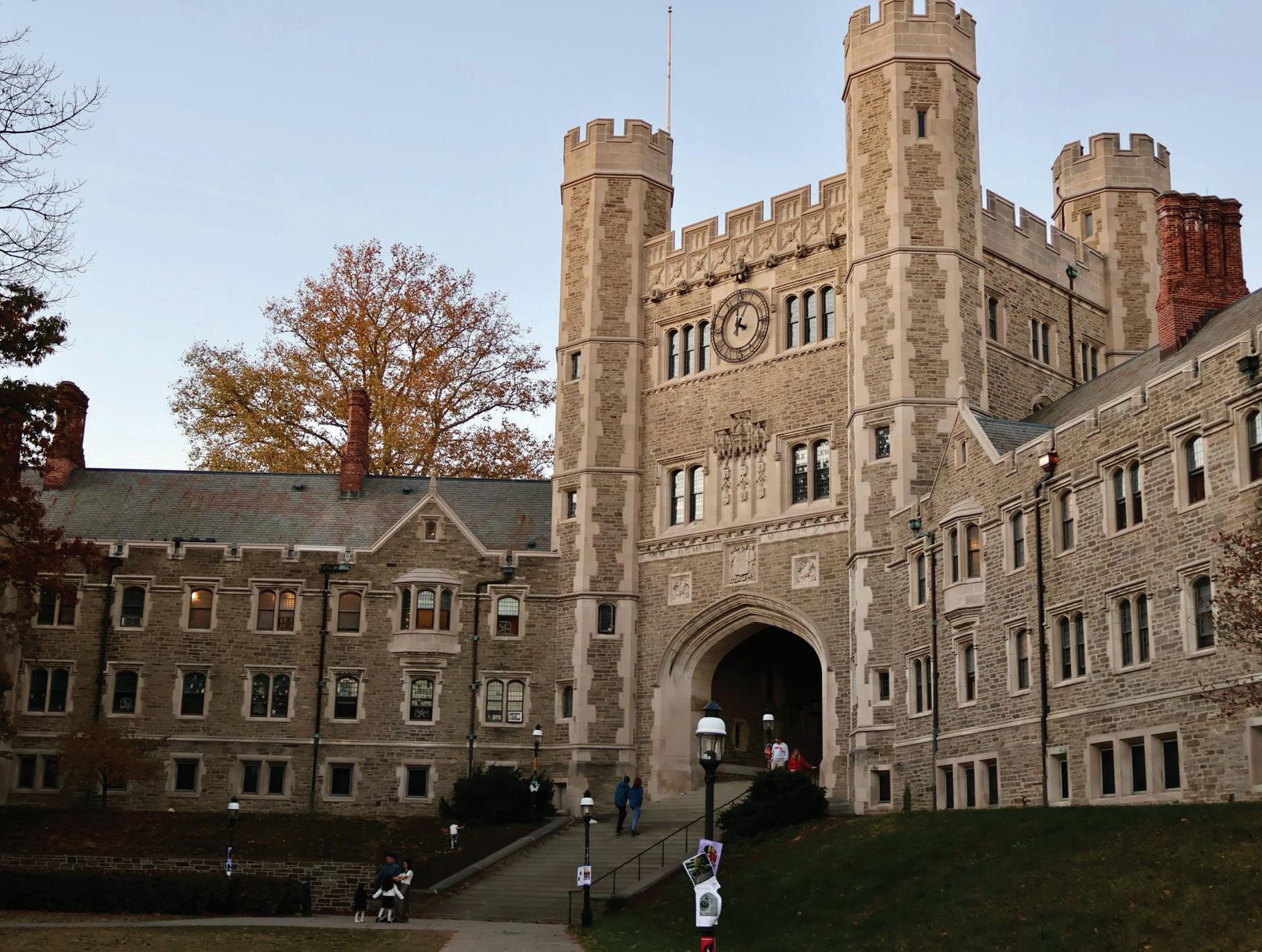
The program aims to offer students access to classes they might not otherwise have the opportunity to take at their home institution.
College doesn’t have a formulated neuroscience major.
“Princeton has an undergrad neuroscience major and therefore a multitude of classes that are aimed at students who wish to pursue neuroscience,” said Potter. “This collaboration with Princeton offers the opportunity to students to study topics that may not be specialized at
PRISM hosts its celebratory 50th anniversary drag performance
By Danica Ward Staff Writer
The College’s oldest gender and sexuality alliance, Prism, hosted its annual drag show in the Brower Student Center on April 7.
Although this event is put on every spring semester, this year’s event was even more special, as it is Prism’s 50th anniversary as an organization. As 50 years ago was 1976, the student alliance chose a groovy disco theme for this year’s celebration. BSC 100 was decorated with balloons, flower power streamers and fun graphics on the projector screen.
This year’s charity was the Bayard Rustin Center for Social Justice, a local Princeton institution that acts as a safe-space and activism hub for LGBTQIA+ individuals. Throughout the event, a money basket was paraded around for cash donations, while a Venmo code was shown on screen so attendees could donate.
Returning queens Lady Celestina, Mona Little and Angelique emceed and entertained the crowd, who were set up around a platformed stage with a catwalk. The queens interacted with the audience,



performed their own numbers and helped gather monetary donations for the charity.
In addition to the professional drag queens present at the show, there were also many student performers who dressed in their own drag personas and strutted their stuff. The two-hour event was filled with comedy, fashion, music and an overall appreciation and pride for the art form that is drag.
Senior biology major, Sarah Neil, helped open the show, as the second student performer of the night. Going by the name Romeo, Neil has performed at every drag show since their freshman year, giving them an opportunity to showcase their drag king persona.
When talking about the impacts and importance of Prism’s event, Neil said, “It really does mean a lot to me in that it has provided me a space, and I think a lot of other students a space where you can really express yourself in a way that only drag allows you to do.”
Along with the org’s events being accessible to college students of all grades, not just those 21+, it allows all demographics to experiment and step into their own identities.
TCNJ. This is absolutely beneficial to all the students who wish to branch out and explore new areas of study.”
The partnership was created after around six months of discussion. It was prompted after students at Princeton reported interest in courses at the College, especially in the School of Education.
“The thought was that if [Princeton]
students can take a couple classes here, then our students could also take some there,” said Vice Provost of Academic Engagement Tammy Dieterich.
“At TCNJ we’ve always prioritized student engagement in rigorous coursework and this opportunity will give students the ability to take that one step beyond TCNJ,” said Dieterich. “No one college is ever going to offer every possible class, this expands the topics that students can explore during their undergraduate experience.”
Spaces for students to participate in the cross-registration program are limited, and the following criteria will be taken into consideration: a GPA of at least 3.5, a strong rationale for the desired course at Princeton, including its alignment with their major, career goals, and/or research interests and classic standing seniority.
“It’s definitely an exclusive opportunity, we won’t be able to send tons and tons of students every semester, but we’re excited that we get to send any at all,” said Dieterich. The link for the interest form came out on April 13 with priority deadlines of May 1 for the Fall semester and October 1 for the Spring semester.
Although the partnership is currently only for five years, after seeing how it goes, the future of the agreement will be re-evaluated.
Maker’s Place helps low-income families in Trenton with children
By Zo Terrana Staff Writer
Trenton, the capital of New Jersey, has a long and storied history with the subject of poverty. The deindustrialization of the city coupled with economic instability of the current times have impacted families drastically.
The city’s youth have experienced hardships connected to this issue. Trenton’s children, who are unable to escape the suffocating grasp of poverty are forced to suffer in discarded areas out of sight from national news coverage. These communities and families, pushed into the shadows of the United States’s national image, develop generational poverty, furthering the nation’s long battle with this issue.
However, local Trenton based organizations like The Maker’s Place have filled the gap where families are struggling. The Maker’s Place, founded in 2018 operates within the local Trenton community to serve low-income families in need of vital baby materials such as diapers. The diaper bank was established as a faith-based nonprofit organization sponsored by the United Methodists of Greater New Jersey to help bridge lowincome families out of poverty.
Callie Crowder, the executive director of The Maker’s Place, is a leading voice
within the organization to empower and assist impoverished families needing a hand up in desperate times. With the help of volunteers from the College, The Maker’s Place has been a key life line for struggling families over the past years. The organization continues to provide assistance with various grass roots programs and initiatives.
“One in two families across the nation cannot afford the diapers that they need and have attested to not being able to afford the number of diapers they truly need to keep their children clean, dry and healthy,” Crowder said.
As a mom of two, Crowder understood the need and the expense that diapers represent to a mother. These materials are vital in a baby’s overall health and hygiene. In understanding the economic plight of local communities, The Maker’s Place does not use income verification when working with families.
“There’s a need and there is something that we are doing to help you move forward in your life, that’s what we’re about here at The Maker’s Place,” Crowder said.
“On average, infants need their diapers changed 10 to 12 times a day, toddlers need to be changed 6 to 8 times. With diapers being priced at 20 to 30 cents each, parents spend approximately $18 a week just on diapers.”
Photo by Erin Reilly

Restorative justice at TCNJ: A huge step forward
by Sandra Abrantes
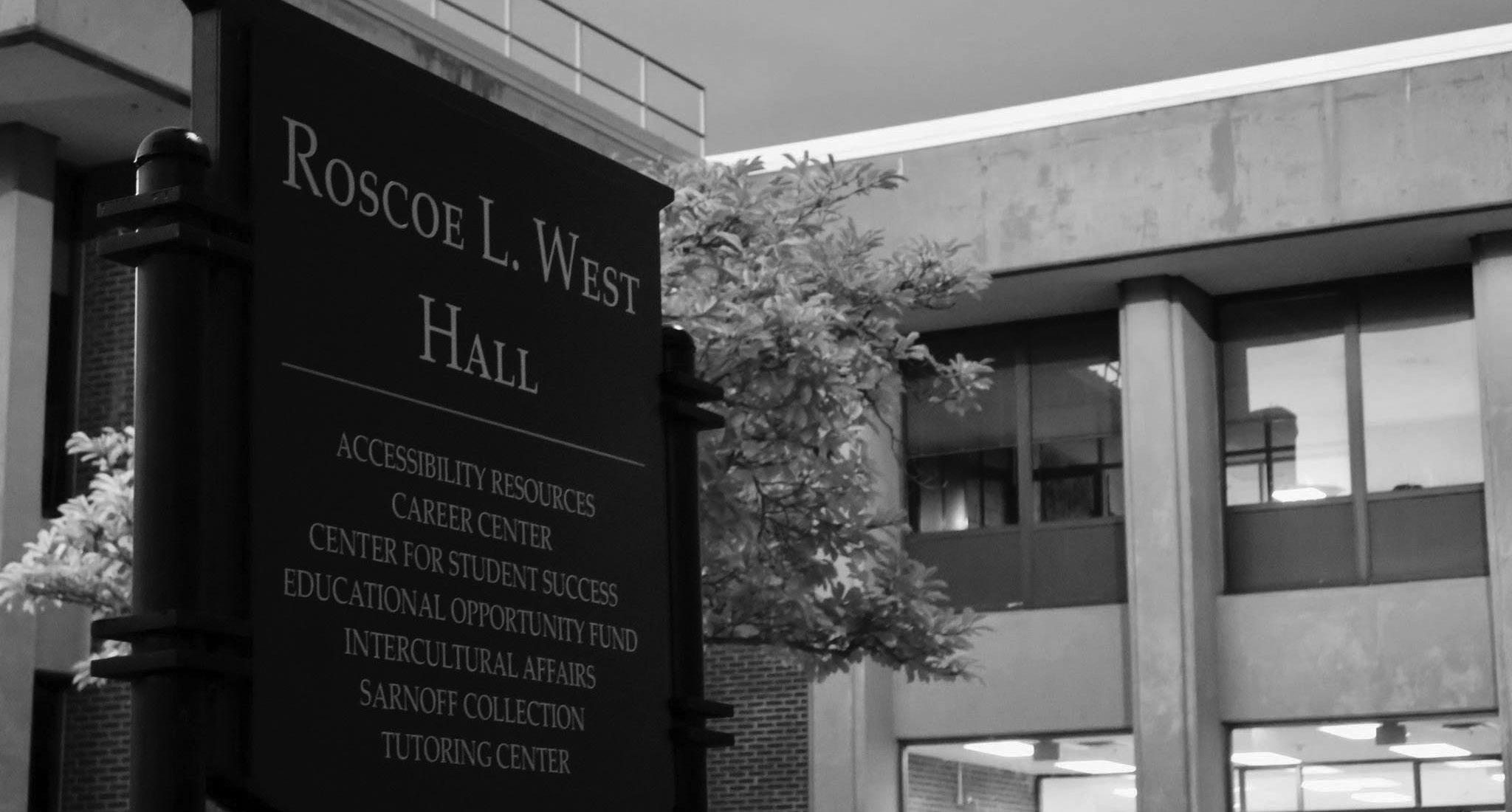
The Division of Inclusive Excellence hopes restoratve justice at the College will bring more unity amongst students, and lead to better discussions surrounding conflict.
By Miles Pedowitz Correspondent
The College’s Division of Inclusive Excellence recently reached out to the campus community, in collaboration with the Division of Student Affairs, regarding the potential implementation of restorative justice policies in the school’s conflict management strategies.
As stated in an email sent out to the student body on March 30, the implementation of restorative justice programs seeks to “fill the gap where a person or community has been harmed” in a manner that does not reach the level of policy violations, by “offering an alternative resolution when a punitive solution is not the desired outcome.”
Many schools have been implementing novel strategies to resolve conflicts that avoid identifying or mislabeling any individuals in a manner that feels vilifying or punitive. Through practices of mediated conversations, discussion circles and acknowledgement of accountability, these less formal and less permanent solutions act as more impartial tools that allow both sides of a conflict to feel equally heard. Now, the College is looking to incorporate these methods.
“Dispute resolution” once existed as a
process by which students could resolve conflicts via shuttle diplomacy, conversation and mediation. Associate Vice President for Inclusive Excellence and Campus Equal Employment Opportunity Officer Crystel Maldonado said that these sorts of measures help individuals “resolve incidents at hand rather than use any kind of formal investigation.”
Last year, the school launched the “In Good Faith” campaign, in which students could have conversations with one another about their differences, without rising to any degree of conflict. The offices of Student Affairs and Title IX have for years employed means for alternative resolution that help raise a degree of accountability and respect between parties involved, and work has been going on to improve such practices in the human resources and Equal Employment Opportunity processes.
The goal of these new restorative justice efforts, according to Maldonado, is to “bring the campus together, rather than having one [department] do it one way, and another person doing things another way,” thus formalizing these restorative efforts as a unified institutional process.
Students on campus are no strangers to conflict — some have faced disagreements, which can lead to frustrations or feelings
of being trapped in their limited ability to resolve them. “Since COVID, we’ve seen that there’s been a decline in students’ ability to navigate conflict and difficult situations,” said Associate Vice President for Student Affairs Jordan Draper. The restorative justice method would serve as a new and “proactive version of [resolution] that is not based in a policy violation.”
When there is a lack of safe space for meaningful conversation, by the time an issue does reach formal investigation, permanent damage has occurred, whether that is between employees, teammates, students that share residence halls, or other classmates. The essential question, posed by Maldonado, is how that harm can be mitigated or repaired.
Draper adds that because of the intimidation of using institutional barriers to resolve issues, there often is hesitation around addressing conflicts or conversations around difference. Through a program with a restorative lens, the department hopes to create comfort in “having these conversations, while understanding and empathizing with other people’s perspectives and values.”
One source for restorative justice and resolution services is the development of peer mediators.
Peer mediators would be responsible for handling roommate disagreements, shuttle diplomacy and other resolution methods that feel more approachable and less stressful for the individuals involved. Draper believes the College’s Community Advisors could be trained as mediators who “hear both students out, bring them together, resolve [the conflict], and work on building respect and repair.”
Maldonado said that there should be an environment where values may be drastically different, “but we still hold a level of understanding and respect.”
To this, Draper highlights that in an era of divisive social media and technology inhibiting our communication skills, these types of environments are needed more than ever, since the black-and-white idea of vehemently agreeing or disagreeing is simply “not the reality of a student’s experience.”
The overall goal of restorative justice is to still recognize the harm that was dealt in a conflict, but encourage students to seek coexistence and repair rather than punishment. For this to happen, Draper emphasizes, inner narratives must be reframed. “Even if we are not friends after it, I want us to come to an understanding of the situation that happened,” she explained.
Over the coming weeks, the Division of Inclusive Excellence will be holding focus groups that discuss the means by which these newly introduced methods could operate, and how it can best be integrated and advertised among the student body. “Although we can assume what the students need, we are not the students, we are not the ones that are living on campus, and we are not the ones that may have had to go through a disciplinary process,” Maldonado said. This new means of conflict resolution can improve the campus as a community. “We are developing our students to have a level of resiliency when there is conflict happening,” Maldonado notes. For this to happen, it takes the voice of the students to talk about how these new systems can work.
A Google Form is attached to the email sent out by the College’s Division of Inclusive Excellence with more information and focus group sign-up dates currently available. In these groups, students will be able to voice personal experiences and opinions on how these new measurements could operate. By participating, students can make their voice heard and create a brighter future for the campus.
Photo
Graphic by Zahara Anglin
Cop Shop: Strange odors, bathroom graffiti and traffic congestion
By Devyn Briones Arts & Entertainment Editor
The Signal and Campus Police work together on a weekly basis to inform the campus community about crime on and around campus. All records given to The Signal are public records and do not contain personal information. Some information provided may be triggering for some students.
March 31: Biology odor
One of the College’s biology professors reported an email from a student in regards to an odor of gas in a biology building room at approximately 6:51 p.m. Campus Police observed no odor in the room and proceeded to alert Ewing Fire Squad #30. The odor of gas was unfound and the fire department cleared the area.
April 2: Missing Macbook charger
At approximately 11:59 a.m., a Macbook charger was reported missing. The student showed Campus Police where her Macbook charger was last left. The student was in the second-floor study area of Browser Student Center with her friend where she left the charger plugged into the wall outlet. After she left the area, she realized she must have left the charger plugged in.
A friend of hers who resides on campus checked the area again, but had no luck finding it. The charger is an Apple Dual USB-C Adapter with two wires; one magnetic Macbook charger and the Type-C charger, valued at $150. The student checked the stud and library lost and found which did not have her charger.
placing it in his book bag. It is still uncertain if the suspect or any other individuals took her charger.
April 2: Bathroom graffiti
Around 1:51 p.m., there was a report of vandalism in the third floor men’s bathroom in R. Barbara Gitenstein Library. A faculty member stated that the vandalism was brought to her attention by another
except for the slight haze. The electric stove was turned off, as well as the windows opened for ventilation. Cracked eggshells were noticed in the trash can, but there were no people or belongings in the room at that time. Ewing Fire Squad #30 arrived on scene at approximately 10:04 p.m. and determined it to be safe to reoccupy after the confirmed system reset.

The student is only concerned about getting her charger back and does not wish to press criminal charges if someone did take her charger. The College’s security camera footage was checked and showed a group of about three people move to the table after she left. The group left the study area around 1:55 p.m., and one of the individuals was seen wrapping a charger around the charger block and
colleague, and showed Campus Police where the graffiti was located.
The graffiti included the term, “goy,” which is a Hebrew and Yiddish term for people who are non-Jewish. The message is ambiguous, as the term broadly refers to non-Jewish individuals. The faculty member said she would place a work order to have it removed. The target, motive or any suspects are not identifiable at this time.
April 8: Burnt food
Campus Police were dispatched to a students’ Decker Hall lounge area around 9:55 p.m. on the report of an activated smoke detector. The lounge area had a smell of burnt food and a slight smoke haze present. There were no signs of fire and other smoke
TCNJ’s Anti-Violence
April 9: Gas odor
Around 1:26 p.m., Armstrong Hall was reported for a strong scent of propane gas. There was no odor of gas observed by Campus Police upon arrival. Around 10 minutes later, Ewing Township Fire Department and West Trenton Department searched the entirety of the building and confirmed no odor or signs of gas.
April 9: Possible malfunction
A fire alarm smoke detector was activated at approximately 6 p.m. in a Norsworthy Hall room, leading to a full evacuation. There were no signs of smoke or fire inside the room that caused the activation. Ewing Township Squad 30 advised that the scene was clear, and the cause of the
alarm was a possible malfunction. Norsworthy residents were then able to re-enter the building.
April 10: Steam leak
A smoke detector was activated in Decker Hall, coming from one of the mechanical rooms. Ewing Fire Squad #33 arrived on scene around 10:18 a.m. and identified the activated point in the mechanical room to be a result of a steam leak. Facilities have been notified to address the leak.
April 10: Light bulb alarm
At approximately 9:04 p.m., a resident of the College called Campus Police to report a smell of smoke from a light fixture that had short circuited in Hausdoerffer Hall. The resident said that the light fixture short circuited, causing a burnt smell. The student opened her window to air out the room. The light bulb was advised to be replaced.
April 11: Broken door
Campus Police met with one of the College’s associate directors, who reported a broken door handle in the Travers and Wolfe main lounge. The door handle and push bar had come loose, seemingly as a result of excessive force. The door was locked the evening before at around 6 p.m. with no issues of the handle.
When the associate director arrived the following day, they noticed the handle to be broken and the door unsecure. There were no items missing from the main lounge. The door is not in view of any security cameras, therefore any potential suspects are unable to be identified. The investigation has been closed.
April 14: Traffic congestion
Around 8:15 a.m., a traffic accident occurred at Pennington Road, causing significant congestion and delays on Carlton Avenue and to the main campus entrance. There were no major injuries, and Pennington Road and Carlton Avenue were cleared about 40 minutes later.
Initiatives’ 10th Day to End Rape Culture event
by Devyn Briones
different channels, such as education programming, including tabling events, bulletin boards and workships,” said Liam Loftus, a sophomore criminology major. “Our larger events, such as DERC and coordinated awareness month, like sexual assault awareness month, domestic violence awareness month, are just to name a couple.”
anniversary at the College.
By Devyn Briones Arts & Entertainment Editor
The College’s Anti-Violence
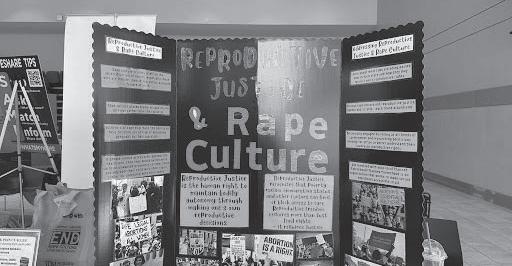
Initiatives, AVI, hosted their yearly Day to End Rape Culture event in the Brower Student Center on April 7, this one being their 10th anniversary event. DERC typically hosts the event in April, as it is Sexual Assault Awareness month.
AVI consists of a collaborative team of peer educators, professional staff and student interns.
This event specifically included presentations on rape culture, violence
prevention and resources.
Their work is focused in three main areas: counseling, advocacy and prevention, offering support to students who have been in difficult situations and helping inform others on what to do if they ever find themselves in one. AVI also follows a CARE philosophy, which stands for emphasizing choice, advocacy, respect and empowerment. While AVI was created to support students, they also hope their work will create a safer living and learning environment at the College.
“A bit about our prevention work, it’s accomplished through
Set up as an expo-style event, each table held organizations and campus resources to inform students about their specific program and how they can help. The tables had presentations and insight on what they specifically do and what they offer. Plus, each table had goodie bags to keep an uplifted mood, along with a card holding each table. As you attend each table, a star is put on the card for prizes at the end.
Some of the organizations at the event included Counseling and Prevention Services, Student Health Services, the Office for Title IX and Sexual Misconduct, the Accessibility Resource Center, the Collegiate Recovery Community and Sexual Reproductive and Health Care.
The Counseling and Prevention Services, also known as CAPS, offers group counseling, individual counseling and referal services to the College’s undergraduate and graduate students. All services provided by CAPS are free of charge, offering a safe space for students
to share as much or as little as they’d like in a group setting or one-on-one.
Student Health Services provides, promotes, supports and integrates individual healthcare, as well as clinical preventive services, treatment for illness, patient education and public health responsibilites. Through appointments, students can recieve professional medical care on campus for slight colds to flu-like symptoms.
The Collegiate Recovery Community supports students seeking addiction and/ or mental health recovery, advocate for wellness and create a community of safety, growth and enjoyment.
Sexual Reproductive and Health Care is strictly confidential. They include services for men and women that include birth control prescriptions, sexually transmitted infections testing and treatment, examinations and screenings. Some medications and services may require a small charge.
If you are interested in becoming involved or struggling to find a service to talk to, reach out to Michelle Lambing, the assistant director for AVI. The College has several programs and organizations to help and guide interest students. While it can be difficult to speak up, remember that the College has a team of students, educators, professional staff and professors who are always here to help.
The Anti-Violence Intiative program hosted their Day to End Rape Culture event as they celebrated their 10th
Photo
Features
TRENTON / Maker’s Place aids low-income Trenton families with baby materials

Continued from page 1
With the additional costs of wipes, formula, child care, clothes, food and baby gear, parents are often faced with impossible financial decisions,” according to an Advocates for Children of New Jersey report.
The Maker’s Place has addressed this issue in Trenton, a city with an already high poverty level where one in three families live below the poverty line, according to Crowder. Federal programs have let diapers, the integral item for any mother, slip through the cracks.
“There’s programs for women, infants and to ensure that these babies come into the world healthy and moms have what they need, but none of these programs cover
What’s
By Sky Pinkett Features Editor
diapers,” Crowder said.
Diapers haven’t been the lone item families are in need of. The organization has expanded access to various other family materials like baby clothing and baby formula. The Maker’s Place, in ensuring the quality of the clothes, inspects the clothing items they are receiving. These baby outfits are then transferred to their local families in proper condition.
“My experience volunteering at The Maker’s Place has been fun and personally rewarding,” Rosa Chang, a junior marketing major said. “My favorite part has been curating and bagging baby outfits for families in need by sorting through donated clothes. As a first-generation student coming from a low-income family that once relied on
services just like the ones The Maker’s Place provides, it was truly heartfelt to get a chance to give back to the local community.”
Students at the College have volunteered at organizations like The Maker’s Place through the Bonner Program. The program, according to the College, is “to provide diverse low-income, under-represented, and first generation students with the opportunity to attend college, while engaging their talents and education in building and supporting communities.”
Crowder has worked extensively with the College’s student volunteers during the dayto-day operations with the organization.
“The day-to-day activities at Maker’s Place consist of two aspects, physical operations and digital planning,” Chang said. “Ms. Crowder and her team work in collaboration to create graphics, recruit/ manage volunteers, give tours of the facility, write letters/newsletters, create budgets, and take Zoom meetings with donors/ stakeholders.”
Students participate in the physical aspect such as moving diaper boxes, organizing baby supplies and bagging necessary items for families.
“It truly takes a village to run the organization, but everyone who shows up makes a difference in helping babies and their families from the surrounding communities,” Chang said.
The Maker’s Place has begun a new program focusing on child education. The Maker’s Place book program aims to put new books in low-income homes for children as a new program initiative. These free, early childhood books can be requested at The
Maker’s Place website and assist struggling families with promoting child literacy in households across Trenton.
Lower income children suffering from systemic issues like generational poverty show higher levels of illiteracy, vastly hindering the child’s future economic standing in society.
“The children of parents with low literacy levels have a 72% chance of being at the lowest level of literacy when they become adults, creating a cycle of illiteracy and poverty that can span generations,” according to the Barbara Bush Foundation for Family Literacy.
As for the future of Trenton’s poverty issue with lower income families, Crowder said she has signs of worry based on recent economic trends and observations.
“Our economy is designed in a way that makes basics like diapers unaffordable for many families,” Crowder said. “There are all kinds of systemic issues impacting what we’re seeing in the city of Trenton right now.”
However in the midst of this ever-solasting issue of systemic poverty, Crowder, while leading The Maker’s Place, has seen acts of kindness in a community ravaged with economic disparities. Acts of compassion that break through barriers of selfishness and greed. In an impoverished city like Trenton, these community leaders shine bright where families may see only their darker circumstances.
“Its almost like finding a flower in a dessert,” Crowder said. “Don’t underestimate the power of humanity, love and hope. Don’t underestimate the power of good even though all these bad things are happening.”
your story? Now is your time to shine with Anne Santostefano
As shift leader for Blazin’ J’s, a popular chicken spot on Campus Town, Anne Santostefano interacts with an abundance of people on a day-to-day basis. For many workers in the service industry, this is a negative aspect of their jobs. But for Santostefano, everyone she encounters has a story just waiting to be told.
“I feel regular everyday people are very interesting, even more so than celebrities.” she said. “I mean, celebrities have their certain charms that we follow. But regular, everyday people, to me, have so much to say but nobody ever hears it. So I’m here to change that.”
With this goal in mind, Santostefano started her own online series called “It’s Your Time to Shine,” where she finds everyday people and interviews them about anything and everything: from hidden talents to future dreams, to life stories and deepest fears.
“I love to hear what people have to say,” Santostefano said. “I want to know their dreams, their goals, what scares them, what message they would have to say to the world.”
The endeavor has been years in the making, over several places and time periods in Santostefano’s life.
“It’s over 10 years ago that I started it,” she said. “I was actually still living in New York when the idea came to me and I kind of started to interview some people, but a lot of people shied away from it and I couldn’t really complete it with them. I was still developing it myself. And then when I got to New Jersey, it seemed like I met a lot of people who were willing to do it.”
Santostefano learned how to do all the filming, editing, uploading and marketing herself.
“The one good thing that came out of
the pandemic was that I had time,” she said. “That’s when I learned how to edit my own videos. I took [an online] course and then I started using iMovie, which works really well. I was so happy when I learned to do it myself.”
With her newfound editing skills paired with a passion for her project, Santostefano had everything she needed to carry out her plans. The only thing left to do was find people to interview.
“I used to work at Quick Check and I had an opportunity to talk to a lot of people there,” she said. “My first interview was a Lyft driver.”
Reflecting on the channel’s humble beginnings and very first interviewee, Santostefano expressed the perfect timing of her first interview.
“Oh, I’m telling you, it was like the universe just handpicked us for each other,” she said excitedly. “[The Lyft driver] started when I got in the car. I sat in there and she’s like, ‘Do you mind if I tell you about something, like a concept that I’ve come up with? Because it’s geared at women and self-love.’ I said, absolutely, tell me all about it.”
“And so she started telling me about it. I said, you know, I have a YouTube channel that I’m starting and you would be perfect to talk about this concept. I think it’s something people should hear about.” Santostefano continued. “And she was my first. And then it was, like, trial and error.”
So began “It’s Your Time to Shine.” From there, Santostefano continued to interview everyday people she would organically meet in unlikely places. From the daughter of a woman who sold Santostefano a laptop, to the landlord of a place she considered renting, to a customer she met at Blazin’ J’s.
“He was a real character.” Santostefano said of the Blazin’ J’s customer. “And he wanted me to video his food and come up with some funny little skit. And so I just
jumped right into it. And I was like, you know what? You would be great for my channel.”
Over the years, Santostefano has had a diverse group of people to interview. From a 14-year-old who shared her talent for dancing and acting, to a 70-year-old who reflected on her time in the 60s and 70s hippie movement.
“One of my interviews, a guy from Pastadoro, he plays guitar and he was also training to be a therapist at the time.” she said. “So we made for a pretty intriguing interview. I did it right out in the courtyard back there.” Santostefano gestured to the courtyard in the middle of Campus Town.
Many of the folks Santostefano has been able to interview have been able to share a unique fact about their life or a fun talent that they possess. Nevertheless, Santostefano stresses the importance of normalcy.
“Not everybody has to have a super interesting life,” she said. “Because to me, everybody’s life is interesting. Everybody matters. Everybody has something to share. Everybody has something that might inspire somebody else or maybe help them feel seen or recognized. Like, hey, I feel that too. I’m not the only one this happened to.”
The questions Santostefano tends to ask in her interviews reflects this commitment to normal, everyday life.
“I give them an outline of questions and
I say, do you want to answer this question? None of it’s exploitative and I’m never invasive,” she said. “It’s just, what is your dream job? Do you have a special goal? If people have a talent then I ask them if they want me to video it; like if they can play an instrument or sing or even juggle or twiddle their fingers or whatever.”
In reflecting on the future of her channel, Santostefano discussed her plans to evolve without compromising the series’ humanity.
“I’ve added some [YouTube] shorts because they pressure you to do shorts, and I put some of them on Instagram. I’m trying to, you know, keep up with the algorithms.” she said. “And I didn’t even know anything about monetization. But I never wanna make it where I am compromising what I value about it for clicks. I’m not gonna put misleading headlines… I would rather miss some views and have my integrity than just start becoming like everybody else.”
Santostefano’s series is up on YouTube, Instagram, TikTok and Facebook, and she’s always searching for willing interview participants. Interested individuals can contact her at info@anneseyeview.com.
“It’s from a place of love. I love people and it helps create unity.” she said. “See how much we are alike instead of how much we may be different. It’s not about what divides us, but what makes us all human and the same.”

Photo courtesy of Callie Crowder
Trenton’s The Maker’s Place provides low income families with baby materials.
Photo courtesy of Anne Santostefano
Santostefano finds everyday people and interviews them about anything and everything.
A hymn to life: composed by whom? - Herstory month finale

Photo by Lea Katzer
there is shame here and it’s not the victims who must bear the shame, it is really those who victimize that must bear the shame.”
In telling her story, she insists on a radical shift. “Shame must change sides.”
She does not frame herself as a victim, but as a witness as someone who exposes what has long been hidden rather than embodying the harm itself. Her voice does not rise. There is no theatrical crescendo, no appeal to spectacle. Instead, there is clarity.
And yet, even that control exists within a larger score. Because this is not a solo piece. It never was.
Pélicot’s story is part of a broader arrangement. One that continues to play across borders and institutions, often without interruption. She recounts how, during the trial, she was forced to face dozens of men who denied wrongdoing, some claiming they believed they had permission. Inside the courtroom, she stood before them and their families. Outside, however, a different chorus formed.
The result is not chaos, but a controlled environment in which harmful patterns can continue, while the focus of those listening still remains elsewhere.
Pélicot’s story functions in much the same way.
It arrives within a system that has long relied on repetition, on the quiet normalization of violence and silence. And then, suddenly, à la Surprise Symphony, it disrupts. Not through spectacle, but through exposure.
“Shame must change sides.”
Like Haydn’s sudden chord, her words interrupt not only the narrative, but the audience’s position within it. They force a reorientation of who is being watched, and who is being judged.
It is an uncomfortable rupture but a disruption alone does not rewrite a composition.
By Lea Katzer Correspondent
Thunderous applause before she even speaks. As if an anthem were beginning before the first note had been played.
On March 30 at New York’s 92NY Center for Culture and Arts, nearly 900 people rose to their feet as a 73-year-old woman walked onto the stage. Gisèle Pélicot, the French woman whose refusal to cower in shame during the trial against her former husband and dozens of other men became a rallying cry for women worldwide, stood before them, visibly moved.
There is a certain anticipation in the room, the kind that belongs to openings, to premieres, to moments that promise meaning. And yet, what unfolds is not a triumphant overture. It is a composition full of dissonance, one that resists resolution.
As Women’s History Month comes to a close, Pélicot’s memoir “A Hymn to Life: Shame Has to Change Sides” raises broader questions about how women’s stories are told and who ultimately controls the narrative.
Speaking through a translator, Pélicot tells the audience it is her first time in New York. Earlier in her trip, she met with feminist icon Gloria Steinem, a striking moment for someone who has said that the women’s liberation movement of the 1970s once felt distant from her own life, which was centred on building a family.
That life, as she recounts in her memoir, was shaped by decades of hidden violence. Behind the façade of a 50-year marriage, her husband drugged her into unconsciousness and invited dozens of men to their home in southern France to rape her. A crime repeated so often it became rhythmical. Structured not by chance, but by intent.
When the case first broke in France, it was impossible to ignore as it struck like a discordant chord. The trial echoed far beyond the courtroom. But on stage in New York, Pélicot does not present herself as a symbol of tragedy. Instead, she speaks with remarkable steadiness.
“It was the solitude that really helped me,” she tells the audience, describing the years she spent deciding whether to allow the trial to proceed publicly. “It was at that point that I really came to believe that
Letters arrived addressed simply to “Gisèle Pélicot, France” and still found their way to her.
“It made me feel that I wasn’t alone,” she says. “When I would see all of these women around me… they gave me strength.”
That same energy filled the room at 92NY. The audience did not remain passive. They listened, responded, and rose again in applause. By the end of the evening, as Pélicot waved an emotional goodbye, she was met with another standing ovation which lasted long enough to feel less like an ending and more like a collective acknowledgement.
And yet, even in that moment, the question lingers beyond the room itself.
Which raises the question: Who is really conducting?
In Pélicot’s case, the control did not lie with her at first, but with those who shaped the conditions around her. Directing what was heard, what was ignored, and how the audience responded. Like a conductor guiding an orchestra, the system of abuse manages attention as much as action, setting the pace and tone in ways that keep scrutiny low and compliance high.
Pélicot does not shatter the orchestra with a dramatic finale. She does something quieter which, hopefully, is more enduring. She changes the interpretation. By refusing the expected script of victimhood and insisting on accountability, she alters the way the story is heard.
In doing so, she shifts attention away from individual trauma as spectacle and toward the structures that enable it.
Her decision to speak publicly is not about bravery, but about the determination to change society itself.
Yet, even as new notes are introduced, the larger composition remains unfinished.
Women’s History Month, too, can feel like a movement within this ongoing piece: a moment of heightened awareness, of amplified voices, of temporary reconfiguration. For a brief period, the orchestra seems to adjust.
But when the month ends, the question remains: does the music actually change, or does it simply return to its previous form?
And as the applause fades at 92NY the impact of the evening does not disappear as quietly.
If Gisèle Pélicot’s “A Hymn to Life” is meant to stand as a hymn to hope and justice then the question of who shapes the way it is told remains. But it also raises a broader question about who shaped these narratves in the first place.
A(I) shift in the job market - how artifical intelligence is affecting job market
By Giya Khurana Correspondent
Artificial intelligence has advanced exponentially and the use of it has ingrained itself into many parts of life in just four years. From being used in and as therapy to being used by politicians, AI has grown far beyond being a chat bot.
Since its creation in the 1960s, AI had been developing over time until 2022 when it went mainstream with ChatGPT, Georgia Turner wrote for the Royal Institution. The start of AI was to bring further analysis to questions, being adapted similarly over time. However it is now being used and seen on and off the internet.
“Over a quarter of U.S. workers — and 45% of those with postgraduate degrees — report using ChatGPT for work,” according to OpenAi’s website. A concern now being faced is how AI will affect jobs and the livelihood of workers moving forward with its rapid growth.
In late 2024, a billboard started popping up in San Francisco with the headline “Stop Hiring Humans,” commissioned by the company Artisan. Variants of the billboard started gaining attention online in 2025.
“The goal of the campaign was always to rage bait, but we never expected the level of backlash we ended up seeing,” said Jaspar Carmichael-Jack, CEO of Artisan, in a statement on the Artisan website, sharing the reason for the billboards.
Erick Cruz, a COO at Carmo Companies, a private equity and conference organizing firm, said this situation is a mix of being “short
sighted, selfish, and greedy.”
“It’s kind of short sighted, how do you get customers,” said M. Desai, an engagement manager for a pharmaceutical company. “Are you selling to another AI? If I’m a business owner and all my employees are AI, and I have to sell to another business and all of their employees are AI, why don’t the CEOs just talk?
“Also it’s just downstream bad economics,” Desai added. “If goods and services [are] just done between AI, it’s unrealistic. You’re talking about completely removing a lot of purpose for people, people who love doing their jobs, [some] people’s identities are connected to the jobs they do. At what point do you say I’m going to replace the CEO with an AI.”
“AI in its current state, if it continues on the current track, it will create more jobs than it will take,” said Carmichael-Jack on a panel at TechCrunch Disrupt October 2025, Kron4 reported, a local news organization from San Francisco.
In recent news, a different trend from that of Carmichael-Jack’s statement is taking shape. Last month, “Pinterest and Dow announced layoffs, [crediting] the job cuts in part to a shift to artificial intelligence,” CBS reported on Feb. 27.
Cruz said, “AI should be used to enhance the current workforce, make it more efficient and or train [employees] better. Our CEO made it clear, as we were hiring recently, that the job won’t be replaced by AI.”
Cruz said he had not heard of other companies integrating AI over human
employees, nor did Delmis Vargas, a senior finance major at the College, who said, “I’ve seen it integrated but not fully replacing people yet.”
However, noting developments similar to the CBS report, Desai said he “100% has seen it.” Desai noted that Amazon had been “laying off in waves.”
On March 11, The Guardian reported that almost 10% of roughly 350,000 corporate employees at Amazon have been laid off in the past four months, and pressures had risen on the remaining employees to integrate AI.
Desai mentioned the company Square, now Block, and their layoffs, as well as a tweet by their CEO, Jack Dorsey, for the reason for the layoff.
“We’re reducing our organization by nearly half, from over 10,000 people to just under 6,000. That means over 4,000 of you,” Dorsey said in his tweet on Feb. 26.“[Artificial] intelligence tools we’re creating and using, paired with smaller teams, enabling a new way of working [changing] what it means to build and run a company… we’re going to build this company with [artificial] intelligence at the core of everything we do,” Dorsey added.
Dorsey claimed he had two options, one to layoff employees in waves or “be honest about where [they] are and act on it now.”
These are just a few companies that have shared the reason for their start or continuation of job cuts this year. However, there has been a slow growth to the cuts seen since 2022.
“Employment for 22 to 25-year-olds fell 6% between late 2022 and July 2025,” ADP

AI is steadily being integrated into jobs.
Research reported in August 2025. Vargas had explained her distaste for AI integration in all spaces. “There should be limitations, we shouldn’t use AI for simple tasks,” Vargas said. “It’s bad for the environment, it’s just not good for us humans to rely on it.”
Adding in she is slightly worried for the job market but, “I think there will be usage for humans,” said Vargas. “AI still makes so many errors and small mistakes, it can cost more money with those errors than human error.”
The mistakes have already started to creep up. From the March 11 report, The Guardian highlighted how Diane, an Amazon employee who joined in 2024 to write code for the company, is now “mostly fixing what artificial intelligence breaks.”
There is no telling what the future will hold with AI taking over while it also needing human help to adapt and be fixed.
However, Desai concluded that AI can’t replace people. “Weirdly, it might just bring us away from our phones,” Desai said.
Gisèle Pélicot received a standing ovation at the end of the evening.
Student organizations shape the community on campus

By Ally Uhlendorf Editoralist
When people think of the College, they often refer to it as a “suitcase school,” meaning there is not a very lively campus social life. It is warned that many students go home on the weekends, and are only really on campus for classes. However, that reputation does not accurately tell the full story of TCNJ’s campus. Student organizations foster the sense of community that is vital to the College. Although the College is not a big state school with nonstop activities every day, it is in no way a “dead campus.” If anything, that mentality erases
and overlooks all of the students who are working tirelessly to make this campus more than just a place where classes are hosted. There are over 230 recognized student organizations here at the College, with interests ranging from Greek life to event planning to cultural organizations. Approximately 84% of students are involved in at least one organization, and most become involved in multiple throughout their time at the College. What makes a campus feel like a community is the work, events and spaces that these organizations produce. Whether it is a social gathering, a latenight event or a student trip,

a sense of unity is provided in these student-produced activities. Even something as simple as a weekly meeting in an organization provides a space for students to come together and bond over mutual interests — and that is truly what college thrives on. These moments do not just happen on their own; they are planned by fellow students who all have the same passion: making a difference on this campus and making it feel like more than just an institution. Members of all student organizations work for months to create opportunities for students to make memories they will cherish forever, beyond their college years. These students are
The Signal
https://www.tcnjsignalnews.com/
Email: signal@tcnj.edu
Business Email: thesignalbusiness@gmail.com
Editorial Staff
Isabella Darcy Editor-in-Chief
Eddie Young Alena Bitonti Managing Editors
Ashley Ragone News Editor
Devyn Briones Arts & Entertainment Editor
Natalia Tomczak Opinions Editor
Sky Pinkett Features Editor
Joseph Caruso Sports Editor
Lake DiStefano Nation & World Editor
POLICIES
constantly coming up with ideas, figuring out how to execute them and keeping the student body as their priority. There’s a level of ownership that makes campus life feel more personal, and that’s because it is.
These events may seem simple on the surface, but there is so much more work put into them than people realize. Coordinating schedules, managing budgets, promoting and dealing with unexpected occurrences along the way. This is more to balance on top of classes, jobs and everything else the average college student has to deal with. However, this aspect is often overlooked. People show up, enjoy what is there and move on, without really recognizing who made this all possible.
A campus does not feel alive because it’s constantly busy and there are always classes running, it feels alive because there are opportunities to connect with those around you outside of academics. Student leaders are the ones making that possible. They’re the reason there’s something to do on a random weeknight, or a reason to stay on campus a little longer. When people choose to take advantage of the opportunities that are provided on campus, the College is way more than just academics. Student organizations provide the chance for students to feel connected with the campus and find a place of belonging. Although these groups are not shaping the structure of the institution, they are shaping the college experience.
Administrative Staff
Sandra Abrantes Multimedia Coordinator
Andre Paras Video Editor
Abigail Holliday Copy Editor
Amanda Incalcaterra
Erin Reilly Social Media Editors
Ally Uhlendorf Editorialist
Jenna Weldon Web Editor
Sky Stewart Editorial Cartoonist
Cristina Collins Business Manager
Kathleen Webber Faculty Advisor
The Signal is published bi-weekly during the academic year and not financed by the Student Activity Fund, but solely by advertisement revenue. Any student may submit articles to The Signal. Publication of submitted articles is at the discretion of the editors. All materials submitted become the sole property of The Signal.
The Letters section is an open forum for opinions. Submissions that announce events or advertise in any way will not be printed.
The Signal willingly corrects mistakes. If you think we have made a mistake, contact us at signal@tcnj.edu.
Photo by Andre Paras
Student organizaions deserve immense recognition for their hard work on campus.



Sudoku

Your media diet shapes more than you realize

By Jack Salaki Correspondent
What was the last piece of media you consumed? Was it a piece of music or maybe a film? Or it could be something entirely different: maybe a short-form video or a news article. Many of us don’t really think about the media we consume. We live in a consumer-first culture, one in which we continuously take in new content without reflecting on it.
The idea of a media diet and being mindful of what we consume is not new. It has become a growing discussion point in recent years, especially with the growth of the internet, which has expanded access to different forms of information. Many times this idea is centered around politics or misinformation. Individuals are told to be careful about what they consume and who is telling it to them.
However, while this is important, I think a broader question to ask is how our media diets shape our psychology. This isn’t just in terms of political beliefs, which certain kinds of media certainly can influence. A person who
solely consumes Fox News or rightleaning sources while ignoring outside viewpoints will lose touch with the political reality and what other people may be thinking.
Similarly, an individual solely consuming CNN and left-leaning sources may fail to understand the viewpoint of someone on the political right or be unable to grasp opposing viewpoints. This is the main context in which a media diet is discussed.
But our broader psychology isn’t discussed nearly as much. Media, like pieces of food, can change our composition in meaningful ways.
A person who only consumes fast food will likely suffer from health issues. Yet this idea is not seemingly translated to what we watch, read and listen to.
I have noticed it in my own life. I’ve found that when I spend more time on YouTube videos or shortform content, attention becomes more difficult to come by.
After all, attention, like a muscle, needs to be exercised. When I watch longer films or read books, I find that I am able to think a bit more deeply.
My mind doesn’t feel as cluttered. I’ve started to think of a media diet as having different parts. The first is the form of what you consume — whether it’s long-form content that allows you to focus, or short-form content that’s built for quick engagement. While consuming only short-form content may be fun, it may have long-term effects on attention.
There are different levels to this media and their effect on the mind. A media diet doesn’t necessarily mean eliminating certain forms of media entirely (although some people do take this route), but being aware of where you are spending your time and how it may be affecting you.
Another part of the media diet is the actual content itself. If you only consume negative content, then expect to be negatively affected.
For example, someone who reads about conspiracy theories, watches videos about the potential of WWIII and has an Instagram feed that highlights negative events will very likely have a cynical outlook on the world. But when you step back and examine their attitude toward the world, it is clear
that it wasn’t something they truly developed, but something that they adopted. Whether we mean to or not, we often adopt what we consume.
Humans, as social creatures, tend to pick up mannerisms, social cues and ideas from those we spend more time with. By curating your feed more intentionally to include intelligent and uplifting content, you can gain greater control over this and ensure that your diet is beneficial to you.
This doesn’t mean that your media diet needs to be perfectly positive. Like many things, moderation is often the best solution. But being mindful of how music, movies, news, TV or social media content may be affecting your outlook on life is also important. I often notice how these small things can add up over time to change my viewpoint on ideas in small but meaningful ways.
I was recently thinking about how often I reflect on what I consume. Going back to my opening, it can be difficult to recall what we consumed last. There’s nothing wrong with this. In fact, even if I tried, I doubt I’d be able to remember everything that I watched, read or listened to.
Yet there is also something to say about reflection. Talking to someone about something you watched, writing about it or reading more into it can be good ways to reflect on a piece of media. That way you have the possibility to slow down and take it in more. This lets your mind “digest” the information in a certain manner and gain something out of it rather than just moving to the next thing. By being intentional with consumption, you put yourself back in control. As of today, modern media algorithms are becoming more effective at understanding a person’s likes and dislikes. If we don’t choose our own media diets, algorithms will happily choose them for us.
The drinking age should be lowered to 18 in the United States

By Natalia Tomczak Opinions Editor
It is no well kept secret that in the United States many people drink before it is legal for them to do so. Isn’t it strange? You can bartend at 18, but not drink?
You can vote, take out loans, marry, sign up for the military and be treated as an adult in the criminal justice system. You can do all of these things that signify adulthood
and a level of maturity — but you can’t drink.
Eighteen is a milestone age and official passage into adulthood. Nevertheless, adulthood is a social construct. 18 doesn’t actually signify anything, but it evidently means something in the United States to be 18, something different than what it would mean to be 17.
As a college student, this creates a unique culture. There’s a divide between college students who are
under 21, and those who are over 21. This leads to people sneaking around, even when it is already wellknown people of their age do it, not to mention the culture of college bars and fake IDs.
Drinking behaviors are dependent on the culture of that society. Something many travelers notice is that the drinking culture in many European countries is based on social life and drinking is a part of daily meals. In the U.S., especially among college-age students, quick and fullblown intoxication is the norm.
What happens when something is socially acceptable even though it is illegal?
Just like the prohibition era didn’t stop people from drinking, it merely encouraged them to do it in secret. The danger and excitement of the forbidden nature of drinking has not left the culture.
This leads to a perception that the law can be selectively obeyed.
Young people live in this culture of dodging the system. The fact that drinking is not legal for 18-year-olds creates this idea of scarcity, leading people to indulge in excessive consumption when they do finally have access to alcohol, since they
can’t go out legally to drink.
Much concern about the consequences of lowering the drinking age is related to fear of an increase in binge drinking and alcohol-related car accidents. The real concern should be, how well does the U.S. address the underlying issues that lead to alcohol abuse?
With the drinking age at 21, do we really address the root cause of these concerns? I’d argue we do not. Maybe the rate of drinking won’t go down if the drinking age is lowered to 18, but episodic binge drinking will decrease when the idea of scarcity is gone.
What is often ignored is the effect of the speakeasy-like nature of drinking on social outings. Personally, I don’t desire to drink or smoke, but I desire to legally be allowed to be in these social spaces with other young adults. I feel a part of my adolescence has been taken away from me when I see that people in other countries are allowed to go out at 18.
The drinking age being 21 does not stop people from drinking before then. It would be more beneficial to the culture if the drinking age was 18 instead.
Photo courtesy of Pexels
In a time of rapid media inundation, considering your media diet could be more important than previously thought.
The drinking age has a detrimental impact on culture.
Photo courtesy of Pexels
Backlash to ‘Bridgerton’ Season 5 reveals a lack of true tolerance to queer media

By Lake DiStefano Nation & World Editor
“Bridgerton” is one of our modern television juggernauts, with it being one of Netflix’s few remaining crown-jewels in terms of traffic for the platform. The premise of the show is simple: a historical romance anthology, with each season focusing on a different couple, within a vaguely Regency-era London that is racially diverse.
Recently, Netflix announced that Season 5 will follow a lesbian couple, and the backlash towards this announcement can be summarized in one word: disproportionate.
The common sentiment in the comment sections of the various posts reporting this news, such as the announcement post of the season leads on the official “Bridgerton” Instagram account, is nothing short of vitriol.
Fans are, seemingly, against the idea of a lesbian-led season. Which begs the question: why?
“Bridgerton” is an adaptation of a series of novels, with each season being loosely inspired from a single book in the series. The show often straddles the line between being a faithful adaptation and making changes — taking the bare elements of the book it’s trying to adapt, and filling in extra details to create a more complete season of television.
The most famous change from the books, which catapulted the show into mainstream attention during the show’s first season, is the love interests that each of the Bridgerton siblings end up with. In the books, the period-piece aspect of the story is taken a little more seriously, and thus the representation for different racial identities is not only lacking, but frankly, nonexistent.
The show has rectified this, creating a fictional version of Regency-era London in which racism is seemingly absent. This has allowed for the love interests in each
season to be of varying different races and cultural backgrounds, and is widely regarded to be a change for the better, as it’s allowed for each season’s storyline to feel distinct via the cultural references they’re allowed to represent.
This is all to say that the show’s faithfulness to the books has only ever been a loose thing to begin with. Every season so far has changed not only the love interests in question, but has also done the extra work to rewrite the story around the couple, to better fit how the love interest’s new identity would realistically function.
I mention this for a very specific reason. You see, the backlash towards the choice for a lesbian-led season has spawned a few pieces of rhetoric to justify itself, with the main one being that it’s not faithful to the books.
Giving these fans the benefit of the doubt, and assuming their discontent isn’t solely rooted in homophobia, this sentiment is charged with two poles of pushback — the fact it’s a gender change from the book’s originally male love interest, and the belief that some of the book’s themes might not translate under this new queer context.
As an anthology, the show sets up the prominent couples often seasons before their focus season, and this case is no different. Francesa and Michaela, the two confirmed leads of Season 5, have been interacting in the show for two seasons now, with their love story having been set up sufficiently as a result.
From this sampling of their dynamic we, as the audience, can already glean some of the ways they’ve taken to adapting their book. While obviously certain changes have been made as a result of the queer element, it seems, so far at least, that this change was haphazard or self-congratulatory.
Beyond the fact that some of Francesa’s narrative themes from her book have been adapted earlier
in the show, rather than during the love story itself, the show seems genuinely interested in telling a queer love story, in which the queer elements of that love aren’t glossed over.
This says, to me at least, that this rhetoric is hypocritical at best. Every single season so far has featured changes, both to the love interests’ identities and the storyline itself as a result, so I’m not sure why this change rings any more unnecessary than the others.
It certainly seems thoughtthrough, with them having two whole seasons of set up by this point, during which they’ve managed to adapt all the other themes of the book which wouldn’t translate as easily within a queer love story.
So what is the real reason for so many finding this decision unsavory? Why are so many fans claiming they’re going to skip this season out of sheer frustration?
To better articulate my upcoming point, I’d like to draw a comparison to another queer show that was recently released, and the reception with which it received.
“Heated Rivalry” and “Bridgerton,” fundamentally, are the same show. They’re shows that, on a surface level, seem purely erotica — but actually have a deeply emotional core, which makes the spice a mere cherry on top. “Heated Rivalry,” like this upcoming season of “Bridgerton,” also centers a queer love story, with it instead focusing on two gay men.
So why is this upcoming lesbian season, which hasn’t even been released yet, mind you, receiving more backlash than “Heated Rivalry” did?
Given the fact that all the popular rhetoric proposed fails to hold up under even a light amount of scrutiny, I find that the backlash to this upcoming season speaks volumes towards a more quiet kind of homophobia, which can be argued to be worse than outright discrimination.
While there are exceptions, like all things, I would not face much contention were I to assert the fact that the primary fanbase for these shows, excluding queer fans, is straight women.
An article from Vulture, entitled “Girls Who Love Boys Who Love Boys” discusses this phenomenon, and proposes a few theories as to why straight women enjoy this specific kind of queer media, like “Heated Rivalry.”
I would like to propose a theory of my own. In 2018, NBC News reported “The most searched term on online pornography sites this year? “Lesbian,” according to Pornhub and YouPorn, two of the most-visited porn sites in the world.”
Without stating the obvious, I feel this framework of understanding, regarding the type of queer representation that is accepted by the heterosexual majority, offers up an interesting insight into how these kinds of romance shows, in which sex scenes are present, are often received.
For as much as people stay for the love stories at the center of these shows, sex does, in fact, sell.
Queer people, it seems, are only ever tolerated when they can provide some sexual gratification. The success of shows like “Heated Rivalry” ring hollow, in this sense. It exposes how despite the love stories at the heart of these shows — the reason many claim to love the romance genre — we are still at a place where people assess the merit of queer art according to their own standards of what they deem appealing.
It makes an unfortunate amount of sense then, that a show like “Bridgerton,” with a majority straight-woman audience, would reject a love story between two women. Just as “Lesbian” is often the most searched category of porn, realistically by straight men, the disgusted reaction to a lesbian-led season of “Bridgerton” is the mere inverse of that.
Photo courtesy of IMDb
Bridgerton Season 5 features a lesbian couple.

Iran and US reach shaky ceasefire following Trump’s ultimatum

By Isabella McHugh Staff Writer
President Donald Trump invoked a grave threat that a whole civilization would die last Tuesday night, pointing to Iran, according to Politico. Impudent posts aren’t foreign to the president. In Trump’s 2026 Easter message he wrote, “Tuesday will be Power Plant Day,” adding “Open the
Fuckin’ Strait, you crazy bastards, or you’ll be living in hell,” TNR reported.
Only days later on April 7, Trump took to Truth Social and wrote, “A whole civilization will die tonight, never to be brought back again,” Politico reported.
If Iran didn’t agree to a deal, he threatened strikes that could destroy bridges and energy targets, potentially demolishing civilian infrastructure.
Trump fires Attorney General Pam Bondi, replaces her with Todd Blanche
By Isabel Conforme Correspondent
President Donald Trump announced via Truth Social on April 2 that he had removed Attorney General Pam Bondi from her post, ending her year-long service to the nation.
In his post, he also mentioned her replacement, Todd Blanche, an American attorney and former prosecutor. The decision marks the second major Cabinet shakeup in recent weeks.
Trump praised Bondi as “a Great American Patriot and loyal friend,” writing that she had “faithfully served” as his attorney general for the previous year.
He added that Bondi would be “transitioning to a much needed and important new job in the private sector,” though he did not specify the role.
Bondi echoed that message in her own statement released a few hours later on X, saying she would spend the next month “working tirelessly to transition the office of Attorney General to the amazing Todd Blanche,” before she transitions to the private sector.
She described her tenure as “the most consequential first year of the Department of Justice in American history,” citing what she called a
Politico wrote that such an act could be named a war crime, if it was done deliberately.
Many people also criticized his imagined tactics for the same reason, according to CNN.
However, Trump has been making similar such demands in recent weeks which he suspended. Nevertheless, on April 7, United States strikes were reported to have been targeted close to infrastructure sites. U.S. forces struck areas on Kharg Island which is a central area for oil. These strikes did not actually hit any of the oil facilities, CNN reported.
The U.S. and Iran reached an agreement mere hours before Trump’s cutoff point. The president claimed that Iran offered “a workable basis on which to negotiate,” PBS also reported.
A ceasefire resulted and was taken into immediate effect. Trump said that both the U.S. and Israel would delay bombing Iran for two weeks, according to NPR.
Iran agreed to reopen the Strait of Hormuz during this period. This is something Trump threatened to do as one of his demands, PBS reported.
Iran had previously closed the strait as a result of U.S. strikes targeted at the country. The Strait makes up for about 20% of the world’s oil, according to Politico.
Trump persisted with his disparagement on April 9, saying that he was “very optimistic” about having a peace deal with Iran as Vice President JD Vance prepared for travel to Pakistan with the hopes of an ending to the conflict, NBC reported.
The Iranian leaders “talk much differently when you’re at a meeting
than they do to the press. They’re much more reasonable,” Trump said to NBC in a phone interview. “They’re agreeing to all the things that they have to agree to. Remember, they’ve been conquered. They have no military.”
Pakistan delivered the official proposal to the U.S. Iranian officials reported in an article from NPR. The officials cautioned that any change to their agreement could result in violence.
“Our hands are on the trigger, and the moment the enemy makes the slightest mistake, it will be met with full force,” said the Supreme National Security Council in the same article.
In the waking hours of this brand new peace agreement, dispute arose. Officials argued over who would be given reprieve from the strikes, according to NPR.
Israeli Prime Minister Benjamin Netanyahu’s office made a statement saying that they support the two-week ceasefire, however, the agreement did not extend to Lebanon, according to NPR. Pakistan Prime Minister Shehbaz Sharif said otherwise.
Senator Chris Murphy told TNR that Trump’s purpose was to inflict harm on civilians. Edward Wong of The New York Times reached out to the Pentagon and U.S. Central Command inquired if they would consciously target civilian sites, and he received no response.
“This is a really perilous moment,” Murphy told TNR. “If he is prepared to give an order to strike thousands of bridges and power plants, which will result in thousands of innocent Iranians dying, everybody in that chain of command has to think hard about whether they want to be part of the execution of that order.”
Supreme Court rules against a Colorado ban on conversion therapy
historic reduction in murder rates, terrorism convictions against Antifa members, gang crackdowns, cartel arrests and 24 favorable Supreme Court rulings.
According to NBC News, two sources said Bondi was fired, and one described Trump as increasingly frustrated that she had not “executed on his visions” on several key priorities.
CNN similarly reported that Trump had been dissatisfied with her handling of the Jeffrey Epstein files on her failure to pursue investigations into some of his political opponents.
Both outlets noted that Trump personally informed Bondi on April 1 that her time in the role was ending.
Bondi is the second Cabinet official Trump has removed in recent weeks, following the firing of Homeland Security Secretary Kristi Noem.
The New York Post reported that her ouster is part of a broader reshuffling and that Trump is considering several loyalists for the permanent attorney general role.
Blanche thanked the president on X, and wrote that Bondi “led this Department with strength and conviction” and pledging to “continue backing the blue, enforcing the law, and doing everything in our power to keep America safe.”
By Isabella McHugh Staff Writer
The Supreme Court ruled against a Colorado law banning conversion therapy for LGBTQ+ youth on March 31, according to AP News.
The Court ruled in an 8-1 majority, siding with a Christian counselor who argued that taking away conversation form of therapy was a violation of the First Amendment of the Constitution, AP News reported.
The ruling does not nullify the law, but now it is under the investigation of the lower courts. CNN reported that the law will most likely be struck down by these lower courts.
Many critics of this therapy say that it is not effective and can have harmful repercussions to young people, according to the New York Times.
Kaley Chiles was the counselor who argued in favor of the law ban stating that it impeded on the care she could provide to individuals who felt “same-sex attractions or gender identity confusion,” according to the BBC.
She also argued that the law prevented her from trying to “reduce or eliminate unwanted sexual attractions (or) change sexual behaviours,” the BBC reported.
Colorado argued that the law does not violate the First Amendment, contending that therapy is different from a traditional form of speech since it is a type of healthcare, according to AP News.
The case was argued in October of 2025, and most of the judges claimed to have issues associated with the law preventing conversion therapy, according to CNN. Some proposed that the solution to harmful therapy was a malpractice lawsuit instead of preventing this form of therapy.
“I hope this win for free speech will fuel a greater pursuit of truth,” Chiles told reporters after the court ruling. “Because of today’s ruling, families will have more options and states won’t be able to shut those options down,” she added, according to NBC.
Others such as Democratic Colorado Attorney General Phil Weiser strongly disagreed with this statement, and viewed the ruling as a “setback for Colorado’s efforts to protect children and families from harmful and discredited mental health practices,” according to NBC.
Polly Crozier, director of family advocacy at GLAD Law representing the LGBTQ+ community, stated that the court’s ruling “does not change the fact that conversion therapists who harm patients will still face legal consequences,” according to NBC.
The New York Times reported that in the recent past, the Supreme Court has resolved more decisions in favor of religious people, notably conservative Christians.
Even two of the court’s liberal judges, Elena Kagan and Sonia Sotomayor ruled against the ban. Justice Ketanji Brown Jackson was the only member who voted against it, the New York Times reported.
Photo courtesy of Wikimedia Commons The Strait of Hormuz is a waterway between the Persian Gulf and the Gulf of Oman.
Meta and YouTube found liable in social media addiction lawsuit

Instagram integrates Meta in their platform for enhanced systems, which the recent lawsuit found to be harmful.
By Isabella McHugh Staff Writer
The social media company Meta and video streaming platform YouTube were found guilty of causing anxiety and depression to a 20-yearold woman, identified as K.G.M. in a civil trial on March 25, according to the New York Times. The case was
Good
News Lions:
presented before a Los Angeles jury, Al Jazeera reported.
K.G.M. suffered from social media addiction as a child, and claims that caused her mental health spiral, according to NPR. She claimed that many features in social media apps were created to be addictive. She said she would feel a “rush” when she received notifications on her account,
according to Al Jazeera.
The plaintiff said, “I stopped engaging with family because I was spending all my time on social media,” according to Al Jazeera. She also added that she started suffering from anxiety and depression at the age of 10. K.G.M. experienced body dysmorphia and began to constantly use social media filters to alter her appearance.
Meta countered this argument, highlighting that the plaintiff experienced emotional and physical abuse in her own home. Her therapists allegedly never documented social media as being a part of her encompassing mental health issues, NPR reported.
The plaintiff was awarded $6 million. 70% of the money was paid by Meta and the rest by YouTube, according to The Guardian.
A Meta spokesperson said, “Teen mental health is profoundly complex and cannot be linked to a single app,” according to NBC News. They added, “We will continue to defend ourselves vigorously as every case is different, and we remain confident in our record of protecting teens online.”
José Castañeda, a spokesperson for Google, said that the case has a misunderstanding, because YouTube is a streaming service and “not a social media site,” according to NBC.
When questioned, Zuckerberg said that one of the company’s big priorities has always been protecting kids and keeping them safe online, according to NPR. He added, “If people feel like they’re not having a good experience, why would they
keep using the product?”
“Substitute the words ‘YouTube’ for the word methamphetamine,” attorney Luis Li told jurors on March 19, according to the Los Angeles Times.
The jury found Meta to have inadequately warned users about the dangers associated with using Instagram, Al Jazeera reported.
New Mexico Attorney General Raúl Torrez said in a statement, “Juries in New Mexico and California have recognized that Meta’s public deception and design features are putting children in harm’s way,” according to NPR.
Throughout the case however, the companies argued that they were being used as a scapegoat for children’s mental health issues, and that there was no scientific proof that social media could cause this, according to NPR.
The trial’s verdict was welcomed by parents and other advocates who said that social media causes harm to children. Al Jazeera cites examples such as eating disorders, self harm and even suicide.
The co-council for K.G.M. said that the court’s decision is “a historic moment” for many families who have faced similar issues with children being addicted to social media, NBC reported.
Joseph VanZandt, one of K.G.M.’s lawyers said, “This is the first time in history a jury has heard testimony by executives and seen internal documents that we believe prove these companies chose profits over children,” wrote the New York Times.
Polar Bears in the Norwegian Arctic are healthier, SoCal Honey Bees fight off lethal mites, First jaguar seen in Honduras range in over a decade

By Frankie Sanchez Correspondent
Good News Lions is the Nation & World section’s bi-weekly news segment, highlighting positive news in the country and around the world. The theme of this article is positive news and advancements in the environment.
Polar Bears in the Norwegian Arctic are healthier despite glacial melt
Polar Bears in Svalbard, Norway are fatter and healthier, according to a report published in the Scientific Reports journal in January.
From Canada to Greenland, polar bears suffer from lower life expectancy and population growth due to climate change. But, one subset of polar bears on the coasts of Norway are fatter and healthier than expected.
The Barents Sea experienced higher rises in temperatures compared to other Arctic regions, reaching 3.6 degrees Fahrenheit in parts. Because of this, the Barents Sea has lost ice twice as fast as any other place inhabited by polar bears.
Over 27 years body measurements of bears were taken in Svalbard as the ice continued to recede. Initially the health of the bears declined,
but over the next 20 years the polar bears became “fitter and fatter”.
The study’s lead author Jon Aars said that bears on Svalbard adapted by finding new ways to forage as well as by putting more effort in other food sources around them, like reindeer, seals and their eggs.
Aars was keen to underscore how the study does not clash with our understanding of climate change and how it affects life on Earth. Instead, it highlights the complexity that can exist with how climate change affects even different groups of the same species.
Despite the positivity of the report, it illustrates the changes in the climate which led to the ice loss and food scarcity that drove the bears of Svalbard to find new ways to survive.
SoCal Honey Bees can fight off lethal mites
A recent Scientific Reports study from March 27 discusses how hybrid species of honeybee local to Southern California show more resistance to Varroa mites, a parasite that feeds on honeybees. In 2025, US honeybee populations suffered due to climate change, pesticide use and parasites like the Varroa mite.
Local honeybees in California were observed to do much better against the mites than commercial bees. The study published by UC Riverside reported on the validity and causes for this apparent resistance.
Monitoring 236 honeybee both commercial and Californian colonies found that although they are not completely immune to the mites,
SoCal bees had 68% less mites than commercial bee colonies.
The mechanism behind their resistance seems to be at the bee’s larval stage, when Varroa mites like to infect them. The SoCal bee larvae were much less attractive to the mites than the other bees.
Why the mites are less attracted to the SoCal bee larvae is still under study, however the promise of more mite resistance bees would benefit bee populations, the plants they pollinate and the people and animals that consume their honey.
First jaguar spotted in Honduras range in over a decade Camera traps in the Sierra del Merendón mountain range in Honduras took a rare image of a jaguar, the first seen in the area in over 10-years. The jaguar was spotted on Feb. 6 this year, over 7,000 feet up in high-altitude forest.
In the Americas, Jaguars have lost almost half their historical range, most live within the Amazon rainforest, with all other populations endangered or critically endangered.
The biggest threats to Jaguars are deforestation and poaching.
Honduras lost 1.5 million hectares of tree cover over the last two decades, and poaching of jaguars themselves as well as their prey contributes to population decline. The government of Honduras pledged to restore 1.3 million hectares by the end of the 2020s and has improved protections against poaching.
The sighting of the cloud jaguar in the Sierra del Merendón range may just indicate an early success of these initiatives.
Photo courtesy of Wikimedia Commons
The theme of this week’s Good News Lions article is focused on positive news and advancements in the environment.
Graphic by Sandra Abrantes

QUEENS / PRISM celebrates ‘Gaypril’ with drag

Lady Celestina entertains the crowd.
Continued from page 1
“Art is queer,” Neil stated.“The best way to understand a group of people’s perspective is to see the art that they create, because it is the truest expression of themselves.”
Photo by Nick DeCesare
Freshman clinical mental health counseling major and Prism community engagement chair, Ollie Rodriguez, mused about their involvement in the event, which included helping set up and take down the decorations as well as escorting the queens around campus.
They also took the time to describe what the show meant to them. “Artistic expression is so important because LGBTQ+ people are often overshadowed and told they are too much,” Rodriguez said. “The safe space that art creates for queer people is vital to both making them feel seen and increasing acceptance in our society.”
As this month is “Gaypril,” Rodriguez stated that there’s many more events from Prism to come
over the course of the month. On April 16, there is a film screening of “Strange World,” a landmark movie containing a biracial and gay protagonist. On April 24, Prism will also be holding “Big Gay Wedding,” which they describe as “a fake wedding officiated by a drag queen and students are welcome to marry whoever they want!” The club will also be traveling to the New Jersey Queer and Trans Market on April 26.

Professors Kauffman and Frampton perform the final faculty recital

By Tasnim Oyshi Staff Writer
The final recital in the TCNJ Faculty Artist Recital series was held at Mildred & Ernest E. Mayo Concert Hall on April 7. The event featured Professor Benjamin Kauffman on the tuba, accompanied by Sherry Kim and Professor William Frampton on the viola who was accompanied by Tomoko Kanamaru.
The recital began at 12:30 p.m. with Kauffman’s rendition of “Concerto for Bass Tuba” by Ralph Vaughan Williams. The piece started dramatic and fast-paced in the “Prelude” and moved into the slower and more sentimental “Romanz” before ending with a faster, more playful “Finale.”
“Performing the Vaughan Williams
Concerto was a full circle moment because this is one of the pieces I performed during the playing demonstration portion of the interview process for the position here at TCNJ last summer,” he said.
Kauffman’s second piece was “Adagio and Allegro, Op. 70” by Robert Schumann. He explained how he strives to perform at least one standard piece and one not originally meant for the tuba every recital.
“The Schumann is a piece I knew I wanted to perform since I first heard it,” Kauffman said, describing why it fit well with the instrument. “He never originally composed for tuba, but much of his music suits the instrument very well. Each of the pieces chosen showcase the tuba’s singing qualities, its power, and its vast range.”
After Kauffman, Frampton started off his performance with York Bowen’s “Phantasy For Viola and Piano, Op. 54.”
The song switched back and forth between a fast and slow pace, with Frampton and Kanamaru’s physical movements adding emotional depth.
He followed up with selected pieces from the “Romeo and Juliet” ballet composed by Sergei Prokofiev and arranged by Vadim Borrisovsk, including “Introduction,” “The Street Awakens,” “Julia the Young Girl” and “Dance of the Knights.”
“Professor Kanamaru suggested these works by Prokofiev and Bowen, which I was only slightly familiar with,” Frampton said. “I agreed immediately, feeling gratitude that Professor Kanamaru was willing to put in so much work to per-
form these substantial pieces. They both turned out to be highly satisfying pieces of music to spend time with.”
In his preparation for the recital, Frampton had begun planning with Kanamaru during summer 2025. They practiced individually and began rehearsing together a few weeks before the performance. Although he had performed “Phantasy” before, this was Frampton’s first time playing the Prokofiev.
“There are always unknowns concerning how one will feel performing music in front of an audience for the first time,” Frampton said about his first time performing in Mayo. “The hall allows for a large dynamic range, with very soft moments feeling particularly satisfying in contrast with big moments. The piano is excellent, and it doesn’t get any better than playing with a great colleague like Dr. Kanamaru.”
Meanwhile, Kauffman started by focusing on the less familiar repertoire, which were the Schumann piece and the third movement of Vaughan Williams. “Once these areas became as comfortable as the rest of the program, I began rehearsing with Sherry, my pianist,” he said.
“It felt wonderful to perform the last faculty recital this year,” Kauffman said. “Only my students and a few faculty members had heard me play up until the recital. William’s portion of the recital was phenomenal and very enjoyable. Overall, I think it was a great experience for all involved.”
The Faculty Artist Recital series has been an ongoing part of the events organized by TCNJ Center for the Arts. Professors Joshua Kovach and Kathy Mitchell were the first to be featured in the Spring semester on Feb. 6, showcasing their skills in clarinet and saxophone respectively. Students can look forward to attending future faculty performances next semester.
Kauffman and Frampton’s performances were part of the TCNJ Faculty Artist Recital series, organized by TCNJ Center for the Arts.
Photo by Tasnim Oyshi
Photo by Nick DeCesare
The PRISM executive board poses with the queens.
Graphic design seniors showcase final works before their ‘exist’

By Ashley Ragone and Lake DiStefano News Editor and Nation & World Editor
“Exit ‘26,” the senior showcase for graphic design majors, displays the individual journeys of the artists’ time at the College. With students exploring a wide breadth of production and digital art mediums, each exhibit reveals a unique tone and design perspective.
For some students, the showcase is a chance to address issues they have a
vested interest in.
Samantha Jose presents two companies she created, “Nature’s Carriers” and “Manaola.” With a throughline of sustainability in her marketing, she urges companies to consider the environmental impact of their dirty business practices.
“When it comes to creating a company and selling products, really researching the materials used and the machines and labor involved, I feel is an important
sense that should be focused on way more these days,” she told The Signal. “So that’s why I really wanted to focus on that with my project and outside of the labels.”
“Nature’s Carriers” features layout ideas for a website, gift card and product samples, while “Manaola” has canned drink mock-ups and an entire merchandise design. Jose balanced both earth tones and nude shades with the vibrant, tropical colors of her energy drinks.
“I created products for this brand that are beeswax related or honey-related, and the products that are sold, percentages of those go towards conservation efforts,” Jose said. “And for my project, I decided to do honey jars, candles, and two sizes of chapsticks. I went the extra mile and I made the candles and the chapsticks myself.”
While “Nature’s Carriers” pulled inspiration from brands like Burt’s Bees, Jose gave “Manaola” a more beachthemed motif. “It’s a Hawaiian energy drink company, and it basically is also about sustainability and healthiness, but a healthy energy without chemicals,” she said.
For Ricardo Rivera, his art, including the friendly protagonist of his work, is dedicated to his family.
“My mom, she used to work at a kindergarten, and there was a whole bunch of kids’ books. I also have two nieces, so I kind of like wrote the book for them,” he said.
Socka, a sock puppet come to life,
is the star of Rivera’s children’s book, despite having a vastly different origin.
“Originally, me and my friends were just doodling one day. We had an idea for a show, like sock puppets, but they’re evil,” he said. “It was just one of them. And then we made it nice.”
Rivera’s art is mostly based on a self-described “sketchy” kind of drawing, simple and easy to draw, aiding well to a product meant for children.
Leslie Suarez, who exhibits various pieces of prior work and passion projects, shared that cultural representation is one of her greatest motivations. While overall her work is a culmination of her graphic design career, her feature works are specifically practiced in boosting representation.
“Luna & Lalo is a children’s book. I wanted a book based on Veracruz, where I could showcase ancient civilization knowledge…you know, for kids like me, when they’re younger to learn more about the indigenous civilizations that existed before us,” she said. She found it important to bring attention to her own family’s culture, and Mexican culture as a whole, that has gone underrepresented.
Her other work, “Somos La Cultura,” has a similar message. Titled after a Spanish phrase meant to uplift community pride and identity, she hopes to educate her community through her art.
“I could show, hopefully spread [the magazine] around community centers, schools and stuff like that.”
Read more on our website!
‘Significant Other’: A student-run spectacle

By Mahnoosh Arsalan Staff Writer
Love can be frightening, fleeting, long-lasting and painful. Its many nuances are what make it so palpable and desirous. Whether it be through friendship or a significant other, it’s never easy.
TCNJ’s All College Theatre hit the mark in their production of “Significant Other,” originally written by Joshua Harmon. What started as an Off-Broadway production in 2015 soon became a Broadway show in 2017, eventually finding its way to our lovely little campus.
The story follows Jordan Berman navigating his love life as his three
best friends each find love and get married, leaving him behind. Berman struggles with identity, family, friendship and self- worth in the 75-minute duration of the show, allowing audiences to enter his mind and wallow with him.
Aidan Hulse, a senior mathematics secondary education major, portrays Berman with grace and authenticity. His presentation of Berman felt so real, taking the audience along his journey. This role was impressive, with monologue memorization, physical acting and raw emotion, Hulse deserves praise for this character examination.
Berman’s sense of loneliness grows deeper throughout the play and is
related with his grandmother, Helene Berman, portrayed by Kathryn Wyrovski, a sophomore English major. As Helene tells tales of her own struggle with life and love, Berman’s life begins to mirror hers.
Wyrovski portrayed Helene excellently, with every piece of advice she gave Berman and every ominous comment made on her own existence, she embodied the role. In the second act, Helene tells Berman “it’s a long book, you’re in a tough chapter,” a powerful line that acts as a motivator and a movement.
Berman’s three best friends were Laura, played by sophomore inclusive early childhood education and psychology dual major Denae Johnson, Vanessa, played by senior communication studies major Liv Ayala, and Kiki, played by Sarah Borrellio, also a senior communication studies major.
Laura, Vanessa and Kiki experienced their fair share of love in the play, creating an exclusive environment for Berman to not be a part of. Laura, Berman’s best friend, is a very complex character. While Kiki shows unwavering support for Berman, and Vanessa continuously remains honest with him, Laura is a mix of the two extremes. It was really interesting to see their close friendship play out and almost devolve, reminding audiences that romantic relationships aren’t the only relationships in life that need nourishment and attention.
Ayala portrayed Vanessa as tough and honest, making her a very interesting actress and character to observe and analyze. Borrellio’s performance of Kiki was vibrant and full of life, making her fun to watch and even giving the audience a break from the sadness. Johnson’s representation of Laura felt very personal and veritable, a genuine friend to Berman.
Travis Martin, a sophomore English
secondary education major, David Amorosi, a junior English secondary education major and Andy Cusimano, a freshman English major, each played two characters.
Martin portrayed Evan, a coworker and potential love interest to Berman, and Roger, a love interest to Vanessa. Martin’s portrayal of Evan was excellent and extremely humorous, making the audience belly laugh every time he appeared on stage.
Amorosi portrayed Zach, a potential love interest to Berman, and Tony, Laura’s love interest. Amorosi and Hulse had great chemistry, as their relationship was extremely convincing.
Cusimano played Will, Berman’s office crush, and Conrad, Kiki’s husband. Will and Berman’s time together was cut very short, it would have been interesting to see how the two played out together, if at all. With the extremely realistic nature of the show, it makes sense for Will and Berman to end as they were, but Cusimano’s performance left room for the character to be explored further.
There were two things that stood out in this show: the humor and the lighting. “Significant Other” is funny, with incredible lines thrown around that got a rise out of the audience. Additionally, the lighting was extremely impressive, especially when Will and Berman go to the movies together. That noteworthy lighting work deserves the utmost praise.
ACT’s portrayal of “Significant Other” stands as a great late-coming-of-age for students to perceive. Audiences can see themselves in each character, relatability being an evident theme of the show. Each actor approached their characters with grace and dedication, making the show even more enjoyable. When watching someone pursue what they truly love, it’s bound to be a dazzling sight to see.
Photo by Sandra Abrantes
The graphic that greeted the guests.
The cast of the All College Theatre production of “Significant Other.”
Photo by Finn Singley
A24’s ‘The Drama’: Something bold, something new
By Mahnoosh Arsalan Staff Writer
With daunting ceremonious bell tolls, families flying in from all over the world and realizing one must spend the rest of their life with someone, it’s natural for couples to get pre-wedding jitters. Kristoffer Borgli takes that idea to a whole new level, cordially inviting audiences to his latest film, “The Drama.”
Starring Robert Pattinson and Zendaya, “The Drama” follows a couple in the final week before their wedding finding out harrowing truths about each other, derailing their big day and leaving their future uncertain. This dark comedy poses the question, how well do couples really know each other, and what are we, as humans, truly capable of?
Without spoiling the film, “The Drama” discusses an extremely important and relevant topic in America. Borgli does a good job at not making this harmful subject insensitive or presented as a joke. While the film does have its humorous, ridiculous moments, it’s still able to tell a tale on American culture and how it impacts young minds. It was very interesting to see Borgli make a film on such a sensitive subject, it was very well done.
One very notable component of this film is its unique composition. The way each shot is paced and filmed tells a story within itself, letting the audience in on each character’s thoughts, past, future and more. The styling of this film also allows the audience to grow with the characters, to feel what they’re feeling and to ultimately empathize. As the film goes on, it becomes more and more explosive.
The cinematography, along with styling, is an added bonus. “The
Drama” is beautifully made, shot on 35mm film. This specific kind of film gave the movie a very oldstyle feeling, making it look warm and comforting despite its extremely serious and depressing context.
Another noteworthy feature of the film are the performances. Pattinson’s portrayal of Charlie was hilarious and raw. He truly encapsulated the fear in finding out his partner isn’t exactly who he thought she was, trying his best to hold himself together with immense external pressures. Additionally, Pattinson’s awkward physical acting allowed for some unpleasant scenes in the film, making the theater belly laugh.
Zendaya’s portrayal of Emma was emotional, ridiculous and authentic. Emma has been carrying a dark secret with her for almost her entire life, and has found a good life beyond her past. When that darkness comes back into her life, her reactions are complex. Be prepared to see Emma throw up from guilt and anxiety at least two times in this film.
Mamoudou Athie plays Mike, Charlie’s best friend, who is married to Rachel, played by Alana Haim. Mike and Rachel completely turn on Emma once her secret is revealed, encouraging Charlie to do the same. Athie’s portrayal of Mike was very humorous, and his support for Charlie
and Rachel was unwavering. Haim’s portrayal of Rachel was extremely interesting. Rachel especially turns against Emma due to personal trauma, making the entire wedding experience even more nightmarish for the soon-to-be bride and groom. Rachel is a complex character, as she represents someone who is rightfully questionable of Emma yet extremely hypocritical in her behavior.
“The Drama” is a high-stress, emotional and strangely funny story. It induces a gargantuan amount of second-hand embarrassment to the audience and keeps them at the edge of their seats.

The ‘Showgirl’ Taylor Swift faces copyright infringement lawsuit

By Tasnim Oyshi Staff Writer
Las Vegas showgirl Maren Flagg, known professionally as Maren Wade, filed a lawsuit against Taylor Swift in the U.S. District Court for the Central District of California on March 30. Wade claimed the title of Swift’s newest album, “The Life of a Showgirl,” was too similar to her 2014 column for Las Vegas Weekly, titled “Confessions of a Showgirl.”
Wade registered and was named the owner of the trademark, “Confessions of a Showgirl,” in 2015. According to NBC News, the lawsuit stated, “Both share the same structure, the same dominant phrase, and the same overall commercial impression.”
In addition, the two products are competitors in “overlapping markets” that target the same audience. In her complaint, Wade also asserted that Swift allegedly knew of the titles’ similarity prior to releasing her album,
according to CBS News.
While Swift’s album is mainly about her relationship with fiancé Travis Kelce and her struggles with fame, Wade’s column contains anecdotes of her personal experiences as a showgirl. After its release, she had broadened the column into a book, a podcast and a touring live production.
“Her trademark covers live stage performances, theatrical productions and TV, among other things,” states an article in the Hollywood Reporter.
When Swift released her album October of last year, she became known for the “Showgirl” brand. The complaint stated, “Within weeks, the designation was affixed to consumer goods, stamped onto labels, tags, and packaging, and deployed as a source identifier across retail channels — all directed at the same audience Plaintiff had spent years cultivating.”
Swift had previously attempted to register “The Life of a Showgirl” but was rejected by the U.S. Patent and Trademark Office for being too similar to Wade’s trademark, according to the Hollywood Reporter. The phrase “of a Showgirl” could confuse consumers who might think the two are related.
Wade made the claim that this could damage her own brand, making people assume she copied Swift. “We have great respect for Swift’s talent
and success, but trademark law exists to ensure that creators at all levels can protect what they’ve built,” Jaymie Parkkinen, Wade’s attorney, said in a statement.
Wade had previously shown support for Swift’s album in an Instagram Reel, with the caption, “In my showgirl era. #TS12.” According to NBC News, she said in another video, “People that are like, ‘Oh, I don’t like Taylor Swift’ — OK girl, if you’re not fun, just say that.”
Now, Wade is seeking compensation from Swift, in addition to a jury trial. “Wade asks the court to permanently prevent Swift and her companies from using ‘The Life of a Showgirl’ as a brand name on products or services, as well as to hand over to Wade all profits earned from the sale of goods under the ‘Life of a Showgirl’ branding,” stated an article by NBC News.
Wade’s lawsuit mentioned Swift’s familiarity with trademark law as “they are among its most vigorous enforcers, having filed multiple federal actions to seize goods from vendors selling trademarked merchandise near concert venues,” according to NBC News. TAS Rights Management, which manages Swift’s trademarks, and Universal Music Group, who Swift is currently signed with, have not commented yet.
Photo courtesy of IMDb
Robert Pattinson and Zendaya in Kristoffer Borgli’s “The Drama.”
Photo courtesy of IMDb Swift’s newest album is allegedly too similar to showgirl Maren Wade’s
Women’s lacrosse bounceback after Senior Day disappointment

By Tyler Fennell Staff Writer
The College’s women’s lacrosse team’s 13th game of the season took place on Wednesday, April 15. It was also the game following the disappointing loss to Salisbury on April 11, which was also their Senior Day.
They won with a dominant score of 21-4 against Nuemann, a much needed win after losing 6-4 against the No. 4 team in the country, Salisbury. At this point in the season, the College is 11-2 and ranks No. 14 in the nation.
Senior Marissa Lucca had a season high of 14 points in a single
game, with five goals and nine assists. Lucca continues her already offensively dominant season with her most impressive performance yet. With junior CJ Kole being out of the lineup, the team needed players to step up offensively. Lucca did just that on top of her already team-leading production.
Senior midfielder/defense Sydney Sieja scored a goal, a rarity for defensive players, on top of her three ground balls and two caused turnovers. Sieja now has a season total of 21 ground balls and 11 caused turnovers.
Senior defender Megan Hogan also put up a valiant defensive effort with two ground balls and two caused
turnovers. This adds to her season total of 15 ground balls and 14 caused turnovers.
Fifth-year goalkeeper Hailey Wexler had one goal against with 30 minutes of play. On the season she posted a .518 save percentage with her season best performance coming in the loss to Salisbury with a .684 save percentage.
Despite them not getting the result they wanted against Salisbury, they certainly responded well against Neumann, as clearly indicated by the final score of the game.
Nearly every metric indicating possession was dominated by the College. They had 30 shots, 23 shots on goal and 27 ground balls.
Other notable performances include a season high eight point night from freshman Evie Cambell along with five ground balls, and a four goal game from sophomore Kelly Nevins. Junior Emily Potenza also had a hat-trick and a team leading five draw controls. Sophomore defender Ashley Herlihy had a three point game with two goals, one assist, four ground balls, and five caused turnovers
Their final three games of the regular season are all against NJAC opponents. The College’s next game against Ramapo will be held at home Saturday, April 18. Wednesday, April 22, will also be home against Stockton. To close out the season, the College will face off against the No. 9 ranked Rowan away, Saturday April 25.
The collective effort from the team is reflected in the game’s boxscore. A meaningful statement victory after a hard fought loss on senior day is emblematic of the totality of this season so far. When faced with adversity, the next game’s expectation is to bounce back. It is what has led them to their 11-2 record.
TCNJ Athletics Schedule
Baseball
Thursday, April 15
Away at Rowan
Women’s Tennis
Sunday, April 19
Home against Stevens
Baseball
Tuesday, April 21
Away at Keystone
Softball
Tuesday, April 21
Away at Jersey City
Lacrosse
Wednesday, April 22
Home at TBD
Baseball
Thursday, April 23
Home against William Paterson
Track
Thursday, April 23 Away at Penn Relays
Tennis picks up multiple ranked victories amidst win streak

By Joseph Caruso Sports Editor
The College’s men’s and women’s tennis teams each took home ranked victories this week, as the men’s team extended their winning streak to seven games while the women’s record improved to 14-1.
After dropping a couple of ranked games back to back a few weeks ago, the men’s team had a clean slate as they faced off against
No. 50 Ithaca on Saturday, April 4 and No. 49 Washington College on Saturday, April 11.
Against Ithaca, the College went down 3-1, putting themselves in a tough position against a ranked opponent. From that point on however, junior Nathan Chan came up huge for the Lions, being the only double winner from the squad and vaulting them ahead to propel them to a 4-3 victory.
Despite trailing after the first
set, Chan won the next two 6-4 and then 6-2 to propel the Lions to their fifth straight victory.
In their match against Washington College, the Lions, then ranked No. 47, flexed their muscles over their fellow ranked opponent with a clean sweep, 7-0.
Senior Brett Schuster dominated his matchup in No. 6 singles, winning by a combined 12-1. Senior Alberto Thomas secured the match with his victory, and moved into fifth in school history with his 63rd doubles win.
To wrap up their weekend road trip, the College faced off against Moravian looking to extend their winning streak to a season-high seven games.
Thomas had another stellar day, winning his matches for his 64th doubles win, claiming sole possession of fifth place in school history, while also moving into 12th all time in wins with 113.
Schuster had another dominating performance winning 6-1 and 6-1 again.
Although they couldn’t secure the 7-0 sweep, the College settled for 6-1 securing their seventh consecutive victory, now improving their record to 12-4 as they continue to move up the ranks. With just three games remaining in the season, the Lions return home to face off against Oneonta on Friday, April 17.
For the women’s team, they went into this weekend undefeated sitting
at 13-0 in 2026, anticipating a key face off against No. 35 New York University.
Ranked No. 41, the Lions were welcomed down to Earth, getting swept 7-0 by NYU. It was the first ranked match of the season for the College, and it showed as they looked out of their depth against NYU.
The College needed short-term memory, as they looked to take on an even tougher opponent in No. 30 ranked Haverford on Wednesday night, April 15.
The Loss on Saturday resonated with the Lions, as they came out playing inspired against Haveford. Junior Zoey Albert and sophomore Shruti Mannan had a huge 7-6 win in doubles.
The College rode this momentum as junior Gabriella Robinson prevailed in number five singles, propelling the Lions to a 5-2 win in undoubtedly their biggest victory of the season.
The bounce-back sums up the magical season this Lions squad is having, now being ranked No. 40 and sitting at 14-1 in 2026. The College has two more New Jersey Athletic Conference matchups on the road before hosting No. 35 ranked Stevens in their senior day, as they will gear up for the NJAC Tournament.
The College is back in action on Saturday, April 18 when they travel to take on Rutgers-Camden.
Photo courtesy of Jimmy Alagna Lacrosse battles on Senior Day.
Tennis bounces back with key victories.
Photo courtesy of Elizabeth Gladstone


Baseball looks to turn season around as they win in emphatic fashion
By Joseph Caruso Sports Editor
The College’s baseball team defeated Immaculata in 25-17 on Tuesday, marking just their second win in nine tries.
After vaulting themselves back above .500 with a record of 11-9, a combination of a tough schedule and lackluster pitching has seen the Lions drop seven of their last eight heading
into Tuesday.
Frequently allowing double digit runs, the College will have to tighten up their pitching and defense if they want any chance of rattling off a win streak. With that being said, their 25-17 victory, which looks like a typo, is more than likely going to be a difficult result to replicate.
Immaculata hasn’t had the best season themselves, heading into the matchup just 10-15 with pitching
problems of their own. The Lions fell behind early, allowing the first run of the game on a passed ball.
There were several defensive miscues on each side of this game, with a total of nine errors between the two teams, which was a partial reason for the mind-boggling 42 total runs scored.
In the top of the second, the Lions quickly struck back with an RBI single from junior Braden Dromboski to even the game at one. That was the first of six
RBIs from Dromboski on the day.
The College relinquished the lead almost immediately, surrendering multiple runs in the bottom of the second as they fell behind 3-1. The Lions had 11 different pitchers pitch, hurling a total of 218 pitches for the game, compared to 235 for Immaculata.
The College erupted for the first of many times in the top of the third, including a two run single from Dromboski that was part of a six run inning, putting the College back in front 7-3, a lead they would not surrender.
Immaculata would score twice in the bottom half of the inning to make it closer, but another two runs from the Lions in the top of the fourth as Dromboski cashed in a two run double, his fifth RBI in four innings to that point.
Dromboski set his career-high with four hits, six RBIs and three runs scored, as he improved his batting average to .271 on the year.
Winning by four runs in the top of the fifth, the Lions continued to pull away with a huge three run triple from sophomore Chris Salmon, putting them ahead 14-7. A Dromboski home run later that inning increased the lead to nine.
As a part of a seven run ninth inning, Dromboski came around to score on a double from senior Jack O’Donnell. Junior Jake Carter capped things off with a two run double to give the Lions a ridiculous total of 25 runs for the game, as they took home the victory 25-17.
In a total team effort, the Lions had 20 hits, with eight different Lions recording a multi-hit game. The College, now 1317, will aim to carry this momentum for the rest of the season, although they will need their pitching to step up, unless they intend to score 25 runs per game for the next couple of weeks.
The College is back in action against No. 6 ranked Rowan on Thursday, April 16.
Softball continues its strong season with four straight NJAC wins
By Joseph Caruso Sports Editor
The College’s softball team won two of their four contests this week, besting Ramapo twice and dropping both games against No. 19 ranked Stockton.
On Saturday, the College traveled to Mahwah for their first of four straight road games, aiming to defeat Ramapo and get back on track after their two extra-inning losses to a tough Rowan squad.
Junior Maya Knasiak was back on the mound, looking to bounce back after her scoreless inning streak finally came to an end. Unsurprisingly, she tossed seven scoreless innings and added an RBI at the plate.
The game was locked scoreless for the first four innings, until senior Gianna Vazquez came through at the plate with an RBI single up the middle.
In the top of the sixth, Knasiak wanted more insurance for herself so she sent a ball over the fence in right field, doubling the Lions lead. Knasiak allowed just two hits in the shutout victory, as the College hung on to win 2-0 in the first game of the doubleheader.
In the second game, it was senior Elizabeth Gosse’s turn on the bump, and she followed up in spectacular fashion, tossing a complete game of her own, allowing just one run.
The College got on the board right
away, thanks to an RBI single from sophomore Grace Brouillard to open the game in the first inning. The Lions added an extra run in the first when senior Olivia Santos stole home to make it 2-0.
Gosse allowed her only run in the bottom of the fifth, but the Lions sealed the deal with an RBI double from freshman Emily Evans, securing the win 3-1 and the double-header sweep.
The College now sat 10 games over .500 after their victories over Ramapo, and looked to continue their winning ways when they traveled to Galloway to face off against No. 19 ranked Stockton.
The Lions jumped out early, scoring two runs in the top of the first thanks to a two run double from Morgan Leonhauser.
With Knasiak on the mound, the College felt good about their chances as they went into the fourth still holding the two run lead.
However, Stockton would get to the Lions ace, scoring in each of the final three innings, and knocking Knasiak out of the game before the sixth inning came to a close, as the College fell 4-2.
In the latter half of the double header, Stockton jumped ahead 1-0 in the bottom of the second, but a third inning explosion was in store for the Lions, scoring five runs capped off by an RBI double from freshman Dani Biggio.
Unfortunately, the Lions 5-1 did not last very long, as Stockton matched their

NJAC.
five run inning with a five run inning of their own in the bottom of the third, reclaiming the lead and ending Gosse’s day after just three innings.
The College responded yet again in the top of the fourth with two more runs thanks to a two-run shot from Knasiak, catapulting them back in front, before the Ospreys answered back in the bottom of the inning snatching the lead back one last time.
The Lions did not have another comeback in them, and suffered the heartbreaking defeat 9-7, getting swept in the double header.
It was an encouraging performance nonetheless, as the College still sits at 19-11 with just six games remaining in the season, all against New Jersey Athletic Conference opponents. They are back in action for their senior day, hosting Kean on Saturday, April 18.
Photo courtesy of Elizabeth Gladstone
The Lions explode to get back in the win column.
Photo courtesy of Elizabeth Gladstone Softball continues winning stretch in