
Vol. LIV, No. 3
Remembering Asaka Park: A life full of passion
By Signal Editorial Staff
Every time we walked into the AIMM journalism room, we were greeted with a friendly face and lively conversation from Asaka Watanabe Park. A senior journalism major, Park was an extraordinarily kind person and a gift to the journalism department at the College. We are heartbroken that Asaka died of natural causes while at her home in Cresskill, New Jersey on Sept. 29.
“Asaka was kind and compassionate to everyone,” said Kathleen Webber, journalism program coordinator and advisor to The Signal. “She attended every event and class with an open mind and a smile on her face, always grateful for the opportunity to learn and be with our community. She taught us kindness and understanding and she will be forever missed by her friends and professors in journalism and communication.”
Park had a deep passion for writing and journalism. She frequently wrote about her disability and her life, as she was a strong advocate for people with disabilities. Her most recent piece was a memoir, titled “#TechnicallyAutistic,” about living with a dual diagnosis of autism and ADHD. She had also published several articles in The Signal during her time at the College.
“Asaka always worried that she wasn’t doing enough,” said Kim Pearson, professor of journalism. “What she did with the short time she had [was] nothing

short of amazing. She did more than build a portfolio. She made a difference.”
Pamela Barnett, dean of the School of the Arts and Communication, said she is “heartbroken” by the loss of Park. She
Bernstein shares long-term initiatives
By Ally Uhlendorf and Tristan Weisenbach Managing Editors
During his welcome address on Aug. 28 in Kendall Hall, newly inaugurated President Michael Bernstein shared his visions for the academic year ahead.
Bernstein discussed many initiatives that he hopes to develop over the coming months, as well as a handful of longer-term projects that will likely stretch on into the years ahead.
The president elaborated on his ideas in a follow-up interview with The Signal on Sept. 9, where he shared more specifics about his agenda.
Coordinated Action Teams
In his welcome address, Bernstein introduced his newest initiative, working groups called Coordinated Action Teams, known as CATs. So far, there are three groups: the dashboard group, the library group and the housing group. In his interview with The Signal, Bernstein broke down each individual group’s goals for the year.
The dashboard group comprises the College’s information technology team, enrollment management team and financial team. The goal of this group is to bridge the gap of communication between the different finances of the College and provide live updates of the College’s financial standing.
“I want us to have a real time dashboard where you can literally go on our website anytime you want and see where are we in



terms of all our key metrics, enrollment, finances and operation,” Bernstein said. “I think it’s especially important now that people see in real time what’s going on.”
The library team’s goal focuses on economies in the operations of the library, as well as what students and faculty need or want from the library. The team is made up of librarians, faculty and a student representative.
“What we heard last year from the students was that you want more study space and collaborative space, so that will be the library team,” Bernstein said. “How do we continue to build and sustain a library of the future?”
Finally, the housing team focuses on the future of the College’s on-campus housing. The team is composed of the housing department as well as staff from the College’s finance department.
“Some of it is about enrollment, what students want and how we put our best foot forward to excellent students who want the residential experience,” Bernstein said. “And some of it is operational. Given what students want, how do we provision that kind of housing stock and maintain it?”
As the CATs are still fairly new, Bernstein said that all actions are a work in progress.
“I’m not saying any of these decisions have been made,” Bernstein said. “I’m not saying any one of them is the right one, but that’s what this group really has to do.”
described Park as “an engaged student who made the most of college.”
“Just five days ago, we were together for a visiting speaker and afterwards Asaka wrote to me and Professors
Webber and Pearson,” Barnett said. “She thanked us for the event and also said how wonderful and supportive the JPW program was [and] that she would miss us when she graduated.”
Park’s hard work and dedication to storytelling were recognized by many, including Emilie Lounsberry, a former professor of journalism and Signal advisor. She detailed her experience having Park in her classes and underscored her enthusiasm for the craft of writing.
“Asaka loved writing and was willing to put in the hard work it takes to get good at it,” Lounsberry said. “She had a kind of thirst for knowledge that we love to see in our students.”
Park recently worked as an intern for The Journalism Salute, a podcast created by Mark Simon ‘97 that highlights journalists and their careers. In her role, Park wrote essays about interviews and provided her own unique perspective for the podcast’s newsletter.
“Asaka had a distinct journalism voice,” Simon said. “She was passionate and courageous and a strong supporter for college students and for people with disabilities. She approached her writing for my newsletter with a high degree of enthusiasm and a strong desire to improve as a writer. I am saddened by her loss but grateful for having had the opportunity to know her and be touched by her writing.”
See ASAKA page 6
‘The Hunger Games times 100’: Faculty, staff, students describe challenges with fall semester schedule
By Tristan Weisenbach and Isabella Darcy Managing Editor and News Editor
Danny Graziano, a freshman accounting major, was shocked to see himself enrolled in a 300-level Chinese course when he obtained his fall schedule at the end of the summer. Because he didn’t feel prepared to take such a heavy course during his first semester as a college student, he searched for another open class to take its place.
The only other courses Graziano found were other 300-level electives, so he opted to enroll in a political science class. So far, he’s found it to be challenging.
“[The] writing is much more complex and very stressful as I have no experience writing these types of papers,” Graziano said.
This is just one of multiple issues that students, faculty and staff shared with The Signal about the fall semester schedule. According to multiple sources, departments scheduled “tightly” this fall, more so than previous semesters, leading to a shortage in available classes. Paired with an increase in the number of incoming students, issues arised.
Chung Sum Chak, department chair of the department of art and art history, told The Signal that he had a “much harder time” finding classes for incoming students compared to previous semesters. In addition to enrolling some transfer students in 300-level courses, he was unable to find
a fourth course for at least one incoming transfer student.
“I couldn’t find anything else that fit her schedule, and so she said, ‘well maybe I’ll just take three for this semester instead of having a full load,’” Chak said. “So I think it could be avoidable if we have more classes.”
According to data provided to The Signal by Luke Sacks, the College’s head of media relations, this fall semester has the least number of scheduled classes compared to the previous three fall semesters, with an average of 150 fewer classes. Spring semesters always have less classes offered when compared to fall semesters, according to the data.
Suzanne McCotter, interim provost, told The Signal that it is too early to compare data on the number of courses being offered, as some class types such as independent research and graduate courses, sometimes do not get added to the count until the end of the semester.
However, multiple faculty and staff members agreed that the number of available seats for students to enroll in this semester is less than usual. Dianne Miles, the program assistant for the departments of world language and culture and women’s, gender and sexuality studies, said all of the classes in the department of world languages and culture were full at the start of the semester.
See SCHEDULE page 4
Photo courtesy of Edward Park
Asaka Park had a deep passion for writing and journalism.
Title IX office waits on approval to implement 2024 regulations

By Kate Zydor News Editor
The U.S. Department of Education released its 2024 Title IX Final Rule on April 19, broadening the law’s jurisdiction by including protocols for off-campus incidents and protecting individuals from discrimination based on sexual orientation.
The agency set an Aug. 1, 2024, implementation deadline for all colleges and universities nationwide. During this time, institutions of higher education were tasked with reviewing the regulations and determining how to modify their practices to be in compliance.
However, as of the publication of
this article, the College has not yet been able to implement Title IX’s 2024 changes. Chelsea Jacoby, the College’s Title IX coordinator and director of Title IX compliance and sexual misconduct, explained that on July 2, a federal district court in Kansas made a decision that was combined with the federal department’s enforcement of the 2024 regulations.
Jacoby told The Signal that an injunction following this decision barred institutions with one or more members affiliated with three organizations — Young Americans for Freedom, Female Athletes United and children of members of Moms for Liberty — from implementing the 2024 Title IX updates. These organizations were included
Bernstein inaugurated in spirited ceremony
By Matthew Kaufman Editor-in-Chief
Michael A. Bernstein was officially inaugurated as the College’s 17th president on Sept. 27 in a lively ceremony featuring three of the College’s past leaders. Following a year serving as interim president, Bernstein will now continue his initiatives of stabilizing the College’s budget and ensuring the institution’s long-term sustainability.
The inauguration came four days after the death of Bernstein’s partner, Patricia Harp, from complications of Alzheimer’s disease. In her opening remarks at the inauguration, Board of Trustees Chair Rebecca Ostrov said it was Bernstein’s decision to go forward with the ceremony.
“Michael, you shared that your decision to move forward with today’s events was guided with your knowing that Patti would have insisted on it,” Ostrov said. “While our community did not have the opportunity to get to know her, we honor her legacy through our assembly here today and our celebration of you as our 17th president.”
Before Bernstein gave his inaugural address, the audience heard from Ostrov, New Jersey Assemblywoman Verlina Reynolds-Jackson ‘94, Ewing Mayor Bert Steinmann, Student Government Executive President Jared Williams, Staff Senate President Colleen Schmidt, Faculty Senate President Abby O’Connor, Alumni Association President Angelica Lamartino ‘08, and Samuel L. Stanley, former president of Michigan State University and Stony Brook University, where Bernstein formerly served as provost and interim president.
“Today marks the beginning of an exciting, new chapter for this distinguished institution, one that has a long foundation of academic excellence, innovation and deep community engagement in our state,”
in the injunction due to their nationwide efforts to push back against additional protections for LGBTQ+ identifying people, according to the Associated Press. More specifically, members of these groups aim to prevent LGBTQ+ inclusive policies from being implemented in their children’s schools.
“Essentially, these organizations provided a list and said, ‘if there’s anyone at an institution that is affiliated with one of these groups, the institution is prohibited from implementing the Title IX regulations,’” said Jacoby. “Someone affiliated with TCNJ was listed on one of these lists, which prevents us, right now, from being able to implement that.”
Jacoby said that various schools in New Jersey are facing the same concerns. Currently, the College is not aware of who was named in the lists and what organization they are affiliated with.
“We are awaiting the court to make the ultimate decision of whether or not the injunction would move forward or be lifted, and whether we can enforce the 2024 regulations,” said Jacoby.
In the meantime, the Office of Title IX Compliance and Sexual Misconduct, located in Brower Student Center Room 202, intends to promote communication with and transparency toward students. Jacoby emphasized that the office hopes to receive the green light to move forward with these changes as soon as possible.
“Sexual harassment, in the 2020 regulations, was defined as conduct on
the basis of sex or gender that [is] severe, pervasive and objectively offensive,” said Jacoby. “It had to meet all these criteria in order to be considered sexual harassment. It also needed to effectively deny someone access to their education programs or activities.”
The 2024 regulations have broadened the scope of Title IX’s jurisdiction in terms of what constitutes sex-based harassment. Instead of requiring violations of Title IX to be “severe, pervasive and objectively offensive,” the 2024 regulations have changed “and” to “or.” Now, violations of this law do not have to fit all three descriptions.
According to Jacoby, the regulations allow institutions flexibility in determining how to implement Title IX processes in a way that best fits their campus community. This accounts for factors like school size, student populations and administrative structures.
With this, the Department of Education recognizes that there may be behavior in violation of Title IX that occurs off campus or outside of an education program or activity, Jacoby said. Under the new regulations, if such behavior directly impacts an education program or activity, the college or university is obligated to help address and remedy the situation.
Provisions have also been added to protect individuals from discrimination based on pregnancy and related conditions, as well as sexual orientation.
Read more on our website!
Ostrov steps down, Gibbs becomes board chair
Reynolds-Jackson said. “And I’m proud to support TCNJ on this journey for President Bernstein.”
Bernstein began his speech by honoring Harp, becoming emotional as he spoke.
“For over 20 years, Patti Harp bolstered me, guided me, scolded and corrected me, celebrated me, laughed and wept with me, and loved me,” Bernstein said. “It would be impossible to summarize adequately all the wisdom and lessons she so generously shared.”
Joined on stage by former presidents Kathryn Foster, R. Barbara Gitenstein and Harold Eickhoff, the new leader sought to convey that while the College has previously faced many of the same challenges it faces today, the institution has always been able to overcome them.
“Enrollment declines and funding problems are immediately cited by any college president who refers to the challenges of the next decade,” Bernstein said. “The future holds the first major turndown in the collegeera population in more than 100 years. These are not my words. They belong to Harold, who spoke them in 1980.”
Before the crowd moved to the Brower Student Center for a baseballthemed reception funded by the TCNJ Foundation, Ostrov announced that the Board had endowed the Michael Bernstein and Patricia Harp Scholarship Fund, which will support transfer students with financial need from two or four-year institutions.
Bernstein, a New York Yankees fan, also received video messages from John Flaherty, a broadcaster from the YES Network whose son graduated from the College last semester, and Aaron Boone, the Yankees manager. The two congratulated the fan on his inauguration and expressed their support for the College.
“Finally, I just want to say ‘Go Yankees,’” Flaherty said at the end of his video. “But probably more importantly, ‘Go Lions.’”

By Isabella Darcy News Editor
Carl Gibbs officially became chair of the Board of Trustees on Oct. 1, replacing Rebecca Ostrov, during the Board’s first meeting of the fall semester. In her final act as chairperson, Ostrov delivered remarks before handing the gavel over to Gibbs.
Ostrov and Gibbs have served on the Board together since 2017. They worked alongside one another as chair and vice chair, respectively, for the past three years.
“You are patient, thoughtful, cheerful, deliberate and steady,” Ostrov said of Gibbs. “You’ve chaired mission fulfillment and sat on business and infrastructure and governance committees for many years now. I can’t think of anyone more prepared or committed to pass the gavel.”
Gibbs graduated from the College in 1993. Along with serving on the Board, he works as president and chief executive officer of the investment firm Sturdivant & Co., Inc. Gibbs has over 27 years of experience in the financial services industry, and has overseen planning, accounting, financial reporting functions and investor relations, according to the
Board of Trustees website.
“Thank you for entrusting me with this responsibility as your chair,” said Gibbs. “I stand ready to serve the College in this new role.”
Gibbs thanked Ostrov for her leadership and extended deep gratitude to her on behalf of the entire Board. The chairperson also said that the Board is fortunate that Ostrov will continue to serve on the Board in a different role.
Ostrov has been involved with the Board of Trustees since she was a junior at the College. As a student, she served until 2002 when her term concluded. Ostrov then rejoined the Board seven years ago and was eventually elected chair in 2021.
“As I reflect on my time as chair, I’m so grateful to each and every member of this Board and the past members with whom I served,” said Ostrov. “Thank you for entrusting me with this awesome privilege and responsibility. And Carl, it’s officially yours now.”
And in another shift to Board membership, Kevin Janas, a junior criminology major, was sworn in as alternate student trustee at the meeting.
The next Board of Trustees meeting will be held on Tuesday, Dec. 3.
Photo by Brooke Zevon
The U.S. Department of Education released its 2024 Title IX Final Rule on April 19.
Photo by Matthew Kaufman
The Board of Trustees met on Tuesday for the first time since June 25.
Personnel departures at TCNJ impacts workloads of those who remain

By Tristan Weisenbach and Isabella Darcy Managing Editor and News Editor
This fall was supposed to be Brenda Seals’ first of two semesters working on an alternate assignment instead of teaching, as part of the College’s faculty voluntary separation agreement that was offered this past spring.
However, because the College’s public health department was not given the ability to hire additional faculty to fill vacancies such as her position — which, according to Seals, they had been promised — she is now teaching one course this semester and two next spring.
“When you see other departments getting faculty hires and things like that, you have to feel like you’re a low priority on the administration’s list,” Seals said.
Along with 34 other faculty members or librarians who took the voluntary separation agreement this past spring — which was offered to those over the age of 60 or who have been employed by the College for at least 20 years — Seals’ time at the College will conclude at the end of this academic year, with at least some of these soon-to-be vacant positions not being immediately filled.
In addition to these departures, which represent a 10% reduction in full-time faculty, four other tenure or tenure-track faculty members have resigned from the College over the past two years, according to Matthew Wund, biology professor and president of the College’s chapter of the American Federation of Teachers.
Sixteen AFT professional staff members have also resigned from the College in the last two years, according to Wund. However, this number does not include any staff members not affiliated with AFT who have resigned.
Additionally, a number of the College’s administrative personnel have departed over the last year:
• James Felton III, former vice president of inclusive excellence
• Jennifer Keyes-Maloney, former associate vice president for government and community relations
• Lisa Grimm, former interim dean of the school of humanities and social sciences
• Taras Pavlovsky, former dean of the R. Barbara Gitenstein library
• Amanda DeMartino, former executive director of athletics
While staff, faculty and administrative personnel leaving the College is not inherently atypical, the voluntary separation agreement exacerbates the level of departures to be higher than normal.
Many of these newly vacant positions have not been filled either, and may not be in the short-term future, according to multiple sources.
Why staff are leaving
For over six years, Barry Beal held the position of assistant director of athletics for communications and game operations at the College. After a positive experience in the role, Beal decided to move to Penn State – Berks to become their athletic director — a job he was able to obtain because of his time here.
“If anything, TCNJ is a victim of its own success in that way in the athletics world, that it helps its employees get the experience where they can move up,” Beal said.
According to Beal, it is typical for athletic staff to move schools frequently when new positions open up. DeMartino also left the College to accept the position of athletics director at another school, Colby College.
DeMartino did not respond to a request for an interview.
Teresa Nakra, a former professor of music, design and creative technology, left the College after 19 years to accept the position of director and professor of music and technology at Stevens Institute of Technology.
“In the normal course of events, faculty and staff come and go for all sorts of reasons, including opportunities that arise because of TCNJ’s strong reputation for excellence and productivity,” Nakra said in an email statement. “I’m grateful to this campus community for supporting and encouraging my development as a teacher, scholar, creative technologist and higher education professional.”
Felton is now working as vice president of equity & inclusion at Fordham University. In an email to The Signal, Felton said he appreciated his time at the College, and left his position to pursue his “long-time dream of working at a major university in the vibrant heart of the world’s greatest city—New York.”
In an email statement, Grimm told The Signal she enjoyed her time working at the College over the past 15 years, highlighting her positive experiences collaborating closely with President Michael Bernstein on his LIONS Plan initiatives and with other former faculty and administrators in various capacities. She said she made the decision to leave after coming across an opening for a permanent dean position at Widener University.
“I’ve been building my career in academic administration and felt I was ready for a permanent dean position,” Grimm said. “I knew that with an interim President and Provost, it would be some time before the college would be able to appoint an HSS dean. The position at Widener became available and I discovered that it was a perfect fit for me personally and professionally.”
Another staff member who left the College in recent months, who wished to remain anonymous, told The Signal they decided to pursue another job opportunity
because there wasn’t room to grow at the College.
“I ended up at the College for six years, and in that time, I hadn’t gone anywhere…and so I knew if I wanted to have any kind of growth, I had to switch jobs,” the staff member said.
While the former employee said they’ve enjoyed their new position working in New York City, they miss the culture and the people of the College. However, they think the College needs to improve the resources and opportunities that it provides to professional staff.
“I think it’s important to know that just like faculty, staff have professional ambitions…and if TCNJ wants to keep effective staff, they need to have some opportunities for growth because otherwise they’ll have to leave in order to find opportunities to advance themselves,” the former staff member said.
Tim Clydesdale, former vice provost, did not leave the College, but said in an interview that he stepped down from his administrative position in August to return to the faculty in the department of sociology and anthropology because he was “ready to return to the classroom.”
Impact of departures on those who remain
“The job creep has been incredible where more and more responsibilities have been piled on, to the point where we’re all kind of hitting a breaking point and looking for outside opportunities — even those of us who love it here,” said Karen Dubrule, program assistant for the department of sociology and anthropology and the environmental studies program.
“People have left for whatever reason and their roles have not been backfilled,” said Dianne Miles, program assistant for the departments of world languages and cultures and women’s, gender and sexuality studies. “You know that leaves staff with more work to do. I haven’t heard about anyone who’s gotten more work to do and more compensation of any kind.”
“We’re kind of lacking in the dimension of different career stages [of faculty] when we’re not hiring new tenure track folks and then all the more senior people are leaving,” Wund said.
“Formerly, the associate chair took care of everything having to do with students, and the chair took care of everything having to do with personnel, etcetera,” said Felicia Steele, chair of the English department, which eliminated its associate chair position, “and now I’m doing both jobs.”
“We are paying peanuts for this adjunct when he’s teaching two very heavy courses, and he will be in the spring also. So I don’t find that fair,” said Marimar Huguet Jerez, chair of the department of world languages and culture, in reference to an adjunct professor who is now teaching courses formerly taught by a full-time professor who left the College.
Many staff and faculty told The Signal that the departure of others has increased their workload, as many duties of those who left have since been shifted onto them. In most cases, additional compensation for increased workloads has not been offered, according to multiple sources.
Clydesdale said his former vice provost position was left “intentionally vacant this year” to help further reduce the College’s budget deficit. His work was distributed amongst other personnel.
Suzanne McCotter, interim provost, told The Signal that she picked up some of Clydesdale’s previous work, along with the assistant provost and the associate provost.
“We’re looking really carefully to see what the needs are before we quickly appoint new people,” McCotter said in an interview.
Dubrule and Miles shared another example that occurred over the summer, saying their job descriptions were changed and the departments they oversee were switched without giving them or their department chairs any advance notice.
“We were literally just kind of presented with a new job description, like ‘here it is, and please sign it and don’t ask questions,’ basically,” Dubrule said. “So we were all kind of caught off guard.”
With more responsibilities, Debrule has less time to make extra contributions to her departments. Being busier this semester has driven her to “shut off [her] email the minute [she walks] out the door and really try not to check it.”
Miles, who was previously the program assistant for one department, now oversees two. She said it was “shocking” to be given so much extra responsibility with no prior input from her.
The number of classes being offered this semester is less than typical, according to data provided to The Signal by Luke Sacks, the College’s head of media relations. This fall semester has the least number of scheduled classes compared to the previous three fall semesters, with an average of 150 fewer classes. Spring semesters always have less classes offered when compared to fall semesters, according to the data.
McCotter cautioned against comparing class numbers this early in the semester, though. She said some course types, such as some independent research and graduate courses, don’t get added to the total count until the end of the semester.
However, multiple people that The Signal spoke with said their departments scheduled “tightly” this semester. Because of this slight shortage in available classes, some transfer students were only enrolled in three courses instead of four, and some first-year students were enrolled in 300-level elective classes, according to multiple sources.
Dubrule said her department made the decision to open two online asynchronous classes last-minute before the start of this semester to account for the influx of students in need of courses.
In the biology department, many faculty members including Wund are now teaching more courses than they are supposed to because of the lack of faculty.
“I’m doing pretty much my entire year’s worth of teaching this semester, since my department needed me too,” Wund said. “And so I’ll have a lighter load in the spring, but we just needed to offer sections in my department.”
According to Wund, his department hasn’t hired a tenure-track assistant professor in six years, and while there have been a few visiting professor hires, these faculty are temporary and do not assist in scholarship or advising.
“That limits our ability to do the kind of mentoring and student interactions and scholarship that, in part, make this place special, because it’s just fewer people are trying to do the same amount of work,” Wund said.
However, Wund said he is optimistic despite the challenges that have come to light this semester. He is positive that everyone at the College is working hard to solve these issues, and have the students’ best interests in mind.
“The administration, the faculty and the staff are working hard to solve this problem together, and we may not always agree on the solutions,” he said, “but everyone’s working hard and with the motivation to preserve what’s excellent about TCNJ.”
Photo by Shane Gillespie
The amount of faculty and staff who have left their positions at the College increased.
TCNJ to debut new updates to on-campus parking

By Isabella Darcy News Editor
Crowded parking lots caused commuter Joyle Jaramillo, a freshman mathematics major, to be late to her first ever class at the College. Jaramillo, like many other commuters, now arrives on campus extra early to ensure that she has time to find a parking space amongst the sea of vehicles that typically flood commuter lots.
“The whole parking lots were filled, and the parking garage was filled. Even the top floor,” said Jaramillo, “I just kept going around and around until someone left, and then I got lucky.”
Many commuters have expressed frustration with how difficult it can be to find parking in lots 5, 6 and 7, the College’s designated commuter lots. Later this month, however, about 60 new parking spaces will become available to commuters,
according to Sharon Blanton, vice president for operations.
The soon-to-be-available spaces are located in Lot 4, which is currently reserved for faculty and staff.
“There’s a whole row of uncovered parking spaces which seem to be really underutilized this semester,” Blanton said. “We’re going to make those available to commuter students.”
The College is currently putting some signage together before it officially launches what will be an experimental pilot program for parking. An announcement will be made to the campus when the pilot program is ready, according to Blanton.
Commuters who cannot find parking in lots 5, 6, or 7 already have the option to park on the upper levels of lot 13, which is the parking garage closest to Decker and Cromwell halls.
“There are tons of spaces available in the Decker garage,” said Blanton. “That’s just always the case, I mean at least an entire floor is empty, pretty much every day.”
For some commuter students, finding any available spaces in lot 13 is a rarity. Many commuters often arrive at similar times, usually before class periods start, which can lead to busy parking lots.
“Decker is always crowded though, so I feel like it’s kind of hard to find parking,” said Genis Espinal, a junior biology major who commutes to campus.
Like Jaramillo, Espinal gets to campus at least 30 minutes early so that she has extra time to find a place to park. Espinal told The Signal that finding parking on campus this semester has been more difficult for her compared to previous semesters.
The pilot program comes at a time when parking at the College is experiencing some updates.
The College recently switched from the system of parking management that it had been using to a cheaper version, which essentially has the same features.
“What we wanted to do was to find a system that would allow us to keep the same general kinds of parking management rules and regulations that we already have,” said Blanton.
The College is also considering implementing technologies that would increase efficiency in the way it handles parking, such as implementing new license plate readers. These devices would assist with ticket enforcement.
“In time we’re going to go to that process,” Scott Sferra, executive director of student accounts, told The Signal. “We’re going to have a
vehicle that can drive through and scan plates, and make it extremely more efficient.”
Neither Sferra nor Blanton specified when the new license plate readers will be implemented.
Currently, when enforcing ticketing, Campus Police officers check parking stickers on foot and use a handheld ticket writer that requires officers to punch in license plate numbers to check if a plate is registered to be parked in a space.
“Instead of having human beings walking around…you can just very quickly drive through a parking area scanning the license plates,” said Blanton. “It will tell us if that person has a parking sticker or not, and if they’re parked in their appropriate place.”
Blanton told The Signal that she hopes one day the College will do “everything by license plate” and save money by no longer needing to hand out parking stickers or maintain parking lot entrance gates.
The entrance gates are old, prone to failure and cost a lot to fix, according to Blanton. Replacing the gates with license plate readers would not only eliminate maintenance costs, but would also allow for the College to immediately know whether or not drivers are in the correct lot.
With the coming updates to parking space allocation and technological advancements, parking on campus and the way it is enforced is evolving.
“There are a lot of features here,” said Blanton. “It’s going to take us a little bit of time to roll everything out, so right now we’re kind of reproducing what we were doing before, but a little bit more efficiently.”
SCHEDULE / Departments scheduled “tightly” this fall
Continued from page 1
During the add/drop period, though, she said about 10 first-year students dropped out of one of their 300-level courses. A typical number of students to drop out of any given course, she said, is around two or three.
Janelle Estime, a sophomore psychology major, said she would feel “overwhelmed” if she was a freshman taking a 300-level course.
“I don’t think it helps with the transition from high school to college at all to immediately jump into a 300-level class,” Estime said.
Karen Dubrule, program assistant for the department of sociology and anthropology and the environmental studies program, said she was getting calls all throughout the summer asking if there were any classes with available seats.
“It was ‘The Hunger Games’ times 100, and everyone was calling everyone, asking, ‘Can we get one seat?’” said Dubrule. “And the poor pathway and center for student success students, they weren’t even fully enrolled right. They had needed three classes and they couldn’t even find a third class until the last minute, and so bills were going out and they were only part time students. It was so bad.”
Ivonne Cruz, executive director for student success and retention, acknowledged that the summer was “hectic” because of the delay of the May 1 deposit deadline, due to complications with FAFSA.
“Losing a full month in the summer
made a lot more things hectic,” Cruz said, “because out of three months you would have had, you had only two months at a time when a lot of people are taking vacations.”
Cruz oversees the schedules of incoming pathway and CSS students. She said she filled about half of a 300-level course with some of her freshmen, and alerted the faculty and staff of that department about it beforehand.
Over the past year, the amount of faculty and staff who left their positions at the College increased from previous years, in part due to the voluntary separation agreement offered this past spring. According to multiple sources, this has impacted the course offerings this semester.
To offer more available seats for students, the department of sociology and anthropology opened up two asynchronous classes before the fall semester.
“First year kids should not be in asynchronous classes,” said Dubrule. “They want to be in person, but no one is also thinking about these kids, they still need the classes in the spring, and they’re still cutting classes.”
According to a professor with knowledge of the situation who spoke on the condition of anonymity, most first-year students who were placed into 300-level classes this semester are from the School of Business.
The professor said the School of Business took on a larger than anticipated incoming class, and therefore struggled finding enough courses to accommodate all of their

Class scheduling caused a hectic start of the semester for many. students.
The professor also teaches one 300-level course that has four firstyear students from the School of Business. They said the students in their class seem to be doing well, and that they do their best to support them in any way they need.
McCotter said that students being placed in higher level classes could be due to the types of courses they took in high school.
“We have a lot of students who are coming in with a lot of credits, so they may have met the requirements to get
into an upper level class,” McCotter said.
Despite the challenges felt across the campus this semester, McCotter praised the hard work and dedication of the College’s staff and faculty for always being willing to go above and beyond for students.
“When students have needs, we answer those phone calls,” McCotter said. “If we have a group of students and we need to find a class for them, everybody picks up their phone and [say], ‘yeah, I can help you. Yes, let’s do it.’ It’s really such a team effort.”
Photo by Kylie Macallister
Parking at the College is experiencing some updates.
Photo by Tristan Weisenbach
Continued from page 1
Housing & Community College Partnerships
During his welcome address, Bernstein brought up “the big stinky elephant in the middle of the room, commonly known as the towers.” Bernstein told The Signal that he assumes “at some point we will be taking the towers offline, it can’t last forever.”
However, he stressed that no decisions have yet been made about whether they will be demolished, refurbished or something else. The CAT dedicated to student housing will be tasked with formulating a plan, he said.
He also acknowledged the work of former presidents R. Barbara Gitenstein and Kathryn Foster in developing future plans for the towers, saying he hopes to take into consideration their past ideas in any plan that he develops.
“I’m not suggesting that I know something that my predecessors didn’t know,” Bernstein said. “I consider myself to be carrying the football that they passed on to me.”
Another housing initiative that Bernstein hopes to expand upon is an additional community college partnership with Brookdale Community College. According to Bernstein, Brookdale is interested in the
possibility of their students taking courses at the College, taught by Brookdale faculty.
While there are “a host of logistical issues” that would need to be addressed with this proposal, the president is optimistic that the opportunity could be beneficial for both institutions.
Brookdale students would get to experience taking courses at a four-year institution, and the College could encourage those students who would then be familiar with our campus to transfer here after completing their time at Brookdale, he said.
New School
The president hopes to have the new School of Graduate, Professional and Online Education largely built out by the end of the academic year. He said Linda Mayger, interim dean of graduate and continuing studies, and Suzanne McCotter, interim provost, have been working to create substantive plans regarding how to get courses approved and how to hire the necessary personnel to get the school up and running.
“Fundamentally, the whole idea behind the school is to create new markets for what we do above and beyond this core market that we’ve always served, the so-called first-time, full-time freshmen,” Bernstein said.
One thing he hopes the new school can achieve is addressing a shortage across the state of trained personnel in specialty areas like county recorders, surveyors, and sewer and road authority workers.
“For the people who are interested in these, these are good careers,” he said. “You can build a whole career…being a county surveyor in Mercer County, and I think that’s an area where people may grow.”
State Funding
The College is also continuing to lobby state lawmakers to provide additional state funding. According to Bernstein, the College is beginning the search for a replacement for Jennifer Keyes-Maloney, the former associate vice president for government and community relations, who left her position earlier this year.
“She’s irreplaceable, of course, but we will find somebody to succeed her,” Bernstein said.
In the meantime, Bernstein hopes faculty and students will continue to speak to lawmakers and attend budget hearings to make the case for the College’s need for additional funds and why we would be “a worthy institution for them to invest in.”
Re-accreditation
A team from the Middle States Association
of Colleges and Schools will be visiting the College throughout the week of Oct. 20 to meet with constituents, report to the campus in an open forum and generate a report.
“I’m not concerned that we won’t get reaccredited,” Bernstein said. “I think we’re doing pretty well in that regard.”
He commended the College’s accreditation team, composed of chemistry professor Joseph Baker, Associate Provost for Academic Affairs Jennifer Palmgren and former Interim Dean for the School of Humanities and Social Sciences Lisa Grimm, for preparing for the re-accreditation process over the last several months.
Potential reorganization of academic departments
Over the summer, McCotter worked closely with academic and senior faculty leaders to determine that the reorganization of schools at the College “doesn’t seem to make a lot of sense,” Bernstein said.
Instead, leaders are discussing the possibility of reorganizing academic departments within schools. Bernstein said any final decision will be determined by student interest and economical savings.
Specific details as to which departments would potentially be under consideration are not yet available.
Cop Shop: Tons of transports, careless cooking, fire alarms
By Isabella Darcy News Editor
The Signal and Campus Police work together on a weekly basis to inform the campus community about crime on and around campus. All records given to The Signal are public records and do not contain personal information. Some information provided may be triggering for some students.
Sept. 16: Burnt macaroni and cheese
A burnt cup of macaroni and cheese activated a fire alarm at approximately 1:08 p.m. in Townhouse South. The macaroni and cheese cup was burned in the microwave and then moved to a hallway sink.
Campus Police, Ewing Township Fire Department and Prospect Heights Fire Department responded to the alarm. The responders found no signs of smoke or fire, and the building was deemed safe to re-enter.
Sept. 16: Lost phone
A finance professor left her phone in the Business Building, but was able to get it back thanks to a student who found and turned in the device.
The student was attending a club meeting at approximately 8:30 p.m. in the Business Building when he found the phone. Two hours later, he brought the device to the Administrative Services Building, where Campus Police took possession of the phone.
The finance professor called Campus Police later that night, to see if anyone had turned in her phone. Once she was able to describe the device and prove that it belonged to her, she and Campus Police agreed that she would pick up the phone on the following day.
Sept. 21: Intoxicated student
A student was highly intoxicated in Phelps Hall and laying in bed covered in vomit, after drinking what he said was “not much” rosé.
Another student called Campus Police at approximately 12:45 a.m. to report the intoxicated student’s condition. The intoxicated student was breathing when Campus Police arrived, but did not answer when his name was called.
Lions and Ewing EMS reported to the scene, evaluated and cleared the intoxicated student. The intoxicated student refused any further medical attention.
Sept. 21: Intoxicated student
An intoxicated student was transported to Capital Health Medical Center in Hopewell at approximately 2:09 a.m.
The student had begun drinking five hours
earlier, before going to a party. The student was not feeling well at the party, so she and her friend left early to return to Cromwell Hall. The student’s condition worsened as the night progressed, and at approximately 1:51 a.m., the student’s friend called Campus Police to report that she was unconscious in the bathroom.
Campus Police found the student sitting on the bathroom floor with her head on a toilet seat, and attempted to wake her up by saying her name. The student only responded with “uh-huh.”
Lions and Ewing EMS arrived minutes later, evaluated the student and decided that she needed to be taken to the hospital.
Sept. 21: Careless cooking
Careless cooking caused a fire alarm to activate in Centennial Hall at approximately 9:32 p.m. The building was evacuated after a smoke detector in the first-floor kitchen triggered the alarm.
Campus Police and Ewing Township Fire Department responded to the alarm and found no signs of smoke or fire in the building. Centennial was deemed safe, and the building was reoccupied.
Sept. 21: Taco-bout more careless cooking
A fire was started accidentally in a Campus Town kitchen at approximately 6:55 p.m. when a resident attempted to cook tacos in a toaster oven. Residents who live in the apartment extinguished the fire within minutes. No one was injured.
When Campus Police and Ewing Township Fire Department arrived at the apartment, the responders found three charred tacos in the toaster oven, dry powder from the fire extinguisher throughout the kitchen and the smell of something burning. The responders did not find any signs of smoke or fire and deemed the area safe to occupy.
Sept. 22: Football head injury
A student on the football team collided with another player during practice and injured his head at approximately 10:24 p.m. The student was later transported to Capital Health Medical Center in Hopewell.
Campus Police and Ewing Township EMS responded to Lions Stadium after receiving the report of the head injury. The student was conscious, breathing and applying gauze and pressure to a wound on his forehead when the responders arrived. He also had moderate blood stains on his body, face and clothing.
After evaluating the student, Ewing Township EMS transported him to the hospital for further medical attention. No other player was identified as being injured or in need of medical assistance.
Sept. 22: Leg injury
A student was transported to Capital Health Regional Medical Center after injuring his right knee while playing basketball in the Recreation Center at approximately 7:23 p.m.
Campus Police and Ewing Township EMS responded to a report of a leg injury. The student told the responders that he was experiencing pain. Once completing an evaluation, Ewing Township EMS transported the student to the hospital for further medical attention.
Sept. 23: Vandalism
At least two panels on the Dr. June Walker Field backstop padding were vandalized between Sept. 21 and 23 with “X was here” written in spray paint. The value of the damaged backstop is approximately $600.
Upon reviewing camera footage, Campus Police identified two possible suspects. Neither have been identified.
Sept. 25: Intoxicated student
An intoxicated student was transported to Capital Health Medical Center in Hopewell by Ewing Township EMS.
Campus Police received a call at approximately 1:23 a.m. from a Community Advisor, who reported an intoxicated male who was vomiting in a Travers Hall fourth-floor men’s bathroom stall.
The student locked himself in the stall and was unable to speak coherently. Campus Police instructed him to unlock the stall door, and the student replied that he could not do that. A Campus Police officer then stood on the toilet seat in the next stall over, and observed the student from above.
The student did not open the stall door.
The Campus Police officer used their baton to slide the latch on the stall door and open it.
Lions and Ewing Township EMS then arrived on scene, assessed the student, and decided that he needed to go to the hospital since he could not stand up on his own and vomited on himself in front of EMS.
Sept. 25: Head injury at Jersey Mikes
A student passed out and injured his head outside of Jersey Mike’s at approximately 2:45 p.m. Campus Police and Ewing Township EMS responded to the scene, and were told by the student that he had been sick and dehydrated.
The student refused medical treatment from EMS.
Sept. 26: Wonky after weed
A student who felt sick after consuming a marijuana edible was voluntarily transported to Capital Health Medical Center in Hopewell at approximately 6:10 a.m.
The student, who had previously never tried marijuana, took half of a 5mg marijuana edible between midnight and 1 a.m. and later fell asleep. When she woke up hours later to use the restroom, she began to feel hot, nauseous and dizzy. Campus Police and Ewing Township EMS responded to a call about the student, who was in her Travers Hall dorm room. Ewing Township EMS then transported the student to the hospital.
Sept. 26: A long night
A triggered smoke detector in the Wolfe Hall ninth-floor women’s bathroom caused a fire alarm to activate, leading to an over-two-hour evacuation of both Wolfe and Travers Halls.
Campus Police and Ewing Township Fire Department responded to the alarm at approximately 11:23 p.m. The responders found no signs of smoke or fire. They did, however, see that the hallway near the triggered smoke detector was steamy, as if showers had recently been utilized.
Once it was confirmed that there were no signs of smoke or fire, Ewing Township Fire Department attempted and failed multiple times to reset the fire alarm.
As the College and its partners worked out resetting the alarm, Towers residents were temporarily relocated to the Recreation Center for emergency shelter.
Residents were later allowed to re-enter the buildings after being outside for over two hours. The issue with the alarm has since been resolved.
Sept. 28: Gym injury
A student was transported to Capital Health Regional Health Center, after accidentally dropping a 35-pound weight on her toe.
The student was working out at the Fitness Center at approximately 1:41 p.m. when she injured her left big toe. Campus Police and Ewing Township EMS responded to the report of an injury. The student said that she was in a lot of pain and that her toe felt numb.
Ewing EMS transported the student.
Sept. 29: Intoxicated student
A student was transported to Capital Health Regional Medical Center, due to intoxication. At approximately 12:29 a.m. Campus Police responded to a report of an intoxicated student in Travers Hall. The student was on the floor and vomiting into a trash can when Campus Police arrived at Travers.
Lions EMS was called to evaluate the student. Once the evaluation was complete, Lions EMS requested that the student be transported to receive further medical care.
Lawrence Township EMS transported the student.
ASAKA / TCNJ remembers Asaka Park, a beloved senior

Continued from page 1
Gabriel Salazar ‘18 served as a podcasting mentor to Park, and he also noted her dedication to the causes that drove her.
“From our very first conversation, I immediately felt her passion in telling her story of being a person with autism,” Salazar said. “What I really came to admire about Asaka in my short time of knowing her was how she wrote and spoke about her lived experiences with so much candor, vulnerability and passion. I know her
writing and her work advocating for people with autism and disabilities will help others who have similar experiences feel seen and heard.”
Jenna Rittman, a senior journalism major and correspondent for The Signal, said her friendship with Park expanded beyond the classroom.
“I met Asaka in my freshman year of college because we were both in Her Campus together,” Rittman said. “We became even closer friends when we took Media Ethics and Magazine Journalism together. I had always looked up to her due to her writing
skills. She even inspired me to make a Substack account myself. I will miss her dearly.”
Park also became close with those she met outside of journalism. She connected with Gianna Barone, a senior psychology major, during a Chinese Student Association trip to Chinatown two years ago, where they bonded over learning about Chinese culture.
“She would tell me that she wasn’t sure she would make it as a journalist, so I’m really glad that I hopefully was a part of encouraging her to keep going,” Barone said. “She wanted to be a writer for well-known journals one day, and it always inspired me how much work she put into her writing and kept pushing forward to graduate.”
Park was also involved in Breaking Down Barriers, the College’s disability awareness and inclusion club, where she held an executive board position. Park welcomed others into the program and was an advocate for many.
“Asaka was one of the students that introduced me to Breaking Down Barriers,” said senior public health major Gio Adu-Gyamfi. “She was a really talented writer and journalist who could relate with any student.”
She was an inspiration to many, especially for her strong voice and passion for everything she did.
Andrew LoMonte: Elected official for TCNJ students and the people of Essex County Features
By Aimee Bulger Staff Writer
Andrew LoMonte, a sophomore political science major, adds to the ranks of impressive students here at the College. LoMonte holds positions in student government, as well as an elected position in his hometown of Bloomfield, New Jersey.
Since a young age, LoMonte has been interested in history and community service. However, he became interested in politics during 2020.
“I saw in 2020, especially with the Black Lives Matter movement, it was led by young people. There were young people on the front lines,” LoMonte said. “And to me, that was really inspiring because I saw something that was bigger than any one person…And that’s a fight I wanted to be a part of because there’s a lot of issues that are very prevalent right now that I care a lot about.”
LoMonte is an elected district leader, representing Ward 2, District 1 on the Essex County Democratic Committee. He was elected this past June.
According to LoMonte, every party, democratic or republican, has their own committee within each county that make decisions to support specific candidates, party fundraising, town and county updates and assist all candidates within their party when up for election.
At the College, LoMonte currently serves as a senator for the School of Humanities and Social Sciences. During his freshman year, he served as president of the class of 2027, as well as holding several other internal committee roles.
Having the opportunity to represent every aspect of both the College and Bloomfield, in order to hear and meet the
concerns of who he is representing, is important to LoMonte.
“I think the most important thing in both positions I have in student government and in real elected politics is just listening to the people around you,” LoMonte said. “And I feel like their issues really inspired me to go out and find those solutions.”
During his time as president of the class of 2027, LoMonte recalls his accomplishments with pride. He specifically is proud of being able to bring about more opportunities for freshman bonding, events, fundraisers and activities for the weekends. Some events spearheaded by LoMonte include a holiday festival during finals week, as well as a workshop on PAWS at the start of the year.
LoMonte has also ventured to the New Jersey State House in Trenton to speak with legislators about getting more funding and support for the College from the state.
During his campaign in Bloomfield, LoMonte ran against a seasoned candidate, a councilwoman with about 10 years of experience and a Ph.D. LoMonte put in the work, knocking on every door in his district, making phone calls and even standing outside of the voting center for the entire duration of voting to talk more with his community.
Being a young name on the ballot, LoMonte holds this win with pride and gratitude for those within his community.
“Being elected and seeing my name on the ballot as a young person was something that felt really, really cool because it’s hard being the first,” LoMonte said. “It’s not easy being the first when you look around you and you see a committee of people with the average age of like 55, 60. And before Joe Biden dropped out of the race with two presidential candidates being over 75, it’s not very encouraging for young people to
“Her and I both listened to the same music,” Rittman said. “We would even do homework together in her dorm room and the journalism room sometimes. She always seemed so accomplished in my eyes.”
Park’s interests lay in arts and culture, humor, creative nonfiction and much more. She loved to share these interests with others and write about them.
“She didn’t want to only be known for her disability advocacy,” Barone said, “rather she wanted people to know ‘Asaka.’ Her disability was a part of her life, but she also wanted to share her beauty advice, hot takes, and be a free spirit when writing. To only know her for her advocacy is great, but it discredits all of the hard work she put in to be seen as a college girl aside from that.”
Growing up, Park was the first daughter of Edward Park and Junko Watanabe. She was raised in Bergen County, along with her younger sister.
“Asaka’s early years were marked by a love for animals, but it was her growing passion for writing that truly defined her,” her obituary read.
Park will forever be remembered by The Signal’s staff, the journalism department and the College. For more information on how to contribute to the her, visit the dedicated page on Legacy.com.
get involved.”
With both a full course load and extracurriculars of great importance, LoMonte is no stranger to developing a sense of balance in his life.
“The entire burden is not on you if you’re planning an event or wanting to fundraise or wanting to pursue an initiative,” he said. “You have a team for a reason…so really rely on the team, because not everything is on you.”
Having the additional support and understanding of his assemblyman and community on the workload a college student has, LoMonte is able to maintain a healthy balance between the two.
LoMonte also advocates for taking advantage of resources here at the College, such as the Center for Student Success or the Tutoring Center.

Photo courtesy of Kathleen Webber
This photo is from a January 2024 reunion with alumni of The Signal.
Photo courtesy of Andrew LoMonte LoMonte is an elected district leader, representing Ward 2, District 1 on the Essex County Democratic Committee.
Alumni Adventures: Kylie Moore fights stigma as radio host

By Rebecca Heath Features Editor
Since starting her career at New Jersey’s largest radio station nearly a decade ago, Kylie Moore ‘14 has been steadily moving up the ranks.
She began as an events coordinator for New Jersey 101.5 and later landed a gig as a multimedia producer and DJ.
Now, Moore is co-hosting the station’s afternoon talk show alongside radio veteran Jeff Deminski. The broadcast, titled “Deminski & Moore,” is structured like a conversation between two people at a bar, Moore joked in an interview with The Signal.
“It’s mostly just like two friends ribbing each other, and if you want to call in and rib us back, or we can rib you, you are welcome,” Moore said. “But on days where it gets political…we don’t hide our opinions, and we hope that the
callers don’t as well.”
Moore, who debuted as co-host in June, said that as a woman and as someone younger than the rest of the station’s hosts, she was initially intimidated to take on the permanent post — despite having on-air experience as an occasional fill-in during her producing stint. Though she has already had to combat sexism and face stigma in her new role, Moore has leveraged these experiences to empower fellow women in radio, a historically male-dominated industry.
“Get a load of this: people don’t love hearing women’s opinions. But, all I can do is just be myself and hope that people are along for the ride,” she said. “I couldn’t ask to be doing it with a better person. My co-host Jeff is so great at what he does and so welcoming to let me try to be a part of it.”
Moore said she discovered that she would be stepping into the role right
before jetting off for a vacation in May.
“I was stunned, but I was so, so excited,” Moore said. “We hit the ground running, literally the day after I got back, so I was jet-lagged into oblivion. But since then, I think I’ve found my footing. I hope the audience thinks so as well.”
The show strikes a balance between serious and light-hearted segments, and while some recent topics, such as suicide, have been difficult to talk about on air, Moore credits her involvement in the College’s Leadership Development Program with teaching her how to be comfortable with being uncomfortable. “Some hours are gonna be scary, but we’re going through it together,” she said.
Though many segments draw inspiration from current events, others arise from Moore’s and Deminski’s own experiences and “weird neuroses,” she said.
“[Radio] can be both news and ridiculous bits where we’re eating cicadas live on air,” Moore said. “You get to be unapologetically yourself in real time, like there’s no edits. It’s kind of nice to see people for who they really are as opposed to the edited version.”
Though combating misogyny can be “exhausting,” one of Moore’s favorite parts of the job is getting to be “unabashedly feminist” on air, she said, recalling a time she confronted a caller after he told her she would regret not wanting to have children.
“Any of those segments that we’ve done where I get to unapologetically be a woman have been very fun,” Moore said. “It’s worth it to me when women call in and say something like, ‘I’m so glad you said this’ or ‘I know exactly what you mean’ when it’s related to a woman’s
perspective. You can hear a different energy in the call.”
“I hope that there are young girls or women listening who then want their voices to be heard,” Moore added. “Or, they realize that talk radio doesn’t just have to be two guys talking, we can give our perspective as well.”
From a young age, Moore had set her sights on pursuing a career in the entertainment industry.
She majored in communication studies at the College and served as an executive board member of the College Union Board, where she planned largescale events like Funival.
After starting her career at NJ101.5 in 2015, Moore dabbled in several sectors of radio production, from front desk administration to promotions. In her current role, Moore said she frequently writes articles and meets with clients, in addition to ideating topics and hosting the show from 2 p.m. to 7 p.m. on weekdays.
While she doesn’t have a clear image of her long-term plans in the entertainment industry, Moore said she may one day venture into podcasting, and has ambitions of hosting a late night television show if radio phases out.
“If I could be partners with Seth Meyers, oh my God!” she joked.
But for now, Moore is “riding the wave,” and is hopeful the radio field has longevity. Since starting her new gig, Moore said she has already attracted a younger audience.
“People have been saying that radio’s been dying since ‘Video Killed the Radio Star,’ so who really knows? I’m just gonna keep riding the wave, see where it takes me,” Moore said. “I had no clue ten years [ago] that I’d be doing this, but I’m loving it.”
Eddie’s Edventures: Exploring London through study abroad

By Eddie Young Former Sports Editor
Eddie Young, The Signal’s former sports editor, is studying abroad in the United Kingdom this semester and will chronicle his travels each print edition.
London has it all. Whether you’re a history buff, a sports fanatic, an avid art admirer or someone trying to study abroad for a semester (like me), London has something for you that you will enjoy.
The capital city of the United Kingdom is split into 33 different boroughs, and each comes with its own special identity and lifestyle, differing from the rest of London while still acting as a complement to it. When you see pictures of Central London, you are probably getting a glimpse of Westminster, a busy borough on the bank of the River Thames that is constantly filled with both locals and tourists.
As a tourist, you have to spend as much time as you possibly can in this section of the city. My travels have brought me to Westminster almost daily, with there being so much for an outsider to see here. This borough is home to the famed Elizabeth Tower, which is more commonly known by its iconic nickname, Big Ben. That tower is part of the beautiful Palace of Westminster, which is home to the Houses of Parliament. Big Ben and the Palace of Westminster are a breathtaking sight to see in person as they dominate
Westminster’s skyline, and I have personally gone back just to get a glimpse a couple of times a week.
If you walk just 15 minutes from Big Ben, you will find yourself in front of Buckingham Palace, the home of the British royal family. The Queen Victoria Memorial gives you the best view of the palace, and my trips into the city have brought me back to this memorial numerous times. It is a must see for a traveler, and while you may not be overwhelmed by the size of it, the history can be felt when you are in the building’s presence.
While as a tourist you do have to see all of the historical and touristic landmarks, there is a lot more that London has to offer. There are 116 free museums and art galleries to visit in the city, and almost every single one will be worth your while.
One of the most famous, and my favorite I have seen so far, is the National Gallery, which is an art gallery right behind Trafalgar Square. The gallery contains over 2,000 paintings to gaze at, with each one seeming even more beautiful than the previous one. They have paintings crossing all eras and many works from household names, including Van Gogh, Rembrandt and Monet.
You could get lost in this gallery all day and still not see everything they have to offer. I spent three hours in this gallery, and I was not able to see even half of what it had to offer. There are so many great works in there that it would be impossible to leave without seeing a piece you find breathtaking.
As the former sports editor of The Signal, I had to go see what the soccer atmosphere was like in this country. In the one match I have been to so far, it has exceeded my expectations.
I attended a match between Chelsea and Brighton at Stamford Bridge, Chelsea’s historic home stadium. Chelsea is one of seven Premier League clubs in London,
and one of thirteen professional clubs in the city. These clubs have crazed supporters who will follow their team to no end.
As I learned during the game I went to, the fan culture here is way above that in the U.S. (yes, even above Philadelphia’s fan culture). English fans are not there to have a good time; they are there to watch their club win. They will not leave the seat during action, and everyone is urging on their team’s players as the game is taking place.
The other quiet people in the stand are people who are there as tourists, like I was. Everyone else is on their feet and cheering on their squad for the whole ninety minutes. Going to one of these matches is an event that everyone remotely interested in sports should experience at least once in their lifetime.
Another massive benefit to London is their system of public transportation. One of my biggest worries as I came here was how I was going to cheaply see all of the sights, since it is not as easy to move around a city in the States.
London is a big city, so it does take some time to get to different parts of the city, but with over 600 different bus routes and 11 different London Underground tube lines, you are able to get anywhere you want from anyone you are in this city. The public transportation is very easy to navigate, and is very helpful to a tourist (or study abroad student) who does not want to drop all of their money on Ubers and taxis.
People will tell you that British food is not good. Those people are kind of right. However, London is quite a diverse city. With diversity comes diverse food options. While fish and chips is always a great option, you will not want to eat that every night. London is filled with great restaurants from all over the world that will give you a different plate of food every single time you go out to eat. As always in life, you have to find what works for you.
My friends and I have been able to find comfort in the many pubs in this country. The pub food is very similar to pub food in America, and that has helped us to get some tasty dinners in this city.
If you are not looking for a sit-down restaurant and just want a quick meal, then one of the many markets in London will be the place for you. The Borough Market is the oldest and most famous of these markets, as it is filled with many great and delicious food trucks that will keep you satisfied until your next meal.
If you are looking to do a bit of shopping or thrifting after your meal at a market, though, then the Camden Market in Camden Town will be calling your name. Camden has a great mix of food options and tiny store options that are filled with great tourist souvenirs.
Be wary though, that London is quite an expensive city, and that can be seen when you are in Camden Market. The prices of some dirty thrifted items drove me away more times than I could count in my day there. Some of these places will try to rip you off, but there are steals to be found in Camden Market.
Sometimes, you may not be looking for a full meal, and may just want a drink. London will have you covered. This city has over 4,000 pubs, and each one will leave a good impression on you and have you wishing to come back.
So far, I have not left a single pub here without thinking about planning a trip back. Many Londoners are quite kind, and you will always have a good time, no matter which pub you choose to spend your night at.
As an American, living in London is not that difficult, making it a great study abroad city. Everybody speaks English here, all of the signs are in English, and with the transportation, it is easy to get anywhere.
Read more on our website!
Photo courtesy of Kylie Moore
Moore debuted as co-host of “Deminski & Moore” on New Jersey 101.5 in June.
Graphic by Sandra Abrantes

A love letter to French: Why I continued my studies
By Briana Keenan Correspondent
Amid the other nine and 10-year-olds at my elementary school, I handed my fourth grade teacher the required world language selection form for the following year when we entered middle school. The two options our district provided were Spanish or French and as a young child eager to learn a new language, I chose the latter.
Little did I know the positive impact that this decision would have on the rest of my life, even through my college career.
I have taken French since the fifth grade, which is almost 10 years. Within the past decade of learning this language, it has been an incredible journey.
The French programs in my middle and high school were small, but strong. My teachers in middle school, including Madame DiCairano and Madame Leon, always made class engaging. I can still recall some of the activities and tricks they taught us to this day.
In fifth grade, Madame DiCairano gave us a strong foundation, and even taught me how to say “teal” in French even though it wasn’t on the list of colors that we were learning. From sixth to eighth grade, Madame Leon made up songs for us to learn the conjugations of “être,” “avoir” and “aller,” taught us how to discuss our characteristics and immersed
us in French culture.
As middle school came to an end, I was nervous for what was to come, and if language learning would become more difficult at the high school level. Little did I know that French in high school would bring even more excitement.
The two teachers I had then, Madame Conboy and Madame Gormon, were constantly in direct communication with the middle school and ensured a smooth transition in French learning for all incoming freshmen, including our class. I grew close with these teachers and one of them even wrote my letter of recommendation for the College.
Despite only being required to take two years of a language in high school for college, I took French all four years, starting in Honors II and ending in Advanced Placement (AP).
During those four years, I came across many opportunities and learned even more than I could have ever imagined about French, to the point that I felt comfortable having indepth conversations.
Senior year, I was inducted into my school’s chapter of the French Honor Society and I also earned my New Jersey and Global Seals of Biliteracy in the language. Since I continued to enjoy learning and speaking French, I knew it was something I wanted to minor in at the College.
Attendance should matter

By Lacey Okamura Staff Writer
According to the College’s policy, professors are not allowed to grade attendance. In order to combat this, many professors have class participation incorporated in their grading breakdown. When class participation is part of their grade, students may feel more inclined to attend class.
Requirements for participation may range from making discussion posts, verbally participating a number of times in class or being attentive and actively listening. Simply showing up to class is not enough to guarantee an A in participation. Professors, rightfully so, expect students to be prepared and engaged with course material.
The issue with this participationgrading model lies in the fact not all students have the same comfort level to actively voice their opinions in every class. In some classes, open discussion can often be taken over by the same few students. Unless the professor is actively facilitating the discussion and limiting the number of times a person may speak, some students may have difficulty having their voice heard.
If a student is struggling with the content of the class, this may also hinder their ability to participate. They may still be listening and engaged when others are speaking, but have fear or hesitance to participate themselves. It is understandable why professors have criteria for participation. Students
I received a four on my AP French exam, exempting me from FRE 101 and 102 here. As I entered 103 last fall, the same anxiety that I had when I entered high school hit, but subsided as soon as we started class.
Without a doubt, I would not be the French speaker that I am today without the passion, guidance and motivation that my French teachers bestowed me. It is unfortunate that my district’s program has diminished even more and is now only offered at the high school level. However, I am thankful to be one of the students that was able to be in the program since middle school.
When I look back at all the years that I’ve taken French, part of me wonders if taking Spanish would have been a more “practical” or logical choice. Especially since I am going to be a speech pathologist one day, I often wonder if I should have taken Spanish instead. However, there are a few factors that make me feel secure in my decision.
Spanish is quite similar to French since they’re both “love languages.” Having taken it for so long, it will be easier to learn vocabulary and verb tenses in Spanish since I have the French foundation. One day, I also hope to be as confident in speaking Spanish and American Sign Language, even though I am learning them quite later in my academic career.
Aside from the logistic use part, I don’t
regret taking French because of the memories in classes, the improvement over the years and the enjoyment I’ve had throughout the entire experience. While I can easily get sick of Cengage’s “MindTap” exercises that I am often assigned and have had difficulty with, I feel like this is a testament of my hard work paying off.
Currently, I am taking my second class to count towards my French minor. After one more class, I will qualify for the French Business Certificate, and I hope to do research between the niche area of languages and speech pathology, with a focus on French. This semester, I also started leading my first Oral Proficiency Class (OPC) where I have been able to help fellow students at the College with their French speaking skills. Even though this minor will not be on my diploma after I graduate officially, it will leave a lasting impression on me as I look back on all of the time I’ve spent learning French. I am eager for what’s to come in my future language classes and with my new fellow French classmates at the College.
I’m not sure if I’ll use it directly in my future career, but nevertheless, I will take the passion, dedication and excitement it has given me outside of the language logistics and instill it whenever I go.
Merci beaucoup, le français. Je vous aime.
More people should attend TCNJ football games
who spend every class on their devices or sleeping shouldn’t be receiving the same credit as someone who raises their hand and asks questions often. However, showing up to class every week and paying attention should matter, too. These students are still making an effort to attend without being disrespectful or disruptive.
Participation grades are largely determined by professors’ perceptions of their students. While some professors keep track of the number of times students participate, these counts are not always accurate. There may be a singular class when a student doesn’t participate, even if they do every other class and the professor may drop their grade significantly.
A bad participation grade can have a severe impact on students’ overall course grades. In some classes, participation counts for a quarter of the total grade, meaning participation can make or break a student’s success.
Requiring participation may also lead to disingenuous conversations. If students are required to speak to receive participation points, they may raise their hand simply for the sake of talking rather than providing thoughtful commentary.
Minimizing participation to count as only 10% or 15% of a total course grade may alleviate some of the stress students feel when it comes to participation. When setting requirements, professors should consider the struggles some students may have, and come up with alternatives for students to earn participation points.
As mentioned earlier, discussion posts could be counted toward participation. By making posts, students can ask questions or provide commentary without having to do so in front of the entire class.
College is tough, and showing up for class is not always easy. Participation grades should be more lenient for students who are, at the very least, trying to make an effort by showing up.

By Lacey Okamura Staff Writer
Recently, I experienced my first Big Ten college football game at Rutgers University. The night started with a “boardwalk” full of food trucks, entertainment, athletes and even a petting zoo. Fans roared as the players took to the field, with music blaring and fireworks shooting across the arena. The halftime show was electrifying, featuring drones and a glowing marching band that created impressive formations, including a sandcastle and the shape of New Jersey itself. The crowd was thrilling, the dance team’s outfits glowed in the dark and the game ended in a nail-biting win for the team.
Does this sound familiar? If you’ve only ever attended a football game at the College, then probably not. I would venture to say that most people have not actually attended a game. As someone who has attended every single home game, and stayed the entire time for the past three years, I think more people should attend our games.
The main aspect the football games are lacking, other than a $100 million dollar budget, are fans. Student sections bring a different kind of energy to the game. If the College had a dedicated student section, students might be more inclined to attend. While families have been doing a great job of supporting the team, students chanting and cheering would hype up the players much more than grandma and grandpa.
Whether you are a football fan or not, everyone loves the game-day atmosphere. Tailgating is an essential part of this, with fans setting up hours before a game to have a drink, grill burgers and play cornhole.
If the school promoted tailgating, and hosted their own organized version for students, I think a lot more people would attend. Students who are usually holed up in their dorms or head home to do laundry on weekends would have a compelling reason to stay on campus to participate in these activities.
Our football games may not have the pregame entertainment or fireworks after a touchdown, but they definitely have the spirit and athleticism. Three of the College’s spirit squads, the dance team, cheer team and pep band, attend every home game. Dance and cheer stand sideline on both ends of the field while the pep band plays from the bleachers. There is a halftime performance at every game, the biggest one being Homecoming, when the dance and cheer teams perform an epic stunt-filled routine.
I’ll admit that the reason I’ve been to every home game is because I am on the dance team, but I would still attend even if I wasn’t required. The game itself is just as enjoyable and action-packed as any football game, including D1. We have a great team, both offensively and defensively, so you’ll want to stay focused the entire time. An advantage of the smaller field compared to arenas is the intimate setting keeps the crowd more engaged and aware of the action. You can see every play, every tackle, every catch, and the effort and grit the players maintain.
Even if I haven’t managed to convince you that the games can be fun, you should still give them a chance. Our students get in for free with ID, and if you were planning to spend all day in the library or your dorm, a live football game is a much more exciting way to spend a Saturday.
Showing up to class should matter.
Photo by Brooke Zevon
Photo by Andre Paras
TCNJ football games deserve more recognition.
While leaves fall, so do some spirits, unfortunately

By Parisa Burton Opinions Editor
The start of the school year each September marks the beginning of a new era for many students, who feel like they finally have a clean slate. The first two weeks of school can feel like an extension of summer, with warm weather and easy starter assignments from professors. But before we know it, leaves begin to fall, and so do some of our spirits.
Social media tends to glamorize the arrival of fall, welcoming seasonal favorites like pumpkin spice, Ugg boots, sweaters, warm autumn colors and spooky movies. Many of us fully indulge
ourselves into this excitement, scrolling through Pinterest to find inspiration for aesthetic outfits and home decor.
While it can be fun to romanticize fall and channel our inner Rory Gilmore, dressing in cozy fall attire, frequenting cute cafés and excelling academically, this isn’t attainable for many students.
The reality is that fall marks more than a sudden drop in temperature and fall foliage. It serves as a reality-check that the academic semester is back — and summer is officially over. Our workload grows, and it becomes harder to create a healthy balance between our academic and personal life.
Seasonal affective disorder is a type of depression that typically manifests itself in late fall to early winter. According to Mental Health America, about 5% of the U.S. population experiences seasonal depression, and four in five people with SAD are women.
Serotonin is a chemical that transmits messages between the nerve cells in our brain to the rest of our body, serving as a natural mood booster and sleep regulator. When sunlight hits our skin and enters our eyes, our body produces increased levels of serotonin.
The first Sunday in November marks the end of daylight saving time, where we all turn our clocks back one hour and witness sunrise and sunset start earlier. With reduced levels of sunlight during the day, and reduced serotonin levels in our bodies, it makes sense why many college students experience heightened levels of depression during this season.
Sunlight helps us thrive, so when our days suddenly become darker, it can directly lower our mood and diminish our motivation. Symptoms of SAD include feelings of worthlessness, social withdrawal, fatigue, intense sadness, difficulty concentrating, appetite changes and suicidal thoughts, which all significantly impact everday life.
While achieving academic success in college is what most students strive for, it can be significantly more challenging
for students who struggle with SAD. This is why it’s important to recognize the signs so we can be there for, and give grace to students who might otherwise be perceived as lazy, or even a downer.
The stigma associated with mental health can make it difficult to seek or accept help, but it’s important to realize you are not alone. According to Appalachian State University, nearly 25% of college students across the country experience SAD. This percentage is higher in regions with higher altitudes and in cloudier areas.
The College’s Counseling and Prevention Services offers a range of resources for students, including individual counseling, themed group therapy programs and referrals to off-campus services. There is also a CARE referral form, a resource available for students to refer peers who may be exhibiting concerning mental health symptoms who would benefit from the available services.
While many students may find the romanticization of fall uplifting and motivating for the semester, embracing the seasonal charm, it’s important to remember that this isn’t ideal for everyone. For some, even getting out of bed can be their biggest accomplishment of the day, given what they’re experiencing internally. Let’s all strive to extend grace to ourselves and others who are trying their best during this sun-deprived season.
The wait time at the Student Center could easily be improved with expeditor

By Kylie Macallister Correspondent
While the Lion’s Den in the Student Center may be highly approved amongst many of the College’s students, most of its dining options undeniably have one thing in common–an excessive wait time.
The wait time in the “Stud” is far less intense during the slower hours of business. However, during the busier hours of the day, such as the lunch and dinner rush, the wait can be extreme. Because of this, it can be incredibly difficult or frustrating for students to grab food in a time crunch.
“When it’s not busy, it’s not bad, but sometimes it’s frustrating if you’re just getting out of class,” said Ryan Gensch, a sophomore marketing major.
While many students try to suppress their frustration by
acknowledging that the workers are presumably being bombarded with multiple orders at once, it still is incredibly inconvenient for them to wait such an excessive amount of time for a single order.
“I’m not blaming the workers because I get why it takes awhile and they’re doing the best they can,” said Emily Danyo, a sophomore marketing major. “But I also don’t think students should have to wait up to thirty minutes to get their food either,” said Danyo. Gensch and Danyo aren’t the only students who feel this way. I conducted a survey on campus asking students for their opinions regarding the wait time at the Stud. One of the questions I asked students was how satisfied they were with the wait time in the Stud on a scale of one to ten — one being highly unsatisfied and 10 being highly satisfied. I found that
85% of the students surveyed rated their satisfaction at or below a five, with the highest rating being a seven.
One reason for this excessive wait time has to do with how the employees are tasked with making the food. For instance, when a student orders from somewhere, such as OBC Grill and SubConnection, the workers receive their orders on a small printed ticket listing how the student wants their order. However, due to the tickets’ small sizes, it can be incredibly difficult for the employees to read each order, which often slows down the process.
Another reason for this wait time is due to the fact that these tickets are easy to lose because of their small size and the quantity of tickets being printed at a time. In the same survey from earlier, results showed that 62% of respondents who have ordered from either OBCgrill or SubConnections have experienced their orders being lost at least once.
“I ordered a wrap at SubConnection and waited for 20 minutes at a not so busy time but my wrap never got made,” says Leah Cruz, a junior history major. “I had to leave to go to class so I never got my wrap,” said Cruz.
Other food businesses that also take their orders through kiosk screens, such as Wawa and McDonald’s, use expeditor screens to combat the limitations of printed tickets. An expeditor screen is a display screen typically found in the kitchen or deli area of a food business that projects customer orders onto a screen rather than a ticket.
The text on the screens is much larger than that of the current
screens
tickets being used, which would make it easier for employees to read the orders. Some expeditor screens, such as the ones used at Wawa, will even give detailed step-by-step instructions on how to make each order to improve accuracy.
Wawa also provides employees with expeditor screens that project up to three orders at a time. This way, employees are not overwhelmed by the number of orders on the screen while also being able to read the large print clearly.
Once the order is completed, employees can print out the order ticket, and the item will be removed from the screen, making room for a new order. The screens also prevent the tickets from being misplaced during the food-making process and provide employees with a button to re-project an order back on the screen in case of an accidental deletion or in case the printer does not work the first time. It is important to note that it is difficult to estimate the cost of this change at this time, as there are a variety of monitor screens and display systems that all range in price. With that being said, if the cost is reasonable, there is no reason as to why printed tickets should not be replaced with display screens.
Implementing these screens will bring considerable change to the service at the Stud. Workers will also benefit from the installation of the system, as it would combat the hurdles of working with printed tickets. Most importantly, with a more efficient system like this one, students could receive their orders in a much more time-friendly manner.
Romanticizing fall isn’t attainable for many students.
Photo by Brooke Zevon
Expeditor screens could improve the wait time in the Student Center.
Photo by Andre Paras
The Career Fair underserves ArtsComm students
By Tristan Weisenbach Managing Editor
One of the most important things a college student should walk away with after graduation is confidence that they will find a job, and a key responsibility that every college and university must uphold is to provide students with the tools and resources necessary to ensure that they can in fact do this.
The College has many great resources that it provides to help students find internships and job opportunities, and I believe it does this significantly better than other schools.
Guest speakers are frequent in many of the classes I’ve taken so far. The Handshake platform emails me on a weekly basis with new open internship positions that it thinks would best suit me and my interests. Engaging events, both campus-wide and major-specific, that aim to teach us more about the industries we plan to enter in the future are held multiple times each semester.
All of these supportive initiatives, however, got my hopes up too high for the College’s semesterly Career Fair — which was quite a let down, to put it lightly.
Branded as an event for students of all majors to attend and connect with employers about potential opportunities, I went in expecting to be greeted by at least a handful of relevant companies in the journalism field.
As I walked down each aisle of tables, however, I passed banner after banner reading “engineering,” “finance” and “medical.”
The sheer lack of representation for not only my major, journalism, but for all fields of study within the School of Arts and Communication, was disheartening to see.
There are plenty of local newspapers, communications agencies, film and production studios, museums, art galleries, libraries and performance venues — and
that’s just scratching the surface — that could have easily been included in the fair. Why weren’t they?
The School of the Arts and Communication is, indeed, the smallest school at the College in terms of the number of students. However, that does not make us any less important than other schools.
I am truly pleased that there are so many opportunities for my fellow engineering, finance and nursing students, and I hope that any who attended the Career Fair were able to walk away with a sense of fulfillment. However, I know there are plenty of opportunities for students like me in the artistic, creative fields, too — we just didn’t see them in the Student Center on Sept. 25.
While I do not believe the lack of representation of employers in the ArtsCommrelated fields was intentional, I do believe the College needs to do more to ensure equal representation at events such as this one.
As a college student, if I am attending my school’s campus-wide career fair, I should be able to reasonably expect there to be at least a handful of potential opportunities for me. Instead, I was left walking away without a single lead.
My thoughts are not just my own, either. After speaking with friends and fellow classmates who are also ArtsComm students about their experiences at the Career Fair, they were equally as dissatisfied as me. Some opted not to attend after hearing the poor experiences shared by others.
Many of us, including myself, are in our last year here at the College, and therefore will only have one final opportunity in the spring to attend the Career Fair again. I implore those who are tasked with planning next semester’s event to take steps to ensure there are more opportunities to encompass students of all majors. I’m sure students will take note.


The Signal
https://www.tcnjsignalnews.com/
Email: signal@tcnj.edu
Business Email: thesignalbusiness@gmail.com Editorial Staff
Matthew Kaufman Editor-in-Chief
Ally Uhlendorf Tristan Weisenbach Managing Editors
Isabella Darcy Kate Zydor News Editors
Alena Bitonti Lake DiStefano Arts & Entertainment Editors
Parisa Burton Opinions Editor
POLICIES
Rebecca Heath Features Editor
Aidan Mastadrea Sports Editor
Aliyah Siddiqui Nation & World Editor
Administrative Staff
Elizabeth Gladstone Multimedia Coordinator
Ela Kirimca Social Media Editor
Jenna Weldon Web Editor
Liam Simonelli Editorial Cartoonist
Kathleen Webber Faculty Advisor
The Signal is published bi-weekly during the academic year. It is not financed by the Student Activity Fee but solely by advertisement revenue. Any student may submit articles to The Signal. Publication of submitted articles is at the discretion of the editors. All materials submitted become the sole property of The Signal.
The Letters section is an open forum for opinions. Submissions that announce events or advertise in any way will not be printed.
The Signal willingly corrects mistakes. If you think we have made a mistake, contact us signal@tcnj.edu.

A guide to voting in New Jersey, New York and Pennsylvania
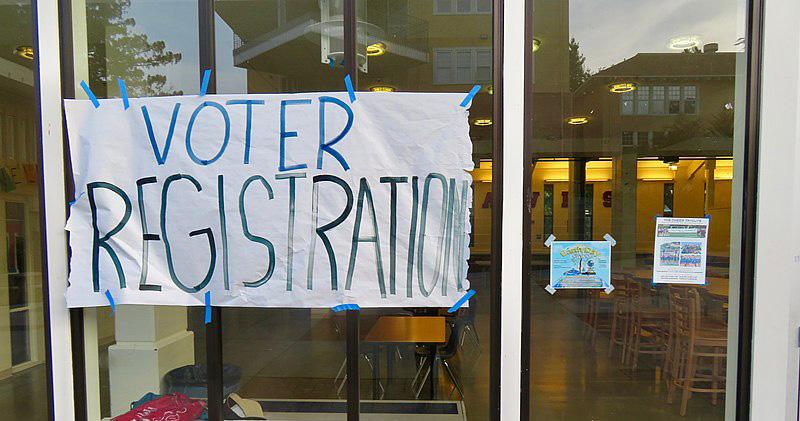
By Gauri Patel Staff Writer
With the presidential election approaching on Nov. 5, it is essential for voters in New Jersey and nearby states, especially college students, to be prepared, whether they are voting by mail, taking advantage of early voting or heading to the polls on Election Day. This guide provides an overview on how to vote and the various options available to make sure each vote counts.
Before voting, an individual must be properly registered. They should first check if they are registered to vote by visiting the voter registration search portals for their respective states. The requirements to register are that individuals must be U.S. citizens, at least 18 years old by Election Day and meet the residency requirements of their respective states. College students can choose to register to vote in either their hometown or where they attend college.
In New Jersey, New York and Pennsylvania, voter registration can be completed online, inperson or by mail.
For New Jersey residents, individuals can check if they are registered through the state’s online Voter Search portal. The deadline to register to vote is Oct. 15, according to the state Division of Elections.
Individuals can register to vote online
through the New Jersey Online Voter Registration website, or they can register inperson at their local election offices or a New Jersey Motor Vehicle Commission location while applying for or renewing their driver’s license.
If registering by mail, individuals should obtain a paper application for the county in which they are registering, available from the New Jersey Voter Registration page, which should be signed and mailed back to their respective County Clerk’s office.
Pennsylvania residents can check if they are registered through the state’s Registration Status form. Individuals can register to vote online through the Pennsylvania Online Voter Registration page.
They can register in-person at their county election office or by mail, by printing and mailing an application from the Pennsylvania Voting & Elections agency website to their county election office. The deadline to register to vote is Oct. 21.
In New York, residents can check their registration status through the New York Voter Lookup page. They can register to vote online through the Online Voter Registration portal or the Department of Motor Vehicle website if they already have DMV-issued identification. They can register in-person by visiting their local county election offices or at a DMV location. Residents can register by mail by
requesting a registration form by entering their name into the state’s Voter Registration Form Request mailing list or by calling the state’s voting hotline to request an application. They can also find the form on the New York State Board of Elections page, which should be printed, signed and mailed to their local county board of elections. The deadline to register to vote in New York is Oct. 26.
Once an individual is registered to vote, there are multiple ways to participate in the election, whether through voting in-person on Election Day, mail-in ballots or early voting.
For in-person voting on Election Day, every registered voter is assigned to a specific polling location where they can cast their ballot. Locations can be confirmed from an individual’s state election website or local county election office.
In New Jersey, Pennsylvania and New York, most voters are not required to show ID; however, first-time voters who registered by mail or those voting for the first time at a new polling location will need to present identification, such as a driver’s license, state ID or passport.
Voters can also request a mail-in ballot in case they are unable to vote in-person. Certain states require a valid excuse to vote via a mailin ballot.
New Jersey allows no-excuse mail-in voting, meaning any registered voter can request a mail-in ballot without needing a specific reason. An individual can fill out an application for a vote-by-mail ballot specific to their county from the New Jersey Division of Elections website and return it to their County Clerk.
The completed vote-by-mail ballot should be mailed back, placed in one of their county’s Secure Ballot Drop Box locations or returned to the County Board of Elections Office. If the ballot is mailed back, it must be “postmarked on or before 8:00 p.m. on Election Day and be received by your county’s Board of Elections on or before the sixth day after the close of the polls,” according to the New Jersey Division of Elections.
For those who prefer to vote in-person but
avoid Election Day crowds, New Jersey offers in-person early voting. Early voting will take place as designated in-person early voting locations that will be open from Oct. 26 to Nov. 3.
Pennsylvania allows no-excuse mail-in voting for all registered voters. Mail-in ballot applications must be received by an individual’s county election office by 5 p.m. on Oct. 29.
Completed mail-in ballots must be returned to the county election office by 8 p.m. on Election Day, as a postmark by 8 p.m. Nov. 5 is not sufficient, according to the Pennsylvania Voting & Elections agency. Ballots can be mailed back or hand-delivered to the county election office or designated drop boxes.
Pennsylvania does not have traditional inperson early voting, however, voters can apply for, receive and submit their mail-in ballots inperson at their county election offices, making it a de facto early voting option for those who wish to cast their ballot before Election Day.
Unlike New Jersey and Pennsylvania, New York requires an excuse to vote by mail, such as being out of the county on Election Day, or having a disability. Residents of New York can apply for an absentee ballot if they meet one of the qualifications specified on the New York State Board of Elections website.
Absentee ballot applications must be received by the county board of elections no more than ten days before Election Day if requested by mail, or one day before if applying in-person. Absentee ballots must be postmarked by Election Day and received by the appropriate county board of elections no later than Nov. 12 to be counted.
New York offers early in-person voting for nine days before Election Day. Designated polling locations are open across the state, allowing voters to cast their ballots early without an excuse.
Whether voting by mail, early or at the polls, it is essential to stay informed about deadlines, polling locations and any identification requirements. For the most accurate and upto-date information, voters are encouraged to check their state’s official election websites or contact local election offices.
Recap of the 2024 vice presidential debate between JD Vance and Tim Walz
By Aliyah Siddiqui Nation and World Editor
Sen. JD Vance and Gov. Tim Walz faced off during the vice presidential debate on Oct. 1, marking the first and only VP debate for the 2024 election season. Hosted by CBS News, the debate was moderated by Norah O’Donnell, the anchor and managing editor for “CBS Evening News,” and Margaret Brennan, the moderator and chief foreign affairs correspondent for “Face the Nation.”
According to CBS News, Vance and Walz had varying approaches in preparing for the debate. Vance prepared for the debate for over a month, meeting with his advisors and studying Walz’ policy records. As reported by CBS, Vance hoped to use the debate to highlight Walz’ “left-wing views” and focus on the economy, immigration and international peace. Walz similarly met with advisers to prepare for the debate, but aimed to use the debate to introduce himself to voters and discuss Kamala Harris’ policies and goals for the country.
These preparation sessions came to a test as the two candidates were asked questions regarding a variety of topics important to voters, including the Middle East, climate change, immigration, the economy, personal qualifications, reproductive rights, gun violence, inflation, healthcare costs, childcare and the state of democracy.
The first issue discussed during the debate was on the Middle East, with Brenner asking Walz and Vance if they would support a
preemptive strike from Israel on Iran. Walz maintained that Israel had the right to defend itself and that the U.S. needed steady leadership to address the Middle East crisis, a quality that Harris has over Donald Trump. Vance similarly said that the U.S. should support their allies and argued that Trump offered “stability in the world.”
The next issue discussed was on climate change. O’Donnell asked Vance what the Trump administration would do to combat climate change. Vance said that they support clean air and water, but that carbon emissions discussions are a “weird science.” He instead advocated that manufacturing should be done in the U.S. rather than China.
Walz responded to Vance and described the benefits from the Inflation Reduction Act and the efforts Minesotan farmers are taking to protect their crops and improve the climate. For example, he mentioned that in Minnesota, they are starting to weatherproof items and increasing mitigation measures.
On immigration, Vance was asked about how the mass deportation that Trump and Vance campaign on would be implemented. Vance blamed Harris for the immigration crisis and fentanyl increase, while reimplementing Trump’s border policies. Walz defended Harris, referring to the border security bill that would have supported border patrol, but was not passed by Congress due to Trump’s opposition to the bill.
Walz also mentioned how the immigration crisis has also led to the demonization of
immigrants, such as was done to Haitian immigrants in Springfield. Vance defended his stance by stating that the U.S. “brought in millions of illegal immigrants to compete with Americans for scarce homes.” However, as Brenner clarified, the Haitian migrants in Springfield have temporary protected status.
In response, Vance attempted to speak over the moderators about the CBP One App established by the Biden Administration, which he claimed would allow undocumented migrants to apply for asylum. However, this is not true, according to the New York Times, and the app instead allows migrants to make appointments to entry ports.
On the economy, both candidates were asked how their respective Presidential candidates would pay for their economic plans without increasing the deficit. Harris campaigned to have an “opportunity economy” with plans to support new homeowners and young families. While Walz did not directly state how the economic plan would be funded, he alluded that it would be paid by asking “the wealthiest to pay their fair share” and that the plan would save money in the long run.
Vance also did not directly describe how the Trump economic plan would be paid for, but instead described how Trump’s previous economic plan improved the American economy and that economists disapproving Trump’s policies lacked “common sense.” He also described Trump’s plans to bring manufacturing back to the U.S., which Walz said was already being done by the IRA.
The next section of the debate discussed personal qualifications to be vice president. Walz was asked about his comments on being in the Tiananmen Square protest when he wasn’t in China at the time. Walz was not able to explain the discrepancy and that he misspoke, but his time traveling to Hong Kong and China taught him a lot about governance.
Brenner also asked about Vance’s previous comments against Trump, including calling him “America’s Hitler.” Vance said that he had been wrong about Trump.
On the issue of reproductive rights, Walz was asked whether he supported abortion in the 9th month. Walz said that the bill passed in Minnesota aimed to protect abortion rights and reproductive healthcare, and then gave examples of Amanda Zaworski and Hadley Duvall, women for whom the access to abortion was or would have been vital to their wellbeing.
He additionally added that access to abortion and infertility treatments is a “basic human right” and that the Harris-Walz campaign is “pro-women” and “pro-freedom to make your own choice.”
Vance, while denying that the Trump administration would create a federal pregnancy monitoring agency, said that they would support “pro-family” policies, such as making childcare affordable and fertility treatments accessible, while leaving abortion to the states.
Photo courtesy of Wikimedia Commons
This guide provides an overview on how to vote.
Meet the New Jersey Senate candidates running in 2024

By Fiona Espinoza-Castro Staff Writer
The 2024 United States Senate and House of Representatives elections are scheduled for Nov. 5. Across the U.S., Democrats hold 19 seats while Republicans hold 10 and four seats are held by independents, according to Ballotpedia. Six candidates are seeking New Jersey’s vacant Senate seat, while 24 candidates seek a spot in all 12 House seats.
This election year will fill the Senate seat held by Democrat Robert Menendez, who assumed office in 2006. Menendez resigned on Aug. 20, after being found guilty on 16 counts related to corruption charges, including extortion, obstruction of justice, bribery and
conspiracy, according to NBC.
New Jersey Governor Phil Murphy appointed his former chief of staff, George Helmy, as an interim senator on Sept. 9. Murphy described Helmy as “the ideal leader to take on this role.” Helmy has been a staffer for current and former Democratic New Jersey senators.
New Jersey voters will elect their next senator during the general election. Democratic Rep. Andy Kim, from the 3rd Congressional District, and Republican Curtis Bashaw are the main contenders for the seat.
According to NJ Spotlight News, there are four other independent candidates on the ballot: Green Party candidate Christina Khalil, Libertarian Kenneth Kaplan, Social Workers Party’s Joanne Kuniansky, and the Vote Better Party’s Patricia Mooneyham.
Both main candidates, Kim and Bashaw, cater towards various areas such as the economy and healthcare—including more all under the idea of a better state.
Democrat Andy Kim
Kim decided to run for Menendez’s senate seat to restore trust and integrity in the government and public service realm.
Kim has made ending corruption in the government a pillar shown throughout his work and campaign. He has protected voting rights, ended gerrymandering and led ethical reforms in hopes of reversing the chaos in the political
world today.
When Kim was running for his district in 2019, he made the promise to be the most accountable, accessible and transparent member of the government. Kim intends to carry those values to his potential position as a U.S. Senator.
Kim is also focused on lowering everyday costs for New Jersey residents, passing legislation that saves costs and lowering the national debt. Kim’s district reported that in July and August of 2022, he voted on two major bills: the Creating Helpful Incentives to Produce Semiconductors (CHIPS) and Science Act and the Inflation Reduction Act.
Kim also believes that healthcare is a human right and should be affordable for all. He has authored legislation to support states creating their state-based insurance marketplaces, like GetCoveredNJ, to help families find affordable healthcare options.
Kim has advocated for policies that would protect abortion rights. He co-sponsored the Women’s Health Protection Act and the Ensuring Access to Abortion Act, and he has defended IVF treatments, reported the NJ Spotlight News.
Republican Curtis Bashaw
Meanwhile, Bashaw, a stranger to politics and originally an entrepreneur, won the Republican nomination after running
to improve the economy. Bashaw believes that several career politicians are corrupt and Americans want outside voices in their government. He intends to bring freedom, security and opportunity to New Jerseyans.
Bashaw is against illegal immigration, stating that it is “costing Garden State taxpayers $7.3 billion a year, or $2100 per household, at a time when New Jerseyans are struggling to put groceries on their table and pay for basic necessities,” according to his campaign site.
Bashaw intends to secure the border and stop the illegal flow of immigrants as well as deport those connected to terrorist organizations and violent crimes. However, Bashaw does stand with legal immigrants who have gone through the process of citizenship.
He believes that the Biden administration’s policies have led to inflation, record debt and an economy leading toward recession. He believes that creating more jobs with stable pay can help American families prosper.
Over the years, healthcare in the Garden State has risen to new highs and is hard to access. Bashaw advocates for bringing down healthcare costs while keeping the quality high. He suggests that insurance companies should compete for consumer choice as it can bring down prices. Bashaw rallies on the idea of letting Americans have wide access to physicians by letting their medical licenses be valid across state lines.
Meet the New Jersey House of Representatives candidates for the 2024 election
By Fiona Espinoza-Castro Staff Writer
The upcoming election in the House has several district incumbents running for reelection, while District 3 has no incumbent, as Rep. Andy Kim is running for Senate, and District 9 also has no incumbent after the death of Rep. Bill Pascrell Jr.
Here are the candidates of the 12 districts, according to the Northjersey.com: 1st District (Camden County, two towns in Burlington County, 14 in Gloucester County)
Donald Norcross (Five-term Democratic incumbent): Norcross supports raising wages, growing jobs in high-skilled industries, fair pay, safe working conditions, expanding education opportunities, protecting communities, improving healthcare, reproductive freedom, caring for seniors and promoting environmental sustainability.
Theodore Liddell (Republican): A former U.S. Army Captain and attorney. He believes in securing the Southern Border, combating inflation by bringing manufacturing jobs back from China, implementing tax cuts, and building a more effective U.S. Armed Forces. 2nd District (Atlantic, Cape May, Cumberland, Salem counties, 11 towns in Gloucester County and 14 towns in Ocean County)
Joe Salerno (Democrat): An entrepreneur who created and built companies from the ground up and provided people with hundreds of jobs in different industries. Salerno believes in reforming the tax system, creating more jobs, and protecting Social Security and Medicare.
Jefferson Van Drew (Republican incumbent): Originally a Democrat, Van Drew switched his party to Republican in 2020 after being told he had to vote in support of the impeachment of then-President Donald Trump, according to CNN. Van Drew supports tax reform that benefits middle-class families, the resurgence of manufacturing jobs, accessible healthcare and introduced the Understanding the True Cost of College Act making financial aid more standardized.
3rd District (38 towns in Burlington County, five towns in Mercer County, and 10 towns in Monmouth)
Herb Conaway (Democrat): Conaway is a member of the U.S. Air Force and a turned clinical professor to an assemblyman for the last 25 years. Conaway aims to lessen the tax burden on middle-class families, protect small businesses, encourage reproductive freedom, lower the prices of prescription drugs, protect democracy and nurture our environment.
Rajesh Mohan (Republican): Mohan is a cardiologist with decades of experience serving communities who wanted to step into the political realm. Mohan advocates for border control, ending “catch and release,” enhancing asylum processing at U.S. consulates in nonhostile countries, combating drug trafficking, reforming Obamacare, strengthening Medicare for seniors, increasing financial security, supporting small businesses, and combating inflation and the cost of living.
4th District (19 towns in Monmouth County and 21 in Ocean County)
Matthew Jenkins (Democrat): Before running for Congress, Jenkins was a biomedical researcher and an owner of a contracting business building residential homes across the tri-state areas. He promotes the prevention of illegal immigration, offers support for legal immigrants to process their cases, stands with small businesses, and worldwide access to birth control and healthcare.
Chris Smith (Republican incumbent): A lifelong member of Congress since he was elected in 1988, Smith hopes to achieve his 23rd two-year term in the House of Representatives. Smith enacted an international Megan’s Law and the Autism Cares Act of 2019. Through his work in Congress, Smith combated human trafficking, fought for anti-terrorism security and heightened veterans assistance.
5th District (47 towns in Bergen County, four towns in Passaic County, and 14 towns in Sussex)
Josh Gottheimer (Democratic incumbent): After assuming office in 2017, Gottheimer is now serving his fourth term in Congress. He supports expanding women’s access to healthcare, to protect IVF rights and access to transportation infrastructure.
Mary Jo Guinchard (Republican): Guinchard is a former singer and actress dedicated to restoring the American dream. She believes in closing the border due to the communicable diseases spreading throughout North Jersey, enacting a balanced budget supporting families and seniors, having more hands-on prosecutors and supporting law enforcement.
6th District (12 towns in Middlesex County and 26 in Monmouth County)
Frank Pallone (Democratic incumbent): Pallone was formally elected for District 3 in 1988 but was redistricted to District 6. His focus is on combating the climate crisis, banning offshore gas drilling, lowering prescription costs and making healthcare more accessible.
Scott Fegler (Republican): Fegler has worked for nearly two decades in the food
industry voicing concerns about quality. He hopes to help secure the border, advocate for small businesses, make cost-effective nuclear energy, support Israel, provide safer food standards and introduce term limits in Congress.
7th District (Hunterdon County, Warren County, 12 towns in Morris County, 12 in Somerset, 10 in Sussex and 12 in Union County)
Sue Altman (Democrat): A longtime advocate for New Jersey’s public schools and fighting corruption, Altman hopes to win the district seat. Altman hopes to challenge political leaders by protecting public education, saving taxpayer money and strengthening democracy by fighting corruption.
Thomas Kean Jr. (Republican incumbent): Kean is serving his first term under Congress and has been dedicated to public service his whole life. He intends to lower costs for families, improve access to healthcare and provide a robust environment for students to receive proper education.
8th District (Part of Newark, Elizabeth and 11 towns in Hudson County)
Rob Menendez (Democratic incumbent): Menendez was first elected in 2022 and worked to represent the diverse 8th district while keeping the values of tolerance, hard work, and respect. He prioritizes empowering working families, addressing climate change and reproductive freedom, and championing organized labor.
Anthony Valdes (Republican): Valdes comes from a harsh background and knows the first-hand issues that people similar to him face. He intends to cap student loan interests, expand child tax credit, secure the southern border, support our allies and strengthen the legal system.
9th District (24 towns in Bergen County, two towns in Hudson County and nine towns in Passaic County)
Nellie Pou (Democrat): Pou was elected to the State Senate in 2012, where she currently serves as the N.J. majority caucus chair. She is running for Congress after being selected as an interim senator after the death of Congressman Bill Pascrell. She is committed to improving education, reforming the criminal justice system and making healthcare affordable.
Billy Prempeh (Republican): Prempeh is a U.S. Air Force Veteran and child of immigrants running for office for the first time. He intends to support homeless veterans, protect online privacy, lower taxes, fight against trade deals and prevent the U.S. from engaging in foreign wars without the consent of Americans.
10th District (Part of Jersey City, nine towns in Essex County and eight towns in Union
County)
LaMonica McIver (Democratic incumbent): After the death of Congressman Donald Payne Jr. McIver won the special election held last month. Through her work, McIver served students by giving back to the community and maintaining engagement. She has professed her support of fighting against environmental racism, gun control and universal healthcare.
Carmen Bucco (Republican): Bucco is a small business owner who comes from an underrepresented background, having grown up in the foster care system and lived on the streets.
He advocates for a greater commitment to public service, the elimination of corruption in politics, improving public safety, and highquality education, supporting small businesses and giving veterans resources.
11th District (15 towns in Essex County, 27 towns in Morris County and four in Passaic County)
Mikie Sherrill (Democratic incumbent): Sherrill was first elected to Congress in 2018, formerly a federal prosecutor hoping to get re-elected. She intends to create well-paying jobs, reduce taxes, rebuild transportation infrastructure, universal access to reproductive care and make healthcare more affordable for seniors.
Joseph Belnome (Republican): Belnome serves as a district leader for the Belleville Republican Party where he advocates for his beliefs and ideals. In Congress, he plans to secure the borders, prioritize domestic energy production, boost the economy and reduce corruption.
12th District (seven towns in Mercer County, 14 towns in Middlesex County, 10 in Somerset, and Plainfield in Union County) –the College’s district
Bonnie Watson Coleman (Democratic incumbent): Coleman is currently serving her fifth term in Congress where she serves as a public service leader. She intends to cosponsor the American Dream and Promise Act, support the Deferred Action for Childhood Arrivals program, equality for LGBTQ+ Americans, offer economic opportunities for black women and girls, and support reproductive healthcare.
Darius Mayfield (Republican): Mayfield is a businessman and philanthropist who advocates for education, the economy and national security. He aims to dismantle barriers within educational institutions, promote trade education, support the middle class and small businesses, lower inflation, promote legal immigration and empower border patrol.
Photo courtesy of Wikimedia Commons
The election is Nov. 5.

All College Theatre brings a war-torn take on Shakespeare’s ‘Macbeth’

By Olivia Harrison Staff Writer
The original tragic storyline of Shakespeare’s “Macbeth” is well-known worldwide. However, All College Theatre took a different approach in their performance of the classic.
Modernizing the play’s setting while keeping the classic Shakespearean rhetoric, ACT introduced audiences to radio show actors taking shelter amidst a war. Although the circumstances are chaotic outside, the actors vowed to continue their radio rendition of “Macbeth.”
The show ran in the Don Evans Black Box Theater in Kendall Hall from Sept. 26 to Sept. 29. It centered around Macbeth, played by junior secondary education and English
major Matthew Sudnick, a Scottish general who receives a prophecy from three witches. The witches — played by Sofia Kafarski, a sophomore English major, Mikayla Melton, a sophomore sociology major, and Grace Mandy, a freshman English major — foretell that Macbeth will become the king of Scotland.
After murdering the reigning King Duncan, played by sophomore English major Ella Anzuini, Macbeth is racked with guilt and paranoia.
He forces himself to murder citizens before a civil war takes him and Lady Macbeth, played by Ashlyn Nolan, a junior world languages and linguistics and communication studies double major, to madness and death.
Audiences were taken through two
Chappell Roan cancels All Things Go performance

By Lake DiStefano Arts & Entertainment Editor
All Things Go, a music festival held in New York City and Washington DC, received the late news last week that pop star Chappell Roan would not be gracing the stage.
Via an Instagram story, Roan shared on Friday that she felt “unable to perform” due to mental health struggles. This announcement came a mere day before the festival was set to take place.
“I apologize to people who have been waiting to see me in NYC & DC this weekend at All Things Go,” the singer wrote. “Things have gotten overwhelming over the past few weeks and I am really feeling it. I feel pressures to prioritize a lot of things right now and I need a few days to prioritize my health. I want to be present when I perform and give the best shows possible. Thank you for understanding. Be back soon xox.”
All Things Go responded to the situation through a post on X, which showed support for the singer and her decision to pull out of the lineup for the festival.
“We’re heartbroken to announce that Chappell Roan will no longer be performing at this year’s festivals. While we know how much you were
universes: the bomb shelter and the story of Macbeth, portrayed onstage. In addition, the show sent a powerful message that no matter the circumstances, the show must always go on.
“I loved the message of ‘theater needs to keep going,’” said Kafarski. “I feel like it’s important we did a modernized version of the production. There’s a lot of conflict and unrest in the world. It just goes to show you that culture and the arts can continue to flourish through adversity and conflict.”
Combining elements of a severe war and classic Shakespeare dialogue, ACT’s production of “Macbeth” showed off Shakespeare in a fresh light to audiences unfamiliar with the story.
“I didn’t know anything about ‘Macbeth’ at all,” said Katrina Lucero, a junior computer science major. “I think the emotions the actors put into the show was important to portray the story.”
One of the most unique aspects of the production was the actors’ ability to follow the play’s original diction and rhetoric. Shakespearean dialogue can be complex, and following the original dialogue gave many actors a challenge they had never faced before.
“At first it was difficult to pick up,” said ensemble member Lauren Goldsborough, a sophomore psychology major. “But, as I was listening to my peers, I was able to pick it up. One thing that really helped [was] learning to vocalize in my normal voice, and I was able to interpret the dialogue. With Shakespeare shows, the concept is simple, but the dialogue can sometimes make things complicated.”
Sudnick also said he had a challenging
time with the dialogue.
“[The dialogue] is very tough and it was certainly a challenge,” he said. “I’ve never done Shakespeare before. Some of it I did understand, but I had to learn certain words and phrases. Once you understand, it’s just so much easier…it just eventually flows.”
With the complex dialogue and portrayal of a show within a show, the actors and production staff were tasked with putting together the production in just three weeks.
“Our first rehearsal was Aug. 31, and it’s only been since then that we’ve got everyone together and put the set together,” said production manager Angelica Froio, a junior computer science major. “It’s been a very awesome experience and I’m so proud of the cast.”
The play was highly condensed, cutting the original production from 2 hours and 30 minutes to an hour and 30 minutes. Nonetheless, the actors still had a great experience performing and challenging themselves.
“Lady Macbeth was my dream role, and getting the chance to play her was amazing,” said Nolan. “Although it only took three weeks to put together, it was such a rewarding experience.”
Actor and junior urban history/secondary education major Caden Michalski agreed, adding, “I haven’t acted in a production since my senior year of high school. I didn’t intend to act in ‘Macbeth,’ I signed up for production staff. However, this show spoke about the artistry of theater…and I couldn’t have done it without everyone.”
Read more on our website!
Actress Dame Maggie Smith dead at age 89
looking forward to the performances, it’s important to remember that health and well-being always comes first,” the statement read.
“All Things Go strongly supports artists prioritizing their well-being and we ask our community to rally around Chappell Roan with love and understanding,” they wrote. “Let’s continue to show the world that music fans support not just the art, but the artists themselves.”
This cancellation comes after a string of similar controversies for the singer, such as canceling performances to attend the VMAs, and speaking out about the boundaries she feels entitled to set as an artist and performer. This has incited strong reactions in fans and critics alike.
This has given way to many conversations regarding the commitment and entitlement fans have to artists, and how far mental health as an excuse can go in regards to prior commitments.
Roan has not released a follow-up statement addressing the backlash, and has continued to post support for drag queens on her social media.
She is currently still scheduled to perform and headline both weekends of Austin City Limits music festival, which will take place on Oct. 6 and 13. Many are left wondering if she will continue her streak of canceling shows in light of this news.
All Things Go carried on despite its lack of Roan, with performers like Hozier, Ethel Cain and Julien Baker drawing large crowds despite her absence.
This has left many to wonder if Roan’s unique way of being a mainstream pop artist will continue to attract backlash and controversy going forward, and what could that mean for her career in the music industry.

By Abigail Holliday Staff Writer
Dame Margaret “Maggie” Natalie Smith died at age 89 in London in a hospital in England, announced in a statement made by her two sons.
According to the New York Times, Smith was born in Essex, England, to Margaret and Nathaniel Smith. She grew up in Oxford studying at the Oxford High School for girls, where her father was a teacher. She later went on to join the Oxford Playhouse in 1952, where her acting career first began.
Since her debut in 1956 as a party guest in “Child in the House,” she has starred in over 60 movies and television series including: “The Prime of Miss Jean Brodie,”“Sister Act,” “California Suite,” the “Harry Potter” series and “Downton Abbey.”
Smith noted on “The Graham Norton Show” that she slowly began to be recognized in public after her role as Professor Minerva McGonagall, the transfiguration teacher at the fictional Hogwarts School of Witchcraft and Wizardry in the famed book and movie series, “Harry Potter.” She continued to star in the movies from 2001 to 2011.
In 1988, Smith was diagnosed with Graves’ disease, an auto-immune disorder that causes the thyroid gland to produce too much thyroid hormone. She underwent surgery and radiotherapy to overcome this disease.
Nearly 20 years later, in 2007, Smith was
diagnosed with breast cancer while filming “Harry Potter and The Half-Blood Prince,” the sixth movie in the franchise. She had surgery a second time to remove the tumor, and endured rounds of chemotherapy to recover, according to IMDb.
In 2010, she landed her role as Violet Crawley, the Dowager Countess of Grantham in the hit show “Downton Abbey,” which is set between 1912 and 1925 and follows the Crawley family, who are British aristocrats, as well as their servants.
The New York Times detailed how the effect of the show on her was instantaneous. Running for six seasons, her and her character became instantly loved by the public. She once said to Mark Lawson, a journalist at the British Film Institute and Radio Times Television Festival, “It’s ridiculous. I’d led a perfectly normal life until ‘Downton Abbey.’ Nobody knew who the hell I was.”
Before “Downton Abbey,” she was mainly only recognized by young children questioning her about her role as Professor McGonagall in “Harry Potter.”
IMDb recounts her many achievements, detailing how Smith had won 50 awards over the course of her career, and has been nominated over 100 times. She won four Emmys, two Oscars, three Golden Globes, a Tony and many more awards.
She is also one of only 17 actresses to win an Emmy, an Oscar and a Tony, otherwise known as the “Triple Crown of Acting.” Other famous winners include Liza Minnelli, Audrey Hepburn, Helen Mirren and Viola Davis.
Alongside her many awards, The New York Times described how she was made a Commander of the British Empire in 1969, as well as being made a dame in 1990. She was also inducted into the Order of the Companions of Honor in 2014.
Photo by Oliver Eloe
The show centers around Macbeth, a Scottish general who receives a prophecy from three witches.
Photo courtesy of IMdb
Maggie Smith died on Sept. 27 at age 89.
Photo courtesy of Flickr
This cancellation comes following a string of controversies for the singer.
14 The Signal October 4, 2024
‘Harlequin’: Lady Gaga’s companion album inspired by Harley Quinn
By Alena Bitonti Arts & Entertainment Editor
“It’s great to stay up late,” as the famous lyric from “Good Morning” goes.
And that it was, for the midnight release of Lady Gaga’s newest album “Harlequin” on Sept. 27.
Last week, the singer announced a surprise companion album to the “Joker: Folie à Deux” soundtrack. Inspired by her portrayal of Harley Quinn in the upcoming film sequel, “Harlequin” covers Broadway and jazz classics and debuts two original songs.
The roll-out for the album was quick, with teasers on Instagram starting last week being the only glimpse into what was in store. The sound of the 41-minute, 13-song record is reminiscent of Gaga’s two albums of jazz standards, “Cheek to Cheek” and “Love for Sale” alongside Tony Bennett, and differs heavily from her last album, the 2020 dance-pop hit “Chromatica.”
Although it showcases her signature style and bold creative choices, “Harlequin” is not to be confused with the singer’s upcoming studio album, the seventh in her discography.
“It’s a Lady Gaga record, but it’s also inspired by my character and my vision of what a woman can be,” she told Rolling Stone. “I called it ‘6.5’ because it’s not my next studio album that’s a pop record, but it is somewhere in between, and it’s blurring the lines of pop music.”
The album opens with a lively rendition of “Good Morning” from the musical “Singin’ in the Rain,” delivering a burst of energy that gets the listener’s attention for the rest of the record. As a former theater kid, I found this the perfect homage to the classic tune — almost enough to set it as my new morning alarm.
In “Get Happy (2024),” Gaga honors the original version by Judy Garland while adding her own, unique vocals and effortless riffs. “Oh, When The Saints” keeps her soulful vocals throughout several key changes, with a guitar solo and
orchestral finale to close out the track.
My first time hearing “World On A String,” I immediately recognized the guitar instrumental from one of the snippets Gaga shared on Instagram before the album release. This song stood out to me as a more eerie, Harley Quinn-esque track when compared to the first three.
“If My Friends Could See Me Now” begins as an emotional ballad, with the band shifting the energy around the 50-second mark. Gaga’s growls and scatting on this songbook classic make you appreciate her abilities as a vocalist.
“That’s Entertainment” is a treat for the true fans, especially those who remember last year’s viral video of Gaga on the set of “Joker: Folie à Deux,” singing this song as Harley Quinn on the iconic “Joker stairs.” And just as the next track, “Smile,” comes on, my excitement for the film’s release hits even harder.
The album takes a turn with “The Joker.” If there is any song that captures the essence of Harley Quinn and rounds out the companion album, it is the reimagined deep-cut from the 1964 musical “The Roar of the Greasepaint – The Smell of the Crowd.” Not only is it the only rock song on the album, it is my personal favorite. A part of me wishes the rest of the tracks carried the same rebellious, raw energy, but I appreciate how it stands out among the jazz and Broadway-inspired tracks, as well as the two originals.
The first of the two original tracks, “Folie à Deux,” is introduced as a catchy waltz. It features a choir in the song’s final verse, delivering an unsettling but powerful ending. “Gonna Build A Mountain” follows, a tune I felt resembled the earlier “If My Friends Could See Me Now.”
Another favorite on the album for me is “Close to You,” a stunning cover of the song popularized by The Carpenters in 1970. Gaga’s rendition keeps the timeless spirit of the original while adding her own emotional depth. I couldn’t help but connect the previously mentioned Instagram teaser, reading “MOONDUST
‘GIMME, GIMME’ the ‘TRUTH’ about Katy Perry’s new album, ‘143’

By Mia Shea Staff Writer
Katy Perry’s latest album “143” harps on reveling with friends and having fun. While the title of the record has a deep, personal meaning for Perry herself, the depth of the production and lyrics do not support this narrative.
Perry shared in an interview with Apple Music that the number 143 became her own personal “angel number,” describing how she began to see that number frequently after her family dealt with medical hardships in the past.
The content and style of the album, released on Sept. 20, does not necessarily reflect this. The buildup to the album was immensely underwhelming, as was the album itself.
The first single from “143” was released on July 11 and is the opener for the album,

GETS EVERYWHERE” – likely a direct reference to the iconic chorus: “So, they sprinkled moon dust in your hair of gold / And starlight in your eyes of blue.”
The second original, “Happy Mistake,” is easily the most vulnerable song on the album. In this emotional reflection, Gaga portrays Harley Quinn while recounting her own struggles with the pressures of performance and fame.
“BloodPop and I had written this together and then I kind of took it to the next place,” she told Apple Music. “It was all in the image of the character, but also kind of at the very core of her soul, which is really just me.”
To close out the album, Gaga belts a cover of “That’s Life,” popularized by
Frank Sinatra. Her rendition is largely unchanged from Sinatra’s version, yet effectively brings her own style to the classic.
While “Harlequin” isn’t the pop album fans might expect from Gaga, it showcases her versatility and deep artistic creativity. It’s the perfect embodiment of her character Harley Quinn, who Gaga has come to understand better than anyone. Gaga will make her onscreen debut as the character in the highly anticipated sequel, “Joker: Folie à Deux” in theaters starting Oct. 4. Fans can also expect the first single release for her seventh studio album during the same month, with the record coming out in its entirety next February.
SOPHIE’s self-titled album: How not to handle a posthumous release
titled “Woman’s World.” However, upon the initial release of the song, Perry faced a lot of backlash as some fans claimed that the song sounded AI-generated and was not nearly as fabulous as the songs she used to release. Nonetheless, “Woman’s World” truly does set the tone for the rest of the album and embodies Perry’s upbeat stylistic choices.
The controversy of this album stems even further than the production of the song, as Perry’s producer for “143,” Dr. Luke, was accused of sexual assault in 2014 by music icon Kesha. Kesha ultimately released the album “Rainbow” in 2017 as a way to share her story about the situation.
Perry received criticism for working with Dr. Luke, especially for releasing a song that holds high feminist values. Many deemed it almost ironic that Perry would find it appropriate to release a record with such an empowering message with a producer that has sexual assault allegations, taking to X to share to their disapproval.
The record features four other artists who enhanced it significantly. 21 Savage appears on the track “GIMME, GIMME,” which is no doubt one of the best songs on the album due to its fast, rap-like beat and catchy chorus mixed with Perry’s vocals.
Kim Petras is featured on “GORGEOUS,” and her feature reflects the feminist nature of the album as the main chorus is “All my girls look gorgeous.” It’s a song meant to be played while getting ready for a girls’ night out.
Read more on our website!
By Andre Paras Staff Writer
A tragic accidental fall took the life of renowned British artist and producer SOPHIE on Jan. 30, 2021. She was known for pushing the boundaries of pop music through her abrasive style. With only one album released prior, titled “OIL OF EVERY PEARL’S UN-INSIDES,” she was already well regarded for pioneering the hyperpop subgenre.
SOPHIE’s career didn’t even last a decade, but she got to work with a decorated list of artists, including Charli XCX, Madonna, Vince Staples, Kendrick Lamar, Kim Petras and more. Whether she produced or influenced new songs in pop this past decade, the genre would look much different without her and her contributions.
Earlier this year, her family announced “SOPHIE” as the artist’s first and last posthumous album, following little work released after her death. Leaving behind hundreds of songs and pieces for her sophomore album, her family and collaborators spent three years trying to realize the vision SOPHIE had intended, according to NPR.
The main problem is, how do you finish a self-titled album, meant to define an artist and their sound, without the artist? And not to mention, an artist known for being such a visionary in her field. From what I know of SOPHIE, she would have tweaked these songs, which sound more like unfinished demos, and would not have dared to release the record in this state.

Instead of celebrating SOPHIE and her work, her posthumous self-titled album, released on Sept. 27, fails to achieve her true vision, leaving an unnecessary stain on her legacy. After giving this lengthy, 16-track record a few listens, I was left questioning her family’s intentions and those who decided to work on it. Her family said the full-length LP was made with lots of care, but it ended up being so safe that it’s offensive.
The first track, “Intro (The Full Horror),” negatively sets the tone for the rest of the album. It’s a 4 ½-minute track full of eerie and ambient noise, and nothing else. Like most of the instrumentals on this album, there’s no theme followed, and despite their indulgent runtimes, they do not serve much purpose other than to include more of SOPHIE’s work.
Photo courtesy of Apple Music
“Harlequin” is the perfect embodiment of Gaga’s cinematic alter ego.
Photo courtesy of Apple Music
SOPHIE’s album leaves an unnecessary stain on her legacy. “143” is about embracing feminism.
Photo courtesy of Apple Music
The Signal’s sports section’s NBA storylines to watch

By Aidan Mastandrea, Joseph Caruso, Eddie Young, Tyler Morello Signal Sports Staff
With the National Basketball Association season right around the corner and players reporting for the first week of practice, fans around the league still have hope that maybe this is their year to be crowned champions. Year after year the association is chalk filled with storylines, and this season is no different. Here is what The Signal’s Sports staff are looking forward to seeing as the season tips off in just a few weeks.
Tyler: Healthy Memphis Grizzlies
The Memphis Grizzlies come into the season as one of the most intriguing teams in the league. After finishing 13th in the West last year, fans may forget how great this team was just two seasons ago. Ja Morant only played in 9 games last year due to a suspension and a shoulder injury. His backcourt-mate Desmond Bane only played in 42 games but averaged career highs in both points and assists. Because of all of Memphis’ injuries, they were able to see a lot of potential in their younger players who they hope can contribute to
winning this season. G.G. Jackson was the youngest player in the NBA and showed a lot of talent in his opportunities, while Vince Williams Jr. looks like a steal of a second-round pick for them back in the 2022 draft.
The Grizzlies also finally have the veteran presence that they lacked as they are expecting a full season from Marcus Smart, who like forward Jaren Jackson Jr. is a former Defensive Player of the Year. To top it all off, the Grizzlies snagged 7’4” Zach Edey in this year’s draft, who was the collegiate national player of the year for the past two years. With their two top scorers finally being back from injuries and an intimidating front-court duo, Memphis looks poised for a great finish in a loaded Western Conference.
Eddie: The Rockets with a another full offseason of preparation
The Houston Rockets have put themselves in a position to take a massive leap this season. Last year after a slow start, a late season push helped them finish 41-41 as they narrowly missed out on a play-in berth in the stacked Western Conference.
The Rockets had a young team last
season, and everything seemed to click for them down the stretch during their playoff push. An extra year of experience for these youthful players should go a long way from the team as they look to compete for a top playoff spot this season.
In their first year under head coach Ime Udoka, the Rockets won 41 games, which was 19 more than the 22 they had won in the previous year. Udoka’s defense, led by the villainous veteran Dillon Brooks, should be able to hold opposing teams to limited offensive outputs.
Last season’s breakout star for the Rockets was Alperen Sengun, who in his third season saw a seven point increase in his points per game as he led the team with 21.1, along with 9.3 rebounds per game. The Turkish center will only improve as he enters his age 22 season, and will be a big offensive piece as he helps the Rockets this upcoming season.
The Rockets also made a big addition this offseason, as they took Kentucky guard Reed Sheppard with the 3rd overall pick in this summer’s draft. While he may not be a starter immediately, Sheppard brings a great jump shot and ball handling ability to a team that could use those skills off the bench. His summer league performances made him look like an NBA star, and his decision making could help the Rockets in making an immediate leap.
With former champion Fred Van Vleet running the offense, the Rockets’ mix of veterans and young athletes should help them in securing a top four seed in the Western Conference as they surprise many fans this season.
Joe: The New-Look Knicks
A long-time laughing stock of basketball, the Knicks have steadily improved under the direction of President Leon Rose. After another second-round exit last year, New York acquired both Karl Anthony-Towns and Mikal Bridges, dealing a plethora of picks along with All-Nba Forward Julius Randle and
sharpshooter Donte DiVincenzo.
Superstar Jalen Brunson now has one of the most lethal supporting casts in the league, and with Towns’ floor stretching ability, the Knicks have the potential to be one of if not the most dangerous offenses in all of basketball this season. Going all in, the Knicks now rank third in championship odds, and there are plenty of reasons to believe that this is the New York team that finally breaks the five-decade-plus drought for their first championship since 1973.
Aidan: JJ Redick at the helm for the Lakers
The Los Angeles Lakers come into the 2024 season with only two new additions to the roster, but are hoping the coaching change will be what can take them over the top. JJ Redick, longtime player, who most recently worked as a media personality for ESPN, was hired this past summer to replace former coach Darvin Ham. The hire has been criticized by many because of Reddicks lack of experience, but the roster seems to be buying in to the message. This Lakers team now under Reddick plans to pay a lot of attention to detail, something that it seemed like they lacked under Hamm. Any team that has Anthony Davis and Lebron James will have a chance to make noise, but last season there was something just a bit off and that is what ultimately led to the firing of Hamm.
Redick was a peer to many of these guys up until his retirement and is not even a full year older than the on court leader James. The dynamic will certainly be interesting and will be something to monitor as the year progresses. Redick knows his experience is slim and brought on experienced coaches to be his assistants in Nate Mcmillan and Scott Brooks. Everything that happens in Laker town is looked at under a microscope and Redick certainly knows that he must perform, and with the help of his assistants and the most experienced player of all time in James, it will be fun to watch.
2024 MLB Playoff Preview: Who will be crowned champion?

By Joseph Caruso Staff Writer
For the first time in a decade there was not a single team to finish with 100 wins during the regular season, resulting in a wide-open playoff field this October. A mix of worldbeaters like the Los Angeles Dodgers, New York Yankees and the Philadelphia Phillies, along with dark-horse underdogs like the New York Mets, Detroit Tigers and Kansas City Royals offer the most anticipated postseason since the new playoff format came into effect in 2022. With the playoffs officially underway, here is everything to know about the 2024 postseason.
American League favorite: New York Yankees
After a miserable 2023 to break their streak of six straight playoff appearances, the Bronx Bombers are back on the big stage as the number-one seed in the American
League. They are led by soon-to-be AL MVP Aaron Judge and fellow superstar Juan Soto who together have had the best offensive season by a duo post-integration, both being top three this year in OPS.
For the Yankees to finally get over the hump, however, it will have to be the other guys stepping up. Trade deadline acquisition Jazz Chisholm Jr., and their core of young players in Austin Wells, Anthony Volpe, and recent call-up Jasson Dominguez will need to provide a spark for this Yankee lineup to be formidable in the stretch run.
On the mound, 2023 CY Young winner Gerrit Cole will look to put his past postseason shortcomings aside, and pitch like one of the best arms in the league to mask New York’s shaky bullpen. Carlos Rodon and promising rookie Luis Gil will round out the Yankee rotation, and other starters Marcus Stroman and Clarke Schmidt will more than likely be relegated to the bullpen to provide relief.
National League favorite: Philadelphia Phillies
With one of the most well-rounded squads in the league, manager Rob Thomson looks to take the Phillies to their third National League Championship Series in a row. Tied for the most wins in the NL with the Dodgers, it is World Series or bust for this seasoned Philadelphia group. Despite their lineup being hot and cold this season, they were still able to finish the year top five in runs scored. With a familiar cast including Bryce Harper, Kyle Schwarber and Trea Turner, the Phillies can wreak havoc on opposing pitchers on any given day.
With that being said, the real calling card of this team is their pitching staff. A rotation that is spearheaded by Cy Young candidate Zack Wheeler also includes all-star caliber players in Aaron Nola, Cristopher Sanchez and Ranger Suarez. Those four guys alone have thrown a total of 731.2 innings this year, each of them having an ERA of 3.57 or better. That type of health and consistency has led the Phillies to their highest win total since 2011 and should continue to carry them through the playoffs.
American League dark horse: Detroit Tigers
Just over a month ago, on August 22nd, the Detroit Tigers had a 0.8% chance of making the playoffs. They went on to win 24 of their last 35 games in order to miraculously grab the last American League Wild Card spot. During that stretch their stellar pitching led the way, allowing a league-best 104 runs over that span. After winning the AL Triple Crown and soon the Cy Young award, calling anybody other than Tarik Skubal the best pitcher in the world would be borderline disrespectful. Skubal is not the only great
arm that Detroit has. Jack Flaherty and Reese Olson have shut down opposing lineups all year.
For the Tigers, it is the first time they have reached the playoffs in a decade, and if the young squad wants to make some noise, it will come down to the offense. Young hitters Kerry Carpenter and Riley Greene have been great pieces for Detroit, but after finishing in the bottom third in runs scored this season, the Tigers pitching will have to continue to be world-beating to stick around this postseason.
National League dark horse: New York Mets
Calling the 2024 New York Mets a rollercoaster ride would certainly be an understatement. The Mets became just the fourth team in the history of baseball to start the regular season 0-5 and make the playoffs. After falling 11 games below .500 on June 2nd, they had just a 7.9% chance to play October baseball. Along with MVP candidate Francisco Lindor, it has been the newcomers that have provided the spark. Second-year third baseman Mark Vientos has been one of the most prolific infielders in baseball and part-time Latin pop star Jose Iglesias, known as Candelita while behind the microphone, posted a .337 batting average to will this team to the playoffs.
On the mound, left-handed Sean Manea has been the Mets best pitcher, sporting a 3.47 ERA through a team-high 181.2 innings this season. First-year manager Carlos Mendoza has the Metropolitans back in the postseason this year, hoping to have more success than their 2022 campaign. For that to happen, they will need long-time players Brandon Nimmo and Pete Alonso to rectify their below average seasons, and get hot for this Met lineup.
Photo courtesy of Flickr
The Lakers will look to make a championship run.
The Yankees will be one of the teams to beat in the AL.
Photo courtesy of Flickr

TCNJ Football suffers first loss despite offensive explosion

By Tyler Morello Staff Writer
The scorching hot Lions football team played in an absolute thriller this past weekend against Muhlenberg College. The game had over 100 total points scored and over 1,300 total yards gained between the two schools. The Lions were close to pulling off an impressive comeback but ultimately came up short and lost 55-52.
The Muhlenberg Mules came into the week off of a loss to Salisbury, putting them at 1-1 prior to Saturday. The Lions were coming off backto-back wins to begin their 2024 campaign, with their high-powered offense leading the way.
Fifth-year quarterback Trevor Bopp has been phenomenal through the air, continuously connecting with fellow fifth-year receiver Malin Jasinski.
Senior running back Jayson Schmidt has been able to control the running game well, reaching at least 99 rushing yards in all three games.
“The offense has a ton of mature players that have been in the system for 2 to 3 years now and know how to handle the speed and intensity that comes with our style of play,” said Schmidt.
On Saturday, the College found themselves trailing 21-7 with two minutes to go before the half, with one last chance to put more points on the board.
Bopp and Schmidt led the Lions down the field efficiently, as Schmidt tallied 38 of his 108 rushing yards on this drive and eventually punched in a 4 yard touchdown to make it a one possession game heading into the break.
The Mules received the ball to start the second half and quickly scored
on a rushing touchdown. The Lions countered with a 23 yard field goal from freshman kicker Tim Wellever, who remained perfect on his rookie season for field goals and extra-points in the game.
Muhlenberg scored a touchdown on their very next drive, and after a fumble by the Lions on the very first play of their series, the Mules were able to throw for a 32-yard touchdown.
Down 41-17 with just over 5 minutes to go in the third quarter, the College seemed to be running out of steam while all of the momentum was in the Mules favor.
“We have a ton of trust in each other and know that we are never out of any game because of our ability to score on any given play,” said Schmidt.
Jaskinski caught a 66-yard touchdown from Bopp on the second play of their drive to make it 41-24 in favor of the Mules. Muhlenberg was able to strike back with a touchdown drive of their own, but the Lions responded with a Schmidt touchdown.
The College kicked back off to Muhlenberg and the defense came up with a stop on third down to force a three-and-out which then set up the offense at the Mules 45 yard line.
The Lions worked quickly and Bopp was able to find sophomore Alex Dille for a 42-yard touchdown, capping off a 43 second drive.
With the Lions now being down 10 points, they could feel the game coming back within reach. They forced a huge 4th and 2 incompletion that gave them the ball back as well as the momentum back.
This momentum lasted shortly
How TCNJ Women’s Rugby is shaping their future
By Fiona Espinoza-Castro Correspondent
The College’s Women’s Rugby Club was founded in 1988 by Lisa Ripa and Danielle Gonzales, with a history of highs and lows as the team developed. Originally coached by players from the Men’s Rugby Club, the team began competing in 7s and some 15s tournaments, gaining experience.
This fall, women’s rugby brings a new generation to the team. This past weekend, the Lions faced off against Montclair State University, which ended with a final score of 12-82, a defeat for the club following their loss to Stony Brook University, 14-64.
The match started with the Lions struggling defensively, as they lost ten tries in the first half.
However, the College found success while attacking Montclair’s defensive gaps.
By identifying the Red Hawks’ weaknesses on the outside, players were able to make key line breaks, moving as a unit rather than alone. They experimented with different offensive pod-like layouts, including two black lines instead of one and two scrum halves, each responsible for their respective side of the field.
Even though Montclair had the upper hand and was a consistent threat to the Lions defense, it was a learning experience for the young team to
focus on technique and precision with tackling.
“We still have a lot to learn as a group, but we have so much time to grow together,” said captain Kira Rubian, a junior visual arts major. “There is so much potential among us, we just need to keep working and building upon that.”
The Lions also took advantage of Montclair’s coverage on the wings and were successful in catching them off guard on the edges, where they were more sparse.
During the game, several rookies stood out, including Jackie Zuza, a junior women’s, gender and sexuality studies major, and Drea Maglione, a freshman computer science major. Zuza continually made good runs and was persistent on offense, gaining ground for the team by crashing through the Red Hawks defensive line. Maglione did a phenomenal job on the wing, maintaining good runs with the ball and supporting players on her inside as well.
As the second half approached, it was a completely different game, as the Lions had two scores after they achieved a try, while Montclair had four. Even though the game ended in a defeat, the players walked off the pitch feeling content with how they improved over the last 40 minutes.
Last spring semester, the women’s team had great chemistry and were very successful, ending up in the
after the offense went three and out and the Mules put together an eightplay 68-yard drive, ending in a rushing touchdown to put their lead back up to 17.
Now down by three scores with over 7 minutes left, the Lions continued to fight. On a crucial 4th and 1 play for the offense, Bopp and Jasinski hooked up for another 66 yard touchdown.
Jasinski caught 10 passes for 250 yards and 2 touchdowns, while Bopp threw an efficient 27-42 passes for a career high 553 yards and 5 touchdowns.
Senior cornerback and team captain Amir Vick came away with an interception a few plays later, and junior receiver Ryan Gill capped off the sequence with a 31-yard touchdown. Gill finished with 5 catches for 128 yards and 2 touchdowns.
Needing just one more stop to give the offense a chance to score, the Lion’s defense forced an incompletion on 4th down at the College’s 23 yard line with 53 seconds left.
Bopp completed four passes to four different receivers to get the team to the Mules 21-yard line. With just seconds left, the Lions set up for a game tying field goal, but had the attempt blocked to seal the deal for Muhlenberg.
A tremendous effort for the Lions, and even though they came up short, there are still a lot of positives to take away from their play.
“Our talent, effort, and preparation is good enough to play with any team in the country,” said Schmidt. “We just need to make sure we are staying within ourselves and not trying to be something we are not.”
TCNJ Athletics Schedule
Semifinals of the Tri-State 7s tournament, the league’s end-of-the-season competition, where sixteen teams from the tri-state area participated.
However, this season has presented challenges with the loss of key seniors and the introduction of new coaching staff.
“We lost some of our best players and our old coaches after last season,” Rubian said. “Right now we are a fairly new team in terms of collective experience. Our goal for this year is to build back up and grow closer-knit in the process, I’m hopeful that we will figure out these changes and have a comeback in the next few games of the season.”
The new coaching staff is still learning the ropes regarding the support the team needs, as well as how to utilize each player’s strengths and build on their weaknesses. The team has had a difficult time adjusting, with only thirteen returning players and sixteen new members.
The Lions have two more home matches this season — one on Oct. 13 against Fordham University and one on Oct. 20 against Rutgers University — hoping to regain momentum and secure their legacy.
“We had a rocky start, but I have confidence in my players and I know that we have it in us to turn this season around,” said Rubian. “We are driven, hardworking individuals who are hungry for their own collective success.”
Cross Country
Saturday, October 5
Away at Lehigh for Paul Short Run
Women’s Soccer
Saturday, October 5, 11 a.m.
Home against Montclair State University
Field Hockey
Saturday, October 5, 12 p.m. Away at Albright College
Football
Saturday, October 5, 3 p.m.
Home against Montclair State University
Men’s Soccer
Wednesday, October 9th, 6 p.m.
Home against Muhlenberg College
Swimming and Diving
Saturday, October 12, 1 p.m.
Home against Salisbury University
Photo by Elizabeth Gladstone
Senior Amir Vick had an interception against Muhlenberg.