Join us for the 5th Annual Drillers Night on June 28 for an evening of baseball, food, and fireworks with fellow physicians, residents, and medical students. Guests will enjoy a classic ballpark buffet, drink tickets for the bar, the ball game, and a postgame fireworks show, all completely free. Seating is limited. Find more details on page 3.
TABLE OF CONTENTS
Address:
Web:
CALENDAR OF EVENTS
May 01 Volunteer as Doctor of the Day! Use this link to see the live schedule and sign-up today!
May 01 OSDS Social 5:30 PM - At Soma Rooftop 1840 S Boulder Ave, Tulsa, OK 74119 Must register to attend.
May 02 Oklahoma State Dermatology and Dermatological Surgery Society Annual Meeting
7:00 AM - 2:00 PM OU Schusterman Center - Founders Hall & Perkins Auditorium To register contact joetta@tcmsok.org
May 08 Mark Allen Evertt, MD Skin of Color Symposium 7:00 AM to 4:00 PM - Virtual Mark Allen Everett, MD Dept. of Dermatology Earn up to 7.00 AMA PRA Category 1 Credits
May 09 OSU-COM Commencement Ceremony 1:00 PM, Tulsa Mabee Center
May 10 Happy Mother’s Day
LEADERSHIP
TULSA COUNTY MEDICAL SOCIETY - BOARD OF DIRECTORS
James Webb, Jr., MD Sharon D’Souza, MD Henry Haskell, MD
Ondria Gleason, MD Stephen Bruns, MD Geoffrey Chow, MD
Chris Emerson, MD Diane Heaton, MD Brian Macha, MD
Reetu Singh, MD Sharon Smallwood, MD John Tedesco, DO Ex-Officio Members Dennis Blankenship, DO OSU-COM Dean Boyd Burns, DO OU-SCM - Int. Dean
Sydney Marouk, OMSIV, OSU - SRC, Chair Lily Robistow, MSIII, OU - SRC, Vice-Chair
TCMS Foundation - Board of Directors
David Griffiths, MD Peter Aran, MD Sharon D’Souza, MD
Ondria Gleason, MD Michael Hairston, CTFA Martina Jelley, MD
Brian Macha, MD David Minielly Kulsum Siddiqui
James Webb, Jr., MD Matthew Wenger, MD
STAFF
Mark McElreath, MPA
Executive Director TCMS & TCMS Foundation mark@tcmsok.org
Joetta Cunningham Director of Operations TCMS joetta@tcmsok.org
Pam Oppelt Care Coordinator
Ashley Bishop Development Coord.
Project TCMS pam@tcmsok.org
Project TCMS ashley@tcmsok.org
May 14 OU Research Night Tulsa OB-GYN Hosting 6:00 to 9:00 PM at TCMS
May 22 OU-SCM Commencement Ceremony 6:00 PM, TU Reynolds Center
May 25 Offices Closed TCMS, TCMS Foundation, and Project TCMS will be closed in observance of Memorial Day.
June 28 Drillers Night
6:00 PM - Find more info on page 3 Baseball, Food, Drinks, Fireworks!
Speaker: Cori H. Loomis, JD., McAfee & Taft Free for OSMA members & $75 for non-member physicians
To sign up, or for more information, contact Katie Kemper, 405-601-9571, kemper@okmed.org, or visit www.okmed.org
TCMS Drillers Night - Sunday, June 28, 2026
Tulsa County Medical Society and Oklahoma State Medical Association
It is our Fifth Annual Night at the Drillers. We have reserved the Coors Light Deck, and capacity is limited, so register now before tickets are gone. We look forward to this social event with food, drinks, baseball, and fireworks!
When: Sunday, June 28, at 6:00 PM
Cost: FREE* - Admission to the ballgame, food and drinks included.
NEW THIS YEAR! Drinks Sponsor: MidFirst Bank is sponsoring drink tickets for attendees.
Who can attend: Any TCMS Member plus your guest.
How to RSVP:
Online - Register Here or with the button below Call - 918.743.6184
Email - mark@tcmsok.org
*As this is a free event, we kindly request that you make every effort to attend if you have RSVP'd.
SUNDAY,JUNE28|6:00PM
Physician Well-being and the Health Care Ecosystem
Kristine D. Olson, MD, MSC - Editorial, Mayo Clinic Proceedings
In this issue of Mayo Clinic Proceedings, Shanafelt et al1 report on the fifth triennial physician survey on burnout (BO) and satisfaction with work-life integration (WLI) between 2011 and 2023. For the general population, BO and WLI were stable, with BO ranging from 25% to 29% and WLI ranging from 61% to 62% (except for a low WLI score in 2011 temporally related to the subprime mortgage crisis when financial institutions were deemed “too big to fail”, and a time when private equity turns interest to health care). Meanwhile, American physicians experienced erratic ups and downs in BO between 38% and 63% and in WLI between 30% and 50%, suggesting forces outside of their control, but within health care. Thus, physicians may be cautiously optimistic in celebrating that BO dropped from 63% to 45% and WLI rose from 30% to 42%.
Physician satisfaction maps to physician’ ability to perform optimally in service to their patients in producing exceptional quality care, reciprocity, and time to recharge. Given their level of responsibility to patients, if facing obstacles to caring for them, physicians may experience BO, moral injury, compassion fatigue, and other adverse consequences.2 Guided by physician input, work-life well-being programs aim to improve professional experience and health care performance.3
The triennial time points reflect the time before implementation of health care reform (2011), after implementation of health care reform (2014), establishment of the first physician wellness programs (2017), the first wave of the COVID-19 pandemic (2020), the second year of the pandemic (2021), and pandemic recovery (2023), before a national cyberattack disrupted physician payments, ubiquitous use of artificial intelligence, tariffs on supplies, and the reduction and restructuring of federal health agencies. These can all threaten medium and small practices without the economy of scale to navigate change.
In 2011, general practitioners were describing feeling like “a hamster on a wheel” juggling the needs of patients and payers during shorter visits and “strangling in red tape” to justify the care to payors, in order to secure access to it or payment for it. They describe rising overhead costs and stagnant reimbursement rates. Thus, private practitioners were trading their private practices, higher incomes, and autonomy for hospital employment, expecting administrative simplicity, work-life balance, and more focus on patients.4 Those with the highest BO rates in 2011 were emergency medicine (66%), general internal medicine (54%), pathology (52%), neurology (52%), and family medicine (51%). Burnout was 46%.
In 2014, BO spiked to 54%. Health care reform was implemented. Aside from expanded health insurance coverage for patients, most physicians (86%) thought their perspectives were not considered in crafting reform, believing it would increase administrative red tape.5 Payers mandated use of electronic health records (EHRs) tied to “meaningful use” involved in “supporting” and tracking medical decisionmaking, assessing “value,” and combating “waste, fraud, and abuse,” which now meant physicians spent half of their time documenting in the EHR.6 The high cost of EHRs and hospitals’ strategy to employ the physician competition for control of bundled and value-based payments accelerated migration of private practitioners into hospital employment.3,7 In 2014, specialty surgeons (ophthalmology,
otolaryngology, orthopedics, physical medicine and rehabilitation [PM&R]) registered their highest rates of BO, perhaps owing to the acquisition of practices and independent surgical centers while consolidating into hospital-based regional health systems. Of the 24 specialty groups assessed, those with the most BO in 2014 were emergency medicine (72%), urology (64%), PM&R (63%), family medicine (63%), and radiology (61%).
By 2017, BO declined. The 2014 BO results had galvanized a national movement. It became clear that physician BO was temporally related to, dose-dependent on, dynamic within, and across all specialties with exposure to clinical practice while static in the general population. Evidence was mounting that dissatisfaction with the practice environment had adverse associations on the triple aim (cost-effective access, quality care, and patient satisfaction).1 Convinced executives were early adopters of professional well-being programs and were forming clinician well-being councils with representation across specialties, running system-wide well-being assessments, identifying remediable drivers of BO, and establishing safety nets for distressed physicians, and would soon appoint chief wellness officers to collaborate with the Csuite and organizational stakeholders to integrate physician input into performance improvement.
In 2020, the pandemic erupted. Initially, when faced with a lifethreatening novel virus, physicians had their lowest BO on record (38%). This may be partially due to exemplary organization-physician partnerships marked by a historic call to service, unity and value-alignment around a compelling mission, collaboration rather than competition, information was shared, differing opinions welcomed, assumptions challenged, and decisions contingent on buy-in from experts and the high-stakes decision-makers on the frontlines. Resources and needed efficiencies and innovations were immediately implemented to manage the workload, with bureaucratic clerical tasks deprioritized or managed away from the clinical arena. Teamwork was imbued with situational awareness, support, gratitude, and a sense of belonging.8
The pandemic experience differed widely by specialty and demographic group (eg, non-frontline specialties may have had reduced workloads, others had additional domestic work caring for their young and elderly, others had traumatic exposures). This era accelerated implementation of peer support, coaching, commensality groups, decompression huddles, psychological first aid, and mental health care. Those in community private practices, not tied to large organizations, may have lacked access to pandemic resources and digital technologies needed to connect with
Cont’d on page 6 >>
and care for patients, accelerating the loss of community private practices. Those with the highest BO in 2020 were emergency medicine (56%), urology (51%), family medicine (50%), general internal medicine (43%), and obstetricsgynecology (41%).
In 2021, physicians reported their worst BO (63%). The pandemic dragged on as the public developed diverging views on masks, vaccines, treatments, and social distancing with upticks of violence in politics and health care. With no reprieve, physicians faced pent-up demands for care as “the great resignation” drove short staffing with heavy workloads and high labor costs while disruptions in supply chains caused inflation. In 2021, those with the most BO were emergency medicine overcrowded with patients boarding, partially due to insufficient access to primary care and hospital beds (84%); pathology, investigating excess mortality due to COVID and despair (78%); and general pediatrics, needing to provide more support for children’s mental health (76%). General internal medicine (69%) and family medicine (68%) managed high volumes in hospitals and primary care clinics. Digital connectedness through telehealth and patient portals increased inbox messages and time spent on the EHR.9 Due to the volume, some physicians expressed “moral injury” related to the struggle to provide the quality care patients deserved.2
Compared with 2011, physicians’ intent to reduce their clinical work hours in the next 12 months rose from 16% to 40%, as did their intent to leave their organizations within 2 years (18% to 26%), further threatening physician shortages and access to care.10
By 2023, most specialties had relief from the high BO of 2021 and trended toward their 2011 baselines (except for radiation oncology and PM&R which which trended up). Pediatrics and dermatology were the only ones statistically worse than in 2011; both specialties tend to have high-volume private practices although disparate reimbursement for care. Beyond the scope of this commentary is how disparate reimbursement rates distort the investment in, distribution of, access to, and working conditions of physicians throughout the medical ecosystem. Those with the most BO in 2023 were emergency medicine (65%), general internal medicine (53%), neurology (52%), family medicine (50%), and preventive medicine/occupational health (50%, atypically high). Almost all specialties had worse WLI scores than in 2011, reaching statistical significance for 42% of those assessed. However, of note, Shanafelt et al did not examine subspecialties separately (eg, cardiology, endocrinology, gastroenterology, hematologyoncology, infectious diseases, etc), which could provide greater insights into the medical ecosystem.
For every year surveyed, emergency medicine, family medicine (primary care), and general internal medicine (primary care/hospitalist) had amongst the highest BO. A related study also found that these specialties were also those who most intended to reduce their clinical work hours within 12 months, related to BO,10 exacerbating existing shortages.1 These specialties account for a quarter of the physician workforce.11 They are whom Americans rely most for routine care.8 Insufficient high-quality primary care leaves citizens untreated and shifts demands to emergency departments and hospitals.
The lack of safe, reliable coordination with primary care physicians contributes to longer lengths of stay in the emergency room or hospital and with greater reliance on consultants. Overcrowding in hospitals restricts availability of nonemergent procedures and operations. Primary care physicians are also the quintessential independent practitioners embedded in communities. The trends suggest ongoing risks to this essential service line.
Per the American Medical Association, physicians sold private practices to join organizations needing to better negotiate reimbursement rates with payors in order to sustain the rising cost of running a practice, to manage payers’ regulatory and administrative requirements (eg, extremely high prior authorization burdens), and to improve access to costly resources (eg, digital technologies). By 2022, the Physicians Advocacy Institute found only 26% of physicians remain independent, 52% employed by hospitals, and 22% employed by corporate entities (including private equity); the American Medical Association reported this and the decline in physician ownership from 76% in the 1980s, 61% in the 2000s, and 53% in 2012 to 44% in 2022.12 The vertical integration of physicians into large organizations, and loss of private practices, likely influences the maldistribution of physicians, depleting rural and underserved areas,11 and can marginalize physicians’ power and participation in health service delivery innovation, perpetuating BO. In 2011, it was predicted that “after physician-practice acquisitions, it will be harder [for physicians] to revert to private practice if relationships sour,”7 For organizations to succeed, it would be important for them to integrate physicians’ experience into the perpetual improvement of health service delivery, and to maintain stable value alignment. The country might also consider the riskbenefits of losing a robust private practice environment and consider what would constitute a health care organization being “too big to fail.”
After 2023, additional private practices may have been lost as a result of delayed payments due to a nationwide 2024 cyberattack on processing physician reimbursements for care delivered, possible cuts and new requirements since restructuring federal health care agencies, and the cost of implementing high-tech artificial intelligence, as these require economy of scale.
The periodic assessments by Shanafelt et al reflect the wellbeing of the national health care ecosystem. The prevalence of high BO (exhaustion and apathy) and low WLI (little time for self-care) can reveal at-risk services lines by specialty, practice model and setting, across the American landscape. Professional wellbeing is a marker of physicians ability to perform optimally. wellbeing programs use input from physicians to develop models of professional fulfillment and to identify drivers of BO and low WLI (and other markers of professional wellbeing). Drivers are tested for prevalence and correlation with well-being, rank-ordered to prioritize targets with greatest impact, rank-ordered for immediate or longterm interventions and investments, and tracked. Physician’s input is essential to the process of improving healthcare. Some argue that physicians have more power to act (voice and agency) as private practitioners and are losing it as employees. Others argue physicians can have a greater voice and agency in organizations that leverage their power (economy of scale) to support physicians and their work. Either way, patients are counting on physicians to use their voice and agency to advocate for reliable access to satisfying high-quality care by high-performing professionals. Patients are counting on decision-makers to act on this input. Patients deserve healthcare professionals that are rested, recharged, and ready to serve, and not excessively more burned out than the patients (the general population). The stakes are too high. A robust reliable healthcare system is fundamental to our quality of life and needs our attention.
Click here for a link to the full article.
TCMS Addresses Burnout, Supports Physician Wellness - Physician Wellness Program
Tulsa County Medical Society & TCMS Foundation
TAKE CARE OF YOUR PATIENTS BY TAKING CARE OF YOURSELF
The Physician Wellness Program (PWP) provides a safe harbor for physicians to address normal life difficulties in a confidential and professional environment.
WHY WAS THIS PROGRAM CREATED?
A physician’s life can be difficult. Problems with the current health care delivery system, maintaining a healthy work/life/family balance, and dealing with the normal stresses of everyday life do take their toll on physicians.
Often our patients turn to us for counseling and guidance, but who can we turn to when we need to talk through an issue or get some coaching for how to handle the stresses in our lives? Too often the answer is “no one,” and that is regrettable because it is important that we be as healthy as possible in our role as health care providers.
It is important that we function at our best in all areas of our life. By addressing areas of difficulty, we can decrease our stress levels and increase our level of resilience and effectiveness.
Some examples of those difficulties include:
Crisis Family Issues Relationship problems
TO MAKE AN APPOINTMENT
Contact the therapist of your choice and let them know you are a member or nonmember of Tulsa County Medical Society. The therapist will verify membership and set up an appointment with you.
Kevin Bonifeld, LPC, NCC Licensed Professional Counselor
Specialties: Anger Management
Anxiety, Depression
Grief
Men's Issues Relationship Issues
Role Transitions
Suicidal Ideation
Raquel Colbert-Dawson, LPCS Licensed Professional Counselor
Burnout
Specialties: African-American and other Racial or Ethnic Backgrounds
Anxiety, Stress
Depression
Female Entrepreneurs
Work Life Harmony Life Coaching
Cheryl A. Kilpatrick, PhD
Licensed Clinical Psychologist, Certified Health Services Provider
Specialties: Anxiety, Depression
PTSD Relationships
Work Adjustment Problems
Grief Life Transitions
These counselors provide counseling to active physician members, students,
Our counselors maintain a confidential file for each physician. No insurance will be billed and TCMS will not be given any information about those who utilize the program. As such, this program is completely confidential. TCMS will pay a monthly bill based on the number of sessions provided. TCMS membership will be verified with the physician finder on the TCMS website.
The Physician Wellness Program (PWP) is available to Tulsa County Medical Society members, including resident and student members. The PWP provides:
Up to 8 free, confidential sessions with an experienced therapist Convenient, private location
No diagnosis specified, no insurance billed, no electronic record kept Appointments at convenient hours for physicians
Mary Anne Lewis, EdD Licensed Psychologist
Specialties: Depression
Stress Management
Traumatic Stress
Anxiety Disorders
Adjustment Disorders
Sexual Identity/Orientation
Sexual Abuse
For more information visit: https://www.tcmsok.org/physicianwellness
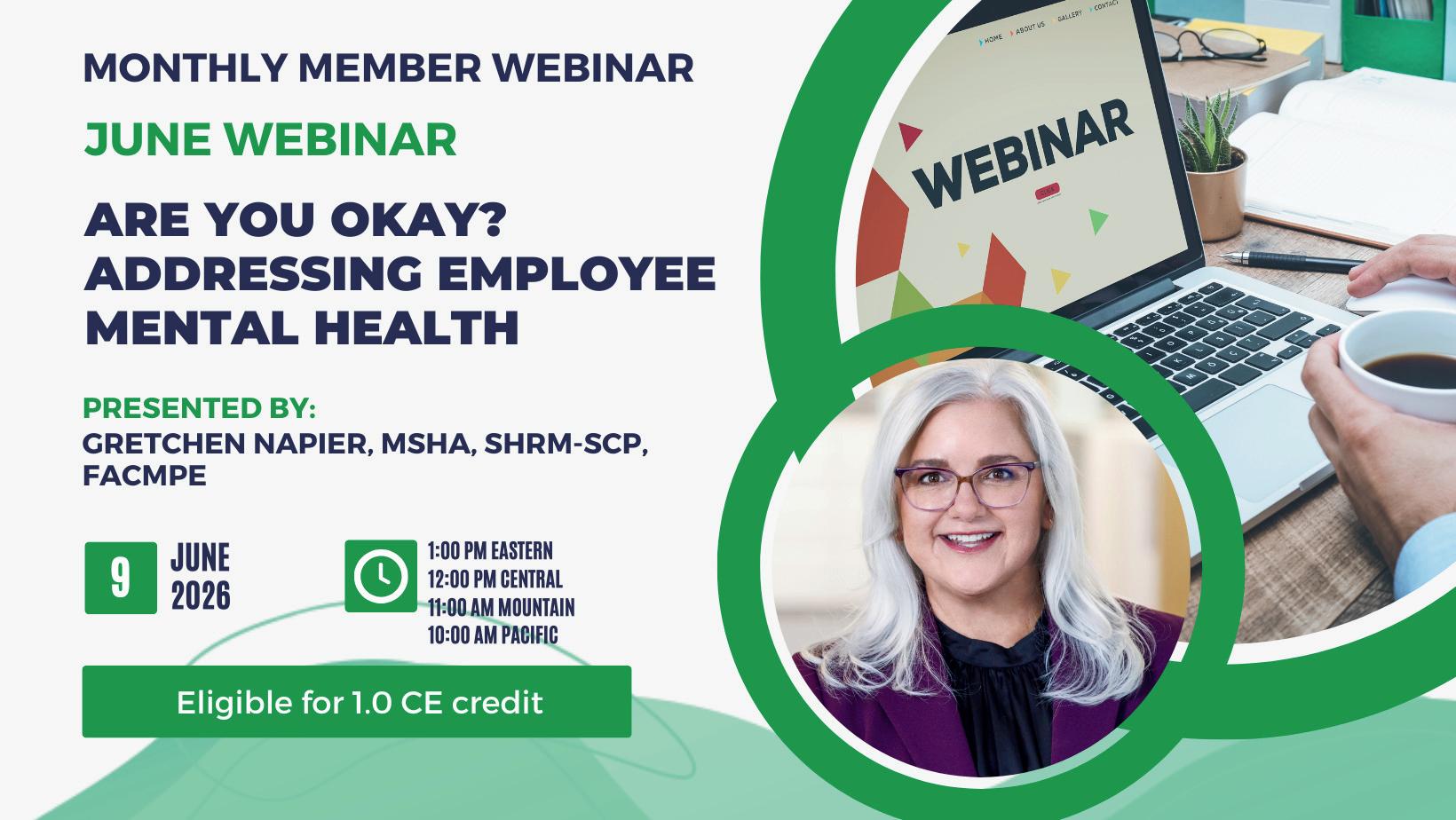
Webinar: Are You Okay? Addressing Employee Mental Health
We have learned from world-class athletes at the top of their games, like Naomi Osaka, Michael Phelps, and Simone Biles, how they must prioritize their mental, as well as physical health. Working in healthcare is a stressful environment on a good day. A leadership style that includes “put on your game face” and “tough it out” will struggle to meet the needs of their patients and the practice while also addressing the mental health needs of their employees. In this session, we focus on concrete strategies practice leaders can implement to make an immediate impact.
Objectives:
Describe the factors bringing employee mental health to the forefront of HR discussions
Identify strategies for improving individual mental health
Develop practice-wide improvements for improving employee mental health
ABOUT THE PRESENTER:
Gretchen Napier is a Medical Practice Consultant at SVMIC working with physician offices to maximize their human resources by creating cultures that are clear, kind, inclusive, and inspiring. She is certified with the Society for Human Resource Management (SHRM) as a Senior Certified Professional and is a Fellow of the American College of Medical Practice Executives. She has been a healthcare leader for over 25 years. Gretchen earned a Bachelor’s in Human and Organizational Development from Vanderbilt and a Master’s in Healthcare Administration from UAB (University of Alabama at Birmingham).
OKMGMA webinars are approved for 1.0 CE credit hour of LIVE learning from MGMA state for those attending the live session.
OKMGMA Webinars are approved for 1.0 CE credit hour from MGMA state for on-demand listening.
OKMGMA webinars are FREE for members! You must be logged in to register. ($75 non members)
Oklahoma Medical Group Management Association (OKMGMA)
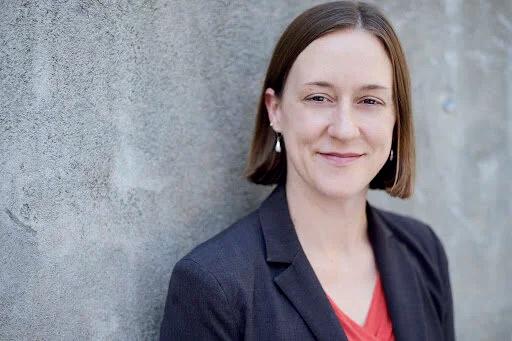
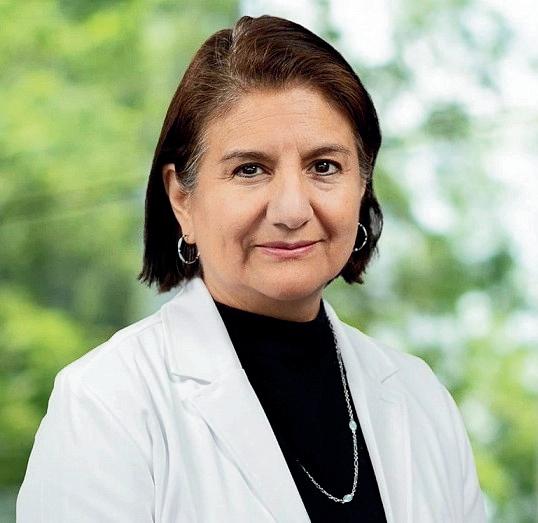
Welcome New Members!
By joining TCMS and OSMA our members are among friends, colleagues, and peers, who share their interest, concern, and dedication, to the medical profession. Our strength relies on individual members like these, who are committed to making an impact on the field of medicine. Share with them the opportunity to join! Have them visit www.tcmsok.org/join or have them contact Mark or Joetta at 918.743.6184 or email tcms@tcmsok.org
Angela D. Bolz, DO Nephrology
Nephrology Specialists of Oklahoma 6465 S Yale Ave Ste 507 Tulsa, OK 74136
918.712.5000
Kelly J. Dunn, MD
Laura Janneck, MD, MPH Emergency Medicine
Saint Francis Hospital 6161 S Yale Ave Tulsa, OK 74136
918.502.3939
Clinical Assistant Professor of Psychiatry & Behavioral Sciences
Executive Director, Clinical Treatment
OSU Center for Health Sciences St West Tower Ste 1102
Sylvia E. Walsh, MD
Pediatrics
Warren Clinic Pediatrics Kenosha 1801 E. Kenosha St Broken Arrow, OK 74012
918.615.6941
Correction. We wanted to correct an error made in our last edition of the Tulsa Medicine. Dr. Walsh is not with the Warren Clinic Urgent Care, but with the Warren Clinic Pediatrics Kenosha. Her correct contact information has been updated above.
Friendly Reminder: Have you renewed
Dues Reminder
This is a friendly reminder that if you have not yet paid your TCMS and OSMA membership dues for 2026. The Deadline for renewal was December 31, 2025.
There are 4 easy ways to renew your membership:
1.Online – Pay securely with the link sent to your email. a.Payment Methods: Credit or Debit Card, ACH, Apple Pay, and Google Pay (on devices)
2.Call – 918.743.6184 to pay over the phone
3.Mail – Send your check along with the attached invoice to our office (made payable to TCMS)
4.Fax – 918.743.0336 your completed invoice with payment to our secure office fax number
Please contact Joetta or Mark at 918.743.6184 or email us at joetta@tcmsok.org with any questions about dues or membership.
We thank you for your membership and support of your physician organizations!
Membership Matters
Being a member of the medical society means being part of a community that is dedicated to advancing the practice of medicine and improving patient care. Your membership provides you with access to exclusive benefits including the physician wellness program, GPO discounts, advocacy, event discounts, as well as resident and medical student support and scholarships.