Issue 1 – January 2024
Issue 1 | January 2024
STEMWISE Unveiling the Wonders of Science for Young Explorers
Including captivating
SCIENTIFIC STEMWISE FINDINGS and
GROUND BREAKING discoveries
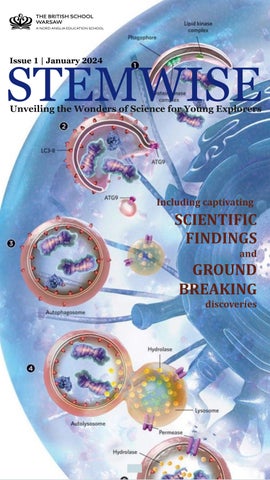
The photo featured on our front cover has been taken from the journal The Scientist (https://www.the-scientist.com/infographics/infographic-how-autophagy-works-30029) written by Vikramjit Lahiri and Daniel J. Klionsky
M E S SAG E FR OM C R E AT OR S E V G E NIA NIC HE P E R OV IC H, M AT IL DE COS TA NZO A ND AYA N NA M A ZOVA Welcome to the exciting world of "STEMwise," the brand-new science magazine brought to you by The British School of Warsaw! In this inaugural edition, we are diving into the wonders of science and technology to share fascinating STEMWISE ISSUE 1
stories with our younger readers. Imagine a place where complicated scientific ideas become as easy to understand as your favourite storybook. That's what "STEMwise" is all about! Created by the talented Year 12 students at our school, this magazine is the result of their passion for science and education. They have put in a lot of hard work to make sure the magazine is not only interesting but also easy for everyone to enjoy. A big shout-out to these dedicated students whose enthusiasm has turned their vision into a reality! We want to express our sincere gratitude to everyone who played a part in making this magazine happen. From the students who wrote the articles to the teachers who guided them, and everyone in between, your time and effort are truly appreciated. We hope this magazine brings a sense of joy and curiosity about the amazing world of STEM to each reader. So, get ready to embark on a journey with "STEMwise"! Flip through the pages, explore the exciting topics, and let the world of science unfold before your eyes. This is just the beginning, and we cannnot wait to continue sharing the wonders of STEM with you in the upcoming editions. Enjoy the read!
2
STEMWISE ISSUE 1
CONTENTS
3
Ebola Unveiled: Tracing the Origins, Battling the Outbreaks, and Advances in Prevention BY EVGENIA NICHEPEROVICH
5
Cloning: Unravelling the Past, Present, and Ethical Quandaries of Genetic Replication BY STEFANIA HANNAH
7
Cancer: Why is Cancer so Hard to Treat and What is the Situation like Today? BY E VGENIA NICHEPEROVICH
9
The Enchanted world of Quantum Entanglement: a Dance Across Boundless Distances BY BRIANNA-ALECSANDRA MANTA
11
The 7 to 10-year Renewal: Understanding the Fascinating Cycle of Cell Regeneration in Humans BY BRIANNA-ALECSANDRA MANTA
13
Breaking Boundaries: Prof. Jacob Hanna’s Pioneering Work in Artificial Human Embryos BY MATILDE COSTANZO
15
Photography section
17
STEMWISE ISSUE 1
CONTENTS Navigating Tomorrow’s Medicine: the Rise of Personalized Healthcare Through Digital Twins BY MATILDE COSTANZO
23
Genetic Dance: Exploring the Universality and Diversity of DNA BY BOGUMIL ROZANSKI
25
Understanding and Addressing Malnutrition: Causes, Impacts, Treatment, and Prevention BY AYAN NAMAZOVA
27
Unveiling the Chemistry of Baking: a Delectable Exploration of Chemical Reactions in Cake-Making BY STEFANIA HANNAH
29
Oncology and Use of Modern Technology in Cancer Treatment BY BOGUMIL ROZANSKI
31
Fertility in Diversity: Unveiling the Two Faces of Reproduction BY AYAN NAMAZOVA
33
4
E B O L A U N V E I L E D : T R A C I N G T H E O R I G I N S , B AT T L I N G T H E O U T B R E A K S , A N D A DVA N C E S I N P R E V E N T I O N Evgenia Nicheperovich
In the shadows of dense rainforests and the heart of African
STEMWISE ISSUE 1
communities, a menacing threat has periodically emerged to challenge humanity—Ebola. This microscopic adversary, with its origins shrouded in mystery, has sparked fear and urgency across the globe. But what even is it? Ebola is a virus that causes severe inflammation and tissue damage throughout the body. It can cause problems with the clotting system blood leaks from small blood vessels. Symptoms can include fever, severe headache, muscle pain, fatigue, diarrhea, vomiting, abdominal pain, and unexplained bleeding or of the body and lead to internal bleeding, as bruising. The symptoms can appear 2 to 21 days. after exposure, but the average is 8 to 10 days. Approximately 30,000 people had been infected in 2014 by this disease according to New England Journal of Medicine. The Ebola virus is believed to have originated in animals, specifically bats, which are thought to be natural hosts of the virus. The exact origins and natural reservoir of Ebola viruses are not definitively confirmed, but most outbreaks begin in remote areas and therefore experts theorize that heavy forested areas containing infected fruit bats may be to blame for the multiple outbreaks in the country. Regions with multiple outbreaks include Uganda, South Sudan, and Gabon. The disease was identified in 1976, in almost simultaneous outbreaks in the Democratic Republic of Congo and Sudan. Since then, the Democratic Republic of the Congo has had the most Ebola outbreaks. This disease is very hard to treat due to many reasons. Firstly, the outbreak is most frequent is in the developing countries of the African continent so there may not simply 5
be enough finance for the treatments. There is no specific treatment but nevertheless, patients with Ebola can be given oxygen, intravenous fluids, and other drugs to help manage their symptoms. Without medical care, up to 90% of Ebola disease patients die. In recent years, progress has been made in developing vaccines against Ebola. The rVSV-ZEBOV-GP vaccine has shown efficiency in clinical trials and has been used in outbreak is most frequent is in the developing countries of the African continent so there may not simply be enough finance for the treatments. There is no specific treatment but nevertheless, patients with Ebola can be given oxygen, intravenous fluids, and other drugs to help manage their symptoms. Without medical care, up to 90% of Ebola disease Ebola. (2023). Wikipedia. Available at: patients die. In recent years, https://en.wikipedia.org/wiki/Ebola. progress has been made in developing vaccines against Ebola virus disease. (2019). Available at: Ebola. The rVSV-ZEBOV-GP https://www.who.int/healthvaccine has shown efficiency topics/ebola#tab=tab_1. in clinical trials and has been Chapter 3: African countries fighting used in outbreak. Ebola outbreaks. (no date). Mercy The rVSV-ZEBOV-GP vaccination, licensed for medical use in the European Union and the United States in 2019, received World Organization (WHO) recommendations. Developed by experts at Canada's Public Health Agency, it proved 97.5% efficient during a Guinea Ebola epidemic in March 2016. Around 800 people were vaccinated. Ongoing research aims to enhance accessibility and relevance in various circumstances, contributing to global health security.
Corps. Available at: https://www.mercycorps.org/blog/eb ola-outbreaks-africa-guide/chapter3#:~:text=Where%20is%20Ebola%20 most%20commonly,Democratic%20R epublic%20of%20the%20Congo. Ebola disease: Symptoms and treatment. (2023). Canada.ca. Available at https://www.canada.ca/en/publichealth/services/diseases/ebola.html#.
6
CLONING: UNRAVELING THE PAST, PRESENT, AND ETHICAL QUANDARIES OF GENETIC REPLICATION Stefania Hannah
Cloning, once limited to sci-fi, is now prevalent across genres in STEMWISE ISSUE 1
media. Hollywood blockbusters, like 'Jurassic Park' and 'Us,' depict cloning, often portraying clones as evil and horrific advancements. The process is seldom presented scientifically, contributing to a negative reputation, evident in terms like 'evil clone.' With real-time scientific advancements enabling artificial cloning, ethical dilemmas intensify. The question arises: How did cloning become possible, and what impact does it hold for humanity? First, to establish what cloning is, cloning is a natural or artificial process of creating an organism with identical DNA to another. Clones are described as genetic copies, which share the same DNA. Natural cloning has existed since the creation of cells, a fitting example of it in vegetation includes the reproduction of strawberries, strawberries spread out naturally by creating runners, which are changed stems that create new identical plants at their nodes. Other examples include asexual reproduction, binary fission and budding. The idea of cloning has been investigated and explored for around 120 years. The first ever experiment connected to it took place in 1885 using sea urchins performed by Hans Adolf Eduard Driesch. He used two-celled sea urchin embryos, by shaking them it was possible to separate their cells. Once that process took place, each grew into its complete sea urchin. This was one of the first steps of many that led humankind closer to their first mammal cloned from an adult cell, Dolly the sheep.
7
Dolly, born on July 5th, 1996, was part of experiments at the Roslin Institute aiming to reduce animal testing. She demonstrated that specialized cells could create an exact animal copy. While not the first cloned mammal, Dolly was the first using somatic cells. Living for six years, she had lambs but faced health issues, including arthritis and lung tumors. Today, cloning is more common in animals and plants. Russian scientists attempted woolly mammoth cloning in 2012, suggesting potential for concepts like de-extinction. Dolly's legacy highlights advancements in cloning technology and its applications in diverse fields. One question stands, what effect will all these advancements have? Cloning's impact prompts ethical questions, with various forms still considered unethical, particularly human reproductive cloning and genetic alteration due to concerns about discrimination. Despite this, the debate continues, especially in the context of de-extinction, raising questions about the fairness of bringing back animals to a changed world. Cloning extends to medical advances and genetically modified organisms (GMOs), where solutions like genetically modifying the Cavendish banana to resist the TR4causing virus are considered, albeit with concerns about GMO labeling. As cloning progresses, it's crucial to consider its historical context and potential consequences for the future. Ethics must guide scientific progress; just because we can, doesn't mean we should. The History of Cloning. (no date). Available at https://learn.genetics.utah.edu/content/cloning/clonezone. The Life of Dolly. (2021). The University of Edinburgh. Available at https://www.ed.ac.uk/roslin/about/dolly/facts/life-of-dolly. Brahambhatt, R. (2023). Cavendish bananas face extinction and not all experts agree on how to save them. Business Insider. Available at https://www.businessinsider.com/bananasgoing-extinct-gros-michel-cavendish-disease-2023-9?IR=T.
8
C A N C E R : W H Y I S C A N C E R S O H A R D T O T R E AT A N D W H AT I S T H E S I T UAT I O N L I K E T O DAY ? Evgenia Nicheperovich
For decades, scientists have been trying to cure the dark forces
STEMWISE ISSUE 1
of cancer through endless experiments on rats and humans. According to the Cancer statistics of 2022 by John Wiley, there have been 1,918,030 new cancer cases. Millions and billions have been spent on these studies to find the cure, but the humanity is still not there. Why? Firstly, let’s look at what is meant by cancer. This is a disease in which some of the body’s cells grow uncontrollably and spread to other parts of the body. Cancer is not just one disease, but in fact, it in an umbrella term for more than 200 distinct diseases! It is caused by the appearance of faults in our DNA – mutations. In Egypt’s human mummies, tumours made of fossilised bone were the first indications of cancer. Although the word “cancer” was not used, the first description of the disease was also found there, dating back to roughly 3000 BC. The Edwin Smith Papyrus is a replica of a section of an ancient Egyptian trauma surgery textbook. It recounts 8 examples of breast tumours that were removed with cauterisation using a device known as the fire drill. The sickness “Has no treatment,” according to the writing.
9
The difficulty of treating cancer is due to a number of factors. To begin with, cancer has a wide range of genetically variable subgroups due to its genetic diversity. Since every tumour has a different genetic mutation, creating generalised therapeutic strategies is difficult. Furthermore, over time, cancer cells may develop resistance to medications as a result of their ongoing mutations. They can create a number of antibodies against the effects of chemotherapy and radiation, making treatment challenging. So, what is the situation like today? According to The Guardian, a new drug combination has been able to breakthrough ovarian cancer. The new treatment blocks tumour growth, helping keep the disease at bay for years. The trial led by Royal Marsden NHS Foundation trust and the Institute of Cancer Research, London, tested the drug Avutometinib alone and in combination with Defactinib in 29 patients. Trial results show almost half the patients on the new drug combination proved to be almost twice as effective as the next best treatment – trametinib, which has a response rate of 26%. Scientists from around the world keep on working towards finding the cure to this disease, and who knows maybe you will discover it!
Why is cancer so hard to cure? (2023) Worldwide Cancer Research. Available at:https://www.worldwidecancerresearch.org/news-opinion/2022/september/whyis-cancer-so-hard-to-cure/.
New drug combination offers ovarian cancer breakthrough, Gregory A, (2023). Available at: https://www.theguardian.com/science/2023/jun/03/new-drugcombination-offers-ovarian-cancer-breakthrough.
Understanding what cancer is: Ancient Times to Present (no date). Available at:
https://www.cancer.org/cancer/understanding-cancer/history-of-cancer/what-iscancer.html.
10
THE ENCHANTED WORLD OF QUANTUM ENTANGLEMENT: A DANCE ACROSS BOUNDLESS DISTANCES Brianna-Alecsandra Manta
STEMWISE ISSUE 1
Quantum entanglement is an accepted phenomenon amongst physicists that occurs when two subatomic particles are separated by incredible distances, such as billions of light-years of space, however, still manage to be linked to each other. No matter the physical distance between them, a change in one of the subatomic particles will affect the other, meaning their quantum states become unified. Erwin Schrödinger, one of the founders of quantum mechanics, was the first physicist to use the word “entanglement”, appearing in the discussions surrounding the Einstein-PodolskyRosen (EPR) paradox, introduced in 1935 by, as the name of the paradox suggests, Albert Einstein, Boris Podolsky, and Nathan Rosen, regarding the realism of quantum mechanics We call it quantum entanglement when a system is in superposition of more than one state. Explained concisely, superposition is the result of an action which is not just undisclosed, but that it does not even exist until you make a measurement. For example, in a bag there is either a green or a blue ball. It could be either of those colours; the object's colour is not only unknown to you but does not exist in a definitive state until opening the bag. One would assume that it is either green or blue, and it is just unrevealed, however, this assumption is erroneous given that particles do not behave in that manner. Entanglement can occur throughout millions of subatomic particles, acting as one unified object, without being able to continuously communicate with one another but still forming unbreakable correlations.
11
How fast can these communications go? There is a common misconception that particles can communicate with each other faster than the speed of light, and scientists have tested whether they can send communications which are faster than light, and it agrees with Einstein's special theory of relativity. It does not involve a physical transfer or any information actually travelling between particles; when the state of one particle is measured, the other is instantly determined as well, no matter the distance. Sharing information is done through the usage of mathematics in quantum information rather than classical information. This requires familiarity with linear algebra, yet it is fact correlations are needed for quantum information, which shows the entanglement used. Different approaches towards this topic have been made, one of which is the highly impressive quantum teleportation, involving the transfer of states between particles. Quantum entanglement remains a vast and fascinating area of study within the field of quantum mechanics, and quantum physics in general, for scientists.
Emspak, J. and Hickok, K. (2023). What is quantum entanglement? Available at https://www.space.com/31933-quantum-entanglement-actionat-a-distance.html. What Is Entanglement and Why Is It Important? (no date) Available at: https://scienceexchange.caltech.edu/topics/quantum-scienceexplained/entanglement. Ferrie, C. (2023). Quantum Entanglement Isn’t All That Spooky After All: Available at https://www.scientificamerican.com/article/quantumentanglement-isnt-all-that-spooky-after-all1/.
12
THE 7 TO 10-YEAR RENEWAL: UNDERSTANDING THE FASCINATING CYCLE OF CELL REGENERATION IN HUMANS Brianna-Alecsandra Manta
STEMWISE ISSUE 1
Cell regeneration refers to the process of replacing dead or damaged cells with new ones, occurring in all living organisms through mitosis, colloquially known as cell division. This process is vital, given that if cells ceased to regenerate themselves, biological entities would suffer constant tissue deterioration and debilitated organs until a point where they would cease to function altogether. Regenerative medicine consists of clinical application on different scales, from stem cell manipulation to the transplantation of organs grown in vitro, however, it is more developed in certain animals. A clear example is the axolotl, a species of salamander that can regrow its limbs, heart tissue, spinal cord, and even parts of its brain, and another example is the starfish, which can regenerate its limbs, as well as grow an entirely new individual from a severed limb. Such animals inspired and stimulated scientists to discover xenotransplantation; a transplant method consisting of the implantation of animal organs or tissues into a human recipient. The first attempts made towards xenotransplantation were in the early 1900's, specifically in 1906 in France, where a woman received a pig kidney. She did not survive long, nor did countless other human recipients, due to their immunological barriers which were unable to recognize the foreign organs and tissues, leading to their rejection. Apart from this, the risk of zoonotic diseases, those which are passed on from animals to humans, created difficulties for the donees. Even so, with the significant technological advances from the past decade, surgeons have managed to do numerous successful transplants, deeming this to continue being an area of active research.
13
Peripheral nerve regeneration has also been investigated; researchers assess the progress of axon regeneration using the Medical Research Council’s five-point scale for muscle strength established in 1975. Tinel sign, a general sign for nerve damage which is performed by lightly percussing over a nerve to obtain a prickling sensation, indicating the capacity of nerve regeneration. Through nerve stimulation, we are able to observe the proportion of muscle reinnervation and nerve regeneration. There are other measures of the sort, however, this is one is more straightforward with conclusive results. How often to cells regenerate themselves? In the human body, most, but not all, cells replace themselves every 7 to 10 years. The epithelial cells cover the surfaces of your body, such as blood vessels and the lining of your organs, and they take about 10 years to regenerate. On the other hand, non-epithelial cells take, on average, almost 16 years to regenerate!
History of xenotransplantation. (no date). Available at https://www.sciencelearn.org.nz/resources/1214-history-of-xenotransplantation. O’Neill, M. (2021). Successful Xenotransplantation Surgery: Genetically Engineered Pig Kidney Transplanted to Human Body. SciTechDail. Available at https://scitechdaily.com/successful-xenotransplantation-surgery-geneticallyengineered-pig-kidney-transplanted-to-human-body/. Lara-Pezzi, E. and Rosenthal, N. (2010). Genetic Enhancement of Cardiac Regeneration. Available at https://doi.org/10.1016/b978-0-12-381332-9.00046-3.
14
BREAKING BOUNDARIES: PROF. JACOB HANNA'S PIONEERING WORK ON ARTIFICIAL HUMAN EMBRYOS Matilde Costanzo
STEMWISE ISSUE 1
An embryo is the early developmental stage of an animal, or human being, while it is in the egg. In order for an embryo to form, there must be an egg that gets fertilised by the sperm. But the scientist Prof Jacob Hanna, led a research at the Weizmann Institute in Israel, which was able to grow a “complete” model of a human embryo in a laboratory. These embryos were made by merging many stem cells, which were then able to “arrange themselves into specific structures that mimic the 3D organization of all the known features found in human embryos from one to two weeks old” states The Guardian. Stem cells are the cells from which the cells with specialized functions are generated. The researcher Jacob Hanna says that “this is the first embryo model that has structural compartment organization and morphological similarity to a human embryo at day 14”. This is unbelievable as the cells that make up the embryo were already at around half a millimeter wide at two weeks. This all happened without the need of an egg or of a sperm cell. Although the reason why researchers have embarked on this idea, of creating human embryos in the lab, was not so that they could create so called “lab babies” as the structures of the embryos they created are not identical to those of human embryos. The reason why they made embryos in a laboratory is so that they can learn more about the early stages of human development in the egg.
15
They hope to discover more about the causes of infertility and miscarriage. To hopefully, in the future, find a way to prevent them or cure them. Although there is so much more that researchers could use the embryos for. For example, another one of Hanna’s ideas is to “create a model embryos from the skin cells of ill patients, grow the model embryos for a month or so and they will start to develop organs that can be used as a source of cells to transplant into the patients”. The question that rises from that, is whether it is an ethical thing to do. As it closely ties with the debate of whether abortion should be allowed or not. Hanna has already thought about this: “Before growing a model embryo for donor tissue, scientists would tweak its genetics to ensure it did not develop a brain or nervous system”. Without a brain or a nervous system, it would be impossible for it to feel pain or anything else. Overall, the formation of human embryos in a laboratory using stem cells is an amazing advancement, that with time, and extensive research, will be able to help find cures and solutions to many diseases. As well as enable us to discover more information about the earliest stages of life in the cells present in an embryo.
Israeli scientists create model of human embryo without eggs or sperm. (2023). Available at https://www.reuters.com/science/israeli-scientists-create-modelhuman-embryo-without-eggs-or-sperm-2023-09-07/.
16
PHOTOGRAPHY
O l e k s a n d r a
STEMWISE ISSUE 1
O l e k s a n d r a
17
B o d n a r
B o d n a r
18
PRESENTATION TITLE
PHOTOGRAPHY
S T EM W IS E IS S U E
S t a n i s l a w
19
S i d o r
PHOTOGRAPHY
STEMWISE ISSUE 1
H i p p o l y t e
21
G a u c h e r a n d
NAVIGATING TOMORROW'S MEDICINE: THE RISE OF PERSONALIZED HEALTHCARE THROUGH DIGITAL TWINS Matilde Costanzo
STEMWISE ISSUE 1
It would be amazing if everyone could have a digital twin that can get sick and be experimented on to try and find the best treatment for them, without having to test different possible cures on the patient first handed. Scientists have been developing the idea of “digital twins” and believe that in between 5 to 10 years “in silico” trials could become part of the system. “In silico” trials are trials where drugs and other possible treatments get tested on virtual organs to measure their safety and efficacy on the illness. Additionally, each patient would have a model of their specific organs, this would make their treatment more personalised and avoid any type of complications. What even is a digital twin? Digital twins are “computational models of physical objects or processes which are updated using data from their real-world counterparts” states The Guardian. In the medical world it means combining “large amounts of data about the genes, proteins, cells and wholebody systems with a patient’s personal data to create virtual models of their organs – and eventually, potentially their entire body.” Which would then allow doctors to test different treatments on the virtual body of their patients and find the ideal one. Professor Peter Coveney, who is the director of the Centre for Computational Science at the University College London states that medicine today isn't very scientific, as doctors try to figure out how to cure their patient by using the treatments that were used in the past for patients with similar conditions. While a digital twin finds the best treatment for a patient based on their personal physiology, not by looking at the population, making the diagnosis very personalized.
23
There are some departments which have already put in place a variation of the digital twin. For example, some cardiologists already used patient specific heart models that are used to help the doctors design medical devices specific to the patient. The start up ELEM BioTech in Barcelona is already offering companies the possibility of testing new drugs and medical devices on simulated human heart models. To test their safety and efficiency. Digital twins would of course be Geddes, L. (2023). How digital twins may enable personalised useful in all medical departments, health treatment. the Guardian. but mainly in the surgical Available at department. At the Royal Society of https://www.theguardian.com/sci ence/2023/nov/12/digital-twinMedicine in London a meeting was personalised-medical-treatment. held regarding digital twins, and the Laubenbacher, R. et al. (2022). doctor Caroline Roney stated that: Building digital twins of the “personalised heart models would human immune system: toward a roadmap. npj Digital Medicine. help surgeons plan surgeries for Available at patients with irregular heartbeats https://doi.org/10.1038/s41746022-00610-z. (atrial fibrillation)”. This is because surgeons, in general, use surgical approaches that work commonly, they are not patient specific. Making is unusual for the treatment to have long-term outcomes, as it might not work for everyone. Artificial experts from the company GSK are working with cancer researchers at King’s College London to reconstruct digital versions of tumors by using molecular and genetic data to test how they respond to different drugs and treatments. Through the development of digital twins scientists will be able to predict how each individual patient is going to respond to different treatments (different medicines and doses). The Professor Peter Coveney wrote a book about digital twins, 24 entitled “Virtual you”.
GENETIC DANCE : EXPLORING THE UNIVER SALIT Y AND DIVER SIT Y OF DNA Bogumil Rozanski
STEMWISE ISSUE 1
The genetic code of all organisms is carried as DNA (deoxyribose nucleic acid). This is the major reason why the genetic code is regarded as universal. DNA is mainly found inside of our nucleuses which are one of the most important organelles in our cell controlling vital processes inside cells. DNA has a double helix structure similar to two staircases or crossing ladders. This is due to many interactions between bases of one strand bonding with bases on the other one. DNA sequence consists of nucleotides which are essentially sugars bonded to a phosphate group and a nitrogenous base. These nucleotides join to form strands of DNA which later on join via bonds with the complementary bases on the other strand. Cells divide in order to produce identical copies of themselves. A diploid cell (normal body cell) will always have 46 chromosomes in order to divide by a process called mitosis it needs to double the amount of chromosomes to 92 which will result in a creation of 2 identical daughter cells with 46 chromosomes each. Chromosomes are thread like structures which can be found in the nucleus and carry genetic information in the form of genes. For the multiplication to happen DNA needs to replicate itself. This process is semi conservative meaning that half of parental DNA (original molecule) is kept and the other half is synthesized. In order to break the bonds of bases between strands we use enzymes which help unwind and unzip the structure of DNA and expose the free bases to which free nucleotides will bind and with help of other enzymes a complementary strand will be synthesized. DNA carries instructions for production of vital proteins in our organisms. 25
In certain cases individuals may experience mutations in their DNA due to exposure to radiation or certain chemicals. This may lead to development of cancer(somatic normal body cells) or passing of the mutation to their offspring (sex cells). Mutations can be harmless or lead to certain genetic diseases. Throughout the years scientists developed different ways of dealing with genetic disorders. One of them is CRISPR which is used in gene therapy. It utilizes a bacteria’s defense mechanism to cut DNA at particular sites to cut the faulty gene and replace it with a new one. Due to DNA’s universal nature scientists are able to genetically modify organisms such as bacteria to produce desirable traits. For example, Transgenic Bacteria are grown in colonies to produce insulin which is purified and used in treating diabetes. DNA can be cut with restrictive enzymes to separate certain fragment (genes) and they can replace or be inserted genes in another organism (bacteria) therefore organisms with genes from another organism are known as Transgenic.
DNA Replication | HL IB Biology Revision Notes 2025. (no date). Save My Exams. Available at: https://www.savemyexams.com/dp/bi ology/hl/25/revisionnotes/continuity-and-change/dnareplication/dna-replication/. Gene Editing (HL) | HL IB Biology Revision Notes 2025. (no date). Save My Exams. Available at https://www.savemyexams.com/dp/bi ology/hl/25/revisionnotes/continuity-andchange/mutations-and-geneediting/gene-editing/. Herrera, R.J. and Garcia-Bertrand, R. (2018). The Nature of Evolution. Elsevier eBooks. Available at https://doi.org/10.1016/b978-012-804124-6.00001-x.,
DNA's universal nature and structure underpin life, enabling genetic modifications and advancements in science. 26
UNDER STANDING AND ADDRESSING MALNUTRITION: CAUSES, IMPAC TS, TRE ATMENT, AND PRE VENTION Ayan Namazova
STEMWISE ISSUE 1
What is malnutrition? Malnutrition is the deficiency or excess in nutrient intake, imbalance of essential nutrients, or impaired nutrient utilization. It is often thought that malnutrition results in weight loss and being underweight, however, malnutrition can also occur in overweight and obese people. This occurs due to undernourishment or over nourishment in people. In some countries such as the United States, children suffer from malnutrition due to dietary imbalances, such as a high consumption of sugars and fats, rather than due to nutritional deficiencies. Undernutrition occurs when not enough essential nutrients are consumed or when they are excreted more rapidly than they are replaced. Overnutrition occurs when people who consume too much food also don’t consume proper amounts of nutrients essential to their diet. How can malnutrition be treated?
Patients who cannot or will not eat or who are unable to absorb nutrients taken by mouth may be fed intravenously (parenteral nutrition which is the feeding of nutritional products to a person through blood vessels like veins, skipping the usual process of eating and digestion) or through a tube inserted into the gastrointestinal tract (enteral nutrition). This procedure involves inserting a thin tube through the nose and carefully guiding it along the throat until it reaches the stomach or small intestine. If long-term tube feeding is necessary, the tube may be placed directly into the stomach or small intestine through an incision in the abdomen. 27
How do you avoid malnourishment?
A healthy balanced diet consists of seven food groups: proteins, carbohydrates, fats, vitamins, minerals, fiber, and water. Most adults should target their diets to comprise of 45-65% Carbohydrates (like oats, buckwheat sweet potatoes), 10-35% Protein (like chicken, beef, eggs, beans, and lentils) and 20-35% Fat (like oil, avocados and nuts). Moreover, Malnutrition. (2021). Available at https://www.who.int/newsadults should aim to consume at room/factleast 400 grams of fruit and sheets/detail/malnutrition. vegetables per day to ensure that Malnutrition. (2021). Johns they are getting their vitamins like Hopkins Medicine. Available at https://www.hopkinsmedicine.org/ vitamin C and minerals like calcium health/conditions-andin. Furthermore, it is essential for diseases/malnutrition. people to be cautious with their Website, N. (2023). 8 tips for salt and sugar intake- it is healthy eating. nhs.uk. Available at https://www.nhs.uk/live-well/eatrecommended to consume less well/how-to-eat-a-balancedthan 10% of total energy of diet/eight-tips-for-healthy-eating/. sugars and less than 5 grams (equivalent to a teaspoon) of salt per day, which is important to avoid insulin (hormone that reduces blood sugar concentration) resistance, diabetes, and generally obesity. Finally, to maintain a healthy, balanced lifestyle it is also important to exercise daily, which could be going for a walk, a run or playing a sport.
28
UNVEILING THE CHEMISTR Y OF B AKING: A DELEC TABLE EXPLORATION OF CHEMICAL RE AC TIONS IN CAKE-MAKING Stefania Hannah
STEMWISE ISSUE 1
At the beginning of anyone’s first year of secondary when first introduced to chemistry a remarkably simple concept is discussed, the differences between physical and chemical reactions. One of the very first examples given for chemical reactions will be ‘baking a cake’, which is perfect for anyone new to chemistry. So how is cake baking a chemical reaction?
First to establish what makes a chemical reaction: “A change in which one or more chemical elements or compounds (the reactants) form new compounds (the products).” Physical reactions as the name suggests are purely physical, this can state changes, a good example of that would be freezing water into ice, the ice is still made up of water but instead of being liquid, it’s solid. Many different things could indicate a chemical reaction has taken place, this could include bubbles appearing, colour changes or temperature changes. Most of which are seen in cakes, bread or other baked goods! Cakes similarly to chemical reactions in labs need recipes to tell how much of a substance needs to be used, this is because if one component is used too little or in excess it will affect the result. For example, if too much butter is used, the cake can end up being too dense and won’t rise. The same applies for the temperature the cake is baked at, and if the oven is preheated or not. Cakes fit this definition well, as you first begin with many components, solid or liquid, that get joined together to create something completely new. This also makes sure the food is safe to eat. The simplest recipe for a vanilla cake usually involves the following butter, sugar, eggs, flour, 29
baking powder milk, oil and water. Often when water isn’t used, products that hold a lot of it are. These react separately to form the final products. When making a cake first you mix all the dry and wet ingredients separately (sugar counts as a wet ingredient*), and then fold in the dry ingredients into the wet, also allowing in air. The are the 3 major reactions that take place: Flour is mostly composed of starch and proteins, when mixed with water two proteins (gliadin and glutenin) bind creatin gluten, the substance thickens the batter when stirred and expands under hot temperatures. Another needed chemical reaction occurs between the baking powder and water. Baking powder is made from sodium bicarbonate and powdered acid, it also acts as a leaving agent**. When the two mix carbon dioxide bubbles are produced, when the cake batter gets heated in the oven, the trapped bubbles expand causing the batter to grow. You should be able to see this through your oven window! This is also a physical change, as the liquidly mass solidifies. Lastly, the Millard reaction which takes place between sugar and proteins (found in eggs and butter). This is where the sugar is broken down by the heat of the oven and reacts creating the cake's golden-brown top. This can help a baker tell when the cake is ready.
* in the oven sugar dissolves into a liquid ** a chemical substance used to help dough rise Newcomers to chemistry can learn a lot by baking a cake, experiencing firsthand reactions and gaining practical insights, which surpass the benefits of classroom videos.
Sam. (2022). The Best Vanilla Cake Recipe. Sugar Spun Run. Available at https://sugarspunrun.com/vanilla-cake-recipe/. Chemical Reactions Involved in Baking a Cake. (2019). Sciencing. Available at https://sciencing.com/chemical-reactions-involved-baking-cake-7173041.html. chemical reaction. (no date). Oxford Reference. Available at https://doi.org/10.1093/oi/authority.20110803095605376. 30
ONCOLOGY AND USE OF MODERN TECHNOLOGY IN CANCER TRE ATMENT Bogumil Rozanski
STEMWISE ISSUE 1
Oncology is a specialization of medicine that focuses on studying cancer and oncologists are doctors who treat patients and provide medical care for those diagnosed. In the recent century the world has seen a skyrocketing trend of cancer cases due to the increase in smoking rates, air pollution and usage of mutagenic agents which are certain chemicals that increase the probability of mutations in normal body cells. Exposure to ionizing radiation such as X-rays, Gamma rays and UV light increases the probability of mutations developing leading to cancer. However, the field in cancer treatment has dramatically expanded since the early 20th century when first cancer cases were documented, and research has begun and due to modern medicine patients have the opportunity to be treated with the newest treatments conducted by specialists. Some common ways of treating cancer are chemotherapy, radial therapy, implantation of radioactive isotopes or slightly more invasive and risky surgeries to remove the tumors. As of the 21st century a stunning discovery about cancer treatment was made by Ralph M. Steiman who revealed the extraordinary properties of Dendritic cells being efficient in destroying malignant cells in our organisms, it is a noninvasive practice with no side effects for the patients as it uses the patient’s own immune system and enhances it to fight off cancer with a higher efficiency.
31
Cancer itself is a mutation in normal body cell that affects genes that control cell division. The mutated gene that causes cancer is called an oncogene. The mutated cells will divide rapidly and uncontrollably by a process called mitosis and form a condensed cell mass called a tumor. There exist two main types of tumors: benign and malignant. Benign tumors will not invade neighboring tissue and is generally considered a less invasive and less serious type of cancer. However, malignant tumors may spread through our organism by a process called metastasis and invade neighboring tissue which may pose a serious threat to individual’s lives. Some common types of cancer include Leukemia (Blood cancer), Lung cancer and Sarcoma (Bone cancer). It is crucial to take action and precaution in regularly testing yourself and your loved ones as cancer is a disease that on average claims 10 million lives annually worldwide (highest in 2020). Some of the test may include checking for abnormal white blood cells in the blood or using cancerous tags in identifying various anomalies in our organisms. Therefore, the world’s struggles are relentless in putting an end to this disease and eradicating it from our society to make earth a safer and healthier place Dendritic Cell Therapy: the future of cancer health | Immucura. (2023). Immucura. Available at: https://immucura.com/?gad_source=1&gclid=CjwKCAiAjfyqBhAsEiwAUdzJOcpfm_2iwyhn2rurOkvaS66ni9v1eNXr1bjVAwZniiRSMdUGLob2hoCMccQAvD_ BwE. Consequences of Gene Mutations | HL IB Biology Revision Notes 2025. (no date). Save My Exams. Available at: https://www.savemyexams.com/dp/biology/hl/25/revision-notes/continuity-andchange/mutations-and-gene-editing/consequences-of-gene-mutations/.
32
F E R T I L I T Y I N D I V E R S I T Y: U N V E I L I N G T H E T W O FA C E S O F R E P R O D U C T I O N Ayan Namazova
What is reproduction?
Reproduction is the production of offspring by a sexual or STEMWISE ISSUE 1
asexual process. There are two types of reproduction: sexual reproduction and asexual reproduction. Sexual reproduction is a type of reproduction that involves a complex life cycle in which a gamete (a sex cell) with a single set of chromosomes (23 chromosome instead of 46 which would be found in any other body cell) combines with another gamete to produce a zygote that develops into an organism composed of cells with two sets of chromosomes. Asexual reproduction is a type of reproduction that does not involve the fusion of gametes or change in the number of chromosomes. Asexual reproduction results in genetically identical offspring, while sexual reproduction has variation in the offspring.
Taking a closer look at sexual reproduction:
Sexual reproduction requires a series of steps to occur. First, the male gametes called sperm cells are produced by the male parent, and the female gamete called egg cells are produced by the female parent. Then, the sperm and the egg fuse in one of the female’s fallopian tubes (also known as oviducts) in a process called fertilization. After fertilization takes place, the fertilized egg cell is called a zygote, which travels from the fallopian tube to the uterus, where it is implanted into the uterine wall. In the uterus, the zygote can start cell division, namely meiosis, increasing its cell count and developing into an embryo, and later, a baby. 33
Asexual reproduction is faster and easier than sexual reproduction, as only one parent is needed. Asexual reproduction occurs in organisms such as bacteria and there are multiple types of asexual reproduction. The first type of asexual reproduction is binary fission, where the parent cell doubles its DNA and then divides into two genetically identical cells. The second type is budding, which results from the outgrowth of a part of a cell or body region leading to a separation from the original organism into two individuals. Another type of asexual reproduction is fragmentation, where a fragment of the parent breaks off and develops into an entirely new but genetically identical individual. Which type of reproduction is better?
There isn’t a better type of reproduction, as if one was better than the other all the organisms would reproduce in the same way. Each type of reproduction has its own specific purpose like variation, rapid populating, and need of a partner.
Types of reproduction review (article) | Khan Academy. (no date). Khan Academy. Available at https://www.khanacademy.org/science/high-school-biology/hsreproduction-and-cell-division/hs-types-of-reproduction/a/hs-types-ofreproduction-review. Libretexts. (2023). 43.1B: Types of Sexual and Asexual Reproduction. Biology LibreTexts. Available at https://bio.libretexts.org/Bookshelves/Introductory_and_General_Biology/Book %3A_General_Biology_(Boundless)/43%3A_Animal_Reproduction_and_Developme nt/43.01%3A_Reproduction_Methods/43.1B%3A_Types_of_Sexual_and_Asexual_Re production. 34
BIG THANK YOU to the contributors!
YUNSEO BYUN Chief designer
LUISA CRUZ MORENO Graphic designer
The photo featured on our back cover has been taken from https://www.etsy.com/ca/listing/1004269506/climate-sensitive-diseasecausing?epik=dj0yJnU9cGpWTlJuak9yS05lWVVnLVFXTW1CaUVCNGpqZjVhY2MmcD0wJm49dUVjZ 1RRWFo4Nl8zS1JvNENfRzJpdyZ0PUFBQUFBR1dycHJz
STEMWISE