


Perth & Kinross

We also operate from 400 other locations across Tayside including schools, offices and community centres etc.


We also operate from 400 other locations across Tayside including schools, offices and community centres etc.
Thank you for taking the time to read our Communications Strategy. Effective communication is essential to how Tayside Contracts operates and how we present ourselves to our employees, stakeholders and customers. This strategy provides a clear framework for how we communicate, helping us to focus on core messages, engage the right audiences, and make best use of appropriate channels. It also enables us to identify gaps or areas for improvement and ensures that the way we communicate reflects the professionalism and values of our organisation.
Through this strategy we aim to: support the delivery of our organisational objectives. strengthen engagement with our stakeholders. demonstrate the impact and success of the work we do. ensure people understand who we are and what we deliver. positively influence behaviours and perceptions by aligning our communications with our organisational values.
This strategy is designed to help us adapt to a rapidly changing communications environment, adopt modern tools and approaches, and continue to build trust and confidence in the services we provide.
Effective communication is essential to the success of Tayside Contracts. This Communications Strategy has been developed in the context of a rapidly changing communications landscape, where demands on public services, technological expectations and stakeholder needs continue to evolve.
We operate within an external environment shaped by several key factors:
Significant financial pressures coupled with rising public expectations of high-quality, cost-effective services, making it increasingly important to demonstrate the value we deliver.
Active national and local media who may present our services in specific ways, with potential implications for organisational reputation.
A societal shift towards continuous access to information, delivered in short, frequent updates across multiple channels, particularly through new and emerging digital platforms.
The growing dominance of mobile devices, alongside a generational divide in how people access information, with some audiences still preferring print and paper-based communications.
Our internal self-evaluation has further identified several strengths, weaknesses, opportunities and risks that inform this strategy:
We have a strong record of communicating effectively with employees for whom English is not a first language.
Our use of social media continues to grow positively.
Our collaborative arrangements with councils enable coordinated communications which ensure consistency of messaging.
We need to continue moving towards instant-access digital communication through social media, web-based tools, M365 and other emerging platforms.
Failure to modernise risks falling behind communication trends and potentially disengaging stakeholders. Continue engagement with employees, including continuing to cascade quarterly briefings throughout the organisation.
We will also explore the safe and controlled use of Generative AI to support the creation of communication materials such as media releases. This Communications Strategy provides the framework through which we will strengthen our communication practices, modernise our channels and approaches, and ensure we remain responsive to the needs of our employees, customers, partners and communities

At the heart of our Communication Strategy are our values - the 4 'P's – which guide how we communicate across the organisation. The communications elements of our 4 'P's from our Business Plan 2024-27 are outlined below.
People
We treat everyone fairly, and with dignity and respect.
We enable and encourage everyone to express themselves freely.
Performance
We share information about our performance.
We encourage and enable feedback to help us continuously improve.
Partnership
Open and honest communication builds trust, which is essential for successful partnerships.
We Collaborate and transform together by connecting and sharing ideas.
Perception
We actively promote our messages to shape a positive perception of Tayside Contracts.
We reach out and connect with our communities to support and inform them.
Our communications vision is to deliver open, accessible and consistent communication that builds trust, strengthens relationships and supports the achievement of our strategic priorities - the 5Cs.
Confidence, Trust and Relationships
Proud of what we do, chosen for how we do it
Commercial Approach
Business head, community head
Collaboration and Sharing
Sharing the gain
Continuous Improvement and Performance
Think like a customer, act like a taxpayer
Communities, Councils and Customers
Creating community wealth

Our Communication Strategy aims to;
fully engage with our stakeholders.

support the strategic aims of Tayside Contracts.
Our Communication Strategy objectives are:

ensuring that our internal and external communications are uniform and modern.

progressing our digitisation agenda - 'Digital by Default'.
build a well-informed and engaged workforce.
ensuring we have measures in place to enable our employees to communicate and feedback to management.
positively influence perception of our brand through smarter use of internal and external media.

continue to enhance our skills to optimise our IT options, especially M365.
developing and embedding clear rules and responsibilities in preparing and authorising communications, especially in an emergency situation.







These are our main stakeholders:
Who do we communicate with?






JC schedule of Agree Activities MD Delegated Powers



Our corporate and operational quarterly team briefings are held face-toface and via MS Teams
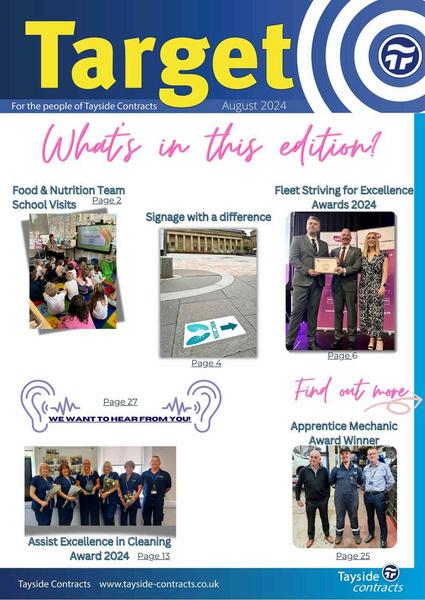
Our activities and achievements via Target and a range of various social media platforms
tcschoolfood & Tayside Contracts
Employee information e.g. policies, procedures and working instructions etc.

As many different methods as possible are used during times of crisis such as a pandemic/strike action.

Face-to-face: In-person or virtual meetings

Digitally: Email social media website TayNet

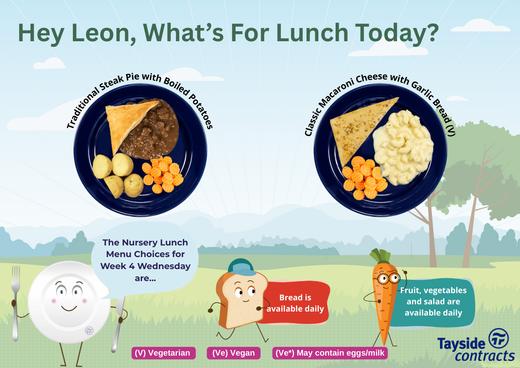
Marketing Jobs CPU videos school meal promotions

Surveys: Viewfinders
Interpretation/Translation
Polish/English
Other languages BSL

Training and Development: Induction
Safe Working Arrangements Toolbox Talks Tay Review (Appraisal)
We have a legal obligation to ensure all employees have a clear and full understanding of both written and verbal communications. To support this, the Communications Team provides a comprehensive in-house Polish interpretation and translation service, delivered face-to-face, by telephone or virtually, through audio recordings or written translation.
The Communications Team also provides interpretation and translation services for other languages, including British Sign Language, to support our commitment to equality, diversity and inclusion within Tayside Contracts and the services we provide.
our own Polish/English interpreter/translator interpreter/translators for other languages
BSL interpreter/translator
audio formats any other formats on request
We will continue to expand and enhance our use of these platforms to reach customers, employees, elected members, parents, pupils and the wider community.
The increasing use of social media has fundamentally changed the way people communicate with businesses, organisations and public services.

Around 84.3% of the UK population are active users of various social media platforms(2025)
(source: The Global Statistics)

(source: Finders)
Social media is a cost-effective method of reaching large audiences quickly, and Tayside Contracts fully recognises and embraces the benefits it offers.
Social media also supports our Climate Impact Plan by significantly reducing the need for printed materials.
Our current platforms are:
Tayside Contracts & Tayside Contracts Jobs @Tayside Contract
Tayside Contracts & tcschoolfood
Tayside Contracts
This Strategy sets out our overall approach to communications, however we know that communications is not a ‘one-size-fits-all’ approach, and many of us may have a need to develop and deliver more specific communications messages, for activities such as a new policy, a new operational initiative, information on significant impending legislation, or specific key messages to our employees. Therefore, this template is available on the Communications page on TayNet and should be used for all business area communication plans.

Activity:
Lead person: _______________________________________________
Overall purpose of plan (what you want to achieve):

Audience / stakeholder
(Who is this for?)
Main message to convey to that group or person (What ?)
Delivery method /channels (How?)
Schedule (When?)
Responsible person (Who?)
Progress
Update
Employees

Reason for the new or revised policy.
Email and by written explanation or video Prior to the implementation of the policy
HR Manager Information issued and only a few queries back
Reason for the new or revised policy. Email and meeting
Prior to informing employees HR Manager
TUs informed and feedback incorporated

Whilst the Communications Team is responsible for facilitating and enabling effective communications, every manager and employee has an individual responsibility and a vital role to play in ensuring that our communications are a two-way process and not merely a flow of information in one direction. Having the right conversations!
Our communications will only be truly successful if we reach out, connect and engage with everyone we want to have a conversation with.
How we communicate shapes our culture, and our culture shapes how we communicate!
It is a never-ending circular process and to work in a healthy culture we must all communicate in ways that make us all feel safe, respected and valued.
Healthy conversations = healthy culture
Ultimate responsibility for communications and for ensuring the effective implementation of this Communications Strategy sits with the Managing Director. The Managing Director is supported by the Communications Team, who are responsible for delivering day-to-day communications activity and providing professional advice across the organisation.
Our key priorities and performance indicators are based on the strategic priorities, values and enablers within our business plan. This will provide a framework for the areas we will focus on and the initiatives and tasks we will prioritise in our Communications Strategy.
Stakeholder Engagement & Consultation
We will strengthen collaboration with our key stakeholders through regular communication. This will ensure stakeholders receive the information they need, when they need it, and play a key role in shaping our strategic direction.
We will undertake a programme of surveys and wider consultation with our key stakeholders to help them feel more engaged in what we do, how and why we do it, and the role they can play in influencing our approach.
Stakeholder participation rate in surveys
Target: Minimum of 40% participation
Joint Committee communications issued in accordance with agreed timeline for committee dates.
Target: 100% of information issued in accordance with agreed timeline.
Committee member satisfaction with communications.
(measured via short annual survey)
Target: 1≥ 80% positive feedback.
In line with our ‘expand and diversify’ Business Plan objective, we will use communication channels more extensively and creatively to reach potential customers and promote the services Tayside Contracts provides.
We will continue to modernise and optimise our technological communication tools to allow us to communicate more effectively and with more immediacy. We will also explore the controls and safe use of AI, particularly in drafting communication messages such as media releases.
Growth in external digital audience. (followers, reach, impressions)
Target: Using 2025/26 data as a baseline, 5% growth by 2028/29.
Engagement rate on promotional content. (likes, shares, comments)
Target: Using 2025/26 data as a baseline 5% growth rate 2028/29.
Environmental
Continue to increase our use of electronic meeting systems to reduce transport and energy carbon emissions. We will also support progress towards a paper-free office by increasing our use of electronic communications in line with our strategic objective of ‘Digital by Default’.
Percentage of corporate communications delivered paper-free
Target: 95% paperless by March 2028
Reduction in printing volumes
Target: 20% by 2029

identity and brand approach.
and appropriate use of branding.
Our Communication Strategy Action Plan 2026 – 2028 details how and when the improvement measures we have identified will be implemented.
External Media Protocol
Develop and implement an external media protocol.
Crisis Communication
Strengthen crisis communication across the organisation.
SLT to establish responsibilities, approval routes and messaging standards.
Create and maintain crisis communication protocol and support service areas during incidents in line with the Business Continuity Plan.
March 2027
March 2026/Ongoing
5Cs & Values Campaign
Promote organisational values and the 5Cs internally.
Deliver a structured communications campaign.
Employee Feedback/Engagement Mechanisms
Improve opportunities for employee feedback/engagement.
Review existing channels and implement a preferred feedback approach.
March 2027
Collate and prepare
Corporate Communications Monitor
School Meals Content
Review existing Corporate Communications Monitor to capture external and internal comms.
Support councils with weekly school meal content provided by the Food and Nutrition team.
Report to the Corporate Leadership Team.
Bi-annually
Provide updates to council Communications Teams. Weekly during terms