The publishers reserve the right to refuse, withdraw, amend or otherwise deal with all advertisements without explanation. All advertisers must comply with the British Code of Advertising practice.
The views expressed in this publication are not necessarily those of the publishers.
All written and image rights are reserved by the author as displayed.
Reproduction in whole or in part without prior permission from the publisher is strictly prohibited.
Copyright brand TaxiPoint 2026. Creative Common image licences displayed where applicable.
FROM THE EDITOR
July has always been one of my favourite times of the year to be behind the wheel. With so much happening across the capital, the city takes on a different energy. The streets are busy, the conversations are varied, and every shift seems to bring something new. It is a reminder of just how important the taxi trade remains in keeping London moving during some of its busiest weeks of the year.
One question I'm regularly asked is: "Why do you still drive a taxi on top of running TaxiPoint?" The answer is simple. Staying on the road gives me an insight into this industry that can't be gained from behind a desk. It allows me to understand the challenges drivers face in real time, experience the good days and the bad, and separate genuine industry concerns from those that are sometimes overstated. That connection from root to branch
has been central to TaxiPoint since we launched almost ten years ago, and I believe it remains one of the reasons readers continue to trust what we do.
I also still genuinely enjoy the job. I've held a taxi licence since 2009 and no two days have ever been the same. Every shift presents different challenges, different passengers and different opportunities. Before becoming a cab driver, my background was in marketing and data analysis, and I could never have imagined where this career would lead. I'm grateful for the experiences, the people I've met and the perspective the job continues to provide. Long may it continue.
Be lucky!
Perry Richardson
TaxiPoint Editor and Founder
L JEREMY BIRD
LYFT EXECUTIVE VICE PRESIDENT
BLACK CABS REMAIN VITAL AS LYFT PREPARES FOR AUTONOMOUS VEHICLE
ERA IN LONDON
ondon sits at the heart of Lyft’s plans to expand beyond North America, with the company viewing the UK capital as both a strategic gateway to Europe and a proving ground for the future integration of autonomous vehicles, according to Lyft Executive Vice President Jeremy Bird.
Speaking exclusively to TaxiPoint, Bird outlined Lyft’s long-term vision following its acquisition of mobility platforms Freenow and Gett, and explained why the company believes autonomous vehicle technology can coexist alongside professional drivers rather than replace them.
The interview comes as autonomous vehicle services are accelerating globally, with several operators preparing to launch services in London under evolving UK regulatory frameworks. Bird argued that the capital’s complexity makes it one of the most important markets in the world for testing the technology.
When asked why Lyft selected London as a focal point for its European expansion, Bird pointed to the city’s influence, scale and transport culture.
“In general, when we think about where Lyft is growing, the first thing is geographic,” he said. “We had been a North American-only company for years. That wasn’t a strategic decision so much as when
we started, we raised enough money to compete in North America, we didn’t raise enough to go global.”
Now operating from a position of profitability and stability, Bird said Europe became the obvious next step.
“The attraction to Europe was it’s the top market to be in if you’re going to be in the mobility space.”
Central to that strategy was finding the right partner. Bird said Lyft identified strong cultural alignment with Freenow, particularly around what he repeatedly described as being “customer obsessed”.
“Our culture is really big on being customer obsessed. Thinking about the customer as the driver and the rider in the car. How do we make sure we’re creating the best experience possible?”
London’s significance stretches beyond the UK market itself. Bird compared the capital’s role in Europe to New York City’s position within the United States.
“Obviously London is the epicentre of how we want to grow and what we think is important. It’s very similar to New York City in the US. It’s critical in terms of size, scope and cultural importance.”
Bird also made clear that Lyft sees London’s taxi trade as a valuable and permanent component of the city’s transport ecosystem.
“I do think the black cab is iconic,” he said. “I love riding it. I love the look of it. It’s so unique. The Knowledge test, the car itself. It’s going to be a big part of who we are. We want to be strengthening that industry and the profession and growing it.”
Autonomous vehicles nevertheless form a major part of Lyft’s future strategy. The company has partnered with Waymo in the United States and recently announced plans to work with Baidu’s Apollo Go autonomous driving division.
Bird said Lyft deliberately chose the largest and most experienced operators in the sector.
“We’re starting with the two largest players globally,” he explained. “Waymo in the US and Baidu. They have the most driverless miles driven and the largest resume, if you will.”
London’s streets will present one of the toughest challenges yet for autonomous systems. Unlike
many North American cities built on grid layouts, the capital’s road network combines narrow streets, complex junctions, heavy pedestrian activity and dense traffic.
“If your technology works here, it can probably work in most places,” Bird said. “The narrowness of the streets, it’s not a grid, bikers, pedestrians, delivery bikes, delivery cars, delivery trucks, red buses. The whole thing.”
Despite these challenges, Bird expressed confidence that autonomous systems are ready for deployment.
“The technology is ready to be in London and the regulators are ready to create the right regulation and system to go forward.”
One area Bird believes receives too little attention is the operational infrastructure required to support autonomous fleets. While public debate often focuses on vehicle technology, he said the practical realities of charging, cleaning, maintaining and positioning vehicles will be equally important.
JEREMY BIRD
LYFT EXECUTIVE VICE PRESIDENT
Several years ago Lyft acquired vehicle rental company Flexdrive in the United States. Through that operation the company now manages around 15,000 vehicles and dozens of depots.
“We’ve learned a ton from that,” Bird said. The experience is now being adapted to support autonomous fleets.
“We are building out now the autonomous version of that fleet management company,” he explained.
“It’s maintenance, cleaning, charging, all of the things. It’s the nitty gritty hard work of doing it.”
London presents particular challenges because of land constraints and charging infrastructure availability.
“Our site in Nashville is 80,000 square feet. We’re not going to find that spot downtown London.”
As autonomous vehicles become more widespread, questions remain over their impact on professional drivers. Bird acknowledged concerns but rejected
suggestions that widespread displacement is inevitable.
Lyft has already begun holding forums with drivers in cities where autonomous services operate or are expected to launch.
“We want to talk to them about it,” Bird said. “This is happening in your city whether we’re running it or not.”
According to Bird, driver responses generally fall into three categories. Some see opportunities to build businesses around autonomous vehicles, others believe they can adapt their working patterns within a hybrid marketplace, while a third group remains concerned about the longer-term implications.
Rather than dismissing those concerns, Bird said Lyft wants to address them directly.
“We’re not pollyannaish about ‘it’s all fine, don’t worry about it’,” he said. “We’re very much like, we’re going to do this together with drivers.”
He also highlighted the differences between professional taxi drivers and other parts of the mobility sector.
“It’s a bit different in London. On the taxi side it’s more professional. You have to get The Knowledge test.”
Bird believes that human-driven services will remain essential even as autonomous vehicles gain market share.
“A lot of people will continue to prefer the taxi driver,” he said. “I’ve had great rides since I was here. A couple of them are basically tour guides.”
The broader vision, Bird argues, is not replacement but expansion.
“We think it’ll be hybrid. Human-driven and autonomous.”
He believes additional autonomous supply could improve service availability, increase overall
customer demand and ultimately expand the size of the mobility market.
“We’ve seen elements of that in Phoenix,” he said.
“We’ve grown the market overall and drivers are doing well as they were before.”
Bird also praised the UK Government’s approach to autonomous vehicle development so far, suggesting policymakers should focus on maintaining flexibility
rather than attempting to establish rigid rules too early.
“The policy decision they’ve already made is to embrace the innovation and figure out how to be part of shaping it,” he said.
He described London as potentially becoming “the first global city with multiple providers in the same
place” and argued that the capital could help establish standards for the rest of Europe.
Looking ahead, Bird confirmed that the long-term plan is to unify the company’s various mobility brands under the Lyft name.
“Ultimately that’s the goal,” he said when asked about the future of Freenow branding.
However, he stressed that any transition would be gradual.
“We’ve got to make sure we do it right. We don’t go too fast, but we bring people along with us and take the best of Freenow and the best of Lyft.”
For London’s taxi and private hire industries, Bird’s message was consistent throughout the interview: autonomous vehicles are coming, but professional drivers remain central to Lyft’s vision. The challenge now lies in how operators, regulators and drivers work together to shape what that future looks like.
IMAGE CREDIT: LYFT
ARTICLE BY:
M MAKING TAX DIGITAL AND TAXI DRIVERS: MYTH VERSUS REALITY
aking Tax Digital for Income Tax (MTD IT) is now a reality for many taxi and private hire drivers, but plenty of myths and misunderstandings still surround HMRC’s changes.
Since April 2026, MTD IT has applied to selfemployed people and those with property rental income earning more than £50,000 a year. The threshold will reduce to £30,000 from April 2027 and £20,000 from April 2028, meaning many more drivers will be affected over the next two years.
The good news is that MTD IT is often much simpler than people expect. Let's separate myth from reality.
Myth 1: I need to become an accountant
Many taxi and private hire drivers worry that MTD IT will require detailed accounting knowledge. It doesn't.
If you currently keep paper records, you'll simply need to transfer your figures into a digital record, such as a spreadsheet or compatible software. If you already keep digital records, you're likely to be much closer to compliance than you think.
For most drivers, MTD IT requires year-to-date summaries of your income and expenses to be submitted to HMRC every quarter. You'll then complete a Final Declaration after the end of the
tax year, which replaces the traditional Self Assessment tax return.
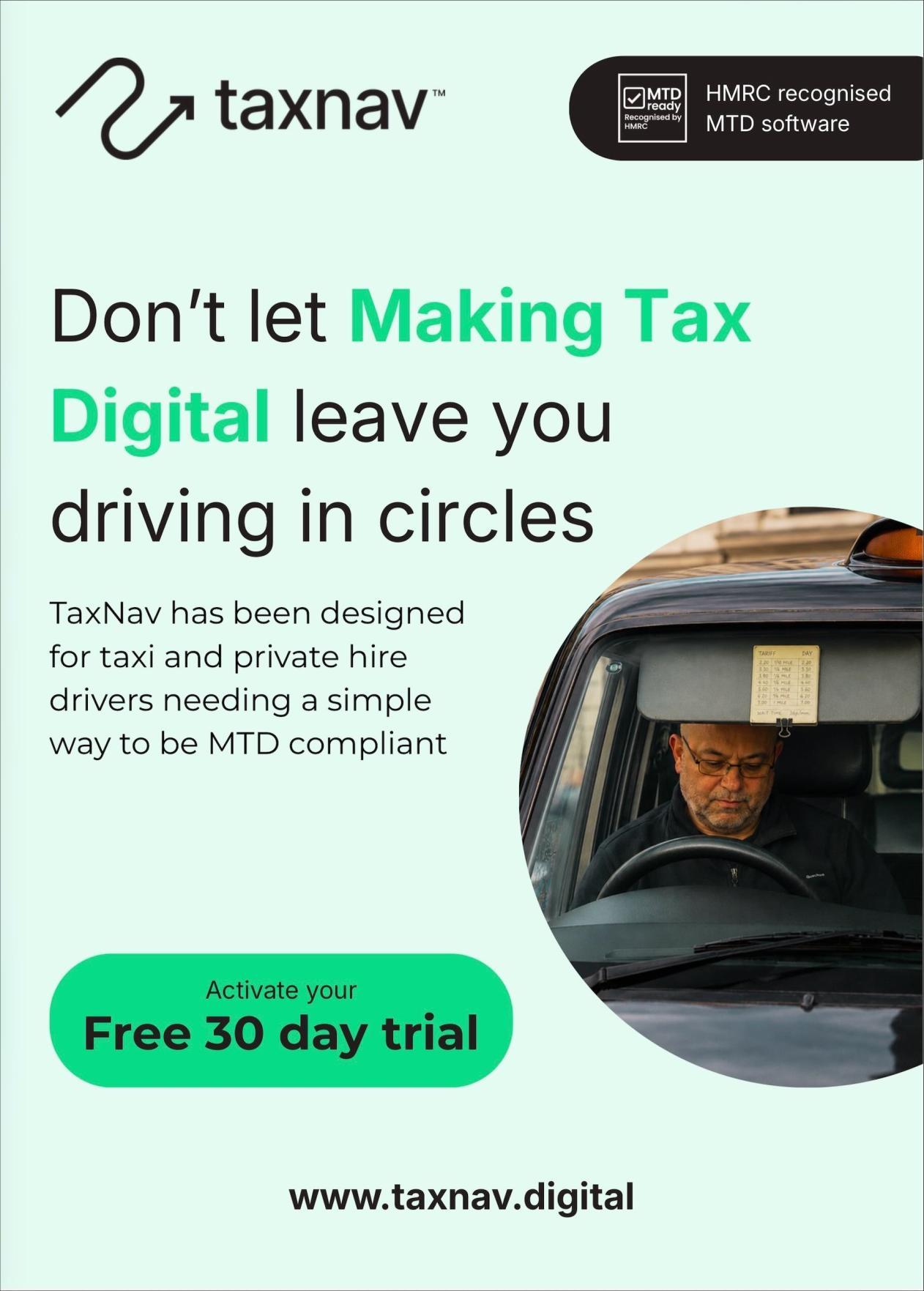
Many drivers find that simple HMRC-recognised software, such as TaxNav, helps them organise their records, either by entering their figures directly into the software or linking an existing spreadsheet.
Myth 2: HMRC is providing free software
Some drivers assume HMRC will provide its own MTD IT software. It won't.
HMRC requires taxpayers to use compatible thirdparty software but does not provide a free filing platform itself.
If you're affected by MTD IT, you'll need to choose HMRC-recognised software and register correctly. You'll also need your National Insurance number when signing up and connecting your software to HMRC.
TaxNav was developed specifically to help taxi drivers and other self-employed people navigate MTD IT without accounting or tax knowledge. We were part of the HMRC MTD IT pilot last year and successfully completed more than 600 submissions.
Myth 3: I can't use a spreadsheet anymore
No, HMRC does not ban spreadsheets under MTD IT.
If you already use a spreadsheet to record your fares, fuel, insurance and other business costs, you can continue using it for MTD IT.
You’ll need to select HMRC-recognised bridging software to link your spreadsheet records to the MTD IT system. TaxNav, for instance, enables drivers to keep using spreadsheets while still complying with HMRC requirements and submitting quarterly updates digitally. With us, you can connect your own spreadsheet or choose from our MTD IT spreadsheets.
For many drivers, this means keeping the system they already know while becoming compliant with the new rules.
Myth 4: I have to submit every fare and receipt to HMRC
Quarterly updates do not require you to send HMRC every individual fare, fuel receipt or expense.
Instead, you submit year-to-date totals for your business income and expenses every quarter.
You still need to keep digital records to support those figures, but the quarterly update itself is much simpler than people expect.
Myth 5: Quarterly updates mean quarterly tax bills
The quarterly updates are not tax bills, and they do not create a new tax payment deadline every three months.
Instead, they are year-to-date summaries of your income and expenses submitted during the tax year. Once submitted, you’ll gain an estimate of your likely tax position based on the information you've provided.
This can help drivers budget for future tax bills and avoid surprises. After the tax year ends, you'll complete a Final Declaration, which replaces the traditional Self Assessment tax return. Any tax due
is still settled then, with the usual 31 January deadline.
Myth 6: I need to work out capital allowances every quarter
This is a concern for many drivers who have bought a vehicle for their business.
The good news is that capital allowances do not form part of your quarterly updates. Your quarterly submissions only contain income and expense information.
Tax relief on business assets, such as a taxi or private hire vehicle, is dealt with later as part of your end-of-year tax adjustments and included in your Final Declaration.
There is no need to calculate capital allowances every three months. They are dealt with at the end of the tax year.
The reality
Making Tax Digital for Income Tax is a change, but it doesn't have to be difficult.
Most taxi and private hire drivers already keep much of the information they need. The key difference is that records must now be kept digitally and submitted through HMRC-recognised software.
Once drivers understand what's actually required, MTD IT is often far less daunting than the myths suggest.
About TaxNav
TaxNav is HMRC-recognised software designed to make Making Tax Digital for Income Tax (MTD IT) compliance simple. We automatically offer a 30day free trial, and an annual subscription is £60+VAT, while the pay-as-you-go is just £6+VAT a month. We supported Taxi Drivers who participated in HMRC’s MTD IT pilot. Find out more at our website – taxnav.digital
WHY LICENSED DRIVERS CAN LEGALLY DRIVE WITHOUT A SEATBELT IN SOME CIRCUMSTANCES, AND WHEN FAILING TO WEAR ONE COULD STILL RESULT IN A
£100 FINE
S SEATBELT EXEMPTIONS EXPLAINED:
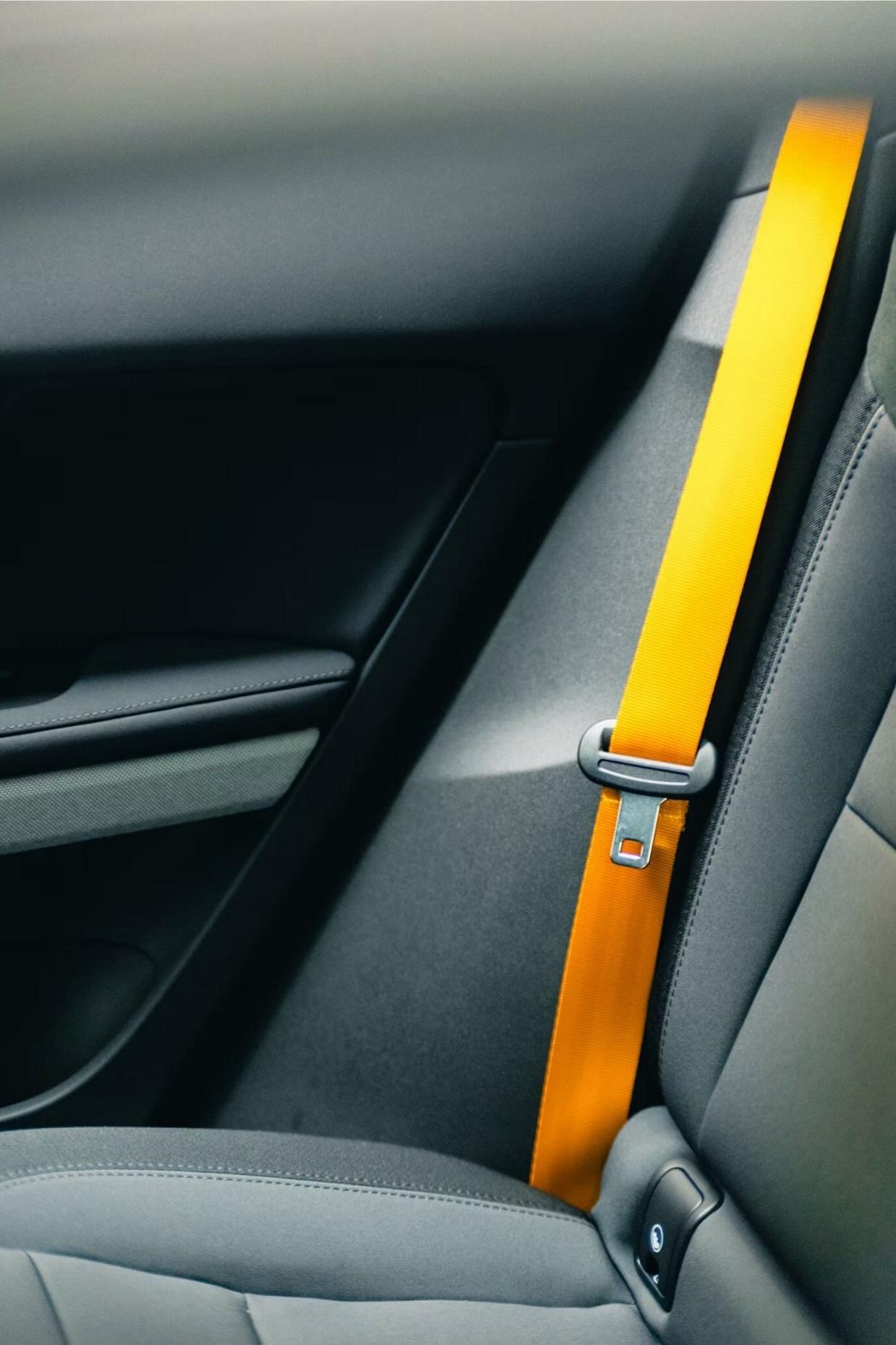
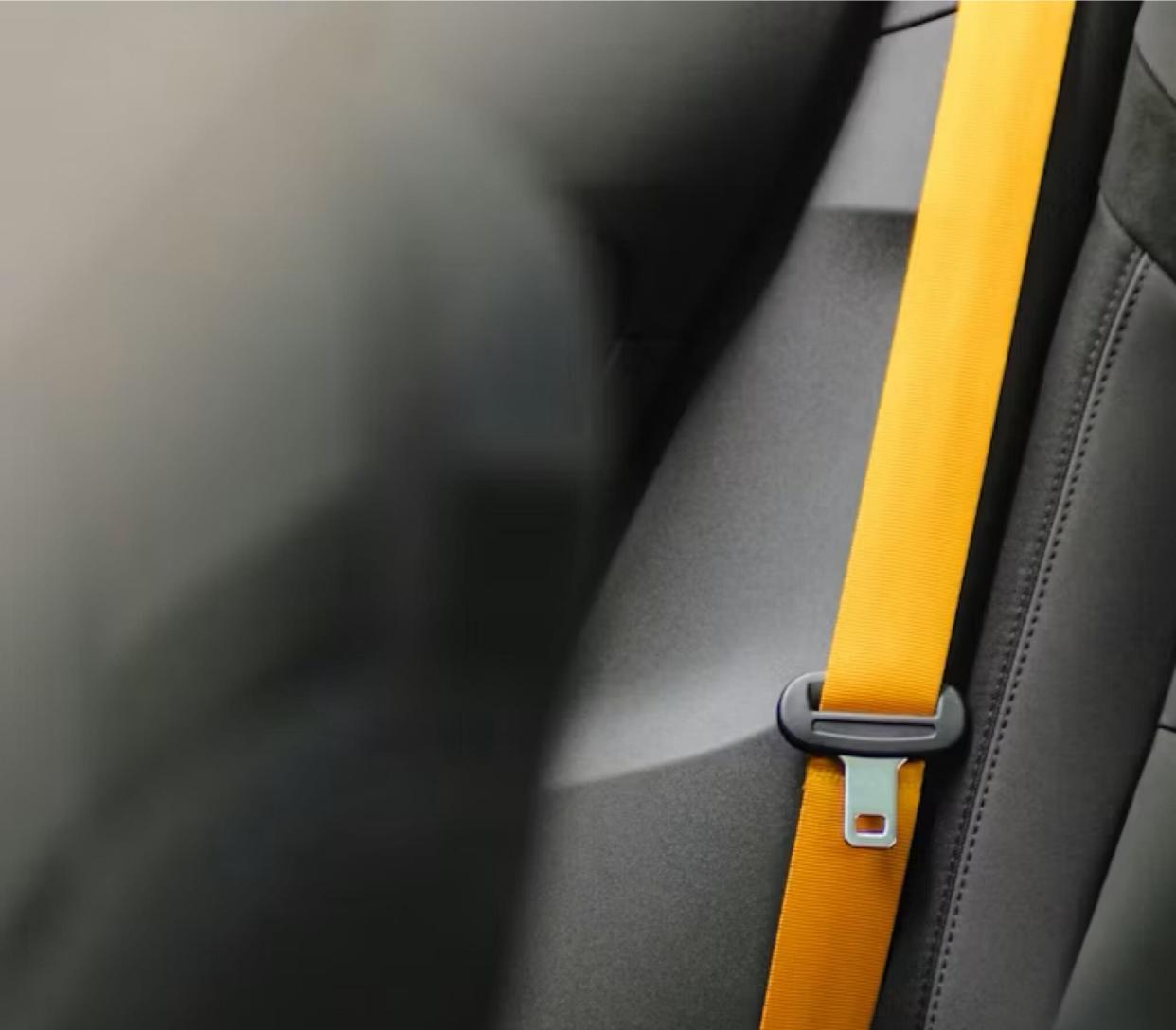
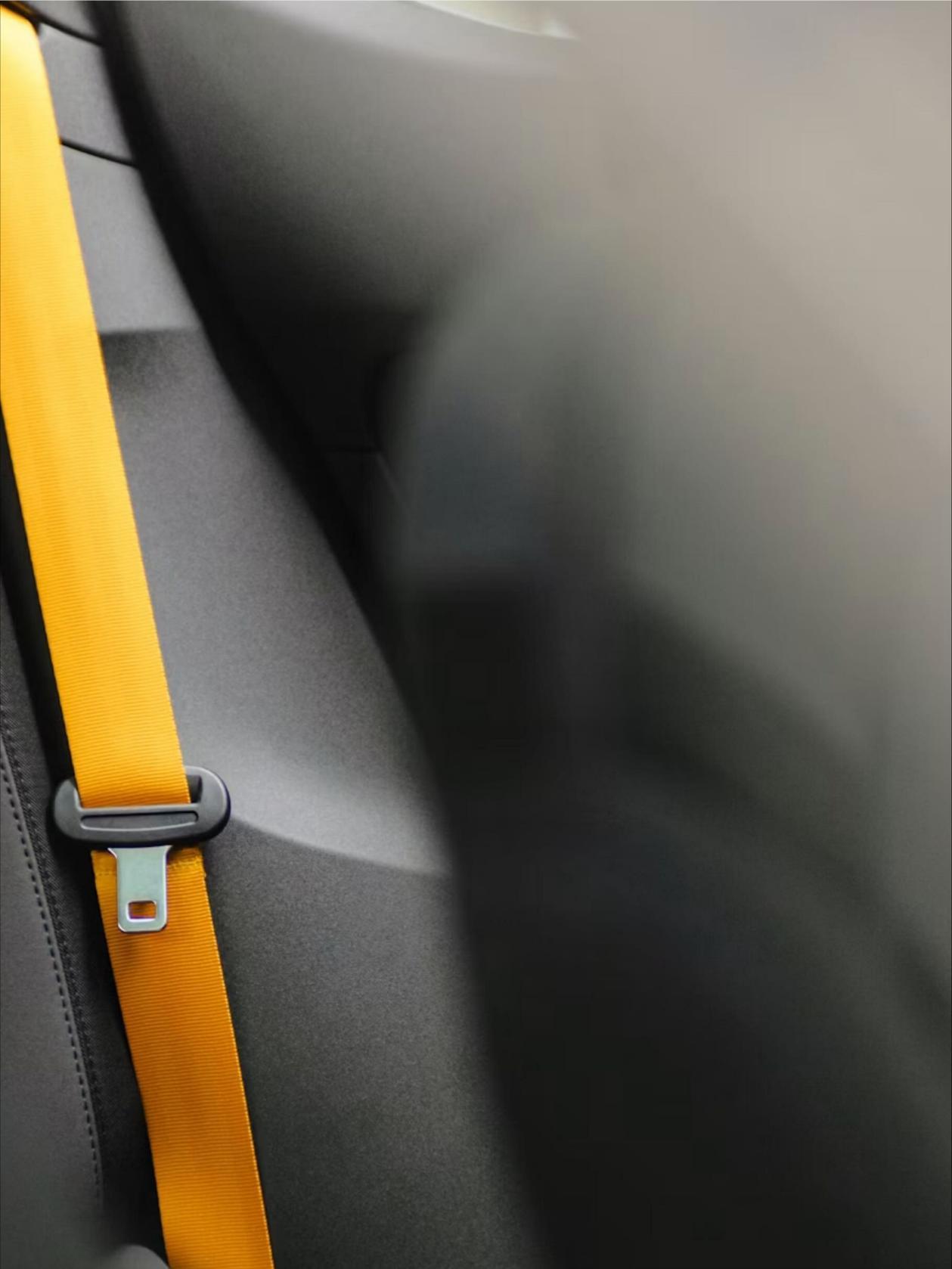
eatbelt laws are among the most widely recognised rules on Britain’s roads, yet one of the least understood exemptions applies to taxi and private hire drivers. While most motorists must wear a seatbelt whenever one is fitted, licensed drivers operating for hire are granted specific exemptions under UK law, although those exemptions are far narrower than many believe.
Confusion surrounding when a driver can legally remove their seatbelt, alongside uncertainty over child passenger rules, continues to generate questions across the trade, especially for those new to the trade. To help address
those misconceptions, respected Taxi Compliance Officer PC Patrick Quinton has produced a detailed guidance document explaining how the law applies to licensed drivers and passengers.
Drawing on the Road Traffic Act 1988 and the Motor Vehicles (Wearing of Seat Belts) Regulations 1993, the information sheet clarifies that while exemptions exist, they only apply during specific parts of a driver’s working day. Outside those situations, taxi and private hire drivers are expected to comply with the same seatbelt legislation as every other road user.
For Hackney Carriage drivers, the exemption applies while they are
actively seeking passengers, responding to a hiring request or carrying a fare-paying passenger. During these activities they are legally permitted to drive without wearing a seatbelt. Once those circumstances no longer apply, that position changes. When driving for personal reasons or otherwise not operating for hire, Hackney Carriage drivers must wear a seatbelt. PC Quinton also highlights that Hackney Carriage drivers undertaking private hire work outside the boundaries of the area in which they are licensed are not covered by the
exemption and must wear their seatbelt.
Private Hire drivers are subject to similar rules, although their work differs because journeys must always be pre-booked. They are exempt from wearing a seatbelt only while carrying a pre-booked passenger. At all other times, including travelling to and from work, between jobs or using the vehicle privately, the legal requirement to wear a seatbelt returns.
The exemptions have existed for decades and were introduced for both practical and safety reasons. Taxi drivers, particularly those working in busy city centres or
during late-night hours, have historically faced a greater risk of assault, robbery and threatening behaviour from passengers. Remaining unrestrained allows a driver greater freedom of movement should they need to quickly exit the vehicle or defend themselves during an incident.
Despite the legal exemption, many drivers now choose to wear their seatbelt voluntarily. Modern vehicle safety systems are designed around seatbelt use, and collision data consistently demonstrates that wearing one significantly reduces the likelihood of serious injury or death in a crash.
Passenger responsibilities differ considerably from those of drivers. Adult passengers aged 14 and over are legally responsible for ensuring they wear a seatbelt where one is fitted. Failure to do so can result in a £100 fine, although no penalty points are issued for the offence.
The driver’s legal responsibility centres on younger passengers. Taxi and private hire drivers must ensure children are travelling in accordance with the relevant seatbelt and child restraint legislation.
Unlike private motorists, licensed taxis and private hire vehicles are not legally required to carry child seats. That exemption recognises the practical difficulties of carrying multiple sizes of child restraints throughout the working day. Where no suitable child seat is available, the law provides
alternative arrangements depending on the child’s age, height and seating position.
If the vehicle has a fixed partition separating the driver from the passenger compartment, children travelling in the rear seats are not required to use child restraints.
Children travelling in the front seat, however, must always use an appropriate child restraint. If that restraint is rear-facing, the front passenger airbag must first be deactivated to prevent serious injury in the event of a collision.
Children under the age of three may travel in the rear without a child seat if one is unavailable, although they must occupy their own seat and cannot travel on an adult’s lap.
Children aged between three and eleven years old who are under 135 centimetres tall must use the adult seatbelt in the rear if no child restraint is available for an unexpected journey or in a licensed taxi or PHV.
Children aged 12 or 13, or any child over 135 centimetres in height, must wear the standard adult seatbelt when travelling in the rear.
Medical exemptions also exist for a small number of individuals. Those exempt must possess the appropriate medical certificate confirming they are not required to wear a seatbelt due to a qualifying health condition.
Join TaxiPoint Premium to unlock more taxi and private hire industry news vital to your business. For just £4 per month you get all the latest exclusive Premium news and full unrivalled access to our Premium library. Join the Premium debate to stay one step ahead and to support the trade’s most trusted news source.
HMRC MILEAGE RATE RISE ADDS WEIGHT TO TAXI AND PHV FARE INCREASE ARGUMENTS AMID GROWING OPERATING COSTS
The increase in HMRC’s approved mileage allowance to 55p per mile could strengthen the case for higher taxi tariffs and private hire fares as drivers face mounting vehicle expenses.
GETT EXPANDS LONDON PUBLIC SECTOR FOOTPRINT WITH TWO NEW COUNCIL FRAMEWORK ACCREDITATIONS
TAKEME EXPANDS MIDLANDS NETWORK WITH DIAL A CAB RUGBY PARTNERSHIP
WHY ONE MISSED DBS UPDATE PAYMENT CAN CREATE MAJOR PROBLEMS FOR LICENSED TAXI DRIVERS NEW TO THE MARKET: FAREFYNDER LAUNCHES DEMAND INTELLIGENCE PLATFORM FOR TAXI DRIVERS AND PHV OPERATORS
ZOOM LANDS NORTH BRISTOL NHS TRUST TRANSPORT CONTRACT WITH ACCESSIBLE FLEET
RESULTS FROM THE ROAD
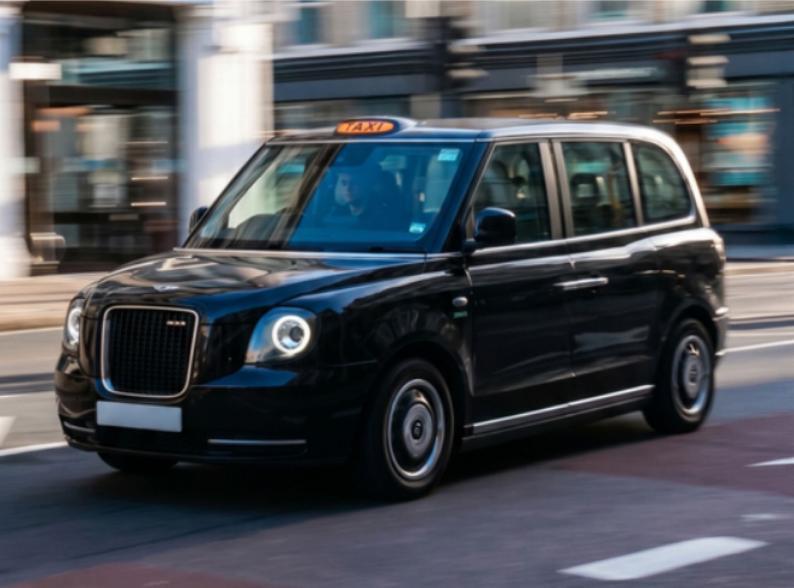
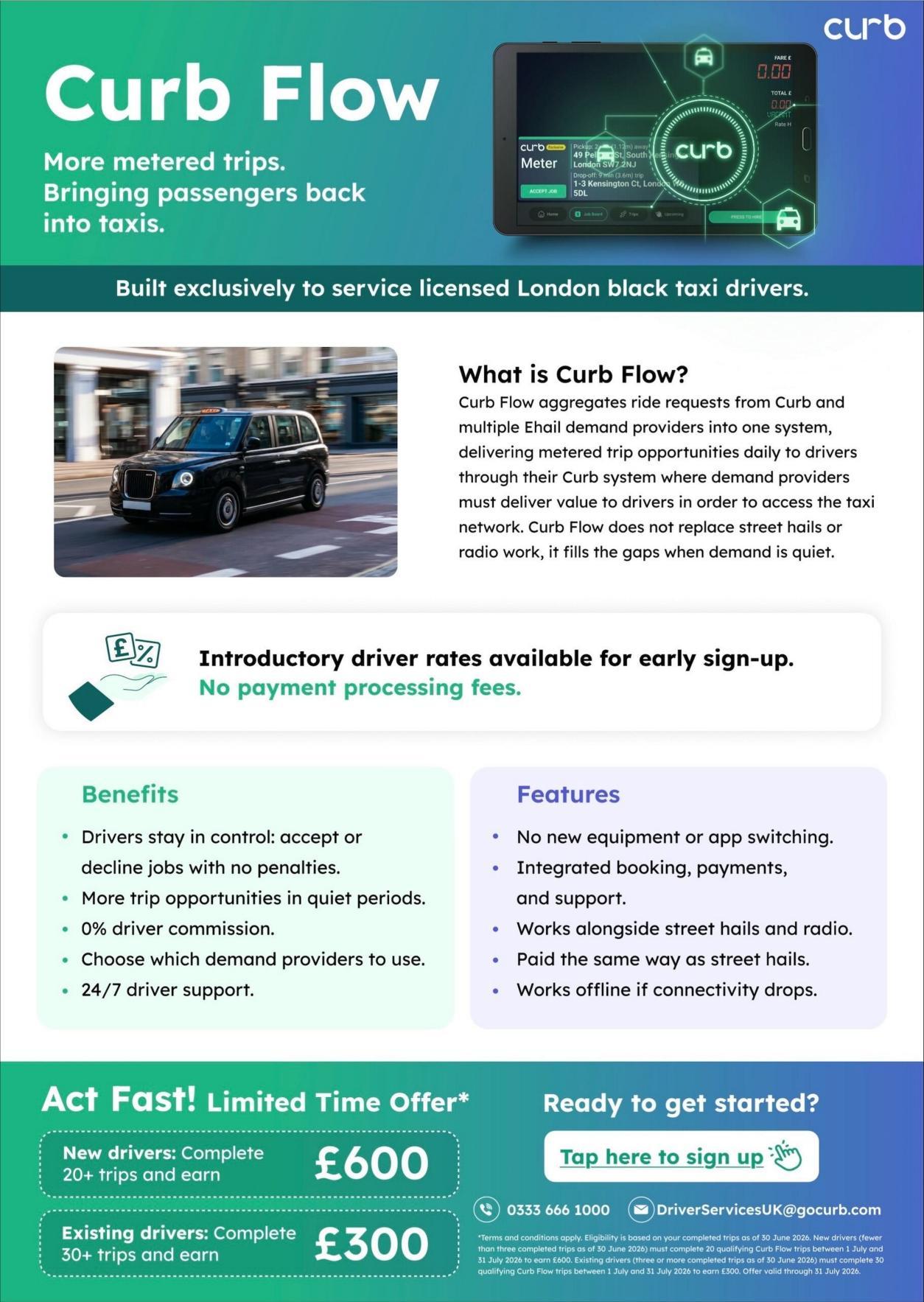
Every shift has quiet spells. The stretches between fares where the meter is off and the miles don't pay. Curb Flow is built to fill them, bringing more booked trips into the parts of your day that would otherwise earn nothing.
Curb Flow charges 0% commission. Every metered trip runs on the TfL meter tariff with no fare discounting. What the meter says is what you take home.
The numbers from drivers already on the platform
Curb Flow drivers are earning 40% more per week, and for drivers new to e-hail work, that figure rises to 57%. The reason is straightforward: dead mileage, the empty miles between fares, has
fallen by up to 26%, turning unproductive time into paid trips.
Since joining Curb Flow at launch, one driver completed Curb Flow trips every single week, witnessing a near 250% increase in trips since he started. In his best week, he earned more than double the average non-Curb Flow driver.
Built around your existing work
Curb Flow brings trip requests from multiple demand sources into one platform, sitting alongside street hails and radio work. There are no acceptance quotas, no penalties for declining trips, and you can opt out at any time.
There is no new equipment to install. Curb Flow works through your existing Curb system,
including offline during signal drops. Payments arrive automatically on every trip, just like a street hail. Drivers who opt into next-day payments receive earnings before midday every day, including weekends.
"It feels like this system was built for cab drivers.
Transactions are quicker, offline mode works perfectly, and I can focus on my passengers without worrying about tech issues." Stephen Jay, London cab driver
Act Fast! Limited-time offers for joining Curb Flow.*
New drivers: Complete 20 Curb Flow trips and earn £600.
Existing drivers: Complete 30 Curb Flow trips and earn £300.
Sign up today at www.gocurb.co.uk/curb-flow. For any questions, call 0333 666 1000 or email
DriverServicesUK@gocurb.com.
*Terms and conditions apply. Eligibility is based on your completed trips as of 30 June 2026. New drivers (fewer than three completed trips as of 30 June 2026) must complete 20 qualifying Curb Flow trips between 1 July and 31 July 2026 to earn £600. Existing drivers (three or more completed trips as of 30 June 2026) must complete 30 qualifying Curb Flow trips between 1 July and 31 July 2026 to earn £300. Offer valid through 31 July 2026.
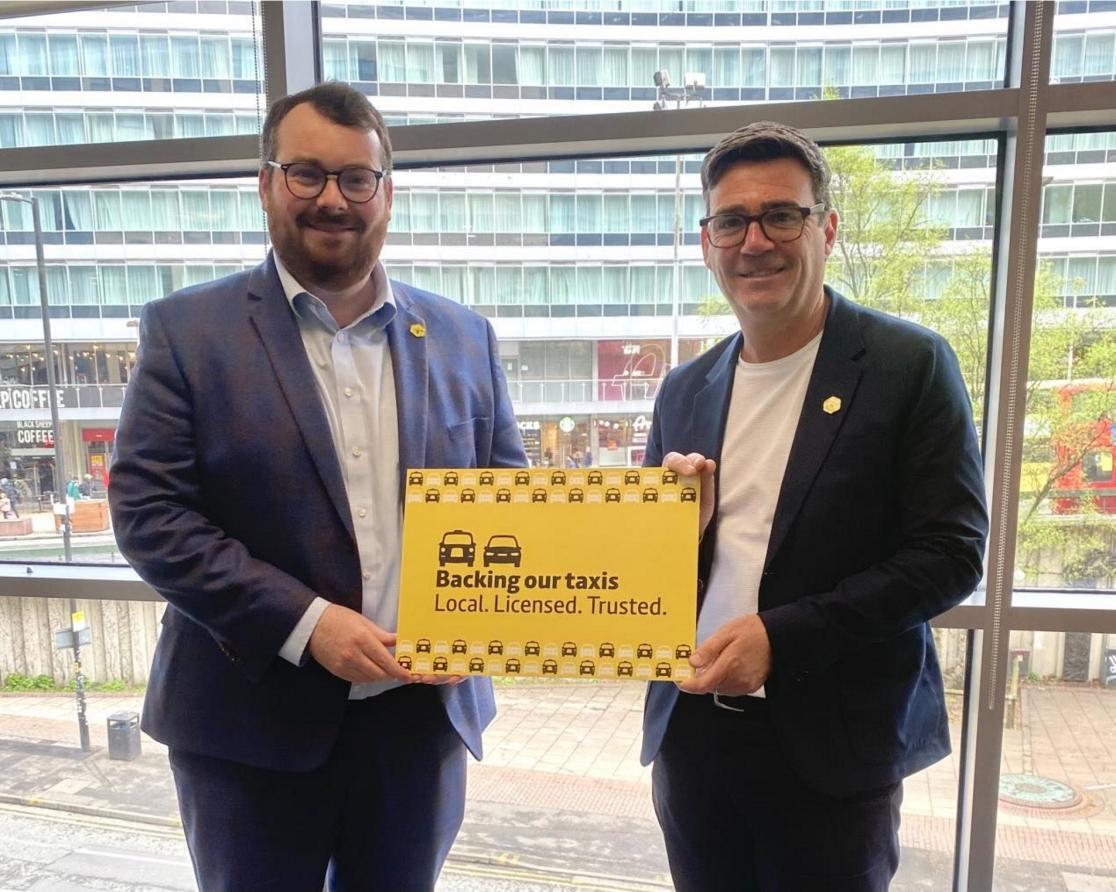
COULD ANDY BURNHAM MINISTER TAXI DRIVER
Few politicians in recent years have spoken more frequently or forcefully about taxi and private hire issues than Andy Burnham. While speculation around his future political ambitions has been hotly debated in recent weeks, the question for many within the taxi industry is straightforward: if Burnham ever reached Number 10, would he be good for the trade?
Judging purely on his record as Mayor of Greater Manchester, taxi drivers would likely find plenty to support.
Burnham has positioned himself as one of the strongest critics of England private hire licensing framework, repeatedly describing it as a high-profile campaign has centred on ending the widespread practice of private hire drivers being licensed in one authority while operating predominantly in another area. The issue has become a major concern for many taxi drivers and local authorities, particularly in regions where large numbers of drivers are licensed hundreds of miles away from where they actually work.
In September 2025, Burnham said: communities in Greater Manchester and across the country have been at the mercy of a broken taxi system that allows private hire vehicles and drivers to be licensed hundreds of miles away from where
When Greater Manchester faced pressure to introduce a charging Clean Air Zone, Burnham opposed plans that would have imposed charges on non-compliant vehicles. Instead, he argued for investment-led solutions and grant funding to help drivers upgrade vehicles. In 2023 he stated that charging schemes were “not morally defensible” in the post-pandemic environment and advocated financial assistance rather than penalties.
His alternative strategy included millions of pounds in funding support for taxi upgrades, including grants designed to help drivers move towards cleaner vehicles without bearing the full financial burden themselves.
That approach resonated with many drivers who felt environmental policies often overlooked the financial realities of self-employment. Rather than framing taxi drivers as part of the pollution
problem, Burnham consistently argued they should be supported through transition rather than punished through taxation and charging schemes.
There are also signs that Burnham understands the wider economic importance of the sector.
In November 2025 he described taxis as “vital to our transport system and local economy”, while pushing for reforms designed to improve public confidence and create a fairer operating environment.
His campaign proposals extended beyond licensing reform. Burnham also called for the continuation of the Plug-in Taxi Grant, VAT exemptions for wheelchair-accessible taxis and reductions in VAT rates for public EV charging.
These are all policies that would directly affect operating costs for drivers and fleet owners.
However, not every driver would necessarily welcome a Burnham premiership.
Some private hire operators have argued that out -of-area licensing became popular because of inefficiencies, delays and inconsistent standards among local authorities. Burnham himself has acknowledged that licensing systems need improvement and that some drivers seek licences elsewhere because applications can be processed more quickly and at lower cost.
Critics could also point out that many of Burnham’s proposals have been developed within a city-region framework. Running a national transport system would require balancing competing interests between local authorities, operators, drivers, passengers and regulators across England, Scotland, Wales and Northern Ireland.
Yet if there is one consistent theme running through Burnham’s approach, it is his belief that local accountability matters.
Whether discussing licensing reform, vehicle funding or transport integration, he has repeatedly argued for policies that place greater control closer to the communities affected by them. For taxi drivers frustrated by years of debate over cross-border licensing, enforcement inconsistencies and rising vehicle costs, that message has often found a receptive audience.
Would Andy Burnham be a good Prime Minister for the taxi industry?
Based on his record so far, many taxi drivers would likely argue that he already speaks their language more fluently than most national politicians. His support for licensing reform, opposition to driver charging schemes, backing for vehicle grants and willingness to publicly defend the trade suggest a Prime Minister Burnham could place taxi issues higher on the national agenda than they have been for many years.
Whether that would ultimately translate into meaningful nationwide change would depend on Parliament, government priorities and funding. But on the evidence available at the moment, Burnham has built a stronger relationship with the taxi sector than most politicians who have ever been seriously discussed as potential future prime ministers.
CORDIC UNVEILS AI POWERED DISPATCH PLATFORM AS OWNERSHIP LANDSCAPE SHIFTS ACROSS TAXI SOFTWARE MARKET
dispatch software provider owned by taxi fleets. It also highlights the experience of its leadership team, including Chief Executive Officer Russell Hall, who previously built Hailo before it became FREENOW, alongside former fleet operators employed to support customers’ commercial
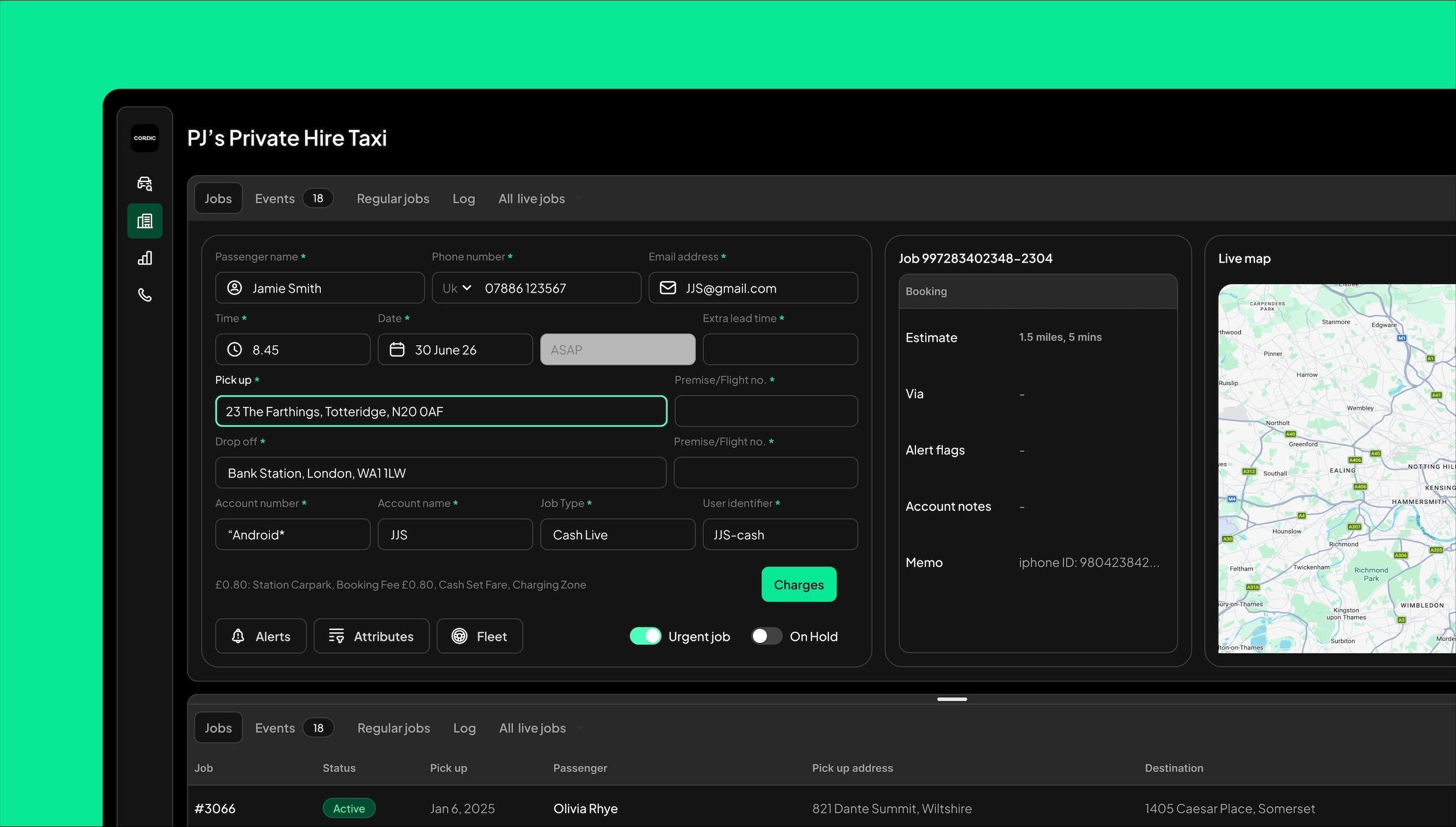
The centrepiece of the launch is a redesigned version of Cordic Dispatch, featuring a modernised user interface, improved navigation, enhanced operational visibility and updated branded apps for drivers and passengers. The company says the platform has been developed to fit around the way
operators already work, rather than requiring businesses to adapt their existing processes. It adds that the software has helped it secure the largest market share in Greater London’s highly competitive taxi market.
A key addition is an artificial intelligence assistant named Miles, which analyses operational data to help controllers respond more quickly to changing market conditions. According to Cordic, the AI tool monitors demand patterns and driver availability, identifies potential operational issues before they develop and recommends actions designed to improve fleet performance. The system can also suggest dynamic fare adjustments during periods of higher demand before recommending prices return to normal when conditions ease.
support covering areas such as tender opportunities and driver recruitment.
Cordic says the technology is intended to support rather than replace dispatch staff, with the aim of reducing cancellations, increasing vehicle utilisation and improving revenue opportunities for operators. The company also points to its established features, including school transport management, configurable pricing and shared call centre services, alongside ongoing customer
The business also used the announcement to promote SuperYes, its open job-sharing network that allows independent fleets using different dispatch systems to share work. Cordic says the platform is designed to help operators increase vehicle utilisation while strengthening their ability to compete with ride hailing services.
To support the launch, Cordic will hold a series of roadshows during July in London, Birmingham and Bradford, where operators will be able to see demonstrations of the new platform, hear from existing customers and discuss developments affecting the dispatch market.
FORGET BUYING A CAR: YOUNG PEOPLE TURNING AWAY FROM CAR OWNERSHIP AS UBER SAYS ATTITUDES ARE CHANGING
Britain’s younger generation appears to be rethinking the long ambition of owning a car, with new figures highlighted by Uber UK suggesting that many now see mobility services, including taxis, private hire vehicles and public transport, as a practical substitute for private vehicle ownership.
Andrew Brem, UK General Manager at Uber, said the findings reflect a broader change in how younger people view personal transport. In a statement, Brem wrote: “Today’s figures are a reminder of just how much is changing. Half of twentysomethings now think they can happily live without ever
fixed costs associated with ownership.
Brem acknowledged that private car ownership will continue to play an important role for many households, particularly outside
services may continue to grow, particularly for commuting, social trips, airport transfers and journeys where public transport is less convenient.
Traditional taxi operators and private hire firms have increasingly invested in booking apps, cashless payments and live vehicle tracking to compete with ride-hailing platforms. Many fleets are also expanding wheelchair accessible vehicles, larger people carriers and zero emission vehicles to meet changing customer expectations.
Uber believes its own platform is well positioned to benefit from this shift. Brem said the company’s ambition is to become part of people’s everyday transport choices rather than simply an occasional alternative.
“Our vision is about giving people more options. Whether it’s getting to the train station, taking the kids to football, helping older relatives stay independent, or simply leaving the car at home for an evening out.”
He added that Uber intends to continue expanding beyond major cities.
“As we continue expanding into more towns and communities across the UK, we’re building Uber to be useful for everyday life, wherever you live.”
The trend is not unique to Uber. Across the wider mobility sector there has been growing
discussion around the concept of “Mobility as a Service”, where consumers combine buses, trains, taxis, private hire vehicles, cycling and walking instead of relying on a privately owned vehicle. For the licensed taxi and private hire trade, attracting and retaining these younger customers could become increasingly important as travel habits continue to evolve.
BUSINESS NEWS
TAKEME GROUP EXPANDS YORKSHIRE
FOOTPRINT WITH YORK
CITY TAXIS PARTNERSHIP
TakeMe Group has added York City Taxis to its growing UK taxi network, bringing one of York’s long-established taxi firms into its Yorkshire operations.
York City Taxis, which is based at York Station and operates around 50 vehicles, will join TakeMe’s existing operations in Pickering, Malton and Catterick. The move increases the group’s presence across York and North Yorkshire to more than 600 vehicles, according to the company.
TakeMe said the partnership is intended to support growth in contract work, driver recruitment and retention, and the rollout of the group’s passenger booking app. The company added that the agreement is designed to create additional earning opportunities for local drivers while maintaining the existing culture of the York-based operator.
The group said York City Taxis owner Arshad Mahmood, known as Ash, spent considerable time assessing potential partners before selecting TakeMe. According to TakeMe, the decision was based on shared values centred on supporting drivers, customers and local taxi businesses.
ACORN INSURANCE HOSTS TAXI DRIVER OPEN DAYS IN MANCHESTER AND EAST LONDON
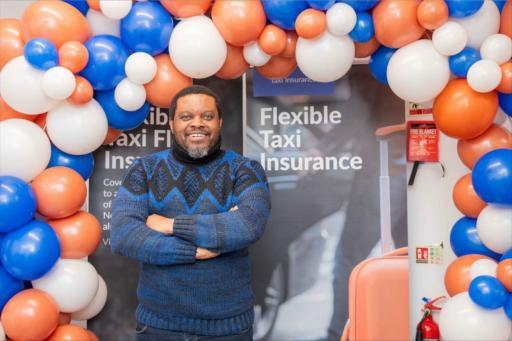
Acorn Insurance hosted a series of taxifocused open days at its Manchester and East London branches, inviting taxi drivers and customers to meet staff and discuss issues affecting the trade.
The events were designed to provide an opportunity for face-to-face conversations between taxi professionals and Acorn’s branch teams, allowing drivers to share feedback and discuss their experiences directly with the insurer.
In a statement shared on social media, Acorn said the open days enabled staff to have “meaningful conversations, listen to feedback and show our appreciation for the vital role taxi drivers play in keeping communities connected every day”.
Acorn said it was “fantastic to meet so many of our customers and local taxi professionals”.
ICABBI’S LOVE LOCAL TAXI & PRIVATE HIRE WEEK RETURNS WITH CALL FOR FLEETS TO SHOWCASE COMMUNITY ROLE
Taxi and private hire operators across the UK have been encouraged to take part in Love Local Taxi & Private Hire Week, a nationwide campaign running from 6-12 July designed to highlight the sector’s role in supporting local communities.
The initiative is being supported by iCabbi alongside CMAC Group and minicabit, with fleets invited to organise local events that promote the services they provide and the wider contribution they make to towns and cities across Britain.
According to organisers, the week aims to celebrate taxi
and private hire businesses that have helped move people around the country for more than 120 years.
Participating operators are being encouraged to host community-focused events such as street parties, charity fundraisers, driver recruitment days and summer fairs.
iCabbi are supporting participating fleets through marketing materials, branding assets, video content and public relations assistance. The technology provider said it will also seek to amplify local events through its own channels and, where possible, attend activities taking place during the week.
LEVC DONATION DRIVE SUPPORTS FAMILIES THROUGH BABY BASICS UK
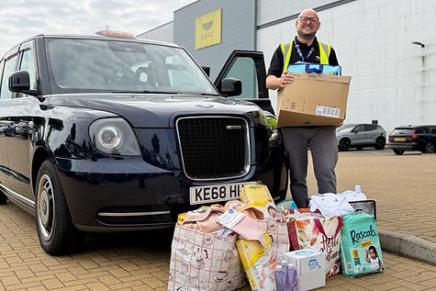
London EV Company (LEVC) has donated a collection of essential baby items to the Hinckley branch of Baby Basics UK, with employees across the business contributing to a companywide donation drive.
The manufacturer said members of the LEVC team delivered the donated essentials earlier this week to help support families with newborn children who are facing difficult circumstances.
Thanking employees for their contributions, LEVC said: “A huge thank you to everyone across LEVC who contributed to the donation drive. Your generosity will help make a real difference to families in need.”
The initiative forms part of the company’s wider corporate social responsibility programme. LEVC said it is proud to support the work of Baby Basics alongside a range of charities that provide support to communities across the UK.
FLEETS COULD CUT FUEL BILLS BY 15% THROUGH DRIVER BEHAVIOUR CHANGES, SAYS RAC
UK fleet operators could reduce fuel costs by as much as 15% by improving driver behaviour through the use of telematics data, according to new analysis from the RAC.
The RAC’s analysis suggests a significant proportion of fleet fuel expenditure is linked to behaviours including excessive engine idling, harsh acceleration, sudden braking and inefficient route planning. While these actions may appear insignificant on an individual journey, the organisation says they can have a major
financial impact when multiplied across large vehicle fleets.
According to the RAC, organisations adopting a data-led approach can also benefit from reduced vehicle wear and lower maintenance costs, while cutting carbon emissions and supporting wider sustainability objectives. Improved driving standards may also reduce collisions linked to aggressive driving, an important consideration given that work-related journeys account for almost one in three road deaths in the UK.
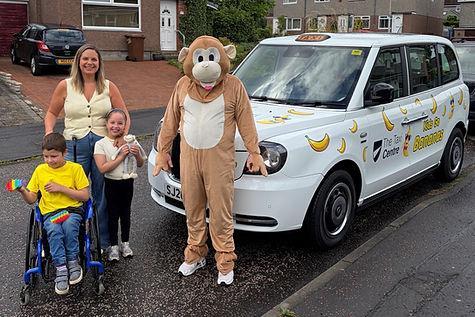
The Taxi Centre joined drivers and volunteers across Edinburgh and Glasgow to help ensure two long-running community outings for disadvantaged children went ahead this summer.
Stephen Porter, Branch Manager at The Taxi Centre, said: “The Taxi Outings are something we’ve supported for many years because they represent everything that is good about the taxi trade and the communities we serve.
“To see both Edinburgh and Glasgow events take place this year, despite the challenges earlier on, says a lot about the people involved. There’s a real determination to make sure these days happen for the children and their families.
“Seeing the convoy set off in Edinburgh and the reaction from the children and families is something that really stays with you. For many, it’s a rare chance to enjoy a special day out together and create memories that will last a lifetime. Being part of that is incredibly rewarding and something we’re very proud to do.
“There was genuine concern that the event might not happen this year, which made the determination from drivers, volunteers and organisers even more inspiring. The fact that the outing went ahead is a testament to the strength of the taxi community and its commitment to supporting disadvantaged children and families.”
DEBATE RESURFACES: IS REFUSING FARES SOUTH OF THE RIVER A THING OF THE PAST FOR LONDON BLACK CABS?
A
familiar London travel complaint resurfaced recently after a passenger posted on Reddit describing how three black cab drivers near London Bridge allegedly declined a late-night journey to Tooting before the traveller eventually booked a private hire vehicle instead.
The story sparked dozens of comments, with some users recalling similar experiences from years gone by, while many others suggested the problem is far less common today than it was in previous decades.
For generations, the idea that black cab drivers were reluctant to take fares south of the River Thames became one of London’s enduring transport myths. Areas such as Woolwich, Thamesmead, Brockley and parts of south-east London were frequently cited by passengers as destinations that could be difficult to reach by taxi late at night.
The reasons were often practical rather than geographical. Drivers finishing a shift might be heading home in the opposite direction, while others could face a lengthy return journey without a fare. Before widespread mobile technology, drivers had fewer opportunities to secure a passenger for the return leg of a trip, making some journeys less attractive from a business perspective.
However, London’s taxi industry has changed significantly over the last two decades.
The arrival of booking platforms such as Freenow, Gett and Jump has made destination information available before a journey begins. Passengers can enter their destination, receive a booking confirmation and be matched with a licensed taxi without the uncertainty associated with hailing a cab on the street. Drivers can also benefit from a more predictable flow of work and a greater chance of securing onward fares.
The Reddit discussion itself reflected this shift. While several contributors recounted experiences from the 1990s and early 2000s, others reported regularly travelling to destinations in Croydon, Brixton, Balham and other south London locations without encountering any problems. Some commenters noted they routinely use taxi apps when travelling home from central London.
Industry representatives have long argued that the vast majority of London’s licensed taxi drivers operate professionally and within the rules. Like any sector, there will occasionally be individuals who fail to meet expected standards, but most drivers follow the regulations set by Transport for London (TfL).
Importantly, London taxi drivers cannot simply refuse a fare because they do not like the destination.
Under London’s taxi regulations, a licensed black cab driver who is available for hire and hailed in the street is generally required to accept a journey within the Greater London area, to destinations up to 12 miles (20 miles if from Heathrow Airport) or over one hour in journey time. Refusing a fare outside of that criteria without a reasonable excuse can amount to an offence.
shift and has switched off their taxi’s “for hire” light, where the passenger’s destination falls outside the driver’s legal hiring obligations as just detailed, where the passenger is behaving aggressively or threateningly, or where there are genuine concerns relating to safety.
A driver who is displaying an illuminated taxi sign and is available for hire cannot normally reject a passenger simply because the journey is short, long, inconvenient or headed in a direction they would rather not travel.
Passengers who believe they have been wrongly refused a fare should, where possible, note the taxi’s registration number or licence details and report the incident to TfL. Complaints can be submitted through TfL’s taxi and private hire enforcement channels, allowing regulators to investigate potential breaches of licensing conditions.
While stories of drivers refusing journeys south of the river still occasionally appear on social media, many Londoners now view them as increasingly rare. The combination of app-based bookings, improved connectivity across London and a highly regulated taxi sector means the old stereotype appears to be fading, even if it has not disappeared
PRIVATE HIRE BOOM LEAVES
TRADITIONAL TAXIS TRAILING AS SEFTON LICENCES SOAR BY OVER 1,000 IN JUST 12 MONTHS
S
licensing work during 2025/26, with the number of private hire driver licences rising by over 1,000 year-on-year as growth in the private hire sector continued to outpace the traditional hackney carriage market.
According to the council’s Taxi Licensing Annual Report 2025/26, a total of 12,957 live licences were recorded on 1 April 2026, compared with 10,958 a year earlier. The figures were presented to Sefton Council’s Licensing & Regulatory Committee and provide an overview of licensing activity, enforcement work and compliance monitoring carried out during the year.
The data shows continued expansion in the private hire market. Private hire driver licences increased from 5,502 at the start of April 2025 to 6,698 by April 2026. Private hire vehicle licences also rose from 4,879 to 5,724 over the same period. In contrast, hackney carriage driver numbers fell
Private hire operator numbers remained stable at 110 licences.
Licensing staff also handled substantially larger workloads than in the previous financial year. Vehicle applications, renewals and transfers reached 9,146, representing an increase of 1,639 compared with 2024/25. Driver applications and renewals climbed to 6,212, up by 1,003 year-onyear.
A sharp increase was also recorded in knowledge testing activity. The council offered 4,109 tests during 2025/26, compared with 1,165 in the previous year. However, nearly a quarter of booked candidates failed to attend, with 993 noshows recorded. The report states that 1,805 candidates passed their test while 1,307 either failed or had their application voided, producing an overall pass rate of around 58%.
COUNCIL SEIZES UNLICENSED PRIVATE HIRE VEHICLE AFTER ILLEGAL FACEBOOK BOOKINGS UNCOVERED
IN DONCASTER
services after an unlicensed operator was found offering illegal journeys through Facebook. Licensing officers, working with South Yorkshire Police, discovered that the operator was taking bookings without the required licences, inspections, or hire and reward insurance.
Despite being warned to stop, the operator continued offering journeys. Officers carried out a covert test booking to confirm the activity, then coordinated with police at the pickup location. When the driver arrived, enforcement teams intervened and seized the vehicle, establishing that neither the operator nor the driver held the correct licences or insurance.
The council says the case highlights the safety risks of using unlicensed services. Licensed drivers undergo background checks, vehicles are regularly inspected, and proper insurance is mandatory.
Councillor Gemma Cobby stressed that unlicensed drivers are “unvetted, often uninsured, and unsafe,” urging the public to book only with clearly marked, council licensed operators and to report any concerns.
MAJOR SHAKE-UP PLANNED AS TEIGNBRIDGE UNVEILS TOUGHEST TAXI LICENSING REFORMS IN MORE THAN 15 YEARS
Teignbridge District Council has launched a public consultation on a comprehensive overhaul of its hackney carriage and private hire licensing policy, marking the authority’s first full review of the framework in more than 15 years.
Among the proposals are clearer expectations around driver suitability, including knowledge assessments and English language proficiency tests. The draft policy also introduces mandatory training covering safeguarding, disability awareness and county lines exploitation.
Vehicle standards also feature prominently within the proposed changes. Drivers would be required to carry out daily vehicle safety checks, while licensed vehicles would continue to undergo inspections every six months. The draft policy also proposes tighter requirements relating to vehicle emissions and record keeping as the council looks to improve environmental performance alongside safety standards.
Another proposed change would require licensed drivers to demonstrate that they predominantly operate within the Teignbridge area. The revised policy also includes new provisions relating to the use of CCTV in licensed vehicles and establishes a framework covering horse-drawn carriages.
Councillor Suzanne Sanders, Teignbridge District Council Executive Member for Neighbourhoods, said: “Taxi and private hire services help people travel safely and confidently around Teignbridge. This consultation gives drivers, operators, passengers and residents the chance to shape a policy that protects the public while supporting a fair and practical licensing system. We want to know whether the proposals strike the right balance between safety, service and reasonable requirements for the trade.”
B CONVICTED RAPIST’S TAXI LICENCE SPARKS MAJOR COUNCIL SHAKE-UP AFTER MISSING DBS CHECK UNCOVERED
racknell Forest Council has endorsed six recommendations aimed at strengthening taxi licensing governance after an internal investigation into how convicted rapist Diwan Khan was granted a hackney carriage and private hire driver’s licence.
The recommendations were noted and endorsed by the council’s Governance and Audit Committee on 17 June following a review commissioned by council leader Helen Purnell in March 2026. The investigation examined the timeline surrounding Khan’s taxi licence, whether licensing policies were followed, how external warnings were handled, the suspension and revocation of his licence, and previous licensing reviews.
been checked, it is unlikely he would have met the criteria to be licensed.
The investigation concluded that, in most respects, licensing policies and procedures were followed. It also found no evidence that either Bracknell Forest Council or the shared Public Protection Partnership (PPP) had received concerns about Khan before his arrest on a separate offence in January 2024.
Following that arrest, his taxi driver’s licence was immediately revoked under the Local Government (Miscellaneous Provisions) Act 1976.
However, auditors identified a significant failing during the original licensing process. The review found there was no evidence that Khan’s Disclosure and Barring Service (DBS) certificate had been seen before his licence was issued in January 2021. According to the investigation, had the certificate
Khan, aged 41 and from Bracknell, held a hackney carriage and private hire driver’s licence from January 2021 until it was revoked on 11 January 2024. He did not appeal the revocation. He later stood trial at Winchester Crown Court and was convicted of rape on 11 February 2026 before being sentenced on 30 April.
The investigation also considered Khan’s role as mayoral consort between May 2023 and January 2024. Council records showed he carried out no civic engagements during 2024.
The review noted there had been no formal requirement for councillors or mayoral consorts to undergo DBS checks when Khan took up the ceremonial position, although Bracknell Forest Council introduced mandatory DBS checks for councillors and mayoral consorts from October 2024.
Council leader Helen Purnell said she was “disappointed and saddened” that there was no evidence Khan’s DBS certificate had been checked before his taxi licence was granted.
Purnell said: “The investigation into the circumstances around Diwan Khan’s taxi licence and the subsequent actions following his arrest in January 2024, was instigated to provide clarity and transparency. It was also requested so that we have a firm understanding of where we need to put tighter controls and policies in place to protect residents and visitors from harm.
“I am disappointed and saddened to see there is no evidence that Khan’s DBS was checked prior to his licence being issued. If it had been checked then it is likely he would not have been given a licence.”
She added that the council would implement changes through recommendations arising from the investigation and other audits, alongside measures including a women’s and girls’ safety charter.
The six recommendations endorsed by the Governance and Audit Committee include carrying out a full audit of licensing to ensure improvements have been implemented, developing clearer reporting protocols for investigations, strengthening oversight arrangements for investigations involving shared services, considering whether senior statutory officers should be informed of risks and non-compliance identified during investigations, prioritising recommendations from an education and transport fleet audit, and considering further representations to government on cross-border taxi licensing.
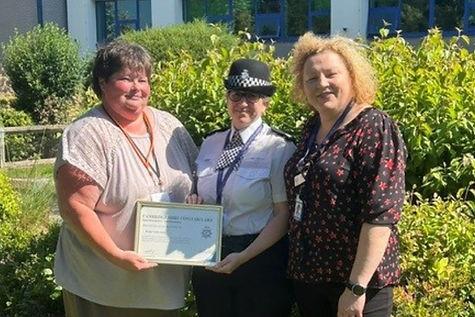
TAXI DRIVER HONOURED AFTER STOPPING ELDERLY PASSENGER FROM LOSING £3,000 IN COURIER FRAUD SCAM
An Ely taxi driver has been recognised by police after her quick thinking prevented an elderly passenger from losing £3,000 to fraudsters in what officers described as an attempted courier fraud.
Friday 17 April began as a routine shift for taxi driver Bridget Farley-Smith. After collecting an elderly woman for a journey into town, Bridget quickly sensed something was wrong when the passenger appeared distressed and anxious.
During their conversation, the woman revealed she was travelling to her bank to withdraw £3,000 in
cash. She explained that earlier that morning she had received a text message claiming to be from her bank warning of suspicious activity on her account. She was later contacted by someone purporting to be from the bank’s fraud department.
According to the woman, the caller instructed her to withdraw £3,000 as part of an investigation into the alleged fraud. The fraudster also advised her to tell bank staff that the money was needed for an emergency roof repair if she was questioned about the withdrawal.
The passenger told Bridget she had felt uncomfortable about the request and initially resisted. However, repeated phone calls and text messages from the fraudsters left her feeling overwhelmed and pressured into complying.
Recognising several warning signs of a scam, Bridget asked to see the woman’s phone and called the number that had been contacting her. A woman identifying herself as “Fiona” answered and again insisted the passenger needed to be taken immediately to the bank, claiming the withdrawal was required as part of an urgent fraud investigation.
Rather than continuing to the bank, Bridget ended the call and contacted police. She then drove the woman to the local police station, where the attempted fraud was reported.
As a result of Bridget’s intervention, the victim did not lose any money and police launched an investigation into the attempted courier fraud.
In recognition of her actions, Superintendent Nikki Hall met Bridget at force headquarters in Huntingdon on 19 June to present her with a certificate of appreciation and personally thank her for protecting the vulnerable passenger.
The presentation coincided with National Courier Fraud Prevention Week, a campaign aimed at raising awareness of the tactics used by criminals targeting elderly and vulnerable people.
Kate Thwaites, Cyber and fraud prevention officer, said: “Fraud is a devastating and ever-evolving crime, with fraudsters often targeting the most vulnerable in our society.
“The community are our eyes and ears and this incident goes to show how important they are in helping to spot and even prevent acts of fraud.
“I want to thank Bridget for her quick thinking and the care she showed the victim. Her inquisitive and perceptive mind prevented a vulnerable woman from potentially losing thousands of pounds.”
PROM NIGHT TAXI CHECKS IN WOLVERHAMPTON LEAD TO VEHICLE SEIZURE DURING JOINT ENFORCEMENT OPERATION
Wolverhampton licensing enforcement officers joined the Driver and Vehicle Standards Agency (DVSA) and West Midlands Police for a targeted compliance operation on prom night aimed at ensuring vehicles carrying young passengers were properly licensed and insured.
The operation focused on vehicles hired to transport students attending school prom events across the city. Officials said the checks were designed to verify that vehicles operating for hire and reward met licensing and insurance requirements.
In a social media update, WV Public Protection said: “Taxi Compliance working with DVSA and West Midlands Police on Prom night Wolverhampton.
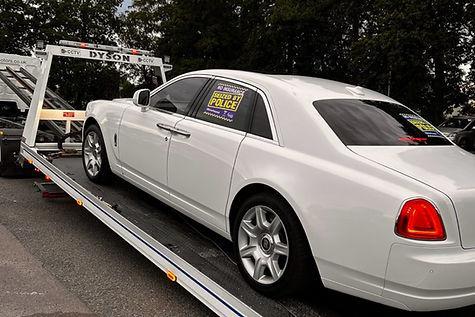
Ensuring vehicle hired to take your children are licensed and insured.” Images released from the operation showed a white Rolls-Royce being recovered on a transporter with a police seizure notice displayed in the window. Authorities have not released further details about the specific circumstances behind the seizure.
Prom season often sees increased demand for limousines and chauffeur-driven cars as families arrange transport for school leavers. Licensing teams across the UK regularly conduct enforcement exercises during major events to identify unlawful operators and ensure passenger safety standards are met.
The latest Wolverhampton operation highlights the continued focus on compliance within the private
hire and chauffeur sector, particularly where potentially uninsured vehicles are being used to transport children and young people to high-profile events.
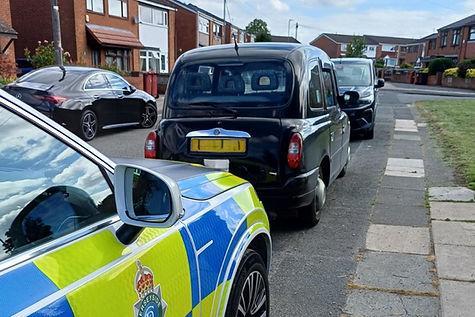
BRAKE LIGHT FAULT LEADS MERSEYSIDE POLICE OFFICER TO ARREST HACKNEY CAB DRIVER ON SUSPECTED DRUGDRIVING
A hackney carriage driver has been arrested on suspicion of drug-driving after Merseyside Police officers stopped the vehicle because of a defective brake light.
According to Merseyside Police’s Roads Policing Unit, officers initially stopped the taxi due to the lighting defect before carrying out further checks. After speaking with the driver, officers requested that they complete a roadside drugs wipe test.
The force said the roadside test returned a positive result for cannabis. In a statement, the Roads Policing Unit said: “This hackney cab was stopped due to a defective brake light. After speaking with the driver we requested they complete a roadside drugs wipe. This was positive for cannabis. Driver arrested.”
UNDERCOVER OFFICERS CATCH OUT-OF-AREA TAXI DRIVERS ILLEGALLY CHASING FOOTBALL CROWDS AT OLD TRAFFORD
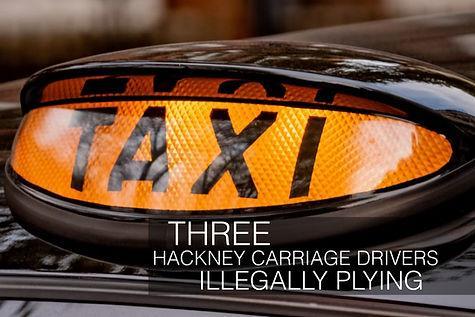
Three out-of-area Hackney
Carriage drivers have been prosecuted after illegally plying for hire outside Old Trafford on Manchester United matchdays, with each receiving six penalty points after being caught in undercover enforcement operations by Trafford Council.
The prosecutions were brought before Manchester Magistrates’ Court following separate incidents before and after Manchester United home fixtures against Burnley and Everton. Trafford Council said the drivers, all licensed by Manchester City Council, were unlawfully accepting fares within Trafford despite not being licensed by the borough.
Cllr Keleigh Glenton, Trafford Council’s Executive Member for Community Safety and Civil Contingencies, said: “Only Hackney Carriages licensed by Trafford Council are permitted to pick up fares without a booking. These drivers committed the offence of illegally plying for hire and, in doing so, invalidated their insurance.
“Trafford’s Hackney Carriage drivers work hard to provide transport for those who need it in the borough. This type of behaviour puts public safety at risk and is illegal. Our Licensing Enforcement Team works to support drivers who follow the rules properly and to make sure passengers ride safely, with insurance in place.”
LIVERPOOL LICENSING OPERATION FINDS SEFTON-LICENSED PRIVATE HIRE VEHICLE
WITH TWO ILLEGAL TYRES
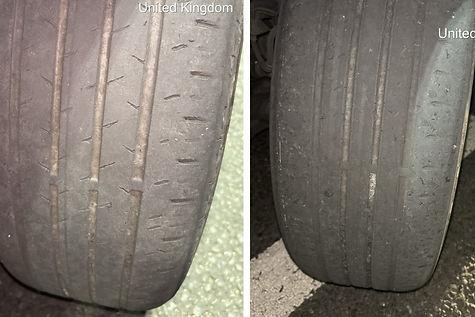
A Sefton Council licensed private hire vehicle has been taken out of service after officers discovered two illegal tyres with exposed cords during a joint enforcement operation carried out by Liverpool City Council Licensing and Merseyside Tunnel Police.
The vehicle was stopped as part of ongoing compliance checks aimed at improving safety standards among licensed taxi and private hire vehicles operating in the Liverpool area. Images released by Liverpool City Council Licensing show both tyres worn well beyond the legal tread limit, with the internal cords exposed.
In a statement, Liverpool City Council Licensing said: “During a joint operation with Merseyside Tunnels Police, a Sefton Council licensed vehicle was found to be operating with TWO illegal tyres, both with cords exposed. Dangerous defects like these put everyone at risk. Enforcement activity will continue to keep passengers safe.”
PHV FOUND WITH NITROUS OXIDE CANISTERS DURING POLICE SAFETY OPERATION
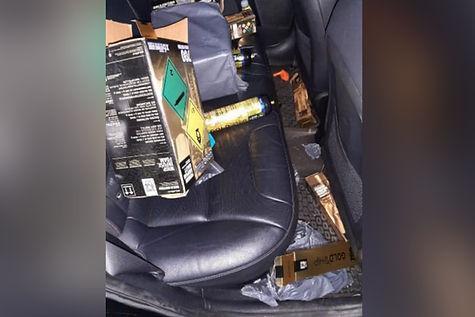
A private hire vehicle containing multiple boxes and canisters of nitrous oxide was found during a police operation focused on impaired driving and taxi safety.
The discovery was made as officers worked with colleagues targeting drink and drug impaired drivers, while also carrying out mystery shopping checks aimed at improving safety for passengers, particularly women.
In an update shared with drivers, PC Patrick Quinton said colleagues had found “the PHV in the photo with lots of boxes and cannisters of Nitrous Oxide inside”.
The officer added: “I get more complaints/information about drivers with nitrous oxide ‘balloons’ than I do about drink or drugs combined.”
No further details were provided on whether the driver was arrested, reported, suspended, or referred to licensing officials.
During the same operation, officers carried out seven drug tests and six alcohol tests, mostly involving licensed drivers. All passed.
Police also issued nine tickets, eight of them for parking on taxi ranks, including two private hire vehicles.
Mystery shopping checks were carried out on 12 taxis. Police said there were “no great concerns other than badge display”, while noting an ongoing gap between what works operationally, what councils expect, what the law says and public safety requirements.
Other non-licensed drivers were arrested during the evening for a range of offences.