MOVING BOUNDARIES

MOVING BOUNDARIES JAPAN
OCTOBER 2026
For more information visit www.movingboundaries.org
KYOTO, JAPAN
October 12 - 16
TESHIMA ISLAND, JAPAN
October 17 - 20

MOVING BOUNDARIES JAPAN
OCTOBER 2026
For more information visit www.movingboundaries.org
KYOTO, JAPAN
October 12 - 16
TESHIMA ISLAND, JAPAN
October 17 - 20
Tye Farrow and Cleo Valentine
From Pathogenesis to Salutogenesis: Rethinking the Brain–Body Connection in the Built Environment
Takaya Kurimoto
The Inner Landscape of the Japanese Mind as Reflected in Japanese Gardens
Sarah Robinson
Japanese Gardens and Felt Space
Natalia Olszewska
Restorative Design: From Cultural Intuition to Scientific Evidence
Anjan Chatterjee
The Neuroaesthetics of the Built Environment
Upali Nanda
Bridging Neuro-Architecture Research and Practice: Perspectives From Two Decades of Experience at The Intersection
David Dorenbaum & Ryōsuke Ōhashi
Participants’ Abstracts (to be added in July 2026)
October 17-20 | Espoir Park Hotel, Teshima Island
Faculty Abstracts
Satchin Panda
Designing the Built Environment to Align with Human Biology
Natalia Olszewska, Satchin Panda and Tatiana Berger
Designing for Human Rhythms: From Cultural Knowledge to Biological Evidence
All Faculty and Participants: Open Conversation
Designing for Human Rhythms: From Cultural Knowledge to Biological Evidence
Participants’ Abstracts (to be added in July 2026)
Monday, October 12
From
This lecture explores how architectural environments shape stress, health, and human potential. Drawing on advances in neuroscience, immunology, and architectural research, Tye Farrow and Cleo Valentine reframe stress as a dynamic continuum, ranging from chronic overload and physiological dysregulation to eustress, a positive and generative state that supports resilience, engagement, and meaning. The session is structured around four conceptual axes: Distress to Eustress, Pathogenesis to Salutogenesis, Do No Harm to Human Flourishing, and Research to Practice. These axes provide a framework for understanding how everyday design decisions translate into biological, cognitive, and behavioural outcomes that are often invisible, yet measurable.


Building on emerging empirical evidence, including neurophysiological and computational studies of architectural form, the lecture explores how specific environmental conditions such as visual patterning, spatial geometry, material expression, and multisensory stimuli influence nervous system regulation. Particular attention is given to how high contrast, repetitive, and poorly resolved environments can contribute to allostatic load, while more coherent and hierarchically organised environments can support perceptual efficiency and restoration. At the same time, the lecture moves beyond a deficit based model of harm reduction to consider how architecture can actively cultivate salutogenic outcomes. Through case studies across healthcare, education, and civic environments, the speakers examine how design can support dignity, coherence, safety, and psychological wellbeing, while also creating conditions for curiosity, creativity, and social connection.
Positioning architecture as both a biological and cultural interface, this lecture argues for a shift in practice from mitigating negative outcomes to intentionally designing for human flourishing. It calls for closer integration between research and practice, and for a redefinition of architectural responsibility in the context of public health, climate, and rapidly evolving urban conditions.

The Inner Landscape of the Japanese Mind as Reflected in Japanese Gardens
The scenery of a Japanese garden functions as a psychological catalyst, asking the observer to see beyond the surface. Stones become mountains and ponds become seas through a process of symbolic substitution. These ‘inner landscapes’ align with ancient Japanese sensibilities, further enriched by the spiritual influence of Buddhism. This lecture examines the Japanese view of nature and its historical manifestations in garden design.
Japanese concepts of space prefigure findings of the cognitive sciences in their understandings of affect, atmosphere, movement and immanence-this talk explores the processes of resonance between bodies, plants, the elements and buildings in the context of Japanese gardens. And explores how these methods and principles emphasize and celebrate the uncertain boundaries between seemingly separate things. This study suggests how the time-honored principles honed and practiced particularly in Japanese stroll gardens can enrich and re-vitalize contemporary design practice.
Dr. Co-Founder, Impronta, Author, Professor NAAD, Neuroscientist, Krakow, Poland
Japanese spatial traditions have long expressed a refined sensitivity to nature, ephemerality, and emptiness. Concepts such as ma and wabi, together with fluid boundaries between interior and exterior spaces, illustrate an architectural approach that frames human experience through subtle relationships with natural processes. While these traditions emerge from cultural and aesthetic sensibilities rather than scientific frameworks, they provide a compelling point of departure for discussing restorative environments in contemporary design.
In recent decades, research in environmental psychology and neuroscience has begun to investigate how architectural environments influence cognitive and physiological processes. Theories such as Attention Restoration Theory and Stress Recovery Theory suggest that exposure to natural environments can support cognitive recovery, reduce mental fatigue, and facilitate physiological restoration. These insights have informed contemporary approaches including biophilic design and other nature-integrated spatial strategies.
This lecture examines restorative design as an interface between cultural spatial practices and the emerging scientific understanding of human-environment interaction. Particular attention is given to how architectural environments function as long-term exposure contexts that shape human experience and adaptive physiological regulation over time.
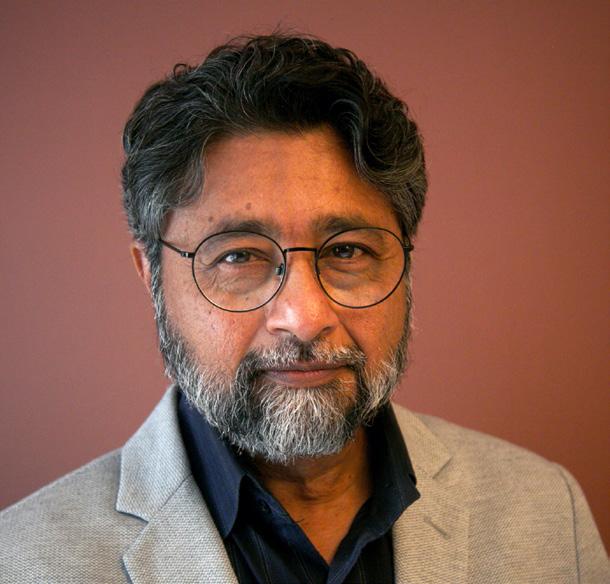
Anjan Chatterjee PhD, Author, Professor of Neurology, Perelman School of Medicine, U.S.A.
Wednesday, October 14
We are an ancient brain trapped in a modern environment. Our brains evolved to solve problems in settings very different than the environment that most of us inhabit in a post-industrial world. If we wish to design environments to foster human flourishing then it behooves us to take seriously human neuroscience and psychology. I will discuss the problematic mismatch of our brains living in an unnatural world and consider how aesthetics offers a partial solution. Aesthetic considerations in architecture, in the western tradition, date back to the first century with Vitruvius. Contemporary neuroaesthetics investigates aesthetic experiences through a biological lens. I will show that our brains respond automatically to our environment and that we harbor hidden behavioral and brain responses to architecture based on core neuropsychological dimensions of coherence, fascination, and hominess. We are typically unaware of these responses, the weightings of which vary across individuals, educational expertise, and the influence of nature. I will also review our attempts to extend our findings into the wild and how we contend with trade-offs between laboratory control and ecological validity.
Beyond our empirical work, I plan to discuss ways to think about the relationship between neuroscience and architecture. Neuroarchitecture is such a new field, that we lack consistent norms in how the term is used. I will offer a distinction between neuroscience and architecture versus neuroscience of architecture. Finally, I will point to the “seductive allure of neuroscience,” a well-recognized phenomenon that lends itself to marketing misuse.

Upali Nanda PhD, Architect, Professor, Global Sector Director Innovation, HKS Architects, U.S.A.
The architecture profession is at an inflection point. We have more computational tools than ever in a practice that is moving at breakneck speed. Yet, we see very little true innovation in how architecture addresses the needs, care and emotions of the lives it contains, and the living ecosystem that it depends on (and needs to protect). I will argue that this gap comes from a profession that has not spent enough time deeply understanding the users it builds for, the communities it builds with, and the clients it serves.
For two decades I have had a career based in practice, dedicated to research and strategic advisory. I will share how the commoditization of the profession stems from the distance from the end user, and a lack of understanding that the built environment is a vehicle for health, wellbeing, productivity and change. While research has increased over the last few decades showing how design links to health and business outcomes, we have still not deeply understood why- and certainly the public at large lacks this understanding.
I will speak about how neuroarchitecture and neuroaesthetics allow us to go a level deeper to understand the why, and articulate how design innovation depends on research rigor.
What ideas would we unpack if we understood at a level deeper than ever before? When we dig deep, we can go far- but is there enough conversation between designers and researchers to get us there? What gets lost in translation between the peer-reviewed journal article and the client-constraint driven practice of architecture, interiors and urban design?
Through some real-life projects seeded in practice I will share wins, losses, and lessons learned. I will also continue the thread Anjan builds on neuroscience and architecture, and neuroscience of architecture, to advocate for architecture for neuroscience, as a key element of building for brain health and brain skills in a time where being human, and designing for humanity, is the biggest challenge we face.
Anjan and I will wrap the session up with a dialogue, with the audience, on how we can build a field, work in meaningful coalitions, and achieve meaningful impact, at the intersection of practice and academia, neuroscience and architecture, research and design.

David Dorenbaum
MD, Psychoanalyst, Psychiatrist
Author, Professor, University of Toronto, Canada
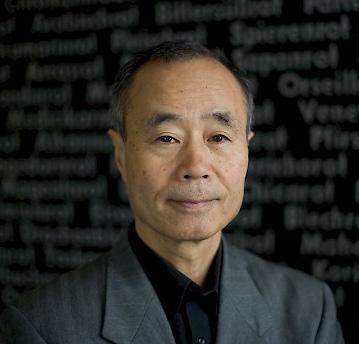
Ryōsuke Ōhashi PhD, Philosopher, Former Professor of Philosophy, Kyoto, Japan
Friday, October 16
There is a wisdom to be found in philosophies of nothingness such as those developed by the Kyoto School. They invite us to approach architecture not as an exterior structure but as a field of lived relations. Nishida Kitarō’s idea of basho — a place where self and world arise together — loosens the familiar oppositions of inside/outside and subject/object, and allows us to think of space as something that shapes us as much as we shape it. Kyoto, with its quiet retreats, its intervals of ma, and its attunement to thresholds, offers an ideal setting for this exploration.
We are fortunate to have Professor Ryosuke Ohashi with us. His intellectual path — from Kyoto to Munich, from Japanese to European traditions — and his lifelong engagement with phenomenology, aesthetics, and the “logic of place” will ground our conversations. As former director of the German–Japanese Cultural Institute and of the Nishida Kitarō Museum of Philosophy, he has helped sustain a dialogue that is both rooted and open. The museum in Kahoku City, designed by Tadao Ando in collaboration with Professor Ohashi, is itself a meditation on space: exposed concrete, open-air courtyards, and a contemplative “sky garden” set within a wide landscape that prompts the kind of reflection Nishida deemed essential.
A second thread comes through the work of Iain McGilchrist, whose writing on hemispheric modes of attention offers a contemporary lens on how we encounter the world. Charles Antoine Barbeau Meunier, a psychiatrist completing subspecialty training in child and adolescent psychiatry at McGill University, has developed a compelling dialogue between McGilchrist and Nishida. He shows how both thinkers move us away from narrow, reductionist models of mind toward a relational, non-dual understanding of experience — an approach that subtly informs the spaces we create and inhabit.
A psychoanalytic thread will also be woven into the discussion. From this angle, architecture becomes more than a physical structure: it becomes the place where the real, the imaginary, and the symbolic intersect, where desire leaves traces and thresholds acquire meaning. Topological images — crossings, twists, the Borromean knot — help illuminate how space can hold tension, absence, and layered significance. These ideas help shed light on the interplay between psyche and form. We are in the process engaging with an architect who will join us; details will be shared as the event approaches.
This session is conceived as an open conversation rather than a formal lecture. A philosopher, a neuroscientist, a psychoanalyst, and an architect will reflect together on how built form and consciousness mirror, influence, and sometimes unsettle one another.
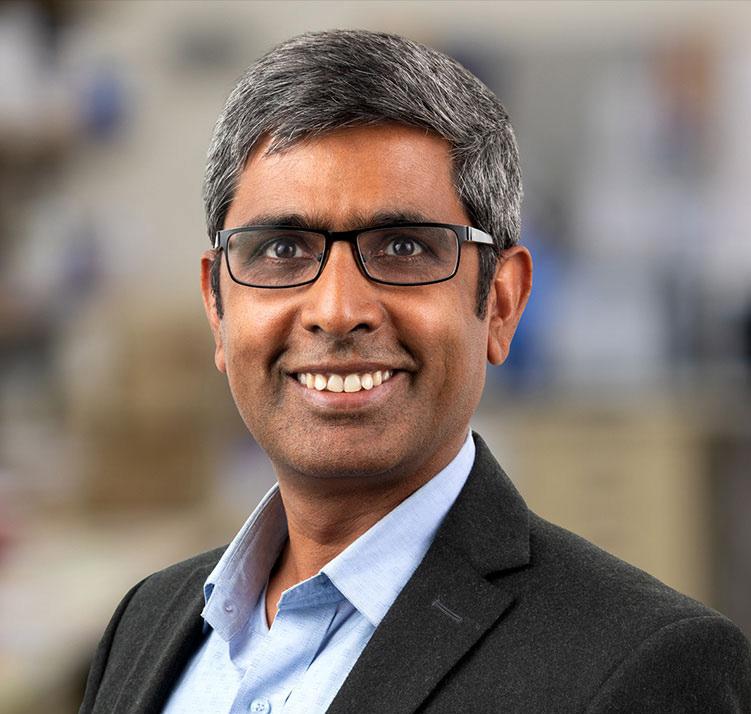
Satchin
PhD, Neuroscientist, Author, ANFA Board Member, Salk Institute, La Jolla, U.S.A.
Every human being shares a fundamental aspiration—to perform at their best physically, mentally, and emotionally, across every stage of life. Yet, despite unprecedented advances in medicine, technology, and living standards, modern societies are facing a paradox: we are living longer, but not necessarily healthier or better. At the core of this paradox lies a hidden mismatch— between how we have designed our environments and how our biology is programmed to function.
Human health is governed by circadian rhythms—ancient, genetically embedded biological programs that synchronize sleep, metabolism, hormone release, repair, and cognitive performance to the 24-hour day. For most of human history, these rhythms were reinforced by predictable environmental cues: the rising and setting of the sun, patterns of food intake, and cycles of activity and rest. Cultures around the world developed rituals— often unconsciously—that aligned with these rhythms and supported lifelong well-being. But progressively, we have systematically dismantled these cues. The harnessing of fire first allowed humans to stay active into the night. The industrial revolution, followed by electric lighting, transformed this into a 24hour society. Today, we operate in environments where light is always available, food is consumed around the clock, and work and social demands ignore biological timing. These changes have fueled economic growth, innovation, and global connectivity—but at a biological cost.
A growing body of research shows that relatively simple, scalable interventions— particularly around light and timing of food intake—can restore circadian alignment and dramatically improve health outcomes. Light is one of the most powerful signals to the brain: bright, blue-enriched light during the day enhances alertness, mood, and performance, while exposure to light at night disrupts sleep and biological timing. Similarly, when we eat may be as important as what we eat. Restricting food intake to a consistent daily window can improve metabolism, increase resilience to disease, and enhance overall health—even without changing diet quality. These insights point to a transformative opportunity.
What if we designed our homes, workplaces, schools, hospitals, and cities not just for efficiency or aesthetics—but for biological alignment? What if buildings could actively support sleep, metabolism, and cognitive performance? What if the built environment became a partner in sustaining health across the lifespan? This presentation will explore how circadian biology can inform the next generation of design—where light, timing, and daily rhythms are intentionally integrated into the spaces we inhabit. By aligning the built environment with human biology, we have the potential not only to improve individual health, but to redefine performance, productivity, and longevity at a population level.
Natalia Olszewska
Dr. Co-Founder, Impronta, Author, Professor NAAD, Neuroscientist, Krakow, Poland
Satchin Panda
PhD, Neuroscientist, Author, ANFA Board Member, Salk Institute, La Jolla, U.S.A.

Tatiana Berger
Architect, Professor, Founder and Director of MB, Porto, Portugal and San Diego, U.S.A.
Monday, October 19
Proposed key discussion points between Satchin Panda, Tatiana Berger and Natalia Olszewska
1. Rhythm as a foundation of health
Human beings are rhythmic organisms. Sleep, metabolism, attention, hormones, mood, and recovery all depend on timing. The question is: what would architecture look like if rhythm became a central design principle?
2. Architecture as biological exposure
Buildings are not neutral containers. They shape light exposure, movement, rest, sensory load, social interaction, and stress over long periods of time. Architecture should be understood as a continuous physiological and psychological environment.
3. The paradox of modernity
Modern life has disrupted many conditions that once supported health naturally: daylight, darkness, seasonal variation, bodily movement, communal rhythms, and contact with nature. We now need science to prove the value of things older cultures often understood intuitively.
4. Nature as regulation
Natural systems support restoration, attention, emotional balance, and physiological regulation. The issue is how to integrate nature meaningfully into daily environments.
5. Restoration as necessity, not luxury
Recovery is not optional. Spaces that support rest, calm, attention recovery, and nervous system regulation should be seen as essential infrastructure, especially in cities, schools, workplaces, and healthcare settings.
6. From evidence to practice
The challenge is how to translate scientific knowledge into real architectural decisions: light, materials, thresholds, daily rhythms, spatial sequencing, outdoor access, density, and patterns of use.
7. Beyond aesthetics and sustainability
Health in architecture should go beyond how buildings look or how efficiently they perform. The deeper question is whether environments support human resilience, adaptive balance, and long-term well-being.
8. Theory versus implementation
A key part of the discussion should address the gap between ideas and practice: regulations, budgets, developers, habits, and superficial “wellness” branding. How can health become embedded in design rather than added afterward?
Monday, October 19
All Faculty and Participants: Open Conversation Designing for Human Rhythms: From Cultural Knowledge to Biological Evidence
Contemporary research in circadian biology, neuroscience, and environmental psychology increasingly shows that human health is shaped by long-term exposure to environmental conditions. Light, rhythm, sensory stimulation, patterns of activity and rest, and access to natural systems influence cognition, emotional regulation, metabolic health, and physiological recovery. Yet many contemporary built environments remain poorly aligned with the biological rhythms through which human beings evolved.
This discussion brings together perspectives from neuroscience and architectural practice to ask how health can become a more fundamental principle of design. While many historical spatial traditions intuitively supported environmental attunement through changing light, material atmosphere, seasonal awareness, and a closer relationship with nature, the central question today is how such insights can be translated into contemporary practice.
Particular attention will be given to architecture not as a static object, but as a continuous physiological and psychological exposure that shapes human experience over time. The conversation will examine how concepts such as circadian alignment, restorative environments, and nature-integrated design may inform future practice – moving beyond aesthetics toward a more urgent question: how might we design environments that support health, resilience, and adaptive balance across the lifespan?