northeastern northeastern students students on music on music
| 18 From Freaks to Tumblr Geeks Future Funky: A History in Music || 32 20 | 12 To | 22 TheGroupie Case for Bridges Be Cringe IsThe to Be FreeIs The Rise of of AI Afrofuturism in the Music Industry 43
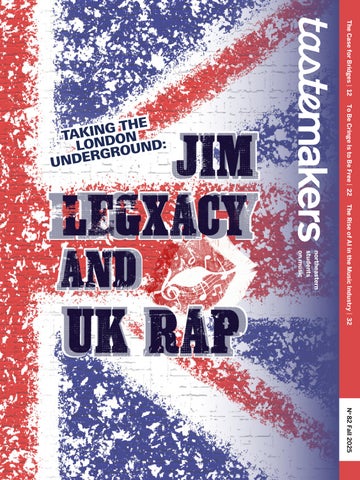
E H T G N TAKI DON LON ROUND: RG E D N U
o 52 The Revival of Pop MusicN|o 82 Fall N 2025
Staff President Connor Bedell Editor in Chief Gabriel Barbier-Saiah Art Directors Camille MacMillin Anna Levesque Collateral Designer Allison Lee Promotions Director Alexa Rand Photo Directors Faith Nguyen Ananya Singh Features Editor Rilyn Szabo Reviews Editors Sam Pollak Joseph Manganello Interviews Editor Paige Pataky
Staff Writers Camille MacMillin Charlie Settimi Connor Bedell Emily Seitz Gabriel Barbier-Saiah Gabriel Lynch Greta Radcliff Hannah Storer Imaan Mandsaurwala Izzy Hrubec James Ryan Joseph Manganello Josephine Chong Kaitlyn Conly Kate Yanulis Katie Colella Kayli Harley Lain Orndorff Lin Luo Marisol Lopez Mya Jassey Olivia Kramer Paige Pataky Peter Phelan Remi Santos Rilyn Szabo Sam Jamison Sam Pollak Valentina Cunha
Art & Design Anna Levesque Allison Lee Camille MacMillin Cecilia Lenir Emily Seitz Jocelyn Hayes Jade Hausmann Karlee Malcolm Kristen Berzolla Marley Wallingford Molly Forman Nina Roshe Rachel Viets Ruth Gebru Sarah Cao Yuthika Pandey
Promotions Alexa Rand Ananya Singh Charlie Settimi Emily Seitz Hannah Storer Kaitlyn Conly Mica Kahn Niko Mallias Phoebe Moore Reuben Colten
Photography Ananya Singh Angelina Sharifi Anna Kelly Ava Russo Bree Morango Caroline Xue Charlene Lam Charlie Sturtevant Collin Norcross Curtis DeSmith Darin Zullo Devyn Rudnick Faith Nguyen Jackson Burker Jackson Goodman Jacob Oshinsky Maizy Kharrazian Maya Abel Maya Gerum Olivia Watson Peter Phelan Prisha Patel Pritika Aidasani Riya Thadani Ryan Huang Samantha Lioanag Soham Wagulde Tejas Marulkar Vivaan Lunkad
Social Media Directors Mica Khan Emily Seitz Hannah Storer Treasurer James Ryan
Get More Can’t get enough? Check out more original content on
tastemakersmag.com
Tastemakers Music Magazine 434 Curry Student Center 360 Huntington Ave. Boston, MA 02115 tastemakersmag@gmail.com © 2025 tastemakers music magazine all rights reserved
@tastemakersmag
Jeremy Zucker, Royale
Photo by Anna Kelly (Health Science)
Meet the Staff Staff Writer
Kaitlyn Conly is listening to...
Fiona Apple "The First Taste"
Major Human Services and Psychology Graduating Spring 2027 Favorite Venue The Anthem (Washington D.C.) Tastemaker Since Fall 2025 Quote
"Long story short I survived."
Sade "Paradise" Thee Sacred Souls "Will I See You Again"
Photographer
Curtis DeSmith is listening to...
Brogeal Tuesday Paper Club TOPS "Outstanding in the Rain"
Major Media Arts Graduating Spring 2026 Favorite Venue 3Olympia Tastemaker Since Fall 2025 Quote
“I like it when a flower or a little tuft of grass grows through a crack in the concrete. It’s so fuckin’ heroic.”
Geese "Cobra"
Staff Writer
Gabe Lynch is listening to... Justice Justice Sinead O’Connor "Just Like U Said It Would B"
Major Civil Engineering Graduating Spring 2026 Favorite Venue Paradise Rock Club Tastemaker Since Fall 2024 Quote
“By definition, you have to live until you die”
Westside Gunn "MANDELA"
Designer
Cecilia World Lanir is listening to...
Lana Del Rey "Dark But Just A Game" Fiona Apple "The First Taste" Blood Orange "Somewhere in Between"
Major Business Administration and Communications Graduating Spring 2027 Favorite Venue The Fillmore Tastemaker Since Fall 2025 Quote
“It gets easier, but you gotta do it everyday, that’s the hard part.”
ww
Abi Carter, Middle East
Photo by Maizy Kharrazian (International Affairs/ International Business )
Table of Contents Cover Story The London 24 Taking Underground: Jim
Legxacy and UK Rap
27
UK rapper Jim Legxacy carves out a lane that merges the grittiness of the British underground with the maximalist vision of modern pop auteurs.
Reviews
8
12 16
22
30 32
36
Post-music and How Genres Evolve Beyond the Dead
Listening Literarily
38
Uniqueness is hard to come by in today’s digital landscape, so musicians and the marketing groups behind them are more drawn to creating distinct popstar personas than ever.
46
Etcetera
34
Taste of Nostalgia: For the Roses - Joni Mitchell For the Roses is a record that is often overlooked due to its place in Mitchell’s discography. This peaceful and magically introspective album deserves more recognition.
Freedom & Control: The Principles of Janet Jackson Janet Jackson is one of the most subversive, controversial, and celebrated figures in music history, with a career defined by the contradiction of freedom and control.
Interviews
14
An Interview with Outside Noise: Music’s “Only Fish in a Small Puddle” Tastemakers and Outside Noise founder Michael Scharf discuss the current state of music.
44
Local Talent: Real Talk With Ricky Cheese and the Sleazebags From their unique, genreblending covers to their signature raunchy cheek, few bands refuse to compromise their authenticity like Ricky Cheese and the Sleazebags.
The Color of Music Synesthesia, a neurological condition where stimulation of one sense involuntarily triggers another, has inspired the creative process of many musicians over the years.
Dissects: “Gloria: In Excelsis Deo” - Patti Smith Patti Smith’s “Gloria: In Excelsis Deo” experiments with eroticism and religious ideologies, and paved the way forward for female voices in alternative rock.
Living Inside an Album: What Gen Z Lost When Eras Died The musicians associated with the 2010s indie era are known for intentional audiovisual experiences that Gen Z desperately yearns for.
By drawing on existing characters and stories, musicians create a listening experience filled with easter eggs for the well-read listener.
To Be Cringe Is to Be Free: The Paradox of Individuality in Modern Music
Real or Fake: The Rise of AI in the Music Industry Conversations about artificial intelligence are embedded within all areas of our lives. What place does this technology have in the music industry?
The Case for Bridges Although bridges can spice up an otherwise uniform song with contrast and lyrical depth, they have become absent from the work of many of today’s popular songwriters.
Referential Pop: The Death of Originality
41
Early 2000s nostalgia has bled into the music scene as pop artists use references and aesthetics to reignite the past.
Tame Impala, Brandi Carlile, TWICE, Ashnikko
How do genres innovate over time, and how does adding the “post-” label to freshly evolved genres define their new sound?
20
Soundgarden played a pivotal role in creating the Seattle grunge sound. So, why did they not reach the same levels of success as other grunge bands of their time?
Album Reviews
Features
Soundgarden Should Be the Most Popular Grunge Band – Here’s Why They Aren’t
50
goodkarma: An Interview With Our Battle of the Bands Winner goodkarma, the four-piece rock band that won Tastemaker’s annual Battle of the Bands contest, talks about their upcoming album and their punk inspirations.
ROCK
Calendar
OMM
ENDS
January
2
17
19
23
House Work Middle East
Rezz Roadrunne
shame Brighton Music Hall
Gregory Alan Isakov Boch Center Wang Theatre
27
30
Del Water Gap Roadrunner
The Elovaters MGM Music Hall
Gregory Alan Isakov January 23 @ Boch Center Wang Theatre This northern hemisphere might be empty, but your January 23rd doesn’t have to be! If you’re a fan of sparkling folk music you can dance to and gutwrenching lyrics, then make sure to see Gregory Alan Isakov at Boch Center Wang Theatre! Whether you’re a longtime fan or a new one, this concert won’t be one to miss! Hannah Storer (Computer Science/ Game Development) Boyscott February 6 @ The Sinclair Going on tour showcasing their first album in 10 years, Boyscott is guaranteed to give you Goosebumps! Playing at The Sinclair, it’s sure to be a great time for any indie rock fan who’s looking for a chill night with a show to leave them Spellbound. Charlie Settimi (Business Admin)
February
1
6
13
18
Explosions In the Sky, Sunny Day Real Estate Roadrunner
Boyscott The Sinclair
Nine Inch Nails TD Garden
JADE House of Blues
Del Water Gap January 27 @ Roadrunner Were you “waiting on the day” to see Del Water Gap live? Now’s your chance to see them perform their new album, Chasing the Chimera, at Roadrunner on January 27th! Put your “high tops” and “perfume” on, and get ready for an energetic evening of emotional indie rock. Emily Seitz (Health Science/ Psychology)
26
27
28
Rich Brian House of Blues
Peter McPoland Royale
Ratboys The Sinclair
Ratboys February 28 @ The Sinclair Touring with their first new single since their critically acclaimed 2023 album “The Window,” this band from Chicago is coming to Cambridge in February. Fans of indie rock should be sure to “go out at night” and see Ratboys at the Sinclair. Reuben Colten (English/Computer Science)
Justice, Barclays Center
Photo by Faith Nguyen (Architecture)
Dave Matthews Band, Boston Calling Day 3
Photo by Ananya Singh (Political Science/Economics)
Album Reviews
Reviews
6 Edible
TWICE TEN: The Story Goes On Released October 10, 2025 Label Republic Records Genre K-Pop Tasty Tracks “ATM (JIHYO)," “DECAFFINATED (SANA)," “MOVE LIKE THAT (MOMO)"
Fall 2025
8
In a music industry where groups often seem destined to disband, Twice is a beacon of perseverance. TEN: The Story Goes On is a “special album” from the superstar K-pop girl group commemorating their 10-year anniversary on October 20th. This album acts as a gift for Twice’s fan base, who call themselves Onces, and has an innovative structure: an opening group track along with nine solo cuts. While an unconventional theme, these solo tracks are the highly anticipated studio releases of songs that were initially revealed months ago for Twice’s current world tour and have been wellreceived by fans and Twice’s concertgoers. The title track “Me+You” is a cheerful R&B pop song that expresses Twice’s gratitude for their fans. Twice rose to fame for their catchy bubblegum pop songs, and this track is incredibly reminiscent of those early releases with its addictive hi-hats, upbeat tempo, and on-the-nose lyricism. Still, “Me+You” presents the more mature image that the group has evolved into, highlighting the members’ natural vocals. The exclusively English lyrics of this heavily-promoted pop song also represent the continuation of Twice’s intentional pivot towards western music markets and western listeners. In fact, the group’s two previous major releases have featured title tracks with only English lyrics, and only three out of the nine
solo songs on this album — Jeongyeon, Momo, and Sana’s — have Korean lyrics. Although this change may be controversial to some, these English releases have coincided with the biggest years of Twice’s career: two record-breaking world tours, a feature on the K-Pop Demon Hunters soundtrack, headlining Lollapalooza, among best-selling albums and other achievements. While English lyrics may not be the direct cause of these accomplishments, it has certainly expanded their audience and helped open doors to mainstream western music events. The album’s remaining nine tracks are solos meant to show each member’s artistry — to varying levels of success. Nayeon, Jihyo, and Tzuyu have all published their own solo albums prior to this release. Nayeon’s track “Meeeeee” feels like the natural continuation of her cleverly self-titled solo albums, Im Nayeon and Na, with its confident lyrics and energetic melody. This pop anthem, along with “Dive In,” Tzuyu’s solo, are upbeat flirty pop songs that frame the solo section of this album, serving as the opener and closer respectively. Jihyo’s “ATM,” while equally coy, uses R&B textures to highlight Jihyo’s full range and voice. These tracks, while fitting for each member, do not deliver anything fans did not expect, since they rely on each member’s signature style. Twice’s three Japanese members, Momo, Sana, and Mina, have released solo tracks within their subunit Misamo and have unique songs on this album that perfectly fit their individual images. On TEN: The Story Goes On, Momo’s “Move Like That” is one of the boldest songs. It’s a bass-filled dance track that allows Momo to explore her entire vocal range in both rap and singing, a rarity for the group’s main dancer. “Decaffeinated” by Sana is a pop cut that incorporates electro and dance elements, resulting in a high-energy feminine jam. Mina, the final member of Misamo, takes the song “Stone Cold,” a complete departure from Twice’s usual style but not too far from Mina’s elegant image. Its electronic glitching, shattering, and beeping effects with echoing background vocals creates an almost haunting sound that draws the listener in when paired with Mina’s light voice. “Chess” by Dahyun creates a similarly cold sound using an interpolation of Beethoven's Für Elise and the singer’s quiet vocals. However, the interpolation tends to overshadow the rest of the song as its most memorable aspect, since Dahyun’s vocals — outside the track’s rap section — are rather flat and unemotional. Jeongyeon’s “Fix a
Drink” and Chaeyeong’s “In My Room” also feature rare genres in Twice’s discography. “Fix a Drink” is a country cut riddled with imagery about drinking: “I can't fix a heart, but I surе know how to fix a drink.” Despite being about the aftermath of heartbreak, the song is still playful, yet its calm tone holds Jeongyeon back from showing off the strong vocals she is known for. Chaeyoung is the fourth Twice member to have previously debuted solo, her forays into indie dream pop audible on “In My Room.” Although the lyrics of the chorus and bridge are extremely repetitive, the tuning of Chaeyoung’s voice paired with the dreamy instrumental keeps the song from being completely mundane. Twice’s TEN: The Story Goes On stands out in their discography as a celebration of both Twice and their dedicated Onces. With this album, Twice tells listeners that showcasing their members does not subtract from their bond as a group. Although not sonically cohesive, this album does not aim to create that kind of listening experience. Instead, this album aims to uplift all nine members’ individual musical identity, and the whiplash a listener gets as they listen to the album serves to exhibit the diversity of sounds encapsulated within Twice. This release is able to reveal how each member of Twice maintains their own artistry within the group, all dedicated to their fan base of a decade. Shared genre, sonic elements, and themes between songs brings just enough cohesion to make the variety of genres on this album unapologetically a feature, not a bug. TEN: The Story Goes On reminds fans that, although they are celebrating their 10-year anniversary, Twice is never out of tricks. Josephine Chong (Design & Theatre)
9 Tasty!
Brandi Carlile Returning to Myself Released October 24, 2025 Label Interscope Records, ATO Records, Columbia Records, Aware Records Genre Folk Rock, Alternative Country Tasty Tracks “No One Knows Us,” “A War With Time,” “Returning to Myself,” “Human” The queen of storytelling pens yet another masterpiece. In an album that can only be described as a journey of self-discovery, Brandi Carlile produces an unabashed display of vulnerability. After a stream of collaborative albums and singles in the last few years, Carlile strips away her distractions with Returning to Myself. She is the Brandi who enraptured listeners in 2005, back again twenty years later, older, wiser, and cracked open. Returning to Myself sets out as a tentrack ode to the self. It’s the tale of an artist who sits down after a life of creation, intent on answering a pivotal question: Who am I? It’s bitter work — the most grueling task of Carlile’s career — to extract herself from her community and inspect the person within. Until this album, Carlile had not released a solo album in four years. Even then, In These Silent Days featured indie pop band Lucius on one song, making 2018 the last time Carlile dropped a fully solo album. While these projects are valuable, they offer a more opaque view into Carlile’s mind, blending different voices and perspectives. Setting this project further apart are the two available versions, with one including 20-40 second bits of commentary from Carlile before each song. It’s a bold move that could creep into overexplanation territory, but it doesn’t. The commentary instead acts
as a guiding hand, illuminating the beauty of her lyrics rather than dimming them. Off the bat, she shares her reluctance to tackle this album; she is “not at all interested” in returning to herself. Why, then, this album? Because “Who am I?” is not a question Carlile wants to answer, but rather one she feels she must. Each song is not only a venture toward answering this question, but also an attempt at convincing herself of its importance. The album’s title track, “Returning to Myself,” sets the tone of this release. Carlile starts with just her voice and guitar, the most unguarded way to begin. Even when the instrumental track comes in later, the song holds its honest air and guiding intention. Carlile admits, “And returning to myself / Is such a lonely thing to do / But, it’s the only thing to do.” This is a necessary stage in Carlile’s life and career, as no story is complete without its denouement. In her exploration of self, Carlile inevitably turns outward. However contradictory this may seem, songs like “Human” and “A War With Time” prove that an exploration of self also necessitates an examination of the human condition. The bridge on “Human” is catharsis captured in sound. After a moment of her isolated voice, Carlile raises the stakes in both volume and rasp. She draws out the length of words like she's throwing them. The drummer attacks the kit faster and with more dramatic fills. It’s the kind of bridge you venture to a cliff edge just to scream. It’s Carlile at her creative best. Disrupting Returning to Myself's solitary atmosphere is “Joni,” a tribute to Carlile’s close friend and industry legend Joni Mitchell. On first listen, “Joni” is where Carlile loses the audience. Deeply contextual and relationship-driven, “Joni” is seemingly not for those standing on the periphery of Carlile and Mitchell’s connection and is therefore alienating. If this is Carlile’s exploration of artistry and self, why is she talking about Mitchell? Well, if you’ve heard the saying, “You are the company you keep,” her intention becomes clear: other people make us as much as we make ourselves. This is perhaps the album’s first revealing of its true purpose; not what one can find in solitude, but rather what already lies in community. The deeper she delves into the album, the more Carlile explores the connection between others and the self. In “You Without Me,” Carlile watches her daughter become her own person, thereby profoundly discovering herself as a parent. In her characteristic display of lyrical mastery, she
drops lines like “Heavy are the hands that you are free to slip right through” and “I showed up with a broken name and handed it to you.” “No One Knows Us” likewise details the intricacies of a close relationship and what we owe to those we care about. Carlile gradually builds up the guitar and drums as one builds up a friend in need. The musicality mirrors the intense care of love, as though Carlile is assuring someone that life is worth living. In her commentary track on the album’s final bow, “A Long Goodbye,” Carlile says, “I changed my mind. I have absolutely no interest in returning to myself. I refuse to be alone.” She revises her initial intention, abandoning an ode to self in favor of an ode to all. It’s the way Carlile guides listeners to this conclusion that makes this album one of her best. She parts the veil, but neither she nor the listener realizes until the final note goes quiet. So, how does Carlile ultimately answer the question? She charts through the inevitable panic of the human condition — that moment of perceived urgency where we’ve lost all sense of identity. I must enter this loneliness, these feelings push, and I must exist by myself. Despite her intentions, she cannot extricate herself from those she loves; they are “tethered,” to use Carlile’s words. In the end, she finds that “returning to herself” looks an awful lot like coming home. Kayli Harley (Communication Studies)
9
Reviews
6 Edible
Tame Impala Deadbeat Released October 24, 2025 Label Columbia Records Genre Dance, Electronic, House Tasty tracks "Dracula," "End of Summer," "Piece of Heaven"
Fall 2025
10
Tame Impala is no longer making music for college kids hotboxing their cars or wandering around campus on shrooms. Deadbeat, the newest album from oneman-show Kevin Parker, is music for the dad who’s trying to party without being too hungover for school drop-off the next morning. The same listeners who raced to Hot Topic to buy Currents t-shirts in 2015 are now parents and professionals. In some ways, Parker is no different, fading away from the spotlight and into the corporate superstructure of pop music. Since the release of The Slow Rush in 2020, Parker has become a father of two and settled into his mainstream status, producing Dua Lipa’s 2024 album Radical Optimism and making contributions to soundtracks for movies like "Barbie" and "Minions: The Rise of Gru." Instead of trying to once again corner the market on teenaged stoners with his signature brand of psych pop, Parker taps into the 2010s dance and rave influences of his generation to mixed and sometimes disappointing results. After releasing two psych-rock albums at the start of his career, Parker made the masses dance with the cult classic Currents. Five years later, The Slow Rush released with similar wide appeal, infusing Parker’s now ubiquitous brand of psychedelic dance pop with flashes of house and disco. For Deadbeat, Parker joins the dearth of artists
who have turned to raves as a source of inspiration. Influenced by Australian outdoor raves called "bush doofs," Parker swaps his typically colorful synth riffs for more industrial and bass-heavy sounds. Deadbeat reveals a producer pushing himself to build intrigue in new ways. Parker limits his tools and textures to four-on-thefloor bass kicks and washed-out synths, departing from the sonic diversity of his previous work. This starkness is most successful on "End Of Summer," a pounding and emphatic ode to wearing your heart on your sleeve. However, the resulting uniformity makes for an unexciting listening experience throughout the album. Where his previous work feels multitextured and undulating, Deadbeat feels flat and aimless. "Oblivion" is a wandering dembow track that can't seem to decide whether or not it wants to be danceable, while on "Not My World" Parker stumbles through a house instrumental until finally introducing an interesting beat with less than a minute left in the song. Deviations from Parker's formula are some of the album's most successful tracks: on the nebulous seven-minute "Ethereal Connection" Parker tries his hand at progressive house in an exciting turn. "Piece of Heaven" is another highlight, a welcome break from the all-too-persistent bass kicks across the rest of the album. Soaring across plucked strings and buoyant synths, Parker stands at the center of a spiral of pure bliss. Much of the album is devoted to exploring Parker's signature mix of social anxiety and self-scrutiny. He teases interesting themes in his lyrics, but doesn’t go far enough to develop them: "No Reply" is a laundry list of worries and criticisms and "Loser" is a sloppy embrace of his own imperfection. "My Old Ways" is a punchy, introspective take from an artist reintroducing himself to the audience, but ultimately peters out before reaching any place of interest. Although his vulnerability is admirable, it's sometimes hard to buy the "outcast, loser, deadbeat" bit from an apex producer at the helm of his genre. Some lyrics feel like uncomfortable confessions from a coworker, flashing bits of insecurity and pity that leave the listener in awkward proximity to the artist. Maybe the average listener has become “cooler” than Parker, melting his prodigious mystique down to a puddle of self-deprecation and doubt. The album may be lauded as a classic in the future, as Parker implied in an Instagram story comparing the initial reception of
Currents to that of Deadbeat. Or perhaps the album is simply a slow burner that sits alongside a catalogue of more immediate, enigmatic, and explosive ideas. Regardless, Deadbeat is far from Parker’s strongest work, but signals a new approach for an artist that seems most limited by his own success. Joseph Manganello (Political Science & Urban Studies)
4 5 Stale
Ashnikko Smoochies Released October 17, 2025 Label Parlophone Genre Pop Tasty tracks “Smoochie Girl,” “Chichinya,” “Baby Teeth” The artist in this article uses she/her and they/them pronouns — they/them is used throughout for consistency. In an era when the world is more absurd and digitally oversaturated than ever, Ashnikko delivers the bubblegum hyperpop album Smoochies. From start to finish, the album assertively immerses the listener in Ashnikko’s “Smoochie World,” a distinct world of delightful tackiness, through exaggerated production and clever lyrics that feel truly written with joy. The album challenges ideas of performance, darkness, and excess through the use of those very same elements, creating a project that holds irony and sincerity in a state of sustained coexistence. But, it is the resolution of this coexistence that the album fails at, ultimately leaving something adjacent to emptiness after the final track ends. Ashnikko is no stranger to digital noise. Smoochies comes four years and two albums after their 2019 and 2020 most popular songs, “STUPID” and “Daisy” skyrocketed their popularity and TikTok notoriety — a four years and two albums that paled in comparison to the success of the original viral songs. By extension, Smoochies feels well-aware of Ashnikko’s digital presence. Throughout the album, Ashnikko makes lyrical and even titular references to viral ironic moments: anti-
recession-indicating “teeny tiny little slutty skirt[s]”, consumerist collectable “Trinkets,” “Microplastics,” and even at one point asking, “do you wanna play mermaids?” The album seems like it is trying to reference as many niche internet jokes as possible. Although these references are likely intended to come off as campy, their frequency across the album’s 15 songs (only two of which run over 3 minutes) make the album almost unapproachable because of how much it seems to be pandering to virality. However, when not too heavy-handed, Smoochies successfully surrounds the listener in a world of campy kitsch. Ashnikko builds this over-the-top world through extremely cohesive marketing, and lyrical visuals to accompany the album — think dark pastels, polka dots and checkers, and everything that you could put on your bag. Lyrics and production across the album bring to mind exactly that. “Chinchinya” harmonically switches between chanting and 80s pop, like scrolling between videos online. Ashnikko playfully chants, “I want to rip out your eyeballs / Put ‘em on a necklace that’s to die for” before transitioning to repeatedly sing-whining “This is the thanks I get?” Like “Chinchinya,” some of the best parts of Smoochies are when Ashnikko seems to just be having fun in a way that is perhaps not the most marketable, but is selfaware in its own absurdity. The highs of the album also come at its most vulnerable times, where Ashnikko attempts to create quiet space for sincerity amongst all the noise. The lead single and title track, “Smoochies” is a moment where Ashnikko does this best, introducing the album’s tension between sincerity and oversaturation. In the song, Ashnikko speaks about their fears of being defenseless to love, singing, “Oh no, how scary / I haven’t felt this exposed / I’m barely out of the woods.” This is contrasted by the song’s awkward ad-libs of “Smoochies, go smoochie girl.” While these features add to the audio experience and pace of the song, they showcase an issue signature to Smoochies as a whole — building up the image of Ashnikko as a performer at the expense of lyrical vulnerability. The tension underlying Ashnikko’s performing identity versus their personal identity comes to a climax on the final track, “It Girl.” With a raw voice backed by an acoustic guitar, Ashnikko sings, “I wanna kill the it girl in me / I wanna strangle her
with a saddlebag, Dior 2003.” On “It Girl,” Ashnikko rejects the ability to be both an “it girl” and their genuine self at the same time. Ironically, the song fails to be completely genuine. Although the production is much more stripped than the rest of the album, Ashnikko cannot talk about being an “it girl” in a way that feels truly sad, whispering “like death riding My Little Pony with a facelift” at one of the final moments in the song that was an opportunity to be much more intimate. As a result, the song not only lacks true tension, but feels emotionally hollow. The first 14 songs of Smoochies craft a project that is — although at moments excessive or trite — uniquely “Ashnikko.” From the banjo-backed and genuinely sad “Baby Teeth” to the confident “Sticky Fingers,” the album feels authentic while still being original and enjoyable. While “It Girl” does not completely undermine these successes for Smoochies, it makes the album’s lack of ability to express itself sincerely much more exposed. Most tracks lack emotional weight, landing as playful yet insincere. On Smoochies, Ashnikko is extremely successful at creating a gaudy world of kitsch and wit, establishing the album as distinct and (although very reflective of our current digital world) very unique. But, while the kitsch of the world comes to full realization, Ashnikko fails to bring the dimension of vulnerability into full existence, making the album lose cohesion and feel unintentionally contradictory. Sam Jamison (Explore Program)
11
Designer: Kristen Berzolla (Design)
Feature Fall 2025
12
The bridge, the iconic “it girl” of song structure, has been known to take songs from boring to exciting in seconds. Offering a way to spice up an otherwise uniform song with contrast and lyrical depth, the bridge has become an integral part of song structure over the decades. But in the notebooks of many popular songwriters today, scribbled between verses and choruses, is a bridge that gets torn from the page. In the age of party girl pop and repetitive anthems, many artists like Charli XCX and Sabrina Carpenter choose to move away from the refreshing addition of a bridge in favor of a more uniform structure. But where did all the bridges go, and why are they disappearing? A bridge is defined as a part of a song separate from the verses or choruses that provide some contrast to the rest of the song, often adding more depth and complexity. Whether through a variation instrumentally or lyrically, a bridge often leaves a lasting impact on how the song is experienced by the listener. By creating a change in tempo or mood, or just adding new details to the existing narrative through new lyrics, a bridge can become an unforgettable part of the song. There’s a long line of history behind bridges. The bridge’s origins date all the way back to 15th-century German music theory, becoming an integral element of song structure. The bridge originated from the German word “steg,” which was used to describe a transitional section of music in medieval bar form. Popularized in pop and rock genres by bands like The Beatles, bridges soon became less of a random medieval song structure and more of a mainstream memorable way to spice music up. Why the sudden lack of bridges in newer music? One contributor is the growing influence of certain genres on pop, like EDM or dance pop, seen in currently popular pop artists Charli XCX and PinkPantheress. These genres tend to prioritize a repetitive instrumental, focusing more on danceability versus lyrical impact. That’s not to say that these songs don’t have some gutwrenching or deep lyrics, but instrumental consistency is a hallmark of these genres, making a noticeable difference between the chorus and bridge hard to find. Another
important aspect is the rise of streaming and social media, which naturally favors shorter songs that aim to be addictive and consistent at any point, versus a gradual buildup and dynamic use of a bridge to favor the storytelling. The clipping of songs for success on TikTok and other social media platforms can influence artists to put forward songs that sound similar in all sections, versus experimenting with the sound over time. This straying from the long-acclaimed ABABCB (verse chorus verse chorus bridge chorus) pattern could have many reasons, yet that does not take away from the potential positives a bridge can bring. There is definitely a place in pop music for dance anthems and EDM beats, with many of the songs on the Billboard Hot 100 being bridge-less. But, there will always be a special place for singersongwriters to compose all their inner thoughts in a musically powerful run-on sentence that changes the tone of the song. Spectacular bridges like those of Masie Peters’s “There It Goes” and Taylor Swift’s “All Too Well (10 Minute Version)” have become viral, both online and in people’s hearts, as they really break down heartbreaking feelings through their cathartic and expressive lyrics. In “There It Goes,” Maisie spends the majority of the song trying to come to terms with the end of her relationship and the mixed emotions she feels. The bridge lists things Maisie is doing in this healing process as the time passes, taking the listener through that journey with her: “The comedown of closure / The girls and I do yoga / I wake up and it’s October / “The loss is yours.” Finally concluding her healing process at the end of the bridge, the final chorus feels more free than the previous choruses pre-bridge; The chorus’s repeated lyric, “There it goes,” now means Maisie is willingly letting go of these emotions versus them escaping her. The queen of run on bridges, Gracie Abrams, has had numerous songs go viral for having lyrically complex and instrumentally persistent bridges, like “Free Now” and “That’s So True.” The anger in the bridge of “That’s So True,” completely propels the song in a different direction. Starting off with an annoyed tone, Gracie definitely disses her ex throughout the song, but no other part
of the song makes that quiet as clear as the bridge. The quick-paced and angry lyrics found in the bridge like “I’ll put up a fight / taking out my earrings” not only add another level of anger to the song, but make the slow start and sudden jump back into the fast chorus afterwards all the more impactful. Not only can bridges like these find success online on social media for the praise listeners give for their lyrical complexity, but they completely elevate the emotional impact of the song. Although not for everyone, there is definitely an audience for a good rant in the middle of a song, often changing interpretations of not only the closing choruses, but of the song as a whole. Although everyone loves to dance to the “brat summer” anthem of “365” by Charli XCX, a good scream-sing of the instrumentally upbeat yet lyrically heartbreaking “Good Luck, Babe!” by Chappell Roan is just as infectious. There’s no lack of fun song structures and new songwriting trends for artists to choose from and who knows what that landscape will look like in a few years or even months. Despite the genre, artists can find success with and without a bridge. Although bridges are not the only way to add contrast and lyrical complexity, the section of contrast gives songs an opportunity to deepen themes that not many song structures do. With the increasing lack of bridges in songs today, one can hope that bridges will continue to have their own little corner of the music world for those who want that extra contrast and complexity in their music. • Hannah Storer (Computer Science and Game Development)
13
an interview with
OUTSIDE NOISE
Interview
music’s “only fish in a small puddle”
A critical element in loving music is the discourse and conversation that emerges through the venue of journalism. As print has experienced ups and downs in the twenty-first century, a music blog, Outside Noise, has shifted with the times to meet their audience halfway. The group of four writers make short form video content, highlighting small and experimental bands with recommendations and reviews of new albums. Tastemakers sat down with the founder, Michael Scharf, to discuss the project and the current state of music. This interview has been edited for brevity and clarity. Tastemakers Magazine (TMM): Tell me a little bit about yourself and the story of the project. Michael Scharf (MS): We started Outside Noise like the day after I graduated in Nashville, and we worked from there for like a year. The whole point was to platform people who weren’t going to get any attention from the music industry. All about art for art’s sake, experimental music, that kind of thing. There’s plenty of artists who are really playing the game and trying to build something. We look for people who have no interest in playing the game and are just making things they like making. TMM: What are your thoughts on having a local scene in a city? Does a band necessarily even need to be in one? MS: The network effects of a scene are enormous. It does so much for people to have a consistent place to keep going to, and people that they keep running into, and bands they keep seeing. People might ask, “Why do you keep seeing the same band over and over?” And it’s because these are my friends. For the most part, anyone who likes weird music has to show up at the same things. Another thing that’s underrated and important for a scene is a gathering place that is safe, will not change, will always exist, and will always be committed to having underground stuff happening. Once you get a sound generated out of your scene, that’s a really cool thing too, like I can tell when a band’s from Atlanta, because Atlanta just has this specific brand of hardcore that’s insane and nobody else does it like them. That’s super cool.
Fall 2025
14
TMM: What’s the process behind finding music to review on Outside Noise? MS: Every time I say this, I realize this is an insane way to do anything. We go on to Rate Your Music to the “new music” tab and scroll until we’ve reached releases from the week before. Every Friday we do this. We scroll through all of the music that’s been categorized, split it into four parts, and each of us go and look at everything. We can kind of sort by eye, but a lot of the decision process is just putting tracks on for a minute or two. It’s really painstaking. That’s really where Outside Noise sets itself apart from other things because who the hell does this? When we started out, we’d go on Spotify and see how many monthly listeners a group has. If it was more than 20,000, we wouldn’t review them. We’re a lot more flexible on that now. We don’t do “Inside Noise” anymore, but we will if there’s something that we think our audience is really into. TMM: What do you think about gatekeeping culture or the trend of being esoteric? MS: It’s kind of a pendulum swing. I think we are kind of coming back to hating big pop records, and it’s a reaction against the whole “everyone has to like pop music or else they’re mean” expectation. I think both of those are a little bit of overreactions. I guess we have to say we’re anti-gatekeeping because we expose these small bands to a large audience. I’ve worried that bands would not like our reviews because they’re worried their record will reach an audience it was never meant to, or reach people who don’t understand it. I think at this point, people trust us and they trust our audience. They think we are going to bring over good people who will engage with it in good faith and understand it. So artists, for the most part, are grateful to be interviewed or reviewed by us.
TMM: I wanted to take a step back for a minute and talk about the emphasis on short form content for your reviews. MS: We chose short form content because originally, Outside Noise was a text-only blog and nobody read it. It was called Outside Music and it was just me doing it. I had always seen video essays on YouTube, and I had seen a couple essayists say, “if I could just be a normal essayist, I would, but I can’t, because people don’t read anymore. So I have to do video essays.” During COVID, I had downloaded TikTok, and I understood why people spend all damn day on this thing. It’s so addicting! I was like, “let’s just do this. It seems to be where the people are.” Go to where the people are. It’s like how in politics they say you’re not going to get a different group of voters. You’re not going to get a different group of audiences. Just go where the audience is. You might rather have them be reading, but be honest with yourself, you’re not reading enough either. TMM: Do you have any advice for people interested in music journalism?
• Lain Orndorff (Design)
Designer: Jocelyn Hayes (Business Admin and Design)
MS: What we’ve always said is we don’t want to be the biggest fish in a small pond, we want to be the only fish in the puddle. Our goal is not to be the only people doing this, which is kind of what it is right now. There’s too many people who scroll their Spotify feeds because they don’t have any other way to find recommendations. So if you know how to write, and if you think you could bring things to light for people, and you think there’s more people out there who would like what you like, join us in doing this. I don’t want everyone to just know Outside Noise. I want it to be that everyone knows there’s a few dozen people and listeners always have a buffet to pick from. If we’re going to replace the algorithm, we need more than just four people doing this. I want it to happen everywhere.
15
Feature
Post-music and how genres evolve beyond the dead
Fall 2025
16
Unapologetically steered by the youth, punk rock was a movement of fashion, art, politics and music with one common throughline: rebellion. As Johnny Rotten proclaims in Sex Pistols’ “Anarchy in the UK”, “I am an anarchist / Don’t know what I want, but I know how to get it.” Punk’s inferno dimmed after the late 1970s, eventually morphing into genres like hardcore and pop-punk. Most bands that made up this wave of punk had moved on from the genre or had disbanded. This movement, seemingly against everything, suddenly needed something to be for. As the punk movement died down, one genre that emerged was one dubbed as “post-punk.” Taking influences from the Krautrock bands such as CAN and NEU experimenting with psychedelic and avant-garde styles, as well as art-rock releases from the likes of David Bowie with Low and Iggy Pop’s The Idiot, post-punk bands created a new punk sound that maintained its spirit but was willing to experiment with its sound. Compared to punk, post-punk was more artsy and loosely-defined in aesthetics. Hailing from London, Wire would make arguably the first truly post-punk album, Chairs Missing. Still possessing the rebellious charm of punk rock, the album diverges from punk in that for what it lacks in raw intensity it makes
“Still possessing the rebellious charm of punk rock, the album diverges from punk in that for what it lacks in raw intensity it makes up for in atmosphere.”
up for in atmosphere. The album places emphasis on pounding bass and in-thepocket drumming – a style that would define post-punk. Following fame as Sex Pistols, John Lydon, a.k.a. Johnny Rotten, moved on to pursue a more progressive sound, and started his new band Public Image Ltd. Their debut was 3 vinyl singles and shipped in a metal box, an album aptly titled “Metal Box.” The album’s dissonant guitars and Lydon’s shrieks create a haunting sound, but with a rhythm section that chugs on like a runaway locomotive – it was a nightmarish punk disco. Metal Box is jarring in every way, yet you can hear Public Image Ltd’s influence over more mainstream bands like Talking Heads. Post-punk would become a quite expansive genre. The all-female band The Slits would pull from reggae influences, an equally rebellious genre raging at the same
Designer: Allison Lee (CS and Design)
time as punk rock. Joy Division’s Unknown Pleasures, is slow and ominous. Lead singer Ian Curtis’ vocals sound tormented over the sparse instrumentals, but some of the album’s pop tendencies lent a lot of influence to more gothic acts like The Cure as well as the new-wave music that defined the eighties. Revered for its innovation, post-punk took the rebelliousness of punk and transformed it into something sonically expansive. Rock music, the genre that has arguably captured the most hearts in the western world, proverbially “died” in 1959. The plane crash that killed Buddy Holly, Ritchie Valens, and “The Big Bopper” J. P. Richardson was referred to as “The Day the Music Died” on Don McLean’s “American Pie”. The song speaks to the changing tides of American culture; the end of the post-WWII baby boom and entry into the Vietnam War put a colossal asterisk on the innocent fun of the 1950s. Americans had to contend with the horrors of a gruesome war, the draft, and the body bags that many saw their friends brought home in. More than the death of three rock-n’-roll legends, the fateful plane crash symbolized a turning point for public sentiments and music as a whole. To say that rock music died in 1959 is obviously an exaggeration, as the cultural upheavals of classic rock, the British invasion, glam rock, punk rock, grunge and plenty other movements were yet to come; however, a generation growing up on rock music from a much simpler time were inevitably going to turn the genre into something far more challenging and dark. While post-punk kept the ethos of punk but changed the instrumentation, post-rock did the inverse. English music Journalist Simon Reynolds, who coined the term “post-rock,” described the sound, “Postrock bands use rock instrumentation, for non-rock ends. Guitar is deployed not to
generate riffs, but as a source of timbres, drones, effects-treated textures.” The first post-rock album is difficult to designate, as the lines between post-rock and art rock are blurry, but a confident starting point is Talk Talk’s 1988 album, Spirit of Eden. On this album, the guitars create textures more than melodies or chords, and ambient and electronic elements would come to pioneer the atmospheric sound post-rock would be known for. Montreal-based Godspeed You! Black Emperor became famous for their 20-minute songs, post-rock epics with drawn-out crescendos to gratifying climaxes. The band was obsessed with
“A generation growing up on rock music from a much simpler time were inevitably going to turn the genre into something far more challenging and dark.”
portraying the end of everything through instrumentals, depicting an apocalypse on F#A#∞ and a rapture on Lift Your Skinny Fists like Antennas to Heaven. Their song structures became highly influential, noticeable on more contemporary acts like Black Country, New Road. While post-rock shares very little in aesthetics to post-punk, the common throughline between the two is their willingness to approach their parent genres in entirely new ways. In the 2020s, hip-hop has been struggling to create superstars. The rappers that generate the most hype nowadays are in their 30s and 40s. While still a vibrant genre with innovative music being constantly
17
Feature Fall 2025
18
made, hip-hop has ceased to be the commercial juggernaut it used to. Rap legend Kendrick Lamar, following his feud with Drake, expressed that he believes hip hop to be dead on “Watch the party die”, where he essentially argues that hip-hop has become so influenced by selfish actors, corporations and propaganda-speaking radio personalities that the genre has completely lost the plot. So if hip-hop’s wave is dying, will there be a post-rap? Following the release of rap group Injury Reserve’s By the Time I Get to Phoenix in 2021, fans were awestruck at the apocalyptic, barren production and manic delivery. Mourning the death of group member Steppa J. Groggs in the lyrics, the album is bleak. Rapper RiTchie repeats lines as if they are something he mumbles to himself to keep sane, lashing out at things like redditors and 5G cell towers. The production mirrors several of post-rock’s trappings: ambient, abstract and buildupheavy. Blinded by the hype of this release, many fans leaped to predict that this album would start a wave of “Post-rap”. This idea was not incredibly defined in nature other than the idea that rap could draw from the avant-garde philosophy of post-rock. Nevertheless, four years after the Injury Reserve album, post-rap hasn’t proliferated into much. Perhaps the hype surrounding post-rap was a bit whitewashed: white fans projecting artistic ideals on an explicitly black artform that wasn’t concerned with those ends. After all, rap has had experimental acts for a long time, but few artists have decided to approach it with the post-rock slant of textured instrumentals and slow crescendos. Further, the term “post-rap” doesn’t make complete sense in the way fans used it, as the prefix doesn’t describe musical qualities as much as it marks the way it approaches a dying genre. What does one make of the “post” prefix? For post-punk and post-hardcore, it
meant a genre seeking to experiment with new sounds while maintaining aesthetics. For post-rock and post-metal, it meant abandoning traditional song structure in favor of more textured, slow-burn tracks. These two uses of the prefix represent radically different methods of innovating in a genre. The word only implies chronology, with post-punk coming after punk died, and so on. But even with this implication, why did post-rock supposedly start in the nineties when rock music was still dominating the charts with grunge and alternative? People have been fighting the “rock is dead” claim for decades, and it only seems to have a kernel of truth in the 21st century, when pop, rap and country began to occupy the top sales spots. If “post” can’t refer to aesthetics because post-rock and post-punk are so different, and it can’t refer to time because those genres weren’t dead yet, then perhaps the prefix has no definition on its own. Genre labels are confusing, and perhaps the label of “post” exemplifies why so many artists have a distaste for these labels at all. • Sam Pollak (Data Science and Economics)
Molly Grace, Paradise Rock Club
Photo by Ananya Singh (Political Science/Economics)
Feature
Fall 2025
20
in how you manipulate a story to mirror your own. “What She Said” by the Smiths takes inspiration from Elizabeth Smart’s novel “By Grand Central Station I Sat Down and Wept.” Smart’s novel is a tragic memoir detailing a love affair that was so painfully gripping that Smart experienced blood-boiling levels of devotion. Smart lives, breaths, and devours her lover, leaving nothing untouched by the sudden absence of his presence. The Smiths often sing about painfully tragic moments and feelings, which contrasts their use of upbeat drums and guitars. Morrissey, the lead singer of The Smiths, has a voice that weeps in its belts, longing for an end that never comes and leaves you in tears on the dancefloor. The chorus, “What she said, ‘I smoke / ‘Cause I’m hoping for an early death / And I need to cling to something,’” is where you hear both Morrissey and Smart in unison; Morrissey sings Smart’s words, relaying his own feelings in her beautifully solemn language. What we are left with is a song made by and for longing lovers. Every reference, clear and unclear, seems to work for the Police in their song “Don’t Stand So Close To Me.” With heavy references to Vladimir Nabokov’s “Lolita,” one of the most controversial books of the 20th century, the Police taunt the listener with their awkward connection to the novel’s main character. Nabokov’s book is a first person recounting of thirty-six-year-old Humbert Humbert’s deluded infatuation with nine-year-old nymphet Dolores (Lolita). The first person narration in the novel makes the reader forget what’s actually happening and leaves them thinking that the events of the novel are simply a complicated love story. Similarly, the opening lyrics “Young teacher, the subject / Of schoolgirl fantasy” blend into the staccato of the hi-hat so you unknowingly bob your head along to the provocative story. Humbert Humbert, does just the same; the narrator and pedophile conveys such care and dedication to his beloved Lolita that many readers are left confusing his feelings with the makings of a real love story, forgetting just how old Lolita is. “Lolita” may not be a real love story but “Don’t Stand So Close to Me” is a real hit, and music is often reduced to its sound and not its lyrical content. What is the point of examining these songs so closely? A simple lyric about a schoolgirl fantasy can get trapped in a listener’s head, playing on repeat simply because it is catchy. Books, however, are only remembered after you’ve dedicated your focus to them. The focus and attention needed to remember a story is how literary references create depth in music – it’s where the artist’s time and attention shines in a new light. Performers know how to perform and make great music for their fans, but the key to someone’s heart is in what they are reading.
Designer: Camille MacMillin (Communications/Graphic Design)
The things we read have a way of creeping into our subconscious and blooming into our realities without us even knowing. For artists, books and stories can bleed into their music in more ways than not. Catching literary references in music is like watching a movie with 3D glasses: your understanding of the story exponentially increases. By drawing on existing characters and stories, musicians create a listening experience filled with easter eggs for the well-read listener. When this interaction is properly constructed, it can create opportunities for artists to form deeper connections with their fans. The first song that comes to mind that references literature is Kate Bush’s “Wuthering Heights.” Is this connection between Kate (short for Catherine) Bush and Emily Brontë’s main character Catherine only because they share a name or is there more to their story that only the Catherines know? The song itself couldn’t sound less like the novel’s depressing and angsty ambiance set by Brontë’s Catherine. Bush’s characteristically high voice mixed with twinkling strings and feathery piano creates a feeling of wonder and playfulness. In the book “Wuthering Heights,” Catherine’s relationship with Heathcliff lacks this jovial quality and instead is associated with more solemn themes about race and class. Is this a bad literary reference? Perhaps not. Rather than sinking into a dark and depressing lyrical story, Bush has taken the longing, wondrous feelings in the novel and given them her own spin. She creates a parallel story where Kate – the musical icon – longs for her own Heathcliff up in her clouded world of pop. Unlike Bush’s “Wuthering Heights,” Stevie Nicks’ haphazard attempt at cross referencing in “Wide Sargasso Sea” demonstrates how a literary reference can be a detriment to a track. The song shares its name with the Jean Rhys novel “Wide Sargasso Sea,” which is about Bertha Mason, the mad woman locked in the attic in the novel “Jane Eyre.” It is widely known that Stevie Nicks had a passionate love affair and continued contentious relationship with her bandmate Lindsay Buckingham that fueled a lot of their music. Rhys’ novel does not detail a love affair, but the slow destruction of Bertha Mason through her growing relationship with her soon-to-be husband. In “Wide Sargasso Sea,” Nicks equates her relationship with Buckingham to Bertha’s relationship with her husband. She references the beautiful scenes in Jamaica that Bertha describes as they are stripped from her by her husband – a feeling Nicks relates to her art and fame in the context of Buckingham. The electric guitar and scruffy vocals convey how telling this story made Nicks feel like she was fighting a ruthless fight. While a little bit tone deaf, this literary connection is thus used to show the intensity she felt with Buckingham. It may not be an ideal reference, but it is representative of how stories inform artists. Relating a complicated love story to yourself is a classic case for any romantic – not just pop singers. Where it becomes valuable is
Kate Yanulis (English)
21
Feature
In recent years, we have come to embrace things that are “cringe”—things that may be awkward or embarrassing because of their contrast from the norm—and favor novelty and difference over conformity. However, in a world where we are exposed to a massive amount of content on a daily basis, novelty is hard to come by. As the modern music consumer, we are drawn to music artists that stand out–whether aesthetically, musically, or lyrically–which means that musicians and the marketing groups behind them are more drawn to creating a distinct persona than ever. To understand the effect of novelty in the music industry, we have to first look at virality in the context of COVID-19 lockdown: The era where TikTok cemented its power of cultural influence, particularly its influence on the music industry. Around and during the time of lockdown, pop stars like Doja Cat, PinkPantheress, and Megan Thee Stallion gained popularity from their viral songs (“Say So,” “Boy’s a Liar,” and “Savage,” respectively) because the dances associated with them were replicated by content creators on TikTok so many times. This constant replication translated to long-lasting popularity and notoriety, meaning that lucky virality—virality that felt like it couldn’t be predicted or engineered by marketers—created careers for these stars. Since this era of music, we’ve seen many artists try to harness the powers of virality via TikTok. From songs meant to be lip-synced easily
Fall 2020 2025
22
to artists attempting to create dawnce challenges to go with samples of new releases, many newer and modern artists have attempted to reach the amount of TikTok replication that had, and has, defined the careers of many modern pop stars. However, the past two years has marked a shift from music that is marketable purely in its genericness and broad appeal to music that is marketable in its uniqueness. Although pop stars have tried to create distinct musical and visual brands for decades—think Taylor Swift, Lady Gaga, Madonna—the pop star brands that we accept, and ultimately make successful, as the consumer have recently become much more artist-specific. BRAT by Charli XCX, which defined the summer of 2024, is an incredibly influential marker of this shift. With its unconventionally honest lyrics that contrasted with hyperpop-inspired synthetic production—along with its bright green album cover—the album was not positioned to be a mainstream success. However, Charli XCX’s individuality resonated with people. Compared to the current modern pop that was overwhelmingly made to appeal to the largest group of people possible, BRAT was an intimate chronicle of Charli’s feelings and life. Visually paired with the album cover and “brat girl” aesthetic that somehow perfectly encapsulated the album, the album became so popular (especially on TikTok) because of its hyper-vulnerability and selfawareness; because it was an album that was not made to be marketed.
to hold onto her mass-relatability, the album fails to say anything nuanced or vulnerable, making it seem insincere and dull. In comparison, Sabrina Carpenter’s Man’s Best Friend was received so well because of how it fits within the canon that is Sabrina Carpenter— witty, playful, and sultry—while still furthering the narrative of her persona. Man’s Best Friend marks a darker and sadder shift from what we knew of Carpenter, but it still fits within the image we have of her, solidifying her as genuine. Our favoring of unique, authentic music is a good thing for artists who are true to their craft; artists who value creativity and sincerity over broad appeal. This shift in music consumption is also reflective to our shift in values as consumers and people. Not only are we more aware of being marketed to by impersonal companies, but we have come to collectively value more inclusive and genuine individuality over exclusive and performed sameness. Sam Jamison (Explore Program)
Designer: Sarah Cao (Design)
The effect of individuality responsible for the reception of BRAT is also responsible for the reception of very recent pop stars like Sabrina Carpenter and Chappell Roan. Both pop stars have associated “aesthetics” that are unique and novel, but can also be recreated and understood by a wide breadth of people. And, even though we see recognizable aesthetics throughout the history of pop culture, the amount of importance the “aesthetic” has now is more than ever: With the extreme prevalence of social media in our current age, you have to have a distinct persona in order to achieve popularity through virality. In examples of modern pop stars, the idea of each pop star transcends full attachment from the actual person who plays them, and is instead understood and even reimagined by the community of people that iterate their distinct “aesthetic,” and even the feelings associated with it. In modern pop, a pop star is not just a pop star, but an iterated and extremely specific audio-visual experience. This iteration can be done through viral dances, lip-syncs, or associated visuals (for example, wearing clothing with heart cutouts in reference to Sabrina Carpenter, or rhinestone pink cowgirl hats in reference to Chappell Roan, or, of course, “brat green” for Charli XCX). Listeners want to more fully engage with the visual, audio, and even tactile experience that is the idea of any given pop star by replicating their specific and individual persona. And, in turn, artists increase in popularity because of the amount of times their image is replicated. In the way that we consume music, we celebrate authenticity and difference from the generic norm. However, this phenomenon has to come organically. Music marketing is now pandered to the fact that, paradoxically, in order for something to appeal to as many people as possible to be replicated enough to be popular, it has to be extremely unique and inventive. Because we, as the consumers, are so aware of musical artists wanting to copy the aesthetics of other popular artists, we are sensitive to what we accept as “unique” and devalue as “trying too hard.” We, as the consumers, in our favoring of things that are different over things that are generic, have conversely begun to be wary of things that are “overly unique” as a marketing tactic in the same way that genericness is. Music that we consider “overly unique” is music that is inauthentic, music that iterates its concept to the point where it is meaningless. This is music that tries so hard to drive home its singular vision that the vision loses any nuance or sincerity. As a recent example, Taylor Swift’s The Life of a Showgirl was received so poorly because of this. Lost in marketing the vision of a unique and Swiftian “showgirl” persona (or, “era”), while still trying
23
Cover Story Feature
TAKING THE LONDON UNDERGROUND:
Fall 2025
24 24
In “nothing’s changed (!),” a track Legxacy reworked in tribute to his late sister, he unapologetically explores the process of grief and loss in a family, blending elements of gospel, R&B, and Ghanian highlife. The song highlights his graceful song-writing maturity and multi-faceted artistic ability, as he touches on how life inevitably moves on even after events that feel worldcrushing, repeating the motif that “nothing’s changed”. In an era where most music in the scene rewards bravado over honesty, Legxacy’s willingness to bleed through completely in his work is radically fresh. It is this fearless intimacy he upholds that makes him so compelling, in a sharp contrast to the faux-toughness that has come to overwhelm the UK rap scene. Jim owns his emotional growth, saying he is ‘starting to understand how to distill more’, referring to his ability to process intense emotions into something more digestible rather than raw expression like in his early work. Legxacy has voiced the power he finds in blending cultures and genres, and his creative range shines no clearer than in his masterclass, genre-bending sampling. His use of reconstruction and resurrection creates the core of the record ‘black british music’, which serves as an ode to generations of black musicians. Beaming when intertwining melodic vocals on emo drill tracks. His inspiration from the 2000s post-punk and emo in “06 Wayne Rooney”, referencing the former English footballer, perfectly paints the picture of an angsty teen anthem, complete with whiny vocals and guitar arpeggios. He thoughtfully interpolates Outkast’s “Hey Ya” to express the challenges of being young and disillusioned in London, wrestling with pressure and expectations while trying to balance his identity. Jim, saying “they play our war cries in their clubs”, directly mirrors the message of Outkast’s original upbeat track detailing struggle and heartbreak, for audiences to blatantly ignore and instead dance to. His vibrant experimentalism comes from how he merges typically American-dominated genres like post-punk and glitchcore. The stuttery melody of “new david bowie”, sampling Jon Bellion, sounds in-tune to a classic Porter Robinson track, combined with Legxacys own unique, and of course, British twist. What perhaps makes his vulnerability so touching and relatable
is his effortless and subtle mix of humor in everything he delivers, like on “father”, where he samples George Smallwood’s soulful classic. In the nostalgia-pilled, frutiger-aero music video depicting an average English school-day, speaking on the lack of a male model figure in his life, all while rapping “on the block, I was listening to Mitski.” The track, “3x”, featuring Dave, pulses with Afrobeat drums and reverbdrenched guitars that ooze the energy of South London, an echo of his Nigerian roots and the city that shaped him.“Stick” nods to Skepta while twisting grime’s grit into something almost tender, reflecting the toughness and vulnerability that defined his come-up. Many have commented on Jim Legxacy’s promise; one fan wrote that “Listening to Jim Legxacy now is what being an early Kanye fan must’ve been like.” It is certainly rare to see an artist be so versatile and brave when coming from hardship and loss; even he wonders, “How’d I go from poverty to pop star?” Legxacys ascent feels both unlikely and inevitable, carving out a lane merging the grittiness of the British underground with the maximalist vision of modern pop auteurs. He has already done his part in proving that emotional honesty can coexist with ambition in the hip-hop scene. Above all, his wide-eyed curiosity is refreshing. “black british music” is a celebration of the inspirations shaping him and a search for what is next. The album’s title gestures toward a vast, unsung lineage, one carrying the weight of the Windrush generation and the evolution of Black British sound. You can’t help but root for him, and Jim Legxacy’s promising rise feels both deserved and necessary. • Imaan Mandsaurwala (International Affairs and Economics)
Designer: Marley Wallingford (Business Administration and Design)
In the past year, it has been virtually impossible to enter a conversation about rap without mentioning the UK hip-hop scene. The growth of artists like fakemink, phreshboyswag, and EsDeeKid has been at an exponential, unpredictable rate, stemming from A-list cosigns and surprise headline performances. The rising underground has taken over every music discussion space, but one artist has not been getting their fair share in the conversation. Jim Legxacy, coming from southeast London, has already made an impact within the industry by producing Dave and Central Cee’s Sprinter” and collaborating with Fred Again.., but his own album and XL debut ‘black british music’ needs space to shine on its own. The rapper, singer, and producer’s work often finds his name intertwined with the term ‘generational’, a label more prophetic than hyperbolic. When asked where he came up with his name add-on “Legxacy”, he stated the word “felt empowering… like I’m here to leave something bigger.” During Drake’s second night headlining at London’s Wireless Festival, he addressed the audience with a monumental declaration on the direction of rap, saying, “No disrespect to America… but nobody can out-rap London rappers.” While a bold, grandiose, and some may say exaggerated statement, artists like Legxacy are making this harder to disprove. If Jim Legxacy is anything as an artist, he is versatile – having crafted a palette so uniquely broad yet beautifully complementing that it’s impossible to stop listening. As a former graphic designer, his digital artistry truly shines in his masterful production, mixing the likes of Afro-beats drums, emo-angsty guitars, classic R&B samples, and even Jersey-club-esque rhythms into a coherent album that serves as an ode to Black culture and a space of personal vulnerability. His lyrics reek of disdain and heartbreak, alongside the valiant strength that comes with being an honest storyteller. This is rooted in his experience as a child of a Nigerian immigrant undergoing the hardships of racial adversity. Legxacy has been explicitly open with the challenges that contribute to his artistry, his triumphant resilience, and open vulnerability set him apart from his counterparts, carving out a space in the UK that is entirely his own.
25
Max McNown, Boston Calling
Photo by Ananya Singh (Political Science & Economics)
Soundgarden Should Be the Most Popular Grunge Band – Here’s Why They Aren’t
The scale of the grunge movement from the end of the 20th century cannot be overstated, even today. Emerging in the late 1980s and early 1990s mainly around Seattle, it featured distorted, “sludgy” guitars, angsty lyrics, and a raw sound that drew inspiration from metal, punk, and classic rock. Grunge’s raw sound and unkempt style had captured a generation’s discontent, influencing many genres to come, while still being an everyday staple in many lives today. Within grunge’s peak, four bands – Alice in Chains, Nirvana, Soundgarden, and Pearl Jam – became known as the “Big 4” or the ‘leaders’ of the grunge movement. All four bands reached international success, the level of which was extremely varied. While bands like Nirvana and Pearl Jam brought grunge to the mainstream, Soundgarden should have had the popularity of those bands, as they provided consistent high quality music and proved their greatness in their career – but that same popularity never came
Soundgarden, founded and formed in Seattle in 1984, was one of the pioneers of the grunge era. The main lineup featured Chris Cornell on vocals, Kim Thayil on guitar, Ben Sheppard on bass, and Matt Cameron on drums. Importantly, Soundgarden was the first Seattle grunge band to sign to a major record label, A&M Records, done shortly after releasing their first album, Ultramega OK in 1988. The band would go on to release five more acclaimed albums before Cornell passed away in 2017. The band reached the Billboard 200 multiple times, and had hits such as “Black Hole Sun” and “Jesus Christ Pose.” As of today, Nirvana sits as easily the most popular grunge band of all time, still amassing 35 million monthly listeners on Spotify to this day. Pearl Jam reaches only half of that, currently with 16.2 million monthly listeners, and Alice in Chains sits after them, with 10.5 million monthly listeners. However, Soundgarden still does not
27
w
Feature
This background raises the questions, why isn’t Soundgarden the most popular grunge band, and what inhibited their success? First movers such as Soundgarden often anchor the narrative, and subsequent bands — musically superior or not — cause those first movers to end up playing catch-up in public perception. This was easily the most important factor to inhibit their success. Nirvana’s Nevermind, released in 1991, landed at a cultural inflection point and functioned as a perfect “gateway” album for mainstream audiences to enter the grunge scene. While Soundgarden entered the grunge scene the earliest and debuted their first album long before other groups, the band did not top charts until 1994 with Superunknown long after Nirvana had become the epitome of the sound. Along with being the anchor and groundwork of the genre, Soundgarden had an extreme musical complexity that was unmatched by the other Big Four grunge bands. Soundgarden deliberately leaned into odd meters, dense arrangements, and heavier textures, making their records richer on repeated listens but less accessible as radio-ready earworms. Songs like “Spoonman” in 7/4 time signature reward attentive listening but don’t feature instant three-chord hooks like many Nirvana songs, making it harder for casual audiences to immerse themselves in the sound. Soundgarden found themselves embroiled in controversy that would sometimes bar them from the airwaves, which ultimately led to reduced eyes on the band. Though the song “Jesus Christ Pose” off of Badmotorfinger was never intended to be religious, the music video provoked protests due to the use of Jesus Christ and Church-related imagery. Consequently, it received limited time in the MTV rotation and even eventually was pulled by the station. This was a huge obstacle for the band’s popularity in
Fall 2025
28
an era when MTV still shaped music discovery. Due to the lost airtime at a critical formative moment, the band lost some crucial early momentum. The personal controversies of Soundgarden members were much less “Tabloid-Friendy” than those of their peers. Kurt Cobain’s tragic arc and public persona created an enduring cultural engine for Nirvana’s legend. Soundgarden’s story was more focused on craft than spectacle; Chris Cornell’s extraordinary talent and later death renewed interest, but the band never benefited from the same long-running myth-making – such as who killed the frontman – that kept Nirvana constantly in cultural conversation. While there are clear reasons for the inhibitions to Soundgarden’s success, why should they be the most popular grunge band? Most importantly, Soundgarden established grunge more than anyone. They helped forge the Seattle sound, blending metal and punk elements early on. They became the first Seattle grunge act to get a major-label deal in 1988 – a whole year before Nirvana would even release their first album with Sub Pop Records. Their early work laid groundwork for others: after Supermega OK, bands such as Alice in Chains and Pearl Jam started to tune their guitars lower, experimenting with denser riff textures. Following Louder Than Love, Pearl Jam and Alice in Chains leaned into the idea of large, anthemic heavy songs that still kept a weighty guitar tone.
ww
would eventually live up to. Every album has its own highlights, even those produced well after the grunge era ended, such as King Animal, released in 2012. The band showed obvious maturity throughout the years, and had a clear, cohesive sound that became synonymous with the name. Not only that, but the vivid imagery of Soundgarden’s lyrics never seemed to dull over time, which added a literary depth that was, and still is, very absent from rock. Soundgarden’s influence stretches far beyond 1990s Seattle. Soundgarden’s DNA can be heard in many genres spanning from alternative metal, progressive rock, and modern grunge. From Thayil’s gritty guitar lines to Cameron’s rhythmic subtly, the technical ability that Soundgarden played at caused the band to be a heavy influence on so many artists to this day. After Chris Cornell’s death in 2017, hundreds of artists gave tribute to the late vocalist – from other grunge artists to pop singers like Miley Cyrus – showing the broad impact Cornell and Soundgarden had on music as a whole. In 2025, they were finally inducted into the Rock and Roll Hall of Fame, solidifying their lasting legacy. Ultimately, there were many factors that inhibited Soundgarden’s global success. From the early media friction to the timing of their most popular releases, Soundgarden was unable to break into the mainstream the way Nirvana did. Though Chris Cornell has been a global icon in life and death, the band has been unable to reach the same popularity that even Cornell did on his own. Soundgarden not only helped to create grunge, but they crafted themselves into a band that influenced well beyond their craft. Their technical prowess and artistic ambition easily set them apart from the rest of the grunge sphere, and if any band should have been the most popular, it’s Soundgarden.
Designer: Celia Lanir (Business Administration & Communications)
Even into Badmotorfinger, bands such as Nirvana looked up to the band and admired their timbres. From the start, Soundgarden heavily influenced the other grunge contemporaries that are Nirvana and Pearl Jam, and by Superunknown, they were expanding what grunge could be. Though they never rose to the heights of Pearl Jam and Nirvana, Soundgarden was able to push the boundaries of grunge like no other band. In a just world, they’d be just as popular. Along with that, Chris Cornell’s voice was one of rock’s most powerful and versatile. News outlet Ultimate Classic Rock even called him “the greatest rock singer of his generation,” noting his range from Freddie Mercury-style gusto to raw emotional power. His vocal performances on songs like “The Day I Tried to Live” or his duet with Eddie Vedder “Hunger Strike” became legendary due to his astonishing range and control; his ability to move from a fragile, intimate falsetto to a searing, full-throttle belt while conveying emotional nuance has resulted in the phrase “no one sings like you anymore” become synonymous with his name. Soundgarden’s status owes much to Cornell’s artistry and stage presence. Throughout their active years, Soundgarden produced consistently high quality masterpieces. Even their earliest LP Ultramega OK hinted at the greatness the band
Izzy Hrubec (Media and Screen Studies and Political Science)
29
Feature
Modern pop music seems to be obsessed with its own past. In a music landscape where every genre is oversaturated and streaming platforms are overflowing with new music, trying to stand out becomes nearly impossible for new artists. It appears that from this dilemma a new strategy has emerged: referencing. To an extent, pop music has always circulated around references, as something can’t achieve popular status until it is discussed and referenced enough. But when artists start to build their identities by leveraging the popularity of other people’s music and art, the loss of innovation is at stake. Music has a unique way of encouraging nostalgia. Most recently, there has been an influx of cravings for the early 2000s across all segments of pop-culture. As audiences become overwhelmed and bored by the modern ‘post-internet’ culture, filled with AI and doom scrolling, it becomes easy to romanticize a time when the internet was new and fresh. Music offers a bridge to this escapism, transporting listeners to a simpler time. The longing for early 2000s culture has bled into the music and aesthetics of the current pop scene, as artists have begun using references to try and reignite the past. This nostalgia-fueled marketing strategy has become increasingly used in modern pop music. One of the most notable participants in this phenomenon is Sabrina Carpenter; In nearly all of her recent performances or looks, there is a clear callback to an older moment of pop iconography. In her performance of “Tears” at the 2025 Video Music Awards, Carpenter paid tribute to Britney Spears’ 2001 VMA performance, wearing a gemstone bralette and closing her set with rain pouring down on her from the ceiling. Similarly, in her Netflix holiday special, /A Nonsense Christmas/, she recreated Madonna’s “Material Girl” music video, which itself was a recreation of Marilyn Monroe’s “Diamonds Are a Girl’s Best Friend” scene – a reference inside a reference. Addison Rae used a similar strategy to help elevate her career as an emerging pop star. In her breakout single “Diet Pepsi”, the lyrics and sound struck a lot of listeners as a clear reference to Lana Del Rey’s
Fall 2025
30
“Cola.” In “Diet Pepsi,” Addison whispers in a sultry voice, “My ass looks good in these ripped blue jeans / My cheeks are red like cherries in the spring,” embodying the same vintage-coquette-Americana aesthetic that Lana popularized when she wrote, “My pussy takes like pepsi cola / My eyes are wide like cherry pies.” While these references stirred up dozens of headlines, they reveal little about the artist. Without adding any new ideas or perspectives to these iconic moments, it results in a hollow attempt to try and recapture the excitement of moments passed. Modern pop girls are pushed into buzzworthy but uninspired marketing strategies buoyed by the pressure to constantly remain relevant amongst floods of content. Rather than risk attempting originality, it is much easier for artists to repackage something already proven to be successful.
“...it is much easier for artists to repackage something already proven to be successful” Tate McRae is one artist who has turned this strategy into more of a ‘passing of the torch’ rather than direct recreation. One of the defining features of McRae’s brand is her dance ability. In their search for a current pop artist who delivers as much on live performance as her, fans quickly donned her the ‘new Britney Spears’. When McRae made the transition from a handheld microphone to a headset mic during her show at Madison Square Garden, it was recognized as a moment of significant career development – reaching this level of performance required her to go hands free the same way that Spears frequently did. This reference to iconography was a result of years of working hard to
As long as people keep the new generation of pop-stars in the shadows of their successors, they are limited to the creativity of their successors as well. The music of the early 2000s captured a unique moment in time where emerging internet culture made it easy for anything to feel new or iconic. In order to create the next great era of pop, audiences need to loosen their grip on history and allow artists to exist in a context of their own. If pop artists continue trying to recreate a past generation, the sound of the 2020s will be left with no distinctive sonic identity. Katie Colella (Music Industry) Designer: Jade Hausmann (Design)
break out into the mainstream and developing live performance skills rather than a marketing ploy. The nod was subtle enough to let the moment be Tate’s own, and most importantly, it felt earned. When the new generation of pop targets their inspiration from established pop stars, it incentivizes fans to begin comparing them, either boosting the artist’s image or alternatively hurting it. When Olivia Rodrigo rose to fame after her debut single, “drivers license,” she was immediately compared to Taylor Swift. Rodrigo’s Instagram posts of her writing teen breakup ballads on her piano in her room echoed the early 2000s image of Swift strumming songs about heartbreak on her guitar. Rodrigo was also a self-proclaimed Swiftie, frequently crediting Swift as one of her biggest musical inspirations. Their relationship started out positive, but, the inspiration struck too close for Swift when Rodrigo had to give her writing credits on her song “deja vu,” citing similarities to her own “Cruel Summer.” While these comparisons usually begin from an innocent place, they often end up pitting women against each other in unnecessary ways. This phenomenon unsurprisingly seems to only impact female artists. Historically there has been a lack of credibility given to female pop music – often being labelled as shallow, frivolous, and unimportant. By tethering themselves to well-established icons, it helps these emerging artists be taken more seriously as ‘real musicians’. As a result, female popstars are often framed as existing within a lineage: Chappell Roan is the new Lady Gaga, Tate McRae is the new Britney Spears, Olivia Rodrigo is the new Taylor Swift, and so on. Male popstars, however, escape this assumption, getting to shape individual identities outside of their successors. For example, while Harry Style’s fashion choices and creative direction takes inspiration from Mick Jagger and David Bowie, he is recognized as his own artist. While referencing can help female pop artists gain more credibility, this same connection traps them to exist inside a bubble, limiting their creative freedom and agency.
31
Real or Fake: Feature Fall 2025
32
The Rise of AI in the Music Industry Conversations about artificial intelligence are embedded within all areas of our lives; from our jobs to the media we consume, it feels like there is no escape from the never-ending debate. Under every social media post, it is almost guaranteed that there will be an accusatory comment or just the question, “Is this AI?” Artificial intelligence is intertwined with our future, and almost every industry is incorporating its use in one way or another. The music industry is no exception to this trend, as talks about AI “artists” and computer-generated lyrics, album covers, and music videos are all on the rise. This raises the question: will AI take over the music industry in the (very near) future? At first glance, the answer seems like yes. Artificial intelligence “artists” have skyrocketed in popularity over the past few months, whether people know them to be AI or not. There are two major cases of this occurring: the first is a solo R&B artist named Xania Monet. Monet’s debut song “Let Go, Let God” peaked at No. 21 on the “Hot Gospel Songs” charts, and her other hit single, “How Was I Supposed to Know?” has climbed into Billboard’s R&B Digital Songs sales top 10. With her huge success, many were quick to uncover that she was, in fact, an AI-generated persona created by Talisha Jones, using a software called Suno, which transforms lyrics into AI-generated music. Even with Xania Monet discovered to be AI, she still managed to sign a multi-million dollar record deal, and she was able to amass seventeen million streams in two months. The other famously artificially-created artist is the Velvet Sundown, another major success with 1.4 million listeners on Spotify. Their branding claims that they are something in between a “human and machine”, and that they are “challeng[ing] the boundaries of authorship and identity,” specifically focusing on “the future of music itself in the age of AI,” as quoted from their Instagram page. One can argue that by pushing the boundaries of identity, artificially-generated music is revolutionary technology, as an artist with no human identity is something we have never experienced before. There is a moral and legal argument to be made on the topic of AI music artists, as Artists are not gaining any credit for their work that these AI models are learning from. This “inspiration” can quickly find itself in the realm of copyright, which is why Suno itself is currently in a lawsuit with major record labels and independent artists for using their works to train these computer models without permission or compensation. AI, however, simply cannot replicate the emotions and inflictions that human artists have — at least not for now. These fabricated
artists are lazy and unoriginal, using vague concepts and sloppily-generated lyrics behind a bland and uninspiring instrumental, which makes it hard to believe that anyone would truly enjoy listening to AI music over human-made songs. Their millions of streams and climbing of the charts prove otherwise, showing that enough of us seem to enjoy the concept of fully computer-generated music, at least enough for these songs to climb the charts. This is assuming that most of these streams aren’t coming from bots themselves, as there have been confirmed cases of AI artists faking their streaming numbers on platforms like Deezer, prompting many to question if this sudden rise of popularity genuine or manufactured. It is not just the people behind these AI-generated artists that utilize this tool; however, many well-known musicians have been either accused or confirmed to have generated lyrics, music videos, and album covers using artificial intelligence. Major rappers, such as Playboi Carti, Kanye West, Eminem, JPEGMAFIA, and Drake, have either admitted to or been exposed for using artificial intelligence to generate lyrics or even vocals for their songs. Kanye West has been at fault for not only using AI to replicate his voice on his newest works, Vultures 1 and 2, and even generating computer-made music videos to go along with most of these tracks. Kanye fans were disappointed by his blatant use of generative AI, feeling Kanye had shown disrespect and disregard for his fanbase. There have been other major, nonrapper artists who have been confirmed to have used generative intelligence to write their lyrics, such as Ellie Goulding and Alec Benjamin. This raises another question: why are these famous artists resorting to AI? The answer is very simple: artificial intelligence is cheap and easy to use, allowing these artists to churn out work quicker than ever before. The quicker that new music is released, the quicker that these artists can make a profit, even if these works aren’t necessarily their best work. Music artists are also constantly pressured by both their fans and their labels, so artificial intelligence can be a quick and easy way to curb the time it would take to write lyrics or music. AI is just a shortcut, not only for artists who don’t want to spend hours writing – or waste money on hiring writers – but also for record labels, who can exploit the ease of using computers to cut costs. Record labels have signed AI artists like Xania Monet because they don’t need to worry
Designer: Molly Forman (Psychology/Design)
about the complexities of signing a human artist; a bot can release music at the click of a button. Generating rather than creating music can signal a shift in music from being a form of art, into a commodity, that can be as easily bought and sold as any other product on the marketplace through the utilization of computer programs like Suni. So what is the verdict? Will AI take over every aspect of our lives, including the music we listen to? It is hard to say, but its presence is unavoidable. Even though the use of generative intelligence is slowly becoming normalized within the music industry, there is still great backlash from listeners, which is important because music is hardly made without the incentive of an audience. As long as there is enough pushback from fans, these artists and record labels must rethink the costs and the benefits of generating and promoting computergenerated music, rather than putting time and effort into what they release. Generative AI will never be able to replicate the nuances of human experiences; its music is all soulless attempts to be human. The more artists and labels who continue to use machine-generated lyrics or music, the more it slowly becomes normalized within the music industry, which means it can continue to be used in the future as a valid means of making music. In reality, if artificial intelligence takes over our radios and music streaming apps, all that will remain are empty shells of human artists, their remnants reflected in the work that was stolen from them by something that can never replicate what music truly is. While the future of the music industry in regards to AI can look bleak, all we can do is hope that artists and audiences will realize that audiences want music created by humans, not a computer program. Until then, we can just stick to listening to our favorite artists who are flesh and bones. Remi Santos (Political Science/International Affairs)
33
Feature
Sometimes, when the weight and responsibilities of everyday life pile up, running away to a cabin in the woods seems like the best remedy. Joni Mitchell tested this theory in her fifth studio album For the Roses, and it worked. Despite the album carrying Mitchell’s usual magic wisdom, its place in her discography – wedged between her two biggest hits Blue, and Court and Spark – leaves For the Roses as an undervalued gem. With the heartwrenching lyricism of Blue, and the jazzy elements of Court and Spark, For the Roses reads like a book, taking us into the corners of Mitchell’s mind. After her initial success with Blue, it’s apparent on For the Roses that Mitchell had gotten a taste of fame and didn’t like what she found. After breaking up with James Taylor, spending years constantly performing, and being placed on a pedestal by fans, a strained Mitchell started to forget why she even played. So, she took off. She rented a cabin in her home country of Canada, living for months with no electricity and all alone. The result: an album filled with immense self-discovery. The story begins with the over-excess and greed of Hollywood Mitchell ran away from. In the opening song “Banquet”, Mitchell’s voice and soft piano ballad describes the lost people she met, singing “some turn to Jesus, some turn to heroin”, while calling out the absurdity of the industry with “who left the needy out”. Unable to deal, Mitchell sings “I took my dream down by the sea”. Nature was her way out. Mitchell’s disappointment over Hollywood’s hypocrisy quickly became anger. The bluesy sound of “Cold Blue Steel and sweet fire”, illustrates a feverish night out in an alleyway where Mitchell goes “down, down, down the dark ladder”, bringing us along to the blues of her psyche. Mitchell’s drawn-out, drunken voice and sultry saxophone capture a scary dream: though physically far away in the woods, she’s still mentally stuck in the haze of the mess she left behind. Mitchell takes in her new surroundings in “Lesson in Survival”, and paints a picture with “green water in motion” and “fresh salmon frying” that transports listeners into the woods with her. Standing somewhere new, Mitchell gains perspective on the life she’s leaving behind. She takes agency and begins to let go, singing “I’m gonna get a boat, and we can row it if you ever get the notion”. It’s clear Mitchell takes the “Lesson in Survival” because the rest of the album introduces a new Mitchell, one who is less innocent and more sarcastic. No longer hiding her misgivings with the industry, she takes her resentment out with some sass in the hit single “You Turn Me On, I’m a Radio”. Her record label bugged her for a radio-friendly song, and she delivers quite literally with this upbeat song filled with playful lyrics like “I’m a country station, I’m a little bit corny”.
This self-agency grows in “Woman of Heart and Mind”, where Mitchell tells us exactly who she is. In this snarky breakup song, she sings proudly of herself while destroying an image of the man she once loved. She opens confidently with “I am a woman of heart and mind”, and makes it known where she stands singing “you come to me like a little boy”. The unafraid, unabashed woman heard on this track with lines like “Win your medals, fuck your strangers” deeply contrasts with the fearful, and uncertain one we began with. Transformation certainly ensued. Mitchell’s wisdom comes full circle in the final song “Judgment of the Moon and Stars (Ludwig’s tune)”. She sings “In the court, they carve your legend with an apple in its jaw”, reminding us that even legends live alongside judgment and scrutiny. She sings knowingly, trying to guide those who are lost, pleading with them to “take a walk, a park, a bridge, a tree” or “roar like a forest fire”. Blending images of nature with her wisdom demonstrates how one has to step away from fame to not only find themselves, but music once again. The title’s nod towards the deaf legend Ludwig Beethoven wraps this perfectly. Like Ludwig, who slowly became deaf during his career, Mitchell shows us that those with talent can easily lose their sense along the way. For the Roses invites listeners to look within, and step away from the chaos that might be ensuing inside. The career successes that came from Mitchell’s time away demonstrates the power that is nature and self-reflection. There is growth in the space that loneliness brings. Without For the Roses, Mitchell may have remained stuck in the era of melancholic Blue. Instead, she entered an era of sunshine in the jazzy pop Court and Spark. For the Roses is a peaceful and magically introspective album. But, its true beauty lies in its message, one that rings true 52 years later. Listen in, take some advice from Mitchell herself – and see the magic that may ensue when you step away from the world and into yourself.
Valentina Cunha (Communication and Media Studies)
Designer: Nina Roshe (Design)
Etcetera Fall 2020 2025
34
Taste of Nostalgia: Joni Mitchell’s For the Roses
Mac DeMarco, Roadrunner
Photo by Jackson Goodman (Data Science/Business)
living inside an album: Feature
what gen z lost when eras died It’s the mid 2010s: The 1975’s self-titled debut album is all over Tumblr and everyone is calling Matty Healy’s pretentious monologues profound. AM by Arctic Monkeys is inspiring suburban teens to buy leather jackets and Doc Martens. Instagram feeds consist of grainy concert photos and lyrics overlaid on photos of girls with messy eyeliner. Outfits were limited to worn band-tees, army green jackets, and high waisted jeans. In 2025, the 2010s indie era has already become a fantasy that the internet is mourning. Scroll through TikTok today and you’ll find Gen Z pleading for someone to “bring back real music,” as if indie rock died out when the clock struck midnight on January 1, 2020. Comment sections on slideshows of the “2010s aesthetic” set to “YOUTH” by Troye Sivan are filled with users’ nostalgia: ”I wish I was a teen during this era;” “Music today could never;” “Take me back to the 2010s when life was simple.” The longing is real, and it’s everywhere. A generation that’s grown up with algorithmic playlists and infinite access to music now romanticizes a time when music discovery was organic, authentic, and “real.” This isn’t just about the music, it’s about mourning an essential music experience. Gen Z has an obsession with album “eras” that feel like worlds you can live in and experience. These weren’t just album cycles, they were years-long artistic statements where visuals, sound, aesthetics, and persona were merged into a project. The 2010s were a sweet spot that may never come again. Artists of this era weren’t just experimenting to see what goes viral, they truly believed in building an experience. They were young enough to use the new digital age to amplify their vision. What made these eras stick wasn’t just the music, but how the internet made the experience participatory. With albums like Arctic Monkeys’ AM and The 1975’s self-titled album, you didn’t just listen; you lived inside them.
“Teenaged girls cultivated their own moody and introspective brands, reblogging gloomy images that matched the moody aesthetic of the album.” #the1975 #arcticmonkeys #grungeaesthetic #bestalbums #tumblr emo #moodboard #matty healy
Fall 2025
36
With the release of their fifth studio album, AM, in September 2013, Arctic Monkeys went through a complete transformation. The band went from shaggy haircuts and scruffy jeans to slicked-back hair and leather jackets. Alex Turner, originally the young guy from Yorkshire writing about his nights in Sheffield, evolved into something more dark and mysterious, leaving behind the boyish charm of British indie. “Do I Wanna Know?” launches the listener directly into everything AM was about: sharp guitars, smooth vocals, and heavy beats. Tumblr took this album and ran with it. There’s absolutely no doubt that the Arctic Monkeys can thank Tumblr for the success of AM. Teenaged girls cultivated their own moody and introspective brands, reblogging gloomy images that matched the moody aesthetic of the album. Lyrics from “I Wanna Be Yours” and “Arabella” are still edited onto photos all over the site. This relationship between an artist and their audience created something no one expected. The album was not only massively popular, but became a phenomenon that lasted for years. Over a decade after the release of AM, eight of Arctic Monkeys’ ten top songs on Spotify are still from the album, a testament to how deep this era is embedded into today’s music culture. The 1975’s self-titled debut was unapologetically pretentious, which somehow made it perfect to the teenaged mind of 2013. The band was committed to a black-and-white aesthetic for everything: music videos, photoshoots, social media, and even some interviews. The album’s stark branding was so distinct and aligned aesthetically with the Arctic Monkeys’ minimalism and sleekness. The 1975 went even further, creating a vivid visual world of their own. The cinematic short-film released for “Robbers” became a cornerstone of the era with stills of the video’s Bonnie and Clyde storyline and moody cinematography flooding Instagram and Tumblr: a couple kissing in dim lighting, hands intertwined, a blood stained romance. It was more than a music video; It was a moving mood board. The imagery had given fans a complete aesthetic to inhabit, dark, dangerous, romantic, and devastating all at once. The songs from this album were practically written for Tumblr. Matty Healy opens “Robbers” with “She had a face straight out of a magazine,” a line just begging to be plastered on grainy photos reblogged by hundreds of users. Songs like “Sex”, “Girls”, and “Chocolate” are just provocative enough to catch listeners attention, while the band’s carefully curated visuals provide context for every lyric. Underneath all of these perfectly calculated moves was real emotion. The band gained a large cult following after the release of this album. Fans felt connected to the album through Healy’s honesty and imperfection. The album’s opening track establishes a tradition of beginning each album with a track called “The 1975,” each version unique to the new era. While some may discard these tracks, they reveal something deeper about the band and their works: they understand that albums are complete statements, not just a collection of songs.
Mourning 2010s album eras means understanding what killed them just as much as remembering what made them so great. The killer is easy to identify, streaming. The shift was fast and brutal. By the end of the decade the structure of releases had completely changed. Why spend a year crafting an album rollout when you could drop a single, see if it goes viral on TikTok, and move on in weeks? Why commit a twelve track vision when playlist curators would just cherry-pick one song anyway? The industry started pressuring artists to release more frequently to remain relevant on the charts.
“Listeners don’t sit with albums anymore they shuffle, skip, and move on. Today’s music landscape moves too fast for eras to breathe. Artists drop a new single every few weeks, pivot aesthetics constantly, chase whatever’s trending.” #i miss my cds #trending #bring back 2014 #self titled albums come back #old tumblr
when aesthetics had time to seep into culture, when fans could actually inhabit an era instead of just witnessing a release cycle. Fans want content that is an immersive experience and has intention and meaning behind it. Most artists unfortunately can’t afford to work that way anymore. The industry doesn’t reward patience. It rewards content. As a result, listeners get albums that feel like Spotify playlists; 14 different tracks with numerous producers, no cohesive sound, just a collection of songs where hopefully one gets traction. Eras lasting three months instead of three years, run dry before they’ve had time to mean anything. This is what Gen Z is really mourning: not just the music, but the entire framework that let music become culturally significant. A time when albums were events, not just content. A time when eras belonged to the fans because they had enough time to make them theirs. Ten years from now what will Gen Alpha be nostalgic for? What albums will they be wishing they were old enough to experience in real time? The honest answer might be: none of them. Not because the music isn’t good, but because nothing sticks around long enough to become something worth mourning. The 2010s may have been the last decade where album eras could coexist the way they did; long enough to impact culture, cohesive enough to create an entire vision, committed enough to give fans something to be a part of. AM became a generation marker not because it was perfect, but because it had time to matter. The 1975’s black-and-white aesthetic became iconic because they stuck with it, let it develop, and gave it room to breathe. Gen Z is watching from the other side of the streaming revolution fully aware of what’s been taken from them. They grew up with infinite access but no ownership, unlimited options but nothing that feels permanent. So they cling to the last era of eras, even the ones they barely remember living through.
AM and The 1975 were designed to be experienced front-to-back. They had arcs, interludes that mattered, songs that only made sense in context. But streaming killed that listening experience. Listeners don’t sit with albums anymore they shuffle, skip, and move on. Today’s music landscape moves too fast for eras to breathe. Artists drop a new single every few weeks, pivot aesthetics constantly, chase whatever’s trending. There’s no time to settle into a vision, no patience for something to develop meaning over years. Everything is optimized for the algorithm, designed for a 30-second clip. Compare this new strategy to 2013, when Arctic Monkey toured AM for over a year,
Designer: Emily Seitz (Health Science/Psychology)
Marisol Lopez (Business Administration)
37
Feature
Fall 2025
38
Sometimes we find it easier to describe our perception of one sense through verbs typically associated with another. “The guitar was bright,” we say, because “bright” is the only available word for the color and heat that the sound evokes. In that moment, we are not literally experiencing a bright sensation as guitars blast through our headphones. But as we try to filter the emotions the sound triggers through language to describe our experience, we grasp at verbs of touch, taste, sight- soft vocals, a sweet melody, glimmering synths. This blurring of sensory language hints at something deeper in how we process art. For some, this overlap isn’t metaphorical; It’s literal. Synesthesia is a neurological condition where stimulation of one sense involuntarily triggers another, dissolving the borders between perception. We often think of our senses as discrete channels, each capturing a separate stream of data (sound, sight, touch, taste, smell) before the brain weaves them into a cohesive whole. Synesthesia defies that model. It collapses the boundaries between sensory modes,
suggesting that perception itself might be more fluid and interconnected than we typically assume. For artists and musicians who experience it, synesthesia becomes a bridge between the intangible and the physical and a conduit for creativity. It allows them to experience their own work within an entirely new realm, and perhaps even cultivate a more nuanced understanding of their art than those who are limited to binary sensory processing. Synesthesia has long been cited as pivotal to the creative processes of some of the world’s most visionary artists. Lady Gaga has spoken about how she “hears music all at once and in lots of colors.” She channeled this ability while writing “Bad Romance,” crafting the song’s sonic structure in part as a visual tableau. Pharrel Williams describes his experience as seeing colors when he hears sounds, a harmony between his audio and visual nerve endings allowing different notes to take on vivid hues. Synesthesia has been so instrumental to his process that it inspired the naming of his N.E.R.D album, Seeing
Sounds. Similarly, Lorde has described her album Melodrama as “feeling blue” and Billie Eilish has noted that her association of songs with colors and textures guides her aesthetic direction. This phenomenon is not recent nor confined to pop music. Jazz legend Duke Ellington famously associated specific musical tones with particular colors and textures, which shaped the evolution of his compositions. For Ellington, a certain trumpet tone might gleam like brass sunlight, while a piano chord shimmered like silk. This was made even more interesting by the fact that Ellington was also a gifted painter, receiving a scholarship to attend New York’s prestigious Pratt Institute at just sixteen. Ellington would occasionally paint pictures to accompany his musical compositions. Ellington released “Satin Doll” in 1953 and then later created a painting under the same name depicting a woman intended to be representative of some of the most important women in his life. The painting’s interplay of colors and textures parallels the
39
Designer: Karlee Malcolm (Interaction Design)
Feature Fall 2025
40
harmonization of the song it was born from. To Ellington, music and art were intertwined. He would affectionately refer to his band as his “palette,” the tools through which his art was created. Once, the synesthetic experience was the sole province of those whose neural wiring granted them that rare cross-sensory access. But now, technology allows anyone to experience an echo of this fusion. Brian Eno (producer for David Bowie, U2, Talking Heads, and pioneer of ambient music) has long explored the interplay between light and sound. His immersive installations envelop audiences in evolving fields of color and tone, unifying auditory and visual perception. The same principle drives modern rave culture, where light shows, lasers, and projection mapping accompany pulsating soundscapes, creating multi-sensory environments that mimic the synesthetic condition. In these spaces, sound and light are no longer separate stimuli but intertwined expressions of the same emotional frequency. In these spaces,
sound and light merge into a single emotional register but when we try to describe it, language fractures the unity. Our words splinter sensation into categories: we see, we hear, we feel, even when the experience itself defies such divisions. So if technology can replicate synesthesia, does it also replicate its meaning? Is synthetic synesthesia equivalent to the natural phenomenon - or does it lose something essential in translation? Language, as the interface between thought and expression, is inherently limited. It mediates experience through symbols, breaking the seamless continuity of perception into fragments we can name and share. Synesthetic art, natural or synthetic, challenges that fragmentation. By merging the senses, it gestures toward a pre-verbal mode of understanding. It is a kind of existential harmony that bypasses language altogether. In this light, synesthetic art becomes more than a spectacle. It becomes a way of returning to a primordial wholeness of perception, where emotion and sensation
are not compartmentalized but unified. Art, after all, is an attempt to communicate what cannot be contained by words alone. For synesthetes, this process becomes a direct translation of experience across senses. A sound is not just heard but it is seen, felt, and sometimes even tasted. For the rest of us, language becomes the closest approximation, a proxy for the ineffable. Synesthetic art invites us to reconsider what it means to experience. Whether through neural happenstance or digital simulation, it opens a window into the fluidity of perception and the porousness of human consciousness. The next time you listen to a song, let the music spill beyond your ears. Let it paint, pulse, and shimmer through you. Envision what colors, tastes, or smells your mind conjures as it’s guided by the melody. And in that surrender, you may find that art was never meant to be seen or heard alone, but felt in full. • Olivia Kramer (Mathematics)
Dissects: “Gloria: In Excelsis Deo” - Patti Smith Smith’s first couple of lines are delivered over only a piano and a soft few notes picked out on a bass. She’s slow and clear; it’s more of a poetry reading than a song. In fact, the start of “Gloria” is based on a poem “Oath” that she had written years prior. Her delivery on the intro was typical for her songs: she had been a poet long before she had any dreams of being a musician, and in fact began her career delivering those poems over just acoustic guitar. As the guitar and drums come in, the volume increases and the tempo of the music follows suit. Smith doesn’t, though, as her next couple of lines keep the same methodical, straightforward delivery as her first few. When the poem ends, Smith’s “Gloria” starts to become more like Morrison’s. After seeing a “sweet young thing” who “looks so fine”, she picks up the pace and intensity, and the song goes full rock. The guitar becomes piercing and repetitive, the drums and bass lurch into a steady drive, and Smith proceeds to tell the relatively explicit story of how the narrator picks up a girl, brings her over to their apartment, and “take[s] the big plunge”. Shortly thereafter, we learn the name of the girl, Gloria, through the same spelling out, call and response chorus used in Morrison’s original. Smith keeps the gender/sex of the song’s subject a woman, but she has said that she didn’t mean it as a Lesbian anthem, instead claiming she “always enjoyed doing transgender songs. While hearing a woman sing about another woman in the manner Smith does may not be all that revolutionary today, in 1975 it was downright shocking. After the chorus, Smith keeps delivering more shocks to the system. She tells of how “twenty thousand girls called their names out,” and yet the narrator can only think of Gloria. The aforementioned “big plunge” is brought back up with tales of how Gloria was “so good” and “so fine.” Smith even throws in a repetitive shout of “made you mine” to show just how enraptured the narrator is. After that the song devolves into a repeated chorus save for one drawn out break for Smith to once again claim that “Jesus died for somebody’s sins but not mine.” It serves as Smith’s final statement on the raunchy nature of the song and its juxtaposition with its hymnal title. “Gloria” was the start of a new era of music. Its brashness laid the groundwork for future female voices in punk and alternative rock, such as Chrissie Hynde, PJ Harvey, and Kim Gordon. And it wasn’t just male artists who took inspiration. While it may be a stretch to call “Gloria” the first punk song, it undeniably influenced other acts in the genre such as the Ramones and the Clash. Not only that, but the song also provided the jumping-off point for artists like Prince, George Michael, and Madonna to make their own songs exploring the interplay of explicit eroticism and religious ideologies.
Design: Yuthika Pandey (Psychology & Design)
On Friday, April 3rd, in the 33rd year of the Anno Domini, Jesus of Nazareth was killed via crucifixion. Nearly two millennia later, Patti Smith would begin her seminal debut album Horses by claiming that, while his death may have been for other people’s sins, it wasn’t for hers. It’s one of the strongest opening lines in the history of music, and yet it still does not fully prepare the listener for what is to follow. 11 years before Smith made her 1975 masterpiece, an 18-year-old Van Morrison wrote what may as well have been a throwaway. The song, titled “Gloria,” was recorded in a large session with six other songs, and eventually released as a B-side for his band ‘Them’. It was downright raucous for the times. The band plays simple and loud, and Morrison grovelly scream-sings a lustful song with an addictive calland-response chorus. It quickly became a garage-rock staple, picking up steam on both sides of the Atlantic as every band that wanted to show their rough edges picked it up. For her first album, Smith decided to show that her edges could be rougher than anyone else, and that she didn’t need to use straight noise to do so.
Gabriel Lynch (Civil Engineering)
41
Flo Milli, Matthews Arena
Photo by Jacob Oshisky (Electrical Engineering)
All Time Low, Boston Calling
Photo by Ananya Singh (Political Science/Economics)
The Living Tombstone, House of Blues
Photo by Jacob Oshisky (Electrical Engineering)
t: Real Talk wi en l a T l a c Lo th
Interview
C y h k e c e i s e R & the Sleazebags
From their unique, genre-blending covers to their signature raunchy cheek, few bands refuse to compromise their authenticity like Ricky Cheese and the Sleazebags. Beginning in 2023 with just five friends, Ricky Cheese has grown into a band of 13 and counting with nearly 10K Instagram followers. Their popularity soars with each spontaneous gig, viral post, and added member to the band, but nothing is more important to Ricky Cheese than the excitement of playing music with friends. Tastemakers sat down with Ricky Cheese and the Sleazebags members Andrew Panzone (vocals/keys), Dave Abrahamyan (bass), Sean McGuire (guitar), Max Manor (guitar), and Lizzy Hwang (social media manager) to get a taste of the cheese.
unfortunately he’s doing life in prison, so he can’t attend anymore. TMM: Where did the band’s name come from? Andrew Panzone (AP): We were about to do our first gig, and we didn’t have a real name yet. Our name at the time was Breadphones, but we all hated it, so Jeremy came up with crazy name after crazy name. There were some pretty horrible options in there, but he sent Ricky Cheese and the Sleazebags, and it just resonated with me. TMM: Ricky Cheese is a big group—about 13 members. How did you all meet?
This interview has been edited for brevity and clarity. Tastemakers Magazine (TMM): To start with what I’m sure everyone’s been wondering…Who is Ricky cheese?
Designer: Rachel Viets (Criminal Justice)
David Abrahamyan (DA): I would say Ricky Cheese is less of a person at this point, and more of an omnipotent force that acts through us— the sleazebags. Another way we like to think about Ricky Cheese is as the friends we made along the way. Another way we like to think of Ricky Cheese is in his human form, but
Fall 2025
44
AP: At the very beginning of the band, it was just Max and me playing music. We would play with random jam groups. We did one show that didn’t even have a name. I saw an Instagram post of Dave playing bass, and I reached out to him and one of my friends, Jeremy. We all got together and played and were like, “Hey, let’s just start a band.” I forgot Alex Manning! He’s awesome. Sorry, Alex. We met him at a jam party where musicians come together and play in proxy sessions. And that’s how the initial group started. DA: Now, people will just be like, “I know this really good singer,” or “I know this really good drummer.” We don’t have a drummer this week—drummer comes in. That’s how we slowly bring in more and more people. TMM: Most members are from Northeastern, but Alex is a BU outlier. I have to ask—how frequently does the feud between Northeastern and BU come up during rehearsals? DA: Not too much. Sean McGuire (SM): I make a personal effort to pick on him. Max Manor (MM): I think earlier on, we gave him more crap for it. AP: Sometimes I forget that he went there. Then I remember, and I get really upset. TMM: You all connect through a very particular Ricky Cheese energy— it’s all excitement and freshness. What would you say it is that connects you all?
TMM: After this interview, I’m sure you will be. Lizzy, you do a great job at creating a distinct image of Ricky Cheese — a little grunge, a little underground, super earnest. What does Ricky Cheese look like behind the scenes?
SM: When we’re creating music together, we each end up stretching outside of our comfort zones while also bringing our own expertise to the group. People always say, “You guys sound like Ricky Cheese no matter what you’re covering.” DA: I feel like a lot of bands are just a band, but we’ve become friends through the band. Some of the most fun parts of our shows are hanging out after. Practices are fun because we’ll just hang out for hours. TMM: Your bossa nova cover of “Everlong” by Foo Fighters got nearly 196K likes on Instagram. How does it feel to be growing a bigger following? Lizzy Hwang (LH): I’m the one who does the filming and pictures. It’s an encouragement that if you do what you like, people will come. I think it’s important that we keep that mentality going. It ruins the process if you’re chasing the number. SM: My dream career has always been to be a musician. This was the first time I was like, “Okay, maybe I do have the ability to create something that people want to consume.” That was very gratifying — to validate the dreams you had growing up. It’s a little cheesy to say. DA: I like when I’m hanging out with people and we’re in public, and then I put my head down and tell them that I need to make sure people don’t see me so the paparazzi doesn’t start surrounding us.
LH: It’s pretty authentic. They’ll be trying to figure something out, and I’ll take a picture of them, like, “Haha! Gotcha!” They’re so used to it at this point that I’ll get in their faces and they don’t even blink, so all the pictures are extremely candid. In terms of videos, it’s just the best of what actually happened. I’m basically just there with the camera out. TMM: It’s clear that you’re ready to get out there. What’s next for Ricky Cheese? AP: Honestly, just keep doing what we’re doing. Make sure we’re having fun doing it. Play shows. DA: We just like playing live and hanging out and playing music. By continuing to do that, it naturally progresses.If you can do that with your friends, what better way to spend the day? LH: Everything naturally unfolded. As it progresses, it’ll naturally expand to maybe writing songs, maybe playing more shows. It’ll be wherever feels right, not really a concrete plan. DA: Recently, we’ve been like, “We could totally just write music in these two hour sessions that we make covers for.” Maybe we’ll get more serious. At some point. SM: We can’t get serious. We’re called Ricky Cheese and the Sleazebags, man. DA: Although we’re called Ricky Cheese and the Sleazebags, we’re generally pretty solid people. SM: Just a hint of sleaze
TMM: I could see you getting to that point.
DA: Just a touch of sleaze.
DA: I think we already are, somewhat. At least, that’s what I like telling people.
LH: We’re reclaiming sleaze to mean something good. DA: It’s the good kind of sleaze. ■ Mya Jassey (English and Media and Screen Studies)
45
Freedom & Control: Etcetera
The Principles of
Janet Jackson
With a last name like Jackson, it seems automatic that you’d end up in the Hall of Fame. But few people appreciate the blood, sweat, and tears shed by the family’s youngest daughter. Janet Jackson is one of the most subversive, controversial, and celebrated figures in music history. For those who weren’t alive (or weren’t paying attention) during her ascent to stardom, her complicated legacy can be difficult to unravel. Jackson’s career is a whirlwind of romance and tragedy, defined by the contradiction of freedom and control. Tracing her journey reveals a woman characterized by resilience, empathy, and introspection.
Fall 2025
46
Jackson was born in Gary, Indiana in 1966 as the youngest of ten. By the time she was a toddler, her brothers, including the legendary Michael Jackson, were performing as the Jackson 5 across the Midwest. Jacksont’s life in the spotlight started at only ten years old when she starred alongside her siblings in the 1976 “The Jacksons” variety show. She was then cast in a number of popular TV shows like “Good Times,” “Diff’rent Strokes,” and “Fame.” While her brothers were touring the country, Jackson dreamed of making a name for herself independent of her family’s fame. By the time she was fifteen, she finally got a chance to speak her mind.
JANET JACKSON (1982) & DREAM STREET (1984) As one of the “forgotten sisters” of the Jackson 5, Jackson had something to prove in the first steps of her solo career. On her first two albums, Jackson was still finding her footing, but channeled a talent for performance and melody that were confirmed to run in the family. Both albums are somewhat unremarkable pop, dance, and soul records, providing her with an opportunity to experiment with her vocals and find her sound. Although neither album reached a significant level of success, they landed Jackson on the radio and culminated in the creation of her first music video for the Dream Street title track on the set of “Fame.”
tasty tracks:
“The Pleasure Principle,” “Nasty,” “When I Think of You”
tasty tracks:
“Young Love,” “Don’t Stand Another Chance”
CONTROL (1986) After severing business ties with her father and annulling a secret marriage to R&B singer James DeBarge, Jackson was ready to make it on her own. Stepping away from the comfort and distraction of her Hollywood home, Control is Jackson’s first collaboration with Terry Lewis and Jerry Jam, who would remain close collaborators for the rest of her career. Jackson’s new collaborators wanted the album to appeal to African American audiences without precluding radio play. In the words of Jerry Jam, “[they] were going for /the/ black album of all time.” The album infuses R&B, rap, funk, and disco for an innovative pastiche of the 80s. Control contains many of Jackson’s classic anthems of empowerment like “Nasty” and “What Have You Done for Me Lately.” These songs were created “out of a sense of self-defense” after experiencing harassment by men while walking the streets in between recording sessions. Jackson’s energy and drive is palpable on the album, borne of the lust for life and self-possession that only a nineteen-year-old could have.
JANET JACKSON’S RHYTHM NATION 1814 (1989) Instead of creating a sequel to Control as her label wanted, Jackson followed up her breakthrough album with a bold move: a concept album focused on the nation’s social issues. Jackson didn’t just want her music to be popular with young people; she wanted it to inform them about the state of the world and what it meant to be socially conscious. Rhythm Nation 1814’s themes were inspired by news channels like CNN that tackled homelessness, drug abuse, and racial violence in the same hour of broadcasting. The breadth of Jackson’s sonic exploration matched the curiosity of her lyricism. On Rhythm Nation, Jackson plays with hard rock, new jack swing, and dance music. Her upward trajectory as a video star and MTV fan favorite continued following the release of the sensational “Rhythm Nation” video, which featured the artist leading an army of incredibly well-synched dancing soldiers in now iconic military-style outfits. By the end of 1990, /Rhythm Nation 1814/ was the highest selling album of the year. The record not only surpassed Control commercially, but established Jackson as a leading voice in a time of pervasive discontent among young people.
tasty tracks:
“Alright,” “Escapade,” “Miss You Much”
47
JANET (1993)
Etcetera
In the leadup to her fifth album, Jackson found herself at the center of a bidding war between three major labels that resulted in her signing with Virgin Records for forty million dollars - making her the highest paid musical act at the time. Titling the album simply janet. was a bold move for an artist so closely tied to the musical legacy of her family, but Jackson needed to distinguish herself as a musical force independent from Michael. The album finds Jackson transitioning to music about personal matters, which ironically helped her break through to a global audience. The album is Jackson’s first exploration of love, sex, and intimacy, which would become key themes of her future work. Sonically, janet. is softer and smoother than Control or Rhythm Nation 1814, as she replaces the harsh, instrumental edge of her previous albums with flirtatious lushness and sexy grooves. Across a diverse array of genres, Jackson announces herself as a fully-formed and sexually mature woman, breaking away from her beginnings as a child star.
“Free Xone,” “You,” “Empty”
Designer: Ruth Gebru (Business Administration & Design)
“If,” “Throb,” “What I’ll Do”
THE VELVET ROPE (1997) Created in the wake of an emotional breakdown suffered on “The Janet World Tour,” The Velvet Rope is Jackson’s most introspective and emotional album, centered around the metaphor of a velvet rope dividing us both internally and within society. The Velvet Rope is Jackson demanding to know what it means to belong, capturing feelings of loneliness and doubt in a world where domestic abuse, homophobia, and AIDS seemed to run rampant. Jackson wrestles with these dark themes with a psychoanalytical approach, digging deep to excise traumas and memories from her early life. Songs like “Empty” and “I Get Lonely” that explore technological social networks feel almost prophetic of today’s digital age. On “Rope Burn,” Jackson pushes the budding sexuality of janet. to the extremes of BDSM in a fascinating relinquishment of control. As the world continues to struggle with many of the issues Jackson confronts on the album, its transgressive and uncompromising spirit feels more relevant and powerful than ever. Now considered one of the founding works of alternative R&B, The Velvet Rope adds dashes of techno, deep house, and dance music to the genre that Jackson always seemed two steps
tasty tracks:
Fall 2025
48
tasty tracks:
tasty tracks:
ALL FOR YOU (2000)
“Doesn’t Really Matter,” “All For You,” “Would You Mind”
Released in the wake of a divorce that exposed her secret marriage to René Elizondo Jr., the album is a surprising upbeat return to themes of love and passion. If The Velvet Rope is the moon, then All For You is the sun. For the first time since Control, Jackson expanded her circle of producers to include hitmaker Rockwilder. The ease of Jackson’s vocal delivery on tracks like “You Ain’t Right” imbue the album with an undeniable sexiness and groove. Jackson prowls across each track, flirty, fun, and carefree. The title track is a disco funk romp that is raunchy in all the right ways. All for You is some of Jackson’s best work, securing her and her producers as some of the most influential artists in contemporary urban soul. By the start of 2003, it seemed like Jackson was on top of the world. Set to headline Super Bowl XXXVIII alongside Justin
Timberlake and release a new album a few weeks after the performance, Jackson had all eyes on her. However, all of that adoration came crashing down in an instant. At the end of a song, Timberlake was meant to pull away a piece of Jackson’s costume to reveal a red bra underneath. However, due to last minute choreography and costume changes, Timberlake exposed Jackson’s breast. The incident resulted in Jackson being blacklisted from the industry. Jackson was disinvited from the Grammys (although Timberlake was still permitted to attend), dropped from movie projects, and exiled from the radio. Although Jackson quickly apologized and explained that it was never her intention to expose herself, it would take years for her career and reputation to recover.
DAMITA JO (2003) & 20 Y.O. (2005) As the two albums released in the wake of Jackson’s Super Bowl controversy, Damita Jo and 20 Y.O. occupy a complicated place in Jackson’s legacy. Although Jackson carried on as usual musically, her public reception and access to audiences could not have been more different from the start of her career. Damita Jo, titled after Jackson’s middle name, captures the conflict between the excitement of lust and the comfort of monogamy. Jackson creates alternate personalities to continue her exploration of R&B and dance music fueled by sexuality. Despite the controversy, critics praised the album and claimed that many songs would likely be hits if Jackson were not blacklisted. Equally scorned by the blacklisting, 20 Y.O. is a retrospective on Jackson’s twenty years spent in the spotlight from the release of Control. In typical fashion, Jackson uses the album’s introduction to reflect on the breadth of her career with a cheeky ■ Mya Jassey (English and Media and reference to the controversy surrounding her: “I’ve coveredScreen a lot in Studies) my 20 years. And I’ve uncovered a lot.” The album feels like the beginning of Jackson overstaying her welcome in 2000s R&B, hitting on many of the same themes as Damita Jo without the same freshness and enthusiasm.
tasty tracks:
“R&B Junkie,” “I Want You,” “Sexhibition”
DISCIPLINE (2007) tasty tracks:
“Feedback,” “Rock With U,” “So Much Betta”
UNBREAKABLE (2015) Unbreakable is perhaps the most candid look into Jackson’s mind, despite the vulnerable metaphors of her previous work. Between the release of Discipline and Unbreakable, Jackson suffered the ultrapublic death of her brother Michael, ended a long term romantic relationship, starred in two feature films, and completed a world tour. In short, there was a lot of life to cover. Unbreakable was also Jackson’s first release on her own record label, Rhythm Nation, after decades of industry titans refusing to put their full might behind her. Reuniting with Jimmy Jam and Terry Lewis, Unbreakable is sonically diverse but well-practiced, with the first half of the album delivering solid ballads, R&B, and pop tracks while the second half is a collection of experiments in rock and soul. Even forty years into her career, Jackson has yet to lose her rebellious streak. For a star at Jackson’s level, Unbreakable plays as a victory lap. Although the album is far less influential than much of Jackson’s earlier work, it proves that she is a master of her craft, no matter what controversy, conflict, or pain is swirling around her.
On Discipline, Jackson stepped away from her long-time collaborators Jimmy Jam and Terry Lewis. Discipline also leaves behind the 2000s R&B that Jackson had become best known for, instead turning to pop and electronic tracks that could play at the peak of a house party. Because her label rushed her to put together a record in the midst of rehearsals for a tour of 20 Y.O., Jackson notably has no songwriting credits on the album, making it her least personal body of work. Throughout the album, Jackson shares exchanges with DJ robot Kyoko, giving the album a futuristic but fun appeal. Discipline is over-sexed and raunchy like much of the music of the 2000s, but no less enjoyable than Jackson’s previous albums.
tasty tracks:
“Dream Maker / Euphoria,” “No Sleeep,” “BURNITUP!”
■ Joseph Manganello (Political Science & Urban Studies)
49
Interview
goodkarma:
Local Talent
An Interview With Our Battle of the Bands Winner On October 15th, Tastemakers hosted their annual Battle of the Bands competition in AfterHours. While all of the competing bands brought their own artistic edge to campus’s music venue-Starbucks hybrid, only one act could take home the trophy. Our winner, goodkarma, is composed of Kavoi Mutisya (lead vocals and lead guitar), Brody Gaura (bass guitar and backup vocals), and Berklee students Ramon Yusuf (rhythm guitar and backup vocals), and Tai Hofmeister (drums). The four-piece makes music that delves into many corners of rock, from grunge to pop-punk to indie. Leading up to their return to AfterHours as the opening act for November’s Tastemakers Presents, Tastemakers sat down with goodkarma to talk about their upcoming album and their punk inspirations. This interview has been edited for brevity and clarity. Tastemakers Magazine (TMM): First off, how did you guys all meet? Brody Gaura (BG): Kavoi and I met first online through a “musicians meet” kind of thing. We met Tai because an artist that we like had reposted a drum cover that Tai had done. We stalked him and found out that he goes to school in Boston. So we hit him up and then everything was great. We were getting ready to start playing shows. Then, Tai was like, “oh, I’m going to study abroad.” But it’s OK, because he put us in touch with Ramon, who came in on drums. Then Tai came back, and Ramon said “oh, no problem. I’ll just play rhythm guitar.” Man of many talents. That’s how we got the full lineup today. TMM: What inspired goodkarma as the band name? Kavoi Mutisya (KM): We just needed something. I literally saw a notification from Credit Karma that my score went up. I was like, word, that’s good.
Fall 2020 2025
50
Ramon Yusuf (RY): Bro, there’s no way that’s the story.
KM: I’m being so serious. I can start making things up just for the fun of having an answer, but it really was that. We just needed something and everyone was just like, “oh, that’s actually … not bad.” BG: We had a big list going at one point of potential names. We started polling people that are not part of the band to get honest opinions. goodkarma was the winner of that. TMM: Kavoi, how’s your credit score doing now? KM: Oh, it’s fantastic. TMM: How would you guys describe what your sound is to someone who hasn’t heard you? BG: I like to say rock. Usually people have an idea of what that is for themselves, and we may end up playing what they’re expecting. Rock is nice because it’s really broad and all-encompassing. RY: I typically say indie punk. We have a lot we’re pulling from. The album that we’re recording now very much leans into the pop punk, over-produced sound. We have some other stuff on the back burner that explores some other genres a bit more thoroughly, especially the grunge aspect. TMM: What are your biggest musical inspirations? BG: The one that I always say, which is so generic, but it’s the truth, is blink-182. When Kavoi and I first started playing together we would just play blink songs together. When we got Tai, we would just play blink songs. KM: Yeah, blink’s definitely a big one. There’s definitely some Turnstile-inspired songs that we have; that’s another huge one.
Also some straight up pop. I know one of the songs we have has been compared to “Bags” by Clairo. There’s a lot of range in that department. RY: I’d throw in one more. I’d probably say The Story So Far. I think the most difficult part about having a punk band, or really any type of rock band in the 2020s, is that this genre has been beaten to death. There are so many reiterations. I think it’s hard to figure out what your blueprint is for trying to push the culture and push the sound, and I think that those guys really did it well. I mean, all of these bands that we’re talking about did it in their own respective era. TMM: You guys have done a number of local gigs. What are some of your favorite parts of Boston’s local music scene? BG: I don’t know if this is true in reality, but it feels small in a way where we’ll run into bands that we’ve played with before, and that’s really cool. You get a good idea of what exists out there. You find other bands or artists, which is a really cool way to find new music. We’ve played at a lot of great venues as well. Deep Cuts in Medford is really fun. I have to shout out The Jungle because we’re always playing at the Jungle in Somerville.
for and with. That really adds to the experience. TMM: What should people expect from your upcoming album and your performance at Tastemakers Presents? KM: The album has at least three songs on it that I guarantee if any other artist put them out they would go viral. They’ll actually be number one hits. I guarantee it on my soul, on my kids’ soul too. I don’t even have kids yet but I’m so serious. I would put everything on that. So, be on the lookout for those three songs. BG: If anyone’s reading this before they go to Tastemakers Presents, come with some energy. We love to dance up on stage. We love to have people dancing as well. I’m usually injured for a few days after each gig just from head banging. We’ll be rocking out. As far as the album goes, you can expect to have your face melted off by how awesome it is. Paige Pataky (History, Culture, and Law)
RY: The tight-knit, close sense of things in this scene really just comes down to the people you meet. There’s so many really dope people who are music enjoyers, people who play music, people who have been in Boston’s scene for decades, and people who just came here for college. It just feels really genuine. Being at Berklee, we’re used to being very professional about the music we create and how we present ourselves live. I think that’s a great skill to have, but it can create a little bit of separation between you and the audience. I think that when we’re in these local venues, like these bars or these house shows, we can have a much deeper connection with the people that we’re playing the music
Design: Anna Levesque (Architecture) 51
Puzzles Puzzlemaker is a puzzle generation tool for teachers, students and parents. Create and print customized word search, criss-cross, math puzzles, and CROSSWORD more-using your own word lists.
Issue 82
ACROSS 3. Known for her 90s hit singles like “‘Oops…I Did It Again!,” Britney Spears is referred to as the ________ of Pop 4. Used to work at Red Lobster before becoming a Grammy-nominated rapper
ACROSS6. Writing behind the pseudonym Lady Gaga, the pop star’s real name is 8. Which popular Nickelodeon show did Ariana Grande get her start on?
3. Known for singles “‘Oops...I It Again!,” Spears 10.her Pop90s starhit whose new like album includes Did a song title that Britney describes the job is of referred a realtor to as the ________ of Pop 4. Used to work at Red Lobster before becoming a Grammy-nominated rapper DOWN 6. Writing behind the pseudonym Lady Gaga, the pop star’s real name is 1. In early October, this showgirl broke the record for the largest ifrst-week album sales with her album entitled 8. Which popular Nickelodeon show did Ariana Grande get her start on? 2. 2017 throwback hit from the Billboard top 100 by Dua Lipa 10. Pop star whose new album includes a song title that describes the job of a realtor 5. Chappell Roan insists on moving to this town in her song "The Subway" 7. Her fandom name is comprised of a bee reference
DOWN 9. Local pop star, Molly Grace’s upbeat track is named after this vocal part 1. In early October, this showgirl broke the record for the largest first-week album sales with her album entitled Use the clues to fill in the words above. 2. 2017 throwback hit from the Billboard top 100 by Dua Lipa Words go across or down. 5. Chappell Roancan insists on moving to this town in her song "The Subway" Letters are shared when theof words intersect. 7. Her fandom name is comprised a bee reference 9. Local pop star, Molly Grace’s upbeat track is named after this vocal part 10 of 10 words placed.
SPOTIFY PLAYLIST 2025 is coming to an end, so we wanted to start on our New Year’s resolutions early at Tastemakers! Listen to one song for every “New Year, New Me!” you hear in the first week of 2026…
1. "The Start of Something New" - High School Musical Cast 2. "Raise Your Glass" - P!nk 3. "Survivor / I Will Survive" - Glee Cast 4. "Dog Days are Over" - Florence and the Machine "Warm" - Ariana Grande 5. "Save Myself" - Ed Sheeran 6. "A Night to Remember" - Laufey ft. beabadoobee 7. "It’s ok I’m ok" - Tate McRae
8. "If We Make It Through December" Phoebe Bridgers 9. "We’re the Lucky Ones" - The Marias 10. "Night Changes" - One Direction 11. "After Midnight" - Chappell Roan 12. "Dance the Night" - Dua Lipa 13. "Gimme! Gimme! Gimme!" - Abba 14. "is it new years yet?" - Sabrina Carpenter 15. "New Year’s Day" - Taylor Swift
ZOOMED Can you tell which six album covers we’ve zoomed in on?
FIND ARIANA
FOLLOW US Like what you read? Check us out online. tastemakersmag.com @tastemakersmag
We’ve hidden Ariana Grande somewhere in this issue. Find her and maybe something cool will happen...
7. Beyhive
10. Sabrina Carpenter
9. Soprano
8. Victorious
3. Beatopia - Beabadoobee
3. Nevermind - Nirvana
5. Saskatchewan
6. Stefani Germanotta
2. Immunity - Clairo
2. Bewitched - Laufey
2. New Rules
4. Nicki minaj
1. Is This It - The Strokes
1. The Smiths - The Smiths
1. The Life of a Showgirl
3. Princess
2nd Row (left to right):
1st Row (left to right):
Down:
Across: Crossword
Zoomed