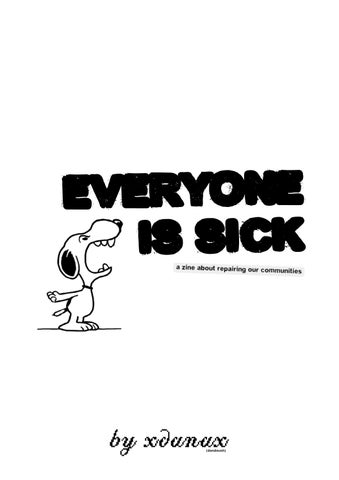

transformative justice 101
Transformative justice describes an alternative framework to respond to community violence and harm.
It aims to grasp these systems of violence at the root. Where carceral (like prison/police/state) responses to violence end up retraumatising communities and don’t often relieve or alleviate the harm, transformative justice creates safety in communities and helps communities heal from harm.
Violence doesn’t come out of nowhere. It is a symptom of Empire. Transformative justice is a way for communities to come together to break the cycle and build something new; to come together and respond to harm in ways that are restorative to people who are on the receiving end of harm, but also to provide ways for the community to build relationships and skills that intervene when violence happens.
Basically: cops don’t do shit, our communities don’t do shit, and everyone is sick. Clearly, something isn’t working. Everyone can be a harmdoer and on the receiving end of harm (but of course not all harm comes equally). Transformative justice is us taking matters into our own hands.
We deserve safer, community-centered alternatives to seek harm. We need to build a better world together.
survivor-led justice
and what that can look like in our community
Survivor-led justice is a tenet of transformative justice, an alternative system to addressing violence in our communities beyond police and carcerality.
The definition of survivor-led justice is in the name. When someone does harm, the survivor should be centred in action taken forward, to make the process of justice more meaningful but also to grasp problems at the root.
Sexual assault and abuse is a symptom of a deep systemic injustice of patriarchy, colonialism, and oppression. Assault is a tool people use to assert themselves over people they deem vulnerable. In our communities, this presents itself in a variety of ways. It can be as explicit as groping someone in the scene, targeted crowdkilling of femmes & queers & anyone ‘Other’, but it can also be a pattern of behaviours where you laugh off that guy who’s kinda weird or aggro to women and minors in your band until it comes out he did something gross and you have to kick him out.
When survivors speak up, listen closely. Assault doesn’t come out of nowhere. It is often preceded by a pattern of behaviours that may seem normal or even funny or justified to you. However, these behaviours escalate until harm is done.
Survivor-led justice means check in on the victimsurvivor first, and asking them what they want or how they want the situation to be resolved. You can chant ‘kill a rapist’ at your shows or post a storychain call out, but if the story is not yours to tell, action is not yours to take without consulting the survivor. The safety, healing, and agency for survivors needs to come first. There also needs to be room for community action and accountability in a way that makes sure things like this don’t happen again.
Transformative-led justice for the survivor may follow a mediation with the perpetrator after removing them from situations where they can do harm. It can look like a community conversation or having someone making sure the perpetrator is taking steps to take accountability, but also repair their mistakes and make up for what they’ve done, whether that looks like going to therapy, giving an apology, or giving to mutual aid. The point is: it should be up to the survivor, and we all need to be proactive in preventing assault and abusive behaviours in our scene. It’s not enough to be reactionary anymore.
1. Safety, Healing, and Individual Agency for Survivors.
2. Accountability and a transformation for people who harm.
3. Transformation of the social conditions that perpetuate violence.
from adrienne maree brown’s Emergent Strategy
Oftentimes when tough conversations happen in our communities, people may start to avoid these situations in order to not fully address them, or because ‘it has nothing to do with me’, or because they believe something doesn’t apply to them. I think a lot of this is people being unfamiliar with discomfort.
Discomfort is important and it is natural. If you aren’t uncomfortable, then you’re not really learning.
If you feel uncomfortable when someone calls you (or your friend, or even a stranger) out for a harmful behaviour, reflect on why. Oftentimes, this discomfort is rooted in core beliefs we have about ourselves or the world. This discomfort is sometimes difficult to acknowledge.
Naming this discomfort and embracing it is how we address systems of harm that exist in how we think and act. Instead of justifying yourself, or avoiding the topic, pick & prod at these feelings and interrogate those internal beliefs.
No one’s an exception to this (including me, the person writing this). The goal isn’t to be perfect or good at everything all the time. It is to create accountable communities. When we all get more comfortable with being uncomfortable, we have the chance to make sure the harm ends with us — for all forms of harm, not just misogyny, but also racism, queerphobia, or otherwise.
From the essay “Safety is an Illusion” by Angustia Celeste:
We can’t provide survivors safe space; safe space in a general sense, outside of close friendships, some family and the occasional affinity, just doesn’t exist… there is no such thing as safe space under patriarchy or capitalism in light of all the sexist, heteronormative, racist, classist (etc.) domination that we live under. The more we try and pretend safety can exist at a community level, the more disappointed and betrayed our friends and lovers will be when they experience violence and do not get supported.
We often hear ‘hardcore is a safe space’ (or at least should be a safe space). Is this actually enforcable? What does safety look like?
If this shit has been happening for decades, it’s not as simple as there being a few bad apples. We need to develop skills, collectively, to make sure safety isn’t a false promise, but something we can prioritise and guarantee for people.
this
doesn’t have all the answers. but hopefully it gave you something to think about! writing it did for me.
zine