Texas School Business








s the academic year comes to a close, some school employees might be looking forward to a couple of months of rest and relaxation, while others face a busier summer filled with tough decisions around budgeting.
Since COVID-19 first made headlines, we have heard from school districts across Texas that chronic absenteeism is a huge problem that has a significant financial impact on schools. In the last issue of Texas School Business, we spoke with a few leaders of districts who have implemented plans to combat that absenteeism. In this issue, we detail some offerings from a few of TASA’s corporate partners, businesses that have created programs designed to help districts reduce chronic absenteeism using cutting-edge technology paired with research and background in attendance issues.
You can read about their solutions starting on page 12. And if you have any input or ideas on battling this issue that you’d like to share with us, please don’t hesitate to reach out to me. We are all in this together, and if your district’s success story could inspire and help another district, it’s our mission to share your good news so that everyone may benefit from it.

Dacia Rivers Editorial Director

Texas School Business
MAY / JUNE 2026
Volume LXXIII, Issue 3
406 East 11th Street
Austin, Texas 78701
Phone: 512-477-6361
www.texasschoolbusiness.com
EDITORIAL DIRECTOR
Dacia Rivers
DESIGN
Phaedra Heinen
COLUMNISTS
Angela Gandy
Riney Jordan
Justin A. Lascsak
Moses Leos
Patty Moreno
Avery Neice
Jim Walsh
ADVERTISING SALES
Jennifer Garrido
TEXAS ASSOCIATION
OF SCHOOL ADMINISTRATORS
EXECUTIVE DIRECTOR
Kevin Brown
DIRECTOR, COMMUNICATIONS & MARKETING
Amy Francisco


N2 Learning and TASA are excited to partner to help districts transform the learning experiences for students, teachers, and administrators.

Our strategic initiatives in partnership with TASA are designed to create learning opportunities for school leaders across Texas. These initiatives cultivate purposeful networks of leaders engaged in meaningful work that advances the principles in the New Vision for Public Education.
Scan the QR code or visit N2Learning.org for information, testimonials and registration for our institutes with TASA.

N2P
#TXN2P

New principals will collaborate to share leadership strategies, explore innovative solutions, and build strong, accountable professional networks across diverse districts.
$2,500 * per principal
APL
10 SESSIONS
Ten, 90-minute online coaching sessions
#TXAPL
APL equips assistant principals with the skills and inspiration to become transformative leaders, preparing them for principal roles through targeted learning and leadership development.
$1,000 * per assistant principal
6 SESSIONS
Six, four-hour sessions during the school year
*Pricing excludes travel expenses.
#TXELI
ELI empowers district leaders to drive system-wide improvements in teaching and learning, offering strategic development sessions and year-round support from an Executive Coach.
$4,500 * per administrator
4 SESSIONS
Four, two-day sessions during the year rotating between Austin, Dallas, and Houston
#TXPVI
The Principals’ Institute is a year-long professional development series that equips principals with the knowledge and skills to lead and sustain transformative change in public education.
$6,000 * per principal
6 SESSIONS
Six, two-day sessions during the year rotating between Austin, Dallas, and Houston
#TXTLI
The boundary-breaking Teacher Leadership Institute empowers teachers to collaborate, move beyond traditional accountability standards, and create innovative, student-engaging classrooms.
$800 * per teacher
6 SESSIONS
Six sessions during the year customized for individual or regional consortium of districts

by Jim Walsh
he student walkouts we’ve been seeing of late have been about our immigration policy and its enforcement. It turns out this is not a new thing. Twenty years ago about 300 students walked out of Cypress Ridge High School in Cypress-Fairbanks ISD over the same issue. This produced the federal case of Madrid v. Anthony.
The students, mostly Hispanic, were upset over the Comprehensive Immigration Reform Act of 2006, which was working its way through Congress. (Spoiler alert: It never passed). They walked out on Monday, March 27, 2006, wearing T-shirts that read “WE ARE NOT CRIMINALS.” Afterwards, Principal Claudio Garcia asked the students to gather in the auditorium for a teachable moment. The principal facilitated discussion and debate among the students about the proposed bill and the larger issues surrounding immigration. But, the principal also conveyed an important message: Civic engagement on issues like this in our democracy is a good thing, but you can’t be walking out of school. Mr. Garcia informed the students that there would be no disciplinary action taken over what they did on Monday, but that anyone who walked out on Tuesday would be disciplined.
The principal had good reason to be worried about what might happen on Tuesday. There were rumors of a second walkout, and some non-Hispanic students were planning to wear counter T-shirts reading: “BORDER PATROL.” These facts, along with the principal’s knowledge of previous racial incidents on the campus, prompted Mr. Garcia to announce that any students wearing “unauthorized” T-shirts would be sent to the office and asked to change shirts. The school had plenty on hand.
There was a second walkout, this time with about 130 students. They were suspended for three days.
There is no doubt the school can take disciplinary action based on the walkout. But what about the T-shirt issue? Both groups of students were expressing political views via the wording on the T-shirts. The administration is saying: You can’t say that here. This tees the case up for an application of the Tinker test.
In Tinker v. Des Moines, the Supreme Court held that students have constitutional rights of free speech even while in school. If this applies to Mary Beth Tinker’s armband, it surely applies to the T-shirts the kids in Cy-Fair wanted to wear. Schools cannot discipline students for the exercise of those rights unless there is a reasonable forecast of a material and substantial disruption of school, or an interference with the rights of others.
Applying that test, the court sided with Principal Garcia and the school. Key quote: The evidence shows school officials held a reasonable belief that wearing the T-shirts at issue would cause further, perhaps more severe disruption and put student safety at risk. Students and Parents testified they believed there were racial tensions among the Hispanic, AfricanAmerican, and Caucasian groups at Cy-Fair. Students also testified that non-Hispanic students were making jokes about the immigration issue, and they felt hostility from non-Hispanic students. The Students heard rumors about the Border Patrol T-shirts and testified that if other students wore those T-shirts, there would have been a fight. Thus, the Students’ testimony corroborates Principal Garcia’s
Principals today should think through the Tinker test when confronted with a clash between student free speech and possible disruption.
concern that racial tensions were rising, and that if competing student groups wore the T-shirts at issue, there could be a riot.
We’re still fighting over immigration policy. But the legal standards for student protest in our public schools have not changed. Principals today should think through the Tinker test when confronted with a clash between student free speech and possible disruption.
Madrid v. Anthony was decided by the federal court for the Southern District of Texas on Sept. 25, 2007. It’s cited at 510 F.Supp.2d 425.
JIM WALSH is an attorney with Walsh Gallegos Kyle Robinson & De Los Santos P.C. He can be reached at jwalsh@wabsa.com. You can also follow him on X: @jwalshtxlawdawg.



by Justin A. Lascsak
ineral Wells is a small rural community in Texas located approximately 60 miles west of Fort Worth. Mineral Wells ISD (“district”) has approximately 3,300 students and 500 employees in six schools across five campuses. The City of Mineral Wells (“city”) has approximately 240 employees across multiple departments that covers 21.2 square miles. The district and city strengthened their partnership in 2025 when the idea of shared services proved to be mutually beneficial for both organizations.
The partnership between the district and city was primarily twofold: a.) the district employed student resource officers (“officers”) from the city’s police department, and b.) the police and fire departments were actively involved in the district’s emergency response plans and protocols. However, both organizations were facing escalating costs that would mildly alter agreements between the two entities.
The district had previously employed two full-time and three part-time officers. The need for full-time officers changed with House Bill 3 in the 88th Texas legislative session for Texas Education Code § Sec. 37.0814: “...ensure that at least one armed security officer is present during regular school hours at each district campus.”
The city moved to a third-party provider for technology support and services in 2020. The agreement included monthly billing for desktop support, Office 365 support, and backup services; after hours support along with out-of-scope projects and deployments were billed separately.
The district offset the immediate cost of five full-time officers by utilizing its school guardian program (trained and armed
school employees), allowing the district to stagger the increased cost over a couple of budget cycles. The district increased to three full-time with two part-time officers for the 2023-24 school year and completed the move to five full-time officers the following school year. However, the overall increased cost in officers caused the district to begin evaluating the cost of implementing its own district police department — partly due to the former city manager’s change in procedure where the district paid the full cost of the officers as opposed to a shared cost model used in previous years.
The city hired their current city manager, Jason Weeks, in January 2025. He noticed the technology services monthly bill had been increasing over the previous five years, while many items were billed for being out of scope with the agreement. He began to make inquiries regarding technology services to improve overall technology support for the city’s departments. Meanwhile, he had engaged in conversation with district Superintendent David Tarver regarding the officer agreement. The city manager believed that the district should only pay for the hours that it needed officers for each school day; it was during those conversations that the city manager had an idea — what if the district and the city exchanged resources?
Shared services may not necessarily be a novel concept, but it is certainly one that those involved were collectively unaware of occurring in any other community: the city would provide officers to the district, and the district would provide
Two local entities mutually benefit from an exchange of resources
The city would provide officers to the district, and the district would provide technology services to the city.

Shanda Bourn is the next principal of Taylor Elementary School, bringing more than two decades of experience to the job. She has served as Taylor’s interim principal since December. She began her career in 2003 after earning her bachelor’s degree from McMurry University. Her master’s degree was awarded from Hardin-Simmons University.

Now serving as executive director for elementary curriculum and instruction is Melissa Scott, who has 15 years of experience in Texas public education. Most recently principal of Stafford Elementary, she joined Abilene ISD in 2014 after beginning her career in Belton ISD. She holds a bachelor’s degree from Texas A&M University and a master’s degree in educational leadership from the University of Texas at Arlington.

Joseph Waldron has been promoted from deputy superintendent to superintendent. His twodecade career has also included assignments as a principal and assistant superintendent in districts in Texas and Illinois. He holds master’s degrees from Governors State University and Midwestern State University and a doctorate in global education from Lamar University.

The district’s new associate superintendent for curriculum and instruction is Lyndsey Williamson. She has been an educator for 20 years, working as a math teacher, counselor, associate principal and principal, most recently leading Cooper High School. She received her bachelor’s and master’s degrees from Angelo State University.

A new director of fine arts has been chosen for the district. Mark McGahey is a longtime music educator who has been the district’s assistant director of fine arts for three years. He brings more than 30 years of experience in music education to his new position, having joined Birdville ISD in 2023. Prior to that, he spent 26 years as director of bands at Keller ISD’s Keller
High School and directed band programs in Oklahoma.
The Bullard ISD board of trustees has named Micah Dyer superintendent. He comes to Bullard from Cuero ISD, where he held the top position, and previously led Lovelady ISD. He earned his bachelor’s degree from Kansas Wesleyan University and his master’s and doctoral degrees from Stephen F. Austin State University.


Now leading Reyes Elementary School is Virginia Bernal, who was the school’s assistant principal. Prior to that assignment, she was a first and third grade teacher in the district for 10 years.
Jessica Melendez-Carrillo has accepted the position of director of bilingual education and instructional professional development. She served as a teacher, instructional coordinator and assistant principal in the district before leading Reyes Elementary School.

The new principal of Canutillo Elementary School is Alma Ramos, who has spent her career in Canutillo ISD. Most recently assistant principal of Canutillo Middle School, she previously worked as an instructional coach and dual language and general education teacher.
Carroll High School’s Lee Munn has been promoted from associate head coach and defensive coordinator to head football coach. He has been with Carroll ISD since 2018.
Now serving as superintendent is Joshua Limmer, who most recently was principal of the district’s secondary school. He is a graduate of Sam Houston State University with a master’s degree from Texas Tech University.
The incoming principal of Windsor Park Elementary School is Marc Aguilera. He was principal of Sanders Elementary since 2021, following six years as an assistant principal and eight as a math specialist. He is a graduate of the University of Houston and received his master’s and doctoral degrees
from Texas A&M University at Corpus Christi.
Carroll High School’s new principal is Jenifer Guerra-Leos, who previously led Browne Middle School. She has 24 years of experience at the secondary level and holds bachelor’s, master’s and doctoral degrees from Texas A&M University at Corpus Christi.

Crowley ISD has named DeMarcus Harris head football coach at North Crowley High School. Most recently assistant head coach and defensive coordinator, he also serves as the school’s college, career and military readiness director. He previously held coaching positions in Mesquite, Richardson, Arlington and Little Elm ISDs.

Chief financial officer
Karen Smith was honored in February by the Texas Association of School Business Officials (TASBO) with its Legacy Award. The award is presented to TASBO members who have had an exceptionally distinguished career in school business and public education. In addition to her role with Cypress-Fairbanks ISD, she served as Texas’ first Association of School Business Officials (ASBO) International board officer for more than 30 years.
DeSoto ISD has named Brent Mitchell interim superintendent. Most recently an administrator in Missouri’s FergusonFlorissant School District, he comes to DeSoto with more than 25 years of experience in Texas, Missouri and Arkansas. He is a graduate of the University of Arkansas at Pine Bluff with master’s degrees from Harding University and the University of Central Arkansas. He is at work on his doctorate.
Superintendent Usamah Rodgers, who had led the district for three years, retired in February.

Jeff Greenwalt has come out of retirement to take the position of interim police chief at Eanes ISD. He began his career in 2001 with the Austin Police Department and in 2022 was named assistant chief before retiring in 2025.
The district has announced the appointment of Raquel Rodriguez as principal of Vasquez Middle School. She spent the past four years leading Ross Elementary after joining the district since 2004 and serving as a special education teacher, instructional coach and assistant principal.

A new superintendent has been appointed for Fort Worth ISD. Peter Licata, who most recently led Broward County (Fla.) Public Schools, has more than three decades of experience as a teacher, coach, principal, assistant superintendent, superintendent and university professor.

Todd Fouche has been promoted to district superintendent from deputy superintendent, a post he held for 10 years. Prior to that, he was an assistant principal, principal and director of finance.
The district announces the appointment of Kerry Therwhanger as its athletic director and head football coach.

Now serving as director for strategic initiatives is Maggie Walton, who spent 14 years at Acton Elementary, the last four as principal. She received her bachelor’s degree from Baylor University and her master’s degree from Texas Christian University.

The district’s new superintendent is former acting superintendent Stephen Brosch. He has also served as principal of Granger High School and as the district’s athletic director and head football coach.
Humble ISD has chosen Kyle Coats as head football coach of Atascocita High School. He previously coached in Conroe, DeSoto and Round Rock ISDs and at East Texas Baptist, Hardin-Simmons and Trinity universities.
The district has announced Casey Walraven as its next head varsity football coach. He comes to Hutto with more than 15 years of experience in that capacity, including the past five seasons with Alvarado ISD. He previously coached in Cleburne and Grandview ISDs.

Superintendent Magda Hernández has announced her upcoming retirement, effective in December. This will conclude a 34-year career in public education, the past eight of which were spent leading Irving ISD. She began her time in the district as a paraprofessional, going on to serve as both Irving ISD’s first female superintendent and the first to gain the role from within.
Veteran educator Robert Jaklich has accepted the position of interim superintendent of Judson ISD. He began his now 40-year career as a coach in San Antonio’s Northside ISD, advancing there to work as a principal and executive director of human resources. He also led Harlandale and Victoria ISDs and was a senior field service agent with ESC Region 20.

Nichole Frias has been promoted from assistant principal to principal of Winborn Elementary School. Prior to coming to Katy, she spent nine years with Houston ISD. She holds a bachelor’s degree from the University of Houston and a master’s degree from Houston Baptist University.
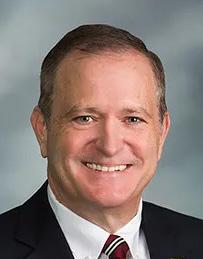
Katy ISD chief financial officer Christopher Smith has been elected vice president of the TASBO board of directors. Initially elected to the board in 2023, he will serve one year as vice president, followed by terms as presidentelect and, ultimately, president.

Shakira Bodon is now principal of Killeen Elementary School. Most recently principal of Peebles Elementary, she previously was assistant principal of Carney and Clarke elementaries. She holds a bachelor’s degree from the University of Texas and a master’s degree from Concordia University.

Christina Harris now leads Murphy Middle School. She has been with the district for 20 years, working as a teacher, instructional and AVID specialist, principal, and director of curriculum and instruction.
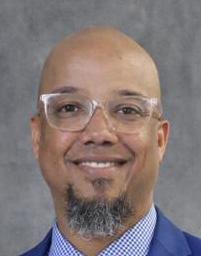
Former Sheldon ISD assistant superintendent Donald Stewart has been named Killeen ISD’s deputy superintendent for learning services. Previously an administrator for East Texas Advanced Academies and assistant superintendent of Natalia ISD, he is a graduate of the University of Texas at San Antonio with a master’s degree from Lamar University and a doctorate from Liberty University.
In addition, Killeen ISD has announced the appointment of five new executive directors of school leadership. They are:
• Amber Dibble, elementary school leadership;
• Mary Lynn Gawryszewski, high school leadership;
• Yanitizie Oquendo, elementary school leadership;
• Tomas Sias, middle school leadership;
• Lance Williams, middle school leadership.
The Lamar CISD board of directors announces the following principal appointments:
• Aerika Dial, Carter Elementary School;
• Shaq Dixon, Austin Elementary School;
• Marjorie Garcia, Bowie Elementary School;
• Julie Jackson, Haygood Elementary School;
• Katherine Lange, Terry High School;
• Kassandra McCann, Leaman Junior High School;
• Leslie Spencer, Wertheimer Middle School;
• Trameasha Strickland, Wright Junior High School;
• Trey Watkins, Fulshear High School;
• Brent Watson, Lamar Junior High School;
• Brandi Wheeler, Briscoe Junior High.
► See Who’s News, page 16

Tech tools help districts reduce chronic absenteeism
by Dacia Rivers
Edia’s AI solution uses artificial intelligence to send an automatic text message to parents when their students are marked absent.
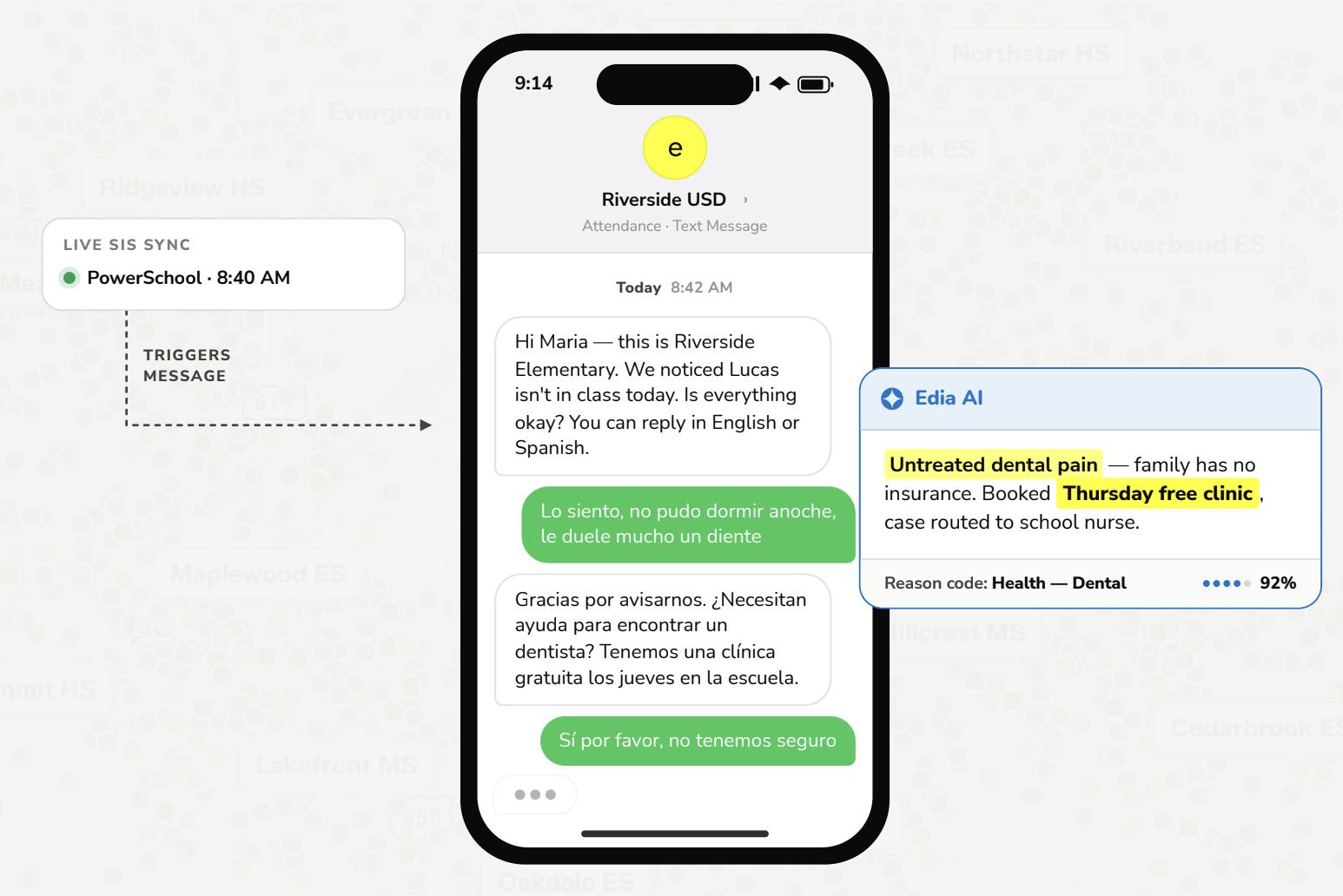

Chronic absenteeism is a nationwide issue in public schools, and here in Texas, where attendance is tied to funding, it’s of paramount importance. As schools work to manage dwindling budgets, finding the time and the staff necessary to dive into why students aren’t showing up and how to increase attendance is a challenge. Some businesses have stepped up to the plate, creating tech tools to help districts best use staff time to focus on improving attendance.
AI is in everything right now, and while it sometimes seems an unnecessary and ham-fisted add-on (does anyone need an AI-powered washing machine?) no human can aggregate data faster than a machine, so why waste precious time and resources trying? Two of TASA’s corporate partners have developed attendance-boosting products powered by AI to help simplify and expedite the exhausting and necessary task of attendance management.
Edia is an ed-tech company with a powerful new tool designed to help districts combat chronic absenteeism. Joe Philleo, cofounder and CEO of Edia, says he met with more than 100 school districts and their intervention and attendance teams to better understand the attendance issue districts were facing. One fact that stood out most to him was that 75% of student absences are unexplained. This leaves attendance personnel scratching their heads, trying to find out why a student might be missing class and how they can be encouraged to get back into the classroom.
Throughout time, schools have called parents to check in on absent students, but with increased school sizes and increased absences, this task becomes gargantuan. One district Philleo interviewed experienced a 90% average daily attendance. In a school of 2,000 students, that would
mean 200 absent kids — far too many parents to call for a check-in.
“Staff doesn’t want to make 200 phone calls a day. They don’t want to go from voicemail to voicemail to voicemail,” Philleo says. “They want to help kids.”
Edia’s AI solution uses artificial intelligence to send an automatic text message to parents when their students are marked absent. This isn’t a completely new idea, but what sets Edia’s software apart is that it asks the parent for a quick text response detailing why their student missed school. Philleo says being able to respond quickly, and anonymously, to an AI system has been highly successful. Edia sees a 50-60% reply rate to these messages.
◄ Continued from page 13
“There tends to be a nonjudgemental aspect to the AI where parents feel OK saying what happened.”
The AI system is then able to compile these responses, along with the when and how often data from absences, to create a helpful and informative report for school staff. For instance, the AI can quickly recognize if a student is just missing fourth period every day, possibly pointing to a problem in that specific class. Or a student might be missing Fridays only, due to custody schedules. The system can also take a look at what classes a student is attending more regularly, if a student is only attending science and math classes and skipping others. AI is primed to look for these patterns and, combined with parent responses, offer a full picture of a students’ attendance, which personnel can then use to work toward a solution.
“Staff are still ultimately the ones overseeing what to do,” Philleo says. “They get all the context and can go talk to the student or the parent. They’re still the one doing the work, but the AI is like a power tool — the work is dramatically eased, accelerated and improved.”
Edia developed its AI attendance tool in New Mexico, where 40% of students were chronically absent. Edia now provides its services to 30% of schools in the state. In 2025, Edia partnered with Dunkirk City Schools in New York, and was able to help the district cut their chronic absenteeism in half in just one semester, from 38% to 19%.
The San Bernardino City Unified and Salt Lake City school districts have also begun using Edia AI to improve attendance.
As districts across Texas face budget challenges, Philleo’s hope is that Edia AI can help get students back in the classroom to increase allotment income, but also to help students who might otherwise slip through the cracks.
“It’s a win for the school district financially, where if we can increase ADA by 1%, the districts get millions more dollars, but also it’s a win for the students, to get them help and support early on.”
For more information on Edia’s AI systems, visit edia.app.
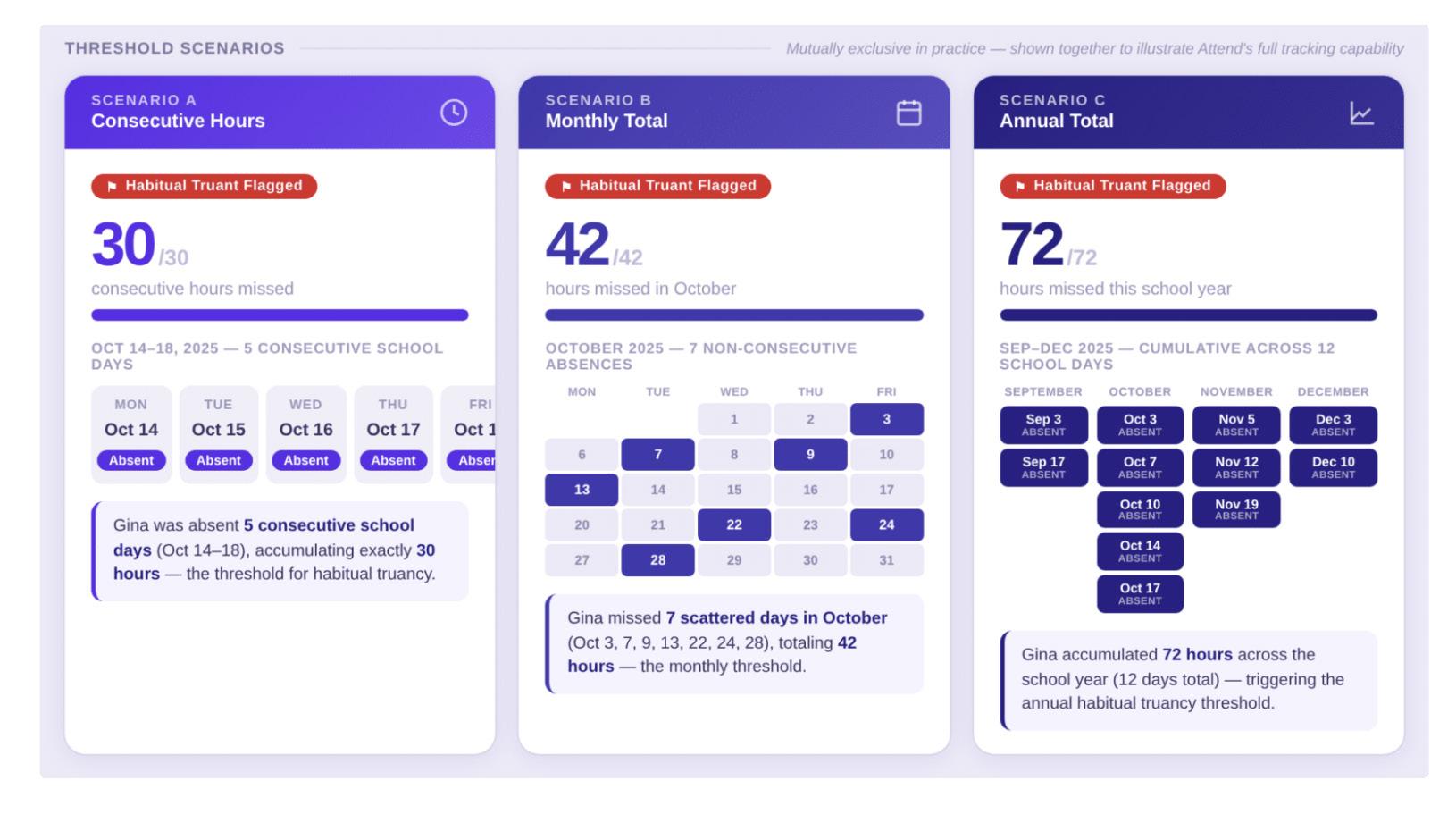
School Status is a portfolio company with several products, its biggest being School Status AI — a system using predictive analytics to identify students who are trending toward chronic absenteeism. School Status Attend is a comprehensive platform that governs everything a district does with attendance from notifications to truancy court assistance.
School Status Attend helps to take administrative work off of districts, sending messaging to families to follow up on absences. These messages are automated and go out in different modalities depending on the needs of each district’s local communities. Sometimes, in rural areas where Wi-Fi might be limited, paper mailers might be more useful. Or if a district has a lot of younger parents, School Status might use text messaging to quickly reach them.
Beyond those communications, the system also works to compile absence data into a format that is useful to the district. The aim is for these insights to determine areas that
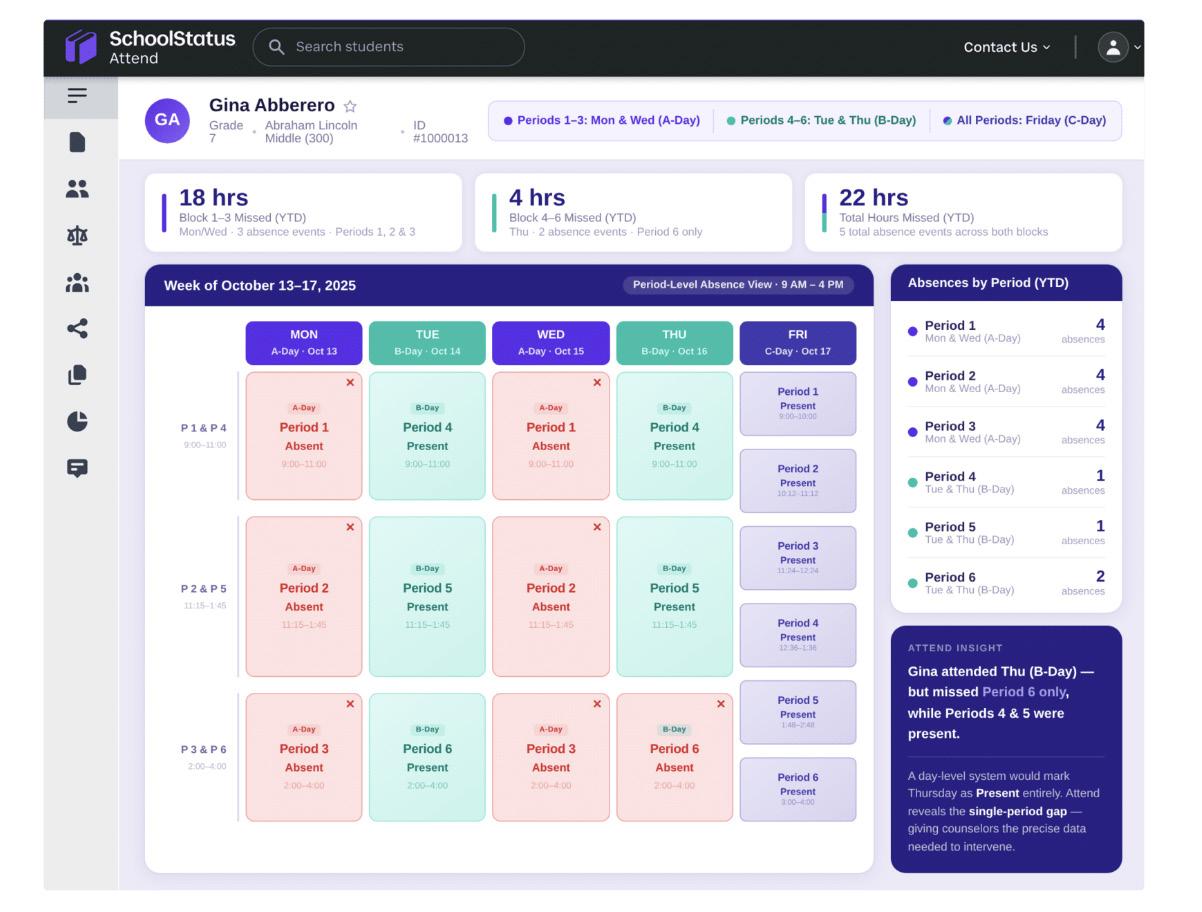
might need more focus, such as a specific school that has a larger attendance problem, or a certain grade level where attendance lags.
The third component of School Status Attend is a team of attendance professionals who then work hand-in-hand with school staff to figure out what the data means and what the district’s next best steps are. School Status employs professionals with decades of attendance experience who help extend a district’s attendance team and followup to create and implement attendance improvement plans. This close and constant communication allows the district to remain flexible in its approach to various attendance issues, and School Status can respond with personalized help as needed.
“Every absence has a story, you just have to uncover it” says Neff Dukes, lead product marketing manager at School Status.
“Because we have worked in attendance
for so long, we can help districts figure out what their trends are and these underlying stories of absenteeism.
Dukes says that Corsicana ISD has reduced chronic absenteeism by 25% in its first year of partnering with School Status Attend.
“When you partner with us, you get an implementation manager who is going to make sure that the data is set up correctly and everything is flowing well,” Dukes says.
“Then we have customer success managers who are going to be the folks on the ground and in the trenches with you day to day, figuring out how to respond to what’s happening in your district.”
To learn more about School Status Attend and request a demo, visit schoolstatus.com.
DACIA RIVERS is editorial director of Texas School Business. Reach her with your story ideas at drivers@texasschoolbusiness.com.
“Every absence has a story, you just have to uncover it.”
—Neff Dukes, School Status
◄ Continued from page 11
Additionally, four new campuses are scheduled to open for the 2026-27 school year with the following inaugural principals:
• Steffenie Horelica, Slawinski Elementary School;
• Juan Nava, Career and Technical Education Center;
• Toni Scott, Bright Futures Academy at Beasley Elementary School;
• Laura Spiegel, Becerra Elementary School.

Superintendent
Walter Jackson has been elected 2026-27 vice president of the Texas Association of School Administrators (TASA). He is completing a 2024-26 term on TASA’s executive committee as its Region 4 representative. A member of TASA since 2015, he has also served on the association’s advocacy and professional learning committees.

Now serving as director of the Buckley Early College High School is Bianca Martinez, who has been with the district since 2009. She accepted her first administrative job in 2020 as dean of instruction and assistant principal at Cigarroa High. She holds a bachelor’s degree from Baylor University and a master’s degree from Texas A&M International University.

Chris Clark, who was named Leander ISD’s acting superintendent in December, now holds the position of superintendent on a permanent basis. Prior to joining the district in 2023, he worked as a teacher, assistant principal, principal and district-level administrator in Frisco and McKinney ISDs and in Oklahoma’s Tulsa Public Schools.
prior to moving into administrative roles, was an instructional coach and teacher.

Sally Sosa has been named principal of Giddens Elementary School. Most recently principal of River Ridge Elementary, she was previously assistant principal of Block House Creek Elementary and was an adjunct professor and supervisor at Concordia University. She earned her bachelor’s degree from Texas Tech University, her master’s degrees from Concordia University and Stephen F. Austin State University, and her doctorate from Texas State University.

Cleve Ryan has been tapped to serve as executive director of transportation services. Most recently head boys’ basketball coach at The Colony High School in Lewisville ISD, he brings more than 30 years of experience in education to his new job. He is a graduate of Stephen F. Austin State University and holds a master’s degree from the University of North Texas.

Will Skelton has moved into the role of chief of student services after serving as chief of high schools. Over the course of 25 years with Lewisville ISD, he was also a teacher and principal of Marcus High School and Flower Mound High School’s Ninth Grade Campus.
Former Mathis ISD elementary principal Lacy Brauchle is now superintendent of Loraine ISD.

Christopher Anderson, newly appointed chief operations officer, has returned to the district where he served as executive director of fine arts from 2014 to 2018. Most recently, he was director of fine arts in Arlington ISD. He is a graduate of Abilene Christian University with a master’s degree from Northwestern University and a doctorate from the University of Texas.
Now serving as executive director of facilities, planning and construction operations is Jeremy Sagebiel. He comes to the district from the private sector, where he worked as a developer, engineering technologist and materials tester. He holds a degree in architecture.
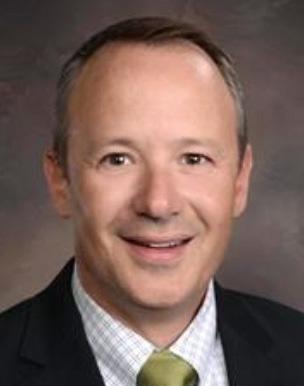
The new principal of Lubbock High School is Michael Stewart, who most recently led Hutchinson Middle School. He holds a bachelor’s degree from Texas Tech University and a master’s degree in educational leadership from Lubbock Christian University.

Coronado High School has named Caroline Wood its head volleyball coach. She has over a decade of teaching and coaching experience and is a graduate of and former athlete at Texas Tech University.
Lufkin ISD
Claire Bray, new principal of Herty Primary School, began her career in 1998 after graduating from Southwestern University. She taught in Plano and Texarkana ISDs and, most recently, in Nacogdoches ISD.
The district’s new director of strategic educator development is Sara Pariseau Prior to joining Lufkin ISD, she was on the staff of the Texas Education Agency.
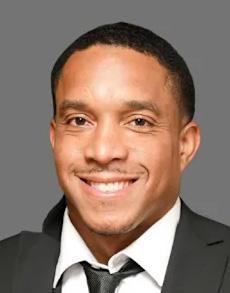
The new head football coach and athletic coordinator at Manor High School is Peter Hopkins, who comes to Manor from Humble ISD, where he was associate head football coach at Humble High School. He has also had coaching assignments at Louisiana Tech University, Kilgore College and Tyler Junior College.


Christy Hilbun has been appointed the inaugural principal of the district’s new Early Childhood Center, scheduled to open in August. She has more than a decade of experience leading early childhood communities in Leander ISD and,
Brenda Butts has taken on the role of director of specialized instruction. She joined the district in 2003 and has served as a special education instructional coach and, most recently, as the district’s coordinator of resources and inclusion. She received her bachelor’s and master’s degrees from Lubbock Christian University.
Former Mansfield ISD area superintendent Tiffanie Spencer has been promoted to district superintendent. A graduate of Mansfield High School before attending the University of Houston, she received her master’s degree in education from Texas A&M University at Commerce.
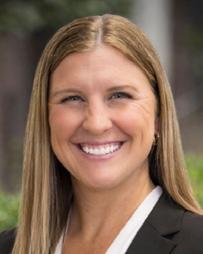
Oak Run Middle School’s new principal, Stephanie McClain, previously served as associate principal of New Braunfels High School, a role she held since 2022. Prior to that, she worked in Comal ISD as a high school assistant principal and academic dean. She earned her bachelor’s degree from Slippery Rock University and her master’s degree in educational administration from Lamar University.

After 25 years with Boerne ISD, Terry Gault has accepted the job of assistant athletic director of Northeast ISD. He was initially hired in 2001 as an athletic trainer at Boerne High School, where he remained until Champion High opened seven years later and he transferred to that school. He was named Boerne ISD’s assistant athletic director in 2017.
The district has announced two principal appointments. They are:
• Adrian Gonzales, Marshall Law and Medical Services High School;
• Christie Szabo, Northside School of Innovation, Technology and Entrepreneurship.

Former Uvalde CISD superintendent Ashley Chohlis has taken on the duties of Pflugerville ISD’s chief of staff, bringing more than 30 years of experience to her new
position. She earned her bachelor’s degree from the University of Texas, her master’s degree in educational administration from Texas A&M University at Kingsville.
The new principal of Christie Elementary School is Liliana Marquez, a 16-year educator who has worked as a bilingual teacher, assistant principal, principal and, most recently, director of dual language and ESL programs.

Now serving as principal of Daffron Elementary School is Wendy Miller, who has been with the district since 2008 and most recently led Mathews Elementary. She is a graduate of Concordia University with a master’s degree from Texas Woman’s University.

Tramy Tran has been named director of Plano ISD’s welcome and enrichment centers within the department of student, family and community services. She joined the district 16 years ago and has been a teacher, counselor, assistant principal and principal.
Pleasanton ISD has announced the appointment of John Prezas as superintendent. He was most recently an assistant superintendent in Corpus Christi ISD, where he previously worked as a principal.

Superintendent Holly Ferguson has announced her upcoming retirement, effective the end of May. She has spent the past 23 years of her 28 year career with the district.
Rockdale ISD’s newly appointed superintendent, Michael Watson, spent the past 12 years with Hays CISD, most recently as its deputy academic officer. He is a graduate of Texas A&M University at Corpus Christi, from which he also received his master’s and doctoral degrees.

San Angelo ISD has announced the appointment of Lacy Foster as assistant athletic director. The two-decade educator most recently coached at Central High School and previously worked in Birdville and Midway ISDs. She is a graduate of Angelo State University with a master’s degree from ConcordiaIrvine University.
After four decades in Texas public education, the past four years leading San Antonio ISD, superintendent Jaime Aquino has announced his upcoming retirement.

In June, Robert Lee ISD Superintendent Aaron Hood will begin his one-year term as the latest president of the Texas Association of Community Schools (TACS). Hood has served as superintendent in the district for an impressive 20 years. Himself a Robert Lee native, he originally began his career as a teacher and coach in Eden CISD before serving in Cross Plains, San Angelo and Veribest ISDs, settling back in Robert Lee in 2006.
Public education runs in Hood’s family. His father served as a principal and superintendent, so Hood grew up as an educator’s kid. He loved sports and always wanted to work as a coach. While coaching, Hood realized he could help kids more by serving as a principal, and so worked to get his master’s degree while teaching in San Angelo.
While Hood was working as a high school principal in Veribest, administrators from his alma mater of Robert Lee ISD called him to ask him to apply for the district’s open superintendent’s seat.
“The greatest benefit of joining TACS is to be able to combine with other like schools of like sizes to have a unique voice in what happens during the legislative session.”
“I think I originally told them no three times, and then I finally just put in for the job so they’d stop calling,” Hood recalls.
Hood and his wife both grew up in Robert Lee, and so they returned to the area to work and to raise their children. RLISD was a member of TACS, so Hood joined the group and was asked to run for the executive committee. Jimmy Bickley, a former RLISD superintendent, was the first TACS president, historically tying together the group and the district.
Districts with fewer than 12,000 total students or having just one traditional high school campus are invited to join TACS, which was created to support the unique needs of small, midsized and rural school districts. Hood points out that many of these districts aren’t large enough to have central offices, so it’s especially helpful for them to join TACS to connect to others in similar situations for information, advice and support.
“The greatest benefit of joining TACS is to be able to combine with other like schools of like sizes to have a unique voice in what happens during the legislative session,” Hood says. “And
when TEA sets rules and regulations, it’s important for us to be able to have a common voice.”
During a legislative session, TACS works to amplify a unified voice for community schools. While a larger district might be able to go before the Legislature and represent tens of thousands of students, TACS representatives can represent hundreds of small districts, giving those smaller districts the opportunity to get their voices heard.
With a legislative session on the horizon, Hood expects to spend much of his time as TACS president preparing, looking at pre-legislative agendas and finding the items that will most impact community schools. He will also visit Austin during the session to speak on behalf of TACS members in front of legislators and the
commissioner of education. While he does not know what the session will bring, he hopes to see increased funding for smaller and rural districts and a focus on local control.
While TACS might be focused on smaller schools, Hood says the organization is bigger than the sum of its parts, and provides invaluable assistance to districts with minimal staff and smaller geographical footprints.
“TACS is a great organization,” Hood says. “They’ve been around a long time, and they have a good reputation.

Texas Association of Community Schools (TACS)
Membership: TACS membership is open to staff at school districts with fewer than 12,000 students in average daily attendance or that have only one high school.
Mission: TACS aims to work for the improvement of instruction in the community schools of the state, provide professional growth programs, support legislation that enhances the opportunities and abilities of community schools to provide quality education programs, and cooperate with other organizations dedicated to such purposes.
Year founded: 1951
Website: tacsnet.org
Tracey
Morman, Director of Counseling/College and Career Readiness, Amarillo ISD, Texas



Explore more details at cb.org/texas The results from the SAT ® Suite of Assessments serve as a key tool for establishing and measuring academic benchmarks, guiding both instructional planning and student development.





Insight™ Meaningful and actionable data Bluebook™ Secure, fully digital testing experience BigFuture® School Scores, career insights, and next-step guidance AP Potential™ Helps identify students ready for AP coursework

Texas

The newest president of the Texas Association of School Business Officials (TASBO) comes to the role with more than 25 years of experience working in procurement. Phillip Ellison began his career working in procurement for the University of Texas MD Anderson Cancer Center. After nine years there, an acquaintance of Ellison’s informed him of an open position in Spring ISD. Ellison made the move to the district and has worked in Spring for 16 years. Currently he is the executive director of procurement services in the district.
Working in public education is important to Ellison. He is happy to be able to share his knowledge and experience through his positions with both SISD and TASBO.
“In K-12 in the state of Texas, and all over the nation, we have the ability to share our knowledge with each other in a noncompetitive environment, and that’s a lot different than any other industry.” Ellison says. “We can share our knowledge with each other and grow through learning from other districts.”
Spring ISD’s Phillip Ellison serves as newest TASBO president
“In K-12 in the state of Texas, and all over the nation, we have the ability to share our knowledge with each other in a non-competitive environment, and that’s a lot different than any other industry.”
When Ellison arrived in Spring, the district’s CFO recommended he join TASBO. Ellison attended the association’s annual conference shortly thereafter and says he found the experience “eye-opening.”
“It was the camaraderie and the openness everyone had to sharing information with each other,” he says. “That’s how I learned how to do my job.”
Ellison took the position in Spring with experience in procurement, but his work had not directly tied into K-12 public education at that point. Through his involvement in TASBO, he says he quickly learned the intricacies of school district purchasing and was able to become an educator with the organization, sharing his own knowledge from his prior work with MD Anderson.
To Ellison, the networking and connection opportunities TASBO provides are the greatest benefits to membership.
“A lot of people, especially in smaller districts, don’t have colleagues or sounding boards to bounce information off of,” he says. “So having colleagues in other districts gives them the ability to talk through issues or challenges or seek solutions to problems that they have. The networking opportunity with TASBO is paramount.”
As TASBO president, Ellison says his challenge for members, himself included, is to not just be the best school business officials in Texas, but the best partners for their entities.
“Our individual excellence is a point of pride, but it’s only valuable if it translates into collective success,” Ellison says.
TASBO is just ending its last five-year strategic plan, and as president, Ellison will be helping the association kick off a new five-year plan. In addition, TASBO will be celebrating its 80th anniversary this year with Ellison at the helm. The association also recently sent a large survey to members to get their feedback on priorities going forward.
Ellison also hopes to grow the relationship TASBO has with TASA in his time as president. School business officials and school administrators work side by side, and to Ellison, the two groups have the potential to grow together and benefit not just both groups, but the entire state public school system.
Texas Association of School Business Officials (TASBO)
Membership: TASBO supports Texas school district employees in all areas of business and operations, including accounting and finance, operations and student services, personnel, purchasing and inventory management, technology and student data, and safety and risk management.
Mission: TASBO maintains a high standard for ethical conduct while continuing to evaluate the direction of the organization and the profession. Using its core values and purpose as a guide, TASBO seeks a bright future for schools and its members.
Year founded: 1946
Number of members: 7,000
Website: tasbo.org



by Avery Neice
Ididn’t realize how much a field of grass and a small piece of fabric hanging from my hips could change me. At first, flag football was just something I decided to try, another activity, another way to stay busy. I thought it would be fun, maybe a little challenging. What I didn’t expect was that it would become something that felt like home.
The first time I lined up for a play, my heart was beating so loudly I could hear it in my ears. I remember looking around at my teammates, feeling this mix of nerves and excitement. When the ball was snapped, and I started running, something shifted. All the overthinking, all the distractions in my mind, faded away. In that moment, there was only the game. Only the play. Only the next move I had to make. That feeling is what keeps me coming back.
Flag football means the world to me because it’s the one place where I feel completely present. On the field, I’m not worrying about school, stress, or anything else happening in my life. I’m focused on my teammates, the defense in front of me, and the goal we all share. It’s like the field creates a space where I can just be
myself without overthinking. Running routes, pulling flags, and listening for the quarterback’s call gives my mind a break from everything else.
But football is more than an escape. It’s a teacher. It teaches me discipline in ways I didn’t expect. There are days when I’m tired, sore, or not in the mood to practice. There are days when the weather is uncomfortable, when the drills feel repetitive, and when I’d rather be anywhere else. But I still show up. I still run. I still try. Football has taught me that showing up matters more than how you feel. Improvement doesn’t come from doing something only when it’s easy. It comes from doing it when it’s hard. It also teaches me accountability. If I miss a catch or pull the wrong flag, there’s no one else to blame. I have to own it. I have to learn from it. That responsibility has changed how I handle things off the field, too. I’ve learned to admit my mistakes instead of avoiding them. I’ve learned that messing up doesn’t make me a bad player; it gives me something to work on.
One of the most meaningful parts of being a flag football player is the connection with my
“Student Voices” is a regularly featured column in Texas School Business. It’s an opportunity for students of all ages from across Texas to share their experiences in K-12 public schools. Contact Editorial Director Dacia Rivers at drivers@texasschoolbusiness.com for publishing guidelines.
teammates. There’s something powerful about working toward the same goal with people who are sweating, struggling, and pushing themselves just like you are. We cheer for each other’s good plays and encourage each other after mistakes. We laugh during warm-ups and push each other during drills. Over time, those teammates become more than just people you play with. They become people you trust.
Trust is a big part of football. I trust my teammates to run their routes, to block, to communicate. They trust me to do my job, too. That kind of teamwork is something you don’t experience in many other places. It feels good knowing that you’re part of something bigger than yourself.
I also hold myself to very high expectations when it comes to football. I don’t want to be just “OK.” I don’t want to blend in. I want to excel. I want to be the player who gives maximum effort every single play. I want to get faster, sharper, and more aware of the game each time I step onto the field. I pay attention to feedback from coaches, I notice what other players do well, and I practice moves until they feel natural.
Sometimes those expectations feel heavy. I get frustrated when I drop a pass or react too slowly. I replay mistakes in my head long after practice ends. I think about what I could have done better. But even though it’s frustrating, it shows how much I care. I don’t want to settle for average because football means too much to me for that.
Those moments of frustration push me to work harder. They remind me that growth doesn’t come from comfort. Every mistake is a lesson, every missed play is a chance to improve. Football has helped me understand that being the best I can be doesn’t mean being perfect, it means constantly trying to get better.
Flag football has also built my confidence in ways I didn’t expect. Every time I make a good play, every time I notice myself improving, I start to believe more in my abilities. That belief doesn’t stay on the field. It follows me into other parts of my life. If I can push through a tough practice or a challenging game, I can push through difficult situations outside of football, too.
What I love most is the feeling during a game. The adrenaline, the cheering, the sound of footsteps on the grass, and the quick
decisions that have to be made in seconds. There’s a rush that comes with knowing that all your practice is being put to the test. When I’m running down the field or pulling a flag at the last second, I feel alive in a way that’s hard to describe.
Football isn’t just something I do after school. It’s part of who I am. It shapes how I think, how I work, and how I see myself. It has taught me discipline, teamwork, responsibility, and confidence. It has shown me that I am capable of more than I sometimes think.
Being a flag football player means carrying high expectations for myself, but it also means believing that I can meet them. Every time I step onto that field, I’m not just playing a game. I’m proving to myself that I can grow, improve, and give my best effort.
Football means the world to me because it’s where I’ve learned some of the most important lessons about effort, mindset, and believing in myself. And as long as I have a field to run on and flags to pull, I will keep striving to be the best player and the best version of myself I can be.
AVERY NEICE is an 11th grade student at Horn High School in Mesquite ISD.
972-361-6303 keith.alberts@tpspool.org

Hays CISD’s orchestra program began in 2020 with only sixth graders and recently expanded to include high schoolers.
by Patty Moreno and Moses Leos
Hays CISD is a fast-growth district south of Austin with just over 25,000 students. The fine arts programs include elementary art and music, along with secondary art, band, choir, color guard, dance, mariachi, orchestra, and theatre. The growth in the area has been supported by the community with additional fine arts facilities at three elementary schools, six middle schools, and three comprehensive high schools ranging from new art rooms, fine arts gyms, a campus auditorium and marching band practice pads. Past bond projects have also supported the arts with new instruments, equipment, and uniforms. Hays CISD’s orchestra program, which began with only sixth graders in fall 2020, has expanded to include high schoolers. It’s quite exciting to build these groundbreaking facilities and order this fantastic equipment; however, the delivery of quality instruction is the true metric of any fine arts program.
As the recipient of the 2026 Outstanding Administrator for the Organization of American Kodály Educators (OAKE), I am delighted to share some research-based best practices and unique events for music programs. It all begins with the successful implementation of the Kodály Concept, made famous by Zoltán Kodály (ZOL-tan KOH-die). Training the “ear before the eye,” (audiation), acapella singing, movement-based folk songs, music literacy and developing a love for music are hallmarks of this worldrenowned method.
Hays CISD offers an intense two-week summer professional development workshop — the Kodály Certification Program (KCP) — which guides educators toward becoming certified in Kodály. Every Hays CISD elementary music teacher has completed this training (which is equivalent to 18 hours of graduate work completed over three summers) or are currently enrolled to
participate. Several of the secondary choral directors have also completed the training to align the music curriculum from prekindergarten to 12th grade. Aligning instruction horizontally and vertically is much easier when a common pedagogy is in place districtwide. Secondary instrumental music directors have received an overview of the Kodály Concept at in-service sessions to bridge the transition from fifth grade to sixth grade.
The consultants who teach the core classes of Pedagogy and Musicianship in the Hays CISD KCP are Dr. Mícheál Houlahan and Dr. Philip Tacka, coauthors of numerous Kodály related publications, including Kodály Today. Other courses include Conducting and Choir taught by Dr. Daniel Arredondo, Folk Song Repertoire and Analysis taught by Gabriela Montoya-Stier and Lauren Bain. The faculty has a unique combination of researchers, authors, and practitioners.
It is the research of Houlahan and Tacka that allows the program to adapt to the current needs of the students while keeping the integrity of the concept. The Oxford University Press has a website that houses many videos of the instructional strategies that were recorded with KCP participants. There is also a Kodály Today YouTube channel with teaching videos. Participants in the course are allowed early access to publications and can try out the materials with their students during the year. The participants return the following summer to share their insights with the KCP faculty. Level 2 and 3 participants implement the new instructional strategies with the students in the Hays CISD summer choir camp, resulting in a unique teaching lab. There are two labs running simultaneously with 30 Hays CISD choir students in each room. The Level 2 participants teach the students under the supervision of Dr. Tacka, and the Level 3 participants teach the second group under the supervision of Dr. Houlahan. Level 1 participants observe the teaching lab and rotate between both classrooms. As a bonus, Dr. Sarah Martinez is the conductor for the children’s choir summer camp and leads the group in a concert at the end of one week of rehearsals.
It is my belief that high-quality instruction and experiences provided to elementary students benefit secondary school music programs. Hays CISD proudly offers numerous opportunities for elementary students to excel in the fine arts. One avenue is the Hays CISD Honor Choir,


“Hays CISD makes it 100% Possible” is the district’s mission statement.
which performed at the Kodály Educators of Texas (KET) annual meeting held during the Texas Music Educators Association’s (TMEA) Convention in February 2026. The district also hosts an annual Choral Festival for elementary, sixth grade and non-varsity choirs. These vocal groups perform two or three pieces for the judges and then sightread eight measures of a simple pentatonic or diatonic melody for another team of judges. This mini version of the UIL Concert and Sight-Reading Evaluations is the perfect preparation for young ensembles and vertical alignment of programs.
Secondary school band, choir, and mariachi programs in Hays CISD have equally experienced a rich history of success. In April 2026, the orchestras from all three Hays CISD comprehensive high schools earned
their first Sweepstakes trophies. The Lehman High and Hays High mariachi ensembles qualified for the 2026 UIL State Mariachi Contest; the Lehman High mariachi secured a Superior rating. In November 2025, the Moe and Gene Johnson High band competed at the UIL 6A State Marching Contest and the Hays High band reached the finals of the UIL 5A State Marching Contest, where the Hawks finished in 10th place.
“Hays CISD makes it 100% Possible” is the district’s mission statement. I firmly believe that is reflected in the world of possibilities made available for students through the district’s fine arts program.
PATTY MORENO is director of fine arts in Hays CISD. MOSES LEOS is visual media coordinator in Hays CISD.
Education service center programs & practices

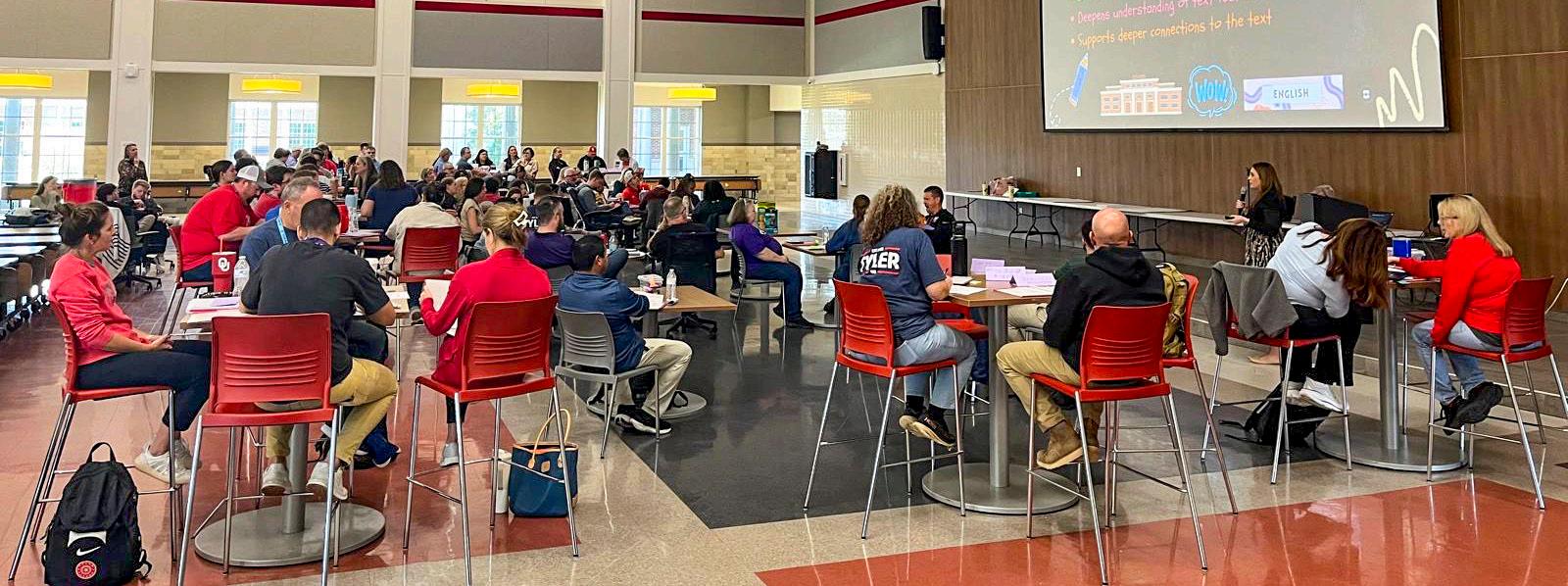
Region 7's Title III Bilingual/ESL team took the lead to help the ESC respond to new ELPs.
by Angela Gandy
Have you heard the news? The English Language Proficiency Standards (ELPS) have been refreshed and will be implemented beginning in the 2026-27 school year. While change in education can sometimes feel overwhelming, across Region 7, there’s a different feeling taking hold — confidence. Educators are not facing this transition alone. They are being equipped, supported, and prepared every step of the way.
For many teachers and leaders, the initial reaction to updated standards is uncertainty: What’s changing? How will this impact my classroom? Where do I start?
That’s exactly where Region 7’s Title III Bilingual/ESL team stepped in — with a focus not just on information, but on support that truly sticks. Participants expressed a need for hands-on practice and content-specific examples to feel prepared for the upcoming implementation.
After participating in professional learning sessions, educators across the region shared:
“I really enjoyed getting a sneak peek at the new ELPS and comparing them to the old ones. I already feel better prepared for their implementation.”
“I was able to get a better understanding of the new ELPS and how to implement them in my classroom.”
These are the outcomes that matter most — not just awareness, but readiness.
Across Region 7’s 101 districts and charter schools, professional development has been designed with one goal in mind: helping educators walk away ready to take action. The range of supports and professional learning opportunities for teachers,

administrators, and instructional coaches has been developed with practical classroom application in mind.
One example of this partnership action comes from Lufkin ISD. Adriana Solis, director of Bilingual/ESL Programs, partnered with the Title III Bilingual/ESL team to develop a comprehensive rollout for her district.
“Region 7 has provided valuable support in preparing us to implement the new ELPS. They have partnered with us to develop a tailored plan and have been incredibly responsive and flexible in accommodating our district’s needs. They continue to work alongside us as we finalize what we need for successful implementation, ensuring our teachers feel equipped and confident moving forward.”
A key takeaway for many educators has been how the new ELPS support students at all levels of language development. After reviewing participant feedback, additional sessions were created to expand support.
development opportunities
• Elevating language support: implementing the new ELPS
This workshop can be delivered using TEA resources and/or the Seidlitz ELPS Flip Book (2nd Edition) and serves as the cornerstone for ELPS implementation
• Leadership Training of Trainers (ToT) Designed for campus and district leaders to build internal capacity and turnkey training at the local level
• The new ELPS in the RLA classroom Focuses on integrating language development into reading and writing instruction with support from Region 7 RLA specialists
• The new ELPS in the science classroom
Supports teachers in embedding academic language into science instruction with support from Region 7 science specialists
• The new ELPS in the social studies classroom
Emphasizes language development while allowing teachers to plan for usage through analysis, discussion, and interpretation of historical content with support from Region 7 social studies specialists
• The new ELPS in the math classroom Highlights strategies for supporting language development through the mathematical lens of problem-solving, reasoning, and mathematical discourse with support from Region 7 math specialists
This layered approach allows districts to build internal capacity while also giving teachers targeted, relevant support.
The impact of this work is already evident.
“I appreciate the various activities to help support EB’s at all levels of proficiency.”
“Absolutely would recommend. I felt I learned a lot about the upcoming changes and strategies to use for different levels.”
The refreshed ELPS represent more than an update to standards — they signal a shift toward truly integrated instruction where language and content are inseparable. But the real story is how educators are being better prepared for that step. Through intentional professional learning, practical tools, and ongoing support, Region 7 is helping educators move from uncertainty to confidence.
As implementation begins in the 2026–27 school year, one thing is clear: Educators are not just aware of the new ELPS, they feel prepared, supported, and ready to put them into practice.
ANGELA GANDY is an ESL specialist in the State and Federal Programs department at the Region 7 ESC.
◄ Continued from page 9
technology services to the city — each at no cost to the other. Negotiations began on a new interlocal agreement for technology services, drafted by Assistant City Manager/ Director of Finance Aaron Bovos and district Director of Technology Justin Lascsak, for the upcoming 2025-26 school year. The agreement was approved by the School Board of Trustees on July 21, 2025 and by the City Council on Aug. 5, 2025. The district still pays for officers outside of normal school hours (e.g. extracurricular and community events), and the city still pays for technology hardware and software in its environment.
A key provision in the agreement was how to staff this arrangement, especially considering the differences in work calendars. Early conversations led to establishing the need for the city to hire a full-time technology support specialist.
The city technology position, as stated in the agreement, would “coordinate with [district] Technology Department staff on daily activities, projects, tasks, and deliverables.” Secondly, a district employee would work regularly with the city and serve as a primary liaison between the two organizations. The district consulted with legal counsel to ensure that the position of an employee to share responsibilities between the two organizations was implemented with a legal role and job description. Finally, stipends were provided to the district’s network manager and director of technology to work with the city and provide oversight, guidance, and engineering support for the two day-to-day employees.
The district technology department has made significant progress towards improving the city’s technology
infrastructure through performing equipment updates, documentation, and providing recommendations for building a roadmap forward. The district has a full staff of officers for its campuses during operational school hours, as required by law. Safety and security have been strengthened through the concept and implementation of shared services, utilizing police officers and technology personnel, between the district and city.
The Texas Association of School Business Officials (TASBO) hosted its annual Engage Conference in February, welcoming more than 4,000 attendees to celebrate the association’s 80th anniversary amid five days of educational opportunities.

▲ TASBO’s two Legacy Award winners: Pattie Griffin, TASBO Life Member (formerly from San Angelo ISD) and Karen Smith, Chief Financial Officer from Cypress-Fairbanks ISD.

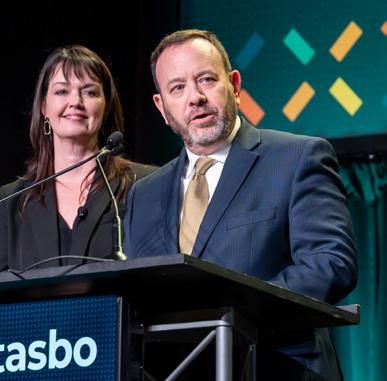
◄ TASBO’s Director of Marketing Justin Ables escorts “spokesdog” Ava during the First General Session main stage to help promote adoption from Dallas Pets Alive.
◄ CypressFairbanks ISD Superintendent Doug Killian with 2025-26 TASBO Board President Heather Wilson as they present the Legacy Award.
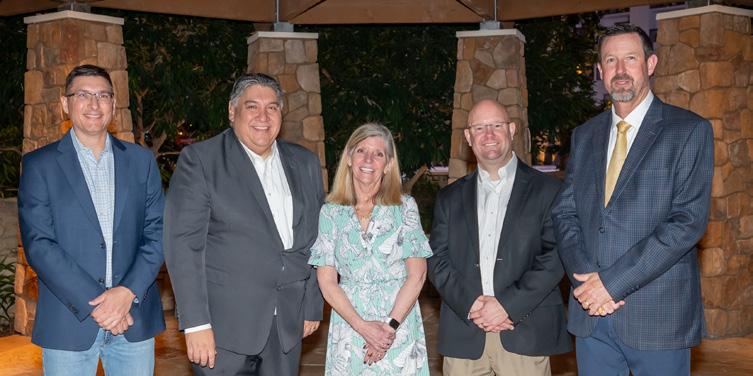
▲ Five of the 10 retiring members given Life Memberships during 2025: Anthony Mitchell, North East ISD; Jesus Amezcua; Harris County Department of Education; Marian Hamlett, Texans Can Academies; Derick Sibley, Kennedale ISD; and Brian Carter; Allen ISD
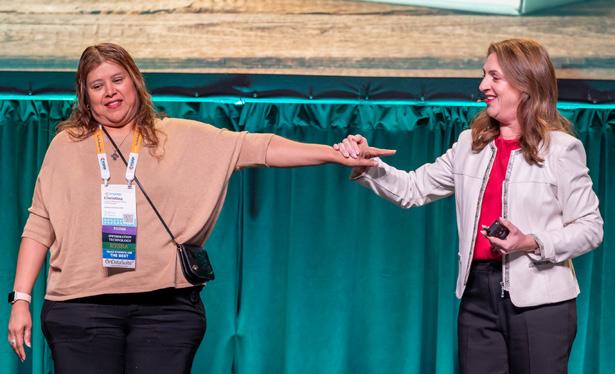
▲ Cypress-Fairbanks ISD’s Christina Maldonado agrees to volunteer to demonstrate a relaxation technique during Anne Grady’s keynote speech at the First General Session.

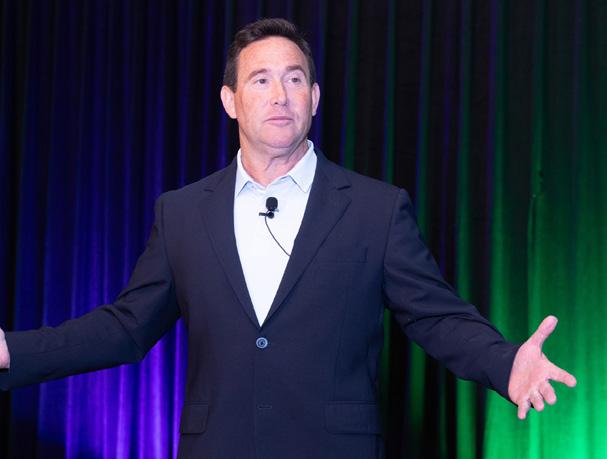
► TASBO Engage Luncheon keynote speaker Kevin Brown with Debra Esterak, Partner with Rogers, Morris & Grover LLP.
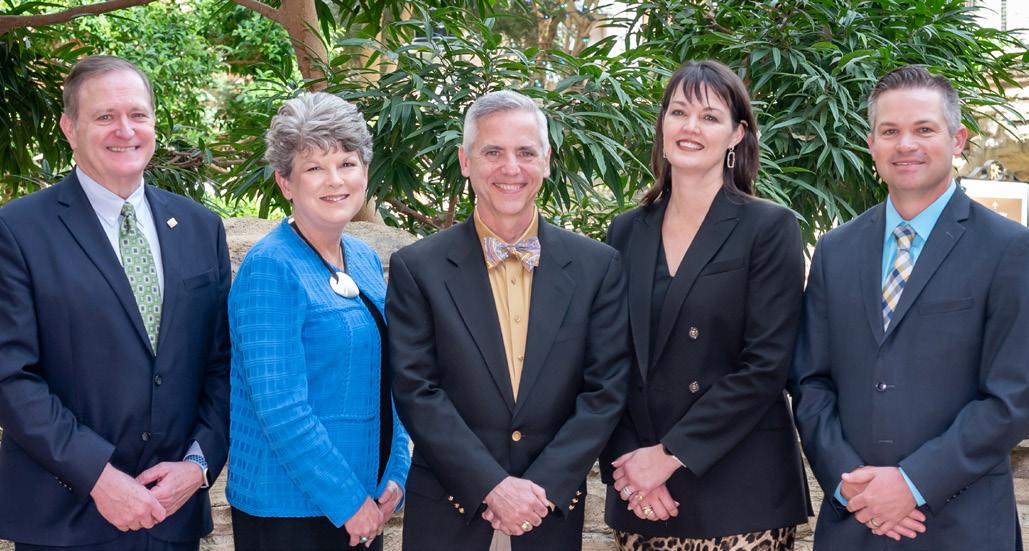
◄ TASBO’s Board Officers: Christopher Smith, Katy ISD (Vice President); Tracy Ginsburg, TASBO (Executive Director); Phillip Ellison, Spring ISD (President); Heather Wilson, College Station ISD (Immediate Past President); and Byron Bryant, Royse City ISD (PresidentElect).


◄ Port Arthur ISD’s Stan Stancill and April Sidney help celebrate TASBO’s 80th anniversary.
▲ 2026 TASBO Engage Conference attendees collaborate on an inspirational art project in the TASBO Expo Hall lounge.

▲ At the 2026 TASBO Awards Reception, recipients of the Award of Excellence in Financial Reporting and Award of Merit for Purchasing Operations gather for a celebratory group photo. Front and center, Fort Bend ISD’s Richard Gay was honored with an Outstanding Volunteer Award for his significant contribution to the Purchasing Award of Merit.
◄ Continued from page 17

Shelley Mann is the district’s new superintendent. Now in her 30th year as an educator, she served previously as an elementary teacher and reading instructional coach and was a campus principal for 12 years.

Former assistant superintendent Aron Strickland has been promoted to district superintendent. He is a graduate of Texas Tech University, from which he also earned his master’s and doctoral degrees. Initially a high school English teacher, he joined Shallowater ISD in 2014 as a middle school principal.

Sherman ISD has announced the appointment of a new director of student nutrition. Melissa Silva comes to the district after five years in food service administration in McKinney and Aubrey ISDs. She holds a degree in nutritional sciences from Oklahoma State University and has worked in the industry for 20 years.
The new principal of Carrillo Elementary School is Mario Guillen. A native of San Antonio, he has worked as a teacher and administrator in San Antonio, Edgewood and North East ISDs.

The district’s new superintendent, Blaise Boswell, who served in the top position on an interim basis since November, has been with the district for 15 years. In that time, he was a teacher, assistant principal, chief technology officer and assistant superintendent. He holds a bachelor’s degree from Midwestern State University and a master’s degree from Grand Canyon University.


Brock Payne has been named Vernon ISD’s athletic director and head football coach. He has been with the district for the past five seasons as a coach and, for the past two years, assistant athletic director.
Jerry Allen, Waco ISD’s former chief technology officer, has been promoted to chief operations officer. He joined the district in 2020 after a career in the public sector. He holds a master’s degree in educational leadership from the University of Texas at Arlington.

Now serving as principal of Hines Elementary School is Daphanie Latchison, who has served as the school’s acting principal since December. Prior to that assignment, she was the district’s director of credit recovery systems. In addition, she was an assistant principal at Waco High School and taught at the elementary level at Ramstein AFB in Germany.

Kimberly Winters has been named executive director of student support. The 20-year educator comes to Waco from Belton ISD, where she was principal of New Tech at Waskow High School since 2021. She also worked as a principal in Round Rock ISD.

Sean Scott has been approved to serve as superintendent of Weatherford ISD. The 25-year educator, who most recently held the top position in Mansfield ISD, has also worked as a teacher, coach, principal and central office administrator. He received his bachelor’s, master’s and doctoral degrees from Texas Christian University.
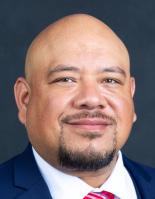
The Ysleta ISD board of directors has appointed Ariel Famaligi athletic coordinator and head football coach at Bel Air High School. He began his career in 2006 at Desert View Middle School, going on to coach and teach for 20 years. He was most recently offensive coordinator at Franklin High. ◄
In February, Galveston welcomed members of the Texas School Public Relations Association for the group’s annual conference, which included numerous learning opportunities and award presentations. Photo credit: Daniel Ladezma and Lalo Sosa, Region One ESC.

TSPRA proudly honored Dr. Bobby Ott, superintendent of Temple ISD, as the 2025 Key Communicator.


▲Conference breakout sessions gave members practical takeaways to bring back to their districts.

Conference attendees show off their
Convention Center.

Keynote speaker Sheree Bogany challenged us to lead with purpose, to be in the work, not in the way, and show up fully for the communities we serve.



May 4
TCASE/Ed311 Special Education Law Conference
Civic Center, New Braunfels
For more info, (512) 474-4492 or (888) 433-4492.
www.tcase.org
Cost: Single registration, $230; group of five or more, $205 per person; group of ten or more, $195 per person; printed workbooks, $25 each.
May 4-5
TASA/N2 Learning Principals’ Institute, (session 6 of 6) Lakeway
For more info, (972) 515-2268. www.n2learning.org
Cost: $6,000 for 6 sessions. Registration for the 2026-27 PI cohort is now open.
TASA/N2 Learning Executive Leadership Institute, (session 4 of 4) Lakeway
For more info, (972) 515-2268. www.n2learning.org
Cost: $4,500 for 4 sessions. Registration for the 2026-27 ELI cohort is now open.
TASBO Workshop: Leadership Fundamentals
New Caney ISD, Porter
For more info, (512) 462-1711. www.tasbo.org
Cost: Members, $550; nonmembers, $625.
May 5
TASBO Workshop: Basic Governmental Accounting, Part 1
ESC 14, Abilene
For more info, (512) 462-1711. www.tasbo.org
Cost: Members, $220; nonmembers, $295.
May 5-6
TASBO Workshop: Leadership Fundamentals
ESC 12, Waco
For more info, (512) 462-1711. www.tasbo.org
Cost: Members, $550; nonmembers, $625.
May 6
TASB Region 18 Workshop
Morgan University Center, Alpine
For more info, (512) 467-0222 or (800) 580-8272. www.tasb.org
Cost: $50.
TASBO Workshop: Activity Fund Accounting
ESC 2, Corpus Christi
For more info, (512) 462-1711. www.tasbo.org
Cost: Members, $220; nonmembers, $295.
TASBO Workshop: A Year in the Life of a School Business Official (session 4 of 4) Online
For more info, (512) 462-1711. www.tasbo.org
Cost: Members, $200; nonmembers, $275.
TASBO Workshop: Crucial Conversations for Mastering Dialogue (session 1 of 4)
Online
For more info, (512) 462-1711. www.tasbo.org
Cost: Members, $550 for all four sessions; nonmembers, $625 for all four sessions.
TASBO Workshop: Stop Audit Findings Before They Start Online
For more info, (512) 462-1711. www.tasbo.org
Cost: Members, no charge; nonmembers, $75.
TSPRA East Texas Area Regional Meeting Arp ISD, Arp
For more info, (512) 474-9107. www.tspra.org
May 7
TAGT Gifted Plus Series (session 4 of 5) Online
For more info, (512) 499-8248. www.txgifted.org
Cost: Individuals: Members, $249 for all five sessions; nonmembers, $299 for all five sessions. Individual sessions: $65 each. Discount for group of up to five attendees: $499.
TAGT Teacher Lab: Using Children’s Literature to Promote Pondering (session 2 of 5)
Online
For more info, (512) 499-8248. www.txgifted.org
Cost: No charge for TAGT educator and leader members.
TASBO Workshop: Crucial Conversations for Mastering Dialogue (session 2 of 4) Online
For more info, (512) 462-1711. www.tasbo.org
Cost: Members, $550 for all four sessions; nonmembers, $625 for all four sessions.
TASBO Workshop: Student Transcripts: Student and Accountability Impacts Online
For more info, (512) 462-1711. www.tasbo.org
Cost: Members, $85; nonmembers, $160.
TSPRA North Central Area Regional Meeting
Fort Worth ISD, Fort Worth For more info, (512) 474-9107. www.tspra.org
May 7-8
TASB SHARS Conference Via Zoom
For more info, (512) 467-0222 or (800) 580-8272. www.tasb.org
Cost: Members, $50; nonmembers, $150.
May 8
TASBO Workshop: Budget and Financial Planning ESC 20, San Antonio
For more info, (512) 462-1711. www.tasbo.org
Cost: Members, $220; nonmembers, $295.
TASBO Workshop: State Aid Template Series (session 3 of 4) Online
For more info, (512) 462-1711. www.tasbo.org
Cost: Per session: Members, $200; nonmembers, $275. Discount for all four sessions: Members, $750; nonmembers, $875.
May 11
TASBO Workshop: Financial Coding for Texas Schools
ESC 10, Richardson
For more info, (512) 462-1711.
www.tasbo.org
Cost: Members, $220; nonmembers, $295.
May 12
TASB Region 10 Workshop East Texas State University, Commerce
For more into, (512) 467-0222 or (800) 580-8272. www.tasb.org
Cost: $60.
TASB Workshop: Asbestos Designated Person Training
ESC 14, Abilene
For more info, (512) 467-0222 or (800) 580-8272.
www.tasb.org
TASBO Workshop: Board Policies and Administrative Procedures
ESC 4, Houston
For more info, (512) 462-1711. www.tasbo.org
Cost: Members, $220; nonmembers, $295.
TCASE/Ed311 Special Education Law Conference
Hilton Garden Inn, Grand Prairie
For more info, (512) 474-4492 or (888) 433-4492. www.tcase.org
Cost: Single registration, $230; group of five or more, $205 per person; group of ten or more, $195 per person; printed workbooks, $25 each.
May 12-13
TASBO Workshop: Getting Things Done Online
For more info, (512) 462-1711. www.tasbo.org
Cost: Members, $375; nonmembers, $450.
May 13
TASB Region 13 Workshop
Hutto ISD, Hutto
For more info, (512) 467-0222 or (800) 580-8272. www.tasb.org
Cost: Members, no charge; nonmembers, $35.
TASB Workshop: Integrated Pest Management
ESC 14, Abilene
For more info, (512) 467-0222 or (800) 580-8272. www.tasb.org
TASBO Workshop: Crucial Conversations for Mastering Dialogue (session 3 of 4) Online
For more info, (512) 462-1711. www.tasbo.org
Cost: Members, $550 for all four sessions; nonmembers, $625 for all four sessions.
TASSP Spring Meeting, Region 11
Keller Central High School, Fort Worth
For more info, (512) 443-2100. www.tassp.org
TASSP Spring Meeting, Region 14 Online
For more info, (512) 443-2100. www.tassp.org
May 14
TASB Student Solutions Webinar Series: Wrapping Up 2025-26
Via Zoom
For more info, (512) 467-0222 or (800) 580-8272. www.tasb.org
TASBO Workshop: Crucial Conversations for Mastering Dialogue (session 4 of 4) Online
For more info, (512) 462-1711. www.tasbo.org
Cost: Members, $550 for all four sessions; nonmembers, $625 for all four sessions.
TASBO Workshop: What’s New in Certification: Application and Maintenance Made Easier Online
For more info, (512) 462-1711. www.tasbo.org
Cost: Members and nonmembers, no charge.
May 19
TASB Region 12 Workshop ESC 12, Waco
For more info, (512) 467-0222 or (800) 5890-8272. www.tasb.org
Cost: $35.
May 20
TASB Region 16 Workshop
ESC 16, Canyon
For more info, (512) 467-0222 or (800) 580-8272. www.tasb.org
Cost: $50.
May 27
TASBO Workshop: Construction Purchasing Law
El Paso ISD, El Paso
For more info, (512) 462-1711. www.tasbo.org
Cost: Members, $220; nonmembers, $295.
May 28
TASBO Workshop: Planning and Administering School
Construction Projects
El Paso ISD, El Paso
For more info, (512) 462-1711. www.tasbo.org
Cost: Members, $220; nonmembers, $295.
May 29
TABSE Master Class: Aspiring Head Coaches Series (session 1 of 3)
Lancaster ISD, Lancaster No phone number provided. www.tabse.net
Cost: $45.
June 2
TAHPERD Workshop, Area 3
Wagner Middle School, Georgetown
For more info, (512) 459-1299. www.tahperd.org
Cost: Members: Professional, $120; associate, $110; retired, $80; student, $30. Nonmembers and nonmember students, $55.
June 3
TSPRA Houston/Beaumont Area Regional Meeting ESC 4, Houston
For more info, (512) 474-9107. www.tspra.org
June 3-4
TASB Workshop: Writing Effective Job Descriptions Online
For more info, (512) 467-0222 or (800) 580-8272. www.tasb.org
Cost: $225.
June 4
TSPRA North Central Area Regional Meeting Northwest ISD, Justin
For more info, (512) 474-9107. www.tspra.org
June 5
TABSE Master Class: Aspiring Head Coaches Series (session 2 of 3)
Huston-Tillotson University, Austin No phone number provided. www.tabse.net
Cost: $45.
TAHPERD Workshop, Area 5
Lincoln Elementary School, Montgomery For more info, (512) 459-1299. www.tahperd.org
Cost: Members: Professional, $120; associate, $110; retired, $80; student, $30. Nonmembers and nonmember students, $55.
June 6
TABSE Master Class: Iconic Men
Huston-Tillotson University, Austin No phone number provided. www.tabse.net
Cost: $45.
TAHPERD Workshop, Areas 6 and 7
Pearce High School, Richardson For more info, (512) 459-1299. www.tahperd.org
Cost: Members: Professional, $120; associate, $110; retired, $80; student, $30. Nonmembers and nonmember students, $55.
June 8
Ed311 Education Law for Principals Conference
Hilton Anatole, Dallas For more info, (512) 478-2113. www.ed311.com
Cost: Single registration, $235; group of five or more, $210 per person; group of ten or more, $200 per person; workbook, $25.
TAHPERD Five-State Professional Development Workshop
Dalhart High School, Dalhart For more info, (512) 459-1299. www.tahperd.org
Cost: $20.
TAHPERD Workshop, Area 8
Location TBA, Aldine
For more info, (512) 459-1299. www.tahperd.org
Cost: Members: Professional, $120; associate, $110; retired, $80; student, $30. Nonmembers and nonmember students, $55.
June 8-10
TASA txedFest 2026
Hyatt Regency Hill Country Resort and Villas, San Antonio
For more info, (512) 477-6361. www.txedfest.org
Cost: through May 26: most TASA members, $325; student members, $150; nonmembers, $425. Rates increase on-site.
June 9-10
TASBO Workshop: Leadership Fundamentals
CORE Construction, Frisco
For more info, (512) 462-1711. www.tasbo.org
Cost: Members, $550; nonmembers, $625.
June 9-11
TASSP Summer Workshop
Hilton Anatole, Dallas
For more info, (512) 443-2100. www.tassp.org
Cost: Until May 11: Members, $340; nonmembers, $390; students, $179. After May 11: Members, $540; nonmembers, $590; students, $179.
TEPSA Summer Conference
Kalahari Resort and Conference Center
For more info, (512) 478-5268 or (800) 252-3621. www.tepsa.org
Cost: Members, $599; nonmembers, $899.
June 10-12
TxETA Summerfest
Stephen F. Austin State University, Nacogdoches No phone number provided. www.txeta.com
June 10-13
TASB Summer Leadership Institute
Marriott RiverCenter, San Antonio For more info, (512) 467-0222 or (800) 580-8272. www.tasb.org
Cost: Until May 12, $535; May 13June 9, $560; onsite, $610.
June 11
TGCA Regions I and II All Sports Clinic
Location TBA, Abilene For more info, (512) 708-1333. www.austintgca.com
Cost: $80.
June 12
TABSE Master Class:
Aspiring Head Coaches Series (session 3 of 3)
Stafford ISD, Stafford No phone number provided. www.tabse.net
Cost: $45.
June 14
TAHPERD SEA Summit
Isla Grand Hotel, South Padre Island
For more info, (512) 459-1299. www.tahperd.org
Cost: Members, $75; nonmembers, $150.
June 15
Learning Forward Texas PreConference Conference Center, Hurst
For more info, (512) 266-3086. www.learningforwardtexas.org.
Cost: Until May 29: $239.
TASA First-Time Superintendents Academy Summer Virtual Session Online
For more info, (512) 477-6361. www.tasanet.org
Cost: Free for FTSA participants who have not yet graduated and for new superintendents who have not yet started FTSA.
June 16-17
Learning Forward Texas Annual Conference Conference Center, Hurst
For more info, (512) 266-3086. www.learningforwardtexas.org
Cost: Through May 29: $499. May 30-June 16: $519.
June 17-20
Leadership TASB Class of 2026 Graduation (session 5 of 5)
Location TBA, Fort Worth
For more info, (512) 467-0222 or (800) 580-8272. www.tasb.org
TASB Summer Leadership Institute
Omni, Fort Worth
For more info, (512) 467-0222 or (800) 580-8272. www.tasb.org
Cost: Until May 19, $535; May 20June 16, $560; onsite, $610.
June 18
Fast Growth School Coalition Lunch and Learn Online
For more info, (512) 536-1206. www.fastgrowthtexas.org
June 22-23
TASA CMSi Curriculum Management Planning Workshop
TASA offices, Austin
For more info, (512) 477-6361. www.tasanet.org
Cost: Members, $550; nonmembers, $600.
TASPA Workshop: Qualifying a Special Education Teacher
Lancaster ISD, Lancaster
For more info, (512) 494-9353. www.taspa.org
June 23-25
TETL Summer Conference:
EDTECH World Cup
Convention Center, Irving
For more info, (855) 458-9286. www.tetl.org
Cost: Members, $249; nonmembers, $299.
June 24-26
TASA CMSi Curriculum Writing Workshop
TASA offices, Austin
For more info, (512) 477-6361. www.tasanet.org
Cost: Members, $800; nonmembers, $900.
June 25
TABSE Master Class: AI
Location TBA, Dallas No phone number provided. www.tabse.net
Cost: $45.
TGCA Sports Clinic
Location TBA, El Paso
For more info, (512) 708-1333. www.austintgca.com
Cost: $80.
June 25-28
TASSP New Principal Academy Hilton Airport, Austin For more info, (512) 443-2100. www.tassp.org
Cost: Early Bird registration (through June 5): $795. Regular registration (after June 5): $895.
July 10-12
PTA LAUNCH Convention
Gaylord Texan Resort, Grapevine For more info, (512) 320-9801. www.txpta.org
July 12-14
TAHPERD Annual Summer Conference
Embassy Suites, Denton
For more info, (512) 459-1299. www.tahperd.org
Cost: Early Bird registration (April 15-May 15): Professional/ associate members, $150; student members, $45; retired members, $55; out of state attendees, $150; emeritus members, no charge. Preregistration (May 16-June 15): Professional/associate members, $160; student members, $45; retired members, $55; out of state attendees, $160; emeritus members, no charge. Late registration (June 16-July 10):
Professional/associate members, $170; student members, $55; retired members, $65; out of state attendees, $170; emeritus members, no charge. Onsite registration: Same rates as late registration.
July 13-15
TCASE Convention: Interactive 2026
Marriott Hotel, Austin
For more info, (512) 474-4492 or (888) 433-4492. www.tcase.org
July 14
TASB Workshop: Asbestos Designated Person Training
TASB offices, Austin
For more info, (512) 467-0222 or (800) 580-8272. www.tasb.org
July 15
TASB Workshop: Integrated Pest Management
TASB offices, Austin
For more info, (512) 467-0222 or (800) 580-8272. www.tasb.org
TASPA Summer Law Conference
Worthington Renaissance Hotel, Fort Worth
For more info, (512) 494-9353. www.taspa.org
July 15-17
TASPA Summer Conference
Worthington Renaissance Hotel, Fort Worth
For more info, (512) 494-9353. www.taspa.org
July 16
TASB Workshop: Indoor Air Quality Person Training
TASB offices, Austin
For more info, (512) 467-0222 or (800) 580-8272. www.tasb.org
July 16-18
TGCA Summer Sports Clinic
Esports Stadium, Arlington
For more info, (512) 708-1333. www.austintgca.com
Cost: Membership and clinic: $135; membership only: $70; clinic only, $65; student membership, $10.
July 18
TABSE Master Class: HerINSPIRED
Texas Southern University, Houston
No phone number provided. www.tabse.net
Cost: $45.
July 19-21
THSCA Convention and Coaching School
Brown Convention Center, Houston
For more info, (512) 392-3741. www. thsca.com
Cost: Until June 1, $85; June 2-July 1, $100; onsite, $115.
July 21-22
Ed311 Behavior Leadership Conference
Hilton Inn, Grand Prairie
For more info, (512) 478-2113. www.ed311.com
Cost: Single registration, $375; group of five or more, $350 per person; group of ten or more, $340 per person.
August 5-6
TASBO Workshop: Getting Things Done Online
For more info, (512) 462-1711. www.tasbo.org
Cost: Members, $375; nonmembers, $450.
August 12
TASBO Workshop: State Aid Template Series (session 4 of 4) Online
For more info, (512) 462-1711. www.tasbo.org
Cost: Per session: Members, $200; nonmembers, $275.
Discount for all four sessions: Members, $750; nonmembers, $875.
August 13
TASBO Workshop: Supervisor Fundamentals
TASBO offices, Austin
For more info, (512) 462-1711. www.tasbo.org
Cost: Members, $245; nonmembers, $320. ◄

Ido not know about you, but being distracted has always come easy for me.
by Riney Jordan
In fact, I have diagnosed myself with ADHD, even though there is no clinical research to prove that. But those of you who know me know that it is really easy for me to be distracted and move onto something else before the primary project is completed.
It seems as if it has always been a problem for me. Do you ever catch yourself looking for your telephone when you’re talking on it to someone else? I do not believe for one minute that I am the only person in the world who has that problem from time to time.
The latest distraction came from our adorable little dog named Biscuit, who insists on playing fetch, or tug-of-war, or just needing to jump up in my lap.
Nearly every morning, I go out into the backyard and do my daily devotional. Biscuit insists on going with me because he wants me to share a portion of my iced coffee with him.
Now, I know what you are thinking: A little dog should not have coffee every day. But if you only knew what all went into that glorious glass full of iced coffee, it would make perfect sense. It contains 12 ounces of chilled coffee, a generous dose of heavy cream, and three squirts of a no-sugar, no-calorie sweetener that makes it taste heavenly.
So, each morning, instead of doing my devotional immediately, I get out his bowl and fill it with a generous amount of my coffee. He promptly lies flat on the patio table, stares at me with eager anticipation, and after a few words of telling him how wonderful I think he is, I finally say “Now!” At that moment, he lunges forward and
consumes it in a matter of seconds.
I’m also guilty of doing things like this: I walk through the kitchen on the way to my office to get a book. As I pass by the kitchen sink, I notice that a glass that I used earlier needs to go in the dishwasher. I open up the dishwasher and discover that it’s full of clean dishes, so I begin putting them away. One of the barbecue tools that is in the dishwasher normally hangs on the inside door of the pantry, but when I open up the pantry, I think, “I could use a snack.” I take the snack and go back to the room where I started and turn on the TV. It’s then that I remember I had not yet gotten my book from the office.
Oh, my! How distractions can consume our days!
However, before we all beat ourselves up over having some of these quirks, let me share with you some of the good things that have come from my distractions.
The first one is when I was distracted from ordering a drink and popcorn from the movie theater when my eyes settled on the cute little girl behind the counter. Some 62+ years later, I am still distracted by her.
Had it not been for a distraction recently, I would not have noticed that a small family of screech owls have taken over a large birdhouse in my backyard. I caught the mama owl peeking out from the hole in the front of her house. It is only the second time that they have chosen our backyard in which to raise their family. I am elated!
Finally, had I not been distracted by an incredibly beautiful sunset the other evening, I would have missed God’s amazing artwork.
Just remember, more often than not, it’s the little things in life that make it much more rewarding than the big things.
TASA is the professional association for Texas school leaders. In addition to advocacy and professional learning, we provide networks and services that offer mentorship and inspiration to our members. TASA is working hard to provide the support that Texas school leaders need. We invite you to be part of TASA. J Join/renew for 2025-26 today!