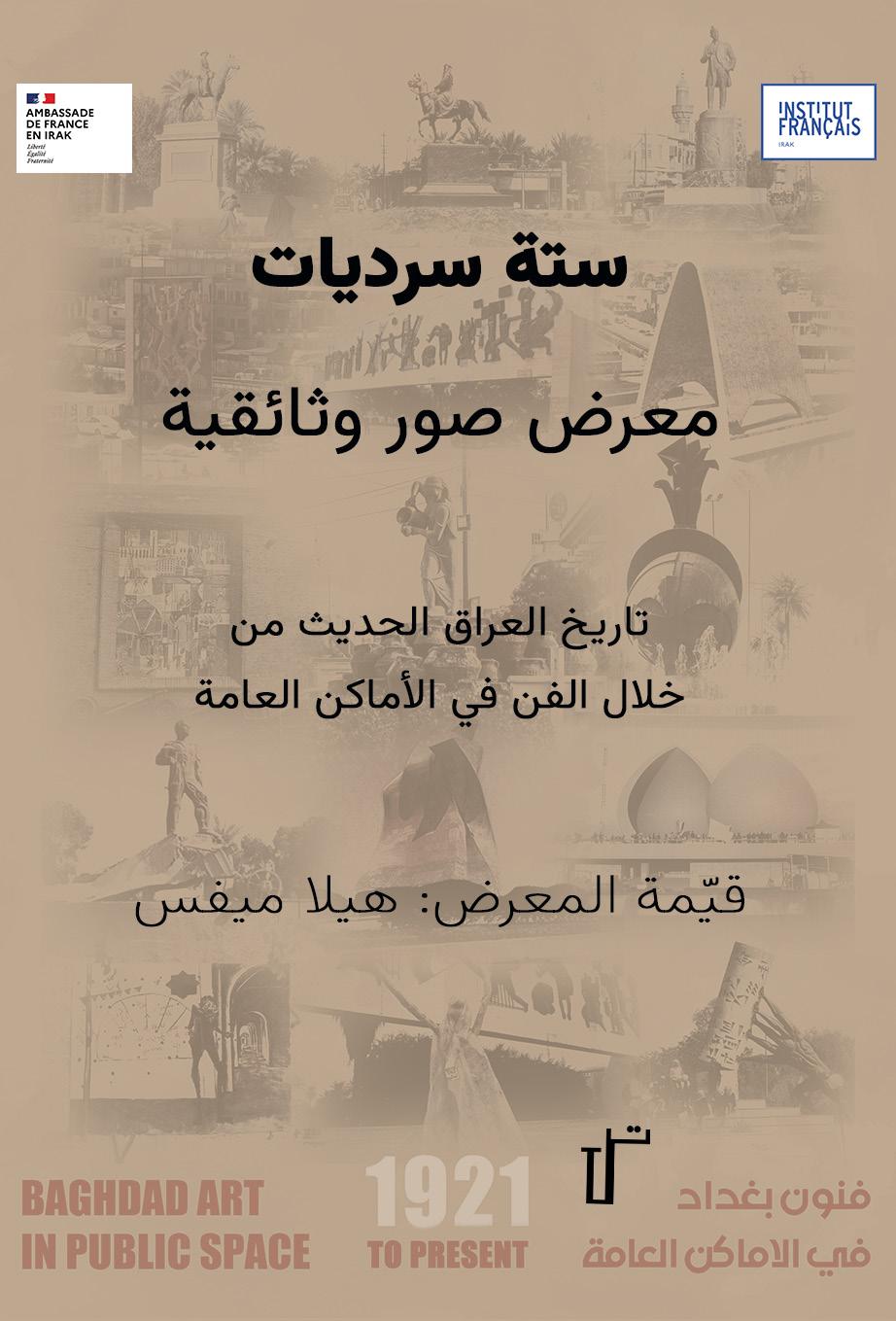
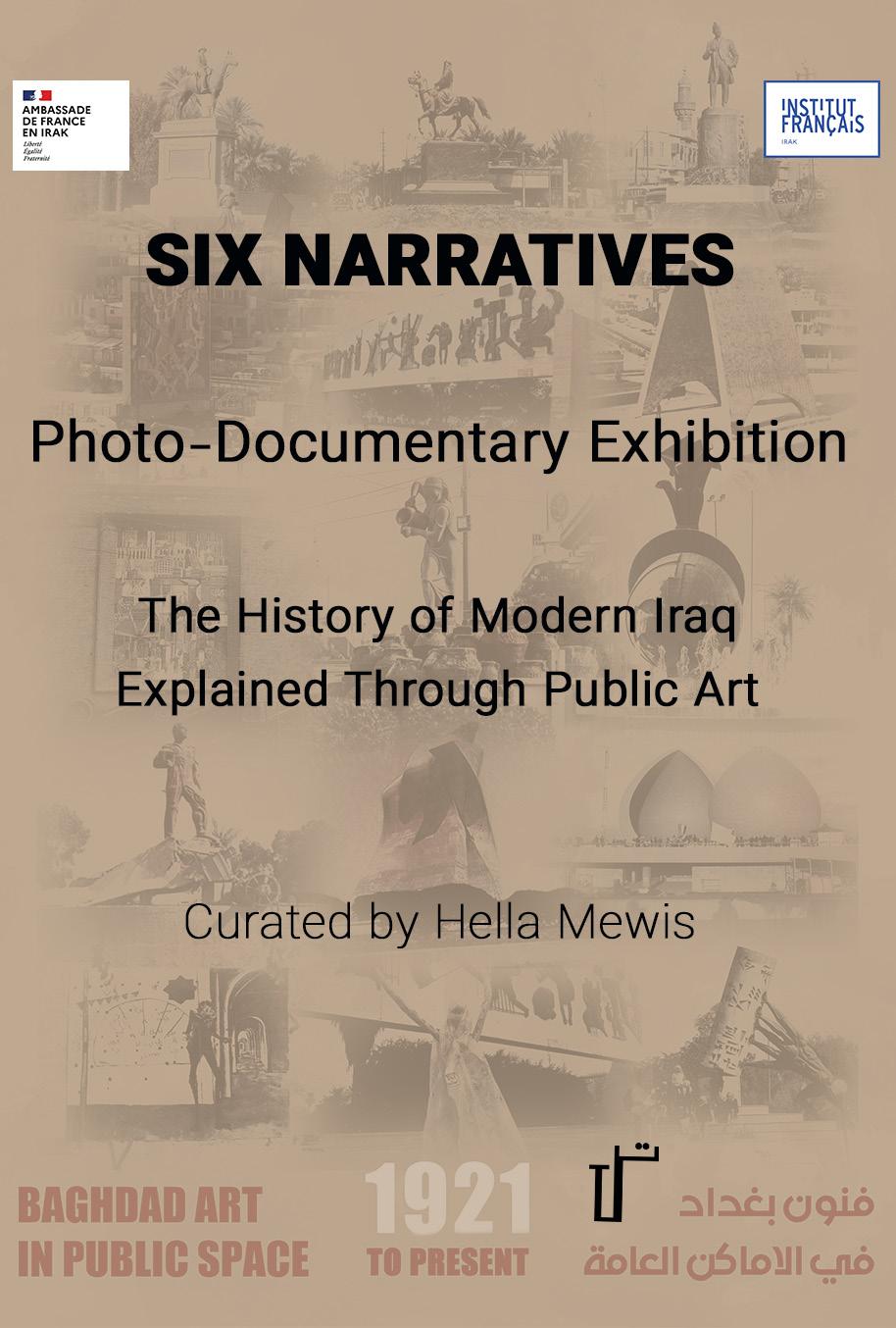
Photo-Documentary Exhibition
The History of Modern Iraq Explained Through Public Art
Curated by Hella Mewis
French Institute
28.08. - 09.09.2025
Edited by Tarkib Organization for Arts & Culture
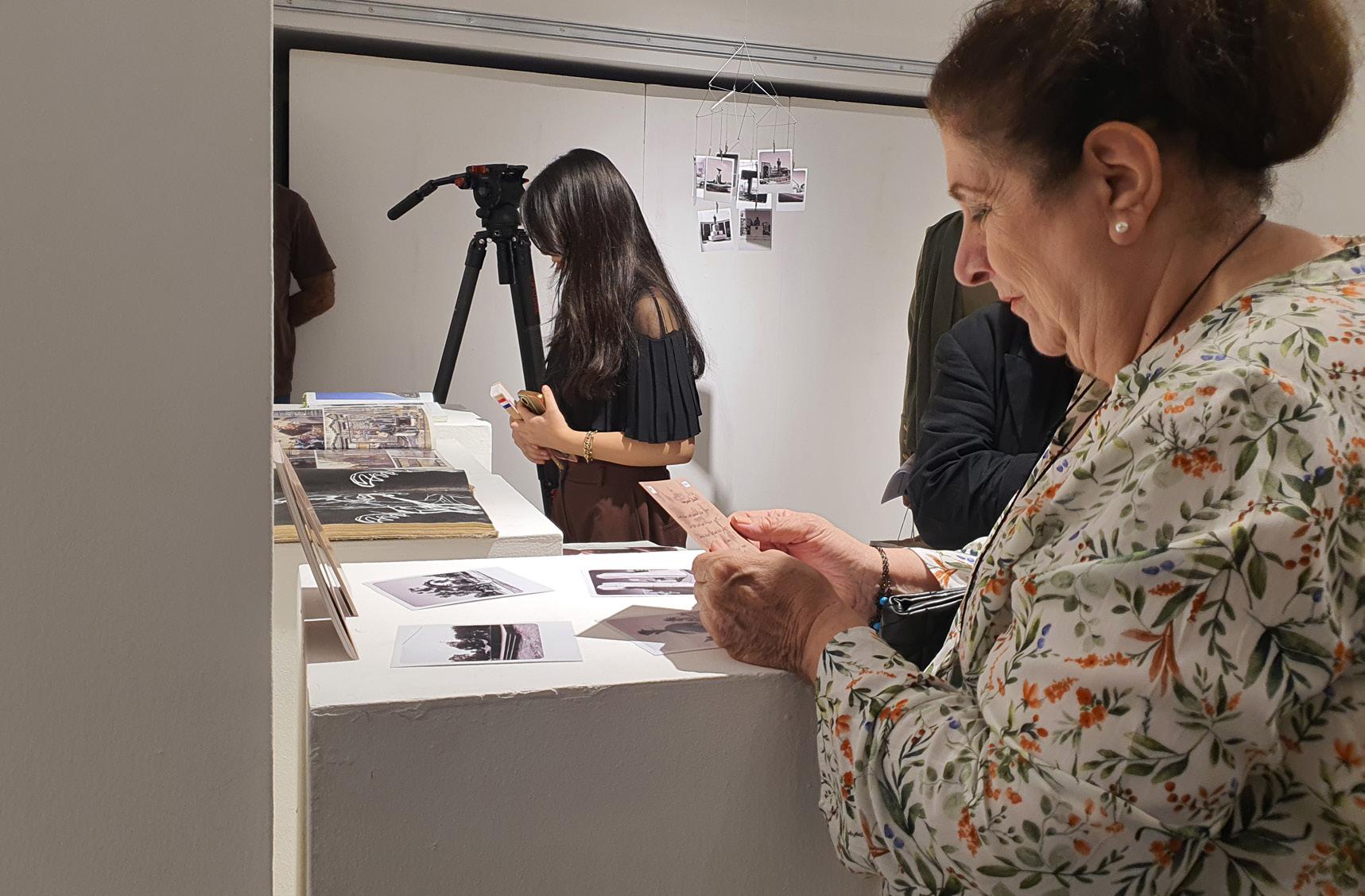
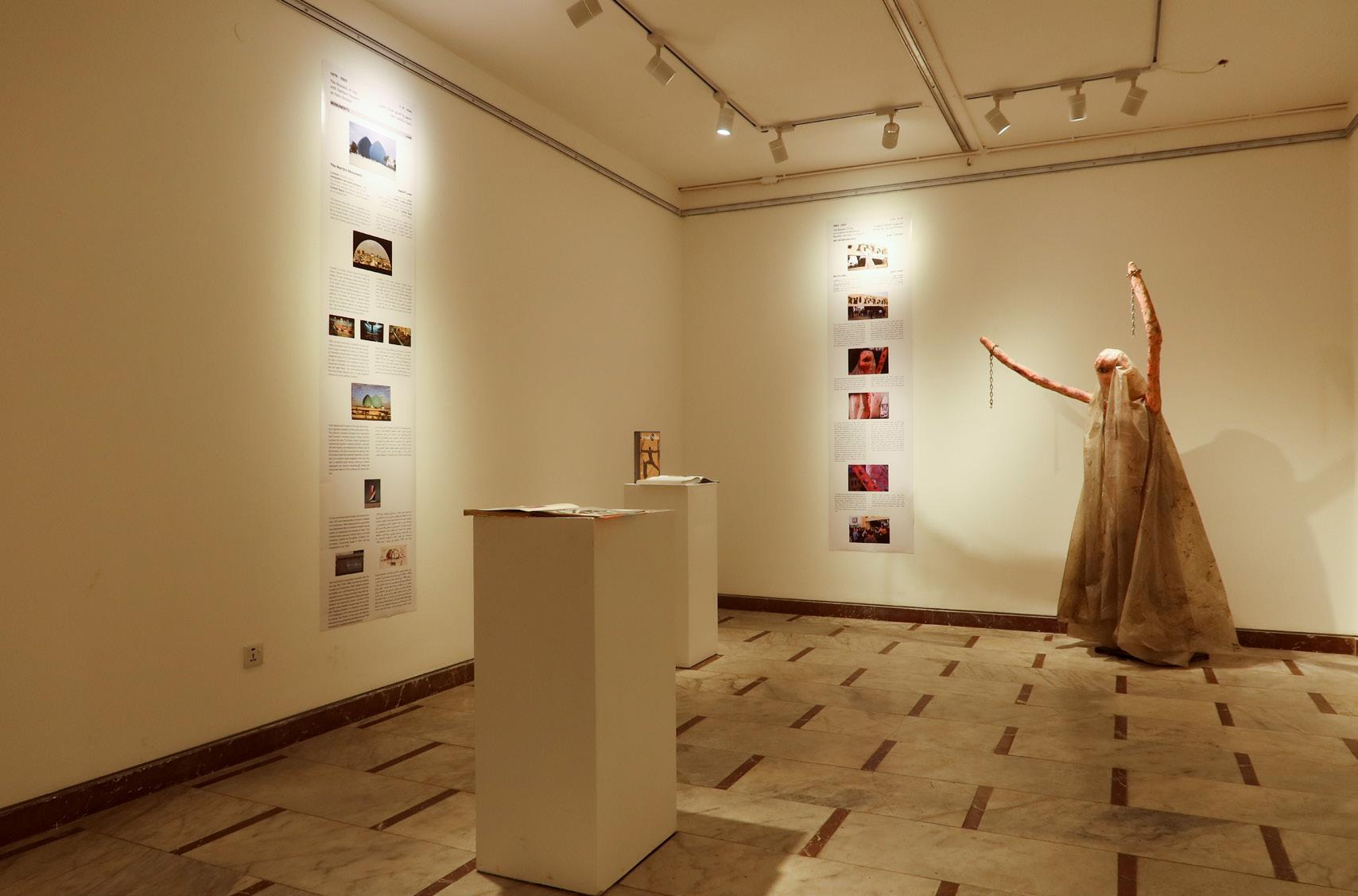
SIX NARRATIVES presents six curated examples of public art, each inaugurated during one of the six major political eras of modern Iraq. Through photography and storytelling, the exhibition offers insight into how these works reflect Baghdad’s evolving identity, collective memory, and socio-political landscape over the past century.
The exhibition’s central aim is to trace the history of modern Iraq through its art and architecture in public spaces. It highlights the wider range of themes, from those that resisted or conformed to political authority, to those that were demolished, while also revealing the shifting relationships between state and society.
Curator Hella Mewis has categorized the history of modern Iraq into six major political eras, a new approach designed to help Iraqis better understand their own past, since the national school curriculum either omits the modern Iraqi state entirely or presents it through a narrow lens.
These six political eras are further represented through six forms: statues, murals, architectural landmarks, demolitions, monuments, and artistic interventions. Together, they demonstrate how public art and urban design have both shaped, and been shaped by, Baghdad’s modern history.
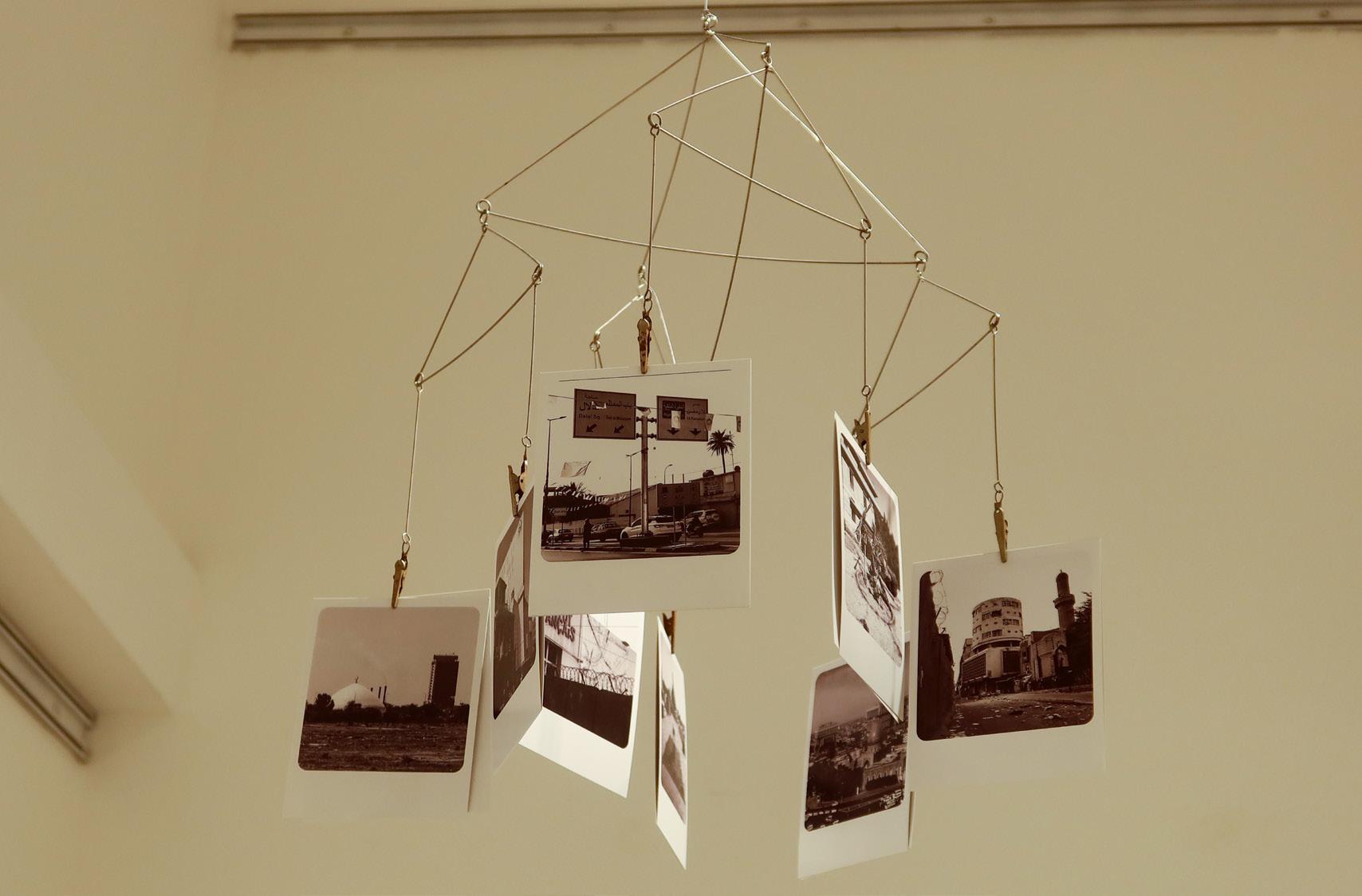
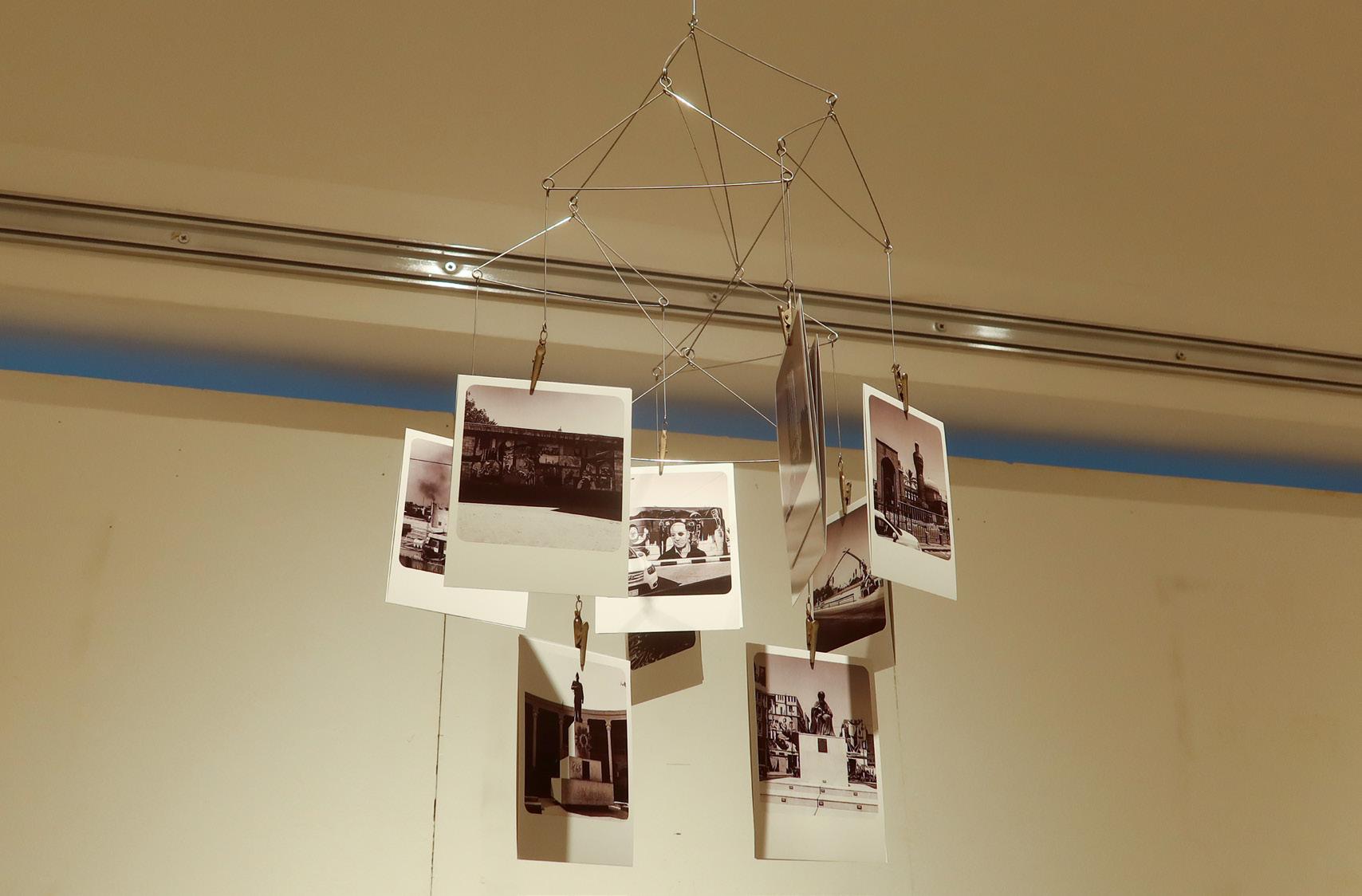
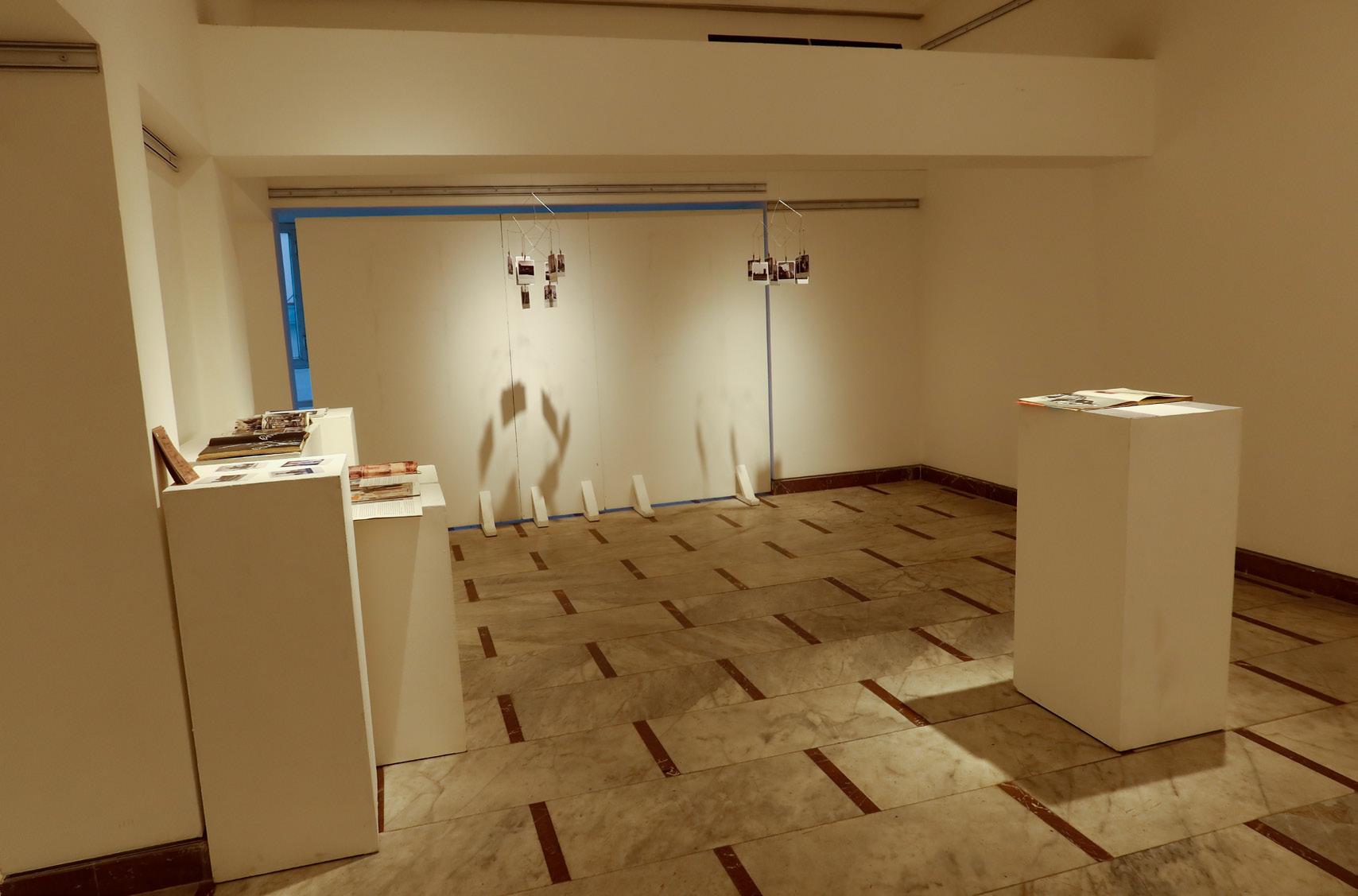
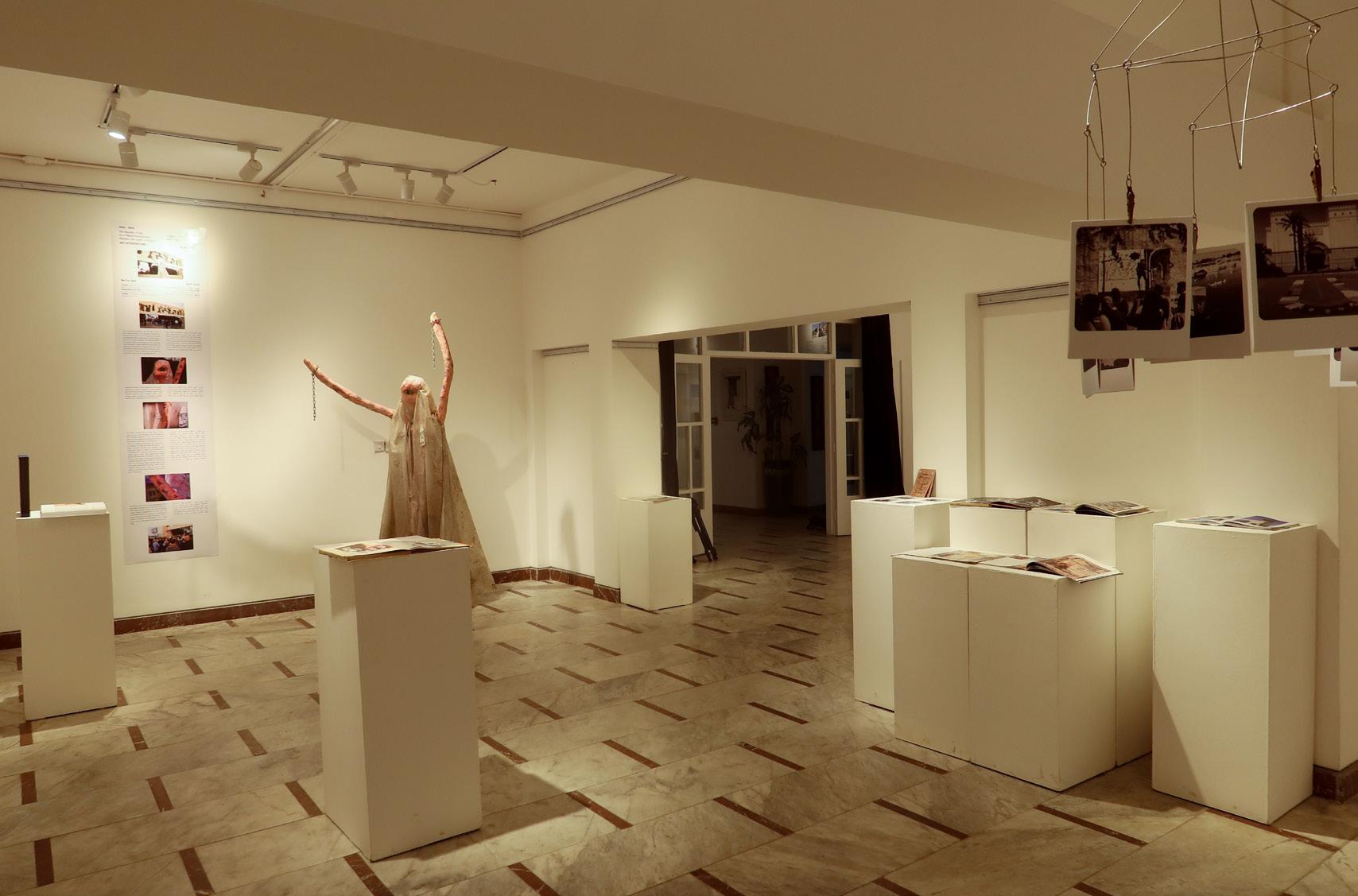
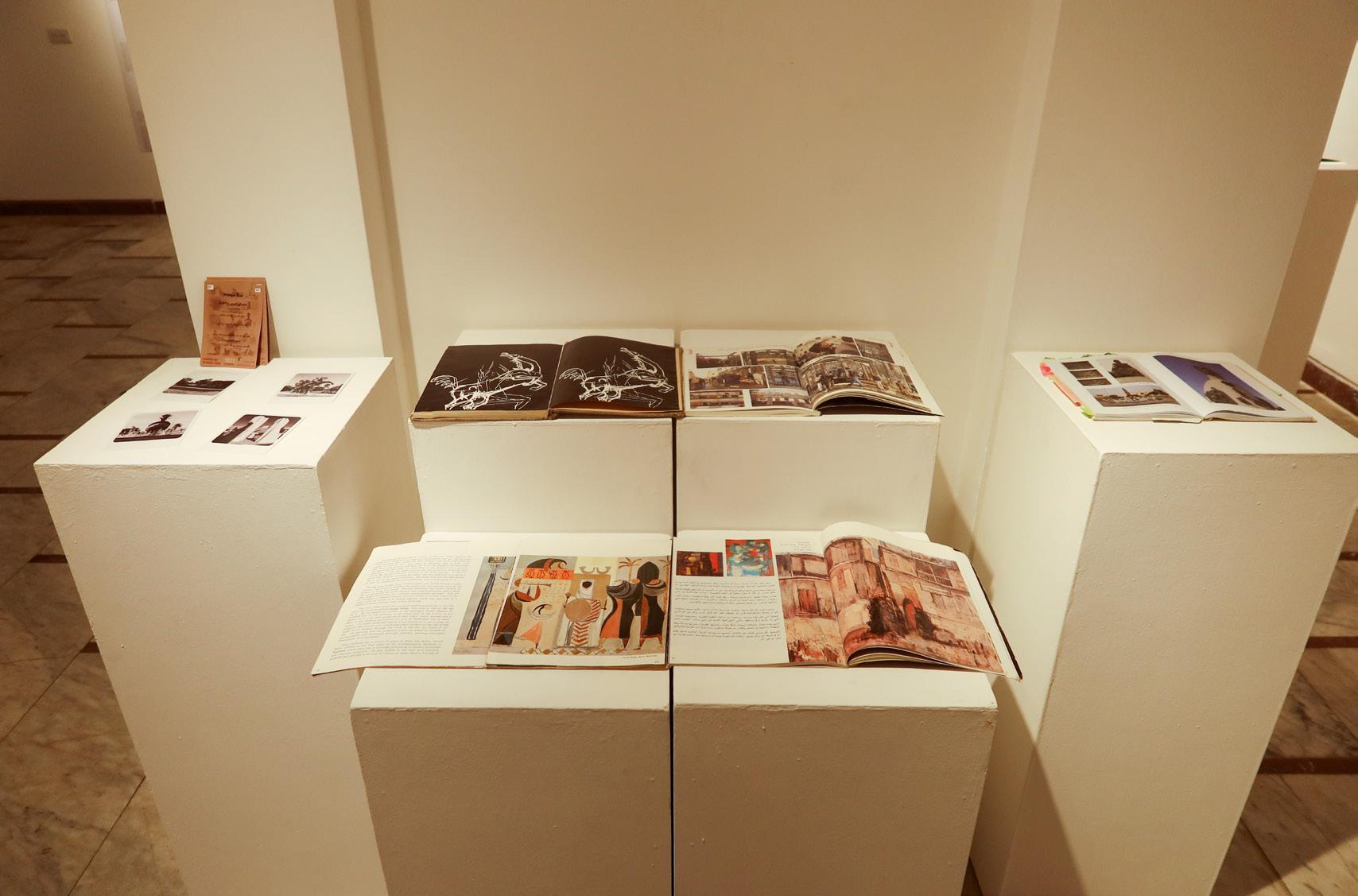
The exhibition features six poster designs that tell the stories of key artistic and architectural landmarks, their creators, and their locations, each set within its historical context. All photographs were taken by the curator herself )with credited exceptions(. Objects from her archive, including art magazines, books, and official publications, further enrich this narrative. The exhibition includes a selection of her project #polaroid_baghdad.
SIX NARRATIVES is the first of a comprehensive, image-led survey of art in Baghdad’s public spaces. It forms part of Tarkib’s online project ”Baghdad Arts in Public Space - 1921 to Present“, which documents the evolution of public art in Baghdad from the founding of the Iraqi state to the present day.
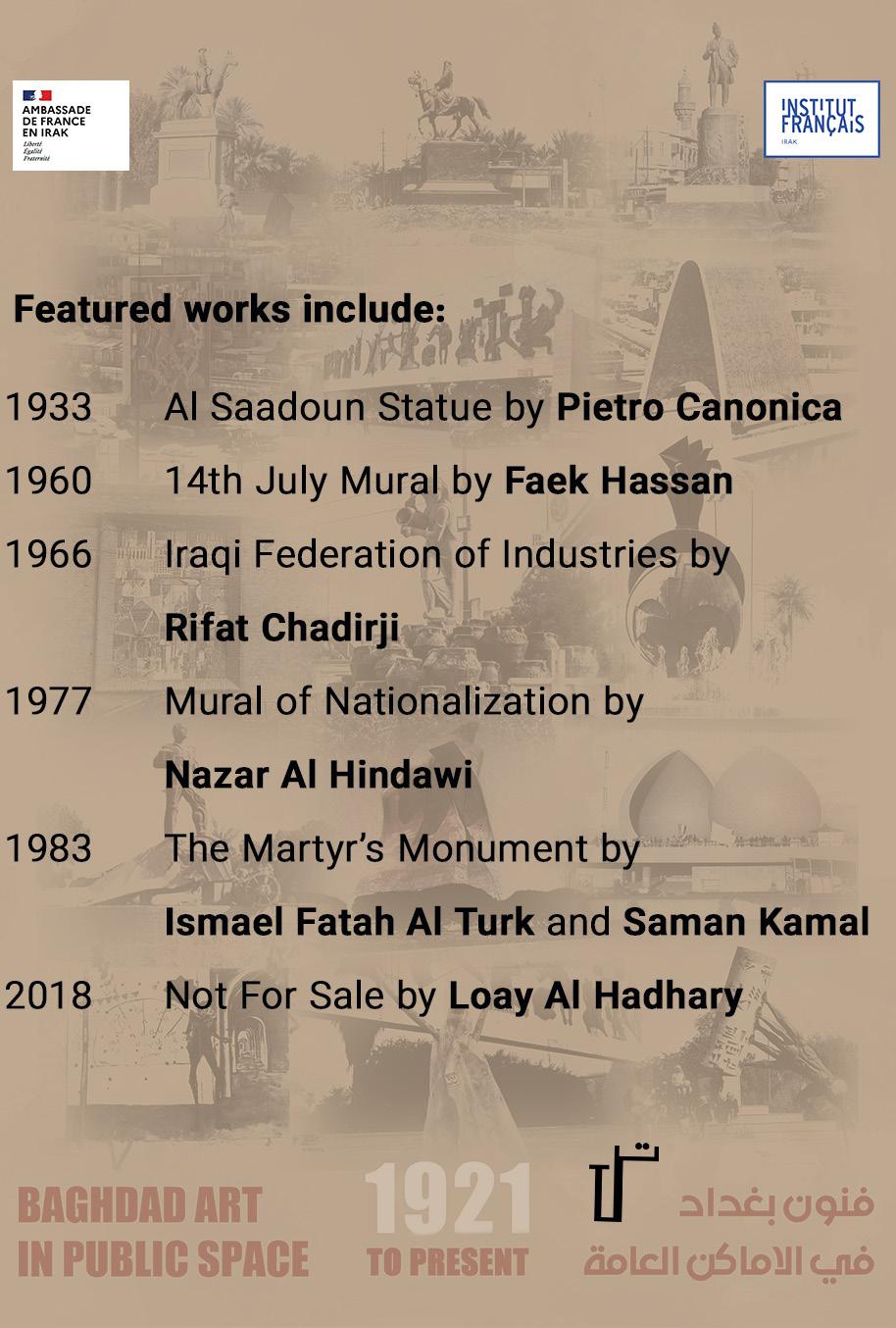
The featured works include:
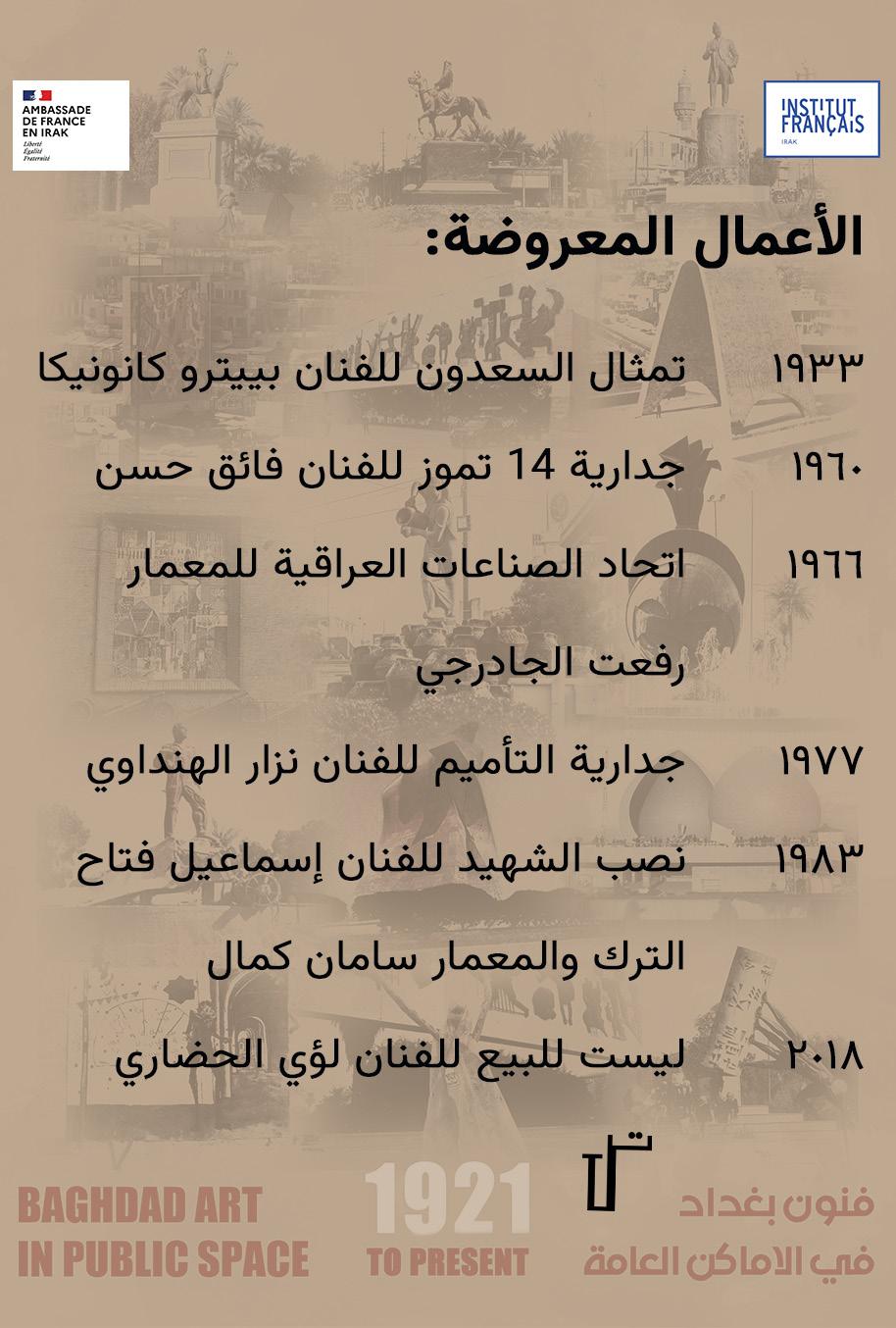
Statues: Al Saadoun Statue by Pietro Canonica, 1933; Bronze replica by Taha Wahib, 2014
Murals: 14th July Mural by Faek Hassan, 1960
Architecture: Iraqi Federation of Industries by Rifat Chadirji, 1966
Demolitions: Mural of Nationalization by Nazar Al Hindawi, 1977
Monuments: The Martyr’s Monument by Ismael Fatah Al Turk and Saman Kamal, 1983
Art Interventions: Not For Sale by Loay Al Hadhary, 2018
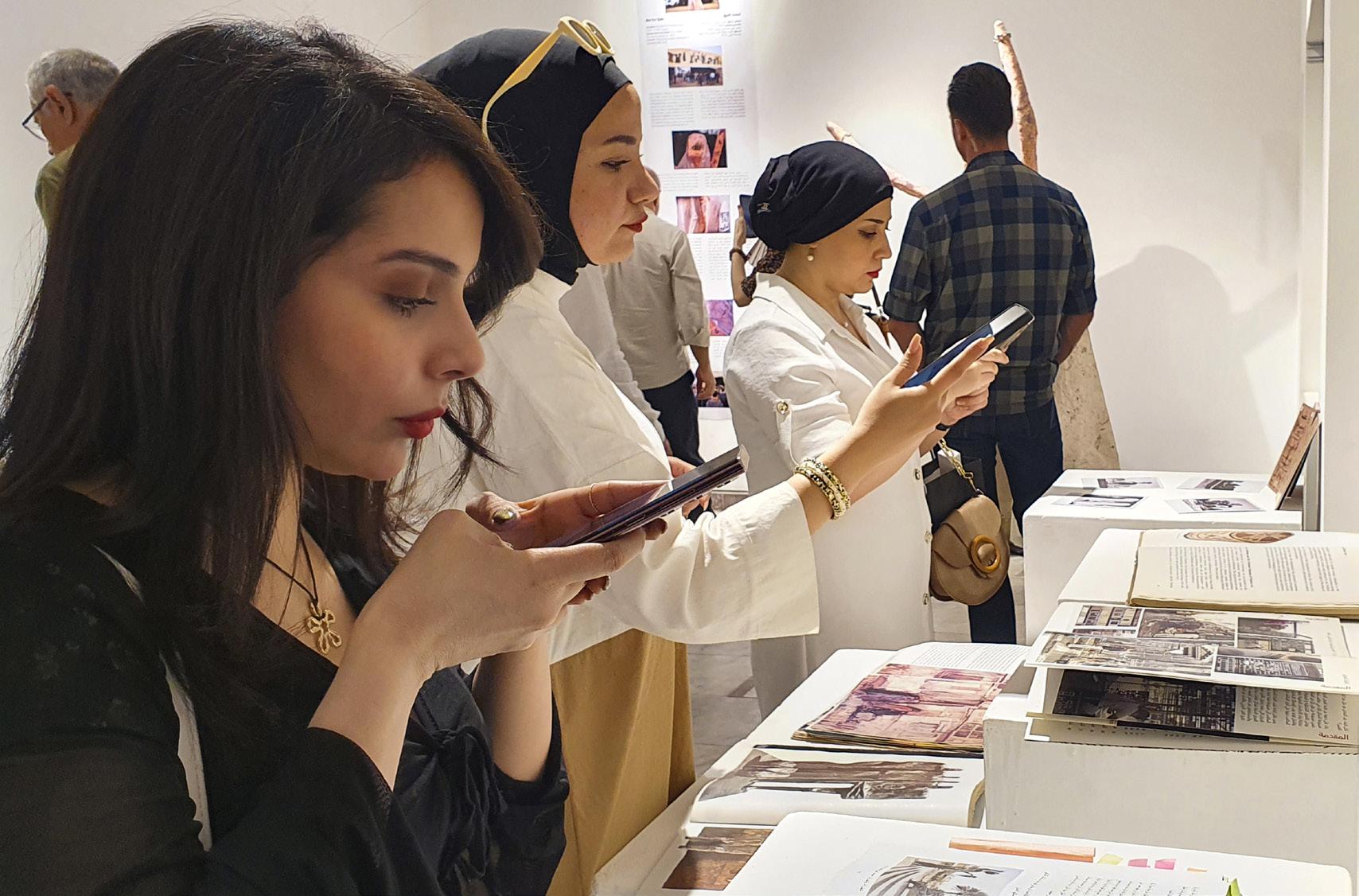
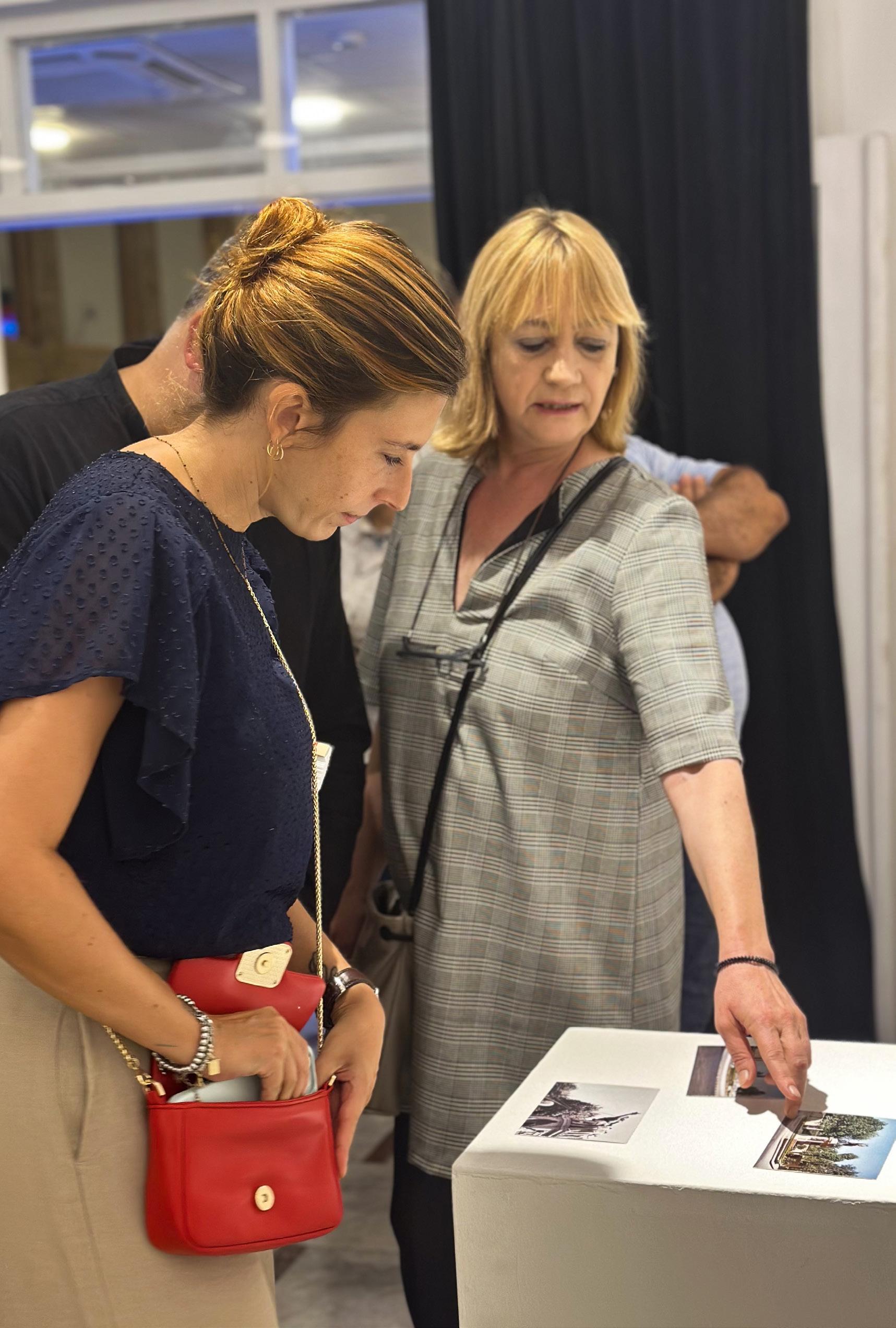
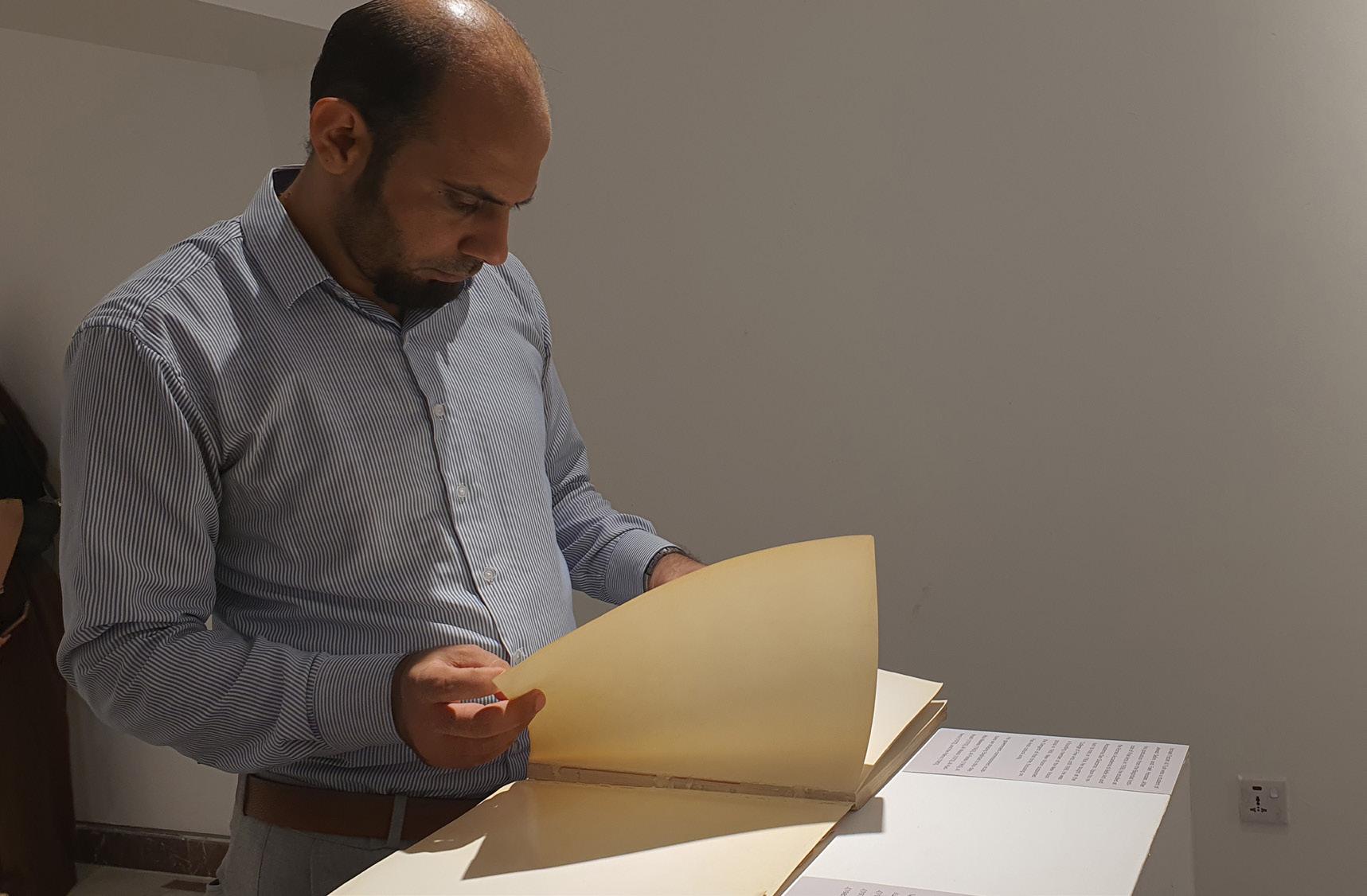
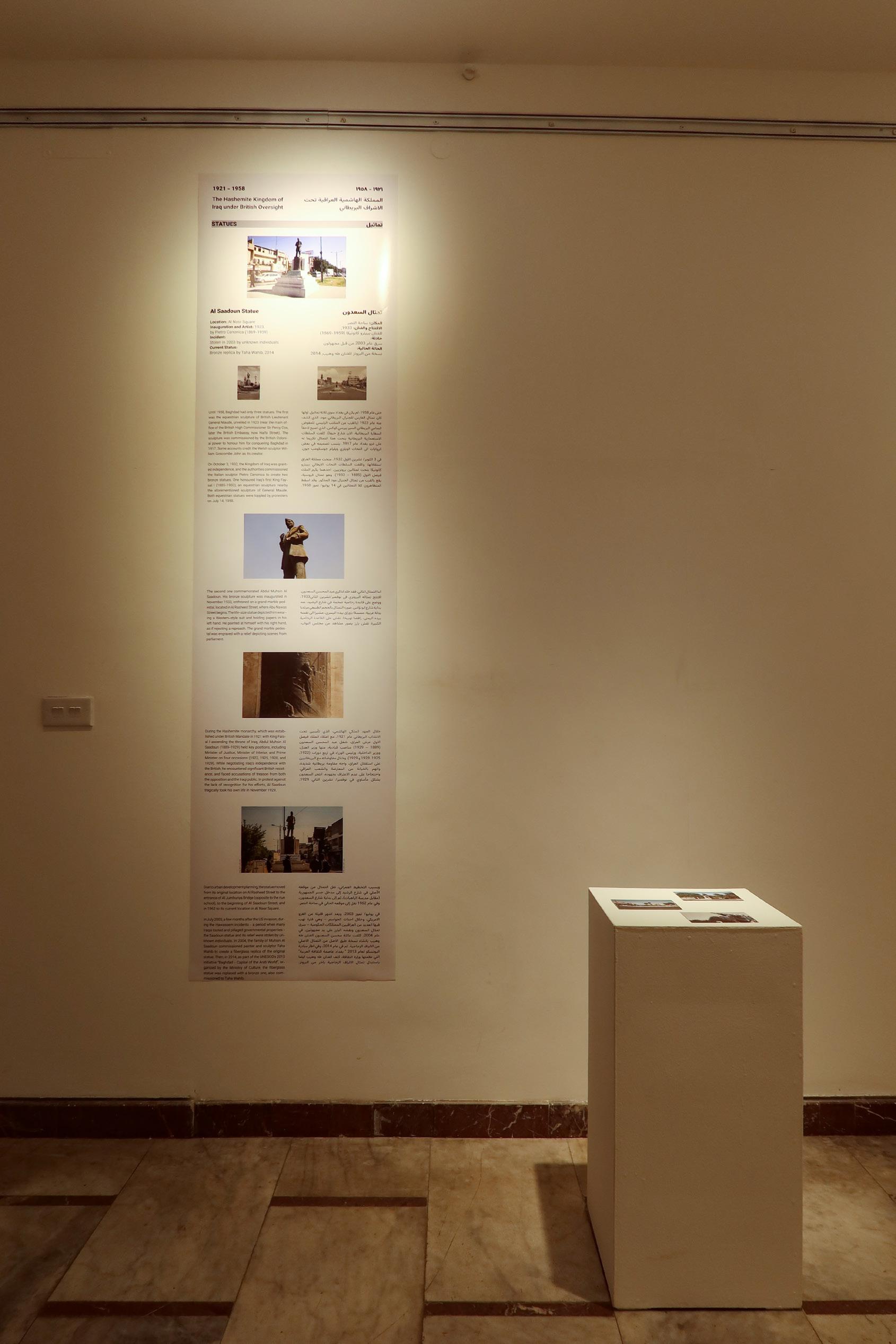
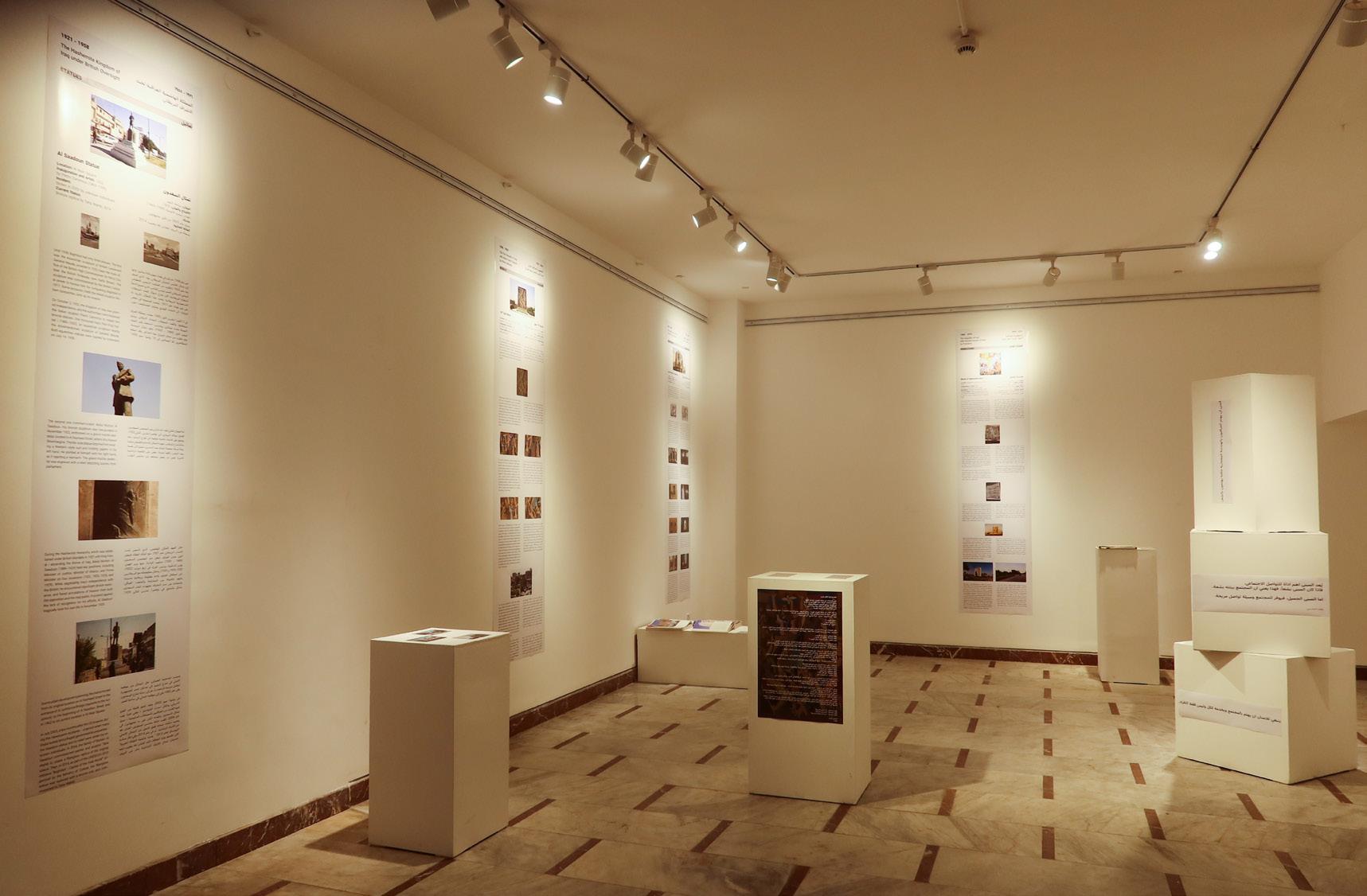
“As long as I know, no one in Iraq has previously categorized the history of modern Iraq in this way.“ (visitor’s comment)
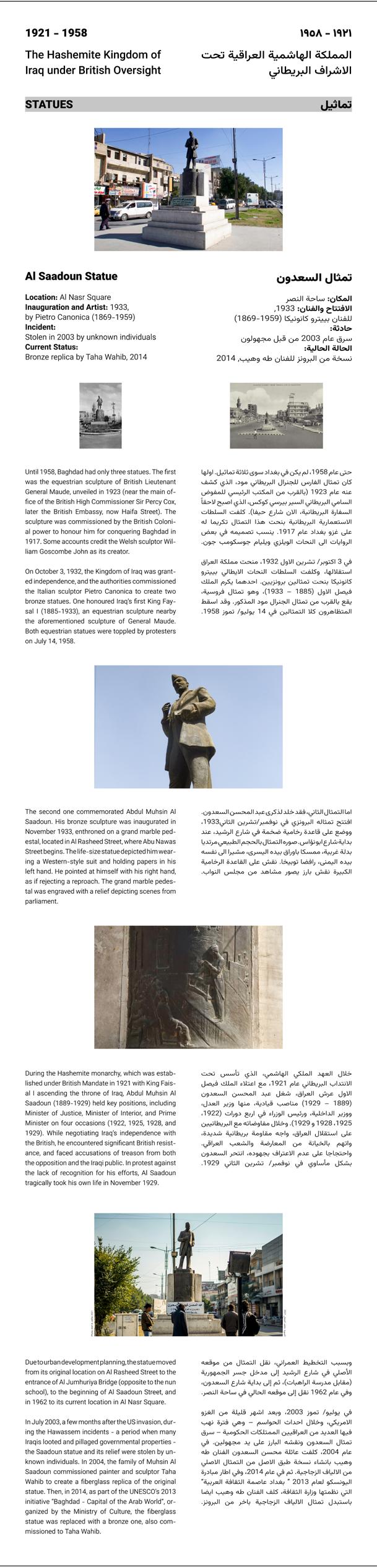
The Hashemite Kingdom of Iraq under British Oversight
STATUES
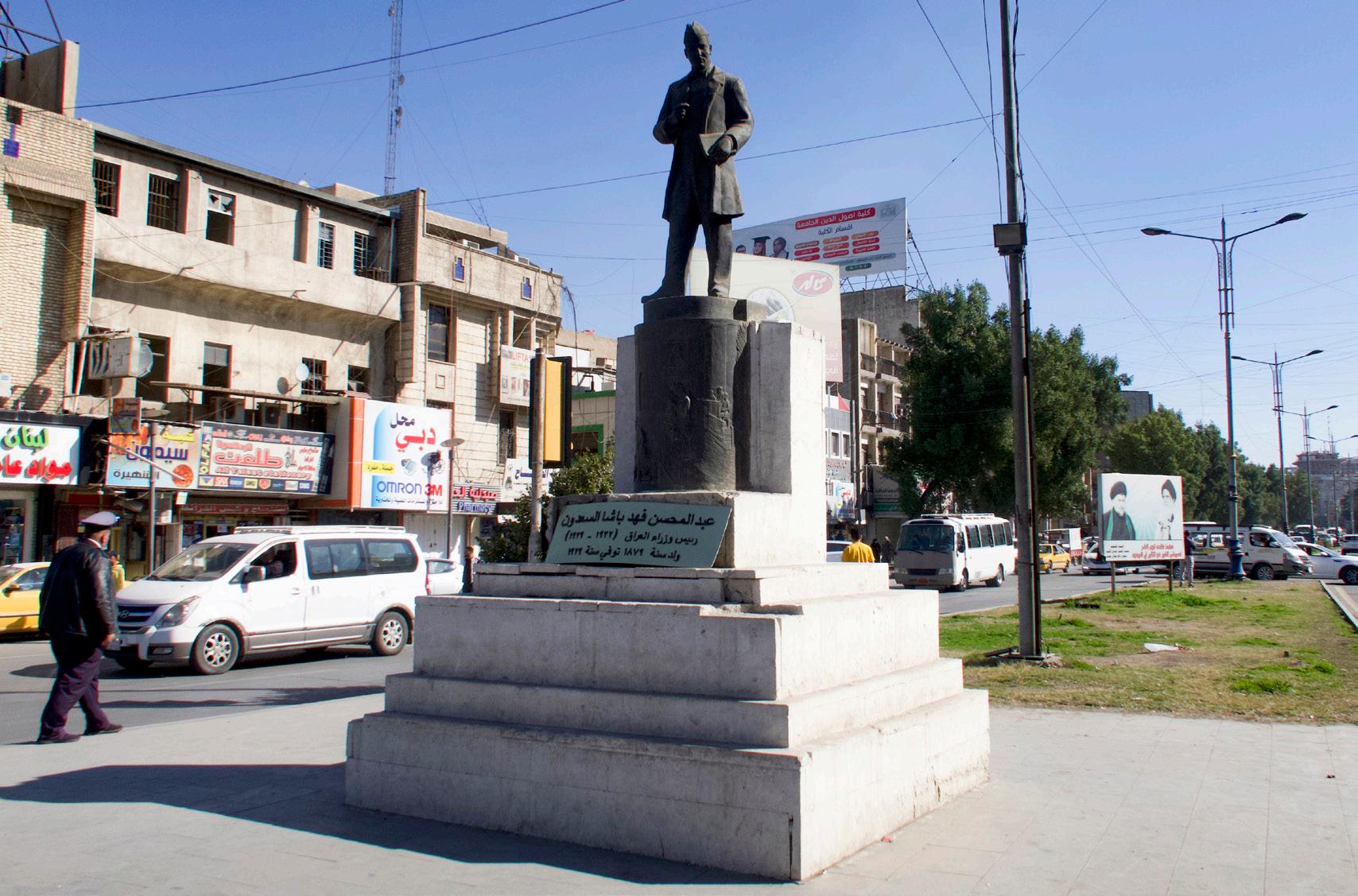
Al Saadoun Statue
Location: Al Nasr Square
Inauguration and Artist: 1933, by Pietro Canonica )1869-1959( Incident: Stolen in 2003 by unknown individuals
Current Status: Bronze replica by Taha Wahib, 2014
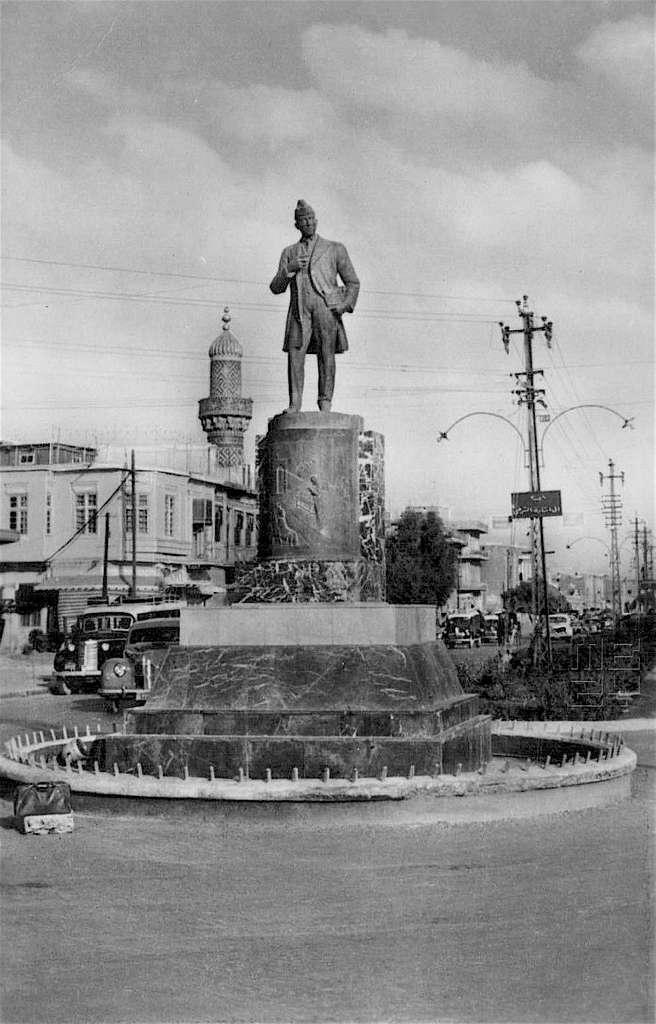
Until 1958, Baghdad had only three statues. The first was the equestrian sculpture of British Lieutenant General Maude, unveiled in 1923 )near the main office of the British High Commissioner Sir Percy Cox, later the British Embassy, now Haifa Street(. The sculpture was commissioned by the British Colonial power to honour him for conquering Baghdad in 1917. Some accounts credit the Welsh sculptor William Goscombe John as its creator.
On October 3, 1932, the Kingdom of Iraq was granted independence, and the authorities commissioned the Italian sculptor Pietro Canonica to create two bronze statues. One honoured Iraq’s first King Faysal I )1885-1933(, an equestrian sculpture nearby the aforementioned sculpture of General Maude. Both equestrian statues were toppled by protesters on July 14, 1958.
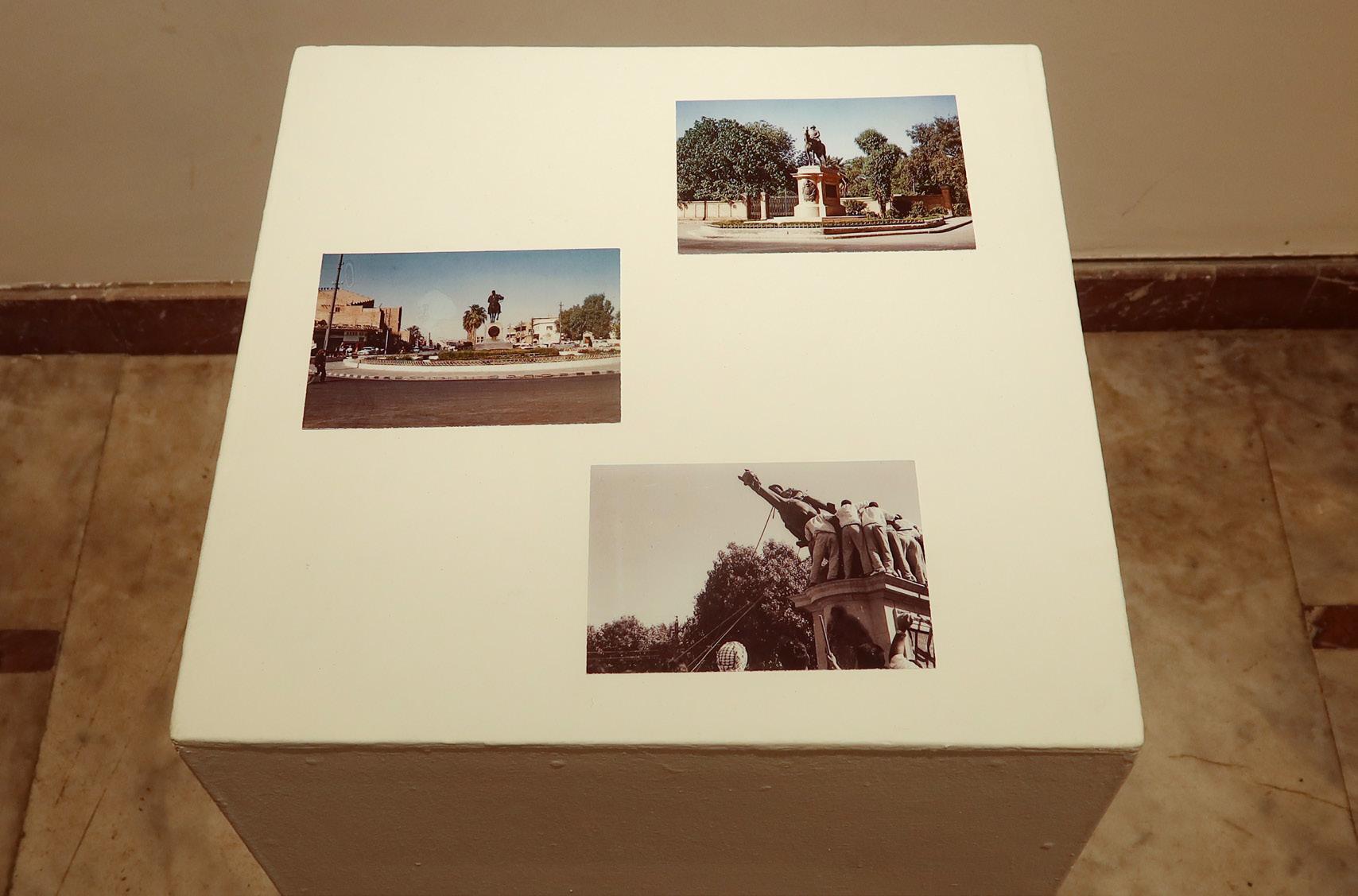
The postcards show the equestrian statues of General Maude )top( and King Faysal I )middle(, and the toppling of General Maude’s statue on 14th July 1958 )the photo was taken by Kamil Chadirji, father of Rifat Chadirji, founder of the National Democratic Party in Iraq(.
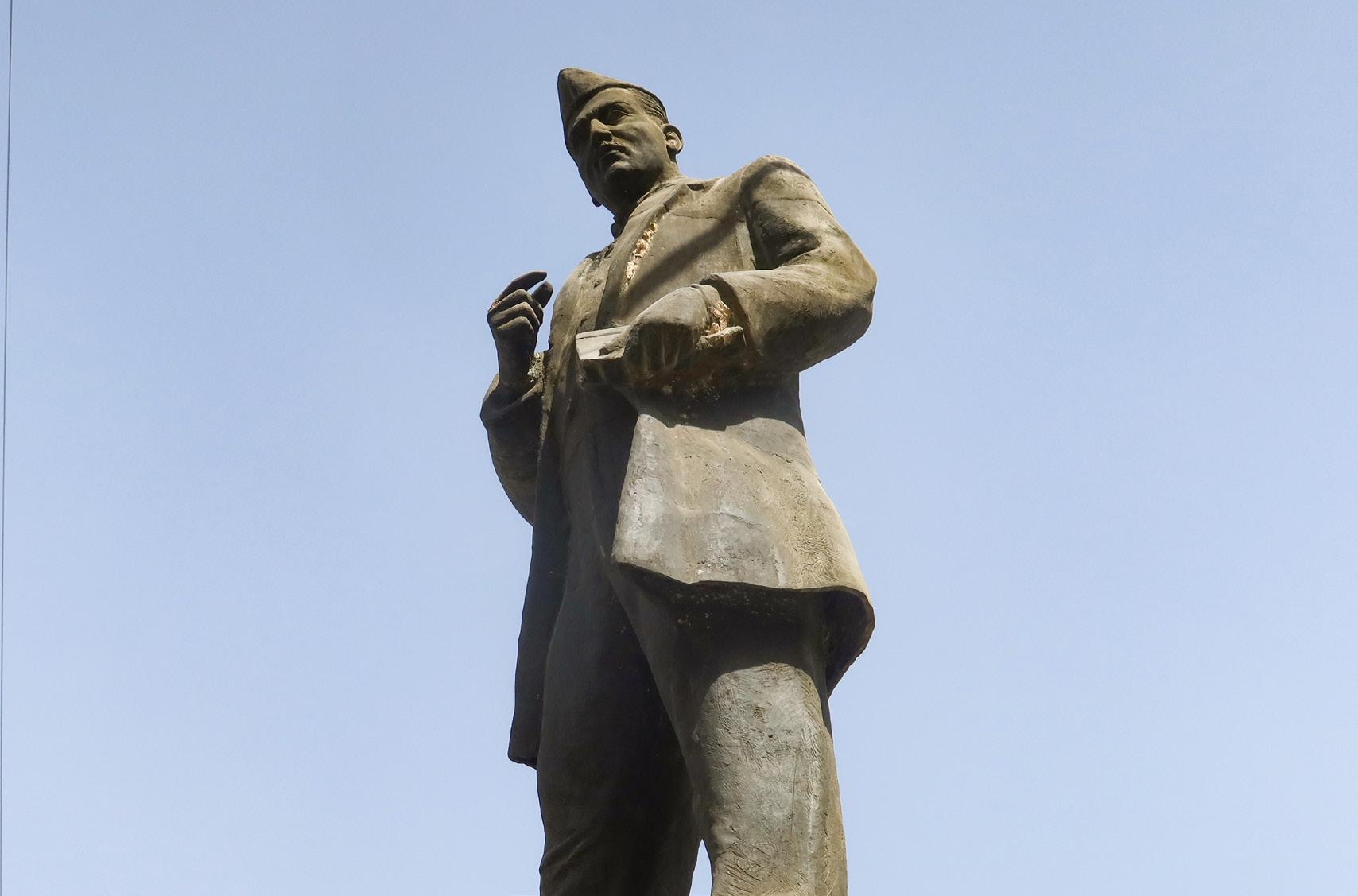
The second one commemorated Abdul Muhsin Al Saadoun. His bronze sculpture was inaugurated in November 1933, enthroned on a grand marble pedestal, located in Al Rasheed Street, where Abu Nawas Street begins. The life-size statue depicted him wearing a Western-style suit and holding papers in his left hand. He pointed at himself with his right hand, as if rejecting a reproach. The grand marble pedestal was engraved with a relief depicting scenes from parliament.
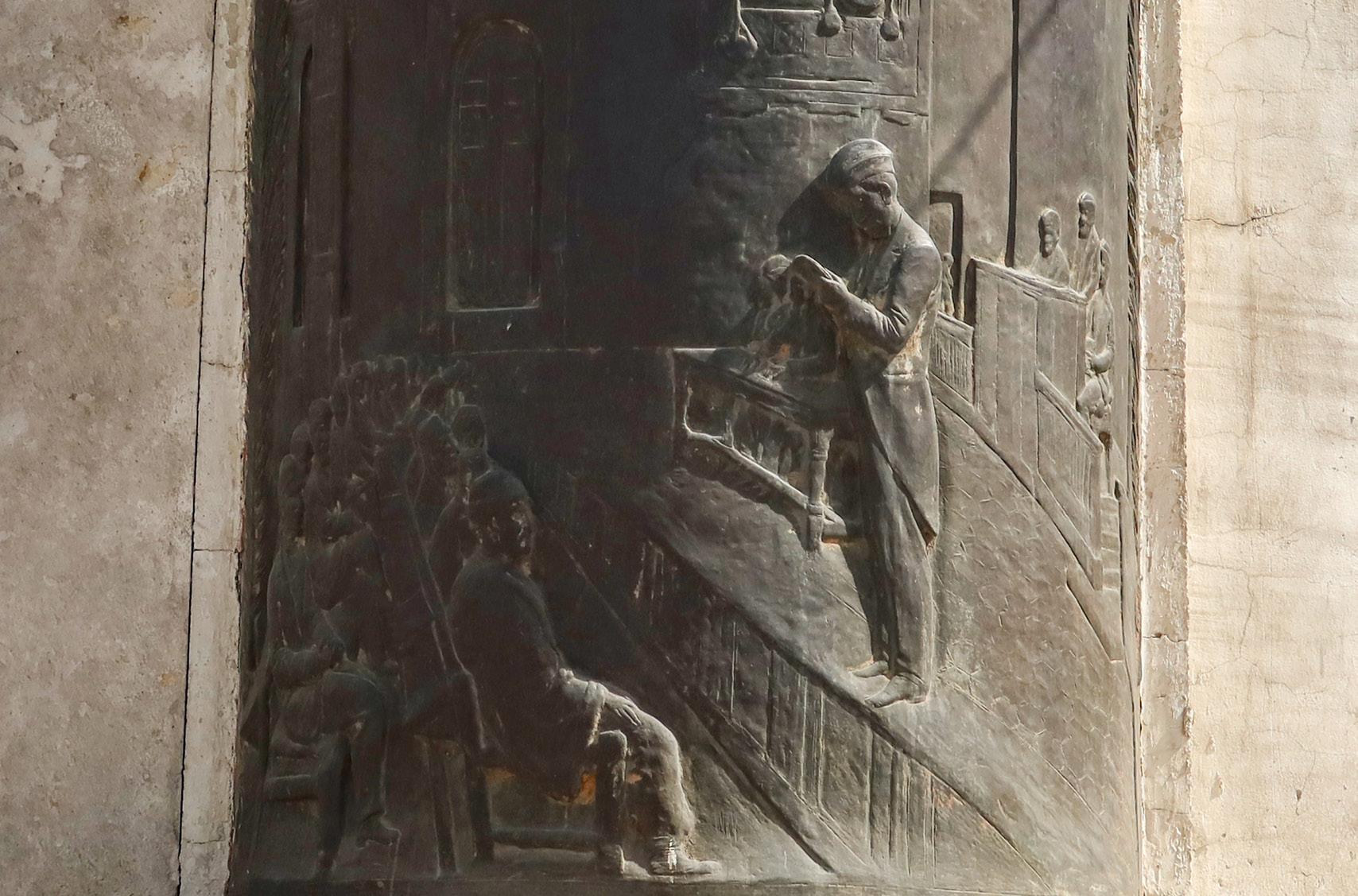
During the Hashemite monarchy, which was established under British Mandate in 1921 with King Faisal I ascending the throne of Iraq, Abdul Muhsin Al Saadoun )1889-1929( held key positions, including Minister of Justice, Minister of Interior, and Prime Minister on four occasions )1922, 1925, 1928, and 1929(. While negotiating Iraq’s independence with the British, he encountered significant British resistance, and faced accusations of treason from both the opposition and the Iraqi public. In protest against the lack of recognition for his efforts, Al Saadoun tragically took his own life in November 1929.
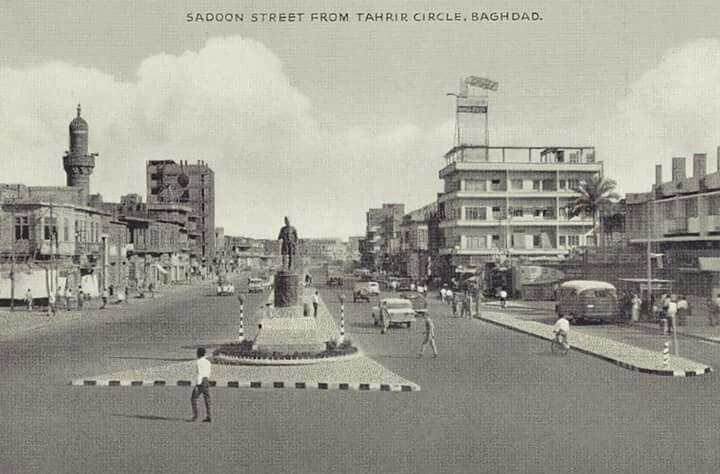
Due to urban development planning, the statue moved from its original location on Al Rasheed Street to the entrance of Al Jumhuriya Bridge )opposite to the nun school(, to the beginning of Al Saadoun Street, and in 1962 to its current location in Al Nasr Square.
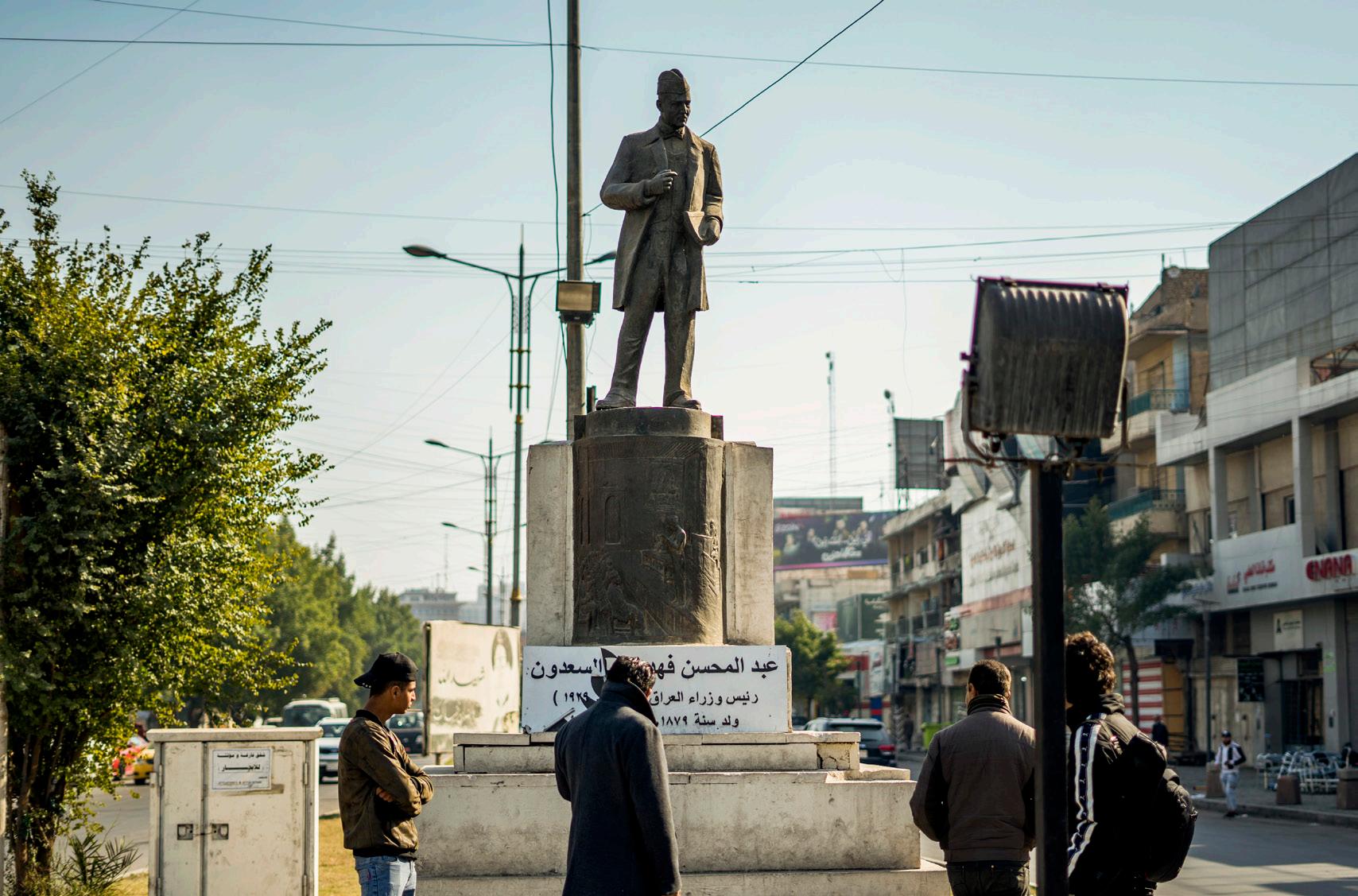
I July 2003, a few months after the US invasion, during the Hawassem incidents - a period when many Iraqis looted and pillaged governmental properties - the Saadoun statue and its relief were stolen by unknown individuals. In 2004, the family of Muhsin Al Saadoun commissioned painter and sculptor Taha Wahib to create a fiberglass replica of the original statue. Then, in 2014, as part of the UNESCO’s 2013 initiative ”Baghdad - Capital of the Arab World“, organized by the Ministry of Culture, the fiberglass statue was replaced with a bronze one, also commissioned to Taha Wahib.
“This exhibition is very important for the Iraqi people. I am Iraqi myself, yet I did not know anything about what I learned today.“
The First Republic of Iraq with Abdul Karim Qassim as Prime Minister
MURALS
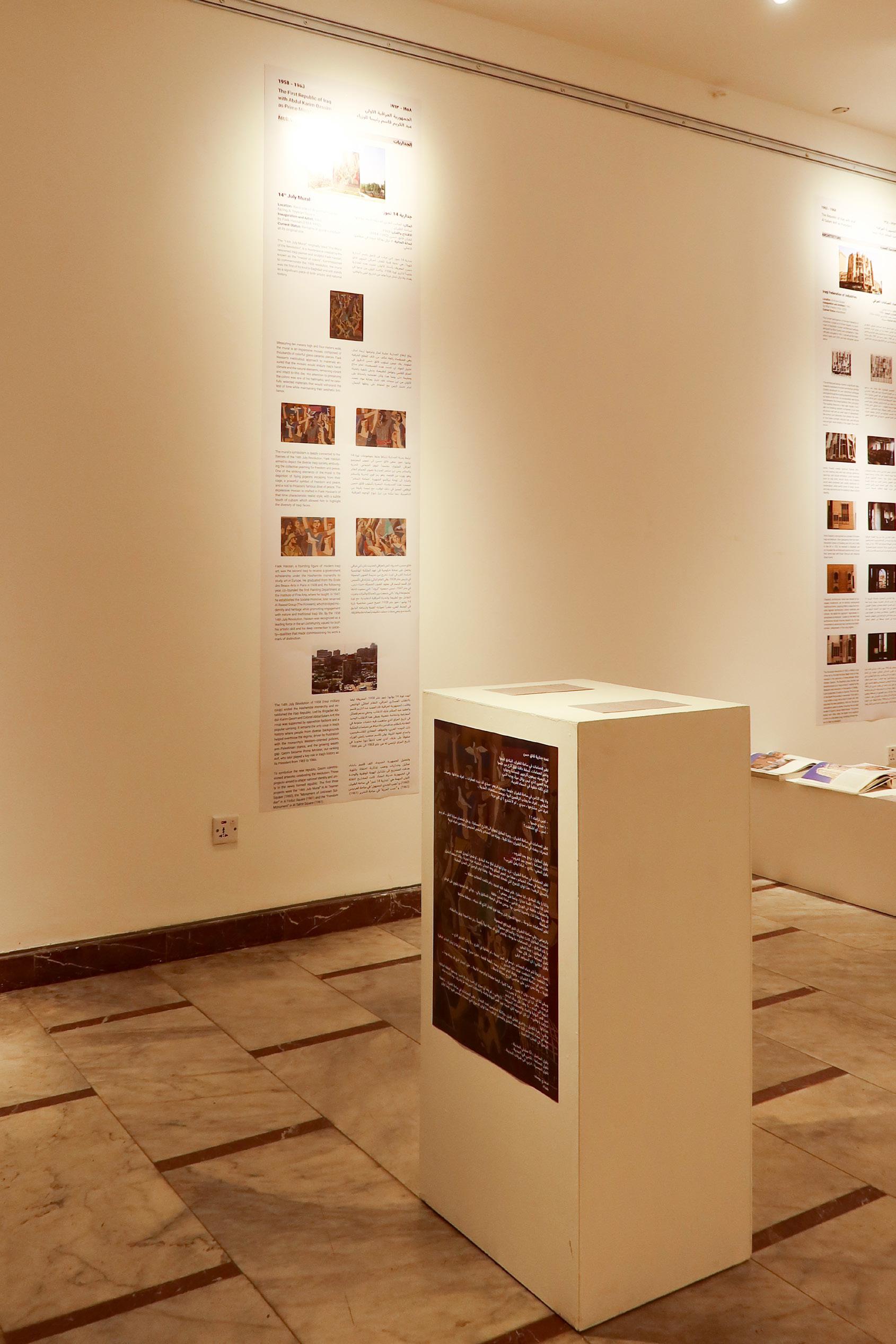
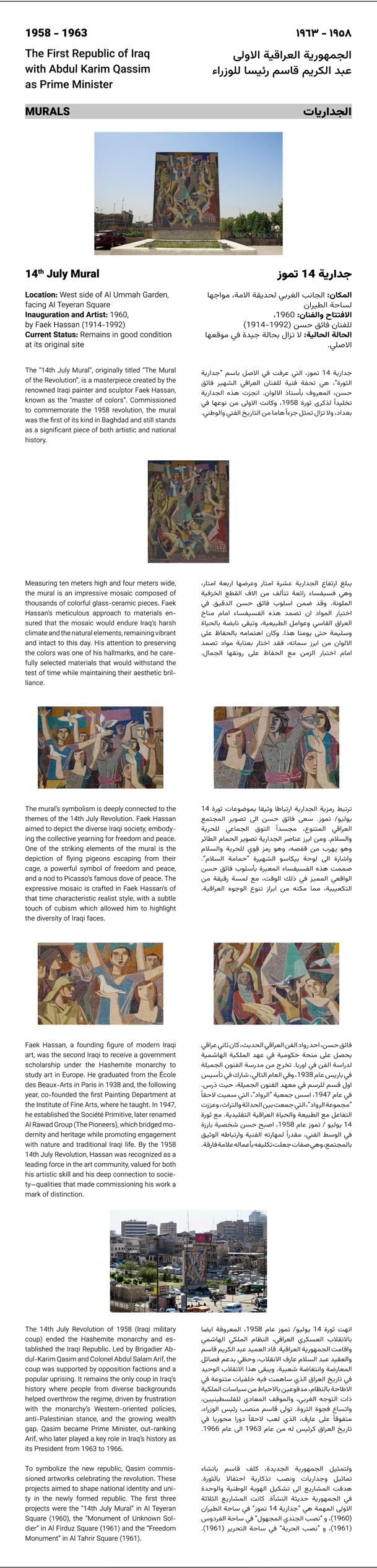
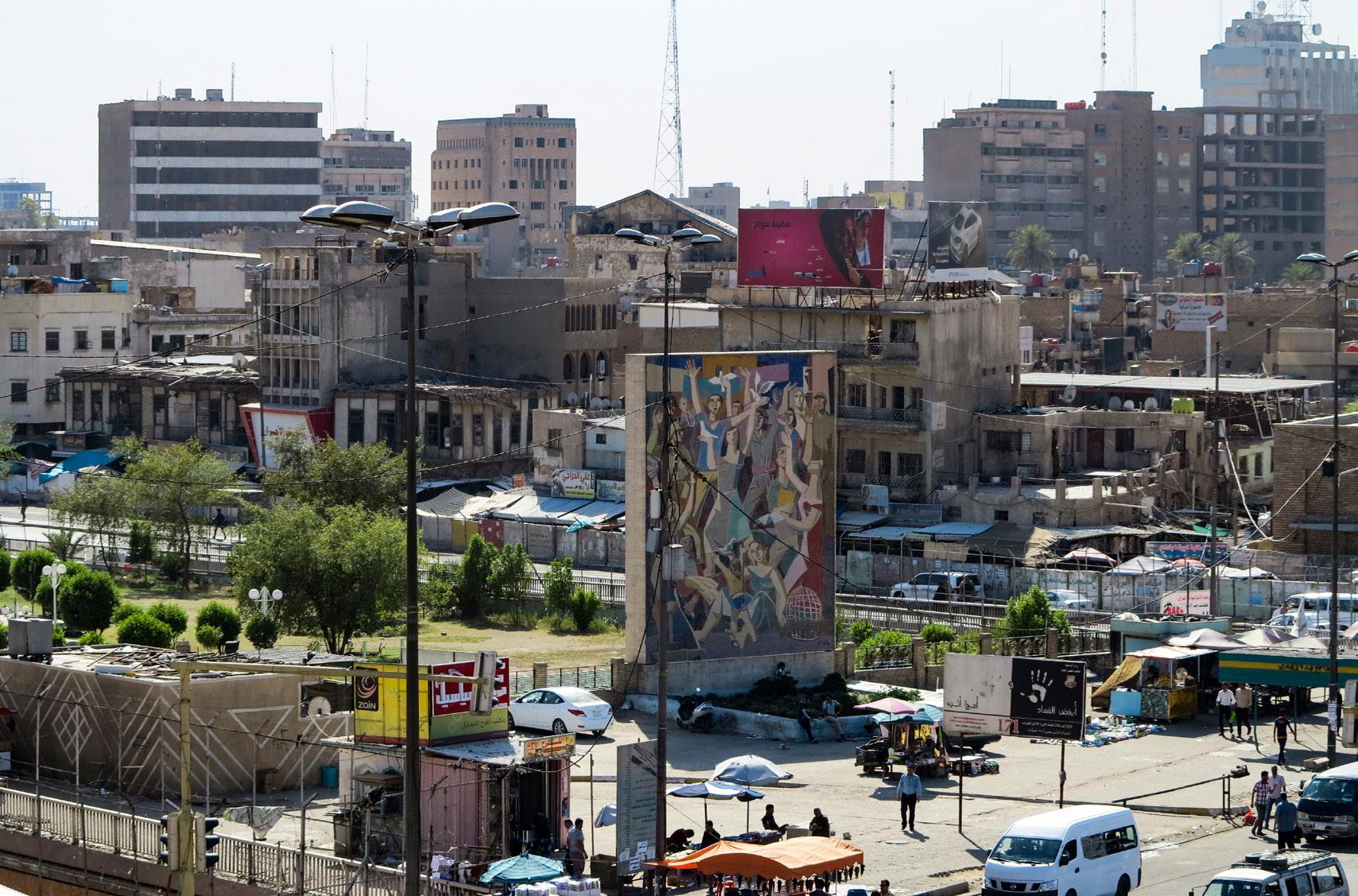
14th July Mural
Location: West side of Al Ummah Garden, facing Al Teyeran Square
Inauguration and Artist: 1960, by Faek Hassan )1914-1992(
Current Status: Remains in good condition at its original site
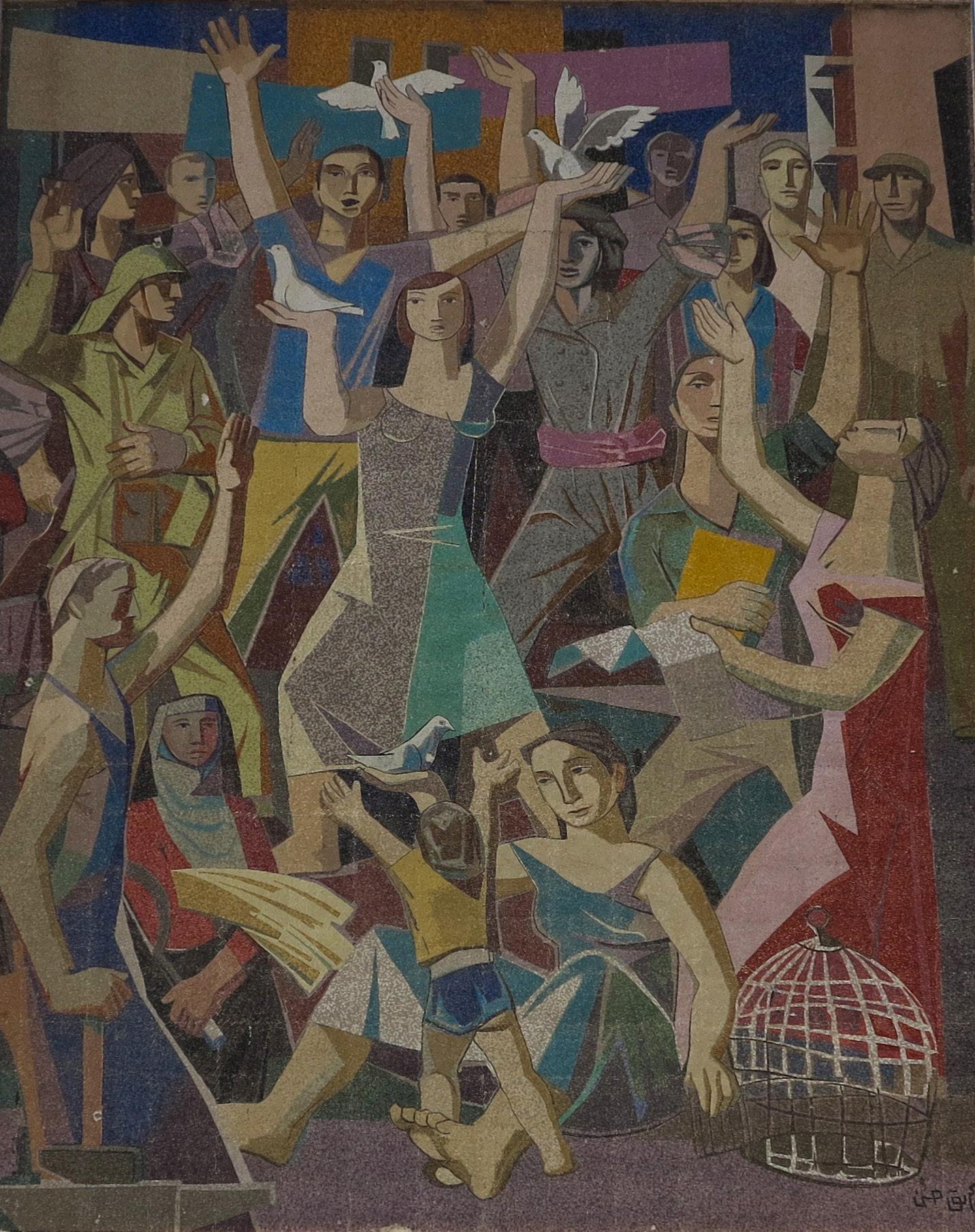
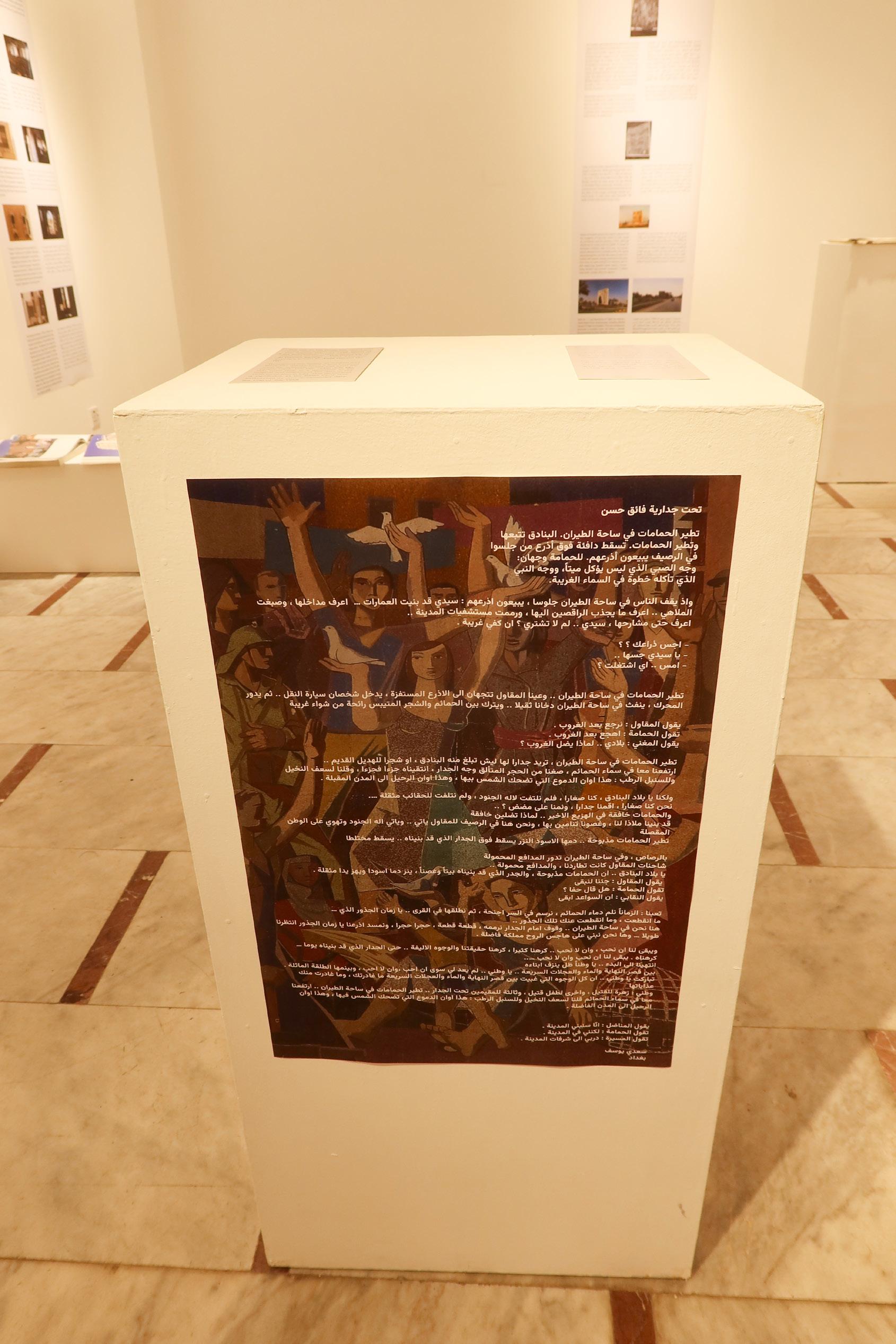
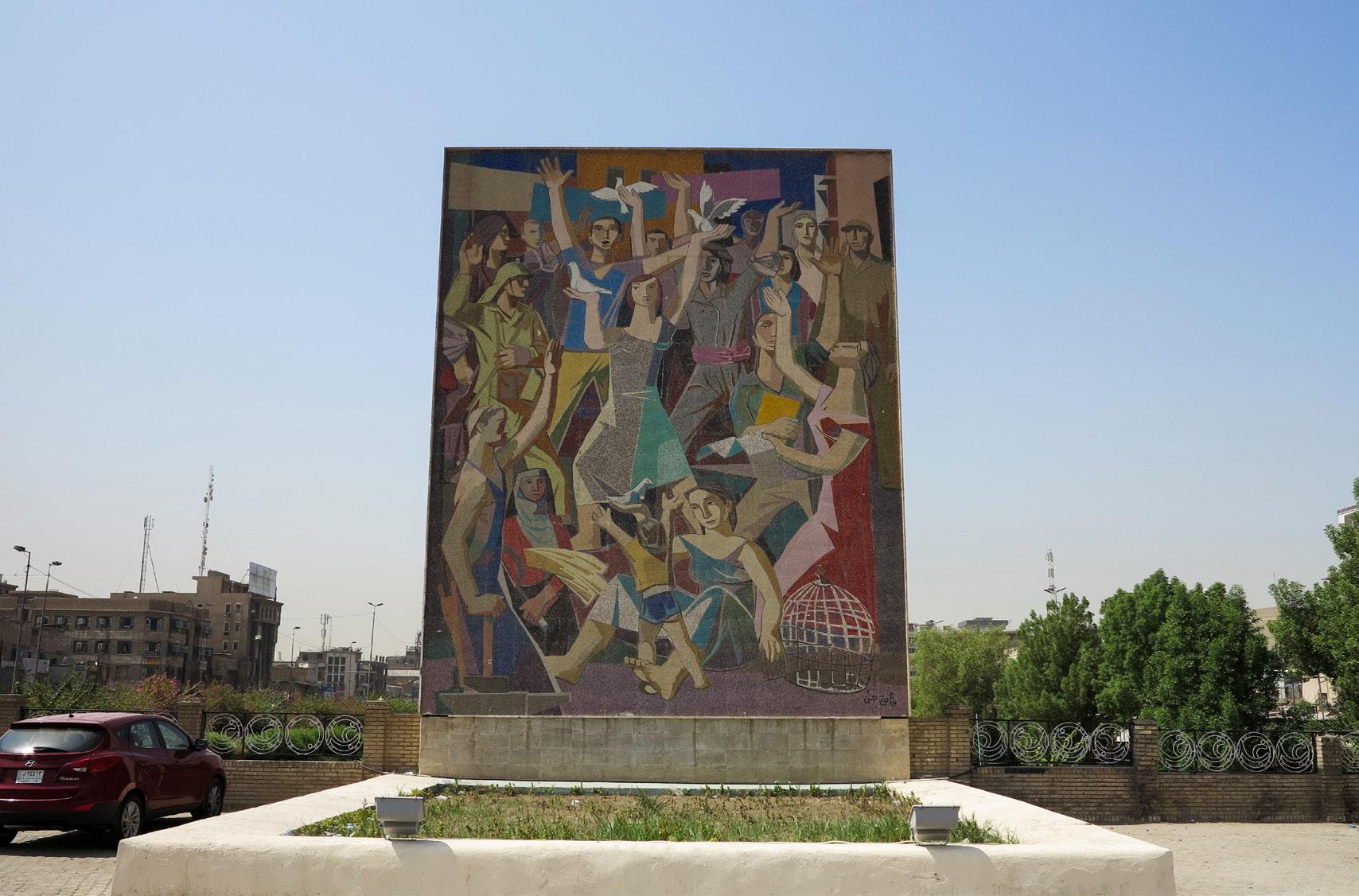
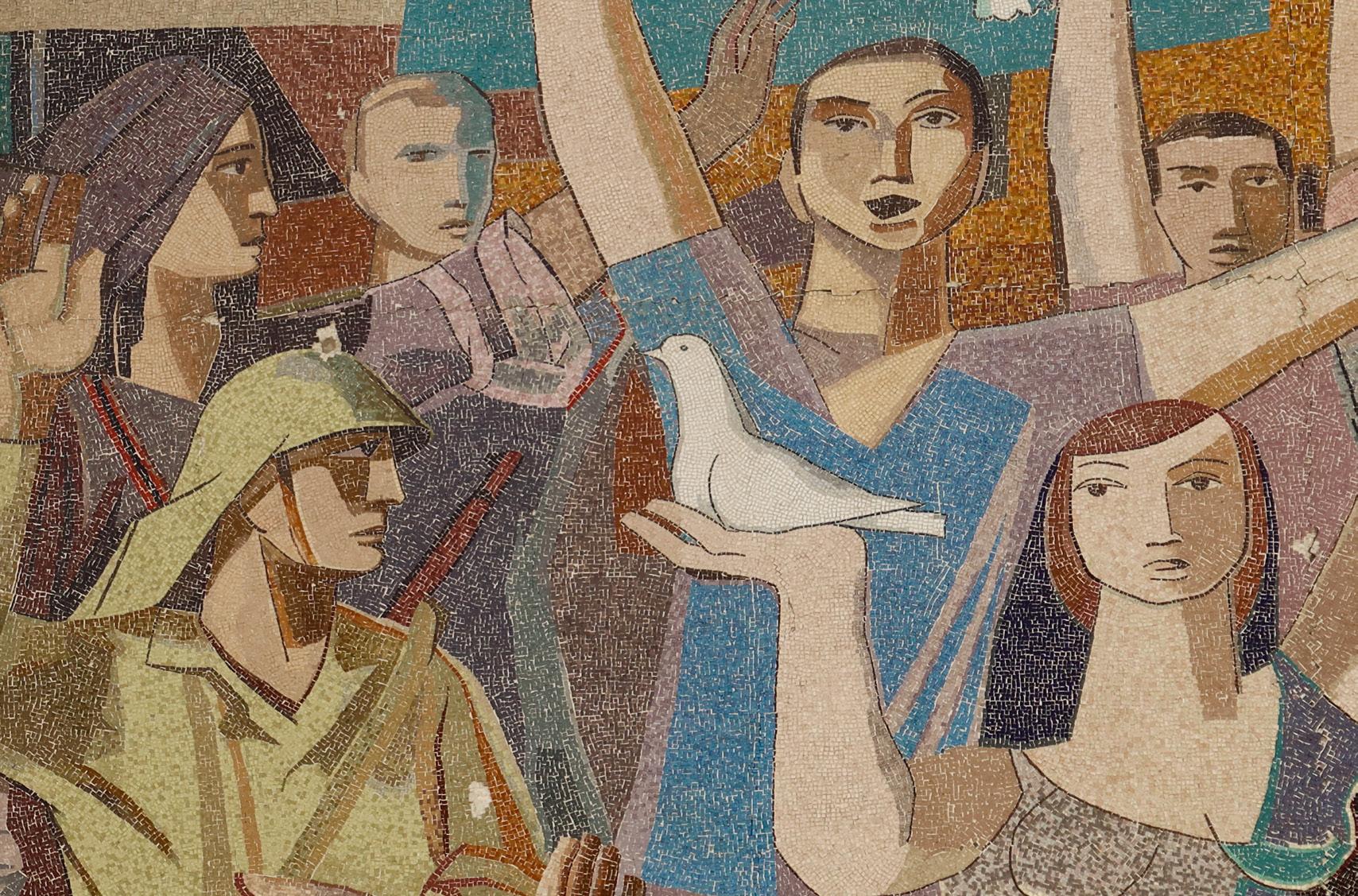
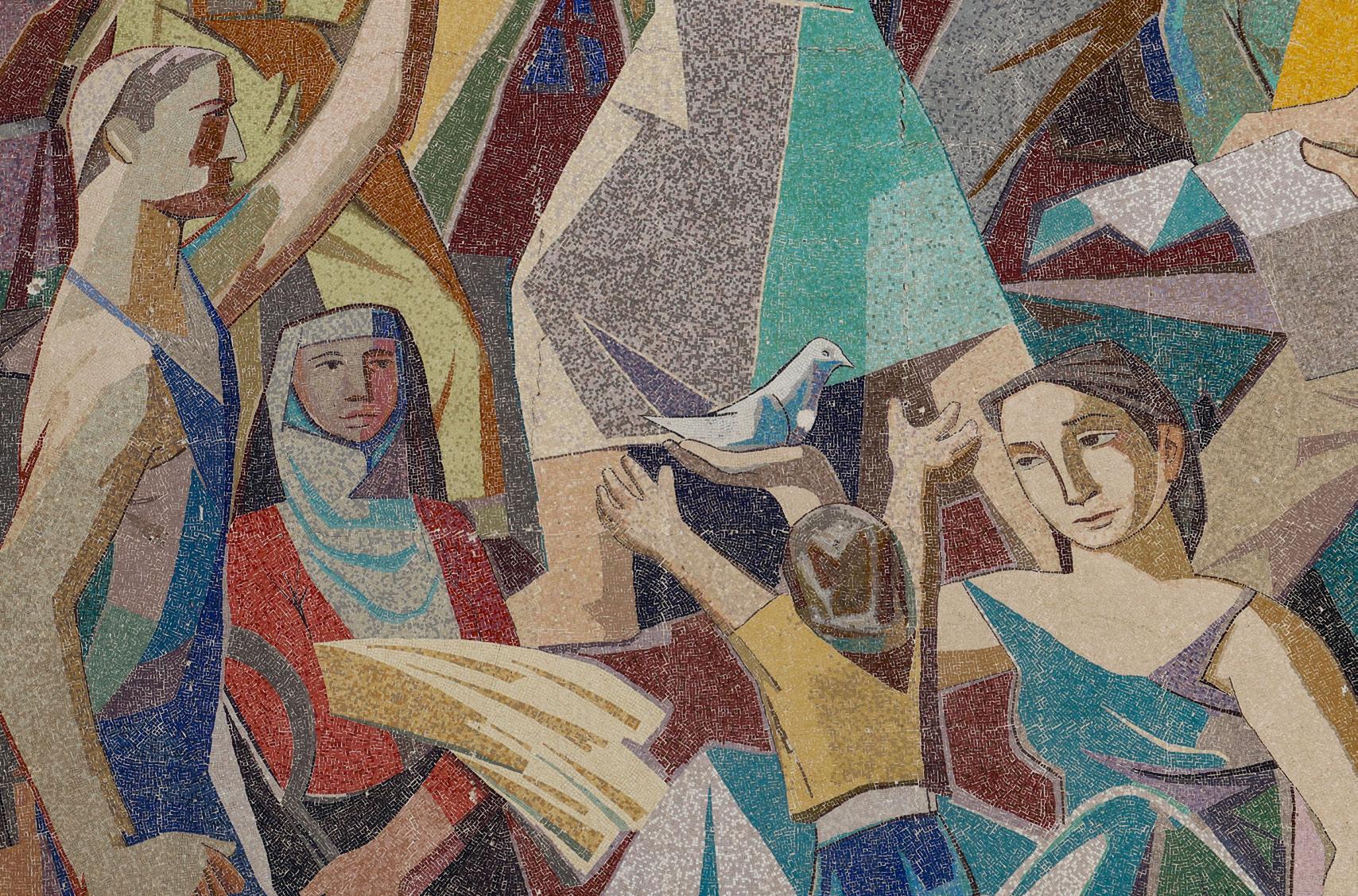
The ”14th July Mural“, originally titled ”The Mural of the Revolution“, is a masterpiece created by the renowned Iraqi painter and sculptor Faek Hassan, known as the ”master of colors“. Commissioned to commemorate the 1958 revolution, the mural was the first of its kind in Baghdad and still stands as a significant piece of both artistic and national history.
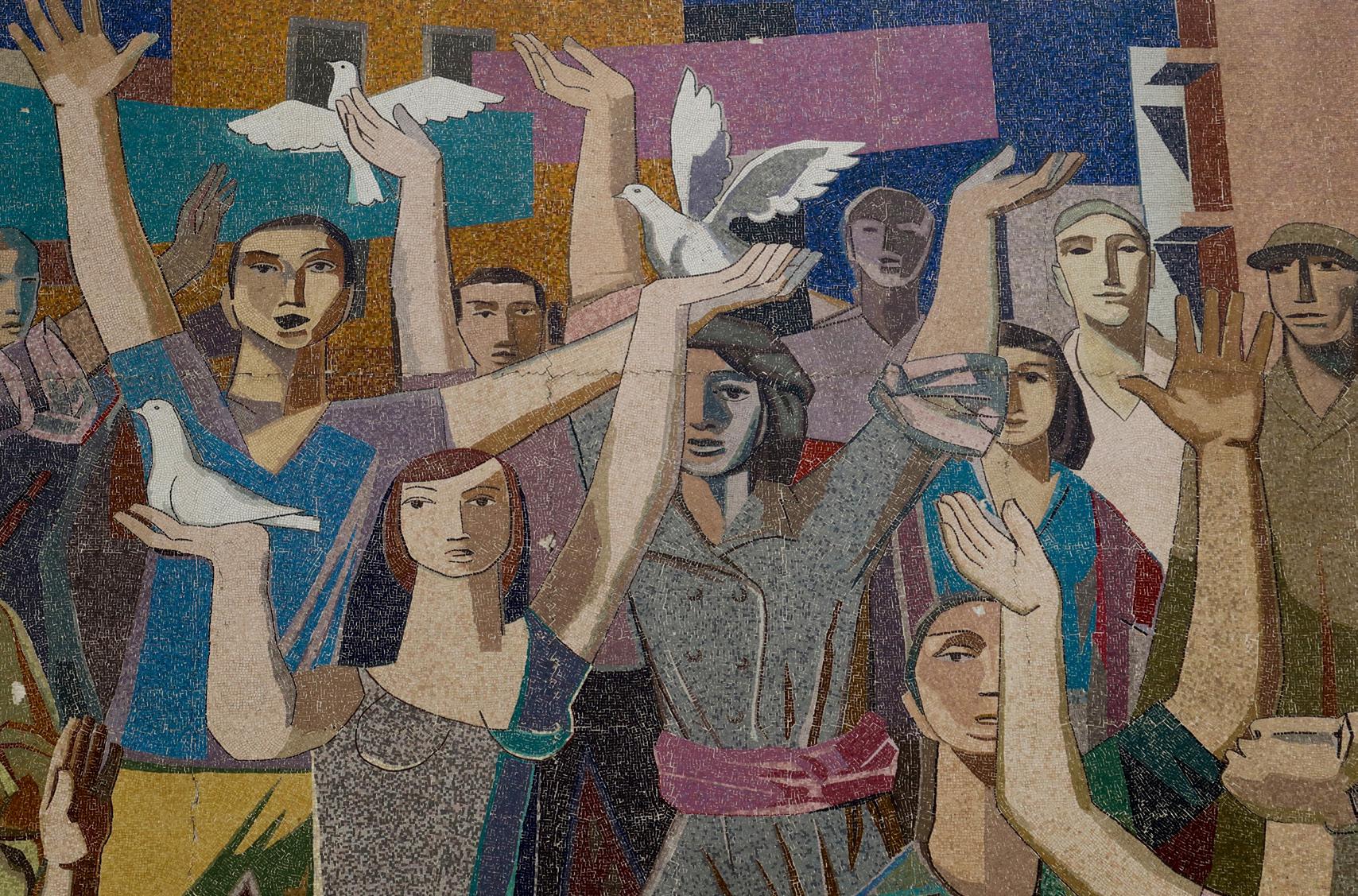
Measuring ten meters high and four meters wide, the mural is an impressive mosaic composed of thousands of colorful glass-ceramic pieces. Faek Hassan’s meticulous approach to materials ensured that the mosaic would endure Iraq’s harsh climate and the natural elements, remaining vibrant and intact to this day. His attention to preserving the colors was one of his hallmarks, and he carefully selected materials that would withstand the test of time while maintaining their aesthetic brilliance.
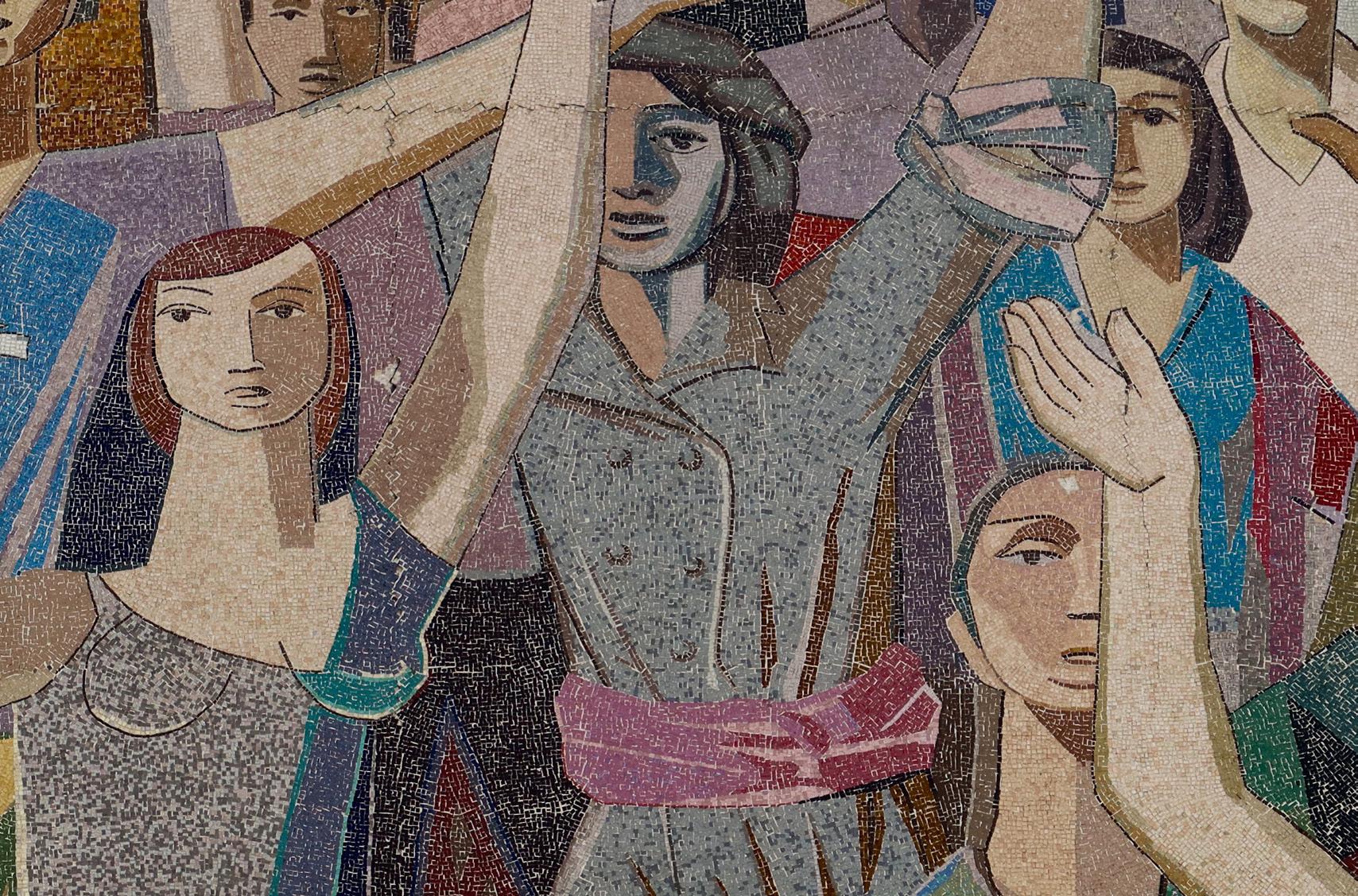
The mural’s symbolism is deeply connected to the themes of the 14th July Revolution. Faek Hassan aimed to depict the diverse Iraqi society, embodying the collective yearning for freedom and peace. One of the striking elements of the mural is the depiction of flying pigeons escaping from their cage, a powerful symbol of freedom and peace, and a nod to Picasso’s famous dove of peace. The expressive mosaic is crafted in Faek Hassan’s of that time characteristic realist style, with a subtle touch of cubism which allowed him to highlight the diversity of Iraqi faces.
Faek Hassan, a founding figure of modern Iraqi art, was the second Iraqi to receive a government scholarship under the Hashemite monarchy to study art in Europe. He graduated from the École des Beaux-Arts in Paris in 1938 and, the following year, co-founded the first Painting Department at the Institute of Fine Arts, where he taught. In 1947, he established the Société Primitive, later renamed Al Rawad Group )The Pioneers(, which bridged modernity and heritage while promoting engagement with nature and traditional Iraqi life. By the 1958 14th July Revolution, Hassan was recognized as a leading force in the art community, valued for both his artistic skill and his deep connection to society—qualities that made commissioning his work a mark of distinction.
The 14th July Revolution of 1958 )Iraqi military coup( ended the Hashemite monarchy and established the Iraqi Republic. Led by Brigadier Abdul-Karim Qasim and Colonel Abdul Salam Arif, the coup was supported by opposition factions and a popular uprising. It remains the only coup in Iraq’s history where people from diverse backgrounds helped overthrow the regime, driven by frustration with the monarchy’s Western-oriented policies, anti-Palestinian stance, and the growing wealth gap. Qasim became Prime Minister, out-ranking Arif, who later played a key role in Iraq’s history as its President from 1963 to 1966.
To symbolize the new republic, Qasim commissioned artworks celebrating the revolution. These projects aimed to shape national identity and unity in the newly formed republic. The first three projects were the ”14th July Mural“ in Al Teyeran Square )1960(, the ”Monument of Unknown Soldier“ in Al Firduz Square )1961( and the ”Freedom Monument“ in Al Tahrir Square )1961(.
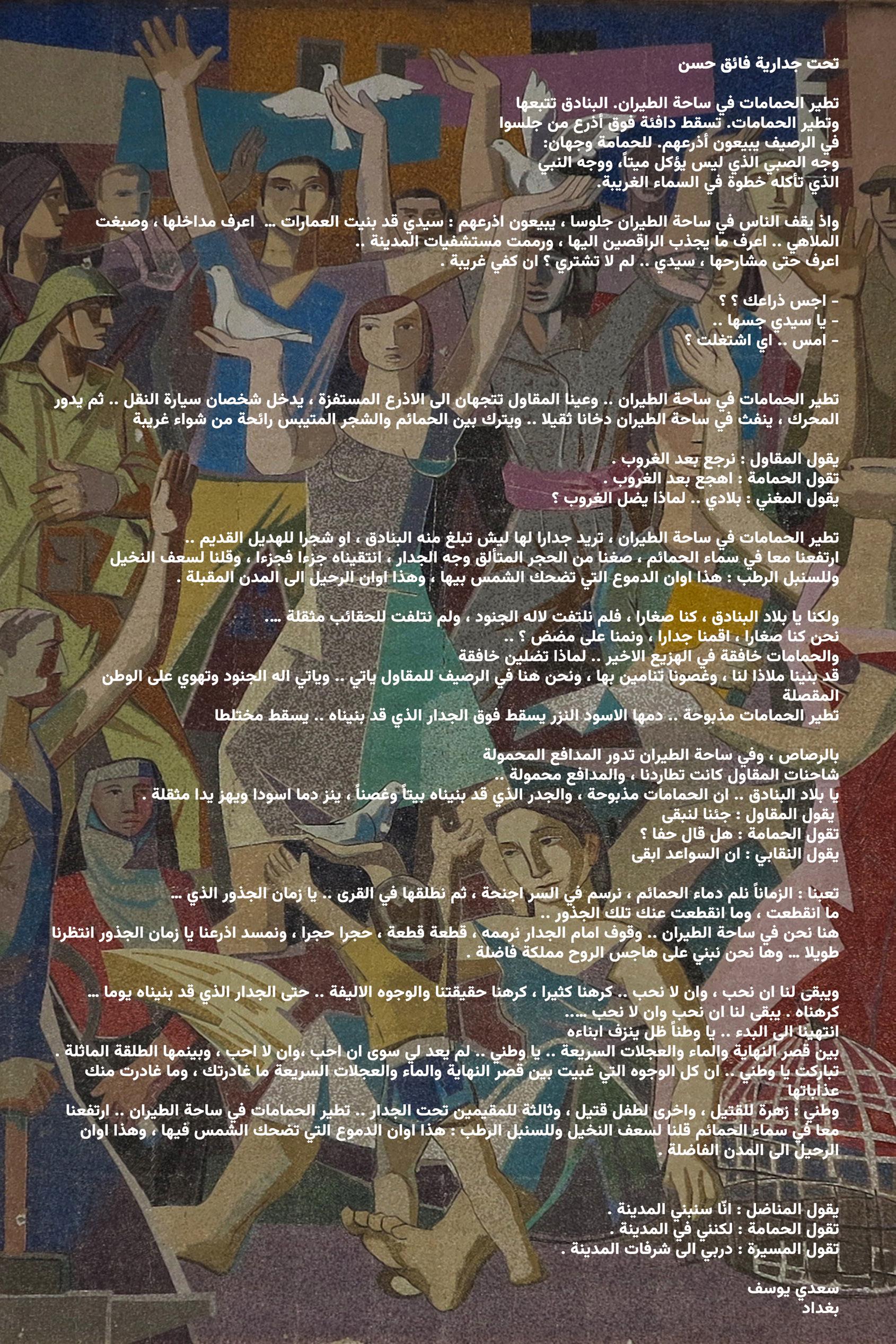
The title of the mural has varied over times and across different accounts. The original title was “The Mural of the Revolution”. After Saadi Youssef published his poem “The Doves Fly in Al Teyeran Square” in 1973, it became popularly known as “Faek Hassan Mural”. Throughout the history of modern Iraq, there has always been a gap between what the authority desire and what the people want. The title “14th July Mural”, used here, is a derivative of the original and references the date of the 1958 revolution in Iraq. This distinction is significant, as the Baath Party later established its own revolutionary date: the 17th of July 1968.
“I pass this building almost every day and have always wanted to know more. Now, I finally learned about the architect and its history.“
The
Republic of Iraq with Abd Al Salam Arif as President
ARCHITECTURE
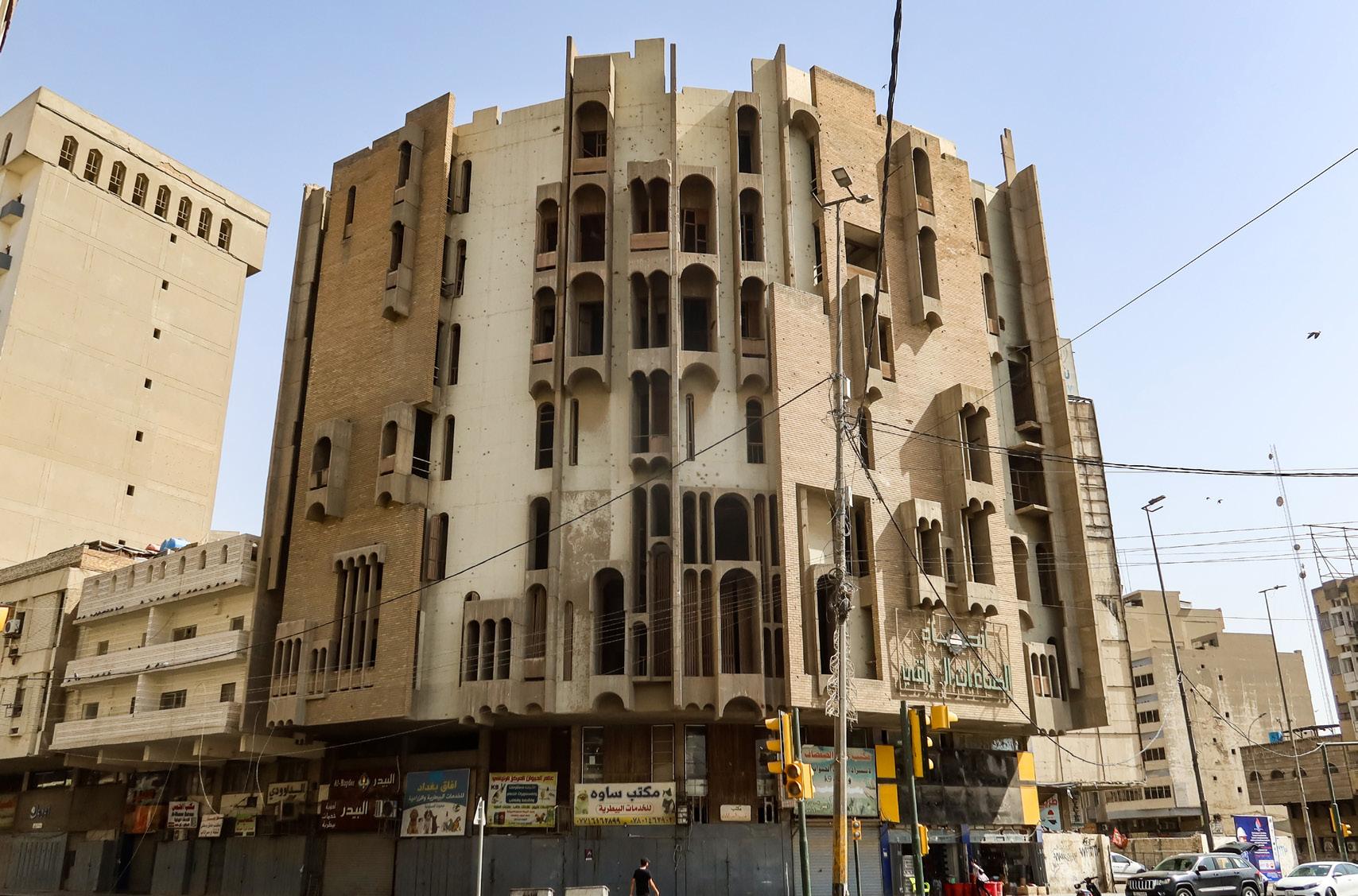
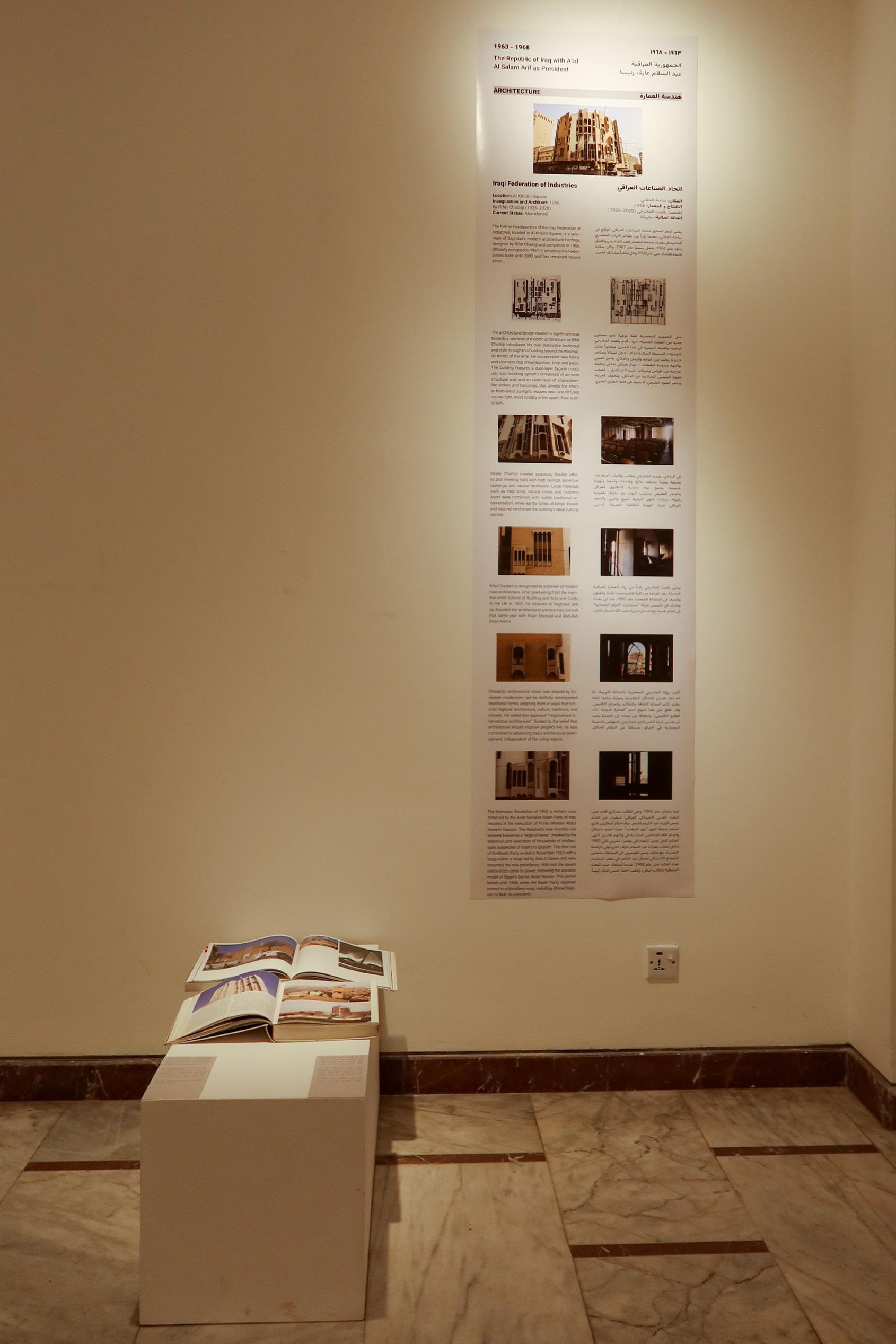
Iraqi Federation of Industries
Location: Al Khilani Square
Inauguration and Architect: 1966, by Rifat Chadirji )1926-2020(
Current Status: Abandoned
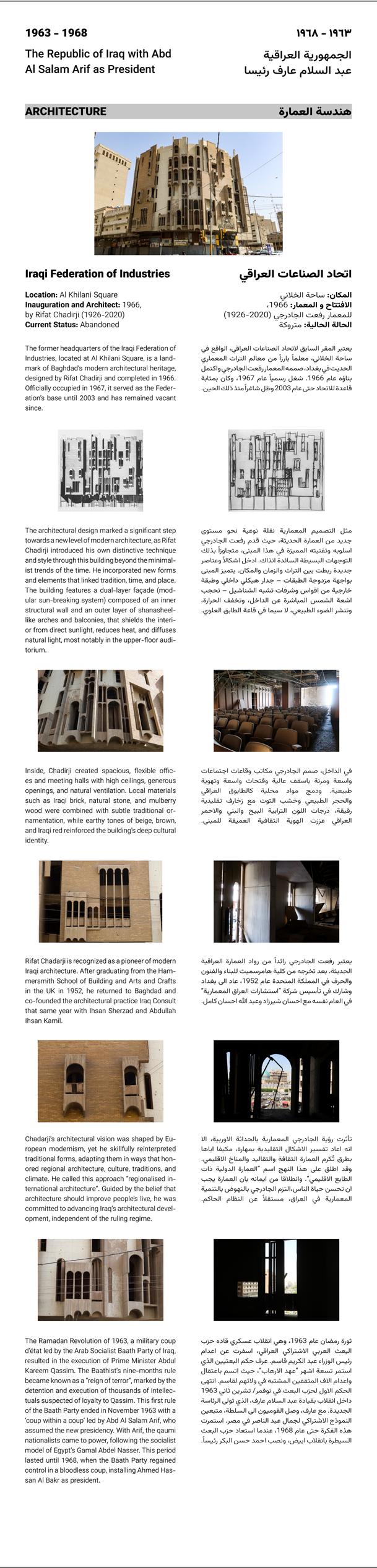
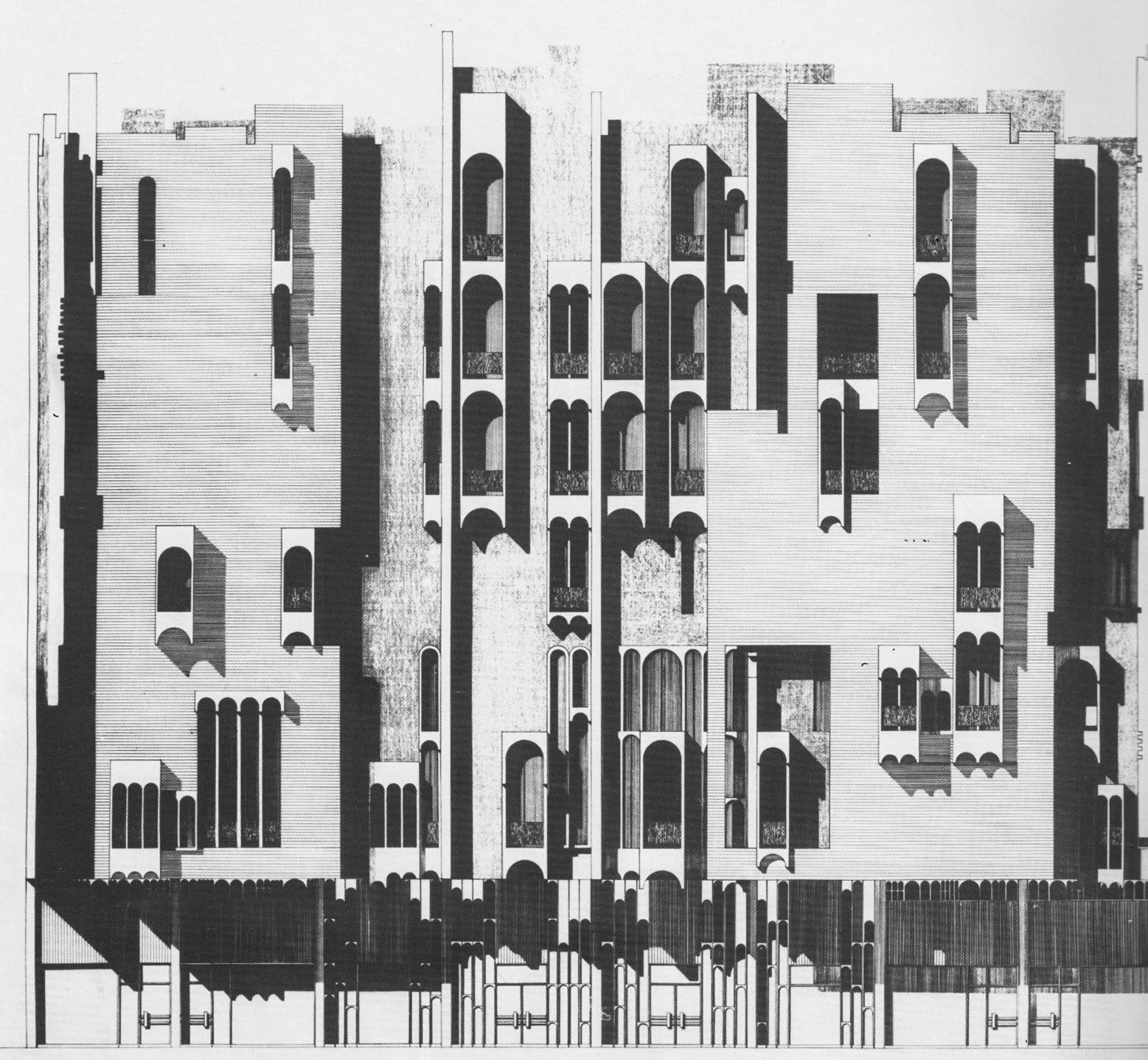
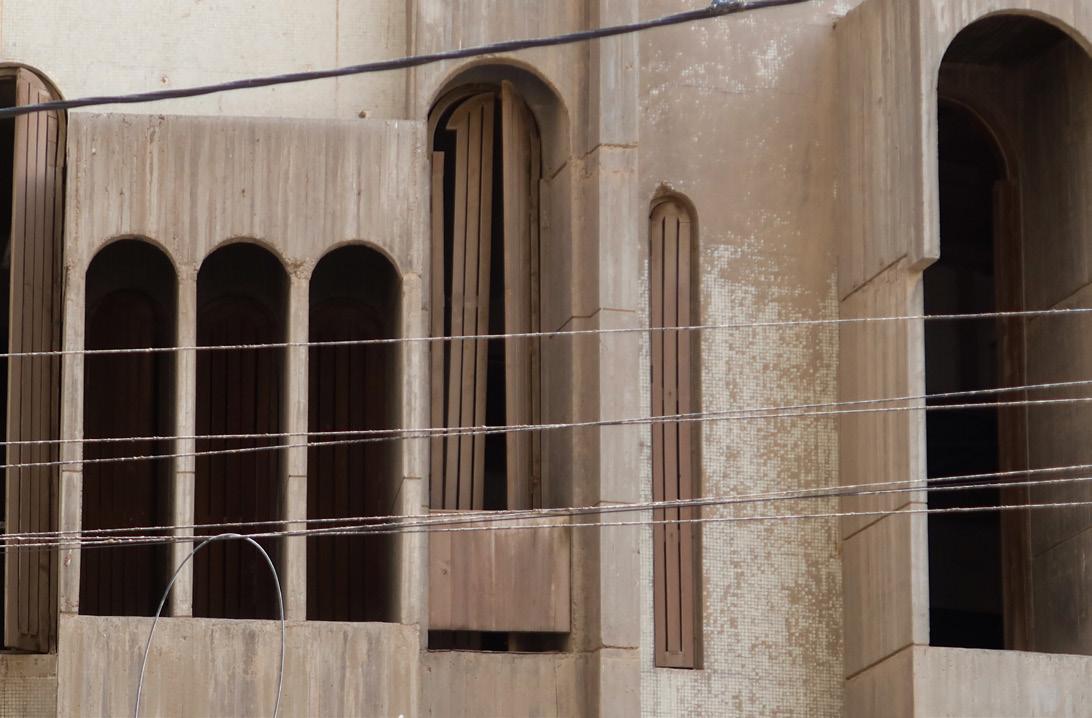
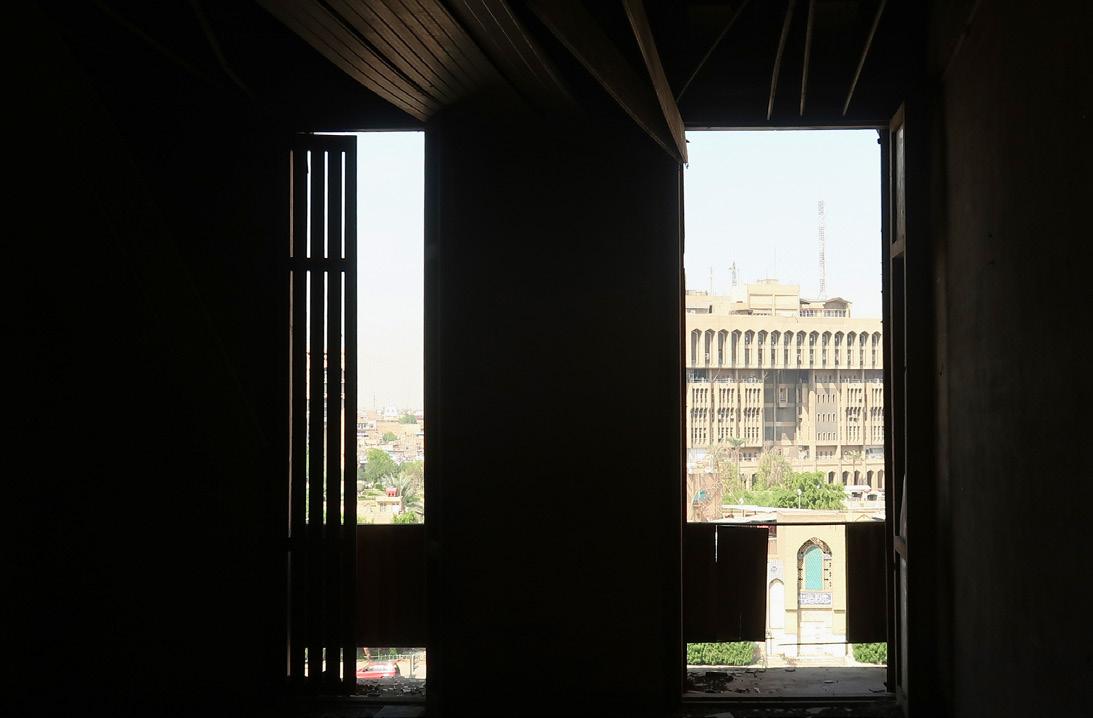
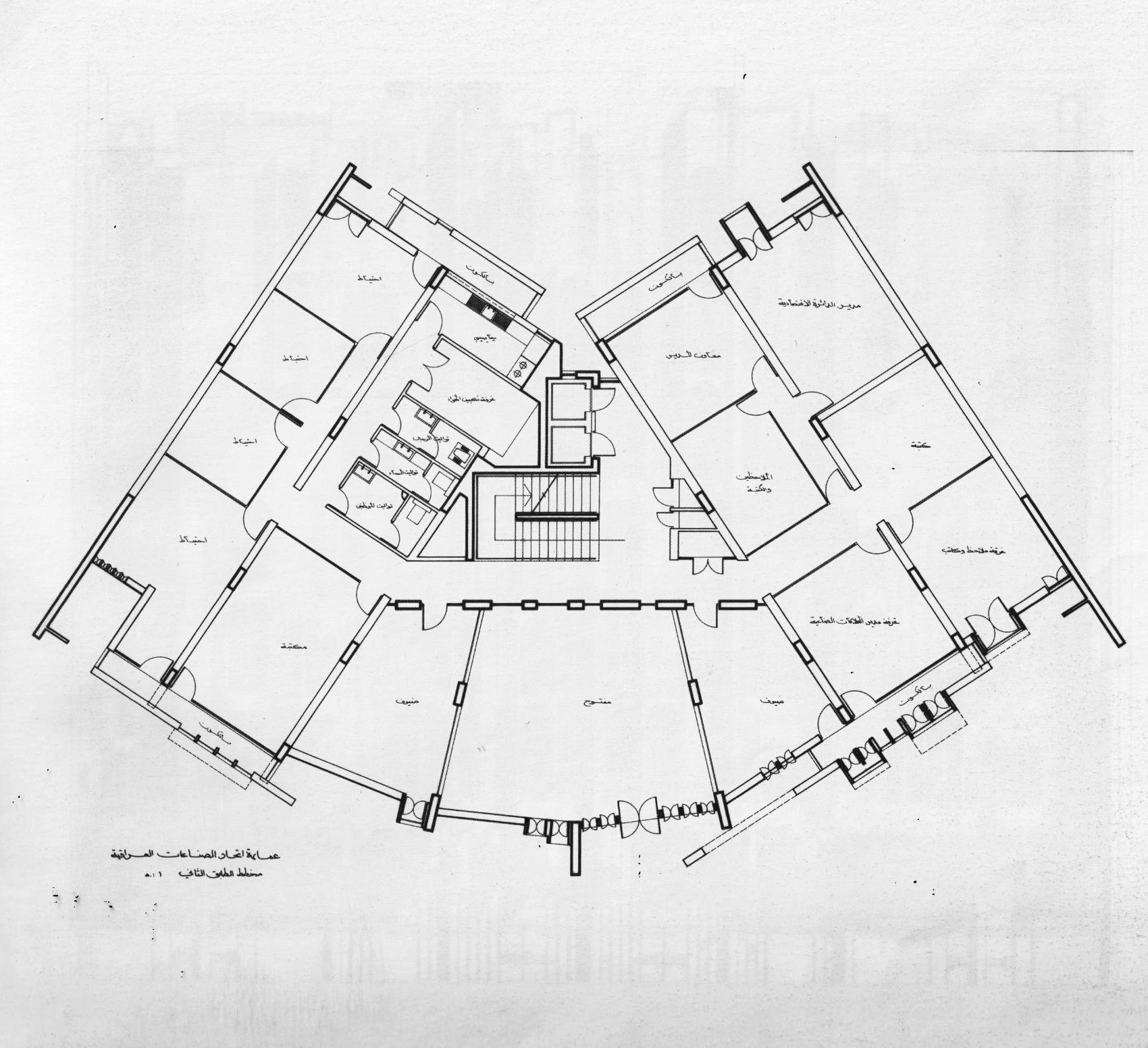
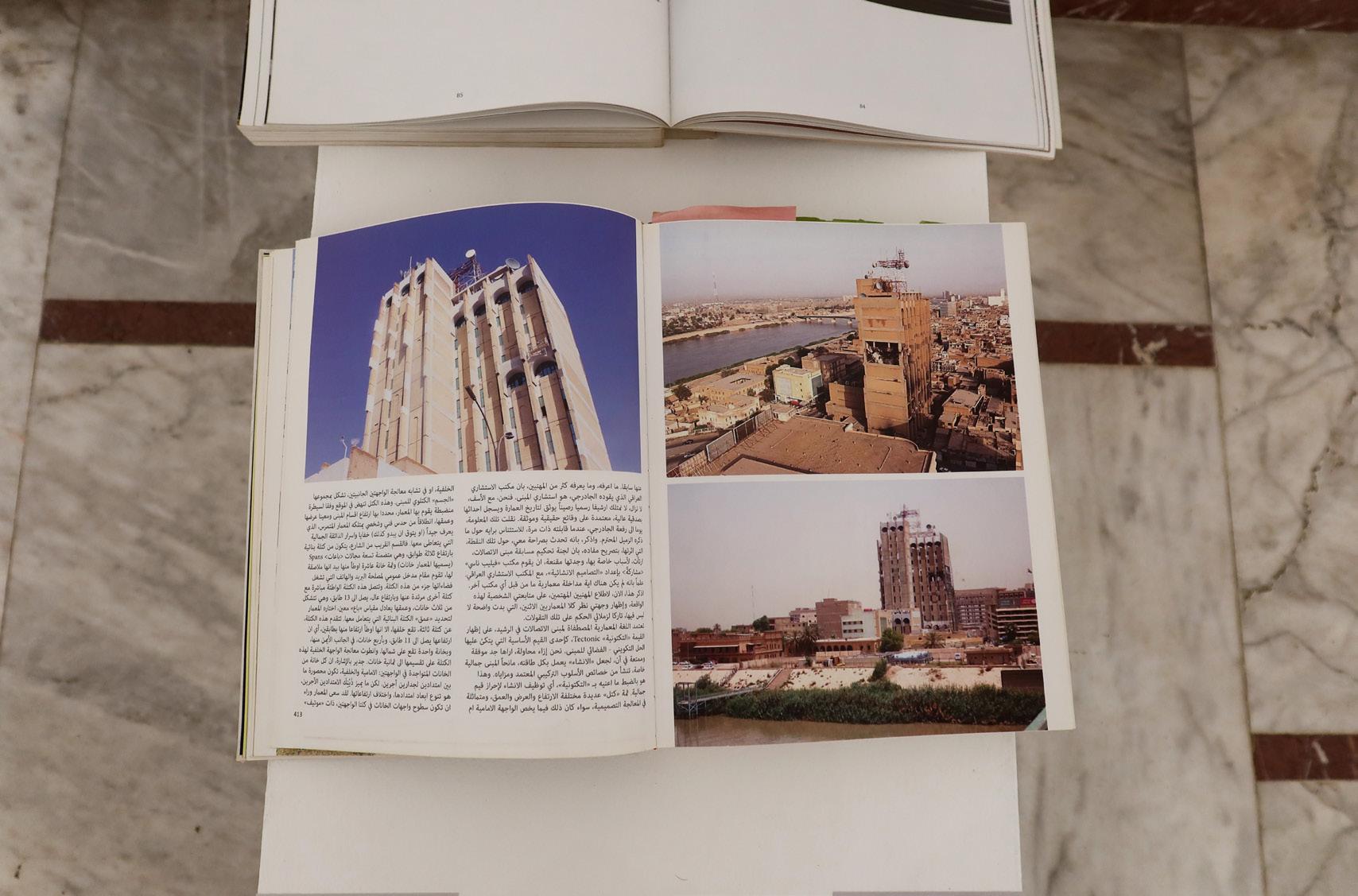
The former headquarters of the Iraqi Federation of Industries, located at Al Khilani Square, is a landmark of Baghdad’s modern architectural heritage, designed by Rifat Chadirji and completed in 1966. Officially occupied in 1967, it served as the Federation’s base until 2003 and has remained vacant since.
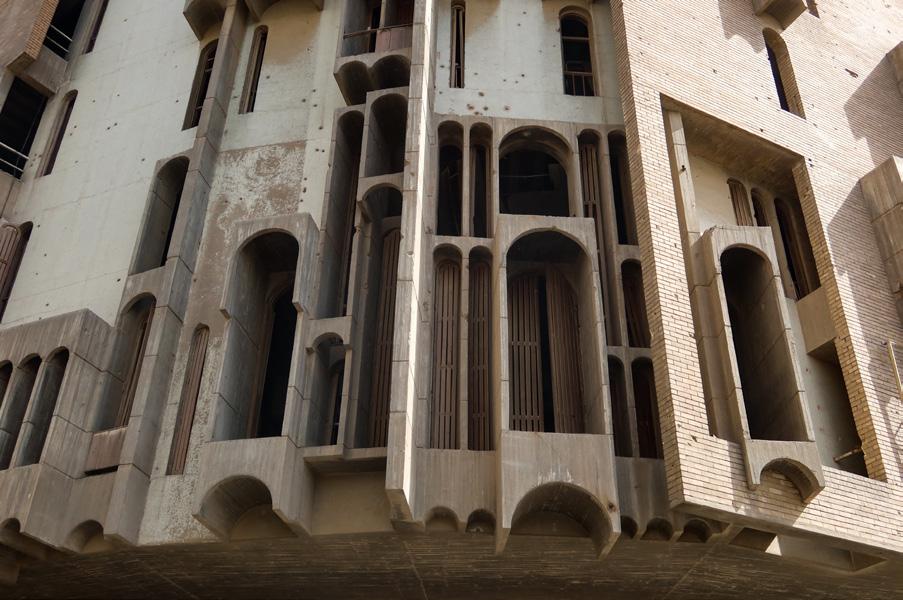
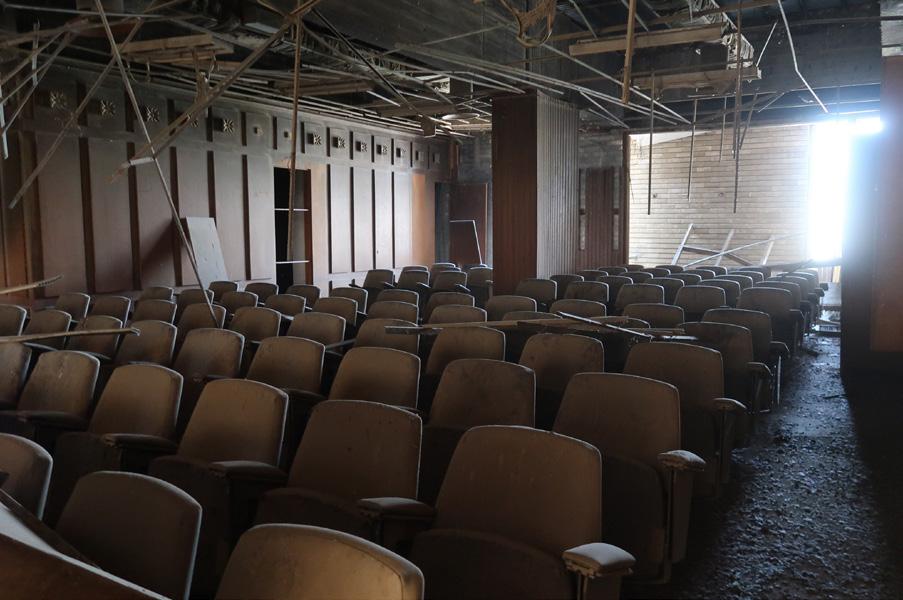
The architectural design marked a significant step towards a new level of modern architecture, as Rifat Chadirji introduced his own distinctive technique and style through this building beyond the minimalist trends of the time. He incorporated new forms and elements that linked tradition, time, and place. The building features a dual-layer façade )modular sun-breaking system( composed of an inner structural wall and an outer layer of shanasheel-like arches and balconies, that shields the interior from direct sunlight, reduces heat, and diffuses natural light, most notably in the upper-floor auditorium.
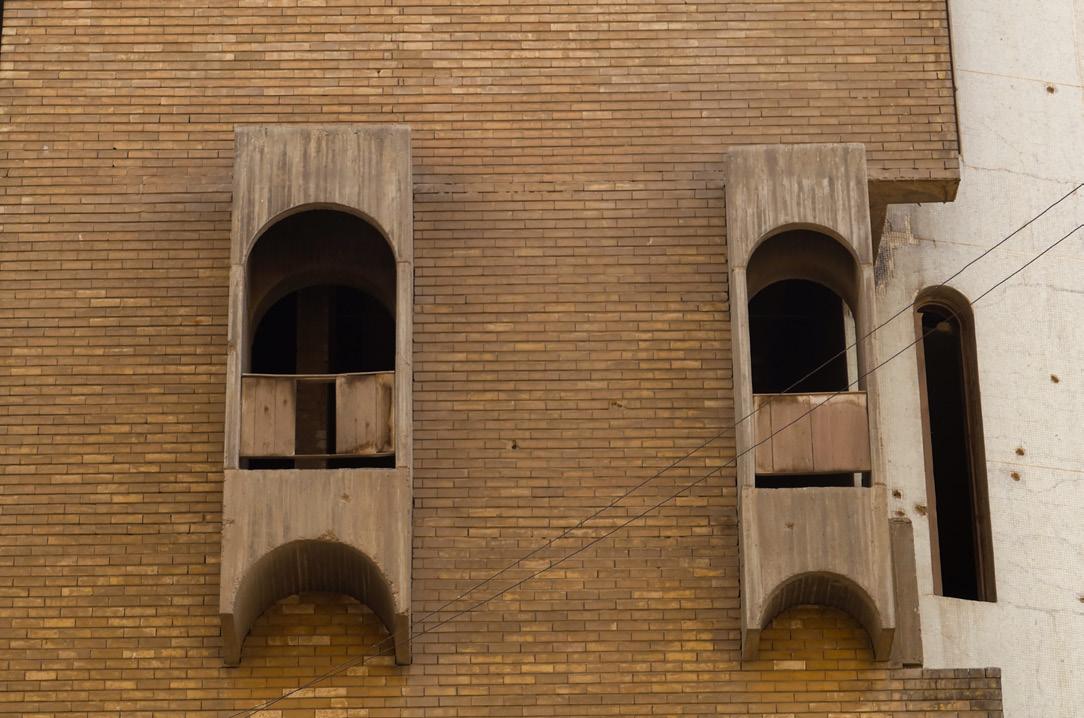
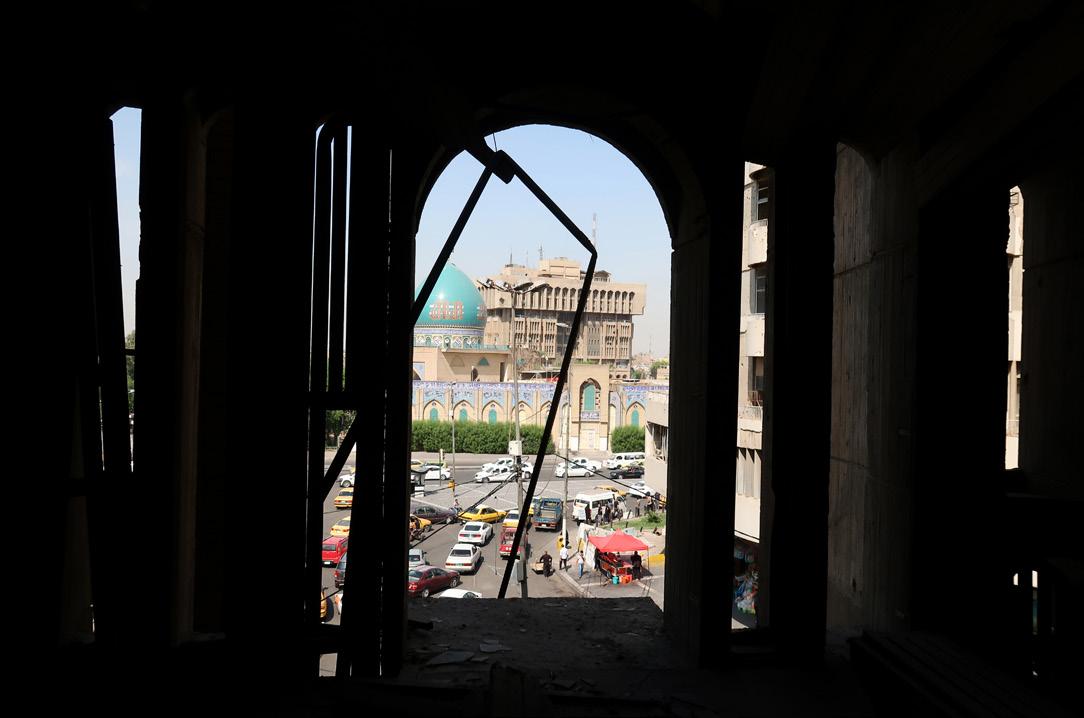
Inside, Chadirji created spacious, flexible offices and meeting halls with high ceilings, generous openings, and natural ventilation. Local materials such as Iraqi brick, natural stone, and mulberry wood were combined with subtle traditional ornamentation, while earthy tones of beige, brown, and Iraqi red reinforced the building’s deep cultural identity.
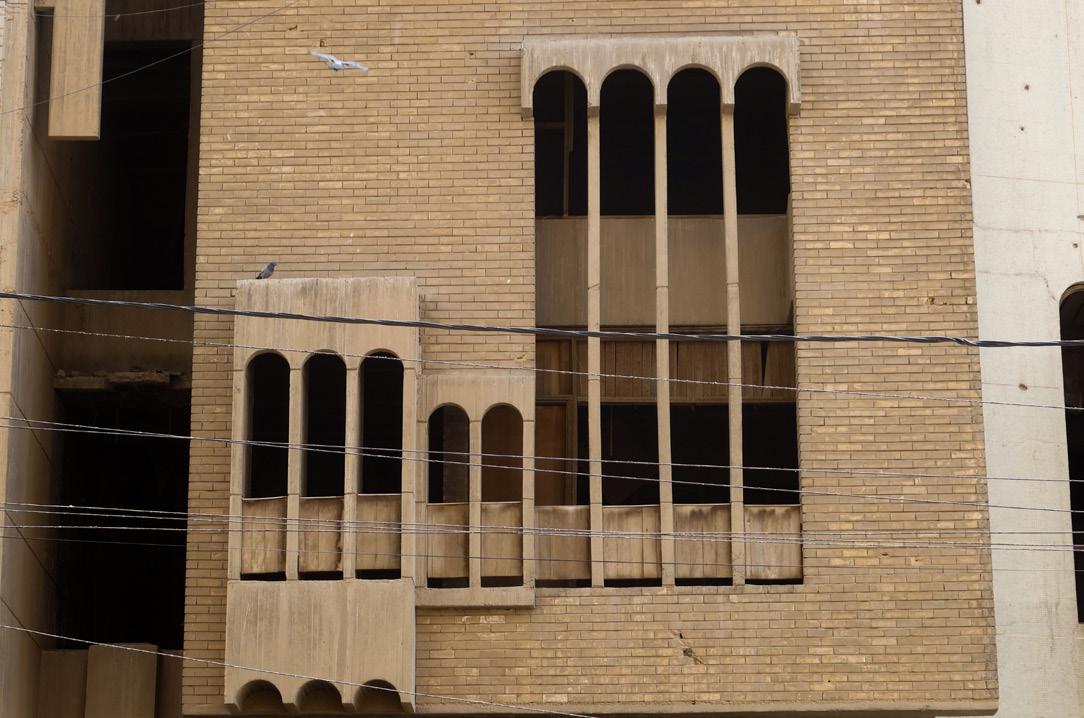
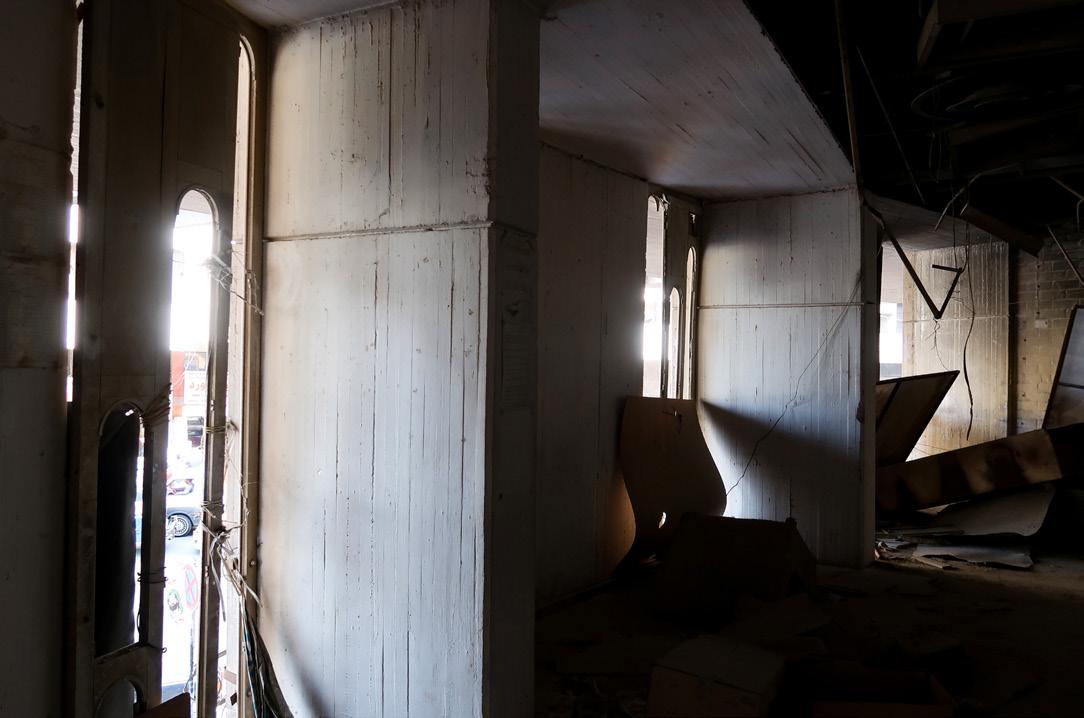
Rifat Chadarji is recognized as a pioneer of modern Iraqi architecture. After graduating from the Hammersmith School of Building and Arts and Crafts in the UK in 1952, he returned to Baghdad and co-founded the architectural practice Iraq Consult that same year with Ihsan Sherzad and Abdullah Ihsan Kamil.
Chadarji’s architectural vision was shaped by European modernism, yet he skillfully reinterpreted traditional forms, adapting them in ways that honored regional architecture, culture, traditions, and climate. He called this approach ”regionalised international architecture“. Guided by the belief that architecture should improve people’s live, he was committed to advancing Iraq’s architectural development, independent of the ruling regime.
The Ramadan Revolution of 1963, a military coup d’état led by the Arab Socialist Baath Party of Iraq, resulted in the execution of Prime Minister Abdul Kareem Qassim. The Baathist’s ninemonths rule became known as a ”reign of terror“, marked by the detention and execution of thousands of intellectuals suspected of loyalty to Qassim. This first rule of the Baath Party ended in November 1963 with a ‘coup within a coup’ led by Abd Al Salam Arif, who assumed the new presidency. With Arif, the qaumi nationalists came to power, following the socialist model of Egypt’s Gamal Abdel Nasser. This period lasted until 1968, when the Baath Party regained control in a bloodless coup, installing Ahmed Hassan Al Bakr as president.
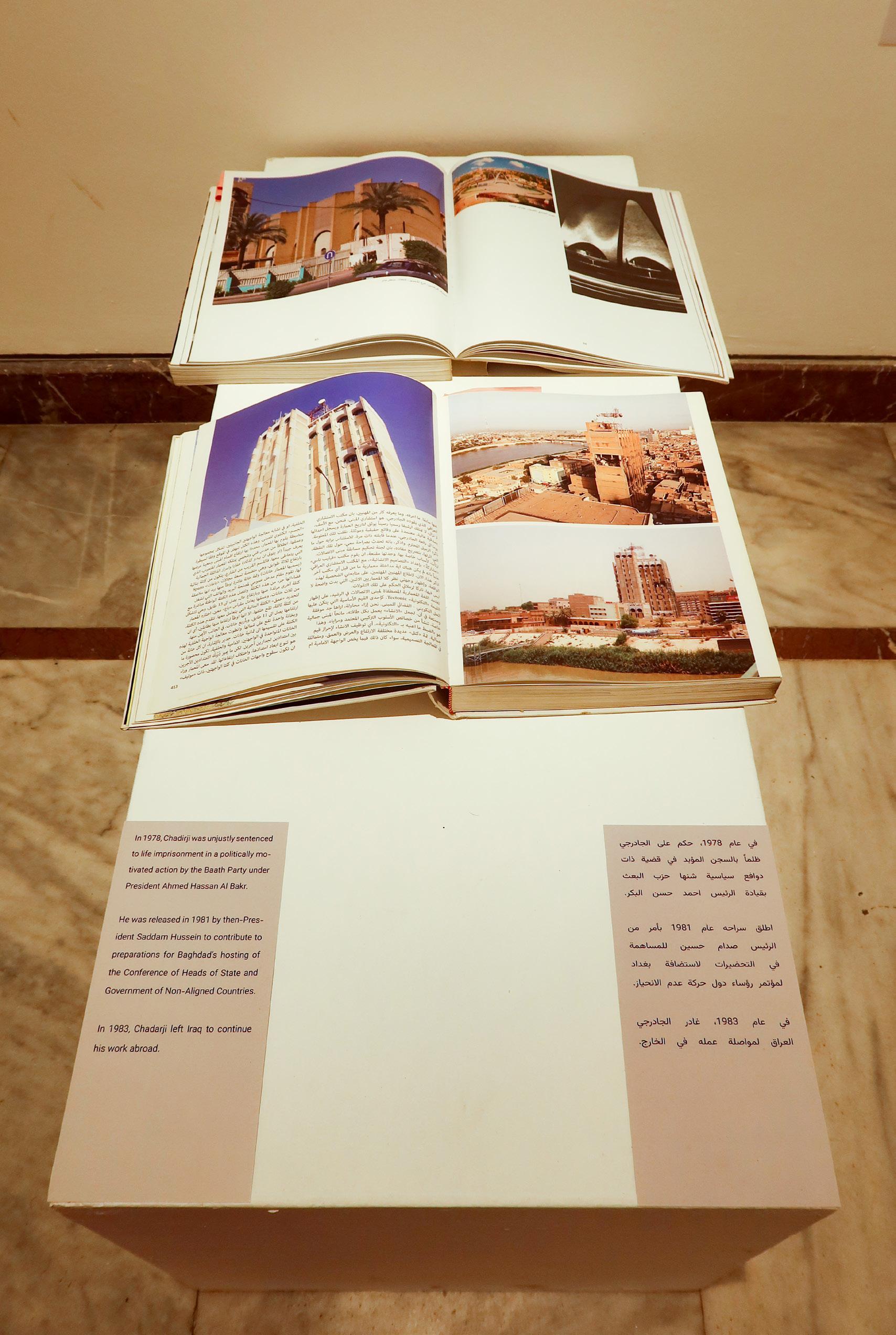
In 1978, Chadirji was unjustly sentenced to life imprisonment in a politically motivated action by the Baath Party under President Ahmed Hassan Al Bakr. He was released in 1981 by then-President Saddam Hussein to contribute to preparations for Baghdad’s hosting of the Conference of Heads of State and Government of Non-Aligned Countries. In 1983, Chadarji left Iraq to continue his work abroad.
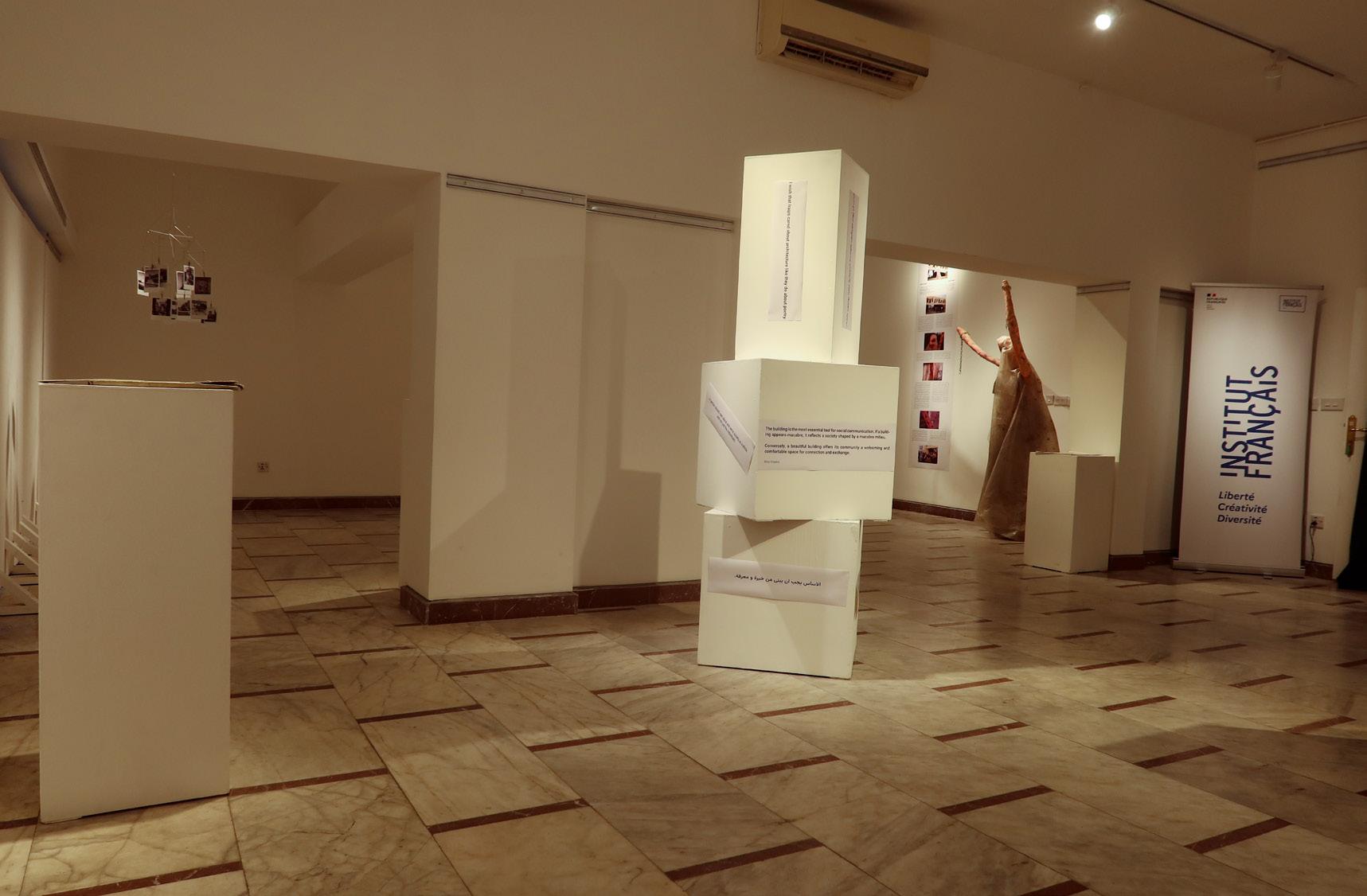
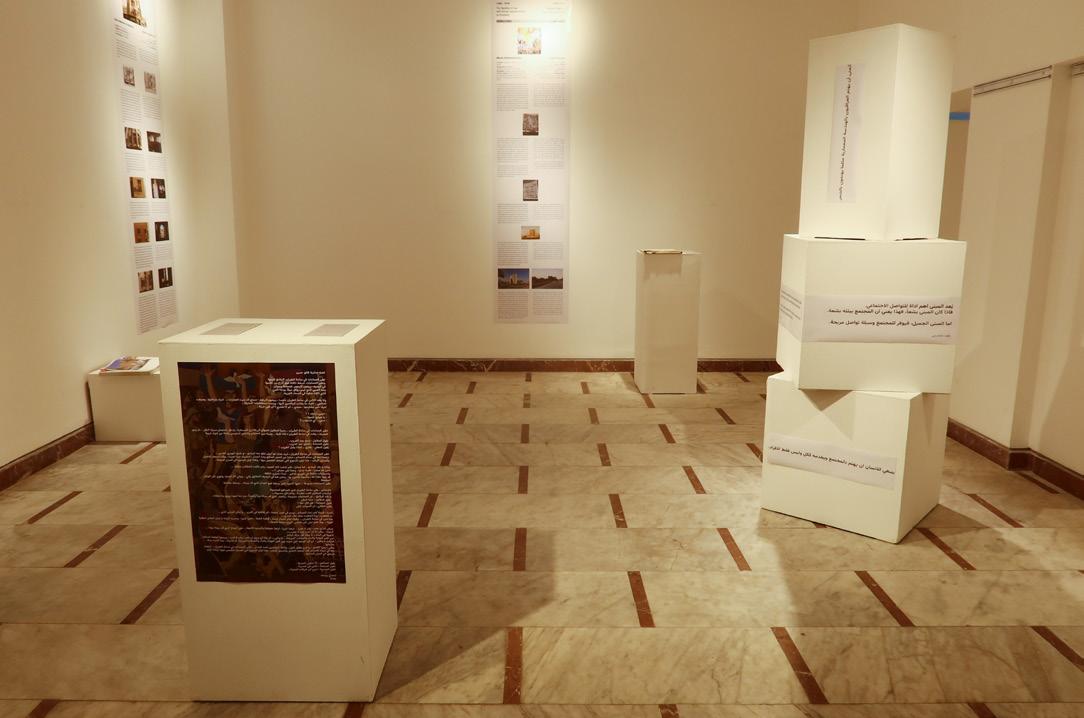
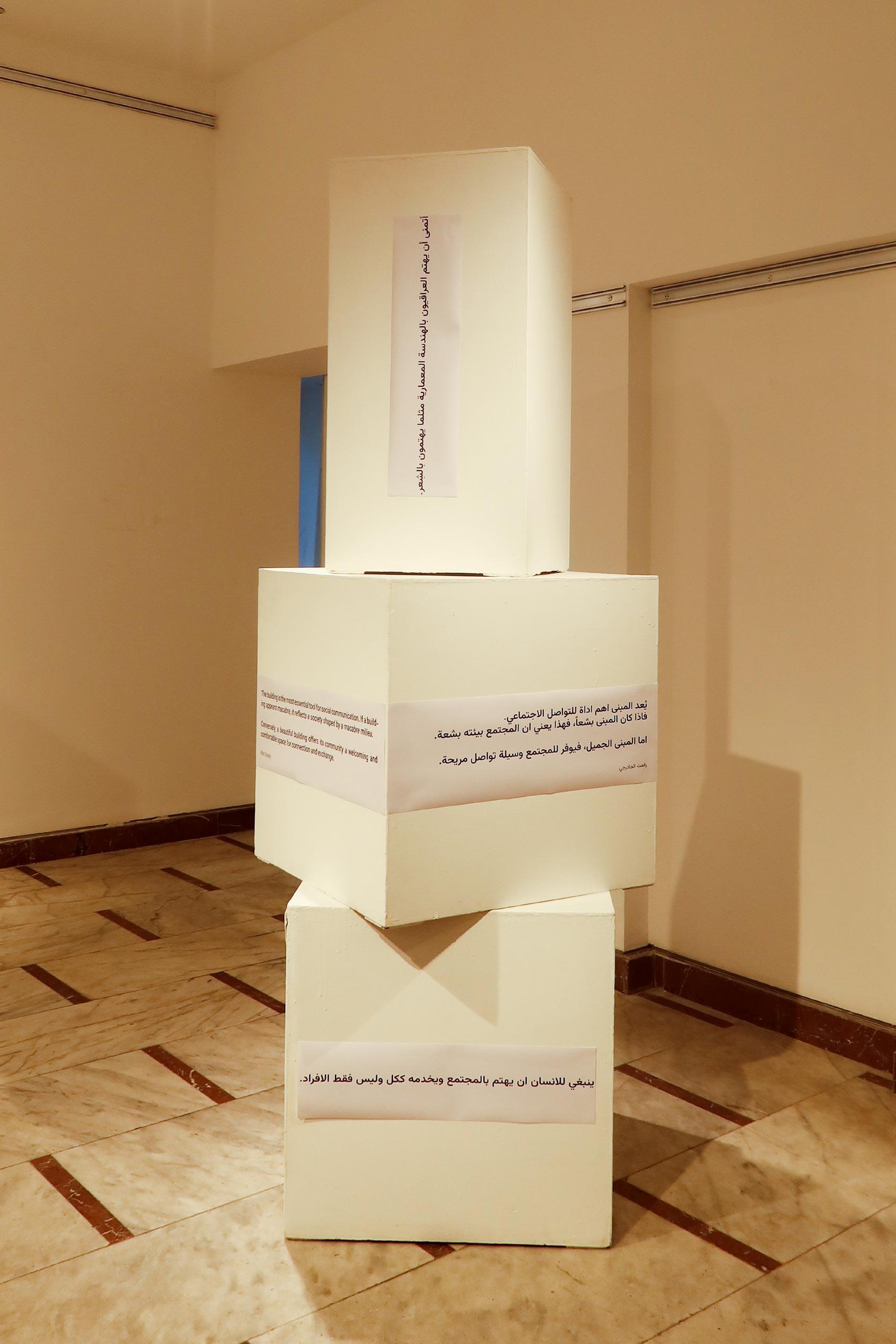
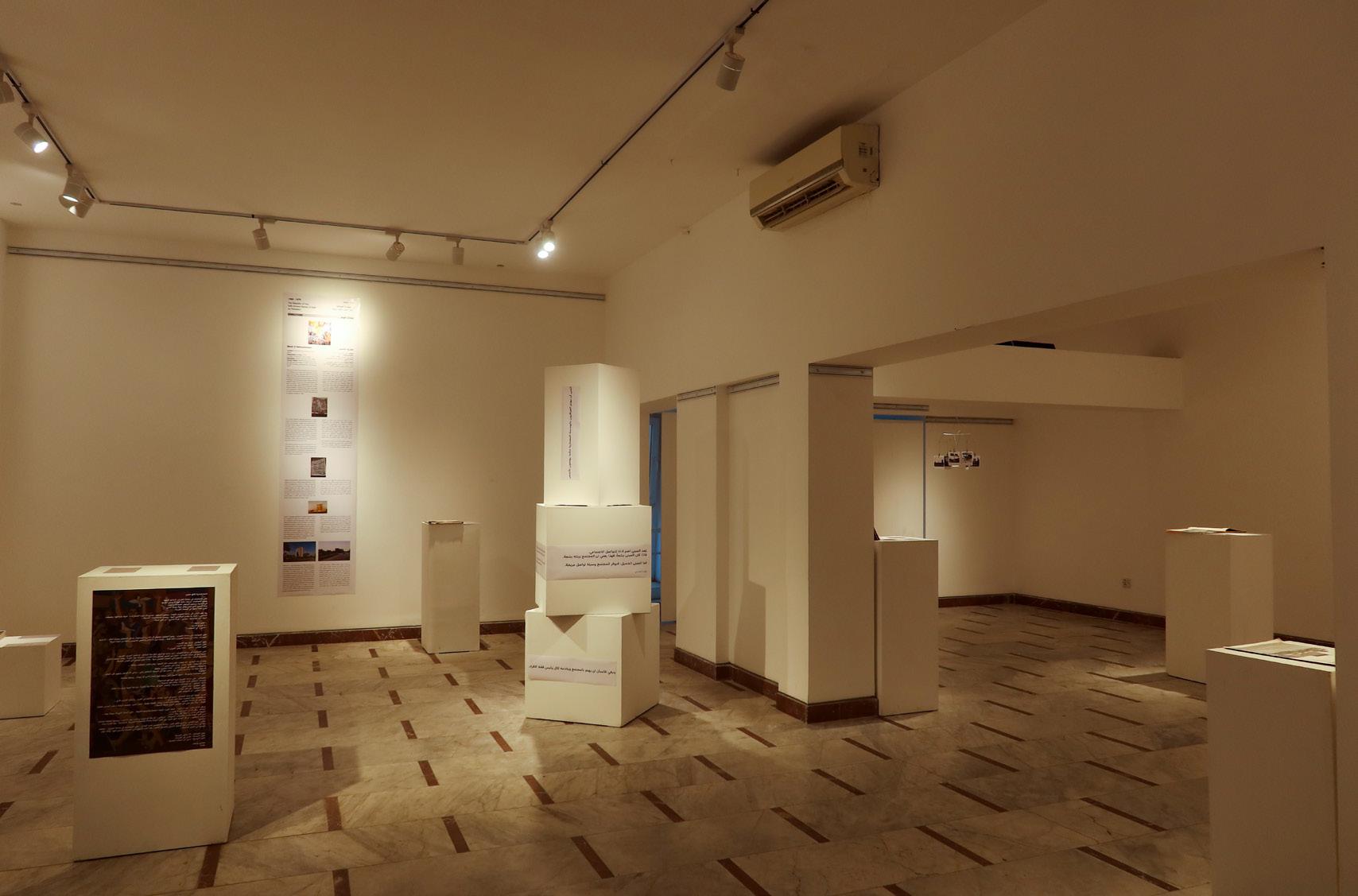
Quotes of Rifat Chadirji presented on a modular cube system:
The building is the most essential tool for social communication. If a building appears ma- cabre, it reflects a society shaped by a macabre milieu. Conversely, a beautiful building offers its community a welcoming and comfortable space for connection and exchange.
Working without experience of knowledge provides no base.
A person should care about and serve society as a whole and not just the individuals.
I wish that Iraqis cared about architecture like they do about poetry.
“Reviving and remembering demolished landmarks that were once part of daily life.“
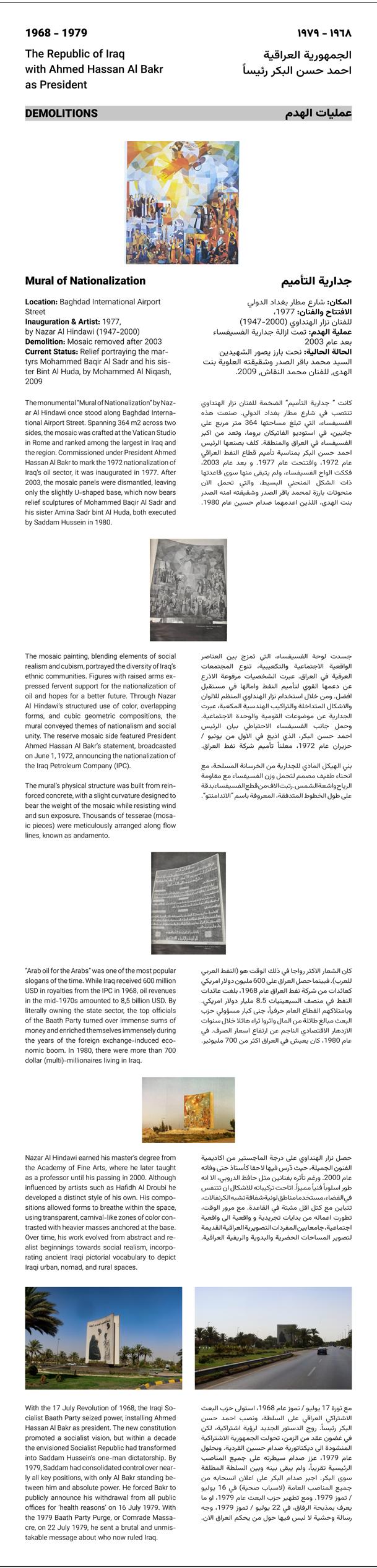
The Republic of Iraq with Ahmed Hassan Al Bakr as President
DEMOLITIONS
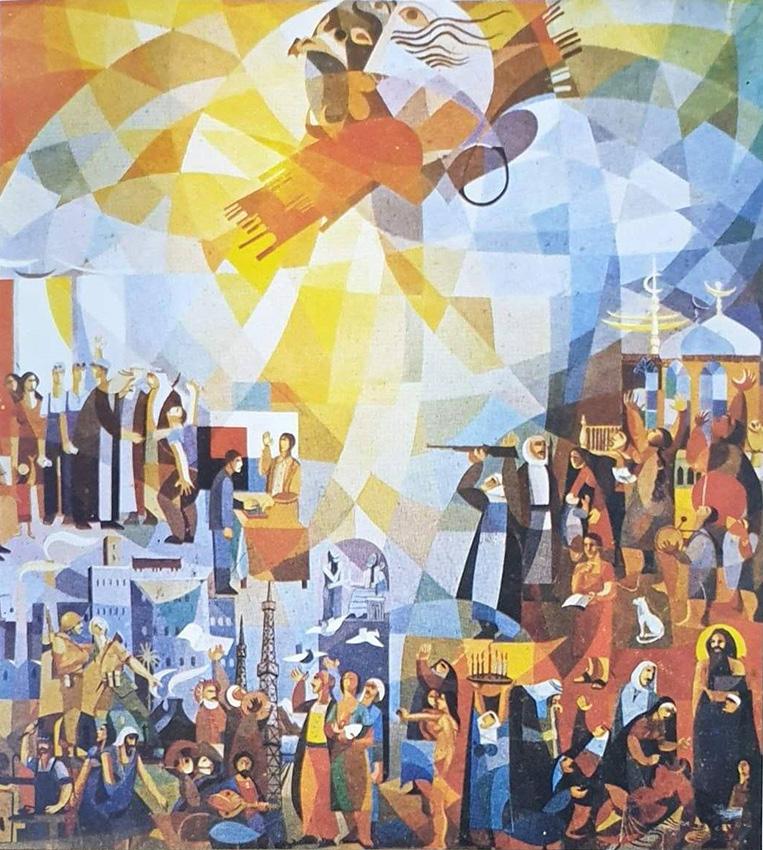
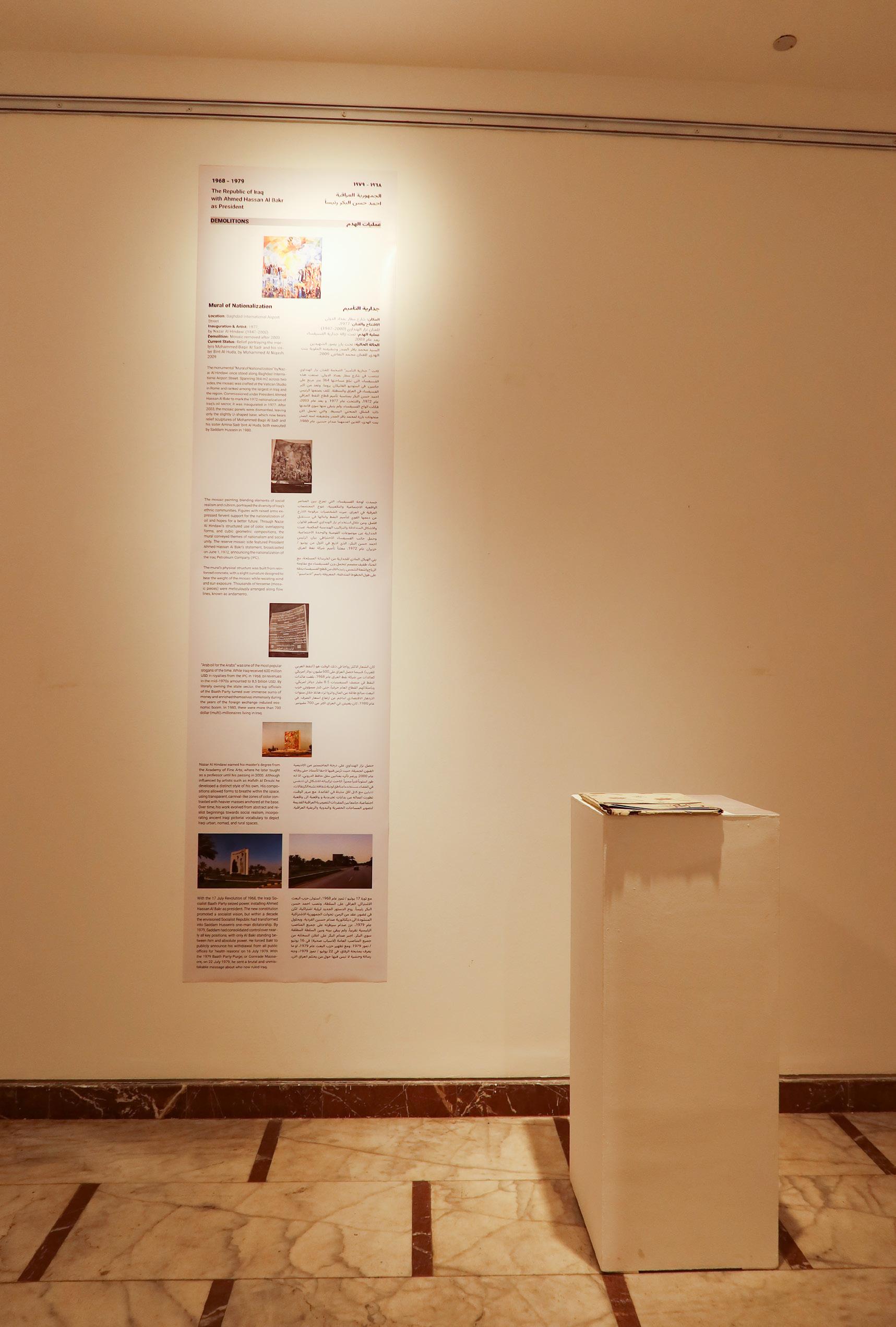
Mural of Nationalization
Location: Baghdad International Airport Street
Inauguration & Artist: 1977, by Nazar Al Hindawi )1947-2000(
Demolition: Mosaic removed after 2003
Current Status: Relief portraying the martyrs
Mohammed Baqir Al Sadr and his sister Bint Al Huda, by Mohammed Al Niqash, 2009
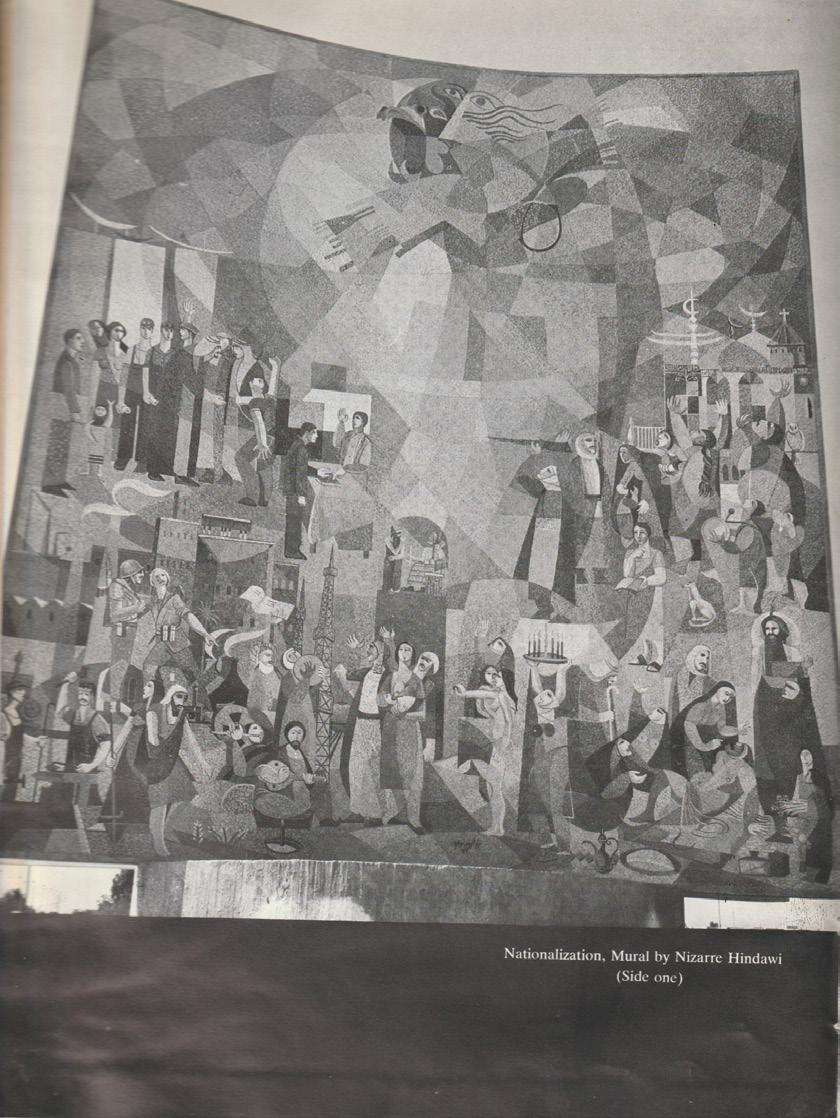
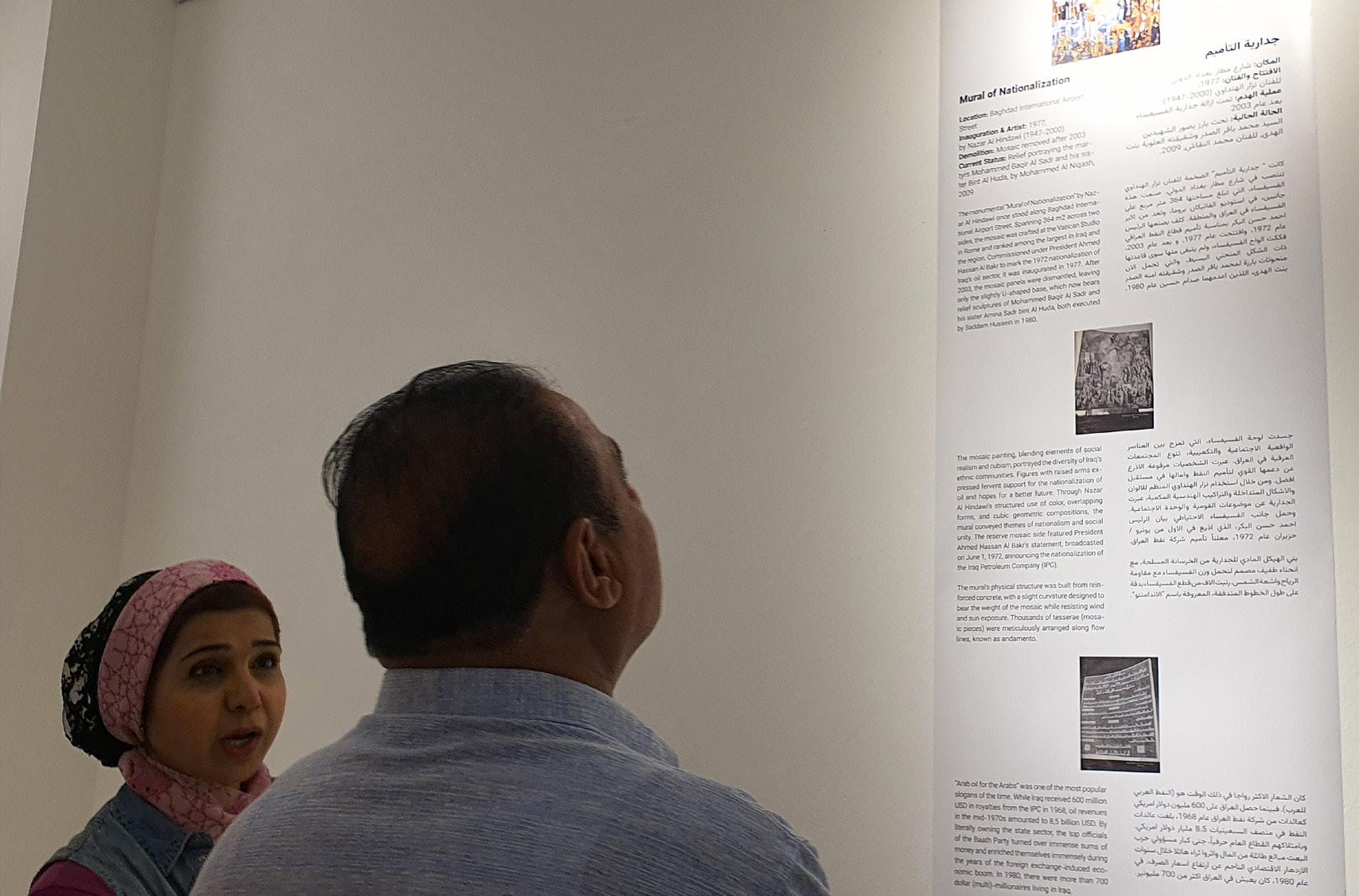
The monumental ”Mural of Nationalization“ by Nazar Al Hindawi once stood along Baghdad International Airport Street. Spanning 364 m2 across two sides, the mosaic was crafted at the Vatican Studio in Rome and ranked among the largest in Iraq and the region. Commissioned under President Ahmed Hassan Al Bakr to mark the 1972 nationalization of Iraq’s oil sector, it was inaugurated in 1977. After 2003, the mosaic panels were dismantled, leaving only the slightly U-shaped base, which now bears relief sculptures of Mohammed Baqir Al Sadr and his sister Amina Sadr bint Al Huda, both executed by Saddam Hussein in 1980.
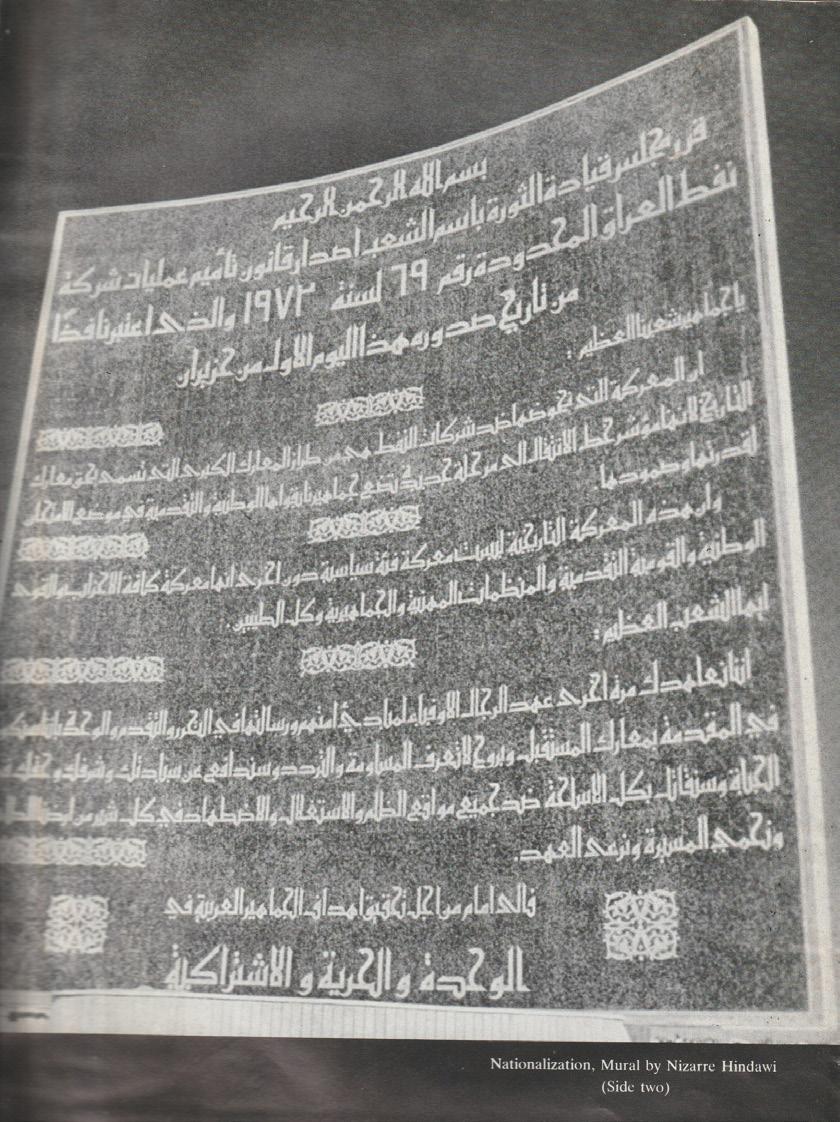
The mosaic painting, blending elements of social realism and cubism, portrayed the diversity of Iraq’s ethnic communities. Figures with raised arms expressed fervent support for the nationalization of oil and hopes for a better future. Through Nazar Al Hindawi’s structured use of color, overlapping forms, and cubic geometric compositions, the mural conveyed themes of nationalism and social unity. The reserve mosaic side featured President Ahmed Hassan Al Bakr’s statement, broadcasted on June 1, 1972, announcing the nationalization of the Iraq Petroleum Company )IPC(.
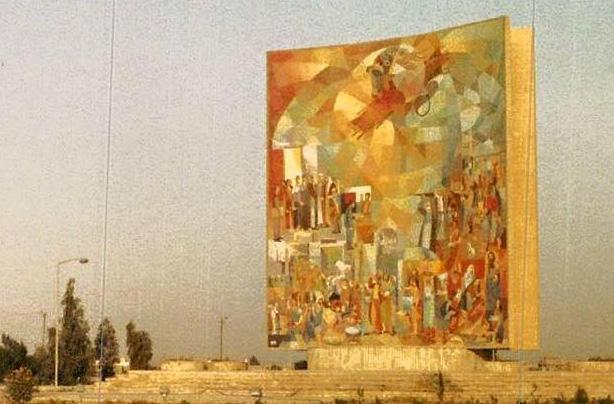
The mural’s physical structure was built from reinforced concrete, with a slight curvature designed to bear the weight of the mosaic while resisting wind and sun exposure. Thousands of tesserae )mosaic pieces( were meticulously arranged along flow lines, known as andamento.
”Arab oil for the Arabs“ was one of the most popular slogans of the time. While Iraq received 600 million USD in royalties from the IPC in 1968, oil revenues in the mid-1970s amounted to 8,5 billion USD. By literally owning the state sector, the top officials of the Baath Party turned over immense sums of money and enriched themselves immensely during the years of the foreign exchange-induced economic boom. In 1980, there were more than 700 dollar )multi(-millionaires living in Iraq.
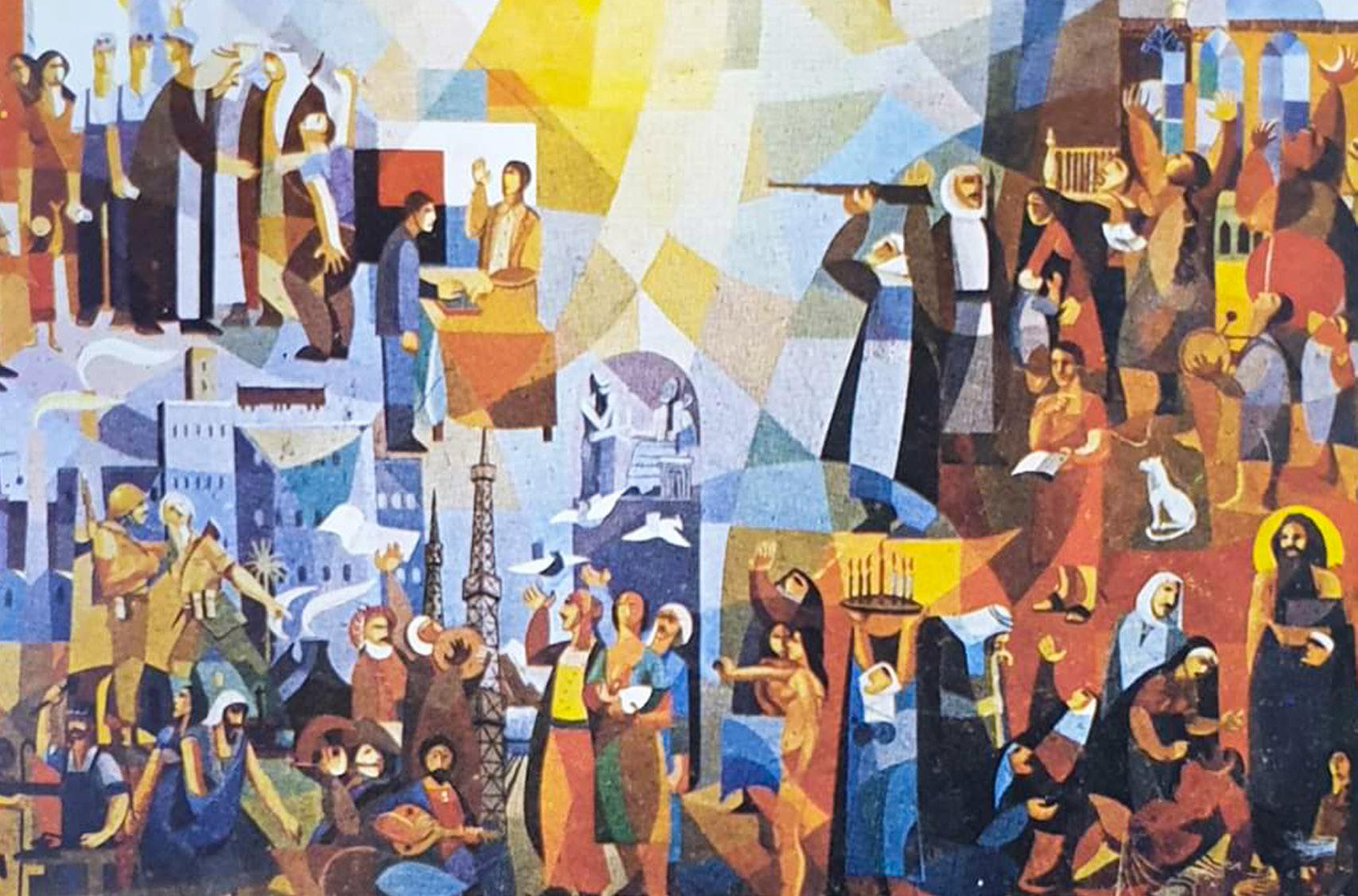
Nazar Al Hindawi earned his master’s degree from the Academy of Fine Arts, where he later taught as a professor until his passing in 2000. Although influenced by artists such as Hafidh Al Droubi he developed a distinct style of his own. His compositions allowed forms to breathe within the space, using transparent, carnival-like zones of color contrasted with heavier masses anchored at the base. Over time, his work evolved from abstract and realist beginnings towards social realism, incorporating ancient Iraqi pictorial vocabulary to depict Iraqi urban, nomad, and rural spaces.
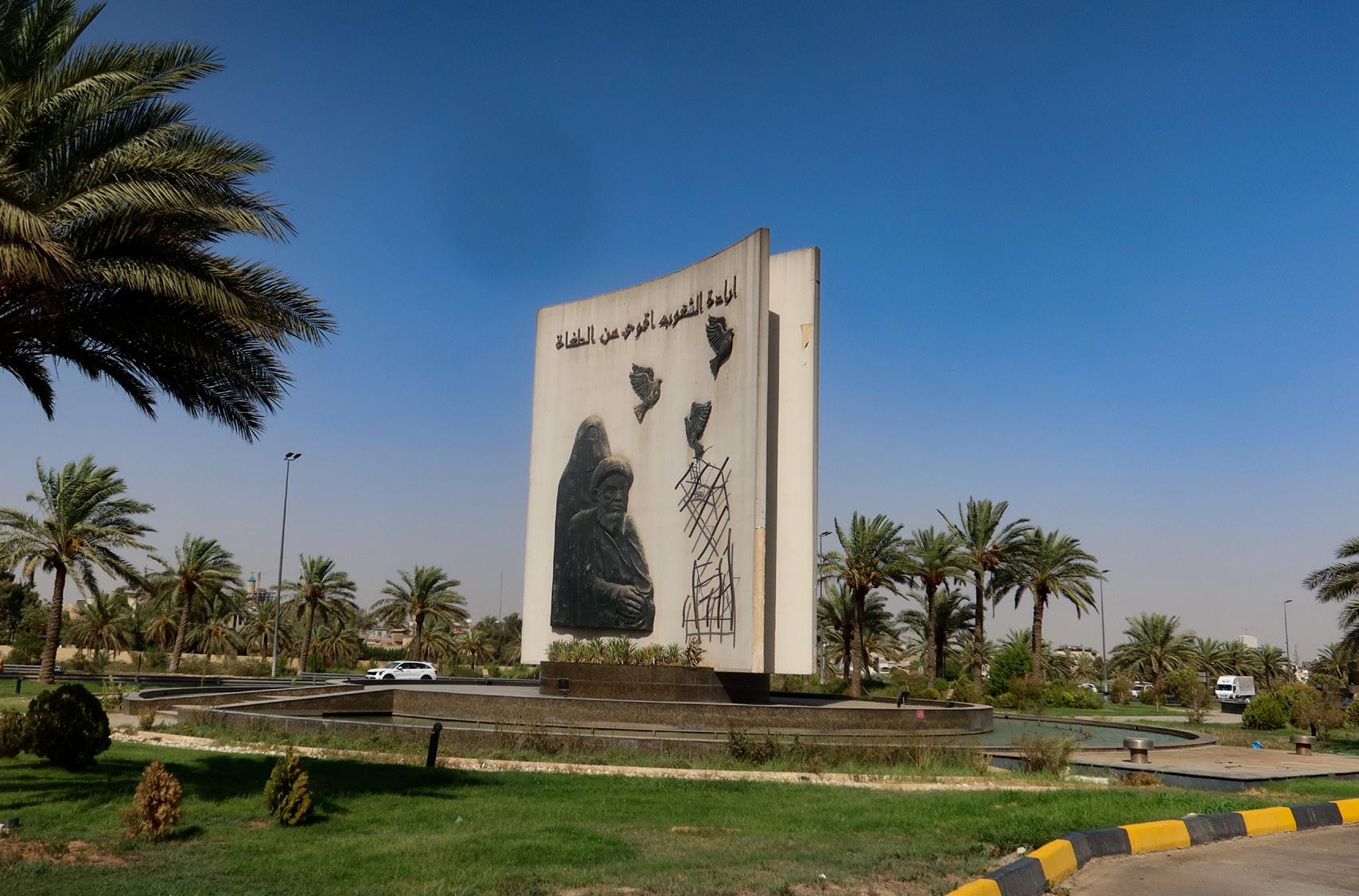
With the 17 July Revolution of 1968, the Iraqi Socialist Baath Party seized power, installing Ahmed Hassan Al Bakr as president. The new constitution promoted a socialist vision, but within a decade the envisioned Socialist Republic had transformed into Saddam Hussein’s one-man dictatorship. By 1979, Saddam had consolidated control over nearly all key positions, with only Al Bakr standing between him and absolute power. He forced Bakr to publicly announce his withdrawal from all public offices for ‘health reasons’ on 16 July 1979. With the 1979 Baath Party Purge, or Comrade Massacre, on 22 July 1979, he sent a brutal and unmistakable message about who now ruled Iraq.
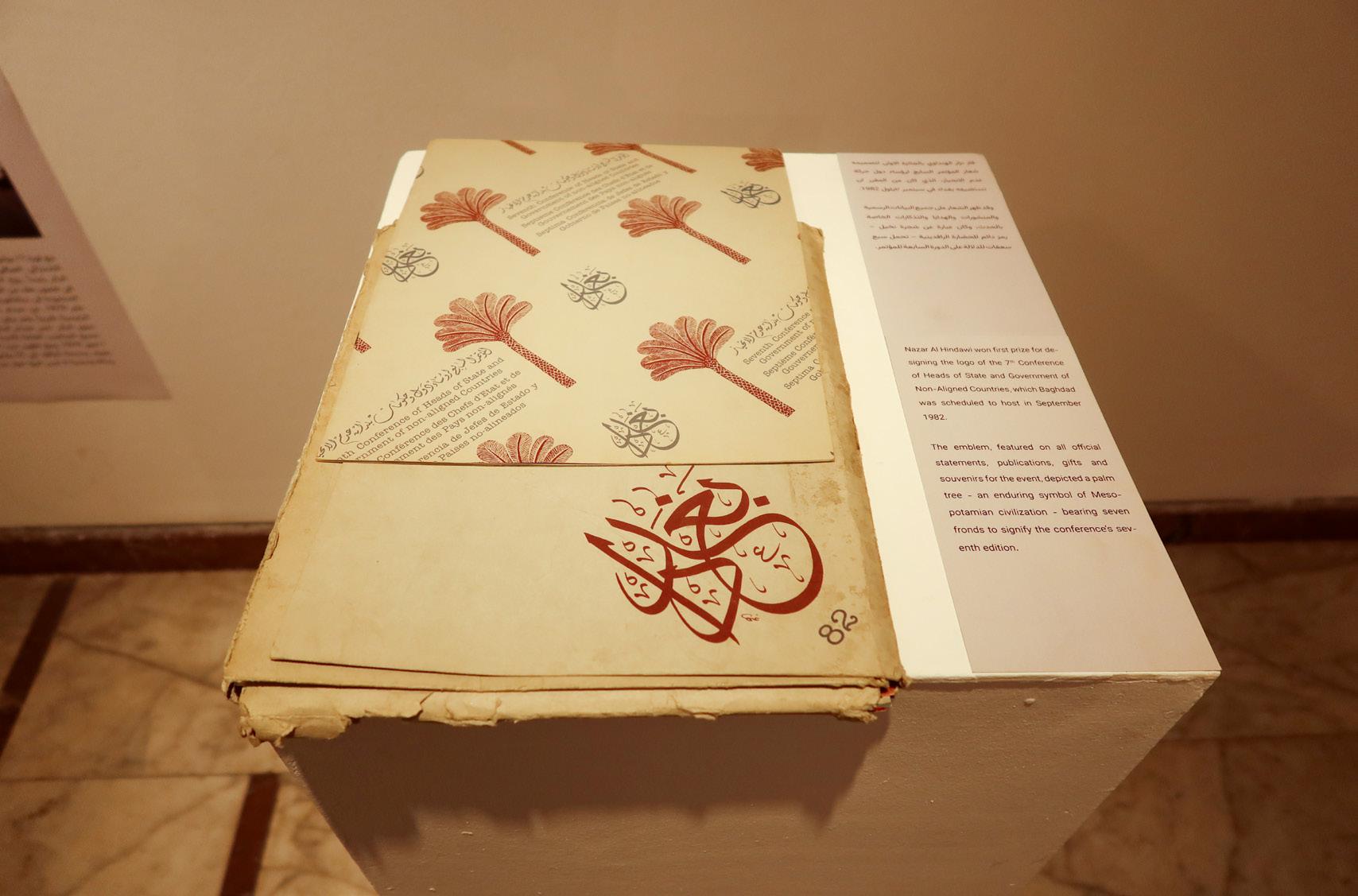
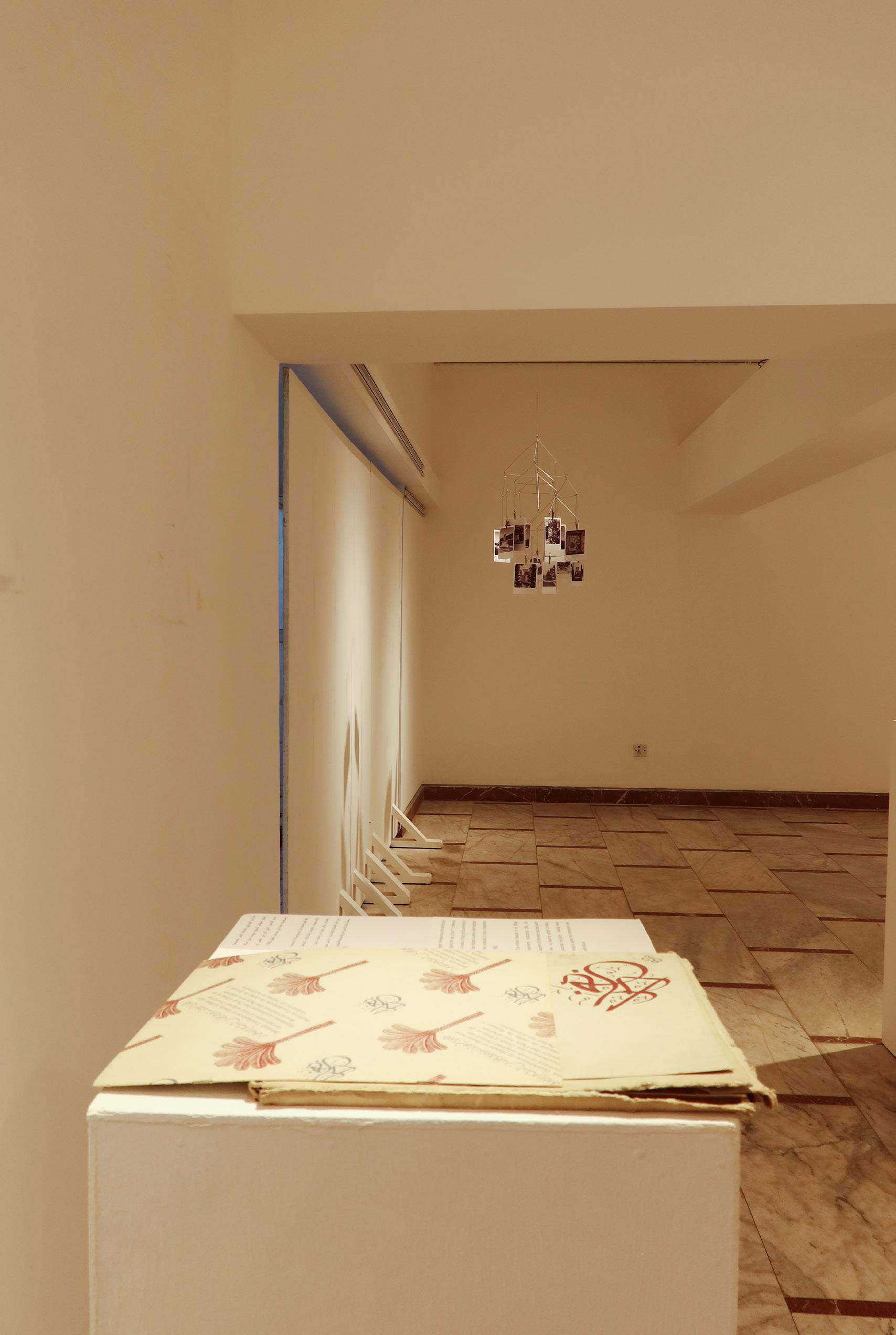
Nazar Al Hindawi won first prize for designing the logo of the 7th Conference of Heads of State and Government of Non-Aligned Countries, which Baghdad was scheduled to host in September 1983. Only six months before the summit its location was shifted from Baghdad to New Delhi, because of the Iran-Iraq War )1980-1988(.
The emblem, featured on all official statements, publications, gifts and souvenirs for the event, depicted a palm tree - an enduring symbol of Mesopotamian civilization - bearing seven fronds to signify the conference’s seventh edition.
”The curator is archiving the missing archive.“
”A
clarification of misinformation - for example, correcting the belief that the Martyr’s Monument is specifically linked to Saddam Hussein and the martyrs of the Iran-Iraq War.“
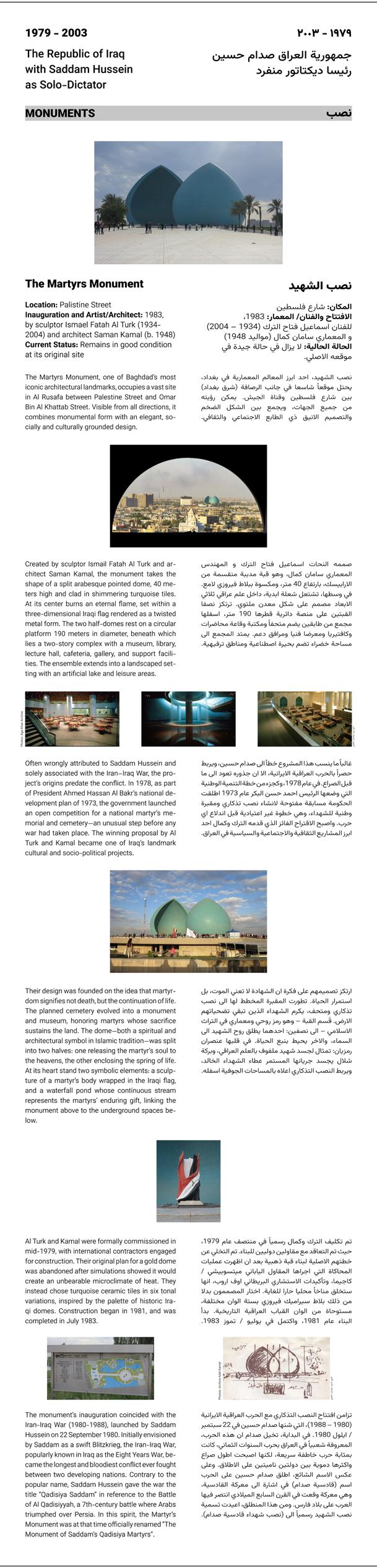
The Republic of Iraq with Saddam Hussein as Solo-Dictator
MONUMENTS
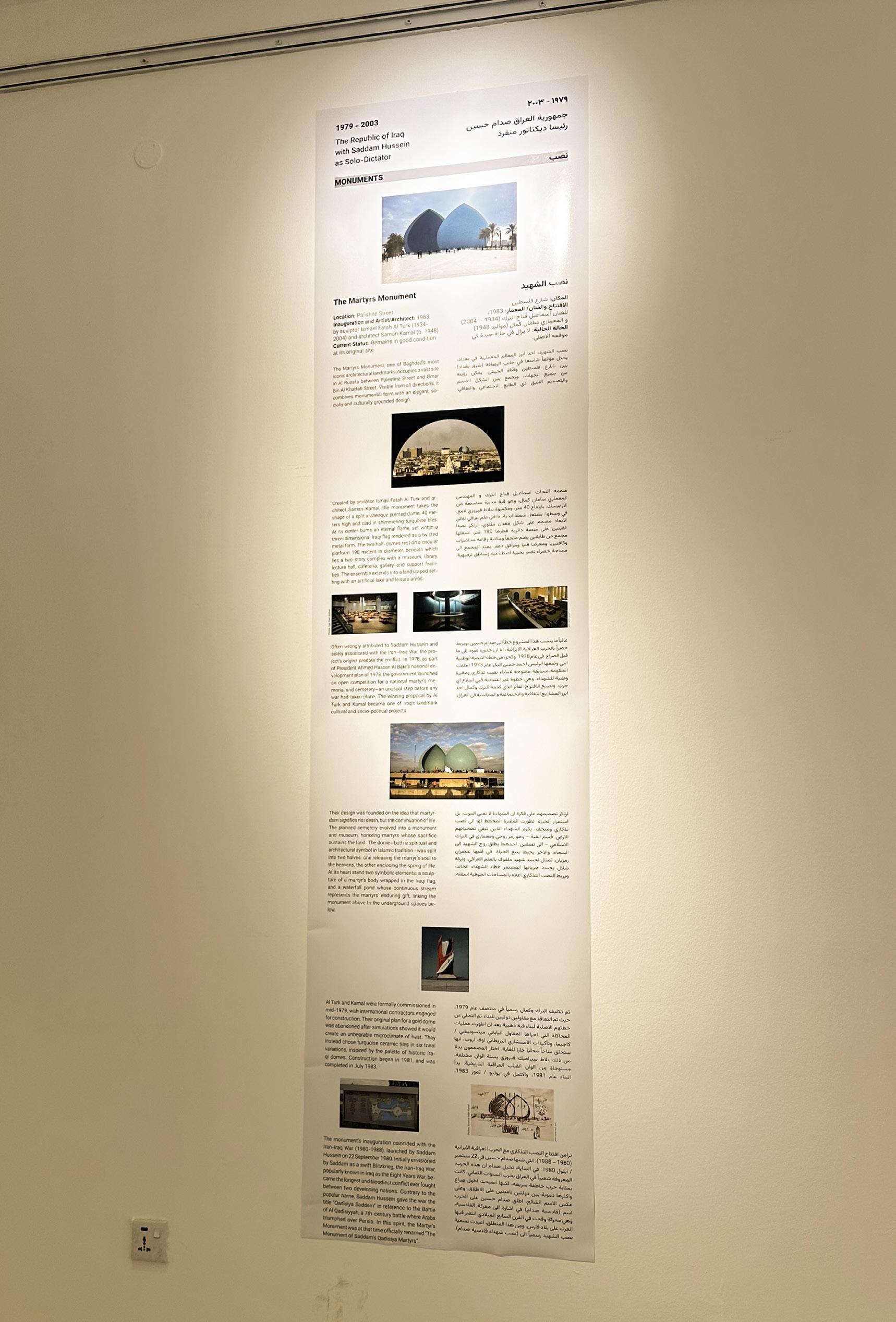
The Martyrs Monument
Location: Palistine Street
Inauguration and Artist/Architect: 1983, by sculptor Ismael Fatah Al Turk )1934-2004( and architect Saman Kamal )b. 1948(
Current Status: Remains in good condition at its original site
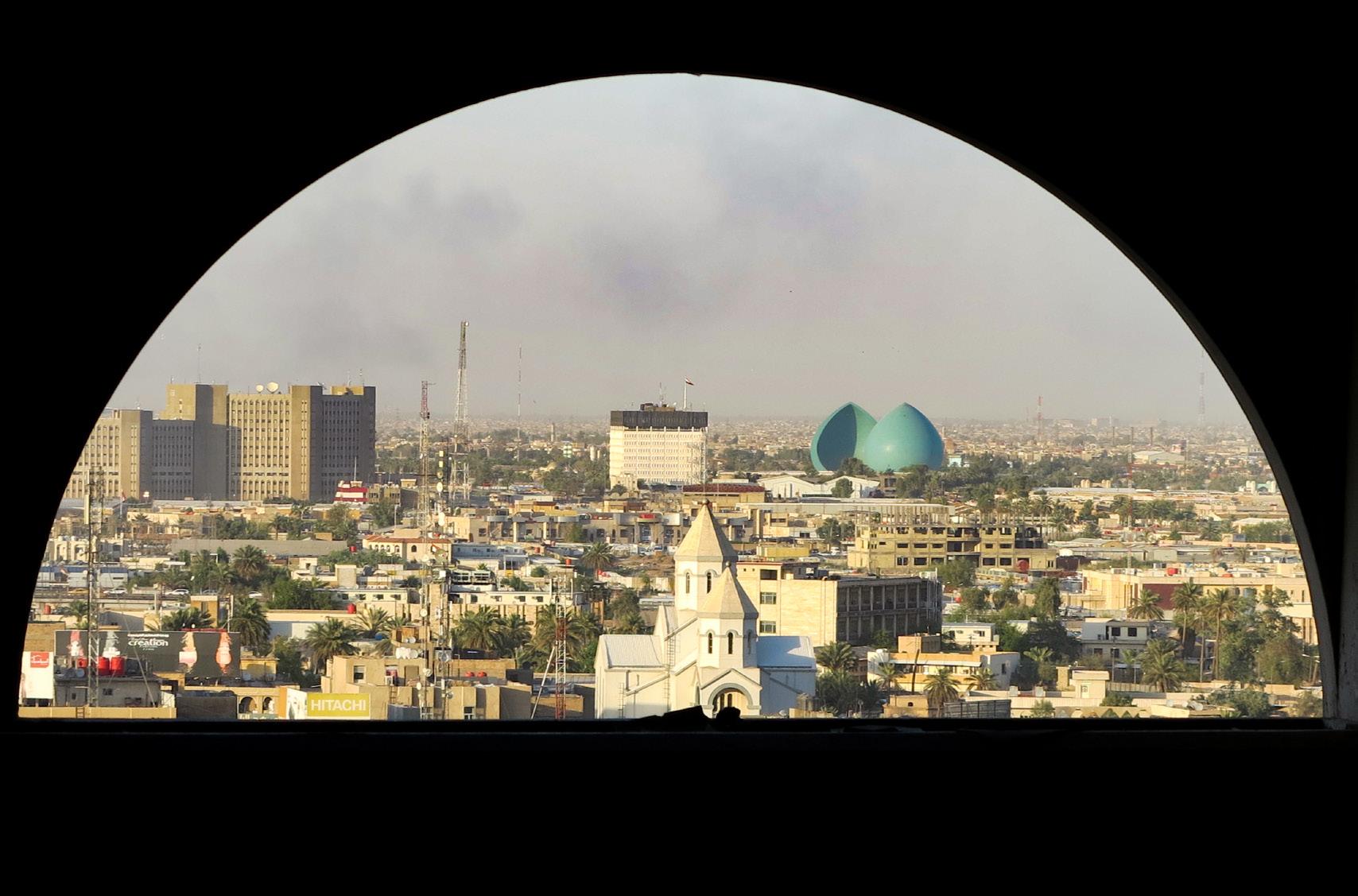
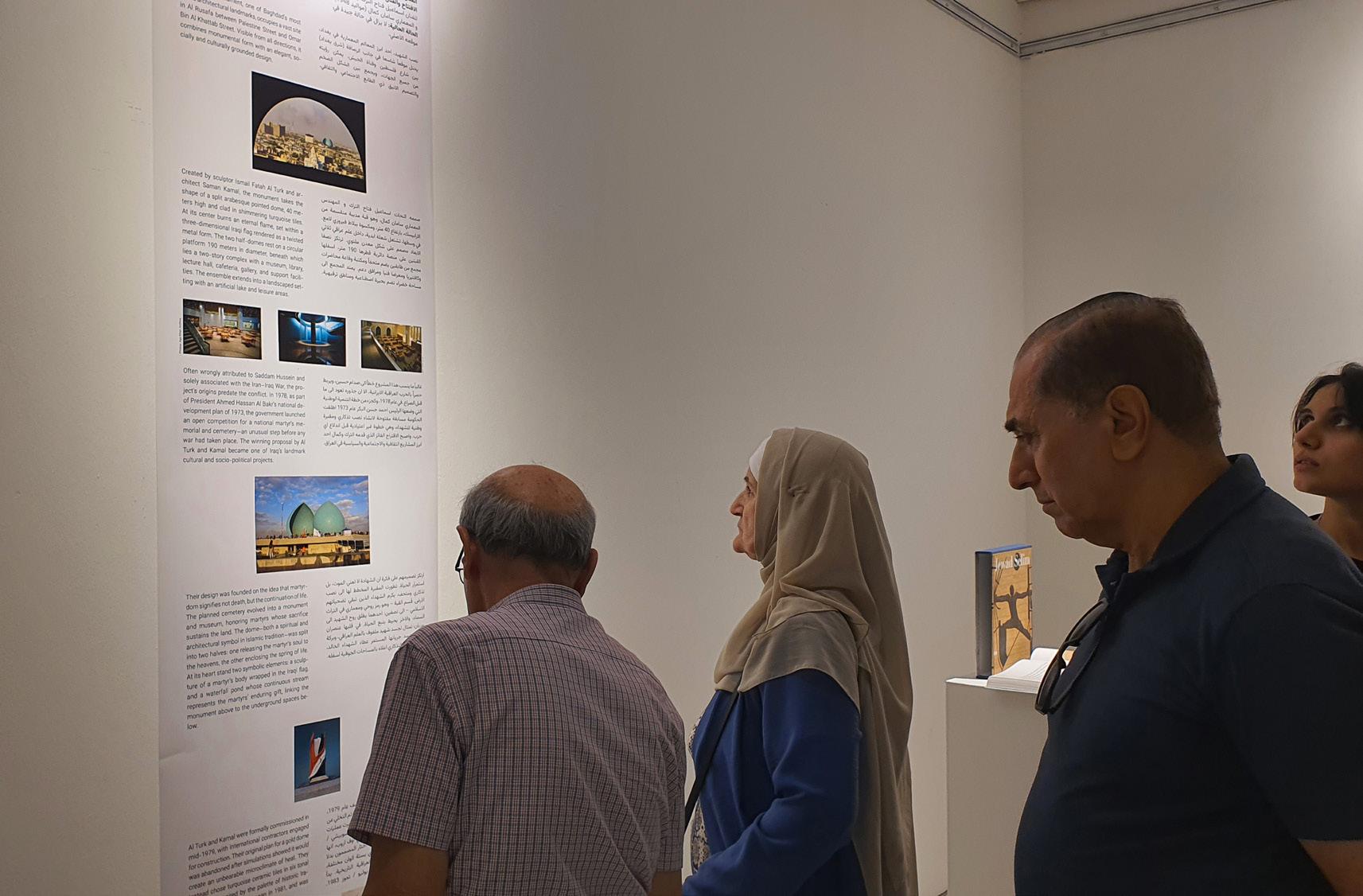
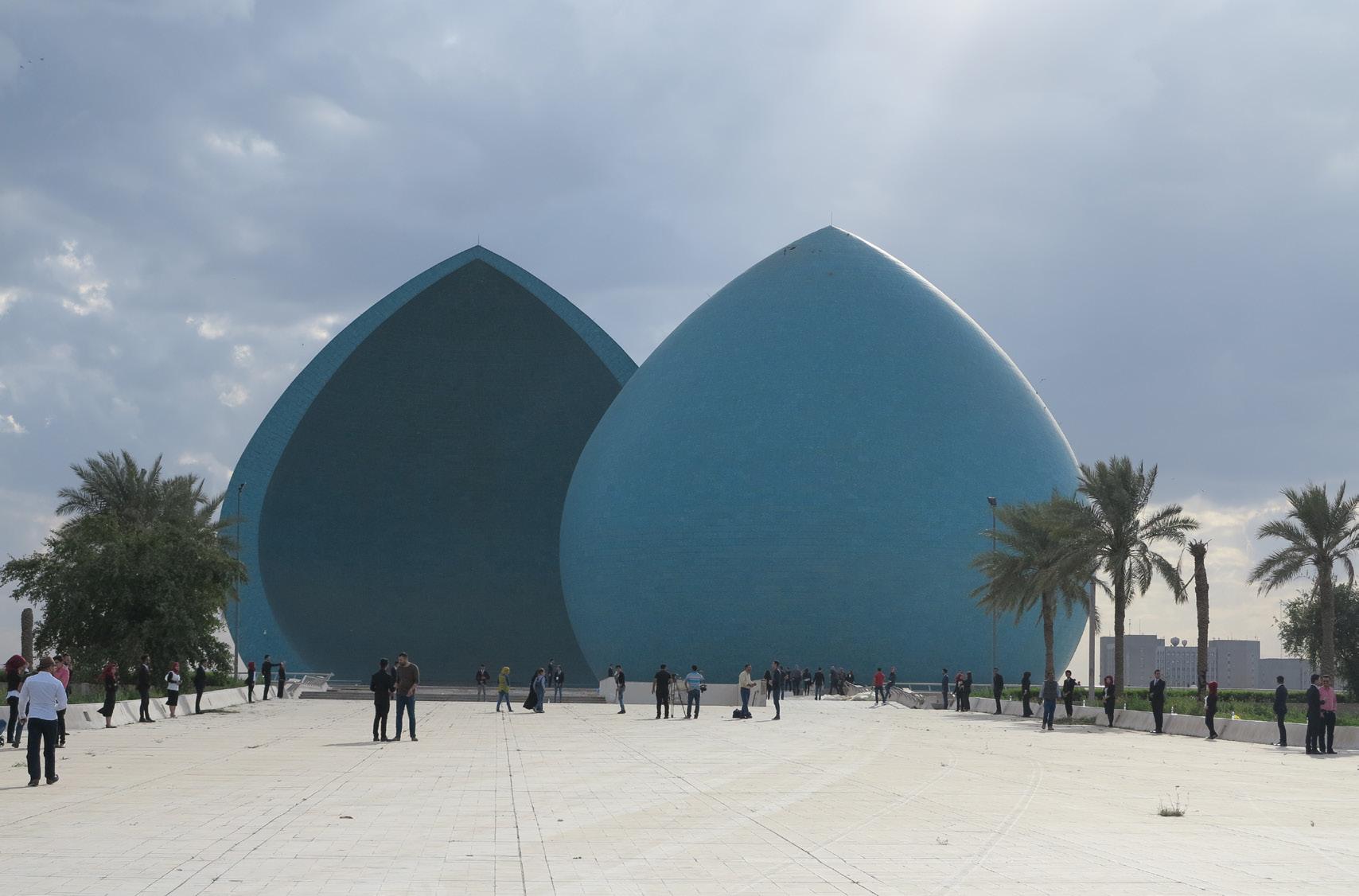
The Martyrs Monument, one of Baghdad’s most iconic architectural landmarks, occupies a vast site in Al Rusafa between Palestine Street and Omar Bin Al Khattab Street. Visible from all directions, it combines monumental form with an elegant, socially and culturally grounded design.
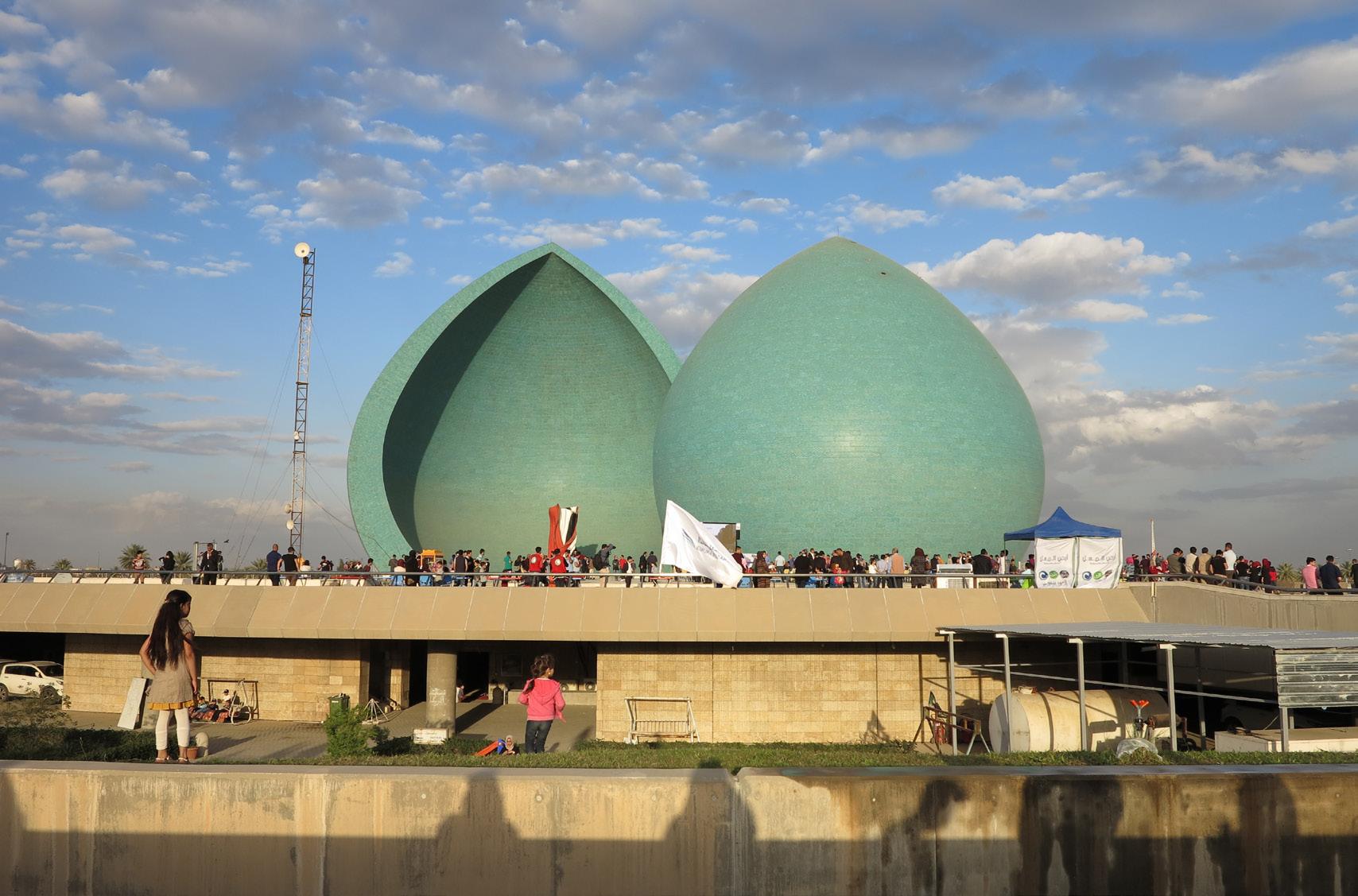
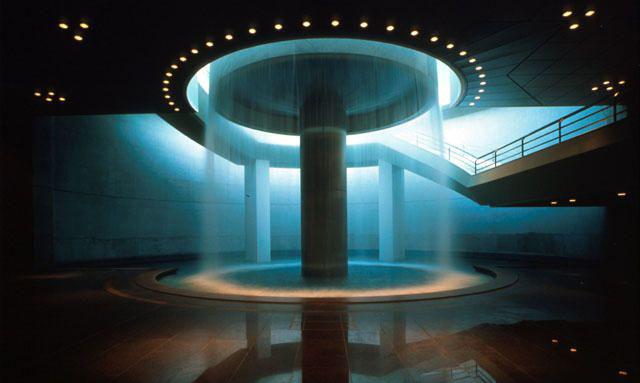
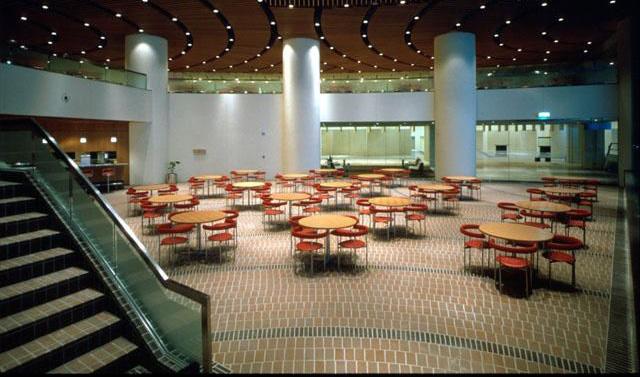
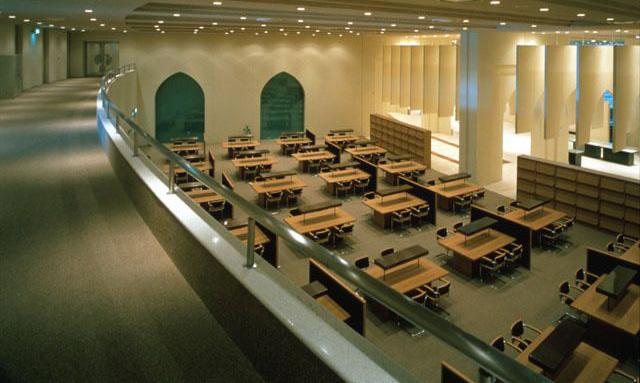
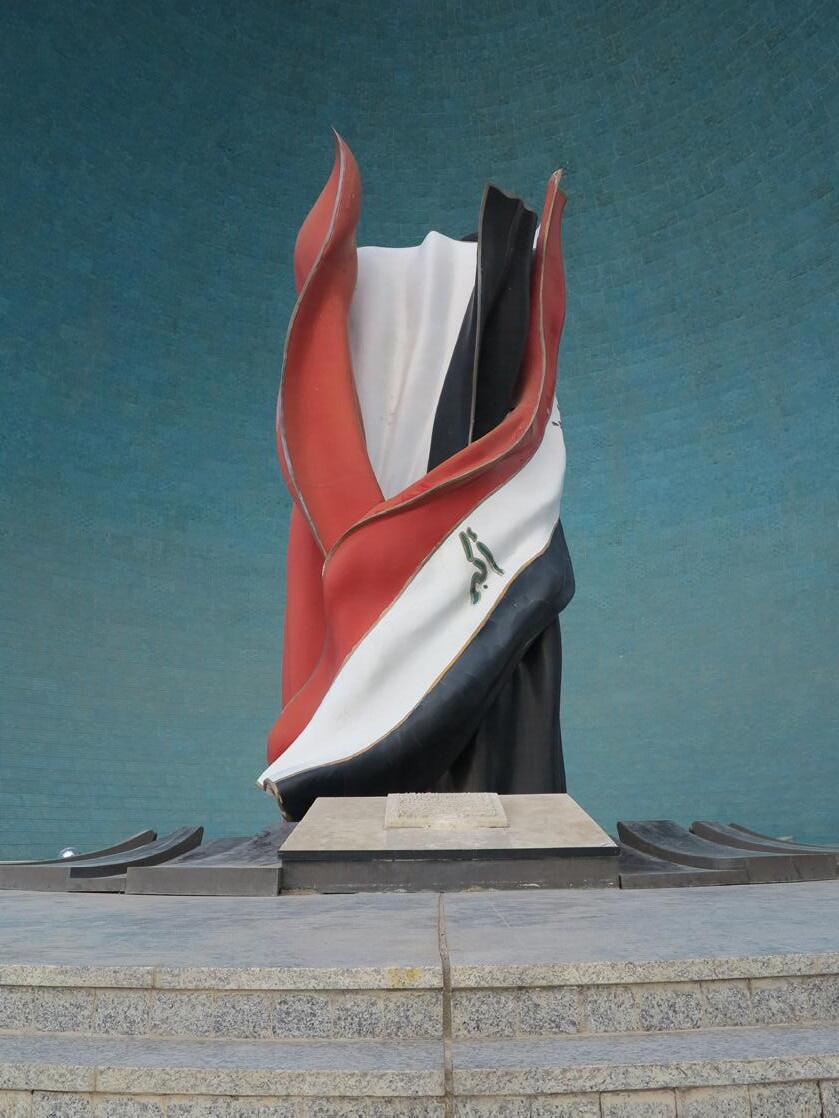
Created by sculptor Ismail Fatah Al Turk and architect Saman Kamal, the monument takes the shape of a split arabesque pointed dome, 40 meters high and clad in shimmering turquoise tiles. At its center burns an eternal flame, set within a three-dimensional Iraqi flag rendered as a twisted metal form. The two half-domes rest on a circular platform 190 meters in diameter, beneath which lies a two-story complex with a museum, library, lecture hall, cafeteria, gallery, and support facilities. The ensemble extends into a landscaped setting with an artificial lake and leisure areas.
Often wrongly attributed to Saddam Hussein and solely associated with the Iran–Iraq War, the project’s origins predate the conflict. In 1978, as part of President Ahmed Hassan Al Bakr’s national development plan of 1973, the government launched an open competition for a national martyr’s memorial and cemetery—an unusual step before any war had taken place. The winning proposal by Al Turk and Kamal became one of Iraq’s landmark cultural and socio-political projects.
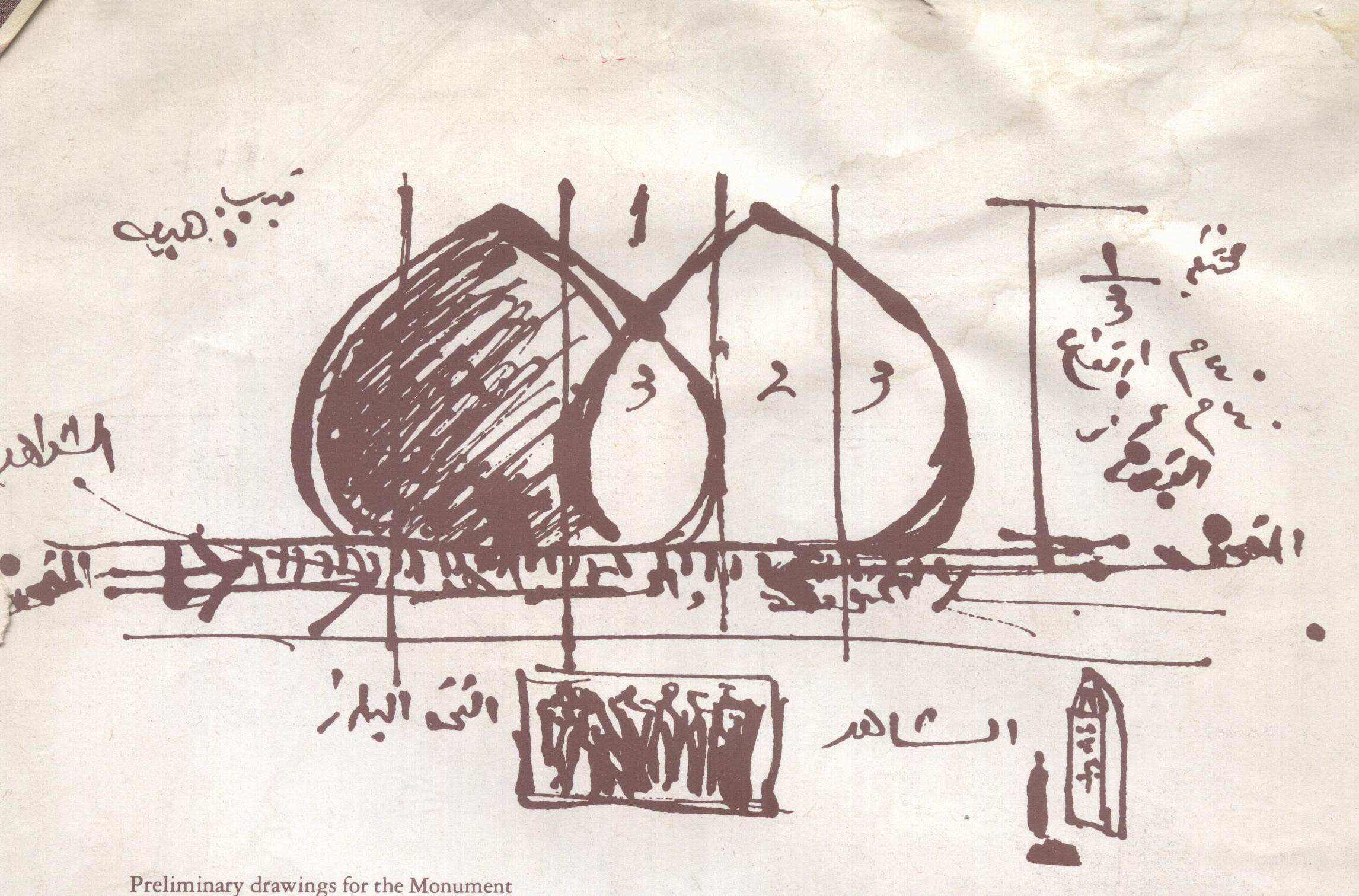
Their design was founded on the idea that martyrdom signifies not death, but the continuation of life. The planned cemetery evolved into a monument and museum, honoring martyrs whose sacrifice sustains the land. The dome—both a spiritual and architectural symbol in Islamic tradition—was split into two halves: one releasing the martyr’s soul to the heavens, the other enclosing the spring of life. At its heart stand two symbolic elements: a sculpture of a martyr’s body wrapped in the Iraqi flag, and a waterfall pond whose continuous stream represents the martyrs’ enduring gift, linking the monument above to the underground spaces below.
Al Turk and Kamal were formally commissioned in mid-1979, with international contractors engaged for construction. Their original plan for a gold dome was abandoned after simulations showed it would create an unbearable microclimate of heat. They instead chose turquoise ceramic tiles in six tonal variations, inspired by the palette of historic Iraqi domes. Construction began in 1981, and was completed in July 1983.
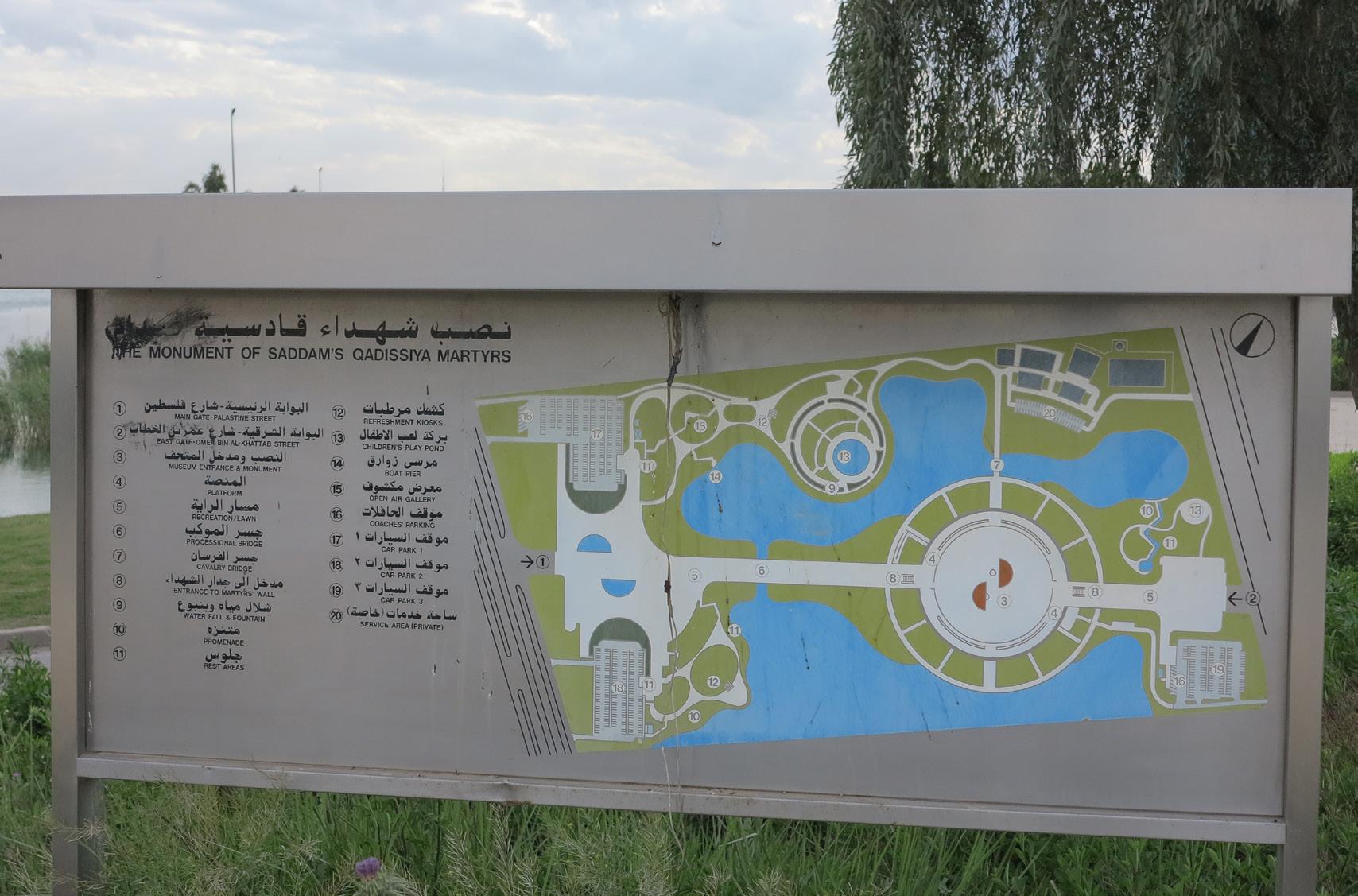
The monument’s inauguration coincided with the Iran-Iraq War )1980-1988(, launched by Saddam Hussein on 22 September 1980. Initially envisioned by Saddam as a swift Blitzkrieg, the Iran-Iraq War, popularly known in Iraq as the Eight Years War, became the longest and bloodiest conflict ever fought between two developing nations. Contrary to the popular name, Saddam Hussein gave the war the title ”Qadisiya Saddam“ in reference to the Battle of Al Qadisiyyah, a 7th-century battle where Arabs triumphed over Persia. In this spirit, the Martyr’s Monument was at that time officially renamed ”The Monument of Saddam’s Qadisiya Martyrs“
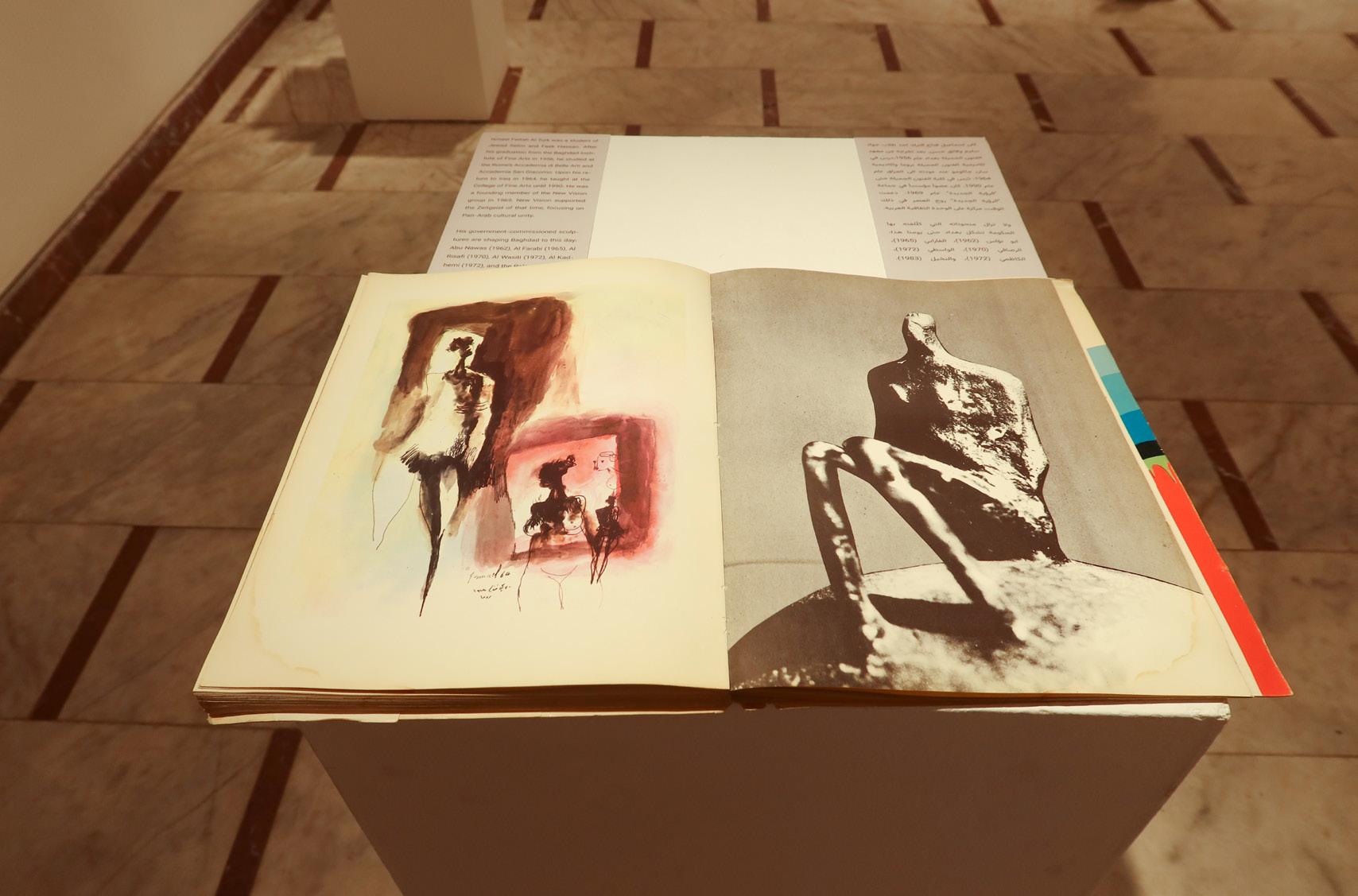
Ismael Fattah Al Turk was a student of Jewad Selim and Faek Hassan. After his graduation from the Baghdad Institute of Fine Arts in 1956, he studied at the Rome’s Accademia di Belle Arti and Accademia San Giacomo. Upon his return to Iraq in 1964, he taught at the College of Fine Arts until 1990. He was a founding member of the New Vision group in 1969. New Vision supported the Zeitgeist of that time, focusing on Pan-Arab cultural unity. His government-commissioned sculptures are shaping Baghdad to this day: Abu Nawas )1962(, Al Farabi )1965(, Al Risafi )1970(, Al Wasiti )1972(, Al Kadhemi )1972(, and the Palms )1983(.
”An honest and neutral analysis of historical contexts.“
“It’s a simple way to better understand what is in front of us.“
The Republic of Iraq as a Federal Parliamentary Republic
ART INTERVENTIONS
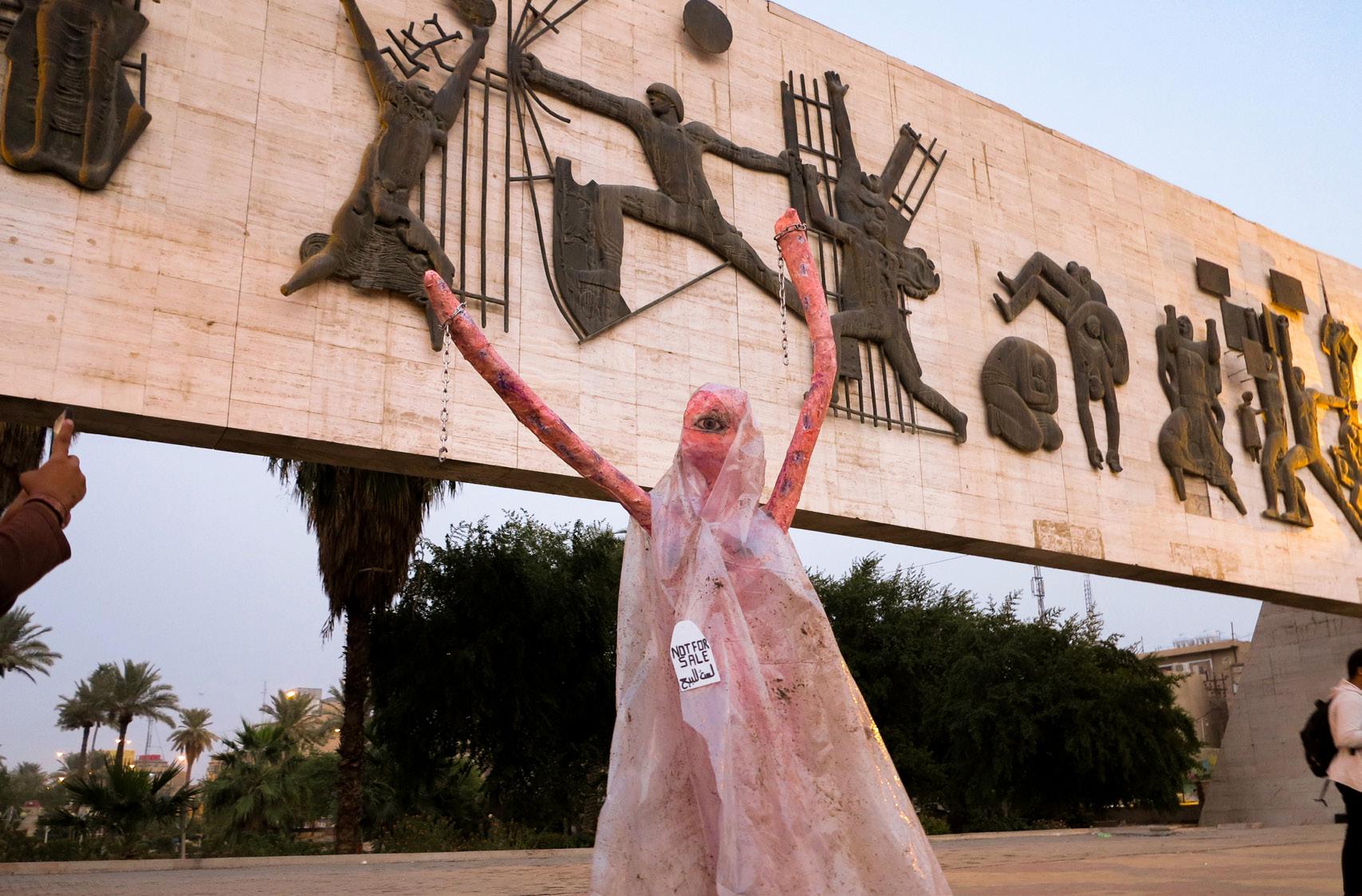
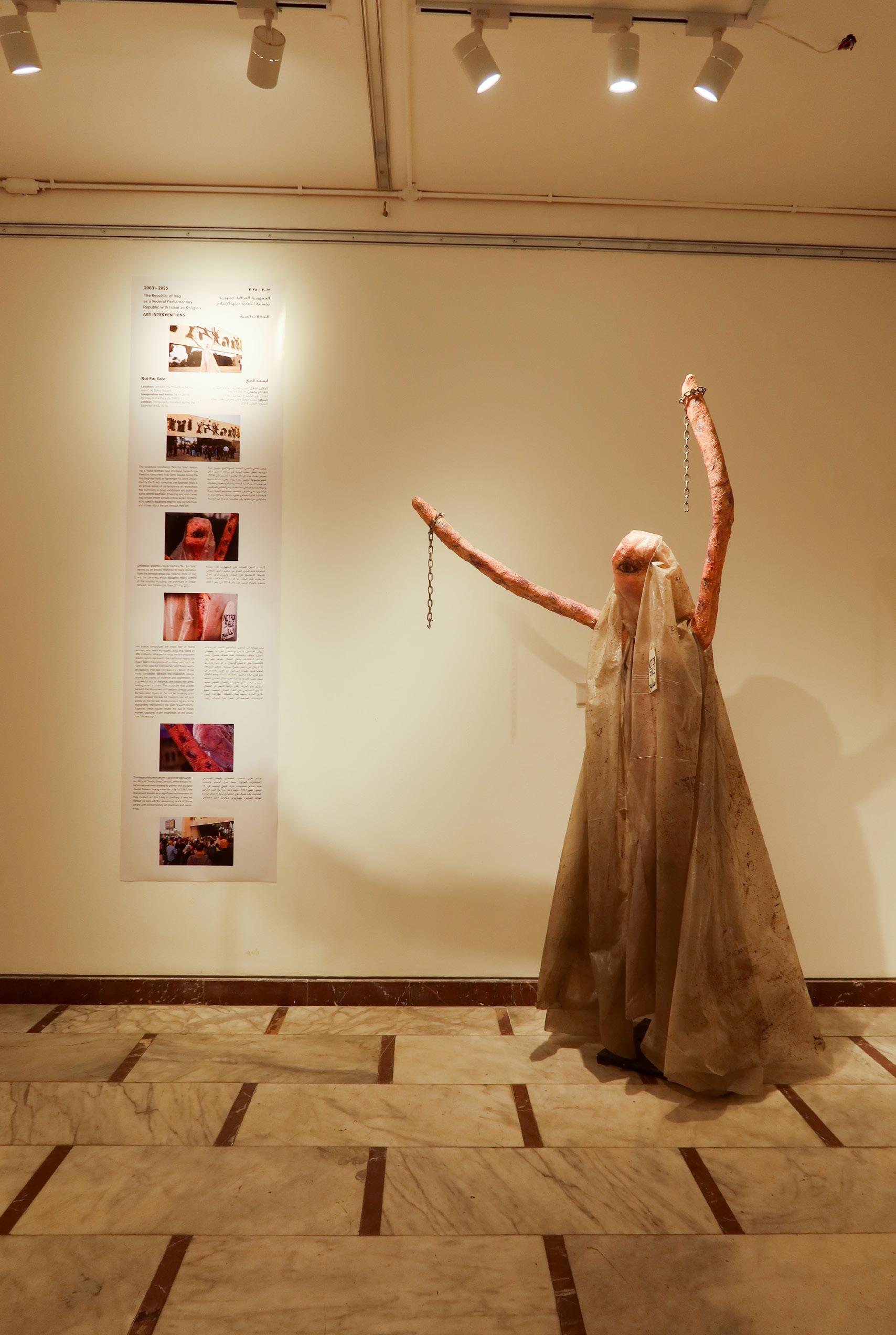
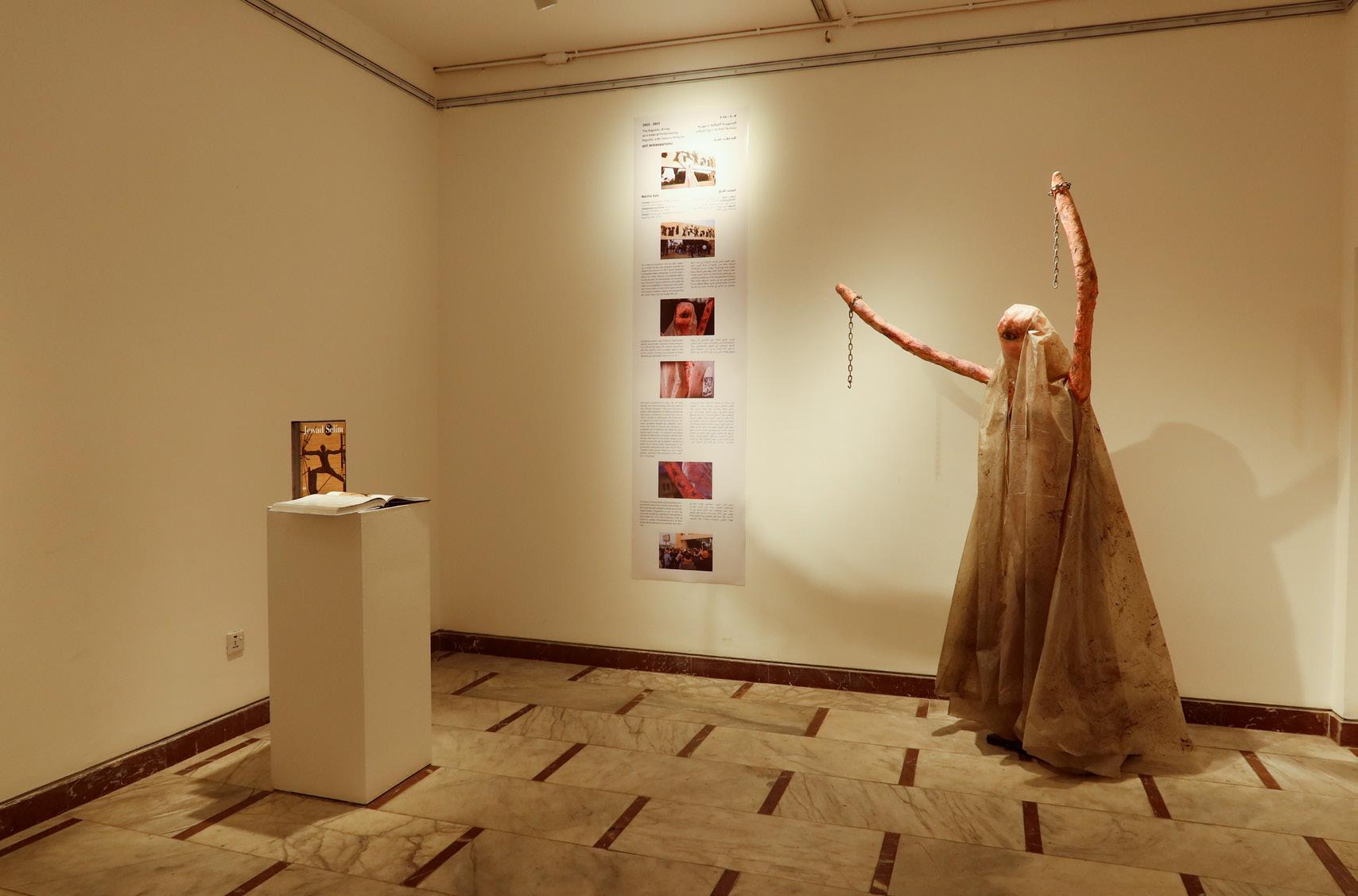
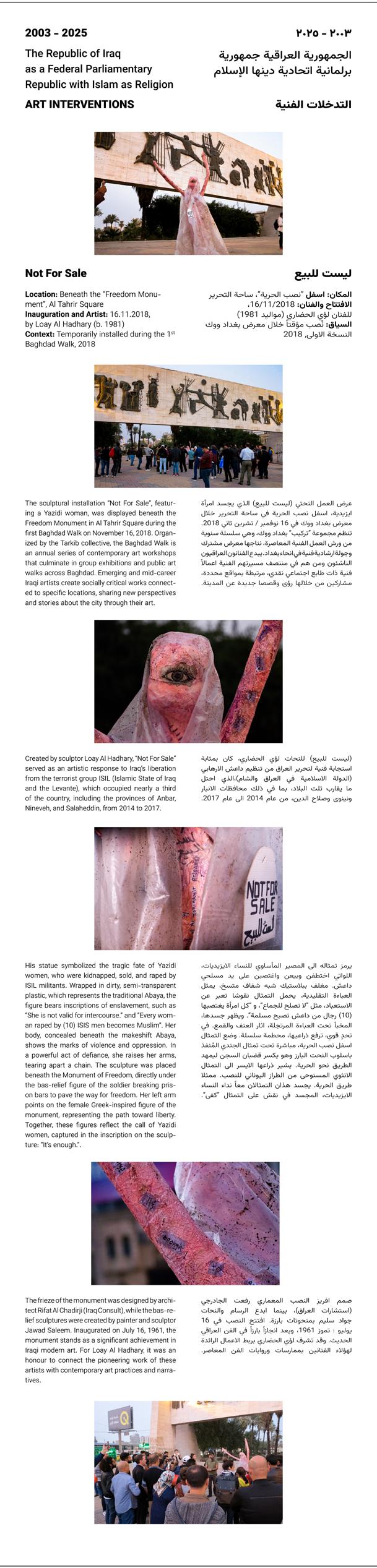
Not For Sale
Location: Beneath the ”Freedom Monument“, Al Tahrir Square
Inauguration and Artist: 16.11.2018, by Loay Al Hadhary )b. 1981(
Context: Temporarily installed during the 1st Baghdad Walk, 2018
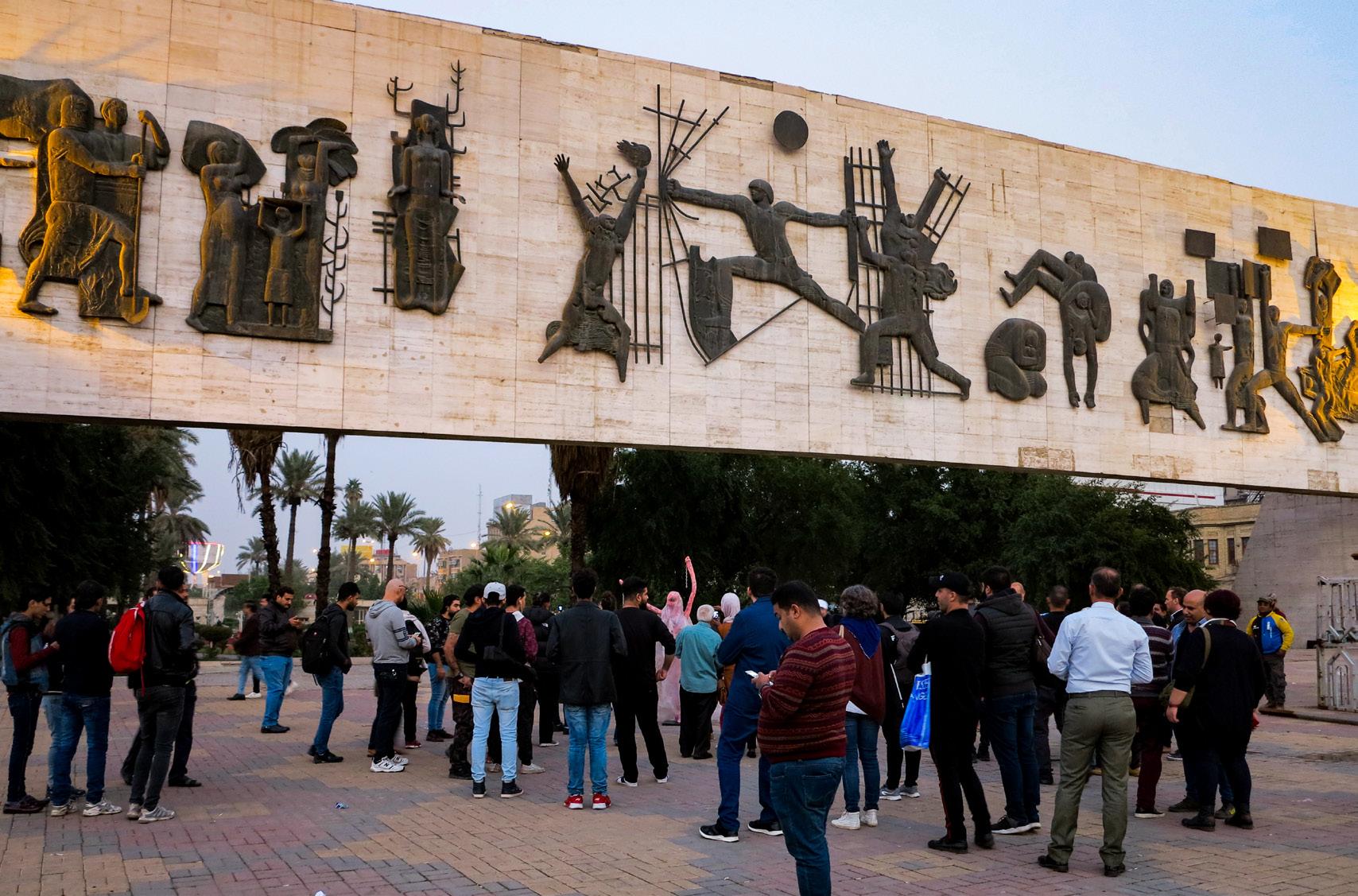
The sculptural installation ”Not For Sale“, featuring a Yazidi woman, was displayed beneath the Freedom Monument in Al Tahrir Square during the first Baghdad Walk on November 16, 2018. Organized by the Tarkib collective, the Baghdad Walk is an annual series of contemporary art workshops that culminate in group exhibitions and public art walks across Baghdad. Emerging and mid-career Iraqi artists create socially critical works connected to specific locations, sharing new perspectives and stories about the city through their art.
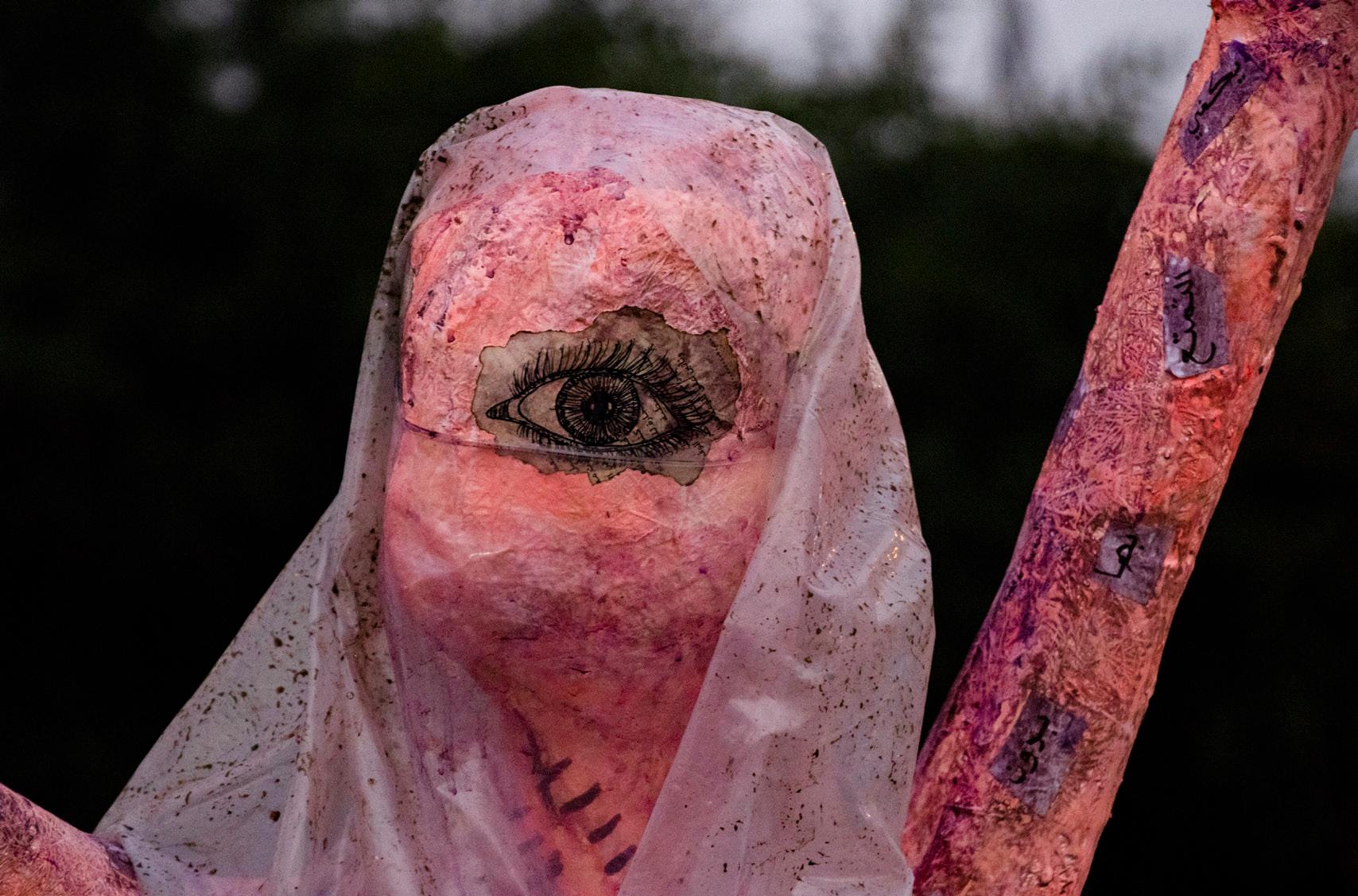
Created by sculptor Loay Al Hadhary, ”Not For Sale“ served as an artistic response to Iraq’s liberation from the terrorist group ISIL )Islamic State of Iraq and the Levante(, which occupied nearly a third of the country, including the provinces of Anbar, Nineveh, and Salaheddin, from 2014 to 2017.
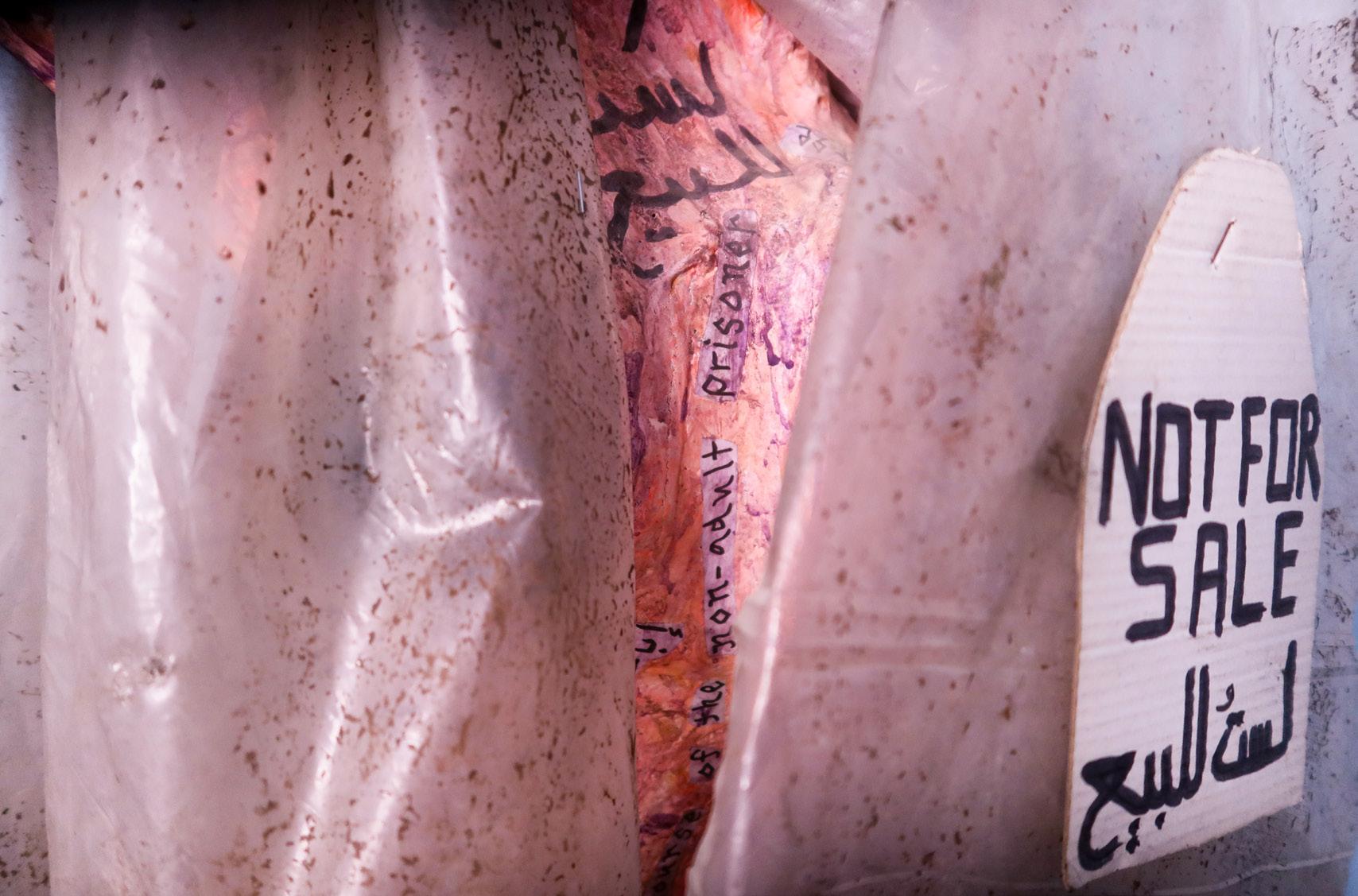
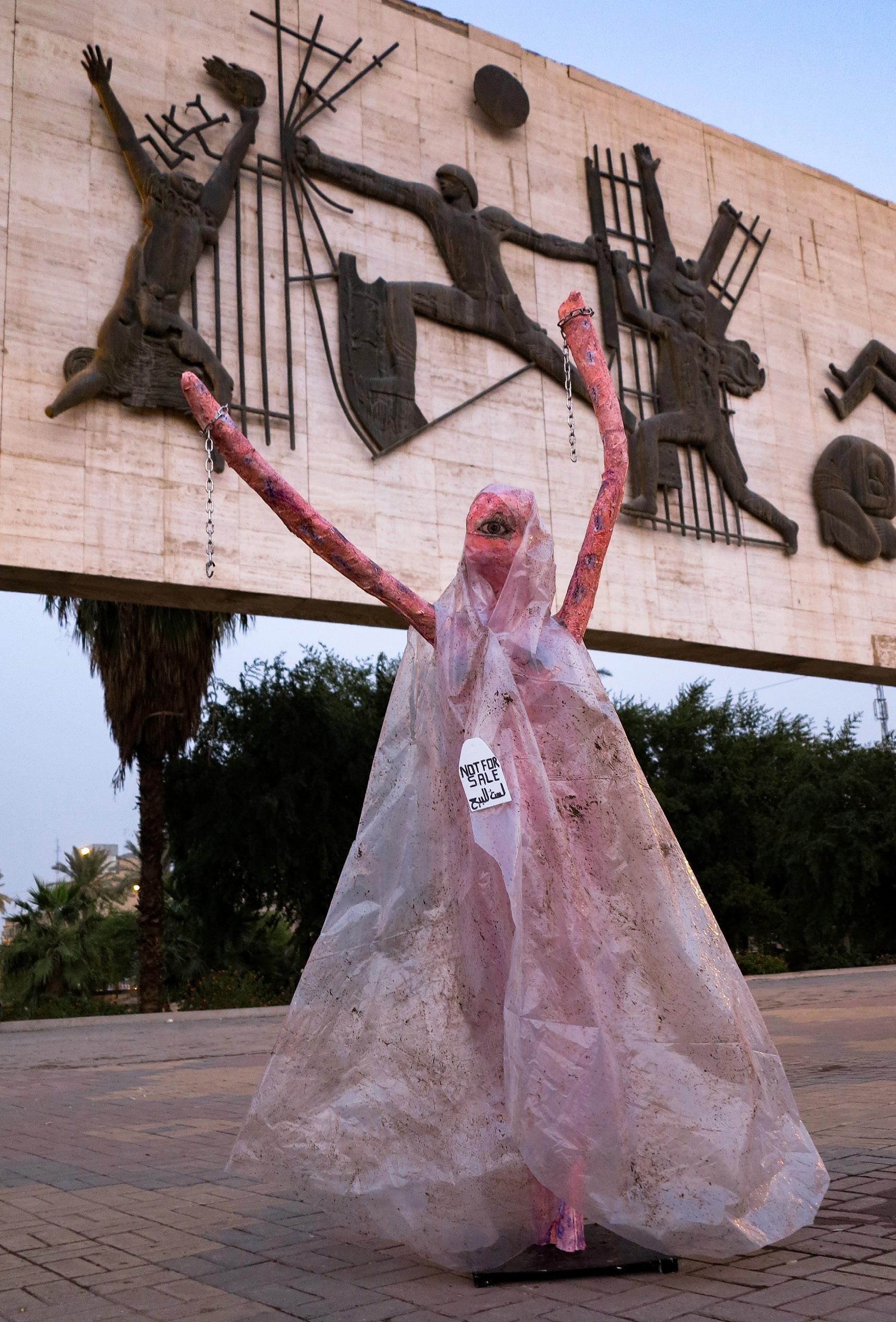
His statue symbolized the tragic fate of Yazidi women, who were kidnapped, sold, and raped by ISIL militants. Wrapped in dirty, semi-transparent plastic, which represents the traditional Abaya, the figure bears inscriptions of enslavement, such as ”She is not valid for intercourse.“ and ”Every woman raped by )10( ISIS men becomes Muslim“. Her body, concealed beneath the makeshift Abaya, shows the marks of violence and oppression. In a powerful act of defiance, she raises her arms, tearing apart a chain.
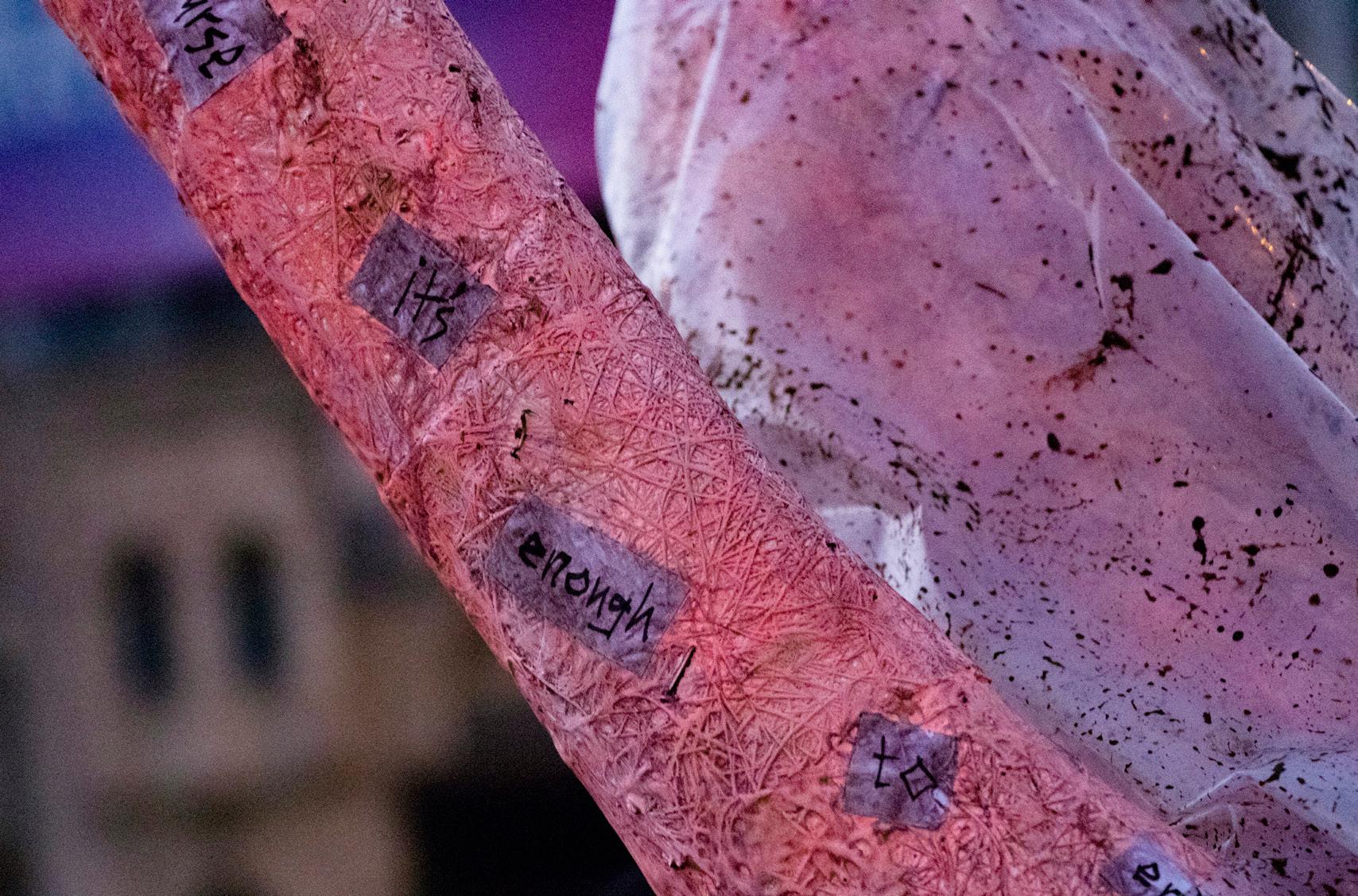
The sculpture was placed beneath the Monument of Freedom, directly under the bas-relief figure of the soldier breaking prison bars to pave the way for freedom. Her left arm points on the female Greek-inspired figure of the monument, representing the path toward liberty. Together, these figures reflect the call of Yazidi women, captured in the inscription on the sculpture: ”It’s enough.“.
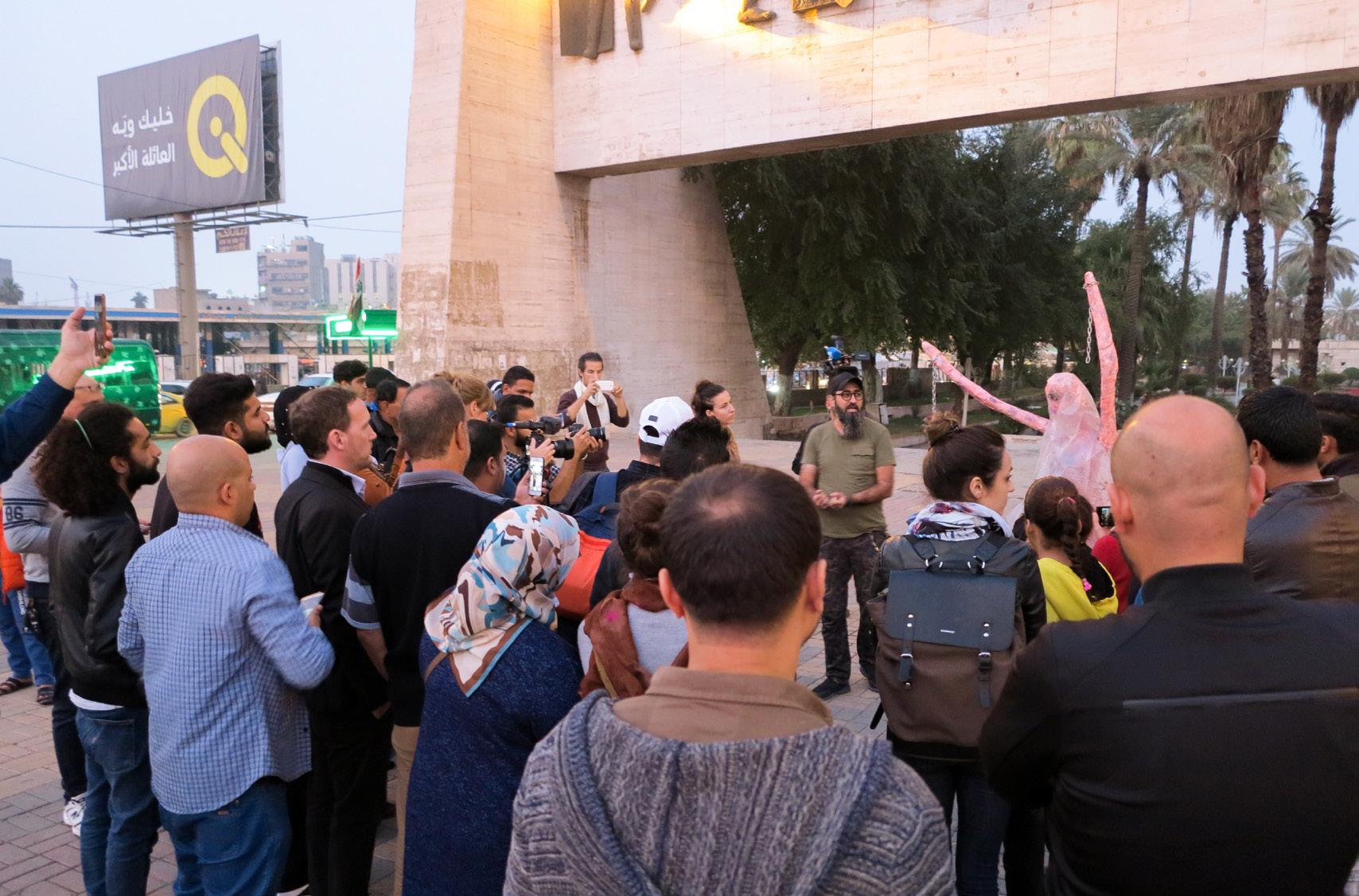
The frieze of the monument was designed by architect Rifat Al Chadirji )Iraq Consult(, while the bas-relief sculptures were created by painter and sculptor Jawad Saleem. Inaugurated on July 16, 1961, the monument stands as a significant achievement in Iraqi modern art. For Loay Al Hadhary, it was an honour to connect the pioneering work of these artists with contemporary art practices and narratives.
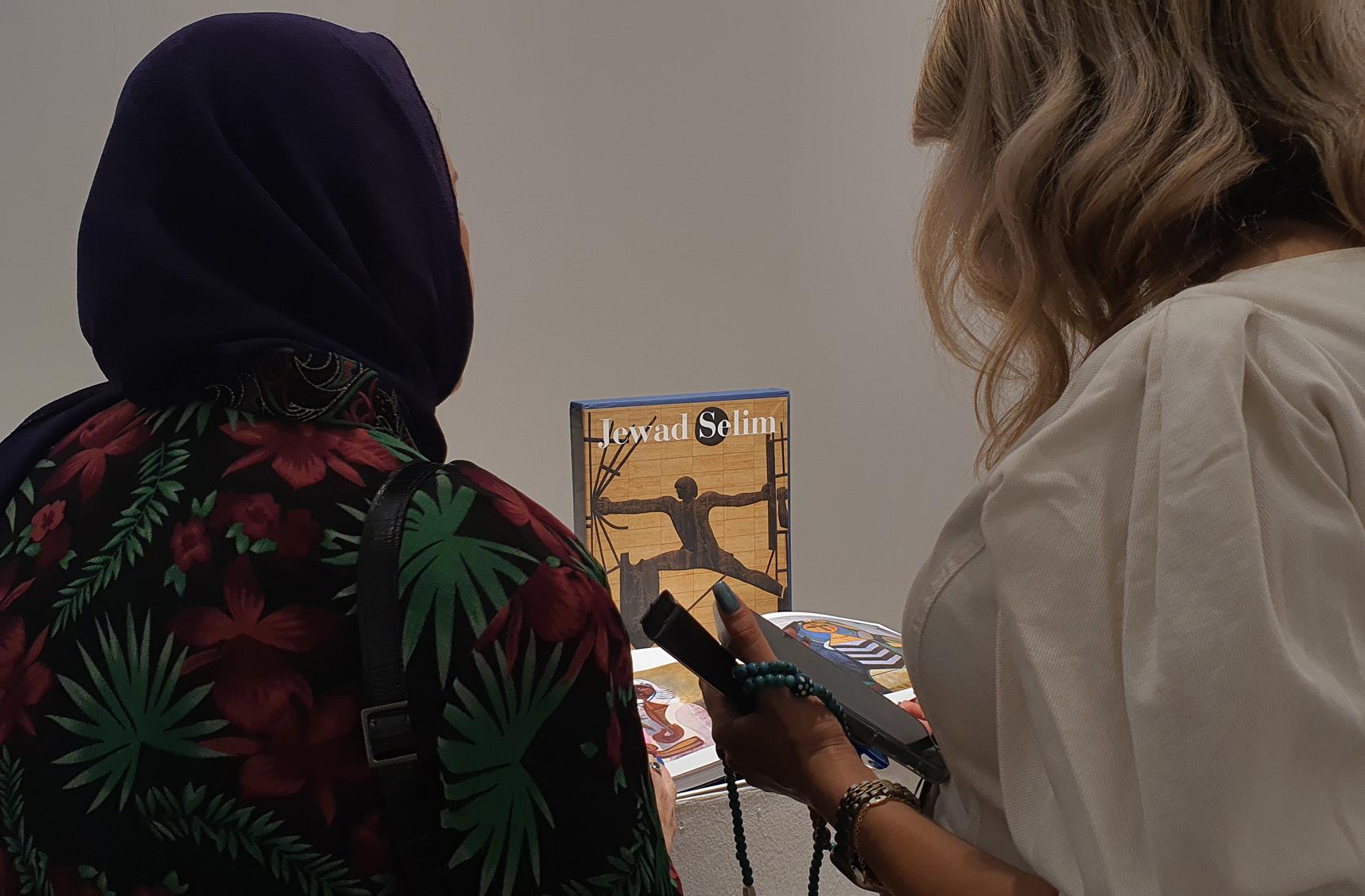
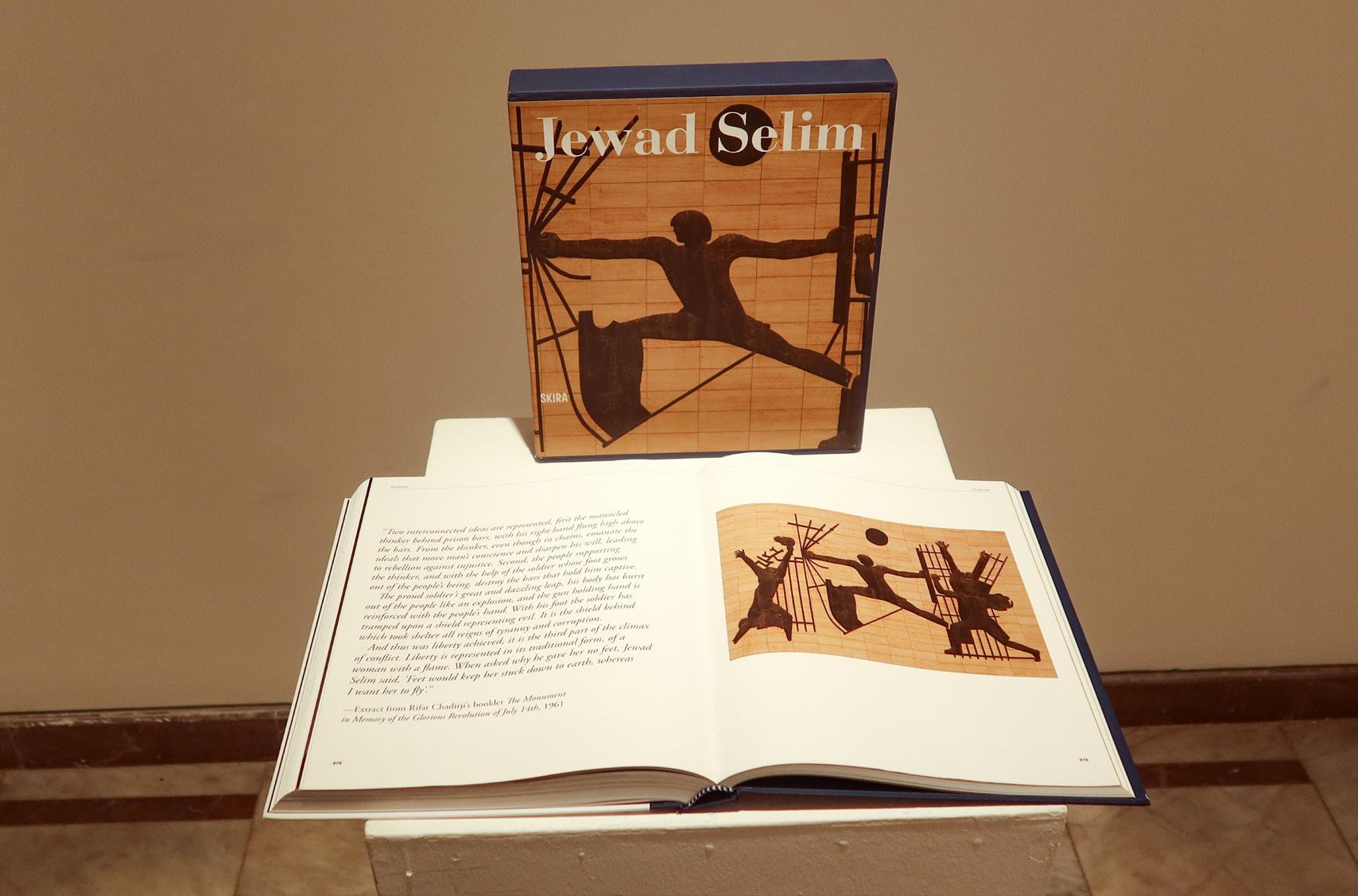
One of the exhibited books was the catalogue raisonné dedicated to the works of Iraqi master Jewad Selim, the first of its kind for an Iraqi artist. Jewad Selim )1919-1961( is regarded as one of the key pioneers of Iraqi Modernism. As both sculptor and painter, and educated in Rome, Paris and London, he sought to merge ancient Iraqi artistic traditions with modern European techniques. Among his most significant works is the ”Freedom Monument“ at Al Tahrir Square. The catalogue raisonné is the first to present the Freedom Monument fully documented in colour featuring detailed photographs captured by the exhibition’s curator, Hella Mewis.
“I have learnt historical information about our past that I was not aware of.“
“After
visiting the exhibition,
I went to see the Gulbenkian Hall.“
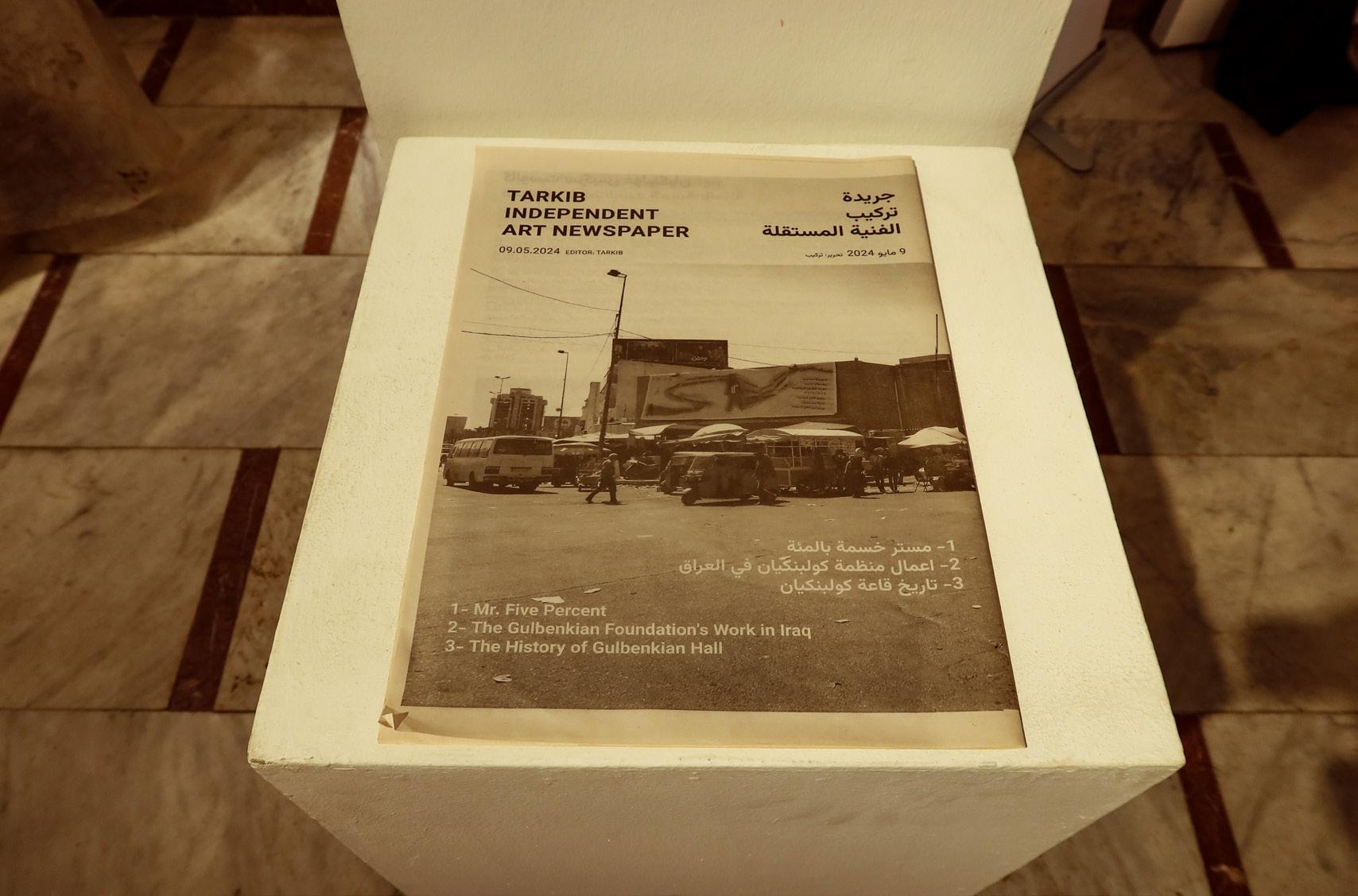
The final exhibit in the tour is the Tarkib Independent Art Newspaper, published on the occasion of the 10th Tarkib Baghdad Contemporary Arts Festival. The festival was held at the Museum of Modern Art )Gulbenkian Hall(, which was built with a construction grant awarded to Iraq by the Calouste Gulbenkian Foundation )CGF(. The newspaper features articles on oil magnet Calouste Gulbenkian, known as Mr. Five Percent, the work of his Portuguese Foundation in Iraq from 1957 to 1973, as well as the history and architectural features of the Museum itself. Through its 5 percent share of oil revenues, the CGF funded numerous cultural and humanitarian projects in Iraq, including more than 250 construction grants across the country. The foundation’s activities ended in 1973, following the nationalization of the Iraq Petroleum Company in 1972, which cut off its share of oil revenues.
Edited by the Tarkib Organization for Arts & Culture, the curator researched and authored the newspaper’s articles and illustrations. )Design by Atef Al Jaffal(
Imprint This booklet was published on the occasion of the exhibition SIX NARRATIVES, held from August 28 to September 8, 2025 at the French Institute in Baghdad.
Text, design, photos: Hella Mewis