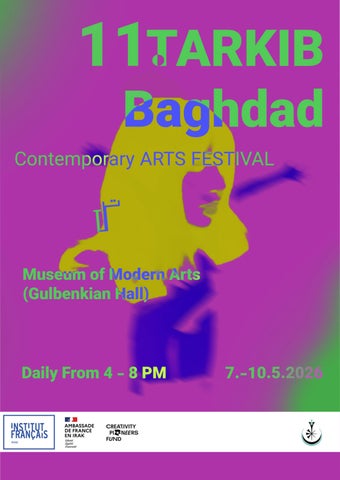
11 TARKIB Baghdad Contemporary Arts Festival 7.5. - 10.5.2026 Museum of Modern Arts (Gulbenkian Hall)
مهرجان تركيب بغداد للفنون المعاصرة الحادي عشر ٢٠٢٦ / ٥ / ١٠ - ٧ )متحف الفن الحديث(قاعة كولبنكيان
edited by TARKIB Organization for Arts & Culture ُ منظمة تركيب للثقافة والفنون:حرر بواسطة
Museum of Modern Arts (Gulbenkian Hall), view of the east wing at Tayeran Square الجانب الشرقي للمبنى المطل على ساحة الطيران،)متحف الفن الحديث (قاعة كولبنكيان
The annual TARKIB Baghdad Contemporary Arts Festival is Iraq’s only multidisciplinary festival dedicated to contemporary art and supporting emerging and mid-career local Iraqi artists. Over four days, the festival brought together 18 artists from the TARKIB collective and introduces newly discovered talent alongside a collaborative Art Therapy exhibition. Together, these works transformed six halls of the Museum of Modern Arts, commonly known as Gulbenkian Hall, into conceptual art spaces. Emerging from diverse disciplines yet united by a shared commitment to experimentation and critical engagement, the participating artists explored new forms of practice rooted in contemporary Iraqi realities. Their works move fluidly across architecture, visual art, sound, video, and material research, collectively shaping a dynamic platform where personal experiences and reflections intersect with broader social, environmental, and cultural questions. Together, these practices reaffirmed TARKIB’s role as a space of convergence, one where experimentation, collaboration and critical dialogue foster new artistic and social languages responsive to both local and global conditions and urgencies. Beyond the common perception of a festival as merely a site of entertainment and visual spectacle, the TARKIB Festival creates a civic space for critical thinking, learning, reflection, and exchange. Conceived and choreographed as a guided journey, the festival invited audiences of different generations and backgrounds to engage directly with the participating artists, encouraging meaningful dialogue and deeper public connection with contemporary art practices.
This year’s edition unfolded under the theme “Small Yet Big”, reflecting TARKIB’s grassroots vision and mission. The theme emphasized how immense potential can emerge even within conditions of limitation. On an individual level, personal experiences can open pathways to larger social and political questions. On a collective level, small gestures and initiatives can carry transformative power. At the community level, the theme underscored how meaningful change can arise through shared effort, even when resources remain modest. One of the festival’s aim is to reactivate overlooked spaces while highlighting Iraq’s cultural and artistic heritage and strengthening contemporary Iraqi identity. Opened in 1962 as the Modern Art Centre in Baghdad, Gulbenkian Hall remains a significant cultural landmark, and marked an ideal place and space to connect Iraqi modern art history with the evolving practices of contemporary Iraqi artists presented through TARKIB. Participating Artists: Lail Sanson | Fathma Dhaer | Saja Najeeb | Ali Zeyad | Saleh Al Hassan | Muhaned Taha | Othman Al Tememi | Sanjat | Shamil | Aeshah Al Shabeeb | Atef Al Jaffal | Anwar Ahmed | Noor Al Waily | Ammar Al Hameedi | Loay Al Hadhary | Zaid Saad | Noor Abd Ali | Hussam Mohammed | Art Therapy To view documentary video:
Museum of Modern Arts (Gulbenkian Hall), view of the entrance at Nidhal Street مدخل المبنى المطل على شارع النضال،)متحف الفن الحديث (قاعة كولبنكيان
جاءت نسخة هذا العام تحت شعار “صغير وشاسع”ُ ،مُ جسدة رؤية “تركيب” ورسالته .أكد الشعار على اإلمكانات الهائلة التي ُيُمكن أن تظهر حتى في ظل ظروف محدودة .فعلى المستوى الفرديُ ،يُمكن للتجارب الشخصية أن تفتح آفاقًا ً لقضايا اجتماعية وسياسية أوسع .وعلى المستوى الجماعيُ ،يُمكن لإليماءات والمبادرات الصغيرة أن ُتُحدث تغييرًا ً جذريًاً .وعلى مستوى المجتمع ،الشعار يبرز كيف ُيُمكن للتغيير الحقيقي أن ينشأ من خالل الجهد المشترك ،حتى مع قلة الموارد. يهدف المهرجان إلى إعادة إحياء المساحات المهملة ،مع تسليط الضوء على التراث الثقافي والفني العراقي، وتعزيز الهوية العراقية المعاصرة .اف ُُتتحت قاعة غولبنكيان عام ١٩٦٢كمركز للفن الحديث في بغداد ،وال تزال معلمًا ً ثقافيًا ً بارزًاً ،كما مثلت مكانًا ً مثاليًا ً لربط تاريخ الفن العراقي الحديث بالممارسات المتطورة للفنانين العراقيين المعاصرين الذين ُيُعرضون من خالل مهرجان تركيب. الفنانون المشاركون: ليل سانسون | فاطمة ظاهر | سجى نجيب | علي زياد | صالح الحسن | مهند طه | عثمان التميمي | صنجات | شامل | عائشة الشبيب | عاطف الجفال | أنوار أحمد | نور الوائلي | عمار الحميدي | لؤي الحضاري | زيد سعد | نور عبد علي | حسام محمد | العالج بالفن
لعرض الفديو التوثيقي:
Hanging of the Festival Banner at Gulbenkian Hall, view of the east wing at Tayeran Square الفتت المهرجان على متحف الفن الحديث (قاعة كولبنكيان) ،الجانب الشرقي للمبنى المطل على ساحة الطيران
Festival Banner at Gulbenkian Hall, view of the east wing at Tayeran Square الفتت المهرجان على قاعة كولبنكيان ،الجانب الشرقي للمبنى المطل على ساحة الطيران
مهرجان تركيب بغداد للفنون المعاصرة ُيُعد المهرجان العراقي الوحيد متعدد التخصصات المخصص للفن المعاصر ،والذي يدعم الفنانين العراقيين المحليين الناشئين ومن هم في منتصف مسيرتهم الفنية .على مدار أربعة أيام ،جمع المهرجان ١٨فنان من جماعة “تركيب” ،وقدم مواهب جديدة إلى جانب معرض فني ً مجتمعًة ست قاعات في متحف الفن الحديث ،والمعروف باسم مشترك للعالج بالفن .وقد حّوّلت األعمال قاعة كولبنكيان ،إلى فضاءات فنية مفاهيمية. انطالقًا ً من تخصصات متنوعة ،جمع الفنانين المشاركين التزام مشترك بالتجريب والتفاعل النقدي، استكشفوا أشكاًال ً جديدة من الممارسات الفنية المتجذرة في الواقع العراقي المعاصر .تتنقل أعمالهم بسالسة بين الهندسة المعمارية والفنون البصرية والصوت والفيديو والبحث المادي ،لتشكل منصة ديناميكية تتقاطع فيها التجارب والتأمالت الشخصية مع قضايا اجتماعية وبيئية وثقافية أوسع. أكدت هذه الممارسات دور “تركيب” كمساحة للتقارب ،حيث ُيُعزز التجريب والتعاون والحوار النقدي لغات فنية واجتماعية جديدة تستجيب للظروف والضرورات المحلية والعالمية. بعيدًا ً عن النظرة الشائعة للمهرجانات باعتبارها مجرد أماكن للترفيه والعروض البصريةُ ،يُنشئ مهرجان “تركيب” فضا ًًء مدنيًا ً للتفكير النقدي والتعلم والتأمل والتبادلُُ .صمم المهرجان كجولة ،ودعا جمهورًا ً من ً مباشرًة مع الفنانين المشاركينُ ،مُ شجعًا ً حوارًا ً بّنّا ًًء وتواصًال ً أعمق مع مختلف األجيال والخلفيات للتفاعل الممارسات الفنية المعاصرة.
Jawad Selim Hall
قاعة جواد سليم
Jawad Selim Hall
قاعة جواد سليم
Atta Sabri Hall
قاعة عطا صبري
Atta Sabri Hall
قاعة عطا صبري
“I feel like I am in the real Iraq. All the artworks are so authentic.” ».ً األعمال الفنية أصيلة جدا.«أشعر وكأنني أعيش العراق الحقيقي
“Everyone here at this moment should be in the group photo. It is TARKIB’s way of saying thank you to all of you!” إنها طريقة.«جميع الموجودين هنا في هذه اللحظة يجب أن يكونوا ضمن الصورة الجماعية »!ًتركيب لقول شكرا لكم جميعا
1_GREEN CARPET Lail Sanson Fashion designer Lail Sanson (b. 2000) develops biodegradable bio-leather fabrics through her independent practice, responding to the environmental impact of the conventional fashion industry. Her work is rooted in a return to origin and a deep connection to the land as a source of identity, memory, and life. Developed through experimentation at BAIT TARKIB in early 2026, this material showcase offers a compelling reflection on sustainability, craft, and material innovation. Her bio-leather textile installation reinterprets the traditional craft of Iraqi carpet-making through an ecological and contemporary artistic lens. By transforming organic waste into textile forms, she shifts the carpet from a functional object into a conceptual artwork that speaks to renewal, transformation, and the fragile relationship between human production and the natural environment. The green centerpiece was created using algae collected from sources in Mahmudiyah. These algae, often resulting from environmental pollution, are usually removed and discarded. Here, waste is reimagined as a valuable artistic material through a responsible recycling process that minimizes additional environmental strain. The brownish carpet runner on the right is made from a mixture of organic and recycled materials, including coffee, paper, and plastic. The reddish textile on the left was produced using rose water, introducing fragrance as a natural and sensory component of the installation. Together, the three pieces form a visual and tactile composition in which color, texture, scent, and material origin become part of the artwork’s meaning. Lail Sanson’s entrepreneurial practice is grounded in collaboration with local artisans and craftswomen. For this installation, she invited a local seamstress and her daughter, who has Trisomy 21, to contribute to the sewing and decorative work. Through this collaboration, the project extends beyond environmental sustainability to embrace a social dimension, supporting marginalized members of the Iraqi community and affirming craft as a space of inclusion, care, and shared knowledge.
“Bio-leather as an alternative to harmful textile production.”
«الجلد الحيوي كبديل إلنتاج المنسوجات الضارة».
GREEN CARPET_1 ليل سانسون
ُتُطّوّر مصممة األزياء ليل سانسون (مواليد )٢٠٠٠من خالل عملها المستقل نسيج جلدي حيوي قابلة ً استجابًة لألثر البيئي لصناعة األزياء التقليدية .يرتكز عملها على العودة إلى األصل واالرتباط الوثيق للتحلل، ُ باألرض كمصدر للهوية والذاكرة والحياةُ .يُق ّّدم هذا العمل الفني ،الذي ُطّوّر من خالل تجريب في بيت تركيب في أوائل عام ،٢٠٢٦تأمًال ً عميقًا ً في االستدامة والحرفية وابتكار المواد. ُيُعيد عملها الفني ،وهو عبارة عن نسيج من الجلد الحيوي ،تفسير الحرفة العراقية التقليدية لصناعة السجاد من منظور فني بيئي ومعاصر .من خالل تحويل النفايات العضوية إلى أشكال نسيجيةُ ،تُحّوّل السجادة من مجرد قطعة وظيفية إلى عمل فني مفاهيمي ُيُعّبّر عن التجديد والتحّوّل والعالقة الهشة بين اإلنتاج البشري والبيئة الطبيعيةُُ .صنعت القطعة المركزية الخضراء باستخدام طحالب ُ ُجمعت من مصادر ً عادًة .هناُ ،يُعاد ابتكار في المحموديةُُ .تزال هذه الطحالب ،التي غالبا ما تنتج عن التلوث البيئي ،وُتُرمى النفايات لتصبح مادة فنية قّيّمة من خالل عملية إعادة تدوير مسؤولة ُُتقلل من الضغط البيئي اإلضافي. ُُصنعت السجادة البنية على اليمين من مزيج من المواد العضوية والُمُ عاد تدويرها ،بما في ذلك القهوة والورق والبالستيك .أما النسيج المحمر على اليسار ،فقد ُُصنع باستخدام ماء الورد ،والورد المحمدي، ُمُ ضيفًا ً العطر كمكون طبيعي وحسي للعمل الفنيُ .تُش ّ ّكل القطع الثالث معًا ً تركيبة بصرية ولمسية ،حيث ُيُصبح اللون والملمس والرائحة وأصل المادة جزءًا ً من معنى العمل الفني. تستند ممارسة ليل سانسون الريادية إلى التعاون مع الحرفيين والحرفيات المحليين .في هذا العمل الفني ،دعت خياطة محلية وابنتها ،المصابة بمتالزمة داون ،للمشاركة في الخياطة والزخرفة .من خالل هذا التعاون ،يتجاوز المشروع االستدامة البيئية ليشمل ُبُعدًا ً اجتماعيًاً ،داعمًا ً الفئات المهمشة في المجتمع العراقي ،ومؤكدًا ً على الحرف اليدوية كمساحة للشمول والرعاية وتبادل المعرفة.
2_SADIM Fathma Dhaer Paintress Fathma Dhaer (b. 1997) graduated from the College of Fine Arts, Visual Art Department in 2020 She has developed a realistic painting practice centered on the recurring figure of a doll. Presenting with TARKIB since 2021, her work unfolds as an exploration of the lived and traumatic experiences of women in Iraq, using figuration as a means to navigate memory, vulnerability, and resilience. For the festival, she presented a panoramic painting featuring her recurring doll protagonist, caught in a spider’s web and seemingly unable to move. The web represents the invisible forces that shape thought and behavior, restricting the individual’s ability to act, resist, or move forward. This work explores the tension between perceived helplessness and the possibility of agency. Suspended within the web, the doll appears trapped, immobilized by delicate threads that suggest emotional fear, doubt, and social conditioning rather than physical restraint. The painting questions whether helplessness is an undeniable reality or a state reinforced by external expectations and internal hesitation. Although the figure appears powerless, the web itself remains fragile, suggesting that liberation is still possible through awareness, will, and action. By confronting the psychological weight of paralysis, the work invites viewers to reconsider the boundaries between vulnerability, perception, and self-determined freedom.
“Between perceived helplessness and the power to act.”
«بين العجز ُ المتص َّور والقدرة على الفعل».
SADIM_2 فاطمة ظاهر
الفنانة فاطمة ظاهر (مواليد )١٩٩٧خريجة كلية الفنون الجميلة ،قسم الفنون التشكيلية ٢٠٢٠طّوّرت أسلوبًا ً واقعيًا ً في الرسم يتمحور حول شخصية الدمية الخشبية المتكررةُ .تُعرض أعمالها مع “تركيب” منذ ً مستخدمًة التجسيد كوسيلة للتعبير عام ،٢٠٢١وتستكشف التجارب الحياتية والمؤلمة للنساء في العراق، عن الذاكرة والضعف والصمود. ً عالقًة في شباك عنكبوت ،ويبدو أنها عرضت في المهرجان لوحة بانورامية ُتُصّوّر دميتها الرئيسية المتكررة، عاجزة عن الحركةُ .تُمّثّل الشبكة القوى الخفية التي ُتُش ّ ّكل الفكر والسلوك ،و ُُتقّيّد قدرة الفرد على الفعل أو المقاومة أو الُمُ ضّي ُُقدمًاً. ّ يستكشف هذا العمل التوتر بين العجز الُمُ تصور وإمكانية الفعل .تبدو الدمية ،المعلقة داخل الشبكة، وكأنها محاصرة ،مشلولة بخيوط دقيقة توحي بالخوف والشك والتأثيرات االجتماعية ،ال بالتقييد الجسدي. تتساءل اللوحة عما إذا كان العجز حقيقة ال جدال فيها ،أم حالة تعززها التوقعات الخارجية والتردد الداخلي. على الرغم من أن الدمية تبدو عاجزة ،إال أن الشبكة نفسها تظل هشة ،مما يوحي بأن التحرر ال يزال ممكنًا ً من خالل الوعي واإلرادة والعمل .ومن خالل مواجهة العبء النفسي للشلل ،تدعو اللوحة المشاهدين إلى إعادة النظر في الحدود الفاصلة بين الضعف واإلدراك والحرية الذاتية.
3_BEYOND THE FABRIC Saja Najeeb Saja Najeeb (b. 2001) is a fashion designer who graduated from the College of Fine Arts, University of Baghdad, in 2025. She creates figurative sculptural installations informed by sustainable fashion practices. Her mannequin-like figures work on the conceptual aspects between humanity, identity, and the environment, moving beyond fabric through the use of recycled and upcycled materials. BEYOND THE FABRIC is an illuminated floating sculpture, reminiscent of an angelic figure, made from recycled textile material. Upon entering the museum hall, the figure immediately draws the viewer’s attention. Its body reveals its inner structure, the skeleton, echoing the artist’s message: true meaning begins when we look beyond the fabric. Wounded wings and scattered fragments suggest a spirit attempting to rise beyond the weigh it carries. Beneath the skirt, shimmering words emphasize the central idea of the work: What is seen is not always the truth.
BEYOND THE FABRIC_3 سجى نجيب
سجى نجيب (مواليد )٢٠٠١مصممة أزياء تخرجت من كلية الفنون الجميلة بجامعة بغداد عام .٢٠٢٥تعمل على أعمال فنية نحتية تجريدية مستوحاة من ممارسات الموضة المستدامة .تتناول منحوتاتها ،التي ُتُشبه ً متجاوزًة النسيج من خالل عارضات األزياء ،الجوانب المفاهيمية للعالقة بين اإلنسانية والهوية والبيئة، استخدام مواد ُمُ عاد تدويرها وُمُ عاد استخدامها. “ما وراء القماش” منحوتة مضيئة عائمةُ ،تُذ ّّكر بشخصية مالئكية ،مصنوعة من نسيج ُمُ عاد تدويره .عند دخول قاعة المتحف ،تجذب المنحوتة انتباه المشاهد فورًاً .يكشف جسدها عن بنيتها الداخلية ،هيكلها العظمي ،مرددًا ً رسالة الفنانة :يبدأ المعنى الحقيقي عندما ننظر إلى ما أعمق من القماش. توحي األجنحة المجروحة والشظايا المتناثرة بروح تحاول االرتقاء فوق ثقلها .تحت التنورة ،تؤكد الكلمات المتأللئة على الفكرة المركزية للعمل :ما ُيُرى ليس دائمًا ً هو الحقيقة.
Artist’s Statement: Beyond the Fabric What we wear is the first thing the world sees: a covering that shapes our outward image, yet does not reveal our truth. In this work, the ribcage becomes a shield protecting what lies within, while light seeps through its cracks like the voice of a hidden soul. Wounded wings attempt to fly despite the pain, and the scattered fragments embody a spirit striving to break free from the weight of the body. Here, the true meaning begins… when we look beyond the fabric. Beyond the Fabric What is seen… is not the truth. Layers conceal more than they reveal, and a heaviness tries to appear still, while something light within never stops searching for a way out. There, where refraction meets light, the story begins… Not about what we wear, but about what we carry in silence… Beyond the Fabric
بيان الفنان: ما وراء القماش ما نرتديه هو أول ما يراه العالم، ٌ غالف يش ّ كل صورتنا الخارجية ،لكنه ال يكشف حقيقتنا. درع يحمي الداخل، في هذا العمل يتحول القفص الصدري إلى ٍ كصوت للروح المختبئة. بينما يتسلل الضوء من شقوقه ٍ األجنحة المجروحة تحاول الطيران رغم األلم، ً روحا تسعى للتحرر من ثقل الجسد. واألجزاء المتطايرة تجسد هنا يبدأ المعنى الحقيقي… حين ننظر إلى ما وراء القماش ما وراء القماش ما يُرى… ليس الحقيقة. ٌ طبقات تُخفي أكثر مما تُظهر، وثِق ٌ ل يحاول أن يبدو ثاب ًتا، بينما شيءٌ خفيف في الداخل ّ يكف عن البحث عن مخرج. ال هناك، حيث يلتقي االنكسار بالضوء، تبدأ الحكاية… ليس عمّ ا نرتديه، بل عمّ ا نحمله— بصمت… ما وراء القماش
“ The true meaning begins when we look beyond the fabric.”
«يبدأ المعنى الحقيقي عندما ننظر إلى ما أعمق من القماش».
“When architecture reveals itself as a visual poem.”
4_JUXTAPOSITION Ali Zeyad Ali Zeyad (b. 2002) is an architectural designer who graduated from the Technical University of Baghdad in 2025, where he received first prize for his graduation project, Haifa Cultural Platform. Presenting with TARKIB since 2021, his architecture-based installations and designs merge geometry, spatial practice, and poetic expression, transforming structural thinking into experiential forms. For the festival, he presents an architectural design installation composed of three paired textured prints that explore architecture as both a linguistic and sensory gesture. Through light, material, rhythm, and spatial composition, the installation creates a silent dialogue between people and the city, transforming urban space into a vessel of shared memory, movement, and experience.
JUXTAPOSITION_4 علي زياد
علي زياد (مواليد )٢٠٠٢معماري تخرج من الجامعة التكنولوجيا ببغداد عام ،٢٠٢٥حيث حاز على الجائزة األولى عن مشروع تخرجه “منصة حيفا الثقافية” .يقدم أعماله مع “تركيب” منذ عام ،٢٠٢١حيث تمزج تصاميمه ومنشآته المعمارية بين الهندسة والممارسة المكانية والتعبير الشعري ،محوًال ً التفكير الهيكلي إلى أشكال تجريبية. يقدم في هذا المهرجان عمًال ً معماريًا ً تركيبيًا ً يتألف من ثالث مطبوعات متداخلة ذات ملمس مميز، تستكشف العمارة كإيماءة لغوية وحسية .من خالل الضوء والمادة واإليقاع والتكوين المكاني ،يخلق العمل حوارًا ً صامتًا ً بين الناس والمدينة ،محوًال ً الفضاء الحضري إلى وعاء للذاكرة المشتركة والحركة والتجربة.
«عندما تتجلى العمارة كقصيدة بصرية».
Artist’s Statement: Architecture is not merely a physical act of construction. It is a linguistic gesture, a text written into the fabric of the city. Every wall, opening, and shadow is a word contributing to a broader narrative that shapes the urban experience. Architecture has the capacity to speak through sensory and visual experience, engaging in a silent dialogue with human movement through space. In this sense, the city, becomes a living manuscript, continuously rewritten by its inhabitants. The architectural text structures the grammar of everyday life: the rhythm of streets, the silence of courtyards, and the intervals between built masses. Through composition and material, the architect becomes both writer and reader of this collective story. Here, written language intersects with built language, shaping visual perception, spatial sequence, and memory into a shared identity. Architecture emerges as a visual poem, composed of fragments of light and texture, inviting reflection, encounter, and belonging. Each project is an attempt to translate abstract thought into tangible form bridging mind and emotion, structure and essence.
بيان الفنان: العمارة ليست مج ّرد فعل مادي للبناء ،بل هي إيماءة لغويةّ ، نص يُكتب في نسيج المدينة .كل جدار وفتحة وظلّ ّ هو كلمة تسهم في سردٍ أوسع يش ّ كل التجربة الحضرية .أن العمارة قادرة على أن تتكلم من خالل التجربة الحسية والبصرية ،وحوارها الصامت مع حركة اإلنسان في الفضاء. المدينة ،بهذا المعنى ،مخطوطة حيّة يعيد سكانها كتابتها باستمرار .يش ّ كل النص المعماري نح َو الحياة اليومية في المدينة :إيقاع الشوارع ،صمت األفنية ،والفواصل بين الكتل المبنية .ومن خالل التركيب والمادة ،يصبح المعماري آن واحد لهذه القصة الجماعية. كاتبا ً وقارئا ً في ٍ ً كيف تتقاطع اللغة المكتوبة مع اللغة المبنية ،وكيف تش ّ هوية كل اإلدراك البصري ،وتسلسل الفضاء ،والذاكرة مشتركة .العمارة كقصيدة بصرية ،تتكوّن من شظايا الضوء والملمس ،تدعو إلى التأمل واللقاء واالنتماء .فكل مشروع هو محاولة لترجمة الفكر المجرد إلى شكل محسوس ،يجسر بين العقل والعاطفة ،بين البنية والجوهر.
5_993 Saleh Al Hassan Saleh Al Hassan (b. 2002) is currently studying at the College of Fine Arts, University of Baghdad. He first presented with TARKIB in 2025. His current practice centers on the image of the traditional oil lamp, known in Arabic as the lala, through which he reflects on childhood memory and the enduring impact of oil, weaving personal experience with material and symbolic inquiry. 993 is a restaged work, first presented in 2025 as part of TARKIB’s program line BAGHDAD WALK 8. In light of its continued relevance to current regional tensions, including the 2026 Iran-Israel/U.S. conflict, and its strong suitability for a museum context, the work was selected for re-presentation within the festival. The work consists of 5 x 2 m hanging canvas featuring 993 oil lamp icons created through silkscreen printing. It symbolically reflects on Iraq’s oil reserves and their detrimental impact on both the environment and humanity, underscored through colour theory. The bluish-shaped icons are dominated by brownish, oil-toned areas evoking the uneasy relationship between water and oil. The number 993 refers to the combined number of producing wells in two of Iraq’s major oil fields: 330 wells in the Kirkuk field and 663 wells in the North Rumaila field in Basra. Through the contrast between blue and brown tones, the work reflects on the impact of oil production on Iraq’s water scarcity, while recalling moments when electricity cuts linked to oil-related conflict brought families together around the light of the lala. Despite the nostalgic associations of the lala, he draws attention to what it conceals: memories of decline, the loss of loved ones, soot-darkened walls, oppressive heat, and lasting effects on people’s health. In this sense, he sees oil wells as modern-day lalas: admired by the world for their abundance, yet ultimately causing more harm than benefit.
“Lala as a symbol of Iraq’s fate.”
993_5 صالح الحسن صالح الحسن (مواليد )٢٠٠٢يدرس حاليًا ً في كلية الفنون الجميلة -جامعة بغدادُُ .عرض عمله الفني ألول مرة مع تركيب عام .٢٠٢٥تتمحور أعماله الفنية الحالية حول مفردة الاللة التقليدية ،المعروف في اللغة العربية باسم “المصباح الزيتي” ،والذي يعكس من خالله ذكريات الطفولة واألثر الدائم للنفط ،جامعًا ً بين التجربة الشخصية والبحث المادي والرمزي. ُيُع ّّد عمل “ ”٩٩٣إعادة تقديمُُ ،عرض ألول مرة عام ٢٠٢٥ضمن برنامج “بغداد ووك ”٨التابع لتركيب .ونظرًا ً ألهميته المستمرة في ظل التوترات اإلقليمية الراهنة ،بما في ذلك الصراع اإليراني -اإلسرائيلي/األمريكي عام ،٢٠٢٦ومالءمته الكبيرة للسياق المتحفي ،فقد تم اختياره إلعادة عرضه في المهرجان.
يتكون العمل من لوحة معلقة بقياس ٢ × ٥متر ،تضم ٩٩٣رمزًا ً للاللة ،تم تنفيذها بتقنية الطباعة الحريرية .يعكس هذا العمل الفني رمزيًا ً احتياطيات النفط العراقية وتأثيرها المدمر على البيئة واإلنسان، ُمُ برزًا ً ذلك من خالل نظرية األلوان .تهيمن على مساحة اللون األزرق مساحات بنية اللونُ ،تُشبه ألوان النفطُ ،مُ ستحضرة العالقة المتوترة بين الماء والنفط. يشير الرقم ٩٩٣إلى العدد اإلجمالي لآلبار المنتجة في حقلين نفطيين رئيسيين في العراق ٣٣٠ :بئرًا ً في حقل كركوك و ٦٦٣بئرًا ً في حقل الرميلة الشمالي في البصرة .ومن خالل التباين بين درجات اللون األزرق والبنيُ ،يُسلط العمل الضوء على تأثير إنتاج النفط على ندرة المياه في العراقُ ،مُ ستحضرًا ً في الوقت نفسه لحظات جمعت فيها انقطاعات الكهرباء المرتبطة بالنزاعات النفطية العائالت حول ضوء الاللة. ورغم ما تحمله الاللة من دالالت حنينية ،إال أنه ُيُلفت االنتباه إلى ما ُيُخفيه :ذكريات التدهور ،وفقدان األحبة ،والجدران المليئة بالصخام ،والحرارة الخانقة ،واآلثار الدائمة على صحة الناس .وبهذا المعنى ،يرى آبار النفط بمثابة “الالت” العصر الحديث :تحظى بإعجاب العالم لوفرتها ،ولكنها في النهاية تسبب ضررًا ً أكثر من النفع.
«الاللة رمزاً لمصير العراق».
6_15 Muhaned Taha Multidisciplinary artist Muhaned Taha (b. 1991) joined the TARKIB collective in 2017, following his graduation from the College of Fine Arts, University of Baghdad, in 2016. His practice explores the symbiotic relationship between nature and humanity, unfolding across diverse media including painting, murals, installation, video art, book art, and performance. This fifteen-by-five-meter banner bearing the number 15 is the relic of Muhaned Taha’s 2023 intervention, presented as part of Tarkib’s program line BAGHDAD WALK 6. During the intervention, he placed the same banner in the Tigris River beneath Al Sarafiya Bridge, referring to forecasts that Iraq may be able to meet only fifteen percent of its water demand if current environmental trends continue. Three years later, the situation remains unresolved. Suspended like a wave within the museum space, the banner renews its warning: a wave of drought is approaching if no action is taken. The installation is accompanied by a video presented on an iPad, showing behind-thescenes footage from the artist’s 2023 public-space intervention. The video emphasizes the physical and symbolic weight of the work: the scale of the banner, the force of the river’s current, the difficulty of handling it, and the determination required to carry out an action whose sole purpose was to send a warning.
“A warning that remains unresolved.”
«تحذير ال يزال بال حل».
15_6 مهند طه
انضم الفنان متعدد التخصصات مهند طه (مواليد )١٩٩١إلى مجموعة “تركيب” عام ،٢٠١٧بعد تخرجه من كلية الفنون الجميلة -جامعة بغداد عام .٢٠١٦يستكشف عمله العالقة التكافلية بين الطبيعة واإلنسان، ويتجلى ذلك عبر وسائط فنية متنوعة تشمل الرسم ،والجداريات ،والفن التركيبي ،وفن الفيديو ،وفن الكتاب ،والعروض األدائية. هذه الالفتة ،التي يبلغ طولها خمسة عشر مترًا ً وعرضها خمسة أمتار وتحمل الرقم ،١٥هي عمل مهند طه الفني عام ،٢٠٢٣والذي ُُعرض ضمن برنامج “بغداد ووك ”٦التابع “لتركيب” .في هذا العمل ،وضع طه الالفتة نفسها في نهر دجلة أسفل جسر الصرافية ،في إشارة إلى التوقعات التي تشير إلى أن العراق قد ال يتمكن من تلبية سوى خمسة عشر بالمائة من احتياجاته المائية إذا استمرت االتجاهات البيئية الحالية. بعد ثالث سنوات ،ال يزال الوضع على ما هو عليه .معلق كالموجة داخل أروقة المتحفُ ،تُجدد الالفتة تحذيرها :موجة جفاف تقترب إن لم ُيُتخذ أي إجراء. ُيُصاحب العمل الفني فيديو ُيُعرض على جهاز آيبادُ ،يُظهر لقطات من كواليس عمل الفنان الفني في االماكن العامة عام ُ .٢٠٢٣يُبرز الفيديو الثقل المادي والرمزي للعمل :حجم الالفتة ،وقوة تيار النهر، عمٍل هدفه الوحيد توجيه تحذير. وصعوبة التعامل معها ،والعزيمة الالزمة لتنفيذ ٍ
7_TEMPORARY GUARDIANSHIP Othman Al Tememi Painter Othman Al Tememi (b. 1991) joined TARKIB in 2024 to explore research-based practices and new media. His work draws on everyday objects and lived experiences, which he transforms into textile works and sculptural installations, reconfiguring the materiality of daily life. This large-scale textile work was first presented in 2024 as part of the group exhibition “Tracing” at the French Institute in Baghdad. The exhibition was the outcome of a workshop with German artist Raul Walch, organized in cooperation between TARKIB and the French Institute. Due to its continued relevance to contemporary realities and its suitability for a museum context, the work was selected for re-presentation within the festival. The work tells the story of a car born in 1991, tracing a life shaped by conflict, survival, and repair in Anbar. Its tire tracks carry the memory of the sanctions of the 1990s, the 2003 invasion, the sectarian violence of 2005, the ISIL occupation in 2013, the return and reconstruction of 2016, and finally, an accident in 2023. Though repaired and still moving, the car bears the weight of its history. At only 33 years old, it already feels worn, fragile, and marked by rupture - becoming a metaphor for a generation, a place, and a country repeatedly forced to survive.
“The story of a car born in 1991.”
«قصة سيارة ُولدت عام ».١٩٩١
TEMPORARY GUARDIANSHIP_7 عثمان التميمي انضم الرسام عثمان التميمي (مواليد )١٩٩٢إلى تركيب عام ٢٠٢٤الستكشاف الممارسات القائمة على البحث والوسائط الجديدة .يستلهم أعماله من األشياء اليومية والتجارب المعيشية ،التي يحّوّلها إلى أعمال نسيجية ومنحوتات تركيبية ،معيدًا ً تشكيل مادية الحياة اليومية. ُُعرض هذا العمل النسيجي الضخم ألول مرة عام ٢٠٢٤ضمن المعرض المشترك “أثر” في المعهد الفرنسي ببغداد .كان المعرض ثمرة ورشة عمل مع الفنان األلماني راوول فالشُ ،نُظمت بالتعاون بين منظمة تركيب والمعهد الفرنسي .ونظرًا ً ألهميته المستمرة للواقع المعاصر ومالءمته للسياق المتحفي ،اختير العمل إلعادة عرضه ضمن فعاليات المهرجان. يروي هذا العمل قصة سيارة ُُولدت عام ،١٩٩١متتبعًا ً مسيرة حياتها التي ش ّ ّكلها الصراع والبقاء وإعادة االعمار في األنبار .تحمل آثار إطاراتها ذكريات عقوبات التسعينيات ،وغزو ،٢٠٠٣والعنف الطائفي عام ،٢٠٠٥ واحتالل داعش عام ،٢٠١٤والعودة وإعادة اإلعمار عام ،٢٠١٦وأخيرًاً ،حادثًا ً وقع عام .٢٠٢٣ ورغم ترميمها واستمرارها في الحركة ،إال أن السيارة تحمل وطأة تاريخها .ففي عمر ٣٣عامًا ً فقط ،تبدو بالية وهشة ،وكأنها تحمل آثار التصدع ،لتصبح رمزًا ً لجيل ومكان وبلد ُأُجبر مرارًا ً وتكرارًا ً على البقاء.
8_BLACK SWAMP Sanjat Hussain Al Harbi (b. 1997) first participated in TARKIB with his percussion performance MELODIOUS SWAMP at the Online TARKIB Festival in 2020. In 2021, he initiated his project SANJAT at BAIT TARKIB, a one-of-a-kind sustainable percussion band in Iraq. Through SANJAT, his practice unfolds as both a celebration of Iraqi rhythms and a platform for social and environmental critique, developing a distinct sonic performance language grounded in rhythm, movement, and time. For the festival, SANJAT presented a percussion performance that experimented with a new mode of presentation. Ten percussionists, masked and dressed in black, drummed on empty oil barrels, creating a dramatic rhythm that accompanied Hussain Al Harbi’s movements. The performance culminated in a pool of blood, with the performer holding a replica of an oil tap. The performance reflects on the impact of oil and the violence surrounding energy resources. The wealth of the “black swamp” comes at the cost of human life. Through precise movement and rhythmic percussion, the performers intensify the image of the protagonist’s “blood swamp”, revealing the human consequences of conflict for local communities. The work refers to current regional developments, the Iran-Israel/U.S. conflict, and their repeated impact on the wider region, particularly Iraq. In doing so, BLACK SWAMP underlines a central message: oil remains deeply tied to Iraq’s fate. After the performance, Hussain Al Harbi described the work as a response to the human cost of conflicts driven by natural resources: “The struggle for power over natural resources has destroyed nations and people. As musicians and artists, we can no longer live our normal lives because of wars and conflicts driven by competition over natural resources among the global superpowers. This is our message today: blood in exchange for oil.”
“A performance on the war over energy and its human impact.”
To View Video:
:لعرض الفيديو
«عرض ادائي موسيقي يتناول الصراع على الطاقة وتأثيره على اإلنسان».
BLACK SWAMP_8 صنجات شارك حسين الحربي (مواليد )١٩٩٧ألول مرة في مهرجان “تركيب” بعرضه اإليقاعي “المستنقع اللحني” في مهرجان “تركيب” النسخة اإللكترونية عام .٢٠٢٠وفي عام ،٢٠٢١أطلق مشروعه “صنجات” في “بيت تركيب”، وهي فرقة إيقاعية فريدة من نوعها في العراق ُتُعنى باالستدامة .من خالل “صنجات” ،يتجلى عمله الفني كاحتفاء باإليقاعات العراقية ومنصة للنقد االجتماعي والبيئيُ ،مُ طورًا ً لغة صوتية مميزة لألداء ،متجذرة في اإليقاع والحركة والزمن. قدمت “صنجات” في المهرجان عرضا إيقاعيا ج ّّربت فيه أسلوبًا ً جديدًا ً في التقديم .عشرة عازفين إيقاع، يرتدون أقنعة ومالبس سوداء ،قرعوا على براميل نفط فارغة ،منتجين إيقاعًا ً دراميًا ً ُيُرافق حركات حسين الحربي .بلغ العرض ذروته في بركة من الدماء ،حيث كان المؤدي يحمل نموذجًا ً لصنبور نفط. يعكس العرض أثر النفط والعنف المحيط بموارد الطاقة .فثروة “المستنقع األسود” تأتي على حساب ُجّسد المؤدون صورة “مستنقع الدماء”، األرواح البشرية .ومن خالل حركات دقيقة وإيقاعات متناغمةُ ،ي ّ كاشفين عن التداعيات اإلنسانية للصراع على المجتمعات المحلية. يشير العمل إلى التطورات اإلقليمية الراهنة ،والصراع اإليراني -اإلسرائيلي/األمريكي ،وتأثيره المتكرر على المنطقة األوسع ،وال سيما العراق .وبذلكُ ،يُؤكد عرض “المستنقع األسود” على رسالة محورية :النفط ال يزال مرتبطًا ً ارتباطًا ً وثيقًا ً بمصير العراق. بعد العرض ،وصف حسين الحربي العمل بأنه رد فعل على التكلفة البشرية للصراعات الناجمة عن الموارد الطبيعية“ :لقد دمر صراع النفوذ على الموارد الطبيعية دوًال ً وشعوبًاً .وبصفتنا موسيقيين وفنانين ،لم نعد قادرين على عيش حياتنا الطبيعية بسبب الحروب والصراعات التي تغذيها المنافسة على الموارد الطبيعية بين القوى العظمى في العالم .هذه هي رسالتنا اليوم :الدماء مقابل النفط”.
“Identity is not something stable within us, but is shpaed by context.” 9_THIRD SPACE Shamil Shamil (b. 2001) is an architectural designer who graduated from the Technical University of Baghdad in 2024. In his artistic practice, he is drawn to fractal design: structures that unfold through repetition across shifting scales. Rooted in patterns found in Iraqi architectural elements, he reinterprets traditional forms through a contemporary lens. His work reveals a rhythmic dialogue between past and present, where geometry becomes fluid, organic, and almost hypnotic, inviting the viewer into layered, immersive visual worlds. This festival marks his first participation with TARKIB. THIRD SPACE is an architectural design installation made from fragile material of paper, combined with architectural design elements. Inspired by four philosophical perspectives, the work explores identity as something shaped by context rather than fixed within the individual. Through patterns, structures, and visual techniques rooted in the Mesopotamian and Iraqi context, Shamil reflects on identity as a layered, shifting, and relational condition. The installation creates a space between stability and transformation. Paper, as a delicate and temporary material, contrasts with the solidity usually associated with architecture, suggesting that identity, like space, can be constructed, folded, repeated and reshaped. Through rhythms, shadow, and geometric repetition, the work invites viewers to enter a visual “third space” where heritage and contemporary thought, memory and perception, belonging and change begin to overlap.
THIRD SPACE _9 شامل شامل (مواليد )٢٠٠١مصمم معماري تخرج من الجامعة التكنولوجيا ببغداد عام .٢٠٢٤في ممارسته الفنية ،ينجذب إلى التصميم الفركتلي :هياكل تتكشف من خالل التكرار عبر مقاييس متغيرة .انطالقًا ً من أنماط موجودة في العناصر المعمارية العراقية ،يعيد تفسير األشكال التقليدية من منظور معاصر .يكشف عمله عن حوار إيقاعي بين الماضي والحاضر ،حيث تصبح الهندسة انسيابية وعضوية ،وشبه منومة ،تدعو المشاهد إلى عوالم بصرية متعددة الطبقات وغامرة .يمثل هذا المهرجان مشاركته األولى مع تركيب. الفضاء الثالث هو عمل فني معماري تركيبي مصنوع من مادة الورق الهشة ،ممزوج بعناصر تصميم معمارية .مستوحى من أربعة منظورات فلسفية ،يستكشف العمل الهوية كشيء يتشكل بفعل السياق وليس ثابتًا ً داخل الفرد .من خالل أنماط وهياكل وتقنيات بصرية متجذرة في سياق بالد ما بين النهرين والعراق ،يتأمل شامل في الهوية كحالة متعددة الطبقات ،متغيرة ،وعالقاتية. يخلق العمل الفني مساحة بين الثبات والتحول .فالورق ،كمادة رقيقة ومؤقتة ،يتناقض مع الصالبة ً عادًة بالعمارة ،مما يوحي بأن الهوية ،كالفضاء ،قابلة للبناء والطي والتكرار وإعادة التشكيل .ومن المرتبطة خالل اإليقاعات والظالل والتكرار الهندسي ،يدعو العمل المشاهدين إلى دخول “فضاء ثالث” بصري حيث يبدأ التراث والفكر المعاصر ،والذاكرة واإلدراك ،واالنتماء والتغيير بالتداخل.
«الهوية ليست شيئاً ثابتاً في داخلنا ،بل تتشكل بفعل السياق».
10_PRELANGUAGE Aeshah Al Shabeeb Architectural designer Aeshah Al Shabeeb (b. 2002) graduated from the Technical University of Baghdad in 2025 and joined Tarkib in 2022. In her sculptural designs for Tarkib, she combines the visual language of words, light, and space, reflecting her engagement with narrative as both form and concept. This light installation combines hanging golden letters drawn from the historical timeline of five evolving Mesopotamian writing systems, their forms reflected onto a mirrored carpet below. These scripts referenced in the work are Cuneiform, Aramaic, Estrangela, Mandaic, and Arabic. The work invites visitors to return to what precedes speech: a space where language has not yet chosen its form. Light becomes the first sign, and the letters become possibility, suggesting that language is something we shape and create ourselves. Suspended between illumination and reflection, PRELANGUAGE transform writing into an atmospheric experience rather than a fixed system of meaning. The mirrored surface multiplies the letters, creating a field of fragmented signs that appear to float between past and present, origin and interpretation. By tracing the visual evolution of scripts connected to Mesopotamia, Aeshah Al Shabeeb reflects on language as a living inheritance: one that carries memory, identity, and cultural continuity, while remaining open to transformation.
“Light Before Language: A Soundless Alphabet.”
«النور قبل اللغة :أبجدية صامتة».
PRELANGUAGE_10 عائشة الشبيب تخرجت المعمارية عائشة الشبيب (مواليد )٢٠٠٢من الجامعة التكنولوجيا ببغداد عام ،٢٠٢٥وانضمت إلى مجموعة “تركيب” عام .٢٠٢٢في تصاميمها النحتية مع “تركيب” ،تجمع الشبيب بين اللغة البصرية للكلمات والضوء والفضاء ،مما يعكس اهتمامها بالسرد كشكل ومفهوم. يجمع هذا العمل الفني الضوئي بين حروف ذهبية معلقة مستوحاة من التسلسل الزمني التاريخي لخمسة أنظمة كتابة ميزوبوتامية متطورة ،تنعكس أشكالها على سجادة عاكسة أسفلها .هذه الكتابات المشار إليها في العمل هي المسمارية واآلرامية والسريانية والمندائية والعربية. يدعو العمل الزوار إلى العودة إلى ما قبل الكالم :فضاء لم تختر فيه اللغة شكلها بعد .يصبح الضوء أول عالمة ،وتصبح الحروف إمكانية ،مما يوحي بأن اللغة شيء نشكله ونبتكره بأنفسنا. بين النور واالنعكاس ،يحّوّل عمل “ما قبل اللغة” الكتابة إلى تجربٍةٍ آسرة بدًال ً من كونها نظامًا ً ثابتًا ً للمعنى. ُيُضاعف السطح العاكس الحروفُ ،مُ نشئًا ً حقًال ً من العالمات الُمُ جزأة التي تبدو وكأنها تطفو بين الماضي والحاضر ،واألصل والتفسير .من خالل تتّبّع التطور البصري للخطوط المرتبطة ببالد ما بين النهرين ،تتأمل عائشة الشبيب في اللغة باعتبارها إرثًا ً حيًاً :إرثًا ً يحمل الذاكرة والهوية واالستمرارية الثقافية ،بينما يبقى في الوقت نفسه منفتحًا ً على التحّوّل.
11_TONE OF THOUGHTS Atef Al Jaffal
Atef Al Jaffal (b. 2000) is graphic designer, performance artist and sound designer, who joined TARKIB in 2018. His work is inherently interdisciplinary, often merging his diverse interests to create new forms of expression. His sound compositions draw on design patterns, while his visual work seeks ideal compositional balance. His performances function as research-based practices, examining psychological experiences and trauma, as well as processes of healing. A sound and light installation that brings to the surface thoughts that often remain unseen, unheard, or unconscious, as the constant flow of everyday crisis makes clear thinking difficult. Two inverted poster designs visualize thoughts, made audible through music, while a specific light environment creates a space that protects and preserves them from destruction. TONE OF THOUGHTS transforms mental overload into a spatial and sonic experience. The work moves between memory, anxiety, and social rupture, giving form to the inner noise produced by instability, loss, and everyday pressure. Through sound, light, and inverted imaginary, Atef Al Jaffal creates an atmosphere in which thoughts appear suspended between clarity and collapse. The installation becomes a protected space for what is usually suppressed: doubt, anger, protest, and the fragile desire to heal.
“In the middle of doing anything, those thoughts are too much to my brain.”
«في منتصف تنفيذي الي شيء .تغمرني تلك االفكار».
TONE OF THOUGHTS_11 عاطف الجفال عاطف الجفال (مواليد )٢٠٠٠مصمم جرافيك وفنان أداء ومصمم صوت ،انضم إلى “تركيب” عام .٢٠١٨ يتميز عمله بطابع متعدد التخصصات ،حيث يدمج اهتماماته المتنوعة لخلق أشكال تعبيرية جديدة. تستوحي مؤلفاته الصوتية من أنماط التصميم ،بينما يسعى عمله البصري إلى تحقيق التوازن التركيبي األمثلُ .تُع ّّد عروضه بمثابة ممارسات بحثية ،إذ تتناول التجارب النفسية والصدمات ،باإلضافة إلى عمليات التعافي. عمل فني صوتي وضوئي ُيُبرز أفكارًا ً غالبًا ً ما تبقى خفية أو غير مسموعة أو ال شعورية ،حيث ُي ّ ُصّعب التدفق ُجّسد تصميمان معكوسان للملصقات أفكارًاًُ ،تُصبح المستمر ألزمات الحياة اليومية التفكير بوضوحُ .ي ّ ً ضوئٌّي خاص مساحًة تحميها وتحفظها من التالشي. مسموعة من خالل الموسيقى ،بينما يخلق ج ٌّّو ّ يحّوّل عمل “نغمة األفكار” اإلرهاق الذهني إلى تجربة مكانية وصوتية .يتنقل العمل بين الذاكرة والقلق والتمزق االجتماعي ،مانحًا ً شكاًلا للضجيج الداخلي الناتج عن عدم االستقرار والفقدان وضغوط الحياة اليومية .من خالل الصوت والضوء والخيال المقلوب ،يخلق عاطف الجفال جوًا ً تبدو فيه األفكار معلقة بين ً عادًة :الشك والغضب واالحتجاج والرغبة الوضوح واالنهيار .يصبح العمل الفني مساحة محمية لما ُيُقمع الهشة في التعافي.
ﻋﺪﻧﺎ ﺳﻄﻮح و ﺑﻴﻬﺎ ﻧﻨﺎم ﻧﻠﻌﺐ ﺗﻮ و ﺧﺘﻴﻼن ﻋﺪ ﻟﻠﻌﺸﺮة ﺣﻼل وﺣﺮام ﺑﺤﻀﻦ ّّ اﻻﺷﺤﺎر ﺗﺨﯩﻠﻨﺎ ٜ ﻛﺘ ﻳﻔﻮر و اﳌﻲ ﺣﺎر اﻟﻜﺮﺻﺔ ﺗﻠﻮح ﻟﺴﺎﺑﻊ ٜﺣﺎر ﻃﻴﺒا اا ﻣﺎ ﻧﺰﻋﻞ اﺣﺪ ا ﻧﻀﯩﻒ ﻞﻞ واﺣﺪ ﻣﺎر و ّ ﺿﻨﻮن و ﻃﻦ اﻓﻜﺎر ﺑﺮا ﻏﻀﺐ ﻋﺘﺎب و اﺳﺘﻨﻜﺎر ﻛﻄﻊ ارزاق و ﻛﻄﻊ ارﺣﺎم دﺑﺎﺑﺔ و ٜﺣﻨﺪي و اﻟﻐﺎم رف ﻛﺘﺐ و ﻣﻠﻴﺎن ﺗﺮاب ﺗﺼﻮ ﻣﺪﻳﻨﺔ اﻟﻌﺎب ﻣﻄﻔ اﻟﻮان اﺮﺮﺮﻳﺔ و ﻣﺤﻮﻃﻴﻬﺎ ﻛﻮﻣﺔ ٜﺣﻼب ﻃﻔﻞ ﺑﻼ اب و ﻣﺤﺘﺎم ﻳﺤﻠﻢ ﻃﺎﻳﺮ وﻳﺎ ﺣﻤﺎم ﻳﻨﺎم ﻫﻮاﻳﺔ ﻟﻮ ﻣﻴﻨﺎم ﻟﻮ ﻣﺎ اﻛﻌﺪ ورة ﻣﻴﻨﺎم ﺿﻨﻮن و ﻃﻦ اﻓﻜﺎر ﺑﺮا ﻏﻀﺐ ﻋﺘﺎب و اﺳﺘﻨﻜﺎر ﻛﻄﻊ ارزاق و ﻛﻄﻊ ارﺣﺎم دﺑﺎﺑﺔ و ٜﺣﻨﺪي و اﻟﻐﺎم ﺑﺎﺴﺴﺴ واﻟﻌﺒﺎس وال اﻟﺒﻴﺖ ورب اﻟﻨﺎس ﻧﻌﺎﻧﺪ ﻧﺮﺮﺮﺮد و ﻧﻜﻮن اﺣﺤﺎر ﻧﻨﺒﺖ وردة ﺑﻨﺺ ٜ
12_WIRES Anwar Ahmed Anwar Ahmed (b. 2000) is an artivist who combines her passion for art with the urgency of activism. Active with TARKIB since 2020, she is a cultural practitioner who integrates decarbonization strategies into project management, bridging sustainability and artistic practice. This year’s edition marks her first participation at the festival as an artist. Her work engages with unusual and marginalized circumstances, drawing attention to the often-overlooked realities of visual pollution and environmental impact in everyday life. Through her practice, she seeks to raise awareness of how these conditions shape lived experiences, inviting viewers to reflect on their surroundings and their role within them. For the festival, Anwar Ahmed presented a video composed of footage of electricity wires encountered along her daily routes, screened onto a textile bearing her handwritten statement. She accompanied the footage with “El Shawarea Hawadet” by Al Massrieen, a song about how streets hold the stories of our lives. In contrast to the song’s nostalgic reflection on urban memory, her visual material highlights Baghdad’s chaotic electricity wires as a constant threat to life. The work questions the normalization of dangerous infrastructure and its impact on the dignity of everyday existence. Suspended between necessity and risk, the wires become symbols of both survival and neglect. They provide access to electricity, yet also expose communities to danger, disorder, and insecurity. Through music, image, text and atmosphere, she transforms a familiar urban condition into a critical reflection on how people adapt to unsafe environments, and how repeated exposure to danger can become part of the visual and psychological fabric of the city.
“Wires as suspended threads between survival and danger.”
«األسالك كخيوط معلقة بين النجاة والخطر».
WIRES_12 أنوار أحمد أنوار أحمد (مواليد )٢٠٠٠فنانة ناشطة تجمع بين شغفها بالفن وضرورة العمل كناشطة .تعمل مع مجموعة “تركيب” منذ عام ،٢٠٢٠وهي ممارسة ثقافية تدمج استراتيجيات خفض االنبعاثات الكربونية في إدارة المشاريع ،رابطة بين االستدامة والممارسة الفنية. تمثل نسخة هذا العام مشاركتها األولى في المهرجان كفنانة .يتناول عملها ظروفًا ً غير مألوفة ومهمشة، مسلطًا ً الضوء على حقائق التلوث البصري واألثر البيئي التي غالبًا ً ما يتم تجاهلها في الحياة اليومية. تسعى من خالل عملها إلى رفع مستوى الوعي بكيفية تأثير هذه الظروف على التجارب المعيشية ،داعية المشاهدين إلى التأمل في محيطهم ودورهم فيه. قدمت أنوار أحمد في المهرجان فيديو مؤلفًا ً من لقطات ألسالك كهربائية تصادفها في مساراتها اليومية، معروضة على نسيج يحمل بيانًا ً مكتوبًا ً بخط يدها .أرفقت الفنانة اللقطات بأغنية “الشوارع حواديت” للمصريين ،وهي أغنية تتناول كيف تحمل الشوارع قصص حياتنا .وعلى النقيض من تأمل األغنية الحنيني في الذاكرة الحضرية ،يبرز عملها البصري فوضى أسالك الكهرباء في بغداد باعتبارها تهديدًا ً دائمًا ً للحياة. يتساءل العمل عن تطبيع البنية التحتية الخطيرة وتأثيرها على كرامة الحياة اليومية. بين الضرورة والمخاطرةُ ،تُصبح األسالك رمزًا ً للبقاء واإلهمال على حد سواء .فهي ُتُوفر الكهرباء ،لكنها في الوقت نفسه ُتُع ّّرض المجتمعات للخطر والفوضى وانعدام األمن .من خالل الموسيقى والصورة والنص ً واألجواءُ ،تُحّوّل أنوار واقعًا ً حضريًا ً مألوًفا إلى تأمل نقدي في كيفية تكيف الناس مع البيئات غير اآلمنة، ً وكيف ُيُمكن أن ُيُصبح التعرض المتكرر للخطر جزءًا من النسيج البصري والنفسي للمدينة.
In this city, do not lift your head to the sky, because even the sky here is tied down. Every image of it passes through a web of death. You cannot see the horizon without a wire cutting across it, nor take a breath without feeling the air threaded through tight wires around your neck. This city does not kill us loudly; It leaves death hanging above our heads in silence, taking the shape of black ropes searching for the right neck to slowly choke, hanging over the streets, waiting for a small mistake that could turn the street into a graveyard. In this city, we walk under the wires of death every day, and we look as if we are alive. But are we truly alive?
في هذه المدينة ،ال ترفع رأسك إلى السماء، فحتى السماء هنا مك ّبلة. ُّ كل صورةٍ لها تم ُّر عبر شبكةٍ من الموت. َ األفق دون أن يقطعه سلك، ال يمكنك أن ترى نفسا دون أن تشعر بأن الهواء وال أن تلتقط ً أسالك مشدودةٍ حول عنقك. يم ُّر عبر ٍ عال، بصوت هذه المدينة ال تقتلنا ٍ ٍ
بصمت، بل تترك َ الموت متدلِّ ًيا فوق رؤوسنا َ ً حبال سوداء شكل متخذا َ ٍ
أعناق مناسبةٍ لتخنقها ببطء، تبحث عن ٍ
َّ معل ً ً َ مقبرة. الشارع قة فوق الشوارع ،بانتظار خط ٍأ صغير قد يجعل
في هذه المدينة نمشي تحت اسالك الموت كلَّ يوم، نبدو وكأننا على قيد الحياة. لكن ،هل نحن ًّ حقا كذلك؟
“When care turns to harm, childhood is lost.”
13_GHATAW Noor Al Waily Nour Al Waily (b. 1989) is a paintress who graduated from the College of Fine Arts, University of Baghdad, in 2015 and has been presenting with TARKIB since 2017. Her work explores themes that narrate women’s emotions, struggles, and perception within the community. For TARKIB, she expands her focus to broader societal questions. Her paintings are characterized by vibrant colors, combining figurative elements with abstract shapes and lines. While she experiments with mixed media, painting remains at the core of her practice. This mixed-media work centers on the floating body of a little girl with an unforgettable expression of sadness, connected by ropes to a baby blanket, known in Arabic as ghataw, bearing Noor Al Waily’s characteristic figures. The work was inspired by the artist’s current employment at the Ministry of Justice, Minority Department. It addresses the widespread reality of domestic violence in Iraq, where 36.000 cases were reported in the first quarter of 2026 alone, despite the absence of effective laws to prevent and protect against such violence.
Artist’s Statement: The work exposes how violence and neglect by parents deprive children of a real childhood, leaving them to grow up in fear and insecurity. The idea of the work is about violence against children carried out by their parents. Some hurt them regardless of their age, some leave them on the street, and some force them to beg for money. These children do not live a real childhood. They know nothing but fear and insecurity. The crisis of domestic violence against children in Iraq is escalating into a “terrifying” phenomenon, with official 2026 statistics surpassing 36,000 documented cases. This figure reflects a tragic reality flourishing under a legal provision, Article 41, which grants a “right of discipline” and provides legal cover for such acts. At the heart of this somber scene, the artwork “Gatawh” emerges as a visual mirror, embodying society’s attempts to conceal these crimes or overlook them under the guise of custom and tradition. Reports indicate that 80% of children face violent upbringing methods behind closed doors. The persistent legislative vacuum and the absence of a domestic violence prevention law turn silence into a “shroud” that legitimizes physical and psychological abuse, transforming the home from a sanctuary into a hostile environment. This reinforces the symbolism of “Gatawh” as an artistic outcry against the concealment practiced by families toward their young victims, amid warnings of a generation growing up to see violence as the only language of communication.
بيان الفنانة: يكشف هذا العمل كيف يحرم العنف واإلهمال من قبل الوالدين األطفال من طفولة حقيقية ،تاركين إياهم يكبرون في خوف وانعدام أمان .تتمحور فكرة العمل حول العنف الذي يمارسه اآلباء ضد أطفالهم. فمنهم من يؤذيهم بغض النظر عن أعمارهم ،ومنهم من يتركهم في الشوارع ،ومنهم من يجبرهم على التسول .هؤالء األطفال ال يعيشون طفولة حقيقية ،وال يعرفون سوى الخوف وانعدام األمان. تتفاقم أزمة العنف األسري ضد األطفال في العراق لتصبح ظاهرة “مرعبة” ،حيث تجاوزت اإلحصاءات الرسمية لعام ٢٠٢٦عدد الحاالت الموثقة ٣٦ألف حالة .يعكس هذا الرقم واقعًا ً مأساويًا ً يزدهر في ظل نص قانوني ،هو المادة ،٤١التي تمنح “حق التأديب” وتوفر غطا ًًء قانونيًا ً لمثل هذه األفعال. في قلب هذا المشهد الكئيب ،يبرز العمل الفني “غطوة” كمرآة بصرية ،تجسد محاوالت المجتمع إلخفاء هذه الجرائم أو التغاضي عنها تحت ستار العادات والتقاليد .وتشير التقارير إلى أن %٨٠من األطفال يتعرضون ألساليب تربية عنيفة خلف األبواب المغلقة. ُيُحّوّل الفراغ التشريعي المستمر وغياب قانون لمنع العنف األسري الصمت إلى “كفن” ُيُضفي الشرعية على اإليذاء الجسدي والنفسي ،محوًال ً المنزل من مالذ آمن إلى بيئة معادية .وهذا ُيُعزز رمزية “غطوة” كصرخة فنية ضد التستر الذي تمارسه العائالت تجاه ضحاياها الصغار ،وسط تحذيرات من جيل ينشأ على اعتبار العنف لغة التواصل الوحيدة.
«عندما يتحول االهتمام إلى أذى ،تُفقد الطفولة».
GHATAW_13 نور الوائلي نور الوائلي (مواليد )١٩٨٩رسامة تخرجت من كلية الفنون الجميلة -جامعة بغداد عام ،٢٠١٥وتشارك مع “تركيب” منذ عام .٢٠١٧تستكشف أعمالها مواضيع ُتُجسد مشاعر المرأة ومعاناتها وتصوراتها داخل المجتمع .لمعارض “تركيب” ،توسع نطاق تركيزها ليشمل قضايا مجتمعية أوسع .تتميز لوحاتها بألوانها الزاهية ،حيث تجمع بين العناصر التصويرية واألشكال والخطوط التجريدية .ورغم تجاربها في الوسائط المتعددة ،يبقى الرسم جوهر ممارستها الفنية. يركز هذا العمل الفني متعدد الوسائط على جسد طفلة صغيرة معلق ،بتعبير حزين ال ُيُنسى ،مربوطة بحبال إلى بطانية أطفالُ ،تُعرف في اللغة العربية باسم “غطوة” ،تحمل رسومات نور الوائلي المميزة. اس ُُتلهم هذا العمل من عمل الفنانة الحالي في وزارة العدل ،على شؤون األقليات .يتناول هذا العمل الفني واقع العنف األسري المتفشي في العراق ،حيث تم اإلبالغ عن ٣٦ألف حالة في الربع األول من عام ٢٠٢٦ وحده ،على الرغم من غياب قوانين ّ فّعالة لمنع هذا العنف وحماية األطفال منه.
14_NO RETURN/SANS RETOUR Ammar Al Hameedi Sculptor Ammar Al Hameedi (b. 1986) graduated from the Rome University of Fine Arts in 2012, where he developed his artistic practice. Since then, his research has focused on sustainable sculptural practices based on the recovery and recycling of metal waste, exploring the relationship between art, environment, and sustainability. This year’s participation in the festival marks his debut with TARKIB. NO RETURN / SANS RETOUR is large-scale iron sculpture that explores the meaning of homeland, the anxiety of exile, and the longing for an unattainable escape. The work reflects both the dream and the impossibility of return, while reaffirming the enduring importance of one’s roots.
No Return / Sans Retour Text by Micol di Veroli To grasp a handful of beloved land, to linger beneath the shade of the cedar that watched you grow, to observe the faces of friends and enemies. This too means being home: finding oneself in a place where one’s heart rests and every emotion spreads through a network of streets walked a thousand times. There exists a place, both geographical and mental, that each of us calls homeland—a sacred refuge where everything finds its rightful place, where every window opens onto life. Toward it the distant thought constantly flees, in the hope of rediscovering joy and serenity within familiar landscapes, among people and objects that safeguard memory. The dream and the impossibility of returning to this place represent the core of Ammar Al Hameedi’s conceptual exploration, a creative impulse driven by love and suffering that he expresses through raw material, conveying the universal tragedy of separation. The works of the young Iraqi artist describe, with unrefined poetry and disillusionment, the anxiety of exile and the attempt at an unattainable escape. It is an experimentation with forms and signs that is decidedly spontaneous, already bearing within it the traces of future developments. Today, in this climate of tension that envelops the globe, Ammar Al Hameedi stands here, in all his youthful vigor, reaffirming the importance of our roots.
“A gesture of abandonment.”
«إيماءة هجر».
NO RETURN/SANS RETOUR_14 عمار الحميدي تخرج النحات عمار الحميدي (مواليد )١٩٨٦من جامعة روما للفنون الجميلة عام ،٢٠١٢حيث طور ممارسته الفنية .ومنذ ذلك الحين ،ركزت أبحاثه على ممارسات النحت المستدامة القائمة على استعادة وإعادة تدوير النفايات المعدنية ،مستكشفًا ً العالقة بين الفن والبيئة واالستدامة .وُتُعد مشاركته هذا العام في المهرجان أوائل أعماله مع تركيب. “ال عود “ عبارة عن منحوتة حديدية ضخمة تستكشف معنى الوطن ،وقلق المنفى ،والشوق إلى هروب آٍن واحد ،مؤكدًا ً على األهمية الدائمة للجذور. مستحيل .يعكس العمل حلم العودة واستحالة العودة في ٍ ال عودة نص بقلم ميكول دي فيرولي أن تتمسك بحفنة من أرضك الحبيبة ،أن تستريح تحت ظالل الشجرة التي شهدت نموك ،أن تتأمل وجوه األصدقاء واألعداء .هذا أيضًا ً يعني أن تكون في الوطن :أن تجد نفسك في مكان يستقر فيه قلبك ،وتنتشر فيه كل المشاعر عبر شبكة من الشوارع التي سلكتها آالف المرات .هناك مكان ،جغرافي ونفسي ،يسميه كل منا الوطن -مالذ مقدس حيث يجد كل شيء مكانه الصحيح ،وحيث تنفتح كل نافذة على الحياة. نحوه تهرب األفكار البعيدة باستمرار ،على أمل إعادة اكتشاف الفرح والسكينة في مناظر طبيعية مألوفة، بين أناس وأشياء تحفظ الذاكرة. يمثل الحلم واستحالة العودة إلى هذا المكان جوهر االستكشاف المفاهيمي لعمار الحميدي ،دافع إبداعي مدفوع بالحب والمعاناة يعبر عنه من خالل مواد خام ،ناقًال ً مأساة الفراق العالمية .تصف أعمال الفنان العراقي الشاب ،بشاعرية عفوية وخيبة أمل ،قلق المنفى ومحاولة الهروب المستحيل .إنها تجربة مع األشكال والرموز تتسم بالعفوية ،وتحمل في طياتها آثار تطورات مستقبلية .اليوم ،في ظل هذا المناخ المتوتر الذي يلف العالم ،يقف عمار الحميدي هنا ،بكل حيويته الشبابية ،مؤكدًا ً على أهمية جذورنا.
15_OFFERING Loay Al Hadhary Sculptor Loay Al Hadhary (b. 1981) graduated from the College of Fine Arts, University of Baghdad, in 2006 and has presented his work at TARKIB since 2018. He does not adhere to mainstream conventions, neither in his art nor in his life. He favors unconventional materials such as fiberglass and cardboard to create his sculptures. His figures often represent members of society from vulnerable and shelterless groups, giving his work a strong socio-critical dimension. Rooted in deep reflection, his practice frequently draws on anecdotal narratives, which particularly inform the works he presents at the festival. OFFERING is a sculptural installation featuring a hanging roaster and a sleeping dog under a table, drawing on an anecdote in which the rooster gives a warning, while the barking dog is the one whose voice is heard. Through this symbolic scene, Loay Al Hadhary questions how Iraqi society distinguishes between truth and noise, warning and disturbance, protection and punishment. The rooster, suspended and silenced, becomes a figure of truth that is ignored despite its urgency, while the dog embodies the louder voice that dominates attention, even when it misleads. The work reflects on the fate of those who speak uncomfortable truths, suggesting that they are often neglected, punished, or sacrificed, while more forceful or familiar voices shape public perception. In this way, OFFERING becomes a meditation on power, listening, and the fragile position of truth within society.
“An anecdote where the truth warns, and the voice misleads.”
ٌ «حكاية ُينذر فيها الحق ،و ُيضلل فيها الصوت».
OFFERING_15 لؤي الحضاري تخرج النحات لؤي الحضاري (مواليد )١٩٨١من كلية الفنون الجميلة -جامعة بغداد عام،٢٠٠٦ وُيُعرض أعماله مع “تركيب” منذ عام .٢٠١٨ال يلتزم الحضاري بالتقاليد السائدة ،ال في فنه وال في حياتهُ .يُفضل استخدام مواد غير تقليدية كاأللياف الزجاجية والكرتون في نحت تماثيله .غالبًا ً ما ُتُمثل منحوتاته أفرادًا ً من الفئات المهمشة والمشردة في المجتمع ،مما ُيُضفي على أعماله ُبُعدًا ً اجتماعيًا ً نقديًا ً قويًاً .ينبع عمله من تأمل عميق ،ويستمد في كثير من األحيان من الحكايات الشعبية ،التي ُتُؤثر بشكل خاص على األعمال التي ُيُقدمها في المهرجان. “قربان” هو عمل فني تركيبي يضم ديك ُمُ علق وكلب نائم تحت طاولة ،مستوحى من حكاية ُيُنذر فيها الديك ،بينما ُيُسمع صوت الكلب ينبح .من خالل هذا المشهد الرمزي ،يتساءل لؤي الحضاري عن كيفية تمييز المجتمع العراقي بين الحقيقة والضجيج ،والتحذير واإلزعاج ،والحماية والعقاب. ُيُصبح الديك ،الُمُ علق والُمُ سكت ،رمزًا ً للحقيقة التي يتم تجاهلها رغم إلحاحها ،بينما ُيُجسد الكلب الصوت األعلى الذي يستحوذ على االهتمام ،حتى وإن كان ُمُ ضلًالً .يعكس العمل مصير من ينطقون بالحقائق الُمُ زعجةُ ،مُ شيرًا ً إلى أنهم غالبًا ً ما ُيُهملون أو ُيُعاقبون أو ُيُضحى بهم ،في حين ُتُشكل األصوات األكثر قوة أو ألفة التصور العام .وبهذا ،يصبح عمل “قربان” تأمًال ً في السلطة، واإلنصات ،وهشاشة مكانة الحقيقة في المجتمع.
16_FORCED SWAP Zaid Saad Conceptual artist Zaid Saad (b. 1991) graduated from the College of Fine Arts, University of Baghdad, in 2015. Since 2016, he has developed an interdisciplinary, research-based conceptual practice within TARKIB. His work focuses on themes related to human rights, migration, and displacement. He experiments with a range of materials and techniques, including stamping and stenciling, while using concrete, iron, mirrors, and found objects as primary media to create abstract sculptures that convey layered and thought-provoking messages. FORCED SWAP is a conceptual installation based on illusion. At first, the work appears to be a golden dome, but on closer inspection it reveals itself as a fragile tent made of emergency blankets. Through this visual shift, the work questions why people from resource-rich countries are often forced into migration and displacement, transforming wealth and promise into uncertainty, loss, and exile.
“Gold from an indeterminate land.”
«ذهب من أرض غير محددة».
FORCED SWAP_16 زيد سعد تخرج الفنان المفاهيمي زيد سعد (مواليد )١٩٩١من كلية الفنون الجميلة -جامعة بغداد عام .٢٠١٥ومنذ عام ،٢٠١٦طور ممارسة فنية مفاهيمية متعددة التخصصات قائمة على البحث ضمن “تركيب” .يركز عمله على مواضيع تتعلق بحقوق اإلنسان والهجرة والنزوح .يجرب مجموعة متنوعة من المواد والتقنيات ،بما في ذلك االختام والطباعة باالستنسل ،مستخدمًا ً الخرسانة والحديد والمرايا واألشياء الُمُ ستعملة كوسائط أساسية إلنشاء منحوتات تجريدية تنقل رسائل متعددة الطبقات ومثيرة للتفكير. “تبادل قسري” هو عمل فني تركيبي مفاهيمي قائم على الوهم البصري .للوهلة األولى ،يبدو العمل كقبة ذهبية ،ولكن عند التدقيق فيه ،يتضح أنه خيمة هشة مصنوعة من بطانيات الطوارئ .من خالل هذا التحول البصري ،يتساءل العمل عن سبب إجبار الناس من البلدان الغنية بالموارد الطبيعية على الهجرة والنزوح ،مما يحول الثروة واألمل إلى حالة من عدم اليقين والخسارة والمنفى.
FORCED SWAP ZAID SAAD Installation, 2026 Metal structure, emergency blankets Diameter 4 m; Height 2.25 m
Artist›s Statement
Why are most people and countries rich in gold and natural resources poor and seeking opportunities to migrate? These countries, whose gold and economic wealth we can often see from the abundance of golden domes, are symbols of wealth in gold, precious metals, oil, and other natural resources. The most prominent element in scenes of migrants arriving in host countries is the golden emergency blanket they are given after a harrowing journey of cold and suffering. This cover helps maintain body temperature so they can endure the cold weather. The idea behind the blanket is that it’s part of first aid. Its presence signifies an emergency, meaning people are suffering. It is a first aid measure for an urgent situation. This installation artwork relies on illusion. From a distance, it appears to be a golden dome, but upon closer inspection, it reveals itself to be a fragile tent made of emergency blanket. It is a transition from a feeling of well-being and wealth to one of setback, pain, and disappointment. What does forced swap mean? The cause or effects by these humans, who could be self-sufficient and prosperous due to their natural resources or economic status, can be divided into two categories: the influence of hard power and soft power. Hard power includes wars, conflicts, and internal or sectarian strife. Soft power involves controlling the wealth of these countries, sowing tensions and discord, creating the “American Dream” or the “European Dream”, alongside propaganda that these countries are safe havens where we will live in prosperity, dignity, and enjoy the highest levels of human rights. Through this art work, the artist poses philosophical questions: Why the emergency blanket used to rescue migrants is golden? Is it a symbol that their reception will be as luxurious as gold? Or is it to make the reception environment familiar to the migrant, who is accustomed to seeing gold in their homeland, with its widespread golden domes? The impact of both hard and soft forces in migration is that they compel people, owners of resource, rich land, to exchange or abandon their land, their homeland, for another. Is a tent the alternative homeland? Is a tent the best alternative? The artwork affirms that displacement is not merely a movement of people, but rather an erasure of identity, a theft of memory, and a destruction of human dignity. It condemns the soft methods of displacement that exploit people’s vulnerability and needs, enticing them with a grand dream that ends in a cramped tent and a makeshift blanket. It also condemns the harsh and ugly methods that drive people into displacement and exile.
تبادل قسري زيد سعد عمل تركيبي ٢٠٢٦ هيكل معدني ،غطاء طوارئ قطر ٤م ،ارتفاع ٢.٢٥م
بيان الفنان
لماذا اغلب الشعوب والبلدان الغنية بالذهب والموارد الطبيعية هي شعوب فقيرة وتبحث عن فرص للهجرة هذه البلدان التي غالبا نستطيع ان نرى كم هي غنية بالذهب وغنية اقتصاديا من كم القباب الذهبية الموجودة بها القباب كرمز للثروات من ذهب ٬معادن ثمينة ٬نفط وموارد طبيعية ثانية. أبرز عنصر بمشاهد وصول المهاجرين للبلدان المستضيفة هو غطاء الطوارئ الذهبي الذي يغطى به المهاجرون بعد رحلة مريره من البرد والمعاناة ،هذا الغطاء يحافظ على حرارة الجسم كي يستطيعون تحمل األجواء الباردة. فكرة الغطاء هو جزء من اإلسعافات األولية ،وجود هذا الغطاء يعني وجود طارئ ،أي وجود بشر يعانون من شيء ما ،اذ انه اسعاف اولي لحدث طارئ. العمل التركيبي يعتمد على الوهم ،شكل العمل من مسافة بعيدة يوحي انه قبة من الذهب ،ومع االقتراب منه سيكون عبارة عن خيمة هشة من اغطية الطوارئ.كأنه االنتقال من الشعور بالرفاهية والثراء الى الشعور بالنكسة ٬األلم وخيبة االمل. ماذا يعني تبادل قسري؟ السبب او المسبب بان هذه الشعوب التي من الممكن ان تكون مكتفية ومترفة بمواردها الطبيعية او بوضعها االقتصادي ،ينقسم الي قسمين: تأثير القوى الخشنة والقوى الناعمة القوى الخشنة :هي الحروب النزاعات ،النزاعات الداخلية او الطائفية. القوى الناعمة :هي السيطرة على ثروات هذي البلدان ،زرع التوترات والفتنة ،رسم او خلق للحلم األمريكي، الحلم األوربي ،بروبوغاندا بان هذه البلدان هي المالذ االمن والحاضن الذي سوف نعيش به الرفاهية، الحياة الكريمة واقصى درجات حقوق االنسان. من خالل هذا العمل يطرح الفنان تساؤالت فلسفية: لماذا غطاء الطوارئ المستخدم إلسعاف المهاجرين هو ذهبي؟ هل هو داللة على ان استقبالك سيكون فخم كالذهب؟ ام كي تكون بيئة االستقبال مألوفة للمهاجر حيث يألف مشاهدة الذهب في بلده االم بقباب الذهب المنتشرة؟ تأثير القوى الخشنة او الناعمة بالهجرة ،هو دفع االنسان صاحب األرض الغنية بالموارد الى تبديل او االستغناء عن ارضه ٬وطنه بأرض او وطن ثاني. هل الخيمة هي الوطن البديل؟ هل الخيمة هي البديل األفضل؟ العمل الفني يؤكد ان التهجير ليس مجرد حركة سكانية ٬بل هو استئصال للهوية ٬سرقة للذاكرة وتدمير لكرامة الشعوب .انه يدين األساليب الناعمة للتهجير التي تستغل ضعف الشعوب وحاجتهم ٬لتغريهم بالحلم الكبير الذي ينتهي بخيمة ضيقة وغطاء طوارئ .تماما كما يدين األساليب الخشنة القبيحة التي تدفع الشعوب نحو النزوح والمهجر.
17_A GLANCE Noor Abd Ali Paintress Noor Abd Ali graduated from the College of Fine Arts, University of Baghdad, in 2014. Recognizing Tarkib as a rare platform for unrestricted artistic expression, she has been a regular participant in its diverse activities since 2016. Her artistic work centers on surreal figures, particularly representation of Iraqi women, as a response to patriarchal narratives that seek to minimize women’s participation in governance, the economy, and public life. A GLANCE is a painting that mirrors a street scene centered on a young girl, addressing the reality of children forced to beg in the streets out of need, fear, and vulnerability. The work advocates for protection, shelter, legal support, and forms of care that can help ensure the safety and dignity of these children. Artist’s Statement The figure of the beggar looks around with multiple emotions: out of need for survival, out of fear, and out of concern for those who may approach, harass, or harm her. This gesture reflects the urgency of the issue addressed in the work: the need to protect girls, and also boys, from begging and from the dangers of life on the streets. The work calls for greater attention to this phenomenon and for possible legal and social measures to prevent it. Shelters such as the Hisham Al-Dhahabi shelter offer an important model, yet such spaces cannot accommodate all children living or working on the streets. For this reason, the issue must be addressed through every possible means that ensures the safety of our daughters and sons, protects them from psychological and physical harm, and affirms their right to live with dignity.
“Advocating for a humane shelter for children forced into begging.”
«الدعوة إلى مأوى إنساني لألطفال الذين ُيجبرون على التسول».
A GLANCE_17 نور عبد علي تخرجت الفنانة نور عبد علي من كلية الفنون الجميلة بجامعة بغداد عام .٢٠١٤وإدراكًا ً منها ألهمية “تركيب” كمنصة فريدة للتعبير الفني الحر ،شاركت بانتظام في أنشطته المتنوعة منذ عام .٢٠١٦يتمحور عملها الفني حول شخصيات سريالية ،وال سيما تمثيل المرأة العراقية ،كرد فعل على الخطابات األبوية التي تسعى إلى تقليص مشاركة المرأة في الحكم واالقتصاد والحياة العامة. “لمحة” لوحة تعكس مشهدًا ً من الشارع ،تتمحور حول فتاة صغيرة ،وتتناول واقع األطفال الذين ُيُجبرون على التسول في الشوارع بسبب الحاجة والخوف والضعف .يدعو العمل إلى توفير الحماية والمأوى والدعم القانوني وأشكال الرعاية التي تضمن سالمة هؤالء األطفال وكرامتهم. بيان الفنانة: تنظر المتسولة حولها بمشاعر متضاربة :بدافع الحاجة للبقاء ،والخوف ،والقلق على من قد يقترب منها أو يضايقها أو يؤذيها .تعكس هذه النظرة إلحاح القضية التي يتناولها العمل :ضرورة حماية الفتيات ،والفتيان أيضًاً ،من التسول ومخاطر الحياة في الشوارع. يدعو العمل إلى إيالء مزيد من االهتمام لهذه الظاهرة ،وإلى اتخاذ تدابير قانونية واجتماعية ّ فّعالة لمنعها. ُُتق ّّدم مالجئ مثل ملجأ هشام الذهبي نموذجًا ً هامًاً ،إال أن هذه األماكن ال تستطيع استيعاب جميع األطفال الذين يعيشون أو يعملون في الشوارع .لذا ،يجب معالجة هذه القضية بكل الوسائل الممكنة التي تضمن سالمة بناتنا وأبنائنا ،وتحميهم من األذى النفسي والجسدي ،وتؤكد حقهم في العيش بكرامة.
18_MINUS TWO Hussam Mohammed Hussam Mohammed (b. 1990) graduated from the College of Fine Arts, University of Baghdad, in 2015. Since 2017, he has worked across media in an interdisciplinary practice as part of TARKIB, developing a distinctive visual language through large-scale abstract iron sculptures. Rusty iron is his primary material, through which he addresses social and environmental grievances within Iraqi society. For him, the corrosion of iron mirrors the effect of disease on the human body, turning material decay into a metaphor for human suffering, institutional neglect, and social erosion. MINUS TWO features a floating eucalyptus tree confined within an iron frame. The title refers to people held in confinement while awaiting their case to be addressed to the court. The work reflects on prolonged detention caused by gaps and delays within the legal system, where people may lose up to two years of their lives before being proven innocent. This situation particularly affects families who cannot afford the unofficial payments or financial demands often required to move cases forward. By suspending the tree within a rigid iron structure, Hussam Mohammed creates an image of life interrupted. The eucalyptus tree, chosen for its association with longevity and endurance, becomes a symbol of those who survive over time despite being restricted, displaced, or denied freedom. Its floating position suggests a state of uncertainty: neither fully rooted nor released, neither condemned nor free. In this tension between organic life and rusted confinement, MINUS TWO questions the human cost of delayed justice and the fragile condition of those left waiting inside systems that should protect them.
“When the execution of law leaves people suspended in uncertainty.”
«عندما ُيترك تطبيق القانون الناس في حالة من الترقب والقلق».
MINUS TWO -18 حسام محمد تخرج حسام محمد (مواليد )١٩٩٠من كلية الفنون الجميلة -جامعة بغداد عام .٢٠١٦ومنذ عام ،٢٠١٧ عمل في مجاالت فنية متعددة ضمن “تركيب” ،حيث طور لغة بصرية مميزة من خالل منحوتات حديدية تجريدية ضخمةُ .يُع ّّد الحديد الصدئ مادته األساسية ،التي ُيُعّبّر من خاللها عن المظالم االجتماعية ُجّسد تآكل الحديد أثر المرض على جسم اإلنسانُ ،مُ ح ّّوًال ً والبيئية في المجتمع العراقي .بالنسبة لهُ ،ي ّ التدهور المادي إلى استعارة للمعاناة اإلنسانية ،واإلهمال المؤسسي ،والتدهور االجتماعي. ُيُصّوّر عمل “ناقص اثنين” شجرة كالبتوس عائمة داخل إطار حديدي .وُيُشير العنوان إلى األشخاص المحتجزين رهن المحاكمة .يعكس هذا العمل الفني االحتجاز المطّوّل الناجم عن الثغرات والتأخيرات في النظام القانوني ،حيث قد يخسر األفراد ما يصل إلى عامين من حياتهم قبل إثبات براءتهم .ويؤثر هذا الوضع بشكل خاص على العائالت التي ال تستطيع تحّمّ ل المدفوعات غير الرسمية أو المطالب المالية ّ البّت في القضايا. المطلوبة غالبًا ً لتسريع ً صورًة لحياٍةٍ ُمُ عّطّلةُ .تُصبح من خالل تعليق الشجرة داخل هيكل حديدي صلب ،يرسم حسام محمد شجرة الكالبتوس ،التي اختيرت الرتباطها بطول العمر والصمود ،رمزًا ً ألولئك الذين ينجون عبر الزمن رغم القيود المفروضة عليهم ،أو تهجيرهم ،أو حرمانهم من الحرية .يوحي وضعها الُمُ ّ عّلق بحالة من عدم اليقين :فهي ليست راسخة الجذور وال ُمُ ح ّّررة ،وليست ُمُ دانة وال حرة .في هذا التوتر بين الحياة العضوية ّ الهّش والسجن الصدئ ،يتساءل عمل “ناقص اثنين” عن التكلفة البشرية لتأخير العدالة ،وعن الوضع ألولئك الذين ُيُتركون ينتظرون داخل أنظمة من المفترض أن تحميهم.
19_ART THERAPY Tarkib ART THERAPY is a program line of TARKIB, implemented at BAIT TARKIB in collaboration with Strengthening Participation, Peaceful Coexistence and Equality in Iraq - SPACE*. It is a series of art-based workshops designed to support personal reflection, emotional well-being, and the power of storytelling through visual expression. The workshops are based on the understanding that the initial step in preventing and stopping violence is to gain deeper comprehension of oneself and one’s surroundings. They culminate in public presentations that collectively form a community engagement campaign aimed at promoting awareness of violence prevention through gender-equitable and human rights-based approaches. For the festival, a selection of works from these public presentations was presented, including outcomes from the AR Poster Design and Ready-Made Exhibition, the Community Theater Performance, and the Haiku Poetry and Photography Exhibition. Together, these works highlight how artistic expression can support healing, open dialogue, and contribute to the prevention of violence. Presented through a modular cube system connected by red ropes, the installation reflects the interconnectedness of daily life experiences in Iraq. The rope system symbolizes how individual stories, emotions, and social realities are connected to one another. It also highlights the program’s mixed-gender and cross-generational approach, emphasizing art as a shared space for dialogue, empathy, and collective reflection. * SPACE is funded by the German Federal Ministry for Economic Cooperation and Development (BMZ) and supported by the Deutsche Gesellschaft für Internationale Zusammenarbeit (GIZ) GmbH.
“Artistic expression makes the invisible visible.”
«التعبير الفني ُيظهر ما ال ُيرى».
ART THERAPY_19 تركيب العالج بالفن هو أحد برامج تركيبُ ،يُنفذ في بيت تركيب بالتعاون مع مبادرة تعزيز المشاركة والتعايش السلمي والمساواة في العراق .SPACE -وهو عبارة عن سلسلة من ورش العمل الفنية المصممة لدعم التأمل الذاتي ،والرفاهية النفسية ،وقوة سرد القصص من خالل التعبير البصري. تستند ورش العمل إلى فهم أن الخطوة األولى في منع العنف وايقافه هي اكتساب فهم أعمق للذات وللمحيط .ونتاج هذه الورش عروض عامة ُتُشكل مجتمعة حملة للتوعية المجتمعية تهدف إلى تعزيز الوعي بمنع العنف من خالل مناهج تراعي المساواة بين الجنسين وتستند إلى حقوق اإلنسان. في المهرجانُُ ،عرضت مجموعة مختارة من األعمال من هذه العروض العامة ،بما في ذلك نتاج معرض تصميم ملصقات الواقع المعزز واألعمال الجاهزة ،وعرض المسرح المجتمعي ،ومعرض قصائد الهايكو والتصوير الفوتوغرافي .تسلط هذه األعمال معًا ً الضوء على كيف يمكن للتعبير الفني أن يدعم الشفاء والحوار المفتوح والمساهمة في منع العنف. ويعكس هذا العمل الفني ،الذي تم تقديمه من خالل نظام مكعبات متصلة بحبال حمراء ،الترابط بين تجارب الحياة اليومية في العراق .يرمز نظام الحبال إلى كيفية ارتباط القصص الفردية والعواطف والحقائق االجتماعية ببعضها البعض .كما يسلط الضوء أيضًا ً على نهج البرنامج المختلط بين الجنسين وبين األجيال ،مع التركيز على الفن باعتباره مساحة مشتركة للحوار والتعاطف والتفكير الجماعي. * وينفذ هذا المشروع كجزء من مشروع “تعزيز المشاركة والتعايش السلمي والمساواة في العراق” ()SPACE ُيُمّوّل المشروع من ضمن الوزارة االتحادية األلمانية للتعاون االقتصادي والتنمية ()BMZ وبدعم من الوكالة األلمانية للتعاون الدولي
“A glimpse into the reality of daily life in Iraq, artistically reinterpreted to open dialogue around overlooked topics.” أعيد تفسيرها فنياً لفتح حوار حول مواضيع تم،«لمحة عن واقع الحياة اليومية في العراق ».تجاهلها
“TARKIB feels like a new artistic language for Baghdad: a conceptual space where everyday realities are transformed into powerful visual experiences and where art becomes a way to rethink the present.”
مساحة مفاهيمية يتم فيها تحويل:«يبدو مشروع «تركيب» وكأنه لغة فنية جديدة لبغداد ». ويصبح الفن وسيلة إلعادة التفكير في الحاضر،الحقائق اليومية إلى تجارب بصرية قوية
UNFORGETTABLE Silkscreen print on fine tissue paper, 2m iron frame Drawing: Noor Al Waily Silkscreen Print: Salah Al Hassan Concept: Hella Mewis
Since 2021, the festival has been dedicated to artist, art critic, and professor Dr. Balasim Mohammed (1956-2021).
UNFORGETTABLE طباعة حريرية على ورق رقيق، إطار حديدي مترين التخطيط :نور الوائلي طباعة حريرية :صالح الحسن المفهوم والفكرة :هيال ميفس
منذ عام ،٢٠٢١يهدى المهرجان للفنان والناقد الفني واألستاذ الجامعي الدكتور بالسم محمد (.)٢٠٢١-١٩٥٦
Imprint This booklet was published on the occasion of the eleventh edition of the annual TARKIB Baghdad Contemporary Arts Festival, which took place from May 7 to 10, 2026, at the Museum of Modern Arts - Gulbenkian Hall in Baghdad. Design and Layout: ART TC Curators: Hella Mewis and Zaid Saad Text: H ella Mewis Translation: Zaid Saad Photos: Hella Mewis
صدر هذا الكتيب بمناسبة مهرجان تركيب بغداد للفنون المعاصرة السنوي النسخة الحادية عشر . قاعة كولبنكيان في بغداد- في متحف الفن الحديث،٢٠٢٦ أيار١٠ إلى٧ الذي أقيم في الفترة من ART TC :التصميم والتخطيط هيال ميفس وزيد سعد:القيمان هيال ميفس:النص زيد سعد:ترجمة هيال ميفس:الصور