OUR HERO STUDENTS AND INJURED RESERVISTS, FORGING THE PATH FORWARD
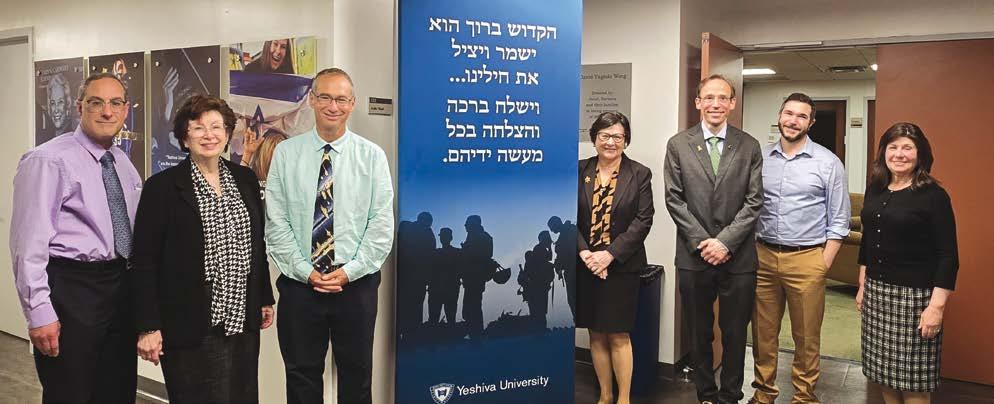
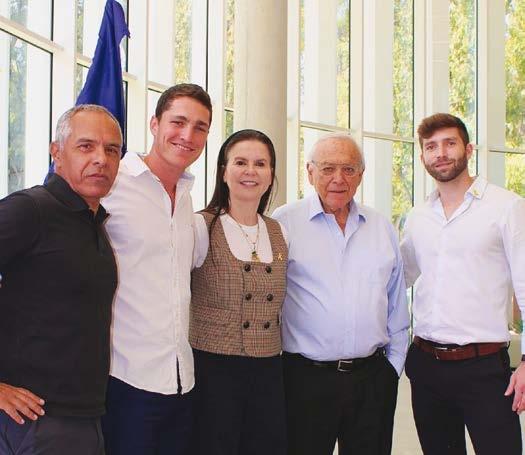
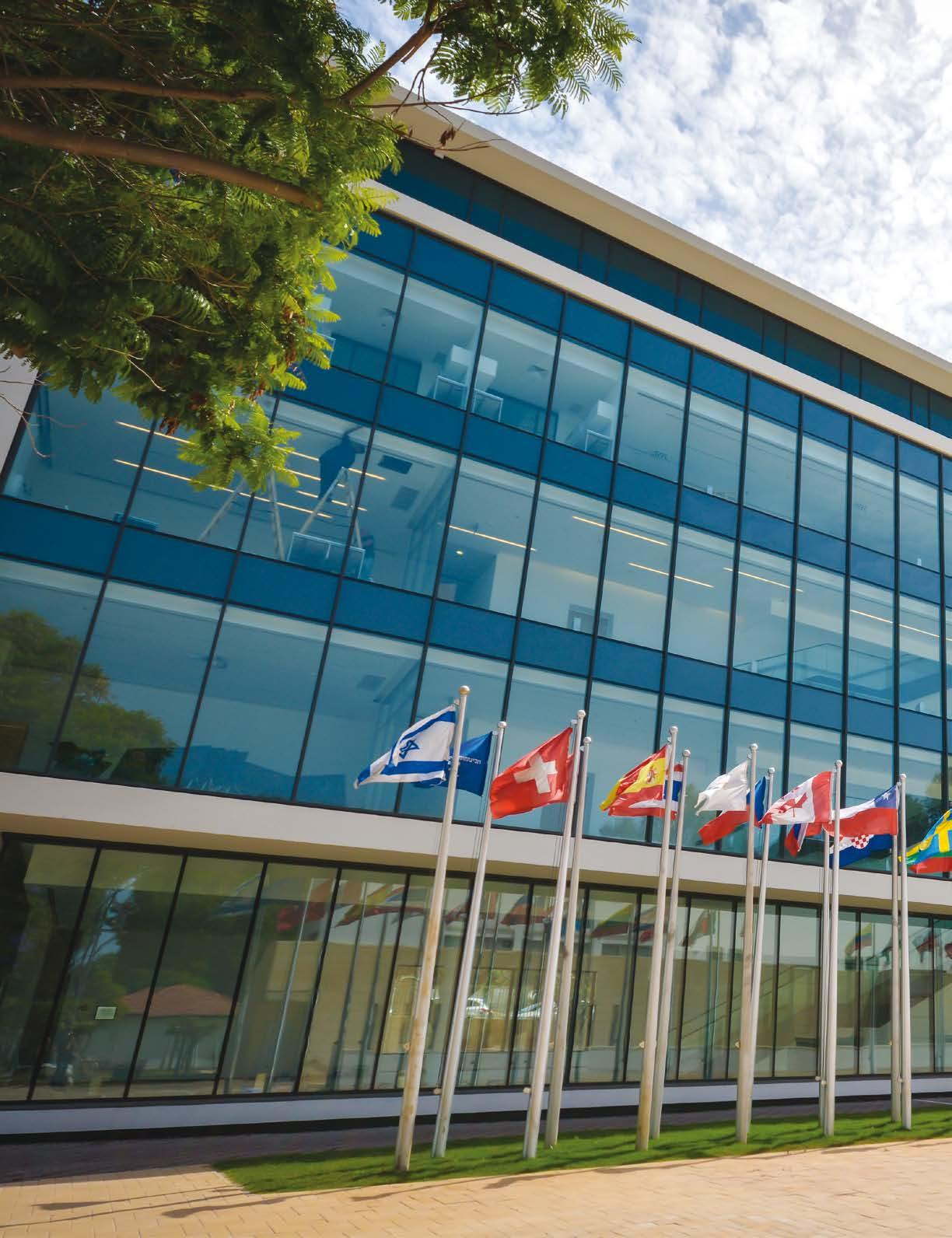
Front cover:
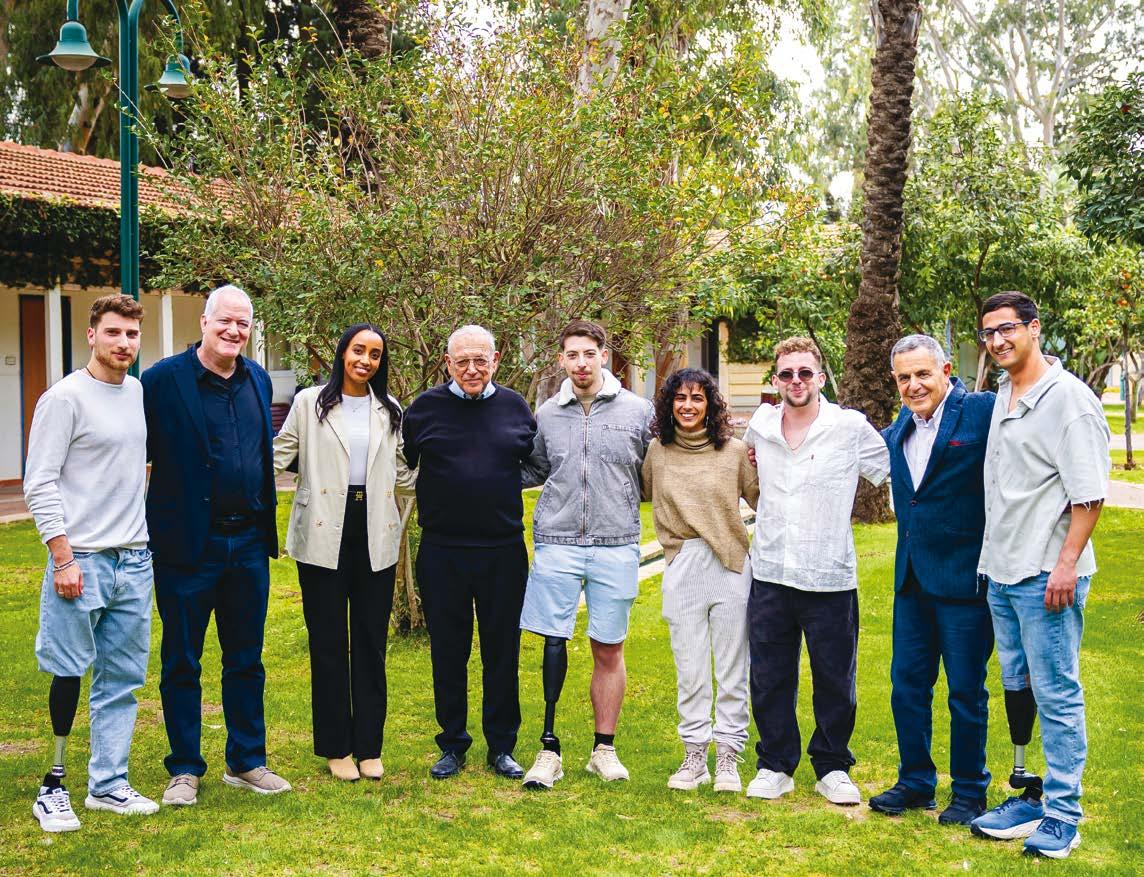
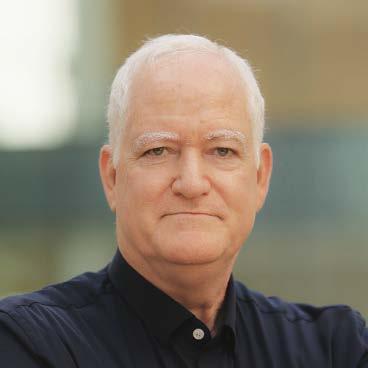
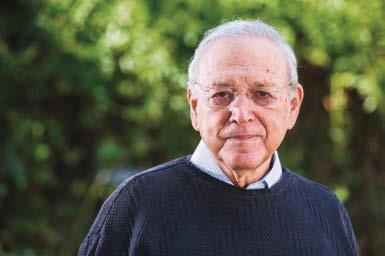
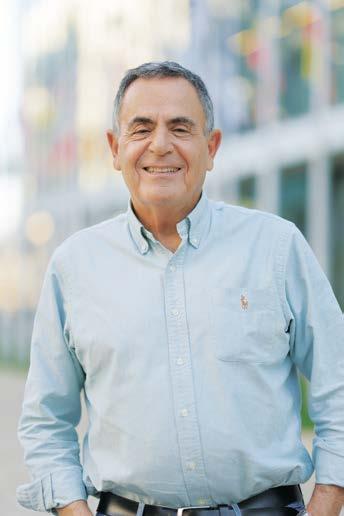
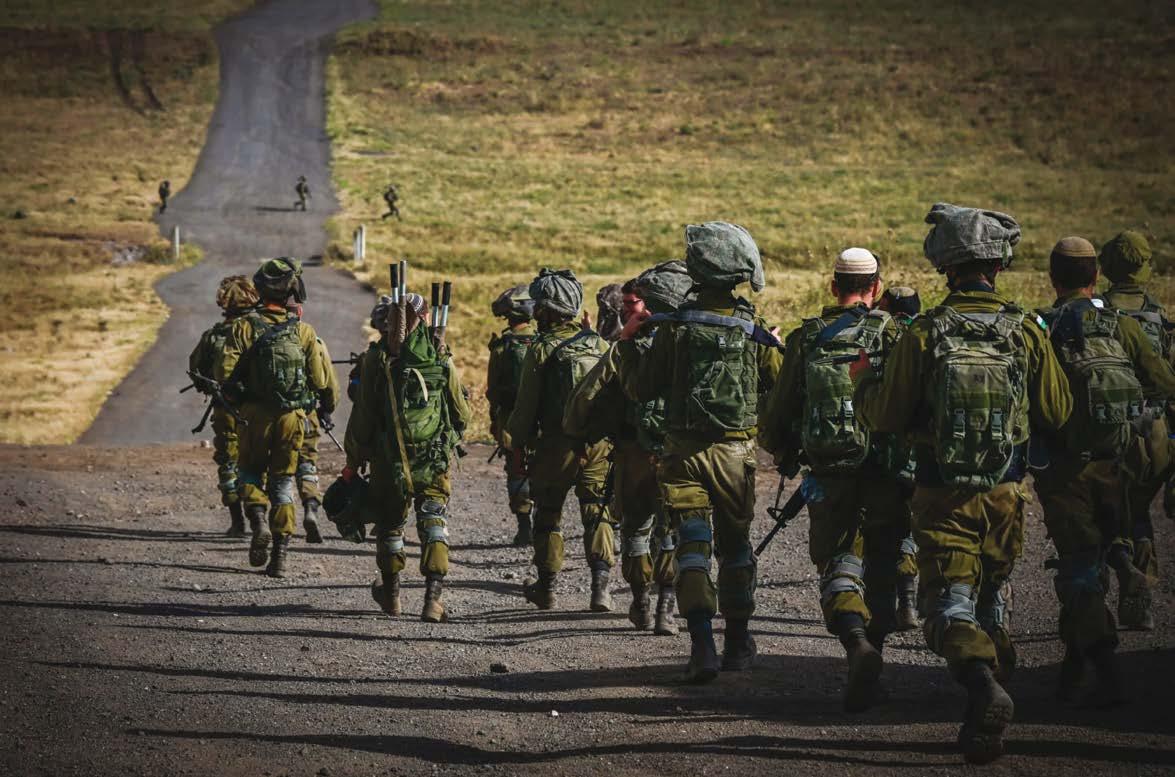
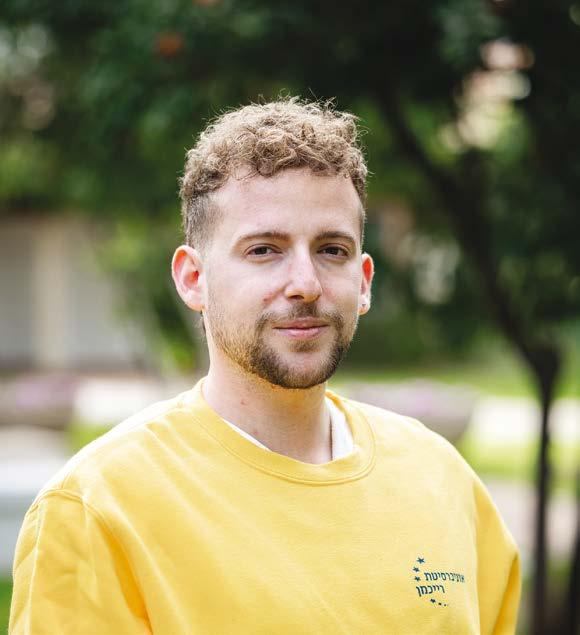
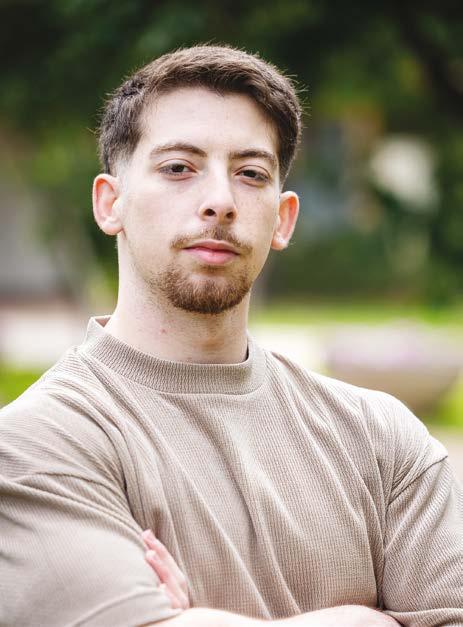
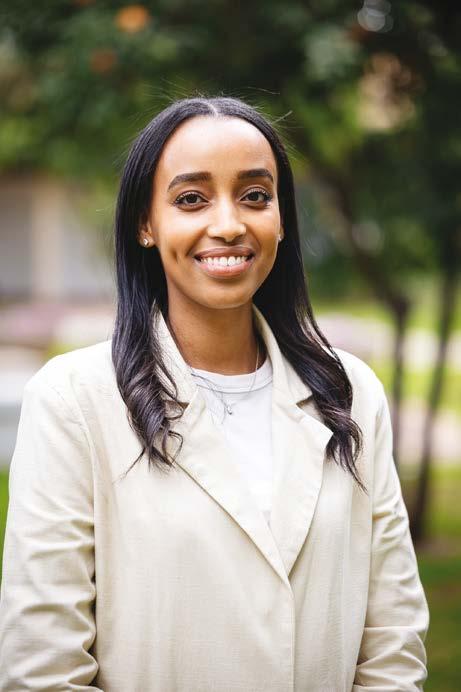
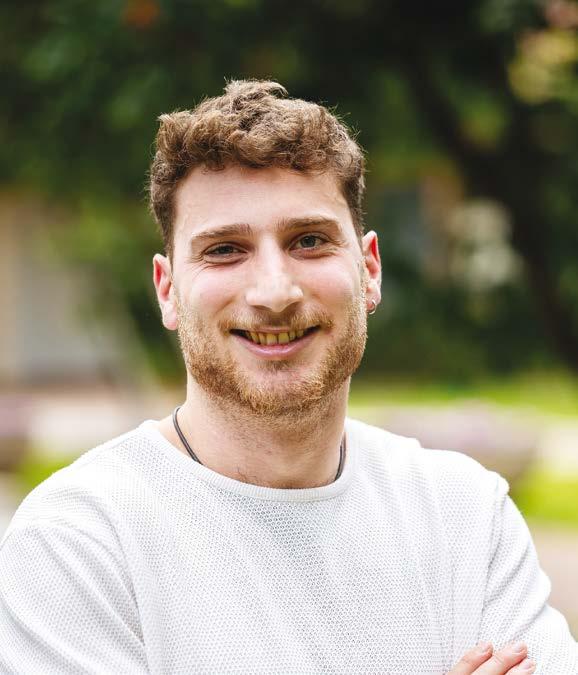
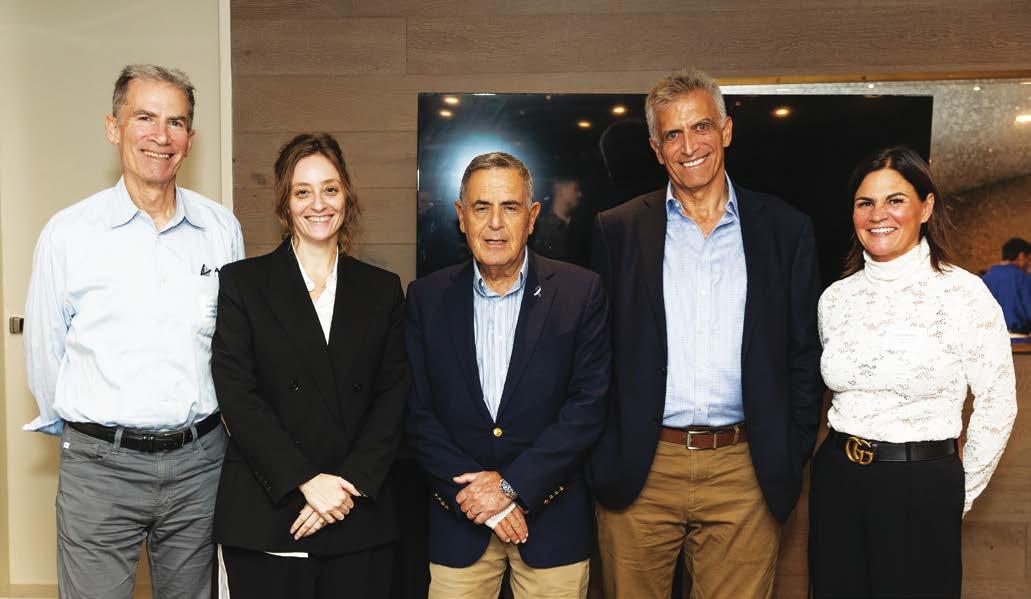
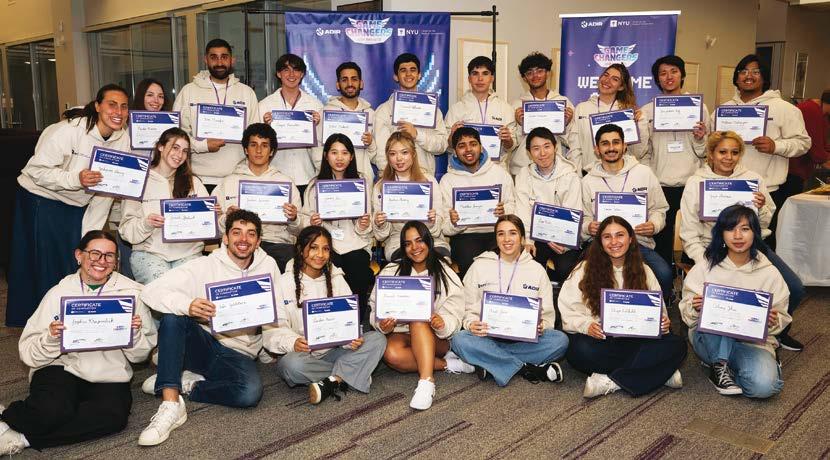
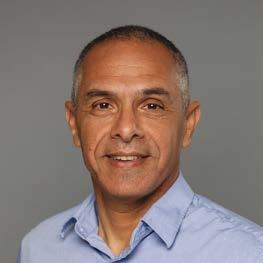
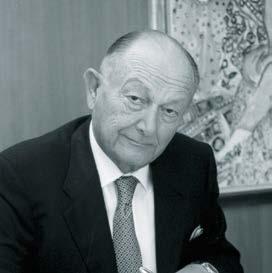
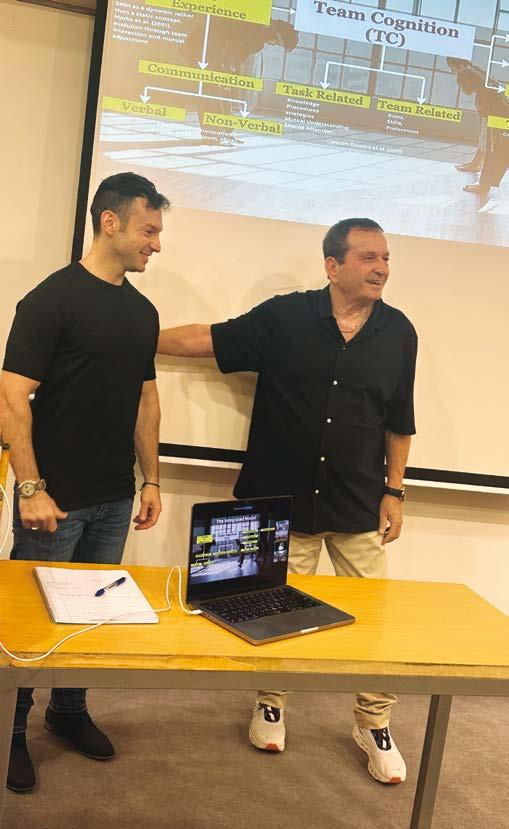
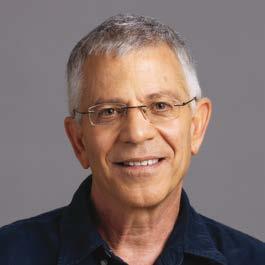
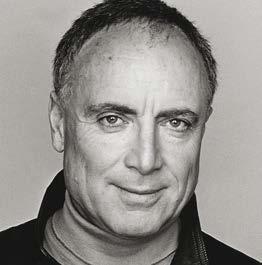
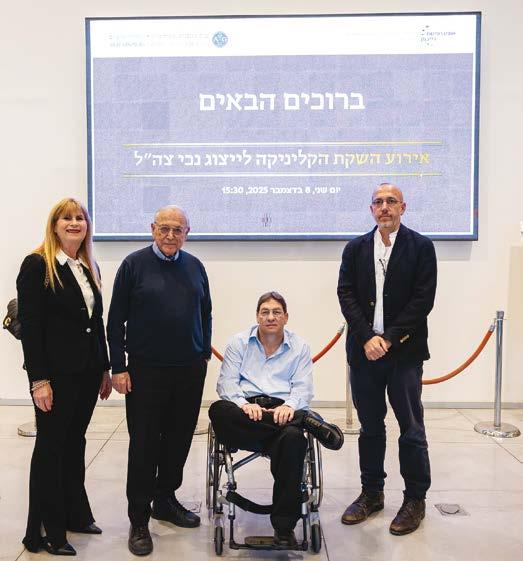
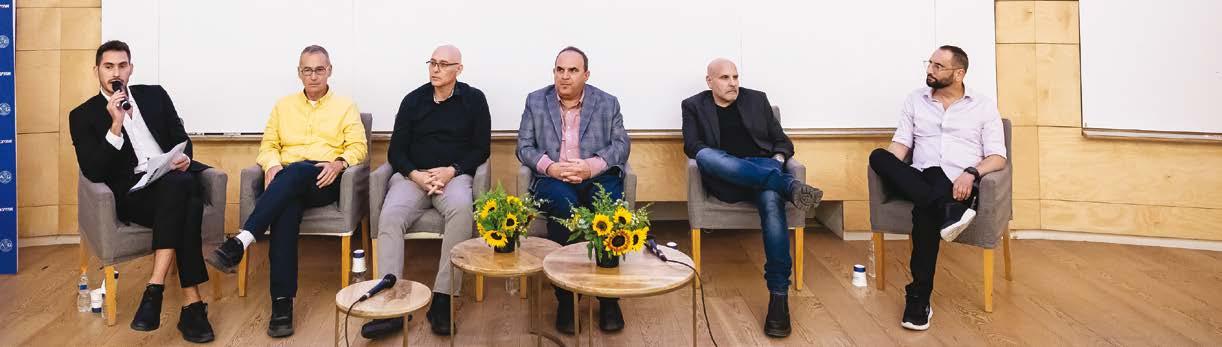
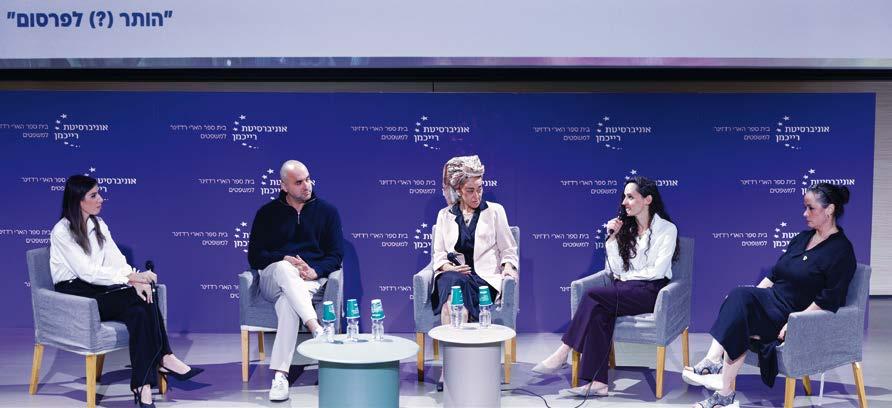
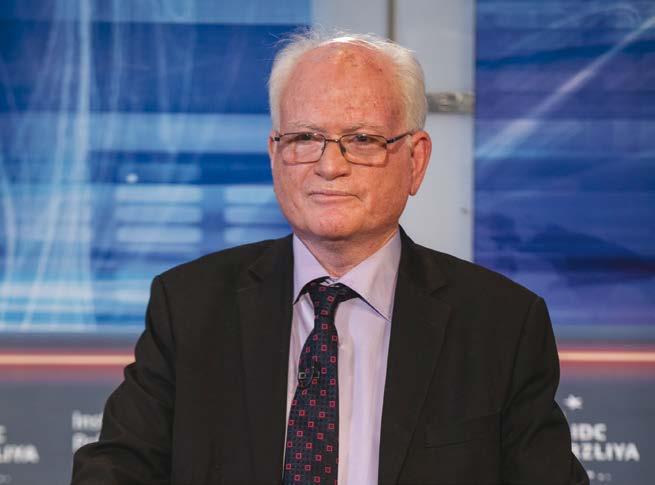
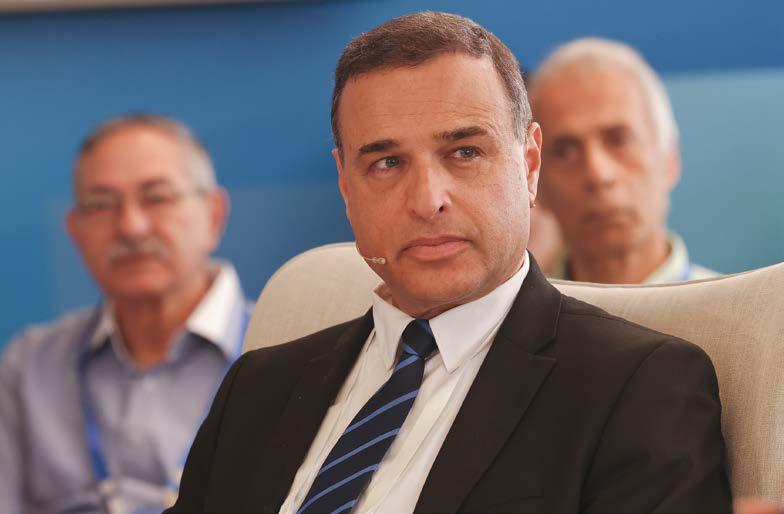
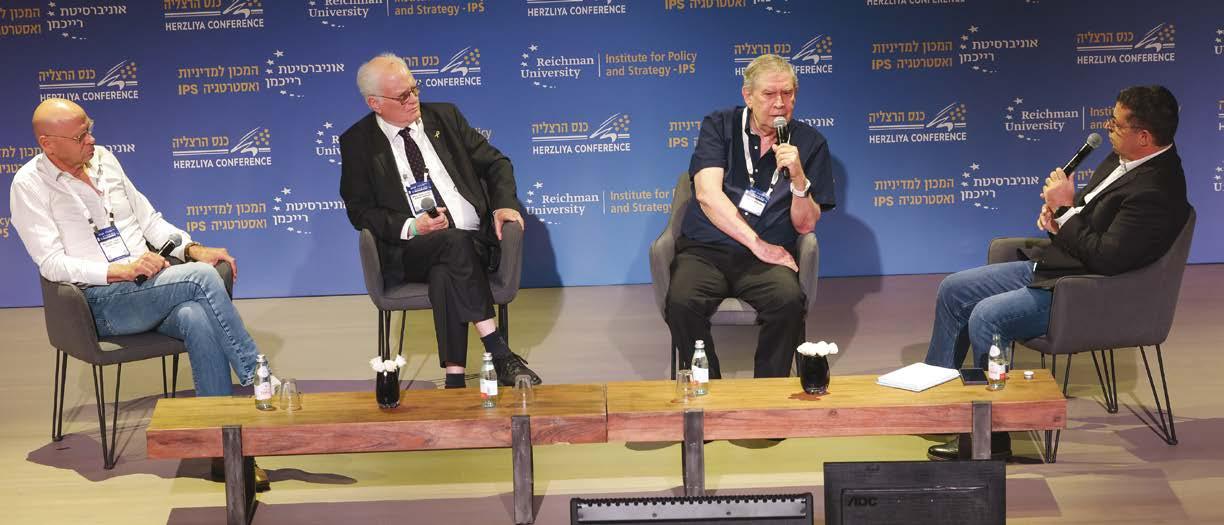
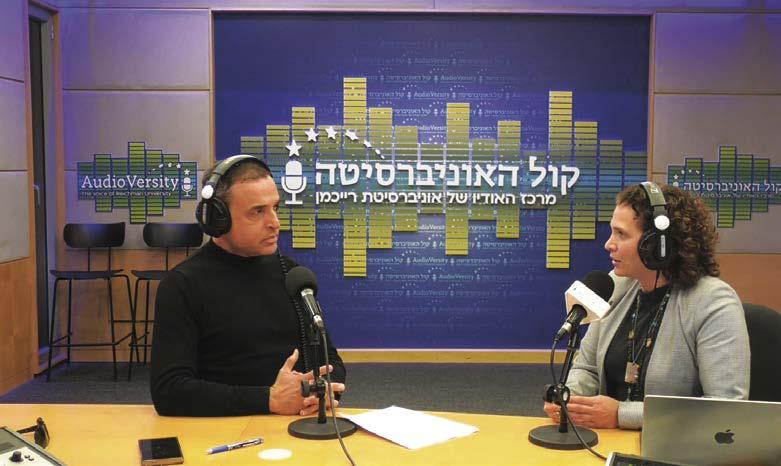
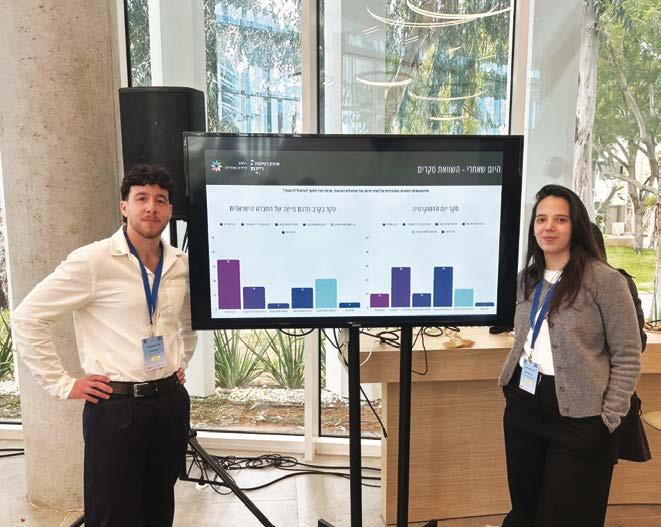
From left: Idan Almakais, first-year Business Administration and Entrepreneurship student, and Armored Corps veteran who lost his leg to a suicide bomber’s explosive in Gaza’s Zeitoun neighborhood; Prof. Boaz Ganor, Reichman University President; Shaked Getahun, third-year Law student on the direct track to a Master’s in Government who served 253 days in the Home Front Command; Prof. Uriel Reichman, Founding President and Chairman of the Board of Directors; Rotem Inbar, first-year Computer Science and Entrepreneurship student, officer in the Nahal Reconnaissance Unit and was critically wounded on October 7th while fighting at the Sufa outpost in the southern Gaza border region, where he lost his right leg; Shaked Tabib, thirdyear psychology student and IDF reservist with 514 days serving as a tank driver in Gdud 8108; Noam Harush, first-year Government student and veteran of the 53rd Armored Corps Battalion who lost his right leg below the knee after his tank was sabotaged in Gaza; Jonathan Davis, Vice President and Head of the RRIS; and Amit Bar, first-year Government student and Nahal Brigade veteran who lost his leg in an explosion in Jabaliya.
Photographers: Cover pic - Alon Gilboa; Inside pages: Yehoshua Yosef, Rami Sinai, Alon Gilboa, Herschel Gutman, Gilad Kavalerchik, Oz Schechter
Building Israel’s future: advancing Zionist values through education, service, and national resilience
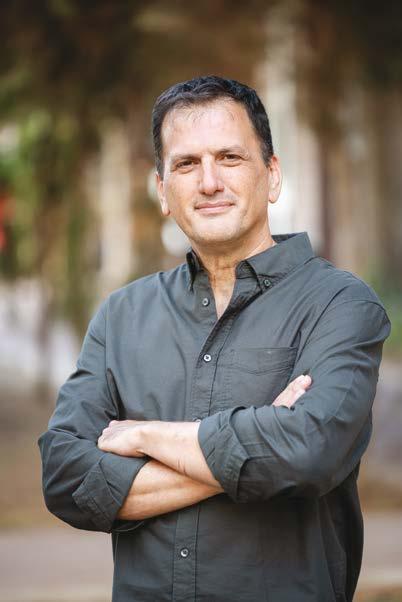
Prof. Uriel Reichman
6
Navigating challenges and innovating for the future
Prof. Boaz Ganor
Strength through adversity: the reservist students of Reichman University 10
4 In memoriam 16
Resilience at the heart of the Raphael Recanati International School
Prof. Uriel Reichman, Founding President and Chairperson of the Board of Directors
BUILDING ISRAEL’S FUTURE: ADVANCING ZIONIST VALUES THROUGH EDUCATION, SERVICE, AND NATIONAL RESILIENCE
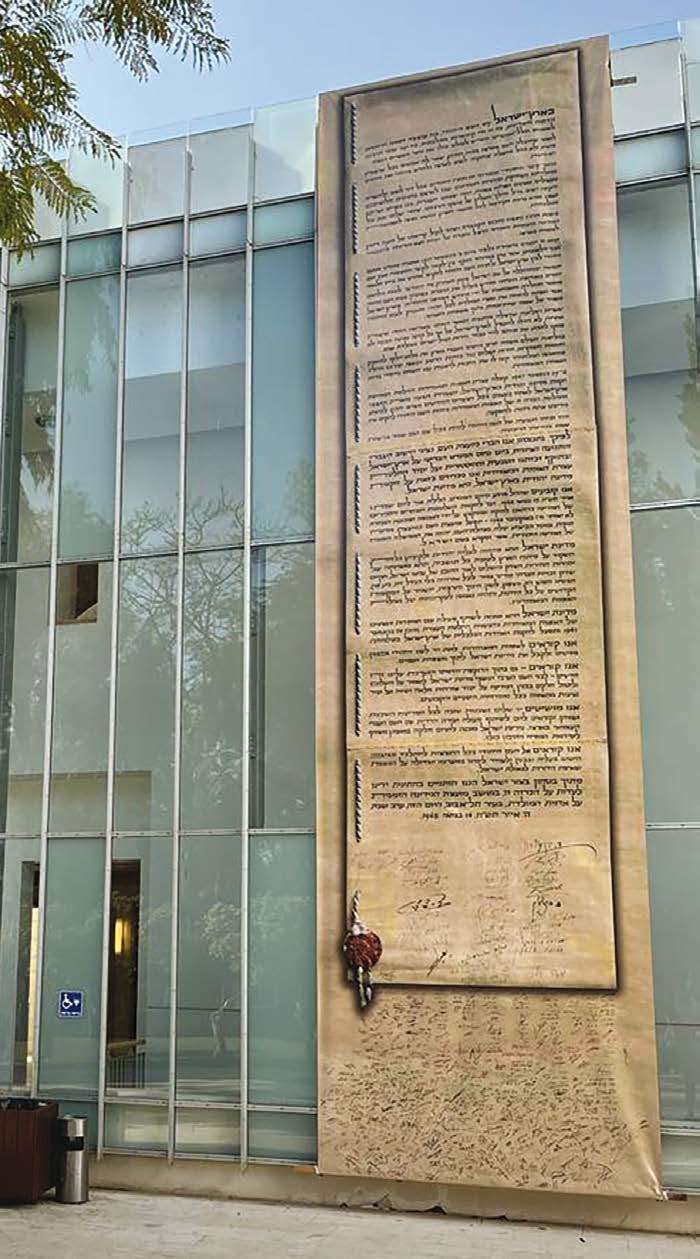
Reichman University was established with an unambiguous commitment to the values articulated in Israel’s Declaration of Independence and to Theodor Herzl ’s enduring vision of a Jewish homeland: a nation defined by human dignity and freedom, justice, innovation, and moral responsibility.
Guided by these Zionist principles, the University has made it its mission to educate the next generation of leaders, foster innovation, and serve Israel’s society and future.
From its first day, Reichman University adopted the Declaration not merely as a historical milestone, but as a living framework – one that affirms equality, academic independence, and democratic responsibility.
These principles are the foundation upon which Reichman University was built, and they continue to shape every aspect of our work. In times of calm and, more importantly, in times of crisis, they serve as our compass.
RESPONSIBILITY IN A TIME OF WAR
The past two years have been among the most difficult in Israel’s history. Like the country itself, Reichman University was deeply affected. Students, alumni, faculty, and staff were called to extended reserve service, many for hundreds of days. Others returned to campus carrying physical injuries and lasting emotional scars.
The cost has been devastating. Eighteen Reichman University students and alumni were killed in the war. Their loss is immeasurable, and their memory binds us to a profound obligation: to care for those who serve and to support those who were wounded.
Throughout this period, the University acted swiftly and decisively, providing academic flexibility, financial assistance, personal support, and long-term accommodations for reservists and injured students. This commitment is ongoing, and it is made possible only through partnership with those who share our sense of responsibility.
A SAFE ACADEMIC HOME IN AN UNCERTAIN WORLD
At the same time, Reichman University has strengthened its role as a trusted academic home for international students. As antisemitism has surged on campuses around the world, many students have sought a place where they can study safely and with pride.
Reichman offers that alternative: rigorous academic degrees taught in English, full integration into Israeli campus life, and a learning environment grounded in shared Zionist values. Our Raphael Recanati International School was created with the understanding that higher education is not only about knowledge, but about belonging and continuity.
Today, we are expanding our capacity to welcome more international students – providing them with academic excellence, personal support, and a meaningful connection to Israel at a critical moment in their lives.
INVESTING IN THE FUTURE
Even amid national challenges, Reichman University is investing boldly in the future. Central to this vision is the development of a new Science Hub, a transformative initiative that will build on the University’s research and teaching capabilities.
The Science Hub will serve as a multidisciplinary center for fields essential to Israel’s long-term resilience and global contribution, including artificial intelligence, biomedical engineering, synthetic biology, neuro AI, and energy security. These efforts build on recent milestones, including the establishment of the Dina Recanati School of Medicine and the Scojen Institute for Synthetic Biology.
This investment is about more than infrastructure. It is about training the next generation of leaders and innovators, and ensuring that the country remains competitive and forward-looking in a rapidly changing world.
PARTNERSHIP AND IMPACT
For the past 30 years, Reichman University has grown through vision, discipline, and partnership. Our progress has been driven by supporters who understand that building institutions grounded in Zionist values is one of the most enduring forms of impact.
Today, that partnership matters more than ever. Supporting Reichman University means investing in students who serve, in research that saves lives, in international students seeking refuge and opportunity, and in a future shaped by knowledge, responsibility, and moral clarity.
This is how we keep the promise made at the founding of the State of Israel – not only by remembering it, but by building it forward.
NAVIGATING CHALLENGES AND INNOVATING FOR THE FUTURE
Prof. Boaz Ganor, Reichman University President
Since assuming the presidency of Reichman University approximately two and a half years ago, I have navigated a multitude of challenges.
This journey has been shaped not only by the regular demands of leading a premier university without government funding, but also by the unprecedented war that began just weeks into my tenure.
Despite our nation facing extraordinary turmoil, we have successfully preserved our standing as an institution of excellence – home to Israel’s largest international school, with students representing over 90 countries.
THE IMPACT OF WAR ON OUR COMMUNITY
Just weeks after I assumed office, our nation was thrust into war, profoundly affecting our university’s operations and the well-being of our students, many of whom were called to serve in the Israel Defense Forces (IDF). As a declared Zionist university, we were not surprised to see that a large percentage of our students mobilized to defend our country.
In response, we developed exceptional academic programs alongside social initiatives and special scholarships to support our students during this tumultuous period – all without government funding. This mission continues, as many of our students remain on active reserve duty, and we are committed to doing everything possible to help them succeed in their studies. The positive feedback from both our student body and IDF authorities has been immensely gratifying. We are particularly grateful to our generous donors, whose support has been instrumental in enabling us to fulfill our mission at Reichman University.
Reichman University offers a warm, safe, and Zionist environment where students can pursue an excellent academic education while finding a supportive community.”
– Prof. Boaz Ganor
SUPPORTING OUR BRAVE STUDENTS
Recognizing our national and institutional obligation to our brave students, we have remained committed to providing the necessary support and scholarships to alleviate their burdens. As we progressed into the second year of my presidency, another challenge emerged: the critical need to support our wounded students.
In a typical year, Reichman University would welcome a handful of wounded reservists. However, last year, we had 56 wounded students, and this year that number has surged to over 200. This influx has necessitated significant adjustments to our academic and physical infrastructure. We are proud to be at the forefront of providing tailored support, including the establishment of a physiotherapy center specifically designed for their needs, ensuring they receive the care they require without the added burden of travel.
ADDRESSING MENTAL HEALTH CHALLENGES
This year, we are launching an unprecedented program at Reichman University to address the psychological impacts of war on our students, particularly those suffering from PTSD – whether they are soldiers or civilians affected by the war. The scale of this issue is alarming.
Understanding the stressors that accompany academic life, especially during exams, we are developing a comprehensive academic, social, and psychological support system tailored to these needs. In just a few weeks, we will unveil a model that is unlike anything currently available in Israel or anywhere else in the world.
ADAPTING TO THE AI REVOLUTION
Alongside these pressing challenges, we face the broader implications of rapid advancements in artificial intelligence (AI) and its transformative effect on the labor market. As a private institution, Reichman University recognizes the necessity of being at the cutting edge of higher education. We are committed to equipping our students with the relevant skills and knowledge required to thrive in an ever-evolving job landscape.
Two significant global challenges have emerged in this context: the junior crisis, characterized by difficulties faced by recent graduates in securing their first jobs, and the imperative for lifelong learning that will suit the labor market in the AI era. The nature of work is changing, and we must provide our students with the tools to navigate these transformations.
In collaboration with our faculty, alumni, and industry leaders, we are developing innovative reforms at Reichman University that will ensure our curriculum remains relevant and forward-thinking. We invite friends and partners from around the world to join us in this vital mission as we strive to bolster global higher education.
A SAFE HAVEN FOR STUDENTS
During these challenging times, we also recognize the need to expand our reach, particularly to students facing rising antisemitism on campuses worldwide. Reichman University offers a warm, safe, and Zionist environment where these students can pursue an excellent academic education while finding a supportive community.
Dear Friends and Supporters,
We wish to thank all our donors and supporters who, following the events of October 7th, stepped up to the plate and assisted us with financial support, during the most challenging period Reichman University has ever faced.
Your generosity and solidarity mean more to us than words can express.
With deep gratitude,
Uriel Reichman Founding President & Chairperson of the Board of Directors Reichman University
Prof.
Prof. Boaz Ganor President Reichman University
STRENGTH THROUGH ADVERSITY: THE RESERVIST STUDENTS OF REICHMAN UNIVERSITY
Photo: Michael Giladi/Flash90
Brothers for Life and Reichman University maintain a meaningful partnership grounded in a shared commitment to supporting those who have served the State of Israel. Currently, 71 students at Reichman University are members of the Brothers for Life organization, each receiving a scholarship to support their academic studies.
In addition to financial assistance, these reservist students are provided with academic guidance and a range of supplementary support services designed to help them succeed throughout their university experience. Reichman University is deeply proud of these reservists and of their contribution to the nation, and remains committed to supporting them as they pursue their academic and professional futures.
Nitzan Richman
First-year Law student in the International Track
“My name is Nitzan Richman, a first-year law student in the International Track at Reichman University. I originally began my law studies in 2022, but on October 7 I was called up for reserve duty as a soldier in Sayeret Haruv. After long months of service, I was injured and had to pause my studies to focus on rehabilitation. In 2025, I returned to start again — and was welcomed with open and supportive arms. The care, appreciation, and support I received from the academic staff, the university, and my fellow students give me the strength and motivation to succeed and move forward, not only in my studies but also in facing the challenges of this period. All of this is thanks to the kindness and goodwill of the people around me who choose, every day, to help me keep moving forward.”
Itay Limoey
Head of Career & Academia, Brothers for Life
“Reichman University provides us with a meaningful space in which we can truly belong. They give us the opportunity to express ourselves openly, they are attentive to our needs, and they create an environment where our voices are heard. The partnership between Brothers for Life and Reichman works seamlessly, built on mutual understanding, trust, and shared values.”
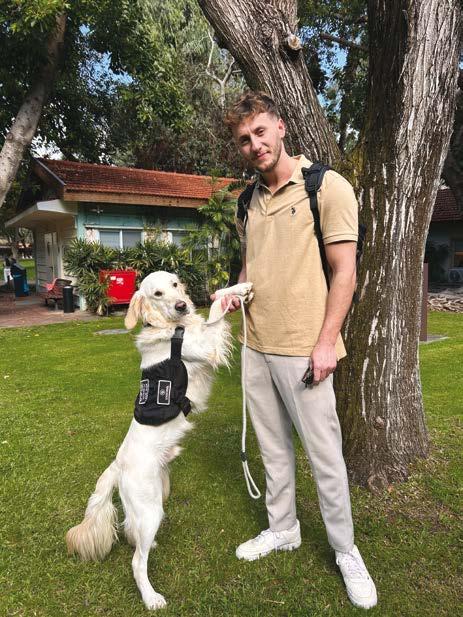
Nitzan’s support dog accompanies him through his day
Noam Harush
First-year Government, Strategy & Diplomacy student, member of Brothers for Life
“My name’s Noam Harush, I served in the 53rd battalion in the armored corps. I got injured in Gaza as my tank was sabotaged from the outside and my right leg got amputated below the knee. I spent a year through rehab and many surgeries. Because of the injury I got the chance to play guitar with some of Israel’s biggest artists like Shlomo Artzi, Dudu Aharon, and Ehud Banai.
I started my undergraduate degree this year in Government, Strategy & Diplomacy. I feel I have a lot more to give and do and I think that through this degree I will be able to make a change and fulfill myself in the most influential and meaningful way possible.”
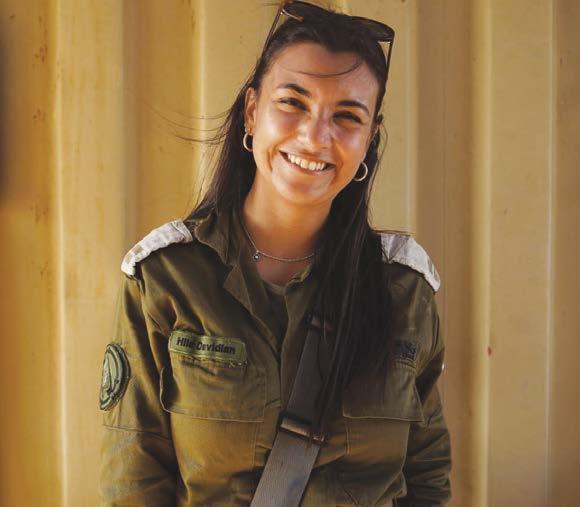
Hila Davidyan
Third-year Government, Strategy & Diplomacy
student
“My name is Hila Davidyan, I am 26 years old from Tel Aviv and a third-year student of Government, Diplomacy and Strategy. Since the outbreak of the war, I have been serving in the IDF reserves in the Barak Armored Brigade (188), as an assistant to the Chief of Staff, and at the same time as an Education Officer in the International Training Branch, working with foreign delegations.
I have spent the last summer in a student exchange program in Aix-en-Provence in southern France, an experience that exposed me to new places, cultures, and Jewish communities that have been coping with antisemitism since the outbreak of the war, alongside ongoing discourse at the university about the situation in Israel and an atmosphere that was not always supportive.
Beginning my academic studies during wartime was particularly challenging, due to prolonged reserve service, the frequent transition between military reality and civilian life, and the need to readjust to academic learning and routine. With that, the flexibility and understanding shown by the university administration, faculty members, and fellow students enabled me to combine my studies with reserve service. For a student serving in the reserves, this support has been both meaningful and deeply heartening.”
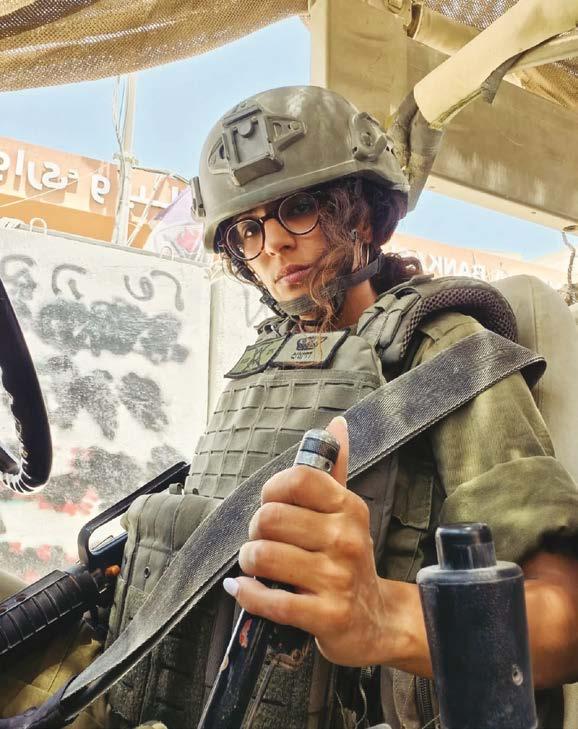
Shaked Tabib
Third-year Psychology student
“My name is Shaked Tabib, and I am a third-year Psychology student at Reichman University.
Since October 7th, I have served 514 days in the IDF reserves. I am a driver in a tank unit (gdud 8108), operating on the front lines inside Gaza. Our most recent round was in Syria. I also joined other units to help in areas like the West Bank, Egyptian border and the Lebanon border. Reserves can be intense and demanding, but it is deeply meaningful.
At the same time, I continued my studies at Reichman. Balancing reserve duty with academic life was challenging, but the support I received from faculty, professors, and students made it possible. Their flexibility, understanding, and encouragement meant more than I can express, and I am truly grateful to be part of a university that stands behind its reservists.
Studying psychology during such a complex time has given me tools to better understand resilience, coping, and human connection not only in theory, but in real life.”
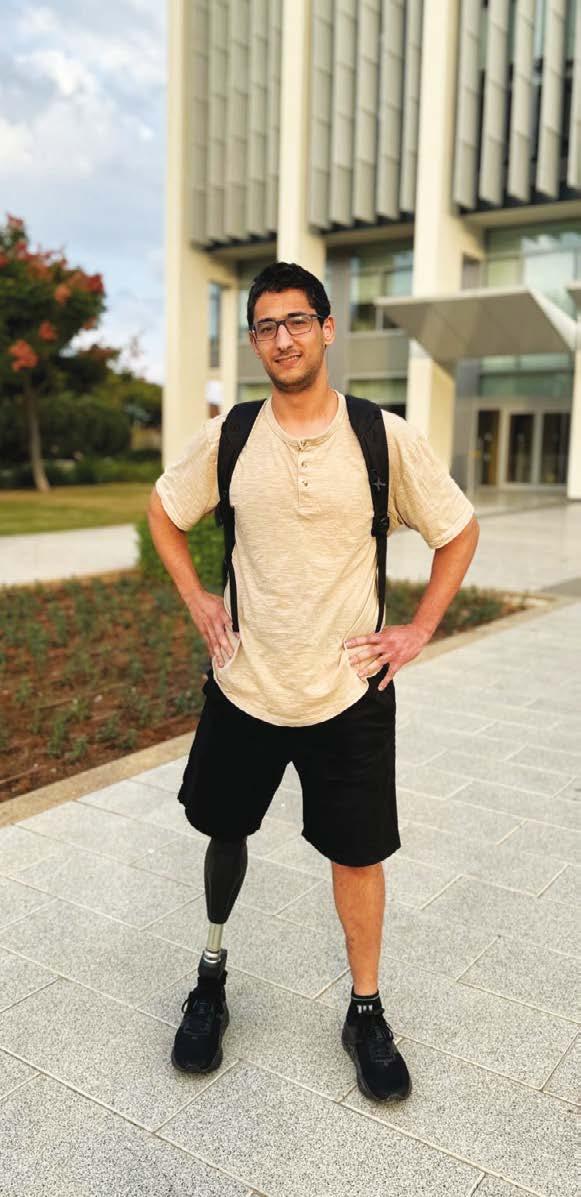
Idan Almakais
First-year Business Administration and Entrepreneurship student, member of Brothers for Life
“My name is Idan Almakais. I am a first-year Business Administration and Entrepreneurship student.
I served in the Armored Corps, manning a tank that helped defend the Gaza envelope on October 7th. On November 16th, while advancing through the Zeitoun neighborhood on the way to Shifa Hospital, our tank was hit by a suicide bomber’s explosive device. I was severely wounded and lost my leg high up on the battlefield. I crawled out of the tank with my hands and woke up in the hospital 16 days later.”
Amit Bar
First-year Government, Strategy & Diplomacy student, member of Brothers for Life
“My name is Amit Bar, I’m 24 years old. In 2021, I joined the IDF and began my service as a combat soldier in the Nahal Brigade. On the morning of October 7, my team and I went down to the South to prepare for entering the Gaza Strip. On the first of November 2023, we entered Gaza. We had one mission in front of us: to bring our brothers and sisters home and protect Israeli citizens.
On the morning of December 26, we were walking in Jabaliya. Suddenly, there was a huge explosion. The building collapsed on top of me. Twelve soldiers were wounded in the incident, and my commanders, Shay Shamriz and Shauli Greenglick, were killed. A heavy door fell on my right leg, and I was evacuated by helicopter. Within an hour and ten minutes, I was at Beilinson Hospital, where doctors treated me and saved my life. My other leg was full of shrapnel. When I awoke, I was told that my leg had been amputated and that my friends had been killed.
I was transferred to rehabilitation at Sheba Hospital, where I began the long process of recovery and learning how to walk again. I stayed there for about nine months, working hard in occupational therapy, hydrotherapy, and physiotherapy.
Slowly, I began taking my first steps with a prosthetic leg. On October 7, 2024, I was released from the hospital. Today, I still come to Sheba a few times a week for day rehabilitation. One month after I was released from hospital, I started my studies at Reichman University because it is important for me to combine rehab with my studies.
I chose to study Government, Strategy & Diplomacy because maybe I can’t defend the country on the battlefield anymore, but I can protect it in other ways. This gives my life meaning and a sense of purpose.”
Shaked Getahun
Third-year Law student on the direct track to a Master’s in Government
“My name is Shaked Getahun. I was born in Israel to parents who made aliyah from Ethiopia. After serving four and a half years in the IDF, where I was twice selected as a flag bearer at Israel’s Independence Day torch lighting ceremony, I completed my service as a lieutenant. Since October 7th, I have served 253 days in the Home Front Command. I am driven by my belief in justice and my desire to fight for fairness, aid the public, and contribute to society while building a life and family in Israel.”
Rotem Inbar
First-year Computer Science student, member of Brothers for Life
“My name is Rotem Inbar, I am 24 years old from Ra’anana. I am currently a first-year student in Computer Science and Entrepreneurship.
I served as an officer in the Nahal Reconnaissance Unit. On October 7th, I fought at the Sufa outpost in the southern Gaza border region. After many hours of combat against dozens of terrorists, I was critically wounded and lost my right leg.
Following a long rehabilitation process, I returned to living fully independently. I have always been a great sports enthusiast, and since my injury I train extensively and have developed new hobbies.
I greatly enjoy my studies at university and see them as a significant stage in my rehabilitation process — one that prepares me for a career and a life of meaningful contribution.”
HONORING OUR FALLEN HEROES
Reichman University mourns the tragic loss of several members of its community— students and alumni who were taken far too soon
Maj. (Res.) Moshe Yedidyah Leiter z”l (39)
A first-year MBA student in Healthcare Innovation at Reichman University and reservist paramedic was killed in action on November 8th, 2023, in Beit Hanoun, northern Gaza, when an IED exploded in a tunnel shaft under a mosque.
Maj. (Res.) Benji (Benjamin) Trakeniski z”l (32)
An alumnus of the Lauder School of Government, Diplomacy & Strategy at Reichman University, was killed in battle on October 7th, 2023, while fighting to save dozens of civilians in Kibbutz Be’eri.
Sgt. Maj. (Res.) Daniel Alush z”l (37)
A member of the Special Tactics Rescue Unit 669, Daniel was killed in Gaza on September 11th, 2024. An accomplished alumnus, he graduated with a degree in Business Administration.
Maj. (Res.) Dor Zimel z”l (27)
A deputy company commander in the Etzioni Brigade, Dor succumbed to his wounds on April 21st, 2024, following a Hezbollah drone strike in northern Israel. He was a dedicated Government & Law student, deeply committed to both his studies and his service.
Master Sgt. (Res.) Gideon DeRowe z”l (33)
Master Sergeant First Class (Res.) Gideon DeRowe z”l, 33, a Reichman University alumnus in Law and Governance, was killed in Northern Gaza on May 22nd, 2024.
Sgt. First Class (Res.) David Schwartz z”l (26)
A third-year BA student in the Law and Government program at Reichman University from Elazar. He served in the Combat Engineering Corps’ 8219th Battalion, 551st (Hetzei Ha-Esh/Arrows of Fire) Paratroopers Brigade. David fell in battle in Khan Younis, Southern Gaza, on January 8th, 2024, when he was hit by an anti-tank missile.
Maj. (Res.) Eyal Avnion z”l (25)
A deputy company commander in the 121st Battalion of the 8th Armored Brigade, Eyal fell in battle in Gaza on July 1st, 2024. He was a promising Psychology & Business Administration student from Hod Hasharon.
Chief
Insp. Arnon Zmora z”l (36)
An incoming MA student in Counter-Terrorism, Arnon fell on June 8th, 2024, during a heroic operation to rescue four hostages: Noa Argamani, Almog Meir Jan, Andrey Kozlov, and Shlomi Ziv. Arnon, from the elite Yamam counter-terrorism unit, came under fire while leading a team extracting hostages from a building.
Sgt. First Class (Res.) Joseph Gitarts z”l (22)
Sgt. First Class (res.) Joseph Gitarts z”l, a courageous tank driver under his company commander, exhibited unwavering dedication to duty on the battlefield. He fought in the 7029th Armored Battalion in the “Re’em” formation (179) and was killed after an anti-tank missile hit the tank he was driving in South Gaza.
Sgt. First Class (Res.) Santiago Obadia z”l (26)
Santiago came to Israel from Venezuela with a deep sense of duty and a courageous heart. Sadly, the weight of war proved too great for his gentle soul.
Sergeant First Class (res.) Ariel Lubliner z”l (34)
Ariel, a graduate of the International Track in Government, was a combat soldier at the 6036 logistic group, Division 36, who fell in a battle in southern Gaza on August 29th, 2025.
Staff Sgt. (Res.) Omer Balva z”l (22)
A second-year Business & Economics student, Omer was killed on October 20th, 2023, in a Hezbollah attack along the Lebanese border. He served in the 9203rd Battalion of the Alexandroni Brigade.
Ilay Nachman z”l (23)
A soon-to-be first-year student in Entrepreneurship and Business Administration at Reichman University, was murdered on October 7, 2023, at the Nova Music Festival during the Swords of Iron War.
Liam Shrem z”l (26)
A third-year student in Entrepreneurship and Business Administration at Reichman University, was murdered on October 7th, 2023, by Hamas terrorists at the Nova Music Festival.
Omri Ram z”l (29)
A Business Administration and Economics student at Reichman University, was murdered on October 7th, 2023, by Hamas terrorists at the Nova Music Festival.
Idan Shtivi z”l (28)
A second-year Government & Sustainability student, Idan was murdered on October 7th, 2023, at the Nova Music Festival, where he worked as a photographer. After a year of uncertainty, during which Idan was assumed to have been taken alive as a hostage, his family received the devastating confirmation of his death on October 6th, 2024.
Yaron Lischinsky z”l (30)
A member of the diplomatic staff at the Israeli Embassy in Washington D.C., Yaron was murdered on May 21st, 2025, in Washington D.C., along with his partner, Sarah Milgrim z”l, outside an event held by the American Jewish Committee, at the Jewish Museum.
Their sacrifices in the face of immense adversity embody the highest values of dedication, courage, and service.
May their memories be a blessing, and may we continue to honor them alongside the many others we have lost.
SERGEANT FIRST CLASS (RES.) ARIEL LUBLINER Z”L (34)
Sergeant First Class (res.) Ariel Lubliner z”l, a graduate of the International Track in Government, was a combat soldier at the 6036 logistic group, Division 36, who fell in battle in southern Gaza on August 29th, 2025. Ariel had immigrated to Israel from Brazil approximately 10 years ago, where he built a life filled with purpose and love. He met his wife, Barbara, and together they welcomed their nine-month-old (at the time of Ariel’s passing) – a precious legacy of their devotion to one another.
In honor of Ariel’s memory, we share the words of Gilad Malka, a graduate of Reichman University’s MA in Counter-Terrorism and Homeland Security, who knew Ariel as his closest friend: “War is tragic beyond words. I lost my best friend, Ariel Lubliner, who fell in Gaza. We were so close that just a few months ago, he asked me to be the godfather of his baby, an honor I will cherish forever. Ariel was a rare soul: kind, loving, and deeply thoughtful. He cared not only for all people but also for animals and the environment, living each day with compassion and integrity.
A bright light in every room he entered, his smile and energy were unforgettable. Driven and dedicated, Ariel pursued excellence in all he did, earning recognition from the army, school, and work. But beyond the accolades, it was his warmth, generosity, and unwavering spirit that made him truly extraordinary. Rest in peace, my brother. You are missed beyond measure.”
The Reichman University community mourns the loss of Ariel and extends its deepest condolences to his wife Barbara, their baby, his family, and all who loved him.
May his memory be a blessing.
YARON LISCHINSKY Z”L (30)
A member of the diplomatic staff at the Israeli Embassy in Washington D.C., Yaron Lischinsky z”l was murdered on May 21st, 2025, in Washington D.C., along with his partner, Sarah Milgrim z”l, outside an event held by the American Jewish Committee, at the Jewish Museum. An accomplished alumnus, Yaron pursued a master’s degree in Government, Diplomacy and Strategy at Reichman University.
Yaron was born in Germany and immigrated to Israel with his family when he was just 16. An avid Zionist, he wanted to support Israel’s diplomatic efforts and began working at the Israeli Embassy in Washington, D.C., in 2023 as a research assistant on Middle East and North Africa affairs in the Embassy’s political department.
The Reichman University community mourns the loss of Yaron and extends its deepest condolences to his family and all who loved him.
May his memory be a blessing.
LIAM SHREM Z”L BASKETBALL TOURNAMENT
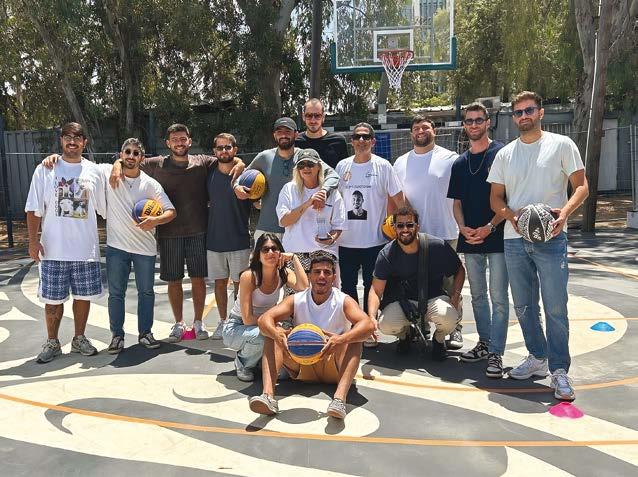
Liam Shrem z”l, a third-year student in Entrepreneurship and Business Administration at Reichman University, was murdered on October 7th, 2023, by Hamas terrorists at the Nova Music Festival. A social entrepreneur, Liam’s real passion was renovating worn basketball courts in less popular residential areas to make them an attractive place for the communities living there. He brought the SPLASH project to Israel, a global social enterprise that connects sport, art, and community, and even began to do so in London.
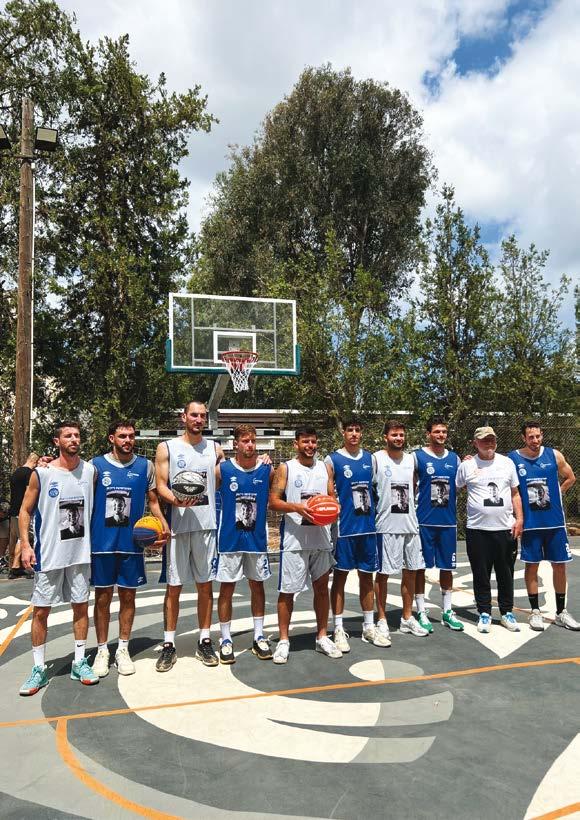
Following his death, Reichman University, with the support of his mother, Simona, decided to fulfill Liam’s dream to renovate Reichman University’s basketball court, enlisting Nir Pilpeled, a famous Israeli street artist. On May 28th, 2025, Reichman University held its annual basketball tournament, this time dedicated to Liam and his mission, where students played against a team of Liam’s best friends, as well as the staff’s scoring baskets competition.
May his memory be a blessing.
Simona Shrem (middle) with Dr. Yossi Maaravi, Dean of the Adelson School of Entrepreneurship, surrounded by friends of Liam Shrem z”l
Participants of the Liam Shrem Basketball Tournament with Ilan Kowalsky, CEO of the Sports Department, Reichman University
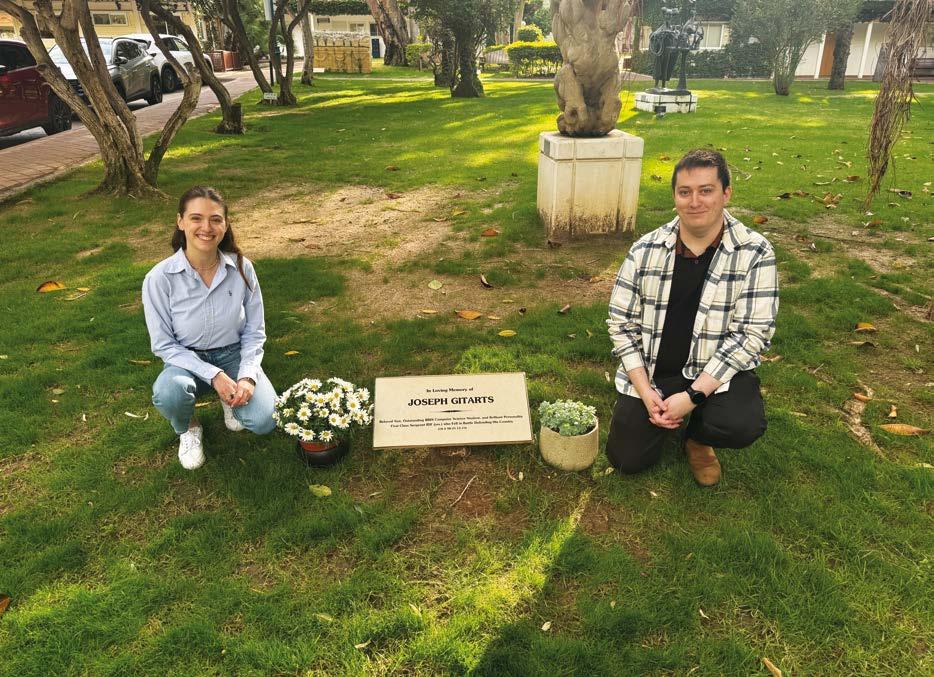
JOSEPH GITARTS Z”L
MEMORIAL SCHOLARSHIP FUND
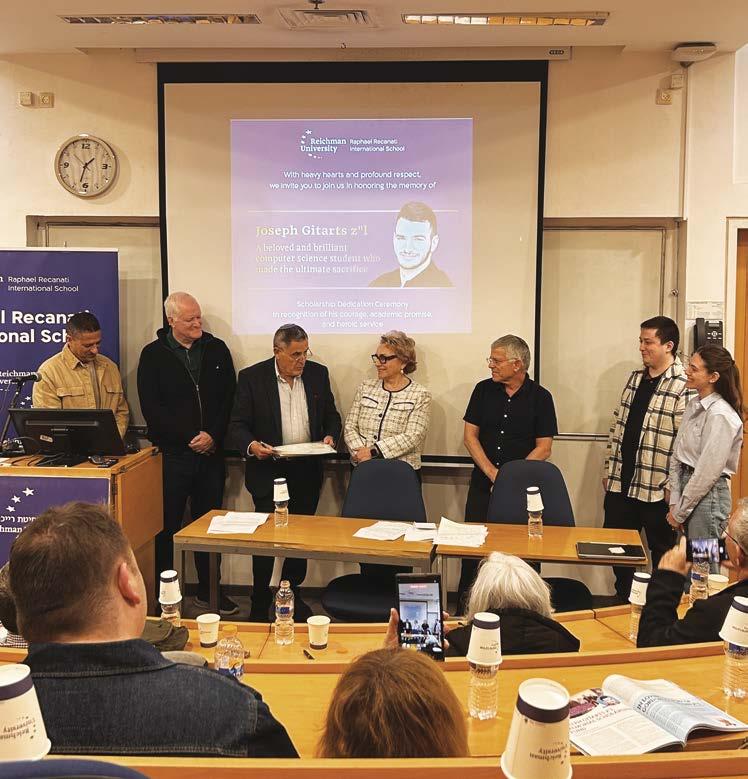
Sgt. First Class (res.) Joseph Yosef Gitarts z”l was an outstanding second-year Computer Science student. A dedicated and courageous tank driver, he served in the 7029th Armored Battalion of the “Re’em” formation (179). His unwavering commitment to duty and his comrades was exemplified on the battlefield. Tragically, Joseph fell in combat after an anti-tank missile struck his tank in South Gaza, just five days before his scheduled release from reserve duty.
His legacy continues through the Joseph Yosef Gitarts Memorial Scholarship, generously established by his parents. This annual scholarship honors Joseph’s memory by supporting outstanding students who embody his values of excellence, dedication, and service.
Ofri Hefetz and Daniel Prigan are the most recent recipients of the scholarship. Ofri is a first-year PhD candidate, having completed her MSc in Machine Learning at the Efi Arazi School of Computer Science with distinction. Ofri is described as a young, rising researcher who combines curiosity and sensitivity. She sees computer science not only as a computational subject but also as a means to improve people’s lives. She sees it as her calling, and her life’s goal is to use Artificial Intelligence (AI) to assist with diagnosing PTSD among soldiers, post-partum depression among women, and other mental disorders.
Daniel, after successfully completing his BSc at the Efi Arazi School of Computer Science, has gone directly to the PhD program, where he is now a first-year candidate. He is highly regarded by his colleagues and professors and is described as sharp and quick-minded, always keen to assist and contribute to other researchers.
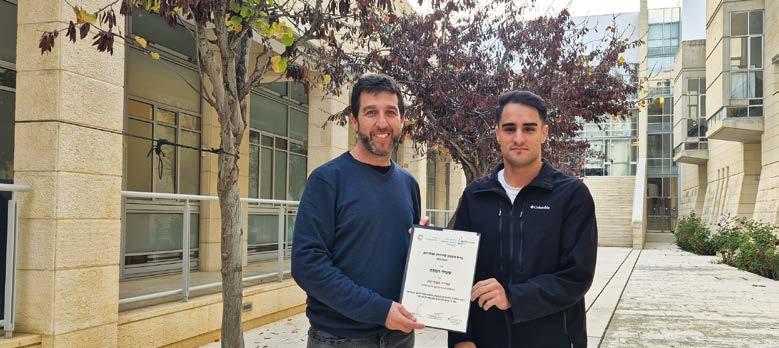
The second yearly Joseph Yosef Gitarts Memorial Scholarship was awarded to Ofri and Daniel in a moving ceremony, attended by Joseph’s mother, Larisa, and his siblings. Also in attendance were Prof. Boaz Ganor, President of Reichman University, Jonathan Davis, Vice President of External Relations and Head of the Raphael Recanati International School, Prof. Yossi Maaravi, Dean of the Adelson School of Entrepreneurship, and Prof. Yacov Hel-Or, as well as Joseph’s peers and friends.
Joseph’s commitment to education, service, and community lives on through this scholarship, ensuring his legacy inspires and empowers future generations.
May his memory be a blessing.
From left: Prof. Yossi Maaravi, Dean of the Adelson School of Entrepreneurship; Prof. Boaz Ganor, President, Reichman University; Jonathan Davis, Vice President of External Relations and Head of the Raphael Recanati International School; Larisa Gitarts, mother of the late Joseph Yosef Gitarts z”l; Prof. Yacov Hel-Or, Dean of the Efi Arazi School of Computer Science; and Daniel Prigan and Ofri Hefetz
Ofri Hefetz and Daniel Prigan at Joseph Gitarts memorial on campus
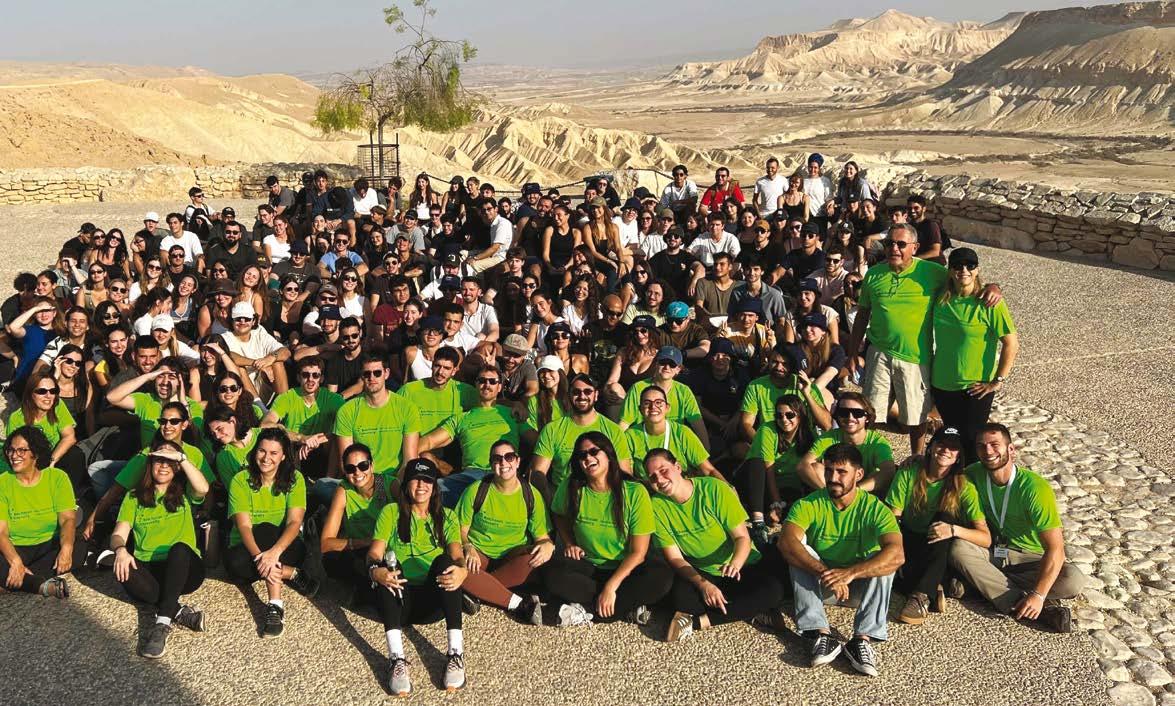
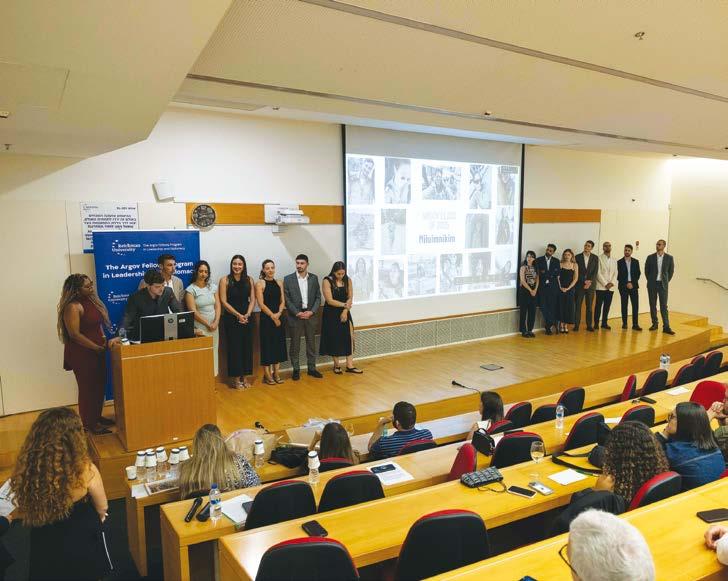
The Raphael Recanati International School students and staff embark on the inspiring Ethel & Leonard Tigay Orientation trip, discovering Israel’s history, resilience, and pioneering spirit firsthand
RESILIENCE AT THE HEART OF THE RAPHAEL RECANATI INTERNATIONAL SCHOOL
Jonathan Davis, VP of External Relations and Head of the Raphael Recanati International School
This year at the Raphael Recanati School has been marked by exceptional resilience. We welcomed students from over 90 countries, enriching our community with a wide range of cultures and perspectives. Observing their integration into Israeli life — particularly during the Swords of Iron War —has been especially meaningful.
In challenging circumstances, our students demonstrated maturity, solidarity, and a deep commitment to Israel. Their ability to adapt and remain engaged academically and socially reflects the strength of both their character and our community.
MINYAN AT THE MOSHE DABAH Z”L SYNAGOGUE
Elisha Guberman,
LUNCH & LEARN
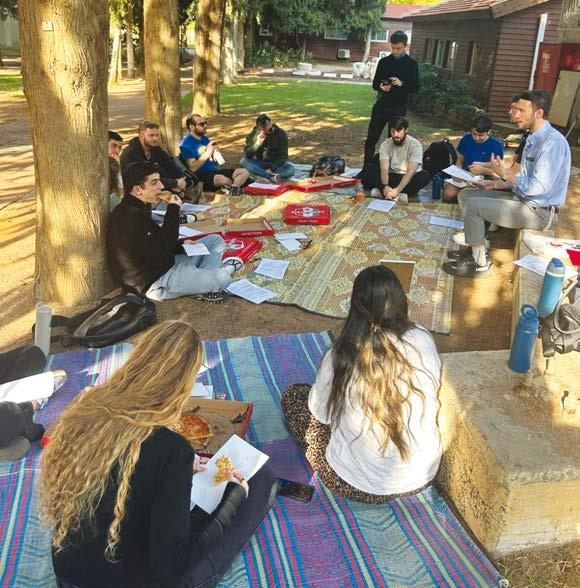
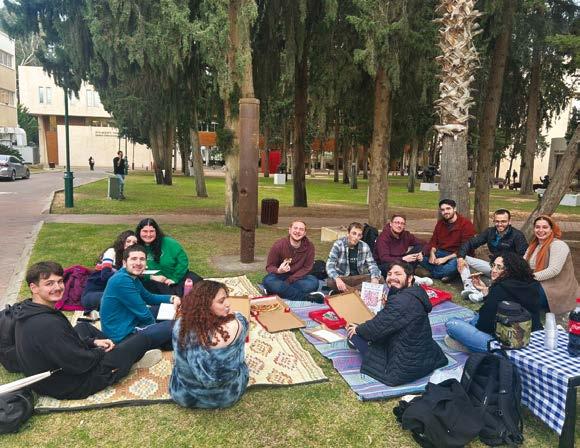
JLIC rabbis, Rabbi Elisha and Yiska Guberman, Rabbi Ben and Ellie Menora, and Rabbi Shmuel and Miriam Rosenthal hold a weekly lunch & learn for students on campus.
Rabbi
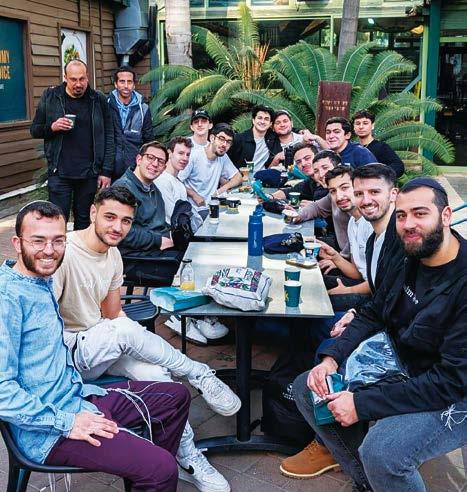
JLIC campus rabbi at brunch with the shacharit minyan of Reichman University outside the Moshe Dabah Z”l Synagogue
JANUARY: WELLNESS WEEK ON CAMPUS
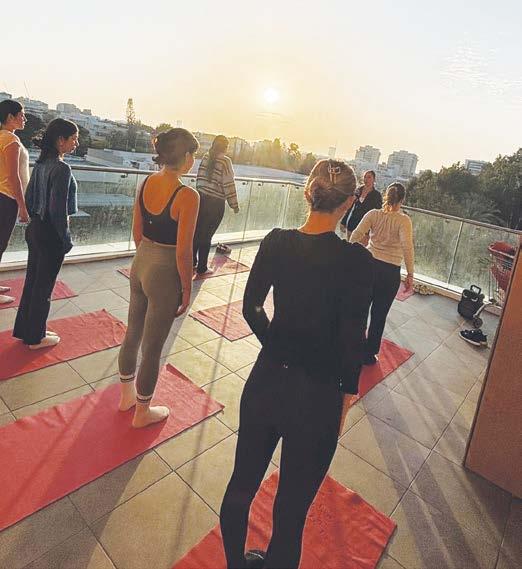
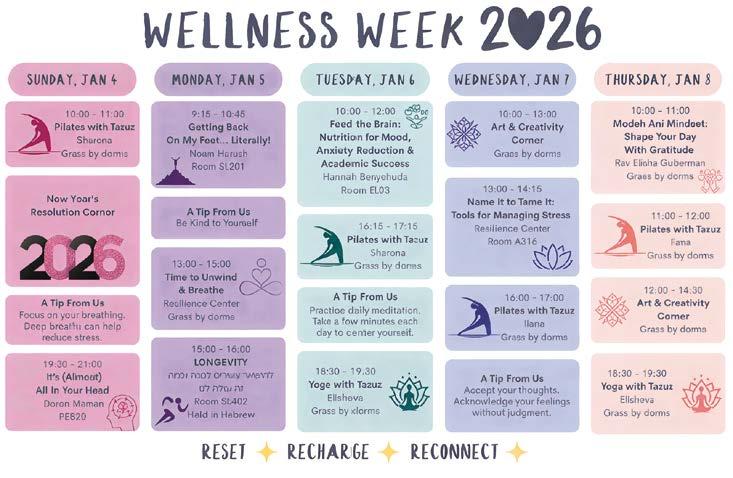
Organized by the Raphael Recanati International School, Wellness Week was dedicated to brain and body movement, mindfulness, creative expression, and the tools needed to remain resilient, strong, and healthy.
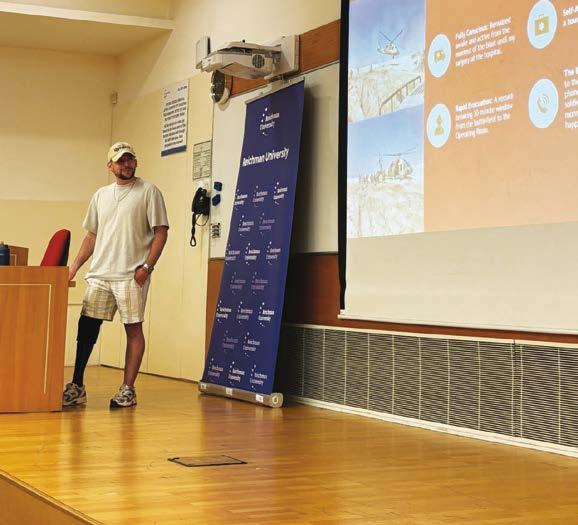
Noam Harush, a Government student at RRIS, shared his inspiring journey in the reserves, including the battle in Gaza where he lost his leg, and his long road to recovery
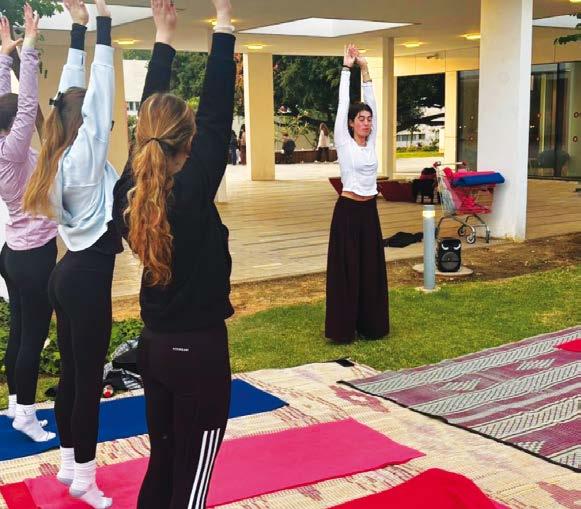
Wellness Week on campus featured yoga, pilates, mindfulness, and meditation sessions to nurture both body and mind
Yoga on the lawn
JANUARY: OCT 7 TH SITE TOUR
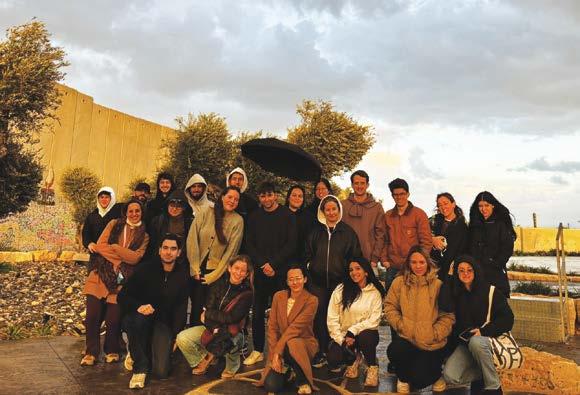
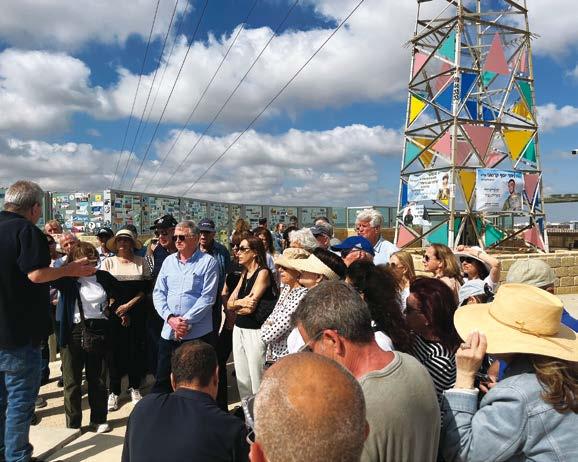
Students participated in a tour to the south of Israel, visiting border communities and the site of the Nova music festival to better understand the events of October 7th, 2023, and their impact on the region.
16 TH POLAND
DELEGATION:
A TRANSFORMATIVE JOURNEY
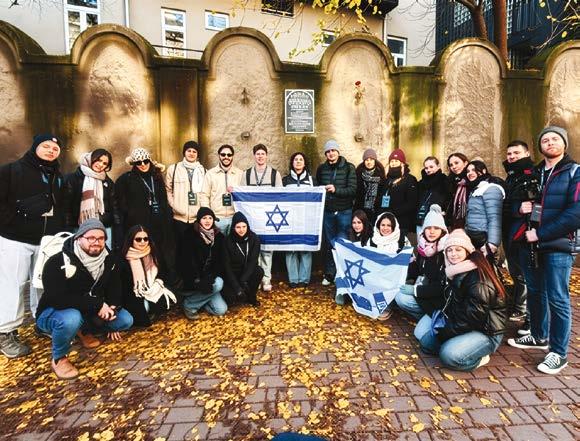
This year, RRIS students returned from an unforgettable journey to Poland as part of the university’s annual delegation – an initiative now in its 17th year. The Englishspeaking group reflected the unique fabric of the RRIS community: roughly a third were recent high school graduates from abroad embarking on their university journey. The rest were older international students and Israelis who had lived abroad, many of whom had served in the IDF as lone soldiers. Together, they traveled, learned, and bore witness to history in a way that no classroom could replicate.
The impact was profound and visible. Students returned with a deeper sense of pride, clarity, and responsibility –and a renewed motivation to contribute to building a better society. This life-changing experience is made possible year after year through the generous support of donors Mitch Julis and Joey Folkman, whose commitment ensures that RRIS students continue to have access to one of the most meaningful journeys of their academic lives.
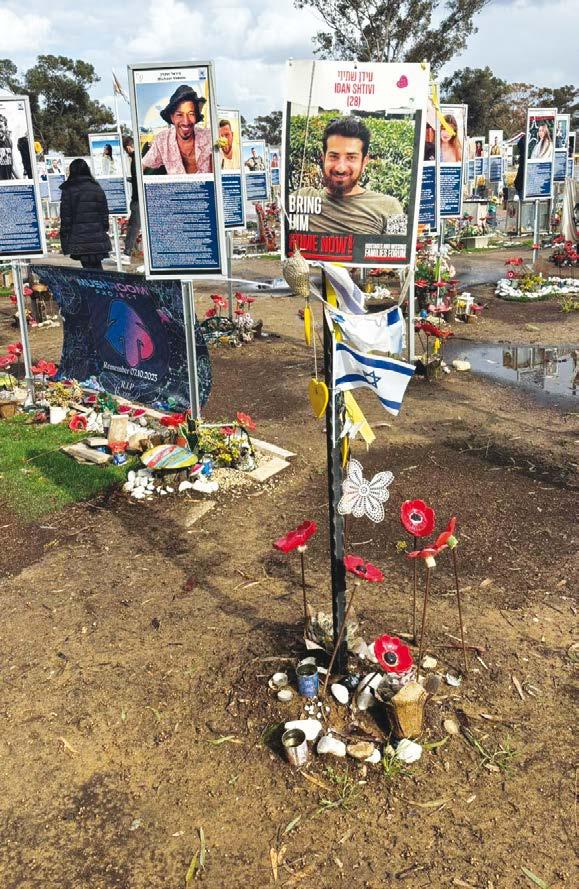
those murdered on October 7th.
them is Idan Shtivi, a Reichman University sustainability student, who was initially believed to be alive in captivity but was later confirmed to have been murdered on October 7th
Memorial at the Nova Festival site honoring
Among
A rainbow arches above RRIS students as they visit Yishuv Netiv Haasarah in southern Israel
The delegation outside the last remaining walls of the Krakow Ghetto
DECEMBER: HANUKKAH TOUR
JERUSALEM
DECEMBER: HANUKKAHCANDLELIGHTING ON CAMPUS
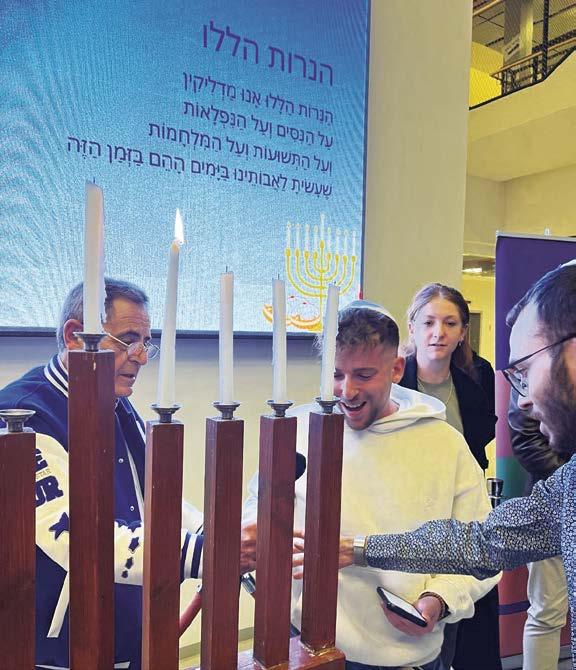
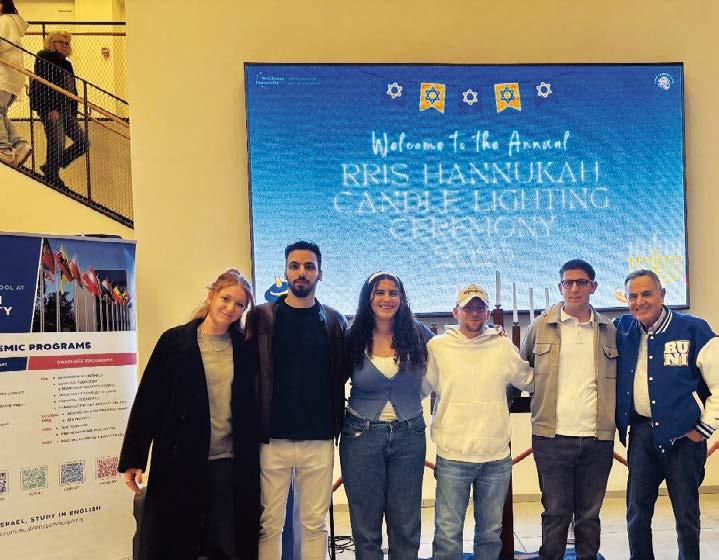
The campus Hanukkah candlelighting brought together a vibrant community as Raphael Recanati International School students gathered alongside the JLIC Rabbis to celebrate. The evening was made especially meaningful by the participation of international students who lit the candles, many of whom have served hundreds of days in the reserves over the past two years. Their presence added profound significance to the ritual of lighting the menorah, as those who have defended their country in recent times carried forward the message of light overcoming darkness.
Noa Haber, first-year BA Business & Economics student from Canada - lone soldier who served as a combat soldier and an officer in Combat Intelligence; Ariel Goldman, second-year BA Communications student from the U.S. – lone soldier who served in Search & Rescue both in service and in reserves; Yarin Miron, second-year BA Business & Entrepreneurship student from Israel who served in the Nahal Brigade; Noam Harush, first-year BA Government student from Israel who served in the 53rd battalion of the Armored Corps of the IDF, was injured and lost his right leg below the knee. Noam made the bracha and lit the Shamash; Daniel Abadi, first-year BA Communications student from England; and Jonathan Davis
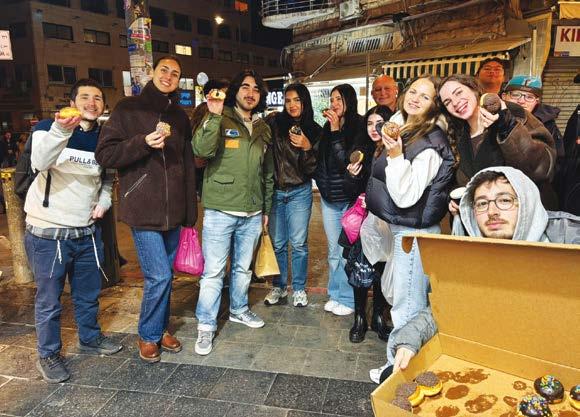
International students visiting the iconic Hanukkah lights in Jerusalem and enjoying the tasty treats
Jonathan Davis with student Noam Harush, a first-year Government student, and Rabbi Elisha Guberman from the JLIC. Noam served in the armored corps and lost his right leg in Gaza
OCTOBER: ETHEL & LEONARD TIGAY
ORIENTATION WEEK
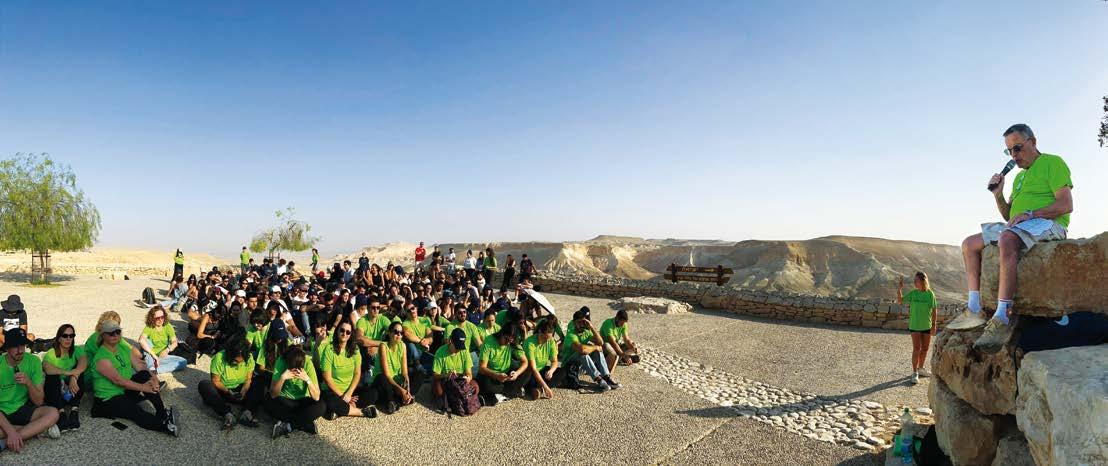
The Raphael Recanati International School (RRIS) launched the 2025–2026 academic year with the annual Ethel and Leonard Tigay Orientation Opening Ceremony, welcoming hundreds of new students from over 90 different countries. The orientation festivities continued with the annual Orientation Trip – a day filled with team-building, leadership development, and unforgettable experiences.
Students and staff began at Ben Shemen forest before traveling south to Sde Boker, where RRIS Counselors led engaging activities about Ben Gurion’s journey and the settlement of the Negev. The day concluded with a traditional Bedouin dinner and DJ party.
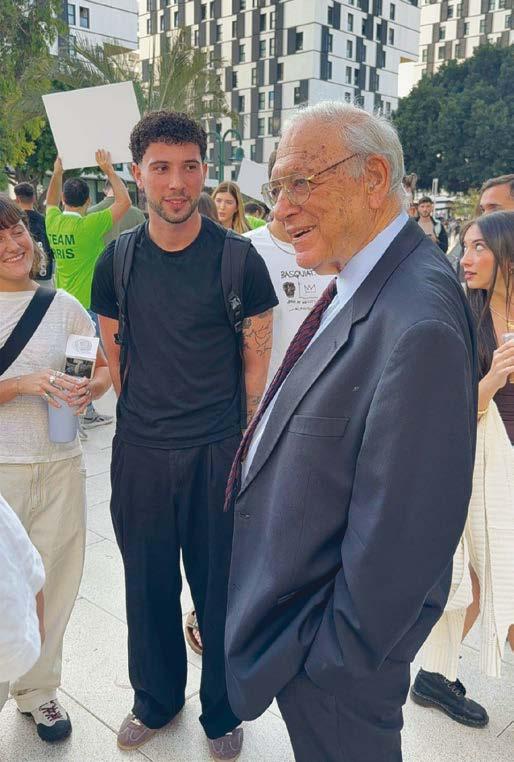
Prof. Uriel Reichman, Founding President and Chairman of the Board of Directors, meets with and talks to students during Orientation Week
Jonathan Davis addresses the students during the Tigay Orientation trip to the South, at the grave of David Ben Gurion
APRIL: INTERNATIONAL FOOD FAIR
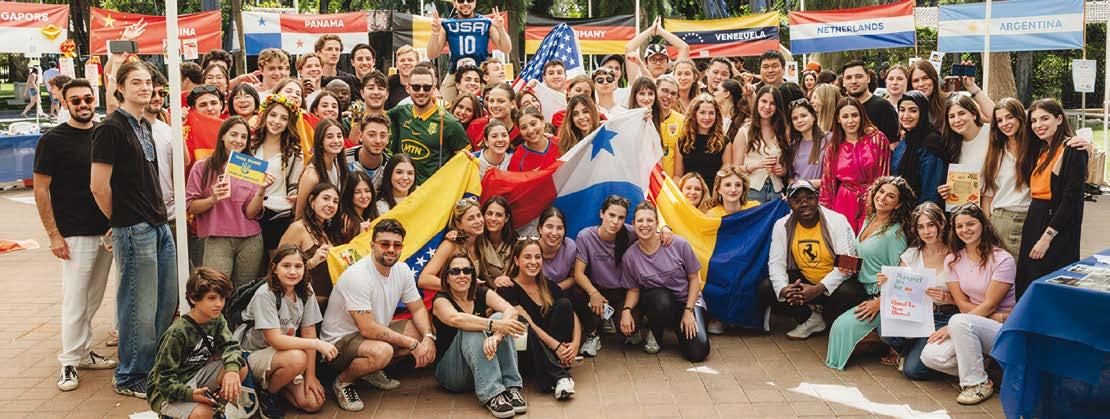
It was a heartwarming and delicious experience to explore the diverse array of stands at the International Food Fair on campus, representing food from the USA to France, Mexico to Panama, Ukraine to Ethiopia. Students seized the opportunity to share and sell traditional dishes from their respective countries. Witnessing the cultural diversity represented on campus was truly a testament to the vibrant community at Reichman University. There were also a number of stalls of families from the south of Israel, near Gaza, and the RRIS team was heartened to see them sell their products.
MODEL UN: A SEMESTER OF GROWTH, LEARNING, AND INTERNATIONAL ENGAGEMENT
The semester has been highly productive for RUMUN, Reichman University’s Model UN club. Delegates participated in two joint simulations at Tel Aviv University, practicing their MUN skills alongside TAU peers, and also took part in several in-house simulations, strengthening their understanding of MUN procedures, from rules of debate to drafting resolutions. In addition, the club hosted two guest speakers: Eylon Levy, a former Israeli government spokesperson, who spoke about truth and narrative shaping in today’s global media, and Zoe Brash from Israel’s mission to the United Nations, who shared insights from her diplomatic career. Looking ahead, RUMUN plans to send two delegations abroad — to Thessaloniki, Greece in April, and Utrecht, Netherlands in May — while continuing to expand cooperation with TAU and other MUN societies in Israel and abroad. The club remains committed to developing each delegate’s skills and confidence in Model UN.
The International Food Fair on campus
RUMUN Students with former Senior Policy Advisor of Israeli Mission to the UN, Zoe Brash, after her guest lecture
APRIL: COMMEMORATING YOM HA’SHOAH
The Raphael Recanati International School (RRIS) community came together to commemorate Holocaust Memorial Day through several meaningful events both on and off campus. The school hosted a Zikaron Ba’Salon (“Memory in the Living Room”) event on campus featuring Shlomit Levi, who shared her deeply personal experience growing up as a child of Holocaust survivors.
RRIS students participated in an educational tour of Yad Vashem, Israel’s official memorial to the victims of the Holocaust. There, students engaged with historical exhibits, personal testimonies, and memorial spaces that documented and commemorated the genocide of six million Jews. The visit provided students with a comprehensive understanding of the historical context leading to the Holocaust and its devastating consequences.
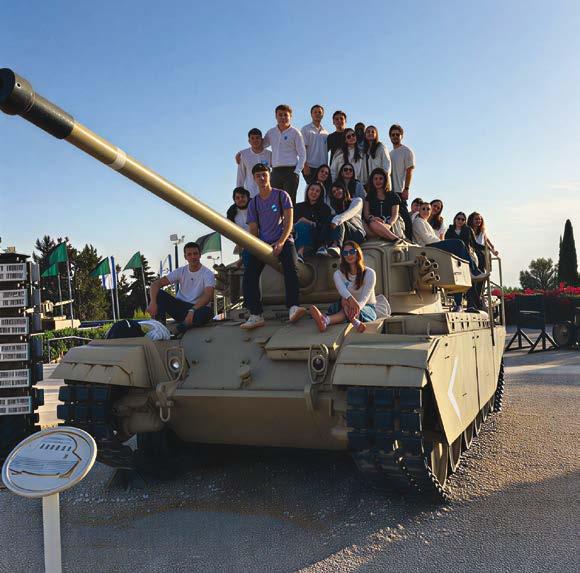
RRIS students participating in the national ceremony at Latrun
Commemorating Yom Hazikaron - Memorial Day for fallen soldiers and victims of terrorism
RRIS students participated in the national ceremony at Latrun, a site of profound historical significance in Israel’s military history. Located between Jerusalem and Tel Aviv, Latrun served as a strategic fortress during Israel’s War of Independence and today, houses the Armored Corps Memorial and Museum.
RRIS students participating in an educational tour of Yad Vashem
TAZUZ - THE ETHEL AND LEONARD
TIGAY SPORTS AND CULTURE
PROGRAM
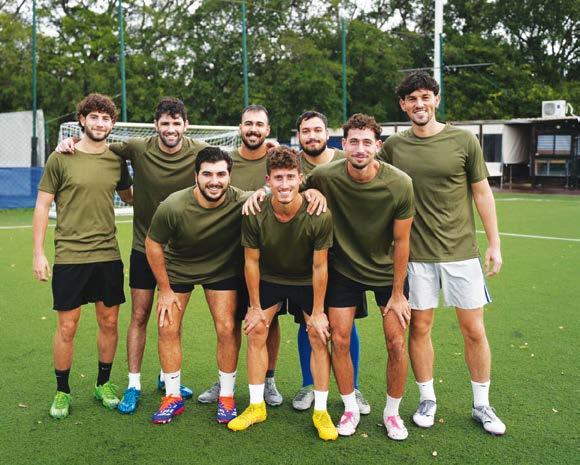
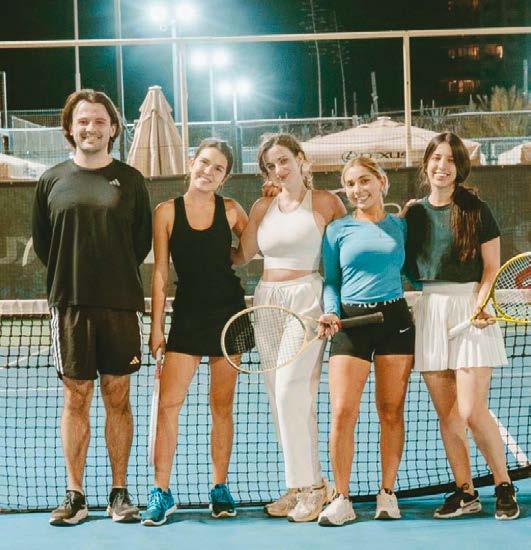
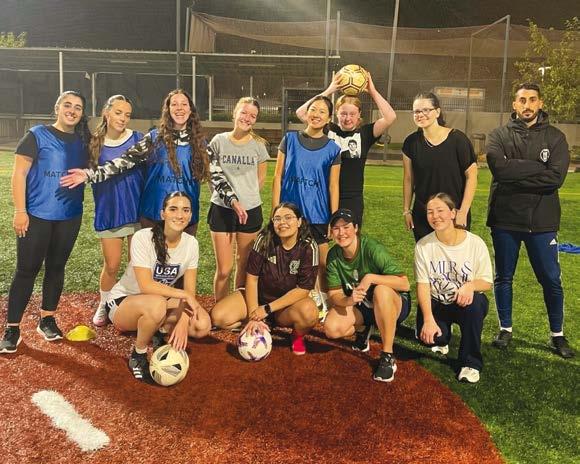
Throughout the year, the Ethel and Leonard Tigay Sports and Culture program has enriched the lives of the school’s international students with a dynamic array of activities designed to foster community, wellness, and connection. Students participated in competitive soccer, tennis, surfing, beach volleyball, and basketball leagues, building camaraderie and school spirit on the field and court. Beyond athletics, the program offers opportunities for personal growth and relaxation through yoga sessions, creative paint nights, and meditation classes.
Tennis Courses
The tennis academy provides a multi-level program designed for both beginners and experienced players. Weekly sessions allow over 20 students to improve their technique, stay active, and connect with peers in a fun and social atmosphere.
Surfing Course
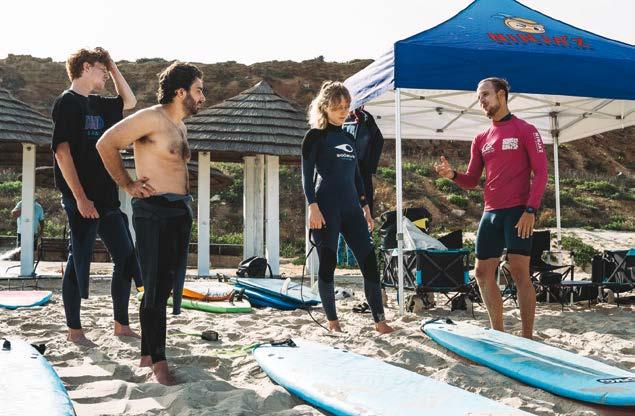
Set against Israel’s stunning coastline, the surfing course offered over 17 students from all academic disciplines the opportunity to learn and grow in the water. Through one- and two-month programs led by certified instructors, participants build confidence, skills, and community on the waves.
Soccer League
Hosted at the Maccabi Tel Aviv training grounds, the soccer league brings together over 100 Reichman University students in a structured, competitive setting. Students form their own teams, compete weekly, and experience the excitement of organized league play.
Women’s Soccer Academy
The Women’s Soccer Academy in Ra’anana proves that impact goes beyond location. With over 18 participants training weekly, the program fosters empowerment, teamwork, and confidence, culminating in participation in a national women’s tournament.
Tribe Leaders Seminar
The Tribe Leaders Seminar equips talented students with the tools to lead meaningful initiatives on campus. Through hands-on workshops and community-focused training, participants develop leadership skills while enhancing student engagement and fostering a sense of belonging, with over 13 active tribes this year!
Pilates with Ilana
Led by Ilana, one of the RRIS’s Tribe Leaders, this weekly pilates class takes place right by the dorms, making wellness easily accessible on campus. The sessions promote both mental and physical health, offering students a consistent space to reset, strengthen, and recharge together.
LANDESMAN DEBATE TEAM OF REICHMAN UNIVERSITY: A YEAR OF ACHIEVEMENT AND IMPACT
The Reichman University Debate Team has enjoyed an extraordinary year marked by competitive success, adjudication milestones, and vibrant campus engagement. Despite many participants serving in reserve duty throughout the year, the team strengthened its position as one of Israel’s premier debate clubs while honoring its values of excellence, community, and remembrance. Reichman squads broke through to the semi-finals at the Israeli Nationals, the Juniors IV, and the JIV. Several members were also selected to serve on Chief Adjudication panels at major tournaments, reflecting the respect Reichman debaters command across the league.
Off the podium, Reichman served as a hub for debate activity by hosting four major competitions, including a particularly meaningful tournament held in memory of Joseph Gitarts z”l, a cherished team member who fell in the Swords of Iron War. The event brought together debaters from across Israel to celebrate Joe’s passion for the sport and his enduring impact on the community. Through workshops, public debates, and collaborations with other student groups, the club has continued to foster critical thinking, articulate expression, and respectful dialogue on campus. These achievements – in competition, adjudication, and community – stand as a testament to what can be accomplished when talent meets opportunity, and the team is poised to reach even greater heights in the seasons to come. The team would like to thank Yossi Landesman for his ongoing and vital support.
AMERICAN FRIENDS OF REICHMAN UNIVERSITY
Leslie Skyba Executive Director, American Friends of Reichman University
INAUGURATION OF THE PEARLELLEN GORDON RESILIENCE CENTER IN NEW YORK & ISRAEL
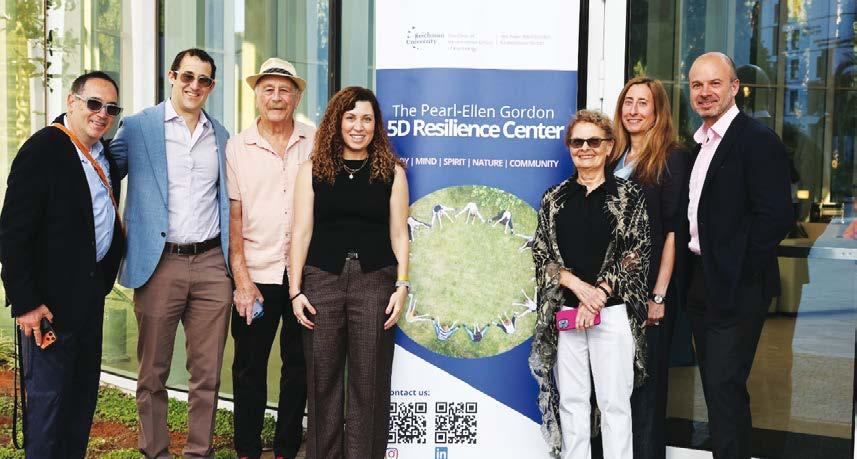
On October 30th 2025, Tim and Rachel Gordon , together with family members Chuck and Dee Claman, hosted a beautiful evening in SoHo for friends and family to raise awareness of the newly established Pearl-Ellen Gordon Resilience Center. The Center was created by the Allan S. Gordon Foundation in loving memory of Dr. Pearl-Ellen Gordon. Dr. Gordon was a renowned and distinguished psychoanalyst in New York, widely respected for her deep compassion, intellectual curiosity, and unwavering dedication to her patients and students.
The meaningful evening highlighted the Center’s early accomplishments and concluded on a lighter note, with guests enjoying an entertaining performance by comedian Yohay Sponder. Thanks to the generosity of those in attendance, the event raised over $100,000 in support of the Center.
On December 4th, the Pearl-Ellen Gordon Resilience Center was officially inaugurated on campus during its first annual conference. Amit Bar, a first-year Government student who lost his right leg in an explosion in Gaza, addressed the audience and shared his powerful journey as a soldier and student, his long road to recovery, and the critical role the Center has played in his post-trauma treatment – providing comprehensive, holistic support for his personal development.
Also present at the inauguration were Reichman University President, Prof. Boaz Ganor, Director of the Pearl-Ellen Gordon Resilience Clinic Dr. Rony Pshedetzky, donors Tim and Rachel Gordon, Chuck & Dee Claman, Prof. Anat Brunstein-Klomek, Dean of the Baruch Ivcher School of Psychology, and Jonathan Davis, Vice President and Head of RRIS.
From left: Adam Gordon, Tim Gordon, Chuck Claman, Dr. Rony Pshedetzky, Dee Claman, Rachel Gordon and David Arditi
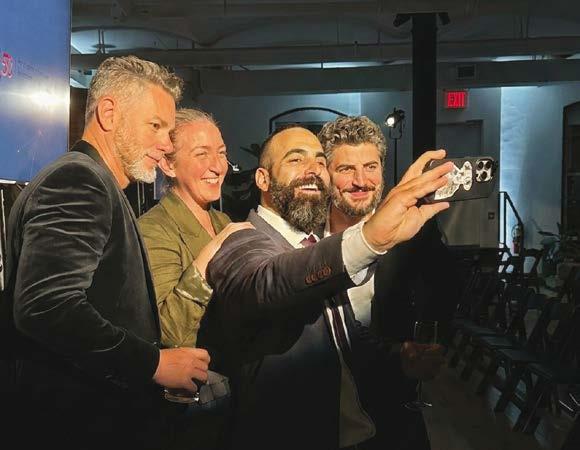
Israeli Comedian Yohay Sponder takes a selfie with some distinguished guests after his performance
AN INTERVIEW WITH REICHMAN UNIVERSITY ALUMNUS, TAMER MASUDIN
On Wednesday, May 14th, 2025, more than 100 friends, parents, prospective students, and alumni gathered in New York City for an exclusive cocktail reception with Reichman University President Prof. Boaz Ganor and Vice President of External Relations and Head of the Reichman University International School, Jonathan Davis.
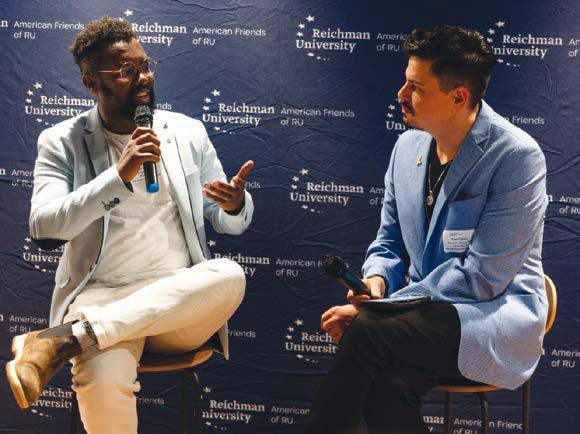
The evening featured a compelling conversation with Tamer Masudin, a Fulbright Fellow and MBA student at Brandeis University, and a proud Arab Muslim graduate of Reichman University’s Lauder School of Government, Diplomacy, and Strategy and the Argov Fellows Program. Tamer is at the forefront of social media advocacy for Israel, sharing daily content drawn from his experiences growing up in Israel and his perspectives on the Swords of Iron War.
Tamer was interviewed by Reichman University alumnus, Yoav Davis, founder of Jews of New York and Davis Media. Together, they offered powerful insights into how social media can shape global conversations about Israel and highlighted the impact of authentic storytelling in today’s digital landscape.
Tamer Masudin is interviewed by Reichman University alumnus Yoav Davis
From left: Jonathan Davis; Tamer Masudin; Prof. Boaz Ganor; and Yoav Davis
From left: Amir Peles; Lea Almog Arazi; Oded Arazi; and Alex Klobnitz
Iris & Kenneth Shamus
RiseApp NYC LAUNCH PARTY
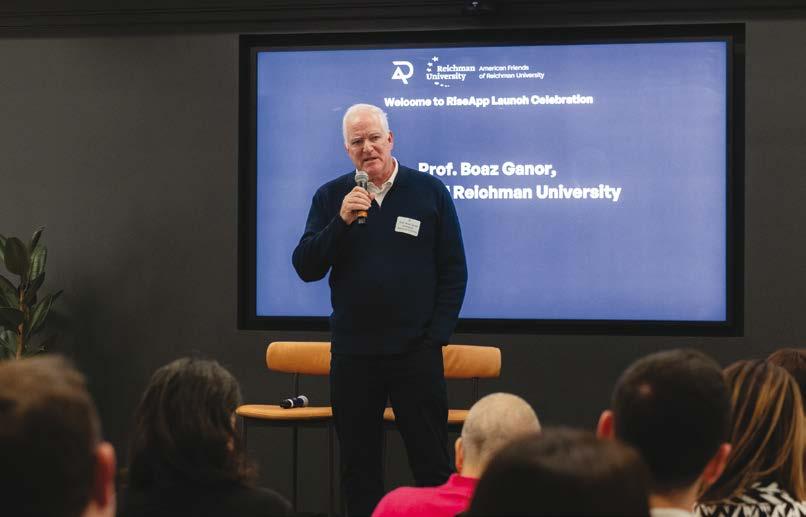
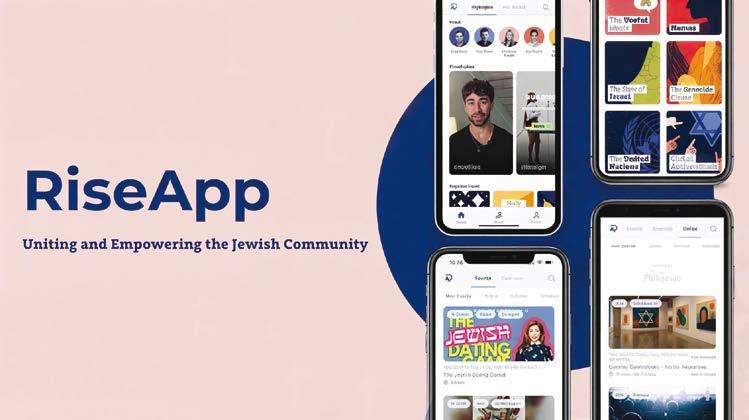
On November 12th, 2025, Prof. Boaz Ganor and the RiseApp team joined the American Friends of Reichman University at Rockefeller Center in New York City. They gathered to celebrate the launch of a new mobile application designed to help the Jewish community combat the rise of antisemitism. Supporters, friends, and alumni learned about Reichman University’s latest initiative and began engaging with the app firsthand.
The evening featured a conversation with Yael Hay, Founder and Executive Director of RiseApp, who was interviewed by Reichman University alumnus Yoav Davis about the importance of making the case for Israel effectively. The program concluded with a captivating performance by Israeli mentalist Eran Biderman
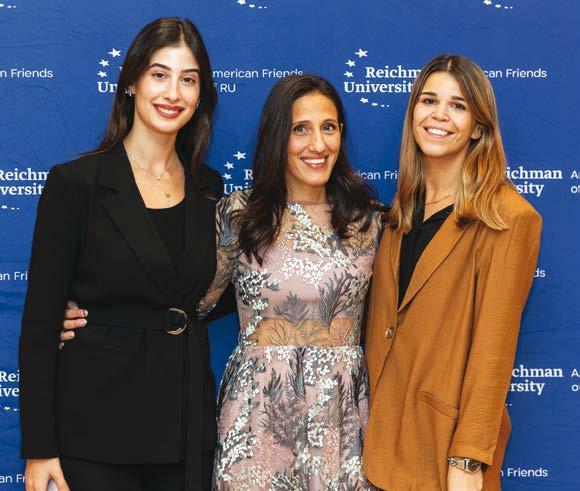
From left: RiseApp Head of Content, Ela Blatt; Executive Director, Yael Hay; and Head of Marketing, Johanna Sarfati
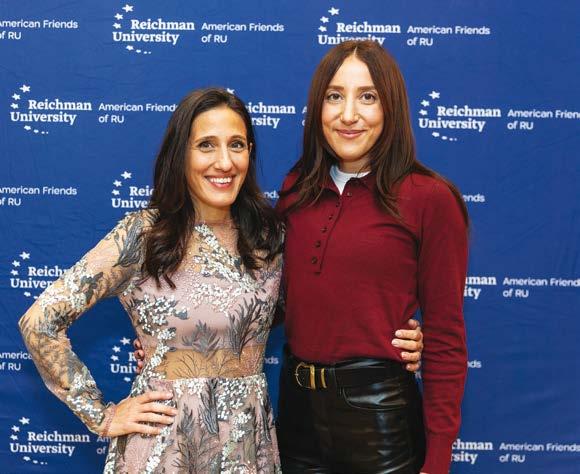
RiseApp Executive Director Yael Hay with Rebecca Asper, a family member of the Asper Foundation, a major supporter of the RiseApp initiative
Prof. Boaz Ganor, Reichman University President
US ALUMNI ASSOCIATION HOSTS
INSPIRING EVENING WITH GIDEON ARGOV AND A GOOD OPTION
On October 30th, 2025, NYC alumni gathered for an engaging evening with Gideon Argov, founder of the Argov Fellows Program in Leadership and Diplomacy and a longtime supporter of Reichman University. Jonathan Davis introduced Gideon, who shared thoughtful insights from his distinguished career along with his vision for the future of business and leadership. The group also heard from Yadin Kaufmann, who highlighted the importance of RU alumni joining “A Good Option” to support the university’s continued growth.
Jonathan Davis with longtime supporter and friend Bill Recker
From left: Gideon Argov; Sivan Aloni; Jonathan Davis; Yadin Kaufmann; and Leslie Skyba
Herzliyan
UNDERGRADUATE
• Business Administration
• Business Administration & Economics (double major)
• Communication
• Entrepreneurship & Business Administration (double major)
• Economics & Entrepreneurship with Data Science (double major)
BUILDING RESILIENCE: HOW REICHMAN UNIVERSITY’S ALUMNI ASSOCIATION KEPT COMMUNITY ALIVE DURING WAR
Gili Dinstein, CEO of the Israel Friends Association and Alumni Organization
In the midst of one of Israel’s most challenging periods, the Reichman University Alumni Association proved that resilience isn’t just about withstanding pressure – it’s about continuing to create, connect, and find meaning even in the darkest times.
As the country grappled with war and its aftermath, the Alumni Association faced a difficult question: Should they continue hosting events when so many members were serving in the reserves? The answer, they decided, was definitely, “Yes.” The organization embraced what they call an “emergency routine” – maintaining activities even in wartime as a form of small daily victory. By continuing to live, work, study, teach, volunteer, and help, they fought to restore sanity and normalcy to both their country and their alumni community, proving that resilience means more than just enduring hardship.
MOVING FORWARD WITH NEW AND EXISTING INITIATIVES
Throughout the year, the association has maintained an impressive slate of activities designed to provide alumni with both professional development and moments of respite from daily pressures. School-specific alumni gatherings were held for Psychology, Computer Science, Business Administration, and Law graduates, emphasizing the enduring value of professional and social connections forged during their studies.
The Women’s Forum continued its diverse programming with lectures on resilience, as well as cinema outings and wellness retreats. Regular enrichment lectures were supplemented by volunteer work at the Hostages Headquarters, and in keeping with tradition, a Valentine’s Day singles event brought together unattached alumni.
A highlight was the university’s mentorship program, which successfully matched 46 pairs of mentors and mentees, connecting young graduates with veteran alumni. The association also launched a new lecture series, “Food for Thought,” addressing topics chosen by alumni in a survey: real estate, artificial intelligence, legal aspects, and coping with post-trauma.
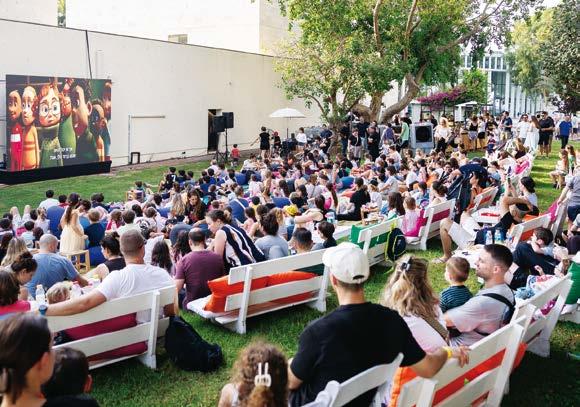
Hundreds of alumni and their families enjoying the beloved summertime annual movie screening on campus
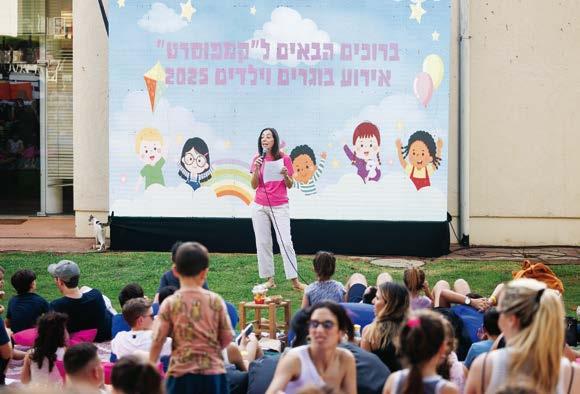
Despite summer heat and humidity, the annual campuseret children’s event brought approximately 800 alumni and their children to campus, transforming the university lawns into a celebration of community –a tradition that’s become a beloved fixture on the alumni calendar.
“The Alumni Association’s mission is to strengthen connections between alumni themselves and between them and the university,” Gili Dinstein, CEO of the Alumni Association & External Relations, states. “Even in difficult times, we didn’t give up. We continued to create, connect, and provide meaning.”
In choosing to maintain community life during wartime, Reichman’s alumni demonstrated that normalcy itself can be an act of defiance, and that staying connected is part of what makes a community resilient.
Gili Dinstein, CEO of the Alumni Association & External Relations, welcomes crowds to the annual summertime event
ISRAEL FRIENDS OF REICHMAN UNIVERSITY BEAR WITNESS TO ISRAELI RESILIENCE
Two signature events organized by the Friends of Reichman University this past year told a powerful story of Israeli resilience – one comprised of people, communities, and the capacity to rebuild even after profound pain.
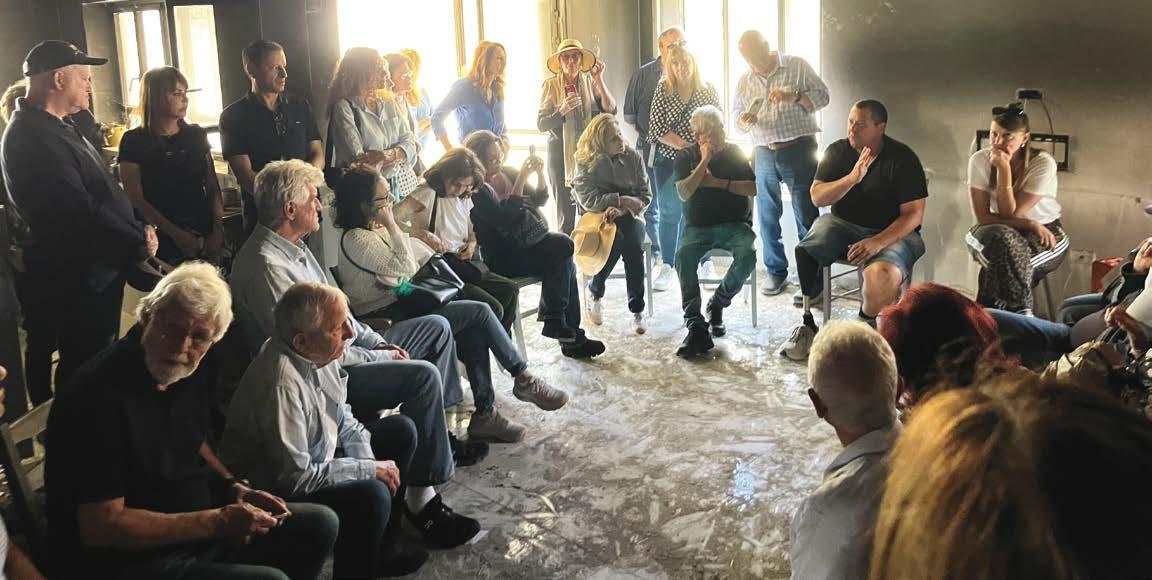
In April 2025, the Friends embarked on a tour of the Gaza Envelope communities, beginning at Kibbutz Be’eri – a place that has become synonymous with both devastation and recovery. There, they met with residents and influential figures from the region, including Reichman alumnus Tomer Golan, Be’eri’s farm manager, who shared the kibbutz’s rehabilitation story.
Michal Uziyahu, head of the Eshkol Regional Council, emphasized mutual responsibility and the belief that returning to routine is, itself, a Zionist act. The group heard the heartbreaking story of Avida Becker, who lost his wife and son in his destroyed, soot-covered home, a testimony to both heroism and grief.
Walking through newly constructed neighborhoods, participants met rehabilitation director Sharon Shabo, who described the process of restoring life to the kibbutz.
Educator Eyal Dvori , Principal of Shahar Eshkol School, shared his model for teaching resilience and entrepreneurship to the younger generation, laying the foundation for a thriving regional future.
The day concluded in Sderot with a visit to the Memorial and Courage Garden, built on the ruins of the police station – a site transformed into a symbol of remembrance and new beginnings. Mayor Alon Davidi spoke about his vision for rehabilitating the city through faith and community, and the importance of collaboration with higher education institutions.
Gili Dinstein, CEO of the Israel Friends Association and Alumni Organization
Israel Friends visit Kibbutz Be’eri
FROM THE BREAKING POINT TO THE HORIZON
The Friends’ annual gala, themed “From the Breaking Point to the Horizon,” took place against the backdrop of war and the complex reality all Israelis face. “We live, work, study, and teach – this is our small battle for resilience and sanity,” said Gili Dinstein, CEO of the Israel Friends Association and Alumni Organization, capturing the nation’s mood.
The evening opened with an emotional performance by Daniel Weiss, a Be’eri resident who lost both parents in the October 7th massacre and moved the nation on “The Next Star” television program. His appearance symbolized the choice to embrace life.
Australian journalist and broadcaster Erin Molan, who received an honorary doctorate that evening, spoke about her steadfast support for Israel amid rising global antisemitism.
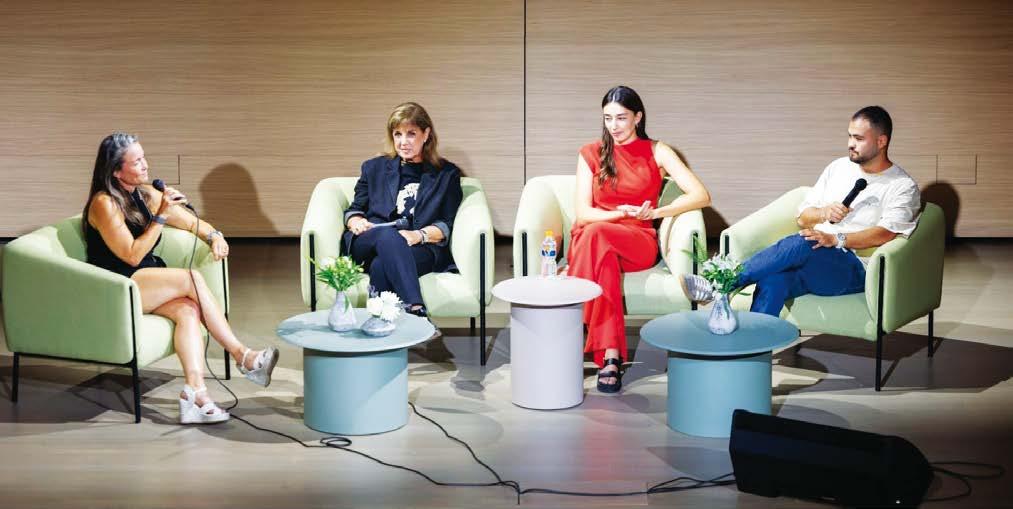
Three inspiring panels embodied the university’s core values. On leadership, student Yoav Tzivoni, who was wounded in Gaza and lost his leg, and alumna Tal Ochana, former Head of the Yeruham Council, shared stories of resilience.
A tour to Sderot with a visit to the Memorial and Courage Garden, built on the ruins of the police station
International students discussed their experiences as new immigrants during wartime. And in a panel on entrepreneurship, participants demonstrated the power of action and initiative.
Ela Ben Ami, a student from Be’eri whose parents were kidnapped on October 7th and later released, shared her commitment to fighting for the release of all remaining hostages.
The gala was a living expression of Israeli spirit: leadership, Zionism, and entrepreneurship in action, even in the nation’s darkest hours.
From left:
Liat Aharonson, Chair of the Zell Entrepreneurship Program; Liora Ofer, Chair of the Israel Friends Association & Chair of Melisron; Sela Sharlin, RUNI alumna with a degree in Data Analytics and Business Administration and Chief of Staff in the consulting division of EY Israel; and Ido Felus, second-year student in Business Administration and Entrepreneurship, founder and manager of the Nitzanim (Buds) Project of Ofir, in memory of Ofir and Nitzan Leibstein z"l, to encourage the return of young people to the Gaza border region (Otef)
MESSAGE FROM PROVOST PROF. AMNON LEHAVI
The past year has witnessed a remarkable growth in research and academic innovation at Reichman University, despite the enormous challenges faced by Israeli society since October 7th, 2023. Alongside the 2025 inauguration of the Dina Recanati School of Medicine and the establishment of innovative degree programs, such as the MBA in climate-tech management and the MSc with a specialization in synthetic biology, Reichman University marked the opening of new research institutes and centers, including the Arison ESG Center, Acro Real Estate Institute, Phoenix Institute for Capital Market Research, and the DICE Lab for Judgement and Decision-Making.
To promote research and interdisciplinary collaboration within the university and with other academic and industry partners, we established the University Committee for the Advancement of Research, with representatives from all schools who now meet regularly to discuss the prospects and challenges of academic research and to promote the work of faculty and graduate students across our master’s and doctoral programs.
During the first week of the 2025/2026 academic year, the entire university faculty gathered for a daylong meeting to discuss the future of research and teaching. The event included a keynote presentation by Prof. Lihi Zelnik-Manor, Vice President for Innovation and Industry Ties at the Technion – Israel Institute of Technology, and a session about “creativity” with top comedian, playwright, and director Adir Miller.
Reichman University is also advancing its international academic collaborations, as reported in this section, to further strengthen the university’s unique academic standing as a global actor.
Prof. Amnon Lehavi, Provost
THE RESEARCH AUTHORITY: BUILDING A COMMUNITY OF RESEARCHERS
The Research Authority at Reichman University, headed by Dr. Orit Rapaport, operates as a comprehensive support ecosystem built on a singular mission: empowering our faculty to produce excellent, groundbreaking research and maximize its research productivity. Traditional pre- and post-award offices focus on the administrative mechanics – processing grant applications before submission and managing financial compliance after funding arrives. It has expanded this core function to become strategic partners in the entire research lifecycle. Managing over 100 active research grants totaling tens of millions of Israeli shekels, its scope encompasses research ethics, international collaboration facilitation, graduate student and postdoctoral support –services that bridge the gap between administrative necessity and research excellence.
At the heart of its work is the PIVOT-RP system, which generates personalized monthly newsletters that deliver tailored funding opportunities to each school based on specific research areas and priorities. This targeted approach, combined with individual strategic planning sessions, helps researchers identify and pursue the most relevant funding sources.
The Research Authority organizes professional development workshops, including preparation sessions for Israeli Science Foundation applications, led by faculty who have successfully secured grants. It also hosts informational meetings with representatives from major funding bodies.
Recognizing that doctoral students are the driving force behind research excellence, The Research Authority recently launched its first-ever campus-wide event for all entering PhD candidates. The event included opening remarks from university leadership, presentations from library services, and an intriguing panel of Reichman University doctoral graduates sharing their research journeys. Drawing on research showing that belonging significantly impacts both researcher well-being and research quality, this initiative reflects a commitment to building community and providing doctoral students with the recognition and visibility they deserve.
Dr. Orit Rapaport, Director, The Research Authority
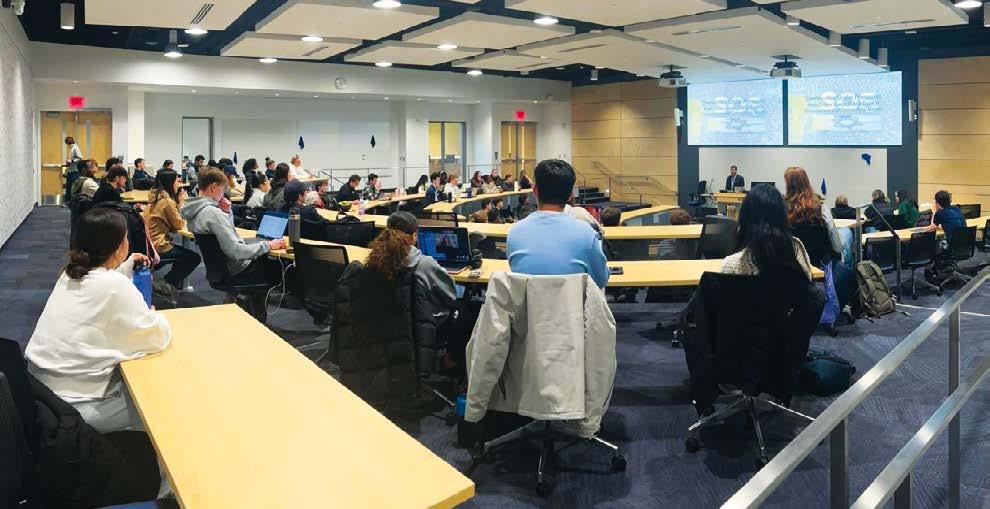
A campus-wide gathering for entering PhD candidates, held on October 23rd, 2025 at Reichman University
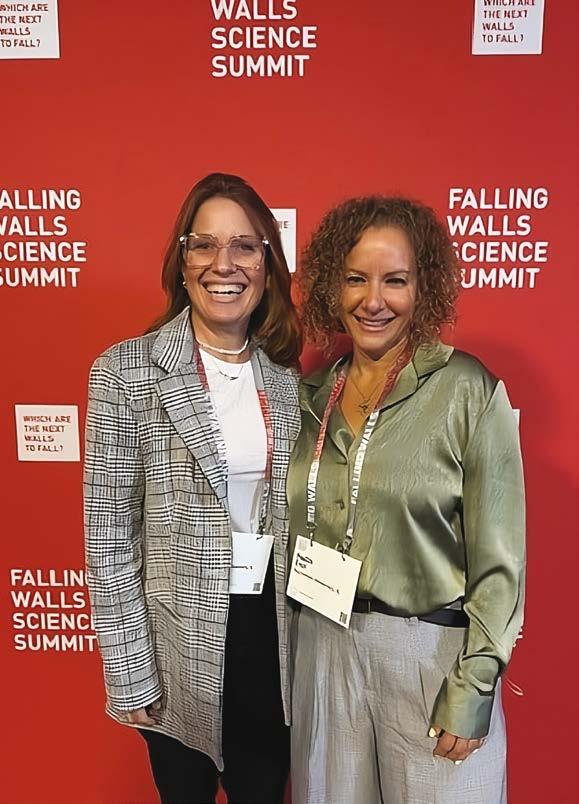
REICHMAN UNIVERSITY AT THE FALLING WALLS CONFERENCE, BERLIN
The Falling Walls Conference in Berlin is a leading international forum where scientists, innovators, and global thought leaders present groundbreaking ideas aimed at overcoming the major “walls” that challenge society. This year, Reichman University was represented through two fields that, together, contributed to an expanded conversation about the future of mental health innovation and human–technology interaction.
Prof. Anat Brunstein Klomek, Dean of the Baruch Ivcher School of Psychology, participated in a panel exploring the therapeutic potential of psychedelics in treating PTSD, as well as the complexities of integrating psychedelicassisted interventions into established clinical frameworks. The discussion addressed how such substances may support new modes of trauma processing, the importance of rigorous safety protocols, and the need to situate these approaches within broader, evidence-based models of care.
Prof. Hadas Erel, Deputy Dean at the Sammy Ofer School of Communication, took part in two panels examining the evolving role of AI in daily life, the design of emerging technologies, and factors influencing their acceptance. The conversations emphasized the necessity of understanding human needs, behaviors, and constraints when shaping digital tools. Panelists discussed ethical considerations, societal implications, cognitive and emotional responses to technology, and the potential of digital and physical systems to enhance wellbeing.
Together, these perspectives formed a multidisciplinary lens on the future: one highlighting emerging therapeutic pathways for trauma, and the other examining technological systems that shape how humans connect, learn, and adapt. This intersection opens a broader dialogue about how scientific and technological progress can foster resilient societies and improve access to effective mental health care.
The conference offered four days of inspiration and perspectives. Looking ahead, there is a major opportunity to advance this integrated approach by exploring how biological, digital, and social innovations can complement one another, how mental health treatments can become more scalable and adaptive, and how human–technology collaboration can strengthen wellbeing in a dynamic world.
Prof. Anat Brunstein Klomek, Dean of the Baruch Ivcher School of Psychology, and Prof. Hadas Erel, Deputy Dean of the Sammy Ofer School of Communication
THE DINA RECANATI SCHOOL OF MEDICINE OPENS NEW HORIZONS FOR RESEARCH AND TEACHING COLLABORATION WITH U.S.
UNIVERSITIES
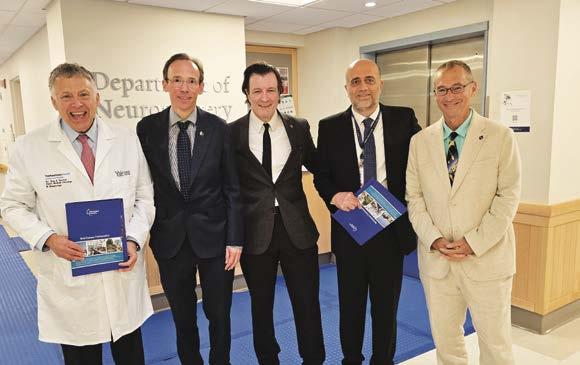
The inauguration of the Dina Recanati School of Medicine is opening new horizons for collaboration in research and teaching with top universities abroad, positively radiating to other schools and research institutes at Reichman University. Medicine, life sciences, and social sciences can come together in multiple ways, enabling Reichman University faculty and students to connect with their peers worldwide, create new opportunities for institutional collaboration, and enrich both research and teaching. In May 2025, Provost Prof. Amnon Lehavi and Prof. Arnon Afek, Dean of the Dina Recanati School of Medicine, visited the New York City region to promote institutional collaboration with top U.S. universities in both research and teaching.
Following a meeting at the main campus of Yeshiva University in midtown Manhattan with Provost Dr. Selma Botman and her team, Reichman University and Yeshiva University signed a Memorandum of Understanding (MoU) that provides a pathway for outstanding undergraduates of Yeshiva University, who wish to make Aliyah and
Prof. Amnon Lehavi (second from left) and Prof. Arnon Afek (far right) with faculty members of the Department of Neurosurgery at the Yale School of Medicine
practice medicine in Israel, to receive early assurance admission to the Dina Recanati School of Medicine. Following their graduation from Yeshiva University, a small group of select candidates who majored in premed studies undergo a Preparatory Year at Reichman University, including a year-long Ulpan in Hebrew and the MCAT.
Prof. Lehavi and Prof. Afek also visited the Yale School of Medicine, meeting with over two dozen colleagues, led by Dean Dr. Nancy Brown. The parties discussed various research collaborations that would involve not only the respective medical faculties but also researchers from psychology, biology, brain sciences, and beyond. Specifically, Yale and Reichman University are in the process of setting up a joint research project about Post-Traumatic Stress Disorder (PTSD) in both societies.
Following this productive meeting, several Yale School of Medicine faculty members visited Reichman University, including Prof. Farren Isaacs, Prof. Julius Chapiro, and Prof. Bluma Lesch
Prof. Arnon Afek (third from left), Prof. Amnon Lehavi (third from right) with Provost Dr. Selma Botman (fourth from right) and her team at the Yeshiva University campus in NYC
DINA RECANATI SCHOOL OF MEDICINE
Educating the physicians of the future.
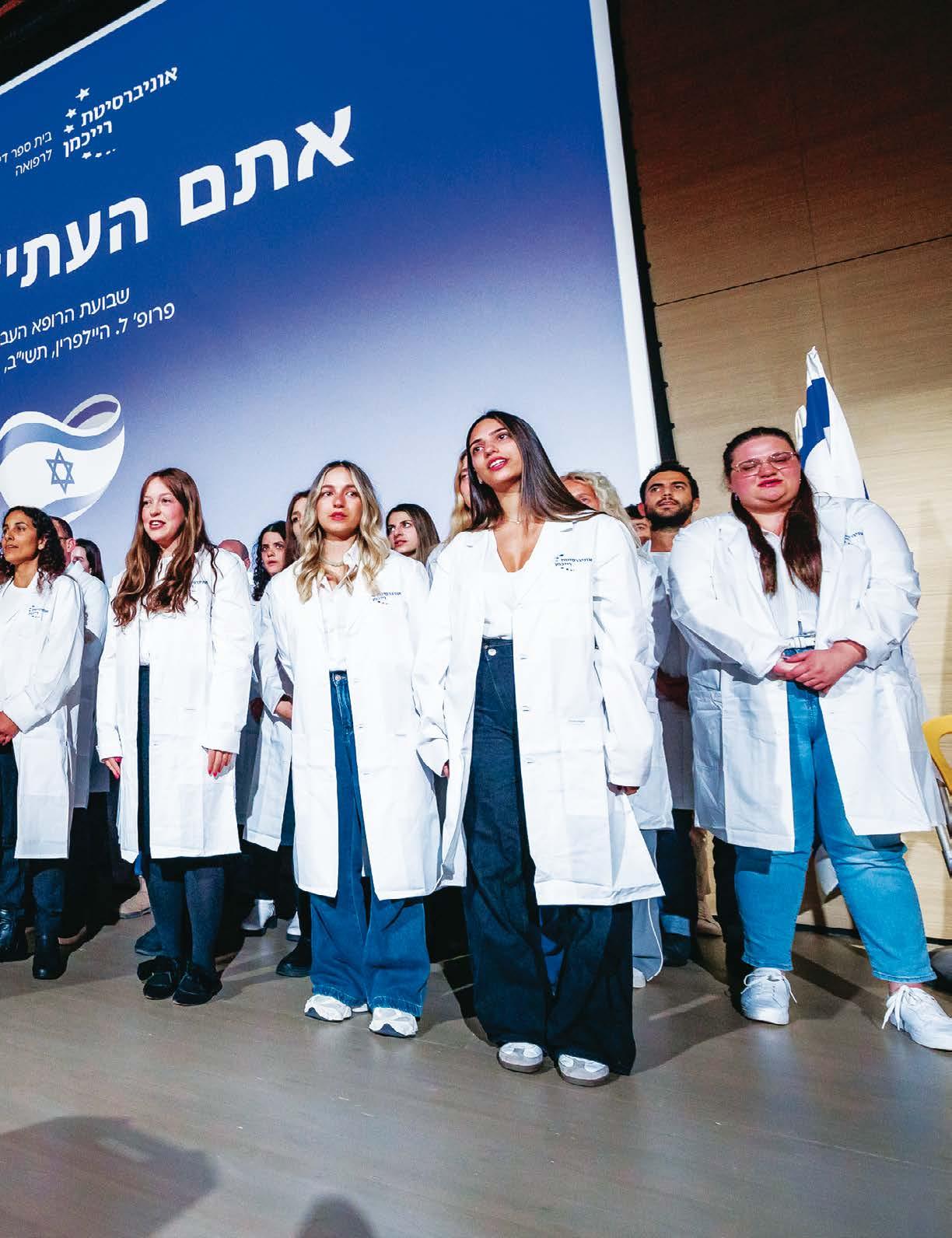
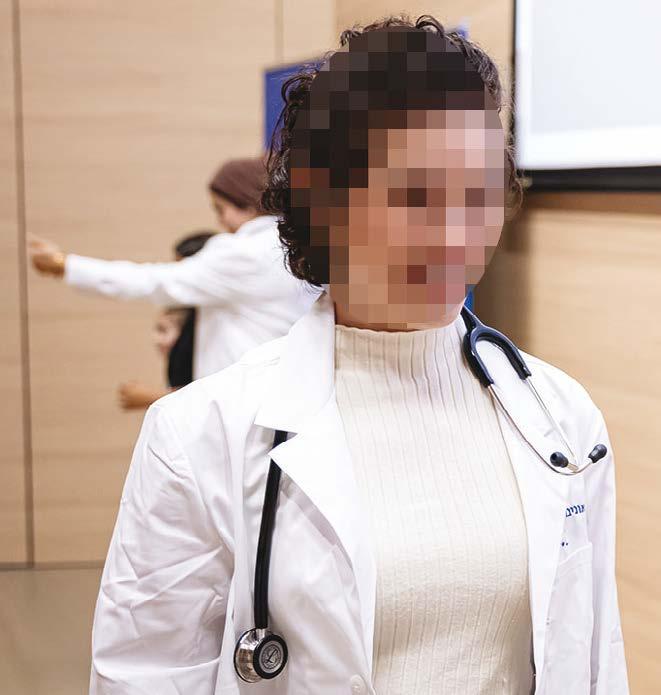
Students from the first class of the
Dina Recanati School of Medicine
Prof. Arnon Afek, Dean
Dina Recanati z”l
Reichman University has taken on a national, Zionist, and values-driven mission to increase the number of qualified doctors in Israel. To this end, it has partnered with the country’s leading medical institutions: Rabin Medical Center, Sheba Medical Center, Schneider Children’s Medical Center and Edmond and Lily Safra Children’s Hospital, Maccabi Healthcare Services, and Clalit Health Services. This rare and unique collaboration led to the establishment of the Dina Recanati School of Medicine, which is dedicated to educating the future doctors of the Israeli healthcare system.
The four-year curriculum is designed for bachelor’s degree graduates and includes two pre-clinical years and two clinical years in hospitals and the community. From the very first week of studies, students are exposed to clinical teaching in community medicine and innovative models, such as home hospitalization, telemedicine, and urgent care in the community. The teaching staff comprises young physicians who excel in innovative medical teaching, alongside veteran doctors – senior leaders of the Israeli healthcare system.
The medical school’s learning environment includes a simulation center with innovative equipment that helps impart advanced diagnostic and treatment skills, as well as laboratories and research centers in fields such as Big Data, AR/VR, synthetic biology, fMRI, artificial intelligence integration, and more. This equips students with practical tools to work in a rapidly changing medical world.
Today, 166 students study at the Dina Recanati School of Medicine, coming from all corners of Israeli society and representing its beautiful and diverse face. They are people on a mission who together have served more than 15,000 days in reserve duty since the outbreak of the Swords of Iron War.
They are our future.
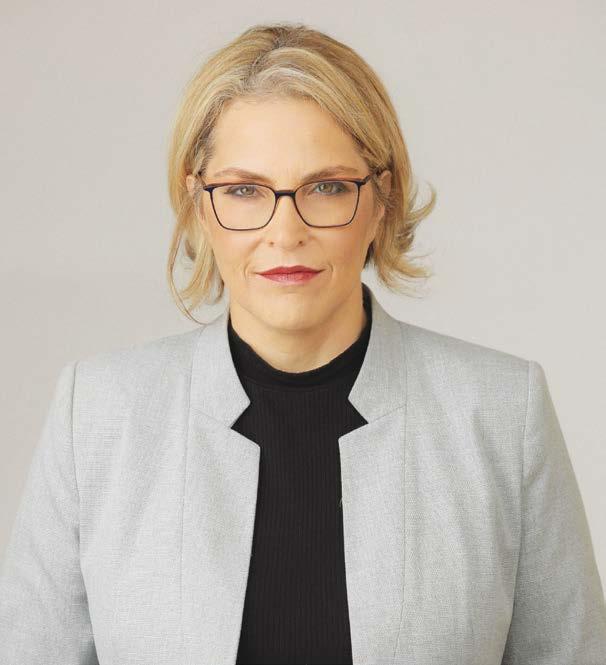
Dr. Miri Mizrahi Reuveni, Director of the Dina Recanati School of Medicine and Associate Dean for Admissions at Reichman University
/// OUR BODIES ARE BUILT
FOR LONGEVITY:
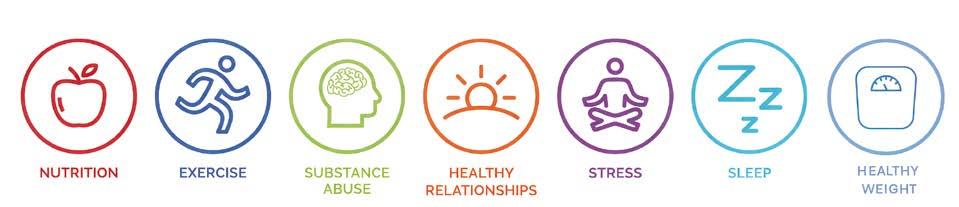
7 GOLDEN HEALTH TIPS
Editor’s note: With so much unfolding in the world, it is easy to think of health as something we address only when it falters. Yet decades of research tell a quieter, more hopeful story: that the foundations of resilience, clarity, and longevity are built slowly, through everyday choices, long before crisis arrives.
To explore this idea, we invited Dr. Miri Mizrahi Reuveni, Director of the Dina Recanati School of Medicine and Associate Dean for Admissions at Reichman University, to reflect on a simple but powerful premise: healthy bodies sustain healthy minds, and, ultimately, fuller lives. Drawing on medical science and human insight, she reminds us that the body is not merely something we inhabit, but an extraordinary system designed for endurance, care, and renewal when treated with intention.
Imagine that in one defining moment, you received the most advanced technology in the world as a gift; technology that could enable you to live a good, long, and fulfilling life. This would be a precious gift that you would surely guard with utmost care, wouldn’t you?
This is exactly what happened when you were born into your body: at birth, you received your body as a gift: the most advanced biological technology of its kind, designed to carry you until 120, as the ancient blessing goes.
Our bodies are incredible biological machines composed of skeletons of bones connected by joints and connective tissues, muscles that serve as powerful levers for performing actions and maintaining the function of internal organs, an intelligent nervous system, all wrapped in skin and organized into organs, each with a significant purpose: the brain – the information and control center; the heart – a pump; the lungs – the breathing machine; the liver – a detoxification center; the immune system – to fight invaders; and more... all working together in harmony.
Yet, do we truly care for our bodies, this wonderful gift? Moreover, do we protect this remarkable gift when it comes to the bodies of our loved ones, our family members? Or do we only wake up to guard it during crises that threaten our health?
Like any machine, our bodies requires proper maintenance. There are several remarkably simple recommendations that will allow us to maintain our health for years to come:
1. Healthy Nutrition
A healthy and balanced diet provides the body with macronutrients – particularly protein – vitamins, minerals, fiber, and antioxidants – all essential components for tissue function and the continuous building of new cells in the body’s various systems. Recommendation - Select a Mediterranean diet: vegetables, fruits, whole grains, legumes, nuts, olive oil, and fish; reduce processed foods, sugars, and saturated fats.
2. Physical Activity
Physical activity improves blood flow, which carries oxygen and nutrients to every cell in the body; maintains joint range of motion; strengthens muscles and the heart; and floods our brain with endorphins that improve mood and our optimistic outlook on the world. A body in motion is a healthier body!
Physical activity reduces chronic inflammation and improves cognitive function, and even has properties that can prevent the development of Alzheimer’s and other age-related diseases.
Recommendation: Any physical activity helps your health; find the type of activity you love! At least 150 minutes per week of aerobic activity, plus muscle-strengthening exercises twice a week, are recommended. Even if you commit to doing less than this, you’ll still be progressing toward better health.
3. Maintaining a Healthy Body Weight
Excess fat tissue secretes inflammatory and other substances that damage blood vessels and body organs, increasing the risk of various medical problems – including diabetes, heart disease, back and joint pain, heartburn, fertility impairment, and even cancer.
Recommendation: Avoid extreme diets and favor gradual, sustained habit changes that will bring you to a healthy weight. There are now various medications and other options for support; consult with your doctor.
4. Avoiding Smoking
Smoking damages blood vessels, causes them to narrow, harms health, and significantly increases the risk of cancer in various body organs and heart disease. Almost every organ in the body is damaged by smoking, and the damage is expected even from smoking individual cigarettes, which are comparable to sipping individual cups of poison every day.
Recommendation: Prevention is the best tactic –simply don’t start! But for those who already smoke, complete cessation is recommended; and at any age, it’s beneficial.
5. Stress Reduction
Prolonged stress raises cortisol and adrenaline levels, which in turn raise blood pressure and sugar levels, impair sleep and the immune system, and even affect mood and memory. Prolonged stress damages health and quality of life. It’s difficult to control the many stressors, but through awareness of the issue’s importance, it’s possible to reduce our personal exposure to stress and even reduce its intensity.
Recommendation: Here, too, enjoyable physical activity is one of the anchor recommendations. Additionally, practice mindful breathing, use friends and family to examine how to reduce exposure to stress factors in your immediate environment, and even seek emotional therapy when needed.
6. Good and Sufficient Sleep
During sleep, the body rests and repairs tissue damage, the brain processes components of memory from the previous day, and the body’s various systems refresh and prepare for the next day. Insufficient sleep has been found to be associated with obesity, high blood pressure, diabetes, and depression.
Recommendation: At least seven hours of sleep per night, preferably at consistent sleep times. Avoid flickering screens from phones and television and bright lighting close to bedtime, which disrupts melatonin secretion – the “sleep hormone.” A fixed routine before bed, such as aerobic physical activity up to two hours before sleep, a shower, and reading by lamplight in a dark room, can help achieve a beneficial night’s rest.
7. Close and Supportive Relationships
Beneficial social connections reduce loneliness and stress, provide emotional support, and positively affect the body’s various systems, particularly the immune system, blood vessels, and heart. People who have good social connections are healthier and live longer.
Recommendation: Cultivate relationships with family members, friends, and community; stay connected, share, provide support to others, and ask for and receive support.
Each of these seven golden recommendations can strengthen your body and significantly improve your health and quality of life.
You don’t need to wait for the appearance of diabetes, cancer, or dementia; choose one of the practical recommendations above to implement, and begin. Your body will thank you and will motivate you to continue implementing the rest. Stay healthy!
/// SERVICE AND SCHOLARSHIP: THE FACES OF COMMITMENT
A remarkable 41% of our medical school students have served hundreds of days in IDF reserves since October 7th — a testament to their extraordinary commitment to both their country and their studies. We are deeply grateful to our donors for standing by these remarkable students through it all.
Our medical school is also a reflection of Israeli society at its most diverse: 66% of students are women, 24% come from the periphery, and 38% are married — together raising 95 children while pursuing their medical degrees.
Prof. Arnon Afek, Founding Dean of the Dina Recanati School of Medicine, and Jonathan Davis, VP and Head of the Raphael Recanati International School, at the scholarship ceremony with medical school students
“E” at the White Coat Ceremony held at the
/// FROM THE COCKPIT TO THE WHITE COAT: A STORY OF
MISSION, RESILIENCE, AND HOPE
Even when the uniform was exchanged for a white coat, the choice to continue saving lives remained unchanged, and the sense of mission only transformed its face.
“E”, 28, currently from Tel Aviv and originally from Kochav Yair, Tsur Yigal, serves in the Air Force as a helicopter pilot, and in her last position, which lasted only two days, she was deputy commander of Squadron 123, the Owl helicopter squadron. Her personal story is one of heroism and inspiration, resilience and determination, self-fulfillment and a deep sense of mission.
“E” has begun her studies in the second cohort at the Dina Recanati School of Medicine at Reichman University. In this cohort, approximately 35% of the students serve in the reserves following the events of October 7th, and together, have served over 7,000 reserve duty days. The two cohorts currently studying at the medical school represent the future generation of medicine in Israel: outstanding young men and women who, upon completing their
studies, will integrate into and contribute greatly to the Israeli healthcare system, and who have already collectively contributed over 15,000 reserve duty days since the outbreak of the war.
Since the outbreak of the war, “E” has been on operational service and has participated in the rescue of many wounded under fire, until an incident in September 2024 that changed her life.
“During the war, on a nighttime operational flight to rescue a wounded soldier in Gaza, our helicopter crashed on the outskirts of Rafah. Two reserve fighters from Unit 669, Tom Ish-Shalom and Reichman University graduate Daniel Alush, of blessed memory, were killed, and several crew members were injured, including me. I was trapped under the helicopter. I cried out for help, and within minutes, my company commander and additional soldiers heard it and began to extract me. After about an hour, I was evacuated to Soroka Hospital in Be’er Sheva in critical condition. Throughout the past year, the hospitals, doctors, and staff members became like a second family to me. I was exposed to the medical world, to different concepts and roles, and I understood how much the medical profession is truly a profession of mission. I feel committed to our generation to do more and help others heal, just as they helped me.”
At the White Coat Ceremony held in November 2025, which represents a defining moment symbolizing the beginning of the medical students’ journey, “E” spoke as the student representative. The entire audience was moved, and not an eye remained dry.
“Our reality has changed for all of us, and obligates us to think differently, to act differently, and to conduct ourselves differently. Medical studies and the White Coat Ceremony take on additional meaning for me –the meaning of healing, recovery, rehabilitation, building, and unity. For me, the ceremony also symbolizes our generation’s commitment to building a better future in the country, to taking responsibility, and to continuous action for the benefit of others.”
Dina Recanati School of Medicine
/// FEATURE: A NEW PROFESSOR’S OWN EXPERIENCE WITH MENTAL RESILIENCE
Dr. Oren Moscovitz, Scojen Institute of Synthetic Biology, Dina Recanati School of Medicine
Editor’s note: This article is told in Dr. Moscovitz’s own words and has not been altered.
October 2013, Ben-Gurion Airport. Taking Arbel, my two-year-old daughter, from the hands of my (crying) mother, while promising my mother that, “It’s only a short postdoc so I can apply for a position in Israel, and we are back before you notice...”
October 2025, Ben-Gurion Airport. Holding the barking dog and 12 suitcases while exiting the terminal, watching the family with flags and flowers, and my (crying) mother hugging my 15-year-old Arbel. Asking myself whether I’m more happy or terrified.
Returning to Israel after 12 years abroad is not merely a logistical challenge; it is an emotional journey that, I dare say, demanded a higher level of mental toughness than leaving.
Uprooting the family, especially the children, from their friends and childhood landscape, and leaving behind the stability of living abroad, wasn’t easy, and the consequences of our decision still hover over our heads.
But I’m optimistic.
Mental toughness, in this context, is not measured by the absence of fear or uncertainty. It is defined by our ability to look forward, hold back fear and hesitation, and hope together (with all our hearts) for a better future. The power to continue moving forward with crossed fingers, despite the unknown that lies ahead.
In one of my first walks around the Reichman University campus, I was startled to witness, first hand, the horrible consequences of war, which
were visible on a young student with a prosthetic leg. A quick look at his t-shirt made me realize we served in the same unit, but almost 30 years apart…
The following 30 minutes were not less than fascinating and provided the best example of the unique spirit and mental strength of this generation. He was inspiring.
He made me realize that the mental resilience of an individual suffering from a life-changing injury, but also a nation in a post-war era, requires a longterm mindset: the understanding that rebuilding is a marathon, not a sprint.
I understood what I had forgotten over time: such plasticity, courage, and the fearless ability to tackle challenges are, and have always been, unique features and essential parts of our Israeli DNA.
In Israeli slang, “Bardak” (קדרב) means chaos, and after living in Germany for over a decade, “Bardakistan” is the most suitable phrase to describe life here for our friends abroad. The Israeli state is strict and organized, but its people are not. However, this exact phenotype, optimized over years of personal and national stress and uncertainty, and also the feeling of a shared purpose, is precisely the source of its resilience and what shaped the mental toughness that has become an Israeli trait.
Without a single doubt, this is where you want to be when the world is painted in shades of dark gray. Personally, I find the ability of strangers to feel for and support you when needed to be the charm inseparable from the informality, pride, sense of belonging, and the (great) feeling of “home” we have been feeling over the past month.
Dr. Oren Moscovitz in the Scojen Institute of Synthetic Biology
This “Israeli mindset” is precisely what such transitions demand and what helps us navigate fear, overcome doubts about our safety, and cope with the abrupt, sharp shift in our daily lives. I know that, eventually, this ethos will lead to our rehabilitation, as individuals and as a nation.
Being a scientist forces one to think on longer time scales, to persist through failed experiments, and to pursue the truth even when the path is mostly uncertain. Moreover, Israel’s scientific community has always been the cornerstone of its strength, both socially, economically, and defensively. Nowadays, the need for solid scientific leadership becomes even more urgent. Innovation fuels recovery: it drives novel medical solutions for physical and mental injuries, advances new technologies that strengthen national security, and sparks economic growth through high-impact research and industry partnerships.
Returning scientists bring not only expertise and novel technologies, but also, no less meaningful, essential global connections and support. In my view, this is critical for ensuring our ability to secure a strong and competitive future. Moreover, choosing to return is an act of commitment. It is a statement of support in Israel’s future and confidence in our ability to rebuild it. Our resilience is not abstract; it is practiced and lived.
By returning to Israel, we demonstrate to the next generation, our children and students, the need to contribute a small piece to the Israeli puzzle.
Ultimately, mental toughness is more than just the heroic image of a fearless individual. It is also the quieter, steadier contribution of those who choose to invest in a place that needs rebuilding, and to support with skills and experience where they matter most.
For me, as a scientist, returning to Israel now with the family is more than a personal decision; it is my way of contributing to the nation’s recovery, strength, and long-term stability. This is our home.
Short biography
Dr. Oren Moscovitz recently joined the Scojen Institute of Synthetic Biology in the new Dina Recanati School of Medicine at Reichman University as a senior lecturer.
In their efforts to push the boundaries of translational glycobiology and improve the global fight against cancer, Dr. Moscovitz and his team immunize camels with synthetic sugars and develop unique miniature antibodies termed “nanobodies”.
The ultra-small nanobodies can then penetrate deeply into the dense tumor microenvironment to bind their sugar targets, thereby enabling better drug delivery and improved treatment efficacy.
Dr. Moscovitz completed his PhD in the Biochemistry Department at the Weizmann Institute of Science. He then spent the past 12 years at the Max Planck Institute of Colloids and Interfaces in Berlin, Germany, first as a postdoctoral research fellow of the Alexander von Humboldt Foundation, then as an Assistant Professor. His work focuses on investigating changes in the sugar (glycan) chains that coat all human cells in diseases such as cancer and endometriosis. He aims to push the boundaries of translational glycobiology to improve early diagnosis and treatment.
His findings led to several high-impact-factor publications, patents, and the founding of two biotechnology companies. In recognition of his achievements, Dr. Moscovitz received the prestigious Hermann Neuhaus Prize of the Max Planck Society in 2024.
Dr. Moscovitz and his research
ADELSON SCHOOL OF ENTREPRENEURSHIP
2
Building a new generation of entrepreneurs.
Dr. Yossi Maaravi, Dean
and
Sheldon G. Adelson z”l
Dr. Miriam Adelson
/// BUILDING FORWARD: FROM REICHMAN TO THE FRONT LINES AGAINST ANTISEMITISM AND HATE
When Morielle Lotan talks about resilience, she doesn’t mean what most people mean. “After October 7th, everyone kept using that word. But they meant bouncing back, returning to normal,” she says. “Normal wasn’t working. I wasn’t interested in restoration. I was interested in construction.”
At Reichman University, that idea, resilience as construction, not restoration, is deeply embedded in the culture of the Adelson School of Entrepreneurship (ASE). Led by Dr. Yossi Maaravi, the school has long championed innovation as a national resource and human capital as Israel’s strategic advantage. In 2025, the ASE partnered with ADIR in its GameChangers fellowship by selecting and sending three outstanding Entrepreneurship students to take part.
Their participation reflects the school’s conviction that the fight against antisemitism and hate requires exactly the kind of technological creativity, leadership, and initiative that Reichman cultivates.
Lotan, a Reichman University graduate, founded ADIR after the Nova Festival massacre and the murder of her nephew, Adir Mesika z”l. ADIR is a U.S.-based nonprofit tech startup with an Israel branch. The organization carries his name and his ethos: Give me a problem, and I’ll figure out how to solve it. ADIR builds technology and develops talent to fight antisemitism and hate, particularly in gaming environments where 3.2 billion users spend their time, and where Jewish players face harassment with virtually no protection.
She’s not alone. Noam Braier, also a Reichman graduate, serves as ADIR’s Partnerships and Program Lead. Adir’s cousin Maor Mesika has joined the work, as have Adir’s friends. What started with two alumni has become a growing Reichman community on the front lines.
ADIR operates on a core belief: technology and talent go hand in hand. The organization’s research initiative, the Human Tech Action Blueprint, now in its next iteration, starts from the understanding that it is the combination of human capacity and technological capability that defines the world we live in. Neither alone is enough.
“We’re building an ecosystem of digital warriors for decades to come,” Lotan explains. “We’re looking for partners who are in this for the long haul, not just short wins. It’s a sovereign wealth play, the kind of long-term investment in human capital and technological infrastructure that compounds over generations, not quarters.”
ADIR’s flagship program, the GameChangers Fellowship, brings together high school and college students, from within and beyond the Jewish community, Israelis and Americans alike, to build technology prototypes that fight antisemitism and hate.
Morielle Lotan, Reichman University graduate, and founder of ADIR
ADIR GameChangers of 2025
The fellowship runs in partnership with NYU and leading tech and industry companies. Prototypes then get developed into full products through a practicum with companies and organizations that understand resilience and change come from building technology, developing talent, and working in partnership.
For 2026, ADIR will continue the collaboration with the Adelson School of Entrepreneurship. Through this partnership, led by Dr. Maaravi, Israeli students can join the GameChangers pipeline, build alongside American peers, and become part of an ecosystem that treats fighting antisemitism not only as a moral imperative but as an engineering challenge. This collaboration positions Reichman students at the core of a global effort where innovation, technological leadership, and social responsibility intersect.
For Lotan, Braier, Maor, and the growing community of Reichman students and alumni building with ADIR, this work honors a name and closes a circle. Reichman was founded on the premise that Israel’s future depends on human capital and innovation. ADIR carries that forward. The distinction between online and offline is fiction. The world is hybrid, interconnected. Hate doesn’t stay in one place, and neither does the fight against it.
Resilience is understanding that hopelessness isn’t an action plan. It’s building forward, together, with partners and people.
For more information regarding the collaboration and ADIR’s work, visit www.theadirchallenge.com/
/// HOW ISRAELI ENTREPRENEURS THRIVE: THE RESILIENCE ACTIVATION FACTOR
By Prof. Dafna Kariv
Head of Entrepreneurship-Business Administration Track, Adelson School of Entrepreneurship, Reichman University
Israel endured COVID-19, then the constitutional crisis that exposed deep societal rifts, then the October 7th tragedy that has now extended for over two years. Through each crisis, entrepreneurs launched ventures and Israel’s economy recovered with striking speed. The macro story looked impressive: global statistics showed rapid recovery driven by Israeli capacity to navigate crisis efficiently. But the micro reality told a different story. Most startups failed within their first year, whether launched during crisis or regular times, despite national resilience and ecosystem support. This gap between national resilience and individual venture failure became the impetus for my research projects. If Israeli entrepreneurs possess the ability to navigate crisis effectively, and if the ecosystem supports them with funding, networks, and mentorship, why do these ventures collapse?
To investigate this paradox, we launched a national research project engaging 500 tech-entrepreneurs across Israel. We examined what polycrisis does to entrepreneurial resilience. Polycrisis refers to cascading crises that accumulate without recovery time, creating persistent pressure that tests resilience in ways isolated shocks cannot. In our analyses, resilience emerged as the critical determinant of survival. It operates as the activation mechanism that makes funding useful, transforms mentorship into actionable guidance, and converts networks into strategic advantages. When combined with strong community belonging, resilience generates a substantially powerful catalyst that activates all other entrepreneurial resources. Large Language Model analyses of interview exchanges strengthened this pattern, revealing the community’s role as an emotional anchor, enabling entrepreneurs to leverage ecosystem support that would otherwise remain unused (Audretsch & Kariv, 2025; Kariv et al., 2025b, 2025c).
This understanding shifted our inquiry toward capacity building. Universities focus intensively on business models, market analysis, and financial projections, but overlook the infrastructure required to deploy these competencies under pressure: resilience. When we examined universities’ curricula, we found resilience training absent. This discovery led us to our next research project, which addressed this gap directly.
We created an AI-powered investor bot providing student-entrepreneurs realistic practice before facing actual stakeholders; then we analyzed their conversations to understand what happens when entrepreneurs confront investor skepticism and challenging questions. We found that the AIinvestors scored the pitches significantly higher when entrepreneurs demonstrated resilience, whether through explicit content or implicit emotional patterns. When we compared university-supported entrepreneurs with independent founders (Kariv
Prof. Dafna Kariv Head of Entrepreneurship-Business Administration Track
et al., 2025a), academic entrepreneurs articulated technological and business knowledge impressively, but rarely referenced resilience. Independent founders demonstrated the inverse pattern. This exposed what universities have been missing.
Identifying this missing link, we then launched a follow-up project. We introduced a resilience-mentor AI agent that builds emotional capacity in real time while students interact with the investor-bot. Our analyses demonstrated that entrepreneurs receiving real-time resilience mentorship navigate high-stakes situations more effectively and achieve higher scores across all pitch domains from the AI-bot. Their selfassessed evaluations of the simulation experience were correspondingly elevated (Kariv et al., 2025a).
While the implications point toward institutional transformation, Reichman University, with its openness to innovation and commitment to cuttingedge pedagogy, represents an ideal environment for implementing this approach. We have integrated these pedagogical tools, equipping students with AI-bots to develop their capabilities and identify their strengths before facing actual stakeholder meetings.
Overall, these research projects examined various resilience aspects and revealed a pattern both simple and consequential: resilience functions as an anchor point that entrepreneurs can leverage to activate everything the ecosystem offers. When universities embed resilience training into their curricula, they give students what actually determines both survival and success in the entrepreneurial journey.
/// THE ZELL ENTREPRENEURSHIP PROGRAM
The Zell Entrepreneurship Program is a venture creation initiative for exceptional individuals, with the goal of shaping Israel’s next generation of business leaders. During the transformative yearlong program, participants develop a business venture from concept to launch and boost their personal and professional development. The program combines a multidisciplinary approach and embodies a ‘learning by doing’ ethos, enabling participants to develop skills while creating their own startups.
Admission criteria for the Zell Entrepreneurship Program include demonstrated leadership ability, high academic standing, and experience in, and familiarity with, business or social entrepreneurship. Each year, the faculty selects 16-20 outstanding individuals out of hundreds of applicants.
The Zell Entrepreneurship Program only accepts individuals who have completed their undergraduate academic duties or are in their final year of graduate studies and are interested in extending their studies to participate in the Zell program.
Upon graduation, participants should have launched a venture, an international and local support network, and the confidence, resources, and mentorship needed to obtain their highest personal and professional development goals. The Zell journey is a lifelong commitment, extending beyond the program through the Zell alumni organization, which is dedicated to supporting alumni in their continuous personal and professional development.
The program was established thanks to a generous contribution from the late world renowned entrepreneur Sam Zell. Over the past 25 years, Zell alumni have established over 180 companies, of which more than 80 are currently active. 36 companies have been acquired, and 5 have become listed companies. Collectively, these companies have raised $6.4 billion and created 7,400 new jobs, mostly in Israel.
Fellows of the current Zell 25 class with Ori Schnitzer, Executive Director of the Zell Entrepreneurship Program
Fellows of the current Zell 25 class are working on startups in a diverse variety of fields, including Healthcare, Real Estate, Finance, Digital Marketing, Gaming and DefenseTech.
To date, ZEP fund has invested in 52 Zell alumni ventures. During the 2025-2026 academic year, five alumni ventures were funded by the ZEP Fund: Axioma helps publishers regain control and revenue in the AI era by turning invisible AI traffic into attributed, profitable visits; BloomX develops biomimicking pollination technologies that replicate the natural work of bees using robotic tools and AI-driven models; Wisdom is transforming passive reading into an AI-powered personal experience; Tapp is a platform for AI-powered retention agents that turn communication into interactive, personalized experiences outside apps; and CustoMed, which revolutionizes surgical planning and execution by leveraging a surgeon-first intuitive interface powered by automation and Al to transform medical imaging into 3D visualizations, plan procedures, and generate personalized 3D-printed surgical solutions within minutes at scale, simplifying the process and delivering surgical excellence.
3ARISON SCHOOL OF BUSINESS
Equipping students in an era of digital transformation.
Prof. Niron Hashai, Dean
Ted Arison z”l
/// VIEW FROM THE TOP: AN INTERNATIONALLY
ACCLAIMED
STUDENTLED PROGRAM AT REICHMAN UNIVERSITY
View From the Top is a student-led international leadership program at Reichman University, inspired by the Stanford Graduate School of Business.
The program was founded to educate students on effective leadership through interviews with world-class leaders, conducted by distinguished MBA students.
It also includes a private, off-the-record lunch, allowing a small group of 15 graduate and undergraduate students to further engage with the leader in an exclusive setting.
The events are held at the Daniel Jusidman Conference Center, a 200-400-seat auditorium, are professionally filmed (with agreement) and shared on YouTube channels for broader reach.
“The chances of success for someone who pursues higher education are 30 times greater than for someone who doesn’t.”
– Harel Wiesel, CEO and Owner of FOX Group
The first session of View From The Top took off on March 16th, 2025, and hosted one of Israel’s leading business figures – Harel Wiesel. Harel shared his life story, discussed the grit and drive we must have in ourselves, and provided deep insights into leadership – both in business and in society.
The evening opened with a personal video message from Sheryl Sandberg, former COO of Meta, and a prominent advocate for women’s empowerment and for Israel on the world stage.
“Leadership comes from how you stay grounded in your values during tough times, it comes from having the humility to learn, and the resilience to keep going. Even when, and especially when, the road ahead is uncertain.”
- Sheryl Sandberg, former COO of Meta
Carine Lev Lahav, a first-year MBA student, led the interview, and by the first session’s end, 15 students were chosen to eat a private lunch with Harel.
“Just start. Always be proactive. Stay curious even if it’s tiring, and don’t be afraid to be bold. Most people will say yes if you simply ask.”
- Ofra Strauss, Chairperson of Strauss Group
In the second session, Ben Preiss, MBA ’25 led a meaningful interview with Ofra Strauss, Chairperson of Strauss Group. Here as well, a private, off-therecord lunch with Ofra was held at the end of the session.
Prof. Niron Hashai, Dean of the Arison School of Business; Aviv Granot; Ofra Strauss, Chairperson of Strauss Group; Prof. Uriel Reichman, Founding President and Chairman of the Board of Directors; and Ben Preiss
STUDENT-DRIVEN EXECUTION
Founded in 2025 by Aviv Granot, a dual-degree undergraduate student in business administration specializing in finance and entrepreneurship, and with Prof. Niron Hashai, Dean of the Arison School of Business, View From the Top is fully student-led with Arison School of Business support. A select group of graduate and undergraduate students is responsible for shaping the program’s vision, managing events, and conducting the interviews. This high level of responsibility ensures a deeply personalized learning experience.
/// “MAKING MARKETS” – A NEW PROGRAM BRINGING THE
Prior to taking the stage, interviewers undergo specialized training led by the program’s team and Dr. Michelle Stein Teer, Head of the Rhetoric Art Program at Reichman University. This training enhances their human skills, preparing them to engage in sophisticated dialogue with the guest speakers.
In less than a year, View From The Top has established itself as the premier stage at Reichman University to host such world-class leaders. The program believes that in this world of rapid changes, academia and industry must work hand-in-hand, and that if you provide students with the opportunity, they will rise!
Unless students are pushed to such interactions, they will be left behind. The program’s main goal is to advocate for students to lead alongside worldclass leaders, and not behind them.
CAPITAL MARKET DIRECTLY TO REICHMAN UNIVERSITY’S FEMALE
STUDENTS
In the financial world, where decisions are made that shape the daily lives of individuals, industries, and entire economies, women remain significantly underrepresented. Despite increased public awareness and ongoing conversations about gender equality, the capital market is still often perceived as a “male-dominated space.” Out of this reality emerges a new, ambitious, and inspiring initiative: “Making Markets,” a program designed to introduce Reichman University’s female students to the world of investments and provide them with practical tools for entering the industry.
The program was established by Noa Israely, a Reichman University alumna who holds a bachelor’s degree in Business Administration and a master’s degree in Financial Economics. Noa currently serves as an Investment Manager at IBI’s hedge funds. This year, she returned to campus not as a student but as a professional determined to open doors for the next generation of women in finance.
Aviv Granot with Harel Wiesel, CEO and Owner of FOX Group, and Niron Hashai, Dean of the Arison School of Business
Carine Lev Lahav with Harel Wiesel, CEO and Owner of FOX Group
“The idea was born from a personal experience”, she explains. “When I began my career, I didn’t really know where to start or what the investment world looked like from the inside. It took me a long time to understand the learning paths, the professional development process, and how to break into the field. I wanted to create a framework that would have helped me had I been starting out today.”
BRIDGING THE GAP AND MAKING THE PROFESSION ACCESSIBLE
“Making Markets” offers female students from the Arison School of Business a unique opportunity to engage directly with the financial markets. Rather than learning solely through presentations, participants meet face-to-face with leading women in the industry. The program includes sessions with investment managers, analysts, traders, and influential figures from Israel’s capital market.
Throughout the program, students explore practical questions such as: How is an investment strategy built? What does economic analysis involve? And how do decision-makers operate when there is no single, correct answer?
Beyond its academic and professional value, the program places strong emphasis on confidencebuilding. While public discourse often highlights “knowledge gaps”, Noa notes that the real challenge is sometimes a “courage gap”. Who feels comfortable asking questions? Who believes they belong in the room? And who claims a seat at the table? The program aims to shift these perceptions early in students’ careers and cultivate a strong sense of capability and belonging.
GIVING BACK TO WHERE IT ALL BEGAN
For Noa, bringing the program to Reichman University represents a meaningful full-circle moment.
“The university gave me so much and shaped my identity – both professionally and personally,” she says. “I participated in the Alumni Association’s mentoring program after completing my studies, and I feel genuinely privileged to return now from the other side, to provide others with the support I once needed.”
EXPANDING OPPORTUNITIES FOR WOMEN AND INFLUENCING THE MARKET AS A WHOLE
The broader vision of “Making Markets” extends beyond education. The initiative seeks to reshape the way women view their place within the capital market. Increased female representation enriches decision-making processes, enhances professional diversity, and ultimately contributes to better outcomes across the industry.
The enthusiastic response from students underscores a clear message:
The next generation is eager to take part and was simply waiting for an entry point. “Making Markets” delivers exactly that opportunity.
From left: Ella Alkalai and Noa Israeli both from IBI Investment Group with Prof. Niron Hashai
“Making Markets” Business school students
BARUCH IVCHER SCHOOL OF PSYCHOLOGY
Changing the world through science.
Prof. Anat Brunstein Klomek, Dean
Baruch Ivcher
/// A MILESTONE ACHIEVEMENT: THE FIRST DOCTORAL GRADUATE OF THE BARUCH IVCHER SCHOOL OF PSYCHOLOGY
Omer Eldadi is the first graduate of the doctoral program at the Baruch Ivcher School of Psychology. His dissertation research, under the supervision of Prof. Gershon Tenenbaum, marks a significant milestone for the school and advances the understanding of team cognition and communication in virtual environments, with a particular focus on esports (electronic sports).
Their theoretical contribution established a comprehensive framework integrating five psychological perspectives on team cognition: cognitive, emotional, neurological, social, and developmental. Published in Psychology of Sport & Exercise, this review synthesizes research across sports, esports, and high-stakes domains, demonstrating how shared mental models develop through deliberate practice and structured communication.
From left: Omer Eldadi and Prof. Gershon Tenenbaum following Eldadi’s doctoral defense at Reichman University. The presentation screen displays their team cognition theoretical framework
Building on this theoretical foundation, Eldadi and Tenenbaum have conducted empirical investigations using the CS:GO video game. Analyzing over 5,000 statements from expert and non-expert teams, their studies have revealed that expert teams communicate 35% more frequently and 29% faster than non-expert teams, using predominantly actionoriented and factual statements to create tactical coordination. Sequential analysis has shown that expert players strategically transition between uncertainty-to-acknowledgement and action-toaction sequences, whereas non-expert teams rely more on non-task and emotional exchanges. Expert teams demonstrate a more balanced distribution of speaking roles, indicating shared responsibility. These findings were published in the Journal of Sport and Exercise Psychology and Sport, Exercise, and Performance Psychology
In a controlled study using the Overcooked!2 video game, Eldadi and Tenenbaum examined the effects of motivational climate on team dynamics. Participants were assigned to positivesupportive or neutral-unsupportive conditions across increasing difficulty levels. Results revealed that positive-supportive teams outperformed neutral-unsupportive teams at the easy difficulty level and maintained more positive emotional states throughout. However, this advantage diminished at the hardest difficulty, revealing boundary conditions of motivational climate effects.
Collectively, this research demonstrates how communication patterns shape team cognition and performance in technology-mediated environments, with implications for esports coaching and team training.
/// HOW COLLECTIVE TRAUMA SHAPES
HUMAN FUNCTIONING: A BIOLOGICAL PERSPECTIVE ON OCTOBER 7TH, 2023
On October 7th, 2023, Israel faced one of the most devastating collective traumas in its history. The psychological and social repercussions of this event will likely shape individual well-being and the fabric of Israeli society for years to come. Understanding not only the emotional but also the biological aftermath of such trauma is therefore essential.
As part of Dana Dahan’s doctoral thesis in epigenetics and psychology, conducted in Prof. Tsachi Ein-Dor’s lab, she investigates the biological systems affected by profound life trauma. The research is part of the Alpha Project, a longitudinal study examining the interplay between psychological processes and biological regulation across time.
Omer Eldadi presenting his doctoral research on team cognition at Reichman University
Participants were randomly sampled before the events of October 7th, providing a rare opportunity to study trauma prospectively. The ongoing research follows more than 300 participants, tracking changes in biological systems, such as the stress axis and immune-related pathways, alongside the development of post-traumatic stress symptoms.
Researchers expect to identify two key biological patterns shaped by traumatic exposure: First, a system that maintains heightened vigilance, keeping individuals alert to potential danger even in safe environments; and second, a system that sustains a chronic fight-or-flight state, preparing the body for immediate survival responses.
While these systems are evolutionarily adaptive and meant to guard against future threats, they can nonetheless impose a heavy psychological and physical burden. Epigenetics, which examines how experiences modify gene activity without changing DNA sequences, provides a powerful framework for investigating these mechanisms. They hypothesize that trauma leaves a distinct epigenetic signature, a form of biological memory, that may help explain variability in symptom severity and persistence.
Through longitudinal assessments integrating biological samples and detailed psychological measures, they aim to map how the genome, regulatory systems, and mental health trajectories change after trauma, ultimately informing more precise and personalized approaches to supporting recovery in Israeli society.
Dana Dahan, doctoral candidate at Reichman University
Birth age sample conducted by doctoral candidate, Dana Dahan
EFI ARAZI SCHOOL OF COMPUTER SCIENCE
Combining deep theoretical studies with up-to-date knowledge.
/// THE FUTURE IS HERE: A NEW ARTIFICIAL INTELLIGENCE (AI) DIVISION HAS OPENED AT THE EFI ARAZI SCHOOL OF COMPUTER
SCIENCE
“The future is already here”, says Prof. Yacov Hel-Or, Dean of the Efi Arazi School of Computer Science. “The moment we have been preparing for the past few years is here.” Prof. Hel-Or is referring to the massive, unavoidable wave of AI developments sweeping the world. He also references the opening of the new AI Division after years of gradually adding more AI-related courses to the curriculum and changing the status of existing courses. An example of this includes making an elective on programming with AI tools a mandatory course. This new division is offered to second- and third-year Computer Science students, yet most courses are offered to third-year students.
Prof. Yacov Hel-Or, Dean
Efi Arazi z”l
Prof. Hel-Or repeats a very famous notion regarding the widespread use of AI in all aspects of life; AI is not exclusive to computer science. Computer science is no longer confined to a standalone discipline of algorithmic and abstract reasoning, but has evolved into a fundamental tool that every researcher, in every field, must have in their toolbox. To be more specific, AI is a superpower, a tool that can be used in every aspect of life. If you know basic programming and how to manage AI agents, you will succeed in the AI-ruled world, but if you don’t, you will be replaced by someone who does know!
WHAT WILL THE FUTURE LOOK LIKE?
Prof. Hel-Or predicts that some subjects and professions will disappear, and the rest will adapt themselves. When asked if a machine can truly be better than humans, he says that in the future, whether near or far, machines will be smarter and better than humans, and he believes that this moment is closer than we think. “AI is no longer the future – it is the language of the present.”
A representation of university students learning how to excel with AI
/// DIFFERENT BRAINS, SAME WORLD: A NEW STUDY EXPLAINS WHY ALL BRAINS SEE THE WORLD THE SAME WAY
Even though each person has a different and unique brain, we all recognize a cat as a cat and a dog as a dog. Similarly, we recognize all similar objects as the same. The naive assumption that we all have exactly the same ~100 billion neurons, that they are all wired in the same way, and that when we see a dog, the neurons fire exactly in the same patterns, is clearly false. We have different numbers of neurons, connectivity patterns, and firing patterns. So how come we still have exactly the same perception? A new joint study of the Weizmann Institute and Reichman University, led by Reichman University student Mr. Ofer Lipman and supervised by Prof. Rafi Malach and Dr. Shany Grossman from the Weizmann Institute and Prof. Doron Friedman and Prof. Yacov Hel-Or from Reichman University, suggests a new explanation for this phenomenon.
RELATIONAL CODING
Relational coding means that the brain does not maintain a unique response to each stimulation. Instead, the brain’s focus on the similarities between representations (coding) of different stimuli is retained across brains; e.g., a dog is represented differently in different brains, but the similarity, or dissimilarity, between dogs and other categories of objects is retained. According to Prof. Hel-Or, “When we examined the relations between the response patterns of the brain, we found that the brain’s representation for a dog is closer to that of a cat, but not to that of an elephant, for example. We expect to see this reaction in all human brains.”
This study is important not only because it can assist neuroscientists in better understanding how the brain stores and organizes information, but also for the field of Artificial Intelligence (AI). According to Prof. Hel-Or, “If we understand how the brain represents information, we can design wiser and more efficient artificial networks and vice versa: these artificial networks can offer us insights on the brain.”
We all recognize a cat as a cat
/// AI MODELS THINKING AND CREATING VISUALLY
Prof. Ariel Shamir, former Dean of the Efi Arazi School of Computer Science, recently won the Eurographics Society Outstanding Technical Contributions Award for 2025. Prof. Shamir’s research interest covers a wide range of fields, including image and video processing, computer vision, computer graphics, and Machine Learning (ML).
The research in computer vision and computer graphics traditionally concentrated in opposite directions; Computer Vision uses as input photos or videos, and tries to create a computational model that understands the world through the lens of a camera, while Computer Graphics starts with models and is tasked to create photos, videos, etc, as output. However, in recent years, because of advancements in AI, these two research fields have merged, and both deal with analysis and synthesis –understanding and creating!
Still, most research in Vision and Graphics focuses on photorealistic inputs and outputs: photos that look real. One of Prof. Shamir’s research focuses is somewhat different: dealing with non-photorealistic images and media. These can be sketches, artistic paintings, or graphic designs. One such work, with colleagues, that won the SIGGRAPH Best Paper Award in 2022 is called CLIPasso (a combination of CLIP, an AI model for images and text, and Picasso, whose sketches inspired the work).
Word-as-Image: a technique that converts letter shapes to convey the semantic meaning of the word
CLIPasso: A realistic photo of an object is converted into an abstract version of itself in various levels of abstraction. Note how even with a minimal number of strokes, the object can still be identified
In this work, a realistic photo of an object is simplified to an abstract sketch representation in multiple levels (see figure above). Abstracting always means reducing unimportant details and leaving those that represent the essence of the photo. In this work, the algorithm maintains the essence of the object using only simple strokes at multiple levels.
In other research that won an honorable mention at SIGGRAPH 2023, Prof. Shamir and his colleagues presented Word-as-Image: a typographic technique that converts a word into a visual representation of its meaning while remaining legible (see figure below left). The method uses the visual abilities of pretrained large language-vision models to assist in converting letters to convey meaning. This method focuses on clean black-and-white designs, without changing letter colors or adding decorations. The result is a set of clear, engaging designs that perform well compared to other approaches.
Looking ahead, Prof. Shamir says he is working to enhance current AI models and techniques to think and create visually more like humans – in a more sketch-based and abstract manner.
/// EMBEDDING PRACTICAL AI IN UNIVERSITY ADMINISTRATION
In its commitment to remaining contemporary and cutting-edge, RUNI CEO Dr. Ayelet Ben-Ezer Gelbard launched a practical AI workshop series for all administrative departments, together with ongoing expert mentorship. Under Dr. Ben-Ezer Gelbard’s leadership, managers learned to work effectively with large language models (LLMs), develop prompts, conduct research, analyze data, and identify workflow “red points” where AI can improve efficiency and reduce bottlenecks. Each department is now submitting a mapped process and AI-based solution, with selected teams presenting their work at the final session. The goal is to embed practical AI tools into day-today administrative operations across the university.
Dr. Ayelet Ben-Ezer Gelbard
HARRY RADZYNER LAW SCHOOL 6
At the forefront of legal education, academic research and service to society.
Prof. Lior Zemer, Dean
Dr. Harry L. Radzyner z”l
///
A MORAL DUTY IN ACTION: NEW FREE LEGAL AID CLINIC FOR WOUNDED IDF VETERANS
The Harry Radzyner Law School has officially launched a vital new initiative: a free legal clinic dedicated to supporting and representing wounded Israel Defense Forces (IDF) veterans. This landmark project provides professional, pro bono legal assistance to those navigating the complex bureaucracy of the Ministry of Defense to secure the benefits they deserve.
Established under the leadership of Prof. Lior Zemer, Dean of the Law School, and in close collaboration with Adv. Anat Ginzburg, Founder of Ginzburg & Co. and Chair of the Israel Bar Association’s Committee for Disabled Veterans, the clinic embodies a deep commitment to those who sacrificed for the nation.
The clinic focuses on closing information gaps and easing the bureaucratic burden on veterans through preparing and submitting formal claims to the Ministry of Defense. Gathering essential factual and medical evidence. Providing structured guidance for medical committees and clarification stages.
“We are not just launching a new clinic; it is the affirmation of a sacred bond with those who gave their bodies and souls for our safety and survival,” stated Prof. Zemer. “The clinic represents the voice of the moral duty we feel as members of the legal and academic world.”
Adv. Ginzburg emphasized the necessity of this mission: “Our disabled veterans must be at the core of the nation. This clinic was born from a dream to provide free assistance, turning a vision of systemic support into reality.”
Managed by Adv. Dana Reitblatt Shiri, the clinic also serves as a hands-on learning hub. Law students provide real-world legal aid under professional supervision, blending academic excellence with meaningful social contribution. This initiative ensures that Israel’s heroes are honored and supported long after their service ends.
From left: Adv. Anat Ginzburg; Prof. Uriel Reichman, Founding President and Chairperson of the Board of Directors; Adv. Idan Kleinman, Chair of the IDF Disabled Veterans Organization; and Prof. Lior Zemer, Dean of the Harry Radzyner Law School
From left: Moderator: Adv. Dana Reitblatt Shiri, Program Director; Amit Bar, second-year Government student; Daniel Turgeman, second-year Law and Entrepreneurship student; Yoav Tzivoni, first-year Government student; and Evyatar Zytuni, second-year Government student
A panel moderated by Adv. Gilad Ginzburg, Ginzburg & Co. law firm. On the panel: Prof. Arnon Afek, Founding Dean, Dina Recanati School of Medicine, Reichman University, Director of the Gertner Institute for Health Policy and Epidemiology, Sheba Medical Center, Chairman of the National Council of Pathology and Forensic Medicine, MOH and Former Director General, Israeli Ministry of Health; Prof. Arnon Karni, Head of the Neuroimmunology & Multiple Sclerosis Unit, Neurology Division, Tel Aviv Sourasky Medical Center (Ichilov); Prof. Howard Amital, Head of Internal Medicine B Department and Director, Institute for Autoimmune Diseases, Sheba Medical Center; Prof. Gil Sviri, Director of Neurosurgery Department, Rambam Health Care Campus, Haifa; and Dr. Ilan Tal, Founder & CEO of “Dr. Tal Center” for Mental and Emotional Support, and General Secretary of the Society of Community Mental Health in the Israeli Medical Association
/// THE DELICATE BALANCE OF REMEMBRANCE: “CLEARED (?) FOR PUBLICATION” CONFERENCE
The Harry Radzyner Law School recently hosted a crucial and timely conference, “Cleared (?) for Publication,” focusing on the complex commemoration rights of IDF and security forces personnel. The event was led by Prof. Lior Zemer, Dean of the Law School, together with researcher and alumnus Mr. Idan Siboni, who also served in the reserves during the Oct 7th war.
The conference gathered bereaved families, academics, legal experts, and specialists to engage in a courageous and sensitive dialogue. Key panels addressed challenging topics, including offensive commemoration, the use of a fallen soldier’s sperm for procreation, unique aspects of commemoration law, and the vital challenge of separating bereavement from politics.
As Reichman University President Prof. Boaz Ganor noted, the institution serves as, “A home for national, ethical, and moral thinking.”
The conference addressed profound questions: Who is authorized to tell the story of the fallen? What are the family’s rights? How do we balance national heritage with privacy, sensitivity, and dignity in a chaotic media reality?
From left: Oren and Liat Smadja; Prof. Boaz Ganor, President of Reichman University; Idan Siboni, alumnus of the Harry Radzyner Law School; and Prof. Lior Zemer, Dean of the Harry Radzyner Law School
Hen
Prof. Zemer said, “The fallen are here, and their presence must be felt at all times. The privilege we are granted to live by the light of those we have lost is the right to remember and preserve their legacy alongside life itself.”
Insights from Former Supreme Court President, Hon. (Ret.) Esther Hayut highlighted the surge in legal proceedings related to postmortem sperm retrieval following the events of October 7th, 2023, underscoring a painful reality unmet by current legislation.
Meanwhile, testimonies from bereaved family members revealed the deep pain caused by intrusive or inappropriate commemorative actions, stressing the need for respect, consent, and accommodation for diverse grieving processes. Among the families who spoke were Sara Schwartz, mother of David Schwartz z”l, and Sharon Zimel, mother of Dor Zimel z”l, both of whom were active students at Reichman University when they fell.
The conference provided a necessary platform to navigate these intricate ethical and legal frontiers, striving for a framework that honors sacrifice while protecting the sanctity of personal grief.
Moderator:
Zander, Channel 13 reporter and presenter, sister of the late Noa Zander; Sharon Zimel, mother of Major Dor Zimel z”l; Oren Smadja, father of Sergeant First Class Omer Smadja z”l; and Sara Schwartz, mother of Sergeant First Class David Schwartz z”l
Moderator: Hen Zander, Channel 13 reporter and presenter, sister of the late Noa Zander; Itai Bichler, brother of the late Major Tal Grushka z”l; Lali Dery, mother of the late Sergeant First Class (res.) Saadia Dery z”l; Michal Zmora, widow of the late Chief Inspector Arnon Zmora z”l; and Dr. Maayan Sherman, mother of the late Sergeant Ron Sherman z”l, who was taken captive by Hamas and killed by IDF fire
The Honorable (Ret.) Esther Hayut, former President of the Supreme Court of Israel
/// REICHMAN UNIVERSITY’S WORKSHOP: HANDS-ON SUPPORT FOR COMMUNITY RECOVERY
In a pioneering move for Israeli academia, the Harry Radzyner Law School launched a groundbreaking initiative in May 2025, partnering with the “Rebuilding” project by Brothers and Sisters in Arms. This intensive academic workshop, the first of its kind, was held in Kibbutz Kfar Aza, which graciously opened its doors to the university’s students.
Envisioned and structured by Prof. Lior Zemer, Dean of the Law School, and led by Adv. Ziv Lidror (Academic Director) and Omri Ronen from Brothers and Sisters in Arms, the pilot program brought together Law and Psychology students to focus on rehabilitation, community building, and recovery.
Reichman University students participating in demolition and site preparation for new housing units in Kfar Aza
Course faculty, partners, and students
The students immersed themselves in direct fieldwork, participating in demolition to prepare for the construction of seven new housing units. This practical work was coupled with deep academic engagement on critical issues, as well as listening to community members.
The week was marked by profound moments, including standing with the Eshkol community to welcome the released hostage Idan Alexander and hearing the powerful survival story of Louis Har, who was kidnapped and rescued in a military operation.
The commitment extends beyond the field. Following the workshop, students leveraged their experiences to write policy papers, translating their direct insights into actionable proposals for change. Adv. Ziv Lidror noted that the project’s goal is to “ensure a proper balance between academic depth and operational tools for policy change.” In the future, the program hopes to include young adults from the Envelope communities as full-time students in this program, as organizers believe in the restorative power of academia.
The initiative has recently expanded, and a new cohort of Law and Communication students completed the second workshop in November 2025, also in Kfar Aza. This project reflects the Law School’s commitment to turning students from observers of social challenges into active leaders of change.
Prof. Lior Zemer, Dean, Harry Radzyner Law School, working with the students
Participants work together to meet their goal of building seven housing units
An academic class after a day of physical labor
2025 Aharon Barak award winners. First row from left: Former Supreme Court The Honorable (Ret.) Esther Hayut, Dr. Maayan Sudai, Prof. Aharon Barak, Prof. Yoav Dotan, Prof. Miriam Bitton Markowitz, Prof. Lior Zemer, Dean, Harry Radzyner Law School, Prof. Rivka Weill, Dr. Rifat Azam both members of the Prize Committee
Second row from left: Prof. Adam Shinar and Judge Gershon Gontovnik, Tel Aviv District Court Judge, both members of the Prize Committee
/// CELEBRATING RESEARCH EXCELLENCE AT THE LAW SCHOOL
The Harry Radzyner Law School is honored to bestow prizes upon groundbreaking researchers in diverse fields. These awards, bearing the names of distinguished faculty members – past and present –reflect the remarkable influence these figures continue to have on generations of scholars and jurists.
THE AHARON BARAK PRIZE FOR EXCELLENCE IN LEGAL RESEARCH
Established in honor of former Supreme Court President and esteemed faculty member, Prof. Aharon Barak, and supported by Nevo Publishing, this award recognizes profound advancements in legal thought.
2024: Awarded to Prof. Barak Medina (Senior) for his work in Public Law and Dr. Meirav Furth-Matzkin (Junior) for her behavioral analysis of consumer contracts.
2025: Honors were shared by senior researchers
Prof. Yoav Dotan (Judicial Discourse) and Prof. Miriam Bitton Markowitz (Property Law), with the junior prize going to Dr. Maayan Sudai (Law, Science, and Medicine). The awards were presented by the Prize Committee, chaired by Former Supreme Court The Honorable (Ret.) Esther Hayut.
Prof. Lior Zemer, Dean, Harry Radzyner Law School, with one of the 2024 Aharon Barak Prize winners, Dr. Meirav Furth-Matzkin
Dr. Rachel First and Dr. Sophia Schmitt, winners of the Kirshenbaum prize
Prof. Yishai Beer and Prof.
both members
THE NATHAN LERNER PRIZE FOR INTERNATIONAL LAW
The November 2025 inaugural ceremony paid tribute to the moral and academic legacy of Prof. Nathan Lerner, a revered figure in international law and a moral compass for generations of jurists. The prizes, recognizing exceptional contributions to international law, were awarded to Prof. Amichai Cohen (Senior) and Dr. Shani Friedman (Junior). The awards were presented by the Prize Committee, chaired by former Supreme Court Justice HE Hanan Melcer.
Dr.
and Prof. Amichai Cohen, both
Honorable Judge Hanan Melcer, chair of the Prize Committee; Prof. Yuval Shani, member of the Prize Committee; Lidia Lerner, Hana Ash and Ruti Lerner, three daughters of Prof. Lerner; and Prof. Yaniv Roznai, Vice Dean
THE AHARON KIRSHENBAUM INTERNATIONAL PRIZE IN HEBREW LAW
Partnering with Cardozo Law School, this prize commemorates Prof. Aharon Kirshenbaum, a leading scholar who laid the foundations for teaching Hebrew Law in Israeli universities. The award for emerging scholars was presented to Dr. Rachel First and Dr. Sophia Schmitt for their collaborative research on shared legal practices in Medieval Ashkenaz. The awards were presented by the Prize Committee, chaired by Dr. Ayelet Hoffmann Libson
By recognizing and elevating the most brilliant minds in Israeli and international law, the school is directly investing in the future generation of legal thinkers, securing its pivotal role, and powerfully reinforcing the foundations of justice and democracy for years to come.
From left:
Dafna Barak,
of the Prize Committee;
Shani Friedman
prize winners;
Prof. Lior Zemer, Dean, Harry Radzyner Law School with Prof. Barak Medina, one of the 2024 Aharon Barak Prize winners
Participants of the Michael Shine Wealth Management Workshop with the head of the workshop Dr. Ramon Feldbrin
/// AI ON THE TABLE: OPPORTUNITIES, CHALLENGES AND POLICY
“AI on the Table: Opportunities, Challenges, and Policy” conference brought together leaders from government, academia, and industry to move beyond discussion and define immediate, actionable steps for Israel’s AI future.
The event was organized by the Zvi Meitar Institute for Legal Implications of Emerging Technologies at Reichman University, in collaboration with the Ministry of Innovation, Science and Technology, Government of Israel, SynergAI, and ACC Israel.
The conference opened with remarks from Prof. Boaz Ganor, President of Reichman University; MK Gila Gamliel, Minister of Science, Technology and Innovation; and Brig. Gen. (res.) Erez Askal, Head of the National AI Staff, setting a clear national priority for AI.
Participants were then treated to a must-watch fireside chat on vision and growth opportunities with Prof. Amnon Shashua, world-renowned artificial intelligence expert and President and CEO of Mobileye. The interview was led by Omri Barak, creator of the TrashTech Podcast. Prof. Shashua shared his perspective on the future direction of artificial intelligence, how organizations can leverage AI to create new opportunities, the value AI brings to organizations, its impact on education, the risks associated with its use, and more.
The conversation then turned to policy and innovation with Josef Gedalyahu, Director of the AI Policy & Regulation Center at the Ministry of Innovation, Science and Technology, and Michal Sarig-Kaduri, Government Relations Manager at Wix, highlighting the importance of an ongoing government–industry dialogue.
At the heart of the day were 12 roundtables, all centered around one guiding question: “What needs to be done tomorrow morning?” These simultaneous, expert-led discussions generated tangible recommendations across diverse and critical sectors, including: Societal Impact: AI in health, education, HR, and the future of employment; Hard Tech & Infrastructure: transportation, infrastructure and energy, and cybersecurity; Governance & Regulation: AI in finance (trust and regulation), law (litigation and compliance), and diplomacy (global strategic partnerships).
A large and diverse group of dedicated participants from different disciplines shared their expertise and committed to this intensive collaborative effort. Each roundtable concluded with clear insights and key takeaways, which were translated into concrete recommendations for decision-makers and published accordingly.
From left: Fireside chat between Omri Barak, creator of the TrashTech podcast, and Prof. Amnon Shashua, President and CEO of Mobileye
/// SHINING A LIGHT ON AI: ETHICS AND HUMAN RIGHTS
The Zvi Meitar Institute for Legal Implications of Emerging Technologies, in collaboration with the Harry Radzyner Law School at Reichman University, hosted the conference “Shining a Light on AI: Ethics and Human Rights,” an evening dedicated to examining the ethical and human rights dimensions of artificial intelligence. The conference opened with remarks by Prof. Amnon Lehavi, Provost of Reichman University, who underscored the central role of law and human rights in shaping the governance of emerging technologies. His remarks framed AI not merely as a technical challenge, but as a normative and societal one.
The keynote lecture was delivered by Prof. Jake Okechukwu Effoduh, Assistant Professor of Lincoln Alexander School of Law, Toronto Metropolitan University, who invited the audience to rethink dominant, Western-centric approaches to AI explainability. Drawing on perspectives from the Global South, Prof. Effoduh argued that explainability is inherently contextual, noting that it, “... isn’t universal, like cooking; even the best recipe needs adaptation.” He emphasized the importance of cultural intermediaries who can translate complex algorithmic systems into forms that are meaningful and accountable to the communities they affect.
The event concluded with a panel discussion moderated by Prof. Dov Greenbaum, Director of the Zvi Meitar Institute, that explored the tensions between innovation, regulation, and ethics. Panelists offered diverse perspectives: Prof. Aviv Gaon from the Harry Radzyner Law School, Reichman University, advocated for flexible “soft law” frameworks and ethical dialogue over rigid regulation, while drawing a clear moral boundary against the digital replication of deceased individuals.
Dr. Mois Navon cautioned against the risk of human deskilling in an AI-driven world and argued that the sanctity of life must take precedence over privacy considerations. Adv. Hofit Wasserman-Rozen focused on the immediate risks AI poses to vulnerable populations, particularly children, and highlighted the governance implications of “code as law,” calling for a socio-technical approach to regulation. The conference underscored the need for interdisciplinary dialogue in addressing the ethical and human rights implications of AI, reaffirming the role of legal institutions in guiding technological development toward responsible and inclusive outcomes.
Prof. Jake Okechukwu Effoduh, Assistant Professor, Lincoln Alexander School of Law, Toronto Metropolitan University
From left: Asa Kling, Naschitz Brandes Amir, Inbal Ben Artzi, ACC, and Prof. Dov Greenbaum, Zvi Meitar Institute
/// REMEMBERING THE PAST, SHAPING THE FUTURE OF DEMOCRACY
The Rubinstein Center for Constitutional Challenges operates on multiple levels to advance the values of liberal democracy and to confront its challenges within the Israeli context. In recent years, the Center has expanded significantly, bringing together scholars and researchers while broadening the scope of its academic and public activities. Dozens of research papers, policy briefs, articles, and publications have been produced; numerous public events, conferences, and discussions have been convened; and three cohorts of the Leadership Program have been successfully trained.
A central initiative of the Center is a series of short books on the challenges of democracy published in collaboration with Israel’s leading publishing house, Kinneret–Zmora–Dvir. Written by leading Israeli scholars and public figures, the series presents key principles and central debates in democracy in a clear and accessible manner.
Launch of the book “Religion and State in Israel: Past and Future Challenges” at the Knesset From left to right: Prof. Yaniv Roznai; Prof. Gideon Sapir; MK Simcha Rothman; MK Matan Kahana; MK Efrat Rayten; and moderators: journalist Yaara Shapira, Dr. Tomer Persico, and Prof. Liav Orgad
In addition to the books published last year: Liberalism: Its Roots, Crises, and Principles by Dr. Tomer Persico, and A Guide to Commissions of Inquiry by Prof. Dori Klagsbald, five new booklets have joined the series over the past year. Recent titles include Religion and State in Israel: Past and Future Challenges by Prof. Gideon Sapir, launched at a special event held at the Knesset.
Other books include The State of Israel as a Jewish and Democratic State by former President of the Supreme Court Prof. Aharon Barak; The Rule of Law in Israel in the Face of Threats to Democracy by former Supreme Court Justice Prof. Yitzhak Zamir; Democracy in Retreat: Populism, Polarization and the Judicial Overhaul by Prof. Noam Gidron and Prof. Yaniv Roznai; and We Are the Silver Platter: The Secret Budget That Undermines Democracy – and How We Can Save It by former MK Stav Shaffir
Launch event of the book “Democracy in Retreat: Populism, Polarization and the Judicial Overhaul”. Panel features (from left to right): Nurit Kanti, journalist at Galei Tzahal; Micha Goodman, author; former President of the Supreme Court, Justice Dorit Beinisch; and Ilana Dayan, journalist
Forthcoming titles will address the global democratic crisis in Democracy on Trial by Prof. Liav Orgad and Oren Nahari, and The Failure of the Israeli Left by Prof. Eva Illouz
In addition, the Center convened the international conference “Never Again?”, a conference on historical trauma and the struggle for the future of democracy. It marks 60 years of diplomatic relations between Israel and Germany, examining how historical trauma shapes legal systems and democratic institutions, underscoring that democracy requires memory, restraint of power, and sustained civic engagement. The conference served as a powerful reminder that “Never Again” is not only a memory of a tragic past, but a moral and constitutional compass for a democratic, responsible future – here and now. This conference forms part of a broader, ongoing international project, which includes a publication on Verfassungsblog, a series of additional planned academic conferences and events to be held worldwide, including in Germany and New York. It will culminate in a planned edited volume on the subject.
At the “Never Again?” conference.
On the panel of former Ministers of Justice (from left): former Minister of Justice, Adv. Dan Meridor; former Minister of Justice of Germany, Adv. Marco Buschmann; and former Minister of Justice, Prof. Daniel Friedmann.
Moderator: Prof. Iris Kanor, Haim Striks Faculty of Law at the College of Management
“Defending Democracy: A New Perspective”. From left: Prof. Aharon Barak, former President of the Supreme Court, and Prof. Matthias Kumm, NYU and Humboldt University, Berlin.
Moderator: Prof. Yoav Dotan, Hebrew University of Jerusalem, Fellow at the Rubinstein Center
Dialogue: The Role of Satire in Democratic Backsliding. From left:
Prof. Yaniv Roznai, Co-Academic Director of the Rubinstein Center; and Muli Segev, creator and Chief Editor of “Eretz Nehederet”
7
LAUDER SCHOOL OF GOVERNMENT, DIPLOMACY AND STRATEGY
Preparing students for leadership positions in a complex world.
Prof. Liza Ireni-Saban, Dean
Amb. Ronald S. Lauder
/// LEARNING TO DEFEND ISRAEL ON ALL FRONTS
Amit Bar is 24 years old. In 2021, he joined the Israel Defense Forces and began his service as a combat soldier in the Nahal Brigade.
On the morning of October 7th, Amit and his unit were deployed to southern Israel to prepare for entering the Gaza Strip. On November 1st, 2023, they entered Gaza with a single mission: to bring their brothers and sisters home and to protect Israeli civilians.
On the morning of December 26th, while operating in Jabaliya, a massive explosion suddenly occurred. Smoke filled the air, and multiple explosions erupted around the unit. A building collapsed on Amit. Twelve soldiers were wounded in the incident, and his commanders, Shay Shamriz and Shauli Greenglick, were killed just two meters away from him. A heavy door fell on Amit’s right leg, and he was evacuated by helicopter.
Within an hour and ten minutes, Amit arrived at Beilinson Hospital, where doctors treated him and saved his life. His other leg was filled with shrapnel.
He spent an entire day sedated in the intensive care unit and awoke extremely weak. It was then that doctors informed him that his leg had been amputated and his friends had been killed.
A few days later, dangerous bacterial infections originating from Gaza were discovered, causing chills, vomiting, and fever. For approximately a month and a half, Amit remained in intensive care, fighting for his life. He was later transferred to the plastic surgery department, where he received advanced treatments using innovative methods and technologies. After another month, he was transferred to the rehabilitation department at Sheba Medical Center, where he began the long process of recovery and relearning how to walk.
Amit remained at Sheba for approximately nine months, undergoing intensive occupational therapy, hydrotherapy, and physiotherapy. Gradually, he began taking his first steps with a prosthetic leg.
On October 7th, 2024, Amit was discharged from the hospital. Today, he continues to attend dayrehabilitation sessions at Sheba several times a week. One month after his discharge, he began his studies at Reichman University, believing it was important to combine his rehabilitation process with academic studies.
Amit chose to study at the Lauder School of Government, Diplomacy and Strategy, believing that though he may no longer be able to defend his country on the battlefield, he can continue to protect it in other ways. This path gives his life meaning and a strong sense of purpose.
/// “B’DARCHEI NOAM” MENTORSHIP PROGRAM
This year, the school launched the second year of the “B’Darchei Noam” Mentorship Program. The program is a non-credit academic initiative operating within the Lauder School of Government and is intended for a highly selective group of particularly motivated students. It offers participants a unique opportunity to attend meetings throughout the academic year with a senior figure from the public sector, who serves as a personal and professional mentor.
As part of the program, students are exposed to the world of public service, the needs of citizens and communities, and concepts of values-based and committed leadership. The program includes meetings with prominent figures from the public sector and discussions on topics such as social involvement and its underlying rationale, social leadership, change and impact, civic responsibility, giving as a source of meaning, and leadership and public responsibility.
All of this is done in the spirit of continuing the legacy of Noam Abramovitch z”l, who dreamed of studying government and becoming Prime Minister.
This year, the program is led by Lieutenant General (ret.) Moshe (Bogie) Ya’alon, a former Israeli military leader and politician, who served as Chief of Staff of the Israel Defense Forces, Minister of Defense, and Deputy Prime Minister.
So far this year, three meetings have been held: two with Lt. Gen. Ya’alon, during which he shared insights from his extensive experience in military and diplomatic affairs, and a moving meeting with Adva Avramovitch, Noam’s mother, who came especially to share Noam’s story and answered the students’ questions openly.
Adva Abramovitch, Noam’s mother, who came especially to share Noam’s story
THE INTERNATIONAL INSTITUTE FOR COUNTER-TERRORISM (ICT)
/// ICT ANNUAL CONFERENCE MARKS THE 2ND ANNIVERSARY OF THE OCTOBER 7TH ATTACKS
In the second year since the October 7th attacks, and against the backdrop of an ongoing multi-front war, the International Institute for Counter-Terrorism (ICT) hosted the 25th Shabtai Shavit World Summit on Counter-Terrorism at Reichman University. Held under the theme “Israel in the Eye of the Global Storm,” the Summit convened hundreds of participants on site and online, representing government, security services, academia, and civil society. The conference was moderated by Jonathan Davis, who served as Master of Ceremonies throughout the four-day program.
The Summit opened with a memorial to Shabtai Shavit, the late Director of the Mossad and a founding member of the ICT. Tributes were delivered by Prof. Boaz Ganor, President of Reichman University and Founder and Chairman of the ICT, alongside members of the Shavit family. These remarks framed the first plenary sessions, which examined Israel’s evolving security doctrine, national resilience, and the operational realities of the Northern Arena and the Southern Front. A high-level one-on-one discussion between MK Yuli Edelstein and Maj. Gen. (res.) Amos Gilead explored how Israeli strategy is adapting to a prolonged and uncertain conflict environment.
Prof. Boaz Ganor, President, Reichman University, Founder & Chairman of the Board of Directors, International Institute for Counter-Terrorism (ICT), Reichman University, Israel, delivering a keynote address
A central theme of the Summit was the global rise in antisemitism and anti-Israelism, including its manifestations on university campuses. This issue was addressed by Dr. Christian Klos of Germany’s Ministry of the Interior, Dr. Scott Lasensky from the U.S. Office of the Special Envoy to Monitor and Combat Antisemitism, and Mr. Jonathan Greenblatt, CEO and National Director of the Anti-Defamation League. Speakers emphasized the convergence between extremist ideologies, online radicalization, and the normalization of antisemitic narratives in public discourse.
Image from the Memorial Ceremony for Victims of October 7th & the Fallen in the Swords of Iron War
Another major focus was the “lawfare” and legitimacy front. Adv. Natasha Hausdorff and Prof. Daphné Richemond-Barak analyzed the use of legal mechanisms and international institutions as arenas of strategic contestation, as well as the role of media in shaping global perceptions of conflict. The Sir David Garrard Keynote Address, delivered by President Olaf Lindner, President of the Federal Police Special Operations Command 11, Federal Ministry of the Interior and Community, Germany, highlighted international counter-terrorism policing and the growing importance of cooperation between Israeli and international police forces.
Personal testimonies added a human dimension to the strategic discussions. MSgt (res.) Yoav Tzivoni, who was wounded during the Swords of Iron War and is now a student at Reichman University, shared his recovery journey. Sessions on hostage-taking featured returned hostages and families of those still held in Gaza, alongside Prof. Lior Zemer.
A dedicated one-on-one under the Sheleg Chair for Crisis Management & Research brought together Col. (res.) Adv. Lior Lotan and Amb. Roger D. Carsten to discuss state-directed hostage-taking and unlawful detention as a growing global challenge, underscoring the need for new international norms and coordinated pressure mechanisms.
Additional panels examined regional dynamics, including Iran’s role, shifting Middle Eastern alliances, and the militarization of Israel’s borders through rockets, precision missiles, and proxy militias. Specialized forums, in cooperation with ICT partners, addressed counter-terrorism financing, covering banking systems, crypto-assets, and charities, as well as cyber-terrorism, online extremism, cognitive warfare, and the security implications of biotechnology and synthetic biology.
A one-on-one session with the Sheleg Chair for Crisis Research on Hostages and Unlawful Detention - A Growing Global Challenge. The discussion featured Col. (res.) Adv. Lior Lotan, Head of the Sheleg Chair for Crisis Research, Reichman University, Former Special Envoy on Hostages and Missing Persons, Prime Minister’s Office (PMO); and Amb. Roger D. Carstens, Former Special Presidential Envoy for Hostage Affairs (SPEHA), Freedom for Political Prisoners, Distinguished Senior Fellow, McCain Institute
Highlighting the strong relationship between the U.S. and Israel, the ICT was honored to have Amb. Mike Huckabee, U.S. Ambassador to Israel, Dr. Sebastian Gorka, Deputy Assistant to the President & Senior Director for Counterterrorism, National Security Council, White House, and Mr. Gregory LoGerfo, Acting Coordinator, Bureau of Counterterrorism, U.S. Department of State, deliver keynote addresses.
The Summit concluded with a forward-looking session on the future of terrorism, reflecting on lessons learned since October 7th and the evolving nature of terrorist organizations and their sponsors. Throughout the event, remembrance ceremonies honored the victims of the October 7th attacks, the Swords of Iron War, the September 11th attacks, and terrorism worldwide, reinforcing the Summit’s dual commitment to strategic analysis and collective memory.
Former Minister of Defense Maj. Gen. (res.) Yoav Gallant meeting with MSgt (res.) Yoav Tzivoni
From left: Prof.
President,
Dr. Sebastian Gorka, Deputy Assistant to the President & Senior Director for Counterterrorism, National Security Council, White House, USA; The Honorable Michael Huckabee, Ambassador of the United States of America to Israel; Mr. Gregory D. LoGerfo, Acting Coordinator, Bureau of Counterterrorism, US Department of State, USA; Prof. Uriel Reichman, Founding President and Chairperson of the Board of Directors, Reichman University; and Jonathan Davis, VP and Head of the RRIS
Boaz Ganor,
Reichman University;
The panel on Israel’s Security Doctrine, moderated by Dr. Dana Wolf, Head of Law and Security Program, Lauder School of Government, Diplomacy and Strategy, with the participation of: Prof. Dmitry (Dima) Adamsky, Head of Honors Track in Strategy & Decision Making, Lauder School of Government, Diplomacy & Strategy; Maj. Gen. (Ret.) Eitan Ben Eliyahu, Former Commander, Air Force, Israel Defense Forces (IDF); Prof. Boaz Ganor, President, Reichman University; Prof. Maj. Gen. (Res.) Amos Gilead, Executive Director, Institute for Policy & Strategy (IPS); Maj. Gen. (Res.) Gershon Hacohen, Former Commander, Northern Corps, IDF
The International Arena panel, in cooperation with Konrad-Adenauer-Stiftung (KAS), moderated by Lt. Col. (Res.) Avital Leibovitch, Director, American Jewish Committee (AJC) with the participation of: Ambassador Luca Ferrari, Ambassador of Italy to Israel; Ambassador Jeremy Issacharoff, Former Ambassador of Israel to Germany; Ambassador Veronika Kuchyňová Šmigolová, Ambassador Extraordinary and Plenipotentiary of the Czech Republic to Israel; Ambassador Kornelios S. Korneliou, Ambassador of Cyprus to Israel; Ambassador Simon Walters CMG, His Majesty’s Ambassador to the State of Israel
Herzliyan
/// SUPPORTING STUDENTS IN CHALLENGING TIMES
In 2025, the International Institute for Counter Terrorism at Reichman University continued its research mission amid a year defined by uncertainty, pressure, and rapid change. For many ICT interns, this period was shaped by an additional responsibility: service as reserve soldiers in the IDF. Balancing these parallel commitments demanded resilience in its truest sense, the ability to adapt, endure, and continue contributing with purpose even when conditions were far from ideal.
Interns serving during this period came from across the IDF, including infantry, intelligence, and a wide range of operational and support roles. Some served in active duty roles, while others were repeatedly called up as reservists, often with little advance notice. This diversity shaped not only their schedules but also the perspectives they brought back into the research environment.
Throughout the year, interns played an important role in advancing the ICT’s research agenda. They supported ongoing projects through open-source monitoring, structured data collection, literature reviews, and analytical groundwork that fed directly into the Institute’s publications and policy-relevant products. Even when time was limited, interns found ways to continue learning, growing, and contributing to the ICT’s work.
Wanting to support students and interns throughout this challenging time, the ICT’s research teams fostered an environment of flexibility, trust, and mutual support.
Schedules were adapted, and responsibilities were shared, allowing students to continue to meaningfully contribute while balancing the unique challenges of the past year. This approach was tested most clearly during the 12-day war, when inperson operations were disrupted, and uncertainty became a daily reality. With more than 50 local and international students spread throughout the country, the ICT quickly adapted to address both professional and personal needs. These included daily communication with interns and the establishment of an open, recurring daily meeting attended by the internship program coordinator and members of the ICT leadership team, so that interns could receive updates, discuss their projects, raise concerns, or simply maintain a sense of connection during this challenging time.
During this period, the ICT internship program adapted quickly to meet interns’ needs while ensuring the continuity of operations. Interns participated in daily Zoom meetings where they could receive guidance, ask questions, or just seek support during those challenging days. These measures allowed interns to remain engaged and feel supported both professionally and, when needed, emotionally, while navigating an unusually high level of personal and professional strain. The emphasis on regular communication and presence reinforced a sense of shared purpose and ensured that no intern felt disconnected during an intensely challenging period.
For many interns, 2025 was both professionally formative and personally meaningful. Balancing reserve service with academic research deepened their connection between public service and scholarly inquiry. Together, their experiences reflect the ICT’s core values of rigorous research, institutional adaptability, and a sustained commitment to public responsibility even under the most demanding conditions.
THE INSTITUTE FOR POLICY AND STRATEGY (IPS)
/// SAFEGUARDING ISRAEL’S FUTURETHE DUAL FOUNDATION: NATIONAL SECURITY AND NATIONAL RESILIENCE
Maj. Gen. (res.) Prof. Amos Gilead, Executive Director of the Institute for Policy and Strategy (IPS) and Chairman of the Annual Herzliya Conference Series, and Lior Akerman, Head of the National Resilience Desk, discuss how national resilience and strategic wisdom are shaping Israel’s path forward.
In the wake of October 7th, Israel faces a defining moment in its history. While the nation has demonstrated unprecedented military strength across multiple fronts, the path forward demands more than martial might. It requires strategic wisdom, democratic resilience, and unwavering commitment to the values that have sustained the Jewish state since its founding.
The Institute for Policy and Strategy (IPS) at Reichman University, led by Maj. Gen. (res.) Amos Gilead operates on a vision approved at the highest levels of the university: that national security and national resilience are inseparable pillars that will determine whether Israel thrives or falters in the years ahead.
Maj. Gen. (res.) Prof. Amos Gilead, Executive Director of the Institute for Policy and Strategy (IPS) and Chairman of the Annual Herzliya Conference Series
THE DUAL FOUNDATION: NATIONAL SECURITY AND NATIONAL RESILIENCE
Gilead articulates a sobering truth drawn from October 7th: “We need military might. We need technology. We need sophisticated intelligence, and on October 7th, we failed in all areas.” The attack, which evoked memories of the Holocaust, exposed critical vulnerabilities. It is important to add that the attempts at a judicial coup on the eve of October 7th, which created deep rifts within Israeli society, weakened Israel’s national resilience, and a strategic early warning was delivered to the government. Yet unlike the Holocaust, when the Jewish people were helpless, Israel today possesses formidable capabilities.
Since October 7th, Israel has fought on seven fronts and achieved remarkable military victories. The nation has defeated Iranian proxies, neutralized threats from Hezbollah, and demonstrated technological superiority with innovations like the world’s first operational laser defense system against missiles, inaugurated in late 2025. Israeli forces have struck with precision deep into enemy territory, eliminating key commanders and disrupting hostile networks.
But military strength alone cannot secure Israel’s future. “If we lose our national resilience, we might lose our national security,” Gilead warns. National resilience means maintaining Israel’s character as a Jewish democratic state – a requirement not merely aspirational but existential.
The growing divide over issues like military service exemptions for ultra-Orthodox communities threatens the social cohesion that has enabled Israel’s achievements. “Democracy and a Jewish democratic state are not just a lesson you learn in high school,” Gilead emphasizes. “It’s something built in.”
Lior Akerman, Senior Research Fellow and Head of National Resilience Desk in the Institute for Policy and Strategy (IPS) at Reichman University
Another important and significant component of national resilience is Internal Security and Stability. The Institute has established a new forum, led by Lior Akerman, Head of the National Resilience Desk, that brings together high-ranking retired police officers and security experts to address Israel’s internal security challenges. “We’re examining how the police force functions and developing strategies for managing tensions in the Arab and Bedouin sectors while building frameworks for long-term stability,” notes Akerman.
THE AMERICAN ALLIANCE: A STRATEGIC IMPERATIVE
Central to Israel’s security architecture is its relationship with the United States. Gilead speaks candidly about this partnership: “I cannot imagine our existence without it.” President Biden’s single word – “Don’t” – deterred multiple adversaries after October 7th. American forces physically defended Israel, and under CENTCOM leadership, the U.S. orchestrated a regional alliance with stable Arab states that proved decisive.
This alliance, however, rests on shared democratic values. “If we lose the shared values, we might lose even the United States,” Gilead cautions. The bipartisan support Israel has enjoyed for decades depends on maintaining its character as a democracy that upholds moral values and the rule of law.
The regional alignment with Arab states represents another strategic achievement. While these nations may never embrace Zionism, they recognize Israel’s power. This pragmatic cooperation has created unprecedented security coordination, but it depends on Israel’s image as a stable, democratic, and powerful state. Any erosion of national resilience would undermine these relationships.
IPS ACTIVITY
To address these challenges, the Institute for Policy and Strategy operates through four interconnected pillars:
1. Policy Papers and Strategic Analysis
The IPS publishes frequent policy papers addressing critical national security and resilience issues. These papers advocate for positions that sometimes challenge government policy when strategic wisdom demands it.
The IPS also analyzes the topic of enhanced cooperation with the United States and Arab partners, the fundamental reconstruction of Gaza, which requires resources from wealthy Arab states, and the continued pursuit of normalization agreements with countries like Saudi Arabia. The Institute emphasizes that Israel has already achieved military victory over Hamas and can do so repeatedly if needed – now is the time for strategy, not prolonged occupation.
2. National Resilience
The Institute advocates integrating ultra-Orthodox communities into military service and into the flourishing Israeli economy, improving education across all sectors, ensuring equal burden-sharing in the defense of the nation, and promoting contributions to technology and science from all citizens.
As Gilead notes, Israel’s economy has remarkably continued flourishing even while financing two years of intensive warfare – an unprecedented achievement built on the talents of its people. Maintaining this requires full participation from all communities.
From left: At the 2024 Herzliya Conference –Maj Gen. (res.) Noam Tibon, Former Commander of the Northern Corps, IDF; Maj. Gen. (res.) Prof. Amos Gilead, Executive Director of the Institute for Policy and Strategy (IPS) Chairman of the Annual Herzliya Conference Series; Tamir Pardo, Former Head of the Mossad; Ben Caspit, Journalist and Senior Commentator, Maariv, Radio 103, Meet the Press, Channel 12 News
3. The Annual Herzliya Conference
Established 26 years ago, the Herzliya Conference has become a premier forum for discussing national security and resilience. The last conference before the war was widely covered and exposed, garnering over 3,000,000 views and citations across traditional Israeli and international media outlets as well as on various social media platforms. This overwhelming coverage enhances the outreach and impact of both the Herzliya Conference and the IPS policy products. Scheduled for June 29-30th, the conference brings together leaders, and experts for in-depth dialogue on Israel’s strategic challenges.
4. Digital Media and Public Engagement
The Institute maintains an active presence through podcasts, short films, television and radio appearances, and its social media channels. This multimedia approach enables IPS to reach diverse audiences and contribute to the public discourse that shapes strategic decisions.
A VISION FOR ISRAEL’S FUTURE
Israel’s achievements since 1948 represent something miraculous. Theodor Herzl’s vision countered the negative attributes that led Jews to historical disasters and created a framework for national revival. Today’s Israel possesses military capabilities, technological innovation, and economic vitality that Herzl could scarcely have imagined.
Yet these achievements remain vulnerable. “If the image of Israel as a powerful, democratic, Jewish state will crumble, we will be in trouble,” Gilead warns. Enemies remain determined to continue their efforts, and history shows the dangers facing the Jewish people when they lose cohesion and purpose.
Israel has proven its military strength. Now comes the harder test: demonstrating the strategic wisdom and moral courage to build a secure, prosperous, and democratic future – one that honors both the sacrifices of October 7th and the enduring vision of a Jewish state that serves as a light unto nations.
From left: Lior Akerman, Senior Research Fellow and Head of the National Resilience Desk in the Institute for Policy and Strategy (IPS) at Reichman University; and Prof. Karine Nahon, Dean of the Sammy Ofer School of Communication and Head of the Data, Government and Democracy program at the Lauder School of Government, Diplomacy and Strategy
THE ARGOV FELLOWS PROGRAM IN LEADERSHIP & DIPLOMACY
The Argov Fellows Class of 2025, the program’s 19th cohort, was the second to face the challenge of combining participation in the rigorous honors program with service to the country during wartime. This proved to be no easy feat for a class of 20 students, of whom 10 were IDF officers, and 15 were on active reserve duty.
According to founding Academic Director of the Argov Fellows Program, Dr. Alisa Rubin, “The service and dedication of the students is not something to be taken for granted – and is a major reason that our country is able to meet the challenges that it faces.” Due to a shared sense of purpose, mutual assistance, and a high degree of resilience, every student completed the honors program.
How did they do it? Nitzan Harel, a student of Law and Government, managed her commitments with strict time management and working in short, focused time blocks. She also relied on friends to help her catch up on missed material and focused on the bigger goal, the fact that, “For me, reserve duty was what the moment required.”
For Zohar Zaltz, a Law and Business student and an IDF armored corps officer, the Argov Program, with its meaningful content, supportive group, and flexibility, was his anchor, “The thing I looked forward to constantly, which helped me stay balanced and return to routine.”
Nadav Haim, a Government student and officer in the paratroopers, got through it even though finding the balance was demanding; it was never a question of whether to serve as “the burden has to be shared” and “the harder truth is that if it’s not you, it might not be done at all.” Hidai Ofri, a Law and Government student and IDF paratroopers officer, found that the ability to balance, which wasn’t easy, came down to “values and the people around me.”
Student of Law and Government, Gal Attias, explained that not falling behind was made possible through the help of her classmates and the consideration shown by the academic staff. Government student and IDF officer Michal Yam echoed that it was the support of the academic staff, such as Argov Program Manager Sapir Frieman, who “saw me beyond the title of ‘student’” and ensured her success in the program. Yarden Braun, a student of Government and an IDF special forces reservist, noted that he learned to achieve balance through trial and error and was personally touched by the instructors in the Argov Program, who “showed flexibility, exercised good judgment, and helped find creative solutions.”
All of the students mentioned their desire to do their part for their country, finding that their challenging year in the program, as IDF intelligence officer and computer science and entrepreneurship student, Michal Cohen, stated so aptly, “Strengthened my sense of mission and meaning in both worlds.”
Dr. Rubin summed up the remarkable balancing act of the Argov Class of 2025 by telling them at their closing ceremony, ”You aren’t the leaders of tomorrow. You are already leading today.”
The Argov Fellows class of 2025 students who were in active reserve duty during their studies
The Argov Fellows class of 2025 at West Point Academy with cadets and faculty
The Argov Fellows class of 2025 with the founder of the program, Gideon Argov
Argov Fellows class of 2025 students
The Argov Fellows class of 2025 during a volunteer session with Latet
THE ABBA EBAN INSTITUTE FOR DIPLOMACY & FOREIGN RELATIONS
/// EXPANDING DIPLOMATIC ENGAGEMENT BEYOND TRADITIONAL CHANNELS
The Abba Eban Institute for Diplomacy & Foreign Relations, together with the Samson Chair for Public Diplomacy, continues to operate as a proactive, policy-focused institute within the Lauder School of Government, Diplomacy and Strategy at Reichman University.
Combining applied research, policy advice, international engagement, and academic teaching, the Institute addresses some of the critical contemporary challenges shaping Israel’s foreign policy and the broader international system. Its work is driven by both practical and conceptual questions facing Israel’s diplomacy and national security, and is pursued with a sense of urgency, particularly at a time of strained international relationships.
Through its programs, dialogues, and educational activities, the Institute focuses on applying analysis to real policy challenges, while remaining closely integrated into the University’s teaching mission and contributing to the mentoring of the next generation of policy thinkers and doers.
Throughout the year, the Institute has continued to develop and participate in diplomatic and policy engagement that extends beyond traditional government-to-government frameworks. The Institute has facilitated and taken part in strategic dialogues with officials, diplomats, and scholars from the Middle East, Europe, the United States, and Asia through working meetings, policy briefings, and Track II dialogues.
These engagements addressed sensitive and often contested policy environments, including efforts to reduce Jewish–Muslim tensions and promote regional dialogue through meetings with senior figures from Syria, the Arab Gulf, and Europe.
Over the past year, the Institute team has also contributed to policy discussions on postconflict scenarios, the implications of Gulf–Israel cooperation, and the broader impact of Iranian influence operations.
Diplomacy at the forefront of AI and disinformation. Ethan Tu, Founder of Taiwan AI Labs, shared his insights in a closed-door roundtable discussion at the Abba Eban Institute
Senior members of the Institute’s team took part in international conferences and workshops hosted by leading academic and policy institutions, addressing issues such as regional energy cooperation, Middle East stability, artificial intelligence, and financial infrastructure, among others. These invaluable engagements span both the Northern and Southern Hemispheres, enabling the Institute to gather insight, build relationships, and generate impact well beyond what its scale alone might suggest.
/// TECHNOLOGY, SECURITY, AND DIPLOMACY
The intersection of technology, diplomacy, and security remains an important focus of the Institute’s work. Through the Policy and Technology Program, the Institute examines technology-driven threats targeting Jewish and Israeli individuals, including the strategic use of artificial intelligence and digital platforms for disinformation, harassment, and reputational attacks. As part of this work, the Institute has helped identify emerging risks affecting specific individuals, enabling more informed awareness and more effective responses to mitigate those risks. Moreover, findings were also published on leading academic platforms, making an original academic contribution while further raising international awareness of the problem.
Towards the end of 2025, the Institute hosted a professional roundtable with Ethan Tu, founder of Taiwan AI Labs, bringing together experts to examine the abuse of advanced technologies by aggressive actors to fuel disinformation, propaganda, and hate speech. Participants identified this year as a turning point in the scale and complexity of these challenges, marked by increased cross-domain activity, including cyber-kinetic operations and the growing availability of cyber and “violence as a service.” The discussion highlighted the mounting challenge for policy and diplomacy to set and enforce norms that protect democratic societies, individual freedoms, privacy, intellectual property, and the integrity of public discourse.
Telling the true Israel story.
Social activists and firefighters joined our Israel Story Fellowship to learn from top experts how to share their authentic story with international audiences
/// THE ISRAEL STORY FELLOWSHIP
A central initiative over the past academic year has been the Israel Story Fellowship, focused on strengthening Israel’s civilian engagement with international audiences.
Building on the experience of its first cohort in July 2023, just two months before the outbreak of the war, the Fellowship returned in the summer of 2025 with its second cohort of civil society leaders from across Israel. The Fellowship is designed to address the growing gap between Israel and international audiences by empowering credible civilian voices to engage authentically abroad. Participants were carefully selected for the credibility and depth of the personal and professional stories they bring through lived experience. The Institute’s added value lies in pairing these authentic voices with evidence-informed, practical tools and workshops in public engagement, storytelling, and media strategy, enabling Fellows to articulate their own authentic narratives, the true Israel Story.
Equipped with these tools, Fellows have taken their voices to social media platforms, news media, public speaking engagements, and international forums, making the case for Israel in a distinctly authentic manner that moves beyond the traditional “hasbara” echo chamber.
In addition to the summer 2025 cohort, the Fellowship also convened a dedicated winter Chanukah session, providing Fellows with additional practical tools to further develop their content and messaging, building on the foundations laid during the summer program. While the Fellowship does not claim to resolve all of Israel’s public diplomacy challenges, it represents a focused and scalable approach to strengthening civilian engagement at a time when traditional public diplomacy tools are under increasing strain.
The Abba Eban Institute convened experts and senior officials to address Israel’s foreign policy and national security challenges, highlighting the need for a new comprehensive strategy for the future
/// THE INTERNSHIP PROGRAMME
/// THE PUBLIC DIPLOMACY HONORS PROGRAM
The Abba Eban Institute proudly supports the Public Diplomacy Honors Program, a flagship academic track led by Prof. Moran Yarchi. The program emphasizes strategic communication and public diplomacy as key components of national security. It equips students with both solid theoretical foundations and handson experience, providing the tools to understand and operate at the critical juncture of diplomacy, counter-disinformation, and global affairs.
At the beginning of the current academic year, students in the program took part in a field visit to Israeli villages and kibbutzim in southern Israel that were severely affected by the events of October 7th, 2023. The visit included on-the-ground briefings and first-hand testimonies, providing both local and international students with direct exposure to events that profoundly reshaped Israel and the regional environment, and that continue to influence Israel’s foreign relations and Jewish communities worldwide.
Public Diplomacy students also participated in a series of tailored workshops and mentoring sessions, alongside the Institute’s annual interns.
Academic teaching remains a core pillar of the Institute’s activity. Through accredited undergraduate and graduate courses delivered across Reichman University schools, the Institute’s leadership and team offer teaching focused on foreign policy, diplomacy, national security, and the relationship between technology and policy.
The Institute continues its year-round Internship Program, mentoring a new cohort of undergraduate and graduate students drawn from across Reichman University schools. This year, the Institute raised the bar for admission, selecting candidates who combine strong academic performance with clear potential for original policy thinking.
Interns worked closely with senior staff on research projects aligned with their academic interests, while also participating in workshops and expert lectures focused on applied diplomacy, including trade and economic diplomacy, military diplomacy, and related fields. Early in 2026, against the backdrop of the prolonged Israeli hostage crisis, the Institute hosted senior officials from the International Committee of the Red Cross. These officials provided students with a behind-the-scenes perspective on the complex humanitarian and operational challenges involved in efforts to secure the return of Israeli hostages abducted on October 7th, and faced tough questions from the team and students.
Through direct engagement with senior practitioners, the Internship Program gives students practical insight into how policy and diplomacy are shaped by constraints and competing priorities, and how these processes translate into concrete outcomes on the ground, often with significant human consequences, particularly in times of conflict.
Dr. Ronit Almog, Head of the International Humanitarian Program at Ichilov Hospital, participated in the Israel Story Fellowship to gain the tools to share her humanitarian work and highlight Israel’s impact to the world
From studio to screen.
Ms. Shelly Sternberg in an in-studio master class
/// RESEARCH, PUBLICATIONS, AND PUBLIC ENGAGEMENT
The Institute’s research and publication activity spans original academic work, applied policy research, and contributions to leading international outlets, reflecting its effort to connect analysis with real-world policy debates and to bring Israeli perspectives into global discussions. Through peer-reviewed publications, policy papers, and commentary published beyond Israel, the Institute’s team is engaging diverse audiences and policy communities, both locally and internationally.
The Arena magazine, the Institute’s online platform for diplomacy and foreign relations, continues to offer original, authoritative, yet accessible content that addresses key challenges in our rapidly changing geopolitical landscape. In recent months, The Arena published analyses on developments shaping the Middle East, including the prospects for normalization with Saudi Arabia, the future of the contested Syrian territory, and the broader regional and global implications of these dynamics.
At the turn of the year, the magazine published a focused selection of critical articles examining the Israel–EU crisis, discussing these tensions as a broader symptom of the current state of Israel’s foreign relations. The series emphasizes the strategic importance of rebuilding bridges with Europe to address shared challenges, including those posed by Iran and Russia. The Arena continues to expand its reach and broaden the public conversation around foreign policy at a moment of significant international strain.
/// LOOKING AHEAD
The Abba Eban Institute continues to operate at a particularly demanding moment for Israel, as it recovers from a prolonged war, with persistent uncertainty about the future.
“The significance of the moment Israel is facing cannot be overstated. The challenges we are dealing with are momentous and ongoing. At the same time, we must think anew and develop a fresh vision for Israel’s national security and foreign policy for the decades ahead, one that will secure Israel’s place as a resilient and prosperous country well beyond its first century”, says Executive Director, Goor Tsalalyachin
This moment brings with it the need for domestic healing within a deeply divided society, the task of repairing strained foreign relations, and the imperative of securing Israel’s standing among the nations while safeguarding Jewish life in Israel and abroad. It is precisely in this context that the Institute’s commitment to careful analysis and proactive engagement matters most.
Goor Tsalalyachin, Executive Director, Abba Eban Institute for Diplomacy & Foreign Relations, Reichman University
THE INSTITUTE FOR LIBERTY AND RESPONSIBILITY
/// UNDERSTANDING ISRAELI DEMOCRACY IN TIMES OF CRISIS
The Institute for Liberty and Responsibility (LibRes) at Reichman University, headed by Prof. Amnon Cavari, is a leading research hub dedicated to the systematic study of Israeli politics and democracy. Bringing together faculty researchers and students, LibRes produces data-driven knowledge and plays a central role in documenting and explaining the profound political and social transformations Israel has experienced in recent years.
At the heart of the Institute’s work is a unique monthly public opinion survey program that tracks Israeli citizens’ attitudes toward democratic values, political institutions, and major policy issues. These surveys are the most comprehensive, consistent, and publicly accessible data source of their kind in Israel today, and are widely used by scholars, policymakers, journalists, and civil society organizations.
The survey data feed into the Institute’s monthly Public Trust Index. This Index is used by a growing body of academic research on political trust, representation, polarization, and democratic resilience. In parallel, the Institute conducts largescale quantitative analyses of actions of elected officials and of public evaluations of institutional performance and uses international democracy indicators to place Israel’s experience in comparative perspective.
The Declaration of Independence scroll hangs on the Lauder school building, courtesy of the Institute for Liberty and Responsibility
/// PUBLIC ATTITUDES
DURING THE “SWORDS OF IRON” WAR
The war that began on October 7th, 2023, is the longest and one of the most painful in Israel’s history. The two years of sustained conflict brought immense human loss, psychological trauma, mass internal displacement, and a prolonged national struggle to secure the return of hostages held in Gaza. As such, it had profoundly shaped Israeli society.
Public opinion surveys conducted by LibRes throughout the war and following the ceasefire agreement signed with Hamas in October 2025 present a complex picture of public perceptions and feelings. Israelis are grappling with the outcomes of an inconclusive war, expressing mixed evaluations of its achievements and costs, deep distrust toward political leadership, and profound uncertainty about the country’s future. At the same time, the war has significantly affected social and political attitudes. The hostage crisis emerged as one of the most emotionally and morally challenging issues facing Israeli society. Beyond the immense human suffering, it raised fundamental questions about the state’s responsibility toward its citizens and the foundations of trust between citizens and government. Throughout the war, LibRes surveys revealed a remarkably consistent public preference for prioritizing the return of the hostages, even when respondents were explicitly presented with the potential costs of a hostage deal, including Hamas remaining in power and the threat of future military operations. The crisis also raised substantial concerns among Israelis about the commitment of the government to their protection in case they (or their families) are taken hostage.
The ceasefire agreement and the return of the final 20 living hostages in October 2025 were met with widespread public emotion, and, for the first time in two years, an elevated trust in government institutions. And yet, much of the public credited
U.S. President Donald Trump for the agreement, while continuing to hold Israel’s political leadership responsible for the failures that led to October 7th. Across multiple surveys, a majority of Israelis placed responsibility for the failure on Prime Minister Benjamin Netanyahu and expressed strong support for establishing a State Commission of Inquiry. Most respondents specifically favored a commission appointed by the Chief Justice of the Supreme Court, underscoring the public’s desire for an independent and non-political investigation into the failures to prevent the war and to respond to the Hamas attack on October 7th. To date, such a commission has not been established, leaving key questions of accountability unresolved.
Despite low trust in political leadership and pessimism about the country’s trajectory, one finding stands out: a sustained sense of national pride. In the immediate aftermath of October 7th, pride in the state surged sharply, reflecting a familiar sense of patriotism during national crises. Although this sentiment declined gradually as the war dragged on and its costs mounted, it remains higher than pre-war levels.
A study by Prof. Asif Efrat, demonstrates the growing role of religion and faith in Israeli society, particularly among younger Israelis. Unlike trends observed in many Western democracies, religious identification among Israel’s younger generation has strengthened – likely influenced by prolonged war and collective trauma. Yet even alongside this trend, the public continues to express a strong commitment to gender equality, consistently prioritizing equality between men and women over concerns about offending religious sensibilities. In contrast, commitment to equality and shared civic life with Israel’s Arab minority remains significantly weaker.
Prof. Amnon Cavari and student Hamza Said, first-place prize winner of the Liberty and Responsibility Prize for outstanding student research across Reichman University 103
/// RESEARCH, PUBLIC ENGAGEMENT,
AND STUDENT INVOLVEMENT
The Institute’s survey infrastructure and quantitative measurements form the foundation of its broader research agenda. LibRes researchers – Prof. Amnon Cavari, Head of LibRes, Prof. Asif Efrat, Dr. Yair Amitai, Dr. Omer Yair, and Dr. Shahaf Zamir – publish in leading academic journals, produce policy papers and opinion pieces, and present their work at major international conferences. These serve as some of the most rigorous studies of current trends in Israeli democracy. Among these studies are evaluations of the public agenda in times of crises, the role of the political opposition during war, the effect of the war on affective polarization and social distancing, and the role of public opinion and international influences on democratic decline.
The Institute co-edits (with the Taub Center at New York University) an academic book series on Israeli politics and society. Following its commitment to making scholarly research accessible to wider audiences, LibRes publishes a research blog, edited by Dr. Yair, which features short research-based essays on contemporary political developments. In parallel, the DemocraTEAM podcast, edited and hosted by Dr. Chaim Weizmann, brings leading scholars into research-based conversations about democracy, governance, and current political realities.
To advance work on these topics among students, the Institute awards each year the Liberty and Responsibility Prize for outstanding student research across Reichman University. Recent winning projects examined Druze representation in the Knesset and the integration of ultra-Orthodox communities into Israeli society.
The Institute also offers a competitive research internship program for Reichman University students, as well as summer internships for students from leading universities abroad. LibRes interns work on public opinion trends in Israel, on activities of members of the Israeli Knesset, and on comparative assessments of Israeli democracy. These works are published in major media outlets, included in the public Policy Commons database, and presented at academic conferences in Israel and internationally.
One current internship project, led by Dr. Zamir and Dr. Shirley Avrami, systematically examines whether and how the Knesset fulfills its oversight role over the government. By analyzing parliamentary committee protocols, interns identify key language and actions that signal effective oversight. The project aims to produce standardized indicators of parliamentary supervision and, in a later stage, to develop AI-based tools that integrate data on legislative activity, government performance, and executive-legislative relations.
As part of LibRes commitment to training students to collect, handle and analyze survey data, the team worked with students organizing the student-led Democracy Day to evaluate the political attitudes of students in comparison to the general population.
Prof. Amnon Cavari lecturing about the crisis of Israeli democracy at the University of Michigan
/// HONORS SEMINAR IN APPLIED POLITICS
With elections to the 26th Knesset approaching, the Institute has placed renewed emphasis on civic engagement and democratic accountability. These goals are central to the Institute’s Honors Seminar in Applied Politics.
The seminar, led by Prof. Cavari and Ms. Brit Basha, brings together a select group of outstanding students from across Reichman University and immerses them in real-world political analysis and reform-oriented thinking. This year’s cohort focuses on mechanisms to strengthen political representation across social groups, geographic areas, and policy issues, both during elections and in the period that follows. Throughout the year, students research the structure of representation in Israel and develop policy proposals that they present to decision-makers.
As Israel approaches a pivotal election amid ongoing democratic challenges, the Institute for Liberty and Responsibility remains committed to fostering democratic reflection, strengthening civic participation, and contributing to the renewal of public trust through competitive, fair, and accountable elections.
Honors Seminar in Applied Politics
Honors Seminar in Applied Politics
Students Moshe Kandov and Dana Zilberman at the Democracy Day Event
SAMMY OFER SCHOOL OF COMMUNICATION
A training hub for content marketing, media and journalism.
Prof. Karine Nahon, Dean
Sammy Ofer z”l
/// REICHMAN UNIVERSITY LAUNCHES RiseApp TO STRENGTHEN JEWISH COMMUNITIES
RiseApp, developed at Reichman University, under the Sammy Ofer School of Communication, and with the collaboration of the Raphael Recanati International School (RRIS), is now live. It offers a digital platform designed to unite and empower Jewish communities in Canada and the United States.
Grounded in Reichman University’s longstanding expertise in media, public diplomacy, counterterrorism, and the study of global antisemitism, RiseApp translates years of academic knowledge into a practical tool for communities. Drawing on research conducted by leading scholars and research institutes across the university, the platform connects academic understanding with technological innovation in a way that directly serves communities.
It provides individuals and organizations with trusted information, local events, and resources that help strengthen Jewish resilience at a time of rising antisemitism and widespread misinformation.
According to Jonathan Davis, VP and Head of the RRIS, “Considering the situation on the ground and the challenges faced by Jewish communities around the world today, RiseApp represents an extraordinary opportunity to make the case for Israel and strengthen our collective voice during these critical times.”
“Jewish communities today need a sense of belonging alongside access to reliable information,” said Yael Hay, Executive Director of RiseApp. “RiseApp creates a digital home where that can happen.”
RiseApp is now live across North America and will continue expanding to additional cities and regions throughout 2026.
Organizations and businesses interested in joining the RiseApp network or onboarding their community are invited to contact riseapp@runi.ac.il.
To become a verified user and access the boost feature, please send an invitation request directly through the app (“Profile settings”) to receive exclusive access. If you experience any difficulties, please contact support@riseapp.io, and the team will be happy to assist.
RiseApp is made possible thanks to the generous support of: The Asper Foundation; Marcy Gringlas and Joel Greenberg, Seed the Dream Foundation; and the Philigence Foundation.
/// THE BRANDON KORFF DIGITAL INFLUENCERS PROGRAM
The Brandon Korff Digital Influencers Program is a year-long workshop at Reichman University designed for students who want to understand how narratives are shaped online and how digital platforms influence public discourse. The program combines academic foundations in public diplomacy and strategic communication with hands-on workshops focused on digital storytelling, content creation, and platform dynamics. It is led by Prof. Moran Yarchi and includes sessions with practitioners such as Eylon Levy, Eyal Baumel, and Itay Galon, offering students exposure to both academic and professional perspectives on digital influence.
Throughout the year, participants take part in weekly workshops, guest sessions, and study tours that explore how online communication operates in fast-moving and politically sensitive environments. The program places a strong focus on practical tools, helping students develop skills in social media, strategic communication, and content creation, as well as a clearer understanding of the challenges surrounding Israel’s image in the digital space.
/// MILAB: REICHMAN
UNIVERSITY’S HUMAN COMPUTER INTERACTION RESEARCH AND PROTOTYPING
LAB
BA STUDENTS IN MILAB ARE CHALLENGED TO CREATE MEANINGFUL TECHNOLOGICAL EXPERIENCES AROUND SOCIAL COHESION
This year, milab joined a Tech Challenge led by the 8200 Alumni Association, aimed at creating meaningful UX solutions that enhance social cohesion. Students from the Communication, Computer Science, Psychology, and Entrepreneurship schools worked in interdisciplinary teams to develop either a digital application or a smart robotic object across diverse social contexts.
For example, one team developed a humor-based game designed to ease political tensions during family dinners, while another created a solution to help de-escalate conflicts among teenagers within school settings. The lab strongly believes in its students and is deeply proud of their creativity, social sensitivity, and commitment to using technology to make a positive impact.
WHERE STONES GATHER: TECHNOLOGY FOR SOLIDARITY IN MEMORIALIZING SWORDS OF IRON WAR FALLEN SOLDIERS
This project, led by Dana Winter, an MA in Humancomputer interaction(HCI) student, as part of the MA final project, responded to the reality shaped by the Swords of Iron War, in which fallen soldiers are commemorated through personal memorial sites created by families in public spaces such as roadsides, open landscapes, and nature sites. These places hold deep emotional meaning for families, while also becoming points of encounter for passersby who wish to express solidarity but often lack a respectful way to do so. The project has aimed to bridge this gap, supporting a form of connection aligned with psychological approaches to healthy, prolonged grief.
The design combines a physical ritual with a subtle digital layer. Visitors engage through a familiar, nonverbal act rooted in Jewish tradition: placing stones, reimagined here as a Rugum (a small stone pile). This embodied gesture blends naturally into the landscape, preserving the site’s contemplative quality. A weight sensor detects the placement of stones and triggers a gentle digital response, allowing families to receive a notification of a visit, optionally accompanied by a brief symbolic message.
Through this hybrid approach, memorial sites become spaces of quiet solidarity, supporting an ongoing relationship with memory that honors loss while allowing connection to continue.
MA in HCI students in the Rapid Physical Prototyping Materials and Fabrication course
EMERGENCY DEPARTMENT WAITING
EXPERIENCE: THE IMPACT OF AN ATTENTIVE ROBOT
A recent collaborative research project between milab and the Hillel Yaffe Medical Center found that a small, attentive robot can reduce stress and improve the waiting experience in a crowded emergency room.
Waiting in emergency rooms often brings anxiety and uncertainty, while heavy workloads limit staff’s ability to provide emotional support.
This gap was the starting point for the collaboration. Together, the hospital and milab conducted a field study in the ER department to explore the effects of placing a small, attentive robot in the waiting area. The robot, developed at milab, uses simple non-verbal cues to convey attentiveness while patients wait for treatment.
A research subject feels the calming effects of the social robot in the milab ER study
Participants were divided into three groups: one waited next to an attentive robot that focused directly on them, a second waited next to the same robot without attentive behavior, and a third waited without a robot at all. The results were clear. Patients who sat next to the attentive robot smiled more, reported lower stress, and described feelings of being “seen” and “acknowledged” by the robot. Many even chose to remain near the robot rather than return to sit with their companions.
Prof. Hadas Erel, Head of the Social Robots Group at milab, described the results as striking: “It was remarkable to see how a very simple robot could have such an impact in a highly sensitive environment. Our study shows that meaningful experiences come from understanding people and designing technology accordingly, rather than relying on complex systems.”
The researchers emphasize that the robot is relatively low-cost and simple to deploy. Followup studies are already planned to explore its impact in additional hospital settings. If similar benefits are found, such technologies could offer an accessible way to improve patient experience in public healthcare environments.
FROM IMPERFECT PROTOTYPES TO HUMAN-CENTERED INNOVATION
This semester, the Rapid Physical Prototyping Materials and Fabrication course challenged Reichman University’s MA in HCI students to experience product discovery through Imperfect Physical Prototyping: rapid user research, prototyping, and pitch presentation.
Over eight intensive weeks, students were asked to design for one of two user groups: pet owners or cyclists. They conducted a full product discovery process, starting with user interviews to identify real needs, followed by solution definition, physical prototyping, and multiple rounds of user feedback and iteration. The projects evolved through handson making, using tools such as 3D printing and laser cutting, until reaching a well-considered final outcome. The final projects highlight not only strong ideas but also a clear focus on user value and human-centered design.
The next phase of the AI revolution will be physicaldigital AI. Stay tuned for the next stage of this course, in which students will integrate AI processes into the physical-digital prototypes.
A special thanks to the dedicated course team for their guidance and support throughout this focused process: Lecturer: Andrey Grishko; Teaching Assistants: Guy Geva, Aviad Kelner, and Klil Horesh
MA in HCI students in the Rapid Physical Prototyping Materials and Fabrication course
Students presenting their final project
TIOMKIN SCHOOL OF ECONOMICS
Preparing the global financial leaders of tomorrow.
Prof. Yaniv Grinstein, Dean
Judy and Avi Tiomkin
/// FROM CLASSROOM TO CAREER: ALUMNI RETURN TO INSPIRE THE NEXT GENERATION
The annual Career Event of the International Program in Economics at the Tiomkin School of Economics brought together students and alumni for an evening focused on initiative, mentorship, and real-world career journeys. Held at Reichman University, the event turned a familiar lecture hall into a space for open dialogue between past and present members of the Economics community.
The evening opened with remarks by Prof. Yaniv Grinstein, Dean of the Tiomkin School of Economics, who urged students to be proactive in shaping their careers. He emphasized that opportunities are rarely found by waiting; rather, they are found by talking to people, asking questions, and actively using professional networks.
Karin Kaufman, Director of the Career Center, presented the wide array of career services available to students, highlighting the university’s commitment to supporting students as they transition from academic studies to the job market.
The alumni panel was moderated by Dr. Yael Hadass, Academic Head of Economics, who guided a candid and practical discussion. Alumni speakers included Amit Nofech Mozes, Shayna Goss, Ben Kamp, Daniel Ninio, Gabriel Cutler, and Roni Misano. Together, they represented a wide range of career paths, spanning venture capital, international taxation, investment banking, fintech, entrepreneurship, real estate, and sales.
Rather than presenting polished success stories, the alumni spoke openly about uncertainty, learning through experience, and the importance of preparation, communication, and perseverance. Students engaged actively with thoughtful questions, many leaving the event with greater clarity and confidence about their next steps.
By bringing alumni back into the classroom, the Career Event reinforced a central message of the Economics program: careers are built gradually, through initiative, resilience, and professionalism –and today’s students are already taking the first steps.
From left: Dr. Yael Hadass, Academic Head of Economics at the Raphael Recanati International School (on the podium); Gabriel Cutler; Shayna Goss; Amit Nofech Mozes; and Roni Misano. In the Zoom: Daniel Ninio
/// APPLIED ECONOMICS POLICY
SEMINAR: ECONOMICS IN ACTION
The Applied Economic Policy Seminar, led by Dr. Yael Hadass and Dr. Aluma Dembo as part of the International BA Program in Economics at Reichman University, is a distinctive course offered exclusively at the university. The seminar introduces students to the ways economic thinking is applied to realworld challenges in the public and private sectors.
Throughout the course, students engage directly with senior leaders from government, academia, and business, who share firsthand insights into the policy problems they confront and the economic tools used to address them. These encounters allow students to see how economic models and empirical analysis translate into practical decision-making.
Ms. Lior Zohar, Head of the Strategy and Pension Consultation Department at the Pension and Life Insurance Division of
To prepare for meaningful discussions with experts from unfamiliar fields, each week, teams of two students present leading empirical research related to the topic of the upcoming guest lecture. By analyzing papers published in top academic journals in economics, students acquire the conceptual and empirical foundations needed to engage critically with complex policy debates.
This year, the seminar placed special emphasis on financial literacy and financial inclusion. Ms. Ilanit Madmoni, Head of the Technology and Innovation Division at the Bank of Israel, introduced students to Israel’s Open Banking reform. Led by the Bank of Israel, the reform is part of a broader effort to modernize the financial system and promote competition by enabling secure, consumerauthorized access to financial data for fintech firms and other financial institutions. Ahead of the lecture, students examined academic evidence on the effects of Open Banking reforms in other countries.
Another highlight was a lecture by Ms. Nurit FelterEitan, Director of the Communications, Public Affairs, and Community Relations Division at the Bank of Israel, and Vered Yefet, Head of the Community Relations and Financial Education Unit within the Communications Division, who presented the most up-to-date data on the Israeli economy in the aftermath of the war, alongside new insights into the level of financial literacy among the Israeli public. She described the Bank of Israel’s initiatives to promote financial literacy, with a particular focus on vulnerable population groups.
From left: Dr. Aluma Dembo; Ms. Lior Zohar, Head of the Strategy and Pension Consultation Department at the Pension and Life Insurance Division of the Israeli Ministry of Finance; and Dr. Yael Hadass
Ms. Nurit Felter-Eitan, Director of the Communications, Public Affairs, and Community Relations Division at the Bank of Israel
the Israeli Ministry of Finance
The seminar also hosted Ms. Lior Zohar, Head of the Strategy and Pension Consultation Department at the Pension and Life Insurance Division of the Israeli Ministry of Finance. Her lecture on Israel’s pension system sparked lively discussion, following student presentations on academic research examining the U.S. pension system and its key challenges. By combining rigorous academic preparation with direct exposure to leading policymakers and practitioners, the Applied Economic Policy Seminar offers students a rare opportunity to experience economics in action.
/// THE NEW INVESTMENT LANDSCAPE: AI DISRUPTION IN ISRAEL AND ABROAD
On January 4th, the Master’s Program in Financial Economics, founded in 2014 by Prof. Zvi Eckstein and Prof. Yaniv Grinstein, and a joint initiative of the Tiomkin School of Economics and Arison School of Business at Reichman University, held its annual financial forum. This year’s event, “The New Investment Landscape: AI Disruption,” focused on the attempt of both public and private funding markets to make sense of and capture value created in the AI revolution.
The evening began with a compelling keynote talk by Mr. Shlomo Dovrat, Co-Founder of Viola and Chairman of the Aaron Institute for Economic Policy at Reichman University. Mr. Dovrat discussed the AI innovation cycle, the ongoing massive infrastructure build, and the growth required in chip efficiency and energy supply to keep up with computer demand.
The talk was followed by an engaging panel with Ms. Anath Levin, Head of BlackRock Israel, Mr. Avi Hasson, CEO of Startup Nation Central, and former Chief Scientist and Chairman of the Israel Innovation Authority, and Mr. Eden Shochat, Equal Partner at Aleph, moderated by Prof. Shimon Kogan, Associate Professor of Finance at the Arison School of Business. The panelists shared their thoughts on where they might expect value to accrue and how perceived opportunities and risks were driving their investments.
Speakers raised concerns about the massive revenues needed to fund the computing power required to meet anticipated AI demand. They also conjectured on opportunities in Israel, and how it can maintain its tech leadership despite binding size and scale constraints. Students were highly engaged, and the evening ended with speakers sharing their thoughts on potential changes in hiring trends and the impact on higher education.
Mr. Shlomo Dovrat, Viola co-founder and Chairman of the Aaron Institute for Economic Policy
From left: Prof. Shimon Kogan, Associate Professor of Finance at the Arison School of Business; Eden Shochat, Equal Partner at Aleph; Avi Hasson, CEO of Startup Nation Central; and Anath Levin, Head of BlackRock Israel
/// AARON INSTITUTE IN 2025: ADVANCING POLICY, RESEARCH, AND IMPACT
In 2025, the Aaron Institute for Economic Policy (AIEP) at Reichman University continued to drive influential economic-policy research and to convene decision-makers on critical national issues. Under the leadership of Prof. Zvi Eckstein, the Institute published a major analysis titled “Economic Challenges 2025–2035: Security and Political Scenarios,” forecasting the long-term macroeconomic effects of differing security futures. The report explored outcomes for growth, public debt, and fiscal stability under scenarios relating to Gaza and regional security.
In April, the Institute hosted an event with OECD leadership to mark Israel’s 15 years as an OECD member, highlighting global benchmarking and Israel’s ongoing adaptation to international economic standards. The honorary guest at the event was Mr. Mathias Cormann, the OECD Director-General.
The Institute’s Center for Economic Policy of the Arab Society continues to develop its Impact Strategy of Quality Employment and Equal Opportunities for Arab youth and has expanded its strategic plans to include early childhood in Bedouin communities. The strategies emphasize workforce integration, education-to-employment pathways, and economic mobility for Arab youth and young adults.
Over the years, the Institute has reinforced its reputation as an applied-economics think tank that bridges rigorous research and real-world policy. Its efforts, from high-level macroeconomic forecasting to targeted social-economic studies, position the Institute as a key contributor to shaping Israel’s social and economic resilience in a turbulent regional context.
Prof. Zvi Eckstein, Head of the Aaron Institute for Economic Policy
Mr. Mathias Cormann, Director General of the OECD
/// POLICY MOVES ON HEBREW LANGUAGE PROFICIENCY
& DIGITAL
GOVERNMENT
In 2025, the Aaron Institute for Economic Policy continued to shape public policy debate with research-backed strategies that caught the attention of decision makers. Under the leadership of Prof. Zvi Eckstein, the institute prioritized two new policy-oriented arenas: linguistic inclusion and digital transformation.
First, the Institute’s report “Policy to Reduce Gaps Between Arab and Hebrew Education” highlighted the importance of investing in Hebrew-language proficiency among Arab citizens as a stepping stone to improve access to employment, education, and civic integration – a recommendation now gaining traction in governmental decision-making circles.
Second, in its strategic plan, Digital Development Challenges in Israel, the Institute called for a nationwide strategy to digitize government ministries and public services. It argued that expanding digital infrastructure and e - services would increase efficiency, reduce inequality in access (especially for minority populations), and boost overall economic productivity.
These strategic recommendations helped shape government discourse, influencing recent moves to fund enhanced Hebrew-language education and to accelerate the rollout of user-friendly digital government services. As a result, AIEP reaffirms its role as a bridge between academic research, fighting poverty, and creating a prosperous economy in Israel, alongside effective governance.
Roundtable at the conference of the Center for Economic Policy of the Arab Society on enhancing Hebrew language competence in Arab Society, held in May 2025
SCHOOL OF SUSTAINABILITY
Preparing students to tackle global climate and sustainability challenges.
Prof. Iris Shai, Dean
/// THE PERSONAL SIDE OF PLANETARY HEALTH: PROF. IRIS SHAI’S VISION FOR SUSTAINABILITY EDUCATION
Twenty years ago, as a postdoctoral fellow at Harvard’s School of Public Health, Prof. Iris Shai attended a lecture on clinical trials in nutrition that crystallized a vision. Nutrition science, she realized, desperately needed what other fields already had: evidence-based, sophisticated, long-term, largescale, clinical trials that could ask simple questions through deeply rigorous, cutting-edge methods worthy of pharmaceutical research standards.
That insight became her life’s work. Returning to Israel with determination, Prof. Shai built an international research platform that has fundamentally changed how we understand diet and disease. Her trials have subsequently been published several times in the New England Journal of Medicine and other leading journals.
But Prof. Shai’s work has led her to a broader realization – one that connects the laboratory to the planet, individual health to environmental survival. Through her research on the Mediterranean Diet, polyphenols, brain, microbiome, and epigenetics, she discovered something profound: the same dietary choices that protect our brains and hearts also protect the Earth. Now, as the newly appointed Dean of the School of Sustainability at Reichman University, this insight drives her vision to transform sustainability education itself.
FROM THE MEDITERRANEAN DIET TO GREEN MED MEDICINE
As a professor of nutrition and epidemiology at BenGurion University, with adjunct positions at Harvard and Leipzig University, Prof. Shai has pioneered a distinctive approach: conducting nutritional studies with the same rigor typically reserved for pharmaceutical trials. Using whole-body MRI, brain imaging, and advanced measurements, her team explored how different diets affect human body systems from brain structure to liver fat to visceral adiposity.
Through these rigorous investigations, Prof. Shai and her team discovered that while the traditional Mediterranean Diet proved effective, there was a component even more powerful: polyphenols, plant compounds that offer remarkable health benefits. This insight led to their invention of the Green Mediterranean Diet, which maintains the foundation of traditional Mediterranean eating while significantly reducing red and processed meat and adding high-polyphenol foods.
The results proved groundbreaking. The Green Mediterranean Diet appeared to slow age-related brain atrophy, reduce visceral fat, and optimize the microbiome, among other positive effects. The research documented powerful epigenetic effects –showing how dietary choices directly influence which genes are switched on or off in our bodies.
THE EPIGENETIC REVOLUTION: WHERE PERSONAL MEETS PLANETARY
Epigenetics – the science of how environmental factors switch genes on and off without changing DNA itself – became the bridge Prof. Shai needed to connect human and planetary health. “We know today that our surroundings are affecting the expression of our genes,” she explains. Nutrition, physical activity, temperature, stress, climate, pollution, and certain plastics that mimic hormones all influence these genetic switches through various chemical compositions.
“The environment is personal for your health,” Prof. Shai emphasizes. “My mission is that planetary health is individual. It’s personal. This is very fascinating.”
The same plant-based dietary shift that reduces brain aging and visceral fat also reduces environmental impact. The elimination of red meat that improves liver health also reduces greenhouse gas emissions.
This insight represents more than scientific discovery; it’s a new framework for thinking about sustainability itself. And it’s this framework that Prof. Shai now hopes to embed in the next generation of sustainability leaders at Reichman’s School of Sustainability.
A NEW VISION FOR SUSTAINABILITY EDUCATION
“We are going to change the narrative of sustainability from merely talking about the problem to discussing the solution with the understanding that the economy will drive effect,” Prof. Shai declares. Her approach centers on opening new interdisciplinary programs that bridge medicine, business, entrepreneurship, and sustainability – preparing students not just to understand environmental challenges, but to build the solutions.
The timing could not be more critical. As AI scales, data centers consume vast energy, and real-time global data reshapes decision-making, creating urgent demand for sustainability professionals who can integrate energy, water, climate risk, food systems, health, and regulation – and turn data into strategy and action. Prof. Shai is acutely aware of these emerging challenges, including AI’s significant energy consumption. “Everyone will understand that green solutions and green energy must be developed and advocated,” she says. “And we want to be at the forefront.”
Students at the Sustainability School study blue-tech and green-tech solutions, food-tech innovation, and how to leverage AI for environmental applications. Geographic information systems (GIS) help them understand spatial relationships and environmental patterns. Throughout, the emphasis is on technology, business, and entrepreneurship, the practical tools needed to build real solutions in an economy being transformed by the climate crisis.
PREPARING FOR TOMORROW’S CAREERS, TODAY
The market is already responding. Climate change is fundamentally reshaping the job landscape as rising temperatures, energy stress, water scarcity, and food risks drive explosive demand for experts in renewable energy, infrastructure, environmental health, and climate tech. As McKinsey notes, the netzero transition will create the biggest reallocation of capital and jobs since the Industrial Revolution. In Israel, this transformation is already visible in graduate outcomes. Sustainability graduates rank second in salary across all fields, earning about 70% above the national average. With limited supply and surging demand, sustainability has become one of today’s hottest career paths.
“The future is in the entrepreneurs,” Prof. Shai emphasizes, believing that students’ natural creativity needs to be channeled into tangible innovations. Her approach builds on a solid foundation of ecology, economics, energy, gas, and water studies –the traditional pillars of sustainability education –but adds a crucial dimension: solutions and entrepreneurship.
Reichman’s programs are designed with this career reality in mind, built around direct collaboration with industry and government. Students engage in realworld projects, practicums, and global exchange opportunities – preparing them for careers, not just degrees. This industry-connected approach ensures graduates enter the workforce ready to meet the urgent demand for sustainability expertise.
A PERSONAL MISSION BECOMES A FUTURE VISION
The traditional narrative of sustainability has focused on sacrifice: what we must give up to save the planet. Shai’s research suggests a different story – one where protecting the environment and protecting our health are often the same action. Reducing meat consumption, even just a little, isn’t just good for climate emissions; it’s neuroprotective. Increasing plant-based polyphenols doesn’t just reduce agricultural impact; it may switch on beneficial genes and switch off harmful ones.
That understanding, Prof. Shai believes, is where the real transformation will begin – when sustainability education moves from doom-laden warnings to empowering knowledge, when students see sustainability not as a burden but as an opportunity, for innovation, for meaningful careers, for personal health, and for planetary survival.
It’s a vision grounded in two decades of rigorous research and aimed at a future where the next generation doesn’t just understand the climate crisis; they have the knowledge, skills, and motivation to solve it.
/// MEASURING WHAT MATTERS: A PRACTICAL INDEX FOR ASSESSING STREAM RESTORATION IN WATER-STRESSED REGIONS
Dr. Shiri Zemah-Shamir, Head of the Sustainability-Economics and Data Analytics program, School of Sustainability
Streams and small rivers provide essential ecological and social benefits, including biodiversity support, water purification, flood mitigation, and recreational opportunities. In Mediterranean, arid, and semiarid regions, however, these systems are under increasing pressure from water extraction, pollution, urbanization, and climate change. Despite extensive investment in stream rehabilitation, policymakers often lack clear, consistent tools for evaluating ecological conditions and restoration outcomes.
Researchers from the School of Sustainability at Reichman University, together with colleagues from the University of Haifa, have developed a new framework to address this challenge: the Stream Ecosystem Services and Biodiversity Index (SESBI). The Index was designed to provide a clear, integrative assessment of stream health that is scientifically robust yet practical for use by planners and decision-makers.
SESBI evaluates stream condition based on six ecosystem services that are central to sustainable freshwater management: biodiversity conservation, water purification, riparian buffer function, flood mitigation, recreation and ecotourism, and riverine landscape quality.
Each service is quantified using established ecological and environmental indicators, normalized to a standard scale, and combined using expertderived weights. This structure allows the index to capture ecological complexity while remaining transparent and accessible.
The framework has been applied to three perennial coastal streams in Israel: the Na’aman, Yarkon, and Kishon, which differ in ecological status and management history. SESBI scores derived from field data were compared with independent expert assessments of stream health and showed strong agreement, indicating that the index reliably reflects ecological condition.
Beyond its role as an assessment framework, SESBI is designed to support decision-making by environmental managers and policymakers. By clearly identifying the most degraded ecosystem services, the index helps direct rehabilitation efforts to where they are most needed and supports a more effective allocation of resources. In addition, SESBI highlights linkages between ecological functions and human use, such as the connections between riparian condition, biodiversity, and public enjoyment of streams, which are not always captured by conventional assessment approaches.
The practical orientation of the SESBI framework has also created interest among government ministries, the Water Authority, and other public agencies. Its transparent structure and consistent scoring system make it suitable for supporting policy formulation, prioritization of rehabilitation actions, and long-term monitoring of stream restoration efforts.
The SESBI framework was explicitly developed for water-stressed environments, where many existing stream health indices are less applicable. By focusing on regulating and cultural ecosystem services and aligning assessment with long-term sustainability objectives, the index offers a practical approach for monitoring stream rehabilitation and supporting informed freshwater management.
In parallel, the research team is developing an expanded version of the index that integrates social dimensions, including public accessibility and patterns of use, enabling systematic comparison between urban and rural streams. This extension aims to reflect socio-ecological differences more broadly, and to support more inclusive, contextsensitive stream management.
Photo by Maayan Tzion, Kishon River Authority
GLOBAL ENGAGEMENT AT REICHMAN UNIVERSITY
/// NEW AGREEMENTS AND MEMORANDA OF UNDERSTANDING
Reichman University recently signed three new agreements, including Student Exchange Agreements and general Memoranda of Understanding with the following institutions:
• Yeshiva University, New York, United States
• Lithuanian University of Health Sciences, Kaunas, Lithuania
• Leuphana University, Lüneburg, Germany
THIS LIST JOINS 97 ACADEMIC INSTITUTIONS WHO HAVE ALREADY SIGNED AGREEMENTS WITH REICHMAN UNIVERSITY, WHICH YOU CAN FIND HERE.
Leuphana University
Yeshiva University
The Lithuanian University of Health Sciences
Photo: Creative
Photo: Gerrit Gutzeit
Photo: Matthew X. Kiernan
/// INTERNATIONAL CONFERENCE
EXAMINES ANTISEMITISM IN FRANCE THROUGH GEOPOLITICAL AND PSYCHOLOGICAL LENSES
On November 10th, 2025, Reichman University hosted an International Conference on antisemitism in France: Geopolitical Perspectives and Their Traumatic Effects on Jewish Communities, bringing together leading scholars and mental health experts from Israel and France. The conference opened with remarks by Prof. Uriel Reichman, Founding President and Chairperson of the Board of Directors of Reichman University, Prof. Amnon Lehavi, Provost of Reichman University, and Prof. Céline Masson of Université de Picardie Jules Verne (UPJV), Director of the RRA, whose dedication was instrumental in making the conference possible.
Throughout the day, participants examined contemporary manifestations of antisemitism, including online radicalization, academic boycotts, and the role of social media in spreading disinformation. Panels featured scholars from Reichman University, the Sorbonne, the University of Strasbourg, the University of Lille, and the French National Centre for Scientific Research (CNRS), alongside senior public figures and security experts. A dedicated session addressed the trauma and psychological impact of the events of October 7th, highlighting the profound effects on Jewish communities in Europe and beyond.
Special thanks were extended to Prof. Masson, French Ambassador HE Frédéric Journès and the Embassy team, the French Institute for their vital support, as well as to the many French researchers who traveled to Israel and participated during a particularly challenging period. Their presence underscored the importance of international academic solidarity and dialogue.
From left: HE Frédéric Journès, French Ambassador to Israel and Prof. Uriel Reichman, Founding President and Chairperson of the Board of Directors of Reichman University
French delegation from left: Jean Szlamowicz; Gerard Bensussan; Jessica Choukroun-Schenowitz; Prof. Céline Masson; Florence Bergeaud-Blackler; Thierry Lamote; Monica Hubelé; Renée Fregosi; Martine Benoit; Marie Brunhes; and Michel Messu
/// STRENGTHENING GLOBAL TIES:
REICHMAN UNIVERSITY HOSTS DELEGATIONS AND EXPANDS
STUDENT EXCHANGE ACTIVITY
Over the past academic year, Reichman University has welcomed 16 international delegations from across Europe, the Americas, Africa, and Asia, including visitors from Italy, Chile, the United States, Austria, Uzbekistan, Romania, Sierra Leone, and India. These visits reflected the university’s ongoing commitment to international engagement, academic diplomacy, and the development of
new opportunities for knowledge sharing and collaboration.
Delegations met with faculty, administrators, and students to gain insight into Reichman University’s academic vision, innovation ecosystem, and global partnerships. In parallel, the university’s student exchange program continued to thrive. A wellattended information session held in preparation for the upcoming academic year drew approximately 200 students, underscoring strong interest in international study opportunities and cross-cultural learning.
Together, these activities reinforce Reichman University’s position as a global academic hub and its dedication to fostering meaningful international partnerships, even amid a complex and evolving global environment.
Information session
From left: Dr. Christian Nasulea, University of Bucharest, and Prof. Hadas Erel, Reichman University
RAPHAEL RECANATI INTERNATIONAL SCHOOL AT
REICHMAN UNIVERSITY
Over 2,500 Raphael Recanati International School students from over 90 countries
Israel’s first and only private and non-profit university, founded by Prof. Uriel Reichman
The largest international school in Israel for students pursuing full-time degrees
Founded as a Zionist University, based on the Israel Declaration of Independence
Over 3,200 positions posted through the career center yearly
Ranked #1 in Israel in student satisfaction
22 unicorns founded by Reichman University alumni
Ranked #7 globally in Entrepreneurship in the category of small universities (15,000 students or fewer) by PitchBook’s Entrepreneur Rankings
LIVE IN ISRAEL, STUDY IN ENGLISH
Over 1,200 worldwide companies founded by Reichman University alumni