How Smart Logistics Apps Are Changing the Way Businesses Operate
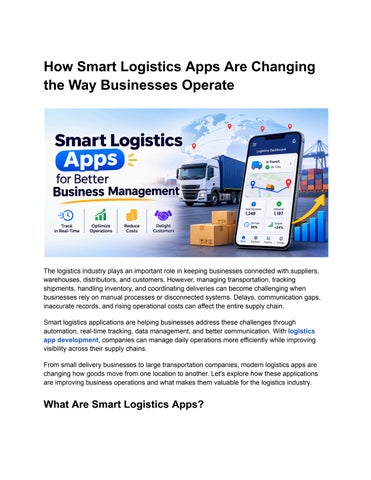
The logistics industry plays an important role in keeping businesses connected with suppliers, warehouses, distributors, and customers. However, managing transportation, tracking shipments, handling inventory, and coordinating deliveries can become challenging when businesses rely on manual processes or disconnected systems. Delays, communication gaps, inaccurate records, and rising operational costs can affect the entire supply chain. Smart logistics applications are helping businesses address these challenges through automation, real-time tracking, data management, and better communication. With logistics app development, companies can manage daily operations more efficiently while improving visibility across their supply chains. From small delivery businesses to large transportation companies, modern logistics apps are changing how goods move from one location to another. Let's explore how these applications are improving business operations and what makes them valuable for the logistics industry.
What Are Smart Logistics Apps?
Smart logistics app development services are digital applications designed to manage and monitor different logistics activities through a centralized platform. They connect drivers, warehouse employees, fleet managers, suppliers, and customers, allowing them to access relevant information in real time. Unlike traditional management systems, modern logistics applications can use technologies such as artificial intelligence (AI), GPS tracking, cloud computing, and data analytics to support faster and more informed decisions. Common features include: ● ● ● ● ● ●
Real-Time Shipment Tracking: Monitor delivery locations and shipment progress. Fleet Management: Manage vehicles, drivers, fuel usage, and maintenance schedules. Inventory Management: Track stock levels and warehouse activities. Route Optimization: Identify efficient delivery routes based on traffic and distance. Digital Documentation: Manage invoices, delivery receipts, and shipping records. Automated Notifications: Send updates about order status, delays, and delivery confirmations.
These features help businesses manage logistics activities with greater accuracy and control.
1. Real-Time Tracking Improves Supply Chain Visibility One of the biggest challenges in logistics is knowing where shipments are and when they will reach their destinations. Without proper tracking, businesses may struggle to provide accurate delivery updates or respond quickly to unexpected delays. Smart logistics apps use GPS technology to provide real-time shipment information. Managers can monitor vehicle locations, check delivery progress, and identify potential problems during transportation. Real-time tracking offers several business benefits: ● ● ● ●
Helps businesses monitor shipments throughout the delivery process. Allows customers to receive accurate delivery updates. Makes it easier to identify unexpected delays. Improves coordination between drivers and logistics managers.
Better visibility also helps businesses build customer trust because customers can access reliable information about their orders.
2. Automation Reduces Manual Work
Many logistics operations involve repetitive tasks such as updating shipment records, assigning deliveries, preparing invoices, and managing delivery confirmations. Handling these activities manually takes time and increases the possibility of human errors. Modern logistics applications automate several routine processes, allowing employees to focus on important operational activities. For example, an application can automatically assign delivery requests, generate shipping documents, update order statuses, and send notifications when a shipment reaches its destination. Businesses can benefit from automation through: ● ● ● ● ●
Reduced paperwork and administrative workload. Faster order processing. Fewer data entry errors. Improved communication between departments. Better use of employee time.
Automation makes daily logistics operations more organized and reduces unnecessary delays.
3. Better Fleet and Driver Management Managing a fleet involves more than tracking vehicles. Businesses must also monitor driver availability, vehicle performance, fuel consumption, maintenance schedules, and delivery assignments. Smart logistics apps bring these activities together in one system. Fleet managers can check vehicle locations, assign drivers, monitor trip progress, and maintain digital vehicle records. Some applications also provide alerts for vehicle maintenance and help identify inefficient driving routes. This approach helps businesses: ● ● ● ● ●
Reduce unnecessary vehicle movement. Monitor fuel consumption. Improve driver scheduling. Maintain vehicles on time. Manage delivery assignments more effectively.
For transportation businesses, better fleet management can reduce operating expenses and improve delivery performance.
4. Route Optimization Saves Time and Transportation Costs Delivery routes directly affect transportation expenses and customer satisfaction. Choosing inefficient routes can increase fuel consumption, delay deliveries, and put additional pressure on drivers. Smart logistics applications use location data, traffic information, delivery addresses, and other available details to recommend suitable routes. Route optimization can help businesses: ● ● ● ● ●
Reduce unnecessary travel distances. Avoid traffic-heavy roads when possible. Plan multiple deliveries more efficiently. Improve delivery time estimates. Reduce fuel-related expenses.
For businesses handling multiple deliveries every day, even small improvements in route planning can make a noticeable difference in overall transportation efficiency.
5. Custom Logistics Software Supports Business Requirements Every logistics business has different operational requirements. A local delivery company may need simple order tracking and driver management, while a large transportation business may require advanced fleet monitoring, warehouse management, and integration with existing enterprise systems. This is where custom logistics software development becomes valuable. Instead of adjusting business processes to fit a standard application, companies can develop software around their actual workflows. Custom solutions can include: ● ● ● ● ●
Dedicated dashboards for different user roles. Integration with ERP, CRM, and inventory systems. Custom reporting and analytics. Automated order and shipment management. Business-specific fleet and warehouse features.
Through custom logistics app development, businesses can build applications that address their operational challenges and support future requirements.
6. Data Analytics Helps Businesses Make Better Decisions Logistics businesses generate large amounts of information through deliveries, vehicle movements, inventory updates, and customer interactions. However, collecting data is not enough. Companies also need to understand what that information means. Modern logistics applications use analytics dashboards to present important business information in an organized format. Managers can review: ● ● ● ● ● ●
Average delivery times. Fuel consumption and transportation expenses. Order completion rates. Vehicle utilization. Inventory movement. Delayed or unsuccessful deliveries.
These insights help businesses identify operational problems, measure performance, and make decisions based on actual business data rather than assumptions.
7. Improved Customer Experience and Communication Customers expect accurate delivery information and timely updates when purchasing products or services. Poor communication can create frustration, even when the actual delivery process is running smoothly. Smart logistics apps improve communication by providing automated notifications, shipment tracking links, estimated delivery times, and digital delivery confirmations. Customers can check their shipment status without repeatedly contacting customer support. Businesses also benefit from fewer tracking-related inquiries and better communication between customer service teams and delivery staff.
Important Features to Consider When Developing a Logistics App Businesses planning a logistics application should focus on features that solve real operational problems rather than adding unnecessary functionality. Some important considerations include:
● User-Friendly Interface: Make the application simple for drivers, managers, and customers. ● Data Security: Protect business information through authentication, access controls, and encryption. ● System Integration: Connect the application with existing business software. ● Scalability: Ensure the system can handle increasing orders, users, and shipments. ● Cloud Infrastructure: Support secure data access and system availability. ● Performance Monitoring: Track application performance and resolve technical issues. Selecting the right features during development helps create a practical solution that supports everyday business activities.
Choosing the Right Logistics App Development Partner Building a reliable logistics application requires technical knowledge, industry understanding, and proper project planning. Businesses should work with a logistics software development company that understands transportation workflows, fleet operations, shipment management, and system integration. When evaluating development partners, consider the following factors: 1. Industry Experience: Check whether the company has experience developing logistics or transportation solutions. 2. Technical Expertise: Review its knowledge of mobile technologies, cloud platforms, GPS, and third-party integrations. 3. Development Approach: Look for a team that follows a structured development and testing process. 4. Security Practices: Ensure the company considers data protection throughout development. 5. Ongoing Support: Check whether maintenance, updates, and technical assistance are available. Professional logistics software development services can help businesses move from planning to development while ensuring the application meets their operational requirements.
Conclusion Smart logistics applications are changing how businesses manage transportation, deliveries, inventory, and supply chain activities. Features such as real-time tracking, route optimization, automation, fleet management, and data analytics help companies reduce manual work and improve operational visibility. As logistics requirements continue to grow, investing in the right digital solution can help businesses manage daily challenges and prepare for future expansion. Whether a company
needs a basic delivery application or a complete transportation management platform, logistics app development offers practical opportunities to improve efficiency, customer communication, and business performance. The key is to choose technologies and features that match actual business needs and create a reliable system that can grow alongside the organization.