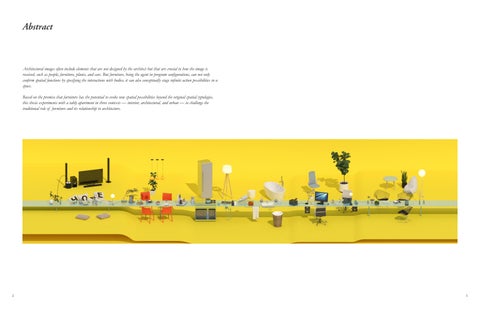
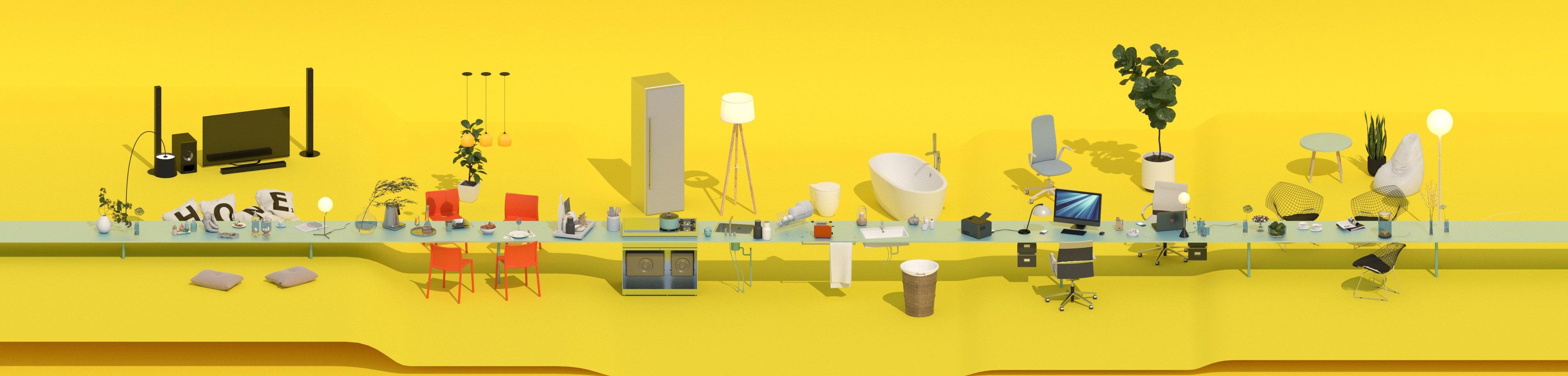
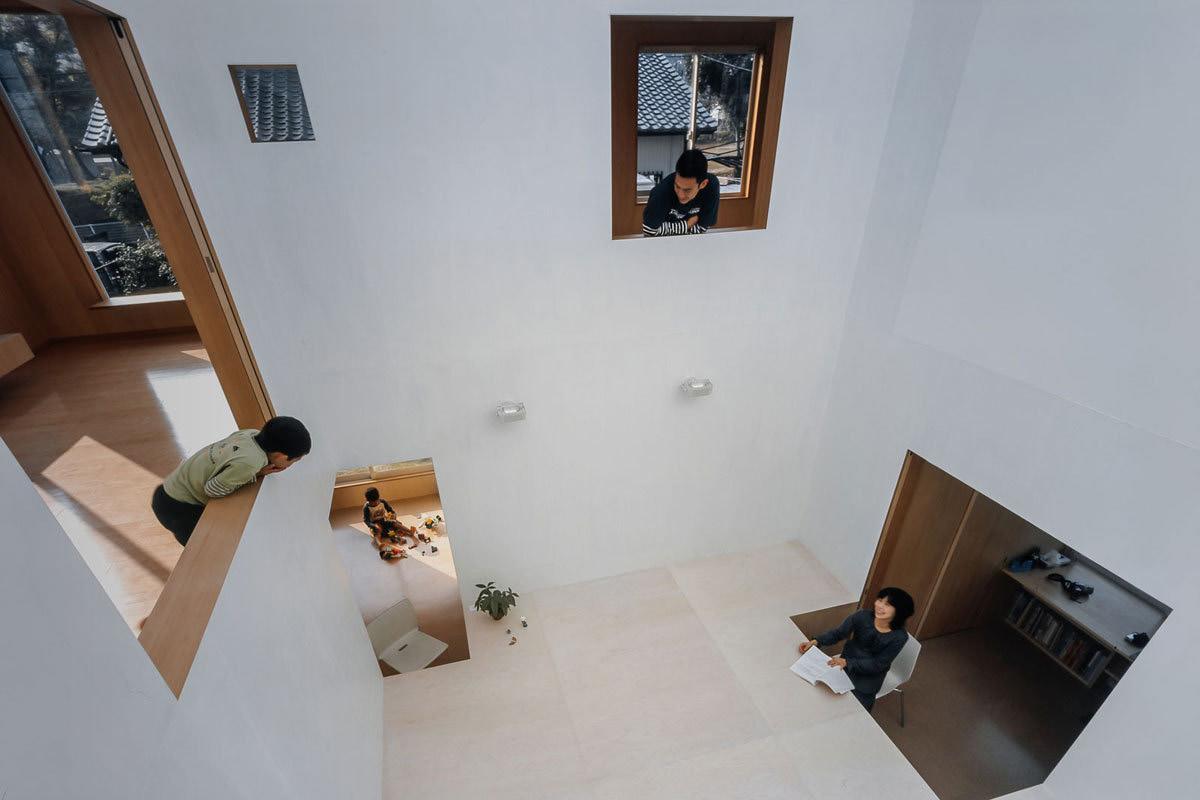
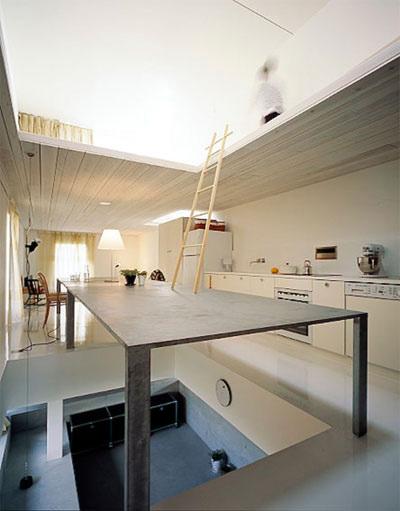
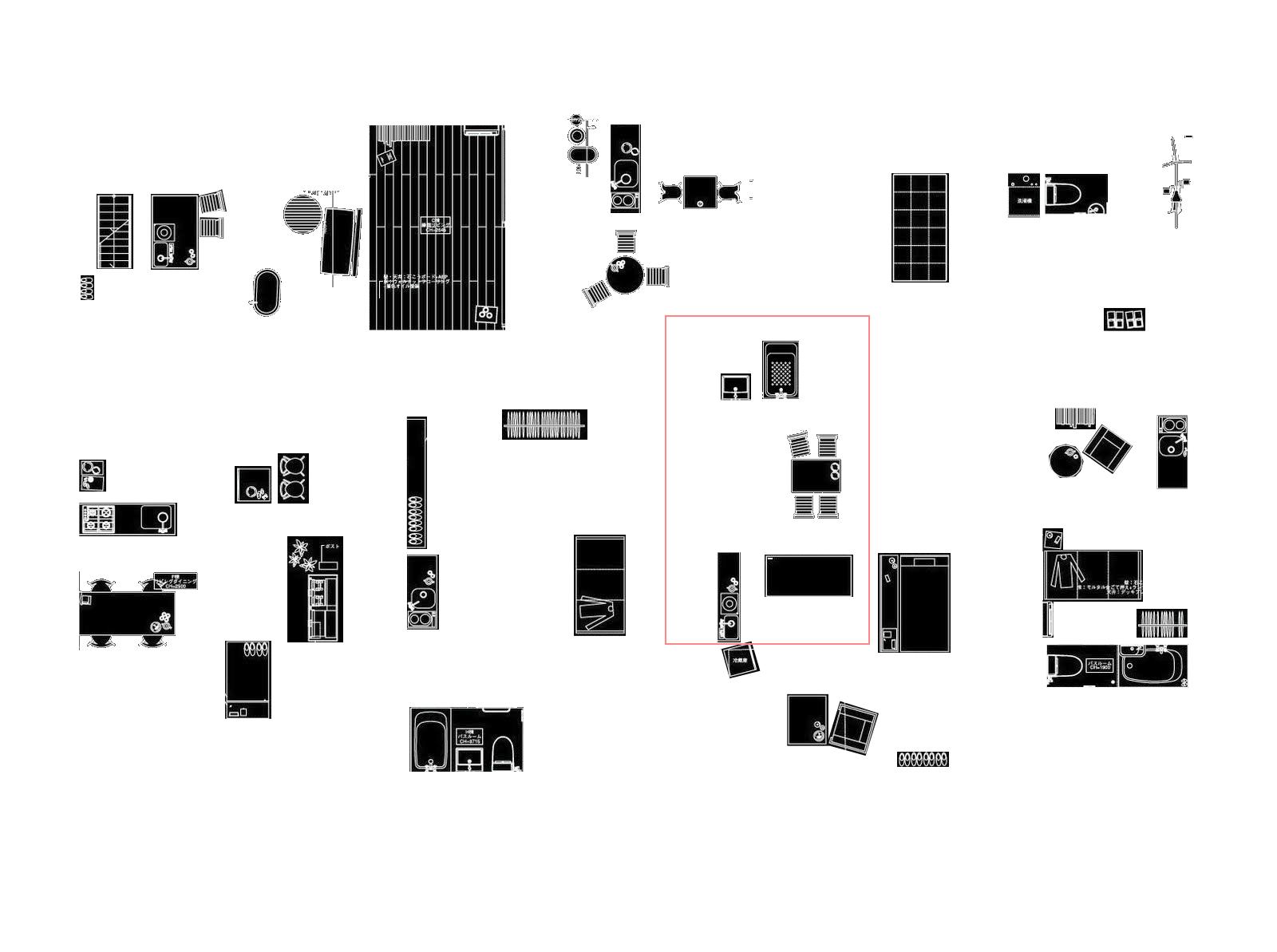
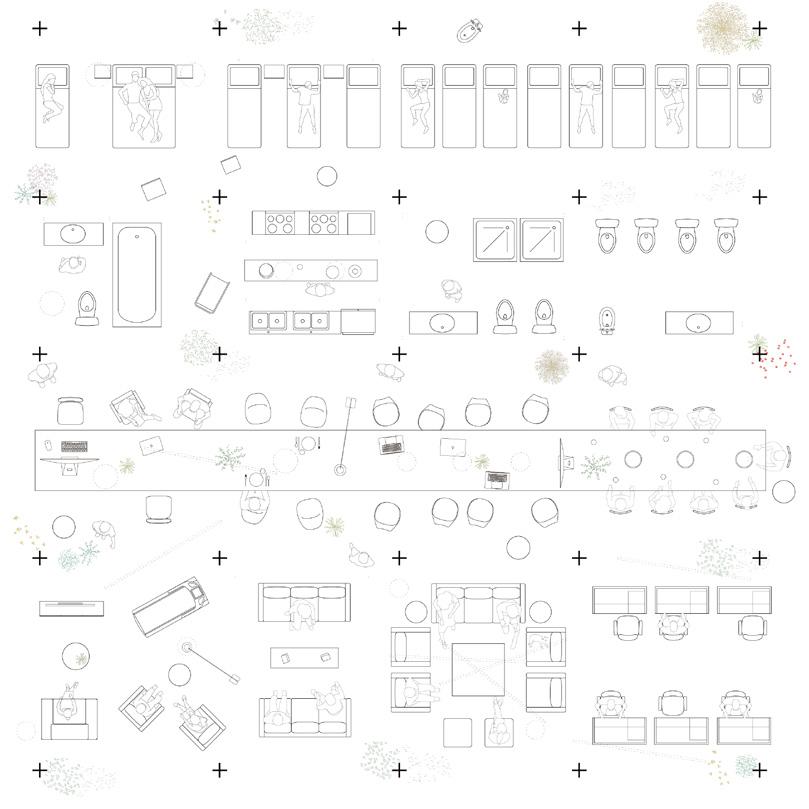
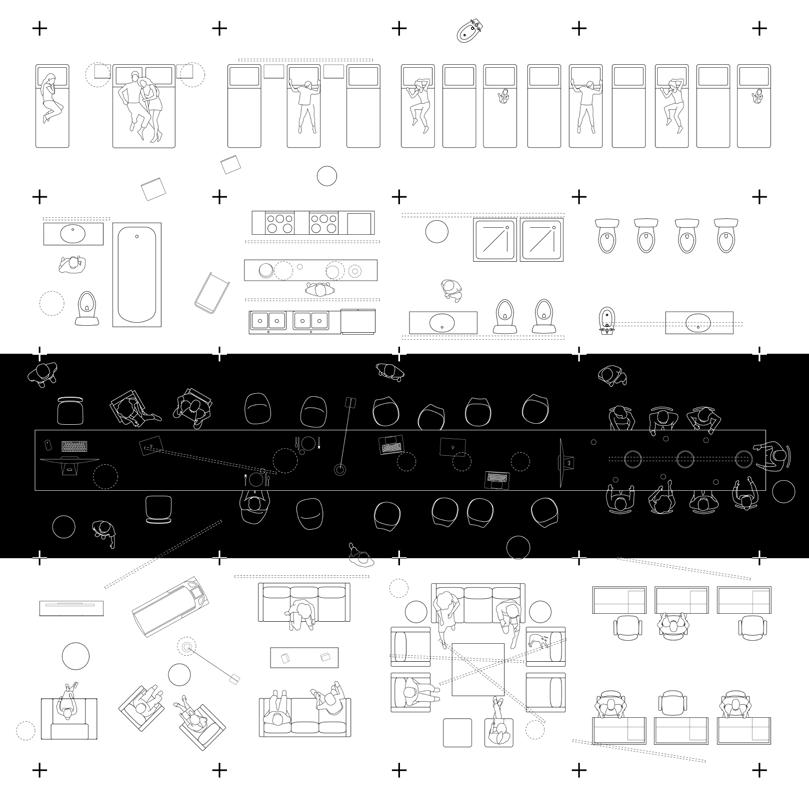
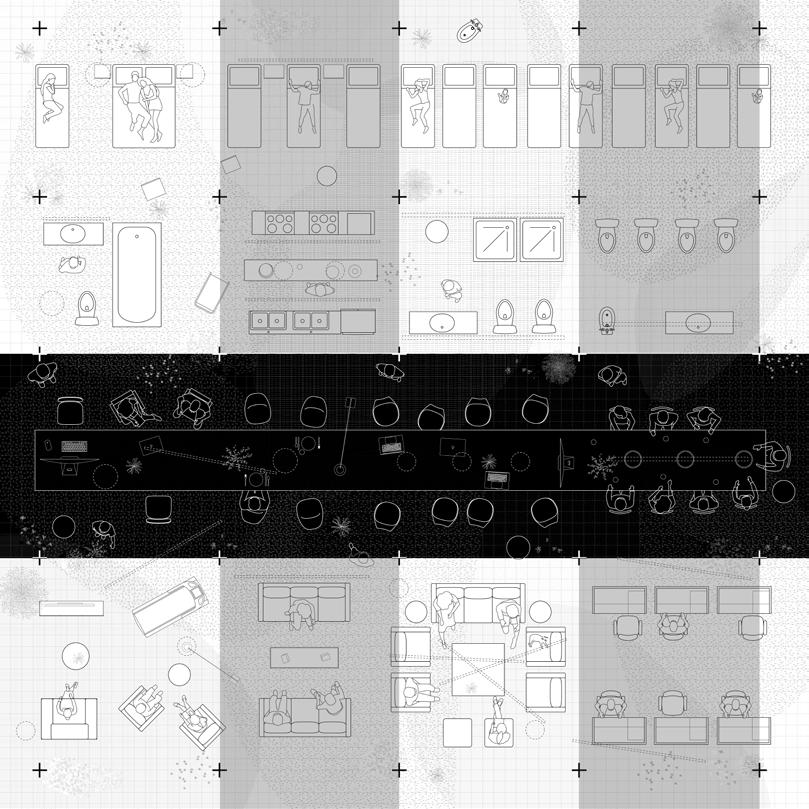
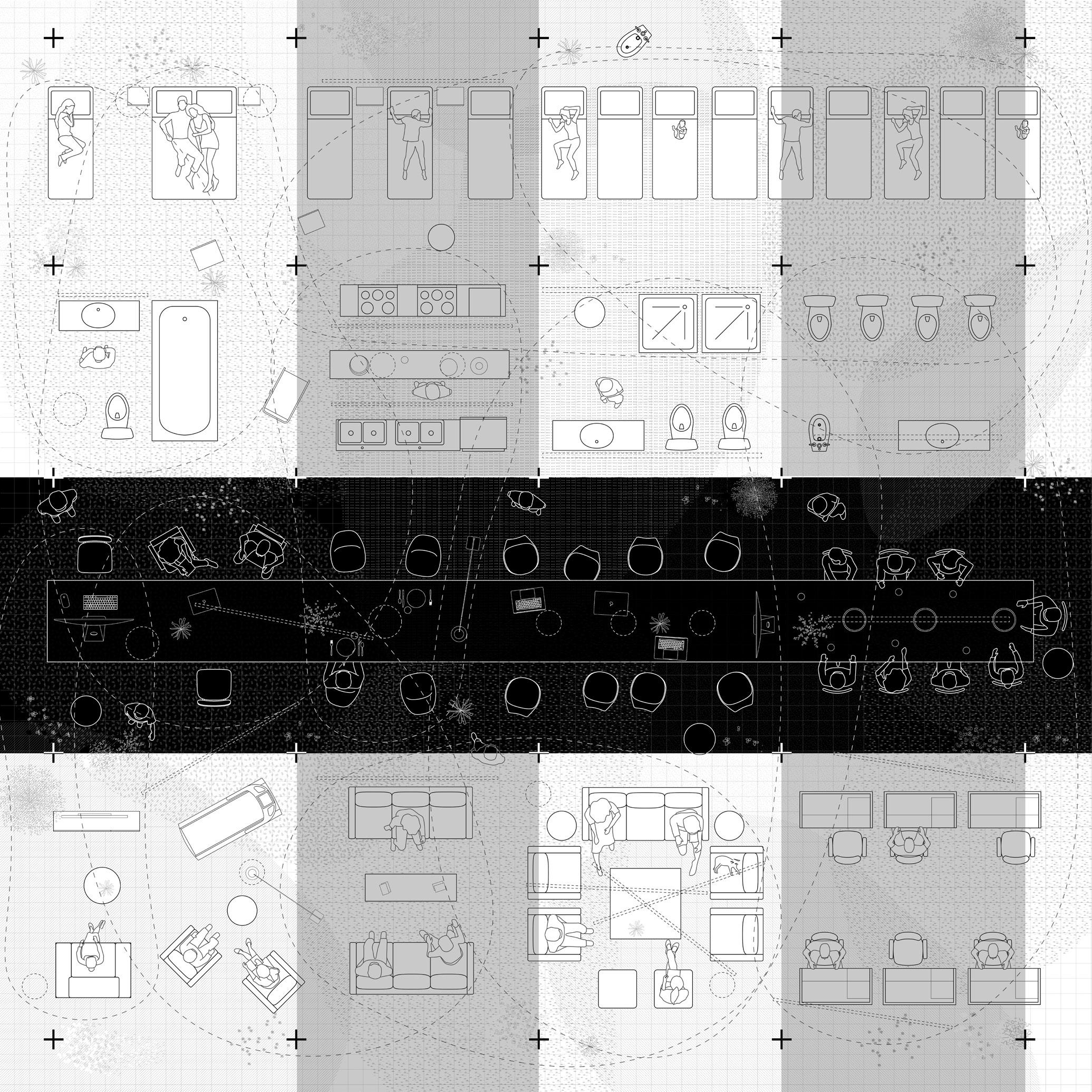
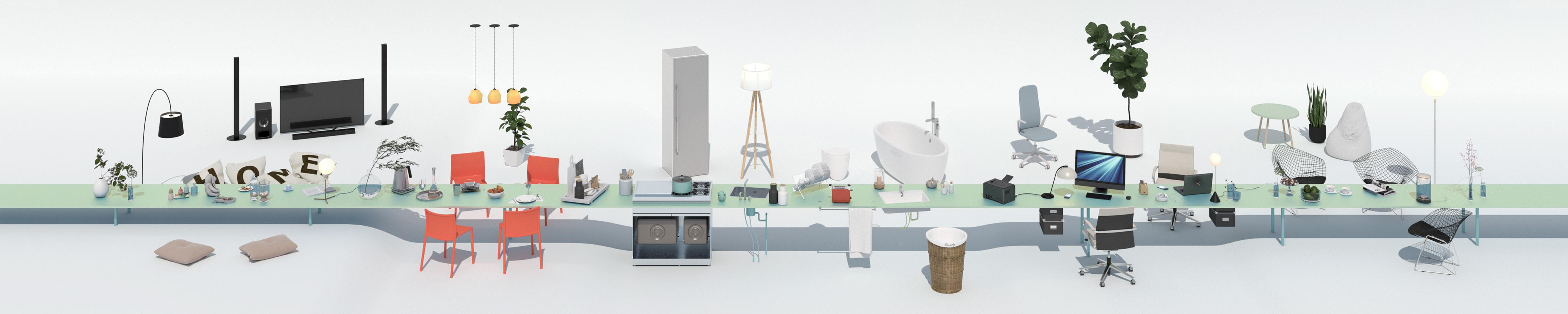
Architectural images often include elements that are not designed by the architect but that are crucial to how the image is received, such as people, furniture, plants, and cars. But furniture, being the agent in program configurations, can not only confirm spatial functions by specifying the interactions with bodies, it can also conceptually stage infinite action possibilities in a space.
Based on the premise that furniture has the potential to evoke new spatial possibilities beyond the original spatial typologies, this thesis experiments with a tably apartment in three contexts — interior, architectural, and urban — to challenge the traditional role of furniture and its relationship to architecture.
Part I: Entourage Stories
Furniture as Entourage
In discussing architectural images there is an aspect that initially seems secondary or of lesser importance. Yet every image engages this issue at some level, whether it is an abstract orthographic drawing or a hyper-realistic perspective rendering. If this question is ignored, the image will often be called out as too abstract, too self-referential. Yet, when it is engaged, this issue will also most likely be what is noticed, what is commented on, even before the architecture.
The issue I am referring to is how all the stuff of the world — the trees, furniture, devices, bowls, pillows, knick-knacks, cars, lamps, rocks, animals, and people — is represented. These items are not typically designed by the architect and are often the last things added to a representation, but they are crucial to how an architectural image is received...
The discipline gathers these marginalia together under the term entourage.
- Michael Young
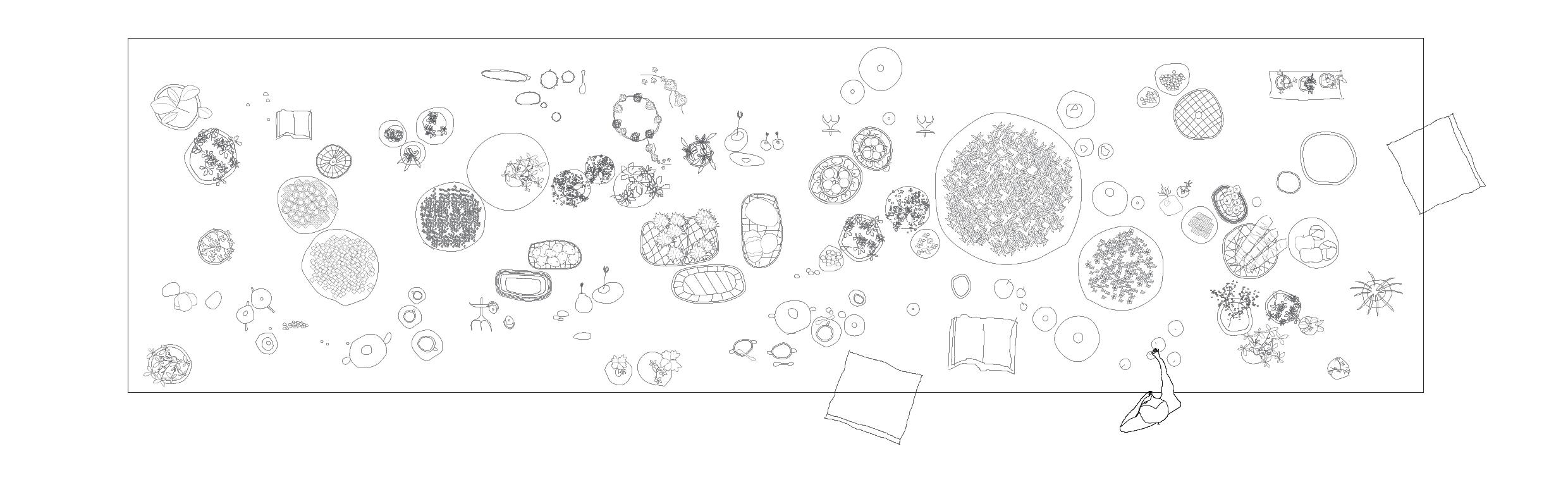
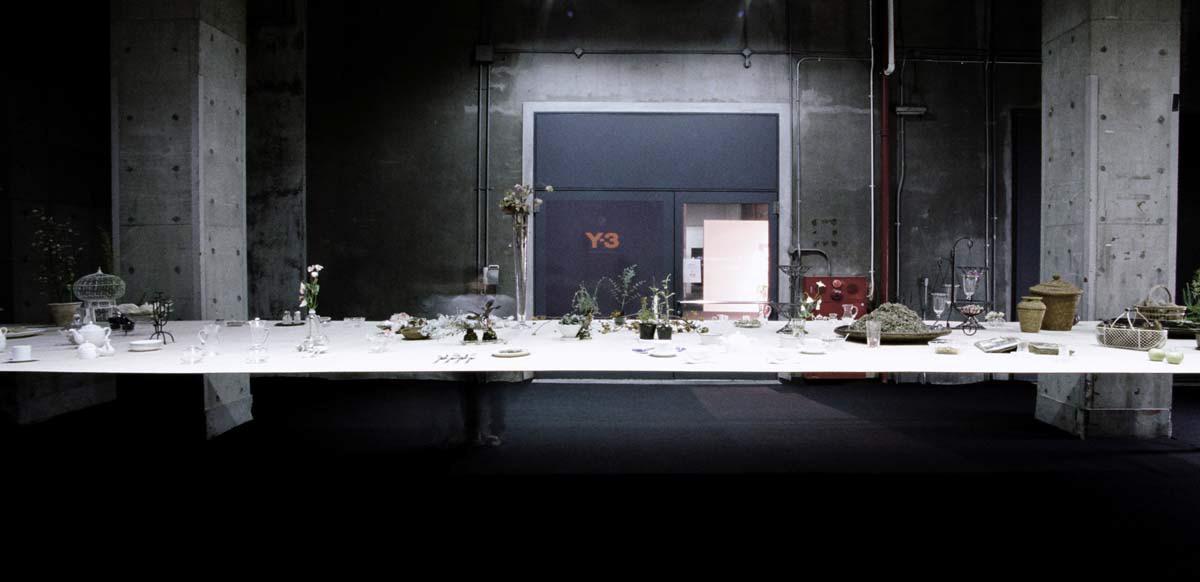
Tables for a Restaurant, Junya Ishigami, 2008
Part I: Entourage Stories
Furniture as Entourage
The English word 'furniture' originates from the French word 'fourniture,' which is the noun form of 'fournir,' meaning to supply or provide. In French, 'fourniture' refers to supplies or provisions. However, the English usage of 'furniture' specifically pertains to household objects, distinguishing it as a language-specific term. Meanwhile, French and other Romance languages, along with German, use variations of the word 'meubles,' derived from the Latin term 'mobilia,' which translates to 'moveable goods'.
Typically, furniture is often seen as an afterthought in architectural design, but it actually plays a crucial role in how we perceive and interact with space.This thesis aims to explore the questions listed below:
What if furniture could do more than just serve its traditional purpose? What if it could shape entire architectural spaces and evoke new spatial possibilities?
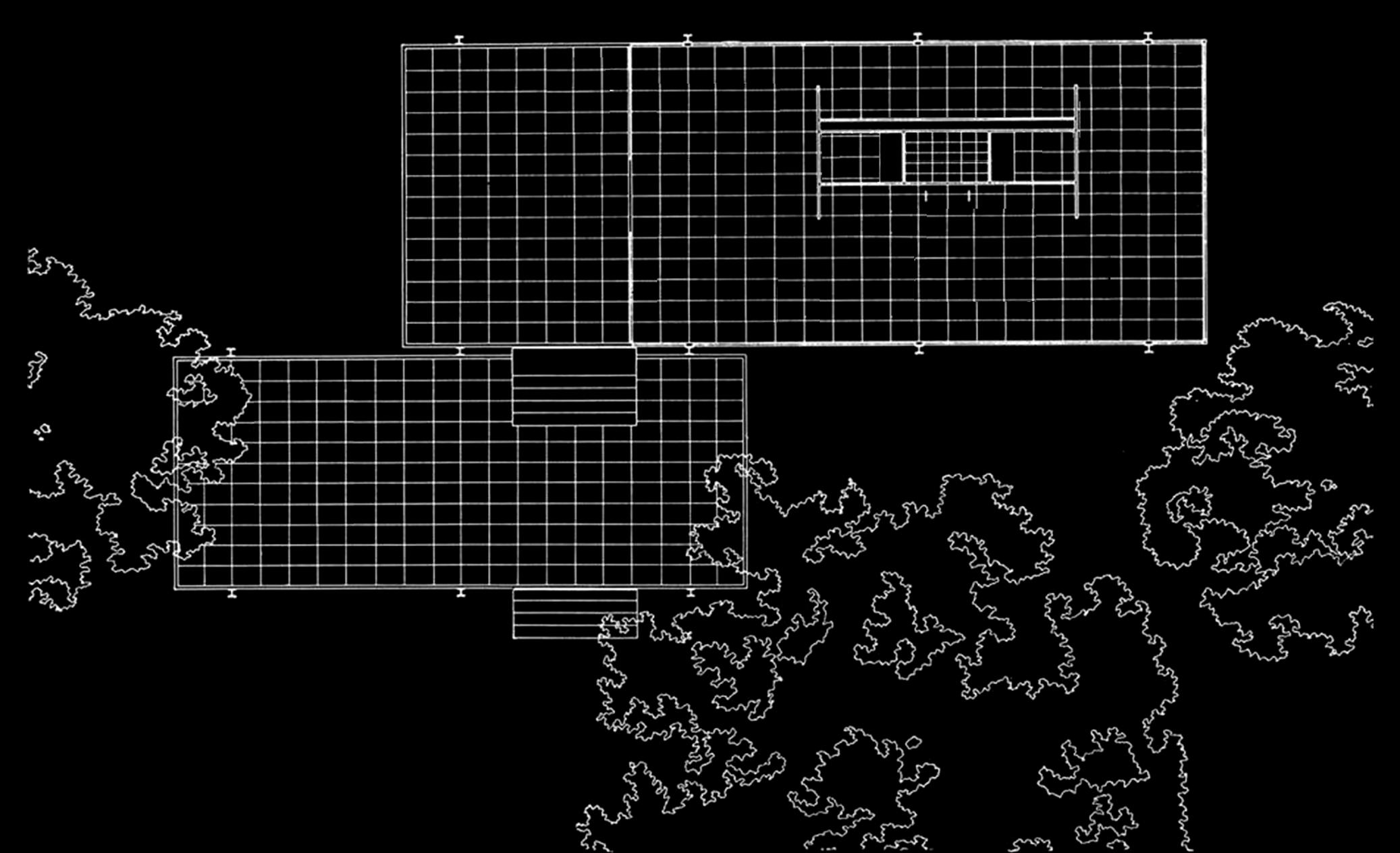
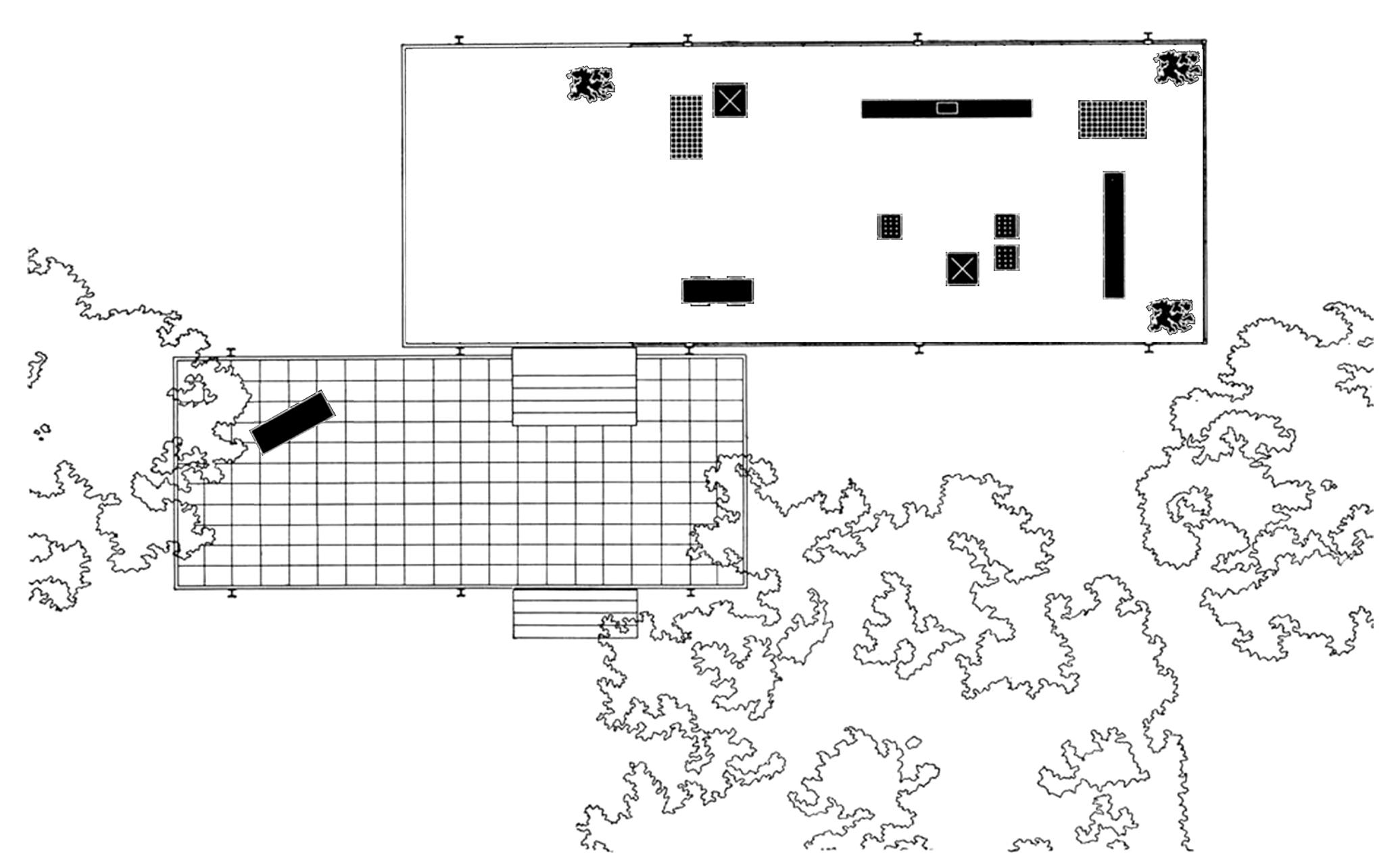
Farnsworth House Plan, Mies van der Rohe, 1945; edited by Lin, 2022
Part I: Entourage Stories
Furniture as Entourage
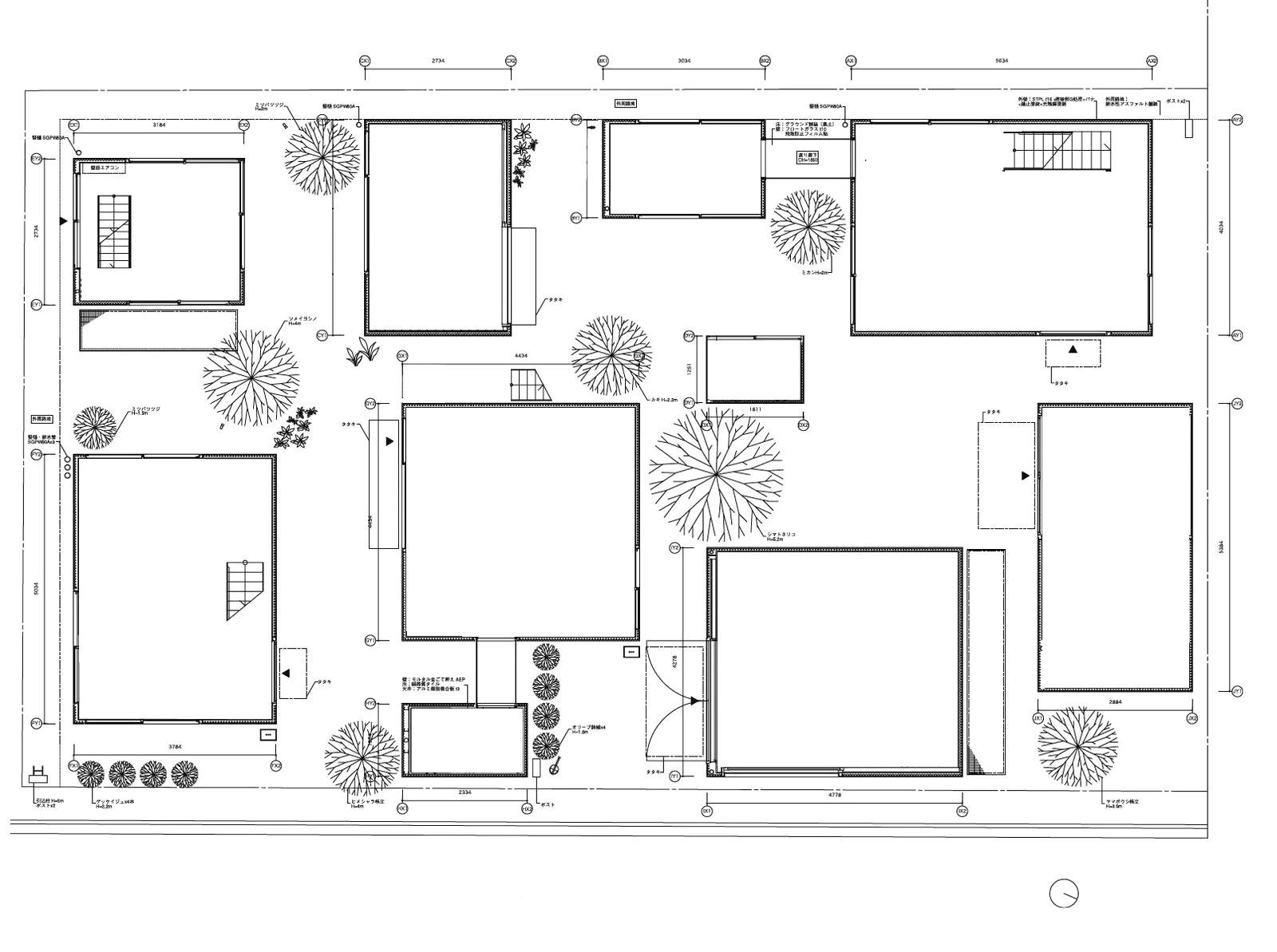
Moriyama House Plan, SANAA, 2005; edited by Lin, 2022
Part I: Entourage Stories
Challenge Furniture's Role as Entourage
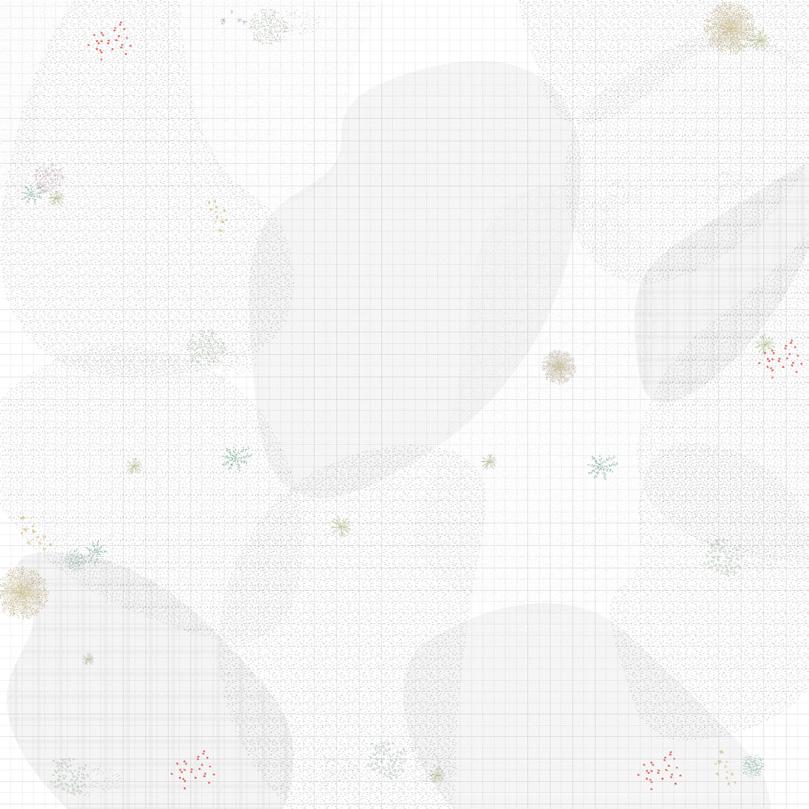
Entourage Elements What can be the entourage to furniture?
Part II: Tably Apartment Concept
Part II: Tably Apartment
Introduction
This thesis project focused specifically on the table, which is often regarded as a functional piece of furniture that occupies space without defining it.
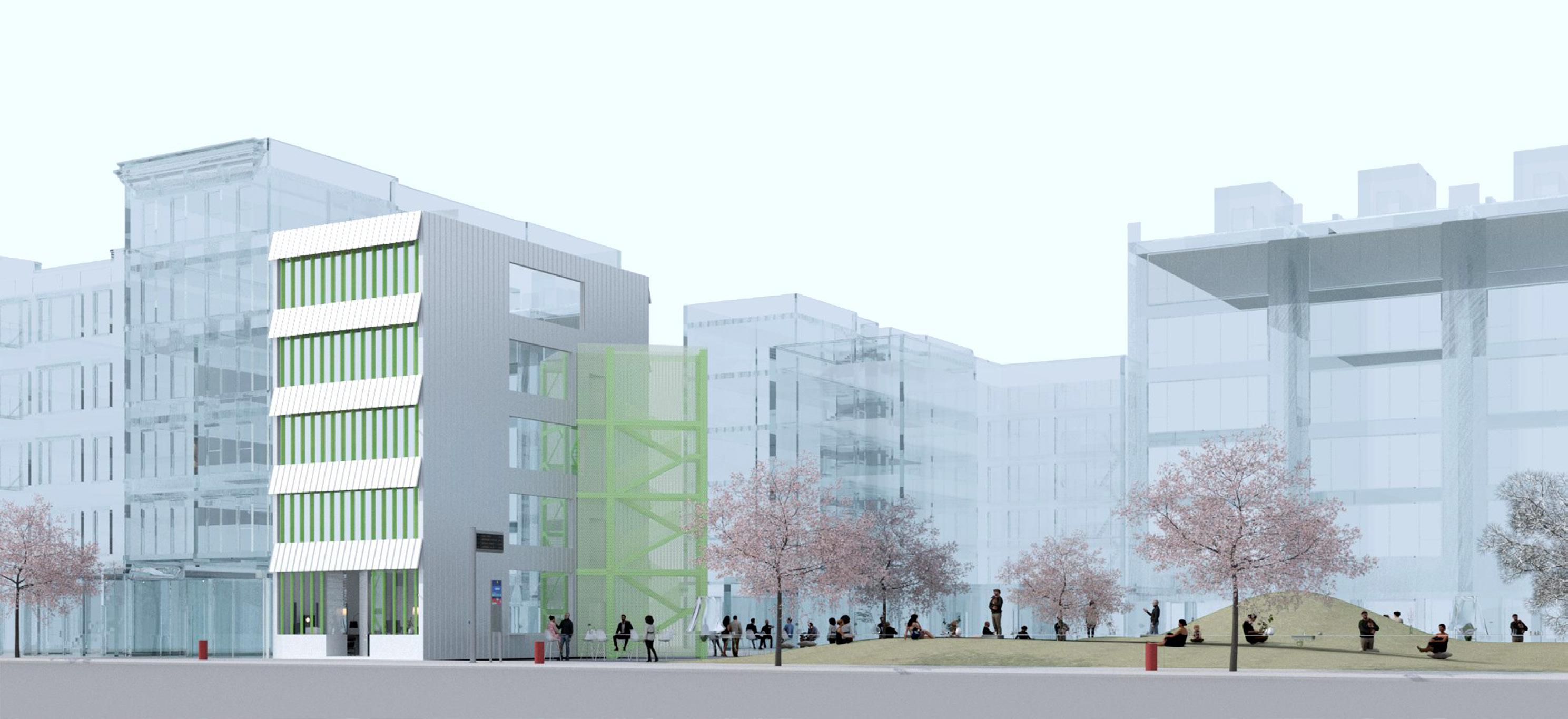
This tably apartment is a five-floor co-living apartment located on East 41 Street in New York, which is equipped with three innovative table systems to challenge how tables could be utilized to shape spaces.
Part II: Tably Apartment
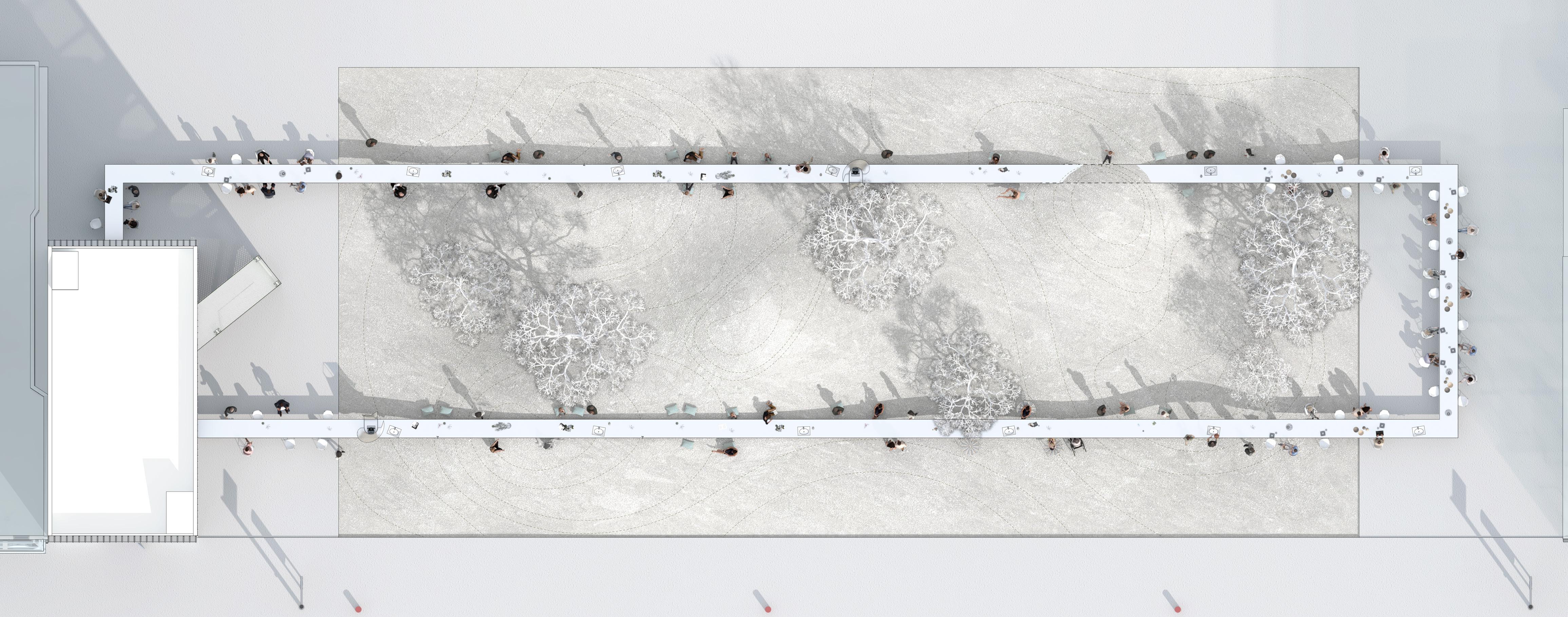
Urban Tableness
*All drawings are scan of the originals. Original size: 81cm x 32cm