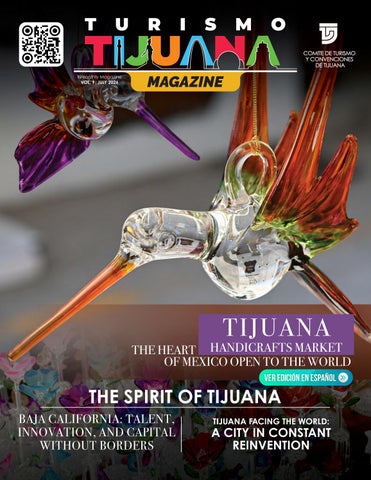
Bimonthly Magazine VOL. 9|JULY 2026
cotucotijuana.com
1
C O NT ENT Con sabor a malta: Las primeras productoras de cerveza en Tijuana (1923-1929) ....................................................................pg. 4
The premium real estate boom on the Baja California coast
Tijuana handicrafts Market: The heart of Mexico open to the world ....................................................................pg. 6
CRÉDITOS EDITORIAL COMMITTEE: Mtra. Melissa Pacheco Silveyra Ana Alicia Meneses Martínez Lic. Gabriel Camarena Salinas
Baja California: Talent, innovation, and capital without borders .....................................................................pg 8 The new silhouette of Tijuana ...................................................................pg 12 Text neck: The new threat to cervical health in the digital age
EDITORIAL SOURCE: Lic. Alma Sofía Villalobos Ruiz.
...................................................................pg 20
EDITORIAL DESIGN AND EDITING: David Carrizales Hernández
...................................................................pg 22
WRITING AND PROOFREADING: Myrna Sánchez
...................................................................pg 24
PHOTOGRAPH: Cristian Cruz Brian Rosales
Health begins in the gut
The spirit of Tijuana in a glass
A glimpse into Mexico’s most creative side: sensacional at CECUT ...................................................................pg 26 Tijuana on film
Bimonthly Magazine Volumen 9 © Derechos Reservados Comité de Turismo y Convenciones del Municipio de Tijuana, Estado de Baja California.
...................................................................pg 28 Among heroes, artists, and legends: The Tijuana wax museum ...................................................................pg 30
pg.
10 Tijuana facing the world: A city in constant reinvention
pg.
14 Monumental Arch: an icon in the heart of Tijuana
pg.
16 Baja California: Home of world-class mexican wine
Stories that build destinations The original articles were translated into English using AI
...................................................................pg 32 Art without borders: Tijuana talents with international reach ...................................................................pg 34 Upcoming Events ...................................................................pg 36
2
cotucotijuana.com
pg.
18
WELCOME TO THE NINTH EDITION OF TIJUANA MAGAZINE, Dear readers, It is a true honor to present to you the ninth edition of Tijuana Magazine This publication is dedicated to exploring and celebrating everything that makes our city special: its cultural heritage, its historical significance, and its social fabric. Each article we share with you aims not only to inform but also to encourage contemplation and reflection on what surrounds us and defines us as “Tijuanenses”. For this edition, we’ve selected articles that we’re sure will resonate with those of us who live in and love this vibrant metropolis. We invite you to delve into these pages, where you’ll discover captivating stories and indepth investigations into issues that concern us all. The First Beer Producers in Tijuana. It’s a fascinating journey through the origins of Tijuana’s brewing industry, paying homage to those visionaries who, with dedication and talent, led our city to become a global benchmark for craft beers. Beyond being a tribute to brewing tradition, this text reflects the drive for excellence and initiative that distinguishes us as a community. Of equal importance is The History of the Monumental Arch on Revolution Avenue. That beloved symbol that marks the entrance to our city. Throughout this article, we will explore its cultural and historical significance, as well as the profound impact it has had on how we identify as “Tijuanenses”. The arch transcends its physical nature; for many, it is a bond that connects us emotionally to our city. When we face difficult times, Tijuana Facing the World: Perception and Resilience It invites us to reflect on how we have overcome obstacles and demonstrated a seemingly boundless determination. This analysis encourages us to recognize our solidarity as a people and how, together, we have built a community that rises again.
We will also have the expert perspective in Health Begins in the Gut. In this article, a nutrition specialist will share her knowledge about mindful eating and its impact on our overall well-being. This article will remind us that caring for our bodies is fundamental to both our vitality and our peace of mind. And they cannot ignore the Sensational Exhibition. A radiant display of creativity, ingenuity, and good humor that celebrates design made in Mexico. This piece invites you to discover and admire the work of artists and creators who are transforming how we understand art and aesthetics in our nation. Of course, you’ll find many other articles that you’re sure to enjoy. Tijuana is a place where multiple cultures, thoughts, and stories of talented people converge. Its streets hold narratives waiting to be told and experiences that deserve to be shared. As we read through this edition, let us not forget that each of us contributes to writing the story of our identity and strengthening the fabric that unites us. I sincerely hope this release brings you as much joy as we experienced creating it. Your continued support is what motivates us to keep going, and we look forward with excitement to what’s next for Tijuana.
With sincere gratitude and enthusia, Dr. Karim Chalita Rodríguez President of the Tijuana Tourism and Conventions Committee.
Well-being is a crucial issue, and the article Text Neck: The Working Neck. This article examines a problem many of us face today due to our constant contact with technological devices. We will reflect on how the intensive use of these devices affects our bodies and what alternatives exist for taking care of ourselves.
cotucotijuana.com
3
WITH A MALTY FLAVOR:
THE FIRST BREWERIES IN TIJUANA (1923-1929) By Araceli Almaraz, historiadora El Colegio de la Frontera Norte
T
he first formally registered brewery in Tijuana was the Aztec Brewing Co., on September 19, 1923. The partners were four businessmen: Carl Withington, born in 1875 in Bakersfield, California; Edward Paul Baker, born in 1880 in San Francisco, California; Jerome F. Tucheck, an accountant and commission agent; and Herbert Louis Jaffe, born in 1881 in Oakland. Jaffe and Baker’s involvement in the brewing business had begun a few years earlier in Mexicali (1921). In Tijuana, their presence was felt in the founding of the city’s National Chamber of Commerce in 1926, representing three businesses involved in the production and sale of beer: Jaffe and Baker, Continental Distributing Co., and Aztec Brewing Co. (Compañía Cervecera Azteca). Jaffe and Baker was registered in Tijuana in 1924 as a partnership between the two. The Aztec Brewing Co. operated through the Continental Distribution Company, with offices in Tijuana, London, and San Diego, and its headquarters in Mexicali, as shown in Figure 1. After the repeal of the Volstead Act (1933), the company relocated to San Diego.
The Aztec Brewing Co. brand was marketed as A. B. C. Beer, which corresponded to the initials.
Image 2. Postcard Collection from the Tijuana Historical Archive, IMAC.
Junto a las empresas impulsadas por Herbert L. Jaffe y Edward P. Baker, durante los mismos años, se establecieron en Tijuana otras compañías vinculadas a la producción de cerveza.
Una de ellas fue la Cardinali Sanclemente y Compañía (1924) integrada por cuatro socios: Herminio Teodoro Cardinali nacido en 1884 y vecino de Tijuana, originario de Génova, Italia; Mario Cardinali nacido en 1889 vecino de Mexicali y originario también de Génova, Italia; Francisco Valentín Sanclemente, nacido en 1884, originario de Huesca, España y vecino de Tijuana, y su hermano Image 1. Personal correspondence of Abelardo L. Rodríguez, 1929. Mariano Fausto Sanclemente, Historical Archive of the Institute of Historical Research of the UABC. nacido en 1895, vecino de San Diego y del mismo origen. En este caso se trató de una compañía distribuidora.
4
cotucotijuana.com
The Tijuana Brewing Company (1925) was solely owned by the Cardinali brothers. Through this company, the Genoese brothers produced Cardinal Beer, one of the most famous brands of the time (Image 3), also marketed as Cardinali Beer (Image 4), and imported other brands such as C.B.C. Beer (Image 5).
Image 3. Cardinal Beer label.
Image 4. Advertisement for Cardinali Beer, in the La Frontera Weekly, August 1931.
During these years, beers from two companies registered in Mexicali also arrived in Tijuana. One of them was Cervecería del Norte (1919), where the partners were Carl P. Norwal -an industrialist- and Fred McCoy, both residents of Calexico, and Rubén S. Barbachano, born in 1889, originally from Guerrero and a resident of Mexicali.
Image 6. Mexicali Beer Label
The other was the Mexicali Brewery (1923), founded by partners Miguel González, born in 1887 in Altar, Sonora; Heraclio Ochoa, also born in 1887, a resident of Mexicali; Albert Biner, originally from Germany and a resident of Los Angeles; and Luis A. Marín, born in 1894 in Tijuana. The brewery’s brand was Cerveza Mexicali (Image 6). In addition to bars and restaurants, one of the most iconic venues for beer consumption was the Mexicali Beer Hall, known for housing what was advertised as the world’s longest bar (Image 7). The cross-border relationships that gave rise to beer production in Tijuana underwent changes in the 1930s. Beer production resurfaced in the region with the opening of the Tecate Brewing Company (1944), which was acquired ten years later by the Cuauhtémoc-Moctezuma Brewery of Monterrey. It wasn’t until the late 1990s that a new, malty spirit arrived in Tijuana, Mexicali, and Ensenada, brought by craft beer. But that’s another rich story.
Image 5. C. B. C. Beer label.
Towards the end of the 1920s, the Mexican Malt Company, S.A. (1929), was established to ensure the supply of this essential ingredient for brewing beer. The partners in this company were Alberto V. Aldrete Palacio, born in 1892, originally from Ensenada and a resident of San Diego; Enrique Aldrete Palacio, born in 1878, originally from La Paz and a resident of San Diego; as well as Edward Paul Baker and Herbert Louis Jaffe.
Image 7. Postcard of the Mexicali Beer Hall
cotucotijuana.com
5
TIJUANA
THE HEART HANDICRAFTS MARKET OF MEXICO OPEN TO THE WORLD By Alina Itzel Rivas Ramírez Alejandra Martínez Flores Jaqueline Elena Camargo Murillo
The first contact with Mexico Tijuana has the power to captivate all who visit. For millions of tourists, it represents their first encounter with Mexico: the opportunity to explore a modern, creative city with a profoundly diverse cultural makeup. Beyond its international acclaim for world-class cuisine, cuttingedge medicine, craft beers, and artistic richness, it also preserves spaces where the heart of Mexican traditions beats. The Tijuana Handicrafts Market is one such place. Located a short distance from the San Ysidro border crossing and Avenida Revolución, this market has become a must-see for those seeking an authentic Mexican souvenir. More than just a place to shop, it’s a space where history, identity, creativity, and hospitality converge. Every visitor finds a representative sample of the country’s rich cultural heritage here. Its relevance transcends the commercial sphere. It serves as a showcase for the diversity of Mexican crafts and demonstrates how traditions evolve without losing their essence. This balance between the ancestral and the contemporary makes it a benchmark for cultural tourism on the border.
A trip throughout Mexico Wandering through its aisles is like traveling through different regions of the country in one place. Among its shops, you’ll find textiles from Oaxaca and Chiapas, ceramics from Puebla, artistic glass from Jalisco, silver from Taxco, copper from Michoacán, leather goods, wood carvings, handcrafted furniture, terracotta, masks, alebrijes, sarapes, hats, religious objects, and a wide variety of traditional souvenirs. Each shop offers a unique experience. The richness of colors, textures, and techniques transforms the
6
cotucotijuana.com
visit into a true feast for the senses. Whether you’re looking for a small gift, a collector, or an interior designer, you’ll find pieces of great artistic value.
The magic of handcrafted work In an era dominated by industrial production, craftsmanship retains a profound cultural significance. Each piece is unique and unrepeatable, the result of hours of work, knowledge passed down through generations, and a deep respect for traditional techniques. Behind every embroidered piece, carving, or pottery is a family keeping an ancestral craft alive. Buying a handcrafted item means directly supporting these artisans and helping to preserve a heritage that distinguishes Mexico worldwide.
Quality and affordable prices One of the market’s biggest draws is the excellent balance between quality and price. Thanks to direct relationships with workshops and artisans from various states, visitors can purchase authentic products at competitive prices. It’s common to find shoppers from San Diego, Phoenix, and Las Vegas crossing the border specifically to visit this market. Some are looking for gifts, others want to decorate their homes with Mexican art, and there are also merchants who supply specialty businesses.
The warmth of its people The vendors are an essential part of the experience. Many have decades of experience serving national and international visitors. They know the origin of the pieces, guide buyers, and share stories about the regions where the crafts are made.
Their friendly and personalized service builds trust and helps strengthen the positive image that Tijuana projects as a tourist destination.
An essential stop After exploring Avenida Revolución, visiting the Tijuana Cultural Center, enjoying the local cuisine, or attending a conference, the Handicrafts Market complements any itinerary. Many medical tourism patients and their companions find this a peaceful place to immerse themselves in Mexican culture during their stay. Business travelers also appreciate its proximity to the city’s main attractions.
Modernity with identity Tijuana proves that it’s possible to grow without losing your roots. As the city continues to solidify its position as a competitive and innovative destination, the Handicrafts Market serves as a reminder of the importance of preserving the traditions that distinguish Mexico. For those who promote tourism, this space represents hospitality, authenticity, and pride in national culture. It is a meeting point where visitors from different countries converge daily with artisans and merchants committed to showcasing the best of Mexico.
In a border city characterized by the constant exchange of cultures, the Handicrafts Market continues to demonstrate that Tijuana welcomes its visitors with identity, tradition, and warmth. For this reason, it remains one of the essential places for those who wish to experience the authentic face of Mexico..
WHY VISIT IT?
( You’ll find authentic handicrafts from virtually all over the country. ( You can purchase original parts at affordable prices. ( You will meet merchants who share the story behind each creation. ( You will complement any tourist route through Tijuana. ( You will contribute directly to the livelihood of artisan families and the preservation of Mexican cultural heritage.
On your next visit to Tijuana, don’t hesitate to visit it.
A place that leaves a mark Visiting the Handicrafts Market reveals that the most precious memories of a trip are born from connecting with people, their stories, and their culture. Each handcrafted item becomes a symbol of Mexico; each purchase strengthens the economy of numerous families and helps preserve centuries-old techniques and customs.
cotucotijuana.com
7
BAJA CALIFORNIA: TALENT, INNOVATION, AND CAPITAL WITHOUT BORDERS
By Mayra Pérez
S
upply chains, human talent, and border infrastructure are some of the factors that position Baja California as an attractive destination for foreign investment.
While it is home to the busiest border in the world and enjoys a privileged geographic location, in recent years the region has consolidated itself as a benchmark for industrial growth and economic development, with ample opportunities for sectors seeking to expand operations and strengthen their presence in strategic markets. For Adriana Eguía Alaniz, president of Tijuana Economic and Industrial Development (DEITAC), the state has become a key point for the stability of supply chains, technological innovation, and the attraction of high valueadded industries. In this context, certainty has become a determining factor in investment decisions.
Transformation: A Pillar for Attracting Investment The DEITAC representative highlighted that events such as the COVID-19 pandemic and trade tensions between global powers directly impacted business operations. As a result, more and more companies are seeking to establish themselves closer to their consumer markets, allowing them to reduce logistical risks and respond more nimbly to economic changes. In this scenario, Baja California has managed to strengthen itself above other regions by leveraging this dynamic and changing environment to evolve. Its capacity for adaptation and specialization has become one of its main competitive advantages. Proof of this is that some of the most important and leading industries in sectors such as medical devices, aerospace, and electronics are concentrated in this northern region of the country. This strength has sparked the interest of international groups seeking to finalize mergers and acquisitions (M&A) by purchasing smaller companies to integrate them and expand their operations.
8
cotucotijuana.com
Specialized Talent: The Advantage That Puts the Region A Step Ahead While supply chains and a robust border infrastructure are fundamental elements for economic growth, Eguía Alaniz emphasized that there is an even more relevant factor: human talent. Beyond physical infrastructure, one of the main attractions for investors is the accumulated experience of the region’s workforce, the result of decades of industrial development. This has allowed for the creation of highly competitive technical and engineering profiles. While other developed countries need to hire foreign personnel for certain operations, Baja California has a skilled workforce and growing specialization in sectors such as biotechnology, software development, and artificial intelligence—areas that represent the next stage in the state’s economic evolution.
primarily between Mexico and the United States—and improving the operational efficiency of established companies. Furthermore, these projects lay the groundwork for new investments in the region. “Maintaining and retaining existing companies is key to the state’s continued economic health,” he stated. Similarly, the availability of industrial space plays a strategic role. Maintaining healthy vacancy rates in industrial parks allows for attracting new projects and responding to growing international demand, he emphasized.
Maintaining Competitiveness: The Challenge for the Coming Years Baja California faces significant challenges on its path to greater economic growth. One of these is streamlining regulatory processes and permits related to imports and exports. To achieve this, it will be necessary to strengthen coordination among federal, state, and municipal governments, thus ensuring competitiveness against other international destinations also seeking to attract investment.
The combination of talent, proximity, and adaptability is what makes the region competitive today
It is no coincidence that 50% of Baja California’s Gross Domestic Product (GDP) is related to foreign direct investment, consolidating it as one of the state’s main economic drivers, he noted.
Infrastructure and Connectivity: Essential for Development In this regard, Eguía Alaniz pointed out that logistics infrastructure and border crossings are fundamental elements for attracting investment. Based on his experience, he emphasized that while attracting capital extends beyond construction, these elements constitute a cross-cutting axis for boosting job creation and stimulating the economy. Currently, mobility projects promoted by all three levels of government, especially binational projects related to the expansion of border crossings and industrial parks, contribute to streamlining trade—
The economic outlook points toward a transformation in which traditional manufacturing will no longer be the sole engine of growth. Sectors such as artificial intelligence, semiconductors, and advanced technologies are beginning to shape the new global economy. Therefore, according to Eguía, “the combination of talent, proximity, and adaptability is what makes the region competitive today,” positioning Baja California as one of the most important territories for a new era of strategic and innovative investment.
cotucotijuana.com
9
THE PREMIUM REAL ESTATE BOOM ON THE BAJA CALIFORNIA COAST By Mayra Pérez
F
or decades, Baja California has been recognized as a major tourist destination for both domestic and international visitors. However, thanks to the Tijuana-Rosarito-Ensenada corridor, it has also established itself as one of the regions with the greatest potential for premium real estate development in Mexico. For Luis Bustamante, a licensed real estate agent with extensive experience in the regional market, one of the main factors driving the state’s growth in recent decades is its competitive pricing: “They come to us because it’s more affordable,” he stated. This advantage represents a significant opportunity for those looking to invest in the region. “Any investor planning to build a tower realizes that beachfront prices in Baja California are lower than those in Mexico City. While here we’re still talking about $300 per square meter in coastal areas, in Mexico City we’re talking about $1,500 per square meter,” he added.
Addressing today’s challenges to ensure a better future Although real estate development is currently experiencing a favorable period, several factors limit its growth potential. The main one, according to Bustamante, is binational mobility between Mexico and the United States. While many people consider security to be one of the main inhibitors of development, the specialist maintains that wait times at border crossings have an even greater impact, according to information obtained through interviews and surveys conducted among his clients. The difficulties in crossing from Mexico to the United States directly affect the experience of investors, potential buyers, and binational residents.
10
cotucotijuana.com
From his perspective, resolving cross-border mobility and connectivity issues would allow for a considerable increase in the sector’s sales volume: “Today the market sells around $500 million a year. If we improve mobility and infrastructure, we could easily reach one or two billion dollars,” he stated.
Tourism infrastructure and collaborative work One of the strategies to increase the competitiveness of the coastal corridor involves strengthening the tourism and recreational infrastructure geared toward potential buyers and investors. Bustamante proposes promoting the development of new marinas, golf courses, hotels, shopping centers, and entertainment parks to expand the range of services offered, extend visitors’ stays, and consolidate the region as a comprehensive destination: “The market exists. The customers are there. What’s lacking is investment,” he stated. He also emphasized that to strengthen capital attraction and accelerate regional development, it is essential to work in a coordinated manner between the private sector, the government, and business organizations. “The government should be consultative, not operational,” he noted, referring to the need to create public policies that facilitate investment and promote competitiveness. He also underscored the importance of strengthening the participation of business and tourism organizations as a bridge between the private sector and the authorities, particularly on issues related to economic promotion, infrastructure, and attracting investment.
driving the sector’s growth. Bustamante pointed out that the friendliness of the people is a fundamental factor, since the treatment tourists receive in the region influences their level of satisfaction and, consequently, their decision to purchase a property for residence, retirement, or a second home. He also highlighted the culinary offerings of the coastal corridor and Tijuana as one of the region’s major differentiators.
A strategic location that boosts the market Baja California’s binational status and its proximity to the United States constitute one of the pillars of the regional economy in terms of real estate development. Currently, approximately 80% of property buyers on the Baja California coast are mexican americans, whom Bustamante described as having high purchasing power: “We are next to the richest state in the world,” he noted. The remaining 20% corresponds to buyers from various municipalities in Baja California and other states in the country.
“I think the biggest draw right now is that our land prices, despite what’s being said in Tijuana, are still very competitive, especially for oceanfront or beachfront properties,” he pointed out.
Growth prospects Despite the challenges, the outlook for the coastal region of Baja California is encouraging. Real estate growth will continue to be driven by the advantages of its geographic location, its economic competitiveness, and its binational dynamics: “I envision that, in five years, there will be double or even triple the amount of real estate investment on the coast,” Bustamante stated. With sustained demand, unique competitive advantages, and increasing urban modernization, the Tijuana-RosaritoEnsenada corridor continues to position itself as one of the most dynamic real estate hubs in the country, consolidating opportunities for investment, residential tourism, and the development of premium projects. The difference remains significant and keeps Baja California an attractive option for real estate investment. However, economic appeal is not the only element
The state’s strategic location continues to be a determining factor for those residing in the neighboring country who are looking to invest or establish a residence in the region. With years of experience analyzing the real estate landscape, Bustamante also highlighted the transformation Tijuana has undergone and how the city has “changed its skin.” “In recent years, it has become a modern and cosmopolitan metropolis, where growth is no longer limited to the coastal area, but is also reflected in the city’s urban development, with mixed-use towers that integrate hotels, condominiums, and commercial spaces,” he noted. This evolution strengthens his vision for the future of the region, considering that the current stage of modernization is just beginning. .
cotucotijuana.com
11
THE NEW SILHOUETTE OF TIJUANA By Dulce Belén Reynoso Reyes President of the Mexican Association of Real Estate Professionals (AMPI), Tijuana Chapter
hose who return to Tijuana after several years discover a different city. New towers rise above the horizon, transforming an urban silhouette that today reflects the dynamism, connectivity, and international projection of the border. Beyond being the busiest border crossing in the world, Tijuana has become a benchmark for vertical growth within the Cali-Baja megaregion, redefining its landscape and the way its residents and visitors experience urban life. The real estate boom responds to the need to make better use of land, meet the growing demand for housing, and build a more connected and efficient city. From the perspective of the Mexican Association of Real Estate Professionals (AMPI), vertical development and mixed-use complexes represent a sustainable alternative to contain urban sprawl and create spaces where housing, work, commerce, and entertainment coexist in the same environment. Currently, Tijuana has more than 40 vertical development projects underway, primarily concentrated in strategic areas such as the Golden Zone, the Río Zone, and the Historic Center. The Golden Zone continues to solidify its position as one of the residential areas with the highest appreciation potential thanks to its location, connectivity, and range of services. Meanwhile, the Río Zone remains the region’s main financial, corporate, and medical center, as well as being one of the most attractive areas for binational residents due to its proximity to the border.
12
cotucotijuana.com
At the same time, the Historic Center is undergoing a revitalization that blends housing, culture, and urban life. New developments have attracted young professionals and investors interested in a more dynamic, walkable lifestyle connected to the essence of Tijuana. Urban expansion is also reaching new strategic areas. Driven by border infrastructure projects, the Otay area is emerging as one of the main development hubs for professionals in the industry, logistics, and international trade sectors. Similarly, the Tijuana-Rosarito coastal corridor continues to attract interest from those seeking a second home or an investment linked to residential tourism. In addition to the city’s physical growth, the new towers have raised the standards of quality and services. Today, many developments incorporate amenities such as gyms, coworking spaces, recreational areas, panoramic terraces, and high-tech security systems. This new vertical development not only transforms the urban landscape but also redefines how residents and visitors enjoy the city, bringing housing, services, gastronomy, entertainment, and workspaces closer together in more integrated, functional, and accessible environments. The most recent developments offer options ranging from apartments for professionals and families to exclusive residences and penthouses geared toward the luxury market. Beyond square footage, these projects focus on comprehensive wellness experiences, incorporating amenities inspired by the urban resort concept, such as swimming pools, gyms, social spaces, pet areas, entertainment rooms, and collaborative workspaces. Similarly, sustainability and operational efficiency have become essential elements, through infrastructure and technologies designed to optimize the use of resources and ensure the viability of long-term developments.
Three corridors stand out for their strategic importance. The first is the Zona Río and the area surrounding the international border crossings, where binational life sets the daily rhythm. The second is the Agua Caliente Boulevard corridor, which concentrates some of Tijuana’s most important mixeduse developments. The third is the metropolitan coastal corridor, which connects Tijuana with Playas de Rosarito and offers a unique combination of urban living and views of the Pacific Ocean. This growth cannot be understood without considering Tijuana’s role within the Cali-Baja megaregion. Proximity to San Diego, cross-border mobility, and increasing economic integration have strengthened the demand for housing and modern urban spaces. A growing number of binational professionals are finding Tijuana an attractive alternative for living, working, and investing. Investments in infrastructure and connectivity continue to reinforce this trend, solidifying Tijuana’s position as a strategic city within one of North America’s most dynamic economic regions. The vertical transformation that Tijuana is currently experiencing is much more than a real estate trend. It reflects the evolution of a dynamic, multicultural metropolis deeply connected to the world. A city that continues to reinvent itself and grow ever taller, without losing sight of its role as a bridge between Mexico and the United States. At AMPI Tijuana, the commitment is to promote orderly, sustainable, and responsible development that contributes to improving the quality of life for those who live in and visit this constantly evolving border region. Tijuana’s new skyline speaks not only of taller buildings; it speaks of a city that looks to the future with confidence, driven by its border character, its diversity, and its capacity for constant reinvention.
cotucotijuana.com
13
TIJUANA FACING THE WORLD:
A CITY IN CONSTANT REINVENTION By Lorena Arellano Zamora
esilience and reinvention are qualities that Tijuana knows very well and has demonstrated throughout its 137-year history. It is a city full of contrasts and opportunities, both for those born there and for those who came to make it their home. Over time, it has managed to shake off the negative image that, at different times, was built up around it. The so-called “black legend” of Tijuana—that historical stigma that portrayed it as a city of vice, perdition, and sin, fueled largely by American tourism seeking to evade laws like Prohibition—was one of the periods in which this border city was perceived negatively.
14
cotucotijuana.com
Currently, the perception of insecurity and violence has been another stigma with which Tijuana has been associated. However, the city has managed to recover from these episodes and all the circumstances that have affected its image. Thanks to this, it has reinvented itself and projected a new identity to Mexico and the world. Óscar Escobedo Carignan, who served as Secretary of Tourism for Baja California from 2013 to 2019 and is currently a restaurant owner, spoke about this transformation process.
The importance of perception For Escobedo Carignan, the perception of a city, particularly regarding safety, has a decisive impact on the decision to visit it or not.
“If a destination, for example, isn’t very safe, but people believe it is, they visit it. Likewise, a destination can be extremely safe, but if the perception is that its unsafe, people don’t visit it. That’s why perception and the campaigns carried out to strengthen it are so important. It’s essential that when negative news emerges, it’s countered with several positive stories to make it clear that the general perception is favorable. Of course, we also must work on the issue of security, which is paramount,” he explained. He emphasized that the efforts made to improve the destination’s perception, such as those promoted by the Federal Tourism Secretariat in conjunction with the private sector through the creation of the so-called Mixed Fund, have contributed to attracting a significant number of visitors and consolidating Tijuana as one of the most important tourist destinations in the country.
Taking advantage of medical tourism Medical tourism is one of the sectors that can bring the greatest benefits to the border region, Escobedo Carignan stated. He recalled that Baja California was the first state in the country to develop regulations and a public policy focused on health tourism, setting the standard nationwide.
“The state has always maintained a leadership position in this sector, with the key difference being that this leadership was organized through collaboration between the health sector and the State Government. Today, we are by far the leading state in the country and even hold an outstanding position internationally,” he noted.
Tourism Product Development From his perspective, the region’s tourism reinvention was closely linked to the creation of new tourism products, most notably health tourism in Tijuana and the development of the Guadalupe Valley in Ensenada. He considered the generation of new tourism experiences and products to be one of the main tasks for continuing to promote Baja California and its municipalities, particularly Tijuana. He also indicated that an improvement in border crossing times could translate into even more favorable economic growth for the region.
Challenges to maintaining a positive narrative for the city In his opinion, resolving the security problem is the main challenge to maintaining and strengthening a positive image of Tijuana both nationally and internationally. “It’s very important that the authorities do their job in this regard. But sometimes, we are our own worst enemies. A news story about a highimpact crime that is repeated up to 40 times can lead people to believe there were 40 victims. Furthermore, international media outlets unfamiliar with the context pick up the story and replicate it. So, that’s where we must confront the problem,” he commented.
Imagining the Tijuana of the future The former Secretary of Tourism pointed out that Tijuana currently accounts for between 52 and 53 percent of the state’s economy, driven by an extraordinary real estate boom, a vibrant nightlife, and an outstanding culinary scene—sectors that significantly contribute to strengthening the city’s image. In his opinion, Tijuana has an enormous capacity to reinvent itself in the face of any challenge. He is convinced that it will continue to be the city that welcomes with open arms those who believe they can realize their dreams and hopes here.
cotucotijuana.com
15
MONUMENTAL ARCH: AN ICON IN THE HEART OF TIJUANA By Mayra Pérez
ocated at one of the city’s most emblematic points, the Monumental Arch of Tijuana is an architectural structure conceived to welcome a new millennium and which, to this day, continues to be a symbol of urban identity in the busiest border city in the world. Its origin is linked to an urban renewal project launched at the end of the 20th century during the municipal administration of Francisco Vega de Lamadrid, an initiative that would mark a turning point for a city experiencing a significant tourism boom.
The avenue that gave birth to a symbol According to Andrés Waldo Espinoza, historian and coordinator of the Tijuana Historical Archive, to understand the history of what is also known as the Clock of the New Millennium, it is necessary to go back to a time when Revolución Avenue was considered the commercial and tourist heart of the city, establishing itself as a fundamental thoroughfare for its development: “It’s one of the most iconic and traditional avenues because it’s where the first businesses that gave Tijuana its identity emerged,” he stated.
16
cotucotijuana.com
In that context, the idea arose to build a monument at the intersection of Revolución Avenue and First Street, also known as Benito Juárez Street. According to Espinoza, the project began to take shape in 1998, as the year 2000 approached and the 21st century dawned. The goal was to reflect the modernity and growth projected for the city at that time. A call for proposals was launched, attracting various architectural submissions. The design that is now part of the downtown landscape and is known by different names—the Clock of the New Millennium, the Monumental Clock, or the Arch of the New Millennium—was selected. The historian explains that its location was also deliberate. It is a point that has historically served as one of the main access points for visitors, especially those from the United States. “For many years, the old Mexico Avenue connected to the Mexico Bridge and, later, to the International Border Crossing, making this area a strategic point for tourism,” he explained.
This historical significance directly influenced the decision to build the structure there. In addition to representing the beginning of a new era for the city, the project was part of a strategy aimed at revitalizing the Historic Center economically and strengthening its appeal to tourists.
The arrival of the New Millennium Espinoza emphasized that the construction was accompanied by other initiatives aimed at renewing the urban landscape of the area: “The Monumental Arch was designed to revitalize the economy of Avenida Revolución. Alongside its construction, projects were also launched to renovate the image of the businesses located on this thoroughfare.” Construction began in late 2000 and was completed in 2001. It reached a height of 60 meters and a length of 33.5 meters. Several Mexican architects participated in its design and construction, including Moisés López Smith and Leodegario Silva López. Although the incorporation of fiber optics was initially considered, an LED lighting system was ultimately chosen. Over the years, the structure has undergone various technical upgrades, especially to its electronic display, provided by Samsung.
Controversies and urban transformation Waldo Espinoza noted that the investment allocated to the project was close to seven million pesos. As is often the case with major public works projects, its construction generated controversy and questions about the expense it represented for the city. However, despite the initial criticism, the structure ultimately became one of the region’s most iconic urban landmarks: “Every monument or building marks an important moment in Tijuana’s history,” he said.
compared to other urban landmarks in the city, such as the Agua Caliente Minaret or the Agua Caliente Tower, structures that symbolize different stages of Tijuana’s economic, tourism, and social development. For the historian, the arch represents a very specific stage: the city’s entry into the 21st century. As with many emblematic structures, over time it became integrated into the collective imagination of the population. Tijuana residents gave it various nicknames and began using it as a landmark within the city. It also became a tourist attraction where local and foreign visitors take photographs as part of their Tijuana experience. But beyond its architectural value, the Monumental Arch also reflects the urban transformations that the iconic Revolución Avenue has undergone. When it was built, it stood out against a backdrop of traditional architecture characterized by historic buildings, Art Deco properties, and old houses with Californian mission influences. Today, the growth of new buildings and vertical developments continues to modify the surrounding urban landscape.
A landmark of Tijuana identity For Andrés Waldo Espinoza, the arch’s importance lies in the fact that it has become part of the city’s collective memory: “I consider it important to the identity of Tijuana residents; it’s already part of their history,” he said. More than two decades after its inauguration, the Monumental Arch remains a witness to Tijuana’s development and evolution. Although the city is advancing rapidly, this structure remains a symbol that transcends its original function: it not only represents the arrival of the new millennium but also the spirit of a community characterized by multiculturalism, diversity, and its constant transformation.
In that sense, the role of the Monumental Arch can be
cotucotijuana.com
17
BAJA CALIFORNIA: HOME OF WORLD-CLASS MEXICAN WINE By Lorena Arellano Zamora
18
cotucotijuana.com
T
here are love stories that begin with a glass of wine, and it’s also a way for people to talk about things they probably wouldn’t discuss with other types of drinks,” said Francisco Rubio Cárdenas, president of Provino Baja California, a civil association that brings together 80 wineries, referring to the international consolidation of Mexican wines. He commented that, due to their excellence, Mexican wines stand out among those produced in other wine regions with a longer tradition worldwide, such as Bordeaux and Burgundy (France), Tuscany and Piedmont (Italy), or Napa Valley in California. Among Mexican wines, he noted that those produced in Baja California are among the most competitive, high-end, and with growing recognition in international markets. “We are in a wine-growing region with an ideal climate for producing great wines, not just from Mexico. It is the only Mediterraneanstyle wine-producing area in the country. We have several key elements: the soil and the climate, with cool mornings, hot days, and cool evenings. All of this allows the grapes to ripen peacefully. We have conditions like those of wine-producing regions like France or Italy; the Mediterranean climate allows us to make high-quality wines,” he said.
Strengthening the presence of Mexican Wine The wine entrepreneur, who assumed the presidency of Provino Baja California on January 1, 2026, noted that the organization’s priority—which has 35 years of experience promoting wine culture in Baja California—is to first strengthen the domestic market. He added that meetings were recently held in Guadalajara and Mexico City with major wine distributors in the country, with the participation of more than 50 wholesalers interested in Mexican wine. “While it’s true that exports aren’t yet very large, we already have a presence in California, Washington, and New York. In fact, several wineries have just returned from Chicago, where they carried out a significant promotion of Mexican wine,” he noted. He emphasized that Provino’s mission is to strengthen the Mexican wine market through events like the Fiesta de la Vendimia (Harvest Festival), held in August, as well as through continuous improvement in production processes.
Challenges of the Wine Industry in Baja California Rubio Cárdenas pointed out that, like any industry, the wine industry faces various challenges in the state, one of the main ones being water supply. He believes that, with a proper water reuse strategy, it would be possible to double the cultivated area in the valleys of Baja California. On the other hand, he added that wine sales face other obstacles, such as the high tax burden.
Betting on Sustainability Wine lovers are increasingly seeking unique experiences offered by wine regions. In the case of Baja California, he highlighted that one of its main attractions is sustainability and environmental stewardship. “We don’t use fungicides; we use organic compost and seaweed. I think that’s positioning us not only as a place where wine is produced, but as a destination where it’s made with quality and sustainability,” he stated.
A Valley for all tastes Finally, he pointed out that the Guadalupe Valley, Baja California’s main wine epicenter and ideal for producing grapes like Cabernet Sauvignon, Nebbiolo, and Chardonnay, is a destination that offers options for all tastes and budgets.
“I think the Valley is for everyone; there are options for all budgets, I have no doubt about it. But those who enjoy the experience of wine and nature should visit the Valley to experience countless adventures,” he expressed. Francisco Rubio Cárdenas reiterated that wine is not just a beverage, but a product that worthily represents Baja California and is the result of the efforts of Mexican farm workers who contribute to the production of a high-quality product.
cotucotijuana.com
19
TEXT NECK THE NEW THREAT TO CERVICAL HEALTH IN THE DIGITAL AGE
T
By Dr. Alfonso García Chávez Orthopedics and Traumatology
he use of cell phones, tablets, and computers has become an essential part of daily life. However, along with this technological revolution, an increasingly common health problem has emerged: so-called “text neck.”
Although the term seems modern and harmless, it describes a postural alteration that can cause chronic pain, muscle fatigue, headaches, and even early degenerative changes in the cervical spine, especially in adolescents and young adults.
What is “text neck”? Text neck is a syndrome associated with prolonged forward head posture while using electronic devices. When we look at a cell phone screen, we tend to flex our necks excessively and for extended periods. This position significantly increases the load on the cervical spine. The human head weighs approximately between 4 and 6 kilograms in a neutral position. However, when the neck is bent forward, the pressure on it increases considerably:
» At 15 degrees of flexion, the load can reach 12 kilograms. » At 30 degrees, approximately 18 kilograms. » At 45 degrees, nearly 22 kilograms. » At 60 degrees, more than 25 kilograms. In other words, the neck can support the equivalent of a small child’s weight for several hours a day.
» Many of their school, recreational, and social activities depend on electronic devices. There is little awareness of ergonomics and proper posture. Several studies have shown that neck and back pain in teenagers has increased in parallel with screen time. Furthermore, postural habits acquired during this stage often persist into adulthood, contributing to chronic problems.
MOST FREQUENT SYMPTOMS Los síntomas suelen aparecer de forma gradual.
Síntomas iniciales Pain or stiffness in the neck and shoulders. Muscle fatigue. Pain between the shoulder blades. Constant feeling of neck tension.
Síntomas más avanzados Frequent headaches. Dizziness or a feeling of heaviness. Sleep disturbances. Tingling in the arms or hands. Decreased neck mobility.
Why is this especially concerning for teenagers? Teenagers are one of the most vulnerable groups due to several factors:
» They spend long hours in front of screens. » Their musculoskeletal system is still developing. 20
cotucotijuana.com
In some cases, these discomforts can affect school, work, or athletic performance.
Can it cause permanent damage? Yes. When poor posture is maintained for years without correction, it can lead to:
» Muscle imbalances. » Straightening of the natural curve of the neck (cervical lordosis).
» Overloading of the intervertebral discs. » Premature degeneration of the cervical joints. » Chronic muscle inflammation. Although not all patients will develop severe structural damage, the risk increases over time and with excessive use of electronic devices.
4. IMPROVE ERGONOMICS
» Use chairs with adequate support. » Keep screens at eye level. » Avoid studying or working lying down. » Keep shoulders relaxed. 5. PROMOTE POSTURAL EDUCATION Just as dental hygiene is taught from an early age, proper postural hygiene should also be promoted among children and adolescents.
Warning signs
Treatment
It is recommended to seek medical evaluation if you experience:
Most patients improve with conservative measures such as:
( Persistent pain for several weeks. ( Pain that disrupts sleep. ( Weakness in arms or hands. ( Frequent tingling. ( Balance problems. ( Intense and recurring headaches.
» Physical rehabilitation. » Postural correction. » Specific exercises. » Modification of daily habits. » Use of analgesics or anti-inflammatories in selected cases.
How to prevent “text neck”?
In more complex situations, evaluation by specialists in spine, physical medicine and rehabilitation, or pain management may be necessary.
The challenge of the digital age
Prevention is the most effective tool. 1. ELEVATE THE DEVICE The cell phone or tablet should be kept as close to eye level as possible to avoid excessive neck flexion.
Technology is not the enemy. The problem arises when the body remains for hours in positions for which it was not designed. We live in an age of This is an extraordinary time of connectivity, but also a time when we must learn to live with technology without compromising our musculoskeletal health.
2. TAKE FREQUENT BREAKS It is recommended to rest and change posture every 20 or 30 minutes.
Identifying text neck early, preventing it, and treating it appropriately can avoid chronic pain and long-term cervical problems, especially in younger generations. The best tool remains education: good posture today can translate into a better quality of life tomorrow.
3. STAY PHYSICALLY ACTIVE For consideration: Exercise strengthens the cervical, dorsal, and lumbar muscles. The following are especially recommended:
» Swimming. » Postural exercises. » Core strengthening. » Neck stretches.
Microsurgery and Spinal Endoscopy Hospital Angeles Tijuana Phone: +52 664 635 1852
cotucotijuana.com
21
HEALTH BEGINS IN THE GUT
T
By Mayra Pérez
aking care of one’s health has become a priority for new generations, who are increasingly opting for a conscious, balanced, and natural diet as a strategy to prevent disease and strengthen the body. In this context, probiotics have gained special relevance due to the fundamental role they play in gastrointestinal health and in strengthening the immune system.
What are probiotics? According to Kevin García Mares, a licensed nutritionist and dietitian, probiotics are live microorganisms— mainly bacteria and some yeasts—that contribute to the balance of the gut microbiota and provide comprehensive protection to the digestive system. “Probiotics break down food and promote proper nutrient absorption. They also stimulate the body’s defenses, reduce the duration of infectious diarrhea caused by antibiotics, viruses, or bacteria, and help control conditions such as irritable bowel syndrome and ulcerative colitis. They can even help prevent urinary tract infections,” he explained. The specialist highlights a key aspect for understanding its importance: “The gut is like the second brain.” Therefore, maintaining good gut health has a positive impact on the body’s overall well-being. Although its best-known benefits are related to digestion, several studies have shown that a healthy gut microbiota can also contribute to reducing the risk of developing colon cancer. It also helps control Helicobacter pylori bacteria, the main cause of chronic gastric ulcers and one of the risk factors associated with stomach cancer. In the case of women, García Mares points out that adequate probiotic consumption can help reduce the incidence of recurrent urinary tract infections and candidiasis, as well as promote a balanced vaginal microbiota. However, he emphasizes that
22
cotucotijuana.com
not all probiotics perform the same function, so it is important to understand their characteristics.
Distinguishing them to reap their benefits Although thousands of probiotic strains have been identified, some of the most studied and with the greatest proven health benefits are the following: Lactobacillus rhamnosus GG It is present in yogurts, kefir, fermented milks, and fermented vegetables such as homemade sauerkraut and kimchi, if they have not been pasteurized. Saccharomyces boulardii This probiotic yeast is commonly found in fermented beverages, such as homemade kombucha and water kefir. Bifidobacterium animalis subsp. lactis It can be found in Greek yogurt, milkshakes, fresh and aged cheeses, as well as some infant formulas. Despite their many benefits, the nutritionist emphasizes that probiotics need prebiotics to fully perform their functions. “The probiotic is the bacteria or yeast; the prebiotic is the food for that bacterium,” he explained. This means that a diet rich in fruits, vegetables, legumes and other plant-based foods is essential to provide the fiber and carbohydrates that promote the growth of beneficial bacteria.
Responsible consumption In addition to being found naturally in various foods, probiotics are also available in supplements, whether in capsules, powders, or specialized drinks. Your choice will depend on each person’s individual needs and, ideally, on the recommendation of a healthcare professional.
García Mares points out that a balanced diet, rich in vegetables, fruits, legumes, and fermented foods, usually provides enough probiotics and prebiotics to maintain a healthy gut microbiota. In this regard, she highlights the benefits of the Mediterranean diet, renowned for its contribution of vegetables, fruits, fish, dairy products, legumes, and healthy fats. “I like the Mediterranean diet. It’s one of the most accessible and complete diets in our region; it includes chicken, eggs, fish, cheeses, dairy products, vegetables, and all kinds of healthy fats,” he commented. Although probiotics are generally safe for most people, there are cases in which their consumption should be under medical supervision. People with compromised immune systems, cancer patients, people with advanced HIV, transplant candidates, or those suffering from serious autoimmune diseases may require individual evaluation before consuming probiotic supplements. Likewise, the specialist warns that excessive intake can cause temporary discomfort such as abdominal bloating, gas, or diarrhea, especially during the initial stages of consumption.
The secret lies in diet. According to García Mares, the best strategy for maintaining a healthy gut microbiota is not to indiscriminately buy supplements, but rather to adopt balanced and sustainable eating habits that naturally incorporate both probiotics and prebiotics. Small daily actions, such as increasing the consumption of fresh and fermented foods, can make a significant difference in digestive health and overall well-being. As a final thought, the specialist believes that the growing interest in probiotics reflects an increasingly evident reality: gastrointestinal health is fundamental to the balance and overall functioning of the body.
cotucotijuana.com
23
THE SPIRIT OF TIJUANA IN A GLASS By Ana Ximena López Herrera
f someone asked me what Tijuana tastes like, I probably wouldn’t answer with the name of a beer. I’d say it tastes like opportunity, creativity, and people willing to build even when no one guarantees them success. And few stories represent that spirit better than that of craft beer. Today, thousands of visitors come to Tijuana attracted by its gastronomy, its wines, its cultural offerings, and, of course, its renowned craft beer scene. It’s common to find brewery recommendations in travel guides, hear tourists from all over the world talk about the quality of local beers, or see groups touring tasting rooms in search of new flavors and experiences.
Back then, the landscape was very different from today. Brewing beer was an activity reserved for those with large investments, specialized equipment, and difficult-to-acquire technical knowledge. And then the border did what it does best: connect worlds. As San Diego began to solidify its position as one of the most important beer capitals in the United States, some of that passion began to cross the border. Homebrewing equipment arrived, along with specialty shops, the first resources available online, and conversations among people interested in learning and experimenting.
However, just a few decades ago, this scenario was hard to imagine.
Suddenly, making beer stopped seeming like an unattainable dream.
The story of craft beer in Tijuana can be told from many perspectives. Personally, my relationship with this world began in 1992, when I arrived in the city with my family.
Garages were transformed into small laboratories of creativity. Homebrewing clubs emerged, and without many realizing it, a new industry was being born. The most interesting thing is that craft beer in Tijuana wasn’t born in a corporate office. It was born around a table, among friends, among people who shared knowledge, mistakes, ingredients, and dreams.
A taste among friends My father, Joel López Corona, was invited to manage Cervecería Mexicali, one of the few independent
24
breweries that existed in the region at the time.
cotucotijuana.com
Community and trust: keys to a great beer But if there’s one thing that explains the success of craft beer in Tijuana, it’s not the equipment, the recipes, or even the medals won in national and international competitions: it’s the people. For years, Tijuana residents chose to support small, local businesses when they were still modest projects. Thanks to that trust, the breweries were able to grow, professionalize, and become a recognized industry both within and outside of Mexico. With the growth of the sector also came the need to build a collective voice. From that desire, the Tijuana Craft Brewers Association was born. Years later, I had the honor of presiding over this organization, becoming the first woman to hold that position. Perhaps that’s why I remain convinced that craft beer represents much more than a beverage. It represents a way to build community, share knowledge, and transform opportunities into realities. That’s why, if you ever visit Tijuana, I invite you to do more than just order a beer. Ask the brewer how that recipe came about.
Creativity, concept, and engineering
Learn the story behind the label. Discover who grew or selected the ingredients. Listen to the stories shared around the bar.
Many of the breweries that are now part of the city’s culinary pride started exactly like this.
Because every beer has a story. And every story tells something about this city.
There’s an aspect of craft beer that few people know. A brewery is often confused with a bar, when they are very different concepts.
If you have the chance to sit down at a craft brewery, take a moment before your first sip. Observe the tanks. Listen to the conversations.
A craft brewery is the place where a product is born. It’s the space where creativity, science, engineering, and entrepreneurship converge to transform water, malt, hops, and yeast into something unique.
Look at the people sharing your table. Because what you have in front of you is much more than a beer… It’s the result of decades of work, collaboration, creativity, and local pride. It’s the story of a border town that learned to share knowledge. The journey of a community that decided to believe in its entrepreneurs.
Therefore, a brewery is much more than a business. It’s a learning center, an innovation lab, and a platform for collaboration among professionals, entrepreneurs, universities, and the community. Another fundamental element is the tasting room. There, visitors can observe the production tanks, meet the brewers, and understand the process behind each recipe. This exchange is invaluable. Consumers learn more about what they’re tasting, and the brewers receive direct feedback from those who enjoy their work. In many cases, new recipes are born precisely from these conversations.
And the evolution of a city that transformed a passion into one of its most authentic cultural expressions. When you finally taste that beer, you’ll discover that you’re not just tasting a craft product. You’ll be experiencing a part of Tijuana. And perhaps then you’ll understand that a city’s greatness isn’t always measured by its buildings or its borders, but by the stories it’s capable of creating. Stories that, in Tijuana, can also be found in a simple sip of craft beer.
Cheers. cotucotijuana.com
25
A GLIMPSE INTO MEXICO’S MOST CREATIVE SIDE:
SENSACIONAL AT CECUT By Elsy Pineda
26
The ingenuity, humor, creativity, and vibrant colors that distinguish popular Mexican graphic design come together in Sensational Mexican Design, an exhibition on display at the Marta Palau Hall of the Tijuana Cultural Center (CECUT).
truly impacted me. You get used to seeing all that on the street and you don’t pay attention anymore, but when you see it organized, curated, and contextualized, it takes on a completely different meaning,” explained Déborah Holtz, director of Trilce Ediciones and Mena’s partner.
The exhibition brings together dozens of signs, posters, advertisements, flyers, and even business cards that, over the years, have become part of advertising and the urban landscape of Mexican cities. These visual elements are so commonplace that they often go unnoticed, despite being a living expression of the country’s popular culture.
After five years of collaboration, that publishing project resulted in a carefully curated selection of between 700 and 800 images that formed the basis of the book Sensational Mexican Design. Its publication was not easy, as many people in Mexico considered this type of graphic design to lack aesthetic value or to be in bad taste.
However, after visiting the exhibition, it becomes virtually impossible to ignore this familiar graphic universe. Advertisements painted on walls, business signs, and entertainment posters are all part of the visual landscape that brings Sensational to life.
The book was first published in the United States by Princeton Architectural Press; later in France by Le Seuil, and in Spain by Gustavo Gili. International recognition helped Mexico begin to appreciate more clearly the cultural, artistic, and visual value of this unique popular expression.
The original idea came from Juan Carlos Mena, an industrial and graphic designer who spent more than a decade living in Barcelona. Upon returning to Mexico, he rediscovered this visual expression and was captivated by the explosion of creativity, color, and personality present on walls, signs, and popular advertisements.
The book’s success led to a six-part television series produced by Trilce Ediciones and Canal Once. It explored topics such as the sign painter’s craft, the evolution of wrestling posters, the development of comic strips, and the advertising of sound systems and musical groups.
It was then that he began photographing signs, posters, and advertisements during his travels through the streets of towns and cities across the country: “When he showed me that collection and the idea of making a book, it
After a successful tour through Washington, New York, and Glasgow, as well as a showing in Egypt, Sensacional arrived in Tijuana, incorporating elements representative of local identity, including
cotucotijuana.com
the burrocebra (zebra-burro), a calafia (a type of public transport van), and a beloved guayina (a type of wagon), those public transport vehicles that were part of Tijuana’s urban landscape during the 1990s. “These pieces weren’t created with the intention of being works of art,” Holtz emphasized. “What a tire shop owner wants is to attract customers, but the way they communicate their message is usually very creative and fun. When you bring all those expressions together and contextualize them, you discover an impressive visual richness,” he added. Each element included in the collection is distinguished by its direct, spontaneous, and emotional communication, perfectly in tune with the sense of humor that characterizes Mexicans: “There’s a freedom and a boldness in this graphic design that you hardly see in mass advertising today,” he noted. The exhibition greets visitors with a five-meter-tall wrestler inspired by a small lunch counter business card. This exercise in enlarging and reinterpreting popular graphic design allows viewers to appreciate details that would normally go unnoticed.
Finally, the editor invited the Tijuana public to explore the exhibition and observe the design present in everyday spaces with fresh eyes: “The exhibition seeks precisely that: to make visible what we normally ignore. When people leave the exhibition, they begin to look differently at the sound system wall, the sign of a taco stand, or the flyer they receive on the street. That is the true objective of Sensacional,” she concluded.
Please note: The exhibition will be open to the public Tuesday through Sunday until August 9, before moving to Ensenada. Para conocer más sobre el proyecto:
Trilce Ediciones sensacional.mx
Furthermore, much of the exhibition has been hand lettered. In some venues, sign painters were even invited to work live during the opening, allowing the public to experience firsthand a craft that is part of Mexico’s visual heritage: “We have worked for over 25 years with a team of sign painters and artists who reproduce these pieces while always respecting their original spirit,” Holtz shared. cotucotijuana.com
27
TIJUANA By Migdely González
ON FILM
hen we think of Tijuana, its gastronomy, border life, the iconic Avenida Revolución, the richness of its cultural diversity, and its distinctive creativity usually come to mind. However, there is another facet that has also left its mark on its identity: its close relationship with film and television. Over the years, Tijuana has served as an ideal setting for storytelling. Its characterful streets, the murals that reflect its essence, the dynamism of its people, and its urban contrasts have made it an attractive backdrop for audiovisual productions of various genres. Film and television can transport us to other places without us leaving our seats. Through their stories, characters, and landscapes, they awaken our curiosity to visit the destinations where they were filmed. Walking through an iconic location, recreating a scene, or simply experiencing the atmosphere of a place has become a motivation for thousands of travelers
28
cotucotijuana.com
around the world. This trend, known as film tourism, has gained popularity in recent years. Thanks to productions filmed in the region, Tijuana is also part of this phenomenon, attracting visitors interested in discovering locations that have appeared in movies, series, and documentaries. One of the most prominent examples occurred in 2005 with the filming of Babel, directed by Alejandro González Iñárritu and starring, among other actors, Gael García Bernal. The production chose various locations in Tijuana to develop one of the film’s central storylines, using the border environment as an essential element of the narrative. During filming, Iñárritu described Tijuana as a complex, fascinating, and energetic city, characteristics that were reflected in the film. Thanks to Babel’s international release, millions of viewers around the world experienced the city through the screen. The film garnered significant acclaim, including the Golden Globe for Best Drama Film in 2007, as well as seven Academy Award nominations, including Best Picture and Best Director.
But Tijuana hasn’t only attracted the attention of renowned film productions. It has also served as a backdrop for successful television series. Horror fans found an additional reason to look to the border when Fear the Walking Dead chose locations like Avenida Revolución, Playas de Tijuana, and the Abelardo L. Rodríguez Dam to film some of its scenes, temporarily transforming everyday spaces into the settings of a zombie apocalypse. The presence of a large-scale production generated excitement among fans of the series and sparked the curiosity of residents and visitors. For many fans, seeing these locations on screen added an extra appeal to the destination, demonstrating how television can also encourage interest in visiting the places featured in their favorite stories. Another production that capitalized on the unique character of the border was Welcome to the North (2023), a comedy that tells the story of a mail carrier from Yucatán who arrives in Tijuana and adapts to a reality very different from what he knows. The film used iconic locations such as Avenida Revolución and Playas de Tijuana to showcase different facets of the city. By bringing these places to the screen, it helped spark the curiosity of those who want to experience some of the most representative places of Tijuana’s identity firsthand. Television has also helped to showcase some of the region’s most emblematic flavors. One example is the documentary series Taco Chronicles (2019), which dedicated an episode to the carne asada taco and showcased part of the culinary culture that distinguishes Tijuana. The documentary features renowned
establishments like Tacos El Franc and Tacos El Gordo, places that have become must-visit spots for locals and tourists alike. By bringing these flavors to the screen, the production sparked the curiosity of thousands of people who now include Tijuana on their travel bucket list for a very simple reason: to try the tacos that have made the city famous beyond the border. But stories about Tijuana don’t always come from outside. The city itself has inspired local creators who have found in it an inexhaustible source of narratives. Such is the case of Tijuana-born director Diego Hernández, whose films The Founders, Agua Caliente, and El Mirador portray different aspects of daily life on the border. Through its productions, Tijuana ceases to be merely a backdrop and becomes a protagonist, offering an intimate, human, and authentic glimpse into life in the region. Whether through film, television series, or documentaries, Tijuana has found in the screen a window to showcase the many facets of its identity. Its streets, its cuisine, its border life, and its cultural diversity have served as inspiration for stories that have reached audiences from all over the world. For those who visit, exploring these locations represents a different way to experience Tijuana. Beyond the traditional tourist spots, film tourism offers the opportunity to discover places that were once part of an audiovisual production and that today continue to be part of everyday life on the border. After all, every scene filmed in Tijuana not only tells a story; it also invites the writing of a new one: the story of those who decide to come and experience it for themselves.
cotucotijuana.com
29
AMONG HEROES, ARTISTS, AND LEGENDS:
THE TIJUANA WAX MUSEUM By Lorena Arellano Zamora
30
cotucotijuana.com
W
ith the vision of offering the city a space for tourist and family entertainment, León Ricardo Parra Montes founded the Tijuana Wax Museum, which opened its doors on February 5, 1993, with an initial collection of 80 figures of renowned national and international personalities. Located in the city’s downtown area, this space was born from the conviction that wax museums facilitate the learning of history and culture. In addition to being an educational experience, a visit is a fun activity for people of all ages. León Ricardo Parra Montes, manager of the Tijuana Wax Museum, noted that, more than three decades after its opening, the museum continues to be one of the most accessible tourist attractions for local, national, and international visitors. Currently, the museum houses around 100 wax figures and, on peak days, can receive between 1,000 and 1,500 visitors. All this for an entrance fee of just 50 pesos.
A Journey Through History “The founder always believed that a museum tour should begin with history. That’s why, when visitors enter, they embark on a journey through different periods of Mexican history. The first room is dedicated to the indigenous peoples and the Aztec culture, where you can appreciate their customs and the figure of the warrior Cuauhtémoc. From there, the tour evokes memories and passages of what Mexico was like up until the arrival of Hernán Cortés,” explained Parra Montes. He indicated that fundamental events such as the Mexican War of Independence and the Mexican Revolution also have their own dedicated spaces within the museum, accompanied by figures of some of their most representative figures.
Historical Figures, Celebrities, and Legends The museum exhibits figure of individuals who left their mark on history, including former presidents Lázaro Cárdenas and Vicente Fox, as well as the Indian independence leader Mohandas Gandhi. Among the celebrity figures are Cantinflas, Lola Beltrán, El Chavo del 8, Michael Jackson, Tom Cruise, and the legendary Tijuana guitarist Javier Bátiz. The museum also pays homage to emblematic figures from the region’s popular tradition, such as Aunt Juana and Juan Soldado, figures that are part of the city’s collective imagination.
Art made by mexican hands Parra Montes emphasized that all the figures on display were created by Mexican artists. Sculptors from different regions of the country participated in the creation of each piece in the collection. Future projects include the addition of new figures, among them those of prominent athletes such as Julio César Chávez and Hugo Sánchez, as well as the singer Jenni Rivera.
Innovation to enrich the experience Far from remaining static, the Tijuana Wax Museum continues to evolve to offer a better experience to its visitors. As part of these efforts, it will soon implement guided tours in audio format, a tool that will complement the visit with historical and cultural information in a more dynamic and interactive way. For those who enjoy learning about historical figures, celebrities, or popular legends, the Tijuana Wax Museum offers a unique experience for the whole family. The museum is open from Wednesday to Monday, from 11:00 a.m. to 6:00 p.m., inviting locals and tourists to explore its galleries and take photos with some of the most representative figures in history, culture, and entertainment.
cotucotijuana.com
31
STORIES THAT BUILD DESTINATIONS By Jaqueline Elena Camargo Murillo
32
cotucotijuana.com
ities are not only built with streets, buildings, infrastructure, or public spaces; they are also built through the stories told about them. A city’s image is the result of multiple factors, but among the most influential are the media, whose capacity to project, strengthen, and transform perceptions significantly contributes to how residents and visitors experience a destination. Currently, competition among cities to attract tourism, investment, talent, and major events is increasingly intense. In this scenario, communication becomes a strategic tool for highlighting a region’s strengths and emphasizing what makes it unique. The media plays a fundamental role in this process, acting as a bridge between the events that occur in a city and the audiences who learn about them. Every news item, report, interview, or special coverage contributes elements that help build a collective narrative. When the media disseminates cultural, sporting, gastronomic, or business events, they contribute to projecting an image of a dynamic, active city full of opportunities. Similarly, by giving a voice to entrepreneurs, artists, community leaders, and citizens, they reflect the diversity and richness that characterize each community. A city’s image doesn’t arise solely from advertising campaigns. It’s built day by day through the information circulating in newspapers, radio stations, television programs, digital portals, and social media. Therefore, journalistic work has a direct impact on how a city is perceived both within and beyond its borders. In destinations with intense economic and tourist activity, such as Tijuana, collaboration between media outlets, promotional agencies, and productive sectors is essential. Thanks to this synergy, it’s possible to disseminate success stories, give visibility to innovative projects, and highlight events that drive regional development. The media also has the power to break stereotypes. Sometimes, cities face limited or outdated perceptions that don’t reflect their current reality. Through balanced and objective coverage, journalists can showcase new perspectives, document processes of transformation, and reveal aspects that often remain outside the public eye. Constant coverage of congresses, conventions, international sporting events, cultural festivals, and economic development initiatives helps project an image of a modern, competitive city, ready to welcome visitors and investors. In this way, information becomes a tool that drives growth and strengthens local identity.
In the digital age, the role of the media has evolved significantly. Today, information travels at unprecedented speed and can reach global audiences in a matter of seconds. Digital platforms amplify the reach of stories and generate conversations that transcend borders. This represents an invaluable opportunity for cities seeking to position themselves in national and international markets. However, this new reality also entails a great responsibility. Immediacy should not replace truthfulness, nor should the pursuit of audiences displace the commitment to quality reporting. The media continue to be key players in building trust, credibility, and reputation for a city. Furthermore, the relationship between the media and the community is an indispensable element in this process. Citizens are not only recipients of information; they are also protagonists of the stories that are told. Their experiences, initiatives, and achievements enrich the urban narrative and strengthen the sense of belonging among a city’s inhabitants. When the media highlights success stories, community projects, infrastructure advancements, innovative initiatives, or cultural expressions, they contribute to generating local pride. This feeling is fundamental, since a city projects to the outside world the image it first builds from within. Likewise, the media become strategic allies of public, private, and social organizations working for the development of a community. Their ability to inform, educate, and connect audiences allows them to give visibility to projects that generate economic, social, and cultural benefits. Building a city’s image is an ongoing task that requires the participation of multiple stakeholders. The media are an essential part of this effort, as they have the capacity to document the present, preserve collective memory, and project a vision for the future. Beyond simply informing, the media helps tell the story of who we are, what distinguishes us, and where we want to go. Every story published, every interview conducted, and every event covered contributes to strengthening a city’s identity and showing the world its true potential. Ultimately, cities are not merely geographical spaces; they are living, constantly evolving histories. And the media are undoubtedly some of the main storytellers of that history.
cotucotijuana.com
33
ART WITHOUT BORDERS:
TIJUANA TALENTS WITH INTERNATIONAL REACH
T
By Alma Sofía Villalobos Ruiz
ijuana is a city accustomed to crossing borders. Through its music, gastronomy, and cultural richness, it has projected its identity beyond its geographical limits. Within this broad cultural landscape, the visual arts occupy a prominent place, as they allow for the transformation of ideas, experiences, and emotions into powerful messages capable of resonating with audiences from different parts of the world. Throughout the city’s history, numerous artists have managed to position their work on international stages, carrying with them the ingenuity and
34
cotucotijuana.com
vision that characterize the border identity. Prestigious museums, galleries, and exhibitions have witnessed creative proposals emerging from this region, whose strategic location has served as inspiration for generations of creators. The visual arts developed in Tijuana are often marked by experimentation, a diversity of perspectives, and a critical eye toward social, cultural, and political issues. The border, more than a territorial boundary, becomes a space for reflection and constant creation.
For many artists, being on the other side of the wall has never been an obstacle. A prime example is Ramírez ERRE, considered one of the most important figures in contemporary Mexican art. His work explores concepts such as identity, displacement, movement, and territorial divisions—themes that have resonated in major cultural institutions in Europe, the Americas, and Asia. Through installations and sculptures of great conceptual power, the artist has generated spaces for debate and interpretation that keep the border at the heart of his discourse. Another significant trajectory is that of Palau, whose experience reflects one of Tijuana’s most representative characteristics: its capacity to welcome, inspire, and transform those who arrive in the city. Over the years, the border has established itself as a meeting point for creators from diverse backgrounds, who have found here a conducive environment to develop new ideas, experiment with various techniques, and enrich their artistic vision. The international recognition of Tijuana’s art scene is also reflected in the work of Mónica Arreola, a visual artist and documentary filmmaker whose work has been exhibited in cities such as Madrid, Toronto, Washington, D.C., and San Diego. The presence of her work in international exhibitions and specialized collections demonstrates the ability of artists from the region to connect with global audiences without losing sight of the stories, landscapes, and realities that are part of their environment. In her work, the border ceases to be merely a dividing line and becomes a space for dialogue, reflection, and creative exploration. However, these figures represent only a part of a much broader artistic scene. Tijuana is home to a creative community of painters, sculptors, photographers, muralists, printmakers, and multidisciplinary artists who continue to drive new forms of expression. Many of them actively participate in festivals, group exhibitions, cultural events, and collaborative projects that allow them to share their work with increasingly diverse audiences. Thanks to this, the city’s name continues to gain prominence both within and outside of Mexico.
The international recognition of these artists also benefits cultural tourism. Each exhibition, award, or participation in prestigious events strengthens Tijuana’s image as a dynamic, innovative city with a constantly growing cultural scene. For many visitors, discovering that artists connected to the city have exhibited their work in important cultural centers sparks an interest in visiting the places where these works originated and exploring the spaces that nurture such creativity. Today, travelers seek authentic experiences that allow them to connect with the essence of the destinations they visit. In Tijuana, this identity can be found in galleries, museums, cultural centers, and urban art spaces. Exploring the city means discovering murals that transform the landscape, exhibitions that address social and cultural issues, and projects that reflect the richness and complexity of border life. Each of these expressions offers a unique perspective on the city and allows for a deeper understanding of its history, diversity, and multicultural character. Beyond being a transit point between two countries, Tijuana has established itself as a major center for artistic creation. The city boasts educational institutions, workshops, and training spaces that foster the development of new talent and offer opportunities for those who wish to dedicate themselves to the visual arts. This cultural infrastructure has allowed new generations of artists to find a favorable environment to develop their projects and project their work beyond borders. The future of Tijuana’s art scene is built on a combination of talent, diversity, and openness. While some artists continue to take the city’s name to international stages, others are beginning to forge their own paths with innovative proposals that will enrich the region’s cultural offerings. The truth is that Tijuana’s creativity continues to grow and transcend borders, demonstrating that art is a tool capable of connecting cultures, inspiring new generations, and strengthening the tourist appeal of a city that finds in artistic expression an essential part of its identity.
cotucotijuana.com
35
Date: July 4, 11 & 18 Event: Bazar en el Jardín Type of Event: Bazar Place: Vestíbulo del Museo de las California y Jardín Botánico, CECUT Tijuana Time: 12:00 pm - 7:00 pm Free admission
JULY Date: junio 11 - July 19 Event: Baja Fut Fest- Transmisión Type of Event: Deportivo Place: Av. Revolución, Zona Centro Free event Date: July 3 Event: Los Preludios de Choppin Type of Event: Concert Place: CEART Tijuana Time: 7:00 pm Boletos en taquilla CEART Tijuana Date: July 3 Event: Fandango Del Sur al Norte - Patricio Hidalgo Type of Event: Concert Place: La Caja Galería Time: 6:00 pm Date: July 3 Event: Bertín y su Condesa Type of Event: Concert Place: Casa Blanca Centro de Espectáculos Time: 8:00 pm Date: July 3, 4 y 5 Event: Voleibol Summer Fest Type of Event: Deportivo Place: Unidad Deportiva Salvatierra Date: July 3 Event: Pestilence Type of Event: Concert Place: Black Box Time: 9:00 pm Date: July 3, 4 y 5 Event: Expo Agave Tijuana Type of Event: Festival Place: Av. Revolución de la calle 8va a la 9na, Zona centro Time: 2:00 pm a 12:00 am Entrada gratuita Date: July 4 Event: Entre Cuerdas y Fe Type of Event: Concert Place: Nuevo Toreo de Tijuana Time: 7:00 pm Date: July 4 Event: Mercadito de Bandas Type of Event: Festival Place: House Party Time: 2:00 pm Date: July 4 y 5 Event: Gastro Fest Type of Event: Festival Place: Explanada CECUT Time: 12:00 pm a 8:00 pm Free admission
36
cotucotijuana.com
Date: July 5 Event: Plant Lovers Market: Celebra su 5 Aniversario Type of Event: Bazar Place: Casa de la Cultura Playas de Tijuana Time: 10:00 am - 5:00 pm Free admission Date: July 5 Event: Al Son de la Jarana Chuchumbina Type of Event: Concert Place: CECUT Tijuana Time: 4:00 pm Free admission Date: July 5 Event: Sticker Palooza Type of Event: Expo Place: Casa de la Cultura Tijuana Time: 12:00 pm - 7:00 pm Free admission Date: July 5 Event: Los procesos creativos del actor en cine Type of Event: Taller Place: Centro Estatal de las Artes Tijuana Time: 4:00 pm - 8:00 pm Taquilla en CEART Tijuana
Date: July 12 Event: Carrera Mujer: Equidad y Salud 7km 5to. Aniversario Type of Event: Carrera deportiva Place: Torre Agua Caliente Date: July 12 Event: Tijuana Cumbia Fest 2026: Sonora Dinamita y Sonora Santanera Type of Event: Concert Place: Cine Bujazan Time: 8:00 pm Date: July 13 al 07 August Event: CEART Campamento de Verano: Arte y naturaleza Type of Event: Campamento Place: Centro Cultural Tijuana CECUT Time: 9:00 am - 1:30 pm Inscripciones CECUT Tijuana Date: July 13 - August 07 Event: Campamento de Verano 2026: Arte y Cultura para niños Type of Event: Campamento Place: Centro Estatal de las Artes Tijuana Time: 9:00 am - 1:00 pm Inscripciones CEART Tijuana Date: July 13 - August 07 Event: Taller de Theater Musical Type of Event: Campamento Place: Centro Estatal de las Artes Tijuana Time: 10:00 am - 1:00 pm Inscripciones CEART Tijuana
Date: July 10 Event: Ramón Ayala: Historia de un final Type of Event: Concert Place: Toros Mobil Park Time: 8:00 pm
Date: July 13 - August 07 Event: Laboratorio de verano: Escena Joven Type of Event: Talleres Place: Centro Estatal de las Artes Tijuana Time: 4:00 pm - 7:00 pm Inscripciones CEART Tijuana
Date: July 10 Event: Valgur: Fantasías Tour Type of Event: Concert Place: Black Box Time: 8:00 pm
Date: July 14 Event: Flow: Naturo The Rock World Tour 2026 Type of Event: Concert Place: El Foro Palacio Jai Alai Time: 9:00 pm
Date: July 10 Event: Invierno Musical Type of Event: Concert Place: Casa Blanca Centro de Espectáculos Time: 8: 00 pm
Date: July 14 Event: Ejercicio Escénico Cántaro Roto Type of Event: Taller Place: Centro Estatal de las Artes Tijuana Time: 4:00 pm - 7:00 pm Taquilla en CEART Tijuana
Date: July 10 Event: The Crash Type of Event: Lucha libre Place: Auditorio Municipal Fausto Gutiérrez M. Time: 8:30 pm Date: July 11 Event: Herencia de Grandes Type of Event: Concert Place: Estadio de los Toros Time: 8:00 pm Date: July 11 Event: El Tri Alex Lora Type of Event: Concert Place: Audiorama El Trompo Time: 9:00 pm Date: July 11 Event: Miguel Inzunza- Noctournos Type of Event: Concert Place: La Bohéme Time: 8:30 pm
Date: July 15, 22 & 29 and 5 de August Event: Jardinería Bonsai Type of Event: Taller literario Place: Centro Estatal de las Artes Tijuana Free admission Date: July 17 Event: Yorssh Type of Event: Concert Place: Casa Blanca Centro de Espectáculos Time: 8:00 pm Date: July 18 Event: 23º Festival Ópera en la Calle 2026 Type of Event: Festival Place: Av. Revolución Time: 2:00 pm - 12:00 am Free admission
Date: July 18 Event: Elías Medina Type of Event: Concert Place: Audiorama El Trompo Time: 8:00 pm Date: July 18 Event: Expo Hip Hop 2026 Type of Event: Expo Hip Hop Place: Parque Morelos Time: 8:00 pm Date: July 18 Event: El indio enamorado Type of Event: Concert Place: Nuevo Toreo Tijuana Time: 8:00 pm Date: July 18 Event: Taller Moodboard Type of Event: Taller Place: Casa de la Cultura Tijuana Time: 10:00 am - 12:00 pm Recovery fee at Casa de la Cultura Tijuana Date: July 18 Event: Los Kabrones Type of Event: Concert Place: Black Box Time: 7:00 pm Date: July 19 Event: Corazones enredados Dirección Ángel Silva Type of Event: Theater Place: Theater Valentina (Dentro del Pasaje Rodríguez) Time: 6:00 pm Date: July 18 & 19 Event: Men In Tutus Type of Event: Dance Place: Centro Cultural Tijuana CECUT Time: 7:00 pm Date: July 23 - 25 Event: Taller de Dance Folklórica: Capacitación intensiva Type of Event: Dance Place: Theater Casa de la Cultura Tijuana Time: 6:00 pm - 8:00 pm & saturday 25 10:00 am - 1:00 pm Registration at Casa de la Cultura Tijuana Date: July 24 Event: Alegres de la Sierra Type of Event: Dance Place: Casa Blanca Centro de Espectáculos Time: 8:00 pm Date: July 24 Event: Candlelight: Las Cuatro Estaciones de Vivaldi Type of Event: Concert Place: Casa de la Cultura Tijuana IMAC Time: 6:00 pm Date: July 24 Event: Candlelight: Tributo a Juan Gabriel Type of Event: Concert Place: Casa de la Cultura Tijuana IMAC Time: 8:00 pm
Date: July 24 Event: Ciclo: Conciencia y prevención Type of Event: Conference Place: Casa de la Cultura Tijuana Time: 10:00 am a 11:00 am Free admission Date: July 24 Event: Lucha y…¡Sorpresa! Type of Event: Lucha libre Place: Gimnasio del Auditorio Municipal Time: 8:00 pm Date: July 25 Event: Cumbia Tj Type of Event: Baile Place: Parque Morelos Time: 7:00 pm a 2:00 am Date: July 25 Event: El Extraño Mundo de Jack - edición Sinfónica en vivo Type of Event: Symphonic concert Place: Theater Zaragoza Time: 5:30 pm Date: July 25 Event: Michael Symphonic Tour Type of Event: Symphonic concert Place: Theater Zaragoza Time: 1:00 pm Date: July 25 Event: Dinámicos JRS Type of Event: Concert Place: Casa Blanca Centro de Espectáculos Time: 8:00 pm Date: July 26 Event: Gladiadores y Demoledores del volante Type of Event: Car Show Place: Plaza Monumental Time: 11:00 am
AUGUST Date: August 01 Event: Alejandra Guzmán Type of Event: Concert Place: Audiorama El Trompo Time: 10:00 pm Date: August 01 Event: Neon TJ Party Type of Event: Fiesta Place: Parque Morelos Time: 9:00 pm Date: August 02 Event: Los Mesmos: Show Mesmo Vibra Type of Event: Comedia Place: El Foro Antiguo Palacio Jai Alai Time: 8:00 pm Date: August 07 Event: Esteban Gómez + Vitálico: Mi Place feliz Tour Type of Event: Concert Place: Black Box Time: 8:00 pm Date: August 07 Event: La Concentración Type of Event: Concert Place: Casa Blanca Centro de Espectáculos Time: 8:00 pm Date: August 08 Event: Candlelight: Tributo a Taylor Swift Type of Event: Concert Place: Casa de la Cultura Tijuana IMAC Time: 8:00 pm Date: August 08 Event: Candlelight: Boleros Inolvidables Type of Event: Concert Place: Casa de la Cultura Tijuana IMAC Time: 6:00 pm
Date: July 29 Event: Vodevil de Hugo Daniel Marcos Type of Event: Theater Place: Theater, Casa de la Cultura Tijuana Time: 8:00 pm Box office at Casa de la Cultura Tijuana
Date: August 14 Event: Surfistas del Sistema: Tour Despedida Type of Event: Concert Place: Black Box Time: 7:00 pm
Date: July 30 Event: Energía, Movimiento, Evolución Type of Event: Dance Place: Theater, Casa de la Cultura Tijuana Time: 7:00 pm Free admission
Date: August 14 Event: Alicia y las Maravillas del Borderline: Salud Mental Type of Event: Theater Place: Centro Cultural Tijuana Time: 9:30 pm
Date: July 31 Event: Generación R- Vaquero Fest Type of Event: Concert Place: Nuevo Toreo Tijuana Time: 8:00 pm
Date: August 14, 15 & 16 Event: Festival Estatal Burlesque y Cabaret: V edición Type of Event: Festival Place: Instituto de Servicios Culturales Tijuana ISC
Date: July 31 Event: Dinámicos JRS. Type of Event: Concert Place: Casa Blanca Centro de Espectáculos Time: 8:00 pm Date: July 31 Event: AAA Border Type of Event: Lucha libre Place: Auditorio Municipal Fausto Gutiérrez M. Time: 8:30 pm
Date: August 15 Event: Human Tetris Type of Event: Concert Place: Black Box Time: 7:00 pm Date: August 15 Event: Over Drive Expo Show- Autos y adrenalina Type of Event: Expo Place: Plaza Monumental, Playas de Tijuana Time: 12:00 pm
cotucotijuana.com
37
Date: August 15 Event: Duelo de tradiciones Type of Event: Rodeo Place: Hipódromo Caliente Date: August 22 Event: Iron Maiden Xperience: Tributo Type of Event: Tribute concert Place: Blackbox Time: 7:00 pm Date: August 22 Event: Air Supply Type of Event: Concert Place: El Foro Antiguo Palacio Jai Alai Time: 9:00 pm Date: August 28 al 27 de septiembre Event: Feria Nacional de Tijuana 2026 Type of Event: Feria Date: August 28 Event: Ni tú ni yo Type of Event: Concert Place: Audiorama El Trompo Time: 9:00 pm Date: August 28 Event: Oceransky Type of Event: Concert Place: La Bohème Time: 9:00 pm Date: August 29 Event: Finísimas personas Type of Event: Stand Up Place: Foro Ah Mun Time: 9:00 pm Date: August 29 Event: Tino El Pingüino- Gira Kaomojis Type of Event: Concert Place: Foro Ah Mun Time: 9:00 pm SEPTIEMBRE Date: septiembre 05 Event: Humbe: Dueño del Cielo Tour Type of Event: Concert Place: Plaza de Toros Monumental Time: 9:00 pm Date: septiembre 06 Event: Piratas del Caribe, película con orquesta sinfónica en vivo Type of Event: Symphonic concert Place: El Foro Antiguo Palacio Jai Alai Time: 4:00 pm Date: septiembre 18 Event: D’mente con Ari Telch Type of Event: Theater Place: Centro Cultural Tijuana CECUT Time: 8:00 pm
38
cotucotijuana.com
Date: septiembre 18 Event: Candlelight: Himnos del Desamor Type of Event: Concert Place: Casa de la Cultura Tijuana IMAC Time: 6:00 pm
Date: septiembre 26 Event: Cultura profética Type of Event: Concert Place: El Foro Antiguo Palacio Jai Alai Time: 9:00 pm
Date: septiembre 18 Event: Candlelight: Tributo a Adele Type of Event: Concert Place: Casa de la Cultura Tijuana IMAC Time: 8:00 pm
Date: septiembre 27 Event: Como entrenar a tu dragón sinfónico Type of Event: Symphonic concert Place: El Foro Antiguo Palacio Jai Alai Time: 4:00 pm
Date: septiembre 19 Event: Don Giovanni Opera de W.A Mozart Type of Event: Opera Place: Theater Casa de la Cultura de Tijuana, Altamira. Time: 7:00 pm Tickets at Casa de la Cultura Tijuana
Date: septiembre 27 Event: Alvaro Diaz “Omakase Tour” Type of Event: Concert Place: Explanada del Estadio Caliente Time: 9:00 pm
Date: septiembre 19 Event: Homenaje a José José Type of Event: Tribute concert Place: IMSS Theater Time: 9:00 pm Date: septiembre 19 Event: Buck o Nine Type of Event: Concert Place: Black Box Time: 7:00 pm Date: septiembre 19 Event: Los Tigres del Norte: Tour 2026 Type of Event: Concert Date: septiembre 19 Event: Mi Cristo Roto: Alberto Mayagoitia Type of Event: Theater Place: Centro Cultural Tijuana, CECUT Time: 8:30 pm Date: septiembre 20 Event: This Is Michael Type of Event: Concert Place: El Foro Antiguo Palacio Jai Alai Time: 6:00 pm Date: septiembre 23 Event: Rosa de dos aromas: Itati Cantoral y Marlene Favela Type of Event: Theater Place: CECUT Tijuana Time: 6:30 pm Date: septiembre 25 Event: Arath Herce: Musas en Tour Type of Event: Concert Place: Black Box Time: 7:00 pm Date: septiembre 25 Event: Mariachi Vargas de Tecalitlán Type of Event: Concert Place: El Foro Antiguo Palacio Jai Alai Time: 8:30 pm Date: septiembre 26 Event: Comisario Pantera y Pastilla Type of Event: Concert Place: Black Box Time: 9:00 pm Date: septiembre 26 Event: Charles Ans Type of Event: Concert Place: Theater Zaragoza Time: 7:30 pm
OCTOBER Date: October Próximamente Event: Expo Tequila Type of Event: Festival Place: Av. Revolución Date: October 03 Event: Myke Towers Type of Event: Concert Place: Plaza Monumental Time: 9:30 pm Date: October 09 Event: Hablemos de lo que no existe Type of Event: Podcast en vivo Place: Theater Zaragoza Time: 8:00 pm Date: October 10 Event: Beéle “Borondo Tour 2026” Type of Event: Concert Place: Explanada Estadio Caliente Time: 8:00 pm Date: October 10 Event: Gloria Trevi “Celebration Tour” Type of Event: Concert Place: Plaza de Toros Monumental Playas de Tijuana Time: 9:30 pm Date: October 10 Event: Candlelight: Las Cuatro Estaciones de Vivaldi Type of Event: Concert Place: Casa de la Cultura Tijuana IMAC Time: 6:00 pm Date: October 10 Event: Candlelight: Tributo a Juan Gabriel Type of Event: Concert Place: Casa de la Cultura Tijuana IMAC Time: 8:00 pm Date: October 11 Event: Tributo Zenón y sus amigos Show Dance party Type of Event: Tribute concert Place: El Foro Antiguo palacio Jai Alai Time: 2:00 pm Date: October 11 Event: Le cambio su viej@ por un@ nuev@ Type of Event: Theater comedia Place: CECUT Tijuana Time: 6:30 pm
Date: October 15 Event: Kany García: Puerta Abierta Tour Type of Event: Concert Place: Audiorama El Trompo Time: 9:00 pm
Date: October 29 Event: Monólogos de la V@gin@ Type of Event: Theater, monologue Place: El Foro Antiguo Palacio Jai Alai Time: 7:00 pm
Date: November 21 Event: Candlelight: Coldplay & Ed Sheeran Type of Event: Concert Place: Casa de la Cultura Tijuana IMAC Time: 8:00 pm
Date: October 15 Event: Baja Innovation Day Type of Event: Conference Place: Centro Cultural Tijuana CECUT Time: 9:00 pm
Date: October 31 Event: Matute Type of Event: Concert Place: Audiorama El Trompo Time: 10:00 pm
Date: November 26 Event: Ricardo Arjona: Lo que el seco no dijo Type of Event: Concert Place: Estadio Caliente Time: 8:00 pm
Date: October 16 Event: Elefante Celebración de 30 aniversario Type of Event: Concert Place: El Foro Antiguo Palacio Jai Alai Time: 9:00 pm Date: October 17 Event: Akriila: Lucy Tour Type of Event: Concert Place: Black Box Time: 7:00 pm Date: October 17 Event: Sentidos Opuestos Type of Event: Concert Place: El Foro Antiguo Palacio Jai Alai Time: 9:00 pm Date: October 17 Event: Un Corazón Kintsugi Tour Type of Event: Concert Place: Audiorama del Museo El Trompo Time: 7:00 pm Date: October 17 Event: Andrés Vernazza Peligro: ¡Narcisistas! Type of Event: Conference Place: IMSS Theater Time: 8:30 pm Date: October 23 Event: Yuridia: Las cartas sobre la mesa Tour 2026 Type of Event: Concert Place: Toros Mobil Park Stadium Time: 8:00 pm Date: October 24 Event: Tecate Península Type of Event: Concert Place: Caliente Stadium Esplanade Time: All day Date: October 24 Event: Javier Rosas: Lenin Ramírez y El Triguillo Palma Type of Event: Concert Place: Estadio Toros Mobil Park Time: 8:00 pm Date: October 24 Event: Leire Martínez: Aquella Niña Tour Type of Event: Concert Place: El Foro Antiguo Palacio Jai Alai Time: 8:00 pm Date: October 24 Event: Marca Registrada y Lenin Ramírez (Más artistas de música regional) Type of Event: Concert Place: Estadio Toros Mobil Park Time: 8:00 pm
NOVEMBER Date: November 7 Event: Virlan García: Mi Entorno Tour Type of Event: Concert Place: El Trompo Audiorama Time: 8:00 pm
Date: November 28 Event: Mago de Oz: La Noche de las Brujas 2026 Type of Event: Concert Place: Audiorama El Trompo Time: 9:00 pm
DECEMBER
Date: November 8 Event: Yolanda del Río “La Gran Señora de México” Type of Event: Concert Place: El Foro Antiguo Palacio Jai Alai Time: 7:30 pm
Date: December 06 Event: Aniversario #18 de El Trompo Type of Event: Aniversario Place: Museo Interactivo El Trompo Time: 11: 00 am – 5:00 pm
Date: November 13 Event: Noche de chicxs: Chismes de Terror Type of Event: Podcast Place: IMSS Theater Time: 8:00 pm
Date: December 19 Event: Candlelight: Lo Mejor de Hans Zimmer Type of Event: Concert Place: Casa de la Cultura Tijuana IMAC Time: 6:00 pm
Date: November 14 Event: Jacinto Type of Event: Concert Place: Black Box Time: 7:00 pm
Date: December 19 Event: Candlelight: Clásicos de Navidad en Tijuana Type of Event: Concert Place: Casa de la Cultura Tijuana IMAC Time: 8:00 pm
Date: November 15 Event: El mundo de Fede Vigevani Type of Event: Concert Place: Plaza Monumental Time: 6:00 pm Date: November 19 Event: Lila Downs Type of Event: Concert Place: El Foro Antiguo Palacio Jai Alai Time: 9:00 pm Date: November 20 Event: MAC Demarco Type of Event: Concert Place: Cine Bujazán Time: 8:00 pm
Date: December 19 Event: Camilo Séptimo Type of Event: Concert Place: El Foro Antiguo Palacio Jai Alai Time: 9:00 pm
TIJUANAEVENTOS.COM
Date: November 20 Event: Serpiente Emplumada: Dardin Coria Type of Event: Concert Place: Vestíbulo de El Cubo, CECUT Tijuana Time: 7:00 pm Date: November 21 Event: Daniel Boaventura Type of Event: Symphonic concert Place: El Foro Antiguo Palacio Jai Alai Time: 8:00 pm Date: November 21 Event: Candlelight: Lo mejor de K-pop Type of Event: Concert Place: Casa de la Cultura Tijuana IMAC Time: 6:00 pm
cotucotijuana.com
39
SCAN ME 40
cotucotijuana.com