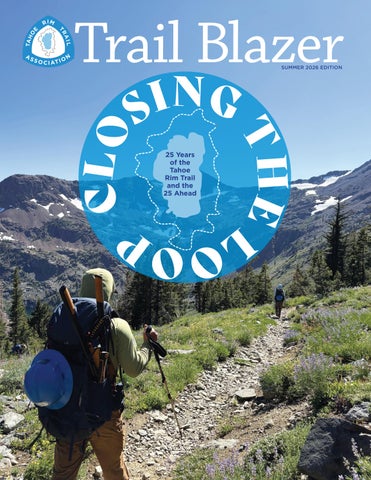
C LOSINGTH OLE PO
25 Years of the Tahoe Rim Trail and the 25 Ahead
A LEGACY ON THE TRAIL
This edition of View from the Rim is a little different.
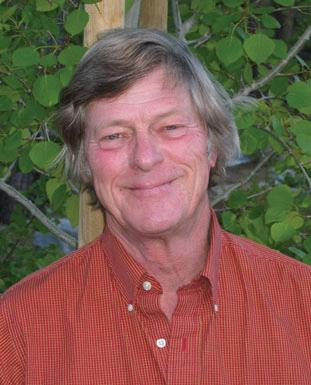
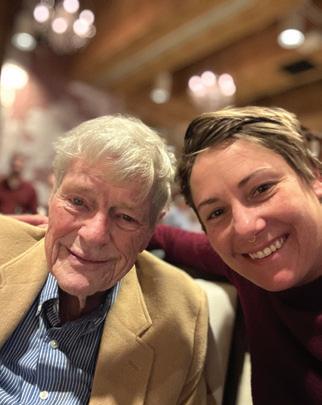
Instead of talking about the current state of the trails, I am using this space to honor someone whose impact on the Tahoe Rim Trail Association spans nearly the entire life of the trail itself. This spring, the TRTA Board of Directors created a new role, Board Member Emeritus, and unanimously named our first-ever honoree: John McCall.
As we mark 25 years since the Tahoe Rim Trail was completed, there’s no better time or person to recognize. John didn’t just witness that milestone. He helped build it.
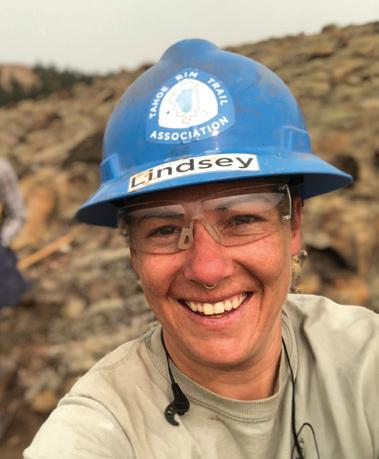
by Lindsey Schultz Executive Director
This role was created for him. It reflects not only his length of service, but the depth of his commitment to the trail, the organization, and the community it surrounds.
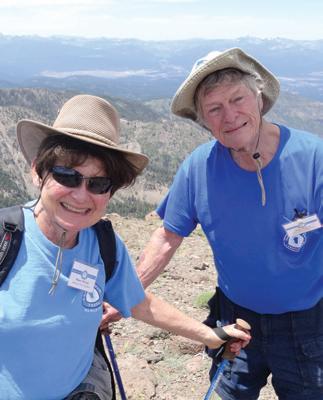
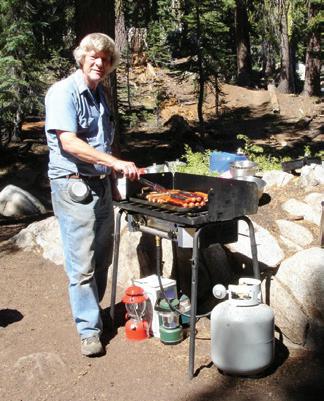
John first stepped onto the Tahoe Rim Trail before it was even a trail. In 1985, he and his late wife Diane answered a simple call for volunteers to help build what would become a 165-mile loop around the Tahoe Basin. Over the decades that followed, John became just about everything a volunteer could be—Crew Member, Crew Leader, Backcountry Chef, Trail Guide, Shuttle Driver, Website Developer, Treasurer, Board Member, and now Board Member Emeritus.
Since the TRTA began tracking volunteer hours, John has contributed more than 6,000 hours, and many more that went unrecorded. But his impact goes far beyond the numbers.
John helped build miles of trail and shape the organization behind it. He led crews, mentored volunteers, and brought people together—not just to work, but to laugh, connect, and feel part of something bigger. He even became known for his backcountry cooking and a now-legendary trail song celebrating SPAM and trail crews alike.
That spirit shows up throughout his legacy—from early trail alignments to championing community connector trails like K to K (Kingsbury to Keller Trail). At the heart of it all is one idea: the Tahoe Rim Trail should be something people can experience, access, and belong toin a way that protects and preserves the wilderness it depends on.
When asked what has kept him connected to the Tahoe Rim Trail all these years, John shared, “It’s the views, the environment—but mostly, it’s the people. It’s always been about the people.”
The McCall family’s TRT vista overlooking Marlette Lake, the very first vista adopted, stands as a physical reminder of that legacy. But even more lasting is the community John has helped build- one that continues to show up, year after year, to care for this trail.
Naming John as our first Board Member Emeritus allows us to recognize a lifetime of contribution while keeping him connected to the organization he helped shape. We are deeply grateful for John’s leadership, his generosity, and his enduring belief in the power of trails to bring people together.

Lindsey Schultz Executive Director, TRTA
The Trail Blazer is the official publication of the Tahoe Rim Trail Association, a 501(c)3 non-profit whose mission is to maintain and enhance the Tahoe Rim Trail system, practice and inspire stewardship, and preserve access to the natural beauty of the Lake Tahoe Region.
STAFF
Executive Director
Lindsey Schultz
Deputy Director
Veronica Palmer
Outdoor Programs Director
Michelle Witte
Trail Operations Director
Sam Donnelly
Communications Manager
Daniel Corona
Engagement Manager
Colleen Hoffman
Finance Manager
Judi Van Fleet
Guided Programs Manager
Fiona Pedrick
Trail Operations Manager
Briegan Aguilar
Youth Programs Manager
Mark Hassett
Membership Coordinator
Maggie Wise
BOARD OF DIRECTORS
President Rishi Batra
Executive Vice President Anna Lijphart
Treasurer Larry Stites
Trail Ops Chair Jim Crompton
Secretary Faye Provenza
Board Member Emeritus John McCall
Board Members
Amy Cornelius, Dori King, Justin Knowles, Mary Bennington, & Rebecca Cremeen
The Tahoe Rim Trail Association works in partnership with the USDA Forest Service and Nevada Division of State Parks


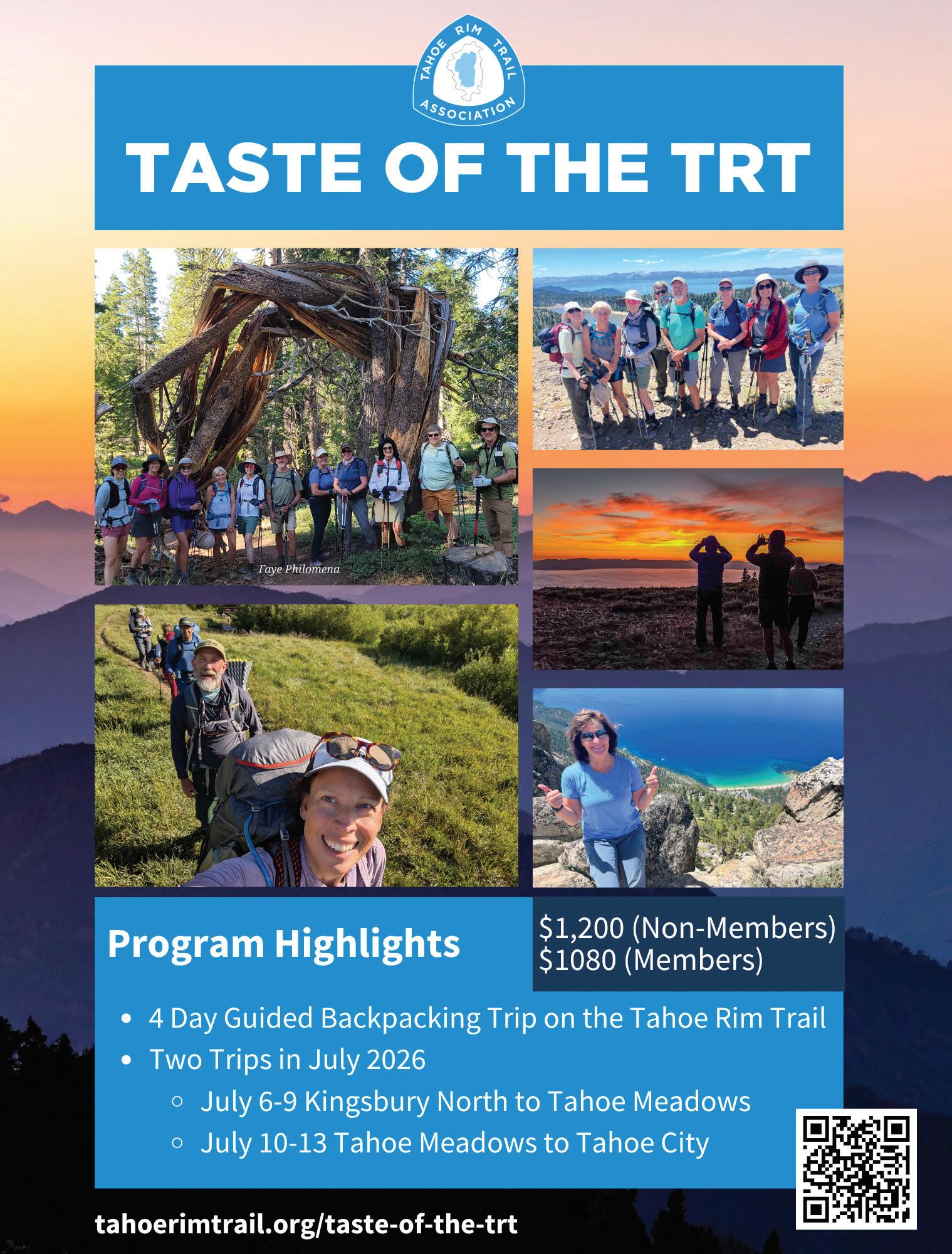

TRTA EVENTS
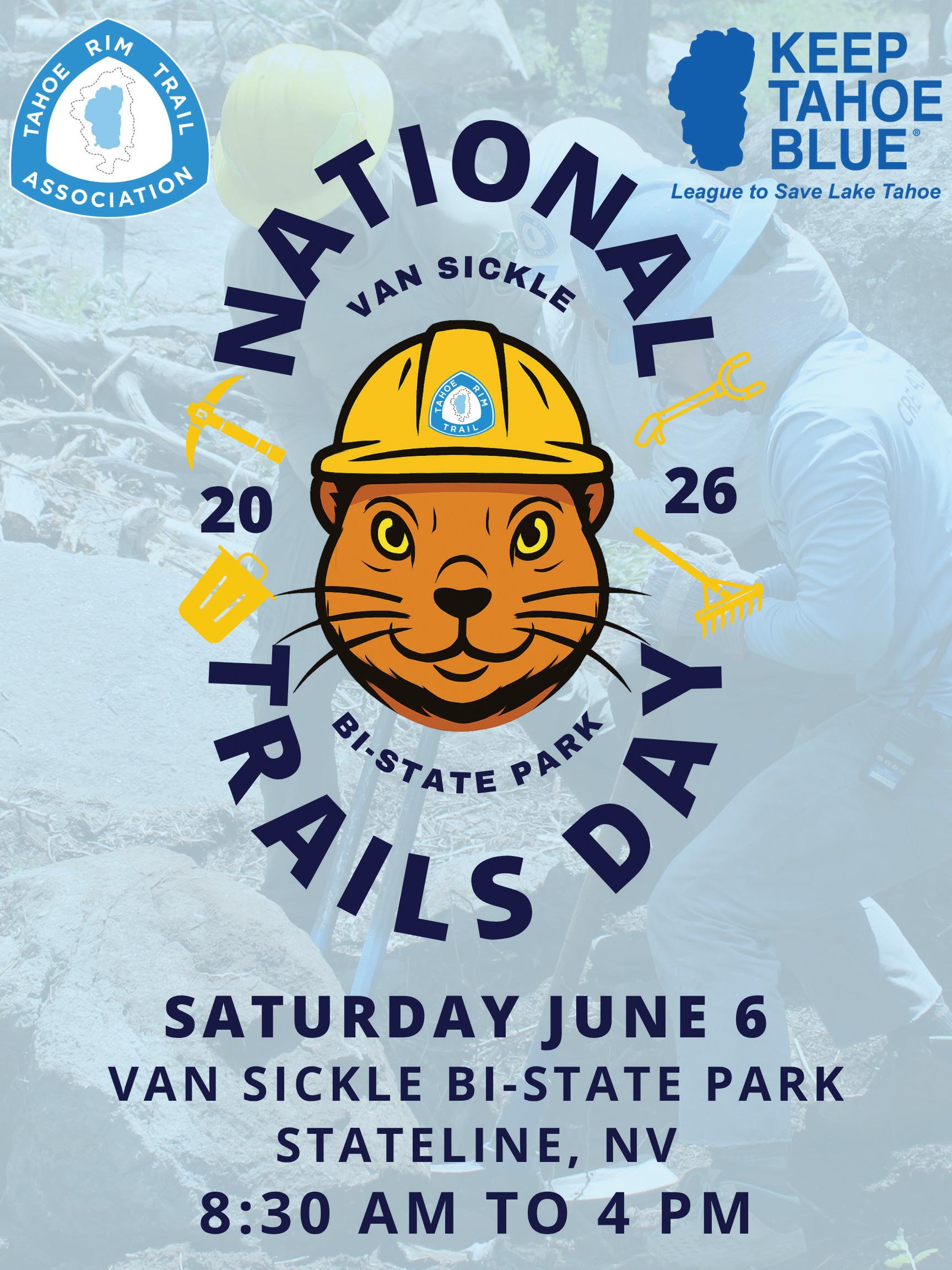
June 6: National Trails Day at Van Sickle Bi-State Park
June 17: Trail Talk: How to Hike the TRT, Mini Backpacking 101 at Kings Beach Library
June 19: Conifer Hike with Sugar Pine Foundation
June 24–27: Youth Backcountry Camp Ages 12–14
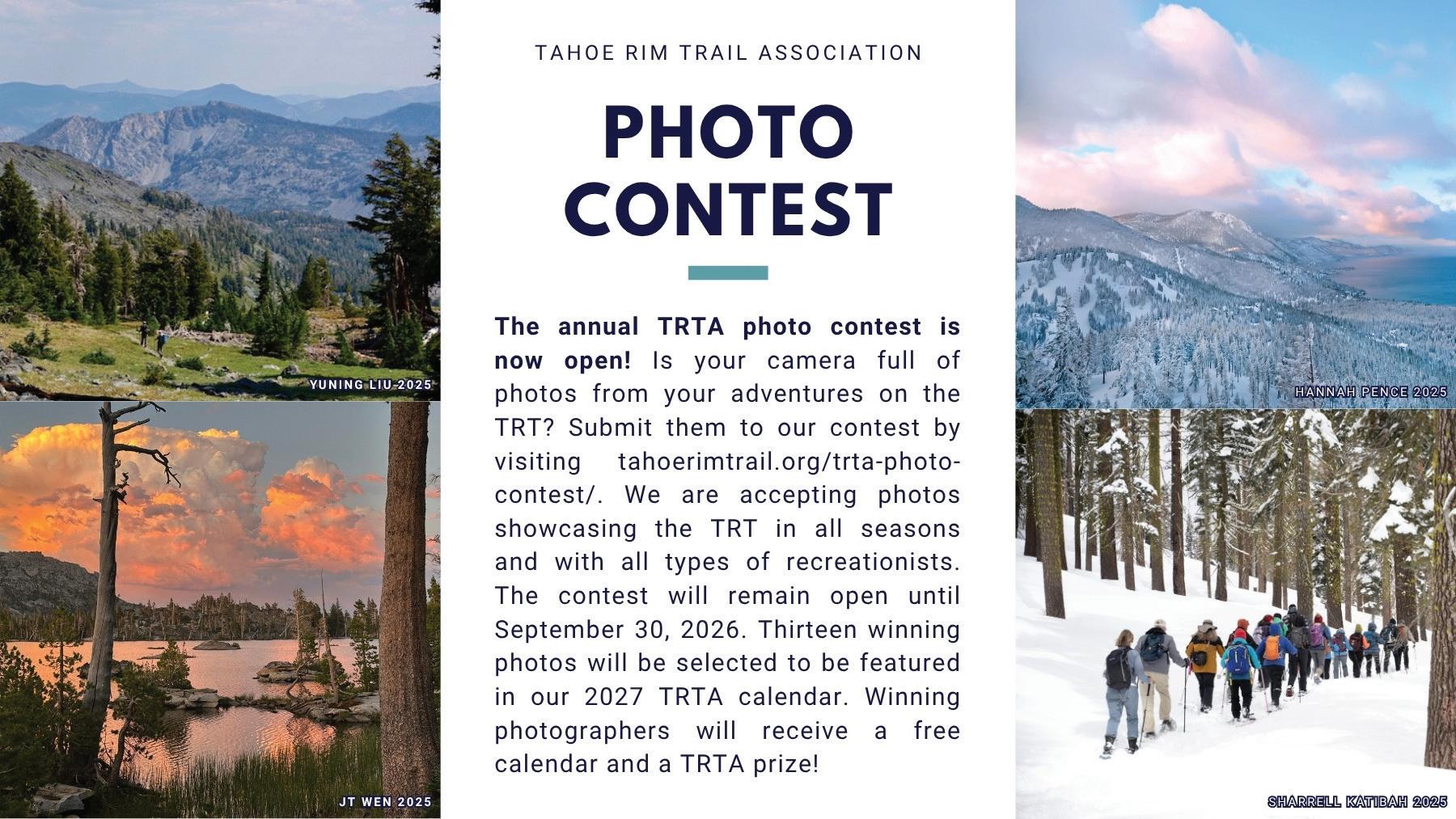
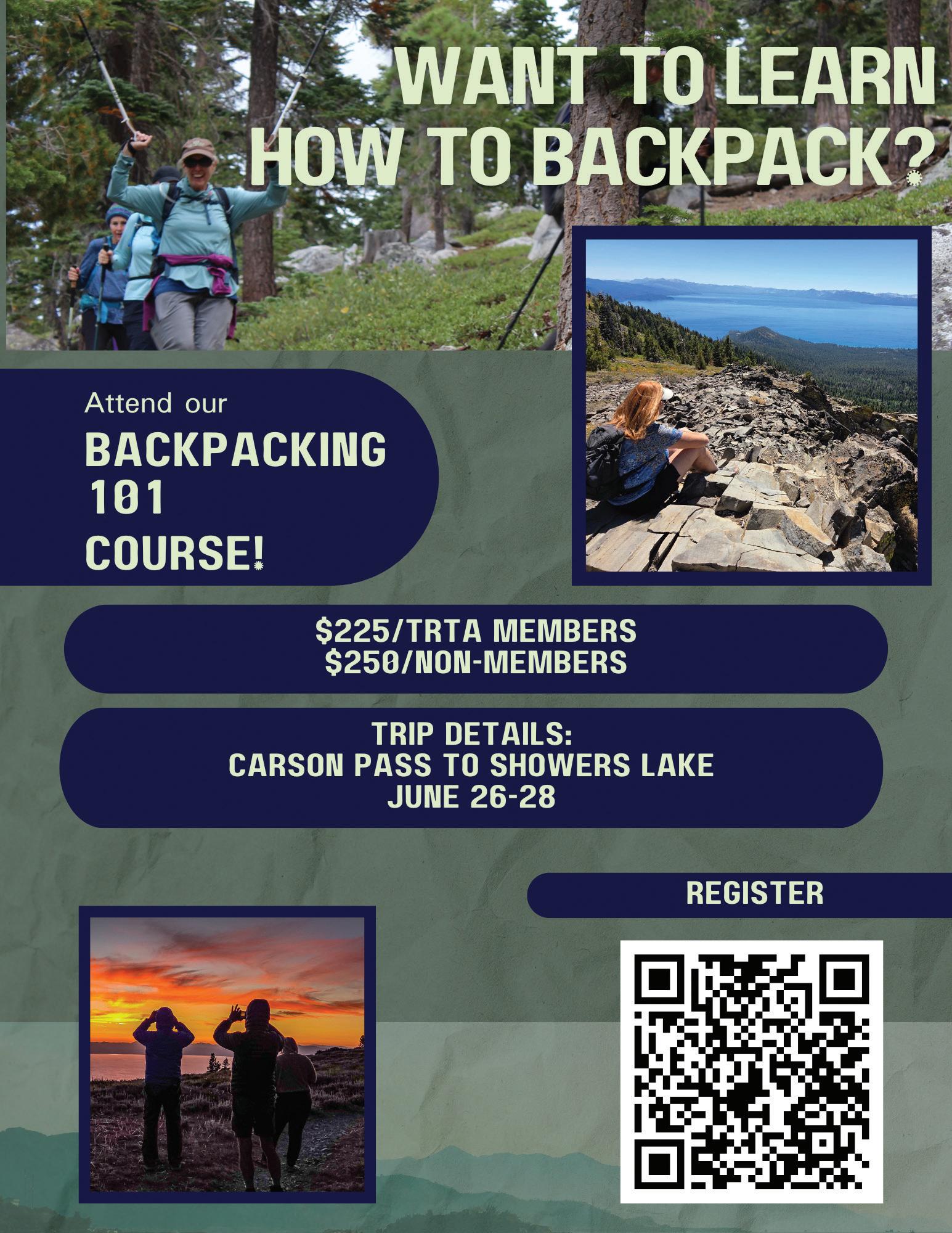
June 26–28: Backpacking 101 Course
June 30: Trail Talk: Mobility for Trail Season at PT Revolution, Truckee
July 6–9: Taste of the TRT: Kingsbury North to Tahoe Meadows
July 10–13: Taste of the TRT: Tahoe Meadows to Tahoe City
July 16: Paige Meadows Hike with TINS
July 16: Trail Talk: How to Hike the TRT, Mini Backpacking 101 at Tahoe City Library
July 24: Western White Pine Hike with Sugar Pine Foundation
August: Raise the Rim Peer to Peer Fundraiser
August 10–13: Youth Backcountry Camp Ages 14–17
August 10–13: Desolation Wilderness Backcountry Stewardship Camp
August 14: Western White Pine Hike with Sugar Pine Foundation
August 20: Galena Falls Hike with TINS
August 22: TrashBlitz with 5 Gyres
August 24–27: Desolation Wilderness Backcountry Stewardship Camp
August 26: Summer Wellness Series: Sensory Immersion Hike with Lake Tahoe Yoga
August 28: Fundraiser at Cascade Kitchen
September 17: Spooner Lake Hike with TINS
September 23: Autumn Wellness Series: Yoga Hike with Lake Tahoe Yoga
October 21: Autumn Wellness Series: Sensory Immersion Hike with Lake Tahoe Yoga
THE COMPASS
Thru-Hike for Science
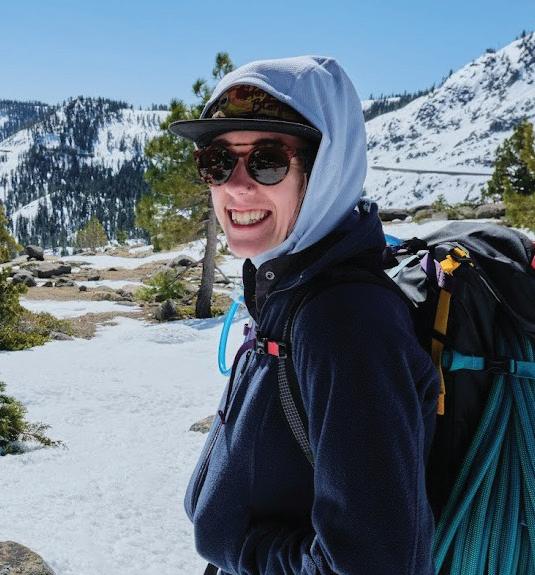
We have all experienced the negative impacts of trash when recreating outside. Seeing a granola bar wrapper along the shore of an alpine lake or an abandoned water bottle on the trail are not only unsightly, they also harm the plants, animals, water, and soil. When these plastics break down, they can even enter the mountain air we breathe while playing outside. Although picking up the trash you can see is an excellent start, we need scientific research to fully understand our impact on the environment and work towards long term solutions.
This summer, the Tahoe Rim Trail Association has the exciting opportunity to learn more about this problem in a quantifiable way and be a part of the solution. We are partnering with another non-profit organization—the 5 Gyres Institute—to thru-hike for science! The 5 Gyres Institute was created in 2009 to study ocean plastics, and they have since led 19 research expeditions exploring 50,000 nautical miles.
Additionally, each summer, the 5 Gyres Institute leads the Plastic-Free Parks project. This initiative empowers volunteers to collect trash data using the TrashBlitz app in U.S. National Parks and Federal Lands to “identify which materials, items, and brands of waste are most common to help drive solutions that protect parks from plastic pollution.”
This summer, a team of TRTA volunteer guides, 5 Gyres Institute scientists, and supporting volunteers will hike the TRT collecting valuable data on macro- and micro-plastics. Their goals are to identify major sources of debris, collect soil samples along the trail, and collect
air samples at each campsite along their journey.
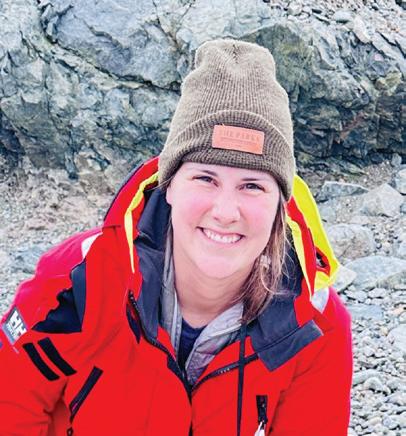
The TRTA Guided Programs Manager, Fiona, sat down with Dr. Victoria Fulfer, the microplastics scientist who will be leading the scientific expedition along the TRT, to learn more about the 5 Gyres Institute and this summer’s hike.
Interview has been lightly edited for readability.
Fiona: What is the mission of the 5 Gyres Institute?
Victoria: We are a science-based nonprofit and our real mission is to use science to drive solutions for plastic pollution, whether that’s plastic debris in the oceans or in our cities or microplastics in our water or soil and our air.
What are macro- and micro-plastics?
Macro plastics are any item made of plastic. What we focus a lot on are the ones that are mismanaged waste, meaning that they don’t make it to a landfill or to a recycling center and they end up in the environment. Microplastics are small plastic particles, smaller than 5 millimeters, about the size of a small bead, all the way down to the microscopic size. These can be made to be this small, like pre-production pellets, which we find a lot in our waterways, or they can be broken down from larger items. The important thing to remember is that microplastics are not just one type of contaminant. They are a whole suite of contaminants that have different chemicals associated with them.
by Fiona Pedrick Guided Programs Manager
with Dr. Victoria Fulfer Microplastics Scientist
Why is your organization interested in studying the Tahoe Rim Trail?
For years now, we have had a campaign called Plastic Free National Parks, where we encourage participants to go out onto their federal lands, whether it’s national parks or national forests and clean up and log any trash that they’re finding. So to build on that this year, we wanted to specifically focus on Tahoe. This is our first land-based expedition and we wanted to bring folks out to an area that we know is gorgeous and a pristine wilderness area and see how this type of pollution might also be impacting that area.
Other than being unpleasant to look at, how does plastic waste negatively affect natural areas?
Larger plastic waste, macro debris and litter, can impact plants by damaging the plant structure and impact the way that they grow. They can also impact the biome of the soil. Microplastics, on the other hand, can have even greater impacts. They’re in the air, the water and the soil. They can get into earthworms, fish, and other organisms at the bottom of the food chain and then work their way through. Then, because they’re in the air, when we’re out there in these pristine hiking environments, we are still breathing them in and potentially ingesting them.
What questions do you aim to answer with the data you collect this summer?
We know that a lot of Leave No Trace and environmental stewardship efforts have been implemented in Tahoe. We’re really interested to see how well that’s working. We’re hoping that when we’re TrashBlitz-ing every day
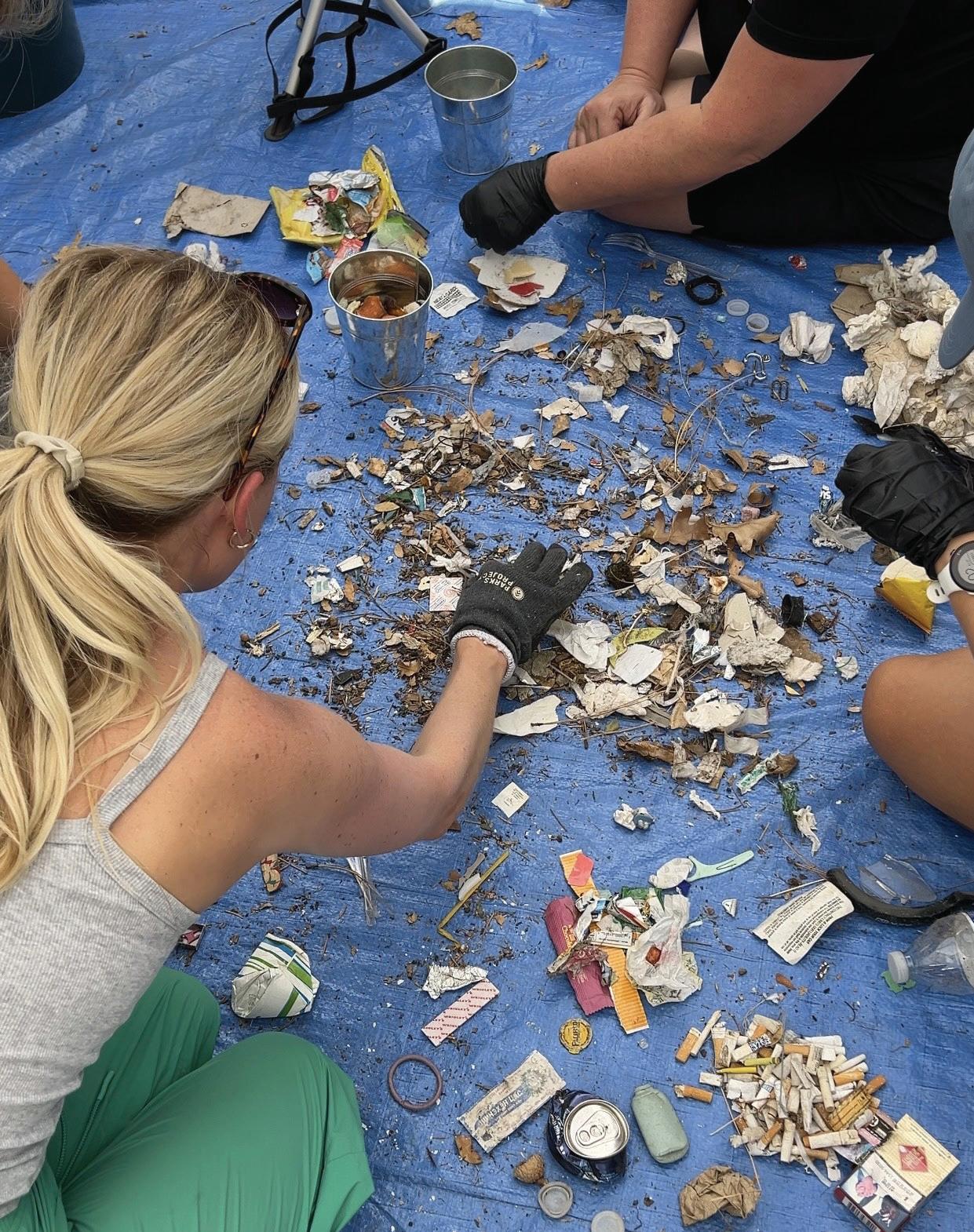
event.
looking for litter along a trail that we find almost nothing. But what we expect we probably will find is some of those single use items that hikers and backpackers often use, the wrappers from their food, things like that. And then when we’re measuring microplastics in the air along the trail and in the soil, we want to understand if those are most likely coming from the gear that we bring with us as hikers. And then using that information as we go along the trail, we want to educate other people in the outdoors about the products that they’re using and give them some alternatives to reduce the synthetic fiber use.
How do you collect soil and air samples?
We’ll collect soil samples every 10 kilometers (6.214 miles) along the trail. We’ll measure out a small square of the trail that’s relatively free of plants and rocks and carefully scoop off the top centimeter of the soil and store those until we can analyze them later and extract the microplastics from the soil. For the air, we’ll measure the air overnight, every night when we’re at camp using passive samplers that contain a sticky surface and they collect any particles that are deposited on them over the time that we’re at camp.
What analyses will you do in the lab after the samples are collected?
We will do microscopy analyses and spectral analyses. These are techniques that allow us to measure the exact chemical bonds within each particle and let us know if they’re plastic or not and what type of plastic they are. Sometimes we can even get information about chemical additives and other things that are associated with those particles.
How can the data be used to improve waste management in the Tahoe Basin and beyond?
We’re hoping that by identifying the most common types of litter found along the Tahoe Rim Trail, we can better equip the local community to educate trail users on responsible alternatives that prevent waste and reinforce strong Leave No Trace practices.
What can people do in their everyday lives to reduce plastic waste in outdoor recreation areas?
Lots of options are available, especially now. Reusable water bottles with water filtration is a great way to reduce the amount of plastic bottles you’re bringing into the environment. If you’re backpacking, creating your own dehydrated meals and packaging them yourself can be a great way to also reduce some of those single use packets. Another thing that can be considered is repairing your gear instead of buying new gear.
Needless to say, the TRTA is excited and honored to collaborate with the 5 Gyres Institute this summer to better understand how human recreation impacts our beloved trail in ways that are both visible to and hidden from the naked eye.
If you’re interested in getting involved, consider joining Victoria on a guided public hike this summer—join our monthly newsletter to stay tuned for an exact date. You can also volunteer for the 2026 Plastic Free Parks project and use TrashBlitz on federally managed land in the Tahoe Basin and beyond during your summer adventures. Learn more about this and our other Citizen Science programs by visiting tahoerimtrail.org/citizen -science.
Youth Programs
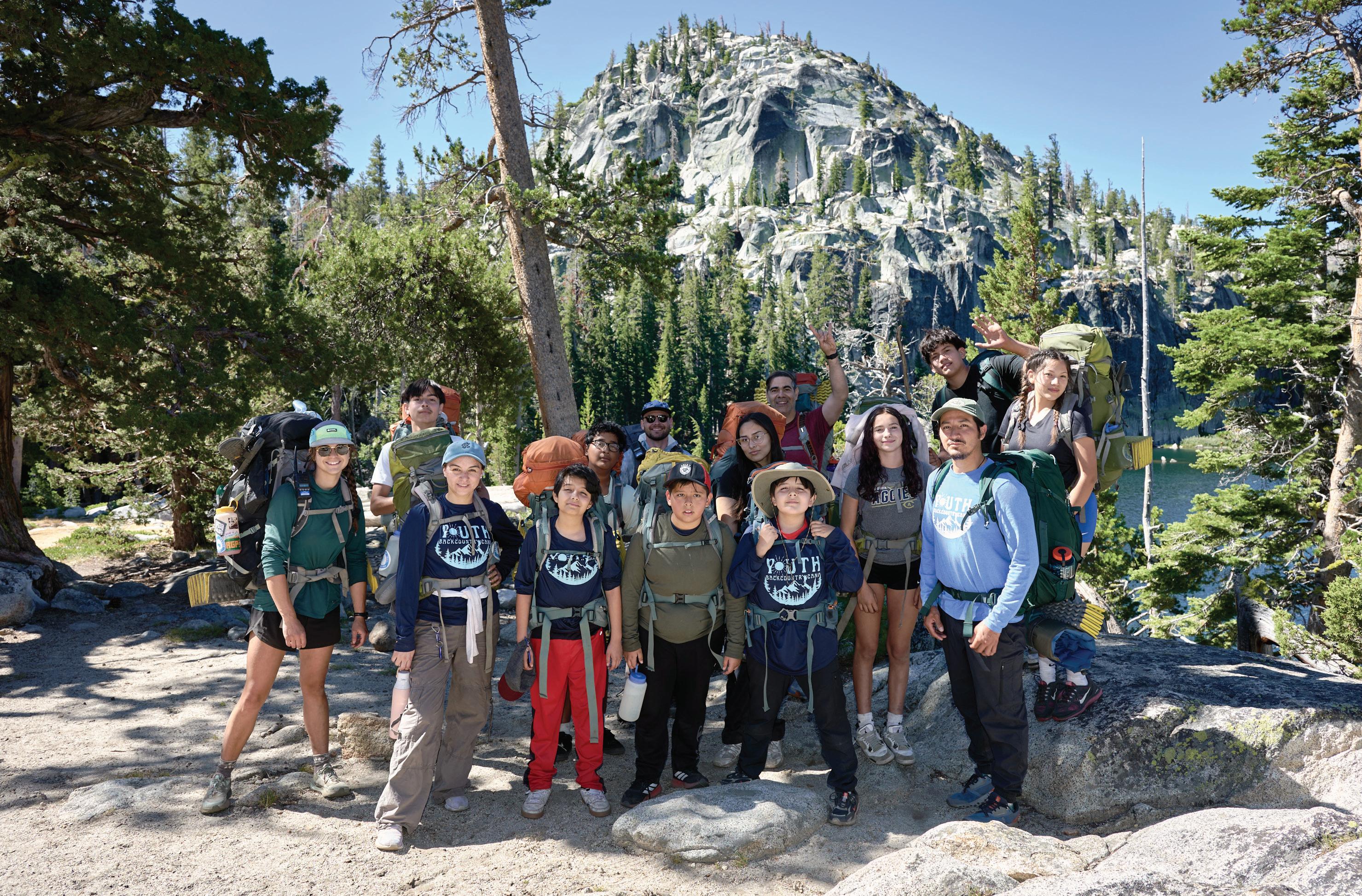
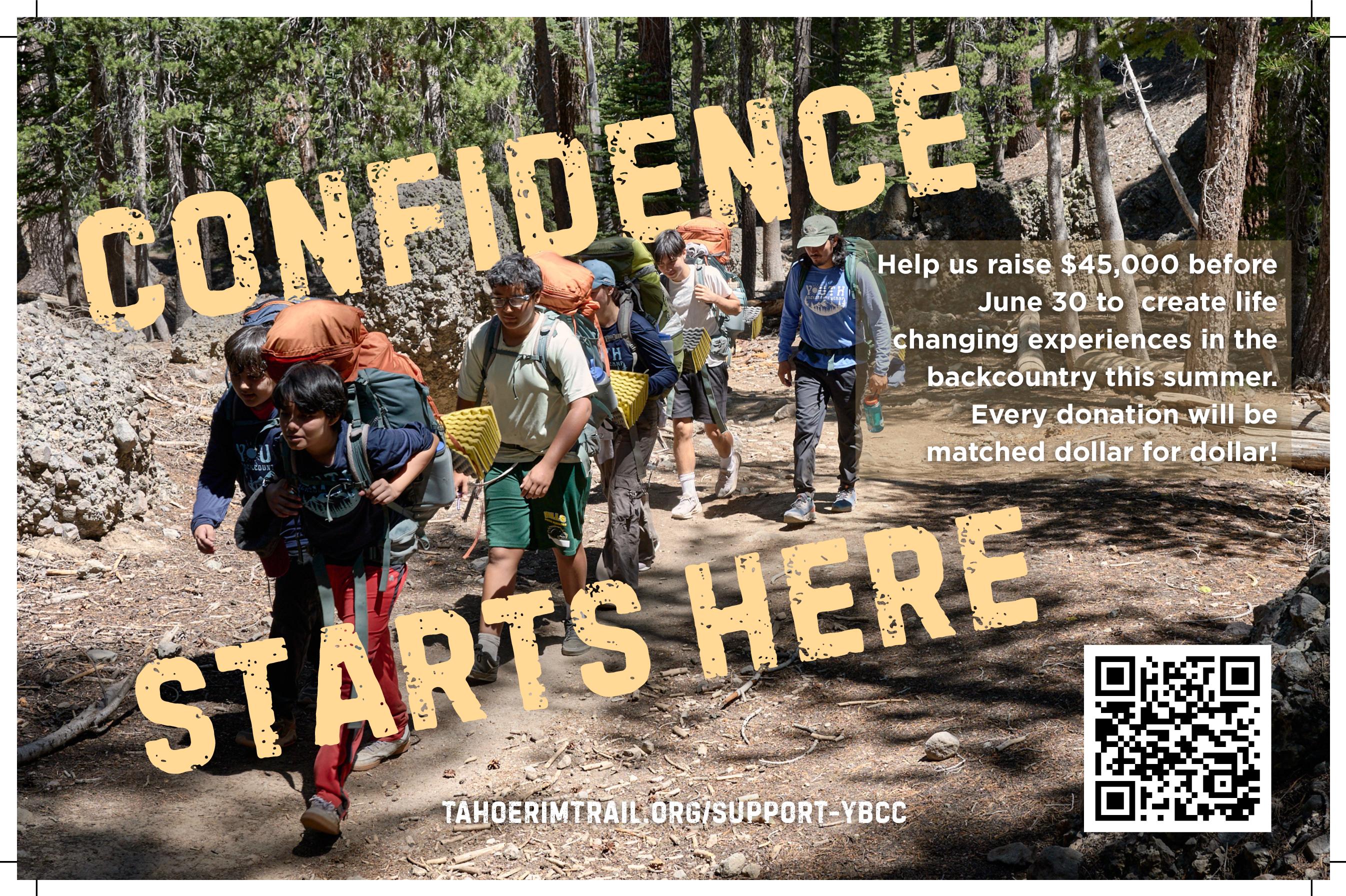
If there’s one thing we hear repeatedly from youth after participating in the Tahoe Rim Trail Association’s Youth Backcountry Camps (YBCC), it’s some version of the same sentiment: “I wouldn’t have done this without this program.” For many young people, stepping onto the trail with the TRTA is their first meaningful experience spending extended time outside, learning about the natural world, and discovering their own capacity for challenge and curiosity.
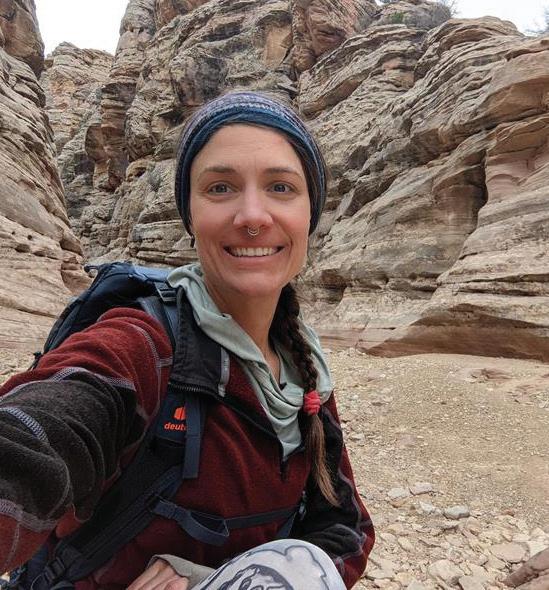
by Michelle Witte Outdoor Programs Director
Backpacking trips will always remain a cornerstone of the TRTA’s Youth Programs. There is something irreplaceable about the experience of carrying everything you need on your back, hiking alongside peers, and falling asleep under the stars after a day of exploration. Yet the Youth Programs team has been asking an important question: how can we continue nurturing stewardship, curiosity, and connection to nature long after the backpacks are unpacked?
One answer lies in expanding our youth programming beyond the summer season and beyond multi-day trips, creating opportunities for young people to engage with stewardship education throughout the year.
Across the Tahoe region and beyond, many students have limited access to outdoor experiences. Barriers such as transportation, cost, time, and knowledge about outdoor recreation can make spending time in nature difficult for families. While summer backpacking trips open powerful doors,
they represent only one moment in a young person’s relationship with the outdoors.
By expanding our programming to include year-round stewardship education for K–12 students, the TRTA can reach youth in more places and at more stages of their development. These programs may take place in classrooms, on nearby trails, during field trips, or through partnerships with community organizations. Regardless of the setting, the intention remains the same: to create meaningful opportunities for young people to learn about and connect with the landscapes around them.
At the heart of this effort is a commitment to place-based learning. The Tahoe Rim Trail and surrounding public lands offer an incredible outdoor classroom where lessons about ecology, recreation, and stewardship come alive. Through hands-on activities, students can explore topics such as local natural history, trail science, and the principles of Leave No Trace. Rather than simply hearing about conservation, youth can experience firsthand how their choices and actions influence the health of the places they explore.
Equally important is the opportunity to support and strengthen partnerships with local schools, youth organizations, and community
Attendees on the 2025 Latino Outdoor Partner Trip.
2026
groups. Many educators and youth leaders are eager to bring outdoor learning into their programs but may not have the resources, training, or time to develop curriculum and facilitate outdoor experiences. By working alongside these partners, the TRTA can provide engaging lessons and field experiences that complement existing educational goals while making learning both memorable and fun.
Looking ahead, the Youth Programs team is working toward a longerterm vision: developing a scaffolded stewardship curriculum that supports students from kindergarten through high school. Much like hiking a long trail, learning happens step by step. Younger students might begin by observing plants and animals, learning simple outdoor ethics, and developing a sense of curiosity about the natural world. As students grow older, lessons can deepen into topics such as trail design and maintenance, local ecology, and the history of the landscapes they call home.
By approaching stewardship education through an interdisciplinary lens, combining science, history, recreation, and experiential learning, students can begin to understand not only how natural systems function, but also how people play a role in caring for them.
In many ways, the goal remains the same as it has always been within the TRTA’s Youth Programs: to help young people see themselves as part of the landscape rather than separate from it. When youth feel a sense of belonging outdoors, stewardship becomes less of a concept and more of a natural expression of care.
Expanding youth programming throughout the year simply creates more opportunities for these moments of connection to occur. Whether a student is learning how a trail is built, practicing Leave No Trace principles or noticing the subtle changes of the seasons along a familiar path, each experience contributes to a deeper understanding of the places we share.
Just like hiking or riding the Rim Trail itself, building a culture of stewardship takes time, intention, and many small steps forward. By continuing to grow our youth programming and partnerships, the TRTA hopes to ensure that more young people have the opportunity to step outside, learn about the land beneath their feet, and discover that they have a role in protecting it for generations to come.
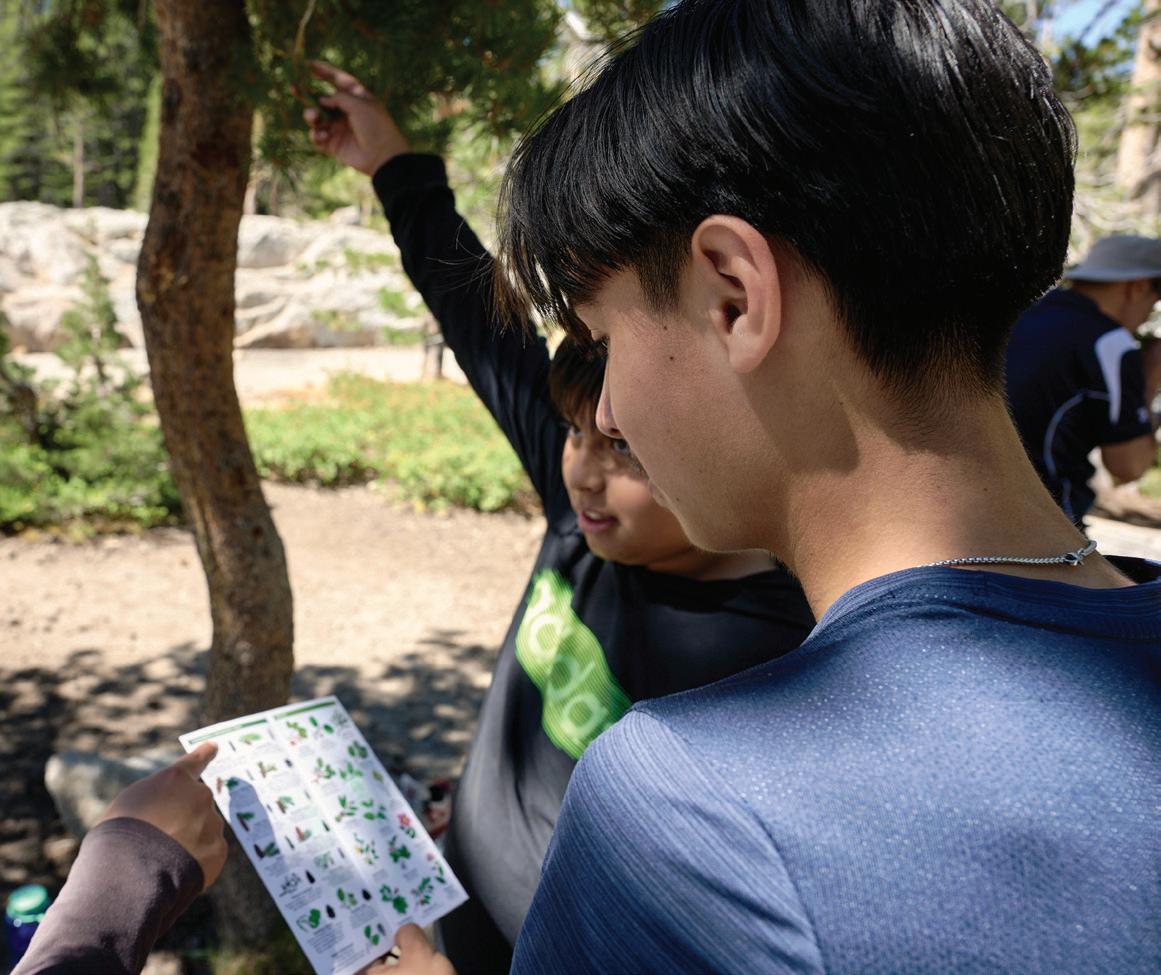



Campers on a partner trip with Latino Outdoors use a field guide to identify wildlife.
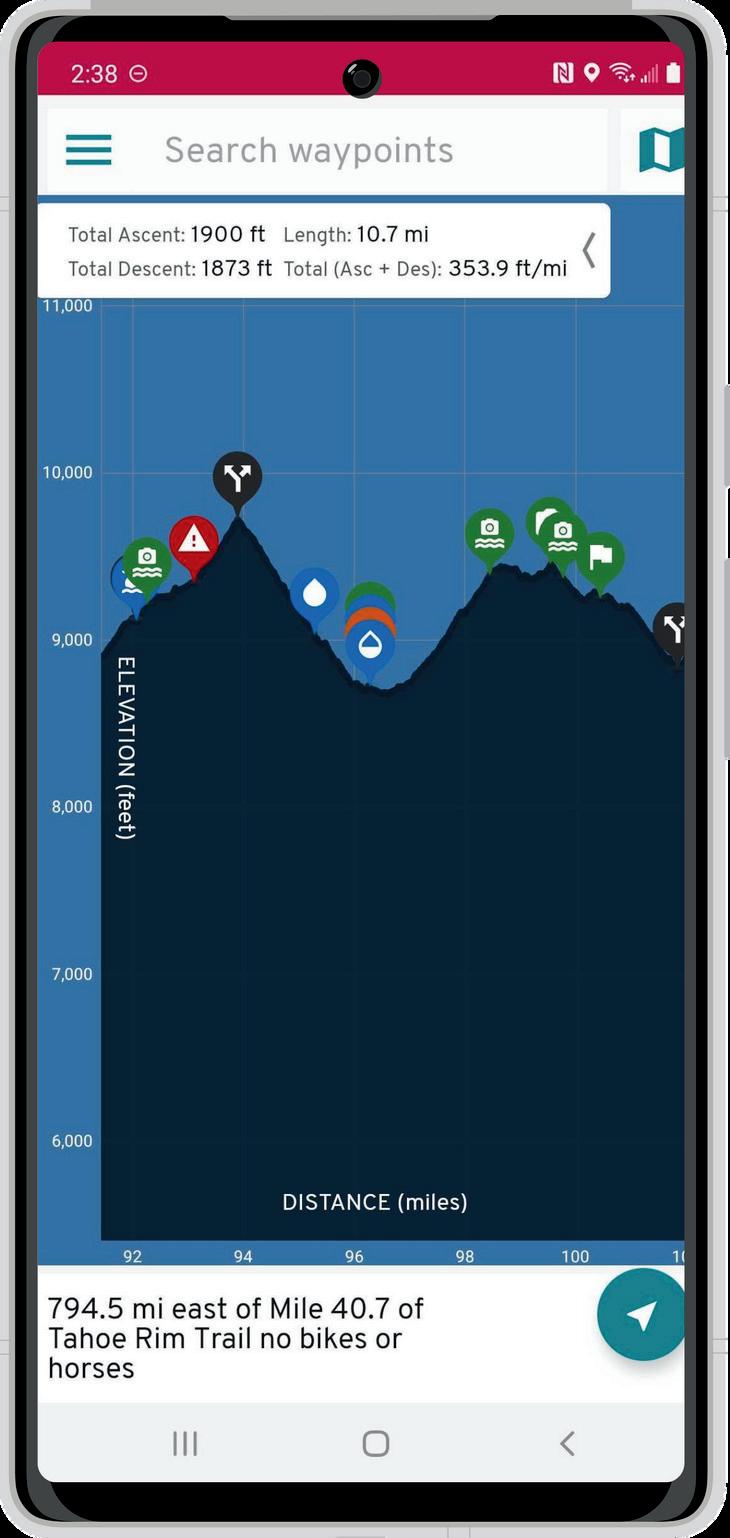
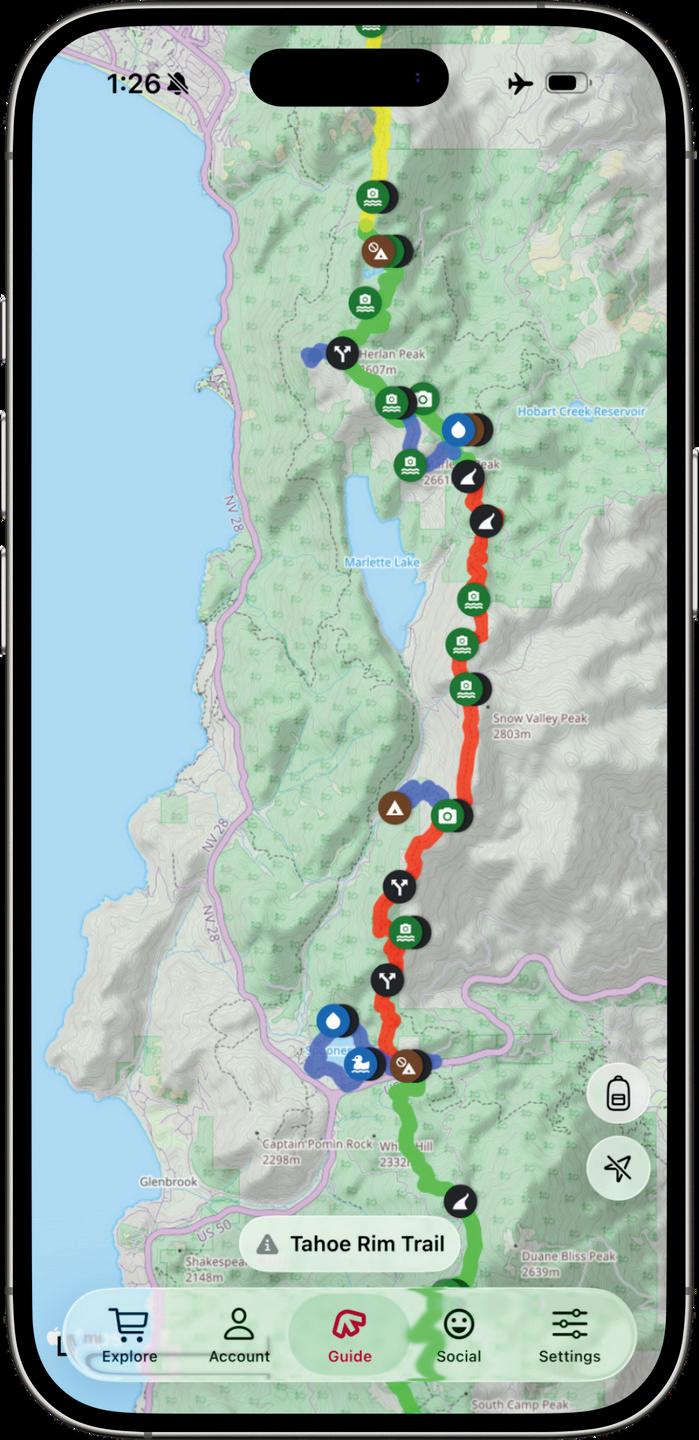
The Official App of the Tahoe Rim Trail Association
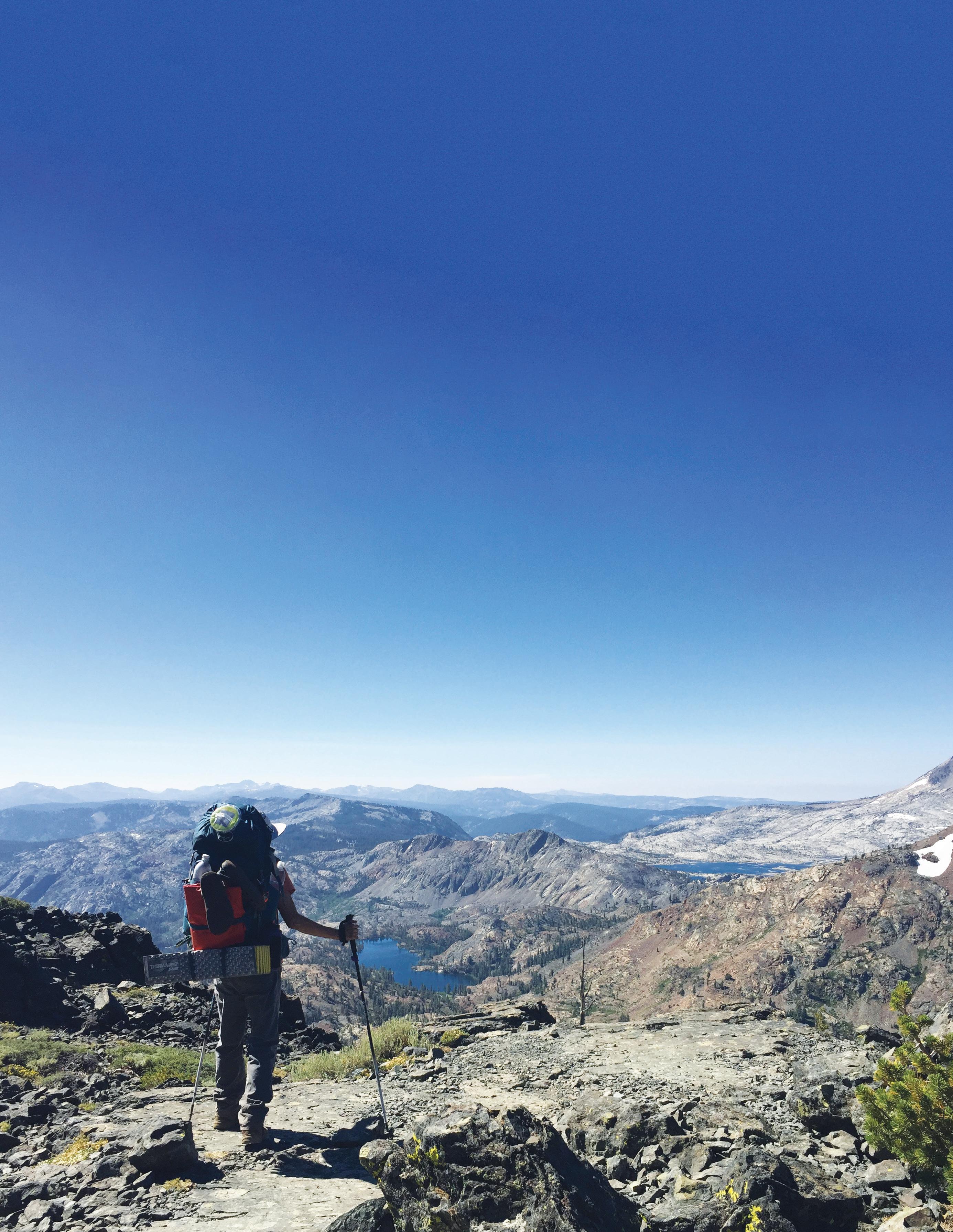
C LOSINGTH OLE PO
25 Years of the Tahoe Rim Trail and the 25 Ahead
On September 22, 2001, something remarkable happened around Lake Tahoe.
After decades of vision, grit, and thousands of volunteer hours, the Tahoe Rim Trail was officially “closed”- a continuous 165-mile loop circling one of the most iconic landscapes in the country. What began as an ambitious idea became a reality: a trail that connects communities, jurisdictions, ecosystems, and people to something bigger than themselves.
But as anyone who has spent time on the Tahoe Rim Trail knows- closing the loop was never the finish line. It was the beginning.
25 Years of Stewardship, Not Just a Trail
by Lindsey Schultz Executive Director
The Tahoe Rim Trail Association finished the loop in 2001. The last 25 years have not been about building the trail-they’ve been about stewarding it, improving it, and learning how to do it better.
In many ways, we were just getting started.
To close the loop in just 20 years, we moved quickly—co-aligning with the Pacific Crest Trail from Meiss Meadows to Granite Chief Wilderness and utilizing existing Forest Service roads to complete key connections. It worked. But like many trails built in that era, we were learning as we went-and not all sections were constructed to the long-term sustainability standards we understand today.
Over the past 25 years, we’ve deepened our understanding of trail engineering—and gone back to make it better.
Trail building is a lot like road building: create a path that takes people where they want to go, keeps them on it, and moves water off before it causes damage. Trails follow that same idea, but the best ones work with the landscape, not against it.
Today, we build trails to work with the landscape. Our trail teams read the
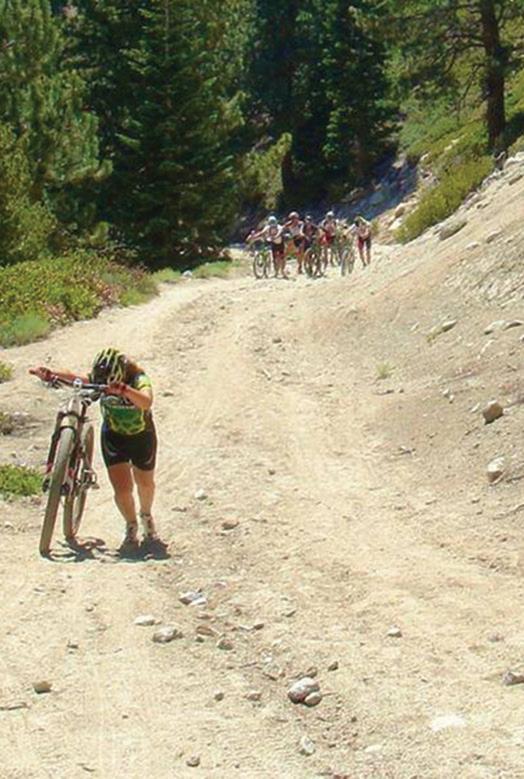
terrain, understanding slope, soil, and where water naturally wants to flow. Instead of relying on maintenance-heavy drainage features, we incorporate rolling grade reversals that allow the trail to shed water naturally. We route trails out of low-lying areas and align them where people want to travel because if we don’t, people will create their own paths, and those impacts add up quickly. The result is a more sustainable trail- one designed with 50 to 100 years of durability built in.
This is the level of intention and durability that is extended across the Tahoe Rim Trail system.
On the North Shore, several miles of trail were rerouted off roads and onto sustainably designed singletrack, particularly around Celebration Point and the Martis Road area. We replaced ~4 miles of walking on a street through a neighborhood between the Kingsbury North and South Trailheads with 7.3 miles of scenic singletrack, creating what is now known as the Daggett Loop. In Mott Canyon, we relocated the trail off a steep, eroding dirt road and onto a thoughtfully designed singletrack that offers both a more sustainable route and sweeping views of Carson Valley and the Pine Nut Mountains.
Other projects over the years include the Horse Meadow Trail Realignment, where steep, highly eroded sections were rerouted with additional switchbacks to reduce grade and improve long-term durability.
The Painted Rock Reroute constructed approximately 6,000 feet of new trail, improving safety, reducing environmental impacts, and enhancing the experience with panoramic views. At Echo Summit, the trail was relocated away from Highway 50 and into a safer, more natural corridor behind the moraine, improving both safety and the quality of the experience.
The Rim to Reno Trail expanded the reach of the Tahoe Rim Trail system, connecting it to the Reno community and providing a more accessible entry point into the backcountry. Along this route, we transitioned trail users off
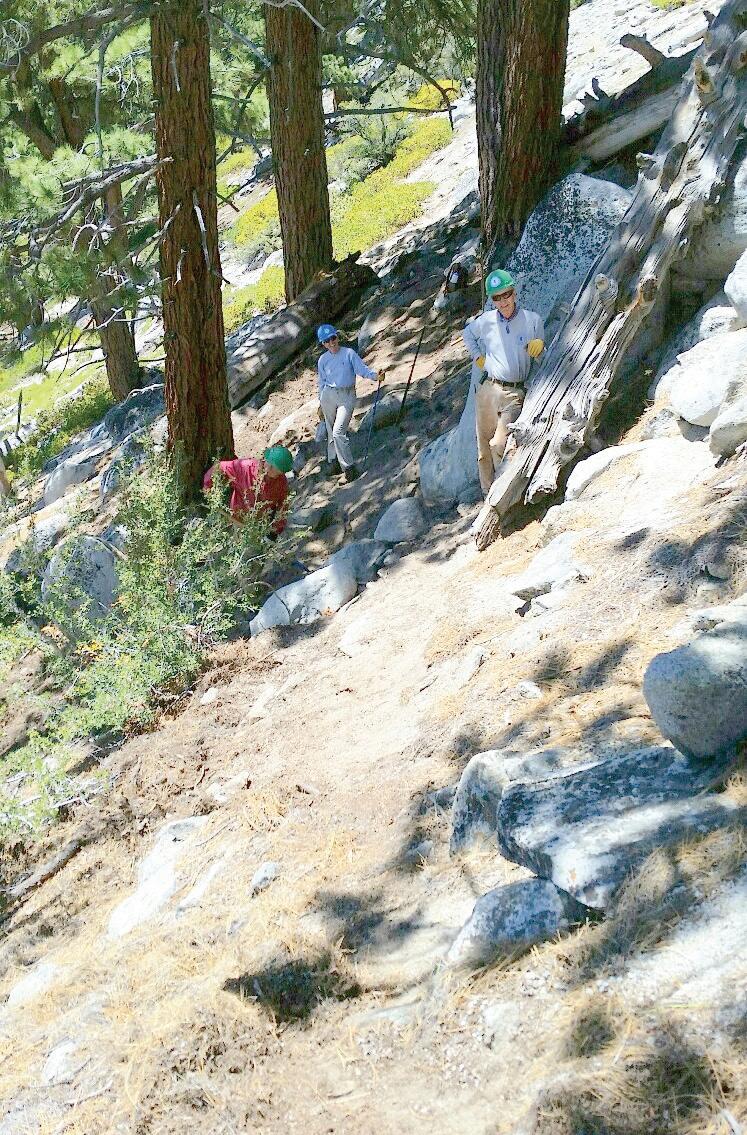
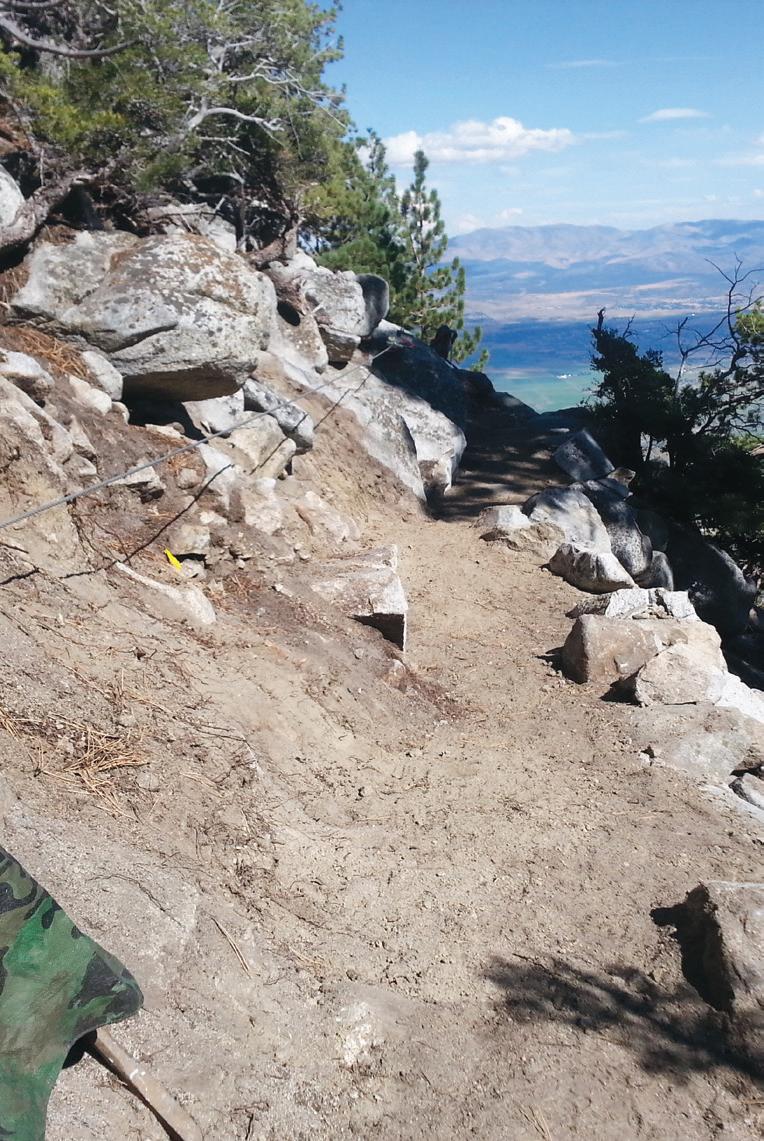
The original Mott Canyon Trail-Road. The Mott Canyon reroute, not an easy place to build a trail, 2016.
Relay Road and onto purpose-built singletrack through the Mount Rose backcountry, including areas like Galena Falls-creating a more immersive and sustainable trail experience.
Even at the trailhead level, we’ve made improvements. At Spooner North Trailhead, we constructed steps from the parking area to the trail to mitigate erosion and meet Forest Service standards, protecting resources while improving access- one of many trailhead improvements over the years.
A Personal Perspective: 15 Years on the Trail
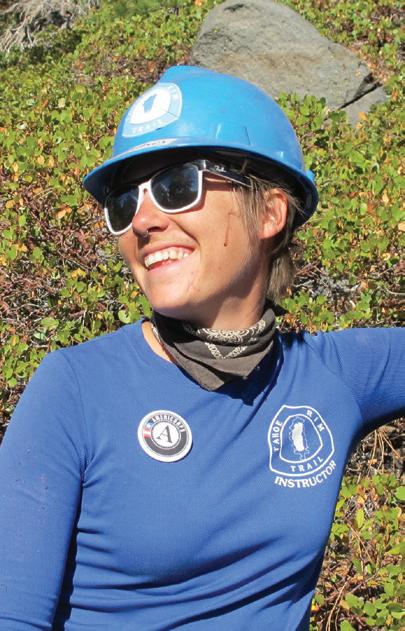
For me, this milestone is especially meaningful.
I’ve had the privilege of being part of the Tahoe Rim Trail Association for 15 of these 25 years- starting as an AmeriCorps member and growing alongside the organization into my role today. I’ve seen firsthand how much has changed, and how much has stayed the same.
I’ve seen seasons shift earlier, trail use grow dramatically, and our work become more complex-and more important. I’ve also seen the consistency of this community: the volunteers, partners, staff, and supporters who continue to show up, year after year, to care for this trail.
What’s always struck me is that while the trail may be a loop, the work is never circular—it’s always moving forward.
Expanding Access, Deepening Impact
The last 25 years haven’t just been about improving the trail- they’ve been about expanding who it’s for.
We’ve built programs that invite people in: first-time backpackers, youth experiencing the outdoors for the first time, community members looking to connect more deeply with Lake Tahoe, students looking to understand the importance of trails, businesses hoping to enrich staff lives’ through on-trail team building experiences.
These experiences take many forms- from trail building camps that offer a meaningful way to give back, to opportunities for people to step outside their day-to-day lives and be part of something bigger than themselves.
From guided programs and backcountry skills courses to youth camps, trail building camps, and trailhead education, we’re helping people not just recreate but understand their role in protecting these places.
Our work has grown from building trail, to maintaining it, to improving it, to ensuring people understand and care for it.
We introduced Youth Programs to connect the next generation to the outdoors- creating opportunities for young people to experience the Tahoe Rim Trail and develop a lasting connection to public lands. Our educational guided programs have made the trail more accessible to a broader audience, offering safe, supported experiences that build skills, confidence, and a deeper understanding of responsible recreation.
More recently, we’ve reinvigorated our Trail Ambassador Program, strengthening our presence on the ground and at trailheads. Ambassadors serve as frontline educators-connecting directly with trail users to share information, promote Leave No Trace principles, and foster a culture of stewardship across the trail system.
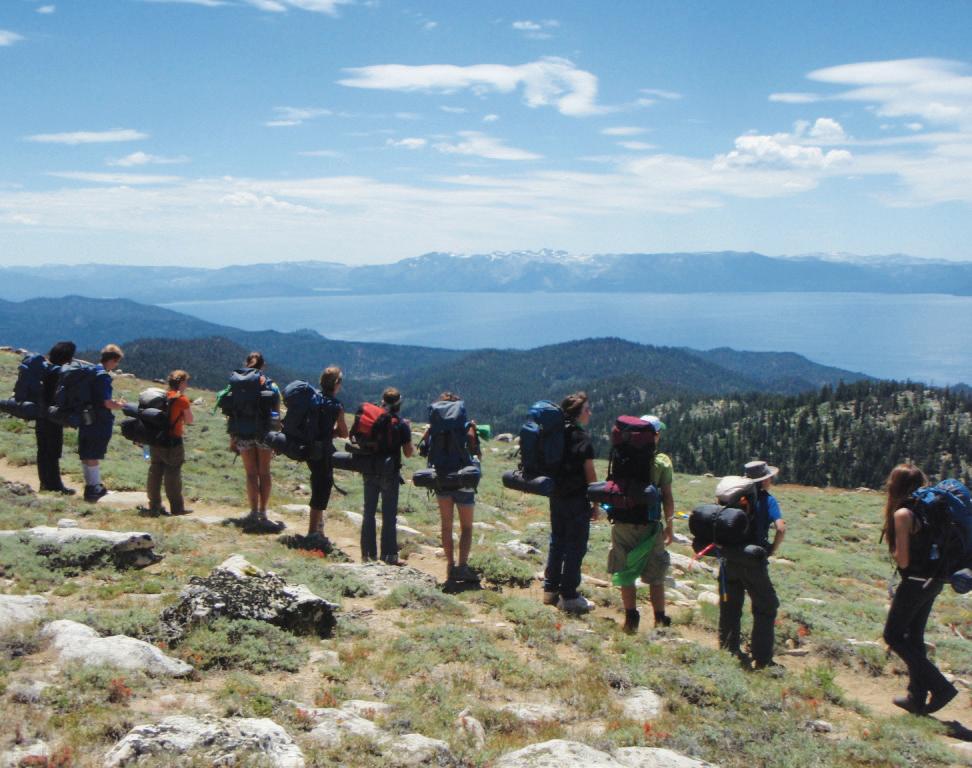
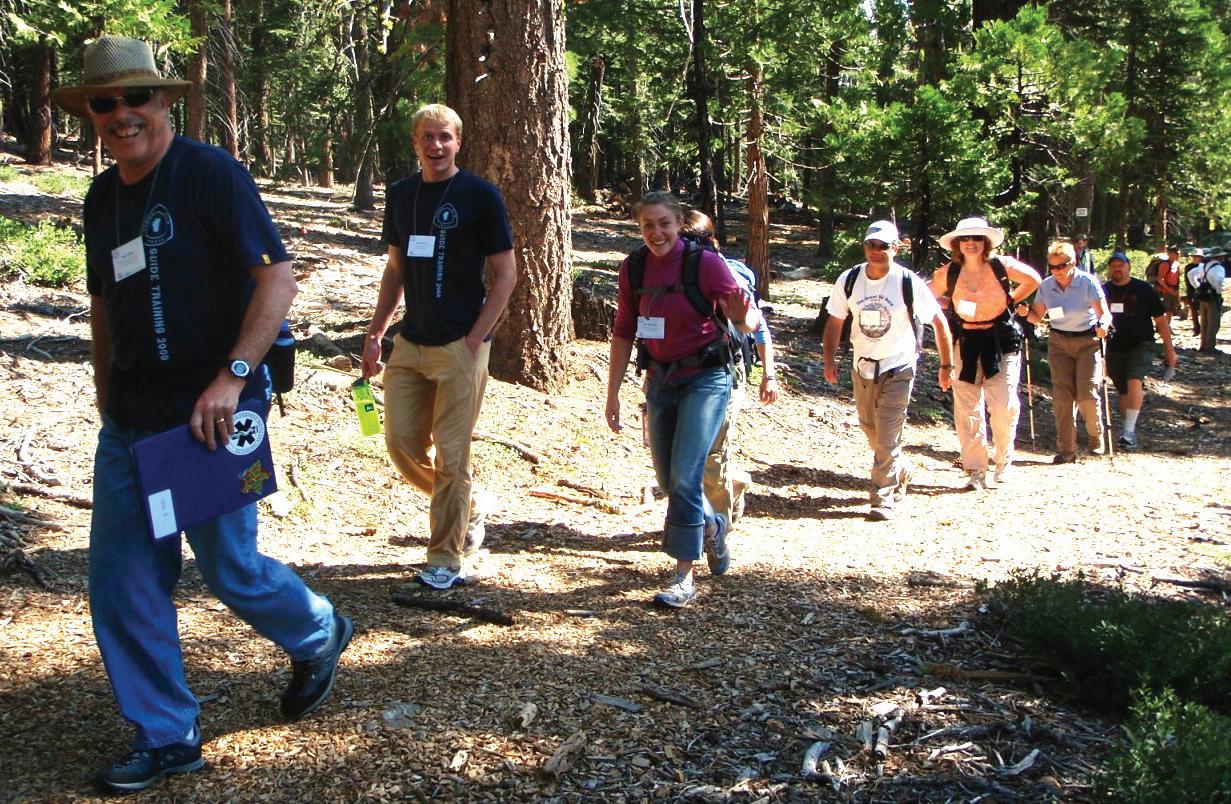
The Tahoe Rim Trail doesn’t just connect landscapes-it connects people. Because a trail is only as strong as the community that cares for it.
The Next 25 Years
If the first 25 years were about building and improving the Tahoe Rim Trail, the next 25 will be about adapting and evolving.
We’re stepping into a future shaped by climate change, increased visitation, and a growing need for education and stewardship. That means building more resilient trail infrastructure, continuing to refine how we design and maintain trail, expanding our educational reach, and strengthening partnerships across the region.
It also means continuing to grow a community that sees itself as part of the solution.
Still a Loop. Still a Legacy. Still Ours to Protect.
Closing the loop in 2001 was a milestone. But what we’ve built since and what comes next is up to all of us.
Be part of it. Grab a shovel. Join a trail crew. Send the kids in your life out on trail. Come hike with us. Become a donor.
Because the next 25 years of the Tahoe Rim Trail start now.
Best Day Ever: East Shore Youth Backcountry Camp, 2009.
2009 Guide Training.
Lindsey building Daggett Loop, 2012.
STAFF PICKS Favorite Spots on the TRT or the Best TRT Day Hikes
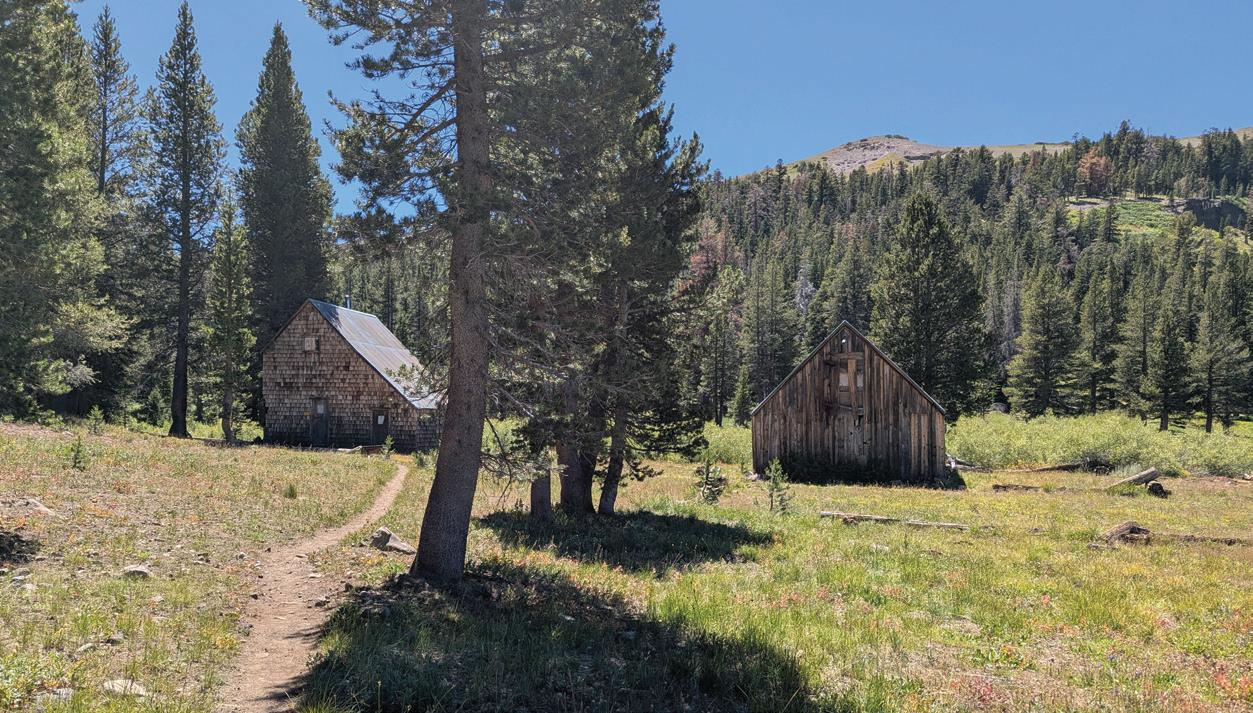
Maggie Wise, Membership Coordinator: I tend to think of a “day hike” as something that can stretch the full length of the day in every season, so I love trailheads that give you options depending on how you’re feeling. Carson Pass is perfect for that. From the pass, head north on the PCT/TRT and choose your own adventure from Showers Lake to Big Meadow, no matter which route you choose, you can’t go wrong.
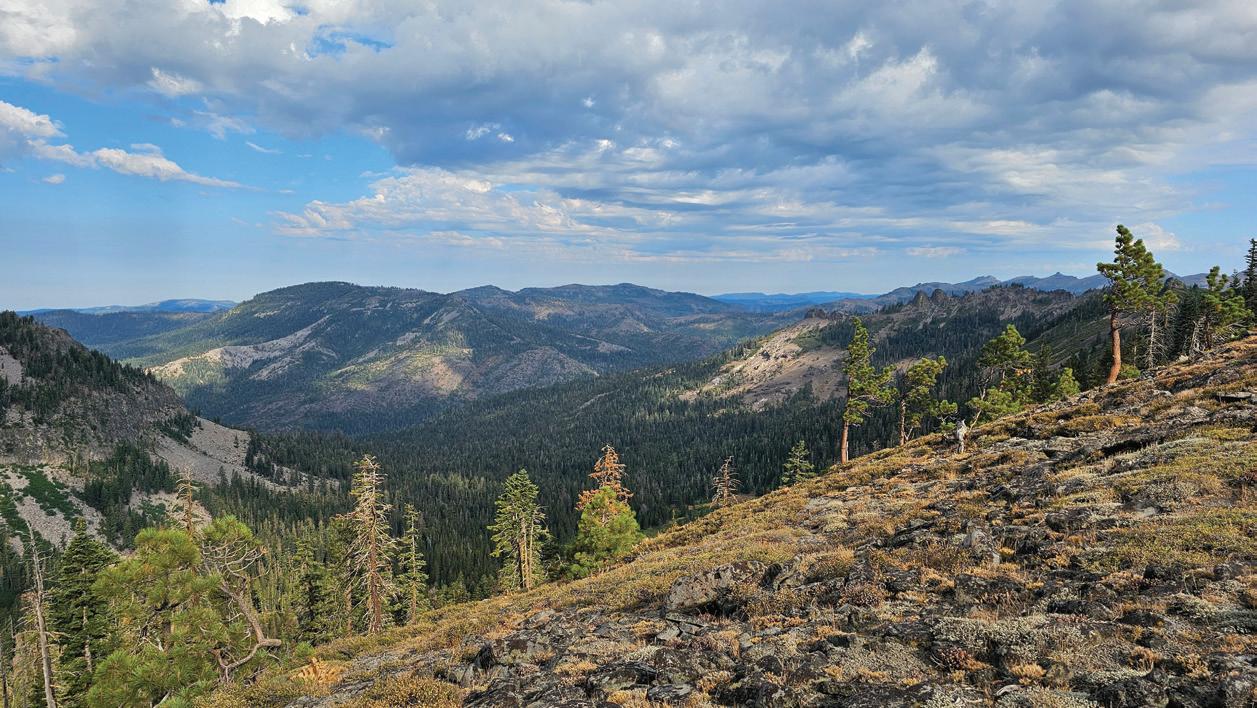
Mark Hassett, Youth Programs Manager: One of my favorite day hikes to do in late summer/early fall is to hike the TRT/PCT north from Barker Pass to where the trails diverge. This trail takes you up to one of the first places I saw Lake Tahoe from when I was hiking the PCT back in 2022, and takes you to the edge of one of my favorite places in the Tahoe area, Granite Chief Wilderness.
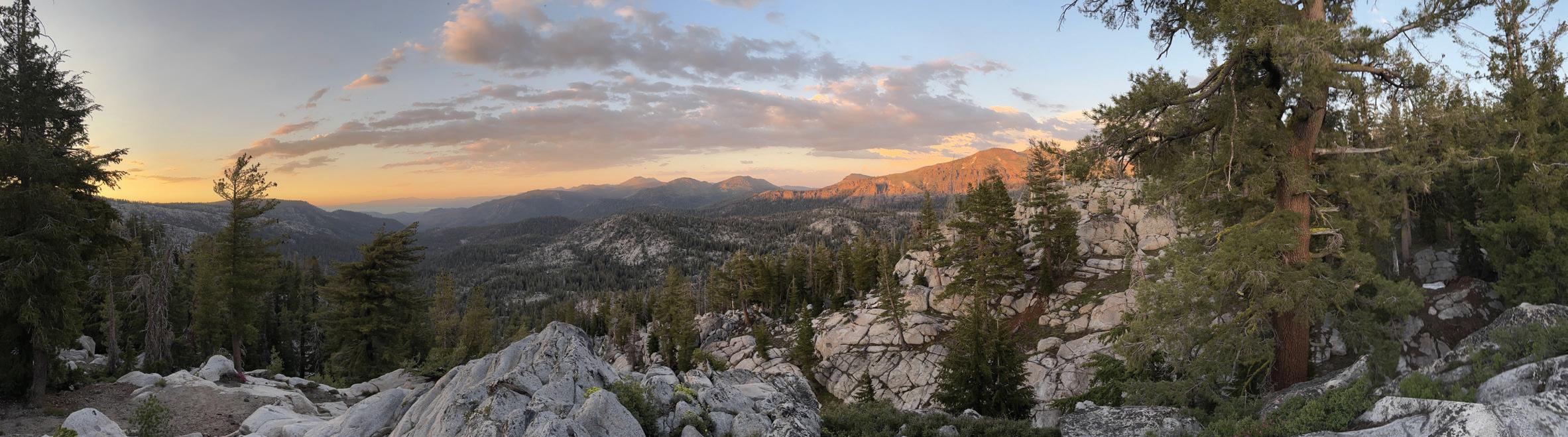
Van Fleet, Finance Manager: If I had to pick my favorite spot on the TRT, it would be Showers Lake. There is always a gorgeous reflection of the peaks behind the lake that takes my breath away.
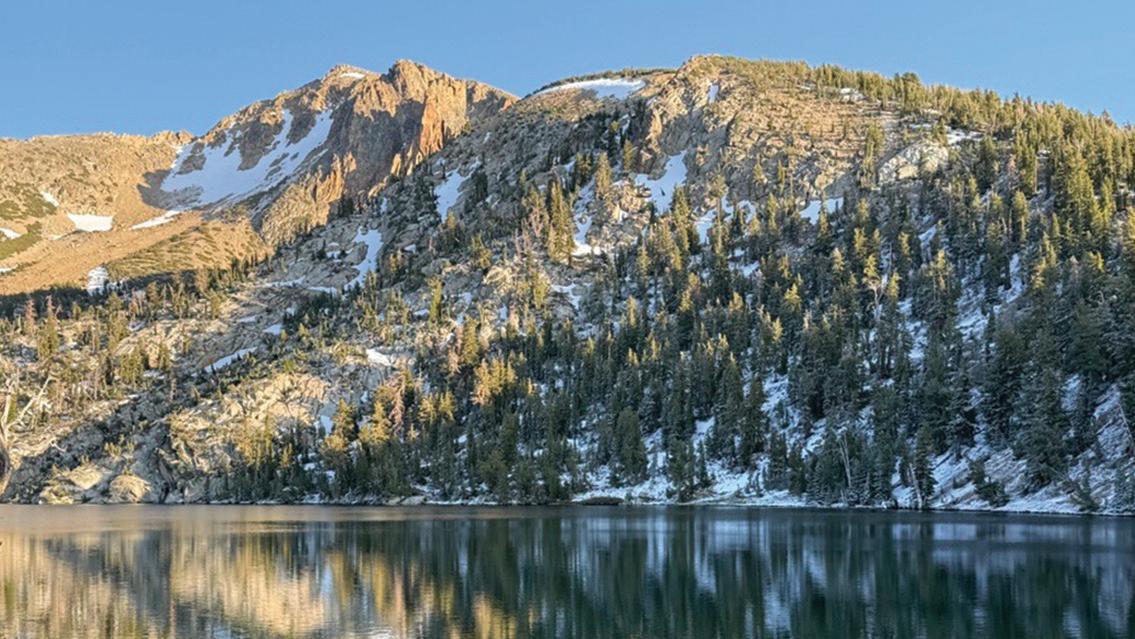
Judi
Daniel Corona, Communications Manager: My favorite spot on the TRT is definitely Star Lake. It is only a 9-mile hike from my front door which has made for the perfect weekend backpack escape for my dogs and I.
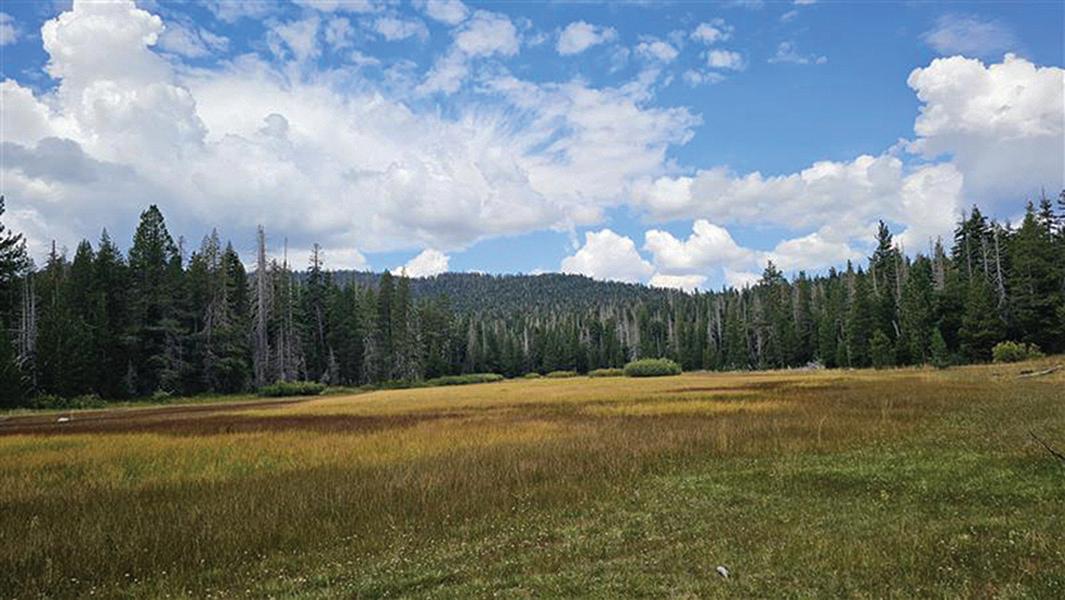
Briegan Aguilar, Trail Ops Manager: My favorite part of the TRT is through Page Meadows. The meadow is beautiful and peaceful with amazing mountain views. I look forward to the upcoming projects we have there.
The Dirt On Trail Operations

Closing the Loop Was Just the Beginning
Building the Tahoe Rim Trail was an incredible feat of volunteer trail building, taking 20 years and over 200,000 volunteer hours to complete. That said, in many ways that accomplishment was only the beginning of a much larger, long-term project. Just in case you didn’t know, trails don’t maintain themselves! As the primary stewards of this amazing trail, the TRTA is committed to maintaining and improving the TRT in perpetuity. Last year alone our volunteers and staff spent over 14,000 hours working on the TRT System.
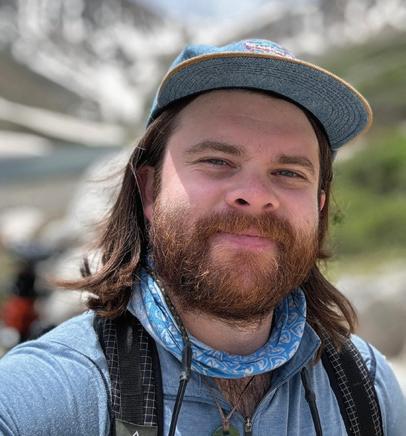
by Sam Donnelly Trail Operations Director
Tahoe has become one of the top hubs of outdoor recreation in the country, with annual visitation to the basin estimated at over 22 million. The TRT is the backbone of the Tahoe trails system, encircling the lake and connecting the many side trails together. The latest study on the TRT estimated the trail sees over 700,000 users annually, and it’s likely this number is even higher. There isn’t great trail use data from the early 2000s, but current numbers are clearly much higher compared to the early days of the Rim Trail.
Increased use takes its toll on trails, whether users are hikers, bikers, or equestrians. More feet, wheels, and hooves mean more soil erosion, widening trails, and trampling of vegetation. Trail structures like steps, drains, and rock walls will fail faster. Given more users than ever, trail maintenance has taken on a new level of importance.
With limited resources and over 200 miles to steward, the TRTA must be thoughtful on how we maintain this trail system. The best long-term
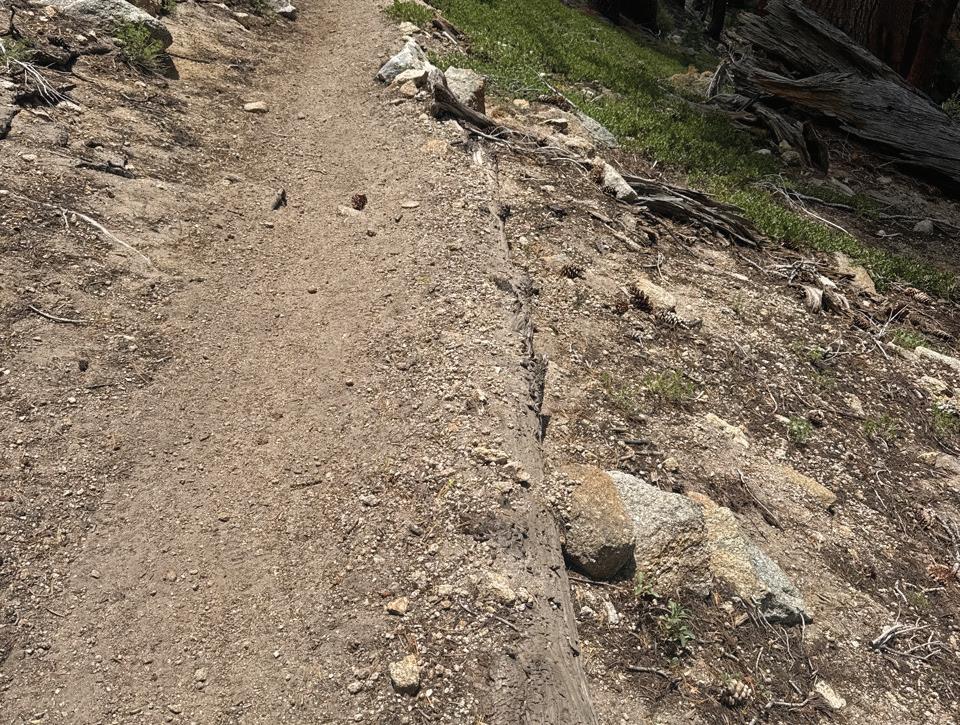
strategy is constructing sustainable trail improvements. Sustainable trail improvements essentially mean that instead of patching problems with short-term fixes, we look for solutions that will last decades. A great example of this is choosing the right material. The two most readily available materials in the Tahoe Basin are wood and rock, and there is the time and place for each. For a trail in a perennially wet area, a boardwalk built with treated lumber is the best solution to keep users from trampling sensitive vegetation. When building trail features like drains, steps, and retaining walls however, locally sourced rock lasts much longer. Last summer, supported by funding from the Tahoe Fund, we hired a crew from the American Conservation Experience to replace ¼ mile of failing wooden retaining walls with granite, a much more durable material that will last significantly longer.
A less straightforward way to improve the trail is to move it. Sometimes problems arise that no amount of maintenance can fix, or we realize that there is a better alternative nearby. The best solution in these cases is to reroute a section of trail to a more sustainable alignment that requires less upkeep. It’s a lot of work in the short term but saves time in the end and always leads to a better user experience.
Trail infrastructure improvements are another top priority. Signage, bathrooms, parking, bridges, and boardwalks become increasingly important as the trail becomes more popular. Trailheads without adequate facilities become chaotic, boggy meadows without
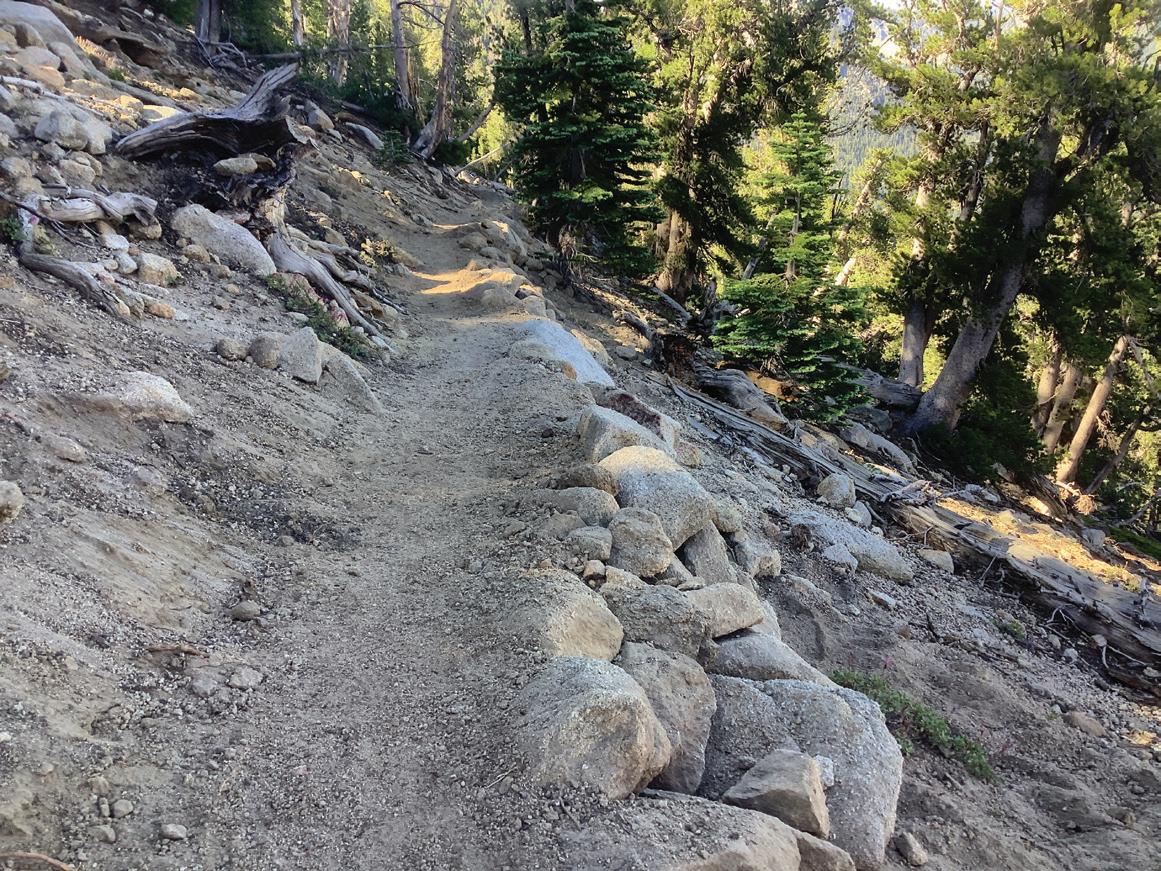
A failing wooden retaining wall compared to a newly built rock wall.
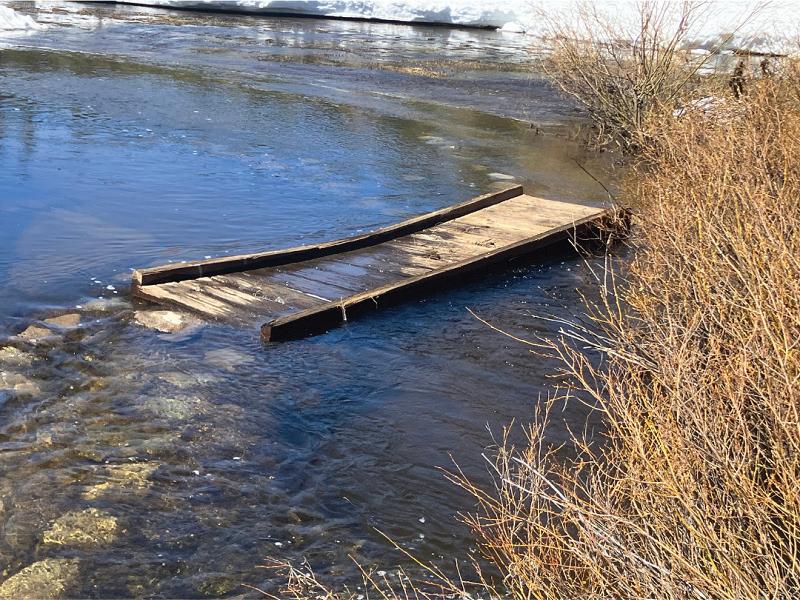
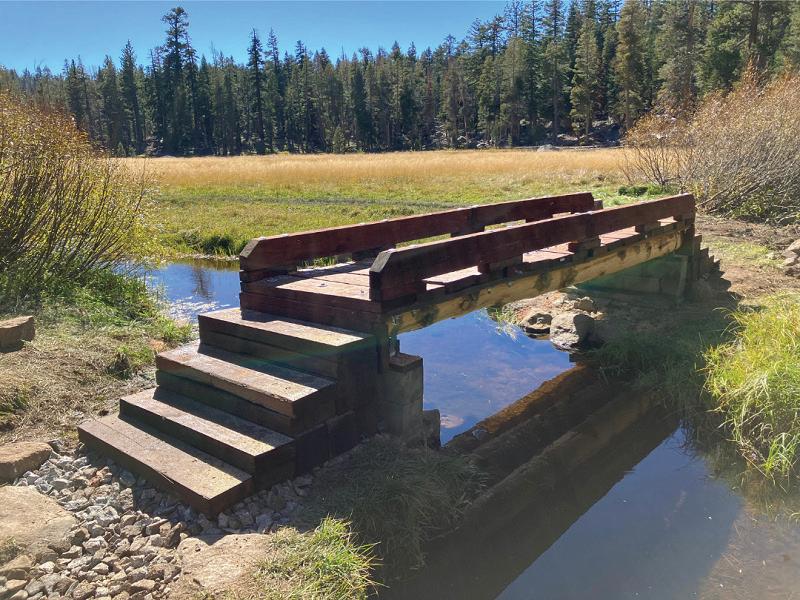
Before and after replacing the bridge at Big Meadow.
boardwalks are trampled, and trails without signage lead to lost users. Some recent infrastructure projects led by the TRTA include replacing the failing bridge at Big Meadow and installing a toilet at Watson Lake. We are currently in the process of replacing deteriorating boardwalks at Tahoe Meadows, improving accessibility and meadow health. We are also about halfway through upgrading all our Trailhead Kiosks to improve signage, awareness of regulations, and wayfinding on the trail. There are more boardwalk projects in the works, and we are
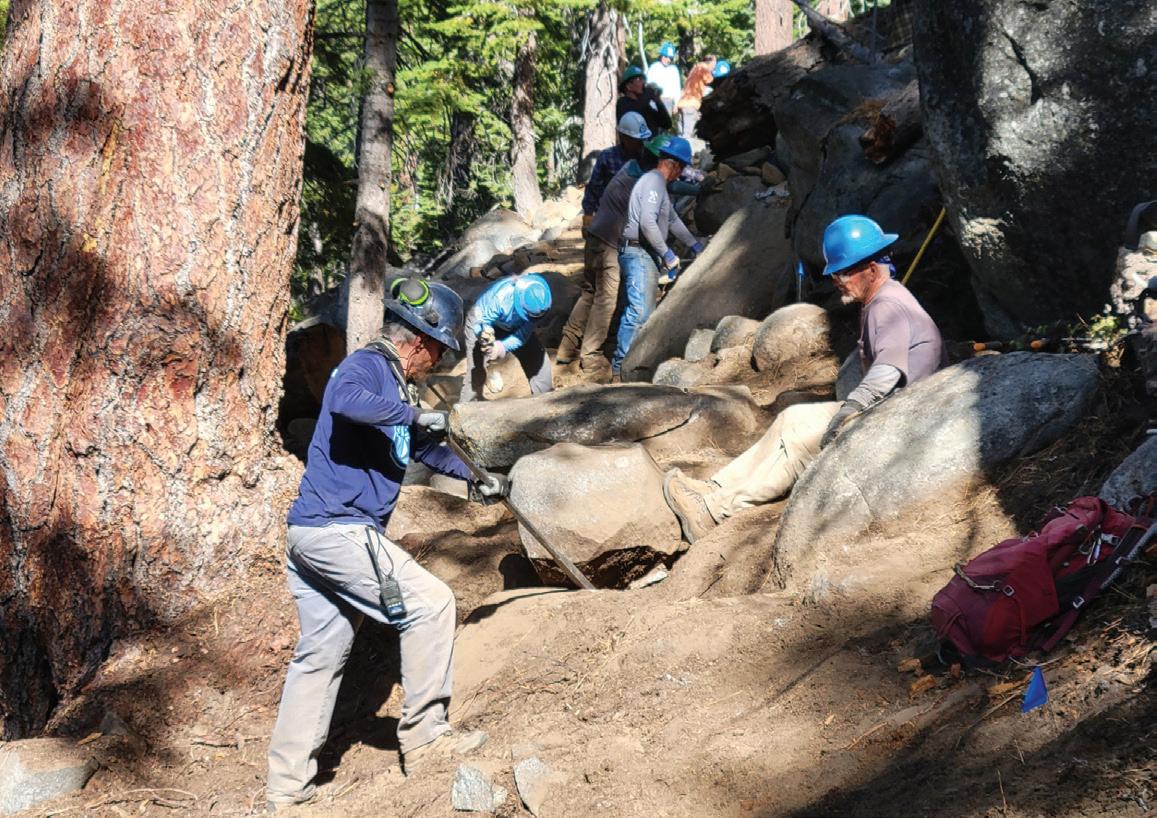
TRTA Volunteers working on a trail reroute.
always thinking about ways to improve parking, water sources, trash receptacles, and other infrastructure around the trail.
Caring for this large and well-loved trail system is no small feat and it simply wouldn’t be possible without you. Volunteers are the heart and soul of the trail. The best part? There’s truly something for everyone. Whether you’re brand new or a seasoned pro, our projects welcome a wide range of ages, abilities, fitness levels, and experience. From lighter-duty days to more physically demanding builds, there’s a place for everyone to plug in and make an impact.
This summer, we’ll be reinforcing tread in Desolation, replacing boardwalks at Tahoe Meadows, building retaining walls near Freel Peak, and tackling dozens of smaller projects all around Lake Tahoe. Come get your hands dirty, learn about sustainable trail improvements, and be part of something bigger.
Join us for a volunteer workday—we’d love to have you!

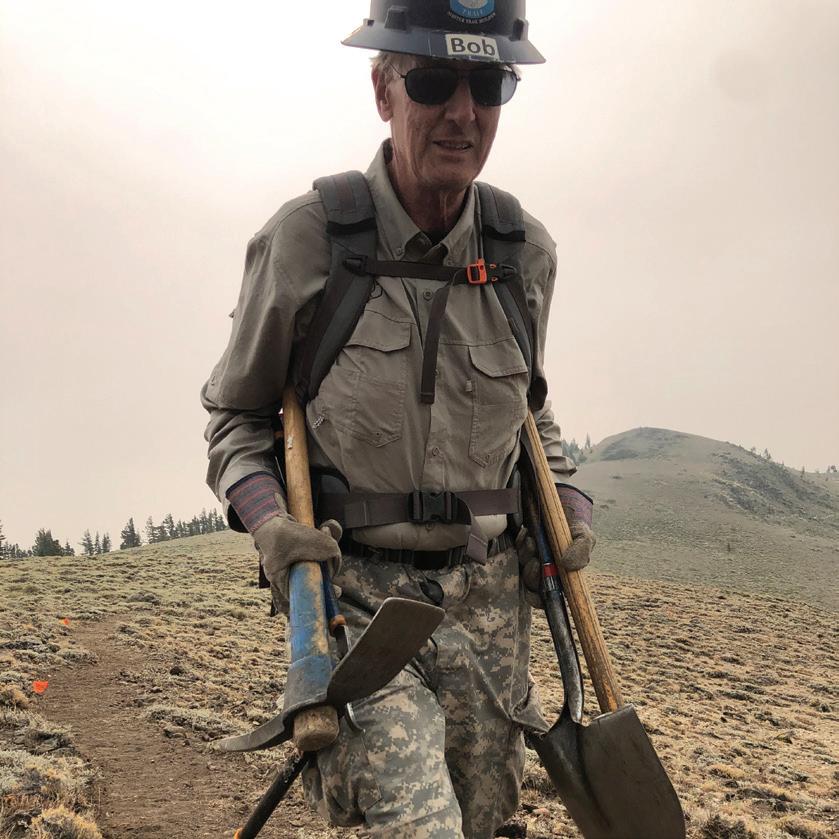
VOLUNTEER SPOTLIGHT: Bob Anderson
25 Years of Connection: A Legacy Built One Shovel at a Time
In the world of trail building, there is a distinct sound that defines the Tahoe summer: the rhythmic clink of a rock bar hitting granite and the soft thud of duff being cleared from a fresh path. For Bob Anderson, that sound hasn’t just been a hobby, it has been the soundtrack of his life for the last 26 years. As we celebrate the 25th Anniversary of “Closing the Loop,” we sat down with Bob, a man who was there when the final golden shovelful of dirt was moved, to reflect on how a tireless group of dedicated, invested volunteers transformed a visionary idea into 174 miles of world-class singletrack.
The “Accidental” Crew Leader
by Colleen Hoffman Engagement Manager
Bob’s journey didn’t start with a grand ambition to build a legacy. Like many of our most iconic stewards, it started with a simple, quiet desire to get outside after retiring in 1998. By early 2000, Bob was looking for a way to connect with the Sierra landscape he loved.
“I showed up for National Trails Day in 2000 thinking it was just a Sierra Club event,” Bob laughs, recalling his first day on the trail near Tahoe City. “I knew nothing about the TRTA at the time. I just wanted to be helpful and be outside.” He spent that first day doing basic maintenance, but it wasn’t the dirt that hooked him, it was the culture. He found a community of people who were as hardworking as they were welcoming. By the end of that first trail work day, a staff member named Shannon recognized Bob’s natural aptitude and work ethic. She pulled him aside and asked a simple question: “We’re having a crew leader training next weekend; why don’t you join us?”
Bob said yes. He has been saying yes to the trail ever since, embarking on a quarter-century journey of leadership and sweat equity.
The Art of the Evolving Trail
To Bob, the Tahoe Rim Trail isn’t a static monument or a finished product, it is a “living, breathing thing.” He approaches trail work with a specific mentality: we can always do this better. He has never been one to settle for the status quo, believing that a trail should be as beautiful as the destination it leads to.
This philosophy was most evident during the five years Bob spent working on the Rim to Reno project. For Bob, this wasn’t just construction, it was a “work of art.”
He leaned into the strategic side of trail design, balancing the
cold hard science of sustainability with the subjective beauty of the user experience.
“You aren’t just moving rocks,”
Bob explains. “You are curating an experience.” He spent years obsessing over trail placement, ensuring the path would withstand the brutal Sierra winters and heavy spring runoff while simultaneously framing the basin’s breathtaking vistas. He looked at the topography like a canvas, protecting the clarity of the lake through smart drainage while guiding hikers toward “wow” moments they would remember for a lifetime.
Moving More Than Just Rocks
While the technical design of the trail is his craft, the human impact is his “why.” Bob’s eyes light up when he speaks about the volunteers he has mentored, particularly those who didn’t realize their own strength. He recalls a particularly moving afternoon working with a youth group from the YBCC (Youth Backcountry Camp).
The crew was finishing a half-day of clearing duff. The energy among the teenagers was high, and several of the boys were posturing, itching to prove their strength by moving something heavy. Bob noticed one girl in the group who was the polar opposite, shy, quiet, and hovering on the far periphery of the work, seemingly convinced she didn’t have much to contribute to the physical labor.
Bob spotted a large rock, one that didn’t strictly have to move for the trail to function but offered a different kind of opportunity.
“You,” Bob said, gesturing to the quiet girl. “You are going to move that rock.”
The boys stopped and watched. Bob handed her a rock bar, a heavy, steel lever, and coached her through the physics of it. Under his guidance, the rock gave way. As the group packed up their gear at the end of the day, she walked up to him privately.
“I just want to thank you,” she said. “That was the best thing you could have done for me. You showed me I could do things I didn’t think I could do.”
“That stuck with me,” Bob says. “That makes me proud. That’s what this trail does for people; it builds the person as much as the person builds the trail.”
The View from the Legacy
If you want to find the heart of Bob’s 26-year journey, look to the Northeast. His favorite spot to reflect is Mount Rose, a section where he has been intimately involved in every stage, from the first flags in the dirt to the final construction of the tread.
But for the true “gem” of the trail, he points toward Christopher’s Loop. With its iconic, panoramic views of the Lake Tahoe Basin, it stands as a physical testament to the thousands of hours Bob and his fellow volunteers have poured into the soil. When he stands there
today, he doesn’t just see a view; he sees the sweat of the crews, the laughter of the workdays, and the 25-year history of a loop that finally came together.
Your Turn to Dive In
Closing the loop in 2001 was a monumental milestone, but the legacy of the TRT is maintained by those who refuse to stand still. The work didn’t end when the trail was connected; it merely entered a new chapter of stewardship.
Bob’s advice to anyone considering picking up a tool for the first time is simple: Dive all the way in. “The work didn’t stop when the ends met,” Bob says. “It shifted. We went from building a trail to caring for a legacy.” Today, he finds immense pride in seeing new generations of volunteers—some who weren’t even born when the state lines were finally bridged—picking up a Pulaski for the first time.
Become Part of the Story
The 2026 trail season is just around the corner, running from May through October. We need stewards who are ready to treat the trail like a work of art and a tool for empowerment. Whether you want to master the rock bar, design sustainable switchbacks, or simply give back to the land that gives us so much, there is a place for you.
Ready to start your own 26-year journey? Visit our website at tahoerimtrail.org to sign up for a volunteer workday or a Crew Leader training session. Join the legacy. Build the loop. Find your connection.
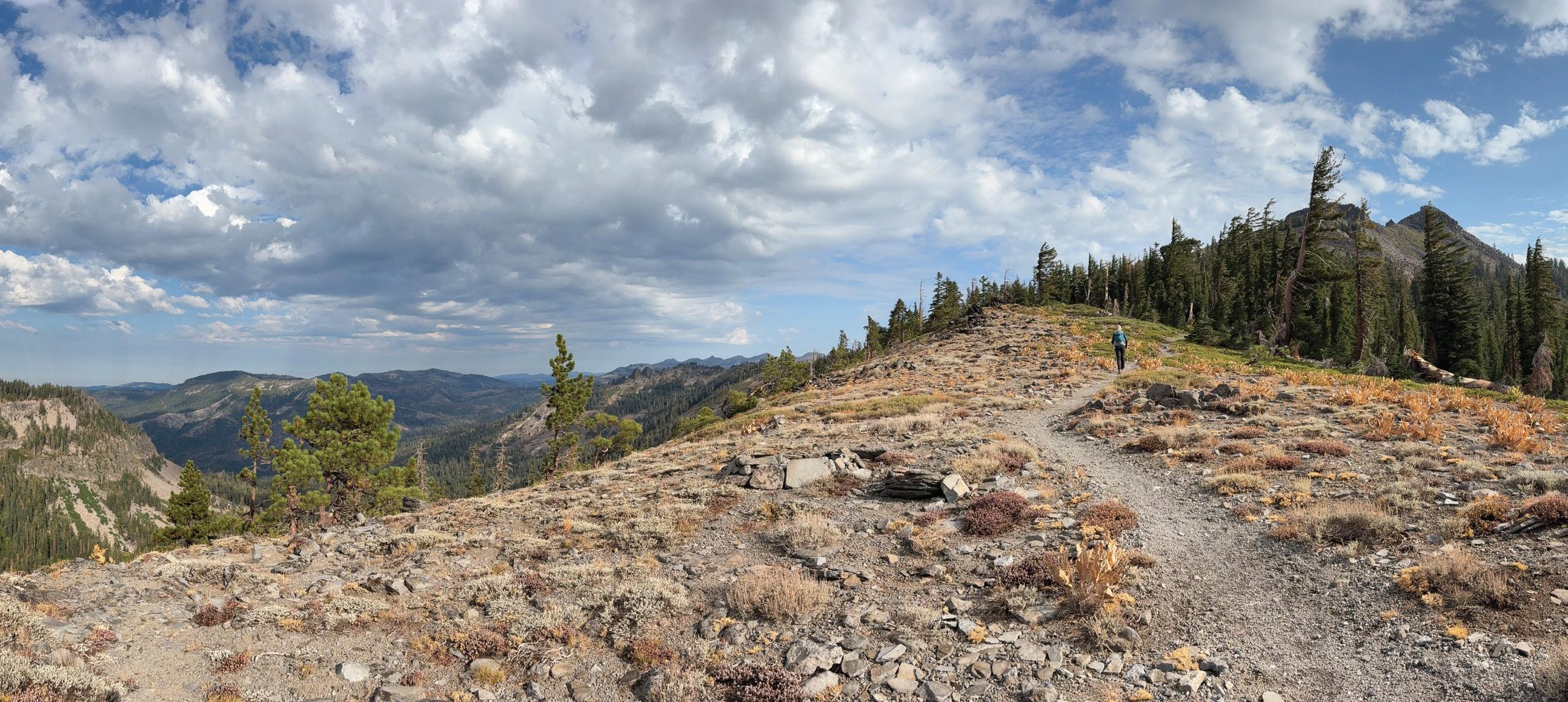
The 165-Mile Club is an honorary distinction for those who have completed the whole Tahoe Rim Trail (now 174 miles!). Membership is open to anyone who covers those miles, on foot, by bike, or horseback, in a single push or over years, on day hikes or overnight trips. As the people below can attest, completing this mileage is no small feat. And yet, like a scoreboard, the miles tell only that someone completed it, not how they got there.
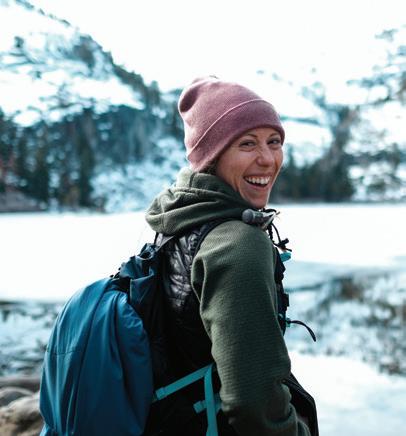
by Maggie Wise Membership Coordinator
The 165-Mile Club exists not to celebrate miles alone. It honors the daring choice each member makes: to step into challenge, embrace discomfort, open themselves to beauty, and allow the trail to both undo and renew them. It stands as a proclamation: these people have a story to tell, and it’s worth listening to.
This year, we’re humbled to share snippets from some of those stories. Their reflections reveal what the trail takes, and what it gives back; insights no mile count can capture. Read them, and you’ll understand why people embark on this adventure and begin planning their next.
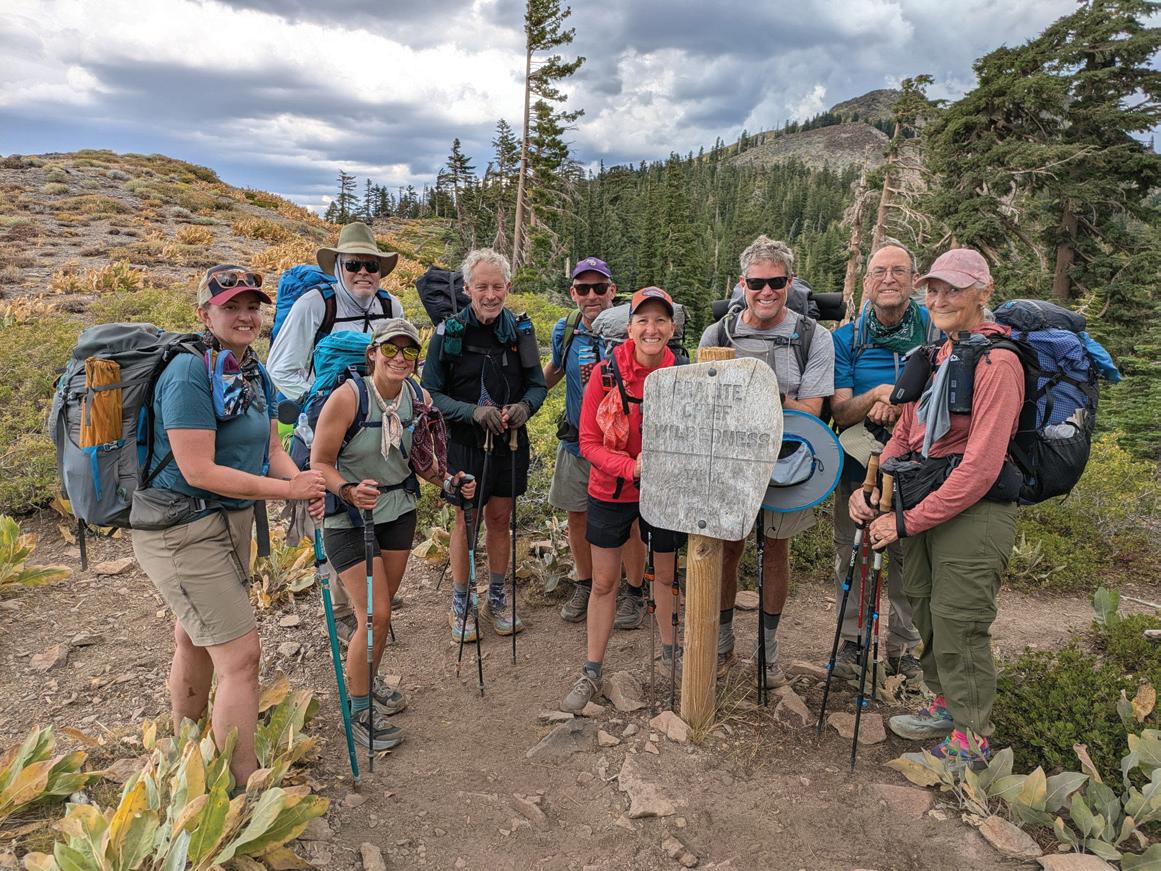
“Hikers, you are stronger than you think. Get out there and do this! I did not know how strong I was until I hiked this trail. I did it in sections over three years. I feel empowered by what I was able to do. I’m turning 59 in September.”
—Joan #3342
“As we hike our own hike the trail provides the strength and courage we need to survive. Those tough climbs and uphill battles are representations of challenges we face in life. The pain and growth never ends, but in those struggles is where the beauty lies. The sunsets/sunrises, the animals, flowers, and alpine lakes. There is always beauty along the journey if we observe and acknowledge it.”
—Alejandro #2923
2025 Guided Thru Hike participants entering Granite Chief Wilderness.
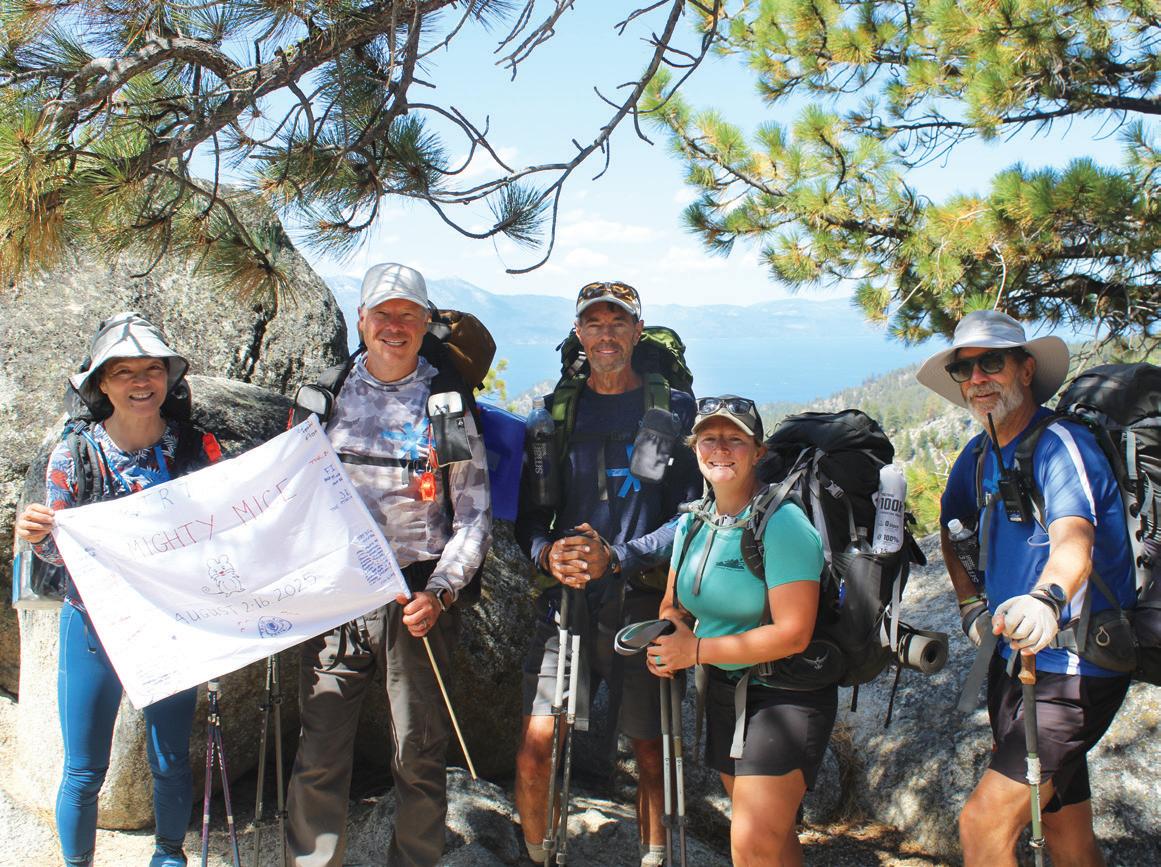
2025 Guided Thru Hike group “The Mighty Mice.”
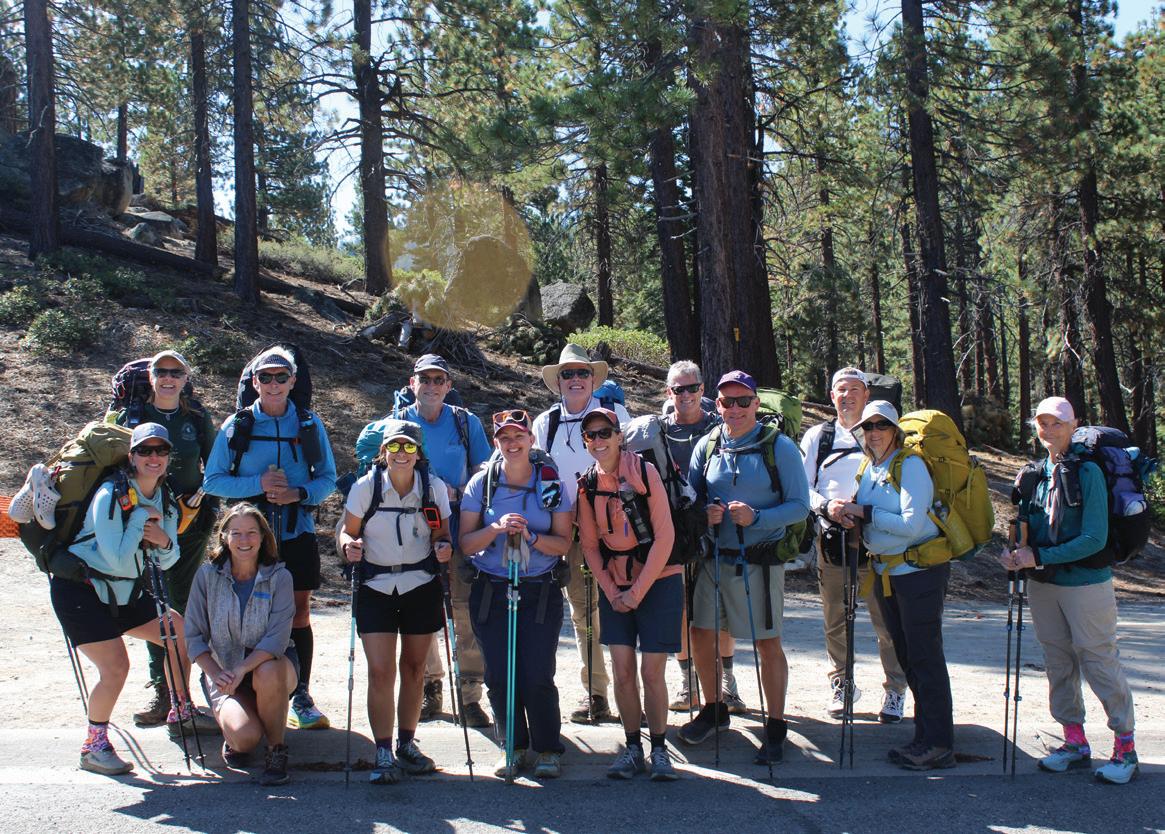
“The unique loop of this hike creates a beautiful circle in more than just the trail itself. At the beginning of your adventure, you meet those who are ending up there; they give you words of encouragement, advice, and let you know of the trail ahead. Before you know it, you’re the person at the end giving back to those at the beginning. Before you know it, you’d give anything to slow time and begin the journey again.”
—Alexander #3185
To those who have completed these miles: thank you for reminding us why this trail matters and why the Tahoe Rim Trail is truly “a trail like no other.” To those who haven’t yet, consider this your formal invitation. The trail will meet you where you are and take you somewhere you didn’t expect. That’s the only promise it makes, and it always keeps it. We can’t wait to hear where it takes you.
2025 165 MILE CLUB MEMBERS:
Dyana Carmella, #3460
Morgan Fitzgerald
Charlie Smith
Jim Harmon
Alan Banks
Glenn Weidenbacher
Joe Pollard
Kristen DeVoogd
Mandy Whitton
Mike Boyer
Paula Hemmerly
Katie Epifano
Paul Rabalais
Michelle A. Green
John Giesen
Barbara Viereck “Apricot”
Tyler Lin Nichols
Gary L Richardson
Steve “Bits ‘n Pieces”
Prettyman
Steve Smoot
John (Johnboy) Maaklet
Mark L Taylor
Patrick Dempsey
Amro Abdelgawad
Paul Altrocchi
Bianca “Bee” Corrado
Sarah Wartman
Paul C Altrocchi
John Sadro Jr
Ryan Nichols
Laura Meredith
David “Hermit” Keyser
Elise Keyser
Amelie “Surgeon” Keyser
Colby Park
Taylor Hana Kim
Wylie Gibson
Evan McClain
Deanna LeBlanc
Robb Vinzent
Benjamin Wilcock
Jillian Shivery
Brent Jolley
Cathi Carnes
Daniel Pendleton
Michael Zidanic
Steven “Ranger” Cossin
Amy Hutner
Amy Scheumann
Gabrielle Guillory Welsh
Kevin Kotur
Chuck Amital
Dale Smith
Bruce Evans “The Meanderer”
Courtney Ogilvie
Adam Ainsley
Maria Barton
Autumn “Cowgirl” Hugo and Liko Bisbee (Dog)
Linda Dallas
Heidi Schreiber
Gareth & Mareese Keane
Kimberly Miller
Rachel Cohen and Lena (Dog)
Sarah Swift
Steve Weatherly
Ethan Stone
Kelly Snavely
Kari Kristensen-McCulloch and Cazadora (Dog)
Wendy Waterman
Joellyn Ferguson
Donna H Barkley
Beth Jones
Heather Waldroup
Maria Luca
Arene LeBlanc
Benjamin Lohse
Elyse Raby
Peyton “Shaggy” Clark
Mike Windsor
Tanya Michelle Telford
Agata Gluszek
Sarah Marie Trujillo and Taylor That Dog (Dog)
Kyle Stewart
Lucy Goldenberg
Douglas Goldenberg
Marty Pagel
Lynn Hunt
Ingrid Pulhug
Michael “Boogie” Tran
John McGowan
Jonathan Stacy
John “Oddball” Rivera
Paloma Colacion
Steven Bailey and Arens
Bailey
Eric Steger
Cindy Vaught
Roxanne Rorer Stern
Letitia Bryan
Vito Impastato
Karel J. Davis and Bongo and Charlie (Dog)
Claire Kubicki
Alicia Kubicki
Chloe Cho
Nicole Kimball
Elizabeth Lopatto
Christina DeBenedetti
Steve and Amy Martin
Jessica Cerasoli
Melissa Dahl
Erika Conley
Eileen Lords Mosse
Elizabeth Gress
Kelly McInerney
Layne Wiggins
Leon Mosse
Cyndi Steiner
Allison Holt
Ari Faria
Kayla Nardozzi
Brandon “Wormwood” Kelone
Julianne Zhu
Paul “Magnum” Curtin
Levi Sweat
Erin Love McDermott
James Bodnar
Ben Pacewic
Dyanne Foster
Andrew Davis
Gregory Moyerbrailean
Jenn Munyan
Brenda Dittmore
Mary Frandsen and Mike Frandsen
Spirit Kick
Chris Dittmore
Liz Herrick and Spencer Herrick
Matthew Smyth
Jason Garza
Audrey Barry and Travis Mulford
Ben Corr
Monica Li
Sara Casebeer
Lee Mobley
Carrie Elaine Chambers
Dave Peternell
Michelle Smith and Chip Smith
Casey Dattola and Burma (Dog)
Travis Unruh
Gary L. O’Neall
Alyssa McPherson
Nevada Trager
Tra “Rainbow” McPeak
Penny Zager McPeak
Tyler Hopkins
Jeff “Rooster”St Clair
Jenny Church
Bryan Dunkeld
Shannon Perna
John Lanfranki
Megan Scott
Stephen Arndt
Monica Morariu and Ellie Ibis (Dog)
Garth Falk
Nikunj Chapadia
Amelie Pinatel, Tim Thurston & Mochi the Pyredoodle (Dogs)
Elizabeth “Honu” Kerwood
Diane R Hull
Sandra Stocke
Kelly Mader and Haley and Ellie (Dogs)
Allison Gorelick
Sara Healy
Annie Bieniek
Laurel Topken
Bryce Nelson
Samantha Klein
Greg Hanssen
Sasha Unruh
Linda “1Step” Ramus
Hunter Liebgold
Pamela Palmer
Richard King
Nathan Neben
Layton Rosenfeld
Pam McKenna
Kimberley and Craig Dighero
Jacqueline Susong, #3652
2025 Guided Thru Hike participants at the start of their 165-Mile Club journey.
Views we love
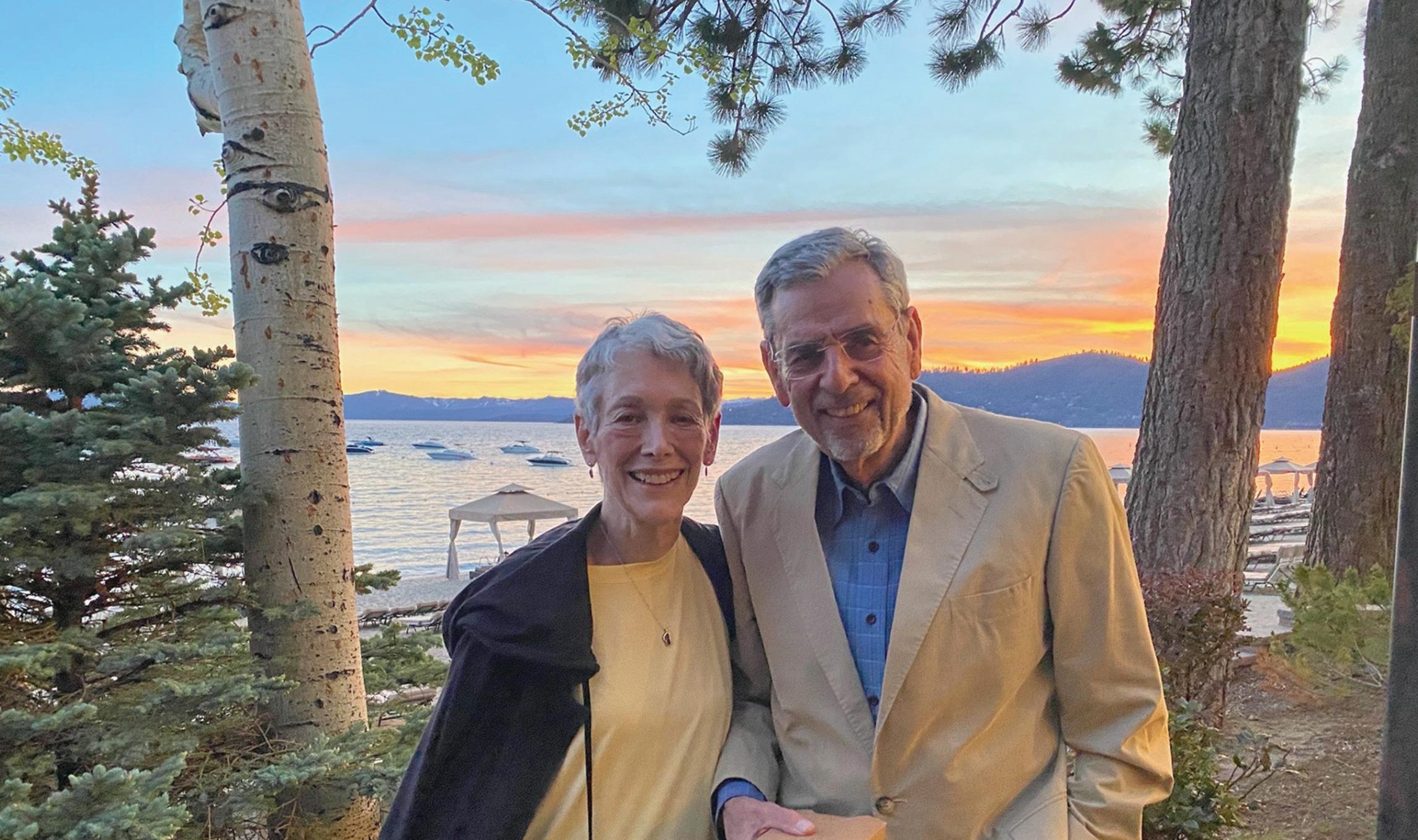
Individuals, families, and organizations can help to ensure the continuing legacy of the Tahoe Rim Trail by adopting their own vista or mile! Donors have the opportunity to be a steward of the trail by giving back to something they love—the trail and the Lake Tahoe Basin. Here are this season’s adopted vistas and their special dedications. If you are interested in learning more about this program, email info@tahoerimtrail.org or visit tahoerimtrail.org /adopt-vista-adopt-mile/.
Kate and Marvin’s 60th Anniversary Vista
Adopted by their children and grandchildren
We decided to honor our parents, Marvin and Kate Feinstein, for their 60th wedding anniversary with a donation to the Tahoe Rim Association, in honor of their lifetime of loving the Tahoe wilderness area together and sharing it with their family.
Carolyn’s Vista
In memory of Carolyn Osada, adopted by her son, Alex Henderson.
The mountains were Carolyn’s true home, and Lake Tahoe was where that love was born. She inherited her parents’ cherished house there, a place she returned to throughout her entire life, not just for the beauty of it, but because being there was a way of being close to them. The house held them. She hiked the mountain behind it countless times, the kind of familiar trail that becomes almost meditative when you know every turn. And just as the Sierra Nevada had shaped her, she made sure it shaped her children too, bringing them to the mountains early, often, and with the quiet intention of passing something essential on.
But Lake Tahoe was not a limit, it was a beginning. The love it kindled in her grew wide. She trekked to Everest Base Camp, hiked the Alps, and made her way to Canada’s Rockies many times. Wild places never stopped calling to her, and she never stopped answering.
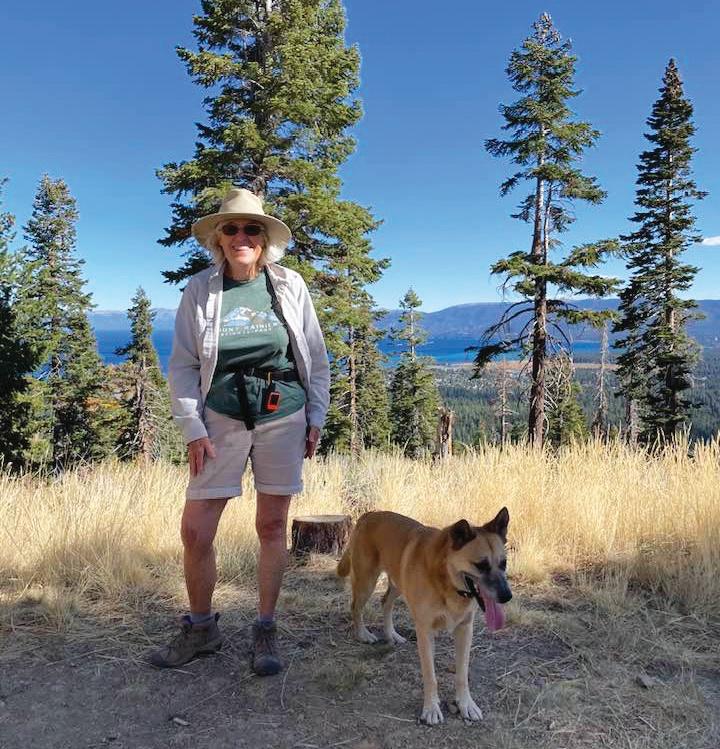
Carolyn Osada and her dog Owen hiking Tahoe Mountain overlooking the lake.
Kate and Marvin Feinstein
Our sincere thanks to every volunteer from the office to the trail! Sign up to be a volunteer at tahoerimtrail.org/volunteer.
ACTIVE CREW LEADERS
Aaron Daniel
Bob Anderson
Brad Chase
Bryan Wright
Charlene Summers
Chris Strohm
Chuck McVicker
Clay Grubb
Don Bailey
Donna Maher
Doug Johnson
Jim Large
Jamie Nowitzky
Jared Coons
Jim Crompton
Karl Picking
Larry Davis
Mark Wynne-Wilson
Mike Kuckenmeister
Nicole Kryda
Patrick Pevey
Paul Sinnott
Sam Donnelly
Sue Hughes
Business Members
TRTA Business Members are essential partners that help us fulfill our mission. These partners ensure the Tahoe Rim Trail remains just as phenomenal in the future as it is today and inspire the next generation of environmental stewards. For more information on becoming a Business Member, contact info@tahoerimtrail.org.

Alan Catron
Anna Lijphart
Barb Todd
Bjorn Thaler
Brooke Clayton
Colleen Gervasi
Connie LeLouis
Dagmara Kokonas
Debbie Matuk
Donna Ting
Dori King
Ellen Fletcher
Ellen Goldsmith
Faye Provenza
George Olesinski
George Prince
Ita Abarzua-Kostan
Jamie Goodspeed
Nowitzky
Jan Nishikawa
Jennifer Coon
Jim McNamara
Jim Mrazek
Jo Ann Cobb
John Ferguson
John Price
Joseph Salonga
Karin Regnstrom
Kate Huckbody
Kerry Lee
Kirby Booth
LaTrenda Easton
Laura Van Antwerp
Laurie Buffington
Loretta Low
Mary Davidson
Matthew Taylor
Maureen Welsh
Melissa Johnson
Michael Kreisel
Michelle Beaupied
Raelynn Noel
Rita Stoufflet
ACTIVE GUIDES ACTIVE TRAIL AMBASSADORS
Sharell Katibah
Steven Cochrane
Steven Tuttle
Tom Fullerton
Tricia Tong
Aletha Nelligan
Ann Jasper
Carol Nageotte
Claudia Hansen
Dan Gonzales
Donna Ting
Douglas Dilts
Dwight Hatano
Ellen Goldsmith
Julia Suman
Kathie Canepa
Katie Gates
Kristen Ross
Lauren Beal
Lawrence Souza
Lisa Dossey
Lowri McGill
Michael Groff
Patty Dully
Rebecca Creemen
Ron Nageotte
Rosa Kirk-Davidoff
Tami Fandrei






Trail Blazer
Official Publication of the Tahoe Rim Trail Association