This month, Mike touches on the memorial gathering for the one-and-only Don Borges, one of the town’s inimitable Borges brothers and a local phenomenon in his own right. In addition to saluting Don, Mike writes about a gathering of community members and how nice that is. I have to agree.
The change of scenery on our drive up to the North Coast provided a reset I didn’t realize I needed.
Just a few days before our deadline, my children and I were called up to Eureka to say a final farewell to their grandfather, my former father-in-law, Ken. He was by turns charming and irascible to the very end and at an impromptu memorial dinner we laughed more than we cried. It was also a reunion of various family members who don’t get together as a group all that often and the synergy was refreshing, comforting and fortifying. The group included numerous idiosyncratic, political and lifestyle iterations, yet we all managed to have a meaningful celebration with our love for Ken outweighing any differences, which gave me a small measure of hope for our seemingly hopelessly divided country.
Sometimes a change in one’s literal perspective sparks a change in one’s mental perspective. But I was reminded that we have a spectacular perspective here in Tahoe if we only make the effort to look around. Years ago, when we were sitting at the Rufus Allen/Highway 50 stoplight, I pointed out to my kids how unusual and wonderous it was to have such a gorgeous view while waiting for a light to turn green. Lately, though, I have found myself caught on my phone or caught in my worries or griping about the traffic and need to take my own advice to consume Vitamin N (nature) on a more regular basis, even for just a moment at an intersection.
This month we outline how to get a large dose of Vitamin N with a feature on the Tahoe Rim Trail and the best way to really get out there and immerse oneself.
(Mike also highlights more manageable hikes.) We are pairing that with a preview of the local Farmers’ Mar-
kets and what we can expect this summer in terms of fresh, natural food. (Hint: tomatoes are coming early, so be prepared.)
Last month, we ran a small piece about the South Lake Tahoe Jail and problems and challenges identified by the local Grand Jury. This month we have two more tidbits from their annual report—one in which they ding themselves, even. Always have to respect organizations that look inward as well as out.
This is only a small handful of the news and viewpoints contained in this month’s pages. We take a look at the first year of our community crisis teams, Gary writes about the glyphosate controversy, whip up a batch of Kae’s take on the classic chocolate chip cookie and too much more to list it all here.
Time to turn the page.
Spin and green washing don’t cut it
In a recent column, TRPA’s Julie Regan states, “Housing has become an urgent priority as well. As our nurses, firefighters, hospitality workers, and others who keep Tahoe running face increasing housing challenges, we are again working with the community to expand incentives for affordable housing near town centers. Our vision is to improve housing affordability while supporting lake clarity…”
Informed residents know this is BS. Until the TRPA reduces the 7,000 VHRs in the basin, any talk of incentivizing the construction of high-density, five-story apartment buildings should be put on hold. By allowing existing housing to be converted to short-term commercial lodging in residential neighborhoods, the TRPA has long been a contributing partner in Tahoe’s housing crisis.
Her (facts are not essential) column continues: “Every thoughtfully planned project brings us closer to a Tahoe where environmental stewardship and community vitality are not competing priorities, but shared successes.” More bullshit. Consider the many TRPA-approved and now stalled projects: the once-operating (now boarded up) Tahoe Biltmore Casino in Incline, approved to be demolished to make way
for an oversized Waldorf Astoria Resort; the proposal to build 40 luxury condominium units (Latitude 39) next to the Golden Nugget that went on the market for a $10M flip shortly after approval in 2022; and the recently approved 53-unit luxury “glamping” resort on nine forested acres off Elks Point Road that is currently seeking an investment partner for $8.5M. The property is also available for acquisition (read flip).
Some council members got into the weeds and turned their focus toward the public, believing they are the problem while ignoring their own role in the council’s failure to function. There are a few members of the public who have been notably disruptive, but the Brown Act specifically provides for warnings, a recess or even removal from the chamber to remedy these situations.
This project is an example of green washing deception by calling luxury lodging units in the woods “glamping.” These are hardly “shared success” stories.
THE LATE LATE SHOW
There isn’t enough popcorn, caffeine or Pepto Bismol to make city council meetings (some night meetings have ended near midnight) watchable. On May 26, a special meeting was held to discuss and address the dysfunction of council meetings.
The presumption by council: if we tweak some of the city’s meeting rules (protocols), the problem will be solved. This idea is comparable to rearranging the deck chairs on the Titanic.
The bigger issue and the elephant in the room is the council itself. We have council members who are openly hostile (includes shouting matches) toward each other and staff, an appointed newbie who has cast herself as the sage know-it-all, and members who spend way too much time pontificating about their views and personal accomplishments. Council member Keith Roberts described this as the behavior of people who never stop campaigning—using valuable public meeting time to tell the public who they are and what they believe instead of focusing on the work of making policy decisions. Hear! Hear! This topic will be brought back to council for further discussion.
SUMMERTIME
Happy almost summer. Time (for some) to kick back and enjoy what my friend Sue Hoy calls the “lake effect” — that unexplained yet undeniable pull of some invisible force (Mother Nature?) toward the same waters that first brought the Washoe people here centuries ago. With the price of gas and an economy careening toward uncertainty, tourism may take a dip this summer, allowing locals to find enough space on their favorite beach to spread a towel and take it all in. Savor every minute.
If you are looking for something to do on the cheap — read a book. Our local libraries provide plenty of titles to choose from, on loan for free. The voters have endorsed the importance of our library by passing Measure B on June 2, ensuring that the El Dorado County branch library in SLT will be able to continue providing the public services the residents have come to expect.
A big thank you to Friends of the Library’s Jeanne Benin for her dedication to enriching our community.
And . if you’re looking for your summer read: the heartwarming Theo of Golden by Allen Levi may be the book. It will restore your faith in humanity. To be continued….
“Why was the Lake Tahoe Airport control tower demolished?”
Steve Ashcraft
sightseeing helicopter operations. It continues to be utilized by the military on occasion as a high-elevation training facility, as well as a staging area for aerial firefighting equipment when needed.
In 2007, during the Angora Fire, 27 such aircraft operated out of TVL, while the council chambers were turned into the emergency operations center. During that fire, a temporary tower was erected.
A temporary tower is also brought in most Julys for the American Century Championship celebrity golf tournament.
For the past few years, the airport has picked up that $30,000 bill. This isn’t taxpayer money as the airport is selfsustaining and does not use any general fund dollars.
The golf event is the busiest time of the year for the airport. About a decade ago, some of the businesses that financially benefit from the event, like Caesars Entertainment, chipped in for the tower.
Safety is the No. 1 reason the temporary tower and the air traffic controllers are needed.
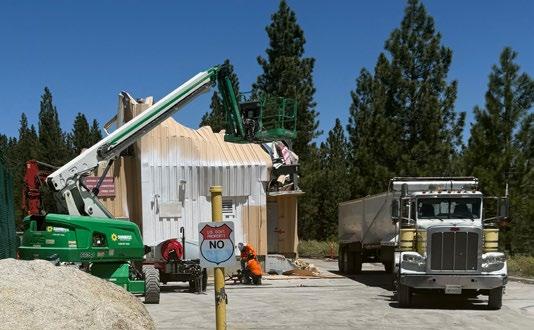
A relic of days gone by has been razed—the control tower at Lake Tahoe Airport. In a multi-day process, the structure was removed in May.
No city dollars went into removing the building. This was entirely an FAA project—the planning, the doing, the rehabbing of the site. While rehabilitating the land is still to come, the plan is to restore this city-owned acreage to its natural state.
“We are looking at a possible use for that area in the Airport Master Plan,” John Dickinson, airport manager, said. “It’s a very small area.”
The master plan is still in the works, with the hope that it will be brought to the city council for approval later this year.
Dickinson said the plan will focus on safety and capital improvement projects. He’s not anticipating anything in the document to be newsworthy, except maybe what the old tower area could become.
The Federal Aviation Administration decommissioned the tower in 2004. The feds have been talking for the past eight years about getting rid of the building because it was sitting empty but was still the FAA’s responsibility.
The air traffic control tower became operational in 1968. This was after the airport opened on Aug. 1, 1959. At that time, it was owned by El Dorado County, as the city didn’t incorporate until 1965. The city took possession in 1983.
The peak passenger count came in 1978 with more than 294,000 enplanements. November 2000 was the last commercial flight at the airport, with the city relinquishing its FAA commercial airline operating permit in 2015. It’s still known as TVL— like Reno’s airport
is called RNO and SFO is San Francisco International Airport.
The facility is well used by private pilots, an air ambulance helicopter and
Email: mountainnews2@gmail.com Mail: P.O. Box 8974, South Lake Tahoe, CA 95618.
Photo John Dickinson
Crews in May work to bring down the Lake Tahoe Airport control tower.
Signs honoring Giada Lancellotti installed at intersection
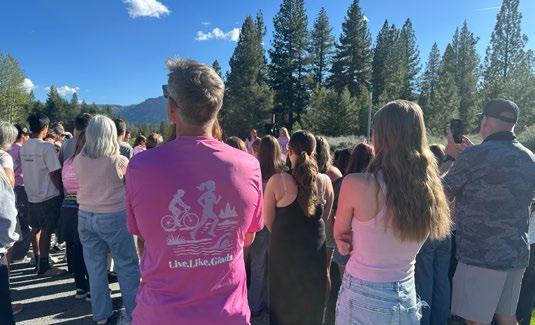
On May 15, around 75 people gathered
corner of Lake Tahoe Blvd. and Sawmill Road. They were there for the unveiling of two signs — one in each
Picking a different life
pair planned on only placing one sign but raised enough money for a second sign as well. County ordinance stipulates the signs may stay up for only one year. “We’re kind
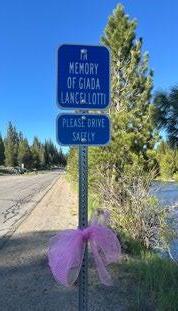
direction — to commemorate 13-yearold Giada Lancellotti who was killed in a collision at the intersection last June as she travelled by bike to the Optimist fishing derby at Sawmill Pond. The signs read “In memory of Giada Lancellotti. Please drive safely.”
The placement of the signs was the brainchild of Giada’s friends and Girl
Scout troop-mates Hudsyn Lew and Rylee Fiel. Shortly after Giada’s death they began raising money and navigating the government bureaucracy to have the signs placed. Hudsyn and Rylee produced posters, hung around town with a QR code for people to donate and submitted an application to El Dorado County for the signs. After some misunderstandings with the county department of transportation, Supervisor Brooke Laine assisted in getting final approval for the signs. Initially, the
of bummed about that,” said Hudsyn. At the dedication, custom stickers honoring Giada and business cards with reminding drivers to slow down, pay attention and be aware were handed out.
In addition to honoring their friend, the project also earned the girls the Girl Scout Silver Award. As part of that effort, Hudsyn and Rylee spoke to the driver’s ed class at South Tahoe High about the impact of Giada’s death Sisters Chris Martinez and Rachel Kallas attended the ceremony. Martinez said her two daughters, Camille and McKenna, had been friends with Giada since kindergarten. She said she is also close with Rylee. “Finally, something is visible on the roadway. It took so long, but here we are today.” Said Kallas, “Summer’s coming and there are going to be a lot of kids out on their bikes. Hopefully this makes a couple people slow down.”
The women lamented that Giada won’t be present for what would have been her eighth-grade graduation this month. Karen Goldberg, the driver who hit
Giada a year ago, has been charged with misdemeanor vehicular manslaughter. At a May 29 court hearing, her attorney, Dale Gomes, submitted a motion for pre-trial diversion. An avenue for firsttime and/or low-level offenses, pre-trial diversion allows a defendant to avoid trial and conviction by fulfilling a program determined by a judge which may include community service, classes, restitution and other items. If a defendant successfully completes the agreed-upon plan of action, charges are dropped. Gomes did not return a Mountain News phone call inquiring as to what, exactly, he proposes for his client.
Publisher’s note: This is one in a series of stories written about immigrants living on the South Shore. Names are being withheld to protect the individual who wrote the story and their family.
My immigration story begins in the 1940s, before either of my parents were born.
Prosecutor Yvan Flores, present at the hearing, indicated the El Dorado County District Attorney’s Office was opposed to Gomes motion. A hearing in the matter was set for August 21. The DA’s office declined to comment further when contacted.
The next court date for a civil lawsuit filed by the Lancellotti family against Goldberg, El Dorado County and the Optimist Club is set for October. Kevin Morrisson, the family’s attorney, indicated in a brief court hearing in May that he would prefer taking the case to trial rather than settling.
My maternal and paternal grandfathers were a part of the Bracero Program. At the end of World War II, the United States experienced a labor shortage and created a binational agreement with Mexico. Mexico supplied the workers/braceros and the U.S. gave them temporary work visas with the understanding that the braceros would return to Mexico when the agriculture season was over.
My maternal grandfather died of pneumonia when my mom was nine years old, a sickness he contracted due to the poor living conditions he experienced as a bracero in Texas. The program ended in 1964, at which point my paternal grandfather made the decision to continue working in the U.S.
He had become accustomed to working for months at a time in the U.S. and sending money to his wife and kids.
The end of the bracero program did not mark the end of the need for labor; if anything, it increased it. Crops still needed to be picked.
My grandfather heard advertisements on the radio about the need for workers in Delano and the surrounding areas. Feeling encouraged by these advertisements, he made the decision to go to California. He got on a bus with the hope of finding his next job in Delano. He fell asleep and when he awoke, he discovered that he was not in Delano, but in Woodland in Northern California.
Luckily enough, though, he had no issue finding work. Woodland was also an agricultural town in need of laborers. At this time, he also began to consider the possibility of bringing his wife and kids to live with him in the U.S. permanently. The transnational experience of raising a family
in one country and working in another was beginning to take a toll on everyone.
My father is the oldest of his siblings; he finished middle school, “secundaria,” and began working after that to help support his mom and siblings. The money my grandpa would send would sometimes take too long to come and there were times that their family experienced true scarcity. He used to tell me to eat all of my food because he remembered what it was like to eat tortilla scraps with salt and to go to bed hungry.
Not too long after that, my parents met and began having a plethora of children. I am the youngest of 10. I am also the only one who was born in the United States.
My grandpa followed through on his plan and my grandma and aunts and uncles immigrated to Woodland as well. Thanks to the immigration policies of the 1980s, they were all able to obtain green cards.
My dad did not go with his mom and siblings; he had acquired a well-paying position at the cotton farm he had worked for since he was 13 years old. He picked cotton at first, eventually was made foreman and then was made the accountant/bookkeeper of the farm. He made enough money to support his growing family. He experienced the fulfillment and joy that comes from feeling truly accomplished in your career.
He once told me that he felt out of place when he first became an accountant. He would wear a tie and enter spaces he and his parents had never been in before.
It was intimidating and he would feel doubts about his skills and abilities; after all, he only had a middle school education and he was only an accountant now because he had worked at this farm for so long.
Something I, too, would one day experience and learn is called “imposter syndrome.”
But my dad pushed through his fears and self-doubt and proudly performed his duties. When I got my bachelor’s degree, my dad shared these experiences and told me, “You, too, will one day be in spaces your mom and I have never been in, and you will be scared and think you don’t belong there, but you do; you are smart, very smart and bright. You can enter those spaces and know that you are there because you earned your place there.
Eres lista, muy lista, tú puedes ”
When my oldest sister was 13 years old, her 14-yearold best friend became engaged to be married. My dad saw this and realized this was a very possible future for my sisters if they stayed in their hometown. Education and career opportunities were limited and my sisters would grow up in a culture where teenage marriage was the norm. He says that it was that day that he decided to move everyone to America and join his parents and siblings.
My siblings have asked that I not share their stories for fear of repercussions from the current administration's immigration policies. I will respect that, but I want to mention that everyone in my family is a naturalized citizen now. Something they were able to achieve because of
the immigration policies of the ‘80s when there was a pathway to citizenship. I also want to mention that I have a master’s degree and I was not the first of my siblings to obtain one. It is also not the highest degree earned amongst my siblings.
My dad left a comfortable life in Mexico in pursuit of a better life and opportunities for his children. He was never able to experience that kind of career satisfaction again, but it was worth it to him if that meant his children got to have a better life. Both of my parents worked in agriculture fields picking tomatoes and whatever else was in season. They would leave for work before the sun was up and come home when the sun was setting. My dad would usually go to a second or sometimes third job after that.
My parents were not able to chaperone school field trips or bake cupcakes for the school bake sale. But I knew this was because they were working and they didn’t have the time or ability to participate in school activities. I had to translate parent/teacher conferences and explain cultural differences to my parents at home and to my teachers at school. All the while not understanding my own dual cultural identity. I just knew I was one person at home and another person at school.
But having this disconnect from my education never stopped them from ingraining in me that I had to go to college and get a degree. This was the only way to break the cycle. My parents had no clue what I was learning
at school, but they supported it and made sure I knew it was my main priority. In the rare afternoons that my dad was home and could sit down and chat with me, he would tell me, “Look at my hands, look at my sun scorched face; this is why I push you to go to school and get an education, so that you never know what it’s like to have the sun beating on your back as you pick tomatoes. I don’t care what you study or what career you choose, just get a college degree so that you can always work in an air-conditioned office.”
I won’t go into details about the challenges of being a first-generation college student. But suffice it to say that despite my parents' encouragement, college was a system they did not know how to navigate and the responsibility fell on me completely. It wasn’t easy and I didn’t pass every class the first time around. There were times when it wasn’t financially feasible to attend and it made more sense to dropout and choose a different path. I persisted and when I got my bachelor’s degree, I handed my dad my diploma and said, “Look dad, I get to work in an air-conditioned office!” I would eventually go on to earn a master’s in counseling. Now I have the privilege of guiding first-generation students like me. Because something else my parents engrained in me was to look out for our community and pay it forward.
Photo Heather Gould
Community members attend the dedication of signs honoring Giada Lancellotti.
Photo Heather Gould Signs urging motorist caution were installed near Sawmill Pond in May.
Reaping the rewards of strengthening local businesses
For decades, South Lake Tahoe’s (CA+NV) economy has been fueled by tourism. Visitors come for the lake, the mountains, skiing, recreation, entertainment, and the unique lifestyle that has defined South Shore for decades. As most everyone is aware, tourism generates jobs, tax revenue, and business activity that support much of the South Shore economy. But beneath those strong visitor numbers, an important economic shift has quietly taken place.
Increasingly, the businesses shaping the visitor experience in South Shore — hotels, resorts, casinos, restaurants, grocery stores, recreation operations, and retail outlets — are owned and controlled by corporations headquartered outside the region.
While those investments have brought needed modernization, infrastructure, and financial scale, they have also created a growing imbalance within the local economy. More and more, the economic value generated in South Shore flows outward, while the community absorbs the costs associated with tourism growth: housing pressure, workforce instability, traffic, infrastructure strain, and environmental stewardship.
That reality raises an increasingly important question: Should strengthening locally owned businesses become a central economic strategy for South Lake Tahoe? The answer may very well be “yes.”
Let me be clear, this is not an argument against tourism or against corporate participation. Large companies play an important role in the local economy. They create jobs, invest capital, and help attract visitors to the region. But healthy economies require balance. And today, many local businesses operate at a growing structural disadvantage.
Unlike corporate chains, independent businesses do not benefit from centralized
purchasing systems, national advertising budgets, integrated technology platforms, or large-scale loyalty programs. They often face higher operating costs, less access to capital, rising rents, and greater workforce challenges.
South Lake Tahoe’s coffee market offers a clear example.
Starbucks alone operates multiple locations across the South Shore. It benefits from global brand recognition, mobile ordering technology, rewards programs, national marketing campaigns, and extensive supply chain efficiencies.
Meanwhile, locally owned coffee shops compete not only on product quality, but against an entire corporate ecosystem designed around convenience, familiarity, and scale.
And yet many visitors are not necessarily looking for another generic experience. In fact, visitors today increasingly seek authenticity, local connection, and place-based experiences.
Visitors want destinations that feel real, distinctive, and connected to community character. Ironically, those are often the exact qualities locally owned businesses provide best.
Independent restaurants, coffee shops, artists, and retailers are often the businesses that help create a place's emotional memory. They carry local stories, reflect South Shore culture, and create the sense of discovery visitors increasingly crave.
Without local businesses, destinations risk becoming interchangeable. That is why strengthening local ownership should not simply be viewed as a sentimental effort to “support small business.” It should be understood as a long-term economic development strategy. Locally owned businesses create economic circulation.
When visitor dollars are spent at local businesses, a larger share of that money tends to remain within the community.
Owners live locally. Employees often stay in the long term. Suppliers are more likely to be local. Profits are more likely to be reinvested locally.
This creates what economists call a multiplier effect, in which money is recirculated through wages, services, suppliers, housing, and community investment rather than leaving the region immediately through corporate profit structures. That circulation matters enormously in a mountain community like South Shore. It contributes to workforce stability, community identity, local entrepreneurship, and long-term resilience. It also strengthens the very qualities that make Tahoe competitive in the first place.
The issue is not whether corporations should exist here. The issue is whether locally owned businesses remain strong enough to preserve economic diversity, cultural identity, and community balance.
Maintaining this balance is one of the community’s greatest opportunities. Independent businesses contribute far more than products and services; they create character, relationships, and a sense of place that make a destination memorable. They serve as gathering places, reflect local creativity, and share stories and knowledge that visitors cannot find elsewhere. By supporting and sustaining these businesses, the community preserves its distinct identity and ensures that both residents and visitors continue to enjoy an experience that is authentic, vibrant, and uniquely its own.
In many ways, strengthening local ownership is also about protecting Tahoe’s long-term brand. Visitors do not travel to Tahoe simply for transactions. They travel for atmosphere, culture, connection, and feeling. Locally owned businesses are often the businesses most capable of delivering that experience authentically.
So, what might strengthening local ownership actually look like?
It could begin with making locally owned businesses more visible and easier for visitors to discover. Visitor materials could highlight “Tahoe Local” experiences. Curated local trails, like beer trails, coffee shop trails, etc., local dining experiences, local events, and outdoor culture itineraries could help visitors experience Tahoe through the people who actually live here.
The language itself could shift. Instead of framing local businesses as businesses that visitors should support out of obligation, Tahoe could position them as part of the destination experience itself. That subtle shift transforms local ownership from a civic issue into a competitive advantage for South Shore.
The broader goal is not to eliminate corporate participation. That is neither realistic nor necessary. The goal is balance.
A healthy South Shore tourism economy should not only generate visitor spending. It should also strengthen the community that makes the destination worth visiting in the first place.
South Shore now stands at an important moment. The community can continue to stand by and watch as consolidation and external ownership increasingly shape the local economy (witness the recent purchase of Caesars Entertainment by Fertitta Entertainment), or it can intentionally strengthen independent businesses that preserve South Shore’s identity, circulate economic value locally, and create a more resilient future.
In the long run, strengthening locally owned businesses may not simply be about economics. It may be about preserving the soul of South Shore itself.
Carl Ribaudo
June is Tahoe Bike Month; more info is online TahoeBikeMonth.org.
The Tahoe Mountain Bike Festival is June 20-21 in Meyers. Go online for details: https://shorturl.at/5ZKoM.
Lake Tahoe Bicycle Coalition in collaboration with the South Lake Tahoe Library is hosting a free bike kitchen from 4:30-7 p.m. on the third Wednesday of the month through Oct. 21 at the library, 1000 Rufus Allen Blvd. Mechanics will answer questions, help with tune-ups and small repairs on your bike.
The National Pony Express Association’s annual Re-Ride of the Pony Express Trail from St. Joseph, Mo., to Sacramento is June 15-25. On June 24 at approximately 5:30 p.m. the more than 750 riders will pass through the South Shore.
June 14 is the Rock Tahoe Half Marathon; start and finish is at Golden Nugget in Stateline.
Expect your South Tahoe Public Utility District bill to go up 6.5 percent starting July 1. For a typical residential customer this equates to about $4.24/ month for sewer service and $5.14/month for water. Two years ago, the board adopted a five-year rate schedule to increase rates up to 9.5 percent per year.
Good Ol’Fashioned Fun is the theme of the June 18-21 El Dorado County Fair in Placerville.
The Borges brothers—Dean, Dave and Dwight—kick off Lake Tahoe Historical Society's inaugural Tahoe History Talks on the Beach June 23 from 6:307:30 p.m. at Lakeview Commons. The free talk will include the story of the incline at Incline Village, the Virginia City flume and the Borges family’s long history in Tahoe. Don Borges, who died earlier this year,
will be honored by the audience singing the theme song to “Bonanza” as his interpretation of this song was always the finale to the Borges brothers’ presentations.
Entrance fees to Nevada’s state parks will be waived June 13 for Adventure Day. Other park fees will still apply. This coincides with Nevada Department of Wildlife’s free fishing day where no license is required.
The Leapfrog Group, an independent national nonprofit watchdog focused on patient safety, again gave Barton Memorial Hospital an “A” grade.
The 13th season of Live at Lakeview the free concert series at El Dorado Beach, runs June 25-Aug. 27.
The Nevada Department of Transportation is working on a project on Highway 28 near Spooner Lake State Park’s entrance through fall 2027 that will create 250 parking spots, a permanent watercraft inspection station, restrooms, EV charging, and a signal for pedestrian crossing.
The 37th annual celebrity golf tournament returns to Edgewood Tahoe July 8-12.
June 13 from 1-5 p.m. is the 8th annual Heavenly Village Brewfest
Learn more about Liberty Utilities’ energy supply transition from the company: https://shorturl.at/0leM2.
Barton Health is putting on an all-day childbirth preparation class June 27 in South Lake Tahoe. Cost is $45 per person. To learn more or register, visit BartonHealth.org.
The annual July 4 South Shore fireworks show begins at 9:45 p.m.
Several golden mussels, described as invasive species on steroids, were recovered and prevented from entering Lake
Tahoe during a recent boat inspection in Meyers. In response, the Tahoe Regional Planning Agency has elevated decontamination protocols for all watercraft coming from outside the basin.
The US Forest Service’s Wild Tahoe festival is June 13 at the Taylor Creek Visitor Center. Guided nature walks, interactive activities and educational stations are all on offer.
Sierra State Parks is presenting two concerts at Vikingsholm on July 11 and July 12 featuring multi-instrumentalist Subra Doyle. Tickets are going fast! Visit SierraStateParks.org. Visit https://www.ltusd.org/community/2026-summer-camp-opportunities-in-south-lake-tahoe for a listing of various summer kids camps being offered in the community.
The Tahoe Fund and Barton Health are teaming up to raise funds to restore marshlands at the site of the previous Motel 6. If 250 donations of $50 or more are received by June 30, the organizations will donate an additional $25,000. Visit tahoefund.org/bartonmatch.
AARP Tax-Aide is seeking an instructor familiar with California and federal tax laws to train local volunteers in assisting community members with the preparation of their taxes. Volunteers are also being sought. Contact SouthLakeTahoeLC@ gmail.com or call 530-542-3748.
Respected local psychiatrist Dr. Aubrey Demajh is now with Eastern Sierra Counseling while Barton Health welcomes new psychiatrist Dr. Erica Cusick
The South Lake Tahoe Library Summer Reading Challenge, Plant a Seed, Read! is underway. Register at eldoradolibrary.beaenstack.org, load up on books at
the library and rack up the prizes. Summer performances also part of the program, starting with magician Brian Scott on June 26.
The Boys & Girls Club Tahoe Brewfest is giving away two VIP tickets for Night in the Country music festival with premium seating, food and drink and other goodies. Ticket holders automatically entered into the drawing or visit tahoebrewfest.com.
Station House Inn recently donated $10,285 to the Boys & Girls Club.
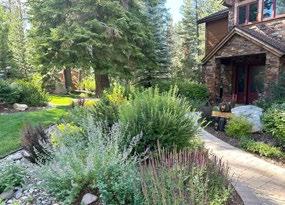
With the start of summer, the South Tahoe Public Utility District is offering free consultations about installing waterwise landscaping. Visit stpud.watersmart. com.
The new city of South Lake Tahoe Rec. Center recently hosted its first tournament. Hardwood Center’s Memorial Day basketball tournament, included over 400 participants and their families and 15-20 games daily.
Auditions for the Tahoe Arts Project summer play, My Son Pinocchio Jr are June 18 with performances late June and early July. Open to kids entering 1st grade through 9th grade. Everyone will be cast. For more information, visit https://www. tahoeartsproject.org.
Move to the groove at Ecstatic Dance’s weekly community event, Thursdays from 7pm to 9pm at Athletex Gym. By donation, no membership required.
Got a community item for Heard? Email mountainnews2@gmail.com, subject line “Heard.”
Don’t kick the bucket during recovery
Active people have a hard time being inactive. When an injury occurs, these people are known to push through discomfort and return to regular activities before they should with a significant setback a likely outcome.
“If I’m strong, I should recover quickly” is a myth, according to LeeAnn Mills. She is a physical therapy assistant with Barton Physical Therapy who recently gave a talk titled “Why Strong Bodies Struggle to Recover—A Guide to Returning to Activity without Crashing.”
She said recovery is not just about strength, it’s about adaptation. And it’s more than muscles that need to adapt. It’s about everything else going on with your body and in your life.
Mills said three major reasons exist for why strong bodies stall in recovery. The first is too much load too soon. When pain starts to decrease and energy levels rise this doesn’t mean it’s OK to return to your old routine.
“Our muscles, they may feel ready; our tendons may not, our nervous system may not,” Mills said. “Recovery often lags behind how we feel in the moment.”
Another thing most people don’t take
into consideration as they recover from illness, surgery or injury is that work stress, sleep disruption, emotional strain, illness history and life transitions all factor into
performance.
“Our body is not going to separate these categories; it is just going to track the
total demand,” Mills explained.
Pushing through the pain and discomfort is a common mindset, but one that can have negative consequences.
“Instead of building gradually, we spike. Instead of consistency, we start swinging between the extremes,” Mills said.
“That spike in the crash cycle is incredibly common.”
She underlined that strength builds during recovery. So, without letting one’s body have time to recover, it becomes overtaxed.
Mills used the analogy of recovery being a bucket—that the capacity is going to be more like a sand pail to start with instead of a 5-gallon container. Trying to pour the same amount of activity in the pail compared to the larger bucket one had preinjury is going to backfire.
Rebuilding capacity takes time and patience—not something all patients naturally possess.
“Overflow will show up as increased pain, fatigue, brain fog, sleep disruption and mood changes,” Mills said. “It does not mean you are broken. It just means your system has not rebuilt its capacity yet.”
Her tips for returning to activity without crashing include:
• Respecting the 24-hour window.
“How you feel that next day matters more than how you feel during the activity. If you flare up significantly the next day, that load was too high for your current capacity. It doesn’t mean stop, it means adjust.”
• Build gradually. “Consistency always beats intensity, especially early in recovery.”
• Schedule your recovery like you do your training. This includes consistent sleep, rest days, lower intensity days and breaks between high demand sessions.
“The goal is not to test your limit. The goal is to expand capacity over time,” Mills said. “A safe return is predicable, gradual, and sometimes it’s really boring. It is not going to look like a big push followed by a big crash.”
County crisis team handles mental health calls
Because a police officer isn’t always the best person to deal with someone experiencing a mental health crisis, California mandated that every county set up a mobile
crisis unit. El Dorado County’s unit has been operating since April 2025.
“It helps reduce unnecessary hospi-
talizations and helps avoid situations where individuals in crisis end up in jail due to lack of appropriate support,” Chris Kernes, deputy director of El Dorado County Behavioral Health, said. “This model ensures that mental health professionals lead the response, and it eases the burden on law enforcement.”
Kernes recently gave a talk hosted by Barton Health about this community-based approach to mental health crises, which can also include substance issues. The program is available to everyone in El Dorado County 24/7 regardless of their health insurance, or lack thereof, and covers all ages.
In the first year, the local unit logged 3,725 calls to the crisis line, responded to more than 775 urgent calls, responded to more than 275 calls directly from law enforcement to co-respond or take over a situation, and transported more than 100 people to an emergency room or for further mental health care.
“So, this really kind of highlights how many calls we've received and how many of the responses have actually been de-escalated over the phone,” Kernes said. She added
that this equates to less stress on resources involving law enforcement and county hospitals.
Kernes cited a 2023 study about mobile crisis teams (MCT) that found about 63 percent of incidents were resolved with the initial encounter with MCT, while less than 10 percent of incidents ended with law enforcement involvement or an arrest.
“Our primary goal is to safely de-escalate a crisis and ensure that we're keeping individuals safe as well as the community safe,” Aly Kinne, NorCal regional manager with Sierra Mental Wellness Group, said.
“Our mission is to save lives through accessible mental health care.”
The county contracts with this 56-yearold nonprofit based in Roseville to provide the MCT.
Medical emergencies, active threats of violence, including people with weapons, are when the MCT is not the lead; however, it still may be appropriate for the crisis team to be part of the response.
MCTs have vehicles with protective barriers that allow employees to transfer po-
tentially combative people to ERs or mental health facilities.
For every call the MCT goes on, the individual in need receives follow-up contact within 24 hours, with MCT’s involvement lasting up to 72 hours.
Anyone may call for help, not just the person in need. This includes schools, primary care physicians, co-workers, family and others.
If you or someone you know needs help, call:
• El Dorado County Mental Health Crisis Line: (530) 622-3345;
• National suicide and crisis lifeline: 988;
• El Dorado County 24/7 access line to request mental health or substance use services: 800-929-1955; • 911.
Photo Heather Gould STPUD is offering free landscaping consultations.
LeeAnn Mills
Chris Kernes
A quick note of recognition for the unexpected loss of Don Borges, local legend. And like many celebrations of one’s passing, this one at Valhalla was a testimony to how much Don was loved and appreciated. One of the silver linings to these celebrations of life is seeing all the folks you haven’t seen in a while or don’t see often enough — way too many to list here, but it was great seeing everyone. Even a former student who is now a teacher in Davis.
Trail time
Even though as I write this, we’re still in that season where winter isn’t fully done with us; it’s trail time, so I thought
In passing
I’d do a two-parter, June and July, on some of my favorites and go-tos for all you trailhounds out there.
Some of these are quick but fun ones, usually with cool views; some are longer and work you a bit more. Some are well known and busy, others not so much. And I’ll add some notes about biking vs hiking and/or trail running.
Sort of in order moving west around toward Stateline, acknowledging that I don’t get to the east shore trails very often: I don’t mess with the D.L. Bliss area much for obvious reasons, but it has some fantastic trails and views. And I also rarely do the Emerald Bay thing, also because of the crowds, but if I’m going there, I would
choose the Bayview Trail to Maggie’s Peak. It’s for hiking only and I think it’s a little over 1,700 feet of elevation gain over the roughly two miles up. Stunning views make it worth the push.
Moving a bit back toward South Shore, from the Glen Alpine trailhead area above Fallen Leaf Lake, you can take the Lily Lake Trail to Angora. Only about a mile up to the Angora parking area and 800 feet elevation gain, it’s still a must for the rock work alone, which is quite the feat of human engineering. People do seem to bike this trail, but they are surely escaped from an asylum, and I hope to God they have good helmets and pads all over ‘em. Coming a little back toward the lake from there is Tahoe Mountain, which has several fun routes up and down. For biking, I often just ride up Tahoe Mtn Road to pick up the trail at Deveron Way and go up the Valley View trail from there. You can turn this into larger loops going down the lake side to the Panther trail and either out toward Fallen Leaf and around or toward the high school, out to Sawmill and back up that way. Those routes will give you about seven miles. If you’re biking up trail from the Sawmill side, going up the left (Valley View) is a steeper climb. Regardless, Tahoe Mtn has around 500 feet elevation gain and the regular loop is about five miles. Very fun for biking and pretty great for trail running and hiking, too.
While we’re in this area, I’ll mention the Washoe Meadows State Park, which you can access from the Sawmill area, from almost anywhere off NUT, from the Tahoe Paradise Park side or via the LT Golf Course. There are many routes within this area and countless ways you can vary
your course with connector trails and loops galore. As its name reveals, this is not a hilly area though you can certainly integrate some rises into your route. It’s best for walking and trail running though it is used by mountain bikers, especially those traversing to Gun Tower, Tahoe Mountain and so on.
Moving slightly west, you’ll find one of my favorites for trail running and hiking but more so for biking – Mule Deer to Angora Road. Sometimes it’s better to bike up Tahoe Mtn Road, up Glenmore Way to the dead-end, then up that trail to connect to Angora Road and up to the top of the Mule Deer trail. From there you can keep going up to Angora Lakes or take the ridge trail down the other side overlooking Fallen Leaf Lake (rocky!), but Mule Deer is a fun downhill back to Mule Deer Circle. Heads up for hikers and keep your finger near that bell!
Over toward Echo Summit, I would recommend the obvious Echo Lakes trail. Not for biking, it’s heavily traveled, but 100 percent of it is beautiful. And you might not know this, but right down by the chalet, you can often find a parking spot because they have a two-hour limit. And you can easily do a good scamper and back within that time; besides, I don’t know if anyone really enforces it (shhhhhh). Also, if you go off trail right above the spillway, you can scamper up above the snow cannons and have some nice views of the South Shore and Lake Tahoe.
To be continued at Echo Summit next month
As always, mikesmutterings@gmail. com
Douglas County judges try to split the difference
The workloads between the justice courts in Stateline and Minden are wildly different, with the valley contending with nearly twice as many cases in 2025 — 4,850 compared to 2,547.
Even so, the two judges on May 7
really demanding and important position seemed like not what we wanted to do as a county. We want them to be fairly compensated,” Commissioner Sharla Hales, who was the lead in negotiating the pay hike and finding workload equity, said at the meeting.
Judges Michael Johnson (Tahoe Justice Court) and Laurie Trotter (East Fork Justice Court) won their first six-year terms in November 2024. Johnson was appointed by commissioners in October 2023 to fill the seat of retired judge Richard Glasson.
Legalities prevent an even distribution of the cases. Civil and criminal cases have differing rules when it comes to transfers between jurisdictions.
Hales listed a variety of ways Johnson is helping make the workload more equitable, including:
• Going to Minden to hear a block of civil hearings one afternoon a week;
• Accepting transfers as needed and allowed;
• Researching whether a mental health court and/or substance abuse court could take pressure off the justice courts;
• Preparing and revising forms to have a consistent format for both courts;
• Being the designated contact for law enforcement seeking after-hours, weekend and/or holiday contacts for things such as search warrants in the East Fork area if requested by Trotter;
• Hearing all juvenile contested civil traffic cases in the county.
“And when the justice center is complete there may be more opportunities because there will be more space and flexibility for sharing of the caseload,” Hales said. “Given the imbalance in the caseload, they’ve done a great job in being creative and figuring out to take a little bit of the pressure off Judge Trotter.”
gal constraints prevent that from simply happening.
“The Tahoe Justice Court is fully open and active and there have been no plans adopted to close it,” Johnson told the Mountain News “It is necessary to keep it open both because it is mandated by law that every township in Nevada have a justice court and because of the practical need to ensure fair and efficient
can alter a township’s boundaries.
“The BOCC heard discussion of this issue at its Nov. 2, 2023, meeting, but took no action. The BOCC was informed that East Fork Township resident population exceeds that of Tahoe Township. However, approximately 91 percent of the cases in Tahoe Justice Court involve non-resident litigants,” Johnson said. “A
received the same raise from the Douglas County commissioners. As of July 1, they will earn $145,000 a year. The current $119,304 annual pay was set in 2018.
Also, part of the measure that passed 4-0 with Commissioner Wes Rice absent was a two percent cost of living allowance after four years of service that will be capped at 20 percent. This is similar to what other elected officials in the county receive.
“The idea came up months ago. Looking at pay under $120,000 for this
The county is the process of building a nearly $48 million judicial center in Minden that will provide another courtroom. It’s expected to open in spring 2027.
“The additional courtroom could be used for a number of different purposes, including use by drug court, senior judges and jury trials,” Johnson said.
The current facility has two district court courtrooms and one justice court. Justice courts handle misdemeanors, small claims up to $15,000, evictions and felony preliminary hearings.
Some have pondered whether it might be time to merge the two courts, moving Stateline cases to the valley. Le-
access to justice for Tahoe residents and visitors.”
Tahoe Justice Court has jurisdiction from the casinos at Stateline to the top of Kingsbury Grade to the Carson City line on Highway 28. Only the board of commissioners
Photo Tahoe Mountain News Tahoe Justice Court Judge Michael Johnson at the May 7 Douglas County Commissioners’ meeting.
Photo Tahoe Mountain News
Douglas County Commissioner Sharla Hales talks about the Justice Court judges at the May 7 board meeting.
M OUNTAIN N EWS C OVER S TORY
Tahoe ready to reap what was sown
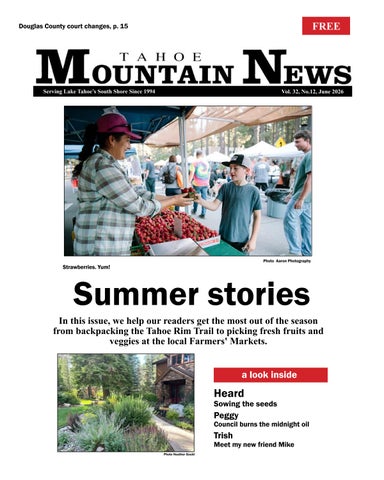
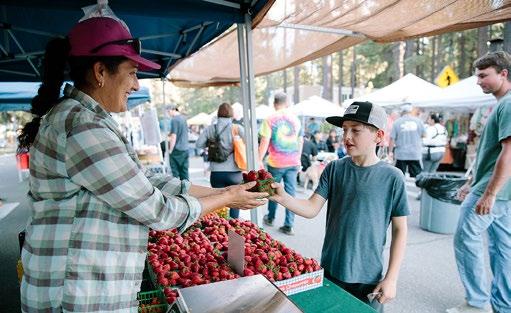
While those who grow the food we eat are struggling with rising fertilizer and fuel prices because of the conflict in Iran, operators of South Shore farmers’ markets are confident booths will be filled this summer with vendors who have an ample supply of goods.
“We’ve got more demand for Lake Tahoe right now than any other place,”
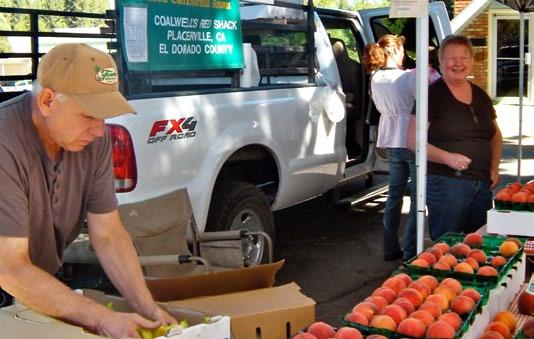
said Jim Coalwell, who runs the Tuesday market at the American Legion parking lot. The El Dorado County Certified Farmers Market opened June 2. Since 1984, Coalwell with wife Lois has operated the Red Shack Farm in El Dorado County, where they are known for their peaches. In 1990 they created the nonprofit markets’ association with the goal “To preserve small family farms in El Dorado County.”
This marks their 32nd year in South Lake Tahoe. Their markets in Placerville, El Dorado Hills and Cameron Park are even older. The Meyers and Ski Run markets, both operated by Kree Abravanel with help from husband Leon, also opened the first week of June. This is the sixth year they have run the market at Paradise Park and second for Ski Run via their SunSnow Event Company.
“I wouldn’t be surprised if people increase prices because they are coming from down valley,” Abravanel said prior to opening day.
The Placerville area is where most of the farmers come from for the three
FARMERS MARKET
Continued from page 16
markets, with parts of the Central Valley as far south as Fresno also represented.
Abravanel knows people are ready for fresh produce, as locals told her they had hoped the nice weather would have meant earlier opening dates. Permits and growing seasons are big factors in when the markets operate.
“The warm weather I think really helped. I think the only thing hurt in our orchard is the pears,” Coalwell said. “There shouldn't be many pears at the market this year unless they are grown outside of El Dorado County because of pear blight.”
He expects tomatoes to be early— the second week of June—because Thao’s Farms near Elk Grove put up a greenhouse a couple years ago.
All three markets expect to welcome back many regular vendors, with a mix of some new people. All have fresh produce, artisan vendors and prepared food. Meyers and Ski Run also have live music, with kids’ activities part of the Meyers mix.
South Shore farmers markets details:
• American Legion: Tuesdays, 8 a.m.-1 p.m., June 2-Oct. 13.
• Paradise Park: Wednesdays, 3-7:30 p.m., June 3-Sept. 9.
• Ski Run: Fridays, 3-8 p.m., June 5-Sept. 11.
Take a hike:
TRT speaker spells it all out
In a matter of steps, Mallory Jackson went from novice to seasoned backpacker.
“Prior to doing the Pacific Crest Trail I had never done a long hike before that. I read the book Wild by Cheryl Strayed like many of us did and just got so inspired by her story,” Jackson said. “By the time I got to the end of that book I was crying because I knew it was something I wanted to do.”
The South Lake Tahoe resident recently gave a talk titled “Building Trail Confidence & Pack Shakedown” that was hosted by the Tahoe Rim Trail Association. Her talk covered just about everything someone contemplating a major excursion, or even an overnighter, might encounter or have questions about—including food, sleeping, clothes, wild animals, electronics on the trail, communication, apps to use, hiking on a budget, and going to the bathroom and menstruating.
“It is completely normal for people to go on their first ‘thru-hike’ and to have never done a proper backpacking trip before,” Jackson said.
That information alone can be liberating for those who might otherwise look at the total distance of a through-hike and never lace up hiking shoes.
Jackson’s overall message was one of encouragement.
“You will find as you get out there this summer, the trail community is really supportive, and just really wants you to have a good time and wants you to recreate responsibility,” Jackson said.
Since the backpacking bug bit, Jackson has completed the 2,650-mile PCT that runs from Mexico to Canada. It took her five months in 2022. She completed the Colorado Trail (567 miles between Denver and Durango, with average trail elevation of 10,300 feet) in 2024. In 2025, she did half of the Arizona Trail, which runs 800 miles from Mexico to Utah. Last July she completed the 165-mile Tahoe Rim Trail in eight days.
“It’s really one of the most unique hikes I’ve done,” Jackson said of the TRT. She loved having the lake in view most of the way, which then allowed her a visible
record of where she had been. As a circular trail of sorts, that isn’t something most through-hikes can offer.
For navigation, Jackson recommends the app FarOut, which she used on the TRT. “There are comments on almost every waypoint, and you can see the exact date the comment was left,” Jackson said. “For me this is really huge for water. If I am looking at a spring and want to know if there is water available, I am always going to check the comments. This is how I can make smart decisions about how much I am going to carry from one point to the next.” Water issues are even more important on the Nevada side of the TRT where it is drier and sources less abundant. Jackson has a filter that screws onto her water bottle. She also carries iodine tablets. She used double filtration on the Arizona Trail where some murky water sources were shared by humans
Continued on page 18
Photo TMN file
Jim and Lois Coalwell are in their 32nd year of operating the farmers’ market at the American Legion in South Lake Tahoe.
Photo Aaron Photography Squash of all types are always in abundance at local farmers’ markets.
Photo Aaron Photography
a variety of peppers to be available this season at the Ski Run market.
TRT
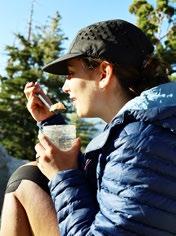
Photo Courtesy Mallory Jackson Mallory Jackson finds Showers Lake along the TRT the perfect spot for a bite to eat.
TRT
Continued from Page 17 and cattle.
“On really cold nights the water inside your filter can freeze and will break the filter, so you need to sleep with your filter. Bring an extra zip lock bag and put it in your coat,” Jackson recommends.
Other crucial apps to download are ones for safety, where help can be called in an emergency or contact made with those at home.
“Always have an SOS device on you when you are recreating in the backcountry,” Jackson said. Her go-to
A weather app is another biggie— and something that needs to be monitored all the time to know what's ahead. Her preference is WeatherBug.
OnTrailWeather.com, which has the TRT on it, gives weather for exactly where you are on the trail as well as the projected forecast for the next couple days.
Technology can also be about fun, whether it helps to pass the time while hiking 20 miles a day or is entertainment in camp. Libby allows access to library books, Merlin identifies bird calls, and Peak Finder lets you know what you are looking at. might
The greening of Kirkwood
Locally, Kirkwood Mountain Resort has long been known as The Wood. What the property is doing with actual wood is turning heads nationally.
The National Ski Areas Association in May singled out Kirkwood with the Innovation in Sustainability award.
“Kirkwood Mountain Resort’s wood mill exemplified how local material reuse, ecological stewardship and guest facing improvements can meaningfully intersect within a mountain resort environment,” Tonya Riley with NSAA said. “This wood mill operates as a creative sustainability initiative that supports forest health and wildfire mitigation work by repurposing fallen and hazardous trees into usable lumber …. This approach keeps wood material on-site and in active use, reducing waste while improving guest and employee amenities and enhancing safety around mountain infrastructure.”
The mill became operational in 2021. It’s the only Vail Resorts property with such a facility.
The concept was developed to meet
Kirkwood’s sustainability goals, which include:
• Strengthening forest health and supporting wildfire mitigation efforts.
• Reducing material waste and eliminating emissions associated with transporting timber offsite.
• Improving mountain safety and long-term environmental resilience.
• Advancing a circular approach to resource management through keeping and using materials locally.
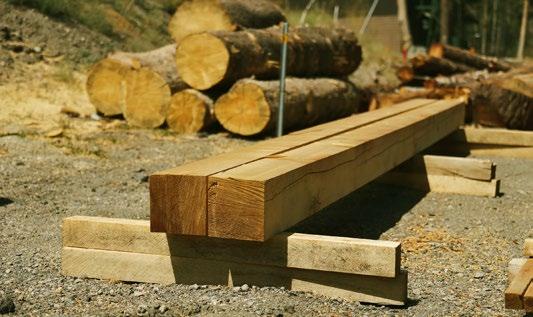
“Each spring, hazard or fallen trees are removed as part of ongoing forest management efforts. They are transported to the on-site wood mill where they are turned into lumber and fabricated into durable, practical products such as signage, decking, ski racks, benches and more,” Carly Mangan, Kirkwood’s spokesperson, said. “These products are installed across the mountain, supporting both the guest experience and day-to-day operations.”
Kirkwood was also a finalist in NSAA’s Climate Change Impact category along with Wisp Resort in Maryland, while Jay Peak Resort in Vermont took top honors.
Among the environmental initiatives at Kirkwood that led to its recognition are:
• Using dumpster monitoring and waste audits to better understand what people toss.
• Turning organic waste into compost.
• Replacing most single trash cans with waste-sorting stations.
• Limiting single-use food and beverage products.
“We have also expanded circularity through our hard-to-recycle programs for materials like snack wrappers and soft plastics,” Mangan said. “Together, these efforts help divert material from landfills, which is one of our core sustainability goals.”
“Kirkwood is also focused on reducing energy use and emissions through vehicle idling-reduction practices, daily energy checklists and end-of-season shutdown procedures, (and) the integration of electric vehicles into its fleet.”
All these practices are steps to help Vail Resorts as a whole to achieve zero net emissions, zero waste to landfill and zero net operating impact on forests and habitat by 2030.
Photo Carly Mangan
Milled wood at Kirkwood with the downed timber behind it.
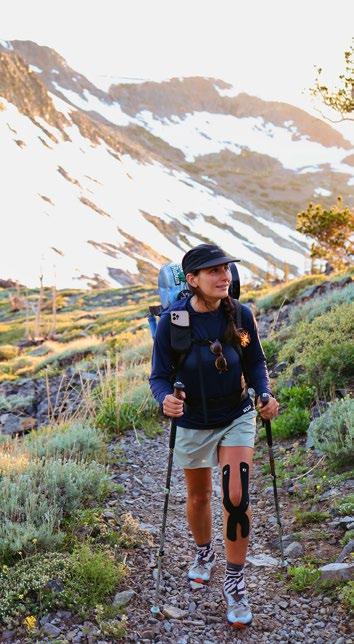
Photo Courtesy of Mallory Jackson Mallory Jackson on the Tahoe Rim Trail in summer 2025.
Photo Carly Mangan On-mountain signs are one use for the repurposed wood.
Addicts don‘t choose to use
For too many years the common belief has been addicts have a choice—use or don’t use. It’s never been that simple.
It a talk by Grace Harding and Jacob Marquette titled “Destigmatizing addiction: From brain science to human compassion” the two Barton Health physicians went into great detail about how addiction is a neurological disease.
“This is not a moral failing or a weakness that these people just can't stop. It's literally that their brain chemistry is driving them to protect themselves from pain,” Harding explained.
Drug or alcohol use often starts with the desire to seek a reward or pleasure. Then it turns into an attempt to avoid pain—which can be physical and/or mental.
Then the fear of losing that euphoria from the addictive substance takes over. From there people may partake in risky behaviors to obtain that high.
In 2019 the American Society of
Addiction Medicine redefined addiction as: “… a treatable, chronic medical disease involving complex interaction among brain circuits, genetics, the environment, and an individual’s life experiences. People with addiction use substances or engage in behaviors that become compulsive and often continue despite harmful consequences.”
A biopsychosocial model was adopted, with the acknowledgement addiction is a treatable chronic medical disease. It takes into consideration brain circuits, genetics, environment and life experiences.
“The largest part (40-60 percent) is genetics. It influences how our bodies react to these substances,” Marquette said.
He delved into the evolution of addiction in the medical field. Pre-1800s it was considered a sin or moral failing. Then it was considered a psychiatric condition.
The American Medical Association in 1965 defined alcoholism as a disease.
In the 1980s and 1990s various imaging techniques showed how the brains of addicts function. This led to the American Society of Addiction Medicine in the early 2000s to label addiction a chronic brain disease.
One slide in the Barton presentation stated: “Exposure, especially before age
14, independently drives addiction risk regardless of other vulnerabilities. When enough forces align the brain switch flips. Use transitions from chosen to compulsive.”
Exposure can be defined as family members or friends using cigarettes, alcohol or harder drugs; having a liquor store on every other corner; as well as seeing people on television and in movies using substances—legal and illegal.
Trauma and childhood events play a role in addictive behavior as well, which impacts how people cope, including mood and anxiety issues.
A slide dubbed “language guide” suggests changing the words one uses to humanize the individual with the problem, which can lessen the stigma. Use the phrase person with substance use disorder instead of addict, junkie or alcoholic; substance use disorder or substance misuse is better than substance abuse or drug abuse; positive or negative drug screen should replace dirty/clean urine; neonatal withdrawal or substance-exposed infant is preferred over babies born addicted; and finally, a person who uses drugs, not an abuser or user.
Treatment is about meeting people where they are. This includes at the primary care level. It means providing drugs to taper people off what they are on. It’s having call centers around the clock to provide help. It’s about reducing the chance of a fatal overdose.
For help, call local substance use navigators at 530-307-1066 or 530-3074913, or call or text California Bridge Connect at 833-308-0461. Narcan is available for free and anonymously at Barton’s emergency department, 24/7. Primary care offices often have free Narcan as well. Barton’s urgent care in Stateline is also a resource.
A new chip off the block
Mom gets the credit for having four daughters who like to bake. Cookies are probably the first food I ever made, and this was at a young age.
However, too often, I get into a rut with my cooking and baking. That was definitely true with chocolate chip cookies. For years I’ve been using a recipe from my sister, Pam. Recently sister Tami shared the following recipe with me. It might become my new go-to.
What makes this one different from any I’ve made before is the butter is browned. This gives the end product a nuttier flavor. I’m sure this same recipe would be good without the browning process, but it’s not that hard to do, so don’t skip it—at least not on your first go-round.
Be sure to use a pan with a light-colored bottom to see the butter change colors.
The “problem” I have with this recipe
is it’s a multi-hour operation because of the need to chill the browned butter as well as the dough. So, keep that in mind before you start. It also calls for a couple ingredients to be at room temperature.
My other “problem” was paying for the chocolate chips. Wow, are they ever expensive. Like everything else, the bag is also smaller than it once was. I didn't measure the chips but just used a whole bag like I’ve always done.
One thing I did that I don’t usually do for chocolate chip cookies is I rolled them into balls, which is what the original recipe said to do. This makes for nice, uniform cookies—not something I usually endeavor to have.
They turned out softer than my other chocolate chip cookie recipe, which I liked—as did those I shared them with.
when it’s melted—just keep stirring. The brown specks on the bottom are toasted milk solids.
Once the butter is brown, pour into a heat-proof bowl—including the browned bits. Let cool for about 10 minutes before covering and chilling in refrigerator until it’s solid. This can take 90 minutes.
Place chilled, solid butter into mixer. Beat on high for a couple minutes until it’s creamy.
Add white and brown sugars, beat a couple minutes.
Add egg, egg yolk and vanilla. Beat until well combined.
Slowly add dry ingredients with mixture on lowest setting, followed by the milk.
Thoroughly mix everything for a minute or so.
Stir in chocolate chips. Roll dough into balls that
Ingredients
• 1 C unsalted butter
• ½ C granulated sugar
• 1 C brown sugar, packed
• 1 large egg, plus 1 egg yolk, at room temperature
• 2 tsp pure vanilla extract
• 2½ C flour
• 1 tsp cornstarch
• 1 tsp baking soda
• ½ tsp salt
• 2 T milk, warmed or at room temperature
• 1½ C semi-sweet chocolate chips
Directions
Cut the butter into pieces before placing it into a pan over medium heat. Stir or whisk constantly. Butter will foam
Jacob Marquette Grace Harding
Tahoe Bike Month healthy for people, communities and the environment
Ty Polastri is President of Team Tahoe/Bike Tahoe, a regional nonprofit promoting bicycling for the economic and environmental sustainability of the region.
People worldwide recognize Lake Tahoe for its stunning natural beauty, outdoor recreation opportunities, and vibrant tourism economy. Yet the region
motorists, and supporting transportation choices that benefit everyone. Each year, the Lake Tahoe Bicycle Coalition and the Tahoe Regional Planning Agency promote
shop in local stores, and use services throughout the region. Visit Lake Tahoe and Travel Lake Tahoe are collaborating with Bike Tahoe on their Best of Bike 2026
congestion around the lake, bicycling offers a low-cost and efficient option for commuting, running errands, and accessing recreation. Investments in bike
also faces growing challenges, including traffic congestion, environmental pressures, housing affordability concerns, and the need to sustain a healthy year-round economy. Bicycle advocacy offers a practical and proven way to address many of these challenges while enhancing the quality of life for residents and visitors alike.
Bicycle advocacy is more than promoting cycling. It involves creating safer streets and trails, improving connectivity between communities, educating riders and
June as Tahoe Bike Month. It’s a campaign encouraging everyone to ride their bikes to work, school, and for play, and to track their miles and daily trips.
From an economic perspective, bicycling has become an increasingly important component of Tahoe’s recreation and tourism economy. Thousands of visitors come to the basin each year to enjoy worldclass mountain biking, road cycling, and family-friendly bike paths. These visitors stay in local hotels, dine in restaurants,
campaign to understand cyclist interests and activities, with the goal of identifying areas for improvement. Communities like the City of South Lake Tahoe, Tahoe City, and Incline Village invest in bicycle infrastructure and cycling experiences, often seeing increased visitor spending and longer visitor stays. Well-maintained bike paths, trail networks, and safe connections between neighborhoods and business districts encourage both residents and tourists to explore Tahoe without relying solely on automobiles. This helps distribute economic activity throughout the community while supporting local businesses.
Bicycle advocacy also supports the Tahoe Transportation District’s efforts by encouraging transportation alternatives. With rising fuel costs and increasing traffic
infrastructure are relatively inexpensive compared to road expansion projects and
Continued on page 30
Connecting Students to Careers
LTUSD is investing in your Kids....$4 Million Worth
South Tahoe High School has been busy Thanks to California's Strong Work force Program grants, our CTE pathways are getting serious upgrades. . . .new equipment in the culinar y kitchen, major i mprovements in the construction program, a College & Career Center, and an STHS + Marcella Foundation collaboration that will bring a makerspace to the students of South Tahoe High. This grant exists for one re ason: to make sure students leave here ready to work and ready to lead.
Makerspace & Entrepreneurship
A brand-new Makerspace s coming to South Lake Tahoe before the end of the year, and our students will be the f rst
ones in the door. This space gives South Tahoe High’s students access to laser cutters, 3D printers, woodworking, and professional-grade tools. Built for our students and supporting our local economy.
Construction Curriculum
Our Construction pathway just got a major overhaul. With our new curriculum, students went
from building jewelry boxes to framing tiny homes and construct ng structural dog houses... .real projects, w th real materials This is hands-on learning at its best, and South Tahoe students are learning career-ready skills
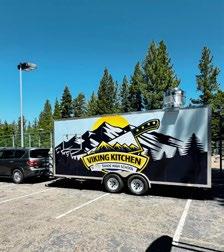
Food Truck: Viking Kitchen Culinary Upgrades
The V king Kitchen is officially on wheels Our culinary students will design the menu, cook the food, and run
the business turn ng a brand new food truck into a real, live learn ng laboratory r ght here in South Lake Tahoe.
Equipment Upgrades to Industry Standards
The grant also brought much of the CTE equipment up to ndustry standards. Our computer labs now run on Macs, automotive students are learn ng on an electr c veh cle, and Sports Medicine students are now working w th an Anatomage table, putting STHS students on par with college-level training
The CTE Culinary pathway just got stronger. With support from the Strong Workforce Program, we've added a brand new Culinary pathway at the middle school new teacher, new equipment, and a direct connect on to the h gh school program, wh ch has seen ts own upgrades too.
The Launchpad
STHS now has a College & Career Center: The Launchpad With added staff and expanded resources, the Launchpad is connecting students with internships, job opportunities, guest speakers, f eld trips, and real pathways into
the workforce The Launchpad s one more support system to give every student the tools, the connections, and the conf dence they need for the next chapter.
Hubby and the hobbit bike
Breweries. Coffee bars. Book stores. Bike shops. Seasoned travelers often include these destinations when we choose to wander.
Otherwise, our behavior resembles the dementia-ridden neighbor of my youth. An ancient, purple-haired, potato-shaped woman who rambled by my house dressed in her Sunday best. Always pausing to complain about her accommodations, the food served by family members, and the fact that they were holding her as a sex slave.
Like most travelers, she never hesitated to meet new people, including neighborhood children at play. Often it was to beg for directions to Delusional Land. At the age of five, I thought she was like most adults — adamant and confused about everything. And quite insistent that I arrange a meeting with her captors to secure her freedom, as travelers frequently do.
So, it should come as no surprise that we chose to visit a local bike shop in a far-flung Nevada town. A place no one has heard of, with little to attract normal peo-
ple. In other words, perfect. My artificial friend Claude told me to go there because it checks all my quirky boxes: “Small western town feel. Dramatic red rock, mountain and mesa views. Authentic community with heart. A real place in your cultural geography.”
And, thoughtfully designed for recreation addicts. Which was why we were there. Somewhere on our travels, Hubby’s cyclometer — master-gadget of forward motion — had fallen off, leaving him with a 50-pound hunk of immoveable metal. Since the goal was to bicycle every day, not ideal. But a fine excuse to visit a local bike shop and do some culture-sniffing. There’s no better place to discover a town’s diversity, wacky characters, and social heart. Just look at Tahoe’s local bike shops. I rest my case. Entering the bike shop, we inhaled the intoxicating mixture of lubricants, solvents, vulcanized rubber, sweat, road grime, and a dash of high-grade bud. As one should, we entered reverently, immediately immersed in a cavern
of bikes hanging from the ceiling, jammed in racks with tangled handlebars, slumping precariously against the walls. We tiptoed over heaps of parts strewn across the greasy floor to reach the counter.
We waited, mesmerized by the chaotic dance of the bike shop owner — phone pinned between head and shoulder, untangling a chain with one hand, searching the counter piles for some forever-lost item with the other.
In less time than it takes to pump a tire, Mike inducts us into his world. Cherubic face, crown of wispy black curls, baggy shorts, torn sweatshirt — a frazzled shop owner and triathlete who’d rather be out on the trails. We try to negotiate a rental, but Mike seems to forget he’s running a business.
He’d rather talk about anything else: where we live, what we do, recommended skincare for a 40ish jock (easy — SPF). We mention we’d like to rent a bike for a couple of days.
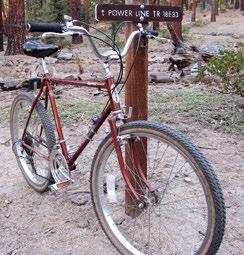
He points at two bikes leaning against a post. One built for Shaquille O’Neal. The other for Frodo the Hobbit. Sensibly, Hubby picks the hobbit-bike.
Mike hands him a charger.
Hubby tries to plug it in. Wrong charger. Mike sighs, leaps behind the counter, and returns with the correct one.
As Hubby wheels the rental out the door, a loud thud. A bike piece has fallen off and hit the pavement. Hubby brings it back to Mike.
“What’s this?” he asks.
Mike juggles it and squints.
“Do you know how many times people have handed me that part? I got no idea what it is.”
We go to the counter to pay.
“Naw,” Mike says. “Just pay when you bring it back.”
We ask about a form to sign.
“Naw. We’re good.”
We mention he doesn’t know our names.
“Get outta here.”
We offer a credit card.
“Nope. But you guys owe me a dollar for causing so many problems.”
Two days later, Hubby returns the bike with a bag of homemade cookies. Within a millisecond, Mike is munching enthusiastically: “These are the best cookies I’ve ever had!!
Great. Now how much do we owe you?”
“You’ve already paid.”
“No, I haven’t.”
Mike smiles. “I know.”
Hubby throws some money on the counter. Mike hands it to his assistant.
“Here. Take this. ’Cause you ain’t getting any of these cookies.”
Then he wraps my hobbit-hubby in a full throttle hug.
And that’s why we travel. To immerse ourselves in the best kind of human experience. Available in a bike shop near you.
Grand jury: EDC has problems
El Dorado County doesn’t make it easy for residents and those doing business here who need to interact with the various government agencies.
That is the conclusion of the El Dorado County Grand Jury, which recently issued a report after investigating the county’s communications, contracts, code enforcement and data compliance.
“The grand jury found that county departments provide inadequate communication and direction to the public, and that significant communication deficiencies also exist between departments,” the report states.
Part of the problem is various agencies—including but not limited to Environmental Management Department, Planning and Building Department, Department of Transportation and the Air Quality Management Board—could be involved with enforcing rules and regulations. Without a central point of contact this can lead to people getting the run around.
“Communication is the cornerstone of effective governance. Effective communication in government is essential for transparency, trust, and citizen engagement, utilizing modern tools and technologies to improve information sharing,” the report states.
This civil ground jury found:
• Citizens with complaints are not routinely informed of resolutions.
• The county doesn't have a central webpage or phone number for complaints.
• The Code Enforcement Division has no procedure manual specific to it.
• The Planning and Building Department and Assessor’s Office have associated roles that are not being utilized to the fullest potential.
To rectify the issues the grand jury made the following recommendations:
• The Board of Supervisors should direct the IT chief to establish by the end of the year a central webpage and phone number with directions for submitting grievance to the appropriate person/agency.
• Have a procedure manual for Code Enforcement Division in place by Feb. 1.
• Have the elected supervisors work with representatives from Planning-Building and Assessor’s departments to have solutions in place by Dec. 31 for property owners and stakeholders seeking verified property information.
A valuable lecture, a night of entertainment, a festive dance, a nonprofit fundraiser, an art exhibit, a moonlight snowshoe trek
Grand jury knocks its own website
Mountain News Staff Report
El Dorado County grand jurors essentially investigated their own operations and found them to be lacking.
Specifically, it’s the organization’s website that needs help. The grand jury wants the Board of Supervisors to tell the IT Department to make the site more rel-
evant. They also want it updated annually with input from grand jurors and the court.
“The grand jury was informed that individuals invited to participate in in-
terviews are primarily referred to the El Dorado County Civil Grand Jury website to obtain information about the process. It was reported that the website did not provide sufficient detail to address questions or alleviate concerns regarding what to expect during an interview,” the report states. “The grand jury determined that the website does not fully address the needs of the public, prospective jurors, or individuals invited for interviews. The grand jury determined that gaps in clarity, accessibility, and comprehensiveness could lead to confusion, unnecessary anxiety, and reduced engagement with the civil grand jury process.”
The jurors determined other grand jury sites are more forthcoming with information and are easier to navigate.
The report said the El Dorado website doesn’t even “provide a clear explanation of the grand jury’s role, authority and function.”
It’s one of those bluebird spring Tahoe days that make you go, “Yes, this is why we live here!” I am on my bike, chasing my favorite person to ride with (my wife) downhill on a trail we have ridden many times. We love this trail for its remoteness, how technical it is; nobody is out here removing rocks from the trail to make it smoother and easier . . and how beautiful it is, or was — yeah, it’s in the Caldor Fire area.
Memories of Mom
Well, it just has a stark kind of beauty now.
Oh man, this is fun! The trails have been holding really nice moisture so far this spring, but this one is south facing with few trees left and getting a bit dustier.
I think I’ll back off just a bit so I don’t suck in as much dust. That’s when I realize I’m in one of
the areas where the Forest Service, in case you haven’t heard, is spraying Roundup to control the regrowth of vegetation in these burn zones. Oh crap! Does this mean the dust I was concerned about breathing may have a nasty herbicide in it? Great, now suddenly this ride isn’t so fun.
In case you haven’t heard, the Forest Service plans to spray and has already started to spray 75,000 acres outside of the basin in the Caldor burn area with Roundup or glyphosate, an herbicide, the goal being to control the vegetation that comes back very quickly after a fire like that.
The main target is a bush called whitethorn, an evil, thick, thorny, very pervasive bush. It comes in after a fire and will completely take over. You can’t walk through it, no animals eat it or will even travel through it and once it gets going, nothing else can grow through it — not even the trees that were once there. You can see some of this happening in areas like lower Mr. Toads trail and
the Tahoe Mountain area.
The aim, they say, is to get areas to a condition where they can go out and replant native trees. This is not a spray by helicopter operation. They claim it will be done with hand sprayers in very targeted zones, staying away from stream zones, sensitive wildlife areas, neighborhoods and trail heads. Also, they will not start treating the areas inside the basin until 2028.
That may have something to do with the reaction from locals and environmental groups from around the nation who oppose this treatment since this is a nasty chemical!
The International Agency for Research of Cancer, which is part of the World Health Organization, lists glyphosate as a probable human carcinogen. Many other countries around the world have outright bans on the chemical, as do some states and counties in the U.S., but of course, proponents claim it is safe when used properly and will break down in the environment, having a half-life of 60 to 100 days.
This is particularly scary to me as my own mother, who had been living with my sister on her small piece of property with horses and other animals, died of an aggressive brain tumor nicknamed the “farmer’s cancer,” which we believe happened because they were adjacent to farm-
land where aerial spraying was used on the foods grown there.
Many of the groups opposed to spraying are pushing for more mechanical methods of removing this vegetation, but like what?
Machines mowing the mountainsides? Large crews of workers going out and hand pulling stuff whenever it comes up? That seems like a tough and endless method . . but still sounds better than scary chemicals.
Our forests are changing and have been ever since we clearcut so much of them and tried to control wildfire with what we thought were good methods. Now more human intervention, hopefully making our forests healthier. It sure seems like there are no easy answers to this situation we are in. Oh, wait, yes there are a couple easy answers: one, do nothing; two, spray chemicals. Perhaps that is just human nature, looking for the easy answers. Some things require hard answers, like maybe getting people to work together to solve incredibly difficult problems without fighting each other, which more often seems to result in anger, distrust and getting nothing done to anyone’s satisfaction. Well, I’m gonna go ride before they start poisoning our trails. Thinking about you, Mom. Let’s play
Photo Gary Bell
A sea of white thorn. Yuk!
Intrigue and an octopus
The character of Jack Ryan appeared in 14 books by Tom Clancy, starting with The Hunt for Red October in 1984. His character’s life goes from a Boston College graduate with an economics degree, to a lieutenant in the Marine Corps, a certified public accountant, a Wall Street stockbroker, a history professor at the U.S. Naval Academy, a CIA analyst, then CIA deputy director, national security advisor, then president of the United States. Not a bad career.
In film, Alec Baldwin was the first to portray Ryan on the big screen, and following the book order, it was also The Hunt for Red October, released in 1990. The film isn’t always remembered as a Jack Ryan film as there are so many other good characters portrayed by Sean Connory, Tim Curry, Scott Glenn, Sam Neill, and others. Ryan is the central character, but the film has a more ensemble feel.
Harrison Ford next took on the character in The Patriot Games (1992) and Clear and Present Danger (1994), in which he made the character an iconic presence, with the classic Harrison Ford mature, everyman intensity. He was still an analyst, not an action hero,
but would do what he had to, to keep the country on course.
Ben Affleck was given a shot with The Sum of All Fears (2002). Affleck didn’t quite have the gravitas of either Ford or Baldwin and the film was serviceable, but not that great.
Chris Pine gave it a go in the first film that was not based on one of Clancy’s books in Jack Ryan: Shadow Recruit (2014). The film was seen as rather generic and Pine was charismatic, but not much more.
Which brings us to the latest Jack Ryan film, released on Prime Video, called Tom Clancy's Jack Ryan: Ghost War, this one starring John Krasinski. Krasinski moved from the small screen to the big screen after four seasons playing Jack Ryan in a series that also ran on Amazon Prime.
So how does this film do? It follows some of the TV characters as they take on a rogue black ops unit run by ex-CIA agent Liam Crown who is looking for revenge. The government thought the unit was disbanded 20 years earlier, but Crown has never stopped and has built up his organization. The film runs in real time and Jack, operating with his boss, James Greer (part of the original black
ops operation), and sidekick Mike November, tries to piece together clues to catch Crown and his band of shadow warriors before they can cause more mayhem. Jack is also paired up with gritty MI6 officer Emma Marlowe, who has been chasing Crown for years, their combined intelligence the only edge they have against an enemy who seems to know their every move.
The story was written by Aaron Rabin and Krasinski. Ryan here is not so much Clancy’s brilliant analyst who isn’t really a field agent, but more the guy who suits up in body armor, grabs an automatic weapon and sprays bullets with the rest of the team. His character only has occasional insights into the intelligence and planning of their operation. Krasinski captures the everyman quality but doesn’t have the depth of a Harrison Ford and just isn’t that interesting. I have to say that Sienna Miller, who plays Emma Marlowe, is actually a more interesting character.
Overall, Ghost War is a bythe-book, formulaic action film with the usual shootout finish. Krasinski is fine as Ryan but lacks the detail and inner life that makes the character unique.
So, with all the Jack Ryans we’ve had (so far), Harrison Ford is still the master. Plus, I think having the books with Clancy’s storytelling made them stronger films. Teresa agrees.
And for something completely different, Netflix has a new film out starring Sally Field called Remarkably Bright Creatures Sally plays a widow, Tova, who works at a local aquarium in Washington State. Still grieving about the loss of her teenaged son and also the recent death of her husband, she finds some joy again when she forms an unlikely bond with a giant Pacific octopus named Marcellus at the aquarium, where she is the night janitor. Beyond the sea life she spends her evenings with, Tova doesn’t connect much with people anymore, even her longtime friends and other folk in the small town. Meanwhile, a young man, Cameron, comes to town looking for the father he has never met. He gets a job at the aquarium, helping Tova, who has sprained her ankle. Headstrong and obsessing on finding his father, Cameron and Tova bump heads, but the connection to Marcellus brings them together as they both move to heal from their traumatic pasts.
Remarkably Bright Creatures is a light, heartwarming drama with a bit of mystery thrown in. It is based on the book of the same name and works hard to capture the emotional life of the characters. One of the unique features is that the story is narrated by Marcellus, the octopus, who sees life from inside his tank. He is, by his own admission, much smarter than humans and sees his mission as healing Tova and bringing her back to living her life. Using a combination of real octopus footage, silicone puppets and detailed CGI, Marcellus is very realistically brought to life and most other inhabitants of the aquarium are the real deal. Sally Field brings all the pain and sadness as well as the spunky personality to Tova and really anchors the film. The plot barrels hard into its somewhat predictable ending, which verges on being overdone, but the journey Tova and Cameron make is full and well worth the watch, and Marcellus, voiced by Alfred Molina, blends it all together well, and if you read the book, I think you will like the film. It is still on Teresa’s list (she read the book) and I know she’ll love it.
*$2,000 incentive available to low-income residents or residents of designated low-income communities
Photo Prime Video
John Krasinski stars as the latest incarnation of Jack Ryan.
can provide lasting benefits for decades.
The environmental benefits are equally compelling. Protecting Lake Tahoe’s legendary clarity remains one of the region’s highest priorities. Vehicle emissions, roadway runoff, and traffic congestion all contribute to environmental impacts that threaten the lake and surrounding ecosystem. Every trip made by bicycle instead of a vehicle helps reduce emissions, improve air quality, and lessen pressure on transportation infrastructure.
Keep Tahoe Blue has implemented a shuttle service from South Lake Tahoe to Emerald Bay to help reduce traffic congestion and reliance on the automobile to enjoy Tahoe’s natural wonders.
Cycling also aligns closely with Tahoe’s commitment to sustainability and stewardship. Bicycles require minimal resources, produce no direct emissions, and occupy far less space than automobiles.
Encouraging more people to ride can help reduce the region’s carbon footprint while preserving the natural landscapes that make Tahoe such a special place.
Perhaps most importantly, bicycle advocacy helps create healthier and more connected communities. The
Safe routes encourage people of all ages to be physically active, access schools and workplaces, and enjoy the outdoors. Expanded cycling opportunities foster social connections, support community events, and contribute to a stronger sense of place.
Organizations like the Tahoe Fund, public agencies, businesses, and community members all play a role in advancing bicycle-friendly initiatives. By working together, Lake Tahoe can continue to build a connected, bicycle-friendly network that supports economic vitality, environmental sustainability, and an exceptional quality of life.
In a region defined by its natural beauty and outdoor culture, investing in bicycling is not simply a recreational amenity. It’s a strategic investment in Tahoe’s future. It can strengthen the economy, protect the environment, and help ensure that future generations can enjoy all that Lake Tahoe offers.