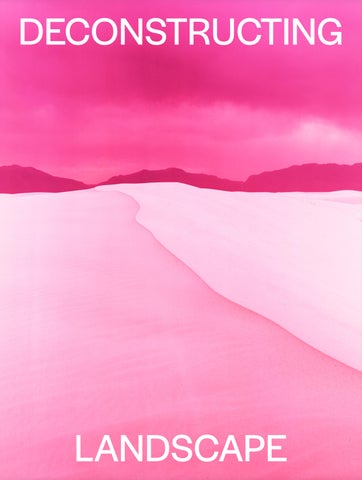
DECONSTRUCTING LANDSCAPE
Deconstructing Landscape
Thoma Collection • Santa Fe, New Mexico
On view through Spring 2027
Drawn from the Carl and Marilynn Thoma Foundation collection, Deconstructing Landscape features artists who offer unique interpretations of the traditional picturesque landscape across a variety of genres. At a time when our ecosystem is under threat from increasingly fearsome forces, it is especially poignant to see nature through the lens of artistic expression.
Landscape-based art is a vital theme in the Thoma Foundation’s collection, reflecting the Thomas’ deep-rooted connection to the land. From Carl’s upbringing as a third-generation cattle rancher in the Oklahoma Panhandle to the couple’s continued stewardship of their New Mexico ranch and Oregon vineyard, the natural world is central to their story.
Co-curated by Kathleen Forde, Director and Curator of Media Arts, and Meagan Robson, Collections Manager.
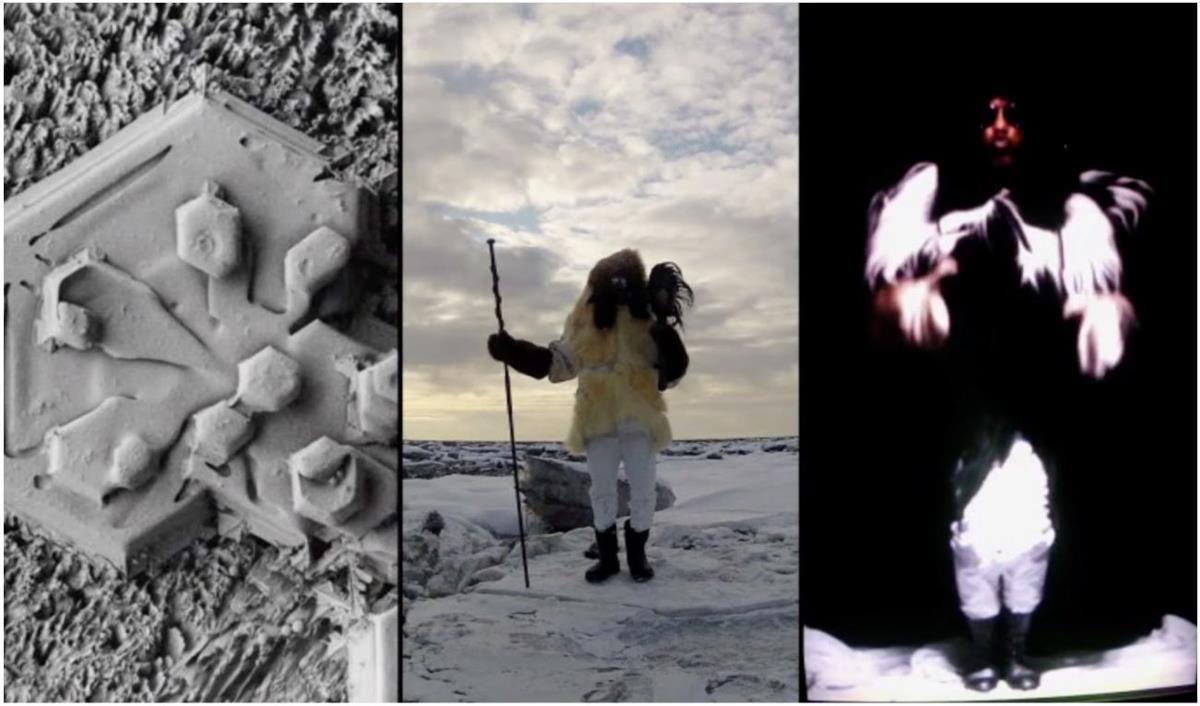
Terry Adkins
American, 1953-2014
Miy Paluk, 2012
Single-channel video with sound
24:26 min.
Terry Adkins portrays Matthew Henson, the first African American Arctic explorer. Adkins stands in an icy landscape dressed in furs, bordered by microscopic images of ice crystals. An interdisciplinary American artist, his work spanned performance, photography, sculpture, and video, with installations and exhibitions that honored musicians and highlighted overlooked historical figures.
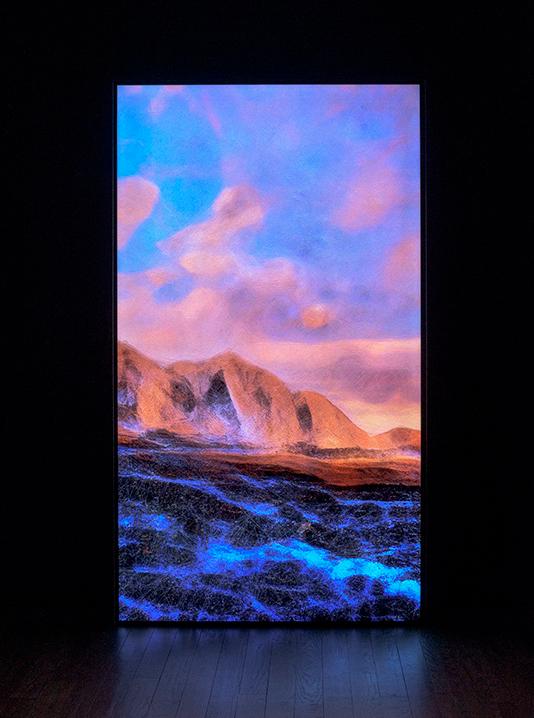
Refik Anadol
Turkish American, b. 1985
Quantum Memories Nature Studies, 2021
Single-channel digital video with sound 16:34 min.
Refik Anadol showcases AI’s creative potential in Quantum Memories Nature Studies, using Google’s quantum technology to generate new scenes of the natural world from over 200 million publicly available images. The artwork utilizes a generative adversarial network (GAN) algorithm to train itself and create novel scenes. Anadol blends art, science, and technology, using AI to explore humanity’s relationship with creativity and alternate realities in immersive installations.
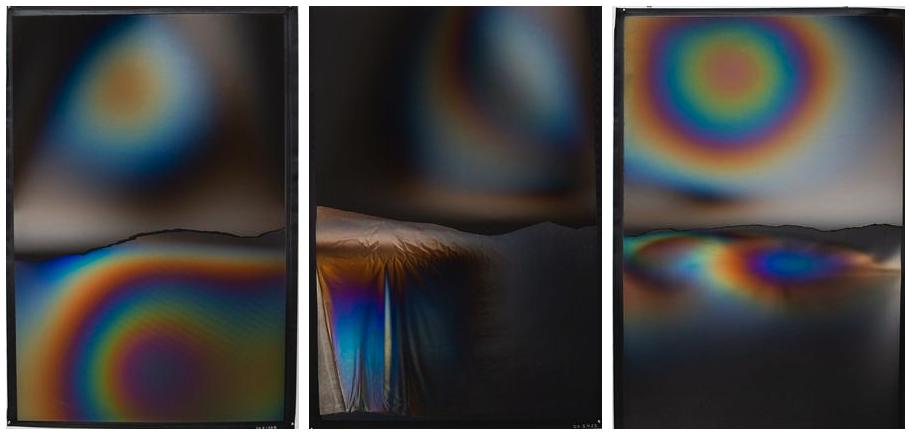
Larry Bell
American, b. 1939
Uranuscape (Triptych 1, 2, 3), 2023
Mixed media with aluminum and silicon monoxide on canvas
Larry Bell explores space, shadow, and perception in Uranuscape, considering how light and shadow interact to create depth on flat materials. Using a high-tech vacuum deposition method to vaporize materials like aluminum and silicon monoxide, the materials are settled onto canvas and Mylar in thin, colorful layers. The eerie, atmospheric triptych resembles alien terrains with vivid flares of color and crevasses. Bell is an American contemporary artist known for his glass boxes and large-scale illusion sculptures.
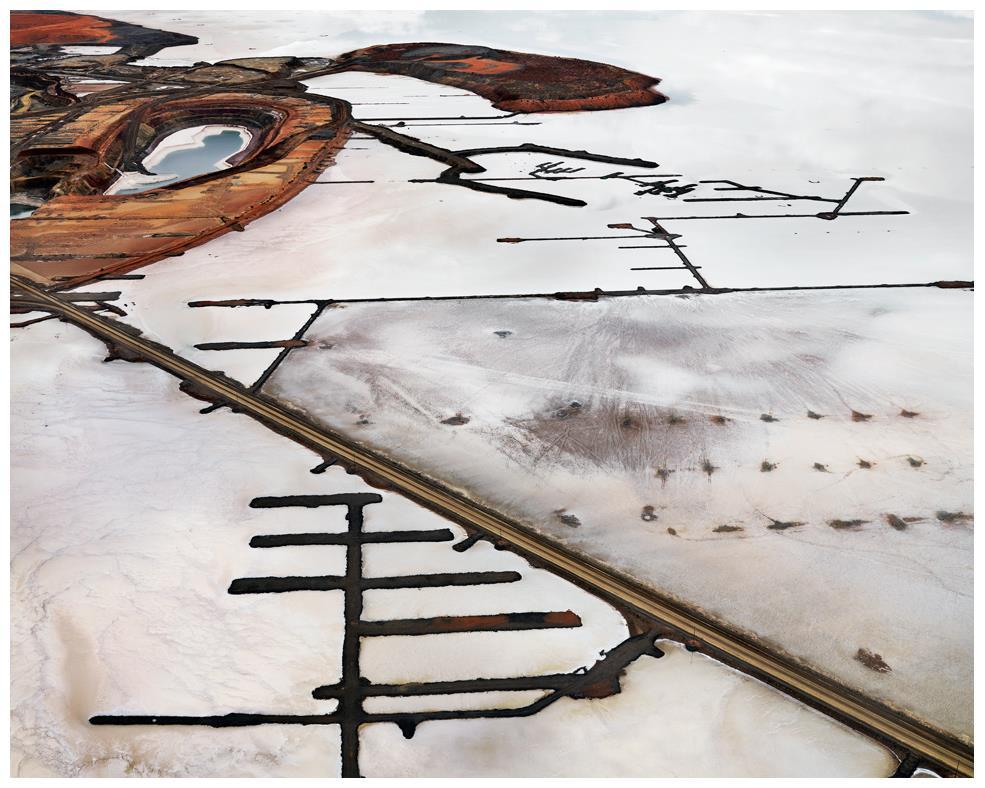
Edward Burtynsky Canadian, b. 1955
Silver Lake Operations #16, Lake Lefroy, Australia, 2007
Chromogenic color print
Silver Lake Operations #16, from Edward Burtynsky’s Mines series, depicts the Australian Silver Lake facility, where miners extract precious metals. Burtynsky is a photographer known for his aerial industrial landscapes–notably mines, quarries, and other built environments–his captured images a record of humanity’s undeniable impact on the land.
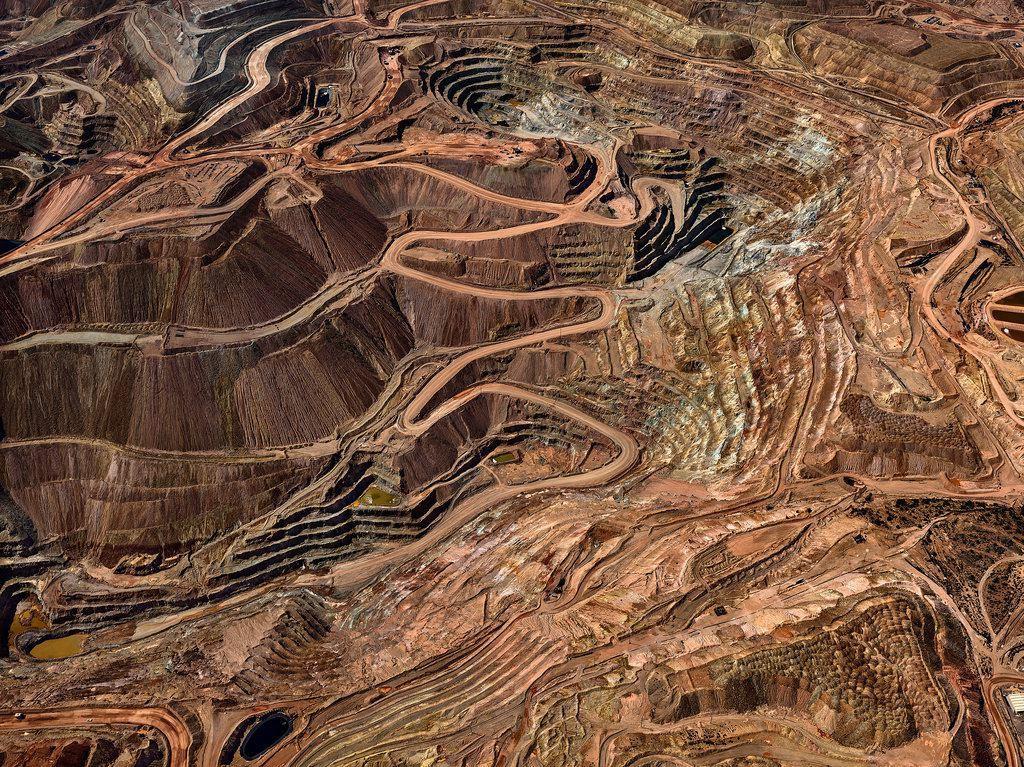
Edward Burtynsky Canadian, b. 1955
Tyrone Mine #3, Silver City, New Mexico, USA, 2012
Chromogenic color print
In the Anthropocene series, Edward Burtynsky considers how the constant expansion of humanity impacts our environment and could lead to a planet-transforming mass extinction event. Landfills, farms, mines, and mills are recorded in his signature large-format compositions. Burtynsky is a photographer known for his aerial industrial landscapes–notably mines, quarries, and other built environments–his captured images a record of humanity’s undeniable impact on the land.
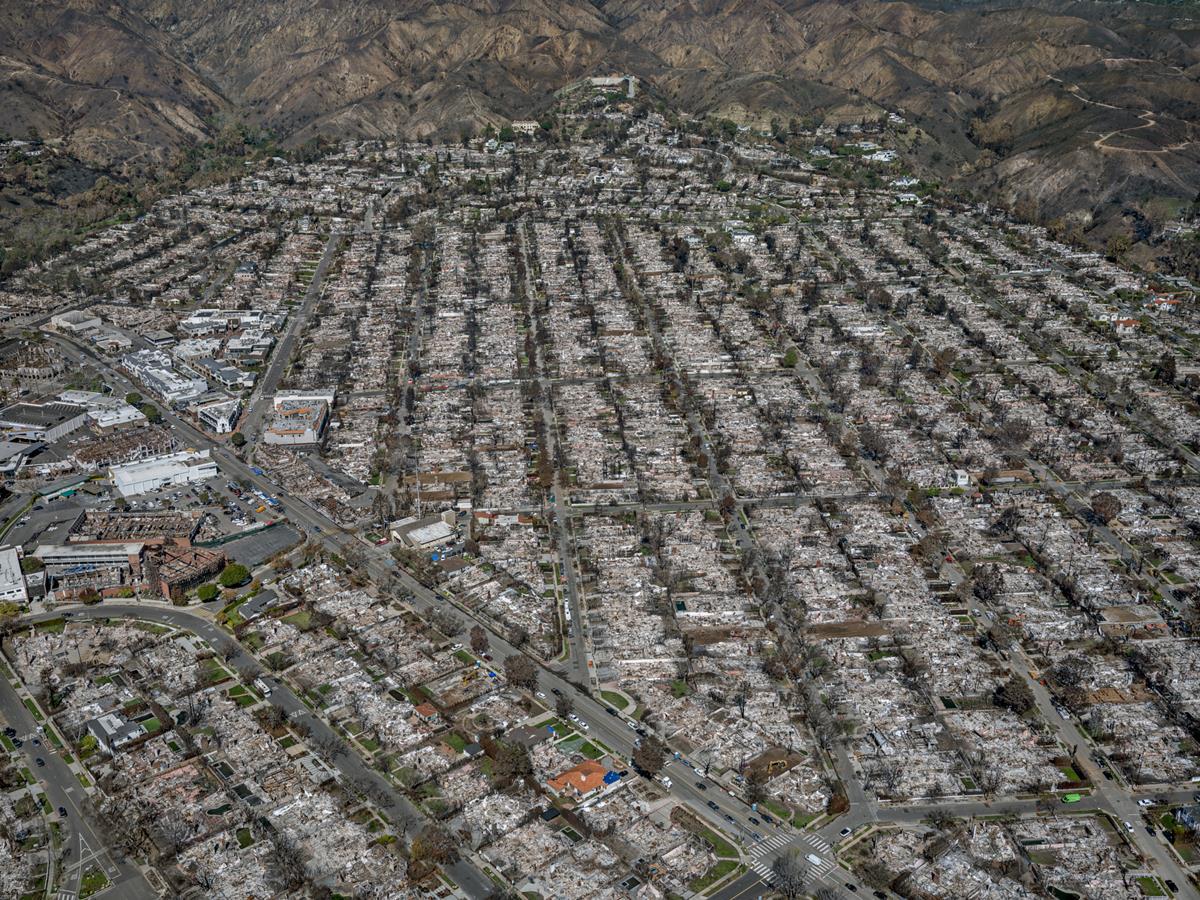
Edward Burtynsky
Canadian, b. 1955
Pacific Palisades Fire Aftermath #1, California, 2025
Chromogenic color print
Edward Burtynsky records the devastating aftermath of the fires that ran rampant through the Pacific Palisades in January of 2025. In his signature style, the image bears witness to the destruction and catastrophic loss. Burtynsky is a photographer known for his aerial industrial landscapes–notably mines, quarries, and other built environments–his captured images a record of humanity’s undeniable impact on the land.
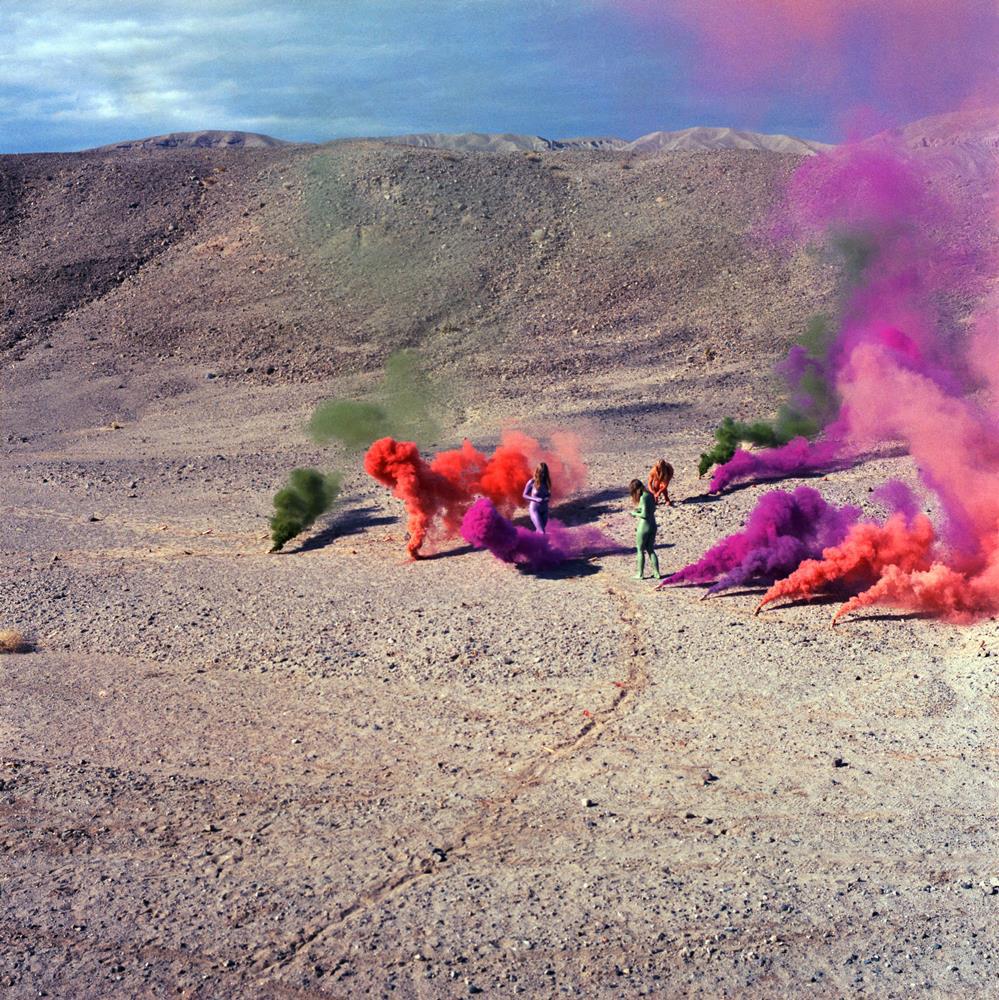
Judy Chicago
American, b. 1939
Women and Smoke, California, 1971-72
Single-channel digital video, transferred from 16mm film
Women and Smoke, California, blends colorful bodies, smoke bombs, and the California landscape. The scenes conjure the power and mystery of ancient goddess rituals, resonating with feminist artists reclaiming art history from male-dominated narratives. Chicago is a renowned feminist artist, art educator, and writer, known for her diverse work and focus on women’s roles in history, and was a founder of key feminist art programs in the 1970s.
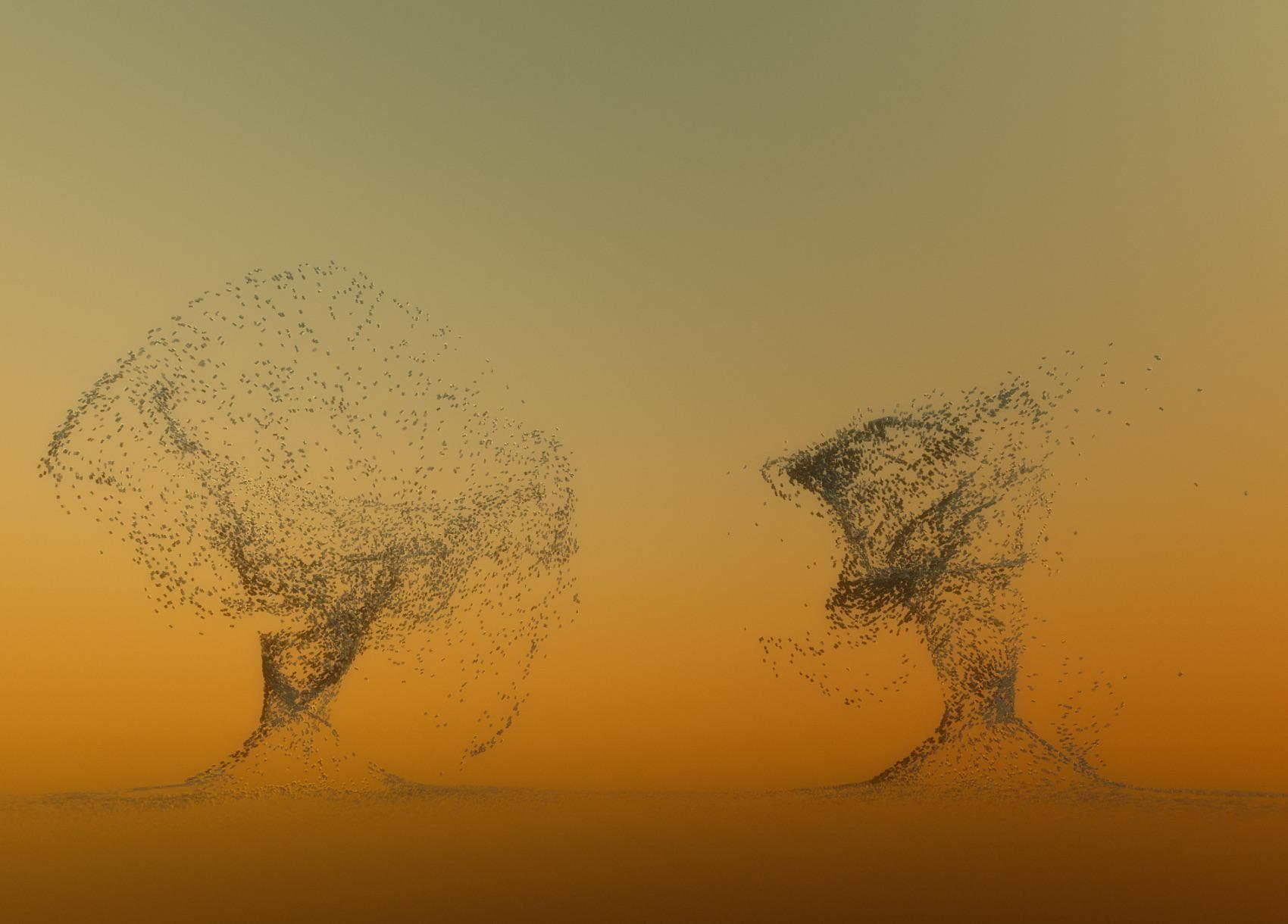
DRIFT
Formed 2007
Lonneke Gordijn (Dutch, born 1980)
Ralph Nauta (Dutch, born 1978)
Coded Nature 1-3.3, 2022
Monitors, depth sensor, computer
The digital swarm mimics and responds like a living murmuration of starlings. With changing, dynamic color gradients, the response patterns appear random but are fully orchestrated by constraints, survival instincts, and complex behavioral patterns. Dutch artists Lonneke Gordijn and Ralph Nauta founded studio DRIFT in 2007, creating choreographed, experiential sculptures and kinetic installations that connect technology with nature with their multidisciplinary team of 45 members.
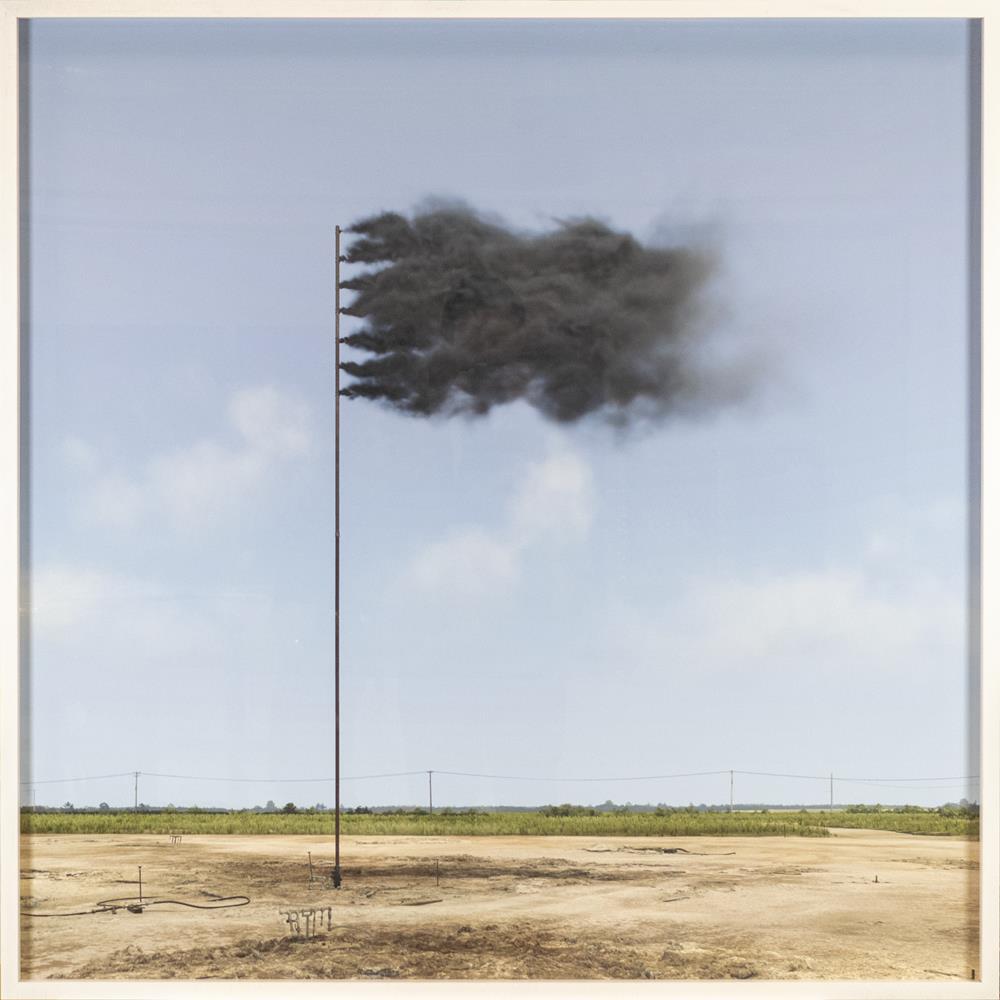
John Gerrard
Irish, b. 1974
Western Flag (Spindletop, Texas) 2017, 2017
Inkjet pigment print on Hahnemühle Photo
Rag Ultra Smooth paper
Western Flag is a digital rendering of an imaginary flag crafted from gushing oil, set against a simulated landscape of Texas to commemorate the discovery of underground fossil fuels in the region. John Gerrard merges portraiture, landscape, and history through computer-generated simulations exploring contemporary power structures and pivotal moments in the Industrial Age.
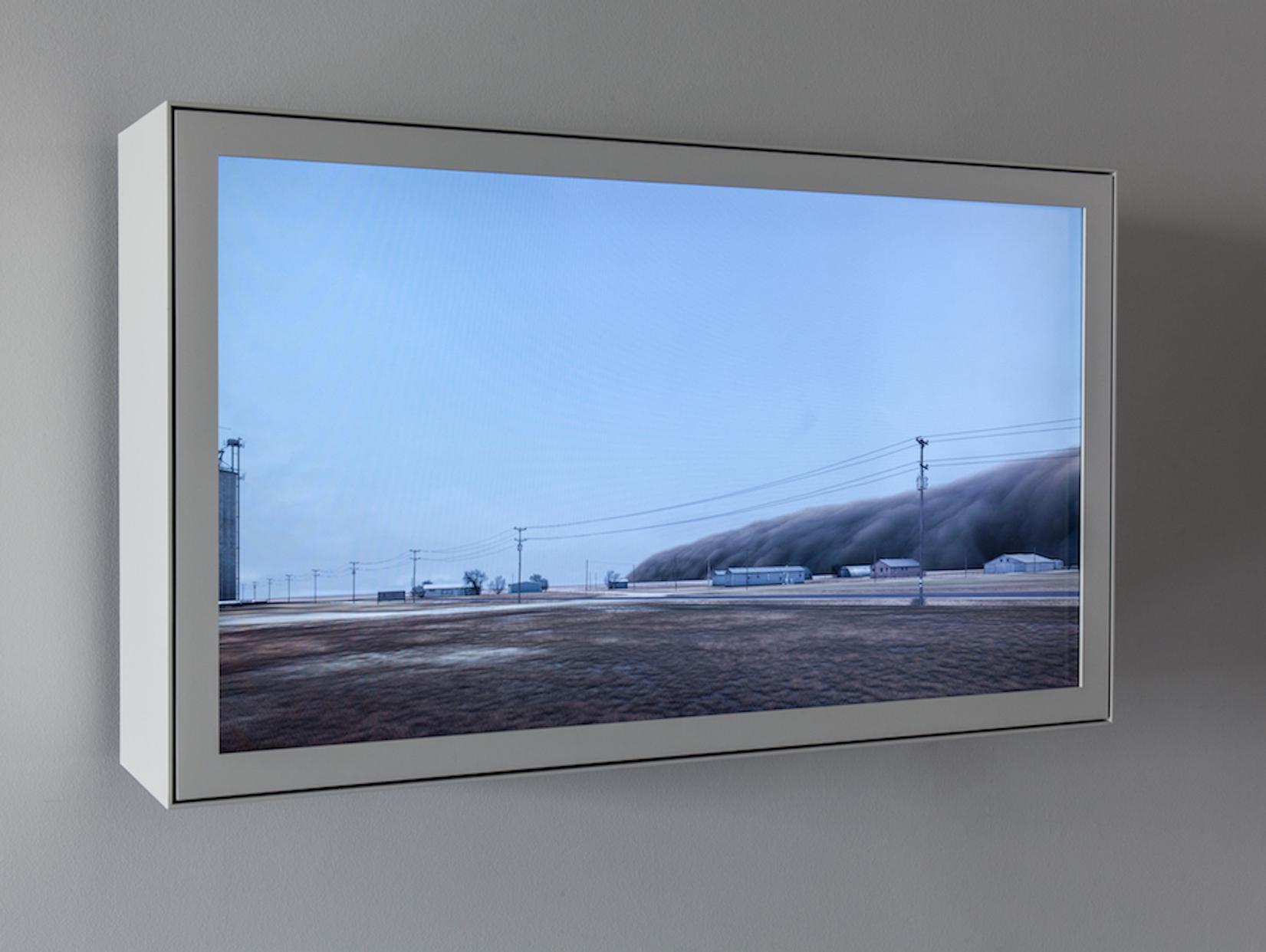
John Gerrard Irish, b. 1974
Dust Storm (Manter, Kansas) 2007, 2007
Real-time generative custom software animation, plasma monitor, custom frame
John Gerrard’s virtual simulation of the 1935 dust storm that devastated U.S. farmland unfolds in real-time. The hyper-realistic digital scene combines historical photographs with imagery of explosions from contemporary Middle Eastern wars. John Gerrard merges portraiture, landscape, and history through computer-generated simulations exploring contemporary power structures and pivotal moments in the Industrial Age.
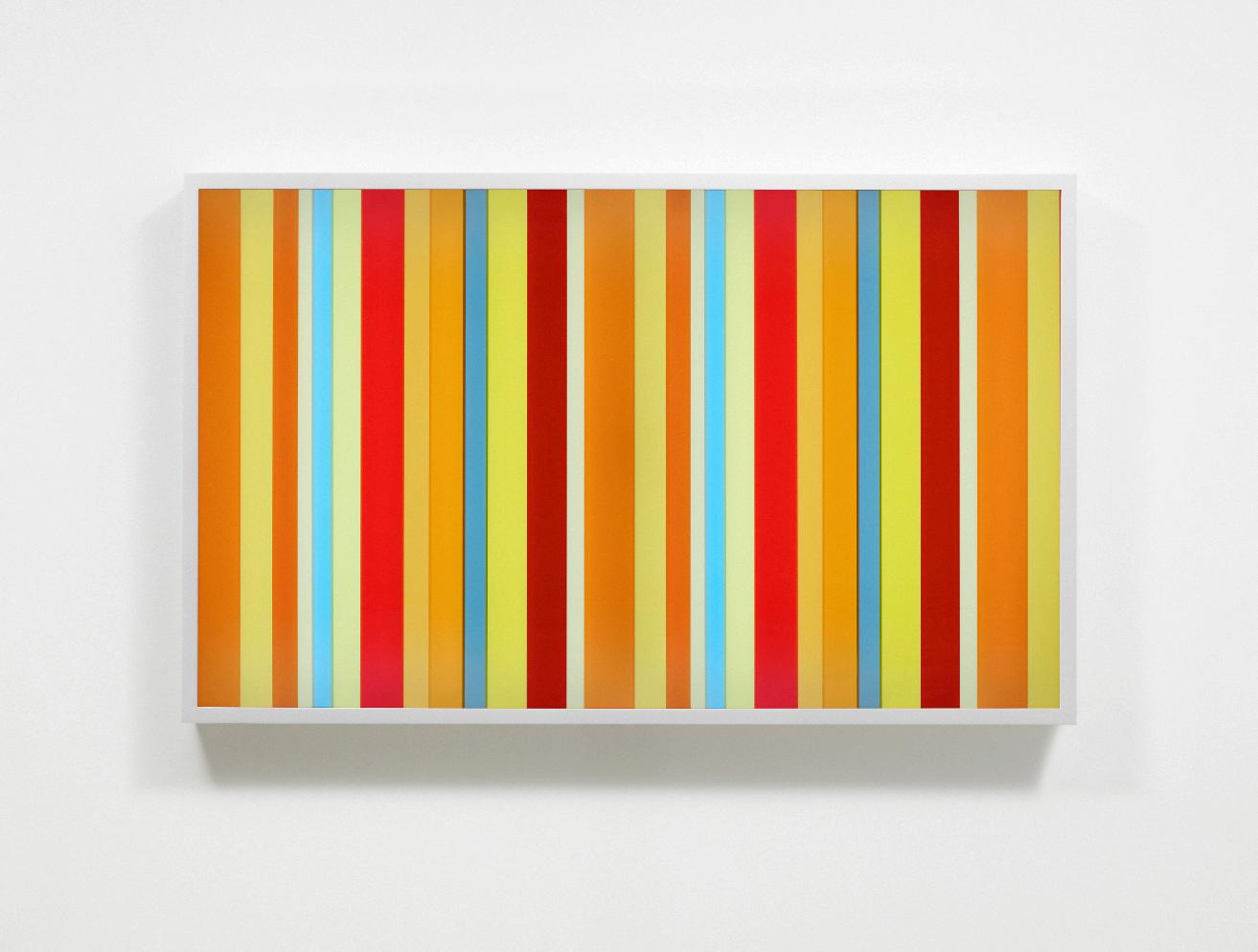
Spencer Finch
American, b. 1962
Fire (After Joseph Wright of Derby), 2009
Laminated color filters, lightbox
Fire (After Joseph Wright of Derby) explores the collaboration between the arts and science during the Enlightenment, when light was a key metaphor for artists. Finch pays homage to Wright’s painting of scientists experimenting with fire, transforming the color palette into bands on a lightbox. Spencer Finch creates light sculptures and installations that explore memory and perception; his works span watercolor, photography, glass, electronics, video, and light.
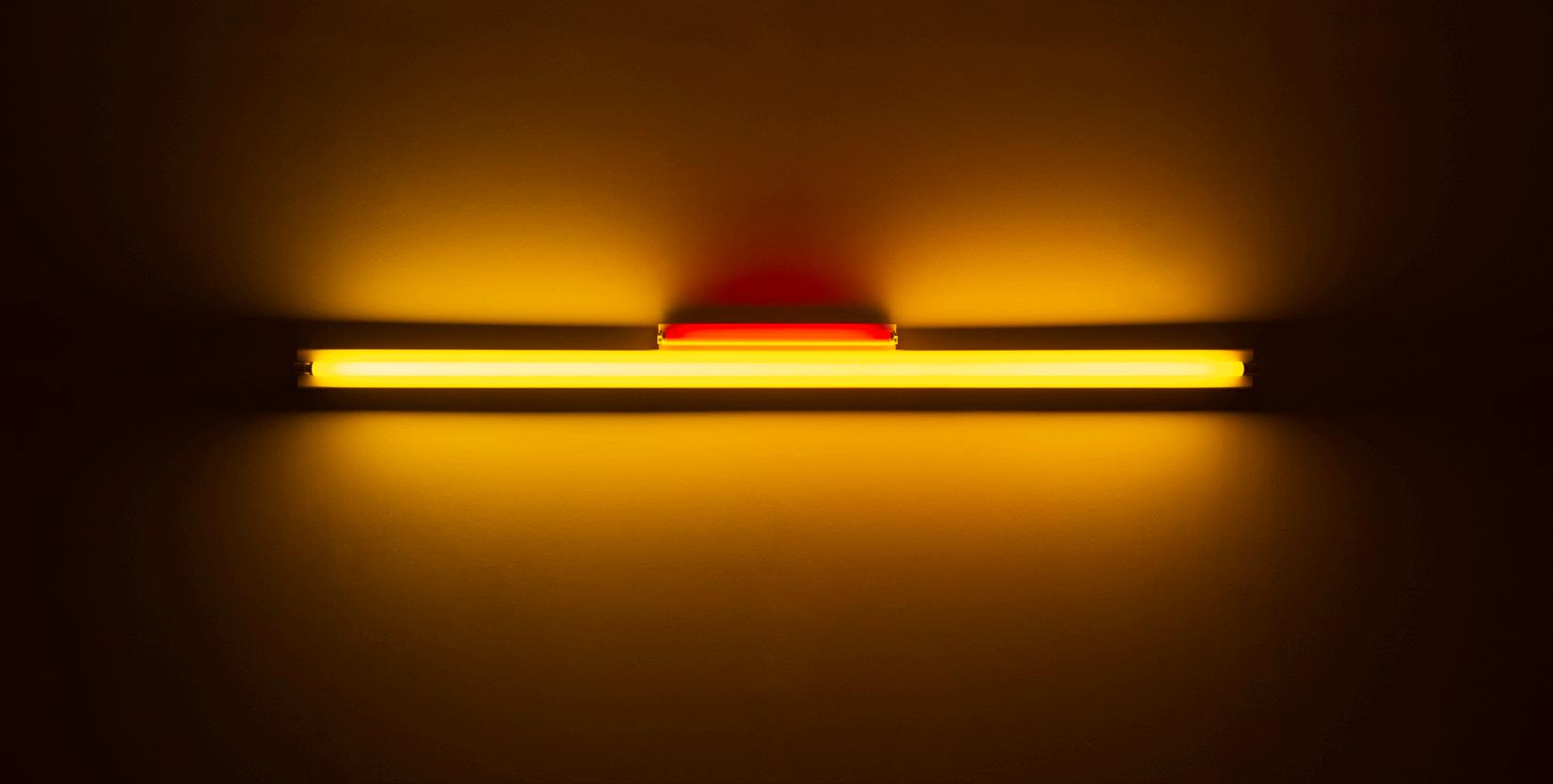
Dan Flavin
American, 1933-1996
Untitled, 1964
Red and yellow fluorescent lights
Untitled, based on Dan Flavin’s drawing #3 May 15, 1964, showcases his use of light as medium. The simple composition transforms fluorescent bulbs from corporate artifacts into evocative representations of sunrises, emphasizing light as the basis for human vision, and by extension, all visual art. Flavin was a minimalist sculptor and installation artist who used fluorescent light as a new material, exploring color relationships and site-specific environments.
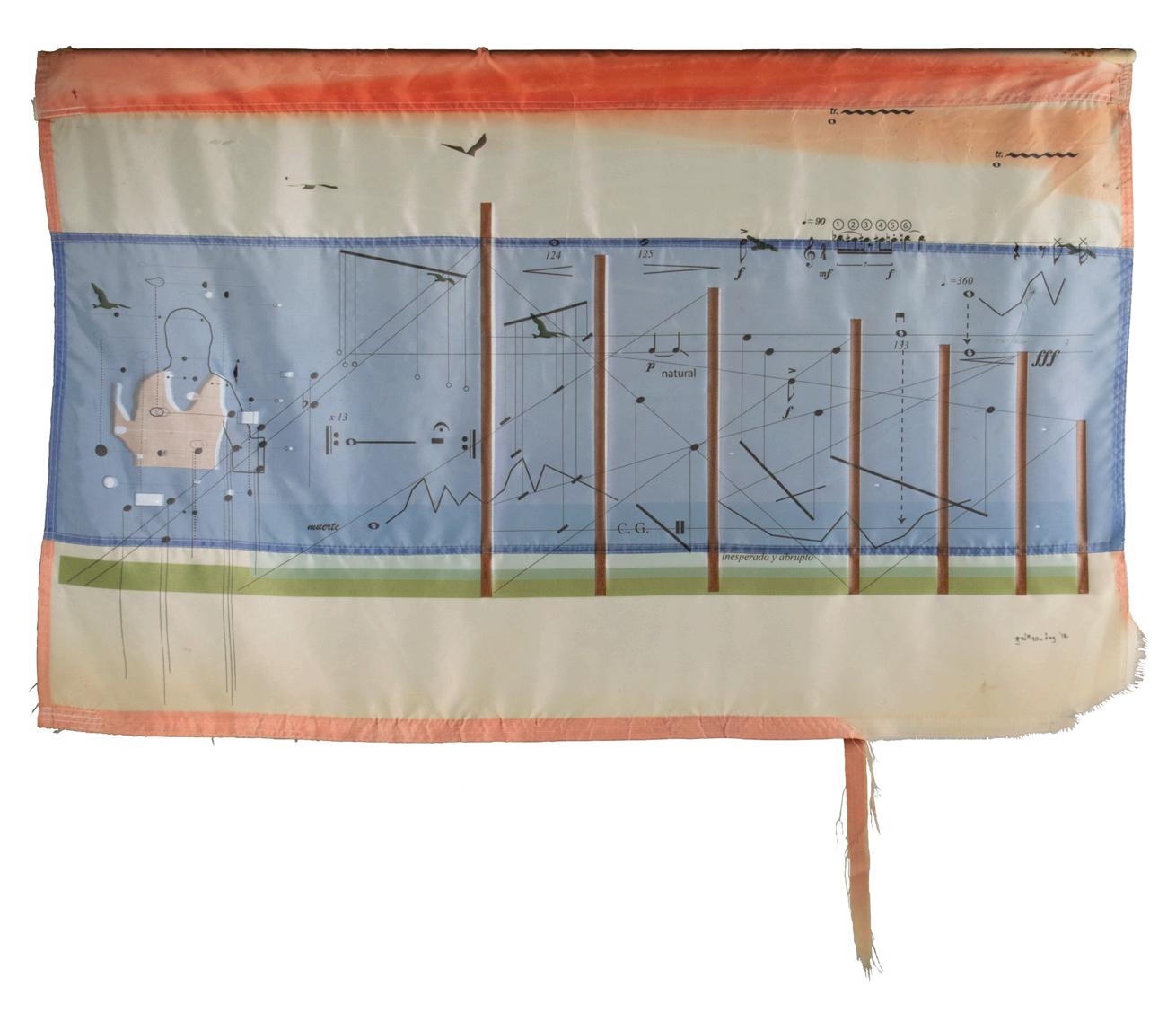
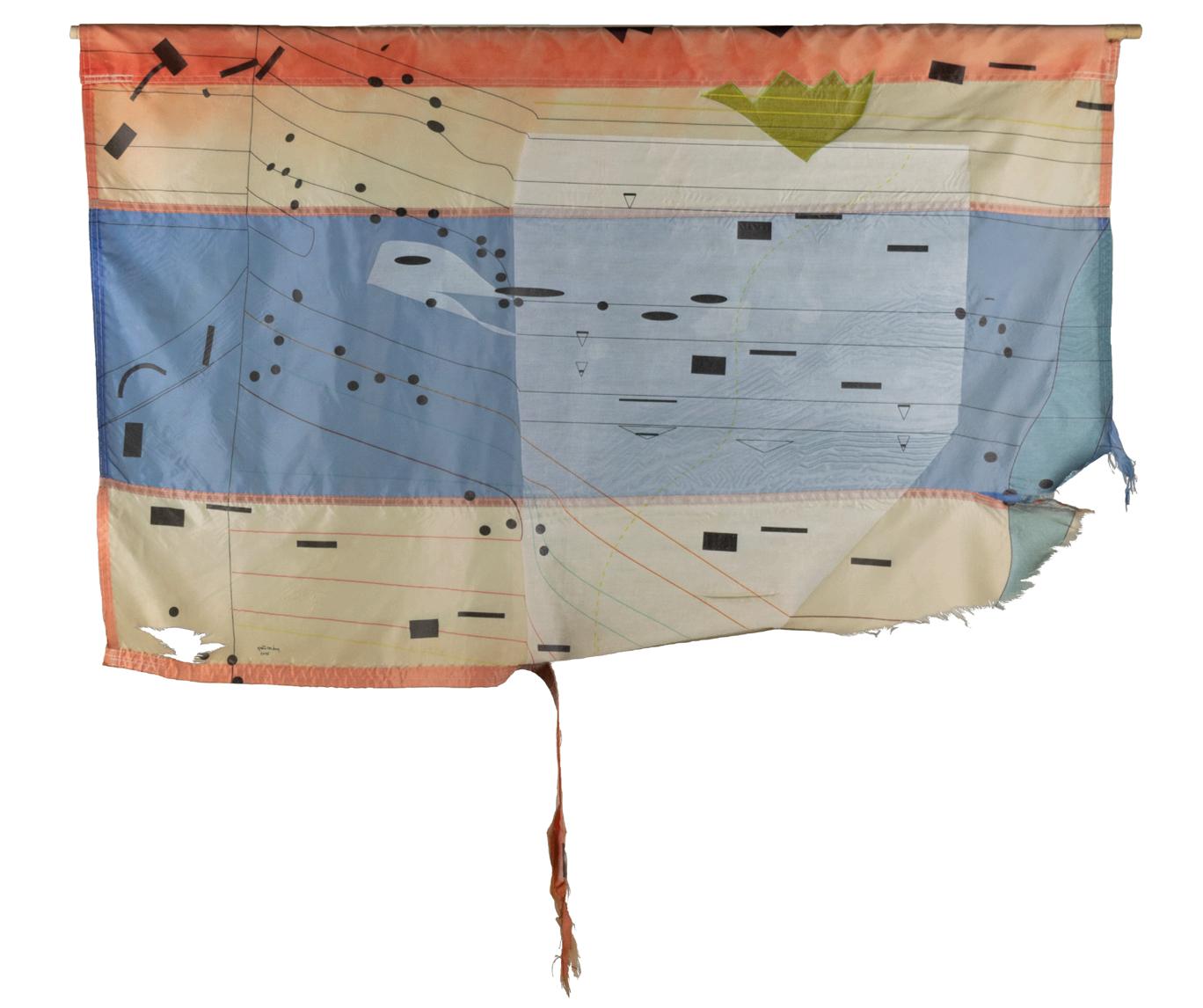
Guillermo Galindo
Mexican, b. 1960
American Dream Flag / Bandera del sueno americano, 2014
Sarape Tracking Flag, variation, 2015
Screen print acrylic on found beacon flags used by humanitarian aid group Water Station
Guillermo Galindo repurposes weathered beacon flags from the Mexico-U.S. border, once used by the humanitarian organization Water Stations to indicate water tanks in the Calexico desert. His musical scores are printed in a variety of unique notation systems reminiscent of John Cage, Cornelius Cardew, Karlheinz Stockhausen. Galindo’s work spans performance, sound, and visual art, and challenges stereotypes of Mexican art and identity. His award-winning Border Cantos project with photographer Richard Misrach combines photographs, sonic art, and graphic musical scores.
Allison Janae Hamilton
American, b. 1984
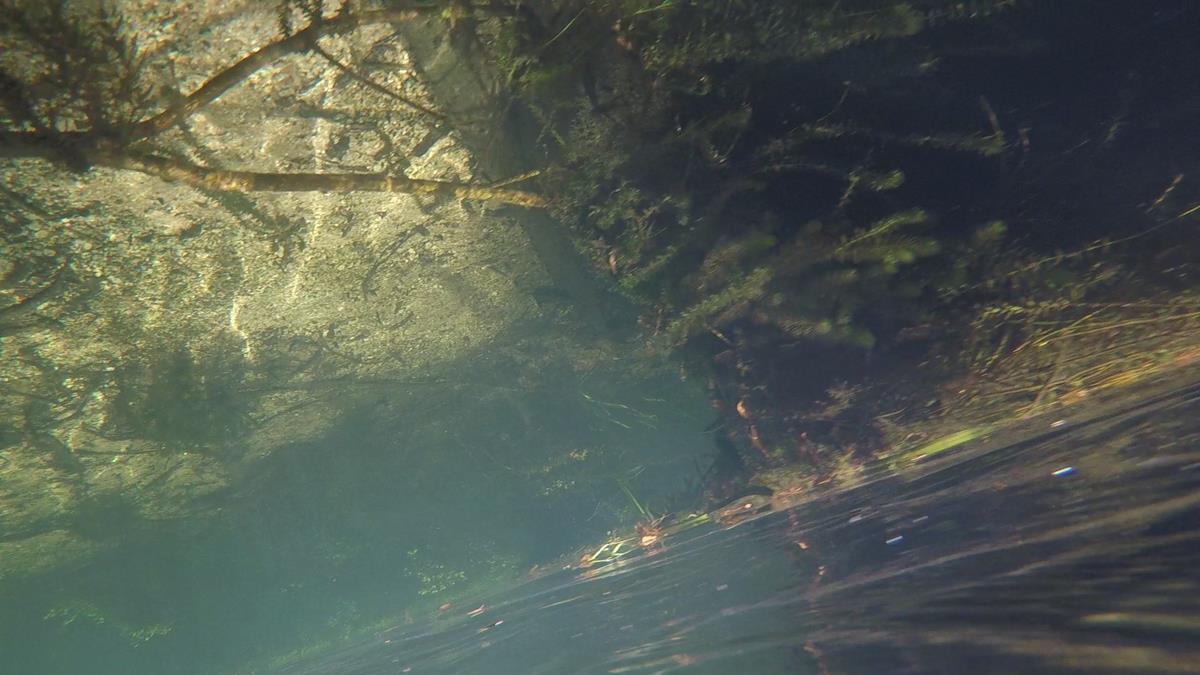
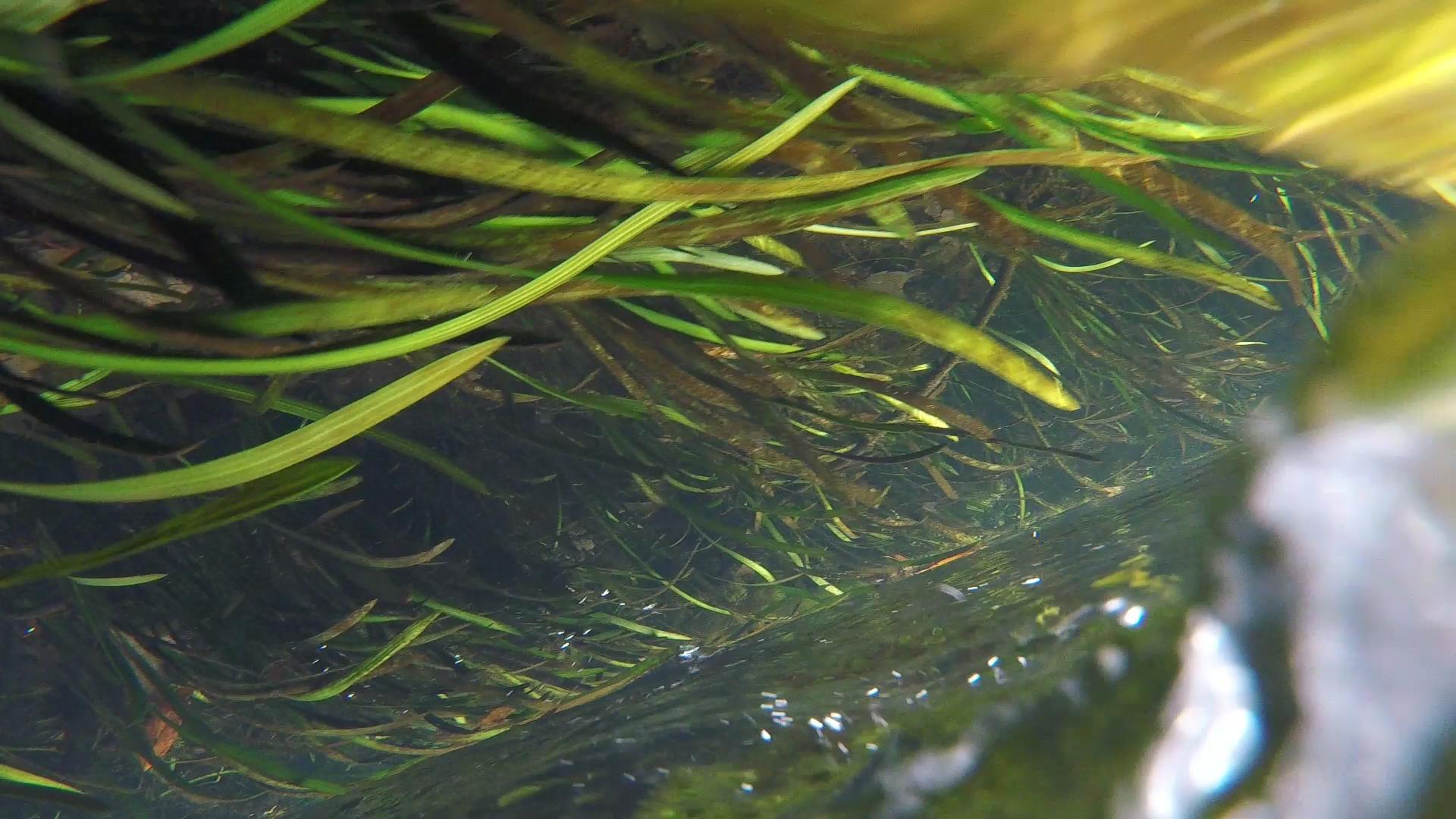
Wacissa, 2019
Single-channel digital video with sound 22:14 min.
Allison Janae Hamilton reveals the depths of the Wacissa River in Florida, the underwater footage recorded while kayaking. Known as the Slave Canal from the enslaved workers who dug miles of its channels in the 1800s, it reflects a dark history tied to logging and cotton industries and is the site of ongoing environmental threats. Hamilton’s work connects people to the landscape, using photography, installation, sculpture, and video to delve into the American South’s history, folklore, and her own family narratives.
Yael Kanarek
Israeli American, b. 1967
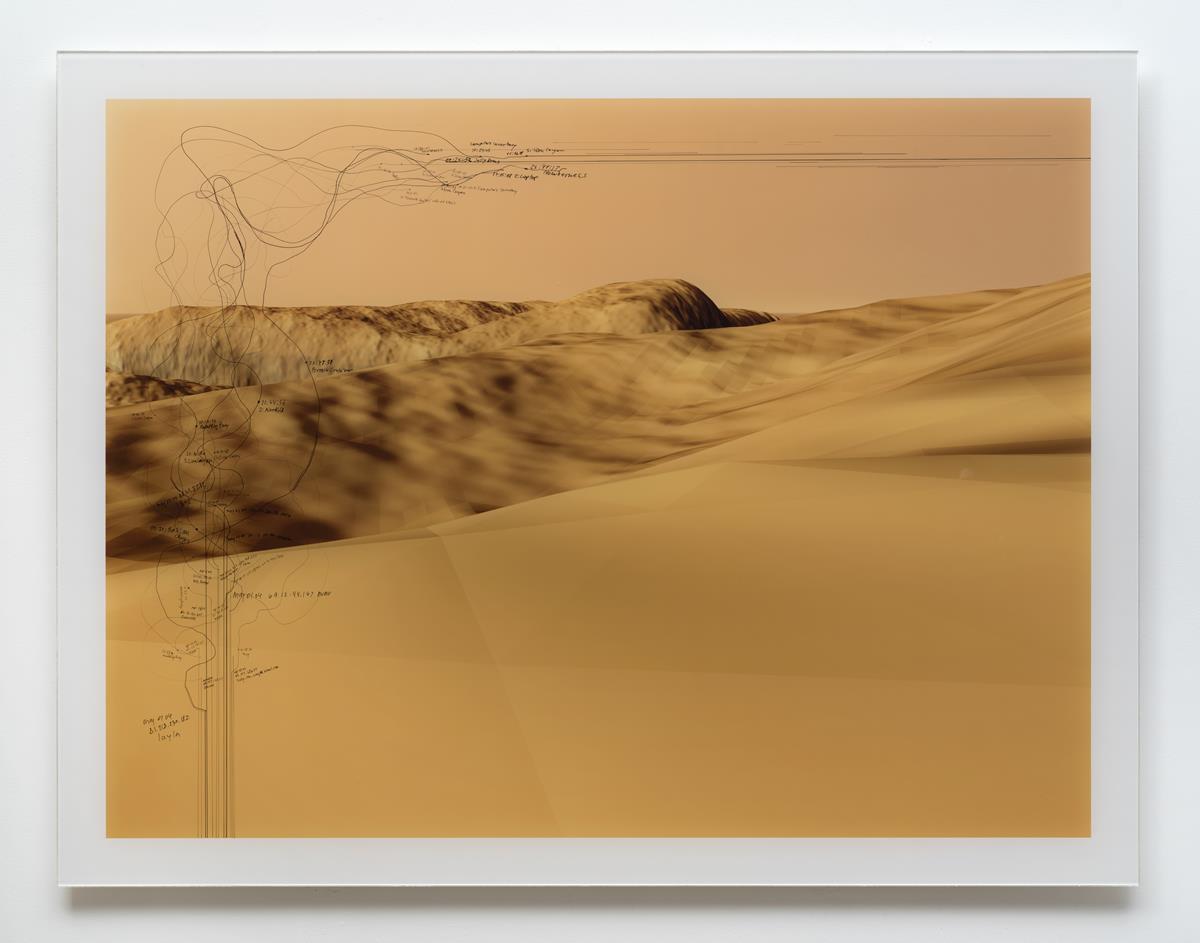
Terrain 9_3a_5: Entries and Exits, 2022
Acrylic face-mounted chromogenic print on paper with hand-applied ink drawing
This 3D-rendered landscape is derived from Yael Kanarek’s online artwork, World of Awe: A Traveler’s Journal, where users navigate a virtual world called Sunrise/Sunset. A lone traveler hunts for treasure in Silicon Canyon, a junkyard that reflects society’s obsession with technology. The hand-drawn annotations record user-tracking data. Kanarek explores language, storytelling, and gender through digital art, jewelry, and her project Toratah.
Ellsworth Kelly
American, 1923-2015
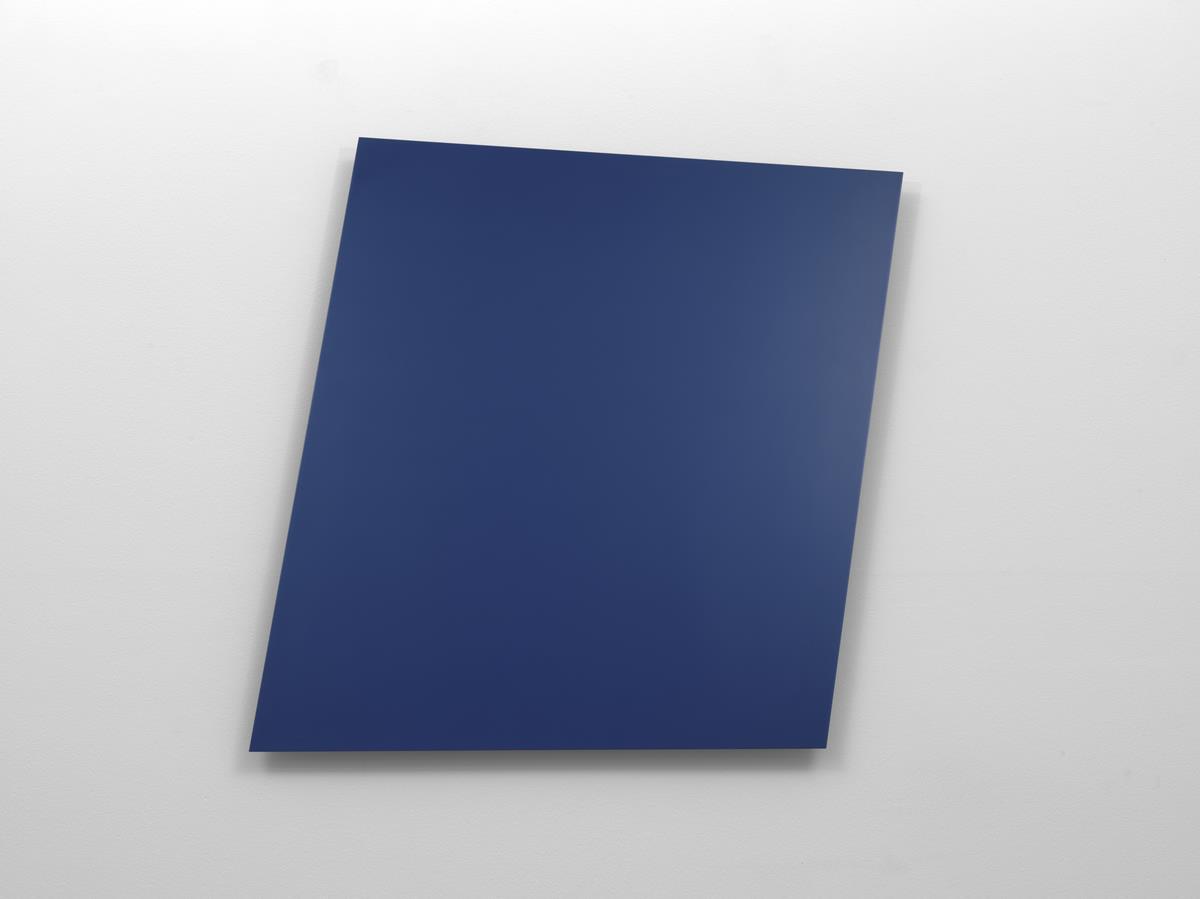
Dark Blue Panel, 1981-82
Painted aluminum
Ellsworth Kelly’s Dark Blue Panel challenges traditional landscape painting with a single flat area of unmediated color on a shaped canvas. It transforms painting into a three-dimensional sculpture, existing alongside the viewer rather than depicting an external scene. A sculptor and painter greatly influenced by ornithology, Kelly served in the Army during World War II and was married to photographer Jack Shear.
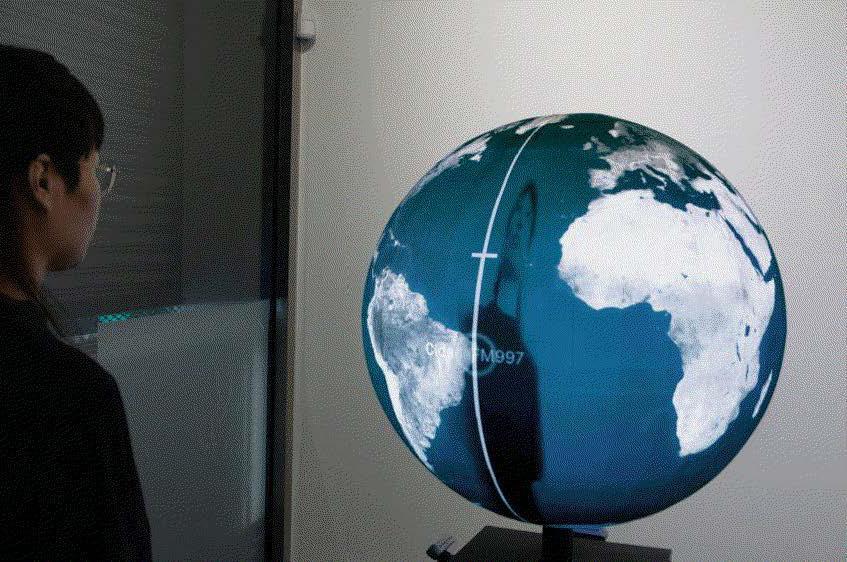
Rafael Lozano-Hemmer Mexican Canadian, b. 1967
Shadow Tuner, 2024
Interactive spherical LED display, depth cameras, speakers, powder-coated stainless steel base, custom software, power distributor, sound card, video controller, computers, amplifiers
An animated Earth rotates on an LED sphere, with cameras detecting viewers' proximity and casting shadows on the globe’s surface and triggering streams of live radio stations. Similar to the artist's 2003 work Frequency and Volume, the viewer's body becomes an antenna or tuning dial, scanning for sound signals. Rafael Lozano-Hemmer creates engaging interactive installations that explore architecture, surveillance, and socio-political issues.
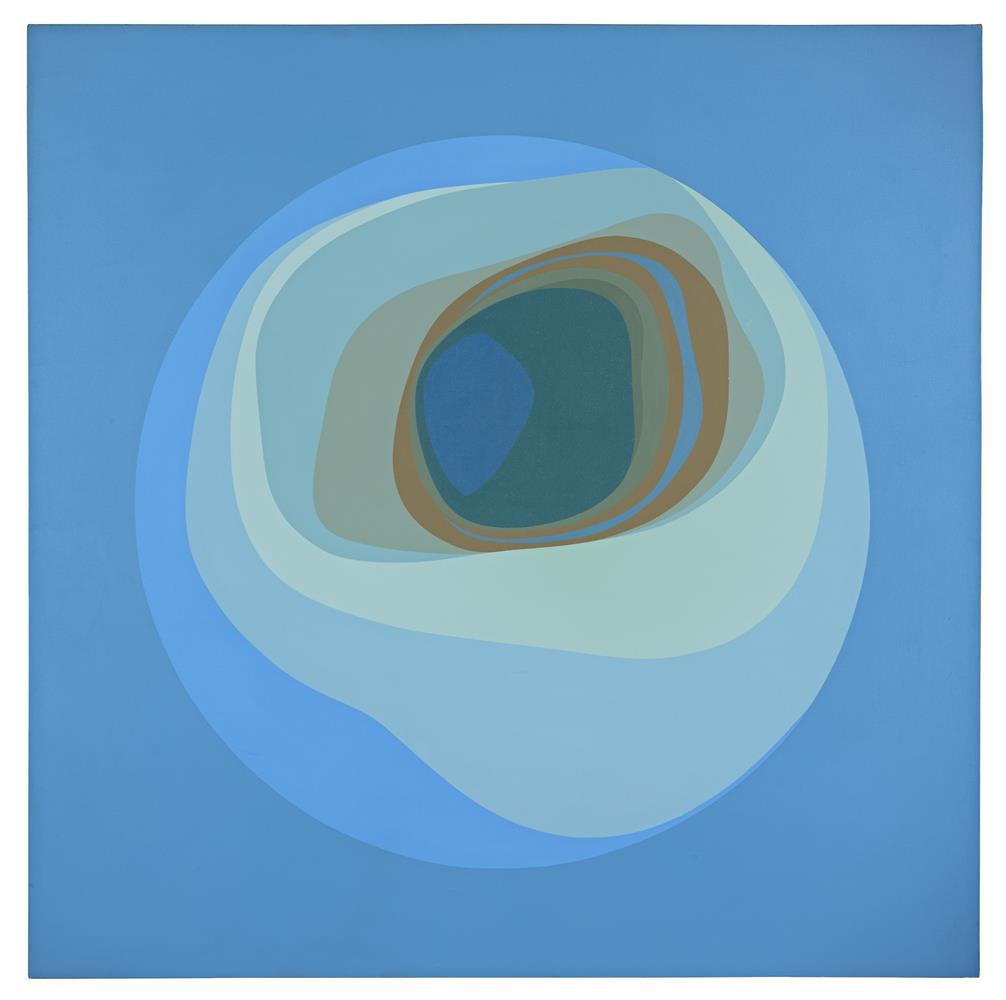
Helen Lundeberg
American, 1908-1999
The Blue Planet, 1965
Acrylic on canvas
Helen Lundeberg’s six-decade career spanned figuration and abstraction, exploring and revisiting specific motifs, including mysterious and familiar planetary bodies. Lundeberg founded Post-Surrealism, first known as Subjective Classicism, with her husband, Lorser Feitelson. Her work evolved into geometric abstraction in the 1950s, and later featured landscapes, interiors, and planetary forms with lyrical compositions in the 1960s and 70s.
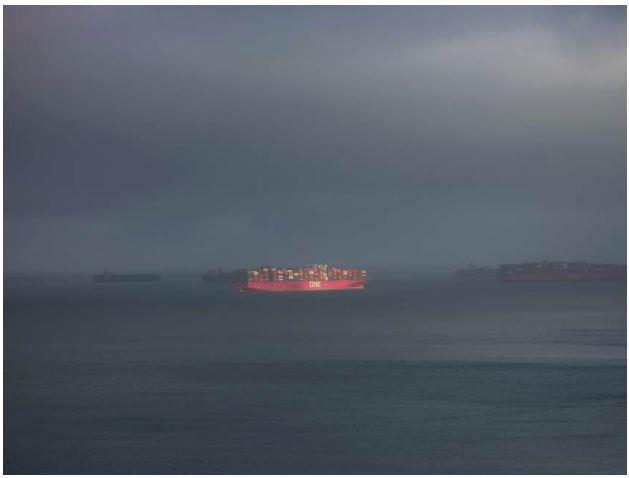
Richard Misrach
American, b. 1949
Cargo Ships (May 14, 2021 7:19pm), 2021
Pigment print mounted on Dibond
Richard Misrach is known for his large-scale color photographs that address social, political, and environmental issues. He explores the destructive impact of human activity on nature, his works focusing on man-made disasters, nuclear test sites, the American West, and the Mexico-U.S. border.
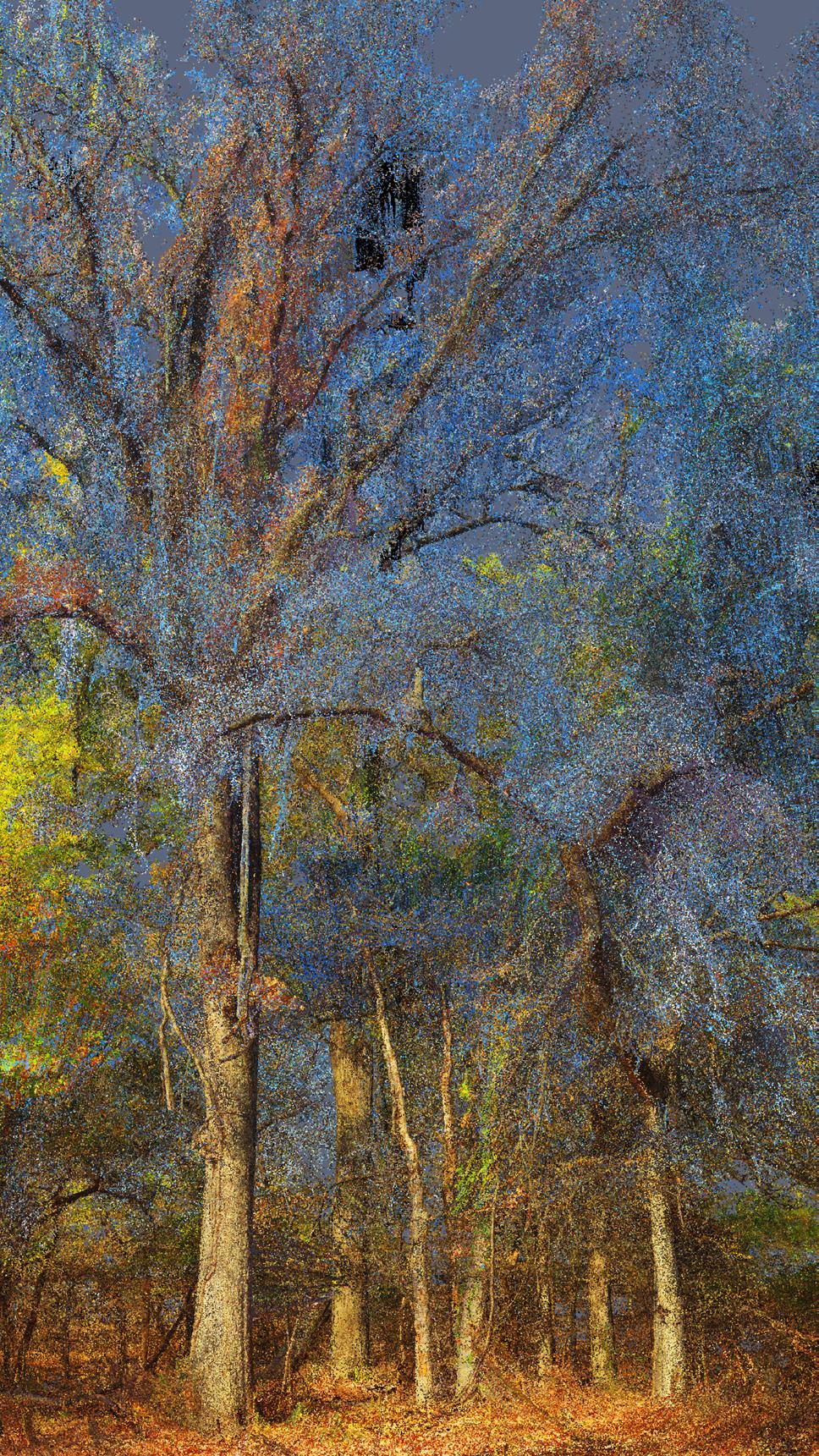
Quayola Italian, b. 1982
Pointillisme #01, 2021
Single-channel digital video with sound 11:38 min.
Pointillisme #01 explores high-precision laser scanning systems and their imperfections, merging historical pictorial traditions with computational aesthetics to create speculative landscapes. Quayola employs technology to explore tensions between opposing forces: real and artificial, figurative and abstract, old and new. He creates immersive installations and engages with canonical imagery; his diverse practice includes audiovisual performance, sculpture, and music collaborations.
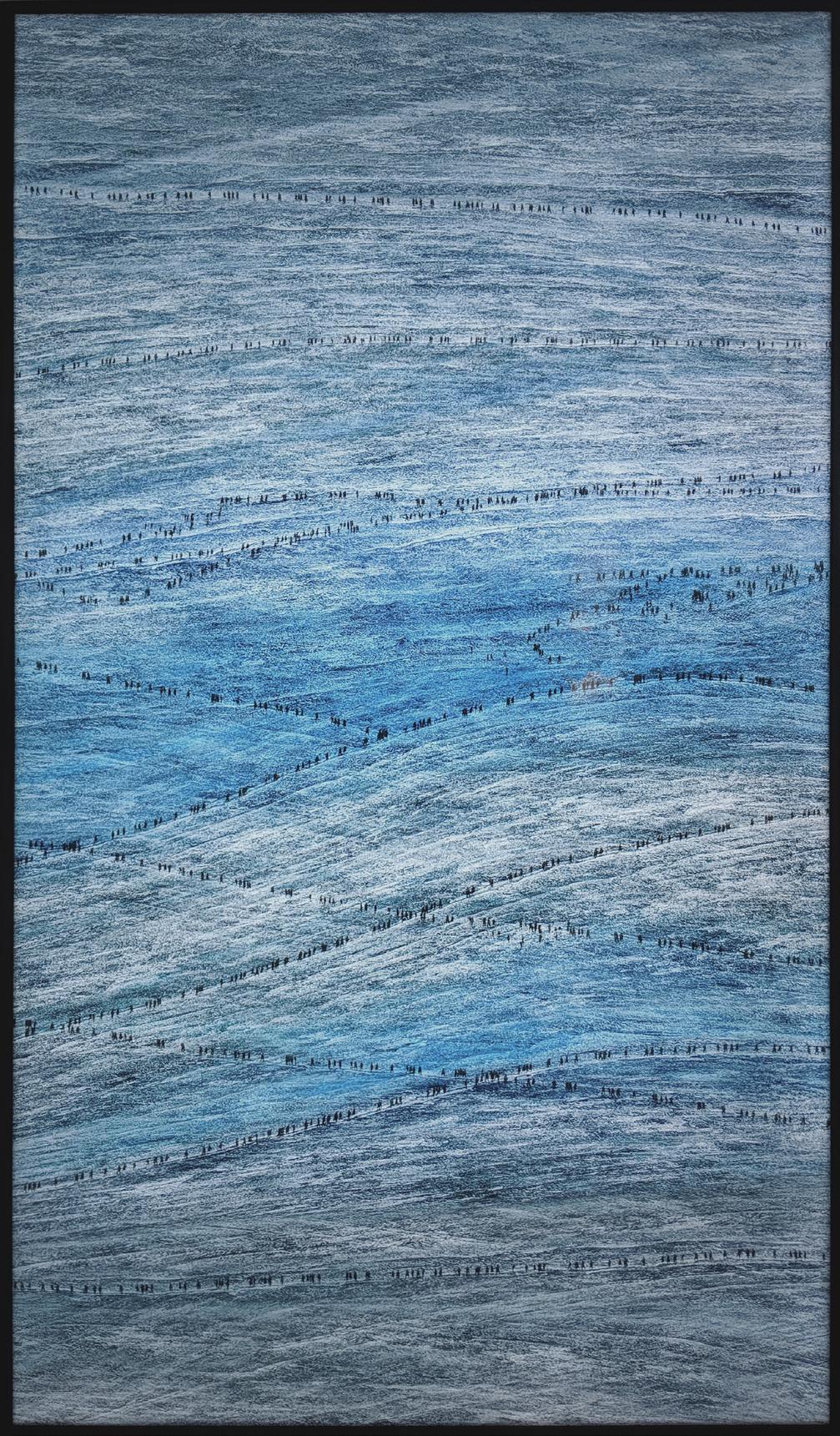
Michal Rovner
Israeli, b. 1957
Blue Hills, 2018
Single-channel digital video, custom monitor
In Blue Hills, lines of silhouetted figures move across a harsh landscape, their individual features and identities obscured. Their movements speak to collective human behavior and the desire for belonging.
Michal Rovner utilizes drawing, film, photo, and video in her time-based media work to explore social histories of landscape, focusing on conflict and transformation.
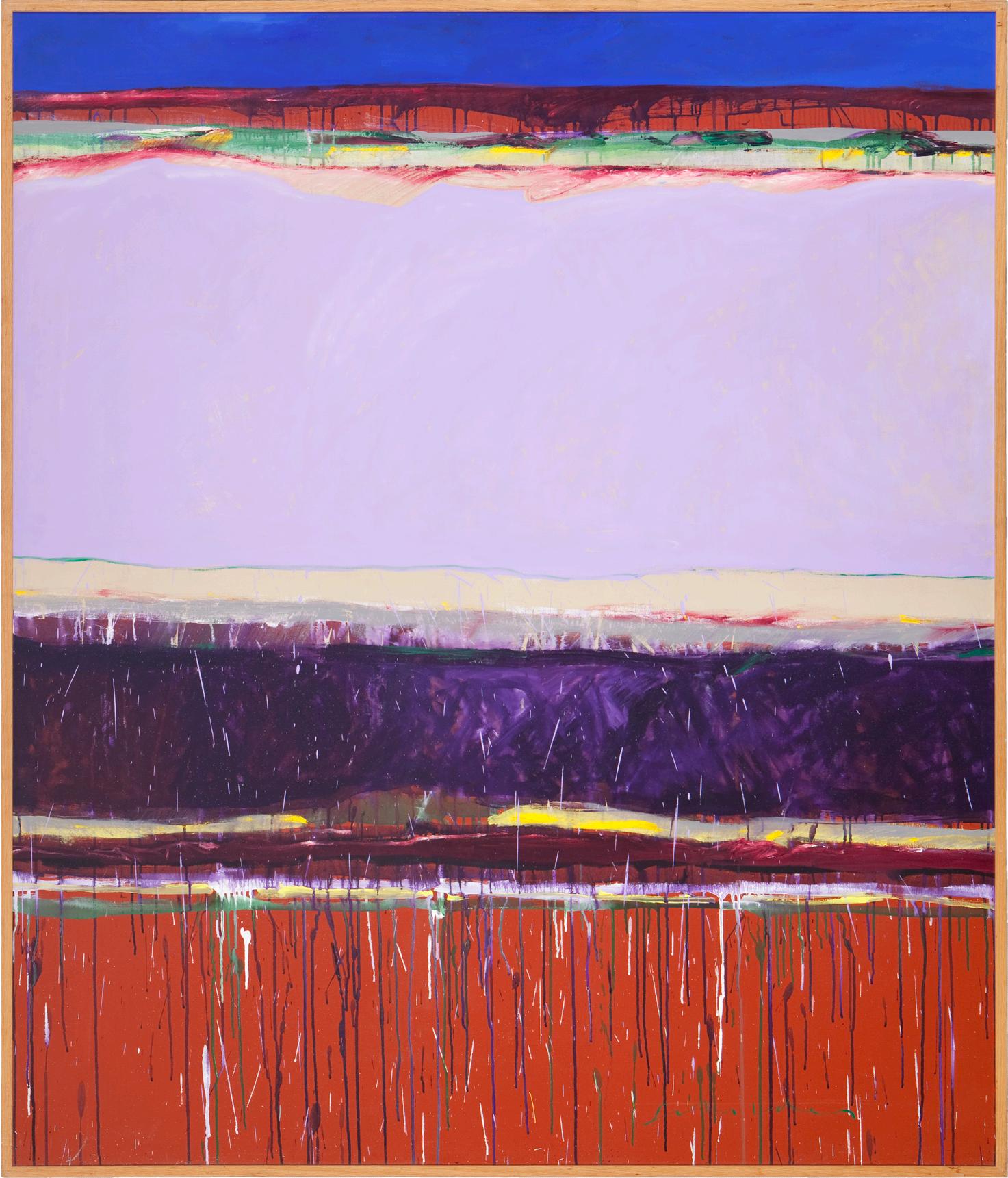
Fritz Scholder
American, 1937-2005
Arizona #3, 1982
Acrylic on canvas
Influenced by West Coast abstraction and artists like Wayne Thiebaud, Fritz Scholder began creating landscape-inspired compositions like Arizona #3 in the 1960s. With its vibrantly colored horizontal bands, the work resembles the Ocean Park landscapes of Richard Diebenkorn and the work of color field painters. Scholder, a prominent artist and member of the La Jolla Band of Luiseño Indians, aimed to deconstruct stereotypes of American Indians through his impactful paintings, lithographs, and sculptures.
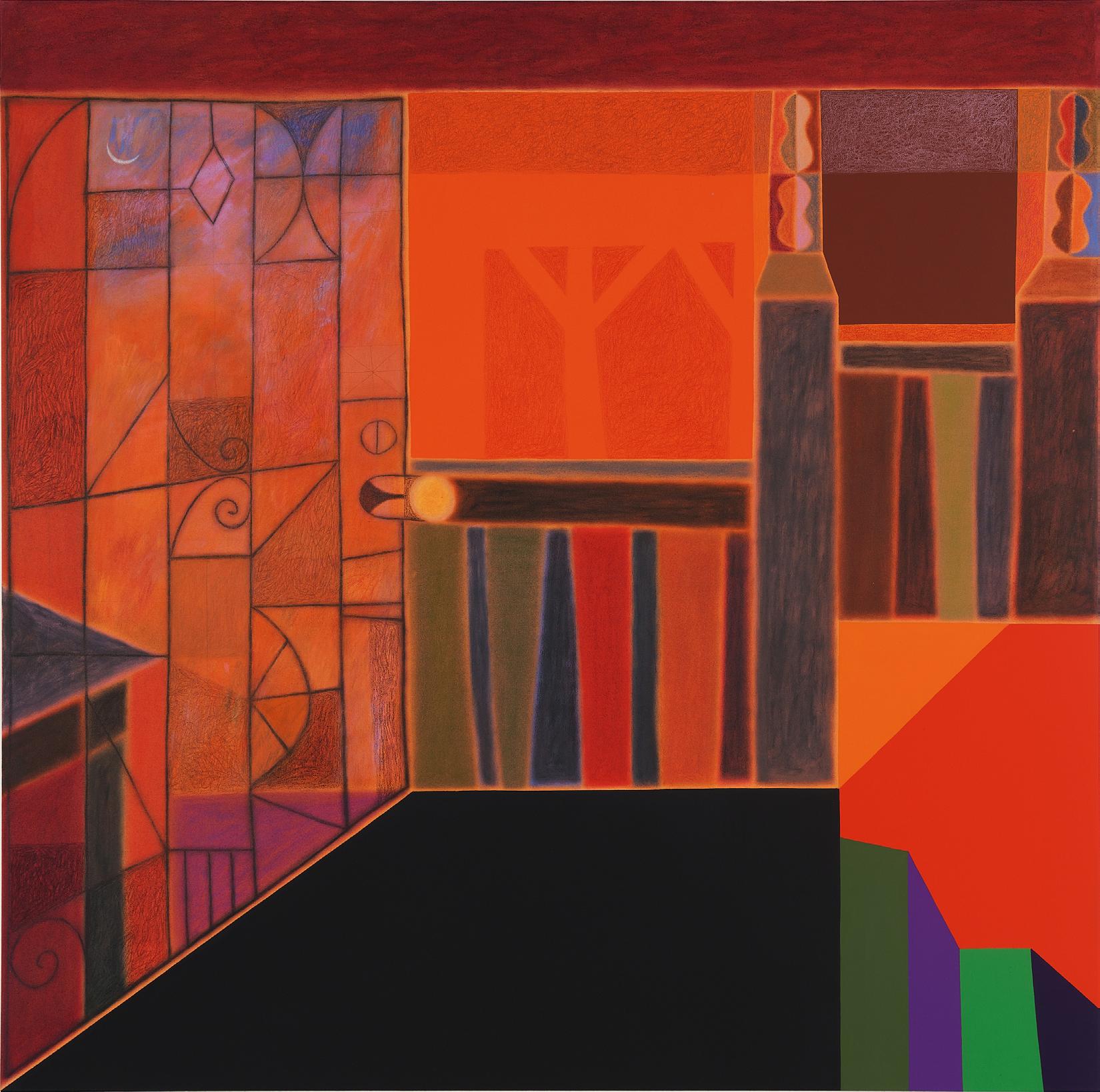
Muzae Sesay
American, b.
1989
Bonding Hour Balcony, 2023
Oil, oil pastel, vinyl emulsion, and colored pencil on canvas
Bonding Hour Balcony is an abstract representation of Muzae Sesay’s California home balcony, which became a vital space for connection and friendship during the pandemic. The compact architectural details and vibrant red hues, signature to his recent paintings, create a lively and festive environment. Sesay is an Oakland-based artist and painter, his work exploring environments and spaces, focusing on community, urbanization, and home.
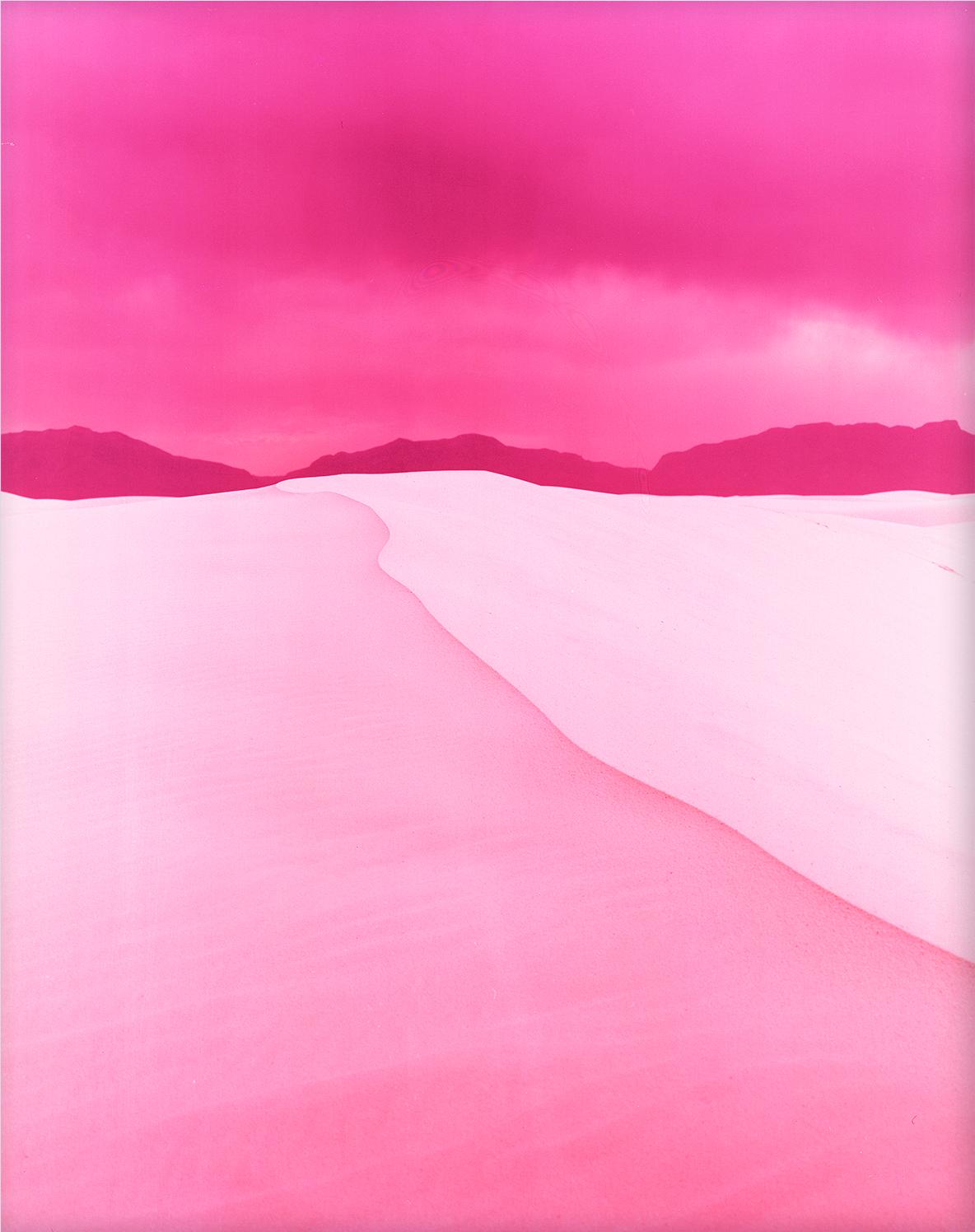
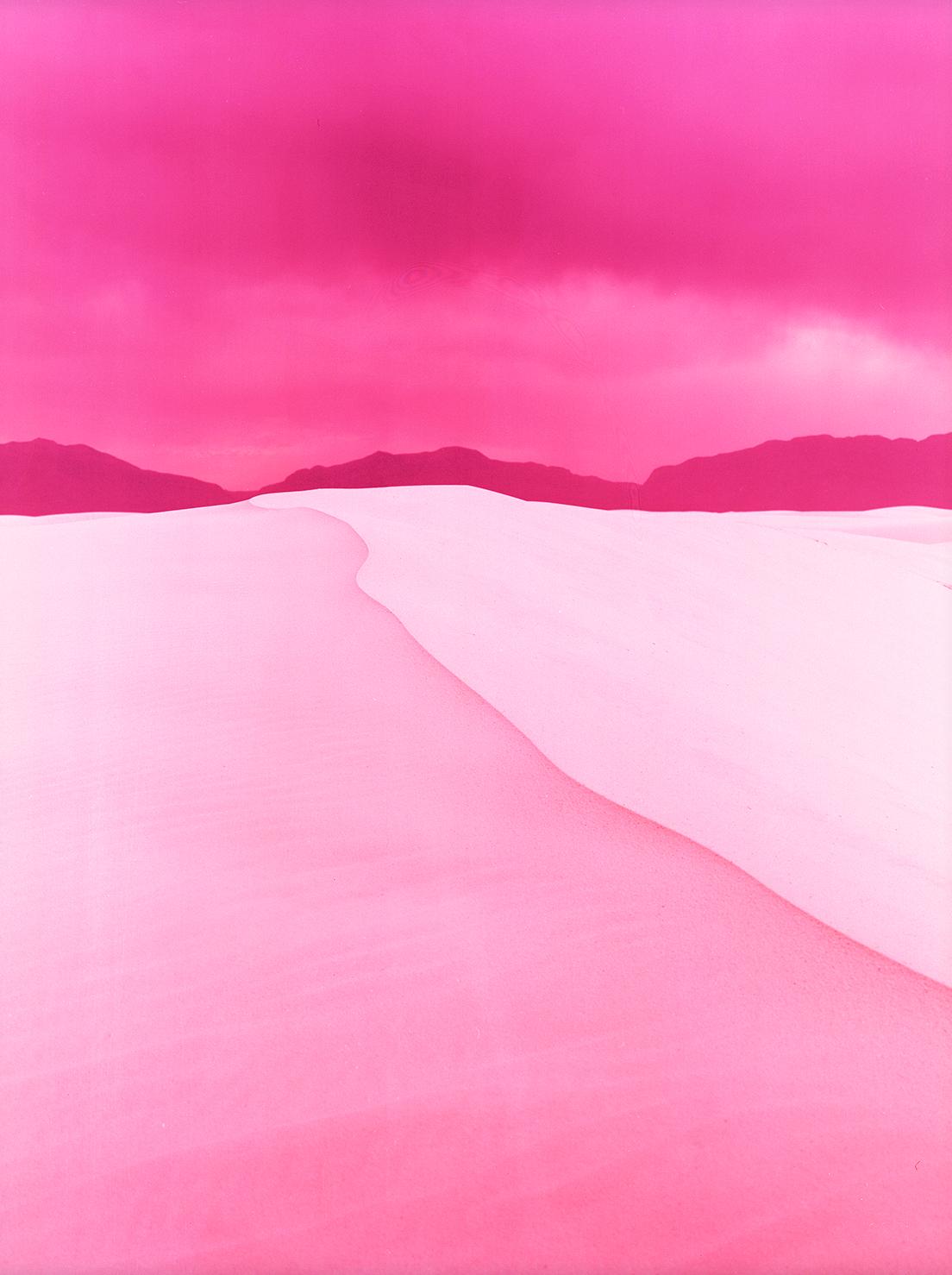
David Benjamin Sherry
American, b. 1981
White Sands National Park, New Mexico, 2021
Chromogenic print
David Benjamin Sherry’s large-scale, monochromatic photographs transform aweinspiring Western landscapes and sites of raw wilderness into surreal, magical realms through his “poetic distillation.” His work spans large-format film photography, photograms, painting, collage, and sculpture. Using vibrant colors and diverse techniques as a conduit for mystical connection, Sherry merges human and natural subjects while addressing themes of queer landscape, climate change, and the American West’s exploited history.
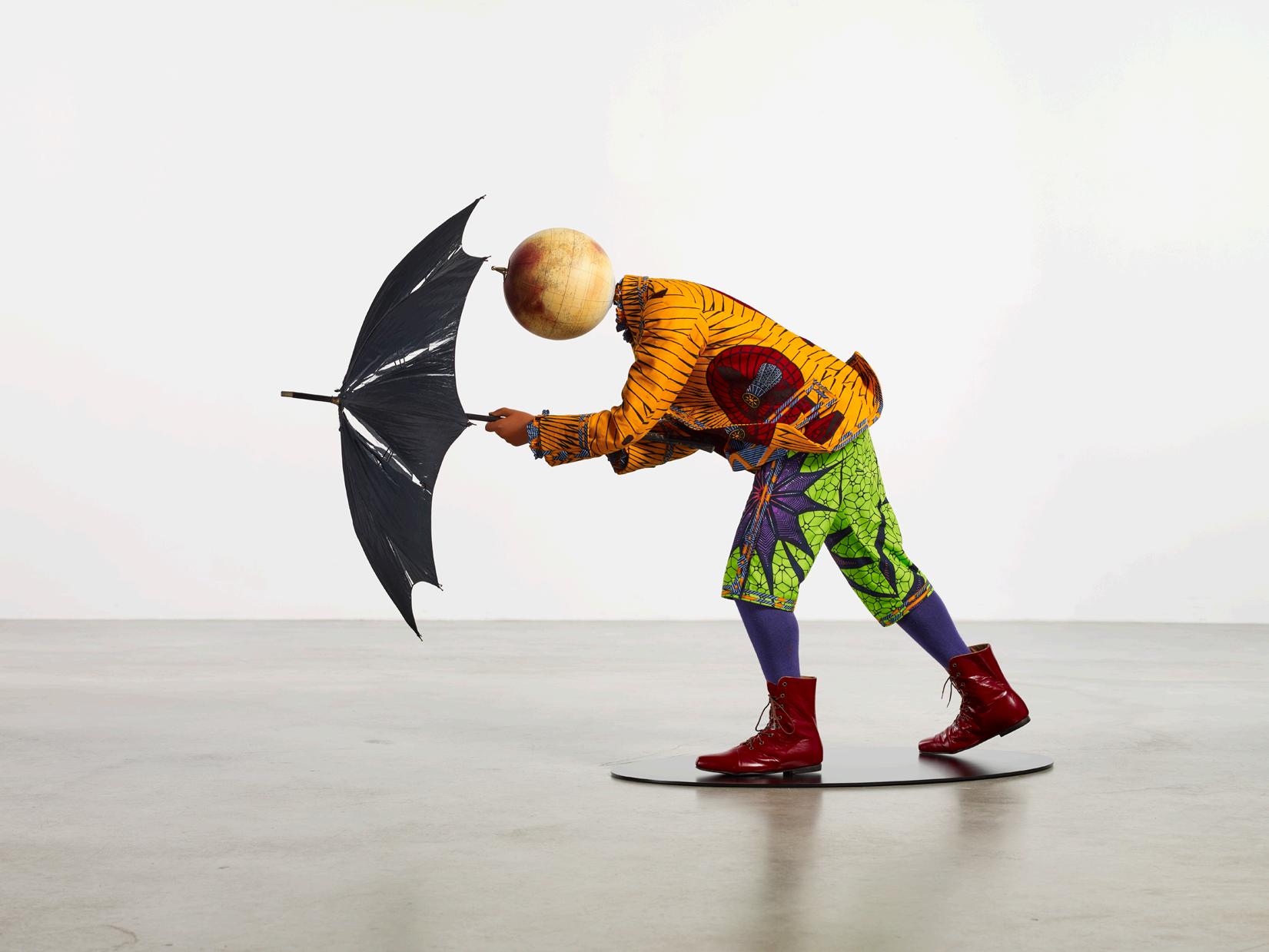
Yinka Shonibare
British, b. 1962
Air Kid (Boy), 2020
Fiberglass mannequin, Dutch wax, printed cotton textile, globe, brass, steel baseplate, umbrella
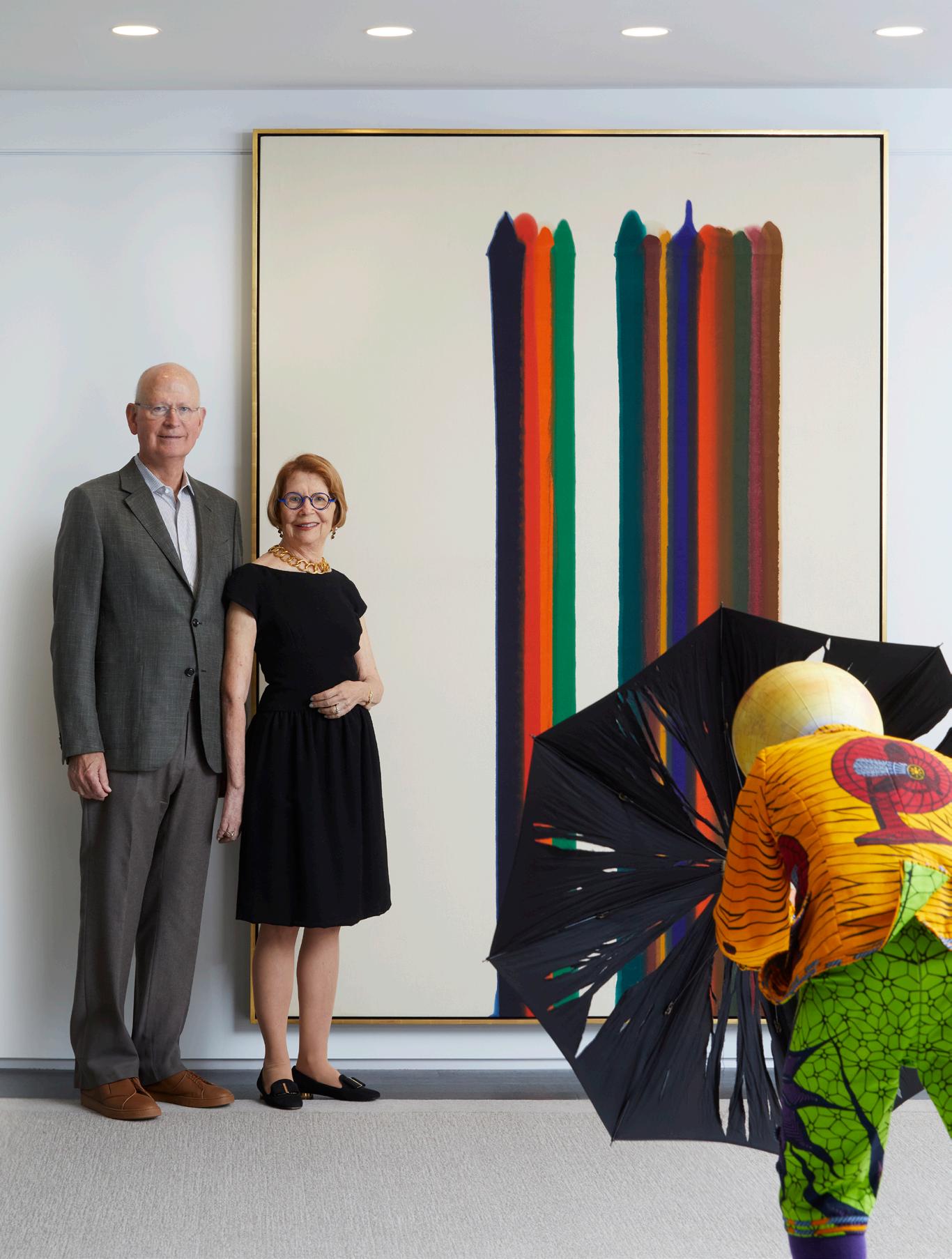
Wearing Victorian garb made of West African batik, Air Kid (Boy), represents air among the four elements. The sculpture connects the Victorian era’s high point of colonial domination to the current exploitation of Earth’s natural resources. Shonibare explores race, colonialism, and cultural identity through his installations and vibrant batik-inspired textiles, challenging Western narratives while incorporating his heritage and personal experiences.
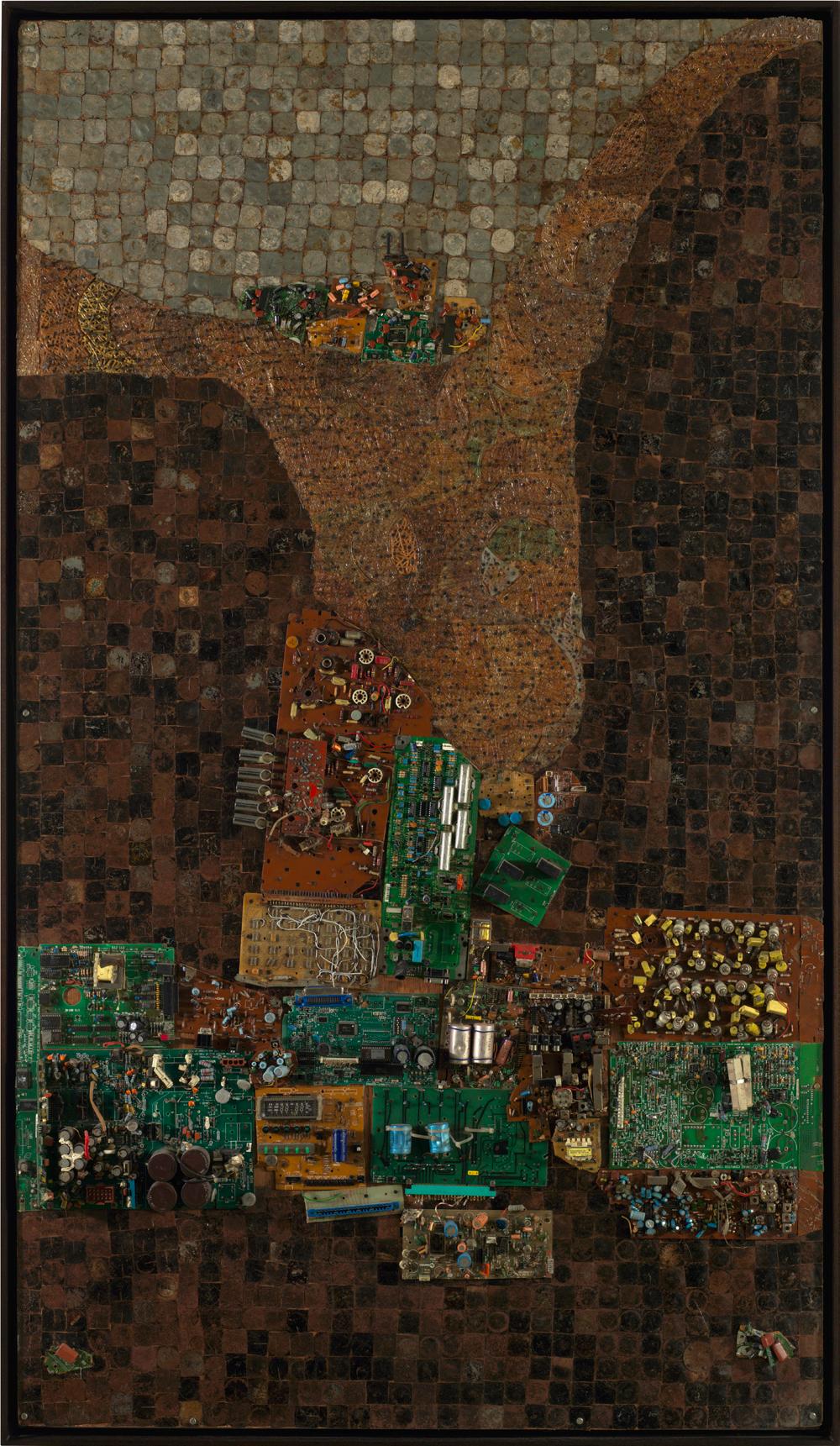
Elias Sime
Ethiopian, b. 1968
FORTHCOMING 6, 2009-10
Flattened bottle caps, motherboards, nails, reclaimed plastic elements on panel
Elias Sime’s collage of found materials comments on the global exchanges of values across economic, technological, and cultural systems. Using salvaged objects from the Western world, he transforms them into art inspired by the textures of traditional Ethiopian weaving and needlework. A prominent visual artist and sculptor since the 1990s, Sime uses industrial materials and electronic waste from Addis Ababa’s Mercato in his works and co-founded the Zoma Museum with creative partner Meskerem Assegued.
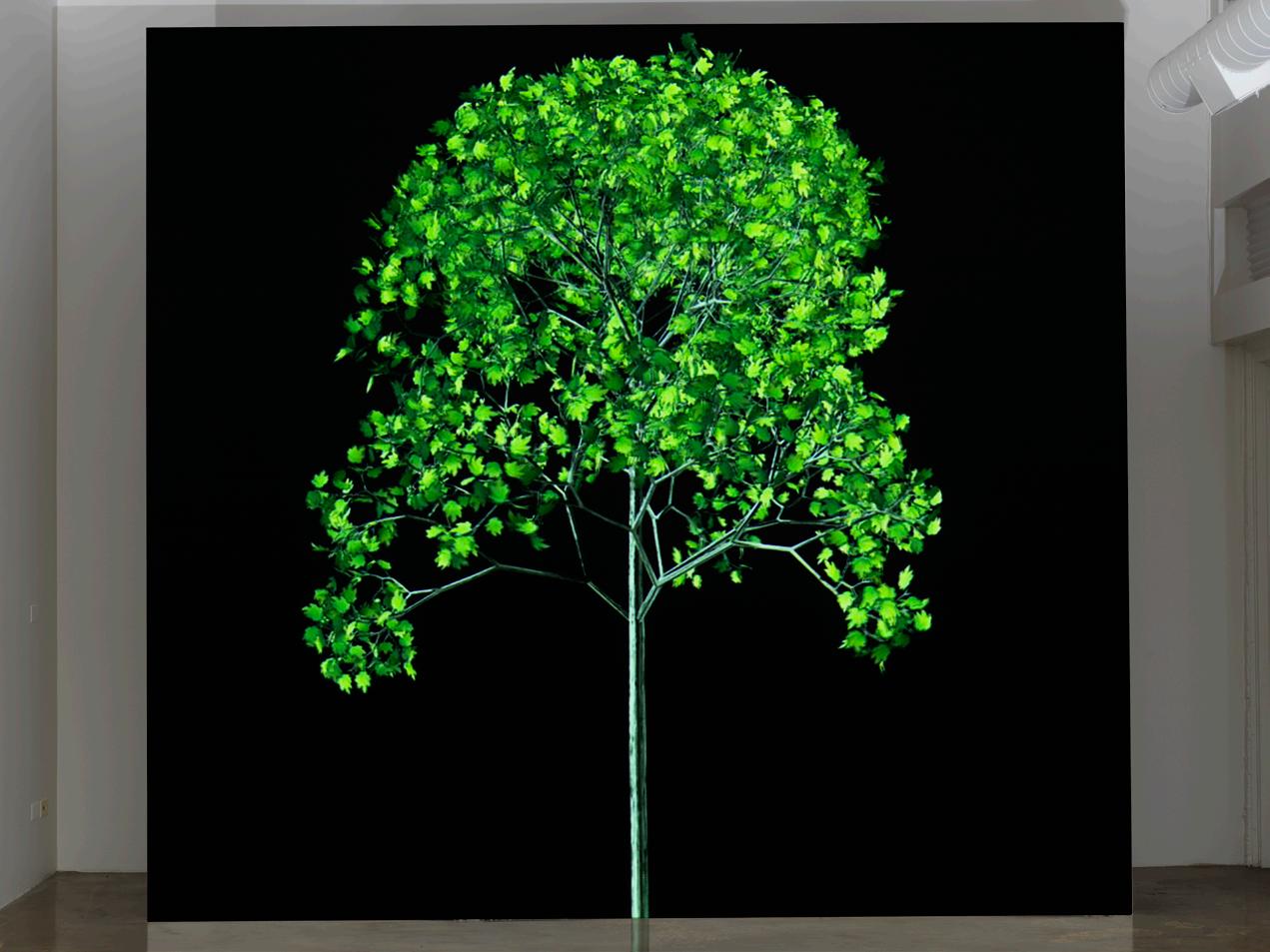
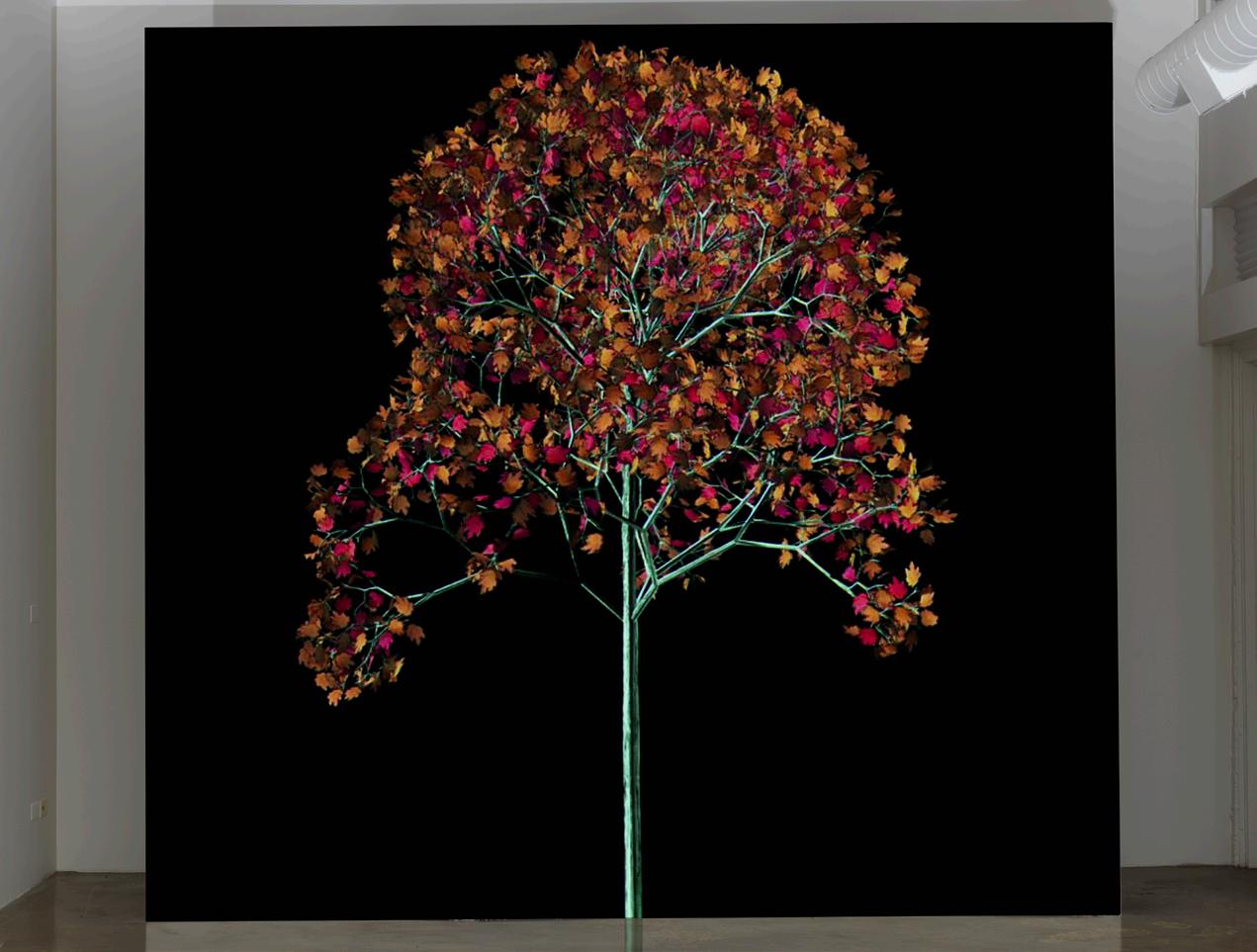
Jennifer Steinkamp
American, b. 1958
Mike Kelley 10, 2007
Generative custom software animation,
computer, projector
Infinite
Jennifer Steinkamp’s animated digital tree series honors the artist Mike Kelley, one of her mentors at the Art Center of Design in California. The projected virtual tree twists and changes, cycling through the four seasons. Steinkamp is an iconic artist of the digital art revolution, best known for her computer-generated video installations and projections that combine botany, technology, and art to provoke discussions around our planet’s ecological future.
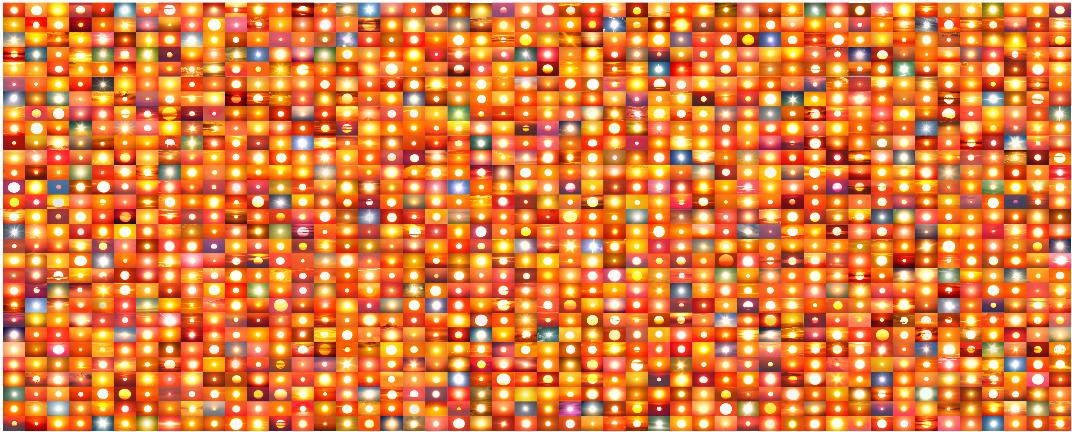
Penelope Umbrico American, b. 1957
48,586054 Suns from Sunsets from Flickr (Partial) 11/05/20, 2020
1,440 chromogenic prints on paper
Penelope Umbrico’s project Suns from Sunsets from Flickr began in 2006 when she searched Flickr for sunset images, isolating the sun from thousands of photos. Each iteration’s title reflects the search results, highlighting the limitations of displaying the total number of sourced images and the fleeting nature of the record. In her work, Umbrico collects found images from the internet to portray digital society in a global, collective spirit.
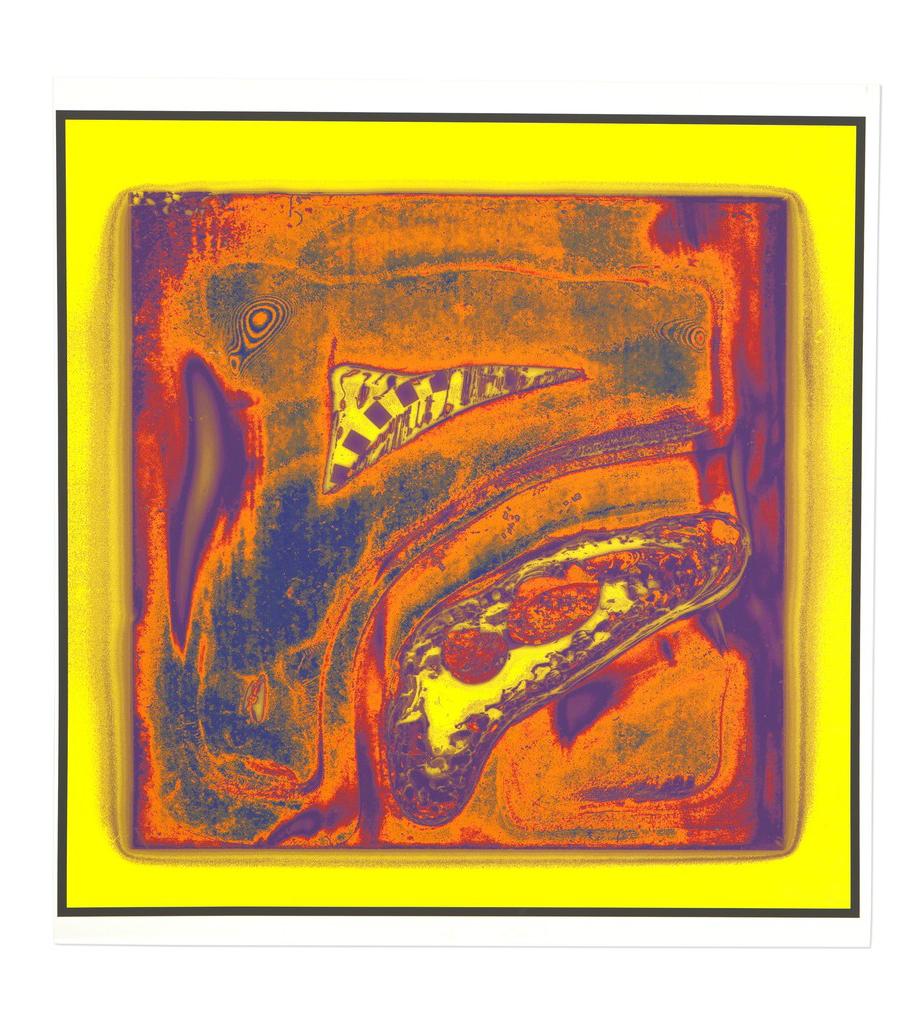
Woody Vasulka Czechoslovakian,
1937-2019
Glass—Lucifer's Commission, 1977-2003
Iris print
Pioneering electronic artist Woody Vasulka found a discarded circuit board near Los Alamos’ weapons lab and buried it in his yard, allowing nature to alter its surface. The scanned and printed board became a largescale abstract composition, serving as a commentary on the endurance of creativity and life during times of anxiety, war, and destruction. Woody and his wife Steina were early video art pioneers and founded The Kitchen, an influential non-profit art space in New York that fostered an inclusive environment for music and media artists.
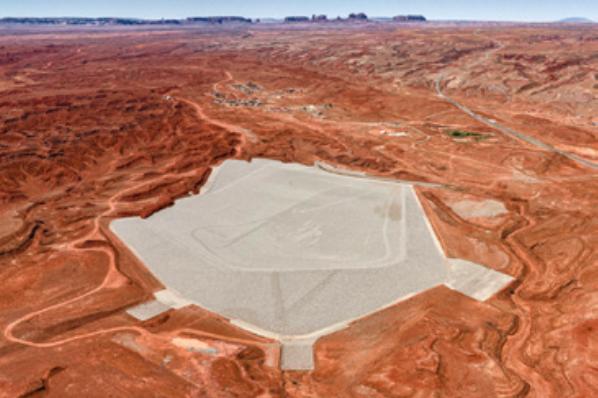
Will
Wilson
Diné, b. 1970
Mexican Hat Uranium Disposal Cell, Utah, Land Use Database, The Center for Land Use
Interpretation, Accessed November 5, 2019
Archival pigment print
Will Wilson’s series Connecting the Dots documents abandoned uranium mines on the Navajo Nation in Arizona, New Mexico, and Utah. The series confronts viewers with the reality of a toxic legacy: the damage and lasting impact of American colonization and exploitation. Wilson uses a large-format camera and the wet collodion process to showcase Indigenous identities and challenge colonial narratives. His work incorporates Navajo mythology, depicting the toxic, post-apocalyptic environments Indigenous communities inhabit while envisioning a future of rebirth and rehabilitation.
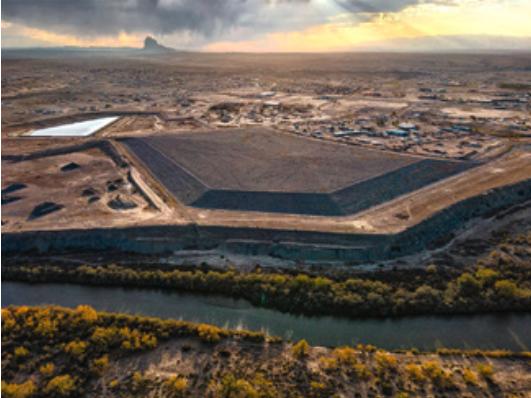
Will Wilson Diné, b. 1970
Shiprock Disposal Site, Shiprock, Navajo Nation, 36. 769690596277414 N / -108.
68547605691704 W, 2020
Archival pigment print
Will Wilson’s series Connecting the Dots documents abandoned uranium mines on the Navajo Nation in Arizona, New Mexico, and Utah. The series confronts viewers with the reality of a toxic legacy: the damage and lasting impact of American colonization and exploitation. Wilson uses a large-format camera and the wet collodion process to showcase Indigenous identities and challenge colonial narratives. His work incorporates Navajo mythology, depicting the toxic, post-apocalyptic environments Indigenous communities inhabit while envisioning a future of rebirth and rehabilitation.
Marina Zurkow and James Schmitz
American, b. 1962 and 1975
The River is a Circle, 2025
Custom software-driven hand-drawn animation
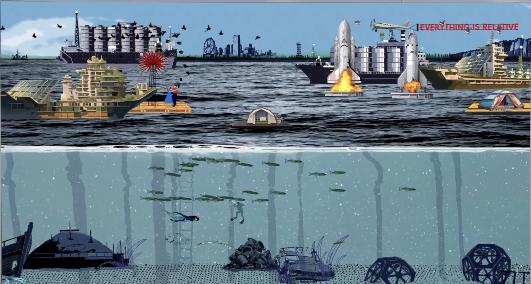
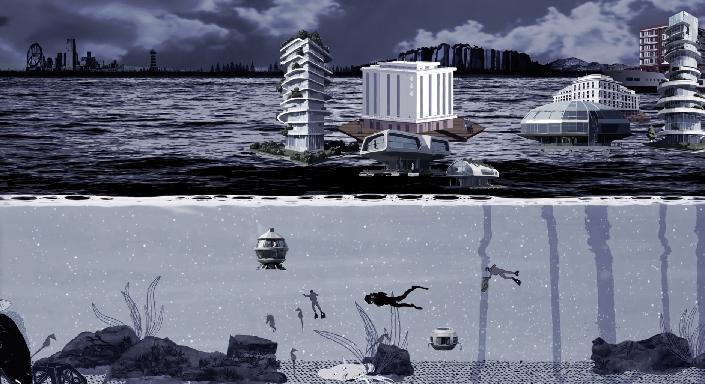
The River is a Circle is a software-driven animation that presents a view of the Hudson River as a horizontal split between the world above and below the water. The dynamic composition of the animated elements is driven by algorithmic probability and reflects the current weather and season in New York. The work brings together a mix of river ecology, researched with the help of Hudson River Park Trust, and references to the history of the Meatpacking District, including its time as a trading post for the Lenape people, a hub for meat processing plants, a haven for queer night life, and a site for the sculptural works by Gordon Matta-Clark and David Hammons across from the Whitney.
About the Thoma Foundation
Based in Dallas, Texas, the Carl & Marilynn Thoma Foundation collection includes over 2,000 works and spans four broad fields: Art of the Spanish Americas, Digital & Media Art, Japanese Bamboo, and Post-War Painting & Sculpture. In addition to exhibiting our collection at our two spaces in Dallas and Santa Fe, the Foundation has loaned over 2,200 artworks to more than 250 exhibitions worldwide. We make a concerted effort to share our collection with the public, conserve the works in it, and provide documentation and research that puts each piece into a more widely understood context. We award individual grants and fellowships to support original scholarship across our collection areas, supporting research, symposia, and equity in the arts. Our grants for nonprofit organizations help fund innovative exhibitions, academic programs, and collection-related publications.
In 2024, the Foundation launched the Thoma Scholars Program to help broaden access to higher education for promising rural students in the rural American Southwest. Working with our university partners, the Thoma Scholars Program is a comprehensive scholarship that helps talented students graduate with as close to zero debt as possible. Beyond financial support, the Thoma Scholars Program gives high-achieving students a path to promising futures through mentorship, educational support, and leadership training.
540 S. Guadalupe St., Santa Fe, New Mexico, 87501
Tuesday-Saturday 10am-5pm. Free & open to the public.
thomacollection.org / @thoma_foundation
Cover: David Benjamin Sherry, White Sands National Park, New Mexico , 2021. Chromogenic print. Image courtesy of the artist and Morán Morán Gallery.