(Ebook) Cambridge IGCSE and O Level History Workbook 2C - Depth Study: the United States, 1919-41 2nd Edition by Benjamin Harrison ISBN 9781398375147, 9781398375048, 1398375144, 1398375047
(Ebook) Environment and Society : Climate Change and Sustainable Development by Subhash Sharma, Kshipra Sharma ISBN 9781032372808, 9781032342061, 9781003336211, 103237280X, 1032342064, 1003336213
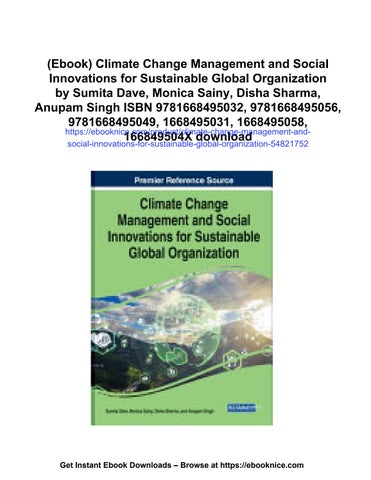
Title: Climate change management and social innovations for sustainable global organization / edited by Sumita Dave, Monica Sainy, Disha Sharma, Anupam Singh.
Description: Hershey, PA : Engineering Science Reference, [2023] | Includes bibliographical references and index. | Summary: “This book is envisioned as a manuscript that presents chapters, and case studies exploring the nature and impact of climate change on business”-Provided by publisher.
Identifiers: LCCN 2023041811 (print) | LCCN 2023041812 (ebook) | ISBN 9781668495032 (hardcover) | ISBN 9781668495049 (paperback) | ISBN 9781668495056 (ebook)
LC record available at https://lccn.loc.gov/2023041811
LC ebook record available at https://lccn.loc.gov/2023041812
This book is published in the IGI Global book series Advances in Logistics, Operations, and Management Science (ALOMS) (ISSN: 2327-350X; eISSN: 2327-3518)
British Cataloguing in Publication Data
A Cataloguing in Publication record for this book is available from the British Library.
All work contributed to this book is new, previously-unpublished material. The views expressed in this book are those of the authors, but not necessarily of the publisher.
For electronic access to this publication, please contact: eresources@igi-global.com.
Advances in Logistics, Operations, and Management Science (ALOMS) Book Series
John Wang Montclair State University, USA
ISSN:2327-350X
EISSN:2327-3518
Mission
Operations research and management science continue to influence business processes, administration, and management information systems, particularly in covering the application methods for decisionmaking processes. New case studies and applications on management science, operations management, social sciences, and other behavioral sciences have been incorporated into business and organizations real-world objectives.
The Advances in Logistics, Operations, and Management Science (ALOMS) Book Series provides a collection of reference publications on the current trends, applications, theories, and practices in the management science field. Providing relevant and current research, this series and its individual publications would be useful for academics, researchers, scholars, and practitioners interested in improving decision making models and business functions.
Coverage
• Marketing engineering
• Operations Management
• Production Management
• Information Management
• Computing and information technologies
• Decision analysis and decision support
• Networks
• Organizational Behavior
• Risk management
• Services management
IGI Global is currently accepting manuscripts for publication within this series. To submit a proposal for a volume in this series, please contact our Acquisition Editors at Acquisitions@igi-global.com or visit: http://www.igi-global.com/publish/.
For a list of additional titles in this series, please visit: www.igi-global.com/book-series
Black Women’s Formal and Informal Ways of Leadership Actualizing the Vision of a More Equitable Workplace
Audrey D. Bowser (Arkansas State University, USA) Kimberley M. Davis (University of Arkansas at Pine Bluff, USA) and Natalie A. Johnson-Leslie (Arkansas State University, USA)
Information Science Reference • copyright 2023 • 340pp • H/C (ISBN: 9781668438275) • US $215.00 (our price)
Multidisciplinary Approaches to Organizational Governance During Health Crises
Carla Sofia Vicente Negrão (CeBER, University of Coimbra, Portugal) Isabel Guerreiro Pimentel Maia (Centre for Business and Economics Research, University of Coimbra, Portugal) and João António Furtado Brito (University of Cape Verde, Cape Verde)
Business Science Reference • copyright 2023 • 300pp • H/C (ISBN: 9781799892137) • US $250.00 (our price)
New Perspectives and Possibilities in Strategic Management in the 21st Century Between Tradition and Modernity
Javier Martínez-Falcó (University of Alicante, Spain & Stellenbosch University, South Africa) Bartolomé MarcoLajara (University of Alicante, Spain) Eduardo Sánchez-García (University of Alicante, Spain) and Luis A. MillanTudela (University of Alicante, Spain)
Business Science Reference • copyright 2023 • 514pp • H/C (ISBN: 9781668492611) • US $315.00 (our price)
Government Impact on Sustainable and Responsible Supply Chain Management
Atour Taghipour (Normandy University, France)
Information Science Reference • copyright 2023 • 354pp • H/C (ISBN: 9781668490624) • US $240.00 (our price)
Transport and Logistics Planning and Optimization
Jaouad Boukachour (University of Le Havre, France) and Abdelhamid Benaini (University of Le Havre, France)
Business Science Reference • copyright 2023 • 317pp • H/C (ISBN: 9781668484746) • US $250.00 (our price)
Considerations and Characteristics of the Millennial Leader in Today’s Global Society
Tymon M. Graham (TMGraham Consulting, LLC, USA)
Business Science Reference • copyright 2023 • 300pp • H/C (ISBN: 9781668447116) • US $240.00 (our price)
The Economics of Talent Management and Human Capital
Sharif Uddin Ahmed Rana (Paris Graduate School and World Talent Economy Forum, Malaysia) and Adrian David Cheok (Imagineering Institute, Malaysia)
Business Science Reference • copyright 2023 • 300pp • H/C (ISBN: 9781668466414) • US $235.00 (our price)
Entrepreneurship Ecosystems and Their Opportunities and Challenges
Understanding the Role of Green HRM as a Contributor Towards Sustainable Global Organization 1
Anushka Lydia Issac, Westford University College, UAE
Chapter 2
How Do Equity Market Performance and ICT Influence Clean Energy Consumption in HighIncome Countries? ................................................................................................................................ 15
Pınar Avci, Tekirdağ Namık Kemal University, Turkey
Chapter 3
Does Economic Growth Increase CO2 Emissions in BRICS Countries? Question on Sustainability 33
Esha Sunil Bharadwaj, Jain University (Deemed), India
Pratik Mukherjee, Jain University (Deemed), India
Suvam Sivam, Jain University (Deemed), India
Ashish Kumar, Jain University (Deemed), India
Susobhan Maiti, Jain University (Deemed), India
Chapter 4
Empirical Evidence on the Relation Between Progress on Sustainable Development Goals and Adaptation of Islamic Finance 47
Dogus Emin, Social Sciences University of Ankara, Turkey
Aysegul Aytac Emin, Social Sciences University of Ankara, Turkey
Chapter 5
The Effects of Climate Change on Human Health and the Healthcare Sector ..................................... 64
Ranjit Barua, Omdayal Group of Institutions, India
Sumit Bhowmik, Omdayal Group of Institutions, India
Debasish Banerjee, Omdayal Group of Institution, India
Sudipto Datta, Indian Institute of Science, Bangalore, India
Chapter 6
Green Marketing: Sustainable Strategies for Success
Shriya Tripathi, Ganpat University, India
Disha Sharma, Amity University, Raipur, India
Chapter 7
76
Development of Quaternary Concrete 93
Sagar Dhengare, Yeshwantrao Chavan College of Engineering, Nagpur, India
R. L. Sharma, Lovely Professional University, India
Chapter 8
The Anthropology and Anthropocene Urban Socio-Ecology Resilience Approach to Resilience
Planning and Green Innovations 105
José G. Vargas-Hernandez, Tecnológico Superior oe Jalisco Mario Molina, Zapopan, Mexico
Carlos A. Rodriguez-Maillard, Universidad Cristòbal Colòn, Mexico
Omar C. Vargas-González, Tecnológico Nacional de México, Ciudad Guzmán, Mexico
Chapter 9
Green Technology: Exploring Its Impact on Indian Society 127
Ankit Mishra, Amity University, Raipur, India
Chapter 10
Green Knowledge in Green Roofs and Organizational Green Innovation .......................................... 134
José G. Vargas-Hernandez, Tecnológico Superior de Jalisco Mario Molina Pasquel y Henríquez, Unidad Académica Zapopan, Mexico
Carlos A. Rodriguez-Maillard, Universidad Cristobal Colón, Mexico
Chapter 11
Green Marketing Among Z-Generation (Z-Gen.) 157
Abhinav Agrawal, Agrasen Mahavidyalaya, India
Minal Shah, Bhilai Institute of Technology, India
Dharmendra Kumar Gangeshwer, Bhilai Institute of Technology, India
Chapter 12
Gross National Happiness: Bhutan’s Model for Sustainable Development – Its Relevancy in Current Times 175
Bhuwan Shrivastava, Royal Thimphu College, Bhutan & Amity University, Raipur, India
Sumita Dave, Amity Business School, Amity University, India
Chapter 13
Green Cement: A Step Towards Sustainable Development ................................................................ 195
Sushma Singh, Bhilai Institute of Technology, Durg, India
Urvashi Shrivastava, Bhilai Institute of Technology, Durg, India
Chapter 14
Characterising a Green Supply Chain Using Multi-Dimensional Construct: Evidence From an Emerging Economy.............................................................................................................................
Chetan V. Hiremath, Kirloskar Institute of Management, India
Chandan Chavadi, Presidency Business School, India
Sudhansu Sekhar Nanda, Kirloskar Institute of Management, India
Shankargouda C. Patil, Rani Channamma University, India
Chapter 15
Impact of Digital Culture Integration on Performance of Infosys Ltd. A Pre- and Post-Merger Analysis
Abhay Kant, Agra Public Group of Institutions, India
Renu Bharti, Dayalbagh Educational Instiution, India
Shobhit Sagar, Mewar Institute of Management, Ghaziabad, India
Chapter 16
The Mediating Role of Job Satisfaction Between Work-Life Balance and Employee Retention
Understanding the Role of Green HRM as a Contributor Towards Sustainable Global Organization 1 Anushka Lydia Issac, Westford University College, UAE
This chapter examines the role of green human resource management (HRM) in promoting sustainable global organisations. The chapter adopts a case study methodology to explore how organizations like McDonald’s, Interface, Unilever, Patagonia, Toyota, and the Co-Operative Group have successfully integrated green HRM practices into their operations. The chapter also identifies critical issues surrounding green HRM, such as the lack of standardisation, the need for employee buy-in, and the potential for green-washing. To address these issues, the chapter proposes solutions such as developing industrywide standards, creating a culture of environmental responsibility, and adopting transparent reporting practices. It is hoped that this chapter will contribute to a deeper understanding of the role of green HRM in promoting sustainable practices in organisations. Overall, this chapter aims to contribute to the ongoing discourse on sustainability and the role of HRM in promoting sustainable practices in organisations.
Chapter 2
How Do Equity Market Performance and ICT Influence Clean Energy Consumption in HighIncome Countries? ................................................................................................................................ 15
Pınar Avci, Tekirdağ Namık Kemal University, Turkey
The aim of this study is to examine whether equity market development and ICT affect clean energy consumption in 18 high-income countries during the period 1990-2015. In the analysis, firstly, the stationarity properties of the variables are tested with the CADF and CIPS tests. In the second stage, cointegration between the variables in the model is investigated by Westerlund, Kao, and Pedroni methods. In the next step, the long-run elasticities of the variables are estimated using the PCSE and FGLS methods. The causality between the variables is also determined by applying the DumitrescuHurlin panel causality method. According to findings, cointegration between clean energy consumption and equity market development, ICT, economic growth, and CO2 emissions variables, which integrated at I(1) level, is proven. The long-term findings showed that the equity market, ICT, and economic growth encourage clean energy consumption of 18 high-income countries, and CO2 emissions also prevent them. In addition, there is bidirectional causality between clean energy consumption and other variables.
Chapter 3
Does Economic Growth Increase CO2 Emissions in BRICS Countries? Question on Sustainability 33
Esha Sunil Bharadwaj, Jain University (Deemed), India
Pratik Mukherjee, Jain University (Deemed), India
Suvam Sivam, Jain University (Deemed), India
Ashish Kumar, Jain University (Deemed), India
Susobhan Maiti, Jain University (Deemed), India
Sustainability is an increasingly important issue in the modern world and an essential concept that is increasingly gaining importance in today’s world. It refers to the responsible use of natural resources while ensuring that future generations can meet their needs. The impact of human activities on the environment is becoming more apparent, with climate change and biodiversity loss being some of the major challenges that we face today. Considering the foregoing discussion, the present study comprises two main objectives: firstly, to find out the relationship between economic growth, which is measured by the growth of GDP per capita and CO2 emissions per capita in the BRICS nations, and to find out unidirectional or bidirectional causality between carbon emissions and proxies of economic growth based on the data collected from the world development indicator for the period 1990 to 2022. The results suggest that a bi-directionally causality exists between carbon emissions per capita and economic growth per capita in the BRICS countries.
Chapter
4
Empirical Evidence on the Relation Between Progress on Sustainable Development Goals and Adaptation of Islamic Finance ..............................................................................................................
Dogus Emin, Social Sciences University of Ankara, Turkey
Aysegul Aytac Emin, Social Sciences University of Ankara, Turkey
In this study, the authors aim to investigate the dynamic correlation and lead/lag relation between the progress of the countries on the Sustainable Development Goals (SDGs) and adaptation of Islamic finance. As the proxy of progress level on SDGs, SDG Index of the Bertelsmann Stiftung and the Sustainable Development Solutions Network (SDSN) are used. To be able to determine the adaptation level of Islamic finance, Islamic Finance Adaptation (IFA) Index is introduced. The data set is formed with top eight countries according to Islamic finance assets and top eight countries according to the SDG Index for the period of 2012 and 2021. To assess the relation between progress level on Sustainable Development Goals (SDG Index) and Islamic finance adaptation level (IFA Index), the Dynamic Conditional Correlation Model (DCC Model) of Engle and Sheppard and Geweke Feedback Measure of Geweke are used.
Chapter 5
The Effects of Climate Change on Human Health and the Healthcare Sector
Ranjit Barua, Omdayal Group of Institutions, India
Sumit Bhowmik, Omdayal Group of Institutions, India
Debasish Banerjee, Omdayal Group of Institution, India
Sudipto Datta, Indian Institute of Science, Bangalore, India
64
Just a few of the ways that climate change has influenced human lives and health over the past several decades include changes in extreme weather and climatic events, changes in the labor force, changes in food security, and changes in the prevalence and geographic distribution of infectious diseases. Indicators for climate change and health were developed as useful tools to track the complex network of interdependent relationships that connect climate change and human health. While the weather has an impact on the timing and severity of outbreaks, climate primarily influences the range of infectious diseases. This chapter aims to offer an outline of the impacts of climate change on human health in analysis, research potential, and applications in the healthcare sector.
Chapter 6
Green Marketing: Sustainable Strategies for Success
Shriya Tripathi, Ganpat University, India
Disha Sharma, Amity University, Raipur, India
76
Consumers in the 21st century are more informed and discerning than ever about the products they buy. This is positively obvious with regards to assessing the ecological effect and manageable acts of the brands they support. That is why many of the world’s most significant and effective organizations are seeking green marketing drives. Green marketing has become an essential business strategy as consumers’ awareness of environmental issues has grown. Purchasers are progressively worried about the natural effect of their utilization decisions, and they are bound to purchase items or administrations that line up with their ecological qualities. Businesses can draw in these environmentally conscious customers, set themselves apart from their rivals, and enhance their brand image by employing green marketing strategies.
Chapter 7
Development of Quaternary Concrete
Sagar Dhengare, Yeshwantrao Chavan College of Engineering, Nagpur, India
R. L. Sharma, Lovely Professional University, India
93
The amount of unregulated trash produced by industry, particularly in developing countries, has resulted in an increase in environmental challenges. The cultivation of this type of quaternary concrete material is both a sustainable and cost-effective solution to pollution. From the standpoint of producing quaternary cement concrete products from waste materials, the chapter provides a quick overview of which materials are suitable for use in construction as cement replacements. A number of writers and academics conduct a variety of physic-mechanical tests. Various approaches are employed in various studies. As a result, resource-efficient cements with appropriate qualities can be produced to strike the necessary balance between the industry’s objective for high-performance concrete and increasingly stringent environmental laws. On the other side, the increase in construction activity in the country caused a scarcity of most supplies used in making concrete, and consequently, cement costs will rise as a result.
Chapter 8
The Anthropology and Anthropocene Urban Socio-Ecology Resilience Approach to Resilience Planning and Green Innovations .........................................................................................................
105
José G. Vargas-Hernandez, Tecnológico Superior oe Jalisco Mario Molina, Zapopan, Mexico
Carlos A. Rodriguez-Maillard, Universidad Cristòbal Colòn, Mexico
Omar C. Vargas-González, Tecnológico Nacional de México, Ciudad Guzmán, Mexico
This study aims to analyze some of the existing implications between urban anthropology and Anthropocene urban socio-ecology planning resilience. Beginning from the assumption that urban anthropology gives support to create and develop any urban planning based on the Anthropocene urban socio-ecology resilience, the methods employed are the analytical-descriptive based on an ethnographic interpretation and reflection of the theoretical and empirical literature review. The analysis concludes that urban anthropology fundamentals give support to strengthen the Anthropocene orientation of the urban socioecological planning resilience.
Chapter 9
Green Technology: Exploring Its Impact on Indian Society
Ankit Mishra, Amity University, Raipur, India
127
In the domain of language, the term “green tech” encompasses a wide range, referring to innovative creations meticulously designed with environmental considerations woven into every stage, from inception to utilization. The swift depletion of Earth’s natural resources, surpassing their regeneration, has spurred an unrelenting quest to refine such technology, making it more harmonious with our delicate ecology. The urgency to lessen reliance on finite resources, notably fossil fuels, aligns with the need to heal ecological wounds. These imperatives define green technology’s core mission. Sectors like waste management, energy, and transportation ardently embrace this mission. Despite its benefits, green technology faces substantial hurdles before becoming mainstream. Over time, significant employment growth is observed in green tech, underscoring its growing relevance in our contemporary era.
Chapter 10
Green Knowledge in Green Roofs and Organizational Green Innovation
José G. Vargas-Hernandez, Tecnológico Superior de Jalisco Mario Molina Pasquel y Henríquez, Unidad Académica Zapopan, Mexico
Carlos A. Rodriguez-Maillard, Universidad Cristobal Colón, Mexico
134
This study aims to analyze the implications of green knowledge and technology in organizational green innovation, urban green innovation, and green roofs. Green roofs can be an effective tool for cities to improve the thermal environment, save energy, and combat climate change, and are an appropriate method of saving energy. The analysis is supported by the assumption that green technology is basic to organizational green innovation and urban green innovation areas practices, operations, and activities. Making the balance between urban developments and environmental issues, in consideration to sustainable development principle and its innovative green solutions, the methods employed are based on the analyticalreflective and descriptive supported with the review of theoretical and empirical literature. The analysis concludes that green knowledge sharing is relevant to create and develop the green technology with positive implications for organizational green innovation, urban green innovation areas, and green roofs.
Chapter 11
Green Marketing Among Z-Generation (Z-Gen.)
Abhinav Agrawal, Agrasen Mahavidyalaya, India
Minal Shah, Bhilai Institute of Technology, India
Dharmendra Kumar Gangeshwer, Bhilai Institute of Technology, India
157
Environmental problems have become prime global challenges, and in developing countries like India, there is a need for high attention to curb these problems. These problems bring unsustainable economic and environmental development, and global sustainable growth has been a major concern of G-20 countries. For this purpose, in every economy, the business organizations, producers, and consumers can play their roles to protect the environment through their business and buying activities. Manufactures and businesses can play vital roles through production of green product and green marketing activities, and buyers can play their role through demanding such product as these products are proven to be good for the environment as well as for the health for consumers and also attract maximum profit for the business organizations. Marketers can target young consumers aged between 11-26 called “Z-Generation” consumers because they are kind of consumers who are more aware of the environmental issues and express their will to protect mother nature.
Chapter 12
Gross National Happiness: Bhutan’s Model for Sustainable Development – Its Relevancy in Current Times
Bhuwan Shrivastava, Royal Thimphu College, Bhutan & Amity University, Raipur, India
Sumita Dave, Amity Business School, Amity University, India
175
Bhutan, known to the outside world as the land of happiness, has attracted attention due to its unique way of transforming the lives of its citizen through its approach towards Gross National Happiness and Sustainable Development Goals. This chapter explores Bhutan’s way to treat the concept of Gross National Happiness. This chapter provides an overview of GNH philosophy by examining its different pillars. This chapter also takes into consideration the criticism and shortcoming which GNH has over the most common indicator of growth, the GDP. Furthermore, the chapter also explores the development of concept of GNH and its presence and relevancy in current times. It tries to understand the attainment of Sustainable Development Goals via GNH thereby understanding further Bhutan’s model of SDG attainment and how it acts as a model for other nations aspiring for Sustainable Development Goals. Overall, this chapter is an attempt to understand, explore, and present Bhutan’s way to reach the target of SDG.
Chapter 13
Green Cement: A Step Towards Sustainable Development ................................................................ 195
Sushma Singh, Bhilai Institute of Technology, Durg, India
Urvashi Shrivastava, Bhilai Institute of Technology, Durg, India
With the focus on sustainable development of the global arena in terms of construction and infrastructure, it is necessary to evaluate the impact of one of the ingredient “cements” on the environment. Therefore, this chapter investigates the literature available in the manufacturing process of cements, alternatives to it, and in particular, the emergence of “green cement,” which assumes to be environmentally friendly. The action taken by the cement companies is clean and green, with profitability and sustainability as the prime focus by lesser CO2 emission. By innovating new technologies and adopting modernizations,
the companies are focusing on developing such concrete, which is an environmentally friendly and economically sustainable. The future of green cement holds the promise of reduced carbon, enhanced durability, and improved performance. As environmental regulations become more stringent, the demand for green cement is expected to rise significantly. This presents a significant opportunity for the construction industry to embrace greener practices and contribute to a more sustainable environment.
Chapter 14
Characterising a Green Supply Chain Using Multi-Dimensional Construct: Evidence From an Emerging Economy............................................................................................................................. 212
Chetan V. Hiremath, Kirloskar Institute of Management, India
Chandan Chavadi, Presidency Business School, India
Sudhansu Sekhar Nanda, Kirloskar Institute of Management, India
Shankargouda C. Patil, Rani Channamma University, India
The study proposed a construct for a green supply chain, which aims to analyze the different elements that contribute to a network being considered “green.” The study found that there are many types of research done on green products, but very few on green corporations and supply chains. Also, there is a lack of consensus in definitions and previous studies have not examined the inter-relations among the variables that contribute to a supply chain being considered green. The review of the literature reveals the range of factors, from the procurement of raw materials to end customer perceptions which make the supply chain green. In a simple random sampling, 125 responses were collected from Karnataka to explore the interrelations between the factors. The analysis evaluates whether the underlying structure of a green supply chain is uni-dimensional or multi-dimensional. Whether the factors have a hierarchical relationship and are factors independent or correlated, the analysis found that there are four correlated factors without any higher order.
Chapter 15
Impact of Digital Culture Integration on Performance of Infosys Ltd. A Pre- and Post-Merger Analysis
Abhay Kant, Agra Public Group of Institutions, India
Renu Bharti, Dayalbagh Educational Instiution, India
Shobhit Sagar, Mewar Institute of Management, Ghaziabad, India
232
The customer is an important resource for achieving the digitalisation capabilities. Organisations mainly emphasise the customer taste and preference because the customer is the king of the market as well as a help in assessing the internal as well as external process that can simplify the various points that are useful to make a balance between customers and life cycle of products and services. The main aim of the chapter is to know the digital culture transformation and its impact on financial performance of Infosys. The present study utilizes secondary data sources. The secondary data sources primarily consist of published studies in various international and national journals, magazines, and conference proceedings. The statistical tools such as the ratio analysis and sample test were used to test impact of digital culture transformation. The study found that electronic payment growth (EPG) did not significantly impact four important financial metrics, namely net interest margin (NIM), current ratio, advance growth, and capital adequacy ratio (CAR).
Chapter 16
The Mediating Role of Job Satisfaction Between Work-Life Balance and Employee Retention 241
Soni
Rathi, Chandigarh University, India
Praveen Kumar, Chandigarh University, India
Work-life balance is a well-researched area, and it does not only escalate the effectiveness and retention of employees, but also reforms satisfaction in both the professional as well as personal lives. The current study highlights the impact of WLB on employee retention and JS and the influence of job satisfaction on employee retention. It further explores the sub-factors of work-life balance and job satisfaction of distinct sectors. The chapter deals with surveying the past literature reviews on work-life balance, job satisfaction, and employee retention and discovering the association among them in various sectors of industries in India and other nations. It is found via this study that work-life balance has an influence on the employee retention and it also influences job satisfaction of employees. Further, there is a relationship also depicted between job satisfaction and retention of employees at the workplace. The limitations and future directions are also discussed.
Foreword
There is a pressing need for the creation and application of original and creative strategies because of a global society dealing with the more complicated difficulties brought on by climate change. The inadequacy of traditional approaches and tactics is becoming clearer as the effects of human activity on the environment grow more pronounced. To create successful global organizations, it is essential to incorporate fresh perspectives and innovative methodologies. This important book, Climate Change Management and Social Innovations for Sustainable Global Organization, is something I’m proud to present on behalf of the Amity Universe.
This book takes readers on a transformative journey that aims to close the gap between business leadership and climate responsibility. The investigation digs into the areas of technological advancement and corporate practices, ultimately inspiring substantial reforms that may help to create a more promising and sustainable future. The complexity of climate change necessitates the adoption of group initiatives involving not only governmental bodies but also international businesses and NGOs. It is crucial to recognize that to successfully navigate the upcoming difficulties, a fundamental change in our cognitive framework and operational procedures is required. Social innovations are essential for bringing about systemic change and fostering productive teamwork.
In the current work, the authors’ perspectives on managing climate change are covered throughout the course of 18 chapters. They participate in a lively study of the potential for social innovations to serve as powerful tools for advancing sustainability through a thorough investigation. The writers have offered insightful and useful suggestions and tactics for transforming multinational corporations into role models of good stewardship.
The fundamental elements of climate change are thoroughly examined in this literary work, along with its effects on the environment, the economy, and society. However, this project’s scope goes beyond merely increasing awareness. Instead, it provides readers with innovative and useful tactics that encourage flexibility, reduce carbon emissions, and start positive changes both locally and globally. The subsequent chapters explain how organizations of any size or industry can adopt sustainability as a fundamental principle and incorporate it into their essential structure. The writers deftly negotiate the complex terrain of sustainability issues while providing readers with a thorough manual for building a wealthy and inclusive future. There is an increasing need for leaders who are prepared to adopt progressive ideologies and implement revolutionary solutions as the visible effects of climate change worsen.
The search for sustainability is a group effort. The active involvement and steadfast dedication of all parties concerned, from the highest levels of decision-making to the grassroots level of the community, are essential to the successful completion of this project. It is sincerely encouraged to actively join in the group effort to generate positive development as one begins the journey through the contents of this
Foreword
literary work. Utilizing social innovations gives us the chance to jointly tap into their potential to further the growth of sustainable international organizations and leave a legacy that future generations will value highly. Let’s work together to create a global society that thrives in the face of climate change, one that appreciates and protects our Earth and its many inhabitants, and to fulfil the demands of the current situation. ‘Climate Change Management and Social Innovations for Sustainable Global Organizations’ is a promising initiative in our shared search for a better future, and I’m happy to promote it.
Piyush Kant Pandey
Amity University, Raipur, India
Preface
Welcome to Climate Change Management and Social Innovations for Sustainable Global Organization. In the face of an ever-evolving world, where the impacts of climate change are becoming increasingly evident, the need for a comprehensive and actionable guide has never been more urgent. As editors, we are delighted to present this edited reference book, which delves into the critical intersection of climate change, sustainable development, and organizational practices.
In the following pages, we embark on a journey to dissect the multifaceted challenges that climate change poses to organizations on a global scale. The undeniable reality of our current production and consumption patterns has ushered in an era of unprecedented strain on our environment, affecting the very foundations upon which businesses operate. From the availability and quality of essential resources such as energy, water, and skilled labor, to the resilience of sectors spanning agriculture, production, and services, the impact of climate change reverberates across the entire organizational landscape.
In the midst of these challenges, organizations are striving for growth and prosperity, but often at the expense of sustainability. This book is dedicated to exploring innovative pathways that lead to a harmonious coexistence of growth and ecological equilibrium. We firmly believe that social and technological innovations hold the key to steering organizations toward a Net Zero economy, a pressing need for our times.
The compilation of chapters and case studies presented within this manuscript embodies our commitment to shedding light on the intricate relationship between climate change and business. Our esteemed contributors have meticulously formulated strategies, technologies, and initiatives that aim not only to mitigate the impacts of climate change but also to catalyze positive transformations within organizations.
This book addresses an array of dimensions within the realm of climate change management, ranging from the examination of sustainable practices in agriculture and circular economies, to the exploration of green technologies, innovative human resource management, and the integration of environmental sustainability into marketing and finance. Additionally, legal, social, and cultural perspectives provide a comprehensive understanding of climate change’s intricate web.
We have curated this book with a diverse readership in mind. Whether you are an academician, a researcher, a policy maker, a corporate leader, an environmentalist, or a student, you will find valuable insights and actionable knowledge within these pages. For educators, this book can serve as a valuable companion in fostering discussions around the critical juncture of sustainable development and climate change.
As the urgency of addressing climate change looms ever larger, we must remember that collective action is paramount. We express our heartfelt gratitude to all the contributors who have shared their expertise, experiences, and ideas within this volume, enriching the discourse surrounding climate change management and social innovations. May this book inspire and guide individuals and organizations alike toward a future that is both prosperous and ecologically sound.
CHAPTER OVERVIEW
Welcome to the diverse world of Climate Change Management and Social Innovations for Sustainable Global Organization In this collection of chapters, we delve into the intricate tapestry of sustainable practices, innovative strategies, and their implications for organizations in the face of climate change challenges. Let’s embark on a journey through the insights offered by our esteemed contributors.
Chapter 1: Understanding the Role of Green HRM as a Contributor Towards Sustainable Global Organization
Anushka Issac explores the pivotal role of Green Human Resource Management (HRM) in fostering sustainable practices within organizations. Through insightful case studies, the chapter showcases successful integration of Green HRM by renowned organizations. Critical issues and potential solutions are examined, highlighting the importance of industry-wide standards, environmental responsibility, and transparent reporting practices.
Chapter 2: How Do Equity Market Performance and ICT Influence Clean Energy Consumption in High-Income Countries?
Pinar Avci investigates the intricate relationship between equity market development, information, and communication technology (ICT), and clean energy consumption in high-income countries. Employing a robust methodology, the chapter reveals the interplay between these variables, shedding light on the long-term impact on clean energy consumption and emissions.
Chapter 3: Does Economic Growth Increase CO2 Emissions in BRICS Countries? Question on Sustainability
Esha Bharadwaj, Pratik Mukherjee, Suvam Sivam, Ashish Kumar, and Susobhan Maiti delve into the complex relationship between economic growth and CO2 emissions in BRICS nations. Through meticulous analysis, the chapter uncovers unidirectional and bidirectional causality, offering insights into the dynamics between economic growth and environmental impact.
Chapter 4: An Empirical Evidence on the Relation Between Progress on Sustainable Development Goals and Adaptation of Islamic Finance
Dogus Emin and Aysegul Aytac Emin navigate the realm of Sustainable Development Goals (SDGs) and Islamic finance adaptation. Through innovative indices and methods, the chapter establishes a dynamic correlation between SDG progress and Islamic finance adaptation, contributing to a nuanced understanding of their interrelation.
Chapter 5: The Effects of Climate Change on Human Health and Healthcare Sector
Ranjit Barua, Sumit Bhowmik, Debasish Banerjee, and Sudipto Datta dissect the multifaceted impacts of climate change on human health and healthcare. Exploring factors ranging from extreme weather to infectious diseases, the chapter emphasizes the intricate web of climate-related health challenges and potential solutions.
Chapter 6: Green Marketing – Sustainable Strategies for Success
Shriya Tripathi and Disha Sharma delve into the realm of green marketing, unveiling its pivotal role in engaging environmentally conscious consumers. The chapter elucidates how businesses can align with consumer values through sustainable strategies, fostering a harmonious relationship between commerce and ecological well-being.
Chapter 7: Development of Quaternary Concrete
Sagar Dhengare and R. Sharma present an innovative approach to sustainable construction through the development of quaternary concrete. By repurposing waste materials, this chapter proposes a resourceefficient solution to the environmental challenges posed by traditional construction methods.
Chapter 8: The Anthropology and Anthropocene Urban Socio-Ecology Resilience Approach to Resilience Planning and Green Innovations
José Vargas-Hernandez, Carlos Rodriguez-Maillard, and Omar Vargas-González explore the fascinating intersection of urban anthropology, Anthropocene urban socio-ecology, and resilience planning. The chapter unveils the crucial role of anthropology in shaping sustainable urban development and green innovations.
Chapter 9: Green Technology: Exploring Its Impact on Indian Society
José Vargas-Hernandez, Elsa Orozco Quijano, and Carlos Rodriguez-Maillard delve into the synergy between green knowledge, green technology, and organizational innovation. Focusing on green roofs, this chapter uncovers how knowledge sharing contributes to the development of sustainable practices in organizations and urban environments.
Chapter 10: Green Knowledge in Green Roofs and Organizational Green Innovation
Abhinav Agrawal, Minal Shah, and Dharmendra Gangeshwer navigate the world of green marketing targeted at the environmentally-conscious Z-Generation. The chapter explores how this tech-savvy cohort’s values and preferences align with green products, shaping new paradigms in marketing strategies.
Chapter 11: Green Marketing Among Z-Generation (Z-Gen.)
Diwakar Kadam offers a comprehensive exploration of the Green Economy concept and its significance for sustainable development. The chapter delves into strategies and case studies that showcase how a Green Economy can harmonize economic growth, social equity, and environmental well-being.
Chapter 12: Gross National Happiness: Bhutan’s Model for Sustainable Development – Its Relevancy in Current Times
Sushma Singh and Urvashi Shrivastava unravel the journey towards greener construction practices through the concept of green cement. The chapter examines manufacturing processes, alternative materials, and the emergence of eco-friendly cement, ushering in a more sustainable era in construction.
Chapter 13: Green Cement: A Step Towards Sustainable Development
Chetan Hiremath, Chandan Chavadi, Sudhansu Nanda, and Shankargouda Patil probe the complexities of green supply chains, unraveling the interconnected elements that contribute to a network’s ecofriendliness. The chapter explores multi-dimensional constructs, hierarchies, and correlations, shedding light on achieving sustainability in supply chain operations.
Chapter 14: Characterizing a Green Supply Chain Using MultiDimensional Construct: Evidence From an Emerging Economy
Abhay Kant, Renu Bharti, and Shobhit Sagar delve into the digital culture’s impact on organizational performance through the lens of Infosys Ltd. The chapter examines the merger’s influence on digitalization capabilities and its subsequent effect on financial performance, unveiling insights into the changing landscape of business operations.
Chapter 15: Impact of Digital Culture Integration on Performance of Infosys Ltd. A Pre- and Post-Merger Analysis
Soni Rathi and Praveen Kumar delve into the intricate relationship between work-life balance, job satisfaction, and employee retention. Through a comprehensive exploration of past literature and sectorspecific sub-factors, the chapter uncovers the nuanced interplay between these essential dimensions of organizational dynamics.
With this broad spectrum of chapters, Climate Change Management and Social Innovations for Sustainable Global Organization offers a wealth of perspectives, strategies, and insights to empower organizations, researchers, policymakers, and individuals in their pursuit of sustainability in a rapidly changing world.
Chapter 16: The Mediating Role of Job Satisfaction Between Work-Life Balance and Employee Retention
In today’s fast-paced world, achieving a balance between work and personal life has become a critical concern. This chapter delves into the extensive research conducted on work-life balance, revealing its multifaceted significance beyond mere temporal adjustments. The authors assert that work-life balance not only enhances employee effectiveness and retention but also reshapes overall satisfaction, both within the professional realm and in personal life.
The primary focus of this chapter revolves around the intricate relationship between work-life balance and employee retention, with a specific emphasis on the mediating role played by job satisfaction. Through empirical analysis and review of literature, the authors unveil how work-life balance significantly influences job satisfaction, further impacting the propensity of employees to remain within an organization.
IN SUMMARY
As we bring Climate Change Management and Social Innovations for Sustainable Global Organization to a close, we find ourselves at the intersection of knowledge, innovation, and action. Throughout this reference book, our contributors have meticulously explored the myriad challenges and opportunities that climate change presents to organizations worldwide. From the intricate dynamics of Green HRM to the transformative power of sustainable technologies, these chapters have offered a panoramic view of the evolving landscape of sustainability.
The journey we embarked upon through these pages has allowed us to traverse diverse terrains, from the boardrooms of corporations to the fertile fields of agricultural practices. We’ve delved into the mediating role of job satisfaction, the profound impacts of green marketing, and the complex relationship between economic growth and CO2 emissions. Each chapter has provided a unique lens through which to examine the intricate web of interactions that underpin the global efforts towards sustainable development.
In the ever-changing tapestry of our world, the relevance of climate change management and social innovations cannot be understated. Our contributors have skillfully elucidated the strategies, challenges, and potentials that organizations encounter as they navigate this complex terrain. From harnessing green technologies to embracing green supply chains, the chapters have illuminated the diverse paths toward a more sustainable future.
Furthermore, the comprehensive exploration of climate change’s impact on various sectors and aspects of society reflects our commitment to addressing this pressing challenge from a holistic perspective. The fusion of academia, research, and practical insights woven throughout these pages showcases the collective effort required to drive meaningful change.
As editors, we are deeply grateful to our contributors for their dedication and expertise in shaping this compilation. We are equally appreciative of our readers, whose engagement with this work demonstrates a shared commitment to fostering sustainable practices and embracing innovation. The transformative journey towards a sustainable global organization demands the collective dedication of scholars, researchers, policymakers, and practitioners alike. With this book, we hope to spark conversations, inspire solutions, and propel the mission of sustainability forward.
In the face of climate change, every step towards a sustainable future matters. As we reflect on the myriad perspectives presented in this reference book, let us remember that the choices we make today will
Preface
resonate through generations to come. The journey continues, and as we step into this shared endeavor, may we walk hand in hand towards a world of resilience, innovation, and lasting change. Thank you for joining us on this enlightening voyage.
Sumita Dave
Amity University, Raipur, India
Monica Sainy
Amity University, Raipur, India
Disha Sharma
Amity University, Raipur, India
Anupam Singh University of Stirling, UK
Chapter 1
Understanding the Role of Green HRM as a Contributor Towards Sustainable Global Organization
Anushka Lydia Issac
https://orcid.org/0000-0002-1493-1047
Westford University College, UAE
ABSTRACT
This chapter examines the role of green human resource management (HRM) in promoting sustainable global organisations. The chapter adopts a case study methodology to explore how organizations like McDonald’s, Interface, Unilever, Patagonia, Toyota, and the Co-Operative Group have successfully integrated green HRM practices into their operations. The chapter also identifies critical issues surrounding green HRM, such as the lack of standardisation, the need for employee buy-in, and the potential for green-washing. To address these issues, the chapter proposes solutions such as developing industry-wide standards, creating a culture of environmental responsibility, and adopting transparent reporting practices. It is hoped that this chapter will contribute to a deeper understanding of the role of green HRM in promoting sustainable practices in organisations. Overall, this chapter aims to contribute to the ongoing discourse on sustainability and the role of HRM in promoting sustainable practices in organisations.
1. INTRODUCTION
In recent years, there has been growing recognition of the need for organizations to address the challenges of climate change and adopt sustainable practices. As a result, the concept of Green Human Resource Management (HRM) has gained importance as a way to promote sustainability within organizations. Green HRM involves integrating environmental sustainability into HRM practices, such as recruitment, training, performance management, and employee engagement. Green HRM is important and relevant
DOI: 10.4018/978-1-6684-9503-2.ch001
Understanding the Role of Green HRM as a Contributor
in today’s time due to the urgent need for organizations to address climate change and adopt sustainable practices.
Climate change and its impact on business have emerged as one of the most pressing concerns of our times. The adverse effects of climate change have far-reaching implications for the survival of businesses and the global economy. As organizations grapple with the challenge of mitigating the impact of climate change, Green HRM has emerged as a critical tool in promoting sustainability and positive impact. This has led to growing concerns among stakeholders, including employees, customers, investors, and regulators, about the environmental impact of organizations.
Green HRM can help organizations address these concerns by promoting sustainability in all aspects of their operations. By incorporating environmental sustainability into HRM practices, organizations can reduce their carbon footprint, conserve resources, and promote social responsibility. Green HRM practices such as employee training, performance management, and sustainability teams can help organizations achieve their sustainability goals while also enhancing their reputation as socially responsible entities. In today’s competitive business environment, organizations that adopt Green HRM practices are more likely to attract and retain employees, customers, and investors who are committed to sustainability. Green HRM can also help organizations reduce costs, increase efficiency, and promote innovation by encouraging employees to identify and implement sustainability initiatives.
In this chapter, we will explore the concept of Green HRM and its importance and relevance in promoting sustainability within organizations. We will draw on academic journals, scholarly work, and corporate reports to provide insights into the role of Green HRM in addressing the challenges of climate change and promoting social innovations for sustainable global organizations. Moreover, this chapter will explore the challenges and opportunities that organizations face in implementing Green HRM practices. While there is growing awareness of the importance of Green HRM, many organizations struggle to integrate environmental sustainability into their HRM practices. This may be due to a lack of understanding, resources, or organizational support. This book chapter aims to explore the role of Green HRM in promoting sustainable global organizations. By examining the theoretical foundations of Green HRM and its practical applications, this chapter seeks to provide insights into the potential of Green HRM to drive positive change. Through an analysis of case studies, this chapter also highlights successful examples of Green HRM in action and the impact it has had on promoting sustainability in organizations. The chapter concludes by emphasizing the importance of Green HRM as a critical component of organizational strategy in the context of climate change and the need to develop innovative and effective practices to achieve a net-zero future.
In recent years, sustainability has emerged as a critical concern for organizations worldwide. With the growing awareness of the environmental and social impact of business operations, firms are increasingly recognizing the need to adopt sustainable practices that promote environmental protection, social responsibility, and economic development. In this context, Human Resource Management (HRM) has emerged as a key area of interest for scholars and practitioners seeking to understand how organizations can achieve sustainable development.
Green HRM, also known as sustainable HRM, is a new and rapidly evolving concept that focuses on integrating environmental sustainability into HRM practices. Green HRM involves the development and implementation of policies, practices, and strategies that promote environmentally sustainable practices, reduce carbon emissions, and enhance social responsibility. The concept is gaining importance in the context of global organizations as a means of achieving long-term sustainability goals while also contributing to business success.
Understanding the Role of Green HRM as a Contributor
The purpose of this chapter is to explore the role of Green HRM as a contributor towards sustainable global organizations. The chapter will begin by providing an overview of the concept of Green HRM, its importance, and its relevance in the context of global organizations. It will then examine the key dimensions of Green HRM, including recruitment, training and development, performance management, and employee engagement. The chapter will also discuss the challenges and opportunities associated with the adoption of Green HRM practices, as well as the implications for organizational performance and sustainability. Overall, this chapter seeks to contribute to the growing body of literature on Green HRM and its role in promoting sustainability in global organizations. By examining the key dimensions and challenges of Green HRM, the chapter will provide insights into how organizations can effectively integrate environmental sustainability into their HRM practices and contribute towards sustainable development.
2. UNDERSTANDING GREEN HUMAN RESOURCE MANAGEMENT
2.1 Definition of Green HRM and Its Key Dimensions
Green Human Resource Management (HRM) is a concept that emerged in the late 1990s, as organizations began to recognize the importance of sustainability and environmental protection in their operations. Green HRM refers to the integration of environmental sustainability into HRM practices, with the aim of promoting sustainability and reducing the carbon footprint of organizations. In this critical report, Green HRM will be defined, its key dimensions examined, and insights provided into its importance and implications for organizational performance and sustainability. Green HRM is a relatively new and rapidly evolving concept, and there is no universally accepted definition of the term. However, scholars have provided various definitions of Green HRM. According to (Renwick et al., 2013), Green HRM involves the integration of environmental concerns into HRM practices, such as recruitment, selection, training and development, performance management, and compensation. Similarly, (Kramar & Syed, 2012) define Green HRM as “a set of policies, practices, and systems that are designed to facilitate the development of an environmentally sustainable workforce and organizational culture.”
2.2 Key Dimensions of Green HRM
Green HRM involves several key dimensions, including recruitment, training and development, performance management, and employee engagement. In terms of recruitment, organizations can adopt Green HRM practices by incorporating environmental sustainability into their job descriptions and selection criteria (Renwick et al., 2013). For example, companies can require job applicants to have knowledge of sustainability issues or experience in environmental management. In terms of training and development, organizations can promote environmental awareness and sustainability through training programs and workshops for employees (Kramar & Syed, 2012). Such training programs can help employees understand the importance of sustainability and how they can contribute towards environmental protection through their work. Performance management is another key dimension of Green HRM. Organizations can incorporate environmental sustainability into their performance evaluation criteria and reward employees who demonstrate a commitment to sustainability (Renwick et al., 2013). This can help promote a culture of sustainability within the organization and encourage employees to adopt sustainable practices in their work. Employee engagement is also an essential dimension of Green HRM. Organizations can involve
Understanding the Role of Green HRM as a Contributor
employees in sustainability initiatives, such as recycling programs or carbon reduction initiatives, and provide opportunities for employees to participate in decision-making processes related to environmental sustainability (Kramar & Syed, 2012). This can help create a sense of ownership and commitment among employees towards sustainability.
2.3 An Overview of Green HRM and Its History in Brief
Green Human Resource Management (Green HRM) is a relatively new concept that has emerged as a response to the increasing environmental challenges and the need for sustainability in organizational practices. Green HRM involves integrating environmental concerns and sustainability practices into the traditional HRM practices such as recruitment, selection, training, performance management, and compensation. This approach is intended to align the HRM function with the organization’s sustainability goals and promote sustainable business practices. The origins of Green HRM can be traced back to the 1970s and 1980s when the environmental movement gained momentum, and companies began to adopt environmentally friendly practices. However, the integration of environmental concerns into HRM practices did not gain significant attention until the late 1990s and early 2000s, when sustainability emerged as a key organizational issue. The concept of Green HRM has been extensively discussed in academic literature, with numerous studies focusing on the integration of environmental sustainability into HRM practices. Scholars have identified a range of factors that have led to the development of Green HRM, including increasing awareness of environmental issues, changes in societal values, and the emergence of environmental regulations. Despite the growing attention and interest in Green HRM, it remains a relatively new and underdeveloped field. While there have been some successful examples of Green HRM practices in organizations, there is still much to be done to fully integrate environmental concerns into HRM practices. Additionally, the effectiveness of Green HRM practices in promoting sustainability and organizational performance is still under debate. Green HRM has emerged as a promising approach to address environmental challenges and promote sustainability in organizations. However, it requires significant attention, resources, and commitment from organizations to fully integrate environmental concerns into HRM practices and to reap the benefits of a sustainable future.
2.4 Green HRM in the Contemporary Era
Green HRM, also known as environmental or sustainable HRM, has become an increasingly important aspect of human resource management in the contemporary era. The focus on sustainability and environmental responsibility has brought attention to the need for organizations to adopt environmentally friendly practices, and Green HRM plays a crucial role in achieving this goal. Green HRM practices encompass a wide range of activities, including recruitment and selection, training and development, compensation and rewards, and employee engagement. Organizations that adopt Green HRM practices aim to reduce their carbon footprint, promote eco-friendliness, and support sustainable development. The contemporary era has seen a significant shift in the global business environment, with sustainability and environmental responsibility becoming more prominent concerns. Many organizations have realized that their operations have a significant impact on the environment, and that they have a responsibility to mitigate their negative effects. Green HRM has emerged as an effective way for organizations to manage their environmental impact while also promoting sustainable development. The adoption of Green HRM practices has numerous benefits for organizations. It can improve their reputation and brand image,
Understanding the Role of Green HRM as a Contributor
which can attract customers who prioritize environmental responsibility. It can also improve employee engagement and motivation, as employees are more likely to be committed to an organization that shares their values. Additionally, Green HRM practices can lead to cost savings through more efficient resource usage and reduction in waste. However, the adoption of Green HRM practices also presents challenges for organizations. It requires a significant shift in organizational culture, as well as investments in new technologies and training programs. Additionally, organizations must ensure that their Green HRM practices are consistent with their overall business strategy, as well as local laws and regulations. Green HRM has become an important aspect of human resource management in the contemporary era. Organizations that adopt Green HRM practices can reap numerous benefits, including improved reputation, employee engagement, and cost savings. However, the adoption of Green HRM practices also presents challenges, and organizations must carefully consider their implications before implementing them.
2.5 Importance and Implications of Green HRM
Green HRM is becoming increasingly important in the context of global organizations, as companies are recognizing the need to adopt sustainable practices and reduce their carbon footprint. According to a report by the (United Nations Global Impact, 2013), “the integration of environmental, social, and governance (ESG) issues into core business practices is essential to long-term value creation.” Green HRM can help organizations achieve this goal by promoting sustainability and reducing their environmental impact. Moreover, Green HRM can have several implications for organizational performance and sustainability. Research has shown that the adoption of Green HRM practices can improve employee motivation, job satisfaction, and organizational commitment (Renwick et al., 2013). This can lead to increased productivity and improved organizational performance. Additionally, Green HRM practices can help reduce the environmental impact of organizations, promote social responsibility, and enhance the organization’s reputation as a socially responsible entity (Kramar & Syed, 2012).
However, the adoption of Green HRM practices also poses several challenges for organizations. For example, the implementation of Green HRM practices may require significant investments in training, development, and infrastructure, which can impact the financial performance of the organization. Moreover, Green HRM practices may also face resistance from employees who may perceive them as an additional burden or disruption to their daily work routine. The success of Green HRM practices, therefore, requires effective communication, leadership, and change management skills to ensure buy-in from all stakeholders.
While Green HRM presents significant opportunities for organizations to promote sustainability and positive impact, it also poses several challenges that require careful consideration and planning. The adoption of Green HRM practices requires a holistic approach that integrates social, environmental, and economic objectives and considers the unique context and culture of the organization.
2.6 Critiquing Green HRM: Challenges Involved
Green HRM, as a relatively new field, faces several challenges that hinder its effectiveness in promoting sustainable practices within organizations. These challenges can be categorized into three main areas: institutional, managerial, and employee-related challenges. The first challenge relates to institutional barriers such as a lack of government policies or regulations that promote green practices. In many countries, there are no laws that require organizations to implement environmental policies or reduce
Understanding the Role of Green HRM as a Contributor
their carbon footprint. This lack of regulatory support can make it difficult for organizations to prioritize green initiatives, including those related to HRM. The second challenge is managerial in nature, where managers and HR professionals may not have the necessary knowledge, skills, or resources to effectively implement green practices. This may lead to a lack of commitment or investment in green HRM initiatives, resulting in limited progress towards sustainability goals. Finally, employee-related challenges can occur when employees do not fully embrace green practices or lack awareness and understanding of their importance. Resistance to change, lack of training or awareness programs, and misaligned incentives can all hinder the successful implementation of green HRM initiatives. In addition to these challenges, there is also a potential for green HRM to become superficial or tokenistic, with organizations implementing symbolic gestures without addressing underlying environmental issues. This can lead to a lack of credibility and trust among stakeholders, ultimately hindering progress towards sustainability. To address these challenges, organizations must prioritize the integration of green HRM into their overall business strategy, providing sufficient resources and support for HR professionals to implement and maintain green initiatives. Organizations should also foster a culture of sustainability, encouraging employee engagement and participation in green practices. This can be achieved through training, education, and communication initiatives that promote environmental awareness and understanding. While green HRM presents a promising approach to promoting sustainability within organizations, there are several challenges that need to be addressed to maximize its potential. It requires a holistic approach that involves institutional support, managerial commitment, and employee engagement to overcome these challenges and drive real change towards a sustainable future.
3. RESEARCH DESIGN
3.1 Current Gap in Literature
Despite the increasing attention given to Green HRM, there is still a significant gap in the literature related to its practical implementation and effectiveness in achieving sustainable outcomes. While there are many theoretical models and conceptual frameworks available, there is a lack of empirical research on the actual implementation of Green HRM practices and their impact on environmental sustainability and organizational performance. Additionally, there is a lack of standardization and measurement tools, which makes it difficult to compare and evaluate the effectiveness of different Green HRM practices. Another significant gap in the literature is the limited attention given to the role of employees in driving and implementing Green HRM practices. While there is some research on the importance of employee engagement and participation in environmental initiatives, there is a need for more empirical research on the mechanisms that drive employee participation and how it impacts organizational outcomes. Furthermore, there is a lack of research on the challenges faced by organizations in implementing Green HRM practices, particularly in developing countries. The literature tends to focus on developed countries, where Green HRM practices are more prevalent and easier to implement due to the availability of resources and infrastructure. However, there is a need to understand the challenges faced by organizations in developing countries, where resources and infrastructure may be limited, and the cultural context may be different. Overall, there is a need for more empirical research on the practical implementation and effectiveness of Green HRM practices, the role of employees in driving sustainability outcomes, and the challenges faced by organizations in implementing these practices, particularly in developing countries. Addressing these
Understanding the Role of Green HRM as a Contributor
gaps can provide valuable insights for organizations and policymakers looking to promote sustainable practices and improve environmental outcomes.
3.2 Methodology
Case study research method is used in this chapter to explore the role of Green HRM as a contributor towards sustainable global organization. Case study research is commonly used in social sciences to investigate complex phenomena, such as organizational behavior, with a holistic approach (Yin, 2018). It allows the researcher to analyze real-life situations and practices in their natural settings (Stake, 2006). The use of case study method enables us to study Green HRM practices and their contribution towards sustainability in different organizations. In this chapter, six organizations – McDonald’s, Interface, Unilever, Patagonia, Toyota, and the Co-operative Group – are selected as case studies. These organizations were chosen based on their notable efforts towards implementing Green HRM practices and achieving sustainability. The benefits of using the case study method in this chapter are many. Firstly, it provides a comprehensive and in-depth understanding of the relationship between Green HRM practices and sustainability. Secondly, it enables us to examine the practical application of Green HRM practices in real-world situations. Thirdly, it helps to identify the challenges and barriers that organizations face when implementing Green HRM practices. Fourthly, it allows for the comparison of Green HRM practices across different organizations and industries. The key impact that this topic could bring about is a better understanding of the role of Green HRM in promoting sustainability in organizations. This can help organizations to implement effective Green HRM practices that contribute towards their sustainability goals. Additionally, this chapter can serve as a guide for organizations that are seeking to integrate Green HRM practices into their operations. To conduct the case study research, data will be collected through various sources, such as published reports, company websites, academic articles, and interviews with key personnel. The collected data will be analyzed using a qualitative approach to identify the common themes and patterns in Green HRM practices and their contribution towards sustainability. The limitations and challenges of the case study method will also be acknowledged and addressed.
4. GREEN HRM AND SUSTAINABILITY: A GLOBAL PERSPECTIVE
4.1 The Role of Green HRM as a Contributing Factor Towards a Sustainable Global Organization
Green HRM plays a crucial role in promoting sustainability and contributing to a sustainable global organization. By integrating sustainable practices into human resource management, organizations can reduce their carbon footprint, minimize waste, and promote sustainable behaviors among employees. For instance, Green HRM practices such as eco-friendly recruitment, training, and development can help organizations attract and retain employees who share the organization’s sustainability values and ensure that sustainability is integrated into the organization’s culture.
Furthermore, Green HRM can also contribute to the development of sustainable leaders who can effectively drive change and inspire others to adopt sustainable practices. Sustainable leaders are individuals who possess a deep understanding of the social, economic, and environmental issues facing the organization and can lead by example to promote sustainability. In addition, Green HRM can also help
Understanding the Role of Green HRM as a Contributor
organizations develop a sustainable supply chain by partnering with suppliers who share the same sustainability values and promote sustainable practices in their operations. By doing so, organizations can reduce their environmental impact, improve their reputation, and contribute to positive social and environmental outcomes. However, the successful implementation of Green HRM practices requires a strategic and holistic approach that integrates social, environmental, and economic objectives. The adoption of Green HRM practices may require significant investments in training, development, and infrastructure, which can impact the financial performance of the organization. Moreover, effective communication, leadership, and change management skills are critical to ensure buy-in from all stakeholders. Green HRM plays a crucial role in promoting sustainability and contributing to a sustainable global organization. However, the adoption of Green HRM practices requires careful planning and a strategic approach that considers the unique context and culture of the organization. By adopting Green HRM practices, organizations can contribute to a sustainable future while also achieving their business objectives.
4.2 The Impact of Green HRM to Promote Positive Impact in Global Organizations
Green HRM has the potential to promote positive impact in global organizations by integrating sustainable practices into human resource management processes and policies. Through the implementation of Green HRM practices, organizations can reduce their environmental impact, promote social responsibility, and improve their overall sustainability performance. This can lead to a range of benefits, such as increased employee engagement and productivity, reduced costs, improved reputation with stakeholders, and compliance with regulatory requirements. Several studies have shown the positive impact of Green HRM practices on organizational performance. For instance, a study by (Thite & Russell, 2010) found that organizations that implement Green HRM practices have higher levels of environmental performance and financial performance compared to those that do not. Additionally, a study by (Renwick et al., 2013) found that Green HRM practices can lead to reduced energy consumption, waste generation, and greenhouse gas emissions. Furthermore, Green HRM can also promote positive impact in global organizations by fostering a culture of sustainability and social responsibility. By integrating sustainability into human resource management processes and policies, organizations can communicate their commitment to sustainability to employees, stakeholders, and the wider community. This can lead to increased trust, loyalty, and support from stakeholders, as well as enhanced reputation and competitive advantage in the market. However, while Green HRM has the potential to promote positive impact in global organizations, there are challenges to its implementation. One challenge is the lack of awareness and understanding of the importance of sustainability and Green HRM practices among employees and managers. Another challenge is the need for a shift in organizational culture and values towards sustainability and social responsibility, which requires a commitment from top management and a willingness to invest in the necessary resources, such as training and technology, to support Green HRM practices. Thus, the impact of Green HRM to promote positive impact in global organizations is significant. By integrating sustainable practices into human resource management processes and policies, organizations can reduce their environmental impact, promote social responsibility, and improve their overall sustainability performance. However, to realize the full potential of Green HRM, organizations must overcome the challenges of implementation and foster a culture of sustainability and social responsibility.