(Ebook) Cambridge IGCSE and O Level History Workbook 2C - Depth Study: the United States, 1919-41 2nd Edition by Benjamin Harrison ISBN 9781398375147, 9781398375048, 1398375144, 1398375047
(Ebook) Cambridge International AS/A Level Physics Study and Revision Guide Third Edition by Richard Woodside and Martin Williams ISBN 9781398344402, 9781398345195, 1398344400, 1398345199
Cambridge International AS & A Level Psychology Student’s Book
This title has been endorsed by Cambridge Assessment International Education
Embed psychological theories, perspectives and applications within real-world contexts to maximise understanding and encourage active learning.
» Effectively navigate the course with a clear and focused progression through the Core Studies, formulated by experienced authors to align with the structure of the syllabus.
» Build and reinforce understanding with ESL-friendly key terms, concise topic summaries and topical ‘Test yourself’ questions that ensure knowledge is put into practice.
» Use the ‘learning link’ feature to encourage students to identify key connections between background information, contemporary debates and global case studies. Also available as a Boost eBook
To find out more visit hoddereducation.com/cambridge-alevel-psychology
The Publishers would like to thank the following for permission to reproduce copyright material. Photo credits
Every effort has been made to trace all copyright holders, but if any have been inadvertently overlooked, the Publishers will be pleased to make the necessary arrangements at the first opportunity.
Although every effort has been made to ensure that website addresses are correct at time of going to press, Hodder Education cannot be held responsible for the content of any website mentioned in this book. It is sometimes possible to find a relocated web page by typing in the address of the home page for a website in the URL window of your browser.
Hachette UK’s policy is to use papers that are natural, renewable and recyclable products and made from wood grown in well-managed forests and other controlled sources. The logging and manufacturing processes are expected to conform to the environmental regulations of the country of origin.
Orders: please contact Hachette UK Distribution, Hely Hutchinson Centre, Milton Road, Didcot, Oxfordshire, OX11 7HH. Telephone: +44 (0)1235 827827. Email education@hachette.co.uk Lines are open from 9 a.m. to 5 p.m., Monday to Friday. You can also order through our website: www.hoddereducation.co.uk
First published in 2023 by Hodder Education, An Hachette UK Company Carmelite House 50 Victoria Embankment London EC4Y 0DZ www.hoddereducation.co.uk
Impression number 10 9 8 7 6 5 4 3 2 1 Year 2027 2026 2025 2024 2023
All rights reserved. Apart from any use permitted under UK copyright law, no part of this publication may be reproduced or transmitted in any form or by any means, electronic or mechanical, including photocopying and recording, or held within any information storage and retrieval system, without permission in writing from the publisher or under licence from the Copyright Licensing Agency Limited. Further details of such licences (for reprographic reproduction) may be obtained from the Copyright Licensing Agency Limited, www.cla.co.uk
Illustrations by Integra Software Services Pvt. Ltd., Pondicherry, India
Typeset in Integra Software Services Pvt. Ltd., Pondicherry, India
Printed in Spain
A catalogue record for this title is available from the British Library.
This Study and Revision Guide is written to support students following the Cambridge International AS and A Level Psychology 9990 course.
The assessment of the AS Level is based on examination papers 1 and 2, while at A Level the results from the AS papers are combined with two further papers 3 and 4.
Details of each examination are set out in the AS and A Level exam-style questions sections.
Note: All papers include extended responses (higher tariff) questions. Paper 1 and 2 cover questions from across the AS syllabus. Paper 3 and 4 include questions from the four specialist options. You are only required to study two of the four options.
Get the most from this book
Everyone has to decide their own revision strategy, but it is essential to review your work, learn it and test your understanding. This Study and Revision Guide will help you to do that in a planned way, topic by topic. Don’t hesitate to write in this book, ticking off each section as you revise. Personalising your notes and checking your progress regularly should keep you on track.
Features to help you succeed
STUDY TIPS
t ips are given throughout the book to help you develop your exam technique and maximise your achievement in the exams.
SKILLS BUILDERS
Example AS and A Level questions are given in each section. Each question has guidance on preparing for the exams, with examples provided on how to answer, and comments indicating how answers could be improved.
NOW TEST YOURSELF
Short, knowledge-based questions provide the first step in testing your learning. Go to www. hoddereducation.com/cambridgeextras for the answers.
KEY TERMS AND DEFINITIONS
Essential key terms are written in bold throughout the book. Clear, concise definitions are available in the glossary at www.hoddereducation.com/ cambridgeextras
My revision planner
AS LEVEL
1 The Biological approach
1.1
2 The Cognitive approach
2.1
3 The Learning approach
4 The Social approach
4.1
5
A LEVEL
6 Clinical Psychology
6.1
6.4
6.5
7 Consumer Psychology
7.1
7.2
7.3
7.4
7.5
8 Health Psychology
8.1
9 Organisational Psychology
9.1
9.3
9.4
9.5
A Level exam-style
The Biological approach 1
the main assumptions
Biological psychologists assume that:
1 Behaviour, cognitions and emotions can be explained in terms of the working of the brain and the effect of hormones, genetics and evolution.
2 Similarities and differences between people can be understood in terms of biological factors and their interaction with other factors.
(Cambridge International, 2021)
These ‘other factors’ could be environmental, social and/or cultural. This shows that biological psychologists do not ignore other influences on behaviour, cognitions and emotions, just that their primary focus is on the impact of biological factors.
1.1 Dement and Kleitman (sleep and dreams)
Psychology being investigated
Sleep
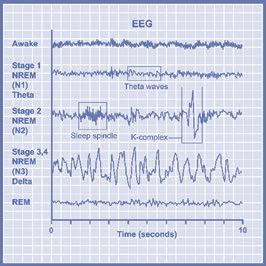
During sleep, the body is inactive. Conscious awareness is temporarily halted. Five sleep stages have been identified using electroencephalography (EEG). Each stage is characterised by differing brain-wave activity (see Figure 1.1).
» Stages 1 and 2: light sleep; easily woken.
» Stages 3 and 4: deeper sleep; brain waves have higher amplitude and lower frequency than brain waves in stages 1 and 2.
» Rapid eye movement (REM) sleep: lower amplitude/higher frequency brain waves, similar to wakefulness; the eyelids move quickly but other muscles are paralysed; dreaming is common.
Ultradian rhythms
Ultradian rhythms are bodily cycles that repeat more than once every 24 hours.
» During the night, we move through several 90-minute sleep cycles.
» Earlier in the night, the cycles include a higher proportion of non-REM (NREM) sleep.
» Later in the night, we spend more time in stages 1, 2 and REM sleep.
Dreams are subjective memories of our experiences during sleep.
Background
» Kleitman conducted sleep research using his relatives as participants for many years.
» In 1953, his student, Aserinsky, used an EEG to identify REM and NREM sleep.
» Kleitman and Aserinsky also found that people woken in REM are more likely to report dreams than those woken in NREM.
» Dement and Kleitman wanted to find a reliable and objective way to measure whether a person is dreaming, using biological evidence rather than verbal self-reports.
▲ Figure 1.1 An EEG measures electrical activity in the brain. It can be used to monitor time spent in different sleep stages (e.g. REM versus NREM)
STUDY TIP
Before revising each study, briefly read through the description and list any methodological terms with which you feel less confident. review these in Chapter 5 before you begin. reviewing the study should help to reinforce and consolidate your understanding. using key terms like ‘reliable’ and ‘objective’, in the right context, will improve your written work.
Aims
1 To investigate whether dream recall is more common in REM than in NREM sleep.
2 To investigate whether participants can accurately estimate the duration of their dreams.
3 To investigate whether eye movements (vertical/horizontal) correspond with dream content.
4 To investigate whether there is a correlation between the duration of a REM sleep episode and the number of words (the narrative) used to describe any dreams experienced.
Methodology
Research methods and design: experiment with repeated measures design (aims 1–3) and correlation (aim 4).
Data collection techniques: self-report, interview.
Variables:
Independent variables – whether the participants were woken:
» during REM or NREM sleep (as shown by the EEG)
» following 5 or 15 minutes of REM sleep
» following REM sleep with mainly vertical, mainly horizontal, mixed or limited eye movements.
Dependent variables:
» whether a dream was reported or not (quantitative) – dream has to be described in detail to be counted
» perceived duration of dream:
– initially participants were asked to report dream length in minutes – later the procedure was changed. Participants were instead asked whether they had been dreaming for 5 or 15 minutes (fixed/forced choice question, quantitative data)
» verbal description of dream content/narrative (qualitative data); number of words used (quantitative).
Sample:
Size: seven men, two women (five studied in depth, four to confirm results).
Demographic: from Chicago, USA.
Sampling technique: not stated in the journal article.
o verview of procedure
Participants slept:
» in a quiet, dark room at the University of Chicago
» with electrodes placed near the eyes and on the scalp:
– wires were tied together to stop them from becoming tangled – the EEG machine was in an adjoining room.
Participants were woken:
» several times each night
» to self-report all the dependent variables (see above) using a bedside recording device.
The researchers:
» chose when to wake the participants using the EEG and a timer
» listened to the self-reports from the adjoining room
» occasionally entered the sleep room to interview the participant about their dream
– they never revealed information about sleep stage or direction of eye movements when questioning the participants.
Controls
» Participants all:
– abs tained from alcohol and caffeine on the day of the study
– repor ted to the laboratory at their normal bedtime.
» The same loud doorbell was used for all awakenings.
» The positioning and number of electrodes was standardised (2–3 near the eyes and on the scalp).
Ethical issues
» Confidentiality and privacy were maintained.
– Par ticipants were referred to using their initials.
– Dream content was not paired with their initials.
NOW TEST YOURSELF
1.1 outline the use of interviewing to gather qualitative data in this study. [2] 1. 2 Give one key feature of experiments as a research method, using an example from this study. [2]
SKILLS BUILDER
Describe the use of correlations as a research method in this study. [4] to ans wer this question, you need to understand the difference between correlation and experiment. refresh your memory of correlations on page 69 if you need to. Consider planning your answer carefully before you start writing. For example, what is a correlational study? How did the researchers operationalise their co-variables? What was the nature of the relationship? Why did the researchers use correlation not experiment for this part of the study?
results
REM sleep never occurred immediately after sleep onset. All participants had regular REM sleep periods throughout the night:
» one REM period every 92 minutes (range 70–104 minutes)
» average REM sleep duration of 20 minutes (range 3–50 minutes)
» longer REM sleep periods later in the night.
▼ Table 1.1 Sleep stage and dream reporting
SKILLS BUILDER
Suggest one or more reasons why Dement and Kleitman used an EEG in this study. [3] ‘Suggest’ means to present ideas or considerations based on your knowledge and understanding of psychology. Little elaboration is required as you are not asked to explain or justify your reasons. you may explain what the EEG was measuring and why that was necessary in this study. you could also give strengths of using scientific equipment like an EEG.
▼ Table 1.2 Accuracy of
One participant (DN) had a lower accuracy rate of only 65 per cent:
» He underestimated dream length.
» He was only correct 50 per cent of the time when woken after 15 minutes.
▼ Table 1.3 Eye movements and dream content
Eye movement Dream content
Mainly vertical Looking up and down while:
» operating a hoist at the bottom of a cliff where people were climbing
» climbing a series of ladders
» throwing basketballs into a net
Mainly horizontal Watching two people throwing tomatoes at each other
Mixed
» Talking in a group of people
» Searching for something
» Fighting with someone
Limited eye movement Looking into the distance while driving a car
Correlation coefficients for REM duration and length of dream report (number of words) for each participant:
» ranged from +0.40 to +0.71.
» the average was +0.58.
Conclusions
» Dreams are more likely to be reported in REM than NREM sleep.
» Dreams are experienced in real time – dream length and REM sleep duration match.
» Eye movements in sleep are not random; they match dream content.
» The subjective experience of dreaming can be measured objectively using EEG to identify REM sleep.
Evaluation
▼ Table 1.4 Strengths and weaknesses of Dement and Kleitman
Strengths
Reliability – the procedure was standardised (e.g. participants were always woken using the same loud doorbell), meaning the study can be replicated to test for reliability.
Objectivity – the use of quantitative EEG data
(e.g. amplitude and frequency of brain waves) removed bias when deciding whether sleep was REM or NREM.
Issues and debates
Application to everyday life
NOW TEST YOURSELF
1.3 State one difference between rEM and nrEM sleep using evidence from this study. [2]
Weaknesses
Validity – some data was discarded as recordings were too muffled and dreams could not be accurately transcribed.
Generalisations – only nine people were studied (and only five in detail); ages and occupations were not provided so individual differences may have affected results.
Understanding typical patterns of sleep and dreaming is important:
» Psychologists can identify people whose sleep and dreams are unusual.
» People are more likely to receive suitable treatment/support to improve sleep quality.
Nature versus nurture
» Support for nature: all participants demonstrated ultradian REM/NREM sleep cycles and dreamed more during REM than NREM. This suggests these patterns are innate and may help us to survive.
» Support for nurture: dream content was diverse; differing life experiences affect what we dream about and may affect the duration of REM sleep.
SKILLS BUILDER
Dement and Kleitman investigated ultradian rhythms. Outline one finding from this study that supports the nature side of the nature–nurture debate. [2] t his question has a stem – that is, a sentence before the question. Sometimes stems are helpful as they remind you of details from the study. However, the question does not say you have to refer to it.
1.2 Hassett et al. (monkey toy preferences)
Psychology
being investigated
Play
» Play is a universal, voluntary behaviour observed in the young of most species.
» Activities are often similar to adult behaviours.
» Play may be adaptive.
Sex differences
» Types of play and toy preferences differ between human infants with differing sex chromosomes.
» For example, XY boys typically prefer cars to dolls, whereas the reverse is true of XX girls.
Socialisation
» Many people believe these differences are due to society’s differing expectations of girls and boys.
» Children learn these expectations through socialisation.
» Hassett et al. believed biological factors are also important.
The role of hormones
Sex hormones (e.g. testosterone, oestrogen) affect brain development. This may explain why boys and girls prefer toys that can be played with in different ways.
Background
» Hassett et al. (2008) were interested in research into congenital adrenal hyperplasia (CAH). For example, XX girls with CAH prefer stereotypically masculine toys, even when encouraged to play with stereotypically feminine toys.
» Previous monkey research found that masculine toys were played with more by male than by female monkeys; likewise, female monkeys showed a strong preference for feminine over masculine toys.
» As monkeys are not affected by societal expectations about gender-appropriate behaviour, Hassett et al. believed sex differences in toy preferences are determined by nature more than nurture.
Aims
1 To investigate sex differences in monkey toy preferences when presented with a stereotypically feminine toy and a stereotypically masculine toy.
2 To provide support for the role of nature (not nurture) in shaping sex differences in human toy preferences.
STUDY TIP
Give dual-coding a try. t his means making notes in both a verbal and visual way. you could draw a diagram of the monkey enclosure to help to consolidate the procedure. Include the different areas (inside/ outside), cameras, toys, etc. Swap your diagram with a classmate. Ask them to add labels and anything you have missed. When you revisit the study, cover your diagram and try to redraw it from memory.
SKILLS BUILDER
Explain why the study by Hassett et al. is from the Biological approach. [2] t he command term ‘explain’ means that you need to think about reasons why the study by Hassett et al. is part of the Biological approach. First, think about key terms/phrases from the main assumptions of the approach, such as ‘working of the brain’ and ‘hormones’. Which words/phrases link best to the ‘psychology being investigated’ and/or the background of Hassett et al.? your f irst sentence could state a reason and the second sentence could show detailed knowledge of the study to support the reason you have given.
Methodology
Research methods and design: experiment with independent measures design. Data collection techniques:
» Seven 25-minute controlled, non-participant, covert observations of monkeys in their normal outdoor enclosure.
» A behavioural checklist was used by two observers to analyse the video recordings.
Variables:
Independent variable – whether the monkey was male or female.
Dependent variable – whether monkeys spend longer (in seconds) interacting with the wheeled toy or the plush toy.
Other information collected – age (juvenile, adult) and social rank (determined through observation of grooming).
Sample:
Size: 135 juvenile and adult monkeys; 14 excluded (previous participation in hormone research); 39 infants excluded (looked too alike to accurately record sex).
Demographic: the monkey troop had lived together at a research centre for 25 years.
Sampling technique: opportunity; the analysis included data from 23 females and 11 males, each of whom interacted with the toys at least five times.
o verview of procedure
» Different pairs of wheeled and plush toys were used in each observation (e.g. wagon/ teddy, truck/Scooby-Doo).
» Observers recorded:
– duration of toy interactions (in seconds) – specific behaviours using a behavioural checklist (e.g. holding, dragging).
» Unclear behaviours were discussed between the two observers.
Controls
» Monkeys were kept indoors while toys were positioned.
» Toys were placed 10 m apart.
» Toy positions were counterbalanced – that is, whether wheeled/plush toys were on the right/left side of the enclosure.
Ethical issues
» Guide for the Care and Use of Laboratory Animals guidelines were upheld, such as appropriate housing:
– appropriate housing (25 m2 outdoor enclosure with a temperature-controlled indoor area)
– constant access to water, daily monkey chow and fresh fruit and vegetables.
» The research was regulated by the Emory University Institutional Animal Care and Use Committee.
NOW TEST YOURSELF
1.4 outline two reasons why some of the monkeys were not included in the final sample. [2]
1.5 Give one weakness of the use of a behavioural checklist in this study. [2]
SKILLS BUILDER
Give one strength of using animals as participants in this study. [2]
t he command term ‘give’ means you do not need to give a reason for your strength. t hink generally about why psychologists might prefer to use
results
1.6 Give one strength of the use of controlled observation as a way of collecting the data in this study. [2]
animals rather than humans in their research (see page 79). As the question says ‘in this study’, you must relate your point specifically to Hassett et al. For example, naming a controlled variable and showing how this would be impossible with humans.
» 73 per cent of the males preferred wheeled toys, 9 per cent preferred plush toys and 18 per cent showed no significant preference.
» 30 per cent of females preferred the plush toys, 39 per cent preferred the wheeled toys and 30 per cent showed no significant preference for either toy.
» The data from the monkey observations were compared with data from a similar study using children. Figure 1.2 shows the similarity between the two sets of results.
– Both sets of results show that males significantly prefer masculine to feminine toys and, although there is a difference in the preference of females for feminine toys, this is far less pronounced, especially in the monkeys.
Sex difference in play with stereotypical masculine and feminine toys in human participants
▲ Figure 1.2 Bar charts showing the similarity between the findings of Hassett et al (r ight) and a similar study conducted with human infants (left)
Conclusions
Toy preferences in both humans and monkeys are influenced by hormonal sex differences. These biological differences lead males and females to prefer different activities. Differing activity/play preferences lead to sex differences in cognition and behaviour.
Evaluation
▼ Table 1.5 Strengths and weaknesses of Hassett et al.
Strengths
Reliability – the well-operationalised behavioural checklist meant behaviours were consistently coded in the same way.
Validity – use of unobtrusive video cameras meant that behaviour was likely to be more spontaneous and unaffected by human presence.
Issues and debates
Application to everyday life
Weaknesses
Objectivity – the researchers who analysed the videotapes were very familiar with the monkeys, which could lead to observer bias.
Generalisations – Eight of the 11 male monkeys were juveniles, and the only high-ranking male in the troop did not interact with any of the toys.
» The findings may be helpful to people who design and market toys, as well as parents and other adults when buying toys for children.
» Empathy and language skills could be developed in boys through play with wheeled toys which have expressive faces.
» Visuospatial skills could be developed in girls using toys with moving parts that can be used to create a social situation, such as a school bus with dolls for the driver and children on board.
Nature versus nurture
» The findings support nature over nurture.
» Differences in toy preference result from hormonal differences between the sexes.
» Males showed stronger sex-typed toy preferences than females.
» Toy preferences were also affected by social rank. Role within the group also affected time spent interacting with toys. Sex was not the only important factor.
Use of children and animals in psychological research
» Conclusions from animals were extrapolated to children.
» Using animals allowed the researchers to control the environment, increasing validity.
» From a very early age, children start to learn about social norms for play and toy preferences based on gender (e.g. from advertising, observing their peers). Using animals allowed the researchers to examine the effect of biological factors (e.g. hormones) without the confounding variable of previous social and cultural experiences.
1.3 Hölzel et al. (mindfulness and brain scans)
STUDY TIP
Have you tried the Leitner technique? t his technique relies on spaced repetition, an evidence-based strategy to improve knowledge retention. Watch online videos and check websites such as t he Le arning Scientists (http://learningscientists.org) to find out more. t he te chnique involves revisiting material either daily, every other day or every week, depending on how well you remember it. you can use it to learn details, such as which brain structures increased or decreased in grey matter concentration (GMC) in this study.
SKILLS BUILDER
Fenella thinks the findings of Hassett et al. support the nature side of the nature–nurture debate, but her friend Meera is not so sure. Outline why you think either Fenella or Meera is correct, using evidence from the study. [2] t his t ype of question requires careful reading of both the stem (the sentence about Fenella and Meera) and the actual question. Focus on evidence to support either Fenella or Meera, but not both.
▲ Figure 1.3 Mindfulness could be used to develop non-judgemental attitudes in the workplace, helping team members to work together more productively
Psychology being investigated
Mindfulness
» Mindfulness is a stress-reduction technique used to improve wellbeing through developing awareness of the present moment and encouraging compassionate, non-judgemental attitudes.
» Biological psychologists are uncertain how Mindfulness-Based Stress Reduction (MBSR) enhances wellbeing, but neuroimaging reveals which brain structures may be involved.
Localisation of function
» This is the idea that specific brain structures are responsible for specific behaviours/cognitive processes.
» This study used magnetic resonance imaging (MR I) and voxel-based morphometry (VBM) to examine which brain structures (e.g. hippocampus, insula) undergo structural plasticity (changes in neural tissue) following MBSR training.
Background
» Meditators have significantly more grey matter in the hippocampus and insula than non-meditators. For example, functional magnetic resonance imaging (fMRI) research found the hippocampus to be active during meditation.
» Changes in wellbeing may be linked to increases in grey matter concentration (GMC) following mindfulness/meditation practice.
Aims
1 To investigate changes in GMC following an eight-week MBSR programme.
2 To identify specific brain structures that undergo change following the eightweek MBSR programme.
Methodology
Research methods and design:
1 Longitudinal experiment with mixed design:
– Repeated measures - brain scans were conducted at the beginning and end of an eight-week period.
– Independent measures - findings from the MBSR group were compared with a no MBSR control group. (See page 58 to refresh your knowledge of experimental designs.)
2 Correlations: The researchers analysed the correlation between the amount of time that participants engaged in mindfulness practice (time in minutes) and increases in GMC.
Data collection techniques:
MRI:
» Scans were conducted two weeks before the first MBSR session and at the end of the eight-week training programme
» A 3D digital brain model was created for each participant, using 128 sagittal (top to bottom) images.
Self-reports:
» The Five Facets of Mindfulness Questionnaire (FFMQ) was used to measure 5 key aspects of mindfulness that have been found to be positively correlated with wellbeing.
» Participants rate 39 statements from 1 (‘never or very rarely true’) to 5 (‘very of ten or always true’).
Variables:
Independent variables:
» MBSR: the experimental group (6 males, 10 females; mean age: 38) attended 2.5hour weekly group meetings for eight weeks and one 6.5-hour training day.
– Sessions included yoga, sitting meditation and body scanning (a relaxation technique).
» The control group (11 males, 6 females; mean age: 39) did not attend these me etings (independent measures) but were on a waiting list for future MBSR.
» MRI brain scans before and after the first MBSR session and at the end of the eight-week study period.
Dependent/co-variables:
» VBM (see page 15) was used to measure grey matter concentration throughout the brain, but specifically in the hippocampi and insulae (quantitative data).
» Mindfulness was measured using the FFMQ (quantitative data).
Additional co-variable: time spent on mindfulness exercises between training sessions (daily diaries used to collect self-reported data).
Demographic: right-handed, healthy adults, age 25–55, no regular medication, limited meditation experience.
Sampling technique: opportunity sample recruited from four MBSR courses held at a mindfulness centre in New England, USA; all were referred or self-referred for stress.
o verview of procedure
» Stage 1: participants received MRI scans and completed the FFMQ two weeks before the first MBSR meeting.
» Stage 2: eight weeks of MBSR for the experimental group only, who were also given a 45-minute audio recording of mindfulness exercises to practise at home.
» Stage 3: participants received MRI scans and completed the FFMQ two weeks af ter the final MBSR meeting.
Controls
» Participant variables were controlled by: – using repeated measures design, i.e. testing the same people twice at the beginning and end of the study – checking that there were no significant differences between the two groups in terms of key variables, such as age and educational background.
» Order effects were controlled by using a ‘no MBSR’ control group to determine how much of the change in GMC at scan 2 was spontaneous/natural and how much was due to the independent variable (the MBSR programme).
Ethical issues
» Participants in the experimental group gave informed consent – agreeing to aim to participate in all meetings, complete ‘homework’ exercises and record duration in daily diaries.
» MBSR fees were reduced to thank all participants.
» Participants with claustrophobia and/or metallic implants were excluded to protect them from psychological and physical harm caused by the MRI scanner.
SKILLS BUILDER
Explain how one finding from the study by Hölzel et al. (mindfulness and brain scans) supports one of the assumptions of the Biological approach. [2]
It w ould be good for your chosen finding to match a specific concept mentioned in one of the main assumptions of the approach. For example, ‘ t he experimental group showed increased GMC in the left hippocampus and posterior cingulate compared with the control group.’ t his matches ‘the workings of the brain’ mentioned in the first assumption.
t he next sentence may link your chosen finding more clearly to the assumption. For example, ‘ t his shows that changes in behaviour and cognition (like becoming more aware, observant and less judgemental) may be caused by increased GMC in these structures.’ t his w ould show a good knowledge of the specific brain structures and three of the five facets of mindfulness.
SKILLS BUILDER
Arthur aims to investigate changes in grey matter concentration in a group of six art students before and after a 16-week observational drawing class. He expects to see differences in key brain structures, including the cerebellum and prefrontal cortex. Write a suitable non-directional (two-tailed) alternative hypothesis using Arthur’s aim. [2]
this question asks you to show understanding of the difference between directional and non-directional hypotheses, and alternative and null hypotheses (see Chapter 5). Make up possible hypotheses for all 12 of the core studies. then rewrite them as null hypotheses and/or switch from directional to non-directional.
remember, when you are writing an alternative, non-directional hypothesis, you will state that ‘there will be a difference’ in the results for each group or condition, but you will not state the direction of this difference – for example, which group/condition will have the higher score. Ensure that your hypothesis includes both conditions/groups of the independent variable. Also, where possible, ensure you have used information from the extract to operationalise both the independent and the dependent variables (i.e. give the units of measurement).
results
The average time spent on mindfulness exercises was:
» 27 minutes per day
» 22.6 hours over 8 weeks (SD = 6.3 hours)
▼ Table 1.6 Time (in minutes) spent on MBSR exercises over eight weeks
NOW TEST YOURSELF
1.7 outline two features of the questionnaire used to measure mindfulness in this study. [2]
1. 8 Explain how the use of a control group helped to increase validity in this study. [2]
1.9 Give two reasons why Hölzel et al. is an example of an experiment with a longitudinal design. [4]
Following MBSR training, the experimental group showed:
» significant improvement in three of the five facets of mindfulness: acting with awareness, observing and non-judging
» a significant increase in GMC in the:
– lef t hippocampus
– pos terior cingulate cortex
– temporoparietal junction
– cerebellum
» no significant correlation between GMC and time spent on mindfulness exercises or the five facets of mindfulness.
The control group showed:
» no significant improvement in any of the five facets of mindfulness
» a significant decrease in GMC in the posterior cingulate cortex.
Conclusions
» Regular mindfulness practice can lead to localised structural changes in grey matter concentration, in structures including the left hippocampus and posterior cingulate cortex.
» Changes in these structures may underpin the wellbeing benefits of mindfulness, as t hey have been previously linked to learning, memory, emotion regulation and perspective-taking.
» Previous research on the insulae was unconfirmed. Changes in this structure may take more than eight weeks.
Evaluation
▼ Table 1.7 Strengths and weaknesses of Hölzel et al.
Strengths
Reliability – the FFMQ is highly reliable. For example, the correlation between the eight questions on ‘acting with awareness’ was +0.87.
Objectivity – analysis of quantitative data from VBM is objective as it is conducted via computer software.
Issues and debates
Application to everyday life
Weaknesses
Validity – changes in GMC in the experimental groups may have resulted from increased social interaction at the MBSR group. This confounding variable was not controlled.
Generalisations – findings may not be representative of people older or younger than 25–55 or with fewer years of education.
Integration of regular opportunities for daily mindfulness in the workplace could lead to improved wellbeing. This may also lead to increased productivity and fewer days lost to ill health.
Nature versus nurture
The impact of both nature and nurture are supported.
» Nature: localised increases in GMC were correlated with changes in three of the five facets of mindfulness.
» Nurture: environmental experiences (e.g. MBSR group attendance) affect wellbeing.
SKILLS BUILDER
H ö lzel et al. measured grey matter concentration throughout the brain before and after participation in an eight-week MBSR programme. Suggest one situational and one individual factor that could affect the extent to which participants in the experimental group experienced changes in grey matter concentration. [4]
t his book includes ideas to help you to think about how the issues and debates at AS Level can be applied to each of the 12 studies. However, you may sometimes be faced with a question on an issue/debate which has not been covered. t hes e questions can be fun as they offer an opportunity to
think creatively rather than scour your memory for missing facts.
Individual factors relate to the person. they are characteristics or traits that may lead the person to perform differently from others who do not possess that characteristic or trait. Situational factors relate to the circumstances or context in which a person’s behaviour is observed. For example, a person’s age may influence changes in GMC (individual factor). Furthermore, environmental stressors, such as noise or overcrowding in the setting in which mindfulness is practised, may decrease the extent of GMC change (situational factor).
Biological approach revision checklist
Dement and Kleitman (sleep and dreams)
Hassett et al. (monkey toy preferences)
Hölzel et al. (mindfulness and brain scans)
Explain links to the assumptions of the Biological approach
Define all the key words from the psychology being investigated (see online glossary)
Describe the background
Describe the aim
State and evaluate the research method(s)
State and evaluate the technique used for data collection (if different from the method)
Describe and evaluate the sample (e.g. size, demographic and/or sampling technique)
State and evaluate the experimental design (if relevant)
State the manipulated and measured (co-)variables (if relevant) and evaluate how these were operationalised
State at least two controls (if relevant) and evaluate the effect of these controls on the findings
State and evaluate the type of questions used (if relevant)
Describe and evaluate the procedure
Explain at least two ethical issues and discuss how these affected the study
Describe three to four quantitative findings
Describe at least two qualitative findings (if relevant)
Explain how the results were presented
Explain how the results are/could be interpreted and how they relate to one or more of the assumptions of the approach
Describe one or more conclusion(s)
Identify two strengths that be could discussed in a ten-mark extended response question
Identify two weaknesses that be could discussed in a ten-mark extended response question
Identify two applications to everyday life
Explain how the study links to the debate about individual and situational explanations
Explain how the study links to the debate about nature versus nurture
Explain how the study links to the issue of the use of children/animals in psychological research
The Cognitive approach 2
The main assumptions
Cognitive psychologists assume that:
1 Information is processed through the same route in all humans: input – process –output, in a similar way to how information is processed by a computer.
2 People have individual differences in their cognitive processing, such as attention, language, thinking and memory. These processes can also help to explain behaviour and emotion.
(Cambridge International, 2021)
2.1 Andrade (doodling)
Psychology being investigated
Memory
Memory is:
» the encoding, storage and retrieval of information, including sights, sounds and smells
» the process of retaining this information over a long period of time.
Incidental memory is the memory of information you have not been asked to remember/are not focused on. Information is therefore remembered unintentionally
Attention
Attention is the process of focusing on a particular piece of information or task.
» There is a limit to how much information we can process at any one time, so we are selective in which information we focus on.
» Selective attention is the process of focusing/concentrating on information that is important while blocking out irrelevant information.
Background
» Doodling may impair performance by moving concentration away from the primary task.
» However, doodling may help us to concentrate better : – esp ecially on tasks that are not very interesting (i.e. low arousal) – by increasing arousal and alertness and reducing daydreaming, which decreases concentration on a task.
Aims
1 To investigate whether doodling while listening improves attention/ concentration.
2 To investigate whether doodling while listening improves recall.
Methodology
Research method and design: laboratory experiment with an independent measures design and random allocation.
STUDY TIP
Andrade’s study uses several important key terms for example, incidental memory and monitoring accuracy. Create a matching game in which you have to match key terms to their definitions. Write the terms and definitions onto squares of paper, mix them up and see if you can put the pairs back together.
Data collection techniques:
» Monitoring task: Participants listened to a pretend telephone message about a party, including names of people and places (see below).
– They had to pay attention and write down the names of people who were able to attend the party (monitored information).
» A surprise memory test.
Var iables:
Independent variable: whether the participants were allowed to doodle (shading lines of shapes on A4 paper) or not while listening to the pretend telephone message.
Dependent variable(s):
» Monitoring
– accuracy: number of correct names (out of eight)
– per formance: correct names minus false alarms (wrong answers).
» Memory for:
– monitored information: number of correct names recalled (out of eight) after false alarms were deducted – inc idental information: number of correct places recalled (out of eight).
Sample:
Size: 40 (35 women and 5 men); doodling condition: 20; control condition: 20.
Demographic: 18–55-year-olds; members of the University of Plymouth participant panel.
Sampling technique: opportunity; participants had just finished another experiment. Researchers asked whether they would stay to complete another study hoping that this would increase the likelihood of boredom.
o verview of procedure
» Participants sat alone in a quiet, dull room and were given a sheet a A4 paper. This was either:
– printed with rows of shapes to shade (the experimental group).
– lined with no shapes to shade (the control group).
» They were asked to listen to a 2.5-minute audio recording of a pretend telephone message
» The message mentioned:
– eight people who would be at the party – three people and a cat who could not come, called ‘lures’
– eight place names
– a lot of irrelevant information.
» Both groups had to write down the names of the people coming to the party on the A4 paper.
» One minute after listening to the tape, there was a surprise memory test. Participants had to write down: – the names of the party-goers – the place names.
Controls
All participants:
» heard the same 2.5-minute tape in the same room
» were given standardised instructions before listening to the tape.
Half the participants recalled the names first and the other half recalled places first (counterbalancing) to avoid order effects. (Revise order effects and counterbalancing on page 59.)
SKILLS BUILDER
Outline why doodling may help people to concentrate on a task. [2]
you could start by talking about how doodling inhibits (reduces) daydreaming. t hen in the second sentence you could talk about how this improves performance by increasing arousal levels and alertness, meaning we are able to concentrate better on the task.
NOW TEST YOURSELF
2.1 outline one difference between monitored and incidental information, with an example from this study. [2]
2 .2 Des cribe how quantitative data was gathered in this study. [2]
2 .3 outline one disadvantage of the way that doodling was operationalised in this study. [2]
Ethical issues
» Deception: Participants were told that they did not need to remember anything on t he tape, which was not true.
» Informed consent could not, therefore, be given.
SKILLS BUILDER
Suggest one strength of using counterbalancing during the surprise memory test. [2]
t he command term ‘suggest’ requires you to present ideas or considerations based on your knowledge and understanding of psychology. t hink about a possible strength of using counterbalancing
results
Monitoring accuracy
in Andrade’s study. For example, first, you could identify the strength (e.g. controlling order effects) and second, link it back to the study/surprise memory test. When you link back to the study, you may explain how counterbalancing would help improve the validity of the specific findings of this study, which is about doodling and memory.
▼ Table 2.1 Number of correct names recorded and number of false alarms
▼ Table 2.2 Monitoring performance score (correct names remembered minus number of fal se alarms)
Monitoring performance score (maximum score = 8)
Recall
performance
» Total recall (monitored and incidental information: max 16) for doodlers was 29 per cent higher (7.5) than for the control group (5.8).
» Doodlers remembered both types of information better than the control group.
» Both groups remembered monitored information better than incidental information.
» The average number of false alarms was low (0.3) for both groups.
Conclusions
» Doodling improves concentration during boring listening tasks.
» Doodling improves memory, even for information we have not intentionally tried to s tore.
Evaluation
▼ Table 2.3 Strengths and weaknesses of Andrade
Strengths
Reliability – highly standardised procedure which can be replicated easily to test for reliability. For example, all participants listened to the same tape, in the same room, and they were given standardised instructions.
Validity – Andrade checked whether any participants had detected the deception. A total of 18 per cent said that they had. The data was re-analysed without their scores, and the results were the same.
Issues and debates
Individual and situational explanations
The study shows that:
Weaknesses
Objectivity – misheard words (e.g. writing Greg instead of Craig) were counted as correct. The assumption that words have been ‘misheard’ rather than being incorrect makes the coding of answers subjective.
Generalisations – there were more females (87.5 per cent) than males (12.5 per cent), meaning that the findings should be generalised to males with caution.
» attention/memory is affected by situational factors, such as being able to doodle
» cognitive performance is not always fixed and stable
» that parents/teachers/employers need to be aware that small changes in a situation can improve people’s performance.
Application to everyday life
» Benefits of doodling should be communicated to employers/teachers, etc.
» It should not be assumed that people who doodle in classes/meetings are not concentrating.
» People who find it hard to concentrate could be offered paper to doodle. This could improve their concentration on dull tasks.
SKILLS BUILDER
Penny is a manager at a local company. Her employees are struggling to concentrate in work meetings. Outline how the results of the study by Andrade could be applied to Penny’s company to help em ployees to concentrate. [2]
t he command term ‘outline’ means you do not need to go into great detail within your answer. Show your knowledge of the results of Andrade’s study and
2.2 Baron-Cohen et al. (eyes test)
Psychology being investigated
Theory of mind
then how this can be applied to Penny’s company. you could talk about any result in the study, as long as you make it relevant to Penny and her employees. However, the results from the ‘monitoring’ part of the study are the most relevant to concentration. For example, Penny could provide paper and coloured pens in meetings to encourage doodling, as this could help the employees to focus more on what people are saying, but only if the meeting is boring.
» Theory of mind is the ability to determine the mental state of ourselves and ot her people.
» It is linked to social sensitivity and the ability to understand other people’s opinions or views.
» There are two stages:
– What? Identifying a person’s mental state. For example, ‘He feels sad … ‘
– Why? Understanding the context of that mental state. For example, ‘ … because he lost his ball’.
» People with autism sp ectrum disorders often do not have a fully developed theory of mind. This is called a a theory of mind deficit.
Social sensitivity
» Social sensitivity is the ability to identify and understand social cues and contexts when interacting with others.
» It refers to how well you can understand other people’s feelings.
Background
Measuring cognitive dysfunction
» It is difficult to develop tests that are sensitive enough to detect cognitive dy sfunction, especially for adults with typical intelligence but impaired social understanding.
» Therefore, most tests are developed for children.
The
original
‘Reading the Mind in the Eyes’ test
» This was a test for adult social sensitivity/theory of mind.
» It included 25 photographs of eyes of famous actors.
» Participants selected one of two words to best describe how the person in the photograph was feeling.
» Adults with high functioning autism (HFA) or Asperger syndrome (A S) scored significantly lower than matched controls.
▼ Table 2.4 Problems with the original eyes test
Problems with the original Eyes Test
Each item had only two possible answers; a score of 68 per cent or more was needed to be higher than chance alone.
Basic mental states were used (e.g. happy, angry); even very young children can identify these states.
Eye direction could be used to identify some mental states (e.g. noticing).
More female than male faces were included.
The correct and incorrect (foil) answer options were opposites, such as sad versus happy, which was too easy.
STUDY TIP
to better understand the ev aluation points for this study, why not take the eyes test yourself. t her e are many websites where you can try it, such as https://docs. autismresearchcentre. com/tests/adult_part1. pdf. When completing the test, think about how it could be improved.
Solutions in the Revised Eyes Test
Increased number of items from 25 to 36; increased number of possible answers from two to four.
Only included complex mental states (e.g. contempt).
These were not included in the new test.
The same number of male and female faces were used.
Similarity between the target word and the three foils was increased, making it more difficult. Words may not have been understood. The test was presented with a glossary.
Aims
1 To investigate whether scores on the Autism Quotient (AQ) and the Revised Eyes Test scores are negatively correlated.
2 To tr ial the Revised Eyes Test with adults with high-functioning autism and Asperger syndrome as shown in Table 2.5.
▼ Table 2.5 Aims of Baron-Cohen et al.
Participants To investigate whether…
Adults with highfunctioning autism (HFA)/Asperger syndrome (AS)
Neurotypical adults
2.1 they score lower on the eyes test than other groups, as with the previous version of the test
2.2 they score higher on the AQ than other groups
2.3 females score higher than males on the Revised Eyes Test
2.4 male s score lower than females on the Revised Eyes Test and higher than females on the AQ
SKILLS BUILDER
Explain one similarity and one difference between the study by Baron-Cohen et al. and one other core study from the Cognitive approach. [8]
you could identify a similarity or difference and then provide reasons why this is relevant using evidence from both of the studies in some detail. your
Methodology
comparison points should make detailed reference to both studies. you could use any part of the study (background, methodology, procedure, results, evaluation, issues and debates) but, remember, only use studies from the approach named in the question – in this case, Andrade or Pozzulo et al.
Research method and design: experiment with an independent measures design; correlation. (Revise the difference between experiment and correlation on pages 69 and 70.)
Data collection techniques:
» Questionnaire: the AQ test – 50 closed questions, answered on four-point rating scales. (Revise questionnaires on page 61.)
» The Revised Eyes Test : 36 black and white photographs of eyes with four possible answers.
Variables:
Independent variables – whether the participants:
» had HFA/AS or not
» were male or female.
Dep endent variable/co-variable: test scores on the Revised Eyes Test and the AQ. Sample:
▼ Table 2.6 Sample in Baron-Cohen et al.
Group 1: HFA/AS adults
Group 2: general population controls
Group 3: students
Group 4: IQ matched controls
Size 15 122 103 14
Demographics
Male adults with HFA/AS from the United Kingdom; socioeconomic class and educational background similar to Group 2
Sampling techniqueVolunteer sample; adverts placed in the National Autistic Society (NAS) magazine and at support groups
o verview of procedure
Eye test development
Neurotypical adults from the United Kingdom; wide range of occupations/ socioeconomic classes and education backgrounds
Opportunity sample from community and education classes and libraries
» The first draft was trialled with eight independent ‘judges’.
53 males and 50 females; neurotypical undergraduate students; high IQ as from a highly selective university
Opportunity sample from Cambridge University, United Kingdom
» Items were accepted if the target word was selected by five of the eight judges.
» Items were rejected if the same foil was picked by more than two judges.
General population; matched on IQ to Group 1
Random sample
» Next, the test was trialled on Groups 2 and 3. Items were accepted if 50 per cent (of the 225 participants) selected the target word and no more than 25 per cent picked the same foil.
» Four items were rejected, leaving 36 items on the Revised Eyes Test
The Revised Eyes Test
» Participants took the Revised Eyes Test individually in a quiet room.
» Groups 1, 3 and 4 completed the AQ.
» Group 1 (HFA/AS) also identified the gender of the people in the photographs.
» Participants could refer to the glossary to clarify word meanings.
Controls
» The same tests were taken in the same way (quiet conditions with glossary).
» All items in the Revised Eyes Test were the same size, in black and white, with four options and three foils.
Ethical issues
Psychological harm:
» A lack of understanding of the words/emotions may cause distress/ embarrassment.
» People in Groups 2–4 who received extreme scores may need referral for more detailed assessment, especially for those with HFA/AS.
SKILLS BUILDER
For the study by Baron-Cohen et al., outline how two results support the aims of this study. [4]
to ans wer ‘how’ the results link to the aims, choose one result and briefly describe it. t hen link it back to the aims made by Baron-Cohen et al. As you are asked about two results, you need to do this twice. In this section, the aims and results are numbered. t his is to make it easier for you to link each result to the relevant aim/part of an aim. It is worth revising in this way so you do not get them mixed up.
results
1 There was a negative correlation between the AQ scores and the Revised Eyes Test scores (–0.53) for all three groups.
2 2.1 Group 1 performed significantly lower on the Revised Eyes Test than other groups. There were no impairments in the gender recognition task.
2.2 Group 1 scored significantly higher than Groups 3 and 4 on the AQ.
2.3 Alt hough not significant, females scored higher than males on the Revised Eyes Test
2.4 Males scored higher on the AQ than females.
Conclusions
The Revised Eyes Test :
» is a more sensitive test for social intelligence than the original Eyes Test
» can be used as a measure of severity of autistic traits due to the negative cor relation with the AQ.
NOW TEST YOURSELF
2.4 Describe how Baron-Cohen et al. chose the target words and foils for the Revised Eyes Test [4]
2.5 t he re search methods used in the study by Baron-Cohen et al. included experiments and correlations. outline what is meant by a correlation giving an example from this study. [3]
2 .6 Give one advantage of the use of a questionnaire as a way of collecting the data in this study. [2]
Evaluation
▼ Table 2.7 Strengths and weaknesses of Baron-Cohen et al.
Strengths
Reliability – the standardised procedure, using the same photos for all participants, means the study can be repeated to test for reliability.
Objectivity – there was no interpretation needed for the data collected as the answers on the eyes test were either right or wrong.
Issues and debates
Weaknesses
Validity – the pictures of eyes are static and do not reflect human emotions in real-life settings, with real people who move about, change expression quickly and provide a wide range of other non-verbal cues.
Generalisations – volunteer sampling means generalisations should be made with caution. Results may not be representative of adults with HFA/AS who do not attend support groups or read the NAS magazine.
Individual and situational explanations
» Individual explanation: autism is an individual difference between people that af fects the ability to understand mental states from facial expressions.
» Situational explanation: people with HFA/AS are better at recognising other people’s mental states in some situations more than others – for example, where there is less noise or fewer distractions or when they are given sufficient time.
Application to everyday life
» People with brain damage could take the Revised Eyes Test to detect social sensitivity deficits. Support could then be offered to help them to detect mental states in others.
» The Revised Eyes Test could also be used in schools to target children who may benefit from interventions to improve theory of mind skills.
SKILLS BUILDER
Samuel is 15 and suffered brain damage in an accident. He struggles to understand people’s emotions and mental states at school and at his part-time job. Suggest two situational factors that could improve Samuel’s ability to understand emotions and mental states in others. [4]
the command term ‘suggest’ means you could put forward ideas that to improve Samuel’s ability to
2.3 Pozzulo et al. (line-ups)
Psychology being investigated
Eyewitness testimony
understand emotions and mental states. For example, you could identify noise as a relevant situational factor and link this back to Samuel by suggesting that reducing noise levels might increase his ability to focus on social cues from his co-workers.
» The police may ask people present at the scene of an accident and/or crime to provide a description of what they saw/heard/smelt.
» These descriptions may help the investigation and/or provide evidence that is later used in legal proceedings against the culprit(s).
STUDY TIP
It may be tempting to just read your notes over and over again, but this may not be that effective. Putting your notes into a different format will help you to process them at a deeper level than simply re-reading. If you enjoy learning by listening, you could read your notes aloud into a device such as your smartphone, so that you can listen to them at a later time. rese arch shows that listening to your own voice is more effective for revision than listening to an unfamiliar voice (Forrin and MacLeod, 2018).
False positive responses
In relation to eyewitness testimony (EWT), a false positive response is when a witness picks out a person from a line-up and says they were present at the crime scene when they were not. Pozzulo et al. suggested that this may occur in children due to social pressure rather than poor memory.
Background
» Children and adults produce similar correct identification rates from line-ups when the target is present (target-present line-ups), but even 13-year-olds struggle to correctly reject target-absent line-ups, leading to higher rates of false positive responses than with adults.
» These errors may be due to social factors, such as social pressure, rather than cognitive factors, such as bad memory.
» The desire to please the interviewer, who is often an authority figure, may also be a social factor that leads to higher false positive responses in children.
Aims
To investigate whether children:
» are less able to recognise human faces than adults
» make more false positive identifications than adults when faced with: – target-absent line-ups versus target-present line-ups – human faces and cartoon characters.
Methodology
Research method and design:
Laboratory experiment with a mixed design:
» Independent measures – two groups were compared: children and adults.
» Repeated measures – all participants viewed both types of line-up with both ty pes of face.
Data collection techniques:
» Questionnaire: the demographic and cartoon watching form measured variables such as the participants’ age, gender and time watching cartoons, familiarity with the target cartoons.
» Participants had to identify the cartoon/person in the video (if present) by pointing on a PowerPoint (children) or a matching sheet (adults).
Variables:
Independent variables:
» age: children (4–7-year-olds) versus adults (17–30)
» type of target faces: familiar cartoon or unfamiliar human faces
» type of line-up: target-present or target-absent.
Dependent variables:
» correct identification rates for target-present line-ups
» correct rejection rates for target-absent line-ups. (Revise the difference between independent and dependent variables on page 57.)
Sample:
Size: 59 children and 53 adults.
Demographic: 4–7-year-olds from three private schools in Canada; 17–30-year-olds from the Introductory Psychology Participant pool of an Eastern Ontario University. Sampling technique: not stated in the journal article.
SKILLS BUILDER
Describe the psychology being investigated in the study by Pozzulo et al. [5] t he command term ‘describe’ requires you to make a series of distinct points. revise the ‘psychology being investigated’ thoroughly. For Pozzulo et al. you could describe eyewitness testimony and false positive responses within your answer. you could make two distinct points about each, and then provide an example of one from Pozzulo et al
o verview of procedure
The videos:
» Participants individually watched four videos (in colour), each with a photo line-up:
– Two f eatured familiar cartoon characters, Dora and Diego.
– Two f eatured an unfamiliar human character, either male or female.
» Next they completed a filler task in which they were asked, ‘What did the cartoon character/person look like?’ and ‘Do you remember anything else?’.
Photo line-ups:
» Next, participants viewed photo line-ups that included four tightly cropped black and white headshots.
» Target-present line-ups included one target photo and three foils (people who looked similar).
» Target-absent line-ups had four foils.
» Participants were asked to point to the photo if the target was present, or another box if not.
Controls
» The four videos and the order of the faces in the line-ups were randomised for each participant to prevent order effects. Revise order effects and randomisation on page 59.
» Standardised instructions were given to each participant prior to presentation of the photo line-ups.
» All experimenters wore the same type of ‘professional-casual’ clothing.
Ethical issues
» The researchers gained written informed consent from parents of all child participants and from all adult participants.
» Participants were told that targets may not be present, so there was no attempt to deceive/mislead them.
» All children were monitored for anxiety, stress and fatigue in order to minimise possible harm. This is important as children are less likely to exercise their right to withdraw.
SKILLS BUILDER
Xander and Toph are discussing the study by Pozzulo et al. Xander thinks the study used an independent measures design, but Toph thinks it used a repeated measures design. Using evidence from this study, explain one reason why Xander is correct and one reason why Toph is also correct. [4] the command term ‘explain’ means that you need to justify your answer, or give reasons why both Xander and toph could be considered to be correct. In the world of research, the design used in Pozzulo
results
Target-present line-ups
NOW TEST YOURSELF
2.7 outline the filler task used in the Pozzulo et al. study. [2]
2 .8 Suggest one weakness of using laboratory experiments to study children as eyewitnesses. [2]
2 .9 name t wo controls that were used in the Pozzulo et al. study. [2]
et al. would be referred to as a mixed design. this is because some aspects are independent measures (e.g. looking for a difference in the skills of children versus those of adults) and other aspects are repeated measures (e.g. participants are asked about both human and cartoon faces). you need to show your understanding of both independent measures and repeated measures by explaining what these terms mean in the context of both this study (i.e. Pozzulo et al.) and with reference to Xander and toph
» Children and adults were significantly better at identifying familiar cartoon characters than human faces.
» Children performed much worse than adults when identifying human faces.
▼ Table 2.8 Success rate for identifying faces in target-present line-ups
Target-absent line-ups
» Children had a significantly higher correct rejection rate when cartoon characters were used (0.74) compared with human faces (0.45).
» Adults also performed significantly better with cartoon characters (0.94) compared to human faces (0.70).
» Children’s rate of false positive responses was much higher than adults.
Conclusions
» As children were able to correctly identify cartoon characters in target-present line-ups, cognitive factors were not responsible for the lower success rate in target-absent line-ups.
» Errors were caused by social factors – that is, incorrectly believing that the researcher wanted them to make a positive identification, no matter whether the child thought it was right or wrong.
» Children are less accurate when faced with human actors and more likely to give false positive responses than adults.
Evaluation
▼ Table 2.9 Strengths and weaknesses of Pozzulo et al.
Strengths
Validity – using repeated measures meant results were not affected by participant variables, such as having better/worse working memory skills.
Objectivity – the data obtained was quantitative. The participants were either right or wrong in their answers on the line-up task. Therefore, there was no room for interpretation/researcher bias.
Issues and debates
Application to everyday life
Weaknesses
Reliability – although standardised instructions and procedure were used, the questions during the filler task were not exactly the same for everyone. This may have affected the participant on the line-up task, thus lowering reliability.
Generalisations – the findings may not be generalisable to participants from lower socioeconomic backgrounds as the children were all from private schools. The adults were also all from a university, suggesting higher than average intelligence.
» Eyewitness testimonies can be affected by the expectations of others, especially wit h child witnesses.
» The findings could be used to develop police guidelines for interviewing child witnesses. This could reduce incorrect identifications, especially with targetabsent line-ups.
Individual and situational explanations
» When a target is present in a line-up of cartoon characters, adults and children are as accurate as each other. However, this is not the case for human faces. Individual characteristics such as age or memory may not be as important as situational characteristics such as familiarity.
» The findings of the study suggest that situational factors such as social pressure (i.e. the perceived expectations of others) may explain why children are more likely to identify a suspect even in a target-absent line-up.
Use of children in psychological research
Young children are vulnerable to social pressure, so they were protected from harm by:
» seeking parental consent as children cannot understand the risks of participation
» telling them that they could change their mind and not get into trouble
» conducting craft activities to put them at ease before the experiment started