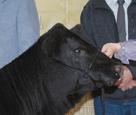
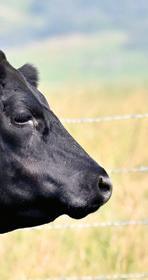
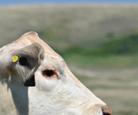
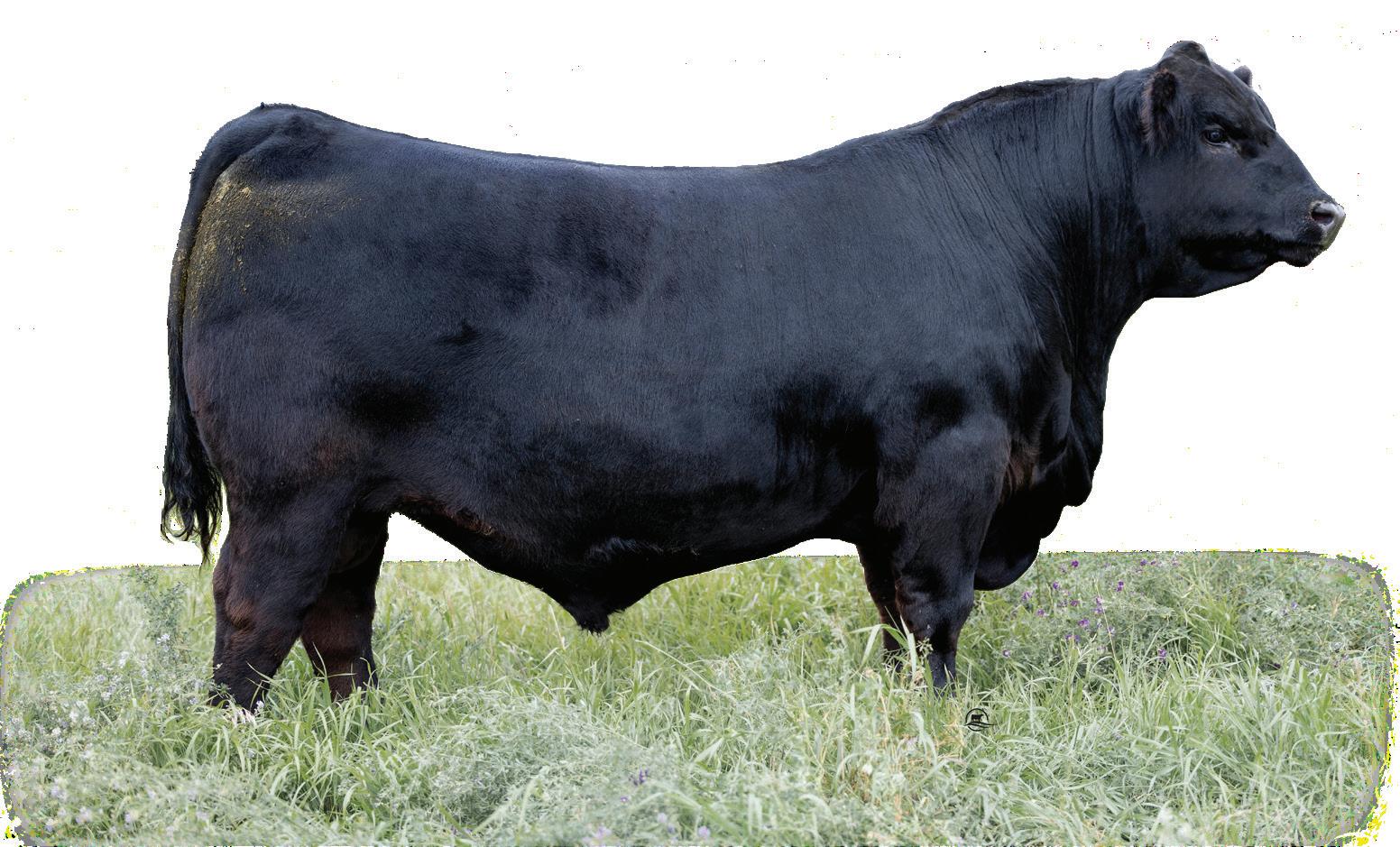
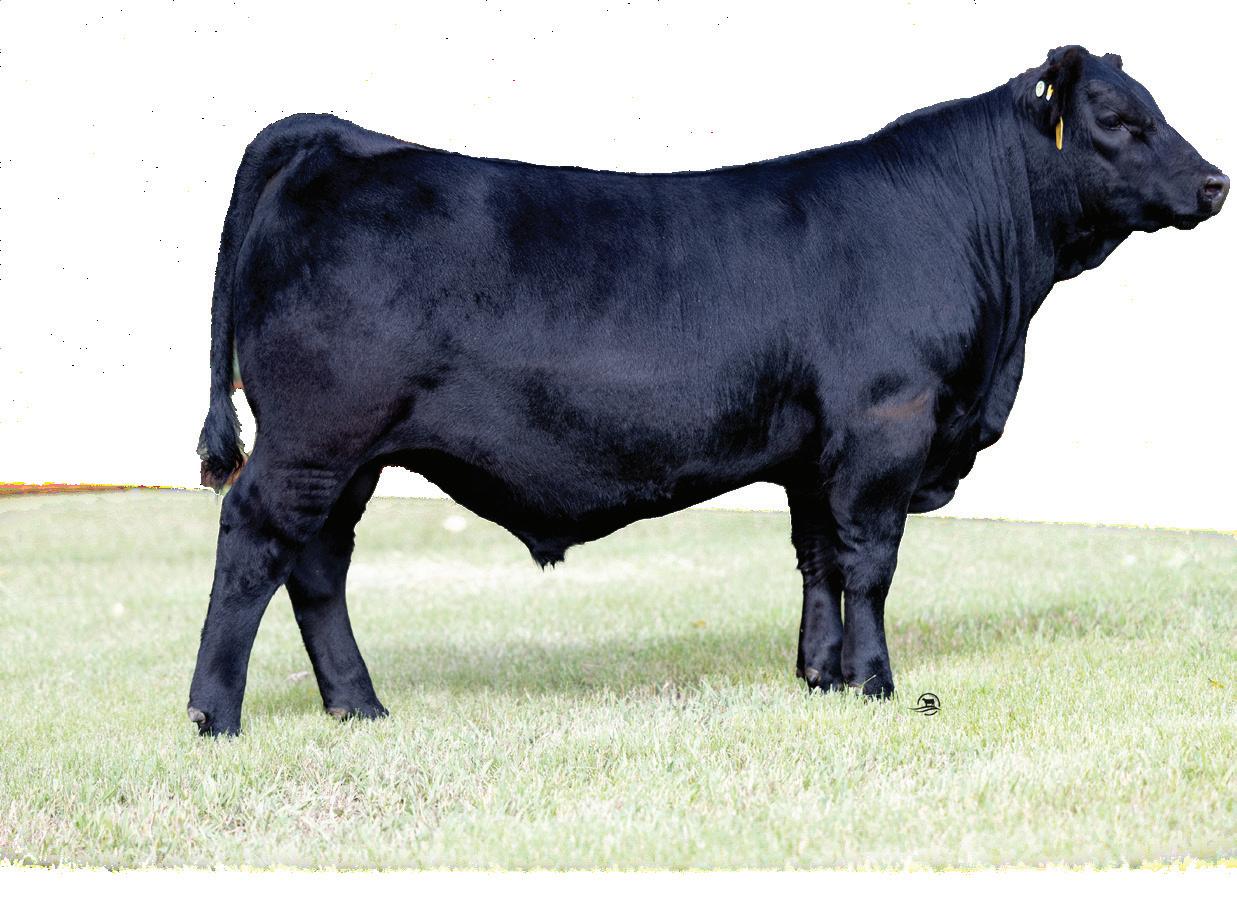
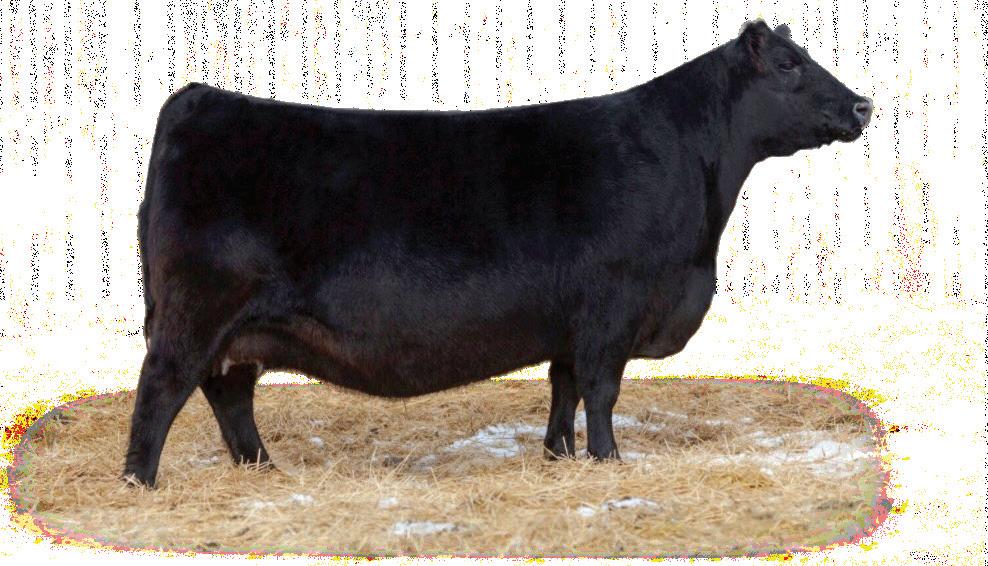
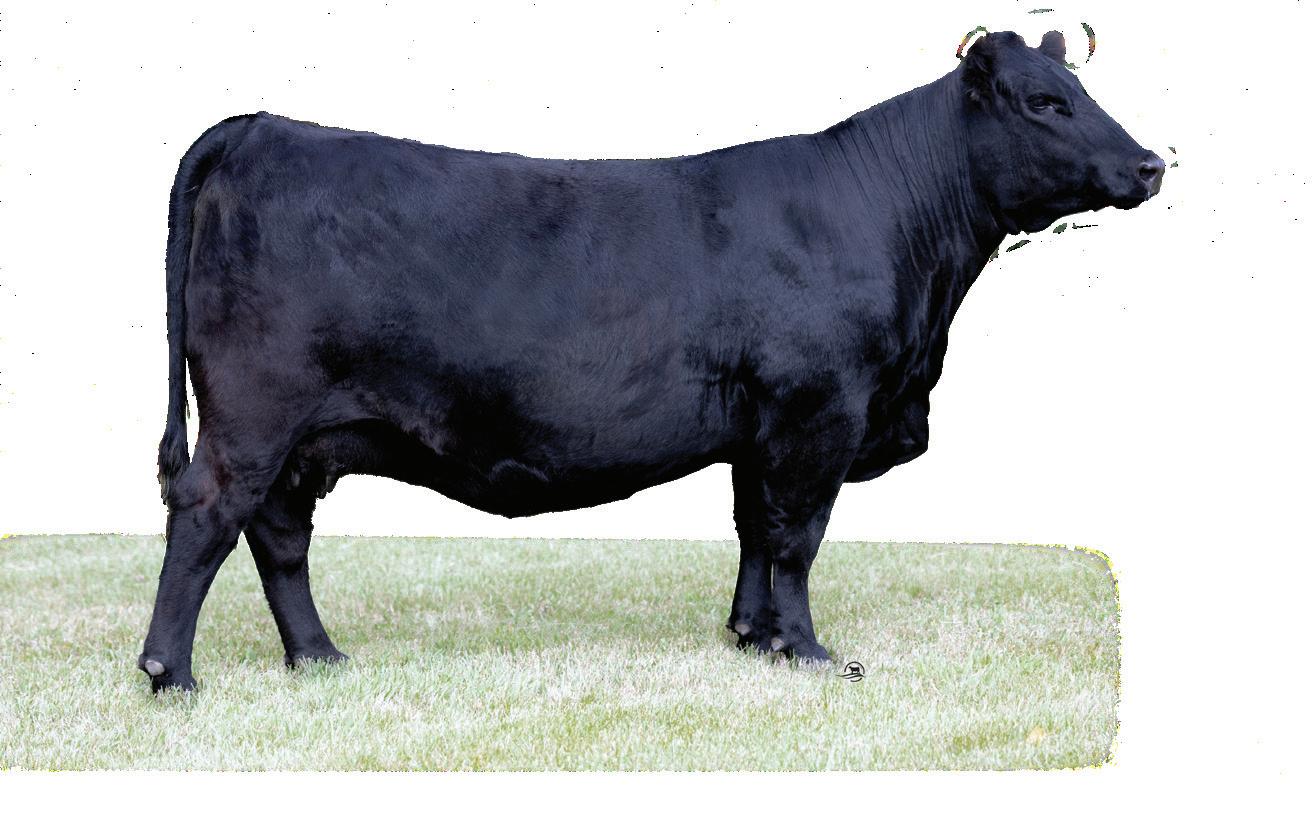
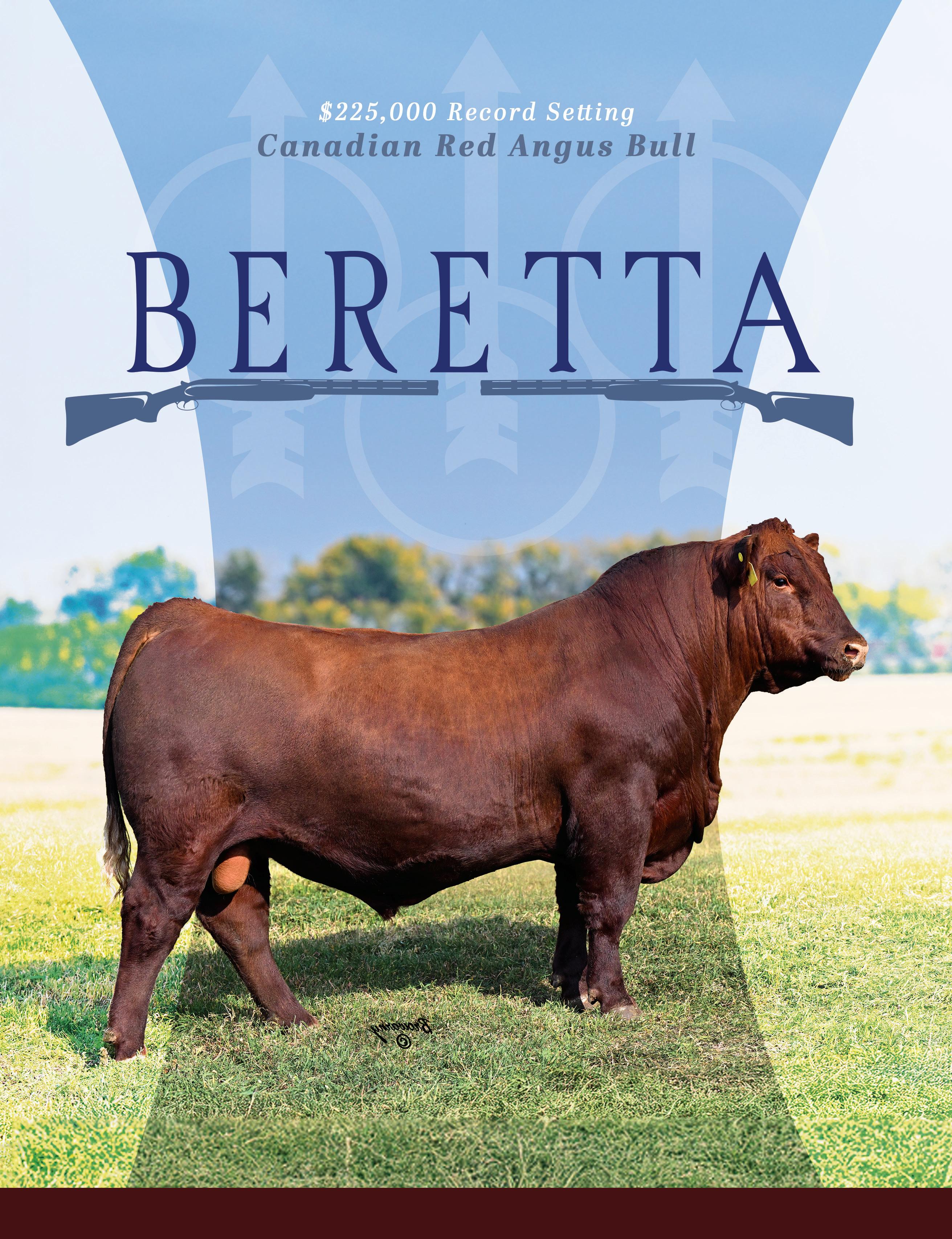
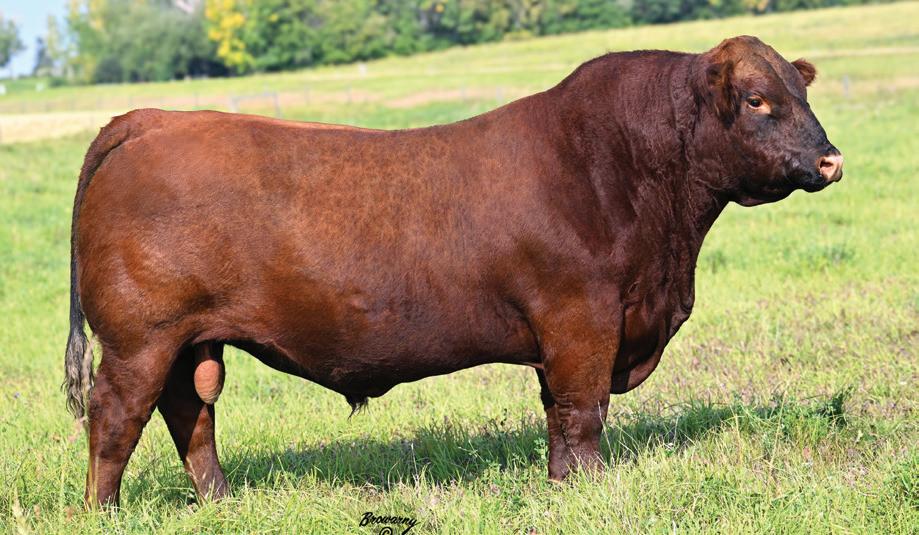
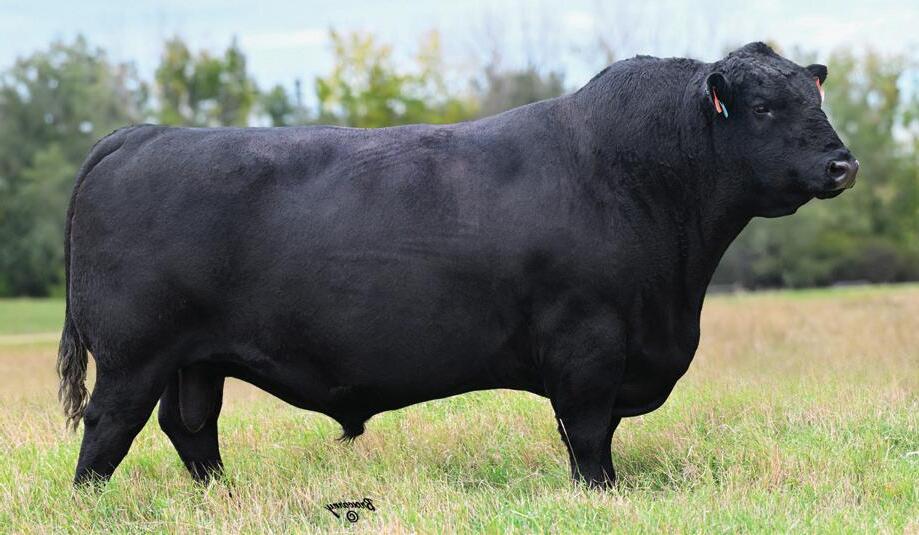
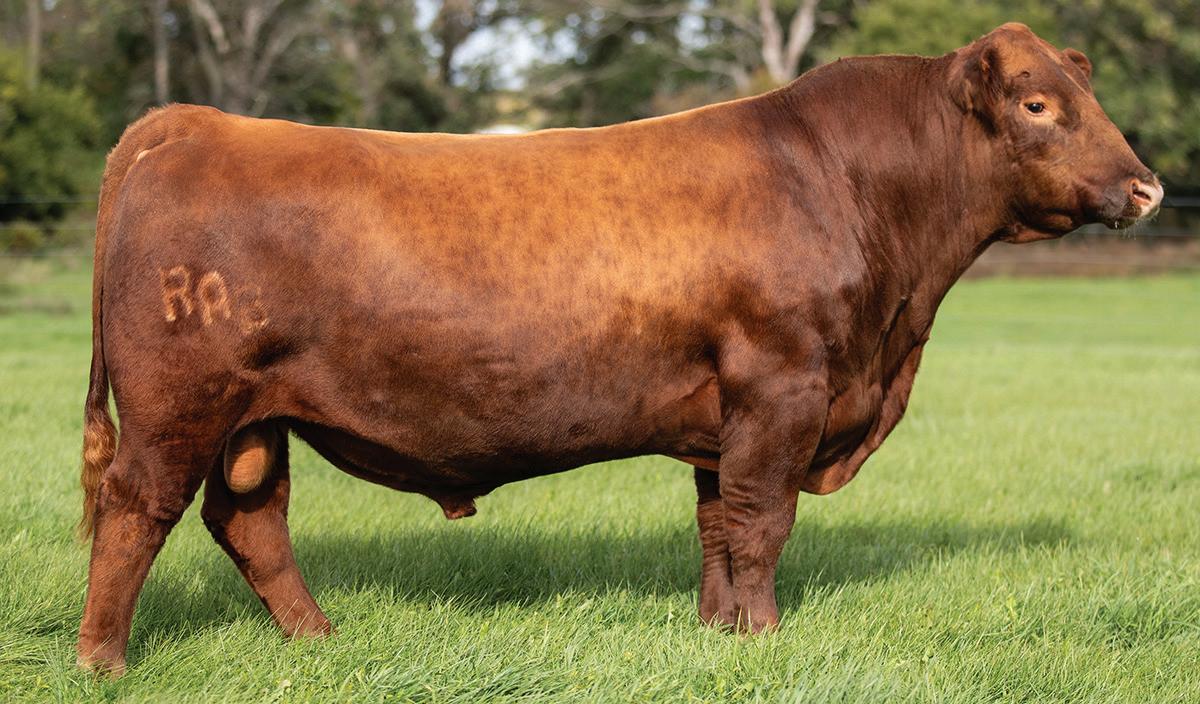
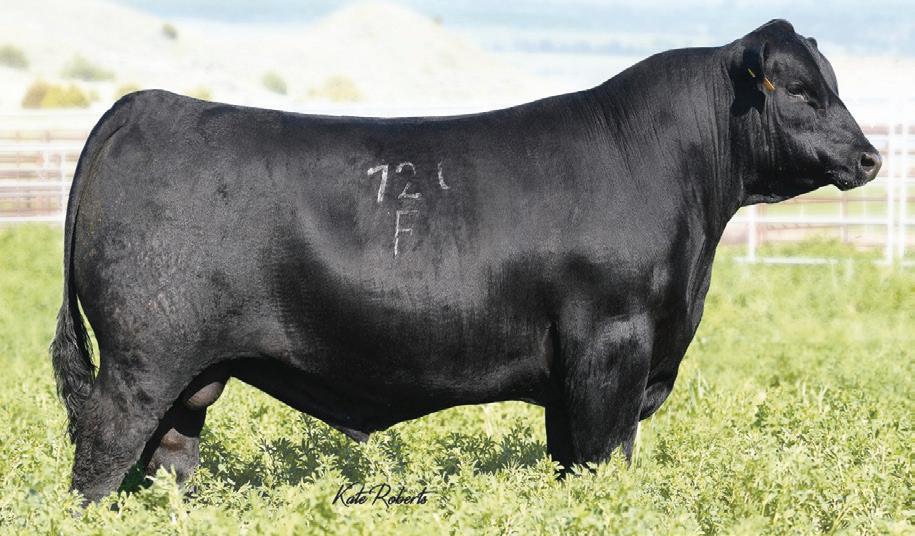
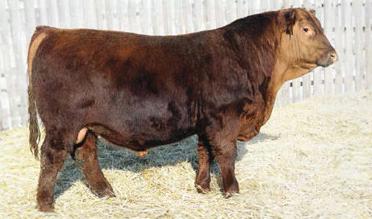
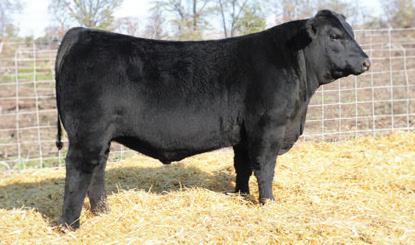
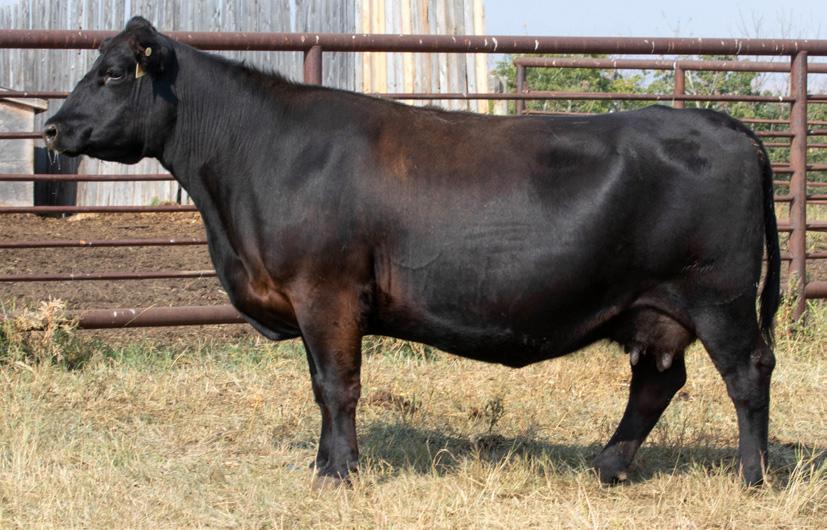
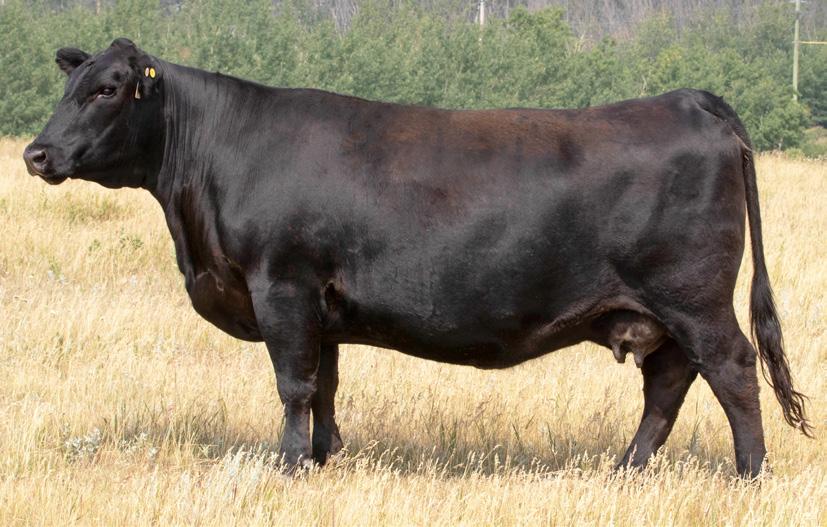
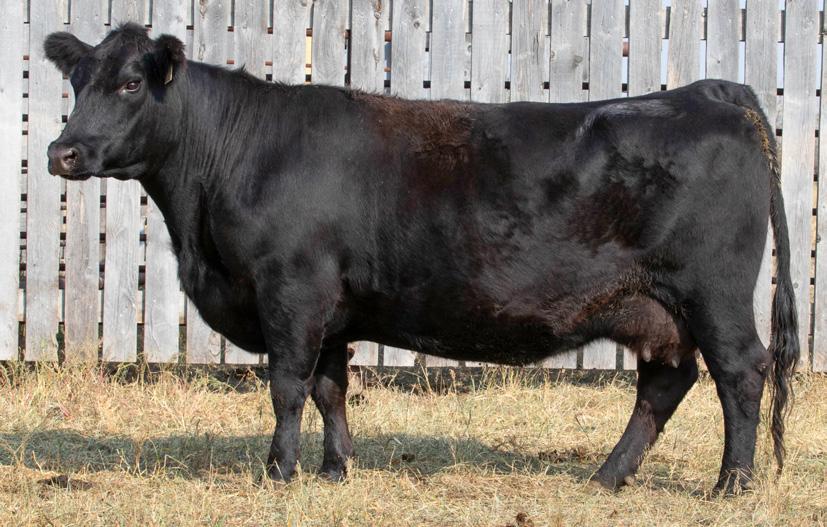
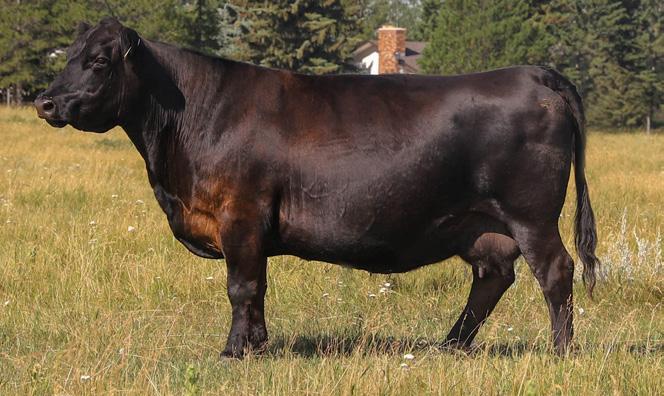
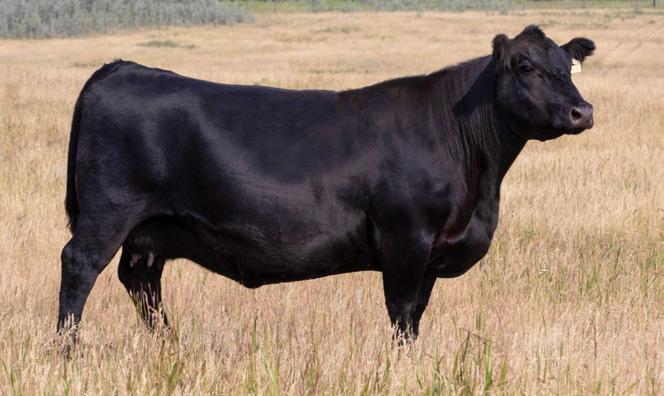
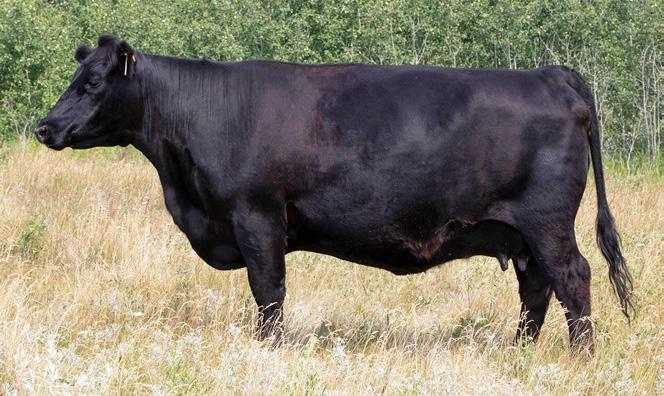
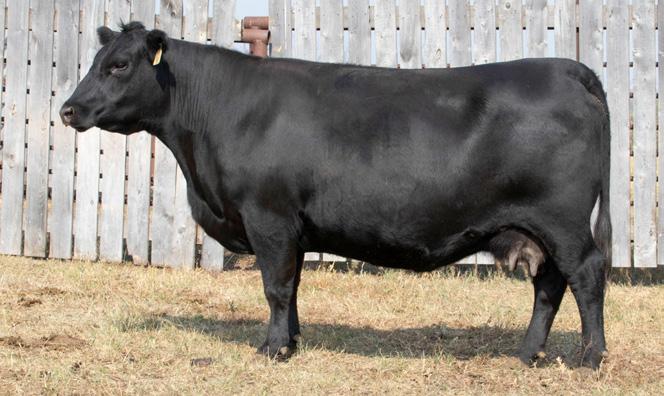
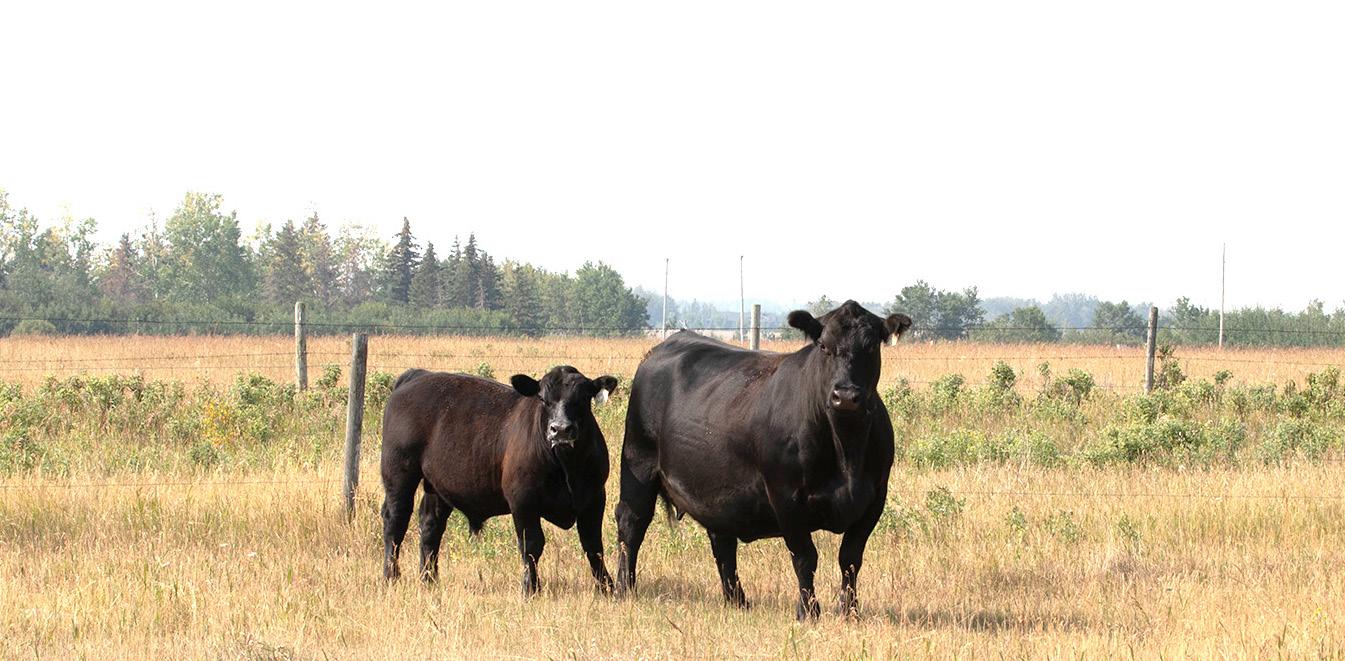
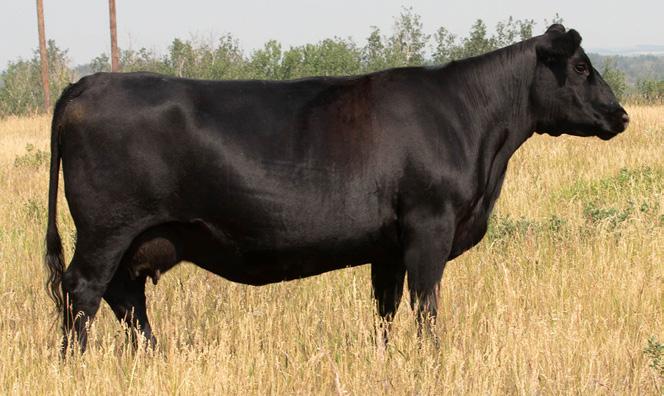
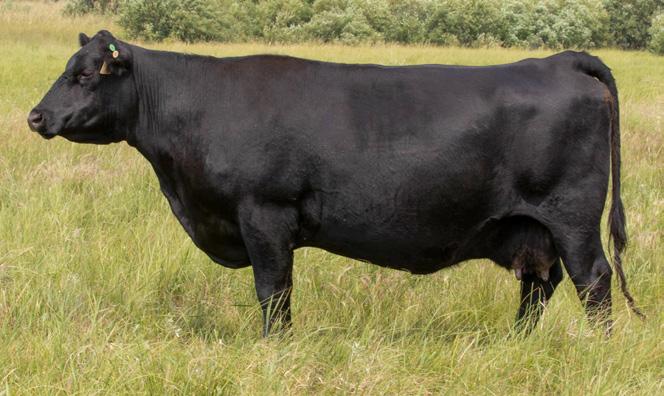
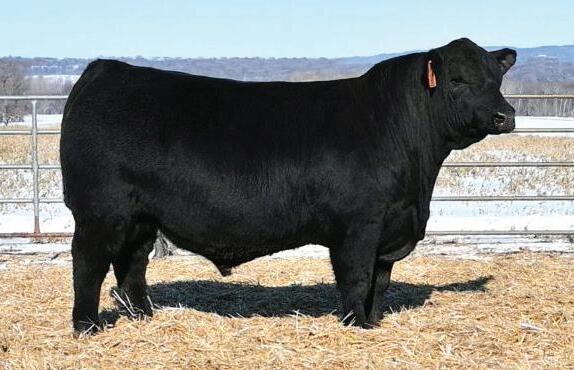
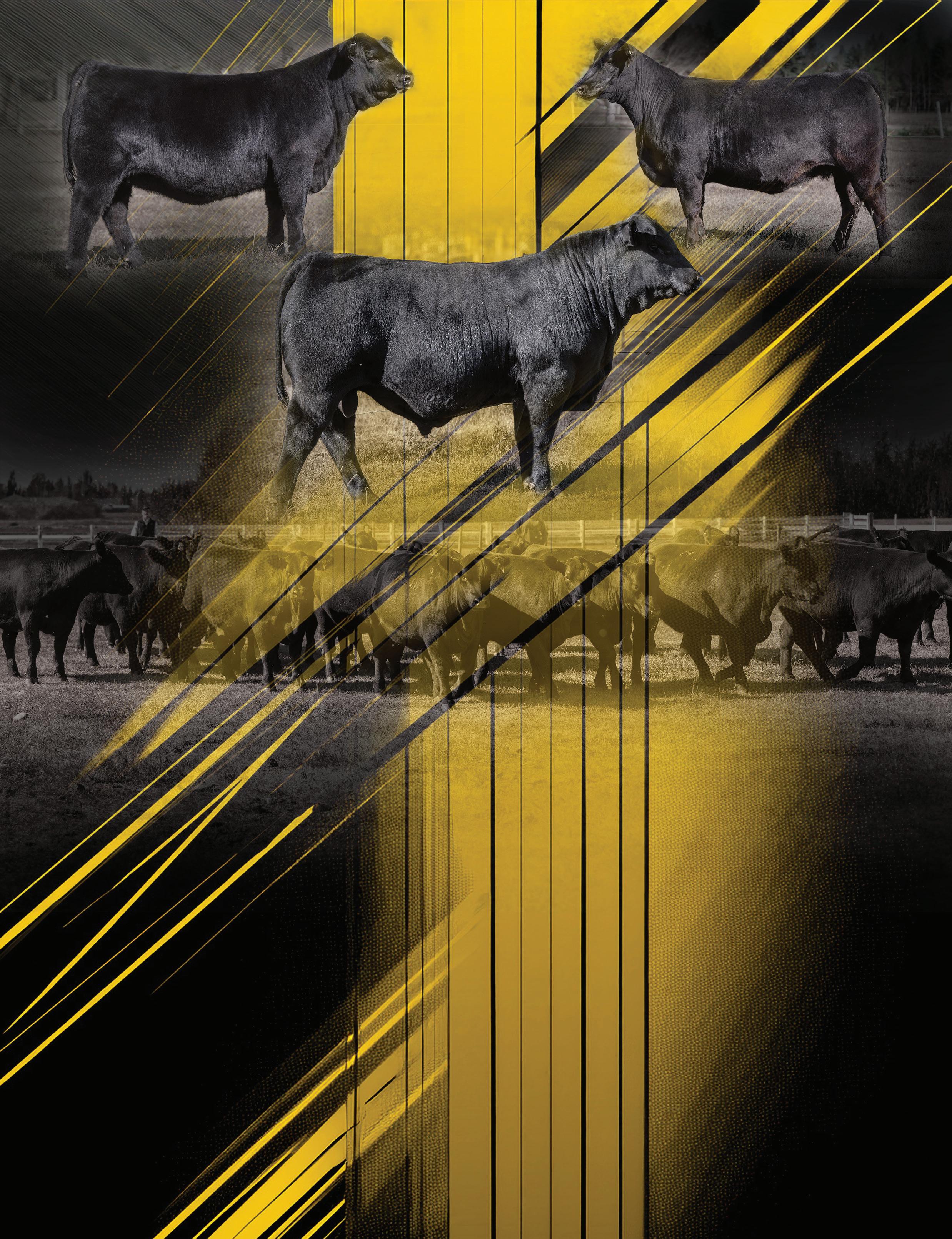
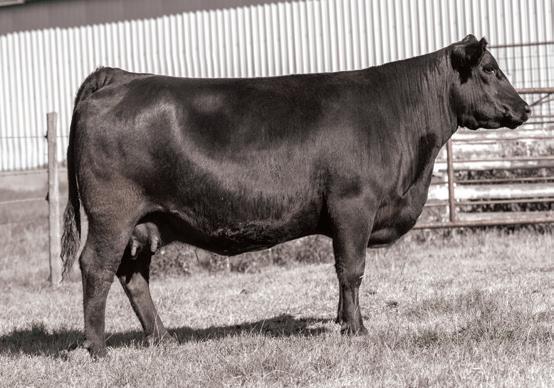
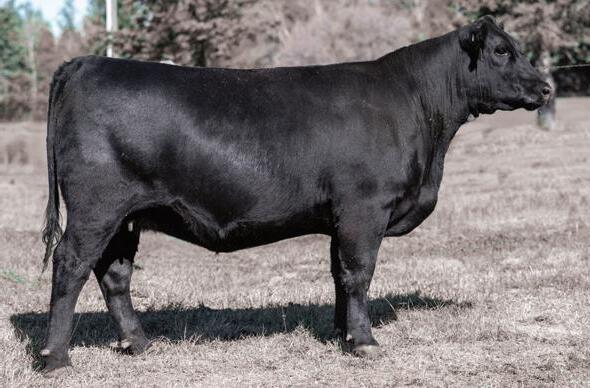
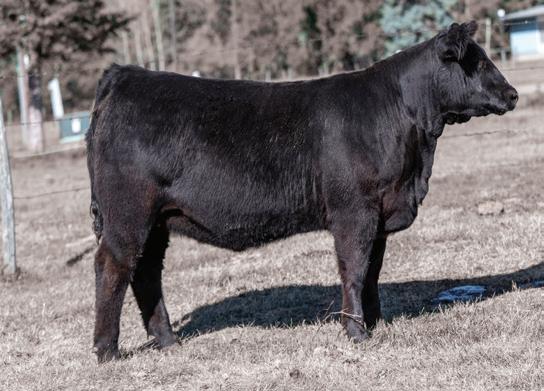
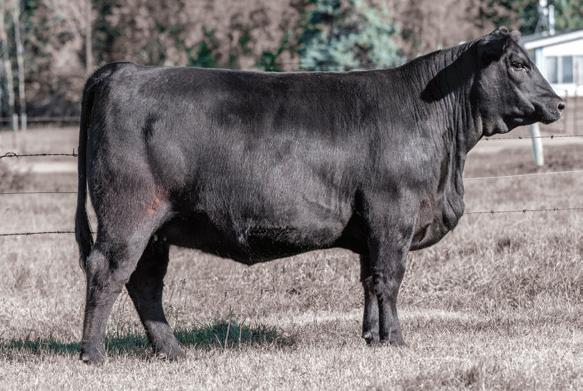
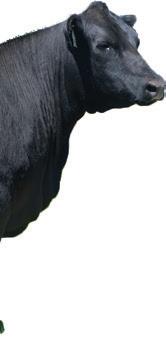
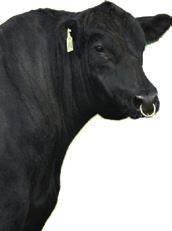
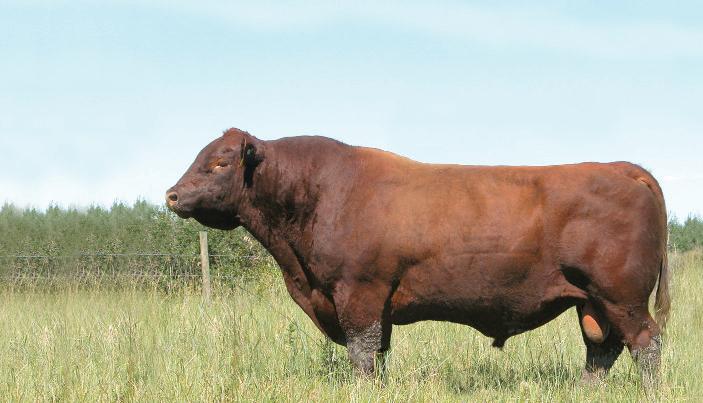
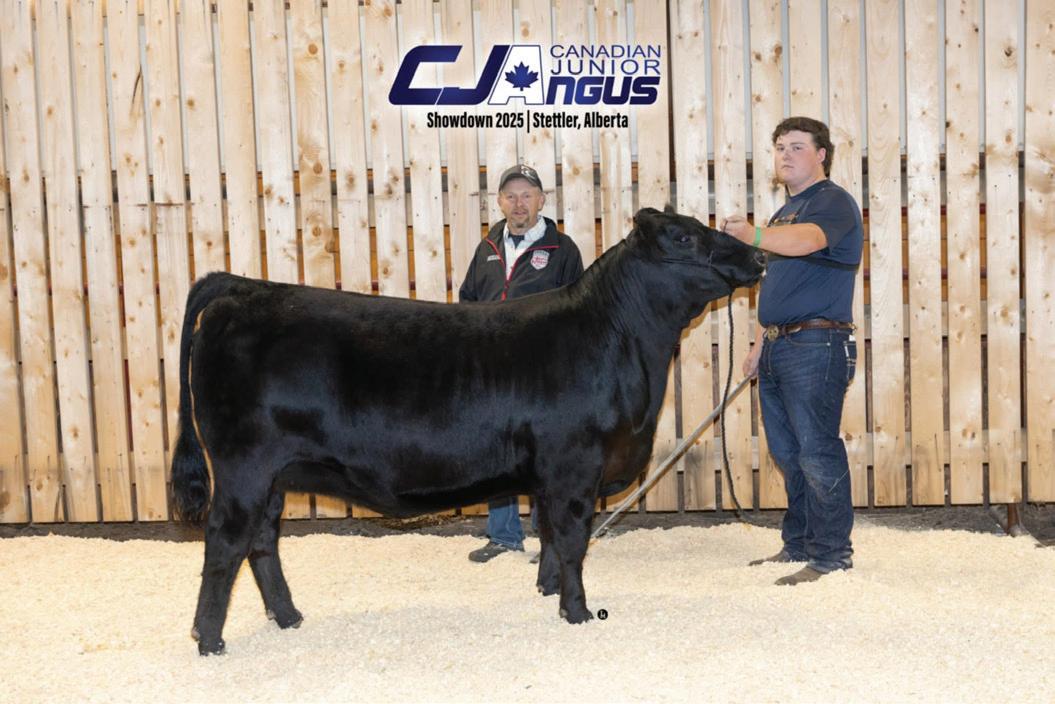
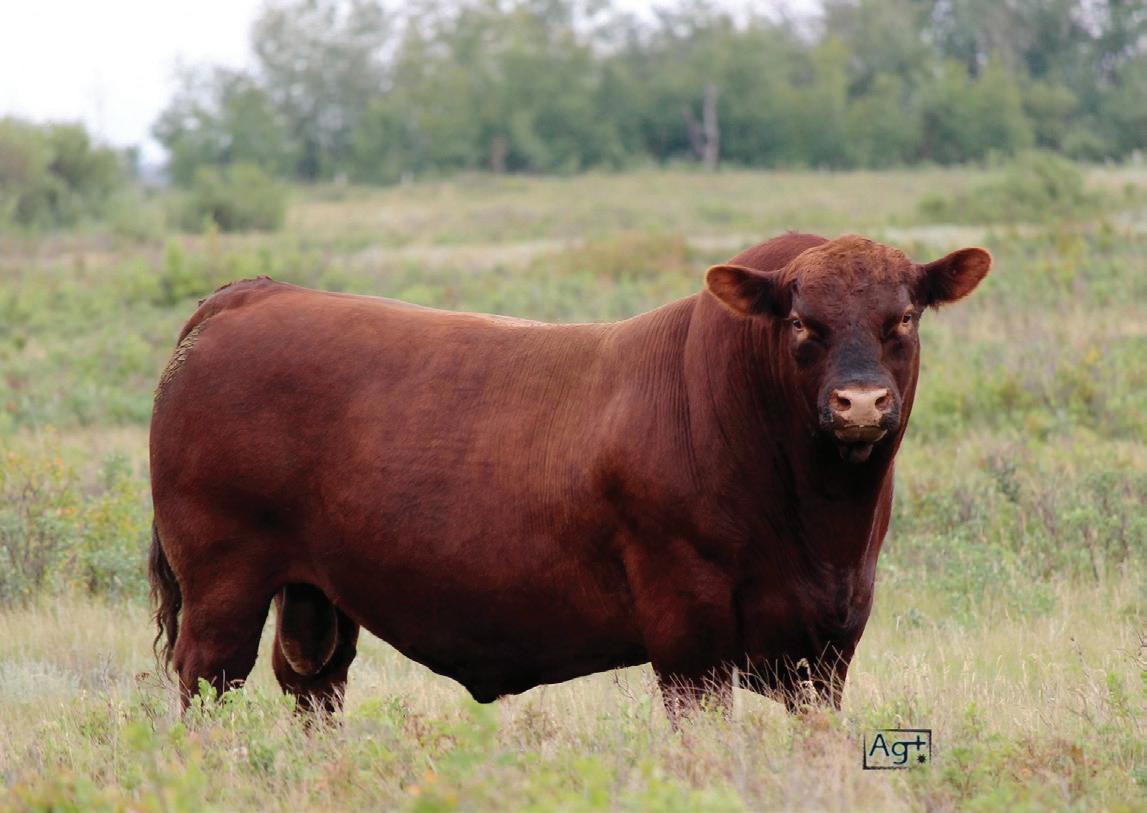
RED TWIN HERITAGE MOTIVATE 57E RED WILBAR REBECCA 834Z RED WILBAR DOLL 776C
RED WILBAR REBECCA 910J
TUESDAY, DECEMBER 2, 2025 - 1:00 PM
• The bulls are sired by SCHIEFELBEIN GOAT 271 (Schiefelbein Angus $232,000 top seller in 2022), SAV SCALE HOUSE 0845 (SAV $275,000 top seller in 2021), BASIN JAMESON 1076 (the $600,000 Midland high seller), and SITZ RESILIENT 10208.
• Their dams are sired by SITZ STELLAR 726D, HOOVER KNOW HOW, S A V BLOODLINE 9578, and S A V PRESIDENT 6847.
• The grand dams are sired by SITZ UPWARD 307R, SAV RESOURCE 1441, CONNEALY EARNAN 076E, and BALDRIDGE BRONC.
• The great grand dams are sired by HF TIGER 5T, N BAR EMULATION EXT, SAV NET WORTH 4200, and S A V HARVESTOR 0338. At the ranch 1.5 miles South of Etzikom, AB on Hwy 885
POWER OF
80 Bulls
60 Commercial bred females
FREE DELIVERY within 350 miles on all cattle
• Bulls guaranteed unconditionally for 3 full breeding seasons
• All yearling bulls have passed a semen test
• We would be pleased to winter bulls at cost
Our catalogue and a 1 minute video on each animal will be available in November at... www.stromsmoeherefordandangus.com
The catalogue includes:
• Feet scores on the mother of every bull (foot claw set and foot angle)
• Udder scores on the mother of every bull taken before the newborn calf has had a chance to suck (teat size and udder suspension)
• Docility scores on the dam of every bull taken within hours of birth
Box 505, Etzikom, AB T0K 0W0 www.stromsmoeherefordandangus.com Come early to view the
and
Vet’s Advice
By Roy Lewis,
Changes to Supply Alternatives & Advertising about Antimicrobials
They say the only constant is change, and these days—with global supply, manufacturing, transportation, and distribution issues—the word that can strike fear in producers or the veterinarians who supply them is “Backorder.” Every year, we convince ourselves that shortages will not happen.
The bigger a herd becomes, the more critical these shortages are. In this presentation, I will focus on potential solutions—ways to avoid shortfalls—and the importance of keeping an open line of communication between you and your local veterinary clinic.
This will help give you a heads-up about what is happening in the marketplace. One often forgets that, on a global scale, Canada’s livestock sector is small, so new developments may not make their way into Canada right away. Plus, if there is a shortage somewhere else, Canada may not get its fair share.
I have even found myself nervous, many times as a veterinarian, when essential products such as key antimicrobials, vaccines, growth implants, or dewormers became scarce and unavailable for extended periods.
Shortages are especially critical if they occur at key times and may lead to the overuse of other products. There is also the problem if stand-alone products become unavailable.
Regulatory bodies do take notice when essential products are in short supply and may grant concessions to allow production— such as what happened with lidocaine, the local anesthetic, in the past year.
The good news is that veterinarians are often the first to hear about shortages and can seek out alternatives for you. For most major products, there are alternatives that are remarkably similar, or even generics—
meaning they are essentially the same product sold under another trade name. In the case of vaccines, certain antigens may be missing or extra, but your veterinarian will know if that is truly critical to your situation. Remember, with COVID vaccines for humans, we switched between many different products, sometimes achieving an even better immune response.
The same principle can apply to bovine vaccines. There is a distinction between using modified live vaccines and killed vaccines, but when timing is the main concern, you may be able to switch products if availability—or rather, unavailability—warrants it.
We also hear about resistance—whether bacterial resistance to antimicrobials or parasite resistance to anthelmintics/ dewormers. Sometimes, this is geographically specific, so it’s important to follow your veterinarian’s lead. They, along with the pharmaceutical industry, have a good understanding of whether resistance is actually occurring in the field. Management changes can also help prevent overuse of antimicrobials or dewormers in practice.
I’m sure all of us now use fewer antimicrobials than in the past, thanks to low-stress weaning and direct marketing. This avoids the extra stress from trucking and co-mingling at auction markets, reducing morbidity and, in turn, the need for respiratory disease treatments.
Starting now, you will also notice no advertising of antimicrobials or other prescription products in producer magazines. The idea is to avoid steering producers toward products that require a prescription— these should come directly from your herd veterinarian. Hopefully, your veterinarian will stay up to date with advancements through industry contacts.
In my experience, producers have always been good at sharing information with each other about what they have been advised to use or vaccinate with.
However, to avoid misinformation, always run any new medications or treatments you hear about by your herd veterinarian first. This ensures the advice is accurate and not taken out of context.
In the past, advertising often led to confusion— such as hearing about an American product approved there but not in Canada. Even if it is approved here, withdrawal times may be different, making it easy to follow a path of misinformation.
It’s true that some veterinary clinics become very brand loyal and may not realize that another pharmaceutical company has a product that improves cattle production, is more convenient, or enhances animal welfare practices.
Even veterinarians can get so busy that they don’t have time to review new advancements.
Some may question the validity of new research until they’ve tried it themselves before recommending it to clients. Having a strong veterinary-client-patient relationship means you can openly discuss new products, ideas, or management changes— and get an informed response from your veterinarian.
Vet’s Advice
BETTER CATTLE BRING OPPORTUNITY
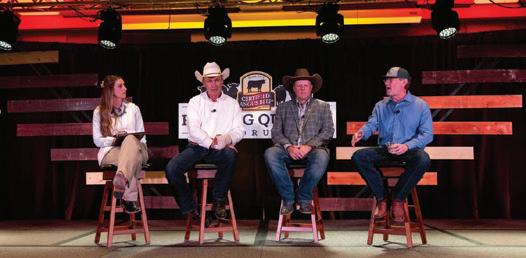
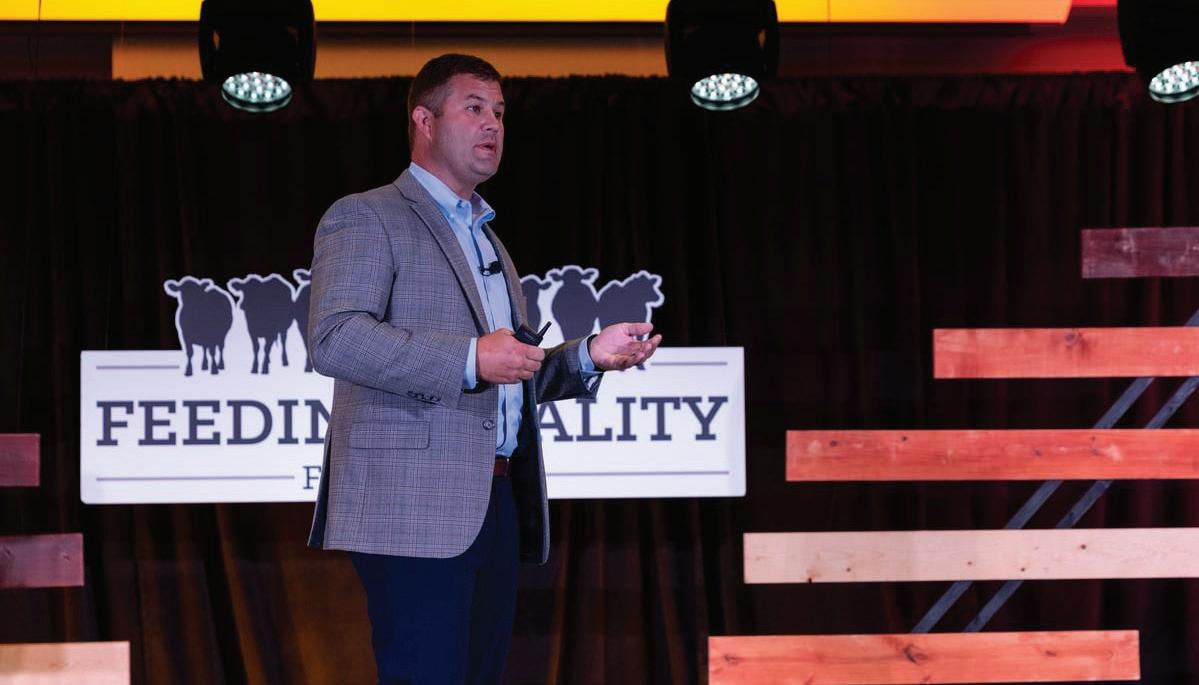
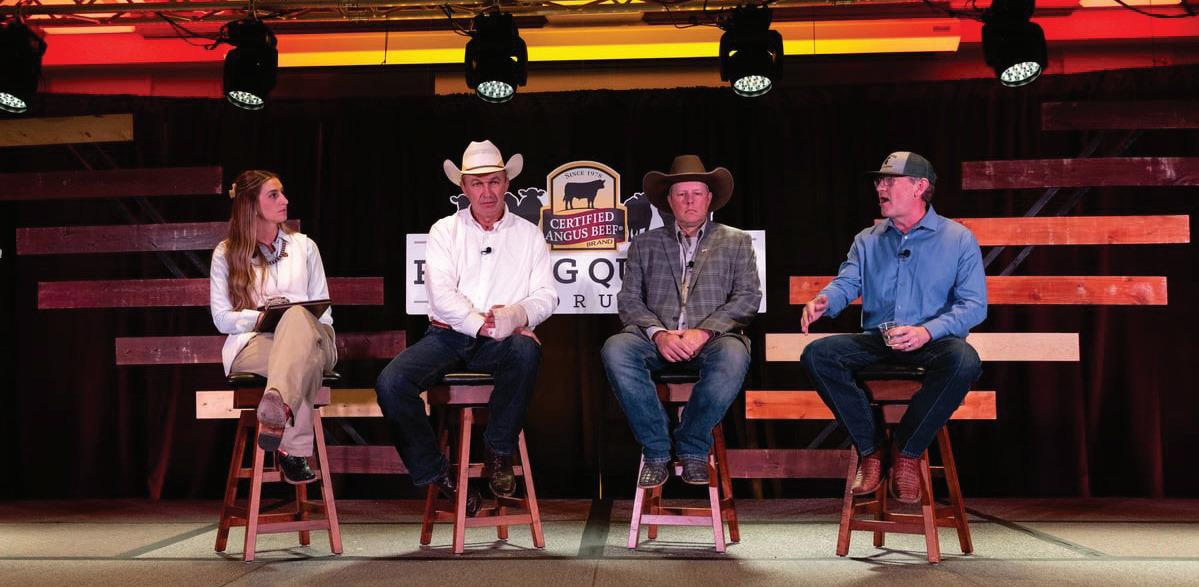
Cattle keep getting better, but that doesn’t mean producers should slow down progress. That’s what attendees took home from the 2025 Feeding Quality Forum, Aug. 14 and 15 in Rochester, Minn.
It’s call to action for the entire beef industry. Better cattle, yet new and old challenges for each segment.
“I would say congratulations to those of you responsible for the genetic selections behind this [improvement],” said Paul Dykstra, Certified Angus Beef (CAB) director of supply management and analysis.
“The rest of you added the management to it, and together, the choices that we’ve all made bring the consumer back to a very elitepriced protein item in the meat case.”
Cattlemen who focus on carcass traits are paid on grid performance, which is one of their biggest opportunities to capture more dollars.
Quality tracks seasonal trends—primarily based on the cattle cycle and when those calves are born—which leads to periods of high premiums and months with just okay premiums, Dykstra said.
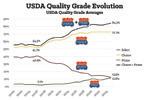
Fed cattle are averaging 70% Choice, with yield grades 2, 3 and 4. The market encourages more days on feed to add weight to these cattle. The result? Increased hot carcass weight, backfat and higher yield grades.
While yield and composition have been a priority since before the first National Beef Quality Audit in 1991, greater attention has been given to improving quality grades. Until now.
John Stika, CAB president, shared perspective as a member of the NCBA Red Meat Yield Working Group, which is evaluating whether the industry is using the right tool to determine cutability and effectively communicate relevant value difference back to producers.
The current yield grade equation hasn’t been updated since it was developed in 1960, and cattle and management practices influencing composition have changed dramatically since then.
“It’s not a matter of choosing quality or yield, it’s a matter of choosing how we’re going to move both of them forward, jointly and together,” Stika said.
No ceiling on quality
Cattle prices have reached a new pricing plateau, said Dan Basse, AgResource Company president. Each week, cash cattle prices are up, and “the packer keeps bidding higher and higher.”
He estimates beef will bring in $113 billion of revenue this year, while the total corn crop may bring $57 billion.
More good news for cattlemen: he said the younger generation likes protein and vegetables.
“If you would’ve told me last year that the retail price of beef could be somewhere in the vicinity of $9.50 per pound, and we had no demand rationing, no shifting to chicken or pork, I would have told you you’re crazy,” he said.
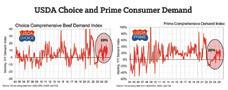
Quality and a consistent, repeatable eating experience are behind it, said David O’Diam. With all beef expensive, the most detrimental thing for consumers would be a bad eating experience.
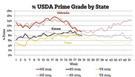
The increase in Prime carcasses since 2020 has resulted in a more consistent supply of Prime beef in the meat case, thus creating stronger demand for high-quality beef in grocery stores.
With 12% of the fed cattle grading USDA Prime, there is enough supply to fill consistent orders.
“There’s more demand for this product than what we have,” he said. “It’s item specific and there are a lot of caveats to it, but the reality is we are demanding more Prime today than ever before and selling it specifically at retail.”
Continuing the progress
Changing cattle takes time. Genetics is part of the equation, but management is just as important.
Dallas Knobloch, 4K Cattle LLC, manages a cow-calf herd and buys feeder calves to fill his Minnesota feedyard. As he works with ranchers, he encourages them to work on the 90% of things they can control. Price will follow.
“It’s about getting everything else right first,” Knobloch said. “Whether it’s health, genetics, shipping or trucking.
The timing for when we do a lot of these things makes a huge difference at the end of the day on a carcass and consistency across a pen.”
Cattle feeders like predictability. The value of a set of feeder calves varies, and many feeders have been burned before by black-hided cattle with unknown genetic composition, said Tim Schiefelbein, partner at Schiefelbein Farms and contract manager for American Foods Group.
Cattle feeders want to know what they’re getting and have a marketing plan in mind when they put a group of calves on feed.
“When you know what someone’s supplying you and you get comfortable, that’s when feeding gets fun,” Schiefelbein said. “Nobody wants a surprise.”
Marketing tools like AngusLinkSM verify what’s under the hide and let cattle buyers know exactly what they’re getting.
Genetic differences are easily masked by management and environment, said Brian McCulloh, Woodhill Angus founder.
“Data-driven selection speeds up what nature does slowly,” McCulloh said.
The tools are here, from genomically enhanced expected progeny differences (EPDs) and dollar indexes to genetic testing. Knowing heritability also helps to further a balanced-trait approach, because there may be unintended consequences of thinking narrowly.
“Establish your breeding objectives, and stay focused on them. Don’t get lost in the mania of choices,” McCulloh encouraged cow-calf attendees.
Management includes the resources at your ranch. Identifying outliers in your cow herd, alongside increasing productivity of your land, will help keep beef on the plate, said Jason Rowntree, Michigan State University professor.
“Managed grazing is having cattle at a place for a given period of time to accomplish a purpose with a given behavior,” Rowntree said.
“And that purpose can be to improve animal productivity; it can be to improve landscapes.”
in top shape, not just for wildlife, but for grazing cattle.
“You don’t keep the American grasslands for habitat and wildlife unless you keep the cattle and the cowboy on the land as well,” said Ryan Taylor, North Dakota rancher and director of public policy for DU.
“This is more about building a cow sanctuary, and then the ducks and the pheasants and everything else will show up,” said Troy Hadrick, South Dakota rancher.
In recent years, Hadrick has worked with DU to find ways to increase grass utilization. The better they manage their grass, the more cows they can have on the ranch.
Input costs are high, so accessing support for fencing supplies or pipe for new water sources can be the deciding factor on what projects get done.
From the ranch to the feeder, numerous factors are at play that affect cattle making it to the packer.
As cattle get bigger and better, different problems are identified. One question the industry faces: Are cattle getting too big for their hearts to handle?
Kelli Retallick-Riley, Angus Genetics Inc. president, shared the most recent research on bovine congestive heart failure (BCHF). What was thought to be a problem in steers and heifers on their way to the packer is causing more deaths at 110 days of age, according to the data.
While there may be a genetic component, there are likely also management strategies to minimize BCHF deaths.
“The challenge to all of us is that very few issues have been solved with genetics alone,” Retallick-Riley said.
That’s promising for an industry of forwardthinking producers with more tools at hand than ever before.
Lindsay Graber Runft Director, Producer Communication
Ducks Unlimited (DU) works with cattlemen to provide conservation dollars to keep grasslands
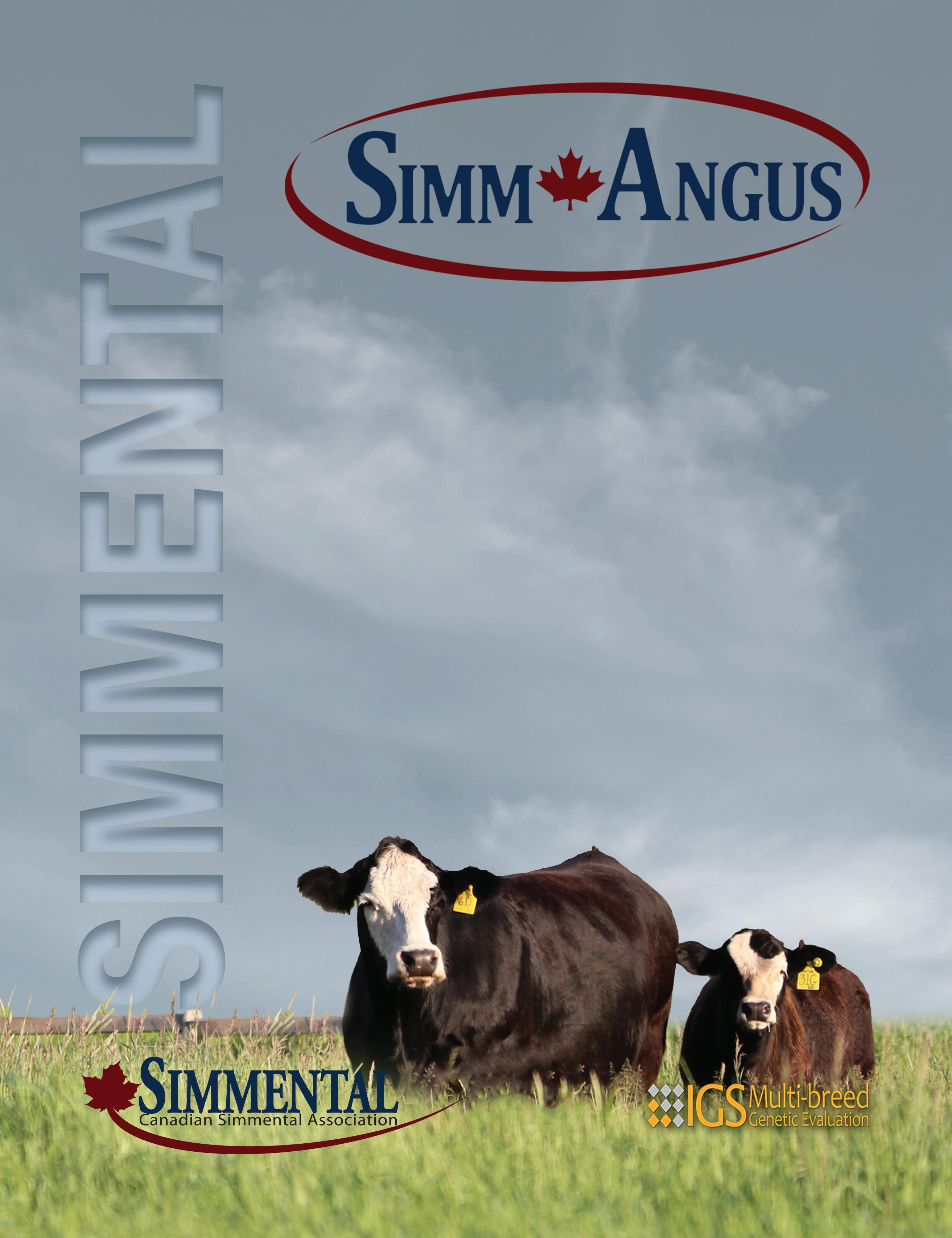
SimmAngus are the cornerstone of the Canadian beef industry.
The reputation of the Simmental breed is built off the International Genetic Solutions (IGS) genetic evaluation model which incorporates both Simmental and Angus data.
The Canadian Simmental Association is the ONLY place to register your half-blood Simmental/Angus calves and receive that information, and as a bonus they can be upgraded over the generations to purebred Simmental status.
Contact the CSA office for details.
FOOD FOR THOUGHT
Driving Passion for Beef Starts with You
This week I missed one of my favorite events of the year (Ag Media Summit) to be present at one of our family’s biggest events of the year (county fair). It is my daughter’s first year to show a heifer. As a rookie 4-H mom, I got to witness my little girl win her first purple ribbon for various projects. As a professional in agricultural communications, I sure wished I could have been in two places at once. Have you ever felt that way?
Your Angus communications team was recognized for their hard work, bringing home many first, second and honorable mentions from Livestock Publications Council and Agricultural Communicators Network. From Angus Media’s Megan Silveira being named LPC’s Photographer of the Year (again) to me being awarded ACN’s Communicator of the Year, plus many more recognitions in between—including one for this enewsletter! It’s an honor serving Angus ranchers day-to-day.
WHAT’S SIZZLIN’ AT CERTIFIED ANGUS BEEF
Driving Passion
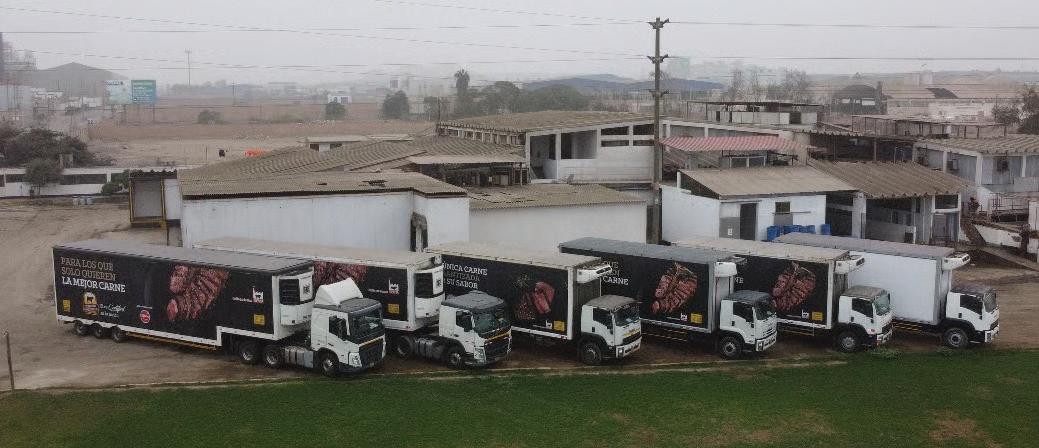
What does brand pride look like in motion? In Peru, it looks like five striking trucks rolling through Lima, wrapped in Certified Angus Beef ® (CAB) branding and backed by a team that believes in every pound they deliver.
INPELSA, a foodservice distributor partner, has transformed more than just their fleet. Their offices are a full-on brand experience, lined with bold visuals, product education and storytelling materials. They make it clear they’re not just selling the best beef, they’re championing it. Their rallying cry, “¡Si es Certified, es lo mejor!” (“If it’s Certified, it’s the best!”), echoes through their team and into every customer conversation. It’s proof that brand passion isn’t just talked about, it’s driven every day across the globe.
BOTTOMLINE DRIVEN
Serving Up Your Story
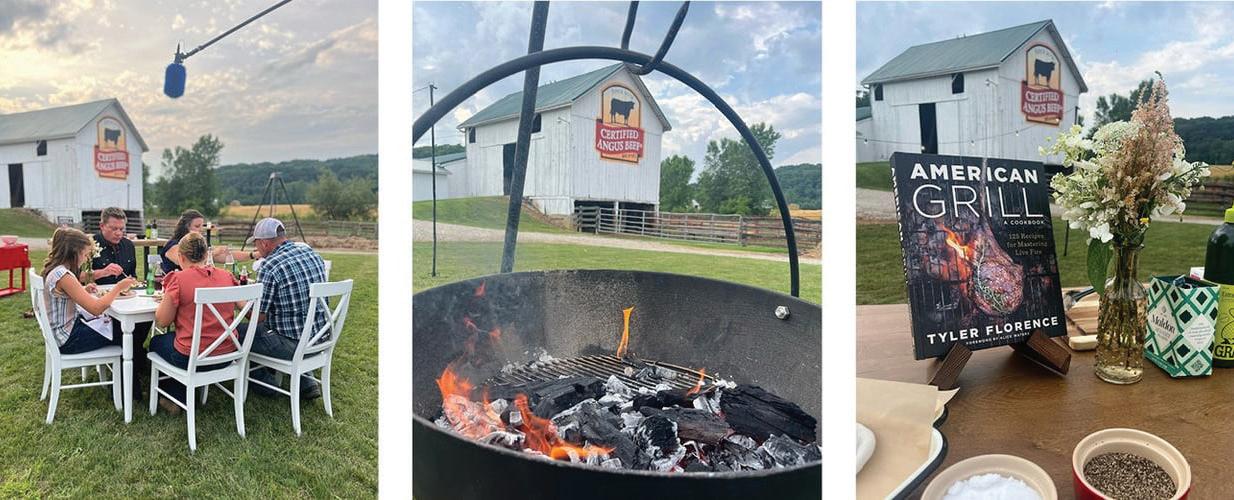
When Food Network celebrity Tyler Florence steps onto a family farm, he’s not just cooking… he’s putting your story and values front and center. He recently joined Mandy Atterholt, CAB Beef Community Educator, and CAB Chef Ashley at the Atterholt family farm in Ohio. They walked the pastures, talked cattle and sustainability, and explored what it truly means to raise beef the right way. It was an honest conversation between people who care deeply about where food comes from and who’s behind it.
Then they stepped behind the grill, right there on the farm. Using CAB cuts and recipes from Tyler’s new cookbook American Grill, the chefs fired up a live flame and brought that story to life through unforgettable dishes. As the final plates hit the table, they pull up chairs for Mandy’s family and share the meal that was just created.
Yes, this will become content for social media. But more importantly, it’s a chance to earn greater understanding and respect for what it takes to raise the best beef. It connects the dots between the families who raise the beef and the chefs who serve it, reminding consumers that quality starts long before the kitchen.
Chefs like Tyler and Ashley aren’t just focused on the plate, they care about the people who make it all possible. When chefs choose to tell your story, it builds pride, deepens trust and inspires a great respect for the beef raised with intention. When folks see that passion from pasture to plate, they’re not only choosing the best beef— they’re choosing you.
Lindsay Graber Runft Director, Producer Communication
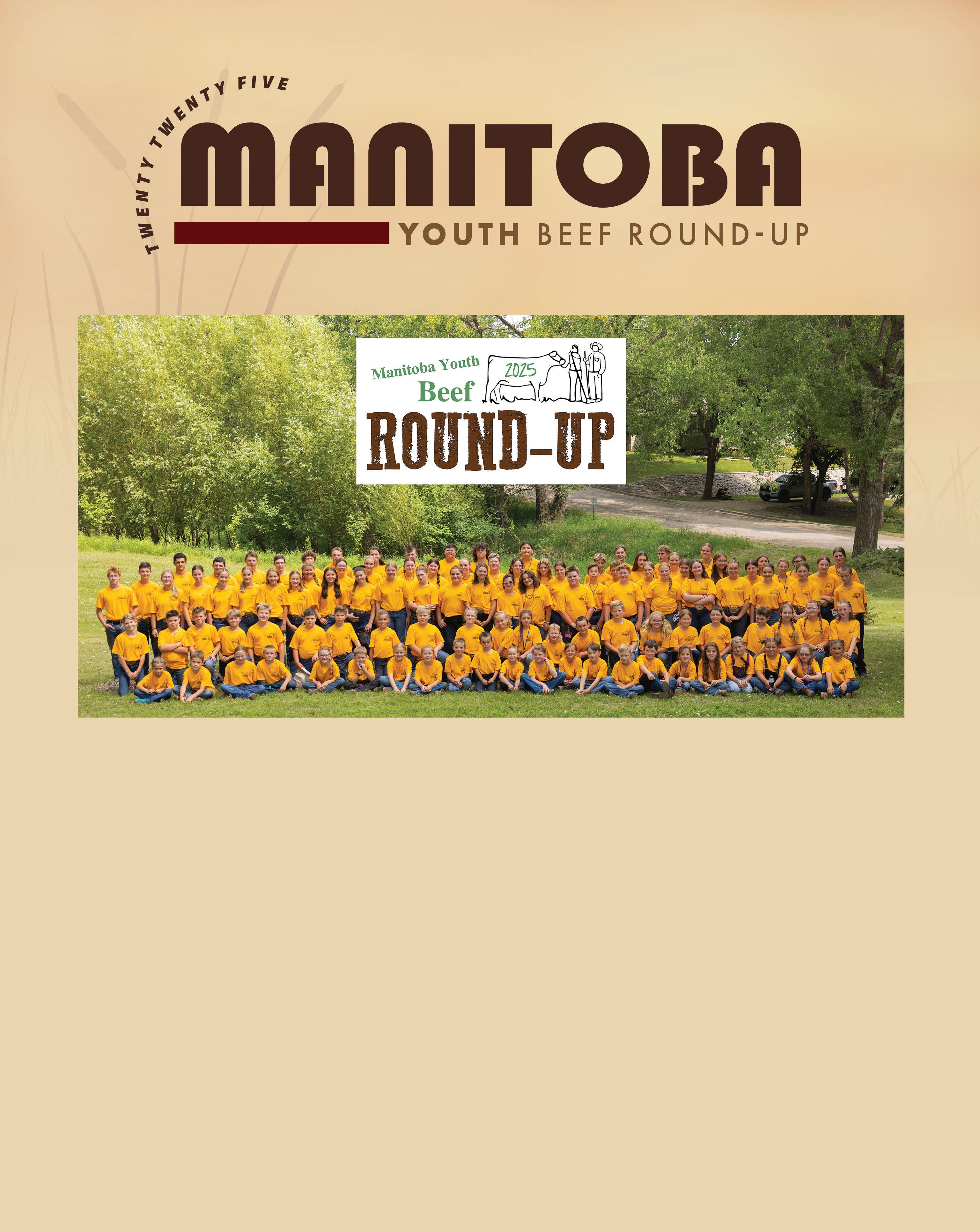
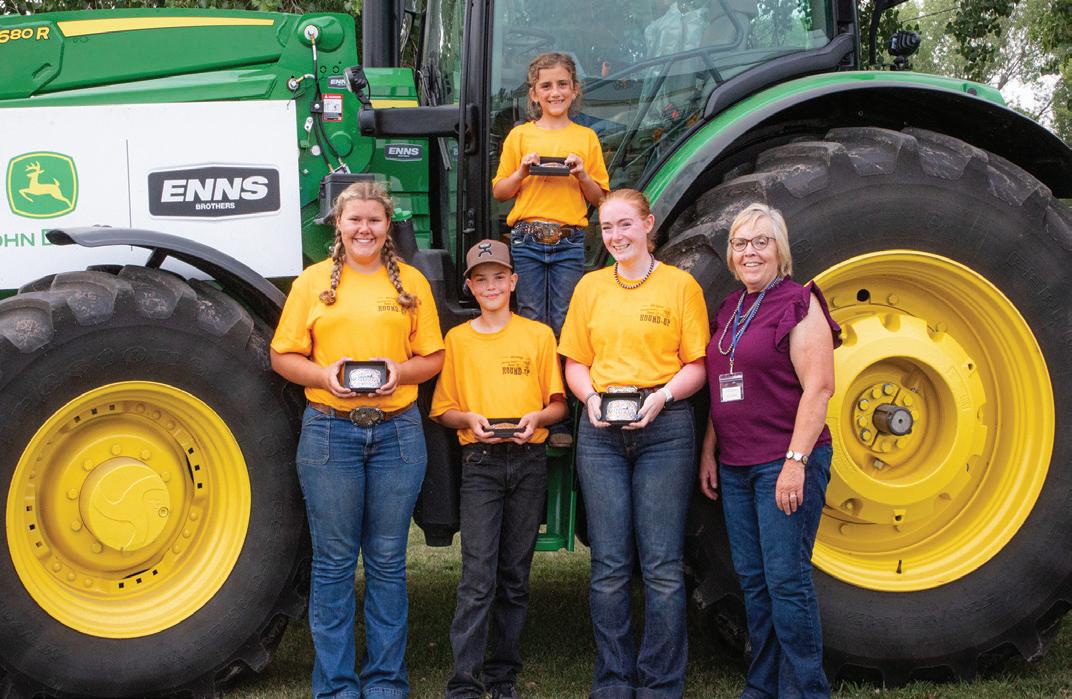
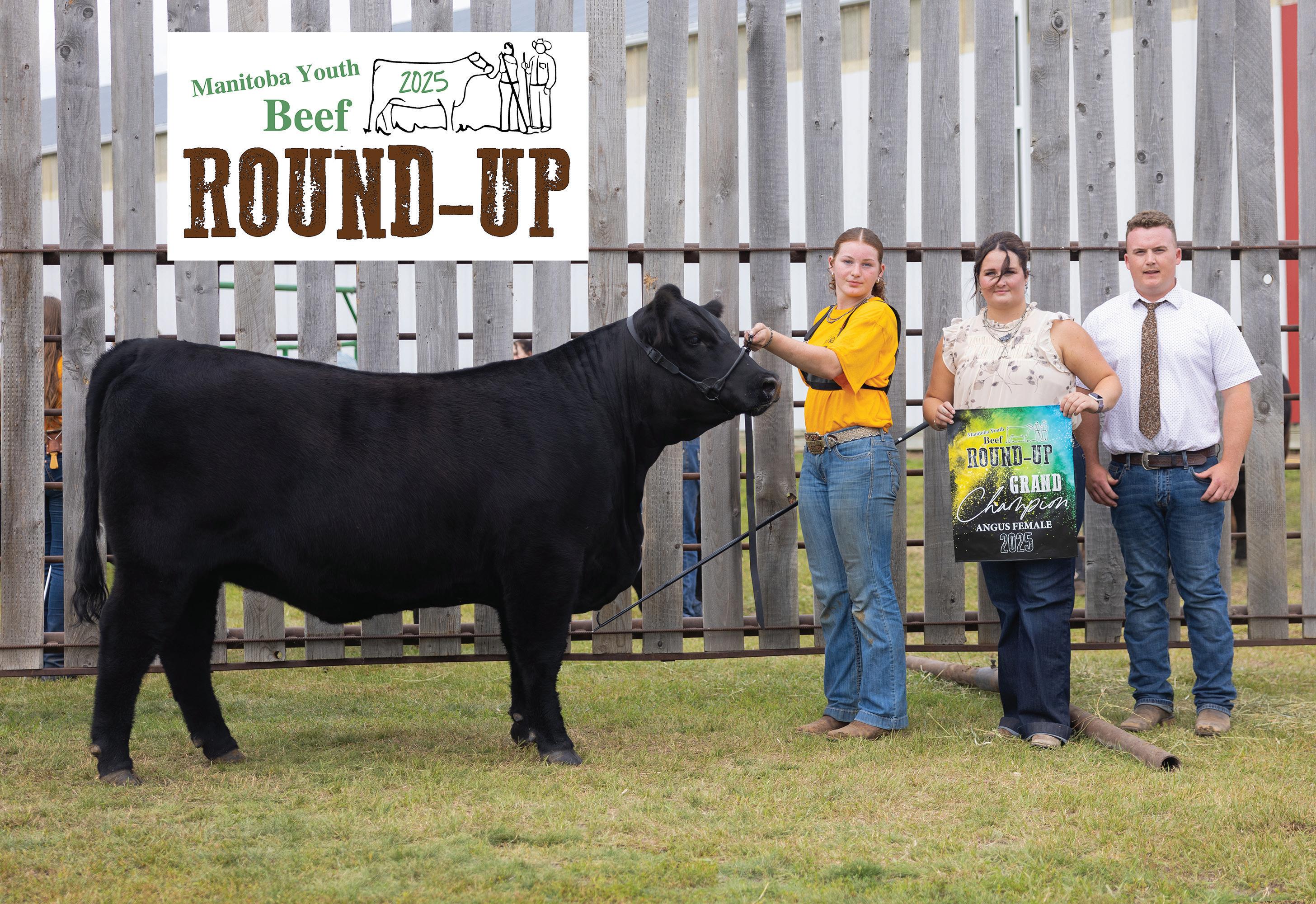
The 18th Annual Manitoba Youth Beef Round-Up was held August 1-3, 2025, at Stride Exhibition Place in Neepawa, Manitoba.
Over 109 youth and 122 head of cattle gathered for an educational and fun weekend. This event draws youth aged 6 – 25 from Saskatchewan and Manitoba. Committee members consist of: Co-Chairs Lois McRae, Jake Rawluk & Laura Horner; Dalyse Robertson, Ken & Kerri Hinsburg, Blair McRae, Rilla Hunter, Albert and Michelle Rimke, Megan Kemp, Lana Kraus, Mary-Jane Orr, Kara Thompson, Bobbi Jo Foster, Jolie Bootsman, Sadie McCauley and Gracie Falconer- Bertholet.
The success of this event is attributed to not only the teamwork of the committee members but also the hands-on assistance of parent volunteers, jumping in whenever and wherever necessary. Our judges for the weekend were Denver Bolton and Nolan Glover, Wawota along with Bevin Hamilton, Lakeland College. Friday events kicked off with the ever-popular Ag Challenge. Members are grouped into teams of all ages and 12 stations with life skills: example Changing a grease gun, Artificial Insemination, hot wire fence making, cattle parts of the animal, relays etc.
Educational workshops for Juniors and Pee Wee members on Showmanship and Grooming. Senior members were instructed on Marketing your product on the internet (Janelle Gulka) and how to take cattle photos (Laura Horner). Leadership workshop presented by Mary Jane-Orr and Jolie Bootsman for the Senior and Intermediate members ended off the day.
Saturday began bright and early with judging workshops facilitated by our three cattle judges.
Senior members were then required to judge heifers, steers, sheep, and filling out a judging card for each and providing oral reasons for the cattle, and sheep. Intermediates provided oral reasons for the heifer & sheep class and written reasons for the others. Juniors provided written reasons for all and oral reasons for the heifer class.
Pee-wee members and new juniors were involved in a unique Cattle Camp where they learned how to judge in a more appropriate setting, as well as making & tying rope halters parts of the meat cuts and boning legs. After lunch, members participated in Team Grooming, Team Judging, and Sales Talk.
The evening concluded with group members competing in the cook-off, where each group was provided with a steak and was required to prepare a meal for two discerning judges’ evaluation. Our judges were treated to feasts worthy of kings & queens! Steak Judges were Joan Airey and Ron McDonald from Manitoba Charolais, Gordon and Diane Peters, Liz from Neepawa Vet Clinic and Alice Rooke, Mazer Implements represented by Dave and Manitoba Beef Producers represented by Andre.
Sunday is show day. It begins with showmanship and is followed by the conformation show, a parade of 4-H Champions, and the Supreme Show. The weekend concludes with awards and supper. A large crowd attended the weekend events. It was great to see 8 past Roundup participants now that their children are involved in the Roundup show.
An auction of unique items was held with funds from the Auction going towards the Scholarship Fund. Special thanks to our donators and buyers for supporting this program $6190.
Special thanks to all our Sponsors and Volunteers who make this event possible. These skills are preparing our Livestock youth with lifelong skills and friendships in the Beef Industry.
See you all next year at Manitoba Youth Beef Roundup 2026.
THIS MAY BE THE BEST MANITOBA YOUTH BEEF ROUNDUP EVER HELD WITH A RECORD NUMBER OF ENTHUSIASTIC JUNIOR CATTLE PRODUCERS AND LARGEST NUMBER OF CATTLE TO DATE. SADLY, WE HAD TO TURN SOME JUNIORS AWAY AND SOME CATTLE AS WE WERE PACKED FULL.
Kate Hinsburg, Kiera Boulton, Britton Canart, William Cuthill, McCoy Glasman
Digger Award: Tristin Rea
Young Handler Award: Blake Airey
Herdsman Competition: Sigurdson/ Veldhuis Stall
Bob Gordon Memorial Award (overall top judge): Carson Baker
2024 Round-Up Scholarship Awarded to: Carson Baker
AGGREGATE AWARD WINNERS
Pee Wee Division
Pee-Wee Aggregate Winner: Bexley McIntosh
Junior Division
Junior Aggregate Winner: Reid Duguid
Intermediate Division
Intermediate Aggregate Winner: Kendra Hinsburg
Senior Division
Senior Grand Aggregate Winner: Cora Baker
Showmanship
Champion Pee-Wee: Bexley McIntosh
Reserve Pee-Wee: Benson Bootsman
Champion Junior: Brynn Steppler
Reserve Junior: Brayden Steppler
Champion Intermediate: Harley McCauley
Reserve Intermediate: Bryler Franken
Champion Senior: Brock Sigurdson
Reserve Senior: Otto Veldhuis
GRAND AGGREGATE WINNERS ROUNDUP 2025
You
Special thanks to all our sponsors and volunteers who make this event possible. These skills prepare our livestock youth with lifelong skills and friendships in the beef industry.
Foundation Legacy Scholarship | Deadline: January 5
Three awards totalling $10,000 will be presented to Canadian Junior Angus members recognizing overall academic achievement, leadership, community involvement, and industry knowledge. Awards in the amounts of $5,000, $3,000 and $2,000 will be presented.
Dick Turner Memorial Award | Deadline: May 15
The Dick Turner Memorial Award was established after the passing of legendary Angus icon Dick Turner. During his lifetime, Dick committed 55 years of his career to livestock publishing and successfully promoted and advertised the Angus breed specifically through the Canadian Aberdeen Angus News magazine. One $1,000 scholarship is presented annually.
awa R d S
Junior
Angus Stockman of the Year
Nominations due April 15
The Junior Angus Stockman of the Year award recognizes outstanding young cattlemen who are constantly growing their capacity by actively working with their Angus cattle, promoting their operation and cattle to the public, growing their knowledge of nutrition, genetics and breeding, and producing/selling quality Angus cattle. Five finalists will be selected from the nominations and will each receive $250. The winner will receive a $5,000 bursary to be used for genetics, cattle supplies/equipment, and/or training, along with travel assistance to attend Showdown.
Outstanding Young Angus Breeder
Nominations due April 15
The Outstanding Young Angus Breeder award was developed to recognize an Angus breeder between the ages of 22 and 30 who has demonstrated a desire to stay involved in the Angus business based on their involvement within the breed up to this point in his/her career. The winner will receive $5,000.
Robert C. McHaffie Junior Ambassador Applications due April 30
The Junior Ambassador acts as a role model for youth and represents members of the Canadian Angus Association. It is an opportunity to network with leaders in the agriculture industry and learn from them. Five finalists are selected from the applications and they each receive a $1,000 scholarship and a finalist buckle as well as assistance to attend Convention where they will compete for the Ambassador title. Ambassadors have the opportunity to attend at least one international event and various major agricultural events in Canada.
Canadian Junior Angus Scholarships | Deadline: May 15
A total of three scholarships will be awarded in the amounts of $3,500, $2,500, and $1,500.
Brian Good Memorial Scholarship | Deadline: October 15
The Brian Good Memorial Scholarship was established after the passing of Brian Good, “Mr. Angus”. Brian was the commercial connection in the Angus industry for more than 20 years and believed strongly in supporting our youth. Two awards totalling $5,000 ($3,000 for first and $2,000 for second) will be presented to a post-secondary student recognizing overall livestock industry commitment, community involvement and leadership activities.
B URS a RIES
GOAL Travel Bursaries | Deadline: January 1
Bursaries of up to $1000 will be awarded to deserving CJA members from anywhere in Canada. Bursaries must be used within the same year awarded to help offset travel and registration costs for attending the GOAL Conference.
U.S. Exchange Program | Deadline:
May 10
Canadian Junior Angus members have the opportunity to attend Junior Red Angus and National Junior Angus events each year, and in return members of the JRA and NJAA attend Showdown and/or GOAL.
Showdown Travel & Trucking Bursaries
Deadline: May 25 & June 1
Bursaries of up to $750 will be awarded to six deserving CJA members from anywhere in Canada. Bursaries must be used within the same year awarded to help offset travel costs for attending Showdown. Trucking assistance is also available for those who travel over 1,000 km one way.
Connecting Food and Farm Bursary
The Connecting Food and Farm Travel Bursary was developed to encourage urban or non-livestock youth to attend one of our events with a current member to learn about the industry. Examples of events may include but are not limited to GOAL Conference, the Canadian Angus National Convention or livestock shows.
Self-Directed National or International Travel Bursaries
The Self-Directed National or International Travel Bursaries were developed to assist young Angus breeders with financial travel assistance for conferences or events related to the beef cattle industry. For members aged 18–30.
saskatchewan SASKATCHEWAN
Quality Red Angus
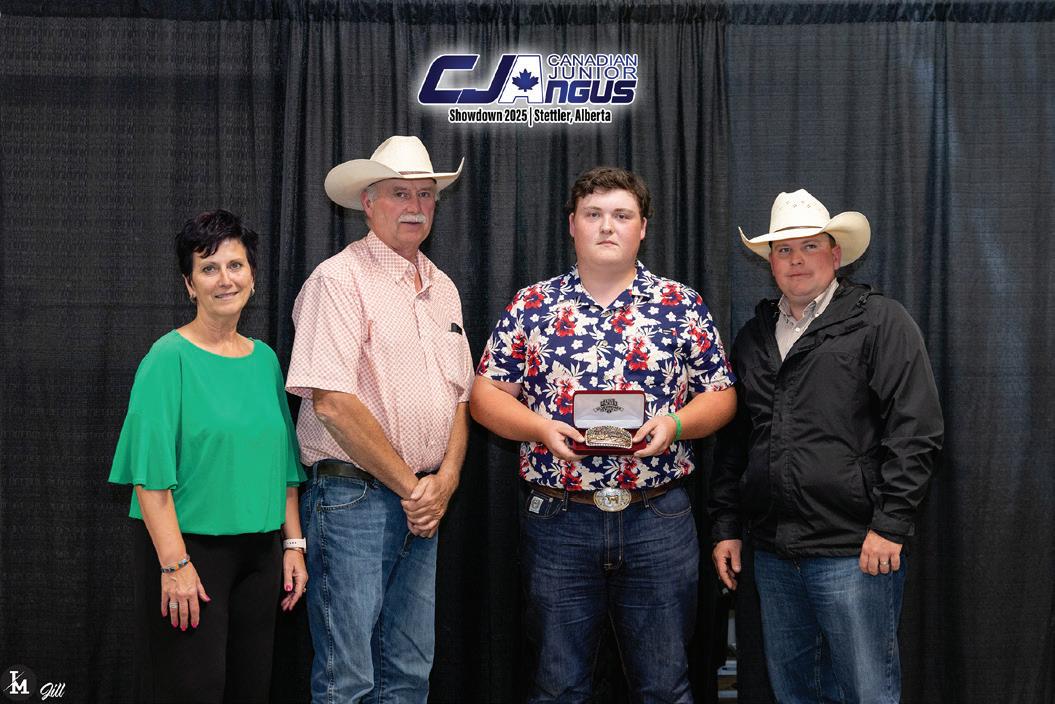
STOCKMAN OF THE YEARAustin Potts 2025 Junior Angus
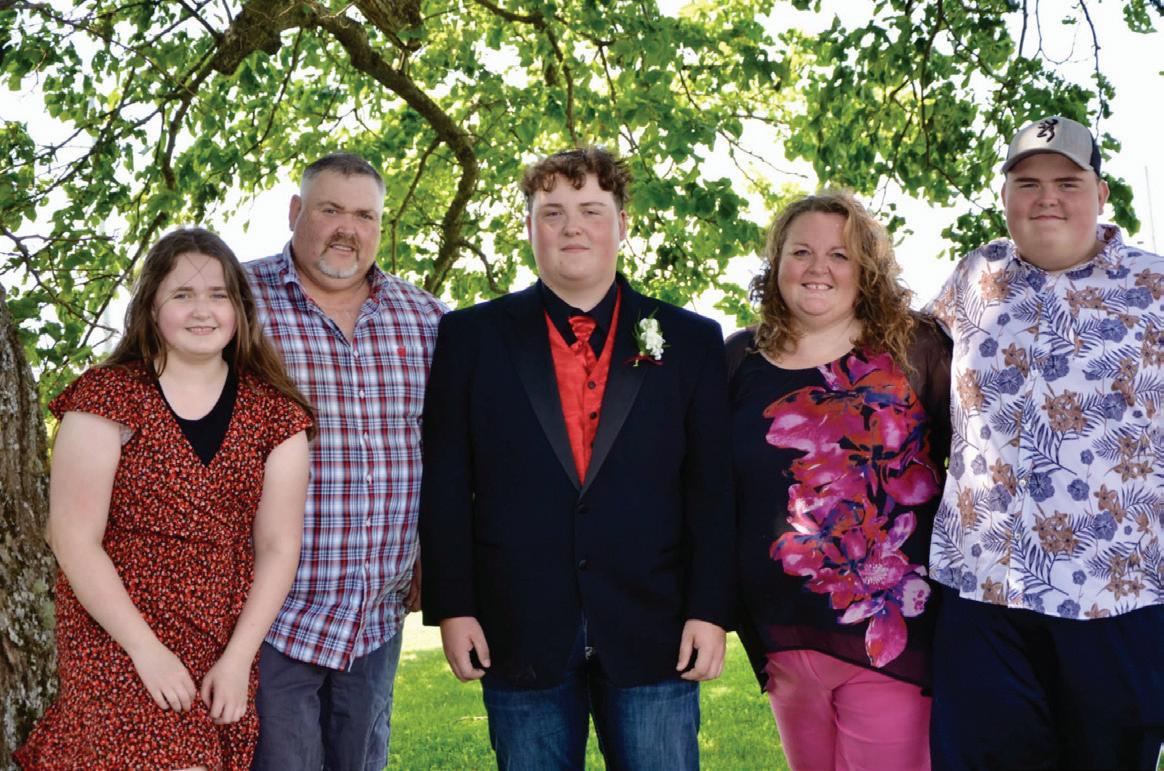
Austin Potts of Bonshaw, PEI, is a fourth-generation Angus enthusiast whose passion for the breed runs deep on both sides of his family. His Angus journey began in 2015 when his grandparents, Temple and Gail Stewart, gifted him his first purebred heifer. Today, Austin plays an active role in both his family’s commercial operation, Argyle Hill Cattle Company, and in expanding the Angus influence within their herd.
A dedicated 4-H member since age nine, Austin has shown cattle at events across the Maritimes and nationally, including the Royal Agricultural Winter Fair and the PEI Easter Beef Show. He’s earned recognition as PEI’s Top 4-H Beef Member in 2023 and 2024 and placed in the top five at the EastGen Atlantic Showcase three years running.
Beyond the show ring, Austin works part-time with Worth-A-Bit Angus and gained valuable experience traveling the Maritime show circuit with JEM Farms. He recently graduated from Bluefield High School and will attend Dalhousie University this fall, pursuing a degree in Farm Business Management.
The Junior Angus Stockman of the Year award was developed to recognize those outstanding young cattlemen who are constantly growing their ‘stockmanship’ capability by actively working with their Angus cattle; with actual farm involvement in day-to-day care of their livestock; learning the pedigrees and being actively involved in some breeding decisions within their operation; promoting their operation and cattle to the public through various and diversified means; growing their knowledge of nutrition, genetics and breeding; producing, selling and supporting demonstrable, reputable, notable, superior quality cattle; and understanding the relationship between our purebred Angus business and the commercial cattle and beef industry from the cow/calf producer through to the retail consumer experience. Five finalists are selected from the nominations. The winner receives a financial reward and a custom trophy buckle. Nominations are due by April 15.
WHY DID YOU JOIN THE CANADIAN JUNIOR ANGUS PROGRAM?
When Showdown came to Nova Scotia in 2016, some family friends invited my family to come and show with them. I was only a Peewee at the time, but Angus cattle had been in my family for generations. Starting with my great Grandfather who was one of the first to use Angus cattle on Prince Edward Island. And I will be the fourth generation after him.
HOW HAS THE JUNIOR ANGUS BEEN BENEFICIAL TO YOU?
Junior Angus has been beneficial to me because it has allowed me to travel to many shows like the Maritime Angus Field Day, and all the Angus Gold Shows in Atlantic Canada. And of course my recent trip to attend Showdown in Alberta and receive the 2025 Junior Angus Stockman of the Year award. It has also allowed me to make many friends through the Angus breed who I will know for the rest of my life.
WHAT HAS BEEN ONE OF YOUR HIGHLIGHTS OR FAVORITE MOMENTS OF RAISING ANGUS CATTLE?
My favorite moment in my experience with Angus cattle would definitely be winning Junior Stockman of the Year award and purchasing my first heifer JEM 41L from JEM Farms.
TELL US ABOUT YOUR OPERATION
Argyle Hill Cattle Co. is an 80 head commercial and purebred Angus operation in Bonshaw, PEI. We own around 400 acres which we use for growing corn, barley, and hay for the cattle. We background and finish our calves before they are sent to Atlantic Beef Products, our local processing plant located in Borden, PEI.
WHAT ARE YOUR SHORT-TERM GOALS AND LONG-TERM GOALS
AS AN ANGUS BREEDER?
My short-term goals are to finish my agricultural business diploma at Dalhousie Agricultural Campus and complete my education to use in my family’s farm. I also hope to become more involved in the Junior Angus program and attend more conferences such as GOAL and shows like Showdown in the future.
My long-term goals are to expand the farm and begin breeding my own purebred Angus cattle and use more high-quality Angus genetics in our commercial herd as well.
HOW HAS YOUR EXPERIENCE WITH THE CANADIAN JUNIOR ANGUS PROGRAM BEEN FOR YOU SO
FAR?
My experience has been great; I have been a part of it for nearly a decade but haven’t really been involved in the purebred business until a year or two ago. I have been lucky enough to go to all three Maritime Gold shows last summer and I plan to attend many more. Also, being awarded the Junior Angus Stockman Award for 2025 was a huge honor.
WHAT IS THE BEST THING ABOUT THE CANADIAN JUNIOR ANGUS PROGRAM?
The best thing would be that they care so deeply about the future of the Angus breed, and that they invest so much hard work and money into putting on events for us juniors to learn as much about the breed as possible.
WHY WOULD YOU RECOMMEND THE CANADIAN JUNIOR ANGUS PROGRAM TO OTHERS?
I would recommend it because it offers so many opportunities, whether it is attending your local exhibition to show, or to travel across the country to gather with the other juniors that have the same interests and goals as you do.
DO
YOU
HAVE ANY ADVICE FOR JUNIORS JUST STARTING OUT IN THE ANGUS BUSINESS?
My advice for any juniors would be to make as many friends as possible at all the events you attend as they will be people you may do business with in the future. Having connections in the breed is really beneficial. Also, attend as many shows and conferences as you can because they really are interesting and lots of fun!
Phone: 780-675-4664
info@olefarms.com www.olefarms.com
Kelly 780-689-7822
Graham: 780-675-0112
Residence: 780-675-3445
(780) 755-3160 (780) 209-9999
Justin: 403-647-4095
Ricki: 403-625-1606 rjlivestock13@gmail.com
YOUNG ANGUS BREEDER:
Ty Dietrich 2025
From the time he could walk, Ty Dietrich had one clear ambition: to be a cattle breeder. Raised on his family’s Redrich Farms in Forestburg, Alberta, Ty was never just a bystander in the family seedstock operation. As a young boy, he eagerly took part in selecting the herd’s first purebred Red Angus females alongside his parents, Bill and Tracy. Though his eye for cattle was still developing, his passion was undeniable, and it’s only grown stronger with time.
Redrich Farms truly reflects the meaning of a family operation. Ty, alongside his siblings Katelyn, Bailey and Lexi, has been instrumental in shaping the herd’s genetics and brand. From 4-H to junior breed associations and national shows, the Dietrich kids became well-known for their contributions to the Angus breed. Ty, in particular, stood out as an “old soul” connecting easily with industry veterans and bringing maturity, work ethic, and vision far beyond his years.
Ty’s leadership and influence within the operation have helped Redrich Farms reach new heights. Since launching their own independent annual bull and female sales, the farm has seen consistent growth in volume, average, and gross each year - an achievement few can claim. Ty’s keen eye for cattle, tireless work ethic, and forward-thinking approach have been central to this success.
In 2015, Ty was recognized as the inaugural winner of the Canadian Angus Foundation’s Junior Angus Stockman of the Year Award. Even before that, he represented Canada at the 2013 World Angus Forum Youth Team Challenge in New Zealand, where his team earned Reserve Grand Champion. A former 4-H standout and Alberta Junior Angus Association board member, Ty’s commitment to youth involvement and community mentorship remains a hallmark of his leadership today.
Beyond the farm gate, Ty pursued training in marketing, graphic design, and photography immediately after high school. He worked under one of Canada’s leading livestock photographers before purchasing the business in his early 20s, now proudly operating as AgPlus Design & Photography. Through this venture, Ty supports livestock producers across the country, helping them elevate their marketing and connect with fellow breeders.
Despite his many accomplishments, Ty’s greatest pride is his family. He and his wife Shania married in 2018, and together they are raising three daughters, Rigley, Saylem, and Holland; instilling in them the same values of hard work, humility, and love for cattle that Ty himself grew up with.
Now 29, Ty Dietrich exemplifies what it means to be an Outstanding Young Angus Breeder. With a lifelong commitment to excellence in breeding, mentorship, and business innovation, Ty is not only shaping the future of Redrich Farms but also contributing meaningfully to the growth and sustainability of the Angus breed in Canada. His dedication to progress and his unwavering standards continue to set a benchmark for young breeders nationwide.
Lauron
Jailbreak, a Herdbull at Redrich Farms
Photo taken by Ty Dietrich
WHY DID YOU JOIN THE CANADIAN JUNIOR ANGUS PROGRAM?
Ty’s roots in the Angus industry go way back. His family bought their first purebred Angus cows in 1999, when he was just four years old, and from the start, he had a natural passion for Red Angus. While he’s also dabbled in the Simmental side of things, thanks in part to his wife’s background, Red Angus has always been where his heart lies. That early introduction set the foundation for what became a lifelong journey in the cattle world.
HOW WAS THE CANADIAN JUNIOR ANGUS BENEFICIAL TO YOU?
For Ty, the Canadian Junior Angus program was more than just a youth club; it shaped who he is today. Starting with the Alberta Junior Angus show and later moving on to the national level, the support from CJA was invaluable. From travel bursaries and scholarships to the connections he made across the country, it all played a huge part in his personal and professional growth. Many of those friendships have turned into lifelong relationships, and he credits the junior program for opening countless doors in the industry.
WHEN DID YOU FIRST KNOW YOU WANTED TO STAY INVOLVED IN CATTLE RANCHING?
It didn’t take long. By the time Ty was five or six years old, he already knew his heart belonged on the farm. When his mom asked if he wanted to play hockey, he confidently replied, “No, I want to stay home and farm.” And that was that. He chose chores over sports as a kid, though he eventually played football in high school and even competed in the Canadian Junior Football League. He had CFL offers on the table before a knee injury ended that path, bringing him back to where he truly belonged - the farm.
WHAT HAVE BEEN YOUR MOST MEMORABLE HIGHLIGHTS RAISING ANGUS CATTLE?
There have been a few standout moments for Ty, but one of the most memorable was the 2013 World Angus Forum trip to New Zealand. It was an incredible experience, with a great group of people and plenty of inspiration. That same year, back home, Ty’s operation had a major win with their bull “Longitude,” who was named Supreme Champion Bull at Agribition. He went on to win the Champion Angus Bull of the World title through the online Angus Breeder.net competition. Two years later, a son of Longitude; carrying Ty’s own prefix, followed in his sire’s footsteps, winning Supreme Champion Bull at Farmfair and also taking home the Champion Angus Bull of the World title. Those back-to-back wins are still some of Ty’s proudest achievements.
CAN YOU TELL US A LITTLE ABOUT REDRICH FARMS?
Redrich Farms got its official start in 1999, though Ty’s dad had been leaning toward Angus cows for some time. At first, they bought purebreds without papers to use in their commercial herd, but after encouragement from visiting breeders, they started registering calves. Today, the operation has gone full circle through the tattoo alphabet.
They’ve since added some Simmental genetics and still maintain a commercial herd when feed allows. Embryo transplants have become a bigger part of the operation, with commercial cows now playing a vital role in that process. They try to sell 10–15 F1 heifers each year in their annual bull sale, and Ty has a deep appreciation for the quality of those animals.
Redrich Farms runs on about 500 acres of farmland used mainly for cow feed, with additional pasture land nearby, some of which is in the Battle River Valley, providing a buffer from grain farming pressures. Ty is now the second generation in the purebred side of the business, and his daughters will be the third, making them fifthgeneration farmers on the home place.
Redrich Farms 2024 fall show string at Farmfair International
WHAT ARE YOUR SHORT-TERM GOALS?
In the near future, Ty’s focus is on continuing the family legacy. He hopes to take over the farm from his parents and keep it moving forward, eventually passing it on to his own kids. One personal goal is to get back in the show ring with his wife, something he hasn’t done since before they were together, and relive those big moments from 2013 and 2015.
WHAT ABOUT LONG-TERM GOALS?
Absolutely. Ty doesn’t look too far outside the world of cattle and farming, he knows it’s where he belongs. He’s grateful for the strong cattle market right now and is enjoying the moment, but he knows how quickly things can change.
His parents encouraged all the kids to get post-secondary education, so Ty took a graphic design course, which he still uses today for bull sale photos during the winter. But that’s starting to slow down as his focus shifts even more to the farm. His siblings have taken different paths, his brother’s a welder, one sister is a teacher, and his youngest sister recently graduated from Lakeland College with hopes of returning to help on the farm as well.
WHAT ADVICE WOULD YOU GIVE TO YOUNG BREEDERS JUST GETTING STARTED?
“Stick it out.” That’s Ty’s advice in a nutshell. He acknowledges the road isn’t easy, expenses, land costs, and market fluctuations are real challenges - but he’s always found support in the Angus community. Other young breeders have been there to help, just as he hopes to do now. Tough times come and go, but if you can ride them out, there’s real reward waiting on the other side.
WHAT DOES WINNING THE OUTSTANDING YOUNG ANGUS BREEDER AWARD MEAN TO YOU?
For Ty, winning this award is incredibly humbling. After being a runner-up a few years ago, getting the call that he’d won this time around was a big deal. It means a lot - especially after being the firstever winner of the Canadian Junior Angus Stockman award. With this new recognition, he jokes he might be one of the most decorated graduates of the Junior Angus program, but at the core of it all, it’s just about passion. And Ty’s passion for Angus cattle has never wavered.
The Outstanding Young Angus Breeder award was developed to recognize an Angus breeder between the ages of 22 and 30 who has demonstrated a desire to stay involved in the Angus business for years to come based on their involvement within the breed up to this point in his or her career. The winner will receive promotion and publicity of their Angus cattle operation through the Canadian Angus Association, plus a financial reward. Nominations are due by April 15.
For more information, please visit the Canadian Angus Foundation website at: www.cdnangus.ca/foundation/scholarships-bursaries-and-awards
For Ty, the Canadian Junior Angus program was more than just a youth club; it shaped who he is today. Starting with the Alberta Junior Angus show and later moving on to the national level, the support from CJA was invaluable. From travel bursaries and scholarships to the connections he made across the country, it all played a huge part in his personal and professional growth.
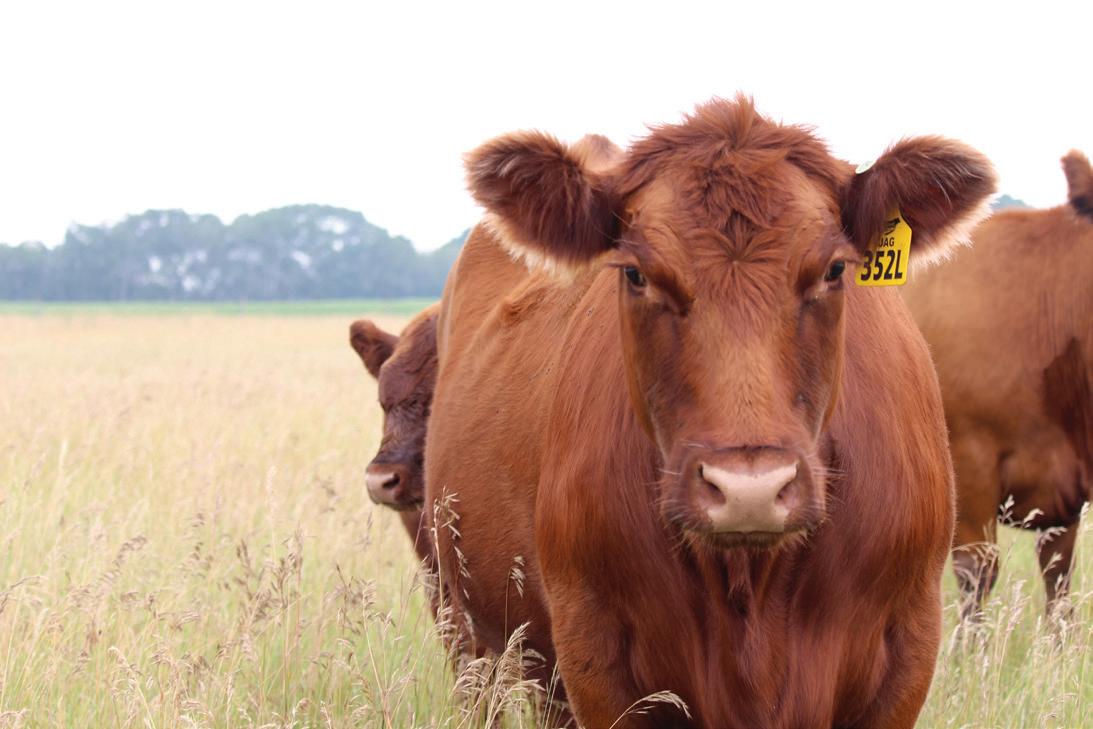
352L cow, photo taken by Rigley Dietrich
british columbia BRITISH COLUMBIA
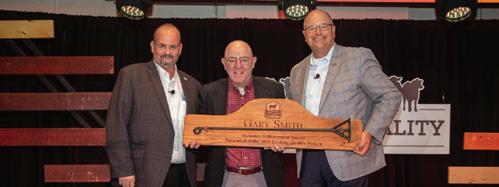
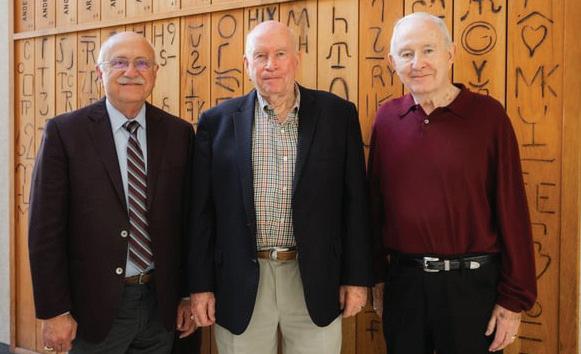
DR. GARY SMITH RECEIVES 2025 INDUSTRY ACHIEVEMENT AWARD
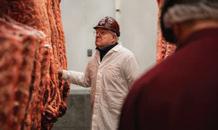
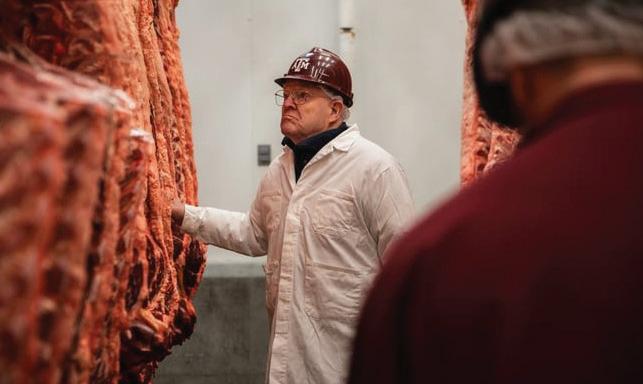
The meat science discipline has advanced by leaps and bounds under Dr. Gary Smith’s guidance. From food safety to quality beef production, it could be argued that his research findings helped save the beef industry in some of its most challenging times.
College students were educated, inspired and trained to be top-notch leaders. The “Dean of Meat Scientists,” a renowned researcher and educator, has never shied away from getting in the trenches and putting in the work.
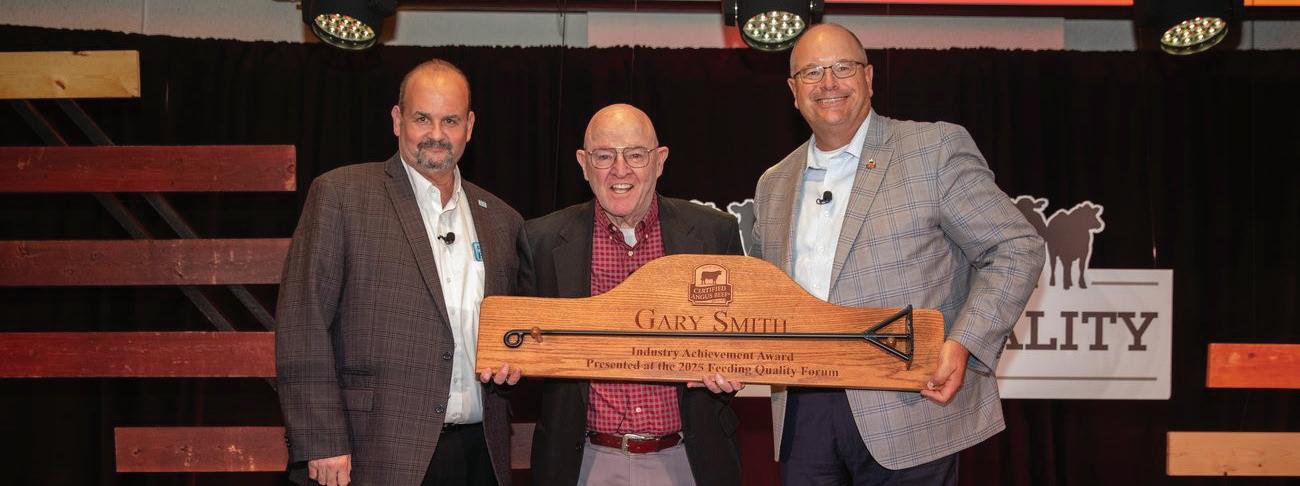
For the indelible mark he left on meat science and the beef community, Smith earned the 2025 Certified Angus Beef (CAB) Industry Achievement Award, presented at CAB’s Feeding Quality Forum in Rochester, Minn., on August 24. A lasting impression
Smith’s first exposure to protein processing was during his childhood, when his family would gather to harvest livestock and poultry for meat. From cattle and hogs to chickens and turkeys, generations would work together, without electricity, to get the job done. Witnessing the challenges of drought and socio-economic issues on the farm made an impression on Smith.
When choosing a degree path, he settled on teaching agriculture— his past experience guiding him to help other farm families earn the money necessary to survive.
After high school, Smith headed to California State University, Fresno (Fresno State) to pursue a bachelor’s degree in vocational agricultural education. He completed that degree, spent a year student-teaching high school agriculture classes and quickly decided it was not for him.
At the encouragement of a college advisor, Smith returned to graduate school. He planned to finish a master’s degree and return to the classroom as a junior college instructor. Although he finished his master’s in animal breeding, it was his time at Washington State University (WSU) that set the pivot for Smith’s next chapter in meat science.
A chance opportunity
Growing up, Smith dabbled in meat judging and later took a meats course at Fresno State. But he had no plans to become a meat scientist. While finishing graduate school at WSU, Dr. Gene Ensminger, department head at WSU, tapped Smith to fill a vacant meat science professor position.
After four years teaching meat science at WSU, Smith took a leave of absence and went to Texas A&M University (Texas A&M). There, he completed a Ph.D. under famed animal scientist, O.D. Butler. And the rest is history, literally.
“I got into [meat science], I loved it and spent the rest of my life trying to be better at it,” Smith says.
Since his academic detour, Smith has been at the forefront of industrychanging research. A key to his success has been establishing a deep network of colleagues and peers within meat science, the beef community and the agriculture industry. Another key: Smith’s work ethic, passion and initiative to find solutions for producers.
“The things I enjoyed the most were getting involved with people who were in the trenches trying to make a living, trying to make a better life for themselves and others,” Smith says. “We just helped them by finding ways to use research.”
In the span of 60 years, Smith’s body of work varied and expanded greatly. In the early years, he was educating people on how to cure meat with the right combination of salt, nitrate and nitrite.
By retirement, his research had touched all corners of meat science—a nod to one of his top qualities, the ability to keep an ear to the ground on what problems existed and where solutions needed to be found.
Smith has been at the forefront of studies on beef palatability, food safety, product packaging, beef shelf life, transoceanic shipment of meat, and food safety, including mitigation of E.coli 0157:H7, Salmonella and Listeria in packing plants.
Alongside a team of researchers from Texas A&M and Colorado State University, Smith pioneered the National Beef Quality Audit.
Other notable industry research projects include the International Beef Quality Audit, National Consumer Retail Beef Study, and exploring USDA beef quality and yield grade standards.
That research had a direct impact on the trajectory of CAB, exploring the importance of marbling and its influence on flavor and tenderness.
The infamous War on Fat was fought during Smith’s research tenure. There was a belief that cattle had too much backfat and the issue needed to be rectified. “I think we were scared to death we were going to lose beef over quality,” Smith says.
Getting rid of the waste fat, while simultaneously keeping the “taste fat,” proved to be the answer—one that Smith says saved the beef industry. “It took us time,” Smith says.
“Fortunately, there were people who went the right direction. CAB did it. The industry as a whole did it.”
Dr. Jeffrey Savell, Vice Chancellor and Dean, Agriculture and Life Sciences; University Distinguished Professor, Meat Science & E. M. “Manny” Rosenthal Chair in Animal Science at Texas A&M, says that at that time, many people were skeptical.
“He let the data support what he had to say,” Savell says. And that paved the way for an industry’s understanding of quality and its importance.
Savell says Smith could bring research results to life—translating them and explaining what the research meant to others, with a “magic” unlike anyone else.
Dean of Meat Scientists
“He’s an icon,” Russell Cross, senior professor in the Department of Animal Science at Texas A&M, says. “We call him the Dean of Meat Scientists.”
Smith has taught thousands of students and mentored hundreds of graduate students. Many of those past students are industry leaders in research, academia and government roles.
To Cross, a former colleague who worked alongside Smith for decades, Smith’s unique teaching and communication style bring out students’ ideas and inspire them to ask questions.
It’s part of what made him such an admired educator and the recipient of many teaching awards. The other part? The genuine care and love he has shown his students.
Now retired from academia, Smith’s passion is still present. It’s not uncommon to see him in the halls of Texas A&M’s buildings, dropping off news articles and notes he’s meticulously written for those still actively doing research and teaching college courses. Purpose follows passion—and Smith found purpose in bettering the beef business.
The application of his research findings has improved every sector of the beef community, from cow-calf ranchers to feedyards, packers and end-users.
Beyond the practical implications of Smith’s research, he is known for his unmatched work ethic, no-stone-left-unturned research methodology, and ability to build collaborative—and deeply meaningful—relationships with students, colleagues and peers.
“You can measure people by who they had around them, who they trained and the impact that they had,” Cross says.
“For Dr. Smith, it’s impossible to measure. He will go down in history as the one who had the greatest impact on the meat science community.”
Lindsay Graber Runft Director, Producer Communication
CAB INSIDER: SHIFTING SANDS IN WEEKLY CASH TRADE
The fed cattle market is showing signs of sands shifting underfoot as weekly cash trade showed signs of fatigue as cattle traded, on average, about $1/cwt. lower last week. This interrupts what has been a steadily firmer price trend building after a short-term pullback in late June.
While cattle in the northern reporting regions of Nebraska and Iowa/ Minnesota have long commanded a significant premium over Texas and Kansas cattle, this trend also ended last week. The northern market averaged roughly $2/cwt. lower while Texas and Kansas averages remained steady.
Some indications point toward short-term cattle supplies in the north a bit more adequate at this time than they have in in recent weeks. With the passing of Labor Day beef demand, Live Cattle futures ended last week with a softer tone.
This extended to much deeper cuts this Tuesday as the market sold off in a major way. Little news on the fundamental side could have pressured the market, but when it comes to the reaction from speculative traders, President Trump’s recent comments about future lower beef prices can’t be ignored.
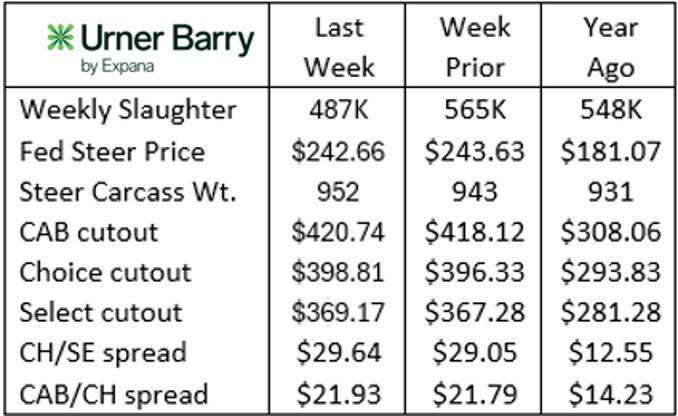
Last week’s carcass cutout values were higher, on average, and in the range of $2.30/cwt. The trends were close to even across the quality grades and CAB. Price spreads between each remained quite wide with a tremendous $51/ cwt. spread between the Certified Angus Beef ® brand and USDA Select.
Early this week, however, cutout quotes began to trend a bit lower, possibly indicating the expected easing following Labor Day. Perspective is important to the discussion, as packers continued to ration supply last week even accounting for Monday’s holiday. Tight supplies have boosted cutout values to roughly 35% higher than a year ago.
As such, a step lower in wholesale beef prices is hardly an indication of weakness in beef demand. Assuming harvest volume remains near recent levels through September, the seasonally expected easing of wholesale cutout values will likely be muted.
Big Time Cutout Performance
In the second and third quarters this year, carcass cutout values have risen at an unprecedented pace. Meanwhile, fed cattle harvest levels fell from just a 0.5% deficit in the first quarter to averaging near 8% below last year beginning in March.
September carcass prices typically decline as Labor Day demand passes and the shift toward fall pulls prices a bit lower. Typical seasonal price weakness is most noted on the loin, the carcass’s leading primal for total value.
In what’s left of September, current market dynamics appear to be limiting downside risk for boxed beef prices. Tight fed cattle harvest volume has spurred beef retailers to begin securing their fourth-
quarter middle meat roast needs a month earlier than normal. This has sent pricing for the two “darlings of December”, ribeyes and tenderloins, to record-highs in the latest wholesale data. Prices for these two cuts typically pick up in September with stronger weekly gains in October/November.
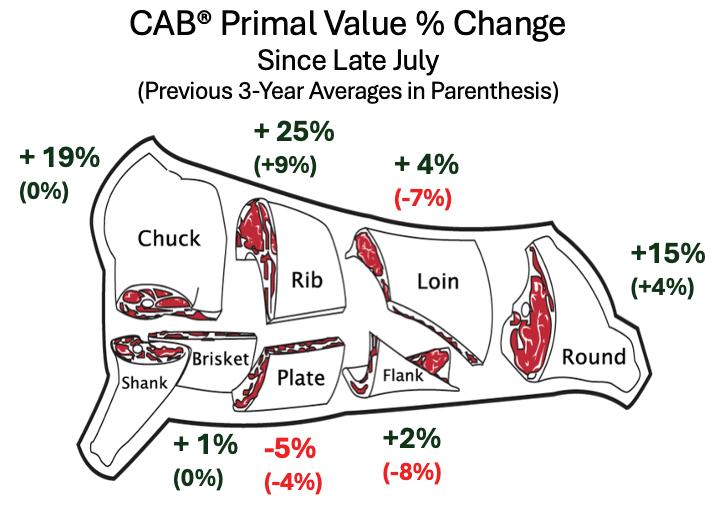
Yet proactive buying has CAB ribeyes already pricing 37% above late July values and tenderloins 25% higher for the period. These compare to 10% and 4% average increases from the July lows through August in the prior three years.
Carcass weights averaging 25 lb. heavier this year will do little to offset the deficit in ribeyes and tenderloins. Depending on cooking method, these cuts remain sensitive to steak thickness for desired doneness, leaving only fractional piece-count advantages with added cut weight.
Strip loin prices tend to peak in June and reach annual lows in September.
Fourth quarter roast demand traditionally has little impact beyond a 10% lift into December. Yet last week’s wholesale strip prices made a sharp 6% upward departure while an equally sharp decline into early September is historically the norm.
No doubt, limited piece count is a factor with strip loins this season, accompanied by the substitution factor of this quality steak/roast cut selling several dollars below it’s middle meat contemporaries.
With middle meats a key seasonal transition at this time, we’d be remiss not to note the heaviest primal, the chuck, and it’s exceptional pricing trajectory of late.
The entire CAB chuck value has increased 19% since late July with the chuck roll up a whopping 70% in August. The round has benefitted greatly as well, following ground beef supply/demand factors, with a 15% uptick for the period. Odds are that round prices will relax with expected slowing ground beef demand.
It remains to be seen if current price levels are just the beginning of a continued trend of increasing prices as retail meat buyers get ahead of a shortfall in fourth quarter spot market supplies.
Alternatively, these factors are simply pricing into the market earlier and to sharper extremes than we’d typically expect, leaving smaller increases to follow into the fourth quarter.
Paul Dykstra Director, Supply
Analysis
ADVERTISING & SUBSCRIPTION
Bryan Kostiuk Editor 306-933-4200 C: 306-292-7763
Chris Poley Marketing C: 306-220-5006
Shane Michelson Marketing C: 403-363-9973
We appreciate your interest in Today’s Angus Advantage and hope you have enjoyed this issue. To receive further issues, please fill out the following subscription form and return it along with your payment (prices listed below) to:
□ United Staes $60.00 TAX Included □ International $60.00 USD
Make cheques payable to Today’s Angus Advantage
Ben Wright Marketing C: 519-374-3335
Levi Rimke Marketing C: 204-851-4515
Deadline Material Deadline Camera Ready Deadline
Buyers Guide Special Issue - Herd Sire Issue January 2 January 6 January 13 Spring Issue - Female Issue April 17 April 22 April 27 Summer Issue - Early Sales & Prospects July 10 July 15 July 22 Early Fall Issue - Sales & Shows August 29 September 5 September 12 Late Fall Issue - Late Sales & Shows