Automated Document Processing: Transforming Legal Operations with AI
The advent of automated document processing software has transformed the legal industry, enhancing efficiency by automating tasks that require intellect and sentiment. AI-powered legal chatbots aid attorneys in reviewing contracts, conducting legal research, and predicting outcomes. This blog summary highlights how automated document processing software, specifically through AI-powered legal chatbots developed by Systango, transforms legal operations by streamlining tasks like legal research, document analysis, and client support.
Project Overview: Legal Chatbot Assistant & Document Analyser
Our project involved integrating a legal chatbot assistant and document analyser for a U.S.-based multi-practise law firm. The AI chatbot offered updated legal assistance, such as drafting initial case filings and reviewing case files. Key features included:
● Dashboard and Reports: Case statuses, revenue tracking, and performance metrics.
● Document Analysis: Providing key case details and summaries for legal research.
● Authorised Legal Databases Integration: Ensuring up-to-date legal information.
The Journey
1. Business Needs Addressed
The law firm required:
● AI-based Consultancy Services: To streamline legal processes.
● Accurate AI Legal Assistance: For user-friendly extraction of key case information.
● Virtual Assistant: To answer law-related queries.
● Case Management System: Including client payment and finance management.
2. Implementation Approach
Our approach to implementing AI in this project included:
1. NLP-based Query Interpretation: Using Natural Language Processing to analyse user queries accurately.
2. Conversational Flow Design: Ensuring intuitive communication between users and the chatbot.
3. Legal Data Hubs Integration: Providing updated legal references for end-users.
4. Data Extraction with ML Algorithms: Leveraging machine-learning for precise data retrieval.
5. Comprehensive Knowledge Base: For extensive legal research.
6. Cognitive Tools: For document analysis and summarisation.
7. OCR Technology: Converting PDFs into machine-readable text for sentiment analysis and data extraction.
3. Results Achieved
The AI software project yielded several benefits:
● Efficient Legal Research: Quick and accurate analysis of case laws and statutes.
● Enhanced Contract Review: Identifying key terms, risks, and ensuring compliance.
● Reliable Legal Assistance: Improving user experience and satisfaction.
● Up-to-date Information: Access to current legal data from authorised databases.
4. Potential Use Cases
Other potential applications of automated document processing software in the legal industry include:
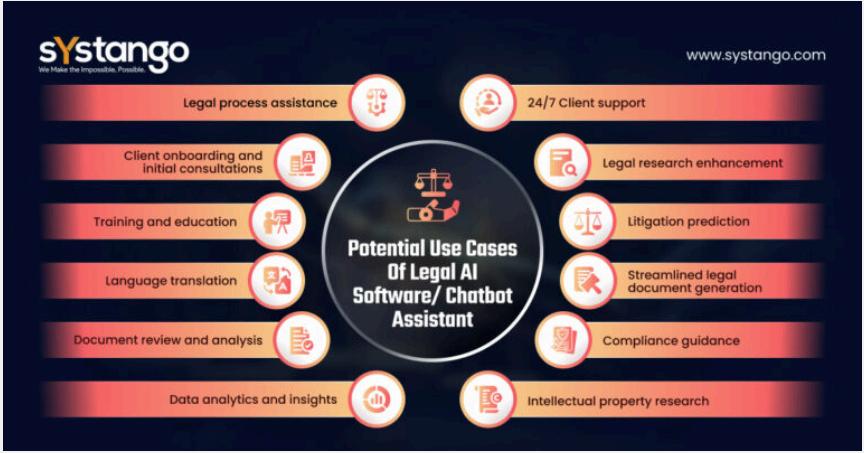
● 24/7 Client Support: Addressing queries and scheduling appointments.
● Document Review and Analysis: Identifying risks and compliance issues.
● Streamlined Document Generation: Providing legal templates and language suggestions.
● Compliance Guidance: Assisting with regulatory frameworks.
● Intellectual Property Research: Offering insights into patentability.
● Legal Process Assistance: Guiding through legal procedures.
● Client Onboarding and Consultations: Gathering information for case assessment.
● Training and Education: Serving as virtual mentors for legal students.
● Language Translation: Bridging communication gaps in multicultural environments.
● Litigation Prediction: Assessing the likelihood of success in litigation.
● Data Analytics and Insights: Informing legal strategies with data trends and patterns.
Conclusion
Automated document processing software is transforming legal operations by providing efficient, reliable, and comprehensive AI-powered solutions. These technologies not only enhance the productivity of legal professionals but also significantly improve client satisfaction and operational efficiency.
Curious about the potential of automated document processing for your legal practise? Discover how it can transform your operations with AI-powered solutions by exploring this insightful case study from Systango: https://www.systango.com/blog/legal-ai-software-for-a-multi-practice-law-firm