As we move through the summer period, food markets continue to show a mixed picture. Some categories are beginning to stabilise following the high-cost environment of recent years, while others remain exposed to tight supply, input cost pressure, labour constraints, disease risk, and volatile weather conditions.
Protein markets remain firm overall. Beef and lamb continue to be shaped by limited livestock availability, while pork is more balanced but still exposed to production costs and export demand. Poultry remains sensitive to feed inflation, avian influenza risk, import dependency, and food safety controls, with turkey and duck particularly vulnerable due to tighter supply bases.
Dairy markets are also mixed. Butter is well supplied and trading materially below last year, while milk sentiment remains neutral on robust volumes and strong milk solids. Cheese is more stable, although performance is diverging by category. Eggs remain under upward pressure as producers seek higher returns to offset inflation, feed, energy, and wider input costs.
Commodity markets are moving in different directions. Sugar and juice offer the clearest opportunities for cost recovery, while cocoa has corrected from peak levels but remains volatile. Coffee, packaging, energy, labour, and logistics remain more resistant to deflation and continue to influence delivered cost across several finished goods.
This report summarises the key market movements, drivers, and outlooks across core categories to support planning and purchasing decisions through Q3 and into the second half of 2026.
Warm regards, Sysco Ireland
YOUR SPECIALIST FOODSERVICE TEAM
The global food market can be unpredictable, but your supply doesn’t have to be. Our specialist team is here to help you stay stocked with quality options that fit your budget. Whether it’s discovering new products, exploring different price tiers, or finding the best value, we’ve got solutions for you. Talk to your ASM to arrange a meeting.
Wayne brings nearly thirty years of food industry experience, including over two decades as a craft butcher. He combines specialist protein knowledge with proven sales expertise to deliver tailored solutions and trusted relationships for customers.
Centre of Plate
Neil has been part of the Sysco team for over 20 years, with the last decade dedicated to Centre of Plate. His deep knowledge helps customers make informed decisions, adding real value to their business.
Centre of Plate
Phill joined the business in 2023 after 18 years working as a Chef. His roles were primarily in Fine Dining establishments throughout Northern Ireland, but he also spent time in Australia.
Centre of Plate
Kelan has worked in the industry as a chef for over 25 years, in some of the finest kitchens in the UK and Ireland. He was honoured to be part of a team that cooked in the Hague, representing Ireland and Irish produce.
Patrick joined Sysco over 6 years ago. He has a wide range of experience in the sector from growing potatoes on his family farm to the early days of his career prepping veg in a hotel and working as a kitchen porter. Patrick enjoys meeting new people as part of his role, supporting his customers to improve their business.
Alasdair joined the business over 20 years ago, following 25 years as a chef working in busy restaurants. He began his career with Sysco in purchasing before moving to a produce specialist role.
Ruth joined Sysco in 2024 and has over 20 years’ experience within fresh produce. Ruth enjoys working in partnership with her customers to come up with the best solution for their business.
Produce
Simon has over 35 years’ experience in the industry and is an expert in the industry and the produce category. Simon is always willing to go above and beyond to ensure the highest quality service.
Noel joined Sysco in 2022, however with 35 years in the produce business he brings a wealth of experience to his role. Noel’s belief in Sysco’s customer centric values plays an important role in how he does his job.
Since joining Sysco in 2022, Alison has cultivated strong relationships with many of our key customers. With a deep understanding of the fresh produce market, Alison provides solutions that drive growth and success for her customers.
Catering Supplies & Beverage
Jonathan joined Sysco in 2022 with over 18 years experience as a chef. Jonathan has vast knowledge and experience in the hospitality industry having worked in restaurants across all levels – from Gastro pubs to Michelin Star.
Bronagh joined Sysco in 2023 and has over 20 years’ experience as a chef, working in fine dining restaurants, cafes and hotels worldwide. She enjoys supporting her customers with new ideas and innovation.
McCUSKER
Joanne joined Sysco in 2024 and brings over 30 years’ experience to her role. She began her career in the licensed trade and has owned two coffee shops before progressing into sales.
Patrick joined Sysco in 2021 and prior to this spent time in multiple FMCG and foodservice businessess. He now works as a sales specialist in Dublin northeast, offering practical advice and support, while identifying solutions to help them reach their full potential. In his spare time Patrick enjoys attending his kids sporting activites. He is also a keen horse racing syndicate member, aiming to unlock hidden potential in horses that they own.
& Dessert
More than 32 years’ experience in the food industry in Ireland gives Brendan a deep understanding of the sector. Previously working as a Chef and a pastry chef in 5* Hotels, Brendan has a wealth of knowledge to share with his customers.
Elaine joined the business in 2024 and brings over 15 years experience in the industry to her role. After training as a chef, Elaine worked in restaurants, hotels and cafes across Ireland and London, later opening her own café In Clare.
PHILL WARING
NEIL BRISLANE
KELAN McMICHAEL
NOEL RYAN
Produce
ALASDAIR MacINNES
Produce
RUTH POLLOCK
Produce
SIMON DOHERTY
JONATHAN O’SHEA
ALISON KIDD
Produce
ELAINE MEADE
Bakery & Dessert
PATRICK KEOGH
Catering Supplies & Beverage
BRONAGH BEATTIE
Bakery & Dessert
BRENDAN SEWELL
Bakery
JOANNE
Catering Supplies & Beverage
PATRICK KEOHANE
Produce
WAYNE WALSH
Centre of Plate
PROTEIN
BEEF
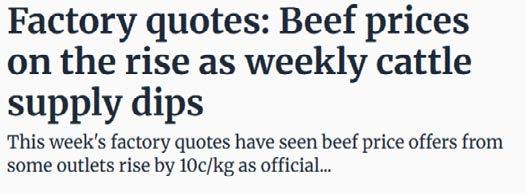
The Irish beef market is expected to remain tight through the summer. Q1 and Q2 2026 throughput is down 9.2% versus 2025, equal to approximately 78,000 fewer cattle, according to figures referenced from Meat Industry Ireland, IBEC, and Bord Bia.
Irish beef prices have remained relatively firm since January 2026, supported by tight cattle supply, controlled factory throughput, and steady export demand into the UK and EU. While there has been some short-term price softening in recent weeks, this appears to be linked to demand adjustment and increased buyer sensitivity rather than any meaningful improvement in supply.
Export demand continues to provide a solid base for the market, although buyers remain cautious at higher price levels. Seasonal foodservice and tourism demand are expected to support prices through July and August, with the potential for renewed upward pressure into September.
KEY POINTS
• Cattle throughput for Q1 and Q2 2026 is down 9.2% versus 2025.
• Tight cattle supply remains the main driver of market firmness.
• Factory prices held strong through the early part of the year.
• Recent price softening appears short-term and demand-led.
• UK and EU export demand remains steady, though increasingly price-sensitive.
• Seasonal foodservice and tourism demand is expected to support firmer pricing through Q3.
OUTLOOK
Beef prices are expected to remain firm through July, with a slight upward bias as summer demand builds. August and September are likely to see further support from limited cattle availability and peak foodservice activity.
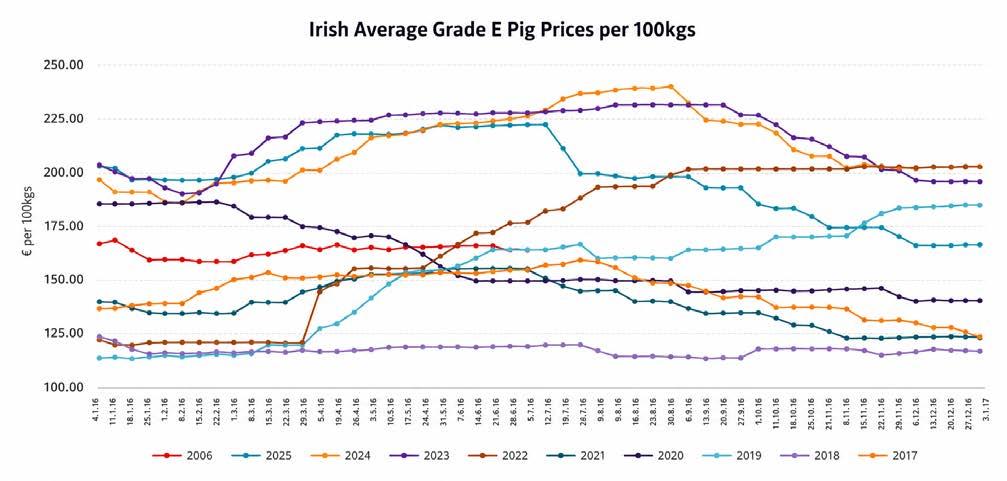
Irish and EU pork supply remains relatively strong, while raw material and production costs continue to rise. This combination supports a broadly steady pricing environment for pork and bacon. Irish pig prices have stabilised in recent weeks. The Irish Grade E pig price averaged €1.75/kg deadweight for the week ending 13 June, with processor quotes ranging between €1.78/kg and €1.80/kg. The market appears to have found a more balanced position following earlier volatility.
Summer barbecue demand, holiday consumption, and normal seasonal tightening in pig availability should provide some support through August. However, high supply levels and subdued export demand are likely to keep any upward movement gradual.
KEY POINTS
• Irish pig prices have stabilised and are not expected to fall materially in the short term.
• Supply remains strong and consistent, supporting reliable availability.
• Demand is steady, helped by pork’s value positioning against other proteins.
• Export markets remain stable, with no major pricing shock currently expected.
• Prices are expected to remain broadly in the €1.75/kg to €1.85/kg range through August.
OUTLOOK
Pork prices are expected to remain stable to slightly positive through the remainder of summer. Barring a major disease event or export disruption, prices are more likely to firm modestly than weaken through the remainder of 2026.
LAMB
The lamb market remains firm, with prices holding at very high levels and no meaningful post-Easter easing yet visible. Hogget supplies are declining in line with normal seasonal trends, while new season lambs have been slow to come forward. Hogget numbers killed are currently down 6% versus 2025.
Supply remains the dominant market driver. Reduced flock numbers and lower throughput are limiting availability across Ireland and Europe. Demand remains steady across both domestic and export markets, but the ongoing supply constraint is what continues to underpin pricing.
Irish lamb prices remain below Northern Ireland, Great Britain, Spain, and France, with only Australia and New Zealand trading lower. This relative position supports continued export interest and limits the likelihood of any near-term downward price pressure.
This week’s sheep trade has seen €9.90/kg tabled again for Quality Assured (QA) spring lambs at several outlets.
• Lamb prices remain firm and are not expected to decrease materially.
• Hogget kills are down 6% versus 2025.
• Reduced flock numbers continue to limit supply.
• Domestic and export demand remains steady.
• Supply shortages remain the key driver of pricing.
• Bord Bia has launched a campaign aimed at boosting lamb demand among younger consumers.
OUTLOOK
The market is expected to remain tight through Q3. Prices are likely to remain supported, with potential for further strengthening if supply does not improve or export demand increases.
Pigmeat Dashboard
POULTRY CHICKEN
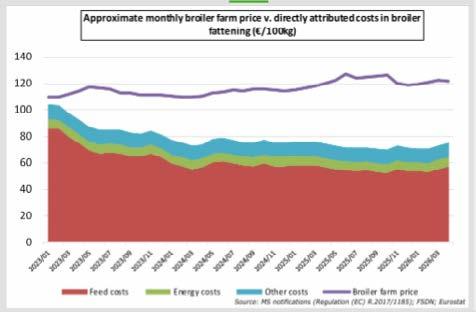
Poultry markets remain under pressure, driven by feed cost inflation, strong consumer demand, disease risk, and supply-side disruption across Europe. While recent data shows some short-term softening in EU chicken prices, the wider market remains elevated and vulnerable to renewed pressure.
EU chicken prices are averaging approximately €2,936/MT, down 1.1% month-on-month but still 1.8% higher year-on-year. Short-term price easing has been supported by increased imports and higher cold storage availability, but the underlying cost base remains firm.
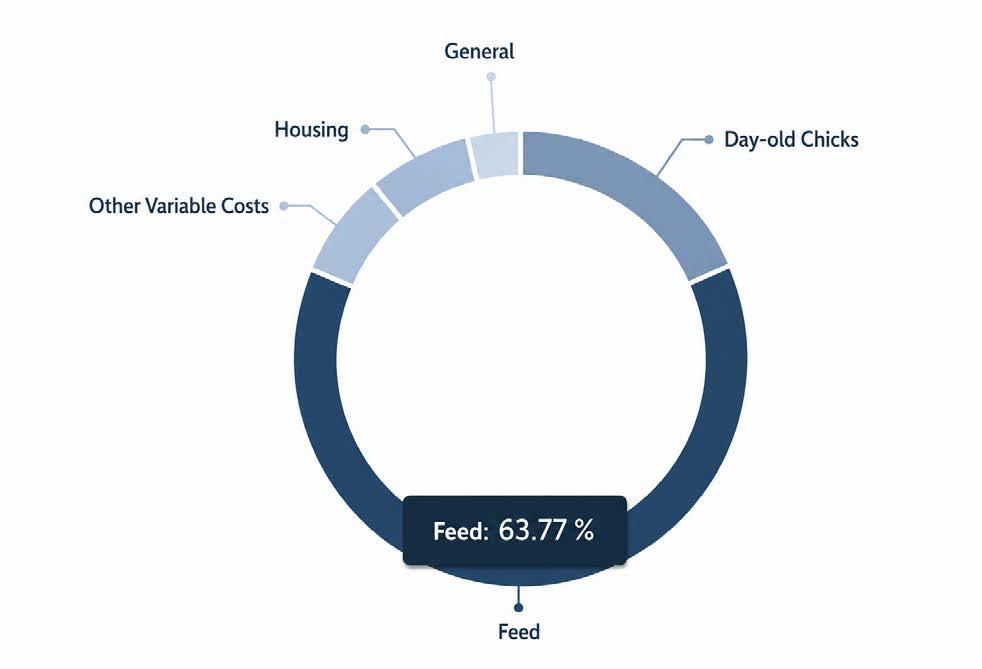
Feed remains the primary cost driver. EU corn is up 4.5% month-on-month and 8.3% year-on-year, while EU wheat is up 4.0% month-on-month. Energy, fertiliser, and geopolitical disruption continue to add further pressure across the supply chain.
SUPPLY & TRADE DYNAMICS
EU poultry production is expected to increase by 1.3% year-on-year in 2026, while consumption is forecast to rise by 2.2%. Imports are playing an increasingly important role in balancing the market, particularly from Brazil and Ukraine. Brazil accounts for approximately 30% of EU poultry imports. These additional imports are helping improve availability and providing some short-term price relief, although the market remains reliant on imported supply to meet demand.
SUPPLY RISKS
Disease remains a key risk. Avian influenza outbreaks across Europe continue to create disruption, with 292 outbreaks across 17 countries in 2026 and more than 12 million birds culled. Key affected regions include Poland, Germany, France, and Italy. Environmental regulation is also restricting production growth in parts of Europe, limiting the market’s ability to respond quickly to demand increases.
IRELAND – FOOD SAFETY AND SUPPLY CONTROLS
Recent product withdrawals in the Irish market linked to Salmonella concerns have highlighted the continued importance of food safety controls, traceability, and supplier compliance across poultry supply chains. While these incidents appear isolated, they may lead to increased scrutiny, tighter quality controls, and short-term disruption in specific product lines. Wider poultry supply remains stable, but supplier assurance remains critical.
KEY POINTS
• EU chicken pricing remains elevated despite recent short-term softening.
• EU poultry production is expected to increase by 1.3% year-on-year in 2026.
• EU poultry consumption is expected to rise by 2.2% year-on-year.
• Imports from Brazil and Ukraine are helping improve availability.
• Brazil accounts for approximately 30% of EU poultry imports.
• Feed inflation remains the primary cost driver.
• Avian influenza remains a major supply risk across Europe.
• Food safety controls and supplier assurance remain important in the Irish market.
OUTLOOK
Poultry pricing is expected to remain firm through Q3. Imports may provide some short-term relief, but feed inflation, disease risk, and regulatory controls are likely to limit any significant price reduction.
TURKEY
DUCK
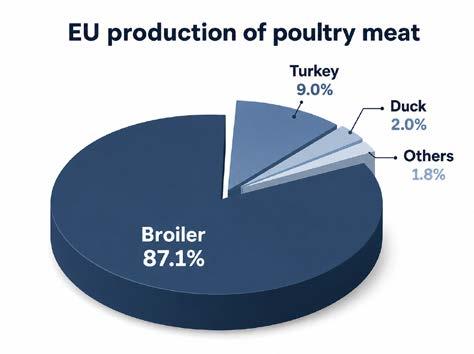
Duck remains a smaller and more specialist category, representing approximately 2% of EU poultry production. The market is more niche and import-dependent, making it more sensitive to changes in supply, feed costs, and wider poultry market conditions.
KEY POINTS
• Duck follows broader poultry cost trends, particularly feed and production inflation.
• A smaller supply base increases volatility risk.
• Availability remains more sensitive to disruption than mainstream poultry.
• No significant easing is expected in the short term.
OUTLOOK
Duck pricing is expected to remain firm, with supply vulnerability continuing to shape market sentiment.
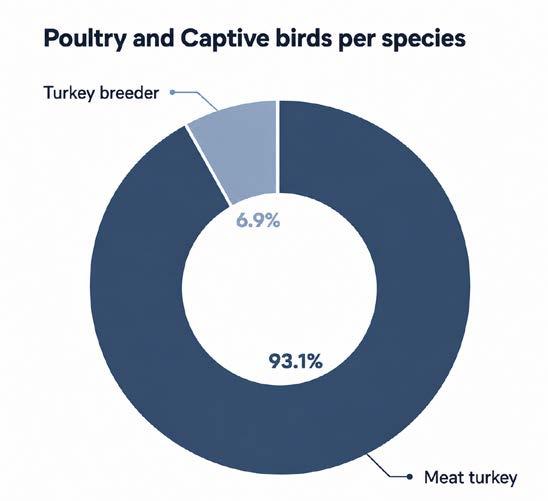
Turkey supply remains tight across Europe. Disease pressure, high production costs, and structural supply challenges continue to restrict availability.
KEY POINTS
• Turkey remains more inflationary than several other proteins.
• Supply remains constrained across Europe.
• Disease risk and production costs continue to influence availability.
• Peak seasonal demand later in the year may add further price pressure.
OUTLOOK
Turkey pricing is expected to remain elevated, with limited scope for easing before seasonal demand begins to build. Source: MS notifications - Expert group
POULTRY & CAPTIVE BIRDS OUTBREAKS WITH SUBTYPE
TURKEY
BREEDER
COOKED MEATS
COOKED MEATS
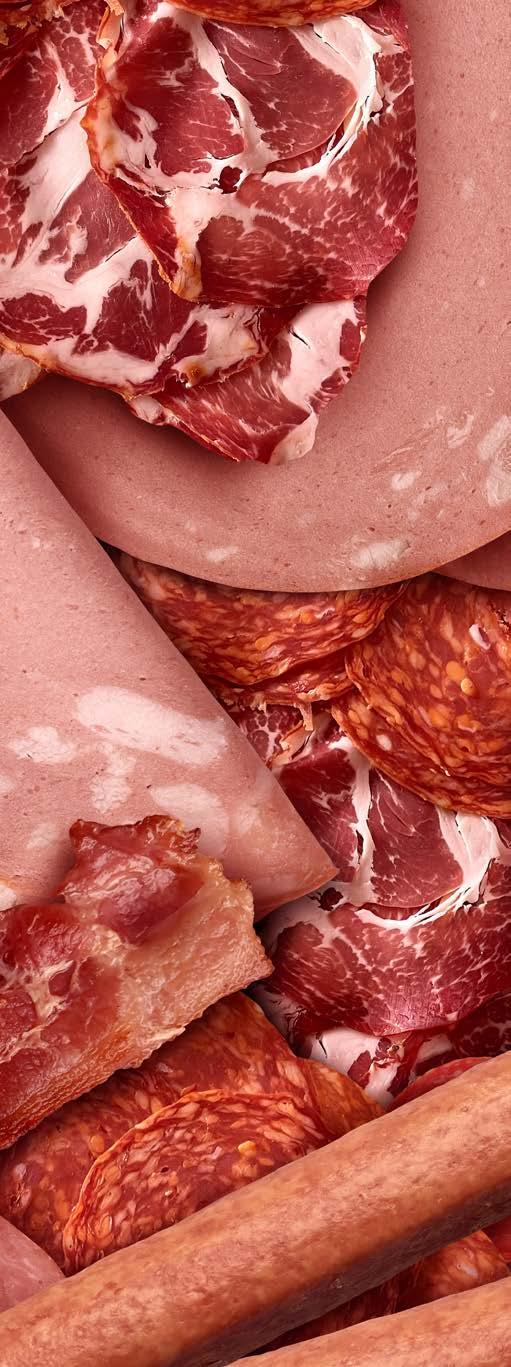
Cooked meats continue to reflect upstream protein costs, but finished pricing is also being shaped by labour, energy, processing, packaging, and logistics. As a result, raw material stability in pork has not fully translated into lower processed product pricing.
Market conditions remain mixed across proteins. Poultry inputs are inflationary, pork is more stable at raw material level, and beef remains structurally high-cost. Value-added products are less sensitive to raw material movements because processing and operational costs now represent a larger share of total cost.
Processed poultry remains under pressure from feed inflation, higher labour costs, and tight turkey supply. Beef continues to be a premium input within cooked meats due to structural supply tightness.
• Turkey-based products are particularly exposed due to tight supply.
• Processed pork pricing has shown limited downward movement despite more stable raw pork.
• Beef remains a premium-cost input with limited pricing flexibility.
• Labour, energy, packaging, and logistics continue to support elevated finished product costs.
OUTLOOK
Cooked meats are expected to remain stable to inflationary through Q3. Any raw material benefit in pork is likely to be partly offset by processing, labour, and packaging costs, while poultry and beef continue to support overall category cost pressure.
SEAFOOD
SEAFOOD
Seafood markets remain mixed. Whitefish, particularly cod, remains under significant pressure due to tight quotas and limited landings. In contrast, prawns and shellfish are softening, creating opportunities in categories where supply has improved and demand has eased.
COD & WHITEFISH KEY POINTS
Cod remains one of the most challenged seafood species. Reduced fishing quotas continue to limit overall availability across key sourcing regions, while strong demand and limited landings are keeping the market firm.
Raw material scarcity is driving volatility, and forward availability remains a concern. Customers may need to consider proactive planning, menu flexibility, and alternative species where appropriate.
• Cod supply remains tight due to reduced quotas.
• Limited landings are keeping raw material availability constrained.
• Strong demand continues to support firm pricing.
• Whitefish scarcity is expected to remain a key planning issue.
• Alternative species may be required to manage availability and cost exposure.
OUTLOOK
Cod is expected to remain firm, with continued upward price pressure likely where availability remains restricted.
PRAWNS & SHELLFISH KEY POINTS
Prawn and shellfish markets are showing a softer tone. Improved supply conditions and weaker demand in some channels are driving price reductions across key SKUs.
• Prawn and shellfish pricing is softening.
• Improved supply is helping rebalance the market.
• Weaker demand in some channels is supporting deflation.
• Opportunities exist to leverage savings and support volume growth.
OUTLOOK
Prawns and shellfish offer a more positive buying opportunity than whitefish. Pricing is expected to remain more favourable in the near term, subject to demand and supply stability.
DAIRY DAIRY
Egg prices in Ireland continue to rise, driven by higher production costs and strong consumer demand. Producers are seeking improved returns to remain viable, with the Irish Farmers’ Association calling for increases of 2 cent per egg for free-range eggs and 1 cent per egg for barn eggs.
These proposed increases are being positioned as necessary to support sustainable production and protect supply continuity. The category remains exposed to broader economic pressure, particularly where producer margins are being affected by inflation, feed costs, energy costs, and other farm-level inputs.
Several wider economic and sector-specific factors are contributing to higher egg prices. Ireland’s overall inflation rate of around 3% is pushing up operational costs across the supply chain. Feed, energy, and other inputs have also become more expensive due to global commodity price movements.
Supply-side pressure across Irish agriculture is also relevant. A notable decline in Ireland’s cattle herd reflects broader stress across the agricultural sector and highlights vulnerabilities within food production systems. While this is not a direct egg supply driver, it reinforces the wider production pressures facing Irish farming.
Without price adjustments, producers may struggle to maintain output levels. This could create further risk around supply stability if farm margins remain under pressure.
EGGS KEY POINTS
• Egg prices are rising due to higher production costs and strong consumer demand.
• The IFA is seeking increases of 2 cent per free-range egg and 1 cent per barn egg.
• Ireland’s inflation rate of around 3% is adding pressure to labour, energy, and operating costs.
• Feed, energy, and other key inputs remain elevated due to global commodity price movements.
• Wider agricultural pressures, including the decline in Ireland’s cattle herd, highlight vulnerability across food production.
• Producer viability remains a key concern for supply stability.
• Without price movement, output levels may come under pressure, potentially impacting availability.
OUTLOOK
Egg pricing is expected to remain firm in the near term. Continued input cost pressure means producers are likely to maintain calls for higher returns to support sustainable supply.
MILK KEY POINTS
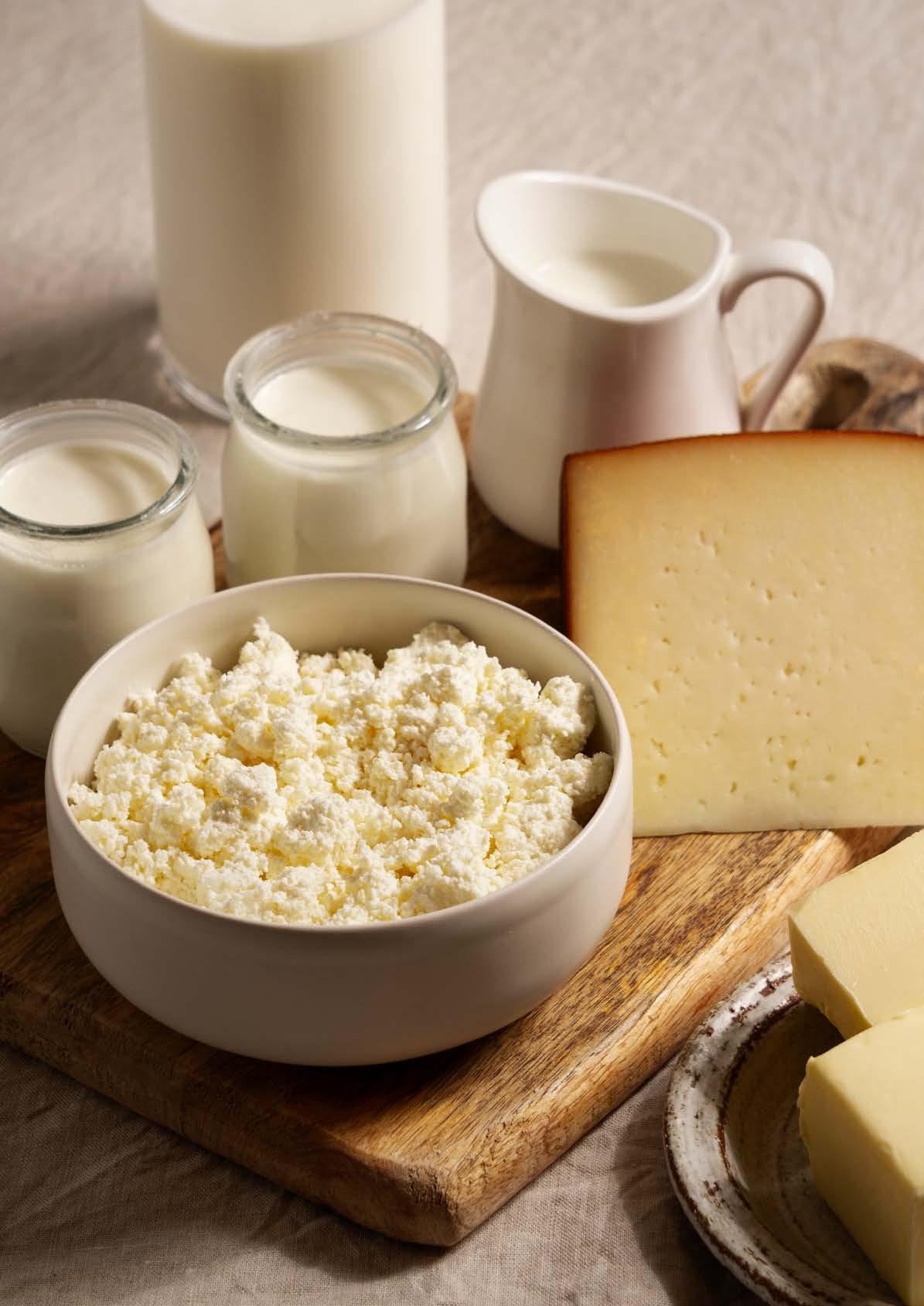
Milk market sentiment was neutral during the assessment period. Higher year-on-year milk volumes and strong milk solids, including butterfat and protein, suggest that supply remains robust.
This level of availability may continue to weigh on prices if demand does not strengthen in the coming months. While the market is not showing a clear inflationary signal, stronger supply will remain an important factor in price direction.
OUTLOOK
Milk pricing is expected to remain broadly stable in the near term, with some downside risk if supply continues to run ahead of demand.
BUTTER
KEY POINTS
• EU butter sentiment was steady during May.
• Prices showed mixed movement, but the overall market remained largely unchanged.
• EU butter prices remain notably lower than the previous year.
• Production remains strong due to robust milk fat availability.
• Output is outpacing demand, contributing to higher cold storage volumes.
• Polish butter traded at a discount to German, Dutch, and Belgian origin.
• Global butter supply remains above demand.
• EU butter production is up 8.3% year-on-year and US production is up 7.5% year-on-year.
• Freight and energy costs remain volatile, but oversupply is limiting upward price movement.
OUTLOOK
Butter prices are expected to remain low in the short term. However, forward buying activity and seasonal supply normalisation may create some tightening later in 2026.
CHEESE
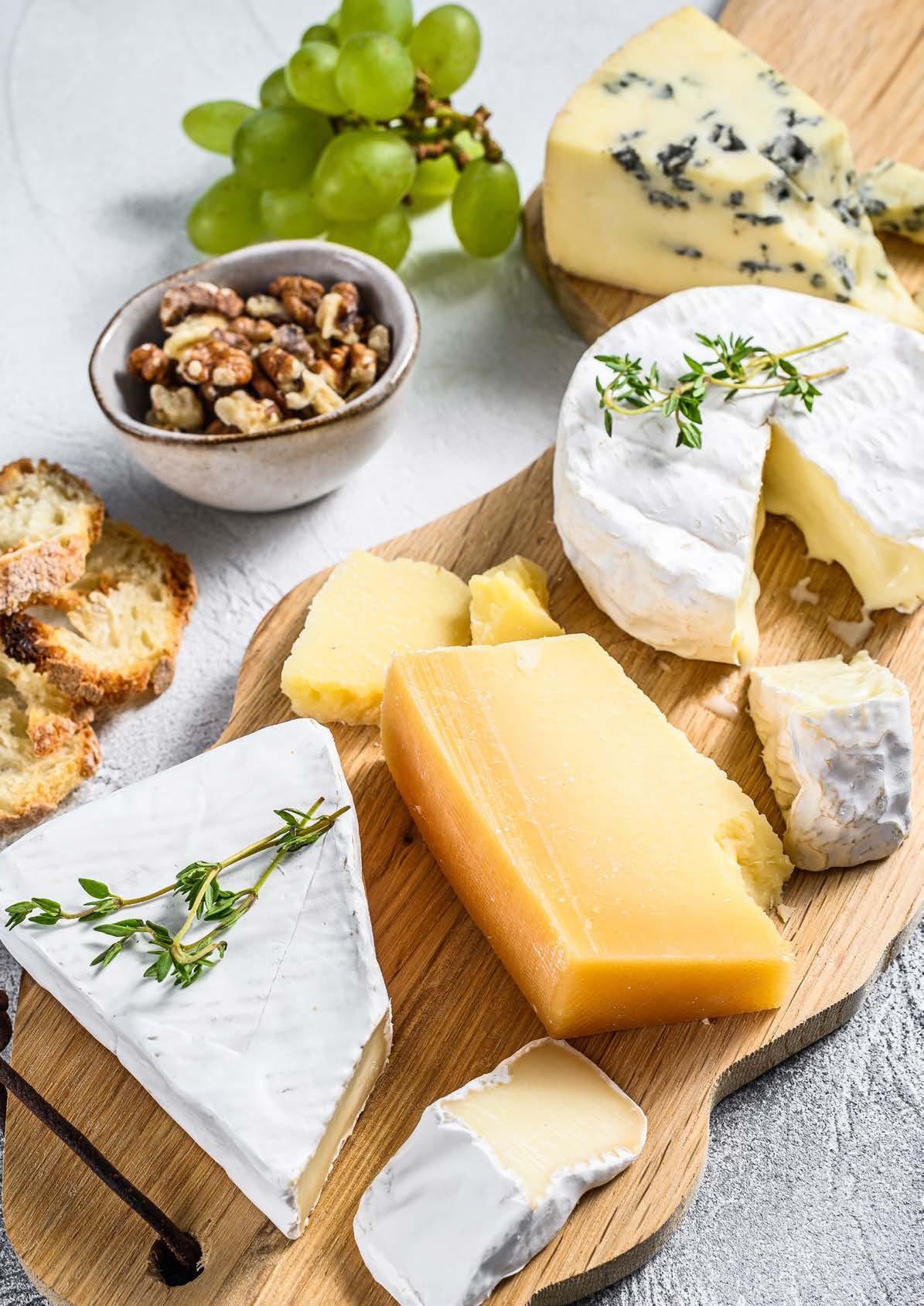
Cheese markets have remained more stable than dairy fats through Q1, particularly in cheddar. Pricing remains firm in longer-aged cheddar, where availability is tighter, although near-term spot markets are showing more mixed signals.
The category is beginning to diverge. Mozzarella, gouda, and edam are softening as increased milk availability feeds into production, improving spot availability and reducing urgency in forward buying. Historically, sustained weakness in fat markets can feed through into cheese over time, particularly in commodity-led categories. However, export demand and production prioritisation within the EU milk balance continue to support parts of the market.
Market sentiment across the EU butter complex was steady during May. While prices showed some mixed movement, the overall market price remained largely unchanged. However, EU butter prices remain notably below last year’s levels.
Production remains strong, supported by robust milk fat availability. EU output has continued to outpace demand, contributing to increased cold storage volumes. Polish product also traded at a discount to German, Dutch, and Belgian origin, reflecting some variation by source and availability. The wider global butter market remains oversupplied, with prices stabilising at significantly lower levels than last year. EU butter prices are around €3,800/MT, UK prices around £3,350/MT, and US prices around $1.64/lb, reflecting year-on-year declines of approximately 30% to 50%. Supply continues to exceed demand.
EU butter production is up 8.3% year-on-year, while US production is up 7.5% year-on-year. High milk fat availability is sustaining output, while stock levels, particularly in Europe, remain elevated. Demand is stable but not strong enough to rebalance the market. US export activity is providing some support, but not enough to offset the broader supply overhang. Freight and energy costs remain volatile, but these have not translated into higher butter prices due to ample supply.
KEY POINTS
• Cheddar remains firmer than other cheese categories.
• Increased milk availability is improving spot supply.
• Weakness in dairy fats may influence cheese pricing over time.
• Export demand remains supportive.
OUTLOOK
Cheese pricing is expected to remain mixed by category.
Cheddar is likely to remain more supported, while mozzarella, gouda, and edam may see further softness if milk availability remains strong.
CANNED
& DRIED
CANNED & DRIED
The ambient grocery commodity environment remains broadly stable, with minimal inflationary pressure across core canned and dried categories this quarter. Supply chains have normalised, and improved agricultural conditions are limiting cost escalation across much of the category.
Overall input cost inflation is flat, supporting price stability across most ambient lines. Italian extra virgin olive oil remains the key exception, with continued inflation linked to ongoing supply constraints and delayed production recovery in Southern Europe.
OLIVE OIL KEY POINTS
Italian extra virgin olive oil continues to diverge from the wider ambient market. Supply remains constrained, and recovery across Southern Europe has been slower than expected.
• Ambient grocery remains broadly stable.
• Input cost inflation is limited across most canned and dried categories.
• Supply chains have largely normalised.
• Italian extra virgin olive oil remains inflationary.
• Southern European production recovery remains delayed.
OUTLOOK
Most canned and dried categories are expected to remain stable in the near term. Italian EVOO remains exposed to further price pressure until supply improves.
BAKERY & FROZEN
BAKERY
COMMODITY MARKET OVERVIEW
The commodity landscape in 2026 is moving away from the high-inflation environment seen in recent years and toward more stabilised conditions. Several ingredient categories, including sugar and juice, are now experiencing deflation following significant peaks between 2023 and 2025.
This presents opportunities for cost recovery. However, not all costs are easing. Cocoa has corrected from previous highs but remains volatile and above longterm averages. Coffee remains historically elevated despite some softening, while packaging costs remain high and volatile due to energy, regulation, logistics, and material cost pressures.
OILS KEY POINTS
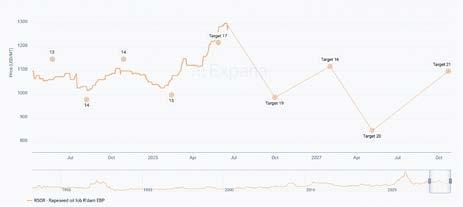
Rapeseed and vegetable oil prices are easing slightly due to improved crop yields and better supply conditions.
• Rapeseed and vegetable oil prices are showing slight easing.
• Improved crop yields are supporting better availability.
• Supply conditions have improved compared with previous periods.
• Energy, freight, and weather remain important risks.
OUTLOOK
Stable to slightly lower pricing is expected, although weather and energy costs may still influence market direction.
SUGAR KEY POINTS
Sugar prices have fallen significantly from previous peaks, and the market has shifted into surplus. While short-term volatility remains possible, the overall outlook points toward relatively stable pricing.
• Sugar has moved down from previous peak levels.
• The market has shifted into surplus.
• Short-term volatility remains possible.
• Weather patterns, monsoons, and global production shifts remain key watchpoints.
OUTLOOK
The market is expected to remain broadly stable, with slight upward risk linked to weather and production changes.
COCOA KEY POINTS
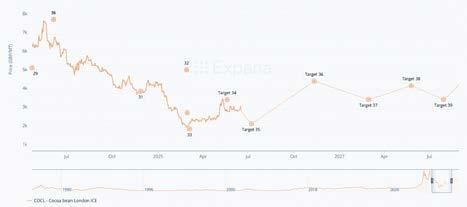
Cocoa remains highly volatile. Prices rose sharply in early May before easing, driven by speculative short covering and ongoing concerns around supply. Although cocoa has corrected from extreme highs and the market is now closer to surplus, prices remain above long-term averages.
West Africa continues to dominate the outlook. Variable rainfall and uneven crop development in Ivory Coast and Ghana remain key risks, while structural challenges such as ageing trees and low farm investment continue to limit supply potential.
Demand remains weak, particularly in Europe, with only marginal recovery expected. Processing margins are also under pressure, as high bean costs and elevated butter stocks weigh on returns.
• Cocoa has corrected from peak levels but remains volatile.
• Prices remain above long-term averages.
• West African weather remains the key supply risk.
• Ageing trees and low farm investment continue to constrain supply potential.
• European demand remains weak.
• Processing margins remain under pressure.
OUTLOOK
Cocoa prices are expected to remain volatile in the short term, shaped by weather and fund positioning. Medium-term support remains likely due to structural supply constraints, so any cost recovery should be treated cautiously.
FROZEN POTATOES
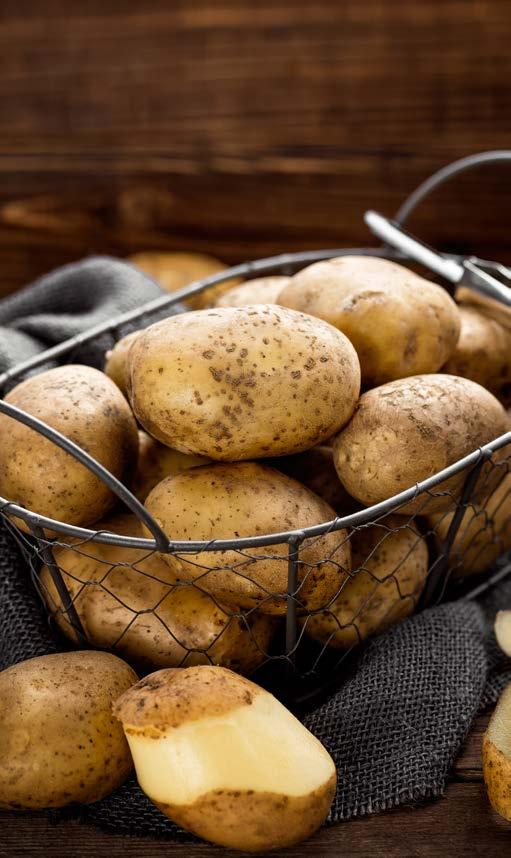
Frozen potato markets are currently challenged by oversupply and weakening demand. Across Europe, high raw potato inventories and record production levels have created excess availability, while demand for frozen potato products, including fries, has softened in key export markets.
This has led to reduced processing activity, with output in the Netherlands down around 16% year-on-year. Competitive pressure is also intensifying, particularly from lower-cost exporters such as India, where frozen fry exports have increased by approximately 50% year-on-year.
FROZEN POTATOES KEY POINTS
• High raw potato inventories are creating excess supply.
• Frozen potato demand has softened in key export markets.
• Dutch processing output is down around 16% year-on-year.
• Indian frozen fry exports are up approximately 50% year-on-year.
• Pricing and margins remain under pressure.
• Competition from lower-cost exporters is increasing.
OUTLOOK
Oversupply is expected to persist in the near term. Pricing and margins are likely to remain under pressure, with improvement dependent on stronger export demand and a more meaningful correction in supply.
JUICE KEY POINTS
BEVERAGE & CATERING BEVERAGE & PACKAGING
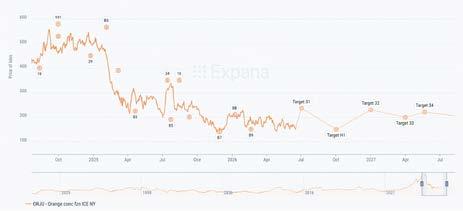
Orange juice prices have corrected significantly after peak pricing in 2025, driven by weaker consumer demand and improving supply conditions.
• Juice prices have moved down from peak levels.
• Reduced consumer demand is supporting price correction.
• Improving supply is contributing to deflation.
• Weather-related disruption remains a potential volatility risk.
OUTLOOK
Further deflation is expected, although weather disruption may still create volatility. This category may provide opportunities for supplier negotiation and cost recovery in the coming months.
PACKAGING KEY POINTS
Packaging costs across plastic, glass, and paper remain persistently high. These costs are heavily influenced by energy, logistics, regulation, and material inputs. Unlike several ingredient categories, packaging is not expected to deliver meaningful deflation in the near term.
• Plastic, glass, and paper packaging costs remain high.
• Energy and logistics continue to influence production and delivery costs.
• Regulatory changes are adding pressure.
• Packaging-heavy categories may see limited margin recovery even where ingredient costs ease.
OUTLOOK
Packaging will remain a key cost pressure. Categories with high packaging dependency are likely to see more limited benefit from ingredient deflation.
COFFEE KEY POINTS
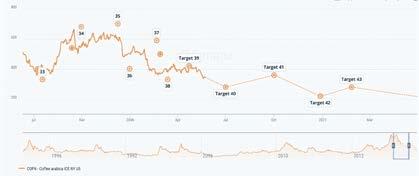
Coffee pricing is gradually easing from historically high levels. Increased production, particularly from Brazil, is helping to rebalance the market. However, cost savings are likely to be more limited in the short term compared with categories such as sugar and juice. Coffee remains elevated relative to historic averages and continues to require careful cost management.
• Coffee prices are easing from historically high levels.
• Increased production from Brazil is helping to rebalance the market.
• Savings are likely to be limited in the short term.
• Pricing remains elevated versus long-term averages.
OUTLOOK
Coffee is expected to soften gradually, but not enough to deliver significant near-term savings across all finished products.
LABOUR, TRANSPORT & LOGISTICS
LABOUR, TRANSPORT & LOGISTICS
LABOUR & TRANSPORT KEY POINTS
• Europe continues to face a structural driver shortage of more than 400,000.
• Wage costs are rising by approximately 4% to 8% in major markets.
• Freight rates remain volatile.
• Energy prices are forecast to rise by 24% in 2026.
• Logistics costs are being passed through into final commodity pricing. .
• Elevated operating costs may offset raw material deflation in some categories.
OUTLOOK
Labour and logistics costs are expected to remain elevated. Delivered cost should remain a key consideration, as labour, freight, energy, and packaging pressures may offset raw material deflation in some categories.
Oil markets remain volatile and elevated due to geopolitical uncertainty and sustained energy demand. No meaningful deflation is currently expected.
• Petroleum remains volatile.
• Geopolitical uncertainty continues to influence pricing.
• Sustained energy demand is limiting downside.
• Energy-linked costs continue to affect transport, production, and packaging.
Labour shortages, rising wages, and logistics disruption continue to place upward pressure on supply chain costs. These remain key drivers of food pricing in 2026, even where raw material markets are more balanced.
The logistics sector continues to face a significant structural labour gap, with more than 400,000 drivers required across Europe. Wage costs are also rising, with increases of around 4% to 8% in major markets.
Freight rates remain volatile due to capacity constraints, fuel costs, and geopolitical disruption. Energy prices are also expected to rise, with a forecast increase of 24% in 2026. These pressures continue to increase transport, production, and delivery costs.
STRATEGIC IMPLICATIONS
Procurement and category planning should focus on separating raw commodity movement from total delivered cost. Cost recovery opportunities are strongest in juice, sugar, frozen potatoes, prawns, and shellfish. Cocoa has eased from peak levels but remains volatile and should be managed carefully.
Categories exposed to packaging, energy, logistics, labour, disease risk, or structural supply tightness are likely to remain more resistant to price reductions. This includes poultry, turkey, beef, lamb, eggs, coffee, Italian EVOO, and packaging-heavy finished goods.
Planning through Q3 should prioritise early engagement on tight supply categories, particularly beef, lamb, poultry, turkey, cod, and eggs. Cost recovery discussions should focus on areas where market fundamentals have softened, while menu flexibility may be needed where whitefish availability remains constrained.
Petroleum remains a key risk factor for delivered cost across multiple categories.
Supplier assurance and food safety controls remain important across poultry and cooked meat supply chains, particularly where recent product withdrawals or disease-related disruption have increased scrutiny.
OUTLOOK
RISK OUTLOOK
LATE 2026 INTO 2027
A projected El Niño weather event in late 2026 may introduce additional volatility across several commodity markets. Historically, El Niño conditions can cause drought, excessive rainfall, and heat stress across key growing regions.
Sugar may be affected by disruption in Brazil and weaker monsoons in India. Cocoa remains highly sensitive to heat and rainfall shifts in West Africa. Coffee crops may also face pressure in Brazil and Vietnam, while orange juice could see yield and quality impacts depending on weather patterns.
• El Niño risk may increase commodity volatility from late 2026 into 2027.
• Sugar could be affected by weather disruption in Brazil and monsoon performance in India.
• Cocoa remains highly sensitive to West African rainfall and heat conditions.
• Coffee crops may be affected in Brazil and Vietnam.
• Orange juice may see yield and quality volatility depending on weather shifts.
OUTLOOK
While current market conditions are more balanced in several ingredient categories, weather risk remains an important forward-looking factor. Customers should expect continued volatility in weather-sensitive commodities into late 2026 and 2027.