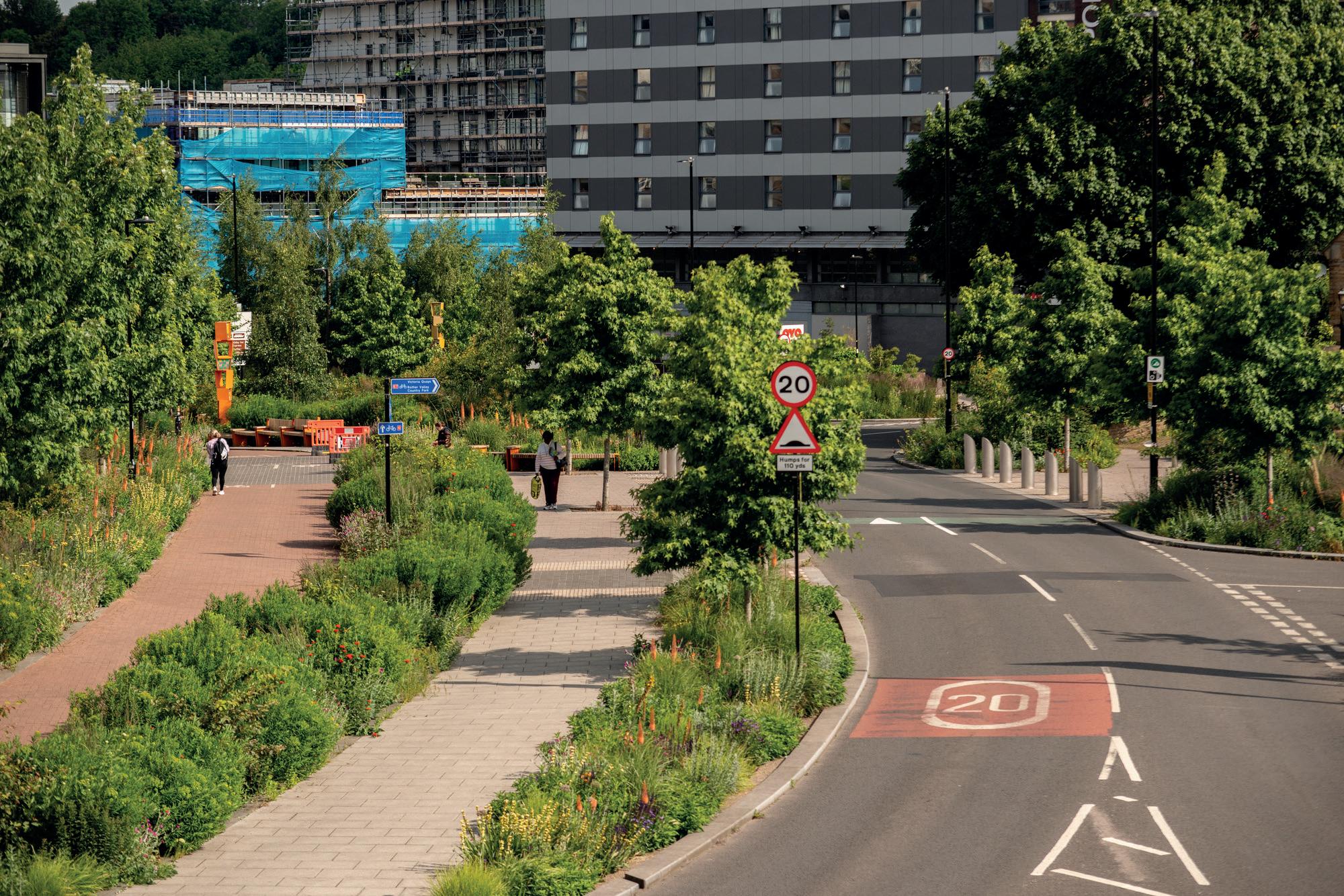
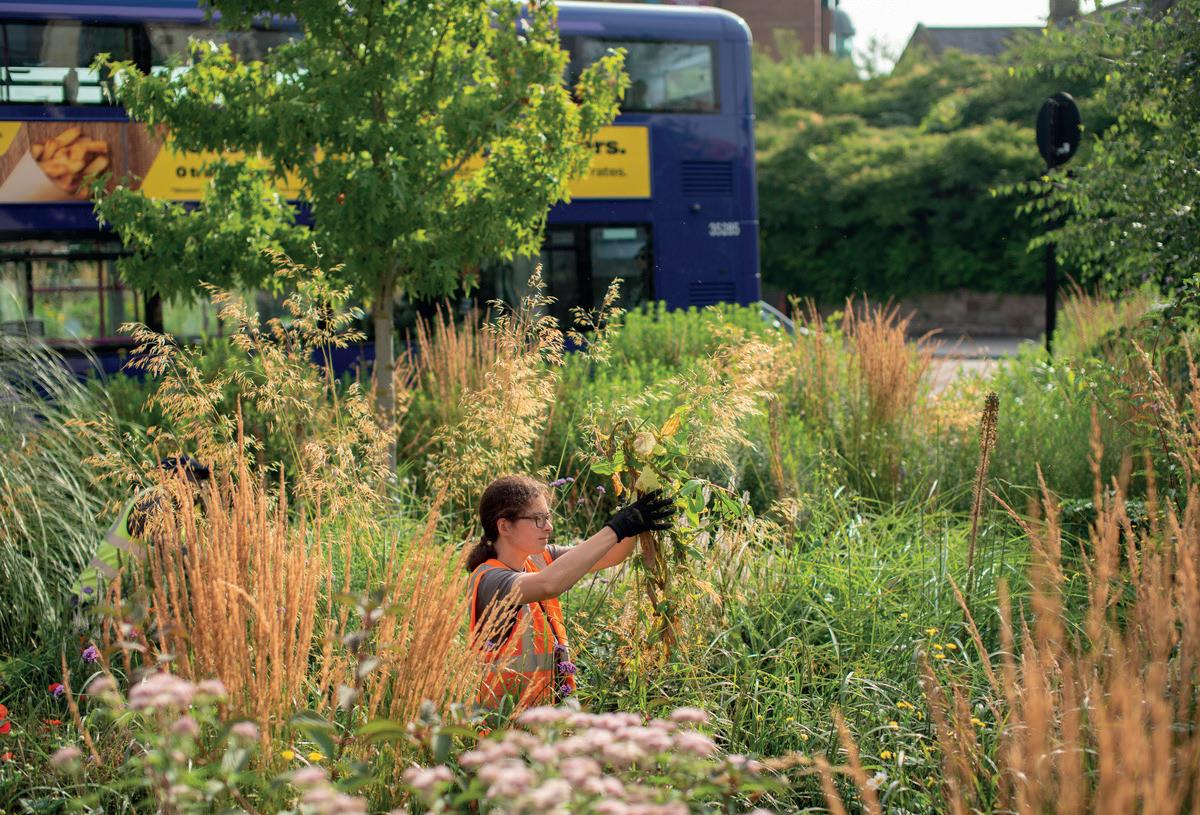
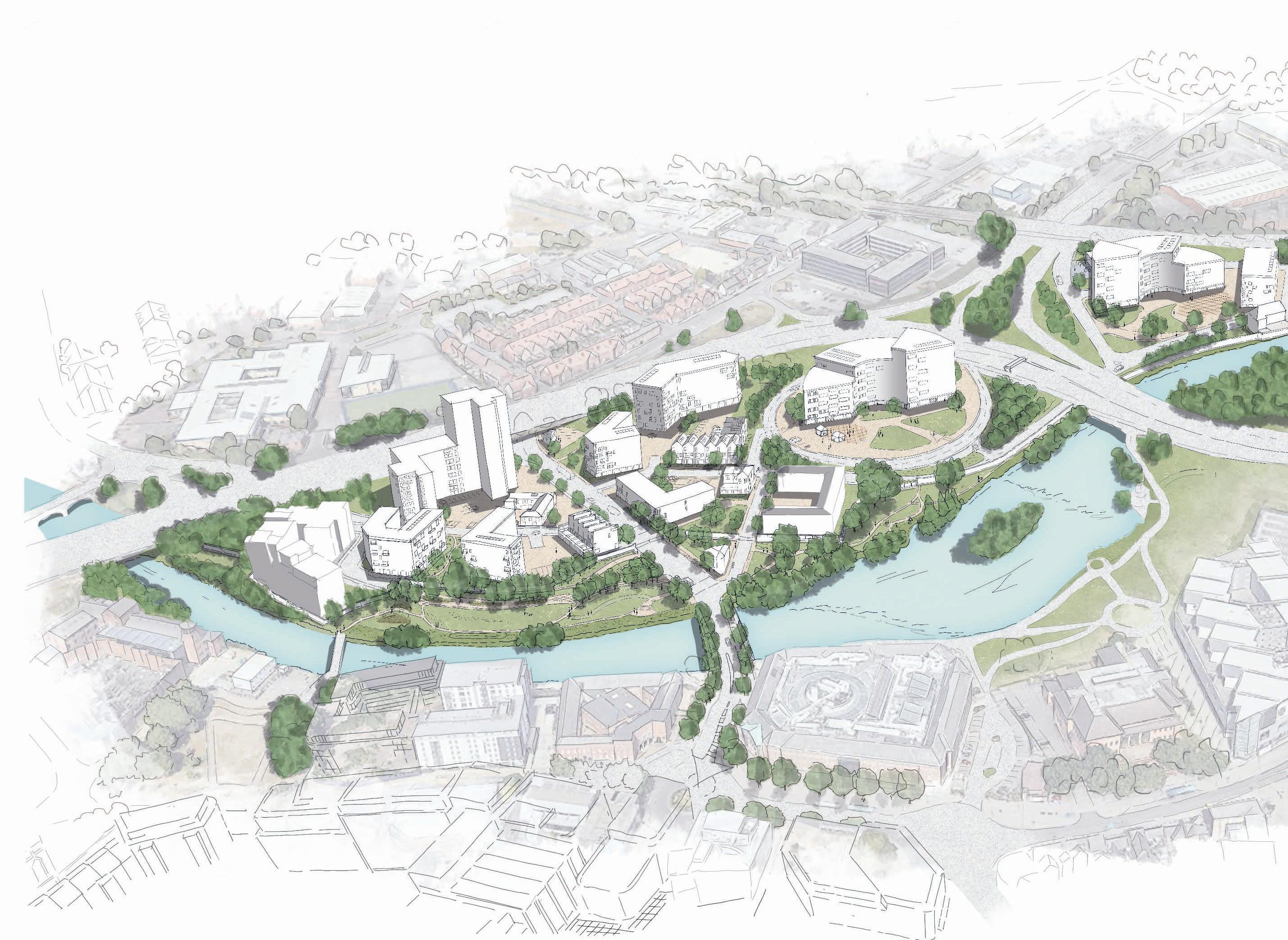
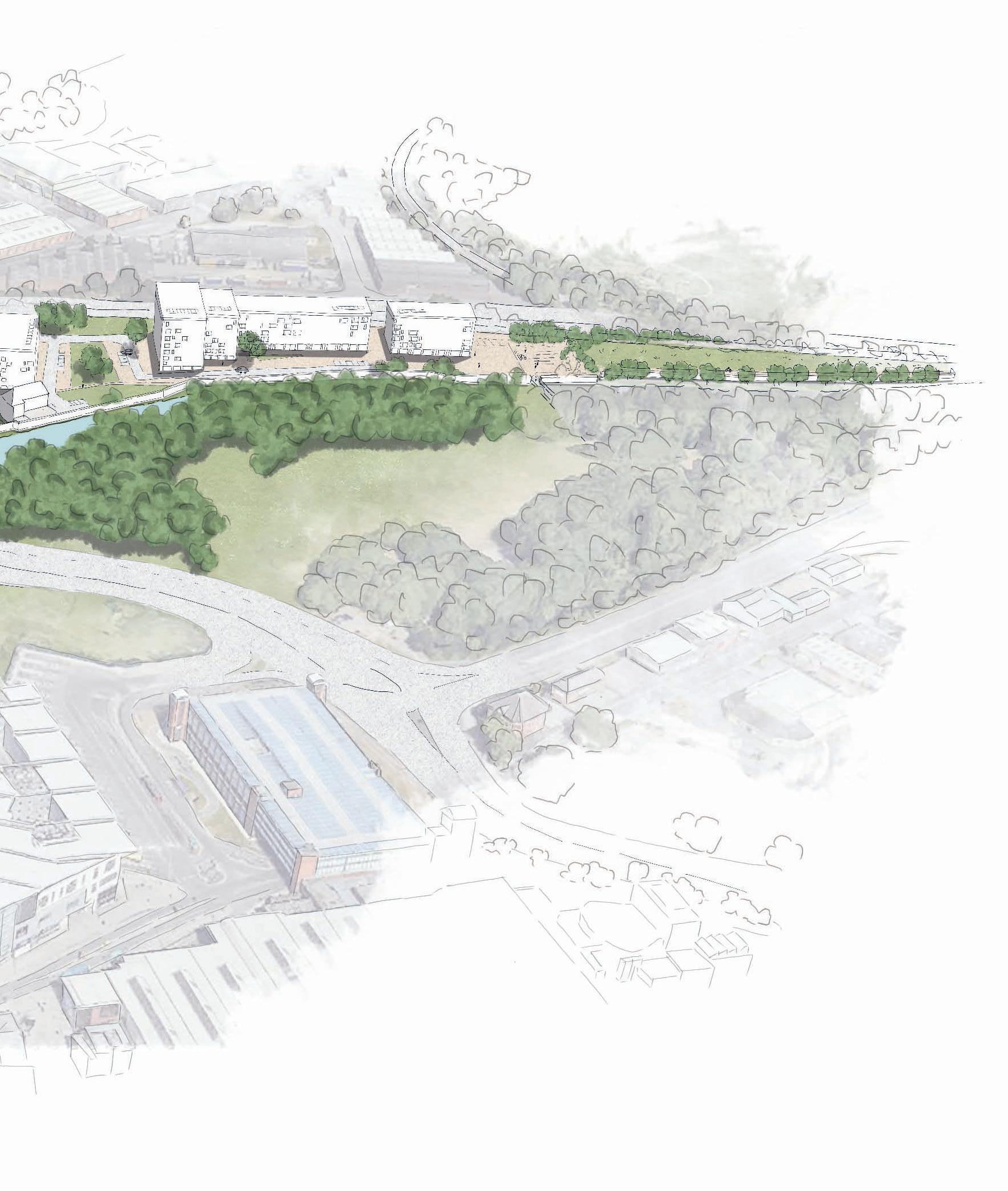
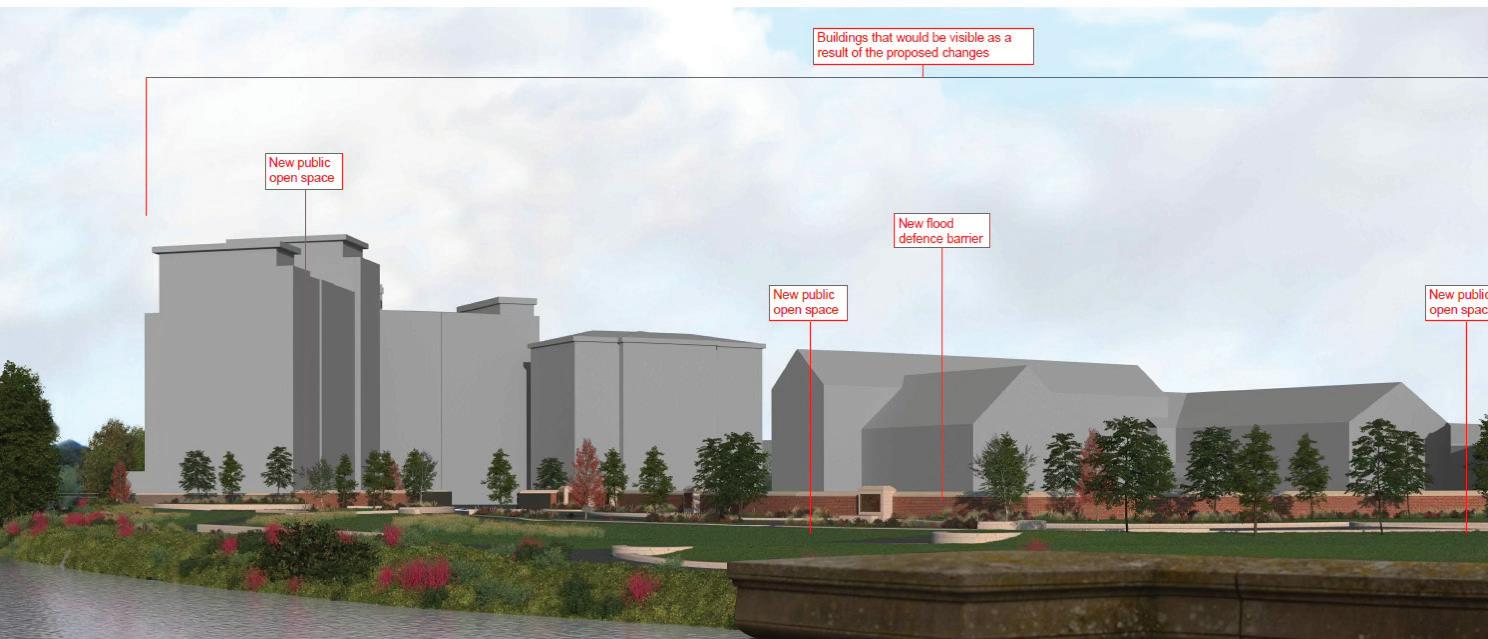
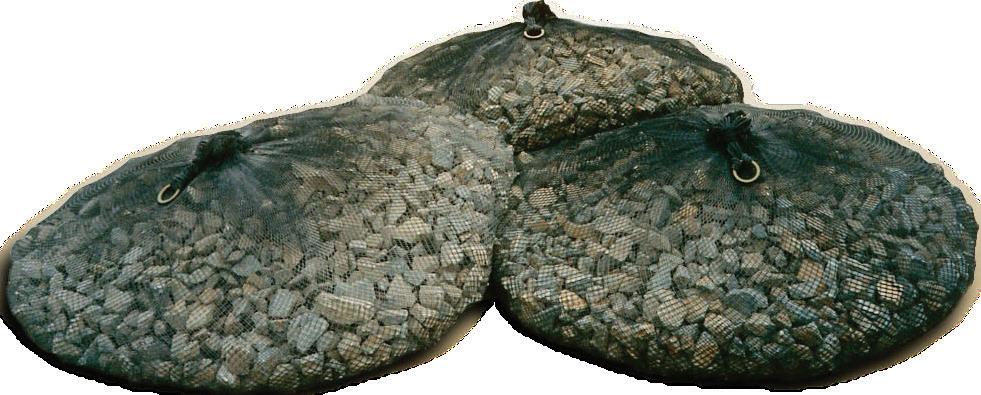
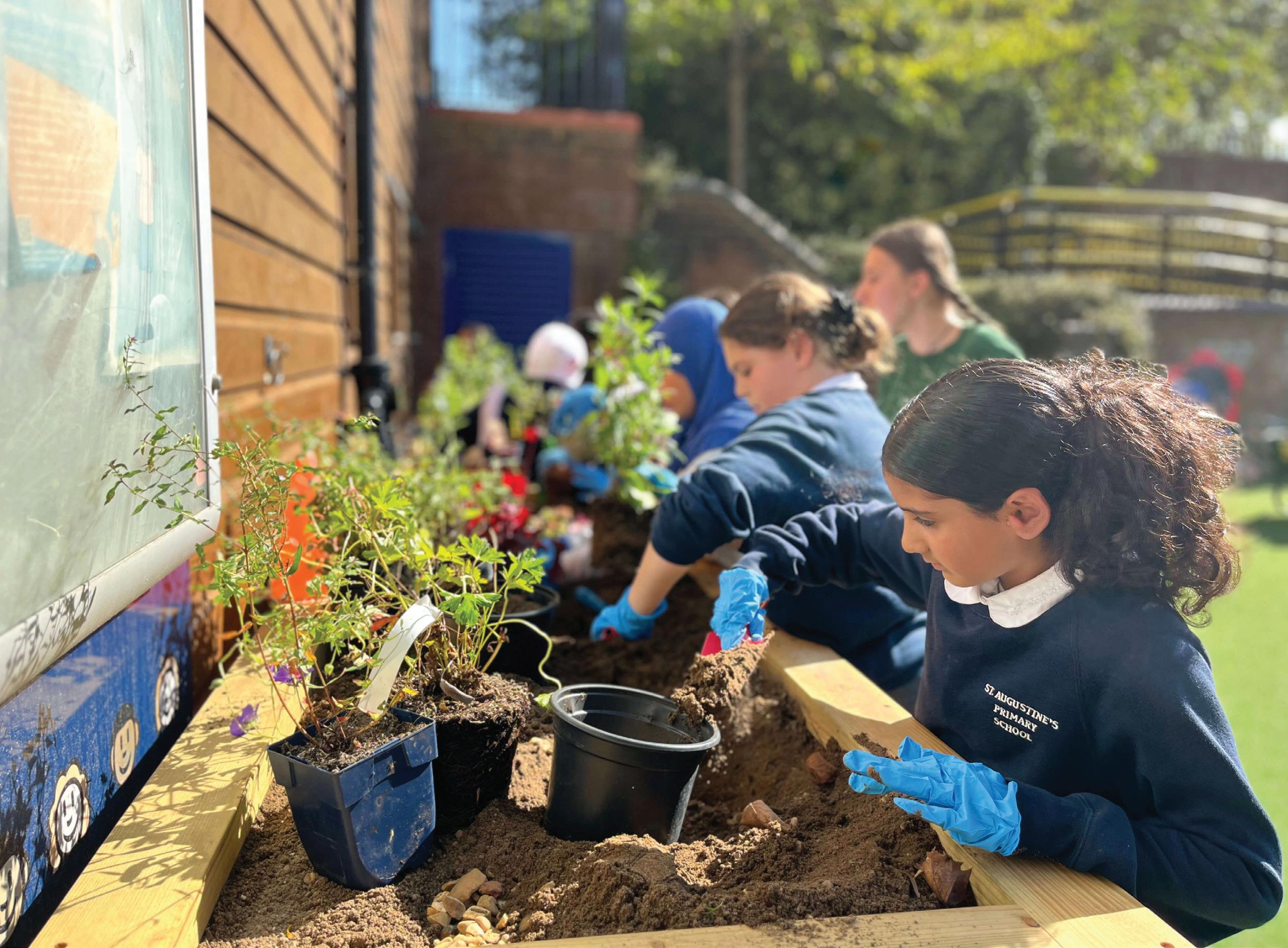
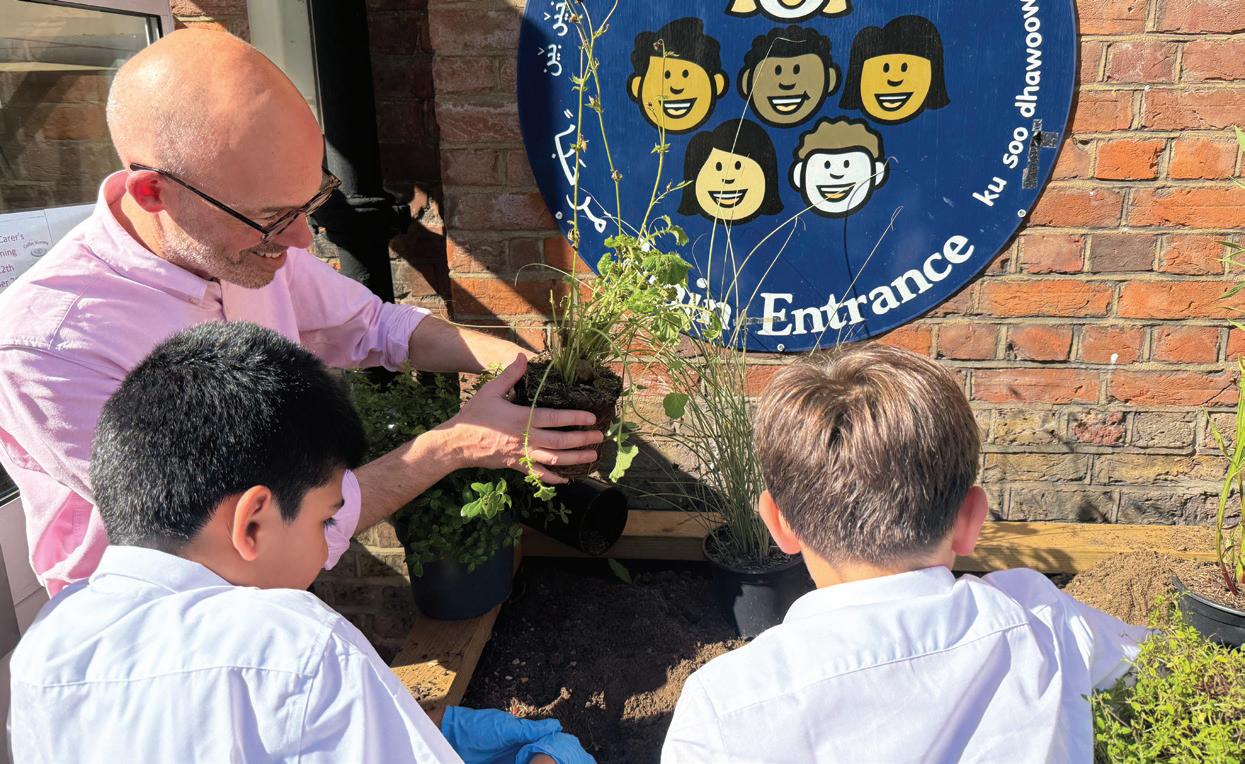
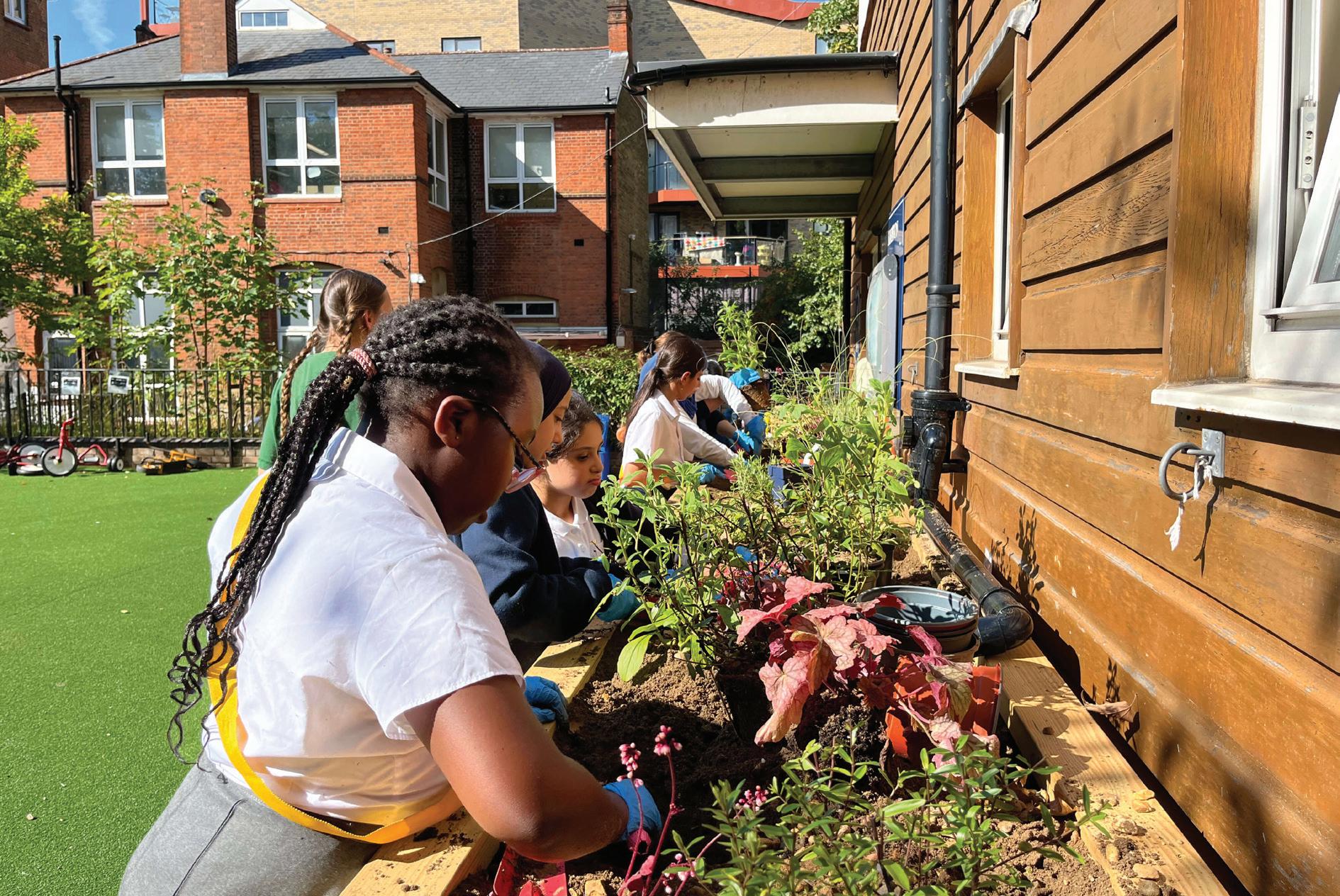
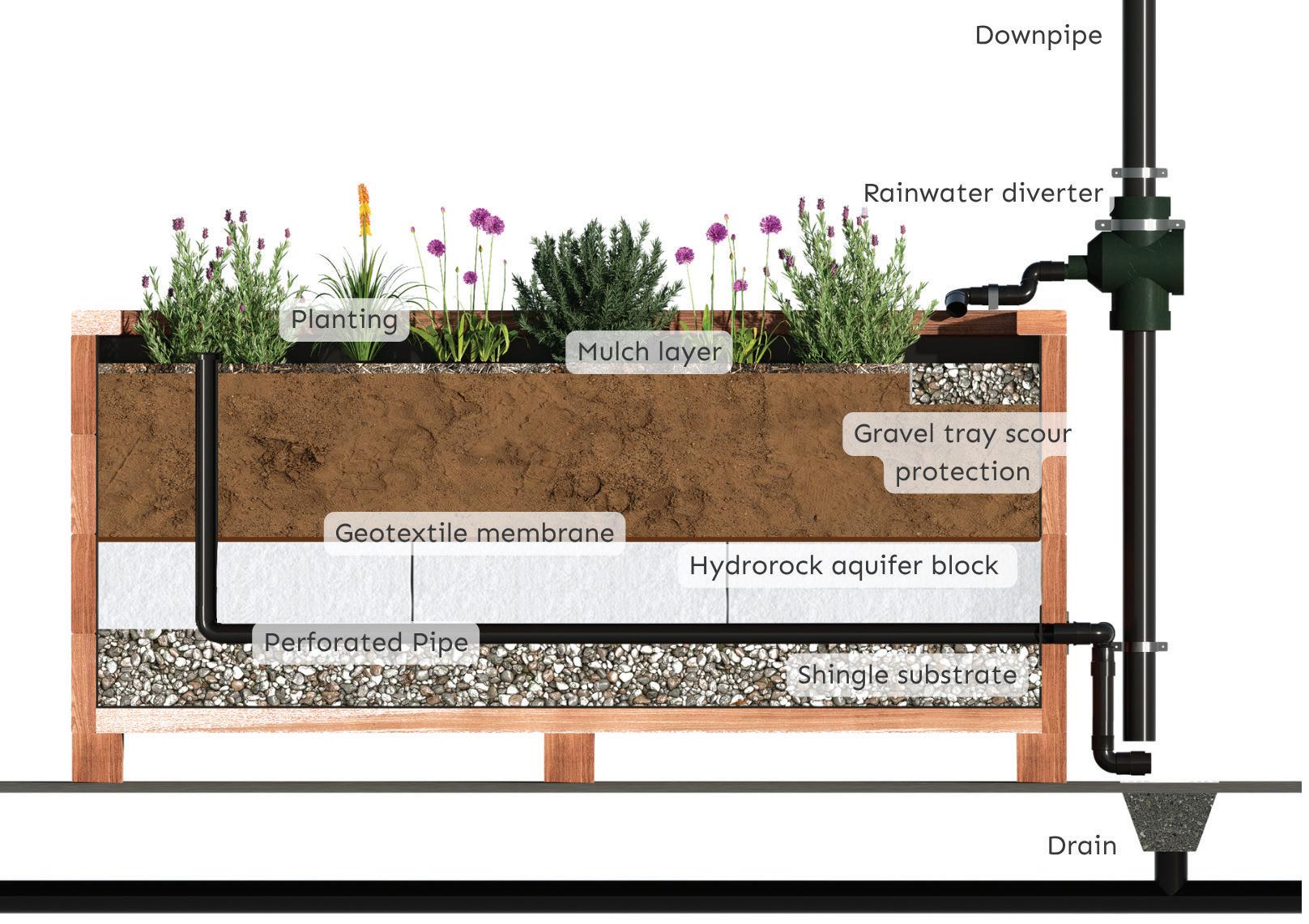
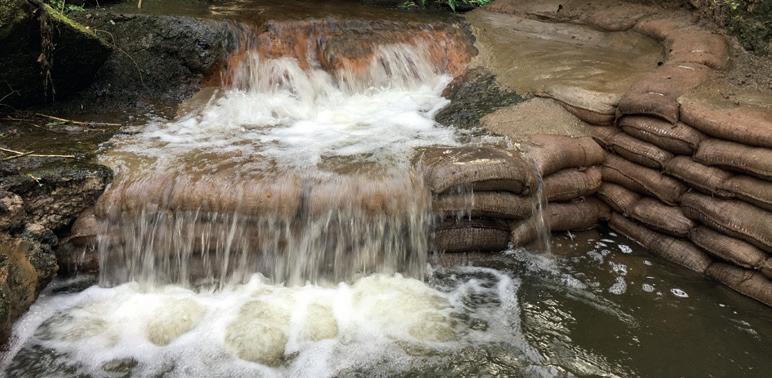
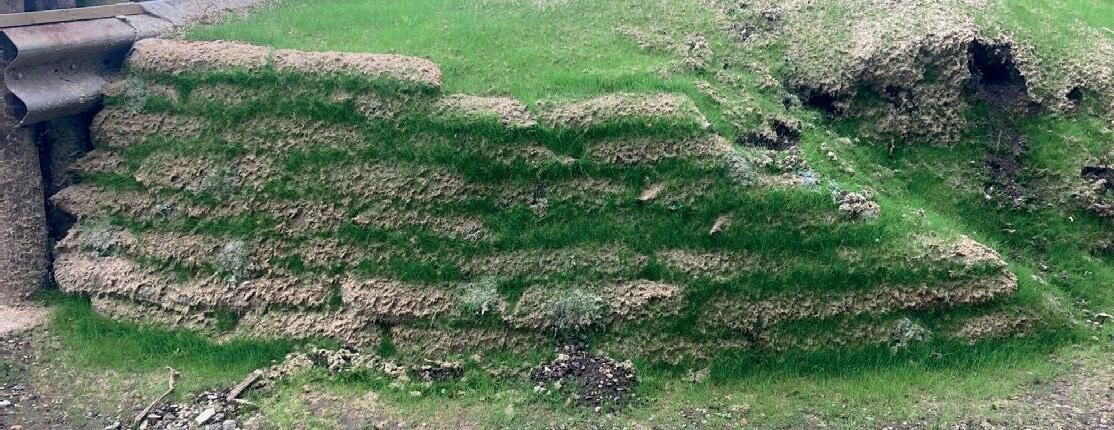
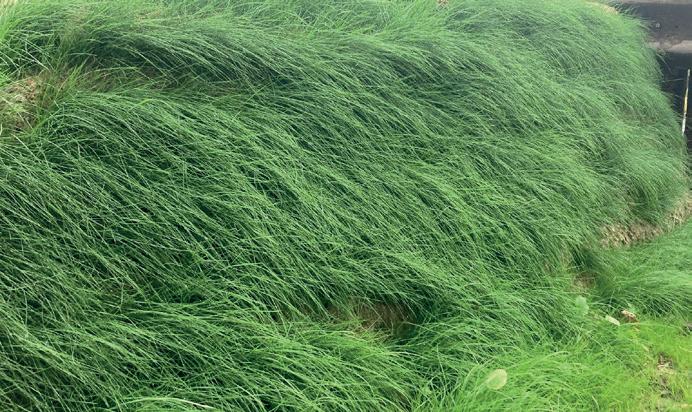
Th e Complete Urban Draina ge & Greenin g Solution
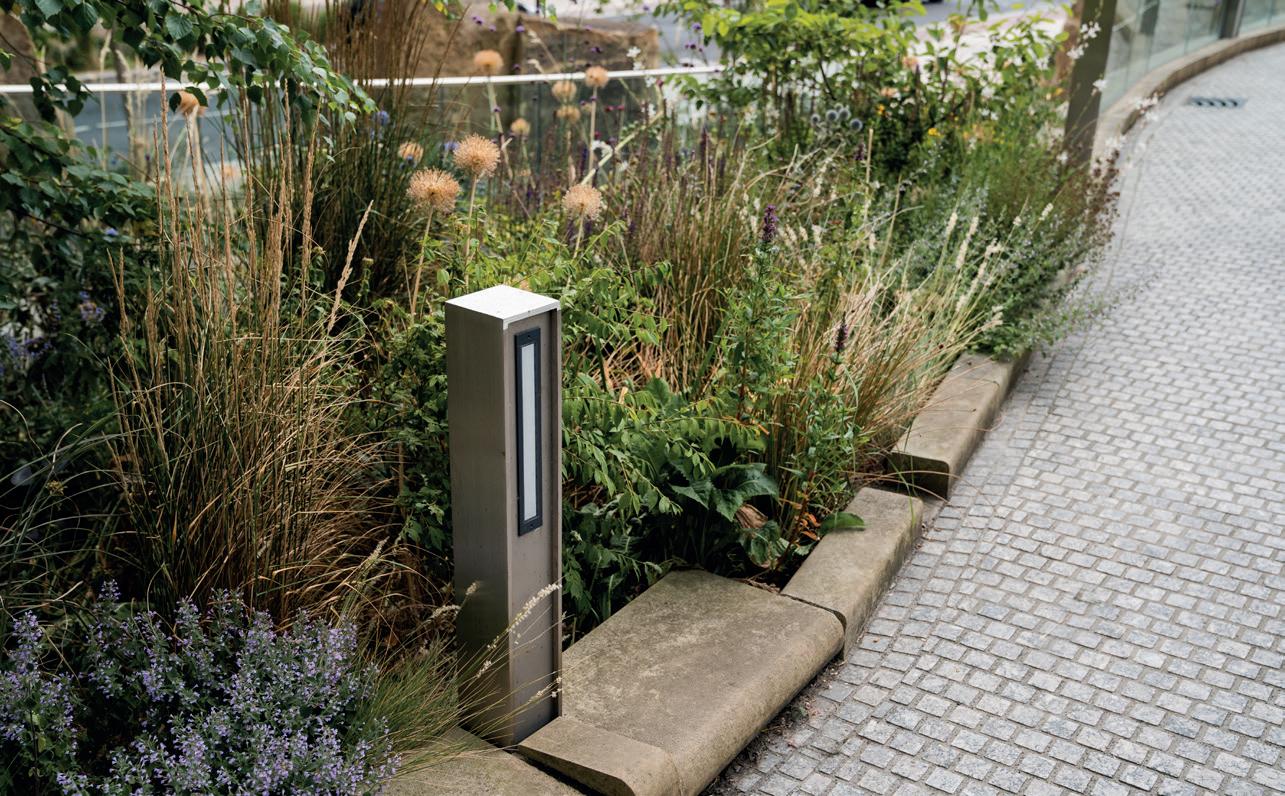
A sustainable, integrated soil and planting system that manages water and improves environments.
PROVEN LONG-TERM PERFORMANCE
Reliable performance backed by 12+ years of large-scale SuDS application
EFFECTIVE WATER MANAGEMENT
Manages surface water, regulates flow and reduces flood risk in constrained urban environments
DURABLE LOW-MAINTENANCE SOLUTION
Engineered to prevent clogging and reduce functional maintenance, lowering operational costs greenestate.org.uk/grey-to-green
Developed by:
Fashion designer and campaigner Carry Somers tells Jo Caird about her work to improve the traceability of supply chains and make textiles more sustainable
Suzy Hill, engineering innovation project manager at United Utilities, on Making Microbes Matter, a Water Innovation Fund project to identify microorganisms in wastewater
A spotlight on community reforestation work undertaken by Ashden Award finalist Instituto Zág, an Indigenous movement protecting land in Brazil
Helen Griffiths, chief executive of Fields in Trust, talks to Jo Caird about the charity’s work to legally protect parks and green spaces across the UK
Integrated water management plans could become part of a wider shift in how regions manage water – Clare Bullen, chief executive officer of Mersey Rivers Trust, shares lessons from Liverpool City Region
Max Davison, principal flood risk consultant at Stantec, explores what new funding policy guidance means for natural resilience schemes
Carl Hodgson of Newcastle City Council on an innovative blue-green infrastructure scheme that aims to make the city more climate resilient
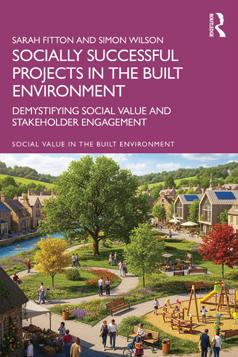
Dr Sarah Fitton and Simon Wilson, authors of a new book on social value in infrastructure projects, explore the benefits of thinking beyond just what’s technically feasible and financially viable
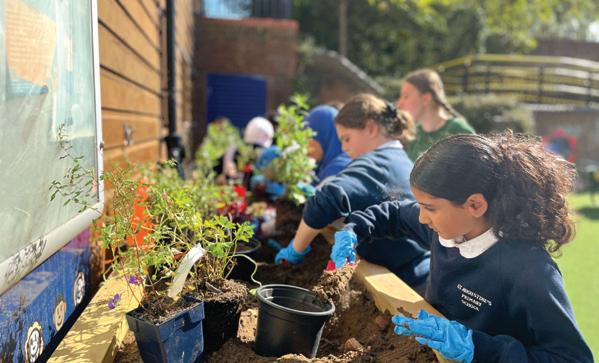
Sophia-Harri Nicholaou of WSP on how installing sustainable drainage in London school playgrounds is reducing the risk of surface water flooding and inspiring the next generation of water professionals
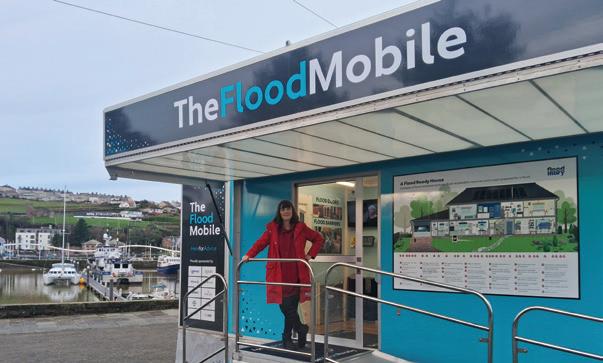
Mary Long-Dhonau, aka Flood Mary, looks back on more than two decades engaging with flooded communities
Member news roundup
Policy commentary: Mark Stratton, chair of CIWEM’s Flood and Coastal Erosion Risk Management Specialist Panel, explores whether the recent reform of FCERM funding will deliver for the coast
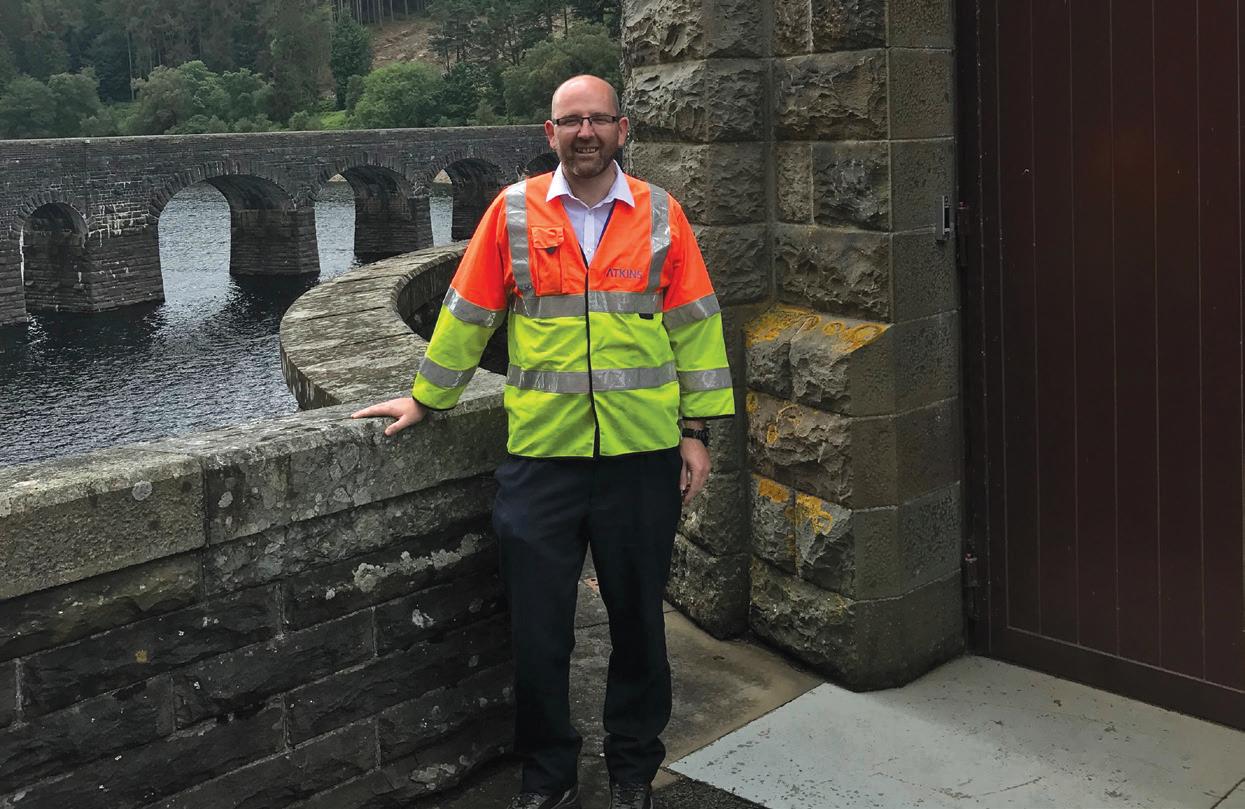
Colin Rimmer, a senior associate engineer at AtkinsRéalis, shares his professional journey toward becoming a chartered water and environmental manager
Katie Teesdale-Ward on the joys and challenges of bringing together partners and stakeholders on a climate resilience project for Anglian Water
Last word: Emma Causer, CIWEM’s new chief executive, on a lifelong love of water and her delight at being in a position to give back to nature
09-11 June
Exhibition Centre @ Liverpool Experience Campus
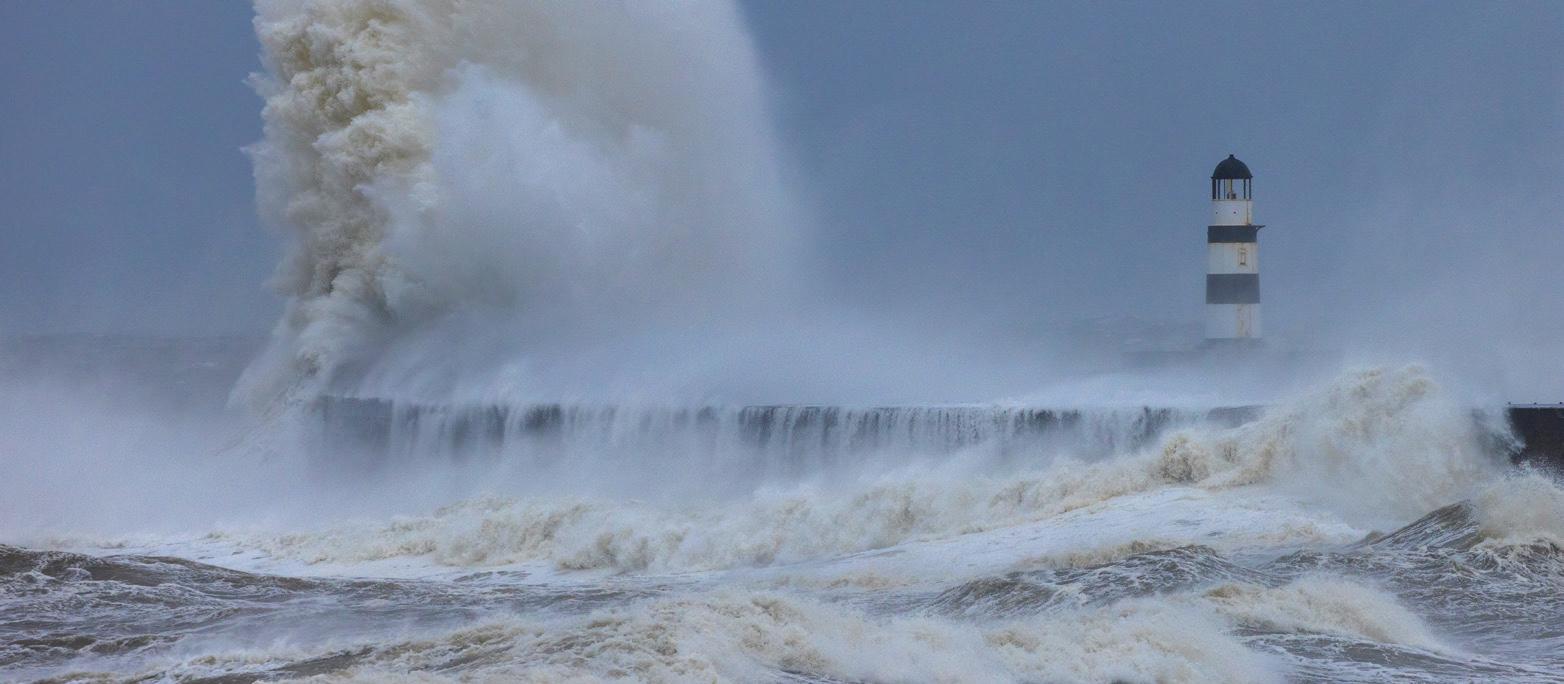
Flood & Coast 2026 returns to Liverpool on 9–11 June, bringing together the people, partnerships and practical solutions shaping flood and coastal resilience. As the UK’s leading event in this space, it connects policymakers, practitioners and innovators to share knowledge, tackle challenges and showcase what’s working. With a strong focus on turning policy into practice, the event explores how collaboration can help protect communities, infrastructure and the environment in a changing climate.
SPONSOR Van Oord
Since its origins in 2016, Van Oord has been a principal sponsor of the Flood & Coast event, and we are proud to continue our support as platinum sponsor a decade later for Flood & Coast 2026. The event brings together industry leaders, innovators and communities who are committed to creating a more resilient future. Our involvement reflects Van Oord’s dedication to collaboration, sustainability and delivering solutions that address the growing challenges of flood risk, coastal resilience and climate change. The 2026 conference will provide an invaluable platform to share expertise, learn from others across the sector and contribute to meaningful conversations that drive positive action. It is rewarding to be part of an event that connects contractors, suppliers, clients and people who share our commitment to innovation and long-term resilience. We look forward to continuing to work alongside our industry partners to help deliver resilient and sustainable solutions for the future.
SPONSOR WSP / Binnies
WSP & Binnies are proud sponsors of Flood & Coast, supporting progress in flood risk management and climate resilience nationwide. “Flood & Coast brings together the people and ideas that are genuinely driving change across our sector,” says Nick Jarritt, head of sustainable water management at WSP. ‘’Working through our joint venture with Binnies allows us to draw on deep technical expertise and strong delivery experience to support complex flood and coastal programmes nationwide.’’ “The energy at Flood & Coast is infectious, we are looking forward to experiencing this in Liverpool,” says Kevin Simpson, Binnies FCM director. “Celebrating excellence and collaborating with colleagues, with our expertise from across the water and environmental sector that provides cost effective innovative solutions to make a real difference for communities at risk from climate change.”
SPONSOR AtkinsRéalis
AtkinsRéalis is proud to be a platinum sponsor of the Flood and Coast Conference 2026. We are excited to be heading to Liverpool, bringing together practitioners from across the sector to network, learn, collaborate and celebrate success. A key focus for AtkinsRéalis is supporting the next generation of flood and coastal erosion risk management (FCERM) talent. We are delighted to be working with CIWEM, alongside Stantec and Waterman Aspen, to co-sponsor the new Future of FCERM Zone to help shape future careers and capability. We are delighted to see our expertise recognised at the Excellence Awards Dinner, with three projects shortlisted, as well as many AtkinsRéalis speakers presenting across the conference. Visit our stand to meet the team and discover the projects we are delivering. Look out for the Bridgwater Tidal Barrier LEGO® model in the Vehicles and Technology Area, showcasing how this nationally significant scheme will help protect communities from flooding.
SPONSOR Jacobs
As climate-driven extremes heighten flood and coastal erosion risks, resilient, integrated solutions are more critical than ever. At Jacobs, we support public and private clients to strengthen flood resilience, protect infrastructure and deliver lasting environmental outcomes. With one of Europe’s largest flood and coastal erosion risk management (FCERM) teams, we help communities adapt to inland flooding, coastal erosion and sea level rise while safeguarding and restoring vital habitats and assets. Forums like the Flood & Coast Conference and Exhibition are essential for bringing together policymakers, practitioners and innovators to turn ambition into action – connecting strategy, investment and delivery to tackle real-world challenges. Our involvement reflects Jacobs’ commitment to collaborative, sustainable and place-based solutions that enable communities to adapt, recover and thrive in a changing climate.
Copyright of editorial content is held by the Chartered Institution of Water and Environmental Management (CIWEM).
Reproduction in whole or part is forbidden except with the express permission of the publisher. Data, discussion and conclusions developed by authors in this publication are not intended for use without independent substantiating investigation on the part of potential users. Opinions expressed are those of the authors and are not necessarily those of Syon Publishing, the Chartered Institution of Water and Environmental Management (CIWEM) or any servants of those organisations. No responsibility for loss suffered by any person acting or refraining from acting as a result of the material contained in this publication will be accepted by Syon Publishing, CIWEM or its associated organisations.
The Environment magazine, printed by Stephens & George on Woodforce Silk, is accredited with FSC stock certification, which certifies the timber source originates from legal and sustainable forests. The Environment magazine uses vegetable inks formulated from renewable sources and has an Aqueous seal on the cover. ISO 14001: 2004 Environmental Management.
Chartered Institution of Water and Environmental Management
Shifting currents
IT FEELS LIKE a moment of transition for the flood and coastal erosion risk management (FCERM) sector. Between the government’s recent reform to FCERM funding and its ongoing consultation on the National Planning Policy Framework, there are changes afoot that will affect the way we respond to the threat of flooding and coastal erosion for decades to come.
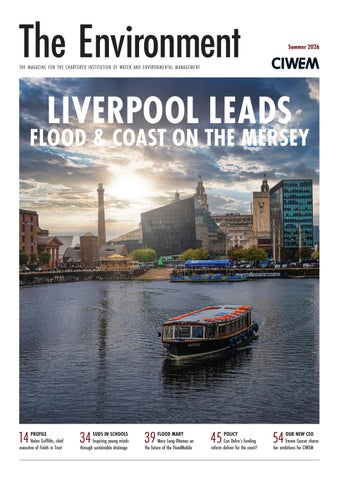
So as FCERM professionals come together at CIWEM’s annual Flood & Coast Conference, held in Liverpool this year for the first time, The Environment considers the impact of these changes. Mark Stratton, chair of CIWEM’s Flood and Coastal Erosion Risk Management Specialist Panel, explores whether the recent reform of FCERM funding will deliver for the coast (pp. 45-47), while Max Davison, principal flood risk consultant at Stantec, considers its impact on natural flood management (pp. 22-24). We also have Clare Bullen, chief executive officer of Mersey Rivers Trust and a panellist at the conference, discussing how integrated water management plans could help tackle some of the biggest challenges facing our rivers, coasts and communities (pp. 18-20).
Away from FCERM, we hear from Helen Griffiths, chief executive of Fields in Trust, about protecting our green spaces (pp. 14-15); from United Utilities’ Suzy Hill on a Water Innovation Fund project mapping the genetics of microbes in wastewater treatment plants (p. 10); and from the sustainable fashion campaigner and author Carry Somers about her book on the natural history of textiles (pp. 6-7).
Last but certainly not least, we extend a warm welcome to Emma Causer, CIWEM’s new chief executive. Turn to page 54 to learn about Emma’s ambition for the institution and her lifelong love of water.
Jo Caird Editor,
The Environment theenvironment@ciwem.org
My environment: CARRY SOMERS
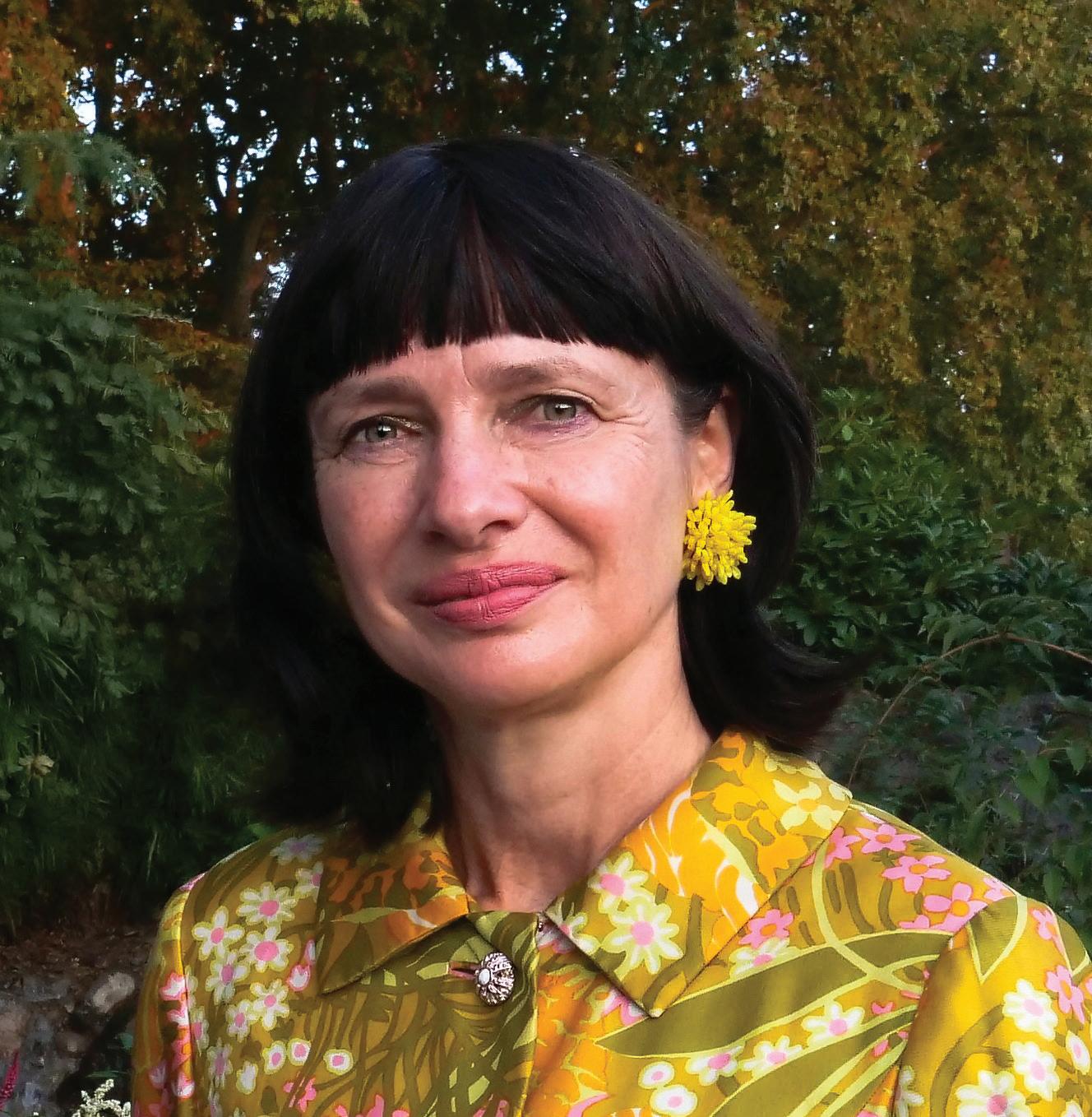
The fashion designer and campaigner tells Jo Caird about working to improve the traceability of supply chains and make textiles more sustainable, including her new book
The worlds of fashion and water and environmental management may not appear to share much common ground. Look back through history, however, as Carry Somers does in The Nature of Fashion: A Botanical Story of Our Material Lives, and the connection becomes obvious: the development of textiles for clothing and household, commercial and industrial goods was entirely dependent on our repeated creative engagement with the natural world. The clothes we wear might feel very far removed from the plants from which their fibres have been spun, but the leap of imagination required to reconnect them with their origins is worthwhile making for what it can offer us: the chance to become more responsible consumers and better stewards of the natural world. Somers has been working to highlight
this connection for over 30 years. In 2009, Pachacuti, the fashion brand she founded in 1992 with transparency and traceability at its heart, became the first company in the world to be Fair Trade certified under the WFTO Sustainable Fair Trade Management System. Then, in the wake of the 2013 Rana Plaza disaster, in which an eight-storey clothing factory in Dhaka, Bangladesh, collapsed, killing more than 1,100 people, Somers founded the hugely influential advocacy movement Fashion Revolution.
Most recently, Somers co-authored a scientific paper alongside scientists at Northumbria University that analysed historic textile fibres preserved in the sediment of a lake downstream from historic textile mills in Staffordshire. It’s a project she also explores in The Nature of Fashion, considering the biodegradability of natural and synthetic fibres and dyes.
DO YOU WANT THE BOOK TO PROVOKE A PARTICULAR RESPONSE IN READERS?
It’s about showing that there are myriad paths that we can follow and that it’s important to look back to look forward. That’s not saying that this is a nostalgic perfect past – just to look at the mistakes that we’ve made and how we’ve learned from them. There is wisdom in the past that we can discover just like there are materials in the past that we can discover. For fashion and textiles to be more sustainable, we really need to rediscover that personal connection with the fibre, the thread, the dye, the land itself. We can all cultivate that in some way, whether that’s buying something you love and knowing it’s going to stay in your wardrobe for a lifetime or mending an item of clothing.
WHEN DID YOU FIRST START CONSIDERING THE ENVIRONMENTAL IMPACT OF FASHION AND TEXTILES?
It was when I was working on the Geo Fair Trade project – a three-year project that ran from 2009 to 2012 with research teams from French and Swiss universities working with my company Pachacuti in Ecuador – that I realised what impact palm had as a fibre. We found that one Panama hat uses the equivalent of 13 days drinking water, and a cotton hat uses the equivalent of 825 days drinking water. Having that knowledge really impacted the decisions that we made with Pachacuti.
TELL US ABOUT FOUNDING FASHION REVOLUTION IN THE WAKE OF THE RANA PLAZA DISASTER.
As soon as I heard about Rana Plaza I knew it was a lack of transparency, responsibility and accountability that had cost those people their lives. We had started the Geo Fair Trade project four years before the Rana Plaza factory collapse, but nobody seemed interested. I remember being at London Fashion Week and trying to tell journalists; I’d been banging on about it for years by that stage. So when I started Fashion Revolution, I just imagined that it would be something that might happen on the anniversary of the factory collapse and be confined to the UK. I never imagined the impact it might have; suddenly we had 69 countries on board.
GUY HILLS
WERE YOU SORRY TO STEP AWAY FROM PACHACUTI AT THAT STAGE?
Fashion Revolution was a bigger stage. It was a chance to make more impact. People felt really powerless. They knew that somebody had to take responsibility. So it was tapping into that feeling of powerlessness, and giving people concrete things that they could do in terms of asking the questions: first of all, ‘Who made my clothes?’ And then also, ‘What’s in my clothes?’, so bringing those fibres, materials, chemicals into the spotlight.
SUSTAINABILITY IS NOW A BUZZ WORD IN FASHION – DOES IT FEEL LIKE A VERY DIFFERENT LANDSCAPE TODAY TO WHEN YOU FIRST STARTED TALKING ABOUT THIS ISSUE AT PACHACUTI?
We’ve come so far in terms of people thinking about the social side of how their clothing is made, and the environmental side too. People understand about microplastics, about fibres and synthetics. But we are also seeing a lot more jumping on the bandwagon by brands – I don’t think it’s necessarily all conscious greenwashing but for a lot of brands, they seem to think that just because they use natural materials, that means they can talk about sustainability.
“We’ve come so far in terms of people thinking about how their clothing is made”
At Pachacuti we measured our impact with 60 social, environmental and economic indicators. It’s so important to do it properly, because otherwise sustainability will be emptied of meaning. If your brand really is doing something different, you need to be able to prove it and communicate it. That is difficult to do, however, because data turns people off.
WHAT NEEDS TO HAPPEN IN ORDER TO HALT THE
ENVIRONMENTAL, SOCIAL AND CULTURAL DAMAGE CAUSED BY FAST FASHION?
Rana Plaza was a wakeup call, but it shouldn’t have taken a disaster of that scale for people to realise the human rights abuses, the lack of auditing and false auditing that was taking place, and it’s the same in terms of the environmental impacts of fashion. There are a multiplicity of issues, and I
think a lot of people are aware of them. But we can’t put all of the impetus onto consumers. It has to come down to industry and policymakers.
Here in the UK we need to be following the example of France, which is a leader in terms of extended producer responsibility (EPR). The UK is lagging behind the European Union at the moment in terms of its due diligence and EPR legislation. Legislation is slow, but we can’t rely on voluntary standards.
WHAT ADVICE DO YOU GIVE TO CONSUMERS WANTING TO MAKE THE RIGHT CHOICES ABOUT WHAT THEY BUY?
Secondhand and vintage is always my recommendation. Hopefully over time that will reduce the number of items being made. But also, because the first wash is the greatest when it comes to fibre shedding – whether that’s natural or synthetic fibres – by buying secondhand, you’re reducing the number of microfibres going into the environment.
It’s also about learning how to wash things and how often to wash things. Most people wash clothes far too much. I’ve got clothes I might not wash for a few years. I’ve probably got clothes
I’ve never washed. There are ways of freshening clothing and taking spots and marks off. Also washing at lower temperatures, making sure you have a full load. Plus there’s learning how to make our clothes last longer in terms of repair and stain removal.
If you are buying new, it’s about looking at the label. Labels don’t tell us much at the moment, but hopefully with the roll out of the EU’s digital product passport, our labels should be telling us more soon, about the country of origin of the raw materials.
Consumers should also ask questions of the brands. When we developed the Fashion Transparency Index at Fashion Revolution – shining a spotlight on how much information the world’s largest fashion brands disclose about their supply chain practices and impacts – we were told it only takes between 50 and 200 messages to a brand on a specific subject for that to get discussed at board level. o
The Nature of Fashion:
A Botanical Story of Our Material Lives is published by Chelsea Green; carrysomers.com
Carry Somers in a field of agave – the source of fibres including sisal and henequen – in the Yucatán, Mexico
FROM STRATEGY TO SPADE IN THE GROUND: HOW INTEGRATED PROJECT TEAMS CAN DELIVER FLOOD RISK MANAGEMENT AT PACE
As the UK continues to confront the realities of a changing climate, flood risk management is becoming more complex, more urgent and more visible. For public sector clients and infrastructure owners alike, the challenge is no longer simply to design better schemes, but to deliver them efficiently, collaboratively and with confidence. In a sector where time, trust and technical certainty matter, the ability to move from strategy to action is what turns ambition into real-world resilience. That is why integrated delivery matters. When appraisal, design, consenting,
survey, stakeholder engagement, risk management and construction support are brought together within one coordinated approach, clients gain more than technical inputs. They gain a team that can shape the case for intervention, test and refine options, secure approvals, develop practical solutions and stay involved through delivery. In an environment defined by constrained programmes, complex interfaces and rising expectations, that kind of joined-up support can make all the difference.
Flood and coastal risk management schemes are rarely straightforward. They
often pass through sensitive urban corridors, cross multiple landownership boundaries, interact with utilities and highways, and sit alongside environmental and planning constraints. They also have to work in the real world: they must be deliverable, maintainable and acceptable to stakeholders, regulators and communities. The strongest schemes are therefore not only technically robust, but also grounded in place, programme and purpose.
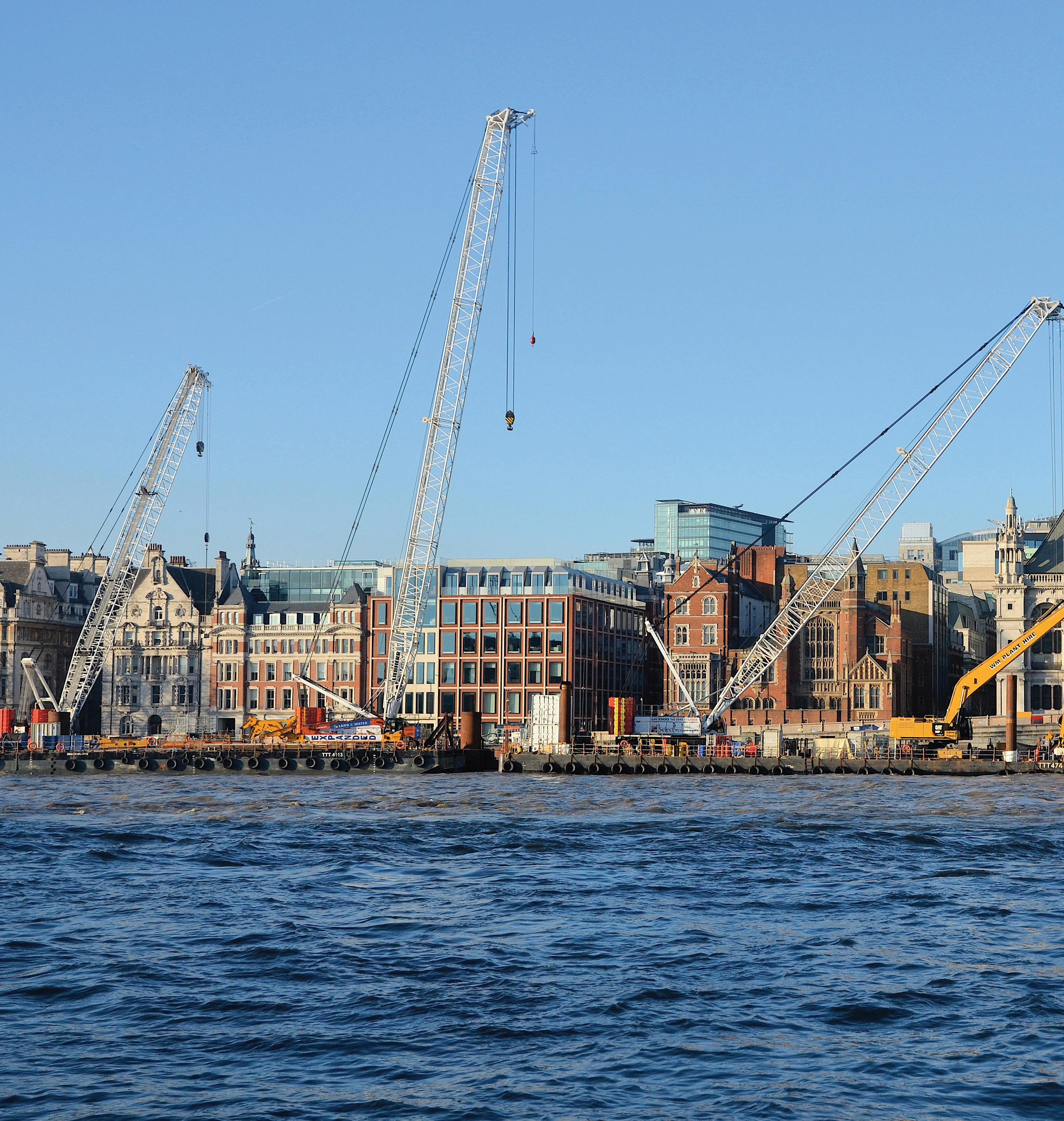
Derby Riverside Flood Risk Management Scheme shows what that looks like in practice. Tetra Tech’s work
on the scheme has required a full multidisciplinary team to deliver outline design, planning and EIA within a challenging 10-month programme for planning submission. When constructed, the project will deliver 1.2km of new flood defences in the northern area of Derby city centre, better protecting more than 1,000 residences and businesses against flooding now and under future climate
pressures. Early momentum mattered: the team completed an intrusive ground investigation within six weeks of award and achieved two design freezes to support the Environmental Impact Assessment workstreams.
What makes Derby Riverside particularly compelling is the way flood protection has been designed as part of a wider place-based solution. The scheme
retrofits a complex 1970s reinforced concrete highway structure, integrates a standalone flood defence wall and includes a SuDS park solution to manage surface water risks. That combination of engineered defence and sustainable surface water management reflects the direction of travel across the sector: schemes are increasingly expected to manage water more intelligently, support wider environmental outcomes and fit the character of the place they serve.
Collaboration has been equally important. On Derby Riverside, Tetra Tech led the detailed design last year, working closely with industry partners, and are now supporting the scheme through construction to continue deliver efficiencies. Regular design review meetings and clear lines of communication help keep the team aligned and the solution focused. It is this joined-up approach that enables a carefully considered and efficient outcome for the city. The success of schemes like this is increasingly defined by what industry partners can achieve together, rather than by any single organisation working alone.
That is the wider lesson from schemes like Derby Riverside. Flood risk management is increasingly about joined-up delivery rather than isolated technical output. Clients need partners who can move comfortably between appraisal and optioneering, detailed design, consenting, environmental input and construction support — and do so with a practical understanding of what it takes to deliver in the real world. The value lies not only in technical breadth, but in aligning that breadth around a common outcome.
As the sector gathers for Flood & Coast 2026, the message is increasingly clear: the best outcomes come from teams that combine technical depth with delivery know-how. Derby Riverside is a strong reminder that when collaboration, rigour and local understanding come together, flood risk management can do more than defend against risk. It can help shape better places, protect communities and create schemes with lasting value.o
Visit tetratech.com to find out more.
Come visit us at Flood and Coast on Stand G13 to discuss further
DERBY RIVERSIDE
Metagenomics could
A BUG’S LIFE
Wastewater treatment is a biological process. While we know that there are certain families of bugs that do certain jobs, we don’t really know which specific microbes are doing what, and where they thrive.
The Making Microbes Matter project could change that. Partnering with Newcastle University, Yorkshire Water, Northumbrian Water and Anglian Water, we are using metagenomics – a synthesis of DNA sequencing and computer science – to discover what makes up the microbial communities at 11 wastewater treatment sites, and the role they play in the wastewater treatment process. The insights we gain could help improve efficiency and reliability, reduce costs, and potentially cut greenhouse gas emissions.
While traditional ‘amplicon’ sequencing targets one specific gene across many organisms, metagenomics looks at all the detectable genetic material in a sample. Bioinformatics – a computational tool for analysing genetic data – is then used to compare DNA sequences with public genome databases. We hope we will find things that we didn’t know were there and which might be common across different wastewater treatment works.
We started sampling in February, working with an amazing team of operators to take samples from each site every week for a year. We’re sampling from a range of different wastewater treatment processes, looking at both the influent and the mixed liquor, so we can see what’s coming in as well as what’s happening within the process.
“Our ambition is to see metagenomics become part of routine sampling at wastewater treatment works across the country”
The logistics are challenging. To preserve the DNA for testing in the future, the samples have to be frozen, so we’ve installed freezers at each wastewater treatment works. Once a month a fleet of couriers collect the samples and deliver them to Newcastle University.
Dr Ben Allen and his team then extract and sequence the DNA from the samples. Because the microbial diversity is so complex, they collect a huge amount of data. When you consider that there are around a million times the number of microbes in a wastewater sample as there are stars in a galaxy, you start to understand the scale we’re talking about.
The data is analysed and refined using advanced processing tools to produce a list of the microbes at each site and how abundant they are.
Thomas Curtis, professor of environmental engineering at Newcastle University, coined the term ‘national biological infrastructure’ for this microbial community. The importance of our national physical infrastructure – railways, roads, hospitals, schools, airports and so on – is widely acknowledged, yet our biological infrastructure, the bugs present in the systems we use, is rarely recognised. We’re as dependent on our microbes as we are on our roads. The better we understand this infrastructure, the more we can do with it.
The real push behind Making Microbes Matter is to understand if we can use that knowledge to make operational decisions. If we were able to look at the metagenomics results and see the numbers of a particular bug increasing at a treatment works, it could help us predict problems that might arise in the future, for example foaming, which slows down the treatment process.
Our ambition for this pilot is to see metagenomics become part of routine sampling at wastewater treatment works across the country. Another option would be using the baseline microbial data that we’re developing through the project to identify which bugs are problematic at certain sites. This would enable operators to conduct regular PCR testing – the sort that became commonplace during the Covid-19 pandemic – on those bugs, with a view to taking action if they are present in excessive quantities. We haven’t yet worked out what the final outcome might be, but we’re excited to find out.
We’re also using metagenomic sampling to support our work to reduce process emissions. We know that nitrous oxide is a byproduct of the reaction that takes place in treatment works to remove ammonia, but don’t currently fully understand the specific microbial pathways that enable this. By using metagenomic sampling at sites where we’re also monitoring nitrous oxide emissions, we will be able to increase our understanding. This would be a big breakthrough for the sector, potentially enabling process emissions to be reduced by tweaking the microbial communities. o
Interview by Jo Caird
Suzy Hill, engineering innovation project manager at United Utilities, on Making Microbes Matter, a Water Innovation Fund project to identify microorganisms in wastewater
help water companies better understand the microbes in wastewater treatment
BIG PICTURE
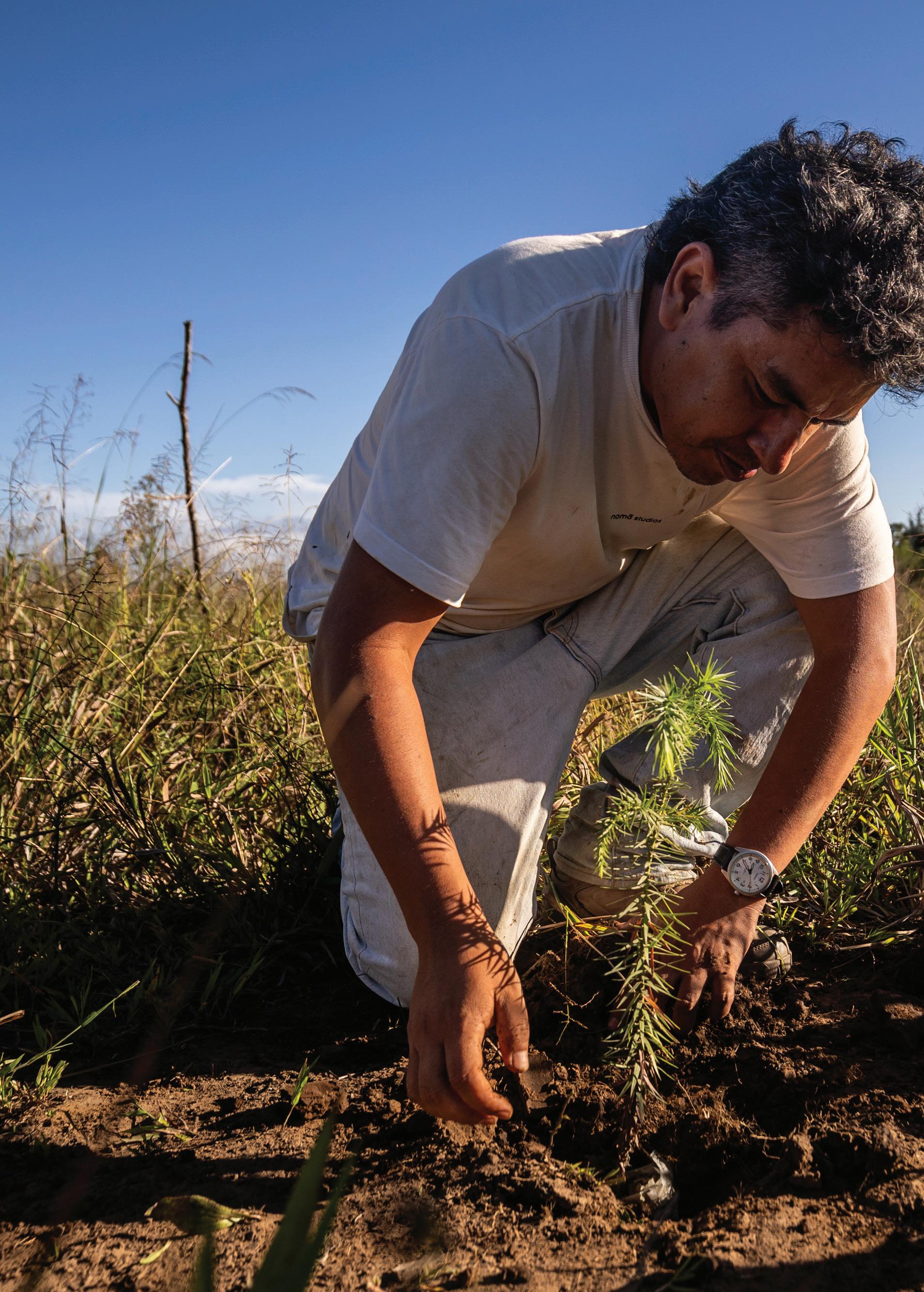
PLANTING MONKEY PUZZLE (Araucaria) trees in Santa Catarina, Brazil, part of community reforestation led by Instituto Zág, an Indigenous movement that has protected 42,000 hectares of local land. This species of monkey puzzle, which is sacred to the Laklãnõ Xokleng Indigenous people, is facing extinction as a result of deforestation for logging and other environmental degradation. Instituto Zág has planted more than 100,000 monkey puzzle seedlings since it was founded in 2017, as well as advocating for land rights and autonomy for Indigenous communities. Instituto Zág is a finalist in the Ashden Awards for climate innovation in the UK and the Global South. Winners will be announced on 18 June. Learn more at ashden.org
As CIWEM’s Flood & Coast Conference descends on Liverpool for the first time, the chief executive of Fields in Trust tells Jo Caird about the charity’s work with the local authority to protect more than 100 parks and green spaces across the city
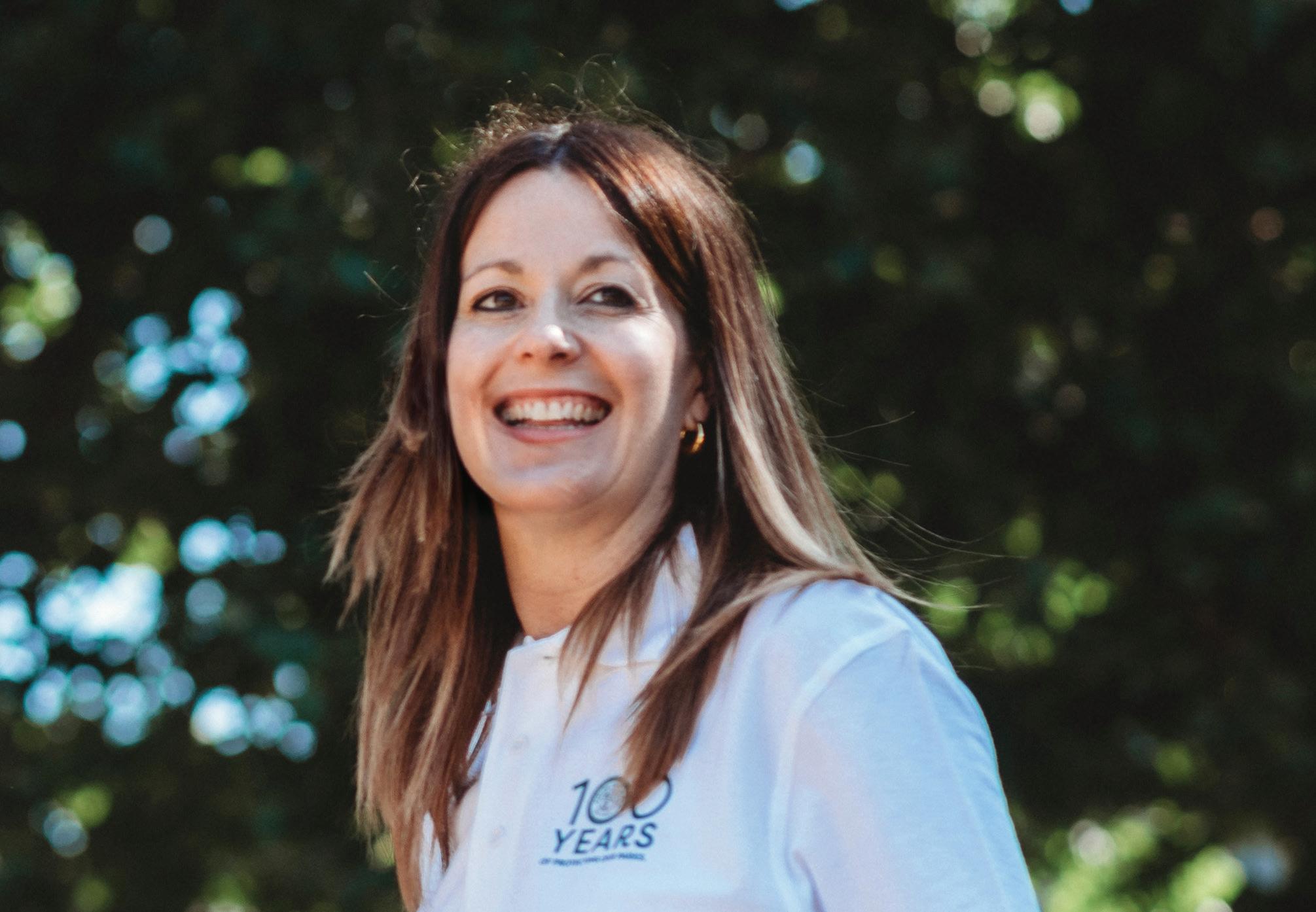
You may not have heard of Fields in Trust (FIT). Most people haven’t, concedes its chief executive Helen Griffiths. Once they find out why the charity exists, however – because there is no statutory provision of parks and green spaces, which are not automatically protected in law – “it’s then a lightbulb moment”, says Griffiths.
“People tell me, ‘Oh my goodness, that’s awful. What can we do?’”
There are several answers to that question. When it comes to securing legal protection for individual green spaces, FIT works with landowners – often local authorities – to write a deed of dedication (in England, Wales or Northern Ireland) or minute of agreement (in Scotland) to guarantee that the park or playing field will only be used for sport or recreational
activities and will always be there for the benefit of nature and the community.
(It’s worth pointing out that day-to-day management of the green spaces remains the responsibility of the landowner, ensuring that changes such as installing sustainable drainage systems don’t require consent from FIT.)
The charity has been performing this important function since 1925, when it began life as the National Playing Fields Association, a philanthropic endeavour created in anticipation of the fact that industrialisation would lead to the loss of green space, particularly in towns and cities. FIT has protected nearly 3,000 parks and green spaces in the intervening 100 years, ensuring that 9 million people live within a 10-minute walk of a space that’s been protected.
LIVERPOOL LIVING
Stressing the health, wellbeing and community benefits that green space provides, the charity plans to add another million to that total by 2030 and will be able to do so partly through pioneering agreements with local authorities to protect all the green spaces under their management. Fittingly, given that CIWEM members are about to gather at the Flood & Coast Conference in Liverpool for the first time, the city on the Mersey was the first in the UK to do just that, announcing in 2021 that it would be protecting more than 100 parks and green spaces with a combined area of 1,000 hectares for future generations.
“There had been a lot of threat to and indeed the development of parks and green spaces,” Griffiths explains.
“There was a lot of distrust amongst the community that there was going to be more development and more losses.”
It was the combination of grassroots pressure from that community –specifically from the Liverpool Parks Friends Forum – along with top down support from Ian Byrne, MP for Liverpool Derby West, that led to the council’s decision to protect its entire portfolio of green spaces, Griffiths goes on. “It was a brilliant example of how our intervention can work best.”
Liverpool also makes a good case study because of the city’s demographics, with Liverpudlians having 15% less green space per person than the national average and one in six having no access to a private garden. Given that equitable access to green space is one of FIT’s guiding principles, protecting Liverpool’s felt like a significant win.
The charity is now in talks with other local authorities interested in following in Liverpool’s footsteps, including Newcastle-under-Lyme. “That portfolio-wide approach seems to be really resonating,” says Griffiths. She is hopeful that as authorities are pushed by current national planning reform into updating the local plans that set out how their land is used and developed, there will be a “real opportunity for us to be pushing where there is appetite to go beyond the designations of green space and into a Fields in Trust protection model”. While not a whole portfolio project, ongoing work with Edinburgh City Council sees a further 19 parks and green spaces protected, taking the total protected since 1939 to 55.
IF YOU BUILD IT
It’s not just existing green space that FIT is interested in; the charity has long had a planning role too, with the Fields in Trust Standards (the most recent edition of which were published in 2024) setting out a suggested minimum provision of parks, playgrounds, sports fields and green spaces. “Those standards have been adopted by 75% of local planning authorities,” says Griffiths. “They are used by the majority of developers.”
OUT OF OFFICE
WHAT IS YOUR EARLIEST ENVIRONMENTAL MEMORY?
Visiting Bucknall Park in Stoke-onTrent and being fascinated by the peacocks wandering freely around.
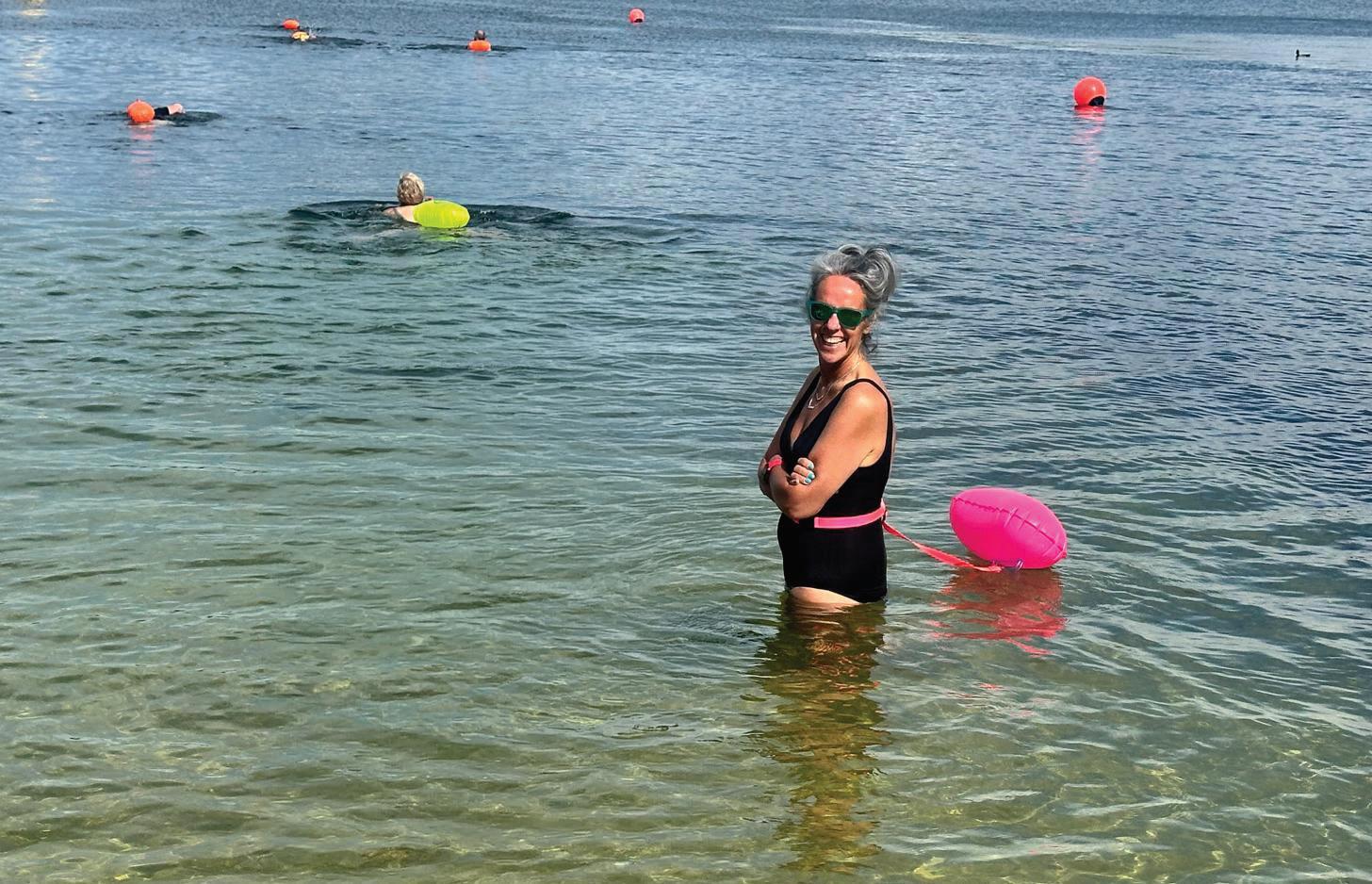
WHAT IS YOUR FAVOURITE PLACE IN NATURE?
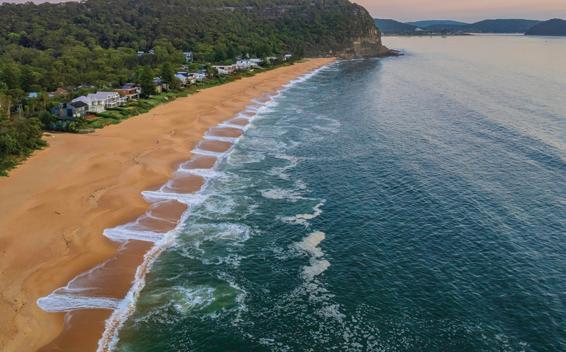
Pearl Beach in New South Wales, Australia. A majestic beach and arboretum near to where my husband grew up, and where we got married surrounded by the din of cicadas.
Her priority now is for FIT to begin working more closely with planners and developers to ensure that green space is considered earlier in the design process, and that due attention is given to that space being accessible, adaptable, multifunctional, climate resilient and naturefriendly. Music to the ears of CIWEM members aware of the potential for green spaces to play a role in mitigating flood risk and the urban heat island effect, as well as enhancing biodiversity.
“We want to try and foster the conditions and conversations that make the people who are responsible for creating those green spaces think about all of those things from the outset and not for that to become just an additionality further down the line,” says Griffiths. Aware that home buyers care deeply about provision of green space, developers are keen to improve their offering in this regard, but don’t know how, she goes on – by acting as a “critical friend”, FIT can help. CIWEM members in planning roles, meanwhile, might want to explore how the FIT Standards could serve as a “useful tool to create engagement conversations” with developers.
LOOKING AHEAD
Griffiths was pleased to see the FIT Standards referenced in the draft update to the National Planning Policy Framework (NPPF) but would like the government to go further. “My aim would be that the Fields in Trust standards are mandated in the NPPF and that there is a proper process of making sure that those standards are met, not just at proposal stage, but when you get to completion.
WHAT ARE YOU WATCHING?
I’ve loved watching the BBC’s Secret Garden series with my primary school aged children. It should be compulsory viewing in schools to spark a love of nature close to home.
CURRICULUM VITAE
HELEN GRIFFITHS has been at Fields in Trust since 2008, serving as CEO since 2013. In this time she led the delivery of a grassroots legacy programme to mark the Queen’s Diamond Jubilee and the London 2012 Olympics. Griffiths sat on the Department for Education School Playing Fields Panel and was a founder member of the Parks Action Group. She is an advisory board member for Courtside, a community interest company delivering activity in parks, and a member of the advisory board to the Queen Elizabeth Memorial Committee. She has been a fellow of the Royal Society of Arts since 2021.
“Sometimes there is an intention to deliver green space within developments that gets diluted over time.” Recognising green spaces as essential infrastructure in the NPPF and giving it parity with other infrastructure would also be beneficial, making it easier to unlock funding, Griffiths says.
“Fields in Trust is in talks with other local authorities interested in following in Liverpool’s footsteps”
Such a move by the government seems unlikely at this stage, however, considering the recent proposal to remove statutory consultees, including Sport England and The Gardens Trust, from the planning process. “We’re concerned about the positioning that [this will] unblock problems, speed up decision making, move things through the process,” says Griffiths. “I think that their removal creates a massive vulnerability around those green spaces. We hope that the decision will be reversed.”
Whether or not this comes to pass, CIWEM members can play their part here, “by advocating within their networks and with their stakeholders for the legal protection of green spaces that they are working on that could potentially be at risk at some point in future, even if they don’t think there’s an immediate vulnerability now”. o
Pearl Beach, Australia
TRANSFORMING THE NORTH WEST THROUGH RAINWATER MANAGEMENT AT SCALE
United Utilities is at the forefront of a generationally significant programme to deliver a rainwater management strategy that will transform the North West’s relationship with its most famous cliché, its rain. It’s a pivotal part of the organisation’s £13 billion investment. But why is it important? What’s so innovative about it? And what does it really look like? Our site visit, Let it Drain: A Scouse SuDS Stroll, at Flood & Coast 2026 provides a unique opportunity for delegates to learn the answers to these questions as well as insights into the history, context and emerging learnings. It’ll be great to see you there. By Johnny Phillips, business development manager, United Utilities
A BRIEF HISTORY OF LIVERPOOL’S DRAINAGE
The UK water industry’s relationship with rainwater has deep historical roots. None more so than in Liverpool! James Newlands became Liverpool and Britain’s first borough engineer in 1847. He developed the world’s earliest sewerage system in Liverpool, laying the first combined sewers in the Georgian Quarter by the University of Liverpool. These systems were pioneering to protect public health by rapidly conveying foul water and rainfall away from growing industrial cities; for more than a century, this approach delivered undeniable benefits. However, in modern times rainfall volumes that once were manageable now overwhelm networks, leading to storm overflow activations and increasing environmental harm. This led to the
Mersey being declared ‘biologically dead’ in the early 1980s. Following this, Michael Heseltine, then home secretary, set out a bold plan to repair damage to the region’s rivers. What resulted was a 25-year plan from 1985 to 2010 that invested £8bn to transform the Mersey. What stands today is a river network that has thriving fish populations with 45 different species, including salmon and trout. If you’re lucky, you may see dolphins too!
Despite these improvements, we now face into a new set of expectations, as set out within the Environment Act 2021. This legislation provides a turning point in how we upgrade and modernise our drainage infrastructure in response to a changing climate and landscape.
It is our vision that the solutions we implement prioritise the capture and
control of rainwater at source to deliver multiple environmental and societal benefits for future generations. To do so, we need to take a bold approach, investing in natural flood management, sustainable drainage, sewer separation and reuse of rainwater as close to where it falls as possible. We call this rainwater management.
UNITED UTILITIES’ RAINWATER MANAGEMENT STRATEGY
Our rainwater management strategy is built around three simple principles: reduce, remove and reuse. These principles will ensure we replumb the region by sustainably slowing and stopping rainwater entering combined sewers close to where it falls. We are driving several workstreams to deliver our ambitions.
The Sustainable Water Fund builds upon our Green Recovery programme where local authorities can access funding to deliver rainwater management projects as part of flood risk, regeneration, active travel and highway projects. We’ve already invested £3 million into these in the last 12 months and over 60 properties have benefitted from flood risk reduction.
Our five ‘S’s (schools, supermarkets, social housing, state buildings, stations) strategy enables a scalable approach to working with businesses. Multi-site owners, large roof areas and shared
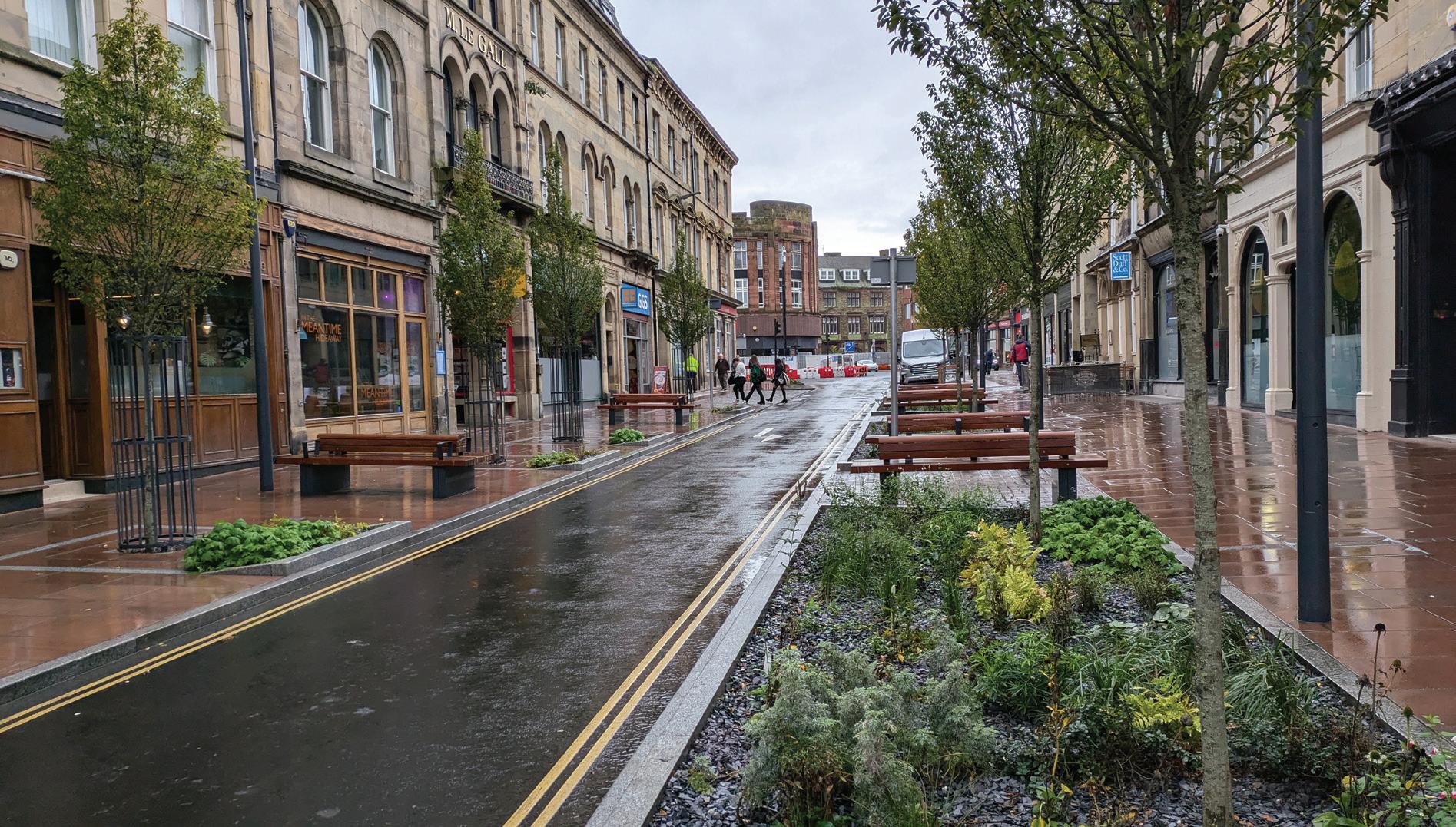
Devonshire Street, Carlisle
sustainability goals complement our non-household site area charging and sustainable drainage incentives. The most mature workstream for schools, Project FLOW (Future Leaders of Water), has revolutionised how school projects are delivered through integrating water audits and education support.
Our master planning approach is setting out a long-term rainwater management strategy to council level in priority areas. We are using umbrella agreements to secure a scalable and efficient commercial approach to the design and build process, setting clear and transparent rules to key issues like maintenance.
We’re also trialling innovative incentives relating to property level drainage that support how we change the culture around rainwater management. Like how in the 1980s, you wouldn’t have three bins for recycling outside your house, we must provide the right assets for customers to manage rainwater whilst also being affordable, aesthetically pleasing and multifunctional.
UNLOCKING FLEXIBLE INVESTMENT AND PARTNERSHIP
United Utilities’ Advanced WINEP (Rainwater Management Programme) is an innovative regulatory programme working with the Environment Agency and Ofwat to address barriers that have historically limited the delivery of catchment-scale rainwater solutions. Rather than being tightly constrained by geography, timing and output focus, it introduces flexibility designed to enable innovation, partnership and early action.
It proposes almost £250m of United Utilities investment, and £50m of leveraged co-funding, to deliver large-scale rainwater management programmes in Greater Manchester and across the North West. The approach had strong political support because it was so complementary to the integrated water management programme. As Andy Burnham, mayor of Greater Manchester said, “We recognise the value of United Utilities’ proposal to translate issues and opportunities into projects that deliver tangible benefits for the environment, people and place”.
Its structure is deliberately adaptive. A small number of “named” schemes test how an integrated, all-in approach can accelerate progress for specific storm overflows. Alongside this, an “agile opportunities” category allows new schemes to emerge naturally. All projects must pass three transparent tests (location,
volume and value) ensuring customer protection and regulatory alignment.
Beyond physical outputs, the Advanced WINEP is explicitly about learning. A four-year independent academic evaluation of the programme conducted jointly by the universities of Liverpool and Sheffield will inform and support our active knowledge sharing aim to inform PR29 and future WINEPs. In this sense, the programme is not just delivering assets, but testing a new way of thinking about regulation, value and collaboration across the water sector.
“Our rainwater management strategy is built around three simple principles: reduce, remove and reuse”
LESSONS FROM THE “SCOUSE SUDS STROLL”
For Flood & Coast visitors, theory will become practical in the site visit: once you see it, it makes sense. Let it Drain – A Scouse SuDS Stroll provides conference delegates the opportunity to walk with experts from the rainwater management team who have passionately driven the project from concept to delivery.
The project is a source of genuine pride. It reflects collaboration across operational teams, local authorities, designers, businesses and community groups, all working through technical, safety and programme challenges to deliver quality outcomes. What the stroll offers is not just a site visit, but open conversation: lessons learned, design trade-offs, and honest discussion about what it takes to deliver rainwater management at street scale, and how it can be scaled further. The stops will
cover a history of investment in the Mersey, followed by stops to see retrofit highway raingardens, community projects, school projects and a finish at Liverpool One.
A CALL TO ACTION FOR THE WATER AND ENVIRONMENT COMMUNITY
The message is simple: manage rain where it falls. If we can do that, we can protect rivers, reduce flood risk and create places that people are proud to live in. The capability, skills and appetite have grown, now is the moment to scale them.
Rainwater management is not a niche discipline; it must sit at the heart of the UK’s response to ensuring sustainability in the long-term operation of infrastructure. The combination of the Storm Overflow Discharge Reduction Plan, Drainage and Wastewater Management Plan, United Utilities’ rainwater strategy and the Advanced WINEP demonstrates how policy, regulation and practice can begin to align around a place-based approach.
CIWEM members and anyone working with rainwater are uniquely placed to lead this transition. Whether through influencing policy, shaping guidance, delivering projects or sharing learning, the profession has a vital role in normalising rainwater management as standard practice rather than exception. o
For more information, visit: www.unitedutilities.com
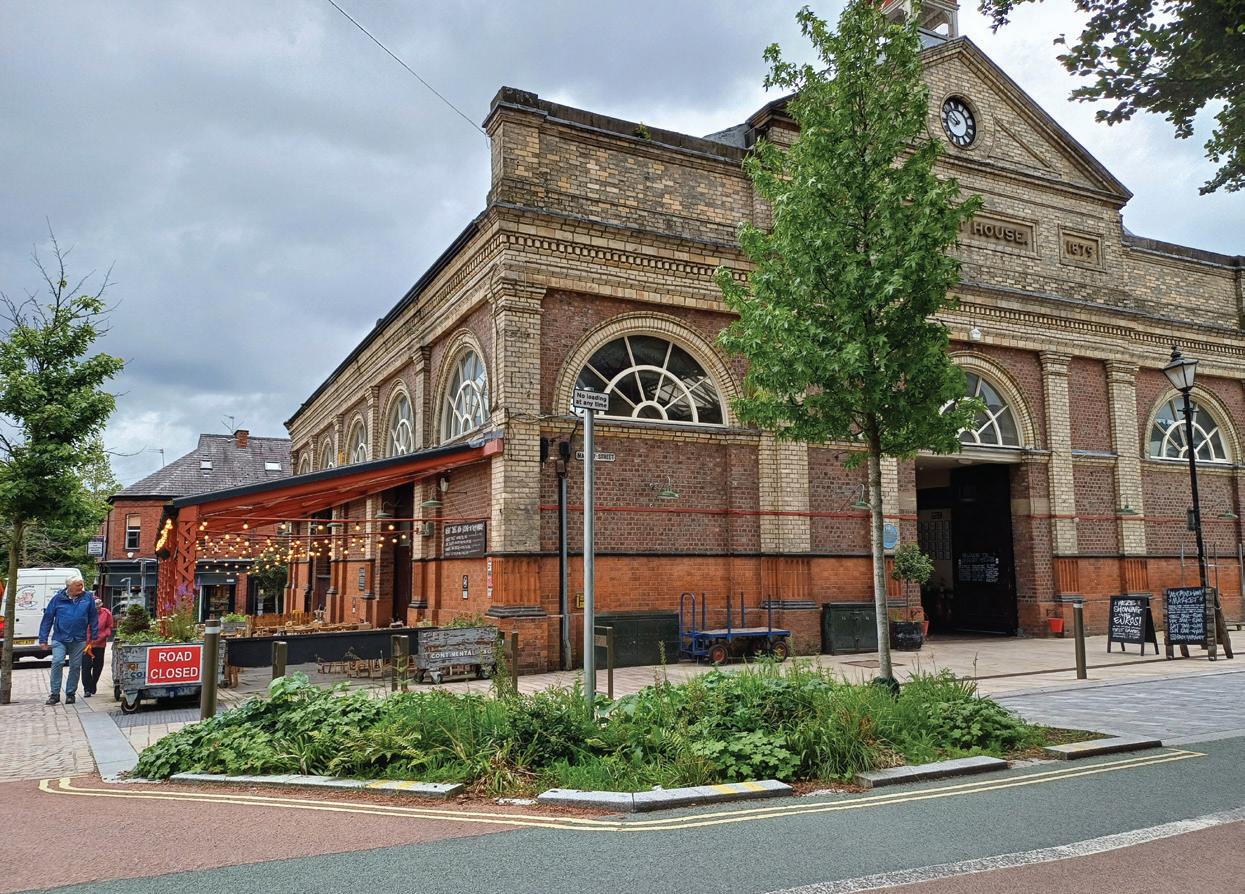
Market Street, Altrincham
BETTER TOGETHER
Integrated water management plans could become part of a wider shift in how regions manage water – Clare Bullen, chief executive officer of Mersey Rivers Trust, shares lessons from Liverpool City Region
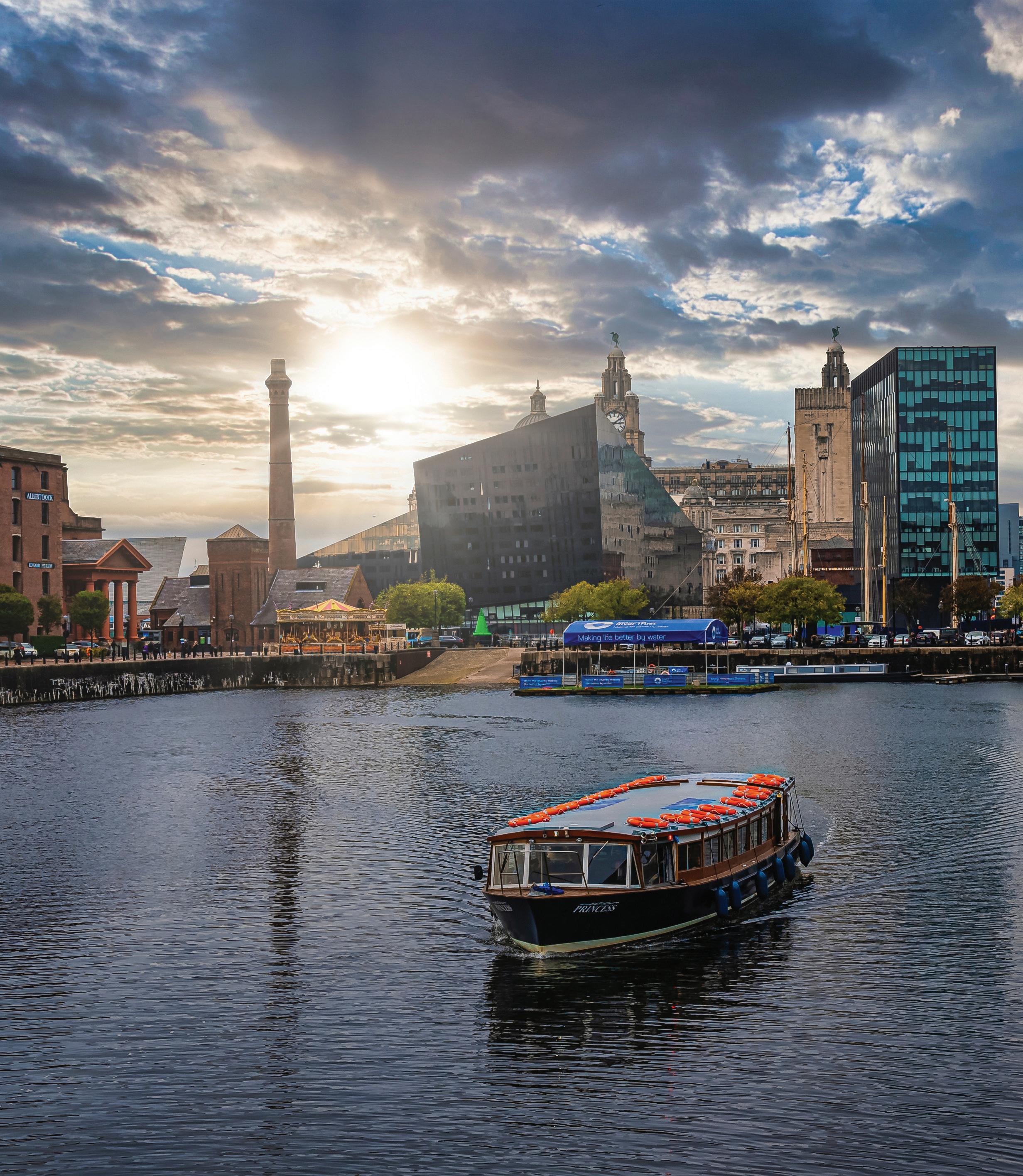
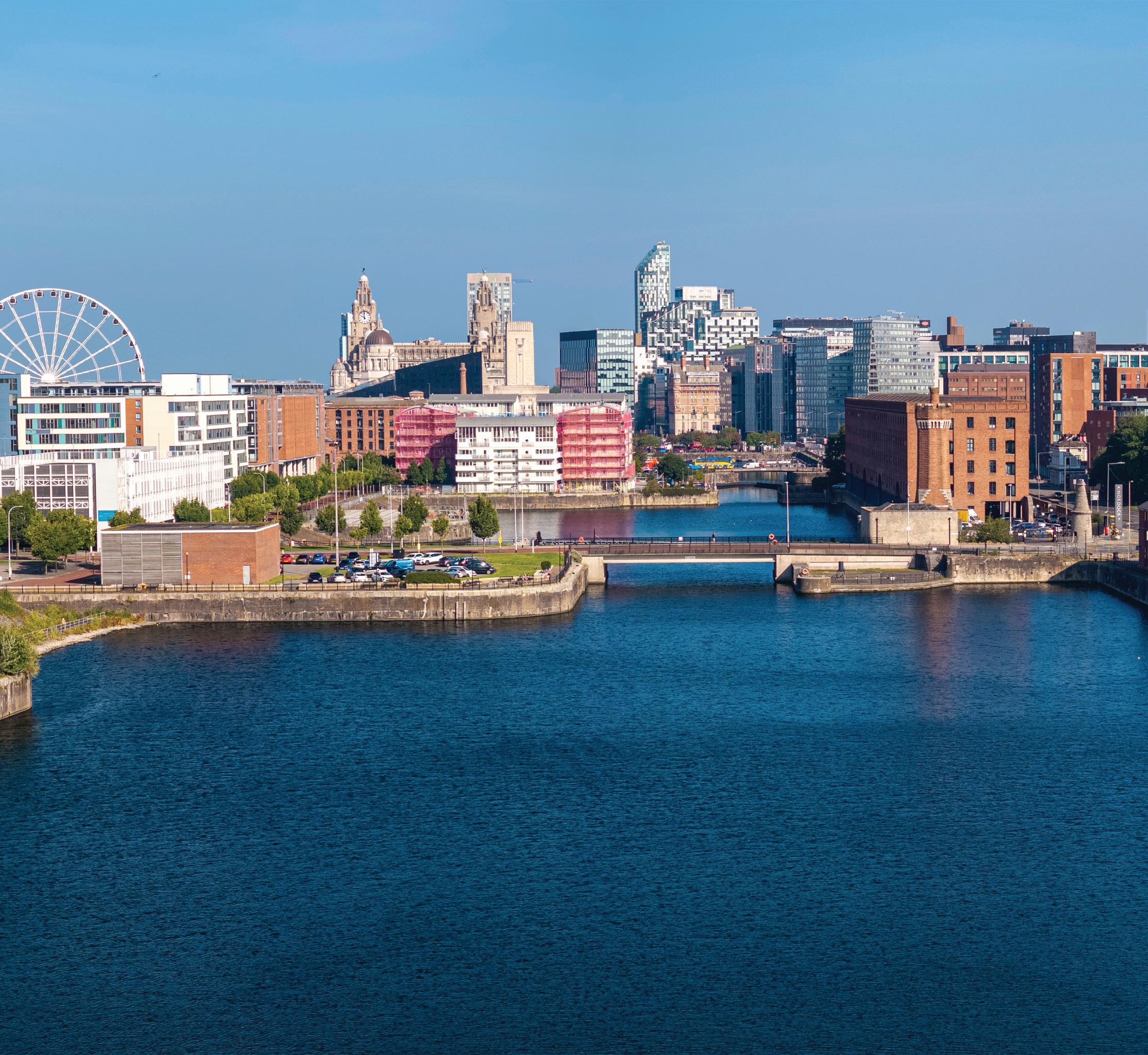
Liverpool is hosting CIWEM’s Flood & Coast Conference for the first time this year, and that feels significant. This is a city shaped by water: by the River Mersey, docks, canals and trade. It is also a city region living with the legacy of centuries of human intervention in rivers and coastlines. I am looking forward to taking part in a panel discussion on integrated water management plans at the conference because these plans could help tackle
some of the biggest challenges facing our rivers, coasts and communities.
Integrated water management plans, or IWMPs, bring together the organisations that shape how water moves through a place, including water companies, local authorities, regulators, developers, transport bodies and communities. The idea is simple: flood risk, drought, pollution, housing growth and habitat loss do not happen in isolation, and rivers do not respect
council boundaries. A decision upstream can affect communities many miles away.
An IWMP should create a shared picture of the problems in an area and a common plan to tackle them, whether that means reducing flood risk, improving river water quality, restoring wetlands, cutting sewer overflows or creating more space for nature. For the public, the test is straightforward: does the plan make rivers cleaner, reduce flood risk and create better places to live? If not, it is not working.
THE MERSEY CATCHMENT AT A GLANCE
• The Mersey Basin is home to more than five million people
• Two of the UK’s 10 biggest cities — Liverpool and Manchester — sit within the catchment
• The River Mersey begins in Stockport, where the rivers Tame and Goyt meet
• The Mersey flows through Warrington and Widnes before reaching Liverpool Bay
• The wider catchment includes rivers such as the Alt, Crossens, Irwell, Bollin, Weaver and Gowy
• The Mersey Basin includes urban areas, farmland, the Peak District, estuaries and beaches
• The basin is divided into five catchment partnerships, three of which are hosted by Mersey Rivers Trust
• Liverpool, Manchester and Salford together cover around 323 square kilometres within the catchment
• Key urban water pressures include polluted run-off from roads, misconnections, contaminated land, sediment and industrial estates.
Liverpool’s docks have played a key role in global trade for centuries, reaching a peak in the 1800s
The idea of integrated water planning is not new, but it has become more important as climate change, ageing infrastructure, public frustration and pressure on water companies have intensified. One of the best known examples is Greater Manchester’s Integrated Water Management Plan, published in 2023. It brought together councils, utilities and environmental bodies to set out a long-term approach to flood risk, water supply, wastewater and the natural environment.
For hydrologists, there may seem to be a tension between managing water by political boundaries and managing it by catchment boundaries, because rivers do not stop at city-region borders. Yet Greater Manchester has shown that a place-based
approach can work. Where there is political will, the place-based model has delivered progress. Mayor Andy Burnham used the convening power of the combined authority to bring organisations together and, in many ways, that has achieved more than catchment-based discussions have managed over the past decade. That lesson matters for Liverpool City Region too.
A CHANGED LANDSCAPE
The River Mersey and its tributaries have been transformed by people. Rivers that once flowed through rural landscapes around Manchester became engines of the industrial revolution. Their channels were straightened, diverted and confined, while water from the Lake
District and North Wales was brought in to supply growing towns and cities. The Manchester Ship Canal, completed in 1894, changed the course of the Mersey so dramatically that, in places, the original river was almost erased.
Today, we are dealing with a water environment that has been heavily modified for centuries, where many rivers are disconnected from their floodplains, habitats have been lost and climate change is bringing more intense rainfall, rising sea levels and longer dry periods. That is why integrated planning matters so much in the Mersey catchment.
Liverpool City Region’s integrated water management work already points in the right direction because it brings together flood risk, water quality, regeneration and climate resilience rather than treating them as separate issues. There is also a strong focus on sustainable drainage systems and nature-based solutions (NBS). Too much rainwater still goes straight into overloaded sewers, increasing flood risk and worsening pollution. Greener streets, wetlands, rain gardens and restored rivers can all help slow the flow of water. Liverpool also has the chance to build on Greater Manchester’s example. Given the long-standing rivalry between the two cities, there is every reason to think that the mayor, Steve Rotheram, will want Liverpool’s plan to go further still.
Jo Harrison of United Utilities spoke about Greater Manchester’s IWMP at Flood & Coast in 2024, so this year’s conference offers a chance to reflect on what has changed since then and what lessons can be applied in Liverpool.
“Integrated water management plans bring together the organisations that shape how water moves through a place”
Mersey Rivers Trust has already been closely involved in the Greater Manchester plan through the Upper Mersey Catchment Partnership. Alongside other catchment partnerships and environmental organisations, we have helped facilitate discussions, build relationships and push for funding that can deliver improvements on the ground. That experience shapes how we approach Liverpool. One lesson
from Greater Manchester is that these plans only work when all the right people are in the room. Catchment partnerships, local communities and environmental organisations cannot be treated as an afterthought; they need to be embedded from the start.
At Mersey Rivers Trust, we have four priorities: raising awareness, building evidence through citizen science, delivering NBS and collaborating with partners. Those principles should sit at the heart of any IWMP because they help connect strategy with practical delivery.
WHAT LIES AHEAD
Cheshire is due to become a combined authority next year and has already shown interest in developing its own IWMP. That is encouraging because it suggests these plans are beginning to create momentum beyond single places. In time, Greater Manchester may update its plan, Liverpool will refine its approach and Cheshire will develop its own model. That cycle of learning and improvement is exactly what the sector needs.
Beyond the North West, other combined authorities are starting to move in a similar direction, even if they are not yet calling it an IWMP. The West Midlands is increasingly talking about place-based strategies that bring together housing, transport, infrastructure and climate resilience. The North East Combined
Authority faces many of the same pressures around flood risk, estuaries, water quality and regeneration. This matters because it suggests that IWMPs could become part of a wider shift in how regions manage water. If Greater Manchester, Liverpool City Region and Cheshire all develop their own IWMPs, the North West could become a test bed for the regional systems planner model proposed through the Cunliffe Review and Water White Paper. That would give us something the sector has often lacked: an example of how regional planning, catchment partnerships and local delivery can work together in the real world.
CIWEM’s A Fresh Water Future report makes a similar point. It argues that future water management needs stronger collaboration, more local accountability and greater use of NBS.
From my perspective, integrated water management plans are most powerful when they stop being policy documents and become delivery plans. At Mersey Rivers Trust, we are already involved in two of these plans and preparing for a third, which gives us a clear view of what works, what is hard and what still needs to change. The plans that succeed will be the ones that genuinely empower communities, rivers trusts, local authorities and water companies to work together. Catchment partnerships must be treated as core delivery partners rather than
FIVE THINGS IWMPS NEED TO SUCCEED
1. Catchment partnerships must be treated as equal delivery partners, not consultees.
2. Integrated water management plans need long-term funding certainty rather than project-byproject survival.
3. Nature-based solutions must be built in from the start, not added later.
4. Communities must be part of governance, not just recipients of risk maps.
5. Success must be measured not only in flood metrics, but also in river health, adaptation capacity and social resilience.
optional extras. They also need long-term funding certainty, stronger community involvement and NBS built in from the start. Otherwise, there is a danger that integrated water management plans become glossy brochures rather than engines of change.
“Where there is political will, the place-based model has delivered”
I hope this year’s Flood & Coast Conference in Liverpool will help move that conversation forward. It is an important opportunity to learn from Greater Manchester, shape Liverpool’s future approach and think about what comes next for Cheshire and beyond. Liverpool is a place with a remarkable water story. The Mersey catchment helped drive the industrial revolution. Now it could help shape a new model for managing water in a changing climate.
The challenge is not writing another strategy. The challenge is turning ambition into cleaner rivers, healthier habitats and communities that are better protected from flood and drought. That is what success should look like. o
Clare Bullen will be taking part in the panel discussion ‘How Integrated Water Management Plans unlock sustainable growth’ at Flood & Coast 2026.
Harpurhey Reservoir and Ponds in Greater Manchester, part of a project to manage flood risk, improve water quality and create green space in an urban catchment
BETTER MODELS DON’T SOLVE URBAN DRAINAGE PROBLEMS. BETTER DECISIONS DO
By Patryk Wójtowicz, CTO, Fluidit
Extreme rainfall, ageing infrastructure, and tightening regulations are pushing urban drainage systems beyond their design limits. For the hydraulic modellers who build them and the flood risk managers, local authorities, and regulators who act on their work, the task is to turn model outputs into decisions that hold up under scrutiny and to communicate them clearly.
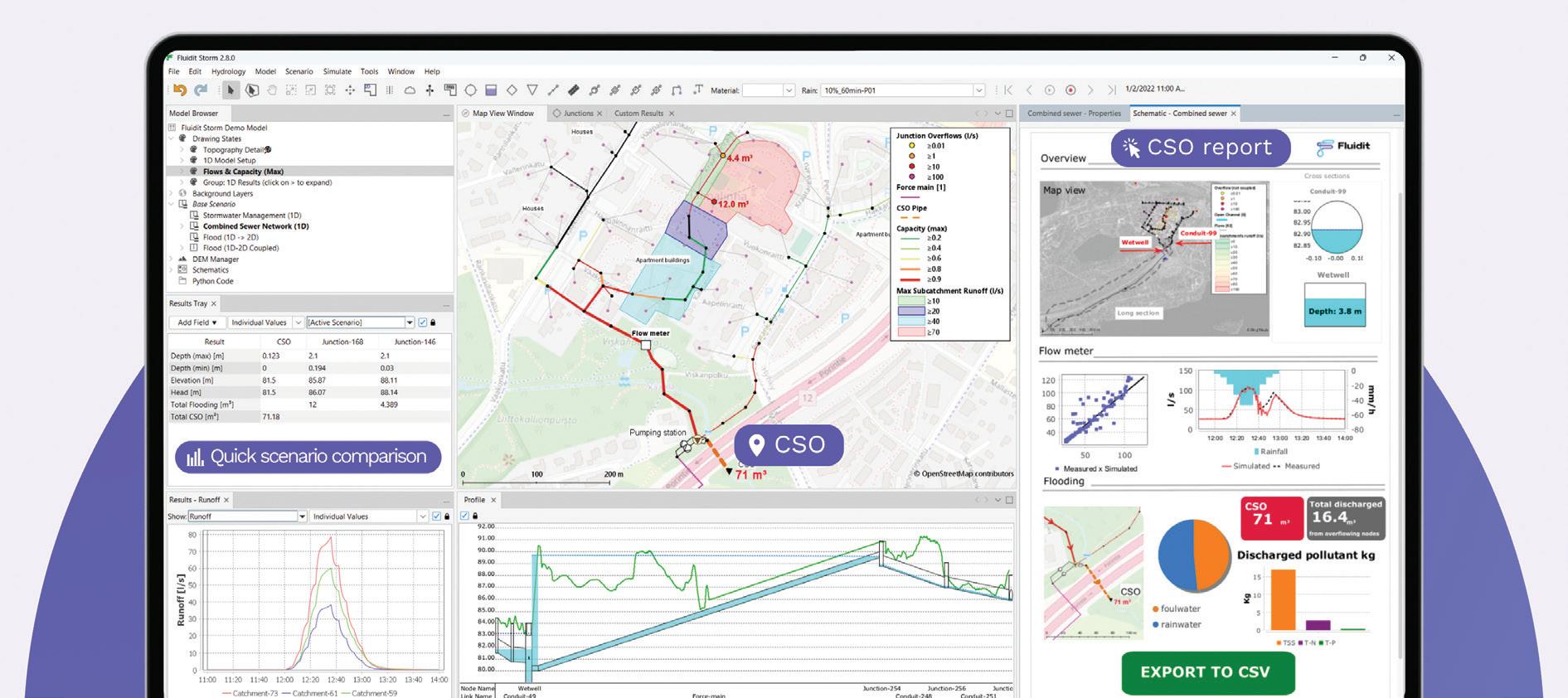
Cities rely on interconnected, combined, foul, and stormwater systems. An integrated platform like Fluidit Storm, capable of modelling all systems together, is necessary. Fluidit streamlines workflows for modellers and stakeholders who rely on model outputs. Storm is a fast, modern environment for wastewater, stormwater, and urban flood modelling, covering network build and scenario testing through to flood risk assessment and CSO analysis.
Credibility is never in question when results reach a regulator or a client. Storm is aligned with UK modelling standards and recognised runoff methods, produces results consistent with established practice and has been benchmarked against incumbent software, in collaboration with UK engineering partners. Water utilities in the UK are now running live pilots of Storm and Fluidit Water.
Storm is built to make the modeller faster at every stage, not just during simulation runs. Pre-processing,
simulation, visualisation, and reporting sit within a single connected workflow, while scenarios and dashboards built for one model can be reused across others. When a simulation updates, its outputs refresh with it, without copy-paste cycles, reformatting, or chart rebuilding.
FROM “TRUST ME” TO TOTAL CLARITY
Even the best analysis falls short if the people who need to act on it cannot see what you see. What if sharing a link is all you need to do? Fluidit Vision is our modern web app for publishing, reviewing, and exploring model results, so stakeholders can see what the modeller sees.
Storm results are published directly into Vision as interactive, browser-based maps and dashboards, with no specialist software, raw files, or screenshots that go stale the moment a simulation updates. The modeller controls who sees what, and at what depth, all working from the same live model. No need for desktop installations and special permissions, a browser is all that’s needed. This allows easier adoption across parties, reduces the burden on modellers, and gives reviewers fast, direct access.
When questions arise, Vision’s commenting layer lets reviewers respond directly on the results, replacing email back-and-forth and calls with a single, traceable dialogue. Complex models then become clear, defensible decisions every team involved can stand behind.
PLAN TODAY AND ADAPT FOR TOMORROW
Urban drainage challenges don’t stand still, and neither should your tools. Fluidit Water extends the same platform to drinking water network modelling, so organisations with both wastewater and freshwater teams can work within a single platform rather than switching between disconnected tools.
Ready for live simulations? Fluidit goes one step further, connecting models to live sensor and SCADA data for continuous forward-looking simulation, early-warning capability, and operational decisions grounded in network conditions. Manage your model updates, data intake, preprocessing, simulation scheduling, post-processing, and dashboard visualisation in one flexible platform. Need different KPIs or dashboards? Your modelling team can update them directly in Fluidit.
Licensing is straightforward and predictable. Floating licenses are never tied to users or devices, with an option to crossproduct pool shared across Storm and Water. Perpetual licensing is supported alongside the subscription, because we build for organisations that want to own their tools, not depend on them.
Flood & Coast is the right week to ask what your modelling setup should be doing next. Book a demo and see Storm and Vision working together. o
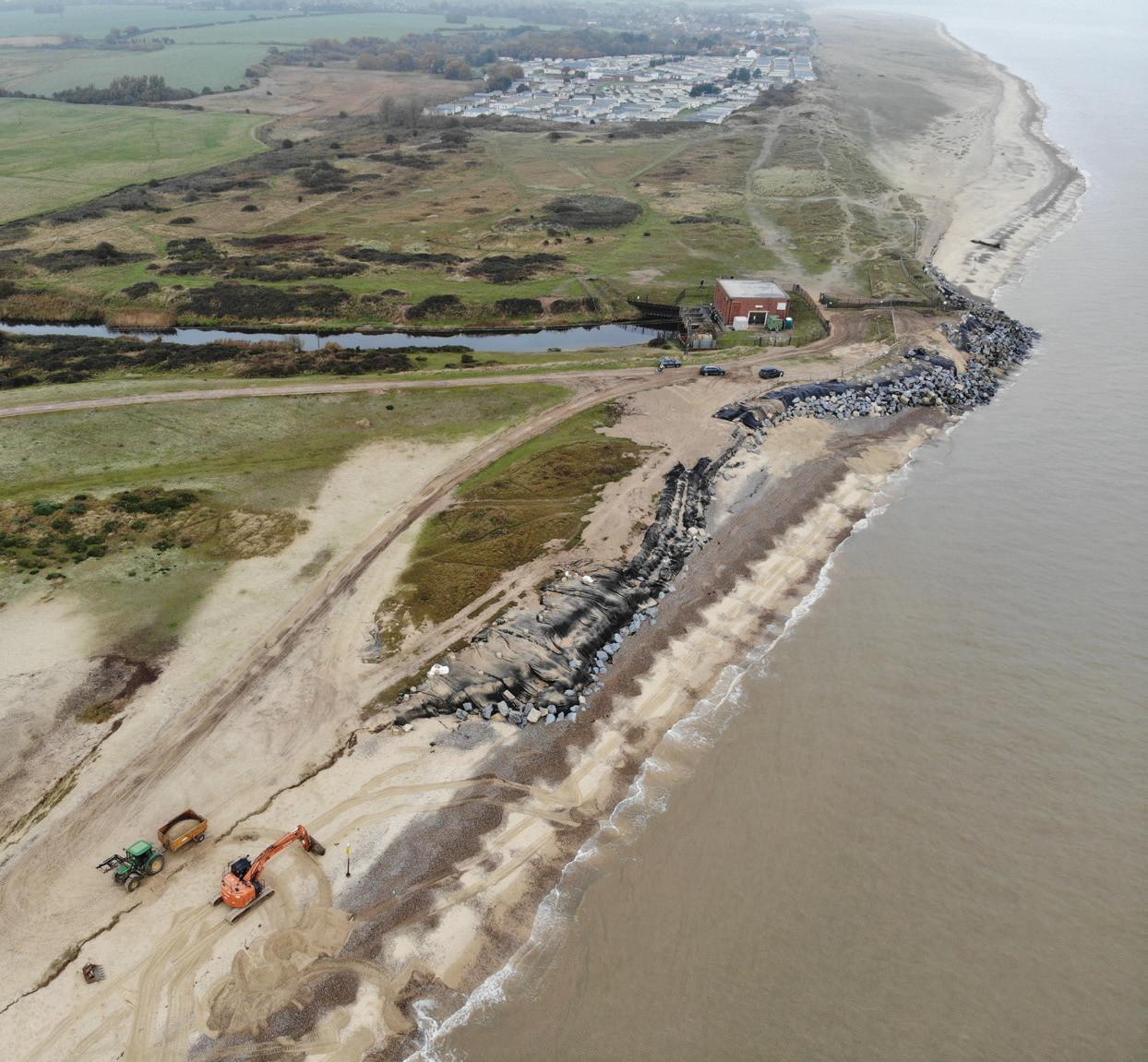
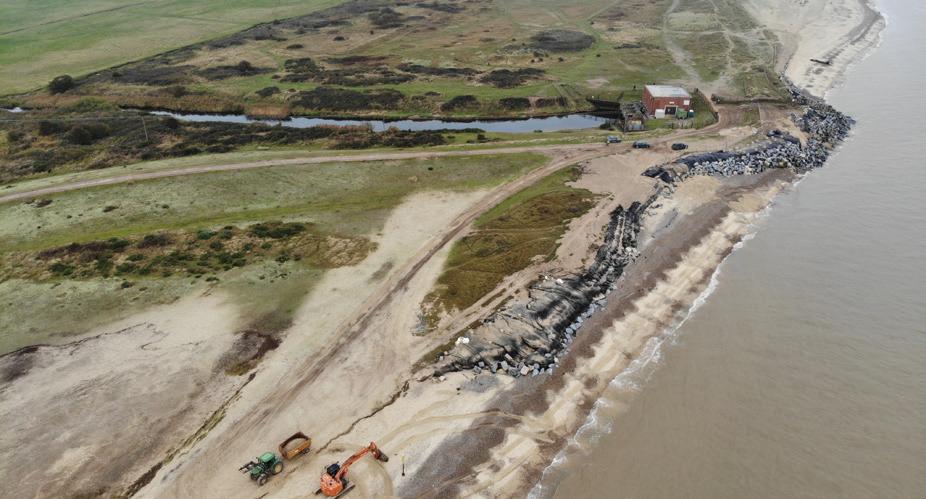
The Benacre and Kessingland Flood Risk Management Project will create 82 hectares of saltmarsh in this area of coastal Suffolk
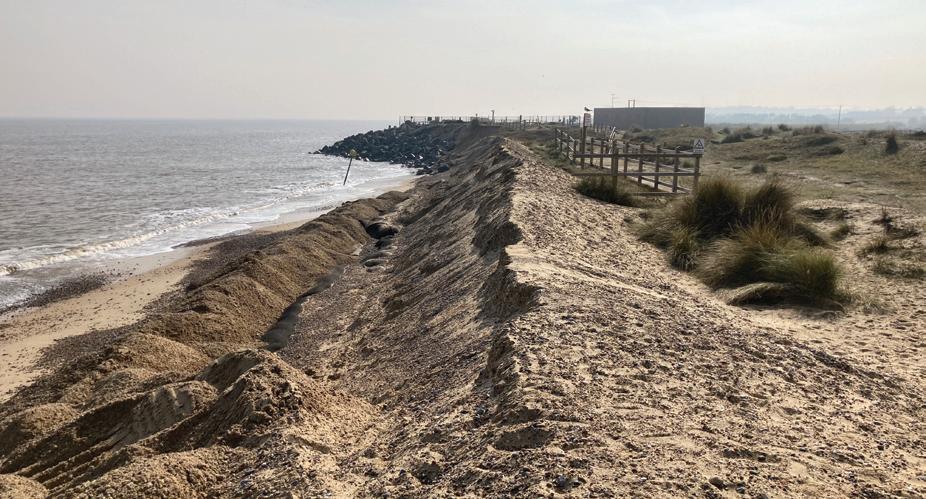
Kessingland in Suffolk, where coastal erosion is threatening the village and a 1930s pumping station
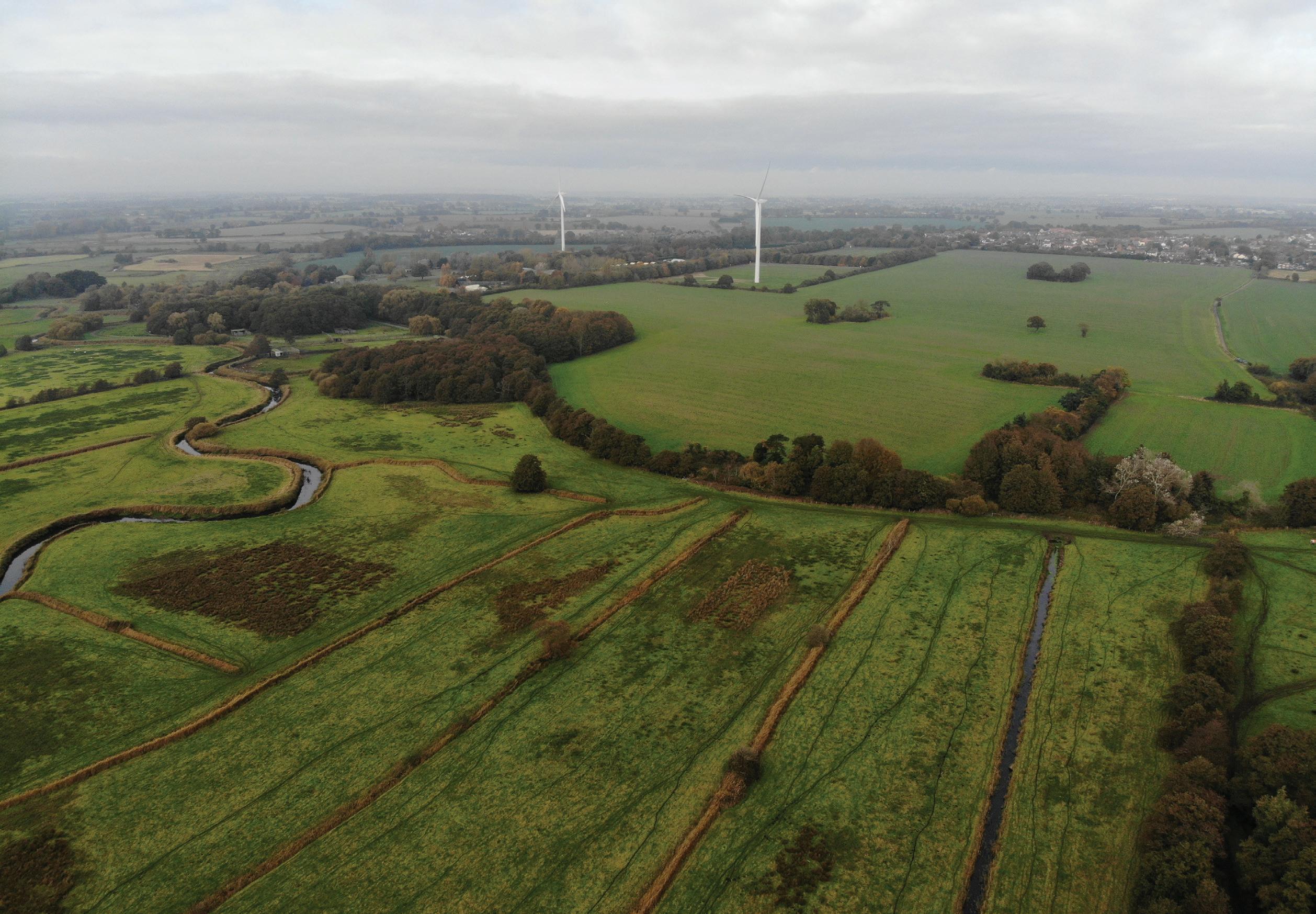
An aerial view of the site of the Benacre and Kessingland Flood Risk Management Project
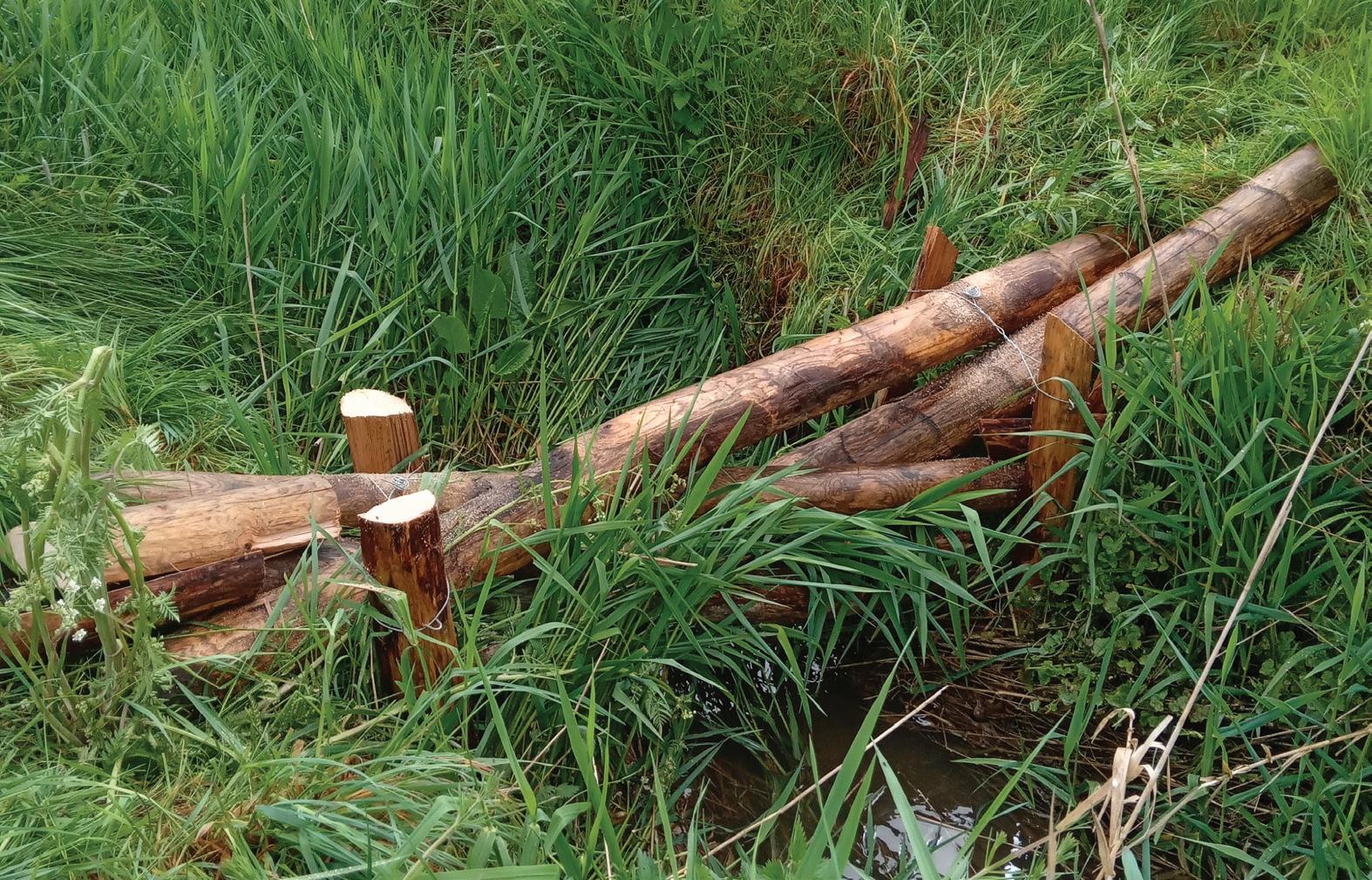
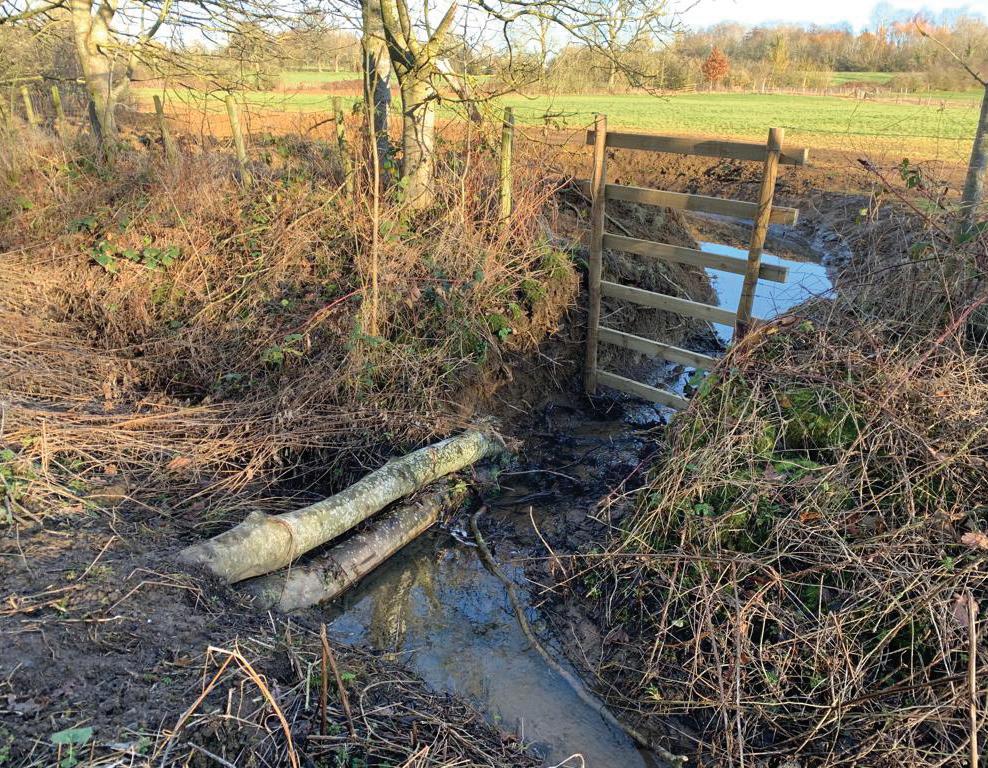
A leaky dam, one of the natural flood management measures employed by Warwickshire Wildlife Trust
Max Davison, principal flood risk consultant at Stantec, explores what new funding policy guidance means for natural resilience schemes
Those in the world of environmental resilience know the power of a good idea. Coming up with a novel solution and fixing a longstanding or increasingly troublesome problem like urban flooding or coastal erosion can be incredibly rewarding.
But regardless of the innovation behind an idea, funding new schemes will always be one of the most complex challenges for those looking to get spades in the ground. Against a backdrop of rising scrutiny into how public bodies invest, we’re now seeing updated policies and accompanying guidance being released to support the environmental resilience industry through this complex journey.
The publication of updated Flood and Coastal Erosion Risk Management (FCERM) policy guidance this spring marks an important step for those looking to integrate resilience schemes across England. Positively, it has a particular focus on natural flood management (NFM) – working with natural processes to reduce the risk of flooding. The guidance explains whether projects can gain FCERM funding, how much they can get, and how schemes are assessed and prioritised.
A NATURAL PRIORITY FOR FUNDING
It also confirms that the government is boosting its investment in NFM and formally embeds these schemes as a ‘strategic objective’ of the funding policy itself. This suggests a growing recognition of the impact from the co-benefits these schemes provide. A key clarification within the guidance is that standalone NFM projects seeking to get public funds should provide ‘value for money’. It states that this should be led by the ‘value for money principles’ defined in the Green Book, the government’s guidance on appraisal. This essentially means weighing a project’s costs against its benefits. It is also important to understand how appraisals will be carried out for NFM schemes, and how benefits will be prioritised.
I should note that, to be considered at all for funding, a scheme must qualify
as NFM by (i) protecting, restoring or mimicking natural processes in catchments, floodplains, rivers, coasts or estuaries; and (ii) delivering a demonstrable flood or coastal erosion risk reduction benefit. The latest guidance indicates that at least 3% of FCERM investment will be allocated to NFM over the next three years, increasing to 4% over the next 10 years.
“Appraisal methods remain weighted towards direct, fixed and readily quantifiable benefits”
Crucially, it’s now much easier to submit standalone NFM schemes for FCERM funding in their own right –previously, projects were more difficult to justify through the government’s partnership funding calculator. This opens things up more for non-governmental environmental organisations, charities or landowners to lead NFM projects. But these schemes must rely primarily or entirely on natural processes, rather than engineered defences.
PROTECTING VULNERABLE COMMUNITIES
Interestingly, it’s clear that there is continued policy emphasis on NFM and investment in more deprived communities, reflected through explicit strategic funding targets and prioritisation objectives. Previously, funding tended to flow towards areas with higher property densities and asset values, where strong benefit-cost ratios were driven by the high cost of potential damage.
The new guidance suggests that deprivation levels will play a much stronger role in decision making, with decision makers scrutinising whether schemes support more vulnerable communities and deliver wider social impacts to the local population.
While a traditional economic appraisal remains a core component, there is now a greater focus on wider environmental and social outcomes alongside these metrics. From my perspective, it seems
the emphasis, nationally, is moving beyond narrow cost-benefit calculations and towards a broader understanding of social value (see 'Value added', pp. 30-32), resilience and long-term outcomes.
It’s also important to consider that maintenance and ongoing monitoring are a critical part of NFM – and any nature-based scheme – because of their inherent flexibility and variability in performance over time. From what I can see, the FCERM funding is only for capital works or formal refurbishment and not ongoing maintenance. This means that while FCERM funding can support the creation of NFM features, their long-term functional management may need to be planned for separately.
MAPPING THE FUTURE OF NFM
The Environment Agency (EA) has also produced new national NFM ‘heat maps’. These visual aids aim to show areas where NFM interventions are “likely to provide the greatest flood risk benefits”, and act as an early-stage screening tool for schemes. The maps are available to support projects that don’t have access to local NFM benefits evidence and can help teams think at a catchment scale, encouraging consideration of multiple interventions, rather than single, isolated measures. These maps are certainly helpful for early screening but they are limited in terms of the level of granular detail required to inform design decisions, and need to be followed by more detailed analysis using additional tools, modelling and specialist insight.
MEASURING SUCCESS
One of the hardest issues still to resolve is how social value, biodiversity, climate resilience and wider co-benefits are consistently monetised within FCERM appraisal. While the updated guidance signals a welcome shift towards recognising these outcomes, appraisal methods remain heavily weighted towards direct, fixed and readily quantifiable flood and erosion benefits, reflecting their roots in the economics of engineered assets. This presents a challenge for nature-based solutions that operate differently from engineered assets and are not readily captured by appraisal frameworks developed for fixed flood risk infrastructure.
NFM schemes often deliver their greatest value through cumulative, long-term and spatially distributed benefits, from habitat creation, boosted biodiversity and improved water quality to community wellbeing and climate adaptation. But these are difficult to express within a single cost-benefit ratio. As a result, wider benefits are frequently treated as secondary, or “enhanced”, rather than integral to the scheme’s value proposition.
Bridging this gap will be critical if NFM and other nature-based solutions are to scale meaningfully. We need improved evidence, robust data, clearer valuation methodologies and greater confidence in telling an honest, whole system story about what building good resilience looks like in practice.
Stantec’s UK teams worked with the Wildlife Trusts and RSA (now Intact Insurance), to assess the multiple benefits of NFM. They looked at 10 NFM schemes created by individual wildlife trusts, aiming to quantify the ecological and socio-economic benefits of these projects in order to understand their value. These schemes included Upper Sherbourne from Warwickshire Wildlife Trust, which included leaky dams and retention pools, and Sheffield Wildlife Trust’s Limb Brook wetlands scheme. The headline discovery in the resulting report was that NFM schemes can, in theory, deliver up to £10 of benefits for every £1 invested over a period of 30 years.
By helping quantify the value of working with natural processes, including for flood risk mitigation, we can build a better knowledge base to see the benefits for nature, society and climate. At the time of the report’s launch last year, public financing was a key challenge that we stressed needed to be addressed, so it’s heartening to see new guidance released in 2026 that supports this.
FINDING AND LEVERAGING PARTNERS
Partnership funding is another crucial factor which will help secure higher priority for flood and coastal resilience schemes. The policy guidance states that projects should use FCERM investment money to attract extra contributions from public, private and charitable partners. It also says that schemes that can attract and secure additional funding are more likely to be taken forward. From my
experience, I know that this is about identifying stakeholders who also benefit from the scheme and engaging them as early as possible. Project leads need to seek out partners who stand to gain significantly from improved resilience and social value outcomes.
“By helping quantify the value of NFM, we can build a better knowledge base”
The Benacre and Kessingland Flood Risk Management Project is a good example of this in action. The £59.1 million infrastructure initiative, supported by Stantec, is being delivered in partnership with the EA, Suffolk County Council, East Suffolk Council, the regional flood and coastal committee, and Sizewell C, the nuclear power station being built just down the coast. It aims to reduce flood risk in Kessingland and the Lothingland Valley while delivering wider environmental and community benefits, with 82 hectares of new saltmarsh created as a habitat for birds, fish and a range of other wildlife. Recognising the wider community and environmental benefits of the scheme, a significant portion of partnership funding was donated by Sizewell C as part of the operator’s social
value fund. This creative collaboration allowed the scheme to move forward and optimise its environmental benefits. While partnership contributions can strengthen the economic case for new projects, it’s worth considering that refurbishment schemes may find it harder to attract partnership funding or incorporate broader social value or biodiversity enhancements, because their focus on existing assets can limit the scope for delivering additional benefits.
A STEP IN THE RIGHT DIRECTION
Together, the guidance and the heat maps show there is a continued shift in England’s policy towards long-term, holistic solutions that deliver wider environmental and community benefits alongside direct risk reduction. For organisations involved in shaping and delivering these projects, our challenge now is to turn this intent into practical, evidence-led schemes. The stronger focus on NFM, value for money and social value shows that flood and coastal risk management can be about protecting assets and strengthening communities simultaneously. There are still challenges in how we quantify wider benefits, but this guidance is a positive step, reflecting how flooding is really experienced across whole catchments and over time. o
An example of a leaky dam installed to slow the flow of water in a catchment
Ready to take your expertise to the next level?
Our industry-leading CPD training courses are designed to give you practical knowledge, real-world insights, and the confidence to excel.
Courses on offer include:
• Introduction to Natural Flood Management
• Suds Foundation
• SuDS Design Principles
• SuDS Evaluation
• Construction and inspecting SuDS
• Suds in Highways – new build & retrofit
• Culverts, screens and outfalls
Build your knowledge | Strengthen your impact | Advance your career Book today and invest in your
development Visit: www.ciria.org/training Email: training@ciria.org
KIND OF BLUE
Carl Hodgson of Newcastle City Council on an innovative blue-green infrastructure scheme that aims to make the city more climate resilient
Surface water flooding is one of the most urgent and fast growing climate risks facing communities across the country. Because it’s triggered by sudden, intense rainfall, it can strike with virtually no warning, leaving little time to react. Few places know this better than Newcastle upon Tyne.
On 28 June 2012, the city was hit by unprecedented rainfall that overwhelmed drainage systems, unleashed major surface water flooding, and caused around £70 million of damage in the city centre alone. Despite the scale of these losses, securing funding for improvements has remained a major challenge. The national funding system, the Flood Defence Grant
in Aid (FDGiA), prioritises protection of homes, often overlooking the critical importance of city centres, transport corridors and public spaces. As a result, Newcastle has struggled to deliver the climate resilient infrastructure its city centre urgently needs.
To become more resilient to extreme rainfall, Newcastle City Council’s flood management team, who deliver the council’s role as the lead local flood authority (LLFA) have been working with others on the idea of creating a “bluegreen city”. The Blue Green Newcastle (BGN) project grew from national research with Newcastle University into blue-green infrastructure and from the city’s own City Centre Surface Water Management
Strategy. The project aim is to bring natural flood management (NFM) into the heart of Newcastle, inspired by successful schemes such as Sheffield’s Grey to Green project and Copenhagen’s Cloudburst Management Plan.
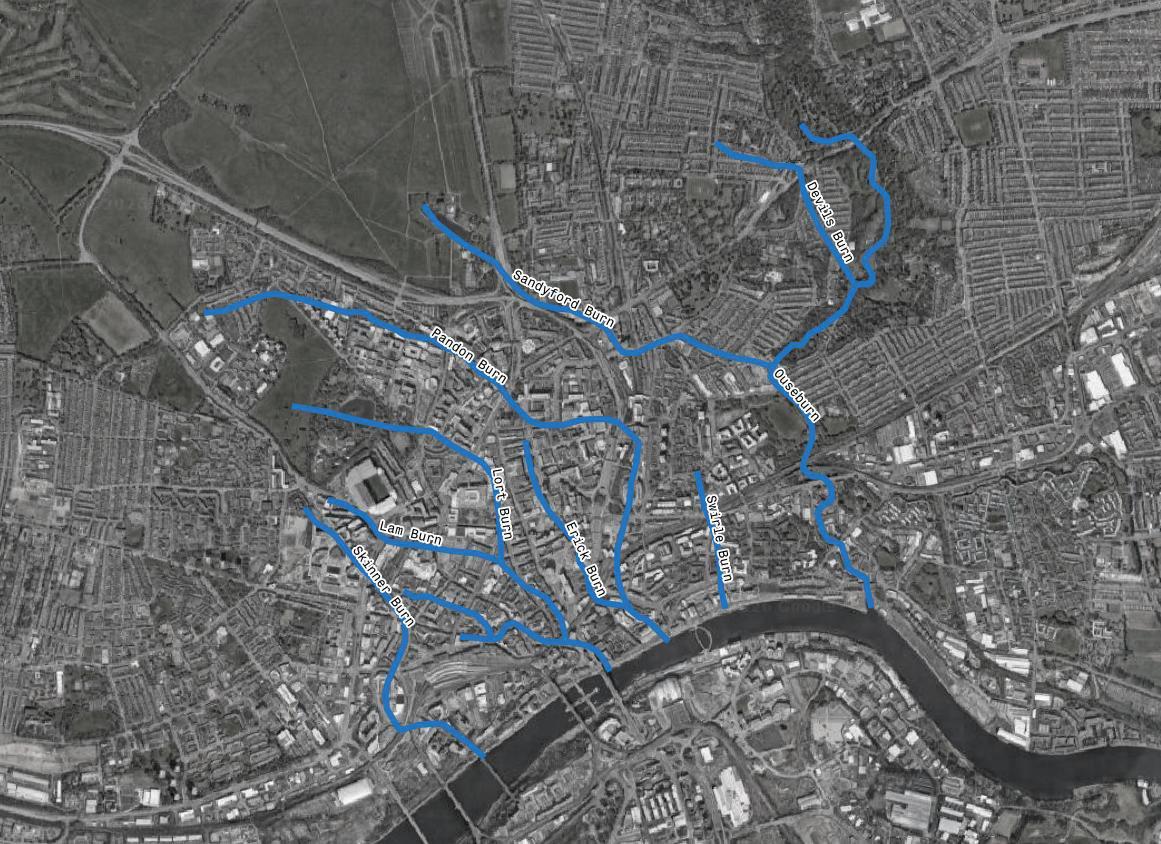
The first step has been understanding Newcastle’s hidden hydrology. The city once relied on natural streams that carried water from the moors around the city to the Tyne. Over time, these were built over and replaced by sewers or highway drains so that surface water in the city now mixes with foul in combined sewers needing treatment at Northumbrian Water’s Howdon Sewage Treatment Works. During extreme rainfall, water still attempts to follow these historic pathways, only to be blocked by buildings or channelled by roads, leading to flooding.
BETTER TOGETHER
BGN builds on a strong partnership formed after the 2012 storms. In 2013, Northumbrian Water, the Environment Agency (EA) and 14 lead local flood authorities created the Northumbria Integrated Drainage Partnership (NIDP).
This longstanding collaboration has not only improved understanding of each organisation’s aims and funding challenges but enabled collaborative solutions for managing flooding from multiple sources. It also considered water quality, biodiversity and the environment. Traditional funding rarely accounts for these wider benefits, which often leads to nature-based solutions (NBS) being cut from final designs. Northumbrian Water’s Drainage and Wastewater Management Plan highlights just how vital NBS are in this context. The water company’s aim is to cut the number of properties at flood risk across the region from around 15,800 to just 6,300 by 2050, a target that depends on reducing surface water entering the combined sewer network. LLFAs face parallel challenges: business cases focused only on homes protected are increasingly difficult to stack up. Demonstrating broader economic, environmental and social value is now essential to demonstrating viability.
For the BGN project, it is critical to understand these stakeholder drivers and work collaboratively to identify solutions.
Key to the approach was developing BGN not as flood management, but as climate adaptation that promotes the delivery of seven major benefits: flood management; carbon sequestration; better public spaces; support for active travel; shade and cooling; biodiversity and habitat creation. By prioritising sustainable, nature-positive design, BGN supports Newcastle’s wider climate ambitions and makes the city a cleaner, greener and more enjoyable place to live, work and visit. By attracting people and business investment into the city, this then becomes an economic driver.
“Newcastle once relied on natural streams that carried water from the moors around the city to the Tyne”
A project on this scale cannot be undertaken by a single organisation, so the risk management authorities for Newcastle – Newcastle City Council, the Environment Agency and Northumbrian Water – established a project board to maximise opportunities across public and private sectors. By working closely with people inside and outside the council who shape the city’s long-term future, and running workshops with stakeholders, the team identified seven themes that shape the city’s strategic direction: transport, environment, net zero, business, tourism, planning and community. Aligning BGN with these themes has boosted political backing and widened opportunities for funding.
TRANSFORMING A CITY
Workshops sparked over 150 creative ideas for blue-green improvements across the city centre. Around 40 of these were on existing buildings and infrastructure such as green roofs and green walls. A further 25 longer term stakeholder, planning and regeneration opportunities were also identified. Over half of the ideas were for the public realm, including rain gardens, swales, pocket parks and greener, safer streets to encourage dwell time in the city. The message was clear: opportunities for sustainable drainage schemes (SuDS) must be considered in transport and highway design. BGN is now embedded in the design process of all highway and transport schemes, and the council is developing its own SuDS standards to ensure consistent quality and efficient maintenance.
The project is also looking beyond the city centre, adopting an engagementfirst approach for residential areas and working with community groups and the council services that support them to understand community needs and aspirations. This approach creates the opportunity for asset advocacy, where residents can shape design and develop community pride while understanding the value of solutions.
These ideas helped shape the Blue Green Newcastle Design Vision, which has been prepared with the engineering consultancy ARUP. It sets out the principles of the project, its benefits to the city and outlines potential funding opportunities, including investment from businesses
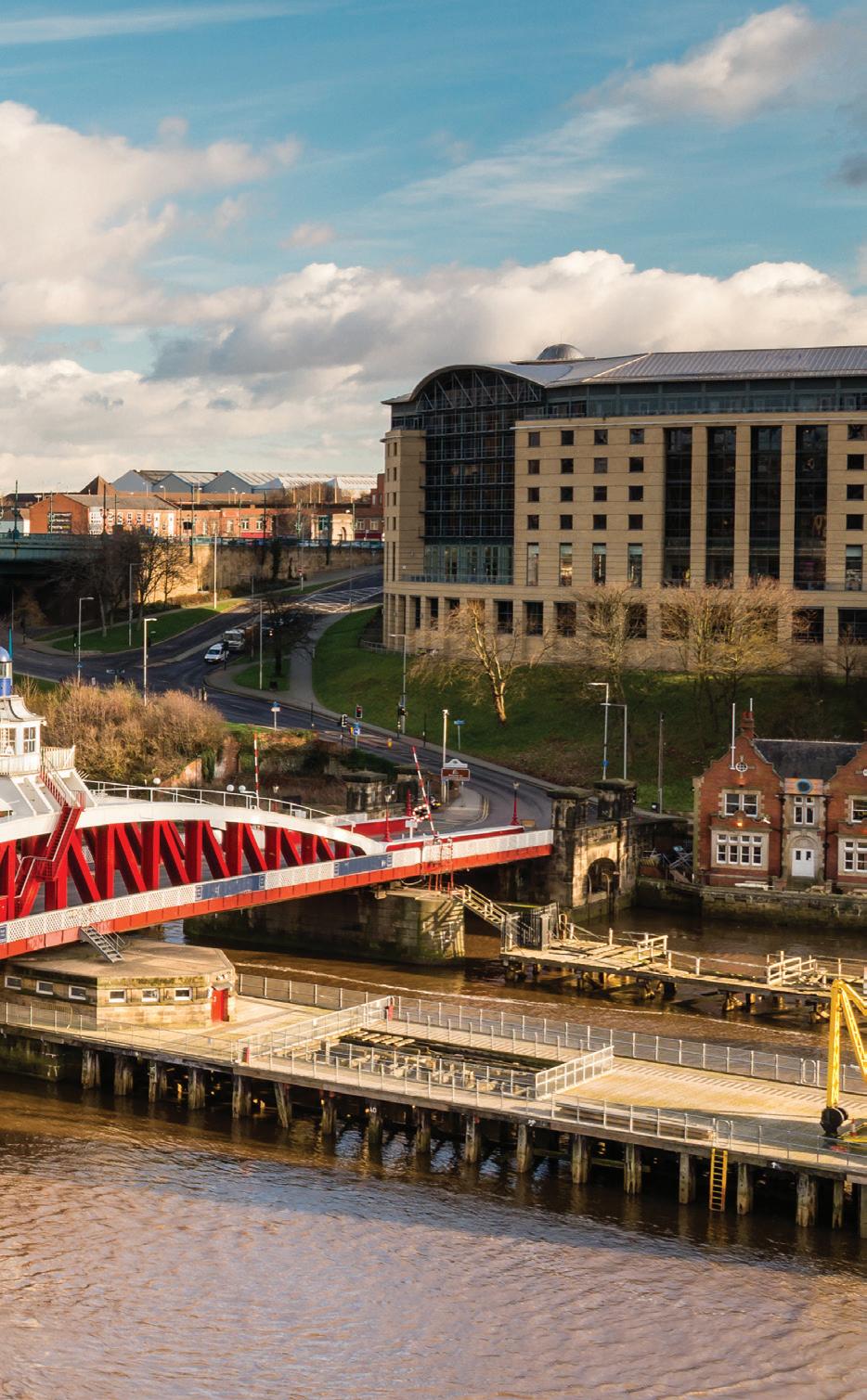
Blue Green Newcastle is the result of a partnership between Newcastle City Council, the Environment Agency and Northumbrian Water
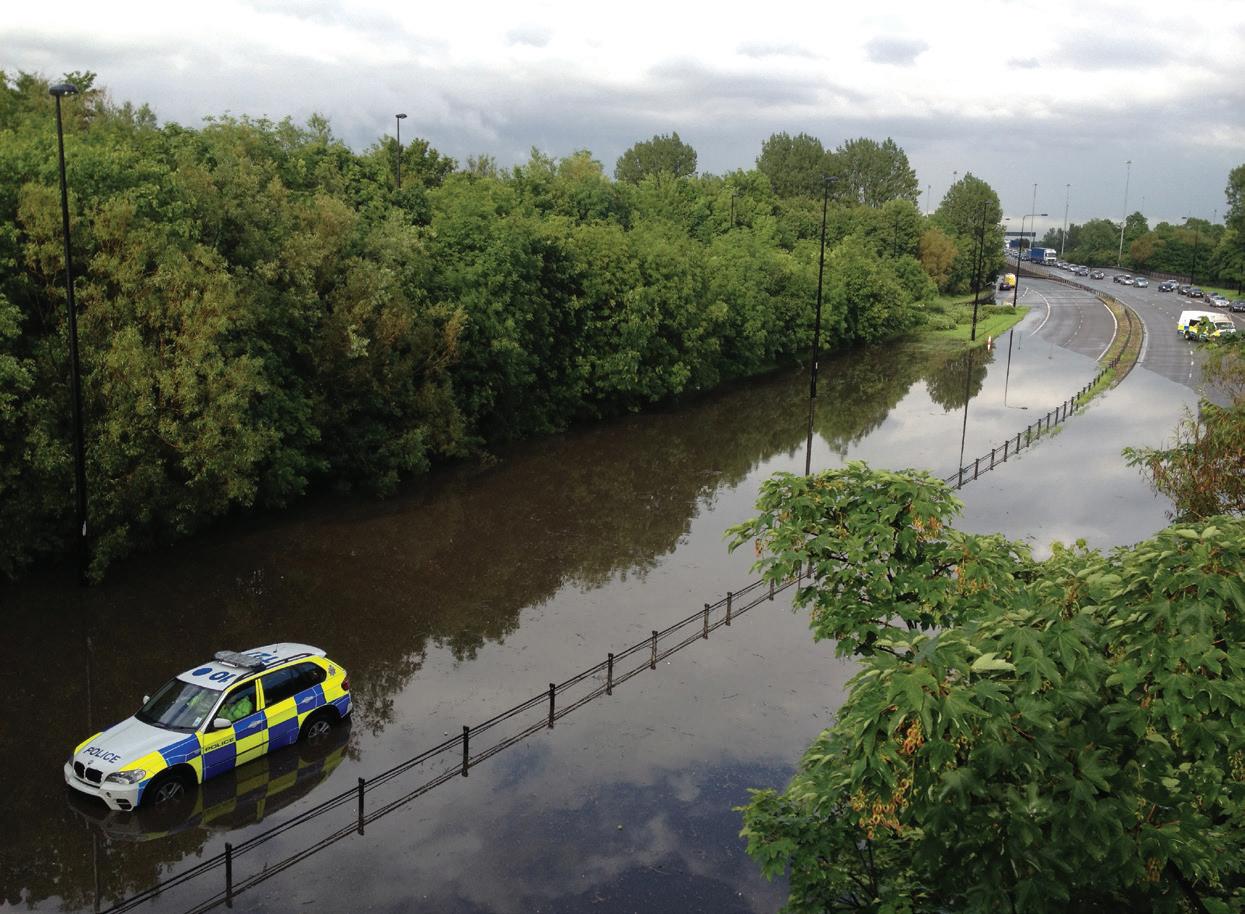
Flooding after extreme rainfall in 2012 caused £70 million of damage in the city centre alone
PETER BARKER / SHUTTERSTOCK.COM
seeking local carbon offset opportunities. This is being achieved via the North East Combined Authority’s Carbon and Nature Marketplace, where local climate benefits are funded by local organisations.
“Nature-positive design is an essential tool for meeting the challenges of climate change”
Although still in its development phase, BGN is already proving the power of nature-based, place-focused planning. One unique opportunity is the Town Moor, a large area of protected grazing land above the city centre that could play a major part in storing water and slowing runoff. It was here that the BGN pilot project, including an attenuation basin, was completed in July 2025. The basin can hold 9,000 m³ of runoff from the Sandyford Burn catchment, better protecting homes, businesses, community spaces and critical infrastructure. Its design considered the Town Moor’s landscape and heritage, as well as the public amenity value of the nearby parks. The next major project milestone is submission of the outline business case (OBC) to the Environment Agency in 2027. The project team is working with scientists at Newcastle University’s
School of Engineering as part of the Impetus4Change project – using an innovative SuDS optimisation tool that they have developed to analyse hundreds of potential locations for blue-green infrastructure based on costs and hydraulic effectiveness. The result will be a list of priority locations for the OBC. Further work will also identify new routes to carry surface water – including overflow pathways for when the system is full – directly into the River Tyne. It will also identify opportunities for surface water separation that will hopefully
reduce the impact of extreme rainfall on the city and its drainage network. Through these collaborative approaches, nature-positive design is rapidly becoming an essential tool for meeting the challenges of climate change – providing engineering resilience while also benefitting the city in terms of high quality public realm, greener spaces and cleaner air. The true success of Blue Green Newcastle won’t just be measured during the next extreme rainfall event. Its impact will be felt every day by residents, businesses and visitors, every time it rains… and even when it doesn’t. o
Map of the streams that once flowed from the moors to the River Tyne
During construction of the BGN pilot project on Newcastle’s Town Moor
INNOVATION CASE STUDY
HUDDERSFIELD NARROW CANAL EMBANKMENT REPAIRS
INTRODUCTION
Kyowa Filter Unit ® Rockbags by Ridgeway were selected as the permanent solution for repairing 2 failed sections of river embankment alongside the Huddersfield Narrow Canal. Damage was caused following heavy rain early in 2025 resulting in significant scour, leaving the canal walls vulnerable, and prompting a temporary closure of the footpath for safety reasons.
BACKGROUND
Both slipped sections were located on the narrow canal embankment above the River Tame. Rockbags were favoured due to their ease of handling, easy adaptation and trusted previous track record, particularly on UK scopes of work. This followed on site discussions between Ridgeway Rockbags, the client (Canal and River Trust) and the main contractor J N Bentley. The Canal & River Trust wanted to reinstate the embankment to its original form and achieved this with Filter Unit ® Rockbags which were covered with topsoil and coir matting to help the embankment return to its natural form. Rockbags are naturally porous making them ideal for supporting vegetation growth.
SOLUTION – KYOWA FILTER UNIT® ROCKBAG
Manufactured in Japan from 100% recycled PET, the Kyowa Filter Unit ® Rockbag is a high performing mesh bag filled with stone that offers a robust solution for protecting structures in the marine environment. Equipped with a single - point lifting ring the system can be manoeuvred easily into place efficiently. This key feature was instrumental during the scope of works as the damaged embankments were located between a narrow canal and the River Tame.
BENEFITS
The Kyowa Filter Unit ® Rockbags have many advantages compared to traditional solutions. Specific to this project:
• Easy to deploy given the restricted access
• Single point lifting ring allowed quick and accurate placement
• Reduced Health & Safety risks: No personnel required in works area; remote controlled magnetic hook released bags when in position
(https://youtu.be/EdJEpfWGYW8)
KEY LESSONS LEARNED
Raising the awareness of using the remote-controlled magnetic hook to the contractor and client has led to this mode of operation being considered for future projects, given its speed and safety benefits.
Filter Unit® Rockbags can be incorporated with other systems to aid reinstatement of vegetation, on this occasion coir matting was used but other systems can also be utilised. o
For more information visit our websites: www.rockbags.com www.canalrivertrust.org.uk/newsandviews/news/making-headway-onthehuddersfield-narrow-canal
Damage adjacent to canal lock
Rockbags during installation
Rockbags covered with coir matting
VALUE ADDED
TTo be truly successful, infrastructure projects must consider social value from the very start, argue Dr Sarah Fitton and Simon Wilson, authors of a recently published book on the subject
here’s a gap at the heart of most projects, and that gap is costing time, money and reputation. During research for our new book, Socially Successful Projects in the Built Environment, we interviewed 20 project managers, built environment professionals
and academics from different countries. They were working mainly in the flood and water sectors but also within schools, roads and other infrastructure – and they all told us the same thing: that traditional project management prioritises what’s technically feasible and financially viable.
What it leaves out, or considers only as an afterthought, is the social dimension. For a project to truly succeed, it must be socially successful, by which we mean that it must benefit stakeholders and communities and the resulting structure or intervention be seen as a positive
addition over the long term. To achieve this, the project team must understand what matters to the stakeholders and communities; and to do that, they must be involved from the outset.
Martin Stockley, a highly regarded engineer with many years’ experience working on high profile projects, summed up the situation: “All of the infrastructure projects I have worked on have in some way fallen foul of [the social dimension]: they have technical processes at the
top of their class; the social value of the processes however, have been generally poor to mediocre. We haven’t started conversations in the right place, at the right time, with the right clarity of aims, and this has diminished them all as public infrastructure projects. They are all highly successful and sustainable once complete but have been socially negative in almost all ways in their process of making.”
We are neglecting the perspectives of those who will be using or living with the project not just today, but potentially for years to come. And what is the point of creating a technically successful project, if socially it is an epic failure?
Neglecting the social dimension creates major risks for projects. Resistance from communities and stakeholders can lead to bad feelings, poor relationships and even strong opposition to the project. Opposition activities, delays or work that must be redone can then lead to wasted expenditure and the project falling behind schedule. All this can cause damage to an organisation’s reputation and, worst of all, leave communities with unloved structures and interventions that negatively impact the area for years to come.
THE SOCIAL SUPERPOWER
But this doesn’t need to be the norm. By flipping our thinking and approach to projects, we can create socially successful projects and minimise the social risks.
Before we go there, a word on the environment. Of course, environmental considerations are important in projects. However, we would position environmental considerations in two contexts: firstly, as part of the technical requirements of a project – making sure that it meets regulations and legal requirements; and secondly, as part of the social dimension. It’s here that things can get complex.
“Neglecting the social dimension creates major risks for projects”
Stakeholders and communities often care deeply about environmental concerns, including the impacts of climate change. But in discussing what they value most, you may find different priorities being aired. We worked on a project where the environmental benefits
of cleaning up polluted water came lower down the priority list than the environmental and aesthetic benefits of the landscape that would be damaged by building a water treatment plant. As one community member said, “You’re more interested in fish than people”. The message here is that the environment alone is not enough – it needs to be set in the context of social values.
Put simply, a socially successful project is one where the people whom you intend to benefit from the project actually feel that they benefit. The result is a project that does its job (is technically and financially successful) and is appreciated, valued –even loved – by the people who use it, pass by it, or view it from their window. In other words, the project has social value.
“The environment alone is not enough – it needs to be set in the context of social values”
The concept of social value has gained traction within the built environment over the last few decades, sparked by the Public Service (Social Value) Act of 2012. There are different definitions, but our own working definition is “social value is about what matters to stakeholders and communities”. It is not what we as professionals think communities value, it is about taking the time to find out from them what they value. Stakeholder engagement is the method to uncover social values at all project stages, from planning, design, procurement and construction to use and experience (see ‘A day in the life of a...’, p. 53). Additionally, understanding stakeholders’ social values helps build deeper, more effective relationships. Here’s an example of what can arise if we don’t focus on the social dimension and neglect to understand a community’s social values.
THE DIDSBURY DEBATE
The Didsbury flood storage basin is used to relieve peak flow on the River Mersey. Stretching over 62 hectares, the flood basin is predominantly used for recreational activities, featuring footpaths and cycle paths, a rugby club, allotments and a small number of residential properties. When the basin is
Construction of the Thames Tideway Tunnel, which used a social value lens to try and create a positive legacy
in use and storing water, some of these facilities can be impacted by floodwater.
In 2009 the Environment Agency (EA) commissioned some improvements: installation of new monitoring and telemetry equipment; construction of a floodwall and a floodgate to protect the residential properties; installation of flood mitigation measures to the local amenities; and a maintenance strategy to ensure no obstructions impeded the flow of floodwater. The EA appointed a contractor to design the scheme and, once designs were near completion, they went out to consultation with the local community. Very opposed to the plans, the community created opposition including contacting the media and local MPs. The EA had no choice but to halt the project, change contractors and start again on a new design.
When Sarah spoke to locals, she found two main reasons for their opposition: they felt they weren’t listened to or consulted; and the scheme was not aligned with the social values of the community. Community members didn’t use the term ‘social values’, of course. Rather they described what mattered to them, and how that could be negatively affected by the project.
One of the main areas of contention concerned the loss of local allotments. Sarah spoke to an allotment holder who was retired and lived alone. The allotment was their only reason to get up in the morning. Rather than just a recreational space, it was intrinsic to this person’s social values and quality of life.
A new contractor was appointed with the brief to leave the allotments as they were and create a new scheme. This was at additional cost to what had already been designed, not to mention the costs of delaying the programme. The new design met the brief, left the allotments alone and was acceptable to both the EA and the local community.
MAKING IT HAPPEN
Not only do socially successful projects save you time, money and hassle, reducing the social risks we mention above. You also end up with better projects as a result of benefitting from the knowledge, insight and understanding of a wider group of stakeholders than just your project team
THE SOCIAL VALUE APPROACH
FIGURE 1 SHOWS how projects traditionally work. Social value and stakeholder engagement are dripped in at some key project moments, if they are considered at all, but have little impact. Figure 2 shows our recommended ‘stick of rock’ approach, with social value and stakeholder engagement running through the project from the start.
– however expert they may be. So how can we create projects that are not just technically successful, but socially successful too?
“Don’t be afraid to work with stakeholders you wouldn’t normally work with”
We recommend that you consider all three aspects of your project – technical, financial and social – from the outset. Get the people you need around the table as early as possible. Build on this by engaging early – don’t wait until the design is near completion. Before you start, ask stakeholders and communities what they think and use their knowledge, experience and opinions to shape a socially successful design. And when they talk to you, listen then speak, not the other way round.
Don’t be afraid to work with stakeholders you wouldn’t normally work with. Their take on things will be different to yours but will add value to the project. Their knowledge and
experience are invaluable. Your aim should be to take the time to understand what matters to stakeholders, so you can shape the project around their values. And make sure you think long term. Rather than just thinking to the end of the project, think about how the project will impact communities and the environment when the project team are long gone. Creating a socially successful project isn’t hard. It requires a mindset shift and some changes to how things are normally done. But the benefits to communities, stakeholders, the environment and project teams far outweigh the disruption. Give it a go, join the revolution and feel the social superpower. o
Socially Successful Projects in the Built Environment: Demystifying Social Value and Stakeholder Engagement is published by Routledge. sociallysuccessful projects.co.uk
FIGURE
FIGURE
PLANTING A SEED
How installing sustainable drainage in central London school playgrounds is reducing the risk of surface water flooding and inspiring the next generation of water professionals, by Sophia-Harri Nicholaou, a senior flood risk consultant at WSP
When the skies opened over Westminster in July 2021, the floodwater didn’t creep – it surged. More than 550 homes and businesses were hit, and among them were several schools suddenly engulfed by surface water flooding. Playgrounds vanished under murky water, school grounds were saturated and the rhythm of daily life
was thrown off course as staff and pupils grappled with the shock of a once-in-ageneration rainfall event.
These schools stood as stark reminders that even the most ordinary day can be upended in minutes when the drainage network beneath our feet is pushed beyond breaking point. Across London’s dense urban landscape, the challenge of managing surface water flooding is
growing – but so is the opportunity to rethink how communities engage with climate resilience.
Four years after that flooding took place, a collaborative project between Westminster City Council, WSP, FM Conway and Meristem Design sought to ensure that such disruption would never happen again. The project, SuDS in Schools, responded to two interlinked
A planting workshop with pupils following the installation of the SuDS planters in summer 2025
challenges: increasing surface water flood risk in urban environments; and a growing need to build skills, awareness and public understanding around sustainable water management. Using schools as sites for both infrastructure delivery and learning demonstrates how these challenges can be addressed together.
COLLABORATION AT THE HEART OF DELIVERY
In 2025, the council received funding from the Department for Education (DfE)’s SuDS in schools grant scheme to install 24 SuDS – or sustainable drainage system – planters across five primary schools. Each of the project partners contributed specialist expertise, ensuring that technical, educational and operational requirements were aligned from the outset.
For my employer, WSP, that meant technical expertise in flood risk modelling, feasibility and design to identify sitespecific opportunities for improved drainage performance. Meristem Design, a local supplier with ambitions to become a leading force in green infrastructure, supplied the SuDS planters. The civil engineering contractor FM Conway, a key partner to the council, undertook minor drainage improvements such as non-return valve installations and visual manhole inspections where required.
“SuDS planters make drainage more visible and accessible”
The schools included in the project were chosen due to their high surface water flood risk or historic flooding, predominantly relating to the July 2021 flood event. Early engagement with schools ensured that safeguarding, curriculum priorities and long-term maintenance considerations were fully integrated into design and delivery, while close coordination between consultants and suppliers enabled high quality installation within the constraints of live school environments.
MAKING SUDS VISIBLE AND MULTIFUNCTIONAL
A key design principle is visibility. In many urban environments, drainage infrastructure remains hidden below ground, limiting opportunities for public understanding and engagement.
This is especially true in inner London boroughs like Westminster, where space constraints forces most systems below ground through the combined sewer system. By contrast, SuDS planters make drainage more visible and accessible, fostering the role of SuDS as multifunctional infrastructure rather than single-purpose drainage assets. Functionally, the planters intercept roof runoff, diverting flows away from traditional gullies and providing source control. Meristem’s SuDS planters manage rainwater runoff by channelling it through layers of vegetation and a specially engineered soil blend (see graphic on p. 36). This process allows the water to be gradually absorbed or released, easing pressure on conventional drainage systems and helping to mitigate flooding – the planter holds 94% of the rainfall that goes into it. Plants draw moisture through capillary action, allowing for sustained irrigation. This approach increases attenuation capacity on site: helping to reduce peak flows and ease pressure on the combined sewer network during intense rainfall events.
LEARNING BY DOING
Education was embedded as a core project outcome, with WSP leading interactive workshops with more than 150 pupils aged eight to ten across the five participating schools. The workshops introduced pupils to flood risk management through concepts including the urban water cycle and pathways of rainfall; the causes and impacts of surface water flooding; and climate change and future rainfall uncertainty. The children learned about
the functionality of sustainable drainage, why it is critical in dense urban areas, and how effective flood risk management relies on collaboration between engineers, consultants and designers.
For many students, this was their first exposure to engineering as a creative, problem solving profession linked directly to environmental outcomes. The experience not only captured their interest but clearly demonstrated the power of hands-on learning to inspire a next generation of environmental stewards.
FROM DESIGN TO DELIVERY
The 24 SuDS planters were installed during the summer of 2025 while schools were closed, with planting workshops held at the start of term to involve pupils in the final stage of delivery. Working alongside the project’s partners, students learned about plant selection, seasonal change and habitat creation, as well as the importance of routine maintenance and long-term stewardship. These sessions highlighted that the performance of SuDS relies on ongoing care as much as innovative design and construction, giving students a meaningful role in shaping features that will remain part of their school environment for years to come.
The pupils also designed their own artwork for the SuDS planters, transforming each unit into a vibrant showcase of their ideas about water, nature and resilience. Seeing their drawings brought to life gave the children a powerful sense of ownership –instilling the message that these were not just drainage features installed for them but shaped by them.
Schools can use the SuDS planters as a learning resource across science and geography
MERISTEM DESIGN
ENGAGING FAMILIES AND COMMUNITIES
Beyond direct educational outcomes, the project has strengthened engagement with the wider school community. Teachers are using the planters as learning resources across science and geography lessons, embedding water management into everyday teaching. Parents and visitors can also see how SuDS contribute to greener, more resilient neighbourhoods, helping to normalise sustainable drainage as a visible part of the urban environment. The project has successfully supported the council’s wider climate adaptation goals as well as helping to deliver its
Local Flood Risk Management Strategy.
The project has an important role in building public understanding and acceptance of SuDS, which is critical to wider adoption, especially as the council accelerates SuDS delivery more widely.
SCALING SUCCESS
Building on the success of SuDS in Schools in Westminster, WSP is now working with other lead local flood authorities (LLFAs), including Luton Borough Council and the Royal Borough of Kensington and Chelsea to help deliver similar projects. These projects continue to place collaboration,
With 29,000 schools across the UK, there is huge potential for normalising sustainable drainage through SuDS in schools programmes
education and engagement at their core, demonstrating how local authorities can maximise social value alongside statutory flood risk management responsibilities.
Now is the moment for other LLFAs to follow suit. Every school can realise measurable benefits from implementing SuDS. Even small-scale interventions contribute meaningfully: every cubic metre of water storage reduces the pressure on already overwhelmed combined sewer systems. With around 3,500 schools in London and over 29,000 across the UK, the potential for widescale impact is enormous. Beyond reducing flood risk, SuDS deliver wider benefits: improving water quality and biodiversity, moderating temperatures, creating greener learning spaces, and offering learning opportunities.
Inspiring young people to understand surface water flood risk – and to see themselves as future engineers, designers or environmental professionals – may prove just as valuable as the infrastructure itself. In this way, the SuDS in Schools project is helping to grow the climate-ready workforce of the future, one school and one planter at a time. o
To learn about CIWEM's work on climate resilient cities visit ciwem.org/ policy-reports/sustainable-drainage
ANATOMY OF A SUDS PLANTER
Join JBA’s expert-led sessions to learn more about the emerging tools and techniques, advances in technology and innovative approaches that are shaping the future of climate resilience.
Tuesday 9 June 15:30-16:10
The changing face of asset management and the next generation of tools
Delivered by: Richard Chubb | Alec Dane | Chris Nash (Environment Agency)
Join our technical experts as they explore how asset management is evolving to meet the challenges of climate change, investment prioritisation and the growing role of Nature-based Solutions.
Scan the QR code to find out more
,Pump Stations
• Fish Friendly Pumping Solutions
• Trash Screens & Cleaners
• Asset Improvement & Upgrades
• Maintenance and routine inspection Water Control Structures
Delivered by: Lucy Formoy | Alec Dane | Doug Pender
This session explores how we’re advancing coastal resilience and highlights how to enable improved decision making, integrate data, modelling and scenario planning and empower communities. You will also gain guidance on engagement approaches that help to empower individuals, increase resilience and maximise social value.
jbaconsulting.com
EXPERT PUMP SOLUTIONS. LOCAL SERVICE. NATIONAL COVERAGE.
From expert advice to expert-engineered solutions Pump Supplies offer local service and national coverage, boasting an unrivaled fleet of Electric Submersible Pumps and an extensive range of accessories & pipework. We’re here to give 24/7 support to our customers & provide peace of mind.
HANDING OVER THE BATON
Mary Long-Dhonau, aka Flood Mary, looks back on more than two decades engaging with flooded communities
For several years I’ve been travelling into communities across the country with the FloodMobile – an impossible-to-miss demonstration vehicle – visiting towns and villages that, more often than not, are going through some of their toughest times.
But this work didn’t start with the FloodMobile. I have spent more than 25 years working in and with communities who live at flood risk, much of that time focused on raising awareness of property flood resilience (PFR). I recently came across one of the first presentations I gave
on the subject dating back to the early 2000s. Even then, the message was the same: helping people understand what they can do to prepare, better protect their home, and recover after being flooded.
In those early days, I would travel to village halls, often carrying examples of PFR measures so I could show people what they looked like and how they
“Flooding is the most dreadful experience – I know having lived through it myself”
worked. It was practical, hands-on and often informal but it mattered. For many people, it was the first time they had seen that something could actually be done. When I was given the opportunity to be involved in an Environment Agency-led demonstration project focused on raising awareness of PFR, I jumped at it. I was asked how I would approach community engagement for the Ox-Cam Pathfinder I remember thinking that what people really needed was something tangible; something they could see, walk through and ask questions about.
That’s where the idea of a flood house on wheels came from: a practical, mobile space packed with resilience and recoverability measures, showing not just how to better protect a home but how to make it easier to recover afterwards. That’s how the FloodMobile was born.
Over time, I have seen the devastation flooding causes to so many; not just to homes and belongings but to people too. The emotional impact can be overwhelming and, so often, when people needed practical human support, there was nowhere obvious to turn.
The FloodMobile became a place where people could come, sit down and talk. Sometimes they want practical advice: what to do next, how to clean up, how to prepare for future flooding or help with insurance. Other times, they just need to talk to someone who understands what they are going through.
Over the years, I’ve parked up in countless communities, sometimes in bright sunshine, but mostly in the cold and wet. Thankfully, the latest FloodMobile is a very different experience, with proper heating and seating (thanks Flood Re!) – something both I and the people stepping inside are very grateful for.
Hundreds, or more like thousands, of conversations have since taken place. In the last three winters alone I’ve spoken to more than 3,000 people who had recently flooded, with sometimes more than 200 visitors in a single session. Many of those conversations have been deeply emotional. Flooding is the most dreadful experience – I know having lived through it myself. The memories stay long after the water has gone. I’ve spoken to people who had lost irreplaceable memories, who didn’t know where to start.
SOME STORIES STAY WITH YOU
A lady in her eighties who returned home from her husband’s funeral only to be flooded that night. People diagnosed with serious illness while dealing with the aftermath of flooding in temporary accommodation. A man rescued from his roof by helicopter, who later told me how he couldn’t stop reliving that moment. And one couple, both aged 89, who lost absolutely everything, telling me, “We know we’re not here for much longer but now there will be nothing left behind to show that we ever lived.” He broke down,
his wife broke down and so did I. That’s why the FloodMobile mattered –and still does.
It has never been about products or selling solutions but helping people understand their options: giving them the confidence to take steps that could make a real difference next time. PFR isn’t just about doors, barriers and pumps, but about preparedness, awareness and, importantly, recoverability – helping people regain some sense of control in a situation where you can feel anything but.
Over time, that work has extended beyond the FloodMobile. I’ve been fortunate to share these messages widely through radio, television and public speaking. That’s something I’ll always continue to do because the need for awareness hasn’t gone away – if anything, it’s growing.
I’ve also been incredibly honoured to be recognised by CIWEM, awarded an honorary fellowship for my work raising awareness of flood risk and PFR within communities. That has meant a great deal to me – not just personally but because it reflects how far the conversation around flood resilience has come.
“PFR isn’t just about doors, barriers and pumps, but about preparedness, awareness and, importantly, recoverability”
More recently, I’ve focused on sharing what I’ve learned with others. In the spring, I delivered FloodMobile training at the National Flood School to around 80 people. The sessions were designed to give professionals an understanding of how the FloodMobile works in practice: how to engage with communities, have difficult conversations and provide support in a way that is both practical and empathetic. We’ve also got a series of online training sessions planned. This is an incredibly important legacy, because real on-the-ground community engagement is a key part of the wider flood risk management picture.
AND THAT BRINGS ME TO NOW
This year, I’ve made the decision to step back from frontline FloodMobile work, with my final sessions taking place at Flood & Coast 2026. It hasn’t been an easy decision. The FloodMobile has been
CIWEM AND PFR
FOR THE ENVIRONMENT Agency, insurers, local authorities and those that have been flooded, confidence in professionals delivering property flood resilience (PFR) is essential. CIWEM’s specialist register demonstrates that professionals have completed the appropriate training and been assessed to the appropriate standard by independent assessors. You can learn more about CIWEM’s community of practice for PFR at: befloodready.ciwem.org
a big part of my life. There have been long days and long journeys – sometimes six-hour drives, followed by hours talking to people, then the journey home (only to do it all again the next day elsewhere).
At 68 years old, it’s fair to say that it’s becoming a bit too much. It feels like the right time to move into a different phase where I can continue to share my knowledge without being constantly on the road.
But I’m not going anywhere – far from it! I will continue working across the sector, raising awareness, speaking, writing and supporting initiatives that help people better understand flood risk and what they can do about it. My website will remain a free resource for anyone who needs it, because access to practical information should never be a barrier. If there is one thing I’ve learned from the FloodMobile, it is that people don’t need complicated answers. They need honest, straightforward support and advice, delivered with empathy and understanding. The FloodMobile is great for facilitating that. And perhaps that’s what I’m most proud of – not the miles travelled or the hours spent (though there have been plenty of both) but the fact that, in some small way, I’ve been able to help people feel a little less alone when it mattered most.
The FloodMobile may be moving into a new chapter with new faces, but the mission behind it very much continues and is something I will always look back on with a huge amount of pride. o
Visit the Floodmobile at stand PFR3 at Flood & Coast 2026 and learn more at floodmary.com
Support your projects with environmental survey data tailored to your requirements
As part of our integrated marine consultancy and survey offer, ABPmer’s specialists collect, process and interpret all types of survey data
Marine and coastal ecology
Marine mammals and ornithology
Habitat sampling and mapping
Topography, bathymetry and geophysical
Waves, hydrodynamics and water quality
Vessel traffic monitoring (ships / boats)
Ardent have led the design and construction of multi million-pound flood alleviation schemes (Fluvial, Tidal and Surface water) overseeing input from multi-disciplinary teams. We adapt and modify traditional solutions by replacing hard infrastructure with green/blue infrastructure that offers multifunctional benefits. Our flood risk services include:
Funding Applications for Flood Defence Grant in Aid and Local and Completion of Business Cases; and
Expert Witness Flood Risk and Drainage
Watertight project manage, design, source, install and maintain bespoke and innovative PFR solutions to domestic and commercial clients and communities.
• Watertight are CIWEM PFR certified professionals
Hydro-Brake ® Optimum
Deliver customised, precision-engineered flow control with Hydro-Brake ® Optimum
• Deliver customised flow control for surface water, foul or combined water systems.
• Trust in the performance of an independently assessed, approved and certified product.
• Keep whole-life costs low with no moving parts and no power requirement.
• Future-proof your designs with builtin adjustability as standard with the Hydraulically Efficient units.
• Make installation easier and safer with the pre-installed chamber option.
CIWEM APPOINTS NEW CEO
WE ARE DELIGHTED to announce the appointment of Emma Causer as our new CEO. Emma joined CIWEM on 5 May with a strong track record in membership leadership, commercial strategy and organisational renewal. She has more than 25 years’ experience working in high growth commercial environments and subscription businesses including BT and Sky, with her latest role as director of member and clients at the Royal Institution of Chartered Surveyors (RICS). Having established the award-winning mentoring programme Plan B (now known as Balance the Board), Emma is a credible external ambassador with a focus on developing a high performance culture within the teams she leads.
Emma said: “I am genuinely thrilled to be joining CIWEM at such a pivotal moment for the water and environmental sector. The opportunity to shape the profession, grow the pipeline of talent it needs, and make the case for the vital work that CIWEM’s members do has never been greater.
“I cannot think of a more important or exciting community to serve. I am looking forward to listening, learning and getting to work.”
Annie Shepperd OBE, chair of CIWEM, commented: “CIWEM has a key role in shaping the way the UK manages water and land, not to mention helping overcome the impending skills shortage in the UK water and environmental sector. We are delighted to welcome Emma as CIWEM’s new CEO to lead our professional membership organisation and promote the benefits of working in this essential sector.
“Emma’s experience in strengthening member value, growing sustainable income and building inclusive cultures that deliver impact at scale, coupled with her deep and genuine commitment to purpose-led leadership and to the role that strong professional communities play in driving environmental and societal change, make her a great fit for CIWEM.”
Turn to p. 54 to learn about more about Emma Causer and her ambitions for CIWEM
PLANET POSSIBLE
CIWEM LAUNCHES NEW PARTNERSHIP WORKING TOOLKIT
CIWEM HAS LAUNCHED a new practical toolkit and e-learning resource focused on the people side of collaboration. Partnership Working: Approaches and Behaviours for Effective Collaboration is designed for anyone working in collaborative environments across water and environmental management, from regulators and local authorities to water companies, consultants, community groups, charities and NGOs. Rather than prescribing structures or governance models, the toolkit helps people understand how behaviours, mindsets and communication shape trust, relationships and delivery. Grounded in case studies and lived experience, it supports learners to navigate complexity and power dynamics, align priorities and turn partnership ambition into action.
Visit ciwem.org/training/ working-in-partnership
LAST CHANCE FOR CIWEM HONORARY FELLOWS 2026
THE DEADLINE FOR nominations to become a CIWEM honorary fellow is fast approaching. CIWEM members and volunteers can nominate someone they admire for this esteemed award until midday on 30 June.
EACH WEEK ON the Planet Possible podcast, host Niki Roach, a former president of CIWEM, tells the stories of the people paving the way for positive planetary and social change. Upcoming episodes will explore issues of sport and climate, the water sector in transition, and the energy potential of floating solar panels. Regular guests include Lee Pitcher MP and John Curtin, president of CIWEM. Each month we publish transcripts of these episodes; get them straight to your inbox by signing up to our digital newsletter, at ciwem.org. Find Planet Possible in all the usual places, including Apple Podcasts and Spotify. Or visit planetpossible.simplecast.com. Subscribe so as not to miss an episode.
Emma Causer
Hand Placed Concrete Bagwork MSE
Soil Filled Bagwork
Biodegradable bags and liners enabling the hand placement of concrete in and around watercourses.
The real savings are not in material costs, but in the time saved in having a ready-to-install product, and not having to dewater the watercourse to place the bagwork.
SoluForm MSE Bagwork is supplied prefilled with a high quality sand rich topsoil, supplied in a form that is ready to use and assemble on site once it arrives.
It aims to establish and promote vegetation growth on, and inside the bagwork, giving the bagwork structure an improved appearance.
SEA CHANGE
Mark Stratton, chair of CIWEM’s Flood and Coastal Erosion Risk Management Specialist Panel, explores whether the recent reform of FCERM funding will deliver for the coast
AFTER MORE THAN two decades of working within the flood and coastal erosion risk management (FCERM) sector, currently as head of policy, environment and research at Coastal Partners, a local authority partnership on the south coast of England, I’ve seen the ebb and flow of policy, the shifting focus of outcome measures, and the peaks and troughs of
funding as government priorities change. Yet despite this constant flux, many of the fundamental challenges facing practitioners, especially at the coast, have remained stubbornly consistent. Now, with the introduction of the long-awaited funding reform from the Department for Environment, Food and Rural Affairs (Defra), the rules governing how we
plan and deliver FCERM schemes have changed once again. The key question for me is: how will these reforms shape the outcomes for coastal communities at risk?
OUT WITH THE OLD
Partnership funding was introduced in 2011 with the ambition to bring in funding from the private sector to supplement grant-in-aid investment from Defra. In essence, the more homes better protected, the more grant funding a project could receive. Where shortfalls existed, funding from other partners and beneficiaries needed to be found to close the gap.
There is no doubt that partnership funding was transformative. It supported a cultural shift towards collaborative working and led to the delivery of many projects that might never have progressed under a traditional grant-only approach.
A shingle beach at Eastoke Corner, created as part of a beach recharge project in 1985, protects this part of Hayling Island from storm events
As a result, many projects have been delivered which not only better protect communities, but which also enhance their lives, their wellbeing and their economic prosperity.
However, whilst of its time, complexities around the partnership funding policy meant that even projects that were recommended by shoreline management plans and FCERM strategies, had strong benefit-cost ratios, and which could reduce risk to hundreds or even thousands of homes, still required significant contributions from alternative funding sources. The economic climate changed, contributions became harder to come by and even when they were found, the intricacies within the complex partnership funding process meant that practitioners spent a disproportionate amount of time trying to make the funding process work rather than getting on with delivering projects. Change was inevitable.
IN WITH THE NEW
In 2025 Defra announced and consulted on FCERM funding reform, with a vision to move towards a more flexible, proportionate, efficient and inclusive approach. This reform sits within the government’s £10.5 billion commitment to long-term resilience and came into action on 1 April 2026. A central change is that funding levels will now directly depend on project classification: refurbishment of existing assets is eligible for 100% funding; while replacement and new or improved schemes are fully funded up to £3 million, with 90% funding available above that threshold. However, funding is still finite, and projects will now be assessed in terms of their value for money and on the societal benefits they provide, relative to the government grant being requested. This new, transparent method for calculating a project’s return on government investment will help create a nationally prioritised list of projects.
Defra’s funding reform demonstrates the clear intention to shift towards prioritising a broader range of outcomes beyond traditional benefit-cost ratios. Conceptually, this aligns with recent updates to the Green Book – the Treasury’s guidance on appraisal – and could introduce a more balanced, place-based approach to FCERM investment. This
potentially marks a significant shift toward greater clarity and consistency for risk management authorities (RMAs) such as local authorities, lead local flood authorities and internal drainage boards.
So what will this mean at the coast and will there be winners and losers?
LARGE COASTAL FCERM SCHEMES
Coastal schemes can typically require more funding upfront to deliver than non-coastal schemes given their exposure to tides, surges, currents, saltwater, future sea level rise and waves.
There have been very few coastal schemes under £3 million, so it seems likely that very few will benefit from 100% grant funds in the future. It’s concerning that large capital coastal schemes running into the tens or hundreds of millions of pounds may rank much lower nationally than their inland equivalents using the value-for-money approach, despite potentially protecting thousands of homes from flooding and erosion. On top of this, local authorities are very unlikely to be able to secure the remaining 10% of funding contributions given that they will be entering an era of local government reorganisation from 2027/28 onwards.
“Coastal adaptation is still missing from the funding framework”
The era of partnership funding demonstrated that local authorities could no longer afford to plug funding gaps. While the new rules reduce the scale of contributions needed compared with partnership funding – an outcome which can only be heralded as very positive – this is only helpful if schemes rank highly according to Defra’s valuefor-money metrics. Positively, attracting more funding contributions can push a project up the national prioritisation list; but will this actually happen given the potential scale of funding required for expensive coastal projects?
ASSET REFURBISHMENT
It’s fantastic to see the refurbishment of assets playing a greater role. It’s an acknowledgement that investment in existing assets can delay major capital replacement costs for many years. These
sorts of smaller scale interventions will certainly help the government unlock significant short-term outcome measures in terms of homes better protected. Whether coastal FCERM schemes will benefit here remains to be seen given that many local authority-owned coastal assets have suffered from significant long-term under-investment due to past exclusions from grant-in-aid funding, with many at the end of, or past, their intended design lives. Ultimately many coastal flood and erosion risk assets now urgently need capital replacement. This presents a risk given that the proposed split of funding as set out in Defra’s funding reform consultation shows an overall reduced availability for capital schemes compared to refurbishment.
Unfortunately, the Defra funding reform also makes no mention of providing local authority risk management authorities with grant funding for maintenance of their existing flood and erosion risk assets. This long-established disparity results in a postcode lottery for communities at risk.
MORE BENEFITS FOR COASTAL COMMUNITIES
Static homes are acknowledged as a specific form of residency within the context of flood risk. The reform seeks to increase the weight given to social vulnerability, and residential caravans and park homes can now be counted as households, provided they meet the criteria for permanent occupancy. This is a great outcome for many coastal locations where often quite large caravan parks exist as a significant proportion of housing. So now if a caravan park is severely affected, the economic cost of damages can be factored into the costbenefit analysis, which will help to drive up the priority score of any schemes in these locations.
The reforms also intend to relax the historic ‘2012 rule’ that excluded newer housing developments from consideration in cost-benefit analysis. This is a double-edged proposition: while it broadens the assessment of what’s at risk, it raises questions about future planning decisions at the coast. There is a danger that developers may become less incentivised to design safe, future-proofed coastal developments if they expect FCERM investment to
protect new assets. Including post-2012 properties may improve scheme viability and outcome measure reporting for areas where recent development has taken place, but it also risks incentivising poor planning decisions at the coast that future generations will not thank us for.
The reform’s prioritisation of funding towards deprived areas is a positive signal for coastal towns. The requirement for at least 20% of national investment to be directed to deprived communities is very welcome, particularly focusing on reducing flood risks in socioeconomically deprived areas. With significantly higher, often overlooked, deprivation in many of England’s coastal towns compared to inland areas, this can only be seen as a hugely positive outcome of the funding reform for the coast.
Prioritising tailored support for rural or coastal communities that may face distinct or higher levels of flood and erosion risk is loosely referred to in the funding reform. How this will play out remains to be seen until clearer guidance has been published, but there is some hope that it could bring improved benefits for rural isolated communities which would otherwise be unlikely to benefit from risk reduction schemes.
MISSING PIECES
Coastal adaptation is still missing from the funding framework. The Defra reform disappointingly makes no mention at all of the need for adaptation along the coast and instead focuses on the protection of homes at risk now. So where does this leave all the locations that won’t get prioritised for new schemes or where property flood resilience (PFR) will not be possible? Adaptation to flood risk is likely to be equally if not more important than adaptation to erosion risk as sea levels rise over the next century. Notwithstanding the use of £200 million of government funding to support the Flood and Coastal Resilience Innovation Programme (FCRIP) and Coastal Transition Accelerator Programme (CTAP) – aimed at improving community resilience and furthering the understanding of the need for coastal adaptation to erosion risk – there remains no wider policy or funding in place to help practitioners develop investment, transition and adaptation
plans at the coast to either erosion or flood risk. There is also no mention in the reforms of funding to help adapt to the risk of flooding and erosion to legacy coastal landfill sites, of which there are up to 1,200-1,400 sites nationally (depending on how one classifies risk).
The reform’s approach to natural flood management (NFM) could also be problematic at the coast. That’s because the new rules will prioritise projects that incorporate NFM, with the guidance setting minimum programme targets for NFM investment (see ‘Flooded with information’, pp. 22-24). What this means for the coast is uncertain, with often limited space for NFM along long linear coastal strips. Mainstreaming NFM is of course very welcome, but caution is needed to ensure that prioritising it does not distract from community level projects with longer lasting benefits.
“The reform’s prioritisation of funding towards deprived areas is a positive signal for the coast”
Prioritising innovative resilience measures such as sustainable drainage systems (SuDS) and PFR is part of the reform’s ethos. This will hopefully help alleviate flood risk in areas where large capital schemes are simply not possible. However, whilst PFR can be a positive option, at the coast it only offers temporary benefits to flood risk (10-15 years) and isn’t always technically achievable. Beyond this the only real solutions left are either large-scale capital schemes – which are often difficult to justify on cost or technical grounds in these locations, hence why PFR is the option in the first place – or serious conversations about adaptation and relocation. So there is a pressing need to pair PFR with longer term adaptation and transition planning beyond 10-15 years for these coastal communities. How costs and optimism bias is treated will be important. For all FCERM schemes the reform introduces a higher standard uplift to early cost estimates to account for optimism bias – the tendency to underestimate costs at the early planning stage. Large, heavily engineered coastal FCERM schemes may face the highest uplifts due to their scale, complexity,
climate change-driven costs and construction risk. The effect of this could be significant – projects that seem viable at outline stage may fall below funding thresholds once the uplift is factored in.
PATHWAYS AHEAD
The Defra funding reform offers hope for the coast, but significant gaps remain. Whilst the proposed model includes welcome elements such as simplified contributions, a more holistic approach to benefits assessment, and targeted help for various known challenges, it also risks overlooking the complexity, cost and the strategic importance of coastal projects as well as long-term adaptation planning. With largely no more funding being made available than before, the cake will still need to be cut up. Without sight of the nationally prioritised list and an understanding of the proportionality of the funding split between project classifications, which schemes come out on top is, at the time of writing, anyone’s guess. Will all the funding get eaten up by small schemes – NFM, SuDS or PFR projects under £3m? Or will capital maintenance win the day and fix years of under-investment in important infrastructure? How will large coastal FCERM schemes fare in the prioritisation process and will there be enough funding to deliver them if we include the high levels of prescribed optimism bias? Finally, will the sector and supply chain be ready for the many shifts in focus? There are still many more questions that need to be answered.
As an FCERM practitioner it can sometimes be easy to get lost in the guidance and the many competing pressures that shape coastal projects, from funding rules to political priorities. At its core, though, the aim is straightforward: as public servants working for risk management authorities, the responsibility is to deliver projects that ultimately lead to outcomes which improve the quality of life of those living at the coast. With this in mind, let’s welcome the Defra funding reform and do our best to implement it for the betterment of society. o
Learn more about CIWEM’s Flood and Coastal Erosion Risk Management Specialist Panel
Company
Specialists
Consultancy
www.elms-contracting.co.uk
info@elms-contracting.co.uk 01773 600482
MEMBERSHIP
FLOOD PROJECTS OFFICER [NATURAL FLOOD MANAGEMENT]
£38,753 - £46,018 yearly
Buckinghamshire County Council Aylesbury, UK
ENVIRONMENTAL CRIME OFFICER [WATER INDUSTRY]
£34,320 yearly
Environment Agency Farnham, London, Wallingford or Welwyn Garden City
NUTRIENT NEUTRALITY PROJECT OFFICER
£44,075 - £51,356 yearly
East Devon DC Devon, UK
TECHNICAL SPECIALISTS
Salary on request
Water
Southern
Hybrid (Falmer, Chatham, Worthing, Havant)
MY ROUTE TO CHARTERSHIP
COLIN RIMMER
Colin Rimmer, a senior associate engineer at AtkinsRéalis, shares his professional journey toward becoming a chartered water and environmental manager
I’VE CONTRIBUTED TO a wide range of projects involving clean water supply and helped deliver resilient, reliable drinking water systems for several water companies across the UK. My expertise spans hydraulic modelling, network planning, pipeline design and water quality assessments, including specialist capability in chlorine decay modelling. I have also supported strategic investment initiatives and have extensive experience managing network interventions to reduce discolouration risk.
CHOOSING A CHARTERSHIP
I’ve spent my entire career at AtkinsRéalis and after accumulating 23 years of industry experience, I realised that chartership with CIWEM was key to reinforcing my credibility and progressing my career.
As I moved into more senior roles, I felt it was important that my chartered status represented the full scope of what I do – not just the technical engineering side, but the environmental stewardship, regulatory understanding and strategic decision making that are now an essential part of my work. CIWEM provided that balance.
If I were to go through the process again, I would start sooner and with more
confidence. Looking back, I had enough experience and evidence earlier than I thought, but I held back because I assumed I needed to be ‘more ready’. In reality, I was already operating at a chartered level. I would also be more structured from the beginning – keeping my evidence log updated regularly rather than in bursts. Doing this consistently would have made the submission stage much smoother.
“If I were to go through the chartership process again, I would start sooner”
One of the main things that held me back was balancing a young family with a busy job. At the time, family life naturally took priority, and I felt I didn’t have the time or headspace to focus properly on the chartership process. Looking back, it wasn’t a lack of capability that delayed me, but the challenge of trying to fit everything in alongside the demands of work and home.
PREPARING MY APPLICATION
In the end, once I made the decision to commit, I made a conscious effort to remove distractions and set aside
dedicated time each week to focus fully on my submission.
I prepared my application as part of a structured chartership support group within my team. We held regular sessions where we aimed to complete one competency question every two weeks. The process took longer than I had anticipated due to work and family commitments. However, working collaboratively helped me stay accountable and maintain steady progress towards completion. The group sessions were particularly valuable for reviewing each others’ responses, which allowed us to refine our answers before submitting them to our mentors for feedback.
THE PROFESSIONAL REVIEW INTERVIEW
A colleague and I worked on an answer plan document that listed all the potential question categories. We discussed with other colleagues who had previously gone through the process to get an idea of the type of questions likely to be asked during the review. I also practiced my project presentation with my team members, colleagues from other disciplines and family members, which helped me get useful feedback.
Mentoring was very important. It gave me clear direction, practical feedback and helped me prepare more efficiently.
I had a face‑to‑face interview and stayed in London near the CIWEM office the night before. This made the day much easier, as I didn’t have to worry about travel or the logistics of getting there on time. I felt fairly relaxed during the interview itself because I’d practised my presentation thoroughly and was confident I could handle most of the questions that might come up.
HOW HAS BEING CHARTERED BENEFITTED YOU?
It was about recognising how far I’ve come professionally. It’s a benchmark I set for myself early on in my career, and achieving it gave me a sense of pride. It has also motivated me to look ahead –towards fellowship – as the next step in demonstrating my leadership, influence and commitment to the water sector. o
Scan here to learn more about applying for chartership
COLIN RIMMER
Colin Rimmer at Foel Valve Tower, Garreg-Ddu Reservoir
A DAY IN THE LIFE OF A...
STAKEHOLDER ENGAGEMENT MANAGER
Relatively new to the sector, Katie Teesdale-Ward tells us about the joys of bringing together partners and stakeholders on Future Fens, an Anglian Water climate resilience project
KATIE TEESDALE-WARD works on
Anglian Water’s Future Fens: The Integrated Adaptation Project, which aims to protect this low-lying area of eastern England from the impacts of climate change. She first joined Anglian in November 2022, initially working on Get River Positive, the company’s flagship river health programme, which introduced her to catchment-based working and partnership delivery.
TELL US ABOUT YOUR ROLE
As the Future Fens integrated adaptation lead, my role is bringing together stakeholders from across the Fens and wider geography to enable large-scale adaptation. In practice that’s through workshops and conferences, building shared evidence and helping partners work through complex trade-offs as we plan for a long-term, climate-resilient future.
WHAT DOES A TYPICAL DAY LOOK LIKE?
There isn’t really a “typical” day. More often, a day is a combination of different types of work that reflect the complexity of the role. It might involve working with internal colleagues on long-term investment planning, translating climate
projections and technical evidence into something meaningful for decision making. Alongside that, I spend a lot of time in conversation with partners across the Fens, often through Fens 2100+, a multi-partner programme which aims to secure a climate resilient future for the Fens. Listening carefully to different perspectives, asking questions and, where needed, gently challenging assumptions is a core part of moving thinking forward.
“Spending time out in the landscape adds a different dimension”
Other parts of the day can shift quickly into delivery. That might mean translating complex reports into plain English so they can be more widely understood. Occasionally, it involves being out on location filming or capturing content. Spending time out in the landscape adds a different dimension. Having grown up in the heart of the Fens, it is a place I know well so I often notice both what has changed and what hasn’t. This is a useful reminder that the decisions we are working towards are not abstract, they play out in real places and communities.
WHAT SKILLS DOES THE JOB REQUIRE?
Strong communication and facilitation skills, the ability to adapt quickly and a willingness to work across different perspectives. An open mind is essential, as is the confidence to challenge thinking, including my own.
WHAT DO YOU LOVE ABOUT WHAT YOU DO?
What I enjoy most is working across boundaries, between organisations, disciplines and perspectives, and seeing how better understanding can unlock progress. There is something genuinely motivating about helping people connect to a shared challenge and feel part of a solution.
TELL US ABOUT YOUR TEAM
I work across multiple teams within Anglian Water and in close partnership with external organisations, particularly through Fens 2100+. Building and maintaining those relationships is a core part of the role.
ARE THERE ANY CHALLENGES IN YOUR WORK?
Working across a complex landscape system, with multiple stakeholders, priorities and a rapidly changing climate is not straightforward. Balancing different perspectives and maintaining momentum can be challenging, but it reinforces the importance of collaboration, persistence and optimism.
WHAT ADVICE WOULD YOU GIVE TO SOMEONE WANTING TO DO YOUR ROLE?
I did not come into the water sector through a traditional engineering or environmental science route. My background is in PR, photography and videography, marketing and storytelling. What has always interested me is how complex problems are translated to real people. My advice is to be open to the breadth of opportunity the sector offers and not to be intimidated by others’ qualifications or expertise. What might feel like a gap can be an opportunity to learn. Be curious, challenge your own assumptions and be open to learning everything! o
Find out more about the benefits of becoming a CIWEM member
Katie Teesdale-Ward (front) with members of the Fens 2100+ team
LAST WORD
SHAPED BY WATER
Emma Causer, CIWEM’s new chief executive, on a lifelong love of water and her delight at being in a position to give back to nature
WATER HAS ALWAYS been part of my life. I grew up just outside Tewkesbury in Gloucestershire, where the River Avon meets the Severn in one of England’s most beautiful and flood prone confluences. As a child, flooding wasn’t a crisis. It was part of the rhythm of the year: fields disappeared under water, roads vanished overnight. The landscape reminding us, with quiet authority, who was really in charge.
My father was a scuba diver. On weekends, I was cheerfully dragged to dive sites across Britain while he disappeared beneath the water. When I wasn’t watching him dive, I was out on the rivers myself, kayak paddle in hand, learning that water has its own rules and your job is to work with it. Water was never something I feared; it was something I was drawn to.
That pull has never left me. I swim year round in the Cotswolds at Lake 32, and in the sea off Cornwall whenever I can. Cold water strips everything back. Your brain quietens; you stop overthinking. You just have to trust your body and keep moving.
In January, I was in Kingsand and Cawsand on the southeast Cornish coast when Storm Goretti hit. I watched from a
safe distance as waves crashed over sea walls, surged through village streets, and scattered debris across quaysides that have stood for centuries. The power of it took my breath away, and so did the vulnerability of the communities at the edge of the sea. Seeing it firsthand made it real: the roar of the sea, being soaked to the bone – more than just a headline.
Storm Dave, Storm Éowyn, Storm Goretti. They come quickly one after another now. Each one a reminder that this is not a future threat. It is an ever present reality that communities are living with every day.
“What strikes me already is the generosity of this community”
The professionals in this institution –the engineers, hydrologists, planners, policy experts and ecologists who make up CIWEM’s membership – are on the front line of responding to it. I am deeply honoured to be joining CIWEM as chief executive. I want to be clear about what I bring, and what I don’t. My background is in membership organisations,
commercial strategy and leadership, most recently at the Royal Institution of Chartered Surveyors (RICS), where I worked with members, boards and councils within a global professional community. I am not a technical expert in water or environmental management
But I have spent 25 years helping organisations become more visible, more connected and more impactful, and that is exactly what I intend to bring here.
CIWEM has an extraordinary community of experts, a powerful policy voice, and a mission that could not be more urgent – to build a global community of water and environmental professionals dedicated to working for the public benefit. My job is to build on the foundations that already exist, to grow our reach, strengthen our influence, and ensure that the knowledge within this institution shapes policy and informs decisions at the highest levels. The work our policy team does translating member expertise into real influence with government and regulators is something I want to amplify, not just sustain.
What strikes me already, and moves me genuinely, is the generosity at the heart of this community. So many members give their time freely, through branches, committees, mentoring and events, not because they have to, but because they care. They invest in the next generation, sharing knowledge and opening doors. That spirit of collective purpose is something I want to honour and build on.
And I intend to show up too. You’ll find me not just at flagship events like Flood & Coast, but also at those organised by our branches, in the communities where our members live and work. I want to listen and learn as much as I lead. If you have ideas, frustrations or stories to share, please don’t wait. Come and introduce yourself at an event, or drop me a line. You are the heart of this organisation.
Water has always been part of my life. And now, working for a membership organisation at the heart of the water and environmental management sector, I’m able to give something meaningful back. I can’t think of a better place to start. o
You can contact Emma Causer on: eatoceo@ciwem.org
Emma Causer at Lake 32 in the Cotswolds
EMMA CAUSER
Partnering with
Whether your current focus is on talent development, driving innovative sustainability solutions, information sharing or expanding revenue streams, CIWEM can help support your organisational goals. We build a personal and bespoke relationship with each partner to achieve our common goals with 3 main areas of focus:
Get in touch with the team and we’ll talk you through our three partnership levels and help you choose the right one for you. partnerships@ciwem.org
GETTING CHARTERED
PROFESSIONAL | RESPONSIBLE | SUSTAINABLE
Ready for chartership? CIWEM is the gold standard for professionals who understand that the best solutions to environmental challenges are found in integrated, multidisciplinary approaches.
Becoming chartered with CIWEM provides you with a globally recognised demonstration of your professionalism, technical abilities and commitment to building a safer, sustainable world. Chartership is the standard required for roles on the most challenging and rewarding projects around the world. By becoming chartered, you assure the public and other working partners of your professionalism and credentials.
Find out how to become chartered at ciwem.org/membership