Noelle Heffernan Publisher Laurie Guptill Production Manager
Rich Jarrett Circulation Director
Kris Pepper Office Manager
Mike Hoff Digital Director
WAINSCOT MEDIA
Carroll Dowden Chairman
Mark Dowden President & CEO
Steven J. Resnick Vice President & CFO
Lizette Chin SVP/Group Publisher
OFFICES
ADVERTISING/EDITORIAL
One Maynard Drive Park Ridge, NJ 07656
Tel: (201) 571-2244
Ads: Noelle.Heffernan@ Wainscotmedia.com
Editorial: Greg.Dutter@ Wainscotmedia.com
CIRCULATION
One Maynard Drive Park Ridge, NJ 07656
Tel: (201) 571-2244 Circ@Wainscotmedia.com
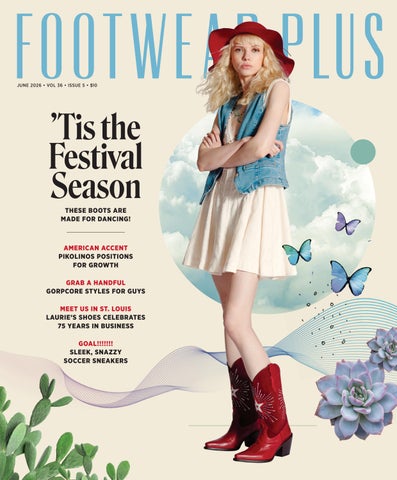
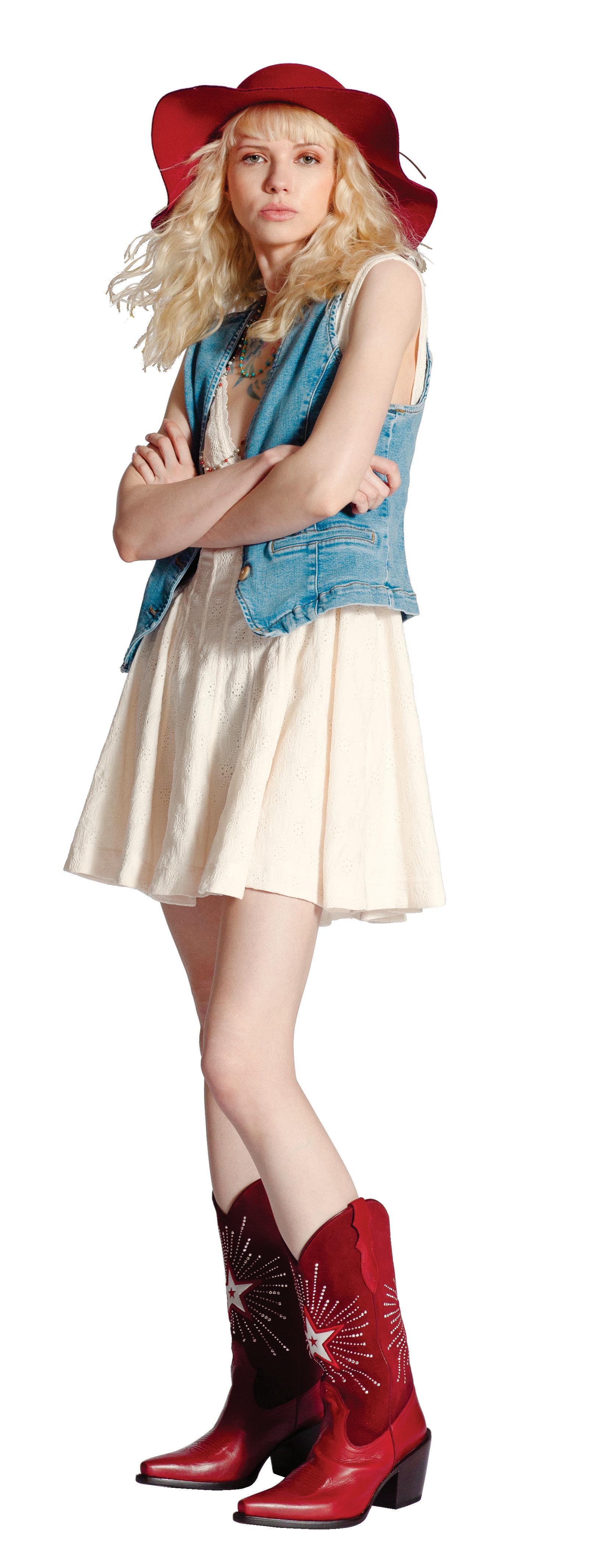
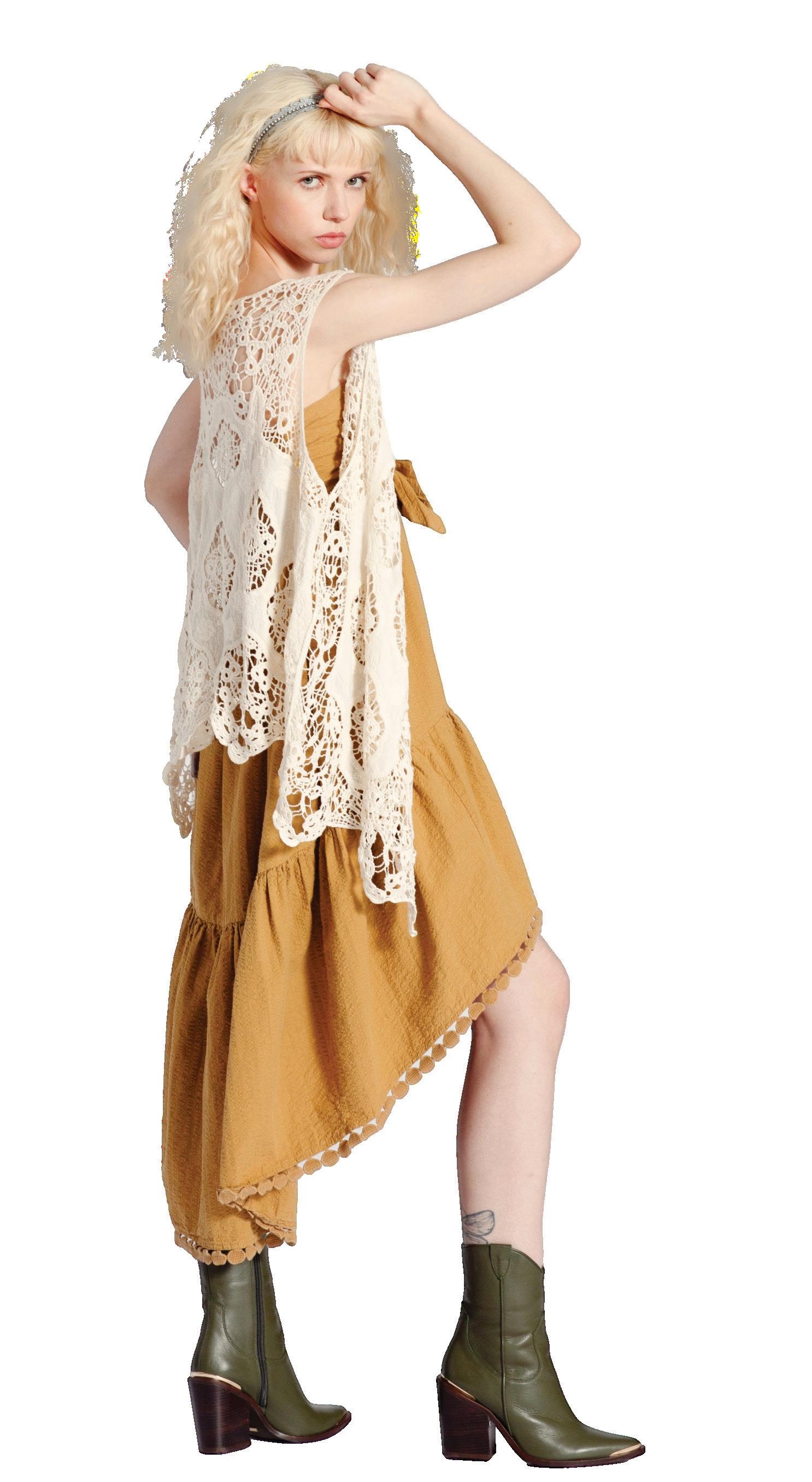
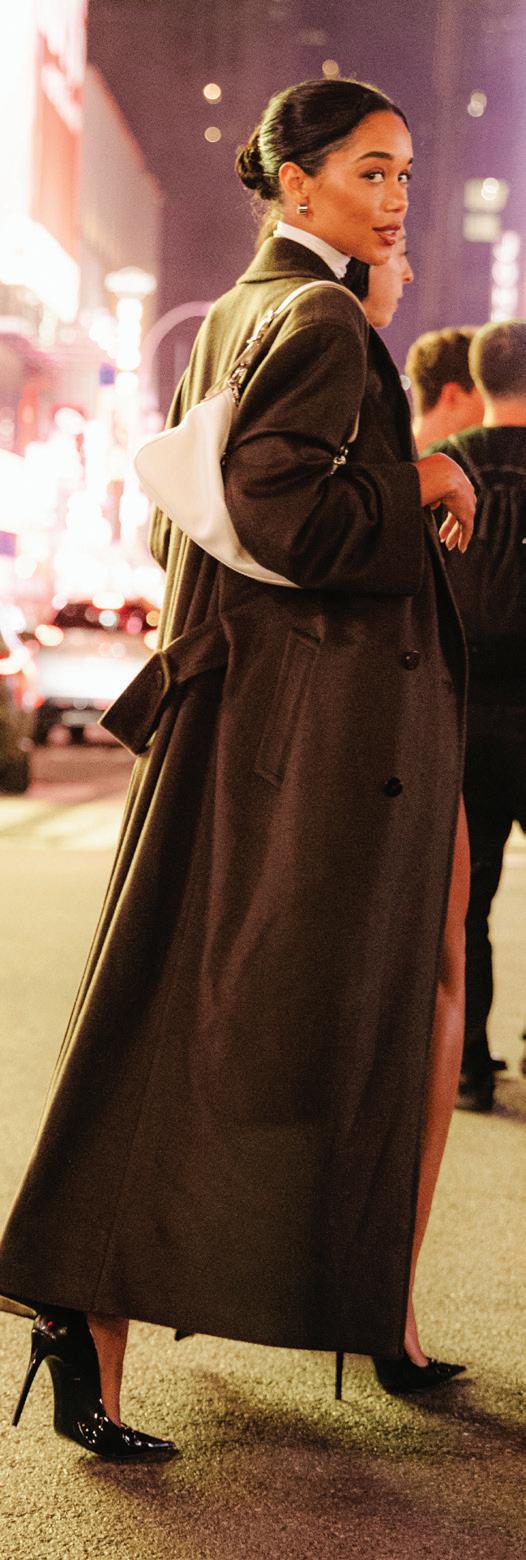
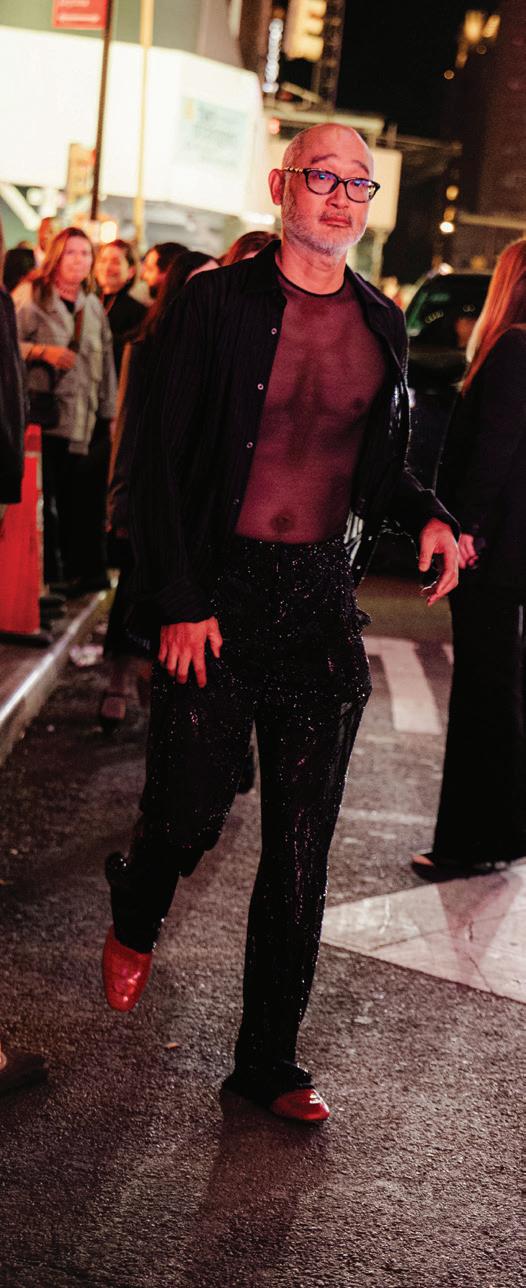
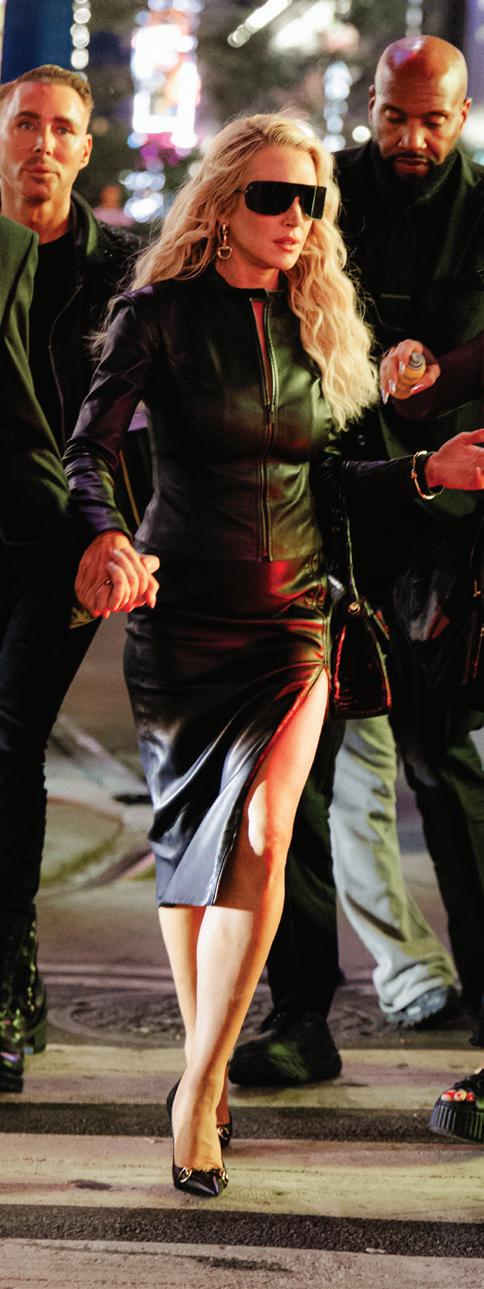
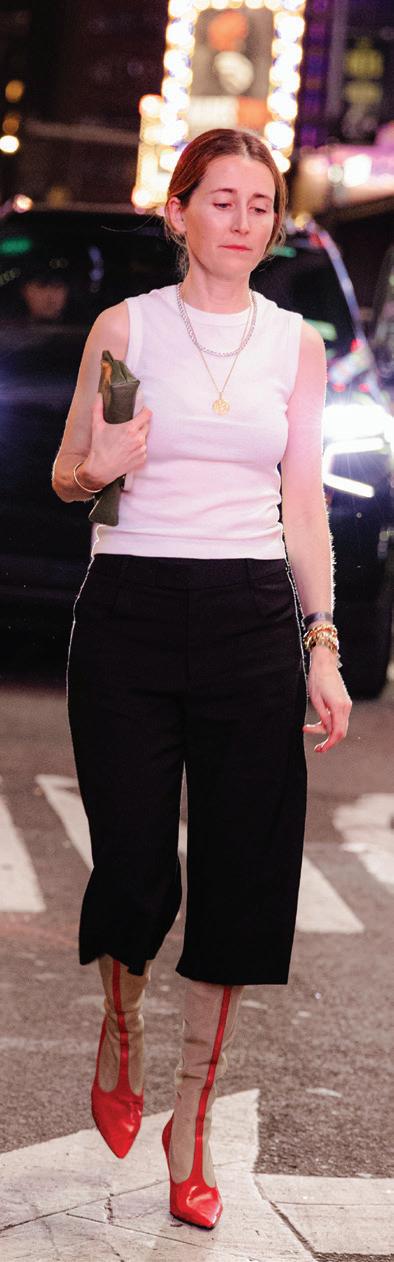
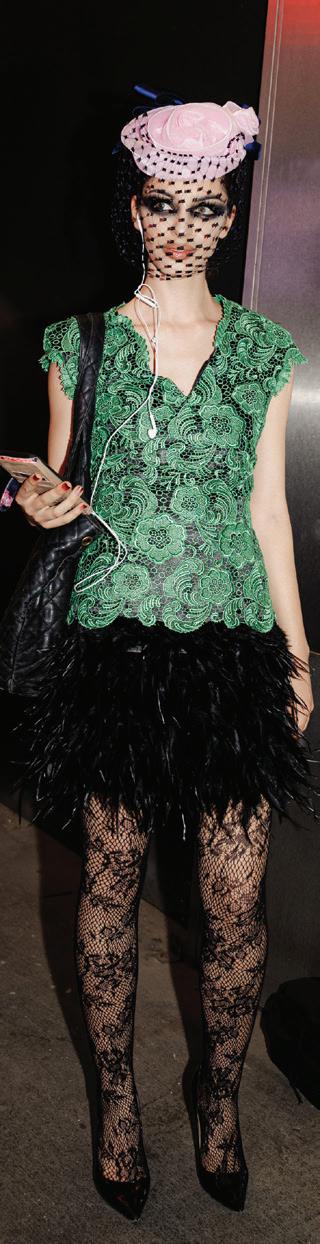
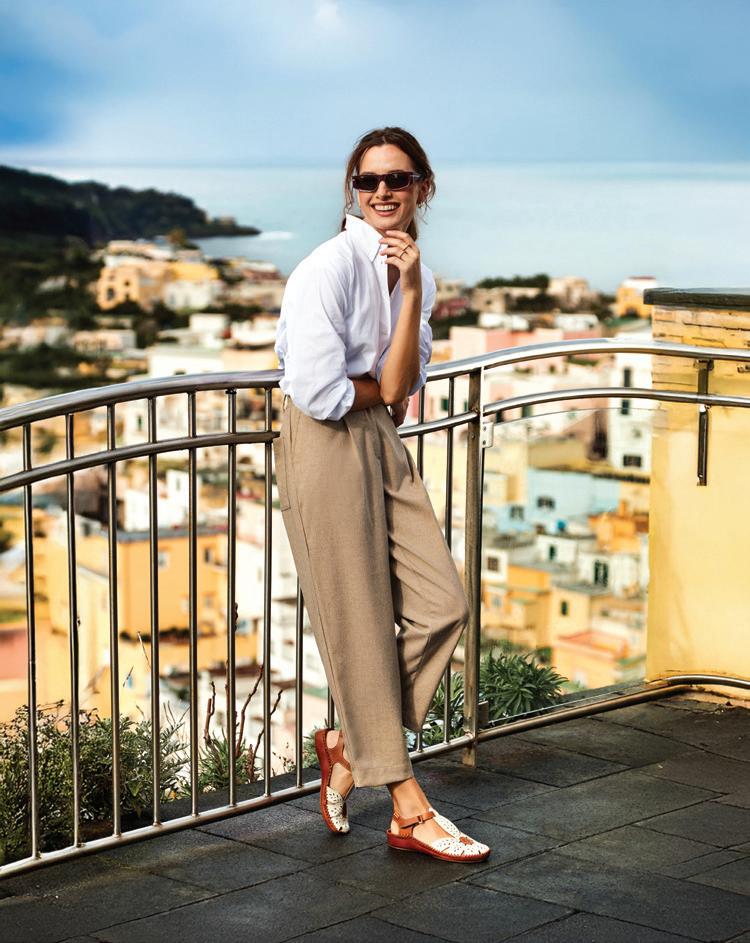
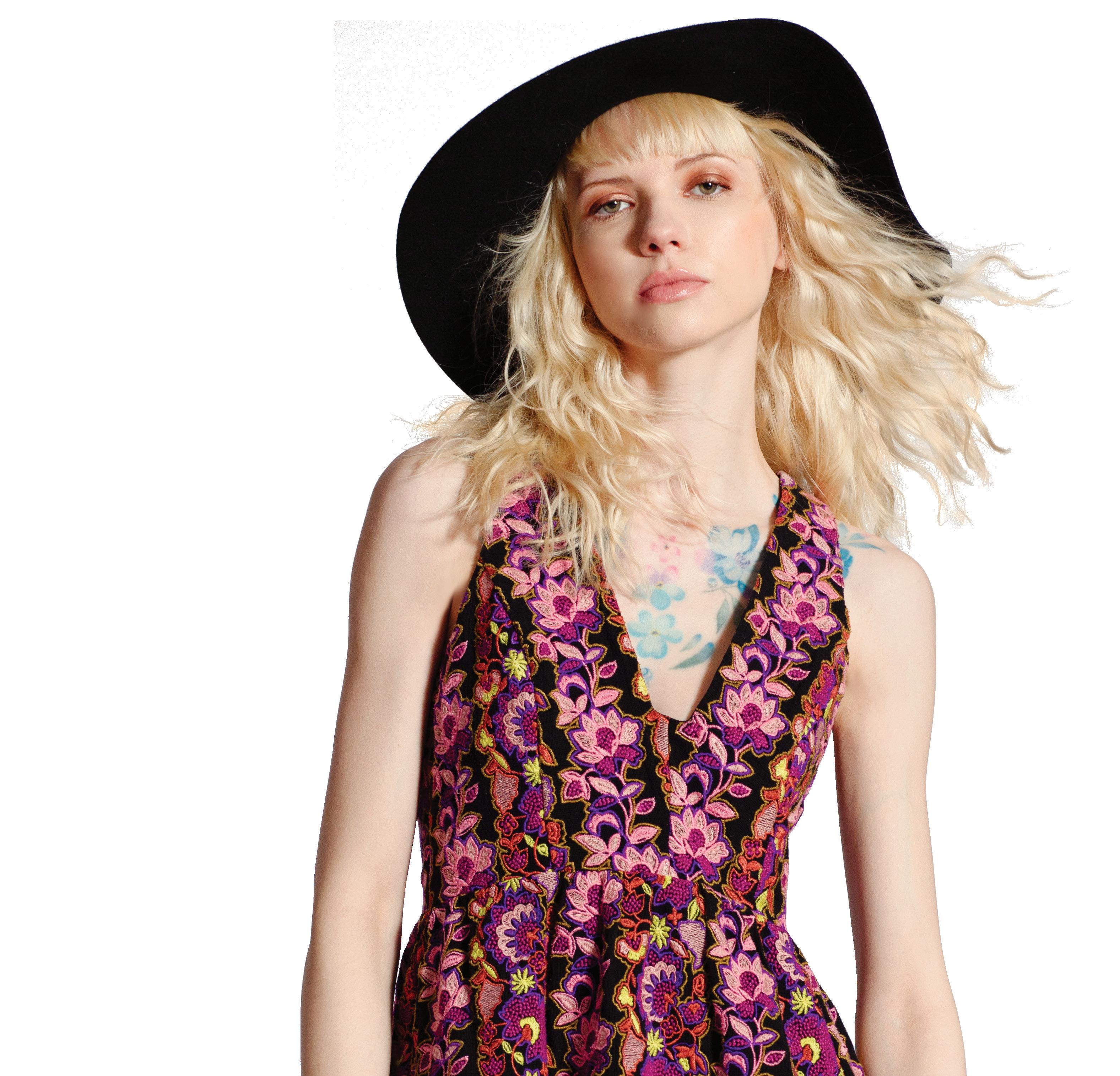
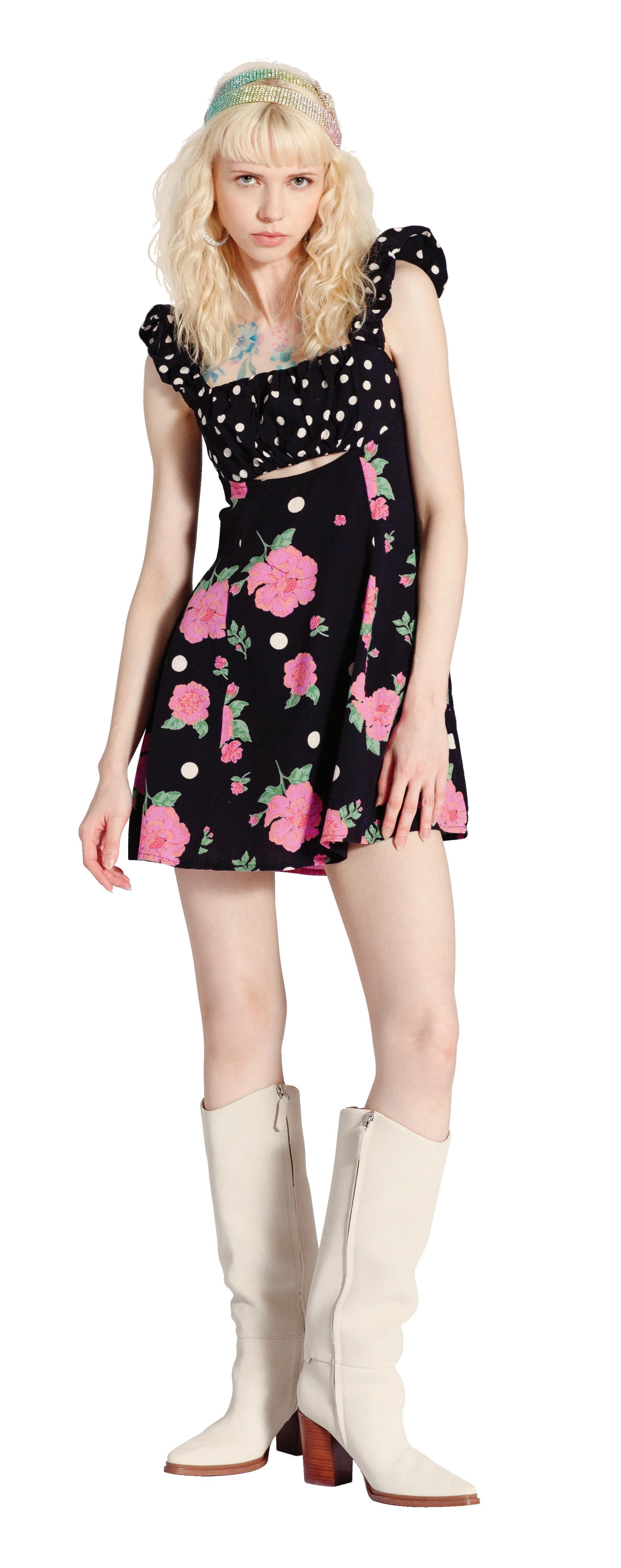
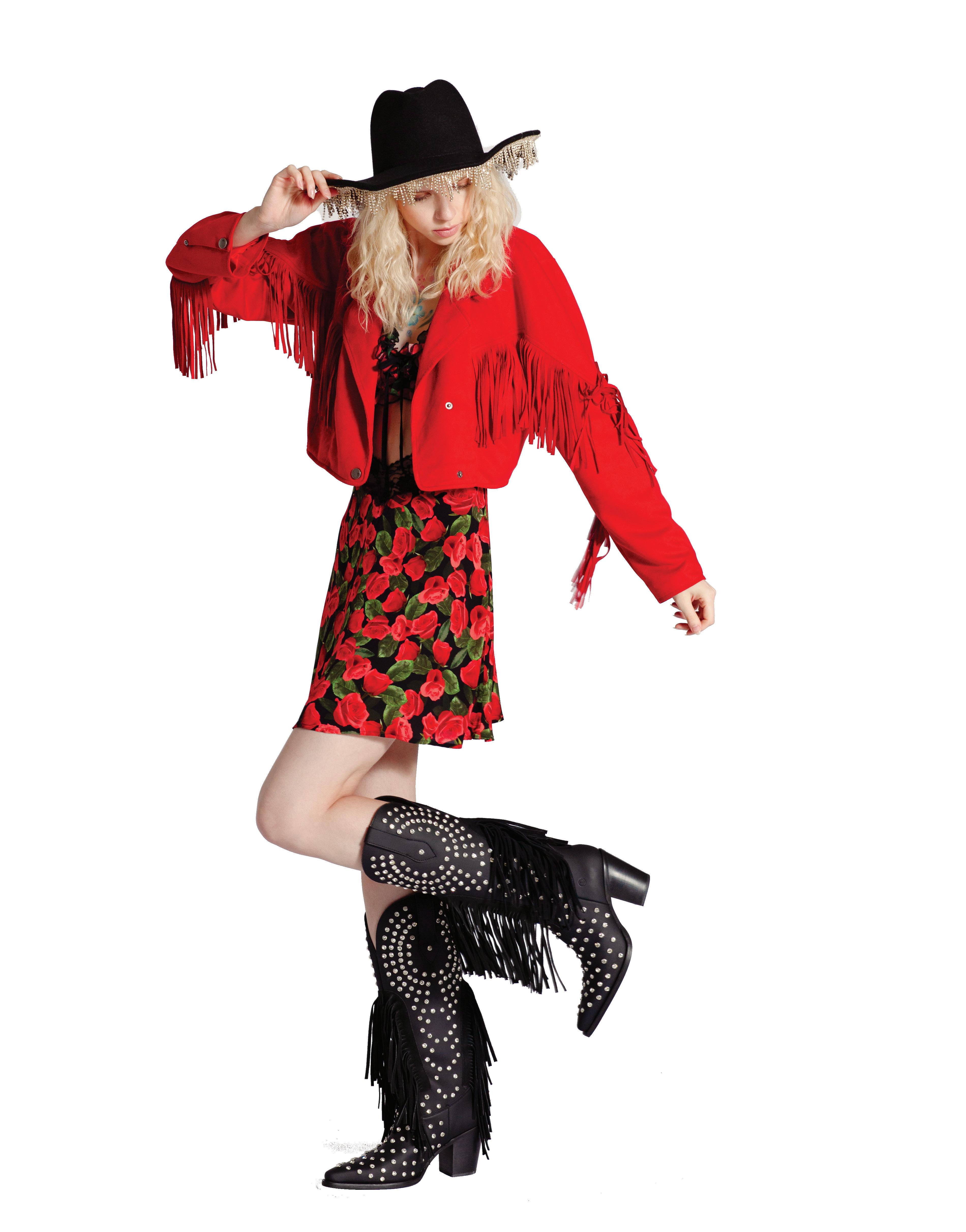
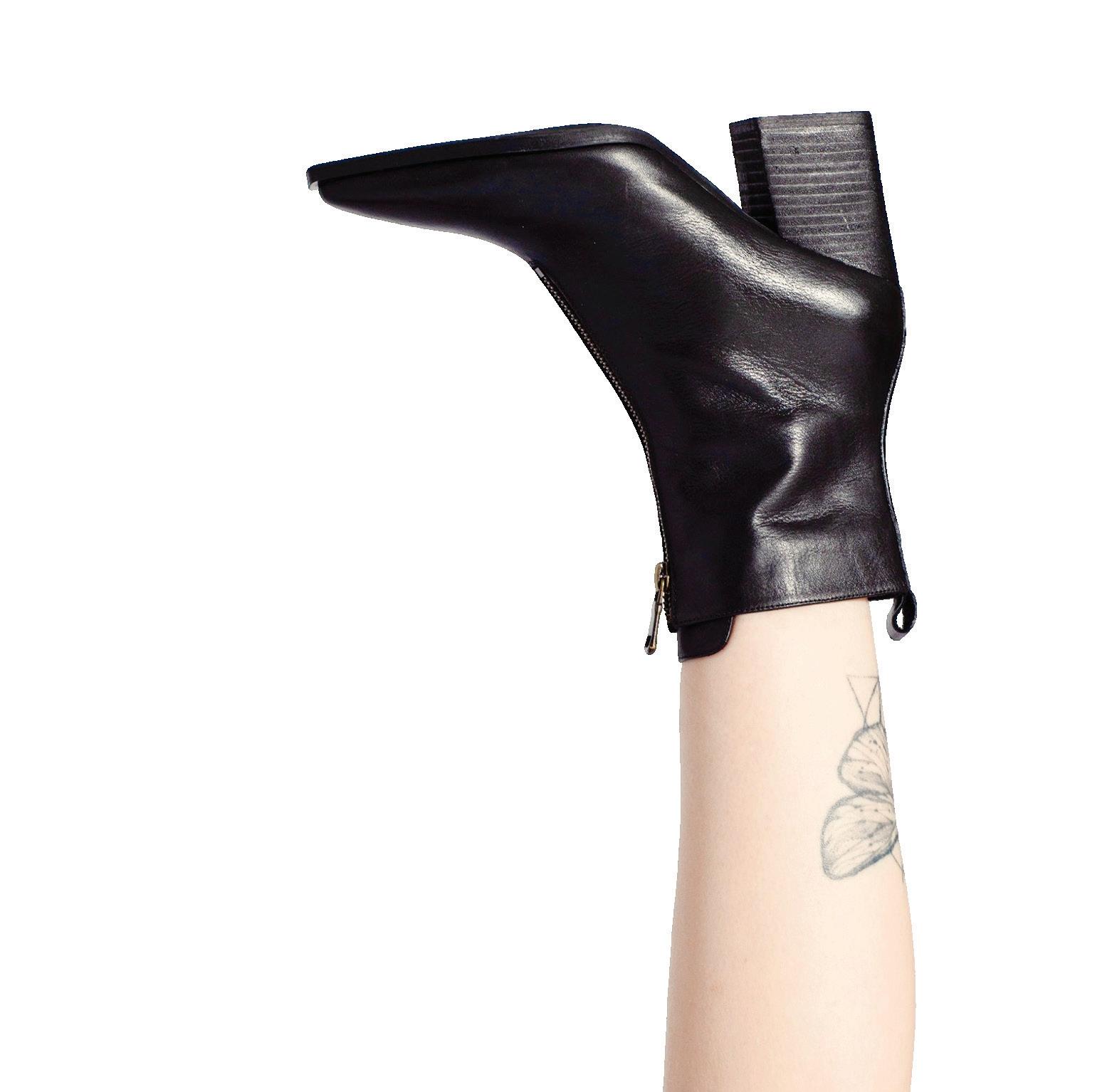
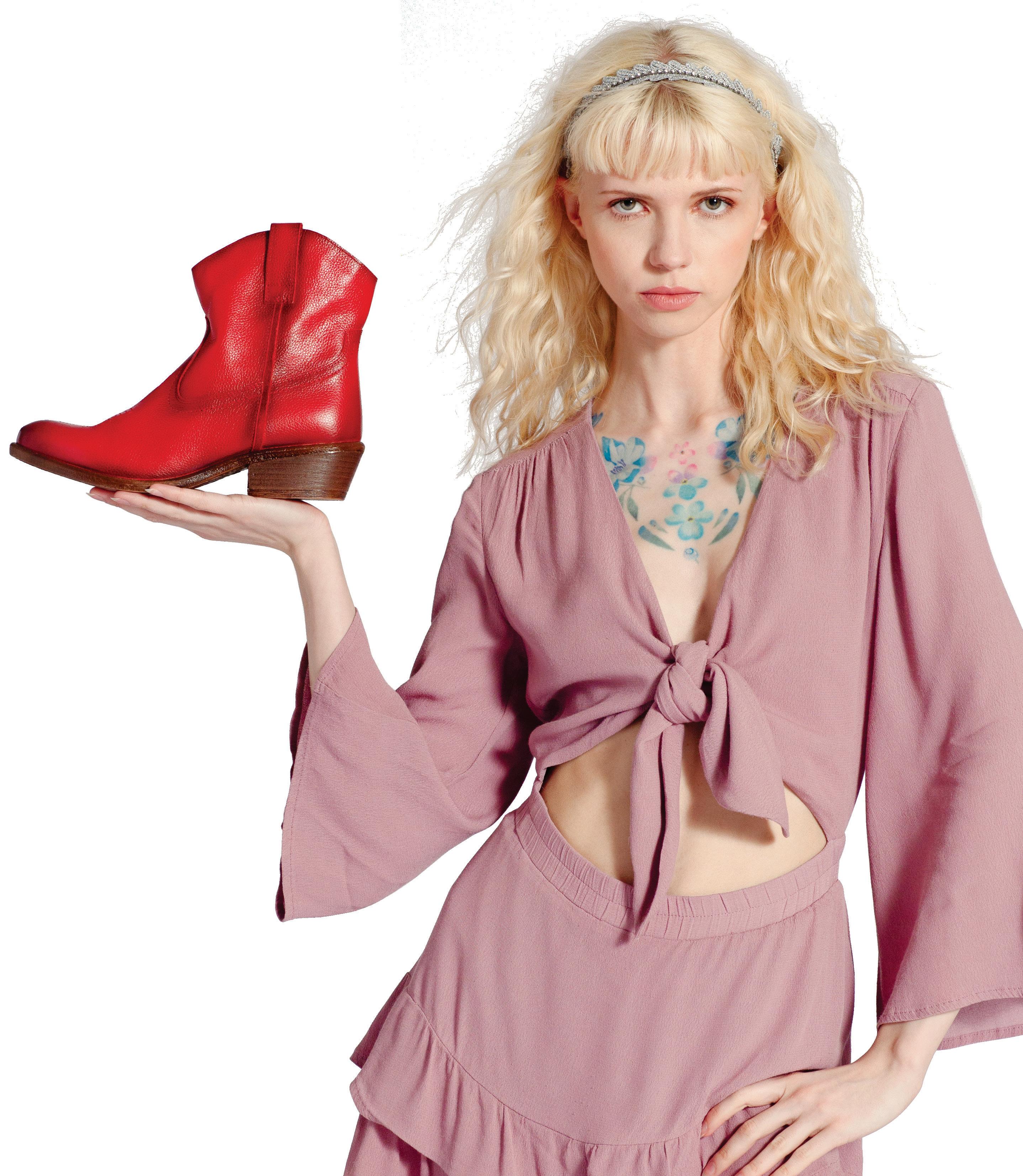
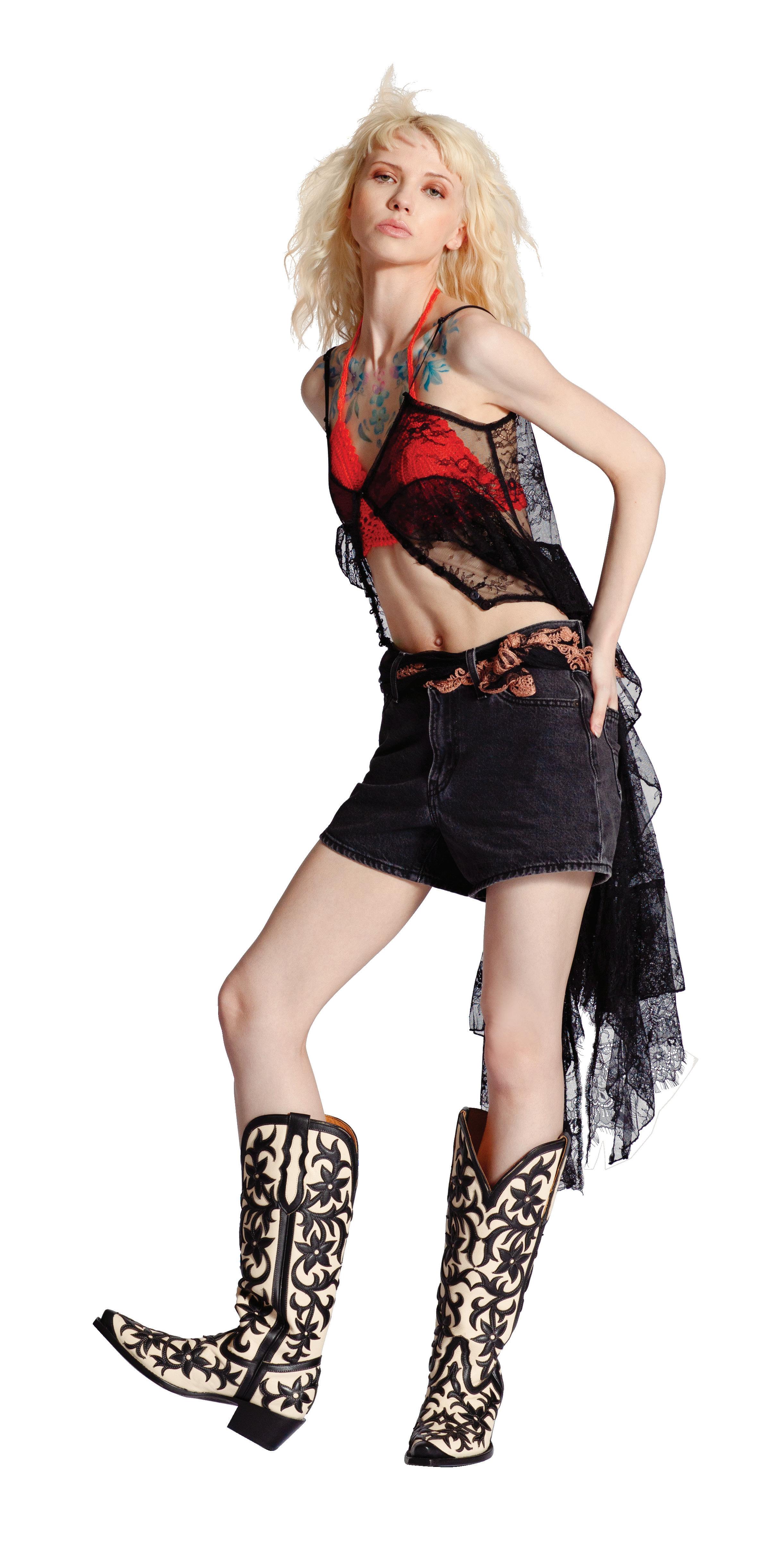
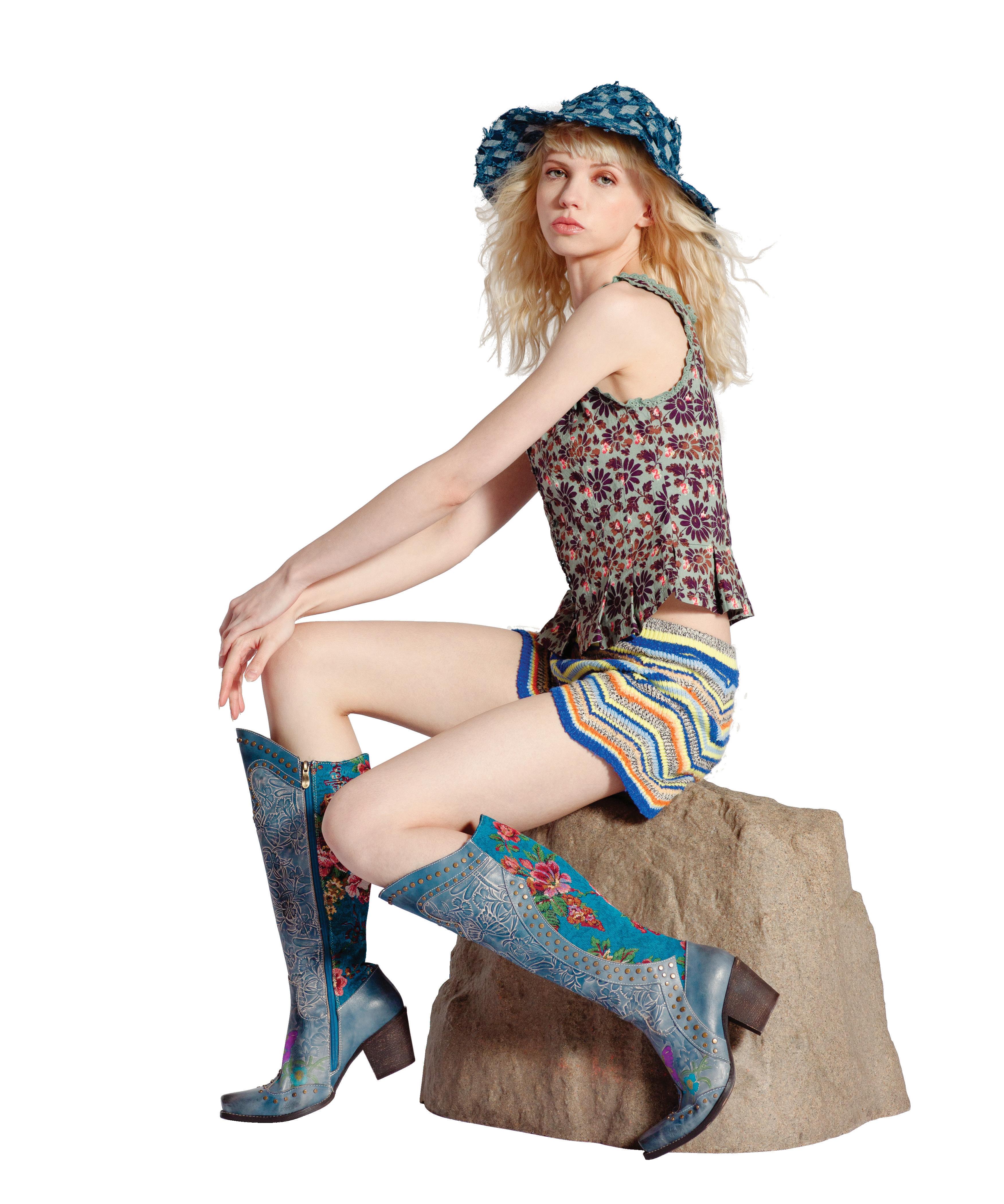
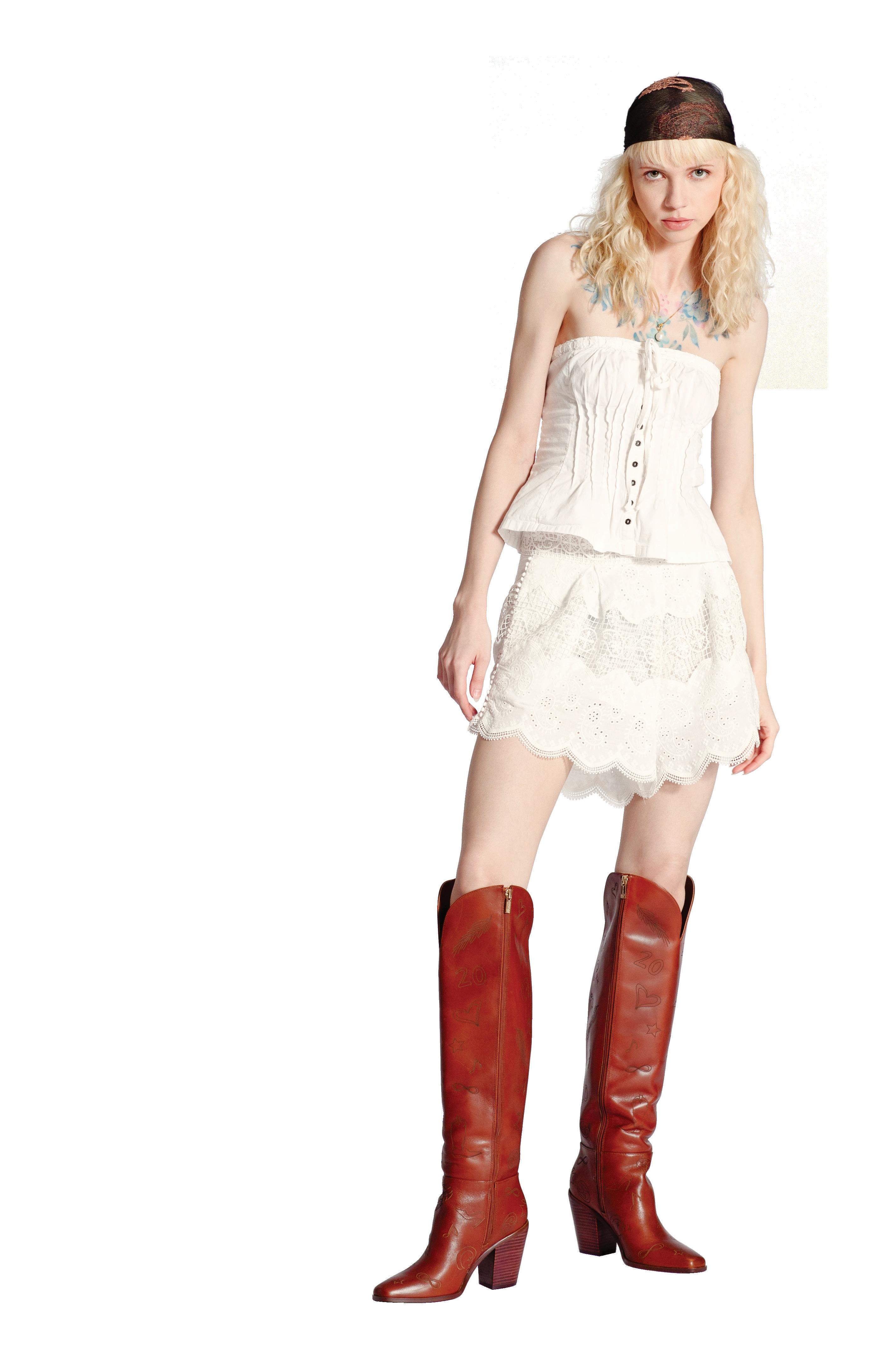
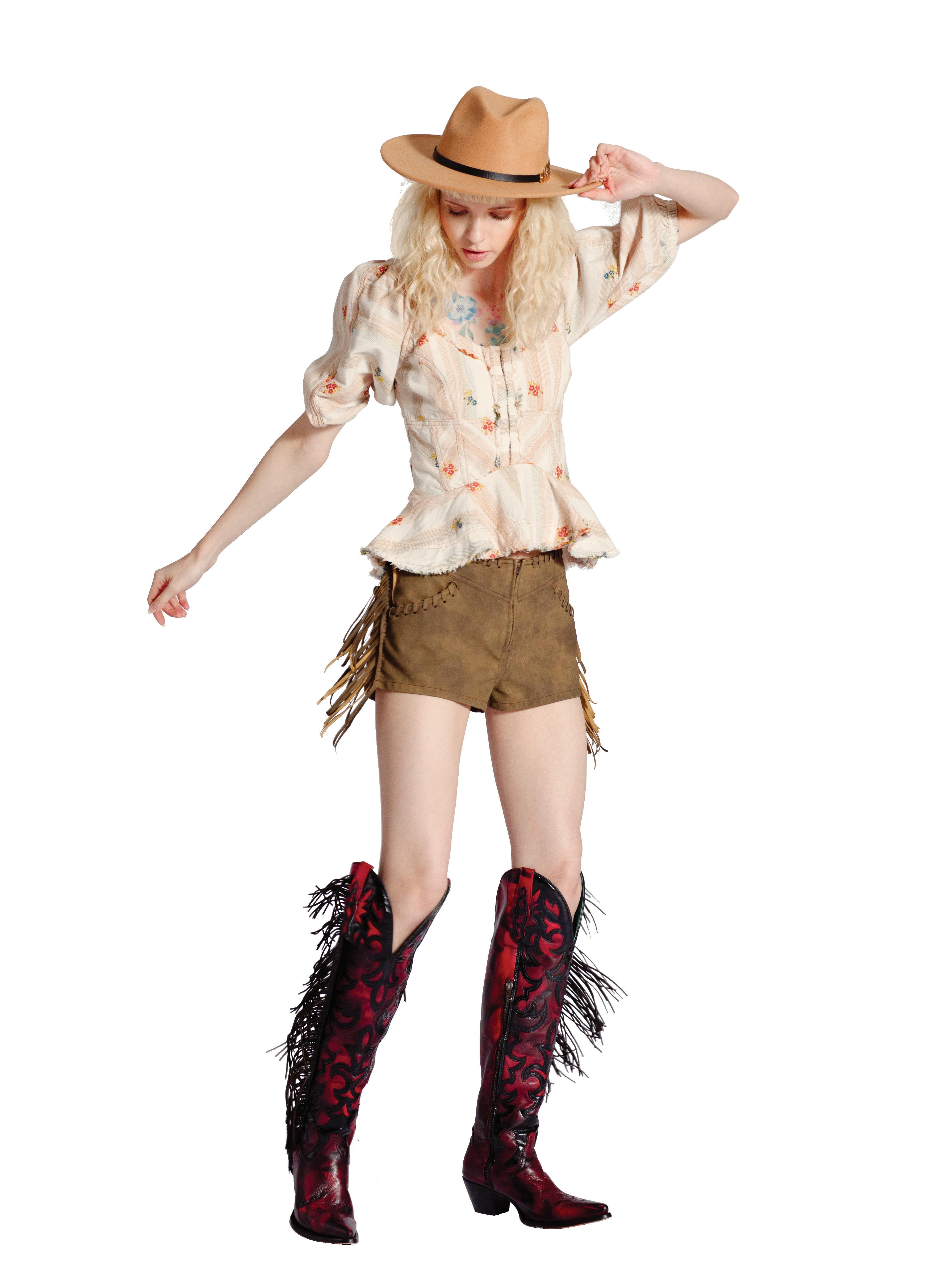
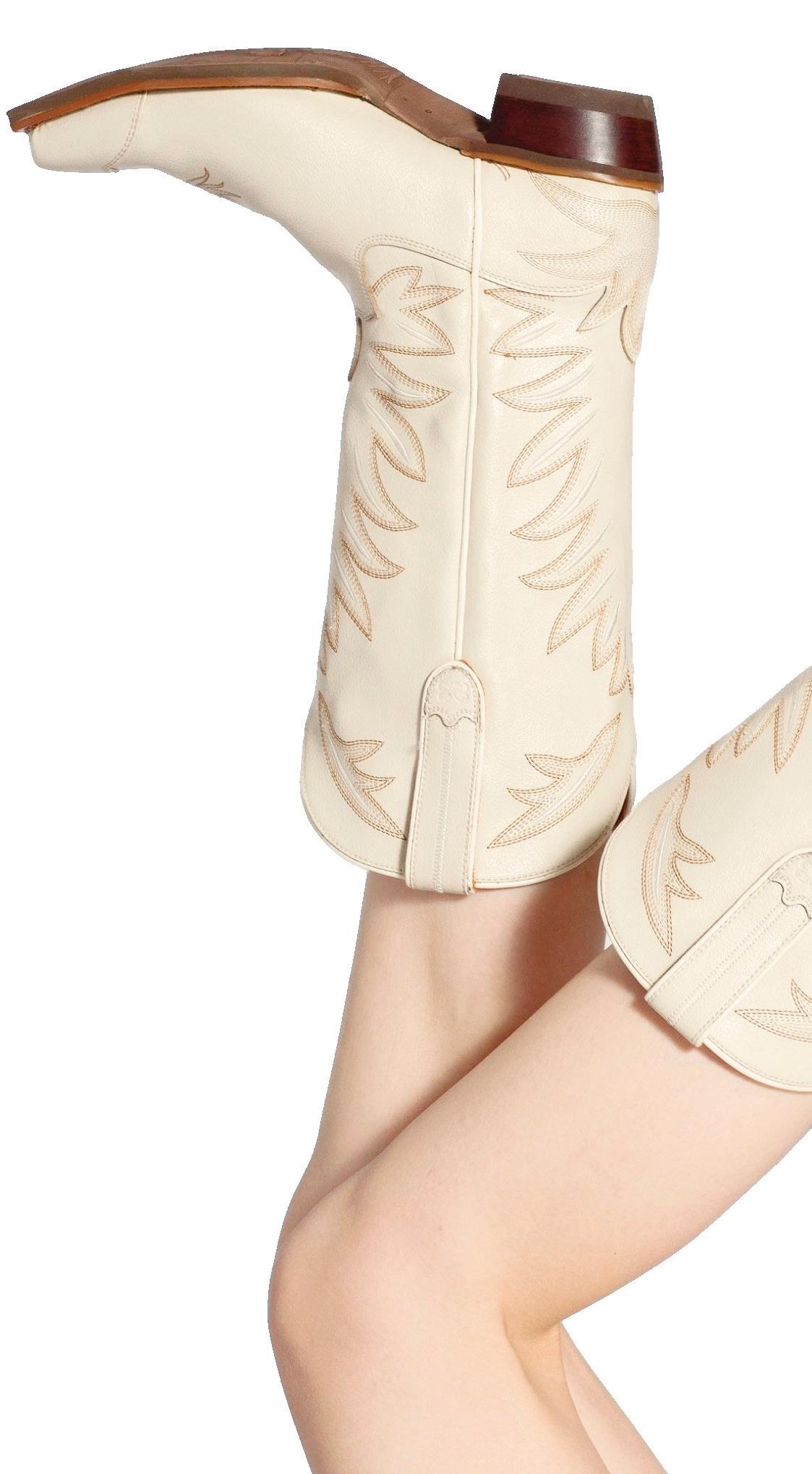
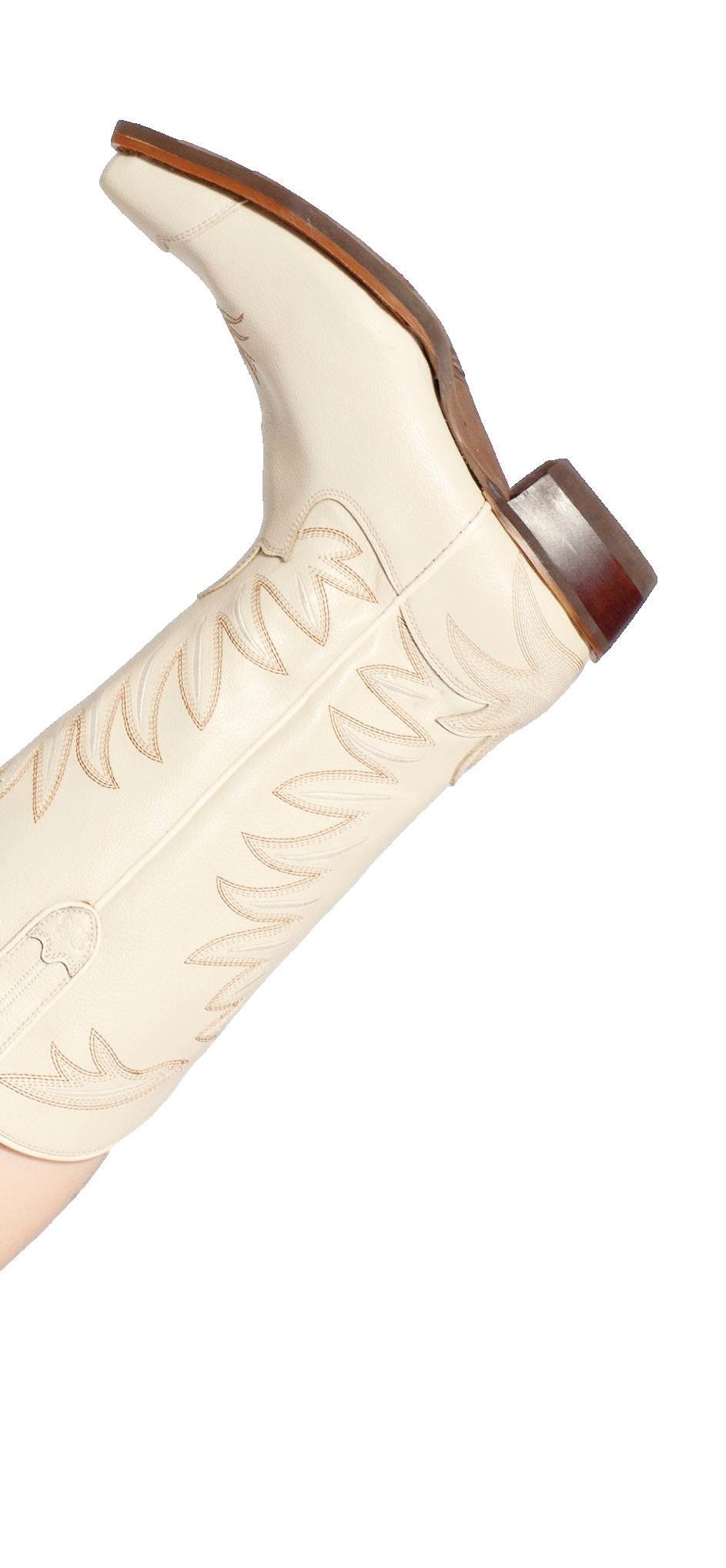
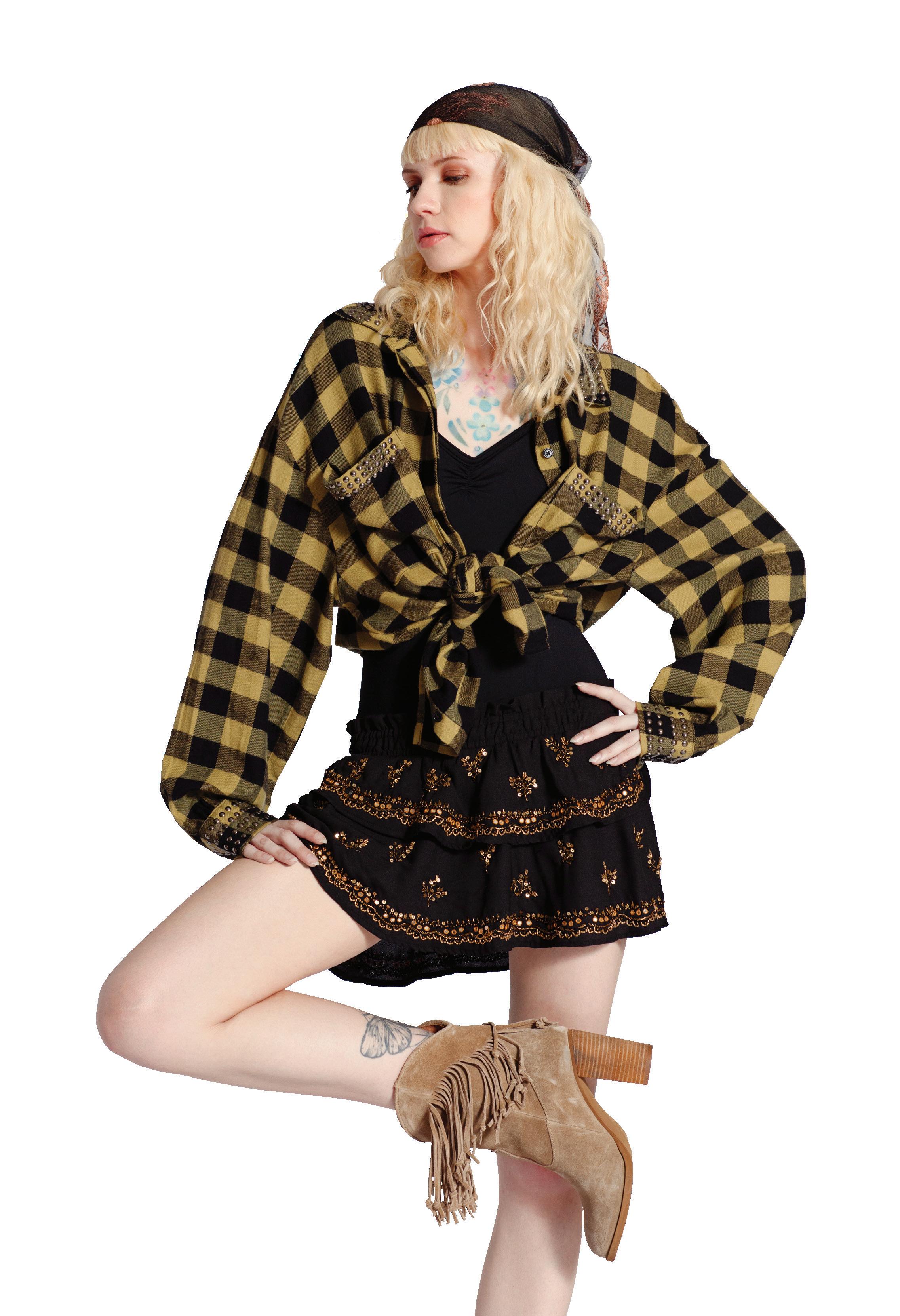
Photography: Trevett McCandliss; styling: Mariah Walker/Art Department; fashion editor: Kiernan McCormick; model: Mary Ocean/Q Management; hair and makeup: Nevio Ragazzini/ Next Artists; photo assistant: Raymond Collette; styling assistants: Nellyfer Espinoza and Jamie Wtorkowski.
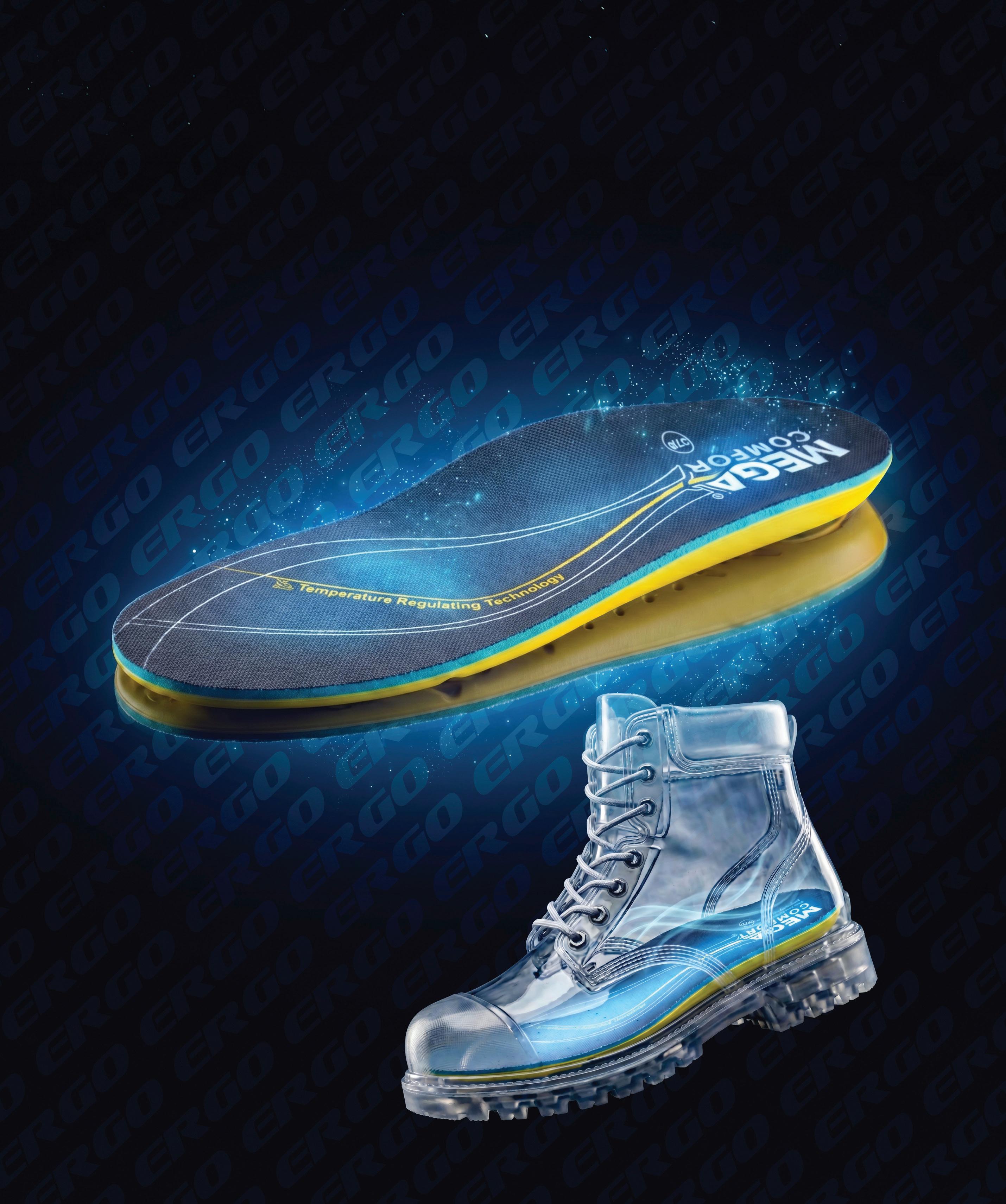
This is more than an insole. It’s a temperature regulation system for your feet. MEGAComfort ERGO Cooling combines patented anti-fatigue support with 37.5® Technology that actively removes heat and moisture before they build. The result is a cooler, drier, more stable environment inside your boots, so your performance stays consistent.
Games People Play
WHEN I WAS growing up, rainy Saturday afternoons were often reserved for epic Monopoly board game battles among the neighborhood kids of Plymouth Ave. in Maplewood, NJ, especially when all the ping-pong balls were cracked. Bad weather put the blood sports of pick-up basketball, touch football, street hockey, and stickball on hold, but we still needed a way to bring our competitive juices to a boil. Someone had to win; the rest had to lose and be roundly taunted for it. That was life in the rough-and-tumble world of suburban northern New Jersey back in my day.
As the youngest of three brothers, crowned “Little Dutter” by the gang, my job in Monopoly was banker. The elders decreed that I wasn’t capable of competing to be a titan of fictional real estate yet. While I quietly begged to differ, I knew my place in the hierarchy. I was happy just to be included with the aspiring board game slumlords on the porch.
Often, the games got out of hand because these players loved to bend the rules whenever and however they could. The SEC and DOJ could have used our games as a training ground. Not helping matters was the fact that I was equally corrupt. I could blame it on peer pressure, but really I loved the clandestine wink of approval when an elder asked me to slip them a few tan $100 bills under the table. Eventually, things would go haywire. Players snapped up deeds, railroads, and utilities with wild abandon. They loaded properties with houses and hotels, fueled in part by my cash infusions. They didn’t need to Pass Go and collect $200 or snag a $100 Community Chest windfall to build their real estate empires. Ultimately, the board became awash in increasingly devalued cash, and the game ended in a tedious stalemate—or the sun came out and we headed back to the playing field.
Today’s corrupt world goes way beyond our gang’s crooked tactics. It’s like a mashup of Monopoly and Risk played by murderous despots. The fact that two real estate executives serve as our president’s point people for nuanced peace negotiations in various war-torn hotspots reinforces this bizarro world theory. So much for diplomatic credentials and regional expertise. It’s all about making a deal, regardless of whether the deal is acceptable for all parties involved (or excluded) in the negotiations.
Today’s despots have an air of invincibility, superiority, and depravity. They seem to believe they’re grand master chess players while the rest of us struggle at checkers. Any carnage is collateral damage. They are far removed from the all-too-real bloody Battleship game they are playing. They know what’s good for us, so they say. In the meantime, things are really good for them, their families, and their donors. President Trump’s personal wealth has reportedly zoomed to $6.3 billion as of this spring—up from $2.4 billion in early 2024. And Vladimir Putin currently ranks as one of the world’s wealthiest people, with an estimated net worth upwards of $200 billion—on an annual salary between $140,000 and $175,000. Hmm…I smell something fishy, and it’s not caviar.
Why share this childhood memory? Aside from unburdening my soul of fictional financial crimes, those Monopoly games remind me of what’s going on in the world today. Rules no longer apply. Cheating is considered good business. Allegiances are no longer sacred. Sovereign territories are invaded. Empathy is nearly non-existent. Greed is most definitely good. The chasm between the few haves and far many more have-nots is accelerating in Big Bang–like fashion. Data is being manipulated, deleted, or ignored—and the engines that power it are destroying the environment. In short, disorder is the new world order.
The world is mired in an endless game of Sorry, where the masses are repeatedly “bumped” and forced to start over again. We are all just “pawns” in this game. Meanwhile, the shoe world plays on. Sky-high inflation remains on the front burner as various truce negotiations drag on. Thus, the pivoting, paring back, and passing on of costs continue. And while we’re somewhat shielded by a need for shoes, the threat to impulse buys (our lifeblood) increases. Layer on AI-induced mass layoffs by callous CEOs, several of whom made the cuts merely to look current, and we don’t need to play a game of Clue to find out who is bludgeoning consumers. Their fingerprints are all over that lead pipe, and a ton of potential shoe sales are likely to be a casualty.
Alas, life is not a board game. The damage being done is all too real. The image of sand grains slipping through a Boggle hourglass are a fitting metaphor. Time is running out.
Greg Dutter Editorial Director
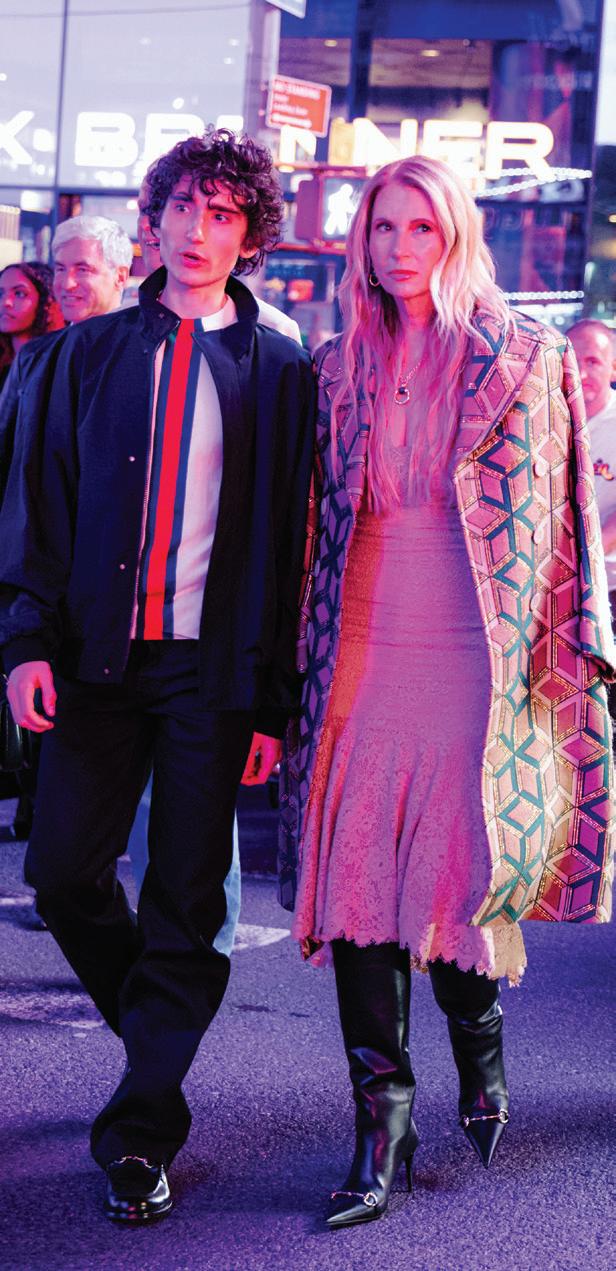
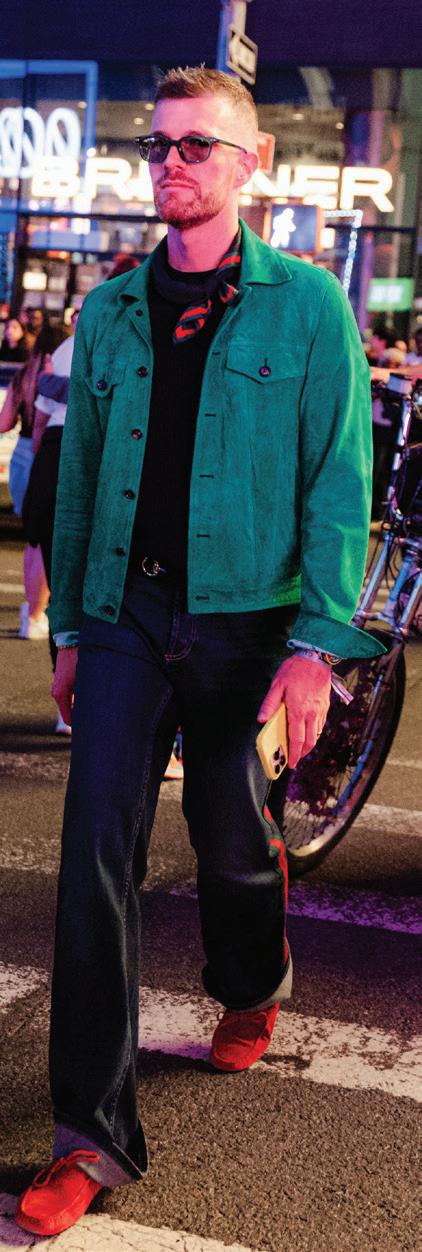
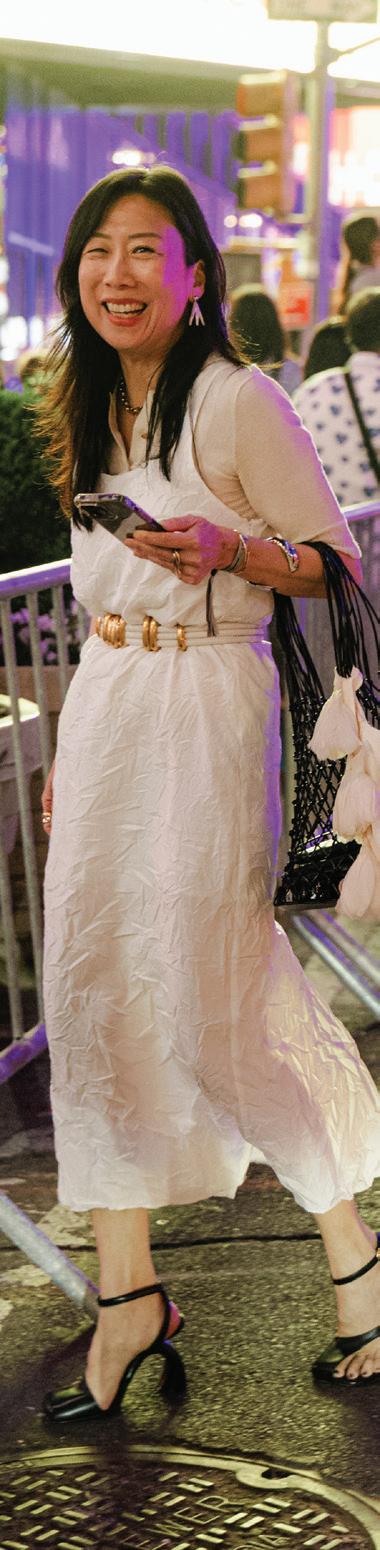
Gucci Takes Gotham
Times Square is the center of the fashion universe for the label’s Resort ’27 show.
Photography by Melodie Jeng
NSRA Award Winners are…
Retailer and Vendor of the Year honorees named, among others.
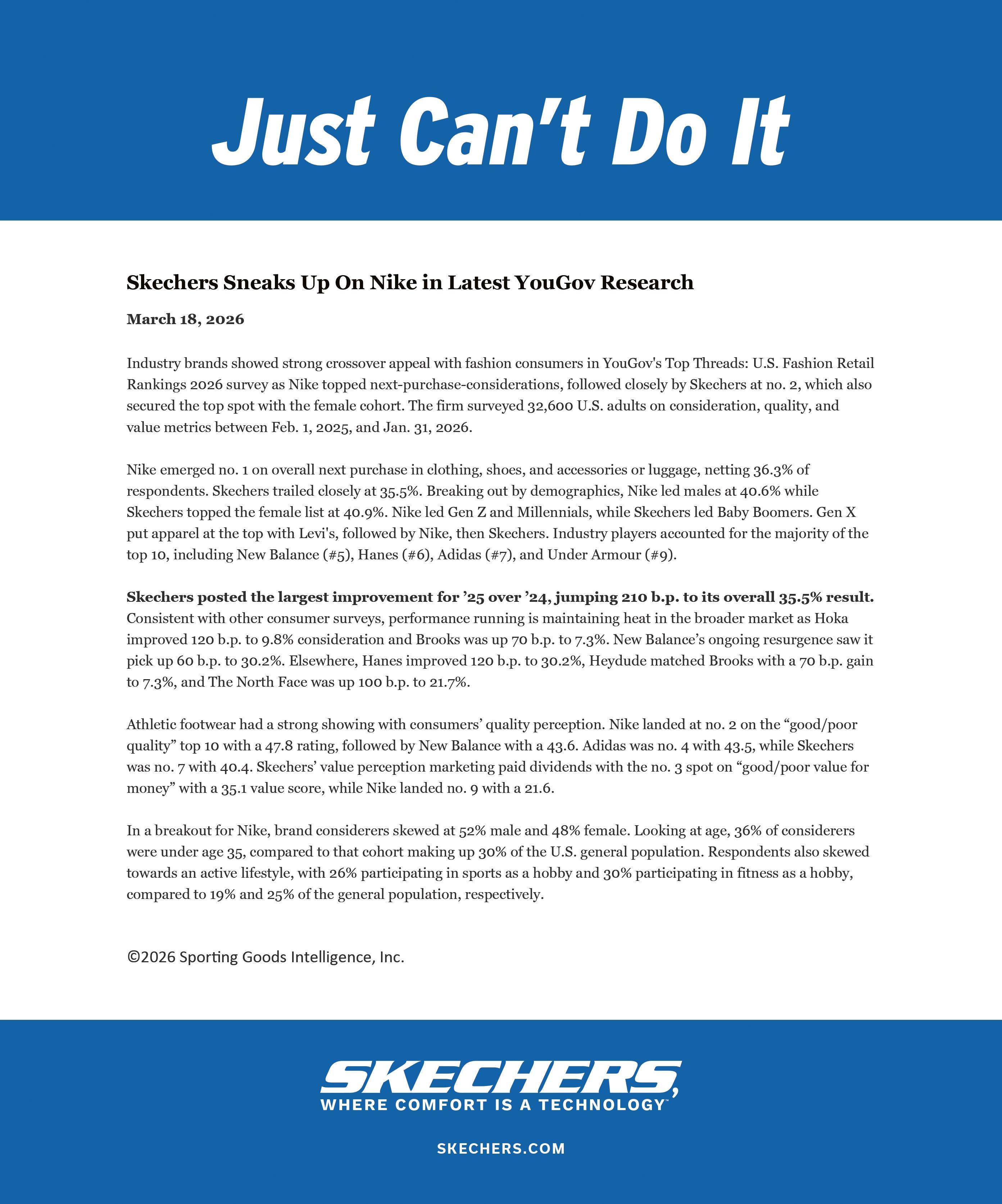
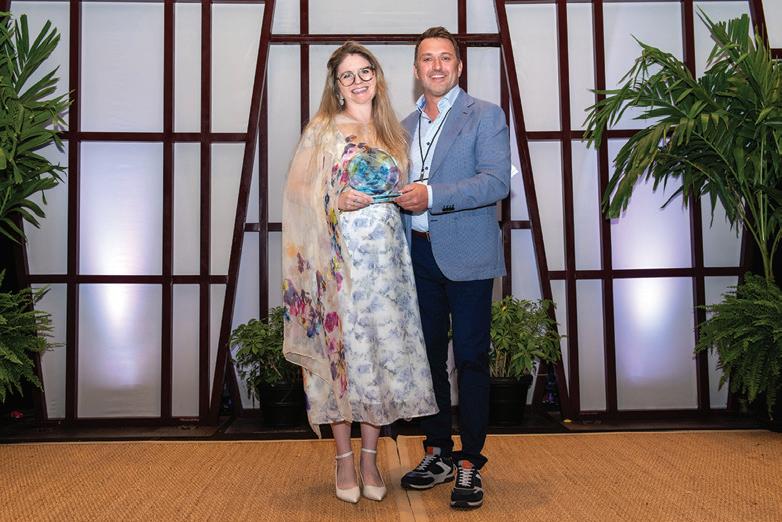
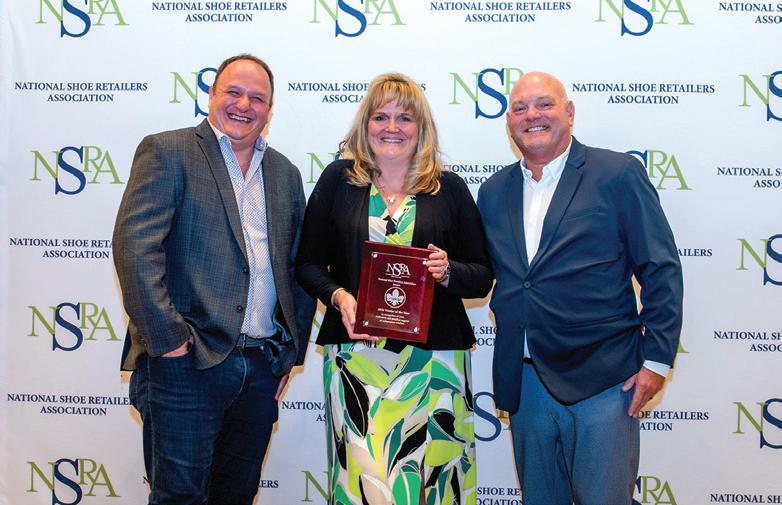
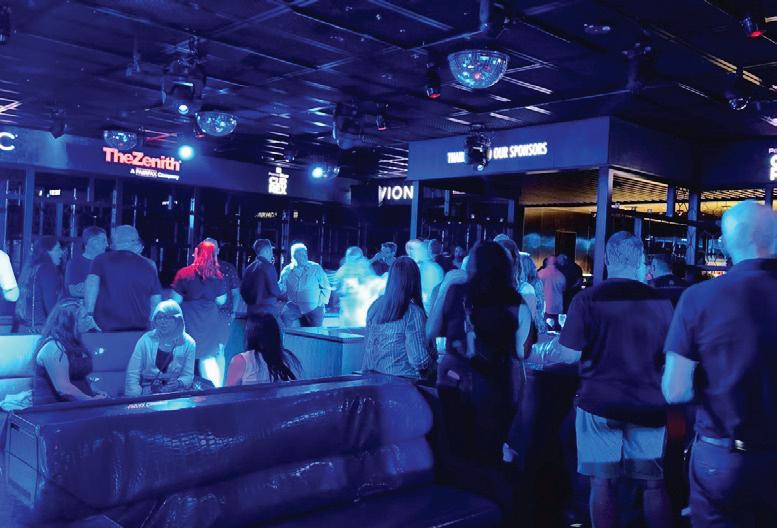
THE NATIONAL SHOE Retailers Association (NSRA) Footwear Forum served as the setting for its annual awards for excellence. The event, this year held in Orlando, FL, recognized Abbadabba’s as Retailer of the Year, Rieker as Vendor of the Year; and Hall of Fame inductees Maurice Breton, founder of Comfort One Shoes, and (posthumously) William Miles, Jr., third-generation owner of Gamer Shoe Co. Abbadabba’s, a three-store chain in the Atlanta area, was recognized for its clear business vision, growth, integrity, unsurpassed customer service, strong commitment to community, and participation in charitable initiatives. NSRA Board member Troy Dempsey, owner of The Heel Shoe Fitters in Green Bay, WI, noted that Janice Abernethy, owner and president of Abbadabba’s, has spent decades shaping one of the most respected specialty footwear businesses in the Southeast. “Retail success takes vision, persistence, hard work, and a willingness to lead when others hesitate,” he said. “Janice embodies those qualities. She’s built a business that has stood the test of time while staying true to the values that make independent retail so important.”
Abba Carmichael, Abernethy’s daughter, accepted the award on her mother’s behalf. In written statement from Abernathy, she noted that the recognition must be shared with others. “Firstly, my husband (Bill Carmichael), CEO extraordinaire! It must also be shared with my incredible senior management team that started coming on board in 1992 and continues with my daughter, Abba, into the next generation. Without them and their commitment to the founding vision, Abbadabba’s would not have persevered and flourished.” Abernathy also attributed the chain’s success to vendor partners who’ve “committed to us and our vision and shaped us over the years.”
Abernethy opened her first store in 1981 with toys, cards, gifts, jewelry, and “some funny-looking shoes in the back.” In 1986, her husband joined the business full time and, within a year, shoes accounted for most of the sales. Abbadabba’s second store opened in 1990; the third in 2012. The business has never used debt to grow. Abernethy successfully introduced the Elevate campaign in 2025 designed to raise the bar on
appearance, shopping experience, service, and margins. Last but not all, Abernethy is a strong supporter of charities, including Two Ten and Soles4Souls.
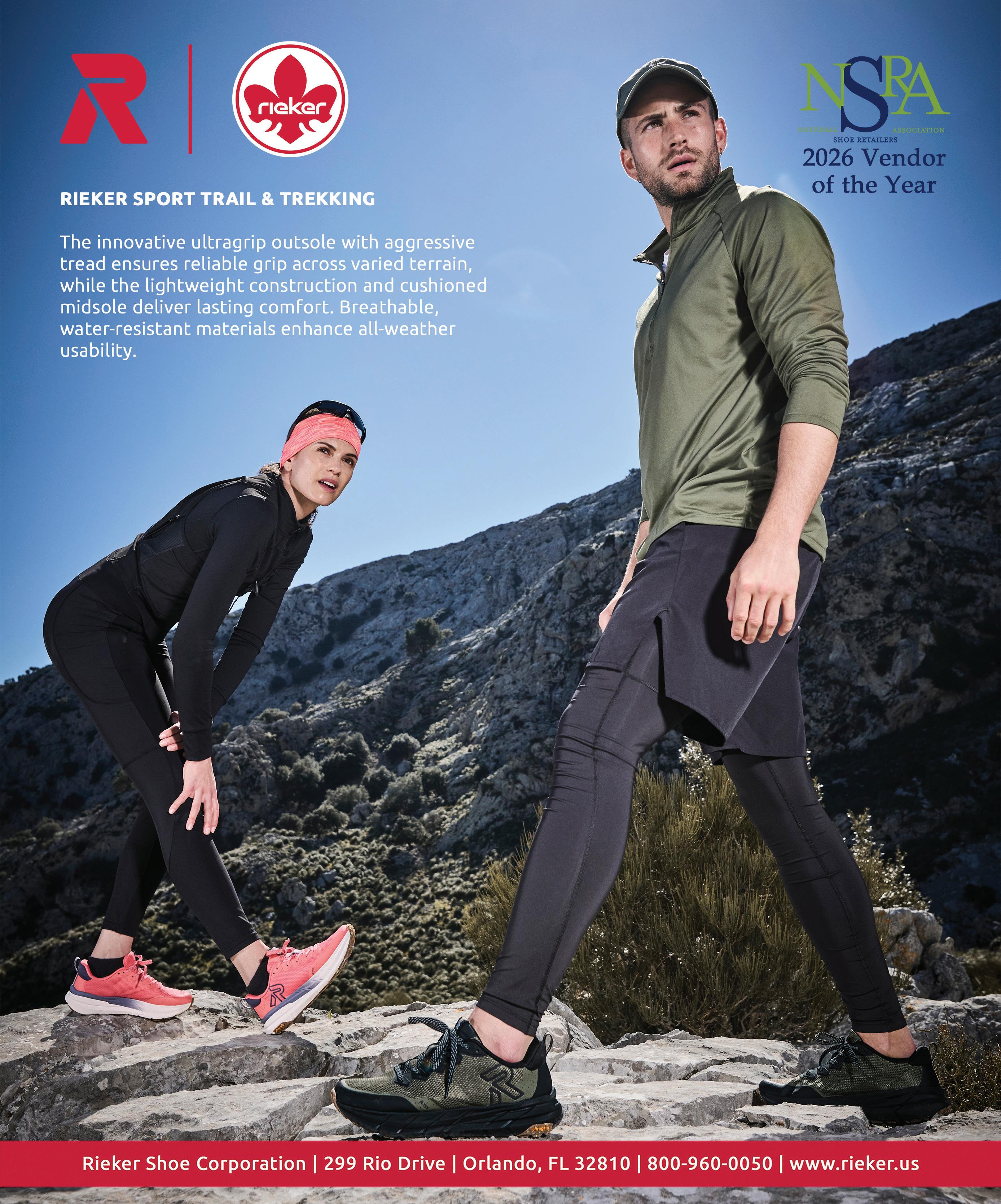
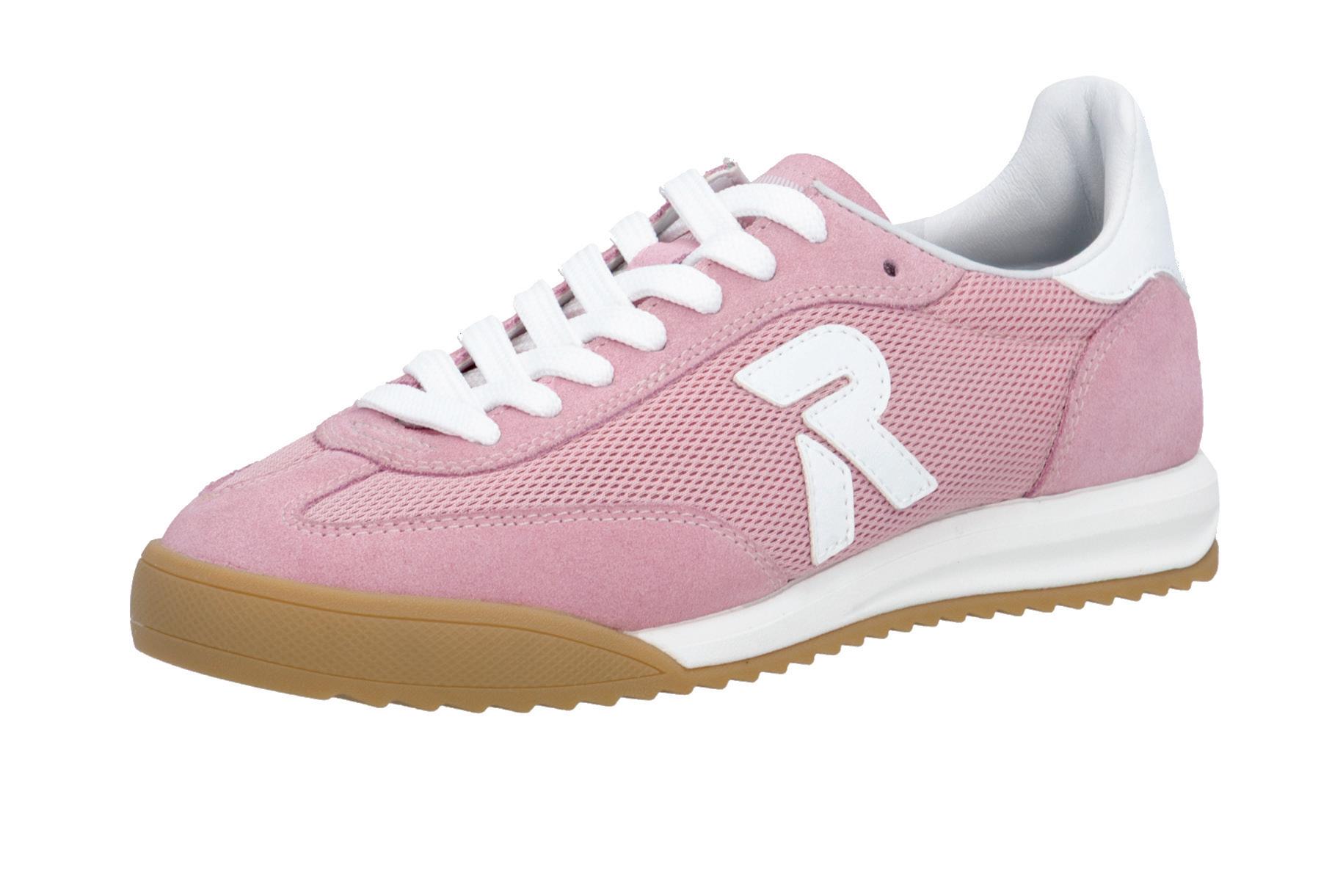
Rieker’s recognition as Vendor of the Year is based on independent shoe retailers holding the company in high esteem for integrity of business practices and long-term commitment to the channel. Scott Sinclair, president of East Lake Ltd., presented the award to Rich Rask, president of Rieker Shoe Corp. The Canadabased retailer cited Rieker for its strong margins, great volume discounts, and extra discounts for SKUs. “(Rieker) monitors its sell-through, and actually uses the data,” he said, adding, “They call themselves shoemakers, but I think of them as a research and data company that happens to make shoes. They develop winners.”
Dan Ungar of Mar-Lou Shoes in Lyndhurst, OH, heralded Rieker for its steadfast integrity. “You’ve proven to many independents across the U.S. and Canada to be an exceptional vendor partner,” he said. “Consumers have near limitless abilities in how and where to buy their footwear, and it’s become obvious to all of us that the brands that do their best to protect their integrity are the ones that independents favor most. Rich and his team get this. They choose to develop patterns that are best for our markets, and they do a phenomenal job ensuring that Rieker and Remonte stay true and hold value—a critical proposition to us and to our consumer.”
Rask expressed gratitude to NSRA members for their steadfast partnership. “Your support is woven into the fabric of both our brands and has fueled every achievement we celebrate together,” he said. Rask also singled out Rieker’s teams company wide as the heartbeat of its success. “None of this would be possible without your dedication,” he said. “The way you represent us with integrity and enthusiasm every day inspires pride.”
Rieker, founded in 1874 and now run by the fifth-generation namesake family, is known for its Antistress technology that prioritizes lightweight, flexible, and roomier fits, which sits right in independent retailers’ wheelhouse for promoting foot health. The company maintains a strong focus on the independent channel,
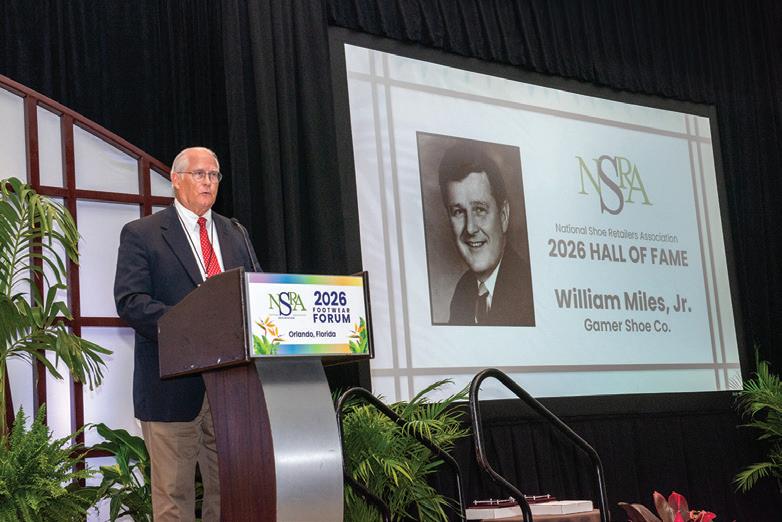
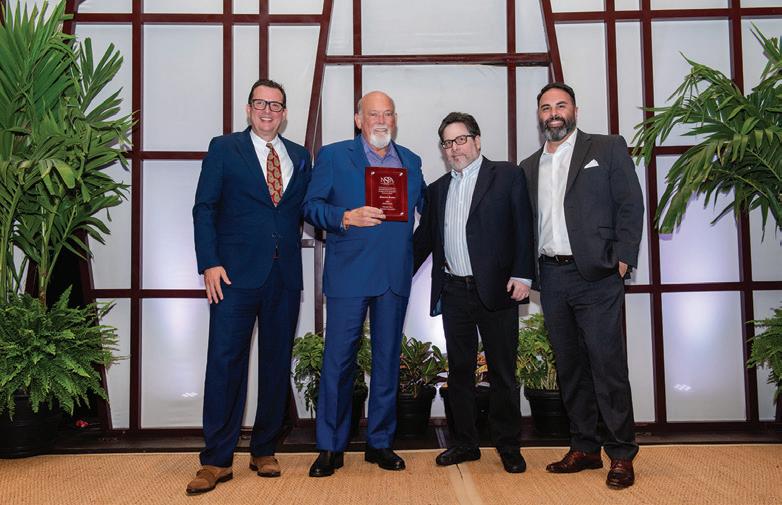
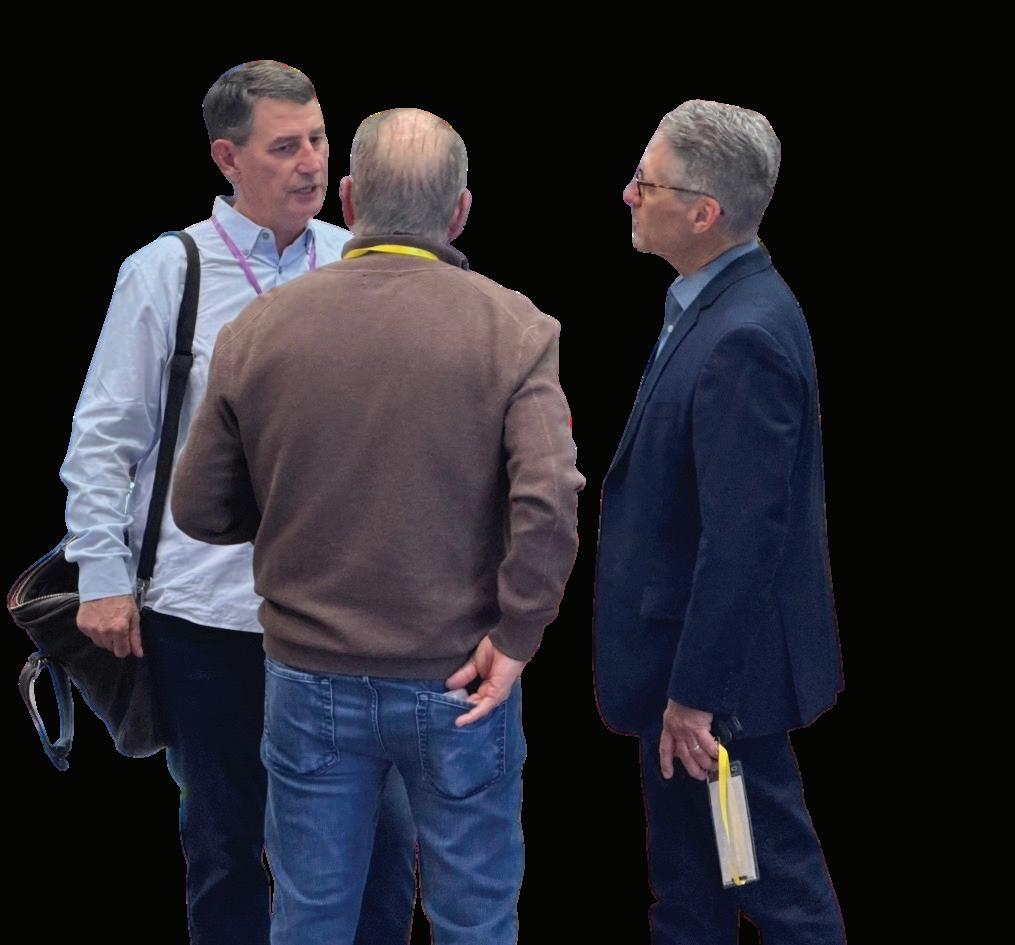
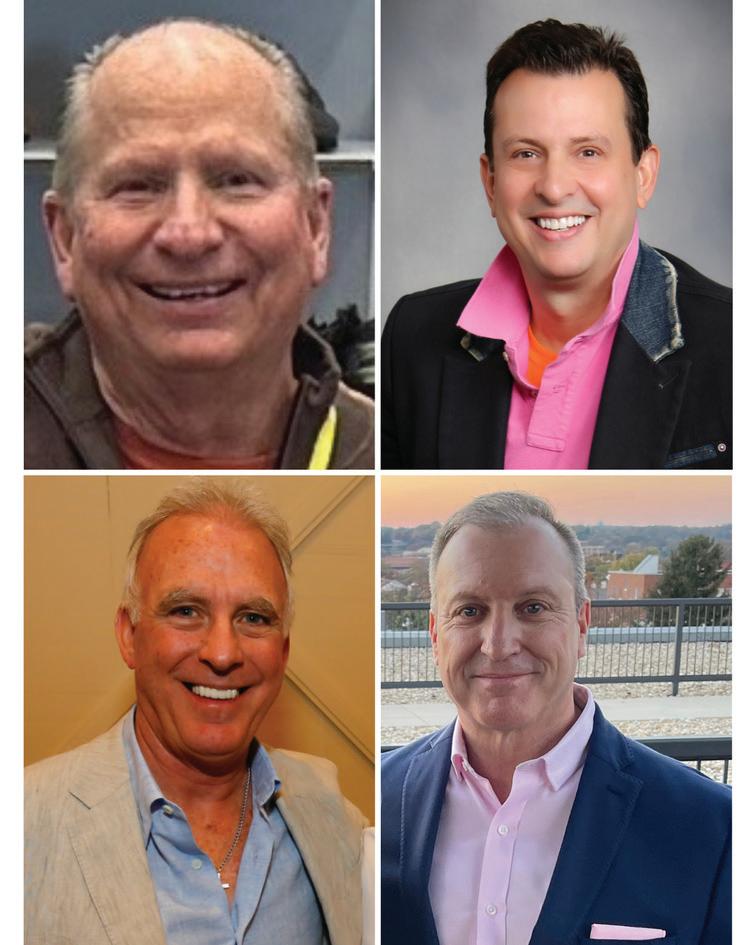
From top: Abba Carmichael and Troy Dempsey; Paul Muller; Sam Spears, Maurice Breton, Alan Miklofsky, and Ed Habre; Brad and Arlene Kooring and Rich Rask.
DOING THE RIGHT THING
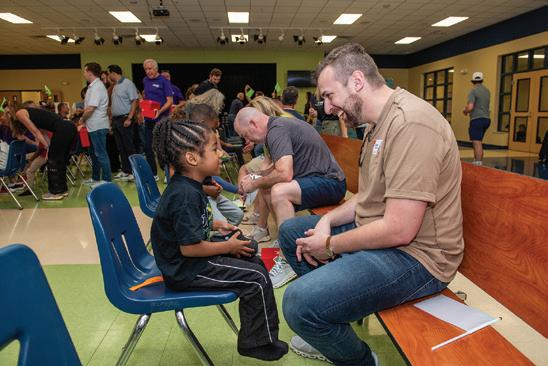
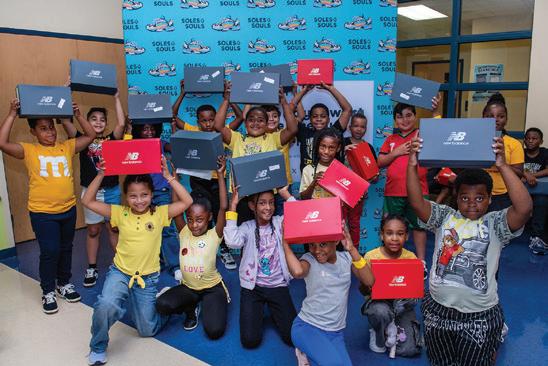
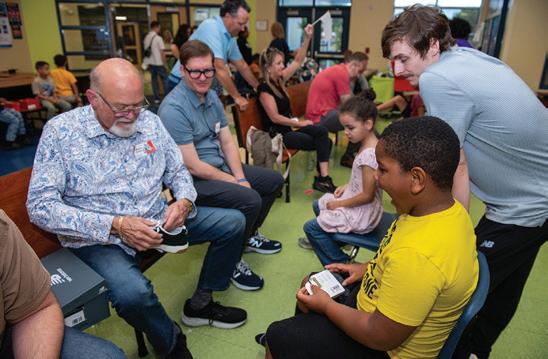
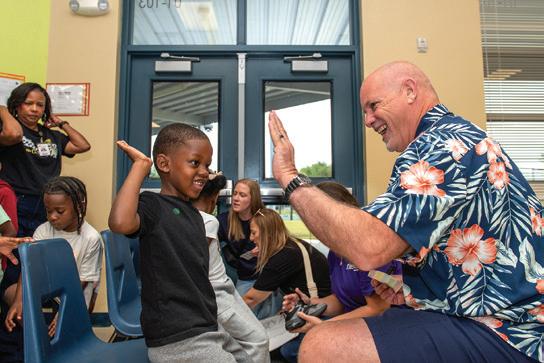
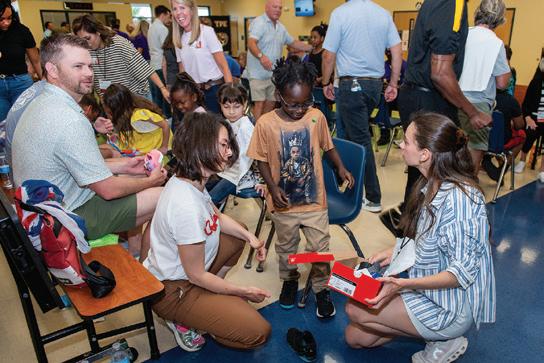
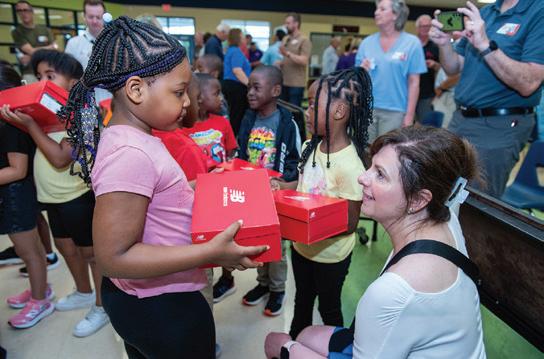
The annual NSRA Footwear Forum has long been the place to talk business, strategize, learn, and network. But it’s also been a place to give back and feel even better for doing so. NSRA Gives Back involves distributing free pairs of shoes and socks to kids in need, thanks, this year, to New Balance, Feetures, and Soles4Souls.
Nearly 500 children at Tangelo Park Elementary School in Orlando, FL, received expert fit service and were outfitted with new socks and sneakers. The experience reflects the heart and generosity of the NSRA community.
Rich Rask, president of Rieker Shoe Corporation, was honored to participate. “I’m proud of our industry,” he says, adding his thanks to the event sponsors for making it happen. “I look forward to NSRA Gives Back each year. Interacting with the kids, seeing the smiles and genuine excitement…nothing can compare.” Rask adds, “It keeps things in perspective and shows what truly matters. Even just one pair of shoes is a connection that can change a trajectory. We’re blessed, and must give back at every opportunity.”
supplying shoes to approximately 9,000 such retailers globally. In addition, its U.S. division operates with a wholesaler partner first and DTC second mentality. It doesn’t reserve inventory for DTC nor sells directly on Amazon, and its website features retailer links.
Next up was the induction of Maurice Breton, founder of Comfort One Shoes, into the NSRA Hall of Fame. Alan Miklofsky, past NSRA chairman; Josh Habre, president of Shoe Mill in Clackamas, OR; and Sam Spears, president of Ara Shoes North America, presided over the induction. Miklofsky cited Breton’s strong industry legacy of 40-plus years, which resulted in stronger retailers, relationships, and an NSRA that’s better because he “cared enough to give his time, energy, and voice.”
Habre described Breton as a rare leader who combined a commanding presence with genuine care for people—driving performance to ensure that independent retailers thrive. He added that Breton didn’t just sell shoes; he built a business that became the benchmark that many NSRA members measure themselves against. “Under his leadership, Comfort One Shoes became known for a culture of excellence, a discipline around numbers, and the belief that when you
train people the right way, they don’t just meet expectations, they crush them,” he said.
Spears described Breton as an industry titan. “Maurice is an incredible student of the industry, is genuinely passionate about product, and is always hunting for something very special for his discerning customer,” he said. “Many vendors in this room owe their existence to him for having taken a chance on us.”
Believing that people are the foundation of great retail, Breton created Comfort One University, a training program that elevates product knowledge, service standards, and professional development across the organization. An innovator, he pioneered exclusive Euro-sized footwear assortments and introduced a one-store-one-LLC structure supported by centralized management. Through thoughtful succession planning and the NSRA NextGen program, he transitioned ownership to his son, Garrett, ensuring lasting stability. Today, the company operates 25 locations, mostly in the Mid-Atlantic region.
In accepting the honor, Breton noted how the industry has always been more than about shoes. “It’s about helping people feel better, move better, and live happier lives,” he said, noting that he has great confidence in the future of the industry
thanks to the next generation of leaders. “My hope is that we’ll continue to invest in them, just as others invested in us.” Breton added, “This honor belongs to every person who believed, taught, and walked this journey with me. Success is never owed, it’s earned, shared, and passed on.”
William Miles, Jr., third-generation owner of Gamer Shoe Co., was inducted by fellow Hall of Fame member and retired Michigan retailer Paul Muller of Muller’s Family Shoe Center. Miles, Jr. was a pioneer in the shoe retailing and remembered for his leadership, integrity, and lasting contributions to the industry. In 1948, he purchased his family’s business, and from a single store in Butte, MT, grew the company to 22 stores with locations in Montana, Idaho, and Washington.
Miles was elected to the NSRA Board of Directors in 1949 and served as NSRA chairman from 1975 to 1977. He was one of the original members of Shoes Associated, served as chairman of National Shoe Fair, and was on the board of American Footwear Industries. He was also appointed by the U.S. Commerce Department to promote business and resources in retail. On behalf of the Retail Footwear Council, he traveled to England, Finland, South Africa, Holland, France and Portugal.
NSRA conference attendees distribute free shoes and socks to kids in need.
Q&A
BY GREG DUTTER
RECIPE FOR SUCCESS
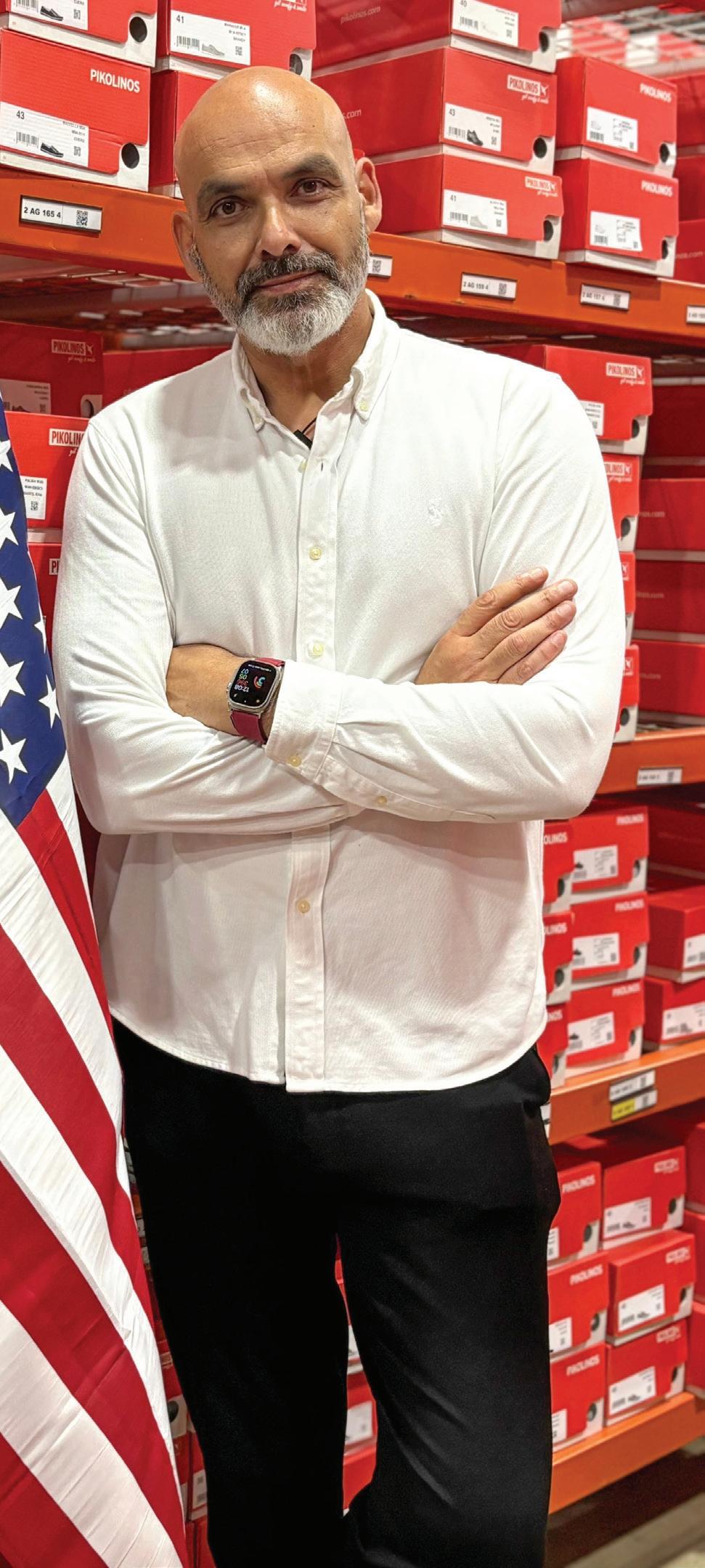
Marcos Vega, vice president of Pikolinos USA Corp., on how the Spanish comfort brand is primed for strong growth in America.
PIKOLINOS FIRST WADED into the U.S. market in the midaughts, but it was more a toe in the water than a headfirst dive.
The family-owned company, now in its 42nd year, operates under an even keel approach.
That has proven successful as the brand has been well-received, making waves with its high-quality leathers and stylish, attention-to-details aesthetic. Sales have been solid, enabling Pikolinos to carve out a niche amid a crowded and competitive field.
That fact is, though, there remains a ton of untapped growth potential in the U.S. for Pikolinos. Like a lot of Euro comfort brands discover (some the hard way), achieving that requires another level of commitment. Namely, a more U.S.-centric approach. That’s exactly what Pikolinos has been doing, starting three years ago, when it promoted longtime marketing director, Marcos Vega, to head its Miami-based operations. Since then, the exec has worked tirelessly to assemble what he now believes is an all-star sales team—one that is knowledgeable of the specific wants and needs of this unique market—as well opened a state-of-the-art warehouse backed by an equally adept crew.
“When I came here my biggest goal was to put the necessary structure in place to grow,” Vega says. “Today, I’m proud to say we have an
incredible team across sales, logistics, customer service, marketing, and accounting. It’s a top-level organization—one that truly matches the size and importance of the U.S. market.”
It marks quite a change from three years ago. Back then, Pikolinos’ U.S. division didn’t have a marketing department, nor legit customer service operations. “We now have all the infrastructure in place to grow significantly in this market,” Vega says. “Overall, we’re approaching the U.S. market in a more comprehensive way.”
Another recent major investment involves beefing up point-of-sale programs. Vega believes that’s key for Pikolinos. “I always say that our shoes need to be seen and touched,” he says. “Customers need to feel our soft leathers and experience our comfort, craftsmanship, and finished details. The closer we’re to the customer, the easier it is for them to understand what makes Pikolinos so unique.”
The proof is in the numbers: U.S. sales rose 30 percent last year, which comes on the heels of strong growth the prior two years. Such success in the face of well-documented headwinds is noteworthy. Tariffs, inflation, wars…it’s a cauldron of obstacles, and while Vega says Pikolinos is not immune, it is well-positioned to weather the storm. For example, Pikolinos owns a state-of-the-art factory in southeast Spain, where 200 employees build the bulk of its shoes. (Some production is sourced in China.) Thus, it has better control over any
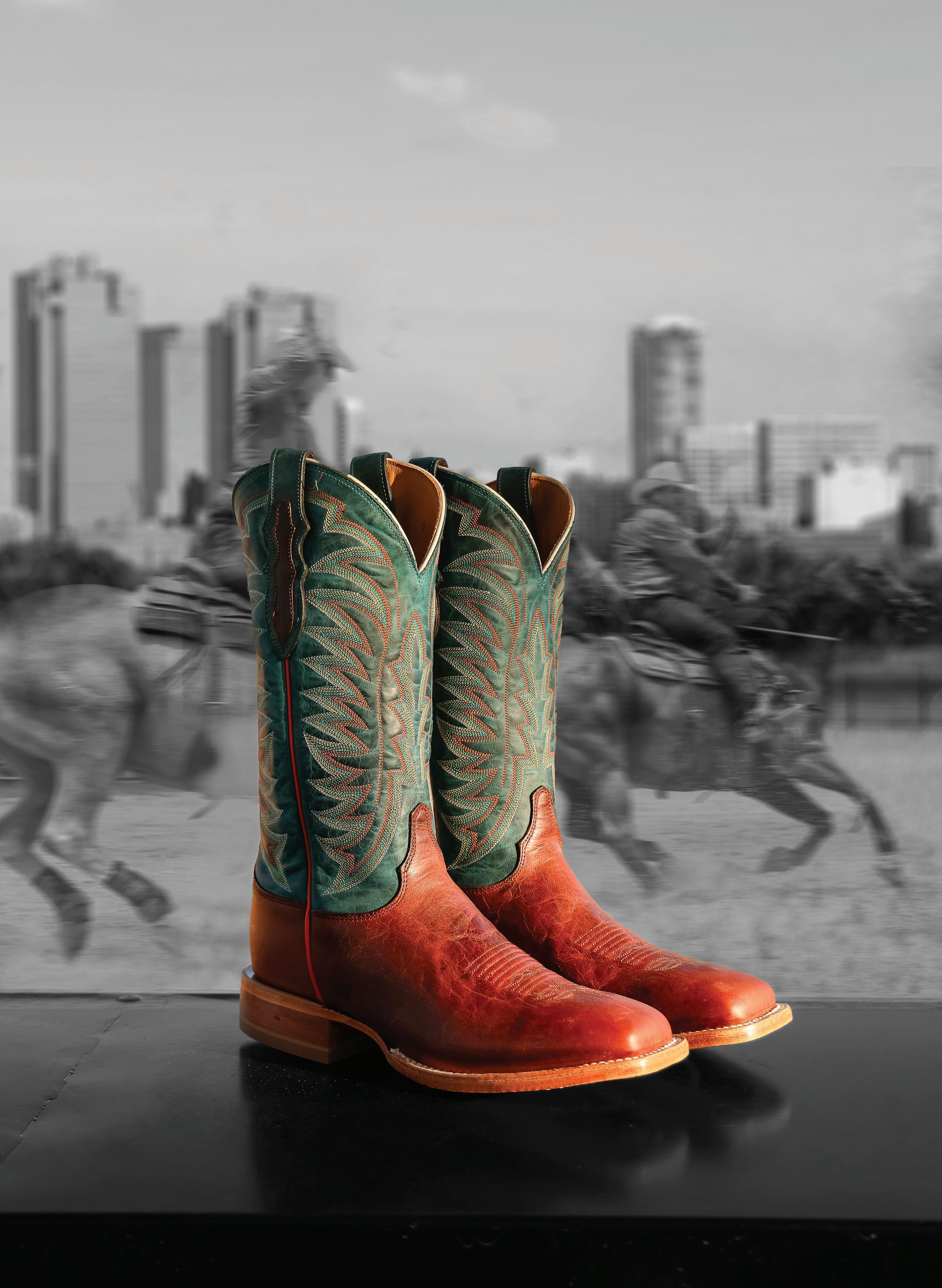
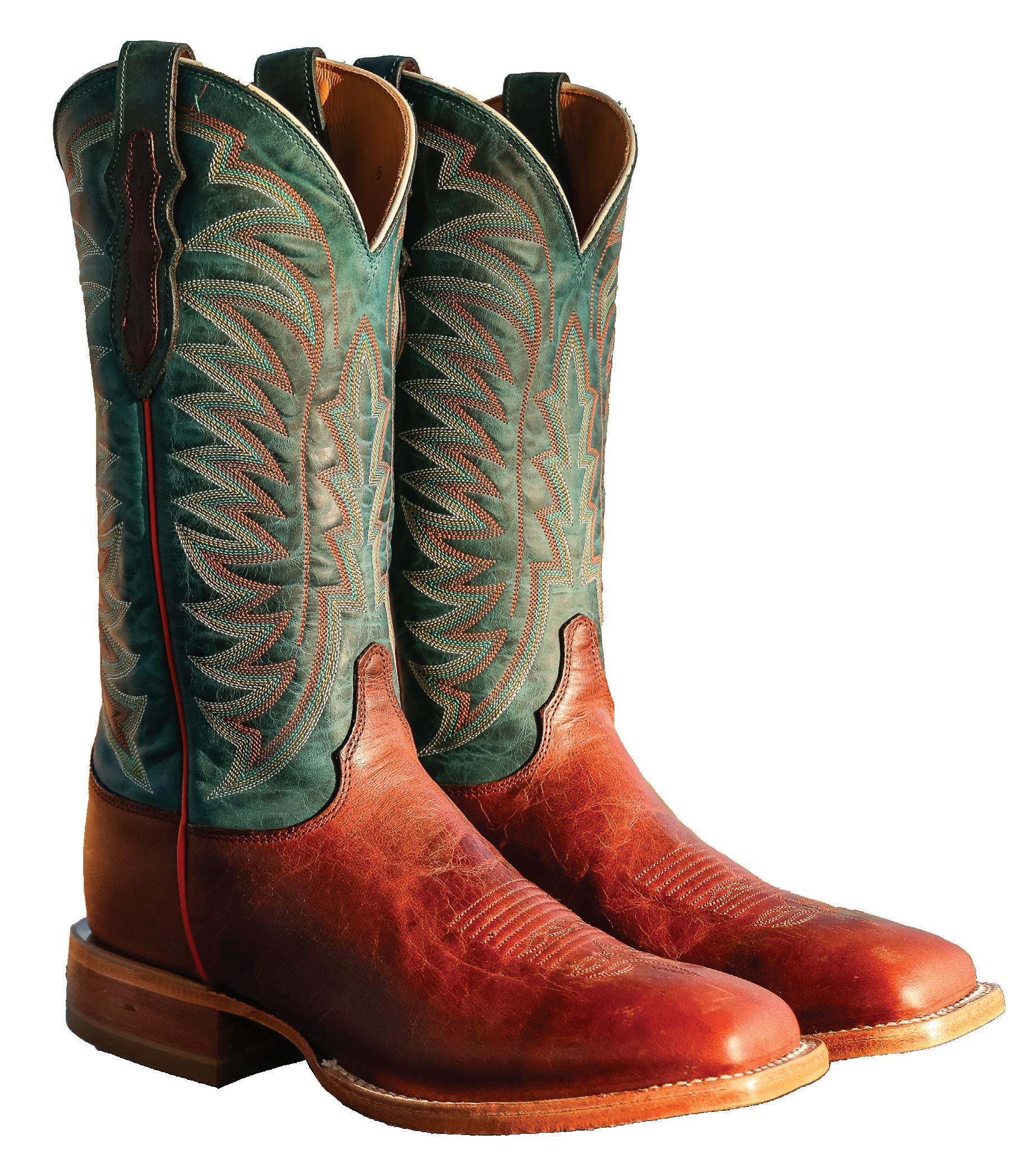
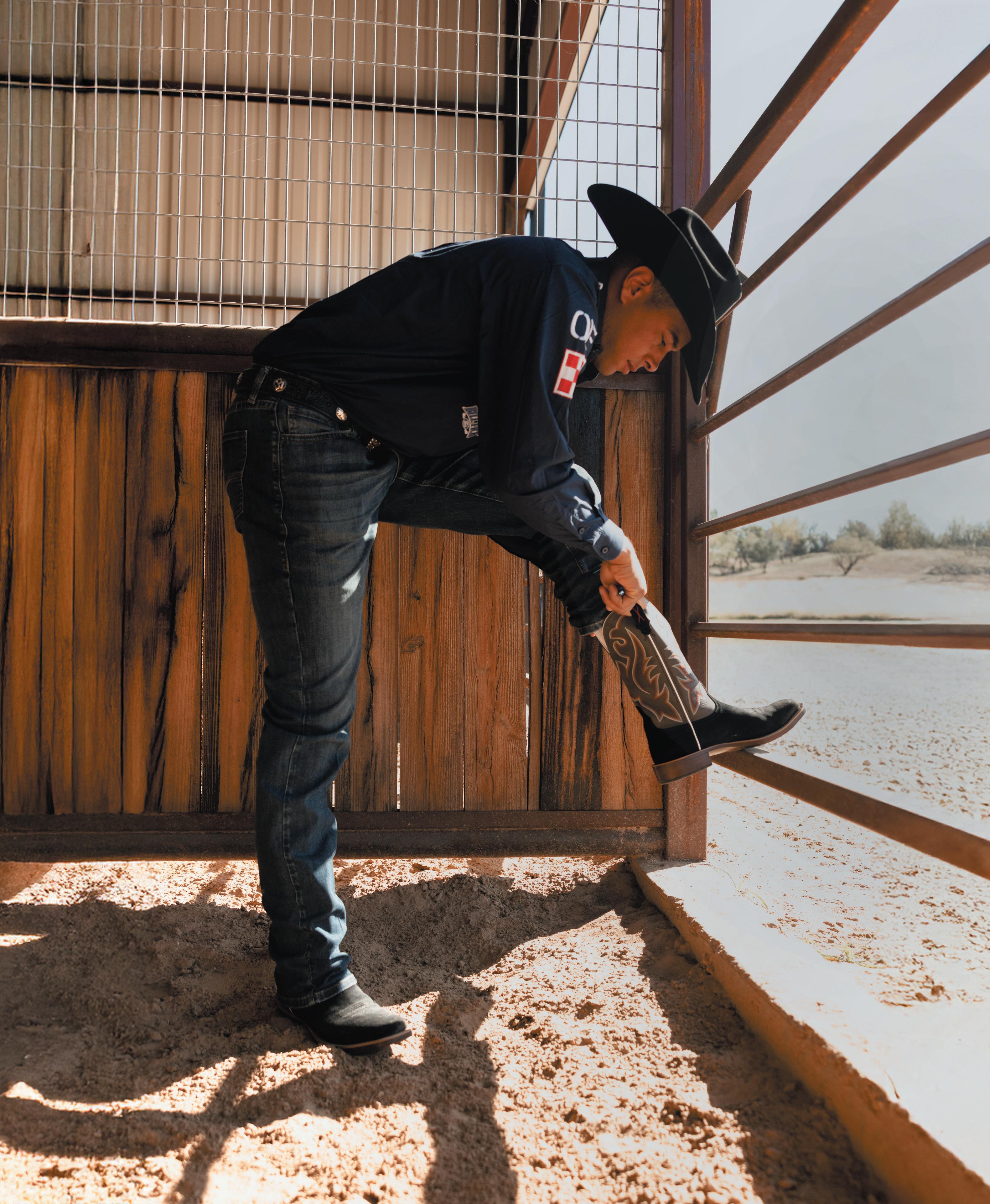
Born from western roots and driven by innovation, Twisted X® has grown from pioneering cowboy boots into a wide range of work and casual footwear, redefining comfort with every step.
OFF THE CUFF
What are you reading? In addition to a lot of articles about where the world is heading, I recently read Thanks to Life, which is about Pikolinos founder Juan Perán. It’s an incredible story about a man who started from zero and went on to create this incredible company.
What was the last movie you saw? The Bad Guys 2 with my seven-year-old son. Its quality time spent with him. Plus, you can often learn a lot from kids’ movies.
What is inspiring you now? Making the people around me, professionally and personally, happy. Seeing them smile is the reward. Life can be very hard and unforgiving. So whenever we have a chance to smile, we should take it.
Who has been the greatest influence on you? My parents, without a doubt. Their willingness to sacrifice and their relentless hard work made life for my sister and me better. They set such a great example.
What keeps you awake at night? Planes, because I live very near the Miami airport. Beyond that, it’s things outside of my control. We live in very complicated times and there’s a lot of outside noise and distractions; be it tariffs and wars. My aim is to create safe and productive spaces at home and in our U.S. offices.
What are you most hopeful for? People, without question. I truly believe that our society still has a future.
If you could live in another time period, when would it be? I prefer this one. Previous generations lived through difficult times—probably a lot harder than ours. And who knows what’s coming next. So, I’ll stay right here.
What was your first-ever paying job? I was 15 and I worked that summer in a small bar owned by my uncle in northern Spain. I served drinks, cleaned dishes, etc. That money felt like gold to me! I have a lot of fond memories of working there.
What is your favorite hometown memory? I’m from Gijón in the Asturias region of northern Spain and my favorite memory is of the Cantabrian Sea. The rough, powerful waves coupled with the incredible beauty. I loved jet skiing there. I miss that place a lot.
What might people be surprised to know about you? People know very little about me, and I like it that way. I prefer staying in the background—although that’s difficult because I’m 6’7’.
Well, people might be surprised to know that! Did you play basketball growing up? Yes, but I had trouble with both knees. So no NBA career for me. But there’s hope for my son. He’s just started playing. Maybe he’ll have a bright future in the NBA. I hope so.
What’s on your to-do list for today? In addition to this interview, which marks my first in this country, it’s continuing to prepare for our U.S. sales meeting in two weeks. I’ll also be doing my regular walk through of our warehouse to see how things are going. That’s the heart of our business.
What would be the title of your life story, and who’d play you in the movie? The Great Change, because three years ago I made a big change and moved to the United States with my wife and two children to oversee Pikolinos in this region. And it’d have to be a tall actor—someone like Sean Bean. I’m a big fan of Game of Thrones, and he played the role of Ned Stark.
What is your motto? Vince bono malum. Overcome evil with good.
price increases. It’s all about flexibility and adaptability, Vega notes. “The ability to adjust strategies quickly is essential today, along with having the right structure to deal with both logistical and cost challenges,” he says. “Fortunately, we’re a strong company, and that gives us important competitive advantages.”
Investing in a new U.S. warehouse is another example of these capabilities, according to Vega. The way he sees it, product has never been an issue. Pikolinos shoes pretty much sell themselves. But that only happens if the right shoes arrive in the warehouse and are shipped out on time. “Today’s battle is really about inventory and people,” Vega says. “Inventory management will play a huge role in determining who succeeds in this market going forward. And, ultimately, every business is built on people—from the best sales reps to the best warehouse employees. On inventory, we’ve made great progress. On people, I believe we already have a major advantage.”
Vega is especially excited about what Pinkolinos’ new U.S. sales team brings to the equation. It’s made up of an array of experienced veterans with past experiences at Vionic, Clarks, Earth, Sofft, and Jambu, among others. They know this market like the back of their hands. Even better, Pikolinos corporate is seeking their input, which includes bi-annual trips to pre-line meetings in Spain to voice their opinions on what’s best for the U.S. market. That’s pretty unheard of, and it should be music to many retailers’ ears. Because if there’s one aspect that has historically been a snag with European-based comfort brands, it’s their inability (or unwillingness, frankly) to cater to the nuances of this market. It’s led to the demise of many such brands in the U.S.
This isn’t an issue with Pikolinos, Vega assures. “We’re designing more specifically for the American consumer,” he says, noting President Juan Manuel Perán, the son of founder Juan Perán, is deeply committed to this approach. “He used to manage our design department and understands product very well. He also visits the U.S. twice a year to meet with key retailers to learn what specific types of designs they might need and why.” Vega adds, “We’re all on the same page. I don’t have to explain to him or our design team that we need this type of shoe, this detail, etc. Our team knows firsthand what we need to be successful in this market.”
Vega believes much of the heavy lifting is done. Now comes the fun part: growing without logistical worries and unleashing a sales team to maximize Pikolinos’ full potential in the U.S. market. Asked what he believes
The new Barefoot collection is endored by the American Podriatic Medical Association. s 14
THE ONLY DESTINATION FOR WESTERN & WORKWEAR
Curating the Best Brands in the Best Place
Dallas Apparel & Accessories Market
JUNE 16 - 19, 2026 | AUGUST 18 - 21, 2026 | OCTOBER 20 - 23, 2026
AETA International Trade Show
AUGUST 18 - 21, 2026
WESA’s International Western/English Apparel & Equipment Market
AUGUST 18 - 21, 2026
Rios of Mercedes | WTC 14371
is the brand’s annual sales potential in three years and Vega has great expectations. “In my heart, I envision Pikolinos as a $100 million business here,” he says, noting that’s the strategic plan in place under recently appointed CEO, Francisco Sánchez. “At the very least, we should be working toward that goal. We must at least think and act like we can. It represents big growth but it can be done.”
Vega reiterates that all the ingredients are in place. “Our sales team is magnificent and, behind them, is a new warehouse managed by an incredible team,” he says. “It’s the best overall team in the history of this division.” The cherry on top, he adds, is an “incredible” collection for Spring/Summer ’27. “Our leathers feel richer and stronger than ever. We’re also introducing important innovations, including our Barefoot collection endorsed by the American Podiatric Medical Association,” Vega says. “I also think the upcoming season may be our most American-inspired collection yet.”
So, exactly how does a journalist working for CNN Spain make the leap to what is now a two decades and counting career in the footwear industry?
During my honeymoon in San Francisco about 20 years ago, I received a call from Pikolinos with a job offer to build its communications department. I remember my boss saying, “Marcos, you’re leaving the best news channel in Spain to work at a shoe factory in Elche? Are you crazy?” I told him it’s a special opportunity, and it turns out I was right. Twenty years later and now living in United States…it has changed my and my family’s life for the better. I love my job, Pikolinos, and this industry.
What is it that you love, specifically?
First off, Pikolinos is just a very different kind of company. It feels like family. My last name may not be Perán, but to me this company is now part of my own family. We’ve been through great moments, challenges, and everything in between—and always together. We’ve made it to where we’re today, and hopefully we’ll continue on that path for many more years to come. On a personal level, I’m passionate about this industry. Every six months we basically start from zero. It’s like having two major exams every year. I love that every six months we face a whole new battle and challenges to overcome. This business never gets old or boring.
In addition to family, happiness seems to be a strong trait within Pikolinos. Why are these traits important to the company’s success?
Family and happiness are absolutely part of our DNA. For better or worse, we’re a family company, and we act like one with each other and with our
Q&A
customers. We truly believe in building honest, long-term relationships. That matters a lot to us. We’re a trustworthy company. Customers can rely on us, and I believe that matters tremendously in this country. We always try to do business the right way. Of course, we make mistakes at times, but we learn from them and work hard not to repeat them. Making mistakes is human. Repeating them is another story. As for happiness, it’s literally the essence of our tagline: “Get Comfy and Smile.” I always say our target customer is anyone who wants to go through life comfortably—and with a smile. People often kid me and say that’s a lot of people. My answer is: Exactly. Why should we limit ourselves?
How has Pikolinos evolved over your years with them?
There’s been a lot of changes, because we’ve grown significantly. When I started, Pikolinos was no more than three hundred employees. Now, we’re more than 800. But our DNA as a family company remains the same. We’re stronger than ever. It all starts with our product, which spans are leathers, craftsmanship, and finished details. None of that commitment to quality has changed during these 20 years.
You cited Pikolinos’ U.S.-centric approach to design. Is the goal for this market to essentially be a European comfort brand with an American accent?
Exactly. We want to remain European—Mediterranean, specifically—but fully adapted to the country welcoming us. That means adapting to American retail calendars, commercial policies, and consumer expectations. Trying to impose your own system on a market like this is, in my opinion, a mistake.
I think a lot of retailers would whole-heartedly agree.
Our approach is the United States is not as a country as much as it’s a continent. Geographically, climatically, commercially…every region is different. The U.S. is just so big and diversified, and we have to cater our business to that. So, for example, the seasons start earlier and finish later in the calendar than in Europe. We have to make sure we have product when U.S. retailers need it. Our factories must adapt to this schedule. Same goes for our sales meetings, which are about a monthand-a-half earlier than in Europe. So we need the prototypes that much earlier.
Well, U.S. sales were up 30 percent this fiscal past year (ends in May), so you must be doing it right. What do you attribute that growth to most? Because of all the efforts we’ve put into point-ofsale. The other major factor is designing more to the needs and nuances of this market. Also, we have a lot of flexibility to change. The ability to adjust strategies quickly is essential today. Pikolinos now has the right structure to deal and with both the logistical and cost challenges the industry has been facing. Being a strong company gives us an important competitive advantage—like owning our factory in Spain. It’s the most modern shoe factory in the country.
What are your expectations for growth going forward in the U.S.?
We have great expectations for this market, but we must continue to approach the next week, month, and year carefully. Each is its own battle. We must have the right inventory and people in place to win.
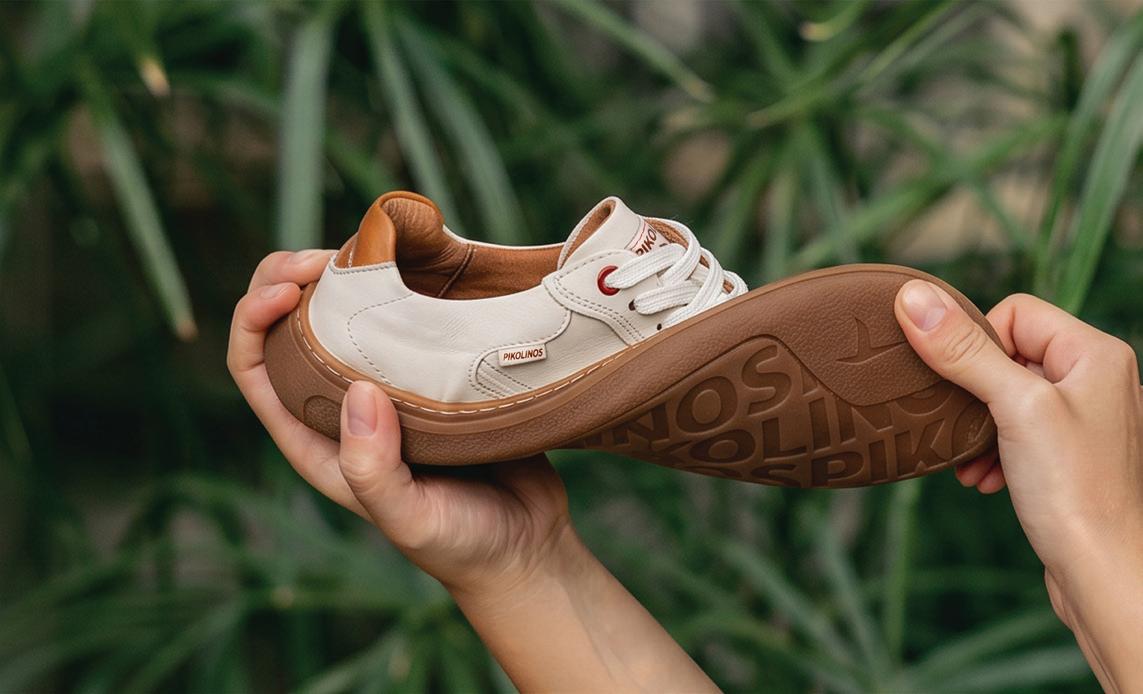
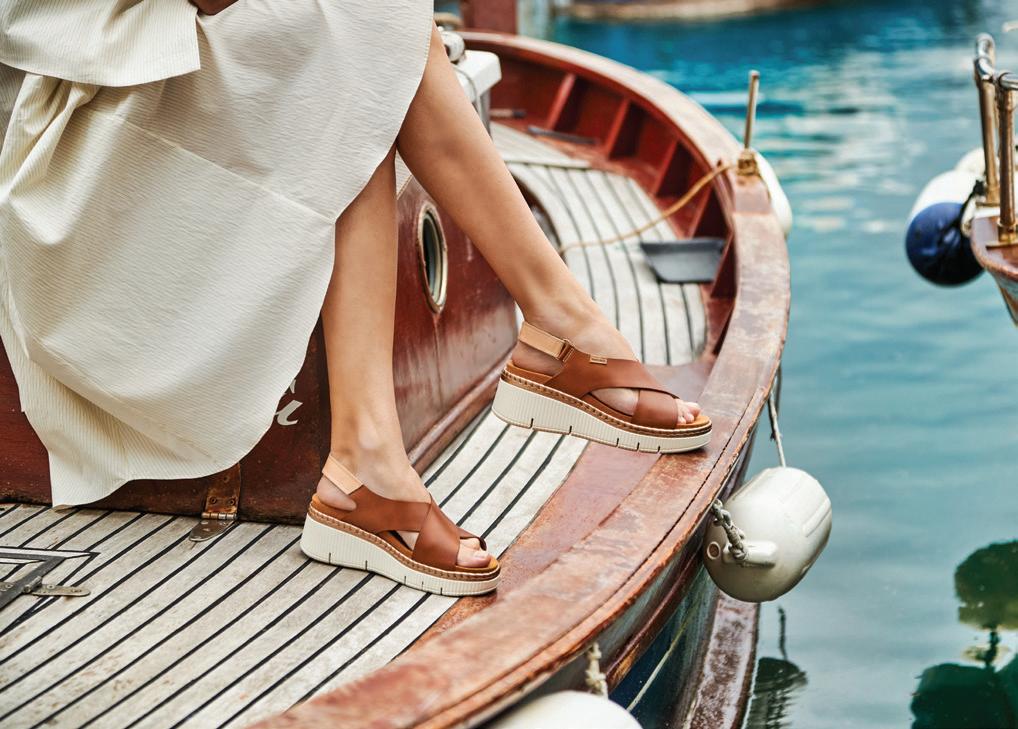
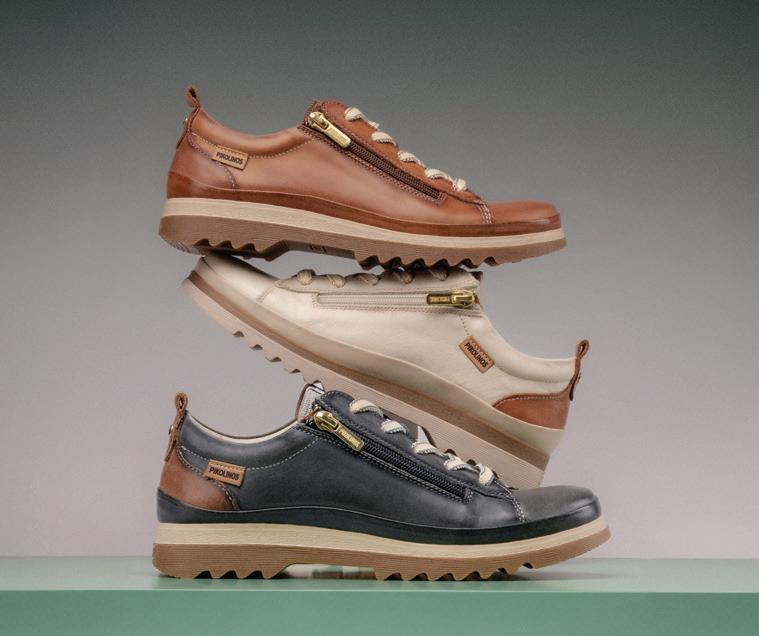
Incredible leathers, attention to detail, and sophisticated styling are key ingredients of the Pikolinos recipe.
What are your goals for the rest of this year?
To continue with our growth in the market, which includes growing our infrastructure. Our biggest objective is to continue delivering double-digit growth. That isn’t easy to do, but we’ll try. With the best teams in place, we have all the ingredients to achieve this growth. And while our business is performing very well of late, like everything in life, there’s always room for improvement. That’s why we’re here: to keep getting better. In reality, we’re not changing the structure of Pikolinos; we’re simply making the operation function more nuanced and efficiently for this market. It’s not a dramatic transformation. It’s about being closer to the U.S. market.
What’s the biggest challenge facing Pikolinos in the U.S.?
The disruption around the world due to wars and tariffs. For example, we depend on transport just like most companies. The higher cost of oil has been a huge problem, but one we can’t control. We just have to make adjustments and try to adapt. The ability to react quickly and adjust strategies is absolutely essential today. At the same time, you need a structure capable of handling both logistical and cost-related challenges. Fortunately, we are a strong company, and that gives us important competitive advantages.
fuel, groceries, all daily living expenses. Consumers are facing increases across the board, and at some point that becomes very difficult to sustain. I believe this situation will eventually stabilize. Hopefully, sooner rather than later. And while I don’t think this level of disruption rivals the pandemic, that period taught companies how to become more resilient and better prepared to face the kinds of challenges we’re dealing with today.
Despite all these challenges, the U.S. footwear market appears pretty resilient. Why do you think that is?
American consumers value quality. They appreciate
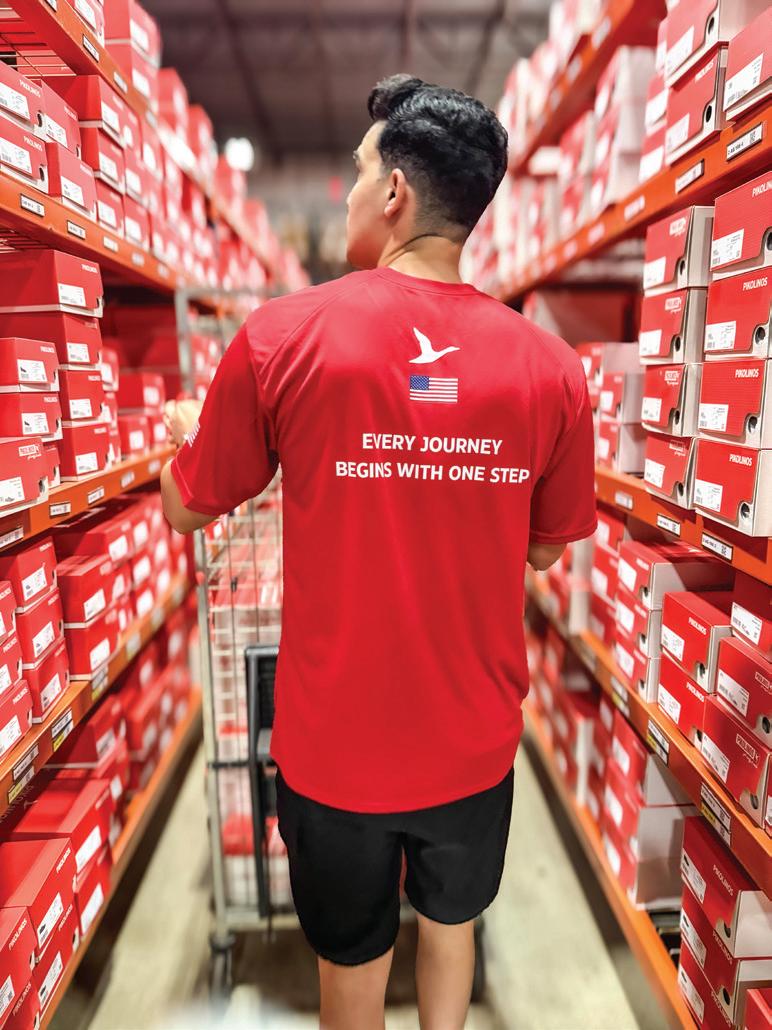
A new, state-of-the-art warhouse facility in Miami helps ensure on-time and in-full shipments.
products that are well-made and bring genuine added value. In our case, that unique combination of design, leather craftsmanship, and comfort resonates strongly here. I’ve always believed the U.S. is a very rewarding market for brands that genuinely do things well.
Speaking of other challenges, what’s your take on artificial intelligence and its growing impact on the industry and world at large?
AI commands a lot of respect. At heart, I still believe in people, emotions, and face-to-face relationships. AI will never replace that. That said, if we use it intelligently, it can absolutely help make us more competitive and efficient. At our headquarters in Spain, we have an AI committee as we want to be proactive leaders in this space.
One concern surrounding AI is that millions of people could be replaceable in the workforce. Does that worry you?
Without question. Not only for shoe companies, but for society as a whole. What happens then? Nobody truly knows. That’s unsettling.
What’s your take current U.S. retail landscape? Contrary to all the predictions about the “death of retail,” I believe retail in America is more alive than ever. I love shopping in this country because there’s a level of customer attention and service that’s very difficult to find in many parts of Europe.
If this global volatility continues—and many believe it will—how do you plan to stay the course? By continuing to do what we’re already doing. We believe we’re on the right path. The key is trying to protect both consumers and retailers as much as possible from the impact of all this volatility.
Might American consumers be nearing a breaking point when it comes to absorbing price increases? Absolutely. And it’s not just fashion; it’s everything:
When you hear “Pikolinos,” what comes to mind first?
Comfort, happiness, Mediterranean lifestyle, light, and leather.
What do you love most about your job?
Working alongside our team every day. Surrounding myself with kind, passionate, and talented people makes coming into our offices each morning a privilege. Every morning I arrive in the office with a smile. Those shared experiences are something AI will never be able to replace. On that note, I believe our best days lie ahead of us. Despite the outside factors beyond our control, which all companies are dealing with, Pikolinos’ future is bright. I truly believe our ability to grow and improve is almost limitless. We just need to stay focused on the business at hand, which is one of the aspects that I love about U.S. retailers. Despite all the obstacles that they’re facing, they stay focused on business. There’s not a lot of griping or whining. They’re always searching for solutions. Our conversations are always about ways to adapt and to thrive. I love that. •
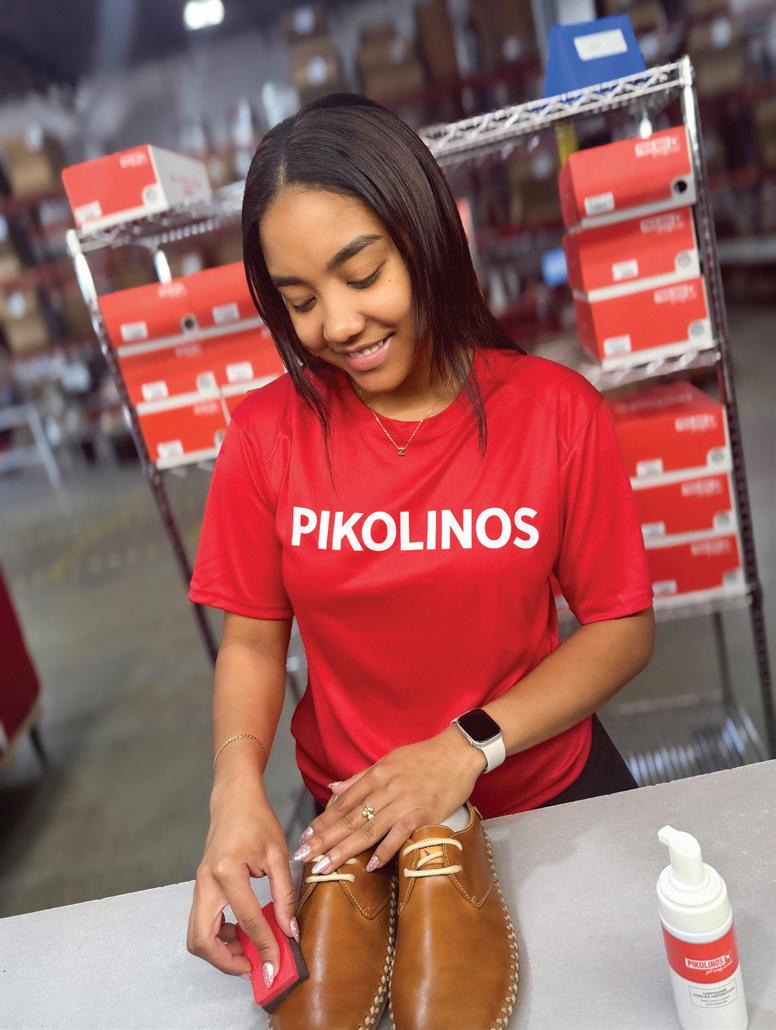
It’s the fine details that makes Pikolinos shoes pop on store shelves.
The Fun Factor
Celebrating 75 years, the Waldman family, owners of Laurie’s Shoes, is having a grand old time.
By Kathy Passero
BALLOONS, LOLLIPOPS, and a slide for kids. M&Ms and hayrides for employees. Free cookies and outstanding service for every customer. They’re all part of the winning recipe that has kept St. Louis footwear retailer Laurie’s Shoes going strong for 75 years. Spend a little time with the third- and fourth-generation Waldman family members now at the helm, and you can’t help but admire their creativity, work ethic, and deep affection for the business. But there’s another ingredient in the magic mix that makes Laurie’s Shoes work: a spirit of fun.
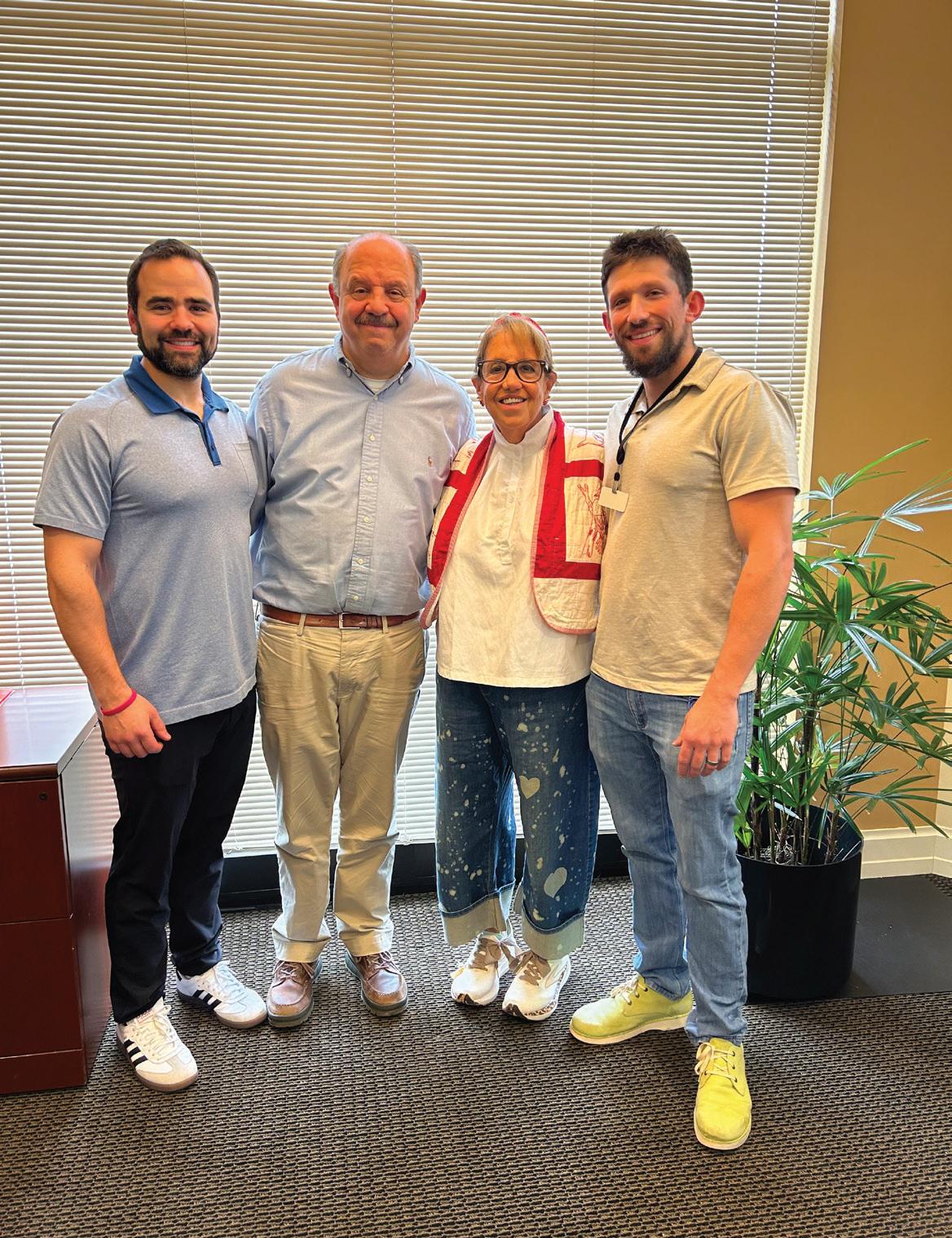
Fun is a word that comes up often in conversation with sibling co-owners Patty Waldman Baker and Scott Waldman, descendants of the store’s founders. You hear it, too, from Patty’s son Sam Baker and Scott’s son Jacob Waldman, the next generation of leaders. Their enthusiasm is downright infectious.
“I love it here,” says Patty. “We all get along, so we have a good time. I have a really nice office, but I hate it because I don’t like to be alone. I like to be in the thick of things.”
She’s in good company. “Our Saturdays are packed wall to wall,” says Jacob, who oversees marketing for the business, among other responsibilities. “People’s eyes just kind of expand as they look around. It’s a blast.”
“It gets absolutely nuts in here,” agrees Patty. “Sometimes we’ll have 25 people waiting and 15 employees on the floor, but it’s a great feeling. It’s fun.”
The store has a take-a-number ticket dispenser and an employee serving as a concierge to monitor it, welcome visitors, hand out cookies from local
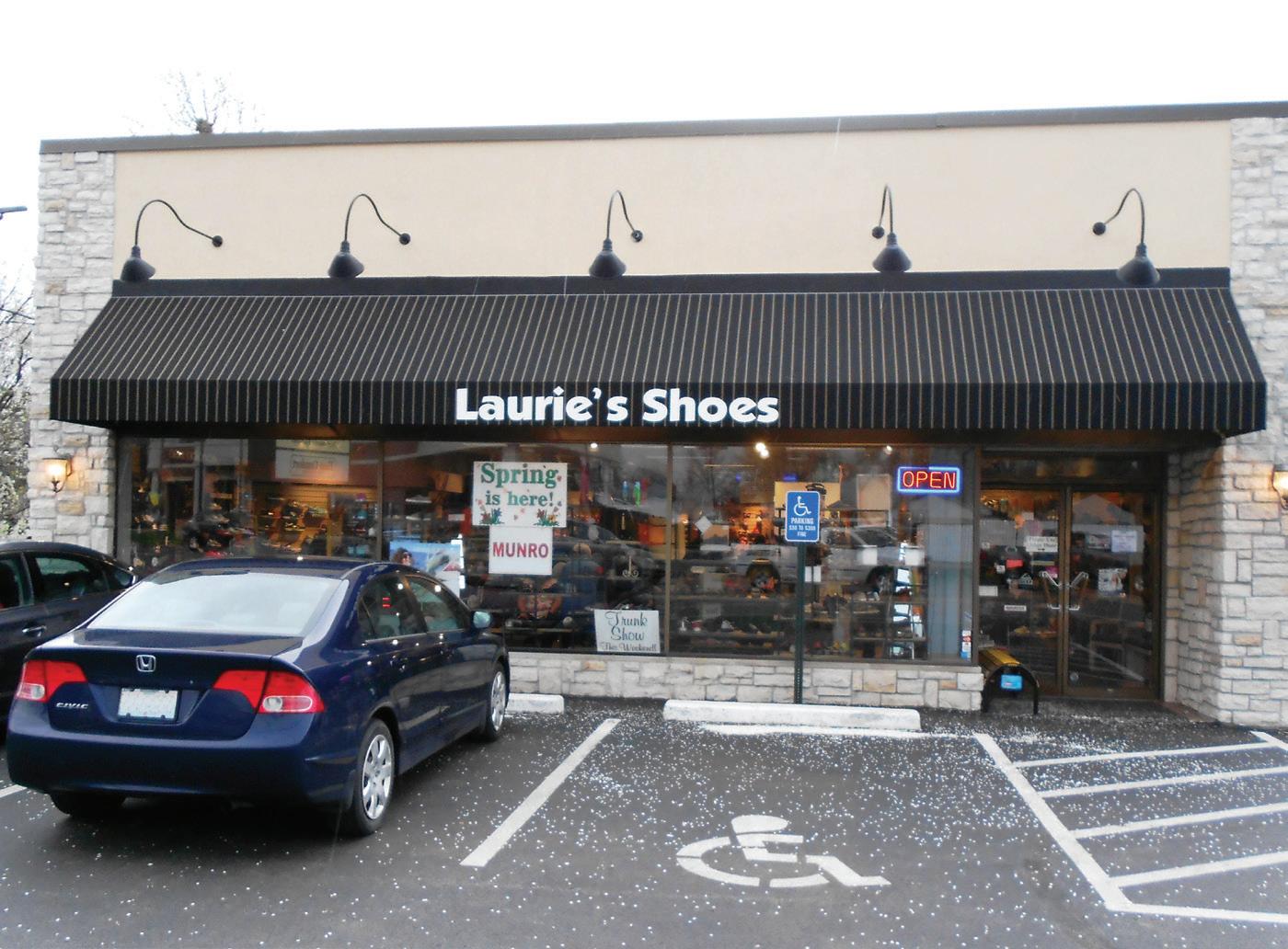
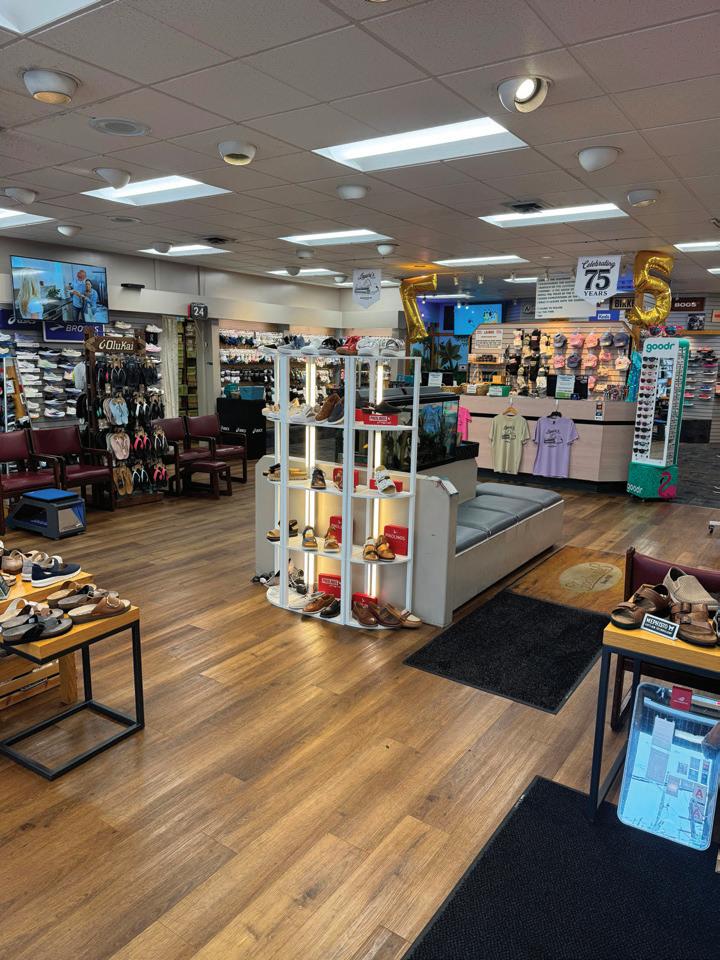
bakery Dad’s Cookie Co., keep track of who’s next, and thank everyone for shopping at Laurie’s. Parking at the approximately 4,000-square-foot store can be a challenge, but shoppers don’t seem to mind. In fact, Laurie’s Shoes had its best year ever in 2025.
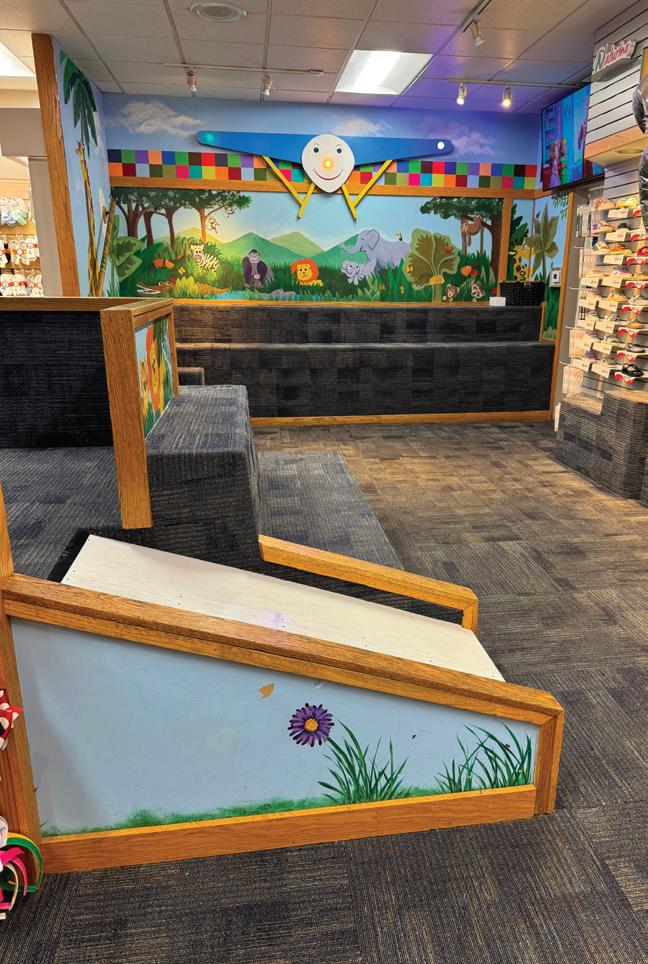
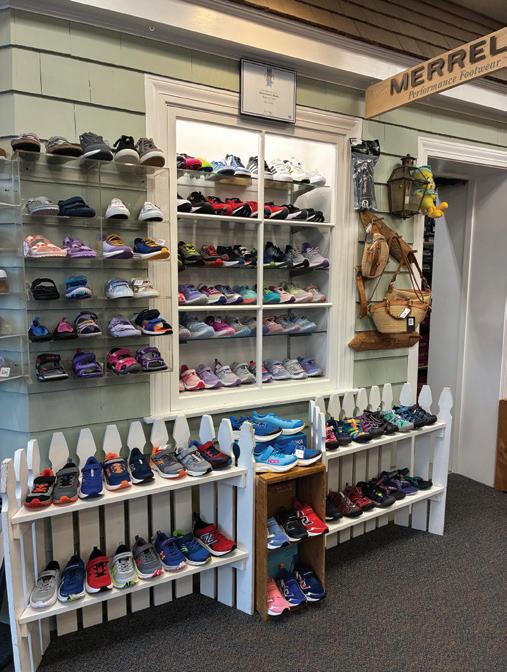
Customers come for the premium product, including more than 60,000 pairs of women’s, men’s and children’s shoes as well as accessories. They come for the colorful environment, from a fish tank to a children’s department with a slide and a platform with a whimsical airplane. But most of all, they turn up for old-fashioned sit-and-fit service from experts (the average employee tenure here is 18 years), including three certified pedorthists, all of whom the Waldmans sent through pedorthic school. Store staff will even book appointments with area podiatrists if you need one.
“Our goal is to overwhelm people with customer service,” Scott explains. “And we’re fortunate to have pretty fantastic employees.”
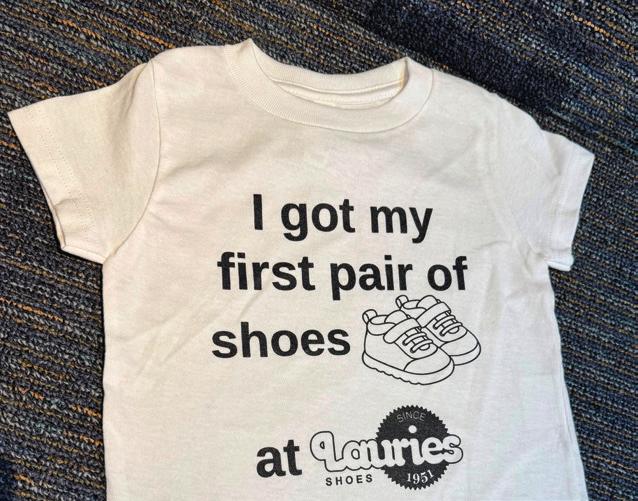
It’s part and parcel of creating an unforgettable in-store experience full of the proverbial wow moments. “We have T-shirts for all the kids who are firsttime shoppers that say I got my first pair of shoes at Laurie’s, and every child leaves with a balloon and a lollipop whether they leave with new shoes or not,” says Sam, who serves as district manager, though everyone at Laurie’s wears multiple hats. “We try to make it fun because in today’s world, really all you have is customer service and experience. It’s what’s going to beat the next guy.”
“We’ve got something very special here,” adds Jacob. “It’s not common for folks to be as excited as this group is. I think that’s one of our big differentiators.”
Previous generations would have been delighted to know they were laying
Stanley Eisenman
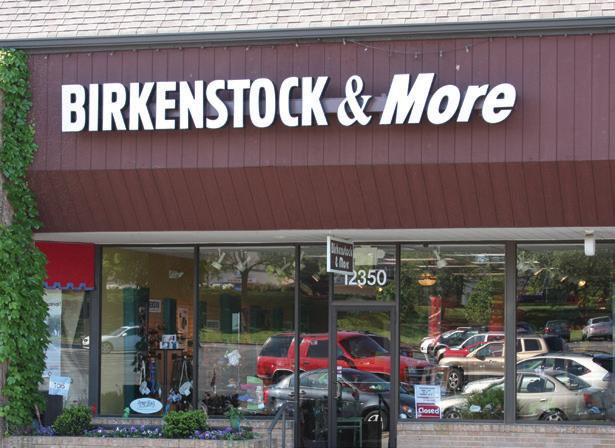
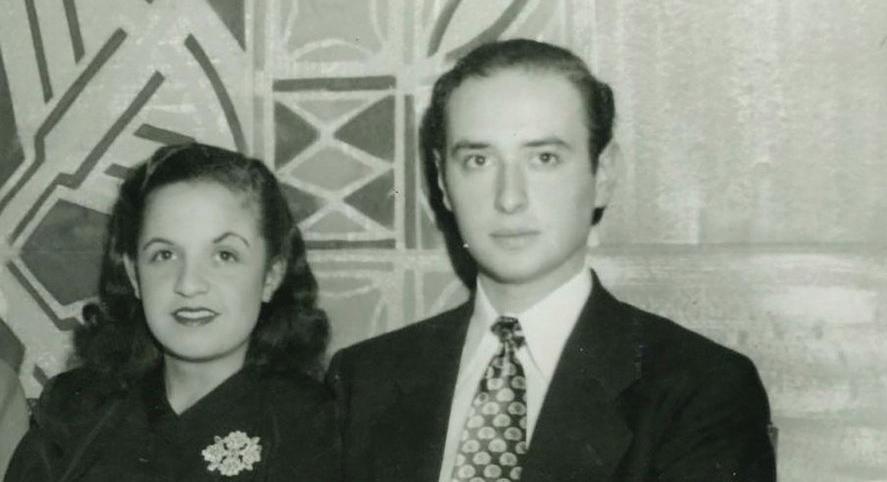
Top left: Laurie’s Shoes flagship store. Above (l. to r.): Jacob Waldman, Scott Waldman, Patty Waldman Baker, Sam Baker. Left: the sister store, recently retooled as a Birkenstock & Brooks concept store.
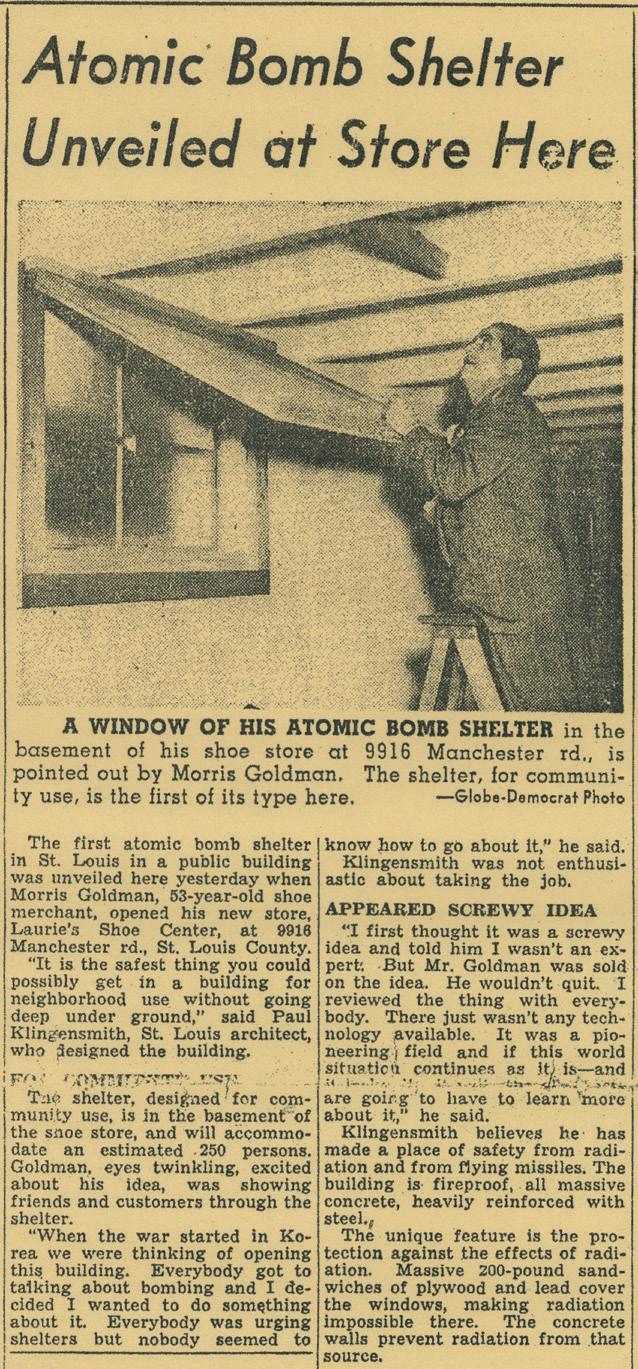
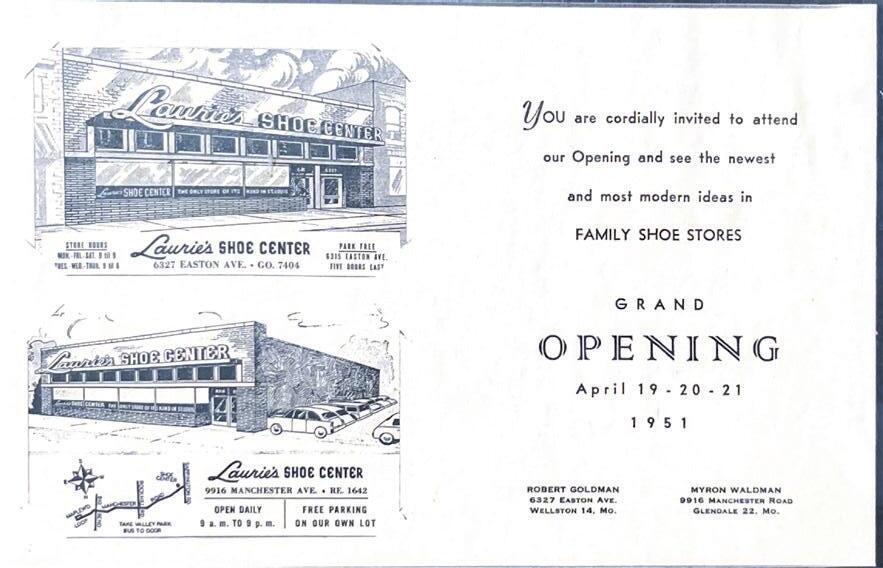
the groundwork for such a legacy when the business launched in 1951. The road in front of the store was just a gravel path, and the now affluent suburb of Glendale was semi-rural back when shoe wholesaler Morris Goldman founded the business with his daughter Joan and her husband, Wally Waldman. Morris famously had the basement built as a community atomic bomb shelter with concrete and reinforced steel. (It’s still an active part of Laurie’s Shoes, and it’s still a functional bomb shelter capable of surviving a direct missile hit. Patty jokes that in the unlikely event of an attack, customers can just show up with a receipt for access.)
“My dad, Wally, was working in a factory with his dad, but he started getting arthritis when he was 20, so my mom’s dad, Morris, said, ‘Hey, why don’t we open a retail store where I can sell my shoes?’,” Patty explains. Joan’s brother Bob was part of the start-up for a while, and his daughter, Laurie—the only female cousin in the family at the time—became the namesake. (Initially it was a two-storefront operation, but the location in nearby Wellston closed when the area fell on hard times.)
Wally and Joan were devoted to the family business, and the store became a way of life for their children—Scott, Patty, and their older brother Mark, who retired last year.
“We were open crazy hours—from 9 a.m. to 9 p.m., Monday through Saturday—and our parents worked all the time,” Patty remembers. “Dad would come home for dinner and take one of us kids back to work with him in the evening.”
“We did everything, including cleaning the restrooms, but it was fun growing up that way,” adds Scott.
Although Wally’s arthritis worsened, severely limiting his mobility by age 40, “he was still on the floor all the time,” says Patty. “He was a workaholic, and so was Mom. She did all the bookkeeping. I think that’s where we get our work ethic. We’re always here, always working it. You’ve got to work it to make it successful.”
After Wally passed away at 56 in 1984, Joan stayed on, even after losing her leg in a knee surgery gone wrong. “She was amazing,” Scott recalls of his mom, who died in 2011. “She was there til the end. She sat by the front door and gave out cookies.” In fact, it was Joan who introduced the tradition of free Dad’s cookies for all, and balloons for young shoppers.
BEYOND THE FLAGSHIP
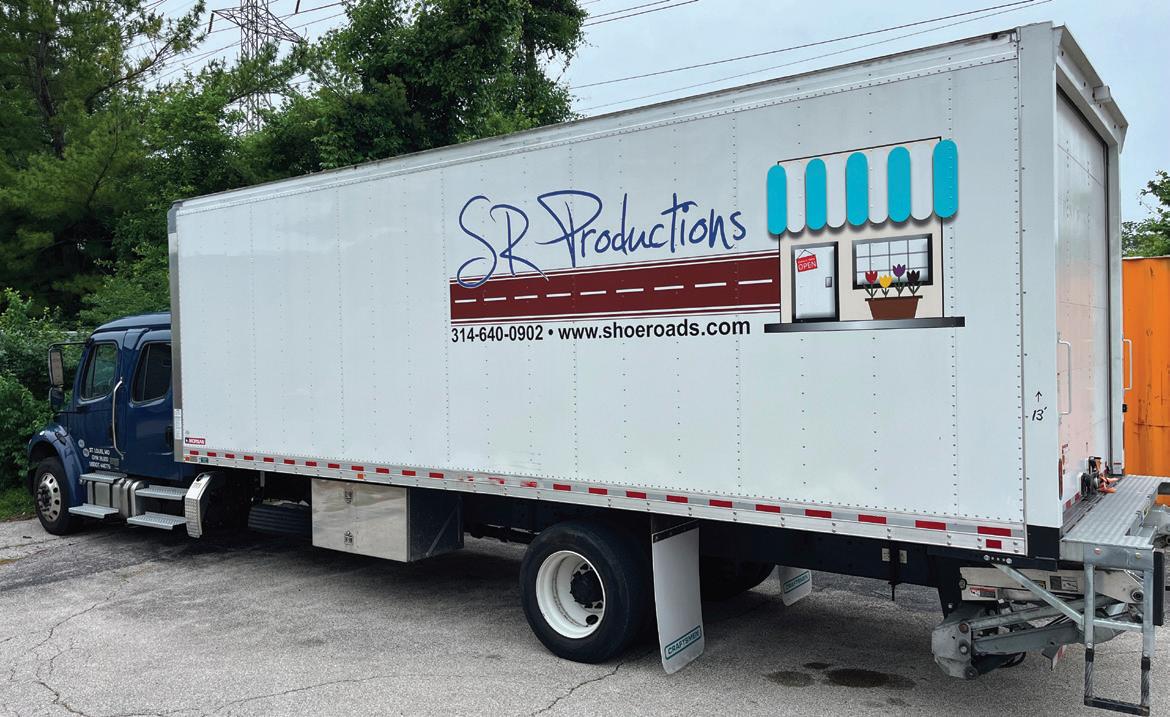
In addition to their thriving main store, the Waldmans own a 1,500-square-foot Birkenstock & More sister store, opened in 2006 and recently retooled as a Birkenstock & Brooks concept store, in the suburb of Creve Coeur. For the past two decades, Laurie’s has also operated Shoe Roads Productions, a traveling division that creates pop-up shops at hospitals in eight states throughout the Midwest. Hospital staff can purchase footwear tailored to the needs of medical professionals who are on their feet for long hours, and 15–20 percent of sales
are donated to the hospital. (Employees swipe their ID cards and authorize a payroll deduction to cover their purchases, often in small increments over several pay periods.)
“It’s grown beyond belief,” says Patty. “This year we got a warehouse and bought our own 26-foot truck. We’re booked every single day, except weekends, and now I’m booking two years ahead, for 2028. We move about 20 racks into the hospital along with a cash register, so it’s labor-intensive, but it’s pretty cool. People get very excited when they see our truck pull up. We paid for a mammogram machine at one hospital and a [serenity] room with a massage chair and a fish tank at another.”
Supporting charitable causes is one of the longtime traditions at Laurie’s Shoes. Another is a receipt-saving loyalty program started by Wally. Customers get a yellow envelope to store their receipts; when they accumulate $50 worth, they get five percent off their next pair of shoes. “Back in 1951, it took a long time to get to $50 because shoes cost $7.99. Now they buy one pair, and they already have $10 or $15 off the next pair,” says Patty. “It’s exactly the same as it was, and people love that.”
When you’ve built a lasting, loyal clientele like the Waldmans have, preserving old favorites while introducing exciting new offerings can be a balancing act. “We upgrade, but we don’t change the basics we’ve had for years because people connect with them,” says Patty. “Whenever we talk about remodeling, an architect will say, ‘You need to get rid of the platform with the airplane,’ and we’ll say, ‘You don’t understand.’ Moms and dads like to come in and tell their kids, ‘I sat up there!’ We’re talking about doing more of a major remodel, but those will remain because people want them.”
RETAIL IS IN THE DETAIL
Although the Waldmans are hard-pressed to pinpoint a core customer (they joke that they cater to shoppers from one to 100), theirs is “a very family-oriented customer,” according to Sam. “If you come in on a normal Saturday, you’ll have Dad who’s a runner in his thirties or forties in one corner buying running shoes and Grandmother in the other corner with edema buying shoes. Then you’ll have the grandkids in the back, all with the same salesperson. It’s quite a big range.”
“Some of our older customers really enjoy having the kids around,” says Scott. “The kids will try shoes on, then run to the front to climb up and see the fish tank. It’s fun for everyone.”
Although 60 to 70 percent of Laurie’s Shoes’ patrons are repeat customers, “we’ve had a lot of new customers over the past two to three years,” says Sam. Word of mouth accounts for many newcomers, but Jacob has also ramped up marketing efforts.
“We try to be omnipresent in our approach because we want to be able to reach our customers where they are,” Jacob explains. “We still do direct mail, and we get a lot of success with it. We send out mailers for our trunk shows and
From left: the new truck for the traveling division, which does pop-ups at hospitals in the region and donates a percent of sales to them; the selling floor; the kids’ department.
our biannual sales because people still appreciate getting that physical item. We’ve still got TV spots, and we still get into print magazines. But we’re also on your Facebook and Instagram feed, reaching you there, and we’re getting into streaming. We go through a Google service, so our YouTube videos will show up on different applications on your phone if you’re playing certain games and you’re within a certain area.”
To show their appreciation for customers old and new, Laurie’s Shoes hosted a customer appreciation party in the parking lot this spring with free hot dogs, hamburgers, and ice cream for all. A truck from the local fire department was on hand to give out free fire hats to kids. The store publicized the event through social media and email blasts to all customers in their database. “Luckily, the weather was great, and we were packed,” says Patty.
CHANGES AND CHALLENGES
About 70 percent of sales today come from women’s footwear, while kids’ shoes account for 20 percent and men’s for 10 percent. Bestsellers include Brooks, Dansko, Hoka, Mephisto, Pikolinos, Samuel Hubbard, and Tsukihoshi for kids.“Athletics rules the roost today,” says Scott, adding that “the web changed a lot of things for us because now the consumer is walking in with knowledge. If you don’t have a shoe in a certain color, they know if it exists. They say they saw it online.”
“As far as the customers go, online competition is our biggest frustration,” adds Sam. “But day-to-day, you don’t see that in front of you. Are they stealing sales or are they not? Everyone talks about a customer who bought something online in front of them while they were at the fitting stool, but I don’t think it happens as often as people make it out to.”
Arguably a bigger challenge for Laurie’s is finding good new employees.
“Our retaining rate for employees is pretty unreal,” says Sam, noting that some members of the roughly 45-person staff have been there for 35 years. “But the generation looking for jobs today is not the one you saw 20 years ago. Finding new people who are as hardworking as they were back then is probably our toughest challenge.”
“New people are looking for something different from the more seasoned employee, who wants culture and a family environment they can be comfortable in, which is what we have here,” says Sam, a member of NSRA’s NextGen program. “When somebody new comes in just looking for a job, they don’t last very long. The sit-and-fit environment where you’re up and down stairs can be a culture shock for new people. But just like athletics is probably going to die one day and people will go back to Dansko clogs, eventually people are going to start looking for culture in a workplace again, and we’ll be ready.”
Cultivating a happy, positive—and, of course, fun—culture at Laurie’s Shoes runs the gamut from going all out on Christmas parties, to organizing hayrides for the team, to Patty showing up with Starbucks coffee or a Wendy’s Frosty as a mid-afternoon pick-me-up for everyone, to stocking four canisters in the basement office with plain and peanut M&Ms.
On a more practical level, keeping employee morale high requires accommodating requests for days off whenever possible and being mindful of those who’d rather not navigate the stairs to the basement too often. “We try to make sure everybody’s happy, healthy, and safe and to meet their needs in terms of things that make their lives easier,” says Sam.
And although the store can get crowded, close quarters create a sense of community and foster communication, he notes. “When buyers are in my office and employees come down to get shoes, our employees point out the ones they like, so they’re part of the buy.”
PAST, PRESENT, FUTURE
As the Waldman family takes stock of 75 successful years, the future looks brighter than ever. “We are hoping to expand,” says Scott. “We could open another door or two if something looks right.”
“If you had interviewed us seven years ago, I would have said none of my kids would be interested in coming into the business, but Sam and Jacob are two of the hardest-working people I’ve ever seen. Because of them, I see a phenomenal future,” says Patty.
“If we closed at 9 p.m. today, I’d be doing it by myself,” adds Scott with a laugh.
Besides, she’s not going anywhere. “I’m 70, and my favorite thing to do is work. I will probably never leave. I’ll be like my mom. I’ll give out cookies,” she says with a laugh. “This business is in your blood or it’s not. You either love it or you’re out. And we love it.” •
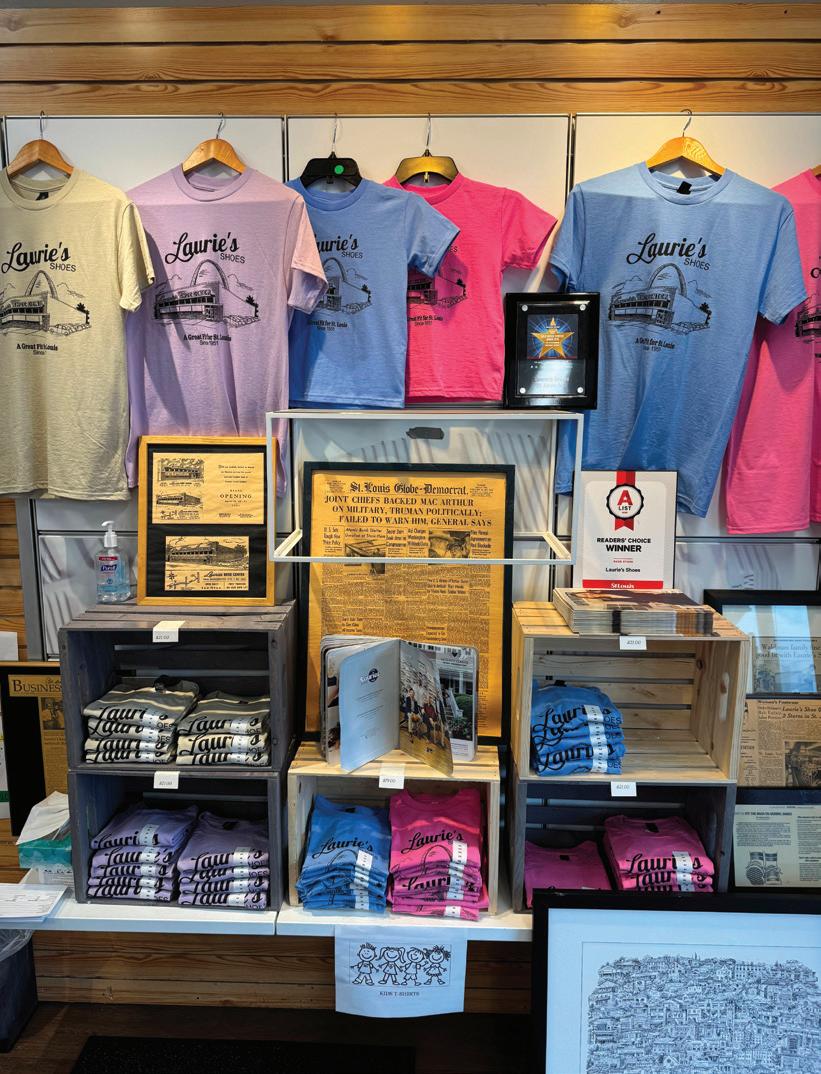
Clockwise from left: a 1951 local newspaper article highlighting co-founder Morris Goldman’s famous in-store bomb shelter; co-founders Joan and Wally Waldman; the memory wall; a vintage invitation for the store’s grand opening; a T-shirt for young first-time shoe buyers
LIFE OF A SHOE SALESMAN
Allen Nudelman reflects on an illustrious retail career that spans his teenage years to (so-called) retirement, from sit-and-fit to Nordstrom to designer boutiques to outlets.
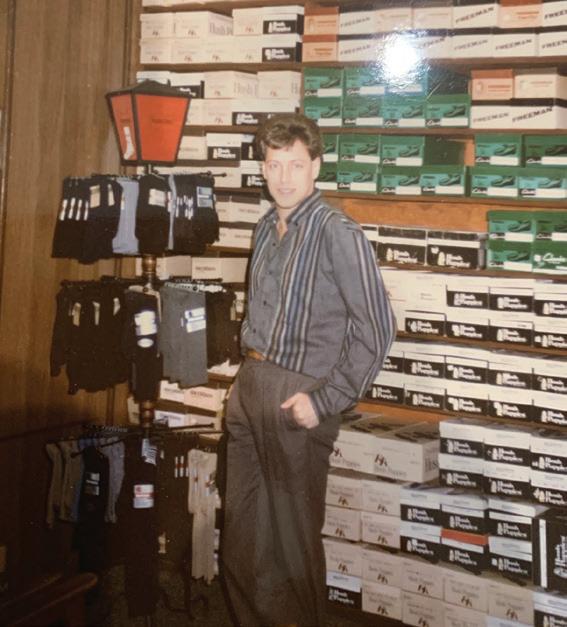
HEY, 13-YEAR-OLD ALLEN…You got in trouble again in school and Mom can’t handle you. Lucky our family shoe store, Alden Bootery, is only three blocks away from our house in Elmont, NY. This is how Dad starts keeping an eye on you. He always finds something for you to do. Like today, when a shipment of 100 cases of Pro-Keds came in and he sent you to the basement to unpack and ticket every box.
On the days that it’s not busy with inventory, he allows you to watch him and our manager measure and fit customers. After a year of study, you’re finally allowed to handle the nuanced task. You’re pretty good at it! You love interacting with people. I think Dad is proud of you. One of his favorite sayings is: “Everyone is good until they prove otherwise.” Dad took over his dad’s store, Max’s Sundial Shoes in Brooklyn, upon returning home from Germany after WWII. Your hope is to one day take over his store.
Attending trade shows with Dad in New York is a thrill. The Crown, Empire State, Marbridge, Coliseum, and 1250 Broadway buildings are regular stops. You love it when Dad asks for your input on buys. You still remember your first buy, at Verde, like it’s yesterday! They were a two-tone men’s lace shoe and a black boot with double front zippers. The excitement of selling that first pair is incredible. You get hooked on the shoe biz as a career, right then and there!
Your pay in those early days is pretty good. You buy lots of concert tickets and even help friends who can’t swing the $5.50 to see the Grateful Dead and Jethro Tull. Meanwhile, you’re following in Dad’s footsteps, building a solid network of industry friends. At your Bar Mitzvah, there are two tables of shoepeople. Carl Lowenthal, a Freeman rep, is one of Dad’s favorites. He’s always funny with his double talk. Your best friend is Dad. On quiet days in the summer of ’69, you sneak out together to Shea stadium, especially if Seaver is pitching or the Giants are in town. Dad might have grown up in Brooklyn, but his allegiance is to the Giants. The Mets, though, are doing well. You hope they make it to the World Series. Hint: you gotta believe…in miracles.
Alden East, a high-end women’s fashion boutique in nearby Bay Shore. It’s the best decision you’ll ever make because that’s where you meet your future wife, Roberta. The business runs for about eight years until the local mall decides to open on Sundays. You’re not religious, but your stores are always closed that day so employees can enjoy time with their families.
So you sell Alden East and concentrate on the original store. Over the next decade the neighborhood changes, alas not for the better. You get robbed. You decide to close shop and look for another location. Meanwhile, a Nordstrom store opens nearby. You apply to tide you over until you open a new store. Turns out, though, working at . You don’t have to worry about staffing, payroll, and the many other headaches that come with running your own business. You also enjoy training salespeople. You stay there for eight years, making many great friends along the way. One is Danny Livingston, then a Bruno Magli rep. He now moonlights as a comedian! is funny.
Your next stop is Salvatore Ferragamo. The legendary label opens a Long Island flagship and hires you to run operations. Over the course of the next 23 years you build an amazing business. Managers Christine and Erika and coworkers Carlota and Canna become family.
When it’s finally time to retire, your staff sends you off in style: a party at Morton’s Steak house. Massimo Ferragamo gifts you wine and luggage. You still pop in to visit colleagues regularly.
During the summer of ’71, you’re on vacation in Israel when you receive a call that changes your life. Dad has passed away. Your 15, heartbroken, and worried about your future. In Dad’s infinite wisdom, though, he put the majority of the store in your name and the rest in Mom’s. We have to get along, and we do! We make a few changes, like taking orthopedic courses and visiting doctor offices and nursing homes to expand that end of our business. It’s a lot of work for a teenager, but along with Mom and our terrific staff, we make it happen.
At 20, you decide you need to see more than bunions and open
Retirement, at first, is grand. But you get bored easily. You miss the daily hum of a shoe store. Two years in, you decide you must do something. Clarks opens an outlet store nearby. You don’t need the money, but work gives you purpose. It also allows you to do what you love. You’re once again wielding your trusty shoehorn, racking up sales like the good old days.
I’m happy to inform you that it’s a life very well-lived so far. You appreciate everything this industry has provided for you and your family. As for regrets, there are a few, but none as important as this one: Spend more time with your family—the milestones and the everyday meals! Years whiz by into decades. Don’t learn this lesson the hard way. Take Warren Zevon’s whimsical wisdom to heart and “enjoy every sandwich.”
Allen Nudelman takes stock of a shoe biz life.
AS WE LIKE IT
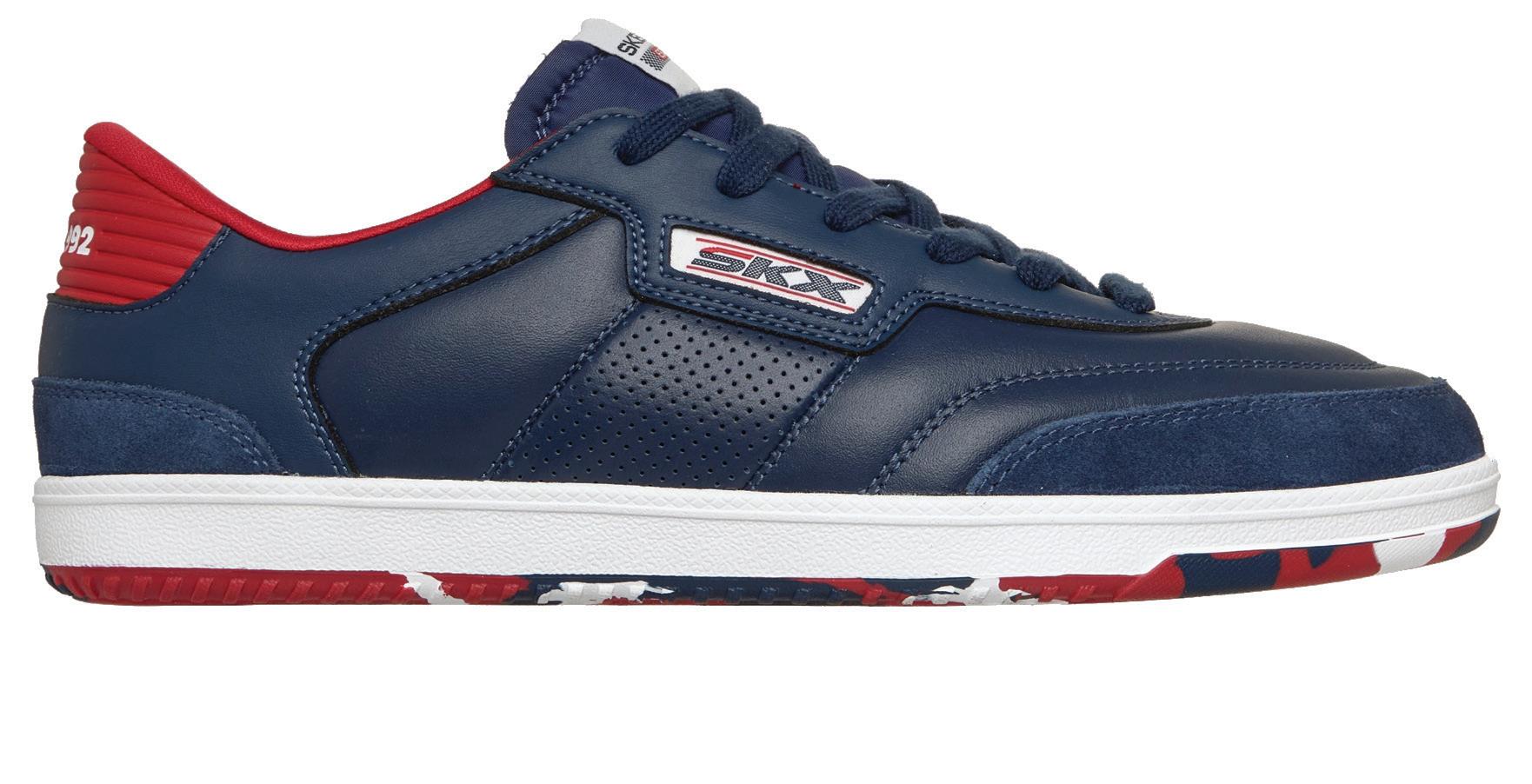
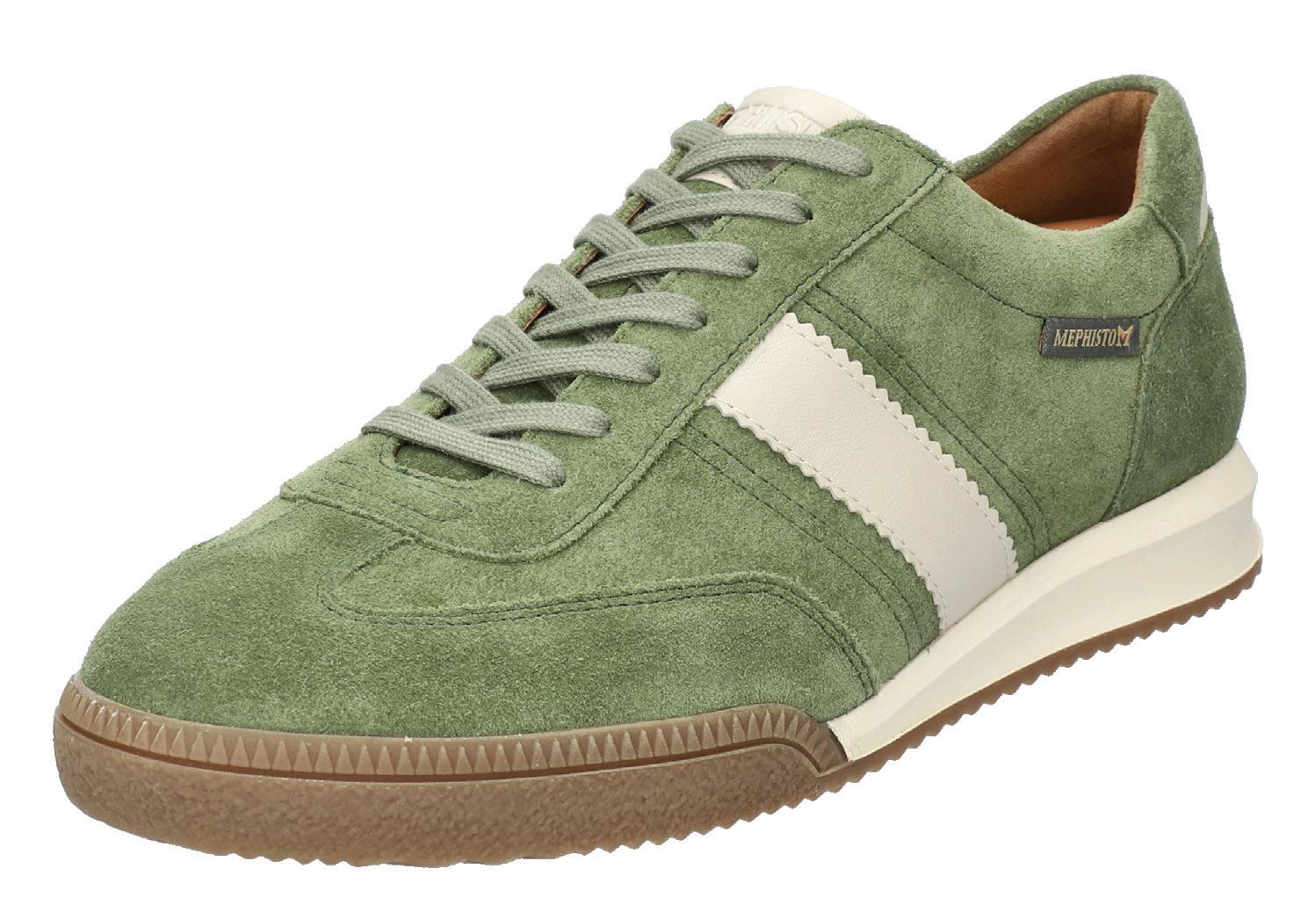
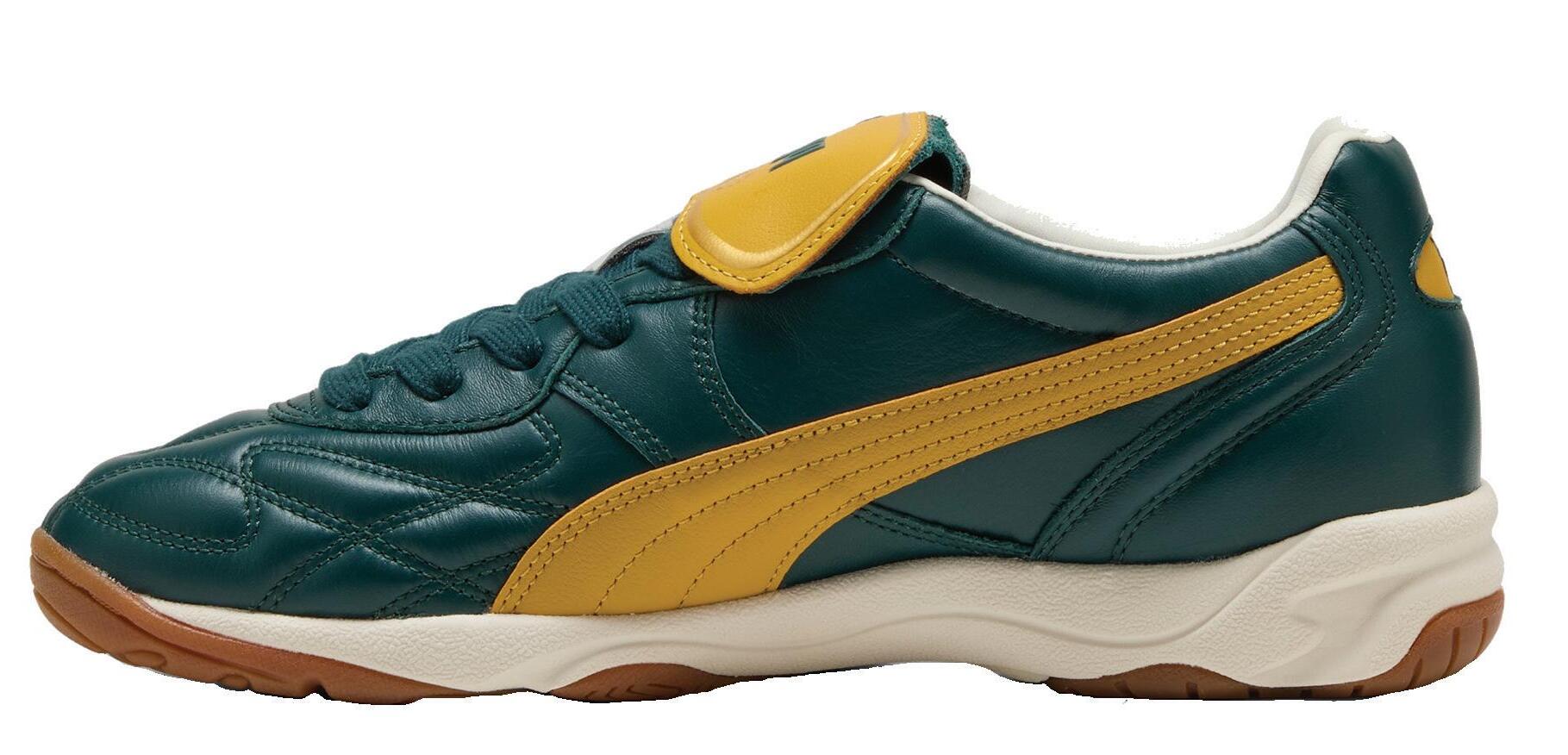
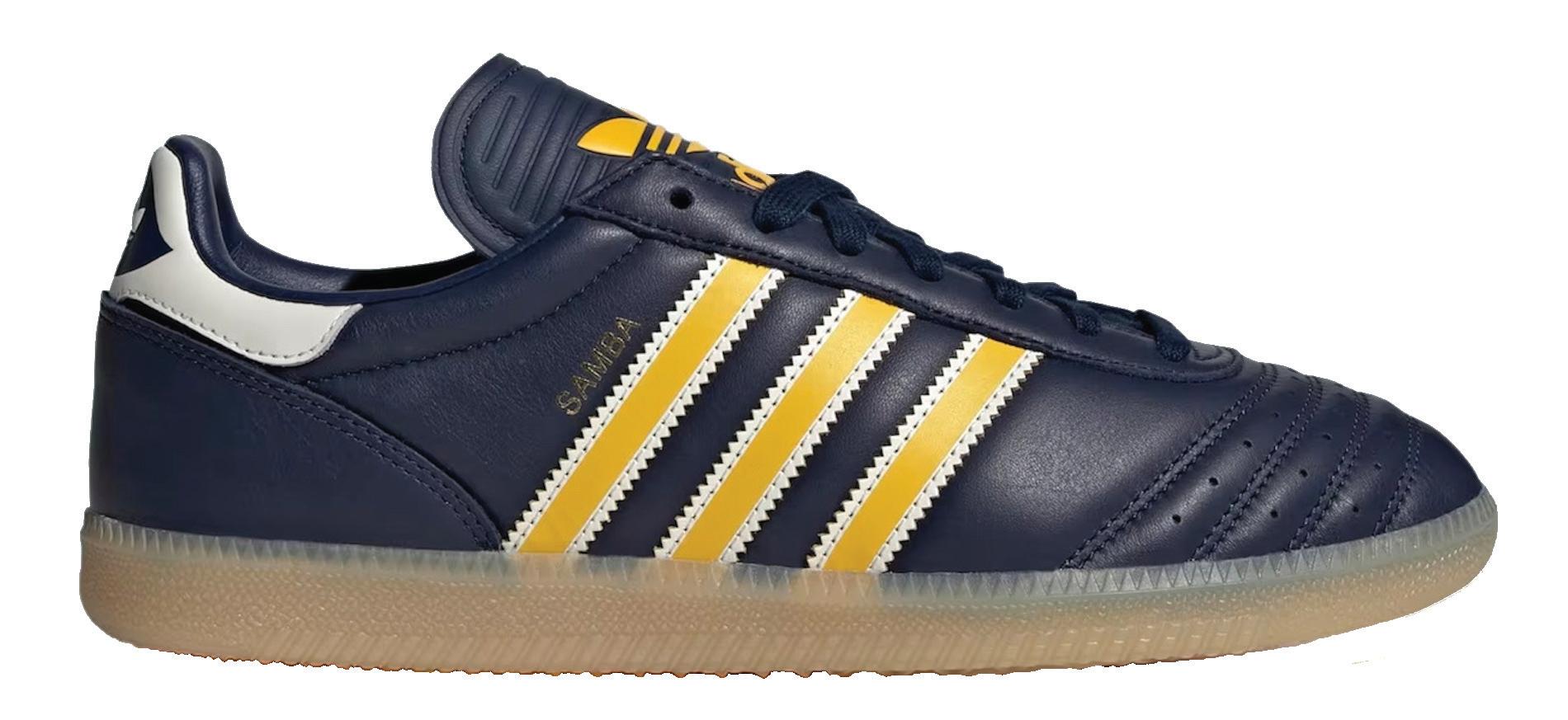
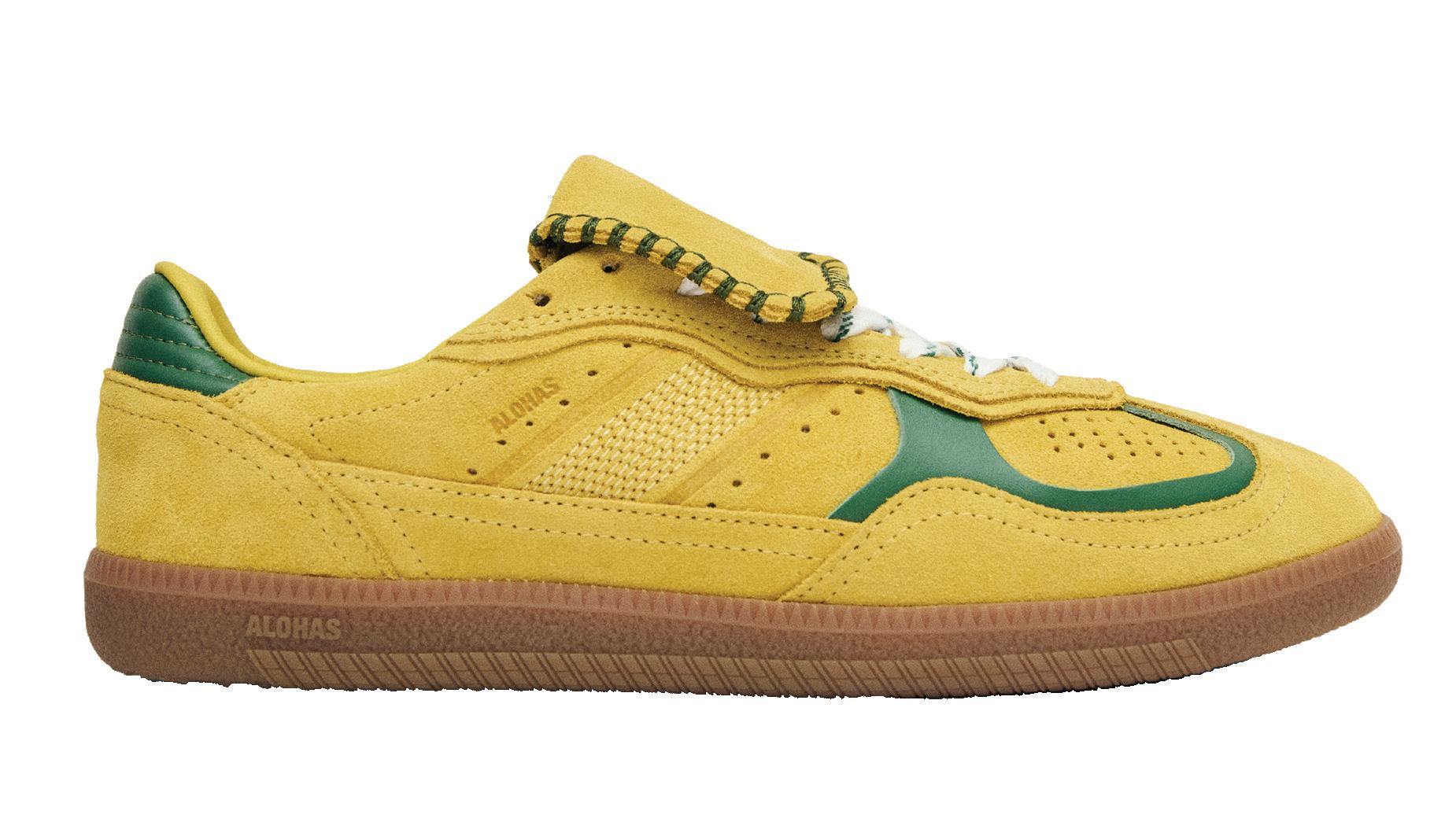
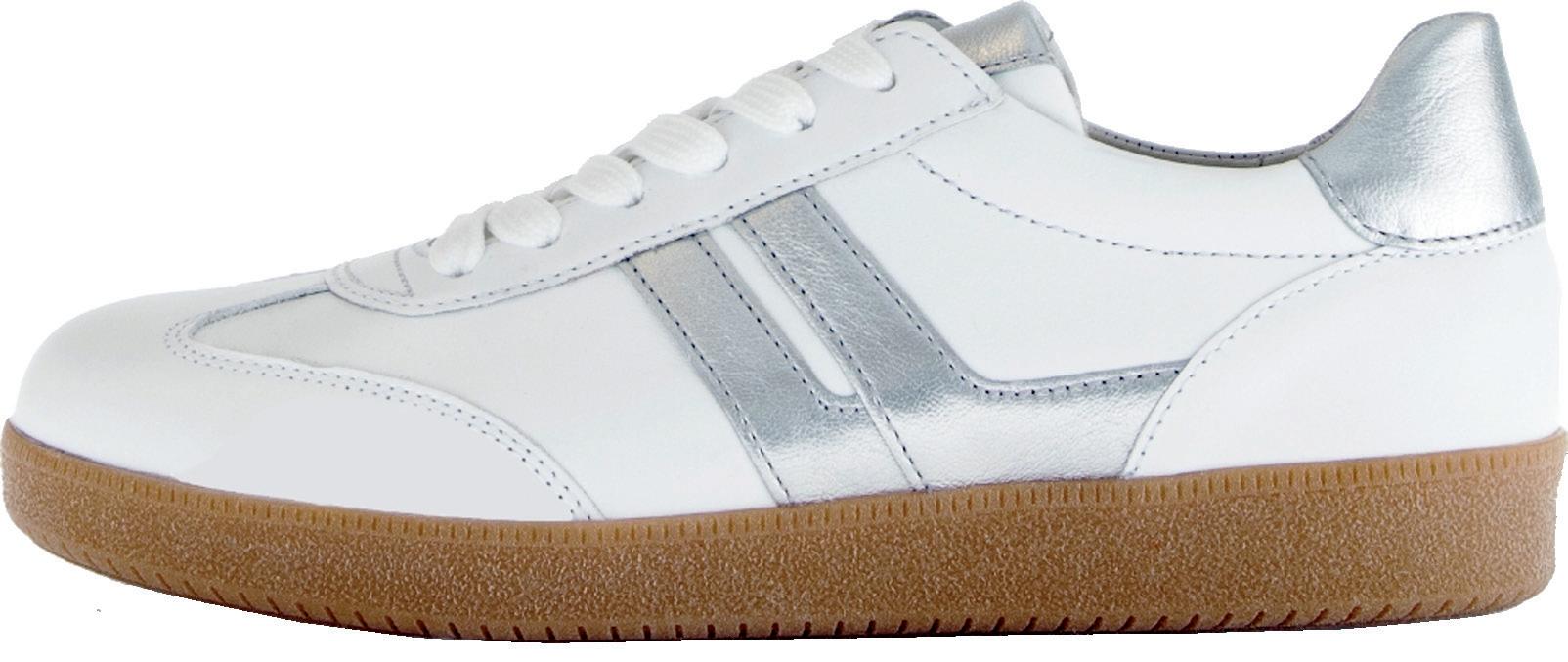
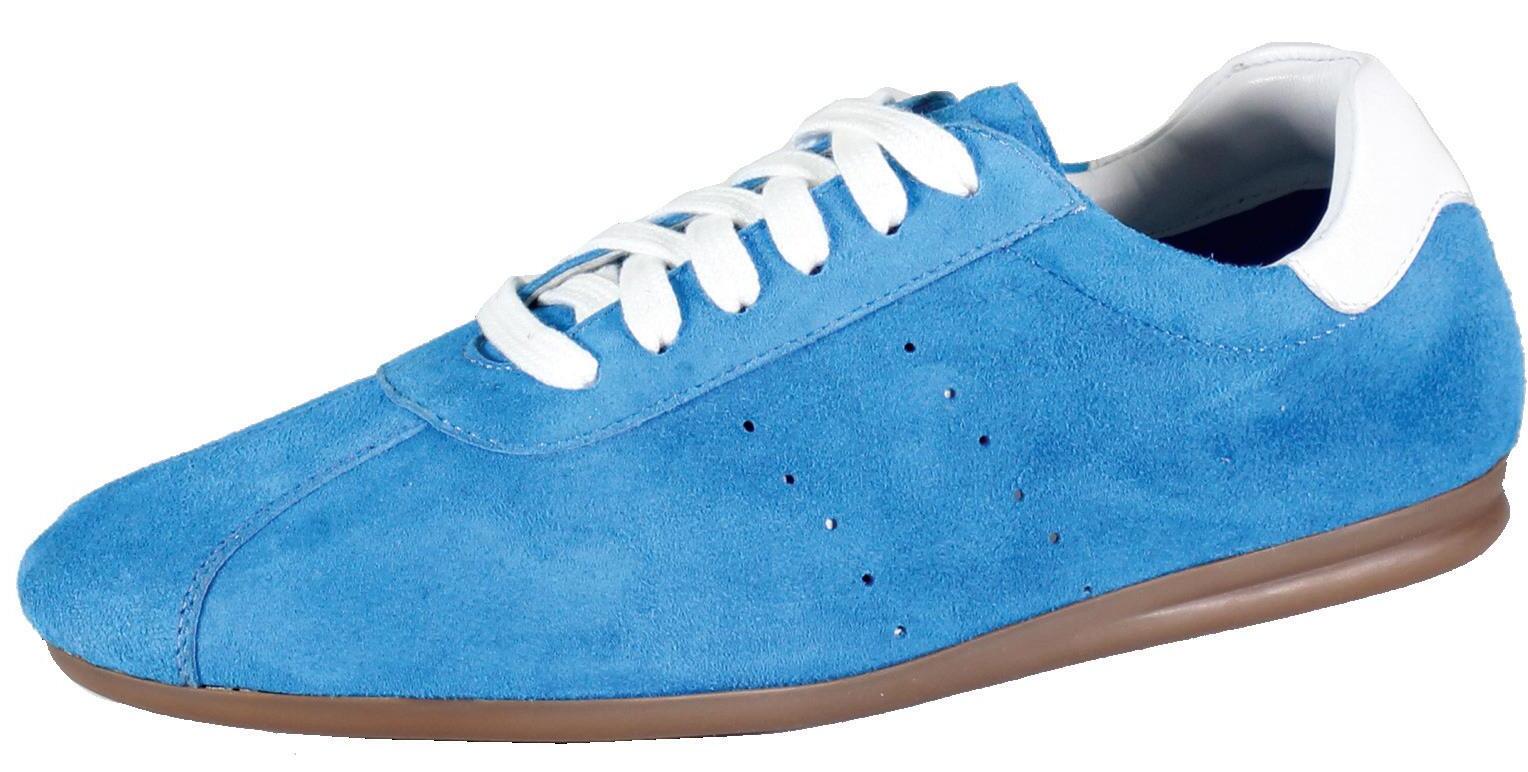
All the world’s a soccer stage, and all the men and women are merely inspired by the greatest players.
Adidas
Gabor
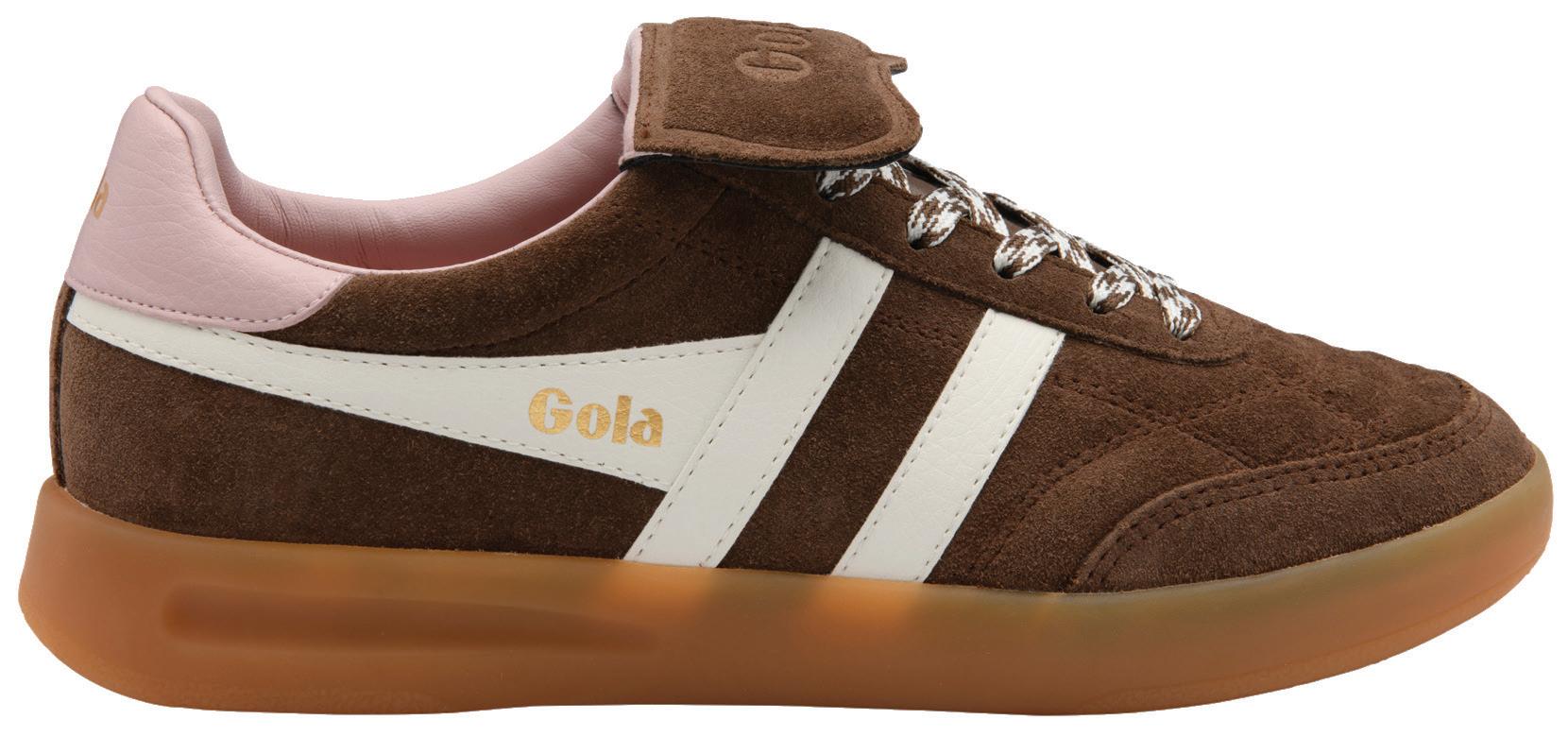
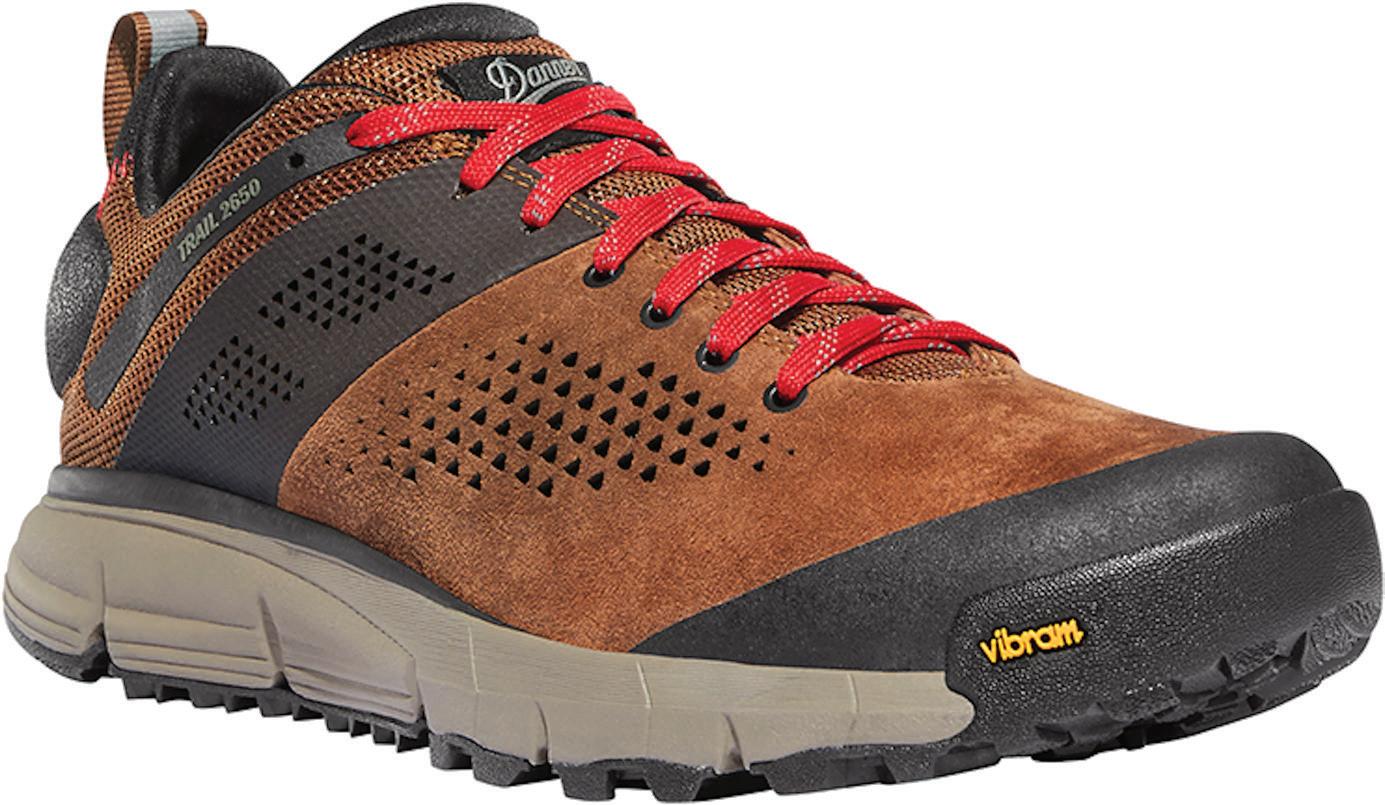
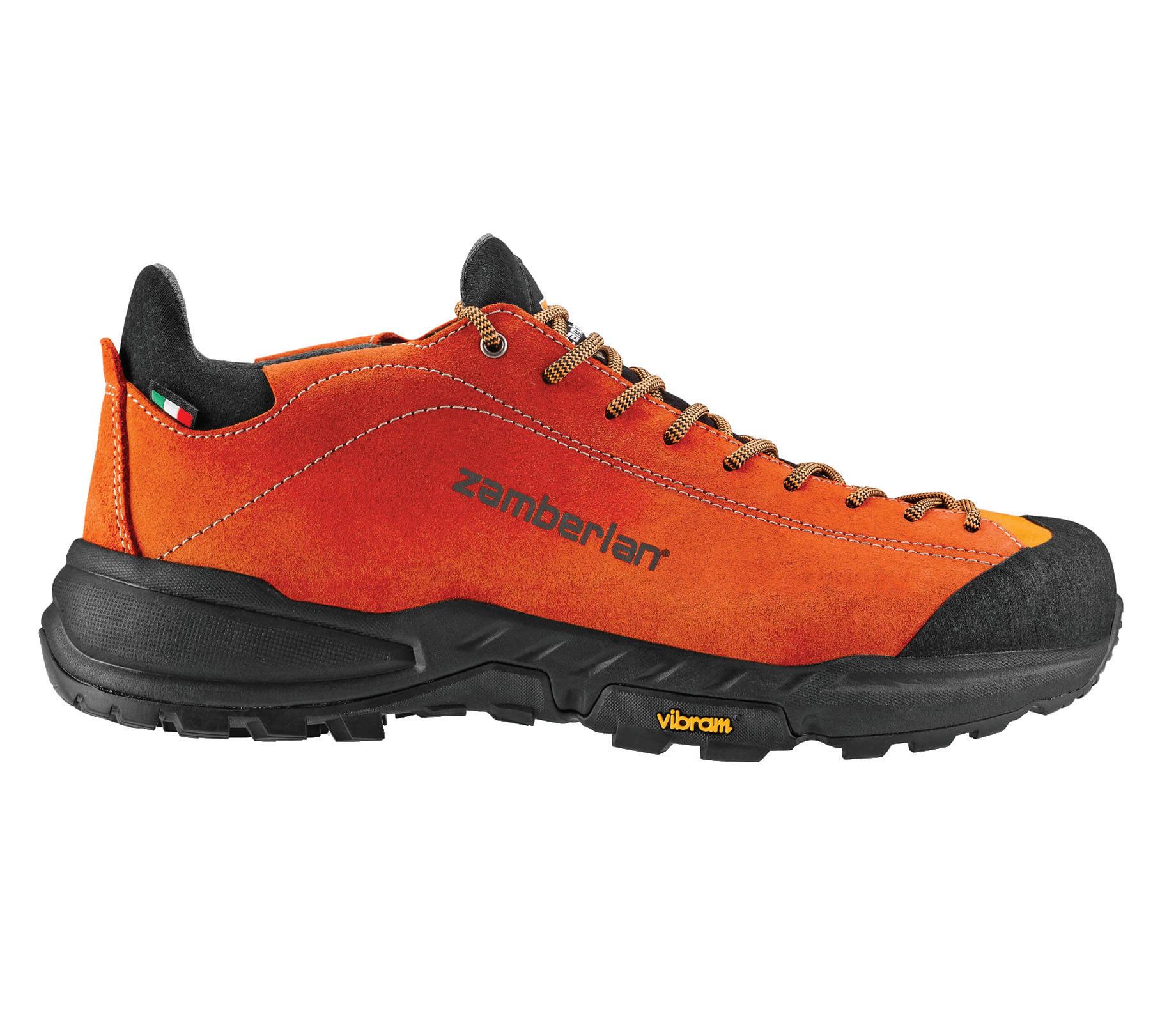
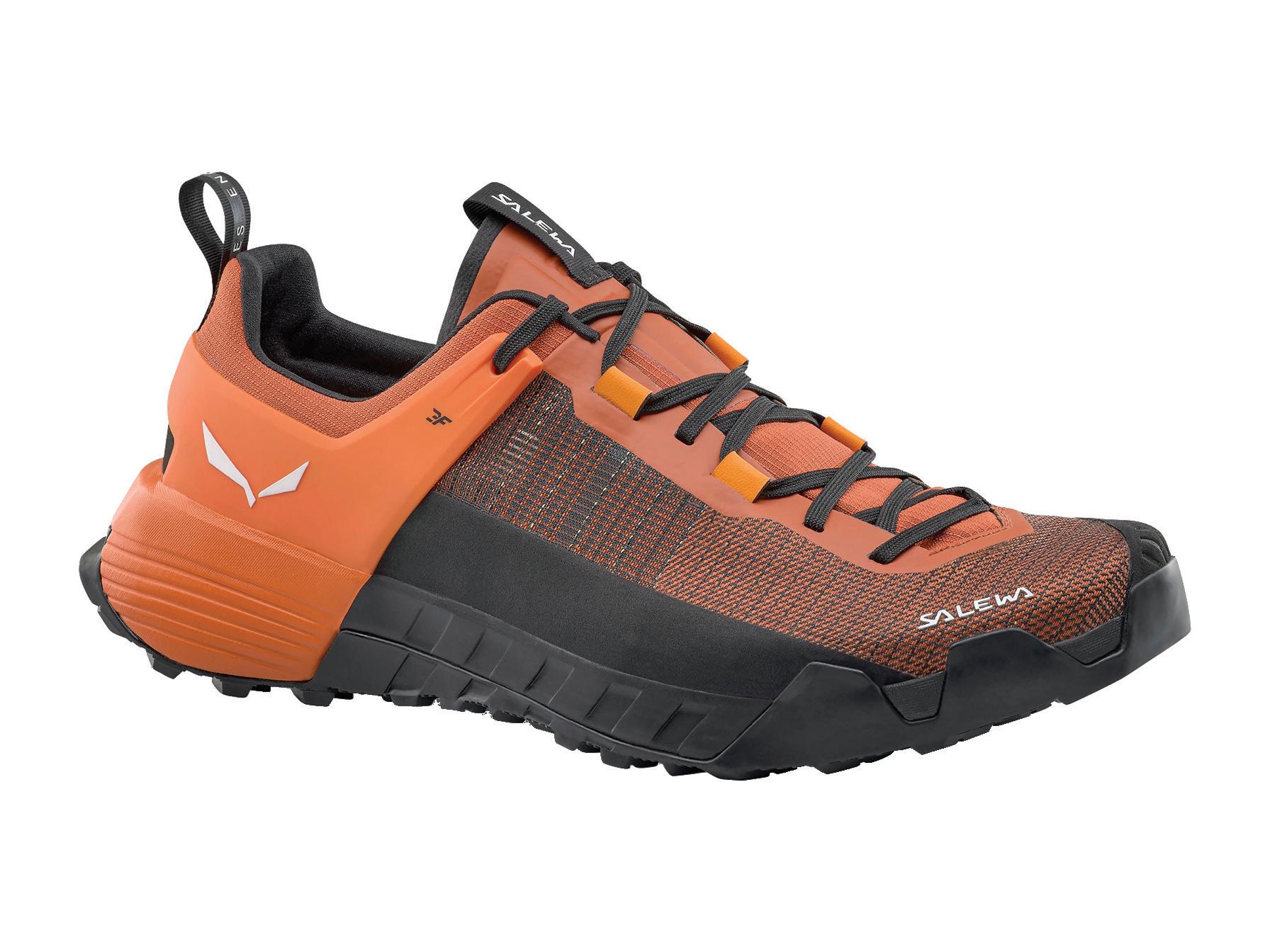
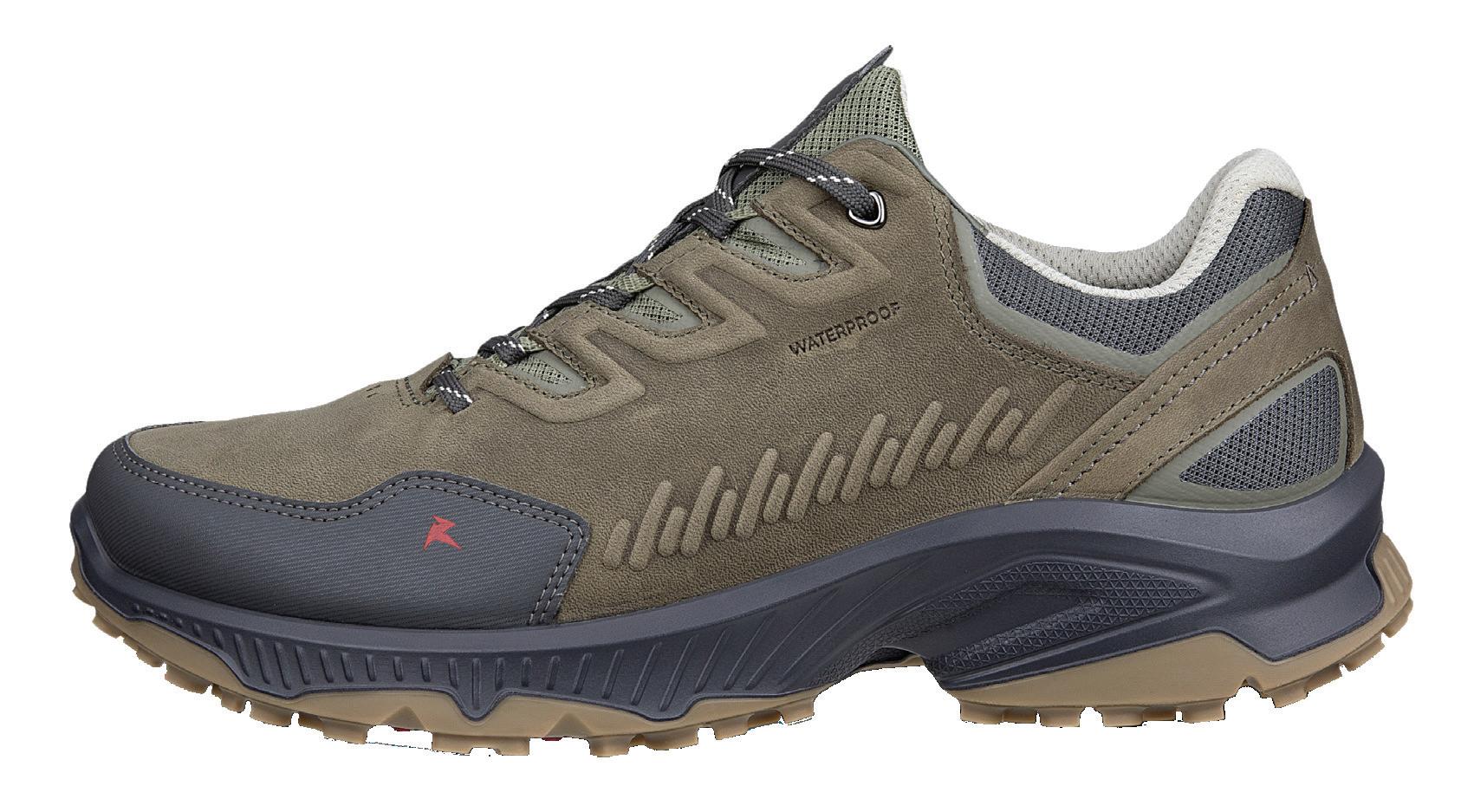
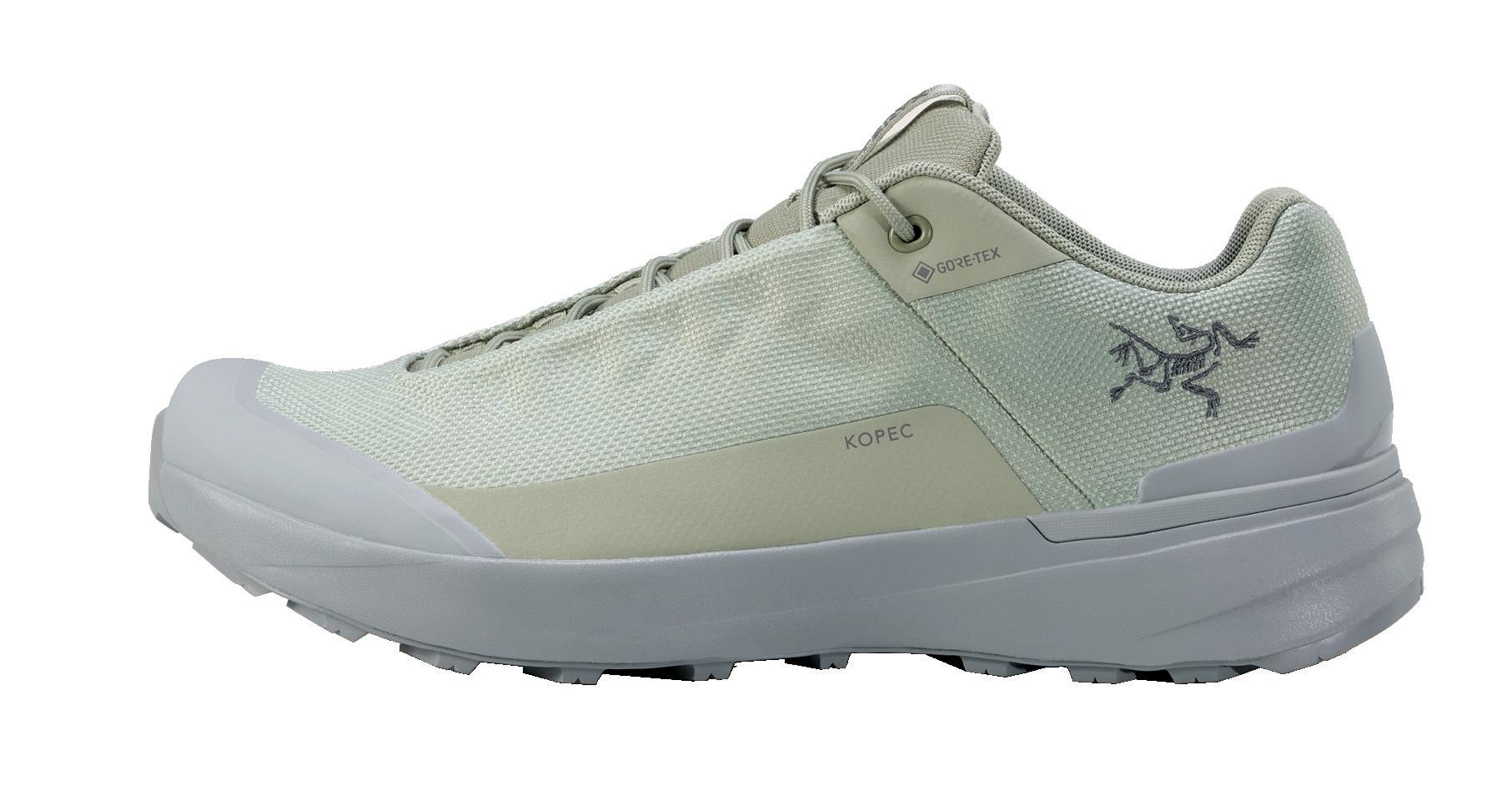
Shhh! Gorpcore for Guys
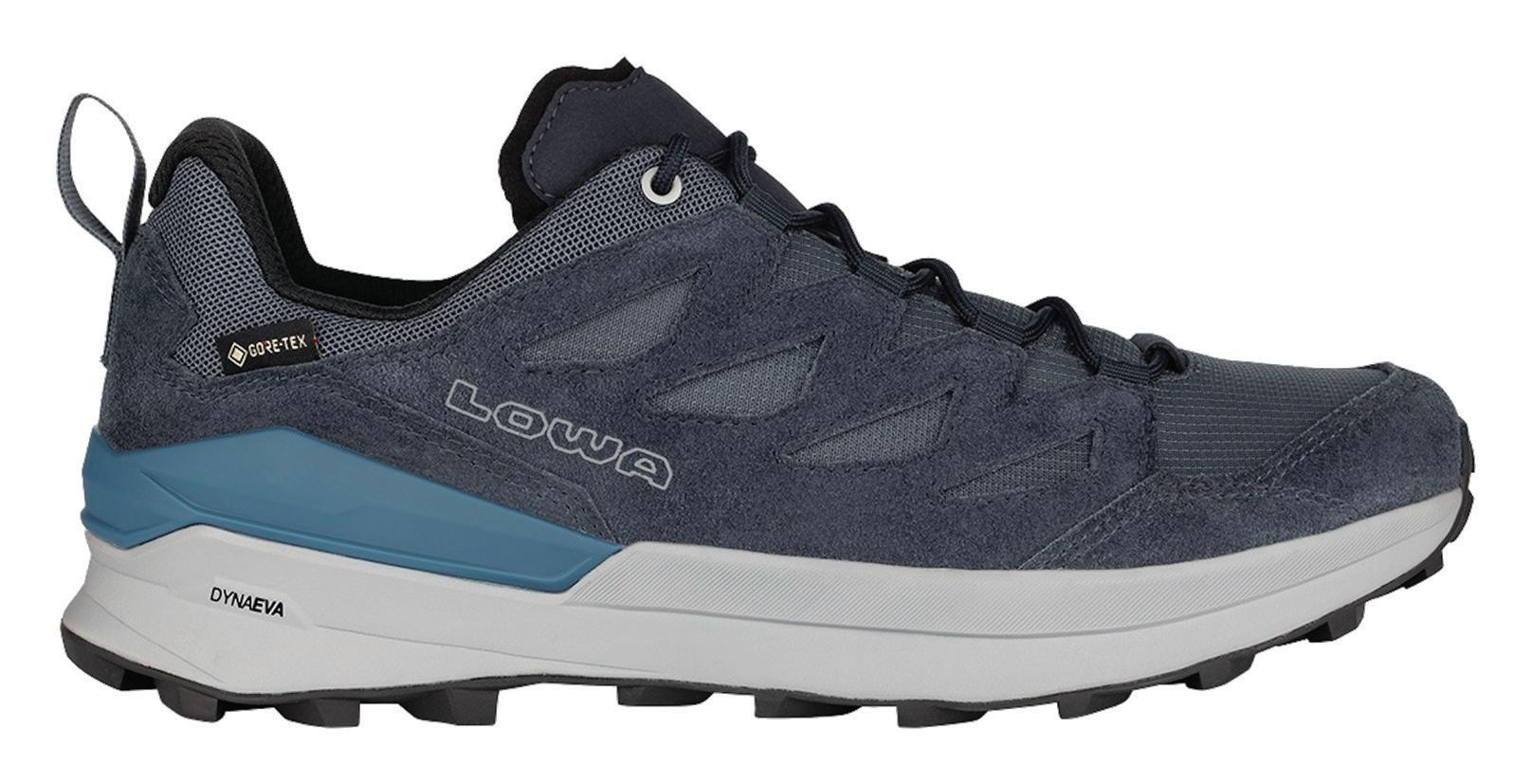
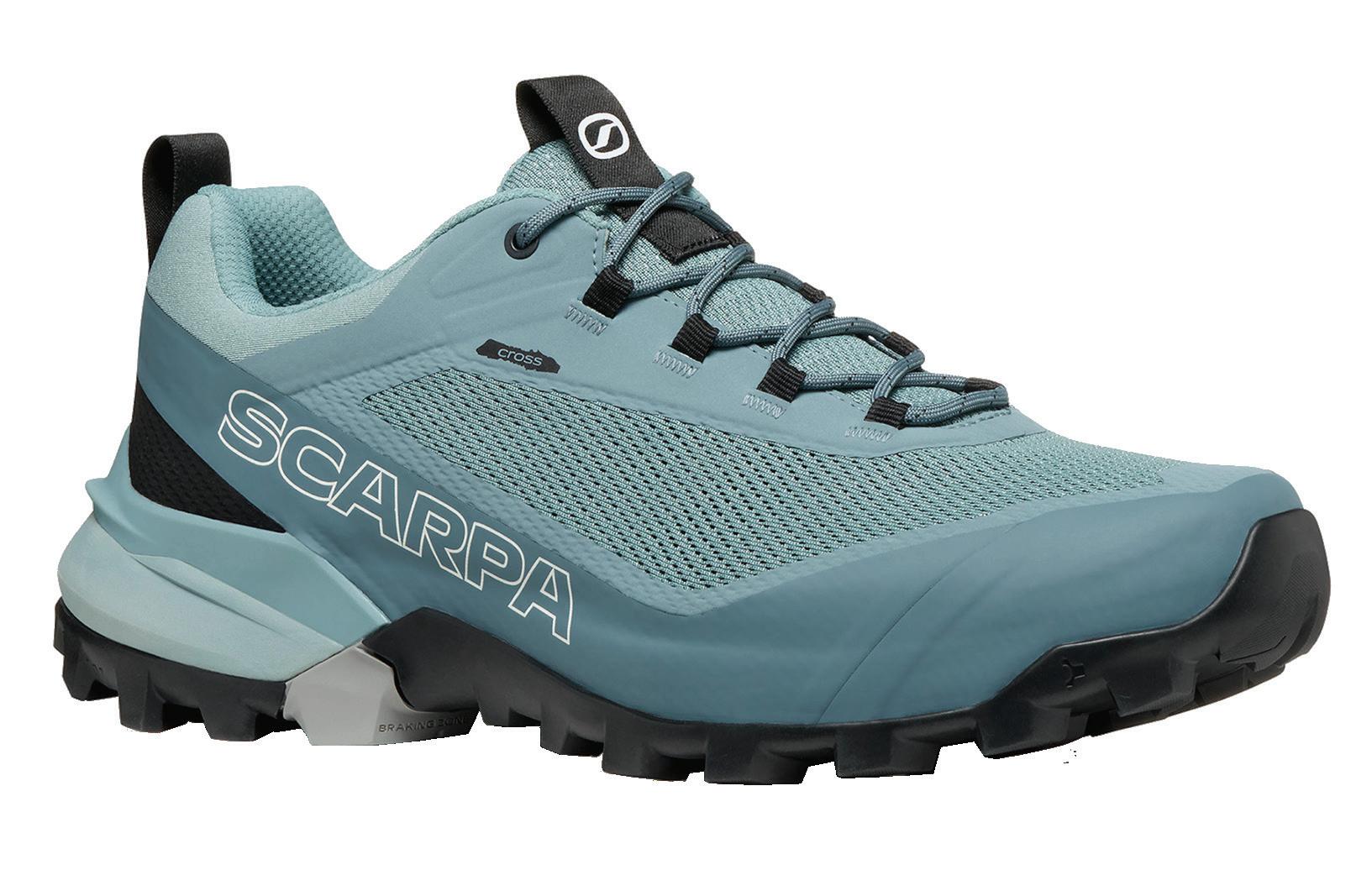
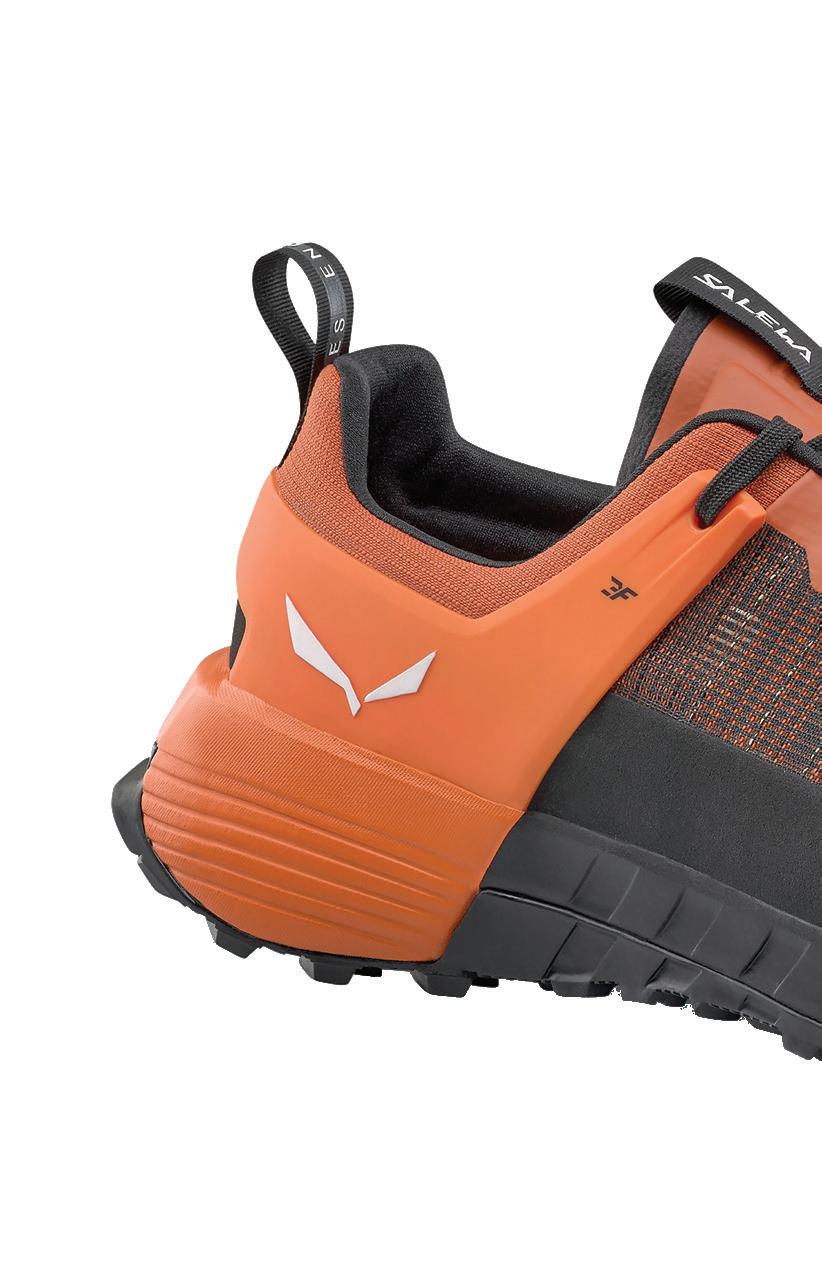
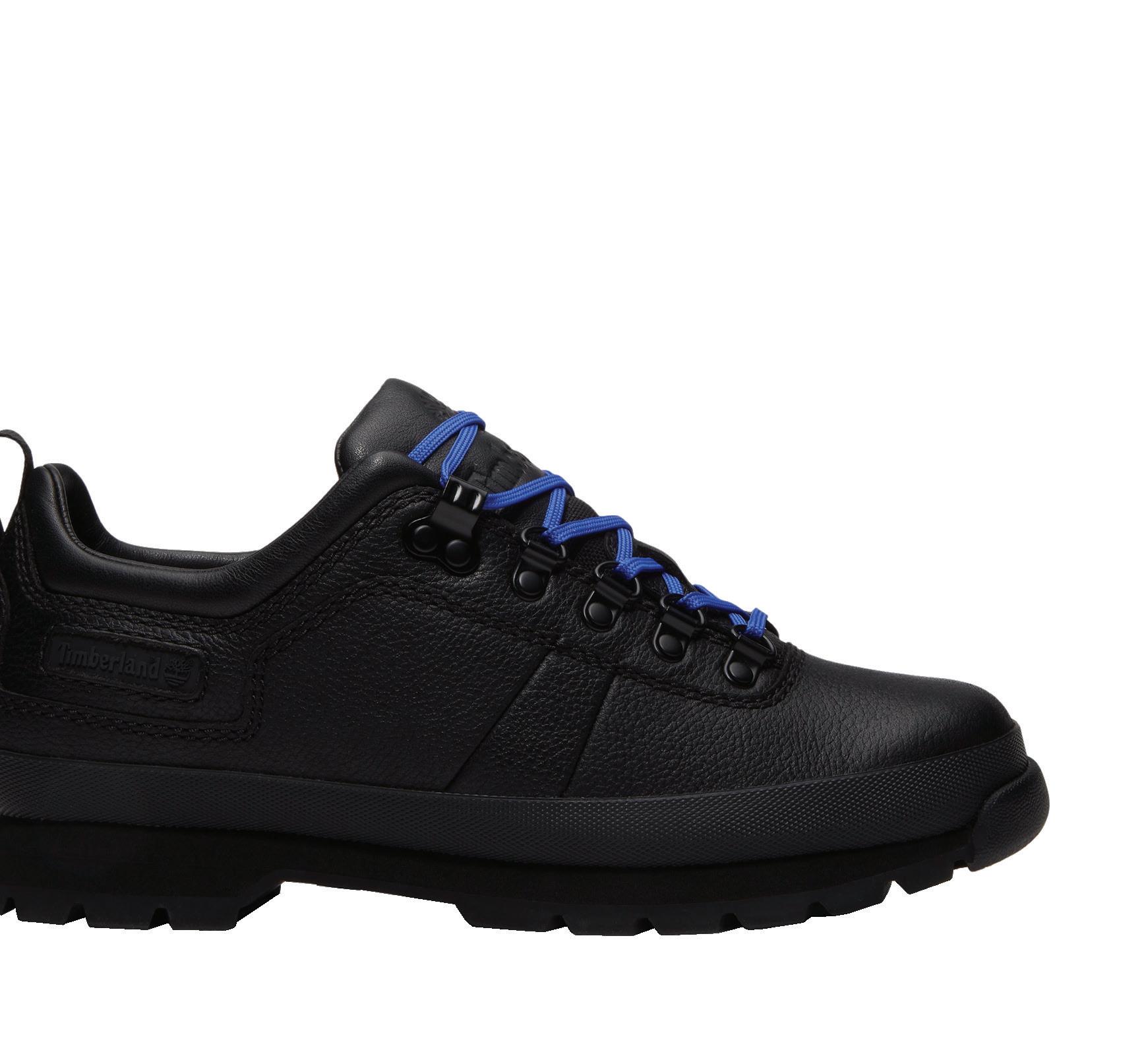
Suitable for city streets but built for nature trails, the “quiet” outdoor style is making some noise.
Danner
Leather snip toe cowboy boots with rubber heel cap, CellSole cushioned footbeds, and ankle zippers by Black Star
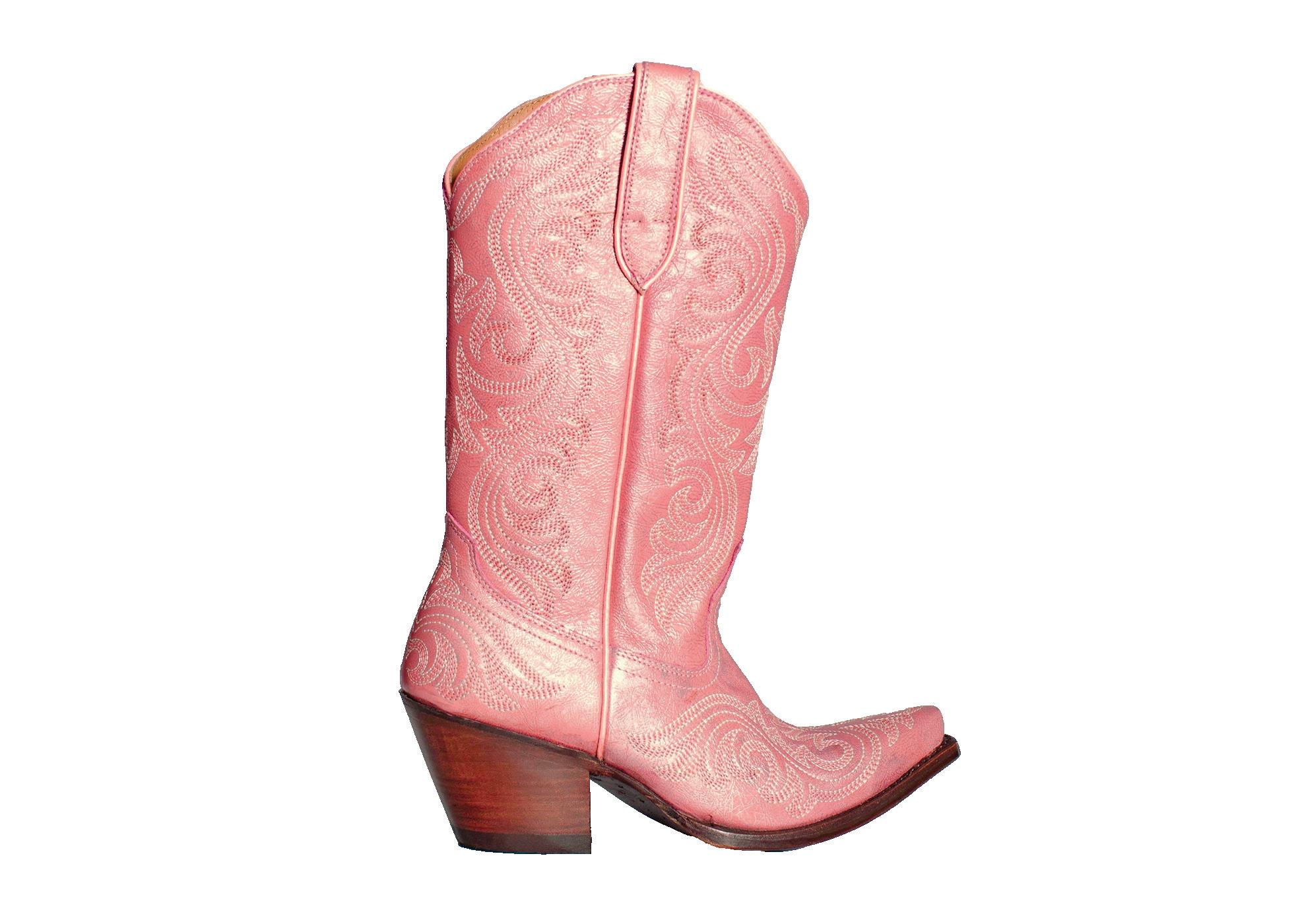
Ariat boot with five row stitch pattern and non-removable comfort insole.
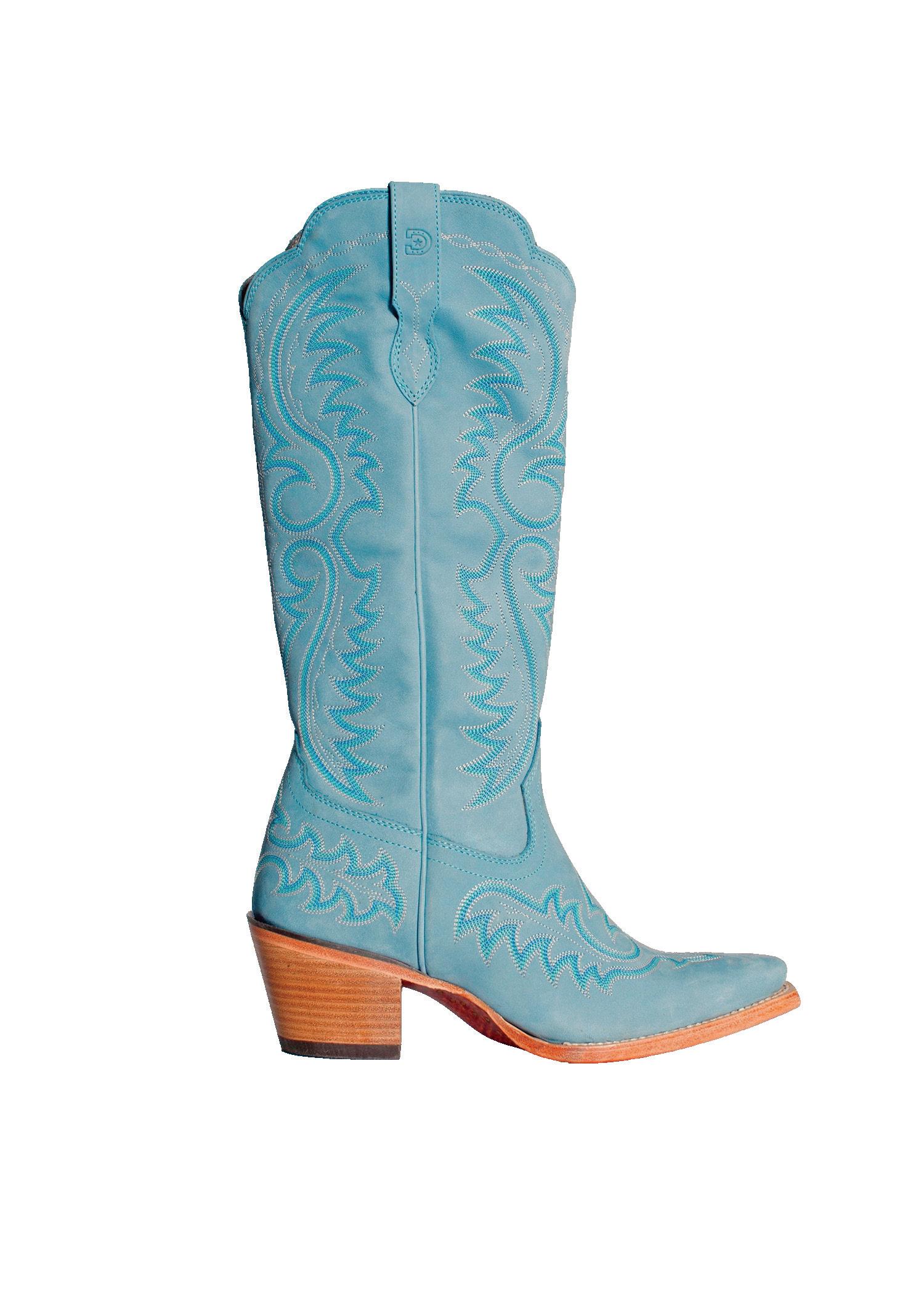
Opposite page, left to right: Durango 16-inch boot with high abrasionresistant rubber heel lift; responsibly sourced leather western boots with side zippers and three-inch stacked heels by Franco Sarto
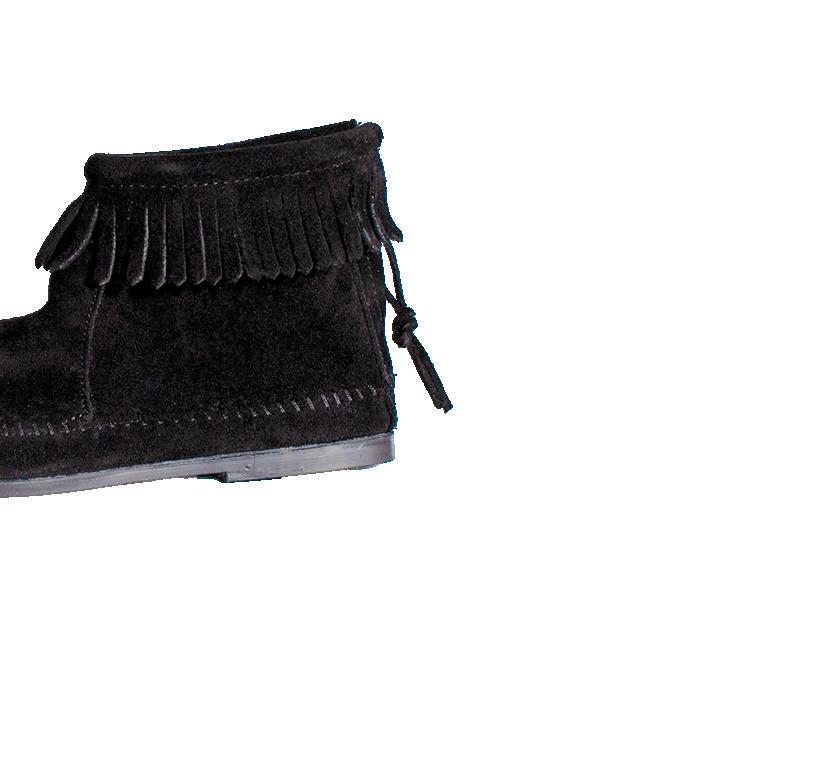
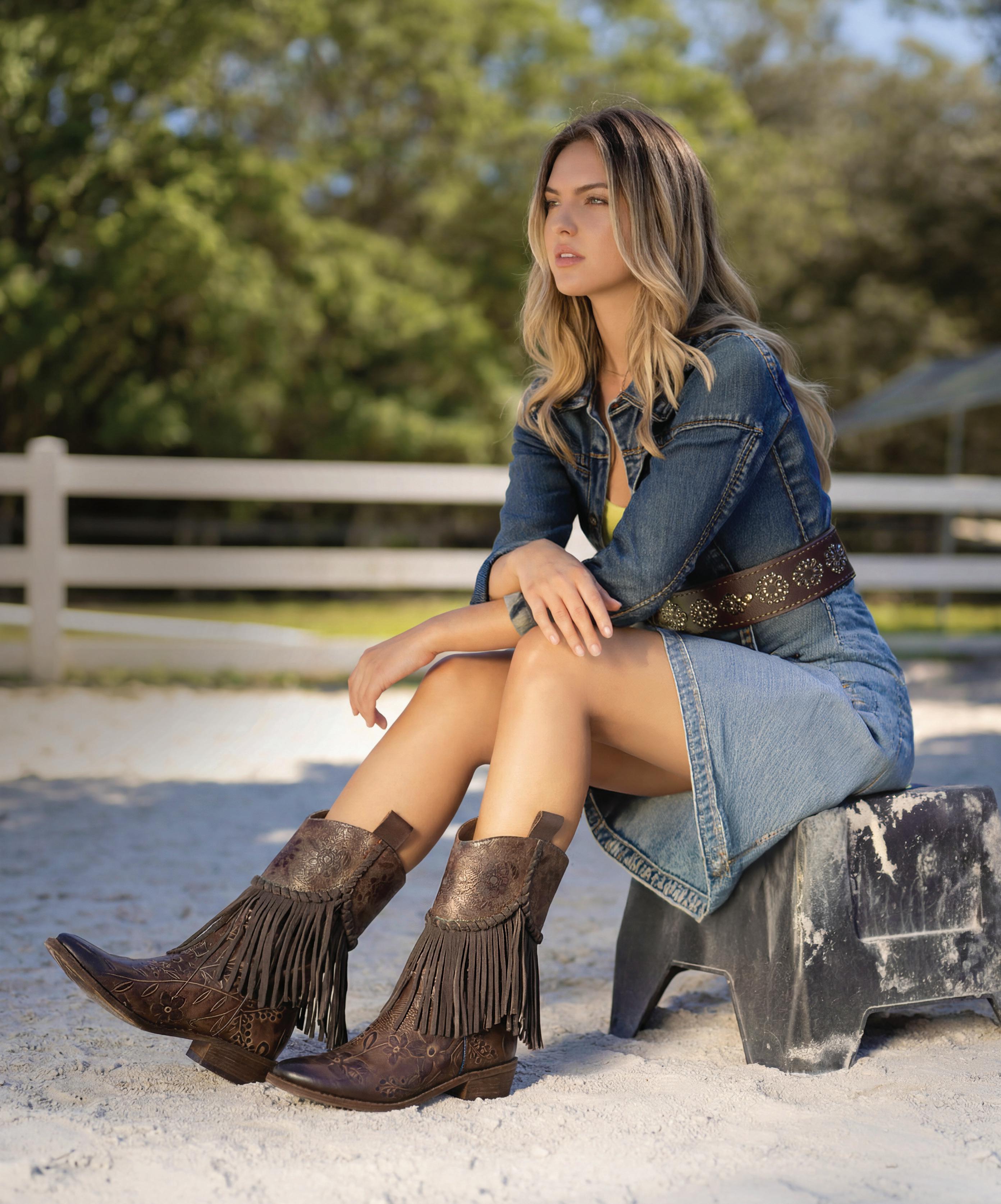
Miz Mooz leather ankle boot with microfiber lining. Opposite page, left to right: Dingo moto/ western boots with fringe, rhinestones, and Cushion Comfort Insoles; pointed toe ankle boot with threeinch block heel and front zipper by Azura
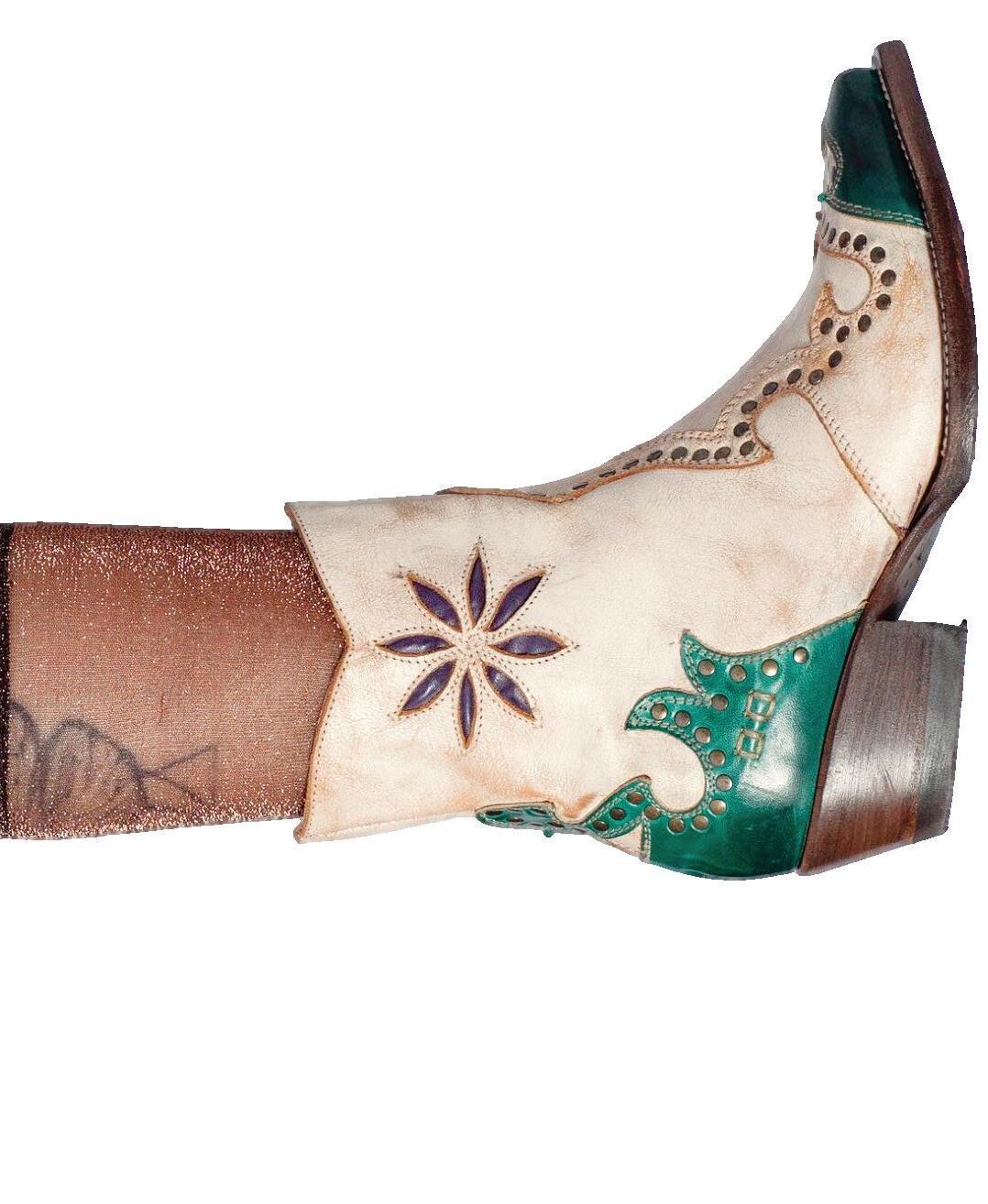
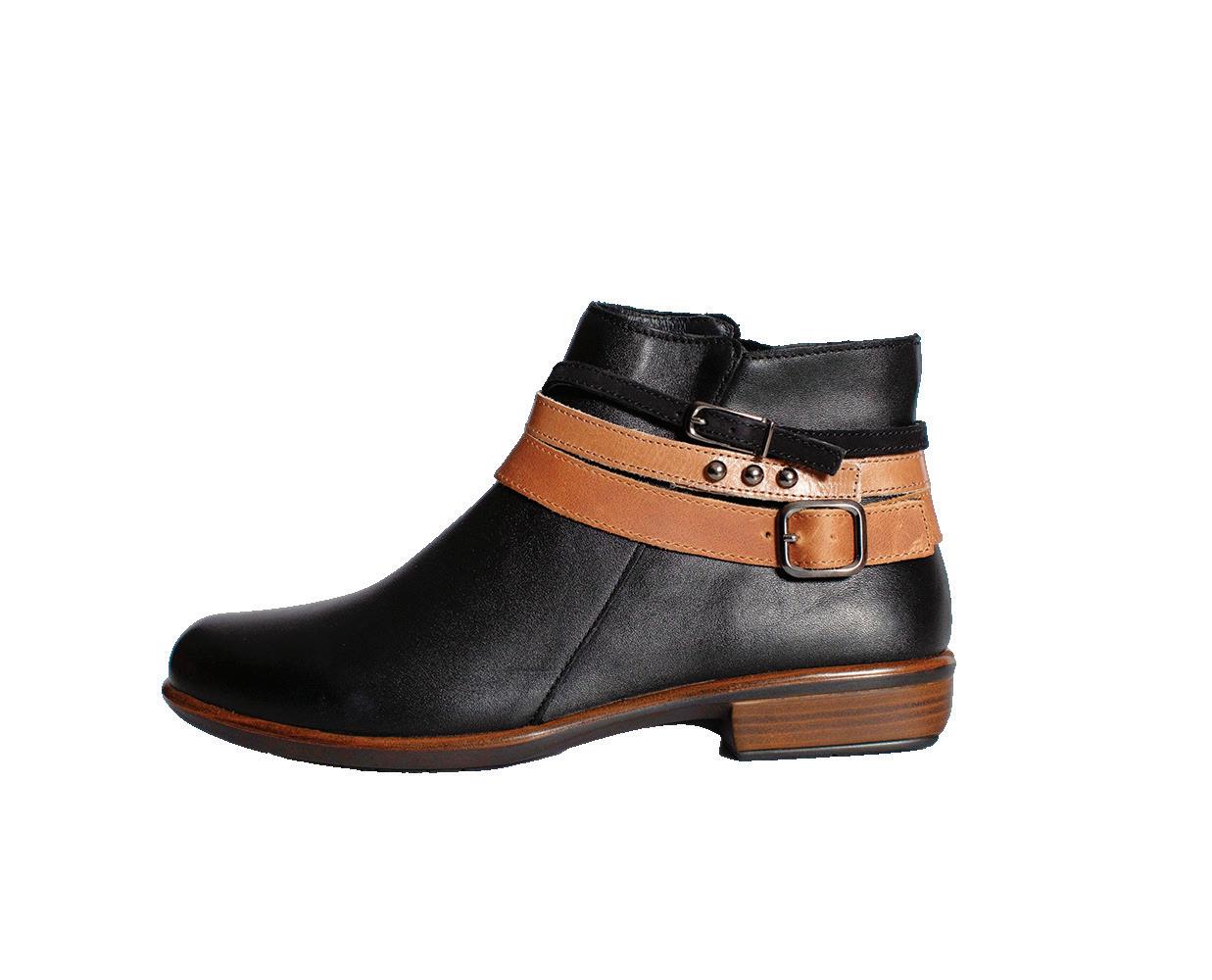
Left to right: Tony Lama 15-inch boots with floral overlays and metallic shanks; Naot slip-resistant ankle boot with side zipper and removable footbed. Opposite page: bootie with distressed vegetable-tanned leather upper and cushioned footbed by BedStu
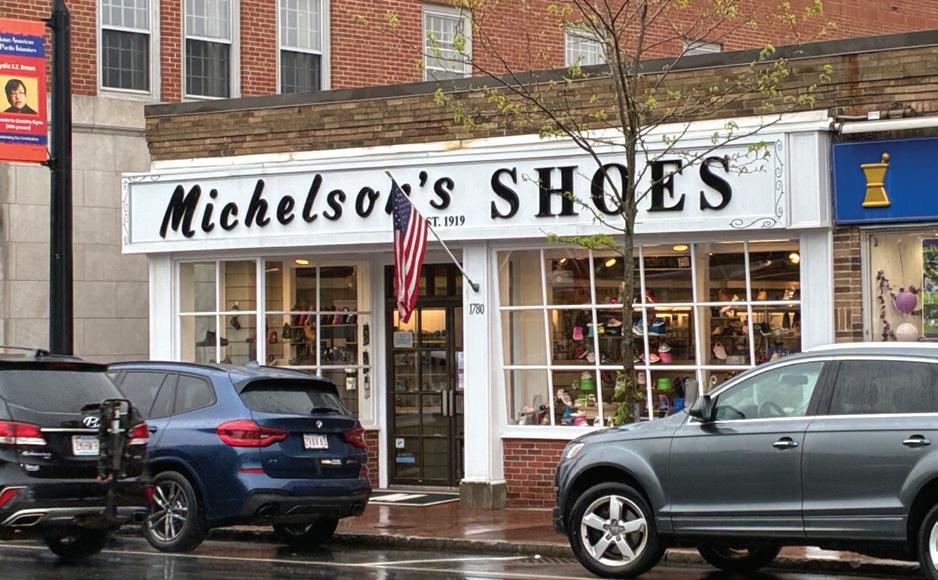
Michelson’s Shoes
Lexington and Needham, MA
MICHELSON’S SHOES is a fourth-generation owned and operated business based in the cradle of the American Revolution.
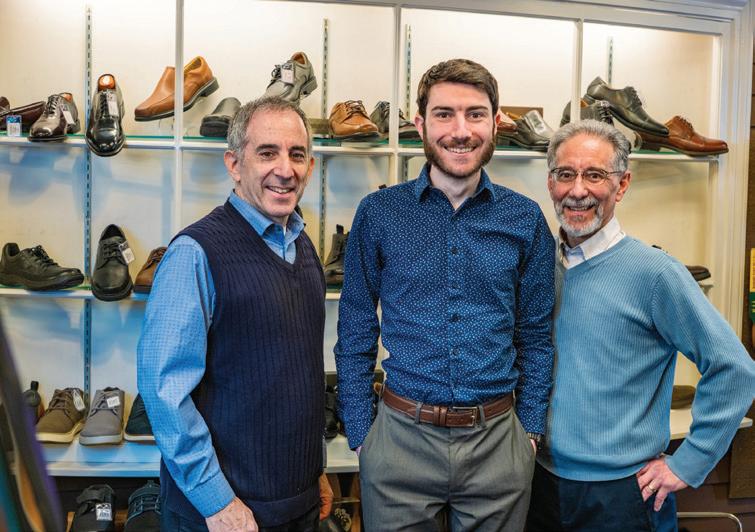
Co-owners/brothers Eric and Jerry Michelson took the reigns from their father in 1995, and have leaned into their rich sit-and-fit heritage and community involvement. It’s a tried-and-true recipe that continues to pay dividends.
“We’re sticking to what we’ve always done,” Eric affirms. “A very knowledgeable staff who is trained to walk people through the process of finding comfortable footwear. The full-service experience doesn’t cost them anything additional and makes shopping more efficient and effective.”
Michelson’s Shoes carries a wide range of women’s, men’s, and children’s styles. The selection includes Brooks, Hoka, New Balance, Birkenstock, Dansko, Rieker, Clarks, Stride Rite, Rockport, Merrell, Keen, Anodyne, SAS, and Quest.
“We try to adapt with the latest styles and brands,” Eric says, adding that Michelson’s Shoes also operates a successful online channel that caters to people nationwide. “And we help fit everyone from babies to senior citizens.”
Top-selling accessories? Socks and legwear from Smartwool, Goldtoe, and MeMoi.
Do you expect a tourist-fueled 250th anniversary sales bump? A small one. Tourists are a small but important part of our business. A lot are day trippers who visit historic sites in the area. They come in looking for comfortable shoes, and we enjoy helping them. Overall, though, July 4th isn’t a big holiday here. The big one is Patriot’s Day in April.
Anything unique about Lexington and Needham customers? They gravitate towards neutral colors and comfortable styles. Lexington and Needham are high-income towns, so our customers aren’t price sensitive. They want practical and quality.
What’s your most effect marketing? Word of mouth. I’m constantly asking first-timers how they heard about us, and most say it’s through online community forums. People who want that sit-and-fit experience work hard to find it, and our name often comes up in those searches and conversations. Podiatrists and physical therapists also regularly refer patients to us. When we used to run ads in the Boston Globe, my dad would often say, “You can spend all the money in the world, but ultimately it comes down to people talking positively about you.” That’s why we work as hard as we can to make sure our customers leave satisfied and spread the good word.
What are some of your leading community outreach efforts? I’m president of the Lexington Retailers Association, and we work in conjunction with the Chamber of Commerce. Together, we organize a Memorial Day weekend sale in conjunction with a huge town Street Fair. We holds an outdoor clearance sale. It’s a great way to connect businesses with local organizations. We also take part in a Halloween Walk where thousands of kids and parents trick or treat at participating stores. It’s not about sales; it’s about connecting with residents.
Who is your fastest growing customer segment? Our segments are pretty well cemented, but we pay special attention on kids. We service first walkers through their toddler years. We love seeing them come back. We’re a multi-generational business on both the ownership and customer sides. It’s such a joy to see a mother, daughter, and granddaughter come in together. It happens often.
How’s business this year? Challenging. The government’s withdrawal of academic grants and research funding has impacted our area. Those cuts, along with escalating prices and the uncertainty of shipments, are the biggest challenges. But we’ll get through it, just like other years. Nothing shocks me anymore.
Tariffs, wars, inflation…its very challenging of late. It’s like death by a thousand cuts, and we’re getting cut up pretty good. But we can only control what we do in our stores and how we reach out to
people. We must also be flexible to stay relevant. This includes meeting people where they are, which is increasingly online. I want to make sure that they find our stores there. I also want people to know that we’re involved members of their community. You can pay the same price for shoes online, but we donate to their charities and support local events. We also make life easier by allowing them to leave that day with great-fitting shoes.
What’s the smartest business decision you’ve made this past year? Our new website rollout. The response from local pre-shoppers and buyers nationwide has been favorable.
Which is more difficult: inflation or DTC sites? DTC sites are killing us. I can deal with lower pricing, but it’s frustrating when vendors withhold product from us because they claim that their online business is separate from their business with us. Retailers helped make many of these fit-oriented brands. We’re on the ground fighting for them.
What are you most proud of business-wise? That people keep walking in. They can shop anywhere, so choosing us means we’re doing something right. I’m also proud that my son, Noah, finds the business exciting and invigorating. Last but not least, I’m proud that customers respect us as a business and a member of the community.
The best way to retain employees? Money, flexibility, and respect. We look for problem-solvers and those who get satisfaction from working in complicated situations. Those employees stay with us, and we have staff that have been with us up to 30 years.
What do you love most about your job? That we’re part of so many people’s lives. Being a fourth-generation owner is special. We’re stewards and curators. We maintain our heritage and build on our legacy.
From left: Jerry, Noah, and Eric Michelson.
Short and Sweet
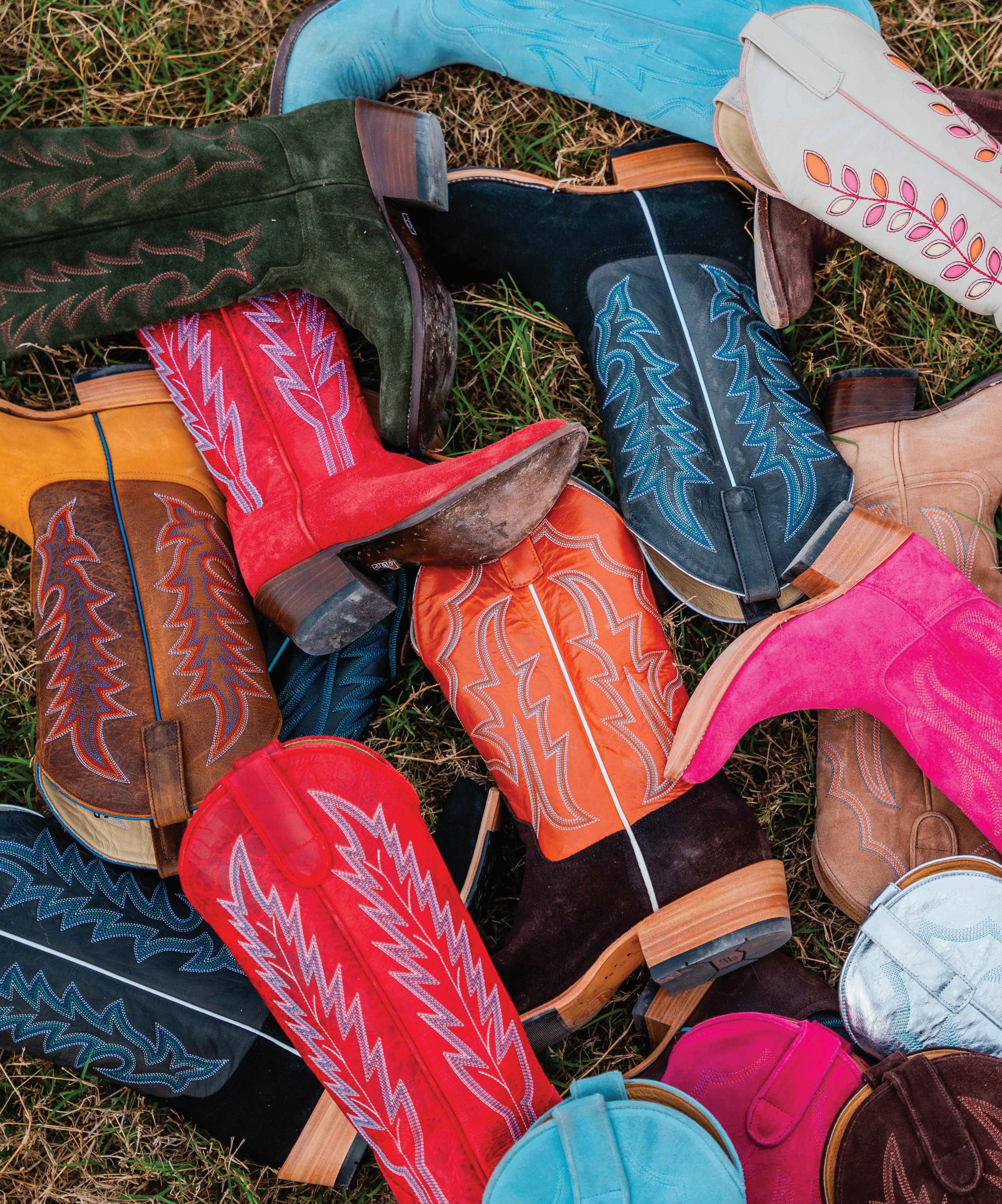
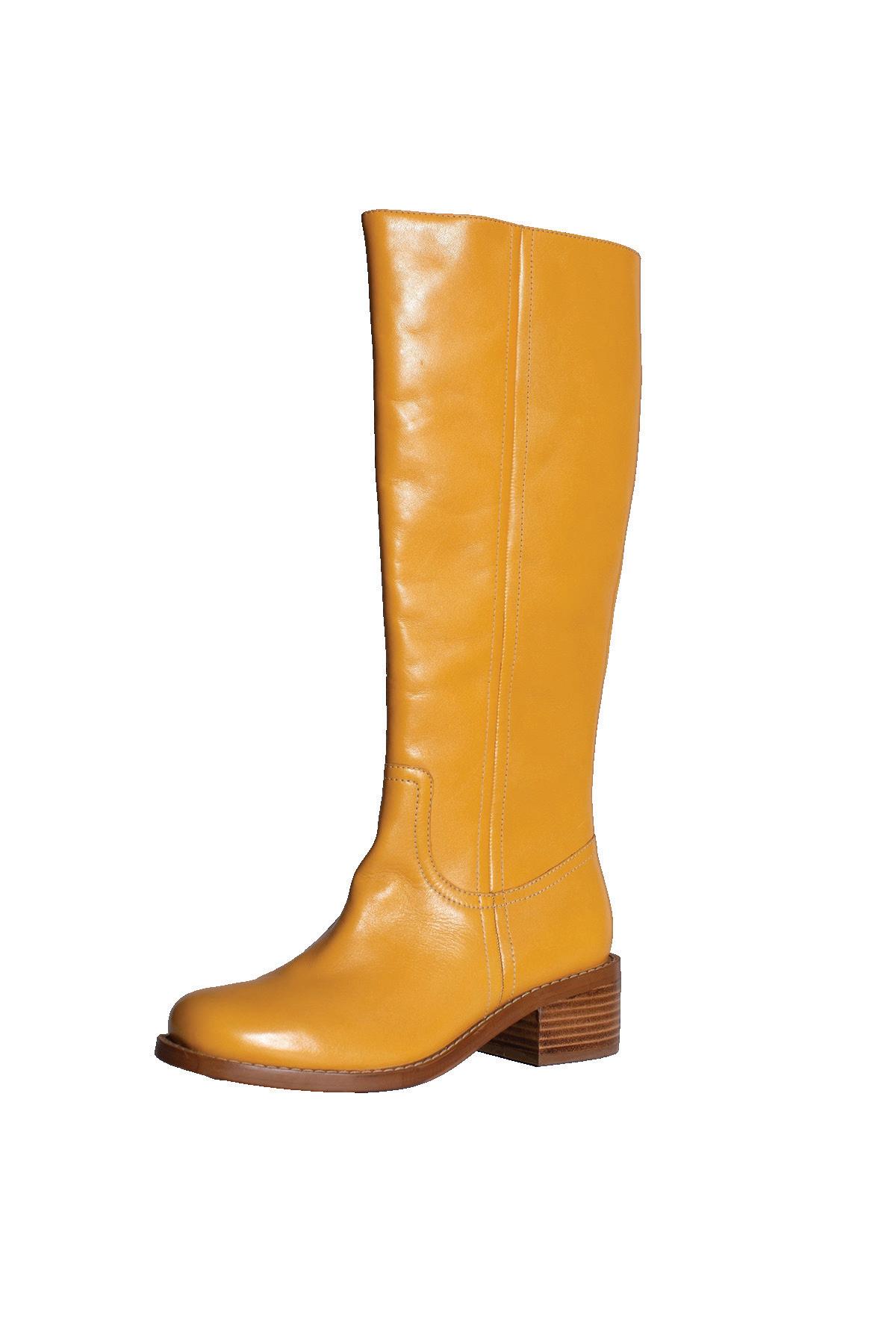
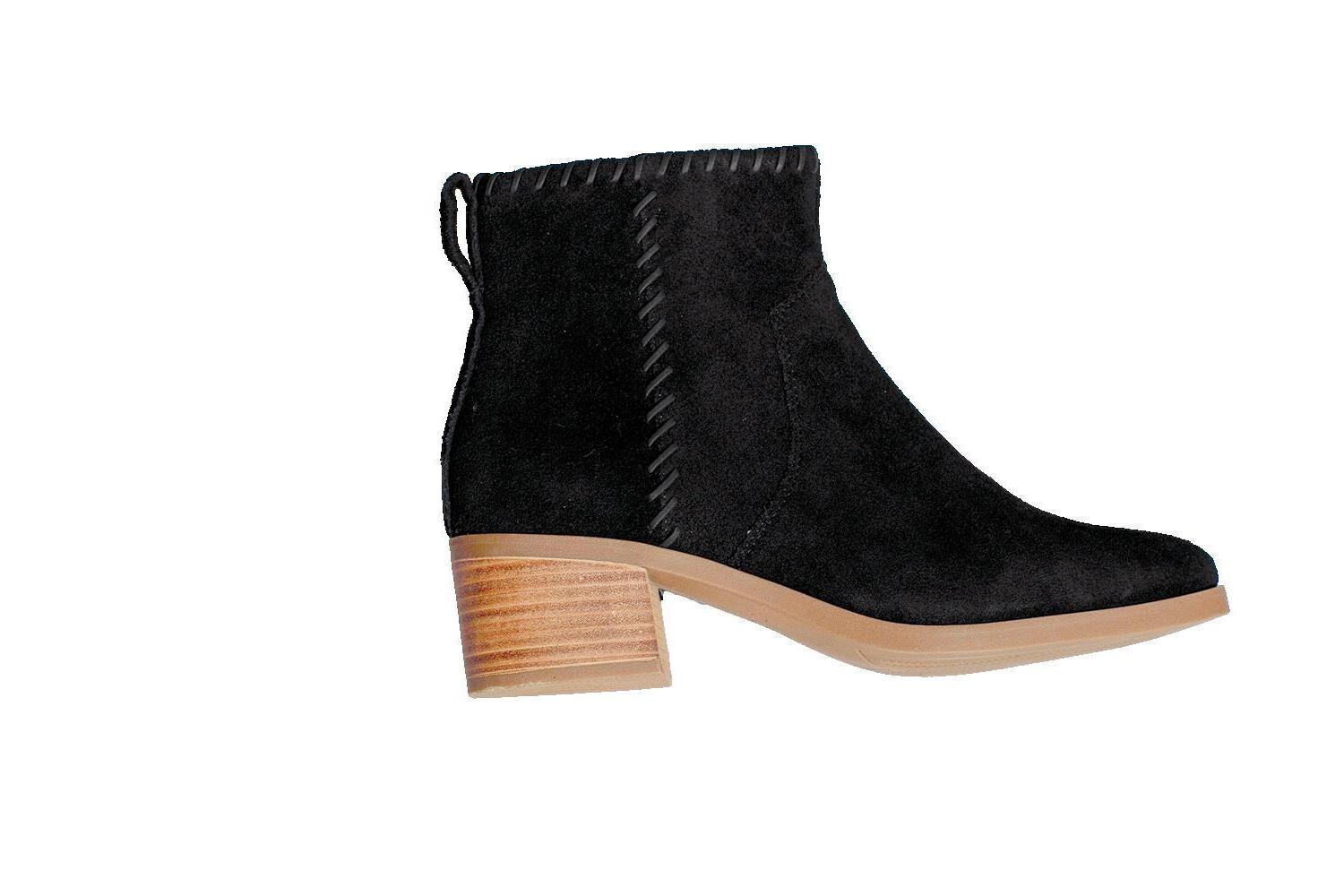
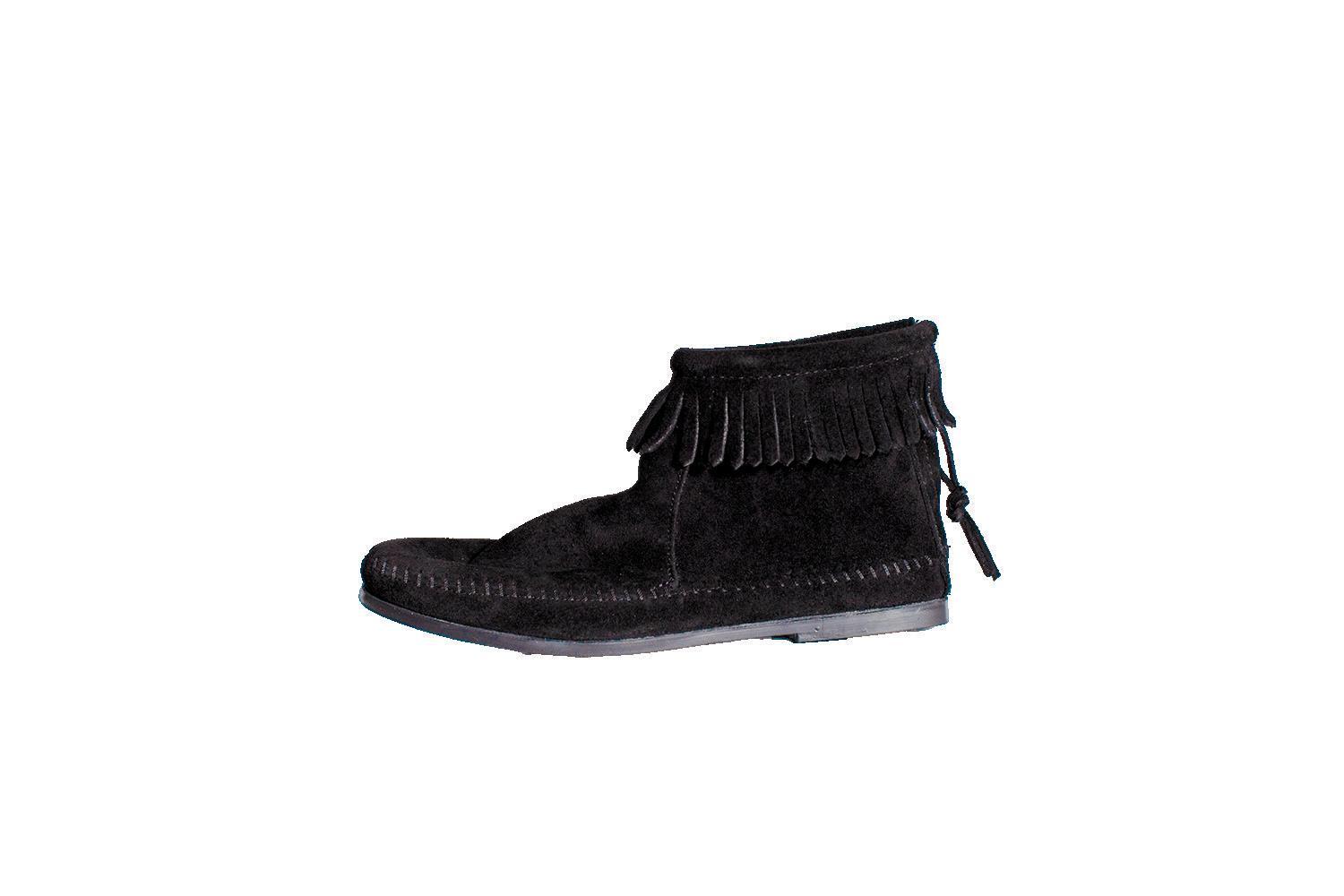
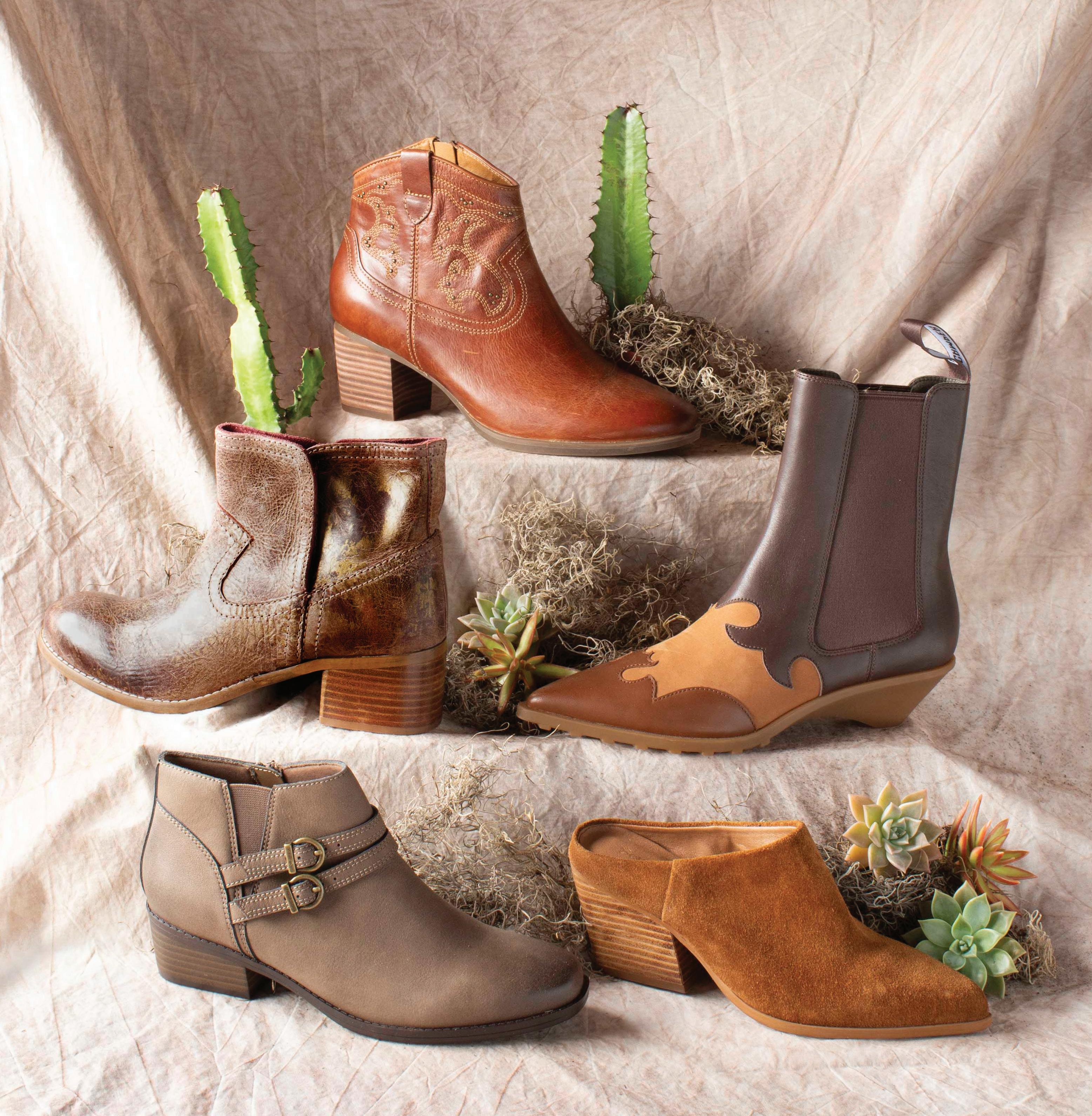
Western booties in savory shades of chocolate, cognac, and coffee feed the soul and sole.
Camper
Aetrex
Seychelles
Diba True
Clarks
FW | 2026 COLLECTION
FOOTWEAR SHOW NEW YORK EXPO
June 2-4, 2026
Park Lane New York Hotel
New York, NY
Suites: 1403, 1404, 1412, 1414, 1415
Featuring Aetrex orthotic support and memory foam cushioning for superior comfort