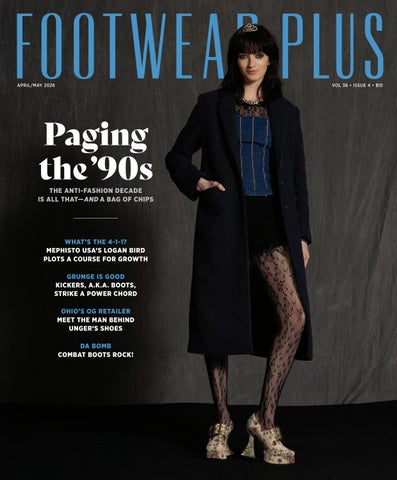
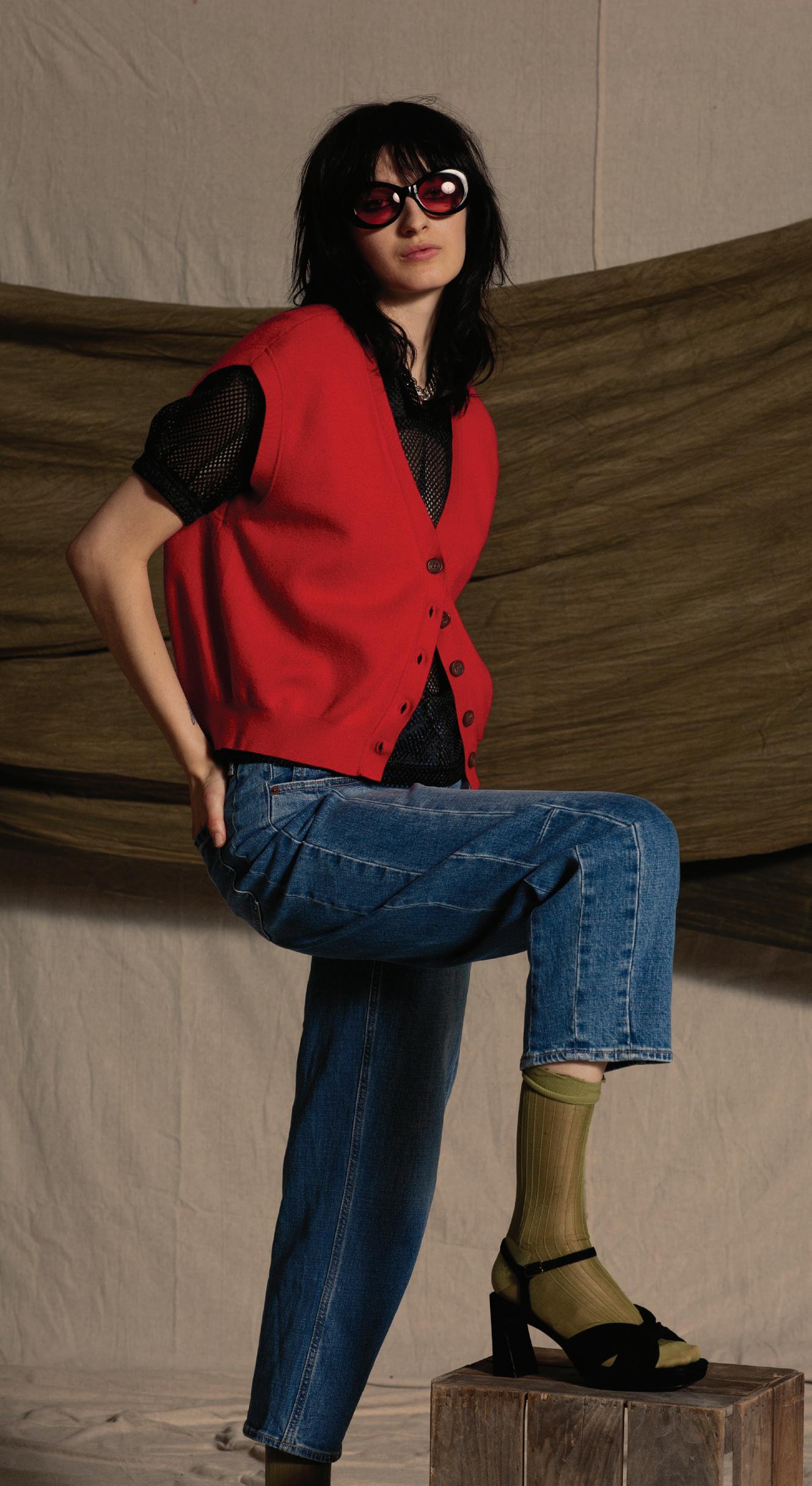
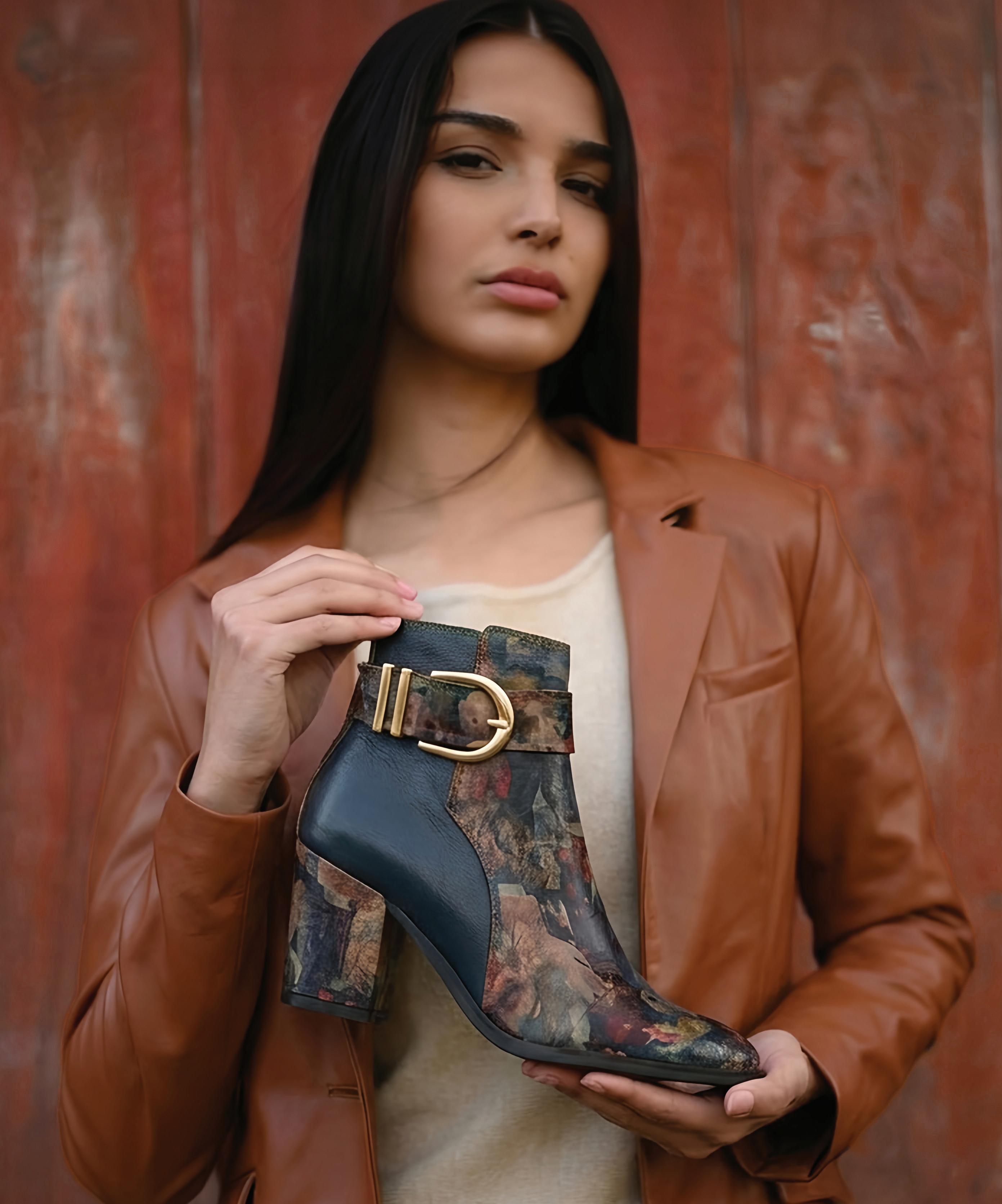
THE ANTI-FASHION DECADE IS ALL THAT— AND A BAG OF CHIPS
WHAT’S THE 4-1-1?
MEPHISTO USA’S LOGAN BIRD PLOTS A COURSE FOR GROWTH
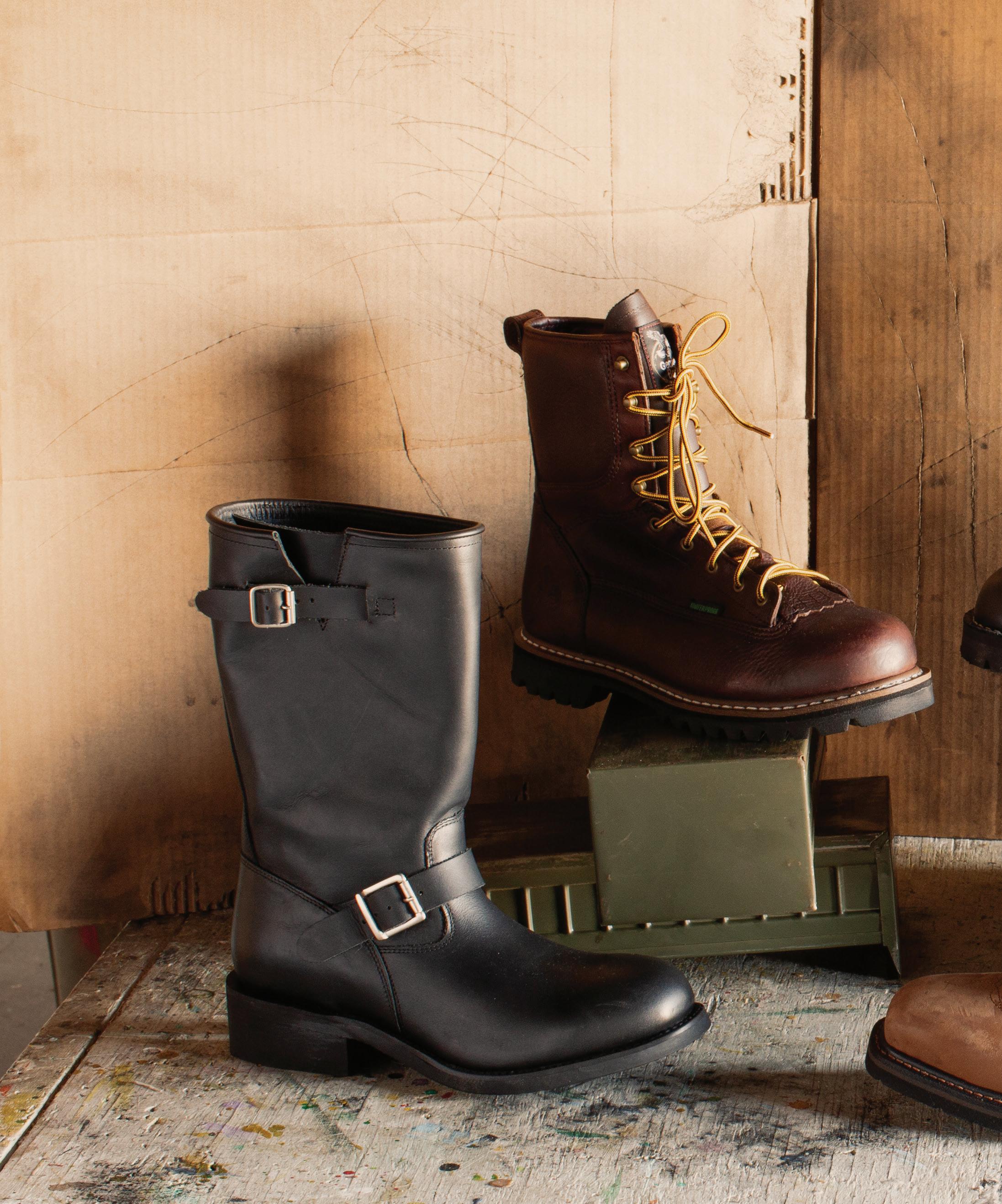
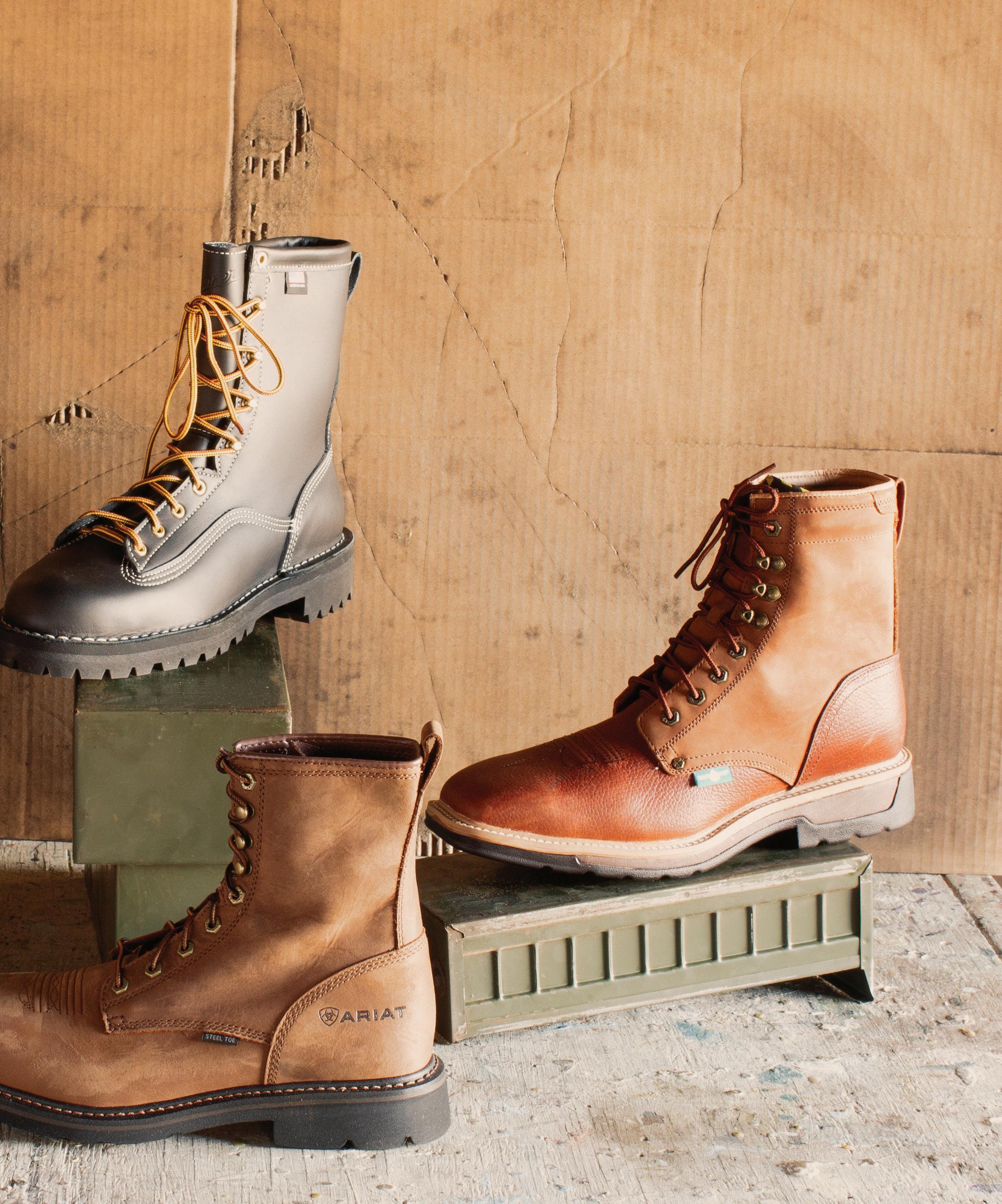
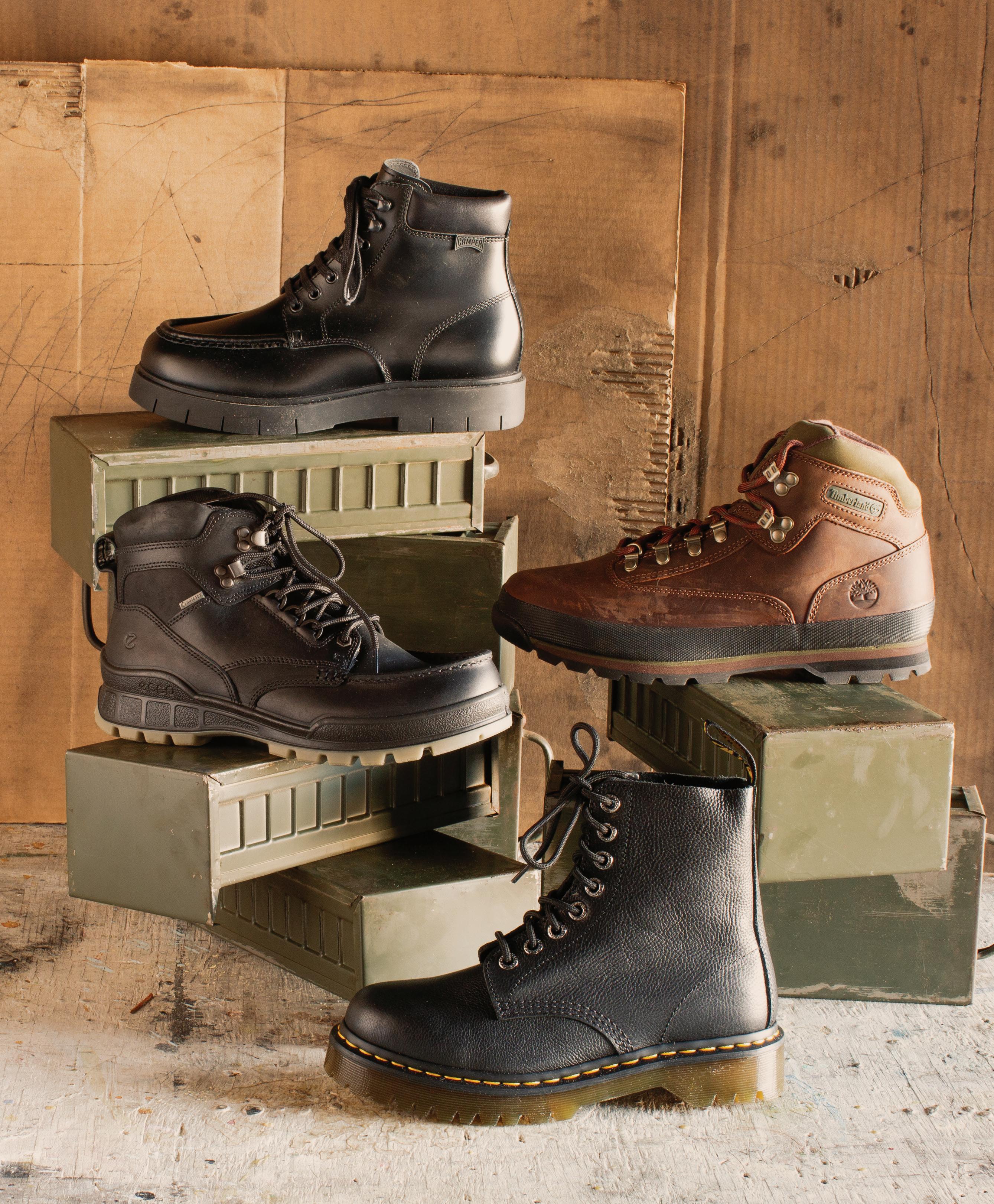
GRUNGE IS GOOD KICKERS, A.K.A. BOOTS, STRIKE A POWER CHORD
OHIO’S OG RETAILER MEET THE MAN BEHIND UNGER’S SHOES
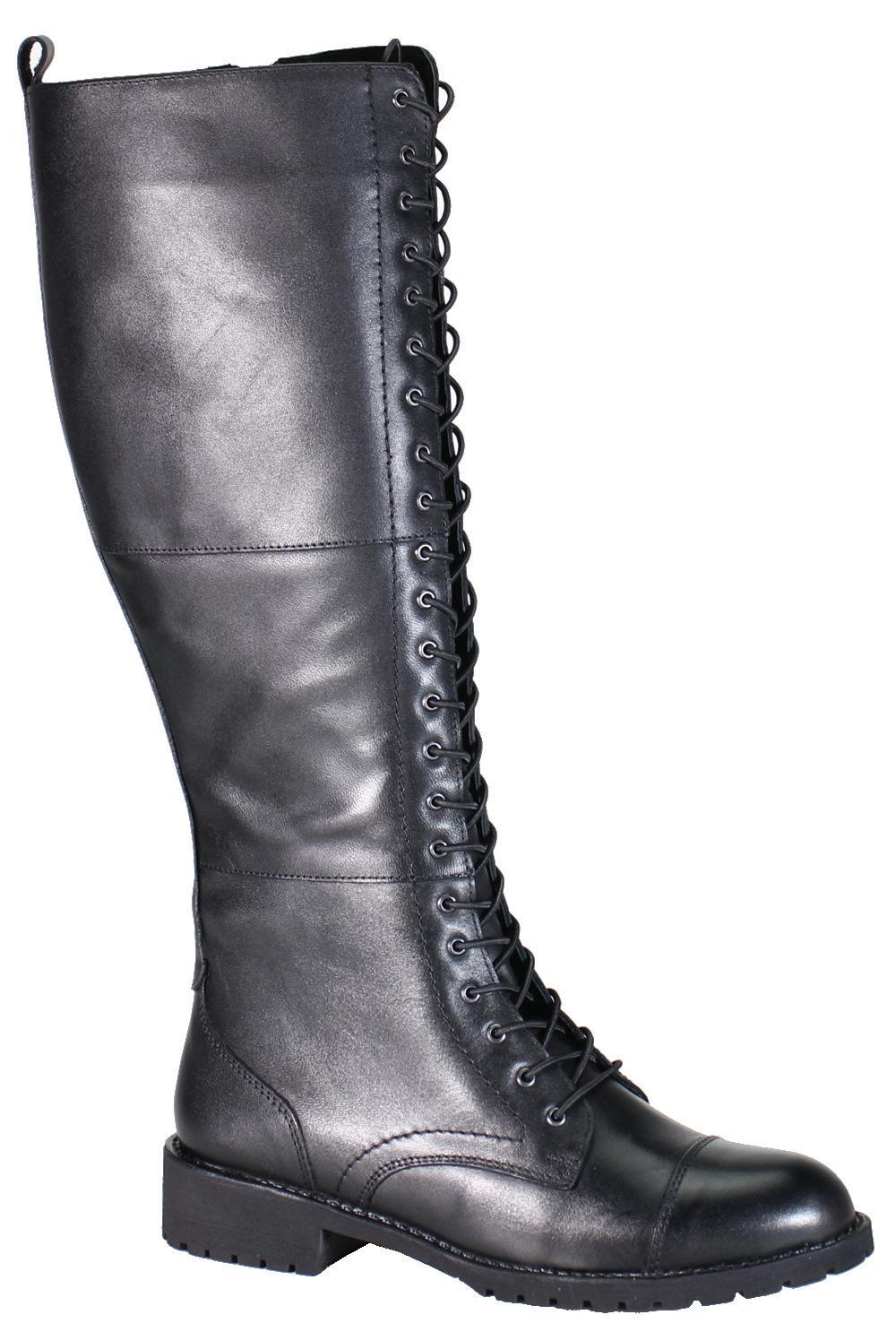
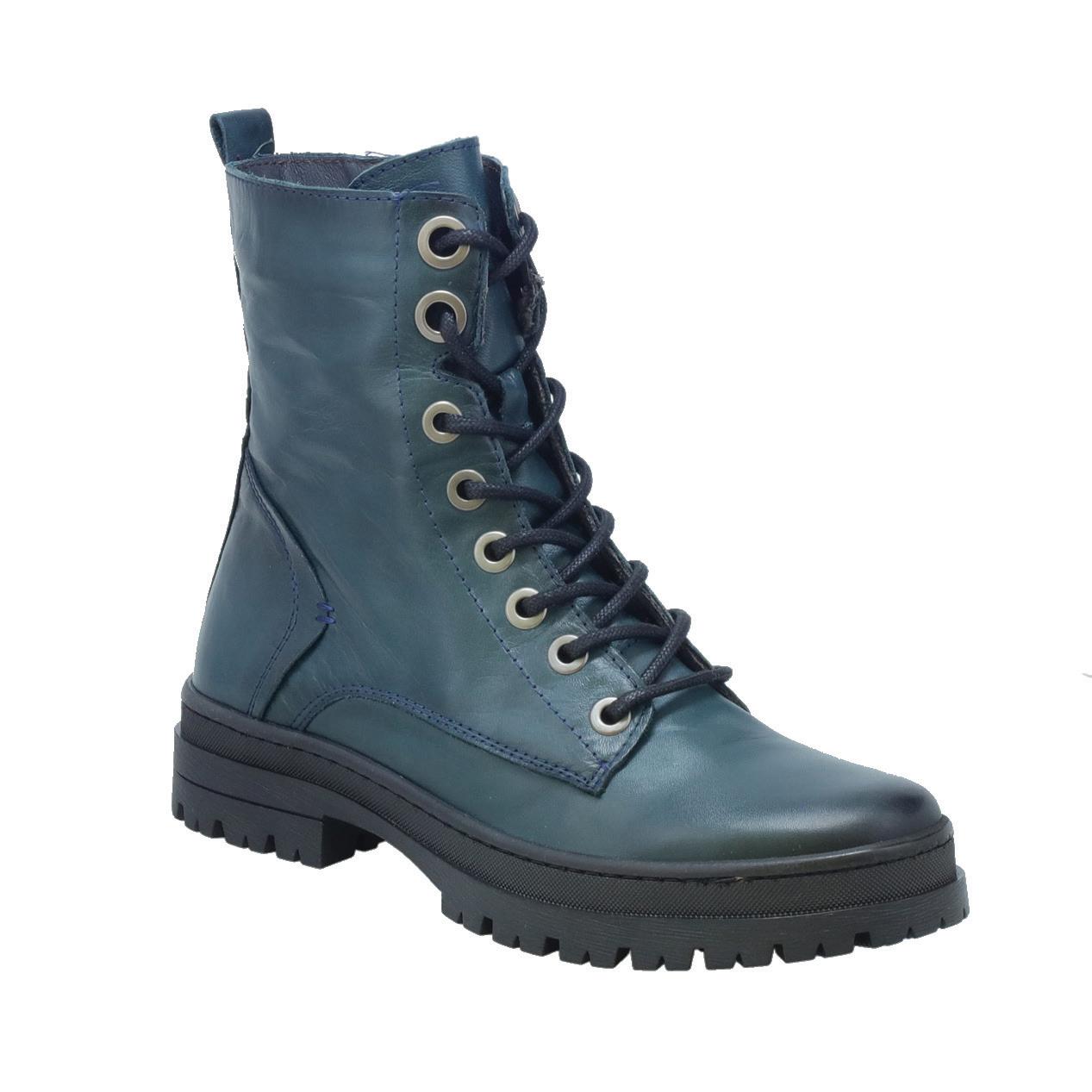
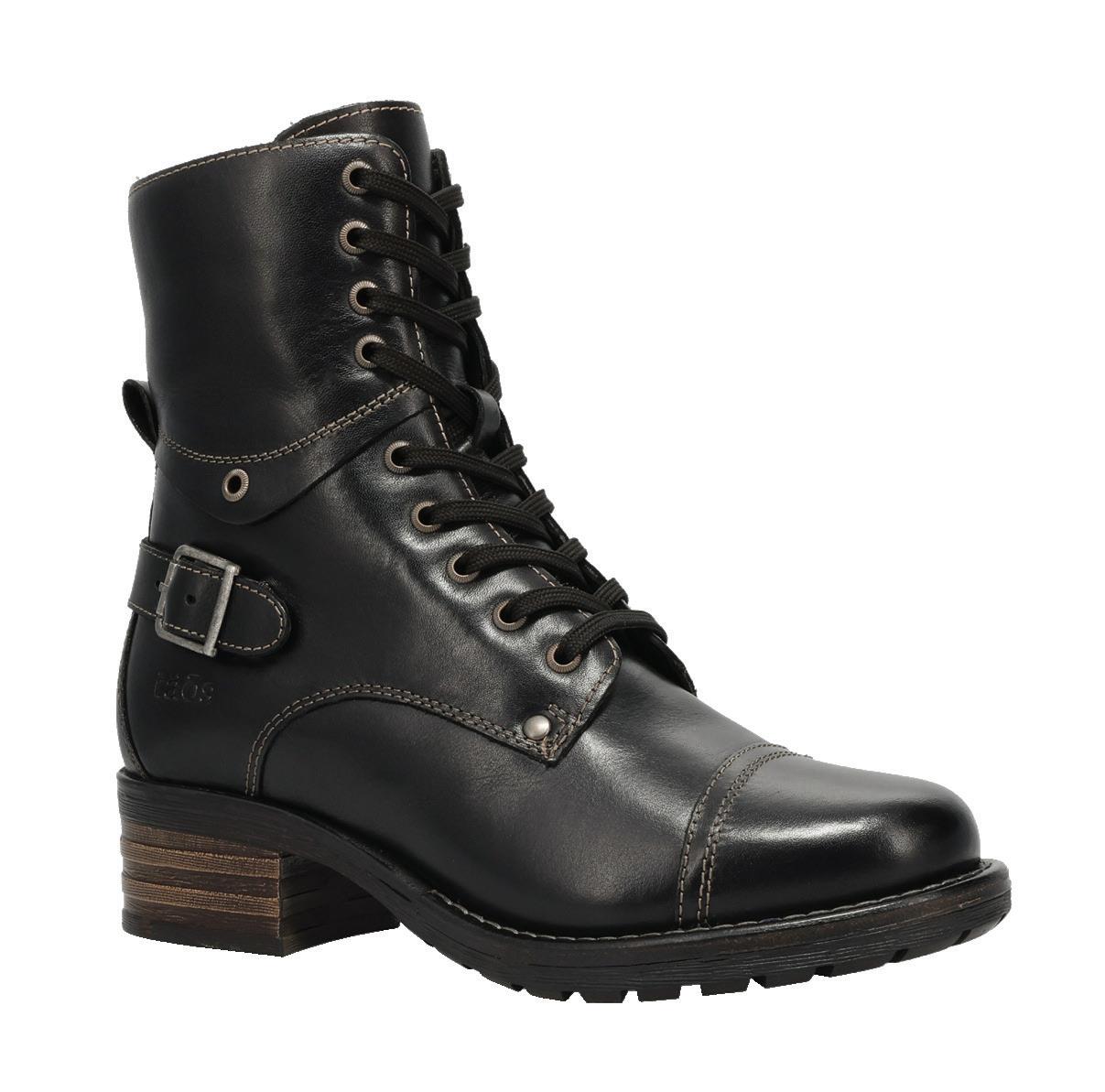
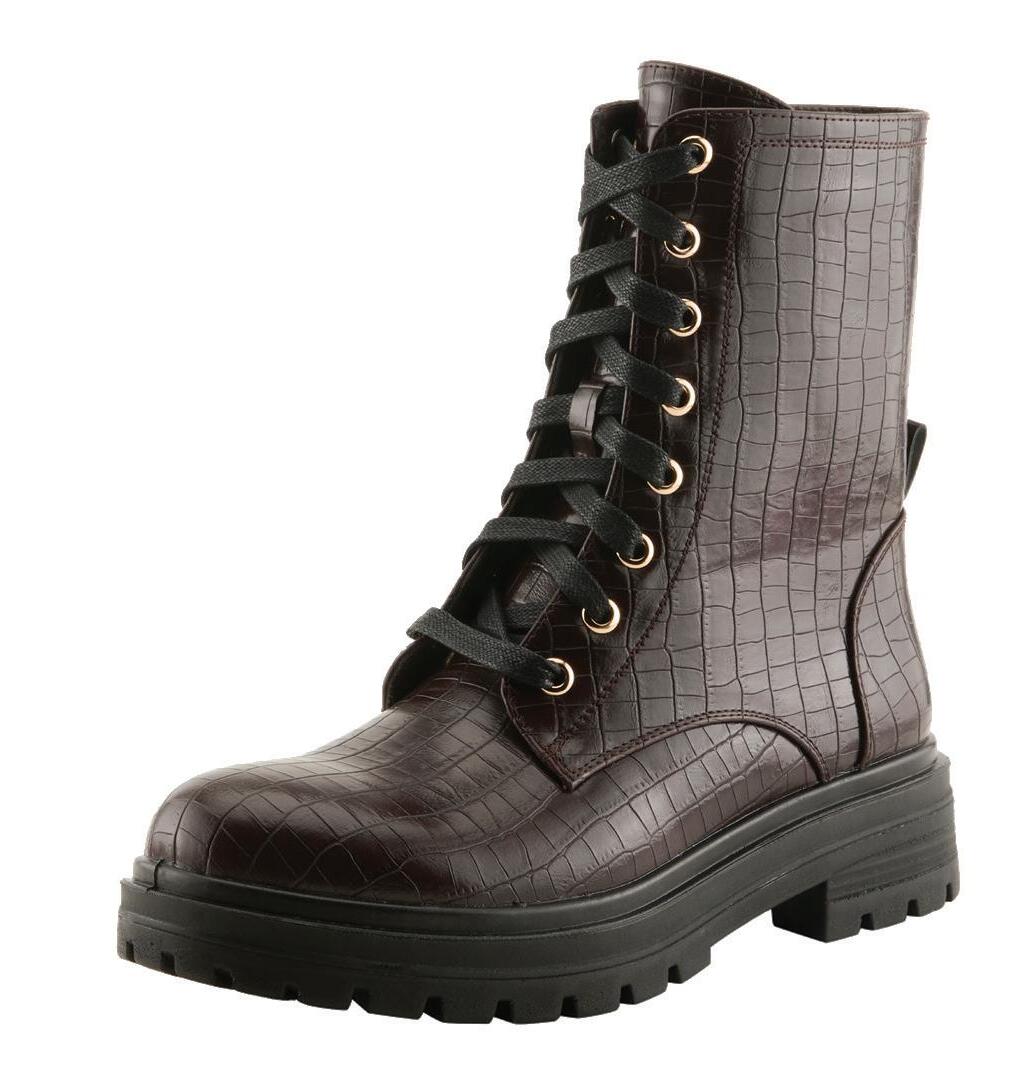
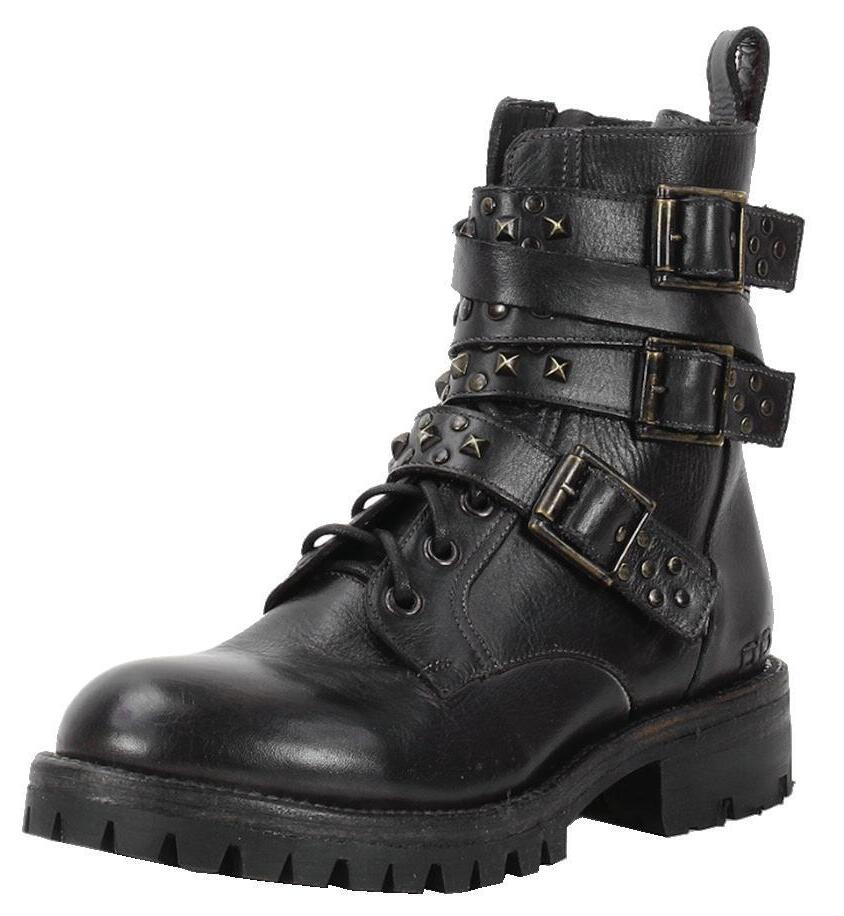
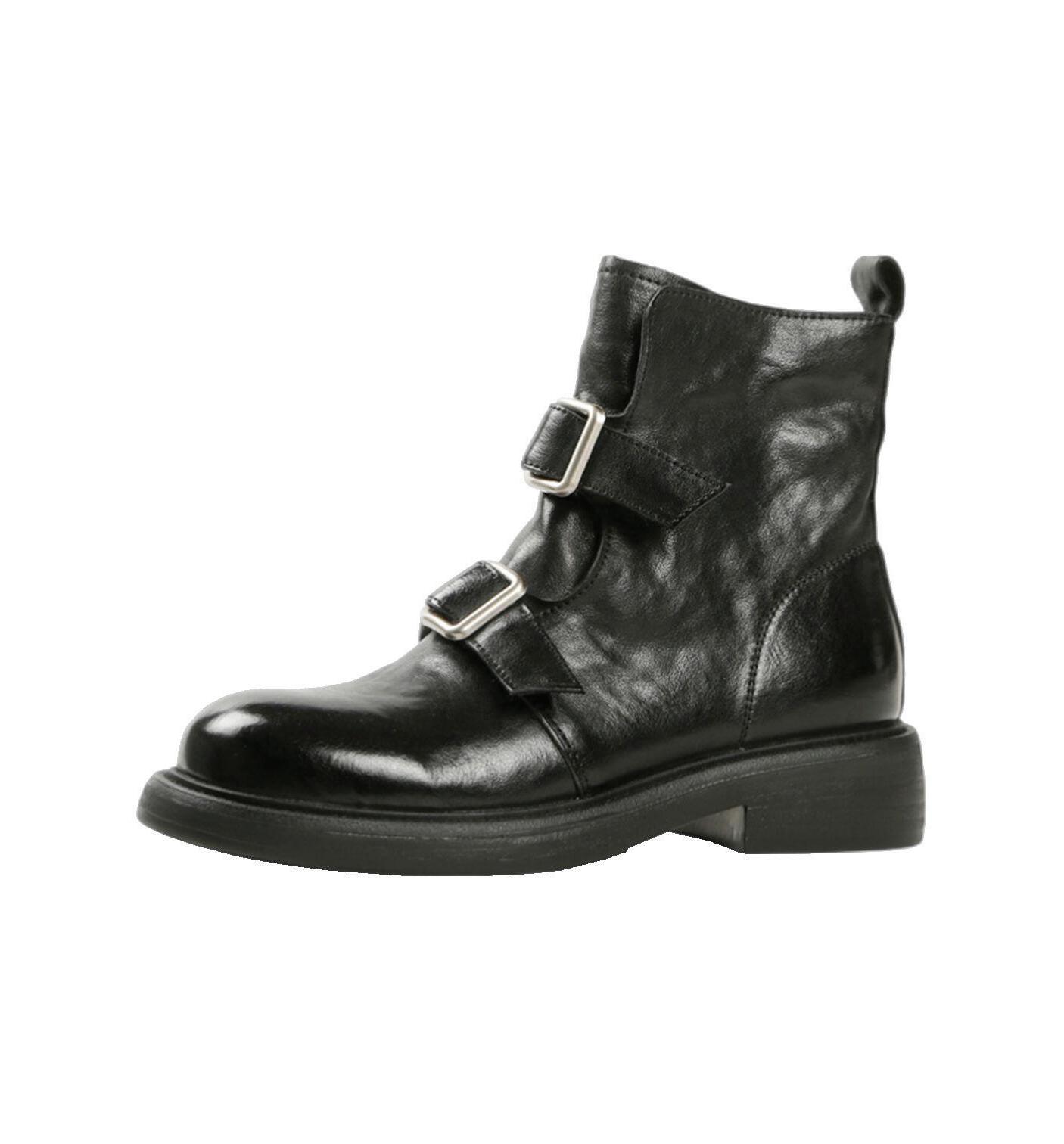
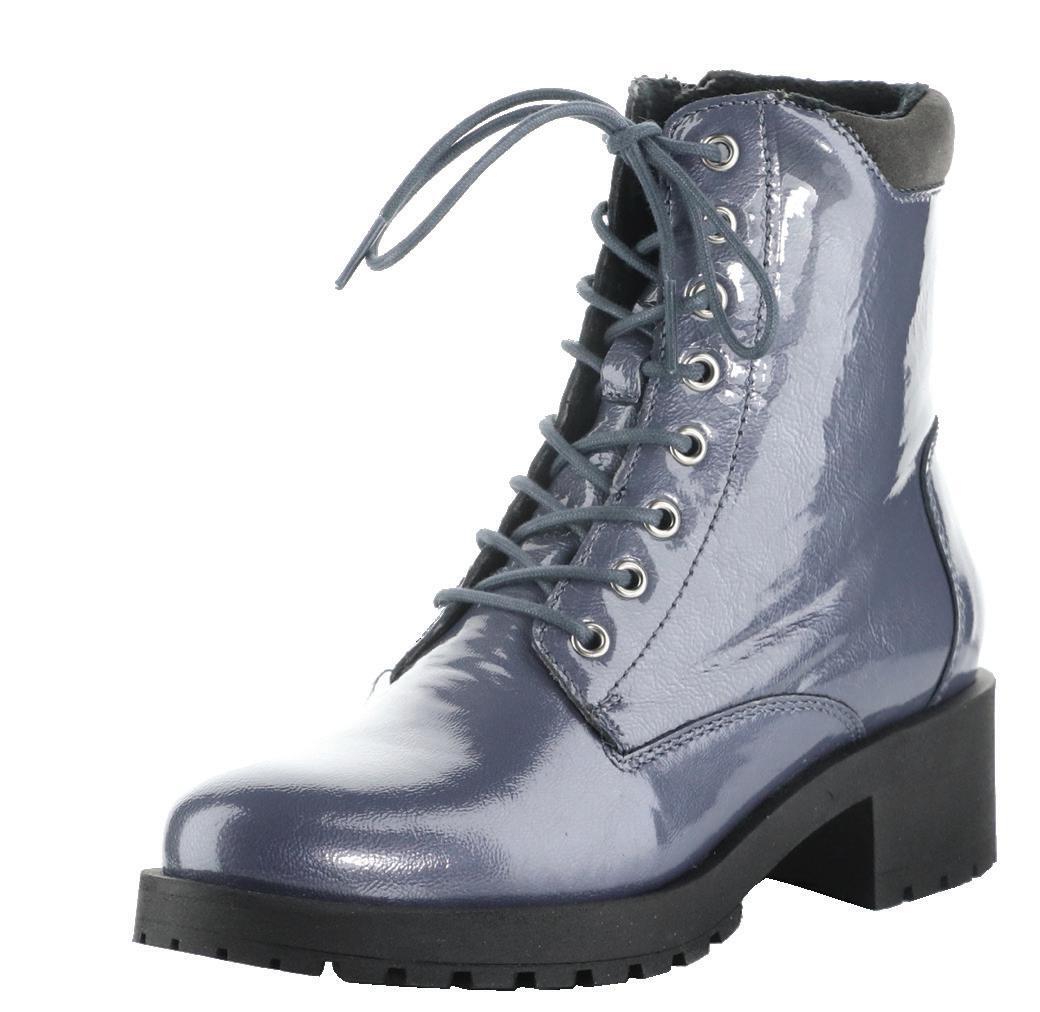
DA BOMB COMBAT BOOTS ROCK!
FEATURES
8 Flight Plan
Logan Bird, president and CEO of Mephisto USA, is plotting a course for
By Greg Dutter
Gearing up for its 90th anniversary, Unger’s Shoes, a southern Ohio sit-andfit instituion, reveals its secret formula.
By Kathy Passero
22 Grunge Worthy
Reality bites back with bold boots. By Kiernan McCormick
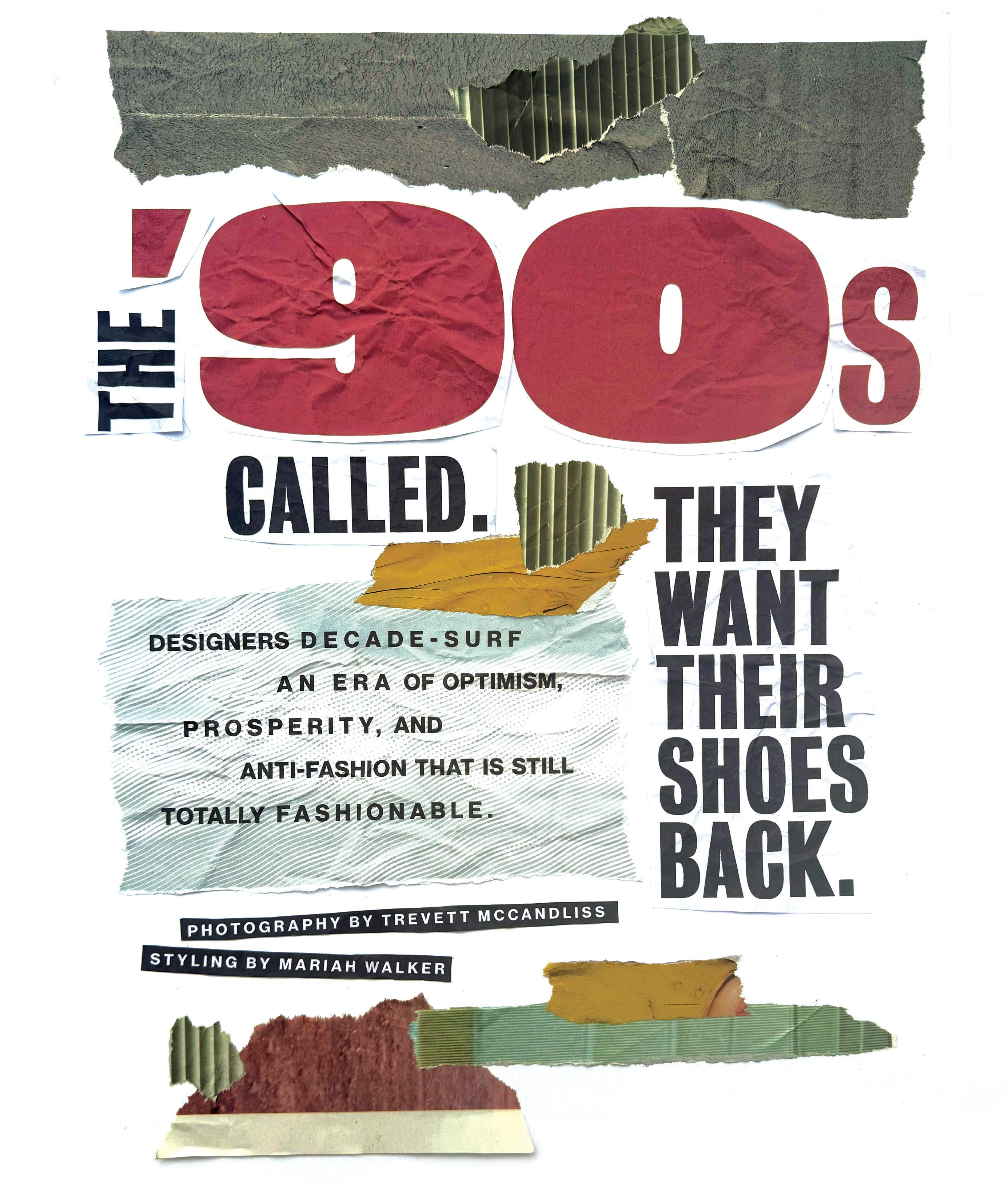
26 The ’90s Called.
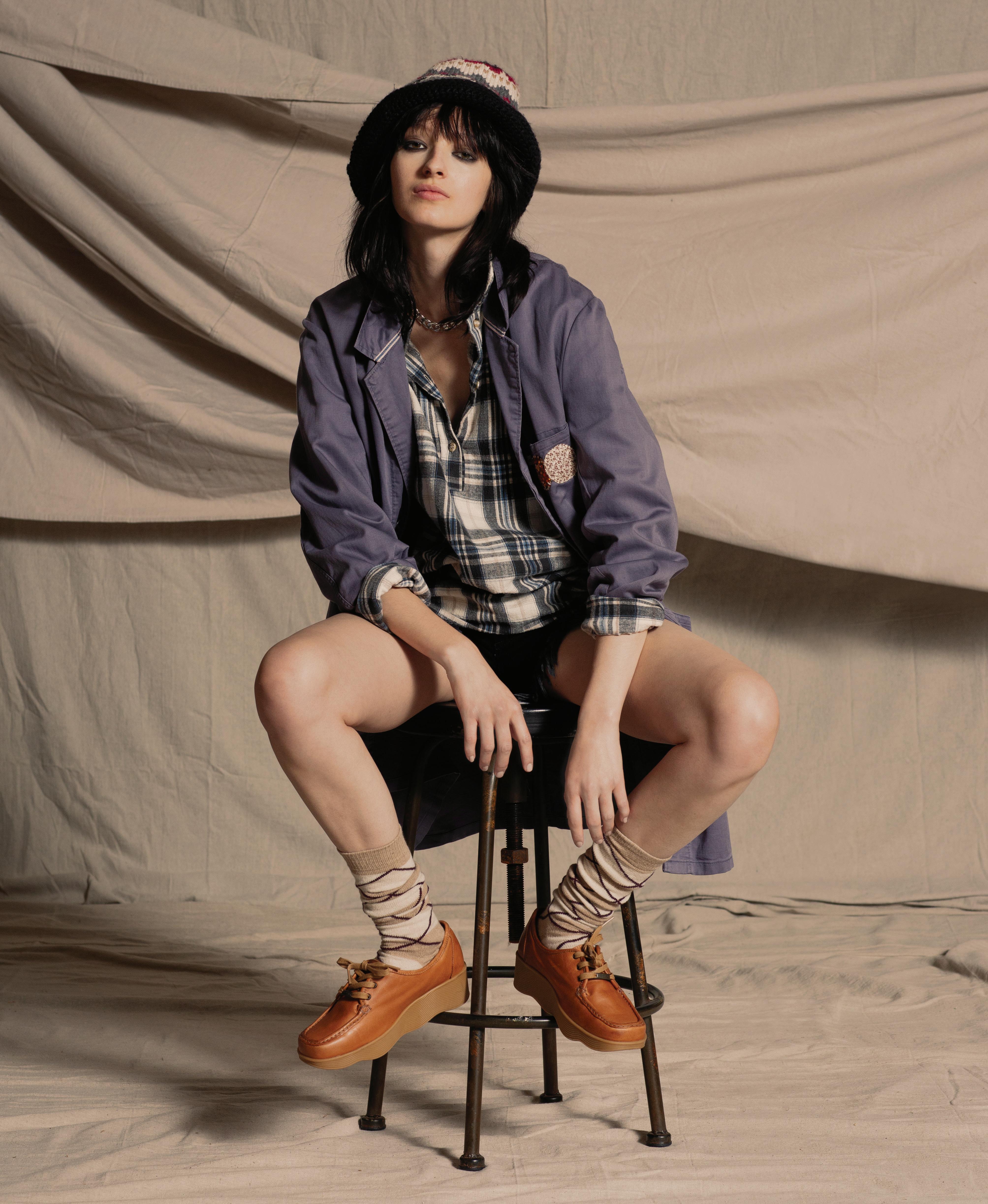
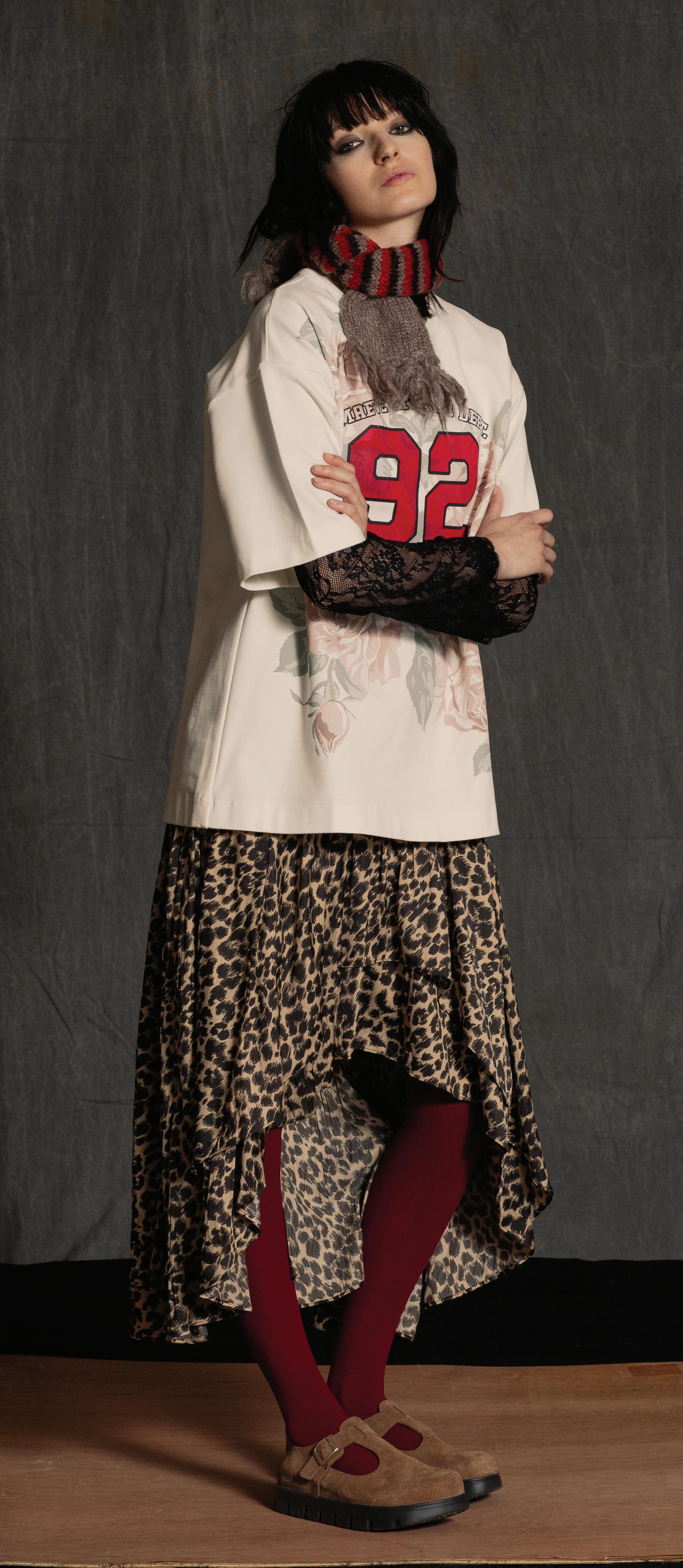
They Want Their Shoes Back. Designers decade-surf an era of optimism, prosperity, and anti-fashion that is still totally fashionable.
By Kiernan McCormick
DEPARTMENTS
4 Editor’s Note
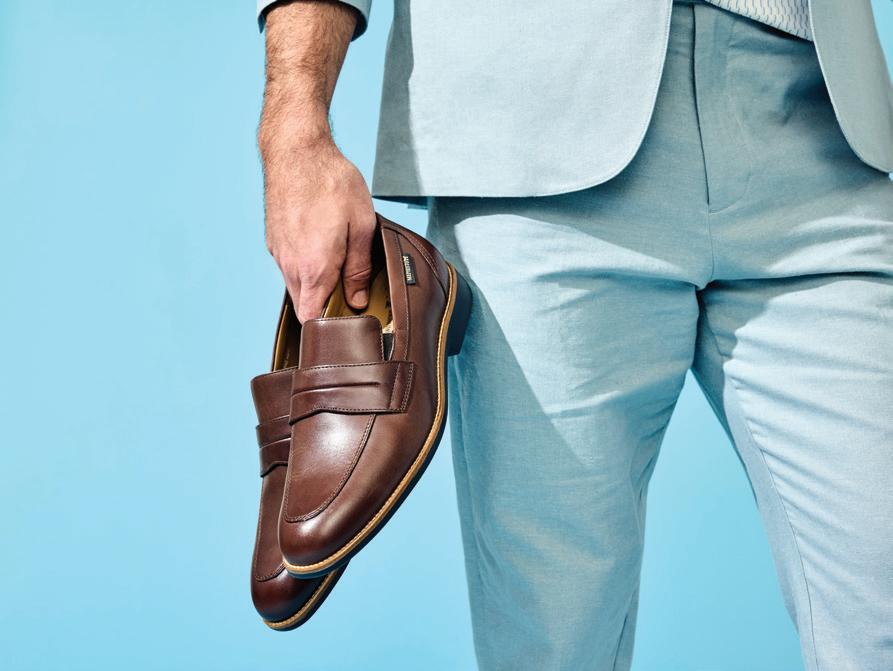
6 This Just In: Loafers
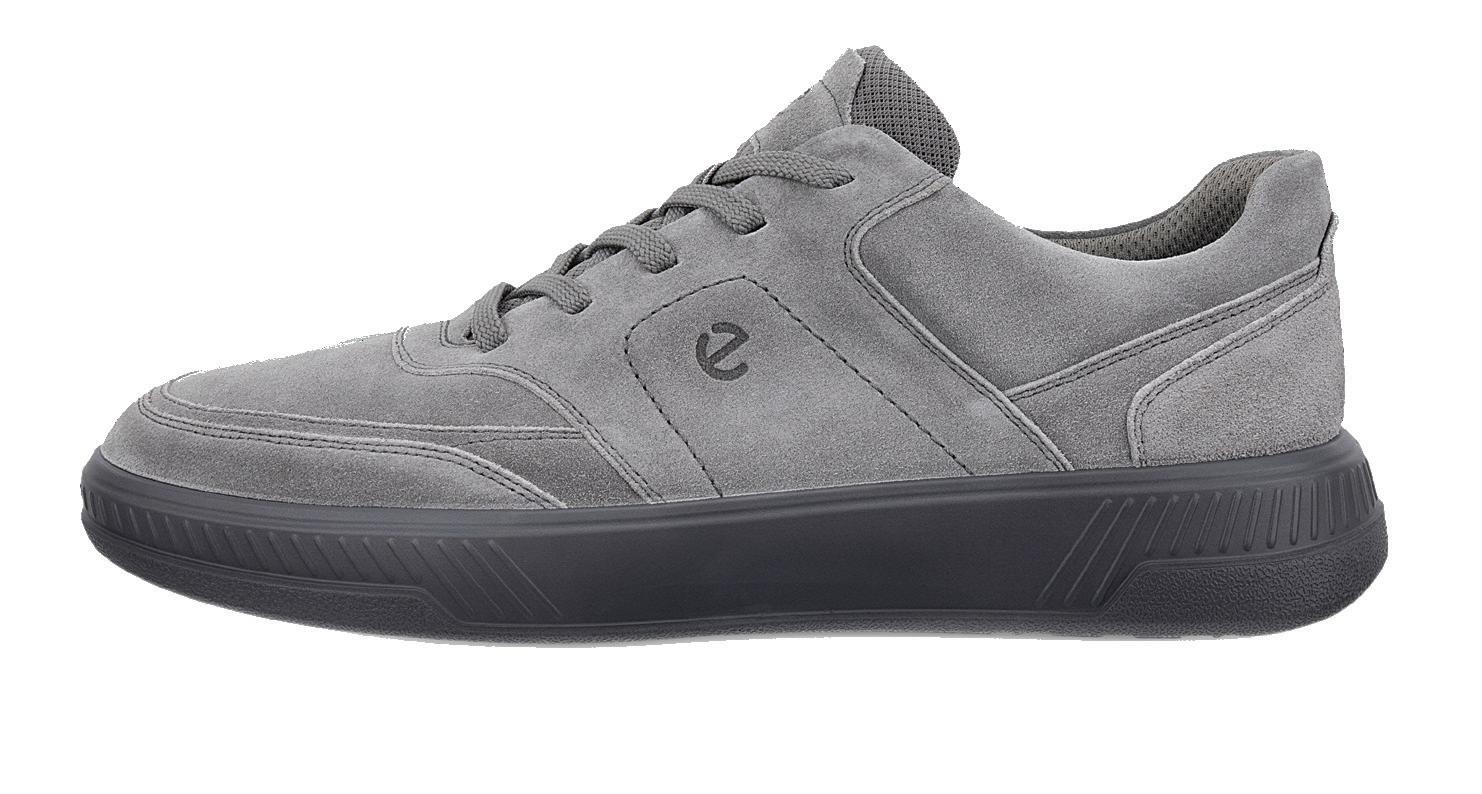
17 Trend Spotting: Going Gray
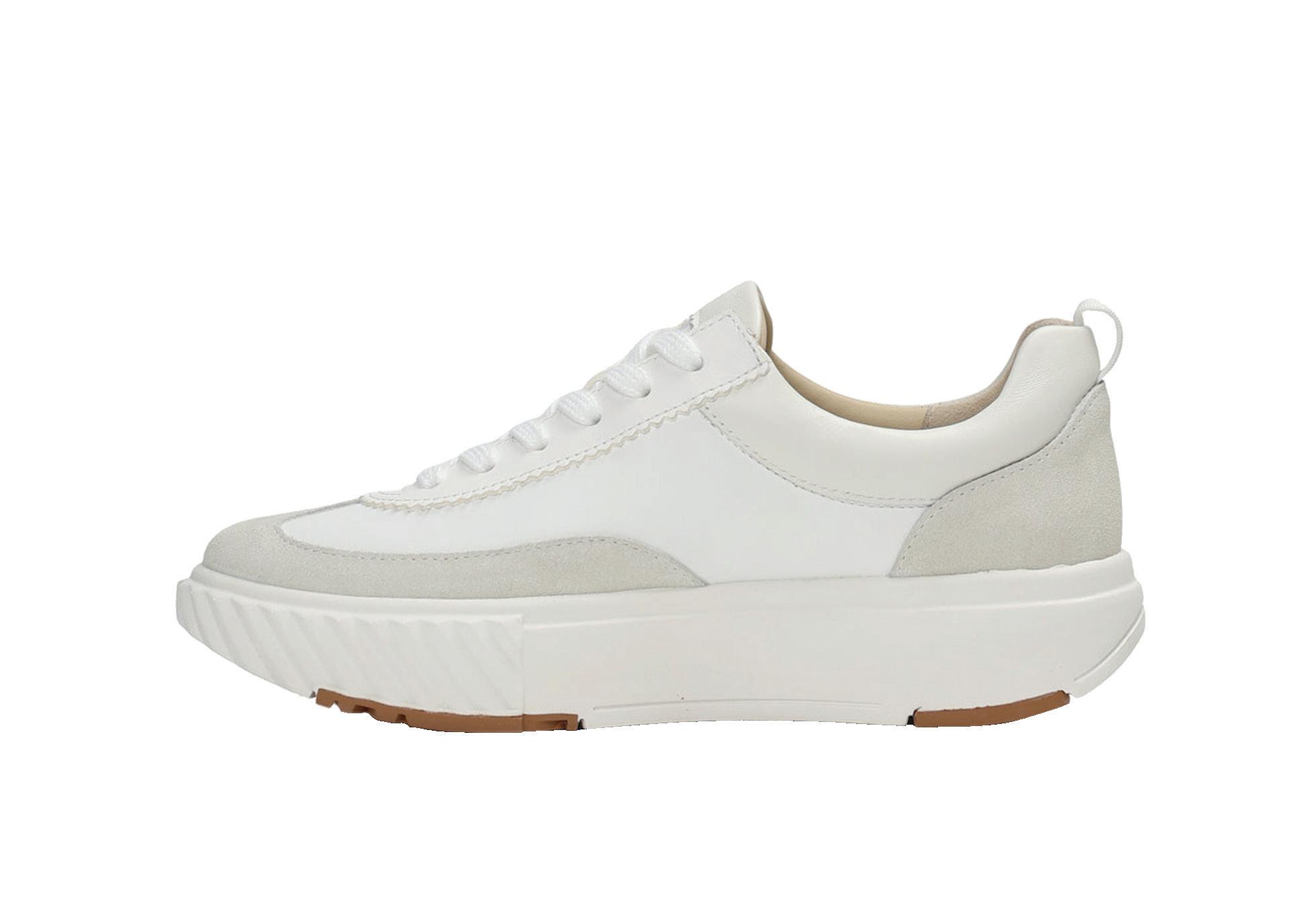
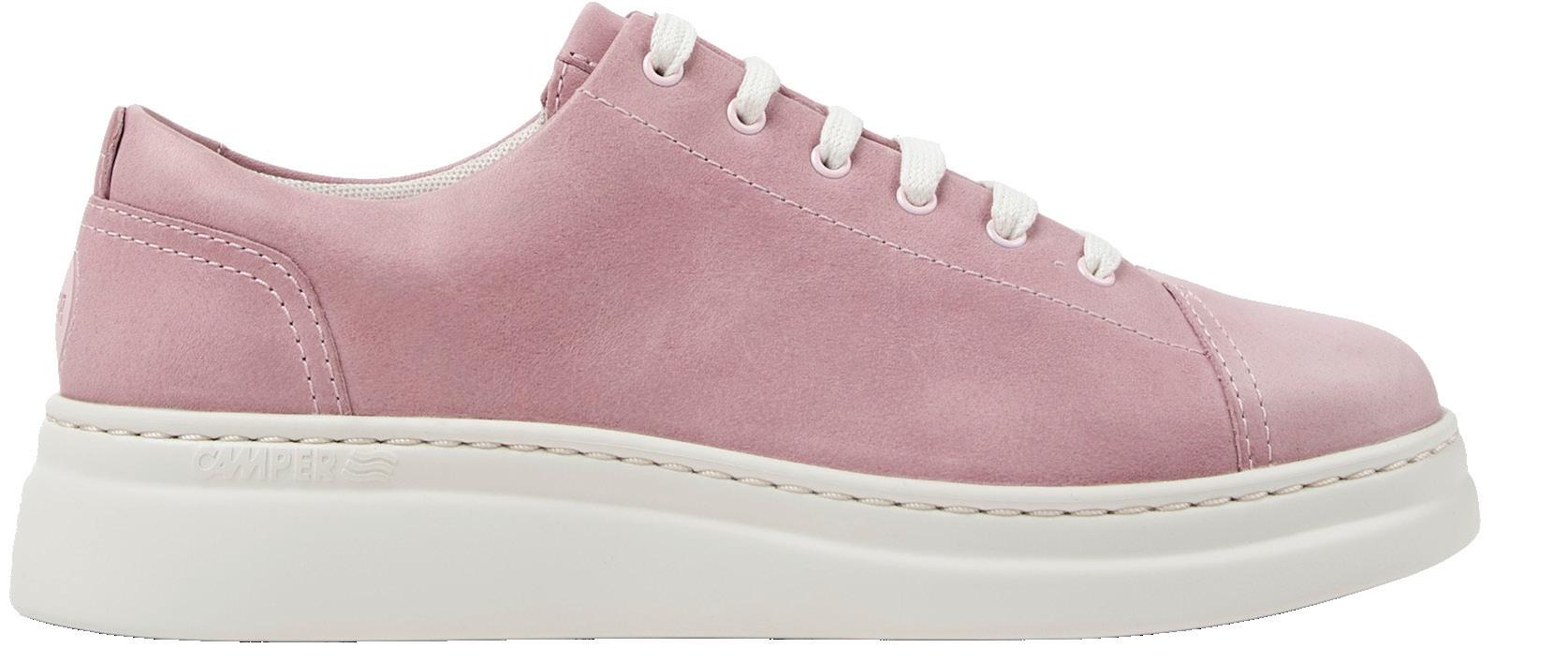
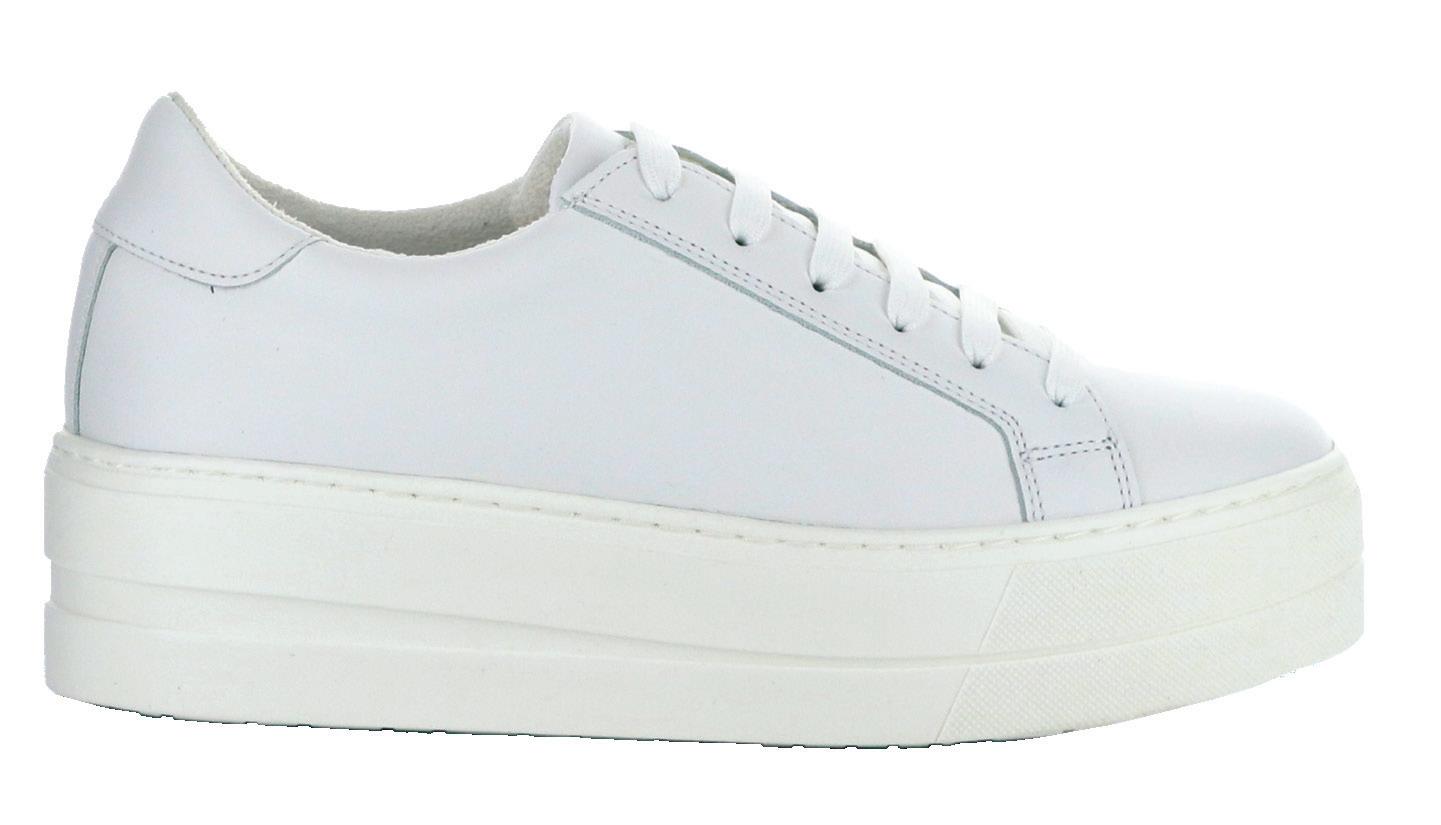
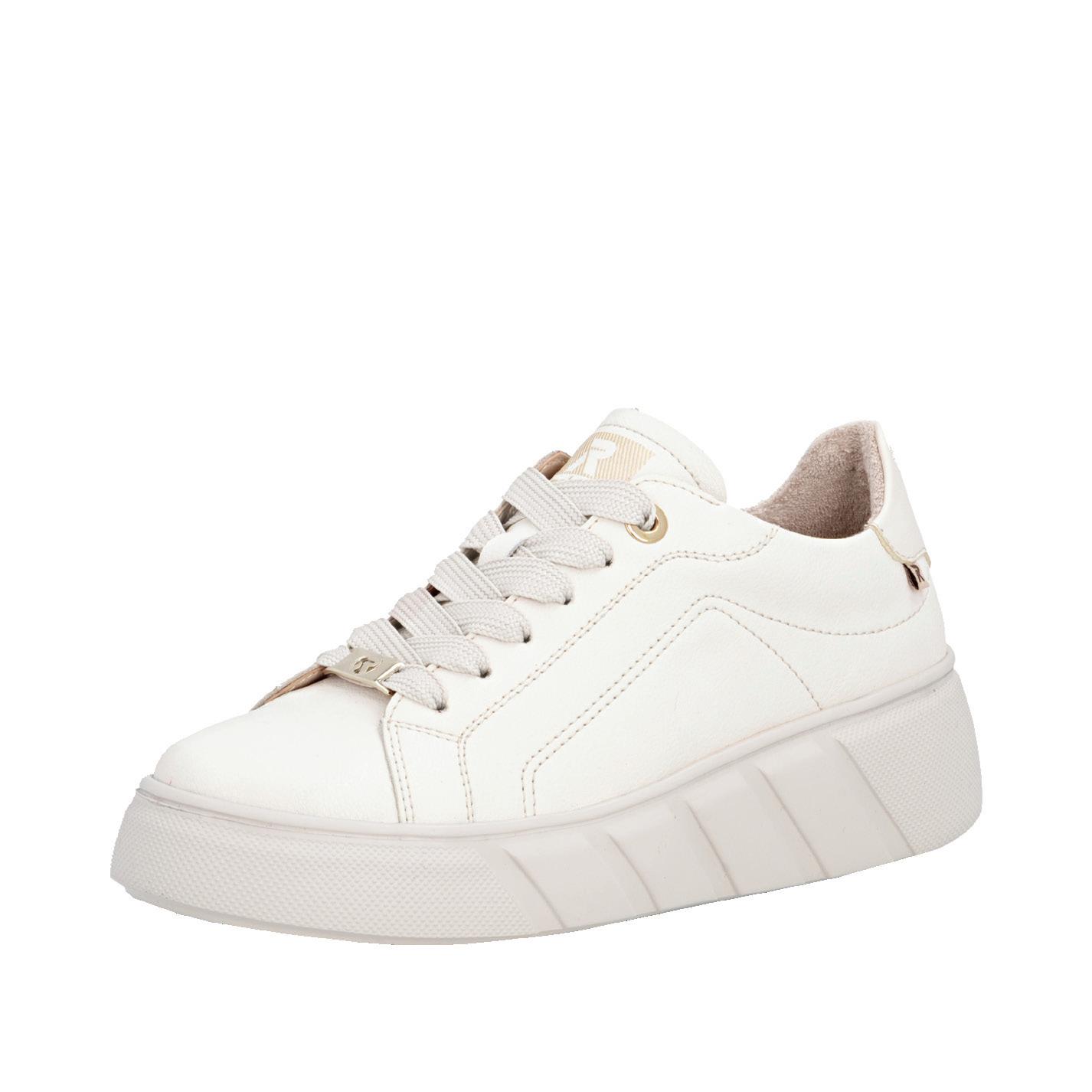
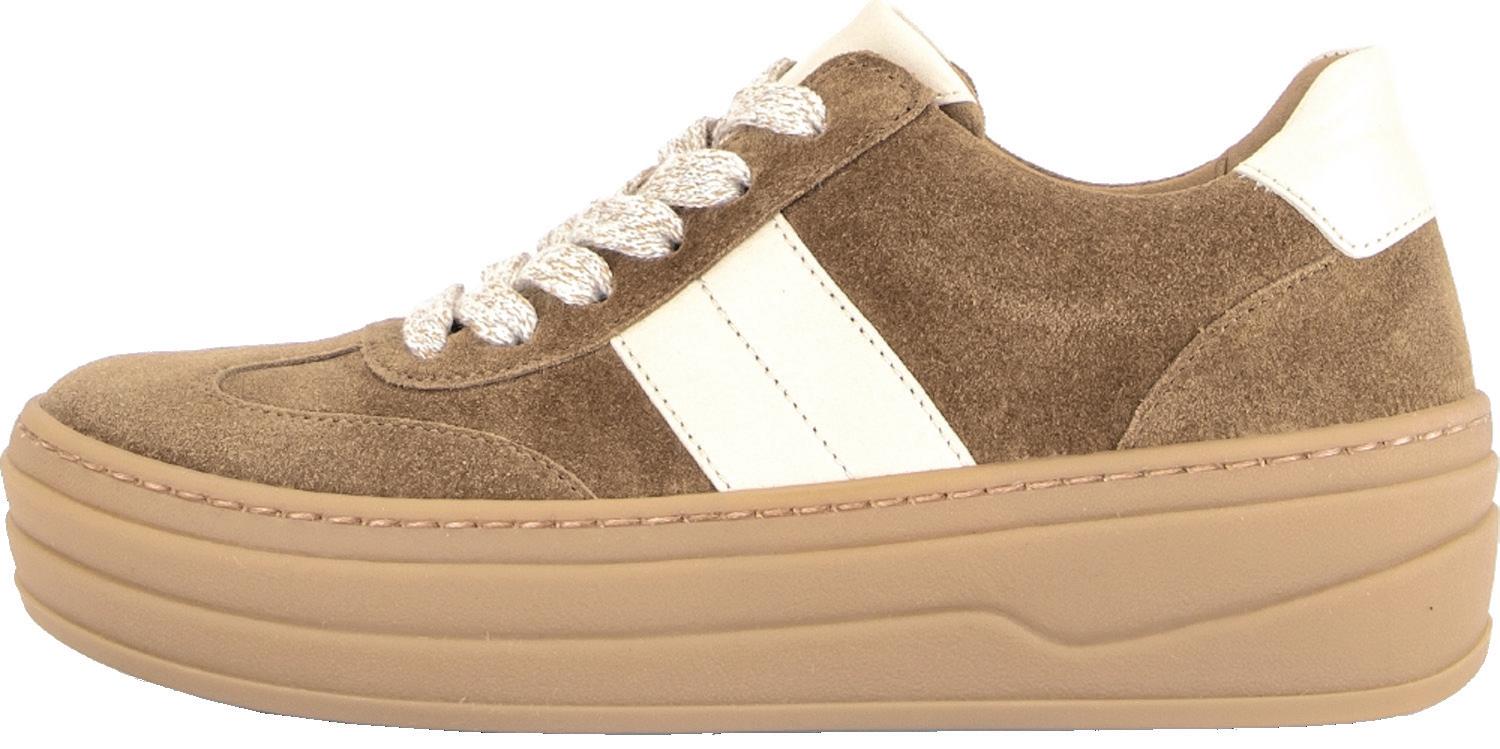
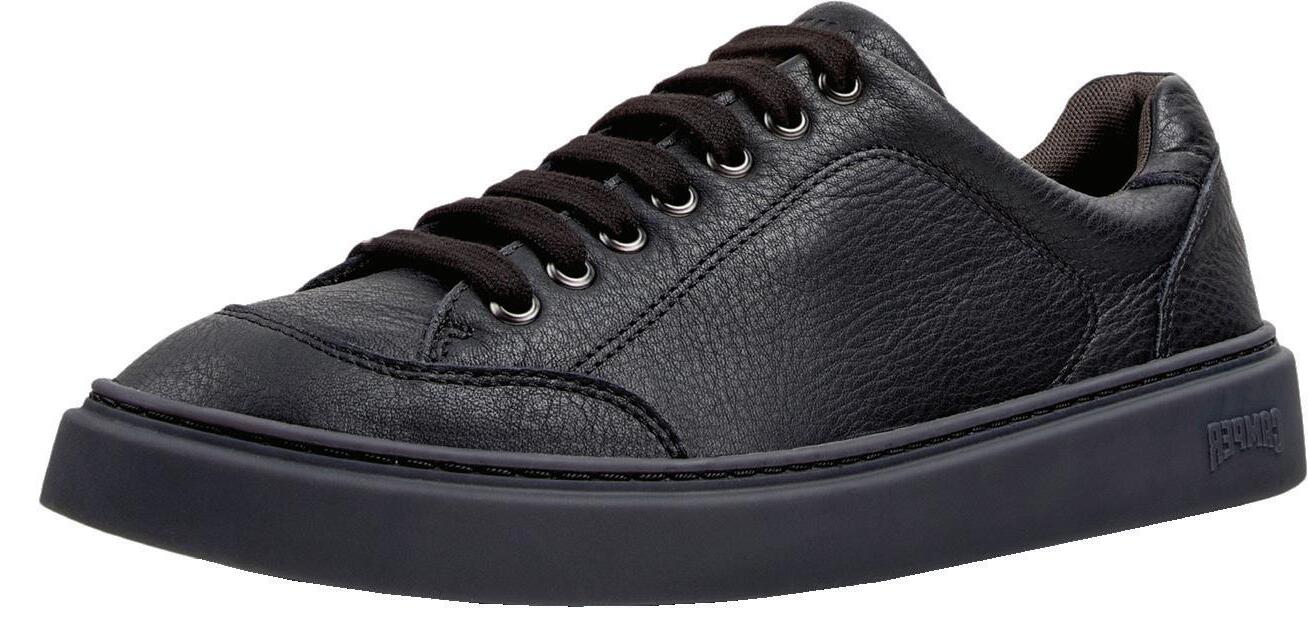
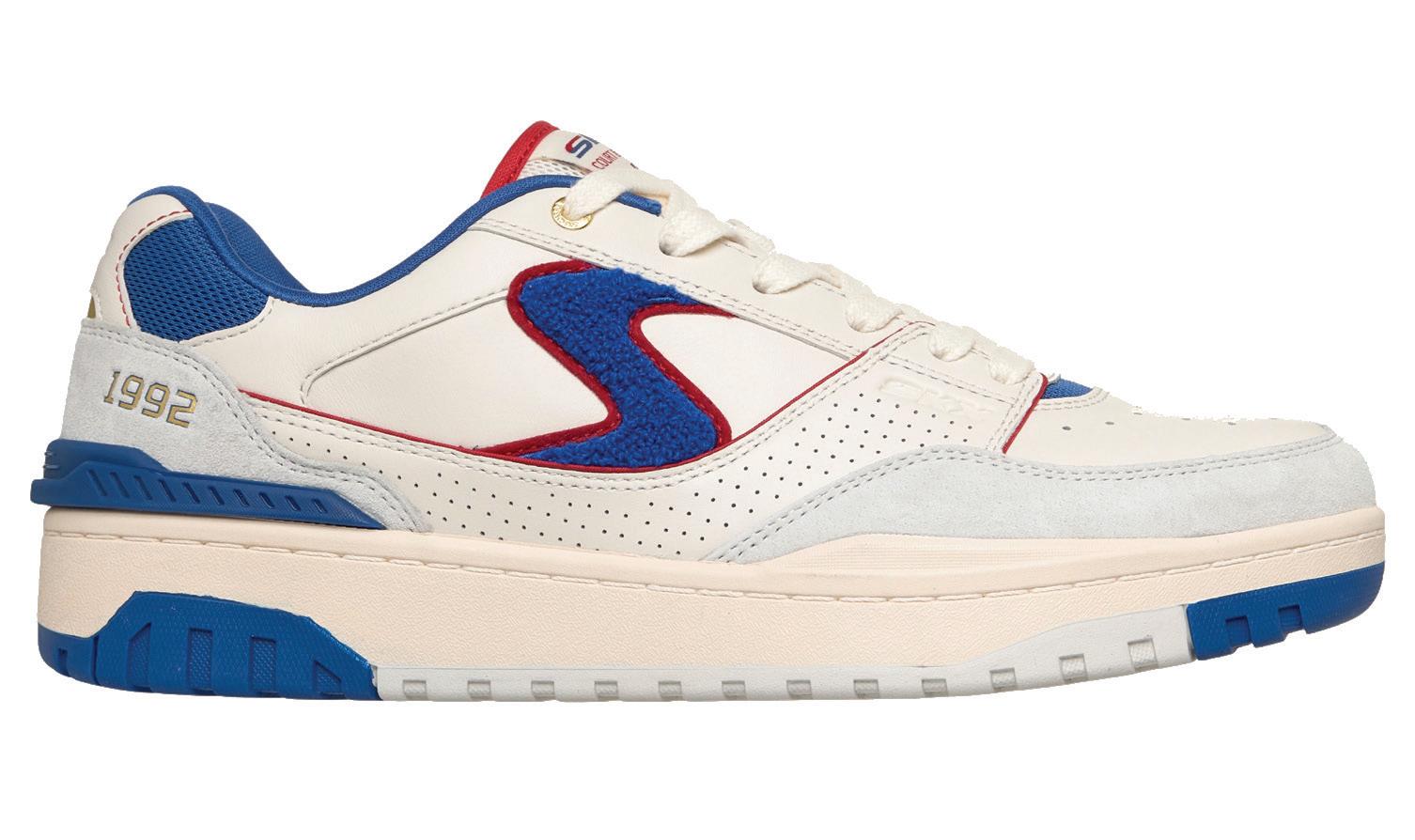
18 Trend Spotting: Platform Tennies
19 A Note to My Younger Self
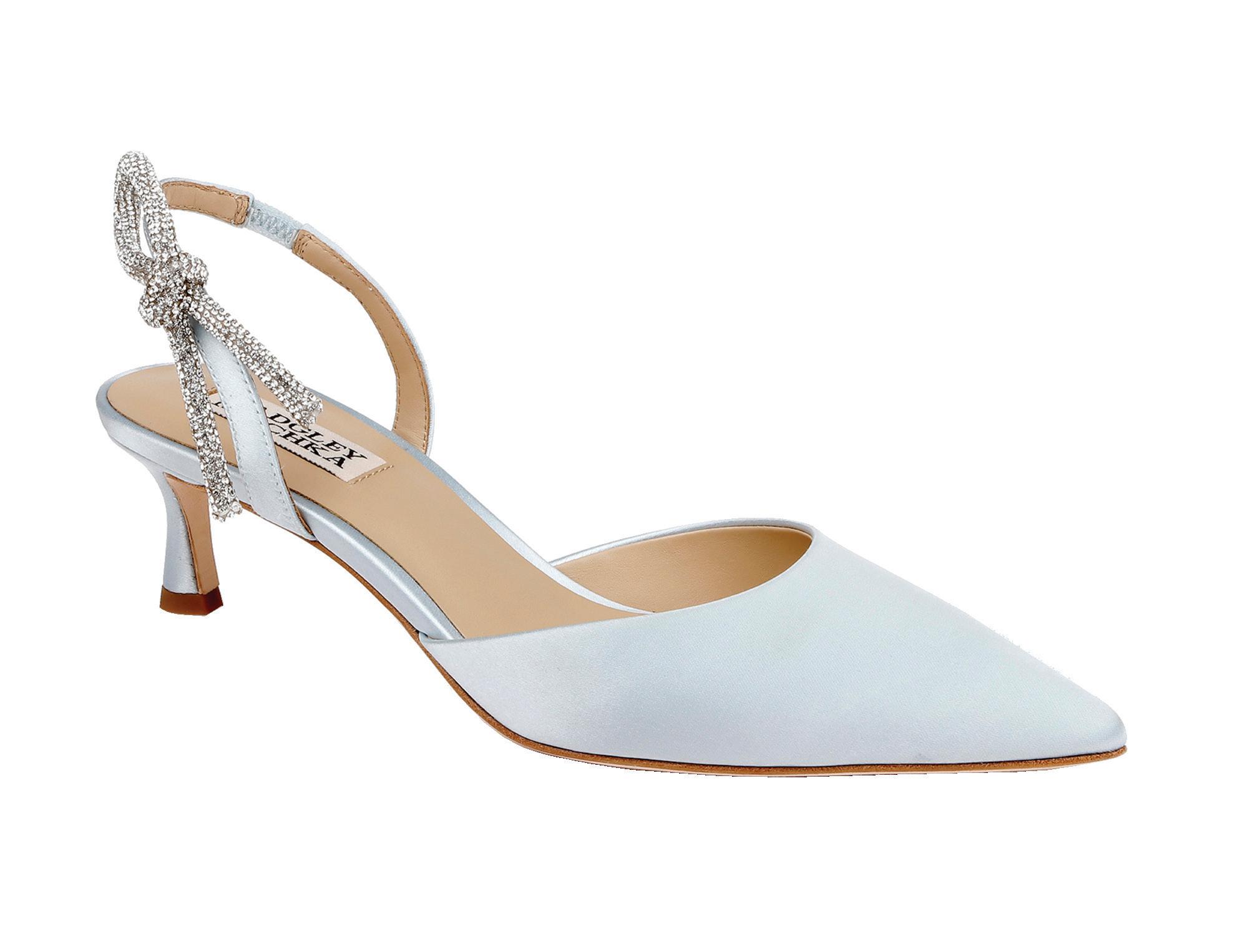
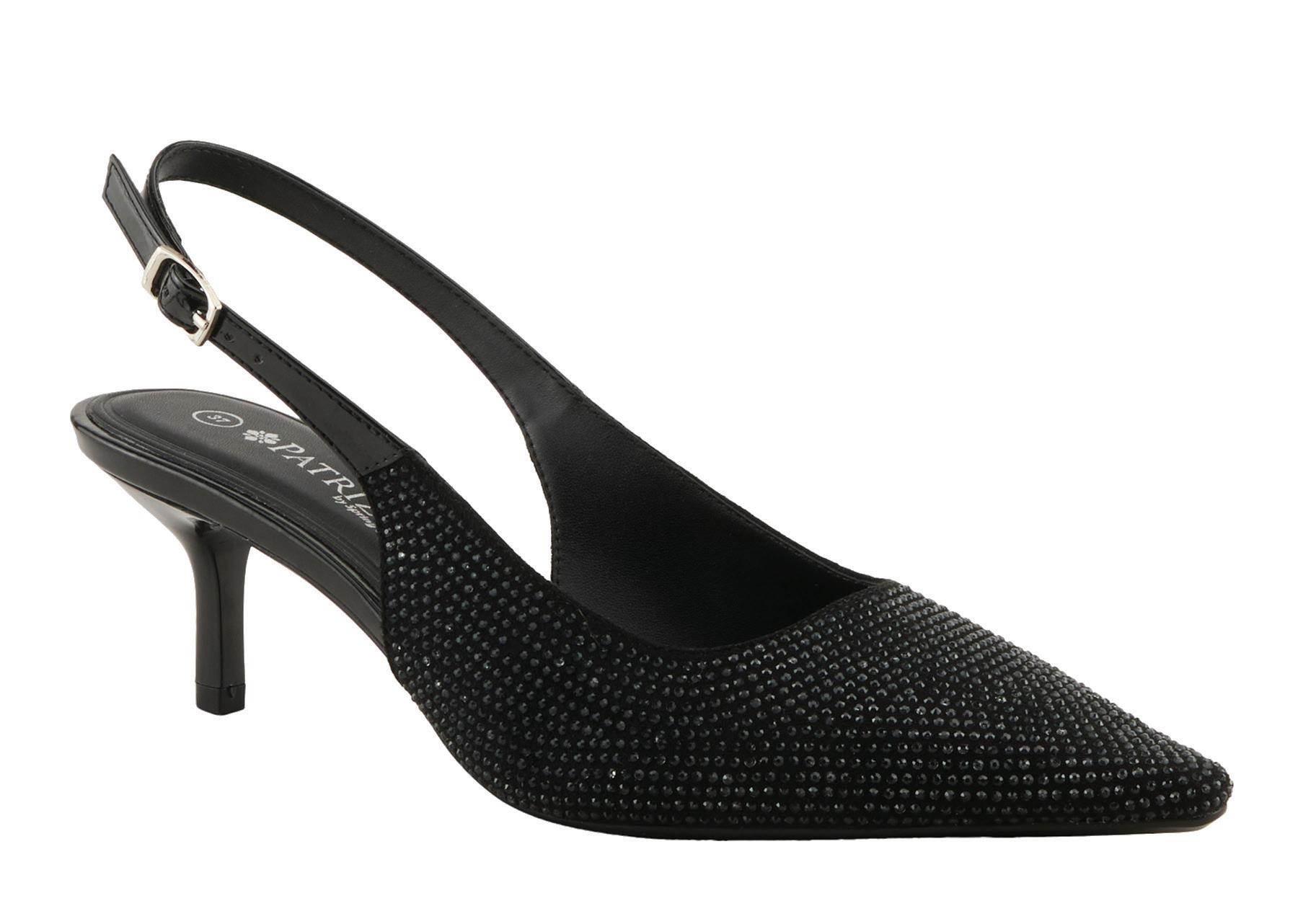
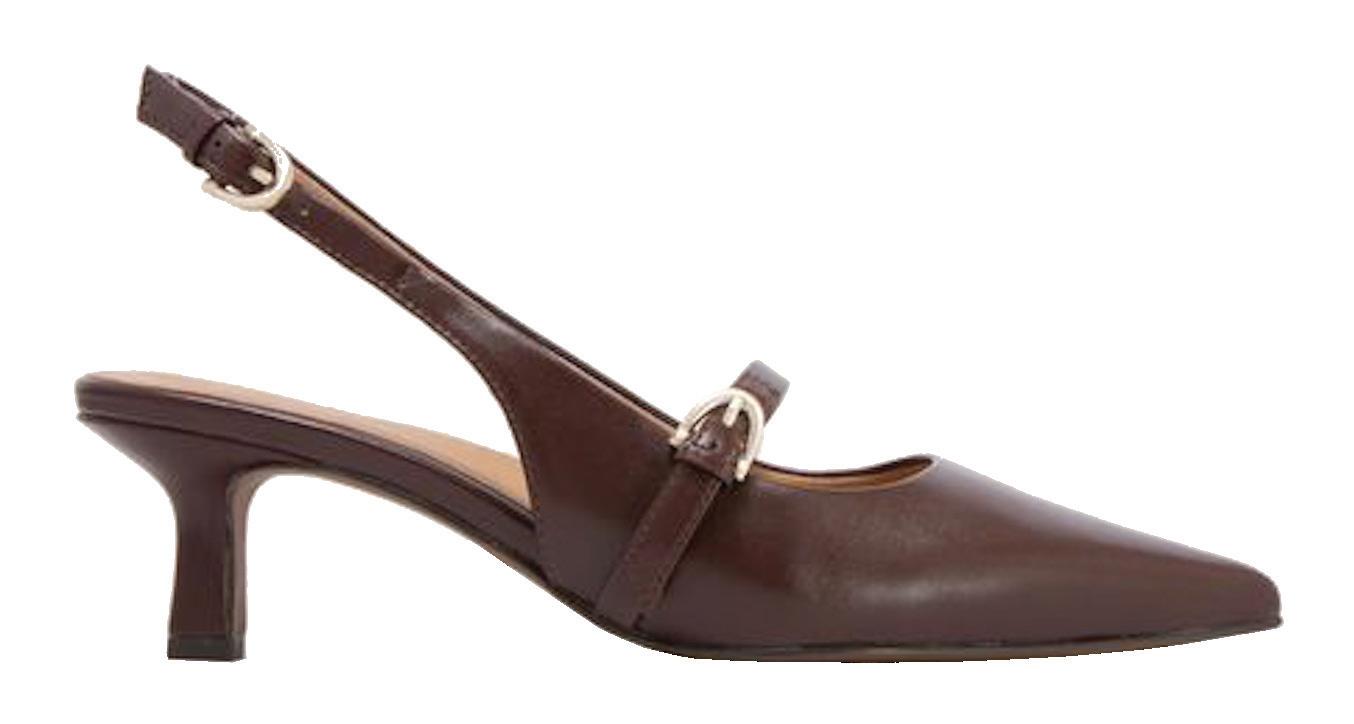
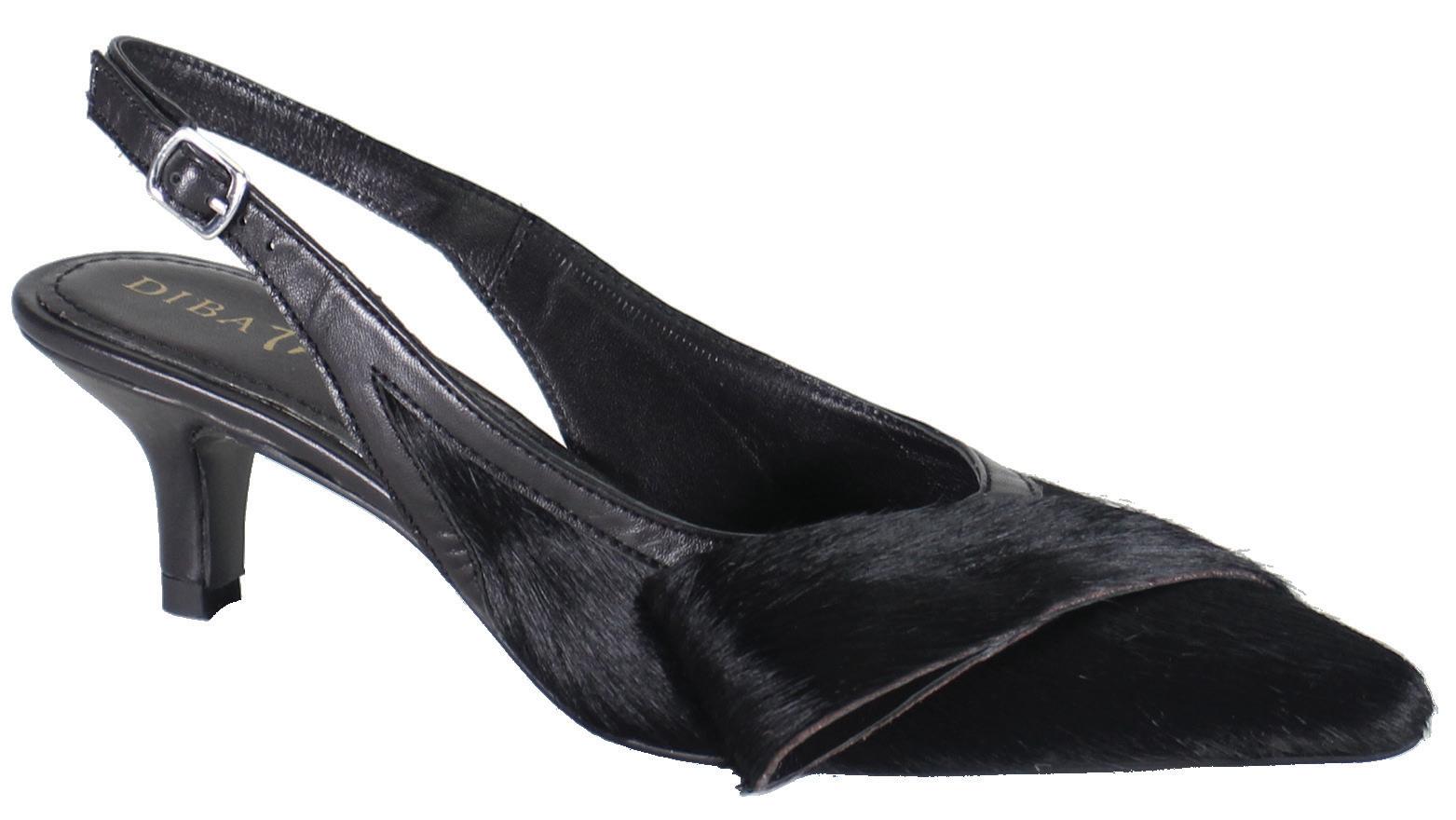
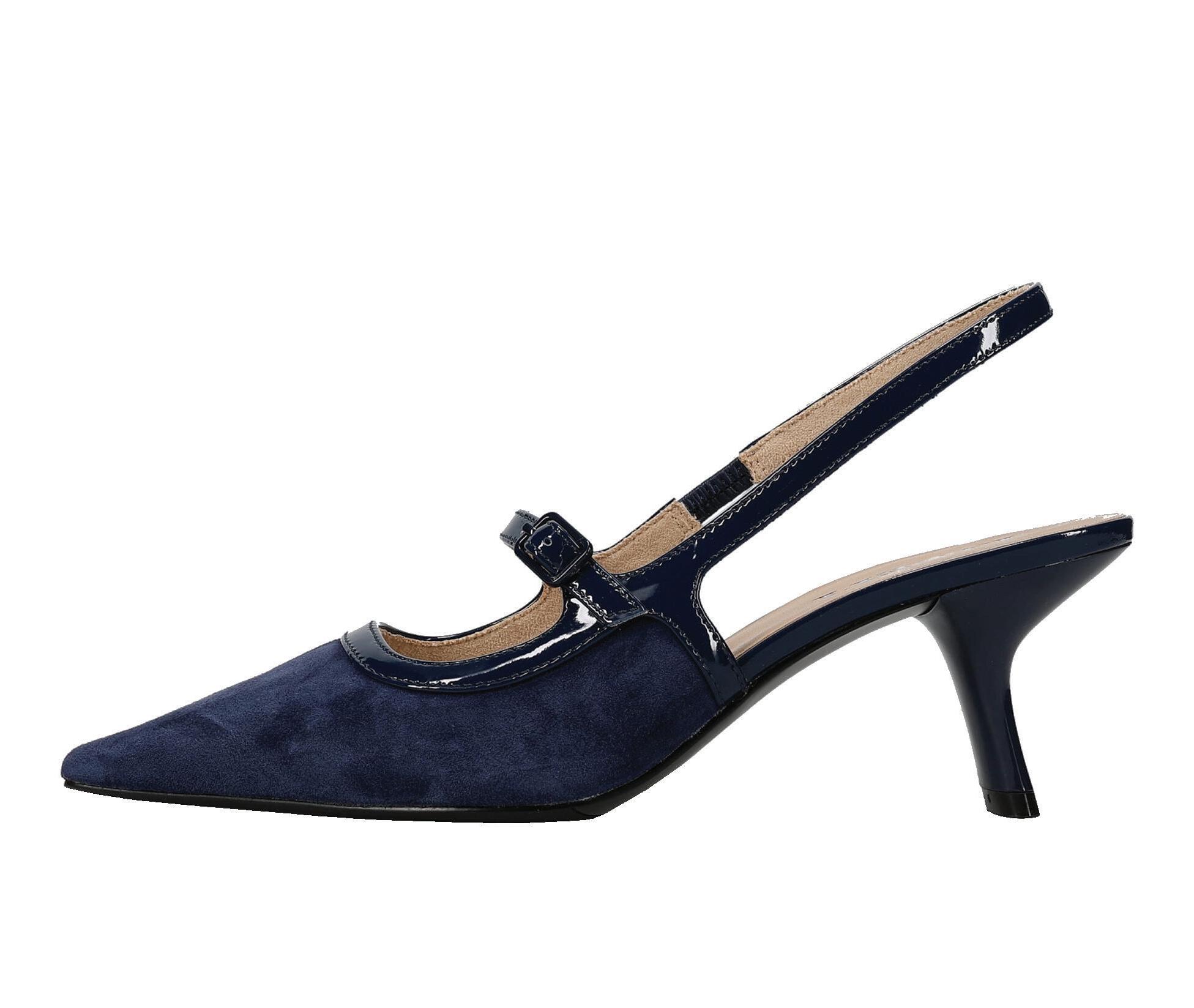
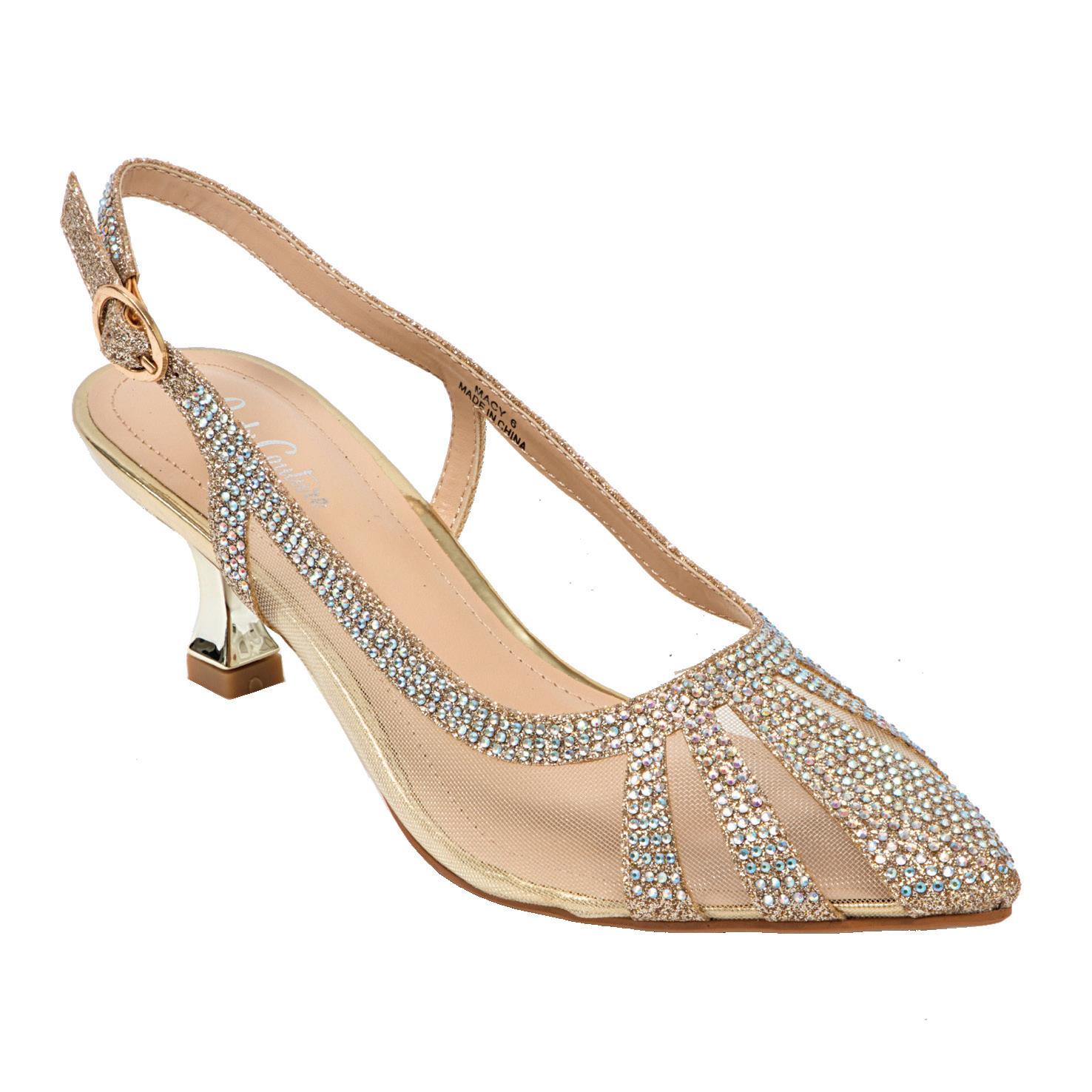
20 Trend Spotting: Slingbacks
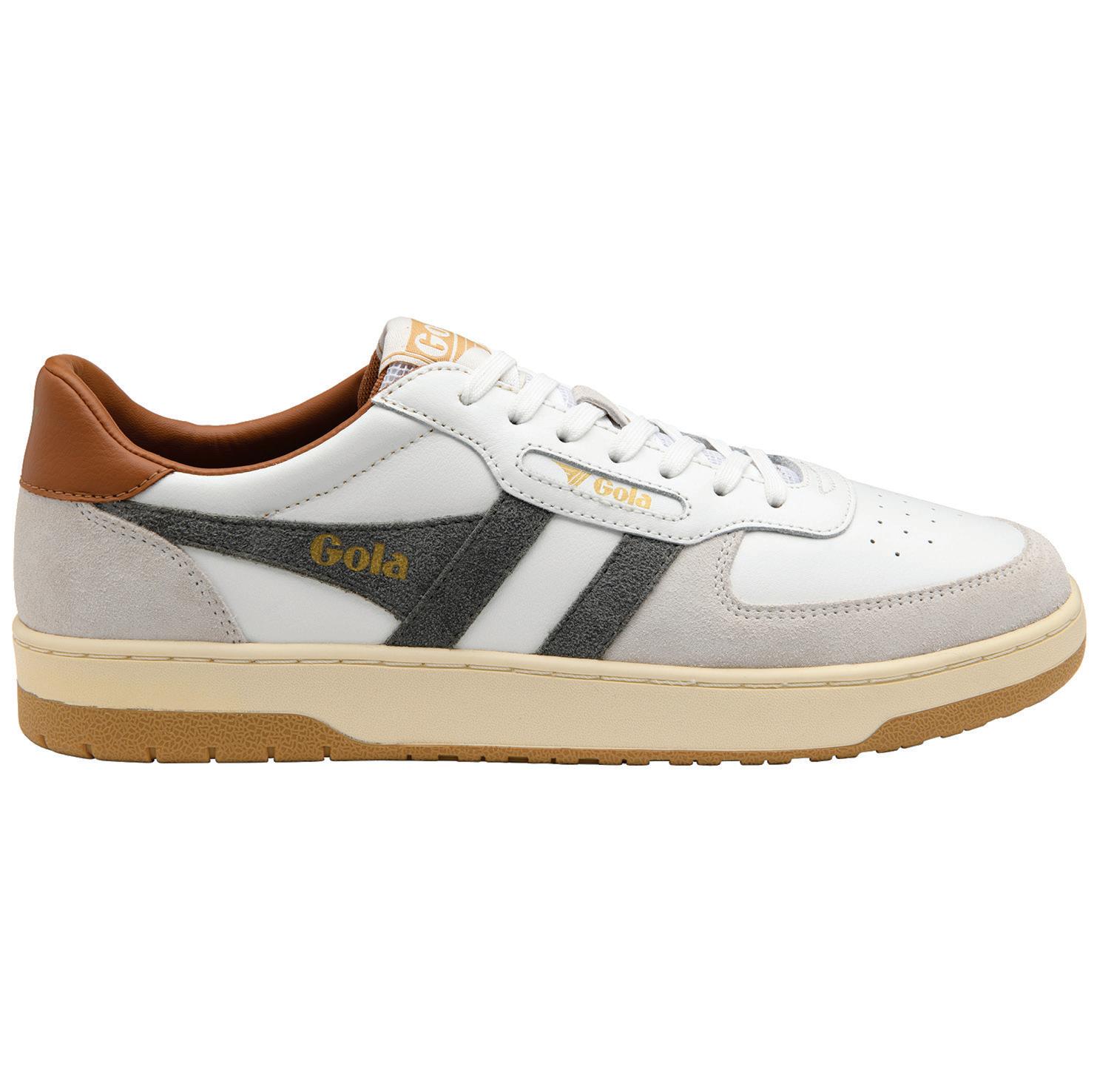
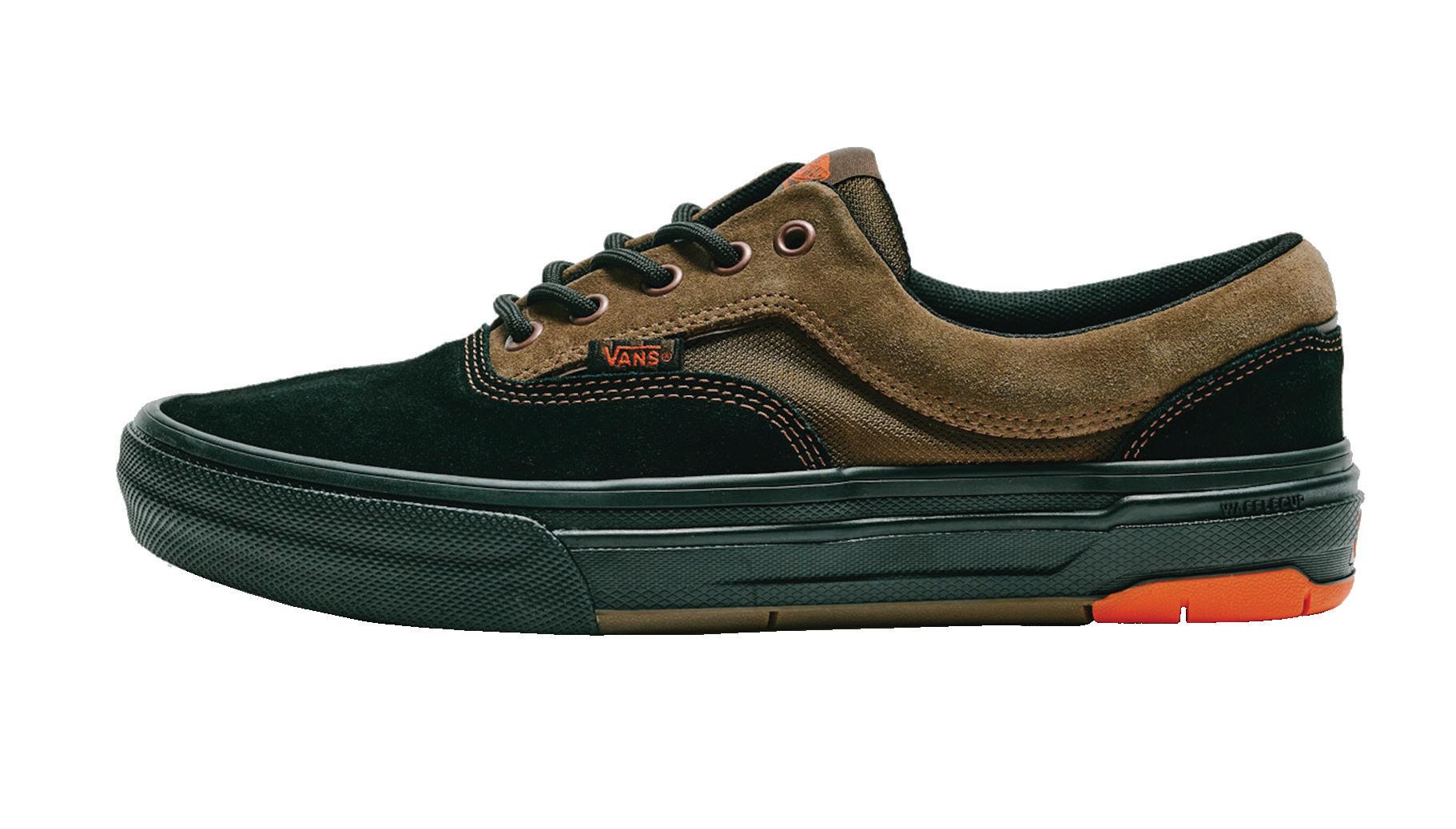
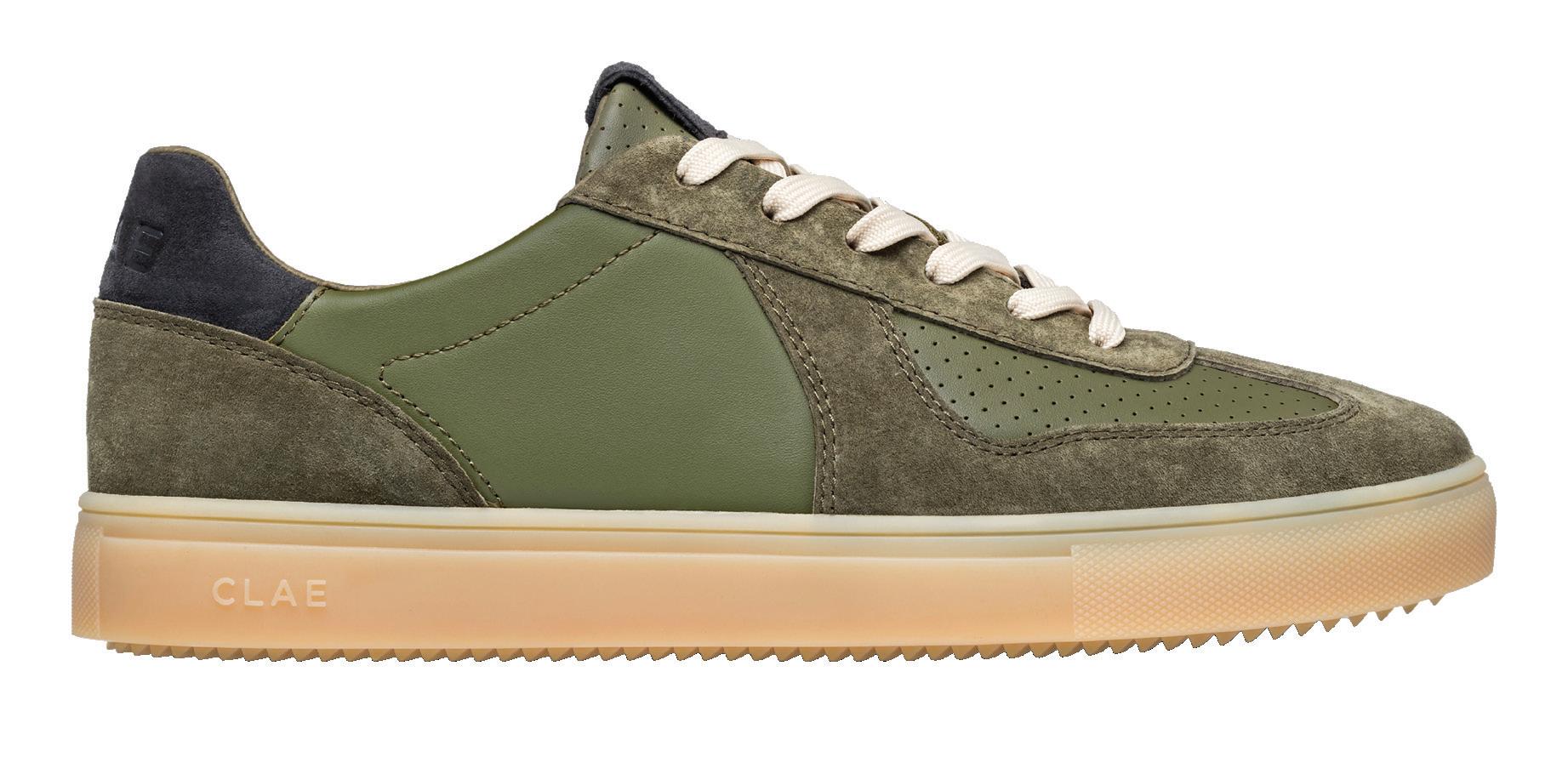
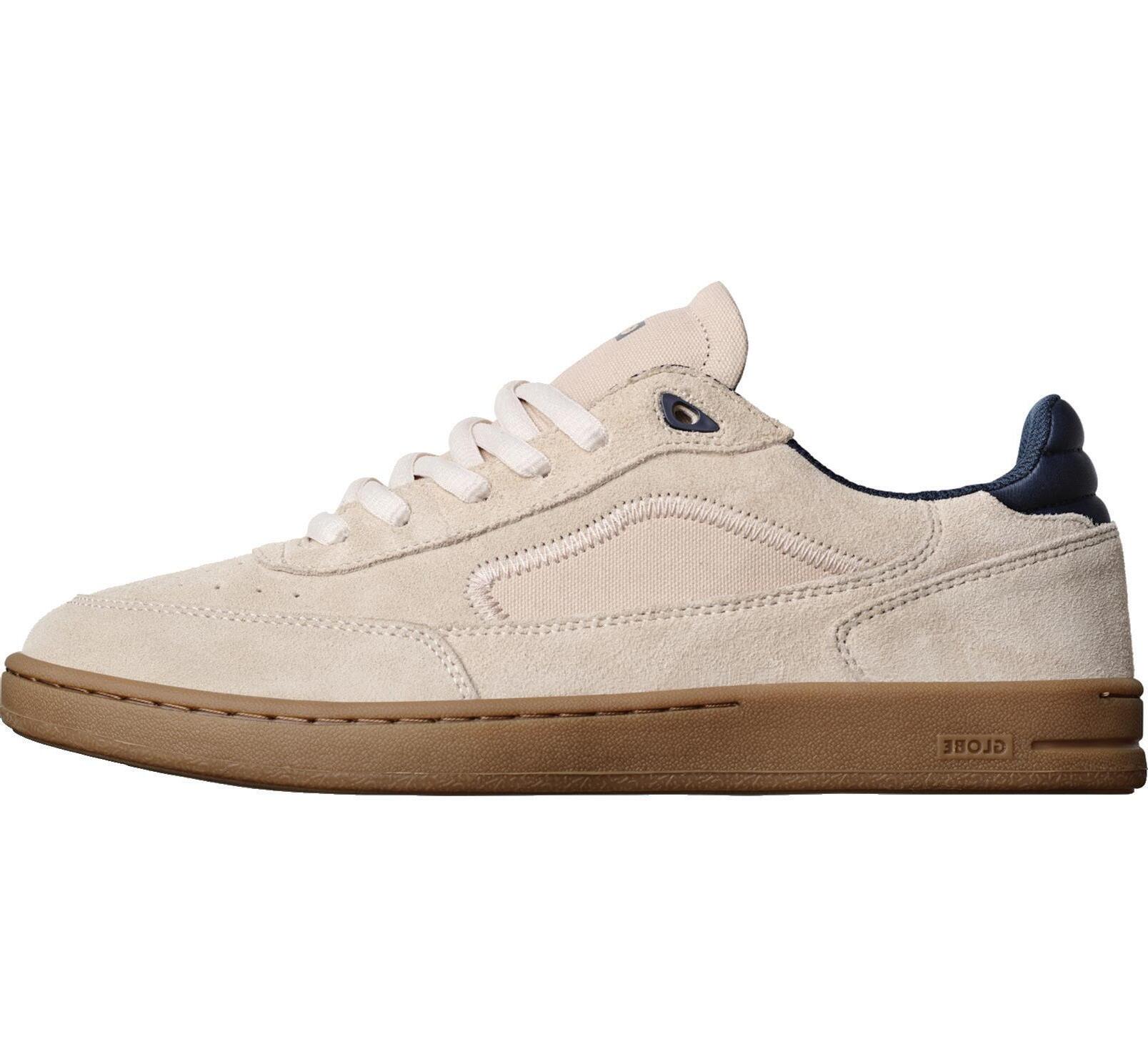
21 Trend Spotting: Skater Boys
38 As Seen in Unlaced: Thorogood
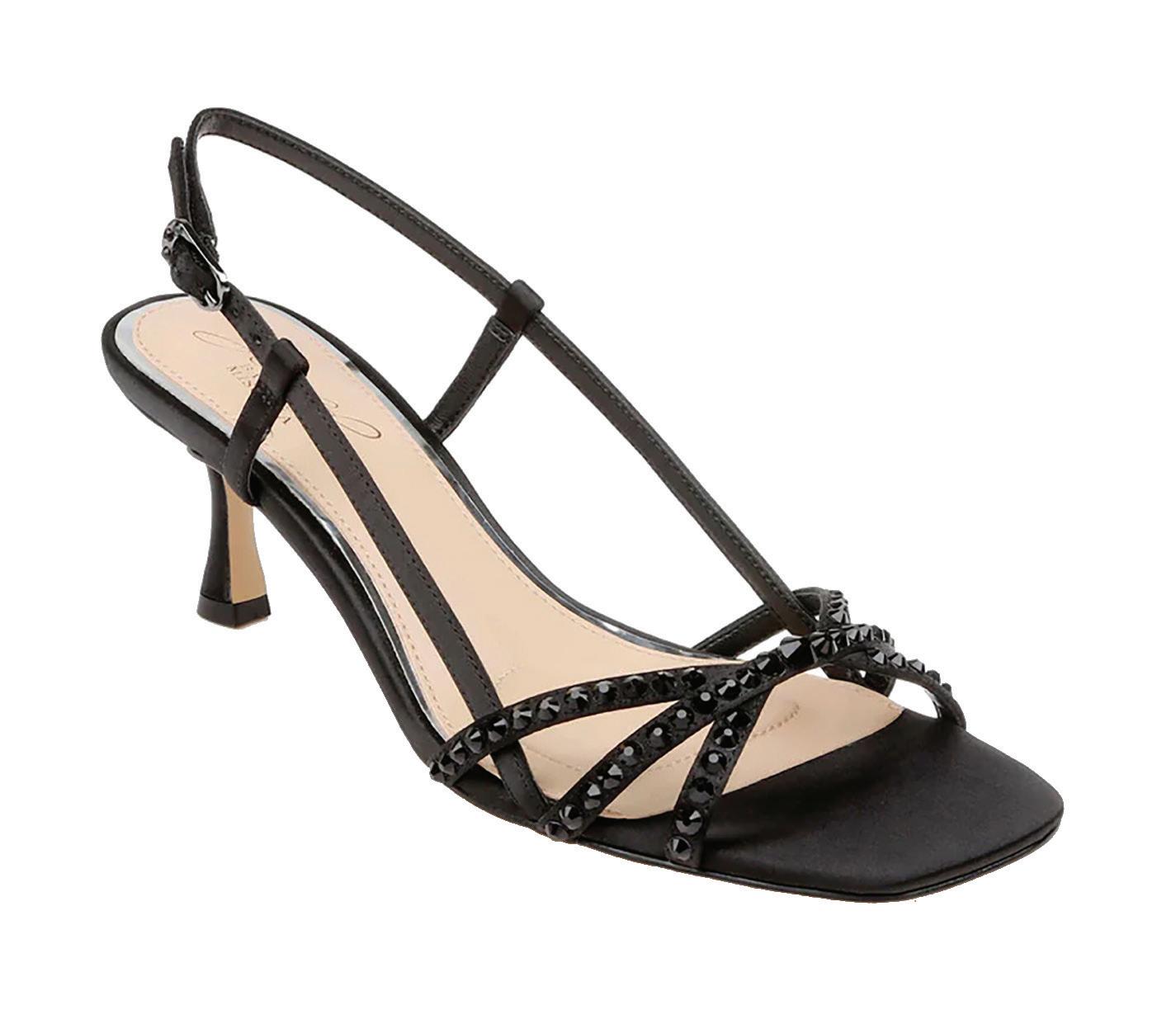
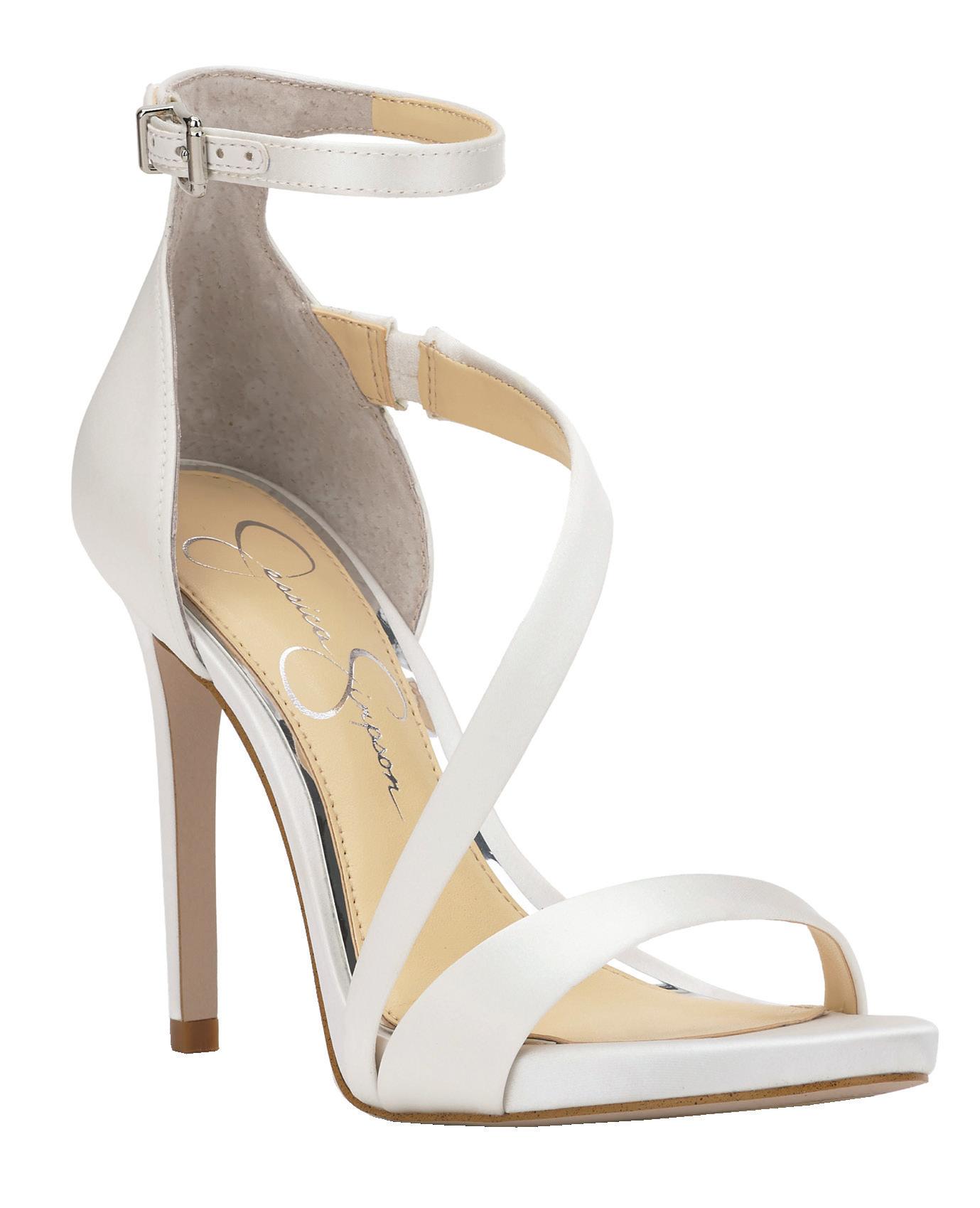
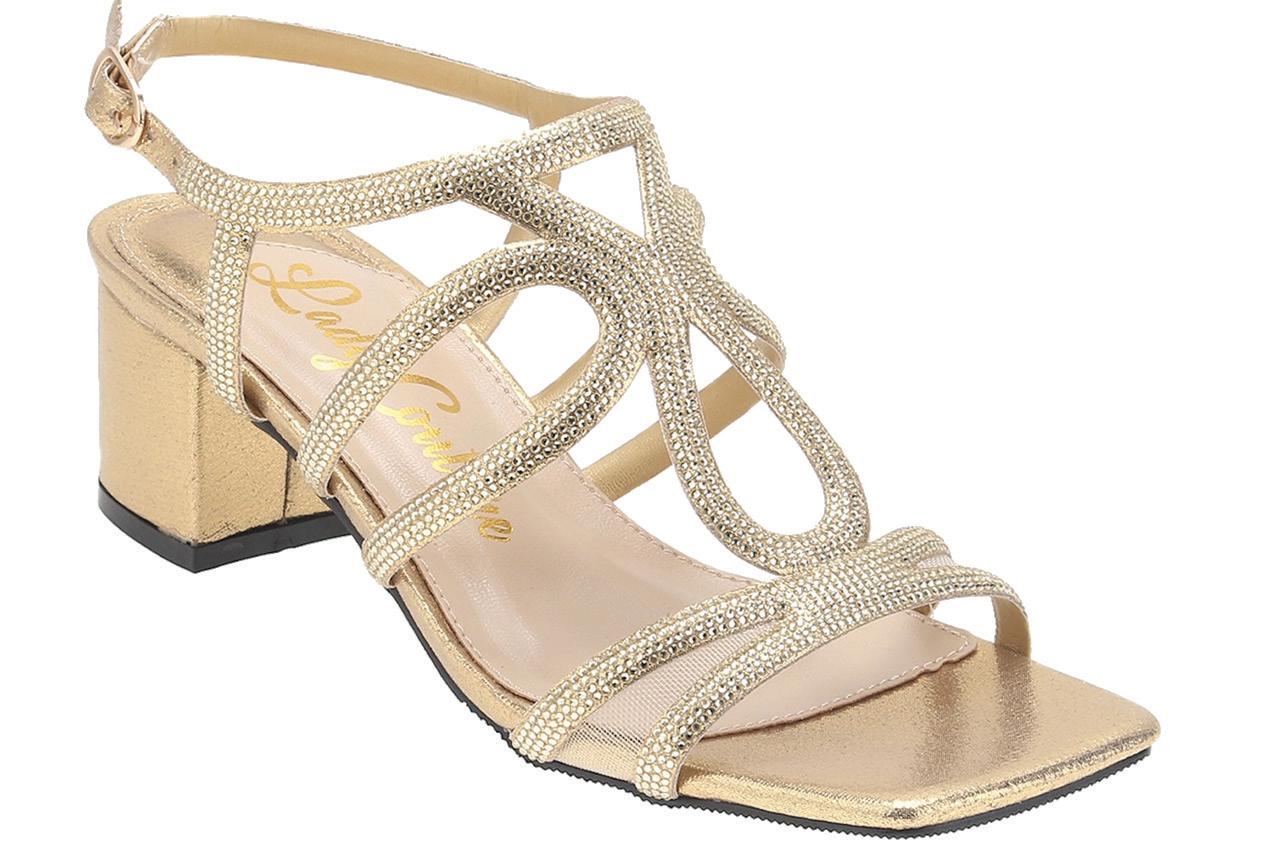
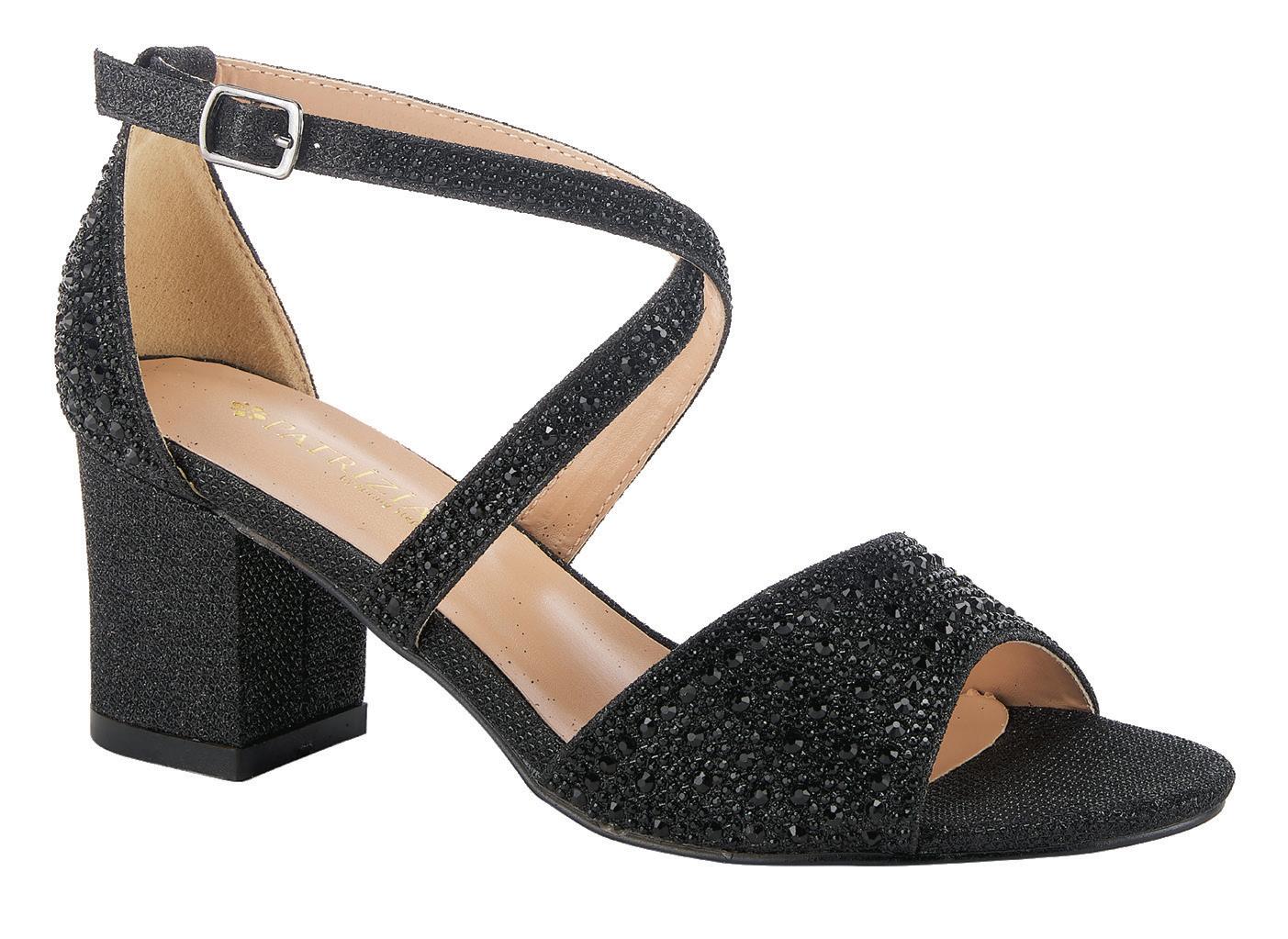
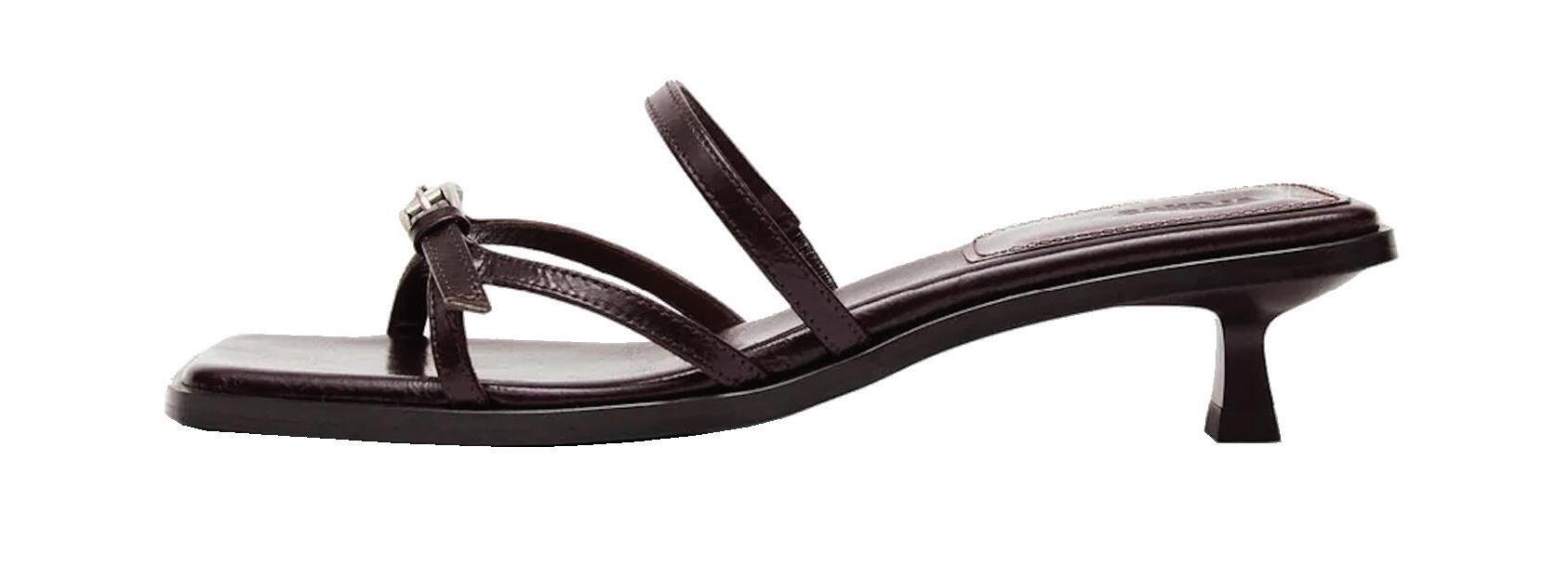
39 Trend Spotting: Strappy Sandals
40 Last Shot
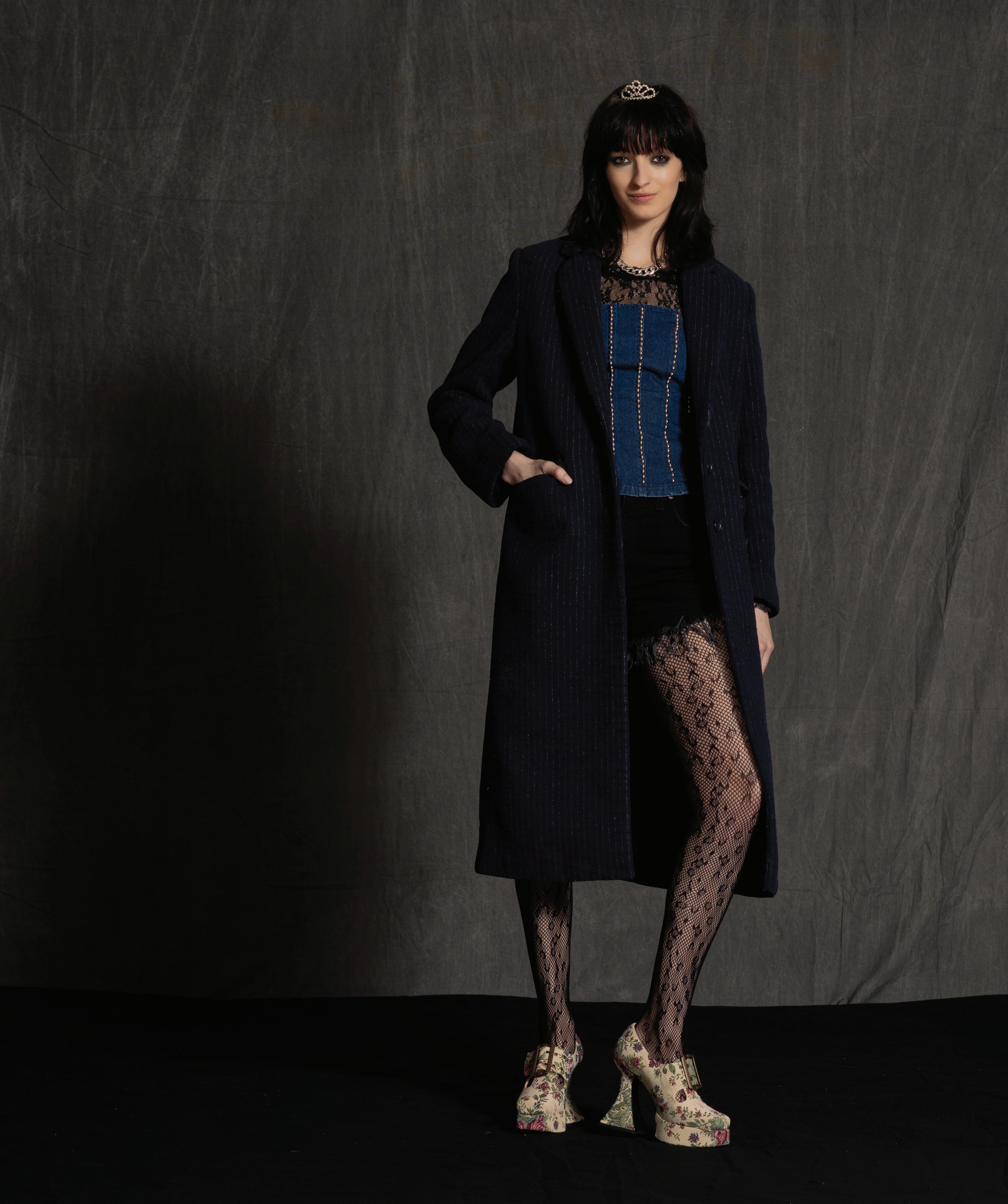
On the cover: John Fluevog Munster platforms.
APRIL/MAY 2026
EDITORIAL
Greg Dutter
Editorial Director
Nancy Campbell
Trevett McCandliss
Creative Directors
Kiernan McCormick Fashion Editor
Rosemary O’Connell Art Director
Kathy Passero Editor at Large
Mariah Walker Style Director
Darby Dutter Contributing Editor
Melodie Jeng
Marcy Swingle Contributing Photographers
ADVERTISING
Noelle Heffernan Publisher
Laurie Guptill Production Manager
Kathy Wenzler Circulation Director
Maria Martucci Office Manager
Mike Hoff Digital Director
WAINSCOT MEDIA
Carroll Dowden Chairman
Mark Dowden President & CEO
Steven J. Resnick Vice President & CFO
Lizette Chin SVP/Group Publisher
OFFICES
ADVERTISING/EDITORIAL
One Maynard Drive Park Ridge, NJ 07656
Tel: (201) 571-2244
Ads: Noelle.Heffernan@ Wainscotmedia.com
Editorial: Greg.Dutter@ Wainscotmedia.com
CIRCULATION
One Maynard Drive Park Ridge, NJ 07656
Tel: (201) 571-2244
Circ@Wainscotmedia.com
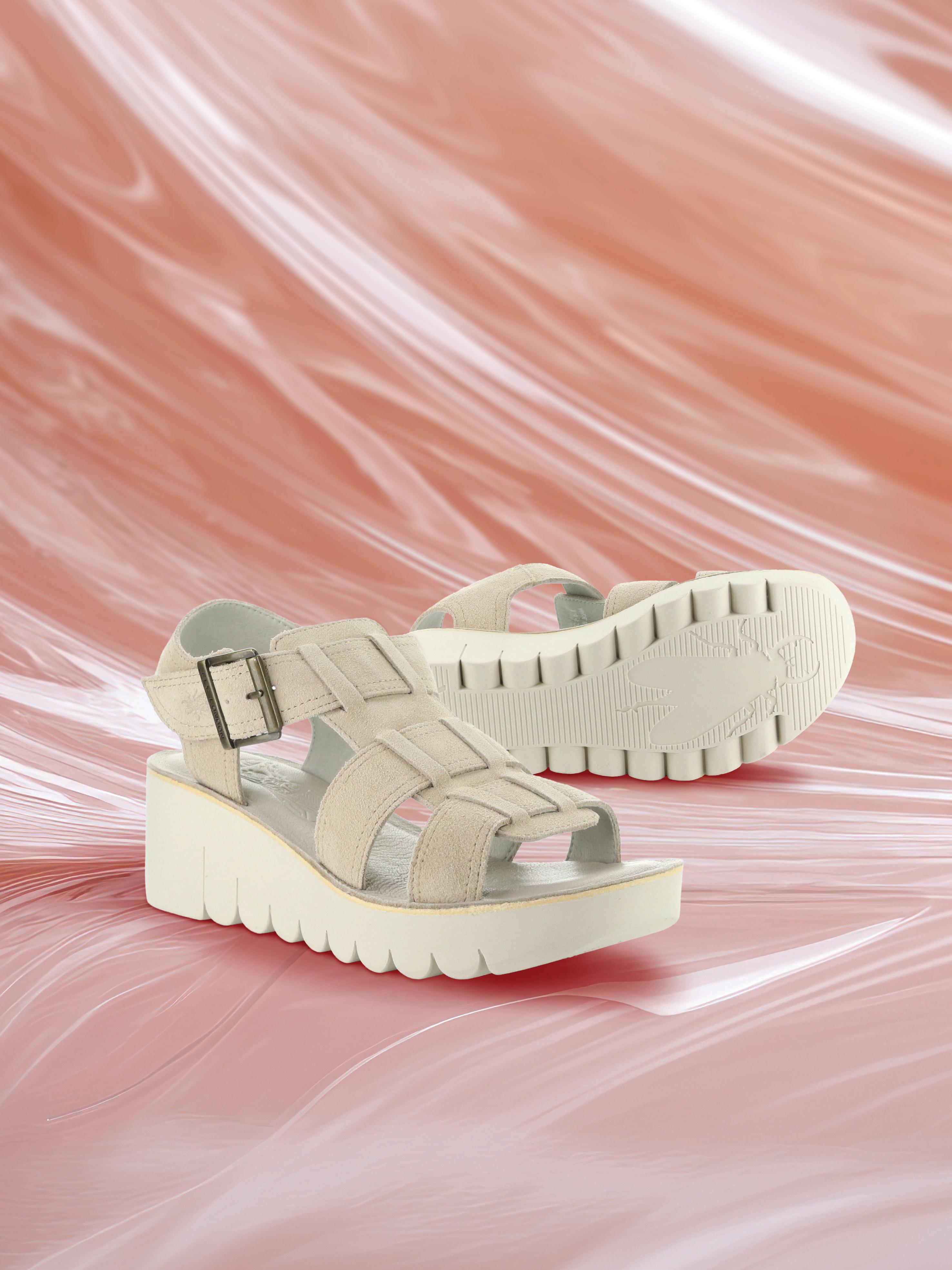
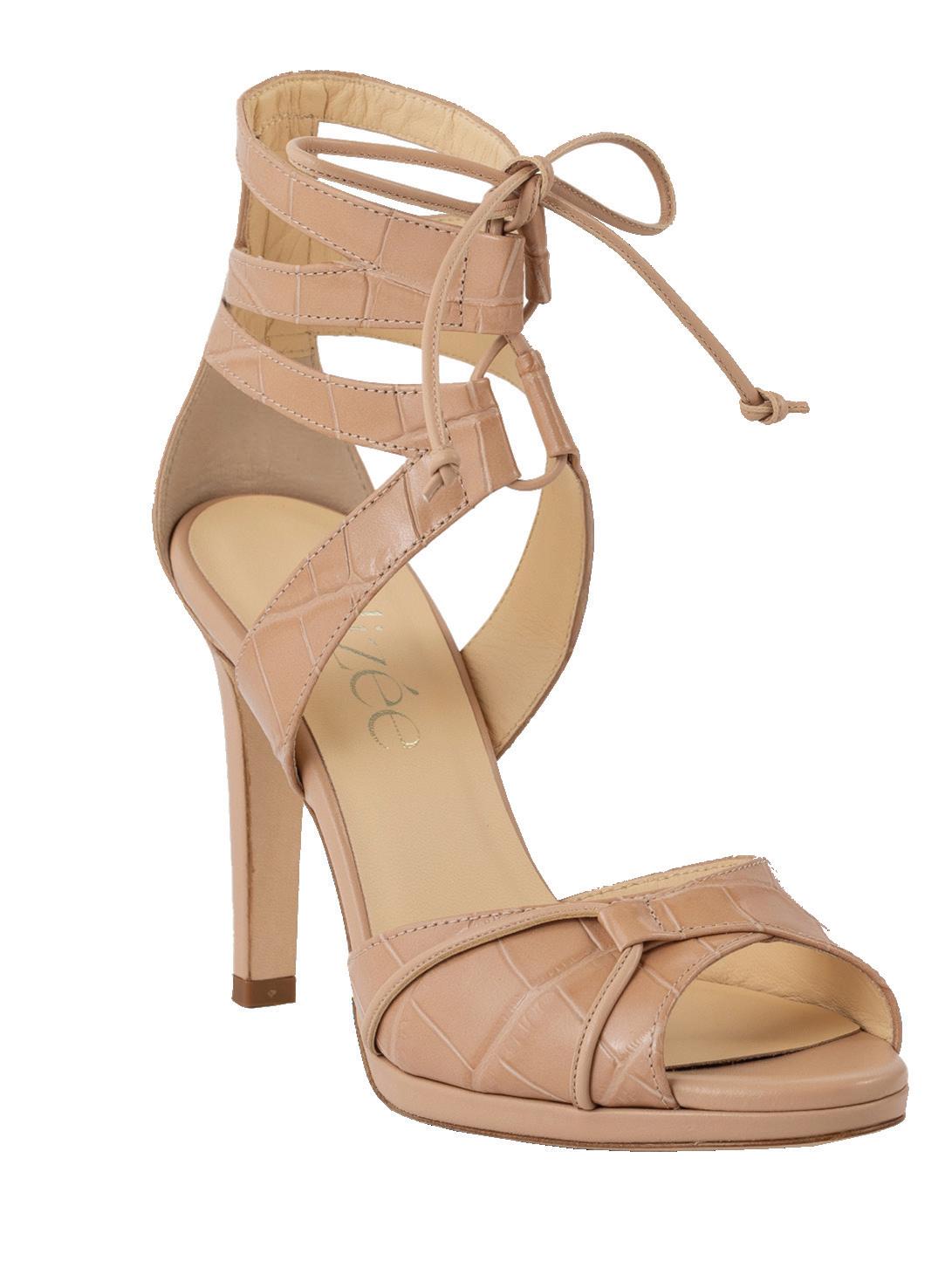
Platform sandal with suede knot upper by Vaneli
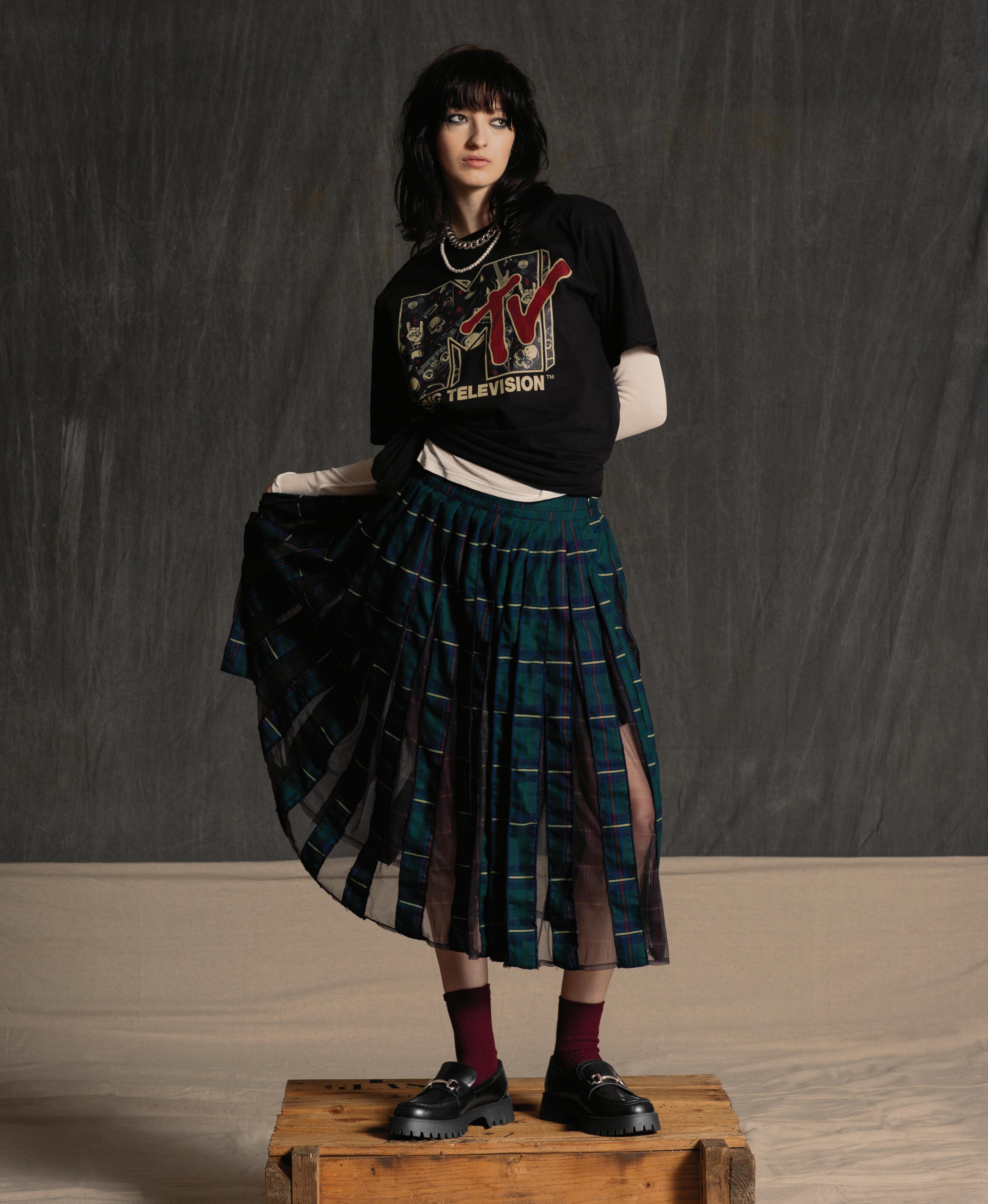
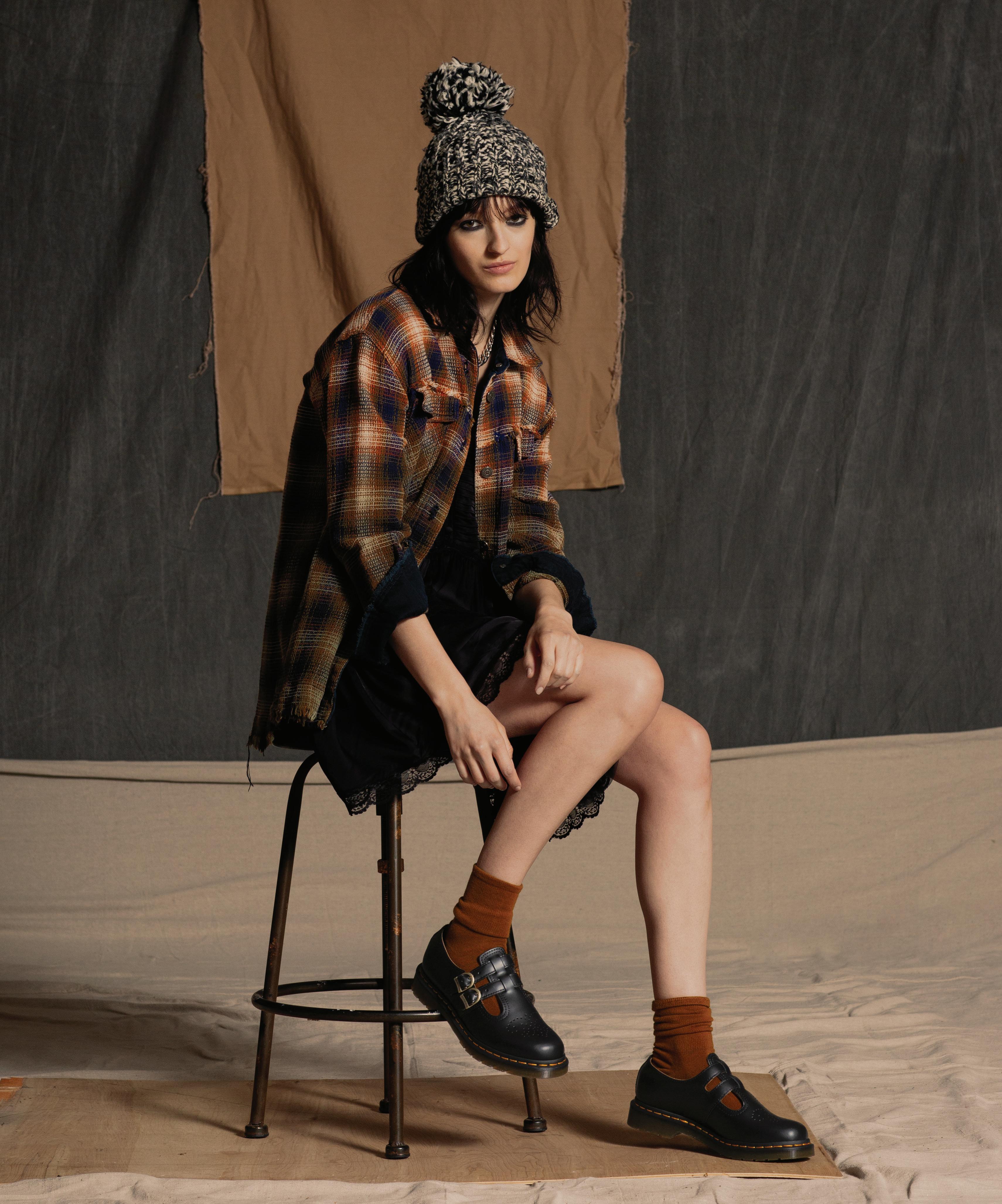
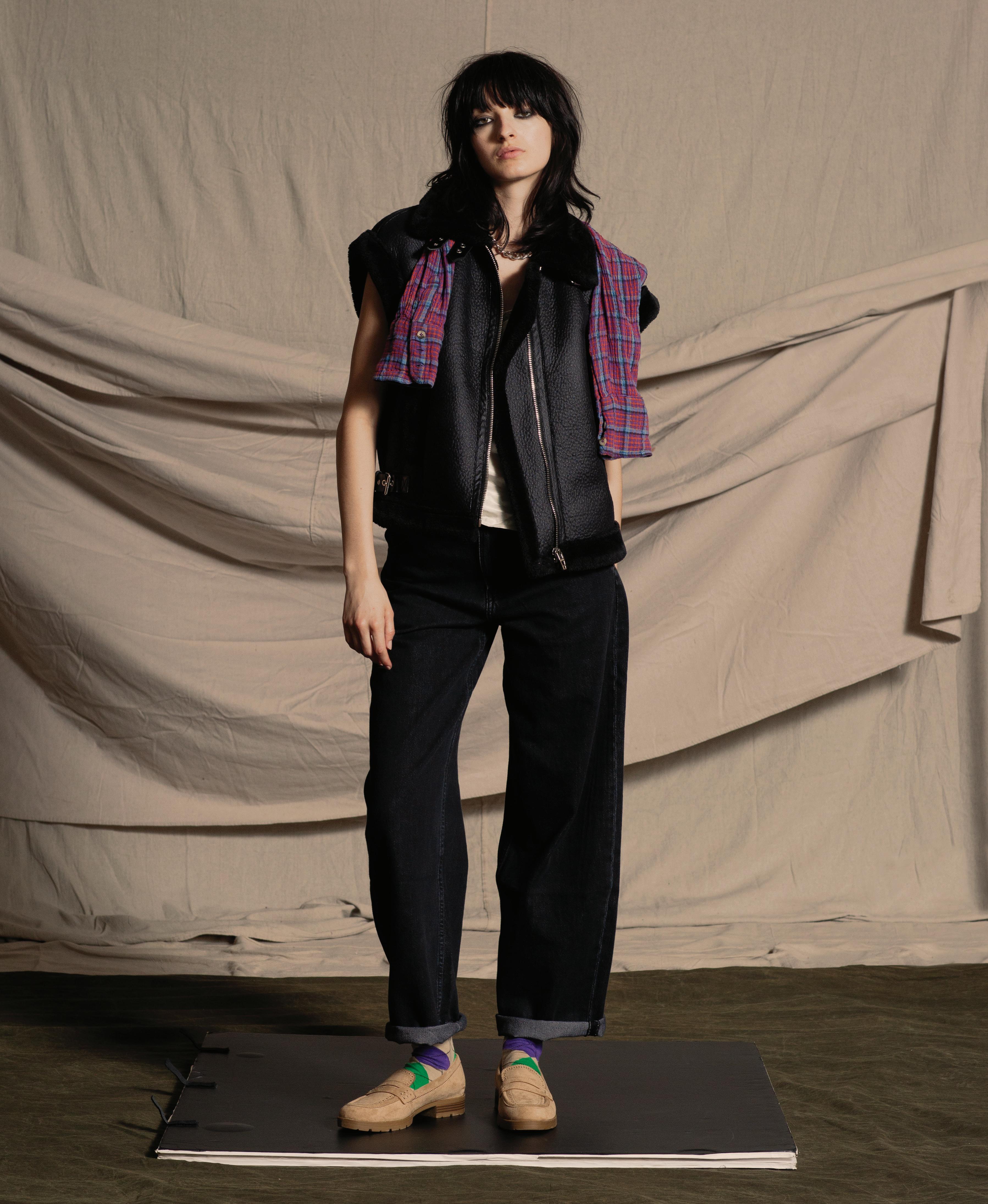
Photography: Trevett McCandliss; styling: Mariah Walker/Art Department; fashion editor: Kiernan McCormick; model: Madilynn/Q Management; hair and makeup: Nevio Ragazzini/ Next Artists; photo assistant: Raymond Collette; styling assistants: Nellyfer Espinoza and Jamie Wtorkowski.
dialing up the ’90s
AT THE ONSET of this decade I wrote a column brimming with hope that the next 10 years would be better than the previous timeframe. We were coming off a tumultuous decade that began with the globe reeling from the Great Financial Crisis and fears that Capitalism was a failed experiment. It didn’t get much smoother over the ensuing years, which witnessed plenty of manmade disasters—like the Syrian civil war, the rise of ISIS and related terror attacks worldwide, and frequent mass shootings in the U.S., just to name a few. Mother Nature wasn’t kind, either. The Haiti earthquake and Japanese tsunami got the decade off to a destructive start followed by a steady stream of devastating hurricanes, heatwaves, droughts, and floods. Then there was the widening political chasm. Lines drawn. Heels dug in. Fingers pointed. Threats made. Meanwhile, our industry entered the so-called Retail Apocalypse—a time of epic contraction that is still going. All told, it was pretty bleak. Hence my hope that the coming one couldn’t possibly be worse.
Well, my hopes have been absolutely vaporized. The only thing roaring in these ’20s is the proverbial dumpster fire that this decade has seen so far. A global pandemic that killed millions, record inflation, an attempted U.S. coup, a crippling trade war, multiple conventional wars, the implosion of long-standing alliances, a relentless opioid epidemic, a political divide that teeters on an abyss, natural disasters…to paraphrase Chandler Bing (RIP): Could it be any worse?
The snarky, Gen X pessimist in me says we’ve got three-plus years more years to blow past the current misery index. And it seems we’re picking up steam as we face the extremely high prospects of WWIII breaking out at a moment’s tweet while also coming to the sobering fact that we remain at the mercy of our biggest addiction: oil.
than three years, as tariffs more than doubled over the past year, duties surged by more than 80 percent, and oil-driven supply chain costs are higher and remain quite volatile. Indeed, FDRA President Matt Priest believes our industry is at a tipping point. “For months, brands and retailers have done everything possible to absorb rising costs and hold prices down,” he states. “But that buffer has been exhausted.”
Nearly doubling the price of oil has been nothing short of paralyzing for businesses. There are only so many increased costs one can absorb and/or pass on to consumers. And oil prices aren’t something that can be circumvented, like moving production to avoid higher tariffs. (Not that that process is easy or affordable.)
Oil is our industry’s lifeblood. A recent FDRA study revealed that the fuel is used in every area of the supply chain, including synthetic textile uppers, plastics/polymers, rubber chemicals, midsole foams, adhesives, and packaging. Then there are transit costs (drayage, trucking, last-mile delivery). The study takes it a step further, proposing that new inflation could lead to social unrest, particularly in Asian countries. For example, factory workers protesting for higher wages and/or unable to get to work due to fuel rationing. It could greatly impact the movement of finished shoes from the factory to the port.
The negative impact is already being felt, the study reports. Footwear prices rose nearly 2.5 percent in March, the sharpest increase in more
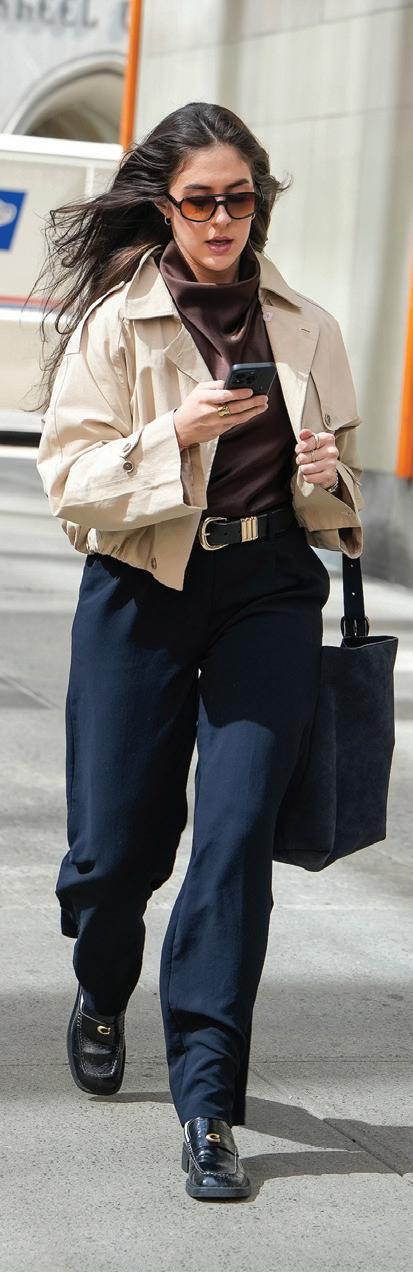
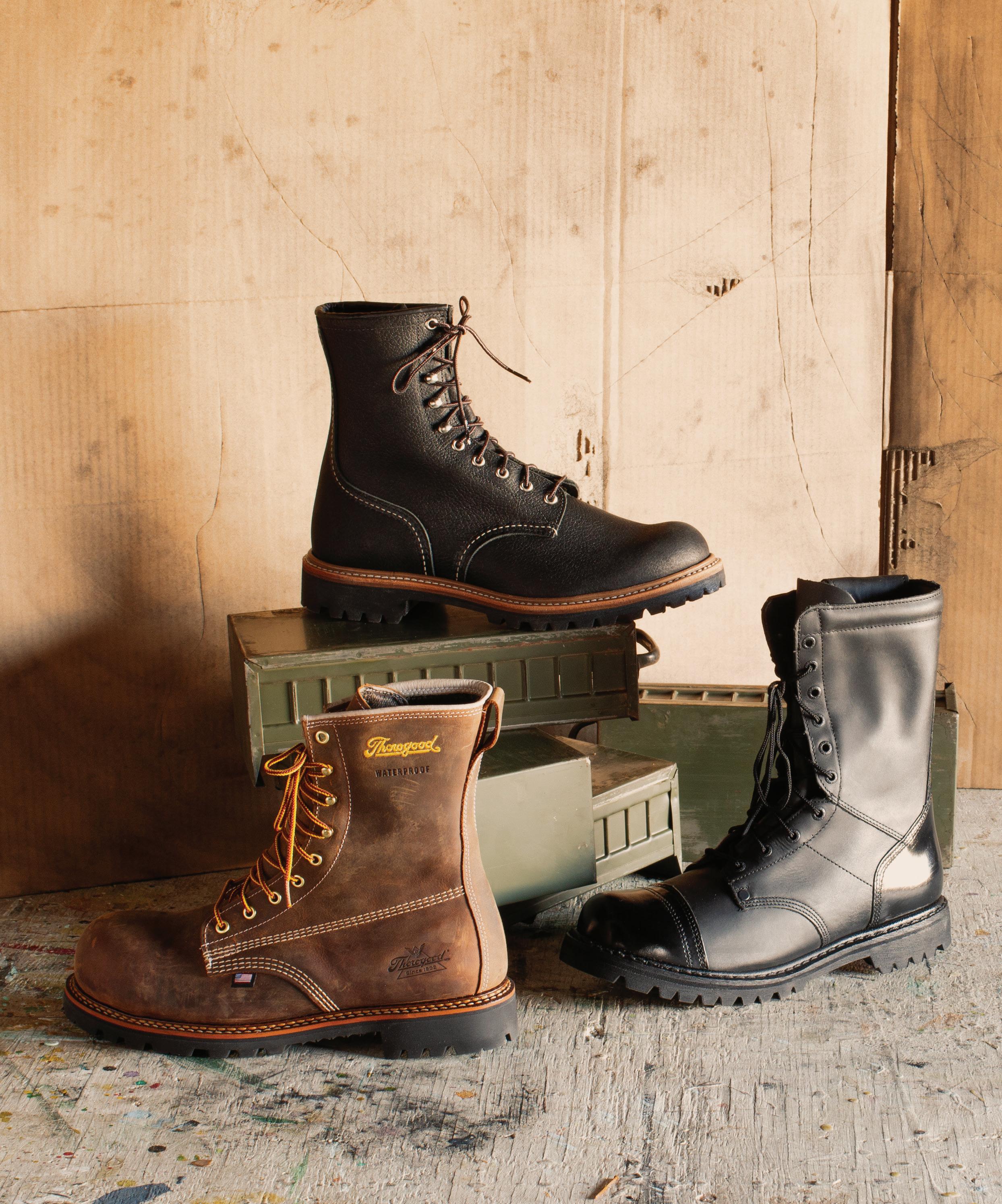
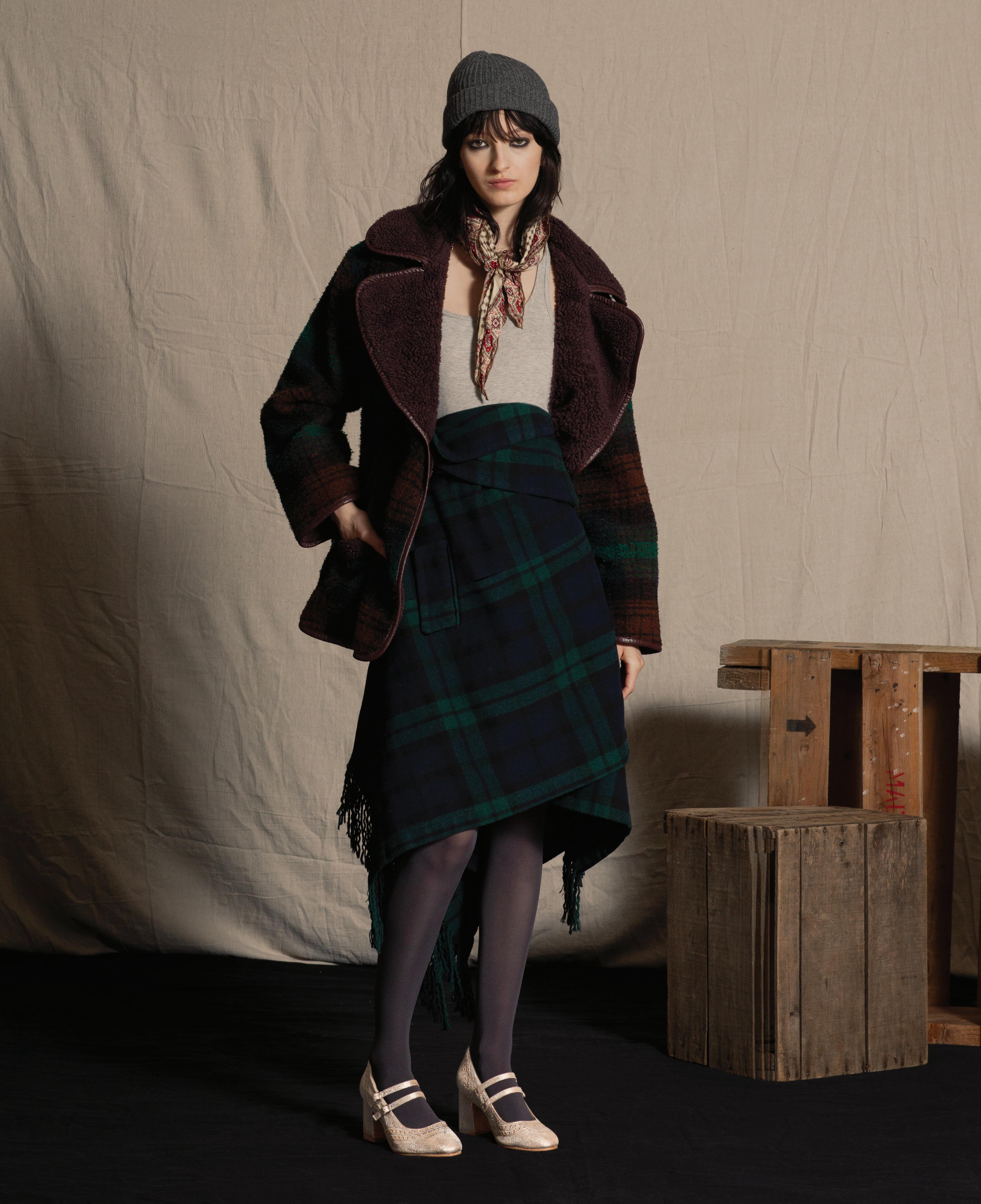
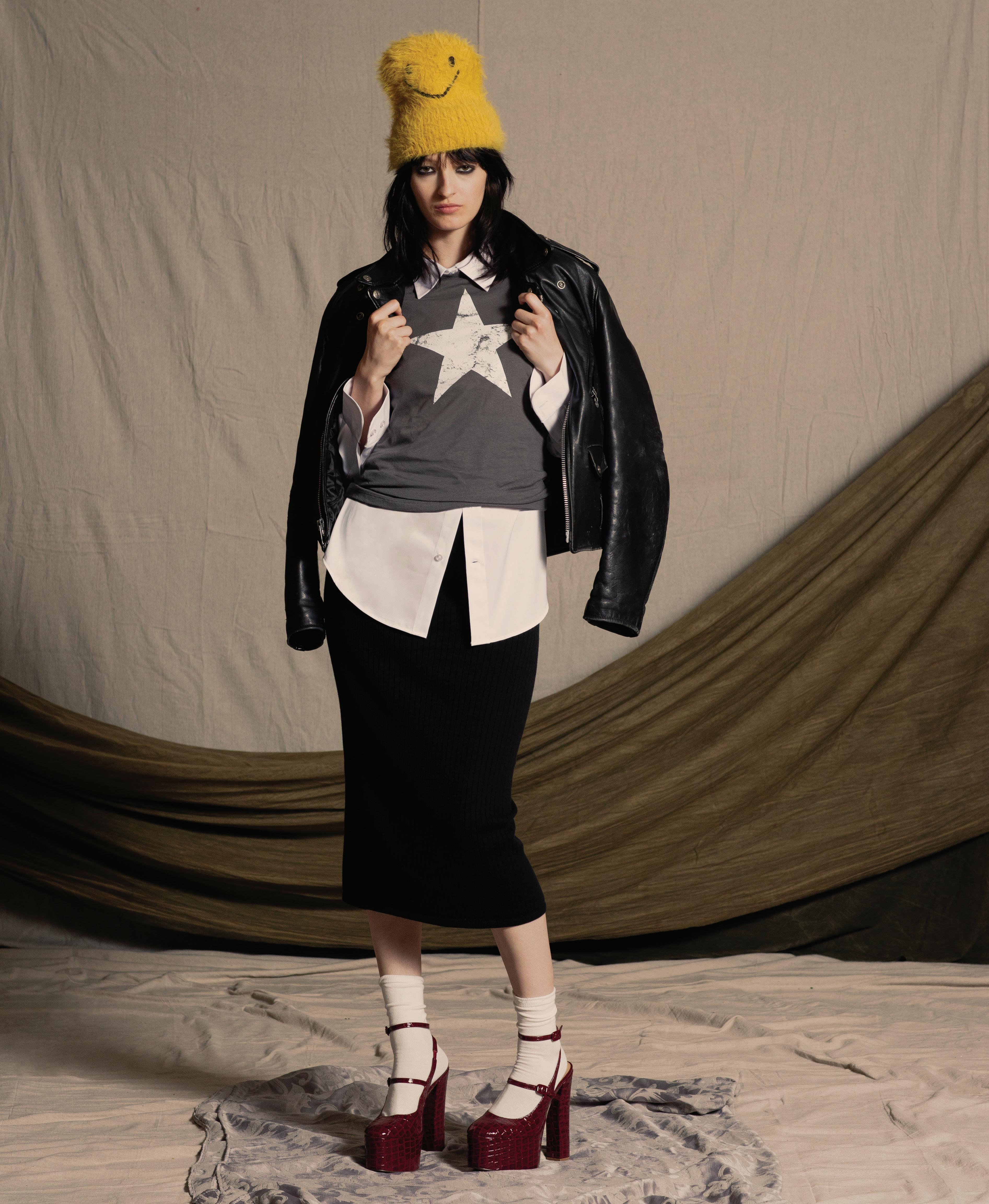
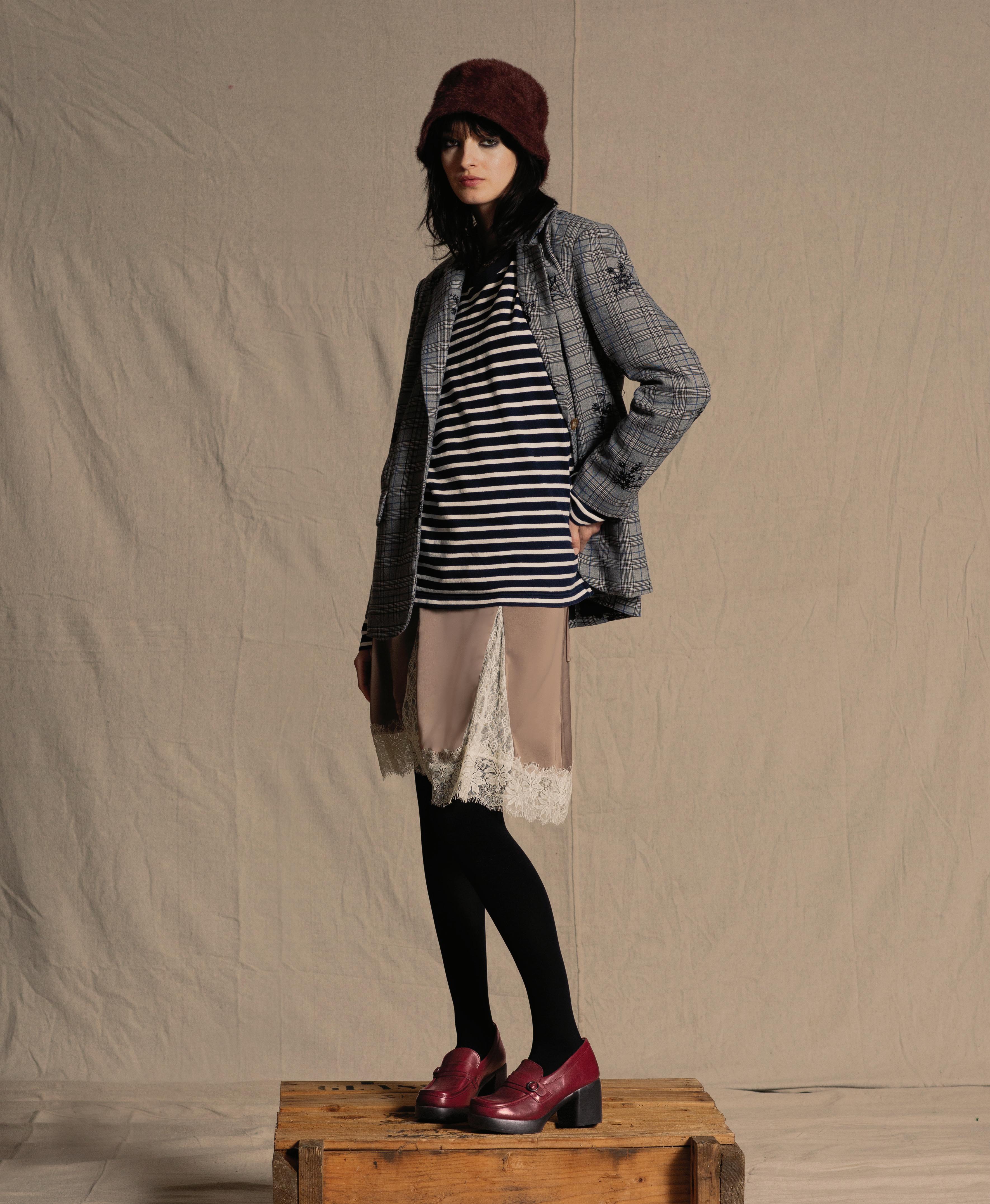
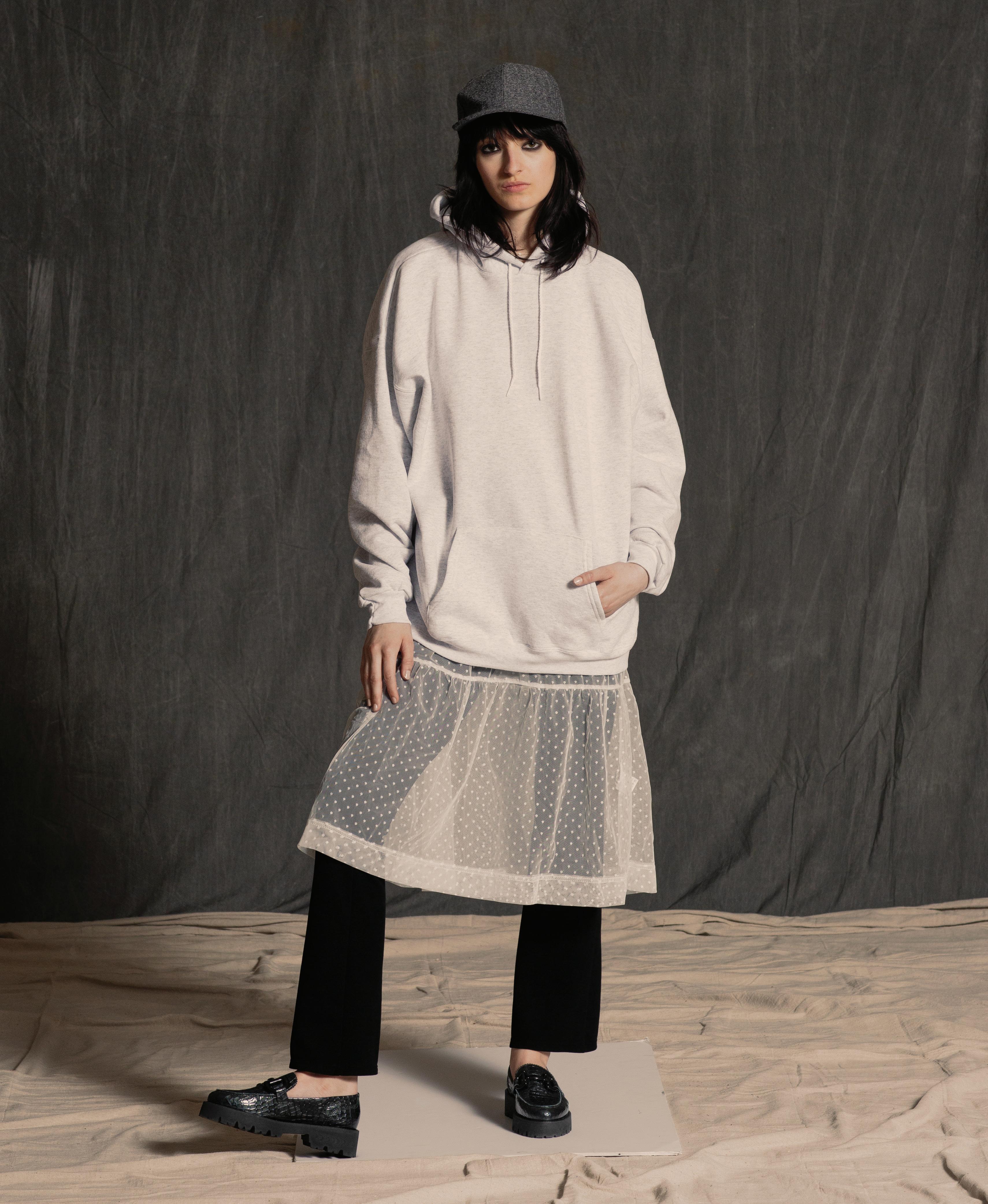
So, all (horrible) things considered in the (pretty crappy) ’20s, is the rampant nostalgia we’re seeing for all things ’90s any wonder? The fashion, movies, and music seem to hark back to a more optimistic era that marked the fall of the USSR and the dawning of the Internet age. Sure, there’s some rose-colored reminiscing here (Rwandan genocide and Balkans civil war, anyone?) but, by and large, the world appeared to be heading in an optimistic direction. It’s no surprise many designers have been embracing the styles of that decade as they wince in the face of the present one. Hence, this issue’s focus on ’90s-inspired trends. Our men’s boots story (p. 22) reflects what grunge sounded and looked like. It was a raw and real art form—and, at the time, a welcome alternative (pun intended) to the hair band era that preceded the movement. It’s as wearable now as it was in a beer-slicked mosh pit in Seattle back in the day. Our love for ’90s style continues with our women’s-themed story (p. 26) spanning loafers, Mary Janes, and platforms—all de rigueur silhouettes in the years leading up to the new millennium. Our Trend Spotting, This Just In, and Last Shot departments also showcase hits from a decade that’s now on rewind. Even our Q&A (p. 8) with Logan Bird, recently named president and CEO of Mephisto USA, has a ’90s hook. The self-proclaimed sneakerhead grew up in that era, and he still has a fondness for European soccer jerseys and baggy jeans, which are trending again. Bird’s fresh and relatively young perspective is one of proactive optimism for the 61-year-old European comfort brand.
Maybe the future isn’t completely dark, after all. Beloved successes from the past can help light a way forward. I, for one, look back fondly on the ’90s. They were a foundational period in my life. I started my journalism career, moved to New York, and got married. I’m proud to say that all three remain the same three decades later. The first two haven’t always been easy. My chosen profession has been turned upside down and inside out in the social media age. Nor is New York for the meek. The city will chew you up and spit you out. Yet here I stand. Fortunately, the third has been easy and most enjoyable, thanks to finding the perfect wife, a.k.a. my one true home skillet.
Greg Dutter Editorial Director
Love This Story
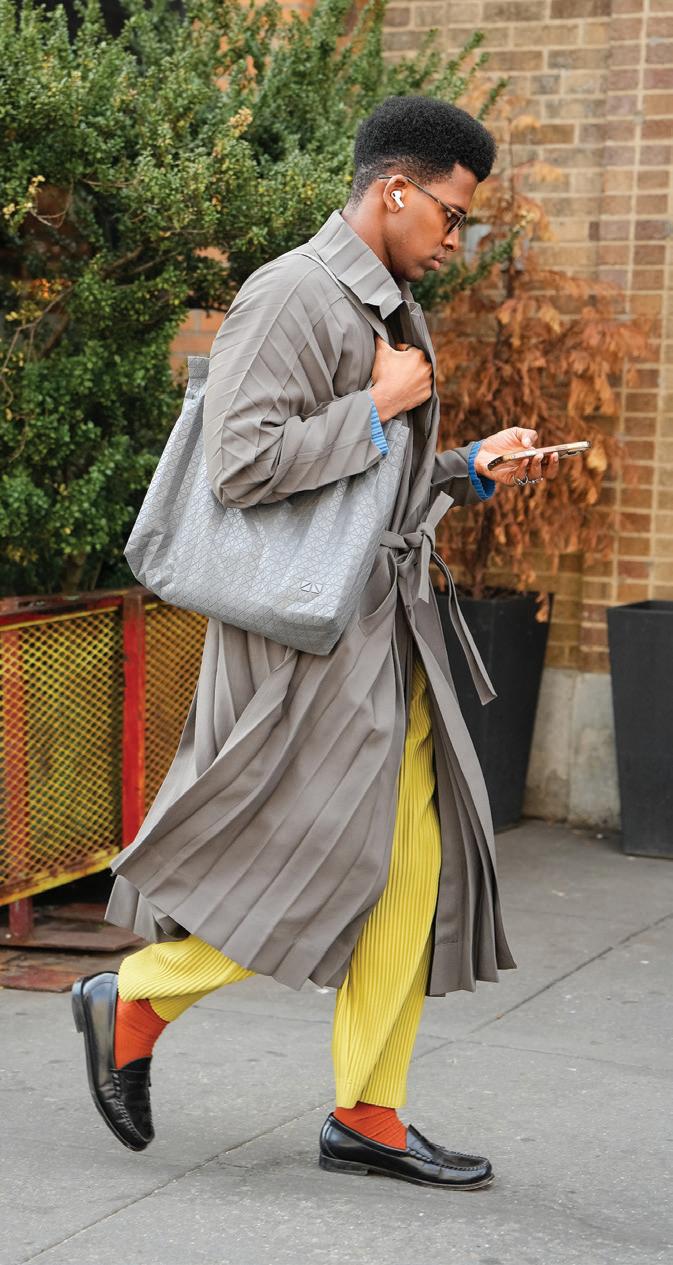
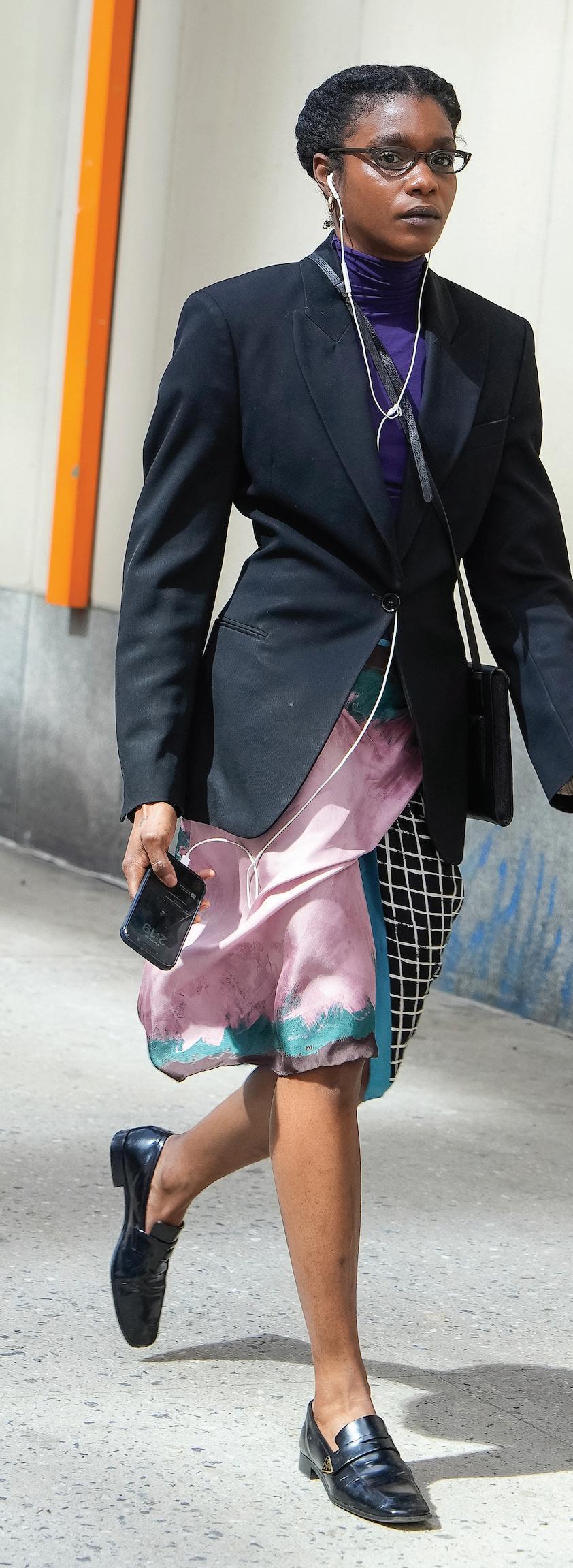
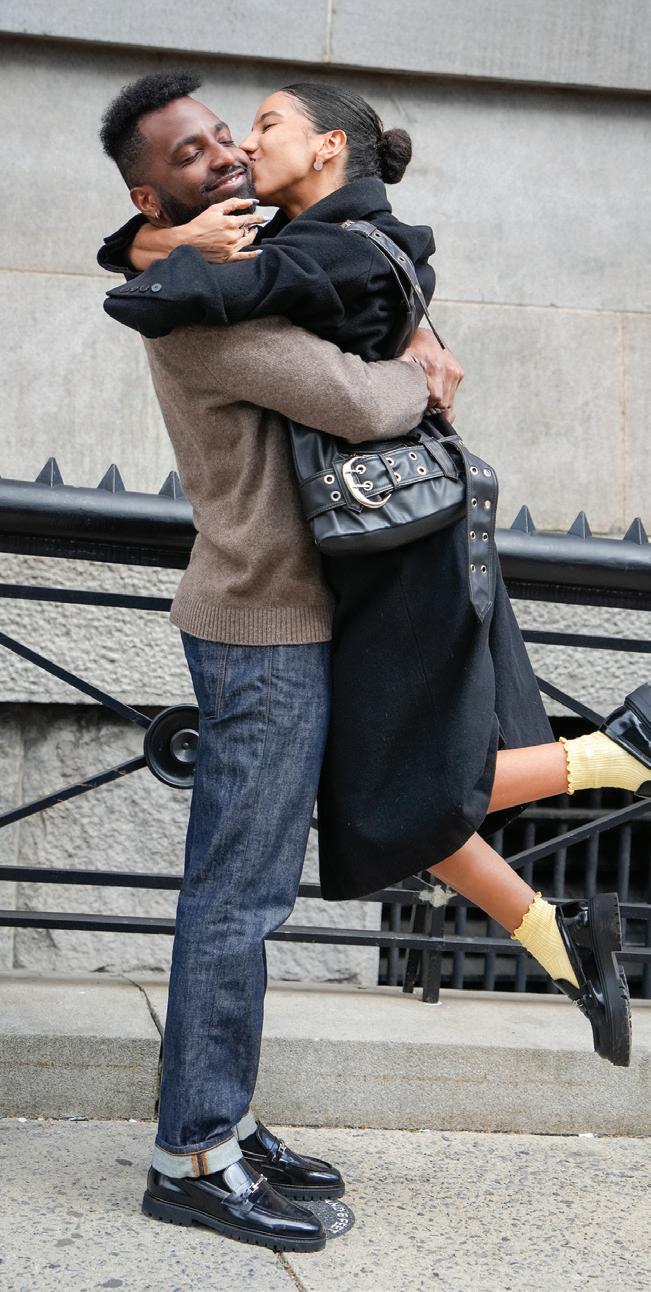
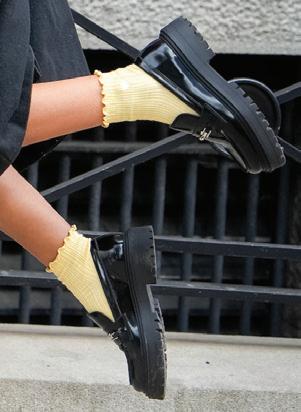
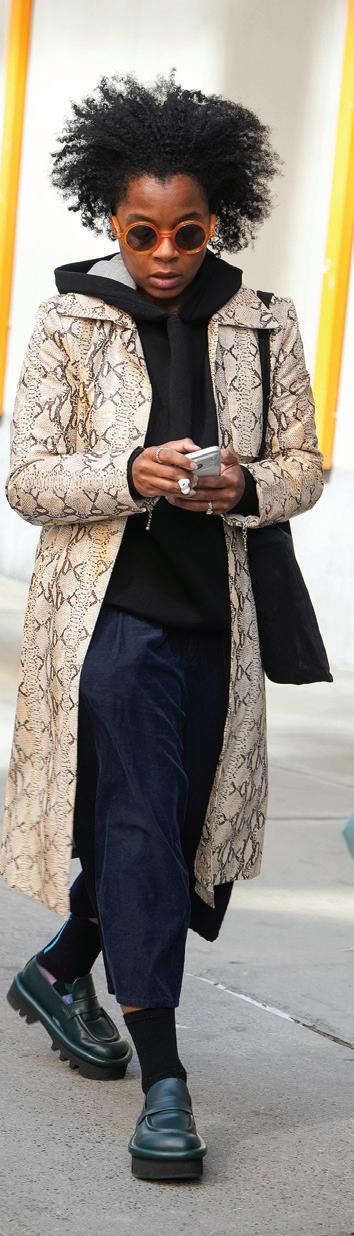
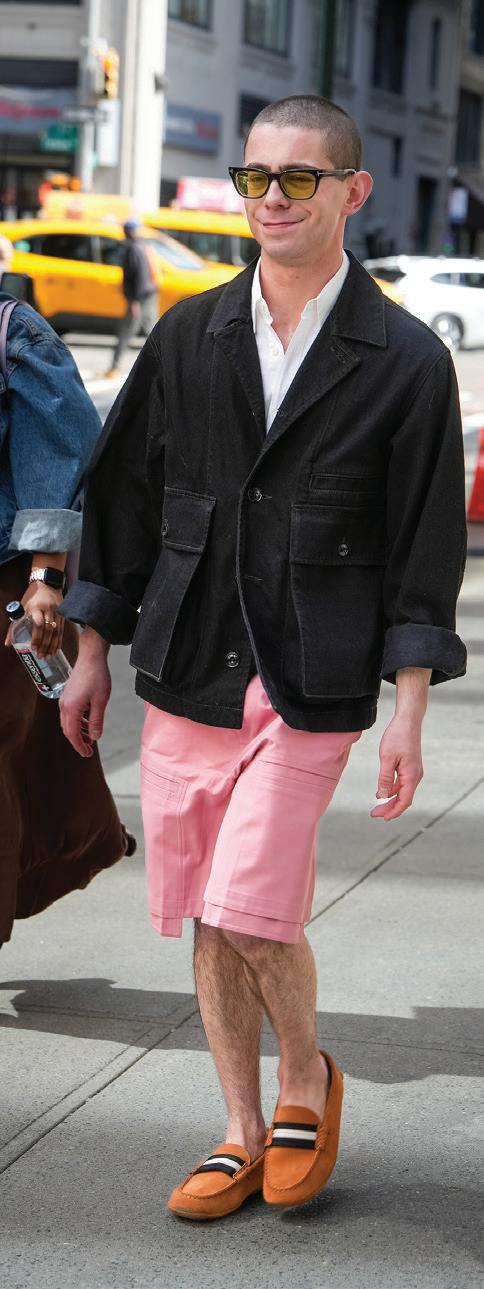
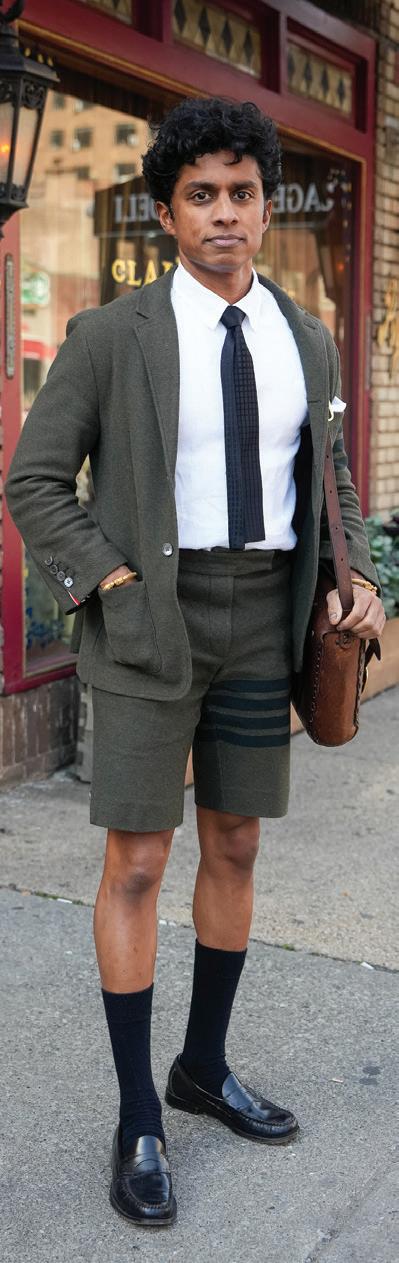
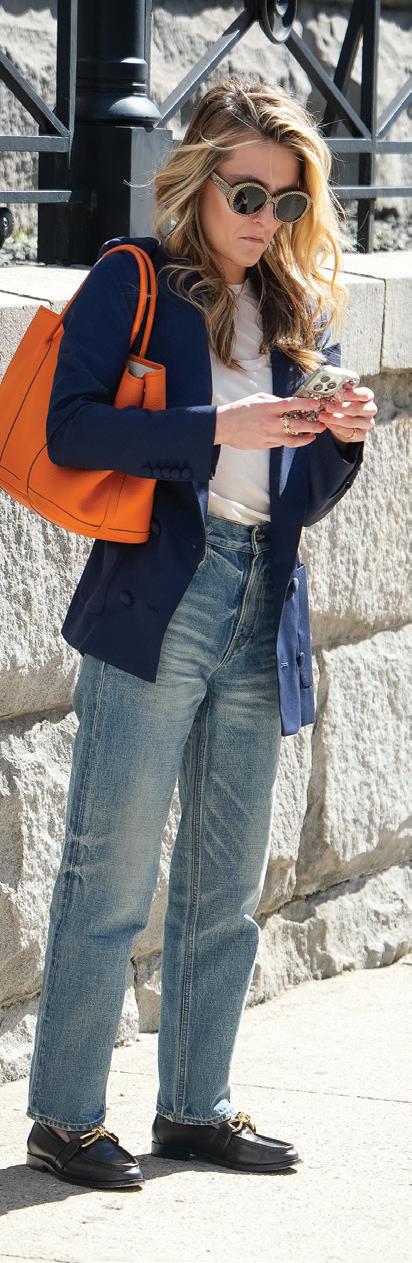
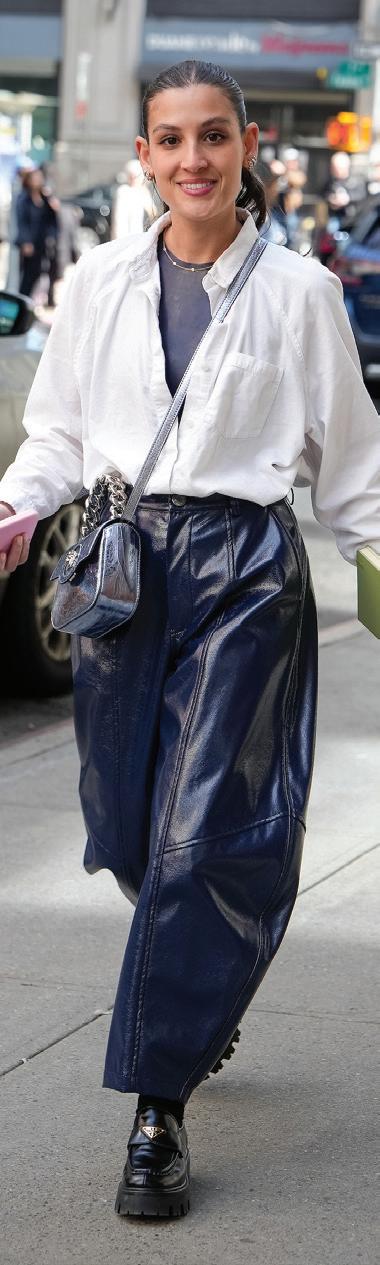
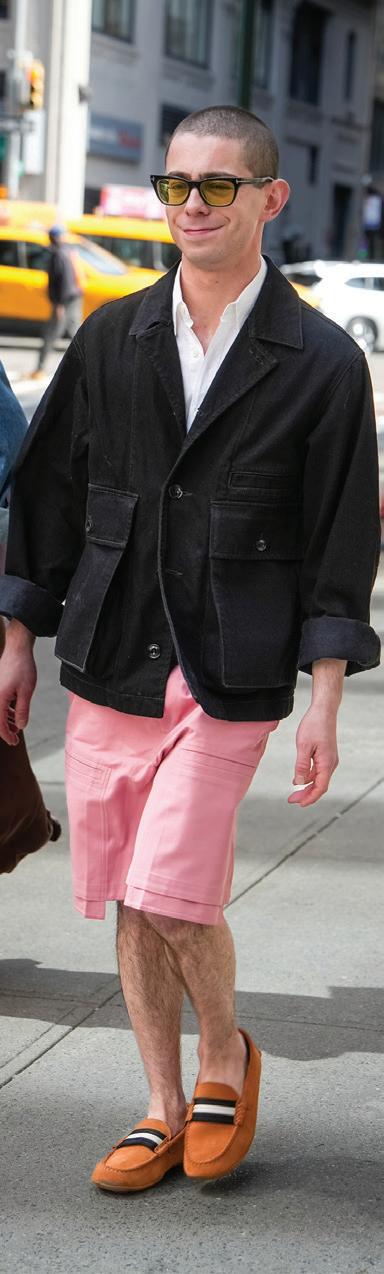
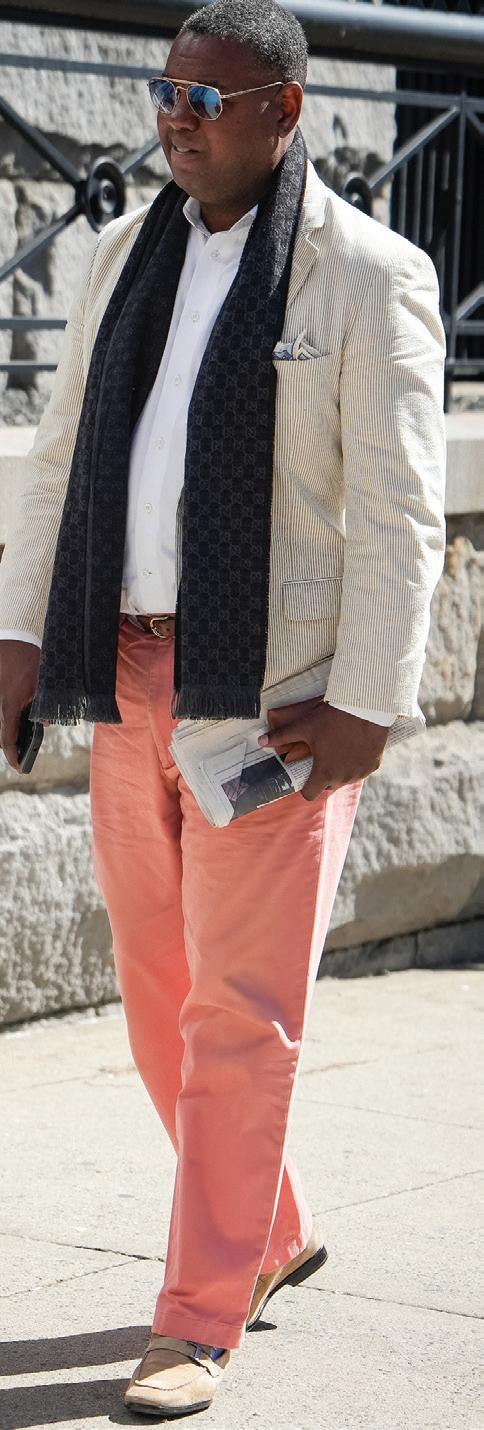
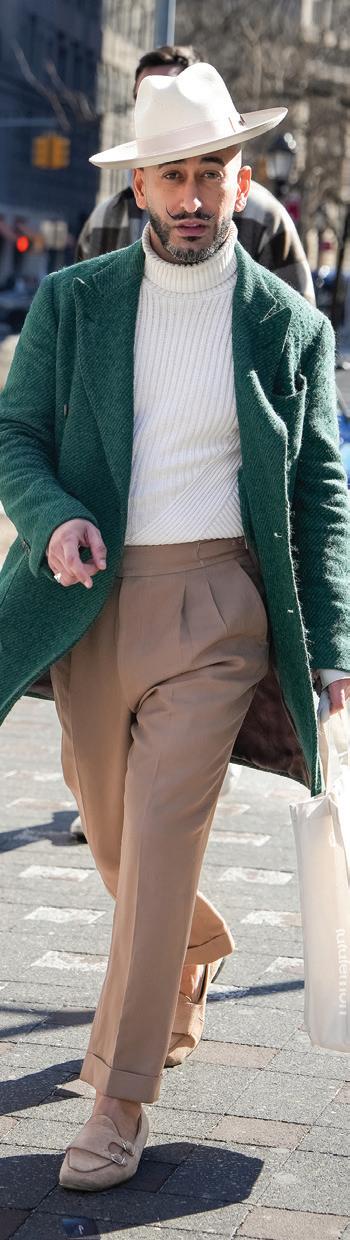
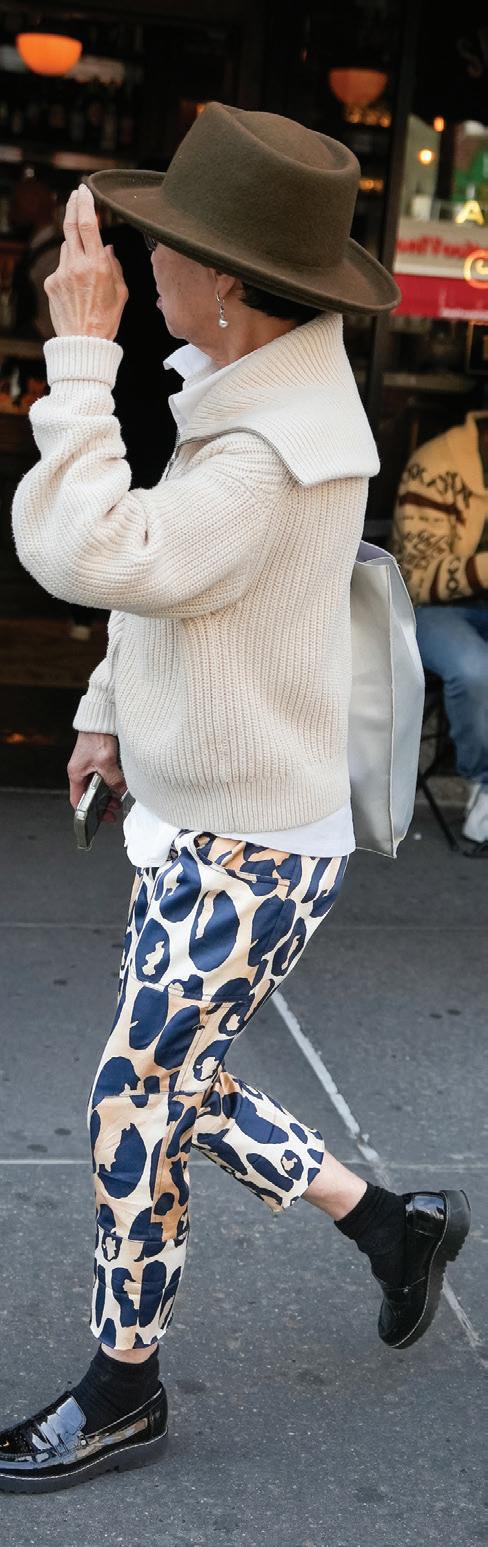
New Yorkers are clued in on the ’90s with Preppy Handbook-approved loafers. Photography by Marcy Swingle
Logan
Q&A
BY GREG DUTTER
FLIGHT PLAN
Bird, president and CEO of Mephisto USA, is plotting a course for dynamic growth.
LOGAN BIRD’S ASCENSION to leader of Mephisto USA, on February 1, has been in the works since the day he arrived three years before. He joined the subsidiary as vice president of Omni Channel Sales with an initial mandate to reintegrate the ecommerce division in-house from the parent company’s France headquarters—all while learning the ins and outs of the brand, its position in the U.S. market, and prospects for growth under the tutelage of veteran Rusty Hall, who Bird succeeded.
Mission accomplished on all fronts. The U.S. ecommerce department is humming along with sales increases in both DTC and wholesale, and Bird has earned his MBA in all things Mephisto. It was time for him to spread his wings and start leading Mephisto USA to the next level. Well, that and the fact that Hall, after more than a half century in the shoe biz (including a decade helming Mephisto USA, over two stints), had earned the right to kick back, travel, and spend more time with his grandkids.
Bird believes he’s stepping into a well-positioned brand and opportunity. Despite the external chaos impacting the industry (tariffs and oil prices, anyone?), he is thankful for the relative stability at Mephisto USA and the fact that the employees continue to be a port in any storm. “Our team has done a fantastic job,” he reports. “We’re a strong organization, and I’m able to lean on great people who I trust to react accordingly and maneuver the business as needed.” Bird adds, “I’m grateful for the stewardship from Rusty and others here who prepared me for stepping into this role. I’ve been trained on the entire process and what we’re looking to accomplish.”
Bird considers the job a perfect fit on many levels. In fact, you might call it a Goldilocks scenario. For starters, the shoe industry is his first love. He began his career, in 2014, at Zappos, where he was a senior digital portfolio manager. Over the ensuing three years he caught the shoe bug, which persisted through a six-year stint working for Lands’ End in its ecommerce division and three years as head of sales for its Japan subsidiary. He enjoyed his time with the apparel brand and learned a ton, but he missed the footwear industry. “My goal was always to get back to footwear,” Bird says. “I love the smaller, more connected feel this industry offers. I love the community with organizations like Two Ten, FDRA, and NSRA that are well integrated and supportive of
one another. It’s just a great foundational place to be.”
The second factor that makes Mephisto a good fit for Bird is its size. Specifically, it’s a mid-sized company with plenty of runway for growth. His run as head of Lands’ End in Japan helped solidify his preference. “I love a situation where the actions I take can be really impactful and I can see results quickly,” he says.
Last but not least, Mephisto’s rich heritage and premium positioning are enticing to Bird. Mephisto is one of those rare footwear brands that combine the enviable qualities of European craftsmanship, top-notch quality, and a rich heritage that dates back 61 years. Even rarer and more coveted is
Mephisto’s brand elasticity, which enables it to thrive in both genders and across casual, dress, and athletic categories. Over the years, the brand has introduced many breakthrough comfort technologies along with several styles that have become iconic. Some have remained in the collection for decades. It’s also a go-to brand for celebrities, power brokers, and people of all walks of life, not so much for status or cache, but because they’re considered among the most comfortable shoes one can buy. All that amounts to tremendous growth potential, according to Bird.
“Mephisto has great brand DNA in terms of storytelling and opportunities,” he says, citing the additional company attributes of being owned and operated by the founding Michaeli family as well as owning factories in France and Portugal. “Above all, Mephisto makes phenomenal product.”
Asked for the first words that come to mind when hearing Mephisto, Bird says it’s craftsmanship, heritage, and legacy. “There are few brands that have our level of craftsmanship,” he says. “Great product—how long a pair of Mephistos lasts—is what has kept us around for so long.” Bird’s plan is to continue to build on the heritage consumers trust. “It’s foundational to our identity, which is an authentic, premium, European comfort brand. People can see and feel that difference right away. It’s part of the reason they pay a little bit more for Mephisto—because of what they’re getting.”
Indeed, Bird is all about the shoes. He’s an “absolute sneakerhead,” a passion that began during his gym rat days at the recreational basketball league his parents ran when he was growing up in Ohio. He went on to collect hundreds of pairs, boxed neatly in his closet. He had a particular affinity for Nike Air Max 95 and 97 styles as well as now-classic New Balance joggers. He’s long been inspired by athletic brands’ ability to evolve with breakthrough technologies and cutting-edge marketing campaigns that often feature collaborations—a focus for Mephisto USA going forward. “We’ve got some compelling and impactful collabs coming out this year with some great partners that include artists,” Bird teases. “I love how creative these designers and retailers are. They help reimagine our brand and, in turn, helps us reimagine our product.”
The Mephisto table is set, and Bird is preparing to feast on the opportunities in the seasons and years ahead. He’s young and hungry. He believes his career experience has prepared him perfectly for his new role, which includes modernizing certain aspects of the business as well as continuing to find ways to iterate quickly, compound success, and grow. He sees running Mephisto USA as a dream job.
“To be given this opportunity, at this point in my career, is truly special,” Bird says. “I want to build something, and I believe I have the right skillset and experience as well as the team to get us where Mephisto needs to go in the U.S. The boxes are all checked. I’m excited.”
A teenage sneakerhead-turned-footwear executive now running Mephisto USA…a dream job come true?
Absolutely. I feel very fortunate and grateful to have landed here. It’s a hands-on job; I love spending time with our product teams. It’s a great brand with even greater product. The opportunities for growth are enormous, and I love this industry. While we’re all competitive, it doesn’t feel cutthroat. It’s everyone trying to lift everybody else up, which is great.
A lot of executives who leave this industry miss it and return.
Me included. I was lucky to have wandered into this industry at Zappos. I was able to build a supportive network—people I could call when I needed answers. That community is what I wanted to return to.
You mentioned aspects within Mephisto USA that needed modernizing. Some examples?
Our first large project was bringing the ecommerce business back to the U.S. I saw low-hanging fruit opportunities where if we optimized and focused on the site experience and customer journey, we could enhance sales. We launched the site in 2024, and we’ve seen exponential growth since in our ecommerce business. It also plays a large role in our omni-channel experience that we’re continuing to build out.
Why, exactly, is it performing so well? It stems from our merchandising strategy of being decisive in terms of what a digital assortment looks
like that can then be spread amongst multiple retailers and supported by strong digital advertising. At the end of the day, customers are going to shop in the channels that they’re most comfortable with, and we want to make sure that the products they’re looking for—the products that we’re trying to sell to them—are there because 85 percent or more of the decision-making is now happening on a digital device. We want to make sure that we’re growing our digital footprint in a way that we can meet the customer where they are. So whether that’s Nordstrom.com or Zappos, it’s the same assortment that we’re trying to push on our DTC site and in all our retail partners. It’s making sure that we create a cohesive brand experience. That had been lacking previously. So it started by doing our own creative and photo shoots in the U.S. and extending that into the imagery that’s seen in our stores and retail partners. It’s much more cohesive from a total brand perspective.
That’s not easy to achieve from Europe, correct? Exactly. The U.S. is such a large market. While we never want to lose what we’re built on and what we stand for as a brand, we still have to take a U.S.-centric perspective. As the CEO of Adidas said, you have to be more American to be successful in America. We have to take the Mephisto way of doing business and adapt some of that to the U.S. market to make sure it’s meeting the consumer where they are shopping and the styles they’re seeking. We need to be relevant to consumers.
There is a long line of Euro comfort brands that insisted on forcing their ways of business
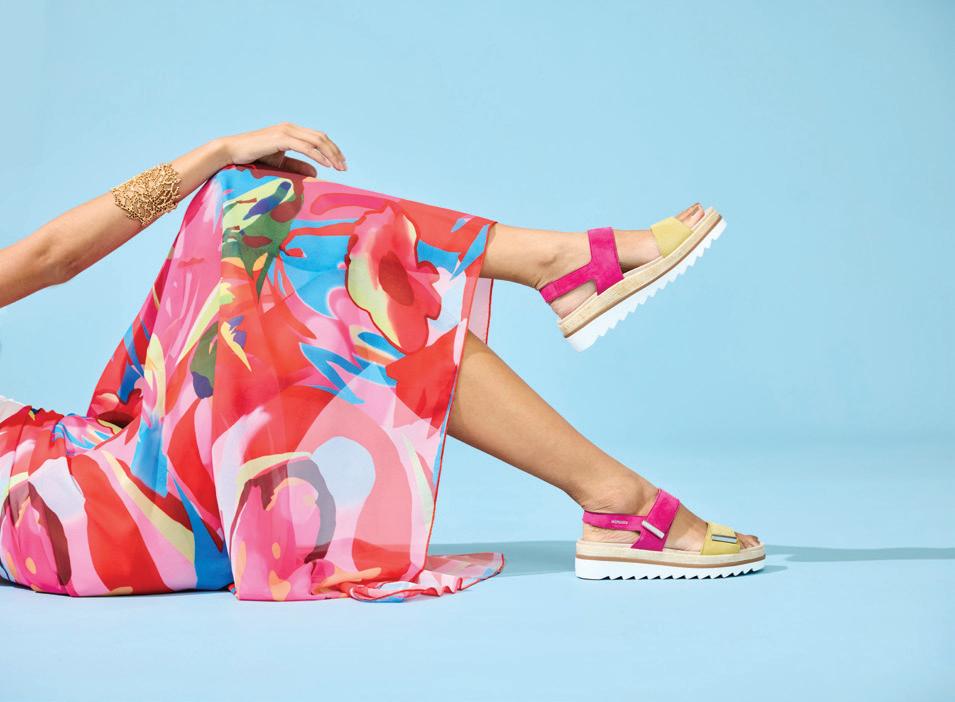
Spring is definitely in the air with sporty and breezy styles in bright colors and bold prints.
CARBON NEUTRAL HQ SINCE 2020
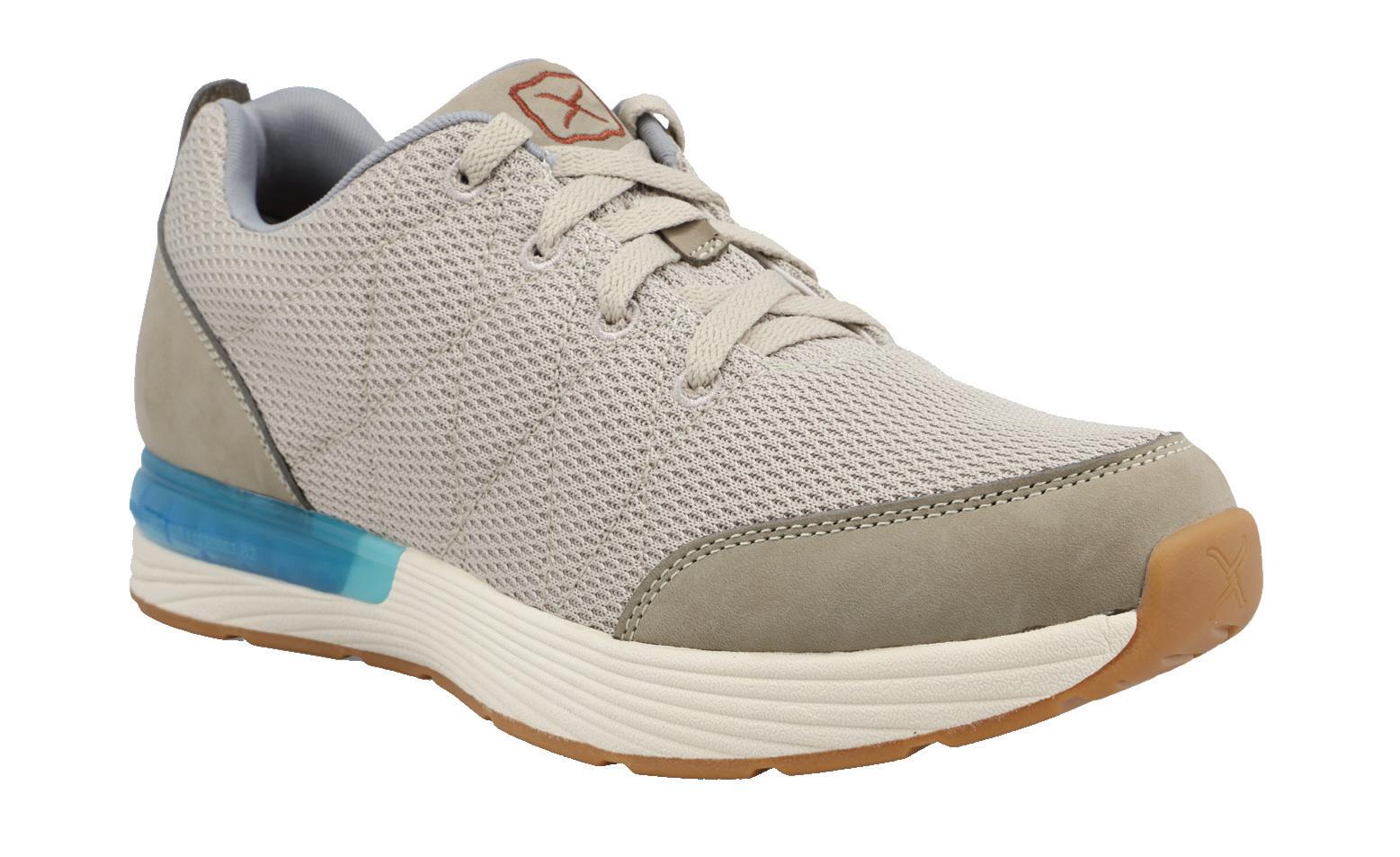
Caring for the land isn’t new to us, it’s part of who we are. We believe in doing our part, leading by example, and leaving things better than we found them. Since 2020, our headquarters has been carbon neutral through Scope 1 offsets and every pair of Twisted X® footwear is thoughtfully designed with at least one sustainability component, because creating a better product should also mean creating a better future.
and style onto the U.S. market only to crash and burn.
Yes. I’m basically following the approach of trying to really understand the American consumer. It doesn’t change the signature of our brand, but how we approach them on this journey must be skewed for this market. We have to be adaptable in order to survive.
What else is Mephisto USA doing along these lines?
We’re currently working on a new store concept that will modernize our existing 12 stores, which are currently more a copy and paste of our European stores’ footprint. We’ll be opening a new store later this year in New York. That’ll modernize our interpretation of the brand. This concept can then be rolled into key independent retailers via various POP aspects and in shop-in-shops. The overall goal is to recognize the brand across marketing, presentation, and product. Brands that do
Q&A
that well are easily recognizable. Whether that’s walking into a department store, an independent, or online, you any of those aspects and know right away who that brand is.
Do you plan on opening more Mephisto flagships? I’d love to have more stores. But first it’s about finding the right balance with operational excellence to make sure that the stores are driving the necessary results while also featuring the right branding experience. I don’t think you can make up for the seeing and touching experience for our brand. It’s so impactful. So, the New York store will be the pilot. If it goes well, then we’ll start looking at taking this concept to areas where we’ve lost some market share because retailers are no longer in those locations.
How are you planning to make Mephisto more aware to a younger audience?
That’s one of the things that keeps me up at
OFF THE CUFF
What are you reading? The Tipping Point.
What are you watching? My wife and I are watching The Retreat. It’s very funny.
What’s inspiring you? From a fashion perspective, I love the retro ’90s soccer jerseys and baggy jeans that have come back in a big way. I’ve had to control myself from buying jerseys that I used to own as a kid.
There’s been a broad ’90s fashion rewind going on, which the series Love Story is helping fuel. A hundred percent. I’ve even bleached my son’s hair. I’m reliving my childhood.
Who’s had the greatest influence on you? My parents in terms of teaching me how to work hard, be dedicated to a craft, have a great temperament, and be a good person. I also give my wife a lot of credit. I can dedicate so much to my job because she does everything required to manage our family. I’m always impressed by what she does. It takes a lot of coordination, effort, and teamwork to be on the same page.
What keeps you awake at night? Besides three little kids sneaking out of bed from time to time, it’s
finding ways to propel Mephisto USA forward and creating more brand awareness. I feel like we’re on the precipice of a breakthrough based on our rich heritage and recent momentum.
What are you most hopeful for? Stability in the world. The ups and downs we’ve experienced since the pandemic…it’d be nice to hit a stretch where things are just a bit calmer and more peaceful.
If you could live in another era, when would it be?
The ’80s. As a ’90s kid, I was always a bit nostalgic for that decade, especially regarding sports. I would’ve loved to have been more aware during the Magic Johnson and Larry Bird years. I also love the music, movies, and fashion of that decade. My older siblings were ’80s kids, so there was an interest in what I missed out on.
What was your first paying job? Referee and working the scorer’s table for a youth basketball league that my family ran for about six years. As I got older, I added custodian to my duties. Everything in the realm of what I could do to help.
I was a Little League umpire. It’s not easy dealing with parents. Oh, I can relate! You had to have a thick skin. I mean, I was refereeing four-year-olds.
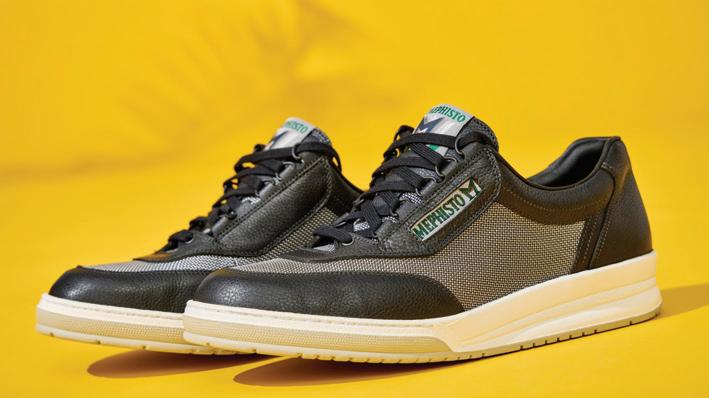
night—in a good way. One example that’s been highly successful is collabs, which includes sneaker boutiques like Cncpts and Kith. We’re working on a pipeline of impactful collabs that will keep Mephisto relevant, fresh, and appealing to younger generations. This isn’t the traditional, comfort-wearing customer. Rather, they transition across lifestyle, fashion, and streetwear—all categories that can entice a younger consumer to try Mephisto on for the first time and realize the difference. We already have a 30- to 40-year-old New York guy who’s a Match customer. We make unique styles specifically targeted at them, many of whom buy on a yearly basis. I love getting into the weeds of a Reddit thread after a drop to see the feedback from first-time wearers. It’s along the lines of, “Wow! The shoes look cool, but I was blown away by the quality, fit, and comfort.” You know, it’s hard to go back to other sneakers once you wear Mephisto. While I still have many favorites, they’re just not as comfortable.
Can we just relax a bit? No one here is going to be spectacular.
What’s your favorite hometown memory? I’m from a small town just outside of Columbus, OH, and it’s Saturdays in the fall. There’s nothing quite like seeing an Ohio State Buckeyes game. I was also raised as a gym rat, and I have fond memories of weekends playing, watching, and refereeing basketball. It was a lot of fun.
What did you want to be when you grew up? Once I realized professional athlete wasn’t attainable, the dream shifted to a career in international business.
What might people be surprised to know about you? I speak fluent Portuguese and Spanish. It’s part of my upbringing. My dad was an executive for Abbott Nutrition, and we lived in Shanghai for seven years and Brazil for two years. I’ve also lived with my wife and, at the time, two kids in Tokyo for almost three years.
What’s on your to-do list for today? Reaching out to FDRA to get some understanding of how to obtain tariff refunds.
What would be the title of your life story, and who would play you in the movie? “Do it Your Own Way,” and I’d choose Mark Wahlberg.
What’s your motto? Find joy in the journey. Even if it’s hard, find joy in trying because it makes a successful outcome feel even better.
Any collabs coming out soon that you want to mention?
Not that I can in detail yet, other than we’ve got at least three cool ones coming out this year. They’re with some great retailers and artists. Collabs often take a little more time to complete than expected, but they’re worth the wait. When two strong brands come together with a clear point of view, it creates something truly differentiated.
Do you have free reign here on the design?
We work very closely with our team in France and would never do anything that would alienate what our brand represents. That said, France is extremely supportive of all our ideas so far. Nothing has been too crazy or outlandish. Also, they see the success of our collabs and are learning from it as well. So we have a lot of flexibility, which is great. Our goal is to make Mephisto more relevant to American consumers while maintaining our heritage and brand DNA. Those aspects can never be lost.
How are you trying to keep Mephisto relevant in the specialty comfort tier?
It’s about being aware of what’s driving our business. Like I mentioned, 85 percent of the demand generation is coming from a device consumers carry in their hands at all times. So we are communicating with our partners to help guide decisions based upon what we can impact from a demand perspective. It’s about communicating on where we know we can drive sales, what’s seeing great feedback, and what we know works for them. Also, it’s about just being a great partner. We want to support and meet the needs of our retailers. That includes, for example, having a great stock program that they can always fill back into and having the right products. We want a cohesive experience in these stores because there’s nothing like a citizen retailer who understands the consumer and can convey what our craftsmanship and quality means. When I was at Zappos, I didn’t have exposure to that type of information. So I love spending time with these retailers learning what our brand means to their consumers.
Can I assume in these meetings that the issue of competing with vendor DTC sites is a frequent topic of discussion?
We hear about that constantly. But I think Rusty and our team did a fantastic job of making sure that we’re very strict about our MAP policies. We want to protect our retailers as much as possible. We’re not hyper-promotional. We’re focused on a full-price business. We want to drive as much margin for retailers as possible.
Adhering to a MAP policy seems simple enough, but based on the number of complaints, it’s
Spanning casual, dress, and sporty styles, Mephisto is a go-to brand for guys.
definitely not standard business practice. D2C is a lever, basically. You can quickly maneuver that lever if you need a knee-jerk reaction. But that’s a short-term gain and, in the long run, ends up being much more difficult for a brand to have to live in that promotional space. And once you start, it’s tough to pull back from it. It’s like a drug. That lever must be controlled.
Speaking of levers, how have the fluctuating tariffs impacted Mephisto USA?
First off, it’s a cost increase that nobody expected that we’ve had to find ways to manage around. In the short term, there was a little bit of pain in terms of costs and logistics, but we’ve made adjustments. Fortunately, we own our factories, which gives us a little more control over pricing. Above all, we must remain consistent and deliver product to our customers. That’s the key: trying to avoid disruption, which now includes factoring in higher costs of oil. That drives the cost of everything up, although we have an advantage of shipping from Europe as opposed to the Far East and we don’t use as much oil-based materials as some other companies. The key again is to be a reliable partner. We must keep goods flowing because Mephisto matters to their businesses.
What are your goals for the rest of this year?
Steady, manageable growth, which isn’t easy with everything going on in the world. Our parent company headquarters is in close proximity to two wars that impacts supply chain and sourcing. We’ll just continue to do our best to operate under difficult circumstances. Another goal is to focus on ways to differentiate ourselves from competitors. And, as a premium brand, to drive that message home through product and imagery that Mephisto is a brand with a rich heritage and tremendous craftsmanship that consumers can trust.
Oftentimes in the comfort space, growth can be achieved not so much by what a brand is doing
right as much as what competing brands are doing wrong.
I agree. We often see competitors make decisions that open the door for us. Key retailers will come to us and basically say, “Present product in this category and you can have that space.” Rusty did a phenomenal job leading this business for so long by building that consistency of being a reliable partner. He built that pipeline to create a legacy of success. So a lot can be said of just smart planning and consistency. As long as we execute at a high level, I expect that those opportunities will continue to present themselves. We’re coming off a strong fall/ winter season and the momentum continued into the recent trade shows. Our sell-ins were strong. I feel good about where we’re positioned, especially going into our bigger spring selling season. I believe we’ll continue to have strong momentum heading into the rest of this year.
Where do you envision Mephisto USA in three years?
I envision being the same product-centric organization. Our product is what has kept us around for 61 years and counting. I also envision having expanded our distribution. We’re looking for partnerships that can build both sides up. There’s still a tremendous amount of opportunity for Mephisto USA to grow in a lot of categories. That includes our All-Rounder and Sano brands. We’re working on developments for those lines. The innovation pipeline is company-wide.
What do you love most about your job?
The people who make coming to work each day a joy and the journey so much sweeter. They’re talented, work hard, and just a lot of fun to be around. Much of this was already built before I got here, so I feel fortunate to continue to build our culture and organization. We’re constructing our business in a very positive way, and I believe Mephisto USA is positioned very well for success going forward. •
Perfect Fit
Here, you’re family. Unger’s Shoes in southern Ohio gears up for its 90th birthday.
By Kathy Passero
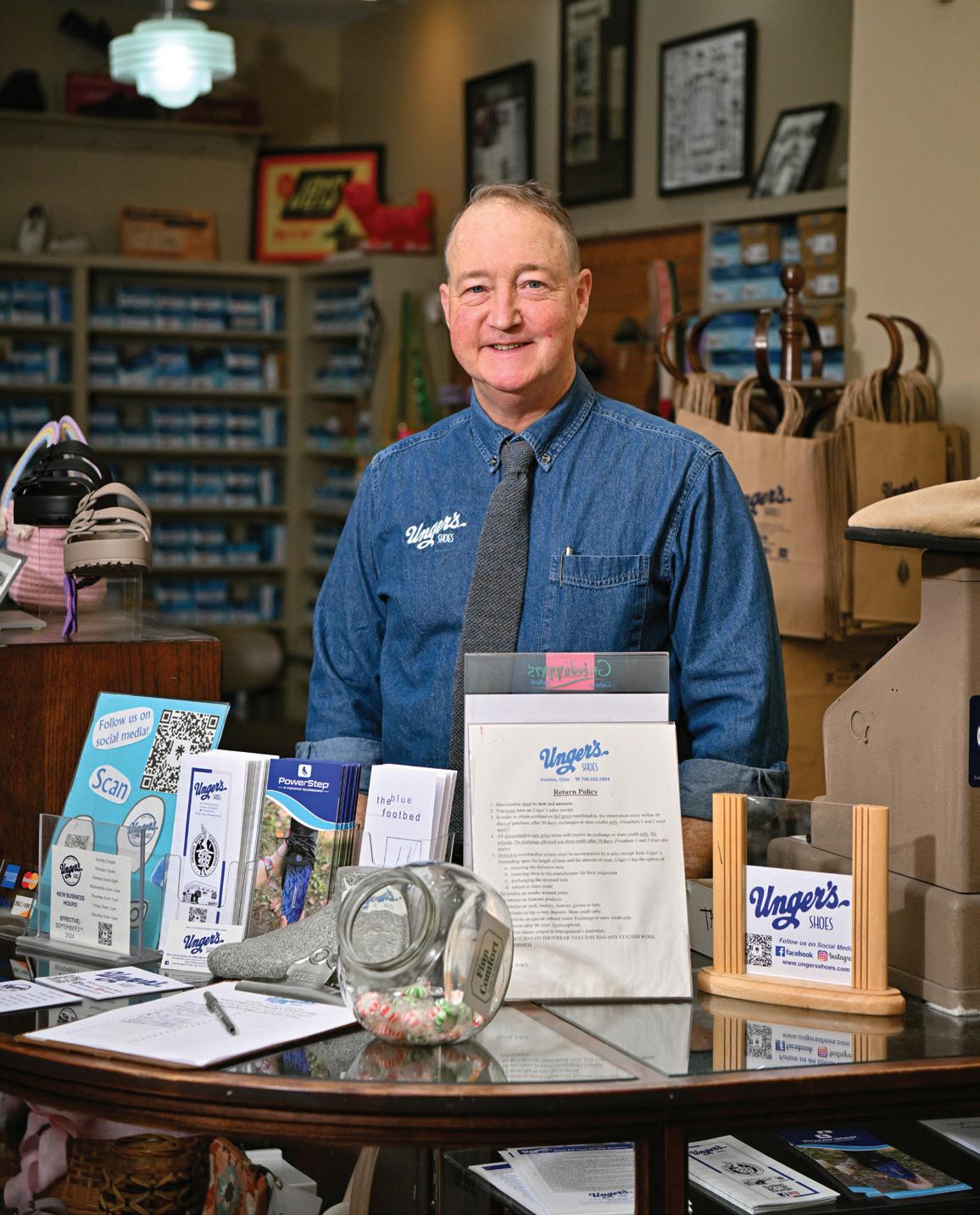
LIKE FATHER, like son. Even as a 14-year-old sweeping up and running errands for the shoe store his dad founded, Joe Unger had a hunch he would follow in his father’s footsteps. And that’s just what he did. “I was bitten by the shoe bug,” says Unger, the 65-year-old second-generation owner of Unger’s Shoes, which is gearing up for a remarkable milestone: a 90th anniversary in 2027.
The namesake store is deeply entwined with the Ungers’ lives. Founder Gene Unger met his future wife there when she came in to shop one day in 1937. Joe Unger met his future wife at a deli across the street from the store during lunch break. And every Unger child over the past two generations (nine in all) has spent time working in the business.
The store is also woven into the lives of generations of people living in and around Ironton (population approximately 11,000), a 19th-century river town located in Ohio’s southernmost county, a stone’s throw from Kentucky. (The store is just two blocks from the Ohio River.)
“Everybody in the community—and I use the term everybody without hyperbole—brings their children to us for their first pair of baby shoes,” says Unger. “The great grandma comes in with the grandma, the mom, and the baby, and the great grandmother will tell us, ‘My parents brought me here for my baby shoes.’ They’ll get photos of four and five generations together, save the receipt, and put it in their baby book. That happens daily. It’s a tradition.”
Unger’s Shoes is a magnet for shoppers from adolescents to octogenarians as well as a supporter of myriad local organizations, from the Knights of Columbus to the local history museum. It has the enviably loyal customer base and the deep community roots that a select handful of stores manage to cultivate over decades of building trust by doing business right.
“They’re consistent. They’re reliable. They’re a blueprint for community service,” says Jane Walters, a Dansko territory manager who has worked with the retailer for three years. “They’re just a gem of a sit-and-fit shoe store.”
ENTREPRENEURIAL SPIRIT
It all began when Gene Unger (born in 1915) decided to think beyond his job at local Selby Shoe Factory. In 1937, he leased a corner of Gabler’s Department Store in downtown Ironton and opened his own retail venture, Gene Unger’s Shoe Department. (The furniture from those early days is in Unger’s Shoes even now, alongside other memorabilia.)
A short time later, Laverne Yvonne “Bonnie” Brummett walked into Gene’s shop-within-a-shop in search of a purse, and the rest is family history. The couple married a year later and went on to have five children, including Joe, their youngest child and only son.
“My mother lived right across the river in Russellville, Kentucky,” says Unger. “Ironton was the big city back in the day, so they went there to do all their shopping. We have her wedding shoes and bag—a tiny purse that she bought
Stanley Eisenman
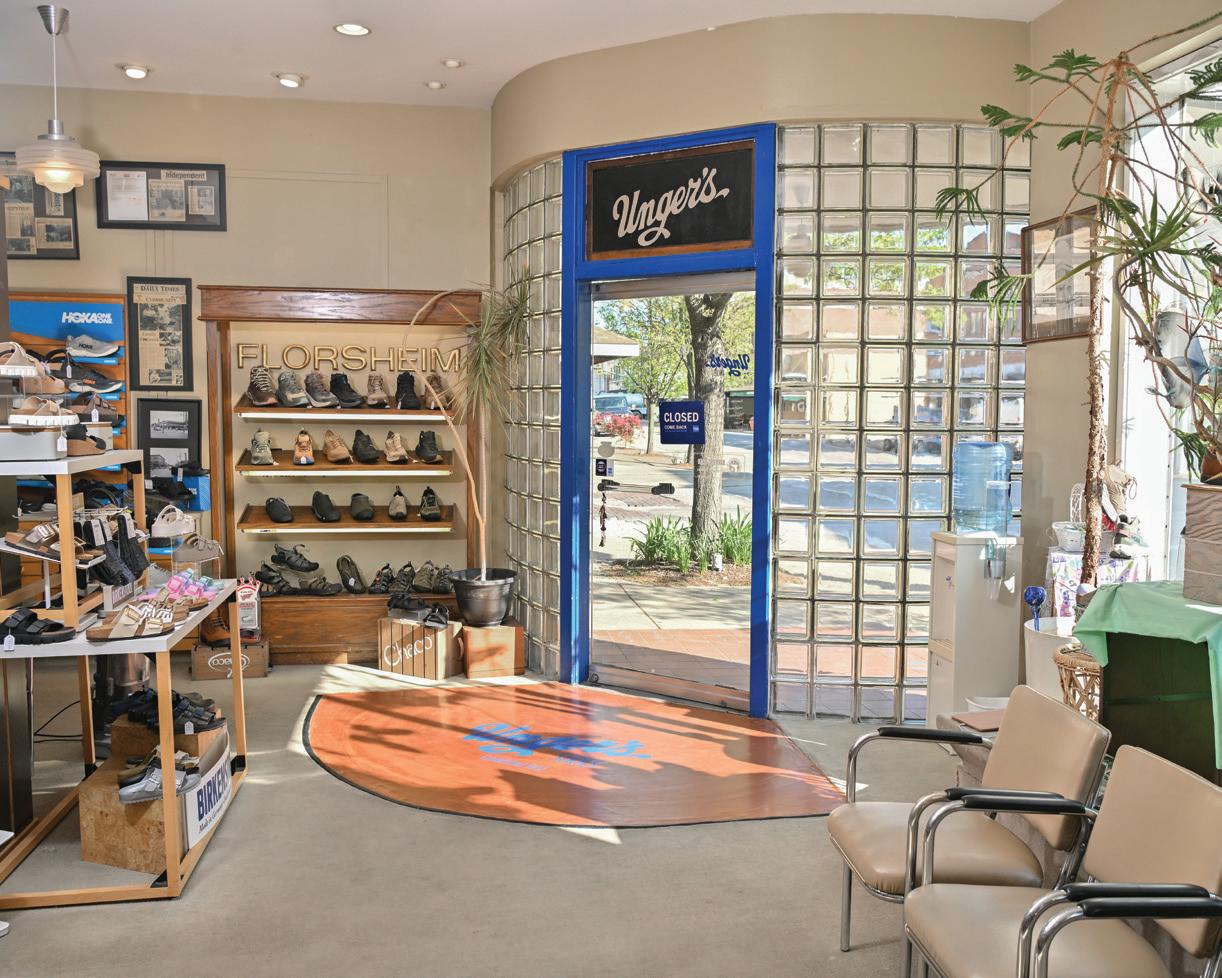
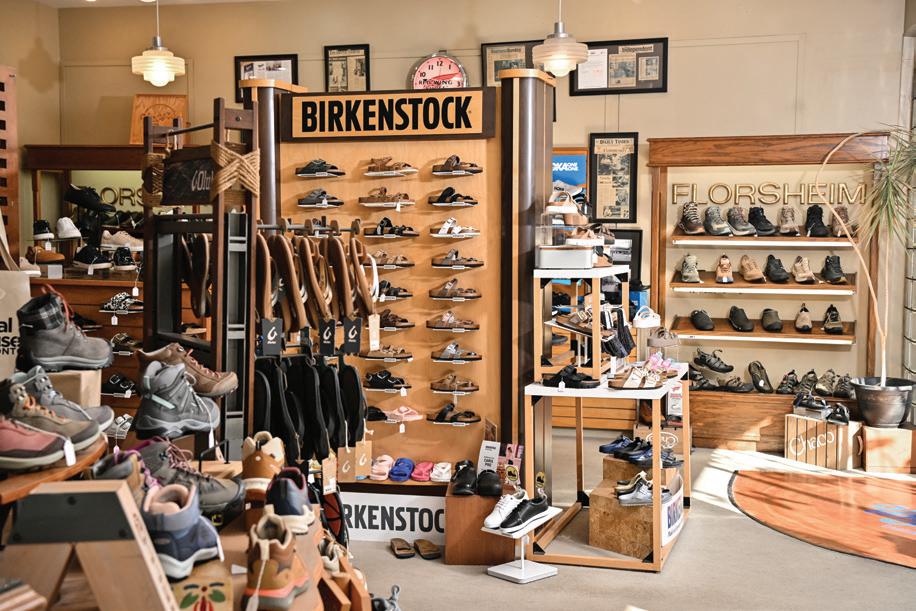
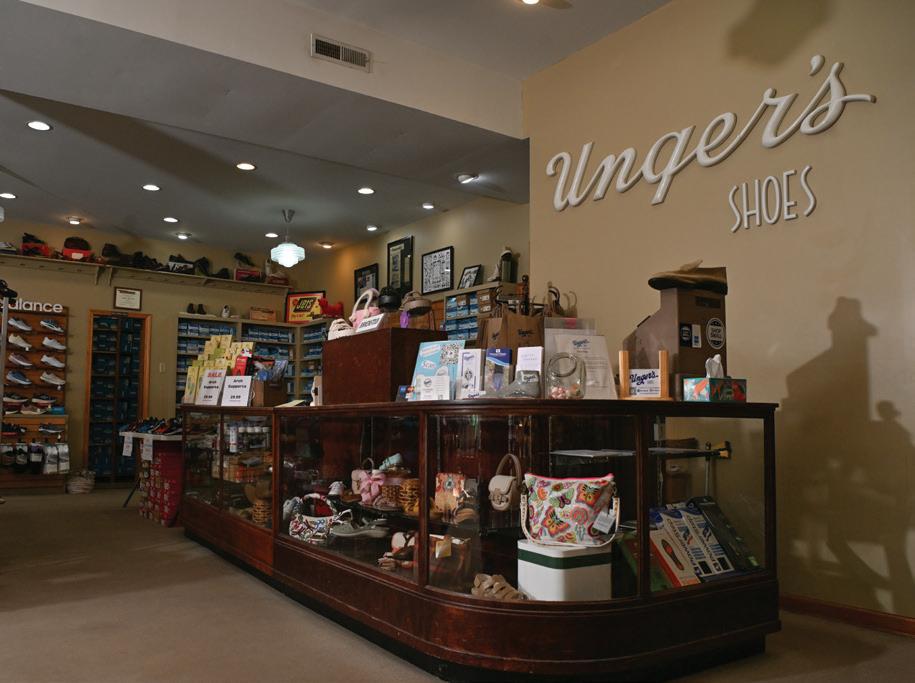
Glass blocks surround the front door of the store, housed in a landmarked building; owner Joe Unger behind the vintage wooden cash counter.
at Dad’s store in 1937—at the store.” In addition to building his business, Gene expanded his knowledge base by studying pedorthics (then known as Practipedics) at Northwestern University.
Then 1941 rolled around, and the bombing of Pearl Harbor upended their lives. Gene closed up shop and enlisted in the U.S. Army. When the war ended four years later, Gabler’s offered him his old space, but once again, he had bigger dreams. He found premises downtown and opened Unger’s Shoes in 1946. The building—a two-story Art Moderne masterpiece with a white stucco façade and a distinctive curved entrance flanked by glass block windows—was landmarked in the 1990s. It’s now on the National Register of Historic Places.
When the Unger kids were growing up, the business was all-consuming. “It was God, family, country, shoe store. Those were the four tenets of life,” recalls Unger. “We talked about it at the dinner table, and we planned family vacations around shoe store events. Dad worked six days a week, though he always closed on Sundays because we’re Roman Catholic and we went to mass.”
Gene and Bonnie, a stay-at-home mom, ran an informal open house for shoe people. “Traveling sales reps would spend the night in our house. Some of them brought their wives, and some we knew for 30 years. Dad knew the names of their children,” Unger says. “Even if he didn’t buy a brand, our front door was always open to shoe travelers. They could come in, use the restroom or the telephone, and have a cigarette and a Coke. Everybody in the shoe business knew Unger’s was a safe haven.”
Despite being a more-than-full-time commitment for Gene, running the store was never onerous. “Dad would always come home from work and say, ‘Wow, what a great day,’” recalls Unger. “I suppose compared to what he had been through in the war, the shoe store was sheer delight. He was always enthusiastic about the family business, and that was infectious.”
Gene passed his passion for independent retail on to his son, who earned a bachelor’s degree in business administration from Ohio University and a certification in pedorthics from Ball State University, where he studied under Clyde Edwards, the founder of the science. Joe came home to join the family business in 1982.
A few years later, the tenant that shared the shoe store’s building on the corner of South 3rd and Vernon streets went under. Unger’s was “bursting at the seams,” so the family bought it and doubled their space in 1985. Though business has continued to grow, the store has not expanded since then.
Today, the 3,500-square-foot retailer carries about 38 brands, with current top sellers including Hoka, Birkenstock, Brooks, and New Balance. “Athletics has taken over so many categories,” says Unger. “Now a child’s first pair of shoes is a little New Balance. People wear Brooks to work and Hokas to church. Athletic shoes have become the across-the-board shoe for everyone from teenagers right up to geriatrics, unless a person needs a safety toe.”
About 65 percent of the store’s business is in women’s product, while 25 percent is men’s, and 10 percent is children’s footwear. The average shopper is between 30 and 50, but customers of all ages frequent the store. That’s at least partly because “Joe treats everyone as a part of his family,” says Vanessa Sheehan, territory manager for Birkenstock, who has worked with Unger’s
for two years. “He and his staff truly care about the customer. They’re well informed and they carry styles from core comfort to more fashion-forward pieces, so they’re catering to a wide variety of people in their local area.”
“They create a very welcoming, small-town community atmosphere that makes everyone feel welcome,” says Donny Roys, account executive for Hoka, who has worked with Unger’s for four years. “You want to come back because of that sense of belonging. Joe is always interested in you. He remembers your name and the type of shoes you have.”
Part of the secret to remembering customers’ names and footwear preferences lies in an old-fashioned file system the store maintains with what Joe Unger estimates to include about 10,000 3x5 cards. On them, “We document everything about a person, whether it be their birthday or that they’re pronated or supinated or the name of the doctor who sent them to us,” he says. “We refer to that card whenever they come in and update it with every one of their visits.”
Repeat business and word of mouth are so strong that “we spend absolutely zero dollars on advertising,” Unger says. “We don’t do billboards or radio or TV or newspaper.” A Facebook page (maintained by a staff member) is the only social media platform the store uses. “We still use direct mail to send a birthday coupon with no expiration date to every customer on their birthday,” he adds. (Certain details are computerized, making it more feasible to keep track of thousands of birthdays.)
Both Gene and Joe Unger managed to distinguish themselves through their skill in helping customers with foot conditions to find relief, and that niche still gives the business an edge. “We are a full-service pedorthic store, so we work with diabetes, arthritis, chiropractic, and physical therapy patients,” says Unger. “We have a great reputation amongst our local podiatrists. They refer so many people to us, and once they shop at Unger’s, they don’t go anywhere else. People come with foot pain, foot shape abnormalities, size differences, limb length discrepancies, plantar fasciitis, Achilles tendonitis, the whole spectrum. We also specialize in sizes and widths, so we can fit all the unusual shapes of feet out there.”
NAVIGATING THE CHALLENGES
Admittedly, it isn’t all smooth sailing. Like most independent retailers, Unger’s Shoes has faced its share of hurdles. Once upon a time the biggest
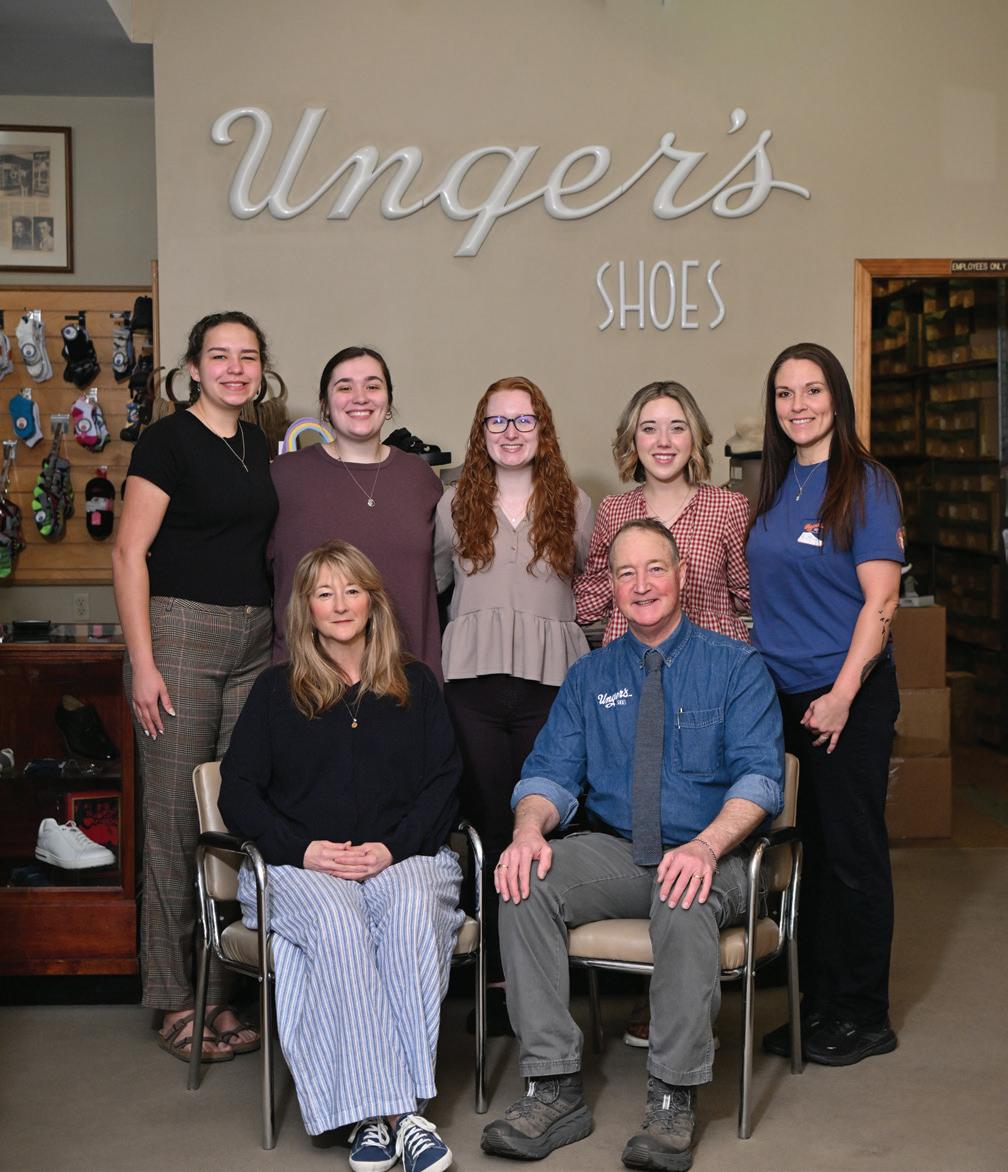
Clockwise from top left: Brands on display; Karen and Joe Unger (front) with staff members Emma Fraley, Kimrie Staley, Kyla Williams, Arianna Beam, and Jennifer Craft (not pictured: bookkeeper Stacy Braden); accessories add a pop of color to the cash counter.
competitor was the store down the street or the mall across the river. Now, it’s DTC and online shopping.
“The absolute worst thing that has happened is that vendors are no longer our partners. They are our competitors, and they have product the consumer can purchase that we cannot,” says Unger. “They have their own retail site that offers every pair of shoes they make. We can’t offer that kind of inventory as a small business. And they ship for free.”
Fortunately, that approach doesn’t apply at every brand. “There are vendors who bend over backwards to help us. And some reps still come to us. Those are the ones we buy from,” says Unger, who does all the buying for his store. Before any product shows up on shelves, it has to pass his inspection, “and I’m looking for absolute top-notch quality.”
Shoppers know they can count on not just first-rate product, but first-rate service when they walk into Unger’s. “We can’t compete with the internet. It’s impossible. So we are a true sit and fit,” Unger explains. “We sit every single person who comes in down in a chair and we measure their feet with a Brannock device.
“My father was a master at service. He grew up in an era when you got waited on whenever you went into a store. That’s how I was raised, so I have tried to use that same example of old-fashioned full service,” he says. “No matter how many shoes a customer wants to try on, we continue to bring boxes out. And we never tell a lie. If a shoe doesn’t fit, we tell them so. We’re honest to a fault.”
Unfortunately, not all customers are as principled nowadays. “The second biggest challenge is the changing nature of the consumer,” Unger says. “You measure their feet, give them incredible service, fit them properly in exactly what they need, get them the perfect arch support and the perfect shoe, and they say, ‘Wow, my feet feel better already.’ Yet some still get on their phone and say, ‘Look, I can get this same shoe for less on this site.’”
There’s little the staff can do for customers who are that intent on beating the store’s price. But happily, plenty of shoppers still value the personalized experience that comes with sit-and-fit retailing.
“We’re very, very busy, and I’m very, very thankful,” says Unger. “We have a heck of a repeat business, but plenty of people come in who we don’t know, so we’re making new cards on people daily. We focus on what we do best—pure service.”
That matters to area residents like Joe Melvin, who has been an Unger’s customer for more than 30 years. “They’re all very friendly and very knowl-
edgeable, especially Joe,” says Melvin, 75, a pastor from nearby Greenup County, KY. “They take their time to make sure you’ve got the right fitting. And they keep a good record of what we’ve purchased over all these years, so they know exactly what kind of shoes we like. I’ve got a lot of Unger’s shoes at my house. I don’t get shoes anywhere else.”
Like countless other locals, Melvin and his family took their grandchildren to get their first shoes at Unger’s. More recently, they added to the tradition by picking out his great grandson’s first pair at the store.
Melvin has seen the Unger family go beyond good service to deliver an exceptional experience more than once. “I remember when Joe’s sister Mary worked at the store, and we became friendly. She still sends us a Christmas card every year after all this time,” he says. Another example of the store’s warm, welcoming attitude: When Melvin’s oldest granddaughter was seven, she decided she wanted to work at Unger’s. The congenial staff let her fill out a mini “application,” and off she headed to the stock room. “I went to hunt for her, and she pointed to the ‘employees only’ sign,” he recalls with a laugh. “She said, ‘Granddad, can you read that? Well, then what are you doing back here?’”
Put simply, “Unger’s is built on kindness as well as knowledge,” says Dansko’s Walters. “It’s quaint, charming, and comforting.”
These days there’s a newer but “very loyal” staff in place, after several long-term employees quit during the 2020 pandemic, says Unger. Joe’s big sisters, too, have long since gone on to different careers. Unger’s wife, Karen, pitches in during crunch times, despite having her own full-time job as a schoolteacher. The couple’s four grown children (daughters Rian and Laiken and sons Joseph and Izsak) have taken their turns helping out, though none of them plan to step into their dad’s role whenever he decides to retire—a word Unger doesn’t like to contemplate. That’s a matter for the future, he says. Right now, he’s more focused on gearing up for a milestone birthday and customer-centric events to commemorate it.
From wars to a pandemic to fierce new competitors, “we have come through it all by the grace of God Almighty,” says Unger. “If you have genuine concern for your customer in your heart, you will never fail. We truly want people to leave feeling better than when they came in.
“I don’t want to sound too noble because we get paid, but the best part of my work is the satisfaction of helping a person who comes in limping walk out with full heel-to-toe contact,” he concludes. “It’s so gratifying to hear someone say, ‘I can’t believe what a difference this has made in my life.’” •
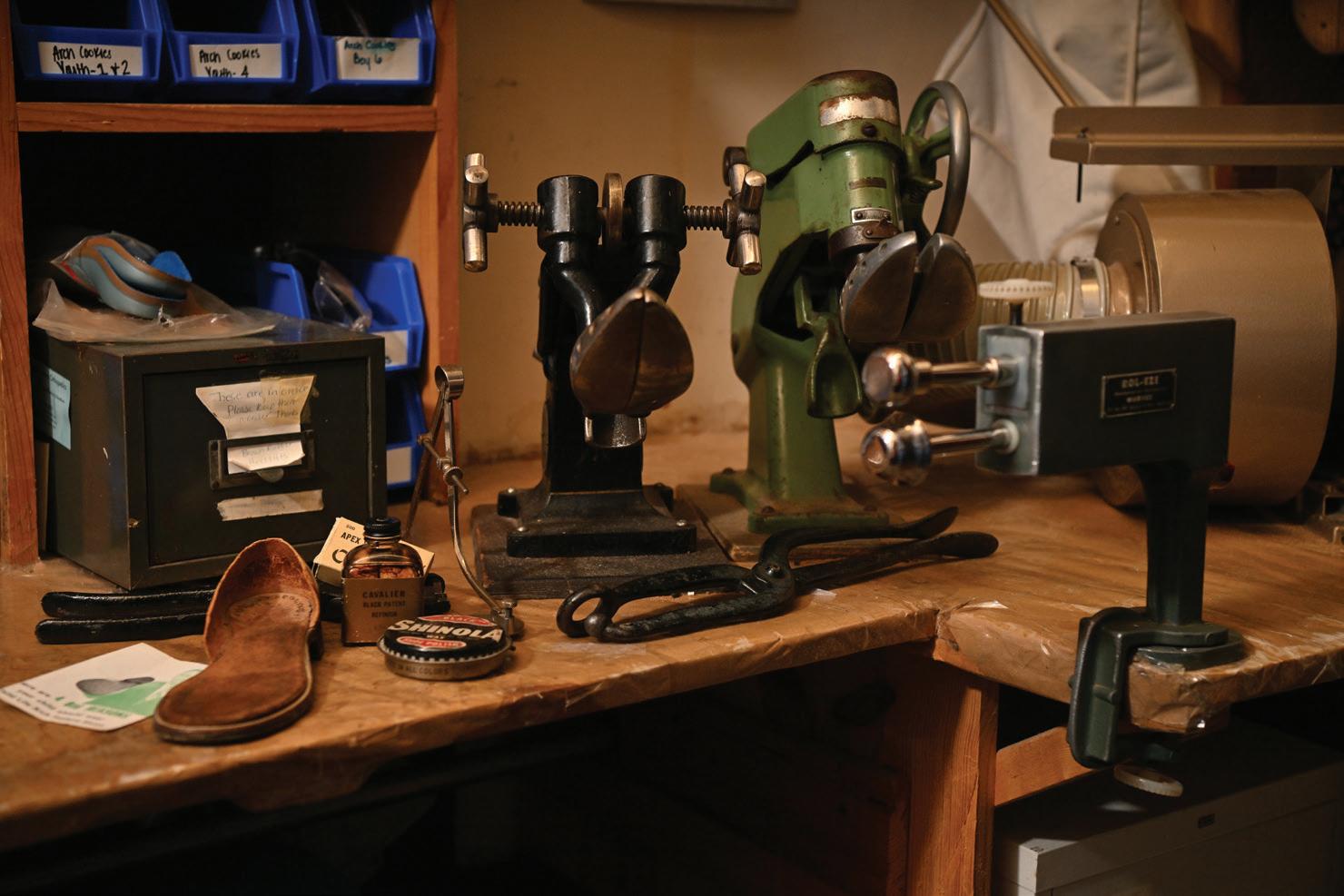
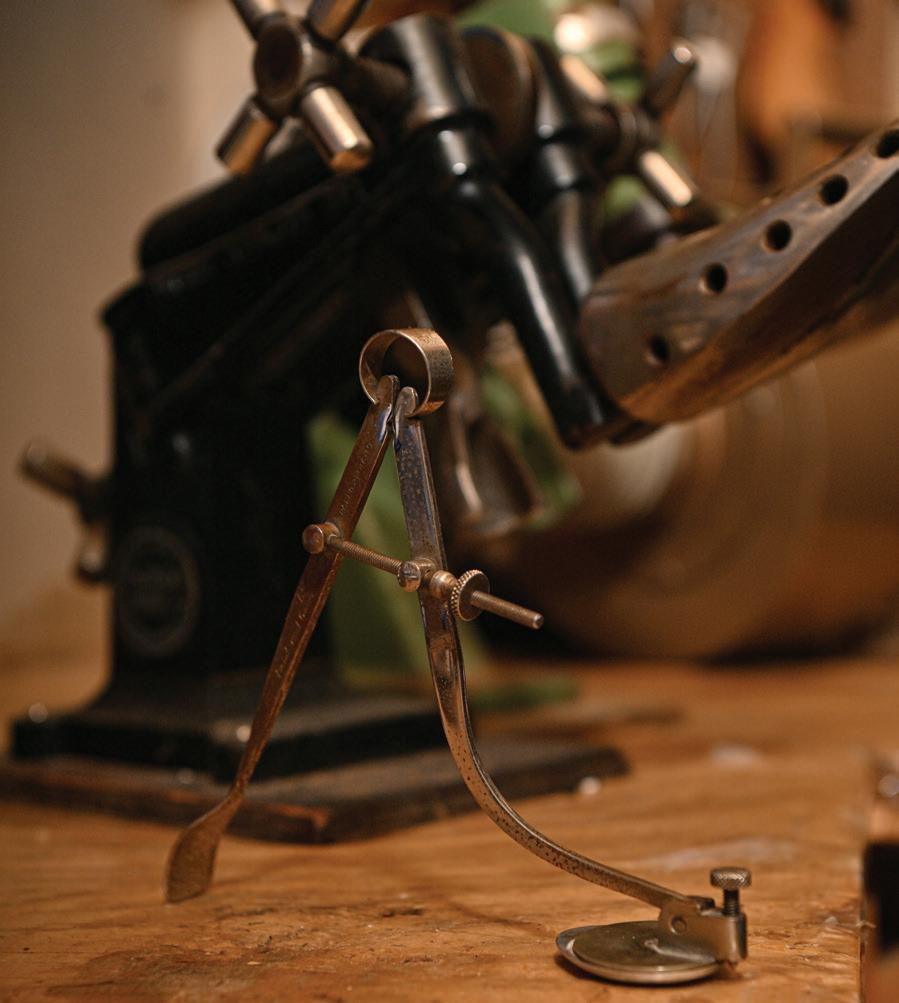
From left: Antique tools and equipment are still used daily for repairs; a Dr. Scholl’s metatarsal arch measurer (circa 1939).
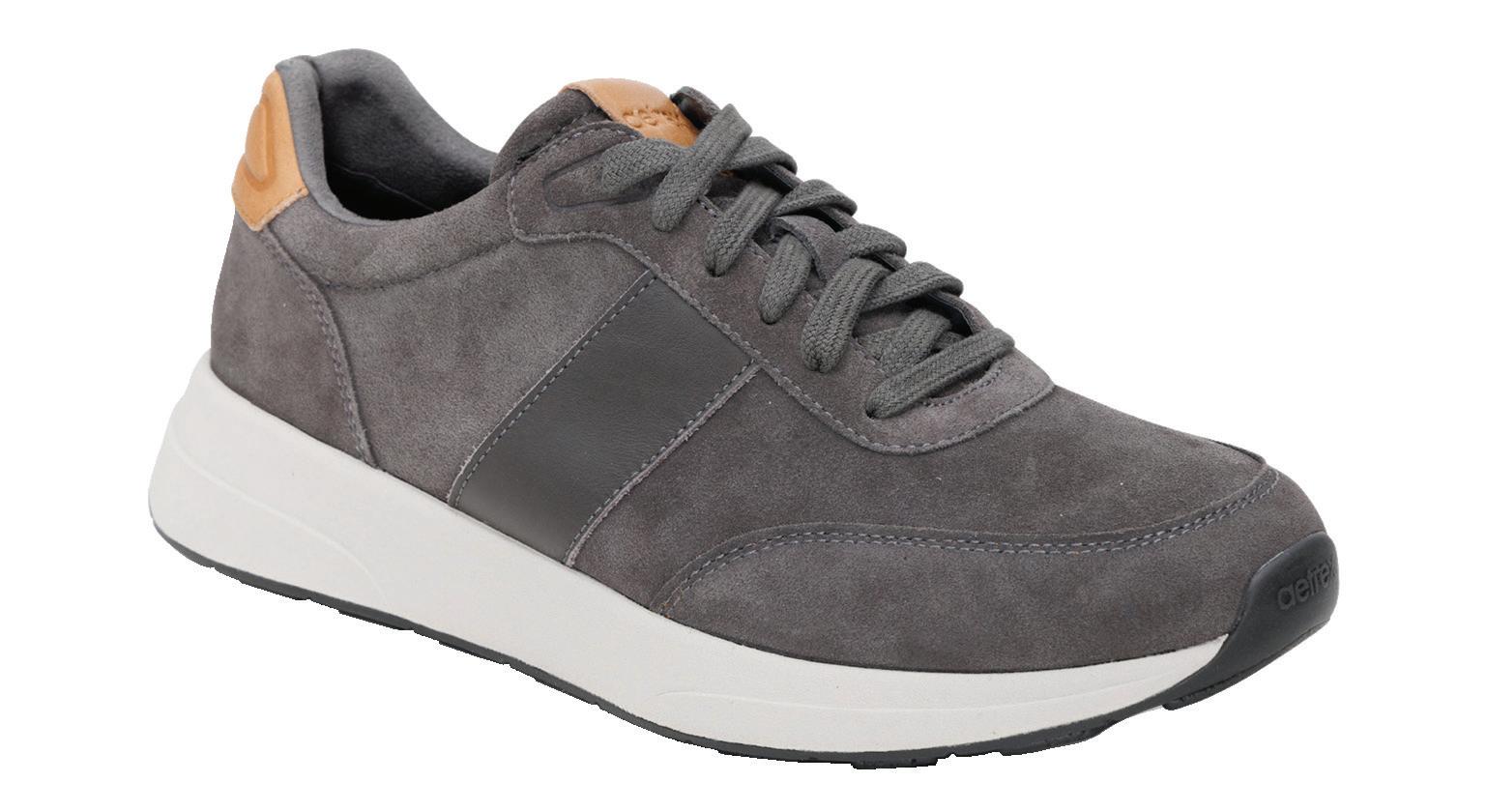
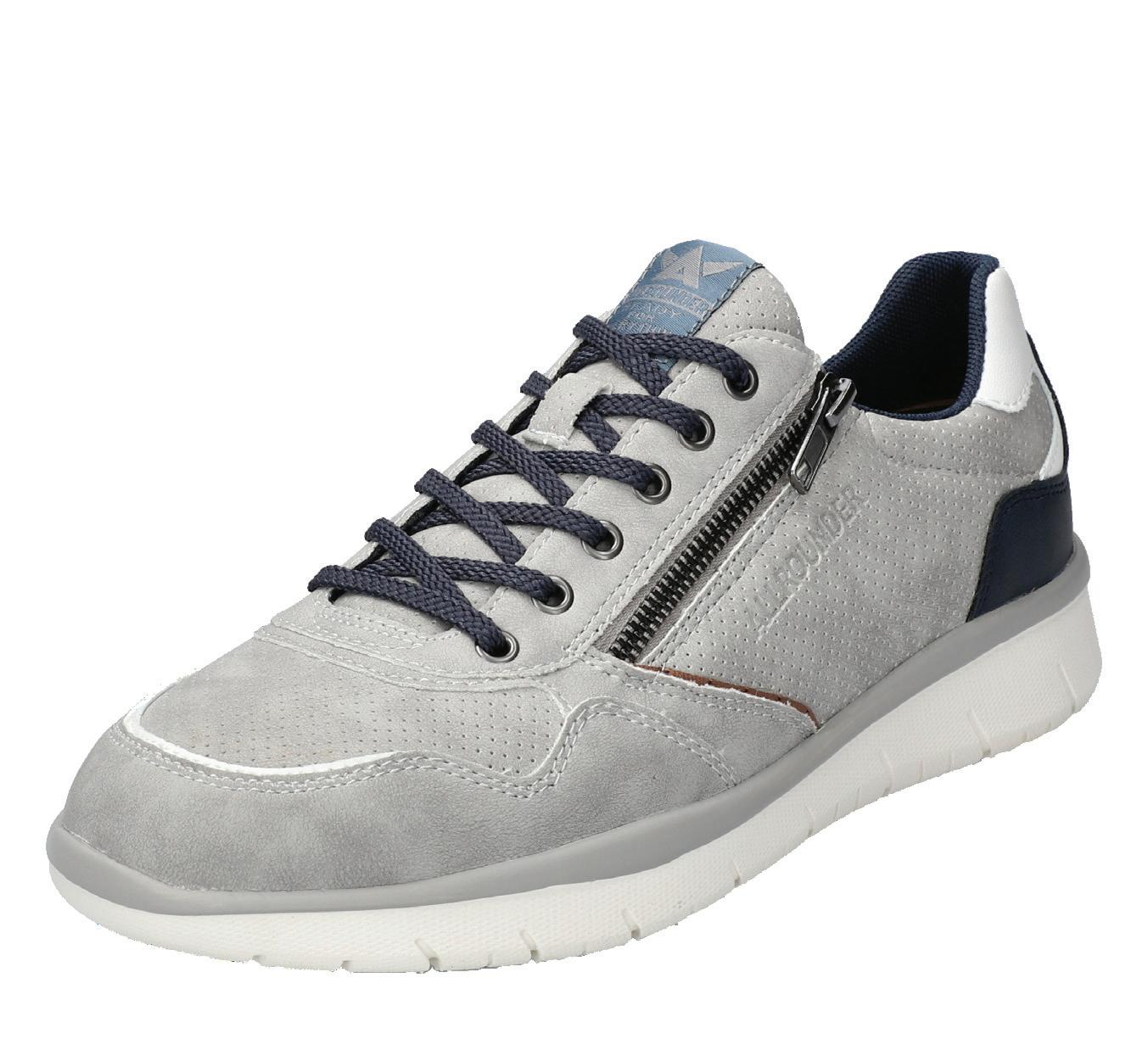
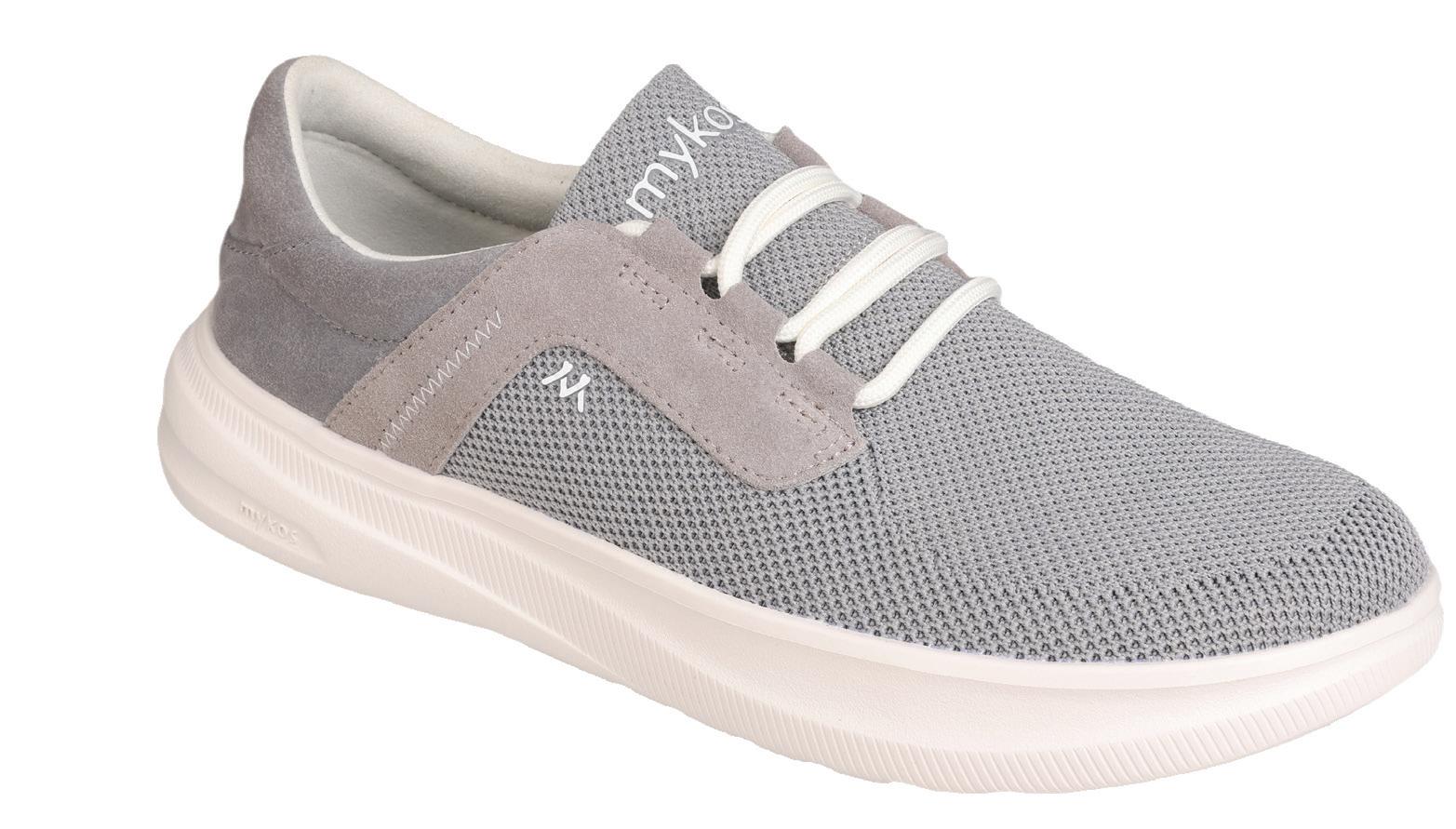
TOUCH OF GRAY
The neutral kinda suits you any way.
Aetrex
Mephisto
Mykos
THE HIGH COURT
Platform tennis sneakers rule.
Camper
Bos. & Co.
Gabor
Rieker
Naot
4CCCCEES
CIRCLE OF LIFE
Veteran designer, expert witness, and adjunct professor Caroline de Baere looks back on how it all connects.
DEAR CAROLINE…
You’re the kid who’s always helping, organizing, and making friends—traits that serve as the basis for a successful career in the footwear industry. You’re a designer first and foremost, which may seem random for someone dreaming of becoming an optometrist. Rest assured, though, a life focused on feet is chock-full of enjoyment and fulfillment. It all starts with childhood summers spent with family in France and Morocco. It’s where you learn to collaborate across cultures and lays the groundwork for designing shoes with worldwide appeal. Mom and Dad are strong influences. Mom, a French teacher by day and a painter by passion, cares deeply about sharing knowledge, loves beauty, and creating. Her never-wavering support inspires you, and your career parallels are impossible to ignore as you create beautiful shoes and mentor young designers. Meanwhile, Dad teaches you the importance of loyalty. He courageously joins the U.S. Army to become a citizen before working at the same company for more than 30 years.
A FOOT IN THE DOOR
You graduate Cal State University - Sacramento with a degree in International Business. You settle in San Francisco in search of a job that offers travel. Your first stop, in 1986, is with Esprit as a production assistant for footwear and accessories. The company is full of twentysomethings who are building something exciting. The footwear division operates like a scrappy startup. There’s energy, experimentation, and a sense of growing together. Your tasks involve purchase orders, inventory analysis, prototypes, and sample reviews—not exactly right brain pursuits. That’s when, in 1989, you ask your boss/mentor, Lynn Miller, if you could shift into design. Instead of a quick rebuff, he pulls a hidden wedge ballerina off the wall, grabs a stack of paper, and asks you to draw it. Your drawing is terrible
brand’s DNA. Over the ensuing years, Ariat becomes a top western and work brand. It’s also renowned for launching executive careers across the industry. Much credit goes to cofounder Beth Cross, who builds Ariat with passion and integrity. Seeing a woman excel in a male-dominated industry is inspiring. You’re a proud Ariat alum.
In 1999, it’s time for another leap. You want to be a freelance designer for multiple brands because that will enable you to evolve faster. It’s risky but, again, trust your instincts. Your first client is Birkenstock. It opens the door to large brands and startups. Over the course of the next 25 years, clients include Keen, Sebago, Red Wing, UMI, Plae, and Livie & Luca. You design western, work, outdoor, and kids’ collections. A highlight is Sperry, where Craig Reingold, a former Ariat colleague, has you work on the Bluefish boat shoe. It becomes an iconic silhouette! Soon after, you pitch him on entering the fashion rain boots category. By melding Sperry’s DNA with an exaggerated A/O outsole and clean waterproof uppers, the collection makes a splash while the brand retains its performance authenticity. Be proud, because moments like this teach you that design should solve problems and fill voids. If you understand the brand and the target consumer, you can push boundaries.
CONNECT THE DOTS
Work takes you to Taiwan, China, Vietnam, Brazil, and Mexico. And while being the only Caucasian woman on the ferry from Kowloon to Zhuhai is intimidating, such experiences shape your global perspective. The industry is a giant extended family. People you meet early on—like Michelle Raskin, Sean Scott, Suzanne Johnson, and Kwaku OwusuAfriye—remain friends to this day. Relationships are valuable currency. Pay them the attention they deserve.
Do not despair! Lynn instructs you to practice until you can draw that shoe with “your eyes closed.” This is one of those career-defining moments: Someone believes in you! You attend night classes and practice daily. You’re rewarded by being named a design and product development assistant. It’s a labor of love blending creativity and trend research across multiple seasons. After six years, though, someone derides that you’re still a rookie. It stings. You realize if you want to grow as a designer, you must expand your horizons. You quit without another job lined up. It’s terrifying but it’s also when you learn to trust your instincts.
The first stop, in 1993, is as Director of Product Development for L.A. Gear. Over the next three years you travel to Asia frequently, where you negotiate pricing, make product presentations, and lead line reviews. It’s valuable experience, but it’s not design. So you switch, in 1995, to Ariat as its Director of Product Development. The company is in start-up mode. There are no spec sheets, tech packs, or ways to track prototypes. So you build those systems from scratch. You also work with freelance designers, each with a creative voice that must coalesce around the
Those friendships lead to being an expert witness in intellectual property and trademark cases. Protecting the value of design and the importance of brand ownership is fascinating work. Then, in 2019, Lynda Grose, a former colleague from Esprit, calls about an opportunity to teach design at California College of the Arts in San Francisco. You become a mentor! Your students go on to work for Deckers, Vibram, Jones & Vining, and Ariat, among others. Teaching leads to public speaking at industry events as well as a juror for the Global Footwear Awards.
Life is full of surprises but none like becoming a fortysomething mother of twins! You set an example that by working hard and loving what you do can result in a fulfilling career. Your greatest wish is that Camille and Tristan find an industry that means as much as footwear means to you.
Now for some parting advice. Push the creative side earlier and trust that the rest will follow. Keep building relationships and evolving. This industry changes fast and unexpectedly. The stagnant are left behind. Above all, everything connects! Mom’s creativity, Dad’s courage, mentors who guide you, design students you lead…it’s a full circle. That little girl who loves helping, organizing, and making friends is always a part of you. She just moves onto a bigger stage where her story is still unfolding.
Then and now: Caroline de Baere
Diba True
Frankie4
Camper
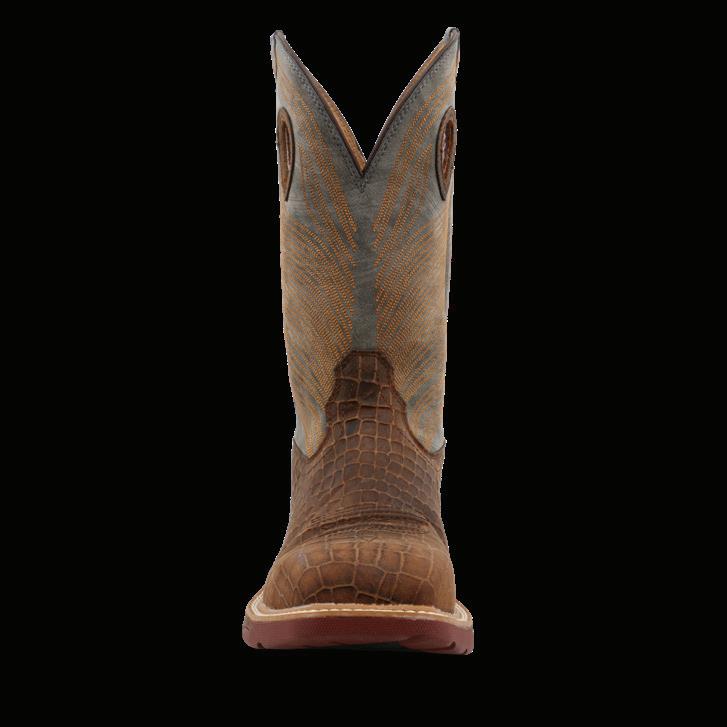
Clockwise from left: Dingo harness boot; Georgia Boot logger; “Super Rain Forest” work boot by Danner; Twisted X westerninfused work boot; work boot by Ariat
Clockwise from top left: Camper platform work boot; Timberland hiker; combat boot by Dr. Martens; moc toe hiker by Ecco
Clockwise from top: Red Wing logger boot; tactical boot by Rocky; Thorogood work boot.
Dream Pairs lug sole loafers.
Dr. Martens Mary Janes with adjustable buckles and brogue detailing. Opposite page: combat boots with side zippers by Rieker
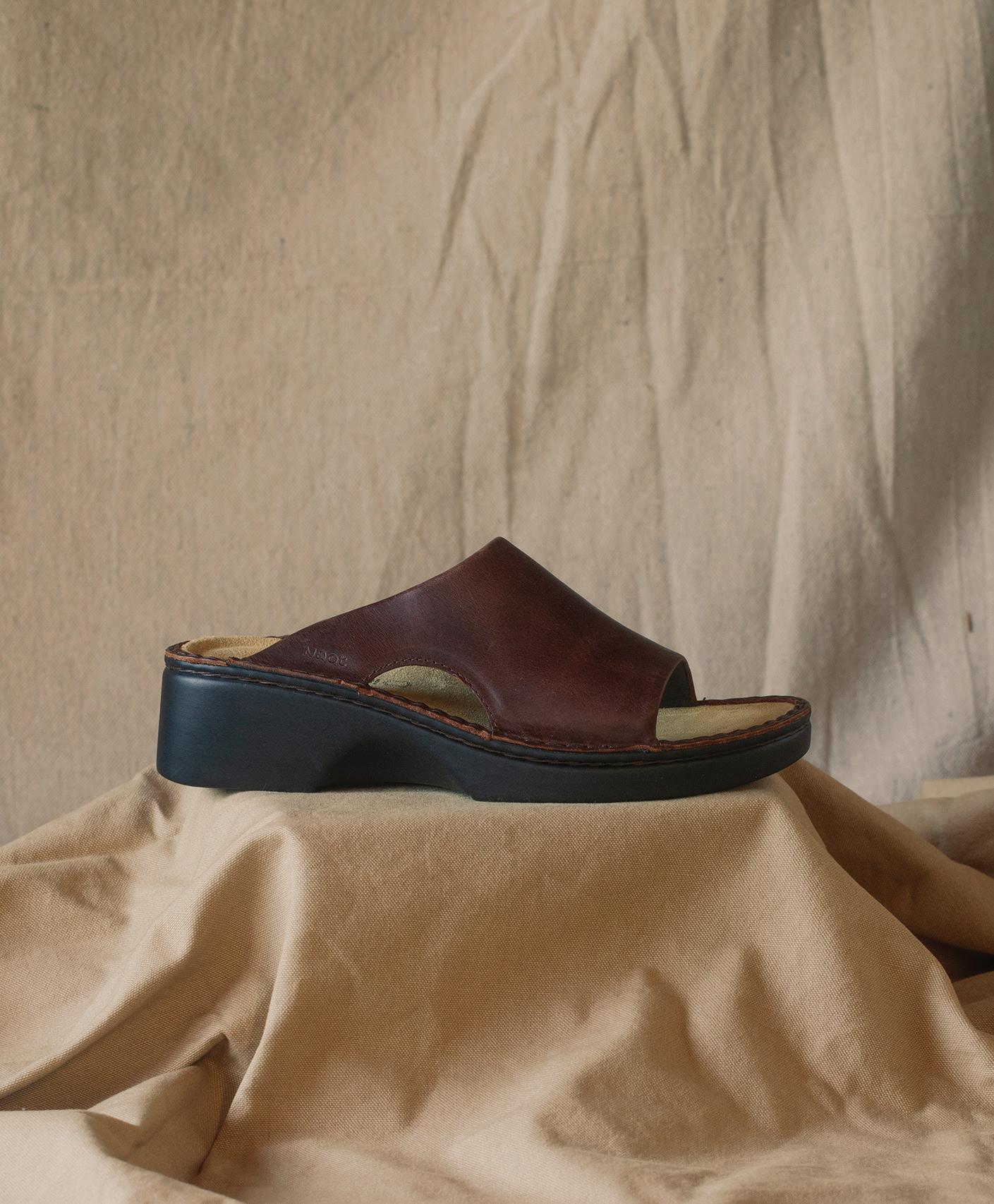
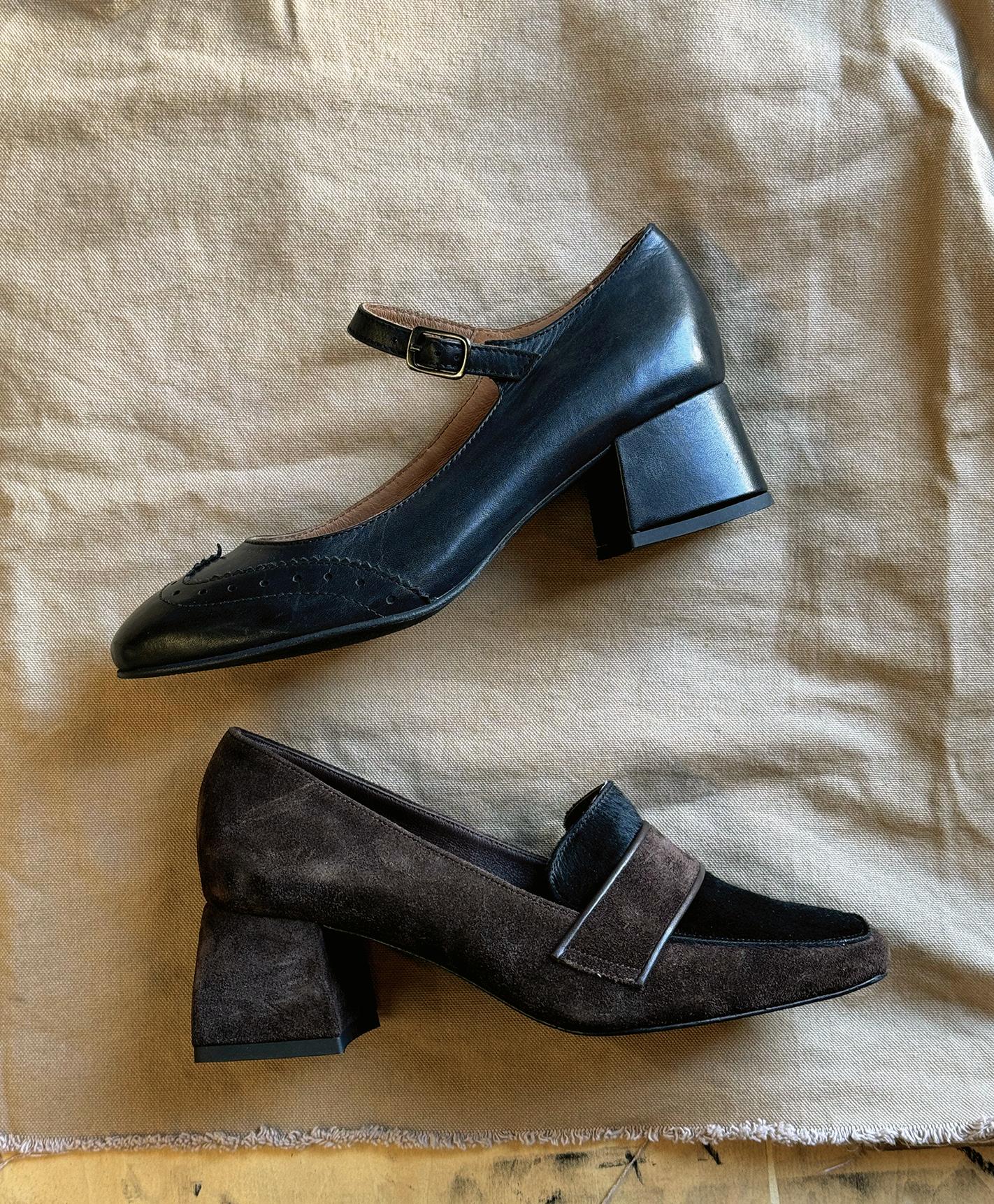
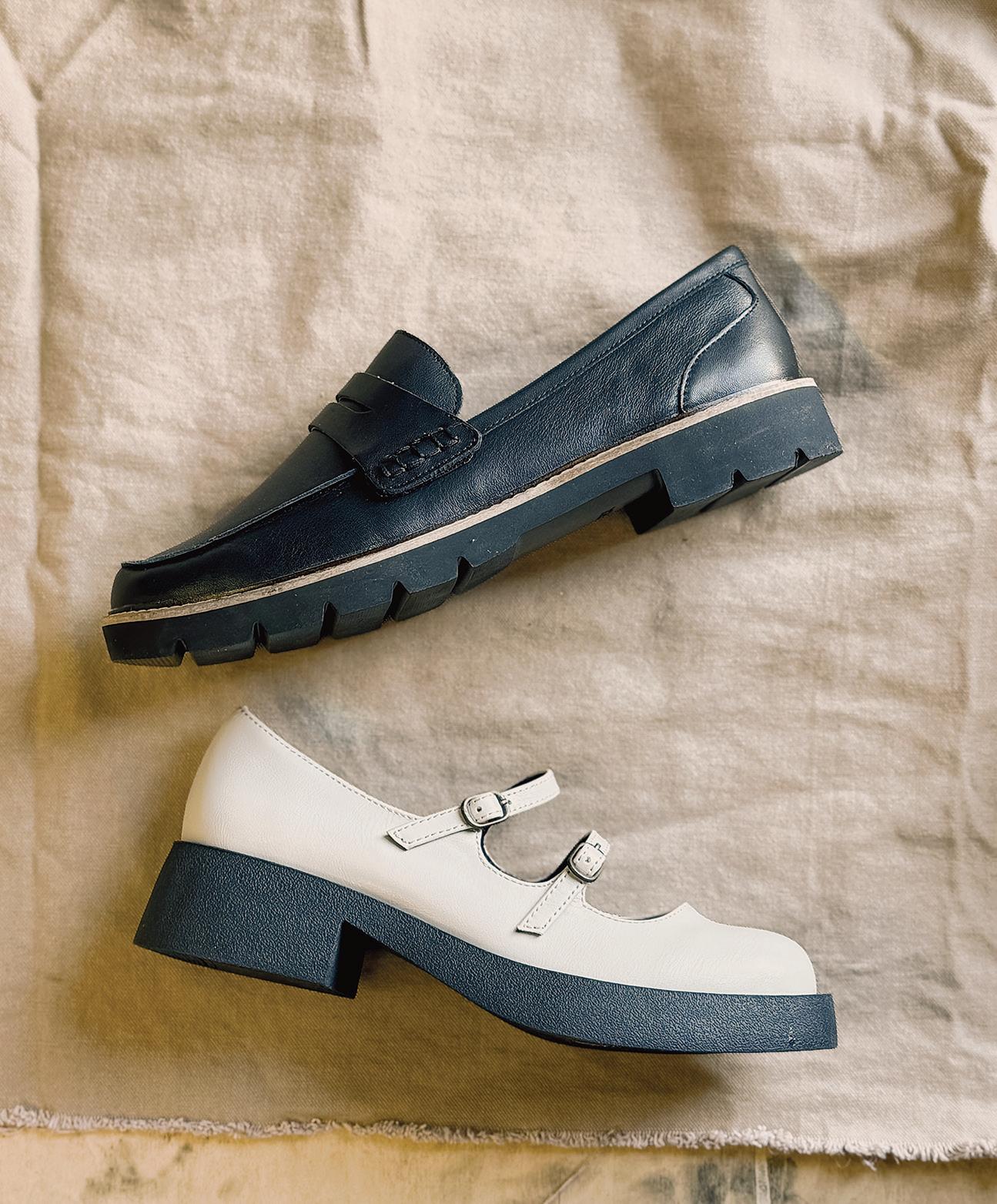
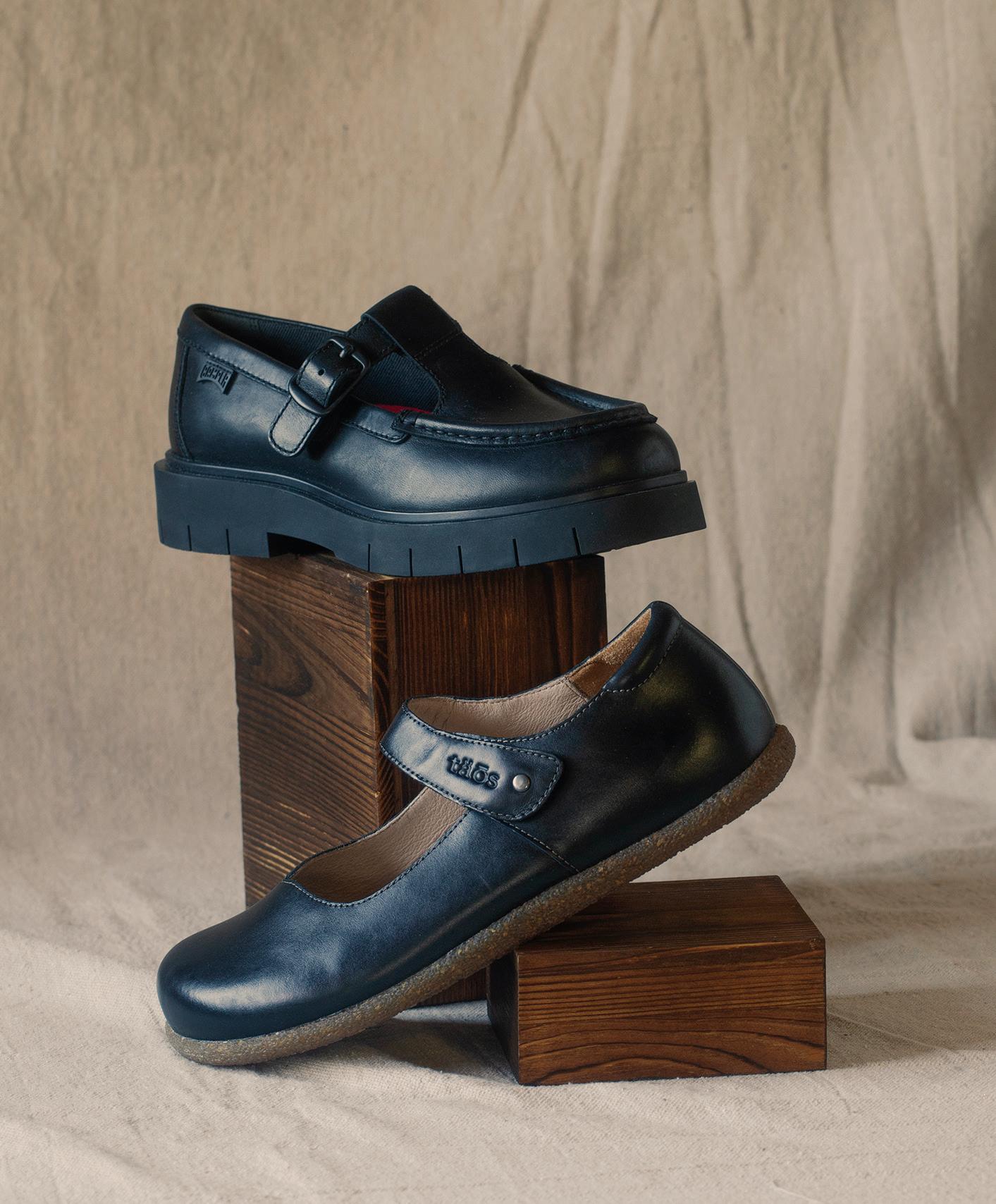
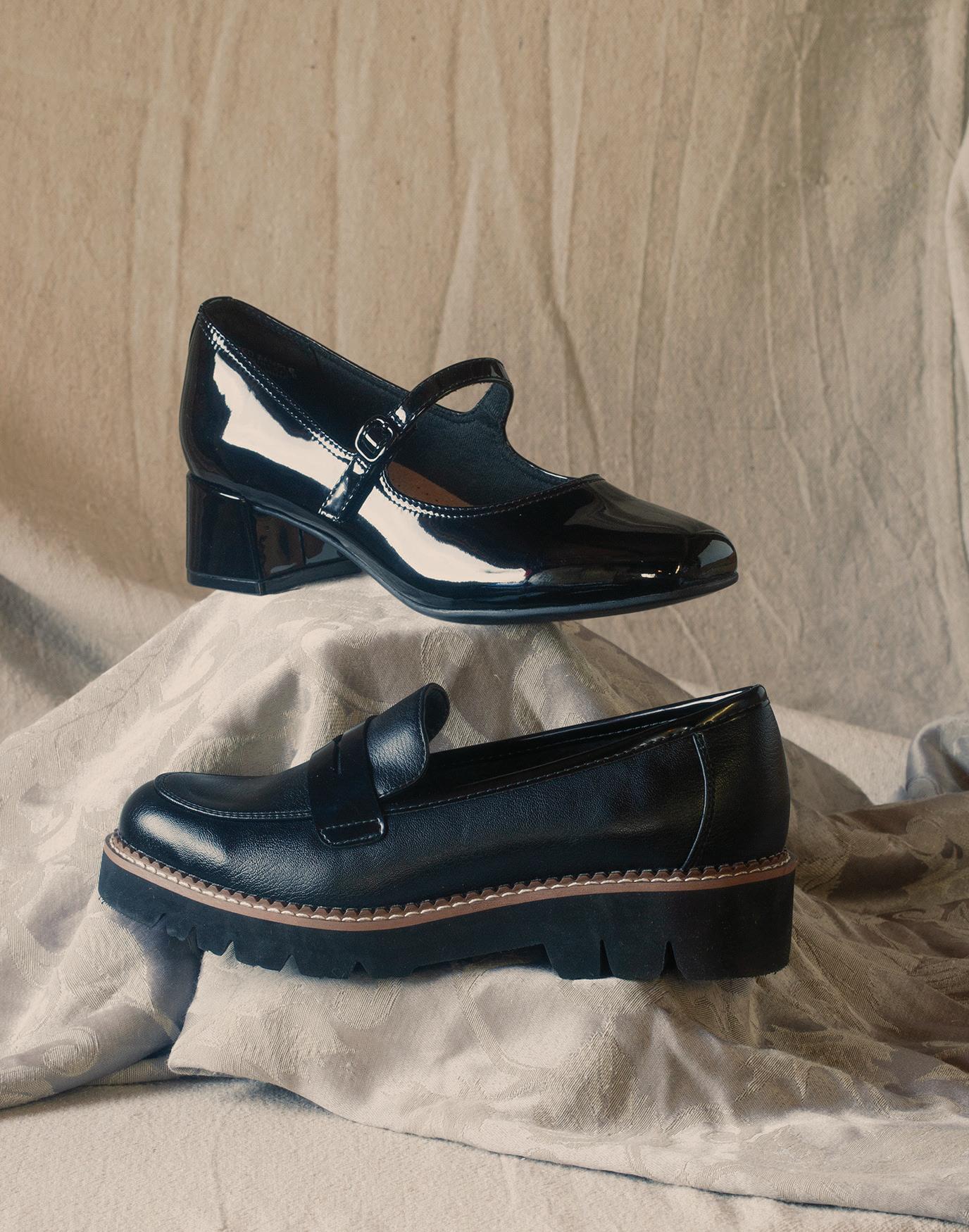
Diba True metallic Mary Jane pumps with three-inch heels. Opposite page, clockwise from top left: Naot slide with anatomic cork and latex footbed; loafer with adjustable vamp and lightweight EVA foam midsole by Aetrex; Mary Jane with double buckle strap and one-inch platform by BC Footwear; Camper loafer with EVA midsole; Taos orthotic-friendly Mary Jane with forefront cushioning and cork outsole; All Black loafer pump with rubber outsole; Mary Jane with two-inch block heel by Miz Mooz
Three-inch heel platform loafers by Fly London Opposite page: platform Mary Janes with 6.25-inch heels by Steve Madden
Famolare loafers with padded leather insoles and wavy recycled rubber outsoles. Opposite page: Bos. & Co. croc print chunky loafers.
Trevett
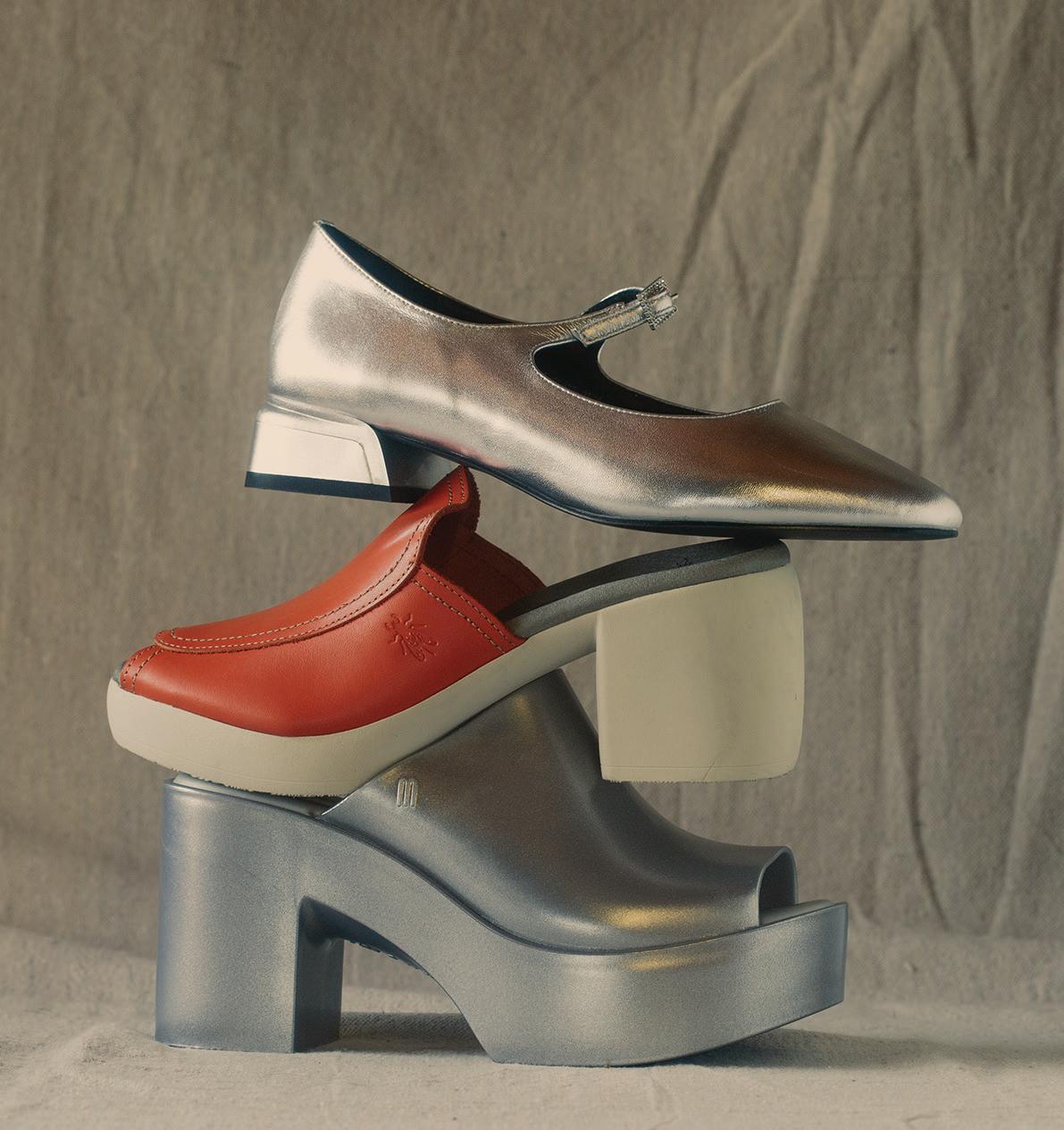
Clockwise from left: chunky suede Mary Janes with EVA midsoles by Birkenstock; patent Mary Jane by Clarks; EVA lug sole penny loafer by Patrizia; Azura metallic Mary Jane with adjustable ankle strap; peep toe platform slide by Fly London; PVC platform slide by Melissa Opposite page: LifeStride suede penny loafers with 1.25-inch block heels.
Photography:
McCandliss; styling: Mariah Walker/ Art Department; fashion editor: Kiernan McCormick; model: Madilynn/Q Model Management; hair and makeup: Nevio Ragazzini/Next Artists; photo assistant: Raymond Collette; styling assistants: Nellyfer Espinoza and Jamie Wtorkowski.
OH, BABY!
Thorogood gifts customer a newborn baby photoshoot for what it deems a very good reason: loyalty.
WHEN EXPECTANT
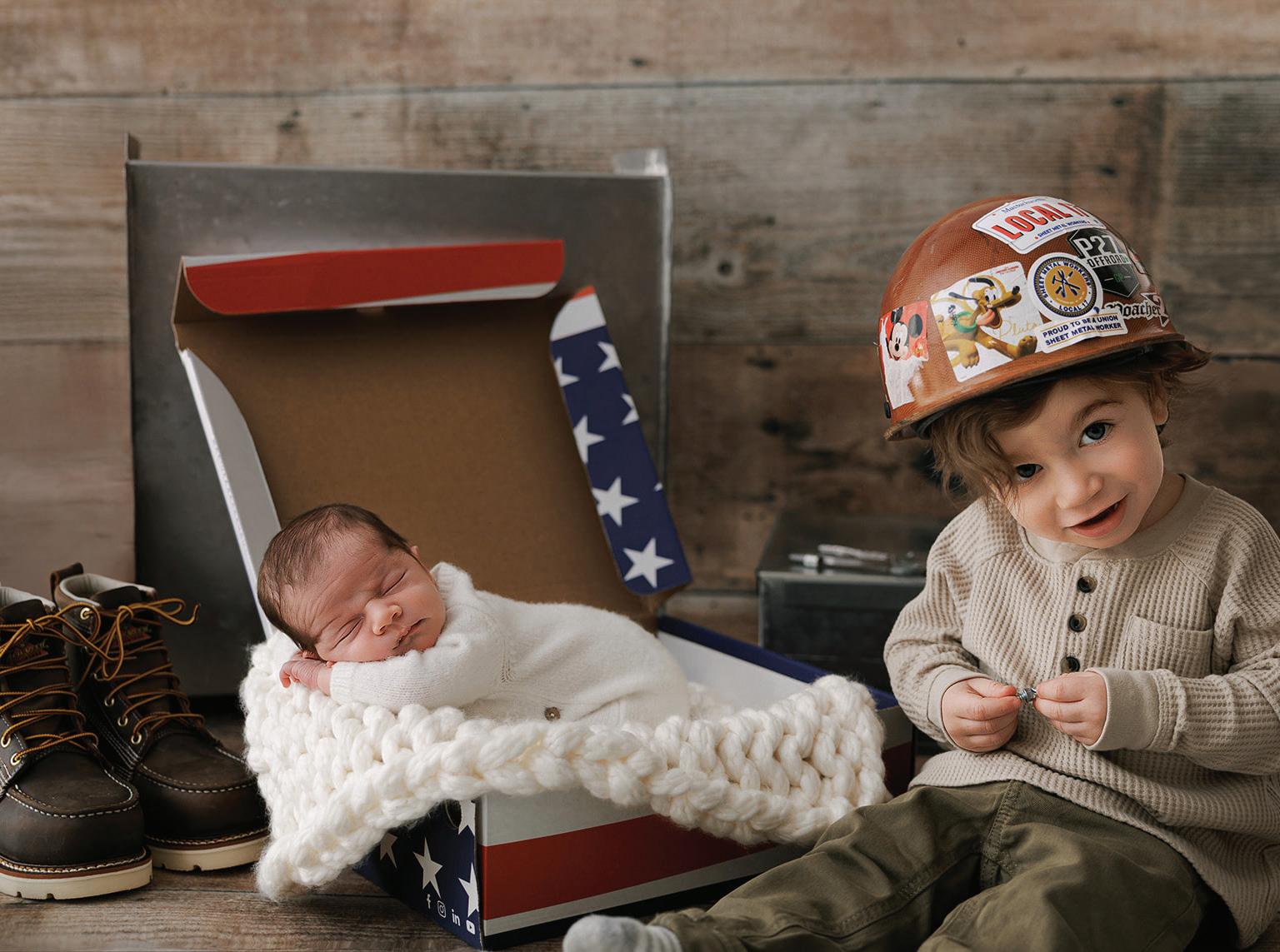
DAD Caio Torres Instagrammed a photo of himself in his Thorogood boots in the hospital delivery room awaiting the birth of his second son this past February, the post gave birth to a unique idea by the Wisconsin-based work brand: Here was a heartfelt real-life moment that showcased Thorogood product in a customer’s everyday life. Why not help that customer commemorate a moment worth celebrating? To thank the family for making the brand’s work boots part of a milestone in their lives, Thorogood rewarded them with a free photoshoot.
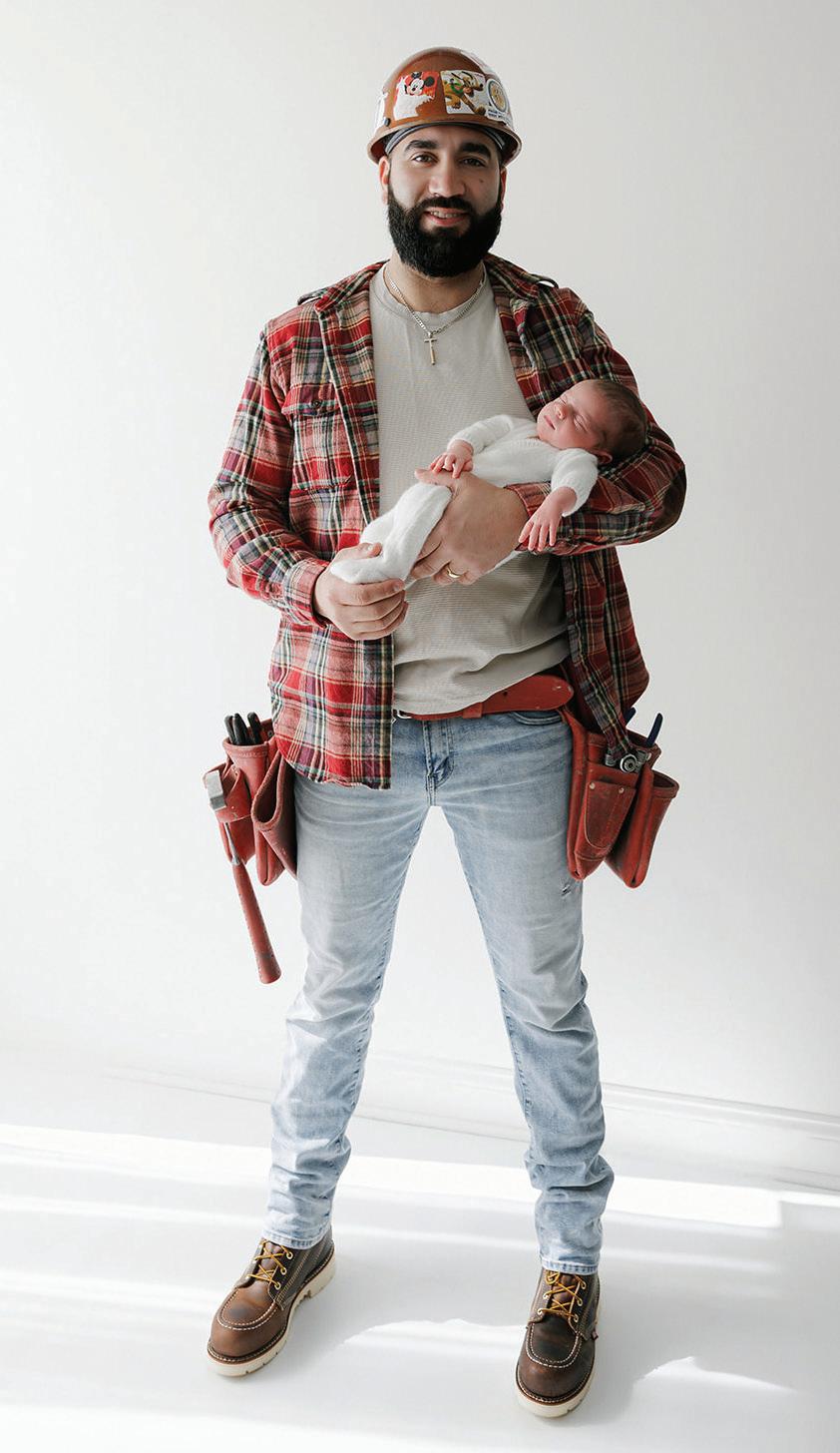
Donning his Thorogoods was no publicity stunt for Torres. The Massachusetts-based HVAC sheet metal mechanic and a foreman in the Sheet Metal Workers Union Local 17 has worn the boots for six years, both on and off the job. So when his wife, Kelsey, started to have contractions early one winter morning, “I knew it was go time and grabbed all my necessities,” says Torres. “I naturally grabbed my Thorogood boots. It’s what I do every day, without thinking.”
When they reached the hospital, the couple sat in triage for a while before moving them to the delivery unit. “That’s when I posted a picture of my feet kicked up wearing my boots with a comment stating that baby number two was on the way,” Torres explains. “Not long after, our healthy baby Kai was born.”
He tagged the brand, and when Thorogood’s social media team and agency partners spied the post, they were instantly captivated.
“Honestly, it just made us smile. Here’s a guy in a hospital delivery room, about to become a father for the second time, and he’s wearing the same boots he laced up that morning for work,” says Bianca Boettcher, marketing director for Thorogood, a division of Weinbrenner Shoe Company based in Merrill, WI. “We loved that it was just a hardworking dad getting ready for the day, the same way he always does, only this time in the delivery room.
“We talk a lot as a brand about our product being part of people’s daily lives, and this was about as real an example as you’ll ever find,” she continues. “It felt right to simply recognize the moment and make sure his family had a way to hold onto it.”
So Thorogood reached out to congratulate Torres and to thank him for making them part of his life. To show their gratitude, they offered him a newborn/family photo shoot.
“The experience was amazing,” Torres says. “We never had one with our
first son, Luca, so we were ecstatic. We are so grateful for what they did for us. A small gesture like paying for a family and newborn photoshoot really shows how much Thorogood cares about their consumers.”
Though the brand has sent boots, gear, and other product to tradespeople who show up every day and take pride in their craft, “We can definitely say this is the first time we’ve arranged a newborn shoot,” says Boettcher. “His story just happened to come with a moment that allowed us to do something a bit unexpected.” With the family’s blessing, the brand plans to publish a profile of Torres on its website as part of its Lacing Up With series and to share his story from the session across its social channels.
“It confirmed something we already believed but don’t always get to see so clearly: Our boots aren’t just jobsite equipment, they’re part of how people move through their lives,” says Boettcher. “Caio didn’t set his work identity aside when it was time to go. He walked into that delivery room the same guy he is on the job, and his Thorogoods were right there with him. For us, the takeaway is simple. The best brand stories are the ones that already exist. You just have to be paying attention. And when you see one, your job is to honor it.”
Torres, whose specialty is installing ductwork for HVAC systems per specs and details designed by engineers (view his work at Instagram@sheetmetalHVAC), learned the trade as a teen. “I love what I do for a living,” he says. He finds Thorogood the perfect footwear for the job because of “how quickly the quality leather breaks into your feet.” —Kathy Passero
Born in the U.S.A.: Thorogood work boots and the children of longtime customer, Caio Torres.
GEOMETRY CLASS
Great style comes in many shapes.
Jessica Simpson
Alohas
Military-inspired boots march to a ’90s style beat.
Diba True
Miz Mooz
Flexus
Bed Stu
Bos. & Co.
Taos
6:00-8:30pm
n e t w o r k i n g
Featuring Aetrex orthotic support and memory foam cushioning for superior comfort