“Schiffer Military” and the quill pen logo are trademarks of Schiffer Publishing, Ltd.
Schiffer Publishing’s titles are available at special discounts for bulk purchases for sales promotions or premiums. Special editions, including personalized covers, corporate imprints, and excerpts, can be created in large quantities for special needs. For more information, contact the publisher:
For our complete selection of fine books, please visit our website: www.schifferbooks.com.
Schiffer Publishing’s titles are available at special discounts for bulk purchases for sales promotions or premiums. Special editions, including personalized covers, corporate imprints, and excerpts, can be created in large quantities for special needs. For more information, contact the publisher.
KEY TO THE BACKLIST
Titles in a series are bookended by gray rules. Titles with a purple background are new to the backlist. Subcategories are specified on backlist page headers; these can be utilized in coordination with the Table of Contents to locate specific titles.
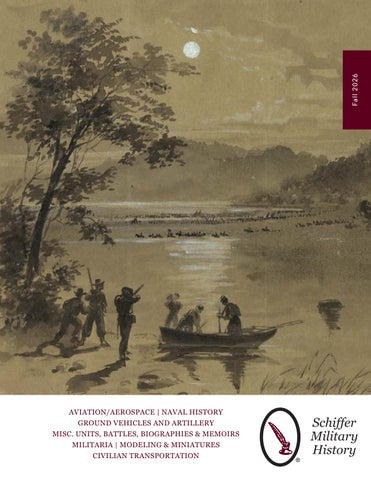
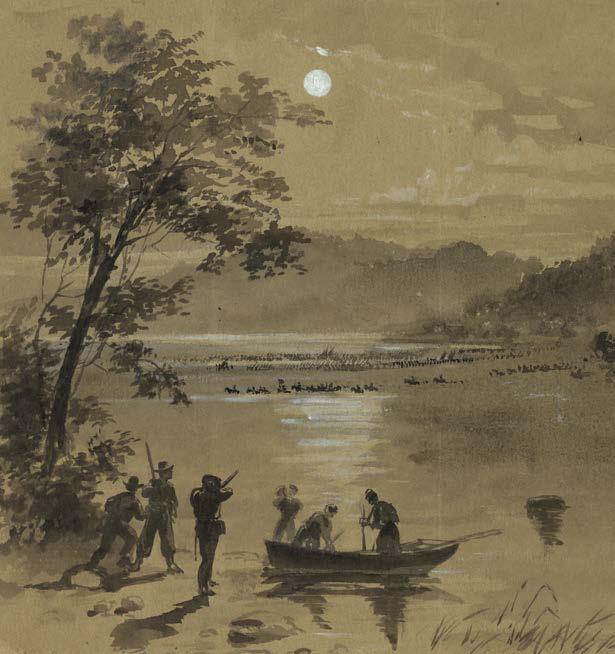
Front cover: Confederate Crossing of the Potomac, September 1862, by Alfred Waud. Courtesy of Library of Congress
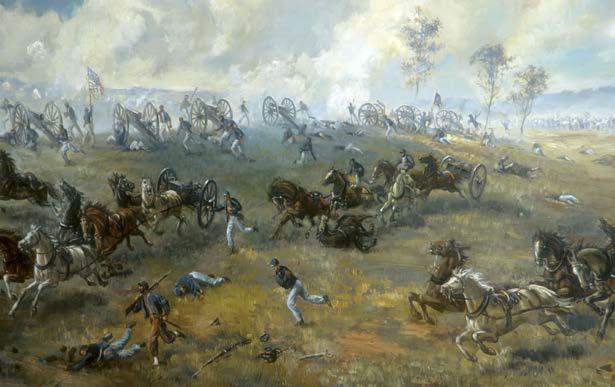
Above Image: The capture of Ricketts’ battery by Sidney E. King, 1964. Courtesy of the Visitor Center of Manassas National Battlefield Park
Printed in China
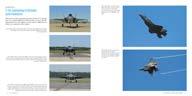
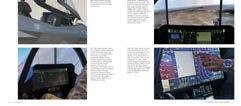
F-35 Lightning II
Supersonic Fighter from Lockheed Martin
By Ken Neubeck
A visual guide to the F-35 Lightning II, which is expected to remain in service with militaries all over the world through 2070.
The Lockheed Martin F-35 Lightning II is a versatile modern jet fighter. It is intended to replace numerous aircraft types, including the F-16, A-10, F/A-18, and the Harrier Jump Jet, in the air forces and navies of the United States and its allies.
The plane entered military service in 2015 and first saw combat in 2018. It is expected to remain in service with militaries all over the world through 2070. Lockheed Martin has already delivered more than 1,000 units of the type.
This is a pictorial guide to the F-35 and its variants. Readers will see the plane both in appearance and technical detail. Both US and foreign examples are featured. A concise history of the plane in development and operation is included.
978-0-7643-7160-8
$19.99, £18.99, 28.99 CAD
Hardcover • 112 pp. • 9" x 9" (229 x 229 mm)
210 color and b/w photos
BISACs
HISTORY / Military / Pictorial
HISTORY / Military / Aviation & Space
HISTORY / Military / Vehicles / Air
AVAILABLE August 2026
Ken Neubeck is a reliability engineer who worked on the A-10 production program. He has authored numerous books on aircraft and amateur radio technology. He served as president of the Long Island Republic Airport Historical Society, which preserves aspects of the history of Long Island aviation.
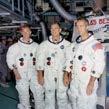
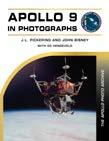
Apollo 9 in Photographs
The Apollo Photo Archive
By J. L. Pickering & John Bisney, with Ed Hengeveld
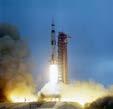
Apollo 9 proved the viability of several technologies necessary to land on the moon, including the lunar module itself. This volume includes more than 800 images of the mission.
The Apollo Photo Archive series comprises the most comprehensive pictorial record of America’s moon-landing program ever published.
This fourth volume covers Apollo 9, a risky but critical step in the space race with the Soviet Union. Commander Jim McDivitt and command module pilot Dave Scott, both Gemini veterans and Air Force pilots, were joined by civilian rookie Rusty Schweickart as lunar module pilot. While orbiting Earth for 10 days, they achieved the first rendezvous and docking with the lunar module. Schweickart took the first Apollo spacewalk, proving the viability of the spacesuit and backpack for the lunar surface.
978-0-7643-7198-1
$59.99, £54.99, 85.00 CAD
Hardcover • 368 pp. • 8.5" × 11" (216 × 279 mm)
820 color and b/w photos
BISACs
SCIENCE / Space Science / Space Exploration
HISTORY / Military / Aviation & Space
SCIENCE / Space Science / General
AVAILABLE September - 2026
The 12-volume Apollo Photo Archive features images of spacecraft and rocket assembly; crew background and training; the countdown, launch, mission, and splashdown; and subsequent crew appearances and activities. This volume, Apollo 9 in Photos, includes more than 800 images, of which many pre- and postflight photos have never been published.
J. L. Pickering, who has amassed the world’s largest private archive of US human space flight images, has been conducting historical photo research on the US space program for nearly 50 years. This includes assembling, studying, and organizing a personal collection of more than 250,000 prints, transparencies, and digital files. Today he serves as a resource for authors, museums, astronauts, and others. He lives in Illinois.
John Bisney is an author, journalist, and retired network news correspondent who covered the space program for more than 30 years for CNN, the Discovery Science Channel, RKO, and SiriusXM Radio. He witnessed more than 60 space shuttle launches and was one of the few broadcasters at the 1986 Challenger disaster. He holds a master of arts degree in journalism from the University of Missouri School of Journalism. He lives in the Tampa Bay area.
Ohio-Class Submarines
The US Navy’s SSBN and SSGN Boats
By James C. Goodall & RAdm. Gus Gustavson
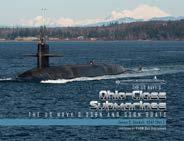
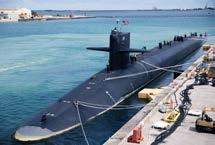
This is a pictorial guide to the SSBN and SSGN of the Ohio class, which includes previously unpublished interior photos taken by the author, who was provided rare access to several operational SSBN.
Collectively, the US Navy’s Ohio-class submarines carry about half of America’s strategic nuclear warheads. The 18 ships of the Ohio class are split between two variants; there are 14 nuclear-warhead-carrying fleet ballistic missile submarines (SSBN) and 4 guided missile submarines (SSGN), the latter having been converted from SSBN to carry Tomahawk missiles and special operators into action.
978-0-7643-7200-1
$39.99, £36.99, 56.99 CAD
Hardcover • 160 pp. • 12" x 9" (305 x 229 mm)
220 color photos
BISACs
HISTORY / Military / Pictorial HISTORY / Military / Naval
This is the pictorial guide to the SSBNs and SSGNs of the Ohio class. Detailed captions accompany color photography throughout, including numerous previously unpublished interior photos taken by the author, who was provided rare access to several operational SSBN.
James C. Goodall has authored several dozen books on military technology, with a focus on stealthy vehicles, both aircraft and naval vessels. Goodall is associate curator (emeritus) at the Pearl Harbor Aviation Museum. He lives in Arizona.
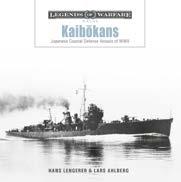
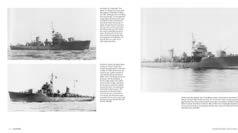
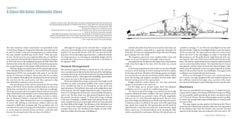
Kaibōkans
Japanese Coastal Defense Vessels of WWII
By Hans Lengerer & Lars Ahlberg
These ships were numerous and played a very active role in Pacific naval combat but have never been the subject of a book in English until now.
During the Second World War, the Imperial Japanese Navy used the term kaibōkan to refer to several classes of ships. The kaibōkans slotted below imperial Japanese destroyers, comparable to the British Royal Navy’s frigates and corvettes or American destroyer escorts. A total of 171 vessels were completed in the kaibōkan family, making it one of if not the most produced warship design by the Imperial Japanese Navy during the war. These ships were numerous and played a very active role in Pacific naval combat.
978-0-7643-7161-5
$24.99, £22.99, 35.99 CAD
Hardcover • 128 pp. • 9" x 9" (229 x 229 mm)
150 b/w photos and line drawings
BISACs
HISTORY / Military / Pictorial
HISTORY / Military / Naval
HISTORY / Wars & Conflicts / World War II / Pacific Theater
AVAILABLE August 2026
This is the illustrated history of the type, including a historical synopsis, full technical description, and more than 100 photographs and diagrams. Naval historians Lars Ahlberg and Hans Lengerer have established themselves as experts on and specialists in the warships of the Imperial Japanese Navy during WWII. Their work is differentiated by being primarily driven by the utilization of Japanese-language primary source material.
Hans Lengerer was in the government service (executive) until retirement. After contacts with the late Erich Gröner, he was encouraged by the late Jürgen Rohwer to publish on the IJN. He has written more than 50 articles and several books, including Die Flugzeugträger der Kaiserlichen Japanischen Marine und des Heeres, Band I. He lives in Germany.
Lars Ahlberg is a retired army officer; he lives in Sweden. Together with Hans Lengerer, he privately publishes Contributions to the History of Imperial Japanese Warships
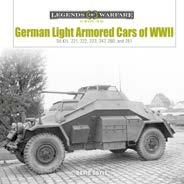
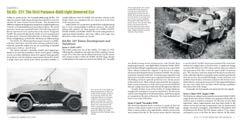
German Light Armored Cars of WWII
Sd.Kfz. 221, 222, 223, 247, 260, and 261
By David Doyle
A pictorial guide to the light armored cars operated by the Wehrmacht during the Second the World War
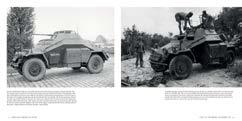
The German military operated a variety of light armored cars during the Second World War. These vehicles were categorized under the umbrella of “Sonderkraftfahrzeug” (abbreviated as Sd.Kfz.), which translates roughly to special-use vehicle.
The first of these purpose-built light armored cars was the Sd.Kfz. 221, which entered series production in 1935. The 221 served as the basis for the more heavily armed Sd.Kfz. 222. The 221 was once again repurposed into a mobile communications platform designated Sd.Kfz. 223. The Sd.Kfz. 260 and 261 were much like the Sd.Kfz. 223 but without armament. An entirely different chassis was implemented for the Sd.Kfz. 247 command vehicle, which was supplied in both six- and four-wheel variants.
978-0-7643-7158-5
$19.99, £18.99, 28.99 CAD
Hardcover • 112 pp. • 9" x 9" (229 x 229 mm)
154 color and b/w photos
BISACs
HISTORY / Military / Pictorial
HISTORY / Military / Vehicles / Land
HISTORY / Wars & Conflicts / World War II / General AVAILABLE July 2026
This work is inclusive of all the above designations of armored car. It includes more than 150 images with detailed captions. These contents are useful for identifying and differentiating German light armored cars and provide a clear technical description of both interior and exterior details.
Military vehicles are a lifelong passion for David Doyle. When he is not actively authoring manuscripts, he is traveling to archives and museums to acquire new content. His personal collection of military images is regarded as one of the finest in the world. He lives in Tennessee.
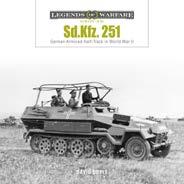
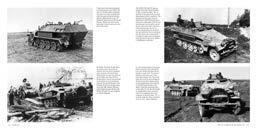
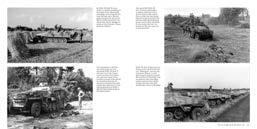
Sd.Kfz. 251
German Armored Half-Track in World War II
By David Doyle
A large collection of high-quality photos show this WWII half-track in action and in technical detail.
The Sonderkraftfahrzeug 251, or Sd.Kfz. 251, is one of the more recognizable and widely produced armored vehicles built for the Wehrmacht during the Second World War. Among the many variants, more than 10,000 units were produced, and the type saw combat throughout the entirety of the conflict.
This work is a pictorial history of the vehicle. Through an array of several hundred high-resolution photos, readers will gain insight into how the 251 was designed and built, but also how it was utilized in combat. The volume is also helpful in the identification and differentiation of the various submodels, which are numerous.
978-0-7643-7159-2
$24.99, £22.99, 35.99 CAD
Hardcover • 144 pp. • 9" x 9" (229 x 229 mm)
290 color and b/w photos
BISACs
HISTORY / Military / Pictorial
HISTORY / Military / Vehicles / Land
HISTORY / Wars & Conflicts / World War II / General AVAILABLE July 2026
Military vehicles are a lifelong passion for David Doyle. When he is not actively authoring manuscripts, he is traveling to archives and museums to acquire new content. His personal collection of military images is regarded as one of the finest in the world. He lives in Tennessee.
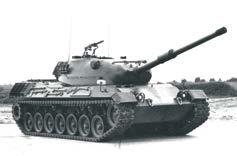
Leopard 1 Germany’s Post-WWII
Panzer
By Rolf Hilmes
An illustrated guide to the Kampfpanzer Leopard 1. The Leopard was one of several key battle tanks in the NATO arsenal during the Cold War.
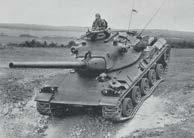
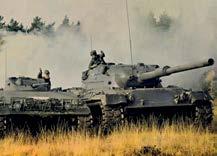
The Leopard 1 was West Germany’s first domestically designed and produced battle tank in the aftermath of the Second World War. Work began on the type at Fa. Porsche System-Engineering Ltd. in the early 1950s. The Leopard entered service with the Bundeswehr in 1965. Since then, more than 6,000 Leopards have been built with many variations and modernizations, both armed and unarmed. Beyond Germany (where it remained in service until 2003), the type was adopted as the main battle tank for several other major militaries, including those of Italy, Australia, and Turkey. The tank was a key weapon in the NATO arsenal during the Cold War and beyond.
This work begins with a history of the development, procurement, and production process that created the Leopard. Then the author explains the major modifications and variants of the tank, both in Germany and foreign service. Finally, readers will enjoy a detailed, component-by-component technical description of the type. Text is accompanied by more than 200 images, many of which are in color.
978-0-7643-7162-2
$39.99, £36.99, 56.99 CAD
Hardcover • 176 pp. • 8.5" x 11" (216 x 279 mm)
250 color and b/w photos
BISACs
HISTORY / Military / Vehicles / Land
HISTORY / Military / Pictorial
HISTORY / Modern / 20th Century / Cold War
AVAILABLE September 2026
As a reserve officer in the Panzertruppe, Rolf Hilmes was trained on the Bundeswehr’s most important main battle tank, the Leopard. After his military service, he worked in the armaments field as a tank technology consultant, before accepting a position as a lecturer and department head at the Bundeswehr Academy. Since his retirement, he has been able to devote more time to his hobbies—which include preparing presentations, articles, and books on the subject of tank technology.
978-0-7643-7201-8
$45.00, £40.99, 64.00 CAD
Hardcover • 560 pp. • 7" × 10" (178 × 254 mm)
90 color and b/w photos
BISACs
BIOGRAPHY & AUTOBIOGRAPHY / Military
HISTORY / United States / Civil War Period (1850-1877)
HISTORY / Military / United States
AVAILABLE November 2026
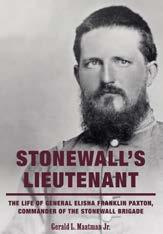
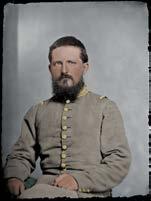
Stonewall’s Lieutenant
The
Life of General Elisha Franklin Paxton, Commander of the Stonewall Brigade
By Gerald L. Maatman
This is not only the first biography of Brigadier General Elisha Paxton; it is a fresh insight into the nature of Stonewall Jackson, the Confederate army, and the secessionist movement.
Elisha Paxton’s brief life was full of both achievement and contradictions. How did a volunteer soldier rise to command a brigade in less than two years? Why did Stonewall place such faith in a man he would not even speak with before the war? How could a devout Christian, who described slavery as “violation of god’s law,” become a fervent secessionist?
The experiences of Elisha Paxton provide fascinating insight into the workings of the Confederate army and the mind of Stonewall Jackson. A dispassionate study of Paxton’s writings leads to uncomfortable discussions about Paxton’s personal morality and the greater political and social context of the Civil War. Author Gerald L. Maatman Jr. dives into all of the above in objective, scholarly, and comprehensive fashion in this sweeping biography of Brigadier General Elisha F. Paxton.
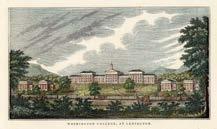
Gerald L. Maatman Jr. is a graduate of Washington & Lee University (BA in history, magna cum laude, 1978) and Northwestern University School of Law (JD, 1981). He is a practicing lawyer and a member of the bars of Illinois and New York. Maatman is also a professor of law at Northwestern University and serves as a legal commentator on CNBC, MSNBC, and PBS. He lives in Chicago.
978-0-7643-7199-8
$35.00, £31.99, 50.00 CAD
Hardcover • 408 pp. • 6" × 9" (152 × 229 mm)
50 color and b/w photos and documents
BISACs
BIOGRAPHY & AUTOBIOGRAPHY / Military
HISTORY / Wars & Conflicts / Afghan War (2001-2021)
LAW / Military
AVAILABLE October 2026
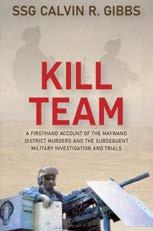
Kill Team
A Firsthand Account of the Maywand District Murders and the Subsequent Military Investigation and Trials
By Calvin R. Gibbs
Calvin Gibbs has been portrayed in the courts, media, and in Hollywood films as the murderer, psychopath even, behind the Kill Team murders. In this book, he describes his version of events to the public for the first time.
This manuscript was originally written with pen on paper in solitary confinement, inside the United States Disciplinary Barracks at Fort Leavenworth. The USDB is the military’s maximum-security prison. The author, Calvin Gibbs, is currently serving a life sentence for three counts of premeditated murder.
Gibbs was accused and convicted of instigating a series of three murders in the Maywand District of Afghanistan, all of which occured in 2010. The killings were carried out by a platoon of soldiers from the US Army’s 2nd Infantry Division. The platoon is alleged to having simulated the rules of engagement, staging the murders of three unarmed Afghan civilians as legitimate combat actions.
This story became international news during the Army’s investigation into the killings. Twelve soldiers were charged, and 11 received convictions from military courts. This group of soldiers has come to be known in the media and popular culture as the “Kill Team.” Over the course of the trials, a then-26-year-old NCO from Montana named Calvin Gibbs was characterized by several of the accused and their legal teams as the ringleader of the Kill Team. Gibbs, who pled not guilty, received by far the stiffest sentence, life in Leavenworth.
Some of the convicted soldiers have granted access to the media, including several who were interviewed extensively for a 2013 documentary film called The Kill Team. Outside of his statements in court, Calvin Gibbs has never provided any public statement regarding the murders, until now.
Calvin R. Gibbs grew up in Montana. He dropped out of high school and enlisted in the Army at age 17. Gibbs completed tours in both Iraq and Afghanistan. His son, Calvin Jr., was born in 2008. Calvin Sr. has been serving a life sentence at USDB Leavenworth since 2011.
ISBN
978-0-7643-7190-5
$79.99, £72.99, 120.00 CAD
Hardcover • 496 pp. • 9.5" × 12" (241 × 305 mm)
1,300 color images
BISACs
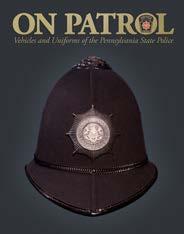
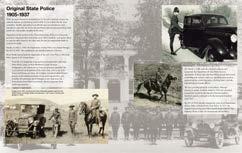
On Patrol
Vehicles and Uniforms of the Pennsylvania State Police
By Marc J. Infantino
The history of the Pennsylvania State Police’s uniforms and patrol assets since the founding of the department.
The Pennsylvania State Police, the first of its type in the United States, was founded in response to the violent coal strikes of the previous century and has built a stellar reputation over the past 120 years. One of the most hazardous positions in the force, and the public’s first impression of the State Police, is that of the uniformed trooper on patrol. This presentation includes a visual record of those troopers since 1905, along with the various patrol equipment and uniforms that were used throughout that time.
For the first time, a publication chronicles the complete history of how these patrol troopers’ uniforms have changed over time, as well as how patrolling evolved from horses, to motorcycles, to the patrol cars of today, including the addition of aircraft to support the patrol function. This comprehensive publication of the State Police patrol trooper was painstakingly researched and gathered from various museums’ photographic and archive collections, as well as from rare private collections never shared publicly. Personal stories and memorabilia of retirees and family members are also featured throughout.
More than 1,300 photographs are included in this piece, including special artwork accurately representing Pennsylvania State patrol troopers since 1905.
HISTORY / United States / State & Local / Middle Atlantic (DC, DE, MD, NJ, NY, PA)
POLITICAL SCIENCE / Law Enforcement
PHOTOGRAPHY / Subjects & Themes / Regional (see also TRAVEL / Pictorials)
AVAILABLE October 2026
Marc J. Infantino joined the Pennsylvania State Police in November 1993. He has held several positions, including nearly 19 years as director, Bureau of Staff Services. He is married with two sons and lives in Erie, Pennsylvania. He is also the son of a former State Police trooper.
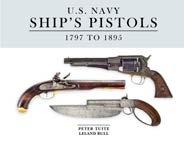
U.S. Navy Ship’s Pistols
1797 to 1895
By Peter Tuite & Leland Bull
A visual guide to American naval pistols of the 19th century
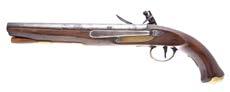
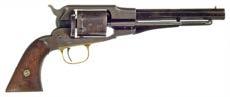
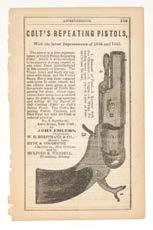
This work provides an illustrated history of 100 years of handguns issued to US Navy personnel. It features 70 different pistols and more than 250 color images, covering the period from 1797 to 1895. The early years feature flintlock boarding pistols and their conversion to percussion ignition. They are followed by the short era of percussion muzzle-loading pistols and the transition to percussion revolvers, just prior to the American Civil War. After the war, these revolvers were modified to use cartridges before finally making way for dedicated cartridge revolvers. This period encompasses large technological advancements and several major conflicts, including the Quasi-War with France, the War of 1812, the War with Mexico, and the American Civil War.
978-0-7643-7202-5
$45.00, £40.99, 64.00 CAD
Hardcover • 152 pp. • 11" × 8.5" (279 × 216 mm)
BISACs
HISTORY / Military / Weapons
ANTIQUES & COLLECTIBLES / Firearms & Weapons
HISTORY / United States / Civil War Period (1850-1877)
AVAILABLE November 2026
Peter Tuite is an avid collector of antique naval uniforms and equipment. He founded a successful nuclear engineering company, from which he has since retired. This is his second book on naval history published by Schiffer. He resides in Florida.
Leland Bull has been collecting American muzzle-loading military pistols for decades, amassing one of the most complete collections of early (1797–1856) pistols extant. He was recently honored as a 50-year member of the American Society of Arms Collectors.
New Hampshire Guns and Gunmakers
of the 18th and 19th Centuries
By Michael R. Carroll
Both a firearms reference and regional history
From the prelude to the American Revolution until the aftermath of the Civil War, independent gunsmiths and gun retailers thrived throughout the colony and then the state of New Hampshire.
These were small operations, usually ranging from one to 15 or 20 employees. Likely the most prolific New Hampshire gunmaker of the period, David Hall Hilliard, made around 3,000 guns over the course of about 35 years. Along with excellent-quality firearms, Hilliard also built cabinets and cooking stoves. He sold medicine, made small loans, and repaired carriages. His shop was his family farm.
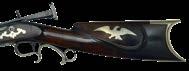
Gun collectors will enjoy hundreds of photographs showing more than 100 antique pistols and long guns in detail, but the author’s research has extended far beyond the guns themselves. The manuscript is organized by gunmakers, and retailers’ names in alphabetical order. Entries include biographical information about individuals, and descriptions of historical locations and events. The text provides an unexpected insight into life in a small state, a long time ago.
978-0-7643-7086-1
$90.00, £81.99, 135.00 CAD
Hardcover • 384 pp. • 9" x 12" (229 x 305 mm)
950 color and b/w photos
BISACs
ANTIQUES & COLLECTIBLES / Firearms & Weapons
HISTORY / Military / Weapons
HISTORY / United States / State & Local / New England (CT, MA, ME, NH, RI, VT)
AVAILABLE November 2026
Michael R. Carroll is retired, having spent 30 years in the US Navy, serving as an electronics engineer. He has collected antique firearms for more than 50 years and authored several articles for the journal of the American Society of Arms Collectors. He lives in Maryland.
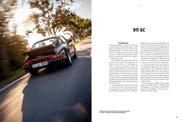
Porsche 911 “G Series”
The 911G and Associated Models, 1973 to 1989
By Tony Corlett
An illustrated history of the Porsche 911 from 1973 to 1989. Includes the 911 2.7, the Carrera RS 3.0, the Turbo 3.0 and 3.3, the Carrera 3.0 and 3.2, the SC, and 954 SCRS.
Porsche unveiled the 911G in late 1973. The car represented a significant visual departure from its predecessors. Updates from 1974 through 1989 (when the 911 was replaced by the 964) were more incremental. So subtle that although Porsche referred to these cars with various different letter designations internally, the general public came to know the cars delivered between 1974 and 1989 as the “G Series” or “G model.”
This is a technically detailed and vividly illustrated history of the Porsche 911 during this period. This includes the 911 2.7, the Carrera RS 3.0, the Turbo 3.0 and 3.3, the Carrera 3.0 and 3.2, the SC, 954 SCRS, and finally a more distant relative of the 911G, the 959 supercar.
978-0-7643-7213-1
$65.00, £59.99, 95.00 CAD
Hardcover • 328 pp. • 9" × 12" (229 × 305 mm)
200+ color photographs
BISACs
TRANSPORTATION / Automotive / Antique & Classic
TRANSPORTATION / Automotive / History
TRANSPORTATION / Automotive / Pictorial
AVAILABLE August 2026
From there, author Tony Corlett describes the car’s individual components, options, and driving dynamics. Finally, the manuscript includes a robust selection of charts and data tables containing production information. These include lists of chassis numbers, equipment package codes, colors, price lists, and much more. The text is accompanied throughout by several hundred dramatic color images.
Tony Corlett is a Porsche 911 collector and historian. He has enjoyed close support from Porsche AG in the creation of his several previously published works. He lives in the UK. http://www.tonycorlett.com
ISBN 978-0-7643-7078-6
978-0-7643-7078-6
$29.99, £27.99, 42.99 CAD hardcover • 144 pp. • 9" x 9" (229 x 229 mm)
200 color and b/w photos
AVAILABLE NOW
ISBN 978-0-7643-7080-9
978-0-7643-7080-9
$69.99, £63.99, 105.00 CAD
hardcover • 288 pp. • 8.5" x 11" (216 x 279 mm)
410 color and b/w photos
AVAILABLE NOW
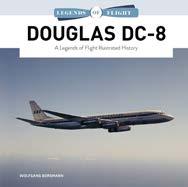
Douglas DC-8 A Legends of Flight Illustrated History
By Wolfgang Borgmann
Discover Douglas’s first long-range, four-engine jetliner. Includes more than 200 images.
The Douglas DC-8 first flew in 1958, making it one of the first long-range commercial jetliners. More than 500 were built between 1958 and 1972, and there are still several examples running scheduled cargo service today. This is the most detailed historical and photographic guide to the type in print. It explains the variations among submodels of DC-8, each with their own developmental, production, and operational history. Passenger amenities are shown in detail, providing readers with an understanding of what traveling in the DC-8 was like.
Wolfgang Borgmann’s enthusiasm for aviation was passed on to him by his parents, who were active in the aviation field. In his early years, he began building up an aviation historical collection that provides numerous rare photos and documents, as well as exciting background information, for his books. Since April 2000, Borgmann has been active as an author and freelance aviation journalist. He lives in Oerlinghausen, Germany. His website is www.aerojournalist.de.
Boeing 777
People “Working Together” to Produce the Triple Seven
By Dan Dornseif & Alan Mulally
The behind-the-scenes, definitive history of the Boeing 777, made possible through the cooperation of engineers, pilots, and other experts with intimate knowledge of the type and its development.
The “Triple Seven” is the most produced wide-body jet airliner in history and remains a fixture for many of the world’s great airlines today. The 777 was the first Boeing airliner to be designed using digital software, and the first to utilize “fly-by-wire” controls. Such innovations were incubated by and executed through a leadership and management system dubbed “Working Together.” In the creation of this work, author Dan Dornseif enjoyed the collaboration of many individuals directly involved with the airplane’s development and operation, including Alan Mulally, who was Boeing’s director of engineering and general manager of the 777 project. This book is written for experts and laymen alike and includes more than 400 photos and diagrams.
This is Dan Dornseif’ s fourth book on jet airliners with Schiffer Publishing. With more than 20,000 hours of flight time, he is a pilot and captain for a major American carrier. When he is not flying jetliners, he enjoys spending time with family, flying antique aircraft, and scale modeling. He lives in Florida.
ISBN 978-0-7643-7084-7
978-0-7643-7084-7
$59.99, £54.99, 85.00 CAD hardcover • 368 pp. • 8.5" x 11" (216 x 279 mm) 820 color and b/w photos
AVAILABLE NOW
ISBN 978-0-7643-7076-2
978-0-7643-7076-2
$29.99, £27.99, 42.99 CAD
hardcover • 176 pp. • 9" x 9" (229 x 229 mm) 345 b/w and color photos
AVAILABLE NOW
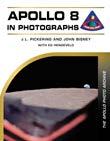
Apollo 8 in Photographs
The Apollo Photo Archive
By J. L. Pickering & John Bisney, with Ed Hengeveld
An unprecedented photographic study of the Apollo 8 mission, the first manned spaceflight to escape Earth’s gravity and orbit the moon.
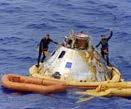
The Apollo Photo Archive series comprises the most comprehensive pictorial record of America’s moon-landing program ever published. The series continues with the Apollo 8 launch in December 1968. Frank Borman, Jim Lovell, and Bill Anders achieved several historic firsts on this flight. Apollo 8 was the first manned flight to escape Earth’s gravity, and the first to orbit another celestial body (the moon). Launched by the Saturn V rocket, the crew of Apollo 8 reached 24,593 mph, setting both manned speed and distance-from-Earth records. The Apollo Photo Archive features images of spacecraft and rocket assembly, crew selection and training, preflight activities, mission countdown, launch, the flight itself, splashdown, and subsequent crew appearances and related activities. This particular volume includes more than 800 images.
J. L. Pickering, who has amassed the world’s largest private archive of US human space flight images, has been conducting historical photo research on the US space program for nearly 50 years. This includes assembling, studying, and organizing a personal collection of more than 250,000 prints, transparencies, and digital files. Today he serves as a resource for authors, museums, astronauts, and others. He lives in Illinois.
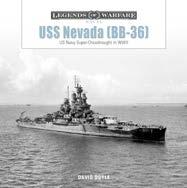
USS Nevada (BB-36)
US Navy Super-Dreadnought in WWI and WWII
By David Doyle
Battleship Nevada holds the unique distinction of having survived Pearl Harbor, D-Day, Iwo Jim, and Okinawa, and being the target of atomic bomb testing during Operation Crossroads.
Both USS Nevada (BB-36) and her sister ship USS Oklahoma were sunk in Pearl Harbor on December 7, 1941. Unlike Oklahoma, which was scrapped, Nevada was repaired, refit, and returned to service. BB-36 served with distinction during the invasion of France, and also in the Pacific, supporting the amphibious landings at Iwo Jima and Okinawa. Obsolete by the end of the war, Nevada survived the nuclear testing at Bikini Atoll during Operation Crossroads. She was finally sunk as a practice target in 1948. This expanded 176-page entry in the Legends of Warfare series includes 350 images. The photographs, tables, and accompanying text reveal the ship in construction and during her service in both world wars.
Military vehicles are a lifelong passion for David Doyle. When he is not actively authoring manuscripts, he is traveling to archives and museums to acquire new content. His personal collection of military images is regarded as one of the finest in the world. He lives in Tennessee.
ISBN 978-0-7643-7077-9
978-0-7643-7077-9
$29.99, £27.99, 42.99 CAD hardcover • 176 pp. • 9" x 9" (229 x 229 mm) 350 b/w and color photos
AVAILABLE NOW
ISBN 978-0-7643-7085-4
978-0-7643-7085-4
$29.99, £27.99, 42.99 CAD
hardcover • 176 pp. • 9" x 9" (229 x 229 mm)
415 color and b/w photos
AVAILABLE NOW
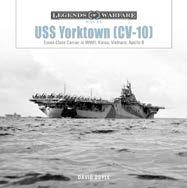
USS Yorktown (CV-10)
Essex-Class Carrier in WWII, Korea, Vietnam, Apollo 8
By David Doyle
This expanded 176-page volume in the Legends of Warfare series includes 350 images, making it one of the most comprehensive entries in the series to date.
USS Yorktown (CV-10) is an Essex-class aircraft carrier, which sailed on combat tours with the US Navy in WWII, Korea, and Vietnam. The ship currently is preserved and open to the public as part of the Patriots Point museum complex near Charleston, South Carolina. CV-10 replaced Yorktown CV-5, which was sunk at the Battle of Midway. This expanded 176-page entry in the Legends of Warfare series includes 350 images. The photographs, tables, and accompanying text reveal the ship in construction, on display at Patriots Point, and of course during its long naval service in the interim.
Military vehicles are a lifelong passion for David Doyle. When he is not actively authoring manuscripts, he is traveling to archives and museums to acquire new content. His personal collection of military images is regarded as one of the finest in the world. He lives in Tennessee.
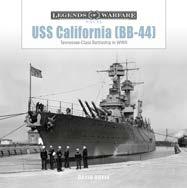
USS California (BB-44)
Tennessee-Class Battleship in WWII
By David Doyle
A pictorial history of the USS California, a battleship that was sunk in Pearl Harbor, raised, repaired, and returned to duty during the Second World War.
USS California (BB-44) was commissioned by the US Navy in 1921, a year after her sister ship, USS Tennessee. The ship was sunk during the surprise attack on the Pacific Fleet at Pearl Harbor in 1941. California was raised and subject to a drastic refit and modernization, finally returning to operational duty in early 1944. BB-44 saw combat in several of the later battles against Japan. The battleship was placed in reserve in 1946, decommissioned in 1947, and scrapped in 1959. This work provides a pictorial history of California, from the keel laying in 1916 onward. Several hundred images and detailed captions show the ship in action and in its various technical details, both before and after the extensive wartime refit.
Military vehicles are a lifelong passion for David Doyle. When he is not actively authoring manuscripts, he is traveling to archives and museums to acquire new content. His personal collection of military images is regarded as one of the finest in the world. He lives in Tennessee.
ISBN 978-0-7643-7083-0
978-0-7643-7083-0
$45.00, £40.99, 64.00 CAD hardcover • 240 pp. • 8.5" x 11" (216 x 279 mm)
100 b/w photos and line drawings
AVAILABLE NOW
ISBN 978-0-7643-7082-3
978-0-7643-7082-3
$34.99, £31.99, 48.99 CAD
hardcover • 304 pp. • 6" x 9" (152 x 229 mm)
50 b/w and color photos
AVAILABLE NOW
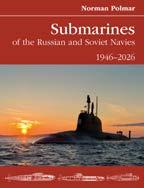
Submarines of the Russian and Soviet Navies 1946–2026
By Norman Polmar
This is the definitive history of the Russian submarine program since WWII. Submarines emerged as a particularly terrifying weapon after WWII, in no small part through the application of nuclear propulsion and the development of shipborne nuclear missiles. The Soviet Union invested huge funding into a world-class submarine program, producing innovative designs in imposing numbers. Norman Polmar is a best-selling author and recognized authority on the topic. His earlier works on Russian and Soviet subs earned plaudits from high-ranking officers in both the US and Russian navies. This new volume, based on those earlier works, provides readers with the authoritative English-language history of the postwar submarine force of the USSR and Russian Federation. It includes more than 100 photographs and line drawings.
Norman Polmar is an analyst, consultant, and author specializing in naval, aviation, and technology subjects. He has been a consultant or advisor on naval issues to three senators, the Speaker of the House of Representatives, and three secretaries of the Navy, as well as to the director of the Los Alamos national laboratory, and to the leadership of the US, Australian, Chinese, and Israeli navies. He has written or coauthored more than 50 published books. He lives in Virginia.
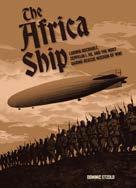
The Africa Ship
Ludwig Bockholt, Zeppelin L 59, and the Most Daring Rescue Mission of WWI
By Dominic Etzold
Imperial Germany’s desperate attempt to resupply Paul Emil von Lettow-Vorbeck and his stranded army in East Africa via airship.
Paul Emil von Lettow-Vorbeck, who commanded imperial German forces in East Africa during the First World War, is widely regarded as one of the finest military leaders of the war, on either side. He and his men managed not only to evade capture or destruction, but to truly instill fear within their primarily British opposition. This was despite being not only vastly outnumbered but also nearly impossible to resupply from Europe. The Royal Navy smothered East Africa with an incredibly effective blockade, while the Allied forces on the ground controlled all major rail lines. In late 1917, the German navy devised a desperate plan to resupply von Lettow-Vorbeck’s army via airship. The plan called for a lone airship, L 59, to be piloted by Captain Ludwig Bockholt and an all-volunteer crew from Bulgaria directly to the East African colony. There was no consideration of a return journey; L 59 would be disassembled for supplies and her crew would join the fight on the ground. This work details the planning, execution, and eventual failure of this ambitious operation, along with the sad fate of L 59 and her crew.
Dominic Etzold holds a degree in history and politics from Drexel University. His first book, Reaping the Whirlwind, was published by Schiffer in 2023. He lives in New Jersey.
ISBN 978-0-7643-7079-3
978-0-7643-7079-3
$39.99, £36.99, 56.99 CAD hardcover • 416 pp. • 6" x 9" (152 x 229 mm)
80 b/w photos
AVAILABLE NOW
ISBN 978-0-7643-7081-6
978-0-7643-7081-6
$29.99, £27.99, 42.99 CAD hardcover • 248 pp. • 6" x 9" (152 x 229 mm)
40 color and b/w photos and maps
AVAILABLE NOW
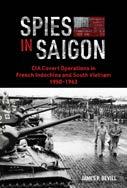
Spies in Saigon
CIA Covert Operations in French Indochina and South Vietnam, 1950–1963
By James P. Bevill
This is untold history that the CIA does not want you to read.
Beginning in 1950, a small cadre of American intelligence officers arrived in Saigon under diplomatic cover to assess the Viet Minh, Chinese Communists, French, and Nationalist political groups in an effort to check the spread of communism amid the crumbling French colonial empire. Paul Springer was the CIA’s first chief of station in Saigon. CIA involvement during the French-Indochina War has never been covered in depth, largely because Springer’s name and mission remained classified for decades. More than 60 years later, his family had to take the agency to court for the release of his personnel file. Springer’s assignment was followed by Ed Lansdale’s Saigon Military Mission in 1954, tasked with stabilizing South Vietnam following the Geneva Accords, which partitioned the country at the 17th parallel. Author James P. Bevill seamlessly weaves together their stories, along with eye-opening details of a secret CIA black ops site on Saipan, the rise and fall of Ngo Dinh Diem, and how three North Vietnamese double agents infiltrated the highest levels of the government of South Vietnam. The study demonstrates how espionage, covert action, and political ambition intertwined during a violent war for national liberation in Vietnam.
James P. Bevill is an independent historian and award-winning author. His love of history inspired him to read, organize, and catalog the voluminous papers of his wife’s father, Paul Springer, whose early years in the CIA are revealed in this second of Bevill’s three-book trilogy, the first being Blackboards and Bomb Shelters: The Perilous Journey of Americans in China during World War II (Schiffer, 2021). Bevill is a senior vice president at UBS Financial Services in the River Oaks office in Houston. He lives in Houston with his wife, Jodie Springer Bevill.
Combat Historian
Collecting and Writing Army Special-Operations
History from Desert Storm to Afghanistan (1991–2002)
By Col. (Ret.) Richard W. Stewart
An insider history of Army special forces and a rare insight into the role of combat historian.
Richard Stewart was the chief historian of the US Army from 1998 to 2015. From 1990 to 1998, he was the command historian of US Army Special Operations Command. In this capacity, he deployed to cover special forces during Operation Desert Storm (Saudi Arabia and Kuwait), Task Force Ranger (Somalia, “Black Hawk Down”), Operation Uphold Democracy (Haiti), Operation Joint Endeavor/Guard (Bosnia), and Operation Enduring Freedom (Afghanistan). This work is both a history of Army special operations and their missions during that era and a first-person account of experiencing conflict through the very specific lens of the combat historian.
Dr. Richard W. Stewart retired as chief historian of the US Army in October 2015 after 40 years of combined service both as a civilian, in the reserves, and on active duty. He received his PhD from Yale University, New Haven, Connecticut, in 1986. His historical works include War in the Persian Gulf: Operations Desert Shield and Desert Storm, August 1990–March 1991, The United States Army in Somalia, 1992–1994, Operation Urgent Fury: The Invasion of Grenada, October 1983, and U.S. Army in Afghanistan: Operation Enduring Freedom, October 2001 to March 2002. He served as the general editor of the two-volume American Military History and was coauthor with Brig. Gen. (Ret.) John S. Brown of American Armed Forces and Battles in the Pacific: World War II for the American Battle Monuments Commission. As an Army officer, Stewart deployed to the Persian Gulf for Desert Storm, Somalia in 1993, Bosnia in 1997, and Afghanistan in 2002, retiring as a colonel in June 2002. He lives in the Washington, DC, area.
ISBN 978-0-7643-7135-6
978-0-7643-7135-6
$29.99£27.99, 42.99 CAD Paperback • 192 pp. • 8.5" x 11" (216 x 279 mm)
70 color images, patterns & diagrams
AVAILABLE NOW
ISBN 978-0-7643-7063-2
978-0-7643-7063-2
$60.00, £54.99, 86.00 CAD
hardcover • 224 pp. • 9.5" x 11" (241 x 279 mm)
250+ color and b/w photos
AVAILABLE NOW
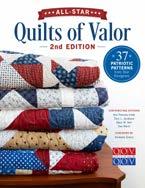
All-Star Quilts of Valor, 2nd Edition
37 Patriotic Patterns from Star Designers
By
Quilts of Valor Foundation, Ann Parsons Holte, Tony L. Jacobson & Mary W. Kerr
An updatedexpanded volume of inspiring quilt patterns from an organization dedicated to honoring US military veterans—including 12 new projects.
Inspired by the idea that quilts can honor and even heal, the Quilts of Valor organization is committed to gifting quilts to service members and has awarded over 408,000 quilts to date. To celebrate their mission to “cover military touched by war,” All-Star Quilts of Valor shares inspiring quilt patterns from well-known quilters, which you can use to craft your very own patriotic quilt. The second edition of this best-selling volume is revised to include updates about the quilts’ impacts on veterans and 12 additional patterns. Plus, a new spiral binding (often requested by quilters) makes it even easier to use! This book will empower community groups, military family members, and quilters at any level to make patriotic quilts for special service members or to donate to honor a worthy Quilts of Valor recipient.
Quilts of Valor has over 11,000 members nationwide who have awarded over 300,000 Quilts of Valor to military members. Quilting experts Ann Parsons Holte, Tony L. Jacobson, Mary W. Kerr, and Sue Reich are dedicated to the QOVF mission to "cover military touched by war" with a quilt. www.qovf.org
Lords of Speed
The Great Drivers of Formula 1
By Roberto Gurian
A photographic adventure into the breathtaking world of Formula 1 and the brave lives of its greatest drivers.
From bold Alfonso de Portago and Jackie Stewart, to Formula One legends like Niki Lauda and Ayrton Senna, to present-day drivers like Charles Leclerc and Max Verstappen, this book combines gripping personal and professional stories of the great drivers of the sport with extraordinary photographs of the racers, the cars, and the races they won—and lost. Written by expert journalist Roberto Gurian, this comprehensive volume celebrates the passion and courage that characterize the sport and the drivers who make it great. It is ideal both for longtime racing enthusiasts and newcomers to the sport, and it’s a must-have tribute to the history and enduring appeal of Formula 1 racing.
Roberto Gurian began his career writing for automotive magazines before transitioning to freelancing. He writes for la Repubblica, Auto, and AM, with a focus on car reviews. He is a commentator for RSI, the Italian-language Swiss TV channel, covering Formula 1 Grand Prix.
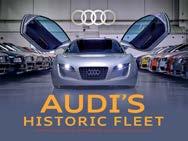
Audi’s Historic Fleet
Horch, DKW, NSU, Wanderer, Auto Union, Audi AG
By Audi Tradition & Ralf Friese, photographs by Stefan Warter
This work, created in collaboration with Audi Tradition, provides an illustrated glimpse into Audi Group’s depot of historical vehicles, which is not open to the public.
ISBN 978-0-7643-7102-8
978-0-7643-7102-8
$60.00, £54.99, 86.00 CAD
hardcover • 256 pp. • 12" x 9" (305 x 229 mm)
400+ color and b/w photos and illustrations
AVAILABLE NOW
ISBN 978-0-7643-7105-9
978-0-7643-7105-9
$39.99, £36.99, 56.99 CAD
hardcover • 208 pp. • 8.5" x 11" (216 x 279 mm)
250+ color photos and illustrations
AVAILABLE NOW
At Audi’s Ingolstadt headquarters, visitors can tour the “Museum Mobile.” However, the spectacular museum showcases only a small fraction of Audi Group’s historical fleet, which is housed in a separate facility normally closed to the public. Audi AG’s private depot of historical vehicles includes nearly 1,000 cars and motorcycles, including unique vehicles like prototypes, custom-made cars, and racers. In addition to Audi models, the collection features now-defunct brands like Horch, DKW, NSU, Wanderer, and Auto Union, ancestors of the modern Audi. With this beautifully illustrated book, Audi AG opens its hall doors for the first time and lets you view the fascinating range of its brand history, from the first Horch to the Sport quattro prototype. This volume includes more than 400 images, including new photos commissioned by Audi Tradition and shot by expert automotive photographer Stefan Warner. Also included are vintage photos and artwork from the brand’s archive. All of these photos are accompanied by information and essays of the collection’s vehicles, providing sharp insight into the history of Audi and its predecessors.
Audi Tradition, an Audi AG department, focuses on preserving and showcasing the brand’s rich history, including its predecessor brands, through events, exhibitions, and online resources, as well as offering services for owners of older Audi models.
Gilroy Indians
The Indian Motorcycle Company of America, 1999–2003
By George F. Paul & Rey Sotelo
A comprehensive, illustrated history of the Indian Motorcycle Company of America in Gilroy, California, which revived an iconic and beloved brand.
How did a world-famous brand die, and how was it resurrected after nearly a half century? This is the story of a legendary American brand that ceased manufacture in 1953, the company that resurrected it 46 years later, the products it produced, the death of the dream after only five years, and the legacy that survives. Indian was once the largest motorcycle company in the world. The Indian brand spawned a special magic for nearly everyone who rode one or knew someone who did. By 1953, Indian was dead, but not the magic. In 1999, a new company in Gilroy, California, began manufacturing Indian Motorcycles with the same panache as the originals. Yet, the Gilroy operation was doomed. Here’s the backstory, including nearly every 1999–2003 catalog page, plus the heartbreaking death of IMCOA. With a foreword by IMCOA’s first president, Rey Sotelo, this volume provides an intimate look at the short, tumultuous life of the business behind the bikes. Author George F. Paul extensively interviewed several of the major players behind the IMCOA brand.
George F. Paul is a speech pathologist by trade. His passions include vintage phonographs, about which he has authored several books, and motorcycles. He lives with his family in western New York state.
McDonnell Douglas DC-10/MD-11
A Legends of Flight Illustrated History
ISBN: 978-0-7643-6137-1
$29.99 / £27.99 / 42.99 CAD
Boeing 707
A Legends of Flight Illustrated History
ISBN: 978-0-7643-6345-0
$29.99 / £27.99 / 42.99 CAD
Boeing 757
A Legends of Flight Illustrated History
ISBN: 978-0-7643-6346-7
$29.99 / £27.99 / 42.99 CAD
De Havilland DH.106 Comet
A Legends of Flight Illustrated History
ISBN: 978-0-7643-6793-9
$29.99 / £27.99 / 42.99 CAD
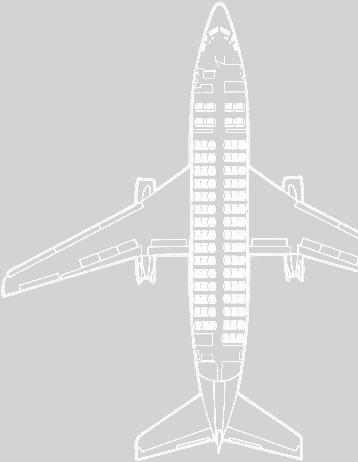
Boeing 737
ISBN: 978-0-7643-6138-8
A Legends of Flight Illustrated History
$29.99 / £27.99 / 42.99 CAD
Airbus A300/310
A Legends of Flight Illustrated History
ISBN: 978-0-7643-6139-5
$29.99 / £27.99 / 42.99 CAD
Douglas DC-9
A Legends of Flight Illustrated History
ISBN: 978-0-7643-6484-6
$29.99 / £27.99 / 42.99
Douglas DC-3
A Legends of Flight Illustrated History
ISBN: 978-0-7643-6710-6
$29.99 / £27.99 / 42.99 CAD
Boeing 747
A Legends of Flight Illustrated History
ISBN: 978-0-7643-6510-2
$29.99 / £27.99 / 42.99 CAD
Douglas DC-4, DC-6, and DC-7
A Legends of Flight Illustrated History
ISBN: 978-0-7643-6648-2
$29.99 / £27.99 / 42.99 CAD
S.E. 210 Caravelle
A Legends of Flight Illustrated History
ISBN: 978-0-7643-6650-5
$29.99 / £27.99 / 42.99 CAD
Lockheed Constellation
A Legends of Flight Illustrated History
ISBN: 978-0-7643-6822-6
$29.99 / £27.99 / 42.99 CAD
German Heavy Armored Cars: Sd.Kfz. 231, 232, 233, 263, and 234 in World War II
ISBN: 978-0-7643-6649-9
$24.99 / £22.99 / 35.99 CAD
Hummel and Nashorn/Hornisse: German Self-Propelled Artillery in World War II
ISBN: 978-0-7643-5940-8
$19.99 / £18.99 / 28.99 CAD
Sturmgeschütz: Germany’s WWII Assault Gun (StuG), Vol. 1: The Early War Versions
ISBN: 978-0-7643-5537-0
$19.99 / £18.99 / 28.99 CAD
Panzerkampfwagen III: Germany’s Early World War II Main Tank
ISBN: 978-0-7643-5958-3
$19.99 / £18.99 / 28.99 CAD
Panzerkampfwagen IV: The Backbone of Germany’s WWII Tank Forces
ISBN: 978-0-7643-5359-8
$19.99 / £18.99 / 28.99 CAD
Ferdinand/Elefant: Panzerjäger Tiger (P)
ISBN: 978-0-7643-6643-7
$19.99 / £18.99 / 28.99 CAD
Tigers I and II: Germany’s Most Feared Tanks of World War II
ISBN: 978-0-7643-5848-7
$19.99 / £18.99 / 28.99 CAD
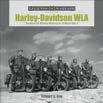
Harley-Davidson WLA: The Main US Military Motorcycle of World War II
ISBN: 978-0-7643-5924-8
$19.99 / £18.99 / 28.99 CAD
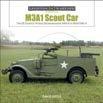
M3A1 Scout Car: The US Cavalry’s Primary Reconnaissance Vehicle in World War II
ISBN: 978-0-7643-5661-2
$19.99 / £18.99 / 28.99 CAD
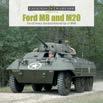
Ford M8 and M20: The US Army’s Standard Armored Car of WWII
ISBN: 978-0-7643-6143-2
$19.99 / £18.99 / 28.99 CAD
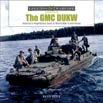
The GMC DUKW: America’s Amphibious Duck in World War II and Korea
ISBN: 978-0-7643-6091-6
$19.99 / £18.99 / 28.99 CAD
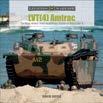
LVT(4) Amtrac: The Most Widely Used Amphibious Tractor of World War II
ISBN: 978-0-7643-6010-7
$19.99 / £18.99 / 28.99 CAD
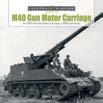
M40 Gun Motor Carriage: and M43 Howitzer Motor Carriage in WWII and Korea
ISBN: 978-0-7643-5402-1
$19.99 / £18.99 / 28.99 CAD
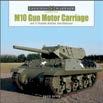
M10 Gun Motor Carriage: and the 17-Pounder Achilles Tank Destroyer
ISBN: 978-0-7643-6486-0
$24.99 / £22.99 / 35.99 CAD
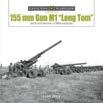
155 mm Gun M1 “Long Tom”: US Army Field Gun in World War II and Korea
ISBN: 978-0-7643-6339-9
$24.99 / £22.99 / 35.99 CAD
Sturmgeschütz: Germany’s WWII Assault Gun (StuG), Vol. 2: The Late War Versions
ISBN: 978-0-7643-5538-7
$19.99 / £18.99 / 28.99 CAD
M3 Medium Tank: The Lee andGrant Tanks in World War II
ISBN: 978-0-7643-6141-8
$19.99 / £18.99 / 28.99 CAD
M18 Hell-Cat: 76 mm Gun Motor Carriage in World War II
ISBN: 978-0-7643-5957-6
$19.99 / £18.99 / 28.99 CAD
Panther Tank: The Panzerkampfwagen V in World War II
ISBN: 978-0-7643-6477-8
$19.99 / £18.99 / 28.99 CAD
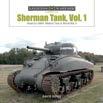
Sherman Tank, Vol. 1: America’s M4A1 Medium Tank in World War II
ISBN: 978-0-7643-5567-7
$19.99 / £18.99 / 28.99 CAD
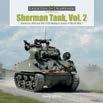
Sherman Tank, Vol. 2: America’s M4 and M4 (105) Medium Tanks in World War I
ISBN: 978-0-7643-5847-0
$19.99 / £18.99 / 28.99 CAD
US Half-Tracks: In World War II
ISBN: 978-0-7643-6489-1
$19.99 / £18.99 / 28.99 CAD
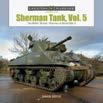
Sherman Tank, Vol. 5: The M4A4 “British” Sherman in World War II
ISBN: 978-0-7643-6164-7
$19.99 / £18.99 / 28.99 CAD
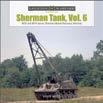
Sherman Tank, Vol. 6: M32 and M74-Series Sherman-Based Recovery Vehicles
ISBN: 978-0-7643-6234-7
$19.99 / £18.99 / 28.99 CAD
M50/M50A1 Ontos: Self-Propelled Multiple 106 mm Recoilless Rifle
ISBN: 978-0-7643-6512-6
$24.99 / £22.99 / 35.99 CAD
M24 Chaffee, Vol. 2: Chaffee-Based Vehicle Variants in the Korean War
ISBN: 978-0-7643-5970-5
$19.99 / £18.99 / 28.99 CAD
M551 Sheridan: The US Army’s Armored Reconnaissance / Airborne Assault Vehicle from Vietnam to Desert Storm
ISBN: 978-0-7643-5821-0
$19.99 / £18.99 / 28.99 CAD
K5 Rail Gun: Krupp's WWII Behemoth
ISBN: 978-0-7643-6644-4
$24.99 / £22.99 / 35.99 CAD
M1 Abrams: America’s Main Battle Tank ISBN: 978-0-7643-5452-6
/ £18.99 / 28.99 CAD
M911 and M1070 HET: Heavy-Equipment Transporters of the US Army
ISBN: 978-0-7643-6348-1
$24.99 / £22.99 / 35.99 CAD
Stuart Tank, Vol. 1: The M3, M3A1, and M3A3 Versions in World War II
ISBN: 978-0-7643-5660-5
$19.99 / £18.99 / 28.99 CAD
Stuart Tank Vol. 2: The M5, M5A1, and Howitzer Motor Carriage M8 Versions in World War II
ISBN: 978-0-7643-5823-4
$19.99 / £18.99 / 28.99 CAD
Sherman Tank, Vol. 3: America’s M4A2 Medium Tank in World War II
ISBN: 978-0-7643-6092-3
$19.99 / £18.99 / 28.99 CAD
Sherman Tank, Vol. 4: The M4A3 Medium Tank in World War II and Korea
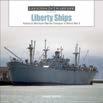
Liberty Ships: America’s Merchant Marine Transport in World War II
ISBN: 978-0-7643-5959-0
$19.99 / £18.99 / 28.99 CAD
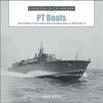
PT Boats: The US Navy’s Fast Attack Patrol Torpedo Boats in World War II
ISBN: 978-0-7643-5666-7
$19.99 / £18.99 / 28.99 CAD
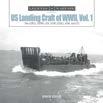
US Landing Craft of WWII, Vol. 1: The LCP(L), LCP(R), LCV, LCVP, LCS(L), LCM, and LCI
ISBN: 978-0-7643-5861-6
$19.99 / £18.99 / 28.99 CAD
US Landing Craft of World War II,Vol. 2: The LCT, LSM, and LST ISBN: 978-0-7643-6012-1
$19.99 / £18.99 / 28.99 CAD
USS New York (BB-34): From World War I to the Atomic Age
ISBN: 978-0-7643-5824-1
$19.99 / £18.99 / 28.99 CAD
USS Indianapolis (CA-35): From Presidential Cruiser, Delivery of the Atomic Bombs, to Tragic Sinking in WWII
ISBN: 978-0-7643-6262-0
$19.99 / £18.99 / 28.99 CAD
USS Tennessee (BB-43): From Pearl Harbor to Okinawa in World War II
ISBN: 978-0-7643-5668-1
$19.99 / £18.99 / 28.99 CAD
USS North Carolina (BB-55): From WWII Combat to Museum Ship
ISBN: 978-0-7643-5563-9
$19.99 / £18.99 / 28.99 CAD
USS Iowa (BB-61): The Story of "The Big Stick" from 1940 to the Present
ISBN: 978-0-7643-5417-5
$19.99 / £18.99 / 28.99 CAD
USS New Jersey (BB-62): From World War II, Korea, and Vietnam to Museum Ship
ISBN: 978-0-7643-5663-6
$19.99 / £18.99 / 28.99 CAD
USS Missouri (BB-63): America’s Last Battleship
ISBN: 978-0-7643-5562-2
$19.99 / £18.99 / 28.99 CAD
/ £22.99 / 35.99 CAD
USS Lexington (CV-2): From the 1920s to the Battle of Coral Sea in WWII
USS Kidd (DD-661): From WWII and Korea to Museum Ship
USS Wisconsin (BB-64): From World War II to the Persian Gulf to Museum Ship
USS Alabama (BB-60): From Tarawa, Leyte Gulf, and Okinawa, to Museum Ship
USS Saratoga (CV-3): From the 1920s–30s and WWII Combat,
USS Yorktown (CV-5): From Design and Construction to the Battles of Coral Sea and Midway
ISBN: 978-0-7643-5288-1
$19.99 / £18.99 / 28.99 CAD
USS Arizona (BB-39): From Keel Laying to Pearl Harbor Memorial
ISBN: 978-0-7643-6886-8
$24.99 / £22.99 / 35.99 CAD
USS Hornet (CV-8): From the Doolitle Raid and Midway to Santa Cruz
ISBN: 978-0-7643-5862-3
$19.99 / £18.99 / 28.99 CAD
USS Massachusetts (BB-59): From World War II to Battleship Cove
ISBN: 978-0-7643-6887-5
$29.99 / £27.99 / 42.99 CAD
USS Intrepid (CV-11/CVA-11/CVS11): From World War II, Korea, and Vietnam to Museum Ship
ISBN: 978-0-7643-6357-3
$19.99 / £18.99 / 28.99 CAD
USS Nimitz (CVN-68): America’s Supercarrier: 1975 to the Present
ISBN: 978-0-7643-5849-4
$19.99 / £18.99 / 28.99 CAD
Nagato-Class Battleships
ISBN: 978-0-7643-6965-0
$24.99 / £22.99 / 35.99 CAD
Fubuki-Class Destroyers: In the Imperial Japanese Navy during World War II
ISBN: 978-0-7643-6287-3
$24.99 / £22.99 / 35.99 CAD
Akizuki-Class Destroyers: In the Imperial Japanese Navy during World War II
ISBN: 978-0-7643-6509-6
$24.99 / £22.99 / 35.99 CAD
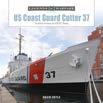
US Coast Guard Cutter 37
ISBN: 978-0-7643-6966-7
$24.99 / £22.99 / 35.99 CAD
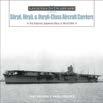
Soˉryuˉ, Hiryuˉ, and Unryuˉ-Class Aircraft Carriers: In the Imperial Japanese Navy in World War II
ISBN: 978-0-7643-6077-0
$19.99 / £18.99 / 28.99 CAD
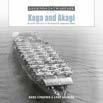
Kaga and Akagi: Aircraft Carriers in the Imperial Japanese Navy
ISBN: 978-0-7643-6893-6
$24.99 / £22.99 / 35.99 CAD
AVIATION/AEROSPACE
Spad Fighters: The Spad A.2 to XVI in World War I Mark C. Wilkins. This book presents the evolution of one of the most famous French-made fighter aircraft of WWI—the fast, rugged Spad. From humble beginnings this airplane became the mount for such famous WWI aces as Frenchmen Georges Guynemer and René Fonck, American Eddie Rickenbacker, Italian Francesco Baracca, and many others. .
Harriet Quimby: Flying Fair Lady Leslie Kerr. One of the first women to fly, the fashionable Harriet Quimby came of age in the fading years of a gilded era, determined to have more than the life of a farmer’s wife. Beautiful, intelligent, and adventurous, she achieved groundbreaking work in areas from aviation to film, journalism, and fashion.
British Aircraft before the Great War Mike Goodall. For the very first time, the history of British pre-WWI aircraft has been gathered together in one volume, with more than 900 of them well illustrated.
French Aeroplanes before the Great War Leonard E. Opdycke. This book is a catalog of the aeroplanes of the nearly 700 French builders who worked before the onset of WWI.
The Nieuport 28: America’s First Fighter Theodore Hamady. The first squadrons of American-trained fighter pilots to enter combat in April 1918 during WWI were equipped with the Nieuport 28. Campbell, Meissner, and Rickenbacker, were among those who cut their teeth on the Nieuport 28 fighter. This book provides an exhaustive history of the Nieuport 28.
Nieuport: A Biography of Edouard Nieuport 1875–1911 Gérard Pommier. This new biography of Nieuport, written by his grandson Pommier, details the brilliant solutions he applied to cycling and automobiles before turning to aircraft later made famous by pilots of nearly all Allied nations in WWI.
A History of No.6 Squadron: Royal Naval Air Service in World War I Mike Westrop. Pilots’ log books, and many previously unpublished photos have enabled the author to produce the first in-depth look at the activities and accomplishments of this “fortotten” squadron.
A History of No.10 Squadron Royal Naval Air Service in WWI Mike Westrop. This volume provides the detailed history of this No.10 Squadron’s activities, combat claims, accidents and fatalities, aircraft and markings, pilots, and ground officers.
British Aviation Squadron Markings of WWI: RFC, RAF, RNAS Les Rogers. Years in the making, this book covers the wide variety of markings used by British aviation units in WWI. Organized by squadron number the book includes both textual and photographic examples for nearly all of the RFC, RAF, and RNAS squadrons.
British Single-Seater Fighter Squadrons on the Western Front in WWI Alex Revell. This book presents the complete story of the single-seater fighter operations over the Western Front flown by the fighter pilots of Great Britain and her Commonwealth.
Italian Aces of WWI and Their Aircraft Gentilli/Iozzi/Varriale. For the first time, a detailed history of a little known aspect of WWI in the air: the forty-two Italian aces. From legendary personalities such as Baracca and Scaroni to completely forgotten aces, each biography details their personalities, and their combat careers during and after the war.
The Russian Military Air Fleet in WWI August G. Blume. This two-volume set is a prodigious scholarly endeavor, offering for the first time in the English language a close up view of Russian Air Fleet operations and personnel.
Flying Officers of the United States Navy 1917–19. This book, originally published just after WWI, is the definitive reference to United States Naval aviators in WWI. Also included is a history of naval aviation operations in WWI.
The Camel Drivers: The 17th Aero Squadron in WWI Reed & Roland. The 17th Aero Squadron flew Sopwith Camels under British command along the Western Front during the summer of 1918. This definitive work on the 17th Aero Squadron in WWI is drawn from a wide range of official and personal sources.
The Hat in the Ring Gang: The Combat History of the 94th Aero Squadron in WWI Charles Woolley. This book contains a rich mixture of official as well as personal contemporarily written accounts of the 94th Aero Squadron, the most successful pursuit squadron in the United States Air Service.
First to the Front: The Aerial Adventures of 1st Lt. Waldo Heinrichs and the 95th Aero Squadron 1917–18 Charles Woolley. The 95th Aero Squadron was the first American pursuit squadron to fly over the front in March 1918. Told through the words of those who served, Heinrichs’ richly written diary forms the nucleus of the story supported by contemporary letters, anecdotes, and combat reports.
The 147th Aero Squadron in World War I: A Training and Combat History of the “Who Said Rats" Squadron Jack Stokes Ballard & James John Parks. This book is the first complete history of the American Air Service’s 147th Aero Squadron in World War I and provides, at last, an understanding of the role of this least known unit of the 1st Pursuit Group.
New England Aviators 1914–18: Their Portraits and Their Records. This two-volume set originally appeared in 1919 in limited quantities. 542 New England pilots—who flew with the USAAC, USN, USMC and British and French air forces—are given short biographical entries and WWI era photos.
Great Maritime Patrol Aircraft of the World. Ralph J. Dean. This is an action-filled, illustrated history of 17 history-making aircraft, bringing to life the stories of their creation and of the men who flew and fought in them. Each chapter goes beyond the story of the aircraft to relate the experiences of their pilots and aircrew—how the machine resonated in their hands and in their hearts. • 12" x 9" (304 x 228 mm) • 84 color and b/w photos • 160 pp. • 978-07643-6794-6 • HC • $45.00 / £40.99 / 64.00 CAD
The Aviator: A Biography of James R. McConnell, Lafayette Escadrille Fighter Pilot. Steven T. Tom. Author Steven T. Tom has sifted through a mountain of primary source material to go beyond Flying for France and tell the full story of the brief but famous life of Jim McConnell. • 6" x 9" (152 x 229 mm) • 60 b/w photos • 288 pp. • 978-0-7643-7030-4 • HC • $29.99 / £27.99 / 42.99 CAD
The Stand: The Final Flight of Lt. Frank Luke Jr. Stephen Skinner. This book writes the last chapter on the life and death of America’s most spectacular WWI fighter pilot, and fills in the blanks left behind by history after the legendary Arizona balloon buster died under controversial circumstances deep behind enemy lines in September of 1918.
The Aviation Pioneers of McCook Field: Candid Interviews with American Aeronautical Visionaries of the 1920s. Jerry Koszyk. McCook Field was a small air base in Dayton, Ohio, that was active only from 1917 to 1927. McCook was a magnet for the leading aviators and engineers of the time. This work contains unpublished interviews with 20 of those aviation pioneers.
Raoul Lufbery and Marc Pourpe: From the Birth of Aviation to the Lafayette Escadrille; 1909–18 Jacques Mortane, with Dennis Gordon and Raoul Lufbery III. Two Great Knights of Adventure was written by Jacques Mortane in 1936. Mortane was on friendly terms with both Pourpe and Lufbery and wrote the book as a tribute to the two pilots, both of whom were killed in WWI. Author and Lafayette Escadrille expert Dennis Gordon recently had the book translated to English and worked with Raoul Lufbery III to add significant new content via the Lufbery family archive. Size: 8.5"x11" • 160 b/w photos • 240 pp. ISBN: 978-0-7643-6535-5 • HC • $45.00 / £40.99 / 64.00 CAD
The Lafayette Flying Corps: The American Volunteers in the French Air Service in WWI Dennis Gordon. Includes detailed biographies of the 269 volunteer American airmen and gunners of France’s Service Aeronautique who flew in sixty-six pursuit and twenty-seven bomber/observation squadrons over the Western Front—also included are the thirty-eight pilots of the Escadrille Lafayette.
Wings of Honor: American Airmen in WWI James J. Sloan. Wings of Honor is a compilation of all United States pilots, observers, gunners and mechanics who flew against the enemy in WWI. Covered are Americans who flew with the French and British air services, US Navy aviators, and all other units in which Americans flew.
Noel Shirley. A complete history of the early development of naval aviation in the US, and the role that the naval aviation service applied to the war effort during 1917–18. Detailed discussion is also provided regarding the role of USMC aviation during this time period.
The Stand, 2nd Edition: The Final Flight of Lt. Frank Luke Jr. Stephen Skinner. Frank Luke was the first American airman to be awarded the Medal of Honor. He was shot down and killed on September 29, 1918; he was 21 years old. The details of this exceptional pilot's death were murky, heavily shrouded by rumor and mythos. Author Stephen Skinner uncovered the truth. This new edition combines new content and revisions with a refreshed presentation and format. • 7" x 10" (177 x 254 mm) • 380 color and b/w photos • 480 pp. • 978-0-7643-6848-6 • HC • $45.00 / £40.99
US Navy/US Marine Corps Aircraft: Two Classics in One Volume William T. Larkins. This illustrated survey of Navy and USMC aircraft remains the most essential book on these airplanes ever written. These volumes remain the definitive record of the formative years for Navy and Marine Corps aviation.
The Curtiss Hydroaeroplane: The US Navy’s First Airplane 1911–16 Woodling & Chayka. This is the first book to detail the design and service history of the US Navy’s first airplane, and presents the formative years of naval aviation between 1911–16. The Curtiss Hydroaeroplane made history as the first airplane to serve with the US Navy, the Imperial Russian Navy and the Japanese Navy.
Curtiss Fighter Aircraft: A Photographic History • 1917–48 Dean & Hagedorn. Making use of primary Curtiss documents, as well as the combined resources of the world’s leading historians of the subject, the authors have skillfully resolved myths and woven a comprehensive study of the often very confusing story of these classic airplanes.
Revolution in the Sky: The Lockheeds of Aviation’s Golden Age Richard Sanders Allen. This is the fascinating story of the single-engine Lockheeds flown by Charles Lindbergh, Wiley Post and Will Rogers, Amelia Earhart, and Jimmy Doolittle.
The Northrop Story 1929–39 Richard Sanders Allen. From flying wings to polar explorers, from air racers to air liners, here is the full story of the single-engine airplanes designed and constructed by Jack Northrop during aviation’s golden age.
Wings across the Pacific Terry Gwynn-Jones. Wings Across the Pacific tells the epic struggle of the generation of pilots who made the dream of crossing the Pacific, a reality. The feats of Lindbergh and others who crossed the Atlantic have been more celebrated. But the Pacific was to flying what Everest was to mountain climbing: the biggest, most implacable, most irresistible challenge on earth.
Innovations in Aircraft Construction Hans Redemann. From the Wright Brothers’ famous Wright Flyer in 1903, to the Concorde in 1969 this book emphasizes the great strides made in aircraft construction in the sixty-six years between these two famous designs.
Restoring Museum Aircraft Robert C. Mikesh. This book is considered the authoritative reference to the wide and complex subject of aircraft preservation and restoration. Presented step by step through the process of aircraft restoration from the initial decision to prepare for an exhibit. Principal techniques in working with wood-andfabric, and metal aircraft are discussed, using many real examples.
Battleship and Cruiser Aircraft of the United States Navy 1910–49 William T. Larkins. From the 1920s through WWII, aircraft operating from catapults were used for spotting gunfire and scouting ahead of the fleet. Flying these planes was unique and the dramatic launching and recovery operations are also covered.
Size: 8.5"x11" • 400 bw photos • 272pp.
ISBN: 0-7643-0088-1
HC
$49.95 / £45.99 / 72.00 CAD
The Ford Tri-Motor 1926–1992 William T. Larkins. Larkins’s book is the most complete information available on the Ford Tri-Motor, and includes information on design, construction, model designations, a cross-indexing of US and foreign registrations, a cross-index to military Ford Tri-Motors, accident summaries, Ford factory employees and Ford Tri-Motor pilot listing.
Wet Wings & Drop Tanks: Recollections of American Transcontinental Air Racing 1928–70 Birch J. Matthews. Many of the personalities, pilots, and aircraft involved in major transcontinental races across the US, 1928–1970. Cross-country unlimited class events—including nonstop air derbies of the late 1920s to modern Reno Harolds Club Trophy to 1970—produced some of the most exciting tournaments on record.
Hagedorn & Sapienza. More than 150 never before published illustrations, complemented by an exhaustively researched text, document the little-known air war between Bolivia and Paraguay during the late 1920s and early 1930s. Includes full details of all aircraft types employed by both combatants, including acquisition, operations, and markings.
Soviet Airmen in the Spanish Civil War: 1936–1939 Paul Whelan. Between September 1936 and February 1939, the Soviet Union aided the Spanish Republic in its civil war against the forces of General Franco and his Fascist and Nazi covert allies. The Soviets not only supplied the war materials need to fight this war, but also approximately 3,000 people from its military and merchant marine. 772 were from the air force and of these 100 were lost.
US Attack Aviation: Air Force and Navy Light Attack, 1916 to the Present. RG Head, PhD, Brig. Gen., USAF (Ret.) Foreword by Adm. Scott H. Swift, USN (Ret.). This work provides an overview history of American attack aviation from its inception to present, including both the US Navy and Air Force.
SBD Dauntless: Douglas’s US Navy and Marine Corps Dive-Bomber in World War II David Doyle. The Dauntless dive-bomber took part in many of the most notable battles of the war in the Pacific, including Coral Sea, Midway, and Guadalcanal. Carefully researched war-era photos are augmented with color images of current-day preserved aircraft, capturing the details of this flying legend.
Size: 9"x9" • 228 photos • 128pp.
ISBN: 978-0-7643-5846-3 • HC • $19.99 / £18.99 / 28.99
P-38 Lightning, Vol. 2: Lockheed’s P-38J to P-38M in World War II David Doyle. This second of two volumes continues the P-38 story by focusing on the later, mass-produced models of this historic fighter—P-38J through P-38M. Each type is examined through carefully researched archival photos, as well as photographs of currently preserved examples.
P-38 Lightning Vol.1: Lockheed’s XP-38 to P-38H in World War II David Doyle. This first of two volumes presents the P-38 story by focusing on the early models of this historic fighter—XP-38 through P-38H. Each type is examined through carefully researched archival photos, as well as photographs of currently preserved examples.
P-47 Thunderbolt: Republic’s Mighty “Jug” in World War II David Doyle. Among the iconic aircraft of World War II, the Republic P-47 Thunderbolt not only was physically the biggest single-engine fighter, it also had an enormous impact on history. In terms of its combat effectiveness, P-47 fliers destroyed 7,067 hostile aircraft, with about half of those “kills” recorded during aerial combat.
F6F Hellcat: Grumman’s Ace Maker in World War II David Doyle. The Grumman F6F Hellcat formed the backbone of America’s carrier-based fighter force as the Allies pressed the war toward Japan. Through carefully researched photos, many never before been published, the history and details of this iconic aircraft are revealed.
Corsair: Vought’s F4U in World War II and Korea David Doyle. The F4U Corsair, designed by Vought and produced by that firm, as well as, Goodyear and Brewster Aeronautical Corporation, would not only rack up an impressive 11:1 kill ratio against its foes in WWII, but go on to serve through the Korean War as well.
Grumman J2F Duck: US Navy, Marine Corps, Army Air Force, and Coast Guard Use in World War II David Doyle. A single-engine amphibious aircraft, the Grumman J2F Duck saw service with the US Navy, Marine Corps, Army Air Force, and Coast Guard in a variety of roles including, reconnaissance, air-sea rescue, scouting/ observation, and more.
Douglas TBD Devastator: America’s First World War II Torpedo Bomber David Doyle. The Douglas Devastator was the US Navy’s first all-metal combat aircraft, the Navy’s first airplane with a fully enclosed cockpit, the first aircraft to have hydraulically folding wings, and the first US Navy torpedo bomber to see combat.
Curtiss P-40 Warhawk: The Famous Flying Tigers Fighter David Doyle. The Curtiss P-40 had a production run of 13,738 aircraft, making it the third most produced US fighter of WWII. Famous as the "shark-mouthed" aircraft of the legendary American Volunteer Group—”Flying Tigers”—the P-40 was first flown in 1938, and was used by the United States and many of its Allies throughout the war.
Grumman F4F Wildcat: Early WWII Fighter of the US Navy David Doyle. The F4F and FM Wildcat aircraft, designed by Grumman and produced by that firm, as well as the newly-formed Eastern Aircraft Division of General Motors, was the US Navy’s front-line fighter in the early days of WWII. As larger and more powerful fighters joined the fleet in the later stages of the war, the Wildcat remained in the fray.
Size: 9"x9" • 242 photos • 128pp.
ISBN: 978-0-7643-5433-5 • HC • $19.99 / £18.99 / 28.99
Douglas XB-19: An Illustrated History of America’s Would-Be Intercontinental Bomber William Wolf. The first lengthy book on the unknown Douglas XB-19, America’s would-be intercontinental bomber using rare, original Douglas Company and Army Air Corps documents and hundreds of rare photos. Was the XB-19 a flying laboratory or a white elephant? This volume is a must for the aviation historian, enthusiast, and modeler.
Matterhorn—The Operational History of the US XX Bomber Command from India and China: 1944–1945 Terry M. Mays. The first detailed operational history of the 49 combat missions of the XX Bomber Command’s B-29 campaign flown from India and China between June 1944 and March 1945. The book is written almost exclusively from primary source material –World War II documents, crew member memoirs, and personal interviews.
Attack on Yamamoto Carroll V. Glines. Here is the dramatic story of the American mission to shoot Japan’s greatest admiral out of the sky, told by the award-winning author of The Doolittle Raid. On April 18, 1943, against overwhelming odds, Yamamoto’s plane was shot down. This updated edition contains the official 1993 Air Force decision on this mission.
B-17 Flying Fortress, Vol. 1: Boeing’s Model 299 through B-17D in World War II. David Doyle. The first half of a compelling two-volume look at Boeing’s B-17 Flying Fortress, this volume focuses on the early versions of this iconic bomber. Detailed captions and concise text provide the reader with a complete history and understanding of this famed heavy bomber.
Size: 9”x9” • 158 photos • 112pp.
ISBN: 978-0-7643-5955-2
HC • $19.99 / £18.99 / 28.99 CAD
B-17 Flying Fortress, Vol. 2: Boeing’s B-17E through B-17H in World War II. David Doyle. This book—the second of two volumes—chronicles the design, development, and wartime use of the late models of the Flying Fortress, from the first truly combat-capable model, the B-17E, to the lifesaving B-17H.
Douglas B-18 Bolo: The Ultimate Look: From Drawing Board to U-boat Hunter William Wolf. Wolf describes the little known Bolo that was America’s most numerous front line bomber at the time of Pearl Harbor. This book is the first ever on the subject and gives the reader the definitive description and appraisal of this neglected bomber’s development, testing, manufacture, and combat experience.
B-25 Mitchell, Vol. 1: The A through D Models in World War II. William Wolf. Volume 1 (of two) gives the reader a concise illustrated look at the A through D models and follows the bomber’s genesis from the formation of the North American Company and its early steps toward the development of the NA-40, the first B-25. The continued evolution of the Mitchell from the A, B, C, and finally to the iconic D models is described in vintage photos.
Size 9"x9" • 220 color and b/w photos • 112 pp.
ISBN 978-0-7643-6341-2 • HC • $19.99 / £18.99 / 28.99 CAD
B-25 Mitchell, Vol. 2: The G through J, F-10, and PBJ Models in World War II. William Wolf. This second of two volumes on the North American B-25 Mitchell covers the late-WWII G through J, F-10, and PBJ variants of the famed US medium bomber. Among the many topics discussed are the Mitchell versions used by the US Navy and Marine Corps, as well as photo-recon and experimental types.
North American B-25 Mitchell - The Ultimate Look: From Drawing Board to Flying Arsenal William Wolf. Wolf presents a comprehensive, meticulously researched volume describing the celebrated WWII B-25 Mitchell. The reader is given an inclusive description and appraisal of the bomber’s development, testing, manufacture; and every aspect of the aircraft, its equipment, and crew is described and illustrated in detail.
Size: 8.5"x11"
B-26 “Flak-Bait”: The Only American Aircraft to Survive 200 Bombing Missions during the Second World War. Alan F. Crouchman. Battling flak and enemy fighters over the skies of Europe during World War II, the US Army Air Force Martin B-26 Marauder bomber named “Flak-Bait” completed a remarkable 201 combat missions, a feat that made it the highest mission scorer of any Allied medium or heavy bomber.
B-26 Marauder: Martin’s Medium Bomber in World War II David Doyle. Even today the Martin B-26 Marauder continues to look sleek and streamlined. Although receiving less wartime publicity than America’s other medium of WWII, the B-25, in the European theater the B-26 delivered twice the tonnage of bombs and had a lower loss rate.
Martin B-26 Marauder: The Ultimate Look: From Drawing Board to Widow Maker Vindicated. William Wolf. Material from the massive document and photo collections of the Marauder Archives at Akron and Tucson, and the Air Force collection at NMUSAF; Martin Company design and production information, flight and test evaluations, along with original Company Flight, Parts, and Maintenance Manuals; and rare archival microfilm of original material.
Size: 8.5"x11" • 900 color/bw photos • Index • 512pp.
Consolidated B-32 Dominator: The Ultimate Look, From Drawing Board to Scrapyard William Wolf. The definitive description and appraisal of the neglected B-32 bomber’s development, testing, manufacture, and combat experience.
US Aerial Armament in WWII: The Ultimate Look, Vol. 1: Guns, Ammunition, and Turrets William Wolf. Among the topics covered are aerial machine guns and cannon; ammunition; gunsights; gun cameras; search radar and radar gunsights; an extensive section on the development, installation, and description of the numerous bomber turret and non-turret gun positions; fighter aircraft armament; etc.
US Aerial Armament in WWII: The Ultimate Look, Vol. 2: Bombs, Bombsights, and Bombing William Wolf. Covers the development of bombs and bombing theory and strategy; conventional bombs and fuses; bomb handling and release and control mechanisms; conventional and radar bombsights; the bombardier; bombing missions described; bombing tactics; effects of bombs; miscellaneous. ordnance.
US Aerial Armament in WWII - The Ultimate Look, Vol. 3: Air Launched Rockets, Mines, Torpedoes, Guided Missiles and Secret Weapons William Wolf. Covers: rockets, napalm, torpedoes, depth charges, aerial mines, GT-1 glide pattern torpedo, speedee bomb, hydrobomb, Disney rocket-assisted bomb, very heavy conventional bombs, atomic bomb, poison gas and biological bombs, leaflets, animal aerial weapons; guided missiles, drones, and many others.
America’s Hundred Thousand: US Production Fighters of WWII Francis H. Dean. The eleven US fighter aircraft types produced just before and during WWII. A comprehensive week-to-week and month-tomonth chronology of development and wartime combat operational life for each fighter is provided. Concludes with comparisons of program milestones, aircraft drag, power available at various altitudes, speed, climb, rolling and turning, acceleration, and diving performance.
Watson’s Whizzers: Operation Lusty and the Race for Nazi Aviation Technology
Wolfgang W. E. Samuel. Watson’s Whizzers is the complex story of the meticulously planned and executed disarmament of the Luftwaffe after its defeat in the spring of 1945, and the retrieval and transfer to the United States of Germany’s advanced aeronautical technology and world-class scientists.
P-39 Airacobra: Bell Fighter in World War II. David Doyle. This new entry in the "Legends of Warfare" series features detailed photographic coverage of all variants of the Airacobra including prototypes, trainer versions, production models C through Q, and the P-400.
Cobra! The Bell Aircraft Corporation 1934–46 Birch Matthews. The history of Bell Aircraft Corporation and their piston engine fighters built during the Great Depression and through WWII. While the story centers on techincal aspects of the various fighters, significant attention is also devoted to those key individuals who conceived, built and flew these innovative designs.
Vee’s for Victory! The Story of the Allison V-1710 Aircraft Engine 1929–48 Daniel D. Whitney. Over 60 percent of US Army fighters during WWII were powered by the Allison V-1710 engine. It was a strong and reliable power plant that powered the prewar generation of 400 mph Army pursuits, and the majority of Army combat fighters on through WWII.
C-47 Skytrain. David Doyle. The Douglas C-47 Skytrain and its near twin, the C-53 Skytrooper, formed the backbone of American airborne transport during WWII. This volume explores the development and use of the aircraft, as well as details of its construction. • 9" x 9" (228 x 228 mm) • 285 color and b/w photos • 144 pp. • 978-0-7643-6790-8 • HC • $24.99 / £22.99 / 35.99 CAD
The Amazing Gooney Bird: The Saga of the Legendary DC-3/C-47 Carroll V. Glines. The DC-3/C-47 has surpassed all other aircraft ever built in faithful service, dependability and achievement. This is the story of its conception, design and amazing life in war and peace.
Those Legendary Piper Cubs: Their Role in War and Peace Carroll V. Glines. A history of the world-famous Piper light planes, from their origin as a brainchild of Clarence G. Taylor through the series of fabric-covered, high-wing, single-engine descendants that preserved the aircraft’s general profile.
The Last Mission of the Lady Jane II: The Life and Death of an 8th Air Force B-17 and Her Crew Lisa A. Vans. On March 18, 1945, the B-17G "Lady Jane II" lifted off from her base at Deenethorpe, England; she never returned. The story is one of deep tragedy and survival, of sacrifice, and of the love the crew had for each other as brothers in arms.
A-26 Invader: Douglas A-26/B-26 from WWII through Vietnam David Doyle. A Legends of Warfare guide to Douglas’s high-powered attack bomber.
Size 9"x9" • 258 color and b/w photos • 144 pp.
ISBN: 978-0-7643-6639-0 •
£22.99 / 35.99 CAD
A-20 Havoc: Douglas’s Attack Bomber / Night Fighter in WWII David Doyle. A photo essay of the A-20 Havoc, DB-7 Boston, this volume tells the story of development, production, and use of this iconic aircraft in the European and Pacific theaters. Detailed captions and concise text provide the reader with a complete history and understanding of this famed attack bomber. Size: 9"x9" • 174 photos • 112pp.
The Douglas A-20 Havoc: The Ultimate Look: From Drawing Board to Peerless Allied Light Bomber William Wolf. The sixth in the “Ultimate Look" Bomber series uses a multitude of original sources, technical manuals, and photographs. It includes an in-depth look into the history of the Douglas Company and its founder, Donald Douglas, and its legendary designer, Ed Heinemann. This is truly the definitive look at the Havoc.
Consolidated B-24 Vol. 1: The XB-24 to B-24E Liberators in World War II
David Doyle. A compelling photo essay of the early-WWII versions of this iconic bomber; the most produced warplane in US history. Detailed captions and concise text provide the reader with a complete history and understanding of the bomber made famous by the raid on Ploesti, and the ghostly discovery of the “Lady Be Good” in the Libyan desert fifteen years after their loss.
Consolidated B-24 Vol.2: The B-24G to B-24M Liberators in World War II David Doyle. The second part of a compelling photo history of the late production versions of the B-24 Liberator bomber—the most produced warplane in US history.
No Way Out: The Untold Story of the B-24 “Lady Be Good” and Her Crew. Steven R. Whitby. It was the first and only combat mission for the B-24 Liberator “Lady Be Good.” On April 4, 1943, she left her base on the North African coast of Libya to bomb the port city of Naples, Italy, and never returned to base. What happened to the “Lady Be Good” is explored in this book.
The Famous B-24 “Witchcraft”: The Enchanted Liberator, a Unique U.S. Bomber’s Experience during WWII Perry Watts. “Witchcraft,” a unique B-24 Liberator that flew the most missions without aborting in the US 8th Army Air Force in World War II England. Read the story of how this feat was achieved. With detailed descriptions of its 130 missions and role in the European air war.
B-29 Superfortress, Vol. 1: Boeing’s XB-29 through B-29B in World War II. David Doyle. The first half of a compelling two-volume look at the Boeing B-29 Superfortress, this volume focuses on the early versions of this iconic bomber. Detailed captions and concise text provide the reader with a complete history and understanding of this famed heavy bomber.
B-29/B-50 Superfortress, Vol. 2: Post–World War II and Korea David Doyle. The largest and most advanced US aircraft to see combat in WWII, the B-29 Superfortress was the most expensive weapons system of the war. The evolution of the B-29 into the B-50 is covered in this book—the second of two volumes—as is the B-50’s part as an early nuclear deterrent.
Boeing B-29 Superfortress: American Bombers at War Vol. II John M. Campbell. The famed B-29 Superfortress is presented in this all new collection of WWII and Korean War era photos. Many of the 850+ photos appear here for the first time and are identified as to unit and location.
American Military Gliders of WWII: Development, Training, Experimentation, and Tactics of All Aircraft Types Bill Norton. The US Army glider corps was formed in the rapid buildup of American military might prior to the nation’s entry into WWII. The program produced a cadre of pilots and fleet of gliders that executed challenging combat missions unlike anything done before or since.
The Legendary Norden Bombsight Albert L. Pardini. This book is the first detailed volume to cover the famous Norden Bombsight which was one of the most secret weapons used before and during WWII by the US in its bomber aircraft.
Nose Art of the 5th Air Force. David Vincent. Readers will see all kinds of aircraft, from bombers to fighters and cargo planes. The artists range from amateurs to professionals, and the subjects include both the famous female "pin-ups" and more-aggressive militaristic or animal designs. • 9" x 12" (228 x 304 mm) • 1,150 color and b/w photos • 432 pp. • 978-0-7643-6921-6 • HC • $69.99 / £63.99 / 105.00 CAD
Talisman: A Collection of Nose Art Campbell & Campbell. This new collection of nose-art shows in over 650 photos, many in color, the various “good-luck" figures and symbols as featured on B-17s, B-24s, B-25s, B-29s, P-40s, P-51s, as well as foreign aircraft in US markings from all theaters of WW II and Korea.
American Fighter-Bombers in WWII: USAAF Jabos in the MTO and ETO William Wolf. This extensive book is the first in-depth examination of American air-to-ground attack and explores numerous aspects of the subject. Air superiority, interdiction and close air support along with combat reports and pilot narratives—are put into the context of ground operations.
P-61 Black Widow: Northrop Night Fighter in WWII David Doyle. Designed by Jack Northrop and Vladimir Pavlecka, the P-61, became not only America's first purpose-built night fighter, but also the largest and most heavily armed operational fighter flown by the United States during World War II. This book tells the story of the Black Widow from the experimental XP-61 on through the final production variant, the F-15A. Size 9"x9" • 230 color and b/w photos • 112 pp.
Queen of the Midnight Skies: The Story of America’s Air Force Night Fighters Pape & Harrison. Chronicles not only the aptly named P-61 “Black Widow," but also the Douglas P-70 series, the P-38 night fighter variants, the Bristol Beaufighter, B-25s and the DeHavilland Mosquito—the proposed XA-26A and the P-39 nightfighters are also discussed.
Report of Joint Fighter Conference: NAS Patuxent River, MD - 16-23 October 1944. This official verbatim transcript is a fascinating look into the minds of US and British engineers, company and NACA test pilots, and Army and Navy/Marine Corps combat pilots, and presents their late 1944 views of then-current and possible future fighter aircraft.
Size: 6"x9" • 100 bw photos/charts • 432pp.
Victory Roll: The American Fighter Pilot and Aircraft in WWII William Wolf. He was selected from the cream of American youth, with admission standards much more restrictive than any other branch of the military. Well-trained pilots flying superior new fighter aircraft against an enemy, losing its best pilots and unable to afford the luxury of extended training, brought about the inevitable defeat of the Axis air forces. This is their story.
Size: 8.5"x11" • 670 bw
Carrier Air Group Commanders: The Men and Their Machines Robert Lawson. The study of the US Navy’s air group and air wing commanders is a study of carrier aviation itself. This detailed volume presents a history of the establishment of the carrier air group commander billet and the attendant formal air groups.
Size: 8.5"x11" • 250 color/bw photos • 208pp.
ISBN: 0-7643-1035-5
$45.00 / £40.99 / 64.00 CAD
Battle Colors: Insignia and Aircraft Markings of the 8th Air Force in WWII, Vol. I: (VIII) Bomber Command Robert A. Watkins. This volume focuses on all forty-eight bomb groups comprising the 8th AF and features color illustrations depicting the evolution of all fuselage, wing and tail markings assigned to the individual units.
Size: 9"x12" • 500 color illustrations • 128pp.
ISBN: 0-7643-1987-6
£40.99 / 64.00 CAD
Battle Colors: Insignia and Aircraft Markings of the 8th Air Force in WWII, Vol. II: (VIII) Fighter Command Robert A. Watkins. This second volume focuses on the Fighter Groups, Scouting Force and Special Operations units of the Mighty Eighth. Battle Colors approaches a visual subject in a visual manner utilizing full color illustrations and wartime photos.
Battle Colors, Vol. III: Insignia and Tactical Markings of the Ninth Air Force in WWII Robert A. Watkins. This third volume in the Battle Colors series focuses on the unit insignia and tactical aircraft markings of the 9th USAAF in the European Theater of Operations during WWII. All combat elements assigned to the Ninth AAF in the UK from 1943-45 are included.
Battle Colors, Vol. IV: Insignia and Aircraft Markings of the USAAF in WWII - European, African, Middle Eastern Theaters Robert A. Watkins. Covered within this work are the 9th, 12th, and 15th AAFs from the first to last combat operations by US air power in the Mediterranean Theater of Operations.
Battle Colors, Vol. V: Pacific Theater of Operations - Insignia and Aircraft Markings of the US Army Air Forces in World War II Robert A. Watkins. Volume five of the Battle Colors series shifts to the Pacific Theater of Operations with a focus on the Fifth, Seventh, Eleventh and Thirteenth US Army Air Forces. As with previous volumes the primary emphasis of this work is group/squadron emblems in addition to combat aircraft tactical markings.
Battle Colors, Vol. VI: Insignia and Aircraft Markings of the US Army Air Forces in WWII, China-Burma-India and the Western Pacific Robert A. Watkins. Covers all forty-eight USAAF combat groups and eight individual squadrons, in addition to the American Volunteer Group, India and China Air Task Forces, and Chinese-American Composite Wing. Each is presented in full color with WWII era photos, including overseas duty station maps.
Size: 9"x12" • 1,200
USAAF Aircraft Markings and Camouflage 1941–47: The History of USAAF Aircraft Markings, Insignia, Camouflage, and Colors Archer & Archer. Covers the USAAF, prewar and postwar, up to the formation of the independent USAF in 1947. All schemes are shown in full color, as three-view drawings where applicable.
Size: 9"x12" • 480 color/bw photos • 352pp.
ISBN: 0-7643-0246-9 • HC • $79.95 / £72.99 / 120.00
North American T-6 Texan Pere Redón. North American Aviation designed one of the most popular aircraft of all time, the T-6 Texan. Over 24,404 in 260 versions and variants were produced. This WWII-vintage propeller-driven aircraft is covered in its various forms and uses, including combat and training. Detailed specifications, unit insignia, and historical and present-day photographs are provided.
P-51 Mustang, Vol.1 : North American’s Mk. I, A, B, and C Models in World War II David Doyle. This, the first of two volumes, tells the story of the early razorback-style P-51 Mustang. Both the Allison- and Merlin-powered models are explored through carefully researched photographs and detailed captions.
P-51 Mustang, Vol. 2: The D, H, and K Models in World War II and Korea David Doyle. This, the second of two volumes, tells the story of the iconic bubbletop-style P-51 Mustang. The famed P-51D, the lesser-known P-51K and P-51H, and various experimental models are explored through carefully researched photographs and detailed captions.
North American P-51 Mustang: A Photo Chronicle Larry Davis. This book begins with Mustang production in early 1941 and covers all types in its variety of markings and warfronts.
Twin Mustang: North American's P-82, F-82, and XP-82 Fighters John Gourley. The Twin Mustang was developed for a need that evaporated before it ever saw action. But it fulfilled its role in the Korean Conflict, as a test bed used in developing many future weapons and in proving the endurance of the aircraft as it flew nonstop from Hawaii to New York, a record for this type of plane that still stands unbroken. Also covered in great detail is the story of XP-82 44-83887, the second prototype built, sold as scrap, brought back to life, and flying today.
Size: 9"x9" • 288 photos • 112pp.
TBF/TBM Avenger: Grumman’s First Torpedo Bomber in World War II. David Doyle. Capable of dropping depth charges and bombs, as well as torpedoes, the Avenger was the US Navy’s most successful torpedo bomber of WWII. Through carefully researched photos, many of which have never before been published and which are reproduced in remarkable clarity, the history and details of this iconic aircraft are revealed.
Size: 9"x9" • 175 photos • 112pp.
ISBN: 978-0-7643-5939-2 •
SB2C Helldiver: Curtiss’s Carrier-Based Dive Bomber in World War II David Doyle. The Curtiss SB2C Helldiver, despite not seeing combat until November 1943, went on to hit more Japanese targets than any other US dive bomber. Profusely illustrated with almost 150 black-and-white and color photos, this book provides the reader with a concise yet thorough study of this legendary aircraft.
Vega Ventura: The Operational Story of Lockheed’s Lucky Star John C. Stanaway. Fashioned from the Lockheed Model 18 airliner, the Ventura went on to fight on nearly every WWII battlefront as a penetration bomber, antisubmarine patrol aircraft, reconnaissance bomber, and even nightfighter.
Corsair: The Saga of the Legendary BentWing Fighter-Bomber Walter A. Musciano. This book describes the development of the legendary F4U Corsair, and follows it into battle from Guadalcanal to the Indian Ocean, Central Pacific Ocean, Korea, Africa, and Central America, and throughout its lengthy military career into Korea. Also included are chapters on the most decorated Corsair pilots, surviving examples, detailed appendices, detailed line schemes, and maps.
Size: 8.5"x11" • 800 color/bw images • 400pp.
ISBN: 978-0-7643-3232-6 • HC • $79.99 / £72.99 / 120.00
PBY Catalina: Consolidated's Flying Boat in WWII David Doyle. A Legends of Warfare guide to the most iconic military flying boat ever produced.
Fairwing–Brazil: Tales of the South Atlantic in World War II John R. Harrison, PhoM2/c-USNR. This compilation of anecdotes, photographs, and maps is presented to provide the reader with a perspective on the experiences of US service personnel who were lucky enough to serve in Brazil against the Axis Powers during WWII.
F8F Bearcat: Grumman's Late-War Dogfighter. David Doyle. The Grumman F8F was a fast, agile, carrier-borne fighter aircraft developed as the ultimate dogfighter for the Pacific Theater. This is the most complete collection of Bearcat photography in print.
Size 9"x9" • 200 color and b/w photos • 112 pp.
ISBN 978-0-7643-6701-4 • HC • $19.99 / £18.99 / 28.99 CAD
The Boeing XF8B-1 Fighter: Last of the Line Jared A. Zichek. The Boeing XF8B1 “Five-in-One” fighter was the last piston engine fighter built by Boeing and nearly the last fighter built by the company until its merger with McDonnell Douglas in 1997. This book contains an authoritative text along with 100s of rare photos, drawings, color profiles, artist’s impressions, and extensive extracts from manuals.
South Pacific Air War. Richard Dunn. In this work, author Richard Dunn adds a third dimension to the history of the New Guinea and Solomon Islands campaigns by detailing the pivotal role of airpower. Dunn has formulated his narrative by studying and comparing Allied and Japanese reports, many of which reside in his personal collection. • 7" x 10" (177 x 254 mm) • 40 b/w photos and maps • 608 pp. • 978-0-7643-6787-8 • HC • $45.00 / £40.99 / 64.00 CAD
The Great Pacific Air Offensive of WWII Series John W. Lambert. These are pictorial studies of the Allied air offensive that defeated Japanese air forces in the vast Pacific Ocean region, destroyed Japan’s navy and its supply lines, and finally devastated the war making potential of the Japanese homeland. The photos come from official archives as well as from the private collections of veterans.
Vol. 1: Return to the Philippines 1944 Covers the period from 1943 to 1944 after the Allies stemmed the tide of Japanese conquest in the South Pacific. Allied victories defeated or isolated Japanese forces in New Guinea, the Solomons, the Mandated Islands, and the Marianas, setting the stage for the invasion of Leyte and the Philippines.
Presents the early 1945 liberation of the Philippines and Burma; devastating Allied carrier task force strikes from Indo China to Japan; and the invasion of Iwo Jima and Okinawa, on the doorstep of the Japanese home islands.
Size: 8.5"x11" • 200 bw photos/maps • 128pp.
ISBN: 0-7643-2267-2
Vol. 3: On Japan’s Doorstep 1945 Describes the final air assault on the Japanese homeland by Marianas-based B-29s; tactical air forces based on Okinawa, Ie Shima, and Iwo Jima; and by the aircraft carrier armada of Task Force 38.
Size: 8.5"x11" • 200 bw photos/maps • 128pp.
ISBN: 0-7643-2268-0
HC
$29.95 / £27.99 / 42.95 CAD
Classic Light Aircraft: An Illustrated Look, 1920s to the Present Ron Smith. A richly illustrated A to Z book exploring the huge variety of light aircraft to be found at smaller airfields around the world. Mass production types, homebuilts and rare survivors of older aircraft are included, together with description of the types and indications of how many were built.
Flying Fortress Gunner: B-17 Ball Turret Gunner Bob Harper's 35 Combat Missions over Germany. Bill Cullen. At 5' 4" tall and 110 pounds, Bob Harper was below requirements. Rules eventually were bent and Bob's deferment was retracted. He was deployed to the European front as a B-17 ball turret gunner. Through letters home, combat reports, and extensive interviews with author Bill Cullen, Bob describes his harrowing experiences onboard the Flying Fortresses of the 8th Air Force.
Bazooka Charlie: The Unbelievable Story of Major Charles Carpenter and Rosie the Rocketer James P. Busha With Carol (Carpenter) Apaki. A high school history teacher before the war, Maj. Charles Carpenter will go down in history as ”Bazooka Charlie.” Carpenter served as an Army observation pilot during WWII. Itching to strike back at the enemy, he mounted “bazooka” rocket launchers to his tiny, previously unarmed Piper L-4 and aggressively hunted for German tanks. • 6"x9" (152 x 228 mm) • 55978 5073-0314-6 (E-Book) • $29.99 / £27.99 / 42.99 CAD
Corsair Down!: Tales of Rescue and Survival during World War II: Martin Irons. A history of the missions to recover downed F4U Corsair pilots during the Second World War. Included are firsthand accounts from surviving pilots and tales of many of the great WWII Corsair aces.
Hump Drivers: An American Pilot’s Account of Flying over the Himalayas during WWII. Arthur La Vove. This work is a contemporaneous record “time capsule” about life and war in a specific era and place in World War II. Hump Drivers is a unique work of history, literature, and art.
Fighter Aces of the USA: New Revised and Expanded Edition Toliver & Constable. The most complete book ever published on American fighter aces, and includes dozens of aces’ combat accounts, plus capsule biographies. Evolution of aircraft, tactics and armament is seen through the eyes of the 1,400 elite Americans who earned the coveted title “Ace."
Gabby: A Fighter Pilot’s Life Gabreski & Molesworth. Drawing on private documents and photos, Gabreski, along with writer Molesworth, tells his thrilling eyewitness story with a candor and a vivid style that will earn this brave pilot a whole new generation of admirers.
Herky! The Memoirs of a Checker Ace Herschel H. Green. The dramatic life story of one of the legendary USAAF fighter pilots of WWII. By the time Green was grounded by orders of higher headquarters, he was the leading ace of the 15th Air Force with eighteen aerial victories.
Happy Jack’s Go Buggy: A Fighter Pilot’s Story Jack Ilfrey. Fly with Ilfrey in his P-38 as he and his unit become the first group of American aircraft to fly from the USA to England. Thrill to the stories of aerial combat over North Africa as Ilfrey becomes one of America’s first WWII aces.
Frank Speer. The 4th Fighter Group, armed with P-51s and aggressive, seasoned pilots, battled the Luftwaffe in the air and on the ground, achieving an impressive score of 1,016 German planes destroyed, the highest score of all Allied Groups.
Doolittle Raid Doctor: A Firsthand Account of Bombing Tokyo and Escaping Occupied China from Flight Surgeon Doc" White". Major Thomas R. "Doc" White, MD, with Gabrielle Adelman and John Fredrickson. The number 15 plane on the famous Doolittle Raid carried a flight surgeon, Dr. Thomas Robert White, MD (1909–92). This is an edited and annotated edition of White's previously unpublished first-person account of the raid, which was written during the war. • 6" x 9" (152 x 229 mm) • 70 b/w photos • 224 pp. • 9780-7643-6989-6 • HC • $29.99 / £27.99 / 42.99 CAD
The Doolittle Raiders: What Heroes Do after a War. George Nolta. Eighty brave men made a near-suicidal attack on Japan shortly after Pearl Harbor, led by Lt. Col. Jimmy Doolittle. Much has been written about the raid and the frightening escape through China, but little has been written about these brave men’s lives before and after the raid. This collection of biographical sketches tells us much about who these men were.
The Doolittle Raid Carroll V. Glines. It was the biggest gamble of WWII, but Doolittle’s legendary bombing raid on Tokyo gave America the morale boost it needed in the wake of Pearl Harbor. This is the full story as told by the Doolittle Raiders’ official historian.
I Could Never Be So Lucky Again: An Autobiography of James H. “Jimmy” Doolittle with C.V. Glines. Pilot, scholar, daredevil, general, Doolittle was one of America’s greatest heroes. Now, for the first time, here is his life story as only Doolittle himself can tell it.
Serenade to the Big Bird: A New Edition of the Classic B-17 Tribute Bert Stiles. After completing a tour of duty in B-17s, Stiles transferred to a fighter squadron. Just four months later he was killed in action. His book portrays the tragedy of war, and specifically the loss to the world of a fine, sensitive, talented writer who had only a short time to prove his merit.
The Clay Pigeons: A B-17 Pilot’s Story of WWII E. Helene Sage. This book is centered around the author’s father’s WWII diary. Sage was a B-17 pilot who flew twenty-nine missions out of Thurleigh, England, as a member of the 8th Air Force, 306th BG, 367th BS (“The Clay Pigeons”).
Whistling Death: The Test Pilot’s Story of the F4U Corsair Boone T. Guyton. Whistling Death is the true story, by the test pilot, of the rush to produce the F4U Corsair, the Navy fighter that brought America air superiority over the Japanese Zero in WWII. Guyton, an experimental test pilot at Chance Vought during and after WWII, flew 105 types of aircraft in forty-five years as a pilot.
Size: 6"x9" • 16 bw photos • 288pp.
ISBN: 978-0-88740-732-1 • HC • $29.99 / £27.99 / 42.99
Paddles! The Foibles and Finesse of One WWII Landing Signal Officer John A. Harper. One young naval officer’s brief WWII career as a carrier Landing Signal Officer. It begins with conversion of a twenty-one year old ensign from fighter gunnery instructor to senior Landing Signal Officer in just four months, and follows him through twenty-seven months of fast paced air operations in the naval air combat environment.
Size: 6"x9"
30 bw photos
336pp.
0-7643-0077-6
Flying Tiger: A Crew Chief’s Story: The War Diary of an AVG Crew Chief Losonsky & Losonsky. The war diary of a Flying Tiger American Volunteer Group crew chief from the 3rd Pursuit Squadron. This book contains Losonsky’s war diary, which is supplemented with interviews and dialogue, and over 200 photos.
Size: 8.5"x11"
200 photos • 112pp.
ISBN: 0-7643-0045-8
£33.99 / 50.00
With Chennault in China: A Flying Tiger’s Diary Robert M. Smith. Written by a radio operator who served as a member of the AVG (American Volunteer Group) throughout their existence, this fascinating, intimate story of Chennault’s “Flying Tigers" is loaded with original photos and numerous first-hand accounts from the author’s personal diary.
Size: 6"x9" • 110 bw photos • 176pp.
ISBN: 0-7643-0287-6
Flying Tiger to Air Commando Chuck Baisden. This is an enlisted man’s story of over twenty years of service to his country. From enlistment in the Army Air Corps at age nineteen as a private to his retirement at age forty-four as a master sergeant, his unusual tale will interest all aviation, history, and gunnery buffs.
Size: 6"x9" • 100 bw photos • 160pp.
ISBN: 0-7643-0690-1
US UNIT HISTORIES AIR FORCES
The 8th Army Air Force in Color: As Seen through the Eyes of Kodak Film Nathan Howland. A comprehensive showcase of WWII color Kodachrome slides restored in a manner that does justice to the subject matter, but also credits those who served in WWII. Many of these were taken during the heat of battle by individuals trying their hand at capturing moments of wartime service with little or no previous photographic experience.
The Eight Ballers - Eyes of the Fifth Air Force: The 8th Photo Reconnaissance Squadron in WWII Stanaway & Rocker. Beginning operations in April 1942 with four Lockheed F-4 Lightnings, the 8th Photo Squadron gave the USAAF its only aerial reconnaissance coverage of the southwest Pacific during the first part of the war.
Combat Recon: 5th Air Force Images from the SW Pacific 1943–45 Robert Stava. From shipping strikes, to strafing runs on airfields, step back in time and into the violent days of WWII in the SW Pacific. Based on 5AF photographer John Stava’s collection, and undiscovered until the mid-1990s, captured here is a broad scope of the war in the Southwest Pacific.
The 8th Air Force: Victory and Sacrifice: A WWII Photo History John W. Lambert. This volume provides an historical perspective of the air campaign over Western Europe, utilizing photos and detailed captions to depict the deadly nature of aerial combat some six decades ago.
First in the Field: The 1st Air Division over Europe in WWII Ron Mackay. “First in the Field" is a relevant title to describe the pioneer force destined to operate a hitherto un-tested concept in modern aerial warfare: the 1st Bomb Division. The initial period of shallow-penetration missions with a severely under-strength force of B-17s, crews, and support equipment was followed by growing and finally unsupportable losses.
Fighter Units & Pilots of the 8th Air Force September 1942–May 1945 Kent Mill - er. This extremely detailed two-volume set gives an overall statistical summary of 8th Air Force fighter operations during WWII, presented in an easy to read format.
Volume 1: Day-to-Day Operations, Fighter Group Histories
On the Highways of the Skies: The 8th Air Force in WWII Martin W. Bowman. The story in words and pictures, many of them never before seen, of the US 8th AF fighter and bomber groups of the 1st, 2nd, and 3rd Air Divisions 1942–45. Many first person stories tell what combat was like in the skies in the ETO against the Luftwaffe.
The Tenth Air Force in World War II: Strategy, Command, and Operations 1942–1945 Edward M. Young. The first comprehensive history of the Tenth Air Force, covering operations of the bomber, fighter, liaison, reconnaissance, and transport squadrons that flew in support of the Allied armies fighting to liberate Burma from the Japanese. The book provides a detailed look with extensive photographs of a long-forgotten theater of war.
Night Hawks and Black Widows: 13th Air Force Night Fighters in the South and Southwest Pacific • 1943–45 Terry M. Mays. This is the story of those pilots who risked their lives night after night flying P-38 Lightnings, P-70 Nighthawks, and P-61 Black Widows for the 13th Air Force in the South and Southwest Pacific between 1943–45.
The Pineapple Air Force: Pearl Harbor to Tokyo. John W. Lambert. The old Hawaiian Air Force met the attack of the Japanese on 7 December 1941. Redesignated the Seventh Air Force, its bomber units moved on to combat in the Pacific almost immediately, and later in the war flying missions against Japan from Ie Shima and Iwo Jima.
B-24 Liberators of the 15th Air Force/49th Bomb Wing in WWII Hill & Beitling. The first in a planned series that presents the B-24 Liberators used by the 15th AF in WWII, noted B-24 historians Beitling and Hill present for the first time the biographies of the individual B-24s used by the 451st, 461st and 484th BGs of the 49th BW in Italy.
Second in Line Second to None: A Photographic History of the 2nd Air Division. Ron Mackay, with Mike Bailey and Steve Adams. The 2nd Air Division’s involvement in the USAAF Daylight Bombing Offensive conducted from English soil for nearly three years, providing a detailed insight into the achievements of, as well as the human and material cost to the B-24 and its crews. The book completes a trilogy focusing on the “Mighty Eighth’s" Heavy Bombardment element.
Third in Line: The 3rd Air Division over Europe in WWII Ron Mackay. Although comprising the third and final element of the Mighty Eighth’s heavy bomber force to be established in England, the Division’s combat record was to prove in all respects the equal of its contemporaries during its two years of active operations.
The First Combat Bomb Wing in WWII Ron Mackay. The 1st Combat Bomb Wing was part of the 8USAAF’s campaign against Hitler’s industrial complex. The four Groups serving within its ranks played their part in what was a costly but ultimately successful bid to shatter the Nazi plan for European and world conquest.
Death from Above: The 7th Bombardment Group in World War II Edward M. Young. An indepth look at the 7th BG, one of the few bombardment groups in the Army Air Corps active during the 1930s. Its activation in 1929 through its missions over Burma and Thailand until August 1945 are covered. This book also provides a description of the little-known strategic bombing operations of the Tenth Air Force in the China-Burma-India Theater.
The 25th Bomb Group (Rcn) in WWII Norman Malayney. Formed in August 1944 at Watton, England 25th BG Mosquitos performed RCM Chaff dispensing missions, day and night photography, and also supported OSS development of the Joan-Eleanor program and operations to communicate with agents deep inside enemy territory.
Squadron of Deception: The 36th Bomb Squadron in WWII Stephen M. Hutton. Here at last is the story of the US 8th Air Force’s only Radar Countermeasure squadron that flew from England during WWII.
The 44th Bomb Group in WWII: The “Flying Eight-Balls” over Europe in the B-24 Mackay & Adams. The 44th BG amassed an impressive 343 missions and won two Distinguished Unit Citations, dropping nearly 19,000 tons of ordnance in the process, including the legendary August 1943 Ploesti mission.
High Noon over Haseluenne: The 100th Bombardment Group over Berlin, March 6, 1944 Dewez & Faley. On March 6, 1944, and the Eighth Air Force would launch a full scale assault on the German capital of Berlin. The book is filled with firsthand accounts, personal diaries, letters home, news clippings, and photos.
Wrong Place! Wrong Time! The 305th Bomb Group & the 2nd Schweinfurt Raid George C. Kuhl. This is true story of the second raid on Schweinfurt, Germany by the Eighth Air Force 1st and 3rd Bombardment Divisions on October 14, 1943. On this day, the Eighth Air Force lost air superiority to the German Luftwaffe in a continuous air battle that lasted over three hours.
The Spray and Pray Squadron. Margaret Mills Kincannon. This book chronicles exploits of the 3rd Bomb Squadron of Maj. Gen. Claire Chennault's experimental Chinese-American Composite Wing, in which young men from two nations of different languages, customs, and cultures joined forces to fight a common enemy. Although the aircraft were all of American origin, Chinese and American crews would fly missions together. • 7" x 10" (177 x 254 mm) • over 210 b/w photos • 560 pp. • 978-0-76436789-2 • HC • $45.00 / £40.99 / 64.00 CAD /
Chennault’s Forgotten Warriors: The Saga of the 308th Bomb Group in China Carroll V. Glines. The 308th’s wide-ranging activities through nearly three years of bitter air warfare are described here by reknowned author C.V. Glines.
Ridgewell’s Flying Fortresses: The 381st Bombardment Group (H) in WWII Ron Mackay. The battles in the skies over Europe witnessed the 381st, in concert with their fellow-airmen with the 8th AF striking 297 times at Hitler’s Fortress Europe and dropping over 22,000 tons of ordnance in the process. The cost to the group was 131 aircraft and over 1,200 combat crew missing in action, sustained during the course of a fiercely contested struggle stretching over 1000 days.
The Sky Scorpions: The Story of the 389th Bomb Group in WWII Wilson & Mackay. The 389th was unique among all Groups assigned to the 8th USAAF because it actually commenced operations in July 1943 out of North Africa that culminated in the infamous Ploesti mission on 1 August. Returning to England, the combat crews joined in on the grim duty of hammering Nazi Germany’s industrial resource.
The 448th Bomb Group (H): Liberators over Germany in WWII Jeffrey E. Brett. The 448th Bomb Group from its inception at Gowen Field, Idaho, in 1943 until the cessation of hostilities in Europe in 1945. An in-depth, personal look into the men who carried the war to the heart of the German Reich.
The 451st Bomb Group in WWII: A Pictorial History Michael Hill. This new book is an illustrated history of the 451st Bomb Group in WWII. As part of the USAAF’s 15th Air Force, they flew their B-24 Liberators from Castellucia, Italy to heavily defended targets throughout the Mediterranean theater of war.
Liberators over Norwich: The 458th Bomb Group (H), 8th USAAF at Horsham St. Faith 1944-45 Mackay/Bailey/Scorza. The 458th Bomb Group (H) entered combat with the 8th Air Force early in 1944. Based at Horsham St. Faith in England, the 458th participated in decisive Campaigns—“Big Week,” “Big B,” D-Day and the assault on Germany’s oil industry.
The 464th Bomb Group in WWII in Action over the Third Reich with the B-24 Liberator Michael Hill. Flying the legendary B-24 Liberator, the 464th Bomb Group was stationed at Pantanella, Italy and flew combat missions against the heart of Hitler’s Third Reich. This is their history as told by daily records, personal stories and interviews with the men who served with the 464th.
The Debden Warbirds: The 4th Fighter Group in WWII Frank E. Speer. This authentic account, gleaned from the Squadron and Tower Diaries, is enhanced by dozens of combat reports and personal accounts from pilots and crews whose day-to-day encounters are faithfully recorded.
Warpath: A Story of the 345th Bombardment Group (M) in WWII This facsimile reprint of the very rare 345th war book appears here in a new quality edition. The 345th, the famed “Air Apaches,” flew against the Japanese in heavily armed B-25s in hair-raising low level bombing and strafing attacks.
The 467th Bombardment Group (H) in WWII, in Combat with the B-24 Liberator over Europe Perry Watts. In this new 8th Air Force unit history, Watts sets out the history of the USAAF 467th Heavy Bombardment Group, which was based at Rackheath, Norfolk, in the east of England, during 1944-1945.
The 5th Fighter Command in WWII Vol. 1: Pearl Harbor to the Reduction of Rabaul William Wolf. Since end of WWII the major role played by the 5th FC in winning the war in the Pacific has been almost totally neglected. Wolf puts the air campaigns into strategic and tactical context, then breaks down every daily air battle into Fighter Groups and Squadrons using unit Narrative Combat Reports.
The 5th Fighter Command in WWII Vol. 2: The End in New Guinea, the Philippines, to V-J day William Wolf. In vol.2 the author continues his definitive history of the 5th FC as it continues on the offensive after the reduction of Rabaul in November 1943 and then decimates Japanese air power over western New Guinea, and then on to the Philippines and V-J Day.
The 5th Fighter Command in WWII: Vol. 3: 5FC vs. Japan, Aces, Units, Aircraft, and Tactics William Wolf. Following his first two massive volumes, describing the day-by-day history of the 5FC and associated tactical, strategic, and grand strategy, Wolf completes the trilogy with this volume, which greatly expands, explains, and describes the personalities, aircraft, tactics, strategy, and some subjects neglected in the first two volumes, from American and Japanese perspectives.
Size: 8.5"x11" • 498 color/bw photos • 448pp.
ISBN: 978-0-7643-4738-2 •
• $69.99 / £63.99 /
Attack & Conquer: The 8th Fighter Group in WWII Stanaway & Hickey. The 8th fought the best Zero pilots, and took the war to the enemy with P-38s over Rabaul and Hollandia.
13th Fighter Command in WWII: Air Combat over Guadalcanal and the Solomons William Wolf. Wolf’s definitive book brings to light the 13th FC’s significant contributions to winning the air war in the South Pacific during WWII.
The 14th Fighter Group in WWII John W. Lambert. The Allied invasion of North Africa in November 1942 included the USAAF’s Lockheed P-38 equipped 14th Fighter Group. Flying longrange, high-altitude escort missions as well as low level ground support sorties, the 14th engaged in three months of grinding attrition.
The Long Campaign: The History of the 15th Fighter Group in WWII John W. Lambert. The 15th Fighter Group was activated in December 1940 and fought on the first day of the war and was still in combat on the last day, flying seven- to eight-hour missions from Iwo Jima to Honshu.
Size: 8.5"x11" • 300 bw photos/maps • 192pp.
ISBN: 0-7643-2428-4
HC • $49.95 / £45.99 / 72.00 CAD
Protect & Avenge: The 49th Fighter Group in WWII Ferguson & Pascalis. To celebrate the 50th Anniversary of Victory in WWII comes Protect & Avenge. The text is highlighted by more than 600 bw photos, six compaign maps, and twenty-four color profiles of select P-40s, P-57s, and P-38s.
Size: 8.5"x11" • 600 photos • 360pp.
ISBN: 978-0-88740-750-5
HC • $49.95 / £45.99 / 72.00 CAD
Beware the Thunderbolt! The 56th Fighter Group in WWII David R. McLaren, foreword by Hub Zemke. The story of the 56th Fighter Group in a chronological narrative of their combat missions. The “Wolfpack’s” P-47 contrails crossed high in the upper stratosphere as they escorted heavy bomber missions, or fell upon the enemy on the ground as their pilots destroyed over 1,000 Luftwaffe aircraft.
The 79th Fighter Group over Tunisia, Sicily, and Italy in WWII Don Woerpel. This book provides an inside look at battles generally not well known. The 79th spent much of its tour with the RAF’s Desert Air Force in Tunisia, Sicily, and also took part in the battle for Rome and the invasion of southern France.
Kearby’s Thunderbolts: The 348th Fighter Group in WWII John C. Stanaway. The 348th Fighter Group was the most successful P-47 Thunderbolt unit in the Pacific. Medal of Honor recipient Neel Kearby took an aircraft that was generally despised in the southwest Pacific and made it into the terror of the skies over such formidable targets as Wewak on New Guinea, and Cape Gloucester on New Britain.
The 350th Fighter Group in the Mediterranean Campaign, 2 November 1942 to 2 May 1945 This facsimile reprint of the actual 350th Fighter Group war book appears here in a new quality edition. The 350th Fighter Group flew against the Luftwaffe during the Moroccan, Tunisian, Sicilian, and Italian campaigns in P-39s and P-47s.
The Pioneer Mustang Group: The 354th Fighter Group in WWII Steve Blake. As the first unit to fly the Merlin-engined P-51B in combat, the 354th FG adopted the nickname “Pioneer Mustang Group.” Until D-Day, it escorted 8th AF heavy bombers to targets on the European Continent. The group then moved to France and supported Patton’s Third Army from Normandy to Bavaria, and in the Battle of the Bulge.
Our Might Always: The 355th Fighter Group in World War II James William Marshall. A dayby-day combat diary with over 800 rare images of the 355th including fifty color profiles of P-47s and P-51s. The book is extensively researched with respect to Luftwaffe units engaged, the data tables are extremely detailed and extensive for aircraft, pilots, victory credits, pilot rosters, losses, aces scores and unit awards.
The 356th Fighter Group in WWII in Action over Europe with the P-47 and P-51 Kent Miller. This 9th Air Force unit spent over two years in England, occupying the airfield at Martlesham Heath, Suffolk. Originally flying P-47s and later switching to P-51s, the 356th dispatched its aircraft on 407 missions across the Channel.
Yellowjackets! The 361st Fighter Group in WWII, P-51 Mustangs over Germany Paul B. Cora. More than a narrow unit history, Yellowjackets! places the experiences of the Group’s personnel in perspective with the larger context of the war, and also presents the human side, speaking, at times, from the intensely personal standpoint of the pilots and personnel.
The 363rd Fighter Group in WWII in Action over Germany with the P-51 Mustang Kent Miller. This history sheds light on the achievements of the 363rd for the period it flew escort and ground support missions over Europe. The dayto-day operations are interspersed with quotes from the group and squadron diaries.
365th Fighter Squadron in WWII: In Action over Europe with the P-47 Kent Miller. This book presents the 365th’s day-to-day operations and is interspersed with quotes from the group and squadron records, Missing Aircrew Reports, and the men themselves. In addition, an exhaustive appendix and nearly two hundred photos give readers a look into the combat activities of this long overlooked Army Air Force unit.
The 370th Fighter Group in WWII: In Action over Europe with the P-38 and P-51 Jay Jones. The 370th was organized in 1943 to fly the P-47. When the group arrived in England in early 1944, they were assigned to the 9th Air Force and converted to fly P-38s. They were involved in every major Allied offensive from D-Day onward.
The 406th Fighter Group: P-47s over Europe in World War II Steven A. Brandt, PhD. This is a profusely illustrated history of the 406th Fighter Group in World War II, a P-47 Thunderbolt unit that fought against Germany in the European theater.
The 421st Night Fighter Squadron in WWII Jeff Kolln. As one of seventeen night fighter squadrons established during the course of WWII, the 421st NFS carried the war into the night skies over the battlefields of the SW Pacific when most other fighter squadrons remained on the ground.
The Forgotten Squadron: The 449th Fighter Squadron in WWII - Flying P-38s with the Flying Tigers, 14th AF Daniel Jackson. The only P-38 fighter squadron with the Flying Tigers in China, the 449th received little press or praise during or after the war. Having spread its wings from Taiwan, China to the Salween Front, the 449th is the perfect case study to investigate Chennault’s air war over China in WWII.
Possum, Clover & Hades: The 475th Fighter Group in WWII John Stanaway. The epic story of one of the highest scoring US Army Air Force fighter units in the southwest Pacific. Aces included McGuire, Loisel, MacDonald, Roberts, and Bong.
The 479th Fighter Group in WWII in Action over Europe with the P-38 and P-51 Terry A. Fairfield. Based upon a summation of the group’s historical records, this book contains personal anecdotes provided by many of the group’s former members as well as over 650 photos.
Any Place, Any Time, Any Where: The 1st Air Commandos in WWII R.D. van Wagner. Unorthodox and eclectic, the 1st Air Commandos are a model for conventional and special operations today, and included an air arsenal which was totally unique in its composition and application, combining the firepower of P-51As and B-25H bombers with the logistical tentacles of C-47 transports, CG-4A gliders, L-5 and L-1 light planes, and UC-64 bush planes to reach far behind Japanese lines.
Gooney Birds and Ferry Tales: The 27th Air Transport Group in WWII Jon A. Maguire.
The 27th Air Transport Group, part of the 302nd Transport Wing, supported the 8th and 9th Air Forces in WWII with ferry and transport services. Though their role was extremely vital to the success of the air and ground wars in Europe, their story has remained largely untold.
Above an Angry Sea, 2nd Edition: Men and Missions of the United States Navy’s PB4Y-1 Liberator and PB4Y-2 Privateer Squadrons Pacific Theater: October 1944–September 1945 Alan C. Carey. This revised second edition examines United States Navy patrol and bombing squadrons equipped with the Consolidated B-24 Liberator (PB4Y-1) and its successor, the Consolidated-Vultee PB4Y-2 Privateer. The author examines in dramatic detail the use of the B-24 and PB4Y-2 during the last eleven months of the war against Japan.
We Flew Alone 2nd Edition: Men and Missions of the United States Navy’s B-24 Liberator Squadrons Pacific Operations: February 1943–September 1944. Alan C. Carey. This revised and expanded second edition covers United States Navy and Marine Corps squadrons that operated the Consolidated B-24 Liberator heavy bomber, as the PB4Y-1, in the Pacific from early 1943 through September 1944 in the Central Pacific.
The Reluctant Raiders: The Story of United States Navy Bombing Squadron VB/VPB-109 in WWII Alan C. Carey. Detailed book on USN land-based squadron flying the PB4Y-1 Liberator and PB4Y-2 Privateer. Traces the squadron’s history from its commissioning in August 1943, to the final days of WWII.
US Navy PB4Y-1 (B-24) Liberator Squadrons in Great Britain during WWII Alan C. Carey. The story of USN FAW-7 and the men who flew the Navy version of the B-24 bomber out of England, during WWII.
Consolidated-Vultee PB4Y-2 Privateer: The Operational History of the US Navy’s WWII Patrol/Bomber Aircraft Alan C. Carey. Consolidated-Vultee’s (Convair) attempt to make a few design changes to its famous B-24 for the USN in 1942 eventually evolved into the PB4Y-2 Privateer, equipped with state-of-the-art electronics, and the capability to deliver bombs, depth charges, and guided missiles.
Carrier Air Group 86 This book is the actual cruise book of CAG 86 that was originally published just after WWII. This quality, large format volume contains biographies of all VF, VBF, VB, VT, and Air Group Combat personnel, as well as those serving on the USS Wasp
Fighting Seventeen: A Photographic History of VF-17 in WWII Lee Cook. This is the true story in photographs, of the USN’s famous VF-17. Flying the new F4U Corsair they broke combat records in the Pacific and were instrumental in proving this powerful new fighter to the Navy in WWII.
The Aces of Fighting 17: VF-17’s Top Guns in WWII Lee Cook. They were called the deadliest fighter squadron in action in the South Pacific; VF-17, famous with their Skull and Crossbones insignia, became one of the most successful squadrons of WWII. This book has a detailed biography of each ace and unpublished photos.
The Skull & Crossbones Squadron: VF-17 in WWII Lee Cook. VF-17 was known as the Skull & Crossbones squadron and “Blackburn’s Irregulars”—now known as the “Jolly Rogers.” They were the first Navy squadron into combat action with the new Corsair and were instrumental in proving this powerful new fighter to the Navy.
Leatherneck Bombers: Marine Corps B-25/PBJ Mitchell Squadrons in WWII Alan C. Carey. A forceful study of an elite group of men chosen to form the US Marines’ only medium bomber group during WWII. Detailed list of individual squadron aircraft and personnel losses, and all known PBJs assigned to units overseas.
Death Rattlers: Marine Squadron VMF-323 over Okinawa William Wolf. The contribution of VMF-323, the “Death Rattlers,” over Okinawa in the spring of 1945 is virtually unknown. Along with the traditional historical perspective, this book is an inside look at the personal side of training and war.
The Bell P-39 Airacobra and P-63 Kingcobra Fighters: Soviet Service during World War II Yefim Gordon and Sergey Komissarov with Dmitriy Komissarov. Entering Soviet service in 1942, the P-39 became the most widespread and most successful Lend-Lease fighter supplied to the Soviet Union; a highly valued fighting machine and the mount of many Soviet aces. This book provides in-depth coverage of the Soviet service history of the P-39 Airacobra and P-63 Kingcobra.
Size: 8.5"x11" • 460 photos • 240pp.
ISBN: 978-0-7643-5680-3• HC • $50.00 / £45.99 / 73.00 CAD
Mitsubishi A6M-1/2/2-N Zero-Sen of the Japanese Naval Air Service Richard M. Bueschel. Concise history of the WWII Japanese Navy’s “Zeke” fighter. Details include technical and operational history, as well as aircraft colors and markings.
Nakajima Ki-43 Hayabusa in Japanese Army Air Force RTAF-CAF-IPSF Service
Richard M. Bueschel. Concise history of the WWII Japanese Army’s “Oscar” fighter. Details include technical and operational history, as well as aircraft colors and markings.
Nakajima Ki-44 Shoki in Japanese Army Air Force Service Richard M. Bueschel. Concise history of the WWII Japanese Army’s “Tojo” fighter. Details include technical and operational history, as well as aircraft colors and markings.
Kawasaki Ki-61 Hien in Japanese Army Air Force Service Richard M. Bueschel. Concise history of the WWII Japanese Army’s “Tony” fighter. Details include technical and operational history, as well as aircraft colors and markings.
Nakajima Ki-84 a/b Hayate in Japanese Army Air Force Service Richard M. Bueschel. Concise history of the WWII Japanese Army’s “Frank” fighter. Details include technical and operational history, as well as aircraft colors and markings.
Mitsubishi/Nakajima G3M1/2/3 96 Rikko L3Y1/2 in Japanese Naval Air Service Richard M. Bueschel. Concise history of the WWII Japanese Navy’s “Nell” bomber. Details include technical and operational history, as well as aircraft colors and markings.
Nakajima Ki-49 Donryu in Japanese Army Air Force Service Richard M. Bueschel. Concise history of the WWII Japanese Army’s “Helen” bomber. Details include technical and operational history, as well as aircraft colors and markings.
Mitsubishi Ki-67/Ki-109 Hiryu in Japanese Army Air Force Service Richard M. Bueschel. Concise history of the WWII Japanese Army’s “Peggy” bomber. Details include technical and operational history, as well as aircraft colors and markings.
Robert C. Mikesh. This book closely defines the equipment that outfitted these aircraft. There are chapters on such aircraft installed equipment as instruments, radios, cameras, machine guns and cannons, gunsights and bombsights used by the Japanese Army and Navy air forces, and has additional information on colors and coatings used in these interiors.
Robert C. Mikesh. From Abdul to Zeke, this handbook covers all Allied designations for Japanese Navy/Army aircraft of WWII. Each aircraft is presented alphabetically according to its code name, and is also cross-referenced to its official (long) designations and project (short) designations.
1912–45 Marsh & Starkings. The book details the history of Imperial Japanese Army Flying Schools from 1912-45, covering not only the formation of the schools, but also evolution of the training aircraft and the training of pilots, other aircrew, and ground crew.
Size: 8.5"x11" • 450 color/bw photos
248pp.
ISBN: 978-0-7643-3769-7
$79.99 / £72.99 / 120.00 CAD
Beyond Pearl Harbor: The Untold Stories of Japan’s Naval Airmen Ron Werneth. This book is the story of the air war in the Pacific through the eyes of the last surviving Imperial Japanese Naval aviators of WWII, chronicled through never before published first-hand accounts, wartime diaries, and private photographs. Also includes select color aircraft profiles.
Size: 8.5"x11" • 150 bw photos
ISBN: 978-0-7643-2932-6
HC
256pp.
$59.95 / £54.99 / 85.00 CAD
A Postcard History of Japanese Aviation
1910-45 Edward M. Young. A unique view of the development of military and commercial aviation in Japan from the pioneering years before World War I to the end of World War II. More than 250 postcards trace the history of Imperial Japanese Army and Navy aviation, and commercial aviation, during this period, showing both military and commercial airplanes.
The Royal Italian Air Force 1923-45 Coil & Zavattini. Over 600 images from private photo albums and individual groupings offering a unique perspective on the Regia Aeronautica from 1923-45. There are period photos of the everyday life, and adventures of pilots and personnel on a variety of war fronts and campaigns.
Tupolev Tu-160: Soviet Strike Force Spearhead Yefim Gordon & Dmitriy Komissarov. Developed to meet a Cold War need for a counterpart to the B-1, the Tu-160 was the first Soviet multimode strategic bomber and remains Russia’s most advanced heavy bomber. The book charts the type’s development, production, and service history in Soviet and post-Soviet days, and is richly illustrated with color photos and original factory drawings.
Tupolev Tu-4: The First Soviet Strategic Bomber Yefim Gordon, Dmitriy Komissarov, and Vladimir Rigmant. Brought out in the mid1940s as a copy of the B-29 Superfortress, the Tu-4 became the first Soviet nuclear-capable bomber. The book provides coverage of the “Soviet Superfortress,” including experimental and projected versions, and the Tu-4’s production and service history.
Heinz J. Nowarra. This book covers all of the various fighter aircraft designed and employed by Russian forces during the years 1920-1941 including the I-5, I-15, I-152, I-153, and I-16.
Stalin’s Eagles: An Illustrated Study of the Soviet Aces of WWII and Korea Hans D. Seidl. The most complete and detailed book on the Soviet aces. Portraits illuminate the lives of many aces, most unknown to Western readers, and the desperate struggles of these outstanding fighter pilots. All are named here with details of their careers and aerial victories.
A Guide to the Russian Federation Air Force Museum at Monino Korolkov & Kazashvili. The Monino museum is founded on a rich collection of full-scale aircraft exhibits, as well as helicopters, aircraft engines, armament and search-and-rescue equipment, and reflects the history of Russian and Soviet aviation development from 1909 to the present.
Spitfire, Vol. 1: Supermarine’s Spitfire Marques I to VII and Seafire Marques I to III Ron Mackay. This first of two volumes on the Supermarine Spitfire covers the design, testing, development, and early WWII combat use of the famed British fighter aircraft’s initial variants. These include Spitfires Mk. I through VII, and Seafires Mk. I through III.
Hawker Hurricane: The RAF’s Battle of Britain Stalwart Ron Mackay. The Hawker Hurricane in the company of the Spitfire provided the RAF with the initial effective means to challenge the Axis Powers’ in the air. The ability to sustain and survive heavy battle damage thanks to its rugged structure also ensured an adaptability to operate in the harshest Theaters of Operations, whether conducted on land or as a carrier-borne fighter.
Size: 9"x9" • 205 photos • 112pp.
ISBN: 978-0-7643-5589-9 • HC • $19.99 / £18.99 / 28.99
Short Stirling: RAF Heavy Bomber in WWII Ron Mackay. Introduced in 1941, the Short Stirling was the RAF’s first four-engine heavy bomber of WWII. By November 1943, it was replaced by the more effective Handley Page Halifax and Avro Lancaster. However, it did see important second-line duty in the glider-towing, paratroop drop, minelaying, and supply roles.
Size: 9"x9" • 185 color and b/w photos • 112 pp. ISBN: 978-0-7643-6463-1 • HC • $19.99 / £18.99 /
Vickers Wellington: The RAF’s Long-Range Medium Bomber in World War II Ron Mackay. Whether serving as a first-generation bomber between 1939 and 1943, along with its Whitley and Hampden contemporaries, or on antisubmarine operations with Coastal Command, it proved to be a critical asset in applying steady inhibiting pressure on Axis Europe. This book is a concise, visual history of this iconic RAF WWII bomber by noted aviation historian Ron Mackay.
Size 9"x9" • 190 color and b/w photos • 112 pp.
ISBN: 978-0-7643-6529-4 • HC • $19.99 / £18.99 / 28.99
Avro Lancaster: RAF Bomber Command’s Heavy Bomber in World War II Ron Mackay. The Avro Lancaster’s WWII four-engine performance and massive weapons-carrying capacity provided the primary base for Bomber Command in concert with the USAAF’s daylight offensive to ultimately destroy Hitler’s industrial base.
Size: 9"x9" • 193 photos • 112pp.
ISBN: 978-0-7643-5845-6 • HC • $19.99 / £18.99 / 28.99
De Havilland Mosquito, Vol. 2: The Bomber and Photo-Recon Marques in World War II Ron Mackay. This second of two volumes on de Havilland’s “Wooden Wonder” covers the World War II bomber and photoreconnaissance variants of the deadly Mosquito. Along with a technical description, this book discusses operational service between 1942 and 1945 within the ranks of the RAF, Commonwealth air forces, and US Army Air Force, as well as postwar use.
Size: 9"x9" • 195 photos • 112pp.
ISBN: 978-0-7643-6237-8 • HC • $19.99 / £18.99 / 28.99
De Havilland Mosquito, Vol. 1: The Night-Fighter and Fighter-Bomber Marques in World War II Ron Mackay. This first of two volumes on de Havilland’s “Wooden Wonder” covers the night-fighter and fighter-bomber variants of the deadly Mosquito.The development of the multi-role de Havilland Mosquito, from its original bomber and photo-reconnaissance operational function to that of a night-fighter and fighter-bomber configuration, was initiated by the latent threat of a renewal of the 1940–41 “Blitz.”
Size: 9"x9" • 197 photos • 112pp.
ISBN: 978-0-7643-5820-3 • HC • $19.99 / £18.99 / 28.99
British and Commonwealth Aces of WWII: The Pictorial Record Norman Franks. All RAF aces who flew with the RAF between 1939–45. Featured are fighter pilots who achieved ten or more victories. This is the first time these men are featured in one book, paying tribute to them and all RAF fighter pilots of WWII.
Achtung! Moskito! RAF and USAAF Mosquito Fighters, Fighter-Bombers, and Bombers over the Third Reich • 1941–45 Martin W. Bowman. Features the young Mosquito pilots and navigators who carried out daring operations against targets in Europe. Altogether, 7,781 examples of the “Wooden Wonder” would be built in no less than forty-three versions. Bomber, day fighter, night fighter, pathfinder, attack aircraft, trainer, reconnaissance aircraft—the Mosquito did it all.
Desert Flyer: The Log and Journal of Flying Officer William Marsh Martyn Ford-Jones. Utilizing private journals, personal letters, photos, and flying log books, together with details from squadron operational record books, Desert Flyer follows Bill Marsh from his early days as a schoolboy, through his RAF training in England and Canada, joins him in his first operational squadron and ultimately his life in North Africa.
Size: 6"x9" • 230 bw photos • 352pp.
ISBN: 0-7643-0347-3 • HC • $29.95 / £27.99 / 42.95
Britain’s Fleet Air Arm in WWII Ron Mackay. The “Air Branch” of the Royal Navy that was to carve its name into maritime history as the FAA and was an all-round, efficient force capable of independent combat operations in all the major War Zones right up to VJ-Day.
We Wage War by Night: An Operational and Photographic History of No.622 Sqdn. RAF Bomber Command Howard Sandall. 622 Sqdn. was just one of many Bomber Squadrons whose airmen carried out nightly missions, putting their lives on the line for King and Country in WWII. This account is relayed through memoirs, diaries and letters.
Oxford’s Own: The Men and Machines of No.15/XV Squadron Royal Flying Corps/ Royal Air Force Martyn R. Ford-Jones & Valerie A. Ford-Jones. The story of No.15/XV Squadron, Royal Flying Corps/Royal Air Force, of the men who served with it and the aircraft it flew.
The “Easy” Boys: The Story of a Bomber Command Aircrew in WWII Martyn R. Ford-Jones. Edited from his own diaries, the reader follows this RAAF airman through his training before being posted to No.622 Squadron, the fear and trials of operational flying, off duty antics, training rookie crews, and finally, his return home to Australia.
Flyers Far Away: Australian Aircrews over Europe in WWII Michael Enright. For the first time, the exploits of Australian aircrews, in Fighter, Bomber, Coastal and Tactical Air Force Commands are brought together in one volume. Using first-hand accounts from the surviving airmen, it traces their path from recruitment in Australia to operations over the Third Reich and Axis territories.
The Polish Air Force At War: The Official History Jerzy B. Cynk. This two-volume set is the result of years’ painstaking research of the official RAF and PAF documentation, and is fully supported by the PAFA.
The Bell AH-1 Cobra: From Vietnam to the Present Alexander Lüdeke. The Bell AH-1 was the first helicopter designed and built exclusively for the combat role. First flown in 1965, the AH-1, with its characteristic streamlined silhouette and stub wings, quickly became an indispensible asset and feared opponent. Development continued over the years and even today much improved and higher performance versions are still in service around the world.
War and Coffee: Confessions of an American Blackhawk Pilot in Afghanistan. Joshua Havill.. War and Coffee is a first person historical account of being deployed to Afghanistan in 2009 as a mid-level, bourbon-drinking helicopter pilot. It is irreverent, simultaneously comical and brutally honest.
Crazyhorse: Flying Apache Attack Helicopters with the 1st Cavalry Division in Iraq, 2006–07 Daniel M. McClinton. Experience aerial combat at the controls of the fearsome AH-64 Apache attack helicopter during the Operation Iraqi Freedom “Surge.”
Author Dan McClinton was an Apache pilot with the US Army's 1st Cavalry Division through three combat deployments to Iraq. His memoir reveals for the first time many stories of selfless service, courage, and sacrifice that all readers will find compelling.
Bell 47/H-13 Sioux Helicopter: Military and Civilian Use, 1946 to the Present Wayne Mutza. Famously pictured in the opening credits of the popular television series M.A.S.H., Bell’s Model 47 helicopter was the first helicopter certified for civilian use in March 1946 and went on to serve a wide variety of military and civilian applications.
Size: 9"x9" • 205 photos • 112pp.
ISBN: 978-0-7643-5376-5 • HC • $19.9
The Huey in Vietnam: Bell’s UH-1 at War David Doyle. The Huey, later redesignated UH-1, was a mainstay during America’s presence in Vietnam, and 11 Huey crewmen earned the Medal of Honor. Through carefully researched archival documents and photographs, the history of this iconic helicopter, and the men who flew it, is told in this illustrated volume.
CH-47 Chinook. David Doyle. This book explains how the Vertol V-107 developed into the Boeing CH-47 Chinook, and provides an overview of the helicopter's operational history from Vietnam to the present. Many variants are covered, with individual chapters dedicated to the D, F, and MH-47 models. • 9" x 9" (228 x 228 mm) • 270 color and b/w photos • 144 pp. • 978-0-7643-67854 • HC • $24.99 / £22.99 / 35.99 CAD
Conquest of the Skies: Seeking Range, Endurance, and the Intercontinental Bomber William Wolf. The most comprehensive descriptive and illustrated history of military and civilian aircraft and their pilots, men and women, who attempted to increase the range and endurance of their aircraft of all types, balloons, and other flying craft.
Mustang: The Racing Thoroughbred Carter & Matthews. P-51 in its post-WWII racing capacity up to present—emphasizing engine design, speed, modifications, and personalities.
Mustangs over Korea: The North American F-51 at War 1950–53 David R. McLaren. This is a documentary history of one of the most famous fighters ever built during a historically almost unrecognized war. Flown by four air forces in support of the United Nations, the F-51 Mustang dropped more napalm and fired more rockets than any other aircraft during that conflict—and in the process suffered the highest number of losses.
The 4th Fighter Wing in the Korean War Larry Davis. This book covers the history of the 4th Fighter Wing, from re-activation in 1946, through the end of the “short TDY” to Korea in 1957. Photo coverage includes most of the aces and their aircraft, maintenance, and airfield scenes. A complete list of every victory, and losses, is also contained.
Lockheed P-2V Neptune: An Illustrated History Wayne Mutza. Provides an extraordinary amount of insight into the Neptune’s lengthy history, beginning with its inception during WWII to the present day survivors. A veteran of the Korean and Vietnam wars, the Neptune proved highly adaptable to nearly any mission.
The Age of Orion: The Lockheed P-3 Story David Reade. The complete history of the P-3 through all the different models, versions and variants. Establishes the P-3’s different configurations, roles and missions, as well as its endless array of capabilities currently and into the future.
AD and A-1 Skyraider: Douglas’s “Spad” in Korea and Vietnam. David Doyle. The Skyraider made its combat debut in the hands of naval aviators during the Korean War. Though regarded by many as obsolete, in Vietnam the Skyraider again saw combat, now in the hands of not only US Navy and Marine pilots, but also USAF and Republic of Vietnam airmen.
The A-1 Skyraider in Vietnam: The Spad’s Last War Wayne Mutza. Through its remarkable service during the war in Southeast Asia, the Skyraider became legendary. It served with distinction in the hands of USN, USAF, and SVAF pilots, who took the war to the enemy.
Night Cats and Corsairs: The Operational History of Grumman and Vought Night Fighter Aircraft 1942–53 Alan C. Carey. The threat of enemy aircraft striking American naval forces at night with impunity during WWII led the Navy to seek fighter aircraft capable of stopping this threat. This book contains never before published color and black and white photos covering the night variants of the F6F Hellcat, F7F Tigercat, F4U-2 and F4U-5N/NL Corsairs.
Northrop Flying Wings Pape & Campbell. This book is an in-depth study covering Northrop’s quest for a clean flying machine. Covered are: initial N-1M project, the N-9M, XP-56, through the B-35 project, B-49 project, and the huge bombers planned only on the drawing board.
Grumman Albatross: A History of the Legendary Seaplane Wayne Mutza. The Albatross was the premier fixed-wing rescue aircraft for the USAF and Coast Guard. Its very colorful history begins in 1946 and spans nearly a quarter of a century, including service with twenty-two foreign nations. The Albatross also saw extensive service in the Korean and Vietnam wars.
Wings of Air America: A Photo History Terry Love. Run by the CIA, it operated secret missions, publicly flew scheduled routes, and, at its peak, Air America had the largest commercial fleet in the world! Unsung, unheralded, but always brave, courageous, and dedicated, they lived and died with Air America’s motto: Anything, Anywhere, Anytime – Professionally.
Loach! The Story of the H-6/Model 500 Helicopter Wayne Mutza. In the scout role in Vietnam, OH-6As and their aircrew became legends for their high-risk work in the low-level environment. Mutza presents the small, dynamic helicopter’s story in this well-written, superbly detailed, and lavishly illustrated volume. Much of the OH-6A’s combat record in Vietnam is told in firsthand accounts.
Sikorsky H-34: An Illustrated History Lennart Lundh. Originally designed in 1952 as an antisubmarine warfare platform for the U.S. Navy, almost 2000 Sikorsky H-34s have served on every continent with the armed forces of 25 countries. This is the most detailed account of the H-34 published.
Kaman H-2 Seasprite. Wayne Mutza. Kaman developed the Seasprite for the US Navy, specifically for shipborne operations. This a detailed, highly illustrated history of the Kaman H-2 and includes more than 300 images. Includes all variants such as the HH-2D, SH-2D LAMPS, and Super Seasprite. • 8 1/2" x 11" (215 x 279
Kaman H-43: An Illustrated History Wayne Mutza. Having spent much of its quarter century of military service in the shadows of more glamorous aircraft, the tough, hard-working H-43 is brought to the forefront in this long overdue account. The complete details of the helicopter’s colorful past, which have long remained in obscurity, are presented for the first time.
Sikorsky HH-52A: An Illustrated History Lennart Lundh. Covered are design details, international service, licensed production by Mitsubishi, and the story of the “Seaguard’s" use by the US Coast Guard. A record of each airframe’s history is included, as are photos of most of the S-62As, S-62Js, and HH-52As produced.
The US Air Force Air Rescue Service: An Illustrated History Wayne Mutza. This definitive work on air rescue operations of the US Army Air Force and US Air Force takes the reader from the birth of the service during World War II, through the Korean and Vietnam Wars, to present-day operations in Iraq and Afghanistan. Detailed text, accompanied by numerous photos—including many never before published— presents all aspects of air rescue operations, from the service's founding, specialized training and equipment.
Size 8.5"x11" • 280 color and b/w photos • 288 pp.
Green Hornets: The History of the US Air Force 20th Special Operations Squadron Wayne Mutza. A fascinating, detailed account, looking deep inside this extraordinary, little-known, but very special unit of the USAF. Published here for the first time is the colorful history of the men and their helicopters that made their living with the legendary SOG teams of the Army Special Forces. From secret cross-border missions during the Vietnam War to current operations.
The Flying Wings of Jack Northrop Pape & Campbell. An in-depth study covering Northrop’s quest for a clean flying machine. Covered are: initial N-1M project, the N-9M, XP-56, through the B-35 project, B-49 project, and the huge bombers planned only on the drawing board.
North American Aviation in the Jet Age: The California Years, 1945–1997 John Fredrickson.
A frenzied race was underway in post–World War II as US and Soviet forces sought to seize German weapons technology. Over the next 25 years, North American Aviation (NAA) would enhance these spoils of war into fearsome weapons. It is a fascinating history of the NA and its impact on aviation and space history. Size: 8.5"x11"
North American Aviation in the Jet Age, Vol.2: The Columbus Years, 1941–1988
Mark A. Frankel. A must have companion two Volume 1, which documented the history of North American Aviation in California
Size 8.5"x11" • 170 color/b/w photos • 192 pp.
ISBN: 978-0-7643-6647-5 • HC •$45.00 / £40.99 / 64.00 CAD
A-10 Thunderbolt II: Fairchild Republic’s Warthog at War Ken Neubeck. The Fairchild Republic A-10 Thunderbolt II, commonly nicknamed the ”Warthog” due to its unusual and ungainly appearance, would be the most effective closeair-support aircraft that has ever served for the US Air Force.
F-14 Tomcat: Grumman’s Last Cat Standing David F. Brown. This new illustrated look iconic Tomcat features a concise, detailed look at its design and construction, followed by its service in the US Navy from 1975 to 2006.
E-8 JSTARS: Northrop Grumman’s Joint Surveillance Target Attack Radar System Sérgio Santana. This book is the first dedicated exclusively to Northrop Grumman’s E-8 Joint Surveillance Target Attack Radar System—JSTARS— America’s current-day ground surveillance, battle management, and command and control aircraft.
B-52 Stratofortress: Boeing’s Iconic Bomber from 1952 to the Present David Doyle. One of America’s most famous aircraft, the Boeing B-52 Stratofortress continues to form the backbone of not only the US nuclear deterrent, but is also the nation’s principle heavy tactical bomber. The history of this iconic aircraft is presented through carefully researched photos, many of which have never before been published.
Size: 9"x9" • 193 photos • 112pp.
ISBN: 978-0-7643-5587-5 • HC • $19.99 / £18.99 / 28.99
McDonnell-Douglas F-4 Phantom II at George Air Force Base, California: 1964–1992 Don Logan. This concise, illustrated history focuses on the McDonnell-Douglas F-4 Phantom II aircraft and units assigned to George AFB, California, from 1964–92. George’s association with the aircraft began with the arrival of the first F-4s in April 1964 and would last over twenty-eight years.
The USAF Weapons School at Nellis Air Force Base Nevada Don Logan. This pictorial history of the USAF Weapons School based at Nellis AFB, Nevada, features over 200 color images of the aircraft flown by the eighteen squadrons of the Weapons School from 1992 to the present.
US Army Twin Beeches Terry Love. Most people think the US Army only flies helicopters. Not true. They have operated twin Beech “fixed-wing” aircraft for many decades. They have operated a multitude of missions, from VIP, to bombers, to utilitarian, to photo-reconnaissance. This book will give you all of the "unclassified" details, data, information, and over 200 photographs of these unique aircraft operated by the US Army.
The Raptors: All F-15 and F-16 Aerial Combat Victories Donald J. McCarthy Jr.. This book examines the combat history of the F-15 and F-16, and very well may be the most extensive photographic collection of these iconic aircraft. It includes information that will surprise you, such as declassified documents about pilots and their squadrons, individual tail numbers, and weapons deployed in the destruction of enemy aircraft.
SR-71 Blackbird: Lockheed's Ultimate Spy Plane. David Doyle. As of 2023, the Lockheed SR-71 Blackbird is the fastest manned jet aircraft ever produced. It set the record in 1976 and has been retired since the late 1990s. With its unrivaled speed and stunning appearance, the Blackbird has maintained an almost supernatural mystique to this day.
Lockheed SR-71 Blackbird: The Illustrated History of America’s Legendary Mach 3 Spy Plane Jim Goodall. The legendary SR-71 Blackbird spy plane was, and still is, the world’s only operational Mach 3 aircraft, and was designed, built, and tested by Lockheed’s famed “Skunk Works.” This new book covers all fifty Blackbirds built, from the first flight in 1962 to the last in 1999.
Size: 12"x9" • 710 color and b/w photos • 224 pp.
ISBN: 978-0-7643-5504-2
A Pictorial History of the B -2A Spirit Stealth Bomber Jim Goodall. This pictorial history of Jack Northrop’s dream, the B-2 Spirit, covers its ability to go anywhere, any time, and any place in the world.
The 54th Fighter-Interceptor Squadron Lt. Col. George A. Larson, USAF (Ret). The 54th Fighter-Interceptor Squadron (54th FIS) protected the Strategic Air Command’s assets at Ellsworth AFB (nuclear bombers and tankers and intercontinental ballisitic missiles). From 1951 to 1961, the men of the 54th FIS protected North America from possible air attack by long-range Russian Air Force bombers.
Size: 6"x9" • 111 color and b/w photos • 184pp. ISBN: 978-0-7643-5239-3 • hard cover • $29.99 / £27.99 / 42.99 CAD
Enter the Drones: The FAA and UAVs in America
Bill Carey. The history of how unmanned aerial vehicles, popularly called “drones,” evolved in the last quarter century from military applications to a disruptive new commercial industry. As the book describes, the evolution faces considerable legal and technological hurdles—though none higher than winning regulatory approval from the Federal Aviation Administration.
Size: 6" x 9" • 61 color and b/w photos • 192pp. ISBN: 978-0-7643-5077-1 • hard 978-1-5073-0032-9 (E-Book) • $29.99 / £27.99 / 42.99 CAD
Training the Right Stuff: The Aircraft That Produced America’s Jet Pilots Mark A. Frankel and Tommy H. Thomason with illustrations by Jack Morris. A comprehensive study of the training aircraft used to transition the United States military into the jet age. The evolution of famous types such as the T-28, T-33, T-34, T-37, T-38, T-2, and T-45 is examined from design to service retirement.
Size: 8.5" x 11" • 536 color and b/w images • 352pp.
Chronicle David R. McLaren. The Lockheed P-80/F-80 Shooting Star was the first American operational jet fighter. This book chronicles the development and early trials of the aircraft during Lockheed’s groundbreaking attempts to create a viable jet fighter. Detailed analysis of the Shooting Star’s combat record in Korea shows why the F-80 flew more combat missions than any aircraft in the war theater.
Republic F-84: The USAF’s Thunderjet, Thunderstreak, and Thunderflash Fighters. Ken Neubeck. The F-84 Thunderjet was the US Air Force’s main strike aircraft during the Korean War and was used primarily in ground attack operations. This book is a concise history of the Republic F-84 from the late 1940s through the 1950s.
Republic F-84 Thunderjet, Thunderstreak, & Thunderflash: A Photo Chronicle David R. McLaren. The F-84 performed its unheralded role in a true yeoman fashion, and fought the air-to-mud role as a fighter-bomber in Korea—as well as in interceptor, and photo-recon roles. It was also the first jet fighter to be operationally capable of air refueling, and it was the first to be able to deliver a nuclear weapon.
North American F-86F Sabre: The Birth of a Modern Air Force Gonzalo Ávila and Roberto Yáñez. The XP-86F took to the skies for the first time in October 1947. Essentially it was the result of incorporating swept wings into North American Aviation’s design for the NA-140. This is a detailed look at the Sabre and its use by the Spanish Air Force over its lifetime.
Northrop F-89 Scorpion: A Photo Chronicle Isham & McLaren. Detailed developmental and operational history of the first USAF dedicated all-weather, jet-powered interceptor. It also features the colorful paint schemes applied to F-89s, which should appeal to both modelers and historians.
Lockheed F-94 Starfire: A Photo Chronicle McLaren & Isham. The first US night/all-weather fighter aircraft, the F-94 Starfire is chronicled from its design and manufacture, to its use by Air Defense Command, Continental Air Command, Air National Guard and various research programs.
The F-101 Voodoo: An Illustrated History of McDonnell’s Heavyweight Fighter Ronald Easley. The McDonnell “Voodoo” first flew in 1948 as an escort for the B-36. By the early-1950s, it was recast as a fighter-bomber of unimaginable firepower: the F-101A. In strike, reconnaissance, and interceptor roles, the Voodoo served into the twilight of the Cold War. This new work is based on many recently declassified documents.
Convair F-102 Delta Dagger Wayne Mutza. Chronicled is the Convair F-102’s unsteady course through history, from its inception to present-day survivors. Presented for the first time are the fascinating details surrounding the F-102 in the air defense role, special projects, its unconventional use during the war in Southeast Asia, service with foreign air arms, and the ANG.
F-104 Starfighter. David Doyle. This is a comprehensive photographic survey of the F-104 Starfighter, with dedicated chapters on prototype versions and the A, B, C/D, G, N, Canadian CF-104, Japanese F-104J, and F-104S models. • 9" x 9" (228 x 228 mm) • 210 color and b/w photos • 144 pp. • 978-0-7643-6786-1 • HC • $24.99 / £22.99 / 35.99 CAD
The Republic F-105 Thunderchief: Wing and Squadron Histories James Geer. This book is a comprehensive history of the wings and squadrons that operated the Republic F-105 Thunderchief. Detailed histories are provided for all TAC, USAFE, and PACAF units that flew the aircraft, as well as for Air Force Reserve and Air Guard users. With particular emphasis placed on operations in the Vietnam War, this work contains a wealth of information previously untold.
Roll Call THUD: A Photographic Record of the Republic F-105 Thunderchief Campbell & Hill. This book is a detailed compendium of each F-105 built. Information is included as to where each plane served, who flew it, and the ultimate fate of each Thud. Contains photos of different serial numbers, including the two F-105s that were flown on Medal of Honor missions.
The Century Series: The USAF Quest for Air Supremacy, 1950–1960 - F-100 • F-101 • F-102 • F-104 • F-105 • F-106 Ted Spitzmiller. This is the history of fighter aircraft that transitioned the United States Air Force into the supersonic era. By 1952, fighter designations that started with the Curtiss P-1 in 1923, reached the century mark with the North American F-100—thus the term Century Series. The Century Series story is also one that moves past their initial operational period and into the war in Vietnam.
Vought F7U Cutlass: A Developmental History Tom Gardner. The Vought F7U Cutlass would be host to the following first time achievements for any naval aircraft: the first swept wing jet propelled fighter to operate from a carrier deck; the first to use an all-hydraulic irreversible flight control system; first tailless US Naval jet fighter; first to incorporate a fully steerable nose wheel; first near sonic fighter.
F-4 Phantom II. David Doyle. Chapters are dedicated to each model designation (C, D, E, etc.), including both US Navy and Air Force variants. There are more than 200 photographs, mostly in color, which show the F-4 both in combat and in the details of its interior and exterior design features, markings, and weaponry.
• 9" x 9" (228 x 228 mm) • 238 color and b/w photos
• 128 pp. • 978-0-7643-6902-5 • HC • $24.99 / £22.99 / 35.99 CAD
McDonnell-Douglas F-4C/RF-4C
Phantom II Ávila Gonzalo and Roberto Yáñez. This book is a concise, illustrated history of the legendary McDonnell Douglas F-4C, and RF-4C Phantom II. Covered are its technical developments, markings, and use by Spanish forces.
F-4 Phantom IIs of the USAF Reserve and Air National Guard Don Logan. This book chronicles the service of the McDonnell-Douglas F-4 and RF-4 Phantom II in the U.S. Air Force Reserve and the Air National Guard. The book is organized by AFRES and ANG units and illustrates the F-4’s service, colors, and markings with over 700 color photos and 100 unit patches.
Gray Ghosts: U.S. Navy and Marine Corps F-4 Phantoms Peter E. Davies. This study of the sea-going Phantoms includes contributions from over a hundred aircrew and maintainers who were involved in the Phantom’s success. These voices are blended with a detailed technical and developmental description of the aircraft, supported by comprehensive appendices and over 450 photos in color and black and white.
Phantom in Combat Walter J. Boyne. Phantom in Combat puts you in the cockpit with the missile-age aces as they fight for their lives in the skies of Vietnam and the Middle East. Here is the human face of modern air warfare, described by the commanders and crews who earned for the Phantom its reputation as the world’s finest fighting aircraft.
USAF F-4 and F-105 MiG Killers of the Vietnam War 1965–73 Donald J. McCarthy
Jr. Presented here is the most complete photo collection of US Air Force F-4 Phantoms and F-105 Thunderchiefs credited with aerial victories during the Vietnam era. Of the total 113 individual Phantoms and Thunderchiefs credited with aerial victories, the reader will discover photos of 106 of these historic aircraft.
Size: 8.5"x11" • 150 color/bw photos • 136pp.
ISBN:
The 388th Tactical Fighter Wing at Korat Royal Thai Air Force Base 1972 Don Logan. Covers the 388th TFW; a Composite Wing based at Korat RTAFB, Thailand, consisting of fighters, Wild Weasel aircraft, airborne jamming aircraft and AWACS aircraft. Discusses in detail the Wing, the Squadrons and the aircraft they flew: the F-4. F-105G Wild Weasel, A-7D, EB-66, EC-121, and C-130. Also covered are the mission types, as well as operations of the Wing during the Linebacker Campaign over North Vietnam.
Tomcat Alley: A Photographic Roll Call of the Grumman F-14 Tomcat David F. Brown. Contains images depicting the F-14 Tomcat, bureau number by bureau number. Informative captions provide details concerning every Tomcat model, modification, and the fate of each aircraft, including operational accidents, the “bone-yard,” or “gate guards” at military installations. Also includes every squadron commander’s aircraft, nose art, tail colors, patches and insignia, bicentennial schemes, and more.
Size: 9"x12" • 875 color photos • 256pp.
F-111 Aardvark: General Dynamics’s Variable-Swept-Wing Attack Aircraft. John Gourley. Despite a rocky service career, political changes in how the military acquired its weaponry, and the addition of too much new technology, the F-111 provided a credible frontline deterrent in the Cold War era and was used to great effect in the Vietnam War and Operation Desert Storm.
General Dynamics F-111 Aardvark Don Logan. Covers all models from the F-111A through the F-111K. In addition to a “Roll Call” including histories of each individual aircraft, photos of over 90% of the aircraft are included. Unit and Campaign patches and nose art are included, along with detailed appendices.
One-Eleven Down: F-111 Crashes and Combat Losses Steven Hyre and Lou Benoit. The final chapters of the F-111 history require a recounting of the losses. One-Eleven Down is that story. Lengthy research and the merging of two US Air Force careers brought together a wealth of F-111 history, and technical, but readable, explanation.
Crusader! Last of the Gunfighters Paul T. Gillcrist. Once known as the “Last of the Gunfighters,” the Vought F-8 Crusader has since become a legend in the histories of the US and other countries. Colorful, and sometimes humorous, accounts of events involving the F-8 and “Crusader Drivers” abound in this chronicle of carrier aviation covering the three decades.
Tomcat! The Grumman F-14 Story Paul T. Gillcrist. Told in an anecdotal format, this new book is richly marbled with the salt air of fleet experience. Perhaps the F-14 program’s greatest success was its overwhelming acceptance by the youngsters in the fleet. Anecdotes about the Tomcat legend abound, especially in the chapters devoted to its employment by the fleet in the oceans of the world.
F-15 Eagle: McDonnell Douglas Strike Fighter. David Doyle. The F-15 Eagle is one of the most important and beloved aircraft in the US Air Force arsenal. This new book provides a visual guide to every variant, from the first airframes produced in the early 1970s to the brand new F-15EX Eagle II.
Size 9"x 9" • 315 color and b/w photos • 144 pp.
ISBN: 978-0-7643-6707-6 •
/ 35.99
McDonnell-Douglas F-15 Eagle: A Photo Chronicle Holder & Wallace. This photo chronicle covers the F-15 Eagle from its planning and development, to its success in Operation Desert Storm and post-Desert Storm operations in over 170 photos, most in color. All types are covered, including foreign—Israel, Japan and Saudi Arabia—and the Strike Eagle.
Don Logan. Chronicles the story of the F-15A, B, C, D, and E. Includes F-15 program history, prototype and operational aircraft paint schemes, and unit markings of all USAF and Air National Guard units operating the F-15. A section on USAF F-15 MiG killers in both Desert Storm and Allied Force, with photos of all USAF F-15 MiG killers, is included.
Don Logan. The Northrop YF-17 holds a special place in aircraft history. The YF-17 was one of two prototypes tested in the US Air Force Air Combat Fighter competition, a program which attempted to reverse the trend of increasing cost and complexity of new fighter aircraft, and which resulted in the selection and manufacture of the F-16 as the next generation free world fighter. The YF-17 became the prototype for the US Navy’s F/A-18 aircraft.
F/A-18E/F Super Hornet & EA-18G Growler: The US Navy’s Primary Fighter/Attack Aircraft
Ken Neubeck. The Boeing F/A-18 Super Hornet is the primary fighter/attack aircraft used in the US Navy carrier fleet and has taken over the role of the F-14
Tomcat and Legacy F/A-18 Hornet. In addition, the Super Hornet airframe design led into the design of the EA-18G Growler, which took over the electronic countermeasures (ECM) role of the EA-6B Prowler.
Legacy Hornets: Boeing’s F/A-18 A-D Hornets of the USN and USMC. Brad Elward. This book is a concise illustrated history of the US Navy and Marine Corps’ most versatile jet strike fighter, the Boeing F/A-18A-D Legacy Hornet. Presented is a historical perspective of the Legacy Hornet from its origins through today’s use in the fleet, and walks readers through each of the aircraft’s various model upgrades and variants.
The Boeing F/A-18E/F Super Hornet & EA-18G Growler: A Developmental and Operational History Brad Elward. The F/A18E/F has its roots in the late-1980s Hornet 2000 study, which evaluated ways to enhance the range, payload, and bring-back capability of the existing F/A-18 Hornet. What emerged was a versatile, affordable strike fighter aircraft that has served the Navy well.
McDonnell-Douglas F/A-18 Hornet: A Photo Chronicle Holder & Wallace. The McDonnell-Douglas F/A-18 Hornet is presented here showing its development, production and use by the United States Navy, Marine Corps and by various foreign air forces. Use by the Blue Angels, and the latest model updates.
Lockheed F-117 Night Hawks: A Stealth Fighter Roll Call Don Logan. This pictorial book is a history of the F-117 Night Hawk Stealth Fighter containing over 400 color photographs. It is a “Roll Call” of the F-117 with individual history and photos of each F-117. In addition the book includes a short program history; operating locations and air force bases, production sites and much more.
Lockheed F-117 Nighthawk: An Illustrated History of the Stealth Fighter Holder & Wallace. The F-117 was probably the most secret aircraft ever developed. This book covers the technical and operational aspects of the Nighthawk from its initial use over Panama through its shining moment during Operation Desert Storm.
F-22 Raptor. Ken Neubeck. This book provides a concise pictorial history of the F-22, from its design and development to its adoption, combat duty, and even use as a exhibition aircraft with the Raptor demo team. • 9" x 9" (228 x 228 mm) • 215 color and b/w photos • 112 pp. • 978-0-7643-6791-5 • HC • $19.99 / £18.99 / 28.99 CAD
Lockheed-Martin F-22 Raptor: An Illustrated History Wallace & Holder. The F-22 will be the US Air Force’s premier fighter for the first decades of the 21st century. The Raptor is planned to start operational service with the US Air Force in the year 2004, and when on-line, will provide a capability far beyond that of any other fighter aircraft.
Debrief: A Complete History of US Aerial Engagements, 1981 to the Present Craig Brown. Every engagement that has resulted in an official ”kill” by all US forces since the end of the Vietnam conflict is chronicled in this book. Not only is this the only complete work on the subject, but almost every one of the fifty-six accounts are told by the pilots involved. Many of these stories have never been told outside of classified reports.
A-6 Intruder: Grumman’s All-Weather Interdictor from Vietnam to the Persian Gulf David F. Brown. This book covers the A-6 from concept, design, and construction in the late 1950s, through its fleet service beginning in 1963, up to its retirement and display status in museums around the country.
Intruder: The Operational History of Grumman’s A-6 Morgan & Morgan. Covering both Navy and USMC service, this is the operational history of the Intruder and the Naval service’s “medium attack” community. Twelve chapters include detailed descriptions of the Intruder’s combat record from its first deployment to Vietnam through the design’s retirement in 1997.
Vought A-7 Corsair II: The US Navy and US Air Force’s Light Attack Aircraft Mat “Irish” Garretson. Born of necessity during the Vietnam War, the Vought A-7 Corsair II ushered in a level of lethality, target accuracy, and economy not realized in any plane before it, and, arguably, any that followed.
Aircraft Histories of the Ling-Temco-Vought A-7 Corsair II Michael Roberts. The A-7 Corsair II won the 1963 competition for a new attack aircraft. Each individual aircraft history starts with the Contract Manufacturers Number, followed by the Bureau Number, Navy acceptance date, flight records, and where available, crash notes and date sent to Davis-Monthan AFB for storage.
AV-8B Harrier II: The US Marine Corps’ VSTOL Jet Aircraft Ken Neubeck. This book provides a concise overview of VSTOL capabilities and the development of the Harrier jump jet in the UK, followed by the use of this aircraft by the US Marine Corps
McDonnell Douglas Harrier II AV-8B, BPlus Luis Diaz-Bedia Astor. This book is a concise, illustrated history of the legendary McDonnell Douglas Harrier II AV-8B and BPlus. Covered are its technical developments, markings, and use by US, British, Spanish and other forces.
War Hawgs: A-10s of the USAF Don Logan. Covers all twelve continental US bases operating A-10s, as well as A-10s on the Nellis AFB range complex, Bollen Range at Fort Indiantown Gap near Harrisburg PA, Razorback Range at Fort Chaffee near Fort Smith AR, and Claiborne Range at Fort Polk near Alexandria, LA. The three bases outside the 48 contiguous US bases—Eielson AFB in Alaska, Spangdahlem AB in Germany, and Osan AB in South Korea—are also represented.
Republic’s A-10 Thunderbolt II: A Pictorial History Don Logan. Chronicles the story of the A-10, including program history, aircraft paint schemes, all units operating the aircraft and their markings, and selected nose art and ladder door art. Over 100 colorful official and unofficial patches of the units and combat operations involving the A-10 are included.
C-130 Hercules: Lockheed’s Military Air Transport, and Its Variants David Doyle. The Lockheed C-130 Hercules has been a part of US combat operations since Vietnam, and the airframe, which began life as a simple transport, has been adapted to a variety of roles, including gunship, electronic warfare, refueling, and rescue.
Lockheed C-130 and Its Variants Chris Reed. This revised, expanded edition chronicles the development and career of the world’s predominant military airlifter, from its origins in the depths of the Cold War through the present day. It includes new information and pictures on current variants, along with updated appendices with present day units and active aircraft.
C-141 Starlifter: Lockheed’s Cold War Strategic Airlifter John Gourley. The Lockheed C-141 Starlifter was a new-build design by Lockheed and proved adaptable to many roles, from carrying outsized cargo to dropping paratroops. The C-141 was used in difficult environmental conditions, such as the heat and extreme humidity of Vietnam, the deserts of the Middle East, and the frozen ice pack of Antarctica.
The Boeing C-135 Series: Stratotanker, Stratolifter and other Variants Don Logan. The story of the C-135 series including: tankers, reconnaissance, airborne command post, weather, test, and special purpose models. All C-135 aircraft types, along with their operating units are covered. Tables and serial number lists include all C-135 configurations by serial number.
C-17 Globemaster III: McDonnell Douglas & Boeing’s Military Transport Ken Neubeck. The C-17 was designed primarily as both a strategic and tactical airlift aircraft but has also been widely used in added roles such as medical evacuation and airborne troop drops. It saw combat during operations Enduring Freedom and Iraqi Freedom and has also been deployed on humanitarian missions throughout the world since its introduction in 1995.
Lockheed C-5 Galaxy Chris Reed. Still the largest US military aircraft, the C-5 remains an integral part of AMC. Chronicles the development and service career of this behemoth of the airways, starting with the early-60s requirement for a larger airlifter to supplement the C-141A.
The “C” Planes: U.S. Cargo Aircraft from 1925 to the Present Holder/Vadnais. This book covers every cargo aircraft that displayed the American flag, from the commercial Douglas C-1 built in 1925, to the newest C-33 designation given to a potential commercial, off-the-shelf transport aircraft to supplement the C-17.
Range Unlimited: A History of Aerial Refueling Holder & Wallace. Covers the developmental history of aerial refueling, including the United States and other countries, as well as modern advancements and technologies.
What's Your Call Sign?: The Hilarious Stories Behind a Naval Aviation Tradition Ben "Lobo" Taggart. This book of stories and photos provides a glimpse into naval aviation humor and tells the hilarious stories behind the nicknames of US Navy and Marine Corps aviators.
Black Lion One: TOPGUN Trailblazer Capt. John Monroe “Hawk” Smith in Command of VF-213. Donald E. Auten. This historical biography of John Monroe “Hawk” Smith, Navy fighter pilot, is a gripping account of valor, sacrifice, and adventure during one of the most tumultuous periods in carrier aviation. It was no surprise when Hawk, having completed a stunning tour as commanding officer of TOPGUN, received orders to a frontline F-14 Tomcat squadron—VF-213, the “Black Lions.”
Vulture’s Row: Thirty Years in Naval Aviation Paul T. Gillcrist. Told in anecdotal form, Vulture’s Row tells a fascinating story about an important period covering nearly one half of the entire history of US naval aviation. Acclaimed author Gillcrist presents a series of true stories about the US Navy carrier aviation from the perspective of a Navy pilot who spent thirty-three years directly involved in that exciting profession.
Feet Wet: Reflections of a Carrier Pilot Paul T. Gillcrist. In his remarkable career—from “nugget,” to competent jet aviator, to test pilot, to Vietnam fighter pilot, to air wing commander, to head of “Fightertown, USA,” Gillcrist flew the F-8 Crusader, F-4 Phantom, F-14 Tomcat, and a myriad of other tactical aircraft, and shares technical information on carrier aviation; the reader sees, step-by-step, how an airplane is launched, and then trapped again on a small deck aboard a moving ship.
Size: 6"x9" • 27 bw photos • 368pp.
ISBN: 0-7643-0284-1 • HC • $29.95 / £27.99 / 42.95
Lockheed T-33: A Photo Chronicle David McLaren. The T-33 jet trainer was derived from the Lockheed F-80C, the USAF’s first operational jet fighter, in 1948. In the fifty years since its introduction the T-33 has trained more jet pilots than any other training type.
Northrop’s T-38 Talon: A Pictorial History Don Logan. The story of the most successful pilot training jet ever produced: Northrop T-38 Talon. The history of the aircraft is broken down by the roles it has played in over thirty years of service.
Convair B-36: A Comprehensive History of America’s “Big Stick” Meyers K. Jacobsen. From the origins of the use of six engines on bombers from around the world and the history and development of SAC and the use of its numbers of B-36s, this book has a greater amount of information than has ever before been published on the Convair B-36.
Chronicle Meyers K. Jacobsen. Explores the history of the Strategic Air Command’s biggest bomber that helped keep the peace during the early years of the Cold War. This book will give the reader a concise overview of the story of the Peacemaker in the 1940s-1950s.
Boeing B-47 Stratojet: True Stories of the Cold War in the Air Mark Natola. Beginning with the maiden flight of the XB-47 in 1947, and concluding with the final flight of any B-47 in 1986, B-47 this book details the development and operational history of a remarkable aircraft that the USAF initially did not want.
Size: 6"x9" • 100 color/bw photos • 288pp.
ISBN: 0-7643-1670-2 • HC
Boeing B-47 Stratojet: A Photo -
graphic History Mark Natola. The Stratojet was produced in larger numbers than any post-WWII American bomber. With more than 25 variants, the B-47 was the backbone of SAC throughout the 1950s. This book takes you from the development of the first XB-47 through the final YB-47C and B-47Z concept aircraft.
Robert C. Mikesh. No story about one type of aircraft could be more complete than this coverage about the B-57. A brief history of its British inception sets the stage for the conversion that took place to American standards for production in the US The Canberra was needed to fill the night intruder role in the USAF that was identified during the Korean War and later Vietnam.
Glory Days: The Untold Story of the Men Who Flew the B-66 Destroyer into the Face of Fear
Wolfgang W.E. Samuel. The untold story of an airplane and its brave flyers who valiantly served our nation in time of war. The two EB-66 equipped combat squadrons flying from bases in Thailand against North Vietnam earned the Presidential Unit Citation for valor in combat, numerous Outstanding Unit Awards with V-device, and equivalent US Navy citations.
B-58 Hustler: Convair’s Cold War Mach 2 Bomber. David Doyle. The Convair B-58 Hustler, with its distinctive delta wing shape, would become the world’s first supersonic bomber, and the first aircraft to fly to Mach 2. With development beginning in 1949, the B-58 would become part of the US nuclear arsenal during the height of the Cold War.
Convair B-58 Hustler Bill Holder. The legendary B-58, one of the most interesting bombers to reach operational status, and had an appearance – even though designed in the 1940s – that would not look out of date in the 21st century. The first USAF delta-wing bomber was the Mach 2 Hustler that had the performance of a fighter.
North American XB-70 Valkyrie: A Photo Chronicle Campbell & Pape.
The XB-70 is one of the most unusual looking aircraft in aviation history, and only two were constructed. It was originally designed as a Mach 3 high-altitude bomber, but was later used as a research aircraft. This is a short, detailed history and includes production, flight tests, and the crash of #2 in 1965.
John M. Campbell. This is an all-color photo study of the XB-70, including production, flight tests, and the fatal crash of Aircraft #2. Aircraft #1 is now at the U.S. Air Force Museum.
Rockwell B-1B: SAC’s Last Bomber Don Logan. Covers the complete history of the B-1 Lancer from its inception, through production, and operations with SAC. Tables are included which cover B-1 program milestones, communication and navigation equipment, aircraft specifications and performance, production number and serial number list, aircraft camouflage and paint schemes, and aircraft name/nose art history.
Northrop Grumman B-2 Spirit: An Illustrated History Bill Holder. It has been called the most amazing and unbelievable aircraft of the 20th century. One look at the bat-like lines of the USAF’s stealthy Spirit bomber quickly confirms this. But that futuristic shape has lineage back to the 1940s when the Northrop Company designed and built the B-35 and B-49.
ACC Bomber Triad: The B-52s, B-1s, and B-2s of Air Combat Command Don Logan. This book presents a roll call of ACC’s bombers with photos and history of all 208 bombers since joining ACC in June 1992. Also included are all of the bombers’ weapons. Includes eighty unit and special purpose flight suit patches.
50 Years of the U-2: The Complete Illustrated History of Lockheed’s Legendary “Dragon Lady” Chris Pocock. The long story of the Dragon Lady is amazing, and complex; this book tells it all, in unprecedented detail, from the early days overflying the Soviet Union under CIA sponsorship, to the Cuban Missile Crisis, and on to the Vietnam War, epic missions over Communist China, and its key role in Desert Storm, over Bosnia and Kosovo, Afghanistan and Iraq.
The U-2 Spyplane, Toward the Unknown: A New History of the Early Years Chris Pocock. The full story of the development and early use of the U-2 has never been properly told —until now. This book describes in vivid detail how the high-flying spyplane was conceived, designed, built, and deployed in record time.
Dreamland: The Secret History of Area 51. Peter W. Merlin. This is the definitive factual history of US military flight testing program at Area 51. Author Peter Merlin is a recognized authority on the subject. He has published writing with NASA, and presented the grounded, non-extra-terrestrial side of the Area 51 story on the History Channel, Discovery, National Geographic, and the Smithsonian.
Size 8.5"x11" • over 720 color and b/w images • 640 pp.
The Thunderbirds: The United States Air Force’s Flight Demonstration Team, 1953 to the Present. Ken Neubeck. Founded in 1953, the US Air Force Thunderbirds flying-demonstration team has performed in air shows in the United States and around the world. This book details the origins and early formation of the team, as well as describing the different model aircraft that the team has flown during its nearly 70-year history.
The Blue Angels: The US Navy’s Flight Demonstration Team, 1946 to the Present Ken Neubeck. Since 1946, the world-famous US Navy Blue Angels flying-demonstration team has performed in airshows in the United States and around the world. This book details the origins of the team when created by the US Navy in 1946, as well as describing the different model aircraft that the team flew during its seventy-year history.
The Black Bats CIA Spy Flights over China... 1951–69 Chris Pocock. The CIA developed an uneasy partnership with the nationalist Chinese government on Taiwan, China for covert air operations over mainland China—dropping agents and propaganda, and collecting signals, imagery and nuclear intelligence. Each chapter is punctuated with vivid, first-hand accounts from the participants—Chinese nationalists, Chinese communists, and Americans.
P-8A Poseidon: The US Navy’s Newest Maritime Patrol & Antisubmarine Aircraft John Gourley. The P-8A Poseidon brings new capabilities and technology to the mission of antisubmarine warfare. Replacing the P-3 Orion in US Navy service, it provides a safe, proven, and capable platform based on the Boeing 737 series of commercial airliner. Crew members can hunt for and engage submarines and surface ships and also play a role in search-and-rescue operations.
Size: 9"x9" • 272 photos • 128pp.
Boeing YC-14: US Air Force Experimental STOL Aircraft John K. Wimpress. The Boeing YC-14 was prototype aircraft intended to replace the Lockheed C-130 Hercules. The aircraft never entered full production, and just two prototypes were built. Author John Wimpress was a member of the YC-14 design team, providing him intimate knowledge of this rare aircraft.
Size 9"x 9" • 145 color and b/w photos • 144 pp.
ISBN: 978-0-7643-6653-6 • HC • $24.99 / £22.99 / 35.99
Straight Up: A History of Vertical Flight Markman & Holder. This book surveys the technology of all the many VTOL vehicles, and provides an overview of the programs and manufacturers. To take off and land vertically is not an easy task— this is the story of how it has happened thus far.
Air 200: Aircraft of the U.S. Bicentennial Wayne Mutza. Though Bicentennial aircraft schemes and markings, along with many of the aircraft of that period, have all but faded into obscurity, this colorful volume not only preserves their images, but reflects the spirit that prevailed during that historic period in U.S. aviation history.
One-of-a-Kind Research Aircraft: A History of In-Flight Simulators, Testbeds, & Prototypes Markman & Holder. Covered in this unique volume are the great variety of Inflight Simulation Aircraft, Testbed Aircraft, and Prototype Aircraft.
David W. Menard. Full-color photo history of the early USAF covers the great variety of fighters, bombers, transport, helicopters and many other aircraft in use during this period.
Force Drawdown: A USAF Photo History 1988–1995 Francillon/Dunn/Porter. The end of the Cold War created a golden opportunity for reducing the defense burden and providing taxpayers with a “Peace Dividend." This book provides a rich pictorial record of aircraft (including old and new markings) and units which no longer exist, and offers a visual chronicle of organizational changes between 1988-1995.
Tactical Air Command: An Illustrated History 1946–1992 Mike Hill. Never before has such a complete pictorial history of Tactical Air Command been put together. The planes, demonstration teams, and foreign units of TAC are covered in pictorial and textual detail from the 1940s to the 1990s.
Peace Was Their Profession: Strategic Air Command: A Tribute Hill/Campbell/Campbell. This new large format volume is a grand tribute to all of those who served in SAC from its inception in 1947 to its disestablishment in 1992. The great variety of aircraft and missile systems of Strategic Air Command are shown in over 800 color/bw photos, making this volume one of the definitive pictorials on the subject.
The History of Dyess Air Force Base: 1941 to the Present Lt. Col. George A. Larson, USAF (Ret.). The reader is led from the base’s construction and World War II Training Operations through the Cold War with the Soviet Union to the transition of a world-wide conventional weapons response capability with the B-1B and air mobility options provided by the C-130 Hercules transport.
Cold War Cornhuskers: The 307th Bomb Wing Lincoln Air Force Base Nebraska 1955–65 Mike Hill. This book relates the day-byday, month-by-month history of the 307th Bomb Wing at Lincoln AFB during the hectic days of the Cold War. For the first time, the inside story of a SAC bomb wing is brought to life.
Great Plains Warriors of World War II: Air Bases and Plants Built for War, Nebraska’s Contribution to Winning the War George A. Larson. A concise history of Army Air Force and Air Force bases in Nebraska, including coverage of the Martin B-26/B-29 plant at For Crook and complete coverage of the Axis POW camps located in Nebraska during and just after WWII.
Thunder over Dakota: The Complete History of Ellsworth Air Force Base, South Dakota George A. Larson. The history of Ellsworth Air Force Base tells the story of an air base and personnel in western South Dakota defending the United States for seventy years. It traces the proud heritage of the military facility, protecting the United States, beginning in World War II.
Bendix Field: The History of an Airport and Legendary Pilot Homer Stockert Quentin L. Hartwig. Bendix Field in South Bend, Indiana, served as an aviation center for commercial and private purposes. Pilot Homer Stockert advanced business and commercial opportunities at Bendix Field provided by the singular invention of the twentieth century, the airplane.
Tail Code USAF: The Complete History of USAF Tactical Aircraft Tail Code Markings
Patrick Martin. This full color book is a fully comprehensive reference work on USAF tail code markings, and covers all major command units. The tail codes are listed alphabetically and are cross-referenced in a tail code summary for ease of use. The 300 photos show the variety of aircraft in the USAF arsenal.
Post-WWI to the Present Francis H. Dean. A pictorial overview of the progress of American military airplane design from approximately the end of WWI to the present time. Includes attack, pursuit or fighter, cargo, trainer, and other models via a series of type sections. Illustrations and text portray in quite dramatic fashion the advances in US military plane design over the period.
The Bats: The History of Iowa’s Air National Guard 174th Squadron from Fighter to Tanker Garry R. Pape. The Iowa Air National Guard’s 174th Air Refueling Squadron was organized in 1946 as a P-51 fighter squadron. Over the years it flew many fighter-type aircraft. Called to active duty during the Korean and Vietnam Wars as well as protecting Air Force One on 9/11, the squadron accomplished its missions outstandingly.
Post WWI to the Present Francis H. Dean. A detailed pictorial review of US Navy airplanes from the end of WWI to the present day. All mission types are covered, including fighters, scout dive and torpedo bombers, patrol planes, utility planes, and trainers. Many variants of basic types are shown with photos and data from informative captions. An introduction is provided for each mission category.
Tac Recon: US Air Force Tactical Reconnaissance Combat Operations from WWI to the Gulf War
Terry M. Mays. This book examines the American Air Force aircrews who flew tactical reconnaissance combat missions from WWI to the Gulf War. The book employs primary-source interviews, unit histories, mission documents, declassified operational studies, and photos to tell their stories. Aviation buffs and general readers alike will find this a riveting story of grit and courage.
Warbirds of the Sea: A History of Aircraft Carriers & Carrier-Based Aircraft Walter A. Musciano. Covers the history and combat career of aircraft carriers and shipboard aircraft from their conception into the future.
Tip of the Spear: U.S. Navy Carrier Units and Operations 1974–2000 Rick Morgan. A detailed tabular review of US carriers and squadrons between the end of Vietnam and the start of the new millennium. Each chapter contains data that details every major carrier deployment covered. Each ship, wing and squadron that operated during the period is included as well as short narrative. Combat and near-combat operations are covered.
Birds of Prey: Aircraft, Nose Art & Mission Markings of Operation Desert Shield/Storm David F. Brown. The most complete photo study available of the air war in the Gulf, and covers every unit that participated including French, Italian, British, and Saudi. Photos of USAF, ANG, Navy and Marine Corps, and SAC: F-15s, A-10s, B-52s, F-16s, F-14s, F-111s, F-117 Stealth, C-5s, KC-10s, C-141s, C-13s, KC-135s, and many others.
Painted Ladies: Modern Military Aircraft Nose Art & Unusual Markings Randy Walker. As in Walkers’ previous book cartoons and sexy ladies have returned. Names like “Memphis Belle,” “Chow Hound” and “Maid in the USA.” that once went to war on B-17s and B-24s are now carried by B-52s and FB-111s, as well as many other modem aircraft.
More Painted Ladies: Modern Military Aircraft Nose Art & Unusual Markings Randy Walker. Additional nose art and unusual markings as seen on today’s B-52s, B-1Bs, FB111s, F-16s, F-4s, and many others, including Desert Storm markings.
Allied Aircraft Art: Nose Art, Paint Schemes & Unusual Markings on Aircraft from Korea to Desert Storm Campbell & Campbell. This book is a tour through modern aircraft paint schemes and markings, with its shark’s teeth, heavy metal magic, and racy ladies. A full color look at nose-art, paint schemes, and unusual markings on fighter, bomber, and transport aircraft from Korea to Desert Storm.
TOPGUN: The US Navy Fighter Weapons School: Fifty Years of Excellence. Brad Elward. This book provides a unique, illustrated history of the US Navy Fighter Weapons School’s 50-year history. TOPGUN’s tactics and pilot training are explained, as well as changes and developments throughout the years to the present day. All aircraft flown at TOPGUN since its founding are also shown.
TOPGUN: The Legacy: The Complete History of TOPGUN and Its Impact on Tactical Aviation Brad Elward. TOPGUN: The Legacy provides a 50year history of the Navy’s Fighter Weapons School, covering its founding, its evolution throughout each decade, and how the school has developed a culture of excellence that has ensured its place as the world’s foremost fighter weapons school.
Size: 7"x10" • Over 95 color and b/w photos • 720pp. ISBN: 978-0-7643-6254-5 • HC • $49.99 / £45.99 / 72.00 CAD
Adversary: America’s Aggressor Fighter Squadrons Llinares & Lloyd. Adversary takes an inside look at the dedicated adversary tactics units within the USAF, Navy and Marine Corps. Every unit in this highly specialized group, from the Navy’s well known TOPGUN program to the USAF’s elite 414th Combat Training Squadron is reviewed. Marine Corps Sniper squadron and Navy reserve units are also covered.
Warfighters: A History of the USAF Weapons School and the 57th Wing Llinares & Lloyd. Warfighters takes a first-hand look at how the USAF creates its most elite, highly trained aircrews, and provides an inside look at the USAF Weapons School at Nellis Air Force Base, Nevada, one of the Air Force’s most highly classified programs.
Warfighters 2: The Story of the U.S. Marine Corps Aviation Weapons and Tactics Squadron One (MAWTS-1) Llinares & Lloyd
This second installment in the Warfighters series provides an in-depth look at the USMC aviation organization and its specialized training unit, the Marine Weapons and Tactics Squadron One (MAWTS-1). Every aircraft operated by the Marines is examined through words and pictures.
US Army Aircraft since 1947: An Illustrated History Stephen Harding. This is the only comprehensive guide to the 124 aircraft and experimental flying machines used by the United States Army since 1947. The definitive reference source on its subject.
US Army Aviation Color Schemes and Markings 1942 to the Present Lennart Lundh. This book focuses exclusively on how Army Aviation’s aircraft have been painted and marked during nearly sixty years of service. Official changes in exterior schemes, interior colors, and all forms of markings are covered.
Edwards Air Force Base, Open House at the USAF Flight Test Center 1957–1966: A Photo Chronicle of Aircraft Displayed Robert D. Archer. The USAF Flight Test Center at Edwards AFB has long been one of the most interesting test sites in the world. This pictorial history covers all of the aircraft shown publicly between 1957–66, with a chapter for each year listing all of the aircraft shown.
Tilt Rotor Aircraft: An Illustrated History Alexander Lüdeke. This book describes the fascinating genre of tilt rotor airplanes. Since the first helicopters flew, attempts have been made to create a link between the mobility of the rotorcraft and the speed of the winged airplane. At first these attempts failed simply because of constructive difficulties. Progressive development in the past decades created new possibilities, and led to the current V-22 “Osprey.”
The Curtiss X-Planes: Curtiss-Wright’s VTOL Effort 1958-65 Francis H. Dean. A lavishly illustrated story of Curtiss Wright Corporation’s 50s-60s efforts in developing a vertical takeoff (VTOL) aircraft. The author, an insider who headed preliminary design work, gives a brief history of Curtiss Wright, and of the Curtiss Propeller Division that spawned the program, then follows with the development details of the X-100 concept demonstrator and the follow-on X-19 military aircraft.
Secret Aerospace Projects of the US Navy: The Incredible Attack Aircraft of the USS United States, 1948–49 Jared A. Zichek. Some of the most radical attack aircraft ever designed to operate from an aircraft carrier were developed in 1948 for the USS United States, which was to have been the core of the Navy’s nascent strategic nuclear bombardment capability.
Air Launch! A Pictorial History of Airborne Weapons Holder & Vadnais. This book examines the history of airborne-launched weapons and a number of variations. Each weapon is given a brief developmental description and a summary of who has implemented it, and includes cross-references to other countries’ similar platforms.
Firepower: A History of the Aircraft Gun Vadnais & Holder. This book covers the history of aircraft armament from the early days of WWI when aviators fired hand-held weapons at each other, through the airborne gun advancements during WWII, and finally up to the modern Gatling Guns.
Specters of the Nuclear Age Martin Miller. From a single bomb after the Nagasaki attack, the US would build some 70,000 nuclear weapons over the course of the Cold War. How did both sides build and deploy so many bombs? This book shows these weapons in the author’s own high-quality photographs.
Size: 12"x9" • 200 b/w photos • 224pp.
ISBN: 978-0-7643-5440-3
The Neutron’s Long Shadow: Legacies of Nuclear Explosives Production in the Manhattan Project Martin Miller. This is the story of the brilliant harnessing of American industry to build huge production plants that produced the nuclear explosive material for the first atomic bombs during the WWII Manhattan Project and after. It is a story told by the author in historical narrative and new high-resolution photographs of fast-disappearing relics.
Size: 12"x9" • 193 b/w photos • 208pp.
ISBN: 978-0-7643-5237-9
hard cover
$45.00 / £40.99 / 64.00 CAD
Nuclear Weapons of the United States:
An Illustrated History James N. Gibson. This new book covers every nuclear delivery system the United States ever deployed. With few exceptions, each weapon and system is illustrated by either color or bw photos. Each weapon also comes with specifications and a history of its development, deployment and retirement.
The Navaho Missile Project: The Story of the “Know-How” Missile of American Rocketry James N. Gibson. The Navaho program is the least known, yet the most important of the United States early missile programs. In rocket technology alone it made possible the Thor, Jupiter, and Redstone missiles. It also allowed the construction of the Atlas ICBM’s engines, the same engine technology that powered the Apollo moon rocket and Space Shuttle.
The Rockets and Missiles of White Sands Proving Ground 1945–58 Gregory P. Kennedy. In 1945, the US Army established a testing center for rockets and guided missiles in south-central New Mexico. Named White Sands Proving Ground, this center was the locale for many of America’s first steps towards space. Chronicled here are all major activities at the base from 1945–58.
D. B. Cooper and Flight 305: Reexamining the Hijacking and Disappearance: Robert H. Edwards, PhD. This book takes a fresh look at one of the most intriguing unsolved mysteries of the last 50 years: the hijacking of Northwest Flight 305 on November 24, 1971, and the disappearance of the hijacker, never to be apprehended or identified. Working exclusively from original source documents, “Flight 305” reinvents the narrative of the hijacking, filters fact from speculation, explains where the FBI went wrong, and proposes a new hypothesis that is consistent with all the known evidence.
Size: 7"x10" • Over 100 color and b/w images • 264pp. ISBN: 978-0-7643-6256-9 • hard cover • $29.99 / £27.99 / 42.99 CAD
Boeing Metamorphosis: Launching the 737 and 747, 1965–1969. John Fredrickson with John Andrew. John Andrew, a retired Boeing executive, offers a unique insider look at the profound changes Boeing experienced in the 1960s as the product mix shifted from military hardware to the first generation of jet-powered airliners.
Size: 6"x 9" • 130 color and b/w photos • 240pp. ISBN: 978-0-7643-6162-3 • hard cover • $29.99 / £27.99 / 42.99 CAD
De Havilland DH.106 Comet. Wolfgang Borgmann. This book provides an account of the type's development and production in the 1940s and then proceeds to describe the technical details and operational histories of all variants, including models 1, 2, 3, and 4. • 9" x 9" (228 x 228 mm) • 230 color and b/w photos • 144 pp. • 978-0-7643-6793-9 • HC • $29.99 / £27.99 / 42.99 CAD
S.E. 210 Caravelle: A Legends of Flight Illustrated History Wolfgang Borgmann. The history of the S.E. 210 Caravelle’s design, development, and operational use is presented in detail in this book, as is its use by many of the world’s most famous airlines of the era, including: Air France, SAS, Swissair, Finnair, Egyptair, United, Lufthansa, Indian Airlines, Avensa, and Air Vietnam.
Size 9"x9" • over 120 color/b/w photos • 144 pp. ISBN: 978-0-7643-6650-5 • HC • $29.99 / £27.99 / 42.99 CAD
Airbus A300/310: A Legends of Flight Illustrated History. Wolfgang Borgmann. producing the A300—the first twin-jet, wide-body airliner in the world—the European Airbus consortium succeeded in joining the league of leading aircraft makers. Filled with detailed text, including historical, technological, and flight information, as well as colorful photos, this volume provides a fascinating insight into the history of commercial aviation.
Boeing 727: Triumph in the Skies. Dan Dornseif. First flown in 1963, the Boeing 727 was skillfully designed to outclass its competitors and remained without a direct rival for nearly two decades. Although this book is about an airplane, it is as much about the people at Boeing who were undaunted and took the financial risks necessary to build a truly outstanding machine.
Boeing 737:A Legends of Flight Illustrated History. Wolfgang Borgmann. The Boeing 737 is undoubtedly one of the best known of all passenger aircraft and has been built in greater numbers than any other commercial aircraft in the world. More than 10,000 examples have been built in all its variants—an unbelievably high number for an airliner.
Boeing 737: The World’s Jetliner Dan Dornseif. The Boeing 737 has been an incredibly successful jetliner. This book will provide a thorough analysis of this fine aircraft and its history, to be enjoyed by professionals, hobbyists, and enthusiasts alike. A detailed technical chapter and a “how to” chapter are included.
Boeing 747: A Legends of Flight Illustrated History Wolfgang Borgmann. More than half a century ago the 747 took to the air for the first time and is considered the first large-capacity civilian airliner; the aircraft quickly became the flagship of any airline that operated it. This book includes technical specifications for the 747 and its variants, as well as period photographs, bring to life the fascinating history of one of Boeing's most iconic aircraft. Size
The Boeing 787 Dreamliner Claude G. Luisada and Steven D. Kimmell. Follow the life of this aircraft from its initial inception to the delivery of the first production models. Includes many illustrations carefully chosen to assist the reader in better understanding and visualizing many of the new features found on the Dreamliner.
Twin Cessna: The Cessna 300 and 400 Series of Light Twins Ron Smith. The Cessna Aircraft Company produced a wide range of twin engine light aircraft, from the high performance Cessna 310 to the ten passenger pressurized turboprop Cessna Conquest II. This richly illustrated book presents the origins and development of these aircraft, including the sometimes subtle differences between models and their sub-variants.
Douglas DC-3 Wolfgang Borgmann. The Douglas DC-3 was a twin-engine airliner that first flew in 1935 and was a pioneer during the early years of international commercial flight. • 9" x 9" (228 x 228 mm) • 145 color and b/w photos • 144 pp. • 978-0-7643-6710-6 • HC • $29.99 / £27.99 / 42.99 CAD
Douglas DC-4, DC-6, and DC-7: A Legends of Flight Illustrated History Wolfgang Borgmann. An illustrated guide to three of the most important piston-engined airliners of the postwar era.
Douglas DC-9: A Legends of Flight Illustrated History. Wolfgang Borgmann. With their unmistakable silhouette, the Douglas DC-9 family of twin-engine passenger jets was a familiar sight on many of the world’s airfields well into the 1990s.
McDonnell Douglas DC-10/MD-11: A Legends of Flight Illustrated History. Wolfgang Borgmann. The McDonnell Douglas DC-10 is one of the most distinctive wide-bodied aircraft and since the early 1970s has been operated by many airlines on medium- and long-distance routes throughout the world. Successfully flying passenger service for over 40 years, the DC-10 currently still flies for FedEx in an airfreight delivery role.
Size: 9"x9" • 120 photos • 144pp.
978-0-7643-6137-1
Enter the Drones: The FAA and UAVs in America Bill Carey. The history of how unmanned aerial vehicles, popularly called "drones," evolved in the last quarter century from military applications to a disruptive new commercial industry. As the book describes, the evolution faces considerable legal and technological hurdles—though none higher than winning regulatory approval from the Federal Aviation Administration.
Size: 6"x 9" • 61 color and b/w photos • 192pp.
ISBN: 978-0-7643-5077-1
hard cover
$29.99 / £27.99 / 42.99 CAD
Jet City Rewind: Aviation History of Seattle and the Pacific Northwest Timothy A. Nelson. Seattle has hosted flying history from dirigibles to jumbo jets. This book recaptures that historical awe, and connects it with a sense of place. Do you know exactly where the Boeing Company began? Where was the magnificent 314 Clipper built? This book will answer those questions and many more as we dig into the aviation archeology of the “Jet City” and its surroundings.
Size: 9 1/8" x 8 1/8" • 200 color and b/w photos
ISBN: 978-0-7643-5106-8
Planes of the Presidents: An Illustrated History of Air Force One Bill Holder. This book covers United States presidential aircraft including Boeing Clippers, DC-6s, C-54s, Constellations, 707s and 747s, as well as a variety of Air Force and Marine Corps support aircraft.
Desert Boneyards: Retired Aircraft Storage Facilities in the US Hoeveler & Krämer. The Desert Boneyards are gigantic desert aerodromes in which military and civilian aircraft from all over the world are stored, either permanently or for a time, in order to serve as sources of spare parts or to be reactivated after a certain time. The reader is shown the best-known of these desert boneyards in Arizona and California.
Colorful Aircraft: Unique Paint Schemes on the World’s Passenger Airliners Norbert Andrup. Detailed color images of nearly all the special paintings of international airlines, along with background information on their history. Airlines included are: Lufthansa, British Airways, Virgin Atlantic, Air France, Alitalia, SAS, Finnair, KLM, Iberia, SAA, Cathay Pacific, JAL, Korean Air, Quantas, Air China, PIA, Qatar, Etihad, El Al, Southwest, and many others.
Inspired Enterprise. Glen E. Swanson, Foreword by Margaret A. Weitekamp, PhD. This book uncovers the story of how NASA, the Smithsonian, and the aerospace industry helped craft, legitimize, and popularize the beloved television show Star Trek. • 6" x 9" (152 x 228 mm) • 135 color and b/w photos • 272 pp. • 978-0-7643-6936-0 • HC • $35.00 / £33.99 / 50.00 CAD
Frontier Airlines: A History of the Former Frontier Airlines 1950–86 Gregory R. Stearns. Presented in this book is the story of the former Frontier Airlines from its founding just after WWII to its eventual demise in the 1980s. The legacy of pioneering air service, purchasing jets, and competing after airline deregulation are just a few of the entertaining storylines that capture a golden and bygone era. The human side of how airlines operate is also documented.
Hunting the Wind: Pan American World Airways’ Epic Flying Boat Era, 1929–1946 Teresa Webber & Jamie Dodson. Hunting the Wind captures the excitement, the adventure, and the glamor of Pan Am’s magnificent flying boats. Crewmember’s and passenger’s vivid accounts will appeal to history buffs, aviation enthusiasts, and anyone who values innovation, and the indominable spirit of the American Dream.
The Republic Airlines Story 1945–1986 Terry Love. Republic Airlines and its twelve predecessors formed one of the finest national airlines that ever spanned the nation. Although in existence for only six years, it created a legacy of dependability and service while flying into more locations than any other airline of the time. This book includes photos and illustrations depicting all phases of the history of Republic Airlines and its predecessors.
R.G. Smith: The Man and His Art An Autobiography with Rosario “Zip" Rausa. “R.G." describes his transition from helping design tactical aircraft to painting them in such compelling and dramatically beautiful fashion that he earned a worldwide reputation as one of the most skilled and admired aviation artists of all time.
Unmanned Air Vehicles: An Illustrated Study of UAVs Bill Holder. Although the prime mission of military UAVs has been reconnaissance and surveillance, there is also consideration for mounting weapons on the vehicles. Surprisingly, just about every type of propulsion system has been considered, and they have used both single and multiple engines, with piston, rotary, turbojet, pulsejet, and rocket engines.
Apollo 1 in Photographs: The Apollo Photo Archive. J. L. Pickering & John Bisney, with Ed Hengeveld. The 12 books of the Apollo Photo Archive series comprises the most comprehensive pictorial record of America’s moon-landing program ever published. The series begins with this volume of more than 500 photos covering the fatal Apollo 1 tragedy. • 8 1/2" x 11" (216 x 279 mm) • 520 color and b/w photos • 272 pp. • 978-0-7643-7009-0 • HC • $49.99 / £45.99 / 72 CAD
Apollo 7 in Photographs: The Apollo Photo Archive. J. L. Pickering and John Bisney, with Ed Hengeveld. The 12 books of the Apollo Photo Archive series compose the most comprehensive pictorial record of America’s moon-landing program ever published. The launch of Apollo 7 marked NASA's first manned spaceflight after the Apollo 1 disaster of January 1967. The success of Apollo 7 helped redirect the course of the Apollo program and, therefore, space history. • 8 1/2" x 11" (216 x 279 mm) • 730 color and b/w photos • 336 pp. • 978-07643-7010-6 • HC • $49.99 / £45.99 / 72 CAD
Space Hardware: Artifacts, Equipment, and Sites from the American Space Program
John Gourley. Featuring over 380 color photographs, this illustrated guidebook presents a visual history of the United States' space adventures, from the Mercury, Gemini, Apollo, Skylab, and Space Shuttle programs to the current International Space Station and Space X commercial ventures. This work enlightens readers as to what kind of space artifacts are on display to the public, and inform as to where they can be seen. Size 9" x 9" (230 x 230 mm) • 380 color and b/w photos • 144 pp. • ISBN: 978-0-7643-6528-7
Lockheed Constellation: A Legends of Flight Illustrated History. Wolfgang Borgmann. The Lockheed Constellation is the definitive postwar prop airliner. This book provides a colorful illustrated history of the type. Readers will enjoy several hundred vintage photographs featuring aircraft and airlines from all over the world. There is ample coverage for all three major commercial variants of the aircraft: the Constellation, the Super Constellation, and the Starliner. • 9" x 9" (228 x 228 mm) • 260 color and b/w photos • 144 pp. • 978-0-7643-6822-6 • HC • $29.99 / £27.99 / 42.99 CAD
Queen of the Skies: The Lockheed Constellation. Claude G. Luisada. This extensively researched account, gathered from archival documents, interviews, and the author’s own personal experiences, sets the history of the Lockheed Constellation against the backdrop of the years 1940 to 1980. Illustrated with more than 100 photos and diagrams, Queen of the Skies is a fascinating story, particularly for airplane or aviation history enthusiasts.
The Book of Air Shows Philip Handleman. This book is a full-color celebration of the great American air shows. From the early bi- and triplanes, to the WWII era warbirds, up to the present day F-15 and SR-71, any and all aircraft that fly through the modern air shows is presented.
Aerial Firefighting Wolfgang Jendsch. Includes fire-extinguishing planes known as airtankers, firefighting helicopters, transports, and direction and command planes essential to successful firefighting. Many rare, never-before-published images show firefighting aircraft in action. The detailed text provides technical descriptions of forest fire fighting and speculates on the future of firefighting aviation.
Size: 9"x12" • 415 color photos • 352pp.
ISBN: 978-0-7643-3068-1 • HC • $39.99
The History of the American Space Shuttle
Dennis R. Jenkins. This book provides a detailed overview of the history of winged spacecraft and the development of the vehicle we call the "space shuttle," and provides a technical description of the orbiter, main engines, external tank, and solid rocket boosters.Two pages are dedicated to each of the 135 missions flown by the American space shuttle, including technical data, crew names, and photos of each mission.
Rockets and Missiles of Vandenberg AFB: 1957–2017 Joseph T. Page II. This book chronicles Vandenberg AFB’s rocket and missile launches that helped the US win the Cold War. Never before seen photographs illustrate the variety of space launch vehicles used to lift national security satellites into orbit, as well as the operational testing of missiles used by United States nuclear alert forces.
Disasters in Space: Stories from the US–Soviet Space Race and Beyond Hermann Woydt. This book records over a dozen American and Soviet space disasters from 1967 to the present day. Presented are tragic and near tragic missions such as NASA’s Gemini 6A and 8, Apollo 1 and 13, the Challenger and Columbia space shuttle disasters, as well as the Soviets’ Soyuz 1, 11, and 18-1, and more.
The Soviet Space Program: First Steps: 1941–1953 Eberhard Rödel. This concise history is the first book in a new series on the Soviet space program, and features many rare photographs, diagrams, and charts. When Soviet rocket experts examined the first Nazi V-2s in early 1945, they immediately realized that their own technology was years behind what the Germans had developed.
Size: 6"x9" • 207 color and b/w photos • 128 pp.
ISBN: 978-0-7643-5539-4
$19.99 / £18.99 / 28.99 CAD
The Soviet Space Program: The Lunar Mission Years: 1959–1976 Eugen Reichl. With the launch of the Sputnik 1 satellite on October 4, 1957, the Soviet Union started the space race; the race for the moon soon followed. This book chronologically examines the fifty-nine missions the USSR sent, or intended to send to the moon from 1959 to 1976.
The Soviet Space Program: The N1, the Soviet Moon Rocket Eugen Reichl. The complete history of this rarely known Soviet space program is presented here, starting in 1959, along with detailed technical descriptions of the N1’s design and development. A full discussion of its attempted launches, disasters, and ultimate cancellation in 1974 completes this definitive history.
Saturn V: America’s Rocket to the Moon Eugen Reichl. This book, part of the “America in Space” series, tells the gripping story of the development and creation of the Saturn V in concise, detailed text, and features numerous high-quality color images, technical drawings, and specification/dimension charts.
Project Apollo: The Moon Landings, 1968–1972 Eugen Reichl. This book brings the later years of the Apollo era to new life with details including the test flights in Earth’s orbit; the first orbits of the moon; the legendary Apollo 11 mission; the drama of Apollo 13; and Apollo 17, the last manned moon flight in 1972.
Eugen Reichl. In May 1961, American President John F. Kennedy committed the nation to carrying out a manned landing on the moon before the end of the decade. This volume covers the early years of the Apollo program, still the most significant space effort in the history of mankind.
Project Mercury: America in Space Series Eugen Reichl. This book is a concise, detailed history of America’s first steps into space. Project Mercury was America’s entry into the manned spaceflight program. All missions in Project Mercury are discussed, including details on all craft and the astronauts involved. Superb color, archival images, cutaways, and plans are also included.
Project Gemini: America in Space Series Eugen Reichl. This second volume in the "America in Space" series continues the history of the American manned space program. Beginning in 1964, two unmanned and ten manned flights took place in the Gemini program. All Project Gemini missions are discussed, including details on all craft and the astronauts involved. Superb color, archival images, cutaways, and plans are also included.
NASA: Space Flight Research and Pioneering Developments Hans-Jürgen Becker. This book covers NASA’s space flight research from the agency’s beginnings as NACA in 1915 to present-day NASA. Exciting projects and developments are portrayed, such as the first supersonic flight of the X-1 in 1947, the flights of the fastest manned aircraft, the rocket-powered X-15, the flight-testing of the lunar module for the moon landings, testing new wing concepts, and more.
From Space to Earth: The Laboratory and Marketplace Feuerbacher & Messerschmid. This book describes the latest developments in spaceflight and looks toward humanity’s future beyond earth. Complex scientific and technical aspects of the world’s space programs are explained in understandable terms. Current research and trends, along with new applications, are discussed.
Touching Space: The Story of Project Manhigh Gregory P. Kennedy. Project Manhigh took humans to the threshold of space using balloons. On each of three flights, the Air Force placed a lone pilot in a sealed capsule nineteen miles above ground. At such extreme altitudes, the pilots were well within the functional equivalent of outer space and needed the sealed capsule to survive. Manhigh preceded the creation of NASA and helped pave the way for human space exploration. Size: 8.5"x11" • 130 color/bw photos • 128pp. ISBN: 978-0-7643-2788-9 • PB • $24.95 / £22.99 / 34.95 CAD
Model Rocketry: America's Hobby in the Cold War 1960–1980. Alexander Procyk. A nostalgic look at model rockets from 1960 to 1980, the golden age of the hobby in United States. • 8 1/2" x 11" (215 x 279 mm) • 180 color and b/w photos • 112 pp. • 978-0-7643-6818-9 • HC • $24.99 / £22.99 / 35.99 CAD
Sukhoi Interceptors: The Su-9, Su-11, and Su-15: Unsung Soviet Cold War Heroes Yefim Gordon & Dmitriy Komissarov. In the late 1950s the Sukhoi Design Bureau made its mark as a “fighter maker,” developing the Su-9 supersonic interceptor. This, the ensuing Su-11, and especially the Su-15 became an important part of the Soviet air defenses in the Cold War. The book provides in-depth coverage of Sukhoi’s early delta-wing interceptors, including experimental ones and paper projects, and their production and service history.
The Sukhoi Su-27: Russia’s Air Superiority and Multi-role Fighter, 1977 to the Present Andy Gröning. This detailed, illustrated look at the Russian Sukhoi Su-27 fighter aircraft features complete discussions of its design, construction, and operational use, as well as all technical systems and weapons.
The MiG-21: The Legendary Fighter/Interceptor in Russian and Worldwide Use, 1956 to the Present. Holger Müller. This book presents a detailed look at the design and development of the legendary MiG-21, including its powerplant, armament, upgrades, and variants.
The Mikoyan-Gurevich MiG-21 was the standard fighter/interceptor aircraft of the Warsaw Pact and it stood up to its western counterparts for decades.
The MiG-29: Russia’s Legendary Air Superiority, and Multirole Fighter, 1977 to the Present Andy Gröning. This book presents the development and operational use of the Soviet/Russian Mikoyan MiG-29. The MiG-29 was the Soviet response to the new generation of air-superiority fighter aircraft fielded by NATO, such as the American F-15 and F-16.
Myasishchev M-4 and 3M: The First Soviet Strategic Jet Bomber. Yefim Gordon & Dmitriy Komissarov. Brought out in 1953, the M-4 was the Myasishchev design bureau’s sole bomber to see production and service. Code-named Bison by NATO, it entered service ahead of the B-52 and made its mark in the Cold War, remaining in service until the mid-1990s—for 40 years. It also found peaceful uses, becoming the basis for the VM-T cargo aircraft designed to carry outsize loads piggy-back.
Myasishchev M-50 and M-52: The First Soviet Supersonic Strategic Bomber Yefim Gordon and Dmitriy Kommissarov. The story of Myasishchev’s supersonic strategic bombers of the late 1950s, the M-50 and M-52 prototypes. Size 8 1/2"x11" • 400 color and b/w photos, aircraft profiles, line schemes • 192 pp.
Mil Mi-24 Attack Helicopter: In Soviet/Russian and Worldwide Service, 1972 to the Present Michael Normann. The Mil Mi-24 Soviet/Russian gunship and attack helicopter has been in continuous combat service since its first appearance in the early 1970s. Its impressive performance, ability to transport fully armed troops, and imposing armament soon earned the Mi-24 the nickname “Crocodile” and have made the big helicopter an opponent that is still feared to this day. Technical aspects and operational details are discussed, including the helicopter’s service in Afghanistan from 1979 to 1989. Worldwide use by over 30 countries includes the air forces of Angola, Brazil, Cuba, India, Iraq, North Korea, Syria, Vietnam, Yemen, and others. Size: 8.5"x11" • 208pp. • ISBN: 978-0-7643-5867-8 • HC • $39.99 / 6.99 56.99 CAD
Tupolev Tu-4: The First Soviet Strategic Bomber Yefim Gordon, Dmitriy Komissarov, and Vladimir Rigmant. Brought out in the mid1940s as a copy of the B-29 Superfortress, the Tu-4 became the first Soviet nuclear-capable bomber. The book provides coverage of the “Soviet Superfortress,” including experimental and projected versions, and the Tu-4’s production and service history.
Yefim Gordon, Dmitriy Komissarov, Vladimir Rigmant. Brought out in the early 1950s, the Tu-16 was the first Soviet swept-wing jet bomber, and was a versatile aircraft that became both part of the Soviet deterrent in the Cold War, and a participant of several “hot” wars. The book provides in-depth coverage of the “Soviet Superfortress,” including experimental and projected versions, and the Tu-4’s production and service history.
Tupolev Tu-22M: Soviet/Russian SwingWing Heavy Bomber. Yefim Gordon Dmitriy Komissarov. The Tu-22M was Tupolev’s first aircraft with variable swept wings and the ability to carry both bombs and supersonic cruise missiles. It took the Soviet bomber force to a new level and had quite an active career both in Cold War operations and in “hot” wars from Afghanistan to Syria.
Size 8.5”x11” • 840 color, b/w photos, profiles, and line drawings • 336 pp.
ISBN: 978-0-7643-6354-2 hard • $64.99
Tupolev Tu-144: The Soviet Supersonic Airliner Yefim Gordon, Dmitriy Komissarov, Vladimir Rigmant. Developed in the 1960s/1970s, the Tu-144 was the Soviet Union’s only practical venture into supersonic commercial aviation. Though its career was all too brief, it was a major technological achievement for the Soviet aircraft industry. The book provides in-depth coverage of the “Concordski,” including its production and service history.
Tupolev Tu-160: Soviet Strike Force Spearhead Yefim Gordon & Dmitriy Komissarov. Developed to meet a Cold War need for a counterpart to the B-1, the Tu-160 was the first Soviet multimode strategic bomber and remains Russia’s most advanced heavy bomber. The book charts the type’s development, production, and service history in Soviet and post-Soviet days, and is richly illustrated with color photos and original factory drawings.
Size: 8.5"x11" • 576 color/b/w images • 288pp.
ISBN: 978-0-7643-5204-1 • hard $59.99 / £54.99 / 85.00 CAD
Antonov’s Heavy Transports: From the An22 to An-225, 1965 to the Present. Yefim Gordon and Dmitriy Komissarov. This book charts the development and service history of the Antonov design bureau’s heavy transport aircraft, including the unique six-engined An-225 “Mriya:” created for carrying the Buran space shuttle, and is the biggest aircraft in the world today. The book is illustrated by a wealth of new photos and color artwork.
A Guide to the Russian Federation Air Force Museum at Monino Korolkov & Kazashvili. The Monino museum is founded on a rich collection of full-scale aircraft exhibits, as well as helicopters, aircraft engines, armament and search-and-rescue equipment, and reflects the history of Russian and Soviet aviation development from 1909 to the present.
MiG-29 Flight Manual Alan R. Wise. The MiG-29 Fulcrum is acknowledged as the finest lightweight, multi-role fighter ever produced in Russia. This book provides a rare and unprecedented glimpse inside a top Russian aircraft. Using information that only a few years ago was highly classified, this translated text presents an extraordinary look at the capabilities and complexities of one of the very best fighters.
Dassault Mirage: The Combat Log Salvador Mafé Huertas. The first book ever to chronicle in detail all of the Mirage III, 5, F1 and 2000 aircraft and specifically their use in combat operations. The Mirage has seen more combat than any present day jet fighter, including action in the Six-Days War, the Falklands, the Gulf War and many other lesser known conflicts.
Jezreel Valley Mysteres: The Mystere IVA in Israeli Air Force Service, Squadron 109, 1956–1968 Shlomo Aloni. Israel acquired 61 Dassault Mystere IVA combat aircraft from France that were delivered to the Israeli Air Force and issued to two units: Squadron 101 at Hatzor, in the south, and Squadron 109 at Ramat David in the north. The Squadron 109 Mystere era covered mostly air-to-air from 1956 until 1962 and mostly air-to-ground from 1962 until 1968.Size: 8.5"x11" • 291 color/bw photos • 224pp.
ISBN: 978-0-7643-4825-9 •
Ghosts of Atonement: Israeli F-4 Phantom Operations During the Yom Kippur War Shlomo Aloni. In the years that preceded the October 1973 Yom Kippur War, Israel invested heavily in the creation of a heavy attack force of four F-4 Phantom/Kurnass squadrons. This is a must for anyone with interest in F-4 Phantom operations, Israeli Air Force heritage, and modern military history.
The Israeli Air Force 1947–60: An Illustrated History Salvador Mafé Huertas. Israel exists because of the resolute people that live in this small country, both civilian and military, but above all because of the Chel Ha’avir, which in the following years would be proclaimed the most combat experienced air force in the world.
Hammers: Israel’s Long-Range Heavy Bomber Arm, The Story of 69 Squadron Aloni & Avidror. From the B-17 Flying Fortress and PBY Catalina, to the F-15I Thunder, Israeli Air Force 69 Squadron, the Hammers, has always been the long-range, heavy bombing element of Israeli air power. Inclueds Israeli B-17 operations, the complete story of how the Israeli Phantoms defeated the Syrian SAM network in Lebanon and the thundering introduction of the F-15I.
Vultures over Israel: The Vautour in Israeli Service Squadron 110, 1957–71 Shlomo Aloni. The French Vautour was designed to serve as an attack aircraft, bomber and nightfighter. Israel purchased all three versions and was the only nation to operate all three types. Sqdn.110 recon Vautours collected imagery crucial for IAF Operation Focus, the preemptive strike that opened the June 1967 Six Day War.
MiG Aces of the Vietnam War István Toperczer. There were 19 pilots in the Vietnamese People’s Air Force during the war. This book presents the most famous North Vietnamese flying aces’ careers from their training years to their missions and aerial victories, together with details of their MiG fighter aircraft in combat service.
Flying Dragons: The South Vietnamese Air Force Robert C. Mikesh. This book contains the most complete history of the South Vietnamese Air Force. In many ways, this is an American story; since VNAF was organized, trained, equipped, and attained its maximum strength under the tutelage of the US military. This updated book now features an abundance of color photos and new incites of the air force’s role in that war that have settled with time.
Marcel Dassault Mirage III Pere Redón. This book is a concise, illustrated history of the legendary Dassault Mirage III. Covered are its technical developments, markings, and use by French, Spanish and other forces. Size: 11"x8.5" • 68 color/bw images • 48pp.
WWI German Aviators: The Sanke Cards Charles Woolley. Clear, large scale images of all known and highly collectible Sanke personality photo postcards produced during WWI are now available, carefully replicated, and included all under one cover in this deluxe volume. Over 270 different cards of 132 individual aviators are included in this ground-breaking edition.
Schlachtflieger! Germany and the Origins of Air/Ground Support, 1916–18 Duiven & Abbott. This book presents the history of the Schutzstaffeln from their formation as escort aircraft, to their being renamed Schlachtstaffeln and their role as infantry support aircraft. Participating in all the major German offenses on the Western Front in 1918, and manned mainly by enlisted pilots and gunners, these units became the first true close air support squadrons.
German Aces of WWI: The Pictorial Record Franks & VanWyngarden. The images of famous airmen such as Richthofen, Udet, and Voss are well known and frequently published, but the same cannot be said for all of the over 300 German airmen who achieved five or more aerial victories in WWI. Each photo is accompanied by a brief service history and victory total of the ace.
Size: 11"x8.5" • 330 bw photos • 192pp.
£54.99 / 85.00 CAD
ISBN:
Aviation Awards of Imperial Germany in WWI and the Men Who Earned Them: Volume VII, The Aviation Awards of Eight German States and the Three Free Cities Neal W. O’Connor. The last of O’Connor’s series covering the air awards and pilots of Imperial Germany. The eight German states appear first in alphabetical order. Among the 43 biographies included in this volume are: Althaus, Böhme, von Cossel, Dornheim, Flörke, Friedewald, von Grone, and Haehnelt.
Size: 8.5"x11" • 700 bw photos • 528pp.
ISBN: 0-7643-1626-5 • HC • $69.95 / £63.99 / 105.00
CAD
101 Hours in a Zeppelin: Ernst August Lehmann and the Dream of Transatlantic Flight, 1917 Robert S. Pohl.Based on the original letters of physics professor Robert Wichard Pohl, who spent several years flying on zeppelins during the First World War, this book tells the story of the first flight to exceed 100 hours in the air.
Size 6"x9" • 20 b/w photos • 208 pp.
ISBN: 978-0-7643-6641-3 •
0-7643-2117-X • HC • $59.95 /
The Zeppelin in Combat: A History of the German Naval Airship Division Douglas H. Robinson. The standard reference now revised and expanded. Robinson opened up his vast photo archives to enhance this new edition of his classic work. Much of the new photographic material is published here for the first time.
Zeppelin: The Story of the Zeppelin Airships Hans G. Knäusel. Author Hans Knäusel describes the Zeppelin story with a critical look at the economic and political effects of the period, from the beginning in 1900 until the destruction of the Hindenburg in 1937. He also discusses airships built in other countries using the Zeppelin system, as well as the hangars and landing masts vital to operation of the big airships.
The Imperial German Eagles in World War I: Their Postcards and Pictures Vol. 1 Lance Bronnenkant. Postcards featuring German WWI aviators have long been collected, traded, and reproduced, but no author until now has focused on determining when, where, why, and by whom these pictures were taken, or when and why they were issued as postcards. This work pursues the answers to those questions, and unfolds like a detective story.
The Imperial German Eagles in World War I: Their Postcards and Pictures Vol. 2 Lance Bronnenkant. The second volume in a three-book series, looks at the remainder of Sanke’s aviator cards numbered 544-685.
The Imperial German Eagles in World War I: Their Postcards and Pictures Vol. 3 Lance Bronnenkant. Where the preceding two books of this pioneer series focused on the WWI German aviators featured on Sanke postcards, this final volume examines additional postcard presentations of WWI German airmen as published by Liersch, NPG, Hoffmann, Rothenberg, and other more obscure companies.
Fokker Dr. 1: Germany’s Famed Triplane in World War I Mark C. Wilkins. An overview of the evolution of the legendary Fokker Dr. 1 triplane and the men who designed, built, and flew them. Also highlighted are many fine flying replica Dr. 1s and where flying and static examples can be seen worldwide today.
Mother of Eagles: War Diary of Baroness von Richthofen Suzanne Hayes-Fischer. Follow the youth and wartime exploits of Manfred and Lothar through the eyes of their mother and a nation. Letters to the Barronness from each of her sons intially depict the wartime conditions on the ground, and then evolve into vivid details about the exhiliration of the hunt in the air forever increasing numbers of enemy planes.
Flying Fox - Otto Fuchs: A German Aviator’s Story, 1917–1918 Adam M. Wait. Flying Fox is a unique work in aviation literature combining the translation of a German pilot’s classic autobiographical novel of flying in WWI with a historical investigation that both illuminates and expands upon the original narrative. Wait has also conducted meticulous research to uncover the true facts behind the story.
Arado: History of an Aircraft Company Jorg Armin Kranzhoff. Within the pages of this book the reader will find the first comprehensive history of Arado, including many previously unpublished details about this little-known aviation company.
The German Fighter Units over Russia Werner Held. Covers the aircraft and pilots of the WWII era Luftwaffe’s fighter units: JG 3, JG 5, JG 51, JG 52, JG 54, and JG 77.
Battles with the Nachtjagd: The Night Airwar over Europe 1939–45 Boiten & Bowman. Battles of the Nachtjagd traces the parallel developments in RAF night-bombing and night-fighting in the Luftwaffe, from the pioneering efforts on both sides in this new form of airwar up to the climax of the strategic bombing offensive in 1945 and the simultaneous introduction of the Me 262 jet in the German night fighter arm.
The Luftwaffe from the North Cape to Tobruk 1939–45 Holger Nauroth. This pictorial book covers the entire WWII-era Luftwaffe on a variety of war fronts in over 500 photos.
The Luftwaffe in the North African Campaign 1941–43 Held & Obermaier. This volume on the North African campaign is a gripping study of one of the major campaigns of the Second World War. From the point-of-view of Luftwaffe pilots and crews the reader is shown the campaign from its outset—from the initial victories, to the final battles in Tunisia.
Six Months to Oblivion: The Defeat of the Luftwaffe Fighter Force over the Western Front 1944–45 Werner Girbig. This book covers the last chapter, the decline and fall of the air defense of Germany. It is a diary of losses and a chronicle in which the fighter pilot plays the lead. In this unabridged edition, Girbig gives detailed analysis of these last months of the Luftwaffe.
The History of German Aviation: The First Jet Aircraft Wolfgang Wagner. This book, the first in a multi-volume history of German aviation, provides a comprehensive and detailed analysis of jet aircraft design and development in Germany. The solid descriptions, unique photo material, historical documents, numerous drawings and complete data tables—published for the first time—make this book indispensable.
The History of German Aviation: Kurt Tank, Focke-Wulf’s Designer and Test Pilot Wolfgang Wagner. Discusses the life work of one of Germany’s greatest aircraft designers in pictures, tables, drawings, and his own words. Examined are the ideas and thinking that formed the foundation of Tank’s designsóhis masterpieces in long-range and high-speed flight as well as flight test results.
The History of German Aviation: Willy Messerschmitt, Pioneer of Aviation Design Ebert/Kaiser/ Peters. Examines Messerschmitt’s life as a designer, aircraft builder, and businessman; it begins with the Harth-Messerschmitt gliders (1913–1923) and winds its way through to the swing-wing P.1101. The forced interruption of German aircraft production after WWII and Messerschmitt’s foreign developments are also given a thorough treatment.
The History of German Aviation: Bombers and Reconnaissance Aircraft 1939 to the Present Roderich Cescotti. Shows the developmental history of every German airplane utilized in the aerial attack and reconnaissance roles. The many types, variants, and models—to include those revolutionary, futuristic projects which never took to the air—are comprehensively documented and detailed here.
The Luftwaffe: From Training School to the Front, An Illustrated Study 1933–45 Meyer & Stipdonk. This new large format photo collection covers Luftwaffe aircraft from the years 1933–45. Emphasis is placed on details of unit emblems, codes and markings on a variety of war fronts, and aircraft.
Luftwaffe Combat Aircraft: Development, Production, Operations 1935–45 Griehl & Dressel. A detailed survey and a new perspective on the development of Luftwaffe aircraft from 1935–45. Special emphasis has been placed on details of weaponry, equipment and other areas that have up to now been inadequately covered. Numerous examples of weapons, supplemental armament, and diverse weapons systems.
Fighter Aces of the Luftwaffe Toliver & Constable. The most successful fighter pilots of all time spring to vibrant life again in this revised and updated edition of the classic account of Germany’s greatest aces in action. The great aces, even in Germany’s revolutionary Me 262, could not win, yet they fought to the final hour in an unforgettable combat saga. All of it is here, exactly as it was lived by the German aces.
Luftwaffe Generals: The Knight’s Cross Holders, 1939–45 Jeremy Dixon. This book presents detailed biographies of 115 Luftwaffe officers who reached the rank of general and who were awarded the Knight’s Cross, and higher grades of the award during their career.
Fighter General: The Life of Adolf Galland, The Official Biography Toliver & Constable. Fighter General recounts the career of an outstanding combat leader torn from the fighter cockpit to defend his country—and sometimes his own pilots—in the bizarre bureaucracy of the Luftwaffe High Command. Here in this official biography is real-life adventure to shame the wildest fiction.
German Fighter Ace Erich Hartmann: The Life Story of the World’s Highest Scoring Ace Hartmann & Jäger. The life story of the most successful fighter pilot of all time, with 352 air combat victories—who spent ten and a half years behind Soviet barbed wire, surviving prison uprisings, hunger strikes, resistance against the NKVD and forced labor. After being released he was still mentally and physically fit enough to fly F-86 jet fighters in the post-WWII German Air Force.
Hans-Joachim Marseille: An Illustrated Tribute to the Luftwaffe’s “Star of Africa" Robert Tate. This new book is a look at the man better known as “The Star of Africa” on the 65th anniversary of his death—legendary Luftwaffe ace Hans-Joachim Marseille. Tate takes a look at Marseille’s personality, flying skills, physical attributes, tactics, and victories through the words of historians and the men that flew with and against Marseille in the North African desert.
German Fighter Ace Hans-Joachim Marseille: The Life Story of the “Star of Africa” Franz Kurowski. A tribute to one of the top fighter aces of the WWII, this new full-length biography appears here in its first edition. Marseilles’ wartime exploits are legendary with the 158 aerial victories, including 17 in one day. He was, and still is, considered by many of the Luftwaffe aces to be the premier fighter pilot of the Luftwaffe.
German Fighter Ace Werner Mölders Obermaier & Held. This book is an illustrated biography of the legendary Luftwaffe fighter pilot Mölders—in more than 480 rare photos, documents and commentaries. Who was this once much-admired and honored man? Here Mölders is objectively portrayed: as a pilot, soldier, and man.
German Fighter Ace Walter Nowotny Werner Held. The life of Luftwaffe fighter pilot Nowotny— in photos, documents, and commentary. Nowotny was highly decorated for his 258 aerial victories, but was well known, above all, for his deployment and command of the Messerschmitt Me 262 Erprobungskommando. Later his Kommando Nowotny was the first combat operational jet fighter unit in history.
Stuka Pilot Hans-Ulrich Rudel Gunther Just. The life story of the highest decorated soldier of the Wehrmacht. Many photos of Rudel’s aircraft throughout his entire WWII-era career.
The War Diary of Helmut Lipfert: JG 52 On the Russian Front 1943–45 Lipfert & Girbig. Aerial combat over the Russian front from one who knew it first hand. Lipfert’s vivid portrayal of his experiences in JG 52 during the last three years of WWII will stand as one of the truly classic chronicles of the Jagdwaffe over Russia.
Helmut Wick: An Illustrated Biography of the Luftwaffe Ace and Commander of Jagdgeschwader 2 during the Battle of Britain Herbert Ringlstetter. In just three months Wick had risen from Oberleutnant and Staffelkapitän to lead JG 2 and with 56 victories had become the leading German fighter pilot.
In the Skies over Europe: The Memoirs of Luftwaffe Figher Pilot Günther Scholz Ingo Möbius. When WWII started, Scholz was in JG 54 where he flew in the Polish and Western Campaigns, the Battle of Britain, and with JG 5 in the war against Russia. Scholz is also one of last surviving members of the “Legion Condor” able to tell of his experiences.
A Luftwaffe Bomber Pilot Remembers: WWII from the Cockpit Klaus Häberlen. A bomber pilot’s story from his early life prior to the ascension of the Nazi Party to power in Germany, his education and rise through the ranks of the Luftwaffe as a decorated bomber pilot, and even through his demotion at the hands of Göring late in the war. This book offers a unique first person perspective on the development of the war.
Luftwaffe Efficiency & Promotion Reports for the Knight’s Cross Winners French L. MacLean. Some 1,785 Luftwaffe officers and enlisted men won the Knight’s Cross of the Iron Cross—WWII Germany’s highest decoration for bravery. This is their story through the eyes of the commanders of 113 of these men, as recorded in their official efficiency reports.
Vol. 1: detailed biographies and official efficiency and promotion reports for fifty-three Knight’s Cross winners, as well as biographies for sixty-seven rating commanders.
Vol. 2: detailed biographies and official efficiency and promotion reports for sixty Knight’s Cross winners, as well as biographies for seventy-nine rating commanders.
Hitler’s Fall Guys: An Examination of the Luftwaffe by One of America’s Most Famous Aces Walker M. “Bud” Mahurin. This book is an examination of Germany’s Luftwaffe by one who fought against them in the skies over Europe, and who befriended them after the war. He considered himself fortunate to get to know leading combat airmen in his own air force, as well as in the United Kingdom and Germany.
The Interrogator: The Story of Hanns Joachim Scharff, Master Interrogator of the Luftwaffe Raymond F. Toliver. This is the story of Hanns Scharff the master interrogator of the Luftwaffe who questioned captured American fighter pilots of the USAAF 8th and 9th AFs in WWII. This Intelligence Officer gained the reputation as the man who could magically get all the answers he needed from the prisoners of war.
Size: 6"x9" • 150 bw photos • 352pp.
ISBN: 978-0-7643-0261-9 • HC • 978-0-5073-0180-7
(E-Book) • $35.00 / £33.99 / 50.00 CAD
UNIT HISTORIES
German Eagles in Spanish Skies: The Messerschmitt Bf 109 in Service with the Legion Condor during the Spanish Civil War, 1936–39. David Johnston. A detailed account of the Bf 109’s service in Spain with the German Legion Condor, based in part on recently-discovered Legion records. The book offers much new information, particularly on the early Bf 109s sent to Spain.
Size: 8.5"x11" • 235 b/w photos • 176pp.
ISBN: 978-0-7643-5634-6 • hard cover • $45.0
0
The Legion Condor 1936–39 Ries & Ring. This study is one of the few books dedicated to the history of the Legion Condor, the German volunteer unit that fought with pro-Franco forces during the Spanish Civil War from 1936-39. Many of the tactics and strategies of the Luftwaffe were first formulated and used during operations in Spain. Molders and Galland first earned their wings as members of the Legion Condor.
Legion Condor: History • Organization • Aircraft • Uniforms • Awards • Memorabilia • 1936–39 Arias/Molina/Permuy. This large format book contains over 1,000 images of Germany’s Legion Condor during the Spanish Civil War from 1936–39. Coverage of all branches of the Legion Condor, with a special emphasis on aviation. A collection of hundreds of extremely rare Legion Condor artifacts—in full-color—rounds out this comprehensive, one-volume look at the infamous pre-WWII German military.
Sea Planes of the Legion Condor: The Story of AS./88 Squadron in the Spanish Civil War, 1936–39 López/O’Donnell. Among the different Luftwaffe units that formed the Legion Condor, one in particular stands out for its important Naval Air contribution: the Aufklärungsstaffel See/88 (AS./88 or the Maritime Reconnaissance Squadron), although it was also officially designated the Seefliegerstaffel AS./88 or Naval Air Squadron AS./88.
Jagdgeschwader 2 “Richthofen”: A Photographic History Holger Nauroth. Using a day-to-day chronology, the book covers JG 2’s combat history during the early campaigns in Poland and France, through the Battle of Britain, North Africa, and in the later defense of the Reich battles. A short chapter also covers their post-WWII transformation to JG 71 “Richtohofen" under the command of Erich Hartmann, when they flew the F-86, F-104, and F-4 Phantom.
Jagdgeschwader 3 “Udet” in WWII: Stab and I./JG 3 in Action with the Messerschmitt Bf 109 Prien & Stemmer. Prien presents JG 3 in its complete history from formation to the end of WWII. This volume begins with a brief account of the Stab from the time of its formation in 1938 until it reequipped on the Fw 190 in the summer of 1944, then follows the operational history of I Gruppe, beginning with the first unit to bear the designation I/JG 3.
Jagdgeschwader 3 “Udet” in WWII: II./ JG 3 in Action with the Messerschmitt Bf 109 Prien & Stemmer. The history of the “Udet" Geschwader’s second Gruppe beginning with its formation in early 1940 and the subsequent service of the newly formed Gruppe in the Campaign in the West from 1940–41, to the Reichsverteidigung.
Jagdgeschwader 5: The Luftwaffe’s JG 5 “Eismeerjäger” in World War II Werner Girbig. JG 5 is one of the lesser-known German fighter units of WWII. It nevertheless had an impressive operational history. The unit’s successes were equally great and the its ranks included a number of outstanding fighter pilots: names like Bartels, Brunner, Carganico, Döbrich, Dörr, Ehrler, Linz, Mors, Müller, Norz, Schuck, and Weißenberger will always be associated with JG 5.
9.Staffel/Jagdgeschwader 26: The Battle of Britain Photo, Album of Luftwaffe Bf 109 Pilot Willy Fronhöfer John Vasco. This book is a photo-history of one Luftwaffe fighter Staffel, predominantly showing the Battle of Britain period, up to the point when Willy Fronhöfer belly-landed his Bf 109E-4, Yellow 10, W. Nr. 1184, at Jubilee Hall Farm, Ulcombe, on August 31, 1940.
JG 7: The World’s First Jet Fighter Unit 1944–45 Manfred Boehme. Formed in August 1944, Jagdgeschwader 7 was equipped with the revolutionary Me 262 jet fighter, which was faster than any aircraft in existence at the time. This unit experienced all of the highs and lows associated with the introduction of such a radically new design. The history of JG 7 is also the story of the Me 262, an inspired design which broke new ground in many areas of technology, and for which there was simply not enough time for thorough development.
Size: 6"x9" • 168 bw photos • 288pp.
Kampfgeschwader 51 “Edelweiss”: The Complete History of KG 51 in WWII Wolfgang Dierich. The history of the World War II Luftwaffe bomber unit Kampfgeschwader 51, from its formation in 1937 until Germany’s surrender in 1945. Based on war diaries, combat reports, and personal accounts, the author factually and vividly tells the story of KG 51 for the first time in English.
Kampfgeschwader 53 “Legion Condor”: The Complete History of KG 53 in World War II Heinz Kiehl. Luftwaffe bomber unit KG 53 saw action in the campaigns in Poland and France, the Battle of Britain, Russia, and finally over the invasion front. This book is one of the few books in English on the wartime operations of a German bomber unit and an indispensable addition to Luftwaffe history.
Jagdgeschwader 53: A History of the “Pik As” Geschwader, Volume 1: March 1937–May 1942 Jochen Prien. This first volume covers the early years of the Geschwader from its founding in the spring of 1937 up to May of 1942. This book appears here for the first time in English, and contains over 200 additional photos not published in the original German language edition.
Jagdgeschwader 53: A History of the “Pik As” Geschwader, Volume 2: May 1942–January 1944 Jochen Prien. As with the first volume, this book also appears for the first time in English, and contains over 100 additional photos not published in the original German language edition. Contains over 450 photos, revised text and maps, and aircraft line drawings, as well as updated aerial victory and loss listings.
Jagdgeschwader 53: A History of the “Pik As” Geschwader, Volume 3: January 1944–May 1945 Jochen Prien. This final part of the narrative starts with the bitter fighting over both the front lines at Cassino and Anzio/Nettuno bridgEhead, and over northern Italy. The book concludes with a list of the officers in command of the Geschwader, its Gruppen and Staffeln, a listing of all known victories claimed by JG 53, strength returns, and other appendices.
JG 54: A Photographic History of the Grunherzjäger Held/Trautloft/Bob. This unique photo history was compiled with assistance from the air and ground crews of JG 54. The 400 photos document the story of the Grunherz-Geschwader from its formation in the spring of 1939 to the final battles in the Courland pocket in the spring of 1945.
Jagdgeschwader 301/302 “Wilde Sau”: In Defense of the Reich with the Bf 109, Fw 190, and Ta 152 Willi Reschke. JG 301 and JG 302 were established in 1943. Their mission was to intercept enemy bombers at night flying fast single-engined fighters. But they also had to engage Allied bombers by day. The pilots of these new fighter wings were a mix of former bomber pilots and trained fighter pilots—a unique composition for the Luftwaffe.
Hunting Tito: A History of Nacht-schlachtgruppe 7 in World War II Lovro Peršen. This book presents for the first time the history of Nachtschlachtgruppe 7, one of the most significant and longest-lasting Luftwaffe combat units that operated against Tito and his partisans in Yugoslavia.
Zerstörergruppe: A History of V./(Z)LG 1, I./NJG 3 1939–41 Ludwig von Eimannsberger. The history of V./(Z)LG 1, a Zerstörergruppe (destroyer-group) which, like most of the Luftwaffe destroyer units equipped with the Messerschmitt Bf 110 twin-engined heavy fighter, was disbanded at the end of 1940 after suffering devastating losses during the Battle of Britain.
The Sting of the Luftwaffe: Schnellkampfgeschwader 210 and Zerstörergeschwader 1 Wespengeschwader in WWII John Vasco. Shows for the first time in a single volume the many personalities, and the varied Messerschmitt and Junkers aircraft types flown by these units. Between the two units, they flew in more theatres of operations than any other unit.
Messerschmitt Bf 110, Bombsights over England: Erprobungsgruppe 210 in the Battle of Britain John Vasco. Formed on July 1, 1940 Erprobungsgruppe 210 was given the task of operationally testing the standard fighters on charge with the Luftwaffe in new and different roles. Filling a significant gap concerning Luftwaffe fighter-bomber raids over England during the Battle of Britain, and correcting the inaccuracies which are to be seen in other written works.
The Messerschmitt Bf 109 E: Germany’s Premier Early World War II Fighter David Johnston. The Bf 109 E was Germany’s premier fighter aircraft during the early years of World War II, seeing action over Poland, France and the Low Countries, Great Britain, the Balkans, and North Africa. The Emil was flown by aces Adolf Galland, Werner Mölders, Helmut Wick, Wilhem Balthasar, Walther Oesau, and countless others.
Messerschmitt Bf 110: The Luftwaffe’s Fighter-Destroyer in World War II Ron Mackay. Willy Messerschmitt’s twin-engine Zerstörer was designed as a long-range escort fighter, armed with cannon and machine guns, but was unable to compete on terms with single-engine opposition. Better fortune awaited it as a ground attack design and even more so as a night fighter.
Sundin & Bergstrom. A superb study for both the historian and modeler showing Luftwaffe single-engine fighter aircraft. Begins with a summary of Luftwaffe fighter camouflage and color schemes on the various war fronts, then explains unit markings, tactical codes, personal markings and other markings.
More Luftwaffe Fighter Aircraft in Profile Sundin & Bergstrom. Contains 124 extraordinary color profiles, portraying examples of nearly all types of single-seated fighter aircraft used by the Luftwaffe in WWII. All of the detailed profiles represent aircraft flown by German aces.
The Messerschmitt Bf 110 in Color Profile 1939–45 Vasco & Estanislau. This in-depth work on the Messerschmitt Bf 110 variants “B” through “G” provides for the first time a comprehensive set of colored line drawings showing the changes as this Luftwaffe fighter evolved. For every line drawing there is an accompanying photograph and explanatory text.
Size: 11"x8.5" • 220 color profiles • 168pp.
ISBN: 0-7643-2254-0
HC • $39.95 / £36.99 / 56.95 CAD
German Fighters in WWII: Day Fighters
Werner Held. A photographic look at the WWII-era Luftwaffe’s Day Fighter arm, showing the variety of aircraft used, and operations on all war fronts.
Arado Ar 232: The Luftwaffe’s Combat Zone Transport Aircraft in WWII David Myhra. The Ar 232A combat area transport flew for the first time in the summer of 1941, and was a state-of-the-art flying machine abounding with technological firsts and innovations.
Arado Ar232 “Tatzelwurm” Jörg Armin Kranzhoff. This book covers the rarely discussed, though influential, World War Luftwaffe transport aircraft nicknamed the “tatzelwurm" (millipede) because of its long row of landing wheels.
Arado Ar 240 Gerhard Lang. Detailed, illustrated history of Arado’s WWII heavy-fighter, nightfighter, and reconnaissance aircraft including its technical development and combat use with the Lufwaffe.
Blohm & Voss Bv 222 “Wiking” Rudolf Höfling. This book covers the giant six-engine World War II Luftwaffe seplane, the largest operational aircraft of the war.
Stuka: Dive Bombers, Pursuit Bombers, Combat Pilots Aders & Held. An in-depth, photographic look at the WWII-era Luftwaffe’s ground-attack aircraft, showing the variety of aircraft used, and operations over all war fronts.
Dornier Do X: The Story of Claude Dornier’s Legendary Flying Boat Volker A. Behr. Though only three were produced in late-20s/early-30s Germany, the DoX was the largest flying boat of its time and flew passengers on international flights in extreme comfort during the pre-WWII years. Powered by twelve engines, the aircraft could accommodate over 100 passengers and crew and included sleeping and dining areas.
Dornier Do 335: An Illustrated History Karl-Heinz Regnat. This is the first comprehensive, well-illustrated documentation on the Do 335, one of the milestones in German aviation history. The Do 335 was developed by Dornier as a heavy fighter in 1943. One of the last high-performance piston-engined aircraft designed, the Do 335 was powered by tandem fore-aft engines and represented the apex of propeller-driven aircraft in WWII.
Hermann & Petrick. The twin-engined Fw 187 was a contemporary of the Messerschmitt Bf 110, however production was limited to a handful of prototypes. This little-known aircraft is documented with numerous photos and drawings, many of them never before published.
Focke-Wulf Fw 190A: An Illustrated History of the Luftwaffe’s Legendary Fighter Aircraft Hermann/Leverenz/Weber. The development history and testing of this fighter aircraft and production of the early variants of the Fw 190A. Also covered are the later torpedo-carrier and reconnaissance versions of the Fw 190. Lavishly illustrated with photos and drawings, many of which have not been published before, this book is for both aircraft enthusiasts and modelers.
Focke-Wulf Fw 190 “Long Nose”: An Illustrated History of the Fw 190D Series Dietmar Hermann. This book covers the development history of those variants of the Fw 190 powered by inline engines. The first Fw 190 equipped with a Daimler Benz liquid-cooled engine took to the air in early 1942, followed six months later by another powered by a Jumo 213. With a maximum speed of 750 km/h, the Fw 190 D-12 powered by the new Jumo 213 EB would have represented the apex of Fw 190 development.
Focke-Wulf Fw 200 Condor Heinz J. Nowarra. Concise, illustrated history of the WWII Luftwaffe’s four-engine, long-range maritime patrol, antishipping, and reconnaissance aircraft.
Focke-Wulf Ta 152: The Story of the Luftwaffe’s Late-War, High-Altitude Fighter Dietmar Harmann. One of the best fighter aircraft of WWII—a masterpiece produced by chief designer Kurt Tank. With a large number of photos—some previously unpublished—and drawings, this book details the development history of the Ta 152.
Heinkel He 111: Luftwaffe Medium Bomber in World War II. Ron Mackay. Masquerading as a civilian airliner during the mid-1930s, the Heinkel He 111 medium-range bomber saw its first combat in 1936 with Germany’s Condor Legion during the Spanish Civil War. The initial stages of World War II confirmed the design’s prominent role in advancing the German blitzkrieg in Poland and France. However, it was during the 1940–41 air battles over Britain that the type’s defensive shortcomings became apparent.
Size 9"x 9" • Over 190 color and b/w photos • 112 pp.
Junkers Ju 52 Manfred Griehl. Detailed, illustrated look at the famed WWII Luftwaffe three-engine transport, including its both its commercial and combat use.
Stukas over Spain: Dive Bomber Aircraft and Units of the Legion Condor Rafael A. Permuy and Lucas Molina. In this concise study, the infamous Luftwaffe Stukas of World War II are shown here in their earlier use during the Spanish Civil War as part of the Legion Condor.
Helmut Erfurth. The Ju 88 is one of the most famous bombers of WWII. Originally conceived as a twin-engined high-speed bomber in 1935–36, the aircraft underwent numerous design changes in the years that followed. More than 3,000 improvements or changes were made to the basic design in the years between 1937–44, resulting in more than sixty variants.
Junkers Ju 388: Development, Testing, and Production of the Last Junkers High-Altitude Aircraft Vernaleken & Handig. The Ju 388 was a high-altitude aircraft developed from the Ju 88. In its bomber and recon versions it would elude enemy fighters by flying high, while as a heavy fighter and night-fighter it was to intercept the B-29s and Mosquitoes.
Messerschmitt Bf 109 A–E: Development, Testing, Production Radinger & Schick. In the face of stiff competition from other German aircraft manufacturers, this powerful, maneuverable and light aircraft was selected as the Luftwaffe’s standard fighter, and it went on to see action in every theater of operations in WWII. This book describes factually and accurately the development, testing and technology of the Bf 109 as well as the production variants Bf 109A to Bf 10E.
Messerschmitt Bf 109E Rudolf Höfling. This book covers the famed WWII Luftwaffe fighter on a variety of war fronts from Poland and France, through the Battle of Britain and the Russian front.
Messerschmitt Bf 109 F–K: Development, Testing, Production Radinger & Otto. As the Luftwaffe’s standard fighter, beginning in 1937 the Bf 109 was produced in large numbers and after the outbreak of WWII saw action over every front. With this light, high-performance aircraft Messerschmitt had created a ground-breaking design.
Messerschmitt Bf 109 F, G & K Series: An Illustrated Study Prien & Rodeike. Over 500 photos, superb line schemes, and detailed text show the late model “109s" development into the superb fighter of legend. Among the details presented are units that used the F, G and K, production numbers, prototypes, unusual markings and camouflage.
Messerschmitt Me 109 in Swiss Air Force Service Georg Hoch. This book describes the procurement, operation and technical aspects of the legendary Me 109 in Swiss service during and after WWII. The Me 109G is extensively discussed, and a chapter on camouflage paint and markings will be of special interest to modelers.
Messerschmitt Bf 109G/K: Field Conversion Kits Harald Vogt. Very detailed look at the late-WWII Messerschmitt Bf 109s and their field conversions, including many concise line schemes.
Messerschmitt Bf 110 over All Fronts 1939–45 Held & Nauroth. The WWII Luftwaffe’s two-engined attack and night-fighter aircraft shown in all its variants over a variety of war fronts.
Messerschmitt Bf 110/Me 210/Me 410: An Illustrated History Mankau & Petrick. For the first time, this richly illustrated book offers a comprehensive, detailed examination of the legendary Messerschmitt Bf 110, Me 210, and Me 410 series.
Messerschmitt Me 321/323: The Luftwaffe’s “Giants” in WWII H.P. Dabrowski. The Luftwaffe’s legendary Gigant is covered is this large, detailed, and highly illustrated volume. The huge glider with a wingspan of fifty-five meters was towed by three Bf 110s, or a five-engined He 111Z.
Messerschmitt Me 321/323: Giants of the Luftwaffe H.P. Dabrowski. Concise history of the giant, WWII-era Luftwaffe transport aircraft. Size: 8.5"x11" • 100 bw photos/plans • 48pp.
SECRET WEAPONS, EXPERIMENTAL DESIGNS, JET AIRCRAFT, ROCKETS & MISSILES Turbulent Journey: The Jumo Engine, Operation Paperclip, and the American Dream. Reiner Decher. Siegfried Decher was part of the engineering team that designed the engines that powered the the Messerschmitt Me 262. At the end of the war, Decher was nearly stranded in the Soviet Occupation Zone, but the US military made contact and offered a way out.
Secret Messerschmitt Projects Radinger & Schick. This book is a comprehensive documention, where not only the development history with all the important data concerning the P1101 is gathered, but also photos, detailed facts and figures about this aircraft. Of particular note are the numerous tabular comparisons with similar German and foreign aircraft from the war and post-war era.
Secret Wonder Weapons of the Third Reich: German Missiles 1934–45 Miranda & Mercado. This book covers the great variety of secret and largely unknown German missile programs, under categories such as guided missiles, piloted missiles, and ballistic missiles.
German Jet Aircraft 1939–45 Hans-Peter Diedrich. Germany was one of the leading developers of jet propulsion during WWII – in August 1939 the world’s first jet aircraft, the Heinkel He 178, took to the air on its maiden flight. This new book examines all of the developments, production and aircraft types: He 280, Me 262, Ar 234, He 162, Ju 287, Ho IX, Me 328, P1101, Hs 132, DM 1, Ta 183.
German Rocket Fighters of WWII Hans-Peter Diedrich. This book is the first to present every rocket aircraft flown in Germany and the rocket systems developed by Walter and BMW. The technology incorporated into Germany’s rocket planes—the Me 163Bs and Cs, the Me 263, and Ba 349—was recognized throughout the world as cutting edge and after the war had a major impact on technological development.
Arado Ar 234C: An Illustrated History David Myhra. The Arado Ar 234C was the world’s first four turbojet-powered flying machine to be built in series. Powered by four BMW 003A-1 turbojet engines, with a combined thrust of 7,040 pounds, early test results indicated that it could reach speeds of over 550 mph.
Size: 9"x12" • 570 photos/drawings • 192pp.
ISBN: 0-7643-1182-4 • HC • 59.95
Arado Ar 234 Manfred Griehl. Concise history of the world’s first operational jet bomber as used by the WWII Luftwaffe.
DFS 228 David Myhra. This is the incredible story of the German DFS 228, an ultra high-altitude, photo-reconnaissance aircraft, and the first to have a pressurized, and jettisonable cockpit.
Dragonfly: The Luftwaffe’s Experimental Triebflügeljäger Project David Myhra. The world’s first attempt at perfecting a true, tail-sitting vertical take off and landing (VTOL) interceptor flying machine—Focke-Wulf’s Triebflügeljäger, of 1944.
Gotha P.60 David Myhra. A detailed look at the aircraft proposed by Gotha to replace the Horten Ho 229, which had already been selected for series production by the RLM. Includes a comparison of the two aircraft, as well as firsthand interviews with those involved.
The Horten Brothers and Their All-Wing Aircraft David Myhra. The heretofore untold true story of Reimar, Wolfram, and Walter Horten’s remarkable aeronautical achievements with the all-wing planform between 1933–1945.
The Horten Ho 9/Ho 229 David Myhra. Horten brothers biographer David Myhra continues his efforts for a full accounting of the events surrounding the design, construction, and flight testing of the twin turbojet powered all-wing prototype Horten Ho 9 fighter/interceptor and its serial production prototype the Horten Ho 229V3.
Vol. 1: Retrospective Word for word interviews make up this volume and often the details given by one former worker differs from another leading to more questions than answers.
Vol. 2: Technical History This is the technical companion volume to the Horten Ho IX Retrospective and documents how these flying machines were constructed, shown largely in highly detailed photos. Included are construction of the all-wing’s wood main spar, wood wing ribs, plywood wing covering, and internal fuel tanks, control surfaces, drag rudders, nose wheel, etc.
Junkers Ju 287: The World’s First SweptWing Jet Aircraft Horst Lommel. In the summer of 1944, as WWII drew to a close, an unusual airplane took to the skies over Leipzig-Brandis on its maiden flight. It was the prototype version of the Ju 287 V1, a four-engine jet bomber. With its forward swept wings, the design was a critical milestone in the annals of aviation technology and made the Ju 287 the first swept-wing design in the world.
Messerschmitt Me 262: Design Concept, Prototypes, V Series, Flight Tests David Myhra. Featured in this volume are the early Me 262 concept and wind tunnel designs. This includes all of the Me 262 “Versuch," or research design prototypes, and the preproduction “Serein,” or S-type flight test machines.
Me 262: Versions A-1a Jabo through A-5a David Myhra. Featured are the Me 262 “A” series types from the A-1a jabo through the A-5 and including bomber, recon, night-fighter and other variants.
Messerschmitt Me 262 and Its Variants Manfred Griehl. This book is a concise history of the world’s first operational jet fighter in World War II. This legendary Luftwaffe aircraft is shown in photos, line schemes, and color profiles.
Messerschmitt Me 262: Arrow to the Future Walter J. Boyne. Even by today’s engineering standards, magnificent is the only word to describe the effort to bring the plane’s jet engines, which eclipsed the performance of all contemporary aircraft, from the laboratory to production in an amazingly short time. Includes operational photos from WW II, cockpit views, and interior/exterior shots of the restored Me 262.
Me 262: The World’s First Turbo-Jet Fighter Vol. 1 Heinrich Hecht. Concise history of the famed WWII-era Lufwaffe jet fighter including its technical development and operational use.
Sänger: Germany’s Orbital Rocket Bomber in WWII David Myhra. Sänger’s proposed manned, bi-fuel, liquid rocket-powered orbital bomber was truly mid-1940s high tech. The world’s first intercontinental bomber project, the Sänger orbital bomber’s total flight time was expected to be no more than two hours.
Vertical Takeoff Fighter Aircraft of the Third Reich Miranda/Mercado. Rare, illustrated look at the operational, prototype, and planned vertical take-off vehicles during the Third Reich period.
V1: The Flying Bomb Joachim Engelmann. Concise history of the notorious WWII-era German flying bomb including its technical and operational developments.
Germany’s V-2 Rocket Gregory P. Kennedy. Although dwarfed by today’s giant rockets, the V-2 represented a quantum leap beyond anything previously built. During the last six months of the war in Europe, Germany launched thousands of these missiles against the Allies. This book traces the origins and development of the V-2, from groups of individual experimenters in the 1930s to its use as a weapon system.
German Anti-tank Aircraft Dressel & Griehl. Concise photo history of the wide variety of WWII Luftwaffe aircraft used in antitank and ground-attack modes.
German Gliders in WWII: Luftwaffe Gliders and Their Powered Variants Mankau & Petrick. This book describes the various types used by the Luftwaffe in WWII, and their development are described in detail—from military gliders for a few soldiers to large-capacity gliders capable of transporting tanks.
Mistel: The Piggy-Back Aircraft of the Luftwaffe H.P. Dabrowski. This unusual latewar tandem bomb was actually used by the Luftwaffe during WWII. Covered are technical details of aircraft used, as well as operational info.
Luftwaffe Airfield Equipment Griehl & Dressel. Rare look at the wide variety of equipment on WWII Luftwaffe airfields including start carts, refuelers, transporters and many others.
Ground Radar Systems of the Luftwaffe 1939-45 Werner Müller. Highly detailed look at the wide variety of radar and advance warning systems used by the Luftwaffe during WWII.
Luftwaffe Rudder Markings 1936–45 Ries & Obermaier. Valuable , highly illustrated reference to the Luftwaffe pilot victory rudder markings of many aces, including aircraft type and unit.
German Aircraft Landing Gear: A Detailed Study of German WWII Combat Aircraft
Günther Sengfelder. This highly detailed illustrated book explores the landing gear systems of a large variety of WWII German combat aircraft in both photos and detailed line drawings.
German Aircraft Cockpits 1911–70 Peter W. Cohausz. Using the cockpits of approximately sixty military and civil aircraft as examples, this book follows the development of aircraft instruments in Germany from 1911–1970. The standards and developments of each period are described and the instrumentation of each cockpit is identified. There is also a general explanation of the science of aircraft instruments and the function of various equipment.
German Aircraft in Russian and Soviet Service 1914–51 Alexandrov & Petrov. These two books, by authors Andrei Alexandrov and Genadi Petrov, illustrated with many previously unpublished photos, depict the blooming period of the Soviet aviation industry, which owed a great deal of its knowledge to technology derived from German designs. The two volumes cover the World War I years through World War II to the early-1950s
Sound Locators, Fire Control Systems, and Searchlights of the German Heavy Flak Units 1939–45 Werner Müller. Highly detailed look at the wide variety of ranging, control, searchlight and sound equipment used by the Luftwaffe’s heavy flak units during WWII.
Privateers of the Revolution: War on the New Jersey Coast, 1775–1783 Donald Grady Shomette. Maritime historian and archaeologist Donald Grady Shomette reveals the little known history of how Pennsylvania and New Jersey privateers, privately owned ships of war some called pirates, manned by over 18,000 men, influenced the fight for American independence.
Donald L. Canney. The Confederate Steam Navy is the first book-length study of the naval vessels of the Confederacy, detailing their technology, development, design, and construction. Illustrated with over 150 photos, plans, and period engravings, it places the vessels in the context of the transitional naval technology of the era.
Size: 9.125"x8.125" • 152 color &bw photos
978-0-7643-4824-2
/ £36.99 / 56.99 CAD
US Coast Guard Cutter 37: Formerly Known as USCGC Taney. David Doyle. The pictorial history of a 327-foot, 20-knot, heavily armed Coast Guard cutter, which saw combat both in WWII and Vietnam. • 9" x 9" (229 x 229 mm) • 248 color and b/w photos • 144 pp. • 978-0-76436966-7 • HC • $24.99 / £22.99 / 35.99 CAD
WORLD WARS
USS Arizona (BB-39). David Doyle. This volume illustrates the modifications and improvements made to the ship during her service, and her subsequent loss and partial salvage. Today the battleship remains on the bottom of Pearl Harbor, spanned by a memorial to the sacrifice of her men. • 9" x 9" (228 x 228 mm) • 310 color and b/w photos • 144 pp. • 978-0-7643-6886-8 • HC • $24.99 / £22.99 / 35.99 CAD
USS Massachusetts (BB-59). David Doyle. USS Massachusetts (BB-59)is a South Dakota–class battleship. This is detailed pictorial history of the ship, including nearly 400 vintage and recent photographs. • 9" x 9" (228 x 228 mm) • 394 color and b/w photos • 176 pp. • 978-0-7643-68875 • HC • $29.99 / £27.99 / 42.99 CAD
USS Kidd (DD-661): From WWII and Korea to Museum Ship David Doyle. Fletcher-class destroyers were the mainstay of the US Navy’s destroyer force during WWII. With 175 of the class commissioned, the Fletchers were the most numerous of the American “Tin Cans”—as destroyers are affectionately known. Today, Kidd is the only one of the type has been preserved in WWII configuration. This book uses color photography to provide reader an illustrated tour of the ship, above and below deck.
Size 9"x9" • 283 color and b/w photos • 112 pp.
ISBN: 978-0-7643-6465-5
USS Lexington (CV-2): From the 1920s to the Battle of Coral Sea in WWII David Doyle. When commissioned on December 14, 1927, Lexington and her sister ship, Saratoga, were the world's largest aircraft carriers. This profusely illustrated book, an expanded and updated version of the author's earlier work, puts the reader on the deck of Lexington through her construction, evolution, and ultimate May 8, 1942, sinking at the Battle of Coral Sea and finishes with the discovery of her wreck in 2018.
Size 9"x9" • 258 b/w and color photos • 144 pp.
ISBN: 978-0-7643-6490-7 • HC
USS Saratoga (CV-3): From the 1920s–30s and WWII Combat, to Operation Crossroads David Doyle. This profuesely illustrated book tells the story of USS Saratoga (CV-3), one of only three pre-WWII aircraft carriers to survive the war.
Size: 9"x9" • 330 color and b/w photos • 144 pp. ISBN: 978-0-7643-6466-2 • HC • $24.99 / £22.99 / 35.99 CAD
USS Intrepid (CV-11/CVA-11/CVS-11): From World War II, Korea, and Vietnam to Museum Ship. David Doyle. USS Intrepid, the “Fighting I,” was one of America’s longest-serving and iconic aircraft carriers. Launched during WWII, Intrepid and her crews weathered kamikazes, torpedoes, and typhoons throughout three years of heavy combat.
Size 9"x9" • 330 color and b/w photos • 144 pp. ISBN: 978-0-7643-6357-3 • HC • $24.99 / £22.99 / 35.99 CAD
USS New York (BB-34). David Doyle. The battleship USS New York served the Navy from 1914 until just after WWII. The hundreds of photographs in this volume trace the history of this warship from her launching in 1914, through two world wars, to atomic bomb testing. Part of the Legends of Warfare series. • 9" x 9" (228 x 228 mm) • 241 b/w and color photos • 112 pp. • 978-07643-5824-1 • HC • $19.99 / £18.99 / 28.99 CAD
USS Indianapolis (CA-35): From Presidential Cruiser, to Delivery of the Atomic Bombs, to Tragic Sinking in WWII David Doyle. Returning from a secret mission to transport an atomic bomb across the Pacific, USS Indianapolis was torpedoed and sunk by a Japanese submarine, becoming the last large warship lost by the US during World War II. Delay in the mission to recover surviving crew resulted in the largest loss of life aboard a single ship in US Navy history.
USS Alabama (BB-60): From Tarawa, Leyte Gulf, and Okinawa, to Museum Ship David Doyle. The fourth and final battleship in the South Dakota-class, the USS Alabama served in both the Atlantic and Pacific during World War II, participating in many of the most famous battles of the war.
USS Wisconsin (BB-64): From World War II to the Persian Gulf to Museum Ship. David Doyle. The Wisconsin fought through the final year of WWII, saw extensive service during the Korean War, and then was recalled to arms to liberate Kuwait during the Gulf War in 1991. This book documents the battleship from design and construction, through combat during each of its wars, to its preservation today.
USS Enterprise (CV-6): The “Big E” from the Doolittle Raid, Midway, and Santa Cruz to Guadalcanal and Leyte. David Doyle. The US Navy’s USS Enterprise (CV-6) aircraft carrier took part in every major action of the Pacific War, from the Doolittle Raid to the battles of Midway, Santa Cruz, and Guadalcanal to the Philippine Sea and Leyte. This book explores Enterprise’s design and construction, wartime activities, and ultimate postwar decommissioning and scrapping.
Size: 9"x9" • 236 photos • 128pp.
USS New York (BB-34): From World War I to the Atomic Age David Doyle. The battleship USS NewYorkserved the Navy from 1914 until just after WWII. The hundreds of photographs in this volume trace the history of this warship from her launching in 1914, through two world wars, to atomic bomb testing. Part of the Legends of Warfare series.
US Landing Craft of WWII, Vol. 1: The LCP(L), LCP(R), LCV, LCVP, LCS(L), LCM, and LCI David Doyle. No less than Dwight Eisenhower described Andrew Jackson Higgins as "the man who won the war for us," referring to the landing craft he perfected. US WWII landing craft, the LCP(L), LCP(R), LCV, LCVP, LCM, and LCS(L), are presented in this volume (the first of two on US landing craft), along with the larger LCI (Landing Craft, Infantry). These vessels, built in the tens of thousands, formed the armada that put Allied troops ashore in North Africa, the Aleutians, and Normandy and across the Pacific.
US Landing Craft of World War II, Vol. 2: The LCT, LSM, and LST. David Doyle. This second of two volumes on American landing craft of World War II focuses on the larger LCT, LSM, LCS(L) (3), and LST vessels that transported tanks and heavy equipment to the shores of North Africa and Normandy and throughout the Pacific.
USS Hornet (CV-8): From the Doolittle Raid and Midway to Santa Cruz David Doyle. USS Hornet (CV-8), made famous through its launching of the 16 US Army B-25 Mitchell bombers flown by Jimmy Doolittle’s raiders in the first US strike on Japan in May 1942, was the third and last Yorktown-class aircraft carrier completed. Serving the US Navy for just over one year, the warship had a brief yet heroic life. Descriptive and informative captions put the reader on the deck of this historic warship throughout its short history.
USS New Jersey (BB-62): From World War II, Korea, and Vietnam to Museum Ship
David Doyle. Preserved today as a museum in her namesake state, the battleship USS NewJersey (BB-62) saw combat during WWII and the Korean War and was the only battleship of any nation to see service during the Vietnam War.
USS Tennessee (BB-43): From Pearl Harbor to Okinawa in World War II David Doyle. One of the most famous US warships of WWII, the USS Tennessee fought her way from Pearl Harbor to Tokyo Bay. Follow the story of this ship and the men who sailed her into history in this profusely illustrated volume.
PT Boats: The US Navy’s Fast Attack Patrol Torpedo Boats in World War II David Doyle. Powerful, fast, and heavily armed—yet made of wood, the US PT boats of WWII were produced by numerous firms in a variety of configurations. This profusely illustrated volume displays the creation and history of these iconic powerboats.
Liberty Ships:America’s Merchant Marine Transport in World War II David Doyle.Although not a weapon in the traditional sense of the word, arguably no item in the Allied arsenal contributed as much to the defeat of the Axis during WWII as did the Liberty ships. The 2,710 vessels of this type placed into service during the war transported the tremendous output of American industry to Allied troops on the front line, providing the means to vanquish the enemy.
USS Missouri (BB-63): America’s Last Battleship David Doyle. One of the most famous US warships of the twentieth century, the USS Missouriwas the site of the Japanese surrender ending WWII. She went on to serve in Korea and the Gulf War, before being retired as a memorial at Pearl Harbor adjacent to the USS Arizona This profusely illustrated volume displays the creation and 70+ year history of this iconic ship.
USS North Carolina (BB-55): From WWII Combat to Museum Ship David Doyle. One of the most famous US warships of the twentieth century, the USS North Carolina is the most decorated battleship in US history, and is preserved today as war memorial. This profusely illustrated volume presents the creation and 70+ year history of this iconic ship.
Size: 9"x9" • 281 photos • 112pp.
ISBN: 978-0-7643-5563-9
$19.99 / £18.99 / 28.99 CAD
USS Iowa (BB-61): The Story of “the Big Stick” from 1940 to the Present. David Doyle. The USS Iowa (BB-61) was the lead ship in the United States Navy’s last, and most battle-worthy, battleship class, which also included the NewJersey, Wisconsin,and Missouri. This volume explores Iowa’s design, construction, launching, and commissioning, as well as its extensive wartime activities in both World War II and Korea.
Size: 9"x9"
USS Yorktown (CV-5): From Design and Construction to the Battles of Coral Sea and Midway David Doyle. This volume explores Yorktown’s construction, prewar and wartime activities through carefully researched photos, many of which have never before been published, which are reproduced in remarkable clarity. Coupled with descriptive and informative captions, this book puts the reader on the deck of this historic warship throughout her history.
Size: 9"x9" • 180 photos • 112pp.
ISBN: 978-0-7643-5288-1
USS Lexington (CV/CVA-16): From World War II to Present-Day Museum Ship David Doyle. Launched during WWII, the USS Lexington (CV-16) fought valiantly across the Pacific, inflicting considerable damage through thirty-five campaigns. Its pilots downed hundreds of Japanese aircraft, participating in the sinking of over a million tons of enemy vessels. Then Lexingtoncontinued to serve into the 1990s, racking up almost a half-million landings aboard.
Size: 9"x9" • 210 photos • 128pp.
ISBN: 978-0-7643-5925-5
United States Naval Vessels: The Official United States Navy Reference Manual Prepared by the Division of Naval Intelligence, 1 September 1945 The first part comprises the manual entitled ONI 222-US: United States Naval Vessels. The second part of this book is a study compiled by the Statistical Section of the Officer of Naval Intelligence, entitled The United States Fleet (from Pearl Harbor to Oct. 1, 1945).
American PT Boats in WWII Victor Chun. American PT Boats in WWII is an illustrated study of the development, construction, tactics, and combat actions, of US PT Boats during WWII.
American PT Boats in WWII, Vol. 2 Victor Chun. Chun presents all new information gleaned since the previous book’s publication and includes never before published drawings of PT 809, as well as details on the use of Elcoplane used by Elco PT boats to increase running speed.
USS Saratoga (CV-3): An Illustrated History of the Legendary Aircraft Carrier 1927–46
John Fry. The Saratoga survived the 1922 Washington Disarmament Treaty’s cutting torch through her conversion to the aircraft carrier. No carrier, or ship, played a greater role in developing the men and tactics that became naval aviation.
The Stone Frigate: A Pictorial History of the US Naval Shore Establishment, 1800–1941 Gina Nichols. The Stone Frigate: A Pictorial History of the US Naval Shore Establishment, 1800–1941 is a collection of historic images documenting the history of the US Naval Shore Establishment from its creation in 1800 to 1941.
The US Naval Academy: In Postcards Randall W. Bannister. Through images on over 475 postcards produced between 1900–30, also the golden age of picture postcards, this book lets you see what the Academy and life there were like when midshipmen with names like Nimitz, Halsey, King, Spruance, Mitscher and Burke.
Size: 8.5"x11" • 476 color photos • 196pp.
The Newport Naval Training Station: A Postcard History Federico Santi. Development of the Newport Naval Training Station, still in use as Naval Station Newport and The Navy War College, waxed and waned with political forces and both world wars. Postcards and other artifacts document physical changes over time, activities of enlisted trainees, and images of stationed ships.
Size: 9"x8" • 215 color/bw photos • 80pp.
King's Navy: Fleet Admiral Ernest J. King and the Rise of American Sea Power, 1897–1947. David Kohnen. Both a biography of Admiral King and a history of the US Navy from 1897 to 1947, this work weaves together a personal, compelling, and engaging story of epic scope. • 7" x 10" (177 x 254 mm) • 60 color and b/w photos • 624 pp. • 978-0-7643-6837-0 • HC • $49.99 / £45.99 / 72.00 CAD
Spindrift: Stories from the US Sea Services Dan, Robert & Paul Gillcrist. The memoirs of three brothers’ service in the USN and USMC.
SS United States: An Operational Guide to America's Flagship James K. Reindfleisch, F. Samuel Bauer & Stanton R. Daywalt. Using many previously unpublished photographs and the ship’s papers, this book provides construction and operational details of the ocean liner SS United States, America’s Flagship, for nautical enthusiasts and those who recall the era of luxury transatlantic travel.
Size 8.5"x11" • over 250 color and b/w photos • 216 pp. ISBN: 978-0-7643-6655-0 • HC • $45.00 / £40.99 / 64.00 CAD
POST–WORLD WAR II
USS Nimitz: America’s Supercarrier: 1975 to the Present Sérgio Santana. The nuclear-powered supercarrier USS Nimitz is the oldest carrier in the US fleet. Commissioned in 1975, CVN-68 is named after famed navy admiral Chester Nimitz and has been at the front line of many naval operations in its 40+ years of service. Nimitz’s design and development, construction, sea trials, commissioning, and first cruise are presented in concise, detailed text.
The US Navy’s Fast Attack Submarines, Vol.1: Los Angeles Class 688
James C. Goodall, USAF (Ret.). This illustrated book covers the complete history of the United States’ LosAngeles class attack submarines from initial design and construction, through testing and trials, to its current operations.
Size: 12"x9" • 470 color images • 160pp.
ISBN: 978-0-7643-5323-9
The US Navy’s Fast Attack Submarines, Vol. 2: Seawolf Class SSN-21–Virginia Class SSN-774 James C. Goodall, USAF (Ret.). Successors to the US Navy’s Los Angeles–class fast-attack submarines (presented in volume 1), the Seawolf- and Virginia-class SSNs are presented here from their initial design and construction, through testing and trials, to current operations.
The Imperial German Navy of World War I: A Comprehensive Photographic Study of the Kaiser’s Naval Forces: Vol. 1: Warships Jeffrey Judge. The Imperial German Navy of WWI is a series of books that provide an unprecedented view of many aspects of the Kaiser’s navy, primarily through photographs. There are multiple photos of each warship (capital ships through light cruisers) with additional coverage of torpedo boats, U-boats, and miscellaneous vessels.
Reaping the Whirlwind: The U-boat War off North America during World War I. Dominic Etzold. By studying and comparing both American and German archival sources, author Dominic Etzold has constructed an engaging, modern, and revelatory account of Imperial Germany's terrifying U-Boat campaign along the North American coastline in the Summer of 1918.
Size 6"x9" • 70 b/w photos • 416 pp.
ISBN: 978-0-7643-6704-5 • HC • $34.99 / £31.99 / 48.99 CAD WORLD WAR II
German U-boat Aces Karl-Heinz Moehle, Reinhard Hardegen & Horst von Schroeter: The Incredible Patrols of U-123 in World War II Luc Braeuer. This unique volume in the U-boat Aces series features the three German naval captains—Karl-Heinz Moehle, Reinhard Hardegen, and Horst von Schroeter—who commanded the U-123, a type IXB U-boat. In 12 patrols and 720 days at sea during its four-year WWII combat career, U-123 sank an incredible 44 Allied merchant and warships, ranking it with the third-most U-boat sinkings.
German U-boat Ace Carl Emmermann: The Patrols of U-172 in World War II Luc Braeuer. Though he entered combat late in May 1942, Carl Emmermann sank twenty-six Allied ships in only four combat patrols while commanding U-172, becoming the thirteenth most successful U-boat commander of the war. U-172, a Type IXC U-boat, saw nonstop action throughout the Atlantic, during its four patrols under Emmermann.
German U-boat Ace Heinrich Lehmann-Willenbrock: The Patrols of U-96 in World War II Luc Braeuer. With the international success of the classic film Das Boot, U-96 is arguably the most famous of all German U-boats. Here is the true story of U-96 and its legendary commander, Heinrich Lehmann-Willenbrock.
German U-boat Ace Peter Cremer: The Patrols of U-333 in World War II Luc Braeuer. This is the amazing story of legendary WWII U-boat commander Peter Cremer. Cremer was appointed commander of U-333, a type VIIC submarine with a close-knit crew.
German U-boat Ace Adalbert Schnee: The Patrols of U-201 in World War II Luc Braeuer. Discover the incredible life story of the German U-boat ace, Adalbert Schnee, who came to symbolize the evolution of the German U-boat arm during the Second World War.
German U-boat Ace Rolf Mützelburg: The Patrols of U-203 in World War II Luc Braeuer. German naval officer Rolf Mützelburg was one of the outstanding figures of the WWII German U-boat arm. After having obtained regular successes against the North Atlantic convoys during his first four missions, he found new victims directly along the shores of Canada.
The German U-boat Base at Lorient, France, Vol.1: June 1940–June 1941 Luc Braeuer. This first volume on the German U-boats at Lorient, France, covers the period from June 1940 to June 1941, and reveals the evacuation of the port by the French navy and the subsequent takeover by the Kriegsmarine.
The German U-boat Base at Lorient, France, Vol. 2: July 1941–July 1942 Luc Braeuer. This second volume on the German U-boats at Lorient, France, covers the period from July 1941 to July 1942, and explains the major phases in the Battle of the Atlantic in which U-boats were operating.
The German U-boat Base at Lorient France: August 1942–August 1943: Vol. 3 Luc Braeuer. Volume three reveals the fate of the 92 German U-boats that passed through Lorient from August 1942 to August 1943. From October 1942, Type IX U-boats left Lorient for distant seas beyond the South African Cape.
The German Navy at War: Vol. 1 The Battleships Breyer/Koop. Covers all of the main German battleships of WWII, including Bismarck, Gneisenau, Scharnhorst, Tirpitz and other big ships in over 300 photos.
The Battleship Bismarck Elfrath/Herzog. The detailed history of this great battleship is presented here. Many never before published photos chart its most infamous history.
Dönitz’s Crews: Germany’s U-boat Sailors in WWII French L. MacLean. With dozens of historical documents and over 400 photographs, the author presents a comprehensive history of U-boat crews and the undersea war during WWII.
German U-boat Bunkers Karl-Heinz and Michael Schmeelke. Detailed look at the German U-boat bases in Brest, Bordeaux, La Pallice, Lorient, St. Nazaire, Bruges, Bergen, and Trondheim during WWII.
German Combat Divers in WWII Michael Jung. Complete history of the German combat divers in WWII. Covers military diving, the development of technical equipment, the establishment and organization of the German combat diver units, and their use in sabotage operations. Also, the completely unknown story of the creation of the “Sea Commando Battalion Brandenburg” and the navy’s Combat Diver Training Detachment 700.
Soviet Combat Divers in World War II Pavel Borovikov. This book is a rare look at Soviet combat divers from the 1930s up to the end of World War II. The training of divers during the war years as well as their operational combat use from the Baltic Sea to the Black Sea, is also presented in concise detail.
Size: 6"x9" • 107 b/w images • 192pp.
ISBN: 978-0-7643-5190-7 • hard cover • $34 .99
Soviet and Russian Nuclear Submarines Wilfried Kopenhagen. Concise history covering the Soviet and Russian nuclear submarine program from the 1950s–1990s.
Akizuki-Class Destroyers: In the Imperial Japanese Navy during WWII Hans Lengerer and Lars Ahlberg. The destroyers of the Akizuki, “Autumn Moon,” class were very different from the standard fleet type of Imperial Japanese Navy destroyers inaugurated with the Fubuki class. This is the history of their design and construction, and it relies heavily on Japanese source material and includes numerous photos and drawings.
Size 9"x9" • 125 b/w photos and drawings • 128 pp.
Fubuki-Class Destroyers: In the Imperial Japanese Navy during World War II Hans Lengerer & Lars Ahlberg. Presented here is the history of the Japanese Fubuki-class destroyers, relying primarily on original Japanese war-era source material, including numerous schemes and photos.
Kongo¯-Class Battleships: In the Imperial Japanese Navy in World War II. Lars Ahlberg & Hans Lengerer. The four Kongoˉ-class ships were the most active among the 12 WWII-era Japanese battleships and saw heavy combat throughout the war in such major campaigns as Pearl Harbor, Midway, Guadalcanal, and Leyte.All four ships were sunk by Allied forces by war’s end.
Nagato-Class Battleships: IJN Super-Dreadnoughts Nagato and Mutsu. Hans Lengerer & Lars Ahlberg. This is the illustrated history of both ships in the class, including a historical synopsis, full technical description, and more than 100 photographs and diagrams. • 9" x 9" (229 x 229 mm) • 150 b/w photos and line drawings • 128 pp. • 978-0-7643-6965-0 • HC • $24.99 / £22.99 / 35.99 CAD
Kaga and Akagi. Hans Lengerer & Lars Ahlberg. This is the illustrated history of both ships, including a historical synopsis, full technical description, and more than 100 photographs and diagrams. • 9" x 9" (228 x 228 mm) • 142 b/w photos and line drawings • 128 pp. • 978-0-7643-6893-6 • HC • $24.99 / £22.99 / 35.99 CAD
Sho¯kaku-Class Aircraft Carriers: In the Imperial Japanese Navy during World War II Hans Lengerer and Lars Ahlberg. The first book on the powerful Japanese Sho¯kaku-class carriers. Size 9"x9" • 135 b/w photos & drawings • 128 pp.
So¯ryu¯-, Hiryu¯-, and Unryu¯-Class Aircraft Carriers: In the Imperial Japanese Navy during World War II Lars Ahlberg & Hans Lengerer. This book covers the design and construction of the two well-known Soˉryuˉand Hiryuˉcarriers, and the lesser-known ships of the Unryuˉclass, and relies on original Japanese source material, including numerous photos, drawings, and specifications. How and why the Japanese designed and constructed these WWII-era aircraft carriers, and how they were operated, is covered in detail.
Size: 9"x9" • 145 photos • 128pp.
ISBN: 978-0-7643-6077-0 • HC • $24.99 / £22.99 / 35.99
Japanese War Fantasy 1933: An Edited and Annotated Translation of “Account of the Future US-Japan War” Kyosuke Fukunaga, Edited and Annoted by Jamie Bisher. When first available in Honolulu in 1933, this book gave readers a foretaste of the strategy, tactics, and weaponry of the next world war. Uses the contemporary translation of Fukunaga's text by military intelligence linguist Major Edward J. Witsell, this is an edited and annotated version of the controversial novel.
Japanese Admirals 1926–1945 Richard Fuller. Over 1,400 serving Japanese admirals (flag officers) from 1926–45 reign are included in this work. The book concentrates on the service histories of those officers active during the 1936–45 period of Japanese expansion and military actions in Manchuria, China, the Far East, and the Pacific. This is an essential reference for any historian, student, or collector interested in the IJN during this period.
Resurrected Pirate. Craig S. Chapman. Experience the adventures and examine the motivations of this most unusual mariner and come to understand how George Lowther was "resurrected" as a Royal Navy officer, nearly 20 years after the death of his pirate career. • 6" x 9" (152 x 228 mm) • 45 b/w photos and maps • 256 pp. • 978-0-7643-6907-0 • HC • $29.99 / £27.99 / 42.99 CAD
Adriatic Affair. Jennifer N. Sellitti. After eight years of research, shipwreck hunter Jennifer N. Sellitti has delivered the first and definitive account of the sinking of Le Lyonnais and the hunt for Jonathan Durham. • 6" x 9" (152 x 228 mm) • 75 color and b/w images • 408 pp. • 978-0-7643-6795-3 • HC • $34.99 / £31.99 / 48.99 CAD
Yarmouth Castle Burning: The Deadliest Passenger Ship Disaster off the Coast of the United States Since 1934. Eric Takakjian & Randall Peffer. Primarily the story of the night the Castle burned and, secondarily, the legal and regulatory aftermath of the disaster. • 6" x 9" (152 x 229 mm) • 56 color and b/w photos • 224 pp. • 978-0-7643-69872 • HC • $29.99 / £27.99 / 42.99 CAD
Vikings in Vietnam Alessandro Giorgi. A history of Norwegian skippers hired by the CIA to command fast patrol boats on secret missions into North Vietnam • 6" x 9" • 108 color and b/w photos • 144 pp. • 9780-7643-6788-5 • hardcover cloth with jacket • $29.99 / £27.99 / 42.99 CAD
GROUND VEHICLES AND ARTILLERY
VEHICLES & ARTILLERY
AMERICAN
American Breechloading Mobile Artillery
1875–1953: An Illustrated Identification Guide
Glen M. Williford with Thomas D. Batha. This is the first comprehensive informational guide to American field artillery. It presents key technical, historical, and appearance information on all the types of mobile (wheeled or towed), breechloading guns used in American service from after the Civil War through the Korean War. It should prove a useful reference to anyone interested in the technology of modern artillery.
Harley-Davidson WLA: The Main US Military Motorcycle of World War II
Robert S. Kim. The story of a legend in the history of Harley-Davidson, the WLA, used by Allied forces during WWII, is told for the first time. It is known today as the “Liberator”; discover the history of how different Allied forces used the model and the stories of the units who rode it to war.
M3A1 Scout Car: The US Cavalry’s Primary Reconnaissance Vehicle in World War II
David Doyle. The M3A1 Scout Car, produced by White Motor Company of Cleveland, Ohio, served as the US Cavalry’s primary scouting and reconnaissance vehicle during the early days of the US entry into WWII.Through dozens of archival photos, including previously unpublished images, as well as details of some of the finest existing examples, this iconic vehicle is explored and its history is explained.
David Dalet and Christophe Le Bitoux. Nearly 200 high-quality color, and WWII era photos show the Jeep in its many uses, and up-close, detailed images show the differences between variant types. This book is a concise reference for the Jeep enthusiast, historian and restorer.
Size: 9"x12" • 196 color photos • 80pp.
ISBN: 978-0-7643-4460-2
/ 42.99 CAD
Humvee: America’s Military Workhorse Christian M. DeJohn. This is a concise look at the background, development, and operational history of the Humvee from the 1970s to the present. Since the mid-1980s, the American High Mobility Military Wheeled Vehicle (HMMWV, or Humvee) has become synonymous with the US military. In service all around the world for decades, it remains—Iraq War controversies notwithstanding—the world standard in light military tactical vehicles.
Size: 9"x9" • 236 photos • 128pp.
ISBN: 978-0-7643-5956-9
US Army Combat Engineer Vehicles: 1980 to the Present Jeffrey DeRosa. Includes the M728 Combat Engineer Vehicle; Armored Vehicle Launched Bridge; M9 Armored Combat Earthmover; M9 ACE and M60 AVLB; M1132 Stryker Engineer Squad Vehicle; M2 Bradley, Wolverine, and Assault Breaching Vehicle; and Grizzly and Panther 2, as well as experimental and limited-use vehicles.
Ford M8 and M20: The US Army’s Standard Armored Car of WWII David Doyle. Through dozens of large, clear photos, explore this fast-moving reconnaissance vehicle, which was capable of knocking out the contemporaneous tanks of its enemies; the M8 Armored Car and its sibling, the M20 Armored Utility Vehicles, were the most widely used armored vehicles built by Ford.
The GMC DUKW: America’s Amphibious Duck in World War II and Korea. David Doyle.The General Motors Corporation DUKW was without a doubt the most successful amphibious military vehicle ever constructed. This book chronicles the development and use of these vehicles from concept to combat in WWII and Korea.
LVT(4) Amtrac: The Most Widely Used Amphibious Tractor of World War II. David Doyle. Originally developed as a swamp rescue vehicle by millionaire philanthropists Donald and John Roebling, the LVT (Landing Vehicle, Tracked), or “Alligator,” was widely used in the Allied island-hopping campaign in the Pacific during World War II.
USMC Tracked Amphibious Vehicles. David Doyle. From the Vietnam War through today, the USMC has relied on four primary types of tracked amphibians: the T46E1/M76 Otter, M116 Husky, LVTP5, and LVTP7/AAV7A1. This book provides a photographic overview of all these vehicles. More than 300 black-and-white and color photos make this a valuable resource for modelers, artists, and restoration experts. • 9" x 9" (228 x 228 mm) • over 320 color and b/w photos • 144 pp. • 978-0-7643-6784-7
US Half-Tracks: In WWII David Doyle. Based on an adaptation of the White Scout Car, the US halftrack vehicles of WWII combined the cross-country ability of a fully tracked vehicle with the road performance of a medium truck. A myriad of variations of these vehicles were produced, including prime movers, armored personnel carriers, mortar carriers, and a wide range of heavily armed variants. Illustrated with over 200 vintage photos, as well as line drawings and color profiles.
Size: 9"x9"• 233 b/w and color photos • 112 pp. ISBN: 978-0-7643-6489-1 • HC • $19.99 / £18.99 / 28.99
M2/M3 Bradley: America’s Cavalry/Infantry Fighting Vehicle Christian M. DeJohn. Since the 1980s, the American M2/M3 Bradley has overcome its controversial debut, and is now regarded as among the finest cavalry/infantry fighting vehicles in the world. This book is a concise look at the background, development, and Army operational history of the Bradley from the 1980s to the present.
M10 Gun Motor Carriage: and the 17-Pounder Achilles Tank Destroyer David Doyle. Based on the M4A2 and M4A3 Sherman tank chassis, and fitted with a 3-inch M7 gun, the M10 was numerically the most important US tank destroyer of WWII. The M10 was built in response to the stunning successes of the German armored Blitzkrieg at the outset of the war in Europe. Fitted with a turret— unlike most self-propelled artillery of the era—the vehicle was more heavily gunned but more lightly armored than a tank.
M42 Duster. David Doyle. The M42 Duster was a tracked antiaircraft vehicle developed by Cadillac for the US Army in the early 1950s. This volume includes over 300 photos of this quirky vehicle. Every nook and cranny of the interior and exterior is shown, along with many fascinating combat photos. • 9" x 9" (228 x 228 mm) • 317 color and b/w photos • 144 pp. • 978-0-7643-67823 • HC • $24.99 / £22.99 / 35.99 CAD
M50/M50A1 Ontos: Self-Propelled Multiple 106 mm Recoilless Rifle David Doyle. The odd-looking “Ontos” self-propelled recoilless rifle(s) was prized by the Marines in Vietnam for its agility and firepower. Over 270 photos, many in color, chronicle the development, production, combat use, and details of this famed vehicle and the men who used them. Size: 9"x9" • 270
M40 Gun Motor Carriage and M43 Howitzer Motor Carriage in WWII and Korea David Doyle. The M40 Gun Motor Carriage and M43 Howitzer Motor Carriage are featured in over 200 photographs, providing a detailed study of the conception, development, testing, and combat use of these key vehicles.
M18 Hell-Cat: 76 mm Gun Motor Carriage in World War II David Doyle. Powered by a mammoth aircraft-type engine and mounting a high-velocity 76 mm gun, the M18 was developed to halt the advance of enemy tanks through aggressive hit-andrun tactics. These vehicles, though lightly armored, were mechanically sound and were effective against even the heaviest enemy tanks in WWII.
Stuart Tank, Vol.1: The M3, M3A1, and M3A3 Versions in World War II David Doyle. The Stuart light tanks were the first tanks taken into combat by US troops during WWII. Production of these vehicles can be broken into two categories: the early tanks powered by air-cooled radial engines, and late versions powered by twin V-8 engines. This volume explores the early, air-cooled vehicles, the M3, M3A1, and M3A3.
Stuart Tank, Vol. 2: The M5, M5A1, and Howitzer Motor Carriage M8 Versions in World War II David Doyle. The Stuart light tanks were the first tanks taken into combat by US troops during WWII. Production of these vehicles can be broken into two categories: the early tanks powered by air-cooled radial engines, and late vehicles powered by twin V-8 engines.This volume explores the late vehicles with Cadillac water-cooled engines, the M5 and M5A1, as well as the M8 Howitzer Motor Carriage.
M24 Chaffee, Vol. 1: American Light Tank in World War II, Korea, and Vietnam David Doyle. The M24 Chaffee was the finest light tank developed by the US during WWII. This tank was developed by Cadillac, which, along with farm equipment manufacturer Massey-Harris, produced the vehicles.These tanks were used by the US during WWII and Korea and, during the post-WWII era, were supplied to numerous allied nations. This book chronicles the development and use of the vehicle from concept to combat.
M24 Chaffee, Vol. 2: Chaffee-Based Vehicle Variants in the Korean War David Doyle. Based on the M24 Chaffee, an extensive series of combat vehicles were developed during WWII. While the fighting in that war was over by the time these formidable machines had left the assembly line, they would see widespread use a few years later when war broke out in Korea. This book chronicles the development and use of these vehicles from concept to combat.
M3 Medium Tank: The Lee and Grant Tanks in World War II. David Doyle. The M3 Lee was America’s first mass-produced combat tank. Its unusual configuration of hull-mounted 75 mm gun and turret-mounted 37 mm cannon was a result of the rush to get the vehicle in production following Nazi Germany’s rapid advances in Europe.
Sherman Tank, Vol. 1: America’s M4A1 Medium Tank in World War II David Doyle. The M4A1 was the first of the famed Sherman tanks to enter production, and throughout its three years of production went through a number of variations, all of which are detailed in this volume. Extensive archival photographs are augmented by stunning color images of preserved tanks, taking the reader around and inside this famed warhorse.
Sherman Tank, Vol. 2: America’s M4 and M4 (105) Medium Tanks in World War II David Doyle. The story of the type of Sherman medium tank most widely used by US troops during WWII, the M4, and the many variations produced through its almost three-year production run, all of which are illustrated here. Extensive archival photographs are augmented by stunning color images of preserved tanks, taking the reader around and inside this famed warhorse.
Size: 9"x9" • 204 color and b/w photos • 112pp.
ISBN: 978-0-7643-5847-0 • hard
Sherman Tank, Vol. 3: America’s M4A2 Medium Tank in World War II. David Doyle.The M4A2 Sherman was the standard tank of the US Marine Corps during WWII, and was also supplied in large numbers to Russia as well as the British. The M4A2 was used in some of the most severe tank combat of the war, both on Pacific islands and on the Eastern Front.
Sherman Tank, Vol. 4: The M4A3 Medium Tank in World War II and Korea. David Doyle. Powered by a massive Ford V-8 engine, the M4A3 Sherman was the standard tank of the US Army during the later stages of WWII, as well as the Korean War. The M4A3 was also supplied to the Marines during WWII, when the Corps faced a shortage of their preferred M4A2.
Sherman Tank, Vol. 5: The M4A4 “British” Sherman in World War II. David Doyle. The M4A4 (Sherman V) was widely used by Commonwealth forces during WWII. The tank went on to become the basis for the famed Firefly, Crab, and DD variants.
For Want of a Gun: The Sherman Tank Scandal of WWII Christian Mark DeJohn. Exposes the untold Sherman tank scandal of WWII, involving the biggest names and stretching from the White House to the battlefronts. Outgunned by Germany, American tank inferiority inspired some of the war’s worst setbacks, prolonging it in Europe. US tankers ultimately prevailed, but over 60,000 soldiers were killed and wounded; their preventable sacrifice inspired the movie Fury
M26 Pershing: America’s Medium/Heavy Tank in World War II and Korea David Doyle. The Pershing was the American answer to the famous German Panther and Tiger tanks. This book is a complete photo history of the mighty Pershing and its variants.
Size 9"x9" • 295 color and b/w photos • 144 pp. ISBN: 978-0-7643-6640-6 • HC • $24.99 / £22.99 / 35.99 CAD
M48 Patton. David Doyle. This book is a pictorial guide to the M48 Patton, featuring a balance of combat and detail photos. The book begins with the T48 prototype and then features chapters on the A1, A2, A3, A4, and A5 versions, respectively, along with a chapter on flamethrower variants. • 9" x 9" (228 x 228 mm) • 340 color and b/w photos • 144 pp. • 978-0-7643-6783-0 • HC • $24.99 / £22.99 / 35.99 CAD
M60 Tank. David Doyle. This is the most comprehensive photo reference on the M60, featuring 340 black-and-white and color images, illustrating both the design features and the combat history of the tank. Specific chapters are designated for the M60, A1, A2, and A3 models, along with various auxiliary vehicles based on the M60 hull. • 9" x 9" (228 x 228 mm) • over 340 color and b/w photos • 144 pp. • 978-0-7643-6781-6 • HC • $24.99 / £22.99 / 35.99 CAD
M1 Abrams: America’s Main Battle Tank Christian M. DeJohn. Since the 1980s, the American M1 Abrams series of tanks has been widely regarded as among the finest main battle tanks in the world. This volume is a concise look at the background, development, and Army and Marine operational history of the Abrams from the 1970s to the present.
Soviet Field Artillery in WWII: Including Use by the German Wehrmacht Michael Foedrowitz. Detailed, illustrated history of WWII Soviet light, medium, and heavy artillery, including details on ammunition, transport, and combat use.
Size: 8.5"x11" • 100 bw photos • 48pp.
ISBN: 0-7643-0181-0 • PB • $9.95 / £9.99 / 13.95
CAD
M551 Sheridan: The US Army’s Armored Reconnaissance / Airborne Assault Vehicle from Vietnam to Desert Storm David Doyle. The M551 Sheridan is often referred to as a light tank, but in actuality it was an armored reconnaissance/airborne assault vehicle. The Sheridan was designed to be a lightweight, amphibious, air-droppable vehicle armed with a massive combination rocket launcher and 152 mm gun. Initially seeing combat in Vietnam, the vehicles were later used in Operation Just Cause in Panama (where they saw their only combat air drop) and Operations Desert Shield and Desert Storm.
Sherman Tank, Vol. 6: M32 and M74-Series Sherman-Based Recovery Vehicles David Doyle. This book chronicles the development and use of the US and British military’s Sherman tank-based armored recovery vehicles.
Stalin Organs: Russian Rocket Launchers Michael Foedrowitz. Illustrated look at the infamous Soviet Katyusha rocket launchers in WWII, including details on launch vehicles, ammunition and tactics.
Size: 8.5"x11" • 70 bw photos/drawings • 48pp.
ISBN: 0-88740-669-6 • PB • $9.95 / £9.99 / 13.95
CAD
Russian T-34 Battle Tank Horst Scheibert. The famous and influential Soviet T-34 battle tank in a concise illustrated history featuring details of all variants throughout WWII.
Stalin’s Giants: Kv-I & Kv-II Horst Scheibert. Concise, illustrated history of the Soviet Union’s early-WWII heavy tanks, including up-close details and technical data.
1917–45: An Illustrated Reference Wolfgang Fleischer. Describes in excellent detail and striking photos, many unpublished, the development and amassing of Russia’s armored vehicles from WWI through WWII. Includes models that did not make it to production, and history behind Russia’s tank development.
Armored Forces of Russia and the Soviet Union: Tanks and Armored Vehicles (An Illustrated Guide, 1919-2025). Victor Schunkow. This is a remarkably comprehensive illustrated history of the Soviet and Russian armored branch. Readers will learn about virtually every tank and armored vehicle that has been deployed from WWI to the present day. • 8 1/2" x 11" (216 x 279 mm) • 450 color and b/w photos • 328 pp. • 978-0-7643-6967-4 • HC • $60.00 / £54.99 / 86 CAD
Armored Trains of the Soviet Union 1917–45 Wilfried Kopenhagen. Rare look at Soviet armored trains from the revolution in 1917 through WWII, including discussions of design, construction, armament, and wartime use.
Czechoslovak Armored Cars in the First World War and Russian Civil War Tomáš Jakl, Bernard Panuš, & Jiří Tintěra Kliment & Francev. This highly illustrated volume covers the variety of armored cars used by Czech forces during World War I, and the Russian Civil War, as well as its post-WWI use in Italy and Slovakia.
German Medium Flak in Combat Werner Müller. This book covers the variety of WWII German self-propelled and towed medium flak guns on a variety of war fronts, including naval use.
Panzers 35(t) and 38(t) and their Variants 1920–1945 Walter J. Spielberger. This classic, definitive series continues with this volume on Czech panzers and armored vehicles in German use from 1920–1945. Spielberger, a leading expert in the field of German military vehicles, presents the wide variety of variants on the 35(t) and 38(t) chassis: self-propelled artillery, antitank guns, flak, mortars, flamethrowers, Hetzer, half-tracks, trucks, personnel carriers, etc.
Czechoslovak Armored Fighting Vehicles 1918–48 Kliment & Francev. This book presents for the first time a complete and accurate picture of their development, organization and operational use before and during the war.
Israeli Armored Corps. Marc Lenzin and Stefan Bühler. This is the complete history of Israeli tanks and tankers, stretching from the First World War to the present. Included are hundreds of excellent photographs, maps, tables, and charts. • 8 1/2" x 11" (215 x 279 mm) • 200 color and b/w photos • 224 pp. • 978-0-7643-6906-3 • HC • $45.00 / £40.99 / 64.00 CAD
GERMAN ARTILLERY & FLAK
German Rocket Launchers in WWII
Joachim Engelmann. Concise, illustrated history of WWII German rocket launchers including extensive details on tactics and ammunition.
German 20 mm Flak in WWII Werner Müller. Detailed history of Germany’s WWII 20 mm antiaircraft gun, including use on a variety of war fronts, as well as on armored trains, and flak towers. Size: 8.5"x11" • 80 bw photos/drawings • 48pp.
The 88 mm Flak Werner Müller. Concise, illustrated history of the famed WWII German 88 mm antitank/aircraft gun, including info on tactics, transport, and ammunition.
The Heavy Flak Guns 1933–45 Werner Muller. Highly detailed illustrated look at the German 88, 128, and 150 mm flak guns and related equipment during WWII.
Flak Artillery of the Legion Condor: Flak Abteilung (mot.) F/88 in the Spanish Civil War 1936–39 Molina & Garcia. The first detailed look at the German Legion Condor’s motorized Flak Abteilung F/88 in the Spanish Civil War. Along with organizational and operational histories, are detailed looks at flak guns, range finders, trucks and towing vehicles, and personalities.
German Flak in WWII Werner Muller. Illustrated look at the wide variety of flak guns used by the German Wehrmacht in WWII on a variety of war fronts, as well as associated towing and ranging equipment.
The 37 mm Pak Werner Haupt. Detailed, illustrated history of the early-WWII German 37 mm antitank gun, including info on tactics, transport, and ammunition.
The 88 mm Flak in the First and Second World Wars Werner Müller. Follow-up history of Germany’s famed WWII 88 mm antitank/aircraft gun, including use on a variety of war fronts, as well as on trains, and flak ferries.
The German 88 Gun in Combat Janusz Piekalkiewicz. Illustrated look at the famed German 88 mm flak gun in both its air and ground roles on a variety of WWII war fronts.
German Anti-tank Guns Werner Haupt. Detailed, illustrated history of the WWII German 37 mm, 50 mm, 75 mm, and 88 mm antitank guns, including info on tactics, transport, and ammunition.
German Light and Heavy Infantry Artillery 1914–45 Wolfgang Fleischer. Detailed history covering the WWI and WWII years, including info on tactics and ammunition.
Size: 8.5"x11.5" • 70 bw photos • 48pp.
ISBN: 0-88740-815-X • PB • $9.95 / £9.99 / 13.95
CAD
German Light Field Artillery in WWII Joachim Engelmann. Illustrated history covering the variety of guns and ammunition, as well as transport and tactics.
Size: 8.5"x11" • 70 bw photos/drawings • 48pp.
ISBN: 0-88740-760-9 • PB • $9.95 / £9.99 / 13.95
CAD German Heavy 24 cm Cannon: Development and Operations 1916–45 Wolfgang Fleischer. Illustrated history of the huge German WWI and WWII artillery piece, including details on transport and ammunition.
Skoda Heavy Guns Michal Prasil. The famed Czech Skoda Works and their heavy artillery from WWI to WWII are presented in this illustrated work, which includes technical detail on guns, ammunition, and transport.
German Heavy Mortars Joachim Engelmann. Detailed history of the giant German heavy mortars of WWII including emplaced, self-propelled, and train mounted types, as well as ammunition, tactics, and transport.
German Heavy Field Artillery in WWII Joachim Engelmann. Illustrated history covering the variety of guns and ammunition, as well as transport and tactics.
Guns on the Atlantic Wall 1942–1945 Karl Hienz & Michael Schmeelke. Follow-up volume covering Germany’s large and small caliber artillery along the Atlantic Wall, including towed weapons, and railroad cannons.
Size: 8.5"x11" • 100 bw photos • 48pp.
ISBN: 0-7643-0572-7 • PB • $9.95 / £9.99 / 13.95
CAD
Fortress Europe: The Atlantic Wall Guns
Michael Schmeelke. Concise history of the larger German artillery guns along the Atlantic Wall, including details of emplacement, weapons, ammunition, and fire-control devices.
Size: 8.5"x11" • 80 bw photos/drawings • 52pp.
ISBN: 0-88740-525-8 • PB • $9.95 / £9.99 / 13.95
CAD
500 Years of German Cannon Gerhard Taube. Illustrated history of the wide variety of German cannons, mortars, and field artillery from the 1400s through WWII.
Size: 8.5"x11" • 70 bw photos/drawings • 48pp.
ISBN: 0-7643-1308-8 • PB • $9.95 / £9.99 / 13.95
CAD
German Artillery 1864–1910 Sonja Wetzig.
Illustrated history of the wide variety of German artillery of the Imperial period to just before WWI.
Size: 8.5"x11" • 70 bw photos/drawings • 48pp.
ISBN: 0-7643-0179-9 • PB • $9.95 / £9.99 / 13.95
CAD
German Artillery in WWII 1939–45 Joachim Engelmann. This volume of photos presents a look into the operations, action and everyday life of the German artillery—a frequently over-looked aspect of Wehrmacht history.
Size: 7"x10" • 400 bw photos • 176pp.
ISBN: 0-88740-762-5 • HC • $24.95 / £22.99 / 34.95
CAD
LIGHT VEHICLES
German Infantry Carts, Army Field Wagons, Army Sleds 1900–45 Wilfried Kopenhagen. Illustrated coverage of the wide variety of horsedrawn carts, wagons and sleds as used by the German military from WWI through WWII.
Size: 8.5"x11" • 100 bw photos • 48pp.
ISBN: 0-7643-1273-1 • PB • $9.95 / £9.99 / 13.95
CAD
German Military Trailers and Towed Equipment 1935–45 Horst Beiersdorf. Rare look at the wide variety of towed trailers and equipment as used by the German Wehrmacht in WWII.
Size: 8.5"x11" • 90 bw photos/drawings • 48pp.
ISBN: 0-88740-757-9 • PB • $9.95 / £9.99 / 13.95
CAD Zündapp KS601: A Legend Reiner Scharfenberg. The legendary “Green Elephant” in a concise, illustrated history focusing on its construction, development, and military, racing, and civilian use.
Size: 8.5"x11" • 80 bw photos • 50pp.
ISBN: 0-7643-1291-X • PB • $9.95 / £9.99 / 13.95
CAD
BMW Motorcycles in WWII Janusz Piekalkiewicz. Illustrated look at BMWs R12/R75 motorcycles in WWII as used by the German Wehrmacht on a variety of war fronts, as well as technical drawings and specifications.
German Motorcycles in WWII Stefan Knittel. Illustrated look at the variety of motorcycles used by the German Wehrmacht in WWII including such makes as BMW, DKW, NSU, Triumph, Viktoria, and Zündapp on many war fronts.
Motorcycles of the Wehrmacht: A Photo Chronicle Horst Hinrichsen. Illustrated look at the wide variety of motorcycles—from many different manufacturers—used by the WWII German Wehrmacht on a variety of war fronts.
Heavy Sidecar Motorcycles of the Wehrmacht 1935–45 Horst Hinrichsen. Illustrated look at the heavy BMW, Zündapp, and Viktoria sidecar motorcycles in WWII Wehrmacht use on a variety of war fronts.
German Military Motorcycles in the Reichswehr and Wehrmacht 1934–45 Horst Hinrichsen. Detailed, illustrated history featuring the wide variety of motorcycles use by the German Wehrmacht in WWII, including features on captured motorcycles, the Kettenkrad, and a brief look at Allied motorcycles.
The Kettenkrad Friedhelm Abel. Illustrated look at the unusual WWII German half-tracked motorcycle, its development and varied uses on a variety of war fronts.
The Volkswagen Kübelwagen Type 82 in WWII Janusz Piekalkiewicz. The German equivalent of the American Jeep is presented here in a superb collection of WWII-era photographs, and detailed text included testing, production, guidebooks, and technical manuals.
Volkswagen Kübelwagen and Schwimmwagen at War Book 1
Michael Sawodny. Concise, illustrated history of the famed VW light scout/utility vehicle as used by the WWII German Wehrmacht on a variety of war fronts.
Chronicle Hans-Georg Mayer-Stein. Photographic chronicle covers the Volkswagen vehicles used by the WWII German Wehrmacht with a focus on the Kubelwagen, Schwimmwagen, and Beetle, and includes rare one-offs and variants.
German Personnel Cars in Wartime Reinhard Frank. Illustrated look at the wide variety of light and medium German personnel and recon vehicles as used by the WWII German Wehrmacht on a variety of fronts.
Cars of the Wehrmacht: A Photo Chronicle Reinhard Frank. This illustrated history covers the wide variety of automobiles—from many different manufacturers—used by the WWII Wehrmacht on a variety of war fronts.
Hitler’s Chariots • Vol.1: Mercedes-Benz G-4 Cross-Country Touring Car Blaine Taylor. The first ever illustrated study on the often photographed—but never fully explained —mechanical marvel, the G-4 cross-country touring car, the vehicle that carried Hitler across much of Europe before and during WWII.
Hitler’s Chariots • Vol. 2: Mercedes-Benz 770K Grosser Parade Car Blaine Taylor. This book is the first ever illustrated study devoted exclusively to the famous Mercedes 770K parade car used by Hitler during most of the 1930s, and into the 1940s, both in peace and war.
Hitler’s Chariots • Vol. 3: Volkswagen: From Nazi People’s Car to New Beetle Blaine Taylor. This is the fascinating saga of the creation of the world’s most popular car, the famed Volkswagen Beetle, under the Nazi regime of Adolf Hitler, who played a pivotal role in its design, construction, and marketing during 1933–38.
Size: 11"x8.5" • 150 photos • 152pp.
ISBN: 978-0-7643-3753-6 • HC • $45.00 / £40.99 /
Mercedes at War Reinhard Frank. Concise, illustrated history of the Mercedes company at war, and the variety of cars and trucks used by the German Wehrmacht in World War II.
Ford at War: LKW, Maultiere, PKW Reinhard Frank. Rare look at the wide variety of licensed Ford military vehicles manufactured and used in Germany during WWII, including cars, trucks, and half-tracks.
Krupp at War Reinhard Frank. Concise, illustrated history of the Krupp company at war, and the variety of cars and trucks used by the German Wehrmacht in World War II.
Opel at War Eckhart Bartels. Concise, illustrated history of the Opel company at war, and the variety of cars and trucks used by the German Wehrmacht in World War II.
Military Vehicles of the Reichswehr Wolfgang Fleischer. Illustrated look at the wide variety of vehicles used by German forces between the world wars, including trucks, armor, and various towed equipment.
Size: 8.5"x11" • 70 bw photos/drawings • 48pp.
ISBN: 0-7643-0166-7 • PB • $9.95 / £9.99 / 13.95
CAD
Opel Military Vehicles 1906–1956 Eckhart Bartels. The wide variety of Opel automobiles, trucks, and armored vehicles used by the WWI, WWII, and post-WWII German military is the focus of this illustrated volume, and includes images from a variety of war fronts..
The Medium PKW of the German Wehrmacht 1937–45 Hans-Georg Mayer-Stein. Illustrated history of the WWII-era Horch medium personnel/utility vehicle as used by the German Wehrmacht on a variety of war fronts.
Size: 8.5"x11" • 100 bw photos • 48pp.
ISBN: 0-7643-0570-0 • PB • $9.95 / £9.99 / 13.95
CAD
Trucks of the Wehrmacht: A Photo Chronicle Reinhard Frank. Illustrated look at the wide variety of trucks and transports—from over a dozen different manufacturers—used by the WWII German Wehrmacht on a variety of war fronts.
German Firefighting Vehicles in World War II Michael Foedrowitz. Rare, illustrated look at the wide variety of fire and emergency vehicles as used in Germany during the pre-WWII and WWII years.
German Light Half-Tracked Prime Movers 1934–45 Reinhard Frank. Illustrated look at light half-tracks from a variety of manufacturers as used by the WWII Wehrmacht, and shown on a variety of war fronts.
Size: 8.5"x11" • 100 bw photos • 48pp.
ISBN: 0-7643-0262-0 • PB • $9.95 / £9.99 / 13.95
CAD
German Medium Half-Tracked Prime Movers 1934–45 Reinhard Frank. Illustrated look at medium half-tracks from a variety of manufacturers as used by the WWII Wehrmacht, and shown on a variety of war fronts.
German Heavy Half-Tracked Prime Movers Reinhard Frank. Illustrated look at heasvy half-tracks from a variety of manufacturers as used by the WWII Wehrmacht, and shown on a variety of war fronts.
Halftracked Vehicles of the German Army 1909–1945 Walter Spielberger. Illustrated look at heasvy half-tracks from a variety of manufacturers as used by the WWII Wehrmacht, and shown on a variety of war fronts.
Wartime Woodburners: Alternative Fuel Vehicles in WWII John Fuller Ryan. This book provides an overview of alternative fuel vehicles, including those used by the Wehrmacht. Schematics of operating systems and the regulations concerning their use are also included, along with a translated German illustrated operators manual.
1940–43 Markus Jaugitz. Detailed look at the little-known WWII German units that used remote-controlled vehicles in combat. Volume covers early-war units, equipment, tactics, and operations.
1943–45 Markus Jaugitz. Follow-up book on the little-known WWII German units that used remote-controlled vehicles in combat. Covers late-war units, equipment, tactics, and operations.
Schützenpanzerwagen: War Horse of the Panzer-Grenadiers Horst Scheibert. Concise, illustrated history of the WWII German armored half-track, its variants and combat use on a variety of war fronts.
German Heavy Armored Cars: Sd.Kfz. 231, 232, 233, 263, and 234 in World War II David Doyle. A photographic history of the Wehrmacht's heavy armored cars in WWII. Twelve different types are detailed.
German Heavy Reconnaissance Vehicles Horst Scheibert. Concise, illustrated look at the variety of heavy armored recon, radio and other vehicles as used by the WWII German Wehrmacht.
German Eight-Wheeled Reconnaissance Vehicles Horst Scheibert. Illustrated look at the WWII German Sd.Kfz.231, 232, 263, and 233 eightwheeled armored recon vehicles on a variety of war fronts.
Puma and Other German Heavy Reconnaissance Vehicles Horst Scheibert. Illustrated look at the WWII German Sd.Kfz.234 series of eightwheeled heavy armored recon vehicles on a variety of war fronts.
Armored Vehicles and Units of the German Order Police (Ordnungspolizei) 1936–45 Werner Regenberg. Highly detailed book on the vehicles and units of Germany’s Ordnungspolizei during WWII, as well as organizational and operational history.
Sturmgeschütz: Germany’s WWII Assault Gun (StuG), Vol.1: The Early War Versions
David Doyle. The Sturmgeschütz , or StuGas it is more popularly known, while conceived as self-propelled, infantry support artillery, in time, formed the backbone of Germany’s antitank operations during WWII. With more than 135 war-era photos, this volume chronicles the design, development, and deployment of the first six (of nine variants) of this famed and feared weapon.
Size: 9"x9" • 137 b/w photos • 128pp.
ISBN: 978-0-7643-5537-0 • hard cover • $19.99 /
Sturmgeschütz: Germany’s WWII Assault Gun (StuG), Vol. 2: The Late War Versions
David Doyle. The Sturmgeschütz , or StuGas it is more popularly known, while conceived as self-propelled, infantry support artillery, in time, formed the backbone of Germany’s antitank operations during WWII. With more than 130 war-era photos, this volume chronicles the design, development, and deployment of the final three (of nine variants) of this famed and feared weapon.
Size: 9"x9" • 132 b/w photos • 128pp.
ISBN: 978-0-7643-5538-7 •
Sturmgeschütz III: Short Gun
Versions Horst Scheibert. Illustrated history of Germany’s WWII assault gun using the Panzer III chassis, in its short gun versions.
Sturmgeschütz & Its Variants Walter Spielberger. The first two volumes of this definitive history of German armor are now available in English. Known for its emphasis on detail, the Spielberger series shows in factory, test and combat photographs, and detailed line drawings, all production models, prototypes and modifications of specific armor and military vehicles. Volume I covers all variations of the “Panther” tanks, including all vehicles that used the Panther chassis. Volume II on the Sturmgeschutz assault guns, shows all short and long gun versions, as well as the various support vehicles of the Sturmartillerie.
The German Sturmgeschütze in World War II Fleischer/Eiermann. This book is a detailed look at the World War II German assault gun in all its variants. Everything from design and construction, to ammunition, tactics, and operations on all war fronts is presented. War era photos show up-close details, as well as combat use throughout World War II.
Jagdtiger: The Most Powerful Armoured Fighting Vehicle of WWII Andrew Devey. This new two-volume study of Germany’s heaviest Jagdpanzer (tank destroyer) is the result of nearly twenty years of exhaustive research.
Vol.1: Technical History Well-structured and highly detailed technical analysis of this complex tank destroyer. Using manufacturer’s documentation, drawings, and photos, combined with intelligence analysis, this work details the origin, design, construction and assembly of the vehicle.
Vol. 2: Operational History Covers the training, transport, deployment and a month-by-month fighting account of the two Panzerjäger units equipped with Jagdtigers. Using original documentation and veteran accounts, as well as documents, maps and a wealth of striking photos, this volume dramatically illustrates the combat experiences of these unique weapons.
David Doyle. A concise, visual guide to Porsche's giant tank hunter.
Size: 9" x 9" (228 x 228 mm) • 225 color and b/w photos • 112 pp. • ISBN: 978-0-7643-6643-7 hard • $19.99 / £18.99 / 28.99 CAD
The Porsche Tiger and Ferdinand Tank Destroyer: VK 4501 (P)/Porsche Type 101 and the Panzerjäger Ferdinand/Elefant. Michael Fröhlich. Ferdinand Porsche was an Austrian engineer born in 1875. In the interwar period, Ferdinand founded an automotive consultation firm, which grew into today’s Porsche AG automotive company. During the Second World War, Porsche’s firm played an important role in designing military vehicles for the Wehrmacht.
Size 9"x12" • over 850 color and b/w photos • 496 pp.
Elefant, Jagdtiger, Sturmtiger: Variations of the Tiger Family Wolfgang Schneider. Rare look at the German late-WWII variants using the Tiger chassis, including antitank, mortar, and rocket launcher versions.
Light Jagdpanzer: Development, Production, Operations Walter Spielberger Hilary L. Doyle & Thomas L. Jentz. This volume in the series presents the light tank destroyers of the Wehrmacht with accurate scale drawings and previously unpublished photographs.
Size: 8.5"x11"
over 300 b/w photos
200pp.
ISBN: 978-0-7643-2623-3
$49.95 / £45.99 / 72.00 CAD
Heavy Jagdpanzer: Development, Production, Operations Walter Spielberger Hilary L. Doyle & Thomas L. Jentz. This volume in the series presents the Wehrmacht’s heavy tank destroyers: Ferdinand, Jagdpanther and Jagdtiger with previously unpublished photos and action reports.
Size: 8.5"x11"
Jagdpanzer Horst Scheibert. Photo history on all of the German Wehrmacht’s WWII self-propelled, antitank guns variants.
Panzerjäger Horst Scheibert. Illustrated volume showing the wide variety of German self-propelled antitank guns, including rare and unusual variants and field mods.
Hummel & Nashorn/Hornisse: German Self-Propelled Artillery in World War II David Doyle. The Hummel and Nashorn are two of Nazi Germany’s most widely recognized self-propelled artillery pieces. The Hummel, with its heavy gun, was field artillery, while the Nashorn, also known as the Hornisse, mounted the famed 88 mm gun and became a feared tank destroyer. This book chronicles the development and use of these vehicles from concept to combat.
German Self-Propelled Artillery in WWII: Wespe Joachim Engelmann. Concise history of Germany’s WWII self-propelled howitzer based on the Panzer II chassis, including variants.
German Self-Propelled Artillery in WWII: Bison Joachim Engelmann. Concise history of Germany’s WWII self-propelled howitzer based on the Panzer I chassis, as well other types such as the Hummel and Brummbär.
German Motorized Artillery and Panzer Artillery in WW II Fleischer & Eiermann. Illustrated look at Germany’s WWII motorized artillery, including detailed information on equipment, organization and tactics, on a variety of war fronts.
German Tanks in WWI: The A7V & Early Tank Development Werner Haupt. Concise history of Germany’s first tank, its use in WWI and additional early armor developments.
A History of the Panzer Troops 1916–45 Werner Haupt. Detailed look at Germany’s panzer forces from WWI through WWII, focusing on technical and operational aspects.
The Secret Beginnings of Germany’s Panzer Troops Michael Scheibert. Concise history of the secret early years of Hitler’s armored forces during the 1930s.
Panzers I and II and their Variants: from Reichswehr to Wehrmacht Walter Spielberger. This book in the series described the technical and tactical development of these light tanks—from the Reichswehr years to the World War II campaigns in Poland, France and Russia.
Panzerkampfwagen III: Germany’s Early World War II Main Tank David Doyle. The Panzer III was the most plentiful German tank of WWII and was a fixture of German armored formations. Over 160 photos chronicle the design, development, and deployment of this panzer. Nine chapters, each devoted to a specific model, use concise, easy-to-read text and detailed captions to explore this iconic tank.
Hilary L. Doyle & Thomas L. Jentz. This volume in the series presents the Wehrmacht’s heavy tank destroyers: Ferdinand, Jagdpanther and Jagdtiger with previously unpublished photos and action reports.
Panzerkampfwagen IV: The Backbone of Germany’s WWII Tank Forces David Doyle. The Panzer IV was the most plentiful German tank of WWII, and the nation’s only tank to remain in production for the duration of the conflict. Over 180 photos chronicle the design, development and deployment of this panzer. Nine chapters, each devoted to a specific model, use concise, easy to read text and detailed captions to explore this iconic tank.
Panzerkampwagen IV and its Variants 1935-1945 Book
2 Walter Spielberger Hilary L. Doyle & Thomas L. Jentz. This book is the final documentation on the Panzerkampfwagen IV series, the most often-built German tank of World War II and presents the exact chronology of the vehicle’s development from 1935-45, plus many hitherto unknown and pioneering test vehicles. The authors discuss the origin of the “Large Tractor”, the so-called Neubau (New-Built) Vehicle and the attempts in 1944 to install the 7.5 cm Kampfwagenkanone 42 L/70 of the “Panther” onto the Panzer IV. The authors have dedicated an entire chapter to armament, and action in all wat theaters.
Panther Tank: The Panzerkampfwagen V in WWII David Doyle. Featuring sloping armor and armed with a powerful 75 mm gun, Germany's Panther tank was developed as a counter to the Soviet T-34. Entering production in 1943, the Panther was intended to become Germany's standard medium tank. Produced in three variants, by three firms (MAN, Daimler-Benz, and MNH), the roughly 6,000 Panthers were used on the Eastern Front, in Italy, and from Normandy to Berlin.
Size 9"x9" • 245 color and b/w photos • 128 pp.
ISBN: 978-0-7643-6477-8 • HC • $19.99 / £18.99 / 28.99
Panther Family Horst Scheibert. Illustrated history of the WWII German armored vehicles usint the Panther chassis including the Jagdpanther and Bergepanther. Size: 11"x8.5" • 80 bw photos • 48pp.
Vol. 2: VK45.02 to TIGER II Design, Production & Modifications Covers development from the VK 45.02(P), VK 45.03(H) to the modifications under design for the Tiger II. Scale drawings combined with drawings, sketches, and photos depicting external modifications as well as internal views.
Panther & Its Variants Walter Spielberger. The first two volumes of this definitive history of German armor are now available in English! Known for its emphasis on detail, the Spielberger series shows in factory, test and combat photographs, and detailed line drawings, all production models, prototypes and modifications of specific armor and military vehicles. Volume I covers all variations of the “Panther” tanks, including all vehicles that used the Panther chassis. Volume II on the Sturmgeschutz assault guns, shows all short and long gun versions, as well as the various support vehicles of the Sturmartillerie. Upcoming volumes include: Volume III on the Panzer IV, and Volume IV and the Panzer III.
Size: 8.5"x11" • over 460 photographs • 288pp.
ISBN: 978-0-88740-397-2 • HC • $69.99 / £63.99 / 105.00
The Porsche Tiger and Ferdinand Tank Destroyer: VK 4501 (P)/Porsche Type 101 and the Panzerjäger Ferdinand/Elefant. Michael Fröhlich. Ferdinand Porsche was an Austrian engineer born in 1875. In the interwar period, Ferdinand founded an automotive consultation firm, which grew into today’s Porsche AG automotive company. During the Second World War, Porsche’s firm played an important role in designing military vehicles for the Wehrmacht.
Size 9"x12" • over 850 color and b/w photos • 496 pp.
ISBN: 978-0-7643-6351-1 • HC • $79.99 / £72.99 / 120.00
Tiger I Horst Scheibert. Concise photo history of the infamous German Tiger tank and its WWII use from late-1942 to war’s end.
Vol. 1: D.W. to Tiger I: Design, Production & Modifications This first volume covers the history, development and production of the Tiger tank variants from the idea’s conception to the end of production. Includes details on the development series known as the D.W., VK 30.01(H), VK 30.01(P), VK 36.01(H), VK 45.01(P) as well as the Tiger I.
Tiger Family of Tanks Horst Scheibert. Illustrated history of Germany’s armored vehicles using the Tiger I and II chassis’s such as the Jagdtiger and Elefant.
Tigers I and II: Germany’s Most Feared Tanks of World War II David Doyle. Germany’s Tiger tank, whether in the form of the Tiger I or later Tiger II, was the most feared tank of all during WWII. Over 175 photos chronicle the design, development, and deployment of this panzer. Divided by tank type, this book augments carefully selected vintage photos with full-color photographs of rare surviving examples from around the globe.
Tigers I and II and their Variants Walter Spielberger & Hilary L. Doyle. This classic, definitive series continues with this volume on the legendary Tiger series. Spielberger, a leading expert in the field of German military vehicles, and Doyle, who created the scale drawings, present the various Tiger varieties from all sides in this richly illustrated technical documentation. As well as the Tiger I and II, also covered are: Jagdtiger, Elefant, Sturmmörser and other variants. The Tigerfibel is also included in full English translation. Over thirty years of intensive research have culminated in this volume.
Germany’s Tiger Tanks: Tigers at the Front, A Photo Study Thomas L. Jentz. Tiger!—the very name that Allied troops feared. It came to symbolize the superiority of German tank design. This book has been created as a photo essay showing the best available and rare photos of Tigers with units at the front.
Maus and Other German Armored Projects Sawodny/Bracker. Rare look at the late-WWII super-heavy German tank, its development, construction and eventual capture.
Kampfpanzer Maus: The Porsche Type 205 Super-Heavy Tank Michael Fröhlich. For the first time, this book tells the complete story of this vehicle,including its inner workings, accompanied by many previously unpublished illustrations. But that is not all: the book includes another novelty, the complete operating instructions for the tank’s crew!
An Illustrated Guide to German Panzers 1935–45 Wolfgang Fleischer. This concise history of Germany’s panzers and panzerkorps features a generous selection of period photos showing the variety of German tank types used during WWII—from Panzer I to Maus. Included is analysis of the technical and operational use of German armor on a variety of war fronts.
Panzer: A Pictorial Documentation Horst Scheibert. Super collection photos of all Panzer types used between 1935–1945—from the Panzer I to the Maus—in over 400 large format photos from a variety of war fronts.
The German National Railway in WWII Janusz Piekalkiewicz. WWII made the greatest demands on the German Reichsbahn. Year after year, great quantities of war materiel were transported. This illustrated book documents the German rail lines on many war fronts.
German Armored Trains 1904–1945 Wolfgang Sawodny. Starting with the first German uses of military armored trains in the early-1900s, through the WWI, Reichswehr era, to WWII, the main focus of the book. Detailed design, construction, and technical aspects are discussed, as well as analysis of armored train operations on all war fronts. Also covered are the use of captured trains, noted personnel, and a history of each train unit.
German Superheavy Panzer Projects of World War II: Wehrmacht Concepts and Designs Michael Fröhlich. In this follow-up to his highly regarded work on the Panzerkampfwagen “Maus,”Michael Fröhlich turns his attention to the other superheavy Wehrmacht designs, such as the Grille 17, the Löwe VK 7001, the Räumer S, the Mörser Bär, the E-100 (successor to the Maus), and the 1,100-ton Urling armored howitzer. Fröhlich comprehensively describes their development, technology, and testing, and the eventual fate of those vehicles that were built or only projected. Many rare and never-before-published photographs and drawings of the vehicles complement this unique work.
Special Panzer Variants: DevelopmentProduction - Operations Walter Spielberger & Hilary L. Doyle. This volume in the series is a collection of lesser-known German armor developments including the Maus, Hummel, Wespe, Karl, Goliath and others.
German Battletanks in Color 1934–45 Horst Scheibert. Concise history of Germany’s WWII panzers from the Panzer I to the Maus in color drawings, line schemes, and photos.
Germany’s Panzers in WWII: From Pz.Kpfw.I to Tiger II Jentz & Doyle. This book has been created as a primer showing the best available and rare photos of Panzers with units at the front. Covered are the Panzers I, II, 38(t), III, IV, Panther and Tiger tanks on a variety of war fronts. Also included are detailed data sheets showing line schemes and technical information that offer the most complete and accurate data available.
German Armored Trains in WWII Vol. 1 Wolfgang Sawodny. Rare, highly illustrated look at the wide use of armored trains by the German Wehrmacht in WWII, including discussions of units, armament, and operations.
German Armored Trains on the Russian Front 1941–44 Wolfgang Sawodny. Rare, illustrated look at the wide use of armored trains by the WWII German Wehrmacht on the Russian Front, including discussions of units, armament, and operations.
Captured Armored Cars and Vehicles in Wehrmacht Service in WWII Werner Regenberg. Illustrated look at the wide variety of captured armored vehicles from many countries used by the German Wehrmacht in WWII.
Captured American and British Tanks under the German Flag Werner Regenberg. Photographic look at the Wehrmacht’s use of captured American and British armor during WWII.
Captured Tanks in German Service: Small Tanks and Armored Tractors 1939–45 Werner Müller. Illustrated look at the use of captured armor by the Wehrmacht from a variety of countries during WWII.
Captured Tanks under the German Flag: Russian Battle Tanks Regenberg/Scheibert. Photographic look at the Wehrmacht’s use of captured Russian armor during WWII.
The Wehrmacht Weapons Testing Ground at Kummersdorf Wolfgang Fleischer. The only history in English of the German military’s testing grounds at Kummersdorf south of Berlin from the pre-WWI era through the WWI and WWII years. This rare collection of photos shows the wide variety of armor, artillery, ammunition, and vehicles tested there.
The Underground Military Command Bunkers of Zossen, Germany Hans George Kampe. The only detailed history of the huge WWII German underground command complex south of Berlin, which still exists today. Includes detailed plans, rare war-era photos and postwar use and update.
The Flak Towers in Berlin, Hamburg and Vienna 1940–50 Michael Foedrowitz. Illustrated history of the huge German flak towers, some of which still exist today. Details include construction, weapons, and postwar fate.
German Anti-tank (Panzerjäger) Troops in WWII Fleischer & Eiermann. Detailed history of Germany’s WWII antitank forces including both the self-propelled and towed types. Includes extensive info on weapons, organization, tactics, and ammunition.
Panzerfaust and Other German Infantry Anti-tank Weapons Wolfgang Fleischer. Illustrated look at the WWII German equivalent to the bazooka, including technical and operational details, as well as discussions of other close-combat methods of tank destruction.
Flamethrowers of the German Army 1914–45 Fred Koch. Detailed, illustrated coverage of the variety of flamethrowers used by the German military from WWI through WWII, including armor mounted and emplaced types.
German Trench Mortars and Infantry Mortars 1914–45 Wolfgang Fleischer. Illustrated look at the variety of trench and infantry mortars used by the German military from WWI through WWII, including discussions of transport, ammunition and tactics.
Weapons and Equipment of the German Fallschirmtruppe 1941–45 Alex Buchner. Concise, illustrated look at the weapons and equipment used by WWII German paratroops including everything from specialized gear and weapons, to artillery and aircraft.
Weapons and Equipment of the German Cavalry in WWII Klaus Richter. Concise, illustrated look at the weapons and equipment used by WWII German cavalry including everything from specialized gear and weapons, to saddles, packs, and harnesses.
Weapons and Equipment of the German Mountain Troops in WWII Roland Kaltenegger. Concise, illustrated look at the weapons and equipment used by WWII German mountain troops including everything from specialized gear and weapons, to artillery and mortars.
Captured Weapons and Equipment of the German Wehrmacht 1938-45 Wolfgang Fleischer. Illustrated look at captured small arms, light and heavy weapons, artillery, armor, and vehicles as used by the German Wehrmacht in WWII.
Bridgebuilding Equipment of the Wehrmacht 1939–45 Horst Beiersdorf. Detailed look at German combat engineers and their bridgebuilding equipment as used in WWII, including operations and tactics.
Mitchell’s New General Atlas 1860 Robert Lindberg. In 1860, Augustus Mitchell Jr. printed one of the world’s most accurate and artistic atlases. This reproduction of Mitchell’s New General Atlas restores all 76 maps from the original of the United States at the outbreak of the Civil War and of other countries and regions that look vastly different today.
J. Howard Wert’s Gettysburg: A Collection of Relics from the Civil War Battle Bruce E. Mowday and G. Craig Caba. The amazing private collection of artifacts from the Civil War battle preserved by J. Howard Wert, who aided federal troops during the three-day clash, is presented in over 120 color images and engaging text about Wert’s life. Includes weapons, clothing, letters, and furniture related to the battle and the town.
Three Cheers for the Chesapeake! History of the 4th Maryland Light Artillery Battery in the Civil War Rick Richter. The 4th Maryland Artillery (CSA) from its formation to the surrender at Appomattox, told through previously unpublished letters, documents, and photos. Includes a statistical analysis of census and service record data of the members of the battery and a complete roster of every man who served in the unit.
Sitting Bull, Crazy Horse, Gold and Guns: The 1874 Yellowstone Wagon Road and Prospecting Expedition and the Battle of Lodge Grass Creek Col. French L. MacLean, US Army Ret. This is the most-detailed work on the obscure legend of the 1874 Yellowstone Wagon Road Prospecting Expedition in the Montana Territory ever produced—the product of multi-year research across the country and detailed visits to the three battlefields and expedition route of over 500 miles; an event that impacted the Little Bighorn in 1876. Size: 7"x10" • 342 color and b/w images 352pp. •
Artifacts of the Battle of Little Big Horn: Custer, the 7th Cavalry & the Lakota and Cheyenne Warriors Will Hutchison. A comprehensive photographic essay regarding surviving artifacts of Custer and the Little Bighorn battle—some never before published. Chapters cover the battle, Custer’s 7th Cavalry, and the Indian warriors. Artifacts are presented in high-resolution color photographs, accompanied by detailed descriptions regarding their origin and the stories behind them.
Soldiers at the Doorstep: Civil War Lore, Revised and Expanded 2nd edition Larry S. Chowning. During the Civil War, areas in the South were behind enemy lines, and civilians were forced to confront the threat of Union soldiers arriving on their doorstep. This expanded 2nd edition of word-of-mouth tales handed down from the generation that lived through the war, includes more tales, pictures, and updates.
Uniforms of the Union Volunteers of 1861: The Mid-Atlantic States Ron Field. This volume examines what the citizen soldiery of the Mid-Atlantc States wore when they marched off to save the Union in 1861. An exhaustive search of thousands of newspapers has provided a myriad of reports and personal accounts from soldiers’ letters which offer a hitherto unpublished view of the stirring events during the first few months of the Civil War. Sponsored by The Company of Military Historians, this is an essential reference for collectors, living historians, modelers, and curators, as well as anyone with a general interest in the Civil War.
Rally Round the Flag—Uniforms of the Union Volunteers of 1861: The New England States Ron Field. Offers the first thorough examination of Union Volunteers during the first few months of the Civil War. Contemporary images, plus surviving examples of clothing and headgear from museums and private collections. Accepted by The Company of Military Historians, this is an essential reference for collectors, living historians, modelers, and curators.
Suppliers to the Confederacy: British Imported Arms and Accoutrements
Craig L. Barry and David C. Burt. A look at the impact the English had on supplying the Confederacy and its effect on the US Civil War. Each piece of equipment is examined in great detail with detailed photographs and a discussion of most of the patterns of British equipment carried by Confederate soldiers and how they were to be used, how it was purchased, from where and by whom, and how it was shipped over to the Confederate States.
Size: 6"x9" • 150 color/bw photos • 192pp.
ISBN: 978-0-7643-4248-6 • HC • $39.99 / £36.99 / 56.99
Suppliers to the Confederacy, Vol. II: More British Imported Arms and Accoutrements Craig L. Barry and David C. Burt. A second volume of the Suppliers to the Confederacy series contains all new sections on British imported arms and equipment used by Confederate forces during the American Civil War. All new histories are included for new gun makers and new passages on imported nipple wrenches, canteens, and haversacks, with all new text and supporting photographs.
Size: 6"x9" • 347 color and b/w photos • 304pp.
ISBN: 978-0-7643-5076-4
Masters of the Field: The Fourth United States Cavalry in the Civil War John L. Herberich. The untold story of the men of the 4th United States Cavalry as they sabered their way through the Western Theater of the Civil War and into the heart of the Confederacy. They not only fought on Southern soil, but faced the best cavalry leaders the Confederacy had to offer.
Size: 7"x10" • 13 bw photos & maps • 360pp.
ISBN: 978-0-7643-4891-4 •
Their Horses Climbed Trees: A Chronicle of the California 100 and Battalion in the Civil War, from San Francisco to Appomattox Rogers & Rogers. This book tells the little known story of the five hundred volunteers from California known as the California Hundred and Battalion, who fought in the East during the Civil War years as a part of the Second Massachusetts Volunteer Cavalry Regiment.
Size: 6"x9" • 20 bw photos • 480pp.
ISBN: 0-7643-1391-6
Lincoln’s Senior Generals: Photographs and Biographical Sketches of the Major Generals of the Union Army Tom Glass. Lincoln appointed 133 Major Generals to lead the union army. Their photographs and biographical sketches are provided in this candid view of the union war effort and its high command. From varied civilian and military backgrounds, they were all inexperienced in leading large armies in the field. But as the war progressed, so did their effectiveness.
Size: 6"x9" • 250 bw photos • 256pp.
ISBN: 978-0-7643-4035-2
In the Saddle: Exploits of the 5th Georgia Cavalry During the Civil War Timothy Daiss. In the Saddle is the story of a memorable Civil War unit. The unit distinguished itself in battle from the coasts of Florida, Georgia and South Carolina, to the pathos and drama of the Atlanta battles, and in harassing Sherman’s blue hosts. The story is told using narratives, military sketches, and letters of members of the 5th Georgia.
Size: 6"x9" • 30 bw photos • 152pp.
ISBN: 0-7643-0972-2 • HC
Lincoln’s Funeral Train: The Epic Journey from Washington to Springfield Robert M. Reed. The Lincoln Funeral Train traveled nearly 1,700 miles through eastern and mid-America with the remains of President Abraham Lincoln. This captivating account documents its journey through more than 440 communities in seven states on the way to bury the President, using photographs and historical accounts. There were funerals in 11 major cities and ceremonies in hundreds of others.
Size: 7"x10" • 131 illustrations• 160pp.
ISBN: 978-0-7643-4594-4
Frank Leslie’s Illustrated Famous Leaders and Battle Scenes of the Civil War This facsimile edition of Frank Leslie’s 19th-century Civil War history is illustrated with 740 period engravings. Subjects include portraits of political and military leaders, forts, pivotal battles and naval engagements, military encampments, and major events arranged chronologically to follow the course of the war.
Colonels in Blue: Union Army Colonels of the Civil War Roger Hunt. A series that features the colonels of the Union Army in the Civil War. Most of them were citizen soldiers from a wide variety of backgrounds. Motivated by patriotic enthusiasm and personal ambition but often lacking any real military expertise, they nevertheless offered their services in defense of the Union. Through photos and biographical sketches their lives are now being remembered
Vol.1: The New England States, Connecticut, Maine, Massachusetts, New Hampshire, Rhode Island, Vermont
Bluejackets: Uniforms of the United States Navy in the Civil War Period,1852–65 Ron Field. Uniform clothing, headgear, equipage, and weapons of the USN during the Civil War period. Based on original accounts from official documents, newspapers, diaries, letters, and other primary sources. Accompanied by a wealth of period images and numerous photos of surviving articles of clothing and artefacts. Shows life in a blockading fleet or on the High Seas.
Camp William Penn: 1863–1865: America’s First Federal African American Soldiers’ Fight for Freedom Donald Scott Sr. Camp William Penn was the largest and first Civil War facility to exclusively train Northern-based federal black soldiers during the war. Located in Chelten Hills just outside of Philadelphia, Pennsylvania, it was the 19th-century’s epicenter of the Underground Railroad. The complete story is told here.
The Officer Corps of Custer’s Seventh Cavalry: 1866–76 James B. Klokner. Colorful biographies of over a hundred officers who served under Lt. Col. G.A. Custer from the early days at Ft. Riley to the debacle at the Little Big Horn River. In addition to numerous period photographs and maps of the campaigns and expeditions of the regiment, this definitive work also includes an impressive collection of portraits, some never-before-published. Size: 8.5"x11" • 200 bw photos/maps • 128pp.
Custer’s Best: The Story of Company M, 7th Cavalry at the Little Bighorn French MacLean. This book is the most-detailed work on a single company at the Little Bighorn ever written—the product of multi-year research at archives across the country and detailed visits to the battlefield by a combat veteran who understands fields of fire, weapons’ effects, training, morale, decision-making, unit cohesion and the value of outstanding noncommissioned officers.
Fort Abraham Lincoln: Dakota Territory Lee Chambers. One of America’s most important 19th century forts, Fort Abraham Lincoln was constructed for infantry troops in the Dakota Territory and later housed both infantry and cavalry troops to protect construction crews building the Northern Pacific Railroad. The first commanding officer was Civil War hero Major General George Armstrong Custer, with his famous 7th Cavalry. Custer was in command of Fort Lincoln at the time of his fateful expedition to the Little Big Horn.
No Greater Calling: A Chronological Record of Sacrifice and Heroism during the Western Indian Wars, 1865-1898 Compiled by Eric S. Johnson. Between the end of the Civil War and the turn of the century it was upon the Western frontier that the men of the US Army were called to service. Over 1,200 men would answer their nation’s greatest calling, giving their lives in service to their country. These men, their service, sacrifice and heroism have finally been recognized in this comprehensive work.
Size: 7"x10" • 300 bw photos • 408pp.
Haunted Battlefields of the South Bush & Freese. The ghosts of Civil War soldiers still inhabit the battlefields of America’s Southern States. Haunted battlefields at Perryville, Sacramento, Stones River, Shiloh, Franklin, and Andersonville carry chilling stories. Explore these battlefields to find invisible rifle volleys, a disappearing cemetery, and soldiers who await you.
Fighting for Uncle Sam: Buffalo Soldiers in the Frontier Army John P. Langellier. Reflects a deep appreciation and understanding of the black military experience in the American West. This well-illustrated overview took nearly 50 years of research in archives and private collections across the nation and appears 150 years after Congress established the regiments manned by men now known as buffalo soldiers.
Florida at War Donald Spencer. Visit the many forts and camps that were built to protect and develop the state, including Fort Caroline, Castillo de San Marcos, Fort Myers, and Camp Blanding. See how the major wars of our time, including World Wars I and II, impacted the Sunshine State.
June-November 1863 Slade & John. Never before have some of these photos been shown or the narratives of the civilians been told so completely. The stories are gleened from diaries, letters, newspaper articles, interviews, and books written by civilians after the fact.
Civil War Re-enactment Hagan & Hagan. For novice and historian alike, the human drama of the Civil War is brought alive through study, folk skills and stories, and re-living the events of a hundred and thirty years ago. David and Joan Hagan portray this drama through their piognant pictures taken during re-enacted battles.
Civil War Quilts, 2nd Edition: Revised, Updated, and Expanded Pamela Weeks & Don Beld. The stories of fourteen extraordinary Civil War quilts and the women who made them will bring you face to face with the drama of war and its effect on thousands of lives. This second edition also features a lively discussion of the Jane Stickle quilt, one of the most famous quilts made during the Civil War. With patterns rich in personal histories and strong visuals, author Pamela Weeks continues to deliver, and then some.
Amid the Ruins: Damon Runyon: World War I Reports from the American Trenches and Occupied Europe, October 1918–March 1919, with a Selection of His Wartime Poetry Alan D. Gaff and Donald H. Gaff. Despite Damon Runyon’s acclaim, his work as an accredited war correspondent during WWI has been overlooked. Combining his dispatches from Europe, wartime poetry, and exhaustive notes on the people, places, and events that made up his writing, this collection illuminates not only the development of Runyon’s characteristic style, but American WWI history.
Play Ball!: Doughboys and Baseball during the Great War Alexander F. Barnes, Peter L. Belmonte, & Samuel O. Barnes. Play Ball! is the in-depth story of the American Doughboys of the Great War and their tie to the National Pastime. Sharing their military service, in combat and on the baseball diamond, were a number of famous professional ballplayers, managers, lawyers, politicians, and even an umpire. Together they kept the game alive in the midst of war and the worldwide flu pandemic.
Size: 6"x9" • 158 color and b/w images • 256pp.
ISBN:978-0-7643-5678-0 • HC • $26.99 / £24.99 / 37.99 CAD
Images from “Over There”: Personal Photography of America’s Expeditionary Forces in WWI and Occupation Stephen C. McGeorge, Major US Army (Ret.). This is a detailed study of some 150 unpublished and never before seen images of soldiers of the American Expeditionary Force (AEF) taken in France and in Germany in the Army of Occupation and provides an in depth look at what the AEF looked like as they were actively engaged in the business of making the world safe for democracy.
Forgotten Soldiers of World War I: America’s Immigrant Doughboys Alexander F. Barnes & Peter L. Belmonte. This book recounts the story of foreign-born American soldiers in World War I. From draft registration through discharge and postwar activity, this book, in words and hundreds of photographs, shows how these men adjusted, learned, and became fighting US soldiers. Learn the history of America’s foreign-born soldiers during World War I and how they adapted to military service to become part of the successful American Expeditionary Forces.
With a Weapon and a Grin: Postcard Images of France’s Black African Colonial Troops in WWI Stephan Likosky. In World War I, both France and Germany manipulated images of the French Black African soldier to suit their changing needs. Portrayals ranged from a savage to a grinning child-like figure, nonthreatening to French citizenry. Postcards of the era reflect this propaganda campaign and its importance in understanding an often neglected aspect of the First World War.
Days of Perfect Hell: The US 26th Infantry Regiment in the Meuse-Argonne Offensive, October-November 1918 Peter L. Belmonte.
The US 26th Infantry Regiment suffered 50 percent casualties in the bloody Meuse-Argonne Offensive, the final drive of World War I. Told here is the story of the 26th in day-to-day detail as they struggled through hills and woods brimming with German machine guns and artillery.
To Hell with the Kaiser, Vol. II: America Prepares for War, 1916–1918 Alexander F. Barnes. Faced with entry into the “Great War,” the US called upon its military leaders to prepare the Army for combat. This two-volume series is the story of how American military and civilian leadership created and trained the Doughboys. America’s Army would grow to field over a million soldiers in the Meuse-Argonne campaign.
American Lions: The 332nd Infantry Regiment in Italy in WWI Dalessandro & Dalessandro. As Pershing’s “Propaganda Regiment” the 332nd was the only American regiment assigned to Italy, where they formed a phantom army that helped defeat the Austro-Hungarian Empire. The 332nd fought in the Vittorio-Veneto Campaign and following the armistice, served in the occupation of Austria, Dalmatia, and Montenegro.
Commanding Fire: An Officer’s Life in the 151st Machine Gun Battalion, 42nd Rainbow Division
During World War I Lt. N.P. Parkinson with Joel R. Parkinson. Commanding Fire is one officer’s story of commanding machine guns on the battlefields of northern France in 1918. It is the first published history of the 151st Machine Gun Battalion, 42nd Rainbow Division covering action in Lorraine, Champagne, Chateau-Thierry, St. Mihiel, Meuse-Argonne, and service in the Army of Occupation.
Willing Patriots: Men of Color in the First World War Dalessandro & Torrence. The story of Black Americans who served in the US Army in WWI. The book provides the reader deeply researched treatment of the organization, combat history/battle participation of all black troops including the two infantry divisions, supporting organizations of the Services Of Supply, and the special troops.
Size: 8.5"x11" • 270 color/bw photos • 256pp.
/
ISBN: 978-0-7643-3233-3
Alpini: Italian Mountain Troops: 1872 to the Present Enrico Finazzer. The first English-language comprehensive history of Italian mountain troops (the Alpine infantry “Alpini” and the mountain artillery “Artiglieria da Montagna”) from the 1870s to the present.
On the Western Front: Eyewitness Accounts from Australians in the Great War Michael Enright. A close-up account of Australian servicemen on the Western Front during WWI. Using many previously unpublished, first-hand materials, the author provides a fresh look at the Great War through the eyes of ordinary servicemen.
Stamping Out the Virus: Allied Intervention in the Russian Civil War 1918–20 Perry Moore. “Stamping Out the Virus” was a phrase used by Col. Fuller in an internal memo in 1919 to describe Communism—to the Allies (French, British and US) this is what the Russian Civil War was about. Thus, began a two-year attempt to eradicate this virus. In 1918, over 15,000 Allied troops were sent and intervened in the Russian Civil war at Archangel on the White Sea (North Russia).
China Horse Marine: John R. Angstadt USMC American Legation, Peiping China, 1934–37 E. Richard Bonham. The US’s elite China Horse Marines rode Mongolian ponies and patrolled the Chinese countryside to protect Americans. Illustrated with over 420 rare and previously unpublished Horse Marine items and photographs, this book offers a unique perspective into the life of John R. Angstadt, one China Horse Marine.
Organization and Markings of United States Army Armored Units 1918–41 Charles Lemons. A subject that has long been ignored, the book reveals, through text, drawings and photos, the colorful markings used by American armored units during this period. Starting with the American Expeditionary Force and the Tank Corps, it works its way through the Infantry-Tank units, mechanized cavalry, the first four armored divisions and even the GHQ tank battalions.
1912–48 Robert D. Thompson. This book tells the stories of the triumphs, the contributions, and the failures of the US Army Olympians, and also captures the humor and good times as well as the drama and disappointments of the US Army Olympians from the 1912 Games in Stockholm, to the 1948 Games in London. The stories are rich in detail, and include the controversial 1936 Berlin Summer Games.
Engineering the Victory: The Battle of the Bulge, A History Col. David Pergrin. Assisted by the Army Engineer Association, the author has gathered numerous battlefield stories, anecdotes, and experiences told by those who were there and who lived them.
Rubber Soldiers: The Forgotten Army that Saved the Allies in WWII Gary Neeleman and Rose Neeleman. The Rubber Soldiers were an army of 55,000 men from the Brazilian northeast, who were sent to the Amazon basin to harvest rubber for the Allied War effort under an agreement between Brazil and the US. Approximately 26,000 of these men died in the Amazon of malaria, yellow fever, and other jungle afflictions.
Dying Hard: Company B, 39th Infantry Regiment, 9th US Infantry Division in WWII. Colonel French L. MacLean, United States Army, Ret.. In the mold of the classic Band of Brothers, Col. French MacLean presents a dramatic, personalized history of a single company of the US Army through brutal combat in battles at locations such as Normandy, the Ardennes and Hürtgen Forests, Merode Castle, and Remagen Bridge. • 6" x 9" (152 x 228 mm) • 40 b/w photos and maps • 360 pp. • 978-0-76436829-5 • HC • $39.99 / £36.99 / 56.99 CAD
The Battle of the Bulge in Luxembourg: The Southern Flank, December 1944–January 1945 Roland Gaul. This highly detailed combat history focuses on the fierce fighting in Luxembourg during the Battle of the Bulge, from the points-of-view of both the American and German sides.
Vol. 1 The Germans. Covers the events from the German point-of-view.
Yesterday’s Heroes: 433 Men of WWII Awarded the Medal of Honor 1941–45 Kenneth N. Jordan. Contains all 433 Medal of Honor citations. Along with the citations are Official Communiqués from the front, and newspaper accounts of various battles. Yesterday’s Heroes is a dramatic look at the corage of the American soldier in WWII.
82nd Airborne in Normandy: A History in Period Photos Dominique François. On June 6, 1944, paratroops of the legendary 82nd Airborne Division jumped into Normandy with the mission of seizing the bridges over the Merderet River, Ste. Mére Eglise, and other surrounding villages. This book contains many first-person accounts from 82nd veterans, and more than 350 photos and maps, as well as a selection of full-color photos of WWII era airborne uniforms and equipment.
The All American: An Illustrated History of the 82nd Airborne Division 1917 to the Present
Robert P. Anzuoni. This book is the complete story of the famous 82nd Airborne Division from its formation in 1917, through its legendary WWII campaigns (Sicily, Normandy, and Holland), Vietnam, Grenada, Nicaragua, Desert Storm to the present.
Size: 8.5"x11" • 230 color/bw photos • 176pp.
ISBN: 0-7643-1321-5 • HC • $45.00 / £40.99 / 64.00
CAD
“I’m the 82nd Airborne Division!” A History of the All American Division in WWII After Action Reports Robert P. Anzuoni. This is the most comprehensive collection of combat narratives, after action reports, documents, maps, and photos detailing the saga of one of the most famous units in WWII. These original documents are now published for the first time since they were created 60 years ago. Maps illustrate day-by-day movements.
Size: 9"x12" • 400 color/bw photos • 384pp.
ISBN: 0-7643-2347-4
HC • $69.95 / £63.99 / 105.00
Down to Earth: The 507th Parachute Infantry Regiment in Normandy Martin K.A. Morgan. In the early morning hours of D-Day, 2,004 paratroopers of the 507th PIR jumped into Normandy as part of the famous 82nd Airborne Division. Drawing on extensive oral history interviews with veterans of the regiment focus on the experiences of those who fought for the 507th during its baptism of fire.
101st Airborne in Normandy: A History in Period Photos Dominique François. On June 6, 1944, paratroopers of the 101st Airborne Division jumped into Normandy with the mission of seizing exits of beaches at night before the amphibious invasion of France. They were the elite of the US Army and were primed and ready to take on the Germans. This book contains over 300 photos and a selection of color photos of WWII airborne uniforms and equipment.
Parachute Rifle Company: A Living Historian’s Introduction to the Organization, Equipment, Tactics and Techniques of the US Army’s Elite Airborne Troops in Combat on the Western Front in WWII Robert Todd Ross. Airborne memorabilia, and a methodology for living historians to research and translate the real-life story of the legendary US Parachute Infantrymen to the hobby environment.
Let’s Go! The History of the 29th Infantry Division 1917–2001 Alexander F. Barnes, with Tim Williams and Chris Calkins. An easy-to-read narrative for the amateur historian, and a valuable research tool for the professional, this provides an enlightening view of the history of the 29th Infantry Division It also serves as a unique window to view America military history from 1917 through World War II to 2001.
Rangers Led the Way: WWII Army Rangers in Their Own Words Chris Ketcherside and George Despotis. Rangers Led the Way is a collection of interviews from 20 Rangers who fought in Europe during WWII, including the 1st, 2nd, 3rd, 4th, and 5th Ranger Battalions. The book also includes historical context so the actions described in the interviews can be understood as part of the larger war.
US Army Rangers & Special Forces of WWII: Their War in Photos Robert Todd Ross. This book tells the story of the US Army’s elite Rangers and Special Forces largely through pictures. An extensive search of public and private archives unearthed an astonishing number of rare and never before seen images, including color. Most notable are the nearly twenty exemplary photos of Ranger Force in Italy, taken by Robert Capa.
Size: 8.5"x11" • 250 color/bw photos • 216pp.
ISBN: 0-7643-1682-6
The Supercommandos: First Special Service Force, 1942–44, An Illustrated History Robert Todd Ross. Chronicles the organization, training, and combat operations of the First Special Service Force during its brief but exhilarating history. Full-color maps, order of battle graphics, charts, and numerous noteworthy original Force documents are also included. Over eighty full-color images of authentic First Special Service Force uniforms, insignia, weapons and equipment.
With the Black Devils: A Soldier’s WWII Account with the First Special Service Force and the 82nd Airborne Mark J. Nelson. Based on the letters and diary entries of Sam Byrne, who served with the Force from the early days in Montana through the unit’s inactivation in France, the book shares the thoughts and emotions of a front line soldier chronicling his activities as they take place. The book follows his experiences after the Force’s breakup, as he served in both the 504th and 507th Parachute Infantry Regiments.
The Last Fighting General: The Biography of Robert Tryon Frederick Anne Hicks. This is the full story of the legendary US Army officer who formed, trained, and led the unique bi-national First Special Service Force. Frederick was the youngest ground forces general, the youngest division commander, and one of the most decorated American soldiers in WWII. He pioneered racial integration on army training bases, devised training regimens used throughout North America, and left a record that would seem mythical if not documented.
The Sky Men: A Parachute Rifle Company’s Story of the Battle of the Bulge and the Jump Across the Rhine Kirk B. Ross. This is the story of F Company of the 513th Parachute Infantry Regiment, 17th US Airborne Division. They were all volunteers to a new, dangerous, and elite corps—Airborne. Includes many never before used documents, with the personal accounts of nearly one hundred men of F Company and other associated organizations.
The Illustrated Manual of US Portable Flamethrowers Charles S. Hobson. This is the first book to cover US portable flamethrowers in detail, and explores the development of each model, the prototypes, failures and standardized models with the history of use in combat from our first failed attempts in WWI, through WWII, Korea and Vietnam. Wartime manuals are reproduced in full on a Mac and PC compatible CD.
Operation Dragoon, Autopsy of a Battle: The Allied Liberation of the French Riviera August-September 1944 Jean-Loup Gassend. On August 15, 1944, the Allied First Airborne Task Force spearheaded the invasion of southern France with a nighttime jump into enemy territory. Over the next three weeks this elite airborne division, aided by the ruthless French Resistance, advanced from the drop zones all the way to the Franco-Italian border, fighting its way through the French Riviera.
Duty Before Self: The Story of the 781st Tank Battalion in World War II John T. Mitzel. This book provides an in-depth history of the US Army’s 781st Tank Battalion as it runs the “Million Dollar Tank Test” to develop the M4 Sherman “Easy Eight” tank in 1943. The 781st then went on to play a decisive role in thwarting Hitler’s Operation Nordwind offensive, and lead the Seventh Army in defeating Nazi Germany during WWII.
The Secret POW Diary of Walter J. Hinkle: Life in Japanese Captivity during WWII. Researched and Editedby J. Forrest Pollard. Here is the diary of Lt. Walter J. Hinkle, which begins in the spring of 1941 in the Philippines. After Japan attacked the Philippines in early December, Hinkle was wounded and taken to a hospital for surgery. His right leg was amputated below the knee. Hinkle concealed the diary in a false compartment built into his wooden leg.
Size: 6"x9" • 120 color and b/w photos and maps • 336 pp.
American Hangman: MSgt. John C. Woods: The United States Army’s Notorious Executioner in World War II and Nürnberg Col. French L. MacLean, US Army (Ret.). The first biography of the enigmatic executioner of World War II and Nuremberg, John C. Woods. Separating fact from myth, Col. French MacLean covers his life before WWII, his career as an infamous hangman, and his mysterious electrocution death.
The Fifth Field: The Story of the 96 American Soldiers Sentenced to Death and Executed in Europe and North Africa in World War II Col. French L. MacLean. The Last Great Mystery of WWII. During WWII, in the North African/Mediterranean and European Theaters of Operation, from the dusty sands of Algeria to the grim, granite fortresses of Belgium, 96 American soldiers were convicted by Army General Courts Martial and executed. The proceedings were short, the justice was tough, and the hangman was crazy.
G-2: Intelligence for Patton Oscar W. Koch with Robert G. Hays. The enigmatic science of military intelligence is examined in this personal record, written by Brig. Gen. Koch, who served during WWII as chief of intelligence for Gen. George S. Patton. It traces the growth and development of the infant science through some of the most celebrated battles of the war. It is the exciting story of the operations behind the cloak and dagger illusions.
US Military War Dogs in WWII Robert Rosenkrans. This book is the first to aid collectors and historians in identifying US military WWII war dog equipment. The many WWII-era photos of war dogs and handlers will give the reader valuable information on how the equipment was actually used.
Marine Pioneers: The Unsung Heroes of WWII Kerry Lane. This book documents a rare look into a Pioneer Unit, integrated with an infantry unit in the First Marine Division. Lane tells the riveting true story of his experiences as a Sergeant while serving with a Marine Pioneer Battalion during the Battle of Guadalcanal and the swamp battle known as “Suicide Creek.”
The Last One Out: Yates McDaniel: World War II’s Most Daring Reporter Jack Torry Kenneth N. Jordan. Yates McDaniel covered more of the Asian war than anyone else—from the savage Japanese assault on Nanking in 1937 to the fall of Singapore in 1942 to landing with US Marines on New Britain in 1943. He took risks no other reporter ever accepted, and colleagues joked that Japanese bombers followed him wherever he went.
Blackboards and Bomb Shelters: The Perilous Journey of Americans in China during World War II James P. Bevill. Offering a fresh perspective on World War II in China, this riveting wartime drama is set in the backdrop of the Yale-in-China educational and medical mission. It is a touching yet action-packed human interest story about Americans in China, educating the people, healing the wounded, and fighting the Japanese. These firsthand accounts of life-changing experiences make this story one that readers can’t let go of.
Awaiting the Sun: WWII Veterans Remember the Aleutians Bil Paul. The Aleutians were the only North American territory to be invaded andoccupied during the war. The fighting for these remote islands off theAlaskan mainland lasted for more than a year and claimed more than 3,800Japanese and American lives. Combining descriptions of intense combatand danger with the daily lives of GIs in non-combat areas, this bookrecreates the life and times of army and navy men in an isolated area.
Size: 6"x9" • 55 b/w photos • 240 pp.
ISBN: 978-0-7643-6518-8
Famine, Sword, and Fire: The Liberation of Southwest China in World War II Daniel Jackson. The untold story of Chinese and Americans fighting side-by-side on the highest, most rugged battlegrounds of WWII. With American supplies and advisors, and supported from above by the legendary Flying Tigers, it was the first time in eight years of war that China successfully took back its conquered territory from the Japanese.
The Last Veterans of World War II: Portraits and Memories Richard Bell. Chronicling the many faces of the WWII effort, these contemporary blackand-white portraits of the longest surviving veterans remind us that the war comprised a collection of Americans from all walks of life. This collection is inspiring for people of all ages and backgrounds.
Size: 9"x9" • 89 b/w photos • 128pp.
ISBN: 978-0-7643-5362-8
$24.99 / £22.99 / 35.99 CAD
US Go Home: The US Military in France, 1945–1968 M. David Egan & D. Jean Egan with illustrations by Charles W. Tilley. This monumental book is built on research in 50 international archives and more than 400 interviews. It is the definitive work on the postwar American military deployment to France and contains authoritative text along with original, professionally made maps, diagrams, and illustrations.
Forgotten Heroes: 131 Men of the Korean War Awarded the Medal of Honor 1950–53 Kenneth N. Jordan. Forgotten Heroes contains all 131 Medal of Honor citations. Also included are the official communiqués for that day and newspaper accounts of various battles.
Red Army Tank Commanders: The Armored Guards Richard Armstrong. Tank and mechanized forces spearhead Red Army operations from the gates of Stalingrad to the center of Berlin. This book profiles six Soviet commanders who rose to lead six tank armies created by the Red Army on the eastern front during WWII. Each commanders’ combat career is examined and reveals these lesser known leaders and their operations.
Size: 6"x9" • 5 maps • 476pp.
ISBN: 0-88740-581-9 • HC • $24.95 / £22.99 / 34.95
Red Army Legacies: Essays on Forces, Capabilities & Personalities Richard Armstrong. For twenty-five years, it was the author’s job to watch and examine the Soviet Army for a possible conflict, and to understand the Soviet Army’s use of its combat experience. Armstrong’s eleven essays show how the Soviet Army used its “Red Army Legacy.”
Size: 8.5"x11" • 256pp.
ISBN: 0-88740-805-2
Palace Gate: Under Siege in Hue City, Tet January 1968 Richard L. Brown. Air Force Lt. Col. Brown lived in the Hue MACV compound and remained in the city during the first seventeen days of the battle. These are his memoirs.
Size: 6"x9" • 70 bw photos • 224pp.
ISBN: 0-88740-745-5 • HC • $24.95 / £22.99 / 34.95
CAD
US Marine Corps in Vietnam: Vehicles, Weapons, and Equipment David Doyle. With over 200 archival photos, many never before published, the weapons, vehicles, and equipment of the Marines in theater are documented in this volume. Included are superb-quality photos and detailed captions, including photos from such legendary Marine Corps battles as Hue and Khe Sanh.
Heroes of Our Time: 239 Men of the Vietnam War Awarded the Medal of Honor 1964–72 Kenneth N. Jordan. Heroes of Our Time contains all 239 Medal of Honor citations, along with the citations are newspaper accounts of various battles.
Size: 6"x9" • 30 bw photos • 368pp.
ISBN: 0-88740-741-2 • HC • $24.95 / £22.99 / 34.95
MODERN CONFLICT
The 10th Mountain Division: A History from World War II to 2005 Dennis P. Chapman. The complete story of the US Army’s 10th Mountain Division, from WWI antecedents, through its epic Italian campaign during WWII, through its service in Afghanistan and Iraq following 9/11.
Size 7"x10" • 130 color and b/w photos • 352 pp. •
ISBN: 978-0-7643-6524-9 •
Men of Honor: Thirty-Eight Highly Decorated Marines of WWII, Korea, and Vietnam Kenneth N. Jordan. Men of Honor contains more than 100 official citations for bravery above and beyond the call of duty along with several eyewitness accounts. There are short biographies of all 38 men, newspaper articles, and photos.
Size: 6"x9" • 48 bw photos • 320pp.
ISBN: 0-7643-0247-7 • HC • $29.95 / £27.99 / 42.95
Stone Tapestry. Robert C. Holcomb, Lt. Col. (Ret.). Through the detailed biographies of 180 men and women buried at West Point, Holcomb goes beyond the headstones to provide an insight into the greater history of the academy and of the US Army. • 9" x 9" (228 x 228 mm) • 736 color images • 320 pp. • 978-0-7643-6941-4 • HC • $39.99 / £36.99 / 56.99 CAD
Valor in Action: The Medal of Honor Paintings of Col. Charles Waterhouse. Jane Waterhouse. At the age of 82, renowned illustrator and former US Marine Corps artist-in-residence Col. Charles Waterhouse set out to paint US Marines and Navy corpsmen engaged in the acts for which they were awarded the Medal of Honor. Valor in Action tells the true story of some amazing American heroes who went above and beyond the call of duty.
The Advisor: The Phoenix Program in Vietnam John L. Cook. From his arrival in war-torn Vietnam in 1968 to his reluctant departure twenty-five months later, Cook served as an advisor in the district of Di An and took part in the systematic operations of the Phoenix Program to destroy the Infrastructure, the political organization of the Viet Cong and North Vietnamese forces.
The Fighting Fathers: CIA-Backed Catholic Militia in South Vietnam. Alessandro Giorgi. This is an untold story of espionage, religion, and guerilla warfare in South Vietnam. During the early years of US involvement in Vietnam, the CIA helped arm a series of militia groups led by Catholic priests, hence the term "Fighting Fathers." • 6" x 9" (152 x 228 mm) • 70 b/w photos • 112 pp. • 978-0-7643-6825-7 • HC • $24.99 / £22.99 / 35.99 CAD
Vikings in Vietnam Alessandro Giorgi. A history of Norwegian skippers hired by the CIA to command fast patrol boats on secret missions into North Vietnam • 6" x 9" • 108 color and b/w photos • 144 pp. • 978-0-7643-6788-5 • hardcover cloth with jacket • $29.99 / £27.99 / 42.99 CAD
Rescue Under Fire: The Story of Dust Off in Vietnam John L. Cook. This is the story of the men who risked everything to fly their evacuation helicopters into the teeth of the most intense fighting the war produced to achieve a single goal—evacuate the wounded. And that is what they did, day after day, night after night, under every condition imaginable.
Year of the Horse: Vietnam, 1st Air Cavalry in the Highlands 1965–67 Kenneth D. Mertel.
The day-by-day story of the Jumping Mustangs—1st Ballalion, Airborne, 8th Cavalry, of the 1st Air Cavalry Division, written by the man who knows them best, 1st Air Cav Lt. Col. Kenneth Mertel. Mertel pays tribute to the many acts of heroism of his men, who lived, worked and fought together in some of the world’s most inhospitable conditions.
Forever Forward: K-9 Operations in Vietnam Mike Lemish. The first in-depth account of K-9 Operations during the Vietnam War, and provides a behind the scenes look at how Allied forces employed dog teams in a variety of roles, the evolution of the United States military working dog program, and the aftermath of Vietnam.
Size: 6"x9" • 150 bw images • 256pp.
ISBN: 978-0-7643-3345-3 • HC • 978-0-5073-0063-3
(E-Book) • $29.99 / £27.99 / 42.99 CAD
Grunts: The Last US Draft, 1972 Ed Eckstein. This photojournalistic essay documents one of the last groups of civilians to be drafted into the US Army in 1972. The journey begins at an induction center in Philadelphia, where recruits swear allegiance to the US, and undergo physical and mental examinations. The focus then shifts to Ft. Jackson, South Carolina, for orientation and the acquisition of uniforms and supplies.
Size: 9"x9" • 116 b/w photos • 128pp.
978-0-7643-5302-4
Along the Tigris: The 101st Airborne Division in Operation Iraqi Freedom Thomas L. Day. The story of 16,000 soldiers, from the training grounds of Fort Campbell, through the toughest battles in the blitz of Baghdad to the Nineveh province, where the 101st Airborne Division anchored for eight months after the overthrow of Saddam Hussein.
Exit Wounds: Soldiers’ Stories, Life after Iraq and Afghanistan Jim Lommasson.
A compelling and timely work presenting the author/photographer’s portraits and interviews with soldiers, as well as the soldiers’ own photographs from the war zones. The stories expressed in words and images are intimate, profound and timeless. Our soldiers need to tell their stories, and we need to listen.
All of Which I Saw: With the US Marine Corps in Iraq Lucian Read.
All of Which I Saw captures the United States Marine Corps during some of the most dramatic and important moments of the Iraq War. A singular, stunning, and indispensable record of the conflict of the Iraq War and the Marine Corps at war.
165 Days: Prisoner of the Taliban Asad Qureshi. British documentary filmmaker Qureshi works in the world's most dangerous places. When he set off to film secret interviews with Taliban commanders, the award-winning filmmaker found himself on the wrong end of the camera lens, with a gun at his temple and a price of 10 million US dollars on his head.
Asad would spend 165 days in captivity before his family was able to pay his ransom and secure his release. This is a true, first-person account of Taliban captivity in Waziristan, the dangerous border region between Pakistan and Afghanistan.
Vampir: From Teenage Flak Auxiliary to Night-Fighting Machine Gunner in WWII Rolf Fischer. Fischer and his classmates were called up to serve as auxiliaries at the local anti aircraft defense battery. Here Rolf and his friends experienced allied bombing raids, death, and killing. At age 17 he is called up to specialized machine gun training facility in Denmark. Here he and other handpicked recruits are taught to use MG42s equipped with infrared optics; this early night-fighting gear was sometimes referred to by the Germans as "Vampir" (Vampire).
The author provides an in-depth description of the equipment and its usage. Fischer's narrative is constructed mostly through dialogue, providing an unusually immersive, cinematic feel to this exceptional memoir
Size 6"x 9" • 17 b/w photos • 176pp.
ISBN: 978-0-7643-6506-5
Heinrich Himmler: A Detailed History of His Offices, Commands, and Organizations in Nazi Germany Rolf Michaelis. Reichsführer-SS, Chief of German Police, Reich Commissar for the Consolidation of German Nationhood, Reich Minister of the Interior, Commander of the Replacement Army, and Commander-in-Chief of Army Group Vistula—Heinrich Himmler ultimately combined in his person all the roles necessary for the implementation of National-Socialist policy. All of his roles are described in detail for the first time in this book. Several of Himmler’s speeches in their entirety round out this important work.
Heinrich Himmler: A Photographic Chronicle of Hitler’s Reichsführer-SS Martin Månsson. Many books have been written about Heinrich Himmler and the SS though, strangely, no photographic study has ever been assembled. Contained within this volume are over 380 photos of Himmler, illustrating his entire career—from a soldier during WWI through the years when he was the second most powerful man in Europe.
Size: 8.5"x11" • 380 bw photos • 200pp.
ISBN: 0-7643-1202-2 • HC • $59.95 / £54.99 / 85.00
Knights of the Reich: The Twenty-Seven Most Highly Decorated Soldiers of the Wehrmacht in WWII Günther Fraschka. Biographies of the twenty-seven Holders of the Diamonds to the Knight’s Cross from the Luftwaffe, Heer, Kriegsmarine and Waffen-SS: Mölders, Galland, Gollob, Marseille, Graf, Rommel, Luth, Nowotny, Schulz, Rudel, Graf Strachwitz, Gille, Hube, Kesselring, Lent, Dietrich, Model, Hartmann, Balck, Ramcke, Schnaufer, Brandi, Schorner, von Manteuffel, Tolsdorff, Mauss, von Saucken.
Size: 6"x9" • 93 bw photos • 320pp.
ISBN: 0-88740-580-0 • HC • $39.95 / £36.99 / 56.95
The Knight’s Cross with Oakleaves, 1940–1945: Biographies and Images of the 889 Recipients Jeremy Dixon. This two-volume set presents every recipient of the Knight’s Cross with Oakleaves, awarded during WWII, and presented by Hitler from 1940 until 1945. Included are each of the 889 recipients from the Luftwaffe, Heer, Waffen-SS, and Kriegsmarine, as well as foreign recipients. This is the first time such a work is in English.
Size: 8.5"x11" • 1,000 color/bw photos • 648pp.
ISBN: 978-0-7643-4266-0 • hard cover, two-volume set in deluxe slipcase • $125.00 / £113.99 / 188.00 CAD
Knight’s Cross Profiles Vol. 1: Heinz-Wolfgang Schnaufer • Rudolf Winnerl • Hermann Graf • Hans-Georg Schierholz Ralf Schumann. This book is the first in a new series profiling the Knight’s Cross holders of the Wehrmacht in World War II. Concise biographies, rare photographs of personalities, aircraft, and award documents cover not only known soldiers and airmen, but lesser known KC holders as well. This initial volume covers four Luftwaffe fighter, and bomber pilots.
Knight’s Cross Profiles Vol. 2: Gerhard Türke • Heinz Bär • Arnold Huebner • Joachim Müncheberg Ralf Schumann and Wolfgang Westerwelle. This book is the second in a series profiling the Knight’s Cross holders of the Wehrmacht in World War II. Concise biographies, rare photographs of personalities, aircraft, and award documents cover not only known soldiers and airmen, but lesser known KC holders as well.
Knight’s Cross Holders of the Fallschirmjäger: Hitler’s Elite Parachute Force at War, 1940–45 Jeremy Dixon. Presented here are the biographies of the 130 men of the Fallschirmjäger—Hitler’s elite paratroopers during WWII—who won the Knight’s Cross. They fought on nearly every front during the war, including Holland, Belgium, Italy and Russia. Also included are details of promotions, awards and decorations, and over 200 photographs.
Waffen-SS Knights and Their Battles: The WaffenSS Knight’s Cross Holders Vol.1: 1939–42 Peter Mooney. Within each of the various battles covered, the book focuses specifically on each Waffen-SS soldier that was awarded the various grades of the Knight’s Cross. This volume covers the period 1939-42 and was written with the help of surviving Knight’s Cross holders or the Waffen-SS soldiers that fought alongside them.
Waffen-SS Knights and Their Battles: The WaffenSS Knight’s Cross Holders Vol. 2: January–July 1943 Peter Mooney. This second volume covers the period from January to July 1943 and was written with the help of surviving Knight’s Cross holders or the Waffen-SS soldiers that fought alongside them.
Waffen-SS Knights and Their Battles: The WaffenSS Knight’s Cross Holders Vol. 3: August–December 1943 Peter Mooney. This third volume in the on-going series continues the overview of each Waffen-SS and covers the period August to December 1943 detailing actions in the chaotic post-Kursk period on the Eastern Front, as well as the opening of the second front in Italy.
Waffen-SS Knights and Their Battles: The Waffen-SS Knight’s Cross Holders Vol. 4: January−May 1944 Peter Mooney. This fourth volume covers January to May 1944 and details an additional 45 Knight’s Cross, 7 Oakleaves, 3 Swords and the first Diamonds awards for the men of the Waffen-SS. Original maps help illustrate the part played by these soldiers. It was written with the help of surviving Knight’s Cross holders and contains a foreword by Karl-Heinz Euling.
Knights of the Wehrmacht: Knight’s Cross Holders of the U-boat Service Franz Kurowski. Each recipient is presented in a capsule biography including dates of birth, awarding of the various Knight’s Cross grades, and other particulars to rank and career. Each is also shown in WWII-era photographs.
Knights of the Wehrmacht: Knight’s Cross Holders of the Fallschirmjäger Franz Kurowski. Each recipient is presented in a capsule biography including dates of birth, awarding of the various Knight’s Cross grades, and other particulars to rank and career. Each is also shown in WWII-era photographs.
Size: 6"x9" • 130 bw photos • 280pp.
ISBN: 0-88740-749-8 • HC • $24.95 / £22.99 / 34.95
Knights of the Wehrmacht: Knight’s Cross Holders of the Afrikakorps Franz Kurowski. Each recipient is presented in a capsule biography including date of birth, awarding of the various Knight’s Cross grades, and other particulars to rank and career. Each is also shown in WWII era photographs.
Size: 6"x9" •
Bayerlein: From Afrikakorps to Panzer Lehr - The Life of Rommel’s Chief-of-Staff Generalleutnant Fritz Bayerlein P.A. Spayd. The first and only comprehensive biography of the life of Generalleutnant Fritz Bayerlein (1899–1970), Erwin Rommel’s former Chief-of-Staff and commander of the elite Panzer Lehr Division during WWII. Over 340 photos and twenty war maps drawn by Bayerlein, make this book a valuable addition to a military or biographical collection.
Bayerlein: After Action Reports of the Panzer Lehr Division Commander from D-day to the Ruhr Spayd & Wilkins. Generalleutnant Fritz Bayerlein, Commander of the Panzer Lehr Division, wrote twenty manuscripts while interred as a US Army prisoner of war, from April 1945 until his release from captivity two years later. All of Bayerlein’s manuscripts are presented here, compiled into a chronological narrative, from the Allied Invasion of Normandy to his surrender of the LIII Armeekorps in the last days of WWII.
Size: 8.5"x11" • 170 bw photos • 216pp.
ISBN: 0-7643-2342-3
HC
$59.95 / £54.99 / 85.00 CAD
The Private Afrikakorps Photograph Collection of Rommel’s Chief-of-Staff Generalleutnant Fritz Bayerlein Spayd & Dittmar-Bayerlein. The private Afrikakorps photograph collection of Rommel’s second in command, Generalleutnant Fritz Bayerlein. Over 200 photos, showing personalities, battle scenes, behind the front line rest periods, and nonbattle scenery such as a tour of ancient ruins with Rommel.
Bayerlein: The Denazification Trial of Rommel’s Chief-of-Staff, and Panzer Lehr Division Commander Generalleutnant Fritz Bayerlein Spayd & Insanally. This unique book about Bayerlein covers his trial by the Denazification Tribunal conducted in September 1947. Bayerlein’s German trial is extensively documented including details of his testimony regarding his actions as a commander during WWII.
Generalfeldmarschall Fedor von Bock: The War Diary 1939–45 Klaus Gerbert. The Von Bock memoirs allow the reader to see the entire drama of WWII through the eyes of one of Germany’s most important military commanders. After the attacks on Poland and Western Europe, von Bock became Commander-in-Chief of Army Group Center which carried out the main drive on Moscow during Operation Barbarossa and brought the Red Army to the verge of collapse in the great battles of encirclement.
Waffen-SS Commanders: The Army, Corps and Division Leaders of a Legend Mark C. Yerger. The units of the Waffen-SS were some of the most successful and influential combat formations produced by any country in this century. Finally, the commanders of these elite units are examined here in detail.
Volume 1: Augsberger to Krüger Contains forty-four biographies that reveal the lives of the most senior Waffen-SS commanders.
SS Officers List (as of January 1942) SS-Standartfuhrer to SS-Oberstgruppenfuhrer, Assignments and Decorations of the Senior SS Officer Corps
The January 1942 “Dienstalterliste” lists the hundreds of officers in the SS from full Colonel to General. Detailing their posts at that time during the war, this facsimile wartime publication also gives significant decorations they were awarded. Their ranks and most recent promotion dates are listed as well as State, Police and NSDAP posts.
Joachim Peiper: A Biography of Himmler’s SS Commander Jens Westemeier. In this new historical investigation, Westemeier portrays the rise and fall of an SS war criminal, and demolishes persistent myths of a Nazi icon. Using primary sources and personal interviews, a compelling image of the SS colonel emerges. The result is a highly readable and scholarly account with the first complete picture of Joachim Peiper.
My Commando Operations: The Memoirs of Hitler’s Most Daring Commando Otto Skorzeny The memoirs of the legendary Skorzeny in its first unabridged English edition. Skorzeny’s fame began with the successful raid to free Benito Mussolini from the Gran Sasso, Italy, in 1943. Hitler presented Skorzeny with the Knight’s Cross for this operation. Not only is this raid explained in minute detail, many of Skorzeny’s previously unknown operations in all European and Russian theatres of WWII are given in detailed accounts.
SS-Brigadeführer und Generalmajor der WaffenSS Theodor “Teddy” Wisch Markus Lippl. The life of Theodor Wisch, Waffen-SS General and Swords to the Knight’s Cross holder told in great detail. A member of the LAH from its 1933 creation to the end of WWII, he led some of its most famous combat elements and rose to command the division as successor to Sepp Dietrich. Includes more than eighty illustrations, most previously unpublished along with many of Wisch’s surviving award documents.
SS-Obersturmbannführer Otto Weidinger: Knight’s Cross with Oakleaves and Swords SS-Panzer-Grenadier-Regiment 4 Der Führer Mark C. Yerger. This fully revised and expanded edition of Weidinger’s authorized biography provides a wealth of information for the historian and military collector. Lavishly illustrated with many never before seen photos, the volume covers Weidinger’s military career and life in complete detail.
SS-Sturmbannführer Ernst August Krag: Holder of the Knight’s Cross with Oak Leaves Kommandeur SS-Sturmgeschützabteilung 2/SS-Panzer-Aufklärungsabteilung 2 “Das Reich” Mark C. Yerger. A close look at one of the elite troops’ most decorated officers. Examining his career from the prewar armed SS to 1945, the detailed text covers his entire wartime career including accounts of the combats resulting in his awards.
Wilfried Sonnenthal’s Memories of the Waffen-SS: An SS Radioman with the SS-Karstwehr-Bataillon Remembers Wilfried Sonnenthal with Rolf Michaelis. Wilfried Sonnenthal joined the SS Signals Replacement Battalion in Nuremberg in January 1943, and in June 1943 he was transferred to the SS-Karstwehr-Bataillon in Pottenstein. He describes combat actions against the mainly Slovenian partisans in the province of Görz and the Italians in the province of Udine, for which he was awarded the Anti-Partisan War Badge in Bronze.
Size: 6"x9" • 63 b/w photos • 96 pp.
Leo Wilm’s Memories of the Waffen-SS: An SS-Heimwehr Danzig, SS-Totenkopf-Division, and 9. SS-Panzer-Division “Hohenstaufen” Veteran Remembers Leo Wilm with Rolf Michaelis. This book is a rare memoir from a Waffen-SS soldier who fought for six years in some of the most savage fighting on the Russian front during WWII.
Albert Schwenn’s Memories of the Waffen-SS: An SS Cavalry Division Veteran Remembers Albert Schwenn with Rolf Michaelis. Albert Schwenn was called up by the SS Cavalry Replacement Battalion in Warsaw in October 1942, and in March 1943, was seconded to the SS Cavalry Division. Schwenn gives a vivid account of the brutal combat on the Russian front, and especially operations against partisans.
Oskar Dirlewanger: The Infamous War Criminal and His SS Sonderkommando. Dr. Soraya Kuklinska. This work answers the decades-old questions about Dirlewanger's character and personality, his life, and his death. Further, the book provides new insight into who the men who served under him were, and how they conducted themselves on campaign. • 6" x 9" (152 x 229 mm) • 100 color and b/w photos • 464 pp. • 978-0-7643-6988-9 • HC • $39.99 / £36.99 / 56.99 CAD
The SS-Sonderkommando “Dirlewanger”: A Memoir Rolf Michaelis, Editor. A rare look inside the Sonderkommando “Dirlewanger,” the SS antipartisan unit notorious for atrocities in Poland and Russia during WWII by a member of the unit from its formation to the end of the war who took part in nearly all its operations.
The War Diaries of a Panzer Soldier: Erich Hager with the 17th Panzer Division on the Russian Front, 1941–45 Edited by Garden & Andrew. This book is a unique personal account of the war on the Russian Front, written using the diaries and photos of Hager who served in the 39th Panzer Regiment, 17th Panzer Division throughout the war in Russia.
The Tiger Project: A Series Devoted to Germany’s WWII Tiger Tank Crews Edited by Dale Richard Ritter. A series that delves into the inner workings of Germany’s most fearsome panzers of WWII, the Tiger and Tiger II. Based mainly on interviews, personal diaries, and recollections, Tiger and King Tiger crewmen are presented as soldiers who served as a members of crews and units that fielded a truly extraordinary and deadly weapon.
Book 1: Alfred Rubbel - Schwere Panzer (Tiger) Abteilung 503 This first book is devoted solely to Alfred Rubbel, who served with the Panzertruppe on the Russian front from Operation Barbarossa through to the end of the war.
Book 2: Horst Krönke - Schwere Panzer (Tiger) Abteilung 505 Krönke was introduced to the new Tiger tank and served with a Tiger unit, transferring to schwere Panzer Abteilung 505 to serve with his brother, until the end of the war.
Book 3: Dr. Günter Polzin – Schwere Panzer (Tiger) Abteilung 503 Dale Richard Ritter. This third book in the seriescovers the story of a tank soldier, from Germany’s Wehrmacht of the Second World War.
2000 Quotes from Hitler’s 1000-Year Reich French L. MacLean. Quotations from 289 men and five women in the Third Reich. All quoted in the work are described in concise biographies. With all quotations documented and footnoted, and many put into historical context, this is an easy to use valuable resource for all students of WWII history, writers and researchers of military, political and Holocaust subjects.
Barbarossa Unleashed: The German Blitzkrieg through Central Russia to the Gates of Moscow June–December 1941 Craig W. H. Luther. The advance of German forces through central Russia in the summer of 1941,with brief accounts of the Battle of Moscow and winter battles into early 1942. Based on hundreds of veterans’ accounts, archival documents and key literature, this is the most detailed account to date of the German soldiers’ experiences in Russia in 1941. Size: 7"x10" • 220 bw photos/maps • 808pp.
Knights of the Skull, Vol. 1: Germany’s Panzer Forces in WWII, Blitzkrieg: Poland, France, North Africa, 1939–41 Wayne Vansant. Knights of the Skull is a full-color, graphic nonfiction series chronicling the development of the German Panzer (armored) forces in World War II. This first volume features the unleashing of Blitzkrieg in Poland, the incredible defeat of the western Allies in France, and Rommel’s initial North African campaigns Size: 8.5"x11" • 338 color illustrations • 80pp.
Waffen-SS Tiger Crews at Kursk: The Men of SS Panzer Regiments 1, 2, and 3 in Operation Citadel, July 5–15, 1943. Col. French L. MacLean, United States Army (Ret.). By examining a focused group of men in great detail, specifically the 226 Tiger crewmen at Kursk, the author provides an insight into the sprawling and enigmatic organization that was the Waffen-SS. This project aims to scrape away the mythology surrounding the most-feared soldiers.
German Battle Tactics on the Russian Front 1941–45 Steven Newton. The tenacity of the German Army in Russia from 1941–45, fighting against overwhelming odds but refusing to disintegrate, has fascinated readers for decades. Newton has retrieved, retranslated, and annotated the detailed tactical accounts of combat in Russia that German officers provided their American captors after the war.
Abyssinian Conquest: The Illustrated History of the Second Italo-Ethiopian War, 1935–36 Philip Jowett. In 1935, Fascist Italy invaded Abyssinia (now Ethiopia), one of just two independent states in Africa at the time. In 1935, the defensive effort would be led by Emperor Haile Selassie I. Benito Mussolini (the Italian “Duce”) claimed victory in 1936, but the struggle of Selassie and his people against impossible odds won worldwide admiration. This work contains concise narrative and more than 600 photos, including detailed coverage of both armies. • Size 8 1/2" x 11" (280 x 215 mm) • 620 c/w and color photos • 320 pp.
Scorched Earth: The Russian-German War 1943–44 Paul Carell. Carrell’s eastern front study picks up where Hitler Moves East left off. Beginning with the battle of Kursk in July 1943, Carell traverses the vast expanse of the Russian War, from the siege of Leningrad and the fierce battles of the northern front, to the fourth battle of Kharkov, and the evacuation of the Crimea, a withdrawal forbidden by Hitler. The book ends in June of 1944 when the Soviet Armies reach the East Prussian frontier.
Foxes of the Desert: The Story of the Afrikakorps Paul Carell. Here for the first time from the German viewpoint and with a great deal of hitherto unpublished material is the complete story of one of the most bitterly fought, exciting campaigns in modern warfare. As a result of personal interviews with over a thousand combatants, tireless reading, and painstaking research, Carell has skillfully blended a mass of new and exciting information into a dramatic and completely authentic narrative.
Invasion! They’re Coming! The German Account of the D-day Landings and the 80 Days’ Battle for France Paul Carell. A revised and updated edition of Carell’s great classic. Carell takes into account the most recent results of historical research, especially the successful allied deception effort achieved by agents, phoney radio transmissions and sophisticated disinformation operations, details of which have only recently been revealed, and which led to fateful false estimations by Hitler and the German generals.
German Defensive Batteries and Gun Emplacements on the Normandy Beaches Karl Hienz & Michael Schmeelke. Extensive coverage of the German defensive batteries all along the Normandy front including details of weapons and implacements
Size: 8.5"x11" • 80 bw photos/drawings • 48pp.
ISBN: 0-88740-755-2
• PB • $9.95 / £9.99 / 13.95 CAD
Knights of the Skull, Vol. 2: Germany’s Panzer Forces in WWII, Barbarossa: The Invasion of Russia, 1941 Wayne Vansant. Knights of the Skull is a full-color, graphic nonfiction series chronicling the development of the German Panzer (armored) forces in World War II. Volume 2 starts with the April 1941 Balkans and Greece campaigns, then moves into the planning and early months of Operation Barbarossa. Size: 8.5"x11" • 329 color illustrations • 80pp.
Stalingrad: The Death of the German Sixth Army on the Volga, 1942–1943, Vol. 1: The Bloody Fall & Vol. 2: The Brutal Winter Col. French L. MacLean. The first published work to detail the situation of every German corps and division for every day of the six-month Stalingrad campaign. This two-volume set derives from the Sixth Army daily operation reports and the German Army High Command (OKH) situation maps (Lage Ost).
Stalingrad: The Defeat of the German 6th Army Paul Carell. Carell sets his talents to discussing the operations of the 6th Army from the 1942 German summer offensive, through the fighting in the streets of Stalingrad, to the final defeat in January 1943.
German Panzers on the Offensive: Russian Front, North Africa 1941–42 R. H. S. Stolfi. The acknowledged superiority of the German Army in battle fighting is exemplified by the offensives of 1939–42, and this book combines description and interpretation of the advances of nine German panzer divisions to reveal extraordinary details of the great victories.
Last Victory in Russia: The SS-Panzerkorps and Manstein’s Kharkov Counteroffensive, February–March 1943 George M. Nipe. The first detailed and comprehensive account of the Kharkov counteroffensive, the operations of the SS divisions and the supporting actions of Armeeabteilung Fretter-Pico and 1. Panzerarmee.
Retreat from Leningrad: Army Group North 1944–45 Steven Newton. Most histories of the northern sector of the Russian front concentrate on the siege of Leningrad, and focus little attention on the heavy fighting during the Wehrmacht’s withdrawl into the Baltic countries. Retreat from Leningrad begins where those books end, with the massive January 1944 Soviet offensive that was designed not only to break the siege completely but also to destroy Army Group North.
Assault on Moscow 1941: The Offensive, the Battle, the Set-Back Werner Haupt. Detailed unit operations and individual accounts make for absorbing reading, and a rare chance for the reader to examine an early, yet very important, Russian front battle.
Deadlock before Moscow Franz Kurowski. Study of Army Group Center during the 1942–43 Soviet campaign and the bitter defensive battles that ensued. Never before has such detail on this aspect of the Russian front campaign been available in English. First-person accounts, and never before published documentation to present this, the turning point of the war in Russia.
Army Group North: The Wehrmacht in Russia 1941–45 Werner Haupt. After long years of studying sources and literature, Haupt presents the military history of one of the larger theaters of WWII. The completion of the history of Army Group North, Center, and South is the result of the author’s utilization of all German and Russian literature, as well as those combat diaries and documents of the committed troop units that are available in German archives.
The Ghetto Men: The SS Destruction of the Jewish Warsaw Ghetto, April–May 1943 French MacLean. The 28-day siege of the Warsaw Ghetto was one of the most protracted large-scale urban battles in WWII. OHere is every fact concerning who, when, what and how the SS troops razed the Warsaw Ghetto. Men and officers of the Security Service and Gestapo are here as well as the units, weapons and tactics, and a day-by-day analysis of the fighting.
Tigers in the Ardennes: The 501st Heavy SS Tank Battalion in the Battle of the Bulge Gregory A. Walden. This book provides a detailed look at the actions of a German tank battalion in the Ardennes Offensive. It is the product of research in archives, conversations with veterans, and examination of the battlefields. The author’s experience as a tank unit commander provides unique insight. Includes over 100 images, many of them photographs never before published.
Ostfront 1944: The German Defensive Battles on the Russian Front 1944 Alex Buchner. In 1944, when the entire Russo-German front was ablaze under continual Soviet attacks, wrong estimations by the highest German command led to critical decisions with grave consequences. The Red Army was growing increasingly stronger, and launched a major offensive. This in-depth study uses presently available sources and the reports of still-living participants, to document the events on the Eastern Front of 1944.
Hitler’s Last Bastion: The Final Battles for the Reich 1944–45 Franz Kurowski. The final stage of WWII, with the enemy across the Reich’s borders, saw final desperate battles for numerous fortified places and blocking positions. Hitler ordered the defense of these fortified places such as Königsberg and Breslau, Wesel and Kolberg, Danzig, Posen and many others.
Operation Drvar: A Facsimile of Official Kriegsberichter Reports on the Attack by SS-Fallschirmjäger on Tito’s Headquarters May 25, 1944
Edited by Branislav Radovic. Photo facsimile of two very rare after action reports by Luftwaffe kriegsberichter chronicling Operation “Drvar” where German airborne and land forces attempted to capture or kill Yugoslav communist partisan leader Tito in his HQ in Drvar, Bosnia & Herzegovina. Includes text in English and German. Size: 8.5"x11" • 40 bw photos • 64pp.
German Paratroops in Scandinavia: Fall-schirmjäger in Denmark and Norway April–June 1940 Óscar González. The German conquest of Denmark and Norway in spring 1940 presents an interesting study of joint strategy between ground, air, and sea forces. Among the topics discussed are German paratroop operations against the main Danish and Norwegian bridges and aerodromes, the jump on Dombås, behind enemy lines, and also their tenacious resistance on the snow-covered grounds of Narvik.
Colin Heaton. The German invasion, conquest, and occupation of Europe sparked a civilian insurgency response never before witnessed in history. This new book uses exclusive interviews with German and Allied soldiers and commanders as well as civilian irregulars who participated in irregular warfare, either as partisans or guerrillas during WWII.
Size: 6"x9" • 100 bw photos • 480pp.
ISBN: 0-7643-1395-9
Rommel in the Desert: Victories and Defeat of the Afrikakorps 1941–43 Volkmar Kühn. The complete story of Rommel in North Africa is told in this detailed volume. The reader is taken through the initial formation of the Afrikakorps, the stunning early victories, the battles throughout Cyrenaica, and the race across Libya. Then the defeat at El Alamein and the long retreats to Tripoli and Tunis are explored. Every tactical aspect of the North African campaign is examined, with detailed maps .
Rommel and the Secret War in North Africa: Secret Intelligence in the North African Campaign 1941–43 Janusz Piekalkiewicz. Piekalkiewicz chronicles the British Secret Inteligence Service (SIS) and the “Ultra” secret, and its effect on the campaign in North Africa during WWII. On the German side, Rommel also knew the use of intercepted enemy messages – an awareness that the British were able to gain only much too late and after many sacrifices.
Summer of ’42: A Study of German-Armenian Relations during the Second World War Levon Thomassian. Despite the overwhelming contributions made by the Armenians to the Allied war effort, at least 18,000 served under the Third Reich. After the war, these so-called collaborators were labeled as traitors by those unable to grasp the complexity of their circumstances. Largely based on archival research, this book attempts to separate fact from fallacy by examining the motives, treatment, and history of these Armenians.
Tank Combat in North Africa: The Opening Rounds, Operations Sonnenblume, Brevity, Skorpion and Battleaxe Thomas L. Jentz. Covered here are the tank battles fought during the opening phase of the war in North Africa. This book is compiled from original records for over thirty years in an attempt to find data that would aid in assessing and understanding the tank battles that took place in North Africa.
Germany’s First Ally: Armed Forces of the Slovak State 1939–45 Kliment & Nakládal. Though hampered by a shortage of specialists in its air force, armored units and artillery, the Slovak Army managed to field several division-sized units and sustain them during the initial three years of combat on the Eastern front. This book describes the composition, dislocation and equipment of all branches of the Slovak army and its operational history through the war years.
The 3rd Waffen-SS Panzer Division “Totenkopf,” 1939–1943: An Illustrated History, Vol. 1 Massimiliano Afiero. This first, of two volumes, tells the story of the “Totenkopf” from 1939 to 1943: from the campaign in Poland in 1939; its employment on the Western Front in 1940; to the early campaigns on the Russin Front. Volume one culminates in the bitter fighting on the Demjansk front and to the Kharkov counteroffensive in 1943, finally ending with Operation Zitadelle.
Size: 9"x12" • 869 b/w photos • 256 pp.
ISBN: 978-0-7643-5462-5 • hard cover
The 3rd Waffen-SS Panzer Division “Totenkopf,” 1943–1945: An Illustrated History, Vol. 2 Massimiliano Afiero. This second, of two volumes, analyzes the summer 1943 campaign that followed Kursk, until the end of the war: from its operations on the Mius front, to the fighting in the Kharkov area, on the Dnieper River, its transfer to the Polish front and its subordination to IV.SS-Panzer-Korps, the fighting on the Hungarian front to liberate Budapest, and then its participation in the Frühlingserwachen (“Spring Awakening”) offensive, until the final fighting in Austria and the surrender.
Size: 9"x12" • 712 b/w photos • 224 pp.
ISBN: 978-0-7643-5463-2 • hard cover • $50.00 /
The 4th Waffen-SS Panzergrenadier Division “Polizei”: An Illustrated History. Massimiliano Afiero. The Polizei Division first took shape in 1939, drawing manpower from the civilian police. In February 1942, the unit was transferred to the Waffen-SS and redesignated SS-Polizei-Division(4.SS). The subject is examined through many personal recollections and hundreds of photos and maps, along with period documents including extracts from official bulletins and the division’s war diary.
The 6th Waffen-SS Gebirgs (Mountain) Division “Nord”: An Illustrated History Massimiliano Afiero. This is the complete history of the 6th Waffen-SS Gebirgs (Mountain) Division “Nord” in WWII. Formed in 1941, “Nord” was employed along the Finnish–Lapland front against battle-tested Soviet forces from 1941–44.
The 7th Waffen- SS Volunteer Gebirgs (Mountain) Division “Prinz Eugen”: An Illustrated History Massimiliano Afiero. This is the complete history of one of the most famous and well-known divisions of the Waffen-SS. Created as a mountain unit to be employed exclusively on the Balkan Front against partisan units, the unit fought with valor and fierceness on the battlefield.
The 8th Waffen-SS Cavalry Division “Florian Geyer”: An Illustrated History Massimiliano Afiero. Formed in 1942, the 8th Waffen-SS Cavalry Division “Florian Geyer” was one of the most controversial units in the Waffen-SS. Created with the intention of making it an elite unit within the Waffen-SS, it instead saw its main employment from the beginning of the war in Russia as a rear area security force against partisans.
11th Waffen-SS Freiwilligen Panzergrenadier Division "Nordland". Massimiliano Afiero. This history of the 11th SS Freiwilligen (Volunteer) Panzergrenadier Division "Nordland" includes more than 500 photos from the most-extensive private collections in Europe, along with extensive maps and tables. Appendixes provide a clear explanation of the division's order of battle, a full lists of award recipients. • 9" x 12" (228 x 304 mm) • 516 b/w photos • 208 pp. • 9780-7643-6780-9 • HC • $45.00 / £40.99 / 64.00 CAD
The 17th Waffen-SS Panzergrenadier Division “Götz von Berlichingen”: An Illustrated History Massimiliano Afiero. The 17th Waffen-SS Panzergrenadier Division “Götz von Berlichingen” was one of the few SS formations to be employed exclusively on the western front during World War II.
The 23rd Waffen SS Volunteer Panzer Grenadier Division Nederland: An Illustrated History Massimiliano Afiero. A detailed history of the 23rd Waffen-SS Division “Nederland,” the Dutch volunteer SS combat formation. Employed exclusively on the Eastern Front, except for a brief period in Croatia, the “Nederland” formations participated in many of the most difficult defensive battles on the northeastern front.
The 27th Waffen SS Volunteer Grenadier Division Langemarck: An Illustrated History Massimiliano Afiero. This book is a detailed history of the 27th Waffen-SS Division “Langemarck,” the Flemish volunteer SS combat formation. “Langemarck” was employed chiefly on the Eastern Front, first in the Ukraine in early 1944, then participating with a combat group in Estonia along the Tannenberg Line in the summer of 1944.
The 29th Waffen-SS Grenadier Division “Italienische Nr.1 ”: And Italians in Other Units of the Waffen-SS: An Illustrated History Massimiliano Afiero. This study is focused on Italian volunteers in formations of the Waffen-SS. These include the SS Legion “Italiana” and 29th Waffen Grenadier Division “Italienische Nr. 1.” Included are extensive interviews with Italian SS veterans from various units, along with many excellent photographs from private collections in Europe.
Globocnik’s Men in Italy, 1943–45: Abteilung R and the SS-Wachmannschaften of the Operationszone Adriatisches Küstenland Stefano Di Giusto and Tommaso Chiussi. This book describes the little-known activities of the Nazi group known as Abteilung R, in the OZAK region during 1943–45. Here they not only persecuted Jews, but became involved in the fight against the armed resistance movement, participated in security tasks, antipartisan operations, and retaliation operations including arresting and killing of civilians.
The 1st SS Panzer Division “Leibstandarte”: A Pictorial History Herbert Walther. A heavily illustrated chronicle of the “Leibstandarte Adolf Hitler” in over 300 photos including formation and campaigns on a variety of war fronts throughout WWII.
Twelve Years with Hitler: A History of 1.Kompanie LSSAH 1933–45 Hans Quassowski. The original cadre of the later Waffen-SS was formed in March 1933 as the “SS Headquarters Guard Berlin.” From the first volunteers emerged more than fifty senior SS officers, all of whom received high decorations for bravery in the 38 Waffen-SS divisions that were formed later.
Dietrich’s Warriors: The History of the 3. Kompanie 1st Panzergrenadier Regiment 1st SS Panzer Division LAH in WWII Peter Mooney. This book covers 3. Kompanie’s military actions between 1939–45 and details the various battles that they took part in, which covered nearly every major campaign of the German Army. This work has been compiled with the help of former soldiers of the 3. Kompanie.
Size: 6"x9" • 85 bw photos/maps • 240pp.
ISBN: 0-7643-1984-1 • HC • $35.00 / £33.99 / 50.00
The SS-Panzer-Artillery Regiment 1 Leibstandarte Adolf Hitler (LAH) in WWII Thomas Fischer. This book is the first volume about Artillery Regiment 1 of the 1st Waffen-SS Division LAH. The artillery batteries of the LAH during the whole of WWII faced some of the hardest combat, and probably no other artillery unit was used as often at critical spots on all fronts.
The Leibstandarte in Greece: The 1st Battalion LSSAH during Operation Marita, 1941, from Battalion Archives Branislav Radovic and Martin Stiles. This large-format book contains over 300 mostly unseen photographs in superb high-quality reproduction. Originally photographed in May 1941 by an SS-Kriegsberichter, the book depicts the 1st Battalion, Leibstandarte SS “Adolf Hitler” (LSSAH) during their victorious march through Greece in 1941.
Tigers in the Ardennes: The 501st Heavy SS Tank Battalion in the Battle of the Bulge Gregory A. Walden. This book provides a detailed look at the actions of a German tank battalion in the Ardennes Offensive. It is the product of research in archives, conversations with veterans, and examination of the battlefields. The author’s experience as a tank unit commander provides unique insight. Includes over 100 images, many of them photographs never before published.
Comrades to the End: The 4th SS Panzer-Grenadier Regiment Der Führer 1938–45, The History of a German-Austrian Fighting Unit Otto Weidinger. The complete history of SS-Regiment Der Führer. From its creation from primarily Austrian recruits through the Western Campaign, to the bitter battles in Russia where it was almost completely destroyed, the authors explain the engagements of this famous unit in full detail. Size: 6"x9" • 100 bw photos/maps • 480pp.
Blood and Honor: The History of the 12th SS Panzer Division “Hitler Youth” 1943–45 Craig W.H. Luther. The 12th SSPD was formed in early 1943 following the German disaster at Stalingrad, and trumpeted as a symbol of the willingness of German youth to make the ultimate sacrifice for Führer und Vaterland. This account is based largely on primary source materials, including extensive archival holdings, published memoirs, official histories, and numerous interviews with former division members.
Size: 7"x10" • 160 bw photos • 304pp.
ISBN: 978-0-7643-4267-7 • HC • $49.99 / £45.99 / 72.00
CAD
The 12th SS Panzer Division “HJ”: A Pictorial History Herbert Walther. A heavily illustrated chronicle of the “Hitlerjugend” Division in over 230 bw and 30 color photos including its late war formation and campaigns throughout Normandy and Austria.
Galicia Division: The Waffen-SS 14th Grenadier Division 1943–45 Michael O. Logusz. In 1943–44 a determined group of young men and women in Galicia volunteered to serve in a combat division destined for eastern front combat. Although initially Galicia’s Volunteers would serve in a German sponsored military formation, in actuality the volunteers of the Galicia division wanted to engage all hostile ideologies-both from the east and west-in order to secure a free independent Ukraine.
The History of the 24. Waffen-Gebirgs (Karstjäger)-Division der SS and the Holders of the Anti-partisan War Badge in Gold in the Second World War Rolf Michaelis. The 24. Waffen-Gebirgs [Karstjäger]-Division der SS antipartisan unit was mostly comprised of Yugoslav recruits and operated in the Karst border area of Austria, Yugoslavia, and Italy from 1943 to 1945. This is not only a history, but an examination of the German Anti-Partisan War Badge in Gold and its recipients from the unit.
Size: 7"x10" • 120 color/bw photos • 96pp.
Grenadier Divisions of the Waffen-SS Rolf Michaelis. A detailed look at all 18 Waffen-SS grenadier divisions in WWII. Each unit is presented in detailed history from its formation, combat operations throughout the war, and final disposition at war’s end.
Size: 6"x9" • 186 bw photos • 256pp.
ISBN: 978-0-7643-4837-2 •
French Units in the Waffen-SS Rolf Michaelis. The story of the French units of the Waffen-SS in World War II—the Französische SS-Freiwilligen-Grenadier-Regiment; Französische SS-Freiwilligen-Sturmbrigade, Waffen-Grenadier-Brigade der SS “Charlemagne”; 33. Waffen-Grenadier-Division der SS “Charlemagne”—is told in this concise and detailed book.
SS-Heimwehr Danzig in Poland 1939 Rolf Michaelis. This is the first book in English on this obscure early-WWII SS unit. In July 1939, SS-Heimwehr Danzig was formed from members of the III./4. SS-Totenkopf-Standarte “Ostmark,” as well as from Danzig citizen volunteers. As a unit of the RFSS they reinforced other existing Danzig units for the impending invasion of Poland.
SS-Fallschirmjäger-Bataillon 500/600 Rolf Michaelis. This book is the history of the only Fallschirmjäger-Bataillon of the Waffen-SS during WWII. Formed in 1943 as a Bewährungsverband for special missions (guerrilla operations in the Balkans) the unit was deployed at many focal points of heavy combat on the eastern and western fronts.
Chronicle of the 7. Panzerkompanie 1. SS-Panzer Division “Leibstandarte” Ralf Tiemann. This chronicle of the 7.Panzerkompanie follows the unit history of a Leibstandarte tank company from its creation in 1942 to the end of WWII. Compiled by former company commander and German Cross in Gold holder Ralf Tiemann, the detailed text relies on both official documentation and the personal recollections of numerous unit veterans.
Size: 6"x9" • 90 bw photos/maps • 320pp.
ISBN: 0-7643-0463-1 • HC • $29.95
/ 42.95
Himmler’s Bosnian Division: The Waffen-SS Handschar Division 1943–45 George Lepre. This is the story of the “Handschar,” a Muslim combat formation created by the Germans to “restore order in Bosnia.” What actually transpired was quite different.
The 10th SS-Panzer-Division “Frundsberg” Rolf Michaelis. Division “Frundsberg” was formed at the beginning of 1943 as a reserve for the Allied invasion of France. Their first campaign was in the Ukraine in April 1944. Highly motivated after combat success in Ukraine the unit was then transported back to the west where they fought the Allies in France and Arnhem.
The 11th SS-Freiwilligen-Panzer-Grenadier-Division “Nordland” Rolf Michaelis. Several thousand ethnic Germans in Romania, (the so called Volksdeutscher) were drafted into the Waffen-SS in 1943. They were first used in combat in Croatia, the Oranienbaumer, Estonia, and Latvia. After the Soviet attack in Pomerania they fought in Berlin and were destroyed there.
The 32nd SS-Freiwilligen-Grenadier-Division “30.Januar” Rolf Michaelis. The SS Division “30. Januar” was one of the last SS-Divisions formed during WWII and was almost entirely composed of training units and 16–18-year-old boys. With a final strength of 12,000, they fought on the Oder-front south of Frankfurt/Oder. After the Soviet attack on 16 April 1945 they were wiped out in the pocket of Halbe southeast of Berlin.
Russians in the Waffen-SS Rolf Michaelis. From summer 1941, some 100,000 Russians served in the Wehrmacht, mostly as so called Schutzmannschaften under the command of the German Police (Höhere SS- und Polizeiführer) in the eastern occupied areas. The most famous unit was the Brigade Kaminski, established by Bronislav Kaminski in the summer of 1941.
Ukrainians in the Waffen-SS Rolf Michaelis. With the beginning of the Operation Barbarossa more than 100,000 Ukrainians volunteered for the fight against Stalin and communismn. These volunteers were put into Schutzmannschafts-Bataillone under the control of the German Police.
Estonians in the Waffen-SS Rolf Michaelis. Thousands of Estonians wanted to take part in the war against Russia. Besides the Schutzmannschaften of German Police in 1942 Himmler built up an Estonian SS-Volunteer Brigade which became later the 20. Waffen-Grenadier-Division der SS (estnische Nr.1).
Cavalry Divisions of the Waffen-SS Rolf Michaelis. A concise combat history of the three Waffen-SS cavalry divisions in WWII: 8th SS-Cavalry Division Florian Geyer; 22nd SS-Freiwilligen Cavalry Division Maria Theresia; 37th SS-Freiwilligen Cavalry Division Lützow. The formation and combat histories of each are discussed in detailed text, along with maps and rare photographs.
The Kaminski Brigade Rolf Michaelis. The political and military movement of Bronislav Kaminski in Russia 1941–44 was an interesting case in the German occupation. His Peoples Selfdefend Army reached 10,000 men and fought for at least two years with great success against partisans on the Russian front.
Belgians in the Waffen-SS Rolf Michaelis. In the years between 1940–45, approximately 12,500 Belgians served in the Waffen-SS, a number roughly equal to the strength of an infantry division in 1944. This book describes the major units of the Waffen-SS in which the Belgian volunteers were concentrated, and where they were deployed.
Panzer Divisions of the Waffen-SS Rolf Michaelis. A detailed look at all seven Waffen-SS panzer divisions in WWII: 1.SS-PD “LAH”; 2.SS-PD “Das Reich”; 3.SS-PD “Totenkopf”; 5.SS-PD “Wiking”; 9.SS-PD “Hohenstaufen”; 10.SS-PD “Frundsberg”; 12.SS-PD “HJ.” Each unit is presented in detailed history from its formation, combat operations throughout the war, and final disposition at war’s end.
Latvians in the Ordnungspolizei and Waffen-SS Rolf Michaelis. Roughly 40,000 Latvians served in the Waffen-SS from 1943 to the end of war in the 15. Waffen-Grenadier-Division der SS (lettische Nr.1) and 19. Waffen-Grenadier-Division der SS (lettische Nr.2). This book is the complete operational history of this little-known unit and includes first-hand accounts, maps, and very rare war-era photographs, and soldbuchs. Size: 6"x9" • 85 color/bw photos • 112pp.
Oskar Dirlewanger: The Infamous War Criminal and His SS Sonderkommando. Dr. Soraya Kuklinska. This work answers the decades-old questions about Dirlewanger's character and personality, his life, and his death. Further, the book provides new insight into who the men who served under him were, and how they conducted themselves on campaign. • 6" x 9" (152 x 229 mm) • 100 color and b/w photos • 464 pp. • 978-0-7643-6988-9 • HC • $39.99 / £36.99 / 56.99 CAD
The Cruel Hunters: SS-Sonderkommando Dirlewanger, Hitler’s Most Notorious Anti-partisan Unit French L. MacLean. The Dirlewanger Battalion, also known as “Sonderkommando Dirlewanger” was perhaps the least understood, but at the same time the most notorious German SS antipartisan unit in WWII. Medieval in their outlook on war and certainly not indicative of many German military formations, this unit is a reflection of a segment of mankind gone mad in the inferno of WWII on the eastern front.
The Spanish in the SS and Wehrmacht, 1944–45: The Ezquerra Unit in the Battle of Berlin M. Gil Martinez. The story of those few Spaniards who refused to abandon their German comrades in their desperate fight to hold Berlin in the last days of the war. This day-by-day account of the last weeks of the war includes information about antipartisan operations of the Spanish in the north of Italy, the combat together with the Walloons of Leon Degrelle, and their participation in operations against the maquis in France.
In Perfect Formation: SS Ideology and the SS-Junkerschule-Tölz Jay Hatheway. Extensive references to original source material on the underlying SS principles of blood, soil, and struggle as they were formalized in SS ideology. In support of his intricate linkages between ideology and its realized form, Hatheway has obtained over 100 previously unpublished photos of the SS officer training academy Tölz. More than a series of buildings, the structure of the Junkerschule was itself a metaphor for the subset of Nazi ideology.
Himmler’s Cavalry: The Equestrian SS 1930–45 Paul J. Wilson. Dressed in black uniforms emblazoned with the SS flash, Heinrich Himmler’s horsemen carried the SS banner across the German countryside and to equestrian competitions throughout Germany and Europe. Wilson provides numerous anecdotes, statistics, and capsule biographies of Equestrian SS personnel.
Riding East: The SS Cavalry Brigade in Poland and Russia 1939–42 Mark C. Yerger. Riding East details the history of the SS Cavalry Brigade. It’s supplemented by 109 photos, six maps, six Order of Battle charts, complete officer rosters 1939–42, feldpost numbers, details of primary commanders within the Brigade, as well information on the units and commanders it was subordinated to.
Allgemeine-SS: The Commands, Units and Leaders of the General SS Mark C. Yerger. The commands, units and leaders of the General SS are finally compiled into a single detailed reference book. The biographical data for individuals alone adds vast detail to this fascinating topic. A detailed index allows referencing of individual commands or personalities.
Police Battalions of the Third Reich Stephen Campbell. The role that the German Police Battalions played in the destruction of the Jews and the Eastern European nationalities that the Third Reich had deemed superfluous or dangerous is little known. The German Police, often aided by local auxiliaries shot at close range over a million people in less than two years. Later in the war the battalions were formed into regiments and absorbed into the SS where they were active in the hunt for partisan bands behind the front lines.
Panzer-Grenadier, Motorcycle & Panzer-Reconnaissance Units 1935–45 Horst Scheibert. Illustrated look at the organization, equipment and operations of the Wehrmacht’s armored infantry, recon and motorcycle units during WWII.
Combat Operations of the German Ordnungspolizei 1939–45: Polizei-Bataillone • SS-Polizei-Regimenter Rolf Michaelis. Covers the little known combat operations of the German Ordnungspolizei during WWII. Discussed are unit formations, personalities, and operations including frontline combat, security duties in occupied countries, as well as the participation of some battalions in ethnic cleansing atrocities. Also included are very rare photos, documents, soldbuchs and maps.
The Last Knight of Flanders: Remy Schrijnen and his SS-Legion “Flandern”/Sturmbrigade “Langemarck” Comrades on the Eastern Front 1941–45 Allen Brandt. This is the story of the Flemish volunteers of Germany’s famed Waffen-SS, told by those who were there. The book centers around Remy Schrijnen, the only Flemish volunteer to win the heralded bravery award, the Knight’s Cross to the Iron Cross.
Images of the Waffen-SS: A Photo Chronicle of Germany’s Elite Troops Mark C. Yerger. This heavily illustrated photo album on the infamous Waffen-SS provides material for the model builder, vehicle enthusiast, memorabilia collector and those interested in SS holders of the Knight’s Cross.
Waffen-SS in the West: Holland, Belgium, France 1940 The sought after original SS publication Waffen-SS im Westen is available here for the first time. Translated into English and carefully reproduced, this rare SS book photographically documents the Waffen-SS campaigns in Holland, Belgium, and France during 1940.
The Mountain Troops of the Waffen-SS 1941–45 Roland Kaltenegger. The first comprehensive study on the little-known mountain troops of the Waffen-SS, complete with numerous photos and documentation. The 6th SS Mountain Division “Nord” and many other divisions are examined.
German Mountain Troops in WWII: A Photographic Chronicle of the Elite Gebirgsjäger Roland Kaltenegger. Under the emblem of the Edelweis, the soldiers of the German mountain corps fought on every front in WWII. During the war, the army alone formed a total of eleven mountain divisions, plus independent battalions and units. This chronicle offers the reader an extraordinary view into the world of these elite troops.
\ Soldiers of von Thoma: Legion Condor Ground Forces in the Spanish Civil War Franco/Garcia.
In October 1936, two German ships arrived in Spain loaded with a Panzer I company and all the services and personnel to establish Franco’s army’s first armored unit, the so-called Panzer-Gruppe Drohne. This book presents the history of von Thoma’s units from the tank crews to the infantry, and specialties.
Panzertruppen: The Complete Guide to the Creation & Combat Employment of Germany’s Tank Force 1933–42 Thomas L. Jentz. The content of this book is derived solely from original records consisting of war diaries, reports, and technical and tactical manuals written during the war. The story is told as recorded by those responsible for decisions in developing the Panzertruppen and by those who fought in the Panzers.
Panzertruppen: The Complete Guide to the Creation & Combat Employment of Germany’s Tank Force 1943–45 Thomas L. Jentz. This companion volume presents how the Panzertruppen fought during their defensive struggle with details on the units, organizations, types of Panzers, and tactics.
The 1st Panzer Division 1935–45 Horst Riebenstahl. Chronicle of the oldest and most experienced Panzer division in the Wehrmacht, and its combat throughout WWII in over 500 photos.
The 7th Panzer Division: An Illustrated History of Rommel’s “Ghost Division” 1938–45 Hasso v. Manteuffel. The 7th Panzer Divison was one of the outstanding panzer units of WWII, and became famous during the Battle of France in 1940 with Erwin Rommel as its commander. This photographic chronicle, by famed Knight’s Cross holder Manteuffel, traces the path of the 7th PD through its entire war history.
Panzer Regiment 8 in WWII: Poland, France, North Africa Kevin Fish. Formed in 1936, Panzer Regiment 8 served in both the 10th and 15th Panzer Divisions and saw action in Poland, France, and in May 1941 with the famed German Afrikakorps, under the legendary Rommel.
Panzerkorps Grossdeutschland Helmut Spaeter. Photo history of one of the most elite fighting units in WWII by one of its former members. Includes listing of Knight’s Cross Winners.
Afrikakorps: Rommel’s Tropical Army in Original Color Peitz & Wilkins. This book, for the first time ever in print, presents a pictorial chronology of the campaign in Africa and the Deutschen Afrikakorps (DAK) the way the soldiers themselves experienced it – the way they lived it: in color. It offers more than 150 photos derived from what, at that time, was revolutionary original color slide film.
The HG Panzer Division Alfred Otte. Luftwaffe Panzer division formed from Göring’s Fallschirmajäger was one of the elite units in the Wehrmacht and fought in North Africa and Italy. Their WWII combat history is presented here in detail.
“Hermann Göring”: From Regiment to Fallschirmpanzerkorps Bender & Peterson. One of the few books available on the HG units, this book covers the commanders, Knight’s Cross Holders, uniforms, insignia, standards, flags, pennants, and recruitment.
The German Wehrmacht on All Fronts 1939–45: Images from Private Photo Albums Coil/Ellmauthaler. Images portraying the German armed forces during WWII were shot by closely censored war correspondents.
The German Fallschirmjäger in WWII Hauptmann Piehl. This rare volume was originally published in Germany during WWII and now makes its first appearance in an English edition. It is a short study of Germany’s paratroops to the end of 1943. This volume contains over 95 rare images of the Fallschirmjäger during training and in action.
Fallschirmjäger Brigade Ramcke in North Africa 1942–43 Edgar Alcidi. This book is an in-depth photographic history of the famed German Brigade Ramcke paratroop unit. The book is heavily illustrated with unpublished photographs and documents of the troops, as well as details of their uniforms, vehicles, equipment, and theater made insignia.
Elite German Divisions in WWII: Waffen-SS, Fallschirmjäger, Mountain Troops Werner Haupt. This new book is a detailed look at Germany’s elite units of WWII. It covers the formation and combat use of the Waffen-SS, Fallschirmjäger and mountain troops throughout the war and on a variety of war fronts. Details include prewar formation and training; wartime activities; individual unit histories; commanders, and a selection of war era photos.
The 1st Fallschirmjäger Division in WWII Ben Christensen. For the first time a comprehensive book has been written about the fate of this division based on all available sources and with the aide of division veterans. Vol.1 follows recruitment and training and their revolutionary vertical deployments in Scandinavia, Holland, Eben Emael, Corinth, and Crete to two tours as infantry on the Eastern Front. Vol.2 follows them from the battles of El Alamein, Tunisia, Sicily, Monte Cassino, Bologna, Normandy, and Brittany to the final capitulation.
Along the Neva: German Paratroops of the 1st Battalion 3rd Fallschirmjäger Regiment on the Russian Front Sept.–Nov. 1941 Edgar Alcidi. Covers the first operational use of German paratroops in the Russian campaign, and also the first time they served as conventional infantry. Focusing specifically on the 1st Battalion of the 3rd Fallschirmjäger Regiment, it includes the operational history and recollections and reminiscences of surviving veterans.
The Volksdeutschen in the Wehrmacht, Waffen-SS, Ordnungspolizei in World War II Rolf Michaelis. In WWII, ethnic Germans all over Europe were drafted into the German military from all of the occupied countries. Nearly 650,000 from all occupied countries men were put into the Wehrmacht, Waffen-SS, and Order Police. This book details each country and unit from all service arms and includes rare documents, soldbuchs, and war-era photographs.
The Cavalry of the Wehrmacht 1941-45 Klaus Christian Richter. This new book is a detailed study of one of the lesser-known aspects of the Wehrmacht in WWII. Covers the variety of unit types, equipment, insignia, training, and operations.
Horses of the German Army in WWII Paul Louis Johnson. If one really means to understand the performance and tactics of the Wehrmacht in WWII, one must understand the horse and its logistic requirements. This book presents one of the most comprehensive photo collections of the men and equipment of the horse-mounted troops.
German World War II Reenacting: The Wehrmacht in Living History Scott Lee Thompson. A full color look at German military of WWII come to life. Tanks, airplanes, artillery and vehicles are put to use by dedicated reenactors, creating stunning color scenarios from the pages of history. Follow the life of German fighting men and women through explosive battles and day-to-day chores of survival.
Ruhetag: The Day to Day Life of the German Soldier in WWII: Vol. I: Health and Hygiene LTC (Ret.) Jimmy L. Pool. Focuses on the daily life of the individual German soldiers when they weren’t involved in combat operations. Relying on wartime British, American, and German references, this book sheds light on a topic that has only received passing coverage. A must for every collector and historian of the German military in WWII.
Ruhetag: The Day to Day Life of the German Soldier in WWII: Volume II, Morale and Welfare LTC (Ret.) Jimmy L. Pool. Focuses on the daily life of the German soldier, exploring many of the intangibles like religion, leave, propaganda, etc., that motivated the German soldier to fight. A must for every serious collector and historian of the German military in WWII.
Gulaschkanone: The German Field Kitchen in WWII and Modern Reenactment Scott Thompson. The German army of WWII fed their men from field kitchens like these. The cooks risked danger and adversity to deliver hot meals to the soldiers at the front. This book looks at the role the field kitchen played in WWII.
German Combat Engineers in WWII Horst Riebenstahl. The German engineer troops developed out of a branch that only developed into a fighting service arm by WWII. Thus, along with the special engineers, there were also assault engineers, armored engineers. This volume of photo documentation includes rare pictures of bridgelaying tanks in action, mine operations, and the construction of makeshift bridges.
Size: 7"x10" • 300 bw photos • 144pp.
ISBN: 0-7643-0574-3 • HC • $24.95 / £22.99 / 34.95
The German Army Medical Corps in WWII Alex Buchner. This is the only book in English to present a detailed look at the German medical corps in WWII. Among the topics covered are training, structure of the corps, equipment, transport, medical care in a variety of combat zones, and a selection of personal memoirs from veterans.
German Military Chaplains in WWII Mark Hayden. Combining a large number of period images from private collections and photos of chaplain items in collections around the world, Hayden examines the moral dilemma of being a priest in Hitler’s Germany.
Size: 6"x9" • 170 color/bw photos • 160pp.
ISBN: 0-7643-2156-0 • HC • $39.95 / £36.99 / 56.95
Those They Left Behind: WWII Photographs of German Soldiers with Their Wives, Families, and Sweethearts • Kriegsmarine • Heer • Luftwaffe • NSDAP • SS • Polizei • SA • HJ Holford & Radovic. Includes images of soldiers in uniform, from all the services, with their wives, families and loved ones. Photos captioned with a full description of what is being worn.
Horst Scheibert. Parades in Berlin during the Third Reich era were presented during Heroes’ Memorial Days, Hitler’s Birthday and occasions to honor foreign guests. This new photo album shows the military parades in Berlin from the years 1934-1940, and shows the great variety of early uniforms, equipment and vehicles used by the Wehrmacht at the time.
Size: 7"x10" • 100 bw photos • 80pp.
ISBN: 0-7643-0231-0 • HC • $19.95 / £18.99 / 28.95
Zollgrenzschutz: Border Guards on the Frontier of the Reich, Hauptzollamt Villach, 1941–1945. Tommaso Chiussi. A new illustrated history of a relatively small, obscure German police unit, which occupied a lonely outpost along the mountainous southeastern border of the Third Reich.
Trawniki Guards: Foot Soldiers of the Holocaust: Vol. 2, Investigations and Trials. Josh Baldwin. WWII ended, legal reckoning began. At least 100 former Trawniki guards were investigated, arrested, and tried in the postwar period, mostly in the Soviet Union. Dozens were sentenced to death and executed. Others received 25 years’ imprisonment in Soviet gulags. In 1955, a general amnesty caused all those imprisoned to be released.
Trawniki Guards: Foot Soldiers of the Holocaust. Josh Baldwin. This is a study of some of the rank-andfile men, the foot soldiers, who carried out the “Final Solution.” The Trawniki concentration camp in Poland was used by the SS to train more than 5,000 men in the execution of mass murder.
The Camp Women: The Female Auxiliaries Who Assisted the SS in Running the Nazi Concentration Camp System Daniel Patrick Brown. The first complete resource devoted to the SS-Aufseherinnen— the female guards of the German concentration camps during WWII. In addition, the role of the girl’s youth organization in developing future overseers, and the eventual recruitment, training, and employment of these women is likewise examined.
Commanders of Auschwitz: The SS Officers Who Ran the Largest Nazi Concentration Camp 1940–45 Jeremy Dixon. Finally a single volume detailing the SS officers that served in the largest and most infamous of Hitler’s concentration camps, Auschwitz-Birkenau. Inside you will meet the commandants, Lagerführers, doctors, dentists, Gestapo officials, adjutants, administration officers, and sentry commanders.
The Camp Men: The SS Officers Who Ran the Nazi Concentration Camp System French L. MacLean. Inside these pages you will meet over 960 infamous men—the officers of Nazi Germany’s Totenkopf (Death’s Head). These men stood on the front-line of the Nazi war to exterminate the Jews. With well over one hundred photos – a large portion previously unpublished – this is the largest collection of SS camp personnel photos ever to appear in one work.
The Field Men: The SS Officers Who Led the Einsatzkommandos, the Nazi Mobile Killing Units French MacLean. Men lined up in four motorized columns immediately behind the German Army on June 22, 1941, as it prepared to launch Operation Barbarossa, an attack designed to win the war. The Field Men covers the entire gamut, from the organization of the units, to the SS officers who served in this scourge on the Eastern Front. Some 380 SS officers are described in full detail and extensively analyzed.
The Cavalry Regiments of Frederick the Great 1756-63 Dorn & Engelmann. A large format, color volume on Frederick’s cavalry regiments. All currassier, dragoon, and hussar regiments are illustrated with two color pages for each regiment, and informative text including the history of each formation to their dissolution.
The Infantry Regiments of Frederick the Great 1756–63 Dorn & Engelmann. The most famous field and garrison regiments of Frederick’s army documented in a splendid large volume. Impressive color illustrations and informative text. Also includes regimental chronicles, lists of regimental commanders, and more.
The Prussian Army to 1815 Digby Smith. This book is a comprehensive study of the Prussian army from its inception in 1571, to the dramatic defeat of Napoleon at Waterloo in 1815. The history of each regiment is presented with details of the uniforms worn, down to the regimental lace decorations and the many grenadier cap plates, the various colonels in chief who owned the regiment, and the battles and clashes in which each took part.
The Kaiser’s Army in Color: Uniforms of the Imperial German Army as Illustrated by Carl Becker 1890–1910 Charles Woolley. The author brings to the student of uniforms, as well as the art and military historian, the true glory of this brief, but most colorful time. The 104 never before published uniform plates are a treasure trove of color, action, and rarity that have only been viewed by a select few before this publication.
Herbert Knotel’s German Armies in Color as Illustrated in His Watercolors & Sketches Andrew Woelflein. Knötel adroitly brings soldiers of every age and every nationality to life with his detailed sketches and masterful watercolors, and includes 137 never-before-published sketches and watercolors of German military figures from the 18th-20th centuries. A superb biographical essay from Knötel’s only child provides context for the artist’s life and work.
Militaria: A Study of German Helmets & Uniforms 1729–1918 Jan K. Kube. Superb history by a renowned expert in the field of German militaria. This classic volume is now available in English and covers all aspects of the pre-1918 German uniform. Over 500 photos, many in color, show uniforms of the Infantry, Dragoons, Guards, Hussars, Light Cavalry and Cadets.
Imperial German Military Officers’ Helmets and Headdress 1871–1918 Thomas N.G. Stubbs. This work is a detailed reference on the officer’s headdress of the Imperial German army from 1871–1918. Shown in full color are helmets from the following subjects: generals, infantry, cavalry, artillery, technical troops, communication troops, train, semi-military forces, medical & veterinary services, intendance & supply, the beamte, marine infantry & colonial forces.
Size: 8.5"x11" • 400 color/bw photos • 544pp.
ISBN: 0-7643-1875-6 • HC • $79.95 / £72.99 / 120.00
CAD
Head Dress of Imperial Germany 1880–1916 Paul Sanders. This book is a compilation of helmets collected over the past thirty years, and is intended as an illustrated reference source on the elaborate head dress of the Imperial German Army from 1880–1916. Displaying many rare helmets in full color, large format photos, the book covers most branches within the army and is organized in alphabetical order beginning with the artillery units, moving through the various cavalry (hussars, dragoons, currasiers, uhlans) and infantry units.
Size: 9"x12" • 190 color photos • 200pp.
ISBN: 0-7643-1387-8 • HC • $75.00 / £68.99 / 105.00
CAD
Imperial German Edged Weaponry Thomas M. Johnson with Victor Diehl and Thomas Wittmann. This three volume set on Imperial German swords, daggers, and bayonets is a follow-up to the author’s successful and highly acclaimed four-volume series on WWII German (2005), and his equally heralded three-volume series on WWII German swords (2006)—both sets from Schiffer Publishing. These new Imperial volumes are the result of many years of arduous research on both sides of the Atlantic with several dozen advanced Imperial blade collectors making contributions.
Schirmmützen: Imperial German Cavalry Field Service Caps Robert Schiller. This book is the first complete reference on schirmmützen, and shows and describes the headgear for all branches of the Imperial German cavalry. The prewar models as well as the M-7 and M-15 war model caps are all illustrated in color photos and original period images. Also provides German nomenclature for the caps and valuable tips on how to collect and identify the various regiments.
Spiked Helmets of Imperial Germany Trawnik & Cowan. This monumental set includes over 400 color photos, illustrations and period images from the finest collections in the United States and Europe. For the first time, collectors will see a comprehensive full color photographic lexicon picturing helmets from every unit of the Imperial German Army of 1914. Many of the photos exhibit helmets of such rarity that they have never been seen outside a select group of advanced collectors
Vol. 1: Infantry Regiments • Pioneer Battalions • General Officers
Regimental Steins of the Kaiser’s Cavalry Paul Sanders. The steins presented in this book are organized by cavalry service branch, beginning with the heavy cavalries of Prussia and Saxony, followed by the Hussar and Uhlan regiments, and finishing with representative steins of the Jäger Zu Pferde and Dragoon regiments. Each stein is well illustrated in large color photos.
Uniforms & Equipment of the Imperial German Army 1900–18: A Study in Period Photos - Infantry • Artillery • Jäger • Landsturm • Mountain • Insignia • Weapons Charles Woolley. Formal studio portraits of prewar dress and wartime uniforms of all arms, as well as photo postal cards taken in the field of various troops.Includes a 60 page full-color uniform section reproduced from the rare 1914 plates by Major Arthur Schmidt of Infanterie Regiment Nr. 172.
Uniforms & Accoutrements of the Imperial German Hussars 1880–1910: An Illustrated Guide to the Military Fashion of the Kaiser’s Cavalry Paul Sanders
Vol. 1: Covers the Guard, Death Head 1st and 2nd and line 3rd through 9th regiments. Chapters provide in-depth research on the headgear, tunics, trousers and musician uniforms, and includes a rare set of watercolors illustrating the regimental parade horse bridles.
Vol. 2: Covers the 10th through 20th regiments and includes the colorful 10th, Brunswick 17th, and Saxon regiments. Chapters on the uniform accessories (bandoliers and boxes), swords, steins, and rank and regimental insignia are also included.
Uniforms & Equipment of the Imperial German Army 1900–18: A Study in Period
Photos, Air Service • Cavalry • Assault Troops • Signal Troops • Pickelhauben • Steel Helmets • Vehicles Charles Woolley. The second volume in the series contains over 500 never before published photos of the Imperial German military forces. Each photo and caption has been researched, affording the reader much information not to be found elsewhere.
Imperial German Field Uniforms and Equipment 1907–18 Johan Somers. This three-volume set provides the reader with an insight into the wide range of uniforms, weapons and field equipment used by the Imperial German Army during WWI.
Vol. 1: Field Equipment, Optical Instruments, Body Armor, Mine & Chemical Warfare, Communications Equipment, Weapons, Cloth Headgear.
Vol. 3: Landsturm Uniforms and Equipment; Cyclist (Radfahrer) Equipment; Colonial Uniforms in China 1898-1918; Colonial Uniforms (Africa and the Southseas); Colonial Police Uniforms (Africa and the Southseas); Horse Equipment; and many other rare and unusual topics.
Field Grey Uniforms of the Imperial German Army 1907–1918 Michael Baldwin & Malcolm Fisher. Never before published period photographs and a wealth of highly detailed photos of tunics, laying out, in a very clear precise way, all the variations of tunic, their origins and usage. This is a must for any collector of WWI memorabilia.A reader-friendly book, it guides the collector through the often confusing information on the subject. In deluxe slipcase. Size: 11.5"x16" • 400 color/bw photos • 272pp.ISBN: 978-0-7643-4033-8 • HC • $125.00 / £113.99 / 188.00 CAD
Feldgrau 1915–16: The War and Peace Time Uniforms of the German Army. The Official Regulations of 1915–16 Edited by Charles Woolley. This volume combines three color period volumes: 1. Deutchlands Armee in feldgrauer Kriegs-und-Friedens-Uniform; 2. Feldgrau in Krieg und Frieden, Berlin 1916; 3. Die Feldgrau Friedens-und Kriegs-Bekleiding der K. Bayerischen Armee, Munich 1916. Size: 11.5"x9" • 200 color photos • 240pp. ISBN: 978-0-7643-3958-5 • HC • $69.99 / £63.99 /
German Amateur Photographers in the First World War: A View from the Trenches on the Western Front Sebastian Remus. While fighting in the trenches German soldiers had their cameras with them and took shots of the reality of war. These photographs show the trench war at the Western Front as the infantry man or the company officer captured it with his camera.
Uniforms of the German Colonial Troops 1884–1918 Charles Woolley. The Schutztruppen, the Expedition Korps, and III. See-Bataillon of the Imperial German Marines were the forces assigned to protect Germany’s far-flung Colonial possessions in Africa and China.
Size: 11"x8.5" • 280 color/bw photos
192pp.
ISBN: 978-0-7643-3357-6• HC • $69.99 / £63.99 / 105.00 CAD
The Imperial German Armies in Field Grey Seen through Period Photographs, 1907–1918 Johan Somers. These books present in detail the field-grey uniforms, helmets, weapons, and equipment used before and during WWI. Each branch of service is illustrated with over 3000 b/w, and color photos. Among the many topics covered are: uniforms, headgear, weapons, gas warfare, telephone and communications equipment, infantry, jäger, schützen, radfahrer, mountain troops, machine gunners, etc.
In the Service of the Kaiser: Uniforms & Equipment of the WWI German Soldier as Painted by Soldier-Artist Friedrich Ludwig Scharf Charles Woolley. Friedrich Ludwig Scharf painted the troops as they looked during daily duties. Scharf also had a career Jäger enlisted man, rising to the rank of Offizierstellvertrater in 1918. He spent most of his wartime service on the Eastern front, where he observed and fought with the Cavalry regiments, as well as the Reserve and Landsturm troops assigned to that front.
German Assault Troops of WWI: Organization • Tactics • Weapons • Equipment • Orders of Battle • Uniforms Thomas Wictor. The organization, tactics, weapons, equipment, orders of battle, and uniforms of official & unofficial units, from early raiding parties to formal assault battalions. Rare photos of badges and insignia not previously known, with complete primary documents describing regulations and training. Specific operations on all fronts are included, with extracts from army manuals.
German Flamethrower Pioneers of WWI Thomas Wictor. Lavishly illustrated, its main sources are the history of the flamethrower regiment, written by its former commander; a manual of assault-troop and flamethrower tactics, by a former flamethrower officer; and the death book published by veterans of the flamethrower regiment. Prewar, wartime, and postwar developments are covered, along with detailed descriptions of weapons, tactics, and epic flame battles.
Uniforms & Equipment of the Austro-Hungarian Army in WWI S.A. Coil. In addition to the studio portraits shown, the candid photos offer an authentic view of life in the trenches and on the battlefield. Each photo has been carefully chosen and researched to offer the reader detailed information on the k.u.k (royal and imperial) Empire’s air, motor and medical corps, as well as infantry, artillery, pioneer and railroad troops.
1918–1923: Freikorps • Reichswehr • Vehicles • Weapons Charles Woolley. This volume covers the uniforms and insignia of Germany’s military in transition from the trenches of the Western front, to the street fighting in Berlin, Munich and other cities, the bitter contests with the Poles and Communists in the Baltic, the Kapp/Luttwitz Putsch, and finally the campaign in the Ruhr.
Helmets of the First World War: Germany, Britain & their Allies Haselgrove & Radovic. Superb color photos, including multiple full-views and detail shots, depict over 150 helmets of Germany, Britain, France, United States, Austria, Turkey, and others from WWI. Previously unpublished WWI photos show the helmets as they were worn.
The History of the Steel Helmet in the First World War Haselgrove & Radovic. This illustrated two-volume set is a further detailed look at the helmets of all nations using an identifiable helmet during the First World War, and contains over 1000 full colour, detailed photos and over 200 period bw photos. Featured are rare and unique helmets, some previously unseen. The text includes a short history of the belligerent countries—setting the helmets and their development in context—as well as details and dimensions of all helmets.
Vol. 1: Austro-Hungary, Belgium, Bulgaria, Czechoslovakia, France, Germany
Last Ride of the Valkyries: The Rise and Fall of the Wehrmachthelferinnenkorps During WWII LTC (Ret.) Jimmy L. Pool. This is the first major work in the English language devoted entirely to the uniforms, insignia, and contributions of women to Germany’s war effort. Lavishly illustrated with approximately 850 photographs, charts, and other educational aids, this book is a must for every serious collector and historian of the German military in WWII.
Size: 8.5"x11" • 850 color and b/w photos • 304pp.
German Visor Caps of the Second World War Guilhem Touratier and Laurent Charbonneau. This full color illustrated book covers the highly collectible WWII era German visor cap. Officer and enlisted caps of the Heer, Luftwaffe, Kriegsmarine and Waffen-SS are shown in over 360 high-quality photographs, and described in detailed text.
SS Helmets: The History, Use and Decoration of the Helmets of the Black Corps Beaver & Hicks. This book presents the combat and parade helmets worn by the SS from its earliest days to the end of wartime production. The examples shown are genuine artifacts of the Third Reich, and most are shown here for the first time. Some of the finest collections and sources globally have been solicited in the construction of this book.
German Helmets of the Second World War Branislav Radovic. This two-volume set is a fully illustrated, detailed look at the famous German “stahlhelm" of WWII. Full color photos—including multiple-view, interiors, and up-close detail—show Army, Luftwaffe, Kriegsmarine, Waffen-SS, Paratroop, and many others.
The Woman in My Uniform: Women of the Third Reich in Their Husbands’ Uniforms Matt DiPalma. At once an examination of gendered life and roles in the Third Reich, a history of women in uniform as photographic theme, and an analysis of the functions of wartime photography, The Woman in MyUniform compiles never-before-published original photos from the Third Reich of German women wearing men’s military uniforms.
Size: 6"x9" • 478 color/bw photos • 208pp.
ISBN: 978-0-7643-5863-0 • HC • $26.99 / £24.99 / 37.99 CA
Insignia of the Waffen-SS: Cuff Titles, Collar Tabs, Shoulder Boards & Badges Rolf Michaelis. All of the uniform-specific insignia used by the Waffen-SS in World War II are presented in this concise, all-color book. Included are sleeve and cap eagles in their various versions, collar tabs, sleeve shields and cuff titles, as well as shoulder boards and straps, and rank insignia.
German Camouflaged Helmets of the Second World War Branislav Radovic. This two-volume set is packed with nearly 1000 full-color photos of more than 180 helmets and covers, all shown at full page size and in detail. These helmets are some of the most wonderful and exotic camouflage helmets to be seen in private and public collections.
German Headgear in WWII: A Photographic Study of German Hats and Helmets Moran & Maguire. This two volume set illustrates, in full color, over 240 visor hats and helmets of the German: Army, Luftwaffe, Kriegsmarine, SS, NSDAP, Police, Civilian, and miscellaneous formations. Each peaked hat is shown from four angles, including interior, and insignia detail.
The Collector’s Guide to Cloth Third Reich Military Headgear Gary Wilkins. Cap construction basics and materials, descriptions of each model, and comparisons with altered originals, modified postwar caps, and reproductions For the advanced collector, the book offers historical background about the German cap-making industry, with the first-ever comprehensive listing of German cap makers, maker mark illustrations, and individual histories, including information on famous cap maker Robert Lubstein/EREL.
The Collector’s Guide to Cloth Headgear of the Allgemeine and Waffen-SS Beaver & Shea. This new book provides an organized, chronological guide to the evolution and development of the myriad types of soft headgear worn by the SS. The overwhelming majority of these photos including many rare original candid period snapshots have never been seen before in any previous publication.
German Uniforms of the 20th Century Vol. 1: The Panzer Troops 1917 to the Present Jorg M. Hormann. All aspects of German panzer troop uniforms in over 200 photos, many in color.
Size: 6"x9" • 200 color/bw photos • 128pp.
ISBN: 0-88740-214-3 • HC • $24.95 / £22.99 / 34.95
German Uniforms of the 20th Century Vol. 2: The Infantry 1919 to the Present Jorg M. Hormann. Detailed history of all aspects of German infantry uniforms in over 200 photos, many in color.
Uniforms of the Third Reich: A Study in Photos Hayes & Maguire. This book takes a close look at a variety of authentic WWII era German uniforms including examples from the Army, Luftwaffe, Kriegsmarine, Waffen-SS, Allgemeine-SS, Hitler Youth and Political Leaders. Large full frame front and rear shots, and in painstaking detail to show tailors tags, buttons, insignia detail etc. and allow the reader to see the genuine article.
A Study in Photos A. Hayes. This work explores in detailed color the complex subject of Allgemeine and Waffen-SS uniforms, insignia, and accoutrements. Hundreds of authentic items are extensively photographed in close-up to enable the reader to examine and study.
Size: 8.5"x11"
ISBN: 978-0-7643-0046-2
248pp.
$79.99 / £72.99 / 120.00 CAD
Camouflage Uniforms of the Waffen-SS: A Photographic Reference Michael Beaver. Finally a book that unveils the shroud of mystery surrounding Waffen-SS camouflage clothing. Illustrated here, both in full color and in contemporary bw photos, this unparalleled look at Waffen-SS combat troops and their camouflage will benefit both the historian and collector.
Size: 8.5"x11"
ISBN: 978-0-88740-803-8
$79.99 / £72.99 / 120.00 CAD
Uniforms of the Waffen-SS Michael D. Beaver. This three-volume set is unquestionably the best reference on German SS military uniforms ever produced. This spectacular work is a heavily documented record of all major clothing articles of the Waffen-SS. Hundreds of unpublished black and white photos were used in production. Original and extremely rare SS uniforms of various types are carefully photographed and presented here.
Winter Uniforms of the German Army and Luftwaffe in WWII Vincent Slegers. This is the first thorough study to cover all aspects of the winter uniforms issued to and used by the German Army and Luftwaffe during WWII. This book covers all uniform pieces and accessories, their developments, materials, insignia and markings.
Camouflage Uniforms of the German Wehrmacht: Manufacturers • Zeltbahnen • Headgear • Fallschirmjäger Smocks • Army Smocks • Padded Uniforms • Leibermuster • Tents • Non-regulation Clothes • Post-war Palinckx/Borsarello. This indispensable guide for historians, collectors, and modelers finally resolves the confusion surrounding many of the WWII Wehrmacht patterns and garments and establishes a system of identification and terminology.
Uniforms and Insignia of the Großdeutschland Division Scott Pritchett. For the first time, a comprehensive view of the WWII German Army’s most elite formation: Großdeutschland. Exceptional detail of rare uniforms and unique insignia are woven with Großdeutschland’s history and development. The Wachbataillon Berlin and the Führer Begleit Battalion are also covered in superb detail. Awards, decorations, portraits and personal effects of common soldiers and noted personalities, covering every arm of service within the units, are also presented.
Black and Field Gray Uniforms of Himmler’s SS: Allgemeine- SS • SS Verfügungstruppe SS • Totenkopfverbände • Waffen SS, Vol. 1: Black Service Uniforms, SS- VT/TV Drill Uniforms, SS- VT/TV M -36 Uniforms, SS -VT/ TV M- 37 Uniforms, SD Uniforms Lorenzo Silvestri. Presented in this book are many different SS-VT, SS-TV, and SD uniforms with numerous full color photos to display how the clothing appeared. In addition, numerous detail images are used to clearly expose key features of the uniforms and equipment.
Size: 9"x12" • 703 images • 448pp.
German Paratroops: Uniforms, Insignia & Equipment of the Fallschirmjäger in WWII
Robert Kurtz. The uniforms and equipment of the elite Fallschirm-jäger is the subject of this detailed, illustrated study. Authentic items – smocks, dress tunics, boots, insignia, helmets, visor caps, gloves, kneepads and more. Unpublished WWII era photos show uniforms and equipment being worn on a variety of war fronts.
German Paratroops in North Africa: Tropical Uniforms, Headgear, and Insignia of the Fallschirmjäger in WWII John E. Hodgin. This large-format book is an in-depth photographic study of Luftwaffe tropical uniforms, headgear, and insignia worn by the Fallschirmjäger during the battles for Africa in WWII. Both full-color and war-era photographs illustrate rare uniforms and equipment including tropical jump smocks, Ramcke Brigade jump helmets, and officer’s Meyer caps.
Black and Field Gray Uniforms of Himmler’s SS: Allgemeine- SS • SS -Verfügungstruppe • SSTotenkopfverbände • Waffen- SS Vol. 2: Waffen-SS M-40/41, M-42, M-43, M-44 Uniforms, Panzer Uniforms, Tropical Uniforms Lorenzo Silvestri. Presented in this book are many different Waffen-SS uniforms with numerous full color photos to display how the clothing appeared. In addition, numerous detail images are used to clearly expose key features of the uniforms and equipment.
Waffen-SS Camouflage Uniforms, Volume 1: Helmet Covers • Smocks Lorenzo Silvestri. This comprehensive two-volume reference shows all the camouflage uniforms of the Waffen-SS. Using predominately modern color photographs, volume 1 covers SS camouflage helmet covers and smocks. Many examples are displayed on a full mannequin with numerous photos showing how the clothing appeared from various angles.
Personal Groupings, Award Documents, and Ephemera of Rommel’s Afrikakorps: Army, Luftwaffe, Kriegsmarine. Robert Kurtz. Rare Afrikakorps-related award documents, propaganda leaflets, Soldbuchs, Wehrpass and Remembrance/Death cards. Includes both Allied and German/ Italian propaganda leaflets, Afrikakorps field newspapers, and two field-made newsletters associated with the Sonderverband 288 unit. Size: 9"x12" • 250 color/bw photos • 144pp.
Fallschirmjäger: Portraits of German Paratroops in Combat Branislav Radovic. Fallschirmjäger as you’ve never seen before! Over 160 images from the files of the Bundesarchiv in Germany, and printed mostly full page showing details of various uniforms and equipment, helmets with various painted camouflage schemes, wire and covers.
Fallschirmjäger in Portrait: Studio and Field Portraits of German Paratroops in WWII Mason & Queen. The authors have assembled over 300 indoor and outdoor posed portrait photographs of the Fallschirmjäger for this volume, most never before published, providing a fascinating representation of the photographer’s art in WWII and a superb study of their uniforms, badges and insignia.
Size: 9"x12" • 300 large format photos • 304pp. ISBN: 978-0-7643-3137-4 • HC • $100.00 / £90.99 / 140.00 CAD
Kriegsmarine 1935–1945: History • Uniforms • Headgear • Insignia • Equipment Berrafato & Berrafato. This book describes and shows —in over 1,000 color images—the history, uniforms, headgear, insignia, and equipment of the German Kriegsmarine between 1935 and 1945. This book is a must for readers who are interested in the history of the Kriegsmarine, and is a definitive reference for collectors of Third Reich-era memorabilia.
Panzer Feldjacke: German Armored Crew Uniforms of the Second World War • Vol. 1: Heer Pt. 1. Scott Pritchett. The uniforms and insignia of all branches of the Wehrmacht and Waffen-SS who wore Panzer uniforms are detailed in over 5,600 illustrations in four volumes made available through unprecedented access to the best Panzer collections worldwide.
Panzer Feldjacke: German Armored Crew Uniforms of the Second World War • Vol. 2: Heer Pt. 2. Scott Pritchett. The uniforms and insignia of all branches of the Wehrmacht and Waffen-SS who wore Panzer uniforms are detailed in over 5,600 illustrations in four volumes made available through unprecedented access to the best Panzer collections worldwide.
Panzer Feldjacke: German Armored Crew Uniforms of the Second World War Vol.
3: SS-VT and Waffen-SS Scott Pritchett. The uniforms and insignia of all branches of the Wehrmacht and Waffen-SS who wore Panzer uniforms are detailed in over 5,600 illustrations in four volumes made available through unprecedented access to the best Panzer collections worldwide.
Panzer Feldjacke: German Armored Crew Uniforms of the Second World War Vol. 4: Luftwaffe Scott Pritchett. The uniforms and insignia of all branches of the Wehrmacht and Waffen-SS who wore Panzer uniforms are detailed in over 5,600 illustrations in four volumes made available through unprecedented access to the best Panzer collections worldwide.
Gau Decorations of Hitler’s Germany Craig Gottlieb. This first detailed study of Gau Ehrenzeichen, or District Honor Badges, can also help historians understand the formative years of the NSDAP from 1923–1939. Using never-before-published photos and drawing from private archives of original specimens of every badge and corresponding award document, Gottlieb answers two important questions: what is a Gau Ehrenzeichen, and why are they relevant to understanding Hitler’s rise to power?
WWII Troop Type Parachutes - Axis: Germany, Italy, Japan, An Illustrated Study Guy Richards. Uniquely suited for anyone interested in the history of airborne troops, and illustrated with unpublished photos. Collectors, modelers and history researchers will be able to identify all of the troop parachutes used by the Axis powers. Technical data, drawings and packing instructions are included.
Uniforms and Insignia of the Cossacks in the German Wehrmacht in WWII Schuster & Tiede. This book examines the uniforms and badges of an almost forgotten group of soldiers—Don, Kuban, Terek and Siberian Cossack units that fought with the Wehrmacht during WWII. Among the subjects covered are: Cossacks in the Imperial Russian Army; and the uniforms and badges of the Cossacks in the Wehrmacht in WWII.
The Military Intervention Corps of the Spanish Blue Division in the German Wehrmacht 1941–45: Organization • Uniforms • Insignia • Documents Esteban/Redondo/ Esteban. More than 400 unpublished photographs provide an in-depth study of the military uniforms, insignia, documents, and organization of the Spanish and German Military Administration of the period.
German Belt Buckles 1845–1945: Buckles of the Enlisted Soldiers Peter Nash. This book help collectors identify buckles and avoid purchasing reproductions. Date and identify manufacturer’s marks. Only genuine buckles have been used for illustration, together with all their blemishes—except where noted. Information on the early RZM marks is brought to collectors and many details of buckle construction are presented with comparisons between genuine buckles and reproductions.
Size: 6"x9" • 800 color/bw photos • 528pp.
ISBN: 0-7643-1870-5
German Daggers of WWII: A Photographic Reference Thomas M. Johnson. This four-volume set by Thomas M. Johnson, a leading collector and authoritative researcher, has been compiled to serve as a useful and authoritative reference on the daggers of Nazi Germany, and have been designed to aid not only the beginning collector, but also the seasoned advanced collector and specialist. These volumes are the result of many years of arduous research conducted on both sides of the Atlantic, and are a scholarly study that is more than a perfunctory annotation and illustration of the known basic patterns. Also, the series is a study of a culture and the crafts that actually produced the blades, as well as being a manual in the art of collecting them. Within these books one will see coverage of the historical background; the manufacturing techniques; constructional; actual basic patterns; variations and rarities; the art of collecting, and a whole host of other salient facts of absorbing interest.
Personal Effects of the German Soldier in WWII Chris Mason. German soldiers, sailors and airmen of WWII went to war with a variety of personal effects in their pockets and knapsacks. This book explores this most personal, private, and often poignant aspect of military history, through a study of the small items German soldiers used in the barracks and in the trenches for work, hygiene, eating, relaxation, and survival.
Rations of the German Wehrmacht in WWII Pool & Bock. This book is the most accurate and detailed look at the rations provided to the German soldier in WWII. Covering all the major food groups—Emergency and Special rations, Scho-ka-kola, the supply system and wartime packaging materials and construction.
Rations of the German Wehrmacht in WWII • Vol. 2 Jim Pool. Aided by the discovery of wartime British Government intelligence reports this volume helps to further unravel the mysteries of the wartime German food industry. Utilizing the successful formula of volume one, this book addresses the Special/Emergency rations of the German military, the feeding of the German soldier during offensive operations, as well as offering a comparison of the German and US Army ration organizations.
Size: 8.5"x11" • 550 color/bw photos • 216pp.
ISBN: 978-0-7643-4265-3 • HC • $59.99 / £54.99
Kunststoffe: A Collector’s Guide to German WWII Plastics and Their Markings W. Darrin Weaver. This book is the first comprehensive and easy to use reference since WWII covering prominent German wartime plastics manufacturers and products.
Thomas M. Johnson. This book contains over 580 beautiful full-color, large-format photos of German daggers, swords, helmets, uniforms, insignia, award documents, weapons, and many other rare and unusual items. Also included is a generous selection of WWII era photos showing many items being liberated!
Monetary Men: The Allies’ Struggle to Recover and Restore Nazi Gold, Silver, and Diamonds Kenneth D. Alford. Explores missing caches of money and gold looted by Nazis and the financial aspects of WWII military history. The appendix contains timelines and summaries of all the shipments recovered by the US Army and a financial spreadsheet detailing the 370 tons of gold recovered and its final distribution.
Sacking Aladdin’s Cave: Plundering Göring’s Nazi War Trophies Alford/Johnson/Morris. Details the magnitude of the looting of Göring’s treasures and what happened to items not disposed of in a legitimate way. The most valuable of these made their way to America, from two wedding swords and a hunting dagger now valued in the millions of dollars, to jewelry and other riches. Luminaries like General Maxwell Taylor, for example, seized a sizeable portion for himself, as did other high-ranking officers.
German Swords of WWII: A Photographic Reference Thomas M. Johnson. This three volume sword series has been designed to aid not only the beginning collector, but also the seasoned advanced collector and specialist. The series is a study of a culture and the crafts that actually produced the blades, as well as being a manual in the art of collecting them. Within these books one finds the historical background, the manufacturing techniques, constructional information, the actual basic patterns, variations and rarities, and a whole host of details.
The Third Reich Bravery and Merit Decoration for Eastern Peoples Rolf Michaelis. This book is a rare look at a little known Third Reich badge awarded to volunteers from the occupied eastern territories who served in various German formations. Very rare examples of actual badges, award documents and soldbuchs, and never before seen war era images are presented here.
The German Tank Destruction Badge in WWII Rolf Michaelis. This book provides a concise account of Tank Destruction Badge, and the close-range combating of tanks. In addition to a description of the special badge and the most commonly used weapons, it includes operational accounts by recipients of the badge.
The German Anti-partisan Badge in WWII Rolf Michaelis. Those German soldiers and police members who fought against the partisans were qualified to receive the antipartisan badge. This concise book discusses the award’s three grades and includes rare documents and war-era photographs.
Assault Badges of the German Army in World War II Rolf Michaelis. The German assault badges in their various grades were awarded for participation in specific numbers of combat assaults. This concise book discusses the award’s various types and grades and includes rare documents and war-era photographs.
Close Combat Clasps of the German Army in World War II Rolf Michaelis. In 1942 the Wehrmacht established the Close Combat Badge in three grades, and it was awarded to those after a specific number of battles. This concise book discusses the award’s various grades and includes rare documents and war-era photographs.
German Wound Badges in World War II Rolf Michaelis. The Wound Badge was awarded in three grades depending on the number and/or type of injuries in wartime. This concise book discusses the award’s various grades and includes rare documents and war-era photographs.
The German Sniper Badge 1944–45 Rolf Michaelis. Hitler created the Sniper Badge on August 20, 1944, to impel soldiers to train and be used as snipers. Thus the strategic importance of single combat was stressed in highly stylized propaganda. In this concise history, this badge, as well as the actions of German snipers, is examined and includes color images of badges, weapons, awards, soldbuchs, and war era photos.
Size: 7"x10" • 60 color/bw photos • 60pp.
ISBN: 978-0-7643-4032-1 • HC • $19.99
Parade Medal Bars of the Third Reich Thomas M. Yanacek. Over one-hundred German medal bars in full color, showing both obverse and reverse views and close up images that highlight some of the finer details. Medal bars of the military, police, political, and civil organizations are covered. Examples of original award documents are shown, as well as period photographs of medal bars in wear. Information is also presented on maker markings, medal identification, the material used to make the medal, finishes, and measurements.
Size: 8.5"x11" • 400 color/bw photos • 200pp.
ISBN: 978-0-7643-3091-9 • HC
$69.99 / £63.99 / 105.00 CAD
German Army Shoulder Straps and Boards 1933–45 Suter & Suter. A guide to construction methods, materials, types and styles of embroidery and metal devices, as well as the identification of branch and unit. Detailed charts identify unit affiliation of Gothic letters, Latin letters, Roman numerals, Arabic numerals, and Symbolic Devices. Contains over 1,000 color photos of straps and boards, as well as other insignia
German Military Ribbon Bars 1914–57 Mark Hayden. Drawing on many resources from around the world, his own collection, and with many unpublished photos from 1914–1957, author Mark Hayden examines German ribbon bars from WWI, the inter-war years, WWII and finally those worn by veterans in the reconstituted Bundeswehr of 1957.
Size: 6"x9" • 80 color/bw photos • 72pp.
ISBN: 0-7643-1206-5
Third Reich Warrant Discs 1934–45 Don Bible. Warrant discs were used in Germany for police identification. This book is geared to both the beginning and the most advanced and knowledgeable collectors. The large format, full color photos of German police warrant discs show details of the features of both rare original discs and recent counterfeit pieces. This book is without equal in this esoteric field of collecting.
German Military Travel Papers of the Second World War Matt DiPalma. During World War II, the German armed forces thrived on travel paperwork, official forms used to move troops from one end of the Third Reich to another. This work, a unique collection of original paperwork by collector and artist Matt DiPalma, is the most thorough collection of travel ephemera from Nazi Germany assembled to date.
The SS Totenkopf Ring: An Illustrated History from Munich to Nuremberg Craig Gottlieb. Draws on a body of over 200 examples to document currently believed notions about the ring and offering never before seen photos and documents. Also covered are design background, construction techniques, and an in-depth analysis of the physical characteristics of rings, sections on award documents and frames, ring shipping boxes, and provides many never-before-seen photographs of rings in wear.
Postal Propaganda of the Third Reich Albert L. Moore. This book offers readers an overview of the images and messages that filled the mailboxes of Hitler’s subjects and victims. As official documents of Nazi Germany, the stamps, postcards, and even postmarks used during the time provide the reader with an explicit picture of the types of propaganda messages every German was expected to see and act upon on a daily basis.
Size: 6"x9" • 100 color/bw photos • 144pp.
ISBN: 0-7643-1867-5
Allach Porcelain 1936–45 Dennis R. Porell. For the first time, the brief nine-year history of SS Allach Porcelain, the infamous nazi run porcelain factory, is presented in this new two-volume reference. Explored in detail is the fascinating array of sculptures made by Allach, and also the historical significance as to why each category of porcelain was established.
Sport and the Third Reich: History, Uniforms, Insignia, and Awards Rob Newbrough. This set represents the first comprehensive attempt at examining the association of sport with the Third Reich. History, uniforms, insignia, awards, and many period photographs related to the association of sport with the Wehrmacht and organizations of the NSDAP are presented.
Vol. 1 covers the DRL/NSRL, 1936 Winter and Summer Olympics, 1938 Breslau Games, the sport uniform, Luftwaffe, Kriegsmarine and Heer.
Vol. 2 covers the political leader, SA, NSKK, NKFK, SS/Police, Hitler Youth, DAF/RAD, and miscellaneous topics. Specific information related to each component of the sport uniform – shirt, shorts, shoes, bathing suit, and athletic training suit – is provided.
An Encyclopedia of German Tradenames and Trademarks 1900–1945 • Firearms • Optics • Edged Weapons W. Darrin Weaver. This comprehensive and easy to use reference covers the prominent brand names and proprietary markings that appear on German small arms, optics and edged weapons between 1900–45 and is aimed at the WWII German militaria, cutlery, and small arms collector.
Size: 6"x9" • 1,000 bw photos • 288pp.
ISBN: 978-0-7643-3759-8 • HC • $59.99 / £54.99 / 85.00
CAD • Schiffer LTD
FLYING CLOTHING & GEAR
United States Navy Helicopter Patches: Helicopters,Commands, Schools, Wings, Squadrons Michael L. Roberts. This volume covers over 1,900 patches of US Navy rotary wing aircraft in full color, covering the patches of individual helicopters, schools, organizations, air wings, and detachments for all the squadron types: HAL, HC, HCS, HCT, HM, HS, HSC, HSL, HSM, HT, HU, HUQ, and HX.
Rugged Style War—Rome: WWII-Era American Military Jackets from the Eternal City Mirko Di Giovanni & Andrea Ventura, photographs by David Petrini. With their softened camouflage, sun-faded stencils, and well-worn insignia patches, this collection of more than 100 iconic WWII American military jackets will wow even the most hardcore connoisseurs and collectors. The cult-status jackets come from the collections of the authors, who are natives of Rome.
American Flight Jackets: A History of US Flyers’ Jackets from WWI to Desert Storm Maguire & Conway. A comprehensive look at the evolution of the American flight jacket from WWI to Desert Storm and addresses not only the types worn, but focuses primarily on the art and adornment. The most colorful and creative period for flight jacket art was WWII, and it is this era that comprises a major portion of this book.
More Silver Wings, Pinks & Greens: An Expanded Study of USAS, USAAC, & USAAF Uniforms, Wings & Insignia 1913–45 Jon Maguire. Greatly expands on the items presented in the first book. Additionally, this work covers totally new areas including Civil Air Patrol, WASPs, Air Transport Command, Factory Techincal Representatives, and “Yanks" in the RAF and RCAF, uniforms and insignia of the WWI era, and the “Golden Age” of the 1920s-1930s.
Size: 8.5"x11" • 1,100 color/bw photos • 350pp.
ISBN: 0-7643-0091-1 • HC
$79.95 / £72.99 / 120.00 CAD
Silver Wings & Leather Jackets: Rare, Unique, and Unusual Artifacts of First and Second World War Allied Flyers Jon Maguire. Aviation museums and private collectors throughout the US have generously opened their collections of extremely rare AVG, Eagle Squadron, Aces, A-2 jackets, attributed general’s items, OSS material, First Air Commandos, WWI wing badges, CNAC, paper items, and other artifacts.
United States Navy Wings of Gold from 1917 to the Present Willis & Carmichael. This book chronicles in full color the development of Navy wings, including variations in designation, design and makers from WWI to the present. Also included is a listing of 17,000 naval aviators by name and number up to 1942.
Eagles Recalled: Pilot and Aircrew Wings of Canada, Great Britain and the British Commonwealth 1913–45 Warren Carroll. This book is a detailed and comprehensive study of the brevets issued to aviators who fought with Great Britain in World Wars I and II. Much of the material contained in this publication has never been published. The author has also made new historical discoveries presented here for the very first time and has accessed private collections, and photographed rare museum acquisitions.
Luftwaffe vs. RAF: Flying Clothing of the Air War 1939–45 Mick Prodger. Examination of the various patterns of flight jackets, suits, headgear and gloves worn by the pilots and aircrews of these adversaries during WWII. Includes some of the more bizarre and experimental outfits as well as the standard flying kit for different climates and regions, with a special section on electrically-heated clothing. • Size: 9"x12" • 500 color/bw photos • 160pp. • ISBN: 0-7643-0234-5 • HC • $49.95 / £45.99 / 72.00 CAD
Luftwaffe vs. RAF: Flying Equipment of the Air War 1939–45 Mick Prodger. Closely examines the development and use of personal flying equipment of the Luftwaffe and RAF throughout WWII. Compasses secreted in tunic buttons, floating rations, and even suits with built-in parachutes. All types of parachutes and harnesses, life preservers, inflatable boats, survival tools, weapons for self-defense, and even paperwork and personal items carried.
Vintage Flying Helmets: Aviation Headgear before the Jet Age Mick Prodger. The history and development of early flying headgear throughout the pioneering nations in military and sport aviation, from the earliest exploits of the Wright Brothers, to the end of WWII. The illustrated color section features over 1,000 photos depicting more than 650 different items of flying headgear including many unique personalizations and rarely seen items.
Jet Age Flight Helmets: Aviation Headgear in the Modern Age Wise & Breuninger. This is the first book ever to cover in detail the history and development of military flight helmets from the post-WWII era to the present, and includes over 120 different helmets and their associated equipment such as oxygen masks, boom microphones, inner helmets etc.
Last Hope: The Blood Chit Story Baldwin & McGarry. The story of the tools aerial warriors used to evade capture when forced down in enemy controlled territory, as told by the Blood Chit. This history from their infancy at the dawn of the air age through their maturity at the close of WWII was compiled from accounts provided by more than fifty veteran airmen and intelligence officers, and from formerly classified government documents.
One-Man Pneumatic Life Raft Survival Kits of WWII McCarter & Taggart. The One-Man Pneumatic Life Raft—was the unheralded and almost unknown savior of uncounted downed airmen of WWII and the early Korean War. This is the story of its history, development, and usage as little raft survival kits. Coverage includes issued raft kits of the USAAF, USN, British RAF and Commonwealth, German Luftwaffe, and Imperial Japan.
Into the Blue: Uniforms of the United States Air Force 1947 to the Present • Vol. 1 Lance Young. Covers USAF uniform heritage beginning with the early days of the USAS in WWI, through its progression to the modern day USAF uniforms. This first volume covers dress and service uniforms of both men and women, including summer and winter uniforms of the early decades, along with two-tone uniforms and design changes from the past few decades.
Into the Blue: Uniforms of the United States Air Force, 1947 to the Present: Vol. 2: Distinctive Uniforms, Formal and Informal Uniforms
Lance P. Young, with Dave Shultz & Johnny Schlund. Uncommon USAF uniforms, with an the introduction of the various uniforms, the changes made over the years, and aspects of the formation of the Flight Nurses, WAF Utility Uniforms, Physical Training Uniforms, the USAF Honor Guard, and the largest of USAF career fields, the Security Forces.
United States Combat Aircrew Survival Equipment WWII to the Present: A Reference Guide for Collectors Michael Breuninger. A detailed study of USAF, Army, Army Air Force, Navy, and Marine Corps aircrew survival equipment. Items covered are: survival vests, leggings, and chaps, life preservers, survival (ejection) seat and back pad kits, personal survival kits and first aid kits, etc.
Yankee Air Pirates: U.S. Air Force Uniforms and Memorabilia of the Vietnam War - Vol. 1: Command & Control • Tactical Control • Forward Air Control • Rescue • Electronic Warfare • Air Police/Security Police Bizet & Millard. A highly detailed look at United States Air Force uniforms and equipment as used during the Vietnam War. This comprehensive book presents hundreds of Air Force named items in over 900 full color photos, giving the reader a precise insight and reference.
Yankee Air Pirates: U.S. Air Force Uniforms and Memorabilia of the Vietnam War— Volume 2 Bizet & Millard. Gets into the heart of the USAF uniforms and equipment as used during the Vietnam War. This comprehensive book gathers hundreds of Air Force named items, including flight suits, utility shirts, jungle jackets, plaques, lighters and much more. More than 1,200 photos.
The Luftwaffe Guide Book to Basic Survival at Sea Original text and illustrations by Bruno Jaddatz. This basic manual was presented to Luftwaffe airmen in verse that was heavily colloquial and illustrated by colourful cartoon images. The novice flyer could memorize the couplets and recall the visual images to retain their valuable message. The information on survival at sea is most valuable, and the drawings provide extremely accurate renderings of specific items of survival equipment for reference purposes.
Flying Equipment of the Italian Air Force in World War II Alberto Spaziani. This book is a highly detailed look at WWII era Italian flight gear. Much of the information in this books appears here for the first time in English. Covering flight suits, flight helmets, goggles, parachutes, life vests, oxygen masks, boots, gloves, and more, in over 600 images, this book offers full coverage of this long overlooked topic.
Pilots’ Information File 1944: The Authentic WWII Guidebook for Pilots and Flight Engineers The Pilots’ Information File (PIF) was the standard reference for any general information required of USAAF pilots and flight engineers. The PIF covered items of a general nature that a combat flyer must know in order to fight an air war and survive. • Size: 8.5"x11" • 300 bw images • 268pp.
Spalding Aviator’s Clothing and Equipment in the 1920s–30s This facsimile reprint covers the variety of flying clothing and equipment manufactured by Spalding during the 1920s and 1930s, including flying suits, leather jackets, helmets, face masks, oxygen helmets, gloves and gauntlets, women’s flying suits, jackets and coats, leather coats, waders, boots, goggles, and parachutes.
MiG Pilot Survival: Russian Aircrew Survival Equipment and Instruction Alan R. Wise. Explores the components and details of Russian survival science with color photos, in depth descriptions, and full translation of the exact manual – with original illustrations intact – as used by Russian aircrews in time of crisis.
United States Marine Corps Emblems: 1804 to World War I Frederick L. Briuer, PhD. This book is a thorough treatment of the evolution of the principal insignia distinguishing United States Marines Corps and covers the early years through World War I. The large inventory of emblems offers an objective basis for the identification, classification, and dating of over 300 emblems.
Size: 8.5"x11" • 333 color and b/w images • 224pp.
Uniforms of the Alamo and the Texas Revolution and the Men Who Wore Them 1835–36 Bruce Marshall. A history of the uniforms of the Texas Revolution and the men who wore them. It also reveals certain hitherto suppressed material from some who served, including the vast majority of the Texas officers, challenging the generally accepted historical version portraying the Texas commander, General Sam Houston, as a master strategist who, alone, deserved full credit for saving Texas.
Uniforms of the Republic of Texas and the Men Who Wore Them 1836–46 Bruce Marshall. Its regulars were backed up by a militia described as “the most formidable, for their numbers, in the world." Contrary to the image projected by Hollywood and most historians they were smartly uniformed and equipped with the latest in weaponry. Marshall has recreated the uniforms in full color illustrations, supplemented by fourteen photos – including the only two known of uniformed officers of the Texas army and navy.
Rally Round the Flag— Uniforms of the Union Volunteers of 1861: The New England States Ron Field. Offers the first thorough examination of Union Volunteers during the first few months of the Civil War. Contemporary images, plus surviving examples of clothing and headgear from museums and private collections. Accepted by The Company of Military Historians, this is an essential reference for collectors, living historians, modelers, and curators.
Army Blue: The Uniform of Uncle Sam’s Regulars 1848–73 John Langellier. For the first time, original accounts from official reports, diaries, and other primary sources are combined with color photos of extraordinary surviving specimens, hundreds of important black and white images, as well as artwork from the period to tell the story of what the American soldier wore during these years. • Size: 9"x12" • 470 color/ bw photos • 352pp. • ISBN: 0-7643-0443-7 • HC • $79.95 / £72.99 / 120.00 CAD
More Army Blue: The Uniform of Uncle Sam’s Regulars 1874–87 John Langellier. The development of a new uniform for troops of the US Army, a few years after the Civil War, has never been told so well or comprehensively. Langellier continues the story of the evolution of American army uniforms during a critical period. This book is the most thorough and precise look the topic has ever received.
Bluejackets: Uniforms of the United States Navy in the Civil War Period • 1852–65 Ron Field. The uniform clothing, headgear, equipage, and weapons of the USN during the Civil War period. Based on original accounts from official documents, newspapers, diaries, letters, and other primary sources. Accompanied by a wealth of period images of navy personnel, numerous photos of surviving articles of clothing and artefacts throw further light on life in a blockading fleet or on the High Seas from 1852 through 1865.
Size: 9"x12" • 300 color/bw photos • 336pp.
“782 Gear": United States Marine Corps Field Gear & Equipment of WWII Harlan Glenn. With numerous rare and never before published war time photographs, “782 Gear" is the most in-depth pictorial study of the many patterns, and variations of Marine Corps field gear—known then as “782 Gear"—that US Marines carried in the Pacific War.
US Army Headgear 1812–72 Langellier & Loane. Combining an authoritative text with more than 350 photos of specimens and period images, this volume is an indispensable research tool for collectors, curators, and reeanactors, particularly those who are seeking an overview of the many types of headwear donned by the Union soldier between 1861–65.
Hats Off: Head Dress of the US Army 1872–1912 John Langellier. A concise history of US Army headgear from the post Civil War era to the eve of WWI. An informative text is supported by nearly 400 illustrations of rare and important military headdress. A standard reference for uniforms from the Indian Wars through the early 20th century.
Eagles and Anchors: The Belts and Belt Plates of the U.S. Navy and Marine Corps, 1780–1941 Peter Tuite. This book shows the belts and belt plates worn by US naval officers of all ranks from the Navy’s founding through WWII. It also addresses the belts and plates worn by the USMC through the 19th century and those worn by Confederate naval officers during the Civil War.
Stetson Hats & the John B. Stetson Company: 1865–1970 Jeffrey B. Snyder. The Stetson hat was the epitome of old west head wear ... and much more. With beautiful full color photos, this history of the Stetson Hat Company is richly illustrated with hats, hat boxes, miniature boxes, and a large number of collectible items. A value guide is included.
US GEAR: WWI TO THE PRESENT In a Strange Land: The American Occupation of Germany 1918–23 Alexander Barnes. America’s involvement in WWI marked its first major entry into European politics. The final cost of that involvement required the US to supply a force to occupy part of the German Rhineland after the war. The force provided was first known as Third Army and then later as the American Forces in Germany (AFG). • Size: 8.5"x11" • 600 color/bw photos • 320pp. • ISBN: 978-0-7643-3761-1
Individual Gear and Personal Items of the GI in Europe 1942–45 James B. Klokner. Individual gear, toiletries, tobacco and personal effects from North Africa to the Rhine are covered in intimate detail. Color images and numerous period photos, offer a thoughtful analysis of a soldier’s most valued possessions. This book illustrates from a unique perspective a sentimental side of the WWII soldier in the foxhole.
US Chemical and Biological Defense Respirators: An Illustrated History Chris Carey. A historical overview of United States military and civilian defense respirator developments from the beginnings of CBW respiratory protection in WWI. Accompanied by photos, illustrations and other supplemental material.
The Viet Nam Zippo: Lighters 1933–75 Jim Fiorella. This book provides not only hundreds of photos of authentic and counterfeit Zippos and the factory’s own artwork, but also a comprehensive dictionary translating important Vietnamese military terms so that old Zippo lighters can be interpreted today. Related advertising pieces, postage stamps, newspaper clippings, Vietnamese patches, and more will fascinate all readers.
US HEADGEAR: WWI TO THE PRESENT Visor Hats of the United States Armed Forces 1930–50: Army, Navy, Marine Corps, Other Services Joe Tonelli. This book is the first to explore US Army, Navy, Air Force and Marine Corps visor hats of the 1930s-50s in detail. Also includes: Public Health Service; American Red Cross; Volunteer/Foreign Service; CAP; Coast and Geodetic Survey and much more.
The M-1 Helmet of the WWII GI Pieter Oosterman. The development and combat use of the US WWII era, fixed bail M-1 helmet is covered in this volume. Much attention is given to the many specific manufacturing details, contract numbers and dates involved in the production of M-1 and M-2 helmets. The museum section of the book contains a wealth of rare liners, unit painted helmets, rank marked helmets, camouflaged helmets, paratrooper helmets, battlefield found helmets and much more!
The M-1 Helmet: A History of the US M-1 Helmet in WWII Mark Reynosa. All aspects of M-1 helmet production are covered, and every production helmet version is presented in full color photos, including detail shots and production markings. Also included are era photos of the helmet samples, helmet production, and helmets worn in training or in action. • Size: 8.5"x11" • 350 color/bw photos • 112pp.
Post-WWII M-1 Helmets: An Illustrated Study Mark Reynosa. All aspects of the post-WWII M-1 Helmet are covered, as well as associated research and development programs that impacted the helmet, such as the Nylon Helmet Program. Included are contract sheets, contract number reference, military specification drawings, and photos of helmet samples and production.
Size: 8.5"x11" • 260 color/bw photos
136pp. ISBN: 0-7643-1033-X
$39.95 / £36.99 / 56.95 CAD
US Combat Helmets of the 20th Century: Mass Production Helmets Mark Reynosa. This book represents nearly a decade of research into the history of US production combat helmets. Covered are the standard ground helmets, parachutist helmets and helmet covers. Every major production helmet version is presented in full color photos, including detail shots and production markings.
Size: 8.5"x11" • 250 color/bw photos • 112pp.
The Personnel Armor System Ground Troops (PASGT) Helmet: An Illustrated Study of the US Military’s Current Issue Helmet Mark Reynosa. All aspects of the PASGT Helmet are covered, including early research and development efforts that resulted in final helmet design and construction. Also included are contract sheets and military specifications.
Size: 8.5"x11" • 115 color/bw photos • 80pp.
ISBN: 0-7643-1034-8
$19.95 / £18.99 / 28.95 CAD
US INSIGNIA: WWI TO THE PRESENT
US Army Special Forces Team History and Insignia 1975 to the Present Gary Perkowski. With over 4,000 insignia in full color with color photos of the Special Forces Teams wearing these insignia, you will find no better reference book on the market today. Exhaustive research for over twenty years has created the most extensive compilation of United States Army Special Forces insignia in the world.
Size: 8.5"x11" • 4,144 color and b/w photos 392pp. • ISBN: 978-0-7643-5255-3 hard • $69.99 / £63.99 / 105.00 CAD
Desert Uniforms, Patches, and Insignia of the US Armed Forces Kevin M. Born & Alexander F. Barnes. A comprehensive reference on desert combat uniforms, patches, and insignia worn by the US Armed Forces in Desert Storm, Somalia, Iraq, and Afghanistan. It covers information on US Army, Navy, Air Force, Marine Corps, and Coast Guard desert uniforms and patches that is not available anywhere else. Its detailed research will serve veterans, historians, collectors, and reenactors for years to come as the definitive reference on this topic.
Organization and Insignia of the American Expeditionary Force • 1917–23 Dalessandro & Knapp. This book is the most comprehensive and detailed treatment of the origins, designs, and symbolism for each organizational shoulder sleeve insignia of the American Army in WWI ever published.
Shoulder Sleeve Insignia of the American Expeditionary Forces 1918–19 H. Ross Ford. This book is the first publication that documents and displays copies of the drawings, paintings and samples submitted of every officially authorized shoulder sleeve insignia approved in 1918–19. They represent the first distinctive shoulder sleeve insignia officially approved. Many of the designs are still used to this day.
United States Navy and Marine Corps Aviation Squadron Lineage, Insignia, and History: Volume 2: Marine Scout-Bomber, Torpedo-Bomber, Bombing & Attack Squadrons Michael J. Crowder. This is the only work covering the history and lineage of Marine Attack squadrons, from the date of their activation forward, until their deactivation, or the present.
US-Made, Fully Machine-Embroidered, Cut Edge Shoulder Sleeve Insignia of World War II, and How They Were Manufactured • A Collector’s Guide Hans De Bree. A reference book for novice and experienced collectors of World War II US made, cut edge patches, and provides guidelines when determining whether a SSI is from World War II or not. Also, details in patch manufacturing are explained in such a way as to create a timeline in a patch collection, which will add to the personal value of the collection.
USMC Unit Insignia in Vietnam 1961–75: A Photographic Reference E. Richard Wilson, III. This book is a detailed study of the USMC unit insignia in the Republic of Vietnam from the Marine Advisors in the early 1960s to the Marine Security Forces evacuation of the Embassy in 1975. A complete order of battle of all USMC Air and Ground Forces that served “in country” during the Vietnam War is included, in addition to United States’ Allied and foreign forces serving under the III Marine Amphibious Force.
US Navy and Marine Corps Campaign & Commemorative Medals Edward J. Emering. An in depth, overview of not only the history and development of each campaign medal, but also the historical significance of the events surrounding the establishment of each medal. The book also covers several of the more important commemorative medals often struck on a limited basis to account for the lack of appropriate official federal awards.
Nighthawks: Insider’s Guide to the Heraldry and Insignia of the Lockheed F-117A Stealth Fighter Patrick Allen Blazek. Details the heraldry of the Stealth Fighter. Includes actual photos of many rare F-117A patches produced only for those intimately involved in the F-117A Program. The development of these patches and their symbology are also provided.
United States Army Shoulder Patches and Related Insignia From WWI to Korea Keller & Keller. These books, each with a gallery of 600-800 color and sepia toned illustrations of original insignia and period photos, document these highly collectible patches.
Vol. 1: 1st Division to 40th Division
Size: 8.5"x11" • 800 color photos • 240pp.
ISBN: 0-7643-1394-0 • HC • $49.95 / £45.99 / 72.00
US UNIFORMS: WWI TO THE PRESENT Desert Uniforms, Patches, and Insignia of the US Armed Forces Kevin M. Born & Alexander F. Barnes. A comprehensive reference on desert combat uniforms, patches, and insignia worn by the US Armed Forces in Desert Storm, Somalia, Iraq, and Afghanistan. It covers information on US Army, Navy,Air Force, Marine Corps, and Coast Guard desert uniforms and patches that is not available anywhere else. Its detailed research will serve veterans, historians, collectors, and reenactors for years to come as the definitive reference on this topic.
Uniforms, Equipment and Weapons of the American Expeditionary Forces in WWI
Brett Werner. A detailed look at the uniforms, equipment, weapons, personal items, insignia, and specialist equipment of the American Army during WWI. This comprehensive study uses over 100 original b/w photos of American soldiers, many previously unpublished.
American Airborne Pathfinders in WWII Jeff Moran. Trained in the use of the Eureka radar, holophan lights, and colored ground panels, the pathfinders dropped thirty minutes before the main airborne landing to provide ground guidance for successive airborne jumps. The concept of the pathfinders proved successful and they were used during the remainder of WWII. This book tells the story of the operations they led, and the equipment used—much of it unique to the pathfinders.
WWII Troop Type Parachutes, Allies: US, Britain, Russia • An Illustrated Study Guy Richards. This book covers the history of airborne troops, and is illustrated with unpublished period and contemporary photos. Readers will be able to identify all troop parachutes used by the Allies in WWII. Technical data, drawings and packing instructions are included and the narrative describes the developmental history of the equipment and employment technique.
Size: 8.5"x11" • 180 color/bw photos • 144pp.
ISBN: 0-7643-1781-4
Vol. 1: Sailors in Forest Green, USN Personnel Attached to the USMC A detailed examination of the uniforms and equipment used by Navy personnel attached to the US Marine Corps during WWII. Navy hospital corpsmen, Seabees, combat photographers, demolitions experts, and many other Navy specialists served with USMC units from 1941–45.
Size: 9"x12" • 800 color/bw photos • 328pp.
ISBN: 0-7643-2426-8
$79.95 / £72.99 / 120.00 CAD
Vol. 2: US Naval Aviation Flying Clothing and Gear All-inclusive study, covering every aspect of aviation related uniforms and equipment used by the American Navy during WWII. Includes: prewar naval aviation and training, survival equipment and aircraft carrier based aviation, parachute riggers, photographers, air gunners, fighter and bomber crews, USMC and more. Flying jackets, helmets and parachute systems are highlighted in addition to class-A dress uniforms and insignia.
Size: 9"x12" • 900 color/bw photos • 320pp.
ISBN: 0-7643-2582-5
HC
$89.95 / £81.99 / 135.00 CAD
Vol. 3: US Naval Amphibious Forces A detailed examination of the uniforms and equipment used by elite and specialty units of the USN during WWII. Covers prewar landing parties, the Seabees, Naval Beach Battalions, Naval Combat Demolition Units and UDTs. Obscure specialties are also highlighted including Scouts and Raiders, Beach Jumpers, Shore Fire Control Parties, Hard-Hat Salvage Divers etc. Condensed unit histories of the Seabee battalions, beach battalions, UDT teams and NCDU teams are also cataloged.
Vol. 4: US Navy Uniforms and Insignia 1940–42 Beginning in the 1920s, this volume chronologically documents Midshipmen’s uniforms, recruit training and issue items including sea bag layouts and hammocks. Wartime USN insignia worn by commissioned officers, warrant officers and chief petty officers is featured with concise descriptions and photographs. Also, a complete catalog of enlisted men’s rating badges and distinguishing marks are showcased. Includes CD-ROM.
Vol. 5: US Navy Uniforms and Insignia 1943–46 A detailed study of the traditional sack coat, frock coat, and jumper/bellbottom trouser uniforms worn by the USN throughout WWII. Additionally, cold weather outfits, khakis, dungarees and working uniforms worn by Seabees, beach battalions and shore parties are highlighted. Also included are women’s WAVE, Nurse Corps and Flight Nurse uniforms. Includes CD-ROM.
United States Marine Corps Uniforms, Insignia and Personal Items of WWII Harlan Glenn. Covering in detail the combat and dress uniforms of the US Marine in WWII, this volume is the collector’s reference. The book is filled with an endless array of unpublished and seldom seen wartime photos, as well as beautifully shot full-color clothing and equipment layouts.
Paramarine! Uniforms and Equipment of Marine Corps Parachute Units in WWII Chris Mason. For the first time, over 500 photos and images from WWII and modern collections have been assembled in one volume and combined with a wealth of facts and information about all aspects of Paramarine gear and training.
Uniforms and Equipment of U.S Army Infantry, LRRPs, and Rangers in Vietnam 1965–71 Paul Miraldi. A comprehensive guide to the history, development, wear, and use of uniforms and equipment during America’s involvement in the Vietnam War. Using re-constructed photos the author recreates the look and appearance of the American Soldier in Vietnam.
Uniforms & Equipment of U.S. Military Advisors in Vietnam 1957–72 Paul Miraldi. The series continues covering the development, wear, and use of uniforms and equipment during American military advisors’ involvement in Vietnam. Included are insignia, headgear, camouflage uniforms, modified items, clothing accessories, paper items and more. ARVN Ranger, Airborne, and ARVN infantry advisors all have chapters, along with Junk Force, RAG Force, and South Vietnamese Naval and Marine Corps advisors.
Vol. 6: Weapons, Equipment, Insignia - Submarine Service, PT Boats, Coast Guard, other Sea Services Like its predecessors in the series, this book is an epic chronicle of previously unpublished topics, including the uniforms and equipment of the submarine force, PT boat squadrons, mine warfare men, gun crews, signalmen, and more. Clothing, accoutrements, insignia, small arms, knives, life jackets, novelty items and sweetheart jewelry are all covered.
Size: 9"x12"
Women for Victory, Vol. 1: American Servicewomen in WWII History and Uniforms Series Katy Endruschat Goebel. The Women for Victory series provides a thorough and authoritative reference for American servicewomen’s history and uniforms of WWII. Vol.1 examines the two oldest female military components of the US armed forces: the Army Nurse Corps, and Navy Nurse Corps.
Women For Victory, Vol 2: The Women’s Army Auxiliary Corps (WAAC) Katy Endruschat Goebel. The second volume of the Women for Victory series records the history and uniforms of the Women’s Army Auxiliary Corps (WAAC). Over 1,170 illustrations supplement the wealth of textual information. Authentic uniform attire, also worn by the successor Women’s Army Corps, is featured in color photographs and has never before been documented with this degree of completeness and detail.
Size: 9"x12" • 1,169 color and b/w images • 336pp.
Tiger Patterns: A Guide to the Vietnam War’s Tigerstripe Combat Fatigue Patterns and Uniforms Richard Denis Johnson. Vietnam-era tigerstripe combat fatigues have always been a much sought after commodity. Tiger Patterns analyzes to the most minute degree, the finite variances which defined the many original, Vietnam era tigerstripe patterns and uniform cuts and establishes dependable identification techniques and practices.
Size: 8.5"x11" • 280 color/bw
Wee Warriors and Playtime Patriots: Children’s Military Regalia, Civil War Era through the Vietnam Period Nancy Griffith. A fascinating history of children’s military-inspired fashions—handmade and commercially made replica uniforms, equipage, and toys dating from 1860–1976. An extensive collection of photos features children in military dress from countries around the world.
The Ackermann Military Prints: Uniforms of the British and Indian Armies 1840–55 Carman & Kenny. For many years the magnificent color prints published by the firm of Rudolf Ackermann during the 19th century have been in the possession of lucky collectors.With the passing these frail works of art have become damaged, or have perished. Now they are gathered together and preserved in this full color volume.
Size: 9"x12" • 160 color images • 176pp.
ISBN: 0-7643-1671-0 • HC • $59.95 / £54.99 / 85.00
CAD
Queen Victoria’s Army in Color: The British Military Paintings of Orlando Norie Harrington & Tomasek. Norie was one of the foremost illustrators of the British army in the 19th century. The Norie images in this book are published as a group for the first time, along with Michel Tomasek’s masterful account of Norie’s life, including comments on the artist’s British pictures by Peter Harrington.
Size: 9"x12" • 180 color images • 176pp.
ISBN: 0-7643-1776-8 • HC • $59.95 / £54.99 / 85.00
British Army Uniforms in Color: As Illustrated by John McNeill, Ernest Ibbetson, Edgar A. Holloway, and Harry Payne • c.1908–19 Peter Harrington. Gale and Polden’s postcards of British uniforms are now widely collected but little is known about the artists and few of their original paintings have survived. Over 130 of these rare works are reproduced here for the first time in full color with background information as to how the pictures were created.
Crimean Memories: Artefacts of the Crimean War Hutchison/Vice/ Small. A comprehensive photographic essay of surviving artifacts of the Crimean War, gathered from national museums, regimental museums, and private collections throughout Great Britain. Each is presented as a highly detailed color photograph, shot from various angles with the researcher in mind.
Size: 11.75"x9" • 420 color photos • 272pp.
Head Dress of the British Heavy Cavalry: Dragoon Guards, Household, and Yeomanry Cavalry 1842–1934 David Rowe. Covers the headdress worn by the British Heavy Cavalry of the period 1842 to the present day. It is lavishly illustrated with both colour and bw photos of helmets, most of which have never previously been published.
Head Dress of the British Lancers 1816 to the Present Rowe & Carman. Each pattern of lance cap is fully described, including the materials used, with each component of the headdress specified for the officers, and other ranks, together with the method of assembly.
US Navy Uniforms in World War II Series. Jeff Warner
Historical Record of the 14th (King’s) Hussars 1715–1900 Col. Henry Blackburne Hamilton. This reprint of the 14th (King’s) Hussars unit history was first published in 1901. This complete history is presented chronologically and details the commanders, operations and uniforms from 1715–1900, and is complemented with superb full color plates of uniforms and standards, and duotone photos of the regimental commanders.
Uniforms & Equipment of the British Army in WWI, A Study in Period Photos Stephen J. Chambers. The quality images selected for this book were photographed in peace and wartime, in the studio and the field, and show in detail the service dress uniform, equipment and weapons in use by the British Army between 1900–18. Each photograph caption has been carefully and thoroughly researched, affording the reader information not to be found in any other single source.
British Officers’ Peak Caps of the Second World War Olivier C. Dorrell. A first of its kind, this essential guide to British Officers’ peak caps shows collectors how to identify and date a cap to a particular period, learn about the peak cap’s history, and discover techniques on care, display and storage. This book provides a list of known cap makers and a price guide.
Johnston & Smith. In this first of three alphabetically arranged volumes you will find over 400 examples of vividly striped tartans covering the names Abbotsford to Fraser.
Tartans: Frederickton to MacNeil Johnston & Smith. Second of three alphabetically arranged volumes you will find over 400 examples of vividly striped tartans covering the names Frederickton to MacNeil.
Tartans: MacNichol to Yukon Johnston & Smith. Third of three alphabetically arranged volumes you will find over 400 examples of vividly striped tartans covering the names MacNichol to Yukon.
The Secret History of STASI Spy Cameras: 1945–1989. H. Keith Melton, Detlev Vreisleben, and Michael M. Hasco. This lavishly illustrated and authoritative book presents the secret history of Stasi and Warsaw Pact subminiature spy cameras used during the Cold War. It is a history that could have been written only through the collaboration of veteran Stasi technical intelligence officers and the world’s foremost historians on Cold War spy cameras and tradecraft.
The Secret History of KGB Spy Cameras: 1945–1995 H. Keith Melton and Lt. Col. Vladimir Alekseenko with Michael M. Hasco and Detlev Vreisleben. This lavishly photographed and authoritative book presents the secret history of Soviet subminiature spy cameras during the Cold War. It is a history that could only have been has been written by the veteran KGB technical intelligence officers who created and used the cameras in secret operations.
Contractor Gear: A Collector’s Guide to Weapons, Private-Purchase and Service-Issue Clothing and Equipment as Used by Civilian Contractors in Iraq and Afghanistan Zammis Schein. This book is a comprehensive collector’s guide to Operation Enduring Freedom (OEF), and Operation Iraqi Freedom (OIF) civilian contractors’ private-purchase and service-issue clothing, equipment, and weapons as they were worn and used in the field between 2002 and 2014.
Soviet and MujahIdeen Uniforms, Clothing, and Equipment in the Soviet-Afghan War, 1979–1989 Zammis Schein. This book is the first detailed, illustrated guide to the military uniforms, civilian clothing, and equipment worn and used by Soviet soldiers and Mujahideen warriors in Afghanistan from December 1979 to February 1989.
Evasion and Escape Devices Produced by MI9, MIS-X, and SOE in World War II Phil Froom. Describes the design, manufacture, covert shipment and use of the many ingenious evasion and escape devices provided to Allied troops during WWII. These devices would support evasion following a forced landing or escape from a prisoner of war camp to a covert escape line, or neutral country.
Armies of the Napoleonic Era Digby Smith. Armies of the Napoleonic Era provides a complete overview of the tactics, organisation, uniforms, equipment, weapons, and actions fought during those dynamic years 1792–1815. A wide selection of illustrations and diagrams complements this unique work, which will be of incalculable value as a reference work to serious students of the period, modelers and wargamers.
Navies of the Napoleonic Era Digby Smith. This book falls into three parts: Part 1: The Ships and the Men describes ship construction, rigging, sail plans and rating system, life at sea, naval tactics; Part 2: The Engagements; Part Three: The National Navies gives the strength of fleets at various times, the organization and training of individual navies, and also detailed descriptions of the uniforms worn at different periods.
Size: 6"x9" • 60 bw images • 272pp.
ISBN: 0-7643-1988-4 • HC • $39.95 / £36.99 / 56.95
Orders, Decorations and Badges of the Socialist Republic of Vietnam and the National Front for the Liberation of South Vietnam Edward J. Emering. The Orders and Decorations of the “enemy” during the Vietnam War have remained shrouded in mystery for many years. Covered are those Orders and Decorations now considered official by the SRV, as well as many of the obsolete awards bestowed by the DRV and the NLF.
Weapons and Field Gear of the North Vietnamese Army and Viet Cong Edward J. Emering. The Vietnam War by its very nature offers an incredible range and variety of these items for the interested collector. This book will help both the serious collector as well as those individuals interested in acquiring only a token piece of history to avoid potentially costly mistakes
Viet Cong: A Photographic Portrait Edward J. Emering. This work strips away the myth and mystery which surrounds the Viet Cong and, through the medium of their own candid photography, present them in human terms. A cultural obsession, photos were taken wherever and whenever possible. It is from such sources that these photos are made available, most for the first time ever, to the general public.
Blue Seas, Red Stars: Soviet Military Medals to US Sea Service Recipients in World War II David A. Schwind. At the end of the Second World War, the Soviet Union decorated 217 men of the US Navy, Coast Guard, and Merchant Marine who had performed “heroic acts" during convoy and antisubmarine duties in the Atlantic.The author identifies and tracks down every remaining medal and captures the stories of these brave men.
Uniforms of Imperial & Soviet Russia in Color: As Illustrated by Herbert Knötel, Jr. 1907–46 Robert W. Kenny Jr. Knötel’s expert renditions of one hundred uniforms of the Russian Army, 1907–20; a Berlin grouping consists of 45 images done on the post-WWII scene including those contracted for by the Military Intelligence Section, G-2, in 1945; and fifty images covering Russian/Soviet uniforms from 1921–46, with emphasis on the postwar era.
Imperial Russian Field Uniforms and Equipment 1907–17 Johan Somers. This book provides a detailed look into the wide range of uniforms, weapons, and field equipment used by the Imperial Russian Army from 1907–17, and sheds light on the many interesting items in use during WWI.
Uniforms of the East German Military: 1949–1990 Klaus-Ulrich Keubke and Manfred Kunz. This book is the most complete study in English on East German (DDR) military and police service, parade and combat uniforms. With over 1,000 images—hundreds in full color—the uniforms, headgear, and insignia of all military service branches as well as police and border forces are covered in superb detail.
Uniforms & Equipment of the Czarist Russian Armed Forces in WWI: A Study in Period Photos S.A. Coil. In addition to a remarkable selection of studio photos, stunning candid photos of front-oviki, or frontline troops, offer an authentic view of trench and battlefield life. Each photo has been carefully chosen and researched to offer the reader detailed information on the medical, motor, naval, and air service branches, as well as artillery, machinegun, pioneer, infantry, cavalry, guard troops and more.
Uniforms of the Soviet Union 1918–45 Webster & Nelson. For the first time a photographic study of the Soviet uniforms from the Revolution, Civil War, Purges, and WWII. Hundreds of full color highly detailed photos of actual uniforms are combined with period bw photos. Actual uniforms of Marshals of the Soviet Union, to private soldiers of all services are to be found in this extensive volume.
Camouflage Uniforms of the Soviet Union and Russia 1937 to the Present Dennis Desmond. A comprehensive guide to the history, design and use of camouflage field uniforms of the Soviet Union and Russia. This excellent reference contains factual and interesting material covering the earliest days of uniform development to the most recent issues of the Ministry of Internal Affairs, former KGB and Spetsnaz forces.
Lenin’s Legacy: A Concise History and Guide to Soviet Collectibles Martin J. Goodman. The book shows nearly 2,000 items including pins and badges, orders and medals, busts and statues, table medallions and wall plaques, banners and flags, paintings and coins and many others. Subjects covered include political, communist party, Aeroflot, Soviet space programs, party congresses, Lenin, Soviet military forces and others.
WWII Parade Uniforms of the Soviet Union: Marshals, Generals and Admirals, the Sinclair Collection James C. McComb Sinclair II and Douglas A. Drabik. With hundreds of beautiful, large format full-color photos, detailed close-ups of uniforms, and an archive of vintage photos, this book will take you on a visual journey through the development of the Soviet WWII flag rank parade uniform. Size: 9"x12" • 360 color/bw photos • 272pp.
World War II Parade Uniforms of the Soviet Union Vol.2: Marshals, Generals, and Admirals: the Sinclair Collection James C. McComb Sinclair II and Douglas A. Drabik. The second volume of the Sinclair Collection brings into focus a new group of WWII Soviet uniforms. Several uniforms including one of Generalissimus Stalin’s and very rare examples of branch marshals and other flag ranks are presented in full color. Size: 9"x12" • 225 color/bw photos • 176pp.
A special boxed, limited edition of 100 of World War II Parade Uniforms of the Soviet Union,Volumes 1 & 2 has been produced for interested readers. It features both books in a handsome slipcase, perfect for the dedicated collector or as a gift. It is available for a limited time only, and should be ordered directly from the publisher by phone (610-593-1777) or on the web at www.schifferbooks.com.
$179.99 plus s&h
Elgin Trench Watches of the Great War Stan Czubernat. In 440 photos, advertisements, and text, this book reveals the Elgin National Watch Company wristwatches that accompanied US Army troops in World War I. The wristwatches covered include: Star Dial Series, Giant Size 6s, RED 12 Dials, BOLD Arabic Dials, and Shadow Box Dials. Also explored are dial date stamps, recent restorations, crystal guards, and watch movements.
Russian Wristwatches: Pocket Watches, Stop Watches, Onboard Clock & Chronometers Juri Levenberg. Over 505 Poljot, Wostok, and Slava wristwatches are covered, along with a sampling of pocket watches, deck watches and marine chronometers.
Japanese Generals 1926–1945 Richard Fuller. A unique and extensive record of 1,771 Imperial Japanese Army generals involved in the Manchuria, China and the Pacific Wars during 1926–45. Contains details of commands, locations, campaigns and war crimes. Personal details, voiced opinions and even details of their swords are included when located.
Japanese Admirals 1926–1945 Richard Fuller. Over 1,400 serving Japanese admirals (flag officers) from 1926–45 reign are included in this work. The book concentrates on the service histories of those officers active during the 1936–45 period of Japanese expansion and military actions in Manchuria, China, the Far East and the Pacific. This is an essential reference for any historian, student or collector interested in the IJN during this period.
Uniforms and Equipment of the Imperial Japanese Army in WWII Mike Hewitt. This detailed volume displays a superb collection of actual vintage items, and rarely seen WWII era photos. Among the subjects covered are: the Imperial Japanese army uniform series; undergarments; footwear; headwear; personal field equipment; extreme climate uniforms; work and specialty uniforms; soldier’s personal items; and firearms.
Imperial Japanese Good Luck Flags and One-Thousand Stitch Belts Michael A. Bortner. The first book to focus on this subject, many of the questions that both novice and experienced collectors have had with regard to yosegaki hinomaru and senninbari are answered. Through an extensive use of color photographs, the book provides illustrations of common artifacts as well as some of the rarest.
Size: 12"x9" • 650 color/bw photos • 288pp.
ISBN: 978-0-7643-2927-2 • HC • $79.95
Japanese Military and Civilian Award Documents, 1868–1945 Michael J. Martin, Ph.D. Japanese award documents represent the rich and complex history of Japan during the Imperial Age of 1868–1945. This book is an introduction into the field of collecting, translating, and understanding Japanese award documents. Over 65 civilian and military documents are featured in this book. The book also features tools to help the collector translate and identify documents.
Japanese Military Sake Cups 1894–1945
Dan King. This book provides the reader with accurate information to aid in translating, determining the origin, value, and history of the Japanese military Sake cups. Sake cups were commissioned by naval troops, pilots, tank crews, supply crews, infantrymen, cavalrymen, telegraph and railroad engineers with an innumerable variation of colors and designs. Over 250 pieces are shown with values.
The Armies of Warlord China 1911–1928 Philip Jowett. The wide variety of armies involved in this period of Chinese military history makes the subject one of the most intriguing and complicated of the 20th Century. Featuring 600 photographs and illustrations, this title describes the uniforms, equipment and weaponry of the many Warlord Armies which fought over China in the 1910s and 1920s.
Soldiers of the White Sun: The Chinese Army at War 1931–49 Philip Jowett. The Chinese Nationalist Army was at war almost continuously from 1931 until 1949 fighting first against the invading Japanese Imperial Army until 1945. This was followed by a four-year civil war in which the Nationalist Army fought the Chinese Communists until its final defeat in 1949. This new book presents in a large number of period images the history of the Chinese Nationalist Army and its campaigns.
Deng Xiao Ping This book covers the military career of one of China’s most influential leaders, with nearly all of the photos published here for the first time in the West.
Collecting Military Headgear: A Guide to 5000 Years of Helmet History Robert Attard. MIlitary headgear from the Comb Morion to the Picklehaube, from the Closed helmet to the Bicorne hat, with particular reference to rare Napoleonic headgear. Includes ancient helmets, 16th century open-faced helmets, Zischagges, Burgonets, unique 18th century headdress, French shakos from the First Empire, helmets from the Napoleonic wars, spiked helmets from the Crimean War, Oriental helmets, and WWI headgear.
Military Medals, Decorations, and Orders of the United States and Europe: A Photographic Study to the Beginning of WWII Ball & Peters. Decorations and orders, with intricate details captured in spectacular color from: Albania, Austria, Belgium, Bulgaria, Czechoslovakia, Denmark, Finland, France, Germany, Great Britain, Greece, Hungary, Italy, Luxembourg, Montenegro, Netherlands, Norway, Poland, Portugal, Romania, Imperial Russsia, Serbia-Yugoslavia, Spain, Sweden, Turkey, and the United States.
The French Foreign Legion in Indochina, 1946–1956: History • Uniforms • Headgear • Insignia • Weapons • Equipment Raymond Guyader. This detailed, highly illustrated study presents a unique and comprehensive collection of uniforms, insignia and equipment used by the French Foreign Legion in Indochina from 1946 to 1956.
Flamethrower Troops of WWI: The Central and Allied Powers Thomas Wictor. This book describes in unprecedented detail the history, weapons, equipment, tactics, and uniforms of all flamethrower troops fielded by both sides during WWI, and is the only book in any language devoted entirely to the topic. The book draws on primary sources such as classified flamethrower manuals, unit diaries, military correspondence, and personal memoirs.
Uniforms & Equipment of the Central Powers in WWI Vol. 1: Austria-Hungary & Bulgaria S. A. Coil. Austro-Hungarian Empire’s machinegun, medical, artillery, infantry, cavalry and communication units. Other chapters cover distinguished branches, such as k.u.k. Kriegsmarine, Seeflieger, Generalstab, and Beamten. Also covered are the Bulgarian machinegun, medical, artillery, searchlight, communication and cavalry units.
Uniforms & Equipment of the Central Powers in WWI Vol. 2: Germany & Ottoman Turkey S. A. Coil. Imperial German artillery, cavalry, machinegun, medical, transport, and infantry units. Other chapters explore Imperial Germany’s Kriegsmarine, air service, and Kaiser and generals, Pickelhauben, Stahlhelms, Iron Cross recipients, and tropical uniforms. Additional chapters include rare images of Ottoman Turkish armed forces, as well as Eastern European Legions.
Uniforms and Equipment of the French Armed Forces in WWI: A Study in Period Photos S. A. Coil. A carefully chosen and researched selection of period photos captures the experience of French soldiers serving in the trenches and on the battlefields. There are detailed chapters covering French machineguns, medical, artillery, motor corps, infantry, chasseur, armored car and tank units as well as the air service and the cavalry’s hussars, dragoons, and cuirassiers, French foreign legion, Zouaves, and Tirailleurs.
Uniforms & Equipment of the Italian Armed Forces in WWI: A Study in Period Photos S. A. Coil. The author carefully examines the variations of uniforms and equipment used by the Italian armed forces during WWI. There are detailed chapters covering Italian machinegun, medical, artillery, motor corps, infantry, technical, and special units such as flamethrowers. Other chapters feature the air service, Libyan Campaign, P.O.Ws, and trench life as well as the legendary Alpini, Arditi, Bersaglieri, and Carabinieri.
Submarine Badges and Insignia of the World: An Illustrated Reference for Collectors Pete Prichard. A compendium of the submarine badges of the world, from the Imperial Russian Naval Officer’s Submarine School Graduation Badge of 1909 to the new South Korean Submariner’s Badge issued in 1996. Covers all countries currently operating submarines as well as those no longer existing as political entities.
Counterfeiting the Holocaust: A Historical and Archival Examination of Holocaust Artifacts Alec S. Tulkoff. This book is a reference and resource guide to help determine the authenticity of these artifacts, and provides a detailed look at various Holocaust-related artifacts in a manner that follows the experiences of the survivors and victims.
Camouflage Uniforms of European and NATO Armies 1945 to the Present J. F. Borsarello. This full-color book covers nearly all of the NATO, and other European armies’ camouflaged uniforms, and not only shows and explains the many patterns, but also their efficacy of design. Described and illustrated are the variety of materials tested in over forty different armies, and includes the history of obsolete trial tests from 1945 to the present time.
Camouflage Uniforms of Asian and Middle Eastern Armies Borsarello & Palinckx. This volume covers the armies of forty countries of the Middle East and Asia. For the first time, the reader will have a full overview of the different military garments used by these countries.
Mysteries of Georgia’s Military Bases: Ghosts, UFOs, and Bigfoot. Jim Miles. Georgia military bases, with their endless angst, secrets, and vast acreage, have led to many tales of the paranormal: ghosts haunt all the bases, Bigfoot roams Army ranges, and UFOs fly over aerial and naval forces. Visit more than 13 military bases to read eyewitness accounts of the paranormal.
Military Response to UFO Activity Stephen Cox. This collection of UFO reports from pilots, astronauts, and other government officials will prove to you that UFOs are not only real, but have been here for a long time. Take an in-depth look at the US Government’s reactions to UFO phenomena since 1947. Find out what happens when military aircraft fire upon a UFO and whether these aircraft are a threat to our National security.
Seeds of Victory: Psychological Warfare and Propaganda Richard D. Johnson. To the layman, this particular aspect of armed conflict has seldom been greeted with understanding, or even acknowledgment. As a reference source, this text is of historical significance, as it documents the many deceptive Psychological Warfare campaign methodologies and strategies used in Iraq.
Size: 8.5"x11" • 400 color photos • 288pp.
ISBN: 0-7643-0349-X • HC • $49.95 / £45.99 / 72.00
MILITARY ART & CRAFTS
Quilts of Valor: A 50 State Salute Quilts of Valor Foundation. Including more than 200 photos and fascinating stories of how quilts can honor and even heal, this story shares the Quilts of Valor organization’s commitment to "cover military touched by war" with quilts. A Quilt of Valor is showcased from every state, and 16 quilt patterns encourage you to create one.
Flags Across America Dale Baskin and Karen S. Robbins. Inspiring American flag photos feature celebrations, historical events, folk and fine art, military and veterans, exploration, Arlington cemetery, and everyday American life. Inspiring stories about the flag are woven throughout the book. Flags Across America is a patriotic book all Americans will love. A timeless treasure!
Size: 10"x8" • 354 color images • 208pp.
ISBN: 978-0-7643-5489-2 • hard
Weapons of Mass Destruction: Specters of the Nuclear Age Martin Miller. From a single bomb after the Nagasaki attack, the United States would build some 70,000 nuclear weapons over the course of the Cold War. Why were so many bombs necessary? How did both sides build and deploy so many bombs? This book answers these questions and more, showing these weapons in the author’s own high quality photographs.
Size: 12"x9" • 200 bw photos • 224pp.
ISBN: 978-0-7643-5440-3 • HC • $45.00 / £40.99
The Neutron’s Long Shadow: Legacies of Nuclear Explosives Production in the Manhattan Project Martin Miller. This is the story of the brilliant harnessing of American industry to build huge production plants that produced the nuclear explosive material for the first atomic bombs during the WWII Manhattan Project and after. It is a story told by the author in historical narrative and new high-resolution photographs of fast-disappearing relics.
Size: 12"x9" • 193 b/w photos • 208pp.
ISBN: 978-0-7643-5237-9 • hard
WWII Ghosts: Artifacts Can Talk Richard J. Kimmel. The ghosts of WWII are talking. Join a study of paranormal archaeology and latent energy that features fifty-two wartime artifacts, such as an SS Totenkopf Honor Ring, a Japanese gas mask remnant and pistol, and a bloodstained certificate. Pendulum dowsing, psychometry, electronic voiceprints, and psychic intervention help to explain that the artifacts relate amazing and haunting stories. • Size: 6"x9" • 52 bw photos • 192pp. • ISBN: 978-0-7643-3159-6 • PB • $14.99 / £13.99 / 19.99 CAD
An Artist at War: The WWII Memories of Stars & Stripes Artist Ed Vebell Ed Vebell. In 1942, Ed Vebell landed with the US Army in North Africa and was recruited by Stars & Stripes, the US armed forces newspaper, as their official staff artist. Daily, he drew illustrations and reported on the progress of World War II throughout Europe.
Anthony M. Amore and Karl Stevens. This coloring book, consisting of line-drawn interpretations of 30 masterpieces looted or destroyed by the Nazis during WWII, includes short stories about the lives of the artists, the people who owned the paintings, and how and where each piece disappeared.
Art. Anthony M. Amore and Karl Stevens. Stolen Beauty is the first adult coloring book with a mission: to inform the public about the problem of art theft while raising awareness of what the world’s great stolen art looks like. This awareness is key to combating a multi-billion dollar illicit industry.
World War II Quilts, 2nd Edition Sue Reich. Many American women applied their skills in making quilts to honor and benefit US soldiers during the period 1940-1945, either as outright gifts or as raffle items to raise money for the war effort. Captivating photos and descriptive text authenticate and date them, enhancing their historic and emotional importance.
World War II Posters David Pollack. This book offers an overview of the various categories of propaganda posters created in support of the war effort: recruiting, conservation, careless talk/ antiespionage, bond/fundraising, morale, and more. Here is a look at propaganda used as a tool used by all parties in the conflict and how similar themes crossed national borders.
René Chartrand. This beautifully illustrated book reviews the extraordinary evolution of Japan’s military institutions at a period of enormous transformation. For the first time in art history as well as military history, this book documents what the prints show thanks to extremely rare early military regulations and related documents whose illustrations are also exquisite if totally unknown.
Brushes with War: Paintings and Drawings by the Troops of World War I: The WWHAM Collection of Original Art Joel R. Parkinson, Director & Curator, World War History & Art Museum. Over 200 original paintings, drawings, sculpture and trench art by the combatants cover all aspects of the WWI and most major battles. These were not professional artists, but amateurs depicting their own daily struggles.
Two Scoops of Hooah! The T-wall Art of Kuwait and Iraq George Hauer with Robin Whitney. Cement structures, intended for barriers, are transformed into pictorial walls that identify military units and honor service members who gave their lives for freedom. These painted walls represent Soldiers, Sailors, Airmen, Marines, Coast Guard and D.O.D. Civilians who answered the call of freedom and deployed far from home and family.
An Autobiography with Rosario “Zip" Rausa. “R. G." describes his transition from helping design tactical aircraft to painting them in such compelling and dramatically beautiful fashion that he earned a worldwide reputation as one of the most skilled and admired aviation artists of all time.
Size: 11"x8.5" • 140 photos • 112pp.
ISBN: 0-7643-0755-X • HC • $29.95 /
WWI Posters Gary A. Borkan. This book illustrates over 450 WWI posters that were produced in the US, Canada, and Europe and considerable attention to issues relevant to collectors: condition, conservation, display, and value.
The First World War on Cigarette and Trade Cards: An Illustrated and Descriptive History Cyril Mazansky. This book on the First World War approaches the subject from a unique perspective. The author utilizes the extensive, remarkably detailed and mostly contemporaneous issues of cigarette and trade card sets related to this war, to provide a richly illustrated and descriptive tapestry of this great conflict.
War Paint: Tattoo Culture & the Armed Forces Kyle Cassidy. Thousands of soldiers have chosen to commemorate their military service through tattoos, yet military tattoos go far beyond the usual anchor and eagle clichés, and are often as complex and varied as the military experience. For the first time, documentary photographer Kyle Cassidy has sought out veterans who marked their military service with a tattoo and they are shown here in all their glory.
Size: 11"x8.5" • 159 photos • 176pp.
ISBN: 978-0-7643-4086-4 • HC • $34.99 / £31.99 / 48.99
Military Flash Spider Webb. This collection of historic flashboards is a tribute to those who served their countries; a sentimental look at body art available in the early 20th Century; and an exciting examination of bold designs that have stood the test of time. Perforated pages allow you to remove pages and hang them on the wall of your studio.
America’s Patriotic Holidays: An Illustrated History John Wesley Thomas and Sandra Lynn Thomas. America’s patriotism comes alive in this beautifully illustrated, in-depth look at the history of all six federal holidays plus Flag Day. From the songs patriotism inspired to commemorating each year the birthdays of Presidents Washington and Lincoln, this look back into the history of the US is bound to be filled with nostalgic memories of yesteryear.
Quilts Presidential and Patriotic Sue Reich. More than 330 colorful images offer an intriguing look at the presidential quilts and patriotic quilts made by American quilters through history, from the presidential term of George Washington through that of Barack Obama. Also highlights 43 newly-made quilts reflecting, in fabrica and designs, each of the US presidents to date.
Don Beld. With more than 400 color and black and white images, American Heroes Quilts, Past & Present, is the first in-depth compilation of quilt patterns named for or associated with famous Americans. The book explores 55 American heroes that quilters have honored through the centuries with patterns named for them.
From Ensign’s Bars to Colonel’s Stars: Making Quilts to Honor Those Who Serve Renelda Peldunas-Harter. Six quilts honor the officer ranks between 2nd lieutenant/ensign through colonel/captain. Original designs are provided for you to follow along or to inspire your own creative ideas. Tips are given for fabric selection, constructing the quilt, appliquéing, squaring a quilt, border preparation, and binding.
World War I Quilts Sue Reich. Quiltmaking in the 1910s saw the convergence of the quilt styles of the late nineteenth century with the new innovations of the early twentieth century. Two catastrophic events interrupted the emergence of the new trends in quiltmaking. World War I and the 1918 Pandemic Flu brought hardship and death to America, and the entire world.
Sweetheart Jewelry & Collectibles Nick Snider. Military sweetheart jewelry was important on the home front during World Wars I and II as mementos of the servicemen who were abroad. With patriotic devices clearly displayed, these lockets, bracelets, wings of love, in-service pins, “Remember Pearl Harbor" items, Victory pins, cards, pillows, banners, necklaces and compacts became keepsakes.
Antique Sweetheart Jewelry Nicholas D. Snider. Over 200 color photos, most of full-page size, display thousands of items of jewelry, banners, pillow covers, paper items and compacts, as well as special sections on the Seabee and WASP items. Experience the human side of warfare through appreciation of the patriotic items displayed herein.
Star Spangled Jewelry Whitson & Schiffer. Vintage American patriotic jewelry including flags, eagles, Victory themes, political mascots, and Uncle Sam parade across these pages proclaiming allegiance to the United States. Over 600 color photos display diverse jewelry designs, including popular versions of military insignia that have become icons of history.
WWII Bakelite Jewelry: Love and Victory Bambi Deville Engeran. This Bakelite jewelry helps document the story of a country and its allies working together to restore world peace. Images of pins, necklaces, bracelets, and more capture these true signs of the times—not only crafted to express solidarity, loss, patriotism, and love, but to make use of a new material that was not restricted by rationing and conservation orders.
Fraternally Yours: Identify Fraternal Groups and Their Emblems Peter Swift Seibert. A look at the rich and diverse heritage of American fraternal societies from the late-1800s through present times. Focusing upon larger organizations of the golden age, this book covers the basic symbols and emblems of groups as diverse as the Freemasons, Odd Fellows, Redmen, Knights of Columbus, Elks, Knights of Pythias, and even the Ku Klux Klan.
The Puukko: Finnish Knives from Antiquity to Today Anssi Ruusuvuori. A thorough history and survey of Finnish knives used as tools and weapons, known as puukko.
Defense with a Knife: Techniques, Training, Tactics Florian Lahner. The book extensively covers the use of a knife in self-defense. The technique and tactics described in this book involve using the knife in such a way as to disable the attacker by creating only minor injuries, if possible.
Paracord Knife Handle Wraps: The Complete Guide, from Tactical to Asian Styles Jan Dox. This clear, photo-by-photo guide teaches everything you need to know, including selecting appropriate paracord and weaving the correct wrap styles for underlays, tactical uses, skeleton handles, and more. Over 16 styles and approaches are covered, from basic handle wraps to standard military or looped, to paradox, to artistic Japanese tsukamaki wraps.
Folding Knives. Thomas Laible. A comprehensive guide to collecting, maintaining, appreciating, and using folding pocketknives for anyone with an appreciation of modern knives. This book takes an in-depth look at the design, construction, and materials of modern folding knives. Special sections discuss knife safety and laws. • 8" x 10" (203 x 254 mm) • 330+ color and black-and-white photos and diagrams • 240 pp.
Liner Lock Knives Peter Fronteddu and Stefan Steigerwald. With 181 detailed color photos and clear, step-by-step guidance from a top-tier knifemaker, this workshop-proven method guides intermediate to advanced level knifemakers to success in crafting a folding knife. It covers the construction of both general kinds of liner locks: the classic liner lock and the nested liner.
SOG Knives and More from America’s War in Southeast Asia Michael W. Silvey. The eighth in Silvey’s series of books on knives of the US military covers knives associated with the fascinating area of clandestine and covert warfare (over 165 knives in all) that took place in secret throughout Southeast Asia during the Vietnam War.
Italian Partisan Weapons in WWII Gianluigi Usai and Ralph Riccio. This book covers all classes and types of small arms, from pistols to heavy machine guns, used by the Italian partisans in WWII. Complete and extensive coverage is provided for each individual type of weapon known to have been used, including specifications, supported by photographs showing the weapons in use by the partisans.
Size: 6"x9" • 374 color and b/w photos • 288pp. ISBN: 978-0-7643-5210-2 • HC • $39.99 / £36.99 / 56.99 CAD
Sword Fighting: An Introduction to handling a Long Sword Herbert Schmidt. A comprehensive introduction to the subject of swordfighting explaining the fundamentals of fighting with the long sword, the guards, cuts and Master Cuts, as well as advanced techniques and tactics for practical fighting. These also include wrestling at the sword.
Sword Fighting 2: An Introduction to the Single-Handed Sword and Buckler Herbert Schmidt. In the sequel to the first volume Herbert Schmidt explains single-handed sword fighting techniques with a buckler, or small shield. "Single-handed sword" refers to the sword wielded in one hand, as used throughout the Middle Ages. This book analyzes historical evidence, taken mainly from the thirteenth-century German combat manual Manuscript I:33.
The Sword: Myth & Reality: Technology, History, Fighting, Forging, Movie Swords
Thomas Laible. The history, manufacture, and ancient and modern uses of swords in Europe from the fifth century to today can be found here in one convenient source. Join the authors and countless other featured sword masters and experts on a fact-based and fun-filled adventure from the Middle Ages to modern Europe.
Guide to Knife & Ax Throwing Dieter Führer. Knife and axe throwing are becoming increasingly popular athletic disciplines. Dieter, a successful competitive pitcher and your personal guide, has tested more than a hundred different throwing objects, and offers plenty of tips from his own experience. Now, you will learn everything you need to know about throwing all forms, from deceptively simple steel throwing knives to hatchets and tomahawks.
Weapons of Warriors: Famous Antique Swords of the Near East Diehl/Hampe. The most renowned, prestigious, and historical Arabic and Turkish swords from the 12th through the 19th century. Every sword is professionally photographed in the highest resolution and presented in multiple angles, many in life size across four pages to provide the reader with the most detailed Vview.
Size: 11.5"x9" • 300 color photos • 352pp.
Dagger Fighting Clemens Nimscholz & Ralf Schoetzau. This modern textbook provides an extensive depiction of more than 75 dagger fencing techniques according to 15th-century dagger Master Hans Talhoffer’s manuscripts, among other fencing luminaries.
The Heritage of English Knives David Hayden-Wright. The preeminent reference on antique English knives, written by one of Great Britain’s most respected 20th century authorities on weaponry. The text contains much previously unknown historical information about cutlers and their art. Chapters cover the earliest history of Sheffield, England, a directory of 19th century cutlers’ names, and many groups and types of knives.
Officer Swords of the German Navy 1806–1945 Stefanski & Stefanski. This book details the swords worn by German naval officers and NCOs from 1806–1945. The authors provide new info on the legendary Fürstenberg Swords, on the various models, and also provide a list of the wearers of honorary swords from the days of the Imperial Navy, the Reichs- and Kriegsmarine.
Luftwaffe Gravity Knife: A History and Analysis of the Flyer’s and Paratrooper’s Utility Knife Mack Pattarozzi. This book provides fellow collectors with a detailed reference on the famed WWII Luftwaffe gravity knife and dispels many common misconceptions about the gravity knife’s origin, purpose, evolution and history while thoroughly familiarizing the reader with every facet of the gravity knife.
Antique Swords & Daggers Mircea Veleanu. This comprehensive book features edged weapons dating from the Neolithic period to the early 20th century. These fascinating antiques come from all over the globe, including Europe, America, the Middle East, Asia, Japan, and Africa. Among the items showcased are tribal, ceremonial, and presentation edged weapons, Indonesian krises, and Borneo “headhunter" swords.
Size: 8.5"x11" • 890 color photos • 288pp. ISBN: 0-7643-2506-X • HC • $79.95 / £72.99 / 120.00 CAD
The Skean: The Distinctive Fighting Knife of Gaelic Ireland, 1500–1700 Robert Gresh. This is the history of the distinctive fighting knife of the Gaelic Irish, the skean (Irish: scian). Author Robert Gresh has scoured primary sources for references to the weapon in use and traveled to examine the known surviving examples.
Size: 9" x 12" • 115 color and b/w images • 88 pp.
Bayonets of the First World War Claude Bera and Bernard Aubry. This detailed, concise look at WWI bayonets presents their development and use by all combatant countries. Images show full views of bayonets and accessories, and a clear look at hilts, connection points, blades, and a wide variety of manufacturer’s markings.
The Fairbairn-Sykes Fighting Knife: Collecting Britain’s Most Iconic Dagger Wolfgang Peter-Michel. This book provides an insight in the development of 20th century’s most influential military fighting knife and its historical background. It covers not only the basic variations of the F-S knife but also numerous other examples the collector may encounter.
Theater Made Military Knives of WWII Wright & Wright. This is one of the fastest growing fields of collecting in America today. These knives are very historical. They were individually handmade by people who wanted to contribute to the war effort, as well as the service men who used them. Most of these knives differ in style and have very colorful handles.
The Complete Book of US Military Pocket Knives: From the Revolutionary War to the Present Michael W. Silvey. A color celebration and chronology of the historical pocket knives of the United States military. Some 200 plus pages with nearly 400 color photographs including up-close details.
Keen Kutter Pocket Knives Alvin Sellens. A complete listing for every Keen Kutter pocket knife shown in Simmons Hardware Company catalogs since 1905. Over 1,100 original Keen Kutter Catalog images including Outing, Scouting and Cigar Cutter pocket knives; New England Whalers, California Budding knives, Kattle, Electrician, and Karpenter knives plus many more. Catalog number, size, materials, & years of production.
American Gladius: A Study of the M-9 Multi-purpose Bayonet System Mack A. Pattarozzi. The M9 has been the United States Army’s standard bayonet for over two decades. This book chiefly focuses on its manufacturers, evolution, variations, accessories, and collectability with the objective to spotlight only those M9s of military issue.
Combat Knives and Knife Combat: Knife Models, Carrying Systems, Combat Techniques Dietmar Pohl & Jim Wagner. A comprehensive compendium with respect to all aspects of self-defense knives: history and development, technology, practice, training and combat techniques.
Modern Knives in Combat Pohl & Schulze. This book documents for the first time the knives, bayonets and tools actually carried in action by the soldiers – US Marines and troops from other countries—in Afghanistan, Iraq, and the Balkans. Pohl provides a detailed description of each of the eighty knives along with technical specs and background information.
The Lockback Folding Knife: From Design to Completion Fronteddu & Steigerwald. Take your knifemaking skills to the next level and create your own folding knife with back-lock design. The fit, combination, and variety of shapes of each knife are always a new challenge and presented here in clear, easy-to-understand, step-by-step instructions.
Basic Knife Making: From Raw Steel to a Finished Stub Tang Knife Siebeneicher-Hellwig & Rosinski. Knifemaking has experienced tremendous growth as a hobby, and now you can learn this craft. Step-by-step instructions provide all stages of the knife’s construction, from selection of the steel, to forging the blade, assembling the handle, and constructing a holder. Includes sections on safety, sources for materials, templates and designs to inspire your own ideas.
Pocketknife Making for Beginners Steigerwald & Fronteddu. Make your own folding pocketknife with this easy-to-follow guide. Step by step, this instructional manual unfolds the secrets of constructing a slip joint folding knife, which is held open by spring force and friction. In addition to introducing different variations of this knife style, this guide presents the materials, tools, and technical design skills needed for the project.
Fancy Knives: A Complete Analysis & Introduction to Make Your Own Steigerwald & Siebeneicher-Hellwig. Through over 300 color photos and concise text, you can learn the materials, qualities, working styles, and handle materials of penknives. Knife decorating techniques include engraving, etching, inlay, scrimshaw, and coloring. Instructions are given to readers who wish to make their own knives.
Size: 7"x10" • 316 color photos • 184pp.
ISBN: 978-0-7643-3067-4 • HC • $29.99 / £27.99 / 42.99
CAD
Forging Japanese Knives for Beginners Ernst G. Siebeneicher-Hellwig and Jürgen Rosinski. Learn how to make two types of Japanese knives: a tanto (dagger) and a hocho (chef’s knife) using traditional techniques. With step-by-step images and clear instructions, this how-to guide covers acquiring iron ore, building and using a bloomery furnace, forging the blades, fitting the blades with handles, and sharpening the blades with water stones.
Making Full Tang Knives For Beginners: Stepby-Step Manual from Design to the Finished Knife Stefan Steigerwald and Peter Fronteddu. From drawing the initial sketches of a design to etching your initials into the handle, learn how to build a fixed-blade, full tang knife with detailed, step-by-step instructions and illustrations. No previous knifemaking knowledge is necessary, and the list of required tools is short: files, sandpaper, a drill, and elbow grease.
Making Hidden Tang Knives Schmidbauer & Wieland. This beginner-level guide explains, stepby-step, how to make a fixed-blade hidden tang knife and a matching leather scabbard. Used by hunters and fishermen the world over, hidden tang knives have tangs that are completely hidden by the handle material, which makes for a more comfortable grip on the knife.
Making Integral Knives Fronteddu & Steigerwald. How to design and build an integral knife, a knife made out of a single piece of steel. From basic patterns and principles to technical solutions to various variations in design and process, this guide is ideal for the intermediate to advanced knifemaker. Through stepby-step instructions and images, three integral knife projects with varying levels of difficulty are explained. steel that has been professionally prepared with a Size: 6"x9" • 350 color photos • 144pp.
Forging Damascus Steel Knives for Beginners Ernst G. Siebeneicher-Hellwig & Jürgen Rosinski. The art of forging multiple layers of steel together into beautiful, strong, and sharp Damascus steel blades started a millenia ago. Now, with this guide, novice blacksmiths and bladesmiths have a practical and budget-conscious approach to forging their own Damascus steel knives.
Making Leather Knife Sheaths Vol. 1 Hölter & Fronteddu. Protect that beautiful hand-forged knife you’ve just completed or keep your favorite piece of cutlery close for daily use with a leather sheath. From basic leather working techniques to a completed sheath, this how-to book will walk you through the steps to produce your own fixed-blade knife sheath. Choose from four different designs, each presented in detail, or use the know-how and tools to make sheaths of your own design. • Size: 6"x9" • 350 color
Making Leather Knife Sheaths Vol. 2: Welted Sheaths Step by Step David Hölter. This how-to book guides you in creating your own fixed blade knife sheath. Two welted-style sheath designs are presented in detail, one with attached belt loop and one with belt clip and protective strap. For beginners and advanced crafters alike, this manual also helps you develop your own welted-style designs.
Size: 6"x9" • 300 color photos & diagrams • 144pp.
Making Leather Knife Sheaths Vol. 3: Welted Sheaths with Snap Fastener and Mexican Loop
David Hölter. This book shows step by step how to construct welted sheaths with a separate Mexican loop and a snap fastener. Each step, from the first sketch to the final leather treatment, is explained comprehensibly, with images. Also included is a template for each sheath.
Forging Damascus Steel Knives for Beginners Ernst G. Siebeneicher-Hellwig & Jürgen Rosinski. The art of forging multiple layers of steel together into beautiful, strong, and sharp Damascus steel blades started a millenia ago. Now, with this guide, novice blacksmiths and bladesmiths have a practical and budget-conscious approach to forging their own Damascus steel knives.
Damascus Steel: Theory and Practice Gunther Löbach. This comprehensive book unravels the history and mysteries surrounding various types of Damascus steel before delving into the theory and mechanics of forging your own complex Damascus steel creations. Complete with material and equipment requirements, safety precautions, practical tips, temperature charts, and examples of finished works, this book offers inspiration and the fundamentals of working in this ancient medium.
Knife Sharpening Made Easy Steigerwald/Fronteddu. The ideal guide for knifemakers, collectors, culinary professionals, and more, this book teaches multiple methods for making your blades as sharp as new—or even sharper. Each process is illustrated with pictures and offers practical instruction, including methods suited for challenging blades like serrated blades and knives with wavy or convex cuts.
Sharpening and Knife Making Jim Watson. Sharpening techniques for numerous woodcarving tools and knives of various sizes and shapes, including pocket knives and kitchen knives. The necessary materials for proper sharpening are listed and discussed with methods for reconditioning and making new knives and tools and information on resurfacing the sharpening stones.
Japanese Knife Sharpening with Traditional Waterstones Rudolf Dick. Everything readers should know about sharpening Japanese blades. Learn how to make knives sharp and to gain their best performance. The author expert explains special Japanese knives, helps readers choose the correct sharpening stones, and gives detailed guidance for practice. A chapter on the pinnacle of blade sharpening, polishing Japanese swords, completes the standard work for all users and admirers of Japanese knives. •
FIREARMS
Shooting Handguns: An Introductory Guide to Shooting Safely and Effectively Gregory M. Wier and Stephen D. Wier. Assuming no background knowledge, Shooting Handguns provides the ideal entry point into the world of handgun shooting. It details how to safely handle handguns, as well as the steps to take to shoot them effectively. You will learn how a handgun works, and what to consider when buying your first handgun.
The Israeli Method Fabrizio Comolli with the SDU Team. This book is a guide to the basic principles of the Israeli Method of combat shooting and, more importantly, the proper preparation and mental attitude for weapon safety and combat. The Israeli Method is presented in a clear, concise manner, and features photographs depicting the tactics and techniques used.
Size: 6"x9" • 220 b/w photos • 232pp.
ISBN: 978-0-7643-5311-6
35.99 CAD
Mauser Rifles, Vol. 1: 1870–1918. Luc Guillou. The first of two volumes on Mauser rifles, this full-color, illustrated book presents the design, manufacturing, development, and combat use of the various models from 1870 through World War I. Starting with the Model 1871, the book explores each variant, then follows with detailed discussions on Models 1871/84, 88, and 98.
Size: 9"x12" • 350 color and b/w photos • 80 pp.
ISBN: 978-0-7643-6062-6
$24.99 / £22.99 / 35.99 CAD
Mauser Rifles, Vol. 2: 1918–1945: G.98, K.98b, “Standard-Modell,” K.98k, Sniper, Markings, Ammunition, Accessories Luc Guillou. The second of two volumes on Mauser rifles, this full-color, illustrated book presents the design, manufacturing, development, and combat use of the various models from 1918 through World War II.
The Luger P.08 Vol.1: The First World War and Weimar Years: Models 1900 to 1908, Markings, Variants, Ammunition, Accessories Luc Guillou and Georges Machtelinckx. The first of two volumes on the legendary P.08 Luger (Pistole Parabellum), this illustrated book presents the design, manufacturing an development of the various models from 1900 through the Weimar Republic period of the 1920s; volume 2 will cover through the Third Reich and postwar periods.
Size: 9"x12" • 439 color and b/w photos • 80 pp. ISBN: 978-0-7643-5657-5 • HC • $24.99 / £22.99 / 35.99 CAD
The Luger P.08, Vol. 2: Third Reich and Post-WWII Models. Luc Guillou & Georges Machtelinkx. The second of two volumes on the legendary P.08 Luger, this illustrated book presents the design, manufacturing, and development of the various types from the late Weimar Republic period through the Third Reich era of the 1930s and early 1940s, as well as postwar models.
The Sten: The Legendary World War II British Submachine Gun: Lanchester, Mk.I and Mk.I*, Mk.II & Mk.III, Mk.5, Foreign Variants, and Accessories Luc Guillou. The legendary British World War II STEN submachine gun is featured in this concise, illustrated book. Famous for its use by British elite forces as well as the French underground during WWII.
German Submachine Guns, 1918–1945: Bergmann MP18/I • MP34/38/40/41 • MKb42/43/1 • MP43/1 • MP44 • StG44 • Accessories Luc Guillou. Germany’s World Wars I and II era submachine guns are all featured in this fully illustrated book. Their wartime use is shown in superb period photography and clear, up-close color images. Accessories such as magazines, ammunition, pouches, and silencers are featured throughout the book, as well as rarely seen WWI and II-related uniform and equipment items.
The MAT-49 Submachine Gun: And Preceding French Submachine Gun Designs, Including the MAS-35 Luc Guillou. This book covers the early history of French submachine gun design back to 1919, and then details all aspects of the MAT 49 itself including variants, ammunition, accessories, and combat usage.
American Submachine Guns 1919–1950: Thompson SMG, M3 “Grease Gun,” Reising, UD M42, and Accessories Luc Guillou. America’s famous and influential WWII submachine guns (SMGs) are featured in this concise, illustrated book. Beginning with the legendary Thompson submachine, its design, construction, and testing in the early 1920s, as well as its use by the US Marine Corps, the Irish Republican Army, and prohibition era gangsters is presented in detail. • Size: 9"x12" • 450 color and b/w
The M1 Carbine: Variants, Markings, Ammunition, Accessories. Roger Out. The M1 carbine is a .30-caliber, semiautomatic rifle that first appeared in 1942 as a standard firearm for the US military during World War II. It was later used by US forces in the Korean and Vietnam Wars and continues to see worldwide use to this day.
The M1 Garand: Variants, Markings, Ammunition, Accessories Jean Huon. Gen. George S. Patton called it “the greatest battle implement ever devised.” The legendary .30-caliber M1 Garand semiautomatic rifle was the standard US service rifle in WWII and Korea. More than five million were made in American factories between 1937 and the end of 1945. Its design, construction, and variants, as well as its famed use during WWII in all war theaters, are shown in superb period photography and clear, up-close color images.
The Colt M1911 .45 Automatic Pistol: M1911, M1911A1, Markings, Variants, Ammunition, Accessories Jean Huon. This detailed, illustrated book features the M1911 from its initial design, manufacturing, and testing through its combat use in WWI, WWII, Korea, and Vietnam. Details include close-up views of markings, as well as a serial numbers list, and a visual breakdown of the weapon.
The German MG 34 and MG 42 Machine Guns: In World War II Luc Guillou and Erik DuPont. This illustrated book presents the design, manufacturing, and development of both the MG 34 and MG 42, from their acceptance by the German military, through production and combat use from 1936 to 1945. Details include close-up views of markings and other details, as well as a breakdown of the weapon.
Walther P.38: Germany’s 9 mm Semiautomatic Pistol in World War II Stéphane Cailleau. This illustrated book presents the design, manufacturing, and development of the various models, from initial acceptance by the German military in 1938 through their production and use from 1939 to 1945. Details include close-up views of markings and other details, as well as a visual breakdown of the weapon.
The US M3/M3A1 Submachine Gun: The Complete History of America’s Famed “Grease Gun” Michael Heidler. This book tells the complete story of this remarkable weapon, from development and manufacturing to combat. Included are descriptions of accessories, ammunition, and experimental models. The reader will find many hitherto unknown details, background information, and numerous photos.
ERMA: Erfurter Maschinenfabrik, 1924–2003, Vol. 1: Company History • Rifles and Shotguns. Holger Schlemeier. Volume 1 provides a complete corporate history from 1924 to 2003, and detailed profiles of all rifle models produced at ERMA's factories. Collectively, the three-volume work totals nearly 1,400 pages with more than 2,200 photos. This is the definitive guide to ERMA and a crucial reference for any collector of German firearms. • 9" x 12" (228 x 304 mm) • 740 color and b/w photos • 280 pp. • 9780-7643-6853-0 • HC • $60.00 / £54.99 / 86.00 CAD
ERMA: Erfurter Maschinenfabrik, 1924–2003, Vol. 2: Handguns. Holger Schlemeier. Volume 2 provides detailed profiles of all handgun models produced at ERMA's factories. • 9" x 12" (228 x 304 mm) • 1,200 color and b/w photos • 512 pp. • 978-0-76436854-7 • HC • $80.00 / £72.99 / 120.00 CAD
ERMA: Erfurter Maschinenfabrik, 1924–2003, Vol. 3: Submachine Guns • Flare Guns. Holger Schlemeier. Volume 3 provides detailed profiles of all flare and submachine gun models. This final volume also includes a treasure trove of notes and appendixes. • 9" x 12" (228 x 304 mm) • 330 color and b/w photos • 232 pp. • 978-0-7643-6855-4 • HC • $50.00 / £45.99 / 73.00 CAD
History of the Mauser Rifle in Chile: Mauser Chileno Modelo 1895, 1912, and 1935 David Nielsen. In the last decades of the nineteenth century, Chile, as a developing South American power, acquired modern military equipment, including Mauser rifles and carbines. Following an initial purchase in 1894, Chile then made numerous further purchases, eventually resulting in three main variants, namely the Models of 1895, 1912, and 1935. This book documents the acquisition details and technical specifics of these Mausers.
The Model 1891 Carcano Rifle: A Detailed Developmental and Production History
Giovanni Chegia and Alberto Simonelli with Ralph Riccio. A complete history of the Italian Model 1891 Carcano rifle, Italy’s standard service rifle in WWI and WWII. Appendices list serial numbers, production, inspection procedures, ammunition types and clips, ammunition boxes and packaging, ballistics data, and accouterments.
Size: 8.5"x11" • 1,727 color and b/w photos 304pp.
Savage Model 1895, 1899, and 99 Rifles: Vol. 2: Engraved and Special-Feature Models David E. Royal. Author of the definitive A Collector's Guide to the Savage 99 Rifle and Its Predecessors, the Model 1895 and 1899, Royal now presents the beautiful and elaborately engraved variants of the 99. This new volume is a perfect addition to the bookshelves of those who enjoyed the author's earlier book on the Savage 99, as well as those who collect and appreciate engraved and special-edition weapons.
Size: 11"x 8 1/2" • 890 color and b/w photos • 320 pp.
A Collector’s Guide to the Savage 99 Rifle and Its Predecessors, the Model 1895 and 1899 David Royal, Photographs by Charlotte Royal, Edited by Rick Edmonds. This is the first book on the Savage 99 family of rifles to cover the subject from beginning to end. With more than 250 color photos, the book delves into details such as engraved and special order features and also contains complete production figures by serial number and year produced.
Size: 8.5"x11" • 260 color and b/w photos • 176pp.
Deadly Beauties: Rare German Handguns, Vol. 1, 1871–1914: Pre–World War I Hermann Hampe & Jean Varret. Drawn from some of the world’s most prestigious collections, this comprehensive work is a visual and historical reference exploring the craftsmanship and technical progress of German pistol development from 1871 to 1914.
Size: 12"x 9" • 500 color images • 416pp.
ISBN: 978-0-7643-5084-9
HC
$79.99 / £72.99 / 120.00 CAD
Deadly Beauties: Rare German Handguns, Vol. 2, 1914–1945: World War I
• Weimar • Third Reich Hermann Hampe & Jean Varret. Drawn from some of the world’s most prestigious collections, this comprehensive work is a visual and historical reference exploring the craftsmanship and technical progress of German pistol development from 1914 to 1945: World War I, Weimar, and the Third Reich years.
The English Revolver: A Collectors’ Guide to the Guns, Their History and Values George Prescott. Clearly and lucidly written to give both the novice and experienced collector the information they need to make informed decisions about these increasingly popular guns, this book includes those details which make the difference between the real "find" and a collector’s nightmare.
9 mm Parabellum: The History & Development of the World’s 9 mm Pistols & Ammunition Konig & Hugo. Shows the variety of weapons and ammunition in the 9mm format from Belgium, Brazil, Germany, Switzerland, Spain, Finland, France, Italy, Israel, Austria, Poland, South Africa, Czechoslovakia, Hungary and the US Covered are the Mauser, Walther, Llama, Beretta including the models now used in the American Armed Forces, the UZI, Colt, and Smith & Wesson.
German Military Rifles and Machine Pistols 1871–1945 Hans Dieter Götz. This richly illustrated volume covers the development of German rifles and machine pistols, as well as their ammunition, from 1871 through WWI to the end of WWII, and includes many rare, variant, and experimental types. Covered are the Werder rifle, Mauser rifles, the various M/71 rifles and ammunition, the 88 cartridge, the infantry rifle 88, the 98 rifles, the FJ rifle, the 41 and 43 rifles, ERMA and Walther machine pistols and more.
Argentine Mauser Rifles 1871–1959 Colin Webster. Between 1891–1959 Argentina bought or manufactured nearly 500,000 Mauser rifles and carbines for itself as well as for its neighbors Peru, Bolivia, Uruguay, and Paraguay. Details include: thirty-seven identified variants; the history behind each purchase and the technical description of each variant; contract-by-contract, and in the case of the Model 1891, 1909, and 1947 weapons a monthby-month, detail of production and shipping data.
Double Barrel Norbert Klups. This book presents the Double-barrel gun in 272 beautiful photos and clear informative text that will captivate a hunter’s attention and inspire the sport. The fascination of a traditionally built, double-barreled gun can scarcely fail to attract a passionate hunter. With the detailed engraving, beautiful grain, checkered stocks, and high finishes of many double-barreled guns, these guns are ideal for hunting or collecting.
The Drilling Norbert Klups. The Drilling is a triple barreled, shoulder held firearm. As a “combination gun," the Drilling is comprised of various combinations of shotgun and/or rifle barrels, giving the flexibility of shooting both types of cartridges with a wide range of caliber from one firearm. Many of these firearms were custom made and are highly decorated through detailed engraving, stock carving and customized metal work.
Collector’s Guide to Imperial Japanese Handguns 1893–1945 James D. Brown. This volume has been prepared as an inexpensive guide to Japanese military handguns of the first half of the 20th Century. It is intended primarily for the collector who, upon encountering a new specimen, wants information to identify, classify and evaluate.
Japanese Military Cartridge Handguns 1893–1945: A Revised and Expanded Edition of “Hand Cannons of Imperial Japan" Derby & Brown.Signal pistols, foreign-procured military handguns, ammunition, holsters, and accessories are also covered. Significant changes are included based on new findings, and a great deal of new information has been added. A number of newly discovered variants are identified and described, and expanded tables of reported serial numbers and production data are provided.
The ČZ Models 50 and 70 James D. Brown. A detailed, illustrated guide to the Czech vz. 50 police pistol and the modernized vz. 70 version • 8 1/2" x 11" • 290 color and b/w photos • 160 pp. • 978-0-76436792-2 • hardcover cloth with jacket • $45.00 / £40.99 / 64.00 CAD
Cold War Pistols of Czechoslovakia James D. Brown. This is the first English language work to examine the subject in detail and the first in any language to identify, describe, and quantify variations and production figures for the models covered. The book focuses on the Czechoslovak Communist period (1948–89). Also covered are the more modern commercial CZ 75 and CZ 85, the military model 82, and the commercial CZ 83, as are small caliber target pistols and signal pistols.
Bullard Firearms G. Scott Jamieson. Bullard Firearms is the story of a mechanical genius whose rifles and cartridges were the equal of any made in America in the 1880s, yet little of substance had been written about James H. Bullard or his arms prior to 1988 when the original first edition called Bullard Arms was published.
Italian Partisan Weapons in WWII Gianluigi Usai and Ralph Riccio. This book covers all classes and types of small arms, from pistols to heavy machine guns, used by the Italian partisans in WWII. Complete and extensive coverage is provided for each individual type of weapon known to have been used, including specifications, supported by photographs showing the weapons in use by the partisans.
Italian Small Arms of the First and Second World Wars Ralph Riccio. This comprehensive book addresses all Italian small arms used during both World Wars and covers pistols, rifles, submachine guns and machine guns domestically designed and produced, as well as prototypes and foreign weapons in Italian service. It contains much new data as well as correcting previous information and is an invaluable reference work.
Engraved Handguns of .22 Calibre 1855–85 John S. Laidacker. For many years the designs found on engraved handguns has been found quite interesting. This book identifies the motifs employed, and determines engraving characteristics of various arms producing companies. To accomplish this, examples of .22 calibre handguns from 1855 to the mid-1870s have been examined and photographed, and a system of identification has been structured.
Double Action: Classic Revolvers for Target Shooting, Hunting, and Security Ulrich Schwab. This reference book describes the most popular double action revolvers in words and superb, high-quality photographs, and documents their design, technology, and how they shoot. It also what they can achieve in precision shooting and discusses trigger pull weight and groups.
Developmental Cartridge Handguns in .22 Calibre: As Produced in the United States and Europe from 1855-75 John S. Laidacker. This book is a study of early .22 cartridge handguns from 1855–75. Laidacker’s primary aim was to offer a quick reference to the collector, and his commentary on the wide variety of types, variations, and makers, as well as detailed photography, make this a superb addition to any firearm library.
Webley Solid-Frame Revolvers: Nos. 1, 1 1/2, 2, Bull Dogs, and Pugs Black/Ficken/ Michaels. Popular from the late 19th through the early 20th centuries, the British Webley Pug and Bull Dog revolvers, manufactured by P. Webley & Son of Birmingham, provided security for many at home or concealed in coat pockets.
Webley Solid Frame Revolvers: RICs, MPs, and No. 5s Black/Davis/Michaud. New research on the Webley RIC, MP, and No.5 revolvers. Includes new information on Webleys purchased by police agencies prior to the RIC models. Covers Webley production from 1864 to 1938. A number of Webley’s miscellaneous solid frames are also included, along with displays of Webley loading tools, cartridges, cartridge boxes, the 1903 catalog, and previously unknown caliber offerings.
Suppliers to the Confederacy: British Imported Arms and Accoutrements Craig L. Barry and David C. Burt. A look at the impact the English had on supplying the Confederacy and its effect on the US Civil War. Each piece of equipment is examined in great detail with detailed photographs and a discussion of most of the patterns of British equipment carried by Confederate soldiers and how they were to be used, how it was purchased, from where and by whom, and how it was shipped over to the Confederate States.
The Whitney Navy Revolver: A Reference of the Models and Types 1857–1866 Daniel E. Williams, Jr. A reference for the most famous revolver manufactured by Eli Whitney, Jr. during the late-1850s and throughout the American Civil War. The Whitney Navy Revolver documents the results of a two-year research project and provides clear and current information on the various models and types. A thorough description along with photographs of each model and type of Whitney Navy revolver is found in this book.
One Hundred Years of Winchester Cartridge Boxes 1856-1956 Giles & Shuey. Covering the 100 years that Winchester and its predecessor companies— Volcanic Repeating Arms Co., and New Haven Arms Co., which produced cartridges in New Haven – this is the first detailed study done on cartridge boxes from the era of the modern gun. Coverage includes all the calibers for which Winchester, including Volcanic and New Haven Arms, catalogued every rifle model (other than .22 rimfire), from 1856-1956.
Modern Exterior Ballistics: The Launch and Flight Dynamics of Symmetric Projectiles 2nd Edition Robert L. McCoy. The basic free flight dynamics of symmetric projectiles and a historical perspective from early developments in the 19th century through the modern postwar era. The basic principles of ballistic science are developed from a comprehensive definition of the aerodynamic forces that control the flight dynamics of symmetric projectiles.
Size: 8.5"x11" • 60 bw photos/line art • 328pp. ISBN: 978-0-7643-3825-0 • HC
$99.99 / £90.99 / 140.00 CAD
Guns and Gunmaking Tools of Southern Appalachia: The Story of the Kentucky Rifle John Rice Irwin. The people of the isolated mountain valleys of Appalachia tell how they make and use the Kentucky and related firearms and the supplies that go with them, both in the past and today as tradition continues.
Powder Horns: Fabrication & Decoration Jim Stevens. 275 color photos illustrate working, shaping, decorating, and finishing techniques, including inlays, engrailing, and scrimshaw. Leather strap weaving and braiding methods are also provided for carrying the finished horn in an authentic manner. For inspiration, photo gallery shows finished powder horns and a contact list includes the artists featured.
Carving Gunstocks: Power Techniques Jose Valencia. With 250 color photos, all the steps needed to transform a plain gunstock into a work of art are explained, from creating patterns, removing factory checkering, and using a high speed power pen and bits to create scroll, basket weave, and maple leaf patterns, along with realistic wildlife carvings. Adapting patterns to curved surfaces, sanding, and finishing techniques are explained. • Size: 8.5"x11" 250 color/bw
Firearms and Tackle Memorabilia John Delph. The advertising art used to promote firearms and fishing tackle is among the most beautiful and highly cherished of all. Exquisitely executed and highly collectible, some of the finest examples are presented here in full color photos. Included are signs and posters, calendars, trade cards, boxes, envelopes, and other highly sought-after memorabilia.
Donna Tonelli. A treasury of the finest hunting collectibles around, this is a valuable reference guide for everyone from the beginner to the seasoned collector. Includes decoys, bird calls, early arms and ammunition company premiums, and hundreds of other items, all in full color with a helpful price guide.
The Way of Archery: A 1637 Chinese Military Training Manual Jie Tian & Justin Ma. The Way of Archery provides a detailed introduction to practicing archery in the traditional Chinese military style. The illustrated translation and commentary provide a fresh, practical perspective on a 1637 archery treatise. The reader will come to understand the technical side of the Way of Archery, and will connect with the philosophy and spirit of the ancient Chinese warriors.
Bow Accessories Volkmar Hübschmann, Editor. Here are detailed, step-by-step instructions to enable them to equip themselves with personal finger guards, belt pouches, tension springs, string holders, and ten types of quivers. Learn to make bowstrings, targets (from simple to imaginative), and fittings, and gain information to make arrows especially crafted to meet an archer’s individual needs.
The Bow Builder’s Book: European Bow Building from the Stone Age to Today Revised 2nd Edition Alrune, Hein, Junkmanns, Pantel, Riesch, Stegmeyer, Stehli, Vögele, & Zschieschang. Experienced bow builders describe the history, evolution and construction of European style longbows in this engaging book. For the beginner, clear, uncomplicated instructions are offered, including descriptions of construction techniques, tools, materials, and shooting styles.
Making Bows with Children Wulf Hein. If you want to build yourself a real bow, here is where the adventure begins! Learn how to build 2 different bows, arrows, bowstrings, and quiver with step-by-step instruction. This well-illustrated book also takes you on a brief excursion through the history of this ancient implement.
Size: 11"x8.5" • 265 color images • 208pp.
ISBN: 978-0-7643-4442-8 • HC • $34.99 / £31.99 / 48.99
Teaching the Bow to Bend: Making a Longbow Linda Schilling and Michael Wlotzka. Making a longbow in only two days? No sweat! In their two-day workshops, the bowmakers team of Kunst-Griff introduced many enthusiastic beginners to the basics of making a wooden longbow—demonstrating each action step by step, in a comprehensible and clear way. This compact book, now in color, brings their workshop to you!
Making a Rattan Bow Linda Schilling & Michael Wlotzka. Using rattan or a combination of rattan and wood, this book guides you through the making of seven bow designs with illustrated, step-by-step instructions. Sections include creating the bow profile, tillering, leather grips, shaping the handle, making wood overlays for the tips, and much more. Perfect for archers, woodworkers, and crafters of all skill levels.
Size: 8.5"x11" • 328 color images/8 graphs • 112pp.
Legends in Archery: Adventurers with Bow and Arrow Peter O. Stecher. Filled with stories, observations, and lessons from the gutsy adventurous characters who defined the sport of archery, this book takes you on journies to big game bowhunts in Africa, bowfishing in South America, and other adventures in archery.
Braiding Rawhide Horse Tack Revised & Expanded 2nd Edition. Robert L. Woolery. In this updated second edition, readers are shown every step to successful rawhide braiding, beginning with a fresh cowhide, continuing through cutting strings and braiding, and ending with finished reatas, bosals, hobbles, or reins. Also discussed are tools and implements the beginner can make out of readily available materials.
The Global Outdoor Survival Guide: Basic to Advanced Skills for Every Environment. Joe Vogel. Learn how to survive in each of the earth’s ecosystems. From tools and equipment to shelter and food, this book details the skills, observations, and steps to not only survive, but thrive and enjoy that environment. A must for any seasoned excursionist or beginner gearing up for the outdoors.
Size: 7"x10" • over 400 color photographs • 256pp.
My Life Pile: A Compilation of Stories from the Lifetime of a Hunter/Gatherer. Vic Berg. This books tells of the self-centering effects of living within nature while hunting and fishing, written by an outfitter and guide of 50 years experience. The author observes how humbling his clients’ dealings with wildlife encountered may be.
A book that explains various tools and techniques necessary to successfully build models with brass, with the second edition including a new chapter on shipbuilding. Whether the reader wishes to substitute plastic model kit parts with brass, create master patterns for casting, or scratch building brass models, instructions are provided for modelers of all skill levels. Brass cutting, forming, fabricating, soldering, and final finishing methods are explained.
José Manuel Guerrero Acosta, Agustín Pacheco Fernández, and Luis Miguel Esteban Laguardia, with the collaboration of Miguél Angel Pérez Rubio. A selection of works by Augusto Ferrer-Dalmau, including some never previously released, together with his latest creations, come to life through the work of a large group of military miniaturists who have found inspiration in his paintings for their models.
Toy Forts & Castles: European-Made Toys of the 19th & 20th Centuries Allen Hickling. Contained within this authoritative text is the exciting history of the manufacture of toy forts in western Europe throughout the 19th and 20th centuries. Lavishly illustrated with nearly 800 images, one can find out who made these castles, palaces, and fortresses, when, where, and how, and with what materials.
Paper Empires: 100 Years of German Paper Soldiers (1845–1945) Rafael de Francisco López. These paper cut-outs developed from toys into a historically important reflection on the German military and social classes from the early nineteenth to the early twentieth century, culminating in their proliferation during the rise and reign of the Third Reich. This book, showing thousands of figures in 173 color images, is a an essential collection.
Sheperd Paine: The Life and Work of a Master Modeler and Military Historian Jim DeRogatis. Paine did more than anyone to elevate modeling to the level of an art form—one that includes elements of painting, sculpting, research, and storytelling. Building and painting miniature figures, armor, aircraft, and ships with equal skill, Paine created incredibly detailed and masterfully rendered vignettes and dioramas.
Large Scale Armor Modeling • Building a 1/6 Scale Stuart Tank. Robert N. Steinbrunn. This lavishly illustrated volume takes the reader on an exciting model-building journey as tips, techniques, and artistry intertwine during the construction of a 1/6 scale M5A1 Stuart light tank. The author uses 234 color photographs and descriptive text to guide the reader in constructing a museum-quality radio-controlled scale model.
Exotic Panzers in Miniature: Modeling Unusual War Machines of the Third Reich Edward F. McGrane. Award-winning miniaturist shares his panzer modeling approach featuring rare and unusual armor subjects of the Third Reich. Each 1/35 scale exotic panzer is presented in its own project essay, complete with in-progress photos. Unprecedented for its wealth of both informative and inspirational material, this new title represents a fresh take on panzer.
Painting Miniature Military Figures Mike Davidson. Using a combination of hobby paints and oils the author creates a visual effect that brings life to cast or sculpted figures. In this book he takes a commercially produced casting and guides the reader through the process of assembly, painting and mounting. Each step is clearly photographed and captioned so the reader may easily follow along.
Painting Civil War Figures Mike Davidson. Using a clearly photographed step-by-step approach, Davidson utilizes hobby paints and oils to bring these highly detailed miniatures to life. He also provides formulas for mixing a variety of Civil War uniform colors. While applied to a particular figure, the lessons and techniques learned from this book will enhance any American Civil War figure the reader may choose to paint.
Painting WWII Miniatures Mike Davidson. WWII saw a large variety of uniforms on battlefields around the globe. Davidson, using a clearly photographed, step-by-step approach, employs hobby paints and oils to recreate twentieth century warriors. Starting with commercially produced figures, he guides the reader through the process of assembly, painting, and mounting.
Arnhem: Defeat and Glory: A Miniaturist Perspective G.S.W. DeLillio. The author combines the best works available into a superbly researched and illustrated text, suffused with a masterful articulation of the Allied tragedy through the medium of 20mm scale miniature portraiture. The author provides a unique foundation for the generalist, serious researcher, and wargaming enthusiast alike.
Painting Napoleonic Miniatures Mike Davidson. The Napoleonic era has been called the age of the military tailor because of the colorful and ornate uniforms of this period. Davidson guides the reader through the process of assembly, painting and display of a commercially produced figure. He brings these highly detailed miniatures to life using a combination of hobby paints and oils.
Painting Ancient and Medieval Warriors Mike Davidson. Ancient and medieval warriors, clad in leather or metal armor, make wonderful, challenging figures to paint. Using clear, concise instructions and detailed photographic illustrations, Davidson guides readers through the steps necessary to first prepare, then paint, and finally display these warriors of ages past; he also includes instructions on building attractive display backgrounds.
Size: 8.5"x11" • 257 color photos • 64pp.
ISBN: 0-7643-0648-0
/ £13.99 / 19.95
Sculpting Miniature Military Figures Kim Jones. The figure is an American cavalryman of the late 19th century. This book will be of primary interest to those involved in the hobby of creating military miniatures. Each step of the process is explained so even the beginner will be able to carry out the project. The advanced sculptor will also learn valuable insights.
Size: 8.5"x11" • 375 color/bw photos • 96pp.
ISBN: 0-88740-626-2
Modeling Military Miniatures with Kim Jones: Tools, Tips & Techniques Kim Jones. Jones shows how his various techniques and hand-made tools can make the sculptor’s project easier. He gives tips on constructing weapons, adding straps and belts to a figure, and creating realistic terrain using materials that can be found around the house. Each technique is detailed using close-up photography and clear, concise captions to explain every step.
Modeling Weapons and Accessories for Military Miniatures Kim Jones. Although weapons and accessories for military miniatures are available, sometimes you wish you had a different rifle or sword with which to arm your latest figure. Step-by-step photos Jones illustrates his tried and true methods of creating rifles, swords, pistols, cartridge pouches, and other accessories to add that extra touch of realism for your creation.
Size: 8.5"x11" • 280 color photos • 80pp.
ISBN: 0-7643-0128-4
Creating Scenes for Military Miniatures: Groundwork, Foliage and Settings Kim Jones. Once you’ve finished your latest military miniature, you’ll want to display it at its best. You could simply attach it to an attractive base, but just imagine posing it in a slice of terrain in which your particular soldier fought. Jones shows you in step-by-step, close-up photos how to do just that.
Toy Soldiers & Figures: American Dimestore Pielin/Joplin/Johnson. The first all-color book devoted to collecting the toy soldiers and figures that were sold in the “Five-and-Dime" stores. Over 3,000 toy figures are arranged in thematic style and cover military and nonmilitary toys between 1900–60. Over 60 manufacturers’ products are represented.
Size: 11"x8.5" • 667 color photos • 240pp.
ISBN: 0-7643-1189-1
Britains New Toy Soldiers, 1973 to Present: Traditional Gloss-Painted Metal Models Joplin & Waterworth. In 1973 Britains introduced their New Toy Soldier line of gloss-painted metal figures. It has been highly successful and continues to the present day. This new book focuses on the traditional 54 mm figures, illustrating nearly the complete range in nearly 1100 photographs. Over 3,200 figures are shown with a strong emphasis on military items.
GI JOE and Other Backyard Heroes 1970-79: An Unauthorized Guide John Marshall. A virtual army of those heroic ëdolls for boys’ – action figures produced between 1970-79 – is covered in this colorful volume. With well-known figures and rarities alike, from Hasbro’s GI Joe and Mego’s Star Trek figures to Tomland’s Star Raiders and Marx’s Safari Adventure Series, this book presents the figures, their outfits, vehicles, and accessories.
Size: 8.5"x11" • 400 color photos • 160pp.
ISBN: 0-7643-0201-9 • PB • $29.9
Aurora Model Kits: With Polar Lights, Moebius, Atlantis, 3rd Edition Thomas Graham. The inside-the-factory story of Aurora Plastics and the new companies continuing the Aurora tradition, such as Polar Lights, Moebius, and Atlantis. Every original and new issue of Aurora models are described. Over 500 color photographs and informative text enhance this comprehensive history and guide with current collectors’ market values.
A Weird-Oh World: The Art of Bill Campbell Mark Cantrell. In over 700 photos and witty text, you’ll learn how the Weird-Ohs came to be, what followed them, and how Bill Campbell’s work became an enduring part of our pop culture. Much of what you’ll see is presented here for the very first time.
Monogram Models Thomas Graham. Revised with additional photos and updated values, over 300 color photos display Monogram’s plastic model kits of cars, ships, aircraft, and spacecraft that have captured hobbyists’ imaginations everywhere. Along with the images are descriptions of thousands of models made from 1945 to 1986. Today, the kits and finished models are quite collectible.
Remembering Revell Model Kits - Revised & Expanded 3rd Edition Thomas Graham. This book details the wide variety of model kits produced by Revell, Inc. of Venice, California, from the 50s–70s. Over 545 color photographs display many of the much sought after kits, ranging from automobiles and ships to aircraft and spaceships.
Box Top Air Power: The Aviation Art of Model Airplane Boxes Thomas Graham. Showcasing some of the most recognized and dynamic examples of aviation art ever produced, these paintings appeared on model airplane kit boxes. Among the many artists whose works are portrayed are Tom Morgan, John Steel, Jack Leynnwood, Lorenzo Ghiglieri, Jim Cox, John Amendola, Ray Gaedke, Jo Kotula, and Dick Locher.
Flying Model Collectibles & Accessories James C. Johnson. This wonderful collector’s book explores and identifies hundreds of fantastic items related to model aviation. More than 600 color photos illustrate engines, kits, radio control accessories, propellers, books, magazines, and other important model aviation memorabilia. The history of model aviation is documented in an engaging text full of facts and background information.
Model Rocketry: America's Hobby in the Cold War 1960–1980. Alexander Procyk. A nostalgic look at model rockets from 1960 to 1980, the golden age of the hobby in United States. • 8 1/2" x 11" (215 x 279 mm) • 180 color and b/w photos • 112 pp. • 978-0-7643-6818-9 • HC • $24.99 / £22.99 / 35.99 CAD
CIVILIAN TRANSPORTATION
AUTOMOTIVE
Curtiss Motorcycles: 1902–1912. Richard Leisenring Jr.. Explore the captivating story of Glenn H. Curtiss, a pioneer who rivaled the Wright brothers and became the fastest man on Earth, breaking records with cutting-edge motorcycles. Authored by Richard Leisenring Jr., this book offers a complete history of Curtiss motorcycles with 100 rare vintage photos. • 9" x 9" (228 x 228 mm) • 125 black-and-white and color images • 176 pp. • 978-0-7643-6808-0 • HC • $29.99 / £27.99 / 42.99 CAD
Mini Honda: The Legendary Little Motorcycles Super Cub, Dax, Monkey Gerfried Vogt-Möbs. Long overdue history of the Honda mini bikes that sold over 100 million motorcycles and developed a cult-like following of devoted fans.
Size: 9"x10 1/2" (228 x 266 mm) • 250+ color images • 184pp. • ISBN: 978-0-7643-6582-9 • HC • $34.99 / £31.99 / 48.99 CAD
Memorable Japanese Motorcycles 1959–96 Doug Mitchel. This beautifully photographed volume provides the reader with a survey of Japanese motorcycles which have become an integral part of the American cycling habit since the late-1950s. Examples of first models, last models, and the most unusual to hit the American shores.
Harley-Davidson Legends Rebmann/Rösler/ Sander. Harley-Davidson is one of the oldest manufacturers of motorcycles in the world and has maintained a technical tradition for more than 100 years. This book covers 35 of the most important models in the history of Harley-Davidson in chronological order using text and photos-from the very first V-Twin to the Night Rod.
Harley-Davidson 1930–41: Revolutionary Motorcycles & Those Who Rode Them Re-live the golden age of Milwaukee motorcycling with this unique book that goes beyond the rest. Read initimate accounts from company officials, dealers, and riders of classic Harley Davidson motorcyles of the 1930s. Period photographs from private collections and a massive text trace the development of the H-D Big Twin from the sidevalve VL to the 61 and 74 models, the legendary Knucklehead.
Moto Guzzi Motorcycles since 1921 Jan Leek and Wolfgang Zeyen. There are many ways of designing a twin-cylinder motorcycle, but it takes a great deal of artistic sensitivity to create a legend from two cylinders. The fine Italians, the Le Mans and California types, the choppers and the small 125s, 250s, and 350s are described here with accuracy and detail. This volume says everything there is to say about model changes and technical backgrounds.
Size: 8.5"x11" • 314 color/bw photos • 256pp.
ISBN: 978-0-7643-4344-5 • HC • $39.99 / £36.99 / 56.99
Tricycles, Quadricycles and Light Cars 1894–1907: A Forgotten History Aldo Carrer. This book illustrates the birth of three- and four-wheeled motor, steam and electric powered vehicles from the years 1894-1907. These superb images depict the large and unusual variety of vehicles in the United States, France, England, Germany, Austria and Italy. The book shows in detail the vehicles, people and the spirit of the era, a period of genius, brave bikers and a romanticism. English, German, and Italian text.
A stunning look at some of the greatest Porsches ever made, with images by renowned automotive photographer James Lipman accompanied by notes and impressions from such leading journalists as Dickie Meaden and Jethro Bovingdon.
Size: 12"x 8" • 244 color photos • 288pp
978-0-7643-6416-7 •
Air & Water (911 Edition): Rare Porsches, 1956–2019 A stunning look at some of the greatest Porsches ever made, with images by renowned automotive photographer James Lipman accompanied by notes and impressions from such leading journalists as Dickie Meaden and Jethro Bovingdon. Special numbered collector's edition.
Size: 12"x 8" • 244 color photos • 288pp
978-0-7643-6416-7
Glamour Road: Color, Fashion, Style, and the Midcentury Automobile. Jeff Stork and Tom Dolle. This highly visual book explores the seldom-told story of how glamour, fashion, design, and styling became the main focus of automotive marketing from the postwar 1940s through the 1970s. By adopting yearly model changes, as well as hiring designers and stylists from the fashion industry, the automobile industry made a direct appeal to the rising sophistication and influence of women. • Size: 12"x 9" • 425 color & bw images • 256 pp. • ISBN: 978-0-7643-6390-0 • HC • $65.00 / £59.99 / 95.00 CAD
DKW: The Complete History of a World Marque Siegfried Rauch with Frank Rönicke. Long considered the definitive book on DKW (Dampf-Kraft-Wagen), this classic book is now available in a complete English language edition. This book covers all of the automobiles and motorcycles manufactured by the legendary DKW frim from its founding in the early twentieth century to its closing in the 1960s.
Porsche RS. Constantin Bergander, Fabian Hoberg, Peter Besser. The complete history of Porsche's legendary 911 Carrera RS, with more than 280 full-color photographs, quotes from the designer and engineers, behind-the-scenes stories, and complete technical specifications for every RS model Porsche has produced. • 9" x 12" (228 x 304 mm) • 280+ color photographs • 256 pp. • 978-0-7643-6915-5 • HC • $60.00 / £54.99 / 86.00 CAD
Automobili Lamborghini: Past, Present, Future. Simonluca Pini. A complete volume of the past, present, and future of Lamborghini automobiles, featuring never-before-published photos and original drawings from the Lamborghini archives, design sketches, and interviews with top executives. Published in cooperation with Lamborghini, this is the most complete volume ever published on Lamborghini's past and future vehicles. • 10 1/2" x 12" (267 x 305 mm) • 250+ color and black-and-white photos • 272 pp. • 978-0-7643-7041-0 • HC • $60.00 / £54.99 / 86 CAD
Automobili Lamborghini Special Edition: Past, Present, Future. Simonluca Pini. The special limited edition of this stunning book features a luxurious stamped and debossed clamshell case and includes an art print from Automobili Lamborghini. The book itself is bound in Dinamica, the same material used on Lamborghini seats. • 10 1/2" x 12" (267 x 305 mm) • 250+ color and blackand-white photos • 272 pp. • 978-0-7643-7042-7 • HC • $260.00 / £240 / 340 CAD
McLaren. Kyle Fortune; foreword by Jay Leno. The definitive history of the exotic sports cars and supercars from McLaren Automotive, from 2010 through 2023. This is the first book to take an in-depth look at the road cars produced by McLaren. Includes almost 500 spectacular color photographs. • 9" x 12" (228 x 304 mm) • 250+ color photographs • 320 pp. • 978-0-76436731-1 • HC • $65.00
The Mercedes-Benz G-Class: The Complete History of an Off-Road Classic Jörg Sand. From its first year, 1979, the G-Class has always been one of the very few off-road legends. Tourists, firefighters, foresters, race drivers, and boat owners all appreciate the unique qualities of this indestructible force, the “G Wagon,” from Graz, Austria.
Size: 9"x12"
• Over 370 photos • 224pp.
ISBN: 978-0-7643-6263-7
HC
$49.99 / £45.99 / 72.00 CAD
Mercedes-Benz C 111. Gerhard Heidbrink, Joachim Hack. A comprehensive history of the Mercedes supercar that never was, the C 111. First unveiled to the public in 1969, the C 111 never entered regular production but served as a platform to test new engines and technologies. This book was made possible through unprecedented access to the Mercedes-Benz archives.
• 9" x 10 1/2" (228 x 267 mm) • 1100+ color and black-and-white photos and diagrams • 520 pp. •
978-0-7643-6900-1
HC
$80.00 / £72.99 / 120.00 CAD
Mercedes-Benz Supercars from 1901 to Today Thomas Wirth. That dream car of all dream cars, the Mercedes-Benz, is presented here in 285 images. From its pioneer days with the 35 HP model of 1901 through the top-rank sports cars of the 1920s and 1930s, the gullwing-door 300 SL and the legendary “Uhlenhaut Coupe" of the 1950s, and the C 111, with its Wankel engine, of the late 1960s, the line goes on to the present-day SLS AMG.
Size: 8.5"x11" • 285 images • 176pp.
ISBN: 978-0-7643-4090-1
HC
$39.99 / £36.99 / 56.99 CAD
Alfa Romeo Anniversary. Christian Schön, Editor. A comprehensive look at 110 years of Alfa Romeo's history—the cars, people, factories, races, and more that have made Alfa Romeo the standard bearer for elegant and racy Italian automobiles. • 9" x 12" (228 x 304 mm) • 350+ color and b/w photos • 208 pp. • 978-0-7643-67304 • HC • $45.00 / £40.99 / 64.00 CAD
Alfa Romeo: A Century of Innovation Alfa Romeo, one of the most famous and renowned carmakers in automobile history, celebrates 100 years of innovation. This fascinating history documents the Milanese automaker, from the exciting racing and sports cars of the twenties and thirties to the equally advanced and sporty sedans, coupes, and convertibles of the fifties and sixties to the present-da.
This book shares the valuable collection of the Schlumpf brothers, whose collection of 427 beautiful classic cars, including 122 Bugatis, made it Europe’s most exciting auto collection. Now known as the National Auto Museum of France, this amazing collection is presented in this book for all the world to see.
Photography, 1950–2022. Daniel Reinhard. More than 300 rare full-color and black-andwhite behind-the-scenes images from father and son photographers who were granted unprecedented access to Formula races, drivers, and cars.
Mythical Formula One: 1966 to Present Marcel Correa. Includes some of the most famous and legendary Formula 1 single-seaters from 1966 to the present, as well as milestones, such as the Lotuses 49, 72, 79, Renault RS01, winners like the Ferraris “T" series, McLaren MP4 from 1988; the Shumacher Ferrari, original ideas like the Tyrrell P34 and other curiosities. Size: 12"x9" • 126 color illust. • 112pp.
ISBN: 978-0-7643-4581-4
The VW Bus: History of a Passion Jörg Hajt. In this book, author Jörg Hajt portrays VW buses of all body types, lovingly restored and customized, and offers a comprehensive history of the brand. Nearly 200 archival and modern photos document the wide range of Transporters from the camper to emergency vehicles to a contractor’s van and much more. Complete construction and technical details and important tips for buying a VW Transporter today round out this wonderful pictorial volume. Size: 8.5"x11" • 196 photos • 136pp.
ISBN: 978-0-7643-4074-1
Ready to Roll: The Travel Trailer in America. Arrol Gellner & Douglas Keister. Over 260 color photos capture these ingenious homesaway-from-home. The informative text provides details of the travel trailer’s rise, which was fueled by improvements in both automobiles and roadways. Included are many classic examples of travel trailers over the decades, include Hammer Blow’s honeymoon trailer, the Zeppelin-shaped Road Chief, the iconic Airstream, and more.
Size: 9.125"x8.125" • 263 color photos • 160pp.
Camper & RV Humor: The Illustrated Story of Camping Comedy Brunkowski & Closen. This book tells the story of camping and RVing through humor and comedy, and does it through colorful picture postcards. Over 230 photos of more than 290 separate illustrated postcards from the early 1900s to the present are covered–most dating from the 1900s to the 1950s. The cards come from the US, Canada, England, France, Germany, Netherlands, and more.
New York City Horsepower: An Oral History of Fast Custom Machines Michael McCabe. An unprecedented look at the stories, innovators, and machines behind NYC car and motorcycle builders. Based on a year’s worth of interviews and photo shoots with nearly 40 custom builders, McCabe offers unique access to their private, creative lives and impressive collections of machines in garages and workshops throughout the five boroughs.
Size: 11.75"x9" • 796 color/bw images • 304pp.
ISBN: 978-0-7643-3961-5
Pictorial Guide to RVing Brunkowski & Closen. RV history from the early 1900s through the 1970s told With 350 photos of postcards and an engaging text. Topics illustrated include early car and cycle camping, RV campgrounds, travel trailers, Airstreams, mobile homes, motorized RVs, roadside RV scenes, amateur radio and RVing, and RVing humor.
Size: 11"x8.5" • 350 color photos • 128pp. ISBN: 978-0-7643-3546-4
Curtiss Aerocar: 1928–1940. Andrew Woodmansey. Introducing the groundbreaking Curtiss Aerocar, blending Glenn H. Curtiss's genius with aircraft design principles. This book traces the Aerocar's evolution from personal passion to commercial sensation, using unique archival images. Written by noted RV historian Andrew Woodmansey in partnership with the Glenn H. Curtiss Museum. A must-have for design, RV, and transportation enthusiasts. • 9" x 9" (228 x 228 mm) • 243 color and black-and-white photos and drawings • 192 pp. • 978-0-76436809-7
HC • $29.99 / £27.99 / 42.99
Airstream Memories John Brunkowski & Michael Closen. Airstream travel trailers, with their shiny bullet-shaped aluminum design, have been the most recognized RVs in the world for over 80 years. This unique book is the first ever to tell the Airstream story through hundreds of pieces of collectibles and memorabilia in over 370 photos.
Size: 11"x 8.5" • 372 photos • 128pp.
ISBN: 978-0-7643-4163-2
Chevrolet Corvette. Mario Brunner. The Chevrolet Corvette recently celebrated its 70th anniversary. To mark the occasion, Corvette owner and professional photographer Mario Brunner traveled throughout the US and Germany to interview 70 Corvette owners, photograph their cars, and learn led to their love of Corvettes. A beautifully illustrated journey through Vette history. • 12" x 9" (304 x
color photographs • 304 pp. • 978-0-7643-6884-4
Amateur Radio Goes Camping & RVing: The Illustrated QSL Card History John Brunkowski & Michael Closen. Over 250 pictures document, for the first time, the practice of amateur radio enthusiasts who took their radio equipment camping and RVing. They distributed QSL cards and postcards containing graphic images of their tents and RVs. The book covers such topics as tenting, travel trailers, truck campers, motor coaches, mobile homes, art & folk art, and comedy cards.
Size: 9"x8" • 266 color/bw photos • 80pp.
The 1924 Coolidge-Dawes Lincoln Tour Larry Krug. A caravan highlighting the 1924 presidential campaign of Calvin Coolidge, and his running mate, Charles G. Dawes, was a political masterpiece for its day. See first-hand eyewitness accounts of the Coolidge-Dawes Lincoln Tour and 140 vintage photographs and political artifacts.
Robert Reed. An intriguing iconography of travel accidents of all genres—air, highway, railway, and water-wrecks involving trucks, buses, cars, light planes, jetliners, seaplanes, freight trains, and ships. Over 180 photographs.
Airstreams: Custom Interiors David Winick. Details of Winick’s re-creations of custom-built Airstream home trailers that date from 1948 to 2007, including his 75th Anniversary Bambi Airstream. The challenge of creating functional and beautiful small spaces in which to live helped drive the restoration work, making living spaces that reflect the Airstream design. Size: 11"x8.5"
Crash! Travel Mishaps and Calamities Robert Reed. With over 150 photos, many full page and of historical, national, and international importance, this book captures on film wrecks and crashes of all kinds: air, highway, railway, and water as well as accidents involving trucks, buses, cars, light planes, jetliners, seaplanes, freight trains, and ships.
The Railroad Museum of Pennsylvania in Pictures. Friends of the Railroad Museum of Pennsylvania. A colorful souvenir photo book that captures the history and excitement of the Railroad Museum of Pennsylvania through photos and informative captions of vintage railroad equipment, including locomotives, train cars, and exhibits.
Size: 6"x6" • 88 images • 96pp.
ISBN: 978-0-7643-6513-3
/ £9.99 / 13.99 CAD
Train Stations of the World: From Spectacular Metropolises to Provincial Towns. Martin Weltner. A lot has happened in the world of railroads since the first train station opened in Darlington, Northern England, almost 200 years ago. Come along on a fascinating journey to nearly 80 train stations on five continents.
Size: 9"x10.5" • 280 color images • 192 pp.
ISBN: 978-0-7643-6368-9
/ 56.99 CAD
Trains: Photography of A. Aubrey Bodine. Jennifer B. Bodine. This book is A. Aubrey Bodine’s archive of train photographs chronicling mid-20th-century rail transportation and the people working on the railroad. Bodine’s images of steam and diesel locomotives document an era passed. These images demonstrate Bodine’s eye for railroads.
Smoke over Steamtown Dennis A. Livesey. Through 131 color and blackand-white photographs of Steamtown, a heritage railroad, and the stories of veteran trainmen, readers will experience the thrill of the steam railroad, a system that dominated the USA for over 100 years and helped build a nation.
Size: 12"x9" • 131 color and b/w images and illustrations • 120pp.
ISBN: 978-0-7643-5127-3 • HC • $34.99 /
Iron Trails of North America: 1978–2008
Robert W. Burns. Modern trains, including the famous Santa Fe Railway to CSX and ALCO lines that crossed North America in the last thirty years. Over 450 color photos show engines and trains in use at breathtaking locations across the continent. Learn about modern-day railroad mergers and engine markings, histories, unique characteristics, and the web of routes in the transportation system.
Baldwin Locomotives 100s of detailed etchings and diagrams of this illustrious firm’s locomotives, complete with detailed descriptions of the locomotives, parts, and construction direct from the company that produced them. Founded in Philadelphia in 1831, the Baldwin Locomotive Works was known for their 2-8-2 Mikado locomotives, along with many unique designs built in small numbers.
Size: 11"x8.5" • over 200 images • 328pp.
ISBN: 978-0-7643-3376-7 • HC • $39.99 / £36.99 / 56.99
PAST PRESENT FUTURE
SPECIAL EDITION
Train Wrecks: A Pictorial History of Accidents on the Main Line Robert Reed. American railroad history is filled with accounts of misadventure. Steam boilers blew up. Bridges collapsed under the weight of heavy engines. Locomotives crashed head-on because of signal failures. Passenger cars derailed, often with dire results.
Fast Trains Worldwide Thomas Estler. The quest for greater speed is almost as old as the railroad itself. In the 19th and in the first half of the 20th centuries, notable things were being done under the slogan “Speed is the key." This book outlines the history of high speed locomotives, from more than 20 countries representing Europe, Asia, Australia, and is essential for the train and railway aficionado.
Stagecoach: Rare Views of the Old West, 1849–1915 Sandor Demlinger. Vintage photographs explore stagecoaches, the horse drawn wagons, the towns, and the frontier people with first-person narratives.
The special limited edition of this stunning book features a luxurious stamped and debossed clamshell case and includes an art print from Automobili Lamborghini.
A must-have for every Lamborghini lover!
$49.99 / £42.17 / 68.80 CAD
$49.99 / £42.17 / 68.80
$59.99 / £50.62 / 82,56 CAD
Apollo
Apollo
SCHIFFER PUBLISHING
4880 Lower Valley Rd. • Atglen, PA 19310
Phone: (610) 593-1777 • Fax: (610) 593-2002
Order Hrs. (Eastern): 8:30 a.m.–5:00 p.m.
Please send the other Schiffer catalogs with my order.
Retailers, wholesalers, distributors, and bulk orderers, please call us at (610) 593-1777 to set up an account.
Let us send a free catalog to your friends Name Address
Some titles in our line are marked with this logo. They are part of our SCHIFFER LTD program, so before these titles can be shipped, the form located at the following URL must be completed and returned with your order. Thank you.
Export Orders to Europe (selected trade): exportorders@macmillan.com
Interested in submitting a book proposal? Breathing life into new ideas and working with passionate authors is the heart of what we at Schiffer do every day. If you have a book idea and are interested in submitting a proposal for consideration, review our submission guidelines by clicking on the “Submit a Proposal” box on our website: www.schifferbooks.com. Please note we do not currently accept submissions for fiction, autobiography, memoir, or poetry books.