White Paper
The potential of 50 and over: Why women aged
50 and over are crucial to the future of the labor market
Executive
3 4 6 8 14 20 22 23
High work motivation and loyalty among workers aged 50 and over
Activating non-workers aged 50 and over
Expert interview with Isabelle Hauser
Conclusion: 50 and over is the key to the labor market of the future
Bibliography & study design
Information
Ariane
Production
Executive summary
Demographic change and an aging society are radically altering the Swiss labor market and exacerbating the long-term skills shortage. This structural effect will become clearly apparent by 2030 at the latest, when the entire baby-boomer generation has reached retirement age.
This makes tapping into the employment potential of the 50-and-over age group all the more important. This age group will constitute over one-third of the working-age population in the decades to come. For the most part, they have many years of professional and industry experience and represent an important part of the workforce for companies when it comes to stability and knowledge transfer.
A representative survey of 1,242 people of working age shows their high performance potential: Workers aged 50 and over have the highest work motivation of all age groups. Women aged 50 and over in particular are exceedingly committed, especially loyal to their employer and have the highest job satisfaction scores. They are therefore a steady and motivated group of workers that are pivotal for companies to specifically recruit and retain.
When it comes to recruitment, however, studies show age-related barriers when looking for a job. A study by the State Secretariat for Economic Affairs (SECO, 2020) shows that job seekers aged 50 and over on average take much longer to find a job and are at higher risk of longterm unemployment than younger unemployed people. This study also indicates involuntary unemployment among older workers, especially men aged 50 and over. It is therefore crucial for a sustainable labor market to challenge existing attitudes and to dismantle both the structural and cultural barriers to older workers.
This is particularly true given that non-working women aged 50 and over are the biggest activatable labor reserve for the coming years with over 136,000 potential workers. Many of them would consider starting/returning to work on the condition that they would have flexibility in terms of working hours or workload.
Flexibility is proving to be the main lever in harnessing and further developing the potential of women aged 50 and over for companies and the labor market. In particular, flexible working hours and part-time work are key for women aged 50 and over. These factors keep motivation high, prolong employment and reduce the risk of quitting –without having to recruit additional staff.
Temporary work can make a big difference in this context. It is a flexible form of work as it allows low-threshold entry to the labor market, offers flexible shifts and promotes prolonged employment. Thanks to their knowledge of the market and their network, staffing service providers can help find and deploy experienced workers as needed.
Companies that use flexible working models and also rely on the support of staffing service providers can tap into the employment potential specifically of those aged 50 and over while improving their stability and competitiveness in the labor market of the future.
It is crucial for a sustainable labor market to challenge existing attitudes and to dismantle barriers to older workers.
Staffing service providers take a stand
swissstaffing, the employers’ association for staffing service providers and social partner to the CBA on Staff Leasing, is committed to ensuring the social acceptance of flexible working, reliable framework conditions and comprehensive social security for flexworkers.
Given the increasing labor shortage and growing significance of workers aged 50 and over, flexible working is taking on a key role. Temporary work, as an established form of flexible working, is a major lever in overcoming the future challenges of the labor market.
To fully tap into the potential of the staffing industry for flexworkers, businesses and the future labor market, the following conditions must be in place:
• A cultural and regulatory framework that promotes flexible working and dynamic transitions between different types of work: Temporary work and flexwork are a social reality and meet the needs of many workers. They should be actively recognized and supported as a response to the challenges of the labor market of the future.
• Framework conditions that promote a desire to work beyond retirement age: Flexible continued employment options after retirement help keep valuable experience in the labor market.
• No regulatory restrictions that make flexible working more difficult: Further restrictions or prohibitions on temporary work would be counterproductive to consolidating the key role the staff leasing sector plays across the whole of society and in the economy. Such measures would render businesses less able to adapt and further exacerbate the skills shortage.
• Up-to-date legal working hours regulations: Modern legal framework conditions should allow for more flexible working models. Specific adjustments to the stipulations on working hours and retirement are advisable to better reflect the realities of today’s working world.
• Balanced enforcement of labor law provisions: Besides worker protection, the enforcement authorities should also appropriately take into account the need for flexibility on the part of employees, employers and staffing service providers.
Flexible continued employment options after retirement help keep valuable experience in the labor market.
Societal change – demographics –skills shortage
Demographic trends are radically changing the Swiss labor market. Since 2020, there have been more 65-yearolds living in Switzerland than 20-year-olds. This means that there are consistently fewer young people joining the labor market than there are older workers retiring from it. This demographic effect will become clearly apparent by 2030 at the latest, when the entire baby-boomer generation will have reached retirement age.
The resulting skills shortage is a structural issue and largely independent of economic fluctuations. While it may be temporarily imperceptible during phases of economic weakness with rising unemployment, it becomes all the more apparent when the economy recovers. Model calculations predict that by 2035 Switzerland will have a shortage of around 460,000 full-time employees (see economiesuisse / Swiss employers’ association 2024).
At the same time, more and more workers want to reduce their working hours (see swissstaffing 2024). As society changes, greater importance is being attached to family, the freedom to manage one’s own time, and health as an expression of quality of life, while work is becoming less dominant. Since the pandemic, people have been evaluating gainful employment based more on how well it fits into their life rather than the other way round. This trend is further exacerbating the structural shortage of workers.
Given these trends, there is a growing focus on the working potential of 50- to 64-year-olds. Over the next 30 years, this age group will represent 35 percent of all those of working age (see Federal Office for Statistics [BFS] 2024). They generally have many years of insight and experience, which is often workplace-specific and impossible to replace at short notice. Workers aged 50 and over are therefore a key resource for the stability of the Swiss labor market. Given increasing life expectancy, it is also becoming more and more important from an economic perspective for people to remain in work for longer to achieve a sustainable balance between labor supply, social welfare institutions and the economy.
In the context of skills shortages, an impending brain drain and demographic change, companies will have to specifically rely on workers aged 50 and over, even with a view to potentially keeping them in employment beyond retirement age. If they fail to tap this potential, they risk losing their competitiveness in the long term.
This White Paper explores the following key issues based on a representative survey of the Swiss working-age population: What does working life look like for workers aged 50 and over? Are there gender differences in this age group? How can we retain or attract these potential workers?
In the context of skills shortages, an impending brain drain and demographic change, companies will have to specifically rely on workers aged
High work motivation and loyalty among workers aged 50 and over
People aged over 50 are the most highly motivated of all age groups: 63 percent suggest they go above and beyond expectations. This is much more than for 18- to 29-year-olds (45%) and 30- to 49-year-olds (55%). Women aged 50 and over in particular are highly motivated:
1:
motivation and commitment
Based on: Workers surveyed (n=1,072).
Source: swissstaffing / gfs-zürich 2025
Women aged 50 and over are also especially loyal to their employer: 71 percent do not intend to change job. This is in clear contrast to young workers, over half of which
70 percent go above and beyond expectations and show a remarkable willingness to perform. This is around twice as many as for young men aged 18–29.
would be prepared to change job if the right opportunity arose.
Figure
Figure 2: Willingness to change job and job satisfaction
Yes, actively looking
Yes, if the right opportunity came up
No, happy and not intending to change job
Don’t know / no response
Job
Based on: Workers surveyed (n=1,072).
Source: swissstaffing / gfs-zürich 2025
Women aged 50 and over in particular are highly motivated: 70% go above and beyond what is expected of them.
High work motivation and loyalty among workers aged 50 and over
This loyalty is also reflected in their job satisfaction. A total of 79 percent of workers aged 50 and over are satisfied in their job. Women aged 50 and over are the most satisfied at 80 percent. Young women are the least satisfied at 65 percent.
The results clearly show that specifically recruiting and retaining older workers has many benefits for companies. This age group demonstrates a high level of commitment, reliability and distinct solidarity with the employer. In particular, women aged 50 and over offer outstanding motivation and loyalty. These qualities are a decisive advantage in particular if there is a structural shortage of skills, when fluctuations require a lot of resources and stability is becoming increasingly vital. Experienced staff aged 50 and over offer companies valuable know-how, motivation and continuity in the workforce.
Retaining the potential of the 50 and over age group through flexibility
Given the increasing shortage of workers, the Swiss labor market is facing the challenge of keeping workers aged 50 and over in employment for as long as possible and using their high level of motivation and experience.
Flexible work opportunities are a key lever. Time and geographical flexibility are some of the main factors attracting workers aged 50 and over to a job – immediately behind work environment and salary (see swissstaffing 2025).
If workers have flexibility, they can manage their work more efficiently and better reconcile their work with other areas of life.
A look at various types of flexible working shows that flexible working hours (82%) and the possibility of parttime work (81%) are key for women aged 50 and over. In actual fact, two-thirds of this group work part time; their average working hours are around 72 percent, which is significantly lower than those of men at 90 percent. Working from home and job sharing are also important to women over 50, while men in the same age group tend to prefer project-based or freelance forms of work.
Flexible working options prolong employment, secure experience, increase motivation and reduce the risk of quitting, without having to recruit additional workers. Performance and recovery rhythms change with age. Flexible working hours allow workers to work when they are at their most productive. This increases productivity and reduces the risk of absence.
Based on: Those surveyed of working age (n=1,242).
Source: swissstaffing / gfs-zürich 2025
Figure 3:
High work motivation and loyalty among workers aged 50 and over
Opportunities of flexible working
Women aged 50 and over in particular recognize the benefits of flexible working, more so than men in the same age group. 88 percent see it as an opportunity to better combine their professional and personal life. 83 percent believe that flexible working promotes autonomy and individual responsibility. Three-quarters see
Figure 4:
Opportunities and risks of flexible working
Allows greater compatibility between professional and personal life
Promotes autonomy and personal responsibility
it as a way to increase productivity. Only a minority are concerned about possible communication problems in the team, a feeling of increased availability or a blurring of the boundaries between professional and personal life. Overall, however, the opportunities afforded by flexible forms of work for women aged 50 and over outweigh other considerations.
Based on: Those surveyed of working age (n=1,242).
Source: swissstaffing / gfs-zürich 2025
Women aged 50+ in particular recognize the benefits of flexible working, more so than men in the same age group.
Activating non-workers aged 50 and over
The proportion of non-workers in the Swiss population has continued to shrink in the past decades – not least because of women’s increasing involvement in the labor market – and is now around 14.4 percent of 20- to 64-year-old (Swiss Labour Force Survey [SLFS] 2024). The figure is higher for 50- to 64-year-old women at 23.2 percent, and also compared to men of the same age group, where the value is 13.7 percent. This means that
non-working women aged 50 and over represent the greatest potential labor reserve for the next 10 to 15 years at over 215,000 people. The key question is how realistic it is for them to join the labor market and the conditions under which it can take place. A look at the reasons why this part of the population does not work reveals the answer.
Figure 5: Reasons for not working
Besides health reasons, caring for relatives is a key factor for women aged 50 and over: Roughly a quarter cite this as the main reason for not being in employment. For men aged 50 and over, on the other hand, the main reason is often difficulty finding a suitable job, suggesting age-related barriers to returning to work. Younger people tend to be out of employment because of their education.
Willingness to get a job
In spite of these reasons, there is considerable activation potential: 58 percent of non-working women aged 50 and over and 61 percent of men would consider (returning to) work. In view of the BFS 2025-2055 population projection, this would mean a potential additional workforce of around 225,000 people aged 50 to 64, around 61 percent of whom would be women.
Figure 6:
Potential non-workers who would like to work, projection 2025–2055
Calculation: Number of non-working 50- to 64-year-olds as per SLFS 2024 multiplied by the number of non-workers that would like to work. Source: swissstaffing / gfs-zürich 2025
Potential number of women 50–64 years old
Potential number of men 50–64 years old
Activating non-workers aged 50 and over
Conditions for taking a job
Flexibility – as well as job satisfaction – is a key requirement: 48 percent of non-working women aged 50 and over would work if they had the flexibility to organize their working hours or workload themselves. Another 37 percent cite a job tailored to their health requirements as a condition. Monetary incentives such as tax benefits or more pay, on the other hand, barely matter.
There is a different pattern for men aged 50 and over: Many find it hard to get a job in the first place or to be accepted back into the workforce by employers. Thus men aged 50 and over seem to be particularly affected by the phenomenon of involuntary unemployment.
Based on: Non-workers (n=344).
Figure 7:
48% of non-working women aged
and over would work if they had flexibility to organize their working hours or workload themselves.
Activating non-workers aged 50 and over
Flexibility is crucial for activating women aged 50 and over – both workers and non-workers
Flexibility is key to making optimal use of the high level of motivation and commitment of women aged 50 and over for the labor market and companies. Flexible working models make it possible to adapt gainful employment to the respective stage of life, for example health needs, care responsibilities or different priorities. This will prevent highly motivated and committed women from leaving the labor market, just because rigid working models do not suit the reality of their life. Flexibility and trust also increase the feeling of autonomy and appreciation – with positive effects on motivation and commitment. By the same token, flexible working hours and workloads allow companies to deploy experience and skills specifically where they add greatest value to the business.
Why temporary work increases the employment potential of women aged 50 and over:
Temporary work is one key form of flexible working. It offers flexible models that are perfectly suited to care responsibilities or reduced working hours. Working women can individually adapt the scope and rhythm of their work to their stage of life and thus remain in employment for longer. At the same time, temporary work lowers the threshold for non-workers to start or return to work: Thanks to low entry barriers, women aged 50 and over can quickly join the labor market without protracted recruitment processes. Professional staffing service providers can help with this: They know companies that are open to experienced workers, and can specifically direct women aged 50 and over there. Temporary work roles increase visibility, open doors and, if desired, pave the way to permanent employment (see swissstaffing 2025).
Temporary work roles offer an opportunity to try out new occupations or industries. The temptraining training fund allows participants to add or refresh specific professional skills at the same time, which is a key advantage for employability. Finally, temporary work enables a smooth transition to retirement: Women aged 50 and over can gradually adapt the scope of their work and thus stay in work for longer instead of having to abruptly leave.
Thanks to the CBA on Staff Leasing, temporary workers have comprehensive social security. This makes temporary work a model that offers workers both flexibility and security.
Social security and training in temporary work
Temporary workers make payments to OASI/DI/IC and are insured against the risk of unemployment. They are covered by an occupational pension scheme (BVG) not later than the 13th working week, and if they have dependent children from the first day. The coordination deduction and entry threshold are converted to the hourly wage. Temporary workers are covered by sick pay insurance from the first contracted day that they begin working, which they can claim for up to 720 days after a maximum waiting period of two days. Temporary workers working more than
eight hours per week are insured against workplace accidents and non-occupational accidents by law. Temporary workers are entitled to subsidized continuing education through the temptraining training fund. Training courses that will help them in their careers and promote their employability in the long term are supported. Temporary workers who have worked at least 88 hours on a temporary basis are entitled to this support. Further training payments (max. CHF 5,000 per year), career guidance (max. CHF 1,000 per year) and loss of earnings compensation for further training days are all covered.
Flexible working models mean that gainful employment can be adapted to the respective stage of life. This will prevent highly motivated and committed women from leaving the labor market, just because rigid working models do not suit the reality of their life.
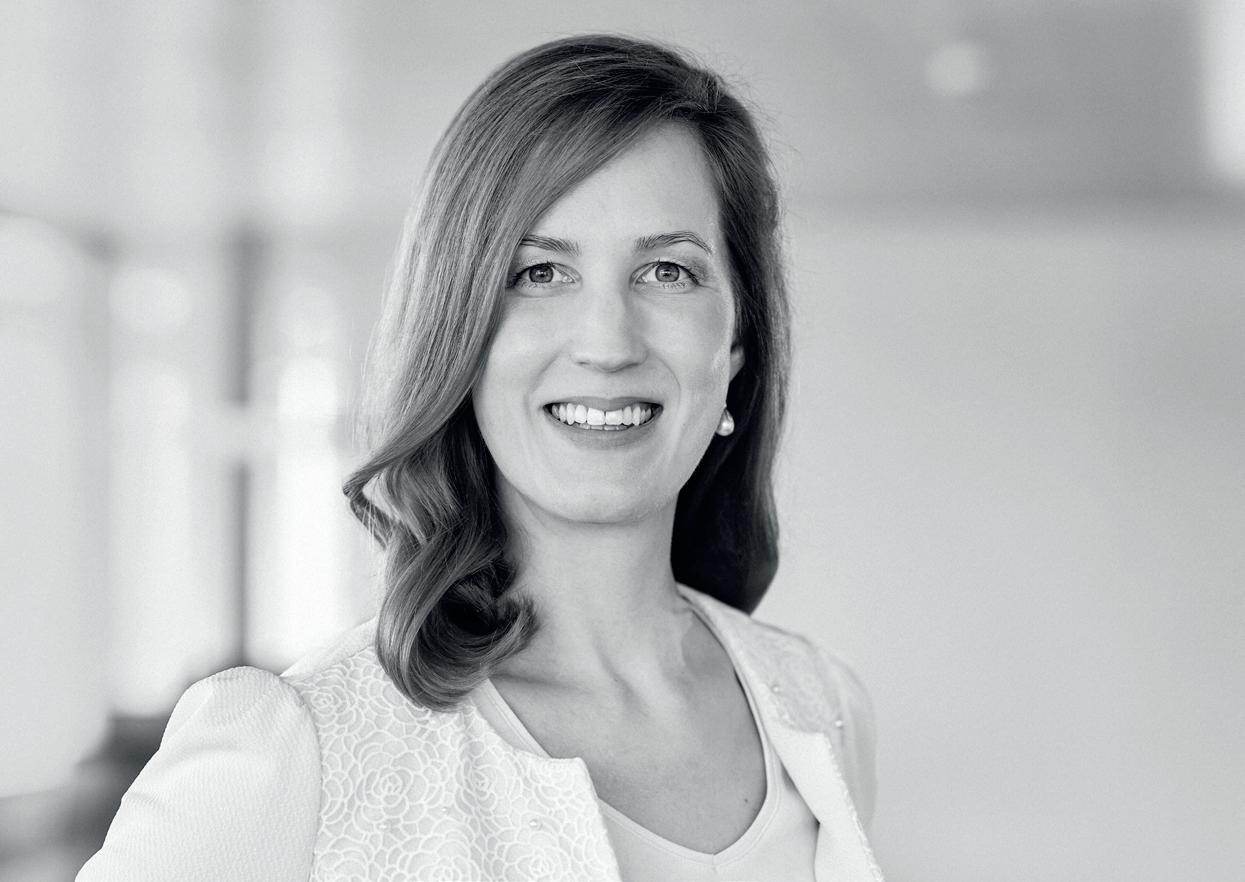
Expert interview with Isabelle Hauser, Diversity, Equity & Inclusion and Employee Engagement Manager at the Migros Group
“Companies that initiate a cultural change early on will be considered attractive employers in the future.”
Our survey shows that workers aged 50 and over, especially women, are extremely motivated. How does this finding correspond to your experience in the Migros Group?
Our staff surveys regularly show that the 46- to 55-year-old age group – regardless of gender – is the most committed. The results reflect the findings of your survey very accurately.
Women aged 50 and over are also highly loyal and are less inclined to move on. How significant is this stability from an HR perspective in times of skills shortages?
It is crucial for companies not just to focus on attracting new workers but also to retain existing workers. The latter have valuable internal knowledge and know the corporate culture; both are invaluable for companies. So our “initiative for workers aged 50+” is
explicitly aimed at promoting this target group and retaining them at the company in the long term. Recruiting new staff requires a lot of resources at various levels, which makes retaining existing staff all the more worthwhile.
Flexible work opportunities are a key lever for better tapping into the employment potential of women aged 50 and over. How do you rate these results from practical experience?
Flexibility is very important for all genders in the 50 and over age group. But the requirements are also very individual: Some want maximum flexibility, whereas for others stability is more important. We have a large blue-collar workforce who value flexibility, especially when it comes to shift scheduling. You have to be aware of the needs of the staff and find effective solutions.
“Our initiative for workers aged 50+ is therefore explicitly aimed at promoting this target group and retaining them at the company in the long term.”
What is needed from the point of view of management and organization to enable women aged 50 and over to contribute their motivation and commitment in the long term? What measures does the Migros Group have in place in this respect? We need to get rid of old, rigid attitudes. It is important to consciously recognize and appreciate the value of the 50 and over target group. An inclusive corporate culture that actively addresses unconscious biases and, for example, also allows part-time careers is key. Our “initiative for workers aged 50+” takes a holistic approach. It is geared towards workers, managers and HR specialists and aims to shape the third career stage with intention. It covers, for example, financial planning, health, work structuring and continuing to work beyond retirement age.
Non-working women aged 50 and over represent the biggest mobilizable reserve for the Swiss labor market. Our study shows that many would (return to) work if they had flexible working hours or a flexible workload. What role can large employers like the Migros Group play here? Thanks to their size, companies like the Migros Group can offer a variety of flexible working models, for example hourly shifts, part-time work, flexible shift scheduling or job sharing. We feel it is important to ensure that experienced staff also benefit from the training offered to ensure their employability in the long term. In addition, further development is a key requirement for workers from the age of 50 and should be systematically promoted.
Our findings show that flexible working models are crucial for retaining or reintegrating women aged 50 and over in the labor market. How do you see the role of temporary work as a flexible form of work?
Temporary work offers a high degree of flexibility and is an ideal way to return to work. Temporary workers often end up getting a permanent contract with us. It’s a good way for both parties to see if they work well together. From the company's perspective, temporary work also has the advantage of being able to outsource administrative tasks to the staff leasing agency.
What would be your advice to companies who want to better harness the potential of women aged 50 and over in the future?
Women are highly motivated by role models. This means having women in appropriate positions visible on the outside, for example through real profiles and personal stories. Moreover, companies need to reflect critically on their corporate culture, review existing structures and offer flexible working models. There is also important groundwork to be done in terms of raising awareness and empowerment around unconscious biases. Companies that consider and initiate a cultural change early on will be considered attractive employers in the future.
“Temporary work offers a high degree of flexibility and is an ideal way to return to work.”
50 and over is the key to the labor market of the future
The Swiss labor market will only be able to overcome its challenges in the decades to come if it consistently taps and secures the employment potential of the 50-and-over age group in the long term. The skills shortage will remain a structural reality in the long term, regardless of short-term economic fluctuations. This will mean a trade-off for companies: Short-term redundancies may seem natural or even necessary in economically challenging periods, but can damage the company in the long term. They cannot afford to lose motivated and experienced staff whose know-how, dedication and loyalty are key to the company. To mitigate this trade-off, companies should be relying more heavily on flexible working models that can preserve employment even in times of economic uncertainty while retaining experienced workers in the long term.
Women aged 50 and over are a key resource. With the potential for up to 136,000 additional workers from the non-working population, they represent the biggest activatable reserve in the Swiss labor market. They are the most highly motivated and loyal of all age groups and help create steady teams thanks to their high level of job satisfaction. In this way, companies benefit from lower fluctuation, longer retention and a high level of commitment. Staffing costs decrease, performance increases.
Flexible working models are the key lever for effectively tapping into this potential. In particular, they enable workers aged 50 and over to combine their professional dedication with personal responsibilities, stay in employment for longer or to return to work. Companies that create these working conditions will thereby harness one of the most valuable and stable groups of workers for the decades to come.
As a pioneer of flexible working, temporary work can significantly help increase this potential. It offers non-workers a low-threshold entry point into the labor market and combines flexibility with social security. The CBA on Staff Leasing sets out reliable framework conditions and closes gaps that exist in other flexible forms of work (see swissstaffing 2022). Staffing service providers help match workers with companies according to their needs. This makes them an important partner for both parties in successfully shaping the labor market of tomorrow.
Study design: Survey of the working-age population
The gfs-zürich institute surveyed 1,242 people in Switzerland aged 18 to 65 years (or up to 70 if not receiving a pension) on behalf of swissstaffing. A random sample of 201 non-workers was also taken. Thus, 344 non-working people in total were surveyed. The survey was conducted online and by telephone. It is representative in terms of age, gender, education and language region. The survey took place from September 15 to October 8, 2025.
Bibliography
economiesuisse / Swiss employers’ association (2024): Inländisches Arbeitskräftepotenzial besser ausschöpfen
State Secretariat for Economic Affairs SECO (2020): Employment trajectories above the age of 50 in Switzerland: Labour market integration of older workers
swissstaffing (2025): White Paper – Finding the balance between Gen Z and 50+: Making companies attractive to all generations
swissstaffing (2024): White Paper – More workers thanks to autonomy. Workers want more flexibility
swissstaffing (2022): White Paper – Temporary workers are in the best position: Comparing flexible working models
With potentially up to
136,000
additional workers from the non-working population, women aged 50 and over represent the biggest activatable reserve in the Swiss labor market.
swissstaffing.ch
swissstaffing
Stettbachstrasse 10
CH-8600 Dübendorf