This sustainability report has been prepared on a consolidated basis and aligned with the scope of the financial reporting prepared for Swisspearl Group. It covers our global operations and both upstream and downstream aspects of our value chain, encompassing suppliers, production processes, distribution, product use, and endof-life considerations. The consolidation period of this report is from January 1, 2025, to December 31, 2025.
The Sustainability Statement in this report has been prepared in accordance with the ESRS Exposure Drafts as applicable. It does not represent a full response to the applicable ESRS requirements. The report has not been externally audited.
Letter from the CEO
Sustainability remains an integral part of how we manage and develop Swisspearl. Since the launch of our sustainability strategy, we have worked to embed sustainability more deeply into everyday decision making, strengthen execution in our operations, and improve fact based transparency across the Group. Looking back at 2025, I see steady progress in several important areas, alongside clear reminders that meaningful change takes time and persistence.
Business context
In 2025, Swisspearl operated in an environment that remained demanding, shaped by cost pressure, evolving regulatory expectations, and ongoing transformation challenges across the construction value chain. At the same time, signs of stabilisation in several markets supported more predictable planning conditions. In this context, our focus was to stay operationally disciplined, while continuing to invest where sustainability and business performance clearly reinforce each other.
Sustainability highlights
Safety remains our foremost responsibility, and it is an area where we know we must continue to improve. While we further strengthened our safety management systems and rolled out improved observation and reporting practices across the Group, our overall safety performance in 2025 was not satisfactory. We did not fully meet our ambitions in all locations. This underlines that building a strong and consistent safety culture requires sustained effort, continuous learning, and strong local ownership. We remain firmly committed to improving performance and reducing injuries across all our operations.
In circularity and resource use, I am encouraged by the continued tangible progress we made in 2025. Further reductions in landfill waste and intensity reflect improvements in production efficiency and concrete steps taken to strengthen our connection to circular economy flows. Since 2022, we have been able to cut more than 50% of our landfill waste. These advances matter — not only because they reduce environmental impact, but also because they support cost efficiency and operational resilience.
The climate transition continues to be a structural and long term challenge for our industry. In 2025, we again saw that progress is not linear. Changes in product recipes, raw material availability, and production processes involve real trade offs that must be carefully managed to ensure product quality, safety, and supply reliability. From my perspective, this reinforces the importance of a focused, resilient decarbonization pathway — one that is grounded in technological progress and partnerships across the value chain.
Reporting and governance
2025 marked an important step in the maturation of Swisspearl’s sustainability governance and reporting. During the year, we strengthened internal reporting structures, reviewed and updated our double materiality assessment, and implemented a dedicated sustainability data management system. These improvements help us make better, more informed decisions and strengthen trust in the information we use — internally and externally.
Outlook
Looking 2026 and beyond, we will continue to focus on the material sustainability topics identified for Swisspearl: health and safety of our workforce, climate change mitigation, circularity and resource efficiency, and water management. Our ambition is not to add new promises, but to deliver consistent, measurable progress through disciplined execution, clear governance, and close collaboration with employees, customers, and suppliers.
I would like to thank our employees and partners for their engagement and commitment throughout 2025. Their expertise, sense of responsibility, and willingness to improve day by day remain the foundation of Swisspearl’s sustainable development.
Marco Wenger Group CEO
June 2026
2025 Sustainability highlights
During 2025, we executed on our plans to meet our ESG commitments. The results show a positive development towards our targets.
Side story | Sustainability on Display
A multi-purpose exhibition stand and conversation-starter
“We don't just talk about sustainability. We implement it consistently and explore new approaches.”
– Stefan Hürlemann, Exhibition Booth Designer –
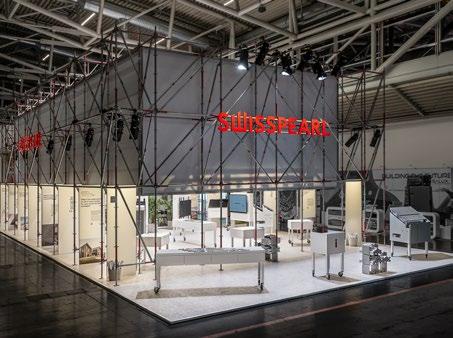
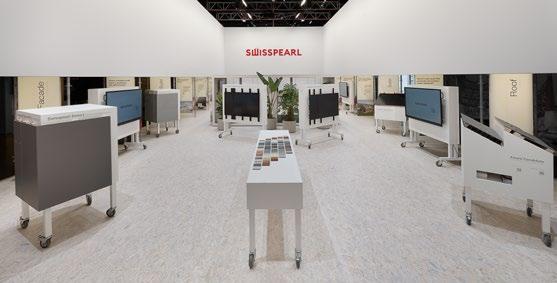
With its new exhibition booth by Zurich-based architect and designer Stefan Hürlemann, Swisspearl has commissioned a display setting for its products that embodies its values of quality, sustainability, innovation, style and customer care. This choice is part of a larger company initiative through which Swisspearl is gradually aligning as many activities as possible with sustainability principles.
The stand was first built for the BAU 2025 Architecture, Materials and Systems trade fair in Munich, Germany. Modularly designed for complete disassembly and reuse, it can be repurposed and scaled up or down for future events. Constructed with visible scaffolding recalling the Centre Pompidou in Paris, and with recyclable textile surfaces, the stand is both airy and cosy. Elements on wheels offer ease of transport and flexibility for setting up in a variety of locations.
The understated visuals put the focus on Swisspearl’s products, while offering an inviting space for meeting and working that is attractive and comfortable for both visiting clients and staff.
In line with Stefan Hürlimann’s commitment to the environment and to efficiency, he prefers to use existing materials that can be repurposed or recycled. Thought-provoking and innovative, his exhibition stand for Swisspearl showcases sustainability as a functional goal and a design principle – and serves as a conversation-starter around reusable design.
Swisspearl at a glance Company
• Leading producer of high-quality fibre cement solutions
• Headquartered in Switzerland with subsidiaries across Europe
• Family-owned
• More than 125 years of expertise
• More than 2,000 employees worldwide
• Products for facades, constructions, roofs, interiors, integrated solar cells and garden
• Globally engaging with and serving architects, engineers, builders, merchants, and resellers
• Committed to durable, low-impact building materials
Figure 1. Swisspearl headquarters, sales offices and production sites.
Swisspearl headquarters
Swisspearl sales offices / presence
Swisspearl production sites
Swisspearl at a glance
A century of expertise driving tomorrows building solutions
Swisspearl has been shaping the built environment for more than a century. As one of the building industry’s leading producers and suppliers of fibre cement products and solutions, we combine craftsmanship, industrial expertise, and a deep commitment to responsible manufacturing and construction. What began with one of our earliest production facilities in 1903 has today grown into a group of more than 2,000 employees who share a passion for durable and beautiful products aimed at a more sustainable construction and build. Headquartered in Niederurnen, Switzerland, and supported by subsidiaries across Europe, we serve customers, partners, and suppliers around the world, with the most significant markets in Western Europe and the Nordics.
Today, Swisspearl products are used globally to create long-lasting facades, roofs, and living spaces. Our portfolio includes ventilated facade panels and shingles, roofing slates and sheets, construction boards, interior design elements, garden products, building integrated solar solutions, and complementary installation systems. These product groups are designed not only for performance and aesthetics, but also to support the transition toward more sustainable construction - through durability, low maintenance, and responsible use of resources.
We work closely with architects, engineers, construction companies, installers, merchants, and resellers who rely on Swisspearl for high-quality materials and technical expertise. Our solutions are used in residential, commercial, public, and industrial buildings, helping our customers meet demanding requirements for energy efficiency, longevity, and design freedom. Across all markets, our goal is to be a trusted partner—supporting projects from early design considerations to installation and long-term building performance.
Sustainability is a central part of how we operate and how we innovate. As a manufacturer, we recognise our responsibility to reduce environmental impact across the entire value chain. Our fibre cement products are inherently long-lasting, contributing to extended building lifecycles and reduced resource consumption. We continuously invest in cleaner production technologies, circular material flows, and energy-efficient processes with results like closed-loop water systems, reduced CO₂ emissions from energy consumption, and steadily increasing recycling rates. These efforts directly support our long-term objective: to lead the global market in high-quality fibre cement while advancing sustainable building practices.
For customers, partners and employees alike, Swisspearl is more than a materials supplier. We are a community of people dedicated to improving the way buildings are designed, constructed, and experienced. Our heritage gives us stability, our innovation drives us forward, and our sustainability ambitions guide every decision we make. Together with our partners across the world, we continue to shape living spaces that endure—today and for generations to come.
Figure 2. Swisspearl sales in selected regions.
BUILD SOLAR
FACADE
ROOF
INTERIOR
DESIGN
GARDEN
Products and solutions
Swisspearl products and solutions are based on aesthetic, durable and cost-efficient mineral composite developed for exterior and interior applications. They offer several environmental, social and economic benefits throughout their lifecycle.
Swisspearl is a leading producer of high-quality fibre cement products, offering innovative solutions in 6 main areas:
• Facade panels: Durable, weather-resistant panels available in various colours and textures for creative and functional building designs. Most often as part of lightweight ventilated outer wall constructions.
• Roofing solutions: Fibre cement roofing products that provide excellent protection and aesthetic appeal.
• Building boards: Durable, weather-resistant panels available in various performance steps and visuals to protect constructions against water, wind, moisture and fire.
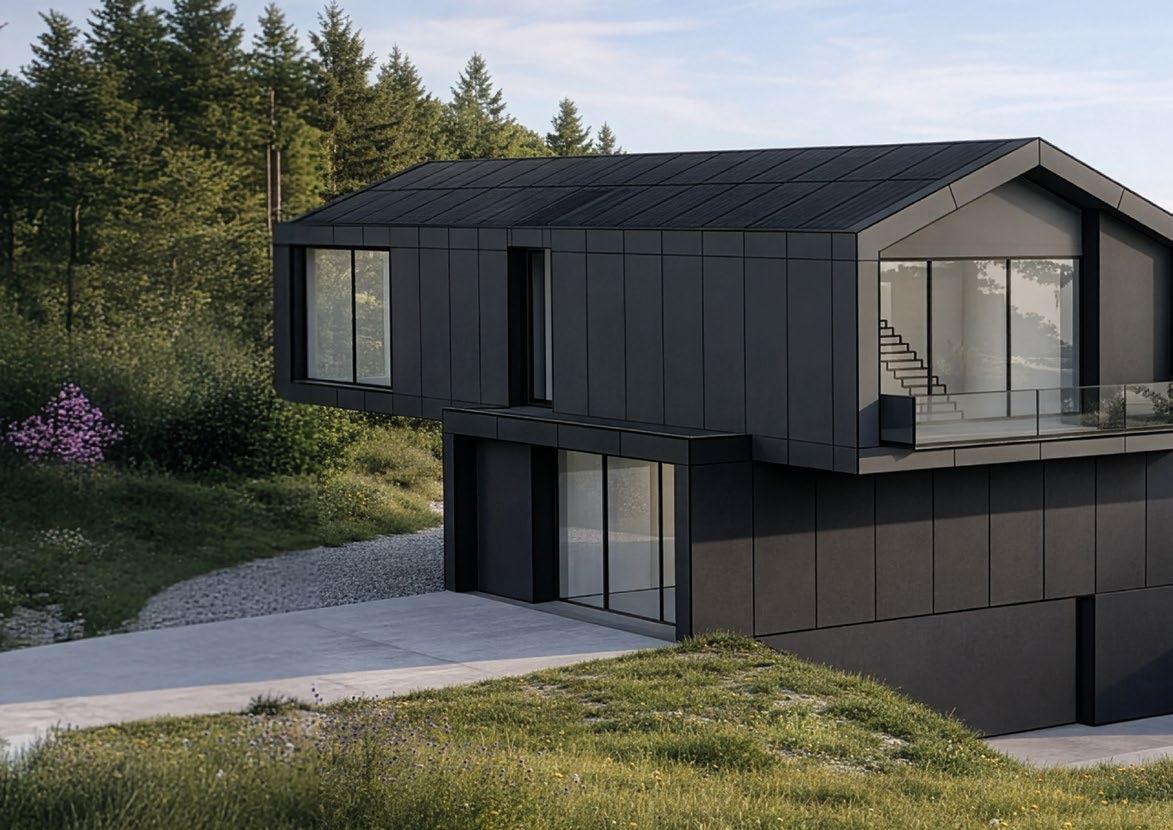
• Solar solutions: Swisspearl transforms rooftops and facades into elegant, powerproducing surfaces with fully integrated solar solutions that blend seamlessly into any architectural vision.
• Interior applications: Versatile panels suitable for interior design, especially in demanding environments.
• Garden solutions: Products designed for outdoor spaces, combining durability with visual appeal.
Our products are renowned for their aesthetic appeal, durability, cost effectiveness and ability to be part of sustainable building.
Swisspearl’s fibre cement panels come in various sizes, colours and textures, providing architects and designers with versatile options for creative and functional building designs.
Our commitment to quality, innovation and sustainability has made us a trusted name in the construction industry throughout decades and generations.
Fibre cement is an extremely versatile material that can be used in a variety of ways. Our products and solutions offer numerous possibilities for creativity, functional features and performance that can be used in the architecture, design and construction of building envelopes and living spaces. The heart of the success of our products began in 1894 in Vöcklabruck, Austria, where fibre cement was invented by Ludwig Hatschek.
High strength, non-combustibility, and long-term performance
As a material, fibre cement is an attractive choice for sustainable buildings. The multiple applications in a building envelope deliver several lifecycle benefits. The intended applications are in lightweight constructions. The key characteristics in our solutions are: high strength, noncombustibility, long-term performance and visual malleability.
The maintenance requirements of fibre cement boards during their lifecycle are relatively low, ensuring low cost of ownership.
We are dedicated to further expanding the end-of-life recycling opportunities of fibre cement. Concrete recycling solutions are one of the biggest areas of effort in our development activities.
Safe, healthy, and inspiring living
Safety is a strong functional attribute in fibre cement products. Most of our products have reaction to fire rating Class A1 or A2 s1-d0, which means the products do not catch fire even in the presence of high temperature or a direct flame. Therefore, a Class A rating undoubtedly improves a building’s fire behaviour, thereby benefitting the building users and owners. Partition walls and evacuation tunnels are excellent examples where our fibre cement provides safety for building users. Furthermore, the non-combustibility of our products hinders the spread of fires in buildings, thereby protecting the users and limiting the damage caused by the fire.
The alkaline nature of fibre cement products leads to very good fungal resistance. This functional characteristic supports the creation of healthy living environments, thereby reducing health risks. The fibre cement composition also contributes to a healthy living environment, since a relatively low percentage of chemical additives is needed for its production. In addition, the
Fibre cement
chemical emission and odour rates from fibre cement products are very low. These features are especially important in indoor applications. All of our indoor products are classified as M1. Building architecture can inspire thought and emotions, both for the building users as well as others in the vicinity of the building. Each construction builds the cityscape that impacts the comfort and feeling of belonging experienced by people.
Fibre cement is a versatile, mouldable material with extensive ranges of colours and surface finishes. It offers endless options for orchestrating architectural stimulus and building delightful living environments. The freedom of design is an inspiring characteristic and source of enjoyment for architects as well.
Solutions for a more sustainable built environment
The construction sector faces increasing pressure to reduce greenhouse gas emissions, resource use, and impacts on ecosystems across the building life cycle. In this context, building design choices, material selection, and construction methods play an important role in influencing environmental performance.
Swisspearl fibre cement products are widely used in lightweight construction systems across the building envelope, structural layers and interiors, typically combined with timber, steel, or aluminium substructures and mineral- or bio-based insulation materials. Lightweight construction approaches are widely recognised for their potential to reduce material use and upfront embodied impacts compared to traditional heavyweight construction, depending on building design, system configuration, and life-cycle boundaries. Swisspearl contributes to such approaches through facade, roofing and building board solutions designed to protect structures against fire, moisture,
and weathering, thereby supporting long service life and functional resilience. In addition, fully integrated solar solutions enable roofs and facades to become energy-producing elements, supporting the transition towards more efficient and sustainable building envelopes.
Beyond end of life considerations, Swisspearl products can support circular building principles through design approaches that enable adaptability, renovation, and disassembly. Fibre cement panels are commonly installed in ventilated facade systems that allow components to be replaced, upgraded, or reconfigured over time without major structural intervention. This design flexibility can support changes in building use and reduce the need for premature demolition, thereby helping to extend the functional lifespan of buildings and limit additional material demand.
At end of life, Swisspearl fibre cement products are recyclable. Across Europe, public and private initiatives are emerging to develop recycling pathways that enable fibre cement waste to be processed into secondary raw materials for use in new construction products.
Recycling facilities are already operating in selected markets, while further industrial scale solutions are under development. However, commercially available recycling options for fibre cement vary significantly between countries and regions. As a result, recycling is not yet uniformly accessible across all markets. Swisspearl therefore encourages building owners and contractors to engage with local authorities and waste management providers to identify the most appropriate reuse or recycling solutions within their specific regulatory and infrastructural context.
Virgin raw materials
Landfill
Fibre cement production
Building site
Building use
Renovation
Demolition / materials collection
Other industries
Secondary raw materials
Industry recycling
Reuse
Figure 3. Fibre cement materials circular stream.
Solutions for energy-efficient buildings
According to the European Union’s Green Deal, the vast majority of Europe’s building stock does not meet modern energy efficiency standards. Our products form part of structures ideal for energy efficiency renovations to existing buildings with inferior insulation. Fitting the external facade with thermal insulation and fibre cement not only provides a robust solution to drive down heating-related climate emissions and costs, improve comfortable indoor climate and sound insulation, but also to improve the aesthetics of the building.
Swisspearl products have high weather resistance. They are being successfully installed in a wide variety of climates, from extremely high Middle East temperatures to extremely windy, damp and cold northern Nordic coastal areas. It is important to note the extreme temperature conditions of the northern Nordics, where the range can be even less than -40 to over +30°C, all this very well sustained by our fibre cement products.
Cost-effective, easy-to-install, durable and with low maintenance
Our products are a cost-effective solution for the building owners. Our products are easy to install. We can further help the installation with our cutting and drilling services that allow direct and easy installation according to the designs in factory finished quality, without the need to organise any work stages before installation. The value of our factory customisation is further increased on congested construction sites. Customised boards also minimise construction site waste due to only installed volumes being shipped, reducing the transport emissions.
The durability – with an expected average lifetime of 50 years when installed and used correctly – and low maintenance requirement deliver a low lifecycle cost compared to many other materials. Characteristics like very good weather and impact resistance contribute to durability. However, we have also thought of the possible maintenance-requiring incidents over the lifecycle of a building and developed an anti-graffiti surface for our facade portfolio. This surface makes it easier to clean the facade in the unfortunate case of graffiti.
Energypositive design for tomorrow
Swisspearl’s solar solutions empower architects and builders to create structures that actively contribute to a more sustainable world. By integrating photovoltaic technology directly into durable facade and roofing materials, buildings can generate clean, renewable energy without compromising aesthetics or design freedom. This seamless fusion of function and form reduces reliance on fossil fuels and supports the global transition toward greener energy systems. Crafted with
Swisspearl’s long-standing commitment to responsible, lowimpact manufacturing, these solar products extend the lifecycle of building envelopes while lowering operational emissions. Their robust fibrecement base ensures longevity, minimal maintenance, and reduced resource consumption over time –key factors in sustainable construction.
By enabling energypositive buildings, Swisspearl solar facades and roofs help mitigate climate change, conserve natural resources, and support holistic, futureproof design strategies. They empower developers, cities, and homeowners to take tangible steps toward carbon neutrality and contribute to a built environment that respects both people and the planet.
Documentation for quality and performance
Most Swisspearl products qualify for sustainable building design and construction certifications and are registered and approved in environmental databases. Swisspearl fibre cement products contribute to the various criteria evaluated when certifying buildings under a specific scheme, like DGNB, BREEAM, LEED, Nordic Swan label and Minergie-ECO. Swisspearl can support EPDs on a great variety of our products – and the list keeps expanding month by month. We value the quality and consistency of our products and services and all of our factories operate under the ISO 9001 certificates.
Furthermore, to mitigate safety and environmental risks, we work systematically and meticulously on a full range of safety and environmental topics. In all our factories we have the respective reporting and continuous improvement practices in place. In addition, the majority of our factories are ISO 14001 and 45001 certified.
Modern zero carbon and energy efficient homes
Stables Yard | Beckenham, United Kingdom
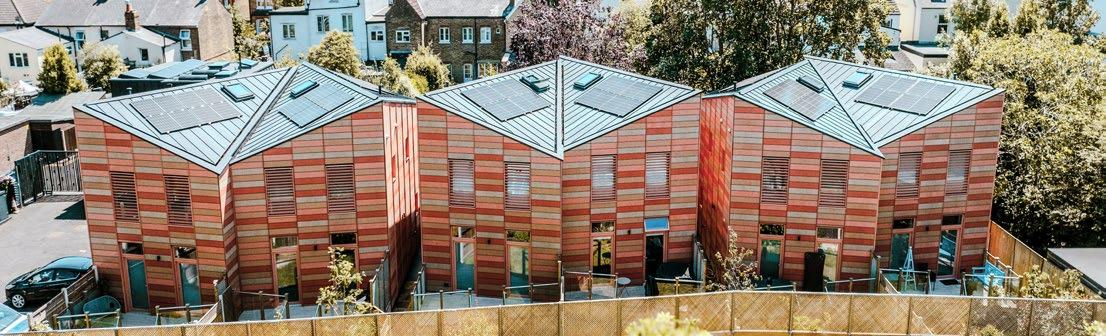
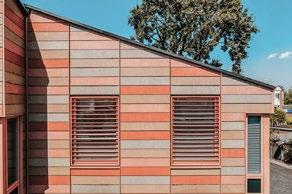
Swisspearl Patina Original NXT in colours P 343, P 323, P 333 and P 313 have been used to create an authentic, dramatic facade for an award-winning development of modern zero carbon and energy efficient homes at Stables Yard in London.
This project not only won Best Use Of Fibre Cement Cladding and RCI Project of the Year at the 2023
Facade awards – it was also shortlisted for the prestigious 2023 Best Housing Project of the Year (Under £5 million) by the Architects Journal (AJ).
Swisspearl Patina Original NXT facade patinates beautifully over time, adding unique and subtle variations to the surface, so these beautiful homes will look even better in years to come.
Our specialist facade team worked with Interco Contracts and the award-winning architects at Stolon Studio on this fantastic project.
How we create value
Strategy and business model
We are a family-owned producer of fibre cement products for building and garden applications, headquartered in Switzerland. On 31 December 2025, Swisspearl employed 2 070 full-time employees.
Our Vision.
We operate eight factories in seven countries – Austria, Czechia, Finland, Hungary, Poland, Switzerland, and Slovenia – producing roofing, facade, building, indoor, and garden products. To complement our portfolio, we also buy and resell construction products such as solar and fixing systems. Together, our factories and sales entities form a strong production and sales network with European focus and global reach.
Shaping the future of building.
As an innovative and creative solution provider in our industry, we foster sustainability and deliver positive impact today and for the generations of tomorrow.
Sustainability challenges
Our Mission.
We offer cost-effective, durable, and easy-to-install fibre cement solutions for safe, healthy, and sustainable living.
Our portfolio also includes solar systems for roof and wall structures. Products enable creative, functional, and highperformance solutions for architecture and construction.
We continuously improve outputs through customer engagement, market and competitor analysis, in-house testing, and transforming insights into product, service, and process development.
Create leading solutions.
Create and deliver leading building products, solutions and services to our customers through excellence, partnership, scalability and a highly engaged international team.
• Innovate application sustainability
• Embed sustainability in product lifecycle
• Ensure fact-based transparency
Sustainability levers
• Climate change mitigation
• Connect to circular economy
• Excel in resource efficiency
• Ensure employee safety and well-being
• Foster an equal, attractive workplace
• Uphold compliance and community engagement
Sustainability framework
Portfolio impact
Driving innovation and transparency in products to meet evolving market and regulatory demands.
Climate transition and circularity
Reducing carbon footprint and advancing circular solutions across operations and supply chains.
Safety and engagement
Ensuring a safe, equal, and engaged workplace for all employees.
Value chain
• Key suppliers provide materials, energy, technologies, and logistics services
• Supplier management is based on quality, sustainability, availability, and cost. Cement, Fillers, Fibre, Paint, Water, Finished goods, Natural gas, Electricity, Other energy
Due
• We operate under a functional organisational structure.
• At the core of Swisspearl’s operations is the production of fibre cement products for building envelopes and related innovation.
Our processes prioritise safety, efficiency, and innovation.
• Sales, customer service and technical support are decentralised across our 15 sales entities, supported by market warehouses in several European countries.
• Our main markets are in Europe.
• We distribute our products through a global network of sales offices, distributors, and partners. We focus on product and service attributes reinforcing our role as a trusted brand for high-performance solutions for building envelopes.
• Collaboration with architects, builders, and contractors support to integrate Swisspearl solutions into diverse construction projects. Products and solutions: roofing, facades, interior, sub-construction and garden
Approach to sustainability
Introduction
Sustainability is at the core of the Swisspearl Group’s Vision.
Whilst addressing the negative sustainability impacts in the value chain, we will further strengthen the positive attributes and impacts of our products and solutions while progressing in global market reach.
Innovation, research and development are fundamental elements in our sustainability work. Furthermore, to maintain and develop competitiveness, we conduct continuous streamlining of operations to ensure safety, reliability and efficiency in delivering our products and services.
To support this progression, we partner up with relevant stakeholders e.g., industry leaders or suppliers. The overall outcomes of our work reduce value chain emissions, improve resource efficiency and processes as well as circularity of materials and further progress in global market reach.
Sustainability impacts in fibre cement value chain
Cement is the main raw material in fibre cement products. Cement production is a high consumer of energy and responsible for approximately 7-8% of global CO₂ emissions. Mineral mining and processing operations as well as cellulose production require significant amounts of water in their processes. Fibre cement production also involves use of water, although recycled multiple times in the processes to maximise the efficient use. From a resource use and circularity perspective, several of the raw materials used in the products are virgin and non-renewable. Furthermore, fibre cement products are not yet today strongly connected to circular economy flows, especially from the end-of-life stage. Socially, health and safety represent the main impact due to high lost time injury frequency rate.
Guided by our Vision and aligned to support delivering our Mission, we have categorised our sustainability focus in two;
• Material sustainability topics and
• Organisational enablers.
The two categories we express by sustainability statements. These statements guide our work ahead and ensure our organisational capability enables us to create the leading solutions.
In this section of the report we present the organisational enablers. The material sustainability topics are discussed in detail in the sustainability statement.
The focus of the statements
The two biggest challenges for the fibre cement value chain relate to portfolio impact and related reduction of carbon emissions as well as introduction of commercial circularity solutions. To overcome these two challenges, we focus especially on production efficiency improvements, raw materials, process technologies and renewable energy systems.
Sustainable transition will require significant raw material recipe, process and product reformulations, research and break-through innovation. The key focus for partnering with suppliers is in carbon emission reductions and strengthening of circularity solutions.
Safety work includes maintaining and improving procedures and practices currently in place, training and building mindset and behaviour as well as introducing further safety best practices. In addition, for the safety of installers and others handling our products, we provide instructions and guidelines. The illustration on the next page connects our business strategy and the relevant sustainability matters to our sustainability statements.
Material sustainability topics and organisational enablers
Sustainability matters
Climate change mitigation Water
Material sustainability topics
Organisational enablers
Circularity and resource use
Health and safety Engagement Equality Compliance Volunteerism Governance
Swisspearl’s value foundation
and
Our sustainability statements
We aim for Scope 1&2 carbon neutrality by 2040
We aim for Scope 3 carbon neutrality by 2040
We aim to have zero landfill waste from factories by 2030
We aim for minimise wastewater from factories by 2030
We do not to use drinking water (municipal) in production processes by 2030
We explore ways to create value from fibre cement waste and end-of-life products
We ensure the safety of all Swisspearl employees
We have an attractive workplace
We promote workplace equality and ensure fair access for all
We follow the laws, regulations and guidelines
We do voluntary work for local communities
We will further embed Swisspearl Group values, codes, policies and safety rules into the organisation
We govern climate action through Science Based Targets
Organisational enablers
By integrating sustainability into every facet of our organisation, we enhance efficiency, foster innovation, and strengthen long-term resilience. This chapter outlines the organisational enablers that support effective governance, operational integration, and continuous improvement of sustainability management at Swisspearl.
General overview
At the end of 2025 Swisspearl employed 2 070 full-time employees. These employees are located in the 16 European countries where we have legal entities, see Figure 4.
Engagement
It is important to Swisspearl that our employees and external stakeholders experience Swisspearl as an attractive workplace. It is our goal to create an attractive culture by further engaging with employees in open dialogue, and by taking necessary actions for improvement based on their feedback.
Workplace equality
The countries where we have production sites generate the largest proportion of employees – more than 90%. Nevertheless, the cultural origins in Swisspearl are a crosssection of European cultures, see Figure 4. Moreover, a balanced seniority distribution, see Figure 5, offers several benefits. More senior employees transfer their knowledge and experience to more junior employees, fostering a culture of learning and development. Senior employees also have a better insight into the company’s culture, processes, and clients, which can help in maintaining continuity. On the other hand, more junior employees bring new ideas and fresh viewpoints into the discussions, challenging the status quo, and thereby driving innovation.
Figure 4. Share of employees in legal entities.
Figure 5. Seniority distribution
As a production company, Swisspearl recognises the importance of equal opportunity and fair treatment for all employees. We experience that teams with a broad range of perspectives contribute to creative thinking and well-rounded solutions. Inclusive and respectful workplaces support employee satisfaction and productivity and help attract and retain skilled talent.
The production industry, however, continues to face challenges in attracting women, as highlighted by EIT Manufacturing and Eurostat. The following table presents the gender distribution of Swisspearl across different employee groups at the end of 2025. The gender composition reflects the broader characteristics of employment within the production sector.
Swisspearl acknowledges that representation at senior management and Board level is relevant for addressing challenges related to attracting women to the production sector. The composition of the Board of Directors reflects the company’s commitment to equal opportunity and non-discriminatory employment practices and supports its attractiveness as an employer.
It is worth noting that, although Swisspearl is a family-owned company and not subject to listing requirements, the composition of its Board of Directors is aligned with the objectives of the EU Women on Boards Directive, which applies to large listed companies.
Swisspearl communicates its commitment to equal opportunity, fair treatment, and non-discriminatory employment practices through its Sustainability Statement, Code of Conduct, and Human Rights Policy.
Legal compliance
Compliance with applicable laws and regulations forms the foundation of Swisspearl’s sustainability strategy. Adherence to legal requirements supports the control of environmental impacts and contributes to the protection of employee health and safety, as well as the safety of surrounding communities.
Effective compliance management helps to reduce legal, financial, and reputational risks that could negatively affect the company’s long-term sustainability performance. Monitoring and responding to regulatory developments also supports a proactive and structured approach to sustainability management.
Swisspearl’s values, Code of Conduct, and internal policies provide guidance to ensure that laws, regulations, and internal guidelines are consistently applied across the organisation.
Table 1. Gender distribution of Swisspearl.
Volunteerism
Swisspearl supports voluntary engagement in local communities by encouraging the contribution of time, skills, and experience to projects and activities that generate environmental and social benefits. Community involvement is organised and implemented at local entity level, reflecting local needs, priorities, and stakeholder expectations.
Volunteer activities may include initiatives related to environmental protection, health and safety awareness, or community well-being. These activities contribute to Swisspearl’s sustainability objectives while supporting employee engagement and strengthening relationships with local communities.
Governance
Effective governance supports Swisspearl’s financial and operational stability and provides a framework for the implementation of long-term environmental, health and safety, and social initiatives. Swisspearl’s sustainability governance is further explained in the chapter Governance and responsible business.
Swisspearl focuses on strengthening a common and consistent approach to management, behavior, and operations across the Group. The company’s values, Code of Conduct, internal policies, and safety rules form a core part of its governance and social responsibility framework. Swisspearl is committed to further embedding these elements into the organisation.
Climate-related governance is integrated into this framework. In this context, Swisspearl aims to align its climate action with recognised external frameworks and is preparing to engage with the Science Based Targets initiative (SBTi).
Blending Heritage and Modernity in Riga
Office Residential Building | Riga, Latvia
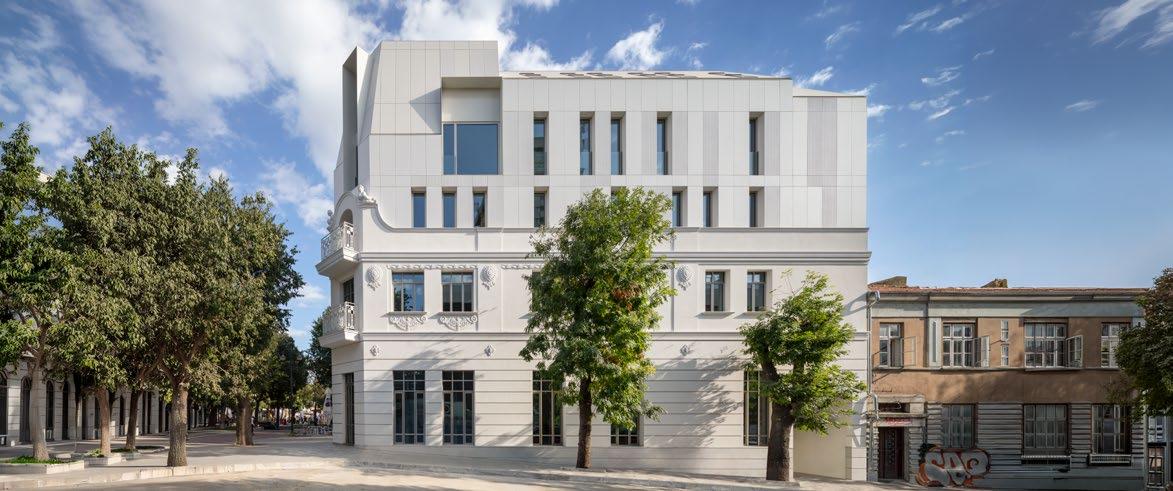
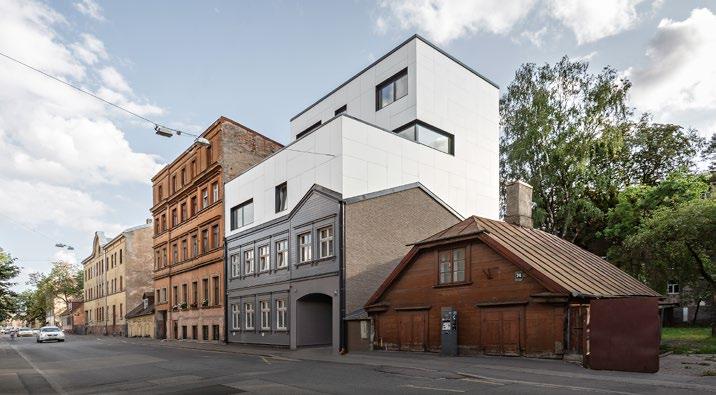
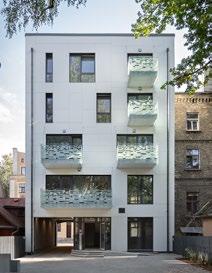
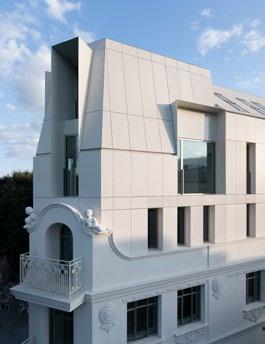
In central Riga, just one kilometer north of the Daugava River, a striking transformation has redefined the relationship between old and new. The renovation and expansion of an existing building posed a unique challenge: how to preserve the historic facade while adding a bold, modern extension above it. Architect Andris Vitols approached the task by carefully integrating a streamlined upper volume with clear contrasts in both material and design. The lower part of the building retains its traditional character, with darkstained timber cladding and window details that echo local historic architecture. In contrast, the upper three storeys are distinctly contemporary, clad entirely in smooth, white fibre cement panels. These new volumes are set back on the fourth and fifth floors to create deep balconies and reduce the visual scale toward Bruninieku Street.
Architectural Contrast and Cohesion
The building plays with contrast on multiple levels: material vs. material, texture vs. smoothness, dark vs. light. Horizontal timber boards on the original concrete structure meet the clean, white surfaces of the fibre cement cladding above, which is installed in a mix of vertical and horizontal formats. The back of the building tells a different story entirely. Here the full five-storey structure rises as a singular architectural tower. This project is a strong example of how historic preservation and modern architecture can coexist through deliberate contrast, innovative facade design, and thoughtful spatial transitions. It creates a new architectural identity while remaining grounded in the building’s original urban context.
UN Sustainability Development Goals contribution
At Swisspearl, we recognise the responsibility that comes with being part of the global production industry. Supporting the United Nations Sustainable Development Goals (SDGs) is not just an initiative, but a commitment to ethical practices, environmental stewardship, and social responsibility.
We acknowledge that our activities impact communities, ecosystems, and future generations, and we strive to embed sustainability across all aspects of our operations. By continuously assessing our footprint, refining our processes, and fostering collaboration, we aim to contribute to meaningful change and responsible business practices, guided by a longterm commitment to a sustainable future.
We recognise the importance and relevance of all SDGs in shaping a more sustainable and equitable future, providing a framework for addressing global challenges across social, environmental, and economic dimensions.
The next page presents how Swisspearl contributes to the SDGs. To ensure that our focus reflects both materiality and stakeholder expectations, we have aligned our SDG contributions with the results of the Double Materiality Assessment. This approach enables us to concentrate on areas where we can drive the greatest positive impact while maintaining accountability on the issues most relevant to our stakeholders and business operations.
Swisspearl
Climate change mitigation
Take urgent action to combat climate change and its impacts
Water
Ensure availability and sustainable management of water and sanitation for all
13.2.2
Total greenhouse gas emissions per year
Technological upgrades of factory processes to reduce total CO2 emissions
Innovation, raw material and recipe development and supplier collaboration to reduce CO2 emissions
Circularity and Resource use
Ensure sustainable consumption and production patterns
6.3.1
Proportion of domestic and industrial wastewater flows safely treated
6.4.2
Level of water stress: freshwater withdrawal as a proportion of available freshwater resources
12.2.1
Material footprint, material footprint per capita, and material footprint per GDP
12.4.2 (a)
Hazardous waste generated per capita; and (b) proportion of hazardous waste treated, by type of treatment
12.5.1
Effectiveness of controls and procedures for wastewater treatment processes
Efforts and systems supporting improvements in efficiency of use of water
Monitoring and reporting of high baseline water stress levels at factory locations
Health and safety
Promote sustained, inclusive and sustainable economic growth, full and productive employment and decent work for all
main focus points related to UN SDG goals and objectives.
Efforts and systems supporting efficient use of natural resources circularity
Effectiveness of chemical and chemical waste management
National recycling rate, tons of material recycled Continuous waste reduction and increase of recycling and reuse rates
12.6.1
Number of companies publishing sustainability reports
8.8.1
Fatal and non-fatal occupational injuries per 100,000 workers, by sex and migrant status
Publication of sustainability report
Efforts and systems supporting continuous safety improvement
Swisspearl
Sustainability governance and responsible business
Sustainability governance elements
Purpose of governance is to ensure Swisspearl is managed transparently and responsibly to protect the interests of the company, shareholders and other stakeholders.
Introduction
The Swisspearl sustainability governance is based on Group vision, mission and strategy, management accountability, codes and policies, corporate values, sustainability risk management and managerial ethics as well as employee business conduct. The framework with all its elements supports ethical, responsible and compliant business practices.
Governance bodies
The Board of Directors serves as the supervising approval body that ensures the vision and mission, strategic plans and policies proposed by the Group Executive Management. The Board aligns them with the company’s long-term goals, legal requirements and shareholder expectations. The Board reviews and approves the strategic direction and major policies proposed by the Group Executive Management.
They ensure compliance with legal requirements and oversee risk management and the Double Materiality Assessment (DMA) outcomes, approve financial plans and ensure the integrity of financial and non-financial reporting. The Board is provided with periodic sustainability reporting as needed by the Director, Group Sustainability.
The Group Executive Management plays a pivotal role in shaping the company’s vision and ensuring its implementation. They are responsible for defining the strategic direction and policies of Swisspearl. They validate the DMA followed by CEO sign-off. With regard to the approved strategic direction, the Executive Management develops comprehensive plans for the company’s growth and success. They oversee periodically the progression towards the sustainability goals and engage in discussions and workshops regarding strategic and tactical sustainability topics. They are supported by the Group Sustainability department.
• Sustainability seamlessly integrated into the core business • Sustainability accountability and managerial ethics • The behavior and management-driven standards for social, ecological and ethical attitude
The Executive Management ensures that the company’s operations align with the defined strategies and objectives.
They oversee the performance of the Group Senior Management and secure alignment with the company’s goals. The Group Executive Management engages with the key stakeholders to communicate the company’s strategic direction and gather feedback.
The Group Senior Management, reporting to Group Executive Management, is responsible for the day-to-day management of subsidiaries and group-wide departments. They act as the implementation body for Group Executive Management. Their key responsibilities include effective implementation of the strategic initiatives and plans and group policies within their respective areas. Furthermore, they oversee the operations and effectiveness of subsidiaries and group-wide departments to ensure they align with the company's overall objectives. In addition, they conduct regular reporting on the performance and progress of their areas to Group Executive Management.
• Double Materiality Assessment
due diligence
• Whistleblowing channel
Senior Management plays a crucial role in the tactical implementation of sustainability. In collaboration with the Group Sustainability Department, they engage in activities related especially to implementation aspects of sustainability strategy, improvement of transparency and tools, identification of material impacts, collection of sustainability intelligence and preparation of progress reporting. The Senior Management also provides feedback and inputs to the Executive Management in the strategic and operative aspects of steering the company forward.
Group vision, mission and strategy
Group vision, mission and strategy, including their seamless interconnection to sustainability, are explained in the About Swisspearl section of this report.
Sustainability risk management
Double materiality assessment
• Structured process to identify and evaluate sustainability impacts, risks, and opportunities (IROs) across the value chain, considering both financial and impact materiality in line with ESRS requirements. Supports prioritization of sustainability matters and informs strategic decisions.
Sustainability due diligence
• Ongoing process to identify, prevent, and mitigate adverse sustainability impacts in own operations and supply chain. Includes human rights, environmental, and governance considerations, ensuring compliance with legal requirements and alignment with international standards.
Interrelation of the elements
Sustainability due diligence and DMA are interconnected. Sustainability due diligence informs DMA regarding the sustainability risks.
Values, codes and policies
Our values in connection with our Code of Conduct set the social, ecological and ethical attitude and establish the Swisspearl identity. They set the principles of business conduct and apply to all employees and representatives of Swisspearl.
Our policies contain governing principles and procedures to effectively manage an issue for Swisspearl as a whole or parts of it. In addition to the Swisspearl Code of Conduct, our key codes and policies include:
• Supplier Code of Conduct
• Human Rights Policy
• UK Modern Slavery Statement
• Whistleblower Policy
• GDPR Policy
In 2025 we have focused on preparations to gain Cradle to Cradle certification for our fibre cement wall solutions. To support this, we reviewed the Code of Conduct and Human Rights Policy. In addition, we reviewed our GDPR Policy.
Access to remedy
At Swisspearl, we are committed to high ethical standards of business conduct and to do business in a responsible way and with integrity. The scope of our Whistleblower Policy is wider than that required by the EU Whistleblowing Directive. We have included our employees as well as external parties with a working relationship with Swisspearl. Furthermore, we have included those legal entities with fewer than 50 employees as well as allowing anonymous reporting, unless national legislation prevents it. The whistleblowing system and the Whistleblower Policy can be found on our global and local websites.
Employee Business Conduct
Swisspearl’s sustainability governance is built on clear and structured foundations: our vision and mission, strategy, values, codes and policies, managerial accountability and ethics, the double materiality assessment, and due diligence processes. However, even the strongest governance structure cannot eliminate all risk of misconduct. This is why employee business conduct is a critical governance element.
Governance is not only a system of rules and controls; it is also a system of behavior. Ethical performance depends on the everyday choices individuals make at all levels of the company. Employee business conduct connects behavior with governance expectations. It reinforces employees’ responsibility to act ethically, supports a speak-up culture, and strengthens the overall governance system by linking rules and controls with the human decisions that bring them to life.
Governance and responsible business
The Board of Directors
Chair of the Board
On the board since 2018
Other positions
Paul Schuler
Born: 1955
Nationality: Swiss
Member of the Board of Directors, Sika AG
Competences
Broad management, strategic and commercial experience in the global construction industry and in building a global player in said industry as the CEO and in other positions at Sika AG.
Education
MBA, Graduate School of Business Administration
Member of the Board
On the board since 2019
Other positions
Giulia Alpstaeg
Born: 1992
Nationality: Swiss
Member of the Board
On the board since 2017
Other positions
Dr. Maja Baumann
Born: 1977
Nationality: Swiss
Member of the Board
On the board since 2021
Other positions
Born: 1982
Nationality: Swiss
Chairwoman of Zürcher Ziegeleien AG and Wagner Systems AG
Board Member: Swisspor Holding AG and all subsidiaries
Competences
Strategic communication and stakeholder management, corporate communications and branding, analytical thinking and solution orientation, cross-functional and intercultural collaboration, digital media and content strategy
Education
BSc in Business Communication and currently pursuing an MBA in Business Management
Chairwoman of the Board of Directors of SwissLegal Zurich AG and SwissLegal Schwyz AG
Member of the Board of Directors of Vontobel
Holding AG and Bank Vontobel AG
Chairwoman of the Board of Directors of Advontes AG
Member of the Board of Directors of Vontrust AG
Member of the Board of Directors of GRAPHAHolding AG
Member of the Foundation Board of the Vontobel Foundation
Chairwoman of the Zoo Foundation Zurich
Competences
Legal and Compliance
Corporate and M&A
Sustainability Regulation
Strategy Development
Education
Dr. iur., lawyer
LL.M. in Corporate Law
Certified Specialist SBA in Real Estate and Construction Law
CAS in Banking, Capital Markets and Insurance Law
President and CEO Chicago Faucets / Head of Geberit North America
Competences
Broad business and financial leadership experience from various management positions with large listed and non-listed international companies, leading to strong international experience in finance, accounting, sales, supply chain and digitalization/software.
Education
MSc in Accounting and Finance
BSc in General Management
Fabian Huber
The Group Executive Management
Chief Executive Officer
Marco
Wenger
Born: 1982
Nationality: Swiss
Managing Director Switzerland, Nordics
In Swisspearl since 2021
Areas of responsibility
Full profit and loss responsibility for Swisspearl Group, Nordic, UK and Ireland markets and Switzerland, Sustainability leadership
Competences
In-depth experience in leadership, business management and driving sales. Strong knowhow from retail sector. Extensive knowledge in production management, circular economy, health and safety management, employee retention and supplier relationship management.
Hans-Jörg Kasper
Born: 1970
Nationality: Austrian
Managing Director Austria, Germany, Northeastern Europe
Global Head of Marketing In Swisspearl since 1994
Areas of responsibility
Full profit and loss responsibility for Austria, Germany and Northeastern Europe, Global leadership and management in Marketing
Competences
In-depth business and leadership experience especially in design and implementation of sales and marketing strategies, building international brands and corporate management.
Julien Ferrer
Born: 1983
Nationality: French
Managing Director Western Europe, International In Swisspearl since 2018
Areas of responsibility
Full profit and loss responsibility for Belgium, Netherlands, France and outside Europe sales
Competences
In-depth experience in leadership and business management from various sectors. Strong know-how in market segmentation, go-to-market strategies and establishing partnerships in achieving sustainable penetration and growth.
Chief Financial Officer
In Swisspearl since 2022
Aleksander Horvat
Born: 1971
Nationality: Swiss
Education
EMBA in Business Management
BSc in Construction, Wood and Architecture
Education
EMBA in General Management
Education
MBA in Business Management
Areas of responsibility
Global leadership and management in Finance, Controlling, Legal and ICT
Competences
In-depth experience in finance, controlling, tax, ICT and legal management including various M&A. Strong know-how in leading strategic initiatives, restructuring, integrating and financing corporate divisions or units. Highly skilled in leadership and project management. Extensive knowledge in enhancing financial performance, optimising processes, and fostering continuous improvement culture.
Education
MSc in Accounting & Finance
Business economist FH
The Group Executive Management
Karl HavemosePoulsen
Born: 1962
Nationality: Danish
Global Head of Procurement and SCM
In Swisspearl since 2017
Global Head of Innovation
In Swisspearl since 2017
Joachim Ebenhoch
Born: 1970
Nationality: German
Christiane Wäger
Born: 1980
Nationality: Swiss & German
Global Head of Human Resources
In Swisspearl since 2020
Areas of responsibility
Global leadership and management in Procurement (Direct, Indirect & Capex), Supply Chain Management, Sales & Operations Planning, Shared Service Center
Competences
Extensive international experience in multiple industries including mergers, acquisitions and terminations within Pharma, Medical Device, Petro Chemical, Biological and Construction.
In-depth know-how in supply chain, manufacturing operations and HSSEQ management.
Areas of responsibility
Global leadership and management in Research & Development, Product Management, Product Compliance, Product Sustainability and Project Management Office Innovation
Competences
In-depth business and leadership experience from different positions in the construction industry, leading to strong international experience in areas of product management and research & development. High proficiency in serving in industrial advocacy organisations; Member of EFFCM (European Federation of Fibre cement Manufacturers) and fibrecem Swiss Fibre cement Federation.
Areas of responsibility
Global leadership and management in Human Resources
Competences
In-depth experience in human resources management positions in international companies in the retail and construction industry, as well as from management consulting focusing on HR strategies, HR digitalization and people development.
Education
BSc in Production Engineering
BSc in Marine Engineering and Graduate
Certificate in Business Administration
Education
BSc in International Marketing
MBA in General Business Management
Education
MSc in Business Economics
Side story | Sustainable Energy
One small design change leads to big savings
At Swisspearl’s factory in Finland, a simple but highly effective adjustment to the exhaust piping has led to considerable savings in energy—and lowered costs.
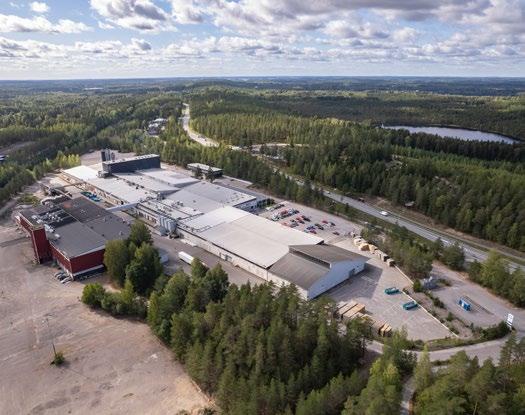
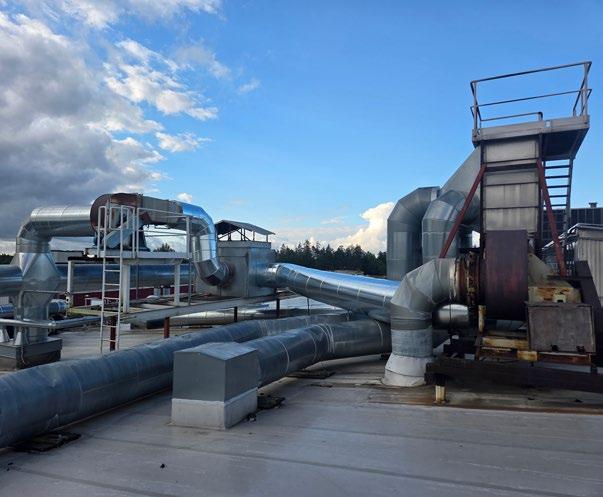
At the Lohja plant, 45 km west of Helsinki, drying lines are part of the production of fibre cement boards. They ensure the correct moisture content of the product at the end of production. During the drying process, warm air is circulated in the oven and then released through an exhaust pipe to the outdoors. By redesigning the piping, the waste air from one drying line can now be fed back for reuse in preheating the heating combustion air in both drying lines.
Technical manager Mikko Ylikopsa and his team had looked into ordering all new equipment, but with careful calculation and engineering ingenuity they realized they could get almost the same results by simply adding an insulated connection pipe to the existing setup. The exact amount of energy conserved in this way will vary depending on the product being manufactured—and on seasonal temperatures, which in Lohja can drop below -20 Celcius in the winter months.
“The pipe, made of galvanized steel, allows us to preheat the air for combustion with waste energy, which replaces natural gas heating. We had estimated a savings in natural gas use of around 10% per year, but after a four-month trial it looks like the savings might be even higher.”
– Mikko Ylikopsa, Technical Manager at the Lohja Factory –
By reusing existing equipment to lower net energy consumption, Lohja has achieved a sustainability double score.
Governance and responsible business
Aspects of social responsibility
Social responsibility is an integral part of our governance approach and guides how we operate across our international value chain. Although these aspects are not assessed as material in our Double Materiality Assessment, they remain important to our stakeholders.
Human and labour rights, including child labour
Our Code of Conduct and Human Rights Policy govern our commitments in relation to human and labour rights. We recognise our responsibility with respect to international human and labour rights. We strive to promote a working environment characterised by respect, fairness, equality, and where fundamental employee rights are protected. Swisspearl does not accept child and forced labour. Furthermore, we strive to work with suppliers and other business partners that match our values and standards. To further advocate them, the Swisspearl Supplier Code of Conduct sets the social, ecological and ethical standards for all our suppliers.
In 2025, Swisspearl was not involved or suspected in any legal proceedings associated with human rights violations. Therefore, Swisspearl did not incur any monetary losses as a result of such processes either.
Conflict minerals and metals
We do not import or use as part of raw materials any conflict minerals and metals. Furthermore, we conduct a supply chain due diligence for conflict minerals and metals thereby responding to the requirements of the Swiss Ordinance on Due Diligence and Transparency in relation to Minerals and Metals from Conflict-Affected Areas and Child Labour.
Bribery and corruption
We do not have operations in areas with elevated corruption or bribery risk. However, we must be diligent in our operations and relationships with customers, suppliers and other business partners to avoid these risks. Our Code of Conduct takes a clear stance against bribery of any kind. Furthermore, the Swisspearl Supplier Code of Conduct serves as an integral code for relationships with suppliers and business partners. In addition, all employees are encouraged to report requests for bribes or facilitation payments immediately, either to their manager, directly to Swisspearl’s Legal department or via our whistleblowing system.
Pricing integrity and transparency
Our values guide all our employees to treat everyone with integrity. Furthermore, the Swisspearl Code of Conduct takes a clear stance against unfair competition. All Swisspearl’s business partners are expected to adhere to existing laws that regulate competition, particularly anti-trust and competition laws.
In 2025, Swisspearl was not involved or suspected in any legal proceedings associated with anti-competitive behaviour, including, but not limited to, cartel, price-fixing and anti-trust practices. Therefore, Swisspearl did not incur any monetary losses as a result of such processes either.
Data ethics
Swisspearl does not currently have a formal data ethics policy. The data we hold is used solely for our own business purposes, and given our relatively small global footprint and specialised market segment, the commercial value of our data to external parties is low. This reduces the risk of external attempts to access or misuse our data.
We do not sell any data. When required by law, court order, or decision of an authority, we provide the specifically requested information – however, no such requests occurred in 2025.
When using data from third parties, we expect those parties to comply with all applicable laws and uphold ethical standards in collecting, handling, and sharing data.
Although Swisspearl does not have a separate data ethics policy, our Personal Data Protection Policy sets out clear principles and procedures that reflect our commitment to data ethics. This policy covers lawful, fair, and transparent data processing, data minimisation, security, respect for individual rights, and responsible data sharing—ensuring that ethical considerations are embedded in all our data practices.
Table 2. Swisspearl's policies addressing human rights topics.
A vibrant, contemporary urban residence
LH Residential Building | Varna, Bulgaria
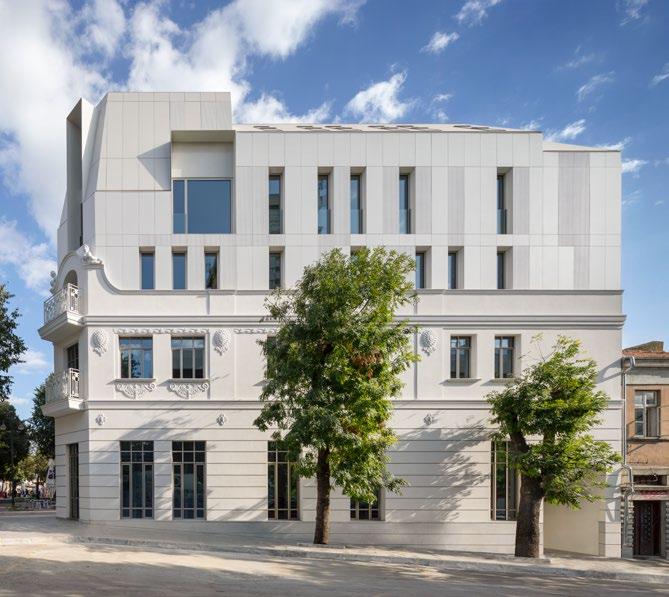
Originally constructed in 1923, the LH residential building has undergone a striking transformation into a vibrant, contemporary urban residence. Led by STARH, the renovation preserves the spirit of the original structure while seamlessly introducing modern design and functionality. Occupying a prominent corner near Varna’s Sea Garden, the original two-storey building was not officially listed as a cultural heritage site. Still, its sentimental value to the owner and the rich ornamentation by acclaimed sculptor Kiril Shivarov gave it architectural and emotional significance. Instead of opting for demolition, STARH chose to integrate the existing structure into a new five-storey composition, retaining its historic facade and character while extending its relevance for the future.
General information
Basis of sustainability statement
Sustainability is embedded in our Vision and Mission. Our sustainability targets guide our sustainability decisions and activities in both the long-term and in day-to-day operations.
Introduction
The purpose of the chapter General Information is to explain how we prepared the Sustainability Statement. It is followed by chapters explaining in detail the material environmental, social, and governance topics, aligned with the results of the double materiality assessment, and concludes with a summary of ESG metrics.
No information corresponding to intellectual property, knowhow or the results of innovation has been omitted from the Sustainability Statement, nor has Swisspearl exempted from disclosure information pertaining to impending developments or matters in the course of negotiation.
All material impacts, risks and opportunities disclosed in the topical standards have been subject to a double materiality assessment (DMA). For a detailed description of the scope, methodology and assumptions of our DMA process, see the chapter discussing the DMA.
The Sustainability statement follows the categorisation of short-, medium- and long-term time horizons as defined in ESRS1 ED, section 6.2; Short-term (within 1 year) | Medium term (1-5 years) | Long term (> 5 years).
In addition to the disclosures prescribed by ESRS, we have included metrics based on the SASB Construction Materials standard. We indicate these metrics in the ESG metrics section with the appropriate code and explain their application in the ESG accounting principles in the Appendix of this report.
Risk management and internal controls over sustainability reporting
Our Group Sustainability department is responsible for developing comprehensive group reports on sustainability issues and ESG metrics. They organise and lead essential activities, including the consolidated DMA, data collection and validation and review processes for sustainability reporting. The Group approach to reporting also enables our Group Sustainability department to function as an information hub, identifying and rectifying inconsistencies or errors in sustainability data.
The sustainability reporting system is centrally governed by the Group Sustainability function, with defined roles for data entry, review, and approval at entity and Group level. The system provides a documented audit trail, version control, and data-freezing mechanisms supporting internal control over non-financial reporting.
Therefore, the newly implemented system supports Swisspearl’s mitigation od several challenges related to reporting, like insufficient standardisation and instructions, incomplete data, errors in manual data entries, lack of control procedures for data quality and data freezing, as well as contextual inaccuracies from using generic data sources.
However, Swisspearl works continuously to overcome and mitigate the challenges and resulting reporting errors. In 2025 we have worked with improvements concerning the following areas:
• Internal reporting instructions
• Share of supplier-specific emissions
• Data quality control and approval procedures
• Data structures
• Full review of the CO2 inventory
• Interpretation of regulations
In all of the listed areas, improvement steps were taken in 2025 through the implementation of a specialised sustainability data collection and reporting software tool together with an external consulting company. Going forward, the tool offers improved capability to sustainability data management, reporting and benchmarking.
Furthermore, the Director of our Group Sustainability department has status meetings with the Group Head of Corporate Development at least every two weeks regarding the progression of sustainability and its reporting. From these meetings, topics identified as material risks to the success of the reporting, especially concerning quality, schedule and cost, will be escalated to the Group CEO, who updates the board when necessary.
Lastly, regarding the annual sustainability report, we have a multi-stage review process implemented for our management to ensure the coherence of the reported information.
Stakeholder assessment
Swisspearl Group has conducted a stakeholder assessment to systematically evaluate stakeholder interests and influence on the company’s strategy and business model. From the assessment, key stakeholders were identified based on three components;
• their high level of interest in Swisspearl Group’s sustainability strategy,
• their ability to influence business decisions, and
• their motivation to engage through sustainability reporting.
Furthermore, environment, social and governance were included in each of the components to further inform the sustainability interest areas of the stakeholders.
As an outcome of the assessment, the following key stakeholders were identified for Swisspearl:
• Suppliers
• Employees
• Customers
• Banks
• Shareholders/investors
• Authorities The engagement with key stakeholders is presented in the next chapter.
Stakeholder engagement
We engage with our stakeholders to shape the understanding of their needs, requirements and thoughts in material sustainability topics. In alignment with our Mission, we collaborate with our stakeholders to support the creation of leading solutions.
Engagement purpose
• To inform and align on our sustainability approach & goals
• To collaborate, improve and innovate
• To inform and align on our sustainability approach & goals
• To manage sustainability actions and projects
Own operations Own employees
Downstream Customers
• To understand expectations
• To inform on our sustainability approach & targets
• To collaborate in building projects Banks
• To understand the ESG expectations in financing
• To provide sustainability information and data
Shareholders
• To align sustainability interests
• To secure support for sustainability initiatives Authorities
• Regulatory compliance
• To influence the policies and regulations
Engagement methods
• Dialogue & contracts
• Supplier code of conduct
• Due diligence
• Projects
• Sustainability reports
• Whistleblowing system
• Code of conduct
• Meetings
• Engagement surveys
• Sustainability reports
• Projects
• Whistleblowing system
• Dialogue & contracts
• Projects
• Sustainability reports
• Whistleblowing system
• Dialogue & contracts
• Responding to data requests
• Sustainability reports
• Whistleblowing system
• Meetings
• Internet
• Meetings
• Participation in European Federation of Fibre Cement Manufacturers
Engagement outcomes
• Managed supplier expectations
• Adherence to our code of conduct
• Risk management
• Achievement of sustainability goals
Main functions involved
• Sourcing and procurement
• Group Sustainability
• Legal
• Improved alignment and engagement
• Updates of internal policies
• Achievement of sustainability goals
• HR
• All functions
• Achievement of sustainability expectations
• Enhanced customer satisfaction
• Increased loyalty and market shar e
• Access to capital
• Cost savings
• Risk management
• Regulatory compliance
• Up to date shareholders
• Integration of shareholder expectations into strategy
• Access to capital
• Regulatory compliance
• Policy influence
• Risk management
• Sales
• Product Management
• Marketing
• Group Sustainability
• Finance
• Legal
• Group Sustainability
• Board of Directors
• CEO Office
• Production
• Product Compliance
• Group Sustainability
Basis of the Double Materiality Assessment
Introduction
In 2025, Swisspearl Group reviewed and updated its 2024 double materiality assessment (DMA), covering all Group activities, including the full value chain. The process was supported by an external consultant from October to December 2025. The overall process is shown below.
In line with [Draft] ESRS 1, the review captured significant changes and stakeholder insights since 2024 that could affect the materiality conclusions. Chapter Stakeholders provides an overview of Swisspearl’s stakeholder engagement.
The captured changes and insights informed a qualitative topdown review of all ESRS Topics. The identified impacts, risks and opportunities (IROs) were classified under sustainability matters as outlined in the ESRS 1 alongside with the outcome of the DMA review 2024. Scoring applied the same methodology as in DMA review 2024. The outcome was reviewed and validated by the management and approved by the Board of Directors.
Scoring
A two-dimensional scoring system was applied:
Impact Materiality
• The materiality of an actual impact is determined by the severity of the impact (scale, scope, and irremediable character) times the likelihood of the impact. Positive impacts do not consider “irremediability” as a factor. For human rights-related impacts, severity takes precedence over likelihood.
Financial Materiality
• The materiality of a financial impact is determined by the approximated size of financial magnitude times the likelihood of the financial impact.
The scoring and assessment methodology are described in detail in the Appendix of this report.
Integration of risk management and due diligence in impact prioritisation
The DMA process integrates risk management by assessing likelihood while considering existing prevention, mitigation, and remediation measures. Scale and scope evaluations are informed by due diligence insights. In prioritising impacts, we also consider heightened-risk areas identified through due diligence, including specific geographies, business relationships, and activities with elevated potential for negative impacts. Dedicated consultations with affected stakeholders or external experts specifically for impact assessment were not conducted as part of the 2025 DMA review.
Interaction with strategy and business model
Chapter Sustainability approach explains how the strategy and business model address the identified material IROs.
and
Collection of relevant changes, insights and new learnings since 2024 DMA through review of documentation and dialogue with internal subject matter experts.
DMA review
2023 and 2024 DMAs were bottom-up from suband sub-sub-topics to ESRS Topics. DMA review 2025 included top-down review to mitigate risk of topical oversight.
Top-down review outcome integration into previous results Scoring and concluding 2025 review results
Top-down review inputs were added to the DMA power book along with data from previous DMAs, including risk management, due diligence, and stakeholder inputs.
To ensure consistency, conclude materiality and finalise the DMA review, material topics from the 2025 review were scored in the power book alongside the previous DMA results.
review Executive Management review Approval by the Board of Directors
CEO validated, reviewed and provided feedback to the DMA review 2025 assessment and results.
Management validated, reviewed and provided feedback followed by the final CEO signoff of the DMA review 2025 results.
Final oversight and approval of DMA review 2025 was conducted by the Board of Directors.
1. Collection of inputs
Collection of business changes
emerging insights
2. DMA
3. Management review
4. Approval
Double materiality assessment
Material topics on ESRS level
The materiality matrix, see Figure 6, presents the results of the DMA on the ESRS Topic level. Material sustainability matters have been mapped to the relevant topical standards and disclosure requirements and determine what information is material for Swisspearl to report.
Breakdown of the material topics to sub- and sub-sub-topic levels
The DMA review 2025 confirms climate change, circularity and resource use, water and marine resources, and own workforce as Swisspearl’s material sustainability topics.
Climate change mitigation and resource outflows are identified as double material, reflecting both significant material and financial impact. Water withdrawals and discharges, resource inflows, and waste remain primarily impact-driven, along with health and safety of our workforce.
The next chapter details the material topics in the value chain and establishes how the topics are addressed by the sustainability approach, founded on Swisspearl’s strategy. For more details on the strategic intent, please see chapters How we create value and Sustainability approach.
(S3) Affected Communities
(S4) Consumers and end-users
(G1) Governance
• Resource inflows and Resource outflows: waste
Figure 6. Swisspearl’s material sustainability topics on ESRS Topic level.
Table 3. Breakdown of Swisspearl’s material sustainability topics.
Side Story | Social, ecological, original and playful
A
community henhouse models sustainability and circularity
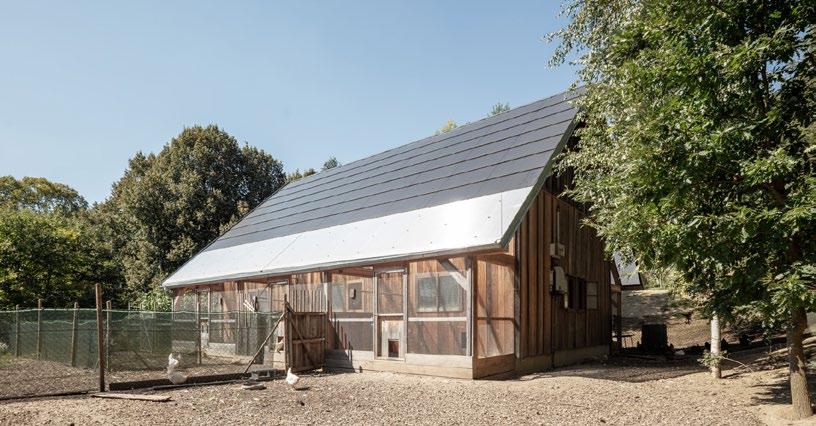
Alexander Hagner and Ulrike Schartner founded their Viennabased architecture bureau gaupenraub+/- with a commitment to social responsibility, sustainability, and creatively unconventional building solutions. Over the years they have realized multiple projects for the Vinzenzgemeinschaft, the Austrian affiliate of the Society of Saint Vincent de Paul—an international voluntary organization that aims to help disadvantaged members of society.
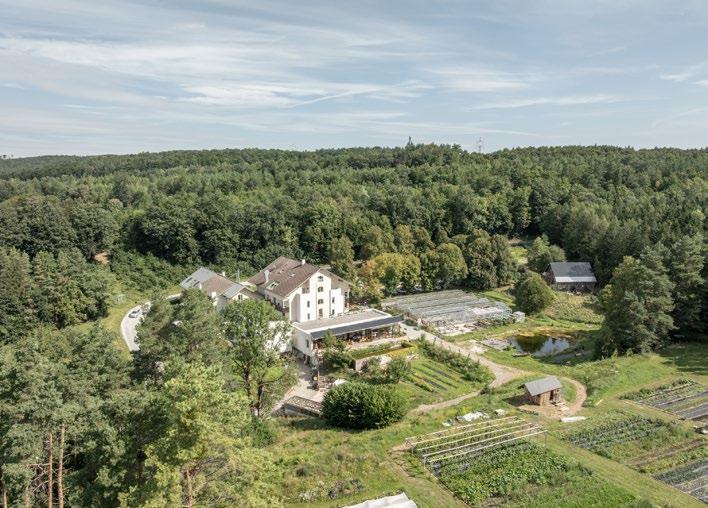
For the VinziRast am Land project, the mandate was to convert a former luxury hotel and restaurant into a living and working community with the purpose of reintegrating unhoused people. Located near the village of Mayerling in the Vienna Woods, the property also offers the opportunity for residents to grow their own vegetables—and raise chickens.
The story of how the henhouse/aviary was built is a model for sustainable, cooperative and innovative architecture. The wood was reclaimed from an abandoned barn located nearby. It was retrieved and reassembled by students and teachers from the local technical college, together with VinziRast residents. And Swisspearl donated its Sunskin mounting system for installing photovoltaic roof panels, as well as additional tech and assembly know-how. The decision to include solar power, thanks to a donation from a local photovoltaic entrepreneur, also inspired the architects to create a special roof design to house the panels.
VinziRast am Land received the Ammodo Award for Social Architecture 2025. It is also the second collaboration between gaupenraub+/- and Swisspearl. The VinziDorf Wien project from 2019 was built with Swisspearl facade panels.
Kurt Kuball Architekturfotografie, Austria
“The motto for VinziRast am Land is, ground beneath our feet.”
– Alexander Hagner, Architect –
The goal was to provide housing that helps residents not just to survive, but also to thrive--and to reconnect with the earth. By raising chickens and growing their own fruits and vegetables, they are participating in a market gardening system that is partly selfsustaining.
As architects, we want to create cultural value, not just functional objects. That means: not simply sticking solar panels onto a roof, but integrating photovoltaic elements into the design structure.
A henhouse project that uses solar energy and provides fertilizer for kitchen gardens was a marvellous opportunity to show how
architecture can bring together human and animal needs, and connect them with natural power, for the good of the planet.
A social housing project with a modest budget requires us to proceed strategically and develop creative solutions. The choice to reuse and recycle materials makes both economic and ecological sense. The process also led to some beautiful collaborations, with different partners pitching in. At the end of the day we can all be proud of what we accomplished together. The know-how and material contributions from Swisspearl were a proactive part of that process.
Michael Nagl Austria
Value chain impacts, risks and strategic goals
Overview
of
Swisspearl’s strategic sustainability framework
Swisspearl’s strategic sustainability framework links the impacts and risks across our value chain with clear long-term goals. Our latest double materiality assessment highlights climate change mitigation, energy, water, resource use and workforce safety as the most material topics.
In upstream activities, our focus lies in reducing the carbon intensity of raw materials, strengthening supplier collaboration, and increasing transparency. In our operations, we prioritise waste reduction and water efficiency, renewable energy integration and continuous improvements in workplace safety. Downstream, we work to explore and integrate circular economy flows and reduce our carbon footprint.
Upstream
Downstream
Environmental information
E1 Climate Change
Impacts,
risks and opportunities
Table 4 describes the climate change-related material topics for Swisspearl. Climate change mitigation and Energy were identified as both negative impacts and financial risks, making them double material.
The construction sector significantly contributes to global greenhouse gas emissions, thereby having a negative impact on climate change. For Swisspearl this includes emissions from the production and use of materials such as cement, as well as emissions from own manufacturing processes and global transportation. The main source of carbon emissions in the sector’s value chain is fossil energy.
Governments are implementing stricter regulations to reduce emissions and promote sustainable practices. Increasing requirements on sustainability are driving the construction sector to adapt its methods and materials.
Swisspearl, as part of the construction sector value chain, is exposed to rising regulatory, market, and stakeholder expectations to reduce greenhouse gas emissions across its operations and value chain. These expectations, together with
the required decarbonization measures, constitute the main potential future negative financial impacts.
Policies
Swisspearl has a Code of Conduct (CoC) in place to manage its material impacts, risks and opportunities related to climate change mitigation and energy. The CoC includes a dedicated chapter for environment and climate. It emphasises our dedication to carrying out our business in an environmentally sustainable manner and mitigate our climate impact. We continuously work on reducing and preventing the adverse environmental and climate impacts in our own operations and the value chain. Additionally, the CoC includes action-oriented expectations for employees to uphold high standards of environmental and business conduct, including:
• Minimisation of the environmental and climate impact of our operations, especially by focusing on reducing consumption of natural resources, including water, raw materials and fossil fuels.
• Integration of environmental and climate considerations into procurement processes.
• Setting KPIs and targets, track performance, report findings and apply learnings to facilitate continuous improvement.
Moreover, our Supplier CoC (SCoC) sets expectations for business partners to comply with all applicable laws, regulations, licences and permits. We give a set of guidelines to minimise the adverse lifecycle impacts on the environment, human health and livelihoods of their products or services.
Targets
Scope 1, 2 and 3 carbon neutrality by 2040.
Actions
To address the material impacts, risks and opportunities related to climate change mitigation and energy, we have established long-term climate targets. We are planning and running decarbonization initiatives across our own value chain. Our production sites support continuous improvement in environmental performance. The majority of our production sites operate with certified ISO 14001 environmental management systems.
Achieving carbon neutrality over time requires substantial research and development as well as collaboration across the value chain. Swisspearl is investing in the re-engineering of production processes and assessing technological solutions with the potential to significantly reduce process-related greenhouse gas emissions.
Table 4. Climate change-related impacts, risks and opportunities.
Progress in Scope 3 emissions reductions depends to a significant extent on suppliers addressing their own emission sources, particularly those related to raw materials and logistics. Cement represents more than 50% of Swisspearl’s Scope 3 greenhouse gas emissions. In 2025, slightly more than 80% of the cement volumes consumed by Swisspearl were sourced from suppliers that have committed to science-based targets under the Science Based Targets initiative (SBTi).
Scope 1 – Direct GHG emissions and energy use
A significant share of Swisspearl’s Scope 1 greenhouse gas emissions originates from fossil-fuel-based process heating. Waste reduction in production processes contributes to lower energy demand and emissions intensity. Swisspearl is assessing production process optimisations and technologies to reduce natural gas-based energy consumption and emissions, while transitioning its vehicle fleet towards hybrid and electric vehicles.
Some production processes require process heat above 120 °C, for which direct electrification remains inefficient and industrial-scale high-temperature heat pump technologies are not yet sufficiently mature. Consequently, near-term decarbonisation of natural-gas-based process heat is currently subject to technological and economic constraints.
Scope 2 – Purchased energy and renewable electricity
To reduce energy-related emissions, we are increasing the share of renewable electricity in our operations. In 2025, we completed the expansion of solar energy capacity at our Swiss manufacturing site, increasing on-site renewable electricity generation and reducing reliance on grid electricity. We are
analysing additional opportunities to introduce renewable energy solutions, including on-site solar installations, power purchase agreements and green electricity procurement.
Interconnection of Scope 1 and 2
Across the reporting period 2022–2025, the Swisspearl’s energy mix remained relatively stable, with stationary combustion (primarily natural gas) accounting for 51-53% of total energy use and electricity representing around 39–41%.
Despite this, purchased electricity consistently contributed the largest share of Scope 1 and 2 emissions (54–60%), reflecting the higher carbon intensity of the electricity grids in several of our operating regions, see Figure 7, compared with direct natural gas combustion.
It is notable that Scope 1 decarbonization is interconnected to Scope 2. Natural gas consumption and related emissions can to some degree be reduced through electrification. However, this means increase in electricity consumption and related emissions and thereby increases the electricity decarbonization priority for Swisspearl.
Scope 3 – Upstream and downstream value chain
Our Scope 3 actions focus on researching and testing less carbon-intensive raw materials and identifying opportunities to integrate into circular economy flows. These activities aim to reduce embodied emissions and increase the use of secondary and recycled materials. Scope 3 decarbonisation is closely linked to supplier engagement and material innovation. In logistics, we encourage our transport partners to expand CO₂ reporting, increase the share of lower-intensity transport modes
such as rail, and explore further decarbonisation options.
The majority of our Scope 3 emissions originate from Category 1 – Purchased Goods and Services, which accounts for 85% of our total upstream and downstream footprint, see Figure 8, Raw materials represent 85% of these emissions, reflecting the carbon intensity of key inputs such as reinforcement fibers and cement. Transportation and distribution (Categories 4 & 9) is the second-largest contributor with 13%, driven by inbound logistics of raw materials and outbound deliveries to customers.
Figure 7. Energy and Scope1 and 2 emissions share.
Environmental information
E1 Climate Change
Fuel-related activities (Category 3) add 3%, representing the upstream impacts associated with the production and supply of energy sources used onsite. Waste generated in operations (Category 5) has a comparatively small share of 0.1%.This distribution, demonstrates that our Scope 3 footprint is primarily influenced by raw material procurement and logistics activities.
Results
Scope 1
Despite a 3,8% increase in production volume, Scope 1 absolute emissions decreased by 1,1%, amounting to 17,647 tons. This result reflects ongoing optimization efforts across operations, including improved waste efficiency measures and process adjustments that help limit direct emissions, leading to reduction of stationary combustion intensity by 3,5%.
Vehicle-related greenhouse gas emissions are calculated by applying NEDC-CO₂ or WTPL-CO₂ supplier-specific emission factors to kilometers driven as the underlying activity data. In parallel, energy consumption associated with vehicle use is estimated by converting kilometers driven into energy demand using assumptions on average fuel consumption and fuel energy content. This dual approach enables Swisspearl to monitor developments in its vehicle fleet along two dimensions—emissions and energy—thereby distinguishing between carbon-intensity effects, supplier improvements, and underlying efficiency or activity-related changes.
A notable improvement was achieved in company vehicle emissions, which decreased by 25% compared with 2024, further demonstrating the positive impact of targeted optimization initiatives. Between 2022 and 2025, energy consumption from fuel-burning vehicles decreased by nearly 40%, indicating reduced reliance on fossil fuels and increased fleet efficiency. During the same period, energy consumption from electric vehicles more than tripled, reflecting accelerated electrification of the fleet. Despite the growing share of electric mobility, the overall transport energy demand decreased, demonstrating a successful and ongoing transition toward lower-carbon transportation solutions.
Figure 8. Scope 3 emissions overview.
Figure 9. Scope 1 CO₂ emissions and natural gas energy consumption.
Figure 10. Scope 1 emissions and energy consumption of company vehicles.
4 and 9: Transportation Category 1: Purchased goods and services
Scope 2
Purchased electricity totals 87% of energy consumption and 94% of emissions of market based Scope 2 emissions. 15% reduction in Scope 2 location-based emissions from 2024 is a result of changes in emission factors of grid electricity and district heating activities. The 7% reduction in market-based Scope 2 emissions is primarily driven by the lower supplierspecific emission factor provided by the district heating supplier and supported by guarantees of origin of green electricity for one of our factories. Furthermore, the increasing emissions impact of higher production volume was impeded by 2 % reduction in electricity consumption intensity.
Scope 3
In 2025, Scope 3 greenhouse gas emissions increased to around 309,000 t CO₂e, compared to 276,000 t CO₂e in 2024, representing a year-over-year increase of approximately 12 %. The increase was primarily driven by higher purchases of carbon-intensive raw materials.
Global supply and availability constraints for these raw materials led to increased inventory levels to secure production continuity and meet customer demand. Given the high upstream emission intensity of these materials, the resulting increase in purchased volumes had a disproportionate impact on total Scope 3 emissions.
Efficiency improvements implemented at Swisspearl’s production sites contributed to lower emission intensities, but were not sufficient to offset the impact of increased upstream volumes on total Scope 3 emissions.
Figure 11. Scope 2 CO2 emissions and purchased electricity and heating energy consumption.
Figure 12. Scope 3 CO2 emissions.
Environmental information
E3 Water
Impacts, risks and opportunities
Table 5 describes the water-related material topics for Swisspearl. Water withdrawals and discharges are both identified as negative impacts.
Safe drinking water remains out of reach for billions: in 2022, around 2.2 billion people still lacked access to safely managed drinking water, emphasising intensifying global water scarcity and quality challenges. At the same time, industry accounts for about 20% of global freshwater withdrawals, highlighting the responsibility of manufacturing sectors to use water efficiently and safeguard local water resources.
In the construction materials sector, including Swisspearl, the water footprint arises both from direct plant operations—such as cement and clinker production, ready-mix batching, aggregates washing, dust suppression and board manufacturing—and from indirect water use linked to electricity and fossil fuels, which carry their own upstream water demands.
Policies
As stated in E1 Climate change, our CoC sets expectations to minimise the environmental and climate impacts of our operations and SCoC for our value chain. Swisspearl’s policies do not address water management in detail due to the fact that it is based on regulatory requirements and compliance described in the conditions of the environmental permits granted to our factories.
Targets
• Minimise wastewater from factories by 2030
• Not to use drinking water (municipal) in production processes by 2030
Actions
None of our production sites are located in regions with high or extremely high baseline water stress, based on recognised external water-stress classifications. Nevertheless, to address material impacts, risks and opportunities related to water, we have set medium-term targets for reducing water discharges and for decreasing the use of drinking water in production processes. Our production sites support systematic and compliant water management practices. Most of our production sites operate with certified ISO 14001 environmental management systems.
Operationally, we focus on effective and responsible water management. Water used in fibre-cement production is circulated several times before it is cleaned in effluent treatment systems and discharged back to the environment. Water withdrawals and discharge volumes are continuously monitored. In addition, water discharge quality is assessed through laboratory testing to ensure compliance with legal thresholds and to prevent negative environmental impacts. These procedures support regulatory compliance and responsible water stewardship across our sites.
We aim to minimise wastewater from factories by
We aim not to use (municipal) drinking water in production processes by 2030.
ESRS
Table 5. Water-related impacts, risks and opportunities.
Swisspearl aims to reduce water discharges from production processes, thereby contributing to lower overall water withdrawals and the protection of water bodies. At the same time, a share of Swisspearl’s Scope 1 emissions originates from fossil-fuel-based process heating. As part of its climate change mitigation measures, Swisspearl has implemented heat pump technologies to replace fossil-based heat generation. The operation of heat pumps has led to increased water withdrawals at certain sites, resulting in an observed trade-off between climate change mitigation and water use. Similar trade-offs are expected if further Scope 1 decarbonisation actions are implemented using heat pump technologies.
Currently, we focus on waste reduction in production. It improves water use efficiency by reducing gross production losses and therefore the need for water in material processing. Moreover, supported by technological solutions, we are exploring ways to further close internal water loops and minimise the volumes of water requiring purification and discharge. Two of our factories already operates a fully closed water circuit with no discharges from production processes, providing a benchmark for further improvements.
Certain production processes require very clean water. Through process re-engineering and technological development, our aim is to eliminate the use of drinking water in production. In 2025, we conducted a detailed mapping of drinking-water use across production processes. Based on these findings, we prepared an investment project to eliminate the single largest point of drinking-water use in production, with implementation planned for 2026.
Results
In 2025, water withdrawals decreased by 15% to 1,120,382 m³, while water discharges from production processes were reduced by 6.5% to 279,000 m³. The intensity of water discharges from production process reduced by 10% from 2024. These reductions were mainly driven by the implementation of water-recirculation measures, increased reuse of process water, improved manufacturing efficiencies and continuous monitoring and optimization of water consumption across operations.
Approximately 85% of water withdrawn is returned back to source. In 2025 71% of this returned water was from isolated water circuits for heat pumps and cooling units. The rest was purified water from the production processes. The water not returned back to source was either evaporated in production processes or remained the final products as moisture content.
Compared to the 2022 baseline, water withdrawals in 2025 were 20% lower, representing a reduction of 285,000 m³. Water discharges from production process decreased by 30% over the same period, corresponding to a reduction of 122,000 m³. The water discharge intensity reduction over the same period has been 15%.
13. Water withdrawals and discharges.
Figure
Environmental information
E5 Circular economy & Resource use
Impacts, risks and opportunities
Table 6 describes the circular economy and resource use-related material topics for Swisspearl. Resource inflows, outflows and waste are identified as negative impacts, whereas resource outflows are also identified as a financial risk, making it doubly material.
The construction materials sector remains highly dependent on virgin, non-renewable raw materials at a time when global resource extraction has reached record levels. Construction and demolition waste (CDW) accounts for more than one third of all waste generated in the EU and is globally one of the largest waste streams. Recycling and material recovery rates vary widely across Europe—from below 10% to over 90%, but much of this consists of low-value backfilling rather than high-value material recycling.
In fibre cement, circularity is still at a rather early stage. While renewable cellulose represents up to 6% of the material recipe, the majority relies on mined minerals. End-of-life recovery
and recycling options for fibre-cement products are gradually emerging but remain limited due to technical and market barriers.
Nonetheless, fibre-cement elements can already be disassembled and directed toward circular economy flows, and the adoption of modular, demountable facade systems is expected to further strengthen future circularity potential.
In Swisspearl’s context, customer demand for low-waste, recyclable and circular products is gradually rising. Furthermore, municipalities in Europe are increasing landfill costs, while waste regulations are tightening. These drivers constitute the main potential future negative financial impacts of Swisspearl’s products.
Policies
Our CoC takes a stand on environmental and climate conduct. More specifically, in connection with the circularity and resource use the CoC states the following expectations for our employees:
• Ensure that waste is handled responsibly and make efforts to increase its circularity;
• Strive to develop life cycle efficiency and circularity solutions for our product offerings.
• Set KPIs and targets, track performance, report findings and apply learnings to facilitate continuous improvement
Targets
• Scope 3 carbon neutrality by 2040
• Zero landfill waste from factories by 2030
• Create value from fibre cement waste and end-of-life products
Table 6. Circular economy and resource use-related impacts, risks and opportunities.
Actions
For Swisspearl, climate change mitigation, particularly the reduction of embodied CO₂ in our products, is a key driver of circularity strategy and integration of circular economy principles into our operations. Reducing the embodied CO₂ in our products requires continuous research and testing of alternative raw materials, including secondary materials originating from circular flows. By increasing the share of secondary materials, we reduce our dependency on virgin and non-renewable resources and also help to mitigate negative water impacts along our value chain. As part of our policy framework, we initiated the Cradle-to-Cradle certification process in 2025.
Across the lifecycle of fibre-cement products, waste is generated in upstream processes, own operations, as well as construction and end-of-life stages. Our circularity actions focus on increasing the recirculation of fibre-cement waste and identifying opportunities to close material loops. We assess waste streams, collaborate with partners in our value chain, and explore technologies to process waste into secondary raw materials or alternative products.
Already today, a significant proportion of fibre-cement production waste is supplied to cement plants where it is used as a secondary raw material, contributing to lower-carbon cement production. Additionally, cutting dust from our own operations is used as a filler replacement in fibre-cement board manufacturing, supporting internal material circularity. All in all, these recycled fibre cement volumes in 2025 were almost 12,000 tons.
Despite progress, part of our operational waste is still disposed of in landfills. We therefore continue implementing actions to improve process efficiency and expand recycling and recovery opportunities to reduce our reliance on landfill disposal. These efforts form part of our wider circular economy transition plan.
Results
In 2025, we achieved a 24% reduction in landfill waste and 27% reduction in landfill waste intensity compared to 2024. The % of waste diverted from disposal remained approximately on the level of 2024.
Since 2022, our total waste has decreased by 29% and waste to landfill by 55%. In the same period the landfill intensity has decreased by 45%. This improvement is driven by two key initiatives: reducing production waste at the source and identifying alternative recovery and utilization options that divert waste away from landfill.
Figure 14. Waste disposed and diverted from disposal.
Social information
S1 Own Workforce
Impacts, risks and opportunities
Table 7 describes the own workforce-related material topics for Swisspearl. Health and safety of own workforce is identified as negative impact.
In 2023 construction sector accounted for the highest rate of fatal workplace accidents of all sectors in the EU with 24.0% share. Manufacturing was the third highest in fatalities (13.4%), following the transportation and storage sector. Regarding nonfatal workplace accidents in the EU in 2023, manufacturing had the highest share (18.5%) followed by construction (12.9%).
We supply products to the construction sector. To contribute to the safety of the downstream processes we use REACHcompliant raw materials, have safety data sheets for our products and include a health and safety chapter in our installation manuals.
Industrial production environments inherently pose health and safety risks. Our operations involve heavy and fast-moving machinery, elevated noise levels, heat exposure, and other substances, like dust. Such working environments can lead to injuries as well as other health impacts, affecting both the physical safety and overall well-being of employees. The nature of our manufacturing operations means that health and safety exposure remains a material negative impact area for our workforce.
Policies
Swisspearl Human Rights Policy states: “At Swisspearl, we recognise that the health, safety, and well-being of our people are fundamental human rights and essential to our success. We are committed to providing and continually improving safe, healthy, and decent working conditions for all employees and business partners. Designated staff are responsible for dayto-day management, monitoring, and reporting of health and safety performance.”
Targets
• Safety of all Swisspearl employees
Actions
Our health and safety approach covers employees working in production facilities, sales organisations and corporate offices across all our locations. To mitigate the material risks associated with our own operations, we maintain a systematic and comprehensive safety management approach, supported by centrally coordinated and locally embedded safety functions. Our production sites apply formal risk assessments, incident investigations, safety reporting and continuous improvement practices. The majority of our sites are certified according to ISO 45001. Most of our production sites operate with certified ISO 45001 health and safety management systems.
Table 7. Own workforce-related impacts, risks and opportunities.
We work to enhance existing safety procedures and practices and develop new ones based on operational learnings and employee feedback. Training, competence development and building a proactive safety mindset and behaviour are key focus areas. Our safety teams also work to identify and share best practices across sites to strengthen consistency and performance in occupational health and safety.
During 2025, we continued the implementation of a safety observation system across all our factories. The purpose of the system is to support us in continuous health and safety improvement by consolidating risk assessments, observations, positive feedback, incident investigations and corrective actions into the same platform. Most of the factories in the Swisspearl Group also implemented a safety week with the aim to provide training for all employees in safety, first aid and fire prevention.
Results
To get a comprehensive view of workplace safety performance we follow not only lost-time injury frequency rate (LTIFR), but also all injury frequency rate (AIFR) and lost time injury severity rate (LTISR). The rationale of our approach is that AIFR provides a broader picture of overall workplace safety by including medical treatment injuries. LTIFR helps to assess the frequency of incidents that result in employees missing work whereas LTISR provides insight into the severity of injuries and their impact on workforce productivity.
In 2025, we observed a setback in safety performance in several factories, interrupting the positive trend seen between 2022 and 2024. The Swisspearl Group recorded an LTIFR of 10.1, an LTISR of 221, and an AIFR of 16.6. While this development is not in line with our expectations, the long-term LTIFR target remains at 3.
At the factory level, stronger performance was achieved in units where forward-looking observation systems and regular safety training programs have been systematically implemented. In response to the weaker performance in some factories, targeted improvement actions are being actively driven to strengthen safety practices and ensure alignment with group standards.
Figure 15. Safety performance.
ESG metrics
Basis and methodology
Purpose and scope of ESG metrics
The ESG metrics section provides quantitative information on Swisspearl’s environmental, social, and governance performance to support transparency, comparability, and informed decision-making by stakeholders. The metrics reflect the outcomes of the double materiality assessment and focus on the material sustainability topics under ESRS as well as business and industry relevant metrics.
Transition to a new sustainability reporting system
In 2025, the Swisspearl transitioned its sustainability data management and KPI calculation processes from a manual, Excel-based setup to an online sustainability reporting system. This development marks an important milestone in improving Swisspearl’s sustainability governance, data quality, and ESRS-aligned reporting capabilities. The implementation process ran from January 2025 to February 2026 and covered the entire Group, including all operating units and relevant value chain activities. The transition was supported by an external sustainability consultant and coordinated internally by the Sustainability team. The new system enables structured data workflows, built-in calculation logic, automatic consolidation, full traceability, and enhanced control mechanisms.
Improved data collection and validation processes
With the rollout of the new sustainability reporting platform in 2025, Swisspearl significantly improved the collection and validation of energy consumption and environmental data. Although invoice data was previously used, it was retrieved quarterly and transferred manually between departments. The new system enables direct monthly input of invoice data into
the platform and allows supporting documentation – such as invoices – to be attached directly within the reporting interface. These enhancements improve data accuracy, transparency, and traceability. As a result, selected historical datasets were reconsidered and aligned with the updated methodology to ensure consistency and comparability across reporting years.
Reporting standards and frameworks
The reported metrics are primarily aligned with the draft European Sustainability Reporting Standards (ESRS). Where relevant, Swisspearl also discloses selected indicators based on the SASB Construction Materials standard to support continuity with previous reporting cycles and comparability for capital market stakeholders. We disclose our Environmental, Social, and Governance metrics for the years 2022–2025. The ESG metrics section references the corresponding ESRS and SASB codes for each indicator. Further information on the application of these metrics is provided in the Accounting Principles section. In addition, disclosures highlight connections to the relevant UN Sustainable Development Goals (SDGs). These appear on the right-hand side of each disclosure with the respective SDG number.
For further information on risk management and internal control processes related to sustainability reporting—including ESG metrics—please refer to the Basis of sustainability statement.
Greenhouse gas reporting
Swisspearl follows the GHG Protocol Corporate Accounting and Reporting Standard for quantifying and reporting greenhouse gas emissions. We provide an overview of the main emission categories for our factory operations across Scope 1, Scope 2, and Scope 3, see Figure 16.
16. Overview of reported GHG emissions.
The emissions profile illustrates that the company’s climate impact is largely driven by upstream value-chain emissions, particularly cement as carbon-intensive raw material. While operational decarbonization of Scopes 1 and 2 remains a key priority, achieving long-term climate targets depends primarily on Scope 3 reductions. As a result, supplier engagement, material innovation, and strategic collaboration across the value chain, complemented by continuous improvements in data transparency and procurement practices are vital elements of our decarbonization pathway.
Based on the work performed in 2025, Swisspearl estimates that the current GHG reporting covers the majority of value-chain emissions for which reliable and decision-useful data is available. Coverage and accuracy will continue to improve through enhanced supplier engagement and system development.
Figure
Improvements and changes
Data improvements from last year
In 2025, we continued to strengthen the quality of our environmental, social, and governance (ESG) data. Throughout 2025, Swisspearl built and validated the sustainability reporting platform. The process involved the following improvements:
a. Data collection and validation
• Platform testing
• Monthly reporting
• Validation checks
b. Methodological refinements
• Renewable energy definition
• District heating methodology
• Waste treatment calculation logic
In addition, we also introduced minor updates to the internal data reporting manual, including clearer definitions and improved reporting guidance.
The 2026 reporting cycle will be first in which all Group entities report sustainability metrics directly into the on-line platform according to standardized monthly and annual timelines. This enhancement reduces manual data transfer, increases transparency, and improves overall data precision. The new process involves:
Predefined data input templates within the system
Built in validation checks, thresholds, and error alerts Documentation fields for data assumptions and methodological choices
Automatic consolidation at Group level
Internal review steps and approval workflows
These enhancements significantly reduce the risk of manual errors and improved traceability and audit readiness.
Corrections and restatements
As part of the 2025 data improvements, historical inconsistencies were identified and corrected. Where required, Scope 1, 2 and 3 emissions for 2022–2024 were recalculated to reflect updated methodologies and corrected data inputs.
Previously published sustainability reports have not been reissued; however, all trend analyses presented in this report are based on the corrected figures.
The impact of corrections to renewable energy methodology and transition to supplier specific emission factors for district heating resulted approximately 1% change on total CO₂ emissions.
Corrections in waste methodology and data allows for more granular, traceable, and consistent data across the Group from one side and business unite specific from the other. Historical waste data was not restated due to insufficient detail from waste-treatment operators for earlier years.
For CO₂ emissions associated with waste, Swisspearl applies DEFRA emission factors and guidance in alignment with GHG Protocol rules. In earlier reporting years, when only treatment-method volumes were available, Swisspearl first calculated the proportion of waste per treatment method, and then applied the relevant DEFRA emission factors to the aggregated volumes. With the introduction of more granular data through waste codes, we now apply the relevant emission factors directly to the volumes reported under each specific waste code. While the underlying DEFRA factors remain the same, the improved granularity has led to differences in total reported CO₂ emissions compared to previous reporting cycles.
Plans for data improvements
Planned improvements for 2026 focus on further increasing data reliability, reducing estimation uncertainty, and strengthening decision-usefulness for management and external stakeholders. These include enhanced supplier-specific emission factor integration, expanded real-time performance dashboards, and embedding Swisspearl-specific reporting guidance directly into the reporting platform.
Key implications for users of ESG metrics
• Historical figures presented in this report reflect updated methodologies and corrections applied in 2025. Trend analysis should therefore rely on the data presented herein.
• Data accuracy and traceability have improved from 2025 onwards following the implementation of a new sustainability reporting system.
• Further improvements in data reliability and reductions in estimation uncertainty are expected in future reporting periods.
ESG metrics
Public art - created together
Sirkkala School, located in the historic eastern part of Turku and within Finland’s National Urban Park, is a great example of how old and new can come together in a meaningful way. The project included the full renovation of three wooden school buildings from the late 1800s and early 1900s, updates to a school building from the early 2000s, and the addition of a brand-new extension that ties the whole campus together. The new redbrick building was designed with care to match the scale and feel of the neighbourhood. It links the old timber structures with modern architecture, creating a balanced, respectful addition to the historic surroundings. One of the most distinctive features of the project is the public art, created together with the students, who were involved every step of the way.
Led by visual artist Maikki Rantala, the children took part in workshops exploring local history and street art techniques. Their sketches and characters were later transformed into largescale facade elements: CNC-etched patterns on fibre cement panels, a concrete relief, and window graphics. These playful details serve as the students’ creative signature, leaving a lasting imprint on the school’s architecture and identity. Sirkkala School was awarded the 2023 Public Choice Award for Good Building Practice in Turku, recognised for its imaginative combination of old and new, and for creating an inviting and inspiring learning environment that honours both tradition and the future
Sirkkala School | Turku, Finland
Appendix content
ESRS DR content index
ESG accounting principles
ESRS DR content index
This report does not constitute a fully ESRS-aligned Sustainability Statement. Nevertheless, the ESRS Disclosure Requirements (DR) content index provides an overview of the extent of coverage and the respective locations of disclosed information within this report. ESRS Exposure Drafts from November 2025 have been used as the basis of the table.
ESRS DR Disclosure requirement
Location in report, p. Notes
ESRS 2 BP-1 Basis for preparation of the sustainability statement 2; 32
Consolidated basis, value chain coverage, reporting period; ESRS ED alignment and non-audited statement; basis section explains preparation and time horizons.
ESRS 2 BP-2 Phasing-in options –This report is not a full response to ESRS; no explicit phasing-in options/reliefs listed.
ESRS 2 GOV-1 Role of the administrative, management and supervisory bodies 24–28
Governance elements and Board of Directors and Group Executive Management profiles.
ESRS 2 GOV-2 Incentive schemes linked to sustainability – No incentive scheme disclosure in this report.
ESRS 2 GOV-3 Statement on due diligence 24–25; 30; 34-35; 42–51
ESRS 2 SBM-1 Strategy, business model and value chain 7–12; 14-17
ESRS 2 SBM-2 Interests and views of stakeholders
ESRS
Due-diligence elements are addressed narratively across governance, DMA and topical sections; no standalone GOV-3 cross-reference table is presented.
Swisspearl at a glance, products and solutions, business model and value chain, sustainability approach.
Stakeholder assessment and engagement.
Strategic framework linkages provided, no quantified current/anticipated financial effects.
ESRS 2 IRO-1 Process to identify and assess material impacts, risks and opportunities 36 DMA process, scoring logic, governance.
ESRS 2 IRO-2 Outcome of materiality assessment and list of disclosures
ESRS 2 IRO-2 (AR 30) ESRS DR content index / DR list
ESRS E1 E1-2 Climate-related risks and scenario analysis
ESRS
ESRS
ESRS
ESRS E1 E1-6 Targets related to climate change
Material topics matrix and breakdown to sub-topics, including a strategy-connected overview preceding topical disclosures.
Climate narrative includes targets and actions, but not structured as a formal transition plan.
Risks discussed, no explicit scenario analysis disclosed.
No explicit resilience assessment section.
of Conduct (CoC) and Supplier CoC referenced.
Scope 1–3 carbon neutrality by 2040.
ESRS DR Disclosure requirement
Location in report, p. Notes
ESRS E1 E1-7 Energy consumption and mix 43; 54; 62 Energy metrics and accounting principles.
ESRS E1 E1-11 Anticipated financial effects from climate risks/opportunities – No quantitative financial effects.
ESRS E3 E3-1 Policies related to water 46 States water is managed mainly via permits/compliance, no specific water management policy.
ESRS E3 E3-2 Actions and resources related to water 46-47 Operational water management actions and investment plans.
ESRS E3 E3-3 Targets related to water 17; 46 Wastewater and drinking water targets to 2030.
ESRS E3 E3-4 Water metrics 47; 54; 62 Withdrawals/discharges metrics and accounting principles.
ESRS E5 E5-1 Policies related to resource use and circular economy
ESRS E5 E5-2
related to recycling and recirculation are described, enabling operational processes and value-chain arrangements are implicitly referenced.
ESRS E5 E5-3 Targets related to resource use and circular economy 17; 48 Zero landfill 2030 and value from fibre cement waste.
ESRS E5 E5-4 Resource inflows 15; 48 Key inputs, including main raw materials listed, narrative mentions alternative/secondary materials, no quantified key material inflows disclosed.
ESRS E5 E5-5 Resource outflows (products) and waste 9; 15; 48; 55; 63 Key outputs listed, narrative on circularity of products, waste metrics and accounting principles.
ESRS S1 selected Own workforce (policies, engagement and characteristics) 17-20; 24-25; 30; 34-35; 54 Narrative on social enablers, social responsibility and characteristics of own workforce, policies, metrics as well as engagement with own workforce
ESRS S1 S1-13 Own workforce – health and safety 50-51; 55; 63 Policies/targets/actions narrative, injury metrics and accounting principles.
ESRS G1 selected Business conduct (anti-corruption, competition, data ethics, speak-up) 24; 30; 55; 63 Narrative on business conduct, access to remedy, metric on legal losses for antitrust; no full G1 structure in this report.
ESG accounting principles
Note Category Topic & Comment
Social characteristics
1. The total number of employees (headcount) refers to the number of individuals employed by the company as of 31 December 2025, with each employee counted as one regardless of full-time or part-time status.
2. % of employees in European entities represents the proportion of an organization’s total workforce that is employed by legal entities located in Europe, expressed as a percentage of total employees.
3. Total number of employees (full-time employees equivalent) is a standardized measure of workload that converts the total hours worked by employees into the number of full-time employees those hours represent: FTE = Total hours worked / Standard full-time hours
4. The rate of voluntary turnover is the proportion of employees who have left the company voluntarily, relative to the average number of employees during the same period. Voluntary turnover rate (%) = (Number of voluntary leavers during the period / Average number of employees during the period) × 100
Geographical presence of own operations
Percentage of production sites in Europe represents the share of the company’s production sites that are geographically located in Europe, as of 31 December 2025.
Greenhouse gas emissions
General
1. Reference SASB EM-CM-110a.1; percentage covered under emissions-limiting regulations not included in the reporting.
2. Base year is 2022 in accordance with the GHG Protocol with deviations.
3. Activity data are sourced primarily from purchase invoices. Where invoices are not available, Swisspearl uses internal operational records or data obtained from on-site measuring and metering systems.
4. Swisspearl reports Scope 1 and Scope 2 greenhouse gas emissions for all business units under its ownership or operational control, in accordance with the GHG Protocol Corporate Standard.
5. In all Scope 1 and Scope 3 calculations, the biogenic portion of relevant energy sources has been accounted for outside the scopes, in accordance with GHG Protocol requirements. However, these biogenic emissions have not been publicly reported yet because the validation process is still ongoing.
Scope 1
6. Scope 1 includes all relevant Swisspearl’s operating entities and their emissions from energy consumption, including mobile combustion. In energy emission reporting, energy consumption is supplier-specific, based on invoices and emission factors from DEFRA. For company cars, most of the emission factors are supplier specific, the rest from DEFRA 2025 and annual kilometers either actual or based on kilometres in leasing contract.
Note
Category Topic & Comment
Scope 2
7. Scope 2 includes all relevant Swisspearl’s operating entities in both location- and market-based emissions by using the Association of Issuing Bodies’ (AIB) production and residual mix emission factors. 2025 has been calculated based on AIB 2024 emission factors, as the 2025 factors have not been released at the time of accounting. For Austria and Switzerland, where all grid electricity has Guarantees of Origin (GO), market-based emissions have been accounted by using production mix emission factors if Swisspearl has not acquired GOs.
Supplier-specific emission factors from district heating providers are used when available and compliant with GHG Protocol quality criteria for market based calculations. This methodological improvement resulted in one site reporting zero emissions for district heating, while for another site the supplier-specific factors led to higher historical and current reported emissions. For location-based district heating calculations, DEFRA’s emission factors are applied. These methodological adjustments influenced the comparability of historical figures, and therefore this report includes recalculated historical figures for district heating.
In 2025, we transitioned to a new online ESG reporting system, which required the establishment of a harmonised and more robust reporting framework across all sites. As part of this transition, we reassessed and updated our methodology for reporting Scope 2 emissions. Under the revised approach, renewable electricity is accounted for only when supported by verified documentation, whether it originates from our own renewable energy installations or from external suppliers. Energy sources that were previously classified as renewable but lacked sufficient evidence are no longer included in the renewable energy share.
Scope 3
8. For raw materials, Swisspearl has prioritised supplier-specific cradle-to-gate emission factors. However, several raw material suppliers are not able to disclose them since they have not conducted the required life cycle analysis. For such cases, Swisspearl has focused on the main raw materials and used estimates for them based on other suppliers of the same raw materials or information from trusted sources.
Swisspearl has used raw material and packaging purchase data from the data warehouse connected to the ERP systems and estimates that 99% of the material tonnage are included in the Scope 3 emission calculation. For pallets, supplier-specific emission factors have been used. Regarding the rest of the packaging material emission factors, please see point 11.
Buy for resale products consist of construction products and accessories from various materials. In total Swisspearl has counted emissions for 88% of the volumes in 2022, 77% in 2023 and 77% in 2024 and 85 % in 2025. Out of these volumes, 43 % have supplier-specific emission factors, 1,3 % DEFRA emission factors for materials and the rest approximately 56 % application of supplier emission factors for similar products.
9. For upstream transports, Swisspearl has included raw materials and used DEFRA 2025 emission factors for each transport mode and well-to-tank emission factors for respective fuel extraction. Swisspearl estimates that upstream transports include 100% of material volumes in the data warehouse.
10. For downstream transport, Swisspearl uses different calculation approaches depending on data availability. Where available, transport emissions are calculated using transporter-specific emission data combined with transport spend. For the remaining transports, emissions are estimated by combining country-level sales volumes or transport spend with transport company-specific emission data or DEFRA emission factors.
Swisspearl estimates that transporter-specific emission data cover approximately 78% of total transport spend. Emissions for the remaining share are estimated using supplier-reported emission factors derived from available supplier reports. In these cases, transport activities are assumed to be carried out by road freight and to reflect the average vehicle mix of reporting transport companies. All transport emissions are based on well-to-wheel (WTW) emissions, either as reported directly by suppliers or estimated from supplier-provided data.
11. The rest of the categories included in Swisspearl Scope 3 are based on DEFRA 2025 emission factors.
Covered activities include plastic film and paper-based packaging, water supplied through the public mains network, wastewater returned via the sewage system. End-of-life treatment of cement-based materials modelled applying closest to cement based materials DEFRA 2025 emission factors for concrete recycling back to concrete (closed loop) and concrete disposal to landfill.
12. The following categories from Swisspearl have not been included in Scope 3: business travel, employee commuting, as well as for sold volumes end-of-life emissions. However, Swisspearl estimates these emissions to be less than 3% from Scope 3.
Energy management
Energy consumption
1. For the reporting period 2025, Swisspearl changed the reporting unit for total energy consumption from gigajoules (GJ) to megawatt-hours (MWh) and reporting categories were changed from % to absolute MWh. This change was implemented to enhance consistency with European Sustainability Reporting Standards (ESRS) Exposure Draft requirements, improve alignment with energy management and greenhouse gas accounting practices, and increase comparability and readability of the reported information for users of the sustainability report. Comparative figures for prior reporting periods have been restated into MWh to ensure consistency and comparability over time. The restatement represents a change in way of presenting only and does not affect:
• total energy consumption in absolute terms,
• reported energy trends,
• energy intensity metrics,
• greenhouse gas emissions calculations.
2. Reference SASB EM-CM-130a.1 with categories in MWh instead of %.
3. Includes energy consumption in all relevant Swisspearl’s operating entities.
4. Volumes according to purchase invoices based on supplier-specific energy contents and electricity generated on- and offsite by hydro- and solar power.
5. Swisspearl applies market based approach in classifying the consumption of renewable energy, ref. ESRS ED 1 E1-7 AR 18 for para. 25 Energy consumption and mix, (i). 4
Water management
Fresh water withdrawn
1. Reference SASB EM-CM-140a.1 with deviations. Total water consumption is not reported, as it was not identified as material in the double materiality assessment (DMA). Only factory locations are included in the calculation of the percentage of water withdrawn in regions with high or extremely high baseline water stress; office locations are excluded.
2. Total freshwater withdrawn taken from internal operational reporting and based on freshwater intake measurement gauges in the factory locations. Water includes water used in production processes, heat pumps and heat exchangers as well as for sanitary uses.
3. Percentage recycled back to source from water withdrawn = [(cleaned water from own purification back to source + wastewater to off - site purification + water withdrawn and returned back to source through isolated circuits)/ Total freshwater withdrawn] × 100
4. Percentage of water withdrawn in regions with high or extremely high baseline water stress is based on data from Swisspearl factory locations in the World Resources Institute’s (WRI) Water Risk Atlas tool, Aqueduct.
Water discharge
5. Total water discharge includes purified water from factory wastewater purification, wastewater to off-site purification and water withdrawn and returned back to source through isolated circuits.
6. Water discharge from process=[(cleaned water from own purification back to source + wastewater to off - site purification)/total wastewater generated)]×100
7. Water discharge from isolated heat pump and cooling circuits =[ water withdrawn and returned back to source through isolated circuits /total wastewater generated]×100
5 Resource use and circular economy
Material waste
1. Reference SASB EM-CM-150a.1 and ESRS E5 E5-5 §16(b) with deviations: Waste data includes both non-hazardous and hazardous waste; however, hazardous waste is not disaggregated separately due to ongoing internal validation processes. Waste diverted from disposal includes recycling and recovery activities and therefore does not represent a standalone recycling rate. Reuse and disposal methods are not further disaggregated due to current data-tracking limitations. Reported figures cover manufacturing sites under operational control and exclude minor locations with incomplete waste data.
2. Amount of material waste generated is waste for 3rd party waste treatment. The figures are based on invoicing of factory locations. Internal reporting of waste is conducted monthly.
3. Proportion of material waste diverted from disposal = [(reported external recirculation and recovery)/total waste generated)]×100
4. Proportion of material waste directed to disposal=[(reported external landfill and incineration)/total waste generated)]×100
Workforce health and safety
Injuries
1. Reference SASB EM-CM-320a.1 with deviations; Swisspearl uses 1,000,000 working hours, instead of 200,000 working hours, near miss frequency rate (NMFR) for (a) direct employees and (b) contract employees and number of reported cases of silicosis are not included in reporting. However, All injury frequency rate defined according to The Occupational Safety and Health Administration (OSHA) and aligns with the standard to replace Total recordable incident rate (TRIR).
2. All injury frequency rate (AIFR) includes medical and lost-time injuries (MTI+LTI) for all Swisspearl employees, rolling 12 months.
3. Lost-time injury frequency rate (LTIFR) and Lost-time injury severity rate (LTISR) are for all Swisspearl employees, rolling 12 months, starting from first full 1 day’s absence and counting days until the end of full working days of absence.
Safety training
4. Safety training hours is based on all Swisspearl employees, calculated as full-time employees and reported as total for 2025.
Governance
The Board of Directors and other management
1. Board’s gender diversity ratio represents the share of women members in the Board of Directors.
2. The other management levels include members of our Group Executive Management, Senior Management and other members in group management incentive scheme.
Pricing integrity and transparency
3. Total monetary losses as a result of legal proceedings associated with cartel, price-fixing and anti-trust practices.
Sustainable from demolition to operation
Mühle Grüsch | Herisau, Switzerland
The Grüsch mill consistently focuses on sustainability, from demolition to operation. In Grüsch, a village in the lower Prättigau valley, an old mill was converted into a modern residential building by Ritter Schumacher Architects. The main building was preserved, while the silo tower was demolished and replaced by a new residential tower completely clad with photovoltaic modules. The special feature of this project: the old tower was not simply demolished, but the concrete obtained from the demolition was completely recycled. Around 60 percent of the concrete used in the new tower building comes from this recycled material. As a result, the Grüsch mill received the first demolition certificate in Switzerland from the German Sustainable Building Council (DGNB).The Grüsch mill shows what circular construction can look like when implemented consistently.