DRAFT AGENDA
Accelerating food resilience
and
integration in West Africa and the Sahel
The restricted meeting of the Food Crisis Prevention Network (RPCA) will take place from 7 to 9 April 2026 at the OECD Conference Centre in Paris. Network members will assess the food and nutrition situation in the region, drawing on the latest 2025–26 agropastoral results and analyses of regional and international agricultural markets.
In the context of prolonged food and nutrition crisis, aggravated by insecurity, geopolitical tensions, economic shocks and institutional uncertainties, discussions will examine how these overlapping pressures affect fertiliser supply, agricultural production costs, regional food trade and overall food security. Participants will also review response actions undertaken in 2025 and the strategic orientations proposed for 2026–27.
The first day will focus on the links between geopolitical tensions, fertiliser markets and food security in the Sahel and West Africa. A morning segment will assess the region’s structural dependencies and vulnerabilities related to fertilizer access. The afternoon will broaden the discussion to examine how financing instruments, fragility-sensitive infrastructure investment and social protection mechanisms can be better mobilised and targeted to strengthen resilience and crisis prevention.
The second day will examine the agropastoral, food and nutrition situation, with particular attention to market performance and the effectiveness of response measures. The afternoon will address the consolidation of political ownership of the Cadre Harmonisé analysis in the age of digitalisation and artificial intelligence, including emerging risks to its governance, advances in digital data systems, and the use of AI for forecasting, budgeting and decision-making.
The third day will open with discussions on strengthening national response frameworks and promoting food sovereignty, showcasing key initiatives such as Senegal’s value chain development and the new orientations for the regional food security reserve. The morning will close with an overview of the ECOWAP process and its new strategic directions.
Held under the patronage of the Commissions of the Economic Community of West African States (ECOWAS) and the West African Economic and Monetary Union (UEMOA), the RPCA restricted meeting brings together the region’s key food and nutrition security stakeholders. The Permanent Interstate Committee for Drought Control in the Sahel (CILSS) and the Sahel and West Africa Club Secretariat (OECD/ SWAC) organise the meeting.
7 APRIL
Geopolitical tensions, fertiliser markets and food security: Vulnerabilities, financing and resilience in the Sahel and West Africa
8 APRIL
Assess the food situation, evaluate the effectiveness of responses, and adjust strategies to address challenges in 2025-26
9 APRIL
Rethinking approaches to crisis prevention and food sovereignty


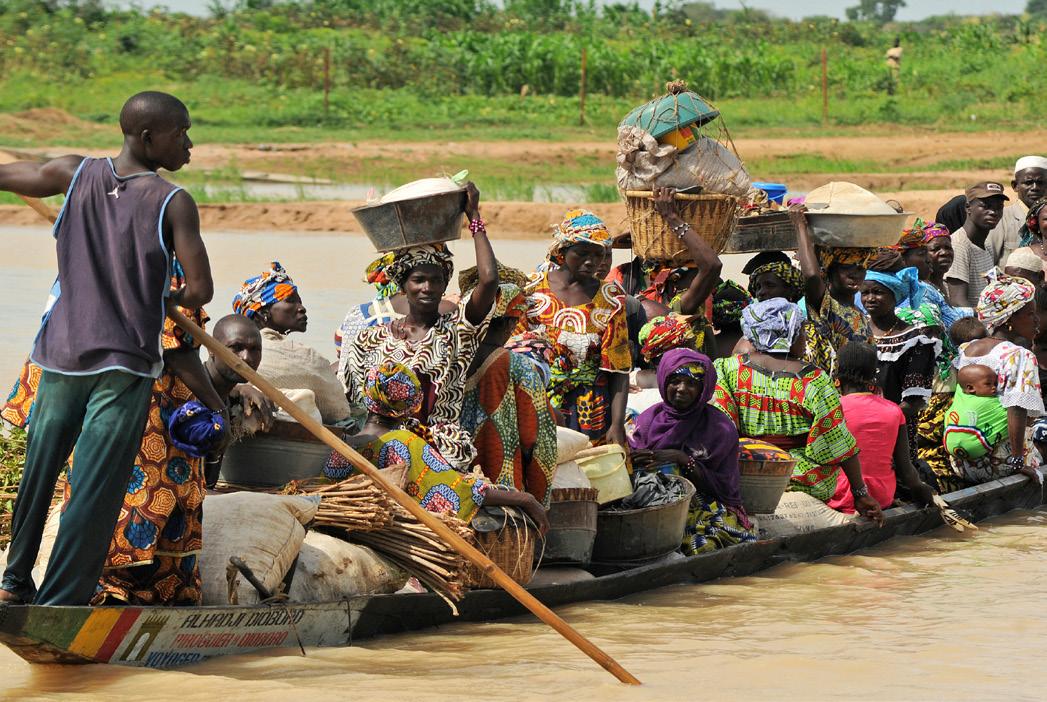
© Shutterstock/Teo Tarras
TUESDAY 7 APRIL 2026
Welcome and registration of participants
WELCOME CEREMONY
Mr. Frantisek RUZICKA, OECD Deputy Secretary-General, welcome speech
Ms. Hadizatou Rosine SORI-COULIBALY, SWAC President
Representative of civil society and the private sector
Representative of technical and financial partners
Representative of the intergovernmental organisations (ECOWAS, UEMOA, CILSS)
Family photo & coffee break
Geopolitical tensions, fertiliser markets and food security: Vulnerabilities, financing and resilience in the Sahel and West Africa
10:00 – 16:45
10:00 – 12:30
PANEL SESSION
This session will examine how geopolitical tensions, particularly in the Middle East, affect fertiliszer prices, supply chains and availability in the Sahel and West Africa, and the consequences for agricultural production and food and nutrition security. It will explore the region’s structural dependencies on imported fertiliszers, assess how current disruptions compound existing vulnerabilities, and identify concrete pathways to strengthen resilience, from diversifying supply sources and promoting regional production to adapting financing instruments and social protection mechanisms. Building on market analyses, country experiences and partner instruments, the session will seek to bridge the gap between diagnosis and action, connecting fertiliszer security to broader crisis prevention and resilience financing strategies.
Moderator: Ms. Hadizatou Rosine SORI-COULIBALY, SWAC President
Segment 1: Diagnosis: geopolitical tensions, fertiliser markets and regional vulnerabilities
The aim of this session is to better understand the region’s vulnerabilities related to fertiliser access and identify the main obstacles and opportunities to secure affordable and sustainable input supply for food and nutrition security in the Sahel and West Africa.
Introductory
Sahel and West Africa facing the challenge of mineral fertilisers: dynamics, dependencies and opportunities, Thibaut SOYEZ and Matthieu BRUN (FARM Foundation), 15 mn
How do middle east tensions affect fertiliser prices and availability in the Sahel and West Africa? Impacts and response options, IFDC, 15 mn
10:30 – 11:30
Discussion panel
This panel will explore whether the region is adequately prepared to face sustained disruptions in fertiliser supply and pricing. It will examine the policy, trade and financing bottlenecks that prevent effective responses, and discuss how fertiliser security can be more systematically integrated into regional food security strategies and cooperation frameworks.
Mr Kalilou SYLLA, CEDEAO Commissioner
Mr Mahamadou GADO, UEMOA Commissioner
Representative of a Sahel and West Africa country (to be confirmed)
Ms Kinday SAMBA, WFP Regional Director
11:30 – 12:25
12:25 – 12:30
Plenary discussion
Looking forward remarks and recommendations
14:00 – 16:45
Segment 2: Responses: Mobilising resources and directing financing towards resilience
The aim of this segment is to examine how financing instruments and social protection mechanisms can be better targeted to address broader fragilities, support crisis prevention and strengthen resilience across the region.
Introductory presentations
Mapping fragility, targeting infrastructures: the Geo-Risk model for evidence-based investment, Jan RIELAENDER (OECD/DEV), 15 mn
AfDB Instruments for Crisis Prevention and Fragile Response, Bumi CAMARA (AfDB), 15 mn
Social protection as a lever for responding to fragility, FAO, 15 mn
Discussion and recommendations 14:45 – 16:45
WEDNESDAY 8 APRIL 2026
Assess the food situation, evaluate the effectiveness of responses, and adjust strategies to address challenges in 2025-26
09H00 – 16H30
SESSION 1: Agropastoral, food and nutrition situation & effectiveness of responses to food crises
This session will analyse the food and nutrition situation in the region based on the provisional results of the 2025-26 agropastoral campaign and market conditions. It will also discuss the evolution of livelihoods and the growing role of markets in food and nutrition security (FNS). Lastly, it will review the implementation of crisis response measures in 2025 and identify areas for improving their effectiveness.
Chair: Dr Abdoulaye MOHAMADOU, Executive Secretary (CILSS)
Segment 1: Agropastoral, food and nutrition situation
Introductory presentations
Provisional results of the agro-pastoral campaign and regional markets, Mr Issaka LOANA (CILSS), 20 mn
Situation of regional and international markets, Mr Martin NAINDOUBA (FAO), 5 mn
Food and nutrition situation (Results of the Cadre harmonisé), Mr Williams MASSAOUD (CILSS), 15 mn
Segment 2: Consolidating the political ownership of HC analysis in the age of digitalisation and AI
– 14H30 Introductory presentations
Cadre Harmonisé Strategic plan facing emerging threats to the framework and analysis cycle: preserving a consensual tool for public decision-making, Mr Martial TRAORE (CILSS), 15 mn
Predicting the food and nutrition situation using artificial intelligence for budget choices, intervention priorities, Koffi AKAKPO, (WFP/Google), 15 min
Rethinking approaches to crisis prevention and food sovereignty
09H00 – 12H00
09H00 – 10H30
09H00 – 09H40
SESSION 2: Strengthening the effectiveness of responses to food crises: rethinking approaches to crisis prevention and management
The session will begin with a stocktaking exercise on the status of crisis responses in different countries and on the current state of governance instruments, in order to assess how far they contribute to response effectiveness. It will then examine current challenges related to food and nutrition insecurity and present ongoing initiatives aimed at strengthening the impact of crisis responses. Particular attention will be paid to detailed mapping of food insecurity to better tailor interventions, and to the adaptation of governance mechanisms to improve crisis prevention and management. Finally, discussions will explore how these efforts, including food sovereignty approaches and regional instruments such as the food security reserve, can inform the revision of agricultural and food security policies and reinforce the overall governance framework.
Chair: Mr Mahamadou GADO, Commissioner for Agriculture, Water Resources and the Environment (UEMOA)
Segment 1: Accelerating food security and sovereignty in the Sahel and West Africa region
Introduction to the thematic day
Strengthening the response and reinforcing FNS Governance: current status and key developments, Mr Evariste GOUNOU (CILSS), 15 mn
Food sovereignty: case of onion and potato value chains in Senegal: key game changers and investments opportunities, Senegal, Mr Boubacar DRAME, Senegal, 15 mn
What new orientation for the regional reserve? Strategic priorities and stakeholder mobilisation, Mr Jonas ALAGBE, ARAA/ECOWAS, 15 mn
09H45 – 10H30
Discussion, summary and recommendations
Coffee break 10:30 – 10:45
10H45 – 12H15
Overview on ECOWAP process and new orientations
CLOSING CEREMONY
Chair: Ms. Hadizatou Rosine SORI-COULIBALY, SWAC President Reading of the summary of the RPCA meeting, (CILSS)
Closing remarks
Representative of civil society and the private sector Representative of technical and financial partners Representative of the three IGOs (ECOWAS, UEMOA, CILSS)
Lunch break 12:45 – 14:15
12:15 – 12:45 14h30 - 17h00: ECOWAP Donor Group (restricted to members)