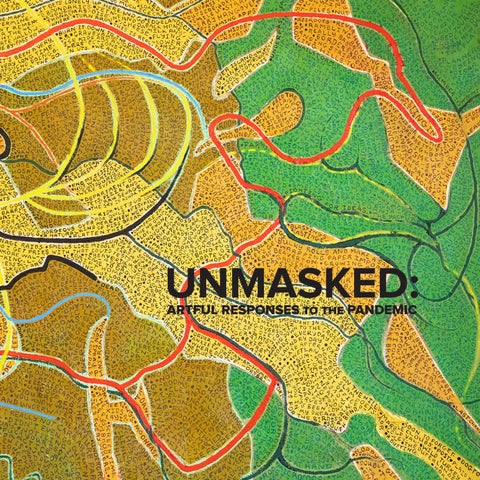
UNMASKED: ARTFUL RESPONSES to the PANDEMIC
A
B
UNMASKED: ARTFUL RESPONSES to the PANDEMIC JANUARY 16 – MARCH 28, 2021
SOUTHERN VERMONT ARTS CENTER, MANCHESTER, VERMONT
DIRECTOR’S FOREWORD
UNMASKED: Artful Responses to the Pandemic
Perhaps not since the lunar landing have so many people shared an experience, but pandemic life is lived in small groups or lived alone. In this year of near-universal reckoning, anxiety and profound emotion, we proudly offer visitors the opportunity to reflect not in isolation, but as a community of museum-goers considering their shared humanity—by means of a shared exhibition. Unmasked: Artful Responses to the Pandemic approaches the social, political and personal stories of this period from the varied points of view of more than 40 artists. Art in the time of the pandemic—this may be a theme that we will be exploring for many years to come. For Southern Vermont Arts Center (SVAC), the exhibition Unmasked: Artful Responses to the Pandemic provided a unique opportunity to work with artists entirely new to the organization, showcase new directions from some established artist members, and give the year-round community in Southern Vermont a thoughtful way to process the myriad topics (isolation, reliance on new technologies, and social disparities, for instance) brought forth by the pandemic.
Plague Doctor Mask ONA HERMAN
The exhibition began with a conversation between me and SVAC’s new Manager of Exhibitions and Interpretive Engagement, Alison Crites, who had recently left the Detroit Institute of Art for Vermont. During her first few weeks in her new post, I suggested that she take the lead and develop a thematic exhibition for our winter season. With characteristic aplomb, Crites developed a thesis for the exhibition and thematic subgroupings throughout the ten
3
galleries in Yester House. She then found artists from near and far—including members of artists’ collaboratives and international participants—whose varied work tells a cohesive story. The first theme, “Nature as Refuge,” showcases lyrical abstract landscapes by Patty Hudak; the intimate pen, ink, and watercolor series Tucked In by Dianne Shullenberger; and Tracy Tomko’s Bring Your Own Oxygen mask, which was part of a collaborative organized by the Vicki Myhren Gallery at the University of Denver. From here, viewers turn their attention to interior spaces and scales, as they consider the theme, “Solving a Big Problem in Miniature,” with the Shelter in Place Gallery of Boston. Here, creatives Eben Haines and Delaney Dameron offer a miniature gallery to artists who find themselves without normal studio or exhibition space during the pandemic. Visitors next contemplate “The Weight of Words,’’ as several artists take a more critical look at the social inequities and political landscape of the past year. Dana Walrath’s oversized handmade books explore historic genocides while reminding viewers of the disproportionate effect of the pandemic on people of color. Maria Molteni, Trey Duvall, and Sammy Lee—more participants in the University of Denver’s mask project—present powerful masks highlighting the casualties of the pandemic. Viewers find themselves surrounded by floor-to-ceiling textiles—Diana Weymar’s Tiny Pricks Project—in which former President Trump’s most controversial comments about the pandemic, many drawn from his tweets, are recorded as stitched works of art. Other artists have also created purposeful records of this time: Ross Sheehan, Dale Raisig, Linda Rubinstein, Helen Ellis, and Arthur Huang contribute large paintings, exquisite drawings, handmade books, and documentary photographs to the section “Pandemic Chronicles.” Among the peculiarities of pandemic life that the artists in “Pandemic Chronicles” document are our “New Forms of Connection”—the next theme in this exhibition, bringing
4
together Irene Cole’s and Elizabeth Fram’s figurative works, Scottie Burgess’s intricate, whimsical mask, and the Vermont-based Photographers Workroom’s Call and Response project, in which photographers inspire one another, creating visual conversations. Nearby, “Signs of the Times’’ is both dark and humorous—Susan Weiss’s Toilet Paper Series hangs alongside Elysyn Porter’s intricate drawings of plague doctors and the masks of Noah Travis Phillips, Frejya Sewell, Tiffany Matheson, and Ona Janim Herman. A wall hanging by textile artist Susan White explores the new relevance that the word “Essential” has taken on during the pandemic. Some of White’s embroidered textiles also appear in the exhibition’s final grouping: “Creativity Coming Home.” This theme invites viewers into artists’ personal spaces, transformed by the pandemic, featuring intimate glimpses into interpersonal relationships in Barbara Ishikura’s paintings, the multi-media canvases of Renée Bouchard, and the quarantine photography series of Adrien Broom. This diverse collection of artwork has provided inspiration for non-artists as well. A response gallery allows visitors both young and old to leave their own quarantine stories on view for those who come through the galleries after them. SVAC’s winter break camp was almost entirely themed around works of art in the exhibition. Students as young as six years old created their own interpretations of the works on view in Unmasked. I am honored to share this exhibition with our community and hope that this catalogue gives further insight into the works of these talented artists. ANNE CORSO Executive Director Southern Vermont Arts Center
5
Creativity as Personal Protective Equipment (PPE) Connecting all the artists of Unmasked: Artful Responses to the Pandemic is the catalyzing impact this crisis has had on their artistic practice. For these individuals, cultivating creativity during this period has become another type of protective measure taken as part of enduring COVID-19. Through their art, they offer compelling responses to many relatable challenges, such as how to overcome isolation, maintain productivity, find solace, and document these events for posterity. Seen collectively, their work reminds us of the resilience of creativity during times of crisis—and invites us to consider the ways in which creativity can help all of us cope with hardship.
Kaira Quarantined BARBARA ISHIKURA
7
Nature as Refuge Since the beginning of the pandemic, I address concepts of isolating in nature...as it is difficult to have certainty about anything which is not occurring in the present moment.
— ARTIST PATTY HUDAK
Whether on trails or in gardens and backyards, the artists in this grouping have turned to nature again and again in search of experiences that ground them in the present moment. For them, deliberately spending time outdoors reduces feelings of anxiety, distress, and uncertainty brought about by the pandemic. It’s also regenerative—some artists have taken to working outside while others bring the outdoors into their studios, channeling these positive memories into their work or incorporating actual elements of nature into their compositions.
Imagined Forest PATTY HUDAK
9
PATTY HUDAK
Nature has always been a primary source of inspiration in Patty Hudak’s work. She explains that the actions of her brush and the patterns it creates are full of meaning. In representing known and pleasant natural places, the brush marks bring Hudak peace. They also speak to the passage of time: color journeys through the paper, and the ink’s stain marks a single moment. The ink is a partner in managing isolation. It responds to the pressure Hudak places on her brush, recording emotion. It testifies to the fact of her existence. DIANNE SHULLENBERGER
Accustomed to interaction with other artists and visits to galleries, Dianne Shullenberger found the isolation dictated by the pandemic challenging, but an unexpected blessing emerged. Rather than creating art for a specific destination or exhibition, she found herself making art just for the joy of creating. The small watercolor paintings from her “Tucked In”
10
series reflect the time she spent in her garden observing the flowers and birds that she hadn’t had time to see the previous year. The artist’s garden served as a refuge that helped her to stay positive during the time spent alone. TRACY TOMKO
Artist Tracy Tomko turned to the natural world to source materials for creating a self-sustaining mask. Plants operate as natural filters. In the lower bulbs, carbon dioxide is turned back into breathable oxygen. Blue lights along the mask indicate when oxygen levels are good for breathing. For Dana Walrath see page 23 For Renée Bouchard see page 26
OPPOSITE, CLOCKWISE FROM TOP
My Son’s Tracing of Me (Homage to Ana Mendieta) RENÉE BOUCHARD
One of twelve site specific outdoor heart installations. DANA WALRATH
Jason’s Flower DIANNE SHULLENBERGER
BYOO (Bring Your Own Oxygen) TRACY TOMKO
Solving a Big Problem—in Miniature Hopefully we allow people to make the work they’ve always wanted to make.
— F OUNDERS EBEN HAINES AND DELANEY DAMERON
Opening a new art gallery in Boston’s already saturated market takes guts. But doing so during a pandemic? Doomed to fail. Unless your gallery happens to be four square feet and exists rent-free in your living room. The Shelter in Place Gallery opened its miniature doors in March 2020 and since then has mounted over 40 shows. SIP creatively solves a major challenge faced by artists during the pandemic, when opportunities to exhibit and sell work have all but disappeared. Its unique twist—submissions must fit a 1:12 inch scale— motivated participating artists to think outside the box and create ambitious installations that don’t depend on large budgets or spaces. For SVAC’s presentation, several SIP artists loaned life-size works to complement their miniature pieces.
13
Shelter in Place Gallery participating artists:
SACHIKO AKIYAMA
B. CHEHAYEB
“Creating an exhibition for SIP during the pandemic was a thought provoking exercise. It has been a time when most of our worlds have physically narrowed in scope. While I had more limited possibilities for the kind of exhibitions I could assemble, SIP was an opportunity to remove those limitations, to think big (both literally and figuratively), and to propose an ambitious idea in a parallel, imaginative world. The exhibition at SIP has inspired me to start thinking about trying to work on this large, monumental scale in the future.”
“When I approached the challenge of making miniature work for the SIP gallery show, I was pushed to think about the core elements that drive my work. I’m interested in writing, history and memory. I wanted to take these interests and distill them using only paint. The outcome was highly abstracted text, partial images and pure color. The memory, found in the title, is broken and folded many times and applied traditionally with a new focus. I work across mediums usually and at the time had to embrace the accessible and low maintenance materials like oil sticks, paper, panels, etc. since I was not working out of the studio and more commonly between spaces and tasks at home due to the pandemic. The small works featured are a very dear reminder of the beauty that comes from communities of artists still trying to connect and grasp their humanity in a time of isolation and uncertainty.”
14
MONIQUE CRABB
NICOLE DUENNEBIER
“As a woman, I can feel it in my blood. All types of bodies are designed to fight back what’s causing them harm. The earth is no different. Nature can be fierce and chaotic and I believe she will continue to fight back if we don’t figure out how to live on her. Over the years my practice has evolved into a deeper exploration of acquiring color from plants that I’ve foraged for, grown, or made from food waste. My intention is to encourage viewers to reconnect with their environment—to mentally and physically move with the seasons rather than the speed of the machines we’ve built. It is a way to reconsider materials and highlight the importance of handwork and its therapeutic place in humanity.”
“Natural phenomenon—dermoid cysts, fungus, invasive flora/fauna—and my love of candied, oldmaster opulence have a constant presence in my work. Through painting with attention to detail, I’ve become accustomed to the fact that nature itself, or anything living really, never totally allows you to have a perfectly idealized experience. Everything is always spewing, dripping, rotting a little. Similar to 17th century still-life paintings with those vibrant lusty fruits that show the light fuzz of beginning decay, I don’t see these works as allegorical depictions. To me it is more the realization that both the rot and the fruit are a textural attraction in their delicacy; both take the same concentration and care to paint. ”
15
EBEN HAINES
BARRY HAZARD
“Everything is a covering over, renewal by means of repetition, filling the voids with new ideas, good and bad. This is not a celebration of history, but an assertion that we cannot deny its presence, or forget the folds and scratches, the evidence of a life lived. Things never die, they merely change, congealing and fleeing, contingent on what came before to describe what comes next. Commonality contains the sacred, buried under years of dust and dirt, the detritus of failed empires built on the backs of the hungry. What happens when we dig, and find those bones, and realize that they are ours? If this virus can teach us anything, it’s that we need to to make sure we all have basic things like food, housing, and community. That in the end, those who stole the seats at the table will be buried by the weight they make us carry, if only we drop it.”
“I make sculpted landscape paintings that project out from the wall, like open dioramas. The subjects are derived from landscape archetypes of beauty, such as mountains, forests, deserts, sunsets, rivers and bodies of water. I recognize the common and collective love for these subjects, as spaces for reflecting, contemplation, and surrendering to something larger and more timeless than us. I also see conflicts, and our ecological footprint in these landscapes, whether perceived or actual. The conflict can be specific, or unspecific, and imply environmental, political, cultural or historical issues. Sometimes it is a blatant problem like a melting glacier, while other times it is more of a subtle inference that affects my perception of the space. The process of creating my pictures is much about the mitigation of these conflicted subjects, real or contrived, while trying to reimagine beauty.”
16
KATELYN LEDFORD
KEVIN MOORE
“These de-constructed portraits (and naturally selfportraits) are a reflection of the mixed emotions amidst our current reality and subsequent media consumption. They embody absurdist logic through appropriated imagery from historical paintings and Google fever dreams that are then contrasted and layered against improvisational painting. Crude frowning and smiling faces are formed out of these arrangements of elements and motifs so as to imply a facade. The tone lies in a mix of cynicism, humor, and bliss—like the feeling of sucking on a sour candy, you smile through the pleasure and pain.”
“My work is an exploration on the formation of character, narrative, and identity. Drawing inspiration from domestic space, I construct each image in order to direct my own narrative. These photographs are a world created to speak freely without interruption. By utilizing the past—both historic and cultural references—I am able to juxtapose queer existence with classic Americana. Although my work is made up predominantly of self-portraits, my goal is for viewers to consider their own responses to queerness as they see it. By applying my own identity and queer experience, I hope to engage the viewer in an unfamiliar set of circumstances.”
17
The Weight of Words During the pandemic, I have become more word-oriented in my visual work on account of wanting to surface the hidden dominant narratives lying at the root of so much that is broken in our world.
— ARTIST DANA WALRATH
During the pandemic, artists Diana Weymar and Dana Walrath responded to an impulse to explore the complicated relationship between language, context, and truth. Both made art through a process of extracting real political and scientific statements and situating them in new visual formats. Under scrutiny are words written and spoken by those in power to shape narratives and policies that influence societal reactions to a range of humanitarian crises. Artistic choices related to medium and scale intensify how the viewer experiences these examples of language and, in turn, evaluates them for truthfulness.
19
DIANA WEYMAR & THE TINY PRICKS PROJECT
Over 200 hand-stitched pieces depict statements about the pandemic, directly sourced from former President Trump’s tweets, press briefings, speeches, and interviews. These textiles are part of a larger initiative started by the artist Diana Weymar in 2018 to create what she calls “a material record of Trump’s presidency.” To date, over 1,000 people from around the world have contributed over 4,000 pieces to a gigantic, ongoing Instagram-based exhibition. Each submission expresses its maker’s skills and choices. The pieces are unique, but displaying them together magnifies their impact. Through immersing the viewer in so many of these words, SVAC’s presentation invites viewers to reflect on their emotional response. Is it amusement? Anger? Pride? Something else?
21
Incalcuable Loss TREY DUVALL
Say Her Name / Say Their Name Protection Spell MARIA MOLTENI
Mask Against Hate Virus SAMMY LEE
Genocide of Black Americans DANA WALRATH
TREY DUVALL
Daily death tolls, new case counts, and hospitalization rates dominate how most major media outlets report on the coronavirus. While this quantitative data is critical for spreading awareness about the pandemic’s scale, it can have a dehumanizing effect. Artist Trey Duvall created this mask using hospital wristbands that feature the names of people who have died from COVID-19 along with their places of death. Seen collectively, the wristbands emphasize both the widespread impact of the pandemic and the individuality of each life lost. SAMMY LEE
This pig snout mask borrows from a Korean ceremony during which participants make wishes for health and success. People set up an elaborate table with piles of food and place paper bills inside a pig’s mouth. The pig is considered an auspicious creature who acts as a messenger between earth and heaven. Artist Sammy Lee made this mask to bring attention to the
rise in anti-Asian hate crimes during the pandemic. Instead of placing wishes in the pig’s snout, she put news reports documenting the spread of racism towards Asians.
in the act of dehumanization. Reminiscent of oversized children’s books, these works further provoke us to consider the role that our own upbringings play in the formation of values.
DANA WALRATH
Amidst the horror of the pandemic’s disproportionate impact on people of color, artist Dana Walrath resumed work on a book series she started in 2016 that explores the intersection of language, oppression, and genocide. Each book begins with a drawing of a person from a historic time and place, which morphs from human to beast to vermin to parasite over the course of the pages. On the left, the artist redacted text from a mid-20th century zoology book. The interplay between language and imagery recalls the ways in which Western science has been used to justify the subjugation of many non-white cultural groups by categorizing them as less than human. The books are interactive by design. By turning the pages— scrambling images and mixing text—the viewer is made complicit
MARIA MOLTENI
Artist Maria Molteni’s mask brings attention to the multiple threats currently faced by vulnerable communities—increased risk for job loss, for suffering from police violence, and for dying from COVID-19. Notice the phrases she places onto the lips of her mask-wearer, which invoke voices of protest. In part a demand to honor the equal humanity of every American, the international movement to say the names of those lost to injustice finds strong expression here. By means of the words “Say Their Names,” “Say Her Name,” and “Say Their Name,” Molteni transforms the act of wearing the mask into a call for protection and justice for black men and women as well as for non-binary, gender nonconforming people.
23
Creativity Coming Home I felt so foreign in my space and head, and this work somehow brought me home.
— ARTIST ADRIEN BROOM
Quarantined in their homes for extended periods, the artists in this grouping mined their immediate surroundings and relationships for inspiration. Notice the prevalence of domestic spaces and items such as living rooms and bedrooms, bathtubs and curtains. Creativity flourished despite the persistent negative effects of social isolation and reduced mobility. Home became studio, and studio became home, compelling many to investigate the complicated intersection of roles and responsibilities as partner, parent, and artist. Others used their art to escape the confines of daily life by creating alternate realities and stories.
Soul Passage SUSAN WHITE
25
SUSAN WHITE
Susan White uses words embroidered onto vintage materials and family heirlooms. The pandemic has given her words to consider—words with new meaning or new prominence—like the now-ubiquitous “essential.” At the same time, White grappled with her role as an artist. Was art-making “essential work?” With her stitches, White asserts that creativity is essential, even as she offers the question to others. In another piece, she embroidered the text of the poem “Lodestar,” by Alice Walker onto curtains once owned by her grandmother. The curtains suggest the thin, fragile division between the present and the afterlife, made all the more pronounced in the context of the pandemic. Lodestar Here is what I believe Will be the hardest thing To do: To remember That we have A soul. It is so quiet
26
The soul And weighs Almost nothing. It might flash Across Our dullest days Only once or twice In a lifetime. That it is there: Just the certainty Of knowing Must be Our lodestar. RENÉE BOUCHARD
Renée Bouchard integrates her role as mother and homeschool teacher with her artistic practice. During the pandemic, her young son has become a collaborator in her art as he sometimes traces Bouchard’s outline onto her paintings. Reflecting on this unprecedented period of time together, Bouchard said, “I am the most relaxed when we leave home and are in nature together.” This appreciation for the natural world is manifests itself in many of her paintings which incorporate natural materials such as hay, flowers, and seeds onto her painted canvases.
ADRIEN BROOM
Photographer and set-designer Adrien Broom is accustomed to working with a team and traveling the world to create her elaborately designed photographs. During the pandemic, Broom sheltered at a family home on Cape Cod far from her New Haven studio. The series of photographs she created there are uncharacteristically stark. A billowing curtain envelopes the scene and figures (those of Broom and her partner) and creates a haunting effect that one might interpret as the passing of time and isolation. BARBARA ISHIKURA
Like many artists, Barbara Ishikura found her studio inaccessible while fellowships and exhibitions were postponed, due to the pandemic. As Ishikura worked at home, she delved more deeply into her personal relationships with loved ones. Her intensely personal paintings document the nuances of her relationship with her partner, and herself, as well as the importance of domestic spaces during this time of isolation.
Ritual
RENÉE BOUCHARD
The Embrace BARBARA ISHIKURA
The Curtain Series 2 Curtain Series 5 The Curtain Series 9 ADRIEN BROOM
27
The Pandemic Chronicles Capturing memory, responding to the everyday, noting small and large events, observing the natural environment: in short, fixing experience guides my work. — ARTIST LINDA RUBINSTEIN The impetus to document the pandemic has been universal. Around the world, people have made time capsules, recorded oral histories, donated artifacts to museums, and more. These efforts to preserve examples of how humans are experiencing the pandemic are an important counterbalance to the extensive scientific research being conducted. For the artists in this grouping, documenting the pandemic has also provided therapeutic benefit. Through observing and keeping visual records of the virus’s impact on themselves, their communities, and the world at large, they feel better equipped to process and understand this historic event.
Pandemic Journal LINDA RUBENSTEIN
29
Page from Pandemic Journal
LINDA RUBINSTEIN
In her Pandemic Journal, artist Linda Rubinstein captures both personal and global events. The watercolor and colored pencil drawings, which she refers to as “scribble drawings,” explore isolation, social distancing, mortality, and even the structure of the COVID-19 virus. This art creation through journaling is personal to the artist, but has broader application to its viewers: anyone can try to address adversity by looking at it from a personal perspective—taking one aspect at a time, turning it over in one’s mind, and noticing both humor and dread.
30
Wanderlust
My Endless Numbered Days
ARTHUR HUANG
HELEN ELLIS
Arthur Huang’s series of five Daily Drawings reflects different moments in the pandemic in Japan, where he lives. The first drawing was made in response to the government’s first announcement of a COVID-19 case. He drew the second when the first domestic transmission of COVID-19 was recorded in Japan. Subsequent drawings mark the events before and after the declaration of a state of emergency in Japan, and end with the lifting of the state of emergency—when the artist could leave his home and resume prepandemic actions, such as riding on public transportation.
Helen Ellis has enjoyed a long career as a clinical art therapist, spending countless hours making art with children. She claims that her focus on therapy prevented her from mastering any one artistic medium. During the pandemic, Ellis began to make a book each day out of found materials— about 180 in total. Some books commemorated important dates while others captured more mundane domestic experiences. Through this daily bookmaking, Ellis discovered that, like her clients, she responded to the healing power of arts. She reminds us that everyone has a story to tell.
Detail of Delineations
ROSS SHEEHAN
Cartography, or mapmaking, figures prominently in the work of Ross Sheehan. While the Stay at Home order greatly impacted the artist’s mobility, he emphasized daily walks. Taking notice of the details of urban and suburban landscapes, he incorporated those details into his paintings. Sheehan comments, “it is important to notice the metaphor of walking, or moving through a situation, not knowing what awaits on the other side...much like living within a pandemic infused world.
Self Portrait: Reading to our Dreamboats
DALE RAISIG
In her non-pandemic art practice, Dale Raisig considers herself a photographer of everyday Americans during their daily lives. With travel restricted, Raising found herself taking pictures of people wearing masks or in family gatherings via Zoom. Both masks and the virtual format challenged an artist usually focused on interaction and facial expression. In this series, Raisig finds ways to present intimate and emotional events—such as funerals, birthdays, and Bat Mitzvahs— through a virtual lens.
* Full image of Delineations can be seen on cover wrap
31
New Forms of Connection The human experience is still available to us even during or despite this socially distant time.
— ARTIST IRENE COLE
Reflected in the artwork and stories included in this grouping is the message that not all has been lost in these times of isolation. These artists figured out new ways to build communities of practice that helped them overcome the mental challenges of physical confinement and social distancing. These encounters often pushed participants to consider other perspectives and contexts, resulting in expanded empathy for the complexity and diversity of the human experience. The resulting works of art illustrate the inextricable link between connection and creativity.
Journey IRENE COLE
33
IRENE COLE
ELIZABETH FRAM
Before the pandemic, Irene Cole painted abstractly, never from a live model. Yet the human figure is the predominant theme in the paintings and drawings that she created during the time. Cole recounts a transformative experience—a two-week drawing marathon course, in which she and her fellow artists drew from a virtual live model for eight hours a day. Although the computer screen flattened her view of the models, she engaged with the challenge of creating depth and space in her compositions. Cole’s subsequent work pursues three-dimensionality with new energy.
A close look at Elizabeth Fram’s letter-sized portraits reveals a deep desire for human connection. As the pandemic prevented Fram from attending her weekly life drawing sessions as well as seeing her children in person, she began drawing portraits from photo “selfies” taken by friends and family members. Fram used the act of studying the facial features of her loved ones to connect with them emotionally, and she found that this new practice served as a source of joy and inspiration.
SCOTTIE BURGESS
Although important to protect ourselves and those around us, masks have drawbacks. Masks cover up wearers’ mouths, obscuring our ability to read facial expressions. Artist Scottie Burgess created this colorful and whimsical mask with its upturned corners as an homage to all our unseen smiles during this challenging time.
34
CALL & RESPONSE GROUP
This project is a bit “like birds mating,” says artist Marcie Scudder. With the seven other members of her Vermont-based collective “Photographer’s Workroom,” Scudder has developed a process for communicating and connecting during the pandemic—without using any words at all. The artists have named their invention after the familiar system, call and response. Here’s how it works: one artist takes a photograph and
offers that image to the group. The first image is the call. Another artist chooses an element of that image—or an aspect of its subject or its making—to consider. The second artist takes a photograph, too. This second image somehow addresses the first. A visual conversation is now available for all to see. Scudder says the project has offered insights about each artist’s personality. It has helped maintain a sense of community. Working together in this way, she says, the artists’ “small worlds and lives become richer and more expansive.” Photographer’s Workroom participating artists: Nancy Banks Christie Carter Rosalind Daniels Lisa Dimondstein Marcie Scudder Kent Shaw Peggy Smith Shapleigh Smith
CLOCKWISE FROM TOP LEFT
Mask fo Our Unseen Smiles SCOTTIE BURGESS
Leslie and Micah ELIZABETH FRAM
Call and Response #4 PHOTOGRAPHER’S WORKSHOP - KENT / PEGGY
35
Signs of the Times The images of art at the time will communicate how we value something that we normally take for granted. — ARTIST SUSAN WEISS
Consider the words and pictures that have inundated the media’s reporting on the pandemic—such as suggestions for products to stock at home, scenes of clapping for health care workers, and comparisons to pandemics of the past. The artists in this section explore the symbols and sayings that have gained particular visibility and relevance during the pandemic. Now that they are a part of our collective consciousness, these artworks provoke the viewer to consider how seeing these references on display in an art gallery affects your emotional response.
TP Series - TP Grid SUSAN WEISS
37
SUSAN WEISS
ELYSYN PORTER
TIFFANY MATHESON
Toilet paper. Anyone who lived through the pandemic will remember the period when our nation lost its mind about toilet paper. Inexpensive and commonplace, it became a highly coveted commodity. As documentary and street photographer Susan Weiss looked for ways she could work while sheltering in place, she began to consider the ubiquitous toilet paper roll. In this series, Weiss pays homage to 20th century artists—photographer Sally Mann, light and installation artist James Turrell, and Pop artist Andy Warhol—by humorously blending their trademark styles with the now-iconic image of toilet paper. She says she was struck by the intensity of response from those who assumed she was wasting paper; in fact, she was careful only to use a single roll.
Skulls, fantastic creatures, and figures wearing beak-like plague masks are prominent in the pen and ink drawings of Elysyn Porter, also known as El Gomoriso. Porter, a self-taught artist, creates dark and surreal images that often draw inspiration from music, literature, and obscure symbols.
The title of this work is from a Latin saying that translates, “Remember you must die.” Rather than causing dismay, the words are meant to inspire vitality in recognition of the fleeting nature of life. Artist Tiffany Matheson further draws on this sentiment by mixing black—a traditional color of mourning in some cultures—with sequins that flash and sparkle when hit by light.
38
NOAH TRAVIS PHILLIPS
A poisonous serpent, skull, and hourglass are elements of the imagery that artist Noah Phillips incorporated into this mask. The wearer communicates the seriousness of the pandemic by displaying these archetypal symbols of death and destruction. FREJYA SEWELL
Artist Frejya Sewell created a series of eight masks to pay visual tribute to the workers who have kept our society functioning despite COVID-19. This particular mask recognizes those working in food production and distribution. The bright neon green calls to mind vegetation while the shape of the headpiece evokes a futuristic superhero.
ONA JANIM HERMAN
Starting in the 1600s, physicians treating victims of the bubonic plague wore beak-shaped masks filled with aromatic herbs, believed to protect the wearer from infection. Though the plague doctors did not have effective medicine, governmental orders and private efforts to quarantine existed by the middle of the 14th century. These made a difference. By drawing on this imagery, artist Ona Herman invites us to learn from history. For image of Plague mask see page 2 For Susan White see page 26
CLOCKWISE FROM TOP LEFT
Day 19 Biohazard ELSYN PORTER
Anticoronavirus NOAH TRAVIS PHILLIPS
Food from Keyworker Series FREJYA SEWELL
Memento Mori TIFFANY MATHESON
Essential SUSAN WHITE
FROM THE CURATOR
Behind the Mask: Making UNMASKED Early in the pandemic, I heard about a trio of roommates in Barcelona who wrote and recorded a new song every day of Spain’s lockdown. Making music together not only helped them cope with the myriad challenges of this period but also—and unexpectedly—pushed their creative practice in new directions. Although the situation was full of many stressful constraints, it also freed these musicians to focus more on the creative process rather than on the end result. Their story resonated with me and eventually became fodder for Unmasked: Artful Responses to the Pandemic, which spotlights the ways in which visual artists have wrestled with and answered two central questions during this unprecedented period: How do I make art now? Why do I make art now? Often, an exhibition begins with a collection of artworks that a museum has acquired or been loaned. Exhibition staff mine these objects for potential stories to tell for the first time or to retell in new and interesting ways. In the case of Unmasked, however, the exhibition began with just a loose concept. The exciting—and at times daunting!—next step in the process was to go out and find the art.
Nine Hearts DANA WALRATH
To attract artists, I launched a call for proposals as well as reached out directly to artists who would be a good fit for the show. Word-of-mouth recommendations also proved an invaluable recruiting tool, and we are
41
thankful to those who helped spread news of this opportunity among their creative networks. Through these different channels, more than 40 artists joined Unmasked. Now, there was plenty of art for the exhibition. But what would be its connective tissue? Objects alone rarely create a memorable experience for visitors. Decades of research into the preferences, expectations, and behaviors of museum visitors confirms that general audiences (those who do not have specialized backgrounds in art) rely on good storytelling to help them make sense of what they’re seeing. Stories help people access and engage with art on a more personal level. Without them, galleries can feel confusing, intimidating, and irrelevant. In the case of Unmasked, it was important to let the artists’ own perspectives shape the main stories, or themes, of the exhibition. I gathered reflections from the artists about how the pandemic had catalyzed meaningful shifts in their artistic practice. People wrote candidly about the challenges they faced and how, through intentionally cultivating their creativity, they were better able to process, document, and even transcend certain aspects of this crisis. While the particulars of people’s experiences remained distinct, certain themes emerged. This was my favorite part of the planning process. I transformed an entire wall of my office into a space for brainstorming, and I taped printed images of all the artwork on it. Every few days, I would shuffle images around, seeing which combinations not only had the most visual resonance but also best expressed each theme. Eventually, seven groupings solidified, which are the core themes that visitors encounter throughout the 10 galleries of Yester House. Unmasked: Artful Responses to the Pandemic offers a range of perspectives on how the pandemic has affected artists both professionally and personally.
42
Exhibition planning in the curator’s office Details from the exhibition’s visitor response station
About halfway through the exhibition is a dedicated space for visitors to share their perspectives, too. Writing prompts along with a stock of art supplies on a handsome writing desk invite people to tap into their own creativity. It is our hope that visitors feel inspired by the artists’ stories about the resilience of creativity and consider how seeking out creative experiences in their own lives can help them cope with challenging situations. ALISON CRITES Manager of Exhibitions and Interpretive Engagement Southern Vermont Arts Center
43
EXHIBITION CHECKLIST SACHIKO AKIYAMA
Pharos Wood, metal, nails
Bird in Hand Polychromed wood
You and I Oil, acrylic, flowers, hay, pom-pom, and staples on canvas
RENÉE BOUCHARD
I’m Always the Party Oil on panels
IRENE COLE
Ritual Oil, acrylic and mixed media
NANCY BANKS / LISA DIMONDSTEIN
Call and Response #1 Fine art photography
The Curtains Series 4 Photograph on Japanese paper
The Curtains Series 7 Photograph on Japanese paper
Frances II Oil on canvas
SCOTTIE BURGESS
My Son’s Tracing of Me (Homage to Ana Mendieta) Watercolor, acrylic and hay on paper
Mask For Our Unseen Smiles Bamboo, twine and acetate
ADRIEN BROOM
B. CHEHAYEB
Frances Oil on canvas
Niki Oil on canvas Being/Non-Being Oil, acrylic and mixed media
The Curtains Series 1 Photograph on Japanese paper
Bleach Blonde American Football Acrylic on canvas
45
EXHIBITION CHECKLIST IRENE COLE conitnued
Denver with Hands Charcoal
ROSALIND DANIELS / CHRISTIE CARTER
HELEN ELLIS
Jen Ink, graphite, and colored pencil on paper
Call and Response #2 Fine art photography
NICOLE DUENNEBIER
Journey Oil on canvas
MONIQUE CRABB
Heat Rises, 2019 Textile painting
Dream Grave Acrylic on birch panel
Still Life with Nasturtium an Brush Fire Acrylic on birch panel
TREY DUVALL
Heat Rises (Mini) Dyed with madder root, cochineal, fustic wood and cutch. Hand quilted.
46
Karen Ink and colored pencil on paper
Incalcuable Loss Hospital Bracelets
My Endless Numbered Days Paper
Leslie & Micah Ink, graphite, and colored pencil on paper
ELIZABETH FRAM
Eve Ink and colored pencil on paper
Michelle Ink, graphite, and colored pencil on paper
EBEN HAINES
ONA HERMAN
Haircuts are Heavy Oil on paper, matboard, string
Plague Doctor Mask Latex mask, fabric and artificial flowers
Wanderlust Ink on paper
Peepers Ink on washi
Recursion Ink on paper
NIght Forest Ink on washi
PATTY HUDAK
BARBARA ISHIKURA
Imagined Forest Ink and watercolor on Japanese paper
Kaira Quarantined Acrylic on canvas
ARTHUR HUANG
Watching the End from Home Oil on paper
BARRY HAZARD
Ice Calving Acrylic, wood, and modeling paste on panel
Merrimack Acrylic and modeling foam
Floating Points Ink on paper
Superorganism Ink on paper
Exhalation Ink on paper
Between the Branches Ink on washi
Self-Portrait Acrylic, cloth and rope on canvas
47
EXHIBITION CHECKLIST KEVIN MOORE
BARBARA ISIKURA conitnued
Ofuro Charcoal on paper
Painting Fatigue Acrylic, graphite, resin, molding paste, and collaged paper on vellum
Untitled Photography - archival inkjet print
The Straightjacket Diaries, Vol. 1 Pen and ink on watercolor paper
SAMMY LEE
Our Wedding Charcoal on paper Mask Against Hate Virus Paper, acrylic varnish, money, beads, and thread
Untitled, 2019 Photography
Day 19 Biohazard Pen and ink on mixed media paper
NOAH TRAVIS PHILLIPS
DALE RAISIG
AntiCoronavirus Mask Organic cotton, collaged printed fabric
Burning My Diaries Photography
TIFFANY MATHESON The Embrace Acrylic on paper
KATELYN LEDFORD Memento Mori, 2019 Fabric, acrylic, metal, greenery, medicine bottles and LEDs
MARIA MOLTENI
ELYSYN PORTER
You’re a Catch! Acrylic, oil, graphite, and molding paste on canvas over panel
Mourning Photography Say Her Name/Say Their Name Protection Spell Hand printed and sewn fabric and paracord
TransContinental Colaboration Pen and ink on print
FREYJA SEWELL
Zoom Bat Mitzvah Photography
Food from Keyworker Series Recycled PET felt
SHAPLEIGH SMITH / MARCIE SCUDDER
Star Bird Watercolor
TRACY TOMKO
KENT SHAW / PEGGY SMITH
Self Portrait: My Zoom 75th Birthday Party Photography
Call and Response #4 Fine art photography
Pond Bird Watercolor
ROSS SHEEHAN
Self Portrait: Reading to Our Dreamboats Photography
LINDA RUBINSTEIN
Detail of Delineations Oil, oil pastel, acrylic, and pencil on canvas
Call and Response #3 Fine art photography
BYOO (Bring Your Own Oxygen) Plastic, foam, elastic, and glue
DANA WALRATH
Shovel Duck Watercolor Nine Hearts Sticks, thread, twine, stones, pine cones, branches, ramps, lichen, and earth; photographed and reassembled
DIANNE SHULLENBERGER Jason’s Flower Watercolor Pandemic Journal Watercolor, colored pencil, pen and ink
Gazing Ball Watercolor
49
EXHIBITION CHECKLIST DANA WALRATH
Genocide of First Peoples of the Americas Digitally altered elephant folio prints of handmade books, graphite on Zoology text, with magnets, linen, wood, metal, ginger, turmeric, and ash
SUSAN WEISS
TP Series- Andy Warhol Photography
Genocide of Black American Digitally altered elephant folio prints of hand made books, graphite on Zoology text, with magnets, linen, wood, metal, ginger, turmeric and ash
SUSAN WHITE
What is Essential? Curtain, thread, and my husband’s clothes
DIANA WYMAR: TINY PRICKS PROJECT TP Series - Sally Mann Photography
Genocide of Armenians Digitally altered elephant folio prints of handmade books, graphite on Zoology text, with magnets, linen, wood, metal, ginger, turmeric, and ash
TP Series - James Turrell Photography
Soul Passage My grandmother’s curtains and my great-aunt’s cotton thread
TP Series - Richard Serra Photography
touch to reach Doilies and thread TP Series - TP Grid Photography
Wall detail from Tiny Pricks Project
First Edition © 2021 Southern Vermont Arts Center All rights reserved under International and Pan-American Copyright Convention. Except for legitimate excerpts customary in review or scholarly publications, no part of this publication may be reproduced or transmitted in any form or by any means, electronic or mechanical, including photocopying, recording, or information storage or retrieval systems, without permission in writing from the publisher. Published in the United States by Southern Vermont Arts Center PO Box 617, Manchester, Vermont 05254 Southern Vermont Arts Center 930 SVAC Drive, West Road, Manchester, VT 05255 svac.org
Cover: Ross Sheehan, Delineations Inside front cover: Foreground: Tracy Tomko, BYOO (Bring Your Own Oxygen), background: Barbara Ishikura, Kaira Quarantined Inside back cover: Dianne Schullenberger, Gazing Ball Photography contributed by individual artists, Abby Raeder, and Dave Barnum
52
C
D