
Annual Report 2025

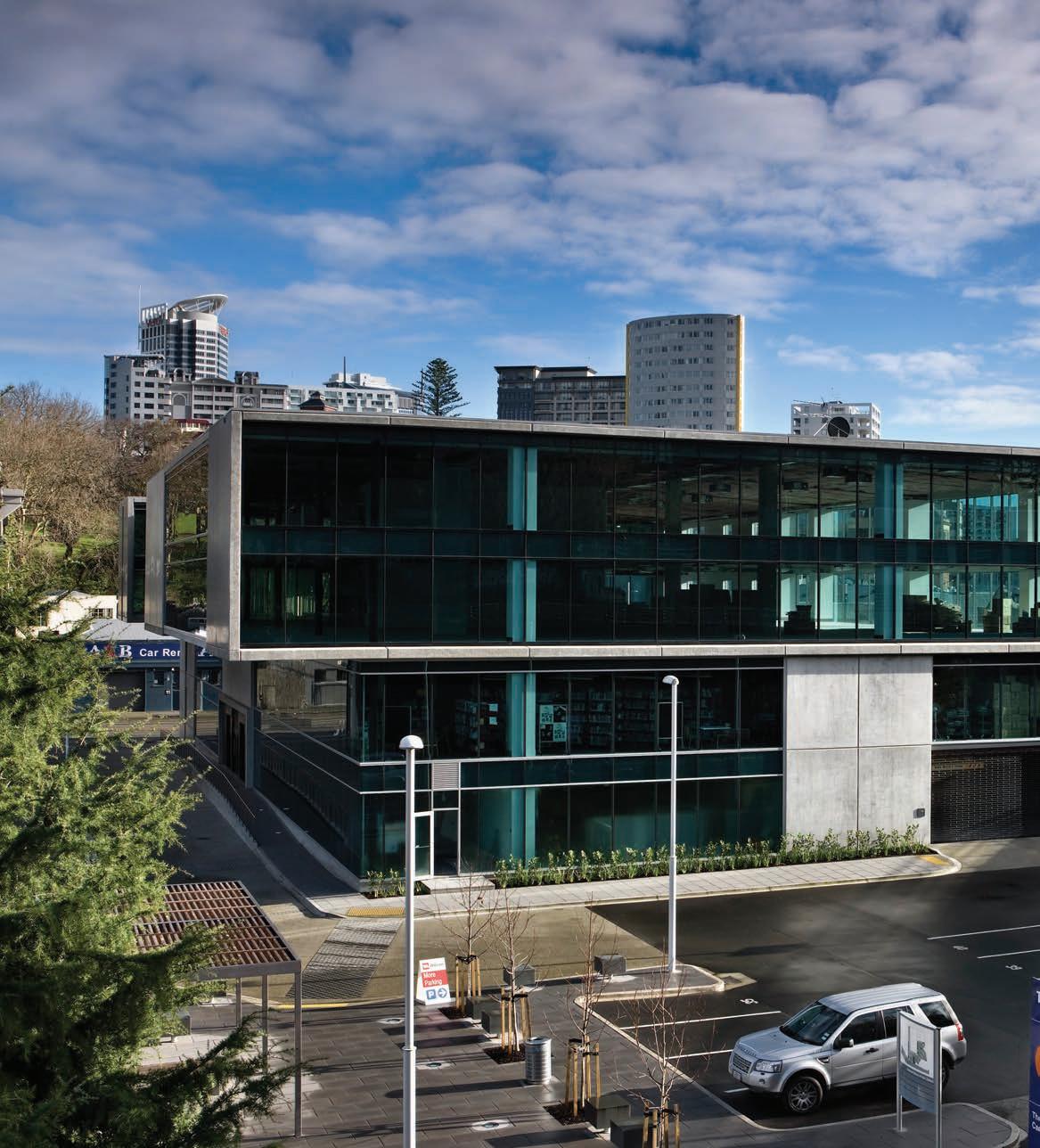


Ergon Properties is all about quality – quality property assets, quality relationships, leases and tenants, and high-quality returns. Tenants are mostly public sector and institutional, and leases are consistently long-term.
Ergon Properties is a vehicle for creating intergenerational wealth, run with transparency and a sharp focus on making sound investment decisions that always put shareholders’ interests first.
$676.7
17.9 years 7.6%


FY25 Highlights
Ergon Properties' portfolio has proven to be resilient in a tough economic environment. Almost every operational metric has improved during the year.


164.0 cps
Chairman’s Report
Dear Shareholders,
We are pleased to present to you the 16th Annual Report for Ergon Properties Limited (Ergon) together with the 2025 Annual Financial Statements. The optimism we expressed in last year’s annual report was well founded. Notwithstanding the overall financial climate and the absence of development opportunities, Ergon’s property portfolio has proved to be particularly resilient. Almost every operational metric has improved during the year.
Key achievements
• Dividends have had the uplift foreshadowed at the 2024 AGM.
• There was a net value uplift in the property portfolio of $18.80m.
• The Crown as lessee of levels 2 & 3 at the Stanley Street office commenced their 15-year lease on 8 July 2024.
• Loans on the Carlaw Park (Stage 1 & 2), Sistema and MIT (base build) properties were successfully renegotiated on considerably more favorable terms.
• A long-term maintenance fund has been established to address the future costs of asset replacement, refurbishments and nonrecoverable repairs across the portfolio.
• Fleur Hawkins, General Manager at Haydn & Rollett Properties, has successfully transitioned into management of Ergon’s property portfolio.
Challenges
• Landing a long-term lessee to trigger the development opportunity at the fully consented office at 54 Manukau Station Road.
• Replacing the retail space formally occupied by Jenny Craig at the IAG building.
• Managing increased maintenance programs on the properties as they age.
• Reinforcing the obligations on tenants to adequately discharge their side of maintenance obligations.
Headline financial performance
Lower interest rates, the lease up of Level 2 & 3 at the Stanley Street office and the stabilisation of capitalisation rates have positively impacted Ergon’s financial performance. The impact of these items is reflected in Ergon’s 2025 financial performance: -
• Distributions of 164.0 cps (up 22.39%)
• Net Tangible Assets (NTA) of $49.73 per share (up 4.15%)
• 2025 Total Return 7.58% (up from -2.29%)
• Weighted-Average Lease Term at balance date stood at 17.9 years (marginally down from 18.0 years)
Investments Update
Stuart McCutcheon House
This world class modern facility is in its third year of use and is proving to be highly sought after by students who enjoy socialising and living close to the university.

Sistema
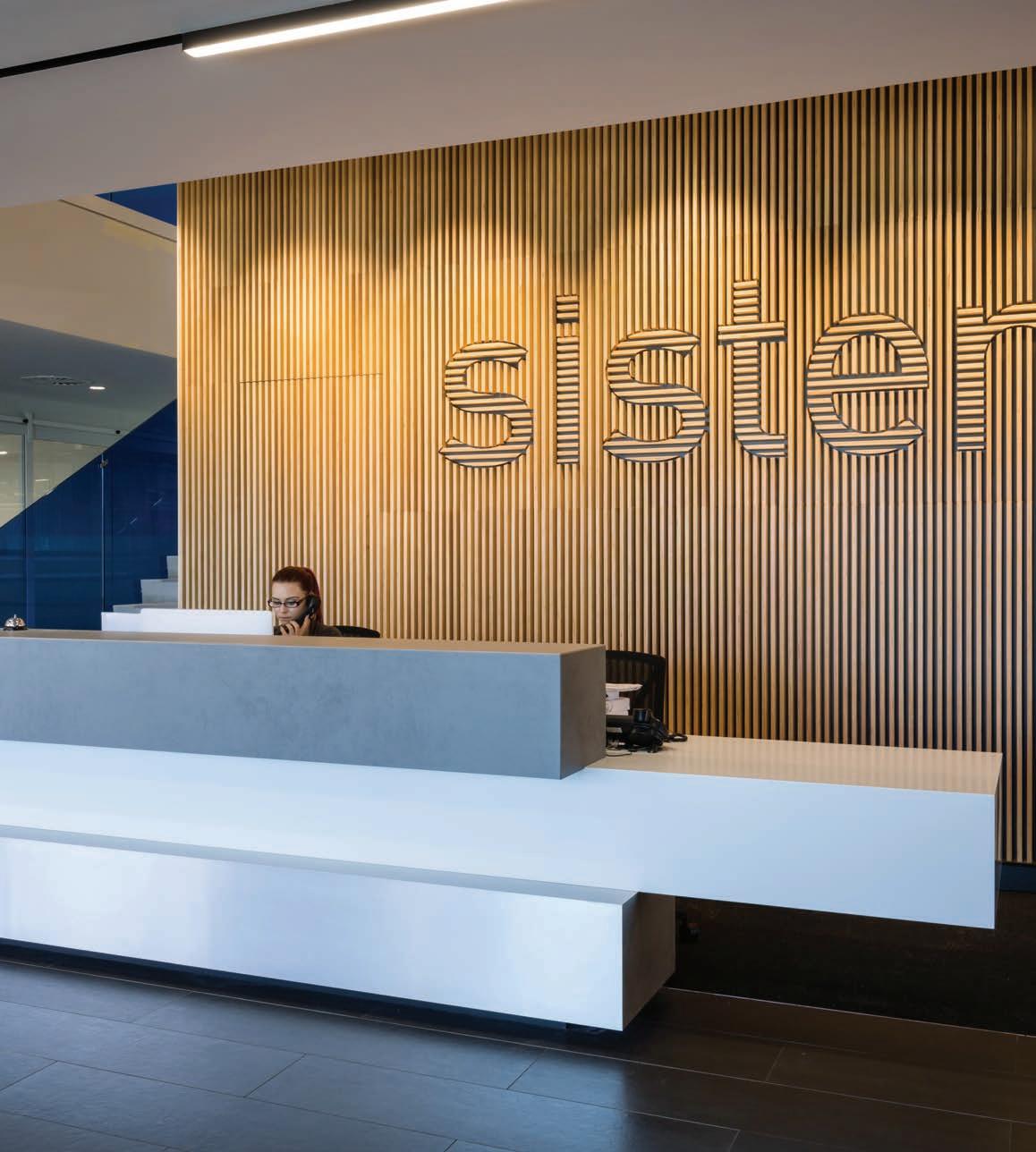
Sistema underwent a full exterior repaint during the course of the year and is in immaculate condition for its age.
On 1 November 2024 the rent increased by 2.7% as part of the yearly rent review.
Carlaw Park Student Village Stage 1 & 2 Student Villages Stages 1 & 2 continue to produce solid financial returns. Haydn & Rollett Properties have been actively engaging with the University of Auckland in having them improve their maintenance program to maintain the delivery of high-quality student accommodation.
The significant premature failure of the reticulating hot water pipework system in Carlaw Stage 1 & 2, which has been an industry issue has been addressed. Remediation work is on track for completion by 31 December 2025.
Ergon continues to maintain strong relationships with its joint venture investment partner, Carlaw Heritage Trust, the other 50% co-owner.
MIT Tech Park
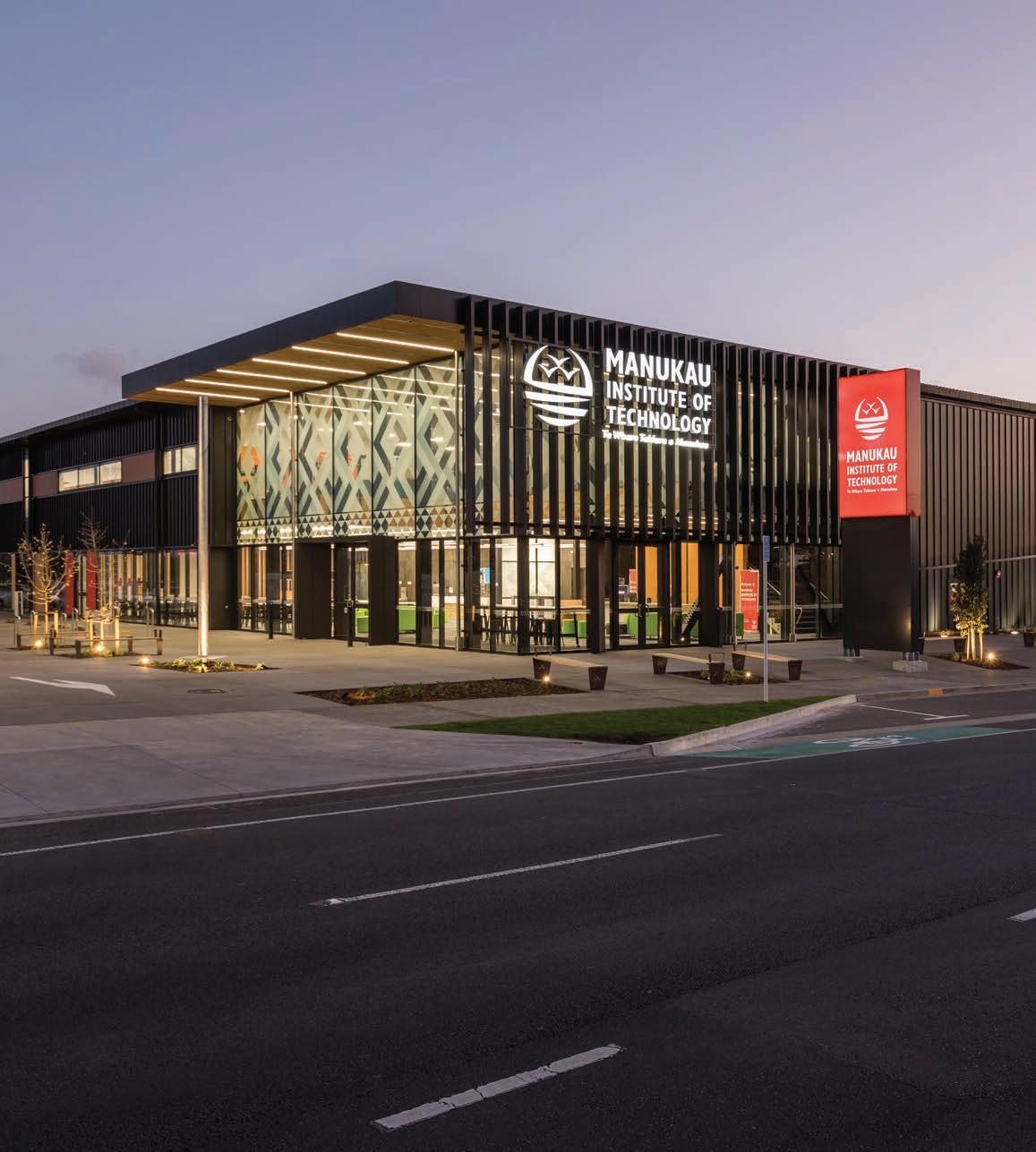
This building is well utitlised by students and provides a vibrant hub of educational activities. The Lessee continues to work with us in a positive manner.
Ergon Properties
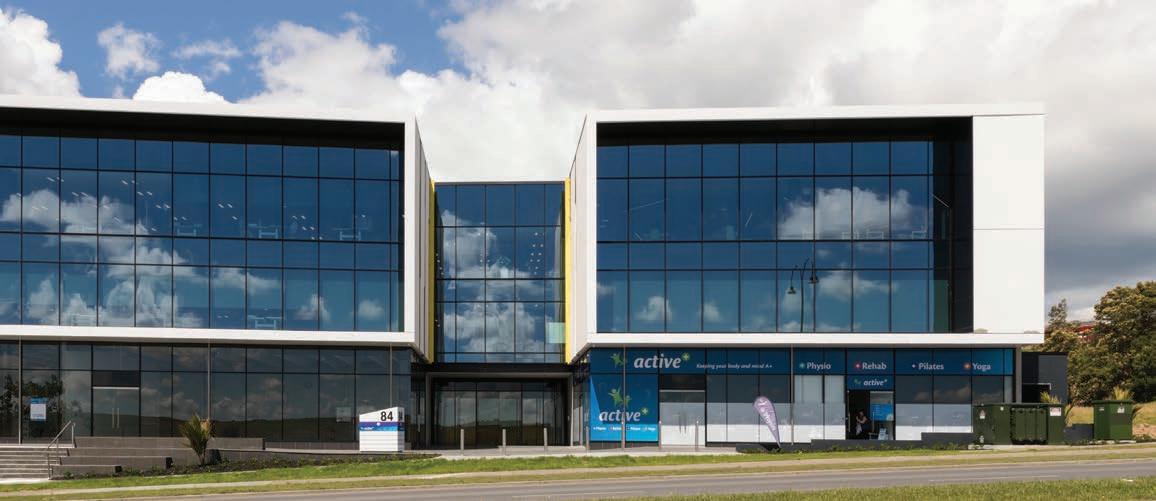
IAG Building
The IAG building in Albany is undergoing a foyer makeover. The café has been removed, and the space is being redesigned with fresh art, plants, furniture and accessories to create a warm, inviting and useful space for its tenants and visitors.
Stanley Street Office
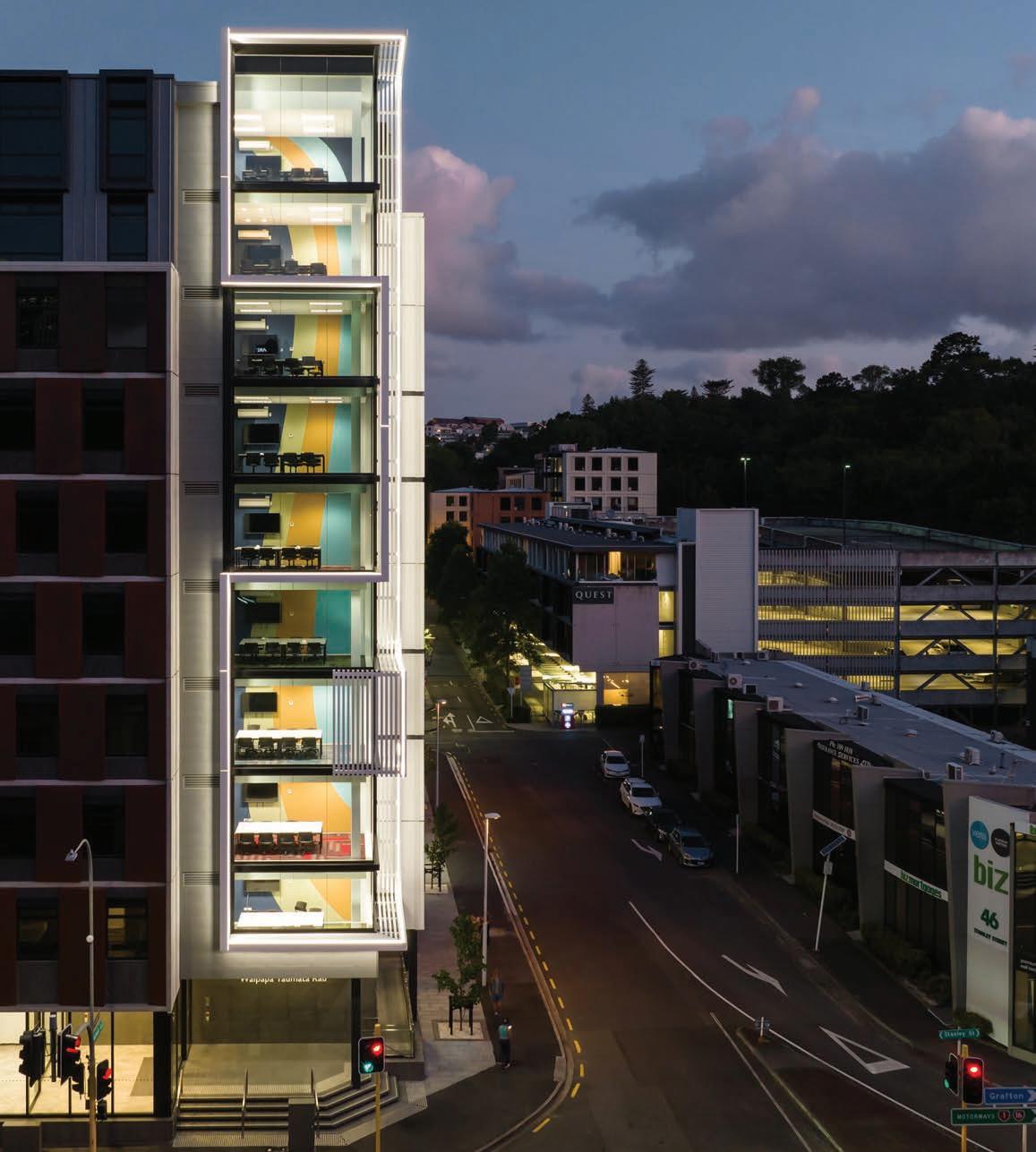
The building successfully completed a seismic upgrade with minimal disruption to National Libraries. In addition, substantial air conditioning works were undertaken to replace units at the end of their lifespan.
The Crown tenant is currently working on detailed design with fit-out construction expected to commence early 2026, with the view to occupying the building early in 2027.
Treasury
Interest rates have reduced materially in the course of the year and have continued to fall. All loans have operated within of their covenant ratios and positive relationships continue with each of our lenders.
Bancorp continue to provide specialist advice that assists with treasury management decisions.
Our year end, overall loan to value ratio has reduced 1.0% to 33.1%. The increase in asset values and the dividend reinvestment plan have both contributed.
Dividend reinvestment levels have been increasing in recent months.
Future Possibilities
The resource consent obtained for a 4,500m2 office building at 54 Manukau Station Road presents a shovel ready project for a future tenant. We expect this to materialise as the economic environment improves.
Dividend Guidance
We reaffirm our August 2025 advice that we are forecasting gross dividends for the remainder of the financial year to be in the range of $0.44 to $0.50 cents per quarter after allowing for contributions to the longterm maintenance fund. Current forecasts indicate a further material increase in gross dividends in the 2026 financial year.
Auditors
The Directors appointed Grant Thornton (GT) to audit the March 2025 financial statements. GT’s unqualified audit report forms part of the 2025 annual report.
The Directors will request the approval of shareholders to set their fees for the 2026 income year. This forms part of the Notice of Annual Meeting of Shareholders.
Conclusion
We thank you for your continued support and look forward to seeing you at the Annual Meeting scheduled for Thursday, 6 November 2025 at 3.30 pm
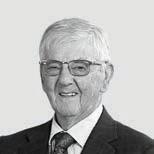
Yours sincerely
Arthur Young Chairman

Ergon Properties Directors

Arthur Young - Chairman
Arthur has been Ergon’s chair since the company’s inception. He retired from Chapman Tripp in November 2024 after a 65 year career in the law. He has wide directorate and governance experience, particularly with closely held or familyowned companies in property development and investment.
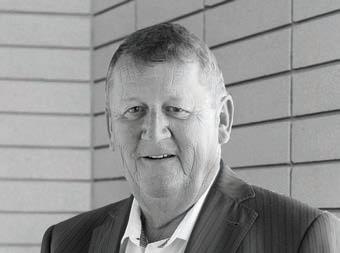
Sam Bufton
Sam is one of the founding directors of Ergon’s predecessor. He has had over 45 years’ experience in property development and construction, initially with a significant New Zealand construction company and then as the fourth Managing Director of Haydn & Rollett. Among many other skills, he brings to the board a strong customer-first mindset.

Kim Barrett
Kim has 30 years’ experience in the property development and construction industry. He has been Managing Director of Haydn & Rollett, one of the few truly vertically integrated construction, development and property companies in New Zealand, since 2010. In this role he is responsible for managing the relationship between Ergon Properties and Haydn & Rollett.

Kitt Littlejohn
Kitt is a qualified lawyer with 28 years’ post-admission experience, specialising in resource management, property and public law and related regulatory areas. He brings a wealth of experience and knowledge of resource management and development procedures in New Zealand, litigation strategy and risk.
Ergon Properties Limited
Consolidated financial statements for the year ended 31 March 2025
Directory
Company number: 3671045
IRD number: 108-160-772
Nature of business: Property investment
Location of business: 1 The Warehouse Way Akoranga Business Park Northcote
Registered office: Level 5, 32-34 Mahuhu Crescent Auckland Central Auckland
Directors: Kim P Barrett Simon J Bufton Arthur W Young Kitt R Littlejohn (Appointed with effect from 1 April 2024) John L Morris (Resigned with effect from 14 June 2024)
Bankers: ANZ Bank Westpac Bank Accident Compensation Corporation
Auditors: Grant Thornton New Zealand Audit Limited
Accountant: MGI Plus More (Auckland) Limited

The Board of Directors present their Annual Report including consolidated financial statements for the year ended 31 March 2025.
The persons listed below held office as Directors during the year. No other persons held the office of director at any time during the year.
Kim P Barrett
Simon J Bufton
Arthur W Young
Kitt R Littlejohn
John L Morris
Kitt R Littlejohn was appointed as director on 1 April 2024.
John L Morris retired on 14 June 2024.
The business of the Group is property investment. The Group's business has not changed during the financial year.
Profit for the year 29,948,303 (14,920,821) Retained earnings at 1 April 132,827,773159,304,465 162,776,076144,383,644 Total dividend paid (13,755,656) (11,555,871) Retained earnings at 31 March 149,020,420132,827,773
State of affairs
The Board of Directors are of the opinion that the state of affairs of the Group is satisfactory.
Dividend
Dividends totalling $13,755,656 have been paid for the year ended 31 March 2025 (31 March 2024: $11,555,871).
Consolidated Financial Statements
The consolidated financial statements for the year ended 31 March 2025 are attached to the report.
Auditors
Grant Thornton New Zealand Audit Limited have been appointed as auditors.
For and on behalf of the board
Information on Directors of the Company
There were no notices from the Directors of the Company requesting to use company information in their capacity as Directors which would not have otherwise been available to them.
Events Subsequent to Balance Date
The Directors are not aware of any matter or circumstance since the end of the financial year, not otherwise dealt with in this report or consolidated financial statements, that has significantly affected, or may significantly affect, the operation of the Company, the result of those operations or the state of affairs of the Group.
Director Date: 08 September 2025
Director Date: 08 September 2025

Consolidated statement of financial position

For the year ended 31 March 2025
(14,920,821)(14,920,821)
(14,920,821)(14,920,821)
29,948,30329,948,303
- 29,948,30329,948,303
- 3,232,255

For the year ended 31 March 2025
Consolidated statement of cashflows
For the year ended 31 March 2025
Notes to the consolidated financial statements
For the year ended 31 March 2025
1.0
General information
Reporting Entity
These consolidated financial statements are for Ergon Properties Limited (‘the Company’) and its subsidiaries (together ‘the Group’).
2.0
Summary of material accounting policies
2.1 Basis of preparation
Statement of compliance
The consolidated financial statements of the Group have been prepared in accordance with Generally Accepted Accounting Practice in New Zealand (“NZ GAAP”). The Group is a for-profit entity for the purposes of complying with NZ GAAP. The consolidated financial statements comply with New Zealand equivalents to International Financial Reporting Standards Reduced Disclosure Regime (“NZ IFRS RDR”) and other New Zealand accounting standards and authoritative notices that are applicable to entities that apply NZ IFRS.
The Group is eligible to apply Tier 2 For-profit Accounting Standards on the basis that it does not have public accountability and is not a large for-profit public sector entity. The Group has elected to report in accordance with NZ IFRS RDR and has applied disclosure concessions.
The consolidated financial statements have been prepared in accordance with the requirements of the Financial Reporting Act 2013 and the Companies Act 1993.
Basis of measurement
The consolidated financial statements have been prepared on historical cost basis except for investment properties that are measured at fair values at the end of each reporting period, as explained in accounting policies below.
Historical cost is generally based on the fair value of the consideration given in exchange for goods and services.
The consolidated financial statements have been presented in New Zealand Dollars ($), which is the Group’s functional currency, rounded to the nearest dollar.
Fair value is the price that would be received to sell an asset or paid to transfer a liability in an ordinary transaction between market participants at the measurement date, regardless of whether that price is directly observable or estimated using another valuation technique. In estimating the fair value of an asset or a liability, the Group takes into account the characteristics of the asset or liability if market participants would take those characteristics into account when pricing the asset or liability at measurement date. Fair value for measurement and/or disclosure purposes in the consolidated financial statement is determined on such a basis.
The financial statements of Ergon Properties Limited are for the year ended 31 March 2025.
The principal activity of the Group is property investment.
Key estimates and judgements
In preparing these consolidated financial statements, the Group has made significant judgements, estimates and assumptions that impact on the carrying value of certain assets and liabilities, revenue and expenses as well as other information reported in the notes.
The judgments made in the process of applying the Group’s accounting policies that have the most significant effect on the amounts recognised in the consolidated financial statements, and the estimates and assumptions that have a significant risk of causing a material adjustment to the carrying amounts of assets and liabilities within the financial year are identified below:
Determination of control and basis for consolidation see note 2.2.1
Determination of joint arrangements see note 2.2.2
Leases see note 2.14
Deferred tax see note 2.15 & 11.2
Reclassification of prior year figures
The Group has changed the presentation of certain income and expense items in the consolidated statement of profit or loss and other comprehensive income to reflect gross amounts. Comparative figures have been reclassified accordingly. This change in presentation does not affect net profit or equity.
2.2 Principle of consolidation and equity accounting
2.2.1 Subsidiaries
The consolidated financial statements incorporate the financial statements of the Company, entities controlled by the Company and its subsidiaries. Control is achieved when the Company:
• has power over the investee;
• is exposed, or has rights, to variable returns from its involvement with the investee, and
• has the ability to use its power to affect its returns.
Notes to the consolidated financial statements
2.0
The Company reassesses whether or not it controls an investee if facts and circumstances indicate that there are changes to one or more of the three elements of control listed above.
When the Company has less than a majority of the voting rights of an investee, it has power over the investee when the voting rights are sufficient to give it the practical ability to direct the relevant activities of the investee unilaterally.
The Company considers all relevant facts and circumstances in assessing whether or not the company’s voting rights in an investee are sufficient to give it power, including:
• the size of the company’s holding of voting rights, other vote holders or other parties;
• potential voting rights held by the company, other | vote holders and other parties;
• rights arising from other contractual arrangements; and
• any additional facts and circumstances that indicate that the company has, or does not have, the current ability to direct the relevant activities at the time that decisions need to be made, including voting patterns at previous shareholders’ meetings.
Consolidation of a subsidiary begins when the Company obtains control over the subsidiary and ceases when the Company loses control of the subsidiary. Specifically, income and expenses of a subsidiary acquired or disposed of during the year are included in the consolidated statement of profit or loss and comprehensive income from the date the Company gains control until the date when the Company ceases to control the subsidiary.
Profit or loss and each component of other comprehensive income are attributed to the owners of the Company. Total comprehensive income of subsidiaries is attributed to the owners of the Company.
When necessary, adjustments are made to the financial statements of the subsidiaries to bring their accounting policies into line with the group’s accounting policies.
All intragroup assets and liabilities, equity, income, expenses and cash flows relating to transactions between members of the Group are eliminated in full on consolidation.
2.2.2 Joint arrangements
Under NZ IFRS 11 Joint Arrangements, investments in joint arrangements are classified as either joint operations or joint ventures. The classification depends on the contractual rights and obligations of each investor, rather than legal structure of the joint arrangement. The Group has joint ventures (investment in limited partnerships).
Interests in joint ventures are accounted for using the equity method, after initially being recognised at cost in the consolidated statement of financial position.
2.3 Property, plant and equipment
Acquired assets are recorded at cost at the dates of their purchase and the value of other directly attributable costs to bring the assets to the location and condition necessary for their intended purpose, less accumulated depreciation and impairment losses.
Depreciation is recognised so as to write off the cost of assets less their residual values over their useful lives, using the diminishing value method. The estimated useful lives, residual values and depreciation methods are reviewed at least annually, with the effect of any changes in estimates accounted for on a prospective basis.
An item of property, plant and equipment is derecognised upon disposal or when no future economic benefits are expected to arise from the continued use of the asset. Any gain or loss arising on the disposal or retirement of an item of property, plant and equipment is determined as the difference between the sales proceeds and the carrying amount of the asset and is recognised in the consolidated statement of profit or loss and other comprehensive income.
The following depreciation rates are used in the calculation of depreciation:
Computer software and equipment
Method Rate
Diminishing value 10-50%
2.4 Investment property
The accounting policy for the investment property is disclosed in note 10.
2.5 Impairment of assets
At each reporting date, the Group reviews the carrying amounts of its assets to determine whether there is any indication that those assets have suffered an impairment loss. If any such indication exists, the recoverable amount of the asset is estimated in order to determine the extent of the impairment loss.
If the recoverable amount of a cash generating unit is estimated to be less than its carrying amount, the carrying amount of the cash generating unit is reduced to its recoverable amount.
An impairment loss is recognised immediately in profit or loss. Where an impairment loss subsequently reverses, the carrying amount of the asset is increased to the revised estimate of its recoverable amount, but only to the extent that the increased carrying amount does not exceed the carrying amount that would have been determined had no impairment loss been recognised for the asset. The reversal of an impairment loss is recognised immediately in profit or loss and other comprehensive income.
Notes to the consolidated financial statements
2.0
2.6 Goods and service tax (“GST”)
Financial information in these accounts is recorded exclusive of GST with the exception of receivables and payables, which include GST. GST payable or receivable at balance date is included in the appropriate category in the consolidated statement of financial position.
2.7 Trade receivables
Trade receivables are amounts due from customers in the ordinary course of business. If collection is expected in one year or less, they are classified as current assets. If not, they are presented as non-current assets.
Trade receivables are recognised initially at fair value and subsequently measured at amortised cost using the effective interest method, less provision for impairment.
2.8 Cash and cash equivalents
Cash and cash equivalents includes cash on hand, deposits held at call with financial institutions, other shortterm, highly liquid investments with original maturities of three months or less that are readily convertible to known amounts of cash and which are subject to an insignificant risk of changes in value.
2.9 Trade payables
Trade payables are obligations to pay for goods or services that have been acquired in the ordinary course of business from suppliers. Accounts payable are classified as current liabilities if payment is due within one year or less. If not, they are presented as non-current liabilities.
2.10 Interest-bearing liabilities
Borrowings are initially recognised at fair value, net of transaction costs incurred. Borrowing costs are subsequently measured at amortised cost.
Borrowing costs directly attributable to the acquisition, construction or production of qualifying assets are added to the cost of those assets, until such time as the assets are substantially ready for their intended use or sale.
All other borrowing costs are recognised in profit or loss and other comprehensive income in the period in which they are incurred.
Borrowings are removed from the consolidated statement of financial position when the obligation specified in the contract is discharged, cancelled or expired. The difference between the carrying amount and the financial liability that has been extinguished or transferred to another party and the consideration paid is recognised in the consolidated statement of profit or loss and other comprehensive income.
2.11 Financial instruments
The Group classifies its financial instruments at amortised cost apart from cash flow hedges which are recognised at fair value through profit or loss and other comprehensive income.
Financial assets are derecognised when the right to receive cash flows from the financial asset has expired
or when the entity transfers substantially all the risks and rewards of the financial asset. If the entity neither retains nor transfers substantially all of the risks and rewards, it derecognises the asset if it has transferred control of the asset. Financial liabilities are derecognised when the obligation has expired or been transferred.
2.12 Revenue recognition
Revenue is measured at the fair value of the consideration received or receivable.
Lease income
The Group enters into property leases with tenants on its investment properties. The Group has determined that it retains all significant risks and rewards of ownership of these properties and has therefore classified the leases as operating leases.
Operating lease income is recognised in the consolidated statement of profit or loss and other comprehensive income on a straight-line basis over the term of the relevant leases. Fixed rental adjustments are accounted for to achieve straight line revenue recognition.
Operating expenses which are recoverable from tenants are recognised as gross property income from operating expense recovery. This is associated with the provision of services relating to the operations of investment properties (eg, cleaning,repairs and maintenance, utilities).
The Group have assessed the performance obligations associated with these as being satisfied each month the services are undertaken for the relevant investment property. Operating expense recovery is billed monthly and recognised in the consolidated statement of profit or loss and other comprehensive income in the same manner reflecting that recovery revenue from tenants is received at the same time the performance obligation is satisfied. See further explanation in note 2.14.
Interest income
Interest income is recognised using the effective interest method.
Dividend income
Dividend income is recognised when the right to receive payment is recognised.
2.13 Share capital
Ordinary shares are classified as equity.
2.14 Leases
The Group as a lessee
Assets and liabilities arising from a lease are initially measured on a present value basis. Lease liabilities include the net present value of the following lease payments:
• fixed payments, less any lease incentives receivable.
• variable lease payment that are based on an index or a rate, initially measured using the index or rate as at the commencement date.
• amounts expected to be payable by the Company under residual value guarantees.
Notes to the consolidated financial statements
2.0
• the exercise price of a purchase option if the Company is reasonably certain to exercise that option, and
• payments of penalties for terminating the lease, if the lease term reflects the group exercising that option.
Lease payments to be made under reasonably certain extension options are also included in the measurement of the liability.
The lease payments are discounted using the interest rate implicit in the lease. If that rate cannot be readily determined the lessee's incremental borrowing rate is used, being the rate that the individual lessee would have to pay to borrow the funds necessary to obtain an asset of similar value to the right of use asset in a similar economic environment with similar terms, security and conditions.
Right of use assets are generally depreciated over the shorter of the asset's useful life and the lease term on a straight line basis.
The Group does not recognise right of use assets or lease liabilities for short term leases or low value leases.
Lease payments for these are recognised as expense on a straight line basis over the lease term.
The Group as a lessor
Leases are classified as finance leases whenever the term of the lease transfer substantially all the risks and rewards of ownership to the lessee. All other leases are classified as operating leases.
The Group has entered into commercial property leases for its investment properties. The Group has determined that it retains all significant risks and rewards of ownership of these properties and has thus classified these leases are operating leases.
Lease income from operating leases is recognised in the period to which it relates.
When a contract includes both lease and non lease components, consideration is allocated to each component under the contract.
Assets arising from 'smoothing' or straight-lining lease income due to variability in periodic cash payments, are calculated using the minimum fixed rental increases over the term of each lease. The lease payments including future fixed rent increases are spread evenly over the remaining term of the lease.
2.15 Taxation
The Company is a multi rate portfolio investment entity and pays tax on behalf of its investors based on their tax rates. The Company files PIE returns quarterly and is in a consolidated PIE group with its subsidiary, Ergon Properties No.1 Limited.
PIE tax (benefit)
Current and deferred tax are recognised in profit or loss, except when they relate to items that are recognised in other comprehensive income or directly in equity,
in which case, the current and deferred tax are also recognised in other comprehensive income or directly in equity respectively.
Deferred tax
Deferred tax is recognised using the balance sheet method, providing for temporary differences between the carrying amounts of assets and liabilities for financial reporting purposes and the amounts used for taxation purposes.
The carrying amount of the deferred tax asset is reviewed at the end of each reporting period and reduced to the extent that it is no longer probable that sufficient taxable profit will be available to allow all or part of the asset to be recovered.
Deferred tax liabilities and assets are measured at the tax rates that are expected to apply in the period in which the liability is settled or the asset realised, based on tax rates and tax laws that have been enacted or substantively enacted by the end of the reporting period.
The measurement of deferred tax liabilities and assets reflects the tax consequences that would follow from the manner in which the Company expects, at the end of the reporting period, to recover or settle the carrying amount of its assets and liabilities.
2.16 Measurement of fair values
The Group classifies its fair value measurement using a fair value hierarchy that reflects the significance of the inputs used in making the measurements. The fair value hierarchy has the following levels:
• Level 1: Quoted prices (unadjusted) in active markets for identical assets or liabilities.
• Level 2: Inputs other than quoted prices included within Level 1 that are observable for the asset or liability, either directly (i.e. as prices) or indirectly (i.e. derived from prices).
• Level 3: Inputs for the asset or liability that are not based on observable market data (unobservable inputs).
All of the Group's investment properties have been determined to be Level 3 in the fair value hierarchy because all significant inputs that determine fair value are not based on observable market data.
2.17 Changes in accounting policies
New accounting standards now adopted
Effective for annual periods beginning on or after 1 January 2024, the amendments to FRS-44 require entities to disclose fees incurred for services provided by their audit or review firm. These amendments aim to enhance the transparency and consistency of fee disclosures. The amendments have been applied to the financial statements of the Group, and the fees have been disclosed in the note 4.
Except as described above, the accounting policies and disclosures are consistent with those of the previous year.
3.0 Investment in subsidiary and joint arrangements
3.1 Investment in subsidiary
The company has control over the following subsidiary:
4.0
3.2 Investment in joint arrangements
The Group has interest in the following joint arrangements:

Investment in joint venture is measured using the equity method. See note 8.
During the year, audit fees were paid for services provided by Grant Thornton New Zealand Audit Limited of $53,886 (2024: $44,205). These fees relate to the audit of the consolidated financial statements of the Group and have been recorded within administration expenses in the consolidated statement of profit or loss and other comprehensive income.
5.0 Cash and cash equivalents
Cash and cash equivalents at the end of the reporting period as shown in the consolidated statement of cash flows
be
2,953,736610,385
631,489473,569 3,585,2251,083,954
1,244,9051,083,954
2,340,3203,585,2251,083,954
49,273,09948,953,738
Notes to the consolidated financial statements
10
Investment properties
continued
Investment property is property held either to earn rental income, for capital appreciation or for both.
Investment property is initially measured at cost and subsequently measured at fair value with any changes therein recognised in profit or loss. All properties are categorised as level 3 in the fair value hierarchy.
The Group obtains independent valuations for its investment properties every year from independent valuers who hold recognised and relevant professional qualifications and have recent experience in the location and category of the investment properties being valued.
At the end of each reporting period, the directors update their assessment of the fair value of the properties, taking into account the most recent independent valuations.
Investment property under construction (Lot 2 52-54 Manukau Station Road)
As of 31 March 2025 the property comprised an unimproved site. All costs directly associated with the purchase and construction of a property and all subsequent capital expenditure are capitalised. Subsequent to initial recognition investment properties are stated at fair value. Gains or losses arising from changes in the fair value of investment properties are included in profit or loss and other comprehensive income in the year in which they arise.
The Group obtained an independent valuation of the property as at the reporting date, the valuation being $5,300,000. 11
Operating lease commitments
The Group has entered into investment property leases as a lessor. Future minimum rentals receivable under non-cancellable operating leases are as follows:
Leases at 8-14 Stanley Street, Auckland
National Libraries of New Zealand Ltd981,50710/05/2010 610/05/2025 3
National Libraries of New Zealand Ltd151,78310/05/2010 610/05/2026 3 yearly to market
Crown Tenant 1,684,5538/07/2024 58/07/2025CPI Annually & 3 yearly to market
National Libraries of New Zealand Ltd50,7041/09/2022 1 month rolling
Leases at 84 Don McKinnon Drive
IAG 1,524,01724/09/2018 12 24/09/2026 CPI + 1% 2 yearly & market on renewal ActivePlus 139,0101/10/2018 101/10/2025CPI + 2% 2 yearly & Market on renewal
Cadmas Dental 83,7151/09/2019 101/09/2025 CPI + 0.5% annually & market on renewal
Leases at 58 Manukau Station Road
Manukau Institute of Technology
Base Build Net Rental 2,916,6801/09/2020 301/09/2026 2 yearly CPI+2% (Min 5.1% Max 9.2%) & Market review midterm
Amortised Fit-Out Annual Rental1,235,9041/09/2020 201/09/2025Bank interest rate + 2% margin
Leases at 54 Manukau Station Road
Stellar Parking 63,96015/09/2022 1 month rolling -
Lease at 15 Te Tiki Road
Sistema
Lease at 28-32 Stanley Street
9,211,9651/10/2016 201/11/2025 CPI yearly (Min 1.5% Max 3%) & Market 5 yearly
University of Auckland 11,500,3211/02/2023 3031/01/2026 3 yearly CPI & market on renewal
These notes form part of these consolidated financial statements.
12,613,7369,097,718 12,613,7369,097,718
The Group has recognised deferred tax liabilities relating to the depreciation claw-back which would arise on the sale of investment properties at carrying value.
In estimating this deferred tax liability, the Group has relied on independent valuer's assessments of the fair value of the investment properties.
The changes in average investors tax rate is a result of adjusting the opening deferred tax liability balance using the current year average investor tax rate.
Deferred tax is recognised using the balance sheet method, providing for temporary differences between the carrying amounts of assets and liabilities for financial reporting purposes and the amounts used for taxation purposes.
The carrying amount of deferred tax asset is reviewed at each balance date and reduced to the extent that it is no longer probable that sufficient taxable profit will be available to allow all or part of the deferred tax assets to be utilised.
Deferred tax assets and liabilities are measured at the tax rates that are expected to apply to the year when the asset isrealised or the liability settled, based on tax rates (and tax laws) applicable at balance date.
Notes to the consolidated financial statements
Issued capital comprises: 14
Loan - ANZ bank term facility A:
The loan balance as at 31 March 2025 was nil (2024: nil). This loan ceased on 21 November 2024.
Loan - ANZ bank term facility D:
The loan balance as at 31 March 2025 was $17,000,000 (2024: $17,000,000). The current facility limit is $20,304,179 comprising a floating loan with interest calculated on the 3 month BKBM plus a margin of 1.20% p.a. with a 1.20% p.a. line fee. This facility expires on 30 September 2027.
Loan - ANZ bank term facility E:
The loan balance as at 31 March 2025 was $7,150,000 (2024: $7,150,000). The current facility limit is $7,150,000 comprising a floating loan with interest calculated on the 3 month BKBM plus a margin of 2.80% p.a. This facility expires on 30 September 2025.
Loan - ACC:
The loan balance as at 31 March 2025 was $116,000,000 (2024: $116,000,000). The current facility limit is $116,000,000 comprising of the following rates plus a margin of 2.15% p.a:
- $29 million floating on the 3 month BKBM
- $29 million 4 year fixed term at 4.37% p.a.
- $29 million 2 year fixed term at 4.54% p.a.
- $29 million 1 year fixed term at 4.96% p.a.
This facility expires on 31 March 2033.
Loan - Westpac Money Market Loan:
The loan balance as at 31 March 2025 was $51,700,000 (2024: 52,000,000). The current facility limit is $55,000,000 comprising a floating loan with interest calculated on the 3 month BKBM plus a margin of 0.95% p.a. with a 0.95% p.a. line fee. The facility expires on 31 January 2027.
Security details are in note 16.
15 Issued capital
2025202420252024
Fully paid ordinary shares
Fully paid and authorised ordinary (equity) shares carry one vote per share and carry a right to dividends.
Notes to the consolidated financial statements
16
Security
ANZ Bank New Zealand Limited currently has the following securities:
1. Registered first ranking General Security Agreement over all the present and after acquired property of Ergon Properties Limited; (excluding Ergon Properties Limited’s shares in Ergon Properties No.1 Limited);
2. Registered first ranking Mortgage over 52-54 Manukau Station Road, Manukau owned by Ergon Properties Limited;
3. Registered first ranking Specific Security Agreement from Ergon Properties Limited over the Development Agreement with MIT and construction documents;
4. Deed of assignment by way of security relating to leases and all related agreements of the part of 8-14 Stanley Street, Parnell, Auckland described and comprised in record of title NA83B/527.
Westpac New Zealand Limited currently has the following securities:
1. A registered first and exclusive mortgage over the freehold interest in the property situated at 15 Te Tiki Road, Mangere, Auckland, comprised in record of title 713167 to be granted by Ergon Properties Limited.
2. A registered first ranking General Security Agreement granted by Ergon Properties Limited, limited to Ergon’s rights title and interest in the property at 15 Te Tiki Road, Mangere, Auckland as comprised in record of title 713167 (North Auckland Registry).
3. Deed of Waiver or other security instrument as determined appropriate by Westpac NZ's external solicitors negating any rights ANZ have under any security granted by the Borrower with respect to the property at 15 Te Tiki Road, Mangere, Auckland.
Accident Compensation Corporation currently have the following securities:
1. Registered first ranking mortgage over the land at 28 - 38 Stanley Street, Auckland as comprised in record of title 1072657 (North Auckland Registry) owned by Ergon Properties No.1 Limited.
2. A registered first ranking General Security Agreement granted by Ergon Properties No.1 Limited.
3 A registered first ranking Specific Security Agreement granted by Ergon Properties Limited over the shares in Ergon Properties No.1 Limited (together with all rights, proceeds and documents of titles relating to the shares).
17
18
Capital Commitments
There are no capital commitments at year end (31 March 2024: $Nil).
Contingent Liabilities
There are no contingent liabilities at year end (31 March 2024: $Nil).
Notes to the consolidated financial statements
Related party transactions
Key management personnel
The Group does not employ personnel in its own right. Under the terms of the Management Agreement with Haydn & Rollett Properties Ltd, the manager is appointed to manage and administer the Group. The manager is responsible for the remuneration of personnel providing management services to the Group. Directors are considered to be the key management personnel and received Directors' fees of $100,000 in 2025 (2024: $65,795).
Transactions involving related entities
Ergon Properties Limited is the ultimate parent of the group. Ergon Properties No.1 Limited is a wholly owned subsidiary and all intra transactions have been eliminated on consolidation. Ergon Properties Limited holds 50% interest in two joint ventures; Carlaw Campus Limited Partnership and Carlaw Stage 2 Limited Partnership.
The entities, the nature of the relationship and the types of transactions which the Group entered into during the period are detailed below:
Related entity
Haydn & Rollett Ltd
Haydn & Rollett Properties Ltd
Nature of relationship Types of transactions
Common directorship
Construction costs, Directors' fees, Other expenses, Oncharged expenses
Common directorship Property management fees
Haydn & Rollett Property Services Ltd Common directorship Property maintenance fees, Construction costs
Haydn & Rollett Developments No. 1 Ltd
Carlaw Campus Limited Partnership
Carlaw Stage 2 Limited Partnership
Reidy & Co Ltd
Common directorshipOncharged expenses
Joint venture Oncharged expenses
Joint venture Oncharged expenses
Common ownershipOncharged expenses
The following transactions between related parties occurred during the year:
The related party balances are interest free, unsecured, and are repayable on demand. No related party debts have been written off or forgiven during the year.
Notes to the consolidated financial statements
Lease Income
21
Events subsequent to balance date
On 8 May 2025, the Board declared a dividend of 48 cents per share. Payment of the dividend and allotment of 24,008 new shares by way of the dividend reinvestment plan occurred on 21 May 2025.
On 8 May 2025, the Board approved the issue of 76,416 new shares to the Little Red Trust. The shares were allotted on 21 May 2025 at an issue price of $49.73 per share.
On 4 August 2025, the Board declared a dividend of 47 cents per share. Payment of the dividend and allotment of 20,796 new shares by way of the dividend reinvestment plan occurred on 20 August 2025.
Other than the above, there were no events subsequent to balance date which would materially impact the consolidated financial statements.
Notes to the consolidated financial statements
Financial instruments
In the normal course of business through the use of financial instruments, the Group is exposed to interest rate risk and credit risk. The Board agrees and reviews policies for managing these risks.
The following items in the Consolidated Statement of Financial Position are classified as financial instruments: financial assets are cash and cash equivalents and trade and other receivables; financial liabilities are trade and other payables and interest-bearing liabilities. All financial instruments are recorded at amortised cost.
a) Interest rate risk
Interest rate risk is the risk that fluctuations in interest rates impact the Group's financial performance, future cash flows or the fair value of its financial instruments. The Group engage external treasury advisors to review and set treasury strategy to manage the interest rate risk.
The following table demonstrates the sensitivity to a reasonably possible change in interest rates on interest-bearing liabilities, with all other variables held constant.
b) Credit risk
Credit risk represents the risk that the counterparty to the financial instrument will fail to discharge an obligation and cause the Group to incur a financial loss. Financial instruments which subject the Group to credit risk principally consist of cash and debtors. The Group's exposure to credit risk is equal to the carrying value of the financial instruments. The Group's debtor balances are monitored on an ongoing basis with the result that the Group’s exposure to bad debts is not significant.

Independent Auditor’s Report
Grant Thornton New Zealand Audit Limited L4, Grant Thornton House 152 Fanshawe Street PO Box 1961 Auckland 1140 T +64 9 308 2570 www.grantthornton.co.nz
To the Shareholders of Ergon Properties Limited
Report on the Audit of the ConsolidatedFinancial Statements Opinion
We have audited the consolidated financial statements ofErgon Properties Limited (the “Company”) and its controlled entities (the “Group”) on pages 14 to 33 which comprise the consolidated statement of financial position as at 31 March 2025, and the consolidated statement of profit or loss and other comprehensive income , consolidated statement of changes in equityand consolidatedstatement of cash flows for the year then ended, and notes to the consolidated financial statements, including material accounting policy information
In our opinion, the accompanying consolidatedfinancial statements present fairly, in all material respects, the financial position of the Groupas at 31 March 2025 and its financial performance and cash flows for the year then ended in accordance with New Zealand equivalents to International Financial Reporting Standards Reduced Disclosure Regime (“NZ IFRS RDR”) issued by the New Zealand Accounting Standards Board Basis for Opinion
We conducted our audit in accordance with International Standards on Auditing (New Zealand) (ISAs (NZ)) issued by the New Zealand Auditing and Assurance Standards Board. Our responsibilities under those standards are further described in the Auditor’s Responsibilities for the Audit of the Consolidated Financial Statements section of our report. We are independent of the Group in accordance with Professional and Ethical Standard 1 International Code of Ethics for Assurance Practitioners (including International Independence Standards) (New Zealand) issued by the New Zealand Auditing and Assurance Standards Board, and we have fulfilled our other ethical responsibilities in accordance with these requirements. We believe that the audit evidence we have obtained is sufficient and appropriate to provide a basis for our opinion.
Other Information Other than the Consolidated Financial Statements and Auditor’s Report thereon
The Directors are responsible for the other information. The other information obtained at the date of this auditor’s report is the Directory and the Directors’ declaration included in the annual report, but does not include the consolidated financial statements and our auditor’s report thereon.
Our opinion on the consolidated financial statements does not cover the other information and we do not express any form of audit opinion or assurance conclusion thereon.
In connections with our audit of the consolidated financial statements, our responsibility is to read the other information and, in doing so, consider whether the other information is materially inconsistent with the consolidated financial statements or our knowledge obtained in the audit or otherwise appears to be materially misstated.If, based on the work we have performed, we conclude that there is a material misstatement of this other information, we are required to report that fact. We have nothing to report in this regard.
Directors’ Responsibilities for the Consolidated Financial Statements
The Directors are responsible on behalf of the Group for the preparation and fair presentation of these consolidatedfinancial statements in accordance with NZ IFRS RDR issued by the New Zealand Accounting Standards Board, and for such internal control as those charged with governance determine is necessary to enable the preparation of consolidatedfinancial statements that are free from material misstatement, whether due to fraud or error.
Grant Thornton New Zealand Audit Limited is a related entity of Grant Thornton New Zealand Limited. ‘Grant Thornton’ refers to the brand under which the Grant Thornton member firms provide services to their clients and/or refers to one or more member firms as the context requires. Grant Thornton New Zealand Limited is a member firm of Grant Thornton International Ltd (GTIL). GTIL and the member firms are not a worldwide partnership. GTIL and each member firm is a separate legal entity. Services are delivered by the member firms. GTIL does not provide services to clients. GTIL and its member firms are not agents of and do not obligate one another and are not liable for one another’s acts or omissions. In the New Zealand context only, the use of the term ‘Grant Thornton’ may refer to Grant Thornton New Zealand Limited and its New Zealand related entities.
In preparing the consolidated financial statements, the Directors are responsible on behalf of the Group for assessing the Group‘s ability to continue as a going concern, disclosing, as applicable, matters related to going concern and using the going concern basis of accounting unless the Directors either intend to liquidate the Group or to cease operations, or have no realistic alternative but to do so.
Auditor’s responsibilities for the Audit of the Consolidated Financial Statements
Our objectives are to obtain reasonable assurance about whether the consolidated financial statements as a whole are free from material misstatement, whether due to fraud or error, and to issue an auditor’s report that includes our opinion.
Reasonable assurance is a high level of assurance but is not a guarantee that an audit conducted in accordance with ISAs (NZ) will always detect a material misstatement when it exists. Misstatements can arise from fraud or error and are considere d material if, individually or in the aggregate, they could reasonably be expected to influence the economic decisions of users taken on the basis of these consolidated financial statements.
A further description of the auditor’s responsibilities for the audit of the financial statements is located on the External Reporting Board’s website at: https://www.xrb.govt.nz/standards/assurance-standards/auditors-responsibilities/audit-report-71/
Restriction on use of our report
This report is made solely to the Company’s shareholders, as a body. Our audit work has been undertaken so that we might state to the Company’s shareholders, as a body, those matters which we are required to state to them in an auditor’s report and for no other purpose. To the fullest extent permitted by law, we do not accept or assume responsibility to anyone other than the Company and its shareholders, as a body, for our audit work, for this report or for the opinion we have formed.
Grant Thornton New Zealand Audit Limited
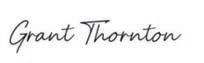
Auckland, New Zealand 8 September 2025
Directory
Registered office of Ergon Properties
Ergon Properties Limited
MGI Plus More
Level 5, 32-34 Mahuhu Crescent
Auckland Central Auckland 1010
Registered Office of the Manager
Haydn & Rollett Properties Limited
1 The Warehouse Way Northcote Auckland 0627
Directors of Ergon Properties
Arthur Young
Kim Barrett
Sam Bufton
Kitt Littlejohn

Tax advisers
PwC
Level 27, PwC Tower 15 Customs Street West Auckland 1010
Auditors
Grant Thornton New Zealand
Audit Limited
Level 4, Grant Thornton House 152 Fanshawe Street Auckland 1010
Solicitors
Chapman Tripp
Level 34, PwC Tower 15 Customs Street West Auckland 1010
Accountants
MGI Plus MORE
Level 5, 32-34 Mahuhu Crescent Auckland Central Auckland 1010