
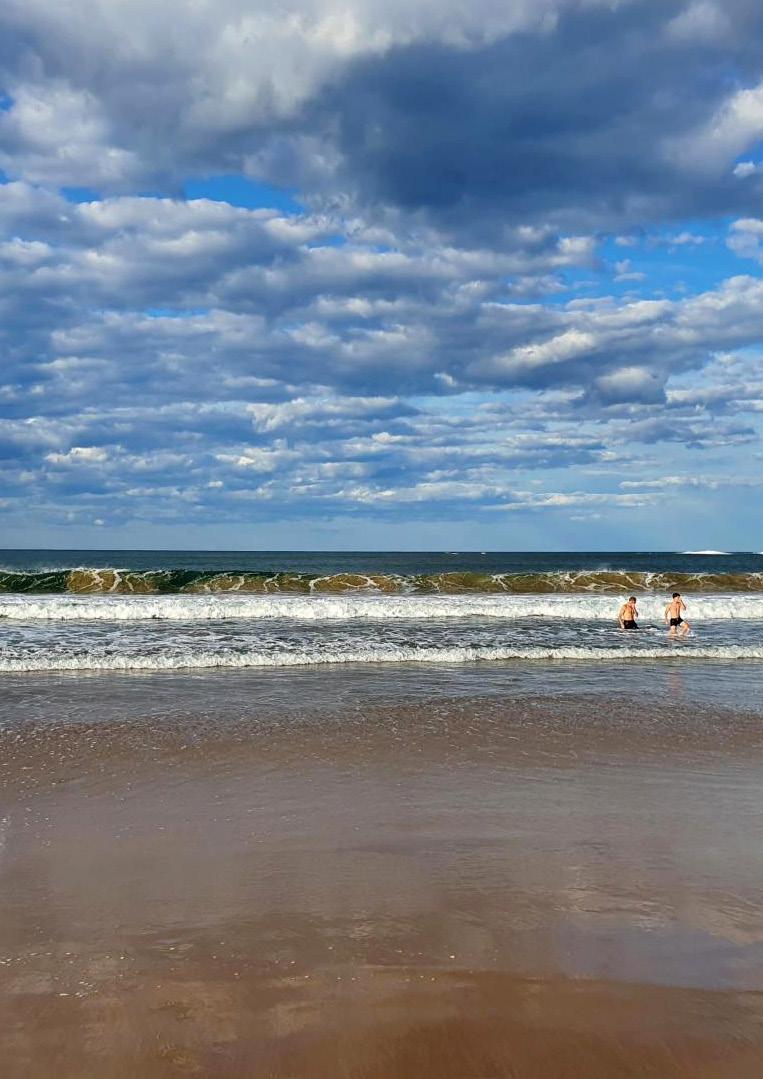
UNPATROLLED BEACHES WORKSHOP STATEMENT
2025/26
UNPATROLLED BEACHES WORKSHOP STATEMENT
The 2025 National Drowning and Coastal Safety Reports underscore that drowning is a problem facing all ages and aquatic locations, with beaches accounting for a significant proportion of Australia’s drowning burden.
Australia is home to ~11,000 mainland beaches of which only 6% are patrolled, or supervised, by lifesaving services at some point in the year. An unpatrolled beach refers to a location without active lifesaving surveillance from lifesaving personnel (surf lifesavers or lifeguards) on duty. This includes beaches that are not serviced by lifesaving services and beaches outside of designated patrol hours.
Surf Life Saving Australia, in collaboration with Royal Life Saving Australia, led a strategic workshop in October 2025 focused on drowning at unpatrolled beaches, a key area of focus outlined in the Midpoint Update of the Australian Water Safety Strategy 2030.
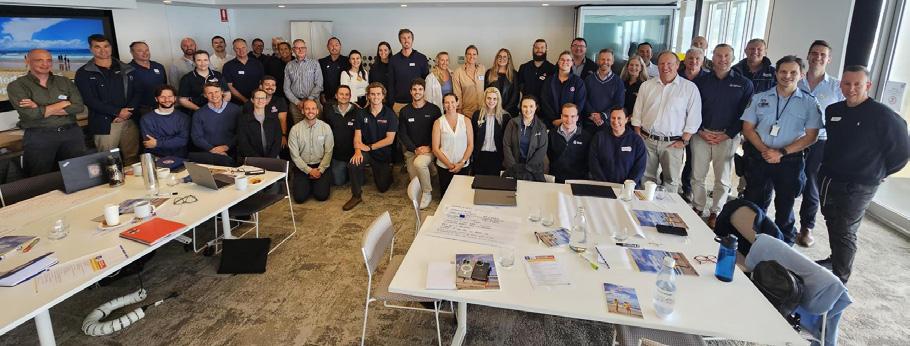
The workshop included 48 attendees from 27 organisations, building on discussions that arose from the 2025 National Water Safety Summit. Motivated by a collective commitment to find solutions to one of the most pressing water safety challenges in Australia, multiple stakeholders came together in a collaborative setting to share knowledge, advance our understanding of the problem, explore tangible adjustments to policy and practice, and brainstorm the big ideas for long-term impact.
This workshop represented an important first step towards collaborative action on the unpatrolled beach issue. The attendees affirmed the need for a collective, systems-based approach with holistic solutions that recognise and address the complexity and intersectional nature of the problem.
With a strong commitment to solving the challenge together, workshop attendees agreed that a unified and collaborative approach is most likely to reduce drowning at unpatrolled beaches. The workshop participants identified seven key themes for action on unpatrolled beaches.
UNPATROLLED BEACH DROWNING SNAPSHOT
EVOLVING LIFESAVING SERVICE DELIVERY
Ensuring that patrol methods and systems are fit for purpose in a rapidly changing Australia.
The workshop participants agreed that addressing drowning at unpatrolled beaches will require some existing services, both paid and volunteer, to adapt and evolve the way trained lifeguards and surf lifesavers supervise beaches and respond to emergencies. Providing flexible, risk-based, and tiered surveillance models that align and allocate resources commensurate to risk, location, season, and demand are essential. The group also noted the importance of supporting agencies to implement tiered surveillance models, which will increase the efficacy of current interventions and equip the sector to leverage new and emergent technologies.
EXTENDING LIFESAVING SERVICE LOCATIONS AND TIMES
Expanding the number of beaches and time periods where trained lifeguards and surf lifesavers are actively supervising and ready to respond.
Discussions highlighted the importance of establishing new patrol services at strategic high-risk beaches that currently do not have a service; and extending the hours and number of days of patrol coverage at locations that may warrant it. Additionally, the group discussed the need for greater clarity of what ‘supervision’ and ‘surveillance’ mean, and how they may differ, within drowning prevention contexts. There was also a call to explore opportunities to build best-practice, evidence-informed models to guide decisions.
COMMUNITY ENGAGEMENT
Enhancing community resilience and preparedness through capacity and skill building initiatives.
The group identified a need to leverage existing and build future engagement opportunities that enhance capabilities and develop skills around unpatrolled beach safety, with evaluation of these efforts’ impact. Key enablers include approaches that are locally led, co-designed, and tailored; supportive networks with community leaders; and consistent, sustained, and committed community engagement.
EDUCATION
Preparing those who need it most to make informed decisions to keep themselves and their families safe while enjoying the beach.
The group agreed that a focused approach to education for users of unpatrolled beaches must build on existing resources and risk profiles, be timely, and fit for purpose to effectively reach the community that needs it most. These programs must develop and engage in partnerships across the various sectors and community groups, with a focus on collaboration with priority populations and sharing of knowledge and best practice. Education efforts must extend beyond traditional messaging to include knowledge translation, meaningful behaviour change initiatives, community leader involvement, and the development of critical water safety skills supported by innovative technology solutions.
DATA AND INSIGHTS
Strengthening systems that gather, synthesise, and share data to guide action and decision-making.
The group underscored the overarching need for collaborative, consistent (standardised), and shared intelligence across the sector to drive beach safety service and system decisions. Identified priorities include:
• Development of an integrated and usable national coastal risk dataset with interactive and accessible dashboards.
• Development of predictive risk models for beaches at a national scale.
• Conducting an analysis of data gaps, such as behaviour and usage at unpatrolled beaches, and opportunities that could improve action.
• Harmonising existing national drowning and incident databases.
• Better integration of different data sources (e.g. People Movement Data, footfall traffic, behaviour surveys, etc.) to better understand coastal visitation and associated exposure to drowning risks.
• Development of models and integration of data sets that support agencies to respond to growing and future impacts of coastal erosion on beach visitation and usage patterns, and on existing infrastructure, assets and service delivery.
PUBLIC RESCUE EQUIPMENT
Developing a robust, fit for purpose public rescue equipment system.
Workshop participants discussed the need to expand Public Rescue Equipment (PRE) systems nationally by establishing standards and consistent guidelines relevant for all stakeholders within water safety and emergency response. Importantly, preparing a community for success includes effective engagement to ensure PRE is appropriate and beneficial for, and used safely by, the community it intends to support. Workshop participants also acknowledged the need to leverage current and novel technologies to the collective advantage when developing PRE systems.
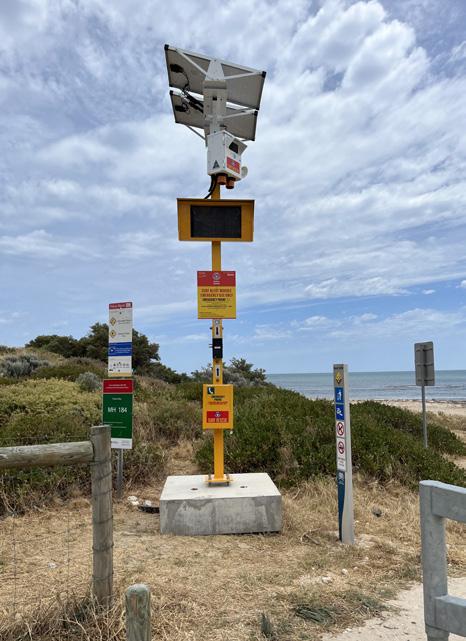
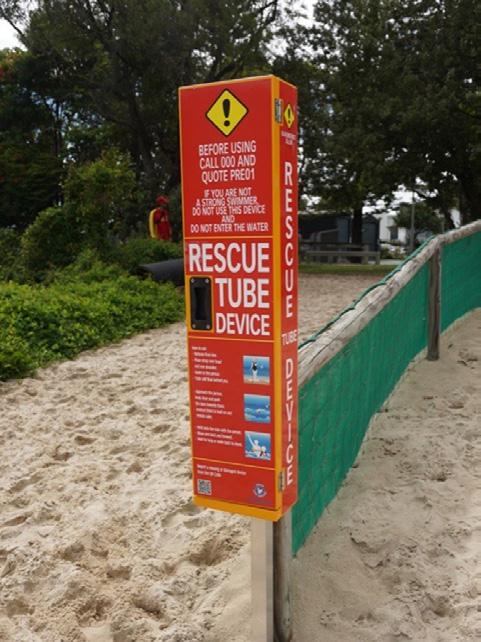
Photo Source: Examples of PRE and emergency communications units from Queensland (right) and Western Australia (left).
ALIGNMENT AND ADVOCACY FOR FUNDING
Improving coordination for large scale systems change.
The group acknowledged the importance of aligned objectives and speaking together with one voice to advocate for addressing the risk at unpatrolled beaches. Discussions explored a centralised collaboration model to bring together key beach safety and drowning prevention stakeholders in partnership around the unified priority that drowning at unpatrolled beaches is a critical issue worth solving. With a collaborative strength in numbers approach, a consistent, unified message and set of priorities will result in stronger engagement and funding commitments from government, philanthropy, and the community.
Key stakeholders committed to ongoing collaboration with the next step being to reconvene for a follow-up workshop designed to focus on tangible, collective actions to reduce drowning at unpatrolled beaches around Australia. SLSA extends its thanks to the workshop participants for their insight and commitment to addressing this important national water safety priority.
PARTICIPANT ORGANISATIONS
Airbnb
Beachwatch New South Wales
Bass Coast Shire
Change and Water New South Wales
Coastal Safety Group
Department of Environment Climate
Drowning Prevention Auckland
Gold Coast Council
Lake Macquarie City Council
Life Saving Victoria
Marine Rescue New South Wales
NPWS New South Wales
Risk Facilitator
Royal Life Saving Australia
Search and Rescue Police
State Emergency Service
Surf Life Saving Australia
Surf Life Saving Queensland
Surf Life Saving New South Wales
Surf Life Saving Tasmania
Surf Life Saving Queensland
Surf Life Saving South Australia
Surf Life Saving Western Australia
Surfing New South Wales
Sutherland Shire Council
University of New South Wales
University of Melbourne
ACKNOWLEDGEMENTS:
This workshop statement was co-drafted and reviewed by the workshop attendees. Special thanks to Natalie Edwards and Nick Grant-Collins for their considered additional contributions to this statement. Design: Melissa Conchar, Dave Homer.
SUGGESTED CITATION:
Lawes J, Grey N, Koon W. Unpatrolled beaches workshop statement 2025/26. Surf Life Saving Australia, Sydney, 2026.